EP2878578A1 - Porous boron nitride and method for manufacturing same - Google Patents
Porous boron nitride and method for manufacturing same Download PDFInfo
- Publication number
- EP2878578A1 EP2878578A1 EP13823064.4A EP13823064A EP2878578A1 EP 2878578 A1 EP2878578 A1 EP 2878578A1 EP 13823064 A EP13823064 A EP 13823064A EP 2878578 A1 EP2878578 A1 EP 2878578A1
- Authority
- EP
- European Patent Office
- Prior art keywords
- boron nitride
- porous
- nitrogen
- porous boron
- mesopores
- Prior art date
- Legal status (The legal status is an assumption and is not a legal conclusion. Google has not performed a legal analysis and makes no representation as to the accuracy of the status listed.)
- Granted
Links
Images

Classifications
-
- C—CHEMISTRY; METALLURGY
- C01—INORGANIC CHEMISTRY
- C01B—NON-METALLIC ELEMENTS; COMPOUNDS THEREOF; METALLOIDS OR COMPOUNDS THEREOF NOT COVERED BY SUBCLASS C01C
- C01B35/00—Boron; Compounds thereof
- C01B35/08—Compounds containing boron and nitrogen, phosphorus, oxygen, sulfur, selenium or tellurium
-
- C—CHEMISTRY; METALLURGY
- C01—INORGANIC CHEMISTRY
- C01B—NON-METALLIC ELEMENTS; COMPOUNDS THEREOF; METALLOIDS OR COMPOUNDS THEREOF NOT COVERED BY SUBCLASS C01C
- C01B21/00—Nitrogen; Compounds thereof
- C01B21/06—Binary compounds of nitrogen with metals, with silicon, or with boron, or with carbon, i.e. nitrides; Compounds of nitrogen with more than one metal, silicon or boron
- C01B21/064—Binary compounds of nitrogen with metals, with silicon, or with boron, or with carbon, i.e. nitrides; Compounds of nitrogen with more than one metal, silicon or boron with boron
- C01B21/0646—Preparation by pyrolysis of boron and nitrogen containing compounds
-
- B—PERFORMING OPERATIONS; TRANSPORTING
- B82—NANOTECHNOLOGY
- B82B—NANOSTRUCTURES FORMED BY MANIPULATION OF INDIVIDUAL ATOMS, MOLECULES, OR LIMITED COLLECTIONS OF ATOMS OR MOLECULES AS DISCRETE UNITS; MANUFACTURE OR TREATMENT THEREOF
- B82B1/00—Nanostructures formed by manipulation of individual atoms or molecules, or limited collections of atoms or molecules as discrete units
-
- B—PERFORMING OPERATIONS; TRANSPORTING
- B82—NANOTECHNOLOGY
- B82B—NANOSTRUCTURES FORMED BY MANIPULATION OF INDIVIDUAL ATOMS, MOLECULES, OR LIMITED COLLECTIONS OF ATOMS OR MOLECULES AS DISCRETE UNITS; MANUFACTURE OR TREATMENT THEREOF
- B82B3/00—Manufacture or treatment of nanostructures by manipulation of individual atoms or molecules, or limited collections of atoms or molecules as discrete units
-
- C—CHEMISTRY; METALLURGY
- C01—INORGANIC CHEMISTRY
- C01B—NON-METALLIC ELEMENTS; COMPOUNDS THEREOF; METALLOIDS OR COMPOUNDS THEREOF NOT COVERED BY SUBCLASS C01C
- C01B35/00—Boron; Compounds thereof
- C01B35/08—Compounds containing boron and nitrogen, phosphorus, oxygen, sulfur, selenium or tellurium
- C01B35/14—Compounds containing boron and nitrogen, phosphorus, sulfur, selenium or tellurium
-
- C—CHEMISTRY; METALLURGY
- C01—INORGANIC CHEMISTRY
- C01B—NON-METALLIC ELEMENTS; COMPOUNDS THEREOF; METALLOIDS OR COMPOUNDS THEREOF NOT COVERED BY SUBCLASS C01C
- C01B35/00—Boron; Compounds thereof
- C01B35/08—Compounds containing boron and nitrogen, phosphorus, oxygen, sulfur, selenium or tellurium
- C01B35/14—Compounds containing boron and nitrogen, phosphorus, sulfur, selenium or tellurium
- C01B35/146—Compounds containing boron and nitrogen, e.g. borazoles
-
- C—CHEMISTRY; METALLURGY
- C01—INORGANIC CHEMISTRY
- C01P—INDEXING SCHEME RELATING TO STRUCTURAL AND PHYSICAL ASPECTS OF SOLID INORGANIC COMPOUNDS
- C01P2002/00—Crystal-structural characteristics
- C01P2002/70—Crystal-structural characteristics defined by measured X-ray, neutron or electron diffraction data
- C01P2002/72—Crystal-structural characteristics defined by measured X-ray, neutron or electron diffraction data by d-values or two theta-values, e.g. as X-ray diagram
-
- C—CHEMISTRY; METALLURGY
- C01—INORGANIC CHEMISTRY
- C01P—INDEXING SCHEME RELATING TO STRUCTURAL AND PHYSICAL ASPECTS OF SOLID INORGANIC COMPOUNDS
- C01P2006/00—Physical properties of inorganic compounds
- C01P2006/12—Surface area
-
- C—CHEMISTRY; METALLURGY
- C01—INORGANIC CHEMISTRY
- C01P—INDEXING SCHEME RELATING TO STRUCTURAL AND PHYSICAL ASPECTS OF SOLID INORGANIC COMPOUNDS
- C01P2006/00—Physical properties of inorganic compounds
- C01P2006/14—Pore volume
-
- C—CHEMISTRY; METALLURGY
- C01—INORGANIC CHEMISTRY
- C01P—INDEXING SCHEME RELATING TO STRUCTURAL AND PHYSICAL ASPECTS OF SOLID INORGANIC COMPOUNDS
- C01P2006/00—Physical properties of inorganic compounds
- C01P2006/16—Pore diameter
Definitions
- the present invention relates to porous boron nitride and a method for preparing the same. More particularly, the present invention relates to highly porous boron nitride with high specific surface area, and a method for preparing the same.
- This application claims the priority of Korean Patent Application No. 10-2012-0082716 filed with the Korean Intellectual Property Office on July 27, 2012, the entire contents of which are hereby incorporated by reference.
- Carbon material is very useful material that is applied in many different industries such as a catalyst, a fuel cell, electrode material for a secondary cell, a super capacitor, composite materials, a gas sensor, a solar cell, various eletronic devices and the like. Carbon is being applied in a great variety of forms.
- carbon fiber, carbon nanotube and the like have very excellent mechanical properties while having high conductivity, and for active carbon or amorphous carbon with very high specific surface area, due to the high porosity and stable property, a lot of studies are being progressed in the field of electrode material for a fuel cell and a secondary cell. And, it draws attention as gas storage material for fuel such as hydrocarbon and hydrogen and the like, or a separation body that can purify contaminated area or harmful gas such as carbon dioxide and the like
- CDC carbide derived carbon
- mesopores of 2nm or more are also in great demand in various industries such as semiconductor or large gas storage, adsorption body of medical therapeutics or lubricant adsorbent and the like.
- CDC synthesis was attempted using various raw materials.
- the raw materials of CDC most carbides such as TiC, ZrC, WC, SiC, TaC, B 4 C, HfC, Al 4 C 3 and the like were used, but noticeable result according to the kind of metal atoms of carbide was not obtained, and CDC that can form mesopores of 2 nm or more has not been reported yet.
- Boron nitride(BN) theoretically has bond energy of 1.5 or more times compared to the carbonous materials. This results from hetero-polarity of boron nitride, and the bond energy of carbonous material is 0.05 ⁇ 0.06ev/atom while the bond energy of BN is 0.09 ⁇ 0.1ev/atom.
- a lot of studies have been reported thereon, and a template method and a substitution method are major synthesis methods currently known.
- the specific surface area(SSA) of boron nitrides so far reported is very low compared to carbonous materials. If a measure to effectively increase the specific surface area is secured, boron nitride material could replace various pore materials including carbonous materials.
- porous boron nitride with high specific surface area including micropores and mesopores.
- the present invention provides porous boron nitride comprising micropores with a diameter of less than 2 nm and mesopores with a diameter of 2 to 50 nm.
- the present invention also provides a method for preparing porous boron nitride comprising the steps of:
- the porous boron nitrogen of the present invention may be usefully used in various application fields requiring relatively large pores, by including micropores with a diameter less than 2 nm and mesopores with a diameter of 2 nm or more.
- porous boron nitride having pores and specific surface areas of various sizes according to the application may be easily prepared by a simple method.
- the porous boron nitride of the present invention comprises micropores with a diameter of less than 2 nm and mesopores with a diameter of 2 to 50 nm.
- the present invention provides a method for preparing porous boron nitride comprising the steps of: mixing at least one boron source selected from boron or boron-containing compounds with at least one nitrogen source selected from nitrogen or nitrogen-containing compounds; heating the mixture and reacting it with halogen gas; and heating the reaction mixture under hydrogen atmosphere.
- porous boron nitride comprising micropores with a diameter of less than 2 nm and mesopores with a diameter of 2 to 50 nm.
- the porous boron nitride of the present invention may be obtained by a similar method to carbide derived carbon(CDC).
- the carbide derived carbon is prepared by thermochemically reacting a carbide compound with halogen-containing gas to extract elements other than carbon in the carbide compound, and is drawing attention because it exhibits satisfactory properties as hydrogen storage material and electrode material compared to the existing activated carbon.
- porous boron nitride having micropores less than 2 nm is known, porous boron nitride having mesopores of 2 nm or more has not been reported yet.
- micropores mean pores having a diameter less than about 2 nm
- mesopores mean pores having a diameter of about 2 nm or more, for example, about 2 to 50 nm.
- porous boron nitride of the present invention On the surface of the porous boron nitride of the present invention, a plurality of pores that include both micropores and mesopores are formed.
- the porous boron nitride of the present invention includes both micropores less than 2 nm and mesopores of 2 nm or more, it may be usefully used in various application fields including the field requiring relatively large pores, for example, storage of larger gas than hydrogen, adsorption body of medical therapeutics or lubricant adsorbent, a catalyst, an electrode of a super capacitor, a filter, and the like, as well as storage and adsorption of small gas such as hydrogen.
- the volume fraction of the micropores may be about 30% or more, for example about 30 to about 90%, preferably about 40% to about 80%, based on the total volume of the pores including micropores and mesopores.
- the volume of the pores is measured by introducing nitrogen gas from 0 to 1 atm and converting the amount of adsorbed nitrogen into volume, while maintaining a constant temperature, for example, maintaining 77K using liquid nitrogen.
- the volume ratio of the pores may be calculated by dividing the volume of the pores by the total volume, based on the pores full of gas.
- the porous boron nitride may comprise micropores in the content of about 0.1 to about 0.4 cm 3 /g, and comprise mesopores in the content of about 0.4 to about 0.7 cm 3 /g.
- the porous boron nitride may have specific surface area of about 300 m 2 /g or more, for example, about 300 to about 1,200 m 2 /g, preferably about 500 to about 1,200 m 2 /g, more preferably about 600 to about 1,000 m 2 /g.
- the specific surface area may be calculated by the following Calculation Formula 1, on the assumption that nitrogen is adsorbed into a monomolecular layer under each pressure condition while introducing nitrogen gas from 0 atm to 1 atm, while maintaining a constant temperature, for example, maintaining 77K using liquid nitrogen.
- the porous boron nitride may be obtained by mixing at least one boron source selected from boron or boron-containing compounds with at least one nitrogen source selected from nitrogen or nitrogen-containing compounds, heating the mixture to form a compound, and extracting elements other than boron and nitrogen, as described in detail below.
- a method for preparing porous boron nitride comprising the steps of: mixing at least one boron source selected from boron or boron-containing compounds with at least one nitrogen source selected from nitrogen or nitrogen-containing compounds; heating the mixture and reacting it with halogen gas; and heating the reaction mixture under hydrogen atmosphere.
- the boron source may be a boron metal compound such as TiB 2
- the nitrogen source may be a nitrogen metal compound such as TiN.
- compositional ratio of the boron source and the nitrogen source may be controlled such that the stoichiometry of the boron atom(B) and the nitrogen atom(N) may substantially become 1:1, namely, a boron-nitride bond may be made.
- porous boron nitride was synthesized by mixing highly porous carbon material with boron oxide and then substituting at high temperature of about 1,500°C under nitrogen atmosphere.
- a template method using a boron precursor wherein zeolite, highly porous carbon material is used as a parent body was known.
- these methods have disadvantages in that synthesis should be progressed at very high temperature, an expensive precursor is required, and high purity cannot be obtained without appropriate post-treatment.
- porous boron nitride having pores and specific surface areas of various sizes according to the application may be easily prepared at relatively low temperature using an inexpensive precursor by a simple method.
- a pulverization process may be conducted simultaneously with or after the step of mixing the boron source with the nitrogen source.
- the pulverization process may be conducted, for example, using a high energy ball mill.
- the high energy ball mill the mixture of the boron source and the nitrogen source may be more uniformly mixed, and since the mixture is pulverized with higher energy than a common ball mill, the amount of defects may be increased to stably prepare porous material.
- pulverization is conducted using the high energy ball mill, for example, means such as an attritor mill, a planetary mill or a horizontal mill and the like may be used, and it is preferable to conduct dry pulverization at a BPR (ball-to-power ratio) of about 10:1 or more, and a milling speed of about 50rpm or more.
- BPR ball-to-power ratio
- the step of reacting the mixture with halogen gas may be conducted at a temperature of about 300 to about 1,200°C for about 5 minutes to about 5 hours, preferably about 600 to about 800°C for about 1 to about 4 hours.
- the halogen gas used may be preferably chlorine gas.
- the step of heating at a temperature of about 400 to about 1,000°C, preferably about 400 to about 800°C under hydrogen atmosphere is conducted, thereby removing remaining halogen gas.
- the step of activating pores may be further conducted.
- pores By conducting the step of activating pores, more pores may be generated on the surface, or the diameter of pores may be increased, thus more increasing surface area per unit mass.
- the step of activating pores may be conducted by heating porous boron nitride powder until a specific temperature, for example, about 25 to about 1,000°C is reached, in the atmosphere of at least one gas selected from the group consisting of inert gas such as He or Ar and N 2 gas, and heating at the reached temperature for a specific time, for example, about 10 minutes to about 2 hours, using carbon dioxide gas(CO 2 ).
- a specific temperature for example, about 25 to about 1,000°C is reached
- inert gas such as He or Ar and N 2 gas
- carbon dioxide gas(CO 2 ) By using inert gas before introducing carbon dioxide, pore activation may be effectively achieved.
- the mixture was dry-pulverized with a Planetary mill at 250rpm at BPR(Ball-to-Powder Ratio) of 30:1 for 20 hours using a YSZ(Yittrium Stabilized Zirconia) ball.
- 3.00g of the prepared compound powder was treated with chlorine gas at 500°C for 3 hours, and then, heated at 600°C for 2 hours under hydrogen atmosphere, thereby removing remaining chlorine gas to obtain porous boron nitride powder.
- Porous boron nitride powder was prepared by the same method as Example 1, except that the chlorine gas treatment temperature was changed.
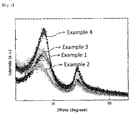
- Fig. 1 is a graph showing the XRD results of the porous boron nitride powder prepared according to Examples 1 to 4.
- Example 1 it can be seen that the powder prepared according Examples 1 to 4 has a typical turbostractic boron nitride structure wherein a (002) peak and a (10) peak appear. It can be also seen that Example 2 exhibits most amorphous property.
- Fig. 2 is a graph showing the nitrogen adsorption results of the porous boron nitride powder prepared according to Examples 1 to 4.
- ad denotes adsorption, and de denotes desorption.
- Example 1 exhibits a type IV adsorption curve according to IUPAC classification, proving that it has a mesoporous structure.
- Examples 2, 3 and 4 exhibit type I and type IV simultaneously, which means a structure wherein both micropores and mesopores exist.
Landscapes
- Chemical & Material Sciences (AREA)
- Organic Chemistry (AREA)
- Inorganic Chemistry (AREA)
- Engineering & Computer Science (AREA)
- Crystallography & Structural Chemistry (AREA)
- Nanotechnology (AREA)
- Manufacturing & Machinery (AREA)
- Ceramic Products (AREA)
- Solid-Sorbent Or Filter-Aiding Compositions (AREA)
- Catalysts (AREA)
Abstract
Description
- The present invention relates to porous boron nitride and a method for preparing the same. More particularly, the present invention relates to highly porous boron nitride with high specific surface area, and a method for preparing the same. This application claims the priority of Korean Patent Application No.
10-2012-0082716 - Carbon material is very useful material that is applied in many different industries such as a catalyst, a fuel cell, electrode material for a secondary cell, a super capacitor, composite materials, a gas sensor, a solar cell, various eletronic devices and the like. Carbon is being applied in a great variety of forms.
- Particularly, carbon fiber, carbon nanotube and the like have very excellent mechanical properties while having high conductivity, and for active carbon or amorphous carbon with very high specific surface area, due to the high porosity and stable property, a lot of studies are being progressed in the field of electrode material for a fuel cell and a secondary cell. And, it draws attention as gas storage material for fuel such as hydrocarbon and hydrogen and the like, or a separation body that can purify contaminated area or harmful gas such as carbon dioxide and the like
- Recently, carbide derived carbon (CDC) is studied as porous carbon material, and is receiving lots of attention (Gogotsi et al. 1997 J. Mater. Chem.7:1841-1848; Boehm et al. Proc.12 th Biennial Conf. on Carbon 149-150 (Pergamon, Oxford, 1975). Most amorphous CDC has micropores of 2 nm or less, and thus, it was reported to selectively produce 0.6-0.9 nm pores that are ideal for hydrogen storage.
- However, mesopores of 2nm or more are also in great demand in various industries such as semiconductor or large gas storage, adsorption body of medical therapeutics or lubricant adsorbent and the like.
- Recently, control of pore volume as well as control of specific surface area and pore size draws attention as more important property. Thus, in order to control pores, CDC synthesis was attempted using various raw materials. As the raw materials of CDC, most carbides such as TiC, ZrC, WC, SiC, TaC, B4C, HfC, Al4C3 and the like were used, but noticeable result according to the kind of metal atoms of carbide was not obtained, and CDC that can form mesopores of 2 nm or more has not been reported yet.
- Boron nitride(BN) theoretically has bond energy of 1.5 or more times compared to the carbonous materials. This results from hetero-polarity of boron nitride, and the bond energy of carbonous material is 0.05∼0.06ev/atom while the bond energy of BN is 0.09∼0.1ev/atom. A lot of studies have been reported thereon, and a template method and a substitution method are major synthesis methods currently known. However, the specific surface area(SSA) of boron nitrides so far reported is very low compared to carbonous materials. If a measure to effectively increase the specific surface area is secured, boron nitride material could replace various pore materials including carbonous materials.
- In order to solve the problems of the prior art, it is an object of the invention to provide porous boron nitride with high specific surface area including micropores and mesopores.
- It is another object of the invention to provide a method for preparing the porous boron nitride.
- The present invention provides porous boron nitride comprising micropores with a diameter of less than 2 nm and mesopores with a diameter of 2 to 50 nm.
- The present invention also provides a method for preparing porous boron nitride comprising the steps of:
- mixing at least one boron source selected from boron or boron-containing compounds with at least one nitrogen source selected from nitrogen or nitrogen-containing compounds;
- heating the mixture and reacting it with halogen gas; and
- heating the reaction mixture under hydrogen atmosphere.
-
-
Fig. 1 is a graph showing the XRD results of the boron nitride powder prepared according to Examples 1 to 4. -
Fig. 2 is a graph showing the nitrogen adsorption results of the boron nitride powder prepared according to Examples 1 to 4. - The porous boron nitrogen of the present invention may be usefully used in various application fields requiring relatively large pores, by including micropores with a diameter less than 2 nm and mesopores with a diameter of 2 nm or more.
- And, according to the preparation method of boron nitride of the present invention, porous boron nitride having pores and specific surface areas of various sizes according to the application may be easily prepared by a simple method.
- The porous boron nitride of the present invention comprises micropores with a diameter of less than 2 nm and mesopores with a diameter of 2 to 50 nm.
- And, the present invention provides a method for preparing porous boron nitride comprising the steps of: mixing at least one boron source selected from boron or boron-containing compounds with at least one nitrogen source selected from nitrogen or nitrogen-containing compounds; heating the mixture and reacting it with halogen gas; and heating the reaction mixture under hydrogen atmosphere.
- Hereinafter, the porous boron nitride and a method of preparing the same will be explained in detail with reference to drawings.
- According to one aspect of the invention, provided is porous boron nitride comprising micropores with a diameter of less than 2 nm and mesopores with a diameter of 2 to 50 nm.
- The porous boron nitride of the present invention may be obtained by a similar method to carbide derived carbon(CDC). The carbide derived carbon is prepared by thermochemically reacting a carbide compound with halogen-containing gas to extract elements other than carbon in the carbide compound, and is drawing attention because it exhibits satisfactory properties as hydrogen storage material and electrode material compared to the existing activated carbon.
- Although porous boron nitride having micropores less than 2 nm is known, porous boron nitride having mesopores of 2 nm or more has not been reported yet.
- As used herein, micropores mean pores having a diameter less than about 2 nm, and mesopores mean pores having a diameter of about 2 nm or more, for example, about 2 to 50 nm.
- On the surface of the porous boron nitride of the present invention, a plurality of pores that include both micropores and mesopores are formed.
- As explained above, since the porous boron nitride of the present invention includes both micropores less than 2 nm and mesopores of 2 nm or more, it may be usefully used in various application fields including the field requiring relatively large pores, for example, storage of larger gas than hydrogen, adsorption body of medical therapeutics or lubricant adsorbent, a catalyst, an electrode of a super capacitor, a filter, and the like, as well as storage and adsorption of small gas such as hydrogen.
- And, in the porous boron nitride of the present invention, the volume fraction of the micropores may be about 30% or more, for example about 30 to about 90%, preferably about 40% to about 80%, based on the total volume of the pores including micropores and mesopores. The volume of the pores is measured by introducing nitrogen gas from 0 to 1 atm and converting the amount of adsorbed nitrogen into volume, while maintaining a constant temperature, for example, maintaining 77K using liquid nitrogen. Wherein, the volume ratio of the pores may be calculated by dividing the volume of the pores by the total volume, based on the pores full of gas.
- According to one example of the invention, the porous boron nitride may comprise micropores in the content of about 0.1 to about 0.4 cm3/g, and comprise mesopores in the content of about 0.4 to about 0.7 cm3/g.
- According to one embodiment of the invention, the porous boron nitride may have specific surface area of about 300 m2/g or more, for example, about 300 to about 1,200 m2/g, preferably about 500 to about 1,200 m2/g, more preferably about 600 to about 1,000 m2/g. The specific surface area may be calculated by the following
Calculation Formula 1, on the assumption that nitrogen is adsorbed into a monomolecular layer under each pressure condition while introducing nitrogen gas from 0 atm to 1 atm, while maintaining a constant temperature, for example, maintaining 77K using liquid nitrogen.
- (SSA = specific surface area[m2/g], Vmono = measurement volume of nitrogen adsorbed into a monomolecular layer per gram of pore[m3/g], 22400 = volume of 1mol nitrogen[m3/mol], =cross sectional area of nitrogen [m2/atom], N=Avogadro's number[atom/mol])
- The porous boron nitride may be obtained by mixing at least one boron source selected from boron or boron-containing compounds with at least one nitrogen source selected from nitrogen or nitrogen-containing compounds, heating the mixture to form a compound, and extracting elements other than boron and nitrogen, as described in detail below.
- According to another aspect of the invention, provided is a method for preparing porous boron nitride comprising the steps of: mixing at least one boron source selected from boron or boron-containing compounds with at least one nitrogen source selected from nitrogen or nitrogen-containing compounds; heating the mixture and reacting it with halogen gas; and heating the reaction mixture under hydrogen atmosphere.
- According to one example of the invention, the boron source may be a boron metal compound such as TiB2, and the nitrogen source may be a nitrogen metal compound such as TiN.
- The compositional ratio of the boron source and the nitrogen source may be controlled such that the stoichiometry of the boron atom(B) and the nitrogen atom(N) may substantially become 1:1, namely, a boron-nitride bond may be made.
- Conventionally, porous boron nitride was synthesized by mixing highly porous carbon material with boron oxide and then substituting at high temperature of about 1,500°C under nitrogen atmosphere. Alternatively, a template method using a boron precursor wherein zeolite, highly porous carbon material is used as a parent body was known. However, these methods have disadvantages in that synthesis should be progressed at very high temperature, an expensive precursor is required, and high purity cannot be obtained without appropriate post-treatment. However, according to the method of preparing porous boron nitride of the present invention, porous boron nitride having pores and specific surface areas of various sizes according to the application may be easily prepared at relatively low temperature using an inexpensive precursor by a simple method.
- According to one embodiment of the invention, simultaneously with or after the step of mixing the boron source with the nitrogen source, a pulverization process may be conducted. The pulverization process may be conducted, for example, using a high energy ball mill. By using the high energy ball mill, the mixture of the boron source and the nitrogen source may be more uniformly mixed, and since the mixture is pulverized with higher energy than a common ball mill, the amount of defects may be increased to stably prepare porous material.
- When pulverization is conducted using the high energy ball mill, for example, means such as an attritor mill, a planetary mill or a horizontal mill and the like may be used, and it is preferable to conduct dry pulverization at a BPR (ball-to-power ratio) of about 10:1 or more, and a milling speed of about 50rpm or more.
- The step of reacting the mixture with halogen gas may be conducted at a temperature of about 300 to about 1,200°C for about 5 minutes to about 5 hours, preferably about 600 to about 800°C for about 1 to about 4 hours. Wherein, the halogen gas used may be preferably chlorine gas.
- By reacting the mixture with halogen gas, elements other than boron and nitrogen are extracted in the mixture, thus forming pores at the sites of these elements, thereby obtaining porous boron nitride.
- According to one embodiment of the invention, after the step of reacting the compound represented by the
Formula 1 with halogen gas, the step of heating at a temperature of about 400 to about 1,000°C, preferably about 400 to about 800°C under hydrogen atmosphere is conducted, thereby removing remaining halogen gas. - And, according to one embodiment of the invention, after the step of heating under hydrogen atmosphere to remove remaining halogen gas, the step of activating pores may be further conducted.
- By conducting the step of activating pores, more pores may be generated on the surface, or the diameter of pores may be increased, thus more increasing surface area per unit mass.
- According to one embodiment of the invention, the step of activating pores may be conducted by heating porous boron nitride powder until a specific temperature, for example, about 25 to about 1,000°C is reached, in the atmosphere of at least one gas selected from the group consisting of inert gas such as He or Ar and N2 gas, and heating at the reached temperature for a specific time, for example, about 10 minutes to about 2 hours, using carbon dioxide gas(CO2). By using inert gas before introducing carbon dioxide, pore activation may be effectively achieved.
- Hereinafter, the present invention will be explained in detail with reference to the following examples. However, these examples are only to illustrate the invention, and the scope of the invention is not limited thereto.
- 1.0788 g of TiE2 and 1.9212 g of TiN were prepared and mixed so that the ratio of B and N may be close to 1:1 and the soichiometric ratio of the elements may form a Boron-Nitride bond.
- The mixture was dry-pulverized with a Planetary mill at 250rpm at BPR(Ball-to-Powder Ratio) of 30:1 for 20 hours using a YSZ(Yittrium Stabilized Zirconia) ball.
- 3.00g of the prepared compound powder was treated with chlorine gas at 500°C for 3 hours, and then, heated at 600°C for 2 hours under hydrogen atmosphere, thereby removing remaining chlorine gas to obtain porous boron nitride powder.
- Porous boron nitride powder was prepared by the same method as Example 1, except that the chlorine gas treatment temperature was changed.
- The specific surface area(SSA), the volume of micropores and the volume of mesopores of the porous carbon according to each Example were measured and the results are shown in the following Table 1.
[Table 1] ExampleNo. Chlorine gas treatment temperature (°C) Raw materials (gram/batch) Specific surface area (m2/g) micropores (cm3/g) mesopores (cm3/g) TiB2 TiN 1 500 1.0788g 1.9212g 334 0.14 0.34 2 600 960 0.38 0.28 3 700 795 0.31 0.18 4 800 570 0.22 0.18 - From the Table 1, it can be seen that total specific surface area(SSA) is in proportion to the volume of micropores.
-
Fig. 1 is a graph showing the XRD results of the porous boron nitride powder prepared according to Examples 1 to 4. - Referring to
Fig. 1 , it can be seen that the powder prepared according Examples 1 to 4 has a typical turbostractic boron nitride structure wherein a (002) peak and a (10) peak appear. It can be also seen that Example 2 exhibits most amorphous property. -
Fig. 2 is a graph showing the nitrogen adsorption results of the porous boron nitride powder prepared according to Examples 1 to 4. InFig. 2 , ad denotes adsorption, and de denotes desorption. - Referring to
Fig. 2 , Example 1 exhibits a type IV adsorption curve according to IUPAC classification, proving that it has a mesoporous structure. To the contrary, Examples 2, 3 and 4 exhibit type I and type IV simultaneously, which means a structure wherein both micropores and mesopores exist. - The hysteresis loops shown in the desorption curve of Examples 2 and 3 also prove that they have mesoporous structures.
Claims (12)
- Porous boron nitride comprising micropores with a diameter of less than 2 nm and mesopores with a diameter of 2 to 50 nm.
- The porous boron nitride according to claim 1, wherein the porous boron nitride comprises mesopores in the content of 0.4 to 0.7 cm3/g.
- The porous boron nitride according to claim 1, wherein the porous boron nitride comprises micropores in the content of 0.1 to 0.4 cm3/g.
- The porous boron nitride according to claim 3, wherein the volume ratio of the mesopores is 30% or more, based on the total volume of the pores including micropores and mesopores.
- The porous boron nitride according to claim 1, wherein the porous boron nitride has a specific surface area of 300 to 1,200m2/g.
- A method for preparing porous boron nitride comprising the steps of:mixing at least one boron source selected from boron or boron-containing compounds with at least one nitrogen source selected from nitrogen or nitrogen-containing compounds;heating the mixture and reacting it with halogen gas; andheating the reaction mixture under hydrogen atmosphere.
- The method according to claim 6, wherein the boron source is TiB2, and the nitrogen source is TiN.
- The method according to claim 6, further comprising the step of pulverizing the mixture, simultaneously with or after the step of mixing the boron source with the nitrogen source.
- The method according to claim 8, wherein the step of pulverizing the mixture is conducted using a high energy ball mill.
- The method according to claim 6, wherein the halogen gas is chlorine(Cl2) gas.
- The method according to claim 6, wherein the step of reacting the mixture with halogen gas is conducted at a temperature of 300 to 1,200°C for 5 minutes to 5 hours.
- The method according to claim 6, wherein the step of heating under hydrogen atmosphere is conducted at a temperature of 400 to 1,000°C.
Applications Claiming Priority (2)
| Application Number | Priority Date | Filing Date | Title |
|---|---|---|---|
| KR1020120082716A KR101412774B1 (en) | 2012-07-27 | 2012-07-27 | Porous boron nitride and method for preparing the same |
| PCT/KR2013/006639 WO2014017835A1 (en) | 2012-07-27 | 2013-07-24 | Porous boron nitride and method for manufacturing same |
Publications (3)
| Publication Number | Publication Date |
|---|---|
| EP2878578A1 true EP2878578A1 (en) | 2015-06-03 |
| EP2878578A4 EP2878578A4 (en) | 2016-09-28 |
| EP2878578B1 EP2878578B1 (en) | 2017-08-23 |
Family
ID=49997573
Family Applications (1)
| Application Number | Title | Priority Date | Filing Date |
|---|---|---|---|
| EP13823064.4A Active EP2878578B1 (en) | 2012-07-27 | 2013-07-24 | Method for manufacturing porous boron nitride |
Country Status (5)
| Country | Link |
|---|---|
| US (1) | US9796595B2 (en) |
| EP (1) | EP2878578B1 (en) |
| JP (1) | JP5916953B2 (en) |
| KR (1) | KR101412774B1 (en) |
| WO (1) | WO2014017835A1 (en) |
Cited By (2)
| Publication number | Priority date | Publication date | Assignee | Title |
|---|---|---|---|---|
| WO2018167507A1 (en) * | 2017-03-17 | 2018-09-20 | Imperial Innovations Limited | Porous boron nitride |
| EP3820811A4 (en) * | 2018-07-11 | 2022-05-11 | National Research Council of Canada | BNNT PURIFICATION METHOD AND APPARATUS |
Families Citing this family (2)
| Publication number | Priority date | Publication date | Assignee | Title |
|---|---|---|---|---|
| GB2532043B (en) | 2014-11-06 | 2021-04-14 | Honeywell Technologies Sarl | Methods and devices for communicating over a building management system network |
| KR102804260B1 (en) * | 2022-12-20 | 2025-05-07 | 중앙대학교 산학협력단 | Porous boron nitride, heat dissipation epoxy composite and method of manufacturing these |
Family Cites Families (17)
| Publication number | Priority date | Publication date | Assignee | Title |
|---|---|---|---|---|
| DE342047C (en) * | 1919-03-22 | 1921-10-12 | Friedrich Meyer Dr | Process and device for the production of pure boron nitride |
| FR1065685A (en) * | 1951-08-25 | 1954-05-28 | Cie Des Meules Norton | Boron nitride manufacturing process |
| US3837997A (en) | 1971-03-16 | 1974-09-24 | Carborundum Co | Boron nitride products |
| US4014979A (en) | 1971-07-19 | 1977-03-29 | Anatoly Nikolaevich Dremin | Method of producing wurtzite-like boron nitride |
| US4402925A (en) | 1981-09-28 | 1983-09-06 | Union Carbide Corporation | Porous free standing pyrolytic boron nitride articles |
| US5096740A (en) * | 1990-01-23 | 1992-03-17 | Sumitomo Electric Industries, Ltd. | Production of cubic boron nitride films by laser deposition |
| US5053365A (en) * | 1990-02-28 | 1991-10-01 | The Ohio State University Research Foundation | Method for the low temperature preparation of amorphous boron nitride using alkali metal and haloborazines |
| US5169613A (en) * | 1991-02-06 | 1992-12-08 | The Ohio State University Research Foundation | Method for the preparation of boron nitride using ammonia-monohaloborane |
| JP2927149B2 (en) | 1993-08-05 | 1999-07-28 | 日本鋼管株式会社 | Method for producing boron nitride-containing inorganic material |
| RU94032296A (en) | 1994-09-07 | 1996-07-20 | Обнинское научно-производственное предприятие "Технология" | Method for manufacturing ceramic article based on boron nitride |
| SE519862C2 (en) | 1999-04-07 | 2003-04-15 | Sandvik Ab | Methods of manufacturing a cutting insert consisting of a PcBN body and a cemented carbide or cermet body |
| JP2003509578A (en) * | 1999-09-21 | 2003-03-11 | サンーゴバン セラミックス アンド プラスティクス,インコーポレイティド | Thermally conductive materials in hydrophobic compounds for thermal management |
| CN1101337C (en) | 2001-07-10 | 2003-02-12 | 山东大学 | Prepn. of nanometer boron nitride micro powder |
| JP3890408B2 (en) | 2002-11-27 | 2007-03-07 | 独立行政法人物質・材料研究機構 | Method for producing boron nitride nanotubes for hydrogen storage |
| JP4803422B2 (en) * | 2005-07-22 | 2011-10-26 | 独立行政法人物質・材料研究機構 | Boron nitride porous body and method for producing the same |
| US7745362B2 (en) | 2006-08-11 | 2010-06-29 | General Electric Company | Metal-containing structured ceramic materials |
| CN101602497A (en) | 2009-07-03 | 2009-12-16 | 山东大学 | One-step template-free low-temperature preparation of porous boron nitride |
-
2012
- 2012-07-27 KR KR1020120082716A patent/KR101412774B1/en active Active
-
2013
- 2013-07-24 JP JP2015524180A patent/JP5916953B2/en active Active
- 2013-07-24 US US14/417,296 patent/US9796595B2/en active Active
- 2013-07-24 WO PCT/KR2013/006639 patent/WO2014017835A1/en not_active Ceased
- 2013-07-24 EP EP13823064.4A patent/EP2878578B1/en active Active
Cited By (3)
| Publication number | Priority date | Publication date | Assignee | Title |
|---|---|---|---|---|
| WO2018167507A1 (en) * | 2017-03-17 | 2018-09-20 | Imperial Innovations Limited | Porous boron nitride |
| EP3820811A4 (en) * | 2018-07-11 | 2022-05-11 | National Research Council of Canada | BNNT PURIFICATION METHOD AND APPARATUS |
| US12172889B2 (en) | 2018-07-11 | 2024-12-24 | National Research Council Of Canada | Process and apparatus for purifying BNNT |
Also Published As
| Publication number | Publication date |
|---|---|
| US9796595B2 (en) | 2017-10-24 |
| KR20140015986A (en) | 2014-02-07 |
| EP2878578B1 (en) | 2017-08-23 |
| US20150246821A1 (en) | 2015-09-03 |
| JP2015522520A (en) | 2015-08-06 |
| JP5916953B2 (en) | 2016-05-11 |
| KR101412774B1 (en) | 2014-07-02 |
| WO2014017835A1 (en) | 2014-01-30 |
| EP2878578A4 (en) | 2016-09-28 |
| CN104507862A (en) | 2015-04-08 |
Similar Documents
| Publication | Publication Date | Title |
|---|---|---|
| US9919924B2 (en) | Porous carbon and method of preparing the same | |
| Yu et al. | Ordered mesoporous nanocrystalline titanium‐carbide/carbon composites from in situ carbothermal reduction | |
| Taguchi et al. | Carbon monoliths possessing a hierarchical, fully interconnected porosity | |
| Marchesini et al. | Tunable porous boron nitride: Investigating its formation and its application for gas adsorption | |
| Krawiec et al. | Thermal stability of high surface area silicon carbide materials | |
| Yeon et al. | Enhanced volumetric hydrogen and methane storage capacity of monolithic carbide-derived carbon | |
| Borchardt et al. | Ordered mesoporous carbide-derived carbons prepared by soft templating | |
| EP2878578B1 (en) | Method for manufacturing porous boron nitride | |
| KR101759720B1 (en) | Porous carbon and method for preparing the same | |
| Asgarian et al. | The effect of different sources of porous carbon on the synthesis of nanostructured boron carbide by magnesiothermic reduction | |
| US9428390B2 (en) | Porous carbon and method of preparing the same | |
| Scalera et al. | Biomimetic calcium carbonate with hierarchical porosity produced using cork as a sustainable template agent | |
| Qiao et al. | A topotactic synthetic methodology for highly fluorine‐doped mesoporous metal oxides | |
| TWI865428B (en) | Method for producing activated carbon | |
| Nappini et al. | On-surface synthesis of different boron–nitrogen–carbon heterostructures from dimethylamine borane | |
| Feng et al. | Fabrication of N-doped highly ordered mesoporous polymers and carbons | |
| Saher et al. | Sm-Doped Ba3MoNbO8. 5-δ Hexagonal Perovskite Membranes with Enhanced Oxygen Permeation and Structural Stability for Solid Oxide Fuel Cells | |
| CN104507862B (en) | Porous boron nitride and preparation method of the porous boron nitride | |
| WO2022175694A1 (en) | Porous boron nitride | |
| Lu et al. | Synthesis of ordered mesoporous carbon containing highly dispersed copper–sulphur compounds in the carbon framework via a nanocasting route | |
| Hentschel et al. | Zirconium (IV) and hafnium (IV) coordination polymers with a tetra-acetyl-ethane (Bisacac) ligand: Synthesis, structure elucidation and gas sorption behavior | |
| Han et al. | Foam-gelcasting combined with catalytic nitridation preparation of Si3N4/BN porous ceramics with hierarchical pore structures for efficient ciprofloxacin and atenolol removal | |
| Lee et al. | Isomorphous substitution of copper in nickel phosphate and their separation of propylene over propane | |
| Kleitz et al. | Structure and properties of porous mesostructured zirconium oxo-phosphate with cubic (Ia3d) symmetry |
Legal Events
| Date | Code | Title | Description |
|---|---|---|---|
| PUAI | Public reference made under article 153(3) epc to a published international application that has entered the european phase |
Free format text: ORIGINAL CODE: 0009012 |
|
| 17P | Request for examination filed |
Effective date: 20150216 |
|
| AK | Designated contracting states |
Kind code of ref document: A1 Designated state(s): AL AT BE BG CH CY CZ DE DK EE ES FI FR GB GR HR HU IE IS IT LI LT LU LV MC MK MT NL NO PL PT RO RS SE SI SK SM TR |
|
| AX | Request for extension of the european patent |
Extension state: BA ME |
|
| DAX | Request for extension of the european patent (deleted) | ||
| RIC1 | Information provided on ipc code assigned before grant |
Ipc: C01B 35/14 20060101AFI20160415BHEP |
|
| RIC1 | Information provided on ipc code assigned before grant |
Ipc: C01B 35/14 20060101AFI20160818BHEP |
|
| RA4 | Supplementary search report drawn up and despatched (corrected) |
Effective date: 20160829 |
|
| GRAP | Despatch of communication of intention to grant a patent |
Free format text: ORIGINAL CODE: EPIDOSNIGR1 |
|
| INTG | Intention to grant announced |
Effective date: 20170425 |
|
| GRAS | Grant fee paid |
Free format text: ORIGINAL CODE: EPIDOSNIGR3 |
|
| GRAA | (expected) grant |
Free format text: ORIGINAL CODE: 0009210 |
|
| AK | Designated contracting states |
Kind code of ref document: B1 Designated state(s): AL AT BE BG CH CY CZ DE DK EE ES FI FR GB GR HR HU IE IS IT LI LT LU LV MC MK MT NL NO PL PT RO RS SE SI SK SM TR |
|
| REG | Reference to a national code |
Ref country code: GB Ref legal event code: FG4D |
|
| REG | Reference to a national code |
Ref country code: CH Ref legal event code: EP |
|
| REG | Reference to a national code |
Ref country code: AT Ref legal event code: REF Ref document number: 921127 Country of ref document: AT Kind code of ref document: T Effective date: 20170915 |
|
| REG | Reference to a national code |
Ref country code: IE Ref legal event code: FG4D |
|
| REG | Reference to a national code |
Ref country code: DE Ref legal event code: R096 Ref document number: 602013025591 Country of ref document: DE |
|
| REG | Reference to a national code |
Ref country code: NL Ref legal event code: MP Effective date: 20170823 |
|
| REG | Reference to a national code |
Ref country code: LT Ref legal event code: MG4D |
|
| REG | Reference to a national code |
Ref country code: AT Ref legal event code: MK05 Ref document number: 921127 Country of ref document: AT Kind code of ref document: T Effective date: 20170823 |
|
| PG25 | Lapsed in a contracting state [announced via postgrant information from national office to epo] |
Ref country code: NO Free format text: LAPSE BECAUSE OF FAILURE TO SUBMIT A TRANSLATION OF THE DESCRIPTION OR TO PAY THE FEE WITHIN THE PRESCRIBED TIME-LIMIT Effective date: 20171123 Ref country code: NL Free format text: LAPSE BECAUSE OF FAILURE TO SUBMIT A TRANSLATION OF THE DESCRIPTION OR TO PAY THE FEE WITHIN THE PRESCRIBED TIME-LIMIT Effective date: 20170823 Ref country code: HR Free format text: LAPSE BECAUSE OF FAILURE TO SUBMIT A TRANSLATION OF THE DESCRIPTION OR TO PAY THE FEE WITHIN THE PRESCRIBED TIME-LIMIT Effective date: 20170823 Ref country code: SE Free format text: LAPSE BECAUSE OF FAILURE TO SUBMIT A TRANSLATION OF THE DESCRIPTION OR TO PAY THE FEE WITHIN THE PRESCRIBED TIME-LIMIT Effective date: 20170823 Ref country code: LT Free format text: LAPSE BECAUSE OF FAILURE TO SUBMIT A TRANSLATION OF THE DESCRIPTION OR TO PAY THE FEE WITHIN THE PRESCRIBED TIME-LIMIT Effective date: 20170823 Ref country code: FI Free format text: LAPSE BECAUSE OF FAILURE TO SUBMIT A TRANSLATION OF THE DESCRIPTION OR TO PAY THE FEE WITHIN THE PRESCRIBED TIME-LIMIT Effective date: 20170823 Ref country code: AT Free format text: LAPSE BECAUSE OF FAILURE TO SUBMIT A TRANSLATION OF THE DESCRIPTION OR TO PAY THE FEE WITHIN THE PRESCRIBED TIME-LIMIT Effective date: 20170823 |
|
| PG25 | Lapsed in a contracting state [announced via postgrant information from national office to epo] |
Ref country code: IS Free format text: LAPSE BECAUSE OF FAILURE TO SUBMIT A TRANSLATION OF THE DESCRIPTION OR TO PAY THE FEE WITHIN THE PRESCRIBED TIME-LIMIT Effective date: 20171223 Ref country code: BG Free format text: LAPSE BECAUSE OF FAILURE TO SUBMIT A TRANSLATION OF THE DESCRIPTION OR TO PAY THE FEE WITHIN THE PRESCRIBED TIME-LIMIT Effective date: 20171123 Ref country code: RS Free format text: LAPSE BECAUSE OF FAILURE TO SUBMIT A TRANSLATION OF THE DESCRIPTION OR TO PAY THE FEE WITHIN THE PRESCRIBED TIME-LIMIT Effective date: 20170823 Ref country code: LV Free format text: LAPSE BECAUSE OF FAILURE TO SUBMIT A TRANSLATION OF THE DESCRIPTION OR TO PAY THE FEE WITHIN THE PRESCRIBED TIME-LIMIT Effective date: 20170823 Ref country code: PL Free format text: LAPSE BECAUSE OF FAILURE TO SUBMIT A TRANSLATION OF THE DESCRIPTION OR TO PAY THE FEE WITHIN THE PRESCRIBED TIME-LIMIT Effective date: 20170823 Ref country code: ES Free format text: LAPSE BECAUSE OF FAILURE TO SUBMIT A TRANSLATION OF THE DESCRIPTION OR TO PAY THE FEE WITHIN THE PRESCRIBED TIME-LIMIT Effective date: 20170823 Ref country code: GR Free format text: LAPSE BECAUSE OF FAILURE TO SUBMIT A TRANSLATION OF THE DESCRIPTION OR TO PAY THE FEE WITHIN THE PRESCRIBED TIME-LIMIT Effective date: 20171124 |
|
| PG25 | Lapsed in a contracting state [announced via postgrant information from national office to epo] |
Ref country code: DK Free format text: LAPSE BECAUSE OF FAILURE TO SUBMIT A TRANSLATION OF THE DESCRIPTION OR TO PAY THE FEE WITHIN THE PRESCRIBED TIME-LIMIT Effective date: 20170823 Ref country code: CZ Free format text: LAPSE BECAUSE OF FAILURE TO SUBMIT A TRANSLATION OF THE DESCRIPTION OR TO PAY THE FEE WITHIN THE PRESCRIBED TIME-LIMIT Effective date: 20170823 Ref country code: RO Free format text: LAPSE BECAUSE OF FAILURE TO SUBMIT A TRANSLATION OF THE DESCRIPTION OR TO PAY THE FEE WITHIN THE PRESCRIBED TIME-LIMIT Effective date: 20170823 |
|
| REG | Reference to a national code |
Ref country code: DE Ref legal event code: R097 Ref document number: 602013025591 Country of ref document: DE |
|
| PG25 | Lapsed in a contracting state [announced via postgrant information from national office to epo] |
Ref country code: SK Free format text: LAPSE BECAUSE OF FAILURE TO SUBMIT A TRANSLATION OF THE DESCRIPTION OR TO PAY THE FEE WITHIN THE PRESCRIBED TIME-LIMIT Effective date: 20170823 Ref country code: IT Free format text: LAPSE BECAUSE OF FAILURE TO SUBMIT A TRANSLATION OF THE DESCRIPTION OR TO PAY THE FEE WITHIN THE PRESCRIBED TIME-LIMIT Effective date: 20170823 Ref country code: SM Free format text: LAPSE BECAUSE OF FAILURE TO SUBMIT A TRANSLATION OF THE DESCRIPTION OR TO PAY THE FEE WITHIN THE PRESCRIBED TIME-LIMIT Effective date: 20170823 Ref country code: EE Free format text: LAPSE BECAUSE OF FAILURE TO SUBMIT A TRANSLATION OF THE DESCRIPTION OR TO PAY THE FEE WITHIN THE PRESCRIBED TIME-LIMIT Effective date: 20170823 |
|
| PLBE | No opposition filed within time limit |
Free format text: ORIGINAL CODE: 0009261 |
|
| STAA | Information on the status of an ep patent application or granted ep patent |
Free format text: STATUS: NO OPPOSITION FILED WITHIN TIME LIMIT |
|
| REG | Reference to a national code |
Ref country code: FR Ref legal event code: PLFP Year of fee payment: 6 |
|
| 26N | No opposition filed |
Effective date: 20180524 |
|
| PG25 | Lapsed in a contracting state [announced via postgrant information from national office to epo] |
Ref country code: SI Free format text: LAPSE BECAUSE OF FAILURE TO SUBMIT A TRANSLATION OF THE DESCRIPTION OR TO PAY THE FEE WITHIN THE PRESCRIBED TIME-LIMIT Effective date: 20170823 |
|
| REG | Reference to a national code |
Ref country code: CH Ref legal event code: PL |
|
| PG25 | Lapsed in a contracting state [announced via postgrant information from national office to epo] |
Ref country code: MC Free format text: LAPSE BECAUSE OF FAILURE TO SUBMIT A TRANSLATION OF THE DESCRIPTION OR TO PAY THE FEE WITHIN THE PRESCRIBED TIME-LIMIT Effective date: 20170823 Ref country code: LU Free format text: LAPSE BECAUSE OF NON-PAYMENT OF DUE FEES Effective date: 20180724 |
|
| REG | Reference to a national code |
Ref country code: BE Ref legal event code: MM Effective date: 20180731 |
|
| REG | Reference to a national code |
Ref country code: IE Ref legal event code: MM4A |
|
| PG25 | Lapsed in a contracting state [announced via postgrant information from national office to epo] |
Ref country code: CH Free format text: LAPSE BECAUSE OF NON-PAYMENT OF DUE FEES Effective date: 20180731 Ref country code: IE Free format text: LAPSE BECAUSE OF NON-PAYMENT OF DUE FEES Effective date: 20180724 Ref country code: LI Free format text: LAPSE BECAUSE OF NON-PAYMENT OF DUE FEES Effective date: 20180731 |
|
| PG25 | Lapsed in a contracting state [announced via postgrant information from national office to epo] |
Ref country code: BE Free format text: LAPSE BECAUSE OF NON-PAYMENT OF DUE FEES Effective date: 20180731 |
|
| PG25 | Lapsed in a contracting state [announced via postgrant information from national office to epo] |
Ref country code: MT Free format text: LAPSE BECAUSE OF NON-PAYMENT OF DUE FEES Effective date: 20180724 |
|
| PG25 | Lapsed in a contracting state [announced via postgrant information from national office to epo] |
Ref country code: TR Free format text: LAPSE BECAUSE OF FAILURE TO SUBMIT A TRANSLATION OF THE DESCRIPTION OR TO PAY THE FEE WITHIN THE PRESCRIBED TIME-LIMIT Effective date: 20170823 |
|
| PG25 | Lapsed in a contracting state [announced via postgrant information from national office to epo] |
Ref country code: HU Free format text: LAPSE BECAUSE OF FAILURE TO SUBMIT A TRANSLATION OF THE DESCRIPTION OR TO PAY THE FEE WITHIN THE PRESCRIBED TIME-LIMIT; INVALID AB INITIO Effective date: 20130724 Ref country code: PT Free format text: LAPSE BECAUSE OF FAILURE TO SUBMIT A TRANSLATION OF THE DESCRIPTION OR TO PAY THE FEE WITHIN THE PRESCRIBED TIME-LIMIT Effective date: 20170823 |
|
| PG25 | Lapsed in a contracting state [announced via postgrant information from national office to epo] |
Ref country code: CY Free format text: LAPSE BECAUSE OF FAILURE TO SUBMIT A TRANSLATION OF THE DESCRIPTION OR TO PAY THE FEE WITHIN THE PRESCRIBED TIME-LIMIT Effective date: 20170823 Ref country code: MK Free format text: LAPSE BECAUSE OF NON-PAYMENT OF DUE FEES Effective date: 20170823 |
|
| PG25 | Lapsed in a contracting state [announced via postgrant information from national office to epo] |
Ref country code: AL Free format text: LAPSE BECAUSE OF FAILURE TO SUBMIT A TRANSLATION OF THE DESCRIPTION OR TO PAY THE FEE WITHIN THE PRESCRIBED TIME-LIMIT Effective date: 20170823 |
|
| PGFP | Annual fee paid to national office [announced via postgrant information from national office to epo] |
Ref country code: DE Payment date: 20250618 Year of fee payment: 13 |
|
| PGFP | Annual fee paid to national office [announced via postgrant information from national office to epo] |
Ref country code: GB Payment date: 20260615 Year of fee payment: 14 |
|
| PGFP | Annual fee paid to national office [announced via postgrant information from national office to epo] |
Ref country code: FR Payment date: 20260629 Year of fee payment: 14 |