EP2876848B1 - Method, network device and system for sending and receiving packets - Google Patents
Method, network device and system for sending and receiving packets Download PDFInfo
- Publication number
- EP2876848B1 EP2876848B1 EP13833221.8A EP13833221A EP2876848B1 EP 2876848 B1 EP2876848 B1 EP 2876848B1 EP 13833221 A EP13833221 A EP 13833221A EP 2876848 B1 EP2876848 B1 EP 2876848B1
- Authority
- EP
- European Patent Office
- Prior art keywords
- fragment
- hello
- packet
- information
- network device
- Prior art date
- Legal status (The legal status is an assumption and is not a legal conclusion. Google has not performed a legal analysis and makes no representation as to the accuracy of the status listed.)
- Not-in-force
Links
Images




Classifications
-
- H—ELECTRICITY
- H04—ELECTRIC COMMUNICATION TECHNIQUE
- H04L—TRANSMISSION OF DIGITAL INFORMATION, e.g. TELEGRAPHIC COMMUNICATION
- H04L45/00—Routing or path finding of packets in data switching networks
- H04L45/74—Address processing for routing
-
- H—ELECTRICITY
- H04—ELECTRIC COMMUNICATION TECHNIQUE
- H04L—TRANSMISSION OF DIGITAL INFORMATION, e.g. TELEGRAPHIC COMMUNICATION
- H04L47/00—Traffic control in data switching networks
- H04L47/10—Flow control; Congestion control
- H04L47/34—Flow control; Congestion control ensuring sequence integrity, e.g. using sequence numbers
-
- H—ELECTRICITY
- H04—ELECTRIC COMMUNICATION TECHNIQUE
- H04L—TRANSMISSION OF DIGITAL INFORMATION, e.g. TELEGRAPHIC COMMUNICATION
- H04L45/00—Routing or path finding of packets in data switching networks
- H04L45/66—Layer 2 routing, e.g. in Ethernet based MAN's
-
- H—ELECTRICITY
- H04—ELECTRIC COMMUNICATION TECHNIQUE
- H04L—TRANSMISSION OF DIGITAL INFORMATION, e.g. TELEGRAPHIC COMMUNICATION
- H04L45/00—Routing or path finding of packets in data switching networks
- H04L45/02—Topology update or discovery
- H04L45/026—Details of "hello" or keep-alive messages
Definitions
- the present invention relates to the field of communications technology, and in particular, to a method, network device, and system for sending and receiving a packet.
- Transparent interconnection of lots of links is a Layer 2 network standard recommended by the Internet Engineering Task Force (Internet Engineering Task Force, IETF) and is a type of routing protocol based on link state calculation on a Layer 2 network.
- each router bridge (Router Bridge, RB) device interacts with other RB devices on the network by using a Hello (Hello) packet.
- one RB is selected as a designated router bridge (Designated Router Bridge, DRB), which is responsible for completing such functions as appointed forwarder (Appointed Forwarder, AF) and designated virtual local area network (Designated Virtual Local Area Network, Designated VLAN) by sending the Hello packet.
- DRB Designated Router Bridge
- the TRILL protocol also regularly performs neighbor discovery and maintains a neighbor relationship on a link by using the Hello packet.
- the Hello packet may carry multiple pieces of type, length, and value (Type, Length, Value, TLV) information, such as enabled-VLANs sub-TLV (Enabled-VLANs Sub-TLV) information, appointed forwarders sub-TLV (Appointed Forwarders Sub-TLV) information, and TRILL neighbor TLV (TRILL Neighbor TLV) information.
- Type, Length, Value, TLV Type, Length, Value, TLV
- TLV Type, Length, Value, TLV
- enabled-VLANs sub-TLV Enabled-VLANs Sub-TLV
- appointed forwarders sub-TLV Appointed Forwarders Sub-TLV
- TRILL Neighbor TLV TRILL Neighbor TLV
- Embodiments of the present invention provide a method, network device, and system for sending and receiving a packet, to reduce network bandwidth occupied to send a Hello packet on a TRILL network, so as to avoid a problem that normal sending of service packets is severely affected on the TRILL network because the network bandwidth occupied to send the Hello packet grows larger while available bandwidth for other service packets becomes smaller.
- a method for sending a Hello packet on a TRILL network includes:
- the method further includes:
- a second possible implementation manner of the first aspect is further provided, where the determining that the fragment brief information of the first Hello packet is different from fragment brief information of the second Hello packet saved on the second network device, includes:
- a third possible implementation manner of the first aspect is further provided, where the sending a Hello fragment packet corresponding to the first Hello packet to the second network device, includes:
- a fourth possible implementation manner of the first aspect is further provided, where the request packet includes a first fragment ID, and the first fragment ID meets the following conditions:
- a method for receiving a Hello packet on a TRILL network includes:
- the second network device determines that the fragment brief information of the first Hello packet is different from saved fragment brief information of the second Hello packet, includes:
- a second possible implementation manner of the second aspect is further provided, where the receiving the Hello fragment packet that is corresponding to the first Hello packet and is sent by the first network device, includes:
- a third possible implementation manner of the second aspect is further provided, where the request packet includes a first fragment ID, and the first fragment ID meets the following conditions:
- a network device for sending a Hello packet on a TRILL network includes:
- the fragmenting unit is further configured to: set the content identifier of the n th Hello fragment packet corresponding to the first Hello packet to be the same as the content identifier of the n th Hello fragment packet corresponding to the second Hello packet when the content of the n th Hello fragment packet corresponding to the first Hello packet is the same as the content of the n th Hello fragment packet corresponding to the second packet; and set the content identifier of the n th Hello fragment packet of the m Hello fragment packets to an initial value when the n th Hello fragment packet exists in the m Hello fragment packets but the n th Hello fragment packet does not exist in the p Hello fragment packets.
- a second possible implementation manner of the third aspect is further provided, where the sending, by the second sending unit, a Hello fragment packet corresponding to the first Hello packet to the second network device, includes:
- a third possible implementation manner of the third aspect is further provided, where the request packet includes a first fragment ID, and the first fragment ID meets the following conditions:
- a network device for receiving a Hello packet on a TRILL network includes:
- the receiving, by the second receiving unit, the Hello fragment packet that is corresponding to the first Hello packet and is sent by the first network device includes:
- the request packet includes a first fragment ID
- the first fragment ID meets the following conditions:
- a system for sending and receiving a Hello packet on a TRILL network includes a first network device and a second network device, where the first network device includes:
- the first network device after a first network device fragments a first Hello packet, the first network device sends fragment brief information of the first Hello packet to a second network device, where the fragment brief information of the first Hello packet includes a fragment ID and a content identifier of each Hello fragment packet.
- the second network device determines that the fragment brief information of the first Hello packet is different from fragment brief information of a second Hello packet
- the second network device sends a request message to the first network device to request for a Hello fragment packet that is not saved on the second network device
- the first network device does not need to resend the fragment packet of the first Hello packet to the second network device, thereby reducing network bandwidth occupied to send the Hello packet
- the first network device only needs to send the Hello fragment packet that is not saved on the second network device to the second network device, thereby also reducing the network bandwidth occupied to send the Hello packet.
- an embodiment of the present invention provides a method for sending a Hello packet on a TRILL network.
- the method includes the following content:
- the preset packet fragmentation manner includes a fragment ID allocation manner.
- the fragment ID allocation manner different positive integers may be allocated according to a fragmentation sequence. For example, a fragment ID 1 is allocated to a first fragment packet, a fragment ID 2 is allocated to a second fragment packet, and so on. In this way, a different fragment ID is allocated to each fragment packet.
- the content of the nth Hello fragment packet corresponding to the first Hello packet is different from the content of the nth Hello fragment packet corresponding to the second Hello packet.
- the content identifier may be a character string representing certain meanings, or may be a natural number.
- a content identifier of each Hello fragment packet of the second Hello packet may be set to an initial value 0; when the content identifier of the n th Hello fragment packet corresponding to the first Hello packet is different from the content identifier of the n th Hello fragment packet corresponding to the second Hello packet, the content identifier of the n th Hello fragment packet corresponding to the first Hello packet is set to 1.
- a content identifier of a Hello packet corresponding to a certain fragment ID increases, within a specific range, in a sequence of natural numbers, and the content identifier is reallocated from 0 when a value of the content identifier exceeds the specific range.
- the content identifier of the nth Hello fragment packet corresponding to the first Hello packet is set to be the same as the content identifier of the nth Hello fragment packet corresponding to the second Hello packet.
- the content identifier of the n th Hello fragment packet of the m Hello fragment packets is set to an initial value, for example, a natural number 0.
- the first network device sends fragment brief information of the first Hello packet to a second network device, where the fragment brief information of the first Hello packet includes fragment information of each Hello fragment packet of the m Hello fragment packets, and the fragment information includes the fragment ID and the content identifier.
- the fragment brief information of the first Hello packet may be encapsulated in a fragment brief information TLV manner, where a fragment brief information TLV may be carried in a Hello packet on the TRILL network, and a format of the fragment brief information TLV is shown in FIG. 2 , where:
- the first network device sends a Hello fragment packet corresponding to the first Hello packet to the second network device if the first network device receives a request packet sent by the second network device, where the request packet is sent after the second network device receives the fragment brief information of the first Hello packet and determines that the fragment brief information of the first Hello packet is different from fragment brief information of the second Hello packet saved on the second network device, and the fragment brief information of the second Hello packet includes the fragment information of each Hello fragment packet of the p Hello fragment packets.
- the determining that the fragment brief information of the first Hello packet is different from the fragment brief information of the second Hello packet saved on the second network device includes:
- the second network device when the first network device does not receive a request message, which indicates that the content of the second Hello packet saved on the second network device is the same as the content of the first Hello packet, the second network device does not need to request to obtain, from the first network device, the Hello fragment packet of the first Hello packet. This avoids a problem that network bandwidth is occupied by the first Hello packet sent by the first network device to the second network device even when the content of the second Hello packet saved on the second network device is the same as the content of the first Hello packet.
- the second network device only needs to determine that the fragment brief information of the first Hello packet is different from the fragment brief information of the second Hello packet, but does not need to determine which fragment information is different.
- the second network device sends the request message to the first network device.
- the first network device receives the request message, it indicates that the content of the second Hello packet saved on the second network device is different from the content of the first Hello packet.
- the sending, by the first network device, a Hello fragment packet corresponding to the first Hello packet to the second network device includes:
- a format of the request packet may be encapsulated in the TLV manner and may be carried in the Hello packet on the TRILL network.
- the format of the request packet is shown in FIG. 3 , where:
- the request packet may further include a first fragment ID, and the first fragment ID meets the following conditions:
- the request packet may include fragment IDs of the plurality of Hello fragment packets.
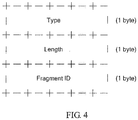
- the format of request packet TLV is shown in FIG. 4 , where:
- the first network device only needs to send the Hello fragment packet corresponding to the fragment ID included in the request packet to the second network device. This avoids a problem that network bandwidth is occupied by all the Hello fragment packets corresponding to the first Hello packet, which are sent by the first network device to the second network device, even when the content of the second Hello packet saved on the second network device is only partially different from the content of the first Hello packet.
- a first network device after fragmenting a first Hello packet, sends fragment brief information of the first Hello packet to a second network device; when determining that the fragment brief information of the first Hello packet is different from last received fragment brief information of a second Hello packet, the second network device sends a request message to the first network device to request to send a fragment packet of the first Hello packet to the second network device.
- an embodiment of the present invention provides a method for receiving a Hello packet on a TRILL network.
- the method includes the following content:
- the preset packet fragmentation manner includes a fragment ID allocation manner.
- the fragment ID allocation manner different positive integers may be allocated according to a fragmentation sequence. For example, a fragment ID 1 is allocated to a first fragment packet, a fragment ID 2 is allocated to a second fragment packet, and so on. In this way, a different fragment ID is allocated to each fragment packet.
- the content of the n th Hello fragment packet corresponding to the first Hello packet is different from the content of the n th Hello fragment packet corresponding to the second Hello packet.
- the value of the content identifier may be a natural number.
- a content identifier of each Hello fragment packet of the second Hello packet may be set to an initial value 0; when the content identifier of the n th Hello fragment packet corresponding to the first Hello packet is different from the content identifier of the n th Hello fragment packet corresponding to the second Hello packet, the content identifier of the n th Hello fragment packet corresponding to the first Hello packet is set to 1.
- a content identifier of a Hello packet corresponding to a certain fragment ID increases, within a specific range, in a sequence of natural numbers, and the content identifier is reallocated from 0 when a value of the content identifier exceeds the specific range.
- the content identifier of the n th Hello fragment packet corresponding to the first Hello packet is set to be the same as the content identifier of the n th Hello fragment packet corresponding to the second Hello packet.
- the content identifier of the n th Hello fragment packet of the m Hello fragment packets is set to an initial value.
- the fragment brief information of the first Hello packet may be encapsulated in a fragment brief information TLV manner, where a fragment brief information TLV may be carried in a Hello packet on the TRILL network.
- a format of the fragment brief information TLV is shown in FIG. 2 . Details are not described herein again.
- that the second device determines that the fragment brief information of the first Hello packet is different from saved fragment brief information of the second Hello packet includes:
- the second network device when the first network device does not receive a request message, which indicates that the content of the second Hello packet saved on the second network device is the same as the content of the first Hello packet, the second network device does not need to request to obtain, from the first network device, the Hello fragment packet of the first Hello packet. This avoids a problem that network bandwidth is occupied by the first Hello packet sent by the first network device to the second network device even when the content of the second Hello packet saved on the second network device is the same as the content of the first Hello packet.
- the second network device only needs to determine that the fragment brief information of the first Hello packet is different from the fragment brief information of the second Hello packet, but does not need to determine which fragment information is different.
- the second network device sends the request message to the first network device.
- the first network device receives the request message, it indicates that the content of the second Hello packet saved on the second network device is different from the content of the first Hello packet.
- the receiving the Hello fragment packet that is corresponding to the first Hello packet and is sent by the first network device includes:
- a format of the request packet may be encapsulated in a TLV manner and may be carried in the Hello packet on the TRILL network.
- the format of the request packet is shown in FIG. 3 . Details are not described herein again.
- the request packet includes a first fragment ID, and the first fragment ID meets the following conditions:
- the receiving the Hello fragment packet that is corresponding to the first Hello packet and is sent by the first network device includes:
- the request packet may include fragment IDs of the plurality of Hello fragment packets.
- the format of request packet TLV is shown in FIG. 4 . Details are not described herein again.
- the first network device only needs to send the Hello fragment packet corresponding to the fragment ID included in the request packet to the second network device. This avoids a problem that network bandwidth is occupied by all the Hello fragment packets corresponding to the first Hello packet, which are sent by the first network device to the second network device, even when the content of the second Hello packet saved on the second network device is only partially different from the content of the first Hello packet.
- a second network device sends a request message to a first network device to request to send a fragment packet of a first Hello packet to the second network device after receiving fragment brief information of the first Hello packet and determining that the fragment packet of the first Hello packet is different from a fragment packet of a second Hello packet.
- an embodiment of the present invention provides a system for sending and receiving a packet on a TRILL network.
- the system includes a first network device 602 and a second network device 604, where the first network device 602 includes:
- the second network device 604 includes:
- the fragmenting unit 605 is further configured to: set the content identifier of the n th Hello fragment packet corresponding to the first Hello packet to be the same as the content identifier of the n th Hello fragment packet corresponding to the second Hello packet when the content of the n th Hello fragment packet corresponding to the first Hello packet is the same as the content of the n th Hello fragment packet corresponding to the second packet; and set the content identifier of the n th Hello fragment packet of the m Hello fragment packets to an initial value when the n th Hello fragment packet exists in the m Hello fragment packets but the n th Hello fragment packet does not exist in the p Hello fragment packets.
- the fragment brief information of the first Hello packet may be encapsulated in a fragment brief information TLV manner, where a fragment brief information TLV may be carried in a Hello packet on the TRILL network.
- a format of the fragment brief information TLV is shown in FIG. 2 . Details are not described herein again.
- the second network device 604 determines that the fragment brief information of the first Hello packet is different from the saved fragment brief information of the second Hello packet, includes:
- the second network device 604 only needs to determine that the fragment brief information of the first Hello packet is different from the fragment brief information of the second Hello packet, but does not need to specifically determine which fragment information is different; then the sending unit 616 sends the request message to the first network device 602; when the receiving unit 608 receives the request message, it indicates that the content of the second Hello packet saved on the second network device 604 is different from the content of the first Hello packet.
- the receiving, by the second receiving unit 618, the Hello fragment packet that is corresponding to the first Hello packet and is sent by the second sending unit 610 includes:
- a format of the request packet may be encapsulated in a TLV manner and may be carried in the Hello packet on the TRILL network.
- the format of the request packet is shown in FIG. 3 . Details are not described herein again.
- the request packet received by the receiving unit 608 includes a first fragment ID, and the first fragment ID meets the following conditions:
- the fragmenting unit 605, the first sending unit 606, the receiving unit 608, and the second sending unit 610 of the first network device 602 may be integrated into one or more units; the first receiving unit 612, the determining unit 614, the sending unit 616, and the second receiving unit 618 of the second network device 604 may be integrated into one or more standalone units.
- the first network device 602 and the second network device 604 may be a switch or a router.
- a first network device 602 after fragmenting a first Hello packet, sends fragment brief information of the first Hello packet to a second network device 604; when determining that the fragment brief information of the first Hello packet is different from last received fragment brief information of a second Hello packet, the second network device 604 sends a request message to the first network device 602 to request to send a fragment packet of the first Hello packet to the second network device 604.
- an embodiment of the present invention provides a system for sending and receiving a packet on a TRILL network.
- the system includes a first network device 702 and a second network device 704, where the first network device 702 includes:
- the sender 706 is further configured to send a Hello fragment packet corresponding to the first Hello packet to the second network device 704 if the receiver 708 receives the request packet.
- the second network device 704 includes:
- the receiver 710 is configured to receive the Hello fragment packet that is corresponding to the first Hello packet and is sent by the sender 706.
- the processor 705 is further configured to: set the content identifier of the n th Hello fragment packet corresponding to the first Hello packet to be the same as the content identifier of the n th Hello fragment packet corresponding to the second Hello packet when the content of the n th Hello fragment packet corresponding to the first Hello packet is the same as the content of the n th Hello fragment packet corresponding to the second packet; and set the content identifier of the n th Hello fragment packet of the m Hello fragment packets to an initial value when the n th Hello fragment packet exists in the m Hello fragment packets but the n th Hello fragment packet does not exist in the p Hello fragment packets.
- the fragment brief information of the first Hello packet may be encapsulated in a fragment brief information TLV manner, where a fragment brief information TLV may be carried in a Hello packet on the TRILL network.
- a format of the fragment brief information TLV is shown in FIG. 2 . Details are not described herein again.
- processor 712 of the second network device 704 determines whether the fragment brief information of the first Hello packet is the same as the saved fragment brief information of the second Hello packet, includes:
- the processor 712 of the second network device 704 only needs to determine that the fragment brief information of the first Hello packet is different from the fragment brief information of the second Hello packet, but does not need to specifically determine which fragment information is different; then the sender 714 sends the request message to the first network device 702; when the receiver 708 receives the request message, it indicates that the content of the second Hello packet saved on the second network device 704 is different from the content of the first Hello packet.
- the sending, by the sender 706, a Hello fragment packet corresponding to the first Hello packet to the second network device 704, includes:
- the receiving, by the receiver 710, the Hello fragment packet that is corresponding to the first Hello packet and is sent by the sender 706, includes:
- a format of the request packet may be encapsulated in a TLV manner and may be carried in the Hello packet on the TRILL network.
- the format of the request packet is shown in FIG. 3 . Details are not described herein again.
- the request packet received by the receiver 708 includes a first fragment ID, and the first fragment ID meets the following conditions:
- a first network device 702 after fragmenting a first Hello packet, sends fragment brief information of the first Hello packet to a second network device 704; when determining that the fragment brief information of the first Hello packet is different from last received fragment brief information of a second Hello packet, the second network device 704 sends a request message to the first network device 702 to request to send a fragment packet of the first Hello packet to the second network device 704.
- the processor 705, the sender 706, and the receiver 708 of the first network device 702 may be integrated into one or more independent circuits or hardware, for example, an Application Specific Integrated Circuit (Application Specific Integrated Circuit, ASIC for short); the receiver 710, the processor 712, and the sender 714 of the second network device 704 may be integrated into one or more independent circuits or hardware, for example, the ASIC.
- ASIC Application Specific Integrated Circuit
- the first network device 702 and the second network device 704 may be a switch or a router.
- the word "first" in a first Hello packet, a first network device, first fragment information, a first fragment ID, a first sending unit, and a first receiving unit is only used as a name identifier, and does not mean being the first in a sequence;
- the word "second" in a second Hello packet, a second network device, second fragment information, a second receiving unit, and a second sending unit is also used as the name identifier, and does not mean being the second in the sequence;
- the word "third” in third fragment information is only used as the name identifier, and does not mean being the third in the sequence;
- the word "fourth" in fourth fragment information is only used as the name identifier, and does not mean being the fourth in the sequence.
- the program may be stored in a computer readable storage medium. When the program runs, the steps of the method embodiments are performed.
- the foregoing storage medium includes: any medium that can store program code, such as a read-only memory (Read-Only Memory, ROM), a random access memory (Random Access Memory, RAM), a magnetic disk, or an optical disc.
Landscapes
- Engineering & Computer Science (AREA)
- Computer Networks & Wireless Communication (AREA)
- Signal Processing (AREA)
- Computer Security & Cryptography (AREA)
- Data Exchanges In Wide-Area Networks (AREA)
Description
- The present invention relates to the field of communications technology, and in particular, to a method, network device, and system for sending and receiving a packet.
- Transparent interconnection of lots of links (Transparent Interconnection of Lots of Links, TRILL) is a
Layer 2 network standard recommended by the Internet Engineering Task Force (Internet Engineering Task Force, IETF) and is a type of routing protocol based on link state calculation on aLayer 2 network. On a TRILL network, each router bridge (Router Bridge, RB) device interacts with other RB devices on the network by using a Hello (Hello) packet. Moreover, one RB is selected as a designated router bridge (Designated Router Bridge, DRB), which is responsible for completing such functions as appointed forwarder (Appointed Forwarder, AF) and designated virtual local area network (Designated Virtual Local Area Network, Designated VLAN) by sending the Hello packet. Like other routing protocols, the TRILL protocol also regularly performs neighbor discovery and maintains a neighbor relationship on a link by using the Hello packet. - With continuous expansion of TRILL applications on the TRILL network, the Hello packet may carry multiple pieces of type, length, and value (Type, Length, Value, TLV) information, such as enabled-VLANs sub-TLV (Enabled-VLANs Sub-TLV) information, appointed forwarders sub-TLV (Appointed Forwarders Sub-TLV) information, and TRILL neighbor TLV (TRILL Neighbor TLV) information. As the Hello packet carries an increasing amount of information, network bandwidth occupied to send the Hello packet on the TRILL network grows larger, and available bandwidth for other service packets becomes smaller, thereby severely affecting normal sending of service packets on the TRILL network.
- Publication XP 015067710, RADIA PERLMAN INTEL LABS DONALD EASTLAKE 3RD STELLAR SWITCHES DINESH G DUTT SILVANO GAI CISCO SYSTEMS ANOOP GHANWANI BROCADE: "RBridges: Base Protocol Specification; draft-ietf-trill-rbridge-protocol-16.txt" IETF, Standardworkingdraft, Internet Society 4, Rue des Falaises CH-1205 Geneva, Switzerland, no. 16, 5 March 2010, discloses the design for RBridges (Routing Bridges) that implement the TRILL protocol. Rbridges combine the advantages of bridges and routers and are the applications of link state routing to the VLAN aware customer bridging problem.
- Publication XP040385250, GUIDO R. HIERTE ET AL., COMNETS: "Proposal IEEE 802.11s-MAC Sublayer Functional Description IEEE 802.11 s-Mesh WLAN Security" , IEEE, Piscataway, NJ, USA, 7 November 2005 describes MAC layer enhancements to IEEE 802.11 to provide efficient methods for Mesh WLAN. It offers a flexible design, which coexists with legacy 802.11 devices on a single channel. Furthermore, the Mesh Networks Alliance offers a security concept for distribution of secret keys.
- Embodiments of the present invention provide a method, network device, and system for sending and receiving a packet, to reduce network bandwidth occupied to send a Hello packet on a TRILL network, so as to avoid a problem that normal sending of service packets is severely affected on the TRILL network because the network bandwidth occupied to send the Hello packet grows larger while available bandwidth for other service packets becomes smaller.
- According to a first aspect, a method for sending a Hello packet on a TRILL network is provided, where the method includes:
- fragmenting, by a first network device, a first Hello packet into m Hello fragment packets in a preset packet fragmentation manner, where each Hello fragment packet has a fragment ID and a content identifier, where when content of an nth Hello fragment packet corresponding to the first Hello packet is different from content of the nth Hello fragment packet corresponding to a second Hello packet, a content identifier of an nth Hello fragment packet corresponding to the first Hello packet is set to be different from a content identifier of the nth Hello fragment packet corresponding to the second Hello packet, where n is a fragment ID of the nth Hello fragment packet, n can be all positive integers ranging from 1 to m, and m is a positive integer; the second Hello packet is a Hello packet sent by the first network device at the last time before sending the first Hello packet, and the first network device has already fragmented the second Hello packet into p Hello fragment packets in the preset packet fragmentation manner, where p is a positive integer;
- sending, by the first network device, fragment brief information of the first Hello packet to a second network device, where the fragment brief information of the first Hello packet includes fragment information of each Hello fragment packet of the m Hello fragment packets, and the fragment information includes the fragment ID and the content identifier; and
- sending a Hello fragment packet corresponding to the first Hello packet to the second network device if the first network device receives a request packet sent by the second network device, where the request packet is sent after the second network device receives the fragment brief information of the first Hello packet and determines that the fragment brief information of the first Hello packet is different from fragment brief information of the second Hello packet saved on the second network device, and the fragment brief information of the second Hello packet includes fragment information of each Hello fragment packet of the p Hello fragment packets.
- In a first possible implementation manner of the first aspect, the method further includes:
- setting the content identifier of the nth Hello fragment packet corresponding to the first Hello packet to be the same as the content identifier of the nth Hello fragment packet corresponding to the second Hello packet when the content of the nth Hello fragment packet corresponding to the first Hello packet is the same as the content of the nth Hello fragment packet corresponding to the second Hello packet; and
- setting the content identifier of the nth Hello fragment packet of the m Hello fragment packets to an initial value when the nth Hello fragment packet exists in the m Hello fragment packets but the nth Hello fragment packet does not exist in the p Hello fragment packets.
- In the first aspect or in the first possible implementation manner of the first aspect, a second possible implementation manner of the first aspect is further provided, where the determining that the fragment brief information of the first Hello packet is different from fragment brief information of the second Hello packet saved on the second network device, includes:
- confirming that the fragment brief information of the first Hello packet is different from the fragment brief information of the second Hello packet when it is determined that a data length of the fragment brief information of the first Hello packet is different from a data length of the fragment brief information of the second Hello packet; or
- confirming that the fragment brief information of the first Hello packet is different from the fragment brief information of the second Hello packet when it is determined that a data length of the fragment brief information of the first Hello packet is the same as a data length of the fragment brief information of the second Hello packet, but first fragment information exists in the fragment brief information of the first Hello packet, and second fragment information exists in the fragment brief information of the second Hello packet, where a fragment ID of the first fragment information is the same as a fragment ID of the second fragment information, but a content identifier of the first fragment information is different from a content identifier of the second fragment information.
- In the first aspect or in any of the foregoing possible implementation manners of the first aspect, a third possible implementation manner of the first aspect is further provided, where the sending a Hello fragment packet corresponding to the first Hello packet to the second network device, includes:
- sending each Hello fragment packet corresponding to the first Hello packet to the second network device.
- In the first aspect or in any of the foregoing possible implementation manners of the first aspect, a fourth possible implementation manner of the first aspect is further provided, where the request packet includes a first fragment ID, and the first fragment ID meets the following conditions:
- a content identifier of third fragment information corresponding to the first fragment ID is different from a content identifier of fourth fragment information corresponding to the first fragment ID, where the third fragment information is fragment information whose fragment ID is the first fragment ID in the fragment brief information of the first Hello packet, and the fourth fragment information is fragment information whose fragment ID is the first fragment ID in the fragment brief information of the second Hello packet; and accordingly,
- the sending a Hello fragment packet corresponding to the first Hello packet to the second network device, includes:
- sending the Hello fragment packet that is corresponding to the first Hello packet and whose fragment ID is the first fragment ID to the second network device.
- According to a second aspect, a method for receiving a Hello packet on a TRILL network is provided, where the method includes:
- receiving, by a second network device, fragment brief information of a first Hello packet sent by a first network device, where the fragment brief information of the first Hello packet includes fragment information corresponding to each Hello fragment packet of the first Hello packet; the fragment information includes a fragment ID and a content identifier; the first network device has already fragmented the first Hello packet into m Hello fragment packets in a preset packet fragmentation manner, where when content of an nth Hello fragment packet corresponding to the first Hello packet is different from content of an nth Hello fragment packet corresponding to a second Hello packet, the first network device has already set a content identifier of the nth Hello fragment packet corresponding to the first Hello packet to be different from a content identifier of the nth Hello fragment packet corresponding to the second Hello packet, where n is a fragment ID of the nth Hello fragment packet, n can be all positive integers ranging from 1 to m, and m is a positive integer; the second Hello packet is a Hello packet sent by the first network device at the last time before sending the first Hello packet, and the first network device has already fragmented the second Hello packet into p Hello fragment packets in the preset packet fragmentation manner, where p is a positive integer;
- sending a request message to the first network device when the second network device determines that the fragment brief information of the first Hello packet is different from saved fragment brief information of the second Hello packet, where the request message is used to request to obtain the Hello fragment packet corresponding to the first Hello packet, and the fragment brief information of the second Hello packet includes the fragment information of each Hello fragment packet of the p Hello fragment packets; and
- receiving the Hello fragment packet that is corresponding to the first Hello packet and is sent by the first network device.
- In the second aspect or in a first possible implementation manner of the second aspect, where the second network device determines that the fragment brief information of the first Hello packet is different from saved fragment brief information of the second Hello packet, includes:
- confirming that the fragment brief information of the first Hello packet is different from the fragment brief information of the second Hello packet when it is determined that a data length of the fragment brief information of the first Hello packet is different from a data length of the fragment brief information of the second Hello packet; or
- confirming that the fragment brief information of the first Hello packet is different from the fragment brief information of the second Hello packet when it is determined that a data length of the fragment brief information of the first Hello packet is the same as a data length of the fragment brief information of the second Hello packet, but first fragment information exists in the fragment brief information of the first Hello packet, and second fragment information exists in the fragment brief information of the second Hello packet, where a fragment ID of the first fragment information is the same as a fragment ID of the second fragment information, but a content identifier of the first fragment information is different from a content identifier of the second fragment information.
- In the second aspect or in the first possible implementation manner of the second aspect, a second possible implementation manner of the second aspect is further provided, where the receiving the Hello fragment packet that is corresponding to the first Hello packet and is sent by the first network device, includes:
- receiving each Hello fragment packet that is corresponding to the first Hello packet and is sent by the first network device.
- In the second aspect or in the first possible implementation manner of the second aspect, a third possible implementation manner of the second aspect is further provided, where the request packet includes a first fragment ID, and the first fragment ID meets the following conditions:
- a content identifier of third fragment information corresponding to the first fragment ID is different from a content identifier of fourth fragment information corresponding to the first fragment ID, where the third fragment information is fragment information whose fragment ID is the first fragment ID in the fragment brief information of the first Hello packet, and the fourth fragment information is fragment information whose fragment ID is the first fragment ID in the fragment brief information of the second Hello packet;
- accordingly, the receiving the Hello fragment packet that is corresponding to the first Hello packet and is sent by the first network device, includes:
- receiving the Hello fragment packet that is corresponding to the first Hello packet and whose fragment ID is the first fragment ID.
- According to a third aspect, a network device for sending a Hello packet on a TRILL network is provided, where the network device includes:
- a fragmenting unit, configured to fragment a first Hello packet into m Hello fragment packets in a preset packet fragmentation manner, where each Hello fragment packet has a fragment ID and a content identifier, where when content of an nth Hello fragment packet corresponding to the first Hello packet is different from content of the nth Hello fragment packet corresponding to a second Hello packet, a content identifier of an nth Hello fragment packet corresponding to the first Hello packet is set to be different from a content identifier of the nth Hello fragment packet corresponding to the second Hello packet, where n is a fragment ID of the nth Hello fragment packet, n can be all positive integers ranging from 1 to m, and m is a positive integer; the second Hello packet is a Hello packet sent by the network device at the last time before sending the first Hello packet, and the fragmenting unit has already fragmented the second Hello packet into p Hello fragment packets in the preset packet fragmentation manner, where p is a positive integer;
- a first sending unit, configured to send fragment brief information of the first Hello packet to a second network device, where the fragment brief information of the first Hello packet includes fragment information of each Hello fragment packet of the m Hello fragment packets, and the fragment information includes the fragment ID and the content identifier;
- a receiving unit, configured to receive a request packet sent by the second network device, where the request packet is sent after the second network device receives the fragment brief information of the first Hello packet and determines that the fragment brief information of the first Hello packet is different from fragment brief information of the second Hello packet saved on the second network device, and the fragment brief information of the second Hello packet includes fragment information of each Hello fragment packet of the p Hello fragment packets; and
- a second sending unit, configured to send a Hello fragment packet corresponding to the first Hello packet to the second network device if the receiving unit receives the request packet.
- In a first possible implementation manner of the third aspect, the fragmenting unit is further configured to: set the content identifier of the nth Hello fragment packet corresponding to the first Hello packet to be the same as the content identifier of the nth Hello fragment packet corresponding to the second Hello packet when the content of the nth Hello fragment packet corresponding to the first Hello packet is the same as the content of the nth Hello fragment packet corresponding to the second packet; and
set the content identifier of the nth Hello fragment packet of the m Hello fragment packets to an initial value when the nth Hello fragment packet exists in the m Hello fragment packets but the nth Hello fragment packet does not exist in the p Hello fragment packets. - In the third aspect or in the first possible implementation manner of the third aspect, a second possible implementation manner of the third aspect is further provided, where the sending, by the second sending unit, a Hello fragment packet corresponding to the first Hello packet to the second network device, includes:
- sending each Hello fragment packet corresponding to the first Hello packet to the second network device.
- In the third aspect or in the first possible implementation manner of the third aspect, a third possible implementation manner of the third aspect is further provided, where the request packet includes a first fragment ID, and the first fragment ID meets the following conditions:
- a content identifier of third fragment information corresponding to the first fragment ID is different from a content identifier of fourth fragment information corresponding to the first fragment ID, where the third fragment information is fragment information whose fragment ID is the first fragment ID in the fragment brief information of the first Hello packet, and the fourth fragment information is fragment information whose fragment ID is the first fragment ID in the fragment brief information of the second Hello packet; and accordingly,
- the second sending unit sends the Hello fragment packet that is corresponding to the first Hello packet and whose fragment ID is the first fragment ID to the second network device.
- According to a fourth aspect, a network device for receiving a Hello packet on a TRILL network is provided, where the network device includes:
- a first receiving unit, configured to receive fragment brief information of a first Hello packet sent by a first network device, where the fragment brief information of the first Hello packet includes fragment information corresponding to each Hello fragment packet of the first Hello packet; the fragment information includes a fragment ID and a content identifier; the first network device has already fragmented the first Hello packet into m Hello fragment packets in a preset packet fragmentation manner, where when content of an nth Hello fragment packet corresponding to the first Hello packet is different from content of an nth Hello fragment packet corresponding to a second Hello packet, the first network device has already set a content identifier of the nth Hello fragment packet corresponding to the first Hello packet to be different from a content identifier of the nth Hello fragment packet corresponding to the second Hello packet, where n is the fragment ID of the nth Hello fragment packet, n can be all positive integers ranging from 1 to m, and m is a positive integer; the second Hello packet is a Hello packet sent by the first network device at the last time before sending the first Hello packet, and the first network device has already fragmented the second Hello packet into p Hello fragment packets in the preset packet fragmentation manner, where p is a positive integer;
- a determining unit, configured to determine whether the fragment brief information of the first Hello packet received by the first receiving unit is the same as saved fragment brief information of the second Hello packet;
- a sending unit, configured to send a request message to the first network device when the determining unit determines that the fragment brief information of the first Hello packet received by the first receiving unit is different from the saved fragment brief information of the second Hello packet, where the request message is used to request to obtain a Hello fragment packet corresponding to the first Hello packet, and the fragment brief information of the second Hello packet includes the fragment information of each Hello fragment packet of the p Hello fragment packets; and
- a second receiving unit, configured to receive the Hello fragment packet that is corresponding to the first Hello packet and is sent by the first network device.
- In a first possible implementation manner of the fourth aspect, where the receiving, by the second receiving unit, the Hello fragment packet that is corresponding to the first Hello packet and is sent by the first network device, includes:
- receiving each Hello fragment packet that is corresponding to the first Hello packet and is sent by the first network device.
- In a second possible implementation manner of the fourth aspect, where the request packet includes a first fragment ID, and the first fragment ID meets the following conditions:
- a content identifier of third fragment information corresponding to the first fragment ID is different from a content identifier of fourth fragment information corresponding to the first fragment ID, where the third fragment information is fragment information whose fragment ID is the first fragment ID in the fragment brief information of the first Hello packet, and the fourth fragment information is fragment information whose fragment ID is the first fragment ID in the fragment brief information of the second Hello packet; and
- accordingly, the receiving unit receives the Hello fragment packet that is corresponding to the first Hello packet and whose fragment ID is the first fragment ID.
- In a fifth aspect, a system for sending and receiving a Hello packet on a TRILL network is provided, where the system includes a first network device and a second network device, where the first network device includes:
- a fragmenting unit, configured to fragment a first Hello packet into m Hello fragment packets in a preset packet fragmentation manner, where each Hello fragment packet has a fragment ID and a content identifier, where when content of an nth Hello fragment packet corresponding to the first Hello packet is different from content of the nth Hello fragment packet corresponding to a second Hello packet, a content identifier of an nth Hello fragment packet corresponding to the first Hello packet is set to be different from a content identifier of the nth Hello fragment packet corresponding to the second Hello packet, where n is a fragment ID of the nth Hello fragment packet, n can be all positive integers ranging from 1 to m, and m is a positive integer; the second Hello packet is a Hello packet sent by the network device at the last time before sending the first Hello packet, and the fragmenting unit has already fragmented the second Hello packet into p Hello fragment packets in the preset packet fragmentation manner, where p is a positive integer;
- a first sending unit, configured to send fragment brief information of the first Hello packet to the second network device, where the fragment brief information of the first Hello packet includes fragment information of each Hello fragment packet of the m Hello fragment packets, and the fragment information includes the fragment ID and the content identifier;
- a receiving unit, configured to receive a request packet sent by the second network device; and
- a second sending unit, configured to send a Hello fragment packet corresponding to the first Hello packet to the second network device if the receiving unit receives the request packet; and
- the second network device includes:
- a first receiving unit, configured to receive the fragment brief information of the first Hello packet sent by the first sending unit;
- a determining unit, configured to determine whether the fragment brief information of the first Hello packet received by the first receiving unit is the same as saved fragment brief information of the second Hello packet;
- a sending unit, configured to send a request message to the first network device when the determining unit determines that the fragment brief information of the first Hello packet received by the first receiving unit is different from the saved fragment brief information of the second Hello packet, where the request message is used to request to obtain a Hello fragment packet corresponding to the first Hello packet, and the fragment brief information of the second Hello packet includes the fragment information of each Hello fragment packet of the p Hello fragment packets; and
- a second receiving unit, configured to receive the Hello fragment packet that is corresponding to the first Hello packet and is sent by the second sending unit.
- According to the technical solutions provided by the embodiments of the present invention, after a first network device fragments a first Hello packet, the first network device sends fragment brief information of the first Hello packet to a second network device, where the fragment brief information of the first Hello packet includes a fragment ID and a content identifier of each Hello fragment packet. When the second network device determines that the fragment brief information of the first Hello packet is different from fragment brief information of a second Hello packet, the second network device sends a request message to the first network device to request for a Hello fragment packet that is not saved on the second network device; when the fragment brief information of the first Hello packet is the same as the fragment brief information of the second Hello packet, the first network device does not need to resend the fragment packet of the first Hello packet to the second network device, thereby reducing network bandwidth occupied to send the Hello packet; when the fragment information of only some of the Hello fragment packets in the fragment brief information of the first Hello packet is different from the fragment brief information of the second Hello packet, the first network device only needs to send the Hello fragment packet that is not saved on the second network device to the second network device, thereby also reducing the network bandwidth occupied to send the Hello packet.
-
-
FIG. 1 is a schematic flowchart of a method for sending a Hello packet according to an embodiment of the present invention; -
FIG. 2 is a schematic diagram of TLV of fragment brief information of a Hello packet according to an embodiment of the present invention; -
FIG. 3 is a schematic diagram of TLV of a request packet according to an embodiment of the present invention; -
FIG. 4 is a schematic diagram of TLV of another type of request packet according to an embodiment of the present invention; -
FIG. 5 is a flowchart of implementation of a method for receiving a Hello packet according to an embodiment of the present invention; -
FIG. 6 is a schematic structural diagram of a system for sending and receiving a Hello packet according to an embodiment of the present invention; and -
FIG. 7 is a schematic structural diagram of another type of system for sending and receiving a Hello packet according to an embodiment of the present invention. - To make the objectives, technical solutions, and advantages of the embodiments of the present invention clearer, the following clearly describes the technical solutions in the embodiments of the present invention with reference to the accompanying drawings in the embodiments of the present invention. Apparently, the described embodiments are a part rather than all of the embodiments of the present invention. All other embodiments obtained by a person of ordinary skill in the art based on the embodiments of the present invention without creative efforts shall fall within the protection scope of the present invention.
- Referring to
FIG. 1 , an embodiment of the present invention provides a method for sending a Hello packet on a TRILL network. The method includes the following content: - 102: A first network device fragments a first Hello packet into m Hello fragment packets in a preset packet fragmentation manner, where each Hello fragment packet has a fragment ID and a content identifier, where when content of an nth Hello fragment packet corresponding to the first Hello packet is different from content of an nth Hello fragment packet corresponding to a second Hello packet, a content identifier of the nth Hello fragment packet corresponding to the first Hello packet is set to be different from a content identifier of the nth Hello fragment packet corresponding to the second Hello packet (n is a fragment ID of the nth Hello fragment packet; n can be all positive integers ranging from 1 to m; and m is a positive integer); the second Hello packet is a Hello packet sent by the first network device at the last time before sending the first Hello packet; and the first network device has already fragmented the second Hello packet into p Hello fragment packets in the preset packet fragmentation manner (p is a positive integer).
- The preset packet fragmentation manner includes a fragment ID allocation manner. According to the fragment ID allocation manner, different positive integers may be allocated according to a fragmentation sequence. For example, a
fragment ID 1 is allocated to a first fragment packet, afragment ID 2 is allocated to a second fragment packet, and so on. In this way, a different fragment ID is allocated to each fragment packet. - The content of the nth Hello fragment packet corresponding to the first Hello packet is different from the content of the nth Hello fragment packet corresponding to the second Hello packet. This specifically means that when packets have the same n value, their content is compared. For example, when n is 10, it means that content of the 10th Hello fragment packet corresponding to the first Hello packet is different from content of the 10th Hello fragment packet corresponding to the second Hello packet.
- Optionally, the content identifier may be a character string representing certain meanings, or may be a natural number. For example, when the second Hello packet is the first Hello packet sent by the first network device to another device on the network, a content identifier of each Hello fragment packet of the second Hello packet may be set to an initial value 0; when the content identifier of the nth Hello fragment packet corresponding to the first Hello packet is different from the content identifier of the nth Hello fragment packet corresponding to the second Hello packet, the content identifier of the nth Hello fragment packet corresponding to the first Hello packet is set to 1. Optionally, a content identifier of a Hello packet corresponding to a certain fragment ID increases, within a specific range, in a sequence of natural numbers, and the content identifier is reallocated from 0 when a value of the content identifier exceeds the specific range.
- Optionally, when the content of the nth Hello fragment packet corresponding to the first Hello packet is the same as the content of the nth Hello fragment packet corresponding to the second Hello packet, the content identifier of the nth Hello fragment packet corresponding to the first Hello packet is set to be the same as the content identifier of the nth Hello fragment packet corresponding to the second Hello packet.
- When the nth Hello fragment packet exists in the m Hello fragment packets but the nth Hello fragment packet does not exist in the p Hello fragment packets, the content identifier of the nth Hello fragment packet of the m Hello fragment packets is set to an initial value, for example, a natural number 0.
- 104: The first network device sends fragment brief information of the first Hello packet to a second network device, where the fragment brief information of the first Hello packet includes fragment information of each Hello fragment packet of the m Hello fragment packets, and the fragment information includes the fragment ID and the content identifier.
- The fragment brief information of the first Hello packet may be encapsulated in a fragment brief information TLV manner, where a fragment brief information TLV may be carried in a Hello packet on the TRILL network, and a format of the fragment brief information TLV is shown in
FIG. 2 , where: - Type (Type), used to identify that the Hello packet includes the fragment brief information TLV and its value is different from a type value of a TLV type in the prior-art Hello packet;
- Length (Length), used to identify a data length of the fragment brief information TLV;
- Hello fragment brief information (Hello Fragment Brief Info), used to identify the fragment information of each Hello fragment packet, where:
- Fragment ID (Fragment ID), used to identify a fragment ID of a Hello fragment packet;
- Length (Length), used to identify a data length of fragment brief information of the Hello packet;
- Sequence number (Sequence number), used as a content identifier of the Hello fragment packet, where a value of the sequence number may be a natural number.
- 106: The first network device sends a Hello fragment packet corresponding to the first Hello packet to the second network device if the first network device receives a request packet sent by the second network device, where the request packet is sent after the second network device receives the fragment brief information of the first Hello packet and determines that the fragment brief information of the first Hello packet is different from fragment brief information of the second Hello packet saved on the second network device, and the fragment brief information of the second Hello packet includes the fragment information of each Hello fragment packet of the p Hello fragment packets.
- Optionally, the determining that the fragment brief information of the first Hello packet is different from the fragment brief information of the second Hello packet saved on the second network device, includes:
- confirming that the fragment brief information of the first Hello packet is different from the fragment brief information of the second Hello packet when it is determined that a data length of the fragment brief information of the first Hello packet is different from a data length of the fragment brief information of the second Hello packet; or
- confirming that the fragment brief information of the first Hello packet is different from the fragment brief information of the second Hello packet when it is determined that a data length of the fragment brief information of the first Hello packet is the same as a data length of the fragment brief information of the second Hello packet, but first fragment information exists in the fragment brief information of the first Hello packet, and second fragment information exists in the fragment brief information of the second Hello packet, where a fragment ID of the first fragment information is the same as a fragment ID of the second fragment information, but a content identifier of the first fragment information is different from a content identifier of the second fragment information.
- Optionally, when the first network device does not receive a request message, which indicates that the content of the second Hello packet saved on the second network device is the same as the content of the first Hello packet, the second network device does not need to request to obtain, from the first network device, the Hello fragment packet of the first Hello packet. This avoids a problem that network bandwidth is occupied by the first Hello packet sent by the first network device to the second network device even when the content of the second Hello packet saved on the second network device is the same as the content of the first Hello packet.
- Optionally, the second network device only needs to determine that the fragment brief information of the first Hello packet is different from the fragment brief information of the second Hello packet, but does not need to determine which fragment information is different. The second network device sends the request message to the first network device. When the first network device receives the request message, it indicates that the content of the second Hello packet saved on the second network device is different from the content of the first Hello packet. The sending, by the first network device, a Hello fragment packet corresponding to the first Hello packet to the second network device, includes:
- sending each Hello fragment packet corresponding to the first Hello packet to the second network device.
- Optionally, a format of the request packet may be encapsulated in the TLV manner and may be carried in the Hello packet on the TRILL network. The format of the request packet is shown in
FIG. 3 , where: - Type (Type), used to identify that the Hello packet includes a request packet TLV and its value is different from the type value of the TLV type in the prior-art Hello packet and is different from the type value of the fragment brief information TLV provided by this embodiment of the present invention;
- Length (Length), used to identify a data length of the request packet TLV.
- Optionally, the request packet may further include a first fragment ID, and the first fragment ID meets the following conditions:
- a content identifier of third fragment information corresponding to the first fragment ID is different from a content identifier of fourth fragment information corresponding to the first fragment ID, where the third fragment information is fragment information whose fragment ID is the first fragment ID in the fragment brief information of the first Hello packet, and the fourth fragment information is fragment information whose fragment ID is the first fragment ID in the fragment brief information of the second Hello packet; and accordingly,
- when the first network device receives the request message that includes the first fragment ID, which indicates that the content of the second Hello packet saved on the second network device is different from the content of the first Hello packet, and only the content of the Hello fragment packet corresponding to the first fragment ID is different, the sending, by the first network device, a Hello fragment packet corresponding to the first Hello packet to the second network device, including:
- sending the Hello fragment packet that is corresponding to the first Hello packet and whose fragment ID is the first fragment ID to the second network device.
- Optionally, when the content of the second Hello packet saved on the second network device is different from the content of the first Hello packet, and the content of a plurality of Hello fragment packets is different, the request packet may include fragment IDs of the plurality of Hello fragment packets. The format of request packet TLV is shown in
FIG. 4 , where: - Fragment ID (Fragment ID), used to identify a fragment ID included in the request packet.
- Therefore, the first network device only needs to send the Hello fragment packet corresponding to the fragment ID included in the request packet to the second network device. This avoids a problem that network bandwidth is occupied by all the Hello fragment packets corresponding to the first Hello packet, which are sent by the first network device to the second network device, even when the content of the second Hello packet saved on the second network device is only partially different from the content of the first Hello packet.
- It can be learned that, by using the technical solution provided in this embodiment of the present invention, a first network device, after fragmenting a first Hello packet, sends fragment brief information of the first Hello packet to a second network device; when determining that the fragment brief information of the first Hello packet is different from last received fragment brief information of a second Hello packet, the second network device sends a request message to the first network device to request to send a fragment packet of the first Hello packet to the second network device. This avoids the problem that the network bandwidth is occupied by the first Hello packet sent by the first network device to the second network device even when content of the second Hello packet saved on the second network device is the same as content of the first Hello packet; when the fragment brief information of the first Hello packet is the same as the fragment brief information of the second Hello packet, the first network device does not need to send the fragment packet of the first Hello packet to the second network device again, thereby reducing the network bandwidth occupied to send the Hello packet; when the content of the Hello fragment packet of the second Hello packet saved on the second network device is only partially different from the content of the Hello fragment packet of the first Hello packet, the first network device only needs to send the Hello fragment packet that has the different content to the second network device, thereby reducing the network bandwidth occupied to send the Hello packet.
- Referring to
FIG. 5 , an embodiment of the present invention provides a method for receiving a Hello packet on a TRILL network. The method includes the following content: - 502: A second network device receives fragment brief information of a first Hello packet sent by a first network device, where the fragment brief information of the first Hello packet includes fragment information corresponding to each Hello fragment packet of the first Hello packet, and the fragment information includes a fragment ID and a content identifier; the first network device fragments the first Hello packet into m Hello fragment packets in a preset packet fragmentation manner, where when content of an nth Hello fragment packet corresponding to the first Hello packet is different from content of an nth Hello fragment packet corresponding to a second Hello packet, a content identifier of the nth Hello fragment packet corresponding to the first Hello packet is set to be different from a content identifier of the nth Hello fragment corresponding to the second Hello packet (n is a fragment ID of the nth Hello fragment packet; n can be all positive integers ranging from 1 to m; and m is a positive integer); the second Hello packet is a Hello packet sent by the first network device at the last time before sending the first Hello packet; and the first network device has already fragmented the second Hello packet into p Hello fragment packets in the preset packet fragmentation manner (p is a positive integer).
- The preset packet fragmentation manner includes a fragment ID allocation manner. According to the fragment ID allocation manner, different positive integers may be allocated according to a fragmentation sequence. For example, a
fragment ID 1 is allocated to a first fragment packet, afragment ID 2 is allocated to a second fragment packet, and so on. In this way, a different fragment ID is allocated to each fragment packet. - The content of the nth Hello fragment packet corresponding to the first Hello packet is different from the content of the nth Hello fragment packet corresponding to the second Hello packet. This specifically means that when packets have the same n value, their content is compared. For example, when n is 10, it means that content of the 10th Hello fragment packet corresponding to the first Hello packet is different from content of the 10th Hello fragment packet corresponding to the second Hello packet.
- Optionally, the value of the content identifier may be a natural number. For example, when the second Hello packet is the first Hello packet sent by the first network device to another device on the network, a content identifier of each Hello fragment packet of the second Hello packet may be set to an initial value 0; when the content identifier of the nth Hello fragment packet corresponding to the first Hello packet is different from the content identifier of the nth Hello fragment packet corresponding to the second Hello packet, the content identifier of the nth Hello fragment packet corresponding to the first Hello packet is set to 1. Optionally, a content identifier of a Hello packet corresponding to a certain fragment ID increases, within a specific range, in a sequence of natural numbers, and the content identifier is reallocated from 0 when a value of the content identifier exceeds the specific range.
- Optionally, when the content of the nth Hello fragment packet corresponding to the first Hello packet is the same as the content of the nth Hello fragment packet corresponding to the second Hello packet, the content identifier of the nth Hello fragment packet corresponding to the first Hello packet is set to be the same as the content identifier of the nth Hello fragment packet corresponding to the second Hello packet.
- When the nth Hello fragment packet exists in the m Hello fragment packets but the nth Hello fragment packet does not exist in the p Hello fragment packets, the content identifier of the nth Hello fragment packet of the m Hello fragment packets is set to an initial value.
- The fragment brief information of the first Hello packet may be encapsulated in a fragment brief information TLV manner, where a fragment brief information TLV may be carried in a Hello packet on the TRILL network. A format of the fragment brief information TLV is shown in
FIG. 2 . Details are not described herein again. - 504: Send a request message to the first network device when the second device determines that the fragment brief information of the first Hello packet is different from saved fragment brief information of the second Hello packet, where the request message is used to request to obtain a Hello fragment packet corresponding to the first Hello packet, and the fragment brief information of the second Hello packet includes the fragment information of each Hello fragment packet of the p Hello fragment packets.
- Optionally, that the second device determines that the fragment brief information of the first Hello packet is different from saved fragment brief information of the second Hello packet, includes:
- confirming that the fragment brief information of the first Hello packet is different from the fragment brief information of the second Hello packet when it is determined that a data length of the fragment brief information of the first Hello packet is different from a data length of the fragment brief information of the second Hello packet; or
- confirming that the fragment brief information of the first Hello packet is different from the fragment brief information of the second Hello packet when it is determined that a data length of the fragment brief information of the first Hello packet is the same as a data length of the fragment brief information of the second Hello packet, but first fragment information exists in the fragment brief information of the first Hello packet, and second fragment information exists in the fragment brief information of the second Hello packet, where a fragment ID of the first fragment information is the same as a fragment ID of the second fragment information, but a content identifier of the first fragment information is different from a content identifier of the second fragment information.
- 506: Receive the Hello fragment packet that is corresponding to the first Hello packet and is sent by the first network device.
- Optionally, when the first network device does not receive a request message, which indicates that the content of the second Hello packet saved on the second network device is the same as the content of the first Hello packet, the second network device does not need to request to obtain, from the first network device, the Hello fragment packet of the first Hello packet. This avoids a problem that network bandwidth is occupied by the first Hello packet sent by the first network device to the second network device even when the content of the second Hello packet saved on the second network device is the same as the content of the first Hello packet.
- Optionally, the second network device only needs to determine that the fragment brief information of the first Hello packet is different from the fragment brief information of the second Hello packet, but does not need to determine which fragment information is different. The second network device sends the request message to the first network device. When the first network device receives the request message, it indicates that the content of the second Hello packet saved on the second network device is different from the content of the first Hello packet. The receiving the Hello fragment packet that is corresponding to the first Hello packet and is sent by the first network device, includes:
- receiving each Hello fragment packet that is corresponding to the first Hello packet and is sent by the first network device.
- Optionally, a format of the request packet may be encapsulated in a TLV manner and may be carried in the Hello packet on the TRILL network. The format of the request packet is shown in
FIG. 3 . Details are not described herein again. - Optionally, the request packet includes a first fragment ID, and the first fragment ID meets the following conditions:
- a content identifier of third fragment information corresponding to the first fragment ID is different from a content identifier of fourth fragment information corresponding to the first fragment ID, where the third fragment information is fragment information whose fragment ID is the first fragment ID in the fragment brief information of the first Hello packet, and the fourth fragment information is fragment information whose fragment ID is the first fragment ID in the fragment brief information of the second Hello packet.
- Accordingly, the receiving the Hello fragment packet that is corresponding to the first Hello packet and is sent by the first network device, includes:
- receiving the Hello fragment packet that is corresponding to the first Hello packet and whose fragment ID is the first fragment ID.
- Optionally, when the content of the second Hello packet saved on the second network device is different from the content of the first Hello packet, and the content of a plurality of Hello fragment packets is different, the request packet may include fragment IDs of the plurality of Hello fragment packets. The format of request packet TLV is shown in
FIG. 4 . Details are not described herein again. - Therefore, the first network device only needs to send the Hello fragment packet corresponding to the fragment ID included in the request packet to the second network device. This avoids a problem that network bandwidth is occupied by all the Hello fragment packets corresponding to the first Hello packet, which are sent by the first network device to the second network device, even when the content of the second Hello packet saved on the second network device is only partially different from the content of the first Hello packet.
- It can be learned that, by using the technical solution provided in this embodiment of the present invention, a second network device sends a request message to a first network device to request to send a fragment packet of a first Hello packet to the second network device after receiving fragment brief information of the first Hello packet and determining that the fragment packet of the first Hello packet is different from a fragment packet of a second Hello packet. This avoids the problem that the network bandwidth is occupied by the first Hello packet sent by the first network device to the second network device even when content of the second Hello packet saved on the second network device is the same as content of the first Hello packet; when the fragment packet of the first Hello packet is the same as the fragment packet of the first Hello packet, the first network device does not need to send the fragment packet of the first Hello packet to the second network device again, thereby reducing the network bandwidth occupied to send the Hello packet; when the content of the Hello fragment packet of the second Hello packet saved on the second network device is only partially different from the content of the Hello fragment packet of the first Hello packet, the first network device only needs to send the Hello fragment packets that has the different content to the second network device, thereby reducing the network bandwidth occupied to send the Hello packet.
- Referring to
FIG. 6 , an embodiment of the present invention provides a system for sending and receiving a packet on a TRILL network. The system includes afirst network device 602 and asecond network device 604, where thefirst network device 602 includes: - a
fragmenting unit 605, configured to fragment a first Hello packet into m Hello fragment packets in a preset packet fragmentation manner, where each Hello fragment packet has a fragment ID and a content identifier, where when content of an nth Hello fragment packet corresponding to the first Hello packet is different from content of an nth Hello fragment packet corresponding to a second Hello packet, a content identifier of the nth Hello fragment packet corresponding to the first Hello packet is set to be different from a content identifier of the nth Hello fragment packet corresponding to the second Hello packet (n is a fragment ID of the nth Hello fragment packet; n can be all positive integers ranging from 1 to m; and m is a positive integer); the second Hello packet is the Hello packet sent by thefirst network device 602 at the last time before sending the first Hello packet, and thefragmenting unit 605 has already fragmented the second Hello packet into p Hello fragment packets in the preset packet fragmentation manner (p is a positive integer); - a
first sending unit 606, configured to send fragment brief information of the first Hello packet to thesecond network device 604, where the fragment brief information of the first Hello packet includes fragment information of each Hello fragment packet of the m Hello fragment packets, and the fragment information includes the fragment ID and the content identifier; - a receiving
unit 608, configured to receive a request packet sent by thesecond network device 604; and - a
second sending unit 610, configured to send a Hello fragment packet corresponding to the first Hello packet to thesecond network device 604 if the receivingunit 608 receives the request packet. - The
second network device 604 includes: - a
first receiving unit 612, configured to receive the fragment brief information of the first Hello packet sent by the first sendingunit 606; - a determining
unit 614, configured to determine whether the fragment brief information of the first Hello packet received by thefirst receiving unit 612 is the same as saved fragment brief information of the second Hello packet; - a sending
unit 616, configured to send a request message to thefirst network device 602 when the determiningunit 614 determines that the fragment brief information of the first Hello packet received by thefirst receiving unit 612 is different from the saved fragment brief information of the second Hello packet, where the request message is used to request to obtain a Hello fragment packet corresponding to the first Hello packet, and the fragment brief information of the second Hello packet includes the fragment information of each Hello fragment packet of the p Hello fragment packets; and - a
second receiving unit 618, configured to receive the Hello fragment packet that is corresponding to the first Hello packet and is sent by thesecond sending unit 610. - Optionally, the fragmenting
unit 605 is further configured to: set the content identifier of the nth Hello fragment packet corresponding to the first Hello packet to be the same as the content identifier of the nth Hello fragment packet corresponding to the second Hello packet when the content of the nth Hello fragment packet corresponding to the first Hello packet is the same as the content of the nth Hello fragment packet corresponding to the second packet; and
set the content identifier of the nth Hello fragment packet of the m Hello fragment packets to an initial value when the nth Hello fragment packet exists in the m Hello fragment packets but the nth Hello fragment packet does not exist in the p Hello fragment packets. - The fragment brief information of the first Hello packet may be encapsulated in a fragment brief information TLV manner, where a fragment brief information TLV may be carried in a Hello packet on the TRILL network. A format of the fragment brief information TLV is shown in
FIG. 2 . Details are not described herein again. - Optionally, that the
second network device 604 determines that the fragment brief information of the first Hello packet is different from the saved fragment brief information of the second Hello packet, includes: - confirming that the fragment brief information of the first Hello packet is different from the fragment brief information of the second Hello packet when it is determined that a data length of the fragment brief information of the first Hello packet is different from a data length of the fragment brief information of the second Hello packet; or
- confirming that the fragment brief information of the first Hello packet is different from the fragment brief information of the second Hello packet when it is determined that a data length of the fragment brief information of the first Hello packet is the same as a data length of the fragment brief information of the second Hello packet, but first fragment information exists in the fragment brief information of the first Hello packet, and second fragment information exists in the fragment brief information of the second Hello packet, where a fragment ID of the first fragment information is the same as a fragment ID of the second fragment information, but a content identifier of the first fragment information is different from a content identifier of the second fragment information.
- Optionally, the
second network device 604 only needs to determine that the fragment brief information of the first Hello packet is different from the fragment brief information of the second Hello packet, but does not need to specifically determine which fragment information is different; then the sendingunit 616 sends the request message to thefirst network device 602; when the receivingunit 608 receives the request message, it indicates that the content of the second Hello packet saved on thesecond network device 604 is different from the content of the first Hello packet. The sending, by thesecond sending unit 610, a Hello fragment packet corresponding to the first Hello packet to thesecond network device 604, includes: - sending each Hello fragment packet corresponding to the first Hello packet to the
second network device 604. - Accordingly, the receiving, by the
second receiving unit 618, the Hello fragment packet that is corresponding to the first Hello packet and is sent by thesecond sending unit 610, includes: - receiving each Hello fragment packet that is corresponding to the first Hello packet and is sent by the
second sending unit 610. - Optionally, a format of the request packet may be encapsulated in a TLV manner and may be carried in the Hello packet on the TRILL network. The format of the request packet is shown in
FIG. 3 . Details are not described herein again. - Optionally, the request packet received by the receiving
unit 608 includes a first fragment ID, and the first fragment ID meets the following conditions: - a content identifier of third fragment information corresponding to the first fragment ID is different from a content identifier of fourth fragment information corresponding to the first fragment ID, where the third fragment information is fragment information whose fragment ID is the first fragment ID in the fragment brief information of the first Hello packet, and the fourth fragment information is fragment information whose fragment ID is the first fragment ID in the fragment brief information of the second Hello packet; and accordingly,
- the
second sending unit 610 sends the Hello fragment packet that is corresponding to the first Hello packet and whose fragment ID is the first fragment ID to thesecond network device 604. Accordingly, the receivingunit 608 receives the Hello fragment packet that is corresponding to the first Hello packet and is sent by thesecond sending unit 610 and whose fragment ID is the first fragment ID. - Optionally, the fragmenting
unit 605, the first sendingunit 606, the receivingunit 608, and thesecond sending unit 610 of thefirst network device 602 may be integrated into one or more units; thefirst receiving unit 612, the determiningunit 614, the sendingunit 616, and thesecond receiving unit 618 of thesecond network device 604 may be integrated into one or more standalone units. - Optionally, the
first network device 602 and thesecond network device 604 may be a switch or a router. - It can be learned that, by using the technical solution provided in this embodiment of the present invention, a
first network device 602, after fragmenting a first Hello packet, sends fragment brief information of the first Hello packet to asecond network device 604; when determining that the fragment brief information of the first Hello packet is different from last received fragment brief information of a second Hello packet, thesecond network device 604 sends a request message to thefirst network device 602 to request to send a fragment packet of the first Hello packet to thesecond network device 604. This avoids the problem that the network bandwidth is occupied by the first Hello packet sent by thefirst network device 602 to thesecond network device 604 even when content of the second Hello packet saved on thesecond network device 604 is the same as content of the first Hello packet; when the fragment brief information of the first Hello packet is the same as the fragment brief information of the first Hello packet, thefirst network device 602 does not need to send the fragment packet of the first Hello packet to thesecond network device 604, thereby reducing the network bandwidth occupied to send the Hello packet; when the content of the Hello fragment packet of the second Hello packet saved on thesecond network device 604 is only partially different from the content of the Hello fragment packet of the first Hello packet, thefirst network device 602 only needs to send the Hello fragment packet that has the different content to thesecond network device 604, thereby reducing the network bandwidth occupied to send the Hello packet. - Referring to
FIG. 7 , an embodiment of the present invention provides a system for sending and receiving a packet on a TRILL network. The system includes afirst network device 702 and asecond network device 704, where thefirst network device 702 includes: - a
processor 705, configured to fragment a first Hello packet into m Hello fragment packets in a preset packet fragmentation manner, where each Hello fragment packet has a fragment ID and a content identifier, where when content of an nth Hello fragment packet corresponding to the first Hello packet is different from content of an nth Hello fragment packet corresponding to a second Hello packet, a content identifier of the nth Hello fragment packet corresponding to the first Hello packet is set to be different from a content identifier of the nth Hello fragment packet corresponding to the second Hello packet (n is a fragment ID of the nth Hello fragment packet; n can be all positive integers ranging from 1 to m; and m is a positive integer); the second Hello packet is the Hello packet sent by thefirst network device 702 at the last time before sending the first Hello packet, and theprocessor 705 has fragmented the second Hello packet into p Hello fragment packets in the preset packet fragmentation manner (p is a positive integer); - a
sender 706, configured to send fragment brief information of the first Hello packet to thesecond network device 704, where the fragment brief information of the first Hello packet includes fragment information of each Hello fragment packet of the m Hello fragment packets, and the fragment information includes the fragment ID and the content identifier; and - a
receiver 708, configured to receive a request packet sent by thesecond network device 704. - The
sender 706 is further configured to send a Hello fragment packet corresponding to the first Hello packet to thesecond network device 704 if thereceiver 708 receives the request packet. - The
second network device 704 includes: - a
receiver 710, configured to receive the fragment brief information of the first Hello packet sent by thesender 706; - a
processor 712, configured to determine whether the fragment brief information of the first Hello packet received by thereceiver 710 is the same as saved fragment brief information of the second Hello packet; and - a
sender 714, configured to send a request message to thefirst network device 702 when theprocessor 712 determines that the fragment brief information of the first Hello packet received by thereceiver 710 is different from the saved fragment brief information of the second Hello packet, where the request message is used to request to obtain a Hello fragment packet corresponding to the first Hello packet, and the fragment brief information of the second Hello packet includes the fragment information of each Hello fragment packet of the p Hello fragment packets. - The
receiver 710 is configured to receive the Hello fragment packet that is corresponding to the first Hello packet and is sent by thesender 706. - Optionally, the
processor 705 is further configured to: set the content identifier of the nth Hello fragment packet corresponding to the first Hello packet to be the same as the content identifier of the nth Hello fragment packet corresponding to the second Hello packet when the content of the nth Hello fragment packet corresponding to the first Hello packet is the same as the content of the nth Hello fragment packet corresponding to the second packet; and
set the content identifier of the nth Hello fragment packet of the m Hello fragment packets to an initial value when the nth Hello fragment packet exists in the m Hello fragment packets but the nth Hello fragment packet does not exist in the p Hello fragment packets. - The fragment brief information of the first Hello packet may be encapsulated in a fragment brief information TLV manner, where a fragment brief information TLV may be carried in a Hello packet on the TRILL network. A format of the fragment brief information TLV is shown in
FIG. 2 . Details are not described herein again. - Optionally, that the
processor 712 of thesecond network device 704 determines whether the fragment brief information of the first Hello packet is the same as the saved fragment brief information of the second Hello packet, includes: - confirming that the fragment brief information of the first Hello packet is different from the fragment brief information of the second Hello packet when it is determined that a data length of the fragment brief information of the first Hello packet is different from a data length of the fragment brief information of the second Hello packet; or
- confirming that the fragment brief information of the first Hello packet is different from the fragment brief information of the second Hello packet when it is determined that a data length of the fragment brief information of the first Hello packet is the same as a data length of the fragment brief information of the second Hello packet, but first fragment information exists in the fragment brief information of the first Hello packet, and second fragment information exists in the fragment brief information of the second Hello packet, where a fragment ID of the first fragment information is the same as a fragment ID of the second fragment information, but a content identifier of the first fragment information is different from a content identifier of the second fragment information.
- Optionally, the
processor 712 of thesecond network device 704 only needs to determine that the fragment brief information of the first Hello packet is different from the fragment brief information of the second Hello packet, but does not need to specifically determine which fragment information is different; then thesender 714 sends the request message to thefirst network device 702; when thereceiver 708 receives the request message, it indicates that the content of the second Hello packet saved on thesecond network device 704 is different from the content of the first Hello packet. The sending, by thesender 706, a Hello fragment packet corresponding to the first Hello packet to thesecond network device 704, includes: - sending each Hello fragment packet corresponding to the first Hello packet to the
second network device 704. - Accordingly, the receiving, by the
receiver 710, the Hello fragment packet that is corresponding to the first Hello packet and is sent by thesender 706, includes: - receiving each Hello fragment packet that is corresponding to the first Hello packet and is sent by the
sender 706. - Optionally, a format of the request packet may be encapsulated in a TLV manner and may be carried in the Hello packet on the TRILL network. The format of the request packet is shown in
FIG. 3 . Details are not described herein again. - Optionally, the request packet received by the
receiver 708 includes a first fragment ID, and the first fragment ID meets the following conditions: - a content identifier of third fragment information corresponding to the first fragment ID is different from a content identifier of fourth fragment information corresponding to the first fragment ID, where the third fragment information is fragment information whose fragment ID is the first fragment ID in the fragment brief information of the first Hello packet, and the fourth fragment information is fragment information whose fragment ID is the first fragment ID in the fragment brief information of the second Hello packet; and accordingly,
- the
sender 706 sends the Hello fragment packet that is corresponding to the first Hello packet and whose fragment ID is the first fragment ID to thesecond network device 704. Accordingly, thereceiver 710 receives the Hello fragment packet that is corresponding to the first Hello packet and is sent by thesender 706 and whose fragment ID is the first fragment ID. - It can be learned that, by using the technical solution provided in this embodiment of the present invention, a
first network device 702, after fragmenting a first Hello packet, sends fragment brief information of the first Hello packet to asecond network device 704; when determining that the fragment brief information of the first Hello packet is different from last received fragment brief information of a second Hello packet, thesecond network device 704 sends a request message to thefirst network device 702 to request to send a fragment packet of the first Hello packet to thesecond network device 704. This avoids the problem that the network bandwidth is occupied by the first Hello packet sent by thefirst network device 702 to thesecond network device 704 even when content of the second Hello packet saved on thesecond network device 704 is the same as content of the first Hello packet; when the fragment brief information of the first Hello packet is the same as the fragment brief information of the first Hello packet, thefirst network device 702 does not need to send the fragment packet of the first Hello packet to thesecond network device 704, thereby reducing the network bandwidth occupied to send the Hello packet; when the content of the Hello fragment packet of the second Hello packet saved on thesecond network device 704 is only partially different from the content of the Hello fragment packet of the first Hello packet, thefirst network device 702 only needs to send the Hello fragment packet that has the different content to thesecond network device 704, thereby reducing the network bandwidth occupied to send the Hello packet. - Optionally, the
processor 705, thesender 706, and thereceiver 708 of thefirst network device 702 may be integrated into one or more independent circuits or hardware, for example, an Application Specific Integrated Circuit (Application Specific Integrated Circuit, ASIC for short); thereceiver 710, theprocessor 712, and thesender 714 of thesecond network device 704 may be integrated into one or more independent circuits or hardware, for example, the ASIC. - Optionally, the
first network device 702 and thesecond network device 704 may be a switch or a router. - In the embodiments of the present invention, the word "first" in a first Hello packet, a first network device, first fragment information, a first fragment ID, a first sending unit, and a first receiving unit is only used as a name identifier, and does not mean being the first in a sequence; the word "second" in a second Hello packet, a second network device, second fragment information, a second receiving unit, and a second sending unit is also used as the name identifier, and does not mean being the second in the sequence; the word "third" in third fragment information is only used as the name identifier, and does not mean being the third in the sequence; and the word "fourth" in fourth fragment information is only used as the name identifier, and does not mean being the fourth in the sequence.
- A person of ordinary skill in the art may understand that all or a part of the steps of the method embodiments may be implemented by a program instructing relevant hardware. The program may be stored in a computer readable storage medium. When the program runs, the steps of the method embodiments are performed. The foregoing storage medium includes: any medium that can store program code, such as a read-only memory (Read-Only Memory, ROM), a random access memory (Random Access Memory, RAM), a magnetic disk, or an optical disc.
- Finally, it should be noted that the foregoing embodiments are merely intended for exemplarily describing the technical solutions of the present invention other than limiting the present invention. Although the present invention and benefits of the present invention are described in detail with reference to the foregoing embodiments, persons of ordinary skill in the art should understand that they may still make modifications to the technical solutions described in the foregoing embodiments or make equivalent replacements to some technical features thereof, without departing from the scope of the claims of the present invention.
Claims (15)
- A method for sending a Hello packet on a transparent interconnection of lots of links TRILL network, comprising:fragmenting (102), by a first network device, a first Hello packet into m Hello fragment packets in a preset packet fragmentation manner, wherein each Hello fragment packet has a fragment ID and a content identifier, wherein when content of an nth Hello fragment packet corresponding to the first Hello packet is different from content of an nth Hello fragment packet corresponding to a second Hello packet, a content identifier of the nth Hello fragment packet corresponding to the first Hello packet is set to be different from a content identifier of the nth Hello fragment packet corresponding to the second Hello packet, wherein n is a fragment ID of the nth Hello fragment packet, n can be all positive integers ranging from 1 to m, and m is a positive integer; the second Hello packet is a Hello packet sent by the first network device at the last time before sending the first Hello packet, and the first network device has already fragmented the second Hello packet into p Hello fragment packets in the preset packet fragmentation manner, wherein p is a positive integer;sending (104), by the first network device, fragment brief information of the first Hello packet to a second network device, wherein the fragment brief information of the first Hello packet comprises fragment information of each Hello fragment packet of the m Hello fragment packets, and the fragment information comprises the fragment ID and the content identifier; andsending (106) a Hello fragment packet corresponding to the first Hello packet to the second network device if the first network device receives a request packet sent by the second network device, wherein the request packet is sent after the second network device receives the fragment brief information of the first Hello packet and determines that the fragment brief information of the first Hello packet is different from fragment brief information of the second Hello packet saved on the second network device, and the fragment brief information of the second Hello packet comprises fragment information of each Hello fragment packet of the p Hello fragment packets.
- The method according to claim 1, further comprising:setting the content identifier of the nth Hello fragment packet corresponding to the first Hello packet to be the same as the content identifier of the nth Hello fragment packet corresponding to the second Hello packet when the content of the nth Hello fragment packet corresponding to the first Hello packet is the same as the content of the nth Hello fragment packet corresponding to the second Hello packet; andsetting the content identifier of the nth Hello fragment packet of the m Hello fragment packets to an initial value when the nth Hello fragment packet exists in the m Hello fragment packets but the nth Hello fragment packet does not exist in the p Hello fragment packets.
- The method according to claim 1 or 2, wherein the determining that the fragment brief information of the first Hello packet is different from fragment brief information of the second Hello packet saved on the second network device, comprises:confirming that the fragment brief information of the first Hello packet is different from the fragment brief information of the second Hello packet when it is determined that a data length of the fragment brief information of the first Hello packet is different from a data length of the fragment brief information of the second Hello packet; orconfirming that the fragment brief information of the first Hello packet is different from the fragment brief information of the second Hello packet when it is determined that a data length of the fragment brief information of the first Hello packet is the same as a data length of the fragment brief information of the second Hello packet, but first fragment information exists in the fragment brief information of the first Hello packet, and second fragment information exists in the fragment brief information of the second Hello packet, wherein a fragment ID of the first fragment information is the same as a fragment ID of the second fragment information, but a content identifier of the first fragment information is different from a content identifier of the second fragment information.
- The method according to any one of claims 1 to 3, wherein the sending a Hello fragment packet corresponding to the first Hello packet to the second network device, comprises:sending each Hello fragment packet corresponding to the first Hello packet to the second network device.
- The method according to any one of claim 1 or 3, wherein the request packet comprises a first fragment ID, and the first fragment ID meets the following conditions:a content identifier of third fragment information corresponding to the first fragment ID is different from a content identifier of fourth fragment information corresponding to the first fragment ID, wherein the third fragment information is fragment information whose fragment ID is the first fragment ID in the fragment brief information of the first Hello packet, and the fourth fragment information is fragment information whose fragment ID is the first fragment ID in the fragment brief information of the second Hello packet; and accordingly,the sending a Hello fragment packet corresponding to the first Hello packet to the second network device, comprises:sending the Hello fragment packet that is corresponding to the first Hello packet and whose fragment ID is the first fragment ID to the second network device.
- A method for receiving a Hello packet on a transparent interconnection of lots of links TRILL network, comprising:receiving (502), by a second network device, fragment brief information of a first Hello packet sent by a first network device, wherein the fragment brief information of the first Hello packet comprises fragment information corresponding to each Hello fragment packet of the first Hello packet; the fragment information comprises a fragment ID and a content identifier; the first network device has already fragmented the first Hello packet into m Hello fragment packets in a preset packet fragmentation manner; wherein when content of an nth Hello fragment packet corresponding to the first Hello packet is different from content of an nth Hello fragment packet corresponding to a second Hello packet, the first network device has already set a content identifier of the nth Hello fragment packet corresponding to the first Hello packet to be different from a content identifier of the nth Hello fragment packet corresponding to the second Hello packet, wherein n is a fragment ID of the nth Hello fragment packet, n can be all positive integers ranging from 1 to m, and m is a positive integer; the second Hello packet is a Hello packet sent by the first network device at the last time before sending the first Hello packet, and the first network device has already fragmented the second Hello packet into p Hello fragment packets in the preset packet fragmentation manner, wherein p is a positive integer;sending (504) a request message to the first network device when the second network device determines that the fragment brief information of the first Hello packet is different from saved fragment brief information of the second Hello packet, wherein the request message is used to request to obtain a Hello fragment packet corresponding to the first Hello packet, and the fragment brief information of the second Hello packet comprises the fragment information of each Hello fragment packet of the p Hello fragment packets; andreceiving (506) the Hello fragment packet that is corresponding to the first Hello packet and is sent by the first network device.
- The method according to claim 6, wherein that the second network device determines that the fragment brief information of the first Hello packet is different from saved fragment brief information of the second Hello packet, comprises:confirming that the fragment brief information of the first Hello packet is different from the fragment brief information of the second Hello packet when it is determined that a data length of the fragment brief information of the first Hello packet is different from a data length of the fragment brief information of the second Hello packet; orconfirming that the fragment brief information of the first Hello packet is different from the fragment brief information of the second Hello packet when it is determined that a data length of the fragment brief information of the first Hello packet is the same as a data length of the fragment brief information of the second Hello packet, but first fragment information exists in the fragment brief information of the first Hello packet, and second fragment information exists in the fragment brief information of the second Hello packet, wherein a fragment ID of the first fragment information is the same as a fragment ID of the second fragment information, but a content identifier of the first fragment information is different from a content identifier of the second fragment information.
- The method according to claim 6 or 7, wherein the receiving the Hello fragment packet that is corresponding to the first Hello packet and is sent by the first network device, comprises:receiving each Hello fragment packet that is corresponding to the first Hello packet and is sent by the first network device.
- The method according to claim 6 or 7, wherein the request packet comprises a first fragment ID, and the first fragment ID meets the following conditions:a content identifier of third fragment information corresponding to the first fragment ID is different from a content identifier of fourth fragment information corresponding to the first fragment ID, wherein the third fragment information is fragment information whose fragment ID is the first fragment ID in the fragment brief information of the first Hello packet, and the fourth fragment information is fragment information whose fragment ID is the first fragment ID in the fragment brief information of the second Hello packet; accordingly,the receiving the Hello fragment packet that is corresponding to the first Hello packet and is sent by the first network device, comprises:receiving the Hello fragment packet that is corresponding to the first Hello packet and whose fragment ID is the first fragment ID.
- A network device for sending a Hello packet on a transparent interconnection of lots of links TRILL network, wherein the network device comprises:a fragmenting unit (605), configured to fragment a first Hello packet into m Hello fragment packets in a preset packet fragmentation manner, wherein each Hello fragment packet has a fragment ID and a content identifier, wherein when content of an nth Hello fragment packet corresponding to the first Hello packet is different from content of an nth Hello fragment packet corresponding to a second Hello packet, a content identifier of the nth Hello fragment packet corresponding to the first Hello packet is set to be different from a content identifier of the nth Hello fragment packet corresponding to the second Hello packet, wherein n is a fragment ID of the nth Hello fragment packet, n can be all positive integers ranging from 1 to m, and m is a positive integer; the second Hello packet is a Hello packet sent by the network device at the last time before sending the first Hello packet, and the fragmenting unit has already fragmented the second Hello packet into p Hello fragment packets in the preset packet fragmentation manner, wherein p is a positive integer;a first sending unit (606), configured to send fragment brief information of the first Hello packet to a second network device, wherein the fragment brief information of the first Hello packet comprises fragment information of each Hello fragment packet of the m Hello fragment packets, and the fragment information comprises the fragment ID and the content identifier;a receiving unit (608), configured to receive a request packet sent by the second network device, wherein the request packet is sent after the second network device receives the fragment brief information of the first Hello packet and determines that the fragment brief information of the first Hello packet is different from fragment brief information of the second Hello packet saved on the second network device, and the fragment brief information of the second Hello packet comprises fragment information of each Hello fragment packet of the p Hello fragment packets; anda second sending unit (610), configured to send a Hello fragment packet corresponding to the first Hello packet to the second network device if the receiving unit receives the request packet.
- The network device according to claim 10, wherein:the fragmenting unit is further configured to: set the content identifier of the nth Hello fragment packet corresponding to the first Hello packet to be the same as the content identifier of the nth Hello fragment packet corresponding to the second Hello packet when the content of the nth Hello fragment packet corresponding to the first Hello packet is the same as the content of the nth Hello fragment packet corresponding to the second packet; andset the content identifier of the nth Hello fragment packet of the m Hello fragment packets to an initial value when the nth Hello fragment packet exists in the m Hello fragment packets but the nth Hello fragment packet does not exist in the p Hello fragment packets.
- The network device according to claim 10 or 11, wherein the sending, by the second sending unit, a Hello fragment packet corresponding to the first Hello packet to the second network device, comprises:sending each Hello fragment packet corresponding to the first Hello packet to the second network device.
- The network device according to claim 10 or 11, wherein the request packet comprises a first fragment ID, and the first fragment ID meets the following conditions:a content identifier of third fragment information corresponding to the first fragment ID is different from a content identifier of fourth fragment information corresponding to the first fragment ID, wherein the third fragment information is fragment information whose fragment ID is the first fragment ID in the fragment brief information of the first Hello packet, and the fourth fragment information is fragment information whose fragment ID is the first fragment ID in the fragment brief information of the second Hello packet; and accordingly,the second sending unit sends the Hello fragment packet that is corresponding to the first Hello packet and whose fragment ID is the first fragment ID to the second network device.
- A network device for receiving a Hello packet on a transparent interconnection of lots of links TRILL network, wherein the network device comprises:a first receiving unit (612), configured to receive fragment brief information of a first Hello packet sent by a first network device, wherein the fragment brief information of the first Hello packet comprises fragment information corresponding to each Hello fragment packet of the first Hello packet; the fragment information comprises a fragment ID and a content identifier; the first network device has already fragmented the first Hello packet into m Hello fragment packets in a preset packet fragmentation manner; wherein when content of an nth Hello fragment packet corresponding to the first Hello packet is different from content of an nth Hello fragment packet corresponding to a second Hello packet, the first network device has already set a content identifier of the nth Hello fragment packet corresponding to the first Hello packet to be different from a content identifier of the nth Hello fragment packet corresponding to the second Hello packet; wherein n is a fragment ID of the nth Hello fragment packet, n can be all positive integers ranging from 1 to m, and m is a positive integer; the second Hello packet is a Hello packet sent by the first network device at the last time before sending the first Hello packet, and the first network device has already fragmented the second Hello packet into p Hello fragment packets in the preset packet fragmentation manner, wherein p is a positive integer;a determining unit (614), configured to determine whether the fragment brief information of the first Hello packet received by the first receiving unit is the same as saved fragment brief information of the second Hello packet;a sending unit (616), configured to send a request message to the first network device when the determining unit determines that the fragment brief information of the first Hello packet received by the first receiving unit is different from the saved fragment brief information of the second Hello packet, wherein the request message is used to request to obtain a Hello fragment packet corresponding to the first Hello packet, and the fragment brief information of the second Hello packet comprises the fragment information of each Hello fragment packet of the p Hello fragment packets; anda second receiving unit (618), configured to receive the Hello fragment packet that is corresponding to the first Hello packet and is sent by the first network device.
- The network device according to claim 14, wherein the receiving, by the second receiving unit, the Hello fragment packet that is corresponding to the first Hello packet and is sent by the first network device, comprises:receiving each Hello fragment packet that is corresponding to the first Hello packet and is sent by the first network device.
Applications Claiming Priority (2)
| Application Number | Priority Date | Filing Date | Title |
|---|---|---|---|
| CN201210315442.6A CN103685036B (en) | 2012-08-30 | 2012-08-30 | Send, receive message method, the network equipment and system |
| PCT/CN2013/071184 WO2014032412A1 (en) | 2012-08-30 | 2013-01-31 | Method, network device and system for sending and receiving packets |
Publications (3)
| Publication Number | Publication Date |
|---|---|
| EP2876848A1 EP2876848A1 (en) | 2015-05-27 |
| EP2876848A4 EP2876848A4 (en) | 2015-07-22 |
| EP2876848B1 true EP2876848B1 (en) | 2017-03-15 |
Family
ID=50182431
Family Applications (1)
| Application Number | Title | Priority Date | Filing Date |
|---|---|---|---|
| EP13833221.8A Not-in-force EP2876848B1 (en) | 2012-08-30 | 2013-01-31 | Method, network device and system for sending and receiving packets |
Country Status (4)
| Country | Link |
|---|---|
| US (1) | US9509607B2 (en) |
| EP (1) | EP2876848B1 (en) |
| CN (1) | CN103685036B (en) |
| WO (1) | WO2014032412A1 (en) |
Families Citing this family (1)
| Publication number | Priority date | Publication date | Assignee | Title |
|---|---|---|---|---|
| WO2018027905A1 (en) * | 2016-08-12 | 2018-02-15 | 华为技术有限公司 | Physical channel sending method, receiving method, terminal device and network device |
Family Cites Families (8)
| Publication number | Priority date | Publication date | Assignee | Title |
|---|---|---|---|---|
| US5574860A (en) * | 1993-03-11 | 1996-11-12 | Digital Equipment Corporation | Method of neighbor discovery over a multiaccess nonbroadcast medium |
| JP4105341B2 (en) * | 1999-08-13 | 2008-06-25 | 富士通株式会社 | Fragment size changing method and router apparatus |
| US7319674B2 (en) * | 2003-07-24 | 2008-01-15 | Cisco Technology, Inc. | System and method for exchanging awareness information in a network environment |
| CN102075438B (en) | 2011-02-14 | 2016-03-30 | 中兴通讯股份有限公司 | unicast data frame transmission method and device |
| CN102185782B (en) * | 2011-05-17 | 2014-04-02 | 福建星网锐捷网络有限公司 | Data transmission method and device of multilink transparent transmission interconnection network |
| CN102307144B (en) * | 2011-08-19 | 2014-06-11 | 杭州华三通信技术有限公司 | Dynamic host configuration protocol (DHCP) message forwarding method for transparent interconnection of lots of links (TRILL) network and routing bridge |
| CN102394819B (en) * | 2011-10-31 | 2015-04-15 | 杭州华三通信技术有限公司 | Electoral method and device of appointed VLAN (virtual local area network) transmitter in TRILL network |
| CN102546409B (en) * | 2011-12-28 | 2014-12-24 | 杭州华三通信技术有限公司 | Method and RB (route bridge) for processing message based on TRILL (Transparent Interconnection of Lots of Links) network |
-
2012
- 2012-08-30 CN CN201210315442.6A patent/CN103685036B/en not_active Expired - Fee Related
-
2013
- 2013-01-31 WO PCT/CN2013/071184 patent/WO2014032412A1/en not_active Ceased
- 2013-01-31 EP EP13833221.8A patent/EP2876848B1/en not_active Not-in-force
-
2015
- 2015-02-19 US US14/626,601 patent/US9509607B2/en not_active Expired - Fee Related
Non-Patent Citations (1)
| Title |
|---|
| None * |
Also Published As
| Publication number | Publication date |
|---|---|
| EP2876848A4 (en) | 2015-07-22 |
| US9509607B2 (en) | 2016-11-29 |
| CN103685036B (en) | 2016-12-28 |
| WO2014032412A1 (en) | 2014-03-06 |
| CN103685036A (en) | 2014-03-26 |
| US20150163135A1 (en) | 2015-06-11 |
| EP2876848A1 (en) | 2015-05-27 |
Similar Documents
| Publication | Publication Date | Title |
|---|---|---|
| EP3208977B1 (en) | Data forwarding method, device and system in software-defined networking | |
| CN101252494B (en) | Equipment and method for sharing traffic load | |
| EP2846498B1 (en) | Label distribution method and device | |
| CN110505033A (en) | Symmetric path/link on LAG interface using LLDP for time synchronization between two nodes using PTP | |
| US20120106560A1 (en) | Inter-domain routing in an n-ary-tree and source-routing based communication framework | |
| CN102761479B (en) | Link selecting method and device | |
| US9973427B2 (en) | Method for determining management domain, network device, and virtual cluster | |
| ES3018109T3 (en) | Port resource reservation method, electronic device, and storage medium | |
| WO2012109837A1 (en) | Unicast data frame transmission method and apparatus | |
| JP6055553B2 (en) | Queue scheduling method, apparatus and system | |
| EP3253007A1 (en) | Data message transmission method and edge routing bridge device | |
| CN116318554A (en) | Network transmission method and device | |
| JP4890239B2 (en) | RPR transmission route designation method and apparatus | |
| US9509607B2 (en) | Method, network device and system for sending and receiving packet | |
| CN105392171B (en) | A kind of message forwarding method and its forwarding unit | |
| CN110830295B (en) | Equipment management method and system | |
| CN104426778B (en) | Route renewing method and routing device | |
| CN104079485A (en) | Method and device of transmitting appointed forwarder information | |
| CN100496023C (en) | A method of transmitting link state information | |
| CN116016309A (en) | Information processing method, device and electronic device | |
| CN103067473A (en) | Remote assistance transponding method and system | |
| CN101001201A (en) | Method for setting count request delay | |
| Eastlake 3rd et al. | Transparent Interconnection of Lots of Links (TRILL): Fine-Grained Labeling | |
| CN101640630A (en) | Notifying method for virtual link set, system and equipment | |
| JP2005057695A (en) | Multi-stage star coupler all-optical network |
Legal Events
| Date | Code | Title | Description |
|---|---|---|---|
| PUAI | Public reference made under article 153(3) epc to a published international application that has entered the european phase |
Free format text: ORIGINAL CODE: 0009012 |
|
| 17P | Request for examination filed |
Effective date: 20150217 |
|
| AK | Designated contracting states |
Kind code of ref document: A1 Designated state(s): AL AT BE BG CH CY CZ DE DK EE ES FI FR GB GR HR HU IE IS IT LI LT LU LV MC MK MT NL NO PL PT RO RS SE SI SK SM TR |
|
| AX | Request for extension of the european patent |
Extension state: BA ME |
|
| RA4 | Supplementary search report drawn up and despatched (corrected) |
Effective date: 20150624 |
|
| RIC1 | Information provided on ipc code assigned before grant |
Ipc: H04L 12/751 20130101ALI20150618BHEP Ipc: H04L 12/70 20130101AFI20150618BHEP Ipc: H04L 12/721 20130101ALI20150618BHEP |
|
| DAX | Request for extension of the european patent (deleted) | ||
| RIC1 | Information provided on ipc code assigned before grant |
Ipc: H04L 12/721 20130101ALI20160817BHEP Ipc: H04L 12/751 20130101ALI20160817BHEP Ipc: H04L 12/70 20130101AFI20160817BHEP |
|
| GRAP | Despatch of communication of intention to grant a patent |
Free format text: ORIGINAL CODE: EPIDOSNIGR1 |
|
| INTG | Intention to grant announced |
Effective date: 20160929 |
|
| GRAS | Grant fee paid |
Free format text: ORIGINAL CODE: EPIDOSNIGR3 |
|
| STAA | Information on the status of an ep patent application or granted ep patent |
Free format text: STATUS: GRANT OF PATENT IS INTENDED |
|
| GRAA | (expected) grant |
Free format text: ORIGINAL CODE: 0009210 |
|
| STAA | Information on the status of an ep patent application or granted ep patent |
Free format text: STATUS: THE PATENT HAS BEEN GRANTED |
|
| AK | Designated contracting states |
Kind code of ref document: B1 Designated state(s): AL AT BE BG CH CY CZ DE DK EE ES FI FR GB GR HR HU IE IS IT LI LT LU LV MC MK MT NL NO PL PT RO RS SE SI SK SM TR |
|
| REG | Reference to a national code |
Ref country code: CH Ref legal event code: EP Ref country code: GB Ref legal event code: FG4D |
|
| REG | Reference to a national code |
Ref country code: IE Ref legal event code: FG4D |
|
| REG | Reference to a national code |
Ref country code: AT Ref legal event code: REF Ref document number: 876585 Country of ref document: AT Kind code of ref document: T Effective date: 20170415 |
|
| REG | Reference to a national code |
Ref country code: DE Ref legal event code: R096 Ref document number: 602013018723 Country of ref document: DE |
|
| REG | Reference to a national code |
Ref country code: NL Ref legal event code: MP Effective date: 20170315 |
|
| REG | Reference to a national code |
Ref country code: LT Ref legal event code: MG4D |
|
| PG25 | Lapsed in a contracting state [announced via postgrant information from national office to epo] |
Ref country code: GR Free format text: LAPSE BECAUSE OF FAILURE TO SUBMIT A TRANSLATION OF THE DESCRIPTION OR TO PAY THE FEE WITHIN THE PRESCRIBED TIME-LIMIT Effective date: 20170616 Ref country code: LT Free format text: LAPSE BECAUSE OF FAILURE TO SUBMIT A TRANSLATION OF THE DESCRIPTION OR TO PAY THE FEE WITHIN THE PRESCRIBED TIME-LIMIT Effective date: 20170315 Ref country code: HR Free format text: LAPSE BECAUSE OF FAILURE TO SUBMIT A TRANSLATION OF THE DESCRIPTION OR TO PAY THE FEE WITHIN THE PRESCRIBED TIME-LIMIT Effective date: 20170315 Ref country code: NO Free format text: LAPSE BECAUSE OF FAILURE TO SUBMIT A TRANSLATION OF THE DESCRIPTION OR TO PAY THE FEE WITHIN THE PRESCRIBED TIME-LIMIT Effective date: 20170615 Ref country code: FI Free format text: LAPSE BECAUSE OF FAILURE TO SUBMIT A TRANSLATION OF THE DESCRIPTION OR TO PAY THE FEE WITHIN THE PRESCRIBED TIME-LIMIT Effective date: 20170315 |
|
| REG | Reference to a national code |
Ref country code: AT Ref legal event code: MK05 Ref document number: 876585 Country of ref document: AT Kind code of ref document: T Effective date: 20170315 |
|
| PG25 | Lapsed in a contracting state [announced via postgrant information from national office to epo] |
Ref country code: RS Free format text: LAPSE BECAUSE OF FAILURE TO SUBMIT A TRANSLATION OF THE DESCRIPTION OR TO PAY THE FEE WITHIN THE PRESCRIBED TIME-LIMIT Effective date: 20170315 Ref country code: LV Free format text: LAPSE BECAUSE OF FAILURE TO SUBMIT A TRANSLATION OF THE DESCRIPTION OR TO PAY THE FEE WITHIN THE PRESCRIBED TIME-LIMIT Effective date: 20170315 Ref country code: SE Free format text: LAPSE BECAUSE OF FAILURE TO SUBMIT A TRANSLATION OF THE DESCRIPTION OR TO PAY THE FEE WITHIN THE PRESCRIBED TIME-LIMIT Effective date: 20170315 Ref country code: BG Free format text: LAPSE BECAUSE OF FAILURE TO SUBMIT A TRANSLATION OF THE DESCRIPTION OR TO PAY THE FEE WITHIN THE PRESCRIBED TIME-LIMIT Effective date: 20170615 |
|
| PG25 | Lapsed in a contracting state [announced via postgrant information from national office to epo] |
Ref country code: NL Free format text: LAPSE BECAUSE OF FAILURE TO SUBMIT A TRANSLATION OF THE DESCRIPTION OR TO PAY THE FEE WITHIN THE PRESCRIBED TIME-LIMIT Effective date: 20170315 |
|
| PG25 | Lapsed in a contracting state [announced via postgrant information from national office to epo] |
Ref country code: EE Free format text: LAPSE BECAUSE OF FAILURE TO SUBMIT A TRANSLATION OF THE DESCRIPTION OR TO PAY THE FEE WITHIN THE PRESCRIBED TIME-LIMIT Effective date: 20170315 Ref country code: CZ Free format text: LAPSE BECAUSE OF FAILURE TO SUBMIT A TRANSLATION OF THE DESCRIPTION OR TO PAY THE FEE WITHIN THE PRESCRIBED TIME-LIMIT Effective date: 20170315 Ref country code: ES Free format text: LAPSE BECAUSE OF FAILURE TO SUBMIT A TRANSLATION OF THE DESCRIPTION OR TO PAY THE FEE WITHIN THE PRESCRIBED TIME-LIMIT Effective date: 20170315 Ref country code: AT Free format text: LAPSE BECAUSE OF FAILURE TO SUBMIT A TRANSLATION OF THE DESCRIPTION OR TO PAY THE FEE WITHIN THE PRESCRIBED TIME-LIMIT Effective date: 20170315 Ref country code: SK Free format text: LAPSE BECAUSE OF FAILURE TO SUBMIT A TRANSLATION OF THE DESCRIPTION OR TO PAY THE FEE WITHIN THE PRESCRIBED TIME-LIMIT Effective date: 20170315 Ref country code: RO Free format text: LAPSE BECAUSE OF FAILURE TO SUBMIT A TRANSLATION OF THE DESCRIPTION OR TO PAY THE FEE WITHIN THE PRESCRIBED TIME-LIMIT Effective date: 20170315 |
|
| PG25 | Lapsed in a contracting state [announced via postgrant information from national office to epo] |
Ref country code: SM Free format text: LAPSE BECAUSE OF FAILURE TO SUBMIT A TRANSLATION OF THE DESCRIPTION OR TO PAY THE FEE WITHIN THE PRESCRIBED TIME-LIMIT Effective date: 20170315 Ref country code: IS Free format text: LAPSE BECAUSE OF FAILURE TO SUBMIT A TRANSLATION OF THE DESCRIPTION OR TO PAY THE FEE WITHIN THE PRESCRIBED TIME-LIMIT Effective date: 20170715 Ref country code: PL Free format text: LAPSE BECAUSE OF FAILURE TO SUBMIT A TRANSLATION OF THE DESCRIPTION OR TO PAY THE FEE WITHIN THE PRESCRIBED TIME-LIMIT Effective date: 20170315 Ref country code: PT Free format text: LAPSE BECAUSE OF FAILURE TO SUBMIT A TRANSLATION OF THE DESCRIPTION OR TO PAY THE FEE WITHIN THE PRESCRIBED TIME-LIMIT Effective date: 20170717 |
|
| REG | Reference to a national code |
Ref country code: FR Ref legal event code: PLFP Year of fee payment: 6 |
|
| REG | Reference to a national code |
Ref country code: DE Ref legal event code: R097 Ref document number: 602013018723 Country of ref document: DE |
|
| PLBE | No opposition filed within time limit |
Free format text: ORIGINAL CODE: 0009261 |
|
| STAA | Information on the status of an ep patent application or granted ep patent |
Free format text: STATUS: NO OPPOSITION FILED WITHIN TIME LIMIT |
|
| PG25 | Lapsed in a contracting state [announced via postgrant information from national office to epo] |
Ref country code: DK Free format text: LAPSE BECAUSE OF FAILURE TO SUBMIT A TRANSLATION OF THE DESCRIPTION OR TO PAY THE FEE WITHIN THE PRESCRIBED TIME-LIMIT Effective date: 20170315 |
|
| 26N | No opposition filed |
Effective date: 20171218 |
|
| PG25 | Lapsed in a contracting state [announced via postgrant information from national office to epo] |
Ref country code: SI Free format text: LAPSE BECAUSE OF FAILURE TO SUBMIT A TRANSLATION OF THE DESCRIPTION OR TO PAY THE FEE WITHIN THE PRESCRIBED TIME-LIMIT Effective date: 20170315 Ref country code: IT Free format text: LAPSE BECAUSE OF FAILURE TO SUBMIT A TRANSLATION OF THE DESCRIPTION OR TO PAY THE FEE WITHIN THE PRESCRIBED TIME-LIMIT Effective date: 20170315 |
|
| REG | Reference to a national code |
Ref country code: CH Ref legal event code: PL |
|
| PG25 | Lapsed in a contracting state [announced via postgrant information from national office to epo] |
Ref country code: LU Free format text: LAPSE BECAUSE OF NON-PAYMENT OF DUE FEES Effective date: 20180131 |
|
| REG | Reference to a national code |
Ref country code: IE Ref legal event code: MM4A |
|
| REG | Reference to a national code |
Ref country code: BE Ref legal event code: MM Effective date: 20180131 |
|
| PG25 | Lapsed in a contracting state [announced via postgrant information from national office to epo] |
Ref country code: BE Free format text: LAPSE BECAUSE OF NON-PAYMENT OF DUE FEES Effective date: 20180131 Ref country code: CH Free format text: LAPSE BECAUSE OF NON-PAYMENT OF DUE FEES Effective date: 20180131 Ref country code: LI Free format text: LAPSE BECAUSE OF NON-PAYMENT OF DUE FEES Effective date: 20180131 |
|
| PG25 | Lapsed in a contracting state [announced via postgrant information from national office to epo] |
Ref country code: IE Free format text: LAPSE BECAUSE OF NON-PAYMENT OF DUE FEES Effective date: 20180131 |
|
| PG25 | Lapsed in a contracting state [announced via postgrant information from national office to epo] |
Ref country code: MC Free format text: LAPSE BECAUSE OF FAILURE TO SUBMIT A TRANSLATION OF THE DESCRIPTION OR TO PAY THE FEE WITHIN THE PRESCRIBED TIME-LIMIT Effective date: 20170315 |
|
| PG25 | Lapsed in a contracting state [announced via postgrant information from national office to epo] |
Ref country code: MT Free format text: LAPSE BECAUSE OF NON-PAYMENT OF DUE FEES Effective date: 20180131 |
|
| PG25 | Lapsed in a contracting state [announced via postgrant information from national office to epo] |
Ref country code: TR Free format text: LAPSE BECAUSE OF FAILURE TO SUBMIT A TRANSLATION OF THE DESCRIPTION OR TO PAY THE FEE WITHIN THE PRESCRIBED TIME-LIMIT Effective date: 20170315 |
|
| PG25 | Lapsed in a contracting state [announced via postgrant information from national office to epo] |
Ref country code: HU Free format text: LAPSE BECAUSE OF FAILURE TO SUBMIT A TRANSLATION OF THE DESCRIPTION OR TO PAY THE FEE WITHIN THE PRESCRIBED TIME-LIMIT; INVALID AB INITIO Effective date: 20130131 Ref country code: MK Free format text: LAPSE BECAUSE OF NON-PAYMENT OF DUE FEES Effective date: 20170315 Ref country code: CY Free format text: LAPSE BECAUSE OF FAILURE TO SUBMIT A TRANSLATION OF THE DESCRIPTION OR TO PAY THE FEE WITHIN THE PRESCRIBED TIME-LIMIT Effective date: 20170315 |
|
| PG25 | Lapsed in a contracting state [announced via postgrant information from national office to epo] |
Ref country code: AL Free format text: LAPSE BECAUSE OF FAILURE TO SUBMIT A TRANSLATION OF THE DESCRIPTION OR TO PAY THE FEE WITHIN THE PRESCRIBED TIME-LIMIT Effective date: 20170315 |
|
| PGFP | Annual fee paid to national office [announced via postgrant information from national office to epo] |
Ref country code: GB Payment date: 20221208 Year of fee payment: 11 Ref country code: FR Payment date: 20221208 Year of fee payment: 11 |
|
| PGFP | Annual fee paid to national office [announced via postgrant information from national office to epo] |
Ref country code: DE Payment date: 20221207 Year of fee payment: 11 |
|
| REG | Reference to a national code |
Ref country code: DE Ref legal event code: R119 Ref document number: 602013018723 Country of ref document: DE |
|
| GBPC | Gb: european patent ceased through non-payment of renewal fee |
Effective date: 20240131 |
|
| PG25 | Lapsed in a contracting state [announced via postgrant information from national office to epo] |
Ref country code: DE Free format text: LAPSE BECAUSE OF NON-PAYMENT OF DUE FEES Effective date: 20240801 |
|
| PG25 | Lapsed in a contracting state [announced via postgrant information from national office to epo] |
Ref country code: GB Free format text: LAPSE BECAUSE OF NON-PAYMENT OF DUE FEES Effective date: 20240131 |
|
| PG25 | Lapsed in a contracting state [announced via postgrant information from national office to epo] |
Ref country code: FR Free format text: LAPSE BECAUSE OF NON-PAYMENT OF DUE FEES Effective date: 20240131 |
|
| PG25 | Lapsed in a contracting state [announced via postgrant information from national office to epo] |
Ref country code: GB Free format text: LAPSE BECAUSE OF NON-PAYMENT OF DUE FEES Effective date: 20240131 Ref country code: FR Free format text: LAPSE BECAUSE OF NON-PAYMENT OF DUE FEES Effective date: 20240131 Ref country code: DE Free format text: LAPSE BECAUSE OF NON-PAYMENT OF DUE FEES Effective date: 20240801 |