EP2876296A1 - Fuel injection pump - Google Patents
Fuel injection pump Download PDFInfo
- Publication number
- EP2876296A1 EP2876296A1 EP13819310.7A EP13819310A EP2876296A1 EP 2876296 A1 EP2876296 A1 EP 2876296A1 EP 13819310 A EP13819310 A EP 13819310A EP 2876296 A1 EP2876296 A1 EP 2876296A1
- Authority
- EP
- European Patent Office
- Prior art keywords
- hydraulic head
- temperature
- fuel injection
- injection pump
- engine
- Prior art date
- Legal status (The legal status is an assumption and is not a legal conclusion. Google has not performed a legal analysis and makes no representation as to the accuracy of the status listed.)
- Granted
Links
Images







Classifications
-
- F—MECHANICAL ENGINEERING; LIGHTING; HEATING; WEAPONS; BLASTING
- F02—COMBUSTION ENGINES; HOT-GAS OR COMBUSTION-PRODUCT ENGINE PLANTS
- F02M—SUPPLYING COMBUSTION ENGINES IN GENERAL WITH COMBUSTIBLE MIXTURES OR CONSTITUENTS THEREOF
- F02M53/00—Fuel-injection apparatus characterised by having heating, cooling or thermally-insulating means
- F02M53/02—Fuel-injection apparatus characterised by having heating, cooling or thermally-insulating means with fuel-heating means, e.g. for vaporising
-
- F—MECHANICAL ENGINEERING; LIGHTING; HEATING; WEAPONS; BLASTING
- F02—COMBUSTION ENGINES; HOT-GAS OR COMBUSTION-PRODUCT ENGINE PLANTS
- F02M—SUPPLYING COMBUSTION ENGINES IN GENERAL WITH COMBUSTIBLE MIXTURES OR CONSTITUENTS THEREOF
- F02M53/00—Fuel-injection apparatus characterised by having heating, cooling or thermally-insulating means
-
- F—MECHANICAL ENGINEERING; LIGHTING; HEATING; WEAPONS; BLASTING
- F01—MACHINES OR ENGINES IN GENERAL; ENGINE PLANTS IN GENERAL; STEAM ENGINES
- F01M—LUBRICATING OF MACHINES OR ENGINES IN GENERAL; LUBRICATING INTERNAL COMBUSTION ENGINES; CRANKCASE VENTILATING
- F01M1/00—Pressure lubrication
-
- F—MECHANICAL ENGINEERING; LIGHTING; HEATING; WEAPONS; BLASTING
- F02—COMBUSTION ENGINES; HOT-GAS OR COMBUSTION-PRODUCT ENGINE PLANTS
- F02M—SUPPLYING COMBUSTION ENGINES IN GENERAL WITH COMBUSTIBLE MIXTURES OR CONSTITUENTS THEREOF
- F02M59/00—Pumps specially adapted for fuel-injection and not provided for in groups F02M39/00 -F02M57/00, e.g. rotary cylinder-block type of pumps
- F02M59/38—Pumps characterised by adaptations to special uses or conditions
- F02M59/42—Pumps characterised by adaptations to special uses or conditions for starting of engines
-
- F—MECHANICAL ENGINEERING; LIGHTING; HEATING; WEAPONS; BLASTING
- F02—COMBUSTION ENGINES; HOT-GAS OR COMBUSTION-PRODUCT ENGINE PLANTS
- F02M—SUPPLYING COMBUSTION ENGINES IN GENERAL WITH COMBUSTIBLE MIXTURES OR CONSTITUENTS THEREOF
- F02M59/00—Pumps specially adapted for fuel-injection and not provided for in groups F02M39/00 -F02M57/00, e.g. rotary cylinder-block type of pumps
- F02M59/44—Details, components parts, or accessories not provided for in, or of interest apart from, the apparatus of groups F02M59/02 - F02M59/42; Pumps having transducers, e.g. to measure displacement of pump rack or piston
-
- F—MECHANICAL ENGINEERING; LIGHTING; HEATING; WEAPONS; BLASTING
- F02—COMBUSTION ENGINES; HOT-GAS OR COMBUSTION-PRODUCT ENGINE PLANTS
- F02M—SUPPLYING COMBUSTION ENGINES IN GENERAL WITH COMBUSTIBLE MIXTURES OR CONSTITUENTS THEREOF
- F02M63/00—Other fuel-injection apparatus having pertinent characteristics not provided for in groups F02M39/00 - F02M57/00 or F02M67/00; Details, component parts, or accessories of fuel-injection apparatus, not provided for in, or of interest apart from, the apparatus of groups F02M39/00 - F02M61/00 or F02M67/00; Combination of fuel pump with other devices, e.g. lubricating oil pump
- F02M63/0001—Fuel-injection apparatus with specially arranged lubricating system, e.g. by fuel oil
-
- F—MECHANICAL ENGINEERING; LIGHTING; HEATING; WEAPONS; BLASTING
- F04—POSITIVE - DISPLACEMENT MACHINES FOR LIQUIDS; PUMPS FOR LIQUIDS OR ELASTIC FLUIDS
- F04B—POSITIVE-DISPLACEMENT MACHINES FOR LIQUIDS; PUMPS
- F04B53/00—Component parts, details or accessories not provided for in, or of interest apart from, groups F04B1/00 - F04B23/00 or F04B39/00 - F04B47/00
- F04B53/04—Draining
-
- F—MECHANICAL ENGINEERING; LIGHTING; HEATING; WEAPONS; BLASTING
- F04—POSITIVE - DISPLACEMENT MACHINES FOR LIQUIDS; PUMPS FOR LIQUIDS OR ELASTIC FLUIDS
- F04B—POSITIVE-DISPLACEMENT MACHINES FOR LIQUIDS; PUMPS
- F04B53/00—Component parts, details or accessories not provided for in, or of interest apart from, groups F04B1/00 - F04B23/00 or F04B39/00 - F04B47/00
- F04B53/18—Lubricating
-
- F—MECHANICAL ENGINEERING; LIGHTING; HEATING; WEAPONS; BLASTING
- F04—POSITIVE - DISPLACEMENT MACHINES FOR LIQUIDS; PUMPS FOR LIQUIDS OR ELASTIC FLUIDS
- F04B—POSITIVE-DISPLACEMENT MACHINES FOR LIQUIDS; PUMPS
- F04B2201/00—Pump parameters
- F04B2201/08—Cylinder or housing parameters
- F04B2201/0801—Temperature
Definitions
- the present invention relates to a fuel injection pump.
- JP H08-128335 A discloses a fuel injection pump including a hydraulic head with a rack chamber in which a control rack is located.
- dew condensation may occur due to moisture or a vapor contained in a blow-by gas. For instance, if the engine is stopped in a condition that temperature of the rack chamber is between 0°C and a dew point, the dew condensation occurs in the rack chamber. If outside temperature becomes lower than a freezing point, the droplets caused by the dew condensation are frozen, whereby the control rack cannot be actuated.
- the present invention aims to provide a technique of preventing dew condensation in the fuel injection pump and preventing the engine from being unable to start in the state that the dew condensation are frozen.
- the present invention relates to a fuel injection pump including a pump body and a hydraulic head, which is actuated by an engine, and in which during the engine is operated, a temperature of the hydraulic head is increased to not less than a dew point.
- the hydraulic head is rose in temperature and the water in the fuel injection pump is vaporized, whereby the water would not be remained in the hydraulic head. Accordingly, the dew condensation in the fuel injection pump can be prevented, and the internal members would not be frozen, thereby securing the startability of the engine.
- a water passage of a cooling water for the engine is branched off such that the cooling water contacts a member disposed at an outer face of the hydraulic head, and the member is rose in temperature using the cooling water the temperature of which is increased as an engine operation to heat the hydraulic head.
- the water passage is provided with a switch valve for bypassing the passage branched off toward the member disposed in the hydraulic head, and if the temperature of the hydraulic head is increased to not less than a predetermined temperature, the switch valve is operated to shut the flow of the cooling water into the member disposed in the hydraulic head.
- a water channel for circulating the cooling water is formed, and the temperature of the hydraulic head is increased by using the cooling water the temperature of which is increased as the engine operation.
- the water passage is provided with a switch valve for bypassing the water channel, and if the temperature of the hydraulic head is increased to not less than a predetermined temperature, the switch valve is operated to shut the flow of the cooling water into the water channel.
- an oil passage of a lubricant oil fed to the fuel injection pump is branched off such that the lubricant oil contacts a member disposed at an outer face of the hydraulic head, and the member is rose in temperature using the lubricant oil the temperature of which is increased as an engine operation to heat the hydraulic head.
- an oil passage for circulating a lubricant oil fed to the fuel injection pump is formed, and the temperature of the hydraulic head is increased by using the lubricant oil the temperature of which is increased as an engine operation.
- the oil passage is provided with a switch valve for bypassing the oil passage, and if the temperature of the hydraulic head is increased to not less than a predetermined temperature, the switch valve is operated to shut the flow of the lubricant oil into the oil passage.
- the hydraulic head is attached with a heater for heating the hydraulic head.
- the heater is stopped if the temperature of the hydraulic head is increased to not less than a predetermined temperature.
- the temperature of the hydraulic head is raised enough to remove moisture in the fuel injection pump. Consequently, the dew condensation in the fuel injection can be prevented and the engine can be prevented from being unable to start due to freezing of the droplets caused by the dew condensation.
- FIG. 1 depicts a fuel injection pump 1 which includes a pump body 2 provided with a hydraulic head 3. To the side face of the fuel injection pump 1, a governor 4 for controlling an amount of fuel injection is attached.
- a cam to which a driving force is transmitted from an engine and a tappet for transmitting the rotation of the cam are installed.
- a plunger which telescopically moves linked with the tappet and a control rack rotating the plunger to change the amount of fuel injection are installed.
- the plug 10 is a shutting member for a through hole which is formed to assemble a fuel filter and the like inside of the hydraulic head 3, and the plug is located in the vicinity of a rack chamber in which the control rack is disposed.
- a male thread is formed to fix the plug to the through hole of the side of the hydraulic head 3, and at the other end of the plug, a male thread 10a is formed projecting outside of the hydraulic head 3.
- the plug 10 is attached with a channel member 11.
- the channel member 11 includes a female thread corresponding to the male thread 10a of the plug 10, and the female thread of the channel member 11 is threaded to the male thread of the plug 10, thereby fixing the channel member to the plug.
- the channel member 11 includes a fixing portion 12 and a channel portion 13.
- the channel member 11 is fixed to the hydraulic head 3 by threading the fixing portion 12 to the plug 10 in a state that the channel portion 13 and O-ring 14 are sandwiched with respect to the plug 10.
- the fixing portion 12 includes a thread portion having a tube shape opening one end, and is, in the opening end, formed with a female thread 12a corresponding to the male thread 10a of the plug 10.
- the side of the tube shape of the fixing portion is formed with multiple through holes, whereby inside and outside of the fixing portion are communicated with each other.
- the channel portion 13 covers the fixing portion 12, and thus faces the plug 10, thereby forming sealed internal space.
- an inlet 15 and an outlet 16 are formed. Through the inlet 15 and outlet 16, fluid such as water or oil can flow into the inside space of the channel member 11.
- the O-rings 14 and 17 are located between the fixing portion 12 and the channel portion 13 and between the channel portion 13 and the plug 10, respectively, and thus the channel member 11 is sealed.
- the water passage of the cooling water for the engine is branched off to the channel member 11.
- a branch passage 18 is connected, and the cooling water passed through a cylinder head and the like which are members of the engine flows into the channel member 11 via the branch passage 18.
- the heat of the cooling water introduced in the internal space of the channel member 11 is transferred to the hydraulic head 3 via the plug 10.
- FIG. 4 depicts temperature rises while the operation of the engine.
- the solid line represents the temperature rise of the hydraulic head 3 where the cooling water is flown into the channel member 11
- the chain line represents the temperature rise of the hydraulic head (conventional structure) where the cooling water is not flown into the channel member 11.
- the broken line represents the temperature rise of the cooling water.
- the temperature of the cooling water is rose faster than the hydraulic head 3.
- the heat of the cooling water is transferred to the hydraulic head 3 through the channel member 11 and the plug 10, and therefore, the temperature of the hydraulic head 3 is increased indirectly.
- the temperature of the hydraulic head 3 is increased by the same speed as the cooling water for the engine. Consequently, the hydraulic head can be rose in temperature above the dew point in a short time after the engine operation is started.
- the temperature of the hydraulic head 3 is increased to not less than the dew point while the engine is in operation, and the engine can be stopped where the water is not remained, which can avoid the situation that the remained water will be frozen. Therefore, the engine can be prevented from being unable to start due to the freezing.
- the plug 10 as one member attached to the outside of the hydraulic head 3, the temperature of the hydraulic head 3 is indirectly increased, so that the present embodiment can be easily installed in the conventional structures.
- the hydraulic head 3 is heated via the plug 10 located near the control rack, so that the temperature around the control rack can be increased preferentially. Accordingly, the control rack can be prevented from freezing, thereby avoiding engine problems in fuel injection system.
- the heat can be transferred from the inside of the plug 10, so that the hydraulic head 3 can be heated effectively.
- a switch valve 20 is disposed to switch the passage.
- the switch valve 20 is an electromagnetic valve configured to shut the flow toward the channel member 11 and bypass the channel member 11.
- the hydraulic head 3 is provided with a temperature sensor 21 for detecting the temperature of the hydraulic head 3.
- the temperature sensor 21 measures the surface temperature of the hydraulic head 3 and transmits the control signal to the switch valve 20 in accordance with the measured temperature, thereby controlling that operation.
- the switch valve 20 is operated, and the branch passage for the channel member 11 is bypassed and the flow of the cooling water toward the channel member 11 is shut.
- the overheating by the cooling water can be prevented, and the temperature of the hydraulic head 3 can be prevented from being excessively increased.
- the hydraulic head 3 is formed with a water channel 30.
- the water channel 30 is disposed so as to round the hydraulic head 3 viewed from top. In other words, the water channel 30 is formed in all areas of the hydraulic head 3 viewed from top.
- the water channel 30 is connected to the branch passage branched off from the cooling water passage for the engine via a junction, and the cooling water can be flown through the water channel 30.
- the heat of the cooling water introduced into the water channel 30 is transferred to the hydraulic head 3.
- the temperature of the hydraulic head 3 is increased with the same speed as the cooling water for the engine. Consequently, the temperature of the hydraulic head can be increased to not less than the dew point in a short time after the engine operation is started.
- the temperature of the hydraulic head 3 is increased to not less than the dew point while the engine is in operation, and the engine can be stopped where the water is not remained, which can avoid the situation that the remained water will be frozen. Therefore, the engine can be prevented from being unable to start due to the freezing.
- a switch valve 31 is disposed to switch the passage.
- the switch valve 31 is an electromagnetic valve configured to shut the flow toward the water channel 30 and bypass the water channel 30.
- the hydraulic head 3 is provided with a temperature sensor 32 for detecting the temperature of the hydraulic head 3.
- the temperature sensor 32 measures the surface temperature of the hydraulic head 3 and transmits the control signal to the switch valve 31 in accordance with the measured temperature, thereby controlling that operation.
- the switch valve 31 is operated, and the branch passage for the water channel 30 is bypassed and the flow of the cooling water toward the water channel 30 is shut.
- the overheating by the cooling water can be prevented, and the temperature of the hydraulic head 3 can be prevented from being excessively increased.
- the structure according to the second embodiment using the water channel 30 which directly heats the hydraulic head 3 from inside can be employed with the structure according to the first embodiment using the channel member 11 which indirectly heats the hydraulic head 3.
- the switch valves 20 and 31 can be communalized.
- the oil passage is branched off toward the inlet 12 of the channel member 11, and the outlet 13 of the channel member 11 is connected to the oil inlet 6 of the governor 4.
- the temperature of the lubricant oil fed to the fuel injection pump 1 is rose faster than the hydraulic head 3.
- the heat of the lubricant oil is transferred to the hydraulic head 3 through the channel member 11 and the plug 10, and therefore, the temperature of the hydraulic head 3 is increased indirectly.
- the temperature of the hydraulic head 3 is increased by the same speed as the lubricant oil for the engine. Consequently, the hydraulic head can be rose in temperature above the dew point in a short time after the engine is started to be operated.
- the temperature of the hydraulic head 3 is increased not less than the dew point during operating the engine, and the engine can be stopped in the condition that the water is not remained, which can avoid the situation that the remained water will be frozen. Therefore, the engine can be prevented from being unable to start due to the freezing.
- a switch valve 40 is disposed to switch the passage.
- the switch valve 40 is an electromagnetic valve configured to shut the flow of the lubricant oil toward the channel member 11 and bypass the channel member 11.
- the hydraulic head 3 is provided with a temperature sensor 41 for detecting the temperature of the hydraulic head 3.
- the temperature sensor 41 measures the surface temperature of the hydraulic head 3 and transmits the control signal to the switch valve 40 in accordance with the measured temperature, thereby controlling that operation.
- the switch valve 40 is operated, and the branch passage for the channel member 11 is bypassed and the flow of the lubricant oil toward the channel member 11 is shut.
- the overheating by the lubricant oil can be prevented, and the temperature of the hydraulic head 3 can be prevented from being excessively increased.
- the hydraulic head 3 is provided with an oil passage 50.
- the oil passage 50 is an additional oil passage with respect to the lubricant oil passages which are installed in the hydraulic head 3.
- the oil passage is branched off from the lubricant oil passage connected to the oil inlet 5 for the fuel injection pump 1.
- the oil passage 50 is formed so as to pass the vicinity of the rack chamber containing the control rack.
- the rack chamber can be heated effectively, and the dew condensation of the control rack can be prevented.
- the temperature of the hydraulic head 3 is increased by the same speed as the lubricant oil for the engine. Consequently, the hydraulic head can be rose in temperature above the dew point in a short time after the engine operation is started.
- the temperature of the hydraulic head 3 is increased not less than the dew point while the engine is in operation, and the engine can be stopped where the water is not remained, which can avoid the situation that the remained water will be frozen. Therefore, the engine can be prevented from being unable to start due to the freezing.
- a switch valve 51 is disposed to switch the passage.
- the switch valve 51 is an electromagnetic valve configured to shut the flow of the lubricant oil toward the oil passage 50 and bypass the oil passage 50.
- the hydraulic head 3 is provided with a temperature sensor 52 for detecting the temperature of the hydraulic head 3.
- the temperature sensor 52 measures the surface temperature of the hydraulic head 3 and transmits the control signal to the switch valve 51 in accordance with the measured temperature, thereby controlling that operation.
- the switch valve 51 is operated, and the branch passage for the oil passage 50 is bypassed and the flow of the lubricant oil toward the oil passage 50 is shut.
- the overheating the hydraulic head by the lubricant oil can be prevented, and the temperature of the hydraulic head 3 can be prevented from being excessively increased.
- the hydraulic head 3 is attached with a heater 60.
- the heater 60 directly heats the hydraulic head 3.
- the heater 60 works after the engine starts, and heats the hydraulic head 3 while the engine is in operation.
- the hydraulic head 3 is heated to temperature not less than the dew point while the engine is in operation by the heater, and the engine can be stopped where the water is not remained, which can avoid the situation that the remained water will be frozen. Therefore, the engine can be prevented from being unable to start due to the freezing.
- the hydraulic head 3 is attached with a temperature sensor 61 for detecting the surface temperature thereof.
- the temperature sensor 61 measures the surface temperature of the hydraulic head 3 and transmits the control signal to the heater 60 in response to the measured temperature, thereby controlling the operation of the heater.
- the heater 60 is stopped, and the heating of the hydraulic head 3 is stopped.
- the overheating by the heater 60 can be prevented, and the temperature of the hydraulic head 3 can be prevented from being excessively increased.
- the heater 60 is operated after the engine operation is started, so that the battery capacity for the heater 60 can be decreased.
- the heater 60 is located in the vicinity of the rack chamber containing the control rack. Therefore, the rack chamber can be heated effectively, and the dew condensation of the control rack can be prevented.
Landscapes
- Engineering & Computer Science (AREA)
- Mechanical Engineering (AREA)
- General Engineering & Computer Science (AREA)
- Chemical & Material Sciences (AREA)
- Combustion & Propulsion (AREA)
- Lubrication Of Internal Combustion Engines (AREA)
- Fuel-Injection Apparatus (AREA)
- Lubrication Details And Ventilation Of Internal Combustion Engines (AREA)
Abstract
Description
- The present invention relates to a fuel injection pump.
-
JP H08-128335 A - PTL 1:
JP H08-128335 A - In the housing of the fuel injection pump, dew condensation may occur due to moisture or a vapor contained in a blow-by gas. For instance, if the engine is stopped in a condition that temperature of the rack chamber is between 0°C and a dew point, the dew condensation occurs in the rack chamber. If outside temperature becomes lower than a freezing point, the droplets caused by the dew condensation are frozen, whereby the control rack cannot be actuated.
- The present invention aims to provide a technique of preventing dew condensation in the fuel injection pump and preventing the engine from being unable to start in the state that the dew condensation are frozen.
- The present invention relates to a fuel injection pump including a pump body and a hydraulic head, which is actuated by an engine, and in which during the engine is operated, a temperature of the hydraulic head is increased to not less than a dew point.
- Due to the structure, after starting the engine, the hydraulic head is rose in temperature and the water in the fuel injection pump is vaporized, whereby the water would not be remained in the hydraulic head. Accordingly, the dew condensation in the fuel injection pump can be prevented, and the internal members would not be frozen, thereby securing the startability of the engine.
- In a first embodiment of the fuel injection pump, a water passage of a cooling water for the engine is branched off such that the cooling water contacts a member disposed at an outer face of the hydraulic head, and the member is rose in temperature using the cooling water the temperature of which is increased as an engine operation to heat the hydraulic head.
- Preferably, in the first embodiment, the water passage is provided with a switch valve for bypassing the passage branched off toward the member disposed in the hydraulic head, and if the temperature of the hydraulic head is increased to not less than a predetermined temperature, the switch valve is operated to shut the flow of the cooling water into the member disposed in the hydraulic head.
- In a second embodiment of the fuel injection pump, in the hydraulic head, a water channel for circulating the cooling water is formed, and the temperature of the hydraulic head is increased by using the cooling water the temperature of which is increased as the engine operation.
- Preferably, in the second embodiment, the water passage is provided with a switch valve for bypassing the water channel, and if the temperature of the hydraulic head is increased to not less than a predetermined temperature, the switch valve is operated to shut the flow of the cooling water into the water channel.
- In a third embodiment of the fuel injection pump, an oil passage of a lubricant oil fed to the fuel injection pump is branched off such that the lubricant oil contacts a member disposed at an outer face of the hydraulic head, and the member is rose in temperature using the lubricant oil the temperature of which is increased as an engine operation to heat the hydraulic head.
- In a forth embodiment of the fuel injection pump, in the hydraulic head, an oil passage for circulating a lubricant oil fed to the fuel injection pump is formed, and the temperature of the hydraulic head is increased by using the lubricant oil the temperature of which is increased as an engine operation.
- In the third embodiment or forth embodiment, the oil passage is provided with a switch valve for bypassing the oil passage, and if the temperature of the hydraulic head is increased to not less than a predetermined temperature, the switch valve is operated to shut the flow of the lubricant oil into the oil passage.
- In a fifth embodiment of the fuel injection pump, the hydraulic head is attached with a heater for heating the hydraulic head.
- In the fifth embodiment, if the temperature of the hydraulic head is increased to not less than a predetermined temperature, the heater is stopped.
- According to the present invention, while the engine is in operation, the temperature of the hydraulic head is raised enough to remove moisture in the fuel injection pump. Consequently, the dew condensation in the fuel injection can be prevented and the engine can be prevented from being unable to start due to freezing of the droplets caused by the dew condensation.
-
-
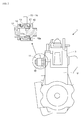
FIG. 1 depicts a fuel injection pump. -
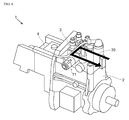
FIG. 2 illustrates a first embodiment of the fuel injection pump. -
FIG. 3 is an exploded perspective view of a channel member. -
FIG. 4 is a graph showing temperature rises in members of an engine, while the operation of the engine. -
FIG. 5 illustrates a switching structure of cooling water flown to the channel member. -
FIG. 6 illustrates a second embodiment of the fuel injection pump. -
FIG. 7 illustrates a switching structure of cooling water flown to a water channel. -
FIG. 8 illustrates a third embodiment of the fuel injection pump. -
FIG. 9 illustrates a switching structure of lubricant oil flown to the channel member. -
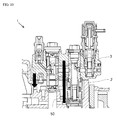
FIG. 10 illustrates a forth embodiment of the fuel injection pump. -
FIG. 11 illustrates a switching structure of lubricant oil flown to an oil passage. -
FIG. 12 illustrates a fifth embodiment of the fuel injection pump. -
FIG. 1 depicts afuel injection pump 1 which includes apump body 2 provided with ahydraulic head 3. To the side face of thefuel injection pump 1, agovernor 4 for controlling an amount of fuel injection is attached. - In the
pump body 2, a cam to which a driving force is transmitted from an engine and a tappet for transmitting the rotation of the cam are installed. In thehydraulic head 3, a plunger which telescopically moves linked with the tappet and a control rack rotating the plunger to change the amount of fuel injection are installed. - As shown in
FIG. 2 , to the side face of thehydraulic head 3, aplug 10 is attached. Theplug 10 is a shutting member for a through hole which is formed to assemble a fuel filter and the like inside of thehydraulic head 3, and the plug is located in the vicinity of a rack chamber in which the control rack is disposed. - As shown in
FIG. 2 , at one end of theplug 10, a male thread is formed to fix the plug to the through hole of the side of thehydraulic head 3, and at the other end of the plug, amale thread 10a is formed projecting outside of thehydraulic head 3. - The
plug 10 is attached with achannel member 11. Thechannel member 11 includes a female thread corresponding to themale thread 10a of theplug 10, and the female thread of thechannel member 11 is threaded to the male thread of theplug 10, thereby fixing the channel member to the plug. - As shown in
FIGS. 2 and3 , thechannel member 11 includes afixing portion 12 and achannel portion 13. Thechannel member 11 is fixed to thehydraulic head 3 by threading thefixing portion 12 to theplug 10 in a state that thechannel portion 13 and O-ring 14 are sandwiched with respect to theplug 10. - The
fixing portion 12 includes a thread portion having a tube shape opening one end, and is, in the opening end, formed with afemale thread 12a corresponding to themale thread 10a of theplug 10. The side of the tube shape of the fixing portion is formed with multiple through holes, whereby inside and outside of the fixing portion are communicated with each other. - The
channel portion 13 covers thefixing portion 12, and thus faces theplug 10, thereby forming sealed internal space. At the outer periphery of thechannel portion 13, aninlet 15 and anoutlet 16 are formed. Through theinlet 15 andoutlet 16, fluid such as water or oil can flow into the inside space of thechannel member 11. - The O-
rings fixing portion 12 and thechannel portion 13 and between thechannel portion 13 and theplug 10, respectively, and thus thechannel member 11 is sealed. - The water passage of the cooling water for the engine is branched off to the
channel member 11. To theinlet 15 andoutlet 16, abranch passage 18 is connected, and the cooling water passed through a cylinder head and the like which are members of the engine flows into thechannel member 11 via thebranch passage 18. The heat of the cooling water introduced in the internal space of thechannel member 11 is transferred to thehydraulic head 3 via theplug 10. -
FIG. 4 depicts temperature rises while the operation of the engine. The solid line represents the temperature rise of thehydraulic head 3 where the cooling water is flown into thechannel member 11, and the chain line represents the temperature rise of the hydraulic head (conventional structure) where the cooling water is not flown into thechannel member 11. The broken line represents the temperature rise of the cooling water. - As shown in
FIG. 4 , as the engine is operated, the temperature of the cooling water is rose faster than thehydraulic head 3. The heat of the cooling water is transferred to thehydraulic head 3 through thechannel member 11 and theplug 10, and therefore, the temperature of thehydraulic head 3 is increased indirectly. - Due to the above-described structure, if the engine is started in a situation that the outside temperature is low (e.g., around -20°C) such as in cold district, the temperature of the
hydraulic head 3 is increased by the same speed as the cooling water for the engine. Consequently, the hydraulic head can be rose in temperature above the dew point in a short time after the engine operation is started. - Thus, the temperature of the
hydraulic head 3 is increased to not less than the dew point while the engine is in operation, and the engine can be stopped where the water is not remained, which can avoid the situation that the remained water will be frozen. Therefore, the engine can be prevented from being unable to start due to the freezing. - By means of the
plug 10 as one member attached to the outside of thehydraulic head 3, the temperature of thehydraulic head 3 is indirectly increased, so that the present embodiment can be easily installed in the conventional structures. - Moreover, the
hydraulic head 3 is heated via theplug 10 located near the control rack, so that the temperature around the control rack can be increased preferentially. Accordingly, the control rack can be prevented from freezing, thereby avoiding engine problems in fuel injection system. - In the
hydraulic head 3, the heat can be transferred from the inside of theplug 10, so that thehydraulic head 3 can be heated effectively. - As illustrated in
FIG. 5 , at a junction of the cooling water passage branched off toward thechannel member 11, aswitch valve 20 is disposed to switch the passage. Theswitch valve 20 is an electromagnetic valve configured to shut the flow toward thechannel member 11 and bypass thechannel member 11. Thehydraulic head 3 is provided with atemperature sensor 21 for detecting the temperature of thehydraulic head 3. Thetemperature sensor 21 measures the surface temperature of thehydraulic head 3 and transmits the control signal to theswitch valve 20 in accordance with the measured temperature, thereby controlling that operation. - More specifically, if the measured temperature detected by the
temperature sensor 21 is not less than a predetermined temperature above the dew point, theswitch valve 20 is operated, and the branch passage for thechannel member 11 is bypassed and the flow of the cooling water toward thechannel member 11 is shut. Thus, the overheating by the cooling water can be prevented, and the temperature of thehydraulic head 3 can be prevented from being excessively increased. - As illustrated in
FIG. 6 , thehydraulic head 3 is formed with awater channel 30. Thewater channel 30 is disposed so as to round thehydraulic head 3 viewed from top. In other words, thewater channel 30 is formed in all areas of thehydraulic head 3 viewed from top. - The
water channel 30 is connected to the branch passage branched off from the cooling water passage for the engine via a junction, and the cooling water can be flown through thewater channel 30. The heat of the cooling water introduced into thewater channel 30 is transferred to thehydraulic head 3. - Due to the above-described structure, if the engine is started in a situation that the outside temperature is low (e.g., around -20°C) such as in cold district, the temperature of the
hydraulic head 3 is increased with the same speed as the cooling water for the engine. Consequently, the temperature of the hydraulic head can be increased to not less than the dew point in a short time after the engine operation is started. - Thus, the temperature of the
hydraulic head 3 is increased to not less than the dew point while the engine is in operation, and the engine can be stopped where the water is not remained, which can avoid the situation that the remained water will be frozen. Therefore, the engine can be prevented from being unable to start due to the freezing. - As illustrated in
FIG. 7 , at the junction of the cooling water passage branched off toward thewater channel 30, aswitch valve 31 is disposed to switch the passage. Theswitch valve 31 is an electromagnetic valve configured to shut the flow toward thewater channel 30 and bypass thewater channel 30. Thehydraulic head 3 is provided with atemperature sensor 32 for detecting the temperature of thehydraulic head 3. Thetemperature sensor 32 measures the surface temperature of thehydraulic head 3 and transmits the control signal to theswitch valve 31 in accordance with the measured temperature, thereby controlling that operation. - More specifically, if the measured temperature detected by the
temperature sensor 32 is not less than a predetermined temperature above the dew point, theswitch valve 31 is operated, and the branch passage for thewater channel 30 is bypassed and the flow of the cooling water toward thewater channel 30 is shut. Thus, the overheating by the cooling water can be prevented, and the temperature of thehydraulic head 3 can be prevented from being excessively increased. - As illustrated in
FIG. 6 , the structure according to the second embodiment using thewater channel 30 which directly heats thehydraulic head 3 from inside can be employed with the structure according to the first embodiment using thechannel member 11 which indirectly heats thehydraulic head 3. In such structure, theswitch valves - As illustrated in
FIG. 8 , through thechannel member 11, lubricant oil is fed, and thehydraulic head 3 is heated by the temperature of the lubricant oil is increased as the engine is operated. - In this embodiment, from the
oil inlet 5 for thefuel injection pump 1, the oil passage is branched off toward theinlet 12 of thechannel member 11, and theoutlet 13 of thechannel member 11 is connected to theoil inlet 6 of thegovernor 4. - As the engine is operated, the temperature of the lubricant oil fed to the
fuel injection pump 1 is rose faster than thehydraulic head 3. The heat of the lubricant oil is transferred to thehydraulic head 3 through thechannel member 11 and theplug 10, and therefore, the temperature of thehydraulic head 3 is increased indirectly. - Due to the above-described structure, if the engine is started in a situation that the outside temperature is low (e.g., around -20°C) such as in cold district, the temperature of the
hydraulic head 3 is increased by the same speed as the lubricant oil for the engine. Consequently, the hydraulic head can be rose in temperature above the dew point in a short time after the engine is started to be operated. - Thus, the temperature of the
hydraulic head 3 is increased not less than the dew point during operating the engine, and the engine can be stopped in the condition that the water is not remained, which can avoid the situation that the remained water will be frozen. Therefore, the engine can be prevented from being unable to start due to the freezing. - As illustrated in
FIG. 9 , at a junction of the lubricant oil passage branched off toward theoil inlet 5, aswitch valve 40 is disposed to switch the passage. Theswitch valve 40 is an electromagnetic valve configured to shut the flow of the lubricant oil toward thechannel member 11 and bypass thechannel member 11. Thehydraulic head 3 is provided with atemperature sensor 41 for detecting the temperature of thehydraulic head 3. Thetemperature sensor 41 measures the surface temperature of thehydraulic head 3 and transmits the control signal to theswitch valve 40 in accordance with the measured temperature, thereby controlling that operation. - More specifically, if the measured temperature detected by the
temperature sensor 41 is not less than a predetermined temperature above the dew point, theswitch valve 40 is operated, and the branch passage for thechannel member 11 is bypassed and the flow of the lubricant oil toward thechannel member 11 is shut. Thus, the overheating by the lubricant oil can be prevented, and the temperature of thehydraulic head 3 can be prevented from being excessively increased. - As shown in
FIG. 10 , thehydraulic head 3 is provided with anoil passage 50. Theoil passage 50 is an additional oil passage with respect to the lubricant oil passages which are installed in thehydraulic head 3. The oil passage is branched off from the lubricant oil passage connected to theoil inlet 5 for thefuel injection pump 1. - The
oil passage 50 is formed so as to pass the vicinity of the rack chamber containing the control rack. Thus, the rack chamber can be heated effectively, and the dew condensation of the control rack can be prevented. - With operating the engine, the temperature of the lubricant oil fed to the
fuel injection pump 1 is increased drastically. Such high-temperature lubricant oil passes through theoil passage 50, and the heat of the lubricant oil is transferred to thehydraulic head 3, whereby thehydraulic head 3 is directly heated from inside thereof. - Due to the above-described structure, if the engine is started in a situation that the outside temperature is low (e.g., around -20°C) such as in cold district, the temperature of the
hydraulic head 3 is increased by the same speed as the lubricant oil for the engine. Consequently, the hydraulic head can be rose in temperature above the dew point in a short time after the engine operation is started. - Thus, the temperature of the
hydraulic head 3 is increased not less than the dew point while the engine is in operation, and the engine can be stopped where the water is not remained, which can avoid the situation that the remained water will be frozen. Therefore, the engine can be prevented from being unable to start due to the freezing. - As illustrated in
FIG. 11 , at a junction of the lubricant oil passage branched off toward theoil passage 50 in thehydraulic head 3, aswitch valve 51 is disposed to switch the passage. Theswitch valve 51 is an electromagnetic valve configured to shut the flow of the lubricant oil toward theoil passage 50 and bypass theoil passage 50. Thehydraulic head 3 is provided with atemperature sensor 52 for detecting the temperature of thehydraulic head 3. Thetemperature sensor 52 measures the surface temperature of thehydraulic head 3 and transmits the control signal to theswitch valve 51 in accordance with the measured temperature, thereby controlling that operation. - More specifically, if the measured temperature detected by the
temperature sensor 52 is not less than a predetermined temperature above the dew point, theswitch valve 51 is operated, and the branch passage for theoil passage 50 is bypassed and the flow of the lubricant oil toward theoil passage 50 is shut. Thus, the overheating the hydraulic head by the lubricant oil can be prevented, and the temperature of thehydraulic head 3 can be prevented from being excessively increased. - As illustrated in
FIG. 12 , thehydraulic head 3 is attached with aheater 60. Theheater 60 directly heats thehydraulic head 3. Theheater 60 works after the engine starts, and heats thehydraulic head 3 while the engine is in operation. - Thus, the
hydraulic head 3 is heated to temperature not less than the dew point while the engine is in operation by the heater, and the engine can be stopped where the water is not remained, which can avoid the situation that the remained water will be frozen. Therefore, the engine can be prevented from being unable to start due to the freezing. - The
hydraulic head 3 is attached with atemperature sensor 61 for detecting the surface temperature thereof. Thetemperature sensor 61 measures the surface temperature of thehydraulic head 3 and transmits the control signal to theheater 60 in response to the measured temperature, thereby controlling the operation of the heater. - More specifically, if the measured temperature detected by the
temperature sensor 61 is not less than a predetermined temperature above the dew point, theheater 60 is stopped, and the heating of thehydraulic head 3 is stopped. Thus, the overheating by theheater 60 can be prevented, and the temperature of thehydraulic head 3 can be prevented from being excessively increased. - As described above, the
heater 60 is operated after the engine operation is started, so that the battery capacity for theheater 60 can be decreased. - In the
hydraulic head 3, theheater 60 is located in the vicinity of the rack chamber containing the control rack. Therefore, the rack chamber can be heated effectively, and the dew condensation of the control rack can be prevented. - 1: fuel injection pump, 2: pump body, 3: hydraulic head, 4: governor, 10: plug, 11: channel member, 12: fixing portion, 13: channel portion, 14: O-ring, 15: inlet, 16: outlet, 17: O-ring, 18: branch passage, 20: switch valve, 21: temperature sensor
Claims (10)
- A fuel injection pump driven by an engine comprising: a pump body; and a hydraulic head,
characterized in that while the engine is operated, a temperature of the hydraulic head is increased to not less than a dew point. - The fuel injection pump according to claim 1,
wherein a water passage of a cooling water for the engine is branched off such that the cooling water contacts a member disposed at an outer face of the hydraulic head, and
wherein the member is rose in temperature using the cooling water the temperature of which is increased as an engine operation to heat the hydraulic head. - The fuel injection pump according to claim 2,
wherein the water passage is provided with a switch valve for bypassing the passage branched off toward the member disposed in the hydraulic head, and
wherein if the temperature of the hydraulic head is increased to not less than a predetermined temperature, the switch valve is operated to shut the flow of the cooling water into the member disposed in the hydraulic head. - The fuel injection pump according to any one of claims 1 to 3,
wherein in the hydraulic head, a water channel for circulating the cooling water is formed, and
wherein the temperature of the hydraulic head is increased by using the cooling water the temperature of which is increased as the engine operation. - The fuel injection pump according to claim 4,
wherein the water passage is provided with a switch valve for bypassing the water channel, and
wherein if the temperature of the hydraulic head is increased to not less than a predetermined temperature, the switch valve is operated to shut the flow of the cooling water into the water channel. - The fuel injection pump according to claim 1,
wherein an oil passage of a lubricant oil fed to the fuel injection pump is branched off such that the lubricant oil contacts a member disposed at an outer face of the hydraulic head, and
wherein the member is rose in temperature using the lubricant oil the temperature of which is increased as an engine operation to heat the hydraulic head. - The fuel injection pump according to claim 1,
wherein in the hydraulic head, an oil passage for circulating a lubricant oil fed to the fuel injection pump is formed, and
wherein the temperature of the hydraulic head is increased by using the lubricant oil the temperature of which is increased as an engine operation. - The fuel injection pump according to claim 6 or 7,
wherein the oil passage is provided with a switch valve for bypassing the oil passage, and
wherein if the temperature of the hydraulic head is increased to not less than a predetermined temperature, the switch valve is operated to shut the flow of the lubricant oil into the oil passage. - The fuel injection pump according to any one of claims 1 to 8,
wherein the hydraulic head is attached with a heater for heating the hydraulic head. - The fuel injection pump according to claim 9,
wherein if the temperature of the hydraulic head is increased to not less than a predetermined temperature, the heater is stopped.
Applications Claiming Priority (2)
| Application Number | Priority Date | Filing Date | Title |
|---|---|---|---|
| JP2012161933A JP6091787B2 (en) | 2012-07-20 | 2012-07-20 | Fuel injection pump |
| PCT/JP2013/058972 WO2014013758A1 (en) | 2012-07-20 | 2013-03-27 | Fuel injection pump |
Publications (3)
| Publication Number | Publication Date |
|---|---|
| EP2876296A1 true EP2876296A1 (en) | 2015-05-27 |
| EP2876296A4 EP2876296A4 (en) | 2016-07-06 |
| EP2876296B1 EP2876296B1 (en) | 2019-03-27 |
Family
ID=49948595
Family Applications (1)
| Application Number | Title | Priority Date | Filing Date |
|---|---|---|---|
| EP13819310.7A Not-in-force EP2876296B1 (en) | 2012-07-20 | 2013-03-27 | Fuel injection pump |
Country Status (6)
| Country | Link |
|---|---|
| US (1) | US9816471B2 (en) |
| EP (1) | EP2876296B1 (en) |
| JP (1) | JP6091787B2 (en) |
| KR (1) | KR101687278B1 (en) |
| CN (1) | CN104487696B (en) |
| WO (1) | WO2014013758A1 (en) |
Cited By (1)
| Publication number | Priority date | Publication date | Assignee | Title |
|---|---|---|---|---|
| KR20180084128A (en) * | 2015-11-26 | 2018-07-24 | 얀마 가부시키가이샤 | Fuel injection pump |
Families Citing this family (1)
| Publication number | Priority date | Publication date | Assignee | Title |
|---|---|---|---|---|
| JP5905758B2 (en) * | 2012-03-28 | 2016-04-20 | ヤンマー株式会社 | Fuel injection pump |
Family Cites Families (29)
| Publication number | Priority date | Publication date | Assignee | Title |
|---|---|---|---|---|
| US4180036A (en) * | 1978-01-23 | 1979-12-25 | Gil Wolf | Fuel temperature control |
| US4326491A (en) * | 1980-01-25 | 1982-04-27 | Burchett Lawrence R | Fuel heater |
| US4483307A (en) * | 1982-08-02 | 1984-11-20 | Gilmor James E | Fuel vaporization device for internal combustion engine |
| JPS6070735U (en) * | 1983-10-24 | 1985-05-18 | 株式会社ボッシュオートモーティブ システム | Fuel injection device starting increase auxiliary device |
| JPS61200376A (en) * | 1985-03-01 | 1986-09-04 | Yanmar Diesel Engine Co Ltd | Fuel injection pump |
| JPH0670735U (en) * | 1993-03-22 | 1994-10-04 | 成基 山中 | Thermal portable Shiatsu |
| JPH08128335A (en) | 1994-11-02 | 1996-05-21 | Zexel Corp | Governor of fuel injection pump |
| JPH10184494A (en) * | 1996-12-27 | 1998-07-14 | Nissan Motor Co Ltd | Fuel pressurization pump for internal combustion engine |
| US6179577B1 (en) * | 1999-03-20 | 2001-01-30 | Uis, Inc. | Electric fuel pump with fuel heater |
| JP2001003839A (en) | 1999-06-21 | 2001-01-09 | Hitachi Ltd | High pressure fuel pump |
| JP2001050549A (en) * | 1999-08-05 | 2001-02-23 | Fukushin Denki Kk | Channel connection device |
| DE19957742A1 (en) * | 1999-12-01 | 2001-06-07 | Bosch Gmbh Robert | Fuel supply device for an internal combustion engine |
| JP2001248513A (en) * | 2000-03-01 | 2001-09-14 | Keihin Corp | Fuel injection device for internal combustion engine for outboard motor |
| US6397822B1 (en) * | 2000-04-18 | 2002-06-04 | Uis, Inc. | Integrated fuel system unit with two-stage marine fuel pump |
| JP4717996B2 (en) | 2000-10-11 | 2011-07-06 | サーパス工業株式会社 | Container and plug used therefor |
| US6711893B2 (en) * | 2001-03-27 | 2004-03-30 | Toyota Jidosha Kabushiki Kaisha | Fuel supply apparatus for an internal combustion engine |
| JP3788373B2 (en) * | 2002-03-11 | 2006-06-21 | 日産自動車株式会社 | High pressure fuel pump refueling device |
| JP3814245B2 (en) | 2002-11-21 | 2006-08-23 | ヤンマー株式会社 | Fuel injection pump |
| US20040103858A1 (en) * | 2002-11-29 | 2004-06-03 | Michael Shetley | Shetley fuel economizer |
| US7004117B2 (en) * | 2002-12-13 | 2006-02-28 | Grant Barry S | Fuel pump with cooling fins |
| KR100589147B1 (en) * | 2003-10-22 | 2006-06-12 | 현대자동차주식회사 | How to start LLPII engine at partial cooling |
| US6857419B1 (en) * | 2004-04-06 | 2005-02-22 | Federal-Mogul World Wide, Inc. | Fuel vapor separator for internal combustion engine |
| US7013878B1 (en) * | 2004-06-03 | 2006-03-21 | Walbro Engine Management, L.L.C. | Fuel vapor separator |
| JP4676966B2 (en) * | 2007-02-14 | 2011-04-27 | ヤンマー株式会社 | Fuel injection pump mounting structure |
| JP2008202441A (en) * | 2007-02-19 | 2008-09-04 | Suzuki Motor Corp | Engine fuel supply system |
| JP4649432B2 (en) * | 2007-03-26 | 2011-03-09 | 株式会社クボタ | diesel engine |
| JP2009287529A (en) * | 2008-05-30 | 2009-12-10 | Honda Motor Co Ltd | High-pressure fuel pump |
| JP5560131B2 (en) * | 2010-07-27 | 2014-07-23 | トヨタ自動車株式会社 | Fuel supply device |
| US9234483B2 (en) * | 2010-11-03 | 2016-01-12 | Carter Fuel Systems, Llc | Thermoelectric cooled pump |
-
2012
- 2012-07-20 JP JP2012161933A patent/JP6091787B2/en not_active Expired - Fee Related
-
2013
- 2013-03-27 EP EP13819310.7A patent/EP2876296B1/en not_active Not-in-force
- 2013-03-27 CN CN201380038738.0A patent/CN104487696B/en not_active Expired - Fee Related
- 2013-03-27 KR KR1020157004413A patent/KR101687278B1/en not_active Expired - Fee Related
- 2013-03-27 US US14/415,882 patent/US9816471B2/en not_active Expired - Fee Related
- 2013-03-27 WO PCT/JP2013/058972 patent/WO2014013758A1/en not_active Ceased
Cited By (6)
| Publication number | Priority date | Publication date | Assignee | Title |
|---|---|---|---|---|
| KR20180084128A (en) * | 2015-11-26 | 2018-07-24 | 얀마 가부시키가이샤 | Fuel injection pump |
| EP3382194A4 (en) * | 2015-11-26 | 2018-12-05 | Yanmar Co., Ltd. | Fuel injection pump |
| KR20200029620A (en) * | 2015-11-26 | 2020-03-18 | 얀마 가부시키가이샤 | Fuel injection pump |
| KR102096198B1 (en) | 2015-11-26 | 2020-04-01 | 얀마 가부시키가이샤 | Fuel injection pump |
| US10718305B2 (en) | 2015-11-26 | 2020-07-21 | Yanmar Co., Ltd. | Fuel injection pump |
| KR102443622B1 (en) | 2015-11-26 | 2022-09-14 | 얀마 파워 테크놀로지 가부시키가이샤 | fuel injection pump |
Also Published As
| Publication number | Publication date |
|---|---|
| CN104487696A (en) | 2015-04-01 |
| JP6091787B2 (en) | 2017-03-08 |
| EP2876296A4 (en) | 2016-07-06 |
| EP2876296B1 (en) | 2019-03-27 |
| US20150204290A1 (en) | 2015-07-23 |
| JP2014020324A (en) | 2014-02-03 |
| KR101687278B1 (en) | 2016-12-16 |
| WO2014013758A1 (en) | 2014-01-23 |
| KR20150032908A (en) | 2015-03-30 |
| US9816471B2 (en) | 2017-11-14 |
| CN104487696B (en) | 2017-03-22 |
Similar Documents
| Publication | Publication Date | Title |
|---|---|---|
| EP3097964B1 (en) | Filter inline heater | |
| US9109497B2 (en) | Vehicle cooling device | |
| WO2010022032A3 (en) | Windshield washer fluid heater and system | |
| US4770134A (en) | Engine preheater | |
| US9752493B2 (en) | Valve with integrated wax motor bypass fail safe | |
| US20170370272A1 (en) | Engine cooling device | |
| US10309313B2 (en) | Fuel circuit of an aircraft engine with a fuel recirculating valve controlled by a pressure differential of a low-pressure pump of the fuel system | |
| RU2618791C2 (en) | Thermo-controlled unit for gas-turbine system (versions) and method of managing the channel for coolant flow | |
| EP2850295B1 (en) | Cooling control device and cooling control method for internal combustion engine | |
| US7334557B2 (en) | Engine lubrication system for supplemental oil filtering and controller based activation of a prelubrication pump | |
| JPS60142048A (en) | Apparatus for changing over flooding flow amount of diesel jet pump in relation to temperature | |
| US20150159530A1 (en) | System for exhaust gas treatment for internal combustion engines | |
| CN105121801B (en) | Apparatus for supplying liquid additives and method for initiating operation of the apparatus | |
| EP2876296B1 (en) | Fuel injection pump | |
| EP1843036B1 (en) | Apparatus for controlling the temperature of fuel supplied to an engine | |
| SE1251444A1 (en) | Cooling system in a vehicle | |
| JP2016151222A (en) | Vehicular engine induction system hot water heating device | |
| CN109072732B (en) | fluid supply system | |
| JP2010048142A (en) | Liquid discharger for automobile | |
| CN103061897B (en) | A kind of engine throttle body and method for heating and controlling thereof | |
| JP5922511B2 (en) | Control valve | |
| SE407615B (en) | DRAINAGE VALVE FOR DRAINAGE OF CONDENSATE FROM A FLUIDUM TANK | |
| WO2017211119A1 (en) | Integrated apparatus, exhaust gas post-processing system, and control method | |
| CN106194517A (en) | Fuel heating system | |
| RU2450139C1 (en) | Gas compressor unit |
Legal Events
| Date | Code | Title | Description |
|---|---|---|---|
| PUAI | Public reference made under article 153(3) epc to a published international application that has entered the european phase |
Free format text: ORIGINAL CODE: 0009012 |
|
| 17P | Request for examination filed |
Effective date: 20150220 |
|
| AK | Designated contracting states |
Kind code of ref document: A1 Designated state(s): AL AT BE BG CH CY CZ DE DK EE ES FI FR GB GR HR HU IE IS IT LI LT LU LV MC MK MT NL NO PL PT RO RS SE SI SK SM TR |
|
| AX | Request for extension of the european patent |
Extension state: BA ME |
|
| DAX | Request for extension of the european patent (deleted) | ||
| RIC1 | Information provided on ipc code assigned before grant |
Ipc: F04B 53/04 20060101ALI20160210BHEP Ipc: F01P 1/06 20060101ALI20160210BHEP Ipc: F02M 59/28 20060101ALI20160210BHEP Ipc: F02M 53/00 20060101AFI20160210BHEP Ipc: F02M 59/44 20060101ALI20160210BHEP Ipc: F02M 63/00 20060101ALI20160210BHEP |
|
| RA4 | Supplementary search report drawn up and despatched (corrected) |
Effective date: 20160607 |
|
| RIC1 | Information provided on ipc code assigned before grant |
Ipc: F01P 1/06 20060101ALI20160601BHEP Ipc: F02M 63/00 20060101ALI20160601BHEP Ipc: F04B 53/04 20060101ALI20160601BHEP Ipc: F02M 59/44 20060101ALI20160601BHEP Ipc: F02M 59/28 20060101ALI20160601BHEP Ipc: F02M 53/00 20060101AFI20160601BHEP |
|
| STAA | Information on the status of an ep patent application or granted ep patent |
Free format text: STATUS: EXAMINATION IS IN PROGRESS |
|
| 17Q | First examination report despatched |
Effective date: 20170620 |
|
| GRAP | Despatch of communication of intention to grant a patent |
Free format text: ORIGINAL CODE: EPIDOSNIGR1 |
|
| STAA | Information on the status of an ep patent application or granted ep patent |
Free format text: STATUS: GRANT OF PATENT IS INTENDED |
|
| INTG | Intention to grant announced |
Effective date: 20181008 |
|
| GRAS | Grant fee paid |
Free format text: ORIGINAL CODE: EPIDOSNIGR3 |
|
| GRAA | (expected) grant |
Free format text: ORIGINAL CODE: 0009210 |
|
| STAA | Information on the status of an ep patent application or granted ep patent |
Free format text: STATUS: THE PATENT HAS BEEN GRANTED |
|
| RAP1 | Party data changed (applicant data changed or rights of an application transferred) |
Owner name: YANMAR CO., LTD. |
|
| AK | Designated contracting states |
Kind code of ref document: B1 Designated state(s): AL AT BE BG CH CY CZ DE DK EE ES FI FR GB GR HR HU IE IS IT LI LT LU LV MC MK MT NL NO PL PT RO RS SE SI SK SM TR |
|
| REG | Reference to a national code |
Ref country code: GB Ref legal event code: FG4D |
|
| REG | Reference to a national code |
Ref country code: CH Ref legal event code: EP |
|
| REG | Reference to a national code |
Ref country code: AT Ref legal event code: REF Ref document number: 1113386 Country of ref document: AT Kind code of ref document: T Effective date: 20190415 |
|
| REG | Reference to a national code |
Ref country code: IE Ref legal event code: FG4D |
|
| REG | Reference to a national code |
Ref country code: DE Ref legal event code: R096 Ref document number: 602013053052 Country of ref document: DE |
|
| PG25 | Lapsed in a contracting state [announced via postgrant information from national office to epo] |
Ref country code: LT Free format text: LAPSE BECAUSE OF FAILURE TO SUBMIT A TRANSLATION OF THE DESCRIPTION OR TO PAY THE FEE WITHIN THE PRESCRIBED TIME-LIMIT Effective date: 20190327 Ref country code: SE Free format text: LAPSE BECAUSE OF FAILURE TO SUBMIT A TRANSLATION OF THE DESCRIPTION OR TO PAY THE FEE WITHIN THE PRESCRIBED TIME-LIMIT Effective date: 20190327 Ref country code: NO Free format text: LAPSE BECAUSE OF FAILURE TO SUBMIT A TRANSLATION OF THE DESCRIPTION OR TO PAY THE FEE WITHIN THE PRESCRIBED TIME-LIMIT Effective date: 20190627 Ref country code: FI Free format text: LAPSE BECAUSE OF FAILURE TO SUBMIT A TRANSLATION OF THE DESCRIPTION OR TO PAY THE FEE WITHIN THE PRESCRIBED TIME-LIMIT Effective date: 20190327 |
|
| REG | Reference to a national code |
Ref country code: NL Ref legal event code: MP Effective date: 20190327 |
|
| PG25 | Lapsed in a contracting state [announced via postgrant information from national office to epo] |
Ref country code: BG Free format text: LAPSE BECAUSE OF FAILURE TO SUBMIT A TRANSLATION OF THE DESCRIPTION OR TO PAY THE FEE WITHIN THE PRESCRIBED TIME-LIMIT Effective date: 20190627 Ref country code: HR Free format text: LAPSE BECAUSE OF FAILURE TO SUBMIT A TRANSLATION OF THE DESCRIPTION OR TO PAY THE FEE WITHIN THE PRESCRIBED TIME-LIMIT Effective date: 20190327 Ref country code: RS Free format text: LAPSE BECAUSE OF FAILURE TO SUBMIT A TRANSLATION OF THE DESCRIPTION OR TO PAY THE FEE WITHIN THE PRESCRIBED TIME-LIMIT Effective date: 20190327 Ref country code: NL Free format text: LAPSE BECAUSE OF FAILURE TO SUBMIT A TRANSLATION OF THE DESCRIPTION OR TO PAY THE FEE WITHIN THE PRESCRIBED TIME-LIMIT Effective date: 20190327 Ref country code: GR Free format text: LAPSE BECAUSE OF FAILURE TO SUBMIT A TRANSLATION OF THE DESCRIPTION OR TO PAY THE FEE WITHIN THE PRESCRIBED TIME-LIMIT Effective date: 20190628 Ref country code: LV Free format text: LAPSE BECAUSE OF FAILURE TO SUBMIT A TRANSLATION OF THE DESCRIPTION OR TO PAY THE FEE WITHIN THE PRESCRIBED TIME-LIMIT Effective date: 20190327 |
|
| REG | Reference to a national code |
Ref country code: AT Ref legal event code: MK05 Ref document number: 1113386 Country of ref document: AT Kind code of ref document: T Effective date: 20190327 |
|
| PG25 | Lapsed in a contracting state [announced via postgrant information from national office to epo] |
Ref country code: ES Free format text: LAPSE BECAUSE OF FAILURE TO SUBMIT A TRANSLATION OF THE DESCRIPTION OR TO PAY THE FEE WITHIN THE PRESCRIBED TIME-LIMIT Effective date: 20190327 Ref country code: PT Free format text: LAPSE BECAUSE OF FAILURE TO SUBMIT A TRANSLATION OF THE DESCRIPTION OR TO PAY THE FEE WITHIN THE PRESCRIBED TIME-LIMIT Effective date: 20190727 Ref country code: SK Free format text: LAPSE BECAUSE OF FAILURE TO SUBMIT A TRANSLATION OF THE DESCRIPTION OR TO PAY THE FEE WITHIN THE PRESCRIBED TIME-LIMIT Effective date: 20190327 Ref country code: AL Free format text: LAPSE BECAUSE OF FAILURE TO SUBMIT A TRANSLATION OF THE DESCRIPTION OR TO PAY THE FEE WITHIN THE PRESCRIBED TIME-LIMIT Effective date: 20190327 Ref country code: EE Free format text: LAPSE BECAUSE OF FAILURE TO SUBMIT A TRANSLATION OF THE DESCRIPTION OR TO PAY THE FEE WITHIN THE PRESCRIBED TIME-LIMIT Effective date: 20190327 Ref country code: IT Free format text: LAPSE BECAUSE OF FAILURE TO SUBMIT A TRANSLATION OF THE DESCRIPTION OR TO PAY THE FEE WITHIN THE PRESCRIBED TIME-LIMIT Effective date: 20190327 Ref country code: CZ Free format text: LAPSE BECAUSE OF FAILURE TO SUBMIT A TRANSLATION OF THE DESCRIPTION OR TO PAY THE FEE WITHIN THE PRESCRIBED TIME-LIMIT Effective date: 20190327 Ref country code: RO Free format text: LAPSE BECAUSE OF FAILURE TO SUBMIT A TRANSLATION OF THE DESCRIPTION OR TO PAY THE FEE WITHIN THE PRESCRIBED TIME-LIMIT Effective date: 20190327 |
|
| REG | Reference to a national code |
Ref country code: CH Ref legal event code: PL |
|
| PG25 | Lapsed in a contracting state [announced via postgrant information from national office to epo] |
Ref country code: SM Free format text: LAPSE BECAUSE OF FAILURE TO SUBMIT A TRANSLATION OF THE DESCRIPTION OR TO PAY THE FEE WITHIN THE PRESCRIBED TIME-LIMIT Effective date: 20190327 Ref country code: LU Free format text: LAPSE BECAUSE OF NON-PAYMENT OF DUE FEES Effective date: 20190327 Ref country code: PL Free format text: LAPSE BECAUSE OF FAILURE TO SUBMIT A TRANSLATION OF THE DESCRIPTION OR TO PAY THE FEE WITHIN THE PRESCRIBED TIME-LIMIT Effective date: 20190327 |
|
| REG | Reference to a national code |
Ref country code: BE Ref legal event code: MM Effective date: 20190331 |
|
| PG25 | Lapsed in a contracting state [announced via postgrant information from national office to epo] |
Ref country code: IS Free format text: LAPSE BECAUSE OF FAILURE TO SUBMIT A TRANSLATION OF THE DESCRIPTION OR TO PAY THE FEE WITHIN THE PRESCRIBED TIME-LIMIT Effective date: 20190727 Ref country code: AT Free format text: LAPSE BECAUSE OF FAILURE TO SUBMIT A TRANSLATION OF THE DESCRIPTION OR TO PAY THE FEE WITHIN THE PRESCRIBED TIME-LIMIT Effective date: 20190327 |
|
| REG | Reference to a national code |
Ref country code: DE Ref legal event code: R097 Ref document number: 602013053052 Country of ref document: DE |
|
| PG25 | Lapsed in a contracting state [announced via postgrant information from national office to epo] |
Ref country code: IE Free format text: LAPSE BECAUSE OF NON-PAYMENT OF DUE FEES Effective date: 20190327 Ref country code: MC Free format text: LAPSE BECAUSE OF FAILURE TO SUBMIT A TRANSLATION OF THE DESCRIPTION OR TO PAY THE FEE WITHIN THE PRESCRIBED TIME-LIMIT Effective date: 20190327 Ref country code: DK Free format text: LAPSE BECAUSE OF FAILURE TO SUBMIT A TRANSLATION OF THE DESCRIPTION OR TO PAY THE FEE WITHIN THE PRESCRIBED TIME-LIMIT Effective date: 20190327 Ref country code: CH Free format text: LAPSE BECAUSE OF NON-PAYMENT OF DUE FEES Effective date: 20190331 Ref country code: LI Free format text: LAPSE BECAUSE OF NON-PAYMENT OF DUE FEES Effective date: 20190331 |
|
| PLBE | No opposition filed within time limit |
Free format text: ORIGINAL CODE: 0009261 |
|
| STAA | Information on the status of an ep patent application or granted ep patent |
Free format text: STATUS: NO OPPOSITION FILED WITHIN TIME LIMIT |
|
| PG25 | Lapsed in a contracting state [announced via postgrant information from national office to epo] |
Ref country code: BE Free format text: LAPSE BECAUSE OF NON-PAYMENT OF DUE FEES Effective date: 20190331 Ref country code: SI Free format text: LAPSE BECAUSE OF FAILURE TO SUBMIT A TRANSLATION OF THE DESCRIPTION OR TO PAY THE FEE WITHIN THE PRESCRIBED TIME-LIMIT Effective date: 20190327 |
|
| 26N | No opposition filed |
Effective date: 20200103 |
|
| PG25 | Lapsed in a contracting state [announced via postgrant information from national office to epo] |
Ref country code: TR Free format text: LAPSE BECAUSE OF FAILURE TO SUBMIT A TRANSLATION OF THE DESCRIPTION OR TO PAY THE FEE WITHIN THE PRESCRIBED TIME-LIMIT Effective date: 20190327 |
|
| PG25 | Lapsed in a contracting state [announced via postgrant information from national office to epo] |
Ref country code: MT Free format text: LAPSE BECAUSE OF NON-PAYMENT OF DUE FEES Effective date: 20190327 |
|
| REG | Reference to a national code |
Ref country code: DE Ref legal event code: R082 Ref document number: 602013053052 Country of ref document: DE Representative=s name: JOSTARNDT PATENTANWALTS-AG, DE Ref country code: DE Ref legal event code: R081 Ref document number: 602013053052 Country of ref document: DE Owner name: YANMAR POWER TECHNOLOGY CO., LTD., JP Free format text: FORMER OWNER: YANMAR CO., LTD., OSAKA, JP |
|
| PGFP | Annual fee paid to national office [announced via postgrant information from national office to epo] |
Ref country code: FR Payment date: 20210323 Year of fee payment: 9 |
|
| PG25 | Lapsed in a contracting state [announced via postgrant information from national office to epo] |
Ref country code: CY Free format text: LAPSE BECAUSE OF FAILURE TO SUBMIT A TRANSLATION OF THE DESCRIPTION OR TO PAY THE FEE WITHIN THE PRESCRIBED TIME-LIMIT Effective date: 20190327 |
|
| PGFP | Annual fee paid to national office [announced via postgrant information from national office to epo] |
Ref country code: GB Payment date: 20210324 Year of fee payment: 9 Ref country code: DE Payment date: 20210319 Year of fee payment: 9 |
|
| PG25 | Lapsed in a contracting state [announced via postgrant information from national office to epo] |
Ref country code: HU Free format text: LAPSE BECAUSE OF FAILURE TO SUBMIT A TRANSLATION OF THE DESCRIPTION OR TO PAY THE FEE WITHIN THE PRESCRIBED TIME-LIMIT; INVALID AB INITIO Effective date: 20130327 |
|
| PG25 | Lapsed in a contracting state [announced via postgrant information from national office to epo] |
Ref country code: MK Free format text: LAPSE BECAUSE OF FAILURE TO SUBMIT A TRANSLATION OF THE DESCRIPTION OR TO PAY THE FEE WITHIN THE PRESCRIBED TIME-LIMIT Effective date: 20190327 |
|
| REG | Reference to a national code |
Ref country code: DE Ref legal event code: R119 Ref document number: 602013053052 Country of ref document: DE |
|
| GBPC | Gb: european patent ceased through non-payment of renewal fee |
Effective date: 20220327 |
|
| PG25 | Lapsed in a contracting state [announced via postgrant information from national office to epo] |
Ref country code: GB Free format text: LAPSE BECAUSE OF NON-PAYMENT OF DUE FEES Effective date: 20220327 Ref country code: FR Free format text: LAPSE BECAUSE OF NON-PAYMENT OF DUE FEES Effective date: 20220331 Ref country code: DE Free format text: LAPSE BECAUSE OF NON-PAYMENT OF DUE FEES Effective date: 20221001 |