EP2875774A1 - Endoscopic Apparatus including a Re-Circulation Device and Filter and Method of Supplying an Irrigation Fluid during an Endoscopic Procedure - Google Patents
Endoscopic Apparatus including a Re-Circulation Device and Filter and Method of Supplying an Irrigation Fluid during an Endoscopic Procedure Download PDFInfo
- Publication number
- EP2875774A1 EP2875774A1 EP14189786.8A EP14189786A EP2875774A1 EP 2875774 A1 EP2875774 A1 EP 2875774A1 EP 14189786 A EP14189786 A EP 14189786A EP 2875774 A1 EP2875774 A1 EP 2875774A1
- Authority
- EP
- European Patent Office
- Prior art keywords
- fluid
- filter
- port
- endoscopic
- distal end
- Prior art date
- Legal status (The legal status is an assumption and is not a legal conclusion. Google has not performed a legal analysis and makes no representation as to the accuracy of the status listed.)
- Withdrawn
Links
Images



Classifications
-
- A—HUMAN NECESSITIES
- A61—MEDICAL OR VETERINARY SCIENCE; HYGIENE
- A61M—DEVICES FOR INTRODUCING MEDIA INTO, OR ONTO, THE BODY; DEVICES FOR TRANSDUCING BODY MEDIA OR FOR TAKING MEDIA FROM THE BODY; DEVICES FOR PRODUCING OR ENDING SLEEP OR STUPOR
- A61M3/00—Medical syringes, e.g. enemata; Irrigators
- A61M3/02—Enemata; Irrigators
- A61M3/0229—Devices operating in a closed circuit, i.e. recycling the irrigating fluid
-
- A—HUMAN NECESSITIES
- A61—MEDICAL OR VETERINARY SCIENCE; HYGIENE
- A61B—DIAGNOSIS; SURGERY; IDENTIFICATION
- A61B1/00—Instruments for performing medical examinations of the interior of cavities or tubes of the body by visual or photographical inspection, e.g. endoscopes; Illuminating arrangements therefor
- A61B1/012—Instruments for performing medical examinations of the interior of cavities or tubes of the body by visual or photographical inspection, e.g. endoscopes; Illuminating arrangements therefor characterised by internal passages or accessories therefor
- A61B1/015—Control of fluid supply or evacuation
-
- A—HUMAN NECESSITIES
- A61—MEDICAL OR VETERINARY SCIENCE; HYGIENE
- A61B—DIAGNOSIS; SURGERY; IDENTIFICATION
- A61B1/00—Instruments for performing medical examinations of the interior of cavities or tubes of the body by visual or photographical inspection, e.g. endoscopes; Illuminating arrangements therefor
- A61B1/12—Instruments for performing medical examinations of the interior of cavities or tubes of the body by visual or photographical inspection, e.g. endoscopes; Illuminating arrangements therefor with cooling or rinsing arrangements
- A61B1/126—Instruments for performing medical examinations of the interior of cavities or tubes of the body by visual or photographical inspection, e.g. endoscopes; Illuminating arrangements therefor with cooling or rinsing arrangements provided with means for cleaning in-use
-
- A—HUMAN NECESSITIES
- A61—MEDICAL OR VETERINARY SCIENCE; HYGIENE
- A61M—DEVICES FOR INTRODUCING MEDIA INTO, OR ONTO, THE BODY; DEVICES FOR TRANSDUCING BODY MEDIA OR FOR TAKING MEDIA FROM THE BODY; DEVICES FOR PRODUCING OR ENDING SLEEP OR STUPOR
- A61M1/00—Suction or pumping devices for medical purposes; Devices for carrying-off, for treatment of, or for carrying-over, body-liquids; Drainage systems
- A61M1/71—Suction drainage systems
- A61M1/77—Suction-irrigation systems
-
- A—HUMAN NECESSITIES
- A61—MEDICAL OR VETERINARY SCIENCE; HYGIENE
- A61M—DEVICES FOR INTRODUCING MEDIA INTO, OR ONTO, THE BODY; DEVICES FOR TRANSDUCING BODY MEDIA OR FOR TAKING MEDIA FROM THE BODY; DEVICES FOR PRODUCING OR ENDING SLEEP OR STUPOR
- A61M3/00—Medical syringes, e.g. enemata; Irrigators
- A61M3/02—Enemata; Irrigators
- A61M3/0279—Cannula; Nozzles; Tips; their connection means
- A61M3/0283—Cannula; Nozzles; Tips; their connection means with at least two inner passageways, a first one for irrigating and a second for evacuating
-
- A—HUMAN NECESSITIES
- A61—MEDICAL OR VETERINARY SCIENCE; HYGIENE
- A61B—DIAGNOSIS; SURGERY; IDENTIFICATION
- A61B2217/00—General characteristics of surgical instruments
- A61B2217/002—Auxiliary appliance
- A61B2217/005—Auxiliary appliance with suction drainage system
-
- A—HUMAN NECESSITIES
- A61—MEDICAL OR VETERINARY SCIENCE; HYGIENE
- A61B—DIAGNOSIS; SURGERY; IDENTIFICATION
- A61B2217/00—General characteristics of surgical instruments
- A61B2217/002—Auxiliary appliance
- A61B2217/007—Auxiliary appliance with irrigation system
-
- A—HUMAN NECESSITIES
- A61—MEDICAL OR VETERINARY SCIENCE; HYGIENE
- A61M—DEVICES FOR INTRODUCING MEDIA INTO, OR ONTO, THE BODY; DEVICES FOR TRANSDUCING BODY MEDIA OR FOR TAKING MEDIA FROM THE BODY; DEVICES FOR PRODUCING OR ENDING SLEEP OR STUPOR
- A61M1/00—Suction or pumping devices for medical purposes; Devices for carrying-off, for treatment of, or for carrying-over, body-liquids; Drainage systems
- A61M1/71—Suction drainage systems
- A61M1/79—Filters for solid matter
Definitions
- the present invention relates generally to the field of medical devices, and more particularly, to an endoscopic apparatus having an irrigation re-circulation device and filter. Methods of using such an endoscopic apparatus are also disclosed.
- Endoscopy provides a method of examining the inside of a body cavity for medical reasons using an endoscope.
- diseases of the urinary tract require endoscopic examination or surgery. These include kidney stones, ureteropelvic junction obstruction, ureteral strictures, tumors in the kidney collecting system or ureter and relief of blockage in the kidney.
- Such endoscopic techniques sometimes involve the delivery of an irrigation fluid to the distal end of an endoscope and the aspiration of the fluid from the body cavity.
- a fluid can be utilized to remove particulate matter or fluid from the region under endoscopic investigation.
- blood, mucus or other matter may be removed to improve the endoscopist's visualization and therapeutic capabilities.
- an irrigation fluid is delivered from an irrigation bag to the distal end of the endoscope through a fluid delivery channel.
- a fluid delivery channel may be positioned within the endoscope body.
- the fluid delivery channel may be contained within a separate device.
- the irrigation fluid is then aspirated from the region around the distal end of the endoscope through a separate fluid removal channel. Again, this channel may be positioned within the endoscope body or may be a component of a separate device. The aspirated fluid is then collected for disposal.
- One aspect of the present invention provides an endoscopic apparatus including an endoscopic device having a fluid delivery port and a fluid extraction port, a filter device comprising a housing having a filter input port and a filter output port and a filter positioned within the housing.
- the fluid extraction port connects to the filter input port and the filter output port connects to the fluid delivery port forming a fluid circulation path from the fluid extraction port through the filter device to the fluid delivery port.
- the apparatus also includes a fluid pump positioned in the fluid circulation path.
- the endoscopic apparatus can also include a fluid reservoir in fluid communication with the fluid delivery port.
- the filter device includes a membrane filter, for example, a hollow fiber filter.
- the filter can include a membrane with pores having a maximum size of between 0.1 microns and 10 microns.
- the filter device can also include a pre-filter positioned within the filter housing between the filter input port and the filter.
- the endoscopic device includes an elongated member having a fluid delivery port and a fluid extraction port positioned near the proximal end.
- a fluid delivery channel is contained within the elongated member and extends from the fluid delivery port to the distal end of the elongated member.
- a fluid extraction channel is also contained within the endoscope member extends from the distal end to the fluid extraction port.
- the endoscopic device includes a fluid delivery device and a fluid extraction device.
- the fluid delivery device includes a first elongated member having the fluid delivery port positioned near the proximal end and a fluid delivery channel contained within and extending from the fluid delivery port to the distal end of the first elongated member.
- the fluid extraction device includes a second elongated member having a fluid extraction port positioned near the proximal end and a fluid extraction channel contained within and extending from the distal end to the fluid extraction port.
- Another aspect of the present invention provides a method of supplying an irrigation fluid during an endoscopic examination including delivering the irrigation fluid from a fluid delivery port of an endoscopic device to a distal end of the endoscopic device and aspirating the irrigation fluid from a region around the distal end.
- the method also includes filtering the irrigation fluid in a filter device and returning the filtered irrigation fluid through the fluid delivery port to the distal end of the endoscopic device.
- the filtering removes discoloration and/or particulate matter from the irrigation fluid.
- proximal and distal should be understood as being in the terms of a physician using the endoscopic device.
- distal means the portion of the device which is farthest from the physician and the term proximal means the portion of the device which is nearest to the physician.
- proximal means the portion of the device which is nearest to the physician.
- distal portion of the device will be inserted into the body of the patient undergoing an endoscopic procedure while the proximal portion of the device will remain outside the body of the patient.
- body cavity means any body passage or lumen, including but not limited to vascular coronary or peripheral vessels, esophageal, intestinal, biliary, bronchial, reproductive, urethral and ureteral passages. The term also encompasses a body passage formed during a surgical procedure.
- one embodiment of the present invention provides an endoscopic apparatus including an endoscopic device 100, a filter device 135 and a fluid pump 140.
- Fluid delivery port 110 is positioned near the proximal end of endoscopic device 100 and is connected to a proximal region of fluid delivery channel 115.
- Fluid delivery channel 115 extends distally from fluid delivery port 110 to the distal end of endoscopic device 100.
- Fluid extraction port 130 is also positioned near the proximal end of endoscopic device 100 and connects to a proximal region of fluid extraction channel 125.
- endoscopic device 100 also includes one or more additional channels.
- endoscopic device 100 can include visualization channel 117 containing a fiber optic or a similar optical observation system, allowing the operator to view the region around the distal end of endoscopic device 100 when the distal region of the device is placed within a body cavity of a subject.
- Endoscopic device 100 can also include instrument channel 120 allowing the insertion of medical instruments or manipulators.
- instrument channel 120 can allow for the insertion of an instrument used to obtain a tissue sample for biopsy or to destroy small tumors or gallstones.
- Fluid delivery port 110 is connected to fluid reservoir 105.
- Fluid extraction port 130 connects to filter input port 145 of filter device 135.
- Filter output port 150 of filter device 135 connects to fluid delivery port 110 via fluid return path 155, forming a fluid circulation path from the fluid extraction port 130 through the filter device 135 to the fluid delivery port 110.
- Fluid pump 140 is shown positioned in fluid return path 155. In other embodiments, fluid pump 140 is positioned between fluid extraction port 130 and filter input port 145.
- Fluid pump 140 can be a vacuum pump or any other pump type that is suitable to re-circulate the irrigation fluid through filter device 135 and return the irrigation fluid to fluid delivery port 110.
- Filter device 135 can include any filter medium suitable for the removal of particulate matter.
- filter device 135 can include a membrane filter having a maximum pore size of between 0.1 microns and 10 microns, or between 0.1 and 1 microns, or between 0.1 and 0.5 microns or between 0.1 and 0.2 microns.
- the filter is a hollow fiber filter.
- Such a filter can include long and straight hollow fibers formed from, for example, polyethersulfone, bundled into the filter housing.
- Filter device 135 can also include a pre-filter positioned between filter input port 145 and the filter medium. In such an embodiment, larger particulate matter is removed by the pre-filter before the irrigation fluid is further filtered to remove smaller particles and/or discoloration.
- the endoscopic device includes an irrigation fluid delivery device 111 and a separate fluid extraction device 121.
- the endoscopic apparatus also includes filter device 135 and fluid pump 140.
- Fluid delivery port 110 of fluid delivery device 111 connects to fluid reservoir 105 and allows for the delivery of irrigation fluid from fluid reservoir 105 to the distal end of the device via fluid delivery channel 115.
- fluid delivery device 111 also includes one of more additional channels.
- the device can include visualization channel 117 containing a fiber optic or a similar optical observation system.
- Device 111 can also include instrument channel 120 allowing the insertion of medical instruments or manipulators.
- fluid delivery device 111 does not include such additional channels.
- the endoscopic apparatus includes an additional endoscopic device including a visualization and/or instrument channel.
- Fluid extraction device 121 connects to filter device 135 via fluid extraction port 130. Irrigation fluid is aspirated from the distal end of device 121 through fluid aspiration channel 125 to fluid extraction port 130 and through filter device 135. After filtration, the filtered irrigation fluid is returned to fluid delivery port 110 of fluid delivery device 111 via fluid return path 155.
- FIG. 3 this figure illustrates one embodiment of a portion of an endoscopic device and sheath for use in the endoscopic apparatus of the present invention.
- This device includes a sheath 301 having fluid delivery device 315 positioned within lumen 305.
- Endoscope 320 having lumen 325 for a visualization and/or an instrument is also positioned within lumen 305.
- Endoscope 320 can include one or more additional lumens (not shown.)
- the endoscope can include separate lumens for visualization and instrument delivery
- Delivery device 315 includes fluid delivery port 330 positioned towards the proximal end of the device and lumen 335 extending from fluid delivery port 330 to the distal end of the device. Fluid extraction port 310 is positioned towards the proximal end of sheath 301.
- Fluid delivery port 330 connects to fluid reservoir 105 (shown, for example, in FIG. 1 ), allowing for the delivery of irrigation fluid to the distal end of fluid delivery device 315.
- Fluid extraction port 310 connects to filter device 135, allowing for the aspiration of the irrigation fluid from lumen 305 of sheath 310, filtration of the irrigation fluid and return of the fluid to fluid delivery port 330 (again shown, for example, in FIG. 1 .)
- sheath 401 is a multi-lumen sheath including, at least, fluid delivery lumen 405, fluid extraction lumen 410 and lumen 415.
- An endoscope may be positioned within lumen 415.
- Fluid delivery port 420 is positioned towards the distal end of sheath 401 and connects to fluid delivery lumen 405, allowing for the delivery of irrigation fluid from fluid reservoir 105.
- Fluid extraction port 425 is positioned towards the distal end of fluid extraction lumen 410 and allows for the aspiration of irrigation fluid and the delivery of the aspiration fluid to filter device 135 and the return of the irrigation fluid to fluid delivery port 420.
- FIG. 5 this figure illustrates another embodiment of the endoscopic apparatus in accordance with the present invention.
- filter input port 146 connects to filter units 135 and 138, which are positioned in parallel.
- Valves 137 and 138 allow for the direction of aspirated irrigation fluid to either filter unit 135 or filter unit 138, or to both filter units. Configurations including 3, 4, 5, 6 or more filter units are also within the scope of the present embodiments.
- valves 137 and 138 are replaced by a multi-position valve, allowing for the delivery of irrigation fluid to either filter unit.
- the input and output ports of the filter units include connectors allowing for the replacement of one or more of the filter units during an endoscopic procedure.
- Another aspect of the present invention provides a method for supplying an irrigation fluid during an endoscopic procedure performed using one of the endoscopic devices disclosed above.
- Certain endoscopic procedures particularly those having a long duration, can require the supply of large amounts of irrigation fluid. This can require the replacement of multiple bags containing the irrigation fluid.
- the apparatus disclosed herein reduces the need for multiple bags of irrigation fluid by providing a means of filtering and re-using irrigation fluid aspirated from the distal region of the endoscopic device.
- Such a system can provide cost savings, eliminate waste and reduce labor requirements.
- Re-use of the irrigation also reduces the need to equilibrate fresh irrigation fluid to body temperature to reduce or prevent fogging of any observation system included in the endoscopic device.
- the endoscopic procedure can be a procedure including the introduction of the distal portion of one of the endoscopic devices or apparatus disclosed above onto a body cavity of a subject.
- the body cavity can be an esophageal, an intestinal, a biliary, a bronchial, a reproductive, an urethral or an ureteral passage.
- an access sheath facilitates the passage of endoscopic device into the body cavity.
- the endoscopic apparatus provides for the re-circulation of irrigation fluid through endoscopic device 100.
- Irrigation fluid is delivered from fluid reservoir 105 to fluid delivery port 110 and fluid delivery channel 115 to the distal end of endoscopic device 100.
- the irrigation fluid, along with fluid or particulate matter present in the region around the distal end is then aspirated, by fluid pump 140, through the distal end of fluid aspiration channel 125 to fluid extraction port 130 and through filter device 135.
- the filtered irrigation fluid is returned to fluid delivery port 110 of endoscopic device 100 via fluid return path 155.
- fluid return path 155 returns the filtered irrigation fluid to fluid reservoir 105.
- the filtered irrigation fluid is returned to fluid delivery port 110 via return connection 145.
- the irrigation fluid is an aqueous irrigation fluid.
- the irrigation fluid can be water or saline.
- particles obscuring operator vision for example, surgical debris and/or blood components, are suspended in the irrigation fluid and delivered to the filter device.
Landscapes
- Health & Medical Sciences (AREA)
- Life Sciences & Earth Sciences (AREA)
- Heart & Thoracic Surgery (AREA)
- Engineering & Computer Science (AREA)
- Biomedical Technology (AREA)
- Animal Behavior & Ethology (AREA)
- General Health & Medical Sciences (AREA)
- Public Health (AREA)
- Veterinary Medicine (AREA)
- Surgery (AREA)
- Anesthesiology (AREA)
- Hematology (AREA)
- Pathology (AREA)
- Physics & Mathematics (AREA)
- Biophysics (AREA)
- Nuclear Medicine, Radiotherapy & Molecular Imaging (AREA)
- Optics & Photonics (AREA)
- Radiology & Medical Imaging (AREA)
- Medical Informatics (AREA)
- Molecular Biology (AREA)
- Sustainable Development (AREA)
- Vascular Medicine (AREA)
- Pulmonology (AREA)
- Endoscopes (AREA)
Abstract
Endoscopic apparatus includes an endoscopic device having a fluid delivery port and a fluid extraction port, and a filter device. The fluid extraction port connects to the filter input port and the filter output port connects to the fluid delivery port forming a fluid circulation path from the fluid extraction port through the filter device to the fluid delivery port. The apparatus also includes a fluid pump positioned in the fluid circulation path. A method of supplying an irrigation fluid during an endoscopic procedure includes delivering the irrigation fluid to the distal end of the endoscopic device, aspirating the irrigation fluid from a region around the distal end, filtering the irrigation fluid and returning the filtered irrigation fluid to the distal end of the endoscopic device.
Description
- The present patent application claims the benefit of the filing date under 35 U.S.C. §119(e) of
U.S. Provisional Patent Application Serial No. 61/906,986, filed November 21, 2013 - The present invention relates generally to the field of medical devices, and more particularly, to an endoscopic apparatus having an irrigation re-circulation device and filter. Methods of using such an endoscopic apparatus are also disclosed.
- Endoscopy provides a method of examining the inside of a body cavity for medical reasons using an endoscope. For example, many diseases of the urinary tract require endoscopic examination or surgery. These include kidney stones, ureteropelvic junction obstruction, ureteral strictures, tumors in the kidney collecting system or ureter and relief of blockage in the kidney.
- Such endoscopic techniques sometimes involve the delivery of an irrigation fluid to the distal end of an endoscope and the aspiration of the fluid from the body cavity. For example, such a fluid can be utilized to remove particulate matter or fluid from the region under endoscopic investigation. For example, blood, mucus or other matter may be removed to improve the endoscopist's visualization and therapeutic capabilities.
- Typically, an irrigation fluid is delivered from an irrigation bag to the distal end of the endoscope through a fluid delivery channel. For example, this channel may be positioned within the endoscope body.
Alternatively, the fluid delivery channel may be contained within a separate device. The irrigation fluid is then aspirated from the region around the distal end of the endoscope through a separate fluid removal channel. Again, this channel may be positioned within the endoscope body or may be a component of a separate device. The aspirated fluid is then collected for disposal. - One aspect of the present invention provides an endoscopic apparatus including an endoscopic device having a fluid delivery port and a fluid extraction port, a filter device comprising a housing having a filter input port and a filter output port and a filter positioned within the housing. The fluid extraction port connects to the filter input port and the filter output port connects to the fluid delivery port forming a fluid circulation path from the fluid extraction port through the filter device to the fluid delivery port. The apparatus also includes a fluid pump positioned in the fluid circulation path. The endoscopic apparatus can also include a fluid reservoir in fluid communication with the fluid delivery port.
- In certain embodiments, the filter device includes a membrane filter, for example, a hollow fiber filter. The filter can include a membrane with pores having a maximum size of between 0.1 microns and 10 microns. The filter device can also include a pre-filter positioned within the filter housing between the filter input port and the filter.
- In one embodiment, the endoscopic device includes an elongated member having a fluid delivery port and a fluid extraction port positioned near the proximal end. A fluid delivery channel is contained within the elongated member and extends from the fluid delivery port to the distal end of the elongated member. A fluid extraction channel is also contained within the endoscope member extends from the distal end to the fluid extraction port.
- In another embodiment, the endoscopic device includes a fluid delivery device and a fluid extraction device. In one embodiment, the fluid delivery device includes a first elongated member having the fluid delivery port positioned near the proximal end and a fluid delivery channel contained within and extending from the fluid delivery port to the distal end of the first elongated member. The fluid extraction device includes a second elongated member having a fluid extraction port positioned near the proximal end and a fluid extraction channel contained within and extending from the distal end to the fluid extraction port.
- Another aspect of the present invention provides a method of supplying an irrigation fluid during an endoscopic examination including delivering the irrigation fluid from a fluid delivery port of an endoscopic device to a distal end of the endoscopic device and aspirating the irrigation fluid from a region around the distal end. The method also includes filtering the irrigation fluid in a filter device and returning the filtered irrigation fluid through the fluid delivery port to the distal end of the endoscopic device.
- In one embodiment, the filtering removes discoloration and/or particulate matter from the irrigation fluid.
-
-
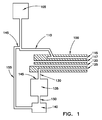
FIG. 1 is a schematic illustrating the components of one embodiment of an endoscopic apparatus in accordance with the present invention. -
FIG. 2 is a schematic illustrating the components of another embodiment of an endoscopic apparatus in accordance with the present invention. -
FIG. 3 is a schematic illustrating one embodiment of an endoscopic device and sheath for use in the endoscopic apparatus in accordance with the present invention. -
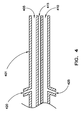
FIG. 4 is a schematic illustrating an embodiment of a multi-lumen sheath for use in the endoscopic apparatus in accordance with the present invention. -
FIG. 5 is a schematic illustrating the components of yet another embodiment of an endoscopic apparatus in accordance with the present invention. - Unless otherwise defined, all technical and scientific terms used herein have the same meaning as commonly understood by one of ordinary skill in the art to which this invention pertains. In case of conflict, the present document, including definitions, will control. Preferred devices, methods and materials are described below, although devices, methods and materials similar or equivalent to those described herein can be used in the practice of the present invention. All publications, patent applications, patents and other references mentioned herein are incorporated by reference in their entirety.
- The uses of the terms "a" and "an" and "the" and similar references in the context of describing the invention (especially in the context of the following claims) are to be construed to cover both the singular and the plural, unless otherwise indicated herein or clearly contradicted by context. Recitation of ranges of values herein are merely intended to serve as a shorthand method of referring individually to each separate value falling within the range, unless otherwise indicated herein, and each separate value is incorporated into the specification as if it were individually recited herein. All methods described herein can be performed in any suitable order unless otherwise indicated herein or otherwise clearly contradicted by context. The use of any and all examples, or exemplary language (e.g., "such as", "for example") provided herein, is intended merely to better illuminate the invention and does not pose a limitation on the scope of the invention unless otherwise claimed. No language in the specification should be construed as indicating any non-claimed element as essential to the practice of the invention.
- As used herein the terms "comprise(s)," "include(s)," "having," "has," "can," "contain(s)," and variants thereof, are intended to be openended transitional phrases, terms, or words that do not preclude the possibility of additional acts or structures. The present invention also contemplates other embodiments "comprising," "consisting of" and "consisting essentially of," the embodiments or elements presented herein, whether explicitly set forth or not.
- As used in the specification, the terms "proximal" and "distal" should be understood as being in the terms of a physician using the endoscopic device. The term distal means the portion of the device which is farthest from the physician and the term proximal means the portion of the device which is nearest to the physician. Typically, the distal portion of the device will be inserted into the body of the patient undergoing an endoscopic procedure while the proximal portion of the device will remain outside the body of the patient.
- As used herein, the term "body cavity" means any body passage or lumen, including but not limited to vascular coronary or peripheral vessels, esophageal, intestinal, biliary, bronchial, reproductive, urethral and ureteral passages. The term also encompasses a body passage formed during a surgical procedure.
- For the purpose of promoting an understanding of the principles of the invention, reference will now be made to embodiments, some of which are illustrated in the drawings, and specific language will be used to describe the same. It will nevertheless be understood that no limitation of the scope of the invention is thereby intended. Any alterations and further modifications in the described embodiments, and any further applications of the principles of the invention as described herein are contemplated as would normally occur to one skilled in the art to which the invention relates.
- Referring now to
Figure 1 , one embodiment of the present invention provides an endoscopic apparatus including anendoscopic device 100, afilter device 135 and afluid pump 140.Fluid delivery port 110 is positioned near the proximal end ofendoscopic device 100 and is connected to a proximal region offluid delivery channel 115.Fluid delivery channel 115 extends distally fromfluid delivery port 110 to the distal end ofendoscopic device 100.Fluid extraction port 130 is also positioned near the proximal end ofendoscopic device 100 and connects to a proximal region offluid extraction channel 125. - In certain embodiments,
endoscopic device 100 also includes one or more additional channels. For example,endoscopic device 100 can includevisualization channel 117 containing a fiber optic or a similar optical observation system, allowing the operator to view the region around the distal end ofendoscopic device 100 when the distal region of the device is placed within a body cavity of a subject.Endoscopic device 100 can also includeinstrument channel 120 allowing the insertion of medical instruments or manipulators. For example,instrument channel 120 can allow for the insertion of an instrument used to obtain a tissue sample for biopsy or to destroy small tumors or gallstones. -
Fluid delivery port 110 is connected tofluid reservoir 105.Fluid extraction port 130 connects to filterinput port 145 offilter device 135.Filter output port 150 offilter device 135 connects tofluid delivery port 110 viafluid return path 155, forming a fluid circulation path from thefluid extraction port 130 through thefilter device 135 to thefluid delivery port 110.Fluid pump 140 is shown positioned influid return path 155. In other embodiments,fluid pump 140 is positioned betweenfluid extraction port 130 and filterinput port 145.Fluid pump 140 can be a vacuum pump or any other pump type that is suitable to re-circulate the irrigation fluid throughfilter device 135 and return the irrigation fluid tofluid delivery port 110. -
Filter device 135 can include any filter medium suitable for the removal of particulate matter. For example,filter device 135 can include a membrane filter having a maximum pore size of between 0.1 microns and 10 microns, or between 0.1 and 1 microns, or between 0.1 and 0.5 microns or between 0.1 and 0.2 microns. In certain embodiments, the filter is a hollow fiber filter. Such a filter can include long and straight hollow fibers formed from, for example, polyethersulfone, bundled into the filter housing. -
Filter device 135 can also include a pre-filter positioned betweenfilter input port 145 and the filter medium. In such an embodiment, larger particulate matter is removed by the pre-filter before the irrigation fluid is further filtered to remove smaller particles and/or discoloration. - Referring now to
Figure 2 , this figure illustrates another embodiment of an endoscopic apparatus of the present invention. Here, the endoscopic device includes an irrigationfluid delivery device 111 and a separatefluid extraction device 121. The endoscopic apparatus also includesfilter device 135 andfluid pump 140. -
Fluid delivery port 110 offluid delivery device 111 connects tofluid reservoir 105 and allows for the delivery of irrigation fluid fromfluid reservoir 105 to the distal end of the device viafluid delivery channel 115. On some embodiments,fluid delivery device 111 also includes one of more additional channels. For example, as is illustrated inFigure 2 , the device can includevisualization channel 117 containing a fiber optic or a similar optical observation system.Device 111 can also includeinstrument channel 120 allowing the insertion of medical instruments or manipulators. In other embodiments,fluid delivery device 111 does not include such additional channels. In these embodiments, the endoscopic apparatus includes an additional endoscopic device including a visualization and/or instrument channel. -
Fluid extraction device 121 connects to filterdevice 135 viafluid extraction port 130. Irrigation fluid is aspirated from the distal end ofdevice 121 throughfluid aspiration channel 125 tofluid extraction port 130 and throughfilter device 135. After filtration, the filtered irrigation fluid is returned tofluid delivery port 110 offluid delivery device 111 viafluid return path 155. - Referring now to
Figure 3 , this figure illustrates one embodiment of a portion of an endoscopic device and sheath for use in the endoscopic apparatus of the present invention. This device includes asheath 301 havingfluid delivery device 315 positioned withinlumen 305.Endoscope 320 havinglumen 325 for a visualization and/or an instrument is also positioned withinlumen 305.Endoscope 320 can include one or more additional lumens (not shown.) For example, the endoscope can include separate lumens for visualization and instrument delivery -
Delivery device 315 includesfluid delivery port 330 positioned towards the proximal end of the device andlumen 335 extending fromfluid delivery port 330 to the distal end of the device.Fluid extraction port 310 is positioned towards the proximal end ofsheath 301. -
Fluid delivery port 330 connects to fluid reservoir 105 (shown, for example, inFIG. 1 ), allowing for the delivery of irrigation fluid to the distal end offluid delivery device 315.Fluid extraction port 310 connects to filterdevice 135, allowing for the aspiration of the irrigation fluid fromlumen 305 ofsheath 310, filtration of the irrigation fluid and return of the fluid to fluid delivery port 330 (again shown, for example, inFIG. 1 .) - Referring now to
Figure 4 , this figure illustrates another embodiment of a portion of an sheath suitable for use in the endoscopic apparatus of the present invention. Here,sheath 401 is a multi-lumen sheath including, at least,fluid delivery lumen 405,fluid extraction lumen 410 andlumen 415. An endoscope may be positioned withinlumen 415.Fluid delivery port 420 is positioned towards the distal end ofsheath 401 and connects tofluid delivery lumen 405, allowing for the delivery of irrigation fluid fromfluid reservoir 105.Fluid extraction port 425 is positioned towards the distal end offluid extraction lumen 410 and allows for the aspiration of irrigation fluid and the delivery of the aspiration fluid to filterdevice 135 and the return of the irrigation fluid tofluid delivery port 420. - Referring now to
FIG. 5 , this figure illustrates another embodiment of the endoscopic apparatus in accordance with the present invention. Here, filterinput port 146 connects to filterunits Valves filter unit 135 orfilter unit 138, or to both filter units. Configurations including 3, 4, 5, 6 or more filter units are also within the scope of the present embodiments. In certain embodiments,valves - Another aspect of the present invention provides a method for supplying an irrigation fluid during an endoscopic procedure performed using one of the endoscopic devices disclosed above. Certain endoscopic procedures, particularly those having a long duration, can require the supply of large amounts of irrigation fluid. This can require the replacement of multiple bags containing the irrigation fluid. In one embodiment, the apparatus disclosed herein reduces the need for multiple bags of irrigation fluid by providing a means of filtering and re-using irrigation fluid aspirated from the distal region of the endoscopic device. Such a system can provide cost savings, eliminate waste and reduce labor requirements. Re-use of the irrigation also reduces the need to equilibrate fresh irrigation fluid to body temperature to reduce or prevent fogging of any observation system included in the endoscopic device.
- The endoscopic procedure can be a procedure including the introduction of the distal portion of one of the endoscopic devices or apparatus disclosed above onto a body cavity of a subject. For example, the body cavity can be an esophageal, an intestinal, a biliary, a bronchial, a reproductive, an urethral or an ureteral passage. In certain embodiments, an access sheath facilitates the passage of endoscopic device into the body cavity.
- Referring, for example, to
Figure 1 , the endoscopic apparatus provides for the re-circulation of irrigation fluid throughendoscopic device 100. Irrigation fluid is delivered fromfluid reservoir 105 tofluid delivery port 110 andfluid delivery channel 115 to the distal end ofendoscopic device 100. The irrigation fluid, along with fluid or particulate matter present in the region around the distal end is then aspirated, byfluid pump 140, through the distal end offluid aspiration channel 125 tofluid extraction port 130 and throughfilter device 135. After filtration, the filtered irrigation fluid is returned tofluid delivery port 110 ofendoscopic device 100 viafluid return path 155. In some embodiments,fluid return path 155 returns the filtered irrigation fluid tofluid reservoir 105. In other embodiments, the filtered irrigation fluid is returned tofluid delivery port 110 viareturn connection 145. - In one embodiment, the irrigation fluid is an aqueous irrigation fluid. For example, the irrigation fluid can be water or saline. In certain embodiments, particles obscuring operator vision, for example, surgical debris and/or blood components, are suspended in the irrigation fluid and delivered to the filter device.
- Although the invention has been described and illustrated with reference to specific illustrative embodiments thereof, it is not intended that the invention be limited to those illustrative embodiments. Those skilled in the art will recognize that variations and modifications can be made without departing from the true scope and spirit of the invention as defined by the claims that follow. It is therefore intended to include within the invention all such variations and modifications as fall within the scope of the appended claims and equivalents thereof.
Claims (15)
- An endoscopic apparatus comprising:an endoscopic device having a fluid delivery port and a fluid extraction port;a filter device comprising a housing having a filter input port and a filter output port and a filter positioned within the housing, wherein the fluid extraction port connects to the filter input port and wherein the filter output port connects to the fluid delivery port forming a fluid circulation path from the fluid extraction port through the filter device to the fluid delivery port; anda fluid pump positioned in the fluid circulation path.
- The endoscopic apparatus of claim 1, further comprising a fluid reservoir, wherein the fluid reservoir is in fluid communication with the fluid delivery port.
- The endoscopic apparatus of claim 1, wherein the endoscopic device comprises:an elongated member having an proximal end and a distal end,wherein the fluid delivery port and the fluid extraction port are positioned near the proximal end;a fluid delivery channel positioned within the elongated member and extending from the fluid delivery port to the distal end;a fluid extraction channel positioned within the elongated member and extending from the distal end to the fluid extraction port.
- The endoscopic apparatus of claim 1, wherein the endoscopic device comprises:(a) a fluid delivery device comprising:a first elongated member having a proximal end and a distal end,wherein the fluid delivery port is positioned near the proximal end of the first elongated member, anda fluid delivery channel positioned within the first elongated member, and extending from the fluid delivery port to the distal end of the first elongated member, and(b) a fluid extraction device comprising:a second elongated member having a proximal end and a distal end,wherein the fluid extraction port is positioned near the proximal end of the second elongated member, anda fluid extraction channel positioned within the second elongated member and extending from the distal end of the second elongated member to the fluid extraction port.
- The endoscopic apparatus of any one of the preceding claims, wherein the filter is a membrane filter and preferably wherein the membrane filter is a hollow fiber filter.
- The endoscopic apparatus of claim 5, wherein the hollow fiber filter comprises a membrane comprising pores having a maximum size of between 0.1 microns and 10 microns.
- The endoscopic apparatus of claim 5, wherein the filter device further comprises a pre-filter positioned within the housing between the filter input port and the hollow fiber filter.
- The endoscopic apparatus of any one of the preceding claims, further comprising an access sheath.
- The endoscopic apparatus of any one of the preceding claims, wherein the fluid pump is a vacuum pump.
- A method of supplying an irrigation fluid during an endoscopic examination comprising:delivering the irrigation fluid from a fluid delivery port of an endoscopic device to a distal end of the endoscopic device,aspirating the irrigation fluid from a region around the distal end; delivering the aspirated irrigation fluid to a filter device;filtering the aspirated irrigation fluid in the filter device to provide a filtered irrigation fluid; anddelivering the filtered irrigation fluid through the fluid delivery port to the distal end of the endoscopic device.
- The method of claim 10, wherein the filtering comprises passing the aspirated irrigation fluid through a hollow fiber filter.
- The method of claim 10, wherein the filtering comprises removing discoloration or particulate matter from the irrigation fluid.
- The method of any one of claim 10 to claim 12, wherein the irrigation fluid is an aqueous irrigation fluid, preferably selected from the group consisting of water and saline.
- The method of any one of claim 10 to claim 13, wherein the endoscopic device comprises
an elongated member having an proximal end and a distal end and having the fluid delivery port and a fluid extraction port are positioned near the proximal end;
a fluid delivery channel positioned within the elongated member and extending from the fluid delivery port to the distal end;
a fluid extraction channel positioned within the elongated member and extending from the distal end to the fluid extraction port;
a filter device comprising a housing having a filter input port and a filter output port and a filter positioned within the housing, wherein the fluid extraction port connects to the filter input port and wherein the filter output port connects to the fluid delivery port forming a fluid circulation path from the fluid extraction port through the filter device to the fluid delivery port; and
a fluid pump positioned in the fluid circulation path. - The method of any one of claim 10 to claim 14, wherein particles obscuring operator vision are suspended in the irrigation fluid and delivered to the filter device.
Applications Claiming Priority (1)
| Application Number | Priority Date | Filing Date | Title |
|---|---|---|---|
| US201361906986P | 2013-11-21 | 2013-11-21 |
Publications (1)
| Publication Number | Publication Date |
|---|---|
| EP2875774A1 true EP2875774A1 (en) | 2015-05-27 |
Family
ID=51743376
Family Applications (1)
| Application Number | Title | Priority Date | Filing Date |
|---|---|---|---|
| EP14189786.8A Withdrawn EP2875774A1 (en) | 2013-11-21 | 2014-10-21 | Endoscopic Apparatus including a Re-Circulation Device and Filter and Method of Supplying an Irrigation Fluid during an Endoscopic Procedure |
Country Status (2)
| Country | Link |
|---|---|
| US (1) | US20150141908A1 (en) |
| EP (1) | EP2875774A1 (en) |
Cited By (1)
| Publication number | Priority date | Publication date | Assignee | Title |
|---|---|---|---|---|
| CN112023170A (en) * | 2020-09-25 | 2020-12-04 | 武汉大学 | Bladder circulation continuous flushing device |
Families Citing this family (3)
| Publication number | Priority date | Publication date | Assignee | Title |
|---|---|---|---|---|
| US20220133137A1 (en) * | 2019-01-29 | 2022-05-05 | Pawel Wisniewski | Organ flush and drainage unit |
| CN112043901B (en) * | 2020-09-25 | 2022-02-01 | 武汉大学 | Bladder self-loopa flusher |
| CN116439637A (en) * | 2023-03-23 | 2023-07-18 | 徐州益柯达电子科技有限公司 | Self-circulation endoscope flusher |
Citations (3)
| Publication number | Priority date | Publication date | Assignee | Title |
|---|---|---|---|---|
| FR2592584A1 (en) * | 1986-01-03 | 1987-07-10 | Wargnier Dominique | Urological apparatus for vesical washing |
| US5382229A (en) * | 1993-09-21 | 1995-01-17 | Abbott Laboratories | Irrigation solution re-circulating system |
| US20130079702A1 (en) * | 2011-09-22 | 2013-03-28 | Arqos Surgical, Inc. | Surgical fluid management systems and methods |
Family Cites Families (1)
| Publication number | Priority date | Publication date | Assignee | Title |
|---|---|---|---|---|
| US5827177A (en) * | 1997-02-18 | 1998-10-27 | Vision-Sciences, Inc. | Endoscope sheath assembly with isolating fabric sleeve |
-
2014
- 2014-10-07 US US14/508,044 patent/US20150141908A1/en not_active Abandoned
- 2014-10-21 EP EP14189786.8A patent/EP2875774A1/en not_active Withdrawn
Patent Citations (3)
| Publication number | Priority date | Publication date | Assignee | Title |
|---|---|---|---|---|
| FR2592584A1 (en) * | 1986-01-03 | 1987-07-10 | Wargnier Dominique | Urological apparatus for vesical washing |
| US5382229A (en) * | 1993-09-21 | 1995-01-17 | Abbott Laboratories | Irrigation solution re-circulating system |
| US20130079702A1 (en) * | 2011-09-22 | 2013-03-28 | Arqos Surgical, Inc. | Surgical fluid management systems and methods |
Cited By (2)
| Publication number | Priority date | Publication date | Assignee | Title |
|---|---|---|---|---|
| CN112023170A (en) * | 2020-09-25 | 2020-12-04 | 武汉大学 | Bladder circulation continuous flushing device |
| CN112023170B (en) * | 2020-09-25 | 2022-02-01 | 武汉大学 | Bladder circulation continuous flushing device |
Also Published As
| Publication number | Publication date |
|---|---|
| US20150141908A1 (en) | 2015-05-21 |
Similar Documents
| Publication | Publication Date | Title |
|---|---|---|
| EP3248530B1 (en) | Percutaneous puncture and dilation visible irrigation- suction system and method of using the same | |
| EP2621327B1 (en) | Hysteroscopic system | |
| CN106604687B (en) | Sheath assembly and porous catheter for endoscopic surgery in different fields including suction, irrigation and material removal | |
| US20060270974A1 (en) | Methods and systems for filtering aspirated materials | |
| CN104902828B (en) | Paranasal sinus approach system | |
| EP3685774A1 (en) | Medical device having visible puncture apparatus | |
| US20110245602A1 (en) | Flexible endoscope with full-length lumen | |
| US20100312053A1 (en) | Resectoscopic device and method | |
| EP3706648B1 (en) | Capture devices | |
| WO1997036536A1 (en) | Optical female urethroscope | |
| WO1997036536A9 (en) | Optical female urethroscope | |
| US20150141908A1 (en) | Irrigation Re-circulation Device and Filter and Method of Use Thereof | |
| US20100240950A1 (en) | Uretero-Renoscope | |
| CN110393982B (en) | Air Purifier for Laparoscopic Surgery | |
| CN206026368U (en) | Uropoiesis laparoscopic surgery ware | |
| EP3632293A2 (en) | Multi lumen access device | |
| US20160029880A1 (en) | Cystoscopic device and methods for operating same | |
| CN221511856U (en) | Endoscope for removing catheter support | |
| WO2017132126A1 (en) | Access device having a fluid pathway and methods of using the same | |
| CN219743471U (en) | Visual suction tube for minimally invasive surgery | |
| US20220273271A1 (en) | Medical filtration system | |
| CN214259266U (en) | Drainage and guiding device for minimally invasive surgery through percutaneous endoscopic interlaminar approach | |
| KR101786184B1 (en) | The internal structure of visibility is widened endoscope | |
| CN116570381A (en) | Operating components and testing equipment | |
| CN117357034A (en) | Disposable elongated covering, endoscopic system and endoscopic examination method |
Legal Events
| Date | Code | Title | Description |
|---|---|---|---|
| PUAI | Public reference made under article 153(3) epc to a published international application that has entered the european phase |
Free format text: ORIGINAL CODE: 0009012 |
|
| 17P | Request for examination filed |
Effective date: 20141021 |
|
| AK | Designated contracting states |
Kind code of ref document: A1 Designated state(s): AL AT BE BG CH CY CZ DE DK EE ES FI FR GB GR HR HU IE IS IT LI LT LU LV MC MK MT NL NO PL PT RO RS SE SI SK SM TR |
|
| AX | Request for extension of the european patent |
Extension state: BA ME |
|
| STAA | Information on the status of an ep patent application or granted ep patent |
Free format text: STATUS: THE APPLICATION IS DEEMED TO BE WITHDRAWN |
|
| 18D | Application deemed to be withdrawn |
Effective date: 20151128 |