EP2873457A1 - Catalyst for preparing chiral selective and conductive selective single-walled carbon nanotube, preparation method and application thereof - Google Patents
Catalyst for preparing chiral selective and conductive selective single-walled carbon nanotube, preparation method and application thereof Download PDFInfo
- Publication number
- EP2873457A1 EP2873457A1 EP13816443.9A EP13816443A EP2873457A1 EP 2873457 A1 EP2873457 A1 EP 2873457A1 EP 13816443 A EP13816443 A EP 13816443A EP 2873457 A1 EP2873457 A1 EP 2873457A1
- Authority
- EP
- European Patent Office
- Prior art keywords
- catalysts
- selective
- formula
- swnts
- range
- Prior art date
- Legal status (The legal status is an assumption and is not a legal conclusion. Google has not performed a legal analysis and makes no representation as to the accuracy of the status listed.)
- Granted
Links
Images


Classifications
-
- B—PERFORMING OPERATIONS; TRANSPORTING
- B01—PHYSICAL OR CHEMICAL PROCESSES OR APPARATUS IN GENERAL
- B01J—CHEMICAL OR PHYSICAL PROCESSES, e.g. CATALYSIS OR COLLOID CHEMISTRY; THEIR RELEVANT APPARATUS
- B01J23/00—Catalysts comprising metals or metal oxides or hydroxides, not provided for in group B01J21/00
- B01J23/70—Catalysts comprising metals or metal oxides or hydroxides, not provided for in group B01J21/00 of the iron group metals or copper
- B01J23/76—Catalysts comprising metals or metal oxides or hydroxides, not provided for in group B01J21/00 of the iron group metals or copper combined with metals, oxides or hydroxides provided for in groups B01J23/02 - B01J23/36
- B01J23/84—Catalysts comprising metals or metal oxides or hydroxides, not provided for in group B01J21/00 of the iron group metals or copper combined with metals, oxides or hydroxides provided for in groups B01J23/02 - B01J23/36 with arsenic, antimony, bismuth, vanadium, niobium, tantalum, polonium, chromium, molybdenum, tungsten, manganese, technetium or rhenium
- B01J23/85—Chromium, molybdenum or tungsten
- B01J23/888—Tungsten
-
- B—PERFORMING OPERATIONS; TRANSPORTING
- B01—PHYSICAL OR CHEMICAL PROCESSES OR APPARATUS IN GENERAL
- B01J—CHEMICAL OR PHYSICAL PROCESSES, e.g. CATALYSIS OR COLLOID CHEMISTRY; THEIR RELEVANT APPARATUS
- B01J23/00—Catalysts comprising metals or metal oxides or hydroxides, not provided for in group B01J21/00
- B01J23/16—Catalysts comprising metals or metal oxides or hydroxides, not provided for in group B01J21/00 of arsenic, antimony, bismuth, vanadium, niobium, tantalum, polonium, chromium, molybdenum, tungsten, manganese, technetium or rhenium
- B01J23/24—Chromium, molybdenum or tungsten
- B01J23/30—Tungsten
-
- B—PERFORMING OPERATIONS; TRANSPORTING
- B01—PHYSICAL OR CHEMICAL PROCESSES OR APPARATUS IN GENERAL
- B01J—CHEMICAL OR PHYSICAL PROCESSES, e.g. CATALYSIS OR COLLOID CHEMISTRY; THEIR RELEVANT APPARATUS
- B01J23/00—Catalysts comprising metals or metal oxides or hydroxides, not provided for in group B01J21/00
- B01J23/16—Catalysts comprising metals or metal oxides or hydroxides, not provided for in group B01J21/00 of arsenic, antimony, bismuth, vanadium, niobium, tantalum, polonium, chromium, molybdenum, tungsten, manganese, technetium or rhenium
- B01J23/32—Manganese, technetium or rhenium
- B01J23/36—Rhenium
-
- B—PERFORMING OPERATIONS; TRANSPORTING
- B01—PHYSICAL OR CHEMICAL PROCESSES OR APPARATUS IN GENERAL
- B01J—CHEMICAL OR PHYSICAL PROCESSES, e.g. CATALYSIS OR COLLOID CHEMISTRY; THEIR RELEVANT APPARATUS
- B01J23/00—Catalysts comprising metals or metal oxides or hydroxides, not provided for in group B01J21/00
- B01J23/38—Catalysts comprising metals or metal oxides or hydroxides, not provided for in group B01J21/00 of noble metals
- B01J23/54—Catalysts comprising metals or metal oxides or hydroxides, not provided for in group B01J21/00 of noble metals combined with metals, oxides or hydroxides provided for in groups B01J23/02 - B01J23/36
- B01J23/56—Platinum group metals
- B01J23/64—Platinum group metals with arsenic, antimony, bismuth, vanadium, niobium, tantalum, polonium, chromium, molybdenum, tungsten, manganese, technetium or rhenium
- B01J23/652—Chromium, molybdenum or tungsten
- B01J23/6527—Tungsten
-
- B—PERFORMING OPERATIONS; TRANSPORTING
- B01—PHYSICAL OR CHEMICAL PROCESSES OR APPARATUS IN GENERAL
- B01J—CHEMICAL OR PHYSICAL PROCESSES, e.g. CATALYSIS OR COLLOID CHEMISTRY; THEIR RELEVANT APPARATUS
- B01J23/00—Catalysts comprising metals or metal oxides or hydroxides, not provided for in group B01J21/00
- B01J23/70—Catalysts comprising metals or metal oxides or hydroxides, not provided for in group B01J21/00 of the iron group metals or copper
- B01J23/76—Catalysts comprising metals or metal oxides or hydroxides, not provided for in group B01J21/00 of the iron group metals or copper combined with metals, oxides or hydroxides provided for in groups B01J23/02 - B01J23/36
- B01J23/84—Catalysts comprising metals or metal oxides or hydroxides, not provided for in group B01J21/00 of the iron group metals or copper combined with metals, oxides or hydroxides provided for in groups B01J23/02 - B01J23/36 with arsenic, antimony, bismuth, vanadium, niobium, tantalum, polonium, chromium, molybdenum, tungsten, manganese, technetium or rhenium
- B01J23/889—Manganese, technetium or rhenium
- B01J23/8892—Manganese
-
- B—PERFORMING OPERATIONS; TRANSPORTING
- B01—PHYSICAL OR CHEMICAL PROCESSES OR APPARATUS IN GENERAL
- B01J—CHEMICAL OR PHYSICAL PROCESSES, e.g. CATALYSIS OR COLLOID CHEMISTRY; THEIR RELEVANT APPARATUS
- B01J23/00—Catalysts comprising metals or metal oxides or hydroxides, not provided for in group B01J21/00
- B01J23/70—Catalysts comprising metals or metal oxides or hydroxides, not provided for in group B01J21/00 of the iron group metals or copper
- B01J23/89—Catalysts comprising metals or metal oxides or hydroxides, not provided for in group B01J21/00 of the iron group metals or copper combined with noble metals
- B01J23/8933—Catalysts comprising metals or metal oxides or hydroxides, not provided for in group B01J21/00 of the iron group metals or copper combined with noble metals also combined with metals, or metal oxides or hydroxides provided for in groups B01J23/02 - B01J23/36
- B01J23/8993—Catalysts comprising metals or metal oxides or hydroxides, not provided for in group B01J21/00 of the iron group metals or copper combined with noble metals also combined with metals, or metal oxides or hydroxides provided for in groups B01J23/02 - B01J23/36 with chromium, molybdenum or tungsten
-
- B—PERFORMING OPERATIONS; TRANSPORTING
- B01—PHYSICAL OR CHEMICAL PROCESSES OR APPARATUS IN GENERAL
- B01J—CHEMICAL OR PHYSICAL PROCESSES, e.g. CATALYSIS OR COLLOID CHEMISTRY; THEIR RELEVANT APPARATUS
- B01J37/00—Processes, in general, for preparing catalysts; Processes, in general, for activation of catalysts
- B01J37/08—Heat treatment
-
- B—PERFORMING OPERATIONS; TRANSPORTING
- B01—PHYSICAL OR CHEMICAL PROCESSES OR APPARATUS IN GENERAL
- B01J—CHEMICAL OR PHYSICAL PROCESSES, e.g. CATALYSIS OR COLLOID CHEMISTRY; THEIR RELEVANT APPARATUS
- B01J37/00—Processes, in general, for preparing catalysts; Processes, in general, for activation of catalysts
- B01J37/16—Reducing
- B01J37/18—Reducing with gases containing free hydrogen
-
- C—CHEMISTRY; METALLURGY
- C01—INORGANIC CHEMISTRY
- C01B—NON-METALLIC ELEMENTS; COMPOUNDS THEREOF; METALLOIDS OR COMPOUNDS THEREOF NOT COVERED BY SUBCLASS C01C
- C01B32/00—Carbon; Compounds thereof
- C01B32/15—Nano-sized carbon materials
- C01B32/158—Carbon nanotubes
- C01B32/16—Preparation
- C01B32/162—Preparation characterised by catalysts
-
- B—PERFORMING OPERATIONS; TRANSPORTING
- B82—NANOTECHNOLOGY
- B82Y—SPECIFIC USES OR APPLICATIONS OF NANOSTRUCTURES; MEASUREMENT OR ANALYSIS OF NANOSTRUCTURES; MANUFACTURE OR TREATMENT OF NANOSTRUCTURES
- B82Y40/00—Manufacture or treatment of nanostructures
-
- C—CHEMISTRY; METALLURGY
- C01—INORGANIC CHEMISTRY
- C01B—NON-METALLIC ELEMENTS; COMPOUNDS THEREOF; METALLOIDS OR COMPOUNDS THEREOF NOT COVERED BY SUBCLASS C01C
- C01B2202/00—Structure or properties of carbon nanotubes
- C01B2202/02—Single-walled nanotubes
-
- C—CHEMISTRY; METALLURGY
- C01—INORGANIC CHEMISTRY
- C01B—NON-METALLIC ELEMENTS; COMPOUNDS THEREOF; METALLOIDS OR COMPOUNDS THEREOF NOT COVERED BY SUBCLASS C01C
- C01B2202/00—Structure or properties of carbon nanotubes
- C01B2202/20—Nanotubes characterized by their properties
- C01B2202/22—Electronic properties
Definitions
- B stands for one or more metals selected from a group consisting of the transition metals vanadium (V), chromium (Cr), manganese (Mn), iron (Fe), cobalt (Co), nickel (Ni), copper (Cu), zinc (Zn), rhodium (Rh), ruthenium (Ru), palladium (Pd), platinum (Pt), gold (Au), silver (Ag), rhenium (Re), osmium (Os), iridium (Ir), and the lanthanide rare earth metals; y is in the range of 0.01-20.0.
- lanthanum (La), cerium (Ce), praseodymium (Pr), neodymium (Nd), promethium (Pm), samarium (Sm), europium (Eu), gadolinium (Gd), terbium (Tb), dysprosium (Dy), holmium (Ho), erbium (Er), thulium (Tm), ytterbium (Yb), and lutetium (Lu) are specifically mentioned.
- temperature programmed heating is a key factor in achieving good performance of the prepared catalysts.
- the terminology "temperature programmed heating” refers to heating at a temperature programmed heating rate.
- the entire heating process it may comprise one or more temperature programmed heating stages, preferably, the entire heating process only contains one temperature programmed heating stage, i.e., the heating rate in the entire heating process is constant. If the entire heating process comprises multiple temperature programmed heating stages, the heating rates are different in each temperature programmed heating stages.
- the heating rate is in the range of 10-100 °C/min, preferably, 10-80 °C/min, more preferably, 10-60 °C/min, most preferably, 40-60 °C/min.
- references include Dalton Trans., 2010, 39, 3884 ; Chem. Mater., 2005, 17, 1367 ; Appl. Catal. A: Gen., 1998, 172, 265 ; Inorg. Chem., 2010, 49, 4949 ; Chem. Eur. J., 2008, 14, 1186 ; Inorg. Chem., 2009, 48, 6452 ; Dalton Trans., 2010, 39, 6460 ; Angew. Chem. Int. Ed. Engl. 1997, 36, 1445 ; J. Am. Chem. Soc. 2010, 132, 11410 ; Chem. Asian. J. 2006, 1, 352 ; Chem. Commun. 2007, (41), 4254 ; Chem. Eur. J.
- the applications of the catalysts for preparation of chirality-selective and metallicity-selective SWNTs are provided. Many experiments and researches are carried out by the present inventors and it is found out that direct growth of SWNTs with desired chirality and metallicity can be achieved when the alloys with chemical compositions represented by formula (I) prepared by methods in the present invention are used as catalysts.
- post-reaction treatments are performed, such as cooling in the atmosphere of reductive gases including hydrogen and/or inert gases. Those post-reaction treatments are well known in the art and thus are not listed herein.
- Brown block crystals of (Na 18 [ ⁇ Co II (H 2 O) 4 ⁇ 6 ⁇ W IV O(H 2 O) ⁇ 3 (P 2 W IV 12 O 40 ) 3 ] ⁇ xH 2 O) is obtained through filteration and washing after two weeks, which is donated as ⁇ W 39 Co 6 ⁇ .
- SEM scanning electron microscope
- SWNTs The growth of SWNTs is similar as the methods described in Example 1. The difference is that a flow of argon (200 cm 3 /min) through an ethanol bubbler mixed with 150 cm 3 /min hydrogen instead of a flow of hydrogen (100 cm 3 /min) through an ethanol bubbler is introduced into the system to grow SWNTs at 1050 °C instead of 950 °C.
- 0.0029 g Na 2 WO 4 and 0.0018 g Ni(NO 3 ) 2 are weighted as solid and dissolved in a mixed solution of 10 ml water and 40 ml ethanol at a concentration of 0.2 mmol ⁇ dm -3 , which is calculated on the basis of nickel.
- the precursor solution is dropped onto the monocrystalline silicon substrate in a quartz tube furace, and the solvent is spread and volatilized quickly.
- the substrate is calcined at 900 °C in air for 3 min and then the tungsten-nickel metal oxides are formed.
- Hydrogen is introduced to reduce the calcined catalyst precursors at temperatures of 1000 °C with a temperature programmed heating rate of 10 °C/min, and then the WNi catalysts are formed.
- the precursor solution is dropped onto the monocrystalline silicon substrate in a quartz tube funace, and the solvent is spread and volatilized quickly.
- the substrate is calcined at 800 °C in air for 5 min and then the tungsten-manganese-vanadium metal oxides are formed.
- Hydrogen is introduced to reduce the calcined catalyst precursors at temperatures of 1400 °C with a temperature programmed heating rate of 50 °C/min, and then the WMn 1.5 V 0.63 catalysts are formed.
- the tungsten-cobalt WCo 1.17 and WCo 3 alloys which are prepared based on the reference Z. Anorg. Chem. 1938, 238, 270 , are deposited on monocrystalline silicon substrate, respectively.
- the catalysts are put into the centre of the quartz tube furnace.
- a flow of hydrogen (100 cm 3 /min) through an ethanol bubbler is introduced into the reactor to grow SWNTs for 15 min at temperatures of 950 °C at the centre of the furnace.
- the tungsten-nickel WNi 4 alloy which is prepared based on the reference J. Met. 1949, 1, 267 , is deposited on the monocrystalline silicon substrate.
- the catalysts are put into the centre of the quartz tube furnace.
- a flow of hydrogen (200 cm 3 /min) through an ethanol bubbler is introduced into the reactor to grow SWNTs for 15 min at temperatures of 1000 °C at the centre of the furnace.
Landscapes
- Chemical & Material Sciences (AREA)
- Engineering & Computer Science (AREA)
- Materials Engineering (AREA)
- Organic Chemistry (AREA)
- Chemical Kinetics & Catalysis (AREA)
- Nanotechnology (AREA)
- Physics & Mathematics (AREA)
- Thermal Sciences (AREA)
- Inorganic Chemistry (AREA)
- Catalysts (AREA)
- Carbon And Carbon Compounds (AREA)
Abstract
Description
- The present invention relates to single-walled carbon nanotubes, more particularly, to catalysts for preparation of chirality-selective and conductivity-selective single-walled carbon nanotubes, preparation methods and applications thereof.
- As a typical nanomaterial, carbon nanotubes, especially single-walled carbon nanotubes, (SWNTs) are the focus of current research due to the remarkable properties.
- SWNTis a typical one-dimensional nanomaterial with high length-to-diameter ratio. The special cylindrical structure with high length-to-diameter ratio rolling up from a single layer graphene determines the superior physical, chemical, electrical, and mechanical properties of single-walled carbon nanotubes, such as, very high Young's modulus, tensile strength and thermal conductivity, ideal performance as one-dimensional quantum wire and direct bandgap semiconductor, easy functionalization with other molecules, as well as good biocompatibility. Comparing to caged fullerene molecules with relatively simple structures, carbon nanotubes possess broader application prospects in many areas such as nanoelectronic devices, optical devices, chemical and biological sensors, and multi-functional composite materials, etc.
- The chiralities of SWNTs, which are denoted by a pair of chiral indices (n,m) as shown in
Figure 1 , are determined by the rolling up direction from the single layer graphene. SWNT can be viewed as projections of two-dimensional graphene on a cylindrical surface, which can be made only when the circumference of the cylinder matches perfectly with a certain lattice vector R in the Brillouin zone of the graphene layer. Each lattice vector R in the Brillouin zone is composed of two unit vectors R1 and R2 of the graphene and a pair of integers (n,m) by:
- The key technology in the current research area of carbon nanotubes, which also determines the application prospects in carbon-based nanoelectronics, is the controllable preparation of high purity SWNTs with desired chirality, conductivity (semiconductivity and metallicity). Semiconducting SWNTs can be used as fundamental units in nanoscale logic circuit, such as field effect transistors, p-n junction diode, memory devices, etc. Metallic SWNTs have superior performance such as high current density tolerance, small diameter, high chemical stability, high thermal stability, etc. and are the best connecting wires in logic circuits and molecular devices. However, those applications depend to a large extent on the properties of SWNTs, such as diameter, chirality, metallicity, etc. Therefore, selective growth of SWNTs is very important.
- Although several literatures in the prior art are available in controllable selective separation of SWNTs based on physical chemical methods, the technical steps reported in those literatures are complicated and the separation results are unsatisfactory.
- Currently, researchers have utilized methods such as plasma enhanced chemical vapor deposition (CVD), ultraviolet light etching, precursors doped with oxidative carbon sources, adjusting carbon sources partial pressure, etc. to directly grow SWNTs with a high semiconducting content, and to obtain relatively high selectivity in metallic SWNTs by adding sulfur-containing compounds in the carbon sources. However, only bulk SWNTs can be obtained in those methods, and it is another big challenge, which hinders the applications in field effect transistor devices, to disperse bulk SWNTs on silicon substrates. Relatively good metallicity and chirality selectivities can also be achieved by controllable growth of SWNTs on substrates by the cloning method, however, the difficulty in large-scale controllable preparation limits its further applications.
- In order to be applicable in the research for surface electronic devices, it is a big challenge and of important research significance to directly grow chirality-selective and metallicity-selective (i.e. semiconducting/metallic) SWNTs on substrates.
- In order to solve the above problems, the inventors of the present invention carry out intensive studies and find out that chirality-selective and metallicity-selective SWNTs can be controllably prepared by using composition (alloy) catalysts composed of tungsten and other metals, which are reduced by hydrogen gas from compounds formed by high boilting point tungsten metal and other metals.
- The first purpose of the present invention is to provide catalysts for preparation of chirality-selective and metallicity-selective SWNTs, said catalysts are represented by formula (I) as follows:
ABy, formula (I)
wherein, A is the metal tungsten (W); - B stands for one or more metals selected from a group consisting of the transition metals vanadium (V), chromium (Cr), manganese (Mn), iron (Fe), cobalt (Co), nickel (Ni), copper (Cu), zinc (Zn), rhodium (Rh), ruthenium (Ru), palladium (Pd), platinum (Pt), gold (Au), silver (Ag), rhenium (Re), osmium (Os), iridium (Ir), and the lanthanide rare earth metals;
y is in the range of 0.01-20.0. - The second purpose of the present invention is to provide a preparation method of the catalysts to grow chirality-selective and metallicity-selective SWNTs, said catalysts are represented by formula (I) as above and said method comprises the following steps:
- Reducing the metal oxides with chemical compositions represented by formula (II) as follows to obtain the catalysts with chemical compositions represented by formula (I) as above in the atmosphere of hydrogen at 300-1500 °C with a temperature programmed heating rate of 10-100 °C /min:
AByO(a+by)/2, formula (II)
wherein, A is the metal tungsten (W); - B stands for one or more metals selected from a group consisting of the transition metals vanadium (V), chromium (Cr), manganese (Mn), iron (Fe), cobalt (Co), nickel (Ni), copper (Cu), zinc (Zn), rhodium (Rh), ruthenium (Ru), palladium (Pd), platinum (Pt), gold (Au), silver (Ag), rhenium (Re), osmium (Os), iridium (Ir), and the lanthanide rare earth metals;
a is the oxidation number in A;
b is the oxidation number in B;
y is in the range of 0.01-20.0. - The third purpose of the present invention is to provide applications of the catalysts described above for preparation of chirality-selective and metallicity-selective SWNTs.
- The fourth purpose of the present invention is to provide a preparation method of chirality-selective and metallicity-selective SWNTs, said method comprises the following steps:
- Growing SWNTs on substrates loaded with the catalysts described above by introducing carbon sources gas with a flow rate of 10-1000 ml/min at 600-1500 °C, and by chemical vapor deposition.
- The catalysts provided in the present invention show various advantages including nonvolatile metal components, fixed metal composition, controllable particle size, dual/multiple metal synergistic effect, etc. The facility requirement and cost are low. The selective growth of SWNTs with desired chirality and metallicity can be achieved using the catalysts provided in the present invention.
-
-
Figure 1 is the illustrative diagram of the chirality (n,m) of SWNT rolling up along the chiral vector R from a single layer graphene. -
Figure 2 is the scanning electron microscope image of the as-grown carbon nanotubes in example 1. -
Figure 3 is the scanning electron microscope image of the as-grown carbon nanotubes in example 2. -
Figure 4a is the Raman spectra of the as-grown carbon nanotubes in example 1 with 532 nm excitation wavelength. -
Figure 4b is the Raman spectra of the as-grown carbon nanotubes in example 1 with 633 nm excitation wavelength. -
Figure 5 is the Raman spectra of the as-grown carbon nanotubes in example 2. -
Figure 6 is the Raman spectra of the as-grown carbon nanotubes in comparative example 1. -
Figure 7 is the Raman spectra of the as-grown carbon nanotubes in comparative example 2. -
Figure 8 is the scanning electron microscope image of the as-grown carbon nanotubes horizontal arrays in example 6. -
Figure 9 is the X-ray powder diffraction (XRD) pattern of the as-grown catalysts in the experimental example. -
Figure 10 is the elemental analysis spectrum from high resolution transmission electron microscope of the as-grown catalysts in the experimental example. -
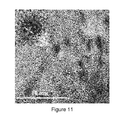
Figure 11 is the high resolution transmission electron microscope (HRTEM) image of the as-grown catalysts in the experimental example. - The present invention is further illustrated as follows, and the characteristics and advantages of the present invention will become more clear and explicit.
- As one aspect of the present invention, catalysts for preparation of chirality-selective and metallicity-selective SWNTs are provided, said catalysts have chemical compositions as represented by formula (I) as follows:
ABy, formula (I)
wherein, A is the metal tungsten (W); - B stands for one or more metals selected from a group consisting of the transition metals vanadium (V), chromium (Cr), manganese (Mn), iron (Fe), cobalt (Co), nickel (Ni), copper (Cu), zinc (Zn), rhodium (Rh), ruthenium (Ru), palladium (Pd), platinum (Pt), gold (Au), silver (Ag), rhenium (Re), osmium (Os), iridium (Ir), and the lanthanide rare earth metals;
y is in the range of 0.01-20.0. - As for the lanthanide rare earth metals, lanthanum (La), cerium (Ce), praseodymium (Pr), neodymium (Nd), promethium (Pm), samarium (Sm), europium (Eu), gadolinium (Gd), terbium (Tb), dysprosium (Dy), holmium (Ho), erbium (Er), thulium (Tm), ytterbium (Yb), and lutetium (Lu) are specifically mentioned.
- In a preferred embodiment, in formula (I) B stands for one or more metals selected from a group listed as follows: transition metals manganese (Mn), iron (Fe), cobalt (Co), nickel (Ni), copper (Cu), zinc (Zn), chromium (Cr), vanadium (V), rhodium (Rh), and ruthenium (Ru); more preferably, B stands for one or more metals selected from a group listed as follows: manganese (Mn), iron (Fe), cobalt (Co), nickel (Ni), copper (Cu), zinc (Zn), and chromium (Cr); most preferably, B stands for one or more metals selected from a group listed as follows: iron (Fe), cobalt (Co), nickel (Ni), copper (Cu), manganese (Mn), and chromium (Cr).
- In a preferred embodiment, in formula (I) y is in the range of 0.1-6.0, preferably, 0.2-4.0, more preferably, 0.2-1.0.
- As examples of the above catalysts, substances with the following chemical compositions are specifically mentioned:
- Binary catalysts including WV, WFe1.17, WFe2, WFe, WCo1.17, WCo3, WCo, WNi, WNi4, WNi5.67, WCu0.67, WCu5.25, WRe, WRe3, WRe0.25, WRe10.11, W13Re7, WOs0.5, WOs2, WIr, WPt2, WRh3, WRh4, WRu0.18, WRu1.5, WEu0.18, WCe3, WPr3;
- Ternary catalysts including WCoNi, WFeNi5, WMn3Fe, WPtNi10 WRu2Fe5, WRhCo, WCu2Fe12, WFeV4, WRe0.125Ni0.125, WRu3Cu12, WPtCu10, WMn1.5V0.63, WLaFe3;
- Multiple catalysts including WFeCoNi, WFeCoMn, WFeCu3Ru, WMn5V3Cr, WRuPtAu, WFe0.1Au0.2Mn0.1, WFeRe2Mn, WOsCu3Mn8.
- As the second aspect of the present invention, a preparation method of the catalysts to grow chirality-selective and metallicity-selective SWNTs is provided, said catalysts have chemical compositions as represented by formula (I) as above and said method comprises the following steps:
- Reducing the metal oxides with chemical compositions represented by formula (II) as follows to obtain the catalysts with chemical compositions represented by formula (I) as above in the atmosphere of hydrogen at 300-1500 °C with a temperature programmed heating rate of 10-100 °C /min:
AByO(a+by)/2, formula (II)
wherein, A is the metal tungsten (W); - B stands for one or more metals selected from a group consisting of the transition metals vanadium (V), chromium (Cr), manganese (Mn), iron (Fe), cobalt (Co), nickel (Ni), copper (Cu), zinc (Zn), rhodium (Rh), ruthenium (Ru), palladium (Pd), platinum (Pt), gold (Au), silver (Ag), rhenium (Re), osmium (Os), iridium (Ir), and the lanthanide rare earth metals;
a is the oxidation number in A;
b is the oxidation number in B;
y is in the range of 0.01-20.0. - In a preferred embodiment, in formula (II) B stands for one or more metals selected from a group listed as follows: transition metals manganese (Mn), iron (Fe), cobalt (Co), nickel (Ni), copper (Cu), zinc (Zn), chromium (Cr), vanadium (V), rhodium (Rh), and ruthenium (Ru); more preferably, B stands for one or more metals selected from a group listed as follows: manganese (Mn), iron (Fe), cobalt (Co), nickel (Ni), copper (Cu), zinc (Zn), and chromium (Cr); most preferably, B stands for one or more metals selected from a group listed as follows: iron (Fe), cobalt (Co), nickel (Ni), copper (Cu), and chromium (Cr).
- In a preferred embodiment, in formula (II) y is in the range of 0.1-6.0, preferably, 0.2-4.0, more preferably, 0.2-1.0.
- The inventors find out by research that the preparation method is very important for the performance of the prepared catalysts. If using other preparation methods, the prepared catalysts show no specific chirality-selectivity and metallicity selectivity, and the reason for this is not clear at this stage.
- In the described methods, hydrogen as a reductive gas is used to reduce the metal oxides in formula (II). As the reaction proceeds, metals A and B are reduced continuously and the compositions (alloys) with special structures, morphology and sizes are formed. The alloys with uniform structures and sizes are good catalysts in selective growth of SWNTs, and can catalyze the growth of SWNTs with desired chirality-selectivity and metallicity-selectivity.
- In the preferred embodiments, the flow rate of hydrogen is in the range of 10-1000 ml/min, preferably, 20-600 ml/min, more preferably, 100-200 ml/min, most preferably, about 200 ml/min. If the flow rate of hydrogen is higher than 1000 ml/min, the reduction reaction will proceed unevenly due to the high flow rate of hydrogen, and the prepared compositions (alloys) show low catalytic selectivity. Contrariwise, if the flow rate of hydrogen is lower than 10 ml/min, the reduction reaction will proceed not thoroughly due to the low flow rate of hydrogen, and the slow reaction rate causes aggregations of the alloy particles, large size of the prepared alloys, and consequently poor catalytic selectivity.
- In the described methods, the reduction temperature is in the range of 300-1500 °C. If the reduction temperature is lower than 300 °C, part of the metals will not be reduced due to low reduction temperature and will form single metal element particles with poor catalytic selectivity, and the intermetallic compounds (alloys) will not form. Contrariwise, if the reduction temperature is higher than 1500 °C, the metals formed after reduction will vaporize (or melt) due to high temperature, and the element composition, structure and morphology of the alloys are not fixed, lowing the synergetic catalytic effects of different metals. In addition, if the reduction temperature is very high, the composition of the alloys will change, resulting in the existence of partial single metal elements and consequently lowing the catalytic performance. In the preferred embodiments, the reduction temperature is in the range of 900-1100 °C, more preferably, about 1000-1100 °C.
- In the described methods, temperature programmed heating is a key factor in achieving good performance of the prepared catalysts. In the present invention, the terminology "temperature programmed heating" refers to heating at a temperature programmed heating rate. For the entire heating process, it may comprise one or more temperature programmed heating stages, preferably, the entire heating process only contains one temperature programmed heating stage, i.e., the heating rate in the entire heating process is constant. If the entire heating process comprises multiple temperature programmed heating stages, the heating rates are different in each temperature programmed heating stages. In the present invention, the heating rate is in the range of 10-100 °C/min, preferably, 10-80 °C/min, more preferably, 10-60 °C/min, most preferably, 40-60 °C/min.
- The metal oxides with chemical compositions represented by formula (II) can be obtained by calcination of the solutions containing element A and element B, preferably, at 200-900 °C, more preferably, at 500-700 °C. The calcination is done in oxygen-present conditions, such as in air or in oxygen. There is no specific limit in calcination time, however, it is preferably no less than 2 min, more preferably, 3-10 min.
- The solutions containing element A and element B can be made by known methods listed as below:
- (1) Obtaining the binary or multiple metal salt mixtures and dissolving them in water/ethanol solutions by mixing the sodium salt of tungsten and the chlorides of metal B with the desired ratio and grinding them thoroughly;
- (2) Hydrolysis under a certain temperature of the stirring mixed salt solutions of tungsten and metal B;
- (3) Dissolving in a solvent such as water and ethanol mixture solvent the crystalline compounds of tungsten and metal B after the reaction at a certain pH of the salt solution mixtures of tungsten-containing compounds such as tungstate and metal B, followed by evaporation, crystallization and filtration.
- For the above known methods, the references include Dalton Trans., 2010, 39, 3884; Chem. Mater., 2005, 17, 1367; Appl. Catal. A: Gen., 1998, 172, 265; Inorg. Chem., 2010, 49, 4949; Chem. Eur. J., 2008, 14, 1186; Inorg. Chem., 2009, 48, 6452; Dalton Trans., 2010, 39, 6460; Angew. Chem. Int. Ed. Engl. 1997, 36, 1445; J. Am. Chem. Soc. 2010, 132, 11410; Chem. Asian. J. 2006, 1, 352; Chem. Commun. 2007, (41), 4254; Chem. Eur. J. 2008, 14, 1186; Dalton Trans. 2010, 39 (28), 6460; Inorg. Chem. 2009, 48, 6452; Inorg. Chem. 2011, 50 (1), 136; Angew. Chem. Int. Ed. 2005, 44, 3072; Angew. Chem. Int. Ed. 2010, 49, 6984; Angew. Chem. Int. Ed. 2008, 47, 6881; J. Am. Chem. Soc. 2007, 129, 7016.
- The possible reason why the catalysts provided in the present invention can catalyze the selective growth of SWNTs with desired chirality-selectivity and metallicity-selectivity is that: for the binary or multiple metal alloys formed by tungsten and other transition metals, precious metals, or lanthanide rare earth metals, due to the very high melting point and boiling point of the metal tungsten, the melting point and boiling point of the alloys increase consequently, with the metal compositions of the alloys becoming nonvolatile and fixed, and the prepared alloy particles showing specific size, composition, and structure, therefore, the synergetic effects of tungsten and other metals play a key role in catalyzing the selective growth of SWNTs.
- However, it should be noted that the above mechanism is only a possible supposition, and the present invention is not limited to this mechanism.
- As the third aspect of the present invention, the applications of the catalysts for preparation of chirality-selective and metallicity-selective SWNTs are provided. Many experiments and researches are carried out by the present inventors and it is found out that direct growth of SWNTs with desired chirality and metallicity can be achieved when the alloys with chemical compositions represented by formula (I) prepared by methods in the present invention are used as catalysts.
- In particular, the present invention also provides a method for preparation of chirality-selective and metallicity-selective SWNTs, said method comprises the following steps:
- Growing SWNTs on substrates loaded with the catalysts described above by introducing carbon sources with a flow rate of 10-1000 ml/min of the carbon sources with the carrier gas at 600-1500 °C, and by chemical vapor deposition.
- In the described methods, the temperature for growing SWNTs by chemical vapor deposition is in the range of 600-1500 °C, preferably, 800-1300 °C, more preferably, 900-1100 °C. In the above temperature range, desired SWNTs can be prepared. If the temperature is lower than 600 °C, the carbon sources will decompose into amorphous carbon or form multi-walled carbon nanotubes due to the low growth temperatures. Contrariwise, if the temperature is higher than 1500 °C, the activity of the catalysts will decrease due to the high growth temperatures, consequently affecting the catalytic effect, lowering the chirality and metallicity selectivity, and furthermore, causing rapid decomposition of the carbon sources under high temperatures, and poisoning the catalysts, which is beneficial for the nucleation and growth of carbon nanotubes.
- In the described methods, the flow rate for the carbon sources is in the range of 10-1000 ml/min, preferably, 10-800 ml/min, more preferably, 50-200 ml/min. If the flow rate of the carbon sources is within this range, SWNTs with desired chirality-selectivity and metallicity-selectivity can be prepared. If the flow rate of the carbon sources is higher than 1000 ml/min, the high carbon feeding rate will cause catalyst poisoning by the formed amorphous carbon. Contrariwise, if the flow rate of the carbon sources is lower than 10 ml/min, the low carbon feeding rate will not satisfy the growth of carbon nanotubes with specific chirality and metallicity.
- In the described methods, there are no special limits for the carbon sources. It can be common carbon source gases in the art, such as organics with low molecular weights including methanol, ethanol, methane, ethane, acetylene, etc.
- In the described methods, the carbon sources gases can be introduced by carrier gases. There are no special limits for the carrier gases. It can be common carrier gases for carbon source gases in the art, such as inert gases including nitrogen, noble gases (helium, neon, argon, etc.), which being not described herein. The flow rate of the carrier gases can be chosen as needed, such as in the range of 50-200 ml/min. As replacement, the carrier gases can be unnecessary and the carbon source gases can be introduced directly.
- In the described methods, the substrates can be common flat, high temperature-resisting metal substrates or nonmetal substrates in the art.
- In the described methods, there are no special limits for the growth time, as far as SWNTs with desired chirality-selectivity and metallicity-selectivity can be prepared. However, the growth time is preferably in the range of 5-30 min, more preferably, 15-25 min. This is because the growth of SWNTs is not finished if the growth time is too short, and the reaction materials and time are wasted if the growth time is too long.
- In the described methods, there are no special limits for the reaction container for the chemical vapor deposition. It can be common reaction container in the art, such as quartz tubes.
- After the growth process is finished, post-reaction treatments are performed, such as cooling in the atmosphere of reductive gases including hydrogen and/or inert gases. Those post-reaction treatments are well known in the art and thus are not listed herein.
- SWNTs with desired chirality-selectivity and metallicity-selectivity on substrates can be grown directly utilizing the above described methods, and can be used as desired surface electronic devices as needed.
- The following examples are intended to further illustrate the present invention, and the examples provided should not be understood as limiting the protective scope of the present invention.
- 1.5 g K12[H2P2W12O48]·24H2O is weighted and dissolved in 75 ml distilled water. Then 0.125 g Na2WO4·2H2O and 1.0 g NaCl is added to the solution with stirring. Then the value of pH is adjusted to 1.0 with 4.0 mol·dm-3 HCl. After stirred for 8 h, the solution is filtered. The filtered solution is kept at room temperature for slow evaporation. Brown block crystals of (Na18[{CoII(H2O)4}6{WIVO(H2O)}3(P2WIV 12O40)3]·xH2O) is obtained through filteration and washing after two weeks, which is donated as {W39Co6}.
- The {W39Co6} is dissolved in a mixture of 10 ml water and 40 ml ethanol at a concentration of 0.1 mmol·dm-3.
- The precursor solution is dropped onto the monocrystalline silicon substrate in a quartz tube furnace, and the solvent is spread and volatilized quickly. The substrate is calcined at 700 °C in air for 2 min and then the tungsten-cobalt metal oxides are formed. Hydrogen is introduced to reduce the calcined catalyst precursors at temperatures of 950 °C with a temperature programmed heating rate of 50 °C/min and then the WCo0.15 catalyst is formed.
- A flow of hydrogen (100 cm3/min) through an ethanol bubbler is introduced into the reactor to grow SWNTs for 15 min at temperatures of 950 °C at the centre of the furnace.
- At last, the system is cooled under the atmosphere of 100 ml/min hydrogen and 300 ml/min argon and then the SWNTs are formed.
- The scanning electron microscope (SEM) image of the as-grown SWNTs is shown in
Figure 2 . It is observed fromFigure 2 that the dense SWNTs are randomly grown on the surface of silicon substrate. - The Raman spectra of the as-grown SWNTs are shown in
Figures 4a (excitation wavelength: 532 nm) and 4b (excitation wavelength: 633 nm). It shows high selectivity of semiconducting SWNTs fromFigures 4a and 4b . - The growth of SWNTs is similar as the methods described in Example 1. The difference is that a flow of argon (200 cm3/min) through an ethanol bubbler mixed with 150 cm3/min hydrogen instead of a flow of hydrogen (100 cm3/min) through an ethanol bubbler is introduced into the system to grow SWNTs at 1050 °C instead of 950 °C.
- The scanning electron microscope (SEM) image of the as-grown SWNTs is shown in
Figure 3 . It is observed fromFigure 3 that the dense SWNTs are randomly grown on the surface of silicon substrate. - The Raman spectra of the as-grown SWNTs are shown in
Figure 5 (excitation wavelength: 633 nm). It shows high chirality selectivity of SWNTs fromFigure 5 . - The radical breathing mode (RBM) of SWNTs can be detected from Raman spectrum, which usually locates in the range of 100-400 cm-1. Each RBM frequency corresponds to a specific diameter and chirality of SWNTs. The uniform RBM frequency at 197 cm-1 (excitation wavelength: 633 nm) can be assigned to (12,6) nanotube. Only very few other RBM frequencies (chiralities) coexist in this sample. This demonstrates a high abundance of (12,6) SWNTs in this sample.
- The growth of SWNTs is similar as the methods described in Example 1. The difference is that a flow of hydrogen (50 cm3/min) through an ethanol bubbler instead of a flow of hydrogen (100 cm3/min) through an ethanol bubbler is introduced into the system to grow SWNTs at 1200 °C instead of 950 °C.
- 0.0029 g Na2WO4 and 0.0018 g Ni(NO3)2 are weighted as solid and dissolved in a mixed solution of 10 ml water and 40 ml ethanol at a concentration of 0.2 mmol·dm-3, which is calculated on the basis of nickel.
- The precursor solution is dropped onto the monocrystalline silicon substrate in a quartz tube furace, and the solvent is spread and volatilized quickly. The substrate is calcined at 900 °C in air for 3 min and then the tungsten-nickel metal oxides are formed. Hydrogen is introduced to reduce the calcined catalyst precursors at temperatures of 1000 °C with a temperature programmed heating rate of 10 °C/min, and then the WNi catalysts are formed.
- A flow of hydrogen (200 cm3/min) through an ethanol bubbler is introduced into the reactor to grow SWNTs for 15 min at temperatures of 1000 °C at the centre of the furnace.
- At last, the system is cooled under the atmosphere of 100 ml/min hydrogen and 300 ml/min argon, and then the SWNTs are formed.
- 0.0058 g Na2WO4, 0.0052 g Mn(Ac)2, and 0.0023 g Na3VO4 are weighted as solid and dissolved in a mixed solution of 10 ml water and 40 ml ethanol at a concentration of 0.4 mmol·dm-3, which is calculated on the basis of tungsten.
- The precursor solution is dropped onto the monocrystalline silicon substrate in a quartz tube funace, and the solvent is spread and volatilized quickly. The substrate is calcined at 800 °C in air for 5 min and then the tungsten-manganese-vanadium metal oxides are formed. Hydrogen is introduced to reduce the calcined catalyst precursors at temperatures of 1400 °C with a temperature programmed heating rate of 50 °C/min, and then the WMn1.5V0.63 catalysts are formed.
- Then the tube furnace is coolted to 800 °C. A flow of argon (500 cm3/min) through an ethanol bubbler mixed with hydrogen (300 cm3/min) is introduced into the reactor to grow SWNTs for 15 min at temperatures of 800 °C at the centre of the furnace.
- At last, the system is cooled under the atmosphere of 100 ml/min hydrogen and 300 ml/min argon, and then the SWNTs are formed.
- 0.029 g Na2WO4, 0.033 g La(NO3)3, and 0.048 g FeCl3 are weighted as solid and dissolved in a mixed solution of 10 ml water and 40 ml ethanol at a concentration of 2.0 mmol·dm-3, which is calculated on the basis of tungsten.
- The precursor solution is dropped onto the quartz substrate ((110) crystal orientation) in a quartz tube furnace, and the solvent is spread and volatilized quickly. The substrate is calcined at 900 °C in air for 5 min then the tungsten-lanthanum-iron metal oxides are formed. Hydrogen was introduced to reduce the calcined catalyst precursors at temperatures of 1500 °C with a temperature programmed heating rate of 100 °C/min, and then the WLaFe3 catalysts are formed.
- Then the tube furnace is cooled to 650 °C. A flow of argon (800 cm3/min) through an ethanol bubbler mixed with hydrogen (800 cm3/min) is introduced into the reactor to grow SWNTs for 30 min at temperatures of 650 °C at the centre of the furnace.
- At last, the system is cooled under the atmosphere of 100 ml/min hydrogen and 300 ml/min argon, and then the SWNTs are formed.
- The scanning electron microscope (SEM) image of the as-grown SWNTs horizontal arrays is shown in
Figure 8 . It is observed fromFigure 8 that dense horizontal arrays of SWNTs are grown on the surface of quartz. - The tungsten-cobalt WCo1.17 and WCo3 alloys, which are prepared based on the reference Z. Anorg. Chem. 1938, 238, 270, are deposited on monocrystalline silicon substrate, respectively. The catalysts are put into the centre of the quartz tube furnace. A flow of hydrogen (100 cm3/min) through an ethanol bubbler is introduced into the reactor to grow SWNTs for 15 min at temperatures of 950 °C at the centre of the furnace.
- At last, the system is cooled under the atmosphere of 100 ml/min hydrogen and 300 ml/min argon, and then the SWNTs are formed.
- The Raman spectra of the as-grown SWNTs are shown in
Figure 6 (excitation wavelength: 633 nm). It is observed fromFigure 6 that both semiconducting and metallic SWNTs coexist in the sample. Therefore, there is no metallicity selectivity in this comparative example. - The tungsten-nickel WNi4 alloy, which is prepared based on the reference J. Met. 1949, 1, 267, is deposited on the monocrystalline silicon substrate. The catalysts are put into the centre of the quartz tube furnace. A flow of hydrogen (200 cm3/min) through an ethanol bubbler is introduced into the reactor to grow SWNTs for 15 min at temperatures of 1000 °C at the centre of the furnace.
- At last, the system is cooled under the atmosphere of 100 ml/min hydrogen and 300 ml/min argon, and then the SWNTs are formed.
- The Raman spectra of the as-grown SWNTs are shown in
Figure 7 (excitation wavelength: 633 nm). It is observed fromFigure 7 that both semiconducting and metallic SWNTs coexist in the sample. Therefore, there is no metallicity selectivity in this comparative example. - The tungsten-cobalt catalyst powder prepared from example 1 is supported on SiO2 microspheres by incipient wetness impregnation at a weight content of 10 wt.%. The powder is dispersed in a mixed solution of 10 ml water and 40 ml ethanol. The catalyst solution is dropped onto the monocrystalline silicon substrate in a quartz tube funace, and the solvent is spread and volatilized quickly. The substrate is calcined at 700 °C in air for 3 min then the tungsten-cobalt metal oxides are formed. Hydrogen is introduced to reduce the calcined catalyst precursors at temperatures of 1030 °C with a temperature programmed heating rate of 50 °C/min, and then the WCo catalysts supported on the SiO2 microspheres are formed.
- The as-prepared tungsten-cobalt catalysts supported on the SiO2 microspheres are measured by the XRD, which is performed from 10° to 80°, and the result is shown in
Figure 9 . - It is observed from
Figure 9 that the (1 1 0) (2θ = 38°) peak of WCo1.17 alloy appears at 1050 °C. The WCo alloy is formed at 1050 °C - The precursor {W39Co6} in example 1 is dissolved in a mixed solution of 10 ml water and 40 ml ethanol at a concentration of 0.1 mmol·dm-3. The precursor solution is dropped onto the Si3N4 substrate (thickness: 200 nm), and the solvent is volatilized. The substrate is calcined at 700 °C in air for 2 min, and then the tungsten-cobalt metal oxides are formed. Hydrogen is introduced to reduce the calcined catalyst precursors at temperatures of 1050 °C with a temperature programmed heating rate of50 °C/min, and then the WCo catalysts are formed.
- The electron dispersed x-ray (EDX) analysis of the nanoparticles of WCo binary metal catalysts after reduction is shown in
Figure 10 . The EDX analysis shows that both tungsten and cobalt elements coexist in the catalyst nanoparticles. - The HRTEM image is shown in
Figure 11 . It is observed fromFigure 11 that the nanoparticle's lattice fringe of 0.23 nm in the HRTEM image is in well accordance with the (1 1 0) plane distance (0.235 nm) of alloy WCo1.17 in standard card database (Reference: Z. Anorg. Chem. 1938, 238, 272), which matches well with the (1 1 0) diffraction peak of catalysts in the XRD pattern ofFigure 6 . It shows that WCo alloy is formed after the reduction by hydrogen in 1050 °C. - Therefore, both XRD and HRTEM measurements show that WCo alloy is formed after the reduction by hydrogen in 1050 °C.
- The invention has been already illustrated according to the above preferred embodiments and examples. The foregoing illustration should not be understood as limiting the protective scope of the present invention. It will be appreciated that numerous replacements, modifications or improvements may be devised by the skilled in the art without deviating the spirit and scope of the invention. Such modifications are also understood to fall within the scope of the invention, which is defined in the attached claims.
- Various reference literatures cited in the present disclosure, are hereby fully cited as references.
Claims (9)
- Catalysts for preparation of chirality-selective and metallicity-selective single-walled carbon nanotubes, said catalysts arerepresented by formula (I) as follows:
ABy, formula (I)
wherein, A is the metal tungsten (W);
B stands for one or more metals selected from a group consisting of the transition metals manganese (Mn), iron (Fe), cobalt (Co), nickel (Ni), copper (Cu), zinc (Zn), chromium (Cr), vanadium (V), rhodium (Rh), ruthenium (Ru), palladium (Pd), platinum (Pt), gold (Au), silver (Ag), rhenium (Re), osmium (Os), iridium (Ir), and the lanthanide rare earth metals;
y is in the range of 0.01-20.0. - The catalysts according to claim 1, prepared by the following method:Reducing the metal oxides with chemical compositions represented by formula (II) as follows to obtain the catalysts with chemical compositions represented by formula (I) as above in the atmosphere of hydrogen at 300-1500 °C with a temperature programmed heating rate of 10-100 °C /min:
AByO(a+by)/2, formula (II)
wherein, A is the metal tungsten (W);
B stands for one or more metals selected from a group consisting of the transition metals vanadium (V), chromium (Cr), manganese (Mn), iron (Fe), cobalt (Co), nickel (Ni), copper (Cu), zinc (Zn), rhodium (Rh), ruthenium (Ru), palladium (Pd), platinum (Pt), gold (Au), silver (Ag), rhenium (Re), osmium (Os), iridium (Ir), and the lanthanide rare earth metals;a is the oxidation number in A;b is the oxidation number in B;y is in the range of 0.01-20.0. - The catalysts according to claim 1, wherein B stands for one or more metals selected from a group listed as follows: transition metals manganese (Mn), iron (Fe), cobalt (Co), nickel (Ni), copper (Cu), zinc (Zn), chromium (Cr), vanadium (V), rhodium (Rh), and ruthenium (Ru); preferably, B stands for one or more metals selected from a group listed as follows: manganese (Mn), iron (Fe), cobalt (Co), nickel (Ni), copper (Cu), zinc (Zn), and chromium (Cr); more preferably, B stands for one or more metals selected from a group listed as follows: iron (Fe), cobalt (Co), nickel (Ni), copper (Cu), and chromium (Cr);
y is in the range of 0.1-6.0, preferably, 0.2-4.0, more preferably, 0.2-1.0. - The catalysts according to claim 1, represented as follows: WV, WFe1.17, WFe2, WFe, WCo1.17, WCo3, WCo, WNi, WNi4, WNi5.67, WCu0.67, WCu5.25, WRe, WRe3, WRe0.25, WRe10.11, W13Re7, WOs0.5, WOs2, WIr, WPt2, WRh3, WRh4, WRu0.18, WRu1.5, WEu0.18, WCe3, WPr3; WCoNi, WFeNi5, WMn3Fe, WPtNi10, WRu2Fe5, WRhCo, WCu2Fe12, WFeV4, WRe0.125Ni0.125, WRu3Cu12, WPtCu10, WMn1.5V0.63, WLaFe3; WFeCoNi, WFeCoMn, WFeCu3Ru, WMn5V3Cr, WRuPtAu, WFe0.1Au0.2Mn0.1, WFeRe2Mn, WOsCu3Mn8.
- A preparation method of the catalysts for chirality-selective and metallicity-selective single-walled carbon nanotubes, said catalysts are represented by formula (I) as above, said method comprises the following steps:Reducing the metal oxides with chemical compositions represented by formula (II) as follows to obtain the catalysts with chemical compositions represented by formula (I) as above in the atmosphere of hydrogen at 300-1500 °C with a temperature programmed heating rate of 10-100 °C /min:
AByO(a+by)/2, formula (II)
wherein, A is the metal tungsten (W);
B stands for one or more metals selected from a group consisting of the transition metals vanadium (V), chromium (Cr), manganese (Mn), iron (Fe), cobalt (Co), nickel (Ni), copper (Cu), zinc (Zn), rhodium (Rh), ruthenium (Ru), palladium (Pd), platinum (Pt), gold (Au), silver (Ag), rhenium (Re), osmium (Os), iridium (Ir), and the lanthanide rare earth metals;
a is the oxidation number in A;
b is the oxidation number in B;
y is in the range of 0.01-20.0. - The method according to claim 5, wherein the flow rate of hydrogen is in the range of 10-1000 ml/min, preferably, 20-600 ml/min, more preferably, 100-200 ml/min, most preferably, 200 ml/min;
the reduction temperature is in the range of 900-1100 °C;
the temperature programmed heating rate is 10-80 °C /min, preferably, 10-60 °C /min, more preferably, 40-60 °C /min. - Applications of the catalysts according to any one of claims 1-4 for preparation of chirality-selective and metallicity-selective single-walled carbon nanotubes.
- A preparation method for growth of chirality-selective and metallicity-selective single-walled carbon nanotubes, said method comprises the following steps:Growing single-walled carbon nanotubes on substrates loaded with the catalysts according to any one of claims 1-4 by introducing carbon sources gas with a flow rate of 10-1000 ml/min at 600-1500 °C, and by chemical vapor deposition.
- The method according to claim 8, wherein:the temperature for growing single-walled carbon nanotubes by chemical vapor deposition is in the range of 600-1300 °C, preferably, 900-1100 °C;the flow rate for the carbon sources gas is in the range of 10-800 ml/min, preferably, 50-200 ml/min;the substrates are flat, high temperature-resisting metal substrates or nonmetal substrates; andthe growth time is in the range of 5-30 min.
Applications Claiming Priority (2)
| Application Number | Priority Date | Filing Date | Title |
|---|---|---|---|
| CN201210241640.2A CN103537293B (en) | 2012-07-12 | 2012-07-12 | For the preparation of Catalysts and its preparation method and the application of chiral selectivity and the selective SWCN of electric conductivity |
| PCT/CN2013/000830 WO2014008756A1 (en) | 2012-07-12 | 2013-07-10 | Catalyst for preparing chiral selective and conductive selective single-walled carbon nanotube, preparation method and application thereof |
Publications (3)
| Publication Number | Publication Date |
|---|---|
| EP2873457A1 true EP2873457A1 (en) | 2015-05-20 |
| EP2873457A4 EP2873457A4 (en) | 2015-07-22 |
| EP2873457B1 EP2873457B1 (en) | 2018-05-16 |
Family
ID=49915362
Family Applications (1)
| Application Number | Title | Priority Date | Filing Date |
|---|---|---|---|
| EP13816443.9A Active EP2873457B1 (en) | 2012-07-12 | 2013-07-10 | Catalyst for preparing chiral selective and conductive selective single-walled carbon nanotube, preparation method and application thereof |
Country Status (5)
| Country | Link |
|---|---|
| US (1) | US9468911B2 (en) |
| EP (1) | EP2873457B1 (en) |
| JP (1) | JP5990329B2 (en) |
| CN (1) | CN103537293B (en) |
| WO (1) | WO2014008756A1 (en) |
Families Citing this family (11)
| Publication number | Priority date | Publication date | Assignee | Title |
|---|---|---|---|---|
| TWI686239B (en) | 2014-09-23 | 2020-03-01 | 德商巴斯夫歐洲公司 | Separation of semi-conducting and metallic single-walled carbon nanotubes using a polytungstate |
| CN105565292B (en) * | 2014-10-29 | 2018-04-06 | 北京大学 | A kind of VHD single-walled carbon nanotube horizontal array and its controllable method for preparing |
| CN107601458B (en) * | 2017-09-12 | 2020-07-28 | 刘云芳 | Preparation method of single-walled carbon nanotube |
| US20200123007A1 (en) * | 2018-10-23 | 2020-04-23 | Carbon Technology, Inc. | Enriched synthesis of semiconducting nanotubes |
| CN111112596B (en) * | 2018-11-01 | 2021-12-28 | 国家纳米科学中心 | Chiral noble metal nano-particles and preparation method and application thereof |
| GB201917638D0 (en) * | 2019-12-03 | 2020-01-15 | Cambridge Entpr Ltd | Method |
| CN111841561A (en) * | 2020-07-09 | 2020-10-30 | 江西铜业技术研究院有限公司 | High-efficiency catalyst for growing carbon nano tube and preparation and use methods thereof |
| CN112760677B (en) * | 2020-12-28 | 2021-12-10 | 中国科学技术大学 | Iridium-tungsten alloy nano material, preparation method thereof and application of iridium-tungsten alloy nano material as acidic oxygen evolution reaction electrocatalyst |
| CN114797864B (en) * | 2021-01-21 | 2024-02-02 | 北京大学深圳研究院 | Preparation method for small-diameter bulk single-walled carbon nanotube growth catalyst |
| CN116159566A (en) * | 2022-11-18 | 2023-05-26 | 常州国重新材料科技有限公司 | Catalyst for preparing single-walled carbon nanotubes and preparation method thereof |
| JPWO2024190472A1 (en) * | 2023-03-10 | 2024-09-19 |
Family Cites Families (13)
| Publication number | Priority date | Publication date | Assignee | Title |
|---|---|---|---|---|
| JP3363759B2 (en) * | 1997-11-07 | 2003-01-08 | キヤノン株式会社 | Carbon nanotube device and method of manufacturing the same |
| EP1115655B1 (en) * | 1998-09-18 | 2006-11-22 | William Marsh Rice University | Catalytic growth of single-wall carbon nanotubes from metal particles |
| US6333016B1 (en) * | 1999-06-02 | 2001-12-25 | The Board Of Regents Of The University Of Oklahoma | Method of producing carbon nanotubes |
| WO2003037792A1 (en) * | 2001-10-31 | 2003-05-08 | National University Of Singapore | Large-scale synthesis of single-walled carbon nanotubes by group viiib catalysts promoted by group vib metals |
| JP2004292231A (en) * | 2003-03-26 | 2004-10-21 | Canon Inc | Method for producing nanocarbon material |
| US7235159B2 (en) * | 2003-09-17 | 2007-06-26 | Molecular Nanosystems, Inc. | Methods for producing and using catalytic substrates for carbon nanotube growth |
| US7981396B2 (en) * | 2003-12-03 | 2011-07-19 | Honda Motor Co., Ltd. | Methods for production of carbon nanostructures |
| US20070189953A1 (en) * | 2004-01-30 | 2007-08-16 | Centre National De La Recherche Scientifique (Cnrs) | Method for obtaining carbon nanotubes on supports and composites comprising same |
| US7485600B2 (en) * | 2004-11-17 | 2009-02-03 | Honda Motor Co., Ltd. | Catalyst for synthesis of carbon single-walled nanotubes |
| CN1673073A (en) * | 2005-03-11 | 2005-09-28 | 北京大学 | Single-wall carbon nanotube synthesizing process |
| US20080274036A1 (en) * | 2005-06-28 | 2008-11-06 | Resasco Daniel E | Microstructured catalysts and methods of use for producing carbon nanotubes |
| JP4197729B2 (en) * | 2006-12-21 | 2008-12-17 | 昭和電工株式会社 | Carbon fiber and catalyst for carbon fiber production |
| CN101582381B (en) * | 2008-05-14 | 2011-01-26 | 鸿富锦精密工业(深圳)有限公司 | Preparation method of thin film transistor |
-
2012
- 2012-07-12 CN CN201210241640.2A patent/CN103537293B/en active Active
-
2013
- 2013-07-10 JP JP2015520794A patent/JP5990329B2/en not_active Expired - Fee Related
- 2013-07-10 US US14/414,098 patent/US9468911B2/en active Active
- 2013-07-10 WO PCT/CN2013/000830 patent/WO2014008756A1/en not_active Ceased
- 2013-07-10 EP EP13816443.9A patent/EP2873457B1/en active Active
Also Published As
| Publication number | Publication date |
|---|---|
| US9468911B2 (en) | 2016-10-18 |
| EP2873457A4 (en) | 2015-07-22 |
| WO2014008756A1 (en) | 2014-01-16 |
| JP5990329B2 (en) | 2016-09-14 |
| CN103537293B (en) | 2015-12-16 |
| JP2015525670A (en) | 2015-09-07 |
| CN103537293A (en) | 2014-01-29 |
| EP2873457B1 (en) | 2018-05-16 |
| US20150209763A1 (en) | 2015-07-30 |
Similar Documents
| Publication | Publication Date | Title |
|---|---|---|
| US9468911B2 (en) | Catalyst for preparing chiral selective and conductive selective single-walled carbon nanotube, preparation method and application thereof | |
| Li et al. | Metallic catalysts for structure-controlled growth of single-walled carbon nanotubes | |
| Lobiak et al. | Ni–Mo and Co–Mo alloy nanoparticles for catalytic chemical vapor deposition synthesis of carbon nanotubes | |
| Cheng et al. | Carbon nanotube synthesis and parametric study using CaCO3 nanocrystals as catalyst support by CVD | |
| Rashidi et al. | Single-wall carbon nanotubes synthesized using organic additives to Co–Mo catalysts supported on nanoporous MgO | |
| CN101189371B (en) | Single-walled carbon nanotube catalyst | |
| Hao et al. | Beaded silicon carbide nanochains via carbothermal reduction of carbonaceous silica xerogel | |
| JP5634543B2 (en) | Highly conductive carbon nanotubes having an ultra-low bulk density bundle portion and method for producing the same | |
| Liu et al. | Novel single-crystalline hierarchical structured ZnO nanorods fabricated via a wet-chemical route: combined high gas sensing performance with enhanced optical properties | |
| WO2014046471A1 (en) | Method for preparing metal catalyst for preparing carbon nanotubes and method for preparing carbon nanotubes using the same | |
| WO2004035882A2 (en) | Ultra-fine fibrous carbon and preparation method thereof | |
| Zhu et al. | Self-assembled 3D microflowery In (OH) 3 architecture and its conversion to In2O3 | |
| Tang et al. | Construction of Ce (OH) 4 nanostructures from 1D to 3D by a mechanical force-driven method | |
| Chopade et al. | Controlled synthesis of monodispersed ZnSe microspheres for enhanced photo-catalytic application and its corroboration using density functional theory | |
| US7556788B2 (en) | Process for preparing boron carbon nanorods | |
| Fouad et al. | Structural and catalytic properties of ZnO and Al2O3 nanostructures loaded with metal nanoparticles | |
| KR101094454B1 (en) | Catalyst preparation method and carbon nanotube synthesis method | |
| CN113101981B (en) | Preparation method of catalyst for preparing carbon nanotube | |
| JP2008195550A (en) | Tungsten oxide fiber and manufacturing method thereof | |
| CN102020264A (en) | Method for preparing phosphorus doped multi-walled carbon nano tube | |
| JP6847412B2 (en) | Catalytic base material for manufacturing carbon nanotube aggregates and method for manufacturing carbon nanotube aggregates | |
| Kim et al. | Growth mechanism of needle-shaped ZnO nanostructures over NiO-coated Si substrates | |
| Pacheco‐Espinoza et al. | Topotactical Route to Multiwalled Cerium Oxide Nanotubes from MWCNTs | |
| Pang et al. | Synthesis and photoluminescence of ultralong amorphous SiO 2 nanowires catalysed by germanium | |
| US20120128565A1 (en) | Boron carbon nanorods |
Legal Events
| Date | Code | Title | Description |
|---|---|---|---|
| PUAI | Public reference made under article 153(3) epc to a published international application that has entered the european phase |
Free format text: ORIGINAL CODE: 0009012 |
|
| 17P | Request for examination filed |
Effective date: 20150210 |
|
| AK | Designated contracting states |
Kind code of ref document: A1 Designated state(s): AL AT BE BG CH CY CZ DE DK EE ES FI FR GB GR HR HU IE IS IT LI LT LU LV MC MK MT NL NO PL PT RO RS SE SI SK SM TR |
|
| AX | Request for extension of the european patent |
Extension state: BA ME |
|
| RA4 | Supplementary search report drawn up and despatched (corrected) |
Effective date: 20150618 |
|
| DAX | Request for extension of the european patent (deleted) | ||
| 17Q | First examination report despatched |
Effective date: 20160412 |
|
| GRAP | Despatch of communication of intention to grant a patent |
Free format text: ORIGINAL CODE: EPIDOSNIGR1 |
|
| RIC1 | Information provided on ipc code assigned before grant |
Ipc: B01J 37/08 20060101ALI20171026BHEP Ipc: B01J 23/36 20060101ALI20171026BHEP Ipc: B01J 37/18 20060101ALI20171026BHEP Ipc: B01J 23/889 20060101ALI20171026BHEP Ipc: B01J 23/89 20060101ALI20171026BHEP Ipc: B01J 23/652 20060101ALI20171026BHEP Ipc: C01B 32/162 20170101ALI20171026BHEP Ipc: B82Y 40/00 20110101ALI20171026BHEP Ipc: B01J 23/30 20060101AFI20171026BHEP Ipc: B01J 23/888 20060101ALI20171026BHEP |
|
| INTG | Intention to grant announced |
Effective date: 20171127 |
|
| GRAS | Grant fee paid |
Free format text: ORIGINAL CODE: EPIDOSNIGR3 |
|
| GRAA | (expected) grant |
Free format text: ORIGINAL CODE: 0009210 |
|
| AK | Designated contracting states |
Kind code of ref document: B1 Designated state(s): AL AT BE BG CH CY CZ DE DK EE ES FI FR GB GR HR HU IE IS IT LI LT LU LV MC MK MT NL NO PL PT RO RS SE SI SK SM TR |
|
| REG | Reference to a national code |
Ref country code: GB Ref legal event code: FG4D |
|
| REG | Reference to a national code |
Ref country code: CH Ref legal event code: EP |
|
| REG | Reference to a national code |
Ref country code: IE Ref legal event code: FG4D |
|
| REG | Reference to a national code |
Ref country code: DE Ref legal event code: R096 Ref document number: 602013037618 Country of ref document: DE |
|
| REG | Reference to a national code |
Ref country code: AT Ref legal event code: REF Ref document number: 999032 Country of ref document: AT Kind code of ref document: T Effective date: 20180615 |
|
| REG | Reference to a national code |
Ref country code: FR Ref legal event code: PLFP Year of fee payment: 6 |
|
| REG | Reference to a national code |
Ref country code: NL Ref legal event code: MP Effective date: 20180516 |
|
| REG | Reference to a national code |
Ref country code: LT Ref legal event code: MG4D |
|
| PG25 | Lapsed in a contracting state [announced via postgrant information from national office to epo] |
Ref country code: FI Free format text: LAPSE BECAUSE OF FAILURE TO SUBMIT A TRANSLATION OF THE DESCRIPTION OR TO PAY THE FEE WITHIN THE PRESCRIBED TIME-LIMIT Effective date: 20180516 Ref country code: LT Free format text: LAPSE BECAUSE OF FAILURE TO SUBMIT A TRANSLATION OF THE DESCRIPTION OR TO PAY THE FEE WITHIN THE PRESCRIBED TIME-LIMIT Effective date: 20180516 Ref country code: BG Free format text: LAPSE BECAUSE OF FAILURE TO SUBMIT A TRANSLATION OF THE DESCRIPTION OR TO PAY THE FEE WITHIN THE PRESCRIBED TIME-LIMIT Effective date: 20180816 Ref country code: ES Free format text: LAPSE BECAUSE OF FAILURE TO SUBMIT A TRANSLATION OF THE DESCRIPTION OR TO PAY THE FEE WITHIN THE PRESCRIBED TIME-LIMIT Effective date: 20180516 Ref country code: SE Free format text: LAPSE BECAUSE OF FAILURE TO SUBMIT A TRANSLATION OF THE DESCRIPTION OR TO PAY THE FEE WITHIN THE PRESCRIBED TIME-LIMIT Effective date: 20180516 Ref country code: NO Free format text: LAPSE BECAUSE OF FAILURE TO SUBMIT A TRANSLATION OF THE DESCRIPTION OR TO PAY THE FEE WITHIN THE PRESCRIBED TIME-LIMIT Effective date: 20180816 |
|
| PG25 | Lapsed in a contracting state [announced via postgrant information from national office to epo] |
Ref country code: HR Free format text: LAPSE BECAUSE OF FAILURE TO SUBMIT A TRANSLATION OF THE DESCRIPTION OR TO PAY THE FEE WITHIN THE PRESCRIBED TIME-LIMIT Effective date: 20180516 Ref country code: RS Free format text: LAPSE BECAUSE OF FAILURE TO SUBMIT A TRANSLATION OF THE DESCRIPTION OR TO PAY THE FEE WITHIN THE PRESCRIBED TIME-LIMIT Effective date: 20180516 Ref country code: LV Free format text: LAPSE BECAUSE OF FAILURE TO SUBMIT A TRANSLATION OF THE DESCRIPTION OR TO PAY THE FEE WITHIN THE PRESCRIBED TIME-LIMIT Effective date: 20180516 Ref country code: GR Free format text: LAPSE BECAUSE OF FAILURE TO SUBMIT A TRANSLATION OF THE DESCRIPTION OR TO PAY THE FEE WITHIN THE PRESCRIBED TIME-LIMIT Effective date: 20180817 Ref country code: NL Free format text: LAPSE BECAUSE OF FAILURE TO SUBMIT A TRANSLATION OF THE DESCRIPTION OR TO PAY THE FEE WITHIN THE PRESCRIBED TIME-LIMIT Effective date: 20180516 |
|
| REG | Reference to a national code |
Ref country code: AT Ref legal event code: MK05 Ref document number: 999032 Country of ref document: AT Kind code of ref document: T Effective date: 20180516 |
|
| PG25 | Lapsed in a contracting state [announced via postgrant information from national office to epo] |
Ref country code: DK Free format text: LAPSE BECAUSE OF FAILURE TO SUBMIT A TRANSLATION OF THE DESCRIPTION OR TO PAY THE FEE WITHIN THE PRESCRIBED TIME-LIMIT Effective date: 20180516 Ref country code: AT Free format text: LAPSE BECAUSE OF FAILURE TO SUBMIT A TRANSLATION OF THE DESCRIPTION OR TO PAY THE FEE WITHIN THE PRESCRIBED TIME-LIMIT Effective date: 20180516 Ref country code: PL Free format text: LAPSE BECAUSE OF FAILURE TO SUBMIT A TRANSLATION OF THE DESCRIPTION OR TO PAY THE FEE WITHIN THE PRESCRIBED TIME-LIMIT Effective date: 20180516 Ref country code: CZ Free format text: LAPSE BECAUSE OF FAILURE TO SUBMIT A TRANSLATION OF THE DESCRIPTION OR TO PAY THE FEE WITHIN THE PRESCRIBED TIME-LIMIT Effective date: 20180516 Ref country code: SK Free format text: LAPSE BECAUSE OF FAILURE TO SUBMIT A TRANSLATION OF THE DESCRIPTION OR TO PAY THE FEE WITHIN THE PRESCRIBED TIME-LIMIT Effective date: 20180516 Ref country code: RO Free format text: LAPSE BECAUSE OF FAILURE TO SUBMIT A TRANSLATION OF THE DESCRIPTION OR TO PAY THE FEE WITHIN THE PRESCRIBED TIME-LIMIT Effective date: 20180516 Ref country code: EE Free format text: LAPSE BECAUSE OF FAILURE TO SUBMIT A TRANSLATION OF THE DESCRIPTION OR TO PAY THE FEE WITHIN THE PRESCRIBED TIME-LIMIT Effective date: 20180516 |
|
| REG | Reference to a national code |
Ref country code: DE Ref legal event code: R097 Ref document number: 602013037618 Country of ref document: DE |
|
| PG25 | Lapsed in a contracting state [announced via postgrant information from national office to epo] |
Ref country code: SM Free format text: LAPSE BECAUSE OF FAILURE TO SUBMIT A TRANSLATION OF THE DESCRIPTION OR TO PAY THE FEE WITHIN THE PRESCRIBED TIME-LIMIT Effective date: 20180516 Ref country code: IT Free format text: LAPSE BECAUSE OF FAILURE TO SUBMIT A TRANSLATION OF THE DESCRIPTION OR TO PAY THE FEE WITHIN THE PRESCRIBED TIME-LIMIT Effective date: 20180516 |
|
| REG | Reference to a national code |
Ref country code: CH Ref legal event code: PL |
|
| PLBE | No opposition filed within time limit |
Free format text: ORIGINAL CODE: 0009261 |
|
| STAA | Information on the status of an ep patent application or granted ep patent |
Free format text: STATUS: NO OPPOSITION FILED WITHIN TIME LIMIT |
|
| PG25 | Lapsed in a contracting state [announced via postgrant information from national office to epo] |
Ref country code: MC Free format text: LAPSE BECAUSE OF FAILURE TO SUBMIT A TRANSLATION OF THE DESCRIPTION OR TO PAY THE FEE WITHIN THE PRESCRIBED TIME-LIMIT Effective date: 20180516 Ref country code: LU Free format text: LAPSE BECAUSE OF NON-PAYMENT OF DUE FEES Effective date: 20180710 |
|
| REG | Reference to a national code |
Ref country code: BE Ref legal event code: MM Effective date: 20180731 |
|
| REG | Reference to a national code |
Ref country code: IE Ref legal event code: MM4A |
|
| 26N | No opposition filed |
Effective date: 20190219 |
|
| PG25 | Lapsed in a contracting state [announced via postgrant information from national office to epo] |
Ref country code: IE Free format text: LAPSE BECAUSE OF NON-PAYMENT OF DUE FEES Effective date: 20180710 Ref country code: CH Free format text: LAPSE BECAUSE OF NON-PAYMENT OF DUE FEES Effective date: 20180731 Ref country code: LI Free format text: LAPSE BECAUSE OF NON-PAYMENT OF DUE FEES Effective date: 20180731 |
|
| PG25 | Lapsed in a contracting state [announced via postgrant information from national office to epo] |
Ref country code: SI Free format text: LAPSE BECAUSE OF FAILURE TO SUBMIT A TRANSLATION OF THE DESCRIPTION OR TO PAY THE FEE WITHIN THE PRESCRIBED TIME-LIMIT Effective date: 20180516 Ref country code: BE Free format text: LAPSE BECAUSE OF NON-PAYMENT OF DUE FEES Effective date: 20180731 |
|
| PG25 | Lapsed in a contracting state [announced via postgrant information from national office to epo] |
Ref country code: AL Free format text: LAPSE BECAUSE OF FAILURE TO SUBMIT A TRANSLATION OF THE DESCRIPTION OR TO PAY THE FEE WITHIN THE PRESCRIBED TIME-LIMIT Effective date: 20180516 |
|
| PG25 | Lapsed in a contracting state [announced via postgrant information from national office to epo] |
Ref country code: MT Free format text: LAPSE BECAUSE OF NON-PAYMENT OF DUE FEES Effective date: 20180710 |
|
| PG25 | Lapsed in a contracting state [announced via postgrant information from national office to epo] |
Ref country code: TR Free format text: LAPSE BECAUSE OF FAILURE TO SUBMIT A TRANSLATION OF THE DESCRIPTION OR TO PAY THE FEE WITHIN THE PRESCRIBED TIME-LIMIT Effective date: 20180516 |
|
| PG25 | Lapsed in a contracting state [announced via postgrant information from national office to epo] |
Ref country code: HU Free format text: LAPSE BECAUSE OF FAILURE TO SUBMIT A TRANSLATION OF THE DESCRIPTION OR TO PAY THE FEE WITHIN THE PRESCRIBED TIME-LIMIT; INVALID AB INITIO Effective date: 20130710 Ref country code: PT Free format text: LAPSE BECAUSE OF FAILURE TO SUBMIT A TRANSLATION OF THE DESCRIPTION OR TO PAY THE FEE WITHIN THE PRESCRIBED TIME-LIMIT Effective date: 20180516 |
|
| PG25 | Lapsed in a contracting state [announced via postgrant information from national office to epo] |
Ref country code: MK Free format text: LAPSE BECAUSE OF NON-PAYMENT OF DUE FEES Effective date: 20180516 Ref country code: CY Free format text: LAPSE BECAUSE OF FAILURE TO SUBMIT A TRANSLATION OF THE DESCRIPTION OR TO PAY THE FEE WITHIN THE PRESCRIBED TIME-LIMIT Effective date: 20180516 |
|
| PG25 | Lapsed in a contracting state [announced via postgrant information from national office to epo] |
Ref country code: IS Free format text: LAPSE BECAUSE OF FAILURE TO SUBMIT A TRANSLATION OF THE DESCRIPTION OR TO PAY THE FEE WITHIN THE PRESCRIBED TIME-LIMIT Effective date: 20180916 |
|
| REG | Reference to a national code |
Ref country code: DE Ref legal event code: R082 Ref document number: 602013037618 Country of ref document: DE Representative=s name: SUN, YIMING, M.SC. DIPL. SC. POL. UNIV., DE |
|
| PGFP | Annual fee paid to national office [announced via postgrant information from national office to epo] |
Ref country code: DE Payment date: 20250710 Year of fee payment: 13 |
|
| PGFP | Annual fee paid to national office [announced via postgrant information from national office to epo] |
Ref country code: GB Payment date: 20250724 Year of fee payment: 13 |
|
| PGFP | Annual fee paid to national office [announced via postgrant information from national office to epo] |
Ref country code: FR Payment date: 20250723 Year of fee payment: 13 |