EP2871183A1 - Use of sulphated glycolipids as promoters of neuritic growth and myelination and inhibitors of the proliferation of astroglia and microglia - Google Patents
Use of sulphated glycolipids as promoters of neuritic growth and myelination and inhibitors of the proliferation of astroglia and microglia Download PDFInfo
- Publication number
- EP2871183A1 EP2871183A1 EP13814001.7A EP13814001A EP2871183A1 EP 2871183 A1 EP2871183 A1 EP 2871183A1 EP 13814001 A EP13814001 A EP 13814001A EP 2871183 A1 EP2871183 A1 EP 2871183A1
- Authority
- EP
- European Patent Office
- Prior art keywords
- compound
- formula
- group
- hydrogen
- methyl
- Prior art date
- Legal status (The legal status is an assumption and is not a legal conclusion. Google has not performed a legal analysis and makes no representation as to the accuracy of the status listed.)
- Withdrawn
Links
- 210000001130 astrocyte Anatomy 0.000 title description 21
- 210000000274 microglia Anatomy 0.000 title description 16
- 230000012010 growth Effects 0.000 title description 10
- 229930186217 Glycolipid Natural products 0.000 title description 5
- 239000003112 inhibitor Substances 0.000 title description 4
- 230000035755 proliferation Effects 0.000 title description 4
- 230000023105 myelination Effects 0.000 title description 2
- 150000001875 compounds Chemical class 0.000 claims abstract description 131
- 229910052739 hydrogen Inorganic materials 0.000 claims abstract description 41
- 239000001257 hydrogen Substances 0.000 claims abstract description 41
- 125000002496 methyl group Chemical group [H]C([H])([H])* 0.000 claims abstract description 40
- 229910052783 alkali metal Inorganic materials 0.000 claims abstract description 22
- 150000001340 alkali metals Chemical class 0.000 claims abstract description 22
- 150000002431 hydrogen Chemical class 0.000 claims abstract description 21
- 150000001412 amines Chemical group 0.000 claims abstract description 20
- 230000003902 lesion Effects 0.000 claims abstract description 20
- QGZKDVFQNNGYKY-UHFFFAOYSA-O Ammonium Chemical compound [NH4+] QGZKDVFQNNGYKY-UHFFFAOYSA-O 0.000 claims abstract description 19
- 210000003169 central nervous system Anatomy 0.000 claims abstract description 19
- 238000004519 manufacturing process Methods 0.000 claims abstract description 18
- 125000003342 alkenyl group Chemical group 0.000 claims abstract description 12
- 239000011203 carbon fibre reinforced carbon Substances 0.000 claims abstract description 12
- 208000014674 injury Diseases 0.000 claims abstract description 11
- 230000008733 trauma Effects 0.000 claims abstract description 10
- 102000004219 Brain-derived neurotrophic factor Human genes 0.000 claims abstract description 8
- 108090000715 Brain-derived neurotrophic factor Proteins 0.000 claims abstract description 8
- 125000002252 acyl group Chemical group 0.000 claims abstract description 8
- 229940079593 drug Drugs 0.000 claims abstract description 8
- 239000003814 drug Substances 0.000 claims abstract description 8
- UFHFLCQGNIYNRP-UHFFFAOYSA-N Hydrogen Chemical compound [H][H] UFHFLCQGNIYNRP-UHFFFAOYSA-N 0.000 claims abstract description 7
- 208000015114 central nervous system disease Diseases 0.000 claims abstract description 7
- 208000016192 Demyelinating disease Diseases 0.000 claims abstract description 6
- 208000036110 Neuroinflammatory disease Diseases 0.000 claims abstract description 6
- 208000020016 psychiatric disease Diseases 0.000 claims abstract description 6
- 239000003795 chemical substances by application Substances 0.000 claims description 20
- 239000002253 acid Substances 0.000 claims description 19
- 238000012360 testing method Methods 0.000 claims description 16
- -1 octadec-9-enyl Chemical group 0.000 claims description 14
- 125000004435 hydrogen atom Chemical group [H]* 0.000 claims description 13
- 125000002023 trifluoromethyl group Chemical group FC(F)(F)* 0.000 claims description 12
- 238000006243 chemical reaction Methods 0.000 claims description 11
- 239000003153 chemical reaction reagent Substances 0.000 claims description 11
- LFQSCWFLJHTTHZ-UHFFFAOYSA-N Ethanol Chemical compound CCO LFQSCWFLJHTTHZ-UHFFFAOYSA-N 0.000 claims description 10
- 210000004498 neuroglial cell Anatomy 0.000 claims description 10
- 238000001514 detection method Methods 0.000 claims description 7
- 125000002686 geranylgeranyl group Chemical group [H]C([*])([H])/C([H])=C(C([H])([H])[H])/C([H])([H])C([H])([H])/C([H])=C(C([H])([H])[H])/C([H])([H])C([H])([H])/C([H])=C(C([H])([H])[H])/C([H])([H])C([H])([H])C([H])=C(C([H])([H])[H])C([H])([H])[H] 0.000 claims description 7
- 230000003301 hydrolyzing effect Effects 0.000 claims description 6
- 239000008194 pharmaceutical composition Substances 0.000 claims description 6
- 238000001917 fluorescence detection Methods 0.000 claims description 5
- 229910052700 potassium Inorganic materials 0.000 claims description 5
- 239000011734 sodium Substances 0.000 claims description 5
- YCKRFDGAMUMZLT-UHFFFAOYSA-N Fluorine atom Chemical compound [F] YCKRFDGAMUMZLT-UHFFFAOYSA-N 0.000 claims description 4
- ZLMJMSJWJFRBEC-UHFFFAOYSA-N Potassium Chemical compound [K] ZLMJMSJWJFRBEC-UHFFFAOYSA-N 0.000 claims description 4
- 229910052731 fluorine Inorganic materials 0.000 claims description 4
- 239000011737 fluorine Substances 0.000 claims description 4
- 239000011591 potassium Substances 0.000 claims description 4
- 229910052708 sodium Inorganic materials 0.000 claims description 4
- HEWZVZIVELJPQZ-UHFFFAOYSA-N 2,2-dimethoxypropane Chemical compound COC(C)(C)OC HEWZVZIVELJPQZ-UHFFFAOYSA-N 0.000 claims description 3
- DGAQECJNVWCQMB-PUAWFVPOSA-M Ilexoside XXIX Chemical compound C[C@@H]1CC[C@@]2(CC[C@@]3(C(=CC[C@H]4[C@]3(CC[C@@H]5[C@@]4(CC[C@@H](C5(C)C)OS(=O)(=O)[O-])C)C)[C@@H]2[C@]1(C)O)C)C(=O)O[C@H]6[C@@H]([C@H]([C@@H]([C@H](O6)CO)O)O)O.[Na+] DGAQECJNVWCQMB-PUAWFVPOSA-M 0.000 claims description 3
- 125000004036 acetal group Chemical group 0.000 claims description 3
- FCSKOFQQCWLGMV-UHFFFAOYSA-N 5-{5-[2-chloro-4-(4,5-dihydro-1,3-oxazol-2-yl)phenoxy]pentyl}-3-methylisoxazole Chemical compound O1N=C(C)C=C1CCCCCOC1=CC=C(C=2OCCN=2)C=C1Cl FCSKOFQQCWLGMV-UHFFFAOYSA-N 0.000 claims description 2
- 239000000203 mixture Substances 0.000 abstract description 24
- 238000000034 method Methods 0.000 abstract description 19
- OKKJLVBELUTLKV-UHFFFAOYSA-N Methanol Chemical compound OC OKKJLVBELUTLKV-UHFFFAOYSA-N 0.000 description 45
- OKKJLVBELUTLKV-MZCSYVLQSA-N Deuterated methanol Chemical compound [2H]OC([2H])([2H])[2H] OKKJLVBELUTLKV-MZCSYVLQSA-N 0.000 description 36
- 210000004027 cell Anatomy 0.000 description 29
- VYPSYNLAJGMNEJ-UHFFFAOYSA-N Silicium dioxide Chemical compound O=[Si]=O VYPSYNLAJGMNEJ-UHFFFAOYSA-N 0.000 description 23
- KWYUFKZDYYNOTN-UHFFFAOYSA-M Potassium hydroxide Chemical compound [OH-].[K+] KWYUFKZDYYNOTN-UHFFFAOYSA-M 0.000 description 17
- 229930182470 glycoside Natural products 0.000 description 17
- JUJWROOIHBZHMG-UHFFFAOYSA-N pyridine Substances C1=CC=NC=C1 JUJWROOIHBZHMG-UHFFFAOYSA-N 0.000 description 17
- 150000002338 glycosides Chemical class 0.000 description 16
- XKRFYHLGVUSROY-UHFFFAOYSA-N Argon Chemical compound [Ar] XKRFYHLGVUSROY-UHFFFAOYSA-N 0.000 description 14
- 238000002360 preparation method Methods 0.000 description 14
- ZMANZCXQSJIPKH-UHFFFAOYSA-N N,N-Diethylethanamine Substances CCN(CC)CC ZMANZCXQSJIPKH-UHFFFAOYSA-N 0.000 description 12
- 125000001117 oleyl group Chemical group [H]C([*])([H])C([H])([H])C([H])([H])C([H])([H])C([H])([H])C([H])([H])C([H])([H])C([H])([H])/C([H])=C([H])\C([H])([H])C([H])([H])C([H])([H])C([H])([H])C([H])([H])C([H])([H])C([H])([H])C([H])([H])[H] 0.000 description 12
- 239000000741 silica gel Substances 0.000 description 11
- 229910002027 silica gel Inorganic materials 0.000 description 11
- 238000005160 1H NMR spectroscopy Methods 0.000 description 10
- 238000004949 mass spectrometry Methods 0.000 description 10
- 239000007787 solid Substances 0.000 description 10
- 238000004587 chromatography analysis Methods 0.000 description 9
- 230000002401 inhibitory effect Effects 0.000 description 9
- 230000002025 microglial effect Effects 0.000 description 9
- 108090000623 proteins and genes Proteins 0.000 description 9
- 238000001644 13C nuclear magnetic resonance spectroscopy Methods 0.000 description 8
- 230000005764 inhibitory process Effects 0.000 description 8
- 210000004248 oligodendroglia Anatomy 0.000 description 8
- 102000004169 proteins and genes Human genes 0.000 description 8
- 239000000243 solution Substances 0.000 description 8
- 101710193519 Glial fibrillary acidic protein Proteins 0.000 description 7
- QAOWNCQODCNURD-UHFFFAOYSA-N Sulfuric acid Chemical compound OS(O)(=O)=O QAOWNCQODCNURD-UHFFFAOYSA-N 0.000 description 7
- 229910052786 argon Inorganic materials 0.000 description 7
- 210000005046 glial fibrillary acidic protein Anatomy 0.000 description 7
- 229940072033 potash Drugs 0.000 description 7
- BWHMMNNQKKPAPP-UHFFFAOYSA-L potassium carbonate Substances [K+].[K+].[O-]C([O-])=O BWHMMNNQKKPAPP-UHFFFAOYSA-L 0.000 description 7
- 235000015320 potassium carbonate Nutrition 0.000 description 7
- 239000011541 reaction mixture Substances 0.000 description 7
- CSCPPACGZOOCGX-UHFFFAOYSA-N Acetone Chemical compound CC(C)=O CSCPPACGZOOCGX-UHFFFAOYSA-N 0.000 description 6
- 102100039289 Glial fibrillary acidic protein Human genes 0.000 description 6
- 241000700159 Rattus Species 0.000 description 6
- 229940077737 brain-derived neurotrophic factor Drugs 0.000 description 6
- 239000000377 silicon dioxide Substances 0.000 description 6
- 239000000725 suspension Substances 0.000 description 6
- 102000006386 Myelin Proteins Human genes 0.000 description 5
- 108010083674 Myelin Proteins Proteins 0.000 description 5
- 210000003050 axon Anatomy 0.000 description 5
- 210000000172 cytosol Anatomy 0.000 description 5
- 230000006378 damage Effects 0.000 description 5
- 230000000694 effects Effects 0.000 description 5
- 210000005012 myelin Anatomy 0.000 description 5
- 210000002569 neuron Anatomy 0.000 description 5
- 210000003594 spinal ganglia Anatomy 0.000 description 5
- LMDZBCPBFSXMTL-UHFFFAOYSA-N 1-ethyl-3-(3-dimethylaminopropyl)carbodiimide Chemical compound CCN=C=NCCCN(C)C LMDZBCPBFSXMTL-UHFFFAOYSA-N 0.000 description 4
- VHYFNPMBLIVWCW-UHFFFAOYSA-N 4-Dimethylaminopyridine Chemical compound CN(C)C1=CC=NC=C1 VHYFNPMBLIVWCW-UHFFFAOYSA-N 0.000 description 4
- QTBSBXVTEAMEQO-UHFFFAOYSA-N Acetic acid Chemical compound CC(O)=O QTBSBXVTEAMEQO-UHFFFAOYSA-N 0.000 description 4
- RTZKZFJDLAIYFH-UHFFFAOYSA-N Diethyl ether Chemical compound CCOCC RTZKZFJDLAIYFH-UHFFFAOYSA-N 0.000 description 4
- DHMQDGOQFOQNFH-UHFFFAOYSA-N Glycine Chemical compound NCC(O)=O DHMQDGOQFOQNFH-UHFFFAOYSA-N 0.000 description 4
- 101100182885 Homo sapiens MADD gene Proteins 0.000 description 4
- 102100028822 MAP kinase-activating death domain protein Human genes 0.000 description 4
- MSWZFWKMSRAUBD-UHFFFAOYSA-N beta-D-galactosamine Natural products NC1C(O)OC(CO)C(O)C1O MSWZFWKMSRAUBD-UHFFFAOYSA-N 0.000 description 4
- MSWZFWKMSRAUBD-QZABAPFNSA-N beta-D-glucosamine Chemical compound N[C@H]1[C@H](O)O[C@H](CO)[C@@H](O)[C@@H]1O MSWZFWKMSRAUBD-QZABAPFNSA-N 0.000 description 4
- MIOPJNTWMNEORI-UHFFFAOYSA-N camphorsulfonic acid Chemical compound C1CC2(CS(O)(=O)=O)C(=O)CC1C2(C)C MIOPJNTWMNEORI-UHFFFAOYSA-N 0.000 description 4
- 230000004663 cell proliferation Effects 0.000 description 4
- WGLUMOCWFMKWIL-UHFFFAOYSA-N dichloromethane;methanol Chemical compound OC.ClCCl WGLUMOCWFMKWIL-UHFFFAOYSA-N 0.000 description 4
- 230000003993 interaction Effects 0.000 description 4
- GBMDVOWEEQVZKZ-UHFFFAOYSA-N methanol;hydrate Chemical compound O.OC GBMDVOWEEQVZKZ-UHFFFAOYSA-N 0.000 description 4
- 230000008569 process Effects 0.000 description 4
- UMJSCPRVCHMLSP-UHFFFAOYSA-N pyridine Natural products COC1=CC=CN=C1 UMJSCPRVCHMLSP-UHFFFAOYSA-N 0.000 description 4
- 238000011084 recovery Methods 0.000 description 4
- 238000001262 western blot Methods 0.000 description 4
- HVCOBJNICQPDBP-UHFFFAOYSA-N 3-[3-[3,5-dihydroxy-6-methyl-4-(3,4,5-trihydroxy-6-methyloxan-2-yl)oxyoxan-2-yl]oxydecanoyloxy]decanoic acid;hydrate Chemical class O.OC1C(OC(CC(=O)OC(CCCCCCC)CC(O)=O)CCCCCCC)OC(C)C(O)C1OC1C(O)C(O)C(O)C(C)O1 HVCOBJNICQPDBP-UHFFFAOYSA-N 0.000 description 3
- 101100356682 Caenorhabditis elegans rho-1 gene Proteins 0.000 description 3
- XEKOWRVHYACXOJ-UHFFFAOYSA-N Ethyl acetate Chemical compound CCOC(C)=O XEKOWRVHYACXOJ-UHFFFAOYSA-N 0.000 description 3
- 102000013446 GTP Phosphohydrolases Human genes 0.000 description 3
- 108091006109 GTPases Proteins 0.000 description 3
- OVRNDRQMDRJTHS-UHFFFAOYSA-N N-acelyl-D-glucosamine Natural products CC(=O)NC1C(O)OC(CO)C(O)C1O OVRNDRQMDRJTHS-UHFFFAOYSA-N 0.000 description 3
- OVRNDRQMDRJTHS-FMDGEEDCSA-N N-acetyl-beta-D-glucosamine Chemical compound CC(=O)N[C@H]1[C@H](O)O[C@H](CO)[C@@H](O)[C@@H]1O OVRNDRQMDRJTHS-FMDGEEDCSA-N 0.000 description 3
- MBLBDJOUHNCFQT-LXGUWJNJSA-N N-acetylglucosamine Natural products CC(=O)N[C@@H](C=O)[C@@H](O)[C@H](O)[C@H](O)CO MBLBDJOUHNCFQT-LXGUWJNJSA-N 0.000 description 3
- 206010033892 Paraplegia Diseases 0.000 description 3
- 101150111584 RHOA gene Proteins 0.000 description 3
- 229920002684 Sepharose Polymers 0.000 description 3
- HEMHJVSKTPXQMS-UHFFFAOYSA-M Sodium hydroxide Chemical compound [OH-].[Na+] HEMHJVSKTPXQMS-UHFFFAOYSA-M 0.000 description 3
- 230000015572 biosynthetic process Effects 0.000 description 3
- 229940126214 compound 3 Drugs 0.000 description 3
- 201000010099 disease Diseases 0.000 description 3
- 208000037265 diseases, disorders, signs and symptoms Diseases 0.000 description 3
- UREBWPXBXRYXRJ-UHFFFAOYSA-N ethyl acetate;methanol Chemical compound OC.CCOC(C)=O UREBWPXBXRYXRJ-UHFFFAOYSA-N 0.000 description 3
- 238000001990 intravenous administration Methods 0.000 description 3
- 229950006780 n-acetylglucosamine Drugs 0.000 description 3
- 210000003061 neural cell Anatomy 0.000 description 3
- 238000007911 parenteral administration Methods 0.000 description 3
- 239000000546 pharmaceutical excipient Substances 0.000 description 3
- 230000002829 reductive effect Effects 0.000 description 3
- VGGUKFAVHPGNBF-UHFFFAOYSA-N s-ethyl 2,2,2-trifluoroethanethioate Chemical compound CCSC(=O)C(F)(F)F VGGUKFAVHPGNBF-UHFFFAOYSA-N 0.000 description 3
- QAOWNCQODCNURD-UHFFFAOYSA-L sulfate group Chemical group S(=O)(=O)([O-])[O-] QAOWNCQODCNURD-UHFFFAOYSA-L 0.000 description 3
- 238000003786 synthesis reaction Methods 0.000 description 3
- JOXIMZWYDAKGHI-UHFFFAOYSA-N toluene-4-sulfonic acid Chemical compound CC1=CC=C(S(O)(=O)=O)C=C1 JOXIMZWYDAKGHI-UHFFFAOYSA-N 0.000 description 3
- ALSTYHKOOCGGFT-KTKRTIGZSA-N (9Z)-octadecen-1-ol Chemical compound CCCCCCCC\C=C/CCCCCCCCO ALSTYHKOOCGGFT-KTKRTIGZSA-N 0.000 description 2
- QGZKDVFQNNGYKY-UHFFFAOYSA-N Ammonia Chemical compound N QGZKDVFQNNGYKY-UHFFFAOYSA-N 0.000 description 2
- 0 CCOC1(C)O[C@]([C@]([C@](OCCCCCCCCC=C*)OC2=C*)NC(C)=O)[C@]2OC1(C)OCC Chemical compound CCOC1(C)O[C@]([C@]([C@](OCCCCCCCCC=C*)OC2=C*)NC(C)=O)[C@]2OC1(C)OCC 0.000 description 2
- FBPFZTCFMRRESA-FSIIMWSLSA-N D-Glucitol Natural products OC[C@H](O)[C@H](O)[C@@H](O)[C@H](O)CO FBPFZTCFMRRESA-FSIIMWSLSA-N 0.000 description 2
- QSJXEFYPDANLFS-UHFFFAOYSA-N Diacetyl Chemical compound CC(=O)C(C)=O QSJXEFYPDANLFS-UHFFFAOYSA-N 0.000 description 2
- 239000006144 Dulbecco’s modified Eagle's medium Substances 0.000 description 2
- 206010061431 Glial scar Diseases 0.000 description 2
- 206010018341 Gliosis Diseases 0.000 description 2
- 239000004471 Glycine Substances 0.000 description 2
- VEXZGXHMUGYJMC-UHFFFAOYSA-N Hydrochloric acid Chemical compound Cl VEXZGXHMUGYJMC-UHFFFAOYSA-N 0.000 description 2
- 102000017099 Myelin-Associated Glycoprotein Human genes 0.000 description 2
- 108010013731 Myelin-Associated Glycoprotein Proteins 0.000 description 2
- 102000002233 Myelin-Oligodendrocyte Glycoprotein Human genes 0.000 description 2
- 108010000123 Myelin-Oligodendrocyte Glycoprotein Proteins 0.000 description 2
- 102000005781 Nogo Receptor Human genes 0.000 description 2
- 108020003872 Nogo receptor Proteins 0.000 description 2
- FAPWRFPIFSIZLT-UHFFFAOYSA-M Sodium chloride Chemical compound [Na+].[Cl-] FAPWRFPIFSIZLT-UHFFFAOYSA-M 0.000 description 2
- WQDUMFSSJAZKTM-UHFFFAOYSA-N Sodium methoxide Chemical compound [Na+].[O-]C WQDUMFSSJAZKTM-UHFFFAOYSA-N 0.000 description 2
- 229960000583 acetic acid Drugs 0.000 description 2
- 238000004458 analytical method Methods 0.000 description 2
- 230000003376 axonal effect Effects 0.000 description 2
- 230000028600 axonogenesis Effects 0.000 description 2
- MSWZFWKMSRAUBD-YDMGZANHSA-N beta-D-Glucosamine Natural products N[C@H]1[C@H](O)O[C@@H](CO)[C@@H](O)[C@@H]1O MSWZFWKMSRAUBD-YDMGZANHSA-N 0.000 description 2
- 210000003710 cerebral cortex Anatomy 0.000 description 2
- 230000001684 chronic effect Effects 0.000 description 2
- ALSTYHKOOCGGFT-UHFFFAOYSA-N cis-oleyl alcohol Natural products CCCCCCCCC=CCCCCCCCCO ALSTYHKOOCGGFT-UHFFFAOYSA-N 0.000 description 2
- 229940125898 compound 5 Drugs 0.000 description 2
- 238000007796 conventional method Methods 0.000 description 2
- 210000001787 dendrite Anatomy 0.000 description 2
- 239000007850 fluorescent dye Substances 0.000 description 2
- 239000012362 glacial acetic acid Substances 0.000 description 2
- 239000003102 growth factor Substances 0.000 description 2
- 125000001183 hydrocarbyl group Chemical group 0.000 description 2
- 125000002887 hydroxy group Chemical group [H]O* 0.000 description 2
- 238000011534 incubation Methods 0.000 description 2
- 238000007912 intraperitoneal administration Methods 0.000 description 2
- 238000011835 investigation Methods 0.000 description 2
- 230000000670 limiting effect Effects 0.000 description 2
- 239000007788 liquid Substances 0.000 description 2
- 239000012139 lysis buffer Substances 0.000 description 2
- QMYTXCUSWCFXLY-UHFFFAOYSA-N methanol;triethylazanium;hydroxide Chemical compound [OH-].OC.CC[NH+](CC)CC QMYTXCUSWCFXLY-UHFFFAOYSA-N 0.000 description 2
- 210000005036 nerve Anatomy 0.000 description 2
- 230000007935 neutral effect Effects 0.000 description 2
- 239000006179 pH buffering agent Substances 0.000 description 2
- 239000001267 polyvinylpyrrolidone Substances 0.000 description 2
- 235000013855 polyvinylpyrrolidone Nutrition 0.000 description 2
- 239000002244 precipitate Substances 0.000 description 2
- 230000019491 signal transduction Effects 0.000 description 2
- 230000011664 signaling Effects 0.000 description 2
- 239000000600 sorbitol Substances 0.000 description 2
- 235000010356 sorbitol Nutrition 0.000 description 2
- 238000003756 stirring Methods 0.000 description 2
- 235000000346 sugar Nutrition 0.000 description 2
- 239000001117 sulphuric acid Substances 0.000 description 2
- 235000011149 sulphuric acid Nutrition 0.000 description 2
- 239000006228 supernatant Substances 0.000 description 2
- 239000004094 surface-active agent Substances 0.000 description 2
- 235000020357 syrup Nutrition 0.000 description 2
- 239000006188 syrup Substances 0.000 description 2
- 239000003826 tablet Substances 0.000 description 2
- 210000001519 tissue Anatomy 0.000 description 2
- 229930195735 unsaturated hydrocarbon Natural products 0.000 description 2
- ZXNYUXIMAXVSFN-IVMDWMLBSA-N 2,2,2-trifluoro-n-[(3r,4r,5s,6r)-2,4,5-trihydroxy-6-(hydroxymethyl)oxan-3-yl]acetamide Chemical compound OC[C@H]1OC(O)[C@H](NC(=O)C(F)(F)F)[C@@H](O)[C@@H]1O ZXNYUXIMAXVSFN-IVMDWMLBSA-N 0.000 description 1
- KISWVXRQTGLFGD-UHFFFAOYSA-N 2-[[2-[[6-amino-2-[[2-[[2-[[5-amino-2-[[2-[[1-[2-[[6-amino-2-[(2,5-diamino-5-oxopentanoyl)amino]hexanoyl]amino]-5-(diaminomethylideneamino)pentanoyl]pyrrolidine-2-carbonyl]amino]-3-hydroxypropanoyl]amino]-5-oxopentanoyl]amino]-5-(diaminomethylideneamino)p Chemical compound C1CCN(C(=O)C(CCCN=C(N)N)NC(=O)C(CCCCN)NC(=O)C(N)CCC(N)=O)C1C(=O)NC(CO)C(=O)NC(CCC(N)=O)C(=O)NC(CCCN=C(N)N)C(=O)NC(CO)C(=O)NC(CCCCN)C(=O)NC(C(=O)NC(CC(C)C)C(O)=O)CC1=CC=C(O)C=C1 KISWVXRQTGLFGD-UHFFFAOYSA-N 0.000 description 1
- QKNYBSVHEMOAJP-UHFFFAOYSA-N 2-amino-2-(hydroxymethyl)propane-1,3-diol;hydron;chloride Chemical compound Cl.OCC(N)(CO)CO QKNYBSVHEMOAJP-UHFFFAOYSA-N 0.000 description 1
- MSWZFWKMSRAUBD-IVMDWMLBSA-N 2-amino-2-deoxy-D-glucopyranose Chemical compound N[C@H]1C(O)O[C@H](CO)[C@@H](O)[C@@H]1O MSWZFWKMSRAUBD-IVMDWMLBSA-N 0.000 description 1
- BMYNFMYTOJXKLE-UHFFFAOYSA-N 3-azaniumyl-2-hydroxypropanoate Chemical compound NCC(O)C(O)=O BMYNFMYTOJXKLE-UHFFFAOYSA-N 0.000 description 1
- SLXKOJJOQWFEFD-UHFFFAOYSA-N 6-aminohexanoic acid Chemical compound NCCCCCC(O)=O SLXKOJJOQWFEFD-UHFFFAOYSA-N 0.000 description 1
- 208000024827 Alzheimer disease Diseases 0.000 description 1
- 241000416162 Astragalus gummifer Species 0.000 description 1
- 229920002261 Corn starch Polymers 0.000 description 1
- 102000004127 Cytokines Human genes 0.000 description 1
- 108090000695 Cytokines Proteins 0.000 description 1
- FBPFZTCFMRRESA-JGWLITMVSA-N D-glucitol Chemical compound OC[C@H](O)[C@@H](O)[C@H](O)[C@H](O)CO FBPFZTCFMRRESA-JGWLITMVSA-N 0.000 description 1
- 102000010834 Extracellular Matrix Proteins Human genes 0.000 description 1
- 108010037362 Extracellular Matrix Proteins Proteins 0.000 description 1
- 239000001828 Gelatine Substances 0.000 description 1
- 102000053171 Glial Fibrillary Acidic Human genes 0.000 description 1
- 208000032612 Glial tumor Diseases 0.000 description 1
- 206010018338 Glioma Diseases 0.000 description 1
- 208000035895 Guillain-Barré syndrome Diseases 0.000 description 1
- 208000034693 Laceration Diseases 0.000 description 1
- GUBGYTABKSRVRQ-QKKXKWKRSA-N Lactose Natural products OC[C@H]1O[C@@H](O[C@H]2[C@H](O)[C@@H](O)C(O)O[C@@H]2CO)[C@H](O)[C@@H](O)[C@H]1O GUBGYTABKSRVRQ-QKKXKWKRSA-N 0.000 description 1
- 240000007472 Leucaena leucocephala Species 0.000 description 1
- 235000010643 Leucaena leucocephala Nutrition 0.000 description 1
- 235000019759 Maize starch Nutrition 0.000 description 1
- 229920000168 Microcrystalline cellulose Polymers 0.000 description 1
- 206010049567 Miller Fisher syndrome Diseases 0.000 description 1
- 241001529936 Murinae Species 0.000 description 1
- 102000047918 Myelin Basic Human genes 0.000 description 1
- 101710107068 Myelin basic protein Proteins 0.000 description 1
- 238000005481 NMR spectroscopy Methods 0.000 description 1
- 229910003827 NRaRb Inorganic materials 0.000 description 1
- 208000001738 Nervous System Trauma Diseases 0.000 description 1
- 102000008763 Neurofilament Proteins Human genes 0.000 description 1
- 108010088373 Neurofilament Proteins Proteins 0.000 description 1
- 206010033799 Paralysis Diseases 0.000 description 1
- 208000018737 Parkinson disease Diseases 0.000 description 1
- 206010037714 Quadriplegia Diseases 0.000 description 1
- 102000042463 Rho family Human genes 0.000 description 1
- 108091078243 Rho family Proteins 0.000 description 1
- DBMJMQXJHONAFJ-UHFFFAOYSA-M Sodium laurylsulphate Chemical compound [Na+].CCCCCCCCCCCCOS([O-])(=O)=O DBMJMQXJHONAFJ-UHFFFAOYSA-M 0.000 description 1
- 239000004141 Sodium laurylsulphate Substances 0.000 description 1
- 229920002472 Starch Polymers 0.000 description 1
- 206010042458 Suicidal ideation Diseases 0.000 description 1
- 229920001615 Tragacanth Polymers 0.000 description 1
- 208000027418 Wounds and injury Diseases 0.000 description 1
- 230000035508 accumulation Effects 0.000 description 1
- 238000009825 accumulation Methods 0.000 description 1
- PQLVXDKIJBQVDF-UHFFFAOYSA-N acetic acid;hydrate Chemical compound O.CC(O)=O PQLVXDKIJBQVDF-UHFFFAOYSA-N 0.000 description 1
- 125000002777 acetyl group Chemical group [H]C([H])([H])C(*)=O 0.000 description 1
- 230000004913 activation Effects 0.000 description 1
- 230000001154 acute effect Effects 0.000 description 1
- 125000000217 alkyl group Chemical group 0.000 description 1
- VREFGVBLTWBCJP-UHFFFAOYSA-N alprazolam Chemical compound C12=CC(Cl)=CC=C2N2C(C)=NN=C2CN=C1C1=CC=CC=C1 VREFGVBLTWBCJP-UHFFFAOYSA-N 0.000 description 1
- 229960002684 aminocaproic acid Drugs 0.000 description 1
- 230000006907 apoptotic process Effects 0.000 description 1
- 239000012300 argon atmosphere Substances 0.000 description 1
- 239000011230 binding agent Substances 0.000 description 1
- 230000000975 bioactive effect Effects 0.000 description 1
- 230000005540 biological transmission Effects 0.000 description 1
- 210000004556 brain Anatomy 0.000 description 1
- 125000004063 butyryl group Chemical group O=C([*])C([H])([H])C([H])([H])C([H])([H])[H] 0.000 description 1
- 239000001506 calcium phosphate Substances 0.000 description 1
- 229910000389 calcium phosphate Inorganic materials 0.000 description 1
- 235000011010 calcium phosphates Nutrition 0.000 description 1
- 239000002775 capsule Substances 0.000 description 1
- 125000004432 carbon atom Chemical group C* 0.000 description 1
- 239000003054 catalyst Substances 0.000 description 1
- 102000013515 cdc42 GTP-Binding Protein Human genes 0.000 description 1
- 108010051348 cdc42 GTP-Binding Protein Proteins 0.000 description 1
- 230000021164 cell adhesion Effects 0.000 description 1
- 210000005056 cell body Anatomy 0.000 description 1
- 238000004113 cell culture Methods 0.000 description 1
- 230000032823 cell division Effects 0.000 description 1
- 210000000170 cell membrane Anatomy 0.000 description 1
- 230000001413 cellular effect Effects 0.000 description 1
- 125000003636 chemical group Chemical group 0.000 description 1
- 239000007795 chemical reaction product Substances 0.000 description 1
- 238000000749 co-immunoprecipitation Methods 0.000 description 1
- 238000002648 combination therapy Methods 0.000 description 1
- 229940125904 compound 1 Drugs 0.000 description 1
- 229940125782 compound 2 Drugs 0.000 description 1
- 238000001816 cooling Methods 0.000 description 1
- 230000001086 cytosolic effect Effects 0.000 description 1
- 230000034994 death Effects 0.000 description 1
- 231100000517 death Toxicity 0.000 description 1
- 230000003247 decreasing effect Effects 0.000 description 1
- LZPVNFLWFSSMJC-UHFFFAOYSA-N dichloromethane;n,n-diethylethanamine;methanol Chemical compound OC.ClCCl.CCN(CC)CC LZPVNFLWFSSMJC-UHFFFAOYSA-N 0.000 description 1
- 238000001085 differential centrifugation Methods 0.000 description 1
- 125000001028 difluoromethyl group Chemical group [H]C(F)(F)* 0.000 description 1
- 239000007884 disintegrant Substances 0.000 description 1
- 239000006185 dispersion Substances 0.000 description 1
- 238000004821 distillation Methods 0.000 description 1
- VFNGKCDDZUSWLR-UHFFFAOYSA-N disulfuric acid Chemical compound OS(=O)(=O)OS(O)(=O)=O VFNGKCDDZUSWLR-UHFFFAOYSA-N 0.000 description 1
- 230000008030 elimination Effects 0.000 description 1
- 238000003379 elimination reaction Methods 0.000 description 1
- 239000012149 elution buffer Substances 0.000 description 1
- 210000002257 embryonic structure Anatomy 0.000 description 1
- 239000000839 emulsion Substances 0.000 description 1
- OAYLNYINCPYISS-UHFFFAOYSA-N ethyl acetate;hexane Chemical compound CCCCCC.CCOC(C)=O OAYLNYINCPYISS-UHFFFAOYSA-N 0.000 description 1
- 210000002744 extracellular matrix Anatomy 0.000 description 1
- 239000000945 filler Substances 0.000 description 1
- 238000000799 fluorescence microscopy Methods 0.000 description 1
- 125000004216 fluoromethyl group Chemical group [H]C([H])(F)* 0.000 description 1
- 238000009472 formulation Methods 0.000 description 1
- 238000005194 fractionation Methods 0.000 description 1
- 229920000159 gelatin Polymers 0.000 description 1
- 235000019322 gelatine Nutrition 0.000 description 1
- 102000034356 gene-regulatory proteins Human genes 0.000 description 1
- 108091006104 gene-regulatory proteins Proteins 0.000 description 1
- 238000007429 general method Methods 0.000 description 1
- 229960002442 glucosamine Drugs 0.000 description 1
- 150000002301 glucosamine derivatives Chemical class 0.000 description 1
- 238000006206 glycosylation reaction Methods 0.000 description 1
- 239000008187 granular material Substances 0.000 description 1
- 210000004884 grey matter Anatomy 0.000 description 1
- 210000000020 growth cone Anatomy 0.000 description 1
- XMBWDFGMSWQBCA-UHFFFAOYSA-N hydrogen iodide Chemical compound I XMBWDFGMSWQBCA-UHFFFAOYSA-N 0.000 description 1
- 230000007062 hydrolysis Effects 0.000 description 1
- 238000006460 hydrolysis reaction Methods 0.000 description 1
- 239000012216 imaging agent Substances 0.000 description 1
- 238000003365 immunocytochemistry Methods 0.000 description 1
- 238000001114 immunoprecipitation Methods 0.000 description 1
- 238000001727 in vivo Methods 0.000 description 1
- 238000001802 infusion Methods 0.000 description 1
- 230000003834 intracellular effect Effects 0.000 description 1
- 230000002427 irreversible effect Effects 0.000 description 1
- 239000008101 lactose Substances 0.000 description 1
- 230000007246 mechanism Effects 0.000 description 1
- 239000002609 medium Substances 0.000 description 1
- 201000001441 melanoma Diseases 0.000 description 1
- 239000012528 membrane Substances 0.000 description 1
- 230000004060 metabolic process Effects 0.000 description 1
- 235000019813 microcrystalline cellulose Nutrition 0.000 description 1
- 239000008108 microcrystalline cellulose Substances 0.000 description 1
- 229940016286 microcrystalline cellulose Drugs 0.000 description 1
- 230000005012 migration Effects 0.000 description 1
- 238000013508 migration Methods 0.000 description 1
- 238000002156 mixing Methods 0.000 description 1
- 150000002772 monosaccharides Chemical class 0.000 description 1
- 201000006417 multiple sclerosis Diseases 0.000 description 1
- 230000035407 negative regulation of cell proliferation Effects 0.000 description 1
- 210000005044 neurofilament Anatomy 0.000 description 1
- 230000016273 neuron death Effects 0.000 description 1
- 230000003472 neutralizing effect Effects 0.000 description 1
- LYGJENNIWJXYER-UHFFFAOYSA-N nitromethane Chemical compound C[N+]([O-])=O LYGJENNIWJXYER-UHFFFAOYSA-N 0.000 description 1
- 230000000771 oncological effect Effects 0.000 description 1
- 230000007170 pathology Effects 0.000 description 1
- 239000008180 pharmaceutical surfactant Substances 0.000 description 1
- 239000006187 pill Substances 0.000 description 1
- 239000002798 polar solvent Substances 0.000 description 1
- 238000004321 preservation Methods 0.000 description 1
- 239000000047 product Substances 0.000 description 1
- 125000001325 propanoyl group Chemical group O=C([*])C([H])([H])C([H])([H])[H] 0.000 description 1
- 125000006239 protecting group Chemical group 0.000 description 1
- 150000003254 radicals Chemical class 0.000 description 1
- 230000009467 reduction Effects 0.000 description 1
- 230000001172 regenerating effect Effects 0.000 description 1
- 230000008929 regeneration Effects 0.000 description 1
- 238000011069 regeneration method Methods 0.000 description 1
- 230000008439 repair process Effects 0.000 description 1
- 102000007268 rho GTP-Binding Proteins Human genes 0.000 description 1
- 108010033674 rho GTP-Binding Proteins Proteins 0.000 description 1
- 230000000630 rising effect Effects 0.000 description 1
- 239000011780 sodium chloride Substances 0.000 description 1
- 235000019333 sodium laurylsulphate Nutrition 0.000 description 1
- 238000001179 sorption measurement Methods 0.000 description 1
- 241000894007 species Species 0.000 description 1
- 210000000278 spinal cord Anatomy 0.000 description 1
- 210000005250 spinal neuron Anatomy 0.000 description 1
- 239000008107 starch Substances 0.000 description 1
- 235000019698 starch Nutrition 0.000 description 1
- 239000008174 sterile solution Substances 0.000 description 1
- 230000000638 stimulation Effects 0.000 description 1
- 210000004895 subcellular structure Anatomy 0.000 description 1
- 239000000126 substance Substances 0.000 description 1
- 239000000758 substrate Substances 0.000 description 1
- 230000001225 therapeutic effect Effects 0.000 description 1
- 238000002560 therapeutic procedure Methods 0.000 description 1
- 238000011200 topical administration Methods 0.000 description 1
- 230000000699 topical effect Effects 0.000 description 1
- 239000000196 tragacanth Substances 0.000 description 1
- 235000010487 tragacanth Nutrition 0.000 description 1
- 229940116362 tragacanth Drugs 0.000 description 1
- 230000000472 traumatic effect Effects 0.000 description 1
- QORWJWZARLRLPR-UHFFFAOYSA-H tricalcium bis(phosphate) Chemical compound [Ca+2].[Ca+2].[Ca+2].[O-]P([O-])([O-])=O.[O-]P([O-])([O-])=O QORWJWZARLRLPR-UHFFFAOYSA-H 0.000 description 1
- GKASDNZWUGIAMG-UHFFFAOYSA-N triethyl orthoformate Chemical compound CCOC(OCC)OCC GKASDNZWUGIAMG-UHFFFAOYSA-N 0.000 description 1
- ITMCEJHCFYSIIV-UHFFFAOYSA-N triflic acid Chemical compound OS(=O)(=O)C(F)(F)F ITMCEJHCFYSIIV-UHFFFAOYSA-N 0.000 description 1
- 125000004044 trifluoroacetyl group Chemical group FC(C(=O)*)(F)F 0.000 description 1
- 125000003774 valeryl group Chemical group O=C([*])C([H])([H])C([H])([H])C([H])([H])C([H])([H])[H] 0.000 description 1
Images


Classifications
-
- C—CHEMISTRY; METALLURGY
- C07—ORGANIC CHEMISTRY
- C07H—SUGARS; DERIVATIVES THEREOF; NUCLEOSIDES; NUCLEOTIDES; NUCLEIC ACIDS
- C07H5/00—Compounds containing saccharide radicals in which the hetero bonds to oxygen have been replaced by the same number of hetero bonds to halogen, nitrogen, sulfur, selenium, or tellurium
- C07H5/04—Compounds containing saccharide radicals in which the hetero bonds to oxygen have been replaced by the same number of hetero bonds to halogen, nitrogen, sulfur, selenium, or tellurium to nitrogen
- C07H5/06—Aminosugars
-
- A—HUMAN NECESSITIES
- A61—MEDICAL OR VETERINARY SCIENCE; HYGIENE
- A61K—PREPARATIONS FOR MEDICAL, DENTAL OR TOILETRY PURPOSES
- A61K31/00—Medicinal preparations containing organic active ingredients
- A61K31/70—Carbohydrates; Sugars; Derivatives thereof
- A61K31/7028—Compounds having saccharide radicals attached to non-saccharide compounds by glycosidic linkages
-
- A—HUMAN NECESSITIES
- A61—MEDICAL OR VETERINARY SCIENCE; HYGIENE
- A61K—PREPARATIONS FOR MEDICAL, DENTAL OR TOILETRY PURPOSES
- A61K31/00—Medicinal preparations containing organic active ingredients
- A61K31/33—Heterocyclic compounds
- A61K31/335—Heterocyclic compounds having oxygen as the only ring hetero atom, e.g. fungichromin
- A61K31/35—Heterocyclic compounds having oxygen as the only ring hetero atom, e.g. fungichromin having six-membered rings with one oxygen as the only ring hetero atom
- A61K31/351—Heterocyclic compounds having oxygen as the only ring hetero atom, e.g. fungichromin having six-membered rings with one oxygen as the only ring hetero atom not condensed with another ring
-
- A—HUMAN NECESSITIES
- A61—MEDICAL OR VETERINARY SCIENCE; HYGIENE
- A61K—PREPARATIONS FOR MEDICAL, DENTAL OR TOILETRY PURPOSES
- A61K31/00—Medicinal preparations containing organic active ingredients
- A61K31/70—Carbohydrates; Sugars; Derivatives thereof
- A61K31/7042—Compounds having saccharide radicals and heterocyclic rings
- A61K31/7052—Compounds having saccharide radicals and heterocyclic rings having nitrogen as a ring hetero atom, e.g. nucleosides, nucleotides
- A61K31/706—Compounds having saccharide radicals and heterocyclic rings having nitrogen as a ring hetero atom, e.g. nucleosides, nucleotides containing six-membered rings with nitrogen as a ring hetero atom
-
- A—HUMAN NECESSITIES
- A61—MEDICAL OR VETERINARY SCIENCE; HYGIENE
- A61P—SPECIFIC THERAPEUTIC ACTIVITY OF CHEMICAL COMPOUNDS OR MEDICINAL PREPARATIONS
- A61P25/00—Drugs for disorders of the nervous system
-
- A—HUMAN NECESSITIES
- A61—MEDICAL OR VETERINARY SCIENCE; HYGIENE
- A61P—SPECIFIC THERAPEUTIC ACTIVITY OF CHEMICAL COMPOUNDS OR MEDICINAL PREPARATIONS
- A61P25/00—Drugs for disorders of the nervous system
- A61P25/18—Antipsychotics, i.e. neuroleptics; Drugs for mania or schizophrenia
-
- C—CHEMISTRY; METALLURGY
- C07—ORGANIC CHEMISTRY
- C07D—HETEROCYCLIC COMPOUNDS
- C07D309/00—Heterocyclic compounds containing six-membered rings having one oxygen atom as the only ring hetero atom, not condensed with other rings
- C07D309/02—Heterocyclic compounds containing six-membered rings having one oxygen atom as the only ring hetero atom, not condensed with other rings having no double bonds between ring members or between ring members and non-ring members
- C07D309/08—Heterocyclic compounds containing six-membered rings having one oxygen atom as the only ring hetero atom, not condensed with other rings having no double bonds between ring members or between ring members and non-ring members with hetero atoms or with carbon atoms having three bonds to hetero atoms with at the most one bond to halogen, e.g. ester or nitrile radicals, directly attached to ring carbon atoms
- C07D309/14—Nitrogen atoms not forming part of a nitro radical
-
- C—CHEMISTRY; METALLURGY
- C07—ORGANIC CHEMISTRY
- C07D—HETEROCYCLIC COMPOUNDS
- C07D413/00—Heterocyclic compounds containing two or more hetero rings, at least one ring having nitrogen and oxygen atoms as the only ring hetero atoms
- C07D413/02—Heterocyclic compounds containing two or more hetero rings, at least one ring having nitrogen and oxygen atoms as the only ring hetero atoms containing two hetero rings
- C07D413/12—Heterocyclic compounds containing two or more hetero rings, at least one ring having nitrogen and oxygen atoms as the only ring hetero atoms containing two hetero rings linked by a chain containing hetero atoms as chain links
-
- C—CHEMISTRY; METALLURGY
- C07—ORGANIC CHEMISTRY
- C07D—HETEROCYCLIC COMPOUNDS
- C07D493/00—Heterocyclic compounds containing oxygen atoms as the only ring hetero atoms in the condensed system
- C07D493/02—Heterocyclic compounds containing oxygen atoms as the only ring hetero atoms in the condensed system in which the condensed system contains two hetero rings
- C07D493/04—Ortho-condensed systems
-
- C—CHEMISTRY; METALLURGY
- C07—ORGANIC CHEMISTRY
- C07H—SUGARS; DERIVATIVES THEREOF; NUCLEOSIDES; NUCLEOTIDES; NUCLEIC ACIDS
- C07H15/00—Compounds containing hydrocarbon or substituted hydrocarbon radicals directly attached to hetero atoms of saccharide radicals
- C07H15/02—Acyclic radicals, not substituted by cyclic structures
- C07H15/04—Acyclic radicals, not substituted by cyclic structures attached to an oxygen atom of the saccharide radical
- C07H15/10—Acyclic radicals, not substituted by cyclic structures attached to an oxygen atom of the saccharide radical containing unsaturated carbon-to-carbon bonds
-
- C—CHEMISTRY; METALLURGY
- C12—BIOCHEMISTRY; BEER; SPIRITS; WINE; VINEGAR; MICROBIOLOGY; ENZYMOLOGY; MUTATION OR GENETIC ENGINEERING
- C12Q—MEASURING OR TESTING PROCESSES INVOLVING ENZYMES, NUCLEIC ACIDS OR MICROORGANISMS; COMPOSITIONS OR TEST PAPERS THEREFOR; PROCESSES OF PREPARING SUCH COMPOSITIONS; CONDITION-RESPONSIVE CONTROL IN MICROBIOLOGICAL OR ENZYMOLOGICAL PROCESSES
- C12Q1/00—Measuring or testing processes involving enzymes, nucleic acids or microorganisms; Compositions therefor; Processes of preparing such compositions
- C12Q1/34—Measuring or testing processes involving enzymes, nucleic acids or microorganisms; Compositions therefor; Processes of preparing such compositions involving hydrolase
-
- G—PHYSICS
- G01—MEASURING; TESTING
- G01N—INVESTIGATING OR ANALYSING MATERIALS BY DETERMINING THEIR CHEMICAL OR PHYSICAL PROPERTIES
- G01N21/00—Investigating or analysing materials by the use of optical means, i.e. using sub-millimetre waves, infrared, visible or ultraviolet light
- G01N21/62—Systems in which the material investigated is excited whereby it emits light or causes a change in wavelength of the incident light
- G01N21/63—Systems in which the material investigated is excited whereby it emits light or causes a change in wavelength of the incident light optically excited
- G01N21/64—Fluorescence; Phosphorescence
- G01N21/6428—Measuring fluorescence of fluorescent products of reactions or of fluorochrome labelled reactive substances, e.g. measuring quenching effects, using measuring "optrodes"
- G01N21/643—Measuring fluorescence of fluorescent products of reactions or of fluorochrome labelled reactive substances, e.g. measuring quenching effects, using measuring "optrodes" non-biological material
-
- G—PHYSICS
- G01—MEASURING; TESTING
- G01N—INVESTIGATING OR ANALYSING MATERIALS BY DETERMINING THEIR CHEMICAL OR PHYSICAL PROPERTIES
- G01N24/00—Investigating or analyzing materials by the use of nuclear magnetic resonance, electron paramagnetic resonance or other spin effects
- G01N24/08—Investigating or analyzing materials by the use of nuclear magnetic resonance, electron paramagnetic resonance or other spin effects by using nuclear magnetic resonance
- G01N24/088—Assessment or manipulation of a chemical or biochemical reaction, e.g. verification whether a chemical reaction occurred or whether a ligand binds to a receptor in drug screening or assessing reaction kinetics
Definitions
- the present invention relates to the use of sulphated glycolipids having formula (I) for the treatment of diseases of the central nervous system.
- These compounds act as astrocyte and microglia inhibitors. They also promote neuritic outward growth, dendrites and axons, oligodendroglial volume and myelin synthesis; as well as detection of their interaction with RhoGDI ⁇ , a regulator protein of the RhoGTPase family.
- HNPT Toledo National Paraplegic Hospital
- the Toledo National Paraplegic Hospital has estimated the average cost of hospitalising each patient with medullary damage at €60,000, with an average period of recovery of nine months from admission to medical discharge.
- the presentation of 1000 new cases of paraplegia or tetraplegia implies an annual cost of €60,000,000, in addition to that for chronic patients receiving treatment, who have a similar life expectancy to the general population.
- These data from the HNPT are comparable to current figures in developed countries. Even though the number of deaths due to road accidents is clearly falling, this does not mean that the number of patients with medullary injury is decreasing. These accidents are the main cause of cervical lesions leading to total paralysis and the trend of these pathologies is rising.
- An inhibitory tissue forms in the damaged area which inhibits axon growth and does not allow the passage of regenerative fibres through the lesion.
- Components of myelin, the extracellular matrix, and the presence of reactive glia, that is, astrocytes and microglia, are responsible for the inhibitory nature of the glial scar ( S.K. Kostyk, et al., Neuroscience 156, 498 (Oct 15, 2008 ); H. Beck, M. Semisch, C. Culmsee, N. Plesnila, A.K. Hatzopoulos, Am J Pathol 173, 77 (Jul. 2008 )).
- Axonal regeneration in the damaged CNS is largely precluded due to specific inhibitors which accumulate in the lesion site and severely limit functional recovery ( G. Yiu, Z. He, Nat Rev Neurosci 7, 617 (Aug. 2006 ); S. Watkins, M. Yunge, D. Jones, E. Kiely, A.J. Petros, J Pediatr Surg 36, 654, (Apr. 2001 )).
- Inhibitory proteins such as NogoA, MOgp (myelin oligodendrocyte glycoprotein), and MAG (myelin-associated glycoprotein) are expressed by the oligodendroglia.
- NgR Nogo receptor
- RhoA activity is therefore a promising field for the application of therapies that lead to the repair of the damaged CNS ( R.E. Gross, Q. Mei, C.A. Gutebuch, E. Torre, Cell Transplant 16, 245 (2007 ); S. Mi Cytokine Growth Factor Rev 19, 245 (Jun-Aug 2008 )).
- RhoA modulation of the Rho family of GTPases, to which CDC42 and Rac also belong, as well as RhoA, is of great interest ( E. Boulter et al., Nat Cell Biol 12, 477 (May ); M. Gorovoy et al., Circ Res 101, 50 (Jul 6, 2007 )).
- One of the objects of the present invention is to provide a compound that inhibits this inhibition, which fundamentally comes from the glial cells, thus causing activation of physiological recovery in the affected area of the CNS.
- BDNF brain-derived neurotrophic factor
- the present invention relates to the use of a compound having formula I in which R 1 is an alkenyl residue C 5 -C 25 containing one or more double carbon-carbon bonds, R 2 is selected from the group consisting of methyl and fluorinated methyl, and at least one of the substitutes R 3 or R 4 is an SO 3 M group, in which M is selected from the group consisting of hydrogen, alkali metal, ammonium and quaternary amine, and the other substitute, if it is not an SO 3 M group, is selected from the group consisting of hydrogen and acyl; for the production of a drug for the treatment of central nervous system disorders in which the glial cells and RhoGTPases are involved.
- these central nervous system disorders are selected from the group consisting of lesions caused by CNS trauma, demyelinating diseases, neuro-inflammatory diseases and mental disorders caused by low BDNF levels.
- a demyelinating disease may be Guillain-Barré syndrome or multiple sclerosis, whereas a neuro-inflammatory disease may be Alzheimer's disease or Parkinson's disease.
- mental disorders may be suicidal tendencies or drug dependency.
- 'fluorinated methyl refers to a fluoromethyl, difluoromethyl or trifluoromethyl group.
- acyl refers to a linear or branched carboxylic acid radical, which has from 1 to 6 carbon atoms, and which adheres to the rest of the molecule by means of an ester bond such as, as a non-limiting example, acetyl, propanoyl, butanoyl or pentanoyl.
- 'quaternary amine' refers in the present invention to an NR a R b R c R d radical, where R a , R b , R c and R d are selected independently from the group consisting of C 1 -C 6 , alkyl.
- the present invention relates to the use of the compound having formula I as described in this first aspect of the invention to produce a drug for the treatment of lesions caused by central nervous system (CNS) trauma, preferably for the treatment of cervical, dorsal or lumbar lesions.
- CNS central nervous system
- R 1 is selected from the group consisting of octadec-9-enyl and geranylgeranyl having formula:
- the octadec-9-enyl group is also known as oleyl.
- R 3 and R 4 are both SO 3 M, in which M is selected from the group consisting of hydrogen, alkali metal, ammonium and quaternary amine.
- M is an alkali metal selected from the group consisting of sodium and potassium.
- R 1 is selected from the group consisting of octadec-9-enyl and geranylgeranyl as described in the previous paragraphs.
- the present invention relates to the use of the compound having formula I as disclosed in this patent application, in which R 1 is octadec-9-enyl, R 2 is methyl, R 3 is hydrogen and R 4 is SO 3 M, and in which M is an alkali metal selected from the group consisting of sodium and potassium.
- the present invention also relates to a compound having formula I as described in the first aspect for the treatment of central nervous system disorders in which glial cells and RhoGTPases are involved, preferably selected from the group consisting of lesions caused by CNS trauma, demyelinating diseases, neuro-inflammatory diseases and mental disorders caused by low BDNF levels; and in a yet more preferred embodiment, for the treatment of lesions due to central nervous system (CNS) trauma.
- CNS central nervous system
- the present invention also relates to a method for the treatment of central nervous system disorders where the glial cells and RhoGTPases are involved, preferably selected from the group consisting of lesions caused by CNS trauma, demyelinating diseases, neuro-inflammatory diseases and mental disorders caused by low BDNF levels, where said method comprises administering a therapeutically effective amount of a compound having formula I as described in the first aspect of the invention.
- the present invention relates to a method for the treatment of lesions caused by central nervous system trauma.
- the present invention relates to a compound having formula I, characterised in that:
- the present invention relates to the compound having formula I, in which R 1 is selected from the group consisting of octadec-9-enyl and geranylgeranyl having formula:
- the present invention relates to the compound having formula I in which R 2 is a trifluoromethyl group.
- R 1 is also selected from the group consisting of octadec-9-enyl and geranylgeranyl.
- the present invention relates to the compound having formula I in which R 3 and R 4 are both SO 3 M groups.
- R 1 is also selected from the group consisting of octadec-9-enyl and geranylgeranyl.
- the present invention relates to a method for producing the compound having formula I as described in the second aspect of the present invention, in which R 3 and R 4 are SO 3 M and M is selected from the group consisting of hydrogen, alkali metal, ammonium and quaternary amine, characterised in that it comprises:
- the acid is protic acid.
- the protic acid may be selected from the group consisting of sulphuric acid, p-toluenesulphonic acid, camphorsulphonic acid, trifluoromethanesulphonic acid, hydrochloric acid, hydrobromic acid and hydriodic acid.
- the protic acid may be sulphuric acid adsorbed on silica.
- a sulphating agent is understood to be a reagent or mixture of reagents capable of generating an SO 3 - group, for example SO 3 -triethylamine, SO 3 -trimethylamine or SO 3 -pyridine.
- the sulphating agent is SO 3 -pyridine.
- the present invention also relates to the method of producing a compound having formula I as described in the second aspect of this patent application, in which R 3 is hydrogen, R 4 is SO 3 M and M is selected from the group consisting of hydrogen, alkali metal, ammonium and quaternary amine, characterised in that it comprises:
- the compound having formula IV is produced by reaction of a compound having formula II with a compound having formula III as described in step a) of the method for producing a compound having formula I in which R 3 and R 4 are SO 3 M.
- the protic acid used in step a') is camphorsulphonic acid.
- the sulphating agent is SO 3 -pyridine.
- the protic acid used in step c') is glacial acetic acid.
- the present invention relates to the method for producing a compound having formula I in which R 3 is hydrogen and R 4 is SO 3 M and M is selected from the group consisting of hydrogen, alkali metal, ammonium and quaternary amine, in which the protic acid used in step a') is camphorsulphonic acid, the sulphating agent is SO 3 -pyridine and the protic acid used in step c') is glacial acetic acid.
- the present invention also relates to the method for producing the compound having formula I as described in the second aspect of the present invention, in which R 3 is SO 3 M, R 4 is hydrogen and M is selected from the group consisting of hydrogen, alkali metal, ammonium and quaternary amine, characterised in that it comprises:
- the compound having formula IV is produced by reaction of a compound having formula II with a compound having formula III as described in step a) of the method for producing a compound having formula I in which R 3 and R 4 are SO 3 M.
- the protic acid of step a) is p-toluenesulphonic acid.
- a sulphating reaction is performed on the compound having formula VII in which the introduction of the sulphate group at position C-3 and hydrolysis of the acetal group take place at the same time, leading to the compound having formula I, in which R 3 is SO 3 M and R 4 is hydrogen.
- the sulphating agent is SO 3 -pyridine.
- any of the three variables in the method for producing the compound having formula I as disclosed in this patent application may comprise the addition of a source of M to produce the compound having formula I in which M is selected from the group consisting of hydrogen, alkali metal, ammonium and quaternary amine.
- the method for producing the compound having formula I comprises the addition of NaOH or KOH, depending on whether M is Na or K respectively, following the sulphating step.
- the present invention relates to a pharmaceutical composition which comprises a compound having formula I as described in the second aspect of the present invention.
- compositions of the present invention are solids such as tablets, pills, capsules or solid granules; or liquids such as solutions, syrups, suspensions or emulsions. These pharmaceutical compositions may be suitable for oral, nasal, topical or parenteral administration.
- the pharmaceutical compositions are suitable for oral administration, both in solid and liquid form.
- the possible forms for oral administration may contain conventional excipients known in the pharmaceutical field, such as binding agents (for example, syrup, acacia, gelatine, sorbitol, tragacanth or polyvinyl-pyrrolidone), fillers (for example, lactose, sugar, maize starch, calcium phosphate, sorbitol of glycine), disintegrants (for example, starch, polyvinyl-pyrrolidone or microcrystalline cellulose) or pharmaceutically acceptable surfactants, for example, sodium lauryl sulphate.
- binding agents for example, syrup, acacia, gelatine, sorbitol, tragacanth or polyvinyl-pyrrolidone
- fillers for example, lactose, sugar, maize starch, calcium phosphate, sorbitol of glycine
- disintegrants for example, starch, polyvinyl-pyrrolidon
- compositions for oral administration may be prepared by conventional methods used in galenic pharmacy, such as mixing and dispersion. Tablets may be covered using methods known in the pharmaceutical industry.
- compositions may be suitable for parenteral administration, such as sterile solutions, suspensions, or lyophilisates of the compounds of the invention, using the appropriate dose.
- Suitable excipients may be used, such as pH buffering agents or surfactants.
- formulations may be prepared using conventional methods, such as those described in the pharmacopoeias of the various countries and in other reference texts in the pharmaceutical sector.
- the compounds or compositions of the present invention may be administered by any appropriate method, such as intravenous infusion and oral, intraperitoneal or intravenous routes. Oral administration is the preferred method due to its convenience for patients and the chronic nature of the diseases being treated.
- the amount of the compound having formula I of the present invention administered will depend on the relative effectiveness of the compound chosen, the severity of the disease being treated and the patient's weight. However, the compounds of this invention will be administered one or more times a day, for example 1, 2, 3 or 4 times daily, with a total dose of between 0.1 and 1000 mg/Kg/day. It is important to bear in mind that it may be necessary to vary the dose, depending on the age and condition of the patient, and also to modify the administration method.
- the compounds and compositions of the present invention may be used together with other drugs in combined therapies.
- the other medicines may form part of the same composition or of a different composition for administration at the same time or at different times.
- the present invention relates to a chemically marked derivative having formula VII, in which M is selected from the group consisting of hydrogen, alkali metal, ammonium and quaternary amine.
- M is potassium.
- a fluorescent compound having formula VIII was prepared. To check whether the inhibitory activity is modified by the presence of the fluorescent group, it was tested as an inhibitor of microglial and astroglial cell proliferation compared with the equivalent without a fluorescent group (see Fig. 3 ; Table 1 in the Examples), that is, the compound having formula I in which R 1 is an oleyl residue, R 2 is methyl, R 3 is hydrogen and R 4 is SO 3 K. It was subsequently observed that the fluorescent compound was internalised by the neural cells (see Fig. 4 in the Examples).
- the present invention also relates to a method for producing the compound having formula VIII as described in this patent application, characterised in that it comprises:
- the compound having formula I that was hydrolysed in step a) is produced using the method described in this patent application.
- the compound having formula I is hydrolysed with methanol-triethylamine-water (4:1:0.5) to eliminate the trifluoroacetyl group.
- the compound having formula X may be produced beforehand from NBD and an acid such as 6-aminohexanoic acid.
- the present invention relates to an analytical reagent which comprises the compound having formula I as described in the second aspect, in which R 2 is fluorinated methyl, or a compound having formula VIII as described in the fifth aspect of the present invention.
- the analytical reagent is used as an imaging agent in in vivo analysis techniques, said agent may be suitable for intravenous, intraperitoneal or oral administration.
- the analytical reagent that is suitable for parenteral administration may be a solution, a suspension or a lyophilisate of the compound of the present invention, using the appropriate dose.
- Suitable excipients may be used as pH buffering agents or surfactants.
- the present invention relates to the use of the compound having formula I as described in the second aspect, in which R 2 is fluorinated methyl, or a compound having formula VIII as described in the fifth aspect of the present patent application, to produce an analytical reagent for carrying out biological tests.
- the present invention relates to the use of the compound having formula VIII as described in the fifth aspect, to produce an analytical reagent for carrying out biological tests based on fluorescence detection, preferably biodistribution studies.
- Marking a bioactive compound with a fluorescent chemical group is very useful in biodistribution studies based on fluorescence detection, as these compounds allow sensitive and quantitative detection of the compound in tissues, cells and sub-cellular structures using fluorescence microscopy.
- the present invention also relates to a compound having formula VIII as described in the fifth aspect, for carrying out biological tests based on fluorescence detection.
- the present invention also relates to a method for carrying out biological tests based on fluorescence detection, in which said method comprises administering a compound having formula VIII as described in the fifth aspect.
- the present invention relates to the use of the compound having formula I as described in the second aspect, in which R 2 is fluorinated methyl, preferably trifluoromethyl, to produce an analytical reagent for carrying out biological tests based on fluorine detection.
- a preferred example of the biological tests in which the compound having formula I can be used, where R 2 is trifluoromethyl, may be biodistribution and metabolism studies based on the detection of 19 F by nuclear magnetic resonance.
- the present invention also relates to a compound having formula I as described in the second aspect, where R 2 is a fluorinated methyl, for carrying out biological tests based on fluorine detection.
- R 2 is preferably trifluoromethyl.
- the present invention also relates to a method for carrying out biological tests based on fluorine detection, where said method comprises administering a compound having formula I as described in the second aspect of the invention, where R 2 is a fluorinated methyl. R 2 is preferably trifluoromethyl.
- Derivatives having the general formula I were prepared from the monosaccharide N-acetyl-glucosamine or D-glucosamine hydrochloride: in which R 1 is an alkenyl residue C 5 -C 25 containing one or more double carbon-carbon bonds, R 2 is selected independently from the group consisting of methyl and fluorinated methyl, and at least one of the substitutes R 3 or R 4 is an SO 3 M group, in which M is selected from the group consisting of hydrogen, alkali metal, ammonium and quaternary amine, and the other substitute, if it is not an SO 3 M group, is selected from the group consisting of hydrogen and acyl.
- treatment of the glycoside with a sulphating agent allows the compound having formula I to be produced, in which R 2 is a methyl, and R 3 or R 4 are both an SO 3 M group.
- the catalyst acid H 2 SO 4 adsorbed on silica had previously been prepared.
- 10 g of silica gel 200-325 mesh
- concentrated H 2 SO 4 3 mL
- the suspension was stirred gently at ambient temperature.
- the dissolving agent was eliminated by distillation and the silica was dried at low pressure (2-4 mbar), while being heated to 60°C for 3 hours.
- the SO 3 -pyridine complex (509 mg, 3.20 mmol) was added, while stirring at ambient temperature, under argon for 1 hour. At the end of this period, the mixture was concentrated and the residue was dissolved in methanol-H 2 O (2:1, 7 mL). This residue was neutralised with a solution of KOH 0.5 M, concentrated and purified by chromatography in a column of silica gel (CH 2 Cl 2 -methanol, 6:1), to give 2 (95 mg, 61%).
- the compound 1 (76 mg, 0.16 mmol), dissolved in anhydrous DMF (1 mL), was treated with 2,2-dimethoxypropane (0.18 mL, 0.8 mmol) and p-toluenesulphonic acid (4 mg). The mixture was stirred for 2 hours at ambient temperature, treated with triethylamine up to neutral pH and concentrated under vacuum. The residue was dissolved in anhydrous pyridine (4.5 mL). The SO 3 -pyridine complex (0.5 g, 3.3 mmol) was then added, and it was stirred at ambient temperature under argon for 1.5 hours.
- the compound 3 (458 mg, 0.87 mmol) was dissolved in anhydrous pyridine (1mL) and treated with the SO 3 -pyridine complex (290 mg, 1.82 mmol). The reaction mixture was stirred under argon at ambient temperature for 1 hour and 20 minutes. At the end of this period, the dissolving agent was eliminated at low pressure and the residue was dissolved in MeOH-H 2 O (2:1, 6mL), neutralised with a solution of KOH 0.5 M and concentrated under vacuum. The residue was extracted with methanol, concentrated and purified by chromatography in a column of silica gel (AcOEt/MeOH/Et 3 N 1:0:0.005 ⁇ 1:0.5:0.005) to give 7, as a yellow solid (360 mg, 64%).
- the compound 3 (458 mg, 0.87 mmol) was dissolved in anhydrous pyridine (1 mL) and treated with the SO 3 -pyridine complex (290 mg, 1.82 mmol). The reaction mixture was stirred under argon at ambient temperature for 1 hour and 20 minutes. At the end of this period, the dissolving agent was eliminated at low pressure and the residue dissolved in MeOH-H 2 O (2:1, 6 mL), neutralised with a solution of KOH 0.5 M and concentrated under vacuum. The residue was extracted with methanol, concentrated and purified by chromatography in a column of silica gel (AcOEt/MeOH/Et 3 N 1:0:0.005 ⁇ 1:0.5:0.005) to give 8 as a solid (125 mg, 19%).
- SG Spinal ganglia
- aldynoglia axon growth-promoting cells
- IG-20 compound 3 produced as described in the synthesis examples
- the cocultures of SG/aldynoglia were fixed after 3 days incubation, which revealed the presence of axons, dendrites and somas of the neurons using anti-neurofilament antibody ( Fig. 1d, 1e , If).
- the presence of total cells is shown by the fluorescent signal of the Hoechst-marked nuclei ( Fig.
- the nuclei remote from the central body are aldynoglia cells or those that migrate from the SG.
- the neurofilament images were extracted ( Fig. 1g, 1h, 1i ) and measured, and the neuritic growth area was compared to the controls ( Fig. 1j, 1k ).
- a profuse and significant increase in neuritic outgrowth was observed at 5 ⁇ M of IG-20 ( Fig. 1e, 1h ) compared with the growth promoted by the control aldynoglia ( Fig. 1d, 1g ).
- a five-fold increase [in] this concentration reduced this neuritic outgrowth ( Fig. 1f, 1j ).
- Calibration bars at 500 ⁇ m; (*) correspond to P ⁇ 0.05 (P 0.019).
- GFAP glial fibrillary acidic protein
- MBP myelin basic protein
- BV-2 murine microglia
- P0 primary astroblasts isolated from cerebral cortices of postnatal rats on day zero
- the cells were kept in DMEM plus 10% SBF, grown and treated for testing the inhibition of cell proliferation, as published earlier by the applicants ( I. Garcia-Alvarez et al., J Med Chem 50, 364 (Jan 25, 2007 )).
- IG-20 effective inhibition of proliferation by IG-20 was observed, with an IC50 of 21.0 and 3.4 ⁇ M for BV-2 and N13 cells respectively ( Fig. 3A, 3B ).
- Effective inhibition of microglia and astrocytes was also observed ( Fig.
- Table 1 Inhibition of microglia and astrocytes by glycosides Cells Type, species Glycoside IC 50 ( ⁇ M) * BV-2 Microglia, mouse IG-20 21 ⁇ 3.7 N13 Microglia, mouse IG-20 3.4 + 0.1 N13 Microglia, mouse IG20-NBD 7.8 ⁇ 0.6 N13 Microglia, mouse Disulphated IG-20 3.0 ⁇ 0.8 Astrocytes Astroglia, rat IG-20 9.3 ⁇ 0.7 Astrocytes Astroglia, rat IG20-NBD 11.4 ⁇ 0.7 Astrocytes Astroglia, rat Disulphated IG-20 30.0 ⁇ 4.8 (*) IC 50 ⁇ SE
- BV-2 Primary astrocyte and microglia cells
- BV-2 Primary astrocyte and microglia cells
- the soluble fraction was collected and mixed with lysis buffer (1:1).
- Anti-RhoGDI ⁇ antibody (15 ⁇ g) was added and it was incubated with rotation at 4°C overnight. It was immunoprecipitated with Protein A-Sepharose (20 ⁇ l) having been previously washed with PBS and centrifuged for 3 minutes at 1100 rpm. The previous mixture was added to the Protein A-Sepharose (1:1). This mixture was incubated with rotation at 4°C for an hour and a half, and afterwards centrifuged for 5 minutes at 2500 rpm at 4°C.
- the precipitate was washed three times with lysis buffer.
- the sample immunoprecipitated with anti-RhoGDI ⁇ was divided for Western blot analysis and sent to the mass spectrometry department of the Toledo National Paraplegic Hospital.
- Fig. 4a and 4b show that the glycoside IG20-NBD penetrates the glial cells and accumulates in the cytosol of astrocytes and microglial cells. No co-localisation signal was observed in the nucleus in either of the two cell types tested. The areas of fluorescence were very weak at the limits of the primary cells ( Fig. 4a ), with the IG20-NBD signal falling towards the cell membrane. However, in the intracellular areas ( Fig. 4a, b ) accumulations or dotted areas of IG20-NBD of different size were evident forming aggregates inside the astrocyte and microglia cells.
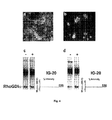
- Fig. 4c and 4d show that the glycoside IG20 interacts directly with the RhoGDI ⁇ protein, both in astrocytes ( Fig. 4c ) and in microglia ( Fig. 4d ). This was verified by RhoGDI ⁇ immunoprecipitation in the microglial cell line BV-2, and also in primary astrocyte cultures. The cultures were incubated with 30 ⁇ M of the glycoside IG-20, using untreated cells as a control. Each immunoprecipitated sample was divided for analysis by Western blot (WB) and mass spectrometry (MS).
- WB Western blot
- MS mass spectrometry
- Fig. 4 The results described in Fig. 4 indicate that the sulphated glycolipid IG-20 combines with the RhoGDI ⁇ , protein in the cytosol of the glial cells. This sulphated glycolipid could then alter the final component of the BDNF/TrkB-T1/RhoGDI ⁇ signalling, which has a very marked effect on microglia and astroglia [20-22]. It was also demonstrated that neuritic outgrowth and myelination ( Fig. 1 , 2 ) were promoted by the compound IG-20, which inhibited microglial and astroglial proliferation ( Fig. 3 and Table 1), reducing the GFAP signal and the size of the astrocytes ( Fig. 2 ).
Landscapes
- Chemical & Material Sciences (AREA)
- Health & Medical Sciences (AREA)
- Organic Chemistry (AREA)
- Life Sciences & Earth Sciences (AREA)
- General Health & Medical Sciences (AREA)
- Engineering & Computer Science (AREA)
- Molecular Biology (AREA)
- Medicinal Chemistry (AREA)
- Public Health (AREA)
- Animal Behavior & Ethology (AREA)
- Veterinary Medicine (AREA)
- Pharmacology & Pharmacy (AREA)
- Biochemistry (AREA)
- Physics & Mathematics (AREA)
- Bioinformatics & Cheminformatics (AREA)
- Epidemiology (AREA)
- Biotechnology (AREA)
- Genetics & Genomics (AREA)
- Immunology (AREA)
- Chemical Kinetics & Catalysis (AREA)
- Analytical Chemistry (AREA)
- Nuclear Medicine, Radiotherapy & Molecular Imaging (AREA)
- Zoology (AREA)
- Wood Science & Technology (AREA)
- Proteomics, Peptides & Aminoacids (AREA)
- Biomedical Technology (AREA)
- General Chemical & Material Sciences (AREA)
- General Physics & Mathematics (AREA)
- Neurology (AREA)
- Pathology (AREA)
- Crystallography & Structural Chemistry (AREA)
- High Energy & Nuclear Physics (AREA)
- Neurosurgery (AREA)
- General Engineering & Computer Science (AREA)
- Biophysics (AREA)
- Microbiology (AREA)
- Psychiatry (AREA)
- Optics & Photonics (AREA)
- Pharmaceuticals Containing Other Organic And Inorganic Compounds (AREA)
- Saccharide Compounds (AREA)
Abstract
Description
- The present invention relates to the use of sulphated glycolipids having formula (I) for the treatment of diseases of the central nervous system. These compounds act as astrocyte and microglia inhibitors. They also promote neuritic outward growth, dendrites and axons, oligodendroglial volume and myelin synthesis; as well as detection of their interaction with RhoGDIα, a regulator protein of the RhoGTPase family.
- Lesions due to trauma to the central nervous system (CNS) are of increasing economic and social importance worldwide. The incidence of medullar damage alone is between 25 and 30 new cases per million residents per year in Spain, which means over a thousand new cases each year. Acute patients are observed to be young people, a fact reflected in the age of those admitted to hospital where 80% are between 15 and 39 years old. An annual report produced in 2007 by the Medical Department of the National Paraplegic Hospital (Hospital Nacional de Parapléjicos) states that high lesions occur in these individuals, that is, a greater number of tetraplegics compared to paraplegics. Specifically, 48% were reported to be cervical lesions compared to 45% for dorsal lesions and 7% for lumbar lesions, although the number of tetraplegics compared with paraplegics has fallen over the past five years. In addition, the percentage of men is far greater than women, specifically 80% men and 20% women.
- The Toledo National Paraplegic Hospital (HNPT) has estimated the average cost of hospitalising each patient with medullary damage at €60,000, with an average period of recovery of nine months from admission to medical discharge. The presentation of 1000 new cases of paraplegia or tetraplegia implies an annual cost of €60,000,000, in addition to that for chronic patients receiving treatment, who have a similar life expectancy to the general population. These data from the HNPT are comparable to current figures in developed countries. Even though the number of deaths due to road accidents is clearly falling, this does not mean that the number of patients with medullary injury is decreasing. These accidents are the main cause of cervical lesions leading to total paralysis and the trend of these pathologies is rising.
- Damage due to laceration or damage that produces spinal cord cavitation are typical of these traumatic lesions and affect the axons of the central nervous system (CNS). Even a small loss of grey matter can lead to devastating consequences for the patient (M.B. Bunge, Neuroscientist 7, 325 (Aug. 2001; J.H. Kaas et al., Exp Neurol 209, 407 (Feb. 2008)). As well as the initial neuronal death produced by the trauma, anatomical and functional recovery of the damaged area does not occur spontaneously because the growth cones of the damaged axons collapse, withdraw and degenerate. An inhibitory tissue, known as a glial scar, forms in the damaged area which inhibits axon growth and does not allow the passage of regenerative fibres through the lesion. Components of myelin, the extracellular matrix, and the presence of reactive glia, that is, astrocytes and microglia, are responsible for the inhibitory nature of the glial scar (S.K. Kostyk, et al., Neuroscience 156, 498 (Oct 15, 2008); H. Beck, M. Semisch, C. Culmsee, N. Plesnila, A.K. Hatzopoulos, Am J Pathol 173, 77 (Jul. 2008)).
- Axonal regeneration in the damaged CNS is largely precluded due to specific inhibitors which accumulate in the lesion site and severely limit functional recovery (G. Yiu, Z. He, Nat Rev Neurosci 7, 617 (Aug. 2006); S. Watkins, M. Yunge, D. Jones, E. Kiely, A.J. Petros, J Pediatr Surg 36, 654, (Apr. 2001)). Inhibitory proteins such as NogoA, MOgp (myelin oligodendrocyte glycoprotein), and MAG (myelin-associated glycoprotein) are expressed by the oligodendroglia. These may be associated with the Nogo receptor (NgR), which in turn may form a complex with the p75 receptor on the surface of neurons. This interaction leads to signal transduction at the cytosol of the neuron, where the RhoA GTPase is activated, and eventually blocks axonal growth (A.A. Vyas, O. Blixt, J.C. Paulson, R.L. Schnaar, J Biol Chem 280, 16305 (Apr 22, 2005); A.A. Vyas et al., Proc Natl Acad Sci U S A 99, 8412 (Jun 11, 2002); T. Yamashita, Brain Nerve 59, 1347 (Dec. 2007)). The search for molecules that inhibit RhoA activity is therefore a promising field for the application of therapies that lead to the repair of the damaged CNS (R.E. Gross, Q. Mei, C.A. Gutekunst, E. Torre, Cell Transplant 16, 245 (2007); S. Mi Cytokine Growth Factor Rev 19, 245 (Jun-Aug 2008)).
- In view of the above context, modulation of the Rho family of GTPases, to which CDC42 and Rac also belong, as well as RhoA, is of great interest (E. Boulter et al., Nat Cell Biol 12, 477 (May); M. Gorovoy et al., Circ Res 101, 50 (Jul 6, 2007)).
- In an earlier investigation, the applicants synthesised compounds derived from glucosamine with lipophilic groups at the anomeric position and sulphate groups at other positions of the sugar. Using these synthetic molecules, an effective inhibition of the proliferation, growth or migration of astroblasts in culture was observed, processes in which these GTPases are involved. The inhibition by these glycosides of the expression of genes that directly modulate the activity of Rho GTPases was also observed (M. Nieto-Samppedro, E. Doncel, A. Fernández, Expert Opin Ther Pat 14, 487 (2004)).
- In a further investigation, the applicants disclose that other derivatives of glucosamine with lipophilic groups at the anomeric position and sulphate groups, sulphated glycolipids having formula I, are capable of inhibiting melanoma and glioma growth (I. Garcia-Alvarez et al., J Med Chem 50, 364 (Jan 25, 2007)). These processes are irreversible as the transformed cells enter apoptosis, the DNA being fragmented (I. Garcia-Alvarez et al., J Med Chem 52, 1263-1267 (2009)). However, in the tests described in this patent application it was observed that the cells affected by the treatment, both astrocytes and microglia, recovered when said treatment was withdrawn, meaning that the inhibitory mechanism is different from that of the transformed cells.
- In oncological processes cell proliferation is promoted and hence the production of soluble factors, for example EGF, for the signalling of the transformed cells. However, in normal neural cells following a lesion, growth factor levels decrease drastically and a large number of inhibitory signals are produced (J. Dill et al., J Neurosci 28 (36): 8914-28 (2008)). One of the objects of the present invention is to provide a compound that inhibits this inhibition, which fundamentally comes from the glial cells, thus causing activation of physiological recovery in the affected area of the CNS. In this way, endogenous levels of soluble factors such as brain-derived neurotrophic factor (BDNF) are increased as they are not consumed by the glial cells, allowing that these factors reach the other cell types involved in the transmission and preservation of nerve impulses, in other words, neurons and oligodendrocytes.
- In this invention the use of synthetic glycolipids which promote axon growth, increase myelin production in oligodendrocytes and inhibit astroglial and microglial cell division is disclosed. It is also demonstrated that this behaviour is due to a direct interaction with the RhoGDIα protein, which forms part of the signalling cascade for RhoGTPases. These compounds are stable, soluble in polar solvents and their effect disappears on being eliminated.
- In a first aspect, the present invention relates to the use of a compound having formula I

R1 is an alkenyl residue C5-C25 containing one or more double carbon-carbon bonds,
R2 is selected from the group consisting of methyl and fluorinated methyl, and
at least one of the substitutes R3 or R4 is an SO3M group, in which M is selected from the group consisting of hydrogen, alkali metal, ammonium and quaternary amine, and the other substitute, if it is not an SO3M group, is selected from the group consisting of hydrogen and acyl;
for the production of a drug for the treatment of central nervous system disorders in which the glial cells and RhoGTPases are involved. Preferably, these central nervous system disorders are selected from the group consisting of lesions caused by CNS trauma, demyelinating diseases, neuro-inflammatory diseases and mental disorders caused by low BDNF levels. - In preferred embodiments of the present invention, a demyelinating disease may be Guillain-Barré syndrome or multiple sclerosis, whereas a neuro-inflammatory disease may be Alzheimer's disease or Parkinson's disease. In addition, mental disorders may be suicidal tendencies or drug dependency.
- The term 'fluorinated methyl' refers to a fluoromethyl, difluoromethyl or trifluoromethyl group.
- In the present invention, the term 'acyl' refers to a linear or branched carboxylic acid radical, which has from 1 to 6 carbon atoms, and which adheres to the rest of the molecule by means of an ester bond such as, as a non-limiting example, acetyl, propanoyl, butanoyl or pentanoyl.
- The term 'quaternary amine' refers in the present invention to an NRaRbRcRd radical, where Ra, Rb, Rc and Rd are selected independently from the group consisting of C1-C6, alkyl.
- In a preferred embodiment, the present invention relates to the use of the compound having formula I as described in this first aspect of the invention to produce a drug for the treatment of lesions caused by central nervous system (CNS) trauma, preferably for the treatment of cervical, dorsal or lumbar lesions.
- In a preferred embodiment, R1 is selected from the group consisting of octadec-9-enyl and geranylgeranyl having formula:

- The octadec-9-enyl group is also known as oleyl.
- In another preferred embodiment, R3 and R4 are both SO3M, in which M is selected from the group consisting of hydrogen, alkali metal, ammonium and quaternary amine. Preferably, M is an alkali metal selected from the group consisting of sodium and potassium.
- In a yet more preferred embodiment, R1 is selected from the group consisting of octadec-9-enyl and geranylgeranyl as described in the previous paragraphs.
- In another preferred embodiment, the present invention relates to the use of the compound having formula I as disclosed in this patent application, in which R1 is octadec-9-enyl, R2 is methyl, R3 is hydrogen and R4 is SO3M, and in which M is an alkali metal selected from the group consisting of sodium and potassium.
- In addition, the present invention also relates to a compound having formula I as described in the first aspect for the treatment of central nervous system disorders in which glial cells and RhoGTPases are involved, preferably selected from the group consisting of lesions caused by CNS trauma, demyelinating diseases, neuro-inflammatory diseases and mental disorders caused by low BDNF levels; and in a yet more preferred embodiment, for the treatment of lesions due to central nervous system (CNS) trauma.
- Furthermore, the present invention also relates to a method for the treatment of central nervous system disorders where the glial cells and RhoGTPases are involved, preferably selected from the group consisting of lesions caused by CNS trauma, demyelinating diseases, neuro-inflammatory diseases and mental disorders caused by low BDNF levels, where said method comprises administering a therapeutically effective amount of a compound having formula I as described in the first aspect of the invention. In a still more preferred embodiment, the present invention relates to a method for the treatment of lesions caused by central nervous system trauma.
- In a second aspect, the present invention relates to a compound having formula I, characterised in that:
- R1 is an alkenyl residue C5-C25 containing one or more double carbon-carbon bonds,
- R2 is selected from the group consisting of methyl and fluorinated methyl, and
- at least one of the substitutes R3 or R4 is an SO3M group, in which M is selected from the group consisting of hydrogen, alkali metal, ammonium and quaternary amine, and the other substitute, if it is not an SO3M group, is selected from the group consisting of hydrogen and acyl; provided that R2 is methyl, and R3 and R4 are SO3M groups.
- In a preferred embodiment, the present invention relates to the compound having formula I, in which R1 is selected from the group consisting of octadec-9-enyl and geranylgeranyl having formula:

- In another preferred embodiment, the present invention relates to the compound having formula I in which R2 is a trifluoromethyl group. Preferably, R1 is also selected from the group consisting of octadec-9-enyl and geranylgeranyl.
- In another preferred embodiment, the present invention relates to the compound having formula I in which R3 and R4 are both SO3M groups. Preferably, R1 is also selected from the group consisting of octadec-9-enyl and geranylgeranyl.
- In a third aspect, the present invention relates to a method for producing the compound having formula I as described in the second aspect of the present invention, in which R3 and R4 are SO3M and M is selected from the group consisting of hydrogen, alkali metal, ammonium and quaternary amine, characterised in that it comprises:
- a) reaction of a compound having formula II with an alcohol having formula III in the presence of an acid to produce a compound having formula IV.

R1 is an alkenyl residue C5-C25 containing one or more double carbon-carbon bonds, and
R2 is selected from the group consisting of methyl and fluorinated methyl, and - b) treating the compound VI with a sulphating agent to produce the compound having formula I in which R3 and R4 are SO3M.
- In a preferred embodiment the acid is protic acid. Preferably, the protic acid may be selected from the group consisting of sulphuric acid, p-toluenesulphonic acid, camphorsulphonic acid, trifluoromethanesulphonic acid, hydrochloric acid, hydrobromic acid and hydriodic acid. In a more preferred embodiment, the protic acid may be sulphuric acid adsorbed on silica.
- A sulphating agent is understood to be a reagent or mixture of reagents capable of generating an SO3 - group, for example SO3-triethylamine, SO3-trimethylamine or SO3-pyridine. In a preferred embodiment, the sulphating agent is SO3-pyridine.
- The present invention also relates to the method of producing a compound having formula I as described in the second aspect of this patent application, in which R3 is hydrogen, R4 is SO3M and M is selected from the group consisting of hydrogen, alkali metal, ammonium and quaternary amine, characterised in that it comprises:
- a') reaction of a compound having formula IV with 2,3-butaneodione and ethanol, in the presence of a protic acid to produce a compound having formula V,

R1 is an alkenyl residue C5-C25 containing one or more double carbon-carbon bonds,
R2 is selected from the group consisting of methyl and fluorinated methyl; - b') treating the compound V with a sulphating agent to produce the compound having formula VI; and

- c') hydrolysing the compound VI in the presence of a protic acid to produce the compound having formula I in which R3 is hydrogen and R4 is SO3M, and in which M is selected from the group consisting of hydrogen, alkali metal, ammonium and quaternary amine.
- In a preferred embodiment, the compound having formula IV is produced by reaction of a compound having formula II with a compound having formula III as described in step a) of the method for producing a compound having formula I in which R3 and R4 are SO3M.
- In another preferred embodiment, the protic acid used in step a') is camphorsulphonic acid.
- In another preferred embodiment, the sulphating agent is SO3-pyridine.
- In another preferred embodiment, the protic acid used in step c') is glacial acetic acid.
- In a yet more preferred embodiment, the present invention relates to the method for producing a compound having formula I in which R3 is hydrogen and R4 is SO3M and M is selected from the group consisting of hydrogen, alkali metal, ammonium and quaternary amine, in which the protic acid used in step a') is camphorsulphonic acid, the sulphating agent is SO3-pyridine and the protic acid used in step c') is glacial acetic acid.
- The present invention also relates to the method for producing the compound having formula I as described in the second aspect of the present invention, in which R3 is SO3M, R4 is hydrogen and M is selected from the group consisting of hydrogen, alkali metal, ammonium and quaternary amine, characterised in that it comprises:
- a") reaction of a compound having formula IV with 2,2-dimethoxypropane in the presence of a protic acid to produce a compound having formula VII;

R1 is an alkenyl residue C5-C25 containing one or more double carbon-carbon bonds, and
R2 is selected from the group consisting of methyl and fluorinated methyl; - b") treating the compound VII with a sulphating agent and hydrolysing the acetal group to produce the compound having formula I in which R3 is SO3M and R4 is hydrogen.
- In a preferred embodiment, the compound having formula IV is produced by reaction of a compound having formula II with a compound having formula III as described in step a) of the method for producing a compound having formula I in which R3 and R4 are SO3M.
- In another preferred embodiment, the protic acid of step a") is p-toluenesulphonic acid.
- A sulphating reaction is performed on the compound having formula VII in which the introduction of the sulphate group at position C-3 and hydrolysis of the acetal group take place at the same time, leading to the compound having formula I, in which R3 is SO3M and R4 is hydrogen. In another preferred embodiment, the sulphating agent is SO3-pyridine.
- Any of the three variables in the method for producing the compound having formula I as disclosed in this patent application may comprise the addition of a source of M to produce the compound having formula I in which M is selected from the group consisting of hydrogen, alkali metal, ammonium and quaternary amine. Preferably, the method for producing the compound having formula I comprises the addition of NaOH or KOH, depending on whether M is Na or K respectively, following the sulphating step.
- In a fourth aspect, the present invention relates to a pharmaceutical composition which comprises a compound having formula I as described in the second aspect of the present invention.
- Some examples of the pharmaceutical compositions of the present invention are solids such as tablets, pills, capsules or solid granules; or liquids such as solutions, syrups, suspensions or emulsions. These pharmaceutical compositions may be suitable for oral, nasal, topical or parenteral administration.
- In a preferred embodiment of the present invention, the pharmaceutical compositions are suitable for oral administration, both in solid and liquid form. The possible forms for oral administration may contain conventional excipients known in the pharmaceutical field, such as binding agents (for example, syrup, acacia, gelatine, sorbitol, tragacanth or polyvinyl-pyrrolidone), fillers (for example, lactose, sugar, maize starch, calcium phosphate, sorbitol of glycine), disintegrants (for example, starch, polyvinyl-pyrrolidone or microcrystalline cellulose) or pharmaceutically acceptable surfactants, for example, sodium lauryl sulphate.
- Compositions for oral administration may be prepared by conventional methods used in galenic pharmacy, such as mixing and dispersion. Tablets may be covered using methods known in the pharmaceutical industry.
- The pharmaceutical compositions may be suitable for parenteral administration, such as sterile solutions, suspensions, or lyophilisates of the compounds of the invention, using the appropriate dose. Suitable excipients may be used, such as pH buffering agents or surfactants.
- The above-mentioned formulations may be prepared using conventional methods, such as those described in the pharmacopoeias of the various countries and in other reference texts in the pharmaceutical sector.
- The compounds or compositions of the present invention may be administered by any appropriate method, such as intravenous infusion and oral, intraperitoneal or intravenous routes. Oral administration is the preferred method due to its convenience for patients and the chronic nature of the diseases being treated.
- The amount of the compound having formula I of the present invention administered will depend on the relative effectiveness of the compound chosen, the severity of the disease being treated and the patient's weight. However, the compounds of this invention will be administered one or more times a day, for example 1, 2, 3 or 4 times daily, with a total dose of between 0.1 and 1000 mg/Kg/day. It is important to bear in mind that it may be necessary to vary the dose, depending on the age and condition of the patient, and also to modify the administration method.
- The compounds and compositions of the present invention may be used together with other drugs in combined therapies. The other medicines may form part of the same composition or of a different composition for administration at the same time or at different times.
- In a fifth aspect, the present invention relates to a chemically marked derivative having formula VII, in which M is selected from the group consisting of hydrogen, alkali metal, ammonium and quaternary amine. Preferably, M is potassium.

- In order to assess the ability of the synthetic sulphated glycolipids to be internalised by the neural cells, a fluorescent compound having formula VIII was prepared. To check whether the inhibitory activity is modified by the presence of the fluorescent group, it was tested as an inhibitor of microglial and astroglial cell proliferation compared with the equivalent without a fluorescent group (see
Fig. 3 ; Table 1 in the Examples), that is, the compound having formula I in which R1 is an oleyl residue, R2 is methyl, R3 is hydrogen and R4 is SO3K. It was subsequently observed that the fluorescent compound was internalised by the neural cells (seeFig. 4 in the Examples). - In a sixth aspect, the present invention also relates to a method for producing the compound having formula VIII as described in this patent application, characterised in that it comprises:
- a) hydrolysing the compound having formula I in which R1 is octadec-9-enyl, R2 is trifluoromethyl, R3 is hydrogen and R4 is SO3M to produce a compound having formula IX;

- b) acylating the compound having formula IX with a compound having formula X to produce the compound having formula VIII.

- In a preferred embodiment, the compound having formula I that was hydrolysed in step a) is produced using the method described in this patent application.
- Preferably, the compound having formula I is hydrolysed with methanol-triethylamine-water (4:1:0.5) to eliminate the trifluoroacetyl group.
- The compound having formula X may be produced beforehand from NBD and an acid such as 6-aminohexanoic acid.
- In a seventh aspect, the present invention relates to an analytical reagent which comprises the compound having formula I as described in the second aspect, in which R2 is fluorinated methyl, or a compound having formula VIII as described in the fifth aspect of the present invention.
- If the analytical reagent is used as an imaging agent in in vivo analysis techniques, said agent may be suitable for intravenous, intraperitoneal or oral administration.
- The analytical reagent that is suitable for parenteral administration may be a solution, a suspension or a lyophilisate of the compound of the present invention, using the appropriate dose. Suitable excipients may be used as pH buffering agents or surfactants.
- In an eighth aspect, the present invention relates to the use of the compound having formula I as described in the second aspect, in which R2 is fluorinated methyl, or a compound having formula VIII as described in the fifth aspect of the present patent application, to produce an analytical reagent for carrying out biological tests.
- In a preferred embodiment, the present invention relates to the use of the compound having formula VIII as described in the fifth aspect, to produce an analytical reagent for carrying out biological tests based on fluorescence detection, preferably biodistribution studies.
- Marking a bioactive compound with a fluorescent chemical group is very useful in biodistribution studies based on fluorescence detection, as these compounds allow sensitive and quantitative detection of the compound in tissues, cells and sub-cellular structures using fluorescence microscopy.
- Furthermore, the present invention also relates to a compound having formula VIII as described in the fifth aspect, for carrying out biological tests based on fluorescence detection.
- In addition, the present invention also relates to a method for carrying out biological tests based on fluorescence detection, in which said method comprises administering a compound having formula VIII as described in the fifth aspect.
- In another preferred embodiment, the present invention relates to the use of the compound having formula I as described in the second aspect, in which R2 is fluorinated methyl, preferably trifluoromethyl, to produce an analytical reagent for carrying out biological tests based on fluorine detection.
- As a non-limiting example, a preferred example of the biological tests in which the compound having formula I can be used, where R2 is trifluoromethyl, may be biodistribution and metabolism studies based on the detection of 19F by nuclear magnetic resonance.
- Furthermore, the present invention also relates to a compound having formula I as described in the second aspect, where R2 is a fluorinated methyl, for carrying out biological tests based on fluorine detection. R2 is preferably trifluoromethyl.
- Moreover, the present invention also relates to a method for carrying out biological tests based on fluorine detection, where said method comprises administering a compound having formula I as described in the second aspect of the invention, where R2 is a fluorinated methyl. R2 is preferably trifluoromethyl.
-
-
Figure 1 . Stimulation of neuritic outgrowth of spinal neurons by the compound IG-20, a glycoside which corresponds to the compound having formula I, in which R1 is oleyl, R2 is methyl, R3 is hydrogen and R4 is SO3K. -
Figure 2 . The glycoside IG-20 promotes oligodendrocyte growth and the expression of myelin, while inhibiting astroglia. -
Figure 3 . The compounds IG20, IG20-disulphate and IG20 NBD inhibit microglial and astroglial cell proliferation. The compounds IG20, IG20-disulphate and IG20-NBD correspond tocompounds 3, 8 and 11 respectively of the synthesis examples. -
Figure 4 . The glycoside IG-20 interacts with the RhoGDIα protein in the cytosol of the glial cells. - The invention is illustrated below using tests carried out by the inventors, which demonstrate the specificity and effectiveness of the compounds of the present invention.
- Derivatives having the general formula I were prepared from the monosaccharide N-acetyl-glucosamine or D-glucosamine hydrochloride:

R1 is an alkenyl residue C5-C25 containing one or more double carbon-carbon bonds,
R2 is selected independently from the group consisting of methyl and fluorinated methyl, and
at least one of the substitutes R3 or R4 is an SO3M group, in which M is selected from the group consisting of hydrogen, alkali metal, ammonium and quaternary amine, and the other substitute, if it is not an SO3M group, is selected from the group consisting of hydrogen and acyl. - The preparation of the compounds having formula I in which R2 is methyl began with the reaction of N-acetyl-glucosamine with an unsaturated hydrocarbon chain alcohol to give the corresponding glycoside. From this glycoside, which had three free hydroxyl groups, two hydroxyls were selectively protected, followed by treatment with a sulphating agent and elimination of the protective group, producing the compound having formula I, where R2 is a methyl, and R3 or R4 is an SO3M group.
- Alternatively, treatment of the glycoside with a sulphating agent allows the compound having formula I to be produced, in which R2 is a methyl, and R3 or R4 are both an SO3M group.
-

- N-acetyl-glucosamine (500 mg, 2.26 mmol) and oleic alcohol (85%) (4.1 mL, 11.3 mmol) were dissolved in nitromethane (2 mL) under argon atmosphere. Next, H2SO4 adsorbed on silica (50 mg) was added and the mixture was stirred for 4 hours at 100°C. At the end of this period the reaction mixture was cooled to ambient temperature and the product was isolated using a column of silica gel (AcOEt-MeOH 10:0→10:1), producing a pure substance 1 (405 mg, 38%). [α]D: +103.1° (c 0.95, MeOH). 1H NMR (300 MHz, CD3OD: o 5.4-5.3 (m, 2H), 4.74 (d, 1H, J=3.5 Hz), 3.9-3.8 (m, 2H), 3.7-3.5 (m, 4H), 3.4-3.3 (m, 2H), 2.0-1.9 (m, 4H), 1.94 (s, 3H), 1.6-1.5 (m, 2H), 1.3-1.2 (m, 22H), 0.86 (t, 3H, J=7.2 Hz). 13C NMR (75 MHz, CD3OD) : o
- 172.42, 129.70, 129.66, 97.29, 72.55, 71.65, 71.22, 67.79, 61.56, 54.39, 32.07, 31.92-28.33, 27.00, 26.10, 23.7, 13.33. MS (ES) m/z (calcd 471.4): 472.4 (M+1), 473.4 (M+2). Anal. Calcd for C26H49NO6 : C 66.21, H 10.47, N 2.97. Found: C 65.99, H 10.31, N 2.84.
- The catalyst acid H2SO4 adsorbed on silica (35%) had previously been prepared. To do this, 10 g of silica gel (200-325 mesh) were resuspended in ethyl ether (50 mL) and concentrated H2SO4 (3 mL) was slowly added, drop by drop, while stirring. During the adsorption process, which lasted 10 min., the suspension was stirred gently at ambient temperature. At the end of this period, the dissolving agent was eliminated by distillation and the silica was dried at low pressure (2-4 mbar), while being heated to 60°C for 3 hours.
-

- A solution of 1 (100 mg, 0.21 mmol) in ethanol (1.5 mL) was treated with 2,3-butanedione (41 µL, 0.47 mmol), camphorsulphonic acid (10 mg, 0.04 mmol) and triethyl orthoformate (0.23 mL, 1.4 mmol) under argon. The mixture was stirred at 60°C for 3.5 hours. After cooling, the mixture was neutralised with triethylamine, concentrated and the reaction product was purified by chromatography in a column of silica gel (hexane-AcOEt, 1:1 → 0:1), to give a solid (98 mg), which was dissolved in anhydrous pyridine (5 mL). The SO3-pyridine complex (509 mg, 3.20 mmol) was added, while stirring at ambient temperature, under argon for 1 hour. At the end of this period, the mixture was concentrated and the residue was dissolved in methanol-H2O (2:1, 7 mL). This residue was neutralised with a solution of KOH 0.5 M, concentrated and purified by chromatography in a column of silica gel (CH2Cl2-methanol, 6:1), to give 2 (95 mg, 61%). 1H NMR (200 MHz, CD3OD) : δ 5.4-5.3 (m, 2H), 4.83 (d, 1H, J=3.4 Hz), 4.6-4.4 (m, 2H), 4.3-3.4 (m, 8H), 2.2-2.0 (m, 7H), 1.6-1.2 (m, 36H), 1.0-0.9 (m, 3H).
-

- The compound 2 (79 mg, 0.11 mmol) was dissolved in a mixture of acetic acid-H2O (2:1, 10 mL) and stirred for 3 hours at 65°C. The mixture was concentrated and the residue was purified by chromatography in a column of silica gel (CH2Cl2-methanol, 5:1 → 4:1) to give 3 (42 mg, 66%), [α]D; +69.0° (c 1.18, MeOH), 1H NMR (300 MHz, CD3OD) : δ 5.4-5.3 (m, 2H), 4.76 (d, 1H, J=3.4 Hz), 4.26 (dd, 1H, J=2.4 Hz, J=11.0 Hz), 4.18 (dd, 1H, J=5.6 Hz, J=10.7 Hz), 3.89 (dd, 1H, J=3.7 Hz, J=10.7 Hz), 3.8-3.6 (m, 4H), 3.4-3.3 (m, 2H), 2.0-1.9 (m, 7H), 1.6-1.5 (m, 2H), 1.3-1.2 (m, 22H), 0.9 (t, 3H, J=6.8 Hz). MS (ES) m/z (calcd 589.3): 590.3 (M+1). Anal. Calcd for C26H48KNO9S: C 52.94, H 8.20, N 2.37, S 5.44. Found: C 52.86, H 8.19, N 2.40, S 5.31.
-

- The compound 1 (76 mg, 0.16 mmol), dissolved in anhydrous DMF (1 mL), was treated with 2,2-dimethoxypropane (0.18 mL, 0.8 mmol) and p-toluenesulphonic acid (4 mg). The mixture was stirred for 2 hours at ambient temperature, treated with triethylamine up to neutral pH and concentrated under vacuum. The residue was dissolved in anhydrous pyridine (4.5 mL). The SO3-pyridine complex (0.5 g, 3.3 mmol) was then added, and it was stirred at ambient temperature under argon for 1.5 hours. At the end of this period, the mixture was concentrated under vacuum, the residue dissolved in methanol-H2O (2:1, 2 mL), treated with a solution of KOH 0.5 M up to neutral pH and concentrated under vacuum. The residue was extracted with methanol, concentrated under vacuum and purified by chromatography in a column of silica gel (CH2Cl2-methanol, 6:1) to give 4 (82.1 mg, 82%). [α]D: +39.4° (c 0.89 MeOH). 1H NMR (300 MHz, CD3OD): δ 5.4-5.3 (m, 2H), 4.48 (d, 1H, J=3.2 Hz), 4.48 (dd, 1H J=10.7 Hz, J=11.0 Hz), 3.96 (dd, 1H, J=3.7 Hz, J=10.7 Hz), 3.8-3.5 (m, 4H), 3.4-3.3 (m, 2H), 2.0-1.9 (m, 7H), 1.6-1.5 (m, 2H), 1.3-1.2 (m, 22H), 0.90 (t, 3H, J=7.1 Hz). 13C NMR (75 MHz, CD3OD) : δ 173.69, 130.84, 130.81, 98.32, 80.03, 73.64, 70.85, 69.15, 62.26, 54.10, 33.57, 33.02, 30.9-27.3, 23.70, 22.87, 14.46. MS (ES) m/z (calcd 589.3): 590.2 (M+1). Anal. Calcd for C26H48KNO9S: C 52.94, H 8.20, N 2.37, S 5.44. Found: C 53.10, H 8.35, N 2.62, S 5.60.
- The preparation of the compounds having formula I in which R2 is trifluoromethyl began with the reaction of D-glucosamine hydrochloride with S-ethyl trifluorothioacetate, to produce N-trifluoroacetyl-D-glucosamine with an anomer mixture. The glycosylation reaction of the mixture N-trifluoroacetyl α, β-D-glucosamine produced with an unsaturated hydrocarbon chain alcohol, produced the corresponding N-trifluoroacetyl glycoside. Next, it was treated with a sulphating agent to produce the compound having formula I, in which R2 is trifluoromethyl, at least one of the substitutes R3 or R4 is an SO3M group, in which M is selected from the group consisting of hydrogen, alkali metal, ammonium and quaternary amine, and the other substitute, if it is not an SO3M group, is selected from the group consisting of hydrogen and acyl.
-

- A suspension of D-glucosamine hydrochloride (0.51 g, 2.32 mmol) in anhydrous methanol (2.5 mL) was treated with an equivalent of sodium methoxide in methanol (53 mg of Na dissolved in 0.6 mL of methanol). The mixture was stirred at ambient temperature to produce a transparent solution, with a white precipitate of NaCl at the bottom. S-ethyl trifluorothioacetate (SETFA) was added (0.42 mL, 3.26 mmol) and the reaction mixture was stirred at ambient temperature for 17 hours. (TLC: AcOEt-MeOH, 2:1). At the end of this period, the dissolving agent was eliminated at low pressure and the residue extracted with warm acetone. Ethyl ether was added to the acetone extract at 0°C and left to crystallise at 4°C for 12 hours. The crystallised compound was filtered and washed with acetone at 0°C, to give 5 as a white solid. The compound 5 was produced with an anomer mixture, ratio (α/β 7:3) (399 mg, 62%). Mp: 180-184°C. [α]D: +54.6° (c 0.5, MeOH). 1H NMR (400 MHz, CD3OD: δ 5.15 (d, <1H, J=3.0 Hz), 4.69 (d, <1H, J=8.3, Hz), 3.9-3.7 (m, 3H), 3.8-3.6 (m, <2H), 3.53 (dd, <1H, J=10.4, 8.4 Hz), 3.04 (dd, 1H, J=10.4, 3.6 Hz). 13C NMR (100 MHz, CD3OD): δ 159.2, 119.4, 96.3, 92.0, 78.2, 75.3, 73.2, 72.5, 72.2, 71.9, 62.8, 62.7, 59.1, 56.7. MS (ESI +) m/z (calcd 275.0623): 276.0696 (M+H)+, 543.3621 (M+NH4)+. Anal. Calcd for C8H12F3NO6: C 34.92, H 4.40, N 5.09. Found: C 35.00, H 4.15, N 4.52.
-

- The compound 5 (1.18 g, 4.29 mmol) was dissolved in 85% oleic alcohol (8mL, 21.4 mmol, 5 eq) and treated with H2SO4 adsorbed on silica (35%) (236 mg). The reaction mixture was stirred under argon at 180°C for 20 minutes (TLC: AcOEt). At the end of this period, the reaction mixture was cooled to ambient temperature and the residue purified by chromatography in a column of silica gel (Hexane-AcOE2 2:1 → 0:1) to give 6 as a solid (604 mg, 29%). Mp: 118-123°C. [α]D: +86.0° (c 0.5, MeOH). 1H NMR (400 MHz, CD3OD: δ 5.4-5.3 (m, 2H), 4.86 (d, 1H, J=3.6 Hz), 3.90 (dd, 1H, J=10.8, 3.6 Hz), 3.9-3.8 (m, 1H), 3.80 (t, 1H, J=1.9 Hz), 3.8-3.7 (m, 2H), 3.60 (ddd, 1H, J=9.9, 5.5, 2.3 Hz), 3.5-3.3 (m, 2H), 2.1-1.9 (m, 4H), 1.8-1.5 (m, 2H), 1.5-1.1 (m, 22H), 0.9 (t, 3H, J=7.0 Hz). 13C NMR (100 MHz, CD3OD): δ 159.2, (q, J=37.5 Hz), 117.5 (q, J=287.6 Hz), 130.8, 97.7, 73.8, 72.3, 71.9, 68.98, 62.6, 56.2, 33.1, 30.9, 30.9, 30.6, 30.6, 30.6, 30.5, 30.5, 30.4, 30.3, 28.1, 28.1, 27.3, 23.8, 14.5. MS (ESI +) m/z (calcd 525.3283): 526.3345 (M+H)+, 543.3621 (M+NH4)+. Anal. Calcd for C26H46F3NO6: C 59.41, H 8.82, N 2.66. Found: C 59.66, H 9.12, N 2.69.
- The prior preparation of H2SO4 adsorbed on silica takes place in the same way as for producing the compound (1).
-

- The compound 3 (458 mg, 0.87 mmol) was dissolved in anhydrous pyridine (1mL) and treated with the SO3-pyridine complex (290 mg, 1.82 mmol). The reaction mixture was stirred under argon at ambient temperature for 1 hour and 20 minutes. At the end of this period, the dissolving agent was eliminated at low pressure and the residue was dissolved in MeOH-H2O (2:1, 6mL), neutralised with a solution of KOH 0.5 M and concentrated under vacuum. The residue was extracted with methanol, concentrated and purified by chromatography in a column of silica gel (AcOEt/MeOH/Et3N 1:0:0.005 → 1:0.5:0.005) to give 7, as a yellow solid (360 mg, 64%). 1H NMR (300 MHz, CD3OD: δ 5.42-5.27 (m, 2H), 4.91 (s, 1H), 4.27 (dd, J=10.9, 2.2 Hz, 1H), 4.18 (dd, J=10.9, 5.1 Hz, 1H), 3.90 (dd, J=10.7, 3.5 Hz, 1H), 3.82 (dd, J=8.1, 2.8 Hz, 1H), 3.76 (dd, J= 4.7, 2.5 Hz, 1H), 3.72 (dd, J=8.2, 4.5 Hz, 1H), 3.44 (d, J=8.6 Hz, 1H), 3.41-3.34 (m, 2H), 2.03 (m, 4H), 1.57 (m, 2H), 1 .46 - 1. 11 (m, 22H), 0.90 (t, J=6.7 Hz, 3H). 13C NMR (126 MHz, CD3OD): δ 157.63, 129.42, 129.39, 96.19, 70.62, 70.45, 70.28, 67.66, 66.67, 54.73, 31.64, 29.49, 29.42, 29.38, 29.37, 29.33, 29.22, 29.20, 29.18, 29.17, 29.15, 29.02, 28.94, 28.90, 26.72, 26.69, 25.83, 22.31, 13.04. MS (ESI -) m/z (calcd 604.2771): 604.2778 (M)-.
-
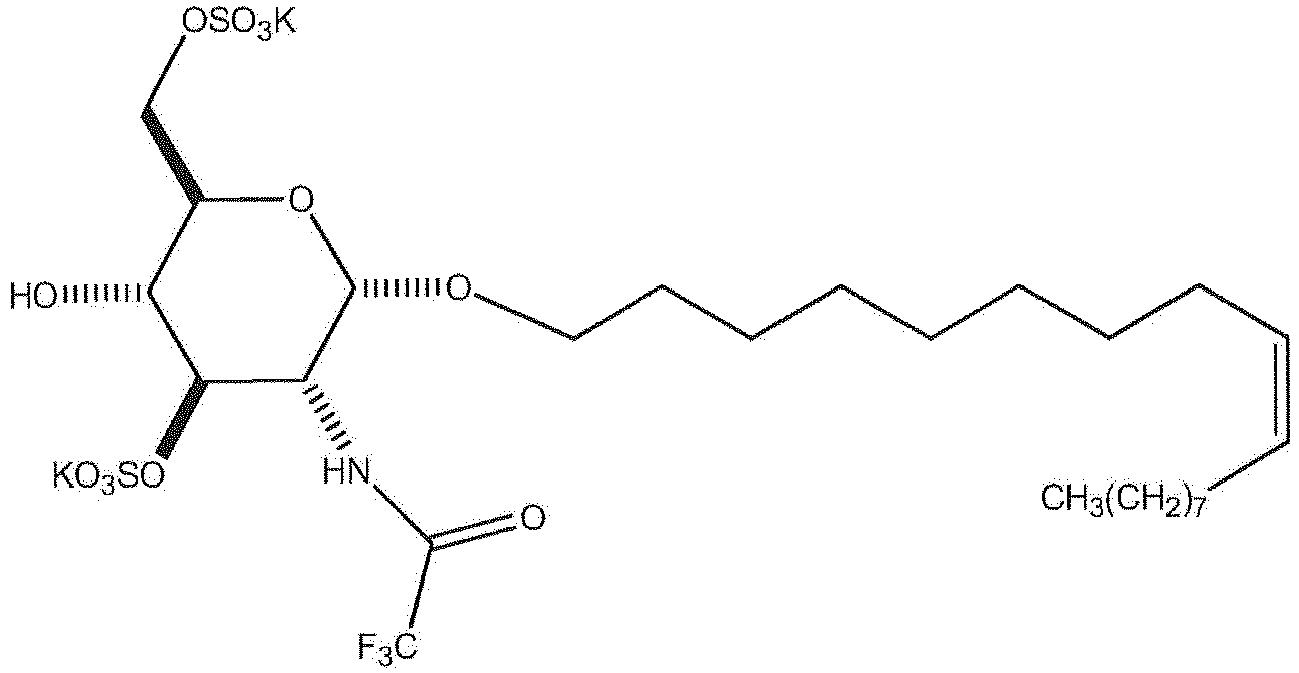
- The compound 3 (458 mg, 0.87 mmol) was dissolved in anhydrous pyridine (1 mL) and treated with the SO3-pyridine complex (290 mg, 1.82 mmol). The reaction mixture was stirred under argon at ambient temperature for 1 hour and 20 minutes. At the end of this period, the dissolving agent was eliminated at low pressure and the residue dissolved in MeOH-H2O (2:1, 6 mL), neutralised with a solution of KOH 0.5 M and concentrated under vacuum. The residue was extracted with methanol, concentrated and purified by chromatography in a column of silica gel (AcOEt/MeOH/Et3N 1:0:0.005 → 1:0.5:0.005) to give 8 as a solid (125 mg, 19%). 1H NMR (300 MHz, CD3OD: δ 5.42-5.29 (m, 2H), 5.11 (d, J=3.5 Hz, 1H), 4.59 (dd, J=10.8, 8.9 Hz, 1H), 4.30 (dd, J=10.8, 2.0 Hz, 1H), 4.19 (dd, J=10.8, 5.4 Hz, 1H), 3.91 (dd, J= 5.1, 27 Hz, 1H), 3.89-3.84 (m, 1H), 3.76 (dt, J=9.9, 6.1 Hz, 1H), 3.66-3.58 (m, 1H), 3.40 (dt, J=10.0, 6.4 Hz, 1H), 2.03 (d, J=5.5 Hz, 4H), 1.57 (d, J=6.6 Hz, 2H), 1.35-1.25 (m, 22H), 0.90 (t, J=6.7 Hz, 3H). 13C NMR (75 MHz, CD3OD) : δ 174.06, 131.37, 131.33, 98.62, 80.09, 72.30, 71.34, 69.66, 68.58, 54.70, 33.53, 31.38, 31.29, 31.19, 31.07, 30.92, 30.86, 30.78, 28.64, 28.58, 27.77, 24.21, 23.30, 14.97. MS (ESI -) m/z (calcd 684.2351): 684.2383 (M)-, 341.6207 (M)2-.
-

- 7 (100 mg, 0.16 mmol) was dissolved in methanol-triethylamine-water 4:1:0.5 (1 mL) and stirred at 50°C for 48 hours. At the end of this period, the mixture was concentrated under vacuum and the residue was purified by chromatography in a column of silica gel (AcOEt-MeOH-Et3N 1:0:0.005 → 0:1:0.005) to give 9 (60 mg, 71%) as a white solid. Rf: 0.23 (AcOEt-MeOH 2:1). [α]D: +36° (c 8.6, MeOH). 1H NMR (400 MHz, CD3OD: δ 5.4-5.3 (m, 2H), 4.93 (d, J=3.7 Hz, 1H), 4.22 (dd, J=10.9, 2.1 Hz, 1H), 4.16 (dd, J=11.0, 4.9 Hz, 1H), 3.78-3.74 (m, 1H), 3.73-3.69 (m, 1H), 3.66 (dd, J=10.3, 9.0 Hz, 1H), 3.52-3.42 (m, 1H), 3.42-3.35 (m, 1H), 3.04-2.96 (m, 1H), 2.08-1.92 (m, 4H), 1.62 (m, 2H), 1.42-1.19 (m, 22H), 0.88 (t, 3H). 13C NMR (100 MHz, CD3OD) : δ 130.83, 111.19, 97.52, 72.21, 71.41, 69.41, 67.74, 55.98, 33.07, 30.93, 30.84, 30.80, 30.77, 30.68, 30.65, 30.61, 30.53, 30.45, 30.41, 30.33, 28.17, 23.74, 14.46. HRMS (ESI +) m/z (calcd 508.29 for C24H46NO7S) : 510.3065 (M-2H)+, 532.2763 (M-K-H)+.
-

- 9 (90.2 mg, 0.16 mmol) was dissolved in anhydrous THF (2 mL) and treated with the acid 10 (72.5 mg, 0.25 mmol), 1-ethyl-3-(3-dimethylaminopropyl)carbodiimide (EDC) (47.2 mg, 0.25 mmol) and 4-dimethylaminopyridine (DMAP) (10.0 mg, 0.08 mmol). The reaction mixture was stirred under argon at ambient temperature for 24 hours. At the end of this period, the dissolving agent was eliminated under vacuum and the residue was purified by chromatography in a column of silica gel (CH2Cl2-MeOH-Et3N, 1:0:0.005 → 0:1:0.005) to give 11 as a white solid (95 mg, 70%). Rf = 0.31 (CH2Cl2-MeOH 4:1). [α]D: +39.4° (c 11.3, MeOH). 1H NMR (300 MHz, CD3OD: δ 8.51 (d, J=8.8 Hz, 1H), 6.35 (d, J=8.9 Hz, 1H), 5.30 (m, 2H), 4.77 (d, J=3.6 Hz, 1H), 4.26 (dd, J=10.7, 2.0 Hz, 1H), 4.17 (dd, J=10.8, 5.3 Hz, 1H), 3.89 (dd, J=10.8, 3.6 Hz, 1H), 3.81 - 3.72 (m, 1H), 3.71-3.68 (m, 1H), 3.65 (d, J=3.0 Hz, 1H), 3.53 (s, 2H), 3.42 (d, J=9.5 Hz, 1H), 3.39-3.33 (m, 1H), 2.29 (t, 2H), 1.98 (s, 4H), 1.87-1.76 (m, 2H), 1.70 (dd, 2H), 1.54 (m, 2H), 1.50 (m, 2H), 1.28 (m, 22H), 0.89 (t, 3H). 13C NMR (100 MHz, CD3OD): δ 175.07, 144.54, 144.48, 137.53, 130.28, 130.20, 129.61, 97.15, 71.28, 70.98, 70.65, 67.81, 67.04, 35.55, 32,43, 31.88, 31.06, 29.94, 28.86, 28.14, 27.49, 26.95, 26,37, 26.28, 26.18, 22.56, 13.30. HRMS (ESI-) m/z (calcd 784.371 for C36H58N5O12S) : 784.3716 (M)-.
- Spinal ganglia (SG) of rat embryos (E15) were dissected and incubated for 12 hours on axon growth-promoting cells (aldynoglia) to allow cellular adhesion of the neurons contained in the SG to the aldynoglia substrate. Next, different concentrations of IG-20, compound 3 produced as described in the synthesis examples, were added. The cocultures of SG/aldynoglia were fixed after 3 days incubation, which revealed the presence of axons, dendrites and somas of the neurons using anti-neurofilament antibody (
Fig. 1d, 1e , If). The presence of total cells is shown by the fluorescent signal of the Hoechst-marked nuclei (Fig. 1a, 1b, 1c ). The nuclei remote from the central body are aldynoglia cells or those that migrate from the SG. The neurofilament images were extracted (Fig. 1g, 1h, 1i ) and measured, and the neuritic growth area was compared to the controls (Fig. 1j, 1k ). As a result a profuse and significant increase in neuritic outgrowth was observed at 5 µM of IG-20 (Fig. 1e, 1h ) compared with the growth promoted by the control aldynoglia (Fig. 1d, 1g ). A five-fold increase [in] this concentration reduced this neuritic outgrowth (Fig. 1f, 1j ). A net increase in the neuritic growth area of 1250 µm2 more than the control with aldynoglia cells (Fig. 1k ) was produced. The average speed of neuritic outgrowth in the presence of aldynoglia, 625 µm/72h corresponding to 8.3 µm/h, was duplicated in the presence of IG-20 (5 µM) up to 1250 µm/72h, which corresponds to 17.36 µm/h. Calibration bars at 500 µm; (*) correspond to P<0.05 (P=0.019). - To study how the compound having formula I affects the growth of oligodendrocytes, the expression of myelin and the inhibition of astroglia, cerebral cortices of postnatal rats P0-P1 were dissected and enzymatically dissociated for cell culture. After two weeks incubation the culture flasks were stirred for 12 hours. The cells in suspension were harvested, the microglia were removed, and then cultured in DMEM plus
SBF 10%. It was incubated for 6 hours to facilitate cell adhesion and the IG-20 (30 µM) was added to the treated group. The cells were cultured for two weeks and the medium was replaced every three days. Finally, the cells were fixed for immunocytochemistry and revealed by GFAP, MBP antibody whilst the nuclei were detected by Hoechst. - The treatment reduced the proportion of GFAP+ cells, which correspond to astroglia, by 20%, whilst the mature oligodendroglia, MBP+ increased by 10% (
Fig. 2d ). A dramatic reduction in GFAP marking was observed, compared with the untreated control group, which contrasts with the increase in the MBP signal (Fig. 2e ,f ). In both cases the differences were very significant. It was notable that the astroglial cells were large compared with the oligodendrocytes, which could scarcely be detected in the untreated controls (arrow in 2a, b). The cultures treated with IG-20 revealed oligodendrocytes that were 3-4 times larger than the controls (arrow in 2c) and profuse arborisation, together with significantly lower GFAP expression. GFAP, glial fibrillary acidic protein; MBP, myelin basic protein; calibration bars at 75 µm (a, c) and 25 µm (b), as shown; (***) corresponds to P<0.001. - To study the microglial and astroglial cell proliferation two cell lines of murine microglia were used (BV-2, N13), as well as primary astroblasts isolated from cerebral cortices of postnatal rats on day zero (P0). The cells were kept in DMEM plus 10% SBF, grown and treated for testing the inhibition of cell proliferation, as published earlier by the applicants (I. Garcia-Alvarez et al., J Med Chem 50, 364 (Jan 25, 2007)). In both microglial lines effective inhibition of proliferation by IG-20 was observed, with an IC50 of 21.0 and 3.4 µM for BV-2 and N13 cells respectively (
Fig. 3A, 3B ). Effective inhibition of microglia and astrocytes was also observed (Fig. 3C, 3D ) at 7.8 and 11.4 µM for IG-20 combined with the NBD fluorescent group; as was also the case for the derivative of IG-20 with two sulphated groups and in which R2 is trifluoromethyl (IG-20 disulphate). It was concluded that the inhibitory activity of IG20-NBD is not affected by the presence of the fluorescent group, as its IC50 is very similar to that obtained for the uncombined glycoside IG-20, which was used as a control in these tests. However, the disulphated IG-20 derivative reduced its activity by three compared with IG-20 in astrocytes, at a concentration of 30 µM compared with 9.3 µM respectively, although microglial inhibition was not affected (Table 1).Table 1: Inhibition of microglia and astrocytes by glycosides Cells Type, species Glycoside IC50 (µM) * BV-2 Microglia, mouse IG-20 21 ± 3.7 N13 Microglia, mouse IG-20 3.4 + 0.1 N13 Microglia, mouse IG20-NBD 7.8 ± 0.6 N13 Microglia, mouse Disulphated IG-20 3.0 ± 0.8 Astrocytes Astroglia, rat IG-20 9.3 ± 0.7 Astrocytes Astroglia, rat IG20-NBD 11.4 ± 0.7 Astrocytes Astroglia, rat Disulphated IG-20 30.0 ± 4.8 (*) IC50 ± SE - Primary astrocyte and microglia cells (BV-2) were treated with the glycoside IG-20 at 30 µM, lysed and subjected to cell fractionation by differential centrifugation. The soluble fraction was collected and mixed with lysis buffer (1:1). Anti-RhoGDIα antibody (15 µg) was added and it was incubated with rotation at 4°C overnight. It was immunoprecipitated with Protein A-Sepharose (20µl) having been previously washed with PBS and centrifuged for 3 minutes at 1100 rpm. The previous mixture was added to the Protein A-Sepharose (1:1). This mixture was incubated with rotation at 4°C for an hour and a half, and afterwards centrifuged for 5 minutes at 2500 rpm at 4°C. After discarding the supernatant, the precipitate was washed three times with lysis buffer. The immunocomplex of the Protein A-Sepharose was eluted with five volumes of the elution buffer (0.1 M glycine, pH=2.9) and a neutralising volume of 1M tris-HCl, pH=9. The mixture was centrifuged for five minutes at 2500 rpm at 4°C and the supernatant was collected. The sample immunoprecipitated with anti-RhoGDIα was divided for Western blot analysis and sent to the mass spectrometry department of the Toledo National Paraplegic Hospital.
-
Fig. 4a and 4b show that the glycoside IG20-NBD penetrates the glial cells and accumulates in the cytosol of astrocytes and microglial cells. No co-localisation signal was observed in the nucleus in either of the two cell types tested. The areas of fluorescence were very weak at the limits of the primary cells (Fig. 4a ), with the IG20-NBD signal falling towards the cell membrane. However, in the intracellular areas (Fig. 4a, b ) accumulations or dotted areas of IG20-NBD of different size were evident forming aggregates inside the astrocyte and microglia cells. - Furthermore,
Fig. 4c and 4d show that the glycoside IG20 interacts directly with the RhoGDIα protein, both in astrocytes (Fig. 4c ) and in microglia (Fig. 4d ). This was verified by RhoGDIα immunoprecipitation in the microglial cell line BV-2, and also in primary astrocyte cultures. The cultures were incubated with 30 µM of the glycoside IG-20, using untreated cells as a control. Each immunoprecipitated sample was divided for analysis by Western blot (WB) and mass spectrometry (MS). A 27kDa signal was observed in the control (-) and treated (+) cells, corresponding to RhoGDIα, detected with a specific monoclonal antibody for the WB tests. However, only the preparations of cells, astrocytes or BV-2 being treated with IG-20 (+) co-immunoprecipitated with the sulphated glycolipid. This was detected by MS as a peak in the mass to charge ratio of 550 (Fig. 4c, 4d ), which corresponds to the synthetic glycoside. The cytoplasmic fractions were enriched in the IG-20 compound, which was weakly detected in the membrane fractions tested (datum not shown). This co-immunoprecipitation of the glycoside IG-20 and RhoGDIα, with the specific anti-RhoGDIα antibody, was evidence of a direct interaction of both molecules in the cytosol. - The results described in
Fig. 4 indicate that the sulphated glycolipid IG-20 combines with the RhoGDIα, protein in the cytosol of the glial cells. This sulphated glycolipid could then alter the final component of the BDNF/TrkB-T1/RhoGDIα signalling, which has a very marked effect on microglia and astroglia [20-22]. It was also demonstrated that neuritic outgrowth and myelination (Fig. 1 ,2 ) were promoted by the compound IG-20, which inhibited microglial and astroglial proliferation (Fig. 3 and Table 1), reducing the GFAP signal and the size of the astrocytes (Fig. 2 ).
Claims (17)
- Use of a compound having formula I

R1 is an alkenyl residue C5-C25 containing one or more double carbon-carbon bonds,
R2 is selected from the group consisting of methyl and fluorinated methyl, and
at least one of the substitutes R3 or R4 is an SO3M group, in which M is selected from the group consisting of hydrogen, alkali metal, ammonium and quaternary amine, and the other substitute, if it is not an SO3M group, is selected from the group consisting of hydrogen and acyl;
for the production of a drug for the treatment of central nervous system disorders in which the glial cells and RhoGTPases are involved. - Use of a compound having formula I according to claim 1, in which the central nervous system disorders are selected from the group consisting of lesions caused by CNS trauma, demyelinating diseases, neuro-inflammatory diseases and mental disorders caused by low BDNF levels.
- Use of a compound having formula I according to claim 2 for the production of a drug for the treatment of lesions caused by CNS trauma.
- Use of a compound having formula I according to any of claims 1 to 3, in which
R1 is selected from the group consisting of octadec-9-enyl and geranylgeranyl group having formula:
- Use of a compound having formula I according to any of claims 1 to 4, in which R3 and R4 are both SO3M, where M is an alkali metal selected from the group consisting of sodium and potassium.
- Compound having formula I characterised in that
R1 is an alkenyl residue C5-C25 containing one or more double carbon-carbon bonds,
R2 is selected from the group consisting of methyl and fluorinated methyl, and
at least one of the substitutes R3 or R4 is an SO3M group, in which M is selected from the group consisting of hydrogen, alkali metal, ammonium and quaternary amine, and the other substitute, if it is not an SO3M group, is selected from the group consisting of hydrogen and acyl; provided that R2 is methyl, and R3 and R4 are SO3M groups. - Compound having formula I according to claim 6, in which R1 is selected from the group consisting of octadec-9-enyl and geranylgeranyl having formula:

- Compound having formula I according to either claim 6 or claim 7, in which R2 is a trifluoromethyl group.
- Method for producing the compound having formula I as described in any of claims 6 to 8, in which R3 and R4 are SO3M and M is selected from the group consisting of hydrogen, alkali metal, ammonium and quaternary amine, characterised in that it comprises:a) reaction of a compound having formula II with an alcohol having formula III in the presence of an acid to produce a compound having formula IV.

R1 is an alkenyl residue C5-C25 containing one or more double carbon-carbon bonds, and
R2 is selected from the group consisting of methyl and fluorinated methyl, andb) treating the compound VI with a sulphating agent to produce the compound having formula I in which R3 and R4 are SO3M. - Method for producing the compound having formula I as described in any of claims 6 to 8, in which R3 is hydrogen, R4 is SO3M and M is selected from the group consisting of hydrogen, alkali metal, ammonium and quaternary amine, characterised in that it comprises:a') reaction of a compound having formula IV with 2,3-butaneodione and ethanol, in the presence of a protic acid to produce a compound having formula V,

R1 is an alkenyl residue C5-C25 containing one or more double carbon-carbon bonds,
R2 is selected from the group consisting of methyl and fluorinated methyl;b') treating the compound V with a sulphating agent to produce the compound having formula VI; and c') hydrolysing the compound VI to produce the compound having formula I in which R3 is hydrogen and R4 is SO3M.
 - Method for producing the compound having formula I as described in any of claims 6 to 8, in which R3 is SO3M, R4 is hydrogen and M is selected from the group consisting of hydrogen, alkali metal, ammonium and quaternary amine, characterised in that it comprises:a") reaction of a compound having formula IV with 2,2-dimethoxypropane in the presence of a protic acid to produce a compound having formula VII;

R1 is an alkenyl residue C5-C25 containing one or more double carbon-carbon bonds, and
R2 is selected from the group consisting of methyl and fluorinated methyl;b") treating the compound VII with a sulphating agent and hydrolysing the acetal group to produce the compound having formula I in which R3 is SO3M and R4 is hydrogen. - Pharmaceutical composition which comprises a compound having formula I as described in any of claims 6 to 8.
- Chemically marked derivative having formula VIII, in which M is selected from the group consisting of hydrogen, alkali metal, ammonium and quaternary amine.

- Method for producing the compound having formula VIII, characterised in that it comprises:a) hydrolysing the compound having formula I in which R1 is octadec-9-enyl, R2 is trifluoromethyl, R3 is hydrogen and R4 is SO3M to produce a compound having formula IX;
 b) acylating the compound having formula IX with a compound having formula X to produce the compound having formula VIII.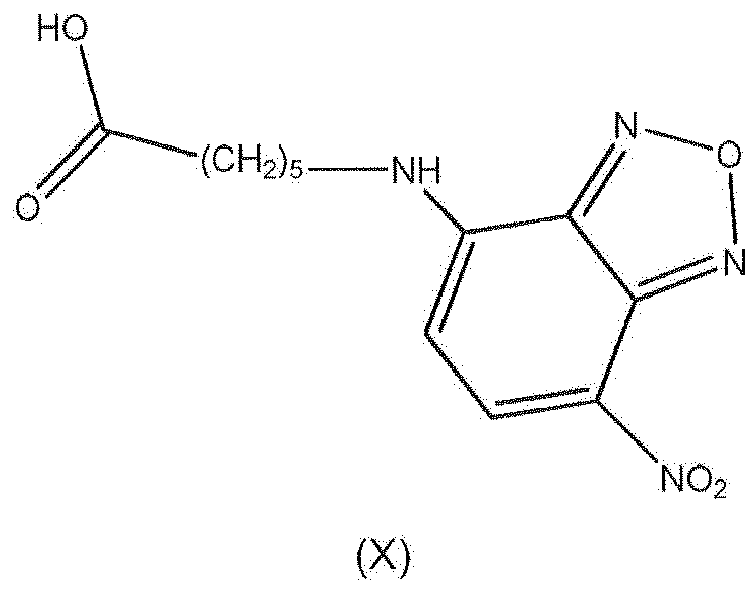
- Analytical reagent which comprises the compound having formula I as described in any of claims 6 to 8, in which R2 is fluorinated methyl, or a compound having formula VIII as described in claim 13.
- Use of the compound having formula VIII as described in claim 13, to produce an analytical reagent for carrying out biological tests based on fluorescence detection.
- Use of the compound having formula I as described in any of claims 6 to 8, in which R2 is fluorinated methyl, to produce an analytical reagent for carrying out biological tests based on fluorine detection.
Applications Claiming Priority (2)
| Application Number | Priority Date | Filing Date | Title |
|---|---|---|---|
| ES201231045A ES2441427B1 (en) | 2012-07-04 | 2012-07-04 | Use of sulfated glycolipids as promoters of neuritic growth, myelination and proliferation inhibitors of astroglia and microglia |
| PCT/ES2013/070456 WO2014006250A1 (en) | 2012-07-04 | 2013-07-02 | Use of sulphated glycolipids as promoters of neuritic growth and myelination and inhibitors of the proliferation of astroglia and microglia |
Publications (1)
| Publication Number | Publication Date |
|---|---|
| EP2871183A1 true EP2871183A1 (en) | 2015-05-13 |
Family
ID=49881401
Family Applications (1)
| Application Number | Title | Priority Date | Filing Date |
|---|---|---|---|
| EP13814001.7A Withdrawn EP2871183A1 (en) | 2012-07-04 | 2013-07-02 | Use of sulphated glycolipids as promoters of neuritic growth and myelination and inhibitors of the proliferation of astroglia and microglia |
Country Status (5)
| Country | Link |
|---|---|
| US (1) | US20150307539A1 (en) |
| EP (1) | EP2871183A1 (en) |
| JP (1) | JP2015527985A (en) |
| ES (1) | ES2441427B1 (en) |
| WO (1) | WO2014006250A1 (en) |
Family Cites Families (1)
| Publication number | Priority date | Publication date | Assignee | Title |
|---|---|---|---|---|
| AU2003252593A1 (en) * | 2002-07-10 | 2004-02-02 | Seikagaku Corporation | Sulfotransferase inhibitors |
-
2012
- 2012-07-04 ES ES201231045A patent/ES2441427B1/en not_active Expired - Fee Related
-
2013
- 2013-07-02 WO PCT/ES2013/070456 patent/WO2014006250A1/en not_active Ceased
- 2013-07-02 EP EP13814001.7A patent/EP2871183A1/en not_active Withdrawn
- 2013-07-02 US US14/412,649 patent/US20150307539A1/en not_active Abandoned
- 2013-07-02 JP JP2015519258A patent/JP2015527985A/en active Pending
Non-Patent Citations (1)
| Title |
|---|
| See references of WO2014006250A1 * |
Also Published As
| Publication number | Publication date |
|---|---|
| WO2014006250A1 (en) | 2014-01-09 |
| ES2441427B1 (en) | 2015-01-26 |
| ES2441427A1 (en) | 2014-02-04 |
| US20150307539A1 (en) | 2015-10-29 |
| JP2015527985A (en) | 2015-09-24 |
Similar Documents
| Publication | Publication Date | Title |
|---|---|---|
| CN102946877B (en) | Application of mastoid and its separated compound in preparing medicine for treating nerve diseases | |
| RU2170234C2 (en) | Carbohydrate-modified citostatic agents | |
| KR20100093621A (en) | Theraputic methods and uses of sapogenin and their derivatives | |
| Shu et al. | Human bone marrow mesenchymal stem cells-derived exosomes protect against nerve injury via regulating immune microenvironment in neonatal hypoxic-ischemic brain damage model | |
| JPS6130521A (en) | Ganglioside mixture for treating pain from peripheral nerve trouble | |
| RS63286B1 (en) | SIMULTANEOUS ADMINISTRATION OF ALPHA-AMINO ESTER HYDROXYPROPYLTHIAZOLIDINE CARBOXAMIDE DERIVATIVE AND TOCOLYTIC AGENT | |
| EP3398949B1 (en) | Uses of compound in preparation of drugs for treating brain glioma | |
| JP2007291133A (en) | Therapeutic agent containing hyaluronic acid oligosaccharide as active ingredient | |
| DE69031448T2 (en) | Semi-synthetic ganglioside analogues | |
| US20150307539A1 (en) | Use of sulphated glycolipids as promoters of neuritic growth, myelination and inhibiting the proliferation of astroglia and microglia | |
| Lin et al. | Synthesis, biological activity evaluation and mechanism analysis of new ganglioside GM3 derivatives as potential agents for nervous functional recovery | |
| AU2006228991A1 (en) | Modulating angiogenesis with Nod factors such as glucosamine oligosaccharides | |
| EA004768B1 (en) | Pharmaceutical compositions containing oligosaccharides and preparation thereof | |
| JP4195107B2 (en) | Stress protein expression enhancer | |
| JP6381605B2 (en) | Iridoid glycoside compounds for the treatment of stroke, pharmaceutical compositions thereof and methods of use thereof | |
| US9775856B2 (en) | C-glycosylpolyphenol antidiabetic agents, effect on glucose tolerance and interaction with beta-amyloid. therapeutic applications of the synthesized agent(s) and of Genista tenera ethyl acetate extracts containing some of those agents | |
| EP1409019A2 (en) | Gd3 synthesis inhibitors for treating neuropathological disorders | |
| HAYASHI et al. | Identification of hypoxanthine and inosine in brain dialyzable fraction as stimulators for growth of porcine aortic endothelial cells in response to fibroblast growth factor in either dialyzed serum media or low serum media | |
| JP2537378B2 (en) | Cyclopentane compound | |
| Dasgupta et al. | Tumor necrosis factor‐α up‐regulates glucuronosyltransferase gene expression in human brain endothelial cells and promotes T‐cell adhesion | |
| EP4260850A1 (en) | Pharmaceutical composition comprising pterosin compound and derivative thereof as active ingredient for prevention or treatment of pka-related disease | |
| Dickendesher et al. | Axon regeneration | |
| AU2005201951C1 (en) | Method of inhibiting neurotrophin-receptor binding | |
| Caleo | Different rates of horseradish peroxidase transport in the optic nerve of neonatal and adult rats | |
| KR20120128596A (en) | Theraputic methods and uses of sapogenin and their derivatives |
Legal Events
| Date | Code | Title | Description |
|---|---|---|---|
| PUAI | Public reference made under article 153(3) epc to a published international application that has entered the european phase |
Free format text: ORIGINAL CODE: 0009012 |
|
| 17P | Request for examination filed |
Effective date: 20150204 |
|
| AK | Designated contracting states |
Kind code of ref document: A1 Designated state(s): AL AT BE BG CH CY CZ DE DK EE ES FI FR GB GR HR HU IE IS IT LI LT LU LV MC MK MT NL NO PL PT RO RS SE SI SK SM TR |
|
| AX | Request for extension of the european patent |
Extension state: BA ME |
|
| DAX | Request for extension of the european patent (deleted) | ||
| STAA | Information on the status of an ep patent application or granted ep patent |
Free format text: STATUS: THE APPLICATION HAS BEEN WITHDRAWN |
|
| 18W | Application withdrawn |
Effective date: 20160321 |
|
| RIC1 | Information provided on ipc code assigned before grant |
Ipc: C07D 413/12 20060101ALI20160321BHEP Ipc: C07D 309/14 20060101AFI20160321BHEP Ipc: A61P 25/00 20060101ALI20160321BHEP Ipc: A61K 31/351 20060101ALI20160321BHEP Ipc: G01N 21/64 20060101ALI20160321BHEP Ipc: G01N 24/08 20060101ALI20160321BHEP |