EP2871009A2 - Laser assisted casting and related system - Google Patents
Laser assisted casting and related system Download PDFInfo
- Publication number
- EP2871009A2 EP2871009A2 EP20140190401 EP14190401A EP2871009A2 EP 2871009 A2 EP2871009 A2 EP 2871009A2 EP 20140190401 EP20140190401 EP 20140190401 EP 14190401 A EP14190401 A EP 14190401A EP 2871009 A2 EP2871009 A2 EP 2871009A2
- Authority
- EP
- European Patent Office
- Prior art keywords
- model
- casting
- wax
- additional feature
- laser
- Prior art date
- Legal status (The legal status is an assumption and is not a legal conclusion. Google has not performed a legal analysis and makes no representation as to the accuracy of the status listed.)
- Withdrawn
Links
- 238000005266 casting Methods 0.000 title claims abstract description 156
- 238000000034 method Methods 0.000 claims abstract description 61
- 238000000608 laser ablation Methods 0.000 claims abstract description 55
- 239000011248 coating agent Substances 0.000 claims abstract description 25
- 238000000576 coating method Methods 0.000 claims abstract description 25
- 239000000463 material Substances 0.000 claims description 40
- 238000003384 imaging method Methods 0.000 claims description 16
- 230000008016 vaporization Effects 0.000 claims description 11
- 238000013459 approach Methods 0.000 claims description 10
- 238000001816 cooling Methods 0.000 claims description 7
- 229910000831 Steel Inorganic materials 0.000 claims description 6
- 239000010959 steel Substances 0.000 claims description 6
- 239000000956 alloy Substances 0.000 claims description 3
- 229910045601 alloy Inorganic materials 0.000 claims description 3
- 239000000758 substrate Substances 0.000 abstract 1
- 238000000465 moulding Methods 0.000 description 10
- 239000002184 metal Substances 0.000 description 8
- 238000010586 diagram Methods 0.000 description 4
- 239000004215 Carbon black (E152) Substances 0.000 description 2
- 125000004432 carbon atom Chemical group C* 0.000 description 2
- 150000001875 compounds Chemical class 0.000 description 2
- 238000012937 correction Methods 0.000 description 2
- 238000000151 deposition Methods 0.000 description 2
- 150000002148 esters Chemical class 0.000 description 2
- 229930195733 hydrocarbon Natural products 0.000 description 2
- 150000002430 hydrocarbons Chemical class 0.000 description 2
- 238000003754 machining Methods 0.000 description 2
- 238000012545 processing Methods 0.000 description 2
- 239000011347 resin Substances 0.000 description 2
- 229920005989 resin Polymers 0.000 description 2
- 239000000126 substance Substances 0.000 description 2
- 150000007824 aliphatic compounds Chemical class 0.000 description 1
- 230000004075 alteration Effects 0.000 description 1
- 150000001491 aromatic compounds Chemical class 0.000 description 1
- 239000000919 ceramic Substances 0.000 description 1
- 239000006255 coating slurry Substances 0.000 description 1
- 230000006378 damage Effects 0.000 description 1
- 230000008020 evaporation Effects 0.000 description 1
- 238000001704 evaporation Methods 0.000 description 1
- 239000000945 filler Substances 0.000 description 1
- 230000006870 function Effects 0.000 description 1
- 238000010438 heat treatment Methods 0.000 description 1
- 238000005259 measurement Methods 0.000 description 1
- 238000002844 melting Methods 0.000 description 1
- 230000008018 melting Effects 0.000 description 1
- 239000000203 mixture Substances 0.000 description 1
- 238000012986 modification Methods 0.000 description 1
- 230000004048 modification Effects 0.000 description 1
- 239000000025 natural resin Substances 0.000 description 1
- 238000011022 operating instruction Methods 0.000 description 1
- 239000012766 organic filler Substances 0.000 description 1
- 229920003002 synthetic resin Polymers 0.000 description 1
- 239000000057 synthetic resin Substances 0.000 description 1
- 238000012360 testing method Methods 0.000 description 1
- XLYOFNOQVPJJNP-UHFFFAOYSA-N water Substances O XLYOFNOQVPJJNP-UHFFFAOYSA-N 0.000 description 1
- 239000001993 wax Substances 0.000 description 1
- 238000003466 welding Methods 0.000 description 1
Images

Classifications
-
- B—PERFORMING OPERATIONS; TRANSPORTING
- B22—CASTING; POWDER METALLURGY
- B22C—FOUNDRY MOULDING
- B22C7/00—Patterns; Manufacture thereof so far as not provided for in other classes
- B22C7/02—Lost patterns
-
- B—PERFORMING OPERATIONS; TRANSPORTING
- B22—CASTING; POWDER METALLURGY
- B22C—FOUNDRY MOULDING
- B22C9/00—Moulds or cores; Moulding processes
- B22C9/02—Sand moulds or like moulds for shaped castings
- B22C9/04—Use of lost patterns
-
- B—PERFORMING OPERATIONS; TRANSPORTING
- B22—CASTING; POWDER METALLURGY
- B22C—FOUNDRY MOULDING
- B22C9/00—Moulds or cores; Moulding processes
Definitions
- the subject matter disclosed herein relates generally to material processing. More particularly, the subject matter relates to casting shapes in materials.
- Casting of parts is conventionally performed by forming a mold of a shape, and pouring or otherwise depositing a liquefied material (e.g., metal) into the mold.
- a liquefied material e.g., metal
- the liquefied material is then cooled to form a solidified part in the shape of the opening in the mold.
- the mold is conventionally formed by creating a wax shape, coating the wax shape, e.g., with one or more ceramic layers, and removing the wax to leave the outline of that shape as the mold for casting the liquefied material.
- wax base material used to form those shapes is not always easy to manipulate.
- a "base” (or, general) wax base material is formed, and additional features are then added to the wax model by machining that wax base material to form the features that will be coated and later shape the part. This process can be expensive, time consuming and complex.
- Various embodiments include methods and related systems for laser-assisted casting. Some embodiments include a method including: providing a preliminary wax casting model; performing laser ablation to the preliminary wax casting model to form a modified wax model including at least one additional feature absent from the preliminary wax casting model; coating the modified wax model to form a mold shape around the modified wax model; and removing the modified wax model to leave a casing mold including the at least one additional feature.
- a first aspect of the invention includes a method including: performing laser ablation to a preliminary wax casting model to form a modified wax model including at least one additional feature absent from the preliminary wax casting model; coating the modified wax model to form a mold shape around the modified wax model; and removing the modified wax model to leave a casing mold including the at least one additional feature.
- a second aspect of the invention includes a system having: a laser system programmed to perform laser ablation to a preliminary wax casting model to form a modified wax model including at least one additional feature absent from the preliminary wax casting model; an imaging system for scanning the modified wax model to image the at least one additional feature after the performing of the laser ablation; a coating system for coating the modified wax model to form a mold shape around the modified wax model, and removing the modified wax model to leave a casting mold including the at least one additional feature; and a casting system for casting a shape from a casting material using the casting mold having the at least one additional feature.
- a third aspect of the invention includes a method including: performing laser ablation to a preliminary wax casting model to form a modified wax model including at least one additional feature absent from the preliminary wax casting model, wherein the performing of the laser ablation includes applying a pulsed laser to the preliminary wax casting model to directly vaporize a portion of the preliminary wax casting model, forming the at least one additional feature, wherein the directly vaporizing includes: increasing a local temperature of the portion of the preliminary wax casting model above approximately 500 degrees Celsius; and maintaining a temperature of an adjacent portion of the preliminary wax casting model below approximately 120 degrees Celsius; and scanning the modified wax model to image the at least one additional feature after the performing of the laser ablation.
- the subject matter disclosed herein relates material processing. More particularly, the subject matter relates to casting shapes in materials.
- wax base material used to form those shapes is not always easy to manipulate.
- a "base” (or, general) wax base material is formed, and additional features are then added to the wax model by machining that wax base material to form the features that will be coated and later shape the part. This process can be expensive, time consuming and complex.
- conventional casting of turbomachinery parts includes building a wax molding tool, which includes the shape of a wax model to be poured. Following building of the wax molding tool, wax is poured into the tool to create the wax model. That wax model is then coated (e.g., in a coating slurry with as many as 20-30 layers) to make a shell (mold shape) around the wax model.
- the shell (mold shape) including the wax is then heated to remove the wax model, retaining the mold shape (as a casting mold).
- a heated metal is then poured into the mold shape (shell), and subsequently cooled to form a metal part in the shape of the wax model.
- the mold shape (shell) is then removed, e.g., via mechanical or chemical removal.
- Some conventional approaches attempt to add features to the wax molding tool prior to forming the wax model. This can be quicker that modifying after forming the wax model, but can be expensive due to the need to re-form the entire wax molding tool. Additionally, modifying the original wax molding tool can cause conflict between features, e.g., features that extend in different directions. Sub-wax models and compilations of wax models can also be used, but these approaches form seams that require correction after the fact.
- Various particular aspects of the invention include a method including: providing a preliminary wax casting model (optional pre-process); performing laser ablation to the preliminary wax casting model to form a modified wax model including at least one additional feature absent from the preliminary wax casting model; coating the modified wax model to form a mold shape around the modified wax model; and removing the modified wax model to leave a casing mold including the at least one additional feature.
- Various additional particular aspects of the invention include a system having: a laser system programmed to perform laser ablation to a preliminary wax casting model to form a modified wax model including at least one additional feature absent from the preliminary wax casting model; an imaging system for scanning the modified wax model to image the at least one additional feature after the performing of the laser ablation; a coating system for coating the modified wax model to form a mold shape around the modified wax model, and removing the modified wax model to leave a casting mold including the at least one additional feature; and a casting system for casting a shape from a casting material using the casting mold having the at least one additional feature.
- aspects of the invention include a method including: providing a preliminary wax casting model (optional pre-process); performing laser ablation to the preliminary wax casting model to form a modified wax model including at least one additional feature absent from the preliminary wax casting model, wherein the performing of the laser ablation includes applying a pulsed laser to the preliminary wax casting model to directly vaporize a portion of the preliminary wax casting model, forming the at least one additional feature, wherein the directly vaporizing includes: increasing a local temperature of the portion of the preliminary wax casting model above approximately 500 degrees Celsius; and maintaining a temperature of an adjacent portion of the preliminary wax casting model below approximately 120 degrees Celsius; and scanning the modified wax model to image the at least one additional feature after the performing of the laser ablation.
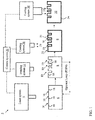
- FIG. 1 shows a schematic depiction of a system 2 for laser assisted casting according to various embodiments of the invention.
- the system 2 can include a laser system 4 programmed to perform laser ablation to a preliminary wax casting model 6 to form a modified wax model 8 including at least one additional feature 10 absent from the preliminary wax casting model 6.
- the preliminary wax casting model 6 can include a raw, unworked, or otherwise unmachined piece of wax material, as described herein.
- the preliminary wax casting model 6 is formed in a wax molding tool, as is known in the art.
- the system 2 can also include an imaging system 12 for scanning the modified wax model 8 to image the at least one additional feature 10 after laser ablation has been performed by the laser system 4.
- the imaging system 12 includes at least one of a two-dimensional (2D) scanning system or a three-dimensional (3D) scanning system.
- the system 2 can further include a coating system 26 for: a) coating the modified wax model 8 (e.g., with a coating metal) to form a mold shape (or, shell) around the modified wax model 8, and b) removing the modified wax model 8 to leave a casting mold 24 (also referred to as a casting shell) including the at least one additional feature 10.
- the system 2 can also include a casting system 30 for pouring a casting material 32 to form a shape from the casting mold 24 (after the modified wax model 8 is verified to have desired characteristics, and the casting mold 24 is formed).
- the system 2 can include a control system 20 coupled to the laser system 4, coating system 26, casting system 30 and/or the imaging system 12.
- the control system 20 can be configured to provide instructions to, and/or otherwise control operation of the laser system 4, coating system 26, casting system 30 and/or imaging system 12.
- the control system 20 may be mechanically or electrically connected to the laser system 4, coating system 26, casting system 30 and/or the imaging system 12.
- Control system 20 may be a computerized, mechanical, or electro-mechanical device capable of controlling the laser system 4, coating system 26, casting system 30 and/or the imaging system 12.
- control system 20 may be a computerized device capable of providing operating instructions to the laser system 4, coating system 26, casting system 30 and/or the imaging system 12.
- control system 20 may include a mechanical device, capable of use by an operator.
- the operator may physically manipulate control system 20 (e.g., by pulling a lever), which may actuate the laser system 4, coating system 26, casting system 30 and/or the imaging system 12.
- control system 20 may be an electro-mechanical device.
- FIG. 2 a flow diagram is shown illustrating a method of laser assisted casting performed according to various embodiments. As shown, the method can include the following processes:
- the preliminary wax casting model 6 can include hydrocarbon wax, natural ester wax, synthetic wax, natural resins, synthetic resins, organic filler materials, water and mixtures thereof.
- the preliminary wax casting model 6 can include aliphatic compounds (compounds having straight chained carbon atoms, e.g., hydrocarbon wax, natural ester wax, synthetic wax and/or resins) or aromatic compounds (compounds, fillers and/or resins having ring structured carbon atoms).
- Process P2 performing laser ablation (using laser system 4) to the preliminary wax casting model 6 to form a modified casting model (e.g., modified casting model 8) including at least one additional feature (e.g., additional feature(s) 10) absent from the preliminary wax casting model 6.
- the process of performing laser ablation on the preliminary wax casting model 6 can include applying a pulsed laser (e.g., an ultra-short-pulse laser) to the preliminary wax casting model 6 to directly vaporize a portion 16 of the preliminary wax casting model 6, forming the at least one additional feature 10.
- the vaporized portions 16 are illustrated by the additional features 10 in the modified casting model 8.
- the process of directly vaporizing includes increasing a local temperature of the portion 16 of the preliminary wax casting model 6 above the evaporation temperature of the preliminary wax casting model 6, e.g., approximately 500 degrees Celsius (and in some cases, up to approximately 1,000 degrees Celsius), while maintaining a temperature of the adjacent portion 18 of the preliminary wax casting model 6 below its melting temperature, e.g., approximately 120 degrees Celsius (and in some cases, below approximately 50 degrees Celsius).
- Process P3 (optional in some embodiments): scanning the modified casting model 8 (using imaging system 12) to image the at least one additional feature 10 after the performing of the laser ablation.
- the scanning includes performing at least one of a 2D scan or a 3D scan of the at least one additional feature 10.
- Process P4 (optional in some embodiments): performing a subsequent laser ablation (using laser system 4) to the modified casting model 8 based upon the image of the at least one additional feature 10.
- the subsequent laser ablation process includes a modified laser ablation approach including modifying at least one parameter of the laser system 4 when compared with the initial laser ablation parameter(s), for example: a) laser power; b) laser focus; c) laser scanning speed; and/or d) laser pulse duration.
- Processes P3 and P4 can be repeated as shown in FIG. 1 , based upon the results of the imaging and the subsequent laser ablation.
- additional processes can include:
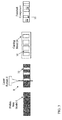
- FIG. 3 shows a schematic process flow diagram illustrating processes in forming a casting mold 24 according to various embodiments of the invention.
- a preliminary wax model 6 is laser ablated to form a plurality of features 10 in the model, forming a modified wax model 8;
- a casting mold 24 is then formed around the modified wax model, reflecting the plurality of features 10; and in some processes, a finished component (e.g., a metal component) is formed by pouring a casting material in the casting mold 24 and subsequently removing that material 32 from the mold 24.
- a finished component e.g., a metal component
- components described as being “coupled” to one another can be joined along one or more interfaces.
- these interfaces can include junctions between distinct components, and in other cases, these interfaces can include a solidly and/or integrally formed interconnection. That is, in some cases, components that are "coupled” to one another can be simultaneously formed to define a single continuous member.
- these coupled components can be formed as separate members and be subsequently joined through known processes (e.g., fastening, ultrasonic welding, bonding).
Landscapes
- Engineering & Computer Science (AREA)
- Mechanical Engineering (AREA)
- Laser Beam Processing (AREA)
- Molds, Cores, And Manufacturing Methods Thereof (AREA)
- Application Of Or Painting With Fluid Materials (AREA)
Abstract
Description
- The subject matter disclosed herein relates generally to material processing. More particularly, the subject matter relates to casting shapes in materials.
- Casting of parts, e.g., metal parts for use in machinery such as turbomachinery and/or dynamoelectric machinery, is conventionally performed by forming a mold of a shape, and pouring or otherwise depositing a liquefied material (e.g., metal) into the mold. The liquefied material is then cooled to form a solidified part in the shape of the opening in the mold. The mold is conventionally formed by creating a wax shape, coating the wax shape, e.g., with one or more ceramic layers, and removing the wax to leave the outline of that shape as the mold for casting the liquefied material.
- Particular shapes in parts can be difficult and/or costly to form, as the wax base material used to form those shapes is not always easy to manipulate. In some cases, a "base" (or, general) wax base material is formed, and additional features are then added to the wax model by machining that wax base material to form the features that will be coated and later shape the part. This process can be expensive, time consuming and complex.
- Other approaches include adding features to the wax molding tool that forms the shape of the wax model prior to forming the mold. This can be quicker that modifying after forming the wax model, but can be expensive due to the need to re-form the entire wax molding tool. Additionally, modifying the original wax molding tool can cause conflict between features, e.g., features that extend in different directions. Sub-wax models and compilations of wax models can also be used, but these approaches form seams that require correction after the fact.
- Various embodiments include methods and related systems for laser-assisted casting. Some embodiments include a method including: providing a preliminary wax casting model; performing laser ablation to the preliminary wax casting model to form a modified wax model including at least one additional feature absent from the preliminary wax casting model; coating the modified wax model to form a mold shape around the modified wax model; and removing the modified wax model to leave a casing mold including the at least one additional feature.
- A first aspect of the invention includes a method including: performing laser ablation to a preliminary wax casting model to form a modified wax model including at least one additional feature absent from the preliminary wax casting model; coating the modified wax model to form a mold shape around the modified wax model; and removing the modified wax model to leave a casing mold including the at least one additional feature.
- A second aspect of the invention includes a system having: a laser system programmed to perform laser ablation to a preliminary wax casting model to form a modified wax model including at least one additional feature absent from the preliminary wax casting model; an imaging system for scanning the modified wax model to image the at least one additional feature after the performing of the laser ablation; a coating system for coating the modified wax model to form a mold shape around the modified wax model, and removing the modified wax model to leave a casting mold including the at least one additional feature; and a casting system for casting a shape from a casting material using the casting mold having the at least one additional feature.
- A third aspect of the invention includes a method including: performing laser ablation to a preliminary wax casting model to form a modified wax model including at least one additional feature absent from the preliminary wax casting model, wherein the performing of the laser ablation includes applying a pulsed laser to the preliminary wax casting model to directly vaporize a portion of the preliminary wax casting model, forming the at least one additional feature, wherein the directly vaporizing includes: increasing a local temperature of the portion of the preliminary wax casting model above approximately 500 degrees Celsius; and maintaining a temperature of an adjacent portion of the preliminary wax casting model below approximately 120 degrees Celsius; and scanning the modified wax model to image the at least one additional feature after the performing of the laser ablation.
- Various features of this invention will be more readily understood from the following detailed description of the various aspects of the invention taken in conjunction with the accompanying drawings that depict various embodiments of the invention, in which:
-
FIG. 1 shows a schematic depiction of a system for laser-assisted casting according to various embodiments of the invention. -
FIG. 2 is a flow diagram illustrating processes according to various embodiments of the invention. -
FIG. 3 shows a schematic process flow diagram illustrating processes in forming a casting shape according to various embodiments of the invention. - It is noted that the drawings of the invention are not necessarily to scale. The drawings are intended to depict only typical aspects of the invention, and therefore should not be considered as limiting the scope of the invention. In the drawings, like numbering represents like elements between the drawings.
- As noted, the subject matter disclosed herein relates material processing. More particularly, the subject matter relates to casting shapes in materials.
- As described herein, particular shapes in parts can be difficult and/or costly to form, as the wax base material used to form those shapes is not always easy to manipulate. In some cases, a "base" (or, general) wax base material is formed, and additional features are then added to the wax model by machining that wax base material to form the features that will be coated and later shape the part. This process can be expensive, time consuming and complex.
- In particular, conventional casting of turbomachinery parts includes building a wax molding tool, which includes the shape of a wax model to be poured. Following building of the wax molding tool, wax is poured into the tool to create the wax model. That wax model is then coated (e.g., in a coating slurry with as many as 20-30 layers) to make a shell (mold shape) around the wax model. The shell (mold shape) including the wax is then heated to remove the wax model, retaining the mold shape (as a casting mold). A heated metal is then poured into the mold shape (shell), and subsequently cooled to form a metal part in the shape of the wax model. The mold shape (shell) is then removed, e.g., via mechanical or chemical removal. Some conventional approaches attempt to add features to the wax molding tool prior to forming the wax model. This can be quicker that modifying after forming the wax model, but can be expensive due to the need to re-form the entire wax molding tool. Additionally, modifying the original wax molding tool can cause conflict between features, e.g., features that extend in different directions. Sub-wax models and compilations of wax models can also be used, but these approaches form seams that require correction after the fact.
- In order to address issues with the conventional molding/casting approaches, various aspects of the invention include solutions for effectively modifying an existing mold to include additional features.
- Various particular aspects of the invention include a method including: providing a preliminary wax casting model (optional pre-process); performing laser ablation to the preliminary wax casting model to form a modified wax model including at least one additional feature absent from the preliminary wax casting model; coating the modified wax model to form a mold shape around the modified wax model; and removing the modified wax model to leave a casing mold including the at least one additional feature.
- Various additional particular aspects of the invention include a system having: a laser system programmed to perform laser ablation to a preliminary wax casting model to form a modified wax model including at least one additional feature absent from the preliminary wax casting model; an imaging system for scanning the modified wax model to image the at least one additional feature after the performing of the laser ablation; a coating system for coating the modified wax model to form a mold shape around the modified wax model, and removing the modified wax model to leave a casting mold including the at least one additional feature; and a casting system for casting a shape from a casting material using the casting mold having the at least one additional feature.
- Other aspects of the invention include a method including: providing a preliminary wax casting model (optional pre-process); performing laser ablation to the preliminary wax casting model to form a modified wax model including at least one additional feature absent from the preliminary wax casting model, wherein the performing of the laser ablation includes applying a pulsed laser to the preliminary wax casting model to directly vaporize a portion of the preliminary wax casting model, forming the at least one additional feature, wherein the directly vaporizing includes: increasing a local temperature of the portion of the preliminary wax casting model above approximately 500 degrees Celsius; and maintaining a temperature of an adjacent portion of the preliminary wax casting model below approximately 120 degrees Celsius; and scanning the modified wax model to image the at least one additional feature after the performing of the laser ablation.
- In the following description, reference is made to the accompanying drawings that form a part thereof, and in which is shown by way of illustration specific exemplary embodiments in which the present teachings may be practiced. These embodiments are described in sufficient detail to enable those skilled in the art to practice the present teachings and it is to be understood that other embodiments may be utilized and that changes may be made without departing from the scope of the present teachings. The following description is, therefore, merely illustrative.
- Illustrations with respect to one or more implementations, alterations and/or modifications can be made to the illustrated examples without departing from the spirit and scope of the appended claims. In addition, while a particular feature may have been disclosed with respect to only one of several implementations, such feature may be combined with one or more other features of the other implementations as may be desired and advantageous for any given or particular function. Furthermore, to the extent that the terms "including", "includes", "having", "has", "with", or variants thereof are used in either the detailed description and the claims, such terms are intended to be inclusive in a manner similar to the term "comprising." The term "at least one of" is used to mean one or more of the listed items can be selected. Notwithstanding that the numerical ranges and parameters setting forth the broad scope of embodiments are approximations, the numerical values set forth in the specific examples are reported as precisely as possible. Any numerical value, however, may inherently contain certain errors necessarily resulting from the standard deviation found in their respective testing measurements. Moreover, all ranges disclosed herein are to be understood to encompass any and all sub-ranges subsumed therein. For example, a range of "less than 10" can include any and all sub-ranges between (and including) the minimum value of zero and the maximum value of 10, that is, any and all sub-ranges having a minimum value of equal to or greater than zero and a maximum value of equal to or less than 10, e.g., 1 to 5. In certain cases, the numerical values as stated for the parameter can take on negative values. In this case, the example value of range stated as "less than 10" can assume negative values, e.g. - 1, -2, -3, -10, -20, -30, etc.
-
FIG. 1 shows a schematic depiction of asystem 2 for laser assisted casting according to various embodiments of the invention. As shown, thesystem 2 can include alaser system 4 programmed to perform laser ablation to a preliminarywax casting model 6 to form a modifiedwax model 8 including at least oneadditional feature 10 absent from the preliminarywax casting model 6. The preliminarywax casting model 6 can include a raw, unworked, or otherwise unmachined piece of wax material, as described herein. The preliminarywax casting model 6 is formed in a wax molding tool, as is known in the art. Thesystem 2 can also include animaging system 12 for scanning the modifiedwax model 8 to image the at least oneadditional feature 10 after laser ablation has been performed by thelaser system 4. In various embodiments, theimaging system 12 includes at least one of a two-dimensional (2D) scanning system or a three-dimensional (3D) scanning system. Thesystem 2 can further include acoating system 26 for: a) coating the modified wax model 8 (e.g., with a coating metal) to form a mold shape (or, shell) around the modifiedwax model 8, and b) removing the modifiedwax model 8 to leave a casting mold 24 (also referred to as a casting shell) including the at least oneadditional feature 10. Thesystem 2 can also include a casting system 30 for pouring acasting material 32 to form a shape from the casting mold 24 (after the modifiedwax model 8 is verified to have desired characteristics, and thecasting mold 24 is formed). - In various embodiments, the
system 2 can include acontrol system 20 coupled to thelaser system 4,coating system 26, casting system 30 and/or theimaging system 12. Thecontrol system 20 can be configured to provide instructions to, and/or otherwise control operation of thelaser system 4,coating system 26, casting system 30 and/orimaging system 12. Thecontrol system 20 may be mechanically or electrically connected to thelaser system 4,coating system 26, casting system 30 and/or theimaging system 12.Control system 20 may be a computerized, mechanical, or electro-mechanical device capable of controlling thelaser system 4,coating system 26, casting system 30 and/or theimaging system 12. In one embodiment,control system 20 may be a computerized device capable of providing operating instructions to thelaser system 4,coating system 26, casting system 30 and/or theimaging system 12. In another embodiment,control system 20 may include a mechanical device, capable of use by an operator. In this case, the operator may physically manipulate control system 20 (e.g., by pulling a lever), which may actuate thelaser system 4,coating system 26, casting system 30 and/or theimaging system 12. In another embodiment,control system 20 may be an electro-mechanical device. - Turning to
FIG. 2 , with continuing reference toFIG. 1 , a flow diagram is shown illustrating a method of laser assisted casting performed according to various embodiments. As shown, the method can include the following processes: - Process P1(optional pre-process): providing a preliminary wax casting model, e.g., preliminary wax casting model 6 (
FIG. 1 ). In various embodiments, the preliminarywax casting model 6 can include hydrocarbon wax, natural ester wax, synthetic wax, natural resins, synthetic resins, organic filler materials, water and mixtures thereof. In particular embodiments, the preliminarywax casting model 6 can include aliphatic compounds (compounds having straight chained carbon atoms, e.g., hydrocarbon wax, natural ester wax, synthetic wax and/or resins) or aromatic compounds (compounds, fillers and/or resins having ring structured carbon atoms). - Process P2: performing laser ablation (using laser system 4) to the preliminary
wax casting model 6 to form a modified casting model (e.g., modified casting model 8) including at least one additional feature (e.g., additional feature(s) 10) absent from the preliminarywax casting model 6. As described herein, the process of performing laser ablation on the preliminarywax casting model 6 can include applying a pulsed laser (e.g., an ultra-short-pulse laser) to the preliminarywax casting model 6 to directly vaporize aportion 16 of the preliminarywax casting model 6, forming the at least oneadditional feature 10. The vaporizedportions 16 are illustrated by theadditional features 10 in the modifiedcasting model 8. In various embodiments, the process of directly vaporizing includes increasing a local temperature of theportion 16 of the preliminarywax casting model 6 above the evaporation temperature of the preliminarywax casting model 6, e.g., approximately 500 degrees Celsius (and in some cases, up to approximately 1,000 degrees Celsius), while maintaining a temperature of theadjacent portion 18 of the preliminarywax casting model 6 below its melting temperature, e.g., approximately 120 degrees Celsius (and in some cases, below approximately 50 degrees Celsius). - Process P3 (optional in some embodiments): scanning the modified casting model 8 (using imaging system 12) to image the at least one
additional feature 10 after the performing of the laser ablation. In various embodiments, the scanning includes performing at least one of a 2D scan or a 3D scan of the at least oneadditional feature 10. - Process P4 (optional in some embodiments): performing a subsequent laser ablation (using laser system 4) to the modified
casting model 8 based upon the image of the at least oneadditional feature 10. In various embodiments, the subsequent laser ablation process includes a modified laser ablation approach including modifying at least one parameter of thelaser system 4 when compared with the initial laser ablation parameter(s), for example: a) laser power; b) laser focus; c) laser scanning speed; and/or d) laser pulse duration. Processes P3 and P4 can be repeated as shown inFIG. 1 , based upon the results of the imaging and the subsequent laser ablation. - In various embodiments, additional processes can include:
- Process P5: coating the modified
wax model 8 to form a mold shape (shell) 22. This can include depositing a liner material 21 (e.g., a metal) over the modifiedwax model 8 to form the mold shape (shell) 22 that outlines the modifiedwax model 8. - Process P6: Removing the modified
wax model 8 to leave a casting mold 24 (shell) including the at least oneadditional feature 10. This can include physically removing the modifiedwax model 8, e.g., via physical and/or chemical destruction of the modifiedwax model 8. In some cases, the modifiedwax model 8 is removed from themold shape 22 by prying, pulling, torqueing, etc., the modifiedwax model 8 to leave the castingmold 24 in tact. In other cases, the modifiedwax model 8 is heated until liquefied (or vaporized), and is removed after heating. - Process P7: forming a shape from a casting material (e.g., a metal such as steel or alloys of steel) 32 using the casting
mold 24 having the at least oneadditional feature 10. Forming of the shape from the castingmaterial 32 using the modified casting mold can include: a) pouring the castingmaterial 32 into the castingmold 24 having the at least oneadditional feature 10; and b) cooling the castingmaterial 32 to solidify the shape. Depending upon the specific properties of the castingmaterial 32, the cooling process can include actively cooling the casting material 32 (e.g., subjecting the castingmaterial 32 to a cooling environment), or passively cooling the casting material 32 (e.g., allowing the castingmaterial 32 to cool at room temperature). -
FIG. 3 shows a schematic process flow diagram illustrating processes in forming a castingmold 24 according to various embodiments of the invention. As shown: apreliminary wax model 6 is laser ablated to form a plurality offeatures 10 in the model, forming a modifiedwax model 8; a castingmold 24 is then formed around the modified wax model, reflecting the plurality offeatures 10; and in some processes, a finished component (e.g., a metal component) is formed by pouring a casting material in the castingmold 24 and subsequently removing that material 32 from themold 24. - In various embodiments, components described as being "coupled" to one another can be joined along one or more interfaces. In some embodiments, these interfaces can include junctions between distinct components, and in other cases, these interfaces can include a solidly and/or integrally formed interconnection. That is, in some cases, components that are "coupled" to one another can be simultaneously formed to define a single continuous member. However, in other embodiments, these coupled components can be formed as separate members and be subsequently joined through known processes (e.g., fastening, ultrasonic welding, bonding).
- The terminology used herein is for the purpose of describing particular embodiments only and is not intended to be limiting of the disclosure. As used herein, the singular forms "a", "an" and "the" are intended to include the plural forms as well, unless the context clearly indicates otherwise. It will be further understood that the terms "comprises" and/or "comprising," when used in this specification, specify the presence of stated features, integers, steps, operations, elements, and/or components, but do not preclude the presence or addition of one or more other features, integers, steps, operations, elements, components, and/or groups thereof. It is further understood that the terms "front" and "back" are not intended to be limiting and are intended to be interchangeable where appropriate.
- This written description uses examples to disclose the invention, including the preferred mode, and also to enable any person skilled in the art to practice the invention, including making and using any devices or systems and performing any incorporated methods. The patentable scope of the invention is defined by the claims, and may include other examples that occur to those skilled in the art. Such other examples are intended to be within the scope of the claims if they have structural elements that do not differ from the literal language of the claims, or if they include equivalent structural elements with insubstantial differences from the literal languages of the claims.
- Various aspects and embodiments of the present invention are defined by the following numbered clauses:
- 1. A method comprising:
- performing laser ablation to a preliminary wax casting model to form a modified wax model including at least one additional feature absent from the preliminary wax casting model;
- coating the modified wax model to form a mold shape around the modified wax model; and
- removing the modified wax model to leave a casting mold including the at least one additional feature.
- 2. The method of
clause 1, further comprising forming a shape from a casting material using the casting mold having the at least one additional feature. - 3. The method of any preceding clause, wherein the casting material includes steel or alloys including steel.
- 4. The method of any preceding clause, wherein the forming of the shape includes:
- pouring the casting material into the casting mold having the at least one additional feature; and
- cooling the casting material to solidify the shape.
- 5. The method of any preceding clause, wherein the performing of the laser ablation includes applying an ultra-short-pulse laser to the preliminary wax casting model to directly vaporize a portion of the preliminary wax casting model, forming the at least one additional feature.
- 6. The method of any preceding clause, wherein the directly vaporizing includes increasing a local temperature of the portion of the preliminary wax casting model above approximately 500 degrees Celsius.
- 7. The method of any preceding clause, wherein the directly vaporizing includes maintaining a temperature of an adjacent portion of the preliminary wax casting model below approximately 120 degrees Celsius.
- 8. The method of any preceding clause, further comprising scanning the modified wax model to image the at least one additional feature after the performing of the laser ablation.
- 9. The method of any preceding clause, wherein the scanning includes performing at least one of a two dimensional scan or a three dimensional scan of the at least one additional feature.
- 10. The method of any preceding clause, further comprising performing a subsequent laser ablation to the modified wax model based upon the image of the at least one additional feature.
- 11. The method of any preceding clause, wherein the subsequent laser ablation includes a modified laser ablation approach including a modified at least one of: laser power, laser focus, laser scanning speed or laser pulse duration, compared with the laser ablation.
- 12. A system comprising:
- a laser system programmed to perform laser ablation to a preliminary wax casting model to form a modified wax model including at least one additional feature absent from the preliminary wax casting model;
- an imaging system for scanning the modified wax model to image the at least one additional feature after the performing of the laser ablation;
- a coating system for coating the modified wax model to form a mold shape around the modified wax model, and removing the modified wax model to leave a casting mold including the at least one additional feature; and
- a casting system for casting a shape from a casting material using the casting mold having the at least one additional feature.
- 13. The system of any preceding clause, wherein the imaging system includes at least one of a two dimensional scanning system or a three dimensional scanning system.
- 14. The system of any preceding clause, wherein the laser system is programmed to perform the laser ablation by applying an ultra-short-pulse laser to the preliminary wax casting model to directly vaporize a portion of the preliminary wax casting model, forming the at least one additional feature.
- 15. The system of any preceding clause, wherein the directly vaporizing includes increasing a local temperature of the portion of the preliminary wax casting model above approximately 500 degrees Celsius.
- 16. The system of any preceding clause, wherein the directly vaporizing includes maintaining a temperature of an adjacent portion of the preliminary wax casting model below approximately 120 degrees Celsius.
- 17. The system of any preceding clause, wherein the laser system is further programmed to perform a subsequent laser ablation to the modified wax model based upon the image of the at least one additional feature.
- 18. The system of any preceding clause, wherein the subsequent laser ablation includes a modified laser ablation approach including a modified at least one of: laser power, laser focus, laser scanning speed or laser pulse duration, compared with the laser ablation.
- 19. A method comprising:
- performing laser ablation to a preliminary wax casting model to form a modified wax model including at least one additional feature absent from the preliminary wax casting model,
- wherein the performing of the laser ablation includes applying a pulsed laser to the preliminary wax casting model to directly vaporize a portion of the preliminary wax casting model, forming the at least one additional feature,
- wherein the directly vaporizing includes:
- increasing a local temperature of the portion of the preliminary wax casting model above approximately 500 degrees Celsius; and
- maintaining a temperature of an adjacent portion of the preliminary wax casting model below approximately 120 degrees Celsius; and
- scanning the modified wax model to image the at least one additional feature after the performing of the laser ablation.
- 20. The method of any preceding clause, further comprising performing a subsequent laser ablation to the modified wax model based upon the image of the at least one additional feature, wherein the subsequent laser ablation includes a modified laser ablation approach including a modified at least one of: laser power, laser focus, laser scanning speed or laser pulse duration, compared with the laser ablation, wherein the pulsed laser includes an ultra-short-pulse laser.
Claims (15)
- A method comprising:performing (P2) laser ablation to a preliminary wax casting model (6) to form a modified wax model (8) including at least one additional feature (10) absent from the preliminary wax casting model (6);coating (P5) the modified wax model (8) to form a mold shape around the modified wax model (8); andremoving (P6) the modified wax model (8) to leave a casting mold (24) including the at least one additional feature (10).
- The method of claim 1, further comprising forming (P7) a shape from a casting material (32) using the casting mold (24) having the at least one additional feature (10).
- The method of claim 2, wherein the casting material (32) includes steel or alloys including steel.
- The method of claim 2 or claim 3, wherein the forming (P7) of the shape includes:pouring the casting material (32) into the casting mold (24) having the at least one additional feature (10); andcooling the casting material (32) to solidify the shape.
- The method of any preceding claim, wherein the performing (P2) of the laser ablation includes applying an ultra-short-pulse laser to the preliminary wax casting model (6) to directly vaporize a portion of the preliminary wax casting model (6), forming the at least one additional feature (10).
- The method of claim 5, wherein the directly vaporizing includes increasing a local temperature of the portion of the preliminary wax casting model (6) above approximately 500 degrees Celsius.
- The method of claim 5 or claim 6, wherein the directly vaporizing includes maintaining a temperature of an adjacent portion of the preliminary wax casting model (6) below approximately 120 degrees Celsius.
- The method of any preceding claim, further comprising scanning (P3) the modified wax model (8) to image the at least one additional feature (10) after the performing (P2) of the laser ablation.
- The method of claim 8, wherein the scanning (P3) includes performing at least one of a two dimensional scan or a three dimensional scan of the at least one additional feature.
- The method of claim 8 or claim 9, further comprising performing (P4) a subsequent laser ablation to the modified wax model (8) based upon the image of the at least one additional feature (10).
- The method of claim 10, wherein the subsequent laser ablation (P4) includes a modified laser ablation approach including a modified at least one of: laser power, laser focus, laser scanning speed or laser pulse duration, compared with the laser ablation.
- A system (2) comprising:a laser system (4) programmed to perform (P2) laser ablation to a preliminary wax casting model (6) to form a modified wax model (8) including at least one additional feature (10) absent from the preliminary wax casting model (6);an imaging system (12) for scanning the modified wax model (8) to image the at least one additional feature (10) after the performing (P2) of the laser ablation;a coating system (26) for coating the modified wax model (8) to form a mold shape around the modified wax model (8), and removing the modified wax model (8) to leave a casting mold (24) including the at least one additional feature (10); anda casting system (30) for casting a shape from a casting material (32) using the casting mold (24) having the at least one additional feature (10).
- The system (2) of claim 12, wherein the imaging system (12) includes at least one of a two dimensional scanning system or a three dimensional scanning system.
- The system (2) of claim 12 or claim 13, wherein the laser system (4) is programmed to perform the laser ablation by applying an ultra-short-pulse laser to the preliminary wax casting model (6) to directly vaporize a portion of the preliminary wax casting model (6), forming the at least one additional feature (10).
- The system (2) of claim 14, wherein the directly vaporizing includes increasing a local temperature of the portion of the preliminary wax casting model (6) above approximately 500 degrees Celsius.
Applications Claiming Priority (1)
| Application Number | Priority Date | Filing Date | Title |
|---|---|---|---|
| US14/075,094 US20150129150A1 (en) | 2013-11-08 | 2013-11-08 | Laser assisted casting and related system |
Publications (2)
| Publication Number | Publication Date |
|---|---|
| EP2871009A2 true EP2871009A2 (en) | 2015-05-13 |
| EP2871009A3 EP2871009A3 (en) | 2015-05-20 |
Family
ID=51842370
Family Applications (1)
| Application Number | Title | Priority Date | Filing Date |
|---|---|---|---|
| EP20140190401 Withdrawn EP2871009A3 (en) | 2013-11-08 | 2014-10-27 | Laser assisted casting and related system |
Country Status (4)
| Country | Link |
|---|---|
| US (1) | US20150129150A1 (en) |
| EP (1) | EP2871009A3 (en) |
| JP (1) | JP2015093325A (en) |
| CN (1) | CN104624962A (en) |
Citations (3)
| Publication number | Priority date | Publication date | Assignee | Title |
|---|---|---|---|---|
| US4915757A (en) * | 1988-05-05 | 1990-04-10 | Spectra-Physics, Inc. | Creation of three dimensional objects |
| US5880430A (en) * | 1995-08-11 | 1999-03-09 | Wein; Joseph H. | Method and apparatus for laser engraving |
| US20060144549A1 (en) * | 2005-01-06 | 2006-07-06 | Lehmann Todd P | Article of jewelry and method of manufacture |
Family Cites Families (8)
| Publication number | Priority date | Publication date | Assignee | Title |
|---|---|---|---|---|
| US4806729A (en) * | 1988-01-04 | 1989-02-21 | Oregon Graduate Center | Laser wax joinery method and apparatus |
| JP2924664B2 (en) * | 1994-09-28 | 1999-07-26 | 住友電気工業株式会社 | Method of forming fine ceramic structure |
| DE10054025A1 (en) * | 1999-11-22 | 2001-06-13 | Bayerische Motoren Werke Ag | Production of three dimensional molding from electronic data is preceded by subdivision into individual standard elements which together approximate final shape |
| US6516864B2 (en) * | 2001-04-06 | 2003-02-11 | Harout Ounjian | Gem setting method and tool |
| JP2003025044A (en) * | 2001-07-12 | 2003-01-28 | Kao Corp | Vanishing model for casting |
| CN102663948B (en) * | 2012-04-20 | 2014-09-03 | 王斌 | Human body acupuncture point model with acupuncture point name marks and manufacture method thereof |
| CN102831262A (en) * | 2012-08-07 | 2012-12-19 | 钟山 | Method for fast designing and producing metal jewelry |
| CN103934417B (en) * | 2014-04-14 | 2016-01-20 | 南京宝泰特种材料股份有限公司 | A kind of titanium precision castings preparation method of rapid shaping |
-
2013
- 2013-11-08 US US14/075,094 patent/US20150129150A1/en not_active Abandoned
-
2014
- 2014-10-27 EP EP20140190401 patent/EP2871009A3/en not_active Withdrawn
- 2014-11-05 JP JP2014224809A patent/JP2015093325A/en not_active Ceased
- 2014-11-07 CN CN201410641865.6A patent/CN104624962A/en active Pending
Patent Citations (3)
| Publication number | Priority date | Publication date | Assignee | Title |
|---|---|---|---|---|
| US4915757A (en) * | 1988-05-05 | 1990-04-10 | Spectra-Physics, Inc. | Creation of three dimensional objects |
| US5880430A (en) * | 1995-08-11 | 1999-03-09 | Wein; Joseph H. | Method and apparatus for laser engraving |
| US20060144549A1 (en) * | 2005-01-06 | 2006-07-06 | Lehmann Todd P | Article of jewelry and method of manufacture |
Non-Patent Citations (1)
| Title |
|---|
| LIU X ET AL: "LASER ABLATION AND MICROMACHINING WITH ULTRASHORT LASER PULSES", IEEE JOURNAL OF QUANTUM ELECTRONICS, IEEE SERVICE CENTER, PISCATAWAY, NJ, USA, vol. 33, no. 10, 1 October 1997 (1997-10-01), pages 1706 - 1716, XP000722265, ISSN: 0018-9197, DOI: 10.1109/3.631270 * |
Also Published As
| Publication number | Publication date |
|---|---|
| US20150129150A1 (en) | 2015-05-14 |
| CN104624962A (en) | 2015-05-20 |
| EP2871009A3 (en) | 2015-05-20 |
| JP2015093325A (en) | 2015-05-18 |
Similar Documents
| Publication | Publication Date | Title |
|---|---|---|
| EP3096900B1 (en) | Method of additive manufacturing of a mold | |
| US10583490B2 (en) | Methods for preparing a hybrid article | |
| EP3135408B1 (en) | Powder-bed additive manufacturing device and method | |
| Ding et al. | Advanced design for additive manufacturing: 3D slicing and 2D path planning | |
| US11207837B2 (en) | Method and control command generating unit for an automatic generation of control commands of an additive layer-wise building device | |
| EP2317075B1 (en) | Method for repairing a gas turbine component | |
| EP3206816B2 (en) | Method of manufacturing a component and component | |
| US9463506B2 (en) | Working additively manufactured parts | |
| JP6147265B2 (en) | Method for manufacturing metal parts of aircraft turbo engine | |
| US20170333979A1 (en) | Method for manufacturing a compressor impeller | |
| US9517506B2 (en) | Laser assisted casting of cooling hole and related system | |
| US20200055122A1 (en) | Method for additive manufacturing with selective removal of base material | |
| CN112955267A (en) | Method for producing hollow large-size turbine components | |
| US9636745B2 (en) | Laser assisted casting of surface texture and related system | |
| US20190321886A1 (en) | Method for the additive production of a component and computer-readable medium | |
| EP2871009A2 (en) | Laser assisted casting and related system | |
| US9327345B2 (en) | Process cycle including laser assisted casting and related system | |
| Khandelwal et al. | 3D printing enabled rapid manufacture of metal parts at low cost | |
| GB2520184A (en) | Laser assisted casting of cooling hole and related system | |
| JP2021161538A (en) | Protective mask by two-material laminated molding and related methods | |
| EP3892402A1 (en) | Positioning means for additive manufacturing | |
| KR20200065304A (en) | A metal part comprising electronic components with non-continuous microstructure layer and its manufacturing method | |
| Behera | A conceptual design of pattern to replace investment casting | |
| Štefanić et al. | Brza izrada ljevačkih modela |
Legal Events
| Date | Code | Title | Description |
|---|---|---|---|
| PUAL | Search report despatched |
Free format text: ORIGINAL CODE: 0009013 |
|
| PUAI | Public reference made under article 153(3) epc to a published international application that has entered the european phase |
Free format text: ORIGINAL CODE: 0009012 |
|
| 17P | Request for examination filed |
Effective date: 20141027 |
|
| AK | Designated contracting states |
Kind code of ref document: A2 Designated state(s): AL AT BE BG CH CY CZ DE DK EE ES FI FR GB GR HR HU IE IS IT LI LT LU LV MC MK MT NL NO PL PT RO RS SE SI SK SM TR |
|
| AX | Request for extension of the european patent |
Extension state: BA ME |
|
| AK | Designated contracting states |
Kind code of ref document: A3 Designated state(s): AL AT BE BG CH CY CZ DE DK EE ES FI FR GB GR HR HU IE IS IT LI LT LU LV MC MK MT NL NO PL PT RO RS SE SI SK SM TR |
|
| AX | Request for extension of the european patent |
Extension state: BA ME |
|
| RIC1 | Information provided on ipc code assigned before grant |
Ipc: B22C 9/04 20060101ALI20150415BHEP Ipc: B22C 7/02 20060101AFI20150415BHEP |
|
| R17P | Request for examination filed (corrected) |
Effective date: 20151120 |
|
| RBV | Designated contracting states (corrected) |
Designated state(s): AL AT BE BG CH CY CZ DE DK EE ES FI FR GB GR HR HU IE IS IT LI LT LU LV MC MK MT NL NO PL PT RO RS SE SI SK SM TR |
|
| 17Q | First examination report despatched |
Effective date: 20170127 |
|
| STAA | Information on the status of an ep patent application or granted ep patent |
Free format text: STATUS: THE APPLICATION IS DEEMED TO BE WITHDRAWN |
|
| 18D | Application deemed to be withdrawn |
Effective date: 20190226 |