EP2870133B1 - Tetrahydro-isohumulone derivatives, methods of making and using - Google Patents
Tetrahydro-isohumulone derivatives, methods of making and using Download PDFInfo
- Publication number
- EP2870133B1 EP2870133B1 EP13817170.7A EP13817170A EP2870133B1 EP 2870133 B1 EP2870133 B1 EP 2870133B1 EP 13817170 A EP13817170 A EP 13817170A EP 2870133 B1 EP2870133 B1 EP 2870133B1
- Authority
- EP
- European Patent Office
- Prior art keywords
- thiaa
- compound
- derivatives
- evaporated
- methylbutyl
- Prior art date
- Legal status (The legal status is an assumption and is not a legal conclusion. Google has not performed a legal analysis and makes no representation as to the accuracy of the status listed.)
- Not-in-force
Links
- 238000000034 method Methods 0.000 title description 13
- JIZQRWKUYFNSDM-UHFFFAOYSA-N 3,4-dihydroxy-2-(3-methylbutanoyl)-5-(3-methylbutyl)-4-(4-methylpentanoyl)cyclopent-2-en-1-one Chemical class CC(C)CCC1C(=O)C(C(=O)CC(C)C)=C(O)C1(O)C(=O)CCC(C)C JIZQRWKUYFNSDM-UHFFFAOYSA-N 0.000 title description 4
- 239000000203 mixture Substances 0.000 claims description 61
- 150000001875 compounds Chemical class 0.000 claims description 50
- 239000013078 crystal Substances 0.000 claims description 26
- 150000003839 salts Chemical class 0.000 claims description 22
- 206010061218 Inflammation Diseases 0.000 claims description 16
- 125000000217 alkyl group Chemical group 0.000 claims description 16
- 230000004054 inflammatory process Effects 0.000 claims description 16
- 125000003118 aryl group Chemical group 0.000 claims description 10
- 208000008338 non-alcoholic fatty liver disease Diseases 0.000 claims description 8
- 125000000959 isobutyl group Chemical group [H]C([H])([H])C([H])(C([H])([H])[H])C([H])([H])* 0.000 claims description 6
- 125000001449 isopropyl group Chemical group [H]C([H])([H])C([H])(*)C([H])([H])[H] 0.000 claims description 6
- 125000002914 sec-butyl group Chemical group [H]C([H])([H])C([H])([H])C([H])(*)C([H])([H])[H] 0.000 claims description 6
- 206010012601 diabetes mellitus Diseases 0.000 claims description 5
- 208000037265 diseases, disorders, signs and symptoms Diseases 0.000 claims description 5
- 208000023275 Autoimmune disease Diseases 0.000 claims description 4
- 206010060378 Hyperinsulinaemia Diseases 0.000 claims description 4
- 208000001145 Metabolic Syndrome Diseases 0.000 claims description 4
- 208000008589 Obesity Diseases 0.000 claims description 4
- 201000000690 abdominal obesity-metabolic syndrome Diseases 0.000 claims description 4
- 208000035475 disorder Diseases 0.000 claims description 4
- 230000003451 hyperinsulinaemic effect Effects 0.000 claims description 4
- 201000008980 hyperinsulinism Diseases 0.000 claims description 4
- 206010053219 non-alcoholic steatohepatitis Diseases 0.000 claims description 4
- 235000020824 obesity Nutrition 0.000 claims description 4
- 230000002062 proliferating effect Effects 0.000 claims description 4
- OKKJLVBELUTLKV-UHFFFAOYSA-N Methanol Chemical compound OC OKKJLVBELUTLKV-UHFFFAOYSA-N 0.000 description 120
- 108010016731 PPAR gamma Proteins 0.000 description 27
- 102100038825 Peroxisome proliferator-activated receptor gamma Human genes 0.000 description 27
- 230000000694 effects Effects 0.000 description 25
- 239000002253 acid Substances 0.000 description 23
- MWUXSHHQAYIFBG-UHFFFAOYSA-N Nitric oxide Chemical compound O=[N] MWUXSHHQAYIFBG-UHFFFAOYSA-N 0.000 description 22
- 235000002639 sodium chloride Nutrition 0.000 description 21
- JUJWROOIHBZHMG-UHFFFAOYSA-N Pyridine Chemical compound C1=CC=NC=C1 JUJWROOIHBZHMG-UHFFFAOYSA-N 0.000 description 20
- 210000004027 cell Anatomy 0.000 description 20
- 150000007513 acids Chemical class 0.000 description 19
- 239000000243 solution Substances 0.000 description 19
- YMWUJEATGCHHMB-UHFFFAOYSA-N Dichloromethane Chemical compound ClCCl YMWUJEATGCHHMB-UHFFFAOYSA-N 0.000 description 18
- HEDRZPFGACZZDS-UHFFFAOYSA-N Chloroform Chemical compound ClC(Cl)Cl HEDRZPFGACZZDS-UHFFFAOYSA-N 0.000 description 16
- 230000015572 biosynthetic process Effects 0.000 description 16
- 238000003786 synthesis reaction Methods 0.000 description 16
- USFZMSVCRYTOJT-UHFFFAOYSA-N Ammonium acetate Chemical compound N.CC(O)=O USFZMSVCRYTOJT-UHFFFAOYSA-N 0.000 description 15
- 239000005695 Ammonium acetate Substances 0.000 description 15
- 229940043376 ammonium acetate Drugs 0.000 description 15
- 235000019257 ammonium acetate Nutrition 0.000 description 15
- 238000004128 high performance liquid chromatography Methods 0.000 description 15
- 230000005764 inhibitory process Effects 0.000 description 15
- LFQSCWFLJHTTHZ-UHFFFAOYSA-N Ethanol Chemical compound CCO LFQSCWFLJHTTHZ-UHFFFAOYSA-N 0.000 description 14
- 239000000872 buffer Substances 0.000 description 14
- VEXZGXHMUGYJMC-UHFFFAOYSA-N Hydrochloric acid Chemical compound Cl VEXZGXHMUGYJMC-UHFFFAOYSA-N 0.000 description 13
- BZLVMXJERCGZMT-UHFFFAOYSA-N Methyl tert-butyl ether Chemical compound COC(C)(C)C BZLVMXJERCGZMT-UHFFFAOYSA-N 0.000 description 13
- 102000023984 PPAR alpha Human genes 0.000 description 13
- 108091008725 peroxisome proliferator-activated receptors alpha Proteins 0.000 description 13
- JIZQRWKUYFNSDM-VFNWGFHPSA-N (4r,5s)-3,4-dihydroxy-2-(3-methylbutanoyl)-5-(3-methylbutyl)-4-(4-methylpentanoyl)cyclopent-2-en-1-one Chemical compound CC(C)CC[C@@H]1C(=O)C(C(=O)CC(C)C)=C(O)[C@@]1(O)C(=O)CCC(C)C JIZQRWKUYFNSDM-VFNWGFHPSA-N 0.000 description 12
- YASAKCUCGLMORW-UHFFFAOYSA-N Rosiglitazone Chemical compound C=1C=CC=NC=1N(C)CCOC(C=C1)=CC=C1CC1SC(=O)NC1=O YASAKCUCGLMORW-UHFFFAOYSA-N 0.000 description 12
- -1 but-3-yn-1-yl (1S,5R)-2-hydroxy-3-(3-methylbutanoyl)-5-(3-methylbutyl)-1-(4-methylpentanoyl)-4-oxocyclopent-2-en-l-yl carbonate Chemical compound 0.000 description 12
- KMPWYEUPVWOPIM-KODHJQJWSA-N cinchonidine Chemical compound C1=CC=C2C([C@H]([C@H]3[N@]4CC[C@H]([C@H](C4)C=C)C3)O)=CC=NC2=C1 KMPWYEUPVWOPIM-KODHJQJWSA-N 0.000 description 12
- 238000004185 countercurrent chromatography Methods 0.000 description 12
- 239000003921 oil Substances 0.000 description 12
- 239000011541 reaction mixture Substances 0.000 description 12
- XLYOFNOQVPJJNP-UHFFFAOYSA-N water Substances O XLYOFNOQVPJJNP-UHFFFAOYSA-N 0.000 description 12
- 244000025221 Humulus lupulus Species 0.000 description 11
- 235000008694 Humulus lupulus Nutrition 0.000 description 11
- PMZURENOXWZQFD-UHFFFAOYSA-L Sodium Sulfate Chemical compound [Na+].[Na+].[O-]S([O-])(=O)=O PMZURENOXWZQFD-UHFFFAOYSA-L 0.000 description 11
- 239000012267 brine Substances 0.000 description 11
- 238000004519 manufacturing process Methods 0.000 description 11
- 235000019198 oils Nutrition 0.000 description 11
- 239000000047 product Substances 0.000 description 11
- 229910052938 sodium sulfate Inorganic materials 0.000 description 11
- 235000011152 sodium sulphate Nutrition 0.000 description 11
- HPALAKNZSZLMCH-UHFFFAOYSA-M sodium;chloride;hydrate Chemical compound O.[Na+].[Cl-] HPALAKNZSZLMCH-UHFFFAOYSA-M 0.000 description 11
- 230000002757 inflammatory effect Effects 0.000 description 10
- 239000008194 pharmaceutical composition Substances 0.000 description 10
- UMJSCPRVCHMLSP-UHFFFAOYSA-N pyridine Natural products COC1=CC=CN=C1 UMJSCPRVCHMLSP-UHFFFAOYSA-N 0.000 description 10
- 239000007787 solid Substances 0.000 description 10
- WEVYAHXRMPXWCK-UHFFFAOYSA-N Acetonitrile Chemical compound CC#N WEVYAHXRMPXWCK-UHFFFAOYSA-N 0.000 description 9
- HEMHJVSKTPXQMS-UHFFFAOYSA-M Sodium hydroxide Chemical compound [OH-].[Na+] HEMHJVSKTPXQMS-UHFFFAOYSA-M 0.000 description 9
- 239000012043 crude product Substances 0.000 description 9
- XEYBRNLFEZDVAW-ARSRFYASSA-N dinoprostone Chemical compound CCCCC[C@H](O)\C=C\[C@H]1[C@H](O)CC(=O)[C@@H]1C\C=C/CCCC(O)=O XEYBRNLFEZDVAW-ARSRFYASSA-N 0.000 description 9
- JPJALAQPGMAKDF-UHFFFAOYSA-N selenium dioxide Chemical compound O=[Se]=O JPJALAQPGMAKDF-UHFFFAOYSA-N 0.000 description 9
- 239000002904 solvent Substances 0.000 description 9
- 238000002441 X-ray diffraction Methods 0.000 description 8
- KMPWYEUPVWOPIM-UHFFFAOYSA-N cinchonidine Natural products C1=CC=C2C(C(C3N4CCC(C(C4)C=C)C3)O)=CC=NC2=C1 KMPWYEUPVWOPIM-UHFFFAOYSA-N 0.000 description 8
- 239000012230 colorless oil Substances 0.000 description 8
- 239000003937 drug carrier Substances 0.000 description 8
- 238000012360 testing method Methods 0.000 description 8
- 235000019441 ethanol Nutrition 0.000 description 7
- 239000000284 extract Substances 0.000 description 7
- CSCPPACGZOOCGX-UHFFFAOYSA-N Acetone Chemical compound CC(C)=O CSCPPACGZOOCGX-UHFFFAOYSA-N 0.000 description 6
- OKKJLVBELUTLKV-MZCSYVLQSA-N Deuterated methanol Chemical compound [2H]OC([2H])([2H])[2H] OKKJLVBELUTLKV-MZCSYVLQSA-N 0.000 description 6
- 239000000556 agonist Substances 0.000 description 6
- 230000003110 anti-inflammatory effect Effects 0.000 description 6
- 238000003556 assay Methods 0.000 description 6
- 238000006243 chemical reaction Methods 0.000 description 6
- VLKZOEOYAKHREP-UHFFFAOYSA-N n-Hexane Chemical compound CCCCCC VLKZOEOYAKHREP-UHFFFAOYSA-N 0.000 description 6
- 229960004586 rosiglitazone Drugs 0.000 description 6
- 239000000126 substance Substances 0.000 description 6
- 230000001225 therapeutic effect Effects 0.000 description 6
- QARXXMMQVDCYGZ-YCRPNKLZSA-N (+)-cis-isohumulone Chemical compound CC(C)CC(=O)C1=C(O)[C@](O)(C(=O)CC=C(C)C)[C@@H](CC=C(C)C)C1=O QARXXMMQVDCYGZ-YCRPNKLZSA-N 0.000 description 5
- 238000005160 1H NMR spectroscopy Methods 0.000 description 5
- 102100021943 C-C motif chemokine 2 Human genes 0.000 description 5
- 101710155857 C-C motif chemokine 2 Proteins 0.000 description 5
- 102100032367 C-C motif chemokine 5 Human genes 0.000 description 5
- 108700012434 CCL3 Proteins 0.000 description 5
- 102000000013 Chemokine CCL3 Human genes 0.000 description 5
- 108010055166 Chemokine CCL5 Proteins 0.000 description 5
- VEXZGXHMUGYJMC-UHFFFAOYSA-M Chloride anion Chemical compound [Cl-] VEXZGXHMUGYJMC-UHFFFAOYSA-M 0.000 description 5
- 230000010933 acylation Effects 0.000 description 5
- 238000005917 acylation reaction Methods 0.000 description 5
- 150000002081 enamines Chemical class 0.000 description 5
- 239000000463 material Substances 0.000 description 5
- 230000001404 mediated effect Effects 0.000 description 5
- 150000002923 oximes Chemical class 0.000 description 5
- 238000000746 purification Methods 0.000 description 5
- 230000002829 reductive effect Effects 0.000 description 5
- 239000003981 vehicle Substances 0.000 description 5
- CRWKJKKCCCAXET-VLIAUNLRSA-N (4r,5s)-3,4-dihydroxy-5-(3-methylbutyl)-4-(4-methylpentanoyl)-2-(2-methylpropanoyl)cyclopent-2-en-1-one Chemical compound CC(C)CC[C@@H]1C(=O)C(C(=O)C(C)C)=C(O)[C@@]1(O)C(=O)CCC(C)C CRWKJKKCCCAXET-VLIAUNLRSA-N 0.000 description 4
- VTYYLEPIZMXCLO-UHFFFAOYSA-L Calcium carbonate Chemical compound [Ca+2].[O-]C([O-])=O VTYYLEPIZMXCLO-UHFFFAOYSA-L 0.000 description 4
- FBPFZTCFMRRESA-KVTDHHQDSA-N D-Mannitol Chemical compound OC[C@@H](O)[C@@H](O)[C@H](O)[C@H](O)CO FBPFZTCFMRRESA-KVTDHHQDSA-N 0.000 description 4
- RTZKZFJDLAIYFH-UHFFFAOYSA-N Diethyl ether Chemical compound CCOCC RTZKZFJDLAIYFH-UHFFFAOYSA-N 0.000 description 4
- IAZDPXIOMUYVGZ-UHFFFAOYSA-N Dimethylsulphoxide Chemical compound CS(C)=O IAZDPXIOMUYVGZ-UHFFFAOYSA-N 0.000 description 4
- PEDCQBHIVMGVHV-UHFFFAOYSA-N Glycerine Chemical compound OCC(O)CO PEDCQBHIVMGVHV-UHFFFAOYSA-N 0.000 description 4
- XEEYBQQBJWHFJM-UHFFFAOYSA-N Iron Chemical compound [Fe] XEEYBQQBJWHFJM-UHFFFAOYSA-N 0.000 description 4
- 108060001084 Luciferase Proteins 0.000 description 4
- 239000005089 Luciferase Substances 0.000 description 4
- 102100030412 Matrix metalloproteinase-9 Human genes 0.000 description 4
- 108010015302 Matrix metalloproteinase-9 Proteins 0.000 description 4
- 102000003728 Peroxisome Proliferator-Activated Receptors Human genes 0.000 description 4
- 108090000029 Peroxisome Proliferator-Activated Receptors Proteins 0.000 description 4
- 230000003247 decreasing effect Effects 0.000 description 4
- 229960001760 dimethyl sulfoxide Drugs 0.000 description 4
- 150000002148 esters Chemical class 0.000 description 4
- VMSLCPKYRPDHLN-NRFANRHFSA-N humulone Chemical compound CC(C)CC(=O)C1=C(O)C(CC=C(C)C)=C(O)[C@@](O)(CC=C(C)C)C1=O VMSLCPKYRPDHLN-NRFANRHFSA-N 0.000 description 4
- 238000011534 incubation Methods 0.000 description 4
- 239000007788 liquid Substances 0.000 description 4
- 239000002609 medium Substances 0.000 description 4
- 230000003287 optical effect Effects 0.000 description 4
- XAEFZNCEHLXOMS-UHFFFAOYSA-M potassium benzoate Chemical compound [K+].[O-]C(=O)C1=CC=CC=C1 XAEFZNCEHLXOMS-UHFFFAOYSA-M 0.000 description 4
- 239000007858 starting material Substances 0.000 description 4
- 208000024891 symptom Diseases 0.000 description 4
- JIZQRWKUYFNSDM-QVKFZJNVSA-N (4s,5s)-3,4-dihydroxy-2-(3-methylbutanoyl)-5-(3-methylbutyl)-4-(4-methylpentanoyl)cyclopent-2-en-1-one Chemical compound CC(C)CC[C@@H]1C(=O)C(C(=O)CC(C)C)=C(O)[C@]1(O)C(=O)CCC(C)C JIZQRWKUYFNSDM-QVKFZJNVSA-N 0.000 description 3
- WFDIJRYMOXRFFG-UHFFFAOYSA-N Acetic anhydride Chemical compound CC(=O)OC(C)=O WFDIJRYMOXRFFG-UHFFFAOYSA-N 0.000 description 3
- 229920000858 Cyclodextrin Polymers 0.000 description 3
- BZKFMUIJRXWWQK-UHFFFAOYSA-N Cyclopentenone Chemical class O=C1CCC=C1 BZKFMUIJRXWWQK-UHFFFAOYSA-N 0.000 description 3
- 239000001116 FEMA 4028 Substances 0.000 description 3
- 108010010803 Gelatin Proteins 0.000 description 3
- GXCLVBGFBYZDAG-UHFFFAOYSA-N N-[2-(1H-indol-3-yl)ethyl]-N-methylprop-2-en-1-amine Chemical compound CN(CCC1=CNC2=C1C=CC=C2)CC=C GXCLVBGFBYZDAG-UHFFFAOYSA-N 0.000 description 3
- DNIAPMSPPWPWGF-UHFFFAOYSA-N Propylene glycol Chemical compound CC(O)CO DNIAPMSPPWPWGF-UHFFFAOYSA-N 0.000 description 3
- VYPSYNLAJGMNEJ-UHFFFAOYSA-N Silicium dioxide Chemical compound O=[Si]=O VYPSYNLAJGMNEJ-UHFFFAOYSA-N 0.000 description 3
- FAPWRFPIFSIZLT-UHFFFAOYSA-M Sodium chloride Chemical compound [Na+].[Cl-] FAPWRFPIFSIZLT-UHFFFAOYSA-M 0.000 description 3
- CZMRCDWAGMRECN-UGDNZRGBSA-N Sucrose Chemical compound O[C@H]1[C@H](O)[C@@H](CO)O[C@@]1(CO)O[C@@H]1[C@H](O)[C@@H](O)[C@H](O)[C@@H](CO)O1 CZMRCDWAGMRECN-UGDNZRGBSA-N 0.000 description 3
- 229930006000 Sucrose Natural products 0.000 description 3
- HCODNAMVAQJKQP-HFJWLAOPSA-N [(1s,5r)-2-hydroxy-3-(3-methylbutanoyl)-5-(3-methylbutyl)-1-(4-methylpentanoyl)-4-oxocyclopent-2-en-1-yl] 2,2-dimethylpropanoate Chemical compound CC(C)CC[C@H]1C(=O)C(C(=O)CC(C)C)=C(O)[C@]1(OC(=O)C(C)(C)C)C(=O)CCC(C)C HCODNAMVAQJKQP-HFJWLAOPSA-N 0.000 description 3
- AKNGDJKJFYVLFP-HFJWLAOPSA-N [(1s,5r)-2-hydroxy-5-(3-methylbutyl)-1-(4-methylpentanoyl)-3-(2-methylpropanoyl)-4-oxocyclopent-2-en-1-yl] 3,3-dimethylbutanoate Chemical compound CC(C)CC[C@H]1C(=O)C(C(=O)C(C)C)=C(O)[C@]1(OC(=O)CC(C)(C)C)C(=O)CCC(C)C AKNGDJKJFYVLFP-HFJWLAOPSA-N 0.000 description 3
- 230000004913 activation Effects 0.000 description 3
- 150000001263 acyl chlorides Chemical class 0.000 description 3
- 150000004781 alginic acids Chemical class 0.000 description 3
- WNROFYMDJYEPJX-UHFFFAOYSA-K aluminium hydroxide Chemical compound [OH-].[OH-].[OH-].[Al+3] WNROFYMDJYEPJX-UHFFFAOYSA-K 0.000 description 3
- 150000008064 anhydrides Chemical class 0.000 description 3
- 239000008346 aqueous phase Substances 0.000 description 3
- WHGYBXFWUBPSRW-FOUAGVGXSA-N beta-cyclodextrin Chemical compound OC[C@H]([C@H]([C@@H]([C@H]1O)O)O[C@H]2O[C@@H]([C@@H](O[C@H]3O[C@H](CO)[C@H]([C@@H]([C@H]3O)O)O[C@H]3O[C@H](CO)[C@H]([C@@H]([C@H]3O)O)O[C@H]3O[C@H](CO)[C@H]([C@@H]([C@H]3O)O)O[C@H]3O[C@H](CO)[C@H]([C@@H]([C@H]3O)O)O3)[C@H](O)[C@H]2O)CO)O[C@@H]1O[C@H]1[C@H](O)[C@@H](O)[C@@H]3O[C@@H]1CO WHGYBXFWUBPSRW-FOUAGVGXSA-N 0.000 description 3
- 235000011175 beta-cyclodextrine Nutrition 0.000 description 3
- 229960004853 betadex Drugs 0.000 description 3
- 239000002775 capsule Substances 0.000 description 3
- 238000009903 catalytic hydrogenation reaction Methods 0.000 description 3
- 239000003795 chemical substances by application Substances 0.000 description 3
- LOUPRKONTZGTKE-UHFFFAOYSA-N cinchonine Natural products C1C(C(C2)C=C)CCN2C1C(O)C1=CC=NC2=CC=C(OC)C=C21 LOUPRKONTZGTKE-UHFFFAOYSA-N 0.000 description 3
- 238000010668 complexation reaction Methods 0.000 description 3
- LOGSONSNCYTHPS-UHFFFAOYSA-N cyclopentane-1,3-dione Chemical group O=C1CCC(=O)C1 LOGSONSNCYTHPS-UHFFFAOYSA-N 0.000 description 3
- MMXKVMNBHPAILY-UHFFFAOYSA-N ethyl laurate Chemical compound CCCCCCCCCCCC(=O)OCC MMXKVMNBHPAILY-UHFFFAOYSA-N 0.000 description 3
- 230000001747 exhibiting effect Effects 0.000 description 3
- 239000000706 filtrate Substances 0.000 description 3
- 239000008273 gelatin Substances 0.000 description 3
- 229920000159 gelatin Polymers 0.000 description 3
- 235000019322 gelatine Nutrition 0.000 description 3
- 235000011852 gelatine desserts Nutrition 0.000 description 3
- 238000010952 in-situ formation Methods 0.000 description 3
- 210000000056 organ Anatomy 0.000 description 3
- 239000012044 organic layer Substances 0.000 description 3
- 239000000546 pharmaceutical excipient Substances 0.000 description 3
- 239000012071 phase Substances 0.000 description 3
- 239000013641 positive control Substances 0.000 description 3
- 239000011347 resin Substances 0.000 description 3
- 229920005989 resin Polymers 0.000 description 3
- 230000002441 reversible effect Effects 0.000 description 3
- 230000000638 stimulation Effects 0.000 description 3
- 239000005720 sucrose Substances 0.000 description 3
- 238000001308 synthesis method Methods 0.000 description 3
- 239000003826 tablet Substances 0.000 description 3
- 239000000454 talc Substances 0.000 description 3
- 229910052623 talc Inorganic materials 0.000 description 3
- 229940033134 talc Drugs 0.000 description 3
- 235000012222 talc Nutrition 0.000 description 3
- 150000003509 tertiary alcohols Chemical class 0.000 description 3
- XECYSPKPKDRMLD-GAJHUEQPSA-N (4R,5R)-3,4-dihydroxy-4-[N-methoxy-C-(3-methylbutyl)carbonimidoyl]-2-[N-methoxy-C-(2-methylpropyl)carbonimidoyl]-5-(3-methylbutyl)cyclopent-2-en-1-one Chemical compound CON=C(CC(C)C)C1=C(O)[C@@](O)([C@@H](CCC(C)C)C1=O)C(CCC(C)C)=NOC XECYSPKPKDRMLD-GAJHUEQPSA-N 0.000 description 2
- KKXFYHZSOIALRM-VLIAUNLRSA-N (4r,5s)-3,4-dihydroxy-5-(3-methylbut-2-enyl)-4-(4-methylpent-3-enoyl)-2-(2-methylpropanoyl)cyclopent-2-en-1-one Chemical compound CC(C)C(=O)C1=C(O)[C@@](O)(C(=O)CC=C(C)C)[C@H](CC=C(C)C)C1=O KKXFYHZSOIALRM-VLIAUNLRSA-N 0.000 description 2
- JIZQRWKUYFNSDM-YCRPNKLZSA-N (4s,5r)-3,4-dihydroxy-2-(3-methylbutanoyl)-5-(3-methylbutyl)-4-(4-methylpentanoyl)cyclopent-2-en-1-one Chemical compound CC(C)CC[C@H]1C(=O)C(C(=O)CC(C)C)=C(O)[C@]1(O)C(=O)CCC(C)C JIZQRWKUYFNSDM-YCRPNKLZSA-N 0.000 description 2
- PJQHRCPWBYJOCI-VFCRVFHLSA-N (4s,5r)-3,4-dihydroxy-2-[(2s)-2-methylbutanoyl]-5-(3-methylbutyl)-4-(4-methylpentanoyl)cyclopent-2-en-1-one Chemical compound CC[C@H](C)C(=O)C1=C(O)[C@](O)(C(=O)CCC(C)C)[C@@H](CCC(C)C)C1=O PJQHRCPWBYJOCI-VFCRVFHLSA-N 0.000 description 2
- MRYZIOVNIKDGMR-KVFCPIJKSA-N (4s,5r)-3,4-dihydroxy-4-[(e)-4-hydroxy-4-methylpent-2-enoyl]-2-(3-methylbutanoyl)-5-(3-methylbut-2-enyl)cyclopent-2-en-1-one Chemical compound CC(C)CC(=O)C1=C(O)[C@](O)(C(=O)\C=C\C(C)(C)O)[C@@H](CC=C(C)C)C1=O MRYZIOVNIKDGMR-KVFCPIJKSA-N 0.000 description 2
- CRWKJKKCCCAXET-VBKZILBWSA-N (4s,5r)-3,4-dihydroxy-5-(3-methylbutyl)-4-(4-methylpentanoyl)-2-(2-methylpropanoyl)cyclopent-2-en-1-one Chemical compound CC(C)CC[C@H]1C(=O)C(C(=O)C(C)C)=C(O)[C@]1(O)C(=O)CCC(C)C CRWKJKKCCCAXET-VBKZILBWSA-N 0.000 description 2
- HZAXFHJVJLSVMW-UHFFFAOYSA-N 2-Aminoethan-1-ol Chemical compound NCCO HZAXFHJVJLSVMW-UHFFFAOYSA-N 0.000 description 2
- QHRQNLXYMFCGPB-UHFFFAOYSA-N 3,4-dihydroxy-2-(2-methylbutanoyl)-5-(3-methylbut-2-enyl)-4-(4-methylpent-3-enoyl)cyclopent-2-en-1-one Chemical compound CCC(C)C(=O)C1=C(O)C(O)(C(=O)CC=C(C)C)C(CC=C(C)C)C1=O QHRQNLXYMFCGPB-UHFFFAOYSA-N 0.000 description 2
- XFPRDVCUZKCLAA-FBUDRUPBSA-N 5-[(1s,5r)-1,2-dihydroxy-3-(3-methylbutanoyl)-5-(3-methylbutyl)-4-oxocyclopent-2-en-1-yl]-2-methyl-5-oxopentanoic acid Chemical compound CC(C)CC[C@H]1C(=O)C(C(=O)CC(C)C)=C(O)[C@]1(O)C(=O)CCC(C)C(O)=O XFPRDVCUZKCLAA-FBUDRUPBSA-N 0.000 description 2
- 241000416162 Astragalus gummifer Species 0.000 description 2
- DLKSQHIYSHIMKP-GAJHUEQPSA-N CC(C)CC[C@H]1C(=O)C(=C(CC(C)C)NCCO)C(=O)[C@]1(O)C(=O)CCC(C)C Chemical compound CC(C)CC[C@H]1C(=O)C(=C(CC(C)C)NCCO)C(=O)[C@]1(O)C(=O)CCC(C)C DLKSQHIYSHIMKP-GAJHUEQPSA-N 0.000 description 2
- DRYGNSZMHVICHL-KSFYIVLOSA-N CNC(CC(C)C)=C1C(=O)[C@H](CCC(C)C)[C@@](O)(C(=O)CCC(C)C)C1=O Chemical compound CNC(CC(C)C)=C1C(=O)[C@H](CCC(C)C)[C@@](O)(C(=O)CCC(C)C)C1=O DRYGNSZMHVICHL-KSFYIVLOSA-N 0.000 description 2
- OYPRJOBELJOOCE-UHFFFAOYSA-N Calcium Chemical compound [Ca] OYPRJOBELJOOCE-UHFFFAOYSA-N 0.000 description 2
- RYGMFSIKBFXOCR-UHFFFAOYSA-N Copper Chemical compound [Cu] RYGMFSIKBFXOCR-UHFFFAOYSA-N 0.000 description 2
- HEFNNWSXXWATRW-UHFFFAOYSA-N Ibuprofen Chemical compound CC(C)CC1=CC=C(C(C)C(O)=O)C=C1 HEFNNWSXXWATRW-UHFFFAOYSA-N 0.000 description 2
- DGAQECJNVWCQMB-PUAWFVPOSA-M Ilexoside XXIX Chemical compound C[C@@H]1CC[C@@]2(CC[C@@]3(C(=CC[C@H]4[C@]3(CC[C@@H]5[C@@]4(CC[C@@H](C5(C)C)OS(=O)(=O)[O-])C)C)[C@@H]2[C@]1(C)O)C)C(=O)O[C@H]6[C@@H]([C@H]([C@@H]([C@H](O6)CO)O)O)O.[Na+] DGAQECJNVWCQMB-PUAWFVPOSA-M 0.000 description 2
- QARXXMMQVDCYGZ-UHFFFAOYSA-N Isohumulone B Natural products CC(C)CC(=O)C1=C(O)C(O)(C(=O)CC=C(C)C)C(CC=C(C)C)C1=O QARXXMMQVDCYGZ-UHFFFAOYSA-N 0.000 description 2
- 235000010643 Leucaena leucocephala Nutrition 0.000 description 2
- 240000007472 Leucaena leucocephala Species 0.000 description 2
- WHXSMMKQMYFTQS-UHFFFAOYSA-N Lithium Chemical compound [Li] WHXSMMKQMYFTQS-UHFFFAOYSA-N 0.000 description 2
- FYYHWMGAXLPEAU-UHFFFAOYSA-N Magnesium Chemical compound [Mg] FYYHWMGAXLPEAU-UHFFFAOYSA-N 0.000 description 2
- 229930195725 Mannitol Natural products 0.000 description 2
- BAVYZALUXZFZLV-UHFFFAOYSA-N Methylamine Chemical compound NC BAVYZALUXZFZLV-UHFFFAOYSA-N 0.000 description 2
- 239000002202 Polyethylene glycol Substances 0.000 description 2
- ZLMJMSJWJFRBEC-UHFFFAOYSA-N Potassium Chemical compound [K] ZLMJMSJWJFRBEC-UHFFFAOYSA-N 0.000 description 2
- WCUXLLCKKVVCTQ-UHFFFAOYSA-M Potassium chloride Chemical compound [Cl-].[K+] WCUXLLCKKVVCTQ-UHFFFAOYSA-M 0.000 description 2
- RWECBKPOUYVUPL-UHFFFAOYSA-N Prehumulone Chemical compound CC(C)CCC(=O)C1=C(O)C(O)(CC=C(C)C)C(=O)C(CC=C(C)C)C1=O RWECBKPOUYVUPL-UHFFFAOYSA-N 0.000 description 2
- ATUOYWHBWRKTHZ-UHFFFAOYSA-N Propane Chemical compound CCC ATUOYWHBWRKTHZ-UHFFFAOYSA-N 0.000 description 2
- UIIMBOGNXHQVGW-UHFFFAOYSA-M Sodium bicarbonate Chemical compound [Na+].OC([O-])=O UIIMBOGNXHQVGW-UHFFFAOYSA-M 0.000 description 2
- DBMJMQXJHONAFJ-UHFFFAOYSA-M Sodium laurylsulphate Chemical compound [Na+].CCCCCCCCCCCCOS([O-])(=O)=O DBMJMQXJHONAFJ-UHFFFAOYSA-M 0.000 description 2
- 229920002472 Starch Polymers 0.000 description 2
- 229920001615 Tragacanth Polymers 0.000 description 2
- TUZVLGLNNFFJII-UZTOHYMASA-N [(1s,5r)-2-hydroxy-3-(3-methylbutanoyl)-5-(3-methylbutyl)-1-(4-methylpentanoyl)-4-oxocyclopent-2-en-1-yl] 3,3-dimethylbutanoate Chemical compound CC(C)CC[C@H]1C(=O)C(C(=O)CC(C)C)=C(O)[C@]1(OC(=O)CC(C)(C)C)C(=O)CCC(C)C TUZVLGLNNFFJII-UZTOHYMASA-N 0.000 description 2
- FPBPXTLIWFNEKX-AVRWGWEMSA-N [(1s,5r)-2-hydroxy-5-(3-methylbutyl)-1-(4-methylpentanoyl)-3-(2-methylpropanoyl)-4-oxocyclopent-2-en-1-yl] 2-methylpropyl carbonate Chemical compound CC(C)CC[C@H]1C(=O)C(C(=O)C(C)C)=C(O)[C@]1(OC(=O)OCC(C)C)C(=O)CCC(C)C FPBPXTLIWFNEKX-AVRWGWEMSA-N 0.000 description 2
- LMRDNCFRPBCVNO-YUDQIZAISA-N [(1s,5r)-2-hydroxy-5-(3-methylbutyl)-1-(4-methylpentanoyl)-3-(2-methylpropanoyl)-4-oxocyclopent-2-en-1-yl] decanoate Chemical compound CCCCCCCCCC(=O)O[C@@]1(C(=O)CCC(C)C)[C@@H](CCC(C)C)C(=O)C(C(=O)C(C)C)=C1O LMRDNCFRPBCVNO-YUDQIZAISA-N 0.000 description 2
- 230000003213 activating effect Effects 0.000 description 2
- XAGFODPZIPBFFR-UHFFFAOYSA-N aluminium Chemical compound [Al] XAGFODPZIPBFFR-UHFFFAOYSA-N 0.000 description 2
- 229910052782 aluminium Inorganic materials 0.000 description 2
- 150000001412 amines Chemical class 0.000 description 2
- 230000003178 anti-diabetic effect Effects 0.000 description 2
- 206010003246 arthritis Diseases 0.000 description 2
- 238000003149 assay kit Methods 0.000 description 2
- WGQKYBSKWIADBV-UHFFFAOYSA-N benzylamine Chemical compound NCC1=CC=CC=C1 WGQKYBSKWIADBV-UHFFFAOYSA-N 0.000 description 2
- 239000006172 buffering agent Substances 0.000 description 2
- 239000011575 calcium Substances 0.000 description 2
- 229910052791 calcium Inorganic materials 0.000 description 2
- 150000004649 carbonic acid derivatives Chemical class 0.000 description 2
- 238000000576 coating method Methods 0.000 description 2
- 229910052802 copper Inorganic materials 0.000 description 2
- 239000010949 copper Substances 0.000 description 2
- 238000011161 development Methods 0.000 description 2
- ZBCBWPMODOFKDW-UHFFFAOYSA-N diethanolamine Chemical class OCCNCCO ZBCBWPMODOFKDW-UHFFFAOYSA-N 0.000 description 2
- 239000003085 diluting agent Substances 0.000 description 2
- 238000000605 extraction Methods 0.000 description 2
- 238000001914 filtration Methods 0.000 description 2
- 235000011187 glycerol Nutrition 0.000 description 2
- 239000008187 granular material Substances 0.000 description 2
- ZRALSGWEFCBTJO-UHFFFAOYSA-O guanidinium Chemical compound NC(N)=[NH2+] ZRALSGWEFCBTJO-UHFFFAOYSA-O 0.000 description 2
- 239000001866 hydroxypropyl methyl cellulose Substances 0.000 description 2
- 235000010979 hydroxypropyl methyl cellulose Nutrition 0.000 description 2
- 229920003088 hydroxypropyl methyl cellulose Polymers 0.000 description 2
- UFVKGYZPFZQRLF-UHFFFAOYSA-N hydroxypropyl methyl cellulose Chemical compound OC1C(O)C(OC)OC(CO)C1OC1C(O)C(O)C(OC2C(C(O)C(OC3C(C(O)C(O)C(CO)O3)O)C(CO)O2)O)C(CO)O1 UFVKGYZPFZQRLF-UHFFFAOYSA-N 0.000 description 2
- 229960001680 ibuprofen Drugs 0.000 description 2
- 238000007654 immersion Methods 0.000 description 2
- 239000004615 ingredient Substances 0.000 description 2
- 230000002401 inhibitory effect Effects 0.000 description 2
- 229910052742 iron Inorganic materials 0.000 description 2
- 229910052744 lithium Inorganic materials 0.000 description 2
- 239000000314 lubricant Substances 0.000 description 2
- 239000011777 magnesium Substances 0.000 description 2
- 229910052749 magnesium Inorganic materials 0.000 description 2
- HQKMJHAJHXVSDF-UHFFFAOYSA-L magnesium stearate Chemical compound [Mg+2].CCCCCCCCCCCCCCCCCC([O-])=O.CCCCCCCCCCCCCCCCCC([O-])=O HQKMJHAJHXVSDF-UHFFFAOYSA-L 0.000 description 2
- 239000000594 mannitol Substances 0.000 description 2
- 235000010355 mannitol Nutrition 0.000 description 2
- 238000005259 measurement Methods 0.000 description 2
- 238000000465 moulding Methods 0.000 description 2
- 230000036961 partial effect Effects 0.000 description 2
- 230000004962 physiological condition Effects 0.000 description 2
- 239000006187 pill Substances 0.000 description 2
- 229920001223 polyethylene glycol Polymers 0.000 description 2
- 239000011591 potassium Substances 0.000 description 2
- 229910052700 potassium Inorganic materials 0.000 description 2
- 150000003141 primary amines Chemical class 0.000 description 2
- 230000009467 reduction Effects 0.000 description 2
- 239000011734 sodium Substances 0.000 description 2
- 229910052708 sodium Inorganic materials 0.000 description 2
- 238000000638 solvent extraction Methods 0.000 description 2
- 235000019698 starch Nutrition 0.000 description 2
- 239000006228 supernatant Substances 0.000 description 2
- 231100000419 toxicity Toxicity 0.000 description 2
- 230000001988 toxicity Effects 0.000 description 2
- 235000010487 tragacanth Nutrition 0.000 description 2
- 239000000196 tragacanth Substances 0.000 description 2
- 229940116362 tragacanth Drugs 0.000 description 2
- 208000001072 type 2 diabetes mellitus Diseases 0.000 description 2
- 239000001993 wax Substances 0.000 description 2
- NNIDQUKIIKNWOF-DGNGOZCVSA-N (4R,5R)-3,4-dihydroxy-4-(1-hydroxy-4-methylpentyl)-2-[N-methoxy-C-(2-methylpropyl)carbonimidoyl]-5-(3-methylbutyl)cyclopent-2-en-1-one Chemical compound CON=C(CC(C)C)C1=C(O)[C@](O)(C(O)CCC(C)C)[C@@H](CCC(C)C)C1=O NNIDQUKIIKNWOF-DGNGOZCVSA-N 0.000 description 1
- JIZQRWKUYFNSDM-BTYIYWSLSA-N (4r,5r)-3,4-dihydroxy-2-(3-methylbutanoyl)-5-(3-methylbutyl)-4-(4-methylpentanoyl)cyclopent-2-en-1-one Chemical compound CC(C)CC[C@H]1C(=O)C(C(=O)CC(C)C)=C(O)[C@@]1(O)C(=O)CCC(C)C JIZQRWKUYFNSDM-BTYIYWSLSA-N 0.000 description 1
- FUTYYOXQMQKWGM-JIJYOHDDSA-N (4r,5r)-3,4-dihydroxy-4-(1-hydroxy-4-methylpentyl)-2-(3-methylbutanoyl)-5-(3-methylbutyl)cyclopent-2-en-1-one Chemical compound CC(C)CCC(O)[C@]1(O)[C@@H](CCC(C)C)C(=O)C(C(=O)CC(C)C)=C1O FUTYYOXQMQKWGM-JIJYOHDDSA-N 0.000 description 1
- LDXMPKMQIKGJFN-OKKPIIHCSA-N (6r)-3,5,6-trihydroxy-2-(2-methylbutanoyl)-4,6-bis(3-methylbut-2-enyl)cyclohexa-2,4-dien-1-one Chemical compound CCC(C)C(=O)C1=C(O)C(CC=C(C)C)=C(O)[C@](O)(CC=C(C)C)C1=O LDXMPKMQIKGJFN-OKKPIIHCSA-N 0.000 description 1
- VMSLCPKYRPDHLN-UHFFFAOYSA-N (R)-Humulone Chemical compound CC(C)CC(=O)C1=C(O)C(CC=C(C)C)=C(O)C(O)(CC=C(C)C)C1=O VMSLCPKYRPDHLN-UHFFFAOYSA-N 0.000 description 1
- 238000001644 13C nuclear magnetic resonance spectroscopy Methods 0.000 description 1
- JVSFQJZRHXAUGT-UHFFFAOYSA-N 2,2-dimethylpropanoyl chloride Chemical compound CC(C)(C)C(Cl)=O JVSFQJZRHXAUGT-UHFFFAOYSA-N 0.000 description 1
- YOETUEMZNOLGDB-UHFFFAOYSA-N 2-methylpropyl carbonochloridate Chemical compound CC(C)COC(Cl)=O YOETUEMZNOLGDB-UHFFFAOYSA-N 0.000 description 1
- ICKPYUKAWSXKMY-UHFFFAOYSA-N 3,5,6-trihydroxy-4,6-bis(3-methylbut-2-enyl)-2-propanoylcyclohexa-2,4-dien-1-one Chemical compound CCC(=O)C1=C(O)C(CC=C(C)C)=C(O)C(O)(CC=C(C)C)C1=O ICKPYUKAWSXKMY-UHFFFAOYSA-N 0.000 description 1
- CYDQOEWLBCCFJZ-UHFFFAOYSA-N 4-(4-fluorophenyl)oxane-4-carboxylic acid Chemical compound C=1C=C(F)C=CC=1C1(C(=O)O)CCOCC1 CYDQOEWLBCCFJZ-UHFFFAOYSA-N 0.000 description 1
- HBAQYPYDRFILMT-UHFFFAOYSA-N 8-[3-(1-cyclopropylpyrazol-4-yl)-1H-pyrazolo[4,3-d]pyrimidin-5-yl]-3-methyl-3,8-diazabicyclo[3.2.1]octan-2-one Chemical class C1(CC1)N1N=CC(=C1)C1=NNC2=C1N=C(N=C2)N1C2C(N(CC1CC2)C)=O HBAQYPYDRFILMT-UHFFFAOYSA-N 0.000 description 1
- LDXMPKMQIKGJFN-SPLOXXLWSA-N Adhumulone Natural products O=C([C@@H](CC)C)C=1C(=O)[C@@](O)(C/C=C(\C)/C)C(O)=C(C/C=C(\C)/C)C=1O LDXMPKMQIKGJFN-SPLOXXLWSA-N 0.000 description 1
- 229920001817 Agar Polymers 0.000 description 1
- GUBGYTABKSRVRQ-XLOQQCSPSA-N Alpha-Lactose Chemical compound O[C@@H]1[C@@H](O)[C@@H](O)[C@@H](CO)O[C@H]1O[C@@H]1[C@@H](CO)O[C@H](O)[C@H](O)[C@H]1O GUBGYTABKSRVRQ-XLOQQCSPSA-N 0.000 description 1
- JENGQFYJSDYTDD-UHFFFAOYSA-N CC(C)CCC(O)C1(O)C(CC=C(C)C)C(O)C(C(=O)CC(C)C)=C1O Chemical compound CC(C)CCC(O)C1(O)C(CC=C(C)C)C(O)C(C(=O)CC(C)C)=C1O JENGQFYJSDYTDD-UHFFFAOYSA-N 0.000 description 1
- AKNGDJKJFYVLFP-WQGFSJIWSA-N CC(C)CCC([C@@](C(CCC(C)C)=O)(C(O)=C1C(C(C)C)=O)OC(CC(C)(C)C)=O)C1=O Chemical compound CC(C)CCC([C@@](C(CCC(C)C)=O)(C(O)=C1C(C(C)C)=O)OC(CC(C)(C)C)=O)C1=O AKNGDJKJFYVLFP-WQGFSJIWSA-N 0.000 description 1
- PSLCMTFFQXPRCW-AFMDSPMNSA-N CC(C)CC[C@H]([C@@](C(CCC(C)C)=O)(C(O)=C1C(CC(C)C)=O)OC(OCCC#C)=O)C1=O Chemical compound CC(C)CC[C@H]([C@@](C(CCC(C)C)=O)(C(O)=C1C(CC(C)C)=O)OC(OCCC#C)=O)C1=O PSLCMTFFQXPRCW-AFMDSPMNSA-N 0.000 description 1
- QKXWRJLHAFDWQC-RBISFHTESA-N CC(C)CC[C@H]1C(=O)C(=C(CC(C)C)NCc2ccccc2)C(=O)[C@]1(O)C(=O)CCC(C)C Chemical compound CC(C)CC[C@H]1C(=O)C(=C(CC(C)C)NCc2ccccc2)C(=O)[C@]1(O)C(=O)CCC(C)C QKXWRJLHAFDWQC-RBISFHTESA-N 0.000 description 1
- WGHXSFGEOQBROV-YSOSCYEOSA-N CC(C)CC[C@H]1C(O)=C(C(=O)CC(C)C)C(=O)[C@]1(OC(=O)C(C)c1ccc(CC(C)C)cc1)C(=O)CCC(C)C Chemical compound CC(C)CC[C@H]1C(O)=C(C(=O)CC(C)C)C(=O)[C@]1(OC(=O)C(C)c1ccc(CC(C)C)cc1)C(=O)CCC(C)C WGHXSFGEOQBROV-YSOSCYEOSA-N 0.000 description 1
- UXVMQQNJUSDDNG-UHFFFAOYSA-L Calcium chloride Chemical compound [Cl-].[Cl-].[Ca+2] UXVMQQNJUSDDNG-UHFFFAOYSA-L 0.000 description 1
- BVKZGUZCCUSVTD-UHFFFAOYSA-L Carbonate Chemical compound [O-]C([O-])=O BVKZGUZCCUSVTD-UHFFFAOYSA-L 0.000 description 1
- DRSITEVYZGOOQG-UHFFFAOYSA-N Cohumulone Chemical compound CC(C)C(=O)C1=C(O)C(CC=C(C)C)=C(O)C(O)(CC=C(C)C)C1=O DRSITEVYZGOOQG-UHFFFAOYSA-N 0.000 description 1
- DRSITEVYZGOOQG-HXUWFJFHSA-N Cohumulone Natural products CC(C)C(=O)C1=C(O)C(CC=C(C)C)=C(O)[C@](O)(CC=C(C)C)C1=O DRSITEVYZGOOQG-HXUWFJFHSA-N 0.000 description 1
- 229920002261 Corn starch Polymers 0.000 description 1
- 229920002785 Croscarmellose sodium Polymers 0.000 description 1
- FBPFZTCFMRRESA-FSIIMWSLSA-N D-Glucitol Natural products OC[C@H](O)[C@H](O)[C@@H](O)[C@H](O)CO FBPFZTCFMRRESA-FSIIMWSLSA-N 0.000 description 1
- FBPFZTCFMRRESA-JGWLITMVSA-N D-glucitol Chemical compound OC[C@H](O)[C@@H](O)[C@H](O)[C@H](O)CO FBPFZTCFMRRESA-JGWLITMVSA-N 0.000 description 1
- 239000006144 Dulbecco’s modified Eagle's medium Substances 0.000 description 1
- LVGKNOAMLMIIKO-UHFFFAOYSA-N Elaidinsaeure-aethylester Natural products CCCCCCCCC=CCCCCCCCC(=O)OCC LVGKNOAMLMIIKO-UHFFFAOYSA-N 0.000 description 1
- 241000196324 Embryophyta Species 0.000 description 1
- 208000037487 Endotoxemia Diseases 0.000 description 1
- 239000001856 Ethyl cellulose Substances 0.000 description 1
- ZZSNKZQZMQGXPY-UHFFFAOYSA-N Ethyl cellulose Chemical compound CCOCC1OC(OC)C(OCC)C(OCC)C1OC1C(O)C(O)C(OC)C(CO)O1 ZZSNKZQZMQGXPY-UHFFFAOYSA-N 0.000 description 1
- 208000009386 Experimental Arthritis Diseases 0.000 description 1
- WQZGKKKJIJFFOK-GASJEMHNSA-N Glucose Natural products OC[C@H]1OC(O)[C@H](O)[C@@H](O)[C@@H]1O WQZGKKKJIJFFOK-GASJEMHNSA-N 0.000 description 1
- RMFGNMMNUZWCRZ-UHFFFAOYSA-N Humulone Natural products CC(C)CC(=O)C1=C(O)C(O)(CC=C(C)C)C(O)=C(CC=C(C)C)C1=O RMFGNMMNUZWCRZ-UHFFFAOYSA-N 0.000 description 1
- 241000218228 Humulus Species 0.000 description 1
- 235000000177 Indigofera tinctoria Nutrition 0.000 description 1
- 108090001005 Interleukin-6 Proteins 0.000 description 1
- 229930193815 Isohumulone Natural products 0.000 description 1
- KFZMGEQAYNKOFK-UHFFFAOYSA-N Isopropanol Chemical compound CC(C)O KFZMGEQAYNKOFK-UHFFFAOYSA-N 0.000 description 1
- GUBGYTABKSRVRQ-QKKXKWKRSA-N Lactose Natural products OC[C@H]1O[C@@H](O[C@H]2[C@H](O)[C@@H](O)C(O)O[C@@H]2CO)[C@H](O)[C@@H](O)[C@H]1O GUBGYTABKSRVRQ-QKKXKWKRSA-N 0.000 description 1
- OLHLJBVALXTBSQ-UHFFFAOYSA-N Lupulone Natural products CC(C)CC(=O)C1C(=O)C(CC=C(C)C)C(=O)C(CC=C(C)C)(CC=C(C)C)C1=O OLHLJBVALXTBSQ-UHFFFAOYSA-N 0.000 description 1
- 241000124008 Mammalia Species 0.000 description 1
- 241001529936 Murinae Species 0.000 description 1
- 235000019483 Peanut oil Nutrition 0.000 description 1
- 108700008625 Reporter Genes Proteins 0.000 description 1
- 241000219061 Rheum Species 0.000 description 1
- 235000019485 Safflower oil Nutrition 0.000 description 1
- VMHLLURERBWHNL-UHFFFAOYSA-M Sodium acetate Chemical compound [Na+].CC([O-])=O VMHLLURERBWHNL-UHFFFAOYSA-M 0.000 description 1
- HCHKCACWOHOZIP-UHFFFAOYSA-N Zinc Chemical compound [Zn] HCHKCACWOHOZIP-UHFFFAOYSA-N 0.000 description 1
- SKUDPYQJFLKDOD-CCLHPLFOSA-N [(1s,5r)-2-hydroxy-5-(3-methylbutyl)-1-(4-methylpentanoyl)-3-(2-methylpropanoyl)-4-oxocyclopent-2-en-1-yl] benzoate Chemical compound CC(C)CC[C@H]1C(=O)C(C(=O)C(C)C)=C(O)[C@@]1(C(=O)CCC(C)C)OC(=O)C1=CC=CC=C1 SKUDPYQJFLKDOD-CCLHPLFOSA-N 0.000 description 1
- DPXJVFZANSGRMM-UHFFFAOYSA-N acetic acid;2,3,4,5,6-pentahydroxyhexanal;sodium Chemical compound [Na].CC(O)=O.OCC(O)C(O)C(O)C(O)C=O DPXJVFZANSGRMM-UHFFFAOYSA-N 0.000 description 1
- 239000000061 acid fraction Substances 0.000 description 1
- 239000004480 active ingredient Substances 0.000 description 1
- 239000013543 active substance Substances 0.000 description 1
- 125000002252 acyl group Chemical group 0.000 description 1
- 239000000443 aerosol Substances 0.000 description 1
- 239000008272 agar Substances 0.000 description 1
- 235000010443 alginic acid Nutrition 0.000 description 1
- 239000000783 alginic acid Substances 0.000 description 1
- 229920000615 alginic acid Polymers 0.000 description 1
- 229960001126 alginic acid Drugs 0.000 description 1
- 208000026935 allergic disease Diseases 0.000 description 1
- 239000008365 aqueous carrier Substances 0.000 description 1
- PASDCCFISLVPSO-UHFFFAOYSA-N benzoyl chloride Chemical compound ClC(=O)C1=CC=CC=C1 PASDCCFISLVPSO-UHFFFAOYSA-N 0.000 description 1
- WQZGKKKJIJFFOK-VFUOTHLCSA-N beta-D-glucose Chemical compound OC[C@H]1O[C@@H](O)[C@H](O)[C@@H](O)[C@@H]1O WQZGKKKJIJFFOK-VFUOTHLCSA-N 0.000 description 1
- 239000011230 binding agent Substances 0.000 description 1
- 230000037396 body weight Effects 0.000 description 1
- 239000005388 borosilicate glass Substances 0.000 description 1
- 239000007975 buffered saline Substances 0.000 description 1
- 229910000019 calcium carbonate Inorganic materials 0.000 description 1
- 239000001110 calcium chloride Substances 0.000 description 1
- 229910001628 calcium chloride Inorganic materials 0.000 description 1
- 235000011148 calcium chloride Nutrition 0.000 description 1
- CJZGTCYPCWQAJB-UHFFFAOYSA-L calcium stearate Chemical compound [Ca+2].CCCCCCCCCCCCCCCCCC([O-])=O.CCCCCCCCCCCCCCCCCC([O-])=O CJZGTCYPCWQAJB-UHFFFAOYSA-L 0.000 description 1
- 239000008116 calcium stearate Substances 0.000 description 1
- 235000013539 calcium stearate Nutrition 0.000 description 1
- 239000001768 carboxy methyl cellulose Substances 0.000 description 1
- 229920002678 cellulose Polymers 0.000 description 1
- 239000001913 cellulose Substances 0.000 description 1
- 229920002301 cellulose acetate Polymers 0.000 description 1
- 230000008859 change Effects 0.000 description 1
- 238000012512 characterization method Methods 0.000 description 1
- 239000003153 chemical reaction reagent Substances 0.000 description 1
- FZFAMSAMCHXGEF-UHFFFAOYSA-N chloro formate Chemical compound ClOC=O FZFAMSAMCHXGEF-UHFFFAOYSA-N 0.000 description 1
- 229940110456 cocoa butter Drugs 0.000 description 1
- 235000019868 cocoa butter Nutrition 0.000 description 1
- 229940075614 colloidal silicon dioxide Drugs 0.000 description 1
- 239000003086 colorant Substances 0.000 description 1
- 239000007891 compressed tablet Substances 0.000 description 1
- 238000007906 compression Methods 0.000 description 1
- 230000006835 compression Effects 0.000 description 1
- 239000000039 congener Substances 0.000 description 1
- 238000013270 controlled release Methods 0.000 description 1
- 235000005687 corn oil Nutrition 0.000 description 1
- 239000002285 corn oil Substances 0.000 description 1
- 239000008120 corn starch Substances 0.000 description 1
- 235000012343 cottonseed oil Nutrition 0.000 description 1
- 239000002385 cottonseed oil Substances 0.000 description 1
- 239000001767 crosslinked sodium carboxy methyl cellulose Substances 0.000 description 1
- 235000010947 crosslinked sodium carboxy methyl cellulose Nutrition 0.000 description 1
- WQPDQJCBHQPNCZ-UHFFFAOYSA-N cyclohexa-2,4-dien-1-one Chemical class O=C1CC=CC=C1 WQPDQJCBHQPNCZ-UHFFFAOYSA-N 0.000 description 1
- GKSCYYCYSPXQFY-UHFFFAOYSA-N cyclohexane-1,3,5-trione Chemical class O=C1CC(=O)CC(=O)C1 GKSCYYCYSPXQFY-UHFFFAOYSA-N 0.000 description 1
- FQQOMPOPYZIROF-UHFFFAOYSA-N cyclopenta-2,4-dien-1-one Chemical class O=C1C=CC=C1 FQQOMPOPYZIROF-UHFFFAOYSA-N 0.000 description 1
- 230000003111 delayed effect Effects 0.000 description 1
- 238000001514 detection method Methods 0.000 description 1
- 239000002027 dichloromethane extract Substances 0.000 description 1
- 201000010099 disease Diseases 0.000 description 1
- 239000007884 disintegrant Substances 0.000 description 1
- 239000002270 dispersing agent Substances 0.000 description 1
- 238000004090 dissolution Methods 0.000 description 1
- 239000002552 dosage form Substances 0.000 description 1
- 239000008298 dragée Substances 0.000 description 1
- 229940079593 drug Drugs 0.000 description 1
- 239000003814 drug Substances 0.000 description 1
- 230000009977 dual effect Effects 0.000 description 1
- 230000002526 effect on cardiovascular system Effects 0.000 description 1
- 230000002884 effect on inflammation Effects 0.000 description 1
- 238000000921 elemental analysis Methods 0.000 description 1
- 239000000839 emulsion Substances 0.000 description 1
- 239000002702 enteric coating Substances 0.000 description 1
- 238000009505 enteric coating Methods 0.000 description 1
- 230000007613 environmental effect Effects 0.000 description 1
- HZQXXYJHLCSUGQ-UHFFFAOYSA-N ethyl acetate hexane methanol hydrate Chemical compound O.OC.CCCCCC.CCOC(C)=O HZQXXYJHLCSUGQ-UHFFFAOYSA-N 0.000 description 1
- 235000019325 ethyl cellulose Nutrition 0.000 description 1
- 229920001249 ethyl cellulose Polymers 0.000 description 1
- LVGKNOAMLMIIKO-QXMHVHEDSA-N ethyl oleate Chemical compound CCCCCCCC\C=C/CCCCCCCC(=O)OCC LVGKNOAMLMIIKO-QXMHVHEDSA-N 0.000 description 1
- 229940093471 ethyl oleate Drugs 0.000 description 1
- 238000001704 evaporation Methods 0.000 description 1
- 230000008020 evaporation Effects 0.000 description 1
- 239000000945 filler Substances 0.000 description 1
- 239000012467 final product Substances 0.000 description 1
- 239000012530 fluid Substances 0.000 description 1
- 235000013305 food Nutrition 0.000 description 1
- 210000001035 gastrointestinal tract Anatomy 0.000 description 1
- 239000008103 glucose Substances 0.000 description 1
- 230000014101 glucose homeostasis Effects 0.000 description 1
- 150000002334 glycols Chemical class 0.000 description 1
- 238000010438 heat treatment Methods 0.000 description 1
- 235000009200 high fat diet Nutrition 0.000 description 1
- 238000005984 hydrogenation reaction Methods 0.000 description 1
- WTDHULULXKLSOZ-UHFFFAOYSA-N hydroxylamine hydrochloride Substances Cl.ON WTDHULULXKLSOZ-UHFFFAOYSA-N 0.000 description 1
- 150000002443 hydroxylamines Chemical class 0.000 description 1
- HEFNNWSXXWATRW-UHFFFAOYSA-M ibuprofen(1-) Chemical compound CC(C)CC1=CC=C(C(C)C([O-])=O)C=C1 HEFNNWSXXWATRW-UHFFFAOYSA-M 0.000 description 1
- 239000012729 immediate-release (IR) formulation Substances 0.000 description 1
- 230000005847 immunogenicity Effects 0.000 description 1
- 239000012535 impurity Substances 0.000 description 1
- 238000000338 in vitro Methods 0.000 description 1
- 238000001727 in vivo Methods 0.000 description 1
- 229940097275 indigo Drugs 0.000 description 1
- COHYTHOBJLSHDF-UHFFFAOYSA-N indigo powder Natural products N1C2=CC=CC=C2C(=O)C1=C1C(=O)C2=CC=CC=C2N1 COHYTHOBJLSHDF-UHFFFAOYSA-N 0.000 description 1
- 239000003701 inert diluent Substances 0.000 description 1
- 230000004968 inflammatory condition Effects 0.000 description 1
- 238000001802 infusion Methods 0.000 description 1
- 238000002347 injection Methods 0.000 description 1
- 239000007924 injection Substances 0.000 description 1
- 238000001361 intraarterial administration Methods 0.000 description 1
- 238000007918 intramuscular administration Methods 0.000 description 1
- 238000007912 intraperitoneal administration Methods 0.000 description 1
- 238000007913 intrathecal administration Methods 0.000 description 1
- 238000001990 intravenous administration Methods 0.000 description 1
- 230000007794 irritation Effects 0.000 description 1
- 238000006317 isomerization reaction Methods 0.000 description 1
- 239000008101 lactose Substances 0.000 description 1
- 239000010410 layer Substances 0.000 description 1
- 239000002502 liposome Substances 0.000 description 1
- 239000007937 lozenge Substances 0.000 description 1
- LSDULPZJLTZEFD-UHFFFAOYSA-N lupulone Chemical class CC(C)CC(=O)C1=C(O)C(CC=C(C)C)=C(O)C(CC=C(C)C)(CC=C(C)C)C1=O LSDULPZJLTZEFD-UHFFFAOYSA-N 0.000 description 1
- 210000002540 macrophage Anatomy 0.000 description 1
- VTHJTEIRLNZDEV-UHFFFAOYSA-L magnesium dihydroxide Chemical compound [OH-].[OH-].[Mg+2] VTHJTEIRLNZDEV-UHFFFAOYSA-L 0.000 description 1
- 239000000347 magnesium hydroxide Substances 0.000 description 1
- 229910001862 magnesium hydroxide Inorganic materials 0.000 description 1
- 239000000395 magnesium oxide Substances 0.000 description 1
- CPLXHLVBOLITMK-UHFFFAOYSA-N magnesium oxide Inorganic materials [Mg]=O CPLXHLVBOLITMK-UHFFFAOYSA-N 0.000 description 1
- 159000000003 magnesium salts Chemical class 0.000 description 1
- 235000019359 magnesium stearate Nutrition 0.000 description 1
- AXZKOIWUVFPNLO-UHFFFAOYSA-N magnesium;oxygen(2-) Chemical compound [O-2].[Mg+2] AXZKOIWUVFPNLO-UHFFFAOYSA-N 0.000 description 1
- 210000004962 mammalian cell Anatomy 0.000 description 1
- 239000003550 marker Substances 0.000 description 1
- QSHDDOUJBYECFT-UHFFFAOYSA-N mercury Chemical compound [Hg] QSHDDOUJBYECFT-UHFFFAOYSA-N 0.000 description 1
- 229910052753 mercury Inorganic materials 0.000 description 1
- 230000002503 metabolic effect Effects 0.000 description 1
- 239000004005 microsphere Substances 0.000 description 1
- 239000007932 molded tablet Substances 0.000 description 1
- 238000012544 monitoring process Methods 0.000 description 1
- 238000010172 mouse model Methods 0.000 description 1
- 239000002324 mouth wash Substances 0.000 description 1
- 231100000252 nontoxic Toxicity 0.000 description 1
- 230000003000 nontoxic effect Effects 0.000 description 1
- 239000002674 ointment Substances 0.000 description 1
- 239000004006 olive oil Substances 0.000 description 1
- 235000008390 olive oil Nutrition 0.000 description 1
- 239000012074 organic phase Substances 0.000 description 1
- 239000003002 pH adjusting agent Substances 0.000 description 1
- 239000012188 paraffin wax Substances 0.000 description 1
- 235000010603 pastilles Nutrition 0.000 description 1
- 230000037361 pathway Effects 0.000 description 1
- 239000000312 peanut oil Substances 0.000 description 1
- 230000003285 pharmacodynamic effect Effects 0.000 description 1
- 230000000144 pharmacologic effect Effects 0.000 description 1
- 239000008363 phosphate buffer Substances 0.000 description 1
- 239000002798 polar solvent Substances 0.000 description 1
- 229920000642 polymer Polymers 0.000 description 1
- 229920005862 polyol Polymers 0.000 description 1
- 150000003077 polyols Chemical class 0.000 description 1
- 239000001103 potassium chloride Substances 0.000 description 1
- 235000011164 potassium chloride Nutrition 0.000 description 1
- 229920001592 potato starch Polymers 0.000 description 1
- 239000000843 powder Substances 0.000 description 1
- 239000002244 precipitate Substances 0.000 description 1
- 238000002360 preparation method Methods 0.000 description 1
- 239000003755 preservative agent Substances 0.000 description 1
- 230000002335 preservative effect Effects 0.000 description 1
- 238000012545 processing Methods 0.000 description 1
- 239000001294 propane Substances 0.000 description 1
- 108090000623 proteins and genes Proteins 0.000 description 1
- 238000010791 quenching Methods 0.000 description 1
- 238000004064 recycling Methods 0.000 description 1
- 230000004044 response Effects 0.000 description 1
- 230000004043 responsiveness Effects 0.000 description 1
- 235000005713 safflower oil Nutrition 0.000 description 1
- 239000003813 safflower oil Substances 0.000 description 1
- 238000011894 semi-preparative HPLC Methods 0.000 description 1
- 238000000926 separation method Methods 0.000 description 1
- 239000012679 serum free medium Substances 0.000 description 1
- 239000008159 sesame oil Substances 0.000 description 1
- 235000011803 sesame oil Nutrition 0.000 description 1
- 239000001632 sodium acetate Substances 0.000 description 1
- 235000017281 sodium acetate Nutrition 0.000 description 1
- 235000017557 sodium bicarbonate Nutrition 0.000 description 1
- 229910000030 sodium bicarbonate Inorganic materials 0.000 description 1
- 235000019812 sodium carboxymethyl cellulose Nutrition 0.000 description 1
- 229920001027 sodium carboxymethylcellulose Polymers 0.000 description 1
- 239000011780 sodium chloride Substances 0.000 description 1
- 239000001540 sodium lactate Substances 0.000 description 1
- 235000011088 sodium lactate Nutrition 0.000 description 1
- 229940005581 sodium lactate Drugs 0.000 description 1
- 235000019333 sodium laurylsulphate Nutrition 0.000 description 1
- 239000008109 sodium starch glycolate Substances 0.000 description 1
- 229940079832 sodium starch glycolate Drugs 0.000 description 1
- 229920003109 sodium starch glycolate Polymers 0.000 description 1
- 239000007909 solid dosage form Substances 0.000 description 1
- 239000008247 solid mixture Substances 0.000 description 1
- 235000010356 sorbitol Nutrition 0.000 description 1
- 239000000600 sorbitol Substances 0.000 description 1
- 239000003549 soybean oil Substances 0.000 description 1
- 235000012424 soybean oil Nutrition 0.000 description 1
- 239000003381 stabilizer Substances 0.000 description 1
- 239000008107 starch Substances 0.000 description 1
- 229940032147 starch Drugs 0.000 description 1
- 239000008223 sterile water Substances 0.000 description 1
- 239000003206 sterilizing agent Substances 0.000 description 1
- 238000007920 subcutaneous administration Methods 0.000 description 1
- 235000000346 sugar Nutrition 0.000 description 1
- 150000008163 sugars Chemical class 0.000 description 1
- 239000000829 suppository Substances 0.000 description 1
- 239000004094 surface-active agent Substances 0.000 description 1
- 239000000725 suspension Substances 0.000 description 1
- 230000002194 synthesizing effect Effects 0.000 description 1
- 239000006188 syrup Substances 0.000 description 1
- 235000020357 syrup Nutrition 0.000 description 1
- 229940100611 topical cream Drugs 0.000 description 1
- 229940100615 topical ointment Drugs 0.000 description 1
- QORWJWZARLRLPR-UHFFFAOYSA-H tricalcium bis(phosphate) Chemical compound [Ca+2].[Ca+2].[Ca+2].[O-]P([O-])([O-])=O.[O-]P([O-])([O-])=O QORWJWZARLRLPR-UHFFFAOYSA-H 0.000 description 1
- 235000019731 tricalcium phosphate Nutrition 0.000 description 1
- 210000002700 urine Anatomy 0.000 description 1
- 238000002424 x-ray crystallography Methods 0.000 description 1
- 150000003751 zinc Chemical class 0.000 description 1
- 239000011701 zinc Substances 0.000 description 1
- 229910052725 zinc Inorganic materials 0.000 description 1
Classifications
-
- C—CHEMISTRY; METALLURGY
- C07—ORGANIC CHEMISTRY
- C07C—ACYCLIC OR CARBOCYCLIC COMPOUNDS
- C07C49/00—Ketones; Ketenes; Dimeric ketenes; Ketonic chelates
- C07C49/587—Unsaturated compounds containing a keto groups being part of a ring
- C07C49/703—Unsaturated compounds containing a keto groups being part of a ring containing hydroxy groups
- C07C49/743—Unsaturated compounds containing a keto groups being part of a ring containing hydroxy groups having unsaturation outside the rings, e.g. humulones, lupulones
-
- C—CHEMISTRY; METALLURGY
- C07—ORGANIC CHEMISTRY
- C07C—ACYCLIC OR CARBOCYCLIC COMPOUNDS
- C07C225/00—Compounds containing amino groups and doubly—bound oxygen atoms bound to the same carbon skeleton, at least one of the doubly—bound oxygen atoms not being part of a —CHO group, e.g. amino ketones
- C07C225/02—Compounds containing amino groups and doubly—bound oxygen atoms bound to the same carbon skeleton, at least one of the doubly—bound oxygen atoms not being part of a —CHO group, e.g. amino ketones having amino groups bound to acyclic carbon atoms of the carbon skeleton
- C07C225/14—Compounds containing amino groups and doubly—bound oxygen atoms bound to the same carbon skeleton, at least one of the doubly—bound oxygen atoms not being part of a —CHO group, e.g. amino ketones having amino groups bound to acyclic carbon atoms of the carbon skeleton the carbon skeleton being unsaturated
-
- A—HUMAN NECESSITIES
- A61—MEDICAL OR VETERINARY SCIENCE; HYGIENE
- A61K—PREPARATIONS FOR MEDICAL, DENTAL OR TOILETRY PURPOSES
- A61K31/00—Medicinal preparations containing organic active ingredients
- A61K31/12—Ketones
- A61K31/122—Ketones having the oxygen directly attached to a ring, e.g. quinones, vitamin K1, anthralin
-
- A—HUMAN NECESSITIES
- A61—MEDICAL OR VETERINARY SCIENCE; HYGIENE
- A61K—PREPARATIONS FOR MEDICAL, DENTAL OR TOILETRY PURPOSES
- A61K31/00—Medicinal preparations containing organic active ingredients
- A61K31/13—Amines
- A61K31/135—Amines having aromatic rings, e.g. ketamine, nortriptyline
-
- A—HUMAN NECESSITIES
- A61—MEDICAL OR VETERINARY SCIENCE; HYGIENE
- A61P—SPECIFIC THERAPEUTIC ACTIVITY OF CHEMICAL COMPOUNDS OR MEDICINAL PREPARATIONS
- A61P1/00—Drugs for disorders of the alimentary tract or the digestive system
- A61P1/16—Drugs for disorders of the alimentary tract or the digestive system for liver or gallbladder disorders, e.g. hepatoprotective agents, cholagogues, litholytics
-
- A—HUMAN NECESSITIES
- A61—MEDICAL OR VETERINARY SCIENCE; HYGIENE
- A61P—SPECIFIC THERAPEUTIC ACTIVITY OF CHEMICAL COMPOUNDS OR MEDICINAL PREPARATIONS
- A61P29/00—Non-central analgesic, antipyretic or antiinflammatory agents, e.g. antirheumatic agents; Non-steroidal antiinflammatory drugs [NSAID]
-
- A—HUMAN NECESSITIES
- A61—MEDICAL OR VETERINARY SCIENCE; HYGIENE
- A61P—SPECIFIC THERAPEUTIC ACTIVITY OF CHEMICAL COMPOUNDS OR MEDICINAL PREPARATIONS
- A61P29/00—Non-central analgesic, antipyretic or antiinflammatory agents, e.g. antirheumatic agents; Non-steroidal antiinflammatory drugs [NSAID]
- A61P29/02—Non-central analgesic, antipyretic or antiinflammatory agents, e.g. antirheumatic agents; Non-steroidal antiinflammatory drugs [NSAID] without antiinflammatory effect
-
- A—HUMAN NECESSITIES
- A61—MEDICAL OR VETERINARY SCIENCE; HYGIENE
- A61P—SPECIFIC THERAPEUTIC ACTIVITY OF CHEMICAL COMPOUNDS OR MEDICINAL PREPARATIONS
- A61P3/00—Drugs for disorders of the metabolism
- A61P3/04—Anorexiants; Antiobesity agents
-
- A—HUMAN NECESSITIES
- A61—MEDICAL OR VETERINARY SCIENCE; HYGIENE
- A61P—SPECIFIC THERAPEUTIC ACTIVITY OF CHEMICAL COMPOUNDS OR MEDICINAL PREPARATIONS
- A61P3/00—Drugs for disorders of the metabolism
- A61P3/08—Drugs for disorders of the metabolism for glucose homeostasis
- A61P3/10—Drugs for disorders of the metabolism for glucose homeostasis for hyperglycaemia, e.g. antidiabetics
-
- A—HUMAN NECESSITIES
- A61—MEDICAL OR VETERINARY SCIENCE; HYGIENE
- A61P—SPECIFIC THERAPEUTIC ACTIVITY OF CHEMICAL COMPOUNDS OR MEDICINAL PREPARATIONS
- A61P35/00—Antineoplastic agents
-
- A—HUMAN NECESSITIES
- A61—MEDICAL OR VETERINARY SCIENCE; HYGIENE
- A61P—SPECIFIC THERAPEUTIC ACTIVITY OF CHEMICAL COMPOUNDS OR MEDICINAL PREPARATIONS
- A61P37/00—Drugs for immunological or allergic disorders
- A61P37/02—Immunomodulators
- A61P37/06—Immunosuppressants, e.g. drugs for graft rejection
-
- A—HUMAN NECESSITIES
- A61—MEDICAL OR VETERINARY SCIENCE; HYGIENE
- A61P—SPECIFIC THERAPEUTIC ACTIVITY OF CHEMICAL COMPOUNDS OR MEDICINAL PREPARATIONS
- A61P43/00—Drugs for specific purposes, not provided for in groups A61P1/00-A61P41/00
-
- A—HUMAN NECESSITIES
- A61—MEDICAL OR VETERINARY SCIENCE; HYGIENE
- A61P—SPECIFIC THERAPEUTIC ACTIVITY OF CHEMICAL COMPOUNDS OR MEDICINAL PREPARATIONS
- A61P5/00—Drugs for disorders of the endocrine system
- A61P5/48—Drugs for disorders of the endocrine system of the pancreatic hormones
-
- C—CHEMISTRY; METALLURGY
- C07—ORGANIC CHEMISTRY
- C07C—ACYCLIC OR CARBOCYCLIC COMPOUNDS
- C07C251/00—Compounds containing nitrogen atoms doubly-bound to a carbon skeleton
- C07C251/32—Oximes
- C07C251/34—Oximes with oxygen atoms of oxyimino groups bound to hydrogen atoms or to carbon atoms of unsubstituted hydrocarbon radicals
- C07C251/36—Oximes with oxygen atoms of oxyimino groups bound to hydrogen atoms or to carbon atoms of unsubstituted hydrocarbon radicals with the carbon atoms of the oxyimino groups bound to hydrogen atoms or to acyclic carbon atoms
- C07C251/40—Oximes with oxygen atoms of oxyimino groups bound to hydrogen atoms or to carbon atoms of unsubstituted hydrocarbon radicals with the carbon atoms of the oxyimino groups bound to hydrogen atoms or to acyclic carbon atoms to carbon atoms of an unsaturated carbon skeleton
-
- C—CHEMISTRY; METALLURGY
- C07—ORGANIC CHEMISTRY
- C07C—ACYCLIC OR CARBOCYCLIC COMPOUNDS
- C07C251/00—Compounds containing nitrogen atoms doubly-bound to a carbon skeleton
- C07C251/32—Oximes
- C07C251/34—Oximes with oxygen atoms of oxyimino groups bound to hydrogen atoms or to carbon atoms of unsubstituted hydrocarbon radicals
- C07C251/42—Oximes with oxygen atoms of oxyimino groups bound to hydrogen atoms or to carbon atoms of unsubstituted hydrocarbon radicals with the carbon atom of at least one of the oxyimino groups bound to a carbon atom of a ring other than a six-membered aromatic ring
-
- C—CHEMISTRY; METALLURGY
- C07—ORGANIC CHEMISTRY
- C07C—ACYCLIC OR CARBOCYCLIC COMPOUNDS
- C07C49/00—Ketones; Ketenes; Dimeric ketenes; Ketonic chelates
- C07C49/587—Unsaturated compounds containing a keto groups being part of a ring
- C07C49/703—Unsaturated compounds containing a keto groups being part of a ring containing hydroxy groups
- C07C49/707—Unsaturated compounds containing a keto groups being part of a ring containing hydroxy groups a keto group being part of a three- to five-membered ring
-
- C—CHEMISTRY; METALLURGY
- C07—ORGANIC CHEMISTRY
- C07C—ACYCLIC OR CARBOCYCLIC COMPOUNDS
- C07C59/00—Compounds having carboxyl groups bound to acyclic carbon atoms and containing any of the groups OH, O—metal, —CHO, keto, ether, groups, groups, or groups
- C07C59/185—Saturated compounds having only one carboxyl group and containing keto groups
-
- C—CHEMISTRY; METALLURGY
- C07—ORGANIC CHEMISTRY
- C07C—ACYCLIC OR CARBOCYCLIC COMPOUNDS
- C07C59/00—Compounds having carboxyl groups bound to acyclic carbon atoms and containing any of the groups OH, O—metal, —CHO, keto, ether, groups, groups, or groups
- C07C59/40—Unsaturated compounds
- C07C59/76—Unsaturated compounds containing keto groups
- C07C59/90—Unsaturated compounds containing keto groups containing singly bound oxygen-containing groups
-
- C—CHEMISTRY; METALLURGY
- C07—ORGANIC CHEMISTRY
- C07C—ACYCLIC OR CARBOCYCLIC COMPOUNDS
- C07C69/00—Esters of carboxylic acids; Esters of carbonic or haloformic acids
- C07C69/02—Esters of acyclic saturated monocarboxylic acids having the carboxyl group bound to an acyclic carbon atom or to hydrogen
-
- C—CHEMISTRY; METALLURGY
- C07—ORGANIC CHEMISTRY
- C07C—ACYCLIC OR CARBOCYCLIC COMPOUNDS
- C07C69/00—Esters of carboxylic acids; Esters of carbonic or haloformic acids
- C07C69/02—Esters of acyclic saturated monocarboxylic acids having the carboxyl group bound to an acyclic carbon atom or to hydrogen
- C07C69/22—Esters of acyclic saturated monocarboxylic acids having the carboxyl group bound to an acyclic carbon atom or to hydrogen having three or more carbon atoms in the acid moiety
-
- C—CHEMISTRY; METALLURGY
- C07—ORGANIC CHEMISTRY
- C07C—ACYCLIC OR CARBOCYCLIC COMPOUNDS
- C07C69/00—Esters of carboxylic acids; Esters of carbonic or haloformic acids
- C07C69/02—Esters of acyclic saturated monocarboxylic acids having the carboxyl group bound to an acyclic carbon atom or to hydrogen
- C07C69/22—Esters of acyclic saturated monocarboxylic acids having the carboxyl group bound to an acyclic carbon atom or to hydrogen having three or more carbon atoms in the acid moiety
- C07C69/28—Esters of acyclic saturated monocarboxylic acids having the carboxyl group bound to an acyclic carbon atom or to hydrogen having three or more carbon atoms in the acid moiety esterified with dihydroxylic compounds
-
- C—CHEMISTRY; METALLURGY
- C07—ORGANIC CHEMISTRY
- C07C—ACYCLIC OR CARBOCYCLIC COMPOUNDS
- C07C69/00—Esters of carboxylic acids; Esters of carbonic or haloformic acids
- C07C69/612—Esters of carboxylic acids having a carboxyl group bound to an acyclic carbon atom and having a six-membered aromatic ring in the acid moiety
-
- C—CHEMISTRY; METALLURGY
- C07—ORGANIC CHEMISTRY
- C07C—ACYCLIC OR CARBOCYCLIC COMPOUNDS
- C07C69/00—Esters of carboxylic acids; Esters of carbonic or haloformic acids
- C07C69/612—Esters of carboxylic acids having a carboxyl group bound to an acyclic carbon atom and having a six-membered aromatic ring in the acid moiety
- C07C69/614—Esters of carboxylic acids having a carboxyl group bound to an acyclic carbon atom and having a six-membered aromatic ring in the acid moiety of phenylacetic acid
-
- C—CHEMISTRY; METALLURGY
- C07—ORGANIC CHEMISTRY
- C07C—ACYCLIC OR CARBOCYCLIC COMPOUNDS
- C07C69/00—Esters of carboxylic acids; Esters of carbonic or haloformic acids
- C07C69/76—Esters of carboxylic acids having a carboxyl group bound to a carbon atom of a six-membered aromatic ring
- C07C69/78—Benzoic acid esters
-
- C—CHEMISTRY; METALLURGY
- C07—ORGANIC CHEMISTRY
- C07C—ACYCLIC OR CARBOCYCLIC COMPOUNDS
- C07C69/00—Esters of carboxylic acids; Esters of carbonic or haloformic acids
- C07C69/96—Esters of carbonic or haloformic acids
-
- C—CHEMISTRY; METALLURGY
- C07—ORGANIC CHEMISTRY
- C07B—GENERAL METHODS OF ORGANIC CHEMISTRY; APPARATUS THEREFOR
- C07B2200/00—Indexing scheme relating to specific properties of organic compounds
- C07B2200/07—Optical isomers
-
- C—CHEMISTRY; METALLURGY
- C07—ORGANIC CHEMISTRY
- C07C—ACYCLIC OR CARBOCYCLIC COMPOUNDS
- C07C2601/00—Systems containing only non-condensed rings
- C07C2601/06—Systems containing only non-condensed rings with a five-membered ring
- C07C2601/08—Systems containing only non-condensed rings with a five-membered ring the ring being saturated
-
- C—CHEMISTRY; METALLURGY
- C07—ORGANIC CHEMISTRY
- C07C—ACYCLIC OR CARBOCYCLIC COMPOUNDS
- C07C2601/00—Systems containing only non-condensed rings
- C07C2601/06—Systems containing only non-condensed rings with a five-membered ring
- C07C2601/10—Systems containing only non-condensed rings with a five-membered ring the ring being unsaturated
Definitions
- Hops ( Humulus lupulus L.) is a plant that has been used for medicinal purposes for centuries and is currently used in the brewing industry. Hops contains both alpha acids (humulones) and beta acids (lupulones). Alpha acids/humulones have the general structure:
- Alpha acids can be converted to cis or trans iso-alpha acids/isohumulones by heat-induced isomerization of alpha acids, and these iso-alpha acids can in turn converted to cis or trans reduced iso-alpha acids by hydrogenation.
- dihydro- also known as rho-
- tetrahydro- tetrahydro-
- hexahydro-iso-alpha acids RIAA, THIAA, and HIAA, respectively.
- THIAA extracts have been shown to inhibit inflammation (Desai 2009), reduce symptoms of arthritis in a mouse model of collagen-induced arthritis (Konda 2010), and improve glucose homeostasis in a high fat diet-induced metabolic endotoxemia model (Everard 2012). In each of these cases, the THIAA compounds shared a substituted 1,3-cyclopentadione motif.
- (+)-( 4S,5R )-3,4-dihydroxy-2-(3-methylbutanoyl)-5-(3-methylbutyl)-4-(4-methylpentanoyl)cyclopent-2-en-1-one (+)-KDT500)
- (-)-(4 R ,5 S )-3,4-dihydroxy-2-(3-methylbutanoyl)-5-(3-methylbutyl)-4-(4-methylpentanoyl)cyclopent-2-en-1-one (“(-)-KDT500”).
- the structures of (+)-KDT500 and (-)-KDT500 are set forth in Formulas II and III, respectively.
- U.S. Patent Publication No. 2012/0108671 describes the purification and characterization of KDT500 and its potassium salt KDT501.
- An enriched THIAA extract containing predominantly the cis diastereomers was obtained during hops processing and purified using countercurrent chromatography (CCC), and the isolated (+)-KDT500 was converted to (+)-KDT501 by reacting with 1 equivalent of potassium salt (e.g., KOH).
- KOH potassium salt
- (+)-KDT501 was found to exhibit both anti-inflammatory and anti-diabetic effects.
- US 2011/0257074 A1 discloses methods of making congeners of substituted cyclohexa-2,4-dienones, substituted cyclohexane-1,3,5-triones, substituted cyclopent-2-en-1-ones, and substituted 1,3-cyclopentadiones and compositions using these compounds to treat inflammation.
- US 2010/0222262 A1 discloses compositions and methods for reducing cardiovascular risk utilizing substituted 1,3-cyclopentadione compounds.
- THIAA derivatives as well as enantiomerically pure compositions and pharmaceutical compositions comprising these derivatives.
- the THIAA derivatives described are selected from KDT100, KDT700, KDT0005, KDT0017, KDT0020, KDT0024, KDT0033, KDT0034, KDT0035, KDT0036, KDT0037, KDT0038, KDT0039, KDT0040, KDT0001/2, KDT0041, KDT0042, and KDT0043 or salts or crystals thereof.
- Salts of the THIAA derivatives may be inorganic or organic salts, including but not limited to potassium, aluminum, calcium, copper, guanidinium, iron, lithium, magnesium, sodium, zinc, cinchonidine, cinchonine, and diethanolamine salts.
- the composition may be a substantially enantiomerically pure pharmaceutical composition comprising a THIAA derivative and one or more pharmaceutically acceptable carriers.
- the methods may be used to treat a condition associated with decreased PPAR ⁇ activity in a subject in need thereof.
- THIAA derivatives or compositions thereof disclosed herein for inhibiting inflammation, treating a condition associated with inflammation, activating PPAR ⁇ either selectively or in combination with PPAR ⁇ , treating a condition responsive to PPAR ⁇ modulation, or decreasing levels of one or more inflammatory markers in a subject in need thereof by administering to the subject a therapeutically effective amount thereof.
- the derivatives may be administered via a substantially enantiomerically pure pharmaceutical composition as described herein.
- the condition responsive to PPAR ⁇ modulation may be type II diabetes, obesity, hyperinsulinemia, metabolic syndrome, non alcoholic fatty liver disease, non alcoholic steatohepatitis, an autoimmune disorder, or a proliferative disorder.
- the condition associated with inflammation may be diabetes.
- the compound is selected from: or a salt or crystal thereof.
- the compound is: or a salt or crystal thereof; or or a salt or crystal thereof.
- the invention includes a substantially enantiomerically pure composition comprising a compound or salt as hereinbefore defined.
- the invention also provides a compound or a composition as hereinbefore defined for use in preventing or treating inflammation or a condition associated with inflammation.
- THIAA derivatives have been synthesized and analyzed for their ability to treat inflammatory conditions and diabetes. These derivatives are summarized in Table 1. Described herein are these THIAA derivatives and salts and crystals thereof, including crystals of the salts. Also described herein are compositions comprising these derivatives and salts and crystals thereof, including substantially enantiomerically pure compositions.
- THIAA derivatives Compound name MW Structure Chemical name (+)-KDT500 366 (+)-( 4S,5R )-3,4-dihydroxy-2-(3-methylbutanoyl)-5-(3-methylbutyl)-4-(4-methylpentanoyl)cyclopent-2-en-1-one (not of the invention) (+)-KDT501 404 Potassium salt of (+)-KDT500 (not of the invention) (+)-KDT100 (Example 16) 342 ( 4S,5R )-3,4-dihydroxy-5-(3-methylbutyl)-4-(4-methylpentanoyl)-2-(2-methylpropanoyl)cyclopent-2-en-1-one (not of the invention) (+)-KDT700 (Example 18) 366 ( 4S,5S )-3,4-dihydroxy-2-(3-methylbutanoyl)-5-(3-methylbutyl)-4-(4-methylp
- cis THIAA has the structure set forth in Formula IV:
- acylation protocol for generating THIAA derivatives having the general structure set forth in Formula V (ester) and Formula VI (carbonate), as well as compounds generated by this protocol.
- the acylation protocol provided described reacting the parent THIAA compound (tertiary alcohol with various R 1 groups) with acyl chlorides or anhydrides to obtain esters (R 2 ), or with alkyl chloroformates to obtain carbonates (R 3 ).
- This protocol allows for synthesis of THIAA derivatives with different R 1 , R 2 , and R 3 groups.
- R 1 may be selected from isopropyl, isobutyl, and sec-butyl.
- R 2 may be selected from any alkyl or aryl, including substituted or branched alkyls and aryls.
- R 3 may be selected from any alkyl other than a tertiary alkyl.
- the compounds KDT0033, KDT0034, KDT0035, KDT0036, KDT0037, KDT0041, KDT0042, and KDT0043 were synthesized via an acylation protocol as provided herein.
- Tetrahydro isohumulone (n- or co-) was dissolved in suitable solvent (dichloromethane or chloroform), followed by addition of an excess of pyridine (5 eq.) and then an excess of acyl chloride or anhydride (3 eq.) was added. The reaction was kept at room temperature and monitored by HPLC.
- Described herein in certain embodiments is an enamine protocol for generating THIAA derivatives having the general structure set forth in Formula VII, as well as compounds generated by this protocol.
- the enamine protocol described comprises reacting the parent THIAA compound (tertiary alcohol with various R 1 groups) with primary amines. This protocol allows for synthesis of THIAA derivatives with different R 4 groups.
- R 1 may be selected from isopropyl, isobutyl, and sec-butyl.
- R 4 may be selected from any alkyl or aryl, including substituted or branched alkyls and aryls.
- the compounds KDT0017, KDT0020, and KDT0024 were synthesized via an enamine protocol as provided herein.
- Cis tetrahydro isohumulone (n- or co-) was dissolved in a suitable solvent (methanol or ethanol) and an excess of primary amine (5 eq.) was added.
- the reaction was kept at room temperature to 50°C and monitored by HPLC. Once starting material was no longer present (typically 1 to 12 hours), the solvent was evaporated. In the case of volatile amines, the product could be used without further purification.
- Described herein in certain embodiments is an oxime protocol for generating THIAA derivatives having the general structure set forth in Formulas VIII and IX, as well as compounds generated by this protocol.
- the oxime protocol described comprises reacting the parent THIAA compound (tertiary alcohol with various R 1 groups) with various O-alkylated hydroxylamines.
- This protocol allows for synthesis of THIAA derivatives with different R 5 groups.
- R 1 may be selected from isopropyl, isobutyl, and sec-butyl.
- R 5 may be selected from any alkyl or aryl, including substituted or branched alkyls and aryls.
- the compounds KDT0001/2 and KDT0005 were synthesized via an oxime protocol as provided herein.
- Tetrahydro isohumulone (n- or co-) was dissolved in a suitable solvent (methanol or ethanol) and a slight excess of O-alkyl hydroxylamine hydrochloride was added, followed by 1 equivalent of NaOH (1 M aq. solution).
- the reaction was kept at room temperature and followed by HPLC. Once starting material was no longer present (typically 1 hour), the solvent was evaporated and the residue partitioned between water and tBuOMe.
- the organic layer was washed with 1 N HCl (2x) and brine (1x), dried over sodium sulfate, filtered, and evaporated. If necessary, this residue may be purified by HPLC (C18 reverse phase, 40% acetonitrile, water, 0.05% TFA).
- Described herein is a selenium oxide protocol for generating THIAA derivatives, as well as compounds generated by this protocol.
- the selenium oxide protocol described comprises reacting the parent THIAA compound with selenium dioxide.
- the compound KDT0040 was synthesized via a selenium oxide protocol as provided herein. Cis isohumulone dissolved in methanol was converted to a magnesium salt, followed by addition of selenium dioxide and heating. After reaction completion, the mixture was filtered and the filtrate was evaporated, after which the residual oil was purified by simple partitioning. The aqueous phase was then evaporated to produce the final product.
- the THIAA derivatives set forth above were evaluated for their effect on inflammation and PPAR ⁇ activity, and certain of the derivatives were found to demonstrate anti-inflammatory and anti-diabetic properties.
- certain of the derivatives were found to inhibit production of various inflammatory mediators, including PGE 2 , NO, MMP-9, IL-1 ⁇ , MCP-1, RANTES, and MIP-1 ⁇ . Based on these results, methods are described herein for inhibiting inflammation, decreased inflammatory marker levels, and treating conditions associated with inflammation such as diabetes.
- certain of the derivatives were found to increase PPAR ⁇ activity, with some compounds selectively increasing PPAR ⁇ activity and others also exhibiting the ability to increase PPAR ⁇ activity.
- PPAR ⁇ activity either selectively or in combination with PPAR ⁇ activity and for treating conditions responsive to PPAR ⁇ modulation such as type II diabetes, obesity, hyperinsulinemia, metabolic syndrome, non alcoholic fatty liver disease, non alcoholic steatohepatitis, an autoimmune disorder, or a proliferative disorder.
- salt may refer to any pharmaceutically acceptable salt, including for example inorganic base salts such as potassium, aluminum, calcium, copper, guanidinium, iron, lithium, magnesium, sodium, and zinc salts and organic base salts such as cinchonidine, cinchonine, and diethanolamine salts. Additional examples of pharmaceutically acceptable salts and preparations in accordance with the present invention can be found in, for example, Berge J Pharm Sci 66:1 (1977 ).
- compositions comprising one or more of the THIAA derivatives described herein.
- the compositions may be are substantially enantiomerically pure.
- substantially enantiomerically pure refers to a composition in which 90% or more of a particular compound in the composition is in a first enantiomeric form, while 10% or less is in a second enantiomeric form.
- first emantiomeric form of a compound may include salts and crystals of that enantiomeric form.
- a substantially enantiomerically composition may contain 91%, 92%, 93%, 94%, 95%, 96%, 97%, 98%, 99%, 99.5%, 99.9%, 99.95%, or 99.99% or greater of a first enantiomeric form of a compound.
- compositions comprising one or more of the THIAA derivatives described herein and one or more pharmaceutically acceptable carriers.
- the pharmaceutical compositions are substantially enantiomerically pure.
- a "pharmaceutically acceptable carrier” as used herein refers to a pharmaceutically acceptable material, composition, or vehicle that is involved in carrying or transporting a compound of interest from one tissue, organ, or portion of the body to another tissue, organ, or portion of the body.
- a carrier may comprise, for example, a liquid or solid filler, diluent, excipient, solvent, encapsulating material, stabilizing agent, or some combination thereof.
- Each component of the carrier must be “pharmaceutically acceptable” in that it must be compatible with the other ingredients of the composition and must be suitable for contact with any tissue, organ, or portion of the body that it may encounter, meaning that it must not carry a risk of toxicity, irritation, allergic response, immunogenicity, or any other complication that excessively outweighs its therapeutic benefits.
- Examples of pharmaceutically acceptable carriers for use in the compositions described herein include, but are not limited to, (1) sugars, such as lactose, glucose, sucrose, or mannitol; (2) starches, such as corn starch and potato starch; (3) cellulose and its derivatives, such as sodium carboxymethyl cellulose, ethyl cellulose and cellulose acetate; (4) powdered tragacanth; (5) malt; (6) gelatin; (7) talc; (8) excipients, such as cocoa butter and suppository waxes; (9) oils, such as peanut oil, cottonseed oil, safflower oil, sesame oil, olive oil, corn oil and soybean oil; (10) glycols, such as propylene glycol; (11) polyols, such as glycerin, sorbitol, mannitol and polyethylene glycol; (12) esters, such as ethyl oleate and ethyl laurate; (13) disintegrating agents such as
- compositions as disclosed herein may further comprise one or more pharmaceutically acceptable auxiliary substances as required to approximate physiological conditions.
- compositions may comprise one or more pH adjusting agents, buffering agents, or toxicity adjusting agents, including for example sodium acetate, sodium chloride, potassium chloride, calcium chloride, sodium lactate.
- compositions as disclosed herein may be formulated into a suitable dosage form, including for example capsules, cachets, pills, tablets, lozenges (using a flavored basis, usually sucrose and acacia or tragacanth), powders, granules, as a solution or a suspension in an aqueous or non-aqueous liquid, as an oil-in-water or water-in-oil liquid emulsion, as an elixir or syrup, or as pastilles (using an inert base, such as gelatin and glycerin, or sucrose and acacia) and/or as mouth washes and the like, each containing a predetermined amount of a THIAA derivative as an active ingredient.
- a suitable dosage form including for example capsules, cachets, pills, tablets, lozenges (using a flavored basis, usually sucrose and acacia or tragacanth), powders, granules, as a solution or a suspension in an aqueous or non
- compositions may be formulated as a time release delivery vehicle, such as for example a time release capsule.
- a "time release vehicle” as used herein refers to any delivery vehicle that releases active agent over a period of time rather than immediately upon administration.
- Compositions may be formulated as an immediate release delivery vehicle.
- a tablet may be made by compression or molding, optionally with one or more accessory ingredients.
- Compressed tablets may be prepared using binder (for example, gelatin or hydroxypropylmethyl cellulose), lubricant, inert diluent, preservative, disintegrant (for example, sodium starch glycolate or cross-linked sodium carboxymethyl cellulose), surface-active or dispersing agent.
- Molded tablets may be made by molding in a suitable machine a substantially enantiomerically pure mixture of the powdered THIAA derivative or further moistened with an inert liquid diluent.
- Tablets, and other solid dosage forms may optionally be scored or prepared with coatings and shells, such as enteric coatings and other coatings well known in the pharmaceutical-formulating art. They may also be formulated so as to provide slow or controlled release of a THIAA derivative therein using, for example, hydroxypropylmethyl cellulose in varying proportions to provide the desired release profile, other polymer matrices, liposomes and/or microspheres. They may be sterilized by, for example, filtration through a bacteria-retaining filter, or by incorporating sterilizing agents in the form of sterile solid compositions which can be dissolved in sterile water, or some other sterile injectable medium immediately before use.
- compositions may also optionally contain pacifying agents and may be of a composition that they release the THIAA derivative(s) only, or preferentially, in a certain portion of the gastrointestinal tract, optionally, in a delayed manner.
- pacifying agents include polymeric substances and waxes.
- the THIAA derivative can also be in micro-encapsulated form, if appropriate, with one or more of the above-described excipients.
- the concentration of THIAA derivatives in the compositions disclosed herein may vary. Concentrations may be selected based on fluid volumes, viscosities, body weight, and the like in accordance with the particular mode of administration selected and the biological system's needs.
- the concentration of a THIAA derivative in a composition provided herein may be from about 0.0001% to 100%, from about 0.001% to about 50%, from about 0.01% to about 30%, from about 0.1% to about 20%, or from about 1% to about 10% wt/vol.
- the synthesis methods provided herein may generate a single enantiomer of a THIAA derivative.
- the synthesis methods may result in a mixture of enantiomeric forms of THIAA derivatives.
- One or more subsequent separation and/or purification steps may be performed to isolate a single enantiomeric form or to generate a substantially enantiomerically pure composition as disclosed herein.
- the subject is a mammal, and in certain of these the subject is a human.
- a "subject in need thereof” refers to a subject diagnosed with a condition associated with inflammation or a condition responsive to PPAR ⁇ modulation, a subject who exhibits or has exhibited one or more symptoms of a condition associated with inflammation or a condition responsive to PPAR ⁇ modulation, or a subject who has been deemed at risk of developing a condition associated with inflammation or a condition responsive to PPAR ⁇ modulation based on one or more hereditary or environmental factors.
- treat refers to preventing the condition, slowing the onset or rate of development of the condition, reducing the risk of developing the condition, preventing or delaying the development of symptoms associated with the condition, reducing or ending symptoms associated with the condition, generating a complete or partial regression of the condition, or some combination thereof.
- a "therapeutically effective amount" of a THIAA derivative or pharmaceutical composition as used herein is an amount of a composition that produces a desired therapeutic effect in a subject.
- the precise therapeutically effective amount is an amount of the compound or composition that will yield the most effective results in terms of therapeutic efficacy in a given subject. This amount will vary depending upon a variety of factors, including but not limited to the characteristics of the therapeutic compound (including, e.g., activity, pharmacokinetics, pharmacodynamics, and bioavailability), the physiological condition of the subject (including, e.g., age, sex, disease type and stage, general physical condition, responsiveness to a given dosage, and type of medication), the nature of the pharmaceutically acceptable carrier or carriers in the composition, and the route of administration.
- a compound or composition as disclosed herein may be administered one or more times a day.
- the compound or composition may be delivered less than once a day.
- the compound or composition may be administered once a week, once a month, or once every several months.
- Administration of a compound or composition disclosed herein may be carried out over a specific treatment period determined in advance, or it may be carried out indefinitely or until a specific therapeutic benchmark is reached. Dosing frequency may change over the course of treatment. For example, a subject may receive less frequent administrations over the course of treatment as certain therapeutic benchmarks are met.
- compositions disclosed herein may be delivered to a subject by any administration pathway known in the art, including but not limited to oral, aerosol, enteral, nasal, ophthalmic, parenteral, or transdermal (e.g., topical cream or ointment, patch).
- "Parenteral” refers to a route of administration that is generally associated with injection, including infraorbital, infusion, intraarterial, intracapsular, intracardiac, intradermal, intramuscular, intraperitoneal, intrapulmonary, intraspinal, intrasternal, intrathecal, intrauterine, intravenous, subarachnoid, subcapsular, subcutaneous, transmucosal, or transtracheal.
- compositions may also be administered as a bolus, electuary, or paste.
- Kits may be provided that comprise one or more of the THIAA derivatives, pharmaceutical formulations, or substantially enantiomerically pure compositions disclosed herein.
- the kit may provide instructions for usage, such as dosage or administration instructions.
- the kits may be used to treat a condition associated with inflammation or a condition responsive to PPAR ⁇ modulation.
- Cis tetrahydro isohumulone 51 mg was dissolved in chloroform (1 mL) and pyridine was added (60 ⁇ L, 5.3 eq), followed immediately by dimethylpropionlyl chloride (60 ⁇ L, 3.1 eq). The mixture was kept at room temperature for 3 hours, quenched with MeOH (1 mL), and left standing at room temperature overnight. The reaction mixture was then evaporated, and the residue was dissolved in tBuOMe, washed with 1 N HCl (2x) and brine (1x), dried over sodium sulfate, filtered, and evaporated to obtain 58 mg of an oil. The crude product was purified by HPLC.
- Cis tetrahydro isohumulone (51.5 mg) was dissolved in chloroform (1 mL) and pyridine was added (60 ⁇ L, 5.3 eq) followed immediately by pivaloyl chloride (60 ⁇ L, 3.5 eq). The mixture was kept at room temperature for 90 minutes, quenched with MeOH (1 mL), and left standing at room temperature overnight. The reaction mixture was then evaporated, and the residue was dissolved in tBuOMe, washed with 1 N HCl (2x) and brine (1x), dried over sodium sulfate, filtered, and evaporated to obtain 58 mg of an oil. The crude product was purified by HPLC.
- Cis tetrahydro isocohumulone (55.1 mg) was dissolved in chloroform (1 mL) and pyridine was added (60 ⁇ L, 4.8 eq) followed immediately by dimethylpropionlyl chloride (60 ⁇ L, 2.8 eq). The mixture was kept at room temperature for 1 hour, quenched with MeOH (1 mL), and left standing at room temperature overnight. The reaction mixture was then evaporated to an oil and the crude product was purified by HPLC. Pure fractions were combined and evaporated to give pure product as a colorless oil (30.5 mg, ⁇ 43% yield). MS 449.4 [M-H] - , UV max (aq.
- Cis tetrahydro isocohumulone (56.2 mg) was dissolved in chloroform (1 mL) and pyridine was added (60 ⁇ L, 4.7 eq) followed immediately by benzoyl chloride (30 ⁇ L, 1.6 eq). The mixture was kept at room temperature for 1 hour, quenched with MeOH (1 mL), and left standing at room temperature overnight. The reaction mixture was then evaporated to an oil and the crude product was purified by HPLC. Pure fractions were combined and evaporated to give pure product as a colorless oil (14.9 mg, ⁇ 20% yield). MS 455.4 [M-H] - , UV max (aq.
- Example 8 Synthesis of (1 R ,2 S )-3-hydroxy-4-(3-methylbutanoyl)-2-(3-methylbytyl)-1-(4-methylpentanoyl)-5-oxocyclopent-3-en-1-yl 2-[4-(2-methylpropyl)phenyl]propanoate (KDT0043) :
- Cis tetrahydro isohumulone (52 mg) was dissolved in dichloromethane (2 mL) and ibuprofen chloride (69 mg, 2.2 eq) was added, followed immediately by pyridine (60 ⁇ L, 5 eq.). The mixture was kept at room temperature for 3 hours, quenched with MeOH (1 mL), and left overnight. The reaction mixture was then evaporated, and the residue was dissolved in tBuOMe, washed with 1 N HCl (2x) and brine (1x), dried over sodium sulfate, filtered, and evaporated to obtain 124 mg of oil. This crude product was purified by CCC in Hexane/DMF in descending mode. Pure fractions were combined and evaporated to obtain pure product as a colorless oil (30 mg, ⁇ 38% yield). MS 553.4 [M-H] - .
- Cis tetrahydro isohumulone (8.1 mg) was dissolved in methanol (100 ⁇ L) and methylamine (50 ⁇ L, 33 % solution in ethanol, 18 eq) was added. The mixture was kept at room temperature for 1 hour and evaporated to obtain a white solid (8.0 mg, ⁇ 95% yield).
- Example 14 5-[(1 S ,5 R )-1,2-dihydroxy-3-(3-methylbutanoyl)-5-(3-methylbutyl)-4-oxocyclopent-2-en-1-yl]-2-methyl-5-oxopentanoic acid (KDT0038) : (not of the invention)
- the oil was purified by semi-preparative HPLC (100 mM ammonium acetate pH 9.5, 40 % MeOH, 4.6x250 GeminiNX column) to obtain a white solid. MS 395.4 [M-H] - , UV max (aq. MeOH, 50 mM ammonium acetate buffer, pH 9.5) 255 nm.
- Example 16 ( 4S,5R )-3,4-dihydroxy-5-(3-methylbutyl)-4-(4-methylpentanoyl)-2-(2-methylpropanoyl)cyclopent-2-en-1-one ((+)-KDT100; (+)- cis tetrahydro isocohumulone) : (not of the invention)
- trans iso- ⁇ -acids were removed via ⁇ -cyclodextrin complexation (Khatib 2010) from 45g of a hops isomerized resin extract.
- the cis material was further purified via CCC (Dahlberg 2012) in order to isolate cis isocohumulone.
- Cis isocohumulone was reduced via catalytic hydrogenation and repurified via CCC (Dahlberg 2010) to ⁇ 95% homogeneity.
- Example 17 Cinchonidine salt of (+)-KDT100 : (not of the invention)
- (+)-KDT100 (77.0 mg) and (-)-cinchonidine (51.9 mg, 1.00 eq.) were mixed in i Pr-OH (200 ⁇ L) and briefly heated to form a solution.
- t BuOMe (200 ⁇ L) was added and the resulting solution was left to crystallize at room temperature. After three days, the in situ formation of crystals was observed in this solution. An individual crystal suitable for X-ray analysis was identified, carefully removed, mounted and submitted for X-ray diffraction analysis.
- Example 18 ( 4S,5S )-3,4-dihydroxy-2-(3-methylbutanoyl)-5-(3-methylbutyl)-4-(4-methylpentanoyl)cyclopent-2-en-1-one ((+)-KDT700; (-)- trans tetrahydro isohumulone) : (not of the invention)
- the alpha acids were isolated from a commercially available hops CO 2 extract via a differential pH extraction.
- a 450 mm jacketed borosilicate glass immersion well was wrapped with approximately 17 meters of 2.7 mm inner diameter FEP tubing and was used with a 450W medium pressure mercury immersion lamp to produce a flow photoreactor.
- the isolated alpha acids (2.1 g) were dissolved in 100 mL of methanol and run through the flow reactor at 5 mL/min for two hours, recycling the effluent until the reaction was complete.
- trans iso-alpha-acids The resulting free acid mixture of trans iso-alpha-acids was reduced via catalytic hydrogenation and purified via CCC to produce trans tetrahydro isohumulone (Dahlberg 2010) in ⁇ 95% homogeneity.
- (-)-KDT700 (54.3 mg) was mixed with cinchonine (43.0 mg, 1 eq) in MeOH and the resulting solution was evaporated. The resulting solid salt was suspended in hexane and chloroform was added until complete dissolution occurred. The solution was left open to allow the solvent to slowly evaporate over several days, at which time crystals formed. An individual crystal suitable for X-ray analysis was identified, carefully removed, mounted and submitted to X-ray diffraction analysis. The remaining crystals were filtered, dried at high vacuum and submitted for elemental analysis.
- Example 20 ( 4S,5R )-3,4-dihydroxy-2-[(2S)-2-methylbutanoyl]-5-(3-methylbutyl)-4-(4-methylpentanoyl)cyclopent-2-en-1-one ((+)-KDT400; (+)- cis tetrahydro isoadhumulone) : (not of the invention)
- the trans iso- ⁇ -acids were removed via ⁇ -cyclodextrin complexation (Khatib 2010) from 45g of a hops isomerized resin extract.
- the cis material was further purified via CCC (Dahlberg 2012) in order to isolate cis isoadhumulone, which was then reduced via catalytic hydrogenation and repurified via CCC (Dahlberg 2010) to ⁇ 95% homogeneity.
- (+)-KDT400 (50.0 mg) and (-)-cinchonidine (39.9 mg, 0.99 eq.) were mixed in i Pr-OH (200 ⁇ L) in a 4 mL amber-colored vial and briefly heated at 60-70°C to form a solution.
- Ether 200 ⁇ L was added and the resulting solution was left to form crystals at room temperature.
- the solution was sealed under a septum, which was then pierced with a Guage16 needle to enable gradual evaporation of solvent. After three days at room temperature, the in situ formation of crystals was observed in this solution. An individual crystal suitable for X-ray analysis was identified, carefully removed, mounted and submitted for X-ray diffraction analysis.
- Example 22 ( 4S,5R )-3,4-dihydroxy-2-(3-methylbutanoyl)-5-(3-methylbut-2-en-1-yl)-4-(4-methylpent-3-enoyl)cyclopent-2-en-1-one ((+)-KDT550; (+)- cis isohumulone) : (not of the invention)
- trans iso-alpha acids were removed via ⁇ -cyclodextrin complexation (Khatib 2010) from 45g of a hops isomerized resin extract.
- the cis material was further purified via CCC (Dahlberg 2012) in order to isolate cis isohumulone, which was confirmed to ⁇ 95% homogenous following purification.
- (+)-KDT500 99.4 mg
- (-)-cinchonidine 80.0 mg, 0.99 eq.
- i Pr-OH 100 ⁇ L
- t BuOMe 500 ⁇ L
- the resulting solution was left to form crystals at room temperature. After three days the in situ formation of crystals was observed in this solution. An individual crystal suitable for X-ray analysis was identified, carefully removed, mounted and submitted for X-ray diffraction analysis.
- Example 24 (6 S )-3,5,6-trihydroxy-2-(3-methylbutanoyl)-4,6-bis(3-methylbut-2-en-1-yl)cyclohexa-2,4-dien-1-one ((+)-KDT505; (-) humulone) : (not of the invention)
- THIAA derivatives synthesized in Examples 1-19 were dissolved in dimethyl sufoxide (DMSO) and stored at -20°C.
- LPS was purchased from Sigma Chemicals (St. Louis, MO).
- the effect of the THIAA derivatives on LPS-mediated prostaglandin E2 (PGE 2 ) and nitric oxide (NO) production was evaluated in a RAW264.7 murine macrophage model.
- the RAW 264.7 cell line was purchased from ATCC (Manassas, VA) and maintained according to their instructions. Cells were grown and subcultured in 96-well plates at a density of 8x10 4 cells per well, and reached 80-90% confluence the next day. THIAA derivatives were added to the cells in serum-free medium at a final concentration of 0.1% DMSO.
- THIAA derivatives The effect of the THIAA derivatives on LPS-mediated MMP-9, IL-1 ⁇ , MCP-1, RANTES, and MIP-1 ⁇ was evaluated in THP-1 cells. Stimulation of THP-1 cells with LPS (1 ⁇ g/ml) activated the production of MMP-9, IL-1 ⁇ , MCP-1, RANTES, and MIP-1 ⁇ .
- Results are summarized in Table 2, with data represented as % inhibition of inflammatory mediator production.
- Table 2 Effect of THIAA derivatives on LPS-mediated inflammatory mediators in RAW264.7 and THP-1 cells : RAW264.7 cells THP-1 cells Test compound (12.5 ⁇ M) % inhibition of PGE 2 productio n % inhibition of NO productio n % inhibition of IL-6 productio n % inhibition of MCP-1 productio n % inhibition of MIP-1 ⁇ productio n % inhibition of RANTES productio n Mean inhibitio n KDT501 No inhibition (NI) 23 49 77 62 77 48 KDT100 NI NI ⁇ 20% 61 NI 22 ⁇ 20% KDT700 ⁇ 20% NI ⁇ 20% KDT700 ⁇ 20% NI ⁇ 20% 88 36 64 34 KDT0005 NI NI ⁇ 20% 38 20 25 ⁇ 20% KDT0017 NI ⁇ 20% 50 80 NI NI 23 KDT0020
- test compounds In RAW264.7 cells, many of the test compounds inhibited LPS-mediated PGE 2 and NO production to a significant degree (defined as greater than 20%). The efficacy of inhibition varied between test compounds. For example, KDT0033, KDT0034, and KDT0037 inhibited both PGE 2 and NO production by more than 50%, while KDT100, KDT700, KDT0005, KDT0017, KDT0038, and KDT0039 showed weak ( ⁇ 20%) or no inhibition of both inflammatory mediators.
- Rosiglitazone a positive control agonist for PPAR ⁇ , did not inhibit PGE 2 production and inhibited NO production very weakly (6%), suggesting that the anti-inflammatory effects of THIAA derivatives are independent of PPAR ⁇ activation in the RAW2564.7 cell model.
- THIAA derivatives Mean inhibition across all six inflammatory mediators was calculated for each of the THIAA derivatives. Many of the test compounds exhibited significant mean inhibition levels, with KDT0033 and KDT0034 exhibiting mean inhibition levels of nearly 90%. Interestingly, THIAA derivatives functionalized at the R 2 (i.e., KDT0033, KDT0034, KDT0035, KDT0036, and KDT0037) position appear to have enhanced anti-inflammatory effects in both cell models.
- THIAA derivatives on PPAR ⁇ and PPAR ⁇ activity was evaluated using a PPAR reporter assay (INDIGO Biosciences, PA).
- This assay utilizes non-human mammalian cells engineered to provide constitutive high level expression of PPAR ⁇ , or PPAR ⁇ and containing a luciferase report gene specific to the appropriate PPAR.
- PPAR induces expression of the luciferase reporter gene. Luciferase activity therefore provides a surrogate for measuring PPAR activity in agonist-treated cells.
- Reporter cells were plated on a 96-well plate at 100 ⁇ L per well, and 100 ⁇ L of KDT test compounds (50, 25, 12.5, 6.25, 3.13, 1.56 ⁇ M) were added to each well in duplicates.
- KDT test compounds 50, 25, 12.5, 6.25, 3.13, 1.56 ⁇ M
- rosiglitazone 1000, 500, 250, 125, 62.5, and 31.25 nM
- GW590735 5000, 1670, 560, 185, 62 and 21 nM
- 0.1% DMSO was used as a solvent control for each assay. Plates were incubated for 20 hours in a humidified incubator at 37°C and 5% CO 2 .
- rosiglitazone and GW590735 increased the activity of PPAR ⁇ and PPAR ⁇ , respectively.
- Four of the THIAA derivatives (KDT100, KDT0033, KDT036, and KDT0037) increased PPAR ⁇ activity by 5% or greater in a manner consistent with their activity as partial PPAR ⁇ agonists while exhibiting no effect on PPAR ⁇ activity, suggesting that these compounds are specific PPAR ⁇ agonists.
- KDT0034 and KDT0035 were found to act as dual PPAR ⁇ and PPAR ⁇ agonists.
Landscapes
- Chemical & Material Sciences (AREA)
- Organic Chemistry (AREA)
- Health & Medical Sciences (AREA)
- Veterinary Medicine (AREA)
- Public Health (AREA)
- General Health & Medical Sciences (AREA)
- Animal Behavior & Ethology (AREA)
- Life Sciences & Earth Sciences (AREA)
- Medicinal Chemistry (AREA)
- Pharmacology & Pharmacy (AREA)
- General Chemical & Material Sciences (AREA)
- Nuclear Medicine, Radiotherapy & Molecular Imaging (AREA)
- Chemical Kinetics & Catalysis (AREA)
- Bioinformatics & Cheminformatics (AREA)
- Engineering & Computer Science (AREA)
- Epidemiology (AREA)
- Diabetes (AREA)
- Immunology (AREA)
- Obesity (AREA)
- Hematology (AREA)
- Pain & Pain Management (AREA)
- Rheumatology (AREA)
- Endocrinology (AREA)
- Emergency Medicine (AREA)
- Transplantation (AREA)
- Child & Adolescent Psychology (AREA)
- Gastroenterology & Hepatology (AREA)
- Acyclic And Carbocyclic Compounds In Medicinal Compositions (AREA)
- Organic Low-Molecular-Weight Compounds And Preparation Thereof (AREA)
- Pharmaceuticals Containing Other Organic And Inorganic Compounds (AREA)
Description
- Hops (Humulus lupulus L.) is a plant that has been used for medicinal purposes for centuries and is currently used in the brewing industry. Hops contains both alpha acids (humulones) and beta acids (lupulones). Alpha acids/humulones have the general structure:

- The three primary types of alpha acids are humulone (R=CH2CH(CH3)2), cohumulone (R=CH(CH3)2), and adhumulone (R=CH(CH3)CH2CH3). There are also two less common alpha acids in hops, prehumulone and posthumulone. Alpha acids can be converted to cis or trans iso-alpha acids/isohumulones by heat-induced isomerization of alpha acids, and these iso-alpha acids can in turn converted to cis or trans reduced iso-alpha acids by hydrogenation. The three primary types of reduced iso-alpha acids are dihydro- (also known as rho-), tetrahydro-, and hexahydro-iso-alpha acids (RIAA, THIAA, and HIAA, respectively).
- Several compounds derived from hops have been found to possess anti-inflammatory activity (Hall 2008; Desai 2009; Tripp 2009; Konda 2010). THIAA extracts have been shown to inhibit inflammation (Desai 2009), reduce symptoms of arthritis in a mouse model of collagen-induced arthritis (Konda 2010), and improve glucose homeostasis in a high fat diet-induced metabolic endotoxemia model (Everard 2012). In each of these cases, the THIAA compounds shared a substituted 1,3-cyclopentadione motif.
- The first attempts to identify the stereochemical configuration of the alpha acids and their derivatives were incorrect, starting with the alpha acids (which naturally have (-) optical rotation) and continuing through to the isomerized alpha acids. The alpha acids were originally given the 6R configuration, but are now known to be 6S. The correct stereochemical configuration was identified in
U.S. Patent Publication No. 2012/0108671 , which disclosed the stereochemical configuration of the THIAA cis 3,4-dihydroxy-2-(3-methylbutanoyl)-5-(3-methylbutyl)-4-(4-methylpentanoyl)cyclopent-2-en-1-one ("KDT500," also known as cis tetrahydro isohumulone) based on X-ray crystallography data. There are two enantiomers of KDT500: (+)-(4S,5R)-3,4-dihydroxy-2-(3-methylbutanoyl)-5-(3-methylbutyl)-4-(4-methylpentanoyl)cyclopent-2-en-1-one ("(+)-KDT500") and (-)-(4R,5S)-3,4-dihydroxy-2-(3-methylbutanoyl)-5-(3-methylbutyl)-4-(4-methylpentanoyl)cyclopent-2-en-1-one ("(-)-KDT500"). The structures of (+)-KDT500 and (-)-KDT500 are set forth in Formulas II and III, respectively.

-
U.S. Patent Publication No. 2012/0108671 describes the purification and characterization of KDT500 and its potassium salt KDT501. An enriched THIAA extract containing predominantly the cis diastereomers was obtained during hops processing and purified using countercurrent chromatography (CCC), and the isolated (+)-KDT500 was converted to (+)-KDT501 by reacting with 1 equivalent of potassium salt (e.g., KOH).
- (+)-KDT501 was found to exhibit both anti-inflammatory and anti-diabetic effects.
-
US 2011/0257074 A1 (METAPROTEOMICS LLC) discloses methods of making congeners of substituted cyclohexa-2,4-dienones, substituted cyclohexane-1,3,5-triones, substituted cyclopent-2-en-1-ones, and substituted 1,3-cyclopentadiones and compositions using these compounds to treat inflammation. -
US 2010/0222262 A1 (METAPROTEOMICS LLC) discloses compositions and methods for reducing cardiovascular risk utilizing substituted 1,3-cyclopentadione compounds. -
US 2004/0086580 A1 (METAPROTEOMICS, LLC) discloses fractions of hop compounds including cyclopenten-2-en-1-ones for treating inflammation. - Described herein are THIAA derivatives, as well as enantiomerically pure compositions and pharmaceutical compositions comprising these derivatives. The THIAA derivatives described are selected from KDT100, KDT700, KDT0005, KDT0017, KDT0020, KDT0024, KDT0033, KDT0034, KDT0035, KDT0036, KDT0037, KDT0038, KDT0039, KDT0040, KDT0001/2, KDT0041, KDT0042, and KDT0043 or salts or crystals thereof. Salts of the THIAA derivatives may be inorganic or organic salts, including but not limited to potassium, aluminum, calcium, copper, guanidinium, iron, lithium, magnesium, sodium, zinc, cinchonidine, cinchonine, and diethanolamine salts.
- Also described herein are methods of synthesizing the novel THIAA derivatives. These synthesis methods utilize one or more of the acylation, enamine, oxime, and reduction protocols set forth herein.
- Further described is the use of one or more of the THIAA derivatives or compositions thereof disclosed herein in methods of activating PPAPγ either selectively or in combination with PPARα and methods of decreasing levels of one or more inflammatory markers in vitro or in vivo. The composition may be a substantially enantiomerically pure pharmaceutical composition comprising a THIAA derivative and one or more pharmaceutically acceptable carriers. As described, the methods may be used to treat a condition associated with decreased PPARγ activity in a subject in need thereof.
- Additionally described is the use of one or more of the THIAA derivatives or compositions thereof disclosed herein for inhibiting inflammation, treating a condition associated with inflammation, activating PPARγ either selectively or in combination with PPARα, treating a condition responsive to PPARγ modulation, or decreasing levels of one or more inflammatory markers in a subject in need thereof by administering to the subject a therapeutically effective amount thereof. The derivatives may be administered via a substantially enantiomerically pure pharmaceutical composition as described herein. The condition responsive to PPARγ modulation may be type II diabetes, obesity, hyperinsulinemia, metabolic syndrome, non alcoholic fatty liver disease, non alcoholic steatohepatitis, an autoimmune disorder, or a proliferative disorder. The condition associated with inflammation may be diabetes.
- Accordingly, the present invention provides a compound of formula V or VI:


- wherein R1 is selected from isopropyl, isobutyl, and sec-butyl;
- R2, is selected from any alkyl or aryl, including substituted or branched alkyls and aryls; and
- R3 is selected from any alkyl other than a tertiary alkyl; or a salt or crystal thereof.
- In preferred embodiments, the compound is selected from:


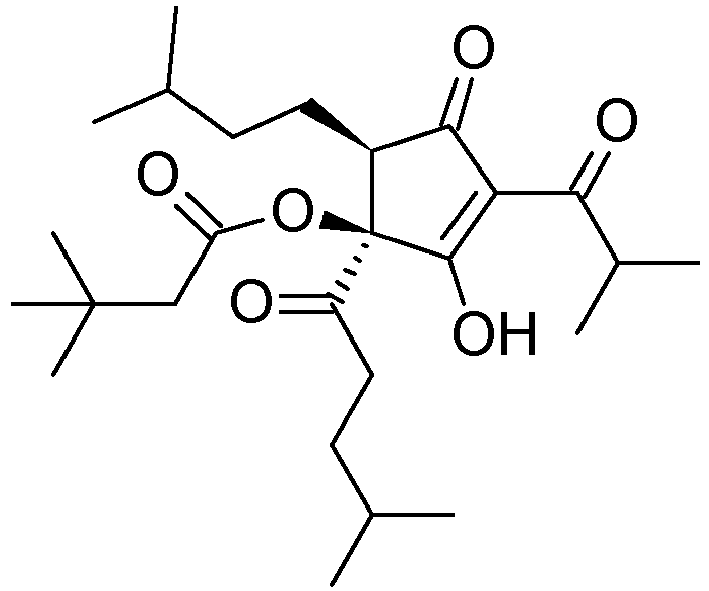

- Preferably the compound is:
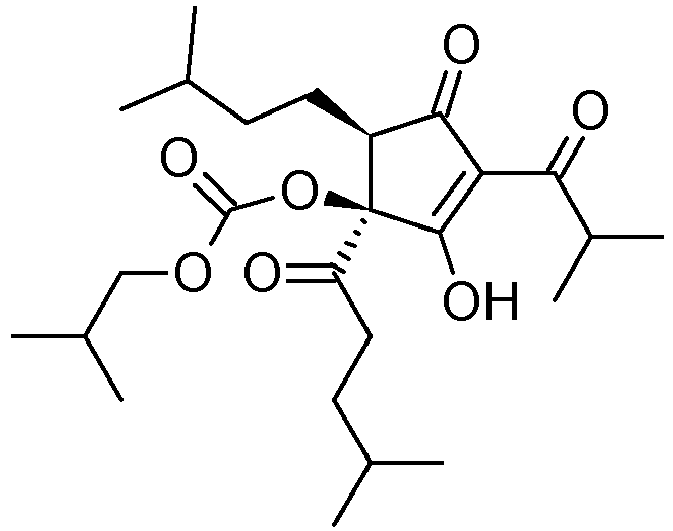

- The invention includes a substantially enantiomerically pure composition comprising a compound or salt as hereinbefore defined.
- The invention also provides a compound or a composition as hereinbefore defined for use in preventing or treating inflammation or a condition associated with inflammation.
- Preferably a compound or composition as hereinbefore defined for the use in preventing or treating diabetes, obesity, hyperinsulinemia, metabolic syndrome, non-alcoholic fatty liver disease, non-alcoholic steatohepatitis, an autoimmune disorder, or a proliferative disorder.
- As disclosed herein, THIAA derivatives have been synthesized and analyzed for their ability to treat inflammatory conditions and diabetes. These derivatives are summarized in Table 1. Described herein are these THIAA
derivatives and salts and crystals thereof, including crystals of the salts. Also described herein are compositions comprising these derivatives and salts and crystals thereof, including substantially enantiomerically pure compositions.Table 1: THIAA derivatives: Compound name MW Structure Chemical name (+)-KDT500 366 
(+)-(4S,5R)-3,4-dihydroxy-2-(3-methylbutanoyl)-5-(3-methylbutyl)-4-(4-methylpentanoyl)cyclopent-2-en-1-one (not of the invention) (+)-KDT501 404 
Potassium salt of (+)-KDT500 (not of the invention) (+)-KDT100 (Example 16) 342 
(4S,5R)-3,4-dihydroxy-5-(3-methylbutyl)-4-(4-methylpentanoyl)-2-(2-methylpropanoyl)cyclopent-2-en-1-one (not of the invention) (+)-KDT700 (Example 18) 366 
(4S,5S)-3,4-dihydroxy-2-(3-methylbutanoyl)-5-(3-methylbutyl)-4-(4-methylpentanoyl)cyclopent-2-en-1-one (not of the invention) KDT0005 (Example 13) 397 
(4R,5R)-3,4-dihydroxy-4-(1-hydroxy-4-methylpentyl)-2-(N-methoxy-3-methylbutanimidoyl)-5-(3-methylbutyl)cyclopent-2-en-1-one (not of the invention) KDT0017 (Example 10) 409 
(4R,5R)-4-hydroxy-2-{1-[(2-hydroxyethyl)amino]-3-methylbutylidene}-5-(3-methylbutyl)-4-(4-methylpentanoyl)cyclopentane-1,3-dione (not of the invention) KDT0020 (Example 9) 379 
(4R,5R)-4-hydroxy-5-(3-methylbutyl)-2-[3-methyl-1-(methylamino)butylidene]-4-(4-methylpentanoyl)cyclopentane-1,3-dione (not of the invention) KDT0024 (Example 11) 455 
(4R,5R)-2-[1-(benzylamino)-3-methylbutylidene]-4-hydroxy-5-(3-methylbutyl)-4-(4-methylpentanoyl)cyclopentane-1,3-dione (not of the invention) KDT0033 (Example 3) 450 
(1S,5R)-2-hydroxy-3-(3-methylbutanoyl)-5-(3-methylbutyl)-1-(4-methylpentanoyl)-4-oxocyclopent-2-en-1-yl 2,2-dimethylpropanoate KDT0034 (Example 2) 464 
(1S,5R)-2-hydroxy-3-(3-methylbutanoyl)-5-(3-methylbutyl)-1-(4-methylpentanoyl)-4-oxocyclopent-2-en-1-yl 3,3-dimethylbutanoate KDT0035 (Example 4) 462 
but-3-yn-1-yl (1S,5R)-2-hydroxy-3-(3-methylbutanoyl)-5-(3-methylbutyl)-1-(4-methylpentanoyl)-4-oxocyclopent-2-en-l-yl carbonate KDT0036 (Example 1) 506 
(1S,5R)-2-hydroxy-5-(3-methylbutyl)-1-(4-methylpentanoyl)-3-(2-methylpropanoyl)-4-oxocyclopent-2-en-1-yl decanoate KDT0037 (Example 5) 452 
(1S,5R)-2-hydroxy-5-(3-methylbutyl)-1-(4-methylpentanoyl)-3-(2-methylpropanoyl)-4-oxocyclopent-2-en-1-yl 2-methylpropyl carbonate KDT0038 (Example 14) 396 
5-[(1S,5R)-1,2-dihydroxy-3-(3-methylbutanoyl)-5-(3-methylbutyl)-4-oxocyclopent-2-en-1-yl]-2-methyl-5-oxopentanoic acid (not of the invention) KDT0039 368 
(4R,5R)-3,4-dihydroxy-4-(1-hydroxy-4-methylpentyl)-2-(3-methylbutanoyl)-5-(3-methylbutyl)cyclopent-2-en-1-one (not of the invention) KDT0040 (Example 15) 378 
(4S,5R)-3,4-dihydroxy-4-[(2E)-4-hydroxy-4-methylpent-2-enoyl]-2-(3-methylbutanoyl)-5-(3-methylbut-2-en-1-yl)cyclopent-2-en-1-one (not of the invention) KDT0001/2 (Example 12) 424 
(4R,5R)-3,4-dihydroxy-2-(N-methoxy-3-methylbutanimidoyl)-4-(N-methoxy-4-methylpentanimidoyl)-5-(3-methylbutyl)cyclopent-2-en-1-one (not of the invention) KDT0041 (Example 6) 449 
(1S,5R)-2-hydroxy-5-(3-methylbutyl)-1-(4-methylpentanoyl)-3-(2-methylpropanoyl)-4-oxocyclopent-2-en-1-yl 3,3-dimethylbutanoate KDT0042 (Example 7) 455 
(1S,5R)-2-hydroxy-5-(3-methylbutyl)-1-(4-methylpentanoyl)-3-(2-methylpropanoyl)-4-oxocyclopent-2-en-1-yl benzoate KDT0043 (Example 8) 553 
(1R,2S)-3-hydroxy-4-(3-methylbutanoyl)-2-(3-methylbutyl)-1-(4-methylpentanoyl)-5-oxocyclopent-3-en-1-yl 2-[4-(2-methylpropyl)phenyl]propanoate (+)-KDT400 (Example 20) 366 
(4S,5R)-3,4-dihydroxy-2-[(2S)-2-methylbutanoyl]-5-(3-methylbutyl)-4-(4-methylpentanoyl)cyclopent-2-en-1-one (not of the invention) - The THIAA derivatives disclosed herein were synthesized by modifying cis THIAA via acylation, enamine, oxime, and reduction protocols. cis THIAA has the structure set forth in Formula IV:

- Described herein is an acylation protocol for generating THIAA derivatives having the general structure set forth in Formula V (ester) and Formula VI (carbonate), as well as compounds generated by this protocol.


- The acylation protocol provided described reacting the parent THIAA compound (tertiary alcohol with various R1 groups) with acyl chlorides or anhydrides to obtain esters (R2), or with alkyl chloroformates to obtain carbonates (R3). This protocol allows for synthesis of THIAA derivatives with different R1, R2, and R3 groups.
R1 may be selected from isopropyl, isobutyl, and sec-butyl.
R2 may be selected from any alkyl or aryl, including substituted or branched alkyls and aryls.
R3 may be selected from any alkyl other than a tertiary alkyl. - As set forth in Examples 1-8 below, the compounds KDT0033, KDT0034, KDT0035, KDT0036, KDT0037, KDT0041, KDT0042, and KDT0043 were synthesized via an acylation protocol as provided herein. Tetrahydro isohumulone (n- or co-) was dissolved in suitable solvent (dichloromethane or chloroform), followed by addition of an excess of pyridine (5 eq.) and then an excess of acyl chloride or anhydride (3 eq.) was added. The reaction was kept at room temperature and monitored by HPLC. Once the starting material was consumed (typically 30-60 minutes for chloride, 12-24 hours for anhydrides), methanol was added to quench the excess of acyl chloride and remove a possible second acyl group from the enolized triketone. After at least an hour, the reaction mixture was evaporated and the residue was dissolved in tBuOMe, washed with 1 N HCl (2x) and brine (1x), dried over sodium sulfate, filtered, and evaporated. The residue was purified by either HPLC (C18 reverse phase, 40% acetonitrile, water, 0.05% TFA) or countercurrent chromatography (CCC) to obtain the ester (KDT0033, KDT0034, KDT0036, KDT0041, KDT0042, KDT0043). The same procedure is performed with alkyl chloroformates to obtain the carbonates (KDT0035, KDT0037).
- Described herein in certain embodiments is an enamine protocol for generating THIAA derivatives having the general structure set forth in Formula VII, as well as compounds generated by this protocol.
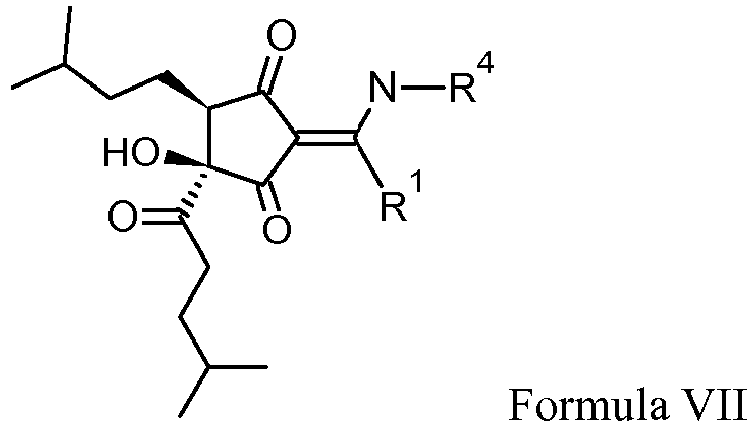
- The enamine protocol described comprises reacting the parent THIAA compound (tertiary alcohol with various R1 groups) with primary amines. This protocol allows for synthesis of THIAA derivatives with different R4 groups.
R1 may be selected from isopropyl, isobutyl, and sec-butyl. R4 may be selected from any alkyl or aryl, including substituted or branched alkyls and aryls. - As set forth in Examples 9-11 below, the compounds KDT0017, KDT0020, and KDT0024 were synthesized via an enamine protocol as provided herein. Cis tetrahydro isohumulone (n- or co-) was dissolved in a suitable solvent (methanol or ethanol) and an excess of primary amine (5 eq.) was added. The reaction was kept at room temperature to 50°C and monitored by HPLC. Once starting material was no longer present (typically 1 to 12 hours), the solvent was evaporated. In the case of volatile amines, the product could be used without further purification. In the case of non-volatile amines, the crude product was dissolved in tBuOMe, washed with 1 N HCl (2x) and brine (1x), dried over sodium sulfate, filtered, and evaporated. The residue was purified by HPLC (C18 reverse phase, 40% acetonitrile, water, 0.05% TFA).
- Described herein in certain embodiments is an oxime protocol for generating THIAA derivatives having the general structure set forth in Formulas VIII and IX, as well as compounds generated by this protocol.


- The oxime protocol described comprises reacting the parent THIAA compound (tertiary alcohol with various R1 groups) with various O-alkylated hydroxylamines. This protocol allows for synthesis of THIAA derivatives with different R5 groups.
R1 may be selected from isopropyl, isobutyl, and sec-butyl.
R5 may be selected from any alkyl or aryl, including substituted or branched alkyls and aryls. - As set forth in Examples 12 and 13 below, the compounds KDT0001/2 and KDT0005 were synthesized via an oxime protocol as provided herein. Tetrahydro isohumulone (n- or co-) was dissolved in a suitable solvent (methanol or ethanol) and a slight excess of O-alkyl hydroxylamine hydrochloride was added, followed by 1 equivalent of NaOH (1 M aq. solution). The reaction was kept at room temperature and followed by HPLC. Once starting material was no longer present (typically 1 hour), the solvent was evaporated and the residue partitioned between water and tBuOMe. The organic layer was washed with 1 N HCl (2x) and brine (1x), dried over sodium sulfate, filtered, and evaporated. If necessary, this residue may be purified by HPLC (C18 reverse phase, 40% acetonitrile, water, 0.05% TFA).
- Described herein is a selenium oxide protocol for generating THIAA derivatives, as well as compounds generated by this protocol. The selenium oxide protocol described comprises reacting the parent THIAA compound with selenium dioxide.
- As set forth in Example 15, the compound KDT0040 was synthesized via a selenium oxide protocol as provided herein. Cis isohumulone dissolved in methanol was converted to a magnesium salt, followed by addition of selenium dioxide and heating. After reaction completion, the mixture was filtered and the filtrate was evaporated, after which the residual oil was purified by simple partitioning. The aqueous phase was then evaporated to produce the final product.
- As set forth in Examples 25 and 26, the THIAA derivatives set forth above were evaluated for their effect on inflammation and PPARγ activity, and certain of the derivatives were found to demonstrate anti-inflammatory and anti-diabetic properties. As shown in Example 25, certain of the derivatives were found to inhibit production of various inflammatory mediators, including PGE2, NO, MMP-9, IL-1β, MCP-1, RANTES, and MIP-1α. Based on these results, methods are described herein for inhibiting inflammation, decreased inflammatory marker levels, and treating conditions associated with inflammation such as diabetes. As shown in Example 26, certain of the derivatives were found to increase PPARγ activity, with some compounds selectively increasing PPARγ activity and others also exhibiting the ability to increase PPARα activity. Based on these results, methods are described herein for increasing PPARγ activity either selectively or in combination with PPARα activity and for treating conditions responsive to PPARγ modulation such as type II diabetes, obesity, hyperinsulinemia, metabolic syndrome, non alcoholic fatty liver disease, non alcoholic steatohepatitis, an autoimmune disorder, or a proliferative disorder.
- The term "salt" as used herein may refer to any pharmaceutically acceptable salt, including for example inorganic base salts such as potassium, aluminum, calcium, copper, guanidinium, iron, lithium, magnesium, sodium, and zinc salts and organic base salts such as cinchonidine, cinchonine, and diethanolamine salts. Additional examples of pharmaceutically acceptable salts and preparations in accordance with the present invention can be found in, for example, Berge J Pharm Sci 66:1 (1977).
- Described herein are compositions comprising one or more of the THIAA derivatives described herein. The compositions may be are substantially enantiomerically pure. The term "substantially enantiomerically pure" as used herein refers to a composition in which 90% or more of a particular compound in the composition is in a first enantiomeric form, while 10% or less is in a second enantiomeric form. The "first emantiomeric form" of a compound may include salts and crystals of that enantiomeric form. A substantially
enantiomerically composition may contain 91%, 92%, 93%, 94%, 95%, 96%, 97%, 98%, 99%, 99.5%, 99.9%, 99.95%, or 99.99% or greater of a first enantiomeric form of a compound. - Described herein are pharmaceutical compositions comprising one or more of the THIAA derivatives described herein and one or more pharmaceutically acceptable carriers. The pharmaceutical compositions are substantially enantiomerically pure. A "pharmaceutically acceptable carrier" as used herein refers to a pharmaceutically acceptable material, composition, or vehicle that is involved in carrying or transporting a compound of interest from one tissue, organ, or portion of the body to another tissue, organ, or portion of the body. Such a carrier may comprise, for example, a liquid or solid filler, diluent, excipient, solvent, encapsulating material, stabilizing agent, or some combination thereof. Each component of the carrier must be "pharmaceutically acceptable" in that it must be compatible with the other ingredients of the composition and must be suitable for contact with any tissue, organ, or portion of the body that it may encounter, meaning that it must not carry a risk of toxicity, irritation, allergic response, immunogenicity, or any other complication that excessively outweighs its therapeutic benefits.
- Examples of pharmaceutically acceptable carriers for use in the compositions described herein include, but are not limited to, (1) sugars, such as lactose, glucose, sucrose, or mannitol; (2) starches, such as corn starch and potato starch; (3) cellulose and its derivatives, such as sodium carboxymethyl cellulose, ethyl cellulose and cellulose acetate; (4) powdered tragacanth; (5) malt; (6) gelatin; (7) talc; (8) excipients, such as cocoa butter and suppository waxes; (9) oils, such as peanut oil, cottonseed oil, safflower oil, sesame oil, olive oil, corn oil and soybean oil; (10) glycols, such as propylene glycol; (11) polyols, such as glycerin, sorbitol, mannitol and polyethylene glycol; (12) esters, such as ethyl oleate and ethyl laurate; (13) disintegrating agents such as agar or calcium carbonate; (14) buffering agents, such as magnesium hydroxide and aluminum hydroxide; (15) alginic acid; (16) pyrogen-free water; (17) isotonic saline; (18) Ringer's solution; (19) alcohol, such as ethyl alcohol and propane alcohol; (20) phosphate buffer solutions; (21) paraffin; (22) lubricants, such as talc, calcium stearate, magnesium stearate, solid polyethylene glycol, or sodium lauryl sulfate; (23) coloring agents; (24) glidants such as colloidal silicon dioxide, talc, and starch or tri-basic calcium phosphate.; and (24) other non-toxic compatible substances employed in pharmaceutical compositions such as acetone. The
pharmaceutically acceptable carrier used herein may be an aqueous carrier, e.g. buffered saline and the like. The pharmaceutically acceptable carrier may be a polar solvent, e.g., acetone and alcohol. - Pharmaceutical compositions as disclosed herein may further comprise one or more pharmaceutically acceptable auxiliary substances as required to approximate physiological conditions. For example, compositions may comprise one or more pH adjusting agents, buffering agents, or toxicity adjusting agents, including for example sodium acetate, sodium chloride, potassium chloride, calcium chloride, sodium lactate.
- Pharmaceutical compositions as disclosed herein may be formulated into a suitable dosage form, including for example capsules, cachets, pills, tablets, lozenges (using a flavored basis, usually sucrose and acacia or tragacanth), powders, granules, as a solution or a suspension in an aqueous or non-aqueous liquid, as an oil-in-water or water-in-oil liquid emulsion, as an elixir or syrup, or as pastilles (using an inert base, such as gelatin and glycerin, or sucrose and acacia) and/or as mouth washes and the like, each containing a predetermined amount of a THIAA derivative as an active ingredient.
- Compositions may be formulated as a time release delivery vehicle, such as for example a time release capsule. A "time release vehicle" as used herein refers to any delivery vehicle that releases active agent over a period of time rather than immediately upon administration. Compositions may be formulated as an immediate release delivery vehicle.
- A tablet may be made by compression or molding, optionally with one or more accessory ingredients. Compressed tablets may be prepared using binder (for example, gelatin or hydroxypropylmethyl cellulose), lubricant, inert diluent, preservative, disintegrant (for example, sodium starch glycolate or cross-linked sodium carboxymethyl cellulose), surface-active or dispersing agent. Molded tablets may be made by molding in a suitable machine a substantially enantiomerically pure mixture of the powdered THIAA derivative or further moistened with an inert liquid diluent. Tablets, and other solid dosage forms, such as dragees, capsules, pills and granules, may optionally be scored or prepared with coatings and shells, such as enteric coatings and other coatings well known in the pharmaceutical-formulating art. They may also be formulated so as to provide slow or controlled release of a THIAA derivative therein using, for example, hydroxypropylmethyl cellulose in varying proportions to provide the desired release profile, other polymer matrices, liposomes and/or microspheres. They may be sterilized by, for example, filtration through a bacteria-retaining filter, or by incorporating sterilizing agents in the form of sterile solid compositions which can be dissolved in sterile water, or some other sterile injectable medium immediately before use. These compositions may also optionally contain pacifying agents and may be of a composition that they release the THIAA derivative(s) only, or preferentially, in a certain portion of the gastrointestinal tract, optionally, in a delayed manner. Examples of embedding compositions which can be used include polymeric substances and waxes. The THIAA derivative can also be in micro-encapsulated form, if appropriate, with one or more of the above-described excipients.
- The concentration of THIAA derivatives in the compositions disclosed herein may vary. Concentrations may be selected based on fluid volumes, viscosities, body weight, and the like in accordance with the particular mode of administration selected and the biological system's needs. The concentration of a THIAA derivative in a composition provided herein may be from about 0.0001% to 100%, from about 0.001% to about 50%, from about 0.01% to about 30%, from about 0.1% to about 20%, or from about 1% to about 10% wt/vol.
- The synthesis methods provided herein may generate a single enantiomer of a THIAA derivative. The synthesis methods may result in a mixture of enantiomeric forms of THIAA derivatives. One or more subsequent separation and/or purification steps may be performed to isolate a single enantiomeric form or to generate a substantially enantiomerically pure composition as disclosed herein.
- In certain methods disclosed herein, the subject is a mammal, and in certain of these the subject is a human. A "subject in need thereof" refers to a subject diagnosed with a condition associated with inflammation or a condition responsive to PPARγ modulation, a subject who exhibits or has exhibited one or more symptoms of a condition associated with inflammation or a condition responsive to PPARγ modulation, or a subject who has been deemed at risk of developing a condition associated with inflammation or a condition responsive to PPARγ modulation based on one or more hereditary or environmental factors.
- The terms "treat," "treating," or "treatment" as used herein with regards to a condition refers to preventing the condition, slowing the onset or rate of development of the condition, reducing the risk of developing the condition, preventing or delaying the development of symptoms associated with the condition, reducing or ending symptoms associated with the condition, generating a complete or partial regression of the condition, or some combination thereof.
- A "therapeutically effective amount" of a THIAA derivative or pharmaceutical composition as used herein is an amount of a composition that produces a desired therapeutic effect in a subject. The precise therapeutically effective amount is an amount of the compound or composition that will yield the most effective results in terms of therapeutic efficacy in a given subject. This amount will vary depending upon a variety of factors, including but not limited to the characteristics of the therapeutic compound (including, e.g., activity, pharmacokinetics, pharmacodynamics, and bioavailability), the physiological condition of the subject (including, e.g., age, sex, disease type and stage, general physical condition, responsiveness to a given dosage, and type of medication), the nature of the pharmaceutically acceptable carrier or carriers in the composition, and the route of administration. One skilled in the clinical and pharmacological arts will be able to determine a therapeutically effective amount through routine experimentation, namely by monitoring a subject's response to administration of a compound and adjusting the dosage accordingly. For additional guidance, see Remington: The Science and Practice of Pharmacy 21st Edition, Univ. of Sciences in Philadelphia (USIP), Lippincott Williams & Wilkins, Philadelphia, PA, 2005, the entire disclosure of which is incorporated by reference herein.
- A compound or composition as disclosed herein may be
administered one or more times a day. The compound or composition may be delivered less than once a day. For example, the compound or composition may be administered once a week, once a month, or once every several months. Administration of a compound or composition disclosed herein may be carried out over a specific treatment period determined in advance, or it may be carried out indefinitely or until a specific therapeutic benchmark is reached. Dosing frequency may change over the course of treatment. For example, a subject may receive less frequent administrations over the course of treatment as certain therapeutic benchmarks are met. - The compounds and compositions disclosed herein may be delivered to a subject by any administration pathway known in the art, including but not limited to oral, aerosol, enteral, nasal, ophthalmic, parenteral, or transdermal (e.g., topical cream or ointment, patch). "Parenteral" refers to a route of administration that is generally associated with injection, including infraorbital, infusion, intraarterial, intracapsular, intracardiac, intradermal, intramuscular, intraperitoneal, intrapulmonary, intraspinal, intrasternal, intrathecal, intrauterine, intravenous, subarachnoid, subcapsular, subcutaneous, transmucosal, or transtracheal. Methods for preparing parenterally administrable compositions will be known or apparent to those skilled in the art and are described in more detail in such publications as Remington: The Science and Practice of Pharmacy 21st ed., Mack Publishing Company, Easton, Pa. (2005). A composition may also be administered as a bolus, electuary, or paste.
- Kits may be provided that comprise one or more of the THIAA derivatives, pharmaceutical formulations, or substantially enantiomerically pure compositions disclosed herein. The kit may provide instructions for usage, such as dosage or administration instructions. The kits may be used to treat a condition associated with inflammation or a condition responsive to PPARγ modulation.
- Cis tetrahydro isocohumulone (38 mg) was dissolved in chloroform (1 mL) and pyridine was added (75 µL, 11 eq.), followed immediately by acetic anhydride (120 µL, 9 eq). The mixture was kept at room temperature overnight, quenched with MeOH (1 mL), and left overnight again. The reaction mixture was then evaporated, and the residue was dissolved in tBuOMe, washed with 1 N HCl (2x) and brine (1x), dried over sodium sulfate, filtered, and evaporated to an oil. The crude product was purified by HPLC. Pure fractions were combined and evaporated to give a pure product as a colorless oil (11.6 mg, ∼21% yield). MS 505.5 [M-H]-, UVmax (aq. MeOH, 50 mM ammonium acetate buffer, pH=9.5) 259 nm.

- Cis tetrahydro isohumulone (51 mg) was dissolved in chloroform (1 mL) and pyridine was added (60 µL, 5.3 eq), followed immediately by dimethylpropionlyl chloride (60 µL, 3.1 eq). The mixture was kept at room temperature for 3 hours, quenched with MeOH (1 mL), and left standing at room temperature overnight. The reaction mixture was then evaporated, and the residue was dissolved in tBuOMe, washed with 1 N HCl (2x) and brine (1x), dried over sodium sulfate, filtered, and evaporated to obtain 58 mg of an oil. The crude product was purified by HPLC. Pure fractions were combined and evaporated to give a pure product as a colorless oil (22.0 mg, ∼34% yield). MS 463.7 [M-H]-, UVmax (aq. MeOH, 50 mM ammonium acetate buffer, pH=9.5) 259 nm.

- Cis tetrahydro isohumulone (51.5 mg) was dissolved in chloroform (1 mL) and pyridine was added (60 µL, 5.3 eq) followed immediately by pivaloyl chloride (60 µL, 3.5 eq). The mixture was kept at room temperature for 90 minutes, quenched with MeOH (1 mL), and left standing at room temperature overnight. The reaction mixture was then evaporated, and the residue was dissolved in tBuOMe, washed with 1 N HCl (2x) and brine (1x), dried over sodium sulfate, filtered, and evaporated to obtain 58 mg of an oil. The crude product was purified by HPLC. Pure fractions were combined and evaporated to give pure product as a colorless oil (23.0 mg, ∼36% yield). MS 449.5 [M-H]-, UVmax (aq. MeOH, 50 mM ammonium acetate buffer, pH=9.5) 259 nm.

- Cis tetrahydro isohumulone (60.4 mg) was dissolved in chloroform (1 mL) and pyridine was added (50 µL, 3.7 eq) followed by butinyl chloroformate (55 µL, 2.9 eq). The mixture was kept at room temperature for 3 hours, quenched with MeOH (1 mL), and left standing at room temperature for 1 hour. The reaction mixture was then evaporated, and the crude product was purified by HPLC. Pure fractions were combined and evaporated to give pure product as a colorless oil (29.7 mg, ∼39% yield). MS 461 [M-H]-, UVmax (aq. MeOH, 50 mM ammonium acetate buffer, pH=9.5) 259 nm.

- Cis tetrahydro isocohumulone (55.2 mg) was dissolved in dichloromethane (1 mL) and pyridine was added (50 µL, 4.0 eq) followed by isobutyl chloroformate (60 µL, 2.9 eq). The mixture was kept at room temperature for 1 hour, quenched with MeOH (1 mL), and left standing at room temperature for 1 hour. The reaction mixture was then evaporated, and the crude product was purified by HPLC. Pure fractions were combined and evaporated to give pure product as a colorless oil (10.3 mg, ∼15% yield). MS 451 [M-H]-, UVmax (aq. MeOH, 50 mM ammonium acetate buffer, pH=9.5) 259 nm.

- Cis tetrahydro isocohumulone (55.1 mg) was dissolved in chloroform (1 mL) and pyridine was added (60 µL, 4.8 eq) followed immediately by dimethylpropionlyl chloride (60 µL, 2.8 eq). The mixture was kept at room temperature for 1 hour, quenched with MeOH (1 mL), and left standing at room temperature overnight. The reaction mixture was then evaporated to an oil and the crude product was purified by HPLC. Pure fractions were combined and evaporated to give pure product as a colorless oil (30.5 mg, ∼43% yield). MS 449.4 [M-H]-, UVmax (aq. MeOH, 50 mM ammonium acetate buffer, pH=9.5) 258 nm, 1H NMR (600 MHz, METHANOL-d 4) δ ppm 0.82 - 0.90 (dd, 12 H) 1.05 (s, 3 H) 1.10 (s, 9 H) 1.12 (s, 3 H) 1.26 - 1.44 (m, 5 H) 1.44 - 1.50 (m, 4 H) 2.57 (dt, J=18.41, 7.33 Hz, 1 H) 2.82 (dt, J=7.50, 18.08 Hz, 1 H) 3.54 (t, J=6.62 Hz, 1 H).
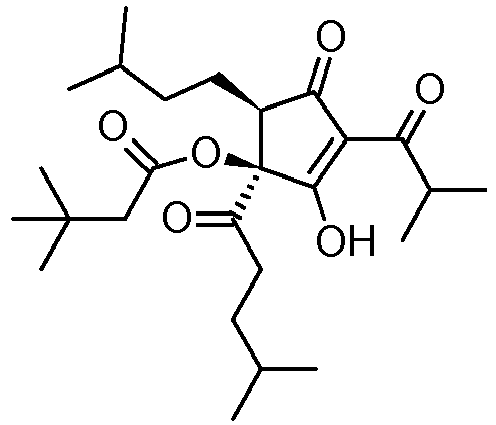
- Cis tetrahydro isocohumulone (56.2 mg) was dissolved in chloroform (1 mL) and pyridine was added (60 µL, 4.7 eq) followed immediately by benzoyl chloride (30 µL, 1.6 eq). The mixture was kept at room temperature for 1 hour, quenched with MeOH (1 mL), and left standing at room temperature overnight. The reaction mixture was then evaporated to an oil and the crude product was purified by HPLC. Pure fractions were combined and evaporated to give pure product as a colorless oil (14.9 mg, ∼20% yield). MS 455.4 [M-H]-, UVmax (aq. MeOH, 50 mM ammonium acetate buffer, pH=9.5) 234 nm, 1H NMR (600 MHz, METHANOL-d 4) δ ppm 0.62 (dd, J=9.26, 6.62 Hz, 6 H) 0.74 - 0.78 (m, 6 H) 1.02 (d, J=7.06 Hz, 3 H) 1.08 - 1.12 (m, 3 H) 1.13 - 1.30 (m, 3 H) 1.30 - 1.42 (m, 3 H) 1.43 - 1.58 (m, 2 H) 2.47 - 2.56 (m, 1 H) 2.79 (ddd, J=18.08, 8.16, 6.39 Hz, 1 H) 3.43 (dt, J=13.67, 6.84 Hz, 1 H) 3.64 (t, J=6.17 Hz, 1 H) 7.46 - 7.55 (m, 2 H) 7.62 - 7.68 (m, 1 H) 8.01 - 8.11 (m, 2 H).
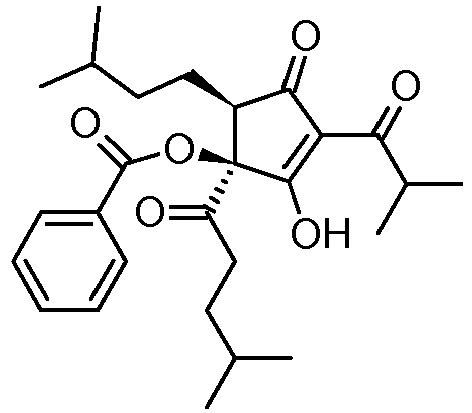
- Cis tetrahydro isohumulone (52 mg) was dissolved in dichloromethane (2 mL) and ibuprofen chloride (69 mg, 2.2 eq) was added, followed immediately by pyridine (60 µL, 5 eq.). The mixture was kept at room temperature for 3 hours, quenched with MeOH (1 mL), and left overnight. The reaction mixture was then evaporated, and the residue was dissolved in tBuOMe, washed with 1 N HCl (2x) and brine (1x), dried over sodium sulfate, filtered, and evaporated to obtain 124 mg of oil. This crude product was purified by CCC in Hexane/DMF in descending mode. Pure fractions were combined and evaporated to obtain pure product as a colorless oil (30 mg, ∼38% yield). MS 553.4 [M-H]-.
- In an alternative procedure, cis tetrahydro isohumulone (52 mg) was dissolved in dichloromethane (2 ml) and ibuprofen chloride (36 mg, 1.1 eq.) was added, followed immediately by pyridine (30 µL, 2.6 eq.). The mixture was kept at room temperature for 75 minutes, quenched with water (100 µL), and stirred for 1 hour. The reaction mixture was then evaporated, and the residue was dissolved in tBuOMe and washed with water (1x), sat. aq. sodium bicarbonate (1x), 1 N HCl (3x), and brine (1x), dried over sodium sulfate, filtered, and evaporated to obtain 73.1 mg (93% yield) of the product.

- Cis tetrahydro isohumulone (8.1 mg) was dissolved in methanol (100 µL) and methylamine (50 µL, 33 % solution in ethanol, 18 eq) was added. The mixture was kept at room temperature for 1 hour and evaporated to obtain a white solid (8.0 mg, ∼95% yield). MS 378.3 [M-H]-, UVmax (aq. MeOH, 50 mM ammonium acetate buffer, pH=9.5) 248, 303 nm.

- Cis tetrahydro isohumulone (48.0 mg) was dissolved in methanol (200 µL) and ethanolamine (100 µL, 12.7 eq.) was added. The mixture was stirred at 40°C for 15 hours, evaporated, and purified by HPLC to obtain a white solid (31.3 mg, ∼58% yield). MS 408.5 [M-H]-, UVmax (aq. MeOH, 50 mM ammonium acetate buffer, pH=9.5) 247, 303 nm.

- Cis tetrahydro isohumulone (25.9 mg) was dissolved in methanol (75 µL) and benzylamine (35 µL, 4.5 eq.) was added. The mixture was stirred at room temperature for 2 hours, evaporated, and purified by HPLC to give a white solid (20.3 mg, ∼63% yield). MS 454.5 [M-H]-, UVmax (aq. MeOH, 50 mM ammonium acetate buffer, pH=9.5) 247, 307 nm.

- Cis tetrahydro isohumulone potassium salt (96.8 mg) was dissolved in methanol (3 mL) and O-Me-hydroxylamine. HCl (50.5 mg, 2.3 eq) was added, followed by NaOH (280 µL of 1 M aq. solution, 1.06 eq). The mixture was kept at room temperature for 16 hours, the methanol was evaporated, and the residue partitioned between water and tBuOMe. The organic layer was washed with 1 N HCl (2x) and brine (1x), dried over sodium sulfate, filtered, and evaporated to obtain a white solid (107.2 mg, ∼96% yield). MS 423.5 [M-H]-, UVmax (aq. MeOH, 50 mM ammonium acetate buffer, pH=9.5) 271 nm.

- Cis hexahydro isohumulone (23.0 mg) was dissolved in methanol (2 mL) and O-Me-hydroxylamine. HCl (11 mg, 2.1 eq) was added followed by NaOH (80 µL of 1 M aq. solution, 1.3 eq.). The mixture was kept at room temperature for 2 hours, the methanol was evaporated, and the residue was partitioned between water and tBuOMe. The organic layer was washed with 1 N HCl (2x) and brine (1x), dried over sodium sulfate, filtered, and evaporated to obtain a white solid (21.2 mg, ∼85% yield). MS 396.1 [M-H]-, UVmax (aq. MeOH, 50 mM ammonium acetate buffer, pH=9.5) 269 nm.

- Urine (750 mL) from a patient dosed with 1.2 g of THIAA/day (1/2 of 24 hour collection) was acidified with 50 mL of 1 N HCl, mixed with dichloromethane (100 mL), and the precipitate removed by filtration. The residue was partitioned and the aqueous layer was extracted 2 additional times with 100 mL of dichloromethane. The combined dichloromethane extracts were filtered through celite and the filtrate was washed with brine (1x 100 mL), dried over sodium sulfate, filtered and evaporated to obtain 168 mg of a yellow oil. The oil was purified by semi-preparative HPLC (100 mM ammonium acetate pH 9.5, 40 % MeOH, 4.6x250 GeminiNX column) to obtain a white solid. MS 395.4 [M-H]-, UVmax (aq. MeOH, 50 mM ammonium acetate buffer, pH 9.5) 255 nm. 1H NMR (500 MHz, METHANOL-d 4) δ ppm 0.86 - 0.94 (m, 4 H) 0.94 - 1.04 (m, 6 H) 1.09 - 1.15 (m, 1 H) 1.15 - 1.23 (m, 3 H) 1.24 - 1.36 (m, 3 H) 1.48 - 1.60 (m, 1 H) 1.60 - 1.78 (m, 3 H) 1.80 - 1.92 (m, 1 H) 2.08 - 2.21 (m, 1 H) 2.43 (dq, J=14.12, 7.21 Hz, 1 H) 2.68 - 2.81 (m, 2 H) 2.81 - 2.90 (m, 2 H) 3.08 (t, J=6.51 Hz, 1 H).

- Magnesium oxide (11 mg, 1.1 eq.) was added to cis isohumulone (95.0 mg) in methanol and mixed briefly to form the salt. Selenium dioxide (76 mg, 2.9 eq.) was then added and the reaction mixture was heated at 65°C for 80 minutes, at which point the reaction had reached completion. The reaction mixture was filtered through celite and the filtrate was evaporated. The residual oil was purified by simple partitioning in HEMWat 1111 (Hexane-Ethyl acetate-Methanol-Water, 1:1:1:1 by volume), with the product in aqueous phase and the remaining starting material and impurities in the organic phase. The aqueous phase was evaporated to obtain a white solid. MS 377.1 [M-H]-, UVmax (aq. MeOH, 50 mM ammonium acetate buffer, pH=9.5) 245 nm. 1H NMR (500 MHz, METHANOL-d 4) δ ppm 0.98 (m, 6 H) 1.35 (s, 6 H) 1.62 (s, 3 H) 1.66 (s, 3 H) 2.15 (m, 1 H) 2.35 - 2.57 (m, 2 H) 2.66 - 2.84 (m, 2 H) 3.19 (t, J=5.7, 1 H) 3.89 (s, 1 H) 5.14 (t, J=6.7 Hz, 1 H) 6.89 (d, J=15.6 Hz, 1 H) 7.05 (d, J=15.6 Hz, 1 H).

- The trans iso-α-acids were removed via β-cyclodextrin complexation (Khatib 2010) from 45g of a hops isomerized resin extract. The cis material was further purified via CCC (Dahlberg 2012) in order to isolate cis isocohumulone. Cis isocohumulone was reduced via catalytic hydrogenation and repurified via CCC (Dahlberg 2010) to ≥95% homogeneity.
- Anal. Found: C, 68.09, H, 9.11. C20H32O5 requires C, 68.15, H, 9.15. m.p. 49-50°C (50-52°C), optical rotation +35.3, c=1.0, MeOH (35.6) (Ting 1996).

- One equivalent each of (+)-KDT100 (77.0 mg) and (-)-cinchonidine (51.9 mg, 1.00 eq.) were mixed in iPr-OH (200 µL) and briefly heated to form a solution. tBuOMe (200 µL) was added and the resulting solution was left to crystallize at room temperature. After three days, the in situ formation of crystals was observed in this solution. An individual crystal suitable for X-ray analysis was identified, carefully removed, mounted and submitted for X-ray diffraction analysis.
- Anal. (Calc 2M + tBuOMe, formula corresponding to crystal structure) Found: C, 72.14, H, 8.42, N, 4.09. C83H120N4O13 requires C, 71.90, H8.75, N, 4.05. m.p. 118°C.
- The alpha acids were isolated from a commercially available hops CO2 extract via a differential pH extraction. A 450 mm jacketed borosilicate glass immersion well was wrapped with approximately 17 meters of 2.7 mm inner diameter FEP tubing and was used with a 450W medium pressure mercury immersion lamp to produce a flow photoreactor. The isolated alpha acids (2.1 g) were dissolved in 100 mL of methanol and run through the flow reactor at 5 mL/min for two hours, recycling the effluent until the reaction was complete.
- The resulting free acid mixture of trans iso-alpha-acids was reduced via catalytic hydrogenation and purified via CCC to produce trans tetrahydro isohumulone (Dahlberg 2010) in ≥95% homogeneity.
- Anal. Found: C, 68.05, H, 9.56, N, 5.77. C27H44N2O5 requires C, 68.04, H, 9.30, N, 5.88. m.p. 76°C (78-81°C) (Ting 1996), optical rotation -11.2, c=1.0, MeOH (-12.4) (Ting 1996). 1H NMR (500 MHz, METHANOL-d 4) δ ppm 0.88 - 0.95 (m, 12 H) 0.98 (dd, J=16.30, 6.68, Hz, 6 H) 1.18 - 1.26 (m, 1 H) 1.37 - 1.49 (m, 4 H) 1.50 - 1.60 (m, 2 H) 1.87 - 1.97 (m, 1 H) 2.09 - 2.19 (m, 1 H) 2.68 - 2.75 (m, 1 H) 2.75 - 2.86 (m, 4 H); 13C NMR (126 MHz, METHANOL-d 4) δ ppm 21.26, 21.31, 21.36, 21.37, 21.49, 21.58, 22.19, 26.28, 27.25, 27.93, 31.35, 36.70, 37.04, 44.14, 47.10, 47.27, 47.44, 47.61, 47.79, 47.95, 48.12, 191.45, 196.44, 207.67, 210.23.
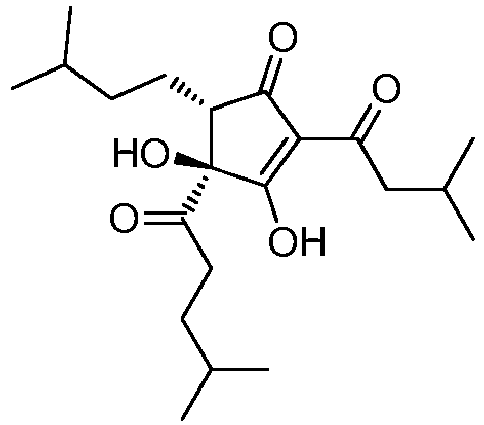
- (-)-KDT700 (54.3 mg) was mixed with cinchonine (43.0 mg, 1 eq) in MeOH and the resulting solution was evaporated. The resulting solid salt was suspended in hexane and chloroform was added until complete dissolution occurred. The solution was left open to allow the solvent to slowly evaporate over several days, at which time crystals formed. An individual crystal suitable for X-ray analysis was identified, carefully removed, mounted and submitted to X-ray diffraction analysis. The remaining crystals were filtered, dried at high vacuum and submitted for elemental analysis.
- Anal. (Calc. as M+0.15CHCl3) Found: C71.26, H, 8.35, N, 4.15. C40.15H56.1Cl0.45N2O6 requires C, 71.04, 8.34, N, 4.13. m.p. 137-139°C.
- The trans iso-α-acids were removed via β-cyclodextrin complexation (Khatib 2010) from 45g of a hops isomerized resin extract. The cis material was further purified via CCC (Dahlberg 2012) in order to isolate cis isoadhumulone, which was then reduced via catalytic hydrogenation and repurified via CCC (Dahlberg 2010) to ≥95% homogeneity.

- One equivalent each of (+)-KDT400 (50.0 mg) and (-)-cinchonidine (39.9 mg, 0.99 eq.) were mixed in iPr-OH (200 µL) in a 4 mL amber-colored vial and briefly heated at 60-70°C to form a solution. Ether (200 µL) was added and the resulting solution was left to form crystals at room temperature. The solution was sealed under a septum, which was then pierced with a Guage16 needle to enable gradual evaporation of solvent. After three days at room temperature, the in situ formation of crystals was observed in this solution. An individual crystal suitable for X-ray analysis was identified, carefully removed, mounted and submitted for X-ray diffraction analysis.
- Anal. (Calc as 2M+0.6 iPrOH+0.4 Et2O, formula corresponding to crystal structure) Found: C, 70.68, H, 8.35, N, 3.98. C83.4H120.8N4O13 requires C70.57, H, 8.58, N, 3.95. m.p. 149°C.
- The trans iso-alpha acids were removed via β-cyclodextrin complexation (Khatib 2010) from 45g of a hops isomerized resin extract. The cis material was further purified via CCC (Dahlberg 2012) in order to isolate cis isohumulone, which was confirmed to ≥95% homogenous following purification.

- One equivalent each of (+)-KDT500 (99.4 mg) and (-)-cinchonidine (80.0 mg, 0.99 eq.) were mixed in iPr-OH (100 µL) and briefly heated to form a solution. tBuOMe (500 µL) was added and the resulting solution was left to form crystals at room temperature. After three days the in situ formation of crystals was observed in this solution. An individual crystal suitable for X-ray analysis was identified, carefully removed, mounted and submitted for X-ray diffraction analysis.
- Anal. (Calc as M+0.3 H2O) Found: C, 72.65, H, 7.80, N, 4.28. C40H52.6O6.3 requires C 72.53, H, 8.02, N, 4.23. m.p. 149°C.
- (-) humulone was isolated from a commercially available hops CO2 extract via a differential pH extraction, followed by CCC purification of the resultant alpha acid fraction to 95% homogeneity. m.p. 66 °C (66°C (Ting 1996)), optical rotation -197.7, c=1.0, MeOH (-212 (Ting 1996)). 1,2-Diamincyclohexane salt: Anal. Found: C 68.05, H 9.56, N, 5.77. C27H44N2O5 requires C, 68.05, H, 9.30, N, 5.88. m.p. 144°C.
- THIAA derivatives synthesized in Examples 1-19 were dissolved in dimethyl sufoxide (DMSO) and stored at -20°C. LPS was purchased from Sigma Chemicals (St. Louis, MO).
- The effect of the THIAA derivatives on LPS-mediated prostaglandin E2 (PGE2) and nitric oxide (NO) production was evaluated in a RAW264.7 murine macrophage model. The RAW 264.7 cell line was purchased from ATCC (Manassas, VA) and maintained according to their instructions. Cells were grown and subcultured in 96-well plates at a density of 8x10⁴ cells per well, and reached 80-90% confluence the next day. THIAA derivatives were added to the cells in serum-free medium at a final concentration of 0.1% DMSO. Following one hour of incubation with the THIAA derivatives, LPS (1 µg/ml) or DMEM medium alone was added to the cells and incubation was continued for 6 hours. Stimulation of RAW 264.7 cells with LPS (1 µg/ml) for 6 hours activated the production of PGE2 and NO. Supernatant media was collected for measurement of PGE2 levels. For NO, incubations were continued overnight. Supernatant media was collected for measurement of NO levels after 16 hours of stimulation. PGE2 levels were measured using assay kits from Assay Designs, (Ann Arbor, MI) and NO levels were measured using assay kits from Cayman Chemicals (Ann Harbor, MI).
- The effect of the THIAA derivatives on LPS-mediated MMP-9, IL-1β, MCP-1, RANTES, and MIP-1α was evaluated in THP-1 cells. Stimulation of THP-1 cells with LPS (1 µg/ml) activated the production of MMP-9, IL-1β, MCP-1, RANTES, and MIP-1α.
- Results are summarized in Table 2, with data represented as % inhibition of inflammatory mediator production.
Table 2: Effect of THIAA derivatives on LPS-mediated inflammatory mediators in RAW264.7 and THP-1 cells: RAW264.7 cells THP-1 cells Test compound (12.5 µM) % inhibition of PGE2 productio n % inhibition of NO productio n % inhibition of IL-6 productio n % inhibition of MCP-1 productio n % inhibition of MIP-1α productio n % inhibition of RANTES productio n Mean inhibitio n KDT501 No inhibition (NI) 23 49 77 62 77 48 KDT100 NI NI <20% 61 NI 22 <20% KDT700 <20% NI <20% 88 36 64 34 KDT0005 NI NI <20% 38 20 25 <20% KDT0017 NI <20% 50 80 NI NI 23 KDT0020 75 <20% 70 82 <20% 35 46 KDT0024 81 27 53 80 NI 20 44 KDT0033 87 68 87 100 95 97 89 KDT0034 87 65 84 100 94 98 88 KDT0035 89 44 65 95 82 84 77 KDT0036 45 97 83 98 25 88 73 KDT0037 82 87 61 98 22 83 72 KDT0038 NI NI NI 46 NI <20% <20% KDT0039 NI <20% 22 50 23 58 26 KDT0040 54 26 NI 53 NI 18 25 KDT0001/2 55 NI 60 74 <20% 45 39 Rosiglitazon e (10 µM) NI 6 NI NI NI 24 <20% - In RAW264.7 cells, many of the test compounds inhibited LPS-mediated PGE2 and NO production to a significant degree (defined as greater than 20%). The efficacy of inhibition varied between test compounds. For example, KDT0033, KDT0034, and KDT0037 inhibited both PGE2 and NO production by more than 50%, while KDT100, KDT700, KDT0005, KDT0017, KDT0038, and KDT0039 showed weak (<20%) or no inhibition of both inflammatory mediators. Rosiglitazone, a positive control agonist for PPARγ, did not inhibit PGE2 production and inhibited NO production very weakly (6%), suggesting that the anti-inflammatory effects of THIAA derivatives are independent of PPARγ activation in the RAW2564.7 cell model.
- In THP-1 cells, all of the KDT test compounds inhibited LPS-induced expression of one or more of MMP-9, IL-1β, MCP-1, RANTES, and MIP-1α at a concentration of 12.5 µM. Again, rosiglitazone showed no inhibition or only weak inhibition of inflammatory mediator production, suggesting that the anti-inflammatory effects of the KDT test molecules are independent of PPARγ activation in the THP-1 cell model.
- Mean inhibition across all six inflammatory mediators was calculated for each of the THIAA derivatives. Many of the test compounds exhibited significant mean inhibition levels, with KDT0033 and KDT0034 exhibiting mean inhibition levels of nearly 90%. Interestingly, THIAA derivatives functionalized at the R2 (i.e., KDT0033, KDT0034, KDT0035, KDT0036, and KDT0037) position appear to have enhanced anti-inflammatory effects in both cell models.
- The functional effect of THIAA derivatives on PPARα and PPARγ activity was evaluated using a PPAR reporter assay (INDIGO Biosciences, PA). This assay utilizes non-human mammalian cells engineered to provide constitutive high level expression of PPARα, or PPARγ and containing a luciferase report gene specific to the appropriate PPAR. Following activation by agonist binding, PPAR induces expression of the luciferase reporter gene. Luciferase activity therefore provides a surrogate for measuring PPAR activity in agonist-treated cells.
- Reporter cells were plated on a 96-well plate at 100 µL per well, and 100 µL of KDT test compounds (50, 25, 12.5, 6.25, 3.13, 1.56 µM) were added to each well in duplicates. For the PPARγ assay, rosiglitazone (1000, 500, 250, 125, 62.5, and 31.25 nM) was used as a positive control. For the PPARα assay, GW590735 (5000, 1670, 560, 185, 62 and 21 nM) was used as a positive control. 0.1% DMSO was used as a solvent control for each assay. Plates were incubated for 20 hours in a humidified incubator at 37°C and 5% CO2. After incubation, the cell medium was discarded and the cells were treated with 100 µL of luciferase detection reagent for 15 minutes. Plates were analyzed using a luminometer (Victor2, Perkin Elmer). Average relative light unit (RLU) and standard deviation were measured.
- Results are summarized in Table 3, with data reported as % level of PPARγ activity compared to rosiglitazone (500 nM) or PPARα activity compared to GW590735 (21 nM).
PPARα PPARγ Test compound (12.5 µM) % GW590735 (20.6 nM) % rosiglitazone (500 nM) KDT501 <5 31 KDT 100 <5 23 KDT700 <5 <5 KDT0005 <5 <5 KDT0017 <5 <5 KDT0020 <5 <5 KDT0024 <5 <5 KDT0033 <5 10 KDT0034 9 5 KDT0035 40 43 KDT0036 <5 8 KDT0037 <5 34 KDT0038 <5 <5 KDT0039 <5 <5 KDT0040 <5 <5 KDT0001/2 <5 <5 - As expected, rosiglitazone and GW590735 increased the activity of PPARγ and PPARα, respectively. Four of the THIAA derivatives (KDT100, KDT0033, KDT036, and KDT0037) increased PPARγ activity by 5% or greater in a manner consistent with their activity as partial PPARγ agonists while exhibiting no effect on PPARα activity, suggesting that these compounds are specific PPARγ agonists. Unexpectedly, KDT0034 and KDT0035 were found to act as dual PPARα and PPARγ agonists.
-
- 1.
- Berge J Pharm Sci 66:1 (1977)
- 2
- Dahlberg J Sep Sci 33:2828 (2010)
- 3.
- Dahlberg J Sep Sci 35:1183 (2012)
- 4.
- Desai Inflamm Res 58:229 (2009)
- 5.
- Everard PLoS One 7:e33858 (2012)
- 6.
- Hall Phytochem 69:1534 (2009)
- 7.
- Khatib Food Chem 119:354 (2010)
- 8.
- Konda Arthritis Rheum 62:1683 (2010)
- 9.
- Ting J Am Soc Brew Chem 54:103 (1996)
- 10.
- Tripp Acta Hort (ISHS) 848:221 (2009)
Claims (6)
- A compound of formula V or VI:

 wherein R1 is selected from isopropyl, isobutyl, and sec-butyl;R2, is selected from any alkyl or aryl, including substituted or branched alkyls and aryls; andR3 is selected from any alkyl other than a tertiary alkyl;or a salt or crystal thereof.
 - A compound as claimed in claim 1, which is selected from:


- A compound as claimed in claim 1, which is selected from:


- A substantially enantiomerically pure composition comprising a compound or salt or crystal of any preceding claim.
- A compound of any of claims 1 to 3 or a composition of claim 4 for use in preventing or treating inflammation or a condition associated with inflammation.
- A compound or composition of any of claims 1 to 3 or a composition of claim 4 for the use in preventing or treating diabetes, obesity, hyperinsulinemia, metabolic syndrome, non-alcoholic fatty liver disease, non-alcoholic steatohepatitis, an autoimmune disorder, or a proliferative disorder.
Applications Claiming Priority (2)
| Application Number | Priority Date | Filing Date | Title |
|---|---|---|---|
| US201261669441P | 2012-07-09 | 2012-07-09 | |
| PCT/US2013/049788 WO2014011680A2 (en) | 2012-07-09 | 2013-07-09 | Tetrahydro-isohumulone derivatives, methods of making and using |
Related Child Applications (1)
| Application Number | Title | Priority Date | Filing Date |
|---|---|---|---|
| EP19150104.8 Division-Into | 2019-01-02 |
Publications (3)
| Publication Number | Publication Date |
|---|---|
| EP2870133A2 EP2870133A2 (en) | 2015-05-13 |
| EP2870133A4 EP2870133A4 (en) | 2016-08-17 |
| EP2870133B1 true EP2870133B1 (en) | 2019-02-13 |
Family
ID=49916670
Family Applications (1)
| Application Number | Title | Priority Date | Filing Date |
|---|---|---|---|
| EP13817170.7A Not-in-force EP2870133B1 (en) | 2012-07-09 | 2013-07-09 | Tetrahydro-isohumulone derivatives, methods of making and using |
Country Status (9)
| Country | Link |
|---|---|
| US (2) | US9828331B2 (en) |
| EP (1) | EP2870133B1 (en) |
| JP (2) | JP6556621B2 (en) |
| KR (1) | KR20150036385A (en) |
| CN (3) | CN107721840A (en) |
| AU (1) | AU2013290297B2 (en) |
| CA (1) | CA2878594A1 (en) |
| ES (1) | ES2725830T3 (en) |
| WO (1) | WO2014011680A2 (en) |
Families Citing this family (2)
| Publication number | Priority date | Publication date | Assignee | Title |
|---|---|---|---|---|
| TWI835903B (en) | 2018-10-29 | 2024-03-21 | 日商東亞合成股份有限公司 | Adhesive composition and thermally fusible member using thereof |
| JP7399640B2 (en) * | 2019-07-17 | 2023-12-18 | 株式会社三共 | gaming machine |
Family Cites Families (8)
| Publication number | Priority date | Publication date | Assignee | Title |
|---|---|---|---|---|
| US8142819B2 (en) | 2002-10-21 | 2012-03-27 | Metaproteomics, Llc | Synergistic compositions that treat or inhibit pathological conditions associated with inflammatory response |
| US20050192356A1 (en) * | 2004-02-27 | 2005-09-01 | Babish John G. | Synergistic anti-inflammatory pharmaceutical compositions and methods of use |
| US8241674B2 (en) | 2007-05-11 | 2012-08-14 | Metaproteomics, Llc | Methods and compositions for heavy metal detoxification |
| JP2011516492A (en) * | 2008-04-02 | 2011-05-26 | メタプロテオミクス, エルエルシー | Attenuation of endothelial inflammation and endothelium-monocyte interaction by substituted 1,3-cyclopentadione |
| CN102307465A (en) * | 2008-12-10 | 2012-01-04 | 麦特普罗泰欧米克斯有限公司 | A method for the purification of substituted cyclopent-2-en-1-one congeners and substituted 1,3-cyclopentadione congeners from a complex mixture using countercurrent separation |
| US20110117252A1 (en) * | 2009-11-13 | 2011-05-19 | Kalamazoo Holdings, Inc. | Process for the preparation of tetrahydroisohumulone compositions |
| US20110117752A1 (en) | 2009-11-18 | 2011-05-19 | Kwon Taek Lim | Method and system for etching a silicon dioxide film using densified carbon dioxide |
| EP2632448B1 (en) | 2010-10-30 | 2020-10-21 | KinDex Pharmaceuticals, Inc. | Cis 3,4-dihydroxy-2-(3-methylbutanoyl)-5-(-3-methylbutyl)-4-(4-methylpentanoyl)cyclopent-2-en-1-one derivatives, substantially enantiomerically pure compositions and methods |
-
2013
- 2013-07-09 WO PCT/US2013/049788 patent/WO2014011680A2/en not_active Ceased
- 2013-07-09 EP EP13817170.7A patent/EP2870133B1/en not_active Not-in-force
- 2013-07-09 JP JP2015521755A patent/JP6556621B2/en not_active Expired - Fee Related
- 2013-07-09 CA CA2878594A patent/CA2878594A1/en not_active Abandoned
- 2013-07-09 CN CN201711029290.2A patent/CN107721840A/en active Pending
- 2013-07-09 KR KR1020157003032A patent/KR20150036385A/en not_active Withdrawn
- 2013-07-09 ES ES13817170T patent/ES2725830T3/en active Active
- 2013-07-09 AU AU2013290297A patent/AU2013290297B2/en not_active Ceased
- 2013-07-09 CN CN201380046774.1A patent/CN104822647B/en not_active Expired - Fee Related
- 2013-07-09 CN CN201711011682.6A patent/CN107793307A/en active Pending
-
2015
- 2015-01-09 US US14/593,164 patent/US9828331B2/en not_active Expired - Fee Related
-
2017
- 2017-11-27 US US15/823,448 patent/US10343977B2/en not_active Expired - Fee Related
-
2019
- 2019-03-06 JP JP2019040374A patent/JP2019131563A/en active Pending
Non-Patent Citations (1)
| Title |
|---|
| None * |
Also Published As
| Publication number | Publication date |
|---|---|
| CA2878594A1 (en) | 2014-01-16 |
| JP6556621B2 (en) | 2019-08-07 |
| US9828331B2 (en) | 2017-11-28 |
| WO2014011680A3 (en) | 2014-03-20 |
| AU2013290297B2 (en) | 2017-11-02 |
| JP2019131563A (en) | 2019-08-08 |
| EP2870133A2 (en) | 2015-05-13 |
| ES2725830T3 (en) | 2019-09-27 |
| CN104822647B (en) | 2017-11-24 |
| JP2015523381A (en) | 2015-08-13 |
| US20180297934A1 (en) | 2018-10-18 |
| WO2014011680A2 (en) | 2014-01-16 |
| AU2013290297A1 (en) | 2015-01-29 |
| KR20150036385A (en) | 2015-04-07 |
| US10343977B2 (en) | 2019-07-09 |
| CN107793307A (en) | 2018-03-13 |
| CN104822647A (en) | 2015-08-05 |
| EP2870133A4 (en) | 2016-08-17 |
| US20150119461A1 (en) | 2015-04-30 |
| CN107721840A (en) | 2018-02-23 |
Similar Documents
| Publication | Publication Date | Title |
|---|---|---|
| ES2829388T3 (en) | Cis 3,4-dihydroxy-2- (3-methylbutanoyl) -5 - (- 3-methylbutyl) -4- (4-methylpentanoyl) cyclopent-2-en-1-one derivatives, enantiomerically substantially pure compositions and methods | |
| MC1417A1 (en) | TETRASUBSTITUTED BENZENE DERIVATIVES | |
| US10343977B2 (en) | Tetrahydro-isohumulone derivatives, methods of making and using | |
| AU2011274665B2 (en) | Pharmaceutical compositions including carbamoyloxy arylalkanoyl arylpiperazine compound | |
| US11643428B2 (en) | Therapeutic drug for neurodegenerative disease and application thereof | |
| WO1991018604A1 (en) | Use of tetrahydroisoquinoline derivatives for preparing antitumoral drugs | |
| CN104860847B (en) | The bright and caffeic acid of rivastigmine, the dimer of forulic acid, its preparation method and its pharmaceutical composition | |
| US11465963B2 (en) | Tetrahydronaphthalene derivatives useful as Nrf2 activators | |
| RU2586772C2 (en) | Pharmaceutical composition for inhibiting neuronal apoptosis or neurodegeneration | |
| JPH06500097A (en) | Pharmaceutical preparations containing 5-(2-chloro-1-hydroxyethyl)-4-methylthiazole | |
| EP2185525B1 (en) | Pyrazole 3,5 carboxylate derivatives preparation and therapeutic application thereof | |
| MC1288A1 (en) | N- (1-METHYL 2-PYRROLIDINYL METHYL) 2,3-DIMETHOXY 5-METHYLSULFAMOYL BENZAMIDE AND DERIVATIVES THEREOF, THEIR PREPARATION METHODS AND THEIR APPLICATION IN THE TREATMENT OF LOWER URINARY DISORDERS | |
| KR101712184B1 (en) | Dimeric Sesquiterpene Compound as Nrf2 Activator and Phamaceutical Composition Conprising the Same | |
| EP4470608A1 (en) | Lysophosphatidylserine analogue, and lysophosphatidylserine analogue-containing phamaceutical composition for treating or preventing fibrosis | |
| KR20230108008A (en) | Drug and food compositions for improving, preventing or treating of inflammatory diseases containing 1-alkyl-5-arylidene-2-selenoxoimidazolidin-4-one and its derivatives | |
| CN114478318A (en) | Dinitrile isophorone derivative, and preparation method and application thereof | |
| FR3004180A1 (en) | NOVEL CHALCONE DERIVATIVES WITH ANTI-ALLERGIC ACTIVITY | |
| HK1181305B (en) | Pharmaceutical compositions including carbamoyloxy arylalkanoyl arylpiperazine compound |
Legal Events
| Date | Code | Title | Description |
|---|---|---|---|
| PUAI | Public reference made under article 153(3) epc to a published international application that has entered the european phase |
Free format text: ORIGINAL CODE: 0009012 |
|
| 17P | Request for examination filed |
Effective date: 20150120 |
|
| AK | Designated contracting states |
Kind code of ref document: A2 Designated state(s): AL AT BE BG CH CY CZ DE DK EE ES FI FR GB GR HR HU IE IS IT LI LT LU LV MC MK MT NL NO PL PT RO RS SE SI SK SM TR |
|
| AX | Request for extension of the european patent |
Extension state: BA ME |
|
| DAX | Request for extension of the european patent (deleted) | ||
| RIC1 | Information provided on ipc code assigned before grant |
Ipc: A61K 31/122 20060101ALI20160311BHEP Ipc: C07C 69/78 20060101ALI20160311BHEP Ipc: A61K 31/135 20060101ALI20160311BHEP Ipc: C07C 69/612 20060101ALI20160311BHEP Ipc: C07C 59/90 20060101ALI20160311BHEP Ipc: C07C 69/28 20060101ALI20160311BHEP Ipc: C07C 49/743 20060101AFI20160311BHEP Ipc: C07C 69/96 20060101ALI20160311BHEP Ipc: C07C 49/707 20060101ALI20160311BHEP Ipc: C07C 251/42 20060101ALI20160311BHEP Ipc: C07C 225/14 20060101ALI20160311BHEP Ipc: A61P 29/02 20060101ALI20160311BHEP |
|
| A4 | Supplementary search report drawn up and despatched |
Effective date: 20160714 |
|
| RIC1 | Information provided on ipc code assigned before grant |
Ipc: C07C 69/78 20060101ALI20160708BHEP Ipc: C07C 251/42 20060101ALI20160708BHEP Ipc: C07C 69/612 20060101ALI20160708BHEP Ipc: C07C 69/28 20060101ALI20160708BHEP Ipc: C07C 69/96 20060101ALI20160708BHEP Ipc: C07C 49/743 20060101AFI20160708BHEP Ipc: A61K 31/135 20060101ALI20160708BHEP Ipc: A61K 31/122 20060101ALI20160708BHEP Ipc: A61P 29/02 20060101ALI20160708BHEP Ipc: C07C 59/90 20060101ALI20160708BHEP Ipc: C07C 225/14 20060101ALI20160708BHEP Ipc: C07C 49/707 20060101ALI20160708BHEP |
|
| STAA | Information on the status of an ep patent application or granted ep patent |
Free format text: STATUS: EXAMINATION IS IN PROGRESS |
|
| 17Q | First examination report despatched |
Effective date: 20170609 |
|
| GRAP | Despatch of communication of intention to grant a patent |
Free format text: ORIGINAL CODE: EPIDOSNIGR1 |
|
| STAA | Information on the status of an ep patent application or granted ep patent |
Free format text: STATUS: GRANT OF PATENT IS INTENDED |
|
| INTG | Intention to grant announced |
Effective date: 20180103 |
|
| RIN1 | Information on inventor provided before grant (corrected) |
Inventor name: URBAN, JAN Inventor name: DAHLBERG, CLINTON J. Inventor name: CARROLL, BRIAN, J. Inventor name: DESAI, ANURADHA Inventor name: KONDA, VEERA |
|
| GRAJ | Information related to disapproval of communication of intention to grant by the applicant or resumption of examination proceedings by the epo deleted |
Free format text: ORIGINAL CODE: EPIDOSDIGR1 |
|
| STAA | Information on the status of an ep patent application or granted ep patent |
Free format text: STATUS: EXAMINATION IS IN PROGRESS |
|
| GRAP | Despatch of communication of intention to grant a patent |
Free format text: ORIGINAL CODE: EPIDOSNIGR1 |
|
| STAA | Information on the status of an ep patent application or granted ep patent |
Free format text: STATUS: GRANT OF PATENT IS INTENDED |
|
| INTC | Intention to grant announced (deleted) | ||
| INTG | Intention to grant announced |
Effective date: 20180820 |
|
| GRAS | Grant fee paid |
Free format text: ORIGINAL CODE: EPIDOSNIGR3 |
|
| GRAA | (expected) grant |
Free format text: ORIGINAL CODE: 0009210 |
|
| STAA | Information on the status of an ep patent application or granted ep patent |
Free format text: STATUS: THE PATENT HAS BEEN GRANTED |
|
| AK | Designated contracting states |
Kind code of ref document: B1 Designated state(s): AL AT BE BG CH CY CZ DE DK EE ES FI FR GB GR HR HU IE IS IT LI LT LU LV MC MK MT NL NO PL PT RO RS SE SI SK SM TR |
|
| REG | Reference to a national code |
Ref country code: GB Ref legal event code: FG4D |
|
| REG | Reference to a national code |
Ref country code: CH Ref legal event code: EP Ref country code: AT Ref legal event code: REF Ref document number: 1096119 Country of ref document: AT Kind code of ref document: T Effective date: 20190215 |
|
| REG | Reference to a national code |
Ref country code: IE Ref legal event code: FG4D |
|
| REG | Reference to a national code |
Ref country code: DE Ref legal event code: R096 Ref document number: 602013050810 Country of ref document: DE |
|
| REG | Reference to a national code |
Ref country code: CH Ref legal event code: NV Representative=s name: TR-IP CONSULTING LLC, CH |
|
| REG | Reference to a national code |
Ref country code: NL Ref legal event code: FP |
|
| REG | Reference to a national code |
Ref country code: SE Ref legal event code: TRGR |
|
| REG | Reference to a national code |
Ref country code: LT Ref legal event code: MG4D |
|
| PG25 | Lapsed in a contracting state [announced via postgrant information from national office to epo] |
Ref country code: PT Free format text: LAPSE BECAUSE OF FAILURE TO SUBMIT A TRANSLATION OF THE DESCRIPTION OR TO PAY THE FEE WITHIN THE PRESCRIBED TIME-LIMIT Effective date: 20190613 Ref country code: NO Free format text: LAPSE BECAUSE OF FAILURE TO SUBMIT A TRANSLATION OF THE DESCRIPTION OR TO PAY THE FEE WITHIN THE PRESCRIBED TIME-LIMIT Effective date: 20190513 Ref country code: FI Free format text: LAPSE BECAUSE OF FAILURE TO SUBMIT A TRANSLATION OF THE DESCRIPTION OR TO PAY THE FEE WITHIN THE PRESCRIBED TIME-LIMIT Effective date: 20190213 Ref country code: LT Free format text: LAPSE BECAUSE OF FAILURE TO SUBMIT A TRANSLATION OF THE DESCRIPTION OR TO PAY THE FEE WITHIN THE PRESCRIBED TIME-LIMIT Effective date: 20190213 |
|
| PG25 | Lapsed in a contracting state [announced via postgrant information from national office to epo] |
Ref country code: HR Free format text: LAPSE BECAUSE OF FAILURE TO SUBMIT A TRANSLATION OF THE DESCRIPTION OR TO PAY THE FEE WITHIN THE PRESCRIBED TIME-LIMIT Effective date: 20190213 Ref country code: RS Free format text: LAPSE BECAUSE OF FAILURE TO SUBMIT A TRANSLATION OF THE DESCRIPTION OR TO PAY THE FEE WITHIN THE PRESCRIBED TIME-LIMIT Effective date: 20190213 Ref country code: BG Free format text: LAPSE BECAUSE OF FAILURE TO SUBMIT A TRANSLATION OF THE DESCRIPTION OR TO PAY THE FEE WITHIN THE PRESCRIBED TIME-LIMIT Effective date: 20190513 Ref country code: IS Free format text: LAPSE BECAUSE OF FAILURE TO SUBMIT A TRANSLATION OF THE DESCRIPTION OR TO PAY THE FEE WITHIN THE PRESCRIBED TIME-LIMIT Effective date: 20190613 Ref country code: GR Free format text: LAPSE BECAUSE OF FAILURE TO SUBMIT A TRANSLATION OF THE DESCRIPTION OR TO PAY THE FEE WITHIN THE PRESCRIBED TIME-LIMIT Effective date: 20190514 Ref country code: LV Free format text: LAPSE BECAUSE OF FAILURE TO SUBMIT A TRANSLATION OF THE DESCRIPTION OR TO PAY THE FEE WITHIN THE PRESCRIBED TIME-LIMIT Effective date: 20190213 |
|
| REG | Reference to a national code |
Ref country code: AT Ref legal event code: MK05 Ref document number: 1096119 Country of ref document: AT Kind code of ref document: T Effective date: 20190213 |
|
| REG | Reference to a national code |
Ref country code: ES Ref legal event code: FG2A Ref document number: 2725830 Country of ref document: ES Kind code of ref document: T3 Effective date: 20190927 |
|
| PG25 | Lapsed in a contracting state [announced via postgrant information from national office to epo] |
Ref country code: EE Free format text: LAPSE BECAUSE OF FAILURE TO SUBMIT A TRANSLATION OF THE DESCRIPTION OR TO PAY THE FEE WITHIN THE PRESCRIBED TIME-LIMIT Effective date: 20190213 Ref country code: SK Free format text: LAPSE BECAUSE OF FAILURE TO SUBMIT A TRANSLATION OF THE DESCRIPTION OR TO PAY THE FEE WITHIN THE PRESCRIBED TIME-LIMIT Effective date: 20190213 Ref country code: DK Free format text: LAPSE BECAUSE OF FAILURE TO SUBMIT A TRANSLATION OF THE DESCRIPTION OR TO PAY THE FEE WITHIN THE PRESCRIBED TIME-LIMIT Effective date: 20190213 Ref country code: AL Free format text: LAPSE BECAUSE OF FAILURE TO SUBMIT A TRANSLATION OF THE DESCRIPTION OR TO PAY THE FEE WITHIN THE PRESCRIBED TIME-LIMIT Effective date: 20190213 Ref country code: RO Free format text: LAPSE BECAUSE OF FAILURE TO SUBMIT A TRANSLATION OF THE DESCRIPTION OR TO PAY THE FEE WITHIN THE PRESCRIBED TIME-LIMIT Effective date: 20190213 Ref country code: CZ Free format text: LAPSE BECAUSE OF FAILURE TO SUBMIT A TRANSLATION OF THE DESCRIPTION OR TO PAY THE FEE WITHIN THE PRESCRIBED TIME-LIMIT Effective date: 20190213 |
|
| REG | Reference to a national code |
Ref country code: DE Ref legal event code: R097 Ref document number: 602013050810 Country of ref document: DE |
|
| PG25 | Lapsed in a contracting state [announced via postgrant information from national office to epo] |
Ref country code: SM Free format text: LAPSE BECAUSE OF FAILURE TO SUBMIT A TRANSLATION OF THE DESCRIPTION OR TO PAY THE FEE WITHIN THE PRESCRIBED TIME-LIMIT Effective date: 20190213 Ref country code: PL Free format text: LAPSE BECAUSE OF FAILURE TO SUBMIT A TRANSLATION OF THE DESCRIPTION OR TO PAY THE FEE WITHIN THE PRESCRIBED TIME-LIMIT Effective date: 20190213 |
|
| PLBE | No opposition filed within time limit |
Free format text: ORIGINAL CODE: 0009261 |
|
| STAA | Information on the status of an ep patent application or granted ep patent |
Free format text: STATUS: NO OPPOSITION FILED WITHIN TIME LIMIT |
|
| PG25 | Lapsed in a contracting state [announced via postgrant information from national office to epo] |
Ref country code: AT Free format text: LAPSE BECAUSE OF FAILURE TO SUBMIT A TRANSLATION OF THE DESCRIPTION OR TO PAY THE FEE WITHIN THE PRESCRIBED TIME-LIMIT Effective date: 20190213 |
|
| 26N | No opposition filed |
Effective date: 20191114 |
|
| REG | Reference to a national code |
Ref country code: CH Ref legal event code: PCAR Free format text: NEW ADDRESS: ROUTE DU COUTSET 18, 1485 NUVILLY (CH) |
|
| PG25 | Lapsed in a contracting state [announced via postgrant information from national office to epo] |
Ref country code: MC Free format text: LAPSE BECAUSE OF FAILURE TO SUBMIT A TRANSLATION OF THE DESCRIPTION OR TO PAY THE FEE WITHIN THE PRESCRIBED TIME-LIMIT Effective date: 20190213 Ref country code: SI Free format text: LAPSE BECAUSE OF FAILURE TO SUBMIT A TRANSLATION OF THE DESCRIPTION OR TO PAY THE FEE WITHIN THE PRESCRIBED TIME-LIMIT Effective date: 20190213 |
|
| PG25 | Lapsed in a contracting state [announced via postgrant information from national office to epo] |
Ref country code: TR Free format text: LAPSE BECAUSE OF FAILURE TO SUBMIT A TRANSLATION OF THE DESCRIPTION OR TO PAY THE FEE WITHIN THE PRESCRIBED TIME-LIMIT Effective date: 20190213 |
|
| PG25 | Lapsed in a contracting state [announced via postgrant information from national office to epo] |
Ref country code: LU Free format text: LAPSE BECAUSE OF NON-PAYMENT OF DUE FEES Effective date: 20190709 |
|
| PG25 | Lapsed in a contracting state [announced via postgrant information from national office to epo] |
Ref country code: CY Free format text: LAPSE BECAUSE OF FAILURE TO SUBMIT A TRANSLATION OF THE DESCRIPTION OR TO PAY THE FEE WITHIN THE PRESCRIBED TIME-LIMIT Effective date: 20190213 |
|
| PG25 | Lapsed in a contracting state [announced via postgrant information from national office to epo] |
Ref country code: MT Free format text: LAPSE BECAUSE OF FAILURE TO SUBMIT A TRANSLATION OF THE DESCRIPTION OR TO PAY THE FEE WITHIN THE PRESCRIBED TIME-LIMIT Effective date: 20190213 Ref country code: HU Free format text: LAPSE BECAUSE OF FAILURE TO SUBMIT A TRANSLATION OF THE DESCRIPTION OR TO PAY THE FEE WITHIN THE PRESCRIBED TIME-LIMIT; INVALID AB INITIO Effective date: 20130709 |
|
| PGFP | Annual fee paid to national office [announced via postgrant information from national office to epo] |
Ref country code: FR Payment date: 20210611 Year of fee payment: 9 Ref country code: IT Payment date: 20210610 Year of fee payment: 9 |
|
| PGFP | Annual fee paid to national office [announced via postgrant information from national office to epo] |
Ref country code: BE Payment date: 20210617 Year of fee payment: 9 Ref country code: NL Payment date: 20210716 Year of fee payment: 9 Ref country code: GB Payment date: 20210616 Year of fee payment: 9 |
|
| PGFP | Annual fee paid to national office [announced via postgrant information from national office to epo] |
Ref country code: IE Payment date: 20210712 Year of fee payment: 9 |
|
| PGFP | Annual fee paid to national office [announced via postgrant information from national office to epo] |
Ref country code: SE Payment date: 20210712 Year of fee payment: 9 Ref country code: ES Payment date: 20210804 Year of fee payment: 9 Ref country code: CH Payment date: 20210715 Year of fee payment: 9 Ref country code: DE Payment date: 20210616 Year of fee payment: 9 |
|
| PG25 | Lapsed in a contracting state [announced via postgrant information from national office to epo] |
Ref country code: MK Free format text: LAPSE BECAUSE OF FAILURE TO SUBMIT A TRANSLATION OF THE DESCRIPTION OR TO PAY THE FEE WITHIN THE PRESCRIBED TIME-LIMIT Effective date: 20190213 |
|
| REG | Reference to a national code |
Ref country code: DE Ref legal event code: R119 Ref document number: 602013050810 Country of ref document: DE |
|
| REG | Reference to a national code |
Ref country code: CH Ref legal event code: PL Ref country code: SE Ref legal event code: EUG |
|
| REG | Reference to a national code |
Ref country code: NL Ref legal event code: MM Effective date: 20220801 |
|
| GBPC | Gb: european patent ceased through non-payment of renewal fee |
Effective date: 20220709 |
|
| REG | Reference to a national code |
Ref country code: BE Ref legal event code: MM Effective date: 20220731 |
|
| PG25 | Lapsed in a contracting state [announced via postgrant information from national office to epo] |
Ref country code: SE Free format text: LAPSE BECAUSE OF NON-PAYMENT OF DUE FEES Effective date: 20220710 Ref country code: LI Free format text: LAPSE BECAUSE OF NON-PAYMENT OF DUE FEES Effective date: 20220731 Ref country code: FR Free format text: LAPSE BECAUSE OF NON-PAYMENT OF DUE FEES Effective date: 20220731 Ref country code: CH Free format text: LAPSE BECAUSE OF NON-PAYMENT OF DUE FEES Effective date: 20220731 |
|
| PG25 | Lapsed in a contracting state [announced via postgrant information from national office to epo] |
Ref country code: GB Free format text: LAPSE BECAUSE OF NON-PAYMENT OF DUE FEES Effective date: 20220709 Ref country code: DE Free format text: LAPSE BECAUSE OF NON-PAYMENT OF DUE FEES Effective date: 20230201 Ref country code: BE Free format text: LAPSE BECAUSE OF NON-PAYMENT OF DUE FEES Effective date: 20220731 |
|
| PG25 | Lapsed in a contracting state [announced via postgrant information from national office to epo] |
Ref country code: NL Free format text: LAPSE BECAUSE OF NON-PAYMENT OF DUE FEES Effective date: 20220801 |
|
| PG25 | Lapsed in a contracting state [announced via postgrant information from national office to epo] |
Ref country code: IT Free format text: LAPSE BECAUSE OF NON-PAYMENT OF DUE FEES Effective date: 20220709 Ref country code: IE Free format text: LAPSE BECAUSE OF NON-PAYMENT OF DUE FEES Effective date: 20220709 |
|
| REG | Reference to a national code |
Ref country code: ES Ref legal event code: FD2A Effective date: 20230828 |
|
| PG25 | Lapsed in a contracting state [announced via postgrant information from national office to epo] |
Ref country code: ES Free format text: LAPSE BECAUSE OF NON-PAYMENT OF DUE FEES Effective date: 20220710 |