EP2869841B1 - Novel prime-boosting regimens involving immunogenic polypeptides encoded by polynucleotides - Google Patents
Novel prime-boosting regimens involving immunogenic polypeptides encoded by polynucleotides Download PDFInfo
- Publication number
- EP2869841B1 EP2869841B1 EP13734111.1A EP13734111A EP2869841B1 EP 2869841 B1 EP2869841 B1 EP 2869841B1 EP 13734111 A EP13734111 A EP 13734111A EP 2869841 B1 EP2869841 B1 EP 2869841B1
- Authority
- EP
- European Patent Office
- Prior art keywords
- rsv
- protein
- nucleic acid
- virus
- polypeptide
- Prior art date
- Legal status (The legal status is an assumption and is not a legal conclusion. Google has not performed a legal analysis and makes no representation as to the accuracy of the status listed.)
- Revoked
Links
Images


Classifications
-
- A—HUMAN NECESSITIES
- A61—MEDICAL OR VETERINARY SCIENCE; HYGIENE
- A61K—PREPARATIONS FOR MEDICAL, DENTAL OR TOILETRY PURPOSES
- A61K39/00—Medicinal preparations containing antigens or antibodies
- A61K39/12—Viral antigens
-
- A—HUMAN NECESSITIES
- A61—MEDICAL OR VETERINARY SCIENCE; HYGIENE
- A61K—PREPARATIONS FOR MEDICAL, DENTAL OR TOILETRY PURPOSES
- A61K39/00—Medicinal preparations containing antigens or antibodies
- A61K2039/54—Medicinal preparations containing antigens or antibodies characterised by the route of administration
- A61K2039/541—Mucosal route
- A61K2039/543—Mucosal route intranasal
-
- A—HUMAN NECESSITIES
- A61—MEDICAL OR VETERINARY SCIENCE; HYGIENE
- A61K—PREPARATIONS FOR MEDICAL, DENTAL OR TOILETRY PURPOSES
- A61K39/00—Medicinal preparations containing antigens or antibodies
- A61K2039/545—Medicinal preparations containing antigens or antibodies characterised by the dose, timing or administration schedule
-
- A—HUMAN NECESSITIES
- A61—MEDICAL OR VETERINARY SCIENCE; HYGIENE
- A61K—PREPARATIONS FOR MEDICAL, DENTAL OR TOILETRY PURPOSES
- A61K39/00—Medicinal preparations containing antigens or antibodies
- A61K2039/555—Medicinal preparations containing antigens or antibodies characterised by a specific combination antigen/adjuvant
- A61K2039/55505—Inorganic adjuvants
-
- C—CHEMISTRY; METALLURGY
- C12—BIOCHEMISTRY; BEER; SPIRITS; WINE; VINEGAR; MICROBIOLOGY; ENZYMOLOGY; MUTATION OR GENETIC ENGINEERING
- C12N—MICROORGANISMS OR ENZYMES; COMPOSITIONS THEREOF; PROPAGATING, PRESERVING, OR MAINTAINING MICROORGANISMS; MUTATION OR GENETIC ENGINEERING; CULTURE MEDIA
- C12N2710/00—MICROORGANISMS OR ENZYMES; COMPOSITIONS THEREOF; PROPAGATING, PRESERVING, OR MAINTAINING MICROORGANISMS; MUTATION OR GENETIC ENGINEERING; CULTURE MEDIA dsDNA viruses
- C12N2710/00011—Details
- C12N2710/10011—Adenoviridae
- C12N2710/10311—Mastadenovirus, e.g. human or simian adenoviruses
- C12N2710/10341—Use of virus, viral particle or viral elements as a vector
- C12N2710/10343—Use of virus, viral particle or viral elements as a vector viral genome or elements thereof as genetic vector
-
- C—CHEMISTRY; METALLURGY
- C12—BIOCHEMISTRY; BEER; SPIRITS; WINE; VINEGAR; MICROBIOLOGY; ENZYMOLOGY; MUTATION OR GENETIC ENGINEERING
- C12N—MICROORGANISMS OR ENZYMES; COMPOSITIONS THEREOF; PROPAGATING, PRESERVING, OR MAINTAINING MICROORGANISMS; MUTATION OR GENETIC ENGINEERING; CULTURE MEDIA
- C12N2710/00—MICROORGANISMS OR ENZYMES; COMPOSITIONS THEREOF; PROPAGATING, PRESERVING, OR MAINTAINING MICROORGANISMS; MUTATION OR GENETIC ENGINEERING; CULTURE MEDIA dsDNA viruses
- C12N2710/00011—Details
- C12N2710/24011—Poxviridae
- C12N2710/24111—Orthopoxvirus, e.g. vaccinia virus, variola
- C12N2710/24141—Use of virus, viral particle or viral elements as a vector
- C12N2710/24143—Use of virus, viral particle or viral elements as a vector viral genome or elements thereof as genetic vector
-
- C—CHEMISTRY; METALLURGY
- C12—BIOCHEMISTRY; BEER; SPIRITS; WINE; VINEGAR; MICROBIOLOGY; ENZYMOLOGY; MUTATION OR GENETIC ENGINEERING
- C12N—MICROORGANISMS OR ENZYMES; COMPOSITIONS THEREOF; PROPAGATING, PRESERVING, OR MAINTAINING MICROORGANISMS; MUTATION OR GENETIC ENGINEERING; CULTURE MEDIA
- C12N2760/00—MICROORGANISMS OR ENZYMES; COMPOSITIONS THEREOF; PROPAGATING, PRESERVING, OR MAINTAINING MICROORGANISMS; MUTATION OR GENETIC ENGINEERING; CULTURE MEDIA ssRNA viruses negative-sense
- C12N2760/00011—Details
- C12N2760/18011—Paramyxoviridae
- C12N2760/18511—Pneumovirus, e.g. human respiratory syncytial virus
- C12N2760/18534—Use of virus or viral component as vaccine, e.g. live-attenuated or inactivated virus, VLP, viral protein
Definitions
- the present disclosure relates to administration regimens which are particularly suited for vaccine composition comprising polynucleotides which encode immunogenic polypeptides.
- Said administration regimens involve the repeated administration of a vaccine composition and enhance the immune response against the immunogenic polypeptide.
- infectious diseases are still a major threat to centuries.
- One way for preventing or treating infectious diseases is the artificial induction of an immune response by vaccination which is the administration of antigenic material to an individual such that an adaptive immune response against the respective antigen is developed.
- the antigenic material may be pathogens (e.g. microorganisms or viruses) which are structurally intact but inactivated (i.e. non-infective) or which are attenuated (i.e. with reduced infectivity), or purified components of the pathogen that have been found to be highly immunogenic.
- Another approach for inducing an immune response against a pathogen is the provision of expression systems comprising one or more vector encoding immunogenic proteins or peptides of the pathogen.
- Such vector may be in the form of naked plasmid DNA, or the immunogenic proteins or peptides are delivered by using viral vectors, for example on the basis of modified vaccinia viruses (e.g. Modified Vaccinia Ankara; MVA) or adenoviral vectors.
- modified vaccinia viruses e.g. Modified Vaccinia Ankara; MVA
- adenoviral vectors e.g. vaccinia viruses
- Such expression systems have the advantage of comprising well characterized components having a low sensitivity against environmental conditions.
- WO2009/025770 discloses a vaccination regimen which uses a priming dose of a recombinant mumps vaccine and a boosting dose of a recombinant vesicular stomatitis virus to deliver HIV antigens.
- WO2010/073043 discloses antigenic compositions comprising an adenoviral vector and a pox viral vector delivering malaria antigens.
- WO2012/085936 discloses the use of specified plasmids to produce a modified vaccinia Ankara virus containing RSV antigens.
- WO2012/021730 discloses a replication-deficient monkey adenoviral vector and its use, alone or with other vectors, to deliver RSV antigens.
- the present invention relates to a vaccine combination comprising:
- the present invention relates to a vaccine combination comprising:
- the terms used herein are defined as described in " A multilingual glossary of biotechnological terms: (IUPAC Recommendations)", Leuenberger, H.G.W, Nagel, B. and Klbl, H. eds. (1995), Helvetica Chimica Acta, CH-4010 Basel, Switzerl and).
- the disclosed prime-boost vaccination regimen provides a particularly effective protective immunity, e.g., by eliciting a strong immune response in the nose and upper respiratory tract.
- the term "vector" refers to at least one polynucleotide or to a mixture of at least one polynucleotide and at least one protein which is capable of introducing the polynucleotide comprised therein into a cell.
- At least one polynucleotide comprised by the vector consists of or comprises at least one nucleic acid construct encoding at least one immunogenic protein.
- additional polynucleotides and/or polypeptides may be introduced into the cell.
- additional polynucleotides and/or polypeptides is especially desirable if said additional polynucleotides and/or polypeptides are required to introduce the nucleic acid construct into the cell or if the introduction of additional polynucleotides and/or polypeptides increases the expression of the immunogenic polypeptide encoded by the nucleic acid construct.
- the immunogenic polypeptide or polypeptides encoded by the introduced nucleic acid construct are expressed within the cell upon introduction of the vector or vectors.
- suitable vectors include but are not limited to plasmids, cosmids, phages, viruses or artificial chromosomes.
- the first vector is an adenoviral vector and the second vector comprising the nucleic acid constructs is selected from the group consisting of plasmids, cosmids, phages, viruses, and artificial chromosomes. More preferably, a vector suitable for the present disclosure is a phage vector, preferably lambda phage and filamentous phage vectors, or a viral vector.
- Suitable viral vectors are based on naturally occurring vectors, which are modified to be replication incompetent also referred to as non-replicating.
- Non-replicating viruses require the provision of proteins in trans for replication. Typically those proteins are stably or transiently expressed in a viral producer cell line, thereby allowing replication of the virus.
- the viral vectors are, thus, preferably infectious and non-replicating. The skilled person is aware of how to render various viruses replication incompetent.
- the vector is selected from the group consisting of adenovirus vectors, adeno-associated virus (AA V) vectors (e.g., AA V type 5 and type 2), alphavirus vectors (e.g., Venezuelan equine encephalitis virus (VEE), Sindbis virus (SIN), semliki forest virus (SFV), and VEE-SIN chimeras), herpes virus vectors (e.g. vectors derived from cytomegaloviruses, like rhesus cytomegalovirus (RhCMV) (14)), arena virus vectors (e.g.
- AA V adeno-associated virus
- alphavirus vectors e.g., Venezuelan equine encephalitis virus (VEE), Sindbis virus (SIN), semliki forest virus (SFV), and VEE-SIN chimeras
- herpes virus vectors e.g. vectors derived from cytomegaloviruses, like rhes
- lymphocytic choriomeningitis virus LCMV vectors (IS)
- measles virus vectors measles virus vectors
- pox virus vectors e.g., vaccinia virus, modified vaccinia virus Ankara (MVA), NYVAC (derived from the Copenhagen strain of vaccinia)
- avipox vectors canarypox (ALVAC) and fowlpox (FPV) vectors
- vesicular stomatitis virus vectors retrovirus, lentivirus, viral like particles, and bacterial spores.
- the disclosed vectors are adenoviral vectors, in particular adenoviral vectors derived from human or non-human great apes and poxviral vectors, preferably MVA.
- Preferred great apes from which the adenoviruses are derived are Chimpanzee (Pan), Gorilla (Gorilla) and orangutans (Pongo), preferably Bonobo (Pan paniscus) and common Chimpanzee (Pan troglodytes).
- non-human great ape adenoviruses are isolated from stool samples of the respective great ape.
- the most preferred vectors are nonreplicating adenoviral vectors based on hAdS, hAd 1 1, hAd26, hAd3S, hAd49 , ChAd3, ChAd4, ChAdS, ChAd6, ChAd7, ChAd8, ChAd9, ChAdlO, ChAd 1 1, ChAd16, ChAd17, ChAd19, ChAd20, ChAd22, ChAd24, ChAd26, ChAd30, ChAd31, ChAd37, ChAd38, ChAd44, ChAd55, ChAd63, ChAd 73, ChAd82, ChAd83, ChAd146, ChAd147, PanAd1, PanAd2, and PanAd3 vectors or replication-competent Ad4 and Ad7 vectors.
- the human adenoviruses hAd4, hAdS, hAd7, hAd11, hAd26, hAd35 and hAd49 are well known in the art.
- Vectors based on naturally occurring ChAd3, ChAd4, ChAd5, ChAd6, ChAd7, ChAd8, ChAd9, ChAd10, ChAd11, ChAd16, ChAd17, ChAd19, ChAd20, ChAd22, ChAd24, ChAd26, ChAd30, ChAd31, ChAd37, ChAd38, ChAd44 , ChAd63 and ChAd82 are described in detail in WO2005/071093 .
- Vectors based on naturally occurring PanAd1, PanAd2, PanAd3, ChAd55, ChAd73, ChAd83, ChAd146, and ChAd147 are described in detail in WO 2010/086189 .
- non-replicating adenovirus refers to an adenovirus that has been rendered to be incapable of replication because it has been engineered to comprise at least a functional deletion, or a complete removal of, a gene product that is essential for viral replication, such as one or more of the adenoviral genes selected from E1, E2, E3 and E4.
- the first vector used is an adenoviral vector, more preferably non-human great ape, e.g. a chimpanzee or bonobo, derived adenoviral vector, in particular a.non-replicating adenoviral vector based on ChAd3, ChAd4, ChAdS, ChAd6, ChAd7, ChAd8, ChAd9, ChAd10, ChAd11, ChAd16, ChAd17, ChAd19, ChAd20, ChAd22, ChAd24, ChAd26, ChAd30, ChAd31, ChAd37, ChAd38, ChAd44, ChAd55, ChAd63, ChAd73, ChAd82, ChAd83, ChAd146, ChAd147, PanAd1, PanAd2, and PanAd3 or replication-competent vector based on hAd4 and hAd7.
- the most preferred vector is based on PanP
- the second vector is a poxviral vector, particularly MVA or an adenoviral vector, preferably a non-human great ape derived adenoviral vector.
- adenoviral vector preferably a non-human great ape derived adenoviral vector.
- Disclosed non-replicating adenoviral vectors are based on ChAd3, ChAd4, ChAd5, ChAd6, ChAd7, ChAd8, ChAd9, ChAd10, ChAd11, ChAd16, ChAd17, ChAd19, ChAd20, ChAd22, ChAd24, ChAd26, ChAd30, ChAd31, ChAd37, ChAd38, ChAd44, ChAd55, ChAd63, ChAd73, ChAd82, ChAd83, ChAd146, ChAd147, PanAd1, PanAd2, and PanAd3 vectors or replication-competent Ad4 and Ad7
- first and the second vector are adenoviral vectors
- immunologically different adenoviral vectors are immunologically identical, there can be a potential risk that antibodies generated against the first vector during priming of the immune response impair the transduction of the patient with the second vector used for boosting the immune response.
- Adenoviruses and, thus, adenoviral vectors typically comprise three envelope proteins, i.e. hexon, penton and fibre. The immunological response of a host against a given adenovirus is primarily determined by the hexon protein.
- two adenoviruses are considered to be immunologically different, if the hexon proteins of the two adenoviruses differ at least in one epitope.
- the T-cell and B-cell epitopes of hexon have been mapped.
- the first vector is an adenoviral vector, in particular PanAd3
- the second vector is a poxviral vector, in particular MVA.
- the first vector is PanAd3 and the second vector is MVA.
- MVA MVA
- a description of MVA can be found in Mayr A, Stickl H, Muller HK, Danner K, Singer H. "The smallpox vaccination strain MVA: marker, genetic structure, experience gained with the parenteral vaccination and behavior in organisms with a debilitated defence mechanism.”
- Monbl Bakteriol B. 1978 Dec; 167(5-6):375-90 and in Mayr, A., Hochstein-Mintzel, V. & Stickl, H. (1975).
- “Abstammung, compassion und des attenu convinced Vaccinia-Stammes MVA.” Infection 3, 6-14 .
- polynucleotide and “nucleic acid” are used interchangeably throughout this disclosure.
- Polynucleotides are understood as a polymeric macromolecules made from nucleotide monomers.
- Nucleotide monomers are composed of a nucleobase, a five-carbon sugar (such as but not limited to ribose or 2'-deoxyribose), and one to three phosphate groups.
- a polynucleotide is formed through phosphodiester bonds between the individual nucleotide monomers.
- Disclosed nucleic acid molecules include but are not limited to ribonucleic acid (RNA) and deoxyribonucleic acid (DNA).
- polynucleotide also includes artificial analogs of DNA or RNA, such as peptide nucleic acid (PNA).
- PNA peptide nucleic acid
- protein protein
- polypeptide peptide
- peptide refers to any peptide-linked chain of amino acids, regardless of length co-translational or post-translational modification.
- post-translational refers to events that occur after the translation of a nucleotide triplet into an amino acid and the formation of a peptide bond to the preceeding amino acid in the sequence. Such post-translational events may occur after the entire polypeptide was formed or already during the translation process on those parts of the polypeptide that have already been translated. Post-translational events typically alter or modify the chemical or structural properties of the resultant polypeptide. Examples of post-translational events include but are not limited to events such as glycosylation or phosphorylation of amino acids, or cleavage of the peptide chain, e.g. by an endopeptidase.
- co-translational refers to events that occur during the translation process of a nucleotide triplet into an amino acid chain. Those events typically alter or modify the chemical or structural properties of the resultant amino acid chain. Examples of cotranslational events include but are not limited to events that may stop the translation process entirely or interrupt the peptide bond formation resulting in two discreet translation products.
- polyprotein or “artificial polyprotein” refer to an amino acid chain that comprises, or essentially consists of or consists of two amino acid chains that are not naturally connected to each other.
- the polyprotein may comprise one or more further amino acid chains.
- Each amino acid chain can be a complete protein, i.e. spanning an entire ORF, or a fragment, domain or epitope thereof.
- the individual parts of a polyprotein may either be permanently or temporarily connected to each other. Parts of a polyprotein that are permanently connected are translated from a single ORF and are not later separated co- or post-translationally.
- Parts of polyproteins that are connected temporarily may also derive from a single ORF but are divided co-translationally due to separation during the translation process or post-translationally due to cleavage of the peptide chain, e.g. by an endopeptidase. Additionally or alternatively, parts of a polyprotein may also be derived from two different ORF and are connected post-translationally, for instance through covalent bonds.
- Proteins or polyproteins usable in the present disclosure can be further modified by chemical modification.
- a chemically modified polypeptide may comprise chemical groups other than the residues found in the 20 naturally occurring amino acids. Examples of such other chemical groups include without limitation glycosylated amino acids and phosphorylated amino acids.
- Chemical modifications of a polypeptide may provide advantageous properties as compared to the parent polypeptide, e.g. one or more of enhanced stability, increased biological half-life, or increased water solubility.
- Chemical modifications applicable to the variants include without limitation: PEGylation, glycosylation of non-glycosylated parent polypeptides, or the modification of the glycosylation pattern present in the parent polypeptide. Such chemical modifications applicable to the variants may occur co-or post-translationally.
- an “immunogenic polypeptide” as referred to in the present disclosure is a polypeptide as defined above which contains at least one epitope.
- An “epitope”, also known as antigenic determinant, is that part of a polypeptide which is recognized by the immune system. Preferably, this recognition is mediated by the binding of antibodies, B cells, or T cells to the epitope in question.
- binding preferably relates to a specific binding.
- the specific binding of antibodies to an epitope is mediated by the Fab (fragment, antigen binding) region of the antibody
- specific binding of a B-cell is mediated by the Fab region of the antibody comprised by the B-cell receptor
- specific binding of a T-cell is mediated by the variable (V) region of the T-cell receptor.
- An immunogenic polypeptide may be derived from a pathogen selected from the group consisting of viruses, bacteria and protozoa. In particular it is derived from a virus. According to one particularly favorable embodiment an immunogenic polypeptide is derived from respiratory syncytial virus (RSV).
- RSV respiratory syncytial virus
- Disclosed immunogenic polypeptides induce a B-cell response or a T-cell response or a B cell response and a T-cell response.
- Epitopes usually consist of chemically active surface groupings of molecules such as amino acids or sugar side chains and usually have specific three-dimensional structural characteristics, as well as specific charge characteristics.
- epitope refers to conformational as well as non-conformational epitopes. Conformational and non-conformational epitopes are distinguished in that the binding to the former but not the latter is lost in the presence of denaturing solvents.
- Two or more immunogenic polypeptides are "immunologically identical” if they are recognized by the same antibody, T-cell or B-cell.
- the recognition of two or more immunogenic polypeptides by the same antibody, T-cell or B-cell is also known as "cross reactivity" of said antibody, T-cell or B-cell.
- the recognition of two or more immunologically identical polypeptides by the same antibody, T-cell or B-cell is due to the presence of identical or similar epitopes in all polypeptides. Similar epitopes share enough structural and/or charge characteristics to be bound by the Fab region of the same antibody or B-cell receptor or by the V region of the same T-cell receptor.
- the binding characteristics of an antibody, T-cell receptor or B-cell receptor are, typically, defined by the binding affinity of the receptor to the epitope in question.
- Two immunogenic polypeptides are "immunologically identical" as understood by the present disclosure if the affinity constant of polypeptide with the lower affinity constant is at least 30 %, at least 40 %, at least 50 %, at least 60 %, at least 70 %, at least 80 %, at least 90 %, at least 95 % or at least 98 % of the affinity constant of the polypeptide with the higher affinity constant.
- Methods for determining the binding affinity of a polypeptide to a receptor such as equilibrium dialysis or enzyme linked immunosorbent assay (ELISA) are well known in the art.
- two or more "immunologicaly identical" polypeptides comprise at least one identical epitope.
- the strongest vaccination effects can usually be obtained, if the immunogenic polypeptides comprise identical epitopes or if they have an identical amino acid sequence.
- a polypeptide whose amino acid sequence is "substantially identical" to the amino acid sequence of another polypeptide is a polypeptide variant which differs in comparison to the other polypeptide (or segment, epitope, or domain) by one or more changes in the amino acid sequence.
- the polypeptide from which a protein variant is derived is also known as the parent polypeptide.
- a variant is constructed artificially, favorably by gene-technological means.
- the parent polypeptide is a wild-type protein or wild-type protein domain.
- a parent polypeptide (or parent segment) can also be the consensus sequence of two or more wild-type polypeptides (or wild-type segments).
- variants usable in the present disclosure may also be derived from homologs, orthologs, or paralogs of the parent polypeptide or from an artificially constructed variant, provided that the variant exhibits at least one biological activity of the parent polypeptide.
- the at least one biological activity of the parent polypeptide shared by the variant is (or includes) the presence of at least one epitope which renders both polypeptides "immunologically identical" as defined above.
- the changes in the amino acid sequence may be ammo acid exchanges, insertions, deletions, N-terminal truncations, or C-terminal truncations, or any combination of these changes, which may occur at one or several sites.
- a variant exhibits a total number of up to 200 (up to 1, 2, 3, 4, 5, 6, 7, 8, 9, 10, 15, 20, 25, 30, 35, 40, 45, 50, 55, 60, 65, 70, 75, 80, 85, 90, 95, 100, 110, 120, 130, 140, 150, 160, 170, 180, 190, or 200) changes in the amino acid sequence (i.e. exchanges, insertions, deletions, N-terminal truncations, and/or C-terminal truncations).
- amino acid exchanges may be conservative and/or non-conservative.
- a variant differs from the protein or domain from which it is derived by up to 1, 2, 3, 4, 5, 6, 7, 8, 9, 10, 15, 20, 25, 30, 35, 40, 45, 50, 55, 60, 65, 70, 75, 80, 85, 90, 95, or 100 amino acid exchanges, preferably conservative amino acid changes.
- a "variant" as used herein can be characterized by a certain degree of sequence identity to the parent polypeptide or parent polynucleotide from which it is derived. More precisely, a protein variant which is "substantially identical" to another polypeptide exhibits at least 80% sequence identity to the other polypeptide. A polynucleotide variant in the context of the present disclosure exhibits at least 80% sequence identity to its parent polynucleotide.
- the sequence identity of protein variants is over a continuous stretch of 20, 30, 40, 45, 50, 60, 70, 80, 90, 100 or more amino acids.
- the sequence identity of polynucleotide variants is over a continuous stretch of 60, 90, 120, 135, 150, 180, 210, 240, 270, 300 or more nucleotides.
- a polypeptide which is "substantially identical" to its parent polypeptide has at least 80 % sequence identity to said parent polypeptide. More preferably, the said polypeptide is immunologically identical to the parent polypeptide and has at least 80 % sequence identity to the parent polypeptide.
- At least 80% sequence identity is used throughout the specification with regard to polypeptide and polynucleotide sequence comparisons. This expression refers to a sequence identity of at least 80 %, at least 81 %, at least 82 %, at least 83 %, at least 84 %, at least 85 %, at least 86 %, at least 87 %, at least 88 %, at least 89 %, at least 90 %, at least 91 %, at least 92 %, at least 93 %, at least 94 %, at least 95 %, at least 96 %, at least 97 %, at least 98 %, or at least 99 % to the respective reference polypeptide or to the respective reference polynucleotide.
- the polypeptide in question and the reference polypeptide exhibit the indicated sequence identity over a continuous stretch of 20, 30, 40, 45, 50, 60, 70, 80, 90, 100 or more amino acids or over the entire length of the reference polypeptide.
- the polynucleotide in question and the reference polynucleotide exhibit the indicated sequence identity over a continuous stretch of60, 90, 120, 135, 150, 180, 210, 240, 270, 300 or more nucleotides or over the entire length of the reference polypeptide.
- Variants of a polypeptide may additionally or alternatively comprise deletions of amino acids, which may be N-terminal truncations, C-terminal truncations or internal deletions or any combination of these.
- Such variants comprising N-terminal truncations, C-terminal truncations and/or internal deletions are referred to as "deletion variant” or "fragments" in the context of the present disclosure.
- the terms “deletion variant” and “fragment” are used interchangeably herein.
- a fragment may be naturally occurring (e.g. splice variants) or it may be constructed artificially, for example, by gene-technological means.
- a fragment (or deletion variant) can have a deletion of up to 1, 2, 3, 4, 5, 6, 7, 8, 9, 10, 15, 20, 25, 30, 35, 40, 45, 50, 55, 60, 65, 70, 75, 80, 85, 90, 95, or 100 amino acids as compared to the parent polypeptide, preferably at the N-terminus, at the N-and C-terminus, or at the C-terminus, or internally.
- the sequence identity is to be calculated with reference to the longer of the two sequences to be compared, if not specifically indicated otherwise. If the reference sequence is indicated, the sequence identity is determined on the basis of the full length of the reference sequence indicated by SEQ ID, if not specifically indicated otherwise.
- a deletion variant may occur not due to structural deletions of the respective amino acids as described above, but due to these amino acids being inhibited or otherwise not able to fulfill their biological function.
- such functional deletion occurs due to the insertions into or exchanges in the amino acid sequence that changes the functional properties of the resultant protein, such as but not limited to alterations in the chemical properties of the resultant protein (i.e. exchange of hydrophobic amino acids to hydrophilic amino acids), alterations in the post-translational modifications of the resultant protein (e.g. post-translational cleavage or glycosylation pattern), or alterations in the secondary or tertiary protein structure.
- a functional deletion as described above is caused by an insertion or exchange of at least one amino acid which results in the disruption of an epitope of an immunogenic polypeptide.
- the similarity of nucleotide and amino acid sequences can be determined via sequence alignments.
- sequence alignments can be carried out with several art-known algorithms, preferably with the mathematical algorithm of Karlin and Altschul ( Karlin & Altschul (1993) Proc. Natl. Acad. Sci. USA 90: 5873-5877 ), with hmmalign (HMMER package) or with the CLUSTAL algorithm ( Thompson, 1. D., Higgins, D. G. & Gibson, T. 1. (1994) Nucleic Acids Res. 22, 4673-80 ) Preferred parameters used are the default parameters.
- the grade of sequence identity may be calculated using e.g.
- BLAST, BLAT or BlastZ or BlastX.
- a similar algorithm is incorporated into the BLASTN and BLASTP programs of Altschul et al. (1990) 1. Mol. BioI. 215: 403-410 .
- Gapped BLAST is utilized as described in Altschul et al. (1997) Nucleic Acids Res. 25: 3389-3402 .
- Sequence matching analysis may be supplemented by established homology mapping techniques like Shuffle-LAGAN ( Brudno M., Bioinformatics 2003b, 19 Suppl 1:154-162 ) or Markov random fields.
- Shuffle-LAGAN Brudno M., Bioinformatics 2003b, 19 Suppl 1:154-162
- Markov random fields Markov random fields.
- polynucleotides encode proteins, peptides or variants thereof which comprise amino acids which are designated following the standard one-or three-letter code according to WIPO standard ST.25 unless otherwise indicated. If not indicated otherwise, the one-or three letter code is directed at the naturally occurring L-amino acids and the amino acid sequence is indicated in the direction from the N-terminus to the C-terminus of the respective protein, peptide or variant thereof.
- the term "consensus” refers to an amino acid or nucleotide sequence that represents the results of a multiple sequence alignment, wherein related sequences are compared to each other. Such a consensus sequence is composed of the amino acids or nucleotides most commonly observed at each position. In the context of the present disclosure it is preferred that the sequences used in the sequence alignment to obtain the consensus sequence are sequences of different viral subtypes/serotypes strains isolated in various different disease outbreaks worldwide. Each individual sequence used in the sequence alignment is referred to as the sequence of a particular virus "isolate". In case that for a given position no "consensus nucleotide” or “consensus amino acid” can be determined, e.g. because only two isolates were compared, it is preferred that the amino acid of each one of the isolates is used.
- the phrase "induction of a T cell response" refers to the generation or the restimulation of pathogen specific, preferably virus specific, CD4+ or CD8+ T cells.
- the priming composition and/or the boosting composition can induce or re-stimulate a T cell mediated adaptive response directed to the MHC class I or class II epitopes present in the polypeptide or polypeptides expressed by the nucleic acid construct.
- T cell response can be measured by art known methods, for example, by ex-vivo re-stimulation of T cells with synthetic peptides spanning the entire polypeptide and analysis of proliferation or Interferon-gamma production.
- the phrase "induction of a B cell response" refers to the generation or the restimulation of pathogen specific, for example, virus specific, B cells producing immunoglobulins of class IgG or IgA.
- the priming composition and/or the boosting composition can induce or re-stimulate B cells producing antibodies specific for pathogenic, e.g. viral, antigens, expressed by the nucleic acid construct.
- pathogenic e.g. viral, antigens
- Such B cell response can be measured by ELISA with the synthetic antigen of serum or mucosal immunoglobulin.
- the induced antibody titer can be measured by virus neutralization assays.
- an anti-pathogenic B cell response refers to the generation or the re-stimulation of pathogen specific, such as virus specific, B cells producing immunoglobulins of class IgG or IgA which inactivate, eliminate, blocks and/or neutralize the respective pathogen such that the disease caused by the pathogen does not break out and/or the symptoms are alleviated. This is also called a "protective immune response" against the pathogen.
- the priming and/or boosting composition can induce or re-stimulate B cells producing antibodies specific for pathogenic, e.g. viral, antigens expressed by the nucleic acid construct.
- Such B cell response can be measured by ELISA with the synthetic antigen of serum or mucosal immunoglobulin.
- the induced antibody titer can be measured by virus neutralization assays.
- enhancing an immune response refers to the strengthening or intensification of the humoral and/or cellular immune response against an immunogen, preferably pathogens, such as viruses.
- the enhancement of the immune response can be measured by comparing the immune response elicited by an expression system of the disclosure with the immune response of an expression system expressing the same antigen/immunogen alone by using tests described herein and/or tests well known in the present technical field.
- Suitable immunogenic polypeptides are described in detail in PCT/EP2011/074307 (published as WO2012/089833 ).
- immunogenic polypeptides are described below using the following abbreviations: "F” or “F0” are used interchangeably herein and refer to the Fusion protein of paramyxoviruses, preferably of RSV; "G” refers to the Glycoprotein of paramyxoviruses, preferably of pneumovirinae, more preferably of RSV; H” refers to the Hemagglutinin Protein of paramyxoviruses, preferably of morbilliviruses; “HN” refers to the Hemagglutinin-Neuraminidase Protein of paramyxoviruses, particularly of Respirovirus, Avulavirus and Rubulavirus; “N” refers to the Nucleocapsid protein of paramyxoviruses, preferably of RSV; “M” refers to the glycosylated Matrix protein of paramyxoviruses, preferably of RSV; with respect to paramyxoviruses, the abbreviation "M
- the immunogenic polypeptides may be tumor-specific proteins or pathogen specific proteins.
- the pathogens are viruses, in particular paramyxovirus or variants thereof, preferably selected from the subfamily of Pneumovirinae, Paramyxovirinae, Fer-de-Lance-Virus, Nariva-Virus, Salem-Virus, Tupaia-Paramyxovirus, Beilong-Virus, 1-Virus, Menangle-Virus, Mossmann-Virus, and Murayama-Virus.
- the Pneumovirinae is selected from the group consisting of Pneumovirus, preferably human respiratory syncytial virus (RSV), murine pneumonia virus, bovine RSV, ovine RSV, caprine RSV, turkey rinotracheitis virus, and Metapneumovirus, preferably human metapneumovirus (hMPV) and avian metapneumovirus.
- RSV respiratory syncytial virus
- hMPV human metapneumovirus
- avian metapneumovirus avian metapneumovirus
- the Paramyxovirinae is selected from the group consisting of Respirovirus, preferably human parainfluenza virus 1 and 3, and Rubulavirus, preferably human parainfluenza virus 2 and 4; bacteria, or protozoa, preferably Entomoeba histolytica, Trichomonas tenas, Trichomonas hominis, Trichomonas vagina lis , Trypanosoma gambiense, Trypanosoma rhodesiense, Trypanosoma cruzi, Leishmania donovani, Leishmania tropica, Leishmania braziliensis, Pneumocystis pneumonia, Toxoplasma gondii, Theileria lawrenci, Theileria parva, Plasmodium vivax, Plasmodium falciparum, and Plasmodium malaria.
- Respirovirus preferably human parainfluenza virus 1 and 3
- Rubulavirus preferably human parainfluenza virus 2 and 4
- nucleic acid construct refers to a polynucleotide which encodes at least one immunogenic polypeptide.
- said polynucleotide additionally comprises elements which direct transcription and translation of the at least one polypeptide encoded by the nucleic acid construct.
- elements include promoter and enhancer elements to direct transcription of mRNA in a cell-free or a cell-based based system, preferably a cell-based system.
- the nucleic acid construct is provided as translatable RNA
- the nucleic acid construct comprises those elements that are necessary for translation and/or stabilization of RNAs encoding the at least one immunogenic polypeptide, e.g. polyA-tail, IRES, cap structures etc.
- the vector of the present disclosure is a viral vector and, thus, the nucleic acid construct is preferably comprised by a larger polynucleotide which additionally includes nucleic acid sequences which are required for the replication of the viral vector and/or regulatory elements directing expression of the immunogenic polypeptide.
- the nucleic acid construct encodes a single immunogenic polypeptide.
- the nucleic acid construct encodes at least two immunogenic polypeptides.
- Suitable nucleic acid constructs encoding immunogenic polypeptides are described in detail in PCT/EP2011/074307 (published as WO2012/089833 )..
- the titer of antibodies specific for the antigen in question can be determined at least 2 weeks, at least 4 weeks, at least 8 weeks, at least 4 months, at least 8 months or at least 1 year after immunization with a combination of at least one immunogenic polypeptide inducing a B-cell response and at least one immunogenic polypeptide inducing a T-cell response.
- the titer of antibodies specific for the immunogenic polypeptide inducing a B-cell response is increased by the combination by at least 10 %, at least 20 %, at least 30 %, at least 50 %, at least 75 %, at least 100 %, at least 150 % or at least 200 % as compared to immunization with the at least one immunogenic polypeptide inducing a B-cell response alone.
- the nucleic acid construct encodes at least one immunogenic polypeptide inducing a B-cell response and at least one immunogenic polypeptide inducing a T-cell response.
- the immunogenic polypeptide which induces a B-cell response is, preferably, a structural protein comprised by a virus or a fragment or variant thereof.
- the structural viral protein can favorably be selected from the group consisting of fusion protein (F) and attachment glycoproteins G, H, and HN.
- the attachment glycoproteins are found in all enveloped viruses and mediate the initial interaction between the viral envelope and the plasma membrane of the host cell via their binding to carbohydrate moieties or cell adhesion domains of proteins or other molecules on the plasma membrane of the host cell. Thereby, attachment glycoproteins bridge the gap between the virus and the membrane of the host cell.
- Attachment glycoproteins designated as "H” possess hemagglutinin activity and are found in morbilliviruses and henipaviruses
- glycoproteins designated as "HN possess hemagglutinin and neuraminidase activities and are found in respiroviruses, rubulaviruses and avulaviruses.
- Attachment glycoproteins are designated as "G” when they have neither haemagglutination nor neuraminidase activity.
- G attachment glycoproteins can be found in all members of Pneumovirinae.
- Fusion protein "F” is found in all enveloped viruses and mediates the fusion of the viral envelope with the plasma membrane of the host cell.
- F is a type I glycoprotein that recognizes receptors present on the cell surface of the host cell to which it binds.
- F consists of a fusion peptide adjacent to which the transmembrane domains are located, followed by two heptad repeat (HR) regions, HRI and HR2, respectively.
- HRI and HR2 heptad repeat
- a hairpin structure is formed that draws the viral lipid bilayer and cellular plasma membrane even closer together and allows for the formation of a fusion pore and consecutively the complete fusion of both lipid bilayers enabling the virus capsid to enter into the cytoplasm of the host cell. All of these features are common in fusion-mediating proteins of enveloped viruses.
- F comprises, essentially consists of or consists of an amino acid sequence of F of one RSV isolate or a consensus amino acid sequence of two or more different RSV isolates.
- the amino acid sequence of the F protein is preferably according to SEQ ID NO: 1, SEQ ID NO: 2 or a variant thereof.
- the immunogenic polypeptide which induces a T-cell response is, favorably, an internal protein comprised by a virus or a fragment or variant thereof.
- Said structural viral protein can be selected from the group consisting of nucleoprotein N, Matrix proteins M and M2, Phosphoprotein P, non structural proteins NSI and NS2, and the catalytic subunit of the polymerase (L).
- the nucleoprotein N serves several functions which include the encapsidation of the RNA genome into a RNAase-resistant nucleocapsid. N also interacts with the M protein during virus assembly and interacts with the P-L polymerase during transcription and replication of the genome.
- the matrix protein M is the most abundant protein in paramyxovirus and is considered to be the central organizer of viral morphology by interacting with the cytoplasmatic tail of the integral membrane proteins and the nucleocapsid.
- M2 is a second membrane-associated protein that is not glycosylated and is mainly found in pneumovirus.
- Phosphoprotein P binds to the N and L proteins and forms part of the RNA polymerase complex in all paramyxoviruses.
- Large protein L is the catalytic subunit of RNA-dependent RNA polymerase.
- non-structural proteins NS 1 and NS2 The function of non-structural proteins NS 1 and NS2 has not yet been identified; however, there are indications that they are involved in the viral replication cycle.
- N comprises an amino acid sequence of N, of one RSV isolate or a consensus amino acid sequence of two or more different RSV isolates, e.g., according to SEQ ID NO: 3 and wherein M2 comprises an amino acid sequence of M2 of one RSV isolate or a consensus amino acid sequence of two or more different RSV isolates, e.g., according to SEQ ID NO: 5.
- N comprises the amino acid sequence according to SEQ ID NO: 4 and M2 comprises the amino acid sequence according to SEQ IDNO: 5.
- the at least two different immunogenic polypeptides are encoded by the same number of open reading frames (ORFs), i.e. each polypeptide is encoded by a separate open reading frame.
- ORFs open reading frames
- each ORF is combined with suitable expression control sequences which allow the expression of said polypeptide.
- immunogenic polypeptides are encoded by a single ORF and linked by a peptide linker.
- transcription and translation of the nucleic acid construct result in a single polypeptide having two functional, i.e. immunogenic, domains.
- immunogenic polypeptides refers to immunogenic polypeptides as defined above in this disclosure which are not encoded by a contiguous nucleic acid sequence in the virus or organism they are derived from. In the virus or organism they are derived from, they may be encoded by different ORFs.
- polypeptides may be derived from different domains of a polypeptide encoded by a single ORF by deletion of amino acid sequences which connected said domains in their natural context and the replacement of said connecting amino acid sequences by a peptide linker.
- the latter embodiment allows the production of a polypeptide shorter than the naturally occurring polypeptide which still contains all epitopes which are necessary for the induction of an immune response.
- a naturally occurring polypeptide comprises two epitopes useful for eliciting an immune response linked by an amino acid sequence of 90 amino acids which is not immunogenic.
- the replacement of said 90 amino acids by a peptide linker of 10 or 15 amino acids results in a shorter polypeptide which, nevertheless, comprises both important epitopes.
- At least two different immunogenic polypeptides are encoded by a single ORF and linked by a cleavage site.
- transcription and translation of the nucleic acid construct result in a single polypeptide which is cut into different smaller polypeptides co-translationally or post-translationally.
- the cleavage referred to above site is, preferably, a self-cleaving or an endopeptidase cleavage site.
- ORF open reading frame
- ORF refers to a sequence of nucleotides, that can be translated into amino acids.
- such an ORF contains a start codon, a subsequent region usually having a length which is a multiple of 3 nucleotides, but does not contain a stop codon (TAG, TAA, TGA, UAG, UAA, or UGA) in the given reading frame.
- stop codon TAG, TAA, TGA, UAG, UAA, or UGA
- ORFs occur naturally or are constructed artificially, i.e. by gene-technological means.
- An ORF codes for a protein where the amino acids into which it can be translated form a peptide-linked chain.
- a “peptide linker” refers to an amino acid sequence of between 1 and 100 amino acids.
- a peptide linker has a minimum length of at least 1, 2, 3, 4, 5, 6, 7, 8, 9, 10, 11, 12, 13, 14, 15, 16, 17, 18, 19, 20, 21, 22, 23, 24, 25, 26, 27, 28, 29, or 30 amino acids.
- a peptide linker has a maximum length of 100, 95, 90, 85, 80, 75, 70, 65, 60, 55, 50, 45, 40, 35, 34, 33, 32, 31, 30, 29, 28, 27, 26, 25, 24, 23, 22, 21, 20, 19, 18, 17, 16, or 15 amino acids or less.
- peptide linkers provide flexibility among the two amino acid proteins, fragments, segments, epitopes and/or domains that are linked together. Such flexibility is generally increased if the amino acids are small.
- the peptide linker has an increased content of small amino acids, in particular of glycines, alanines, serines, threonines, leucines and isoleucines.
- more than 20%, 30%, 40%, 50%, 60% or more of the amino acids of the peptide linker are small amino acids.
- the amino acids of the linker are selected from glycines and serines.
- the above-indicated preferred minimum and maximum lengths of the peptide linker may be combined.
- the peptide linker is non-immunogenic; and when designed for administration to humans, the peptide linker is typically selected to be non-immunogenic to humans.
- cleavage site refers to an amino acid sequence where this sequence directs the division, e.g. because it is recognized by a cleaving enzyme, and/or can be divided.
- a polypeptide chain is cleaved by hydrolysis of one or more peptide bonds that link the amino acids. Cleavage of peptide bonds may originate from chemical or enzymatic cleavage.
- Enzymatic cleavage refers to such cleavage being attained by proteolytic enzymes endo-or exo-peptidases or -proteases (e.g.
- endopeptidase cleavage site refers to a cleavage cite within the amino acid or nucleotide sequence where this sequence is cleaved or is cleavable by an endopeptidase (e.g.
- the polypeptides can be cleaved by an autoprotease, i.e. a protease which cleaves peptide bonds in the same protein molecule which also comprises the protease.
- autoproteases are the NS2 protease from flaviviruses or the VP4 protease of bimaviruses.
- cleavage site refers to an amino acid sequence that prevents the formation of peptide bonds between amino acids.
- the bond formation may be prevented due to co-translational self-processing of the polypeptide or polyprotein resulting in two discontinuous translation products being derived from a single translation event of a single open reading frame.
- self-processing is effected by a "ribosomal skip” caused by a pseudo stop-codon sequence that induces the translation complex to move from one codon to the next without forming a peptide bond.
- sequences inducing a ribosomal skip include but are not limited to viral 2A peptides or 2A-like peptide (herein both are collectively referred to as "2A peptide” or interchangeably as “2A site” or “2A cleavage site”) which are used by several families of viruses, including Picornavirus, insect viruses, Aphtoviridae, Rotaviruses and Trypanosoma. Best known are 2A sites of rhinovirus and foot-and-mouth disease virus of the Picornaviridae family which are typically used for producing multiple polypeptides from a single ORF.
- self-cleavage site refers to a cleavage site within the amino acid or nucleotide sequence where this sequence is cleaved or is cleavable without such cleavage involving any additional molecule or where the peptide- or phosphodiesterbond formation in this sequence is prevented in the first place (e.g. through co-translational self-processing as described above).
- cleavage sites typically comprise several amino acids or are encoded by several codons (e.g. in those cases, wherein the "cleavage site” is not translated into protein but leads to an interruption of translation).
- the cleavage site may also serve the purpose of a peptide linker, i.e. sterically separates two peptides.
- a "cleavage site” is both a peptide linker and provides above described cleavage function.
- the cleavage site may encompass additional N-and/or C-terminal amino acids.
- the self, cleaving site is selected from the group consisting of a viral 2A peptide or 2A-like peptide of Picornavirus, insect viruses, Aphtoviridae, Rotaviruses and Trypanosoma.
- the 2A cleavage site is the 2 A peptide of foot and mouth disease virus.
- the nucleic acid construct comprised by the first and/or the second vector encodes at least two immunogenic polypeptides, wherein at least one said polypeptides induces aT-cell response and at least one another polypeptide induces a B-cell response.
- amino acid sequence of the immunogenic polypeptides encoded by the first and second nucleic acid constructs is substantially identical.
- At least one of the nucleic acid construct encodes at least one polypeptide selected from the group consisting of (i) the fusion protein F of respiratory syncytial virus (RSV), (ii) nucleoprotein N of RSV and (iii) matrix protein M2 of RSV.
- RSV respiratory syncytial virus
- the nucleic acid constructs comprised by the first and second vector encode the same polypeptide or polypeptides selected from the group consisting of (i) the fusion protein F of respiratory syncytial virus (RSV), (ii) nucleoprotein N of RSV and (iii) matrix protein M2 of RSV.
- RSV respiratory syncytial virus
- the same polypeptide or polypeptides refers to polypeptides which are immunologically identical as defined above or have amino acid sequences which are substantially identically as defined above.
- the same polypeptide or polypeptides refers to polypeptides having an identical amino acid sequence.
- At least one nucleic acid construct encodes polypeptides comprising (i) the fusion protein F of respiratory syncytial virus (RSV), (ii) nucleoprotein N of RSV and (iii) matrix protein M2 of RSV.
- said nucleic acid construct does not encode any polypeptide in addition to the aforementioned three polypeptides.
- the vector does not comprise a further nucleic acid construct in addition to the aforementioned nucleic acid construct encoding polypeptides comprising (i) the fusion protein F of respiratory syncytial virus (RSV), (ii) nucleoprotein N of RSV and (iii) matrix protein M2 of RSV.
- both nucleic acid constructs encode polypeptides comprising (i) the fusion protein F of respiratory syncytial virus (RSV), (ii) nucleoprotein N of RSV and (iii) matrix protein M2 of RSV.
- both nucleic acid constructs do not encode any polypeptide in addition to the aforementioned three polypeptides.
- both vectors do not comprise a further nucleic acid construct in addition to the aforementioned nucleic acid construct encoding polypeptides comprising (i) the fusion protein F of respiratory syncytial virus (RSV), (ii) nucleoprotein N of RSV and (iii) matrix protein M2 of RSV
- the term "vaccine” refers to a biological preparation which improves immunity to a specific disease.
- Said preparation may comprise a killed or an attenuated living pathogen. It may also comprise one or more compounds derived from a pathogen suitable for eliciting an immune response.
- said compound is a polypeptide which is substantially identical or immunologically identical to a polypeptide of said pathogen.
- the vaccine comprises a nucleic acid construct which encodes an immunogenic polypeptide which is substantially identical or immunologically identical to a polypeptide of said pathogen. In the latter case, it is desired that the polypeptide is expressed in the individual treated with the vaccine.
- the principle underlying vaccination is the generation of an immunological "memory".
- Challenging an individual's immune system with a vaccine induces the formation and/or propagation of immune cells which specifically recognize the compound comprised by the vaccine. At least a part of said immune cells remains viable for a period of time which can extend to 10,20 or 30 years after vaccination. If the individual's immune system encounters the pathogen from which the compound capable of eliciting an immune response was derived within the aforementioned period of time, the immune cells generated by vaccination are reactivated and enhance the immune response against the pathogen as compared to the immune response of an individual which has not been challenged with the vaccine and encounters immunogenic compounds of the pathogen for the first time.
- a single administration of a vaccine is not sufficient to generate the number of long-lasting immune cells which is required for effective protection in case of future infection of the pathogen in question, protect against diseases including tumour diseases or for therapeutically treating a disease, like tumour disease. Consequently, repeated challenge with a biological preparation specific for a specific pathogen or disease is required in order to establish lasting and protective immunity against said pathogen or disease or to cure a given disease.
- An administration regimen comprising the repeated administration of a vaccine directed against the same pathogen or disease is referred to in the present disclosure as "prime-boost vaccination regimen".
- a prime-boost vaccination regimen involves at least two administrations of a vaccine or vaccine composition directed against a specific pathogen, group of pathogens or diseases.
- the first administration of the vaccine is referred to as "priming” and any subsequent administration of the same vaccine or a vaccine directed against the same pathogen as the first vaccine can be referred to as "boosting".
- the prime-boosting vaccination regimen involves one administration of the vaccine for priming the immune response and at least one subsequent administration for boosting the immune response. It is to be understood that 2, 3, 4 or even 5 administrations for boosting the immune response are also contemplated.
- the period of time between prime and a subsequent administration is, preferably, 1 week, 2 weeks, 4 weeks, 6 weeks or 8 weeks. More preferably, it is 4 weeks. If more than one boost is performed, the subsequent boost is, preferably, administered 1 week, 2 weeks, 4 weeks, 6 weeks or 8 weeks after the preceding boost. For example, the interval is 4 weeks.
- the subject or patient to be treated with a prime-boost regimen is, preferably, a mammal or a bird, more preferably a primate, mouse, rat, sheep, goat, cow, pig, horse, goose, chicken, duck or turkey and, most preferably, a human.
- the use of the vaccine combinations according to the first or second aspect will establish protective immunity against a pathogen or disease or will lead to inhibition and/or eradication of infection or a disease caused by infection by the pathogen.
- composition refers to the combination of a vector comprising a nucleic acid construct and at least one further compound selected from the group consisting of pharmaceutically acceptable carriers, pharmaceutical excipients and adjuvants. If the boosting composition comprises an immunogenic polypeptide instead of a vector, the boosting composition comprises said at least one immunogenic polypeptide and at least one further compound selected from the group consisting of pharmaceutically acceptable carriers, pharmaceutical excipients and adjuvants.
- “Pharmaceutically acceptable” means approved by a regulatory agency of the Federal or a state government or listed in the U.S. Pharmacopeia or other generally recognized pharmacopeia for use in animals, and more particularly in humans.
- carrier refers to a pharmacologically inactive substance such as but not limited to a diluent, excipient, or vehicle with which the therapeutically active ingredient is administered.
- Such pharmaceutical carriers can be liquid or solid.
- Liquid carrier include but are not limited to sterile liquids, such as saline solutions in water and oils, including those of petroleum, animal, vegetable or synthetic origin, such as peanut oil, soybean oil, mineral oil, sesame oil and the like. Saline solutions and aqueous dextrose and glycerol solutions can also be employed as liquid carriers, particularly for injectable solutions.
- a saline solution is a preferred carrier when the pharmaceutical composition is administered intravenously or intranasally by a nebulizer.
- Suitable pharmaceutical excipients include starch, glucose, lactose, sucrose, gelatin, malt, rice, flour, chalk, silica gel, sodium stearate, glycerol monostearate, talc, sodium chloride, dried skim milk, glycerol, propylene, glycol, water, ethanol and the like.
- adjuvant refers to agents that augment, stimulate, activate, potentiate, or modulate the immune response to the active ingredient of the composition at either the cellular or humoral level, e.g. immunologic adjuvants stimulate the response of the immune system to the actual antigen, but have no immunological effect themselves.
- adjuvants include but are not limited to inorganic adjuvants (e.g. inorganic metal salts such as aluminium phosphate or aluminium hydroxide), organic adjuvants (e.g. saponins or squalene), oil-based adjuvants (e.g. Freund's complete adjuvant and Freund's incomplete adjuvant), cytokines (e.g.
- particulate adjuvants e.g. immunostimulatory complexes (ISCOMS), liposomes, or biodegradable micro spheres), virosomes, bacterial adjuvants (e.g. monophosphoryl lipid A, or muramyl peptides), synthetic adjuvants (e.g. non-ionic block copolymers, muramyl peptide analogues, or synthetic lipid A), or synthetic polynucleotides adjuvants (e.g polyarginine or polylysine).
- ISCOMS immunostimulatory complexes
- liposomes e.g. monophosphoryl lipid A, or muramyl peptides
- synthetic adjuvants e.g. non-ionic block copolymers, muramyl peptide analogues, or synthetic lipid A
- synthetic polynucleotides adjuvants e.g polyarginine or polylysine.
- a "intranasal administration” is the administration of a vaccine composition to the mucosa of the complete respiratory tract including the lung. More preferably, the composition is administered to the mucosa of the nose. Preferably, an intrasal administration is achieved by means of instillation, spray or aerosol. Preferably, said administration does not involve perforation of the mucosa by mechanical means such as a needle.
- intramuscular administration refers to the injection of a vaccine composition into any muscle of an individual.
- intramuscular injections are adminstered into the deltoid, vastus lateralis muscles or the ventrogluteal and dorsogluteal areas.
- a combination of administration of polynucleotide vectors and proteins provides advantages in the characteristics (e.g., strength) of the vaccination. Therefore, in a further aspect the present disclosure relates to a vaccine combination comprising:
- vector nucleic acid construct, immunogenic polypeptide, intramuscular or intranasal administration, prime boosting vaccination regimen
- teaching relating to the immunogenic polypeptide is applicable both to immunogenic polypeptide encoded by the nucleic acid of the vector and to the polypeptide, which is administered as such, while the teaching relating to the nucleic acid construct only relates to the nucleic acid comprised in the vector.
- the at least one boosting composition is intramuscular or intranasally.
- each of the boosting compositions is administered intramuscular or intranasally.
- Disclosed administration regimens are as follows:
- the vector is selected from the group consisting of adenovirus vectors, adeno-associated virus (AA V) vectors (e.g., AA V type 5 and type 2), alphavirus vectors (e.g., Venezuelan equine encephalitis virus (VEE), Sindbis virus (SIN), semliki forest virus (SFV), and VEE-SIN chimeras), herpes virus vectors (e.g. vectors derived from cytomegaloviruses, like rhesus cytomegalovirus (RhCMV) (14)), arena virus vectors (e.g.
- AA V adeno-associated virus
- alphavirus vectors e.g., Venezuelan equine encephalitis virus (VEE), Sindbis virus (SIN), semliki forest virus (SFV), and VEE-SIN chimeras
- herpes virus vectors e.g. vectors derived from cytomegaloviruses, like rhes
- lymphocytic choriomeningitis virus (LCMV) vectors (15)), measles virus vectors, pox virus vectors (e.g., vaccinia virus, modified vaccinia virus Ankara (MV A), NYV AC (derived from the Copenhagen strain of vaccinia), and avipox vectors: canarypox (ALV AC) and fowlpox (FPV) vectors), vesicular stomatitis virus vectors, retrovirus, lentivirus, viral like particles, and bacterial spores.
- pox virus vectors e.g., vaccinia virus, modified vaccinia virus Ankara (MV A), NYV AC (derived from the Copenhagen strain of vaccinia)
- avipox vectors canarypox (ALV AC) and fowlpox (FPV) vectors
- vesicular stomatitis virus vectors retrovirus, lentivirus, viral like particles, and bacterial
- adenoviral vectors in particular adenoviral vectors derived from human or non-human great apes or poxviral vectors, preferably MVA.
- Preferred great apes from which the adenoviruses are derived are Chimpanzee (Pan), Gorilla (Gorilla) and orangutans (Pongo), preferably Bonobo (Pan paniscus) and common Chimpanzee (Pan troglodytes).
- non-human great ape adenoviruses are isolated from stool samples of the respective great ape.
- the most preferred vectors are non-replicating adenoviral vectors based on hAd5, hAd 1 1, hAd26, hAd35, hAd49, ChAd3, ChAd4, ChAd5, ChAd6, ChAd7, ChAd8, ChAd9, ChAd10, ChAd11, ChAd16, ChAd17, ChAd19, ChAd20, ChAd22, ChAd24, ChAd26, ChAd30, ChAd31, ChAd37, ChAd38, ChAd44, ChAd55, ChAd63, ChAd 73, ChAd82, ChAd83 , ChAd146, ChAd147, PanAd1, PanAd2, and PanAd3 vectors or replication-competent Ad4 and Ad7 vectors.
- the nucleic acid construct encodes at least the fusion protein F of respiratory syncytial virus (RSV).
- said nucleic acid construct does not encode any polypeptide in addition to the aforementioned polypeptide.
- the vector does not comprise a further nucleic acid construct in addition to the aforementioned nucleic acid construct encoding the fusion protein F of respiratory syncytial virus (RSV).
- the nucleic acid construct encodes polypeptides comprising (i) the fusion protein F of respiratory syncytial virus (RSV), (ii) nucleoprotein N of RSV and (iii) matrix protein M2 of RSV.
- said nucleic acid construct does not encode any polypeptide in addition to the aforementioned three polypeptides.
- the vector does not comprise a further nucleic acid construct in addition to the aforementioned nucleic acid construct encoding polypeptides comprising (i) the fusion protein F of respiratory syncytial virus (RSV), (ii) nucleoprotein N of RSV and (iii) matrix protein M2 of RSV.
- the at least one immunogenic polypeptide comprised by the boosting composition is selected from the group consisting of the fusion protein F of respiratory syncytial virus (RSV), (ii) nucleoprotein N of RSV and (iii) matrix protein M2 of RSV or polypeptides having an amino acid sequence which is substantially to the amino acid sequence of the aforementioned polypeptides or polypeptides which are immunologically identically to the aforementioned polypeptides.
- RSV respiratory syncytial virus
- the at least one immunogenic polypeptide comprised by the boosting composition is the fusion protein F of respiratory syncytial virus (RSV).
- the boosting composition does not comprise immunogenic polypeptides besides said polypeptide (fusion protein F).
- the nucleic acid construct encodes (i) the fusion protein F of respiratory syncytial virus (RSV), (ii) nucleoprotein N of RSV and (iii) matrix protein M2 of RSV and the only immunogenic polypeptide comprised by the boosting composition is fusion protein F of RSV.
- RSV respiratory syncytial virus
- priming of the immune response is performed by intranasal administration of an adenoviral vector (e.g., selected from the list of adenoviral vectors provided herein) and boosting is performed by intramuscular administration of an immunogenic polypeptide.
- an adenoviral vector e.g., selected from the list of adenoviral vectors provided herein
- boosting is performed by intramuscular administration of an immunogenic polypeptide.
- the adenoviral vector can be PanAd3.
- the immunogenic polypeptide favorably can be the fusion protein F of RSV and the nucleic acid construct comprised by the vector favourably encodes fusion protein F of RSV, nucleoprotein N of RSV and matrix protein M2 of RSV.
- priming of the immune response is performed by intranasal administration of an adenoviral vector and boosting is performed by intramuscular administration of a poxviral vector.
- a poxviral vector for priming and an adenoviral vector for boosting of the immune response.
- the adenoviral vector can be PanAd3 and the poxviral vector can be MVA.
- the nucleic acid construct comprised by both vectors encodes, preferably, fusion protein F of RSV, nucleoprotein N of RSV and matrix protein M2 of RSV.
- the present disclosure provides an article of manufacture comprising the vaccine combination according to the first or second aspect of the present disclosure and an instruction for use.
- protein sequences of the F0-, N-, and M2-1-proteins of RSV were retrieved from the National Center for Biotechnology Information (NCBI) RSV Resource database. Protein sequences were chosen from different RSV subtype A strains.
- a F0 consensus sequence was derived by alignment of all non-identical sequences of the F-protein using MUSCLE version 3.6 and applying the majority rule.
- the vaccine's F0 consensus sequence was designed on the basis of the alignment of the different RSV sequences.
- the sequence similarity of the vaccine consensus FO sequence was measured performing BLAST analysis, which stands for Basic Local Alignment Search Tool and is publicly available through the NCBI.
- the vaccine's F0 sequence lacks the transmembrane region residing in amino acids 525 to 574 to allow for the secretion of F0 ⁇ TM.
- the vaccine F0 ⁇ TM sequence was codon-optimized for expression in eukaryotic cells.
- the vaccine's N consensus sequence was derived by alignment of all non-identical sequences of the N-protein using MUSCLE version 3.6 and applying the majority rule. BLAST analysis of the N consensus sequence found the best alignment with the human respiratory syncytial virus A2 strain. The vaccine's N sequence was then codon-optimized for expression in eukaryotic cells.
- M2-1 consensus sequence was derived by alignment of all non-identical sequences of the M2-1-protein using MUSCLE version 3.6 and applying the majority rule. BLAST analysis of the M2-1 consensus sequence found the best alignment with the human respiratory syncytial virus A2 strain. Finally, the vaccine M2-1 sequence was codon-optimized for expression in eukaryotic cells.
- the vaccines F0 ⁇ TM sequence and N sequence were spaced by the cleavage sequence 2A of the Foot and Mouth Disease virus.
- the vaccines N sequence and M2-1 sequence were separated by a flexible linker (GGGSGGG; SEQ ID NO: 6).
- codon-optimized viral genes were cloned as the single open reading frame F0 ⁇ TM-N-M2-1.
- Consensus F0 ⁇ TM, N and M2-1 sequences were optimized for mammalian expression, including the addition of a Kozak sequence and codon optimization.
- the DNA sequence encoding the multi-antigen vaccine was chemically synthesized and then sub-cloned by suitable restriction enzymes EcoRV and Not1 into the pVJTetOCMV shuttle vector under the control of the CMV promoter.
- a viral-vectored RSV vaccine PanAd3/F0 ⁇ TM-N-M2-1 was generated which contains a 809 aa polyprotein (SEQ ID NO.: 7) coding for the consensus F0 ⁇ TM, N and M2-1 proteins fused by a flexible linker.
- Bonobo Adenovirus type 3 (PanAd3) is a novel adenovirus strain with improved seroprevalence and has been described previously.
- Cloning of F0 ⁇ TM-N-M2-1 from the shuttle plasmid vector p94-F0 ⁇ TM-N-M2-1 into the MVA vector was performed by two steps of enzymatic in vitro recombination and selection of the positive recombinant virus by fluorescence microscopy.
- mice Groups of 5 BALB / c mice were immunized with 10 ⁇ 8 vp of PanAd3-RSV by instillation in the nose or by intramuscular injection. Another group was immunized with 5 ⁇ g of recombinant protein F (Sino Biologicals Inc. cat n. 11049-V08B) formulated with alumininum hydroxide in the muscle. Four weeks later all animals received 5 ⁇ g of recombinant protein F formulated with aluminium hydroxide in the muscle. After four weeks all animals were bled and serum was prepared. A pool of sera of the animals in each group was analyzed by F protein ELISA: Briefly, 96 well microplates were coated with 0.5ug protein F (Sino Biologicals Inc.
- J Immunological Methods 2010; 362:180 was used to infect cultured Hep-2 cells for 24 h at a Multiplicity of infection (MOl) giving 20 % infected cells.
- MOl Multiplicity of infection
- a serial dilution of pools of mice sera was incubated with the virus 1 hour at 37 °C before addition to the cells. 24 hours later the percentage of infected cells was measured by whole-cell F ACS analysis.
- Antibody titer was expressed as the serum dilution giving 50 % inhibition of infection (EC50).
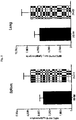
- T cell responses were measures by IFN ⁇ T cell Elispot: briefly, spleen and lung lymphocytes were plated on 96 well microplates coated with anti-IFNy antibody and stimulated ex-vivo with peptide pools spanning the whole RSV vaccine antigen. After extensive washes, the secreted IFN ⁇ forming a spot on the bottom of the plate was revealed by a secondary antibody conjugated to alkaline phosphatase. The number of spots was counted by an automatic Elispot reader.
- the simian adenovirus PanAd3-RSV containing the RSV antigens F, N and M2-1 was administered to groups of BALB / c mice either by the intranasal route or by the intramuscular route.
- a separate group was immunized with the recombinant F protein formulated with aluminium hydroxide by intramuscular injection.
- the three groups of mice were boosted with the recombinant F protein formulated with aluminium hydroxide by intramuscular injection.
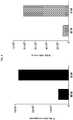
- sera of mice were analyzed by F-protein ELISA and the neutralizing antibody titers were measured by a F ACS based RSV neutralization assay.
- T cell responses in spleen and lung were measured by IFN ⁇ T cell Elispot.
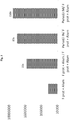
- the groups of mice that received PanAd3-RSV as a priming vaccine reached very high levels of anti-F antibody titers in the serum.
- Priming with PanAd3-RSV increases the antibody titers obtained with a single administration of the F protein by a factor ranging from 87x when Adeno is administered in the nose to 158x when Adeno is administered in the muscle, while two administrations of protein F increase the titer by a factor of 22.
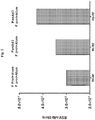
- RSV neutralizing antibody titers were measured by a F ACS based cell culture infection assay on Hep2 cells using a recombinant RSV virus expressing GFP.
- Fig. 2 shows the neutralization titers expressed as the serum dilution which gives 50% of inhibition of infection (EC50).
- EC50 50% of inhibition of infection
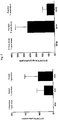
- T cell responses were measured in the same groups of mice by IFN ⁇ T-cell Elispot on spleen and lung lymphocytes. As shown in Fig .3 only those groups which were vaccinated with the Adeno vector at prime developed both systemic and local T cell responses. On the contrary, no F specific T cell response was detected in the animals vaccinated with the protein F.
- Example 5 T-cell response after intranasal prime with PanAd3-RSV and boost with MVA-RSV
- 10 8 virus particles (vp) of PanAd3-RSV containing the RSV antigens F, N and M2-1 were administered to groups of 10 CD 1 mice by instillation in the nose or by the intramuscular route.
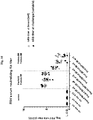
- a heterologous prime/boost vaccination regimen based on administering PanAd3-RSV in the nose at prime and boosting 4 weeks later with MVA-RSV in the muscle was compared to a regimen based on PanAd3-RSV prime and MVA-RSV boost, both administered in the muscle in outbred CD 1 mice.
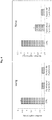
- Four weeks after MV A boost the mice were sacrificed and the RSV specific T cell responses were measured in the spleen and in the lung.
- Fig.5 PanAd3-RSV administration in the nose at prime elicited stronger IFN-y T cell responses both in the spleen and in the lung.
- Example 6 Immunity in cotton rats after prime with PanAd3-RSV and boost with MVA-RSV
- Example 7 Immunity in cattle after prime with PanAd3-RSV and boost with MVA-RSV as compared to vaccination with PanAd3-RSV alone
- Nasal secretions were collected by nasal swabs every day during the infection. At sacrifice, tracheal scrape and lung washes were collected plus section of different parts of the lung (right apical lobe, right cardiac lobe, left cardiac lobe) which were lysed in appropriate buffer. Serial dilution of the tissue lysates were used to infect cultured bovine MDBK cells in order to measure virus titer by counting plaques.
- heterologous prime/boost vaccination regimens with adenoviral vectors and poxviral vectors are employed, the combination of an intranasal prime and intramuscular boost elicited a stronger immune response than intramuscular prime and intramuscular boost as shown in example 5 for mice and example 6 for cotton rats.
- heterologous prime/boost vaccination regimens can be optimized by careful selections of the routes of administration of the two vaccines in order to achieve the best immunization.
Landscapes
- Health & Medical Sciences (AREA)
- Life Sciences & Earth Sciences (AREA)
- Animal Behavior & Ethology (AREA)
- General Health & Medical Sciences (AREA)
- Immunology (AREA)
- Medicinal Chemistry (AREA)
- Microbiology (AREA)
- Mycology (AREA)
- Pharmacology & Pharmacy (AREA)
- Epidemiology (AREA)
- Virology (AREA)
- Chemical & Material Sciences (AREA)
- Public Health (AREA)
- Veterinary Medicine (AREA)
- Medicines Containing Antibodies Or Antigens For Use As Internal Diagnostic Agents (AREA)
- Medicines That Contain Protein Lipid Enzymes And Other Medicines (AREA)
- Medicines Containing Material From Animals Or Micro-Organisms (AREA)
- Pharmaceuticals Containing Other Organic And Inorganic Compounds (AREA)
- Micro-Organisms Or Cultivation Processes Thereof (AREA)
- Peptides Or Proteins (AREA)
Description
- The present disclosure relates to administration regimens which are particularly suited for vaccine composition comprising polynucleotides which encode immunogenic polypeptides. Said administration regimens involve the repeated administration of a vaccine composition and enhance the immune response against the immunogenic polypeptide.
- Infectious diseases are still a major threat to mankind. One way for preventing or treating infectious diseases is the artificial induction of an immune response by vaccination which is the administration of antigenic material to an individual such that an adaptive immune response against the respective antigen is developed. The antigenic material may be pathogens (e.g. microorganisms or viruses) which are structurally intact but inactivated (i.e. non-infective) or which are attenuated (i.e. with reduced infectivity), or purified components of the pathogen that have been found to be highly immunogenic. Another approach for inducing an immune response against a pathogen is the provision of expression systems comprising one or more vector encoding immunogenic proteins or peptides of the pathogen. Such vector may be in the form of naked plasmid DNA, or the immunogenic proteins or peptides are delivered by using viral vectors, for example on the basis of modified vaccinia viruses (e.g. Modified Vaccinia Ankara; MVA) or adenoviral vectors. Such expression systems have the advantage of comprising well characterized components having a low sensitivity against environmental conditions.
- Guan J., et.al. Virology Journal (2011) 8: 506 discloses adenoviral and Tian Tan virus vectored constructs expressing hepatitis C virus (HCV) antigens.
-
WO2009/025770 discloses a vaccination regimen which uses a priming dose of a recombinant mumps vaccine and a boosting dose of a recombinant vesicular stomatitis virus to deliver HIV antigens. -
WO2010/073043 discloses antigenic compositions comprising an adenoviral vector and a pox viral vector delivering malaria antigens. -
WO2012/085936 discloses the use of specified plasmids to produce a modified vaccinia Ankara virus containing RSV antigens. -
WO2012/021730 discloses a replication-deficient monkey adenoviral vector and its use, alone or with other vectors, to deliver RSV antigens. - It is a particular aim when developing vector based expression systems that the application of these expression systems to a patient elicits an immune response which is protective against the infection by the respective pathogen. However, although inducing an immunogenic response against the pathogen, some expression systems are not able to elicit an immune response which is strong enough to fully protect against infections by the pathogen. Accordingly, there is still a need for improved expressions systems which are capable of inducing a protective immune response against a pathogen as well as for novel administration regimens of known expression systems which elicit enhanced immune responses.
- In a first aspect, the present invention relates to a vaccine combination comprising:
- (a) a priming composition comprising an adenoviral vector comprising a nucleic acid construct encoding immunogenic polypeptides and
- (b) at least one boosting composition comprising an MVA vector comprising a nucleic acid construct encoding immunogenic polypeptides,
- In a second aspect, the present invention relates to a vaccine combination comprising:
- (a) a priming composition comprising an adenoviral vector comprising a nucleic acid construct encoding at least one immunogenic polypeptide selected from the group consisting of (i) the fusion protein F of respiratory syncytial virus (RSV), (ii) nucleoprotein N of RSV and (iii) matrix protein M2 of RSV, and
- (b) at least one boosting composition comprising at least one immunogenic polypeptide which is fusion protein F of RSV,
- Unless defined otherwise, all technical and scientific terms used herein have the same meanings as commonly understood by one of ordinary skill in the art.
- Preferably, the terms used herein are defined as described in "A multilingual glossary of biotechnological terms: (IUPAC Recommendations)", Leuenberger, H.G.W, Nagel, B. and Klbl, H. eds. (1995), Helvetica Chimica Acta, CH-4010 Basel, Switzerland).
- Throughout this specification and the claims which follow, unless the context requires otherwise, the word "comprise", and variations such as "comprises" and "comprising", will be understood to imply the inclusion of a stated integer or step or group of integers or steps but not the exclusion of any other integer or step or group of integers or steps.
- Several documents are cited throughout the text of this specification. Nothing herein is to be construed as an admission that the invention is not entitled to antedate such disclosure by virtue of prior invention. All definitions provided herein in the context of one aspect of the invention also apply to the other aspects of the invention.
- In the study underlying the present invention it has been found that specific administration regimens significantly increase the immunity conferred by the vaccine compositions comprising vectors which comprise polynucleotides encoding immunogenic peptides.
- Thus, the disclosed prime-boost vaccination regimen provides a particularly effective protective immunity, e.g., by eliciting a strong immune response in the nose and upper respiratory tract.
- As used herein, the term "vector" refers to at least one polynucleotide or to a mixture of at least one polynucleotide and at least one protein which is capable of introducing the polynucleotide comprised therein into a cell. At least one polynucleotide comprised by the vector consists of or comprises at least one nucleic acid construct encoding at least one immunogenic protein. In addition to the polynucleotide consisting of or comprising the nucleic acid construct of the present disclosure additional polynucleotides and/or polypeptides may be introduced into the cell. The addition of additional polynucleotides and/or polypeptides is especially desirable if said additional polynucleotides and/or polypeptides are required to introduce the nucleic acid construct into the cell or if the introduction of additional polynucleotides and/or polypeptides increases the expression of the immunogenic polypeptide encoded by the nucleic acid construct.
- In the context of the present disclosure that the immunogenic polypeptide or polypeptides encoded by the introduced nucleic acid construct are expressed within the cell upon introduction of the vector or vectors. Examples of suitable vectors include but are not limited to plasmids, cosmids, phages, viruses or artificial chromosomes.
- In certain disclosed embodiments, the first vector is an adenoviral vector and the second vector comprising the nucleic acid constructs is selected from the group consisting of plasmids, cosmids, phages, viruses, and artificial chromosomes. More preferably, a vector suitable for the present disclosure is a phage vector, preferably lambda phage and filamentous phage vectors, or a viral vector.
- Suitable viral vectors are based on naturally occurring vectors, which are modified to be replication incompetent also referred to as non-replicating. Non-replicating viruses require the provision of proteins in trans for replication. Typically those proteins are stably or transiently expressed in a viral producer cell line, thereby allowing replication of the virus. The viral vectors are, thus, preferably infectious and non-replicating. The skilled person is aware of how to render various viruses replication incompetent.
- In the present disclosure the vector is selected from the group consisting of adenovirus vectors, adeno-associated virus (AA V) vectors (e.g., AA V
type 5 and type 2), alphavirus vectors (e.g., Venezuelan equine encephalitis virus (VEE), sindbis virus (SIN), semliki forest virus (SFV), and VEE-SIN chimeras), herpes virus vectors (e.g. vectors derived from cytomegaloviruses, like rhesus cytomegalovirus (RhCMV) (14)), arena virus vectors (e.g. lymphocytic choriomeningitis virus (LCMV) vectors (IS)), measles virus vectors, pox virus vectors (e.g., vaccinia virus, modified vaccinia virus Ankara (MVA), NYVAC (derived from the Copenhagen strain of vaccinia), and avipox vectors: canarypox (ALVAC) and fowlpox (FPV) vectors), vesicular stomatitis virus vectors, retrovirus, lentivirus, viral like particles, and bacterial spores. - In particular embodiments, the disclosed vectors are adenoviral vectors, in particular adenoviral vectors derived from human or non-human great apes and poxviral vectors, preferably MVA. Preferred great apes from which the adenoviruses are derived are Chimpanzee (Pan), Gorilla (Gorilla) and orangutans (Pongo), preferably Bonobo (Pan paniscus) and common Chimpanzee (Pan troglodytes). Typically, naturally occurring non-human great ape adenoviruses are isolated from stool samples of the respective great ape. The most preferred vectors are nonreplicating adenoviral vectors based on hAdS,
hAd 1 1, hAd26, hAd3S, hAd49 , ChAd3, ChAd4, ChAdS, ChAd6, ChAd7, ChAd8, ChAd9, ChAdlO,ChAd 1 1, ChAd16, ChAd17, ChAd19, ChAd20, ChAd22, ChAd24, ChAd26, ChAd30, ChAd31, ChAd37, ChAd38, ChAd44, ChAd55, ChAd63, ChAd 73, ChAd82, ChAd83, ChAd146, ChAd147, PanAd1, PanAd2, and PanAd3 vectors or replication-competent Ad4 and Ad7 vectors. The human adenoviruses hAd4, hAdS, hAd7, hAd11, hAd26, hAd35 and hAd49 are well known in the art. Vectors based on naturally occurring ChAd3, ChAd4, ChAd5, ChAd6, ChAd7, ChAd8, ChAd9, ChAd10, ChAd11, ChAd16, ChAd17, ChAd19, ChAd20, ChAd22, ChAd24, ChAd26, ChAd30, ChAd31, ChAd37, ChAd38, ChAd44 , ChAd63 and ChAd82 are described in detail inWO2005/071093 . Vectors based on naturally occurring PanAd1, PanAd2, PanAd3, ChAd55, ChAd73, ChAd83, ChAd146, and ChAd147 are described in detail inWO 2010/086189 . - The term "non-replicating adenovirus" refers to an adenovirus that has been rendered to be incapable of replication because it has been engineered to comprise at least a functional deletion, or a complete removal of, a gene product that is essential for viral replication, such as one or more of the adenoviral genes selected from E1, E2, E3 and E4.
- Preferrably the first vector used is an adenoviral vector, more preferably non-human great ape, e.g. a chimpanzee or bonobo, derived adenoviral vector, in particular a.non-replicating adenoviral vector based on ChAd3, ChAd4, ChAdS, ChAd6, ChAd7, ChAd8, ChAd9, ChAd10, ChAd11, ChAd16, ChAd17, ChAd19, ChAd20, ChAd22, ChAd24, ChAd26, ChAd30, ChAd31, ChAd37, ChAd38, ChAd44, ChAd55, ChAd63, ChAd73, ChAd82, ChAd83, ChAd146, ChAd147, PanAd1, PanAd2, and PanAd3 or replication-competent vector based on hAd4 and hAd7. The most preferred vector is based on PanAd3.
- Preferably, the second vector is a poxviral vector, particularly MVA or an adenoviral vector, preferably a non-human great ape derived adenoviral vector. Disclosed non-replicating adenoviral vectors are based on ChAd3, ChAd4, ChAd5, ChAd6, ChAd7, ChAd8, ChAd9, ChAd10, ChAd11, ChAd16, ChAd17, ChAd19, ChAd20, ChAd22, ChAd24, ChAd26, ChAd30, ChAd31, ChAd37, ChAd38, ChAd44, ChAd55, ChAd63, ChAd73, ChAd82, ChAd83, ChAd146, ChAd147, PanAd1, PanAd2, and PanAd3 vectors or replication-competent Ad4 and Ad7 vector.
- If the first and the second vector are adenoviral vectors, it is sometimes preferred to use immunologically different adenoviral vectors as first and second vectors. If both vectors are immunologically identical, there can be a potential risk that antibodies generated against the first vector during priming of the immune response impair the transduction of the patient with the second vector used for boosting the immune response. Adenoviruses and, thus, adenoviral vectors typically comprise three envelope proteins, i.e. hexon, penton and fibre. The immunological response of a host against a given adenovirus is primarily determined by the hexon protein. Thus, two adenoviruses are considered to be immunologically different, if the hexon proteins of the two adenoviruses differ at least in one epitope. The T-cell and B-cell epitopes of hexon have been mapped.
- In one particular disclosed embodiment, the first vector is an adenoviral vector, in particular PanAd3, and the second vector is a poxviral vector, in particular MVA.
- In one disclosed embodiment, the first vector is PanAd3 and the second vector is MVA. A description of MVA can be found in Mayr A, Stickl H, Muller HK, Danner K, Singer H. "The smallpox vaccination strain MVA: marker, genetic structure, experience gained with the parenteral vaccination and behavior in organisms with a debilitated defence mechanism." Zentralbl Bakteriol B. 1978 Dec; 167(5-6):375-90 and in Mayr, A., Hochstein-Mintzel, V. & Stickl, H. (1975). "Abstammung, Eigenschaften und Verwendung des attenuierten Vaccinia-Stammes MVA." .
- The terms "polynucleotide" and "nucleic acid" are used interchangeably throughout this disclosure. Polynucleotides are understood as a polymeric macromolecules made from nucleotide monomers. Nucleotide monomers are composed of a nucleobase, a five-carbon sugar (such as but not limited to ribose or 2'-deoxyribose), and one to three phosphate groups. Typically, a polynucleotide is formed through phosphodiester bonds between the individual nucleotide monomers. Disclosed nucleic acid molecules include but are not limited to ribonucleic acid (RNA) and deoxyribonucleic acid (DNA).
- Moreover, the term "polynucleotide" also includes artificial analogs of DNA or RNA, such as peptide nucleic acid (PNA).
- Additional suitable vectors are described in detail in
PCT/EP2011/074307 WO2012/089833 ). - The terms "protein", "polypeptide" and "peptide" are used interchangeably herein and refer to any peptide-linked chain of amino acids, regardless of length co-translational or post-translational modification.
- The term "post-translational" used herein refers to events that occur after the translation of a nucleotide triplet into an amino acid and the formation of a peptide bond to the preceeding amino acid in the sequence. Such post-translational events may occur after the entire polypeptide was formed or already during the translation process on those parts of the polypeptide that have already been translated. Post-translational events typically alter or modify the chemical or structural properties of the resultant polypeptide. Examples of post-translational events include but are not limited to events such as glycosylation or phosphorylation of amino acids, or cleavage of the peptide chain, e.g. by an endopeptidase.
- The term "co-translational" used herein refers to events that occur during the translation process of a nucleotide triplet into an amino acid chain. Those events typically alter or modify the chemical or structural properties of the resultant amino acid chain. Examples of cotranslational events include but are not limited to events that may stop the translation process entirely or interrupt the peptide bond formation resulting in two discreet translation products.
- As used herein, the terms "polyprotein" or "artificial polyprotein" refer to an amino acid chain that comprises, or essentially consists of or consists of two amino acid chains that are not naturally connected to each other. The polyprotein may comprise one or more further amino acid chains. Each amino acid chain can be a complete protein, i.e. spanning an entire ORF, or a fragment, domain or epitope thereof. The individual parts of a polyprotein may either be permanently or temporarily connected to each other. Parts of a polyprotein that are permanently connected are translated from a single ORF and are not later separated co- or post-translationally. Parts of polyproteins that are connected temporarily may also derive from a single ORF but are divided co-translationally due to separation during the translation process or post-translationally due to cleavage of the peptide chain, e.g. by an endopeptidase. Additionally or alternatively, parts of a polyprotein may also be derived from two different ORF and are connected post-translationally, for instance through covalent bonds.
- Proteins or polyproteins usable in the present disclosure (including protein derivatives, protein variants, protein fragments, protein segments, protein epitopes and protein domains) can be further modified by chemical modification. Hence, such a chemically modified polypeptide may comprise chemical groups other than the residues found in the 20 naturally occurring amino acids. Examples of such other chemical groups include without limitation glycosylated amino acids and phosphorylated amino acids. Chemical modifications of a polypeptide may provide advantageous properties as compared to the parent polypeptide, e.g. one or more of enhanced stability, increased biological half-life, or increased water solubility. Chemical modifications applicable to the variants include without limitation: PEGylation, glycosylation of non-glycosylated parent polypeptides, or the modification of the glycosylation pattern present in the parent polypeptide. Such chemical modifications applicable to the variants may occur co-or post-translationally.
- An "immunogenic polypeptide" as referred to in the present disclosure is a polypeptide as defined above which contains at least one epitope. An "epitope", also known as antigenic determinant, is that part of a polypeptide which is recognized by the immune system. Preferably, this recognition is mediated by the binding of antibodies, B cells, or T cells to the epitope in question. In this context, the term "binding" preferably relates to a specific binding. Preferably, the specific binding of antibodies to an epitope is mediated by the Fab (fragment, antigen binding) region of the antibody, specific binding of a B-cell is mediated by the Fab region of the antibody comprised by the B-cell receptor and specific binding of a T-cell is mediated by the variable (V) region of the T-cell receptor.
- An immunogenic polypeptide may be derived from a pathogen selected from the group consisting of viruses, bacteria and protozoa. In particular it is derived from a virus. According to one particularly favorable embodiment an immunogenic polypeptide is derived from respiratory syncytial virus (RSV).
- Disclosed immunogenic polypeptides induce a B-cell response or a T-cell response or a B cell response and a T-cell response.
- Epitopes usually consist of chemically active surface groupings of molecules such as amino acids or sugar side chains and usually have specific three-dimensional structural characteristics, as well as specific charge characteristics. The term "epitope" refers to conformational as well as non-conformational epitopes. Conformational and non-conformational epitopes are distinguished in that the binding to the former but not the latter is lost in the presence of denaturing solvents.
- Two or more immunogenic polypeptides are "immunologically identical" if they are recognized by the same antibody, T-cell or B-cell. The recognition of two or more immunogenic polypeptides by the same antibody, T-cell or B-cell is also known as "cross reactivity" of said antibody, T-cell or B-cell. The recognition of two or more immunologically identical polypeptides by the same antibody, T-cell or B-cell is due to the presence of identical or similar epitopes in all polypeptides. Similar epitopes share enough structural and/or charge characteristics to be bound by the Fab region of the same antibody or B-cell receptor or by the V region of the same T-cell receptor. The binding characteristics of an antibody, T-cell receptor or B-cell receptor are, typically, defined by the binding affinity of the receptor to the epitope in question. Two immunogenic polypeptides are "immunologically identical" as understood by the present disclosure if the affinity constant of polypeptide with the lower affinity constant is at least 30 %, at least 40 %, at least 50 %, at least 60 %, at least 70 %, at least 80 %, at least 90 %, at least 95 % or at least 98 % of the affinity constant of the polypeptide with the higher affinity constant. Methods for determining the binding affinity of a polypeptide to a receptor such as equilibrium dialysis or enzyme linked immunosorbent assay (ELISA) are well known in the art.
- Preferably, two or more "immunologicaly identical" polypeptides comprise at least one identical epitope. The strongest vaccination effects can usually be obtained, if the immunogenic polypeptides comprise identical epitopes or if they have an identical amino acid sequence.
- As used herein, a polypeptide whose amino acid sequence is "substantially identical" to the amino acid sequence of another polypeptide is a polypeptide variant which differs in comparison to the other polypeptide (or segment, epitope, or domain) by one or more changes in the amino acid sequence. The polypeptide from which a protein variant is derived is also known as the parent polypeptide. Typically, a variant is constructed artificially, favorably by gene-technological means. Typically, the parent polypeptide is a wild-type protein or wild-type protein domain. In the context of the present disclosure, a parent polypeptide (or parent segment) can also be the consensus sequence of two or more wild-type polypeptides (or wild-type segments). Further, the variants usable in the present disclosure may also be derived from homologs, orthologs, or paralogs of the parent polypeptide or from an artificially constructed variant, provided that the variant exhibits at least one biological activity of the parent polypeptide. Preferably, the at least one biological activity of the parent polypeptide shared by the variant is (or includes) the presence of at least one epitope which renders both polypeptides "immunologically identical" as defined above.
- The changes in the amino acid sequence may be ammo acid exchanges, insertions, deletions, N-terminal truncations, or C-terminal truncations, or any combination of these changes, which may occur at one or several sites. In certain favorable embodiments, a variant exhibits a total number of up to 200 (up to 1, 2, 3, 4, 5, 6, 7, 8, 9, 10, 15, 20, 25, 30, 35, 40, 45, 50, 55, 60, 65, 70, 75, 80, 85, 90, 95, 100, 110, 120, 130, 140, 150, 160, 170, 180, 190, or 200) changes in the amino acid sequence (i.e. exchanges, insertions, deletions, N-terminal truncations, and/or C-terminal truncations). The amino acid exchanges may be conservative and/or non-conservative. In certain favorable embodiments, a variant differs from the protein or domain from which it is derived by up to 1, 2, 3, 4, 5, 6, 7, 8, 9, 10, 15, 20, 25, 30, 35, 40, 45, 50, 55, 60, 65, 70, 75, 80, 85, 90, 95, or 100 amino acid exchanges, preferably conservative amino acid changes.
- Alternatively or additionally, a "variant" as used herein, can be characterized by a certain degree of sequence identity to the parent polypeptide or parent polynucleotide from which it is derived. More precisely, a protein variant which is "substantially identical" to another polypeptide exhibits at least 80% sequence identity to the other polypeptide. A polynucleotide variant in the context of the present disclosure exhibits at least 80% sequence identity to its parent polynucleotide. Preferably, the sequence identity of protein variants is over a continuous stretch of 20, 30, 40, 45, 50, 60, 70, 80, 90, 100 or more amino acids. Preferably, the sequence identity of polynucleotide variants is over a continuous stretch of 60, 90, 120, 135, 150, 180, 210, 240, 270, 300 or more nucleotides.
- In a disclosed embodiment, a polypeptide which is "substantially identical" to its parent polypeptide has at least 80 % sequence identity to said parent polypeptide. More preferably, the said polypeptide is immunologically identical to the parent polypeptide and has at least 80 % sequence identity to the parent polypeptide.
- The term "at least 80% sequence identity" is used throughout the specification with regard to polypeptide and polynucleotide sequence comparisons. This expression refers to a sequence identity of at least 80 %, at least 81 %, at least 82 %, at least 83 %, at least 84 %, at least 85 %, at least 86 %, at least 87 %, at least 88 %, at least 89 %, at least 90 %, at least 91 %, at least 92 %, at least 93 %, at least 94 %, at least 95 %, at least 96 %, at least 97 %, at least 98 %, or at least 99 % to the respective reference polypeptide or to the respective reference polynucleotide. Preferably, the polypeptide in question and the reference polypeptide exhibit the indicated sequence identity over a continuous stretch of 20, 30, 40, 45, 50, 60, 70, 80, 90, 100 or more amino acids or over the entire length of the reference polypeptide. Preferably, the polynucleotide in question and the reference polynucleotide exhibit the indicated sequence identity over a continuous stretch of60, 90, 120, 135, 150, 180, 210, 240, 270, 300 or more nucleotides or over the entire length of the reference polypeptide.
- Variants of a polypeptide may additionally or alternatively comprise deletions of amino acids, which may be N-terminal truncations, C-terminal truncations or internal deletions or any combination of these. Such variants comprising N-terminal truncations, C-terminal truncations and/or internal deletions are referred to as "deletion variant" or "fragments" in the context of the present disclosure. The terms "deletion variant" and "fragment" are used interchangeably herein. A fragment may be naturally occurring (e.g. splice variants) or it may be constructed artificially, for example, by gene-technological means. A fragment (or deletion variant) can have a deletion of up to 1, 2, 3, 4, 5, 6, 7, 8, 9, 10, 15, 20, 25, 30, 35, 40, 45, 50, 55, 60, 65, 70, 75, 80, 85, 90, 95, or 100 amino acids as compared to the parent polypeptide, preferably at the N-terminus, at the N-and C-terminus, or at the C-terminus, or internally. In case where two sequences are compared and the reference sequence is not specified in comparison to which the sequence identity percentage is to be calculated, the sequence identity is to be calculated with reference to the longer of the two sequences to be compared, if not specifically indicated otherwise. If the reference sequence is indicated, the sequence identity is determined on the basis of the full length of the reference sequence indicated by SEQ ID, if not specifically indicated otherwise.
- Additionally or alternatively a deletion variant may occur not due to structural deletions of the respective amino acids as described above, but due to these amino acids being inhibited or otherwise not able to fulfill their biological function. Typically, such functional deletion occurs due to the insertions into or exchanges in the amino acid sequence that changes the functional properties of the resultant protein, such as but not limited to alterations in the chemical properties of the resultant protein (i.e. exchange of hydrophobic amino acids to hydrophilic amino acids), alterations in the post-translational modifications of the resultant protein (e.g. post-translational cleavage or glycosylation pattern), or alterations in the secondary or tertiary protein structure. Preferably, a functional deletion as described above, is caused by an insertion or exchange of at least one amino acid which results in the disruption of an epitope of an immunogenic polypeptide.
- The similarity of nucleotide and amino acid sequences, i.e. the percentage of sequence identity, can be determined via sequence alignments. Such alignments can be carried out with several art-known algorithms, preferably with the mathematical algorithm of Karlin and Altschul (Karlin & Altschul (1993) Proc. Natl. Acad. Sci. USA 90: 5873-5877), with hmmalign (HMMER package) or with the CLUSTAL algorithm (Thompson, 1. D., Higgins, D. G. & Gibson, T. 1. (1994) Nucleic Acids Res. 22, 4673-80) Preferred parameters used are the default parameters. The grade of sequence identity (sequence matching) may be calculated using e.g. BLAST, BLAT or BlastZ (or BlastX). A similar algorithm is incorporated into the BLASTN and BLASTP programs of Altschul et al. (1990) 1. Mol. BioI. 215: 403-410. BLAST polynucleotide searches are performed with the BLASTN program, score = 100, word length = 12, to obtain polynucleotide sequences that are homologous to those nucleic acids which encode F, N, or M2-1. BLAST protein searches are performed with the BLASTP program, score = 50, word length = 3, to obtain amino acid sequences homologous to the F polypeptide, N polypeptide, or M2-1 polypeptide. To obtain gapped alignments for comparative purposes, Gapped BLAST is utilized as described in Altschul et al. (1997) Nucleic Acids Res. 25: 3389-3402. When utilizing BLAST and Gapped BLAST programs, the default parameters of the respective programs are used. Sequence matching analysis may be supplemented by established homology mapping techniques like Shuffle-LAGAN (Brudno M., Bioinformatics 2003b, 19 Suppl 1:154-162) or Markov random fields. When percentages of sequence identity are referred to in the present disclosure, these percentages are calculated in relation to the full length of the longer sequence, if not specifically indicated otherwise.
- The polynucleotides encode proteins, peptides or variants thereof which comprise amino acids which are designated following the standard one-or three-letter code according to WIPO standard ST.25 unless otherwise indicated. If not indicated otherwise, the one-or three letter code is directed at the naturally occurring L-amino acids and the amino acid sequence is indicated in the direction from the N-terminus to the C-terminus of the respective protein, peptide or variant thereof.
- As used herein, the term "consensus" refers to an amino acid or nucleotide sequence that represents the results of a multiple sequence alignment, wherein related sequences are compared to each other. Such a consensus sequence is composed of the amino acids or nucleotides most commonly observed at each position. In the context of the present disclosure it is preferred that the sequences used in the sequence alignment to obtain the consensus sequence are sequences of different viral subtypes/serotypes strains isolated in various different disease outbreaks worldwide. Each individual sequence used in the sequence alignment is referred to as the sequence of a particular virus "isolate". In case that for a given position no "consensus nucleotide" or "consensus amino acid" can be determined, e.g. because only two isolates were compared, it is preferred that the amino acid of each one of the isolates is used.
- The phrase "induction of a T cell response" refers to the generation or the restimulation of pathogen specific, preferably virus specific, CD4+ or CD8+ T cells. The priming composition and/or the boosting composition can induce or re-stimulate a T cell mediated adaptive response directed to the MHC class I or class II epitopes present in the polypeptide or polypeptides expressed by the nucleic acid construct. Such T cell response can be measured by art known methods, for example, by ex-vivo re-stimulation of T cells with synthetic peptides spanning the entire polypeptide and analysis of proliferation or Interferon-gamma production.
- The phrase "induction of a B cell response" refers to the generation or the restimulation of pathogen specific, for example, virus specific, B cells producing immunoglobulins of class IgG or IgA. In one embodiment, the priming composition and/or the boosting composition can induce or re-stimulate B cells producing antibodies specific for pathogenic, e.g. viral, antigens, expressed by the nucleic acid construct. Such B cell response can be measured by ELISA with the synthetic antigen of serum or mucosal immunoglobulin. Alternatively the induced antibody titer can be measured by virus neutralization assays.
- The phrase "induction of an anti-pathogenic B cell response" refers to the generation or the re-stimulation of pathogen specific, such as virus specific, B cells producing immunoglobulins of class IgG or IgA which inactivate, eliminate, blocks and/or neutralize the respective pathogen such that the disease caused by the pathogen does not break out and/or the symptoms are alleviated. This is also called a "protective immune response" against the pathogen. In a disclosed embodiment, the priming and/or boosting composition can induce or re-stimulate B cells producing antibodies specific for pathogenic, e.g. viral, antigens expressed by the nucleic acid construct. Such B cell response can be measured by ELISA with the synthetic antigen of serum or mucosal immunoglobulin. Alternatively the induced antibody titer can be measured by virus neutralization assays.
- The phrase "enhancing an immune response" refers to the strengthening or intensification of the humoral and/or cellular immune response against an immunogen, preferably pathogens, such as viruses. The enhancement of the immune response can be measured by comparing the immune response elicited by an expression system of the disclosure with the immune response of an expression system expressing the same antigen/immunogen alone by using tests described herein and/or tests well known in the present technical field.
- Suitable immunogenic polypeptides are described in detail in
PCT/EP2011/074307 WO2012/089833 ). - As disclosed herein, immunogenic polypeptides are described below using the following abbreviations: "F" or "F0" are used interchangeably herein and refer to the Fusion protein of paramyxoviruses, preferably of RSV; "G" refers to the Glycoprotein of paramyxoviruses, preferably of pneumovirinae, more preferably of RSV; H" refers to the Hemagglutinin Protein of paramyxoviruses, preferably of morbilliviruses; "HN" refers to the Hemagglutinin-Neuraminidase Protein of paramyxoviruses, particularly of Respirovirus, Avulavirus and Rubulavirus; "N" refers to the Nucleocapsid protein of paramyxoviruses, preferably of RSV; "M" refers to the glycosylated Matrix protein of paramyxoviruses, preferably of RSV; with respect to paramyxoviruses, the abbreviation "M2" or "M2-1" refers to the non-glycosylated Matrix protein of paramyxoviruses, preferably of RSV; "P" refers to the Phosphoprotein of paramyxoviruses, preferably of RSV; with respect to paramyxoviruses, the abbreviation "NS 1" and "NS2" refer to the non-structural proteins 1 and 2 of paramyxoviruses, preferably of RSV; "L" refers to the catalytic subunit of the polymerase of paramyxoviruses, preferably of RSV; "HA" refers to the hemagglutinin of orthomyxovirus, preferably influenzaviruses, more preferably of influenza A virus; "HAO" refers to the precursor protein of hemagglutinin subunits HA1 and HA2 of orthomyxovirus, preferably influenzaviruses, more preferably of influenza A virus; "Hlp" refers to the modified hemagglutinin of orthomyxovirus, preferably influenzaviruses, more preferably of influenza A virus; "NA" refers to the neuraminidase of orthomyxovirus, preferably influenzaviruses, more preferably of influenza A virus; "NP" refers to the nucleoprotein of orthomyxoviruses, preferably influenzaviruses, more preferably of influenza A virus; "MI" refers to the matrixprotein 1 of orthomyxoviruses, preferably influenzaviruses, more preferably of influenza A virus; with respect to orthomyxoviruses, the abbreviation "M2" refers to the Matrix protein M2 of orthomyxoviruses, preferably influenzaviruses, more preferably of influenza A virus; with respect to orthomyxovirus, the abbreviation "NS 1" refers to the non-structural protein 1 of orthomyxoviruses, preferably influenzaviruses, more preferably of influenza A Virus; "NS2/NEP" refers to the non-structural protein 2 (also referred to as NEP, nuclear export protein) of orthomyxoviruses, preferably influenzaviruses, more preferably influenza A virus; "PA" refers to a polymerase subunit protein of orthomyxoviruses, preferably influenzaviruses, more preferably influenza A virusM "PB 1" refers to a polymerase subunit protein of orthomyxoviruses, preferably influenzaviruses, more preferably influenza A virus; "PB2" refers to a polymerase subunit protein of orthomyxoviruses, preferably influenzaviruses, more preferably influenza A virus; "PB1-F2" or "PB1F2" refers to a protein encoded by an alternate reading frame in the PB1 Gene segment of orthomyxoviruses, preferably influenzaviruses, more preferably influenza A virus.
- According to the disclosure, the immunogenic polypeptides may be tumor-specific proteins or pathogen specific proteins. As disclosed herein, the pathogens are viruses, in particular paramyxovirus or variants thereof, preferably selected from the subfamily of Pneumovirinae, Paramyxovirinae, Fer-de-Lance-Virus, Nariva-Virus, Salem-Virus, Tupaia-Paramyxovirus, Beilong-Virus, 1-Virus, Menangle-Virus, Mossmann-Virus, and Murayama-Virus. In further disclosure, the Pneumovirinae is selected from the group consisting of Pneumovirus, preferably human respiratory syncytial virus (RSV), murine pneumonia virus, bovine RSV, ovine RSV, caprine RSV, turkey rinotracheitis virus, and Metapneumovirus, preferably human metapneumovirus (hMPV) and avian metapneumovirus. In further disclosure, the Paramyxovirinae is selected from the group consisting of Respirovirus, preferably
human parainfluenza virus human parainfluenza virus - The term "nucleic acid construct" refers to a polynucleotide which encodes at least one immunogenic polypeptide. Preferably, said polynucleotide additionally comprises elements which direct transcription and translation of the at least one polypeptide encoded by the nucleic acid construct. Such elements include promoter and enhancer elements to direct transcription of mRNA in a cell-free or a cell-based based system, preferably a cell-based system. In another embodiment, wherein the nucleic acid construct is provided as translatable RNA, it is envisioned that the nucleic acid construct comprises those elements that are necessary for translation and/or stabilization of RNAs encoding the at least one immunogenic polypeptide, e.g. polyA-tail, IRES, cap structures etc.
- As outlined above, it is preferred that the vector of the present disclosure is a viral vector and, thus, the nucleic acid construct is preferably comprised by a larger polynucleotide which additionally includes nucleic acid sequences which are required for the replication of the viral vector and/or regulatory elements directing expression of the immunogenic polypeptide.
- In one embodiment, the nucleic acid construct encodes a single immunogenic polypeptide.
- In a specific embodiment, the nucleic acid construct encodes at least two immunogenic polypeptides.
- Suitable nucleic acid constructs encoding immunogenic polypeptides are described in detail in
PCT/EP2011/074307 WO2012/089833 ).. - It has been surprisingly found in the study underlying
PCT/EP2011/074307 WO2012/089833 ) that the addition of an immunogenic polypeptide which induces a T-cell response to an immunogenic polypeptide which induces a B-cell response enhances the B-cell response against the latter polypeptide. Methods for determining the strength of a B-cell response against an antigen described above. The titer of antibodies specific for the antigen in question can be determined at least 2 weeks, at least 4 weeks, at least 8 weeks, at least 4 months, at least 8 months or at least 1 year after immunization with a combination of at least one immunogenic polypeptide inducing a B-cell response and at least one immunogenic polypeptide inducing a T-cell response. Preferably, the titer of antibodies specific for the immunogenic polypeptide inducing a B-cell response is increased by the combination by at least 10 %, at least 20 %, at least 30 %, at least 50 %, at least 75 %, at least 100 %, at least 150 % or at least 200 % as compared to immunization with the at least one immunogenic polypeptide inducing a B-cell response alone. The nucleic acid construct encodes at least one immunogenic polypeptide inducing a B-cell response and at least one immunogenic polypeptide inducing a T-cell response. - The immunogenic polypeptide which induces a B-cell response is, preferably, a structural protein comprised by a virus or a fragment or variant thereof. For example, in the case of a enveloped viruses, the structural viral protein can favorably be selected from the group consisting of fusion protein (F) and attachment glycoproteins G, H, and HN.
- The attachment glycoproteins are found in all enveloped viruses and mediate the initial interaction between the viral envelope and the plasma membrane of the host cell via their binding to carbohydrate moieties or cell adhesion domains of proteins or other molecules on the plasma membrane of the host cell. Thereby, attachment glycoproteins bridge the gap between the virus and the membrane of the host cell. Attachment glycoproteins designated as "H" possess hemagglutinin activity and are found in morbilliviruses and henipaviruses, glycoproteins designated as "HN possess hemagglutinin and neuraminidase activities and are found in respiroviruses, rubulaviruses and avulaviruses. Attachment glycoproteins are designated as "G" when they have neither haemagglutination nor neuraminidase activity. G attachment glycoproteins can be found in all members of Pneumovirinae.
- Fusion protein "F" is found in all enveloped viruses and mediates the fusion of the viral envelope with the plasma membrane of the host cell. F is a type I glycoprotein that recognizes receptors present on the cell surface of the host cell to which it binds. F consists of a fusion peptide adjacent to which the transmembrane domains are located, followed by two heptad repeat (HR) regions, HRI and HR2, respectively. Upon insertion of the fusion peptide into the plasma membrane of the host cell, the HRI region forms a trimeric coiled coil structure into whose hydrophobic grooves the HR2 regions folds back. Thereby, a hairpin structure is formed that draws the viral lipid bilayer and cellular plasma membrane even closer together and allows for the formation of a fusion pore and consecutively the complete fusion of both lipid bilayers enabling the virus capsid to enter into the cytoplasm of the host cell. All of these features are common in fusion-mediating proteins of enveloped viruses.
- In a disclosed embodiment, F comprises, essentially consists of or consists of an amino acid sequence of F of one RSV isolate or a consensus amino acid sequence of two or more different RSV isolates. In certain preferred embodiments, the amino acid sequence of the F protein is preferably according to SEQ ID NO: 1, SEQ ID NO: 2 or a variant thereof.
- The immunogenic polypeptide which induces a T-cell response is, favorably, an internal protein comprised by a virus or a fragment or variant thereof. Said structural viral protein can be selected from the group consisting of nucleoprotein N, Matrix proteins M and M2, Phosphoprotein P, non structural proteins NSI and NS2, and the catalytic subunit of the polymerase (L).
- The nucleoprotein N serves several functions which include the encapsidation of the RNA genome into a RNAase-resistant nucleocapsid. N also interacts with the M protein during virus assembly and interacts with the P-L polymerase during transcription and replication of the genome.
- The matrix protein M is the most abundant protein in paramyxovirus and is considered to be the central organizer of viral morphology by interacting with the cytoplasmatic tail of the integral membrane proteins and the nucleocapsid. M2 is a second membrane-associated protein that is not glycosylated and is mainly found in pneumovirus.
- Phosphoprotein P binds to the N and L proteins and forms part of the RNA polymerase complex in all paramyxoviruses. Large protein L is the catalytic subunit of RNA-dependent RNA polymerase.
- The function of non-structural proteins NS 1 and NS2 has not yet been identified; however, there are indications that they are involved in the viral replication cycle.
- In certain disclosed embodiments, N comprises an amino acid sequence of N, of one RSV isolate or a consensus amino acid sequence of two or more different RSV isolates, e.g., according to SEQ ID NO: 3 and wherein M2 comprises an amino acid sequence of M2 of one RSV isolate or a consensus amino acid sequence of two or more different RSV isolates, e.g., according to SEQ ID NO: 5. In one further disclosed embodiment, N comprises the amino acid sequence according to SEQ ID NO: 4 and M2 comprises the amino acid sequence according to SEQ IDNO: 5.
- In one disclosed embodiment the at least two different immunogenic polypeptides are encoded by the same number of open reading frames (ORFs), i.e. each polypeptide is encoded by a separate open reading frame. In this case, it is preferred that each ORF is combined with suitable expression control sequences which allow the expression of said polypeptide.
- In another disclosed embodiment, at least two different immunogenic polypeptides are encoded by a single ORF and linked by a peptide linker. Thus, transcription and translation of the nucleic acid construct result in a single polypeptide having two functional, i.e. immunogenic, domains. The term "different immunogenic polypeptides" refers to immunogenic polypeptides as defined above in this disclosure which are not encoded by a contiguous nucleic acid sequence in the virus or organism they are derived from. In the virus or organism they are derived from, they may be encoded by different ORFs. Alternatively, they may be derived from different domains of a polypeptide encoded by a single ORF by deletion of amino acid sequences which connected said domains in their natural context and the replacement of said connecting amino acid sequences by a peptide linker. The latter embodiment allows the production of a polypeptide shorter than the naturally occurring polypeptide which still contains all epitopes which are necessary for the induction of an immune response. To give an example: a naturally occurring polypeptide comprises two epitopes useful for eliciting an immune response linked by an amino acid sequence of 90 amino acids which is not immunogenic. The replacement of said 90 amino acids by a peptide linker of 10 or 15 amino acids results in a shorter polypeptide which, nevertheless, comprises both important epitopes.
- In one particular embodiment, at least two different immunogenic polypeptides are encoded by a single ORF and linked by a cleavage site. Thus, transcription and translation of the nucleic acid construct result in a single polypeptide which is cut into different smaller polypeptides co-translationally or post-translationally.
- The cleavage referred to above site is, preferably, a self-cleaving or an endopeptidase cleavage site.
- The term "open reading frame" (ORF) refers to a sequence of nucleotides, that can be translated into amino acids. Typically, such an ORF contains a start codon, a subsequent region usually having a length which is a multiple of 3 nucleotides, but does not contain a stop codon (TAG, TAA, TGA, UAG, UAA, or UGA) in the given reading frame. Typically, ORFs occur naturally or are constructed artificially, i.e. by gene-technological means. An ORF codes for a protein where the amino acids into which it can be translated form a peptide-linked chain.
- A "peptide linker" (or short: "linker") refers to an amino acid sequence of between 1 and 100 amino acids. In disclosed embodiments, a peptide linker has a minimum length of at least 1, 2, 3, 4, 5, 6, 7, 8, 9, 10, 11, 12, 13, 14, 15, 16, 17, 18, 19, 20, 21, 22, 23, 24, 25, 26, 27, 28, 29, or 30 amino acids. In further disclosed embodiments, a peptide linker has a maximum length of 100, 95, 90, 85, 80, 75, 70, 65, 60, 55, 50, 45, 40, 35, 34, 33, 32, 31, 30, 29, 28, 27, 26, 25, 24, 23, 22, 21, 20, 19, 18, 17, 16, or 15 amino acids or less. It is preferred that peptide linkers provide flexibility among the two amino acid proteins, fragments, segments, epitopes and/or domains that are linked together. Such flexibility is generally increased if the amino acids are small. Thus, preferably the peptide linker has an increased content of small amino acids, in particular of glycines, alanines, serines, threonines, leucines and isoleucines. Preferably, more than 20%, 30%, 40%, 50%, 60% or more of the amino acids of the peptide linker are small amino acids. In a disclosed embodiment the amino acids of the linker are selected from glycines and serines. In certain embodiments, the above-indicated preferred minimum and maximum lengths of the peptide linker may be combined. One of skill will immediately understand which combinations makes sense mathematically. In certain embodiments, the peptide linker is non-immunogenic; and when designed for administration to humans, the peptide linker is typically selected to be non-immunogenic to humans.
- The term "cleavage site" as used herein refers to an amino acid sequence where this sequence directs the division, e.g. because it is recognized by a cleaving enzyme, and/or can be divided. Typically, a polypeptide chain is cleaved by hydrolysis of one or more peptide bonds that link the amino acids. Cleavage of peptide bonds may originate from chemical or enzymatic cleavage. Enzymatic cleavage refers to such cleavage being attained by proteolytic enzymes endo-or exo-peptidases or -proteases (e.g. serine-proteases, cysteine-proteases, metalloproteases, threonine proteases, aspartate proteases, glutamic acid proteases). Typically, enzymatic cleavage occurs due to self-cleavage or is effected by an independent proteolytic enzyme. Enzymatic cleavage of a protein or polypeptide can happen either co-or post-translational. Accordingly, the term "endopeptidase cleavage site" used herein, refers to a cleavage cite within the amino acid or nucleotide sequence where this sequence is cleaved or is cleavable by an endopeptidase (e.g. trypsin, pepsin, elastase, thrombin, collagenase, furin, thermolysin, endopeptidase V8, cathepsins). Alternatively or additionally, the polypeptides can be cleaved by an autoprotease, i.e. a protease which cleaves peptide bonds in the same protein molecule which also comprises the protease. Examples of such autoproteases are the NS2 protease from flaviviruses or the VP4 protease of bimaviruses.
- Alternatively, the term "cleavage site" refers to an amino acid sequence that prevents the formation of peptide bonds between amino acids. For instance, the bond formation may be prevented due to co-translational self-processing of the polypeptide or polyprotein resulting in two discontinuous translation products being derived from a single translation event of a single open reading frame. Typically, such self-processing is effected by a "ribosomal skip" caused by a pseudo stop-codon sequence that induces the translation complex to move from one codon to the next without forming a peptide bond. Examples of sequences inducing a ribosomal skip include but are not limited to viral 2A peptides or 2A-like peptide (herein both are collectively referred to as "2A peptide" or interchangeably as "2A site" or "2A cleavage site") which are used by several families of viruses, including Picornavirus, insect viruses, Aphtoviridae, Rotaviruses and Trypanosoma. Best known are 2A sites of rhinovirus and foot-and-mouth disease virus of the Picornaviridae family which are typically used for producing multiple polypeptides from a single ORF.
- Accordingly, the term "self-cleavage site" as used herein refers to a cleavage site within the amino acid or nucleotide sequence where this sequence is cleaved or is cleavable without such cleavage involving any additional molecule or where the peptide- or phosphodiesterbond formation in this sequence is prevented in the first place (e.g. through co-translational self-processing as described above).
- It is understood that cleavage sites typically comprise several amino acids or are encoded by several codons (e.g. in those cases, wherein the "cleavage site" is not translated into protein but leads to an interruption of translation). Thus, the cleavage site may also serve the purpose of a peptide linker, i.e. sterically separates two peptides. Thus, in some embodiments a "cleavage site" is both a peptide linker and provides above described cleavage function. In this embodiment the cleavage site may encompass additional N-and/or C-terminal amino acids.
- In particular, the self, cleaving site is selected from the group consisting of a viral 2A peptide or 2A-like peptide of Picornavirus, insect viruses, Aphtoviridae, Rotaviruses and Trypanosoma. In one favorable example, the 2A cleavage site is the 2 A peptide of foot and mouth disease virus.
- The nucleic acid construct comprised by the first and/or the second vector encodes at least two immunogenic polypeptides, wherein at least one said polypeptides induces aT-cell response and at least one another polypeptide induces a B-cell response.
- In a disclosed embodiment, the amino acid sequence of the immunogenic polypeptides encoded by the first and second nucleic acid constructs is substantially identical.
- In another disclosed embodiment, at least one of the nucleic acid construct encodes at least one polypeptide selected from the group consisting of (i) the fusion protein F of respiratory syncytial virus (RSV), (ii) nucleoprotein N of RSV and (iii) matrix protein M2 of RSV.
- In a specific disclosed embodiment the nucleic acid constructs comprised by the first and second vector encode the same polypeptide or polypeptides selected from the group consisting of (i) the fusion protein F of respiratory syncytial virus (RSV), (ii) nucleoprotein N of RSV and (iii) matrix protein M2 of RSV. The term "the same polypeptide or polypeptides" refers to polypeptides which are immunologically identical as defined above or have amino acid sequences which are substantially identically as defined above. The term "the same polypeptide or polypeptides" refers to polypeptides having an identical amino acid sequence.
- In a specific disclosed embodiment, at least one nucleic acid construct encodes polypeptides comprising (i) the fusion protein F of respiratory syncytial virus (RSV), (ii) nucleoprotein N of RSV and (iii) matrix protein M2 of RSV. In one favourable embodiment, said nucleic acid construct does not encode any polypeptide in addition to the aforementioned three polypeptides. For example, the vector does not comprise a further nucleic acid construct in addition to the aforementioned nucleic acid construct encoding polypeptides comprising (i) the fusion protein F of respiratory syncytial virus (RSV), (ii) nucleoprotein N of RSV and (iii) matrix protein M2 of RSV.
- In one disclosed embodiment both nucleic acid constructs encode polypeptides comprising (i) the fusion protein F of respiratory syncytial virus (RSV), (ii) nucleoprotein N of RSV and (iii) matrix protein M2 of RSV. For an example of this embodiment, both nucleic acid constructs do not encode any polypeptide in addition to the aforementioned three polypeptides. For example, both vectors do not comprise a further nucleic acid construct in addition to the aforementioned nucleic acid construct encoding polypeptides comprising (i) the fusion protein F of respiratory syncytial virus (RSV), (ii) nucleoprotein N of RSV and (iii) matrix protein M2 of RSV
- The term "vaccine" refers to a biological preparation which improves immunity to a specific disease. Said preparation may comprise a killed or an attenuated living pathogen. It may also comprise one or more compounds derived from a pathogen suitable for eliciting an immune response. In disclosed embodiments, said compound is a polypeptide which is substantially identical or immunologically identical to a polypeptide of said pathogen. Also preferably, the vaccine comprises a nucleic acid construct which encodes an immunogenic polypeptide which is substantially identical or immunologically identical to a polypeptide of said pathogen. In the latter case, it is desired that the polypeptide is expressed in the individual treated with the vaccine. The principle underlying vaccination is the generation of an immunological "memory". Challenging an individual's immune system with a vaccine induces the formation and/or propagation of immune cells which specifically recognize the compound comprised by the vaccine. At least a part of said immune cells remains viable for a period of time which can extend to 10,20 or 30 years after vaccination. If the individual's immune system encounters the pathogen from which the compound capable of eliciting an immune response was derived within the aforementioned period of time, the immune cells generated by vaccination are reactivated and enhance the immune response against the pathogen as compared to the immune response of an individual which has not been challenged with the vaccine and encounters immunogenic compounds of the pathogen for the first time.
- In many cases, a single administration of a vaccine is not sufficient to generate the number of long-lasting immune cells which is required for effective protection in case of future infection of the pathogen in question, protect against diseases including tumour diseases or for therapeutically treating a disease, like tumour disease. Consequently, repeated challenge with a biological preparation specific for a specific pathogen or disease is required in order to establish lasting and protective immunity against said pathogen or disease or to cure a given disease. An administration regimen comprising the repeated administration of a vaccine directed against the same pathogen or disease is referred to in the present disclosure as "prime-boost vaccination regimen". Preferably, a prime-boost vaccination regimen involves at least two administrations of a vaccine or vaccine composition directed against a specific pathogen, group of pathogens or diseases. The first administration of the vaccine is referred to as "priming" and any subsequent administration of the same vaccine or a vaccine directed against the same pathogen as the first vaccine can be referred to as "boosting". Thus, in a disclosed embodiment the prime-boosting vaccination regimen involves one administration of the vaccine for priming the immune response and at least one subsequent administration for boosting the immune response. It is to be understood that 2, 3, 4 or even 5 administrations for boosting the immune response are also contemplated.
- The period of time between prime and a subsequent administration is, preferably, 1 week, 2 weeks, 4 weeks, 6 weeks or 8 weeks. More preferably, it is 4 weeks. If more than one boost is performed, the subsequent boost is, preferably, administered 1 week, 2 weeks, 4 weeks, 6 weeks or 8 weeks after the preceding boost. For example, the interval is 4 weeks. The subject or patient to be treated with a prime-boost regimen is, preferably, a mammal or a bird, more preferably a primate, mouse, rat, sheep, goat, cow, pig, horse, goose, chicken, duck or turkey and, most preferably, a human.
- Preferably, the use of the vaccine combinations according to the first or second aspect will establish protective immunity against a pathogen or disease or will lead to inhibition and/or eradication of infection or a disease caused by infection by the pathogen.
- The term "composition" as used in "priming composition" and "boosting composition" refers to the combination of a vector comprising a nucleic acid construct and at least one further compound selected from the group consisting of pharmaceutically acceptable carriers, pharmaceutical excipients and adjuvants. If the boosting composition comprises an immunogenic polypeptide instead of a vector, the boosting composition comprises said at least one immunogenic polypeptide and at least one further compound selected from the group consisting of pharmaceutically acceptable carriers, pharmaceutical excipients and adjuvants.
- "Pharmaceutically acceptable" means approved by a regulatory agency of the Federal or a state government or listed in the U.S. Pharmacopeia or other generally recognized pharmacopeia for use in animals, and more particularly in humans.
- The term "carrier", as used herein, refers to a pharmacologically inactive substance such as but not limited to a diluent, excipient, or vehicle with which the therapeutically active ingredient is administered. Such pharmaceutical carriers can be liquid or solid. Liquid carrier include but are not limited to sterile liquids, such as saline solutions in water and oils, including those of petroleum, animal, vegetable or synthetic origin, such as peanut oil, soybean oil, mineral oil, sesame oil and the like. Saline solutions and aqueous dextrose and glycerol solutions can also be employed as liquid carriers, particularly for injectable solutions. A saline solution is a preferred carrier when the pharmaceutical composition is administered intravenously or intranasally by a nebulizer.
- Suitable pharmaceutical excipients include starch, glucose, lactose, sucrose, gelatin, malt, rice, flour, chalk, silica gel, sodium stearate, glycerol monostearate, talc, sodium chloride, dried skim milk, glycerol, propylene, glycol, water, ethanol and the like.
- Examples of suitable pharmaceutical carriers are described III "Remington's Pharmaceutical Sciences" by E. W. Martin.
- The term "adjuvant" refers to agents that augment, stimulate, activate, potentiate, or modulate the immune response to the active ingredient of the composition at either the cellular or humoral level, e.g. immunologic adjuvants stimulate the response of the immune system to the actual antigen, but have no immunological effect themselves. Examples of such adjuvants include but are not limited to inorganic adjuvants (e.g. inorganic metal salts such as aluminium phosphate or aluminium hydroxide), organic adjuvants (e.g. saponins or squalene), oil-based adjuvants (e.g. Freund's complete adjuvant and Freund's incomplete adjuvant), cytokines (e.g. IL-1β, IL-2, IL-7, IL-12, IL-18, GM-CFS, and INF-γ) particulate adjuvants (e.g. immunostimulatory complexes (ISCOMS), liposomes, or biodegradable micro spheres), virosomes, bacterial adjuvants (e.g. monophosphoryl lipid A, or muramyl peptides), synthetic adjuvants (e.g. non-ionic block copolymers, muramyl peptide analogues, or synthetic lipid A), or synthetic polynucleotides adjuvants (e.g polyarginine or polylysine).
- A "intranasal administration" is the administration of a vaccine composition to the mucosa of the complete respiratory tract including the lung. More preferably, the composition is administered to the mucosa of the nose. Preferably, an intrasal administration is achieved by means of instillation, spray or aerosol. Preferably, said administration does not involve perforation of the mucosa by mechanical means such as a needle.
- The term "intramuscular administration" refers to the injection of a vaccine composition into any muscle of an individual. Preferably intramuscular injections are adminstered into the deltoid, vastus lateralis muscles or the ventrogluteal and dorsogluteal areas.
- Surprisingly, it was found that a combination of administration of polynucleotide vectors and proteins provides advantages in the characteristics (e.g., strength) of the vaccination. Therefore, in a further aspect the present disclosure relates to a vaccine combination comprising:
- (a) a priming composition comprising, consisting essentially of or consisting of a vector comprising a nucleic acid construct encoding at least one immunogenic polypeptide and
- (b) at least one boosting composition comprising, consisting essentially of or consisting of at least one immunogenic polypeptide,
- In the context of the second aspect of the disclosure all terms have the meanings defined above regarding the first aspect. In particular the term vector, nucleic acid construct, immunogenic polypeptide, intramuscular or intranasal administration, prime boosting vaccination regimen have the above outlined meaning. It is to be understood that the teaching relating to the immunogenic polypeptide is applicable both to immunogenic polypeptide encoded by the nucleic acid of the vector and to the polypeptide, which is administered as such, while the teaching relating to the nucleic acid construct only relates to the nucleic acid comprised in the vector.
- It is disclosed that the at least one boosting composition is intramuscular or intranasally. Preferably each of the boosting compositions is administered intramuscular or intranasally.
- Disclosed administration regimens are as follows:
- (i) the priming composition is administered intranasally and at least one boosting composition is subsequently administered intramuscularly;
- (ii) the priming composition is administered intranasally and at least one boosting composition is subsequently administered intranasally.
- (ii) the priming composition is administered intramuscularly and at least one boosting composition is subsequently administered intramuscularly; or
- (iv) the priming composition is administered intramuscularly and at least one boosting composition is subsequently administered intranasally, most preferably administration regimen (i) is used.
- In a disclosed embodiment of this aspect the vector is selected from the group consisting of adenovirus vectors, adeno-associated virus (AA V) vectors (e.g.,
AA V type 5 and type 2), alphavirus vectors (e.g., Venezuelan equine encephalitis virus (VEE), sindbis virus (SIN), semliki forest virus (SFV), and VEE-SIN chimeras), herpes virus vectors (e.g. vectors derived from cytomegaloviruses, like rhesus cytomegalovirus (RhCMV) (14)), arena virus vectors (e.g. lymphocytic choriomeningitis virus (LCMV) vectors (15)), measles virus vectors, pox virus vectors (e.g., vaccinia virus, modified vaccinia virus Ankara (MV A), NYV AC (derived from the Copenhagen strain of vaccinia), and avipox vectors: canarypox (ALV AC) and fowlpox (FPV) vectors), vesicular stomatitis virus vectors, retrovirus, lentivirus, viral like particles, and bacterial spores. - Highly preferred vectors are adenoviral vectors, in particular adenoviral vectors derived from human or non-human great apes or poxviral vectors, preferably MVA. Preferred great apes from which the adenoviruses are derived are Chimpanzee (Pan), Gorilla (Gorilla) and orangutans (Pongo), preferably Bonobo (Pan paniscus) and common Chimpanzee (Pan troglodytes). Typically, naturally occurring non-human great ape adenoviruses are isolated from stool samples of the respective great ape. The most preferred vectors are non-replicating adenoviral vectors based on hAd5, hAd 1 1, hAd26, hAd35, hAd49, ChAd3, ChAd4, ChAd5, ChAd6, ChAd7, ChAd8, ChAd9, ChAd10, ChAd11, ChAd16, ChAd17, ChAd19, ChAd20, ChAd22, ChAd24, ChAd26, ChAd30, ChAd31, ChAd37, ChAd38, ChAd44, ChAd55, ChAd63, ChAd 73, ChAd82, ChAd83 , ChAd146, ChAd147, PanAd1, PanAd2, and PanAd3 vectors or replication-competent Ad4 and Ad7 vectors.
- In one disclosed embodiment, the nucleic acid construct encodes at least the fusion protein F of respiratory syncytial virus (RSV). In a specific example, said nucleic acid construct does not encode any polypeptide in addition to the aforementioned polypeptide. For example, the vector does not comprise a further nucleic acid construct in addition to the aforementioned nucleic acid construct encoding the fusion protein F of respiratory syncytial virus (RSV).
- In a specific disclosed embodiment, the nucleic acid construct encodes polypeptides comprising (i) the fusion protein F of respiratory syncytial virus (RSV), (ii) nucleoprotein N of RSV and (iii) matrix protein M2 of RSV. In an example of such an embodiment, said nucleic acid construct does not encode any polypeptide in addition to the aforementioned three polypeptides. For example, the vector does not comprise a further nucleic acid construct in addition to the aforementioned nucleic acid construct encoding polypeptides comprising (i) the fusion protein F of respiratory syncytial virus (RSV), (ii) nucleoprotein N of RSV and (iii) matrix protein M2 of RSV.
- In a disclosed embodiment, the at least one immunogenic polypeptide comprised by the boosting composition is selected from the group consisting of the fusion protein F of respiratory syncytial virus (RSV), (ii) nucleoprotein N of RSV and (iii) matrix protein M2 of RSV or polypeptides having an amino acid sequence which is substantially to the amino acid sequence of the aforementioned polypeptides or polypeptides which are immunologically identically to the aforementioned polypeptides.
- In another disclosed embodiment, the at least one immunogenic polypeptide comprised by the boosting composition is the fusion protein F of respiratory syncytial virus (RSV). For example, the boosting composition does not comprise immunogenic polypeptides besides said polypeptide (fusion protein F).
- In a further disclosed embodiment, the nucleic acid construct encodes (i) the fusion protein F of respiratory syncytial virus (RSV), (ii) nucleoprotein N of RSV and (iii) matrix protein M2 of RSV and the only immunogenic polypeptide comprised by the boosting composition is fusion protein F of RSV.
- In another disclosed embodiment, priming of the immune response is performed by intranasal administration of an adenoviral vector (e.g., selected from the list of adenoviral vectors provided herein) and boosting is performed by intramuscular administration of an immunogenic polypeptide. For example, favorably the adenoviral vector can be PanAd3. In this embodiment, the immunogenic polypeptide favorably can be the fusion protein F of RSV and the nucleic acid construct comprised by the vector favourably encodes fusion protein F of RSV, nucleoprotein N of RSV and matrix protein M2 of RSV.
- In another embodiment, priming of the immune response is performed by intranasal administration of an adenoviral vector and boosting is performed by intramuscular administration of a poxviral vector. It is also disclosed to use a poxviral vector for priming and an adenoviral vector for boosting of the immune response. For example, favorably the adenoviral vector can be PanAd3 and the poxviral vector can be MVA. In this embodiment, the nucleic acid construct comprised by both vectors encodes, preferably, fusion protein F of RSV, nucleoprotein N of RSV and matrix protein M2 of RSV.
- In a further aspect the present disclosure provides an article of manufacture comprising the vaccine combination according to the first or second aspect of the present disclosure and an instruction for use.
-
- Fig. 1:
- Serum titers of antibodies against F protein measured by Elisa on the recombinant protein F. Titers were determined by serial dilution of pools of sera and represent the dilution that gives a value higher than the background plus 3x the standard deviations. Numbers on the bars represent the fold increase in the antibody titer of the different regimens with respect to a single administration of the recombinant protein
- Fig. 2:
- Neutralization titers were measured in a F ACS based RSV infection assay on Hep2 cells using a recombinant RSV-A virus expressing the GFP protein. Data are expressed as EC50 that is the dilution of serum that inhibits viral infection by 50%.
- Fig. 3:
- IFNγ T cell Elispot on spleen and on lung lymphocytes after ex-vivo restimulation with peptide pools spanning the whole F protein antigen. Bars represent the average plus standard error of the T cell responses measured in the three groups of animal immunized by the different regimen. Only those animals that have been primed with the PanAd3 vector show T cell responses both in spleen and in lung.
- Fig. 4:
- RSV replication in the lung (left panel) and in the nose (right panel) of cotton rats. Virus titer was determined by plaque assay on Hep-2 cells using lysates from the different organs and expressed as the mean of Log10 pfu per gram of tissue. The blue line represents the limit of detection of the assay.
- Fig. 5:
- IFNy T cell Elispot on spleen and on lung lymphocytes after ex-vivo restimulation with peptide pools spanning the whole RSV vaccine antigen. Black bars represent the average of the T cell responses measured in the group of animals immunized by PanAd3 in the muscle followed by MVA-RSV in the muscle. Grey bars represent the average plus standard error of the T cell responses measured in the group of animals immunized by PanAd3 in the nose followed by MVA-RSV in the muscle ..
- Fig. 6:
- Serum titers (panel A) of antibodies against F protein were measured by ELISA on the recombinant protein F. Neutralization titers (panel B) were measured in a F ACS based RSV infection assay on Hep2 cells using a recombinant RSV -A virus expressing the GFP protein. Data are expressed as EC50 that is the dilution of serum that inhibits viral infection by 50%.
- Fig. 7:
- RSV replication in the lungs (dark grey bars) and in the nose (light grey bars) of cotton rats. Virus titer was determined by plaque assay on Hep-2 cells using lysates from the different organs and expressed as the mean of
Log 1 0 pfu per gram of tissue - Fig. 8:
- RSV replication in the nasal secretions (left panel) and in the lung (right panel) of infected calves. Virus titer was determined by plaque assay on MDBK cells using nasal swabs or lysates from the different parts of the lung and expressed as the mean of
Log 10 pfu per ml of sample.Log 10 = 2 represents the limit of detection of the assay. - Fig. 9:
- RSV replication in the nose of cotton rats. Virus titer was determined by plaque assay on Hep-2 cells using lysates from te nasal mucosa and expressed as the mean of Log10 pfu per gram of tissue. The dotted line represents the limit of detection of the assay.
- Fig. 10:
- RSV serum neutralizing antibody titers measured at the day of the boost (open triangles = 4 weeks after the prime) and at the day of the challenge (full triangles = 3, 8 and 12 weeks after boost). Neutralization titers were measured by plaque reduction assay on Hep2 cells infected with the human RSV Long strain. Data are expressed as EC60 that is the dilution of serum that inhibits 60% of plaques respect to control.
- The following examples are merely intended to illustrate the invention. They shall not limit the scope of the claims in anyway.
- To design the vaccine antigen, protein sequences of the F0-, N-, and M2-1-proteins of RSV were retrieved from the National Center for Biotechnology Information (NCBI) RSV Resource database. Protein sequences were chosen from different RSV subtype A strains.
- A F0 consensus sequence was derived by alignment of all non-identical sequences of the F-protein using MUSCLE version 3.6 and applying the majority rule. The vaccine's F0 consensus sequence was designed on the basis of the alignment of the different RSV sequences. The sequence similarity of the vaccine consensus FO sequence was measured performing BLAST analysis, which stands for Basic Local Alignment Search Tool and is publicly available through the NCBI. The highest average similarity of the consensus sequence, calculated compared to all RSV sequences in the database, was 100 % with respect to the human respiratory syncytial virus A2 strain.
- Further, the vaccine's F0 sequence lacks the transmembrane region residing in amino acids 525 to 574 to allow for the secretion of F0ΔTM.
- Finally, the vaccine F0ΔTM sequence was codon-optimized for expression in eukaryotic cells.
- The vaccine's N consensus sequence was derived by alignment of all non-identical sequences of the N-protein using MUSCLE version 3.6 and applying the majority rule. BLAST analysis of the N consensus sequence found the best alignment with the human respiratory syncytial virus A2 strain. The vaccine's N sequence was then codon-optimized for expression in eukaryotic cells.
- A M2-1 consensus sequence was derived by alignment of all non-identical sequences of the M2-1-protein using MUSCLE version 3.6 and applying the majority rule. BLAST analysis of the M2-1 consensus sequence found the best alignment with the human respiratory syncytial virus A2 strain. Finally, the vaccine M2-1 sequence was codon-optimized for expression in eukaryotic cells.
- The vaccines F0ΔTM sequence and N sequence were spaced by the cleavage sequence 2A of the Foot and Mouth Disease virus. The vaccines N sequence and M2-1 sequence were separated by a flexible linker (GGGSGGG; SEQ ID NO: 6).
- Finally, the codon-optimized viral genes were cloned as the single open reading frame F0ΔTM-N-M2-1.
- Consensus F0ΔTM, N and M2-1 sequences were optimized for mammalian expression, including the addition of a Kozak sequence and codon optimization. The DNA sequence encoding the multi-antigen vaccine was chemically synthesized and then sub-cloned by suitable restriction enzymes EcoRV and Not1 into the pVJTetOCMV shuttle vector under the control of the CMV promoter.
- A viral-vectored RSV vaccine PanAd3/F0ΔTM-N-M2-1 was generated which contains a 809 aa polyprotein (SEQ ID NO.: 7) coding for the consensus F0ΔTM, N and M2-1 proteins fused by a flexible linker.
- Bonobo Adenovirus type 3 (PanAd3) is a novel adenovirus strain with improved seroprevalence and has been described previously.
- Cloning of F0ΔTM-N-M2-1 from the plasmid vector pVJTetOCMV/F0ΔTM-N-M2-1 into the PanAd3 pre-Adeno vector was performed by cutting out the antigen sequences flanked by homologous regions and enzymatic in vitro recombination.
- Cloning of F0ΔTM-N-M2-1 from the shuttle plasmid vector p94-F0ΔTM-N-M2-1 into the MVA vector was performed by two steps of enzymatic in vitro recombination and selection of the positive recombinant virus by fluorescence microscopy.
- Groups of 5 BALB/c mice were immunized with 10^8 vp of PanAd3-RSV by instillation in the nose or by intramuscular injection. Another group was immunized with 5 µg of recombinant protein F (Sino Biologicals Inc. cat n. 11049-V08B) formulated with alumininum hydroxide in the muscle. Four weeks later all animals received 5 µg of recombinant protein F formulated with aluminium hydroxide in the muscle. After four weeks all animals were bled and serum was prepared. A pool of sera of the animals in each group was analyzed by F protein ELISA: Briefly, 96 well microplates were coated with 0.5ug protein F (Sino Biologicals Inc. cat n. 11049-V08B) and incubated with serial dilutions of the sera. After extensive washes, the specific binding was revealed by a secondary anti-mouse IgG antibody conjugated with alkaline phosphatase. Background was determined using BALB/c pre-immune sera. Antibody titers were expressed as the dilution giving a value equal to background plus 3 times the standard deviation. Neutralizing antibodies were measured by a F ACS-based infection assay. Briefly, a recombinant RSV-A virus expressing GFP (Chen M. et al. J Immunological Methods 2010; 362:180) was used to infect cultured Hep-2 cells for 24 h at a Multiplicity of infection (MOl) giving 20 % infected cells. A serial dilution of pools of mice sera was incubated with the
virus 1 hour at 37 °C before addition to the cells. 24 hours later the percentage of infected cells was measured by whole-cell F ACS analysis. Antibody titer was expressed as the serum dilution giving 50 % inhibition of infection (EC50). - T cell responses were measures by IFNγ T cell Elispot: briefly, spleen and lung lymphocytes were plated on 96 well microplates coated with anti-IFNy antibody and stimulated ex-vivo with peptide pools spanning the whole RSV vaccine antigen. After extensive washes, the secreted IFNγ forming a spot on the bottom of the plate was revealed by a secondary antibody conjugated to alkaline phosphatase. The number of spots was counted by an automatic Elispot reader.
- The simian adenovirus PanAd3-RSV containing the RSV antigens F, N and M2-1 was administered to groups of BALB/c mice either by the intranasal route or by the intramuscular route. A separate group was immunized with the recombinant F protein formulated with aluminium hydroxide by intramuscular injection. Four weeks later, the three groups of mice were boosted with the recombinant F protein formulated with aluminium hydroxide by intramuscular injection. Four weeks after the boost, sera of mice were analyzed by F-protein ELISA and the neutralizing antibody titers were measured by a F ACS based RSV neutralization assay. T cell responses in spleen and lung were measured by IFNγ T cell Elispot.
- As shown in
Fig. 1 , the groups of mice that received PanAd3-RSV as a priming vaccine reached very high levels of anti-F antibody titers in the serum. Priming with PanAd3-RSV increases the antibody titers obtained with a single administration of the F protein by a factor ranging from 87x when Adeno is administered in the nose to 158x when Adeno is administered in the muscle, while two administrations of protein F increase the titer by a factor of 22. - RSV neutralizing antibody titers were measured by a F ACS based cell culture infection assay on Hep2 cells using a recombinant RSV virus expressing GFP.
Fig. 2 shows the neutralization titers expressed as the serum dilution which gives 50% of inhibition of infection (EC50). As observed for the anti-F antibody titers, also the neutralizing antibody titer increases in the animals vaccinated by the combination of Adeno prime and protein boost with respect to the protein/protein regimen. - T cell responses were measured in the same groups of mice by IFNγ T-cell Elispot on spleen and lung lymphocytes. As shown in
Fig .3 only those groups which were vaccinated with the Adeno vector at prime developed both systemic and local T cell responses. On the contrary, no F specific T cell response was detected in the animals vaccinated with the protein F. - Groups of 5 cotton rats (Sygmoidon Hispidus) were immunized with 10^8 vp of PanAd3RSV by instillation in the nose or with 5ug of recombinant protein F (Sino Biologicals Inc. cat n. 11049-V08B) formulated with Alum hydroxide in the muscle. Four weeks later, all animals received 5 µg of recombinant protein F formulated with aluminum hydroxide in the muscle. After three weeks the two groups of animal plus a control non-vaccinated group, were infected by intranasal administration of 10"'5 pfu of RSV Long strain. Five days after infection all animals were sacrificed and nasal epithelia and lungs were collected and lysed. Serial dilution of the tissue lysates were used to infect cultured Hep2 cells to measure virus titer by counting plaques.
- Two groups of cotton rats were vaccinated by i) Prime and boost with the protein F formulated in aluminum hydroxide or ii) PanAd3-RSV prime in the nose and boost with the protein F formulated in aluminum hydroxide in the muscle. Three weeks after the boost, the animals were challenged by an intranasal administration of 1Q/'5 pfu of RSV Long strain, together with a non-vaccinated control group. Five days after the infection the animal were sacrificed and the virus was titrated by plaque assay on lysates of nasal and lung tissue. As shown in
Fig. 4 , in the control animals the titer of RSV in the lung and in the nose reached 4-5log 1 0, while all the animals in the vaccinated groups blocked viral replication in the lung. In contrast, only those animals that received the combination of Adeno and protein showed complete sterilizing immunity also in the upper respiratory tract. - Groups of 5 cotton rats (Sygmoidon Hispidus) were immunized with 10^8 vp of PanAd3RSV by instillation in the nose or with 5ug of recombinant protein F (Sino Biologicals Inc. cat n.11049-V08B) formulated with Alum hydroxide in the muscle. Four weeks later, all animals received 5µg of recombinant protein F formulated with Alum hydroxide in the muscle. After three weeks the two groups of animal plus a control non vaccinated group, were infected by intranasal administration of 10^5 pfu of RSV Long strain. Five days after infection all animals were sacrificed and nasal epithelia and lungs were collected and lysed. Serial dilutions of the tissue lysates were used to infect cultured Hep2 cells to measure virus titer by counting plaques. Serum neutralizing antibodies were measured by plaque reduction assay in Hep2 cells infected with RSV Long strain. Titer was expressed as the serum dilution giving 60% reduction of plaque respect to not inhibited controls..
- Two groups of cotton rats were vaccinated by i) PanAd3-RSV prime in the nose and boost with the protein F formulated in Alum Hydroxide in the muscle or ii) Prime and boost with the protein F formulated in Alum Hydroxide. At three, eight and twelve weeks after the boost, the animals were challenged by an intranasal administration of 10^5 pfu of RSV Long strain, together with a non vaccinated control group. Five days after the infection the animal were sacrificed and the virus was titrated by plaque assay on lysates of nasal and lung tissue.
- As shown in
Fig 9 , in the control animals the titer of RSV in the nose reached 4-5 10glO, while only those animals that received the combination of Adeno and protein showed complete sterilizing immunity in the upper respiratory tract. Serum neutralizing antibodies were measured at the day of the boost (4 weeks after the prime) and at the day of the challenge, which was at 3,8 and 12 weeks after the boost. As shown inFig 10 , the neutralizing titers remained high and sustained only in those group that were vaccinated with the combination of Adeno and protein, while the neutralizing titers of those vaccinated with the protein slowly decayed over time. - 108 virus particles (vp) of PanAd3-RSV containing the RSV antigens F, N and M2-1 were administered to groups of 10
CD 1 mice by instillation in the nose or by the intramuscular route. Four weeks later, all animals received in themuscle 107 plaque forming units (pfu) of MVARSV containing the RSV antigens F, N and M2-1. After four weeks, the animals were sacrificed, lymphocytes were isolated from the spleen and the lung and serum from blood was prepared. T cell responses, titers of anti-F antibodies and RSV neutralizing antibodies were measured as described above. - A heterologous prime/boost vaccination regimen based on administering PanAd3-RSV in the nose at prime and boosting 4 weeks later with MVA-RSV in the muscle was compared to a regimen based on PanAd3-RSV prime and MVA-RSV boost, both administered in the muscle in
outbred CD 1 mice. Four weeks after MV A boost, the mice were sacrificed and the RSV specific T cell responses were measured in the spleen and in the lung. As shown inFig.5 PanAd3-RSV administration in the nose at prime elicited stronger IFN-y T cell responses both in the spleen and in the lung. - The improvement in the immune response after Adeno prime in the nose was confirmed by the increase of antibody against the F protein (
Fig. 7 , panel A) and of neutralizing antibody titers in the sera (Fig. 7 , panel B). - Groups of 5 cotton rats (Sygmoidon Hispidus) were immunized with 108 vp of PanAd3RSV by instillation in the nose or by intramuscular injection. Four weeks later all animals received 107 pfu of MVA-RSV in the muscle. After three weeks the two groups of animal plus a control non vaccinated group, were infected by intranasal administration of 10 pfu of RSV Long strain. Five days after infection all animals were sacrificed and nasal epithelia and lungs were collected and lysed. Serial dilution of the tissue lysates were used to infect cultured Hep2 cells to measure virus titer by counting plaques.
- Two groups of cotton rats were vaccinated by heterologous prime/boost with PanAd3-RSV/MVA-RSV to compare the difference between priming with PanAd3-RSV in the nose or in the muscle. Both groups were boosted with MV A in the muscle at 4 weeks interval. A third group of non vaccinated animal was used as a control. Three weeks after the boost, the animals were challenged by an intranasal administration of 10 pfu of RSV Long strain. Five days after the infection the animals were sacrificed and the virus was titrated by plaque assay on lysates of nasal and lung tissue. As shown in
Fig. 7 , in the control animals the titer of RSV in the lung and in the nose reached 4-5log 1 0, while all the animals in the vaccinated groups blocked viral replication in the lung. In contrast, only those animals that received Adeno in the nose at prime showed complete sterilizing immunity also in the upper respiratory tract. - Two groups (A and B) of 3 and 4 newborn (2-4 weeks old) seronegative calves (screened by BRSV plaque reduction assay) were immunized with 5x10^10 vp of PanAd3-RSV by nasal delivery via a spray device. Eight weeks after prime, group B received 2x10^8 pfu of MVA-RSV in the muscle. A third group, group C, was not vaccinated and used as a control group. Four weeks after prime (for group A) or after boost (for group B) the two groups of animals plus the control group C, were infected by intranasal and intratracheal administration of 10^4 pfu of BRSV Snook strain. Six days after infection all animals were sacrificed. Nasal secretions were collected by nasal swabs every day during the infection. At sacrifice, tracheal scrape and lung washes were collected plus section of different parts of the lung (right apical lobe, right cardiac lobe, left cardiac lobe) which were lysed in appropriate buffer. Serial dilution of the tissue lysates were used to infect cultured bovine MDBK cells in order to measure virus titer by counting plaques.
- Two groups of 2-4 weeks old seronegative calves were vaccinated by i) single intranasal administration of PanAd3-RSV or ii) intranasal prime with PanAd3-RSV followed by intramuscular MVA-RSV boost 8 weeks later. The animals were challenged four weeks after vaccination by intranasal and intratracheal administration of 104 pfu of BRSV Snook strain. Six days after the infection, when the virus replication peaks in the lung and in the nose causing maximal pulmonary pathology, the animals were sacrificed. Virus titer in nasal secretions was determined throughout the course of infection by plaque assay on MDBK cells, while it was measured in the lung at the day of sacrifice. The results in
Fig. 8 , panel B, clearly indicate that the group that received only one dose of PanAd3-RSV in the nose was able to blunt viral replication in the lung almost completely. Administration of PanAd3-RSV in the nose led to a reduced and transient level of peak virus load in nasal secretion with respect to control animals (Fig. 9 panel A). The group that received PanAd3-RSV in the nose followed by MVA-RSV in the muscle showed sterilizing immunity to the virus both in the upper and in the lower respiratory tract (Fig.9 ). - The combination of a PanAd3-RSV (IN) and recombinant protein (IM) induced stronger and longer lasting immunity (Examples 3 and 4) as compared to homologous regimens with two 1M administrations of recombinant protein F. It could also be shown in mice that stronger immune responses were generated by the combination of IN prime with PanAd3-RSV and IM boost with recombinant protein F. Thus, priming of an immune response with a vector-based vaccine improves the efficacy of a boost with a peptide vaccine as compared to priming with a peptide vaccine.
- If heterologous prime/boost vaccination regimens with adenoviral vectors and poxviral vectors are employed, the combination of an intranasal prime and intramuscular boost elicited a stronger immune response than intramuscular prime and intramuscular boost as shown in example 5 for mice and example 6 for cotton rats. Thus, heterologous prime/boost vaccination regimens can be optimized by careful selections of the routes of administration of the two vaccines in order to achieve the best immunization.
-
- <110> Okairos AG, et al.
- <120> Novel prime-boosting regimens involving immunogenic polypeptides
encoded by polynucleotides - <130> 578-49PCT2
- <150>
PCT/EP2012/063196
<151> 2012-07-05 - <160> 7
- <170> BiSSAP 1.0
- <210> 1
<211> 360
<212> PRT
<213> Respiratory syncytial virus - <220>
<221> SOURCE
<222> 1..360
<223> /mol_type="protein" /organism="Respiratory syncytial virus" - <400> 1


- <210> 2
<211> 524
<212> PRT
<213> Respiratory syncytial virus - <220>
<221> SOURCE
<222> 1..524
<223> /mol_type="protein" /organism="Respiratory syncytial virus" - <400> 2


- <210> 3
<211> 170
<212> PRT
<213> Respiratory syncytial virus - <220>
<221> SOURCE
<222> 1..170
<223> /mol_type="protein" /organism="Respiratory syncytial virus" - <400> 3

- <210> 4
<211> 391
<212> PRT
<213> Respiratory syncytial virus - <220>
<221> SOURCE
<222> 1..391
<223> /mol_type="protein" /organism="Respiratory syncytial virus" - <400> 4

- <210> 5
<211> 194
<212> PRT
<213> Respiratory syncytial virus - <220>
<221> SOURCE
<222> 1..194
<223> /mol_type="protein" /organism="Respiratory syncytial virus" - <400> 5

- <210> 6
<211> 7
<212> PRT
<213> Artificial Sequence - <220>
<221> SOURCE
<222> 1..7
<223> /mol_type="protein" /note="peptide linker" /organism="Artificial Sequence" - <400> 6

- <210> 7
<211> 1146
<212> PRT
<213> Artificial Sequence - <220>
<221> SOURCE
<222> 1..1146
<223> /mol_type="protein" /note="immunogenic polyprotein" /organism="Artificial Sequence" - <400> 7


the priming composition is administered intranasally and the at least one boosting composition is subsequently administered intramuscularly.
Claims (12)
- A vaccine combination comprising:(a) a priming composition comprising an adenoviral vector comprising a nucleic acid construct encoding immunogenic polypeptides and(b) at least one boosting composition comprising an MVA vector comprising a nucleic acid construct encoding immunogenic polypeptides
wherein the nucleic acid constructs comprised by the first and second vector encode the same polypeptides (i) the fusion protein F of respiratory syncytial virus (RSV), (ii) nucleoprotein N of RSV and (iii) matrix protein M2 of RSV,
for use in a prime-boost vaccination regimen, wherein the priming composition is administered intranasally and the at least one boosting composition is subsequently administered intramuscularly. - The vaccine combination of claim 1 for use according to claim 1, wherein the adenoviral vector is a non-human great ape-derived adenoviral vector, preferably a chimpanzee or bonobo adenoviral vector.
- The vaccine combination of any one of the preceding claims for use according to claim 1, wherein at least two polypeptides encoded by the first and second nucleic acid construct are linked by a cleavage site.
- The vaccine combination of claim 3 for use according to claim 1, wherein the cleavage site is a self-cleaving site or an endopeptidase cleavage site.
- The vaccine combination of claim 4 for use according to claim 1, wherein the self-cleaving site is a 2A cleavage site selected from the group consisting of a viral 2A peptide or 2A-like peptide of Picornavirus, insect viruses, Aphtoviridae, Rotaviruses and Trypanosoma, preferably wherein the 2A cleavage site is the 2 A peptide of foot and mouth disease virus.
- A vaccine combination comprising:a) a priming composition comprising an adenoviral vector comprising a nucleic acid construct encoding at least one immunogenic polypeptide selected from the group consisting of (i) the fusion protein F of respiratory syncytial virus (RSV), (ii) nucleoprotein N of RSV and (ii) matrix protein M2 of RSV, andb) at least one boosting composition comprising at least one immunogenic polypeptide which is fusion protein F of RSV,wherein the nucleic acid construct encodes at least the fusion protein F of RSV, for use in a prime-boost vaccination regimen wherein the priming composition is administered intramuscularly or intranasally and the at least one boosting composition is subsequently administered intramuscularly.
- The vaccine combination for use according to claim 6, wherein the adenoviral vector is a non-human great ape-derived adenoviral vector, preferably, a chimpanzee or bonobo adenoviral vector.
- The vaccine combination for use according to claim 6 or claim 7, wherein the nucleic acid construct encodes at least two polypeptides.
- The vaccine combination for use according to any of claims 6 to 8, wherein the nucleic acid construct encodes polypeptides comprising (i) the fusion protein F of RSV, (ii) nucleoprotein N of RSV and (iii) matrix protein M2 of RSV.
- The vaccine combination for use according to claim 9, wherein the nucleic acid construct encodes (i) the fusion protein F of RSV, (ii) nucleoprotein N of RSV and (iii) matrix protein M2 of RSV and does not encode any additional polypeptide.
- The vaccine combination for use according to any of claims 6 to 10 wherein the boosting composition does not comprise immunogenic polypeptides besides fusion protein F of RSV.
- The vaccine combination for use according to any preceding claim wherein the priming composition and the boosting composition each comprise at least one further compound selected from the group consisting of pharmaceutically acceptable carriers, pharmaceutical excipients and adjuvants.
Priority Applications (6)
| Application Number | Priority Date | Filing Date | Title |
|---|---|---|---|
| EP13734111.1A EP2869841B1 (en) | 2012-07-05 | 2013-07-05 | Novel prime-boosting regimens involving immunogenic polypeptides encoded by polynucleotides |
| SI201331936T SI2869841T1 (en) | 2012-07-05 | 2013-07-05 | Novel prime-boosting regimens involving immunogenic polypeptides encoded by polynucleotides |
| PL13734111T PL2869841T3 (en) | 2012-07-05 | 2013-07-05 | Novel prime-boosting regimens involving immunogenic polypeptides encoded by polynucleotides |
| HRP20211756TT HRP20211756T1 (en) | 2012-07-05 | 2013-07-05 | Novel prime-boosting regimens involving immunogenic polypeptides encoded by polynucleotides |
| EP20213823.6A EP3842068A1 (en) | 2012-07-05 | 2013-07-05 | Novel prime-boosting regimens involving immunogenic polypeptides encoded by polynucleotides |
| CY20211100977T CY1124712T1 (en) | 2012-07-05 | 2021-11-10 | NOVEL priming-boost schemes involving polynucleotide-encoded immunogenic polypeptides |
Applications Claiming Priority (3)
| Application Number | Priority Date | Filing Date | Title |
|---|---|---|---|
| PCT/EP2012/063196 WO2014005643A1 (en) | 2012-07-05 | 2012-07-05 | Novel prime-boosting regimens involving immunogenic polypeptides encoded by polynucleotides |
| EP13734111.1A EP2869841B1 (en) | 2012-07-05 | 2013-07-05 | Novel prime-boosting regimens involving immunogenic polypeptides encoded by polynucleotides |
| PCT/EP2013/064286 WO2014006191A1 (en) | 2012-07-05 | 2013-07-05 | Novel prime-boosting regimens involving immunogenic polypeptides encoded by polynucleotides |
Related Child Applications (2)
| Application Number | Title | Priority Date | Filing Date |
|---|---|---|---|
| EP20213823.6A Division-Into EP3842068A1 (en) | 2012-07-05 | 2013-07-05 | Novel prime-boosting regimens involving immunogenic polypeptides encoded by polynucleotides |
| EP20213823.6A Division EP3842068A1 (en) | 2012-07-05 | 2013-07-05 | Novel prime-boosting regimens involving immunogenic polypeptides encoded by polynucleotides |
Publications (2)
| Publication Number | Publication Date |
|---|---|
| EP2869841A1 EP2869841A1 (en) | 2015-05-13 |
| EP2869841B1 true EP2869841B1 (en) | 2021-08-25 |
Family
ID=52780606
Family Applications (2)
| Application Number | Title | Priority Date | Filing Date |
|---|---|---|---|
| EP20213823.6A Withdrawn EP3842068A1 (en) | 2012-07-05 | 2013-07-05 | Novel prime-boosting regimens involving immunogenic polypeptides encoded by polynucleotides |
| EP13734111.1A Revoked EP2869841B1 (en) | 2012-07-05 | 2013-07-05 | Novel prime-boosting regimens involving immunogenic polypeptides encoded by polynucleotides |
Family Applications Before (1)
| Application Number | Title | Priority Date | Filing Date |
|---|---|---|---|
| EP20213823.6A Withdrawn EP3842068A1 (en) | 2012-07-05 | 2013-07-05 | Novel prime-boosting regimens involving immunogenic polypeptides encoded by polynucleotides |
Country Status (5)
| Country | Link |
|---|---|
| EP (2) | EP3842068A1 (en) |
| CY (1) | CY1124712T1 (en) |
| HR (1) | HRP20211756T1 (en) |
| PL (1) | PL2869841T3 (en) |
| SI (1) | SI2869841T1 (en) |
Citations (5)
| Publication number | Priority date | Publication date | Assignee | Title |
|---|---|---|---|---|
| WO1998002179A1 (en) | 1996-07-12 | 1998-01-22 | Connaught Laboratories Limited | Two-step immunization procedure against the pyramyxoviridae family of viruses using recombinant virus and subunit protein preparation |
| WO2008085502A2 (en) * | 2007-01-05 | 2008-07-17 | Inseron, Inc. | A green fluorescent protein optimized for expression with self-cleaving polypeptides |
| WO2012021730A2 (en) * | 2010-08-11 | 2012-02-16 | Genvec, Inc. | Respiratory syncytial virus (rsv) vaccine |
| WO2012089833A2 (en) | 2010-12-30 | 2012-07-05 | Okairos Ag | Expression Systems |
| WO2013139911A1 (en) | 2012-03-22 | 2013-09-26 | Crucell Holland B.V. | Vaccine against rsv |
Family Cites Families (5)
| Publication number | Priority date | Publication date | Assignee | Title |
|---|---|---|---|---|
| ES2871907T3 (en) | 2004-01-23 | 2021-11-02 | Msd Italia Srl | Chimp adenovirus vaccine carriers |
| WO2009025770A2 (en) * | 2007-08-17 | 2009-02-26 | Wyeth | A heterologous prime-boost immunization regimen |
| GB0823497D0 (en) * | 2008-12-24 | 2009-01-28 | Isis Innovation | Immunogenic composition and use thereof |
| MX2011007980A (en) | 2009-02-02 | 2011-08-17 | Okairos Ag | Simian adenovirus nucleic acid- and amino acid-sequences, vectors containing same, and uses thereof. |
| WO2012085936A2 (en) * | 2010-12-20 | 2012-06-28 | Panacea Biotech Ltd | Recombinant respiratory syncytial virus plasmids and vaccines |
-
2013
- 2013-07-05 PL PL13734111T patent/PL2869841T3/en unknown
- 2013-07-05 EP EP20213823.6A patent/EP3842068A1/en not_active Withdrawn
- 2013-07-05 SI SI201331936T patent/SI2869841T1/en unknown
- 2013-07-05 EP EP13734111.1A patent/EP2869841B1/en not_active Revoked
- 2013-07-05 HR HRP20211756TT patent/HRP20211756T1/en unknown
-
2021
- 2021-11-10 CY CY20211100977T patent/CY1124712T1/en unknown
Patent Citations (5)
| Publication number | Priority date | Publication date | Assignee | Title |
|---|---|---|---|---|
| WO1998002179A1 (en) | 1996-07-12 | 1998-01-22 | Connaught Laboratories Limited | Two-step immunization procedure against the pyramyxoviridae family of viruses using recombinant virus and subunit protein preparation |
| WO2008085502A2 (en) * | 2007-01-05 | 2008-07-17 | Inseron, Inc. | A green fluorescent protein optimized for expression with self-cleaving polypeptides |
| WO2012021730A2 (en) * | 2010-08-11 | 2012-02-16 | Genvec, Inc. | Respiratory syncytial virus (rsv) vaccine |
| WO2012089833A2 (en) | 2010-12-30 | 2012-07-05 | Okairos Ag | Expression Systems |
| WO2013139911A1 (en) | 2012-03-22 | 2013-09-26 | Crucell Holland B.V. | Vaccine against rsv |
Non-Patent Citations (7)
| Title |
|---|
| ANJA KRAUSE;YAQIN XU;SARA ROSS;WENDY WU;JU JOH;STEFAN WORGALL: "Absence of vaccine-enhanced RSV disease and changes in pulmonary dendritic cells with adenovirus-based RSV vaccine", VIROLOGY JOURNAL, BIOMED CENTRAL, LONDON, GB, vol. 8, no. 1, 29 July 2011 (2011-07-29), GB , pages 375, XP021092623, ISSN: 1743-422X, DOI: 10.1186/1743-422X-8-375 |
| COLLOCA STEFANO; BARNES ELEANOR; FOLGORI ANTONELLA; AMMENDOLA VIRGINIA; CAPONE STEFANIA; CIRILLO AGOSTINO; SIANI LOREDANA; NADDEO : "Vaccine Vectors Derived from a Large Collection of Simian Adenoviruses Induce Potent Cellular Immunity Across Multiple Species", SCIENCE TRANSLATIONAL MEDICINE, vol. 4, no. 115, 1 January 2012 (2012-01-01), pages 47 - 55, XP009166675, ISSN: 1946-6234, DOI: 10.1126/scitranslmed.3002925 |
| EBATA, S.N. ; PREVEC, L. ; GRAHAM, F.L. ; DIMOCK, K.: "Function and immunogenicity of human parainfluenza virus 3 glycoproteins expressed by recombinant adenoviruses", VIRUS RESEARCH, AMSTERDAM, NL, vol. 24, no. 1, 1 June 1992 (1992-06-01), NL , pages 21 - 33, XP023706889, ISSN: 0168-1702, DOI: 10.1016/0168-1702(92)90028-8 |
| REBEKKA KOHLMANN, SARAH SCHWANNECKE, BETTINA TIPPLER, NICOLA TERNETTE, VLADIMIR V. TEMCHURA, MATTHIAS TENBUSCH, KLAUS ÜBERLA, THOM: "Protective efficacy and immunogenicity of an adenoviral vector vaccine encoding the codon-optimized F protein of respiratory syncytial virus.", JOURNAL OF VIROLOGY (ONLINE), AMERICAN SOCIETY FOR MICROBIOLOGY, US, vol. 83, no. 23, 1 December 2009 (2009-12-01), US , pages 12601 - 12610, XP002680699, ISSN: 1098-5514, DOI: 10.1128/jvi.01036-09 |
| S. GARLAPATI; R. GARG; R. BROWNLIE; L. LATIMER; E. SIMKO; R.E.W. HANCOCK; L.A. BABIUK; V. GERDTS; A. POTTER; S. VAN DRUNEN LITTEL-: "Enhanced immune responses and protection by vaccination with respiratory syncytial virus fusion protein formulated with CpG oligodeoxynucleotide and innate defense regulator peptide in polyphosphazene microparticles", VACCINE, ELSEVIER, AMSTERDAM, NL, vol. 30, no. 35, 5 June 2012 (2012-06-05), AMSTERDAM, NL , pages 5206 - 5214, XP028425816, ISSN: 0264-410X, DOI: 10.1016/j.vaccine.2012.06.011 |
| TATSIS, N. ERTL, H.C.J.: "Adenoviruses as vaccine vectors", MOLECULAR THERAPY, ELSEVIER INC., US, vol. 10, no. 4, 1 October 2004 (2004-10-01), US , pages 616 - 629, XP004576853, ISSN: 1525-0016, DOI: 10.1016/j.ymthe.2004.07.013 |
| XAVIER MARTINEZ; XIAOMAO LI; JIRI KOVARIK; MICHEL KLEIN; PAUL‐HENRI LAMBERT; CLAIRE‐ANNE SIEGRIST: "Combining DNA and protein vaccines for early life immunization against respiratory syncytial virus in mice", EUROPEAN JOURNAL OF IMMUNOLOGY, WILEY-VCH, HOBOKEN, USA, vol. 29, no. 10, 8 October 1999 (1999-10-08), Hoboken, USA, pages 3390 - 3400, XP071220319, ISSN: 0014-2980, DOI: 10.1002/(SICI)1521-4141(199910)29:10<3390::AID-IMMU3390>3.0.CO;2-A |
Also Published As
| Publication number | Publication date |
|---|---|
| EP3842068A1 (en) | 2021-06-30 |
| PL2869841T3 (en) | 2022-01-24 |
| SI2869841T1 (en) | 2022-02-28 |
| CY1124712T1 (en) | 2022-07-22 |
| EP2869841A1 (en) | 2015-05-13 |
| HRP20211756T1 (en) | 2022-02-18 |
Similar Documents
| Publication | Publication Date | Title |
|---|---|---|
| US20240091338A1 (en) | Novel prime-boosting regimens involving immunogenic polypeptides encoded by polynucleotides | |
| US20240075125A1 (en) | Expression systems | |
| US20230190917A1 (en) | Viral vaccine vector for immunization against a betacoronavirus | |
| AU2016235002B2 (en) | Recombinant viral vectors and methods for inducing a heterosubtypic immune response to influenza a viruses | |
| CN102740880A (en) | Universal influenza vaccine based on recombinant modified vaccinia Ankara (MVA) virus | |
| EP2869841B1 (en) | Novel prime-boosting regimens involving immunogenic polypeptides encoded by polynucleotides | |
| CN107841513B (en) | Broad-spectrum influenza vaccine based on M2e epitope | |
| HK40059786A (en) | Expression system |
Legal Events
| Date | Code | Title | Description |
|---|---|---|---|
| REG | Reference to a national code |
Ref country code: HR Ref legal event code: TUEP Ref document number: P20211756 Country of ref document: HR |
|
| PUAI | Public reference made under article 153(3) epc to a published international application that has entered the european phase |
Free format text: ORIGINAL CODE: 0009012 |
|
| 17P | Request for examination filed |
Effective date: 20150203 |
|
| AK | Designated contracting states |
Kind code of ref document: A1 Designated state(s): AL AT BE BG CH CY CZ DE DK EE ES FI FR GB GR HR HU IE IS IT LI LT LU LV MC MK MT NL NO PL PT RO RS SE SI SK SM TR |
|
| AX | Request for extension of the european patent |
Extension state: BA ME |
|
| STAA | Information on the status of an ep patent application or granted ep patent |
Free format text: STATUS: EXAMINATION IS IN PROGRESS |
|
| 17Q | First examination report despatched |
Effective date: 20170322 |
|
| GRAP | Despatch of communication of intention to grant a patent |
Free format text: ORIGINAL CODE: EPIDOSNIGR1 |
|
| STAA | Information on the status of an ep patent application or granted ep patent |
Free format text: STATUS: GRANT OF PATENT IS INTENDED |
|
| INTG | Intention to grant announced |
Effective date: 20210208 |
|
| TPAC | Observations filed by third parties |
Free format text: ORIGINAL CODE: EPIDOSNTIPA |
|
| GRAS | Grant fee paid |
Free format text: ORIGINAL CODE: EPIDOSNIGR3 |
|
| RIN1 | Information on inventor provided before grant (corrected) |
Inventor name: VITELLI, ALESSANDRA Inventor name: CORTESE, RICARDO Inventor name: NICOSIA, ALFREDO |
|
| GRAA | (expected) grant |
Free format text: ORIGINAL CODE: 0009210 |
|
| STAA | Information on the status of an ep patent application or granted ep patent |
Free format text: STATUS: THE PATENT HAS BEEN GRANTED |
|
| AK | Designated contracting states |
Kind code of ref document: B1 Designated state(s): AL AT BE BG CH CY CZ DE DK EE ES FI FR GB GR HR HU IE IS IT LI LT LU LV MC MK MT NL NO PL PT RO RS SE SI SK SM TR |
|
| REG | Reference to a national code |
Ref country code: GB Ref legal event code: FG4D |
|
| REG | Reference to a national code |
Ref country code: CH Ref legal event code: EP |
|
| REG | Reference to a national code |
Ref country code: IE Ref legal event code: FG4D Ref country code: AT Ref legal event code: REF Ref document number: 1423116 Country of ref document: AT Kind code of ref document: T Effective date: 20210915 |
|
| REG | Reference to a national code |
Ref country code: DE Ref legal event code: R096 Ref document number: 602013078951 Country of ref document: DE |
|
| REG | Reference to a national code |
Ref country code: RO Ref legal event code: EPE |
|
| REG | Reference to a national code |
Ref country code: DK Ref legal event code: T3 Effective date: 20211018 |
|
| REG | Reference to a national code |
Ref country code: PT Ref legal event code: SC4A Ref document number: 2869841 Country of ref document: PT Date of ref document: 20211028 Kind code of ref document: T Free format text: AVAILABILITY OF NATIONAL TRANSLATION Effective date: 20211022 |
|
| REG | Reference to a national code |
Ref country code: SE Ref legal event code: TRGR |
|
| REG | Reference to a national code |
Ref country code: FI Ref legal event code: FGE |
|
| REG | Reference to a national code |
Ref country code: GR Ref legal event code: EP Ref document number: 20210403080 Country of ref document: GR Effective date: 20211209 |
|
| REG | Reference to a national code |
Ref country code: EE Ref legal event code: FG4A Ref document number: E021496 Country of ref document: EE Effective date: 20211101 |
|
| REG | Reference to a national code |
Ref country code: NL Ref legal event code: FP |
|
| REG | Reference to a national code |
Ref country code: SK Ref legal event code: T3 Ref document number: E 38624 Country of ref document: SK |
|
| PG25 | Lapsed in a contracting state [announced via postgrant information from national office to epo] |
Ref country code: RS Free format text: LAPSE BECAUSE OF FAILURE TO SUBMIT A TRANSLATION OF THE DESCRIPTION OR TO PAY THE FEE WITHIN THE PRESCRIBED TIME-LIMIT Effective date: 20210825 |
|
| REG | Reference to a national code |
Ref country code: NO Ref legal event code: T2 Effective date: 20210825 |
|
| REG | Reference to a national code |
Ref country code: ES Ref legal event code: FG2A Ref document number: 2895070 Country of ref document: ES Kind code of ref document: T3 Effective date: 20220217 |
|
| REG | Reference to a national code |
Ref country code: HR Ref legal event code: T1PR Ref document number: P20211756 Country of ref document: HR |
|
| REG | Reference to a national code |
Ref country code: HU Ref legal event code: AG4A Ref document number: E056675 Country of ref document: HU |
|
| REG | Reference to a national code |
Ref country code: DE Ref legal event code: R026 Ref document number: 602013078951 Country of ref document: DE |
|
| PLBI | Opposition filed |
Free format text: ORIGINAL CODE: 0009260 |
|
| PG25 | Lapsed in a contracting state [announced via postgrant information from national office to epo] |
Ref country code: SM Free format text: LAPSE BECAUSE OF FAILURE TO SUBMIT A TRANSLATION OF THE DESCRIPTION OR TO PAY THE FEE WITHIN THE PRESCRIBED TIME-LIMIT Effective date: 20210825 Ref country code: AL Free format text: LAPSE BECAUSE OF FAILURE TO SUBMIT A TRANSLATION OF THE DESCRIPTION OR TO PAY THE FEE WITHIN THE PRESCRIBED TIME-LIMIT Effective date: 20210825 |
|
| PLAB | Opposition data, opponent's data or that of the opponent's representative modified |
Free format text: ORIGINAL CODE: 0009299OPPO |
|
| PLAX | Notice of opposition and request to file observation + time limit sent |
Free format text: ORIGINAL CODE: EPIDOSNOBS2 |
|
| REG | Reference to a national code |
Ref country code: FI Ref legal event code: MDE Opponent name: JANSSEN VACCINES & PREVENTION B.V. |
|
| 26 | Opposition filed |
Opponent name: JANSSEN VACCINES & PREVENTION B.V. Effective date: 20220524 |
|
| R26 | Opposition filed (corrected) |
Opponent name: JANSSEN VACCINES & PREVENTION B.V. Effective date: 20220524 |
|
| REG | Reference to a national code |
Ref country code: HR Ref legal event code: ODRP Ref document number: P20211756 Country of ref document: HR Payment date: 20220704 Year of fee payment: 10 |
|
| PLBB | Reply of patent proprietor to notice(s) of opposition received |
Free format text: ORIGINAL CODE: EPIDOSNOBS3 |
|
| REG | Reference to a national code |
Ref country code: HU Ref legal event code: HC9C Owner name: GLAXOSMITHKLINE BIOLOGICALS SA, BE |
|
| PG25 | Lapsed in a contracting state [announced via postgrant information from national office to epo] |
Ref country code: MC Free format text: LAPSE BECAUSE OF FAILURE TO SUBMIT A TRANSLATION OF THE DESCRIPTION OR TO PAY THE FEE WITHIN THE PRESCRIBED TIME-LIMIT Effective date: 20210825 |
|
| REG | Reference to a national code |
Ref country code: HR Ref legal event code: ODRP Ref document number: P20211756 Country of ref document: HR Payment date: 20230704 Year of fee payment: 11 |
|
| REG | Reference to a national code |
Ref country code: AT Ref legal event code: UEP Ref document number: 1423116 Country of ref document: AT Kind code of ref document: T Effective date: 20210825 |
|
| PG25 | Lapsed in a contracting state [announced via postgrant information from national office to epo] |
Ref country code: MK Free format text: LAPSE BECAUSE OF FAILURE TO SUBMIT A TRANSLATION OF THE DESCRIPTION OR TO PAY THE FEE WITHIN THE PRESCRIBED TIME-LIMIT Effective date: 20210825 |
|
| PGFP | Annual fee paid to national office [announced via postgrant information from national office to epo] |
Ref country code: IS Payment date: 20240619 Year of fee payment: 12 |
|
| PGFP | Annual fee paid to national office [announced via postgrant information from national office to epo] |
Ref country code: IE Payment date: 20240620 Year of fee payment: 12 |
|
| PGFP | Annual fee paid to national office [announced via postgrant information from national office to epo] |
Ref country code: GB Payment date: 20240620 Year of fee payment: 12 |
|
| PGFP | Annual fee paid to national office [announced via postgrant information from national office to epo] |
Ref country code: LT Payment date: 20240619 Year of fee payment: 12 |
|
| PGFP | Annual fee paid to national office [announced via postgrant information from national office to epo] |
Ref country code: DK Payment date: 20240619 Year of fee payment: 12 |
|
| PGFP | Annual fee paid to national office [announced via postgrant information from national office to epo] |
Ref country code: GR Payment date: 20240620 Year of fee payment: 12 Ref country code: LU Payment date: 20240619 Year of fee payment: 12 |
|
| PGFP | Annual fee paid to national office [announced via postgrant information from national office to epo] |
Ref country code: HR Payment date: 20240626 Year of fee payment: 12 Ref country code: NL Payment date: 20240619 Year of fee payment: 12 |
|
| REG | Reference to a national code |
Ref country code: HR Ref legal event code: ODRP Ref document number: P20211756 Country of ref document: HR Payment date: 20240626 Year of fee payment: 12 |
|
| PGFP | Annual fee paid to national office [announced via postgrant information from national office to epo] |
Ref country code: CZ Payment date: 20240625 Year of fee payment: 12 |
|
| PGFP | Annual fee paid to national office [announced via postgrant information from national office to epo] |
Ref country code: SK Payment date: 20240627 Year of fee payment: 12 |
|
| PGFP | Annual fee paid to national office [announced via postgrant information from national office to epo] |
Ref country code: NO Payment date: 20240620 Year of fee payment: 12 Ref country code: FR Payment date: 20240619 Year of fee payment: 12 Ref country code: FI Payment date: 20240619 Year of fee payment: 12 Ref country code: EE Payment date: 20240619 Year of fee payment: 12 |
|
| PGFP | Annual fee paid to national office [announced via postgrant information from national office to epo] |
Ref country code: PL Payment date: 20240621 Year of fee payment: 12 Ref country code: PT Payment date: 20240621 Year of fee payment: 12 |
|
| RDAF | Communication despatched that patent is revoked |
Free format text: ORIGINAL CODE: EPIDOSNREV1 |
|
| REG | Reference to a national code |
Ref country code: DE Ref legal event code: R103 Ref document number: 602013078951 Country of ref document: DE Ref country code: DE Ref legal event code: R064 Ref document number: 602013078951 Country of ref document: DE |
|
| PGFP | Annual fee paid to national office [announced via postgrant information from national office to epo] |
Ref country code: TR Payment date: 20240628 Year of fee payment: 12 Ref country code: SE Payment date: 20240619 Year of fee payment: 12 Ref country code: MT Payment date: 20240626 Year of fee payment: 12 Ref country code: LV Payment date: 20240619 Year of fee payment: 12 Ref country code: BE Payment date: 20240619 Year of fee payment: 12 |
|
| PGFP | Annual fee paid to national office [announced via postgrant information from national office to epo] |
Ref country code: IT Payment date: 20240619 Year of fee payment: 12 |
|
| PGFP | Annual fee paid to national office [announced via postgrant information from national office to epo] |
Ref country code: BG Payment date: 20240702 Year of fee payment: 12 |
|
| PGFP | Annual fee paid to national office [announced via postgrant information from national office to epo] |
Ref country code: DE Payment date: 20240619 Year of fee payment: 12 |
|
| PGFP | Annual fee paid to national office [announced via postgrant information from national office to epo] |
Ref country code: ES Payment date: 20240802 Year of fee payment: 12 Ref country code: CH Payment date: 20240801 Year of fee payment: 12 |
|
| PGFP | Annual fee paid to national office [announced via postgrant information from national office to epo] |
Ref country code: AT Payment date: 20240620 Year of fee payment: 12 |
|
| PGFP | Annual fee paid to national office [announced via postgrant information from national office to epo] |
Ref country code: CY Payment date: 20240620 Year of fee payment: 12 |
|
| PGFP | Annual fee paid to national office [announced via postgrant information from national office to epo] |
Ref country code: HU Payment date: 20240709 Year of fee payment: 12 Ref country code: SI Payment date: 20240627 Year of fee payment: 12 |
|
| PGFP | Annual fee paid to national office [announced via postgrant information from national office to epo] |
Ref country code: RO Payment date: 20240704 Year of fee payment: 12 |
|
| RDAG | Patent revoked |
Free format text: ORIGINAL CODE: 0009271 |
|
| STAA | Information on the status of an ep patent application or granted ep patent |
Free format text: STATUS: PATENT REVOKED |
|
| REG | Reference to a national code |
Ref country code: CH Ref legal event code: PL |
|
| REG | Reference to a national code |
Ref country code: LT Ref legal event code: MM9A Effective date: 20330705 |
|
| REG | Reference to a national code |
Ref country code: SK Ref legal event code: MC4A Ref document number: E 38624 Country of ref document: SK Effective date: 20240805 |
|
| 27W | Patent revoked |
Effective date: 20240805 |
|
| GBPR | Gb: patent revoked under art. 102 of the ep convention designating the uk as contracting state |
Effective date: 20240805 |
|
| REG | Reference to a national code |
Ref country code: GR Ref legal event code: NF Ref document number: 20210403080 Country of ref document: GR Effective date: 20241209 |
|
| REG | Reference to a national code |
Ref country code: HR Ref legal event code: PNEV Ref document number: P20211756 Country of ref document: HR |
|
| REG | Reference to a national code |
Ref country code: EE Ref legal event code: MF4A Ref document number: E021496 Country of ref document: EE Effective date: 20241210 |
|
| PG25 | Lapsed in a contracting state [announced via postgrant information from national office to epo] |
Ref country code: GR Free format text: THE PATENT HAS BEEN ANNULLED BY A DECISION OF A NATIONAL AUTHORITY Effective date: 20241115 |
|
| PG25 | Lapsed in a contracting state [announced via postgrant information from national office to epo] |
Ref country code: GR Free format text: THE PATENT HAS BEEN ANNULLED BY A DECISION OF A NATIONAL AUTHORITY Effective date: 20241115 |
|
| REG | Reference to a national code |
Ref country code: AT Ref legal event code: MA03 Ref document number: 1423116 Country of ref document: AT Kind code of ref document: T Effective date: 20240805 |
|
| REG | Reference to a national code |
Ref country code: SE Ref legal event code: ECNC |
|
| PG25 | Lapsed in a contracting state [announced via postgrant information from national office to epo] |
Ref country code: HR Free format text: LAPSE BECAUSE OF NON-PAYMENT OF DUE FEES Effective date: 20250705 |