EP2869637A1 - Mobile communication method, core network device, wireless access network device, and mobile station - Google Patents
Mobile communication method, core network device, wireless access network device, and mobile station Download PDFInfo
- Publication number
- EP2869637A1 EP2869637A1 EP20130808913 EP13808913A EP2869637A1 EP 2869637 A1 EP2869637 A1 EP 2869637A1 EP 20130808913 EP20130808913 EP 20130808913 EP 13808913 A EP13808913 A EP 13808913A EP 2869637 A1 EP2869637 A1 EP 2869637A1
- Authority
- EP
- European Patent Office
- Prior art keywords
- mobile station
- broadcast
- access restriction
- broadcast area
- emergency information
- Prior art date
- Legal status (The legal status is an assumption and is not a legal conclusion. Google has not performed a legal analysis and makes no representation as to the accuracy of the status listed.)
- Withdrawn
Links
Images


Classifications
-
- H—ELECTRICITY
- H04—ELECTRIC COMMUNICATION TECHNIQUE
- H04W—WIRELESS COMMUNICATION NETWORKS
- H04W48/00—Access restriction; Network selection; Access point selection
- H04W48/08—Access restriction or access information delivery, e.g. discovery data delivery
- H04W48/10—Access restriction or access information delivery, e.g. discovery data delivery using broadcasted information
-
- H—ELECTRICITY
- H04—ELECTRIC COMMUNICATION TECHNIQUE
- H04W—WIRELESS COMMUNICATION NETWORKS
- H04W4/00—Services specially adapted for wireless communication networks; Facilities therefor
- H04W4/90—Services for handling of emergency or hazardous situations, e.g. earthquake and tsunami warning systems [ETWS]
-
- H—ELECTRICITY
- H04—ELECTRIC COMMUNICATION TECHNIQUE
- H04W—WIRELESS COMMUNICATION NETWORKS
- H04W48/00—Access restriction; Network selection; Access point selection
- H04W48/02—Access restriction performed under specific conditions
- H04W48/06—Access restriction performed under specific conditions based on traffic conditions
-
- H—ELECTRICITY
- H04—ELECTRIC COMMUNICATION TECHNIQUE
- H04W—WIRELESS COMMUNICATION NETWORKS
- H04W28/00—Network traffic management; Network resource management
- H04W28/02—Traffic management, e.g. flow control or congestion control
- H04W28/0289—Congestion control
-
- H—ELECTRICITY
- H04—ELECTRIC COMMUNICATION TECHNIQUE
- H04W—WIRELESS COMMUNICATION NETWORKS
- H04W48/00—Access restriction; Network selection; Access point selection
- H04W48/02—Access restriction performed under specific conditions
Definitions
- Step S1001 upon generating emergency information to be broadcasted in Step S1001, the cell broadcast entity CBE transmits an emergency information broadcast request to the cell broadcast center CBC in Step S1002. Then, in Step S1003, the cell broadcast center CBC transmits "Write-Replace Warning Request" to the mobility management node MME.
Landscapes
- Engineering & Computer Science (AREA)
- Computer Networks & Wireless Communication (AREA)
- Signal Processing (AREA)
- Computer Security & Cryptography (AREA)
- Business, Economics & Management (AREA)
- Health & Medical Sciences (AREA)
- Emergency Management (AREA)
- Environmental & Geological Engineering (AREA)
- Public Health (AREA)
- Mobile Radio Communication Systems (AREA)
Abstract
Description
- The present invention relates to a mobile communication method, a core network apparatus, a radio access network apparatus, and a mobile station.
- Conventionally, an emergency information broadcast system can broadcast relevant emergency information to mobile stations UE in a broadcast area without causing network congestion. The emergency information broadcast system includes a PWS (Public Warning System) such as an ETWS (Earthquake and Tsunami Warning System), a CMAS (Commercial Mobile Alert System), a KPAS (Korean Public Alert System) and an EU-Alert. The emergency information broadcast system also includes and a CBS (Cell Broadcast Service).
- Upon receipt of the emergency information, each mobile station UE draws the attention of its user to the reception of the emergency information by ringing with vibration, displaying a pop-up, or the like.
-
- Non-patent document 1: 3GPP TS23.041
- Non-patent document 2: 3GPP TS25.331
- Non-patent document 3: 3GPP TS36.331
- However, in a conventional emergency information broadcast system, the mobile station UE is possibly configured to turn on its backlight or the like autonomously upon receipt of the emergency information so as to show the emergency information on the display.
- Further, there is a case where the mobile station UE includes an application or the like to be activated in conjunction with the turning-on of the backlight or the like.
- In such a case, when emergency information is transmitted to the mobile stations UE in a broadcast area, such mobile stations UE presumably transmit "RRC Connection Request (RRC connection request signal)" at the same time, and such simultaneous transmission leads to a problem of causing network congestion. This problem is particularly noticeable when the broadcast area is large.
- The present invention has been made in view of the problem described above and an objective thereof is to provide a mobile communication method, a core network apparatus, a radio access network apparatus, and a mobile station capable of avoiding network congestion which would be otherwise caused by simultaneous transmission of "RRC Connection Requests" in a case where emergency information is transmitted to mobile stations UE in a broadcast area.
- A first feature of the present invention is summarized as a mobile communication method including: a step A of a core network apparatus transmitting a warning request signal containing indication information commanding to invoke access restriction to a radio access network apparatus if the core network apparatus is commanded to broadcast emergency information in a broadcast area and if an access restriction invoking condition is met; and a step B of the radio access network broadcasting the emergency information in the broadcast area and invoking the access restriction to a mobile station in the broadcast area.
- A second feature of the present invention is summarized as a mobile communication method including: a step A of a radio access network apparatus determining whether or not to invoke access restriction to a mobile station in a broadcast area upon receipt of a warning request signal commanding to broadcast emergency information in the broadcast area, the determination being made based on predetermined information contained in the warning request signal; and a step B of the radio access network broadcasting the emergency information in the broadcast area and invoking the access restriction to the mobile station in the broadcast area upon determining to invoke the access restriction to the mobile station in the broadcast area.
- A third feature of the present invention is summarized as a core network apparatus including a transmission unit configured to transmit a warning request signal containing indication information commanding to invoke access restriction to a radio access network apparatus if the core network apparatus is commanded to broadcast emergency information in a broadcast area and if an access restriction invoking condition is met.
- A fourth feature of the present invention is summarized as a radio access network apparatus including: a determination unit configured to determine whether or not to invoke access restriction to a mobile station in a broadcast area upon receipt of a warning request signal commanding to broadcast emergency information in the broadcast area, the determination being made based on predetermined information contained in the warning request signal; and a transmission unit configured to broadcast the emergency information in the broadcast area and invoke the access restriction to the mobile station in the broadcast area when the determination unit determines to invoke the access restriction to the mobile station in the broadcast area.
-
- [
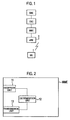
Fig. 1] Fig. 1 is an overall configuration diagram of an emergency information broadcast system according to a first embodiment of the present invention. - [
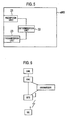
Fig. 2] Fig. 2 is a functional block diagram of a mobility management node according to the first embodiment of the present invention. - [
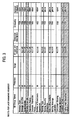
Fig. 3] Fig. 3 is a diagram showing a format example of "Write-Replace Warning Request" transmitted by the mobility management node according to the first embodiment of the present invention. - [
Fig. 4] Fig. 4 is a sequence diagram showing operation of the emergency information broadcast system according to the first embodiment of the present invention. - [
Fig. 5] Fig. 5 is a functional block diagram of a radio base station according toModification 1 of the present invention. - [
Fig. 6] Fig. 6 is an overall configuration diagram of an emergency information broadcast system according to Modification 2 of the present invention. - [
Fig. 7] Fig. 7 is a sequence diagram showing operation of the emergency information broadcast system according to Modification 2 of the present invention. - An emergency information broadcast system according to a first embodiment of the present invention is described with reference to
Figs. 1 to 4 . - As an example, this embodiment describes an emergency information broadcast system in an LTE mobile communication system. However, the present invention is not limited to such an emergency information broadcast system, and can be applied to an emergency information broadcast system in a mobile communication system of a different scheme.
- As shown in
Fig. 1 , the emergency information broadcast system according to this embodiment includes a cell broadcast entity CBE, a cell broadcast center CBC, a mobility management node MME (Mobility Management Entity), a radio base station eNB, and a mobile station UE. - As shown in
Fig. 2 , the mobility management node MME includes areception unit 11, adetermination unit 12, and atransmission unit 13. - The
reception unit 11 is configured to receive various signals from the cell broadcast center CBC and the radio base station eNB. - For example, the
reception unit 11 is configured to receive "Write-Replace Warning Request" from the cell broadcast center CBC, and receive "Write-Replace Warning Response" from the radio base station eNB. - The
determination unit 12 is configured to determine whether an access restriction invoking condition is met or not. - For example, the
determination unit 12 may be configured to determine whether the access restriction invoking condition is met or not based on logic predetermined according to the cell broadcast center CBC which is the source of broadcasting the emergency information, the size of the broadcast area, the number of cells in the broadcast area, the number of mobile stations UE camping on the cells in the broadcast area, and the like, or in other words, determine whether or not to invoke access restriction to the mobile stations UE in the broadcast area. - The
determination unit 12 may be configured to also determine an area (or a cell) to apply the access restriction, a restriction rate or restriction time used in the access restriction, or the like. - The
transmission unit 13 is configured to transmit various signals to the cell broadcast center CBC and the radio base station eNB. - For example, the
transmission unit 13 is configured to transmit "Write-Replace Warning Confirm" to the cell broadcast center CBC, and transmit "Write-Replace Warning Request" to the radio base station eNB. - The
transmission unit 13 is configured to transmit "Write-Replace Warning Request" containing "Overload Action/Traffic Load Reduction Indication" commanding to invoke access restriction as shown inFig 3 when thedetermination unit 12 determines to invoke access restriction to the mobile stations UE in the broadcast area. - "Warning Area List" shown in
Fig 3 indicates a broadcast area for the emergency information. - With reference to
Fig. 4 , a description is given below of operation of the emergency information broadcast system according to this embodiment. - As shown in
Fig. 4 , upon generating emergency information to be broadcasted in Step S1001, the cell broadcast entity CBE transmits an emergency information broadcast request to the cell broadcast center CBC in Step S1002. Then, in Step S1003, the cell broadcast center CBC transmits "Write-Replace Warning Request" to the mobility management node MME. - In Step S1004, the mobility management node MME transmits "Write-Replace Warning Confirm" to the cell broadcast center CBC, and the cell broadcast center CBC transmits an emergency information broadcast response to the cell broadcast entity CBE.
- Upon receiving the "Write-Replace Warning Request" and determining that the access restriction invoking condition is met, the mobility management node MME determines to invoke access restriction to the mobile stations UE in the broadcast area, and transmits "Write-Replace Warning Request" to the radio base station eNB in Step S1006, the "Write-Replace Warning Request" containing "Overload Action/Traffic Load Reduction Indication" commanding to invoke access restriction.
- The radio base station eNB transmits a notification of change in notification to the mobile station UE in the broadcast area by use of a paging signal in Step S1007, and in Step S1008, notifies the mobile station UE of the emergency information and invokes access restriction to the mobile station UE by use of notification (e.g., SIB10/SIB11) (see, for example, 3GPP TS25.331/TS36.331).
- For example, the radio base station eNB invokes the access restriction to the mobile station UE in the broadcast area by notifying the mobile station UE of a restriction rate for an AC (access class) of a restriction target by use of notification.
- Even if the backlight or the like is turn on in response to the reception of the emergency information, the mobile station UE does not activate an application associated with the turning-on, and does not transmit "RRC Connection Request" to a predetermined APN (Access Point Name).
- The mobile station UE is configured to check whether access restriction is invoked thereon or not upon receipt of emergency information. More specifically, the mobile station UE is configured to check whether notification containing access restriction information has been transmitted or not upon receipt of notification containing the emergency information.
- Then, the mobile station UE is configured to withhold transmission of "RRC Connection Requests" until this check is complete.
- In Step S1009, the radio base station eNB transmits "Write-Replace Warning Response" to the mobility management node MME.
- According to the emergency information broadcast system according to this embodiment, the radio base station eNB can transmit emergency information to the mobile station UE in the broadcast area and invoke access restriction to the mobile station UE according to the "Overload Action/Traffic Load Reduction Indication" contained in the "Write-Replace Warning Request" received by the radio base station eNB from the mobility management node MME. This can avoid network congestion which would be otherwise caused if the mobile stations UE in the broadcast area transmit "RRC Connection Requests" simultaneously.
- With reference to
Fig. 5 , a description is given of an emergency information broadcast system according toModification 1 of the present invention. The following description of the emergency information broadcast system according toModification 1 focuses on differences from the emergency information broadcast system according to the first embodiment described above. - As shown in
Fig. 5 , the radio base station eNB according toModification 1 includes areception unit 21, adetermination unit 22, and atransmission unit 23. - The
reception unit 21 is configured to receive various signals from the mobility management node MME and the mobile station UE. - For example, the
reception unit 21 is configured to receive "Write-Replace Warning Request" from the mobility management node MME. - The
determination unit 22 is configured to determine whether an access restriction invoking condition is met or not based on predetermined information (such as, for example, "Warning Area List") contained in the "Write-Replace Warning Request" received from the mobility management node MME. - The
determination unit 22 may be configured to determine whether the access restriction invoking condition is met or not based on logic predetermined according to the cell broadcast center CBC which is the source of broadcasting the emergency information, the size of the broadcast area, the number of cells in the broadcast area, the number of mobile stations UE camping on the cells in the broadcast area, and the like, or in other words, determine whether or not to invoke access restriction to the mobile stations UE in the broadcast area. - The
determination unit 22 may be configured to also determine an area (or a cell) to apply the access restriction, a restriction rate or restriction time used in the access restriction, or the like. - The
transmission unit 23 is configured to transmit various signals to the mobility management node MME and the mobile station UE. - For example, the
transmission unit 23 is configured to transmit "Write-Replace Warning Conform" to the mobility management node MME, and transmit a paging signal and notification to the mobile station UE in the broadcast area. - The
transmission unit 23 is configured to transmit a notification of change in notification by use of a paging signal as well as notifies of emergency information and invokes access restriction by use of notification (e.g., SIB10/SIB11) when thedetermination unit 22 determines to invoke access restriction to the mobile station UE in the broadcast area. - Note that the mobility management node MME of the emergency information broadcast system according to
Modification 1 may include the function of thedetermination unit 12 shown inFig. 2 , or does not have to include the function of thedetermination unit 12 shown inFig. 2 . - With reference to
Figs. 6 and7 , a description is given of an emergency information broadcast system according to Modification 2 of the present invention. The following description of the emergency information broadcast system according toModification 1 focuses on differences from the emergency information broadcast systems according to the first embodiment andModification 1 described above. - As an example, Modification 2 describes an emergency information broadcast system in a mobile communication system of a UTRAN (Universal Terrestrial Random Access Network) scheme.
- As shown in
Fig. 6 , the emergency information broadcast system according to Modification 2 includes the cell broadcast entity CBE, the cell broadcast center CBC, a packet switch GGSN/SGSN (Gateway General Packet radio service Support Node/Serving General packet radio service Support Node), a radio network control station RNC (Radio Network Center), a radio base station BTS, and a mobile station UE. - With reference to
Fig. 7 , a description is given of operation of the emergency information broadcast system according to Modification 2. - As shown in
Fig. 7 , when emergency information to be broadcasted is generated in Step S2001, the cell broadcast entity CBE transmits an emergency information broadcast request to the cell broadcast center CBC in Step S2002, and the cell broadcast center CBC transmits "Write-Replace Warning Request" to the radio network control station RNC in Step S2003. - The cell broadcast center CBC may transmit the "Write-Replace Warning Request" to the radio network control station RNC via the packet switch GGSN/SGSN.
- According to "Overload Action/Traffic Load Reduction Indication" contained in the received "Write-Replace Warning Request," the radio network control station RNC transmits a notification of change in notification by use of a paging signal in Step S2004, and transmits a notification change command to the radio base station BTS in Step S2005.
- In Step S2006, the radio base station BTS invokes access restriction (e.g., DSAC restriction) on the mobile stations UE in the broadcast area by use of notification (e.g., SIB3).
- In Step S2007, the radio base station BTS transmits a CBS message as emergency information to the mobile station UE in the broadcast area via a common traffic channel (CTCH).
- Then, even if the backlight or the like is turned on in response to the receipt of the emergency information, the mobile station UE does not activate an application associated with the turning-on and does not transmit "RRC Connection Request" to a predetermined APN.
- The mobile station UE is configured to check whether access restriction is invoked thereon or not upon receipt of the emergency information. More specifically, the mobile station UE is configured to check whether notification containing access restriction information has been transmitted or not upon receipt of notification containing the emergency information.
- Then, the mobile station UE is configured to withhold transmission of "RRC Connection Request" until this check is complete.
- The features of the above-described embodiment may also be expressed as follows.
- A first feature of this embodiment is summarized as a mobile communication method including: a step A of a core network apparatus (an mobility management node MME, a packet switch GGSN/SGSN, a cell broadcast center CBC or the like) transmitting a "Write-Replace Warning Request (a warning request signal)" containing "Overload Action/Traffic Load Reduction Indication (indication information)" commanding to invoke access restriction to a radio access network apparatus (a radio base station or a radio network control station RNC) if the core network apparatus is commanded to broadcast emergency information in a broadcast area and if an access restriction invoking condition is met; and a step B of the radio access network broadcasting the emergency information in the broadcast area and invoking the access restriction to a mobile station UE in the broadcast area.
- A second feature of this embodiment is summarized as a mobile communication method including: a step A of a radio access network apparatus determining whether or not to invoke access restriction to a mobile station UE in a broadcast area upon receipt of a "Write-Replace Warning Request (a warning request signal) " commanding to broadcast emergency information in the broadcast area, the determination being made based on predetermined information (for example, "Warning Area List") contained in the "Write-Replace Warning Request"; and a step B of the radio access network broadcasting the emergency information in the broadcast area and invoking the access restriction to the mobile station UE in the broadcast area upon determining to invoke the access restriction to the mobile station UE in the broadcast area.
- In the first and second features of this embodiment, in the step B, the radio access network invokes the access restriction by use of notification.
- In the first and second features of this embodiment, in the step B, the radio access network invokes the access restriction by use of an "RRC Connection Request (an RRC connection rejection signal)".
- A third feature of this embodiment is summarized as an mobility management node MME (a core network apparatus) including a
transmission unit 13 configured to transmit a "Write-Replace Warning Request" containing "Overload Action/Traffic Load Reduction Indication" commanding to invoke access restriction to a radio base station eNB (a radio access network apparatus) if the core network apparatus is commanded to broadcast emergency information in a broadcast area and if an access restriction invoking condition is met. - A fourth of this embodiment is summarized as a radio base station eNB (a radio access network apparatus) including: a
determination unit 22 configured to determine whether or not to invoke access restriction to a mobile station UE in a broadcast area upon receipt of a "Write-Replace Warning Request" commanding to broadcast emergency information in the broadcast area, the determination being made based on predetermined information (for example, "Warning Area List") contained in the "Write-Replace Warning Request"; and atransmission unit 23 configured to broadcast the emergency information in the broadcast area and invoke the access restriction to the mobile station UE in the broadcast area when the determination unit determines to invoke the access restriction to the mobile station UE in the broadcast area. - A fifth of this embodiment is summarized as a mobile station UE in which is configured to, when receiving emergency information, withhold transmission of an "RRC Connection Request (a connection request signal)" for a period until the mobile station UE completes checking whether access restriction is invoked thereon or not.
- It should be noted that the foregoing operations of the mobile station UE, the radio base station eNB, and the mobility management node MME may be implemented by hardware, may be implemented by a software module executed by a processor, or may be implemented in combination of the two.
- The software module may be provided in a storage medium in any format, such as a RAM (Random Access Memory), a flash memory, a ROM (Read Only Memory), an EPROM (Erasable Programmable ROM), an EEPROM (Electronically Erasable and Programmable ROM), a register, a hard disk, a removable disk, or a CD-ROM.
- The storage medium is connected to a processor so that the processor can read and write information from and to the storage medium. Instead, the storage medium may be integrated in a processor. The storage medium and the processor may be provided inside an ASIC. Such an ASIC may be provided in the mobile station UE, the radio base station eNB, and the mobility management node MME. Otherwise, the storage medium and the processor may be provided as discrete components inside the mobile station UE, the radio base station eNB, and the mobility management node MME.
- Hereinabove, the present invention has been described in detail by use of the foregoing embodiments. However, it is apparent to those skilled in the art that the present invention should not be limited to the embodiments described in the specification. The present invention can be implemented as an altered or modified embodiment without departing from the spirit and scope of the present invention, which are determined by the description of the scope of claims. Therefore, the description of the specification is intended for illustrative explanation only and does not invoke any limited interpretation on the present invention.
- Note that the entire content of Japanese Patent Application No.
2012-147266 (filed on June 29, 2012 - As described above, the present invention can provide a mobile communication method, a core network apparatus, a radio access network apparatus, and a mobile station capable of avoiding network congestion which would be otherwise caused by simultaneous transmission of "RRC Connection Requests" in a case where emergency information is transmitted to mobile stations UE in the broadcast area.
-
- UE
- mobile station
- ENb
- radio base station
- MME
- mobility management node
- 11, 21
- reception unit
- 12, 22
- determination unit
- 13, 23
- transmission unit
Claims (7)
- A mobile station, wherein
the mobile station is configured to, when receiving emergency information, withhold transmission of a predetermined connection request signal for a predetermined period until the mobile station completes checking whether access restriction is invoked thereon or not. - A mobile communication method comprising:a step A of a core network apparatus transmitting a warning request signal containing indication information commanding to invoke access restriction to a radio access network apparatus if the core network apparatus is commanded to broadcast emergency information in a broadcast area and if an access restriction invoking condition is met; anda step B of the radio access network broadcasting the emergency information in the broadcast area and invoking the access restriction to a mobile station in the broadcast area.
- A mobile communication method comprising:a step A of a radio access network apparatus determining whether or not to invoke access restriction to a mobile station in a broadcast area upon receipt of a warning request signal commanding to broadcast emergency information in the broadcast area, the determination being made based on predetermined information contained in the warning request signal; anda step B of the radio access network broadcasting the emergency information in the broadcast area and invoking the access restriction to the mobile station in the broadcast area upon determining to invoke the access restriction to the mobile station in the broadcast area.
- The mobile station method according to any one of claims 2 and 3, wherein
in the step B, the radio access network invokes the access restriction by use of notification. - The mobile station method according to any one of claims 2 and 3, wherein
in the step B, the radio access network invokes the access restriction by use of an RRC connection rejection signal. - A core network apparatus comprising
a transmission unit configured to transmit a warning request signal containing indication information commanding to invoke access restriction to a radio access network apparatus if the core network apparatus is commanded to broadcast emergency information in a broadcast area and if an access restriction invoking condition is met. - A radio access network apparatus comprising:a determination unit configured to determine whether or not to invoke access restriction to a mobile station in a broadcast area upon receipt of a warning request signal commanding to broadcast emergency information in the broadcast area, the determination being made based on predetermined information contained in the warning request signal; anda transmission unit configured to broadcast the emergency information in the broadcast area and invoke the access restriction to the mobile station in the broadcast area when the determination unit determines to invoke the access restriction to the mobile station in the broadcast area.
Applications Claiming Priority (2)
| Application Number | Priority Date | Filing Date | Title |
|---|---|---|---|
| JP2012147266A JP2014011646A (en) | 2012-06-29 | 2012-06-29 | Mobile communication method, core network device, radio access network device, and mobile station |
| PCT/JP2013/067663 WO2014003122A1 (en) | 2012-06-29 | 2013-06-27 | Mobile communication method, core network device, wireless access network device, and mobile station |
Publications (2)
| Publication Number | Publication Date |
|---|---|
| EP2869637A1 true EP2869637A1 (en) | 2015-05-06 |
| EP2869637A4 EP2869637A4 (en) | 2016-03-02 |
Family
ID=49783259
Family Applications (1)
| Application Number | Title | Priority Date | Filing Date |
|---|---|---|---|
| EP13808913.1A Withdrawn EP2869637A4 (en) | 2012-06-29 | 2013-06-27 | MOBILE COMMUNICATION METHOD, CENTRAL NETWORK DEVICE, WIRELESS ACCESS NETWORK DEVICE, AND MOBILE STATION |
Country Status (5)
| Country | Link |
|---|---|
| US (1) | US20150156667A1 (en) |
| EP (1) | EP2869637A4 (en) |
| JP (1) | JP2014011646A (en) |
| CN (1) | CN104396311A (en) |
| WO (1) | WO2014003122A1 (en) |
Families Citing this family (8)
| Publication number | Priority date | Publication date | Assignee | Title |
|---|---|---|---|---|
| CN106471848B (en) * | 2014-07-09 | 2019-07-23 | Lg电子株式会社 | Method and apparatus for performing application-specific access control in a wireless communication system |
| US9603044B2 (en) * | 2015-06-10 | 2017-03-21 | Cisco Technology, Inc. | Use of traffic load reduction indicator for facilitating mobility management entity overload control function |
| CN106156280A (en) * | 2016-06-24 | 2016-11-23 | 北京京东尚科信息技术有限公司 | Order method for sorting based on GIS map and order sorting system |
| CN108024301B (en) * | 2016-11-04 | 2022-07-26 | 夏普株式会社 | Base station, user equipment and execution method thereof |
| JP7041830B2 (en) * | 2018-02-16 | 2022-03-25 | 日本電気株式会社 | AMF device, AMF device method, communication system, and emergency information distribution method |
| JP6959896B2 (en) * | 2018-06-25 | 2021-11-05 | 本田技研工業株式会社 | Wireless communication system |
| JP7251116B2 (en) * | 2018-11-21 | 2023-04-04 | トヨタ自動車株式会社 | VEHICLE, VEHICLE CONTROL METHOD, AND VEHICLE CONTROL PROGRAM |
| CN111954166B (en) * | 2020-08-21 | 2022-07-19 | 创新维度科技(北京)有限公司 | Public early warning broadcasting method, system and base station equipment |
Family Cites Families (11)
| Publication number | Priority date | Publication date | Assignee | Title |
|---|---|---|---|---|
| US6745021B1 (en) * | 2000-11-21 | 2004-06-01 | Alcatel | System, controller and method for alerting mobile subscribers about emergency situations |
| WO2007108131A1 (en) * | 2006-03-23 | 2007-09-27 | Fujitsu Limited | Congestion control method and apparatus thereof |
| JP4373419B2 (en) * | 2006-09-07 | 2009-11-25 | 日立情報通信エンジニアリング株式会社 | Call control method |
| JP4515438B2 (en) * | 2006-11-20 | 2010-07-28 | ソフトバンクモバイル株式会社 | Mobile terminal device |
| JP5249552B2 (en) * | 2007-10-29 | 2013-07-31 | 株式会社エヌ・ティ・ティ・ドコモ | Emergency information distribution method, radio control apparatus, radio base station, and mobile terminal |
| JP4647678B2 (en) * | 2008-08-18 | 2011-03-09 | 株式会社エヌ・ティ・ティ・ドコモ | Message distribution method, radio base station, and message distribution station |
| US8868743B2 (en) * | 2010-04-30 | 2014-10-21 | Sharp Kabushiki Kaisha | Modified access classes for machine type communication (MTC) devices during emergencies |
| US20130155954A1 (en) * | 2011-12-14 | 2013-06-20 | Interdigital Patent Holdings, Inc. | Method and apparatus for triggering machine type communications applications |
| US8838971B2 (en) * | 2012-01-16 | 2014-09-16 | Alcatel Lucent | Management of public keys for verification of public warning messages |
| US9961524B2 (en) * | 2012-01-27 | 2018-05-01 | Samsung Electronics Co., Ltd. | Method and apparatus for efficient security management of disaster message in mobile communication system |
| US8971893B2 (en) * | 2012-11-29 | 2015-03-03 | At&T Intellectual Property I, Lp | Apparatus and method for management of radio resource control connections |
-
2012
- 2012-06-29 JP JP2012147266A patent/JP2014011646A/en not_active Ceased
-
2013
- 2013-06-27 US US14/403,217 patent/US20150156667A1/en not_active Abandoned
- 2013-06-27 CN CN201380034623.4A patent/CN104396311A/en active Pending
- 2013-06-27 WO PCT/JP2013/067663 patent/WO2014003122A1/en not_active Ceased
- 2013-06-27 EP EP13808913.1A patent/EP2869637A4/en not_active Withdrawn
Also Published As
| Publication number | Publication date |
|---|---|
| JP2014011646A (en) | 2014-01-20 |
| WO2014003122A1 (en) | 2014-01-03 |
| EP2869637A4 (en) | 2016-03-02 |
| US20150156667A1 (en) | 2015-06-04 |
| CN104396311A (en) | 2015-03-04 |
Similar Documents
| Publication | Publication Date | Title |
|---|---|---|
| EP2869637A1 (en) | Mobile communication method, core network device, wireless access network device, and mobile station | |
| EP3352486B1 (en) | Rsu device, base station device, control node and method therefor | |
| JP5922615B2 (en) | Method and apparatus for communicating public warning messages | |
| EP2037596B1 (en) | Transmission of broadcast information on traffic and control channels | |
| US9391900B2 (en) | Mobile station | |
| JP4540007B2 (en) | Mobile communication method and radio base station | |
| EP2219164A1 (en) | Emergency information delivering method, wireless control apparatus, radio base station and mobile terminal | |
| US20130294396A1 (en) | Mobile communication method and mobile station | |
| KR102183386B1 (en) | Improved public information system | |
| JP2016506092A (en) | Public alarm system display to users in connected mode | |
| EP2332352B1 (en) | A method of transmitting etws notification messages in a gerancellular radio system | |
| EP2906003A1 (en) | Paging a wireless device using a radio cell identifier | |
| JP5317820B2 (en) | Mobile communication method and mobile station | |
| EP2852195A1 (en) | Mobile station | |
| JP2014147124A (en) | Mobile communication method, core network device, radio access network device, and mobile stations | |
| JP5122359B2 (en) | Emergency information notification method, mobile station and radio base station | |
| CN103636240A (en) | Communication device and communication method | |
| JP2010200384A (en) | Mobile communication method | |
| Byun et al. | An App Method for Image-Display in Korean Public Alert System | |
| JP2009267884A (en) | Method of reporting emergency information, mobile station, and radio base station | |
| JP2015195537A (en) | Mobile station, cell broadcast message processing method and program |
Legal Events
| Date | Code | Title | Description |
|---|---|---|---|
| PUAI | Public reference made under article 153(3) epc to a published international application that has entered the european phase |
Free format text: ORIGINAL CODE: 0009012 |
|
| 17P | Request for examination filed |
Effective date: 20141113 |
|
| AK | Designated contracting states |
Kind code of ref document: A1 Designated state(s): AL AT BE BG CH CY CZ DE DK EE ES FI FR GB GR HR HU IE IS IT LI LT LU LV MC MK MT NL NO PL PT RO RS SE SI SK SM TR |
|
| AX | Request for extension of the european patent |
Extension state: BA ME |
|
| DAX | Request for extension of the european patent (deleted) | ||
| RA4 | Supplementary search report drawn up and despatched (corrected) |
Effective date: 20160201 |
|
| RIC1 | Information provided on ipc code assigned before grant |
Ipc: H04W 28/02 20090101ALI20160126BHEP Ipc: H04W 48/10 20090101ALI20160126BHEP Ipc: H04W 48/02 20090101ALN20160126BHEP Ipc: H04W 4/22 20090101ALI20160126BHEP Ipc: H04W 48/06 20090101AFI20160126BHEP |
|
| STAA | Information on the status of an ep patent application or granted ep patent |
Free format text: STATUS: THE APPLICATION HAS BEEN WITHDRAWN |
|
| 18W | Application withdrawn |
Effective date: 20180803 |