EP2866490A1 - Wireless communications system, wireless station, network operation management device, and network optimization method - Google Patents
Wireless communications system, wireless station, network operation management device, and network optimization method Download PDFInfo
- Publication number
- EP2866490A1 EP2866490A1 EP20130761808 EP13761808A EP2866490A1 EP 2866490 A1 EP2866490 A1 EP 2866490A1 EP 20130761808 EP20130761808 EP 20130761808 EP 13761808 A EP13761808 A EP 13761808A EP 2866490 A1 EP2866490 A1 EP 2866490A1
- Authority
- EP
- European Patent Office
- Prior art keywords
- communication quality
- radio station
- statistical
- change
- radio
- Prior art date
- Legal status (The legal status is an assumption and is not a legal conclusion. Google has not performed a legal analysis and makes no representation as to the accuracy of the status listed.)
- Withdrawn
Links
- 238000004891 communication Methods 0.000 title claims abstract description 331
- 238000005457 optimization Methods 0.000 title claims abstract description 137
- 238000000034 method Methods 0.000 title claims abstract description 28
- 230000008859 change Effects 0.000 claims abstract description 147
- 230000015556 catabolic process Effects 0.000 claims abstract description 59
- 238000006731 degradation reaction Methods 0.000 claims abstract description 59
- 230000004044 response Effects 0.000 claims description 12
- 230000007274 generation of a signal involved in cell-cell signaling Effects 0.000 claims description 8
- 230000000737 periodic effect Effects 0.000 claims description 6
- 230000007423 decrease Effects 0.000 claims description 3
- 238000004364 calculation method Methods 0.000 description 27
- 238000010586 diagram Methods 0.000 description 15
- 230000000694 effects Effects 0.000 description 15
- 208000018910 keratinopathic ichthyosis Diseases 0.000 description 7
- 230000004048 modification Effects 0.000 description 7
- 238000012986 modification Methods 0.000 description 7
- 238000012545 processing Methods 0.000 description 7
- 230000005540 biological transmission Effects 0.000 description 5
- 238000001514 detection method Methods 0.000 description 4
- 238000005259 measurement Methods 0.000 description 4
- 230000009467 reduction Effects 0.000 description 4
- 230000020411 cell activation Effects 0.000 description 3
- 238000005516 engineering process Methods 0.000 description 3
- 230000006872 improvement Effects 0.000 description 3
- 230000001934 delay Effects 0.000 description 2
- 230000008030 elimination Effects 0.000 description 2
- 238000003379 elimination reaction Methods 0.000 description 2
- NRNCYVBFPDDJNE-UHFFFAOYSA-N pemoline Chemical compound O1C(N)=NC(=O)C1C1=CC=CC=C1 NRNCYVBFPDDJNE-UHFFFAOYSA-N 0.000 description 2
- 230000001960 triggered effect Effects 0.000 description 2
- MWRWFPQBGSZWNV-UHFFFAOYSA-N Dinitrosopentamethylenetetramine Chemical compound C1N2CN(N=O)CN1CN(N=O)C2 MWRWFPQBGSZWNV-UHFFFAOYSA-N 0.000 description 1
- 230000001413 cellular effect Effects 0.000 description 1
- 238000012508 change request Methods 0.000 description 1
- 230000001186 cumulative effect Effects 0.000 description 1
- 230000000593 degrading effect Effects 0.000 description 1
- 238000005315 distribution function Methods 0.000 description 1
- 230000000977 initiatory effect Effects 0.000 description 1
- 230000007774 longterm Effects 0.000 description 1
- 230000000116 mitigating effect Effects 0.000 description 1
- 238000010295 mobile communication Methods 0.000 description 1
- 230000008569 process Effects 0.000 description 1
- 238000012360 testing method Methods 0.000 description 1
- 238000012546 transfer Methods 0.000 description 1
Images







Classifications
-
- H—ELECTRICITY
- H04—ELECTRIC COMMUNICATION TECHNIQUE
- H04W—WIRELESS COMMUNICATION NETWORKS
- H04W24/00—Supervisory, monitoring or testing arrangements
- H04W24/02—Arrangements for optimising operational condition
-
- H—ELECTRICITY
- H04—ELECTRIC COMMUNICATION TECHNIQUE
- H04W—WIRELESS COMMUNICATION NETWORKS
- H04W36/00—Hand-off or reselection arrangements
- H04W36/0005—Control or signalling for completing the hand-off
- H04W36/0083—Determination of parameters used for hand-off, e.g. generation or modification of neighbour cell lists
- H04W36/00833—Handover statistics
-
- H—ELECTRICITY
- H04—ELECTRIC COMMUNICATION TECHNIQUE
- H04W—WIRELESS COMMUNICATION NETWORKS
- H04W24/00—Supervisory, monitoring or testing arrangements
- H04W24/10—Scheduling measurement reports ; Arrangements for measurement reports
-
- H—ELECTRICITY
- H04—ELECTRIC COMMUNICATION TECHNIQUE
- H04W—WIRELESS COMMUNICATION NETWORKS
- H04W36/00—Hand-off or reselection arrangements
- H04W36/0005—Control or signalling for completing the hand-off
- H04W36/0083—Determination of parameters used for hand-off, e.g. generation or modification of neighbour cell lists
- H04W36/00837—Determination of triggering parameters for hand-off
Definitions
- the present invention relates to a radio communication system and, more particularly, to a radio station, a network operation management apparatus and a radio communication system that have a function of performing network optimization, as well as to a network optimization method.
- SON Self Organizing Network
- OPEX operation cost
- SON has functions such as the following:
- macro radio base station (macro eNB) will be abbreviated to MeNB.
- the MeNBs 1 and 2 are provided by a vender A while the MeNB 3 is provided by a vender B, and that the MeNBs 1 and 2 are managed by a SON server A of the vender A while the MeNB 3 is managed by a SON server B of the vender B.
- the SON server A can recognize or detect what effect is caused on the cell 2 when the MRO function is executed in the cell 1.
- the SON server A notifies the MeNB 2 of information about this effect, whereby the MeNB 2 can also recognize that the effect is caused by the MeNB 1 executing MRO in the cell 1.
- the SON server A or MeNB 1 can mitigate such KPI degradation by reassessing the optimization of a handover-related parameter in the cell 1.
- KPI Key Performance Indicator
- conceivable actions include: restoring the previous state; readjusting the optimized handover-related parameter toward the previous state; and the like.
- the SON server B or MeNB 3 performs optimization for the cell 3 (e.g., optimization of a handover-related parameter).
- HetNet HetNet
- MeNBs 1 and 2 which manage cells 1 and 2, respectively, are managed by a SON server A as in FIG. 1
- a pico eNB (PeNB) 4 which manages a pico cell 4
- the SON server A can recognize or detect what effect is caused on the cell 2 when the CCO function is executed and the transmit power is thus optimized in the cell 1.
- the SON server A or MeNB 1 can suppress the KPI degradation in the cell 2 by reassessing the optimization of the transmit power in the cell 1, similarly to the above.
- the SON server B or PeNB 4 performs optimization for the pico cell 4 (e.g., optimization of transmit power).
- the PeNB 4 or SON server B when the PeNB 4 or SON server B detects KPI degradation in the pico cell 4, such as, for example, an increased incidence of call disconnection RLF or a decline in the average user throughput (or in the bottom 5% of user throughput in a cumulative distribution function (CDF)), then the PeNB 4 or SON server B executes a SON function (here, the CCO function) to resolve such performance degradation even if it is attributable to a problem in the cell 1, which should be resolved primarily by the MeNB 1 or SON server A.
- a SON function here, the CCO function
- an object of the present invention is to provide a radio communication system, a radio station, a network operation management apparatus, and a network optimization method that enable network optimization while suppressing performance degradation in the entire system when multiple radio base stations and upper-level network apparatuses individually perform network optimization.
- a radio communication system is a radio communication system in which radio stations perform network optimization based on statistical communication quality in at least one cell, characterized in that a first radio station notifies information related to a change in statistical communication quality in a first cell of the first radio station to a second radio station or a network apparatus managing the second radio station.
- a network optimization method is a network optimization method in a radio communication system in which radio stations perform network optimization based on statistical communication quality in at least one cell, characterized in that a first radio station notifies information related to a change in statistical communication quality in a first cell of the first radio station to a second radio station or a network apparatus managing the second radio station.
- a radio station is a radio station in a radio communication system in which radio stations perform network optimization based on statistical communication quality in at least one cell, characterized by comprising: a calculation means for calculating information related to a change in statistical communication quality in a cell under the radio station; and a communication control means for notifying the information related to a change in statistical communication quality to another radio station or a network apparatus managing the another radio station.
- a radio station is a radio station in a radio communication system in which radio stations perform network optimization based on statistical communication quality in at least one cell, characterized by comprising: a reception means for receiving information related to a change in statistical communication quality in a cell under another radio station, from the another radio station or a network apparatus managing the another radio station; and an optimization control means for controlling network optimization in a cell under the radio station.
- a network operation management apparatus is a network operation management apparatus which manages a network including a radio station that performs network optimization based on statistical communication quality in at least one cell, characterized by comprising: a reception means for receiving information related to a change in statistical communication quality in a cell under another radio station, from the another radio station or a network apparatus managing the another radio station; and an optimization control means for controlling optimization of the network managed by the network operation management apparatus.
- a radio station in a radio communication system in which network optimization is autonomously performed notifies another radio station or a upper-level network apparatus managing such another radio station of information about changes in statistical communication quality in a cell of this radio station.
- This allows the another radio station or upper-level network apparatus to recognize the state of the radio station, for example, the radio status in the cell of the radio station.
- it is possible to avoid or suppress performance degradation in the entire system even when network optimization is individually performed.
- a schematic architecture of the present invention will be described.
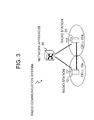
- a radio communication system is assumed to include radio stations 10 and 20, which manage cells 10a and 20a, respectively, and a network apparatus 30, which controls or manages the radio station 10 and/or the radio station 20. It is not necessary for the cells 10a and 20a to be in contact with each other at the edges, but it is sufficient for them to be deployed as closely as they exert effects on each other.
- the radio stations in FIG. 3 may include not only a radio base station directly controlling one or more cells, but also an upper-level station controlling or managing multiple radio base stations (and hence multiples cells). It is conceivable that a radio station is , for example, a radio base station, a base station control station, a network operation management apparatus, or the like. It is conceivable that a network apparatus is a base station control station, a core network apparatus, a network operation management apparatus or the like.
- the radio station 10 and the radio station 20 may be directly connected through an interface, or may be connected in such a manner that they can communicate with each other via the network apparatus 30.
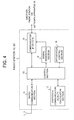
- Each radio station (10, 20) has a configuration as shown in FIG. 4 .
- the radio station includes a radio communication section 11 for performing radio communication with a radio terminal, a statistical communication quality calculation section 12 that calculates statistical communication quality with respect to communication with a radio terminal and communication with an upper-level station in a cell managed by this radio station, and a control section 13 that controls the operation of this radio station itself and the operation of a radio terminal.
- the radio communication section 11 and the statistical communication quality calculation section 12 are controlled by the control section 13.
- the control section 13 may be a program-controlled processor such as a CPU (Central Processing Unit) implementing various functions by means of software.
- the control section 13 is assumed to have a timer function and a computing function for timing determination.
- a signal generation section 14 When a predetermined condition is met such that the control section 13 determines a change in statistical communication quality, a signal generation section 14 generates a notification signal including information related to a change in statistical communication quality and sends it to another radio station or its network apparatus 30 via a communication interface section 15. Alternatively, it is also possible that the signal generation section 14 generates a signal for requesting another radio station or its network apparatus 30 to notify the information related to statistical communication quality and sends it via the communication interface section 15.
- control section 13 when receiving from another radio station information related to a change in statistical communication quality in a cell of the another radio station, controls an optimization control section 16, so that autonomous network optimization is performed.
- the optimization control section 16 performs control such as network optimization for the cell its own radio station manages, with consideration given to the received information related to statistical communication quality in the another cell.
- control is, but is not limited to, self optimization of radio parameters and network parameters in a self organizing network (SON), control for restoring the previous state before self optimization is performed when a problem is detected with the consequence of this self optimization, or the like.
- SON self organizing network
- the optimization control section 16 may be provided to a upper level network apparatus, not to a radio station.
- the present invention is also applicable to such a case.
- the above-mentioned statistical communication quality is also referred to as KPI (Key Performance Indicator) or network operation quality, for which conceivable ones include, but are not limited to: quality regarding communication between a radio station and a radio terminal under control of the radio station or the statistical value of such quality; network information regarding communication between the radio station and the network apparatus 30 or the statistical value of such network information; statistical information regarding a radio terminal staying in a cell managed by the radio station; and the like.
- KPI Key Performance Indicator
- network operation quality for which conceivable ones include, but are not limited to: quality regarding communication between a radio station and a radio terminal under control of the radio station or the statistical value of such quality; network information regarding communication between the radio station and the network apparatus 30 or the statistical value of such network information; statistical information regarding a radio terminal staying in a cell managed by the radio station; and the like.
- KPI statistical communication quality
- KPIs statistical communication quality
- KPIs include, but are not limited to: system throughput; user throughput; the number of handovers; the number of successful handovers; handover success rate; the number of handover failures; handover failure rate; the number of call disconnections (the number of RLFs); call disconnection rate (RLF rate); the number of discarded packets; packet discard rate; the number of radio connection requests; the number of radio reconnection requests; the number of successful random accesses; the number of users failing to meet predetermined received quality; the number of users failing to meet predetermined service quality; transmission delay time; the number of users failing to meet predetermined transmission delay time; the proportion of users failing to meet predetermined transmission delay time; the ratio of areas failing to meet predetermined received quality (also referred to as dead spot ratio); the ratio of areas meeting predetermined received quality; and the like.
- the calculation of the ratio of areas is effective, for example, when measurement reports including location information can be collected from radio terminals, and the collection of such measurement reports including location information can be achieved by using the Minimization of Drive Test (MDT) technology, which is defined by 3GPP (NPL 3).
- MDT Minimization of Drive Test
- NPL 3 3GPP
- the calculation of a KPI may be performed in each cell with all radio terminals within a cell as targets, or by each radio terminal individually, or may be performed for each service (e.g., for each QoS (Quality of Service)).
- the calculation of a handover-related KPI may be performed in each cell with all neighbours as targets (i.e., for each cell of interest), or for each cell pair (i.e., each pair of neighbour cells).
- a radio station 10 notifies information related to a change in statistical communication quality in a cell under its own management to another radio station 20 that manages a neighbour cell or to a network apparatus 30 that manages such another radio station 20.
- the radio station 10 can make the other radio station 20 or network apparatus 30 recognize a change or the like in statistical communication quality in the cell 10a under its own (the radio station 10's) management.
- the radio station 10 can make the other radio station 20 recognize how control such as network optimization performed in the cell 20a managed by the other radio station 20 affects statistical communication quality in the cell 10a under its own (the radio station 10's) management.
- a trigger which causes a radio station to notify another radio station or its upper level network apparatus of information related to change in statistical communication quality is, for example:
- the control section 13 of the radio station 10 collects information for calculation of statistical communication quality from the radio communication section 11 and the communication interface 15 (Operation 101) and determines whether or not it is a timing to calculate statistical communication quality (Operation 102). If it is not a timing to calculate statistical communication quality (Operation 102; No), Operation 101 is repeated. When it is a timing to calculate statistical communication quality (Operation 102; Yes), the statistical communication quality calculation section 12, in accordance with an instruction of the control section 13, calculates statistical communication quality based on the collected information (Operation 103). Subsequently, the control section 13 determines whether or not the calculated statistical communication quality has degraded (Operation 104).
- degradation in statistical communication quality is determined when the calculated statistical communication quality is lower than a predetermined threshold or is far lower than a predetermined ratio. If the calculated statistical communication quality has not degraded (Operation 104; No), Operations 101 to 103 are repeated without making notification. When it is detected that the calculated statistical communication quality has degraded (Operation 104; Yes), the signal generation section 14, in accordance with an instruction of the control section 13, generates a notification signal including information indicating degradation in statistical communication quality and sends it to the other radio station 20 via the communication interface 15 (Operation 105).
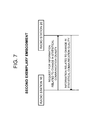
- a radio station 10 requests another radio station 20 to notify information related to change in statistical communication quality, and the other radio station 20, in response to this request, notifies the radio station 10, which originated the request, of information related to a change in statistical communication quality in its own cell.
- the radio station 10 can recognize how control such as network optimization performed in a cell 10a of its own (the radio station 10) affects statistical communication quality or the like in a cell 20a of the other radio station 20.
- This request for notification may also include information indicating: statistical communication quality in which cell is requested; statistical communication quality at what point of time is requested; information related to change in statistical communication quality based on what reference point of time is requested; statistical communication quality calculated at what interval is requested; or the like. Specifically, cell identity information, time information, calculation interval information, or the like is notified to the other radio station 20 (or a network apparatus 30).
- the control section 13 of the radio station 20 collects information for calculation of statistical communication quality from the radio communication section 11 and the communication interface 15 (Operation 201), and determines whether or not it is a timing to calculate statistical communication quality (Operation 202). When it is a timing to calculate statistical communication quality (Operation 202; Yes), the statistical communication quality calculation section 12, in accordance with an instruction of the control section 13, calculates statistical communication quality based on the collected information (Operation 203). When it is not a timing to calculated statistical communication quality (Operation 202; No), the calculation of statistical communication quality (Operation 203) is not performed.
- control section 13 determines whether or not a request to notify information related to change in statistical communication quality is received (Operation 204). If no request is received (Operation 204; No), Operations 201 to 203 are repeated. When a request to notify information related to change in statistical communication quality is received (Operation 204; Yes), the statistical communication quality calculation section 12, in accordance with an instruction of the control section 13, calculates statistical communication quality based on collected information (Operation 205).
- the control section 13 compares the statistical communication quality calculated this time with the latest statistical communication quality and outputs information indicating a change in statistical communication quality to the signal generation section 14, which then generates a notification signal including the information indicating a change in statistical communication quality and sends it to the other radio station 20 via the communication interface 15 (Operation 206).
- the radio station 20 in response to a request from the radio station 10, notifies a change in statistical communication quality at the radio station 20, whereby the radio station 20 can notify how the cell 20a of its own (the radio station 20) is affected by control such as network optimization performed by the radio station 10.
- the radio station 10 performs network optimization, with consideration given to this information indicating such an effect, whereby it is possible to accomplish optimization in the entire system.
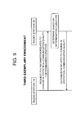
- a sequence according to a third exemplary embodiment is different from that of the second exemplary embodiment shown in FIG. 7 in that a side requesting information specifies a determination condition to a side that notifies the information.
- a radio station 10 when a radio station 10 requests another radio station 20 to notify information related to change in statistical communication quality, the radio station 10 sends a determination condition together.
- the other radio station 20 in response to this request, notifies the ration station 10, the originator of the request, of information related to a change in statistical communication quality in its own cell, in accordance with the determination condition.
- a condition such as information and timing required for network optimization control by the radio station 10 can be designated, whereby the radio station 10 can more accurately find how control such as network optimization performed in its own cell 10a affects statistical communication quality in a cell 20a of the other radio station 20.
- This determination condition may also include: statistical area information indicating which area (e.g., a cell) statistical communication quality is to be derived from; statistical time information indicating what point of time statistical communication quality is to be derived at; determination time information indicating what reference point of time is to be based on for the information related to a change in statistical communication quality; statistical interval information indicating what interval statistical communication quality is to be checked or calculated at; or the like.
- cell identity information, time information, calculation interval information, or the like is notified to the other radio station 20.
- usages of the determination time information include, for example: designating a predetermined time of day and comparing KPIs at the same times of different dates; comparing KPIs at the same times of different weeks; and the like.
- the statistical interval information may be configured to indicate a predetermined period of time.
- Conceivable examples include, for example: comparing KPIs during a predetermined period of time (e.g., several hours) starting from the same times (or until the same times, or before and after the same times) of different dates; comparing KPIs during a predetermined period of time starting from the same times of the same days of different weeks; and the like.
- the above-mentioned predetermined period of time may be statistical interval information.
- a notification condition to designate a notification mode that indicates whether on-demand notification of information related to change in statistical communication quality is requested, or periodic notification of information related to change in statistical communication quality is requested, or notification of information related to change in statistical communication quality using a trigger-based method, in which notification is made when a predetermined condition is met, is requested, or that indicates any combination of these.
- a trigger-based method in which notification is made when a predetermined condition is met, is requested, or that indicates any combination of these.
- predetermined conditions include, for example: a change not smaller than a predetermined threshold (or greater than a predetermined threshold) occurring in statistical communication quality; statistical communication quality becoming not lower than a predetermined value (or becoming higher than a predetermined value); statistical communication quality becoming not higher than a predetermined value (or becoming lower than a predetermined value); and the like.
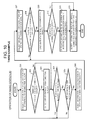
- the control section 13 of the radio station 20 collects information for calculation of statistical communication quality from the radio communication section 11 and the communication interfaces 15 and 16 (Operation 301) and determines whether or not it is a timing to calculate statistical communication quality (Operation 302).
- the statistical communication quality calculation section 12 in accordance with an instruction of the control section 13, calculates statistical communication quality based on the collected information (Operation 303). If it is not a timing to calculate statistical communication quality (Operation 302; No), the calculation of statistical communication quality (Operation 303) is not performed.
- the control section 13 determines whether or not a request to notify information related to change in statistical communication quality is received (Operation 304). If no request is received (Operation 304; No), Operations 301 to 303 are repeated.
- the control section 13 determines whether or not a determination condition (a reference time specifying a time based on which a change in statistical communication quality is determined) included in this request for notification is met (Operation 305). When it is not the reference time (Operation 305; No), Operations 301 to 304 are repeated. When it is the reference time (Operation 305; Yes), the control section 13 resets information for calculation of statistical communication quality (Operation 306) and collects anew information for calculating statistical communication quality from the radio communication section 11 and the communication interface 15 (Operation 307).
- a determination condition a reference time specifying a time based on which a change in statistical communication quality is determined
- the control section 13 determines whether or not it is a timing to calculate statistical communication quality (Operation 308). When it is a timing to calculate statistical communication quality (Operation 308; Yes), the statistical communication quality calculation section 12, in accordance with an instruction of the control section 13, calculates statistical communication quality based on the collected information (Operation 309). If it is not a timing to calculate statistical communication quality (Operation 308; No), the collection of information for calculation of statistical communication quality (Operation 307) is repeated.
- the control section 13 compares the statistical communication quality calculated this time with the latest statistical communication quality, thereby determining whether or not the statistical communication quality calculated this time has degraded (Operation 310).
- the control section 13 calculates the amount (or rate) of degradation in statistical communication quality (Operation 311) and outputs it to the signal generation section 14.
- the signal generation section 14 generates a notification signal including information indicating the type of statistical communication quality that has degraded and the amount (rate) of degradation therein and sends it to the other radio station 20 via the communication interface 15 (Operation 312).
- a notification signal including information indicating that there is no degradation in statistical communication quality is generated and sent to the other radio station 20 via the communication interface 15 (Operation 312).
- the radio station 20 in accordance with a request and a determination condition from the radio station 10, notifies information about statistical communication quality that has degraded to the radio station 10, whereby the radio station 20 can notify how the cell 20a of its own (the radio station 20) is affected by control such as network optimization performed by the radio station 10. Since information about statistical communication quality that has degraded is notified based on the determination condition indicated by the ratio station 10, the radio station 10 can more accurately find how control such as network optimization performed in its own cell 10a affects statistical communication quality in the cell 20a of the other radio station 20, and can perform network optimization with consideration given to this information indicating such an effect, whereby it is possible to accomplish optimization in the entire system. Note that similar effects can be also achieved by using information about statistical communication quality that has changed, instead of information about statistical communication quality that has degraded.
- the radio station 10 may further specify to the radio station 20 the interval of calculation of statistical communication quality as a determination condition.
- a conceivable method is to designate whether statistical communication quality is calculated at short intervals or is calculate at long intervals, or to designate a specific interval.
- time information a reference time
- time information (a time when statistical communication quality is calculated) used to specify what time statistical communication quality is calculated is notified instead of time information (a reference time) used for a basis of determination of a change in statistical communication quality, and it is determined whether or not a value calculated this time has changed from a value previously calculated.
- Macro radio base stations (macro eNBs) 110 and 120 are directly connected to each other through an X2 interface.
- the macro eNBs 110 and 120 are connected to an MME (Mobility Management Entity) as a upper level network apparatus 130 through S1 interfaces, respectively, and further connected to a network operation management apparatus (SON server) 140 through interfaces Itf-S (also referred to as "southbound interface”), respectively.
- MME Mobility Management Entity
- SON server 140 network operation management apparatus
- Itf-S also referred to as "southbound interface
- the S1 interface or an RIM (RAN Information Management) procedure may be used, or alternatively, the interface Itf-S may be used.
- the interface Itf-S produces relatively long delays, and it is therefore very likely that system performance is temporarily degraded, or network loads are increased due to congested information.
- the X2 interface which produces shorter control delays than others, is used, whereby it is possible to quickly notify information related to statistical communication quality to another macro eNB and to achieve quick optimization in the entire system.
- conceivable messages to communicate information related to change in statistical communication quality through the X2 interface include, but are not limited to, for example: messages at X2 interface establishment (X2 Setup) (X2 SETUP REQUEST, X2 SERTUP RESPONSE); messages at eNB Configuration Update (ENB CONFIGURAION UPDATE, ENB CONFIGURAION UPDATE ACKNOWLEDGE); messages at Cell Activation of a neighbour eNB (CELL ACTIVATION REQUEST, CELL ACTIVATION RESPONSE); a message at Load Indication (LOAD INFORMATION); messages regarding a mobility settings change (MOBILITY CHANGE REQUEST, MOBILITY CHANGE ACKNOWLEDGE); messages at Resource Status Reporting Initiation/Resource Status Reporting (RESOURCE STATUS REQUEST, RESOURCE STATUS RESPONSE, RESOURCE STATUS UPDATE); and the like. It is needless to say that other messages may be
- a KPI statistical communication quality
- RATs Radio Access Technologies
- UMTS Long Term Evolution
- RNC Radio Access Technologies
- CN UMTS core network
- SON servers of different vendors and use this interface.
- the network operation management apparatus 40 is referred to as a SON server as an example, it is also referred to as an O&M (Operation and Management) server.
- O&M Operaation and Management
- the configuration of an O&M server is in some cases represented as an EMS (Element Management System) and an NMS (Network Management System) separated. The present invention is applicable to any of these configurations.
- a fourth example of the present invention is an example in which the above-described first exemplary embodiment is applied to an LTE system.
- a system includes radio base stations 110 and 120, which manage cells 110a and 120a, respectively, and a radio base station 150, which manages a cell 150a, and that the radio base stations 110 and 120 are provided by a vendor A while the radio base station 150 is provided by a vendor B, and further that the radio base stations 110 and 120 are managed by a network operation management apparatus 140A (SON server A) of the vendor A while the radio base station 150 is managed by a network operation management apparatus 140B (SON server B) of the vendor B.
- SON server A network operation management apparatus 140A
- SON server B network operation management apparatus 140B
- information related to a change in statistical communication quality may be notified to a upper-level network apparatus 130 from the radio base station 150 through an S1 interface, or may be notified to the network operation management apparatus 140A through an interface Itf-S.
- the other radio base stations 110 and 120, or the network operation management apparatus 140A recognize how control such as network optimization performed in the cells 110a and 120a of the radio base stations 110 and 120 affects statistical communication quality in the cell 150a of the radio base station 150.
- the radio base station 110 of the vendor A performs optimization of a handover-related parameter by using the MRO (Mobility Robustness Optimization) function in the cell 110a.
- MRO Mobility Robustness Optimization
- the radio base station (eNB) 150 of the vendor B or the network operation management apparatus 140B detects KPI degradation in the cell 150a (Operation 401). Triggered by this detection of KPI degradation, the radio base station (eNB) 150 notifies, for example, KPI degradation information as KPI change related information to the radio base stations (eNBs) 110 and 120, which manage the cell 110a and 120a neighbouring on the cell 150a, respectively, or to theupper-level network apparatus (MME) 130 or network operation management apparatus 140A (SON servers A), which manage them (Operation 402).
- KPI degradation information as KPI change related information
- MME upper-level network apparatus
- SON servers A network operation management apparatus 140A
- the radio base stations (eNBs) 110 and 120 or their network operation management apparatus 140A perform network optimization processing in the cells 110a and 120a, respectively, with consideration given to the notified information indicating KPI degradation. For example, conceivable processing is to undo an update of the handover-related parameter in the cell 110a performed before the information indicating KPI degradation is received; to readjust the handover-related parameter toward the previous state; or the like. Thus, it is possible to suppress KPI degradation in the cell 150a.
- handover-related parameters include, for example: a cell individual offset (CIO); an offset to or a threshold of received quality for an event that serves as a trigger of UE measurement report; and the like.
- a reference KPI used to determine whether or not the KPI has degraded may be defined beforehand, or may be determined by the radio base station (eNB) 150 that notifies KPI change related information and notified along with the KPI change related information.
- KPIs may be associated with the types of SON functions.
- a KPI may be the number of handover failures (the number of HOFs), handover failure rate, the number of handover trials, or the like, which are handover performance related indicators.
- a KPI may be system throughput, user throughput, call disconnection rate (radio link disconnection rate, or also referred to as radio link failure (RLF) rate), the number of RRC connection setup requests, the number of RRC connection setups, the number of RRC connection re-establishment requests, the number of RRC connection re-establishments, or the like, which are coverage or capacity related indicators.
- RLF radio link failure
- a radio base station (eNB) performing this notification may notify its own location information (e.g., GPS (Global Positioning System) measurement information) together.
- GPS Global Positioning System
- the present exemplary embodiment can be also similarly applied even if the radio base station 150 and the cell 150a in FIG. 13 are pico radio base station (pico eNB) 160 and a pico cell 160a.
- pico eNB pico radio base station
- HetNet HetNet
- the radio base station 110 of the vendor A performs optimization of the transmit power of the radio base station 110 in the cell 110a by using the CCO (Coverage and Capacity Optimization) function as an example of the SON functions.
- the pico radio base station 160 of the vendor B detects KPI degradation in the pico cell 160a
- the pico radio base station 160 notifies KPI change related information (e.g., information about a KPI that has degraded in the pico cell 160a) to the radio base station 110 managing the cell 110a, which is a cell neighbouring on the pico cell 160a, through the X2 interface (or S1 interface).
- KPI change related information e.g., information about a KPI that has degraded in the pico cell 160a
- This information may be also notified to the radio base station 120 and other radio base stations managing other neighbour cells.
- the radio base station 110 or network operation management apparatus 140A performs network optimization processing in the cell 110a, with consideration given to the notified information indicating KPI degradation.
- Conceivable processing is, for example, to undo an update of the transmit power in the cell 110a performed before this information indicating KPI degradation is notified, to readjust the transmit power toward the previous state, or the like.
- it is possible to suppress KPI degradation in the pico cell 160a.
- a fifth example of the present invention is an example in which the above-described second exemplary embodiment is applied to an LTE system.
- a system includes radio base stations 110 and 120, which manage cells 110a and 120a, respectively, and a radio base station 170, which manages a cell 170a, and that the radio base stations 110 and 120 are provided by a vendor A while the radio base station 170 is provided by a vendor B, and further that the radio base stations 110 and 120 are managed by a network operation management apparatus 140A (SON server A) of the vendor A while the radio base station 170 is managed by a network operation management apparatus 140B (SON server B) of the vendor B.
- SON server A network operation management apparatus 140A
- SON server B network operation management apparatus 140B
- the radio base station 110 requests KPI change related information (e.g., information indicating KPI change) from the radio base station 120 of the vendor A and from the radio base station 170 of the vendor B in order to check how, for example, a change in a handover-related parameter by means of a SON function in its own cell 110a affects the neighbour cells 120a and 170a. If the radio base station 170 or network operation management apparatus 140B (SON server B) of the vendor B detects KPI degradation in the cell 170a, the radio base station 170 notifies the radio base station 110 of information indicating KPI change on the cell 170a. The radio base station 120 notifies the radio base station 110 of similar information.
- KPI change related information e.g., information indicating KPI change
- the radio base station 110 or network operation management apparatus 140A performs network optimization processing in the cell 110a, with consideration given to this notified information indicating KPI change.
- the above-described request and notification are transmitted and received through X2 interfaces (or S1 interfaces).
- the radio base station 120 is managed by the same network operation management apparatus 140A (SON server A) that manages the radio base station 110, the network operation management apparatus 140A (SON server A) can recognize the situation without notification of information indicating KPI change.
- the X2 interface has shorter information transmission interval and shorter delay than the Int-S interface, and it is therefore preferable that the radio base station 120 send information indicating KPI change to the radio base station 110 through the X2 interface.
- the radio base station 110 or network operation management apparatus 140A can recognize how control such as network optimization performed in the cell 110a affects statistical communication quality in the cell 170a of the radio base station 170 and the cell 120a of the radio base station 120.
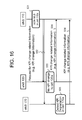
- the radio base station (eNB) 110 of the vendor A performs optimization of a handover-related parameter (also referred to as a mobility parameter) by using the MLB (Mobility Load Balancing) function in the cell 110a (Operation 501).
- the radio base station (eNB) 110 upon executing the MLB function, requests the radio base stations (eNBs) 120 and 170 of the neighbour cells to notify KPI change related information (here, KPI change information) (Operation 502; Request for KPI change related information (e.g., KPI change information)).
- the radio base station (eNB) 110 may also notify the radio base stations (eNBs) 120 and 170 of information indicating which cells are targets.
- Conceivable information is, for example, information indicating a KPI in which one of the cells of the radio base station (eNB) 110 (in this example, the cell 110a) is given attention, information indicating which ones of the cells of the radio base stations (eNBs) 120 and 170 are targets (in this example, the cells 120a and 170a), or the like.
- the radio base station (eNB) 120 determines that there is no KPI change in the cell 120a (Operation 503) and notifies KPI change related information (here, KPI change information) (Operation 504; KPI change related information (e.g., KPI change information)).
- KPI change related information here, KPI change information
- KPI change related information e.g., KPI change information
- the radio base station (eNB) 170 determines that the KPI has degraded in the cell 170a (Operation 505) and notifies KPI change related information (here, KPI change information) (Operation 506; KPI change related information (e.g., KPI change information)).
- the radio base station (eNB) 110 or network operation management apparatus 140A can find how control such as network optimization performed in the cell 110a affects the KPI in the cell 170a of the radio base station (eNB) 170 and the cell 120a of the radio base station (eNB) 120.
- the KPI change related information indicates KPI degradation
- the radio base stations 120 and 170 having received the request may be configured to return a response only when the KPI has changed or degraded.
- a conceivable method for determining whether or not a change has occurred, or whether or not the KPI has degraded is a method in which determination is made based on whether or not a change, or degradation, not smaller than a predetermined reference value (or greater than it) has occurred.
- a method may be employed in which determination is made based on a predetermined change rate or degradation rate, instead of the reference value.
- a KPI used for determination the predetermined reference value, change rate or degradation rate may be defined beforehand, or may be indicated by a side requesting KPI change related information (here, the radio base station 110) to a requested side (here, the radio base station 120, 170). Alternatively, it is also possible that a requested side selects by itself and notifies it by means of a response to the request. Additionally, KPIs may be associated with the types of SON functions, as described in the fourth example.
- a sixth example of the present invention is an example in which the above-described third exemplary embodiment is applied to an LTE system.
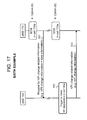
- a radio base station (eNB) 10 requests KPI change related information from another radio base station (eNB) 20, and it is indicated in this request when determination about a KPI change (i.e., degradation, improvement, or no change) is to be performed (Operation 601; Request for KPI change related information). For example, time information (e.g., an absolute time) serving as a determination reference is notified when the request is made (e.g., Request for KPI change information + time information). This time information may be set to coincide with a SON control execution time in a cell 10a of the radio base station (eNB) 10 (Option (A) or Option (B)).
- time information e.g., an absolute time
- This time information may be set to coincide with a SON control execution time in a cell 10a of the radio base station (eNB) 10 (Option (A) or Option (B)).
- the other radio base station (eNB) 120 performs determination about a KPI change in its own cell 120a (Operation 602; Trigger to check KPI degradation in cell 120a) and notifies a result thereof to the requesting radio base station (eNB) 110 (Operation 603; KPI change related information (e.g., KPI change information)).
- KPI change related information e.g., KPI change information
- the radio base station (eNB) 110 requests KPI change related information from the other radio base station (eNB) 120 and indicates in the request when determination about a KPI change (i.e., degradation, improvement or no change) is to be performed, as shown in FIG. 18 (Operation 701; Request for KPI change related information).
- This time information is set to coincide with a SON control execution time in the cell 110a of the radio base station (eNB) 110.
- the radio base station (eNB) 120 having received the request for KPI change related information checks the KPI at the time it received the request, or performs calculation (if necessary) at this time (Operation 702). SON control is executed in the cell 110a of the radio base station (eNB) 110 (Operation 703). Thereafter, the radio base station (eNB) 120 checks a KPI change at the indicated time, that is, for example, determines which of degradation, improvement, and no change has occurred, compared to the KPI obtained in Operation 702 (Operation 704; Trigger to check KPI degradation in cell 120a), and notifies a result thereof to the requesting radio base station (eNB) 110 (Operation 705; KPI change related information (e.g., KPI change information)).
- KPI change related information e.g., KPI change information
- the requesting radio base station (eNB) 110 may specify at what interval KPI calculation is performed, instead of the time information. For example, when the request is made, interval information to be applied to KPI calculation (e.g., a value of interval, short interval, long interval, or the like) may be notified.
- interval information to be applied to KPI calculation e.g., a value of interval, short interval, long interval, or the like
- a radio station having received notification of information related to a change in statistical communication quality may be also configured to transfer this notification to another radio station that has not registered a cell indicated in this notification in its neighbour cell list, or to another radio station that has registered this cell in its neighbour cell list but has not established direct connection through an interface with a radio station managing this cell.
- notifying information related to a change in statistical communication quality it is possible to also notify, for example, the location information of a radio station, the degree of interference between neighbour cells, the number of radio terminals (in active state) in a cell, an increase or a decrease in the number of radio terminals in a cell, or the like.
- the present invention can be also applied to home radio base stations (home eNBs (HeNBs), or also referred to as femto eNBs (FeNBs)) in LTE.
- HeNBs home radio base stations
- FeNBs femto eNBs
- the X2 interface between HeNBs, the S1 interface between an HeNB and an HeNB gateway (HeNB GW), and the like are used in place of the X2 interface between eNBs and the S1 interface between an eNB and a core network (EPC).
- EPC HeNB gateway
- RIM Radio Information Management
- the present invention can be also applied to 3GPP UMTS (Universal Mobile Telecommunications System).
- UMTS Universal Mobile Telecommunications System
- the lub interface between a radio base station (NB) and a radio network controller (RNC) the lu interface between an RNC and a core network (CN), the lur interface between RNCs, the lur-h interface between home radio base stations (HNBs), the luh interface between an HNB and an HNB gateway (HNB GW), and the like are used in place of the X2 and S1 interfaces of LTE.
- RNC radio network controller
- HNBs home radio base stations
- HNB gateway HNB gateway
- the present invention can be also applied to 3GPP2 CDMA (Code Division Multiple Access) 2000 (e.g., CDMA 1xEV-DO (Evolution Data Only), 1xRTT (Single-Carrier Radio Transmission Technology), HRPD (High Rate Packet Data)) and to GSM (Global System for Mobile communications).
- CDMA2000 the S101/S102 interface, which are interfaces between an LTE core network (EPC) and a CDMA 1x core network, may be used, or a direct interface between an LTE eNB and a CDMA BSC (Base Station Controller) may be established and used, in place of the X2 and S1 interfaces of LTE.
- EPC LTE core network
- CDMA BSC Base Station Controller
- the present invention can be also applied to WiMAX (Worldwide interoperability for Microwave Access) and the like.
- a radio station notifies information related to statistical communication quality changes in a cell of this radio station to another base station or its upper-level network apparatus.
- the another base station or its upper-level network apparatus can obtain information related to statistical communication quality in this neighbour cell, whereby it is possible to avoid performance degradation in the entire system when network self-optimization is performed individually.
- a network operation management apparatus e.g., SON server
- a radio station e.g. radio base station
- a network optimization e.g., SON
- Network optimization is performed based on this, whereby it is possible to accomplish optimization in an entire system.
- the present invention is applicable to radio communication systems with SON functionality, such as, for example, 3GPP LTE, 3GPP UMTS, 3GPP2 CDMA2000, GSM, and WiMAX systems.
- SON functionality such as, for example, 3GPP LTE, 3GPP UMTS, 3GPP2 CDMA2000, GSM, and WiMAX systems.
Landscapes
- Engineering & Computer Science (AREA)
- Computer Networks & Wireless Communication (AREA)
- Signal Processing (AREA)
- Mobile Radio Communication Systems (AREA)
Abstract
Description
- The present invention relates to a radio communication system and, more particularly, to a radio station, a network operation management apparatus and a radio communication system that have a function of performing network optimization, as well as to a network optimization method.
- In recent years, active discussions have been conducted about SON (Self Organizing Network), which autonomously optimizes radio parameters and/or network configuration in a radio communication system such as a cellular system, in the light of operation cost (OPEX) reduction. The standardization of SON functions is also under way in 3GPP LTE (Long Term Evolution) (NPL 1).
- SON has functions such as the following:
- Self-Configuration;
- Self-Optimization; and
- Self-Healing.
- Hereinafter, a brief description of SON operation will be given by using the MRO and CCO functions as an example in a 3GPP LTE radio communication system as shown in
FIGS. 1 and2 . Note that macro radio base station (macro eNB) will be abbreviated to MeNB. - Referring to
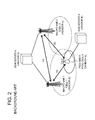
FIG. 1 , in a radio communication system in which MeNBs 1, 2 and 3 exist, which managecells MeNBs MeNBs cell 2 when the MRO function is executed in thecell 1. Moreover, the SON server A notifies the MeNB 2 of information about this effect, whereby the MeNB 2 can also recognize that the effect is caused by the MeNB 1 executing MRO in thecell 1. For example, when an effect that causes some problem in the cell 2 (e.g., KPI (Key Performance Indicator) degradation) is recognized or detected, the SON server A or MeNB 1 can mitigate such KPI degradation by reassessing the optimization of a handover-related parameter in thecell 1. Here, for reassessing the optimization, conceivable actions include: restoring the previous state; readjusting the optimized handover-related parameter toward the previous state; and the like. On the other hand, when KPI degradation is detected or recognized in thecell 3, the SON server B or MeNB 3 performs optimization for the cell 3 (e.g., optimization of a handover-related parameter). - Next, a heterogeneous network (HetNet) as shown in
FIG. 2 is assumed. In this HetNet environment, it is assumed that MeNBs 1 and 2, which managecells FIG. 1 , while a pico eNB (PeNB) 4, which manages apico cell 4, is managed by a SON server B of a vender B. In such a HetNet environment, the SON server A can recognize or detect what effect is caused on thecell 2 when the CCO function is executed and the transmit power is thus optimized in thecell 1. When an effect that causes some problem in the cell 2 (e.g., KPI degradation) is recognized or detected, the SON server A or MeNB 1 can suppress the KPI degradation in thecell 2 by reassessing the optimization of the transmit power in thecell 1, similarly to the above. On the other hand, when KPI degradation is detected or detected in thepico cell 4, the SON server B or PeNB 4 performs optimization for the pico cell 4 (e.g., optimization of transmit power). -
- [NPL 1]
3GPP TS36.300 v10.5.0, Section 22 (Internet <URL> http:www.3gpp.org/ftp/Specs/html-info/36300.htm) - [NPL 2]
3GPP TR36.902 v9.3.0 (Internet <URL> http:www.3gpp.org/ftp/Specs/html-info/36902.htm) - [NPL 3]
3GPP TR37.320 v10.4.0 (Internet <URL> http:www.3gpp.org/ftp/Specs/html-info/37302.htm) - However, the execution of various optimization algorithms and the determination of parameters as described above are performed by each radio base station or a SON server managing the radio base station. In this event, network optimization is performed at a cell or a radio base station managed by a SON server, which does not consider how cells or radio base stations outside its management are affected. Consequently, although individual optimization control is performed in each of partial networks in the system, there is nevertheless a possibility that performance of the entire system degrades.
- In the case of the above-described system shown in
FIG. 1 , even if the optimization of a handover-related parameter in thecell 1 causes KPI degradation in thecell 3 of theMeNB 3, such as, for example, degradation in performance of handover from thecell 3 to thecell 1 or an increased incidence of call disconnection (Radio Link Failure: RLF) in thecell 3, the MeNB 1 or SON server A cannot detect such KPI degradation in thecell 3. Accordingly, even when the MeNB 1 or SON server A performs optimization control to resolve KPI degradation in thecells cell 3. Consequently, there is a possibility of degrading performance of the entire system composed of thecells 1 to 3 (and other neighbour cells) degrades. - Similarly, in the case of the system shown in
FIG. 2 , when the PeNB 4 or SON server B detects KPI degradation in thepico cell 4, such as, for example, an increased incidence of call disconnection RLF or a decline in the average user throughput (or in the bottom 5% of user throughput in a cumulative distribution function (CDF)), then the PeNB 4 or SON server B executes a SON function (here, the CCO function) to resolve such performance degradation even if it is attributable to a problem in thecell 1, which should be resolved primarily by the MeNB 1 or SON server A. As described above, the individual execution of SON functions in parts of the system may result in performance degradation in the entire system. - Accordingly, an object of the present invention is to provide a radio communication system, a radio station, a network operation management apparatus, and a network optimization method that enable network optimization while suppressing performance degradation in the entire system when multiple radio base stations and upper-level network apparatuses individually perform network optimization.
- A radio communication system according to the present invention is a radio communication system in which radio stations perform network optimization based on statistical communication quality in at least one cell, characterized in that a first radio station notifies information related to a change in statistical communication quality in a first cell of the first radio station to a second radio station or a network apparatus managing the second radio station.
- A network optimization method according to the present invention is a network optimization method in a radio communication system in which radio stations perform network optimization based on statistical communication quality in at least one cell, characterized in that a first radio station notifies information related to a change in statistical communication quality in a first cell of the first radio station to a second radio station or a network apparatus managing the second radio station.
- A radio station according to the present invention is a radio station in a radio communication system in which radio stations perform network optimization based on statistical communication quality in at least one cell, characterized by comprising: a calculation means for calculating information related to a change in statistical communication quality in a cell under the radio station; and a communication control means for notifying the information related to a change in statistical communication quality to another radio station or a network apparatus managing the another radio station.
- A radio station according to the present invention is a radio station in a radio communication system in which radio stations perform network optimization based on statistical communication quality in at least one cell, characterized by comprising: a reception means for receiving information related to a change in statistical communication quality in a cell under another radio station, from the another radio station or a network apparatus managing the another radio station; and an optimization control means for controlling network optimization in a cell under the radio station.
- A network operation management apparatus according to the present invention is a network operation management apparatus which manages a network including a radio station that performs network optimization based on statistical communication quality in at least one cell, characterized by comprising: a reception means for receiving information related to a change in statistical communication quality in a cell under another radio station, from the another radio station or a network apparatus managing the another radio station; and an optimization control means for controlling optimization of the network managed by the network operation management apparatus.
- According to the present invention, it is possible to avoid performance degradation in an entire system when network optimization is performed individually.
-
- [
FIG. 1 ]
FIG. 1 is a system architecture diagram showing an example of an existing radio communication system. - [
FIG. 2 ]
FIG. 2 is a system architecture diagram showing another example of an existing radio communication system. - [
FIG. 3 ]
FIG. 3 is a system architecture diagram for describing an outline of a radio communication system according to the present invention. - [
FIG. 4 ]
FIG. 4 is a block diagram showing a schematic configuration of a radio station inFIG. 3 . - [
FIG. 5 ]
FIG. 5 is a sequence diagram showing operations in a radio communication system according to a first exemplary embodiment of the present invention. - [
FIG. 6 ]
FIG. 6 is a flowchart showing operations of a radio station according to a first example of the present invention. - [
FIG. 7 ]
FIG. 7 is a sequence diagram showing operations in a radio communication system according to a second exemplary embodiment of the present invention. - [
FIG. 8 ]
FIG. 8 is a flowchart showing operations of a radio station according to a second example of the present invention. - [
FIG. 9 ]
FIG. 9 is a sequence diagram showing operations in a radio communication system according to a third exemplary embodiment of the present invention. - [
FIG. 10 ]
FIG. 10 is a flowchart showing operations of a radio station according to a third example of the present invention. - [
FIG. 11 ]
FIG. 11 is a system architecture diagram for describing an outline of a 3GPP LTE system that is an example of the radio communication system according to the present invention. - [
FIG. 12 ]
FIG. 12 is a system architecture diagram for describing operations in a radio communication system according to a fourth example of the present invention. - [
FIG. 13 ]
FIG. 13 is a sequence diagram showing operations in the radio communication system according to the fourth example of the present invention. - [
FIG. 14 ]
FIG. 14 is a system architecture diagram for describing operations in a radio communication system according to a modification example of the fourth example of the present invention. - [
FIG. 15 ]
FIG. 15 is a system architecture diagram for describing operations in a radio communication system according to a fifth example of the present invention. - [
FIG. 16 ]
FIG. 16 is a sequence diagram showing operations in the radio communication system according to the fifth example of the present invention. - [
FIG. 17 ]
FIG. 17 is a sequence diagram showing operations in a radio communication system according to a sixth example of the present invention. - [
FIG. 18 ]
FIG. 18 is a sequence diagram showing operations in a radio communication system according to a modification example of the sixth example of the present invention. - According to exemplary embodiments of the present invention, a radio station in a radio communication system in which network optimization is autonomously performed notifies another radio station or a upper-level network apparatus managing such another radio station of information about changes in statistical communication quality in a cell of this radio station. This allows the another radio station or upper-level network apparatus to recognize the state of the radio station, for example, the radio status in the cell of the radio station. Thus, it is possible to avoid or suppress performance degradation in the entire system even when network optimization is individually performed. Hereinafter, a schematic architecture of the present invention will be described.
- As illustrated in
FIG. 3 , a radio communication system is assumed to includeradio stations cells network apparatus 30, which controls or manages theradio station 10 and/or theradio station 20. It is not necessary for thecells - The radio stations in
FIG. 3 may include not only a radio base station directly controlling one or more cells, but also an upper-level station controlling or managing multiple radio base stations (and hence multiples cells). It is conceivable that a radio station is , for example, a radio base station, a base station control station, a network operation management apparatus, or the like. It is conceivable that a network apparatus is a base station control station, a core network apparatus, a network operation management apparatus or the like. Theradio station 10 and theradio station 20 may be directly connected through an interface, or may be connected in such a manner that they can communicate with each other via thenetwork apparatus 30. Each radio station (10, 20) has a configuration as shown inFIG. 4 . - Referring to
FIG. 4 , the radio station includes aradio communication section 11 for performing radio communication with a radio terminal, a statistical communicationquality calculation section 12 that calculates statistical communication quality with respect to communication with a radio terminal and communication with an upper-level station in a cell managed by this radio station, and acontrol section 13 that controls the operation of this radio station itself and the operation of a radio terminal. Theradio communication section 11 and the statistical communicationquality calculation section 12 are controlled by thecontrol section 13. Under the control of thecontrol section 13, the statistical communicationquality calculation section 12 calculates statistical communication quality in its own cell in accordance with a trigger, which will be described later. Note that thecontrol section 13 may be a program-controlled processor such as a CPU (Central Processing Unit) implementing various functions by means of software. Thecontrol section 13 is assumed to have a timer function and a computing function for timing determination. - When a predetermined condition is met such that the
control section 13 determines a change in statistical communication quality, asignal generation section 14 generates a notification signal including information related to a change in statistical communication quality and sends it to another radio station or itsnetwork apparatus 30 via acommunication interface section 15. Alternatively, it is also possible that thesignal generation section 14 generates a signal for requesting another radio station or itsnetwork apparatus 30 to notify the information related to statistical communication quality and sends it via thecommunication interface section 15. - Moreover, the
control section 13, when receiving from another radio station information related to a change in statistical communication quality in a cell of the another radio station, controls anoptimization control section 16, so that autonomous network optimization is performed. Specifically, theoptimization control section 16 performs control such as network optimization for the cell its own radio station manages, with consideration given to the received information related to statistical communication quality in the another cell. Here, for the network optimization, conceivable control is, but is not limited to, self optimization of radio parameters and network parameters in a self organizing network (SON), control for restoring the previous state before self optimization is performed when a problem is detected with the consequence of this self optimization, or the like. - In this connection, it is conceivable that the optimization control section 16 (or a similar functional section) may be provided to a upper level network apparatus, not to a radio station. The present invention is also applicable to such a case.
- The above-mentioned statistical communication quality is also referred to as KPI (Key Performance Indicator) or network operation quality, for which conceivable ones include, but are not limited to: quality regarding communication between a radio station and a radio terminal under control of the radio station or the statistical value of such quality; network information regarding communication between the radio station and the
network apparatus 30 or the statistical value of such network information; statistical information regarding a radio terminal staying in a cell managed by the radio station; and the like. - Note that statistical communication quality (KPI) to be notified by the radio station is determined depending on the following:
- It is previously defined in the specifications of a relevant radio communication system;
- It is associated beforehand with a type or purpose of network optimization to be performed;
- A radio station that notifies statistical communication quality indicates what statistical communication quality is;
- A radio station that requests statistical communication quality indicates what statistical communication quality is requested; or the like.
- Conceivable examples of statistical communication quality (KPIs) include, but are not limited to: system throughput; user throughput; the number of handovers; the number of successful handovers; handover success rate; the number of handover failures; handover failure rate; the number of call disconnections (the number of RLFs); call disconnection rate (RLF rate); the number of discarded packets; packet discard rate; the number of radio connection requests; the number of radio reconnection requests; the number of successful random accesses; the number of users failing to meet predetermined received quality; the number of users failing to meet predetermined service quality; transmission delay time; the number of users failing to meet predetermined transmission delay time; the proportion of users failing to meet predetermined transmission delay time; the ratio of areas failing to meet predetermined received quality (also referred to as dead spot ratio); the ratio of areas meeting predetermined received quality; and the like. Note that the calculation of the ratio of areas is effective, for example, when measurement reports including location information can be collected from radio terminals, and the collection of such measurement reports including location information can be achieved by using the Minimization of Drive Test (MDT) technology, which is defined by 3GPP (NPL 3). Moreover, the calculation of a KPI may be performed in each cell with all radio terminals within a cell as targets, or by each radio terminal individually, or may be performed for each service (e.g., for each QoS (Quality of Service)). Further, the calculation of a handover-related KPI may be performed in each cell with all neighbours as targets (i.e., for each cell of interest), or for each cell pair (i.e., each pair of neighbour cells).
- Furthermore, it is conceivable that "information related to change in statistical communication quality" includes, for example:
- information indicating degradation in statistical communication quality (KPI);
- Information indicating change in statistical communication quality (KPI);
- information about statistical communication quality (a KPI) that has degraded;
- information about statistical communication quality (a KPI) that has changed; and the like.
- Referring to
FIG. 5 , aradio station 10 notifies information related to a change in statistical communication quality in a cell under its own management to anotherradio station 20 that manages a neighbour cell or to anetwork apparatus 30 that manages such anotherradio station 20. Thus, theradio station 10 can make theother radio station 20 ornetwork apparatus 30 recognize a change or the like in statistical communication quality in thecell 10a under its own (theradio station 10's) management. For example, theradio station 10 can make theother radio station 20 recognize how control such as network optimization performed in thecell 20a managed by theother radio station 20 affects statistical communication quality in thecell 10a under its own (theradio station 10's) management. - It is conceivable that a trigger which causes a radio station to notify another radio station or its upper level network apparatus of information related to change in statistical communication quality is, for example:
- detection of degradation in a statistical communication quality in the cell (its own cell) the radio station manages;
- detection of change in a statistical communication quality by a predetermined value or greater (or predetermined ratio or greater) in its own cell;
- lapse of a predetermined period of time since the previous notification;
- establishment of a new connection with the another radio station;
- new addition of a cell managed by the another radio station to a neighbour list; or the like.
- Next, operations of a radio station according to a first example of the present invention will be described by taking a case as an example where a trigger for notification is "detection of degradation in statistical communication quality," and information to be notified is "information indicating degradation in statistical communication quality" in the sequence shown in
FIG. 5 . - Referring to
FIG. 6 , thecontrol section 13 of theradio station 10 collects information for calculation of statistical communication quality from theradio communication section 11 and the communication interface 15 (Operation 101) and determines whether or not it is a timing to calculate statistical communication quality (Operation 102). If it is not a timing to calculate statistical communication quality (Operation 102; No),Operation 101 is repeated. When it is a timing to calculate statistical communication quality (Operation 102; Yes), the statistical communicationquality calculation section 12, in accordance with an instruction of thecontrol section 13, calculates statistical communication quality based on the collected information (Operation 103). Subsequently, thecontrol section 13 determines whether or not the calculated statistical communication quality has degraded (Operation 104). For example, degradation in statistical communication quality is determined when the calculated statistical communication quality is lower than a predetermined threshold or is far lower than a predetermined ratio. If the calculated statistical communication quality has not degraded (Operation 104; No),Operations 101 to 103 are repeated without making notification. When it is detected that the calculated statistical communication quality has degraded (Operation 104; Yes), thesignal generation section 14, in accordance with an instruction of thecontrol section 13, generates a notification signal including information indicating degradation in statistical communication quality and sends it to theother radio station 20 via the communication interface 15 (Operation 105). - When degradation in statistical communication quality is thus detected by the
radio station 10, notification to that effect is made to theother radio station 20 ornetwork apparatus 30, whereby network optimization is performed by theother radio station 20, with consideration given to the effect on theradio station 10. Thus, it is possible to accomplish optimization in the entire system. - Referring to
FIG. 7 , aradio station 10 requests anotherradio station 20 to notify information related to change in statistical communication quality, and theother radio station 20, in response to this request, notifies theradio station 10, which originated the request, of information related to a change in statistical communication quality in its own cell. Thus, for example, theradio station 10 can recognize how control such as network optimization performed in acell 10a of its own (the radio station 10) affects statistical communication quality or the like in acell 20a of theother radio station 20. - This request for notification may also include information indicating: statistical communication quality in which cell is requested; statistical communication quality at what point of time is requested; information related to change in statistical communication quality based on what reference point of time is requested; statistical communication quality calculated at what interval is requested; or the like. Specifically, cell identity information, time information, calculation interval information, or the like is notified to the other radio station 20 (or a network apparatus 30).
- Next, operations of a radio station according to a second example of the present invention will be described by taking a case as an example where a trigger for notification is "request to notify information related to change in statistical communication quality," and information to be notified is "information indicating change in statistical communication quality" in the sequence shown in
FIG. 7 . - Referring to
FIG. 8 , thecontrol section 13 of theradio station 20 collects information for calculation of statistical communication quality from theradio communication section 11 and the communication interface 15 (Operation 201), and determines whether or not it is a timing to calculate statistical communication quality (Operation 202). When it is a timing to calculate statistical communication quality (Operation 202; Yes), the statistical communicationquality calculation section 12, in accordance with an instruction of thecontrol section 13, calculates statistical communication quality based on the collected information (Operation 203). When it is not a timing to calculated statistical communication quality (Operation 202; No), the calculation of statistical communication quality (Operation 203) is not performed. Subsequently, thecontrol section 13 determines whether or not a request to notify information related to change in statistical communication quality is received (Operation 204). If no request is received (Operation 204; No),Operations 201 to 203 are repeated. When a request to notify information related to change in statistical communication quality is received (Operation 204; Yes), the statistical communicationquality calculation section 12, in accordance with an instruction of thecontrol section 13, calculates statistical communication quality based on collected information (Operation 205). Thecontrol section 13 compares the statistical communication quality calculated this time with the latest statistical communication quality and outputs information indicating a change in statistical communication quality to thesignal generation section 14, which then generates a notification signal including the information indicating a change in statistical communication quality and sends it to theother radio station 20 via the communication interface 15 (Operation 206). - In this manner, the
radio station 20, in response to a request from theradio station 10, notifies a change in statistical communication quality at theradio station 20, whereby theradio station 20 can notify how thecell 20a of its own (the radio station 20) is affected by control such as network optimization performed by theradio station 10. Theradio station 10 performs network optimization, with consideration given to this information indicating such an effect, whereby it is possible to accomplish optimization in the entire system. - A sequence according to a third exemplary embodiment is different from that of the second exemplary embodiment shown in
FIG. 7 in that a side requesting information specifies a determination condition to a side that notifies the information. - Referring to
FIG. 9 , when aradio station 10 requests anotherradio station 20 to notify information related to change in statistical communication quality, theradio station 10 sends a determination condition together. Theother radio station 20, in response to this request, notifies theration station 10, the originator of the request, of information related to a change in statistical communication quality in its own cell, in accordance with the determination condition. Thus, a condition such as information and timing required for network optimization control by theradio station 10 can be designated, whereby theradio station 10 can more accurately find how control such as network optimization performed in itsown cell 10a affects statistical communication quality in acell 20a of theother radio station 20. - This determination condition may also include: statistical area information indicating which area (e.g., a cell) statistical communication quality is to be derived from; statistical time information indicating what point of time statistical communication quality is to be derived at; determination time information indicating what reference point of time is to be based on for the information related to a change in statistical communication quality; statistical interval information indicating what interval statistical communication quality is to be checked or calculated at; or the like. Specifically, cell identity information, time information, calculation interval information, or the like is notified to the
other radio station 20. Here, conceivable usages of the determination time information include, for example: designating a predetermined time of day and comparing KPIs at the same times of different dates; comparing KPIs at the same times of different weeks; and the like. Moreover, the statistical interval information may be configured to indicate a predetermined period of time. Conceivable examples include, for example: comparing KPIs during a predetermined period of time (e.g., several hours) starting from the same times (or until the same times, or before and after the same times) of different dates; comparing KPIs during a predetermined period of time starting from the same times of the same days of different weeks; and the like. Further, the above-mentioned predetermined period of time may be statistical interval information. - Furthermore, it is also possible to specify a notification condition to designate a notification mode that indicates whether on-demand notification of information related to change in statistical communication quality is requested, or periodic notification of information related to change in statistical communication quality is requested, or notification of information related to change in statistical communication quality using a trigger-based method, in which notification is made when a predetermined condition is met, is requested, or that indicates any combination of these. As one of methods for implementing these, reporting interval information, reporting trigger information including a predetermined condition, or the like is notified. Here, conceivable predetermined conditions include, for example: a change not smaller than a predetermined threshold (or greater than a predetermined threshold) occurring in statistical communication quality; statistical communication quality becoming not lower than a predetermined value (or becoming higher than a predetermined value); statistical communication quality becoming not higher than a predetermined value (or becoming lower than a predetermined value); and the like.
- Next, operations of a radio station according to a third example of the present invention will be described by taking a case as an example where information to be notified is "information indicating the type of statistical communication quality that has degraded and the amount (or rate) of degradation therein," and a determination condition indicated is "a point of time (reference time) based on which a change in statistical communication quality is determined" in the sequence shown in
FIG. 9 . - Referring to
FIG. 10 , thecontrol section 13 of theradio station 20 collects information for calculation of statistical communication quality from theradio communication section 11 and the communication interfaces 15 and 16 (Operation 301) and determines whether or not it is a timing to calculate statistical communication quality (Operation 302). When it is a timing to calculate statistical communication quality (Operation 302; Yes), the statistical communicationquality calculation section 12, in accordance with an instruction of thecontrol section 13, calculates statistical communication quality based on the collected information (Operation 303). If it is not a timing to calculate statistical communication quality (Operation 302; No), the calculation of statistical communication quality (Operation 303) is not performed. Subsequently, thecontrol section 13 determines whether or not a request to notify information related to change in statistical communication quality is received (Operation 304). If no request is received (Operation 304; No),Operations 301 to 303 are repeated. - When a request to notify information related to change in statistical communication quality is received (
Operation 304; Yes), thecontrol section 13 determines whether or not a determination condition (a reference time specifying a time based on which a change in statistical communication quality is determined) included in this request for notification is met (Operation 305). When it is not the reference time (Operation 305; No),Operations 301 to 304 are repeated. When it is the reference time (Operation 305; Yes), thecontrol section 13 resets information for calculation of statistical communication quality (Operation 306) and collects anew information for calculating statistical communication quality from theradio communication section 11 and the communication interface 15 (Operation 307). Subsequently, thecontrol section 13 determines whether or not it is a timing to calculate statistical communication quality (Operation 308). When it is a timing to calculate statistical communication quality (Operation 308; Yes), the statistical communicationquality calculation section 12, in accordance with an instruction of thecontrol section 13, calculates statistical communication quality based on the collected information (Operation 309). If it is not a timing to calculate statistical communication quality (Operation 308; No), the collection of information for calculation of statistical communication quality (Operation 307) is repeated. - When statistical communication quality is calculated (Operation 309), the
control section 13, for example, compares the statistical communication quality calculated this time with the latest statistical communication quality, thereby determining whether or not the statistical communication quality calculated this time has degraded (Operation 310). When degradation in statistical communication quality is detected (Operation 310; Yes), thecontrol section 13 calculates the amount (or rate) of degradation in statistical communication quality (Operation 311) and outputs it to thesignal generation section 14. Thesignal generation section 14 generates a notification signal including information indicating the type of statistical communication quality that has degraded and the amount (rate) of degradation therein and sends it to theother radio station 20 via the communication interface 15 (Operation 312). On the other hand, if no degradation in statistical communication quality is detected (Operation 310; No), a notification signal including information indicating that there is no degradation in statistical communication quality is generated and sent to theother radio station 20 via the communication interface 15 (Operation 312). - In this manner, the
radio station 20, in accordance with a request and a determination condition from theradio station 10, notifies information about statistical communication quality that has degraded to theradio station 10, whereby theradio station 20 can notify how thecell 20a of its own (the radio station 20) is affected by control such as network optimization performed by theradio station 10. Since information about statistical communication quality that has degraded is notified based on the determination condition indicated by theratio station 10, theradio station 10 can more accurately find how control such as network optimization performed in itsown cell 10a affects statistical communication quality in thecell 20a of theother radio station 20, and can perform network optimization with consideration given to this information indicating such an effect, whereby it is possible to accomplish optimization in the entire system. Note that similar effects can be also achieved by using information about statistical communication quality that has changed, instead of information about statistical communication quality that has degraded. - In the above-described third example, the
radio station 10 may further specify to theradio station 20 the interval of calculation of statistical communication quality as a determination condition. For example, a conceivable method is to designate whether statistical communication quality is calculated at short intervals or is calculate at long intervals, or to designate a specific interval. When long intervals are designated, it is necessary to set time information (a reference time) such that this long-interval condition is met based on a timing of making a request. - Moreover, it is also possible that time information (a time when statistical communication quality is calculated) used to specify what time statistical communication quality is calculated is notified instead of time information (a reference time) used for a basis of determination of a change in statistical communication quality, and it is determined whether or not a value calculated this time has changed from a value previously calculated.
- Hereinafter, a description will be given of application examples in which the above-described exemplary embodiments are applied to a 3GPP LTE system.
- In an LTE system shown in
FIG. 11 and the system shown inFIG. 3 , those corresponding to each other are denoted by the same reference numerals. Macro radio base stations (macro eNBs) 110 and 120 are directly connected to each other through an X2 interface. Themacro eNBs level network apparatus 130 through S1 interfaces, respectively, and further connected to a network operation management apparatus (SON server) 140 through interfaces Itf-S (also referred to as "southbound interface"), respectively. - Although it is assumed in the present exemplary embodiment that information related to change in statistical communication quality and other information to be notified between macro eNBs are sent and received by using the X2 interface of LTE, the S1 interface or an RIM (RAN Information Management) procedure may be used, or alternatively, the interface Itf-S may be used. However, the interface Itf-S produces relatively long delays, and it is therefore very likely that system performance is temporarily degraded, or network loads are increased due to congested information. Accordingly, the X2 interface, which produces shorter control delays than others, is used, whereby it is possible to quickly notify information related to statistical communication quality to another macro eNB and to achieve quick optimization in the entire system.
- Here, in the LTE system, conceivable messages to communicate information related to change in statistical communication quality through the X2 interface include, but are not limited to, for example: messages at X2 interface establishment (X2 Setup) (X2 SETUP REQUEST, X2 SERTUP RESPONSE); messages at eNB Configuration Update (ENB CONFIGURAION UPDATE, ENB CONFIGURAION UPDATE ACKNOWLEDGE); messages at Cell Activation of a neighbour eNB (CELL ACTIVATION REQUEST, CELL ACTIVATION RESPONSE); a message at Load Indication (LOAD INFORMATION); messages regarding a mobility settings change (MOBILITY CHANGE REQUEST, MOBILITY CHANGE ACKNOWLEDGE); messages at Resource Status Reporting Initiation/Resource Status Reporting (RESOURCE STATUS REQUEST, RESOURCE STATUS RESPONSE, RESOURCE STATUS UPDATE); and the like. It is needless to say that other messages may be newly defined.
- Moreover, statistical communication quality (a KPI) to be notified by an eNB is determined depending on the following, for example:
- It is predefined in the specifications of a relevant radio communication system (e.g., LTE);
- It is associated beforehand with a type or purpose of network optimization to be performed;
- An eNB that notifies statistical communication quality indicates what statistical communication quality is;
- An eNB that requests statistical communication quality indicates what statistical communication quality is requested; or the like.
- Further, it is also conceivable that information is exchanged between different Radio Access Technologies (RATs). Accordingly, between UMTS and LTE for example, an interface between an eNB and a RNC or an interface between an LTE core network (Evolved Packet Core (EPC)) and a UMTS core network (Core Network (CN)) may be used. Moreover, it is also possible to define an interface between SON servers of different vendors and use this interface. Note that although the network operation management apparatus 40 is referred to as a SON server as an example, it is also referred to as an O&M (Operation and Management) server. In addition, the configuration of an O&M server is in some cases represented as an EMS (Element Management System) and an NMS (Network Management System) separated. The present invention is applicable to any of these configurations.
- Hereinafter, it will be assumed that when simply stating a "radio base station" and a "cell," they indicate a macro eNB and a macro cell, respectively. Moreover, unless otherwise stated, a KPI (Key Performance Indicator) will be assumed to be an example of statistical communication quality.
- A fourth example of the present invention is an example in which the above-described first exemplary embodiment is applied to an LTE system.
- As shown in
FIG. 12 , it is assumed that a system includesradio base stations cells radio base station 150, which manages acell 150a, and that theradio base stations radio base station 150 is provided by a vendor B, and further that theradio base stations operation management apparatus 140A (SON server A) of the vendor A while theradio base station 150 is managed by a networkoperation management apparatus 140B (SON server B) of the vendor B. In this system, for example, when a change in statistical communication quality is detected in thecell 150a, information about this is notified to theradio base stations radio base station 150 through X2 interfaces. As described above, information related to a change in statistical communication quality may be notified to a upper-level network apparatus 130 from theradio base station 150 through an S1 interface, or may be notified to the networkoperation management apparatus 140A through an interface Itf-S. Thus, it is possible to have the otherradio base stations operation management apparatus 140A, recognize how control such as network optimization performed in thecells radio base stations cell 150a of theradio base station 150. - In the system shown in
FIG. 12 , a case will be assumed where theradio base station 110 of the vendor A performs optimization of a handover-related parameter by using the MRO (Mobility Robustness Optimization) function in thecell 110a. - Referring to
FIG. 13 , first assume that the radio base station (eNB) 150 of the vendor B or the networkoperation management apparatus 140B (SON server B) detects KPI degradation in thecell 150a (Operation 401). Triggered by this detection of KPI degradation, the radio base station (eNB) 150 notifies, for example, KPI degradation information as KPI change related information to the radio base stations (eNBs) 110 and 120, which manage thecell cell 150a, respectively, or to theupper-level network apparatus (MME) 130 or networkoperation management apparatus 140A (SON servers A), which manage them (Operation 402). - The radio base stations (eNBs) 110 and 120 or their network
operation management apparatus 140A (SON servers A) perform network optimization processing in thecells cell 110a performed before the information indicating KPI degradation is received; to readjust the handover-related parameter toward the previous state; or the like. Thus, it is possible to suppress KPI degradation in thecell 150a. Here, it is conceivable that handover-related parameters include, for example: a cell individual offset (CIO); an offset to or a threshold of received quality for an event that serves as a trigger of UE measurement report; and the like. - Note that a reference KPI used to determine whether or not the KPI has degraded may be defined beforehand, or may be determined by the radio base station (eNB) 150 that notifies KPI change related information and notified along with the KPI change related information.
- Moreover, KPIs may be associated with the types of SON functions. For example, when the MRO or MLB function is (or was) performed, a KPI may be the number of handover failures (the number of HOFs), handover failure rate, the number of handover trials, or the like, which are handover performance related indicators. When the CCO function is (or was) performed, a KPI may be system throughput, user throughput, call disconnection rate (radio link disconnection rate, or also referred to as radio link failure (RLF) rate), the number of RRC connection setup requests, the number of RRC connection setups, the number of RRC connection re-establishment requests, the number of RRC connection re-establishments, or the like, which are coverage or capacity related indicators.
- Further, when KPI change related information is notified, a radio base station (eNB) performing this notification may notify its own location information (e.g., GPS (Global Positioning System) measurement information) together. Thus, it is possible to find specifically where a KPI change occurs, and to utilize it in the determination of KPI degradation.
- As shown in
FIG. 14 , The present exemplary embodiment can be also similarly applied even if theradio base station 150 and thecell 150a inFIG. 13 are pico radio base station (pico eNB) 160 and a pico cell 160a. - In a heterogeneous network (HetNet) environment as shown in
FIG. 14 , a case will be assumed where theradio base station 110 of the vendor A performs optimization of the transmit power of theradio base station 110 in thecell 110a by using the CCO (Coverage and Capacity Optimization) function as an example of the SON functions. In this event, when the picoradio base station 160 of the vendor B detects KPI degradation in the pico cell 160a, the picoradio base station 160 notifies KPI change related information (e.g., information about a KPI that has degraded in the pico cell 160a) to theradio base station 110 managing thecell 110a, which is a cell neighbouring on the pico cell 160a, through the X2 interface (or S1 interface). This information may be also notified to theradio base station 120 and other radio base stations managing other neighbour cells. - The
radio base station 110 or networkoperation management apparatus 140A (SON server A) performs network optimization processing in thecell 110a, with consideration given to the notified information indicating KPI degradation. Conceivable processing is, for example, to undo an update of the transmit power in thecell 110a performed before this information indicating KPI degradation is notified, to readjust the transmit power toward the previous state, or the like. Thus, it is possible to suppress KPI degradation in the pico cell 160a. - A fifth example of the present invention is an example in which the above-described second exemplary embodiment is applied to an LTE system.
- As shown in
FIG. 15 , it is assumed that a system includesradio base stations cells radio base station 170, which manages acell 170a, and that theradio base stations radio base station 170 is provided by a vendor B, and further that theradio base stations operation management apparatus 140A (SON server A) of the vendor A while theradio base station 170 is managed by a networkoperation management apparatus 140B (SON server B) of the vendor B. - The
radio base station 110 requests KPI change related information (e.g., information indicating KPI change) from theradio base station 120 of the vendor A and from theradio base station 170 of the vendor B in order to check how, for example, a change in a handover-related parameter by means of a SON function in itsown cell 110a affects theneighbour cells radio base station 170 or networkoperation management apparatus 140B (SON server B) of the vendor B detects KPI degradation in thecell 170a, theradio base station 170 notifies theradio base station 110 of information indicating KPI change on thecell 170a. Theradio base station 120 notifies theradio base station 110 of similar information. Theradio base station 110 or networkoperation management apparatus 140A (SON server A) performs network optimization processing in thecell 110a, with consideration given to this notified information indicating KPI change. The above-described request and notification are transmitted and received through X2 interfaces (or S1 interfaces). - Note that since the
radio base station 120 is managed by the same networkoperation management apparatus 140A (SON server A) that manages theradio base station 110, the networkoperation management apparatus 140A (SON server A) can recognize the situation without notification of information indicating KPI change. However, the X2 interface has shorter information transmission interval and shorter delay than the Int-S interface, and it is therefore preferable that theradio base station 120 send information indicating KPI change to theradio base station 110 through the X2 interface. - Thus, the
radio base station 110 or networkoperation management apparatus 140A can recognize how control such as network optimization performed in thecell 110a affects statistical communication quality in thecell 170a of theradio base station 170 and thecell 120a of theradio base station 120. - In a system shown in
FIG. 16 , it is assumed that the radio base station (eNB) 110 of the vendor A performs optimization of a handover-related parameter (also referred to as a mobility parameter) by using the MLB (Mobility Load Balancing) function in thecell 110a (Operation 501). The radio base station (eNB) 110, upon executing the MLB function, requests the radio base stations (eNBs) 120 and 170 of the neighbour cells to notify KPI change related information (here, KPI change information) (Operation 502; Request for KPI change related information (e.g., KPI change information)). At this time, the radio base station (eNB) 110 may also notify the radio base stations (eNBs) 120 and 170 of information indicating which cells are targets. Conceivable information is, for example, information indicating a KPI in which one of the cells of the radio base station (eNB) 110 (in this example, thecell 110a) is given attention, information indicating which ones of the cells of the radio base stations (eNBs) 120 and 170 are targets (in this example, thecells - The radio base stations (eNBs) 120 and 170 having received this request for notification, each calculate a KPI change. Here, the radio base station (eNB) 120 determines that there is no KPI change in the
cell 120a (Operation 503) and notifies KPI change related information (here, KPI change information) (Operation 504; KPI change related information (e.g., KPI change information)). Similarly, the radio base station (eNB) 170 determines that the KPI has degraded in thecell 170a (Operation 505) and notifies KPI change related information (here, KPI change information) (Operation 506; KPI change related information (e.g., KPI change information)). - Thus, the radio base station (eNB) 110 or network
operation management apparatus 140A can find how control such as network optimization performed in thecell 110a affects the KPI in thecell 170a of the radio base station (eNB) 170 and thecell 120a of the radio base station (eNB) 120. For example, when the KPI change related information indicates KPI degradation, it is possible to perform processing for undoing an update of the handover-related parameter in thecell 110a performed before such notification is received, for readjusting the handover-related parameter toward the previous state, or the like. Thus, it is possible to suppress KPI degradation in thecell 170a. - When the
radio base station 110 requests KPI change related information on thecells radio base stations radio base stations - Note that a KPI used for determination, the predetermined reference value, change rate or degradation rate may be defined beforehand, or may be indicated by a side requesting KPI change related information (here, the radio base station 110) to a requested side (here, the
radio base station 120, 170). Alternatively, it is also possible that a requested side selects by itself and notifies it by means of a response to the request. Additionally, KPIs may be associated with the types of SON functions, as described in the fourth example. - A sixth example of the present invention is an example in which the above-described third exemplary embodiment is applied to an LTE system.
- As shown in
FIG. 17 , in the sixth example of the present invention, a radio base station (eNB) 10 requests KPI change related information from another radio base station (eNB) 20, and it is indicated in this request when determination about a KPI change (i.e., degradation, improvement, or no change) is to be performed (Operation 601; Request for KPI change related information). For example, time information (e.g., an absolute time) serving as a determination reference is notified when the request is made (e.g., Request for KPI change information + time information). This time information may be set to coincide with a SON control execution time in acell 10a of the radio base station (eNB) 10 (Option (A) or Option (B)). - The other radio base station (eNB) 120, at the indicated time, performs determination about a KPI change in its
own cell 120a (Operation 602; Trigger to check KPI degradation incell 120a) and notifies a result thereof to the requesting radio base station (eNB) 110 (Operation 603; KPI change related information (e.g., KPI change information)). - In a modification example of the sixth example of the present invention, as in the above-described sixth example, the radio base station (eNB) 110 requests KPI change related information from the other radio base station (eNB) 120 and indicates in the request when determination about a KPI change (i.e., degradation, improvement or no change) is to be performed, as shown in
FIG. 18 (Operation 701; Request for KPI change related information). This time information is set to coincide with a SON control execution time in thecell 110a of the radio base station (eNB) 110. - The radio base station (eNB) 120 having received the request for KPI change related information checks the KPI at the time it received the request, or performs calculation (if necessary) at this time (Operation 702). SON control is executed in the
cell 110a of the radio base station (eNB) 110 (Operation 703). Thereafter, the radio base station (eNB) 120 checks a KPI change at the indicated time, that is, for example, determines which of degradation, improvement, and no change has occurred, compared to the KPI obtained in Operation 702 (Operation 704; Trigger to check KPI degradation incell 120a), and notifies a result thereof to the requesting radio base station (eNB) 110 (Operation 705; KPI change related information (e.g., KPI change information)). - Note that the requesting radio base station (eNB) 110 may specify at what interval KPI calculation is performed, instead of the time information. For example, when the request is made, interval information to be applied to KPI calculation (e.g., a value of interval, short interval, long interval, or the like) may be notified.
- A radio station having received notification of information related to a change in statistical communication quality may be also configured to transfer this notification to another radio station that has not registered a cell indicated in this notification in its neighbour cell list, or to another radio station that has registered this cell in its neighbour cell list but has not established direct connection through an interface with a radio station managing this cell.
- Further, when notifying information related to a change in statistical communication quality, it is possible to also notify, for example, the location information of a radio station, the degree of interference between neighbour cells, the number of radio terminals (in active state) in a cell, an increase or a decrease in the number of radio terminals in a cell, or the like.
- Although each of the above-described examples is described assuming an LTE radio communication system as shown in
FIG. 11 , the present invention can be also applied to home radio base stations (home eNBs (HeNBs), or also referred to as femto eNBs (FeNBs)) in LTE. In this case, the X2 interface between HeNBs, the S1 interface between an HeNB and an HeNB gateway (HeNB GW), and the like are used in place of the X2 interface between eNBs and the S1 interface between an eNB and a core network (EPC). In addition, it is also possible to utilize an RIM (RAN Information Management) process. - Further, the present invention can be also applied to 3GPP UMTS (Universal Mobile Telecommunications System). In the case of UMTS, the lub interface between a radio base station (NB) and a radio network controller (RNC), the lu interface between an RNC and a core network (CN), the lur interface between RNCs, the lur-h interface between home radio base stations (HNBs), the luh interface between an HNB and an HNB gateway (HNB GW), and the like are used in place of the X2 and S1 interfaces of LTE.
- Furthermore, the present invention can be also applied to 3GPP2 CDMA (Code Division Multiple Access) 2000 (e.g., CDMA 1xEV-DO (Evolution Data Only), 1xRTT (Single-Carrier Radio Transmission Technology), HRPD (High Rate Packet Data)) and to GSM (Global System for Mobile communications). In the case of CDMA2000, the S101/S102 interface, which are interfaces between an LTE core network (EPC) and a CDMA 1x core network, may be used, or a direct interface between an LTE eNB and a CDMA BSC (Base Station Controller) may be established and used, in place of the X2 and S1 interfaces of LTE. In the case of GSM, the lur-g interface is used. Moreover, the present invention can be also applied to WiMAX (Worldwide interoperability for Microwave Access) and the like.
- According to the exemplary embodiments and examples of the present invention described above, a radio station notifies information related to statistical communication quality changes in a cell of this radio station to another base station or its upper-level network apparatus. Thereby, the another base station or its upper-level network apparatus can obtain information related to statistical communication quality in this neighbour cell, whereby it is possible to avoid performance degradation in the entire system when network self-optimization is performed individually.
- The exemplary embodiments and examples of the present invention can be also implemented in multi-vendor environments. For example, in a multi-vendor environment, a network operation management apparatus (e.g., SON server) or a radio station (e.g. radio base station) of each vendor, when a network optimization (e.g., SON) function is executed in a cell managed by a radio station of its own vendor, can recognize an effect caused on a neighbour cell managed by a radio station of another vendor. Network optimization is performed based on this, whereby it is possible to accomplish optimization in an entire system.
- The present invention is applicable to radio communication systems with SON functionality, such as, for example, 3GPP LTE, 3GPP UMTS, 3GPP2 CDMA2000, GSM, and WiMAX systems.
-
- 10, 20, 50
- Radio station/radio base station
- 10a, 20a, 50a
- Cell
- 11
- Radio communication section
- 12
- Statistical communication quality calculation section
- 13
- Control section
- 14
- Signal generation section
- 15, 16
- Communication interface section
- 17
- Optimization control section
- 30
- Upper-level network apparatus
- 40
- Network operation management apparatus (SON server)
Claims (40)
- A radio communication system in which radio stations perform network optimization based on statistical communication quality in at least one cell, characterized in that
a first radio station notifies information related to a change in statistical communication quality in a first cell of the first radio station to a second radio station or a network apparatus managing the second radio station. - The radio communication system according to claim 1, characterized in that the first radio station, when receiving a request for notification of the information related to a change in statistical communication quality from the second radio station or the network apparatus, notifies the information related to a change in statistical communication quality in response to the request for notification.
- The radio communication system according to claim 2, characterized in that the request for notification includes a determination condition used for determination of a change in statistical communication quality, wherein
the first radio station notifies the information related to a change in statistical communication quality in accordance with the determination condition. - The radio communication system according to claim 2 or 3, characterized in that the determination condition includes at least one of a type of statistical communication quality to be notified, statistical area information indicating a target area, statistical time information indicating a time of performing the determination, determination time information indicating a reference time used for the determination of a change, and statistical interval information indicating an interval of calculating or checking statistical communication quality.
- The radio communication system according to any one of claims 2 to 4, characterized in that the request for notification includes a notification condition indicating a method for notifying the information related to a change in statistical communication quality, wherein the first radio station notifies the information related to a change in statistical communication quality in accordance with the notification condition.
- The radio communication system according to claim 5, characterized in that the notification condition is any one of a one-shot, periodic, and a trigger base for making notification when a predetermined condition is met, or any combination of these.
- The radio communication system according to any one of claims 1 to 6, characterized in that the information related to a change in statistical communication quality includes at least one of information indicating a degradation in statistical communication quality, information indicating a change in statistical communication quality, information about statistical communication quality that has degraded, and information about statistical communication quality that has changed.
- The radio communication system according to claim 7, characterized in that the information indicating a degradation in statistical communication quality is information about whether or not predetermined statistical communication quality has degraded.
- The radio communication system according to claim 7 or 8, characterized in that the information indicating a change in statistical communication quality is information including at least one of facts that predetermined statistical communication quality has degraded, that predetermined statistical communication quality has improved, and that predetermined statistical communication quality has not changed by a predetermined value or higher, or by a predetermined change rate or higher.
- The radio communication system according to any one of claims 7 to 9, characterized in that the information about statistical communication quality that has degraded includes at least one of a type of statistical communication quality that has degraded, an amount or a rate of degradation in statistical communication quality that has degraded, a value of statistical communication quality, and information indicating that there is no statistical communication quality that has degraded.
- The radio communication system according to any one of claims 7 to 10, characterized in that the information about statistical communication quality that has changed includes at least one of a type of statistical communication quality that has changed, an amount or a rate of change in statistical communication quality that has changed, a value of statistical communication quality, and information indicating that there is no statistical communication quality that has changed.
- The radio communication system according to any one of claims 1 to 11, characterized in that the first radio station notifies location information of the first radio station to the second radio station or the network apparatus managing the second radio station.
- The radio communication system according to any one of claims 1 to 12, characterized in that the second radio station, or a network operation management apparatus that has been notified of the information related to a change in statistical communication quality from the second radio station, controls network optimization in a second cell of the second radio station, with consideration given to the notified information related to a change in statistical communication quality.
- The radio communication system according to claims 1 to 13, characterized in that the first radio station further notifies information including at least one of a degree of interference between neighbour cells, the number of radio terminals in a cell, and an increase or a decrease in the number of radio terminals in a cell.
- The radio communication system according to any one of claims 1 to 14, characterized in that the statistical communication quality is any one of predefined statistical communication quality, statistical communication quality associated beforehand with a type or purpose of network optimization, statistical communication quality indicated by the first radio station, and statistical communication quality indicated by the second radio station.
- A radio station in a radio communication system in which radio stations perform network optimization based on statistical communication quality in at least one cell, characterized by comprising:a signal generation means for generating a signal including information related to a change in statistical communication quality in a cell under the radio station; anda communication means for notifying the signal including the information related to a change in statistical communication quality to another radio station or a network apparatus managing the another radio station.
- The radio station according to claim 16, characterized in that the communication means, when receiving a request for notification of the information related to a change in statistical communication quality from the another radio station or the network apparatus, notifies the information related to a change in statistical communication quality in response to this request for notification.
- The radio station according to claim 17, characterized in that the request for notification includes a determination condition used for determination of a change in statistical communication quality, wherein the communication means notifies the information related to a change in statistical communication quality in accordance with the determination condition.
- The radio station according to claim 17 or 18, characterized in that the determination condition includes at least one of a type of statistical communication quality to be notified, statistical area information indicating a target area, statistical time information indicating a time of performing the determination, determination time information indicating a reference time used for the determination of a change, and statistical interval information indicating an interval of calculating or checking statistical communication quality.
- The radio station according to any one of claims 17 to 19, characterized in that the request for notification includes a notification condition indicating a method for notifying the information related to a change in statistical communication quality, wherein the communication control means notifies the information related to a change in statistical communication quality in accordance with the notification condition.
- The radio station according to claim 20, characterized in that the notification condition is any one of a one-shot, periodic, and a trigger base for making notification when a predetermined condition is met, or any combination of these.
- A radio station in a radio communication system in which radio stations perform network optimization based on statistical communication quality in at least one cell, characterized by comprising:a reception means for receiving information related to a change in statistical communication quality in a cell under another radio station, from the another radio station or a network apparatus managing the another radio station; andan optimization control means for controlling network optimization in a cell under the radio station.
- The radio station according to claim 22, characterized by further comprising a notification request means for sending a request for notification of the information related to a change in statistical communication quality to the another radio station, wherein the reception means receives, as a response to the request for notification, the information related to a change in statistical communication quality from the another radio station or the network apparatus.
- The radio station according to claim 23, characterized in that the request for notification includes a determination condition used for determination of a change in statistical communication quality.
- The radio station according to claim 24, characterized in that the determination condition includes at least one of a type of statistical communication quality to be notified, statistical area information indicating a target area, statistical time information indicating a time of performing the determination, determination time information indicating a reference time used for the determination of a change, and statistical interval information indicating an interval of calculating or checking statistical communication quality.
- The radio station according to any one of claims 23 to 25, characterized in that the request for notification includes a notification condition indicating a method for notifying the information related to a change in statistical communication quality.
- The radio station according to claim 26, characterized in that the notification condition is any one of a one-shot, periodic, and a trigger base for making notification when a predetermined condition is met, or any combination of these.
- The radio station according to any one of claims 22 to 27, characterized by performing network optimization in a cell under the radio station, with consideration given to the information related to a change in statistical communication quality in a cell under the another radio station, which is received from the another radio station or the network apparatus managing the another radio station.
- A network operation management apparatus which manages a network including a radio station that performs network optimization based on statistical communication quality in at least one cell, characterized by comprising:a reception means for receiving information related to a change in statistical communication quality in a cell under another radio station, from the another radio station or a network apparatus managing the another radio station; andan optimization control means for controlling optimization of the network managed by the network operation management apparatus.
- The network operation management apparatus according to claim 29, characterized in that the network apparatus is another network operation management apparatus, wherein the information related to a change in statistical communication quality is received from the another network operation management apparatus.
- The network operation management apparatus according to claim 29 or 30, characterized in that the optimization control means controls the optimization of the network, with consideration given to the received information related to a change in statistical communication quality.
- A network optimization method in a radio communication system in which radio stations perform network optimization based on statistical communication quality in at least one cell, characterized in that
a first radio station notifies information related to a change in statistical communication quality in a first cell of the first radio station to a second radio station or a network apparatus managing the second radio station. - The network optimization method according to claim 32, characterized in that the first radio station, when receiving a request for notification of the information related to a change in statistical communication quality from the second radio station or the network apparatus, notifies the information related to a change in statistical communication quality in response to this request for notification.
- The network optimization method according to claim 33, characterized in that the request for notification includes a determination condition used for determination of a change in statistical communication quality, wherein the first radio station notifies the information related to a change in statistical communication quality in accordance with the determination condition.
- The network optimization method according to claim 34, characterized in that the determination condition includes at least one of a type of statistical communication quality to be notified, statistical area information indicating a target area, statistical time information indicating a time of performing the determination, determination time information indicating a reference time used for the determination of a change, and statistical interval information indicating an interval of calculating or checking statistical communication quality.
- The network optimization method according to any one of claims 33 to 35, characterized in that the request for notification includes a notification condition indicating a method for notifying the information related to a change in statistical communication quality, wherein the first radio station notifies the information related to a change in statistical communication quality in accordance with the notification condition.
- The network optimization method according to claim 36, characterized in that the notification condition is any one of a one-shot, periodic, and a trigger base for making notification when a predetermined condition is met, or any combination of these.
- The network optimization method according to any one of claims 32 to 37, characterized in that the second radio station or the network apparatus controls network optimization in a second cell of the second radio station, with consideration given to the notified information related to a change in statistical communication quality.
- A network optimization method for a radio station in a radio communication system in which radio stations perform network optimization based on statistical communication quality in at least one cell, characterized by comprising:at the radio station,calculating information related to a change in statistical communication quality in a cell under the radio station; andnotifying the information related to a change in statistical communication quality to another radio station or an upper-level network apparatus managing the another radio station.
- A network optimization method for a radio station in a radio communication system in which radio stations perform network optimization based on statistical communication quality in at least one cell, characterized by comprising:receiving information related to a change in statistical communication quality in a cell under another radio station, from the another radio station or a network apparatus managing the another radio station, and controlling network optimization in a cell under the radio station.
Applications Claiming Priority (2)
| Application Number | Priority Date | Filing Date | Title |
|---|---|---|---|
| JP2012058626 | 2012-03-15 | ||
| PCT/JP2013/001756 WO2013136811A1 (en) | 2012-03-15 | 2013-03-15 | Wireless communications system, wireless station, network operation management device, and network optimization method |
Publications (2)
| Publication Number | Publication Date |
|---|---|
| EP2866490A1 true EP2866490A1 (en) | 2015-04-29 |
| EP2866490A4 EP2866490A4 (en) | 2016-01-20 |
Family
ID=49160734
Family Applications (1)
| Application Number | Title | Priority Date | Filing Date |
|---|---|---|---|
| EP13761808.8A Withdrawn EP2866490A4 (en) | 2012-03-15 | 2013-03-15 | Wireless communications system, wireless station, network operation management device, and network optimization method |
Country Status (4)
| Country | Link |
|---|---|
| US (1) | US10015703B2 (en) |
| EP (1) | EP2866490A4 (en) |
| JP (1) | JP6249172B2 (en) |
| WO (1) | WO2013136811A1 (en) |
Families Citing this family (26)
| Publication number | Priority date | Publication date | Assignee | Title |
|---|---|---|---|---|
| US20140369336A1 (en) * | 2009-05-08 | 2014-12-18 | Qualcomm Incorporated | Apparatus and method for distributed updating of a self organizing network |
| US10448407B2 (en) * | 2013-05-16 | 2019-10-15 | Indian Institute Of Technology Hyderabad | Interference cancellation enhancement in HetNets through coordinated SIMO/MIMO interference codes |
| WO2015011822A1 (en) * | 2013-07-25 | 2015-01-29 | 富士通株式会社 | Wireless communication system, base station, mobile station, and wireless communication method |
| WO2015051037A1 (en) * | 2013-10-01 | 2015-04-09 | Qualcomm Incorporated | Apparatus and method for distributed updating of a self organizing network |
| WO2015053816A1 (en) * | 2013-10-10 | 2015-04-16 | Eden Rock Communications, Llc | Undoing changes made to a communication network |
| JP5508594B1 (en) * | 2013-11-19 | 2014-06-04 | ソフトバンクモバイル株式会社 | Data transmission apparatus and program |
| KR101870624B1 (en) * | 2014-02-21 | 2018-06-26 | 콘비다 와이어리스, 엘엘씨 | Handover in integrated small cell and wifi networks |
| KR102273878B1 (en) * | 2014-07-02 | 2021-07-06 | 삼성전자 주식회사 | Method and apparatus for load balancing inter cell in wireless communication system |
| CN105323814B (en) | 2014-07-23 | 2019-04-23 | 中兴通讯股份有限公司 | Optimal processing method and device for terminal service migration |
| WO2016146192A1 (en) * | 2015-03-19 | 2016-09-22 | Nokia Solutions And Networks Oy | Method of verifying an operation of a mobile radio communication network |
| US10075855B2 (en) * | 2015-06-04 | 2018-09-11 | Cisco Technology, Inc. | Mobile network optimization |
| US9363690B1 (en) | 2015-07-10 | 2016-06-07 | Cisco Technology, Inc. | Closed-loop optimization of a wireless network using an autonomous vehicle |
| US10772023B2 (en) * | 2016-04-14 | 2020-09-08 | At&T Mobility Ii Llc | Management of mobility traffic flows in mobile cellular networks |
| JP6899550B2 (en) * | 2017-02-16 | 2021-07-07 | パナソニックIpマネジメント株式会社 | Base station and communication method |
| JP7077686B2 (en) * | 2018-03-15 | 2022-05-31 | 日本電気株式会社 | First base station, second base station, and method |
| WO2020006366A1 (en) | 2018-06-28 | 2020-01-02 | Convida Wireless, Llc | Prioritization procedures for nr v2x sidelink shared channel data transmission |
| JP7083130B2 (en) * | 2018-09-05 | 2022-06-10 | モティーブリサーチ株式会社 | Communication management system and program |
| EP3917201B1 (en) * | 2019-03-29 | 2024-01-10 | Honda Motor Co., Ltd. | Communication device, communication method, and program |
| US11558271B2 (en) * | 2019-09-04 | 2023-01-17 | Cisco Technology, Inc. | System and method of comparing time periods before and after a network temporal event |
| CN114557118B (en) * | 2019-11-04 | 2024-12-27 | 华为技术有限公司 | A communication method and a communication device |
| KR102908142B1 (en) * | 2019-11-29 | 2026-01-06 | 삼성전자 주식회사 | Method and apparatus for multi-input multi-output beam pattern correction in a wireless communication system |
| KR20210115460A (en) * | 2020-03-13 | 2021-09-27 | 삼성전자주식회사 | Method and apparatus for managing a base station of element management system in a wireless communication system |
| US11419007B2 (en) * | 2020-11-30 | 2022-08-16 | At&T Intellectual Property I, L.P. | Adaptive automated load balancing for mobility networks including fifth generation networks and beyond |
| CN113453261B (en) * | 2021-06-25 | 2022-12-20 | 维沃移动通信有限公司 | Abnormal cell identification method, device and electronic equipment |
| CN113923748B (en) * | 2021-11-12 | 2023-06-02 | 重庆邮电大学 | Method for forming cluster network based on proxy change |
| CN116193464A (en) * | 2021-11-29 | 2023-05-30 | 华为技术有限公司 | An intent processing method, device and equipment |
Family Cites Families (14)
| Publication number | Priority date | Publication date | Assignee | Title |
|---|---|---|---|---|
| US8676223B2 (en) | 2007-03-23 | 2014-03-18 | Qualcomm Incorporated | Backhaul communication for interference management |
| EP2107838A1 (en) * | 2008-04-03 | 2009-10-07 | Alcatel Lucent | Method for configuring a base station and base station in a wireless communication network |
| JP5263959B2 (en) * | 2009-02-10 | 2013-08-14 | 日本電気通信システム株式会社 | CIO value setting management device, mobile radio communication system, CIO value setting method using cell stay time information of mobile station, CIO value setting management program |
| CN101841903A (en) | 2009-03-20 | 2010-09-22 | 松下电器产业株式会社 | Device and method for reducing interference among base stations in wireless communication system |
| CN101873596B (en) | 2009-04-27 | 2014-08-13 | 中兴通讯股份有限公司 | Method and system for optimizing network coverage and capacity |
| CN102422661A (en) | 2009-05-08 | 2012-04-18 | 日本电气株式会社 | Network management system, wireless coverage control method, and wireless coverage control program |
| US9210586B2 (en) | 2009-05-08 | 2015-12-08 | Qualcomm Incorporated | Method and apparatus for generating and exchanging information for coverage optimization in wireless networks |
| US9166875B2 (en) | 2009-06-22 | 2015-10-20 | Qualcomm Incorporated | Method and apparatus for network optimization using SON solutions |
| US8989086B2 (en) * | 2009-11-13 | 2015-03-24 | Samsung Electronics Co., Ltd. | Methods and apparatus to support interference management in multi-tier wireless communication systems |
| WO2012005633A1 (en) * | 2010-07-05 | 2012-01-12 | Telefonaktiebolaget L M Ericsson (Publ) | Methods and radio base stations for determining performance state of a cell |
| US20120120887A1 (en) * | 2010-11-12 | 2012-05-17 | Battelle Energy Alliance, Llc | Systems, apparatuses, and methods to support dynamic spectrum access in wireless networks |
| WO2012152306A1 (en) * | 2011-05-06 | 2012-11-15 | Nokia Siemens Networks Oy | Arrangements for controlling antennas |
| US8627468B2 (en) * | 2011-11-03 | 2014-01-07 | Verizon Patent And Licensing Inc. | Optimizing performance information collection |
| US9763114B2 (en) * | 2011-12-30 | 2017-09-12 | Aircom International Ltd. | Cell performance assessment |
-
2013
- 2013-03-15 JP JP2014504714A patent/JP6249172B2/en not_active Expired - Fee Related
- 2013-03-15 US US14/385,382 patent/US10015703B2/en active Active
- 2013-03-15 WO PCT/JP2013/001756 patent/WO2013136811A1/en not_active Ceased
- 2013-03-15 EP EP13761808.8A patent/EP2866490A4/en not_active Withdrawn
Also Published As
| Publication number | Publication date |
|---|---|
| US10015703B2 (en) | 2018-07-03 |
| EP2866490A4 (en) | 2016-01-20 |
| JPWO2013136811A1 (en) | 2015-08-03 |
| US20150078344A1 (en) | 2015-03-19 |
| WO2013136811A1 (en) | 2013-09-19 |
| JP6249172B2 (en) | 2017-12-20 |
Similar Documents
| Publication | Publication Date | Title |
|---|---|---|
| US10015703B2 (en) | Radio communication system, radio station, network operation management apparatus, and network optimization method | |
| EP3854140B1 (en) | Communication connection control using conditional handover | |
| EP2783532B1 (en) | Method and apparatus for excluding non-mobility data from mobility key performance indicators | |
| US10165454B2 (en) | Radio communication system, radio station, network operation management apparatus, and network optimization method | |
| EP2955962B1 (en) | Handover failure detection device, handover parameter adjustment device, and handover optimization system | |
| EP2843988B1 (en) | Wireless communications system, wireless station, network operation management device, and network repair method | |
| EP2693810B1 (en) | Failed cell detection method and device | |
| US8917702B2 (en) | Method and device for data processing in a wireless network | |
| JP6358450B2 (en) | Communication system and load balancing method | |
| US20150031360A1 (en) | Method and device for load balancing in wireless communication system | |
| JP5737425B2 (en) | COMMUNICATION SYSTEM, BASE STATION DEVICE, DATA TRANSMISSION METHOD, AND PROGRAM | |
| EP2869623A1 (en) | Handover failure detection device, handover parameter adjustment device, and handover optimization system | |
| JPWO2015079729A1 (en) | Wireless communication system, base station, network management apparatus, handover control method and program | |
| US20150350968A1 (en) | Target Network Node, Source Network Node and Methods for Mobility in a Wireless Communications Network | |
| Østerbø et al. | Benefits of Self‐Organizing Networks (SON) for Mobile Operators | |
| US9930551B2 (en) | Radio communication system, radio station, network operation management apparatus, and network healing method | |
| CN106797614A (en) | Radio base station, mobile station, radio communication system, control method of radio base station, and recording medium | |
| Watanabe et al. | Inter-eNB coordination-free algorithm for mobility robustness optimization in LTE HetNet | |
| JP2015104000A (en) | Radio communications system, base station, network management device, handover control method, and program | |
| JP2013232878A (en) | Radio base station and congestion avoidance method of radio base station |
Legal Events
| Date | Code | Title | Description |
|---|---|---|---|
| PUAI | Public reference made under article 153(3) epc to a published international application that has entered the european phase |
Free format text: ORIGINAL CODE: 0009012 |
|
| 17P | Request for examination filed |
Effective date: 20141015 |
|
| AK | Designated contracting states |
Kind code of ref document: A1 Designated state(s): AL AT BE BG CH CY CZ DE DK EE ES FI FR GB GR HR HU IE IS IT LI LT LU LV MC MK MT NL NO PL PT RO RS SE SI SK SM TR |
|
| AX | Request for extension of the european patent |
Extension state: BA ME |
|
| DAX | Request for extension of the european patent (deleted) | ||
| RA4 | Supplementary search report drawn up and despatched (corrected) |
Effective date: 20151221 |
|
| RIC1 | Information provided on ipc code assigned before grant |
Ipc: H04W 24/02 20090101AFI20151215BHEP Ipc: H04L 5/00 20060101ALI20151215BHEP |
|
| 17Q | First examination report despatched |
Effective date: 20180823 |
|
| STAA | Information on the status of an ep patent application or granted ep patent |
Free format text: STATUS: THE APPLICATION HAS BEEN WITHDRAWN |
|
| 18W | Application withdrawn |
Effective date: 20181129 |