EP2865263B1 - A method for constructing a cd81 and ocln double transgenic mouse - Google Patents
A method for constructing a cd81 and ocln double transgenic mouse Download PDFInfo
- Publication number
- EP2865263B1 EP2865263B1 EP14189856.9A EP14189856A EP2865263B1 EP 2865263 B1 EP2865263 B1 EP 2865263B1 EP 14189856 A EP14189856 A EP 14189856A EP 2865263 B1 EP2865263 B1 EP 2865263B1
- Authority
- EP
- European Patent Office
- Prior art keywords
- mouse
- hcv
- ocln
- liver
- transgenic mice
- Prior art date
- Legal status (The legal status is an assumption and is not a legal conclusion. Google has not performed a legal analysis and makes no representation as to the accuracy of the status listed.)
- Not-in-force
Links
- 238000011830 transgenic mouse model Methods 0.000 title claims description 79
- 238000000034 method Methods 0.000 title claims description 11
- 101150030755 Ocln gene Proteins 0.000 title claims description 4
- 241000699660 Mus musculus Species 0.000 claims description 70
- 101000914479 Homo sapiens CD81 antigen Proteins 0.000 claims description 69
- 102100027221 CD81 antigen Human genes 0.000 claims description 59
- 239000013598 vector Substances 0.000 claims description 37
- 208000015181 infectious disease Diseases 0.000 claims description 36
- 230000003612 virological effect Effects 0.000 claims description 32
- 241000699666 Mus <mouse, genus> Species 0.000 claims description 30
- 210000004185 liver Anatomy 0.000 claims description 30
- 241000711549 Hepacivirus C Species 0.000 claims description 26
- 230000014509 gene expression Effects 0.000 claims description 26
- 239000012634 fragment Substances 0.000 claims description 23
- 101001086785 Homo sapiens Occludin Proteins 0.000 claims description 21
- 208000006454 hepatitis Diseases 0.000 claims description 14
- 238000011282 treatment Methods 0.000 claims description 14
- 238000010172 mouse model Methods 0.000 claims description 13
- 230000010076 replication Effects 0.000 claims description 13
- 102000055772 human CD81 Human genes 0.000 claims description 12
- 210000005259 peripheral blood Anatomy 0.000 claims description 12
- 239000011886 peripheral blood Substances 0.000 claims description 12
- 208000005176 Hepatitis C Diseases 0.000 claims description 8
- 208000037273 Pathologic Processes Diseases 0.000 claims description 8
- 230000001154 acute effect Effects 0.000 claims description 8
- 230000009054 pathological process Effects 0.000 claims description 8
- 108700019146 Transgenes Proteins 0.000 claims description 6
- 238000011161 development Methods 0.000 claims description 6
- 102100023635 Alpha-fetoprotein Human genes 0.000 claims description 5
- 239000003443 antiviral agent Substances 0.000 claims description 5
- 210000000987 immune system Anatomy 0.000 claims description 5
- 230000002085 persistent effect Effects 0.000 claims description 5
- 210000004291 uterus Anatomy 0.000 claims description 5
- 229960005486 vaccine Drugs 0.000 claims description 5
- 108010088751 Albumins Proteins 0.000 claims description 4
- 230000001684 chronic effect Effects 0.000 claims description 4
- 230000007170 pathology Effects 0.000 claims description 4
- 108020003175 receptors Proteins 0.000 claims description 4
- 101150045282 CD81 gene Proteins 0.000 claims description 3
- 239000003623 enhancer Substances 0.000 claims description 3
- 238000011156 evaluation Methods 0.000 claims description 3
- 230000001737 promoting effect Effects 0.000 claims description 3
- 108010026331 alpha-Fetoproteins Proteins 0.000 claims description 2
- 230000000840 anti-viral effect Effects 0.000 claims description 2
- 239000003795 chemical substances by application Substances 0.000 claims description 2
- 238000010367 cloning Methods 0.000 claims description 2
- 238000011827 double-transgenic mouse model Methods 0.000 claims description 2
- 230000002519 immonomodulatory effect Effects 0.000 claims description 2
- 108020004707 nucleic acids Proteins 0.000 claims description 2
- 102000039446 nucleic acids Human genes 0.000 claims description 2
- 150000007523 nucleic acids Chemical class 0.000 claims description 2
- 238000005457 optimization Methods 0.000 claims description 2
- 102100032604 Occludin Human genes 0.000 claims 9
- 206010008909 Chronic Hepatitis Diseases 0.000 claims 3
- 102100027211 Albumin Human genes 0.000 claims 1
- 102000044785 human OCLN Human genes 0.000 claims 1
- 108090000304 Occludin Proteins 0.000 description 49
- 102000003940 Occludin Human genes 0.000 description 47
- 241000699670 Mus sp. Species 0.000 description 37
- 239000007924 injection Substances 0.000 description 24
- 238000002347 injection Methods 0.000 description 24
- 108020004414 DNA Proteins 0.000 description 20
- IAZDPXIOMUYVGZ-UHFFFAOYSA-N Dimethylsulphoxide Chemical compound CS(C)=O IAZDPXIOMUYVGZ-UHFFFAOYSA-N 0.000 description 18
- 210000002966 serum Anatomy 0.000 description 17
- 206010016654 Fibrosis Diseases 0.000 description 12
- 230000004761 fibrosis Effects 0.000 description 10
- 239000007928 intraperitoneal injection Substances 0.000 description 10
- IWUCXVSUMQZMFG-AFCXAGJDSA-N Ribavirin Chemical compound N1=C(C(=O)N)N=CN1[C@H]1[C@H](O)[C@H](O)[C@@H](CO)O1 IWUCXVSUMQZMFG-AFCXAGJDSA-N 0.000 description 9
- 229960000329 ribavirin Drugs 0.000 description 9
- HZCAHMRRMINHDJ-DBRKOABJSA-N ribavirin Natural products O[C@@H]1[C@H](O)[C@@H](CO)O[C@H]1N1N=CN=C1 HZCAHMRRMINHDJ-DBRKOABJSA-N 0.000 description 9
- 102100036475 Alanine aminotransferase 1 Human genes 0.000 description 8
- 108010082126 Alanine transaminase Proteins 0.000 description 8
- 229960002935 telaprevir Drugs 0.000 description 7
- BBAWEDCPNXPBQM-GDEBMMAJSA-N telaprevir Chemical compound N([C@H](C(=O)N[C@H](C(=O)N1C[C@@H]2CCC[C@@H]2[C@H]1C(=O)N[C@@H](CCC)C(=O)C(=O)NC1CC1)C(C)(C)C)C1CCCCC1)C(=O)C1=CN=CC=N1 BBAWEDCPNXPBQM-GDEBMMAJSA-N 0.000 description 7
- 108010017101 telaprevir Proteins 0.000 description 7
- 210000004027 cell Anatomy 0.000 description 6
- 229940079593 drug Drugs 0.000 description 6
- 239000003814 drug Substances 0.000 description 6
- 210000005228 liver tissue Anatomy 0.000 description 6
- 210000003462 vein Anatomy 0.000 description 6
- 206010067125 Liver injury Diseases 0.000 description 5
- 208000037581 Persistent Infection Diseases 0.000 description 5
- 238000011529 RT qPCR Methods 0.000 description 5
- 208000019425 cirrhosis of liver Diseases 0.000 description 5
- 230000001575 pathological effect Effects 0.000 description 5
- 230000007863 steatosis Effects 0.000 description 5
- 231100000240 steatosis hepatitis Toxicity 0.000 description 5
- 108010089921 CTCGAG-specific type II deoxyribonucleases Proteins 0.000 description 4
- 102000007584 Prealbumin Human genes 0.000 description 4
- 108010071690 Prealbumin Proteins 0.000 description 4
- FAPWRFPIFSIZLT-UHFFFAOYSA-M Sodium chloride Chemical compound [Na+].[Cl-] FAPWRFPIFSIZLT-UHFFFAOYSA-M 0.000 description 4
- 241000700605 Viruses Species 0.000 description 4
- 238000004458 analytical method Methods 0.000 description 4
- 238000010276 construction Methods 0.000 description 4
- 231100000234 hepatic damage Toxicity 0.000 description 4
- 231100000283 hepatitis Toxicity 0.000 description 4
- 210000005229 liver cell Anatomy 0.000 description 4
- 230000008818 liver damage Effects 0.000 description 4
- 108090000623 proteins and genes Proteins 0.000 description 4
- 239000011780 sodium chloride Substances 0.000 description 4
- 230000002459 sustained effect Effects 0.000 description 4
- 102000009027 Albumins Human genes 0.000 description 3
- 102000046299 Transforming Growth Factor beta1 Human genes 0.000 description 3
- 101800002279 Transforming growth factor beta-1 Proteins 0.000 description 3
- 230000002776 aggregation Effects 0.000 description 3
- 238000004220 aggregation Methods 0.000 description 3
- 238000010171 animal model Methods 0.000 description 3
- 230000007882 cirrhosis Effects 0.000 description 3
- 238000001514 detection method Methods 0.000 description 3
- 208000010710 hepatitis C virus infection Diseases 0.000 description 3
- 230000009261 transgenic effect Effects 0.000 description 3
- 230000009385 viral infection Effects 0.000 description 3
- 108010055991 BglII endonuclease Proteins 0.000 description 2
- 108010005054 Deoxyribonuclease BamHI Proteins 0.000 description 2
- 101100166626 Homo sapiens CD81 gene Proteins 0.000 description 2
- 101100134843 Homo sapiens OCLN gene Proteins 0.000 description 2
- 241001465754 Metazoa Species 0.000 description 2
- 238000011579 SCID mouse model Methods 0.000 description 2
- 241000288667 Tupaia glis Species 0.000 description 2
- 108090000435 Urokinase-type plasminogen activator Proteins 0.000 description 2
- 208000036142 Viral infection Diseases 0.000 description 2
- 230000003941 amyloidogenesis Effects 0.000 description 2
- 230000008901 benefit Effects 0.000 description 2
- 230000000975 bioactive effect Effects 0.000 description 2
- 238000009395 breeding Methods 0.000 description 2
- 230000001488 breeding effect Effects 0.000 description 2
- 230000001413 cellular effect Effects 0.000 description 2
- 239000006185 dispersion Substances 0.000 description 2
- 108010003117 endodeoxyribonuclease BstYI Proteins 0.000 description 2
- 108010022192 endodeoxyribonuclease NdeI Proteins 0.000 description 2
- 238000005516 engineering process Methods 0.000 description 2
- 206010073071 hepatocellular carcinoma Diseases 0.000 description 2
- 210000003494 hepatocyte Anatomy 0.000 description 2
- 238000011577 humanized mouse model Methods 0.000 description 2
- 230000028993 immune response Effects 0.000 description 2
- 230000007774 longterm Effects 0.000 description 2
- 210000004698 lymphocyte Anatomy 0.000 description 2
- 238000004519 manufacturing process Methods 0.000 description 2
- 230000017074 necrotic cell death Effects 0.000 description 2
- 239000013612 plasmid Substances 0.000 description 2
- 102000004169 proteins and genes Human genes 0.000 description 2
- 102000005962 receptors Human genes 0.000 description 2
- 230000001105 regulatory effect Effects 0.000 description 2
- 238000011160 research Methods 0.000 description 2
- 241000894007 species Species 0.000 description 2
- 239000000126 substance Substances 0.000 description 2
- 210000001519 tissue Anatomy 0.000 description 2
- 238000002604 ultrasonography Methods 0.000 description 2
- 102000002260 Alkaline Phosphatase Human genes 0.000 description 1
- 108020004774 Alkaline Phosphatase Proteins 0.000 description 1
- 101710132601 Capsid protein Proteins 0.000 description 1
- 102000004091 Caspase-8 Human genes 0.000 description 1
- 108090000538 Caspase-8 Proteins 0.000 description 1
- 208000006154 Chronic hepatitis C Diseases 0.000 description 1
- 102100040836 Claudin-1 Human genes 0.000 description 1
- 108090000600 Claudin-1 Proteins 0.000 description 1
- 102000008186 Collagen Human genes 0.000 description 1
- 108010035532 Collagen Proteins 0.000 description 1
- 206010010099 Combined immunodeficiency Diseases 0.000 description 1
- 238000007400 DNA extraction Methods 0.000 description 1
- 108010042407 Endonucleases Proteins 0.000 description 1
- 102000004533 Endonucleases Human genes 0.000 description 1
- 102000004190 Enzymes Human genes 0.000 description 1
- 108090000790 Enzymes Proteins 0.000 description 1
- 241000282412 Homo Species 0.000 description 1
- 101000600434 Homo sapiens Putative uncharacterized protein encoded by MIR7-3HG Proteins 0.000 description 1
- 101000930477 Mus musculus Albumin Proteins 0.000 description 1
- 101000827787 Mus musculus Alpha-fetoprotein Proteins 0.000 description 1
- 108091028043 Nucleic acid sequence Proteins 0.000 description 1
- 241000282579 Pan Species 0.000 description 1
- 241000282577 Pan troglodytes Species 0.000 description 1
- 241000288906 Primates Species 0.000 description 1
- 102100037401 Putative uncharacterized protein encoded by MIR7-3HG Human genes 0.000 description 1
- 108091005487 SCARB1 Proteins 0.000 description 1
- 241000288754 Scandentia Species 0.000 description 1
- 102100037118 Scavenger receptor class B member 1 Human genes 0.000 description 1
- 210000001744 T-lymphocyte Anatomy 0.000 description 1
- 102000018679 Tacrolimus Binding Proteins Human genes 0.000 description 1
- 108010027179 Tacrolimus Binding Proteins Proteins 0.000 description 1
- 241000288669 Tupaia Species 0.000 description 1
- 102100031358 Urokinase-type plasminogen activator Human genes 0.000 description 1
- 230000006978 adaptation Effects 0.000 description 1
- 230000000692 anti-sense effect Effects 0.000 description 1
- 210000000612 antigen-presenting cell Anatomy 0.000 description 1
- 210000004369 blood Anatomy 0.000 description 1
- 239000008280 blood Substances 0.000 description 1
- 238000004113 cell culture Methods 0.000 description 1
- 230000030570 cellular localization Effects 0.000 description 1
- 210000000349 chromosome Anatomy 0.000 description 1
- 229920001436 collagen Polymers 0.000 description 1
- 230000003247 decreasing effect Effects 0.000 description 1
- 238000003745 diagnosis Methods 0.000 description 1
- 238000007865 diluting Methods 0.000 description 1
- 229940042399 direct acting antivirals protease inhibitors Drugs 0.000 description 1
- 238000009510 drug design Methods 0.000 description 1
- 239000000835 fiber Substances 0.000 description 1
- 230000003176 fibrotic effect Effects 0.000 description 1
- 108020001507 fusion proteins Proteins 0.000 description 1
- 102000037865 fusion proteins Human genes 0.000 description 1
- 238000012215 gene cloning Methods 0.000 description 1
- 238000003208 gene overexpression Methods 0.000 description 1
- 230000002068 genetic effect Effects 0.000 description 1
- 230000036541 health Effects 0.000 description 1
- 230000002440 hepatic effect Effects 0.000 description 1
- 231100000753 hepatic injury Toxicity 0.000 description 1
- 231100000844 hepatocellular carcinoma Toxicity 0.000 description 1
- 238000003384 imaging method Methods 0.000 description 1
- 238000000338 in vitro Methods 0.000 description 1
- 238000001727 in vivo Methods 0.000 description 1
- 230000006698 induction Effects 0.000 description 1
- 230000002458 infectious effect Effects 0.000 description 1
- 230000008595 infiltration Effects 0.000 description 1
- 238000001764 infiltration Methods 0.000 description 1
- 230000009545 invasion Effects 0.000 description 1
- 201000007270 liver cancer Diseases 0.000 description 1
- 208000019423 liver disease Diseases 0.000 description 1
- 208000014018 liver neoplasm Diseases 0.000 description 1
- 239000003550 marker Substances 0.000 description 1
- 230000003472 neutralizing effect Effects 0.000 description 1
- 125000003729 nucleotide group Chemical group 0.000 description 1
- 239000002245 particle Substances 0.000 description 1
- 230000003950 pathogenic mechanism Effects 0.000 description 1
- 238000010827 pathological analysis Methods 0.000 description 1
- 238000012335 pathological evaluation Methods 0.000 description 1
- 239000000137 peptide hydrolase inhibitor Substances 0.000 description 1
- 230000002093 peripheral effect Effects 0.000 description 1
- 230000003285 pharmacodynamic effect Effects 0.000 description 1
- 230000003169 placental effect Effects 0.000 description 1
- 210000003240 portal vein Anatomy 0.000 description 1
- 239000013641 positive control Substances 0.000 description 1
- 238000012809 post-inoculation Methods 0.000 description 1
- 230000002265 prevention Effects 0.000 description 1
- 230000008569 process Effects 0.000 description 1
- 235000018102 proteins Nutrition 0.000 description 1
- 238000000746 purification Methods 0.000 description 1
- 230000002441 reversible effect Effects 0.000 description 1
- 239000000243 solution Substances 0.000 description 1
- 210000001082 somatic cell Anatomy 0.000 description 1
- 229940099456 transforming growth factor beta 1 Drugs 0.000 description 1
- 230000001052 transient effect Effects 0.000 description 1
- 230000010474 transient expression Effects 0.000 description 1
- 238000002054 transplantation Methods 0.000 description 1
- 238000000108 ultra-filtration Methods 0.000 description 1
- 241000701161 unidentified adenovirus Species 0.000 description 1
- 230000002792 vascular Effects 0.000 description 1
- 230000035899 viability Effects 0.000 description 1
- 230000029812 viral genome replication Effects 0.000 description 1
Images






Classifications
-
- A—HUMAN NECESSITIES
- A01—AGRICULTURE; FORESTRY; ANIMAL HUSBANDRY; HUNTING; TRAPPING; FISHING
- A01K—ANIMAL HUSBANDRY; AVICULTURE; APICULTURE; PISCICULTURE; FISHING; REARING OR BREEDING ANIMALS, NOT OTHERWISE PROVIDED FOR; NEW BREEDS OF ANIMALS
- A01K67/00—Rearing or breeding animals, not otherwise provided for; New or modified breeds of animals
- A01K67/027—New or modified breeds of vertebrates
- A01K67/0275—Genetically modified vertebrates, e.g. transgenic
-
- A—HUMAN NECESSITIES
- A01—AGRICULTURE; FORESTRY; ANIMAL HUSBANDRY; HUNTING; TRAPPING; FISHING
- A01K—ANIMAL HUSBANDRY; AVICULTURE; APICULTURE; PISCICULTURE; FISHING; REARING OR BREEDING ANIMALS, NOT OTHERWISE PROVIDED FOR; NEW BREEDS OF ANIMALS
- A01K67/00—Rearing or breeding animals, not otherwise provided for; New or modified breeds of animals
- A01K67/02—Breeding vertebrates
-
- A—HUMAN NECESSITIES
- A01—AGRICULTURE; FORESTRY; ANIMAL HUSBANDRY; HUNTING; TRAPPING; FISHING
- A01K—ANIMAL HUSBANDRY; AVICULTURE; APICULTURE; PISCICULTURE; FISHING; REARING OR BREEDING ANIMALS, NOT OTHERWISE PROVIDED FOR; NEW BREEDS OF ANIMALS
- A01K67/00—Rearing or breeding animals, not otherwise provided for; New or modified breeds of animals
- A01K67/027—New or modified breeds of vertebrates
- A01K67/0275—Genetically modified vertebrates, e.g. transgenic
- A01K67/0278—Knock-in vertebrates, e.g. humanised vertebrates
-
- A—HUMAN NECESSITIES
- A01—AGRICULTURE; FORESTRY; ANIMAL HUSBANDRY; HUNTING; TRAPPING; FISHING
- A01K—ANIMAL HUSBANDRY; AVICULTURE; APICULTURE; PISCICULTURE; FISHING; REARING OR BREEDING ANIMALS, NOT OTHERWISE PROVIDED FOR; NEW BREEDS OF ANIMALS
- A01K2217/00—Genetically modified animals
- A01K2217/05—Animals comprising random inserted nucleic acids (transgenic)
- A01K2217/052—Animals comprising random inserted nucleic acids (transgenic) inducing gain of function
-
- A—HUMAN NECESSITIES
- A01—AGRICULTURE; FORESTRY; ANIMAL HUSBANDRY; HUNTING; TRAPPING; FISHING
- A01K—ANIMAL HUSBANDRY; AVICULTURE; APICULTURE; PISCICULTURE; FISHING; REARING OR BREEDING ANIMALS, NOT OTHERWISE PROVIDED FOR; NEW BREEDS OF ANIMALS
- A01K2227/00—Animals characterised by species
- A01K2227/10—Mammal
- A01K2227/105—Murine
-
- A—HUMAN NECESSITIES
- A01—AGRICULTURE; FORESTRY; ANIMAL HUSBANDRY; HUNTING; TRAPPING; FISHING
- A01K—ANIMAL HUSBANDRY; AVICULTURE; APICULTURE; PISCICULTURE; FISHING; REARING OR BREEDING ANIMALS, NOT OTHERWISE PROVIDED FOR; NEW BREEDS OF ANIMALS
- A01K2267/00—Animals characterised by purpose
- A01K2267/03—Animal model, e.g. for test or diseases
- A01K2267/0337—Animal models for infectious diseases
Definitions
- the present invention relates generally to a field of transgenic technology, and more particularly relates to a CD81 and OCLN double transgenic.
- Hepatitis C is widespread in the world, as currently there are about 1.3-1.7 million hepatitis C patients. Nearly 80% HCV infected population develops chronic infections, and some of chronic hepatitis C will progress to liver fibrosis, cirrhosis and liver cancer. The HCV is divided into different hypotypes among different races, and the clinic treatments for various HCV hypotypes are also accordingly different. While no vaccine is currently available, effective prevention and treatment for hepatitis C have become a major health issue in need of solution.
- the present invention firstly provides a CD81 and OCLN double transgenic mouse model, wherein the mouse model is constructed by the following steps:
- the present invention also provides a CD81 and OCLN double transgenic mouse whose genome contains transgenes comprising nucleic acids encoding CD81 and OCLN respectively, thereby promoting HCV natural infection and pathologic process of hepatitis C so that expressions of CD81 and OCLN are persistent, wherein the mouse is an ICR mouse.
- the mouse has a complete immune system.
- both CD81 and OCLN genes are driven by a promoter an albumin promoter.
- the expression is enhanced by an ⁇ -fetoprotein (AFP) enhancer II.
- AFP ⁇ -fetoprotein
- CD81 and OCLN double transgenic mice (C/O Tg ) model comprising the following specific steps:
- the CD81 and OCLN double transgenic mice model of the present invention described that two human CD81 and OCLN genes of the HCV receptor can be integrated stably and expressed in mouse gonome by integrating CD81 and OCLN genes into mouse chromosome respectively for breeding the CD81 and OCLN double transgenic mice, but the two transgenes do not affect host allelic gene. The impact is small for the host and can be used to support HCV entry.
- the present invention also provides a method for constituting acute and chronic HCV infection model of the CD81 and OCLN double transgenic mice. Because the HCV replication is susceptible to antiviral drugs such as nucleotide analogues or protease inhibitors, the described model can validate the efficacy against HCV antiviral drug, antiviral evaluation of immunomodulatory agents, optimization of clinical treatment, and vaccine development.
- antiviral drugs such as nucleotide analogues or protease inhibitors
- HCV natural infection and pathological process can be reproduced in mice having complete immune system because of permanent HCV replication and HCV viral load of liver and stable peripheral blood, so as to establish acute and chronic infection and liver pathology models.
- the CD81 and OCLN double transgenic mice of the present invention is first constructed.
- the method for constructing this transgenic mice model is stable and can be reproduced in bulk.
- the CD81 and OCLN double transgenic mice of the present invention can provide a persistent infection model that completely reflects HCV natural infection and pathologic process of hepatitis C.
- CD81 and OCLN double transgenic mice of the present invention can also be used to develop various diagnosis, detection techniques, methods and products against HCV
- the present invention also provides bioactive substances from the CD81 and OCLN double transgenic mice during HCV infection via blood, wherein the bioactive substances include, but not limited to, antibodies, neutralizing, antigen presenting cells and HCV specific T cells.
- the CD81 and OCLN double transgenic mice of the present invention also provides a variety of HCV mutants that can be used for drug design and vaccine development.
- CD-1®(ICR) mice were purchased from Vital River Laboratory Animal Technology Co. Ltd.
- pLIVE® vector was purchased from Mirus Corporation.
- the pLIVE® vectors are covered by patents pending of Mirus Bio LLC.
- the pLIVE® vectors are sustained long-term gene expression in the liver post hydrodynamic tail vein injection, and available with positive control vectors expressing either LacZ or human placental secreted alkaline phosphatase (SEAP).
- SEAP human placental secreted alkaline phosphatase
- Human CD81 and OCLN cDNA fragments obtained from human cDNA database were PCR amplified with the programmed conditions of the following: 95°C for 10 minutes; 95°C for 30 seconds; 58°C for 30 seconds; 72°C for 2 minutes; 33 cycles, and then 72°C for 10 minutes to obtain human CD81 encoding DNA (cDNA) and OCLN encoding DNA (cDNA) respectively (Pfuultra II enzymes were purchased from Agliant company).
- CD81 cDNA was inserted into a pLIVE® vector in restriction sites between Xho I and Bam HI endonuclease to obtain a pLIVE-CD81 vector containing CD81 expression.
- OCLN DNA (cDNA) was inserted into a pLIVE® vector in restriction sites between Sal I and Xho I endonuclease to obtain a pLIVE-OCLN vector containing OCLN expression (endonucleases were purchased from NEB Inc.; pLIVE® vector was purchased from Mirus Corporation).
- the pLIVE-CD81 vectors were excised by Bgl II and Nde I endonuclease to obtain a linear CD81 DNA fragment (represented by SEQ ID NO. 3).
- the pLIVE-OCLN vector was excised by Sal I and Xho I endonuclease to obtain a linear OCLN DNA fragment (representing SEQ ID NO. 4).
- Each DNA fragment was diluted to 1 ng/ ⁇ L and microinjected into ICR mice zygotes respectively (see e.g. Lars M Ittner & Jürgen Götz, 2007 Pronuclear injection for the production of transgenic mice. Nature Protocols 2, - 1206 - 1215 ).
- the ICR mice zygotes were transplanted to pseudopregnant ICR mice uteruses to breed CD81 transgenic mice (CD81 Tg/- ) and OCLN transgenic mice (OCLN Tg/- ) respectively, and then were confirmed by PCR identification.
- the CD81 transgenic mice and the OCLN transgenic mice were backcrossed to obtain the CD81 and OCLN double transgenic mice (CD81 Tg/ -OCLN Tg/- , referring C/O Tg ).
- Plasmid pJ399EM was transcribed in vitro (Han et al., 2009) to obtain an RNA, and then the RNA was electroporated into Huh7.5.1 cells (Pasteur Institute) for virus production during 96 hours and for collection, followed by ultrafiltration and purification to obtain HCV
- Huh7.5.1 cells Pasteur Institute
- Huh7.5.1 cells Pasteur Institute
- the serum or liver tissue of the C/O Tg double transgenic mice or the wild type mice were collected respectively at indicated time 0 hour to 12 months after infection.
- HCV RNA level in serum (genomes/mL) and liver (genomes/g) were measured by qRT-PCR.
- the program was performed as follows: 50°C for 30 minutes, 95°C for 10 minutes, followed by 50 cycles at 95°C for 30 seconds, 58°C for 30 seconds, and 72°C for 30 seconds.
- Primers used for detection were as follows: sense (forward primer): ATCACTCCCCTGTGAGGAACT (represented by SEQ ID NO. 5); anti-sense (reverse primer): GCGGGTTGATCCAAGAAAGG (represented by SEQ ID NO. 6).
- the viral load in serum (genomes/mL) of the wild type mice after injection was: 53746900 ⁇ 747977 (12 hours), 25791242 ⁇ 8626787 (2 days), 7026 ⁇ 2797 (4 days), 433 ⁇ 73 (1 week), and then the viral copies in peripheral blood of wild type mice was undetectable after one week.
- the viral load in peripheral blood (genomes/mL) of the C/O Tg double transgenic mice after injection was: 3598678 ⁇ 3016340 (12 hours), 1607875 ⁇ 1304933 (2 days), 228942 ⁇ 174178 (4 days), 64505 ⁇ 6821 (1 week), 67622 ⁇ 4612 (2 weeks), 33671 ⁇ 13347 (3 weeks), 6921 ⁇ 4272 (1 month), 6739 ⁇ 4783 (2 months), 403 ⁇ 95 (3 months), 534 ⁇ 125 (4 months), 1375 ⁇ 198 (6 months), 4781 ⁇ 2969 (10 months), 2067 ⁇ 277 (12 months).
- the results showed that HCV can be sustained in the peripheral blood of the C/O Tg double transgenic mice.
- the viral copies cannot be detectable in liver of the wild type mice after injection.
- the viral copies in the liver (genomes/g) of the C/O Tg double transgenic mice after injection was: 149676500 ⁇ 26422459.09 (12 hours), 68863260 ⁇ 26554660 (2 days), 30167166 ⁇ 14023164 (4 days), 48183923 ⁇ 49326087 (1 week), 5221675 ⁇ 782099 (2 weeks), 4723475 ⁇ 570250 (3 weeks), 5649760 ⁇ 3372903 (1 month), 3597135 ⁇ 2671267 (2 months), 1831199 ⁇ 34834 (3 months), 3055570 ⁇ 565440 (4 months), 10729851 ⁇ 3954535 (6 months), 14392085 ⁇ 1902774 (10 months), 15543000 ⁇ 124774 (12 months).
- HCV can be sustained in the liver of the C/O Tg double transgenic mice.
- liver tissues were used for pathological analysis (H&E stain, Masson's stain), ultrasound, CT and other non-invasive imaging analysis to assess hepatitis, liver damage (fibrosis and cirrhosis) and other typical HCV pathology caused by HCV infection.
- the double transgenic mice infected by HCV express mild hepatitis symptoms (most ALT ⁇ 40).
- the ALT level of the wild type mice was (U/L): 17.8 ⁇ 11.08 (uninfected), 10.5 0.51 (12 hours), 7.0 ⁇ 1.42 (2 days), 29.5 ⁇ 9.19 (4 days), 6.6 ⁇ 3.54 (1 weeks), 28.2 ⁇ 8.84 (2 weeks), 17.7 ⁇ 13.33 (1 month), 27.9 ⁇ 1.69 (2 months), 26.5 ⁇ 0.70 (3 months), 37.4 ⁇ 12.90 (4 months), 27.3 ⁇ 6.01 (10 months), 16.5 ⁇ 6.29 (12 months).
- the ALT level of the C/O Tg double transgenic mice was (U/L): 17.8 ⁇ 11.01 (uninfected), 7.8 ⁇ 6.72 (12 hours), 28.0 ⁇ 1.25 (2 days), 57.3 ⁇ 3.88 (4 days), 16.3 ⁇ 7.72 (1 week), 61.0 ⁇ 5.65 (2 week), 21.2 ⁇ 11.16 (1 month), 19.6 ⁇ 0.68 (2 months), 27.4 ⁇ 10.25 (3 months), 36.3 ⁇ 4.06 (4 months), 35.7 ⁇ 5.44 (6 months), 19.5 ⁇ 3.79 (10 months), 232.3 ⁇ 26.89 (12 months).
- the prealbumin levels of the wild type mice after injection were maintained at normal levels (20 ⁇ 30 mg/L), but the prealbumin levels of the C/O Tg double transgenic mice cannot be detectable 4 days after infection. It was suggesting that some liver damages were caused by viral infection ( Fig. 2D ).
- lymphocytes aggregation occurred in 1 week to 5 months after infection ( Fig. 3A ), steatosis (vesicular structure) occurred in 1 month to 2 months after infection , amyloid deposition in peripheral vascular after infection for 3 months to 6 months, and necrosis occurred in 10 months after infection ( Fig. 3B ).
- Masson stain results showed apparently that the collagen fibers aggregation (blue) after infection for 6 months indicated liver fibrosis.
- the dispersion degree (fibrosis area/fibrosis area number) was 60 in 3 months after infection, and was 180 within 6 and 10 months after infection, indicating fibrosis was increasing.
- the increasing expression of TGF- ⁇ 1 also confirmed increasing fibrosis ( Fig.
- Starting medical treatment at a week after injection 20 mg/kg Ribavirin (sigma) administered for 4 weeks by intraperitoneal injection daily or 200 mg/kg, Telaprevir (votex) administered for 2 weeks by intraperitoneal injection daily, wherein the antiviral drug was one component.
- the serum and liver tissues of the mice were collected after the treatment by Ribavirin for 1 week and 4 weeks, and by Telaprevir for 1 week and 2 weeks.
- HCV RNA copy numbers in the serum or liver cells were detected by qRT-PCR (Example 2).
- the viral copy number in the serum and liver was significantly decreasing after Ribavirin treatment, wherein the viral load in the peripheral blood (genomes/mL) of untreated group was: 123489 ⁇ 5761 (1 week after viral injection), 68312 ⁇ 214 (1 week after intraperitoneal injection of saline), 5958 ⁇ 1332 (1 month after intraperitoneal injection of saline); the viral load in the peripheral blood of treated group was 123489 ⁇ 5761 (1 week after viral injection), and the viral copies cannot be detected in peripheral blood by Ribavirin treatment for 1 week and 4 weeks.
- the viral copies in the liver (genomes/mg) in the untreated group was: 17864 ⁇ 3223 (1 week after viral injection), 5289 ⁇ 891 (1 week after saline intraperitoneal injection), 4713 ⁇ 916 (4 weeks after intraperitoneal injection of saline); treated group was: 17864 ⁇ 3223 (1 week after viral injection), 260 ⁇ 226 (1 week after Ribavirin injection), 894 ⁇ 639 (4 weeks after Ribavirin injection).
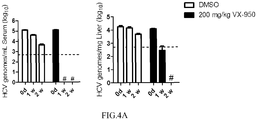
- the results showed that Ribavirin can effectively reduce the HCV copy number in serum and the HCV replication in the liver ( Fig. 4A ).
- Telaprevir was a specific drug against HCV, significantly reduced the number of viral copies in serum and the replication in the after treatment, wherein the viral load in the peripheral blood (genomes/mL) in untreated group was: 123489 ⁇ 5761 (1 week after viral injection), 39782 ⁇ 5315 (1 week after DMSO intraperitoneal injection), 4349 ⁇ 1531 (1 month after DMSO intraperitoneal injection); while the treatment group was: 123489 ⁇ 5761 (1 week after viral injection), the viral copies in the peripheral blood cannot be detected after Telaprevir treatment for 1 week and 2 weeks.
- the viral copies in the liver (genomes/mg) in the untreated group was: 17864 ⁇ 3223 (1 week after viral injection), 14041 ⁇ 2712 (1 week after DMSO intraperitoneal injection), 4723 ⁇ 570 (4 weeks after DMSO intraperitoneal injection); treatment group was: 11836 ⁇ 1104 (1 week after viral injection), 273 ⁇ 301 (1 week after Telaprevir injection); the viral copies in the liver cannot be detected 4 weeks after Telaprevir treatment.
- the results showed that Ribavirin treatment can effectively reduce the number of HCV copies in serum and the HCV replication in the liver ( Fig. 4B ).
- the HCV infection model of double transgenic mice was sensitive to current drugs, and it suggested an excellent platform to assess HCV drugs.
Landscapes
- Life Sciences & Earth Sciences (AREA)
- Environmental Sciences (AREA)
- Biodiversity & Conservation Biology (AREA)
- Animal Behavior & Ethology (AREA)
- Zoology (AREA)
- Animal Husbandry (AREA)
- Biotechnology (AREA)
- General Health & Medical Sciences (AREA)
- Veterinary Medicine (AREA)
- Health & Medical Sciences (AREA)
- Engineering & Computer Science (AREA)
- Medicines That Contain Protein Lipid Enzymes And Other Medicines (AREA)
- Micro-Organisms Or Cultivation Processes Thereof (AREA)
Description
- The present invention relates generally to a field of transgenic technology, and more particularly relates to a CD81 and OCLN double transgenic.
- Hepatitis C is widespread in the world, as currently there are about 1.3-1.7 million hepatitis C patients. Nearly 80% HCV infected population develops chronic infections, and some of chronic hepatitis C will progress to liver fibrosis, cirrhosis and liver cancer. The HCV is divided into different hypotypes among different races, and the clinic treatments for various HCV hypotypes are also accordingly different. While no vaccine is currently available, effective prevention and treatment for hepatitis C have become a major health issue in need of solution.
- The basic studies of HCV infectious and pathogenic mechanism as well as the development of drugs and vaccines would likely benefit from suitable animal models. Chimpanzees are the only species besides humans that is susceptible to HCV infection. However, small number, high costs, slow reproduction, primate animal welfare and growing ethical concerns will limit access to the chimpanzee model, and thus development of suitable alternatives is critical. So far, the development of small animal model of HCV has made some progress, including:
- (1) Full-length transgenic mouse: HCV mouse model is developed by transgening HCV full-length genome or specific protein fragment to mouse genome to construct a transgenic mouse having persistent HCV protein expression (Moriya et al., 1998, The core protein of hepatitis C virus induces hepatocellular carcinoma in transgenic mice, Nat Med 4:1065-1067.). The HCV gene overexpression in the transgenic mouse somatic cell would cause expression pressure on the host cell. Such mouse model only expresses HCV gene fragment and lacks the process of HCV virus particles invasion and replication in the cells, such that its application is very limited.
- (2) The tree shrew model: tree shrews are susceptible to HCV infection (Tong et al., 2011 Tupaia CD81, SR-BI, claudin-1, and occludin support hepatitis C virus infectio, J Virol 85:2793-2802; Xu et al., 2007). However, said infection is a transient infection, and this model is unable to establish a stable and reproducible infection. As the tree shrew is a wild animal, artificial feeding and breeding cannot be easily sustained, and its genetic strains are unstable, making it unsuitable for long-term research and application.
- (3) Chimeric mouse model: engrafting primary human liver cells to immunodeficient mice or embedding human liver tissue into renal capsular of the mice can support HCV infection and replication. However, this model is limited by low efficiency of viral infection, human liver tissue or cellular immune rejection, and lack of immune response against the pathology of HCV For example, urokinase-type plasminogen-activator gene (uPA) expression is regulated by albumin promoter (specifically expressed in liver) in severe combined immunodeficiency (SCID) mice would cause persistent liver damage (Kaul et al., 2007, Cell culture adaptation of hepatitis C virus and in vivo viability of an adapted variant. J Virol 81:13168-13179).
- (4) SCID mice transplanted with human liver cell and immune system has limited HCV expression with partial hepatitis pathological process. Moreover, the technology is complex, SCID mice are not readily available, HCV infection is also unstable, and ethical concerns are involved. For example, FK506 binding protein and
caspase 8 fusion protein are regulated by albumin promoter in the immunodeficient Balb/C mice having Rag2-/-IL2rg-/-, such that the mice can induce liver damage and then accept human liver cell transplantation after induction (Washburn et al., 2011, A humanized mouse model to study hepatitis C virus infection, immune response, and liver disease, Gastroenterology 140:1334-1344.). - (5) Studies have shown that the species specification of HCV infection depends on the infected subject. The mouse transplanted with CD81 of HCV cell receptor and OCLN (Occludin) can support virus infection and replication in the cellular level. HCV replication in mouse hepatocytes can be detected by adenovirus vector carrying CD81 and OCLN in mouse hepatocytes after transient expression, but cannot establish infection and hepatitis pathological variation. For example, the four HCV receptor genes carried by adenoviral vector can express in mouse, and induce HCV to be able to enter mouse cell for replication. However, the life-cycle of HCV in this model is not complete and hepatitis pathological processes cannot be duly observed (Dorner et al., 2011, A genetically humanized mouse model for hepatitis C virus infection. Nature 474:208-211.).
- The present invention firstly provides a CD81 and OCLN double transgenic mouse model, wherein the mouse model is constructed by the following steps:
- (1) inserting human CD81 and OCLN gene clones to a pLIVE® vector respectively to obtain a pLIVE-CD81 vector containing CD81 gene expression and a pLIVE-OCLN vector containing OCLN gene expression;
- (2) construction a CD81 and OCLN double transgenic mouse:
- restricting the pLIVE-CD81 vector and the pLIVE-OCLN vector respectively to obtain linear DNA fragments comprising CD81 and linear DNA fragments comprising OCLN respectively;
- microinjecting the linear DNA fragments comprising CD81 and the linear DNA fragments comprising OCLN respectively into ICR mice zygotes respectively;
- transplanting the ICR mice zygotes to pseudopregnant ICR mice uteruses to breed CD81 transgenic mice and OCLN transgenic mice respectively, and then confirmed by PCR identification; and backcrossing the CD81 transgenic mice and the OCLN transgenic mice to obtain the CD81 and OCLN double transgenic mice.
- The present invention also provides a CD81 and OCLN double transgenic mouse whose genome contains transgenes comprising nucleic acids encoding CD81 and OCLN respectively, thereby promoting HCV natural infection and pathologic process of hepatitis C so that expressions of CD81 and OCLN are persistent, wherein the mouse is an ICR mouse. Preferably the mouse has a complete immune system. Preferably, both CD81 and OCLN genes are driven by a promoter an albumin promoter. Preferably the expression is enhanced by an α-fetoprotein (AFP) enhancer II. A method for constructing a CD81 and OCLN double transgenic mice model, wherein the method is constituted by the following steps is disclosed :
- (1) inserting human CD81 and OCLN clonings into a pLIVE® vector to obtain a pLIVE-CD81 vector containing CD81 gene expression and a pLIVE-OCLN vector containing OCLN gene expression;
- (2) constructing CD81 and OCLN double transgenic mice:
- restricting the pLIVE-CD81 vector and the pLIVE-OCLN vector respectively to obtain linear DNA fragments comprising CD81 and linear DNA fragments comprising OCLN respectively;
- microinjecting the linear DNA fragments comprising CD81 and the DNA fragments comprising OCLN into ICR mice zygotes respectively;
- transplanting the ICR mice zygotes to pseudopregnant ICR mice uteruses to breed CD81 transgenic mice and OCLN transgenic mice respectively, and then confirmed by PCR identification; and backcrossing the CD81 transgenic mice and the OCLN transgenic mice to obtain the CD81 and OCLN double transgenic mice (C/OTg).
- In brief, the method for constructing the CD81 and OCLN double transgenic mice (C/OTg) model comprising the following specific steps:
- (1) human CD81 and OCLN gene clonings:
- amplifying human CD81 and OCLN cDNA fragments by PCR from human cDNA library to obtain CD81 and OCLN encoding DNAs (cDNA) respectively, wherein the DNA sequences are SEQ ID NO. 1 and SEQ ID NO. 2;
- inserting CD81 cDNA into the pLIVE® vector in restriction sites between XhoI and BamHI endonuclease to obtain a pLIVE-CD81 vector containing CD81 expression;
- inserting OCLN DNA (cDNA) into the pLIVE® vector in restriction sites between SalI and XhoI endonuclease to obtain a pLIVE-OCLN vector containing OCLN expression;
- wherein the pLIVE® vector comprises mouse α-fetoprotein (AFP) enhancer and mouse albumin promoter for expressing in liver efficiently, specifically, stably and extendedly;
- (2) construction of CD81 and OCLN double transgenic mice:
- excising the pLIVE-CD81 vector by BglII and NdeI endonuclease to obtain linear CD81 DNA fragments (represented by SEQ ID NO. 3); excising the pLIVE-OCLN vector by SalI and XhoI endonuclease to obtain linear OCLN DNA fragments (represented by SEQ ID NO. 4);
- diluting each DNA fragment to 1 ng/mL and microinjecting the diluted DNA fragments into ICR mice zygotes respectively;
- transplanting the ICR mice zygotes to pseudopregnant ICR mice uterus to breed CD81 transgenic mice (CD81Tg/-) and OCLN transgenic mice (OCLNTg/-) respectively, and then confirmed by PCR identification; and,
- backcrossing the CD81 transgenic mice and the OCLN transgenic mice to obtain the CD81 and OCLN double transgenic mice (CD81Tg/-OCLNTg/-, abbreviating C/OTg).
- The CD81 and OCLN double transgenic mice model of the present invention described that two human CD81 and OCLN genes of the HCV receptor can be integrated stably and expressed in mouse gonome by integrating CD81 and OCLN genes into mouse chromosome respectively for breeding the CD81 and OCLN double transgenic mice, but the two transgenes do not affect host allelic gene. The impact is small for the host and can be used to support HCV entry.
- The present invention also provides a method for constituting acute and chronic HCV infection model of the CD81 and OCLN double transgenic mice. Because the HCV replication is susceptible to antiviral drugs such as nucleotide analogues or protease inhibitors, the described model can validate the efficacy against HCV antiviral drug, antiviral evaluation of immunomodulatory agents, optimization of clinical treatment, and vaccine development.
- HCV natural infection and pathological process can be reproduced in mice having complete immune system because of permanent HCV replication and HCV viral load of liver and stable peripheral blood, so as to establish acute and chronic infection and liver pathology models.
- The CD81 and OCLN double transgenic mice of the present invention is first constructed. The method for constructing this transgenic mice model is stable and can be reproduced in bulk.
- The CD81 and OCLN double transgenic mice of the present invention can provide a persistent infection model that completely reflects HCV natural infection and pathologic process of hepatitis C.
- Furthermore, the CD81 and OCLN double transgenic mice of the present invention can also be used to develop various diagnosis, detection techniques, methods and products against HCV
- The present invention also provides bioactive substances from the CD81 and OCLN double transgenic mice during HCV infection via blood, wherein the bioactive substances include, but not limited to, antibodies, neutralizing, antigen presenting cells and HCV specific T cells.
- The CD81 and OCLN double transgenic mice of the present invention also provides a variety of HCV mutants that can be used for drug design and vaccine development.
-
-
Fig. 1A provides transgenic plasmid maps comprising human CD81 and OCLN genes respectively; -
Fig. 1B illustrates the genotype of the double transgenic mice obtained from tail by DNA extraction and PCR; -
Fig.1C illustrates the expressions of human CD81 and OCLN in liver of the double transgenic mice, with Huh7 and Huh7.5.1 hepatoma cells as control group; -
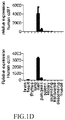
Fig.1D illustrates the human CD81 and OCLN expressions in different tissues of the double transgenic mice by qRT-PCR; -
Fig.1E illustrates the cellular localization of the human CD81 and OCLN in liver of the double transgenic mice; -
Fig.2A illustrates the double transgenic mice and control group infected with HCV by tail vein injection respectively, and then the double transgenic mice (C/OTg, n=4) and control group (n=3) were sacrificed at indicated time for analyzing viral loads in serum; -
Fig.2B illustrates the double transgenic mice and control group infected with HCV by tail vein injection respectively, and then the viral loads in liver of double transgenic mice (C/OTg, n=4) and control group (n=3) were sacrificed at indicated time for analyzing viral loads in serum; -
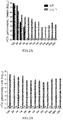
Fig.2C illustrates the double transgenic mice and control group infected HCV by tail vein injection respectively, and then the double transgenic mice (C/OTg, n=4) and control group (n=3) were sacrificed at indicated time for analyzing alanine transaminase (ALT) level; -
Fig.2D illustrates the double transgenic mice and control group infected with HCV by tail vein injection respectively, and then the double transgenic mice (C/OTg, n=4) and control group (n=3) were sacrificed at indicated time for analyzing the prealbumin (PA) level in serum level; -
Fig.2E illustrates the marker of the viral loads in serum and liver, liver injury (ALT level) and anti-HCV of the chronic infection cause steatosis (6 at 1 month post inoculation (mpi), 5 at 2 mpi), fibrotic (4 at 6 mpi, 4 at 10 mpi) and cirrhotic (4 at 13 mpi); wherein left dots indicate the double transgenic mice suffering pathological stage were verified as positive by ultrasonography, CT analysis and pathological evaluation. -
Fig.3A illustrates the liver tissues of the double transgenic mice and control group by H&E stain (3 sections per mouse); wherein the broken lines in theFig.3A(e)-(f) respectively represent portal vein lymphoid infiltration; wherein the broken lines in theFig.3A(g)-(h) respectively represent lymphoid aggregate in hepatic lobule; the bar chart shows average number of lymphoid aggregated in each section. -
Fig.3B illustrates micro vesicular steatosis (shown by the arrow), and amyloid depositions or tissue necrosis (shown by broken lines) of the double transgenic mice and control group by H&E stain; -
Fig.3C illustrates fibrosis of liver sections of the double transgenic mice and control group by Masson's stain; wherein the level of fibrosis was quantified by dispersion degree (fibrosis area/fibrosis area quantity); -
Fig.3D illustrates the expression of transforming growth factor-β1 (TGF-β1) in serum after HCV infection of the double transgenic mice and control group; -
Fig.4A illustrates HCV copies in serum and liver measured by qRT-PCR analysis, wherein the C/OTg mice were injected with 200 mg/kg telaprevir drug after infected with HCV for 1 week; wherein the mice injected with DMSO served as a control group; -
Fig.4B illustrates HCV copies in serum and liver measured by qRT-PCR analysis while the C/OTg mice were injected with 200 mg/kg Ribavirin drug after infected with HCV for 1 week; wherein the mice injected with DMSO served as a control group; and -
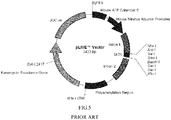
Fig.5 illustrates a map of the pLIVE® vector. - Other objectives, advantages and novel features of the invention will become more apparent from the following detailed description when taken in conjunction with the accompanying drawings.
- ICR ("Institute for Cancer Research") mice: CD-1®(ICR) mice were purchased from Vital River Laboratory Animal Technology Co. Ltd.
- pLIVE® vector was purchased from Mirus Corporation. The pLIVE® vectors are covered by patents pending of Mirus Bio LLC. The pLIVE® vectors are sustained long-term gene expression in the liver post hydrodynamic tail vein injection, and available with positive control vectors expressing either LacZ or human placental secreted alkaline phosphatase (SEAP).
- Human CD81 and OCLN cDNA fragments obtained from human cDNA database were PCR amplified with the programmed conditions of the following: 95°C for 10 minutes; 95°C for 30 seconds; 58°C for 30 seconds; 72°C for 2 minutes; 33 cycles, and then 72°C for 10 minutes to obtain human CD81 encoding DNA (cDNA) and OCLN encoding DNA (cDNA) respectively (Pfuultra II enzymes were purchased from Agliant company). CD81 cDNA was inserted into a pLIVE® vector in restriction sites between XhoI and BamHI endonuclease to obtain a pLIVE-CD81 vector containing CD81 expression. OCLN DNA (cDNA) was inserted into a pLIVE® vector in restriction sites between SalI and XhoI endonuclease to obtain a pLIVE-OCLN vector containing OCLN expression (endonucleases were purchased from NEB Inc.; pLIVE® vector was purchased from Mirus Corporation). The pLIVE-CD81 vectors were excised by BglII and NdeI endonuclease to obtain a linear CD81 DNA fragment (represented by SEQ ID NO. 3). The pLIVE-OCLN vector was excised by SalI and XhoI endonuclease to obtain a linear OCLN DNA fragment (representing SEQ ID NO. 4). Each DNA fragment was diluted to 1 ng/µL and microinjected into ICR mice zygotes respectively (see e.g. Lars M Ittner & Jürgen Götz, 2007 Pronuclear injection for the production of transgenic mice. ). The ICR mice zygotes were transplanted to pseudopregnant ICR mice uteruses to breed CD81 transgenic mice (CD81Tg/-) and OCLN transgenic mice (OCLNTg/-) respectively, and then were confirmed by PCR identification. The CD81 transgenic mice and the OCLN transgenic mice were backcrossed to obtain the CD81 and OCLN double transgenic mice (CD81Tg/-OCLNTg/-, referring C/OTg).
- Plasmid pJ399EM was transcribed in vitro (Han et al., 2009) to obtain an RNA, and then the RNA was electroporated into Huh7.5.1 cells (Pasteur Institute) for virus production during 96 hours and for collection, followed by ultrafiltration and purification to obtain HCV The C/OTg double transgenic mice or the wild type mice were injected at tail-vein with HCV (TCID50=1x10⁸/mL) within 1-2 minutes. The serum or liver tissue of the C/OTg double transgenic mice or the wild type mice were collected respectively at
indicated time 0 hour to 12 months after infection. HCV RNA level in serum (genomes/mL) and liver (genomes/g) were measured by qRT-PCR. The program was performed as follows: 50°C for 30 minutes, 95°C for 10 minutes, followed by 50 cycles at 95°C for 30 seconds, 58°C for 30 seconds, and 72°C for 30 seconds. Primers used for detection were as follows: sense (forward primer): ATCACTCCCCTGTGAGGAACT (represented by SEQ ID NO. 5); anti-sense (reverse primer): GCGGGTTGATCCAAGAAAGG (represented by SEQ ID NO. 6). The viral load in serum (genomes/mL) of the wild type mice after injection was: 53746900±747977 (12 hours), 25791242±8626787 (2 days), 7026±2797 (4 days), 433±73 (1 week), and then the viral copies in peripheral blood of wild type mice was undetectable after one week. The viral load in peripheral blood (genomes/mL) of the C/OTg double transgenic mice after injection was: 3598678 ±3016340 (12 hours), 1607875±1304933 (2 days), 228942±174178 (4 days), 64505±6821 (1 week), 67622±4612 (2 weeks), 33671±13347 (3 weeks), 6921±4272 (1 month), 6739±4783 (2 months), 403±95 (3 months), 534± 125 (4 months), 1375±198 (6 months), 4781±2969 (10 months), 2067±277 (12 months). The results showed that HCV can be sustained in the peripheral blood of the C/OTg double transgenic mice. The viral copies cannot be detectable in liver of the wild type mice after injection. The viral copies in the liver (genomes/g) of the C/OTg double transgenic mice after injection was: 149676500±26422459.09 (12 hours), 68863260±26554660 (2 days), 30167166±14023164 (4 days), 48183923±49326087 (1 week), 5221675±782099 (2 weeks), 4723475±570250 (3 weeks), 5649760± 3372903 (1 month), 3597135±2671267 (2 months), 1831199±34834 (3 months), 3055570±565440 (4 months), 10729851±3954535 (6 months), 14392085±1902774 (10 months), 15543000±124774 (12 months). The results showed that HCV can be sustained in the liver of the C/OTg double transgenic mice. Meanwhile, the liver tissues were used for pathological analysis (H&E stain, Masson's stain), ultrasound, CT and other non-invasive imaging analysis to assess hepatitis, liver damage (fibrosis and cirrhosis) and other typical HCV pathology caused by HCV infection. The double transgenic mice infected by HCV express mild hepatitis symptoms (most ALT<40). The ALT level of the wild type mice was (U/L): 17.8±11.08 (uninfected), 10.5 0.51 (12 hours), 7.0±1.42 (2 days), 29.5±9.19 (4 days), 6.6±3.54 (1 weeks), 28.2±8.84 (2 weeks), 17.7±13.33 (1 month), 27.9±1.69 (2 months), 26.5±0.70 (3 months), 37.4±12.90 (4 months), 27.3±6.01 (10 months), 16.5±6.29 (12 months). The ALT level of the C/OTg double transgenic mice was (U/L): 17.8±11.01 (uninfected), 7.8±6.72 (12 hours), 28.0±1.25 (2 days), 57.3±3.88 (4 days), 16.3±7.72 (1 week), 61.0±5.65 (2 week), 21.2±11.16 (1 month), 19.6±0.68 (2 months), 27.4±10.25 (3 months), 36.3±4.06 (4 months), 35.7±5.44 (6 months), 19.5±3.79 (10 months), 232.3±26.89 (12 months). The results showed that the wild type mice injected with virus showed almost no hepatitis symptoms (ALT<40), while the C/OTg double transgenic mice infected with virus had no hepatitis symptoms in most of the time, but only expressed hepatitis symptoms in the late stage (ALT>40) (Fig. 2C ). The prealbumin levels of the wild type mice after injection were maintained at normal levels (20∼30 mg/L), but the prealbumin levels of the C/OTg double transgenic mice cannot be detectable 4 days after infection. It was suggesting that some liver damages were caused by viral infection (Fig. 2D ). The liver of the C/OTg double transgenic mice infected by HCV expressed lymphocytes aggregation by H&E stain. Each section showed that 5 to 20 numbers lymphocytes aggregation occurred in 1 week to 5 months after infection (Fig. 3A ), steatosis (vesicular structure) occurred in 1 month to 2 months after infection , amyloid deposition in peripheral vascular after infection for 3 months to 6 months, and necrosis occurred in 10 months after infection (Fig. 3B ). Masson stain results showed apparently that the collagen fibers aggregation (blue) after infection for 6 months indicated liver fibrosis. The dispersion degree (fibrosis area/fibrosis area number) was 60 in 3 months after infection, and was 180 within 6 and 10 months after infection, indicating fibrosis was increasing. The increasing expression of TGF-β1 also confirmed increasing fibrosis (Fig. 3D ). The significant differences occurred between pathological positive group and pathological negative group within viral copies in liver and HCV antibody level in serum in the steatosis stage by comparing steatosis, fibrosis and cirrhosis of mice and pathological negative mice at the same time; the remaining had no significant differences (Fig. 2G). The above-described conclusions indicated that the double transgenic mice can support HCV replication and produce pathological processes as the clinic. - The C/OTg male mice were infected with HCV by tail vein injection (TCID50= 1×10⁸) within 1-2 minutes. Starting medical treatment at a week after injection: 20 mg/kg Ribavirin (sigma) administered for 4 weeks by intraperitoneal injection daily or 200 mg/kg, Telaprevir (votex) administered for 2 weeks by intraperitoneal injection daily, wherein the antiviral drug was one component. The serum and liver tissues of the mice were collected after the treatment by Ribavirin for 1 week and 4 weeks, and by Telaprevir for 1 week and 2 weeks. HCV RNA copy numbers in the serum or liver cells were detected by qRT-PCR (Example 2). With respect to the untreated group, the viral copy number in the serum and liver was significantly decreasing after Ribavirin treatment, wherein the viral load in the peripheral blood (genomes/mL) of untreated group was: 123489±5761 (1 week after viral injection), 68312±214 (1 week after intraperitoneal injection of saline), 5958±1332 (1 month after intraperitoneal injection of saline); the viral load in the peripheral blood of treated group was 123489±5761 (1 week after viral injection), and the viral copies cannot be detected in peripheral blood by Ribavirin treatment for 1 week and 4 weeks. The viral copies in the liver (genomes/mg) in the untreated group was: 17864±3223 (1 week after viral injection), 5289±891 (1 week after saline intraperitoneal injection), 4713±916 (4 weeks after intraperitoneal injection of saline); treated group was: 17864±3223 (1 week after viral injection), 260±226 (1 week after Ribavirin injection), 894±639 (4 weeks after Ribavirin injection). The results showed that Ribavirin can effectively reduce the HCV copy number in serum and the HCV replication in the liver (
Fig. 4A ). Compared to untreated group, Telaprevir was a specific drug against HCV, significantly reduced the number of viral copies in serum and the replication in the after treatment, wherein the viral load in the peripheral blood (genomes/mL) in untreated group was: 123489±5761 (1 week after viral injection), 39782±5315 (1 week after DMSO intraperitoneal injection), 4349±1531 (1 month after DMSO intraperitoneal injection); while the treatment group was: 123489±5761 (1 week after viral injection), the viral copies in the peripheral blood cannot be detected after Telaprevir treatment for 1 week and 2 weeks. The viral copies in the liver (genomes/mg) in the untreated group was: 17864±3223 (1 week after viral injection), 14041±2712 (1 week after DMSO intraperitoneal injection), 4723±570 (4 weeks after DMSO intraperitoneal injection); treatment group was: 11836±1104 (1 week after viral injection), 273±301 (1 week after Telaprevir injection); the viral copies in the liver cannot be detected 4 weeks after Telaprevir treatment. The results showed that Ribavirin treatment can effectively reduce the number of HCV copies in serum and the HCV replication in the liver (Fig. 4B ). The HCV infection model of double transgenic mice was sensitive to current drugs, and it suggested an excellent platform to assess HCV drugs.
Claims (17)
- A CD81 and OCLN double transgenic mouse model, the genome of which contains transgenes comprising nucleic acids encoding CD81 and OCLN genes of the HCV (hepatitis C virus) receptor, said transgenes integrated stably into the genome, said transgenes promoting HCV natural infection and pathologic process of hepatitis C so that expressions of CD81 and OCLN are persistent,
wherein the mouse is an ICR mouse and
wherein expression of both CD81 and OCLN genes is driven by a promoter providing expression in the liver, preferably a liver specific promoter. - The mouse model according to claim 1, wherein the promoter is an albumin promoter.
- The mouse model according to claim 1 or 2 wherein the mouse has a complete immune system.
- The mouse model according to any of claim 1 to 3 wherein said mouse is infected by HCV and exhibits permanent HCV replication and exhibits stable HCV viral load of liver and/or peripheral blood.
- The mouse model according to any of claims 1 to 4 wherein said mouse is infected by HCV and
exhibits acute and/or chronic hepatitis. - The mouse model according to any of claims 1 to 5 wherein the expression of both CD81 and OCLN genes is enhanced by an α-fetoprotein (AFP) enhancer II.
- The mouse model according to any of claims 1 to 6, wherein each of the transgenes is inserted into a pLIVE vector.
- A transgenic mouse obtainable by a method comprising the following steps:(1) inserting human CD81 and OCLN clonings into a pLIVE® vector to obtain a pLIVE-CD81 vector containing CD81 gene expression and a pLIVE-OCLN vector containing OCLN gene expression;(2) constructing the CD81 and OCLN double transgenic mouse, comprising acts of:cleaving the pLIVE-CD81 vector and the pLIVE-OCLN vector respectively to obtain linear DNA fragments comprising CD81 and linear DNA fragments comprising OCLN respectively;microinjecting the linear DNA fragments comprising CD81 and the DNA fragments comprising OCLN into ICR mouse zygotes respectively;transplanting the ICR mouse zygotes to pseudopregnant ICR mouse uterus to breed CD81 transgenic mice and OCLN transgenic mice respectively, and then confirmed by PCR identification;
and,backcrossing the CD81 transgenic mice and the OCLN transgenic mice to obtain the CD81 and OCLN double transgenic mouse (C/OTg). - The mouse according to claim 8, wherein the mouse has a complete immune system.
- The mouse according to any of claim 8 to 9 wherein said mouse is infected by HCV and exhibits permanent HCV replication and exhibits stable HCV viral load of liver and/or peripheral blood.
- The mouse according to any of claims 8 to 10 wherein said mouse is infected by HCV and exhibits acute and/or chronic hepatitis.
- A method of constituting acute and chronic HCV infection in a mouse comprising the infection of a mouse according to any of claims 1 to 11 by HCV thereby promoting HCV natural infection and pathologic process of hepatitis C so that expressions of CD81 and OCLN are persistent.
- The method according to claim 12, wherein said mouse is infected by HCV and exhibits permanent HCV replication and exhibits stable HCV viral load of liver and/or peripheral blood.
- The method according to claim 12 or 13, wherein the mouse is infected by HCV and exhibits acute and/or chronic hepatitis.
- Use of a mouse model according to any of claims 1 to 11 as a HCV infection model,
preferably as a
chronic HCV infection model and/or
acute HCV infection model. - Use of a mouse model according to any of claims 1 to 11 for- validate the efficacy against HCV antiviral drug,- antiviral evaluation of immunomodulatory agents,- optimization of clinical treatment, and/or- vaccine development.
- Use of a mouse model according to claim 1-11 as a chronic HCV infection model or as a liver pathology model.
Applications Claiming Priority (1)
| Application Number | Priority Date | Filing Date | Title |
|---|---|---|---|
| CN201310502450.6A CN103548775B (en) | 2013-10-23 | 2013-10-23 | Construction method of CD81 (cluster of differentiation 81) and OCLN (occludin) dual-transgenosis murine, and application of the |
Publications (2)
| Publication Number | Publication Date |
|---|---|
| EP2865263A1 EP2865263A1 (en) | 2015-04-29 |
| EP2865263B1 true EP2865263B1 (en) | 2017-11-01 |
Family
ID=50003293
Family Applications (1)
| Application Number | Title | Priority Date | Filing Date |
|---|---|---|---|
| EP14189856.9A Not-in-force EP2865263B1 (en) | 2013-10-23 | 2014-10-22 | A method for constructing a cd81 and ocln double transgenic mouse |
Country Status (3)
| Country | Link |
|---|---|
| US (1) | US9510570B2 (en) |
| EP (1) | EP2865263B1 (en) |
| CN (1) | CN103548775B (en) |
Families Citing this family (4)
| Publication number | Priority date | Publication date | Assignee | Title |
|---|---|---|---|---|
| EP3251685A1 (en) * | 2016-06-02 | 2017-12-06 | Twincore Zentrum für Experimentelle und Klinische Infektionsforschung GmbH | Repressors of viral infection |
| WO2018233608A1 (en) * | 2017-06-19 | 2018-12-27 | Beijing Biocytogen Co., Ltd | NON-HUMAN ANIMAL GENETICALLY MODIFIED TO CD28 HUMAN OR CHIMERIC |
| CN109136261B (en) | 2017-06-19 | 2021-03-16 | 百奥赛图(北京)医药科技股份有限公司 | Preparation method and application of humanized CD28 gene modified animal model |
| CN109680000B (en) * | 2018-12-18 | 2022-07-19 | 中国医学科学院医学生物学研究所 | Method for establishing HCV cell model by using tree shrew marrow mesenchymal stem cells |
Family Cites Families (7)
| Publication number | Priority date | Publication date | Assignee | Title |
|---|---|---|---|---|
| US4873191A (en) * | 1981-06-12 | 1989-10-10 | Ohio University | Genetic transformation of zygotes |
| US6689610B1 (en) * | 1989-08-22 | 2004-02-10 | University Of Utah Research Foundation | Cells and non-human organisms containing predetermined genomic modifications and positive-negative selection methods and vectors for making same |
| ATE169061T1 (en) * | 1990-10-25 | 1998-08-15 | Clague Pitman Hodgson | METHOD OF GENE TRANSFER USING RETROTRANSPOSON |
| CA2255286A1 (en) * | 1997-12-17 | 1999-06-17 | The University Of Manitoba | Galanin transgenic mice |
| US20120107284A1 (en) * | 2006-06-30 | 2012-05-03 | Elena Kozlova | Stem cells for transplantation and methods for production thereof |
| EP2344534A4 (en) * | 2008-10-03 | 2012-03-28 | Univ Rockefeller | NEW HCV ENTRY FACTOR, OCCLUDINE |
| CN101851274B (en) * | 2010-03-29 | 2012-07-11 | 中国医学科学院病原生物学研究所 | Polypeptides for suppressing invasion of hepatitis C virus |
-
2013
- 2013-10-23 CN CN201310502450.6A patent/CN103548775B/en not_active Expired - Fee Related
-
2014
- 2014-06-24 US US14/313,109 patent/US9510570B2/en not_active Expired - Fee Related
- 2014-10-22 EP EP14189856.9A patent/EP2865263B1/en not_active Not-in-force
Non-Patent Citations (1)
| Title |
|---|
| None * |
Also Published As
| Publication number | Publication date |
|---|---|
| US20150113673A1 (en) | 2015-04-23 |
| CN103548775B (en) | 2015-03-18 |
| CN103548775A (en) | 2014-02-05 |
| US9510570B2 (en) | 2016-12-06 |
| EP2865263A1 (en) | 2015-04-29 |
Similar Documents
| Publication | Publication Date | Title |
|---|---|---|
| Larkin et al. | Hepatitis B virus transgenic mouse model of chronic liver disease | |
| He et al. | Hepatitis D virus infection of mice expressing human sodium taurocholate co-transporting polypeptide | |
| Urban et al. | Strategies to inhibit entry of HBV and HDV into hepatocytes | |
| Small et al. | Early regions of JC virus and BK virus induce distinct and tissue-specific tumors in transgenic mice. | |
| JP5073836B2 (en) | Mice transplanted with human hepatocytes | |
| Dandri et al. | Mouse models of hepatitis B and delta virus infection | |
| Park et al. | Development of transgenic mouse model expressing porcine aminopeptidase N and its susceptibility to porcine epidemic diarrhea virus | |
| He et al. | Modification of three amino acids in sodium taurocholate cotransporting polypeptide renders mice susceptible to infection with hepatitis D virus in vivo | |
| Hirai-Yuki et al. | Murine models of hepatitis A virus infection | |
| CN107446954A (en) | A kind of preparation method of SD rat T cells deleting genetic model | |
| JP2008022853A5 (en) | ||
| US9510570B2 (en) | CD81 and OCLN double transgenic mouse and its construction methods | |
| CN106413394B (en) | Humanized dipeptidyl peptidase IV (DPP4) animals | |
| CN108424930A (en) | A kind of construction method and purposes of HBeAg transgene mouse models | |
| Chen et al. | Woolly monkey–HBV infection in squirrel monkeys as a surrogate nonhuman primate model of HBV infection | |
| Giersch et al. | Murine hepatocytes do not support persistence of Hepatitis D virus mono‐infection in vivo | |
| CN108310368A (en) | A method of structure liver humanized mouse model | |
| CN101878747B (en) | Constructing method of mouse model for RdRp controllable express and in vivo observation | |
| CN106554954B (en) | In vivo efficacy evaluation method of EV71 vaccine and antiviral drug screening method | |
| CN101991610B (en) | Method for structuring hepatitis E infection model | |
| Hausmann et al. | Vaccine-induced protection against Borna disease in wild-type and perforin-deficient mice | |
| CN109769748B (en) | Construction method of chronic hepatitis E virus mouse model | |
| Gao et al. | Establishment of mice model with human viral hepatitis B | |
| CN107974464A (en) | The purposes of Slc6a12 genes and its albumen | |
| Su et al. | Xeno-repopulation of Fah−/− Nod/Scid mice livers by human hepatocytes |
Legal Events
| Date | Code | Title | Description |
|---|---|---|---|
| PUAI | Public reference made under article 153(3) epc to a published international application that has entered the european phase |
Free format text: ORIGINAL CODE: 0009012 |
|
| 17P | Request for examination filed |
Effective date: 20141022 |
|
| AK | Designated contracting states |
Kind code of ref document: A1 Designated state(s): AL AT BE BG CH CY CZ DE DK EE ES FI FR GB GR HR HU IE IS IT LI LT LU LV MC MK MT NL NO PL PT RO RS SE SI SK SM TR |
|
| AX | Request for extension of the european patent |
Extension state: BA ME |
|
| R17P | Request for examination filed (corrected) |
Effective date: 20151001 |
|
| RBV | Designated contracting states (corrected) |
Designated state(s): AL AT BE BG CH CY CZ DE DK EE ES FI FR GB GR HR HU IE IS IT LI LT LU LV MC MK MT NL NO PL PT RO RS SE SI SK SM TR |
|
| 17Q | First examination report despatched |
Effective date: 20160415 |
|
| GRAP | Despatch of communication of intention to grant a patent |
Free format text: ORIGINAL CODE: EPIDOSNIGR1 |
|
| INTG | Intention to grant announced |
Effective date: 20170529 |
|
| RIN1 | Information on inventor provided before grant (corrected) |
Inventor name: TANG, HONG Inventor name: ZHANG, CHAO Inventor name: ZHAO, YANG Inventor name: CHEN, JI-ZHENG Inventor name: CHEN, XIN-WEN Inventor name: CHEN, HAI-RONG |
|
| GRAS | Grant fee paid |
Free format text: ORIGINAL CODE: EPIDOSNIGR3 |
|
| GRAA | (expected) grant |
Free format text: ORIGINAL CODE: 0009210 |
|
| AK | Designated contracting states |
Kind code of ref document: B1 Designated state(s): AL AT BE BG CH CY CZ DE DK EE ES FI FR GB GR HR HU IE IS IT LI LT LU LV MC MK MT NL NO PL PT RO RS SE SI SK SM TR |
|
| REG | Reference to a national code |
Ref country code: GB Ref legal event code: FG4D |
|
| REG | Reference to a national code |
Ref country code: CH Ref legal event code: EP Ref country code: AT Ref legal event code: REF Ref document number: 941077 Country of ref document: AT Kind code of ref document: T Effective date: 20171115 |
|
| REG | Reference to a national code |
Ref country code: IE Ref legal event code: FG4D |
|
| REG | Reference to a national code |
Ref country code: DE Ref legal event code: R096 Ref document number: 602014016510 Country of ref document: DE |
|
| REG | Reference to a national code |
Ref country code: SE Ref legal event code: TRGR |
|
| REG | Reference to a national code |
Ref country code: NL Ref legal event code: MP Effective date: 20171101 |
|
| REG | Reference to a national code |
Ref country code: LT Ref legal event code: MG4D |
|
| REG | Reference to a national code |
Ref country code: AT Ref legal event code: MK05 Ref document number: 941077 Country of ref document: AT Kind code of ref document: T Effective date: 20171101 |
|
| PG25 | Lapsed in a contracting state [announced via postgrant information from national office to epo] |
Ref country code: LT Free format text: LAPSE BECAUSE OF FAILURE TO SUBMIT A TRANSLATION OF THE DESCRIPTION OR TO PAY THE FEE WITHIN THE PRESCRIBED TIME-LIMIT Effective date: 20171101 Ref country code: NO Free format text: LAPSE BECAUSE OF FAILURE TO SUBMIT A TRANSLATION OF THE DESCRIPTION OR TO PAY THE FEE WITHIN THE PRESCRIBED TIME-LIMIT Effective date: 20180201 Ref country code: FI Free format text: LAPSE BECAUSE OF FAILURE TO SUBMIT A TRANSLATION OF THE DESCRIPTION OR TO PAY THE FEE WITHIN THE PRESCRIBED TIME-LIMIT Effective date: 20171101 Ref country code: NL Free format text: LAPSE BECAUSE OF FAILURE TO SUBMIT A TRANSLATION OF THE DESCRIPTION OR TO PAY THE FEE WITHIN THE PRESCRIBED TIME-LIMIT Effective date: 20171101 Ref country code: ES Free format text: LAPSE BECAUSE OF FAILURE TO SUBMIT A TRANSLATION OF THE DESCRIPTION OR TO PAY THE FEE WITHIN THE PRESCRIBED TIME-LIMIT Effective date: 20171101 |
|
| PG25 | Lapsed in a contracting state [announced via postgrant information from national office to epo] |
Ref country code: AT Free format text: LAPSE BECAUSE OF FAILURE TO SUBMIT A TRANSLATION OF THE DESCRIPTION OR TO PAY THE FEE WITHIN THE PRESCRIBED TIME-LIMIT Effective date: 20171101 Ref country code: GR Free format text: LAPSE BECAUSE OF FAILURE TO SUBMIT A TRANSLATION OF THE DESCRIPTION OR TO PAY THE FEE WITHIN THE PRESCRIBED TIME-LIMIT Effective date: 20180202 Ref country code: RS Free format text: LAPSE BECAUSE OF FAILURE TO SUBMIT A TRANSLATION OF THE DESCRIPTION OR TO PAY THE FEE WITHIN THE PRESCRIBED TIME-LIMIT Effective date: 20171101 Ref country code: BG Free format text: LAPSE BECAUSE OF FAILURE TO SUBMIT A TRANSLATION OF THE DESCRIPTION OR TO PAY THE FEE WITHIN THE PRESCRIBED TIME-LIMIT Effective date: 20180201 Ref country code: IS Free format text: LAPSE BECAUSE OF FAILURE TO SUBMIT A TRANSLATION OF THE DESCRIPTION OR TO PAY THE FEE WITHIN THE PRESCRIBED TIME-LIMIT Effective date: 20180301 Ref country code: LV Free format text: LAPSE BECAUSE OF FAILURE TO SUBMIT A TRANSLATION OF THE DESCRIPTION OR TO PAY THE FEE WITHIN THE PRESCRIBED TIME-LIMIT Effective date: 20171101 Ref country code: HR Free format text: LAPSE BECAUSE OF FAILURE TO SUBMIT A TRANSLATION OF THE DESCRIPTION OR TO PAY THE FEE WITHIN THE PRESCRIBED TIME-LIMIT Effective date: 20171101 |
|
| PG25 | Lapsed in a contracting state [announced via postgrant information from national office to epo] |
Ref country code: DK Free format text: LAPSE BECAUSE OF FAILURE TO SUBMIT A TRANSLATION OF THE DESCRIPTION OR TO PAY THE FEE WITHIN THE PRESCRIBED TIME-LIMIT Effective date: 20171101 Ref country code: SK Free format text: LAPSE BECAUSE OF FAILURE TO SUBMIT A TRANSLATION OF THE DESCRIPTION OR TO PAY THE FEE WITHIN THE PRESCRIBED TIME-LIMIT Effective date: 20171101 Ref country code: CZ Free format text: LAPSE BECAUSE OF FAILURE TO SUBMIT A TRANSLATION OF THE DESCRIPTION OR TO PAY THE FEE WITHIN THE PRESCRIBED TIME-LIMIT Effective date: 20171101 Ref country code: EE Free format text: LAPSE BECAUSE OF FAILURE TO SUBMIT A TRANSLATION OF THE DESCRIPTION OR TO PAY THE FEE WITHIN THE PRESCRIBED TIME-LIMIT Effective date: 20171101 Ref country code: CY Free format text: LAPSE BECAUSE OF FAILURE TO SUBMIT A TRANSLATION OF THE DESCRIPTION OR TO PAY THE FEE WITHIN THE PRESCRIBED TIME-LIMIT Effective date: 20171101 |
|
| REG | Reference to a national code |
Ref country code: DE Ref legal event code: R097 Ref document number: 602014016510 Country of ref document: DE |
|
| PG25 | Lapsed in a contracting state [announced via postgrant information from national office to epo] |
Ref country code: PL Free format text: LAPSE BECAUSE OF FAILURE TO SUBMIT A TRANSLATION OF THE DESCRIPTION OR TO PAY THE FEE WITHIN THE PRESCRIBED TIME-LIMIT Effective date: 20171101 Ref country code: SM Free format text: LAPSE BECAUSE OF FAILURE TO SUBMIT A TRANSLATION OF THE DESCRIPTION OR TO PAY THE FEE WITHIN THE PRESCRIBED TIME-LIMIT Effective date: 20171101 Ref country code: IT Free format text: LAPSE BECAUSE OF FAILURE TO SUBMIT A TRANSLATION OF THE DESCRIPTION OR TO PAY THE FEE WITHIN THE PRESCRIBED TIME-LIMIT Effective date: 20171101 Ref country code: RO Free format text: LAPSE BECAUSE OF FAILURE TO SUBMIT A TRANSLATION OF THE DESCRIPTION OR TO PAY THE FEE WITHIN THE PRESCRIBED TIME-LIMIT Effective date: 20171101 |
|
| PLBE | No opposition filed within time limit |
Free format text: ORIGINAL CODE: 0009261 |
|
| STAA | Information on the status of an ep patent application or granted ep patent |
Free format text: STATUS: NO OPPOSITION FILED WITHIN TIME LIMIT |
|
| 26N | No opposition filed |
Effective date: 20180802 |
|
| REG | Reference to a national code |
Ref country code: FR Ref legal event code: PLFP Year of fee payment: 5 |
|
| PG25 | Lapsed in a contracting state [announced via postgrant information from national office to epo] |
Ref country code: SI Free format text: LAPSE BECAUSE OF FAILURE TO SUBMIT A TRANSLATION OF THE DESCRIPTION OR TO PAY THE FEE WITHIN THE PRESCRIBED TIME-LIMIT Effective date: 20171101 |
|
| REG | Reference to a national code |
Ref country code: CH Ref legal event code: PL |
|
| REG | Reference to a national code |
Ref country code: BE Ref legal event code: MM Effective date: 20181031 |
|
| PG25 | Lapsed in a contracting state [announced via postgrant information from national office to epo] |
Ref country code: LU Free format text: LAPSE BECAUSE OF NON-PAYMENT OF DUE FEES Effective date: 20181022 Ref country code: MC Free format text: LAPSE BECAUSE OF FAILURE TO SUBMIT A TRANSLATION OF THE DESCRIPTION OR TO PAY THE FEE WITHIN THE PRESCRIBED TIME-LIMIT Effective date: 20171101 |
|
| REG | Reference to a national code |
Ref country code: IE Ref legal event code: MM4A |
|
| PG25 | Lapsed in a contracting state [announced via postgrant information from national office to epo] |
Ref country code: BE Free format text: LAPSE BECAUSE OF NON-PAYMENT OF DUE FEES Effective date: 20181031 Ref country code: LI Free format text: LAPSE BECAUSE OF NON-PAYMENT OF DUE FEES Effective date: 20181031 Ref country code: CH Free format text: LAPSE BECAUSE OF NON-PAYMENT OF DUE FEES Effective date: 20181031 |
|
| PG25 | Lapsed in a contracting state [announced via postgrant information from national office to epo] |
Ref country code: IE Free format text: LAPSE BECAUSE OF NON-PAYMENT OF DUE FEES Effective date: 20181022 |
|
| PG25 | Lapsed in a contracting state [announced via postgrant information from national office to epo] |
Ref country code: MT Free format text: LAPSE BECAUSE OF NON-PAYMENT OF DUE FEES Effective date: 20181022 |
|
| PG25 | Lapsed in a contracting state [announced via postgrant information from national office to epo] |
Ref country code: TR Free format text: LAPSE BECAUSE OF FAILURE TO SUBMIT A TRANSLATION OF THE DESCRIPTION OR TO PAY THE FEE WITHIN THE PRESCRIBED TIME-LIMIT Effective date: 20171101 |
|
| PG25 | Lapsed in a contracting state [announced via postgrant information from national office to epo] |
Ref country code: PT Free format text: LAPSE BECAUSE OF FAILURE TO SUBMIT A TRANSLATION OF THE DESCRIPTION OR TO PAY THE FEE WITHIN THE PRESCRIBED TIME-LIMIT Effective date: 20171101 |
|
| PG25 | Lapsed in a contracting state [announced via postgrant information from national office to epo] |
Ref country code: MK Free format text: LAPSE BECAUSE OF NON-PAYMENT OF DUE FEES Effective date: 20171101 Ref country code: HU Free format text: LAPSE BECAUSE OF FAILURE TO SUBMIT A TRANSLATION OF THE DESCRIPTION OR TO PAY THE FEE WITHIN THE PRESCRIBED TIME-LIMIT; INVALID AB INITIO Effective date: 20141022 |
|
| PG25 | Lapsed in a contracting state [announced via postgrant information from national office to epo] |
Ref country code: AL Free format text: LAPSE BECAUSE OF FAILURE TO SUBMIT A TRANSLATION OF THE DESCRIPTION OR TO PAY THE FEE WITHIN THE PRESCRIBED TIME-LIMIT Effective date: 20171101 |
|
| PGFP | Annual fee paid to national office [announced via postgrant information from national office to epo] |
Ref country code: FR Payment date: 20200930 Year of fee payment: 7 |
|
| PGFP | Annual fee paid to national office [announced via postgrant information from national office to epo] |
Ref country code: DE Payment date: 20201009 Year of fee payment: 7 Ref country code: SE Payment date: 20201013 Year of fee payment: 7 Ref country code: GB Payment date: 20201015 Year of fee payment: 7 |
|
| REG | Reference to a national code |
Ref country code: DE Ref legal event code: R119 Ref document number: 602014016510 Country of ref document: DE |
|
| REG | Reference to a national code |
Ref country code: SE Ref legal event code: EUG |
|
| GBPC | Gb: european patent ceased through non-payment of renewal fee |
Effective date: 20211022 |
|
| PG25 | Lapsed in a contracting state [announced via postgrant information from national office to epo] |
Ref country code: SE Free format text: LAPSE BECAUSE OF NON-PAYMENT OF DUE FEES Effective date: 20211023 Ref country code: GB Free format text: LAPSE BECAUSE OF NON-PAYMENT OF DUE FEES Effective date: 20211022 Ref country code: DE Free format text: LAPSE BECAUSE OF NON-PAYMENT OF DUE FEES Effective date: 20220503 |
|
| PG25 | Lapsed in a contracting state [announced via postgrant information from national office to epo] |
Ref country code: FR Free format text: LAPSE BECAUSE OF NON-PAYMENT OF DUE FEES Effective date: 20211031 |