EP2863685A2 - Apparatus and method for home network search - Google Patents
Apparatus and method for home network search Download PDFInfo
- Publication number
- EP2863685A2 EP2863685A2 EP20150150895 EP15150895A EP2863685A2 EP 2863685 A2 EP2863685 A2 EP 2863685A2 EP 20150150895 EP20150150895 EP 20150150895 EP 15150895 A EP15150895 A EP 15150895A EP 2863685 A2 EP2863685 A2 EP 2863685A2
- Authority
- EP
- European Patent Office
- Prior art keywords
- public land
- mobile network
- land mobile
- communication device
- country code
- Prior art date
- Legal status (The legal status is an assumption and is not a legal conclusion. Google has not performed a legal analysis and makes no representation as to the accuracy of the status listed.)
- Granted
Links
- 238000000034 method Methods 0.000 title claims abstract description 33
- 238000010295 mobile communication Methods 0.000 claims abstract description 89
- 238000004590 computer program Methods 0.000 claims 1
- 101000716807 Arabidopsis thaliana Protein SCO1 homolog 1, mitochondrial Proteins 0.000 description 5
- 101001076715 Homo sapiens RNA-binding protein 39 Proteins 0.000 description 5
- 102100023361 SAP domain-containing ribonucleoprotein Human genes 0.000 description 5
- 238000004891 communication Methods 0.000 description 5
- 238000010586 diagram Methods 0.000 description 4
- 230000001413 cellular effect Effects 0.000 description 2
- 102100029632 28S ribosomal protein S11, mitochondrial Human genes 0.000 description 1
- 101000716806 Arabidopsis thaliana Protein SCO1 homolog 2, mitochondrial Proteins 0.000 description 1
- 230000006870 function Effects 0.000 description 1
- 239000004973 liquid crystal related substance Substances 0.000 description 1
- 238000012986 modification Methods 0.000 description 1
- 230000004048 modification Effects 0.000 description 1
- 230000003287 optical effect Effects 0.000 description 1
- 230000000737 periodic effect Effects 0.000 description 1
- 230000002093 peripheral effect Effects 0.000 description 1
Images


Classifications
-
- H—ELECTRICITY
- H04—ELECTRIC COMMUNICATION TECHNIQUE
- H04W—WIRELESS COMMUNICATION NETWORKS
- H04W48/00—Access restriction; Network selection; Access point selection
- H04W48/18—Selecting a network or a communication service
-
- H—ELECTRICITY
- H04—ELECTRIC COMMUNICATION TECHNIQUE
- H04W—WIRELESS COMMUNICATION NETWORKS
- H04W24/00—Supervisory, monitoring or testing arrangements
-
- H—ELECTRICITY
- H04—ELECTRIC COMMUNICATION TECHNIQUE
- H04W—WIRELESS COMMUNICATION NETWORKS
- H04W48/00—Access restriction; Network selection; Access point selection
- H04W48/16—Discovering, processing access restriction or access information
Definitions
- the present disclosure is directed to a method and apparatus for a home network search. More particularly, the present disclosure is directed to performing a home public land mobile network search while in a visiting public land mobile network that is using a different mobile country code from the home public land mobile network.
- a mobile communication device cannot to move to its home public land mobile network (HPLMN) during a periodic public land mobile network (PLMN) search when the mobile is registered on a visiting public land mobile network (VPLMN) using a different mobile country code (MCC) from its HPLMN.
- HPLMN home public land mobile network
- PLMN public land mobile network
- MCC mobile country code
- the mobile communication device is effectively outside of its home country.
- This limitation creates problems when the mobile communication device is in a country which shares multiple country codes. For example Hong Kong became part of China and some of the existing operators continue to use different country codes.
- many countries have multiple MCC's allocated for use by different operators and therefore, the use of a single MCC to identify a country is not always possible. For example most countries in Europe have two MCC's allocated to the geographical region.
- a user of a mobile communication device potentially ends up paying more due to being registered, or "roaming," on a VPLMN even though the user may be in the vicinity of the HPLMN.
- An operator of an HPLMN can also potentially loose out on revenue because its subscribers will be roaming all of the time after loosing coverage of the HPLMN as long as the VPLMN coverage exists.
- a mobile communication device can lose coverage of the HPLMN and moves to a different VPLMN with a different country code in the same country. After a while the mobile communication device may come back to coverage of an overlap area of the HPLMN and the VPLMN.
- the VPLMN has a different country code from the HPLMN, the mobile communication device is forbidden from camping and registering on its HPLMN, even if it was originally registered on its HPLMN in the current vicinity.
- a method in a mobile communication device having a home public land mobile network the home public land mobile network having a first country code.
- An alternate country code for the home public land mobile network is stored.
- the mobile communication device operates on a visiting public land mobile network having a second country code.
- a public land mobile network search is performed.
- the mobile communication device switches to the home public land mobile network based on the public land mobile network search.
- Fig. 1 is an exemplary block diagram of a system 100 according to one embodiment.
- the system 100 can include a network controller 140, a home network 110, visiting networks 112 and 114, and a terminal 120.
- the terminal 120 may be a mobile communication device, such as wireless telephone, a cellular telephone, a personal digital assistant, a pager, a personal computer, a selective call receiver or any other device that is capable of sending and receiving communication signals on a network including wireless network.
- the network controller 140 can be connected to the home network 110.
- the network controller 140 may be located at a base station, at a radio network controller, or anywhere else on the network 110.
- the network controller 140 may also or alternately be connected to the visiting networks 112 and 114.
- the networks 110, 112, and 114 may include any type of network that is capable of sending and receiving signals, such as wireless signals.
- the network 110 may include a wireless telecommunications network, a cellular telephone network, a satellite communications network, and other like communications systems.
- the network 110 may include more than one network and may include a plurality of different types of networks.
- the networks 110, 112, and 114 may include a plurality of data networks, a plurality of telecommunications networks, a combination of data and telecommunications networks and other like communication systems capable of sending and receiving communication signals.
- the home network 110 can be a home public land mobile network (HPLMN) with a mobile country code (MCC) of CC0.
- the visiting network 112 can be a visiting public land mobile network (VPLMN) with a MCC of CC1.
- the visiting network 114 can be a VPLMN with a MCC of CC2.
- the HPLMN 110 can have at least one first country code of a plurality of country codes, the at least one first country code being the home country code.
- the VPLMN 112 can have at least one second country code of a plurality of country codes, the at least one second country code being a visiting country code.
- the VPLMN 112 can be a PLMN, different from the HPLMN 110, where the MCC part of the PLMN identity is the same as MCC of the international mobile subscriber identity or the MCC part of the PLMN identity and MCC of the HPLMN are alternate country codes.
- the HPLMN 110 can be the home network of the terminal 120.
- the terminal 120 can store an alternate country code for the HPLMN 110 as a second country code.
- the alternate country code can be different from any MCC's assigned to the HPLMN.
- the alternate country code for the HPLMN 110 can be stored in a public land mobile network list on a subscriber identity module (SIM) in the terminal 120.
- SIM subscriber identity module
- the terminal 120 can operate on the HPLMN.
- the terminal 120 may lose coverage of the HPLMN 110 and detect coverage of the VPLMN 112.
- the terminal 120 can then operate on the VPLMN 112 having the second country code.
- the terminal 120 can perform a public land mobile network search and switch to the HPLMN 110 based on the public land mobile network search.
- the terminal can also receive an over the air refresh message for modifying stored country codes and modify country codes stored in the terminal 120 based on the over the air refresh message.
- an entry in a SIM card can be used by the terminal 120 when making decisions on whether or not to perform a switch to the HPLMN 110.
- This entry can be pre-programmed by a network operator at the time of subscription or can be dynamically changed using the "Over The Air" programming.
- the country codes HCC1 through HCCK can be treated as "alternate country codes" and the terminal 120 can be allowed to switch back to the HPLMN if it is on a PLMN bearing the country code belonging to any of HCC1 through HCCK. Similarly, the terminal 120 can be allowed to switch to a higher preferred PLMN bearing the country code belonging to any of HCC1 through HCCK, if it is currently on a PLMN bearing the country codes belonging to any of HCC1 through HCCK.
- Jth entry HCC - j jK No. of valid alternate country codes HCC - j1 HCC - j2 ... HCC - jK ... ... Nth entry HCC - N NK- No. of valid alternate country codes HCC - N1 HCC - N2 ... HCC - NK ...
- the terminal 120 can come back to the HPLMN 110 from the VPLMN 112.
- the terminal 120 may coverage and camp on a VPLMN with a different country code as Home country code.
- the terminal 120 may come back to an overlap coverage area of the HPLMN 110 and the VPLMN 112.
- the terminal 120 can then come back to the HPLMN 110 from the VPLMN 112.
- the terminal 120 is not be able to come back to HPLMN as long as it is in overlap area of the VPLMN 112 and the HPLMN 110.
- the disclosure allows for a SIM element 'Alternate home country codes' file that indicates a visited country code and a home country code are equivalent. The terminal 120 can then come back to the home network.
- Fig. 2 is an exemplary block diagram of a mobile communication device 200, such as the terminal 120, according to one embodiment.
- the mobile communication device 200 can include a housing 210, a controller 220 coupled to the housing 210, audio input and output circuitry 230 coupled to the housing 210, a display 240 coupled to the housing 210, a transceiver 250 coupled to the housing 210, a user interface 260 coupled to the housing 210, a memory 270 coupled to the housing 210, and an antenna 280 coupled to the housing 210 and the transceiver 250.
- the mobile communication device 200 can also include a PLMN search module 290 and a PLMN switch module 292.
- the PLMN search module 290 and the PLMN switch module 292 can be coupled to the controller 220, can reside within the controller 220, can reside within the memory 270, can be autonomous modules, can be software, can be hardware, or can be in any other format useful for a module on a mobile communication device 200.
- the display 240 can be a liquid crystal display (LCD), a light emitting diode (LED) display, a plasma display, or any other means for displaying information. According to one embodiment, the display 240 can, but does not need to indicate when the mobile communication device is roaming on a VPLMN other than the HPLMN.
- the transceiver 250 may include a transmitter and/or a receiver.
- the audio input and output circuitry 230 can include a microphone, a speaker, a transducer, or any other audio input and output circuitry.
- the user interface 260 can include a keypad, buttons, a touch pad, a joystick, an additional display, or any other device useful for providing an interface between a user and an electronic device.
- the memory 270 may include a random access memory, a read only memory, an optical memory, a subscriber identity module memory, or any other memory that can be coupled to a mobile communication device.
- the memory 270 can include mobile country code storage 272.
- the mobile country code storage 272 can include an alternate country code 272 for the home public land mobile network 110.
- the mobile country code storage 272 can be located on a subscriber identity module memory.
- the mobile country code storage can include multiple country codes for the HPLMN 110 including at least one alternate country code for the HPLMN 110.
- the HPLMN can have at least one MCC, such as a home MCC and the VPLMN can have at least one MCC.
- the alternate country code can be the same code as a VPLMN country code.
- the alternate country code for the HPLMN 110 can be CC1.
- the mobile communication device 200 can know that it may be possible to operate on the HPLMN 110 because the alternate country code for the HPLMN 110 is the same as the MCC for the VPLMN 112.
- the controller 220 can operate the mobile communication device 200 on a VPLMN 112 having a second country code CC1.
- the PLMN search module 290 can perform a public land mobile network search.
- the public land mobile network search can be a higher priority public land mobile network search that searches for a higher priority PLMN than the current PLMN.
- the PLMN switch module 292 can switch the mobile communication device 200 to the HPLMN 110 based on the public land mobile network search.
- the PLMN search module 290 can detect the HPLMN 110 and the PLMN switch module 292 can switch to the HPLMN 110 based on the PLMN search module 290 detecting the HPLMN 110.
- the transceiver 250 can receive an over the air refresh message for modifying country codes stored in the memory 270 and the controller 220 can modify the stored country codes based on the over the air refresh message.
- Fig. 3 is an exemplary flowchart 300 illustrating the operation of the mobile communication device 200 according to one embodiment.
- the mobile communication device 200 can store an alternate country code for the HPLMN 110.
- the mobile communication device 200 can store the alternate country code for the HPLMN 110 in a public land mobile network list on a subscriber identity module.
- the mobile communication device 200 can store multiple country codes for the HPLMN 110 and the multiple country codes can include the alternate country code for the HPLMN 110.
- the mobile communication device 200 can receive an over the air refresh message for modifying stored country codes and modify the stored country codes based on the over the air refresh message.
- the mobile communication device 200 can operate on the VPLMN 112 having a second country code.
- the alternate country code can be the same code as the second country code.
- the mobile communication device 200 can perform a public land mobile network search.
- the public land mobile network search can be a higher priority public land mobile network search.
- the mobile communication device 200 can switch to the HPLMN 110 based on the public land mobile network search.
- the mobile communication device 200 can detect the HPLMN 110 while performing the public land mobile network search in step 340 and can then switch to the home public land mobile network in step 350 based on detecting the HPLMN 110.
- the flowchart 300 ends.
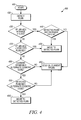
- Fig. 4 is an exemplary flowchart 400 illustrating the operation of the mobile communication device 200 according to another embodiment.
- This flowchart 400 illustrates an example of the operation of a PLMN higher priority search in determining whether to switch to a detected PLMN while operating on a VPLMN 112.
- step 410 the flowchart begins.
- the mobile communication device 200 can detect a PLMN other than the VPLMN 112 on which it is operating.
- step 430 the mobile communication device 200 can determine if the MCC of the VPLMN 112 is in the range of 310-316. This step can be used because current standards assign the United States to a range of MCC's from 310-316 and have special rules for these MCC's. However this step may not be necessary if the standards change. If the answer to step 430 is yes, in step 440, the mobile communication device 200 determines if the detected PLMN MCC is in the range of 310-316. If so, in step 450, the mobile communication device 200 moves to the detected PLMN. If not, in step 460, the mobile communication device 200 stays on the current VPLMN 112.
- the mobile communication device 200 can determine if the current VPLMN MCC is the same as the detected PLMN MCC. If so, in step 450, the mobile communication device 200 can move to the detected VPLMN. If not, in step 480, the mobile communication device 200 can determine if the current VPLMN MCC is an alternate country code for the HPLMN 110. If not, in step 460, the mobile communication device 200 stays on the current VPLMN 112. If so, in step 490, the mobile communication device 200 can determine if the detected VPLMN MCC is an alternate country code for the HPLMN 110. If not, in step 460, the mobile communication device 200 stays on the current VPLMN 112. If so, in step 495, the mobile communication device 200 can move to the detected VPLMN.
- the method of this disclosure is preferably implemented on a programmed processor.
- the controllers, flowcharts, and modules may also be implemented on a general purpose or special purpose computer, a programmed microprocessor or microcontroller and peripheral integrated circuit elements, an ASIC or other integrated circuit, a hardware electronic or logic circuit such as a discrete element circuit, a programmable logic device such as a PLD, PLA, FPGA or PAL, or the like.
- any device on which resides a finite state machine capable of implementing the flowcharts shown in the Figures may be used to implement the processor functions of this disclosure.
Landscapes
- Engineering & Computer Science (AREA)
- Computer Networks & Wireless Communication (AREA)
- Signal Processing (AREA)
- Computer Security & Cryptography (AREA)
- Mobile Radio Communication Systems (AREA)
Abstract
Description
- The present disclosure is directed to a method and apparatus for a home network search. More particularly, the present disclosure is directed to performing a home public land mobile network search while in a visiting public land mobile network that is using a different mobile country code from the home public land mobile network.
- Presently, a mobile communication device cannot to move to its home public land mobile network (HPLMN) during a periodic public land mobile network (PLMN) search when the mobile is registered on a visiting public land mobile network (VPLMN) using a different mobile country code (MCC) from its HPLMN. For example, the mobile communication device is effectively outside of its home country. This limitation creates problems when the mobile communication device is in a country which shares multiple country codes. For example Hong Kong became part of China and some of the existing operators continue to use different country codes. Also, many countries have multiple MCC's allocated for use by different operators and therefore, the use of a single MCC to identify a country is not always possible. For example most countries in Europe have two MCC's allocated to the geographical region.
- Unfortunately, a user of a mobile communication device, under such conditions, potentially ends up paying more due to being registered, or "roaming," on a VPLMN even though the user may be in the vicinity of the HPLMN. An operator of an HPLMN can also potentially loose out on revenue because its subscribers will be roaming all of the time after loosing coverage of the HPLMN as long as the VPLMN coverage exists.
- For example, a mobile communication device can lose coverage of the HPLMN and moves to a different VPLMN with a different country code in the same country. After a while the mobile communication device may come back to coverage of an overlap area of the HPLMN and the VPLMN. Unfortunately, because the VPLMN has a different country code from the HPLMN, the mobile communication device is forbidden from camping and registering on its HPLMN, even if it was originally registered on its HPLMN in the current vicinity.
- Thus, there is a need for performing a HPLMN search while in a VPLMN network that is using a different mobile country code from the HPLMN but is in a concurrent region with the HPLMN.
- A method in a mobile communication device having a home public land mobile network, the home public land mobile network having a first country code. An alternate country code for the home public land mobile network is stored. The mobile communication device operates on a visiting public land mobile network having a second country code. A public land mobile network search is performed. The mobile communication device switches to the home public land mobile network based on the public land mobile network search.
- The embodiments of the present disclosure will be described with reference to the following figures, wherein like numerals designate like elements, and wherein:
-
Fig. 1 is an exemplary block diagram of a system according to one embodiment; -
Fig. 2 is an exemplary block diagram of a mobile communication device according to one embodiment; -
Fig. 3 is an exemplary flowchart illustrating the operation of a mobile communication device according to one embodiment; and -
Fig. 4 is an exemplary flowchart illustrating the operation of a mobile communication device according to another embodiment. -
Fig. 1 is an exemplary block diagram of asystem 100 according to one embodiment. Thesystem 100 can include anetwork controller 140, ahome network 110, visitingnetworks terminal 120. Theterminal 120 may be a mobile communication device, such as wireless telephone, a cellular telephone, a personal digital assistant, a pager, a personal computer, a selective call receiver or any other device that is capable of sending and receiving communication signals on a network including wireless network. - In an exemplary embodiment, the
network controller 140 can be connected to thehome network 110. Thenetwork controller 140 may be located at a base station, at a radio network controller, or anywhere else on thenetwork 110. Thenetwork controller 140 may also or alternately be connected to thevisiting networks networks network 110 may include a wireless telecommunications network, a cellular telephone network, a satellite communications network, and other like communications systems. Furthermore, thenetwork 110 may include more than one network and may include a plurality of different types of networks. Thus, thenetworks home network 110 can be a home public land mobile network (HPLMN) with a mobile country code (MCC) of CC0. The visitingnetwork 112 can be a visiting public land mobile network (VPLMN) with a MCC of CC1. The visitingnetwork 114 can be a VPLMN with a MCC of CC2. The HPLMN 110 can have at least one first country code of a plurality of country codes, the at least one first country code being the home country code. Also, the VPLMN 112 can have at least one second country code of a plurality of country codes, the at least one second country code being a visiting country code. For example, the VPLMN 112 can be a PLMN, different from the HPLMN 110, where the MCC part of the PLMN identity is the same as MCC of the international mobile subscriber identity or the MCC part of the PLMN identity and MCC of the HPLMN are alternate country codes. - In operation, the HPLMN 110 can be the home network of the
terminal 120. Theterminal 120 can store an alternate country code for the HPLMN 110 as a second country code. The alternate country code can be different from any MCC's assigned to the HPLMN. The alternate country code for the HPLMN 110 can be stored in a public land mobile network list on a subscriber identity module (SIM) in theterminal 120. Theterminal 120 can operate on the HPLMN. Theterminal 120 may lose coverage of the HPLMN 110 and detect coverage of the VPLMN 112. Theterminal 120 can then operate on the VPLMN 112 having the second country code. While operating on the VPLMN 112, theterminal 120 can perform a public land mobile network search and switch to the HPLMN 110 based on the public land mobile network search. The terminal can also receive an over the air refresh message for modifying stored country codes and modify country codes stored in theterminal 120 based on the over the air refresh message. - Thus, for example, an entry in a SIM card can be used by the
terminal 120 when making decisions on whether or not to perform a switch to the HPLMN 110. This entry can be pre-programmed by a network operator at the time of subscription or can be dynamically changed using the "Over The Air" programming. - An exemplary entry can look like the following where:
• M = 8 : Maximum number of alternate country codes for one home country,
• K <= M : Actual number of alternate country codes for one home country,
• HCC is the home country code, and
• If K > M, then K+1th to M entries can be invalid:HCC K (<= M) (Actual number of alternate country codes). HCC1 HCC2 ... HCCK - From the table for the HPLMN, which bears the country code as HCC, the country codes HCC1 through HCCK can be treated as "alternate country codes" and the
terminal 120 can be allowed to switch back to the HPLMN if it is on a PLMN bearing the country code belonging to any of HCC1 through HCCK. Similarly, theterminal 120 can be allowed to switch to a higher preferred PLMN bearing the country code belonging to any of HCC1 through HCCK, if it is currently on a PLMN bearing the country codes belonging to any of HCC1 through HCCK. - To accommodate the case of a user card where the terminal 120 can have multiple HPLMN codes, this structure can be expanded where:
• N : Maximum number of HPLMN identities,
• M(=8) : Maximum number of alternate country codes, and
• iK : the identity for the ith HPLMN ID, where ik <=M,Ith entry HCC - i iK(<=M) (No. of valid alternate country codes) HCC-i1 HCC-i2 ... HCC - iK (If (ik < M), then ik+1th to M entries can be invalid). Jth entry HCC - j jK : No. of valid alternate country codes HCC - j1 HCC - j2 ... HCC - jK ... ... Nth entry HCC - N NK- No. of valid alternate country codes HCC - N1 HCC - N2 ... HCC - NK ... - Thus, the terminal 120 can come back to the
HPLMN 110 from theVPLMN 112. For example, the terminal 120 may coverage and camp on a VPLMN with a different country code as Home country code. The terminal 120 may come back to an overlap coverage area of theHPLMN 110 and theVPLMN 112. The terminal 120 can then come back to theHPLMN 110 from theVPLMN 112. - Without this disclosure, the terminal 120 is not be able to come back to HPLMN as long as it is in overlap area of the
VPLMN 112 and theHPLMN 110. The disclosure allows for a SIM element 'Alternate home country codes' file that indicates a visited country code and a home country code are equivalent. The terminal 120 can then come back to the home network. -
Fig. 2 is an exemplary block diagram of amobile communication device 200, such as the terminal 120, according to one embodiment. Themobile communication device 200 can include ahousing 210, acontroller 220 coupled to thehousing 210, audio input andoutput circuitry 230 coupled to thehousing 210, adisplay 240 coupled to thehousing 210, atransceiver 250 coupled to thehousing 210, auser interface 260 coupled to thehousing 210, amemory 270 coupled to thehousing 210, and anantenna 280 coupled to thehousing 210 and thetransceiver 250. Themobile communication device 200 can also include aPLMN search module 290 and aPLMN switch module 292. ThePLMN search module 290 and thePLMN switch module 292 can be coupled to thecontroller 220, can reside within thecontroller 220, can reside within thememory 270, can be autonomous modules, can be software, can be hardware, or can be in any other format useful for a module on amobile communication device 200. - The
display 240 can be a liquid crystal display (LCD), a light emitting diode (LED) display, a plasma display, or any other means for displaying information. According to one embodiment, thedisplay 240 can, but does not need to indicate when the mobile communication device is roaming on a VPLMN other than the HPLMN. Thetransceiver 250 may include a transmitter and/or a receiver. The audio input andoutput circuitry 230 can include a microphone, a speaker, a transducer, or any other audio input and output circuitry. Theuser interface 260 can include a keypad, buttons, a touch pad, a joystick, an additional display, or any other device useful for providing an interface between a user and an electronic device. Thememory 270 may include a random access memory, a read only memory, an optical memory, a subscriber identity module memory, or any other memory that can be coupled to a mobile communication device. Thememory 270 can include mobilecountry code storage 272. The mobilecountry code storage 272 can include analternate country code 272 for the home public landmobile network 110. The mobilecountry code storage 272 can be located on a subscriber identity module memory. Furthermore the mobile country code storage can include multiple country codes for theHPLMN 110 including at least one alternate country code for theHPLMN 110. Thus, the HPLMN can have at least one MCC, such as a home MCC and the VPLMN can have at least one MCC. - The alternate country code can be the same code as a VPLMN country code. For example, the alternate country code for the
HPLMN 110 can be CC1. Thus, when themobile communication device 200 is operating on theVPLMN 112 with a MCC=CC1, themobile communication device 200 can know that it may be possible to operate on theHPLMN 110 because the alternate country code for theHPLMN 110 is the same as the MCC for theVPLMN 112. - In operation, the
controller 220 can operate themobile communication device 200 on aVPLMN 112 having a second country code CC1. ThePLMN search module 290 can perform a public land mobile network search. The public land mobile network search can be a higher priority public land mobile network search that searches for a higher priority PLMN than the current PLMN. ThePLMN switch module 292 can switch themobile communication device 200 to theHPLMN 110 based on the public land mobile network search. ThePLMN search module 290 can detect theHPLMN 110 and thePLMN switch module 292 can switch to theHPLMN 110 based on thePLMN search module 290 detecting theHPLMN 110. Thetransceiver 250 can receive an over the air refresh message for modifying country codes stored in thememory 270 and thecontroller 220 can modify the stored country codes based on the over the air refresh message. -
Fig. 3 is anexemplary flowchart 300 illustrating the operation of themobile communication device 200 according to one embodiment. Instep 310, the flowchart begins. Instep 320, themobile communication device 200 can store an alternate country code for theHPLMN 110. Themobile communication device 200 can store the alternate country code for theHPLMN 110 in a public land mobile network list on a subscriber identity module. Also, themobile communication device 200 can store multiple country codes for theHPLMN 110 and the multiple country codes can include the alternate country code for theHPLMN 110. Themobile communication device 200 can receive an over the air refresh message for modifying stored country codes and modify the stored country codes based on the over the air refresh message. - In
step 330, themobile communication device 200 can operate on theVPLMN 112 having a second country code. The alternate country code can be the same code as the second country code. Instep 340 themobile communication device 200 can perform a public land mobile network search. The public land mobile network search can be a higher priority public land mobile network search. Instep 350, themobile communication device 200 can switch to theHPLMN 110 based on the public land mobile network search. Themobile communication device 200 can detect theHPLMN 110 while performing the public land mobile network search instep 340 and can then switch to the home public land mobile network instep 350 based on detecting theHPLMN 110. Instep 360, theflowchart 300 ends. -
Fig. 4 is anexemplary flowchart 400 illustrating the operation of themobile communication device 200 according to another embodiment. Thisflowchart 400 illustrates an example of the operation of a PLMN higher priority search in determining whether to switch to a detected PLMN while operating on aVPLMN 112. - In
step 410, the flowchart begins. Instep 420, themobile communication device 200 can detect a PLMN other than theVPLMN 112 on which it is operating. Instep 430, themobile communication device 200 can determine if the MCC of theVPLMN 112 is in the range of 310-316. This step can be used because current standards assign the United States to a range of MCC's from 310-316 and have special rules for these MCC's. However this step may not be necessary if the standards change. If the answer to step 430 is yes, instep 440, themobile communication device 200 determines if the detected PLMN MCC is in the range of 310-316. If so, instep 450, themobile communication device 200 moves to the detected PLMN. If not, instep 460, themobile communication device 200 stays on thecurrent VPLMN 112. - If the answer to step 430 is no, in
step 470, themobile communication device 200 can determine if the current VPLMN MCC is the same as the detected PLMN MCC. If so, instep 450, themobile communication device 200 can move to the detected VPLMN. If not, instep 480, themobile communication device 200 can determine if the current VPLMN MCC is an alternate country code for theHPLMN 110. If not, instep 460, themobile communication device 200 stays on thecurrent VPLMN 112. If so, instep 490, themobile communication device 200 can determine if the detected VPLMN MCC is an alternate country code for theHPLMN 110. If not, instep 460, themobile communication device 200 stays on thecurrent VPLMN 112. If so, instep 495, themobile communication device 200 can move to the detected VPLMN. - The method of this disclosure is preferably implemented on a programmed processor. However, the controllers, flowcharts, and modules may also be implemented on a general purpose or special purpose computer, a programmed microprocessor or microcontroller and peripheral integrated circuit elements, an ASIC or other integrated circuit, a hardware electronic or logic circuit such as a discrete element circuit, a programmable logic device such as a PLD, PLA, FPGA or PAL, or the like. In general, any device on which resides a finite state machine capable of implementing the flowcharts shown in the Figures may be used to implement the processor functions of this disclosure.
- While this disclosure has been described with specific embodiments thereof, it is evident that many alternatives, modifications, and variations will be apparent to those skilled in the art. For example, various components of the embodiments may be interchanged, added, or substituted in the other embodiments. Also, all of the elements of each figure are not necessary for operation of the disclosed embodiments. For example, one of ordinary skill in the art of the disclosed embodiments would be enabled to make and use the teachings of the disclosure by simply employing the elements of the independent claims. Accordingly, the preferred embodiments of the disclosure as set forth herein are intended to be illustrative, not limiting. Various changes may be made without departing from the spirit and scope of the disclosure.
-
- A1. A method in a mobile communication device having a home public land mobile network, the home public land mobile network having a first country code, the method comprising: storing an alternate country code for the home public land mobile network; operating on a visiting public land mobile network having a second country code; performing a public land mobile network search; and switching to the home public land mobile network based on the public land mobile network search.
- A2. The method according to clause A1, wherein the alternate country code is the same code as the second country code.
- A3. The method according to clause A1, wherein storing further comprises storing an alternate country code for the home public land mobile network in a public land mobile network list on a subscriber identity module.
- A4. The method according to clause A1, further comprising detecting the home public land mobile network, wherein switching comprises switching to the home public land mobile network based on detecting the home public land mobile network.
- A5. The method according to clause A1, wherein the public land mobile network search is a higher priority public land mobile network search.
- A6. The method according to clause A1, wherein storing an alternate country code for the home public land mobile network further comprises storing multiple country codes for the home public land mobile network, the multiple country codes including the alternate country code for the home public land mobile network.
- A7. The method according to clause A1, wherein the home public land mobile network has at least one first country code, the at least one first country code being a home country code, and wherein the visiting public land mobile network has at least one second country code, the at least one second country code being a visiting country code.
- A8. The method according to clause A1, further comprising: receiving an over the air refresh message for modifying stored country codes; and modifying stored country codes based on the over the air refresh message.
- B1. A mobile communication device configured to operate on a home public land mobile network, the home public land mobile network having a first country code, the mobile communication device comprising: a transceiver; a memory including an alternate country code for the home public land mobile network; a controller coupled to the transceiver and the memory, the controller configured to operate the mobile communication device on a visiting public land mobile network having a second country code; a public land mobile network search module configured to perform a public land mobile network search; and a public land mobile network switch module configured to switch the mobile communication device to the home public land mobile network based on the public land mobile network search.
- B2. The mobile communication device according to clause B1, wherein the alternate country code is the same code as the second country code.
- B3. The mobile communication device according to clause B1, wherein the memory includes the alternate country code for the home public land mobile network in a public land mobile network list on a subscriber identity module.
- B4. The mobile communication device according to clause B1, wherein the public land mobile network search module is further configured to detect the home public land mobile network, and wherein the public land mobile network switch module is further configured to switch to the home public land mobile network based on detecting the home public land mobile network.
- B5. The mobile communication device according to clause B1, wherein the public land mobile network search is a higher priority public land mobile network search.
- B6. The mobile communication device according to clause B1, wherein the memory includes multiple country codes for the home public land mobile network, the multiple country codes including the alternate country code for the home public land mobile network.
- B7. The mobile communication device according to clause B1, wherein the home public land mobile network has at least one first country code, the at least one first country code being a home country code, and wherein the visiting public land mobile network has at least one second country code, the at least one second country code being a visiting country code.
- B8. The mobile communication device according to clause B1, wherein the transceiver is configured to receive an over the air refresh message for modifying stored country codes, and wherein the controller is further configured to modify stored country codes based on the over the air refresh message.
- C1. A method in a mobile communication device having a home public land mobile network, the home public land mobile network having a first country code, the method comprising: storing an alternate country code for the home public land mobile network as a second country code; operating on a home public land mobile network having the second country code; losing coverage of the home public land mobile network; detecting coverage of a visiting public land mobile network; operating on the visiting public land mobile network having the second country code; performing a public land mobile network search; and switching to the home public land mobile network based on the public land mobile network search.
- C2. The method according to clause C1, wherein storing further comprises storing an alternate country code for the home public land mobile network in a public land mobile network list on a subscriber identity module.
- C3. The method according to clause C1, further comprising: receiving an over the air refresh message for modifying stored country codes; and modifying stored country codes based on the over the air refresh message.
- D1. A method in a mobile communication device having a home public land mobile network, the home public land mobile network having a first country code, the method comprising: storing an alternate country code for the home public land mobile network; operating on a visiting public land mobile network having a second country code; performing a public land mobile network search; and switching to the home public land mobile network based on the public land mobile network search.
- D2. The method according to clause D1, wherein the alternate country code is the same code as the second country code.
- D3. The method according to clause D1, wherein storing further comprises storing an alternate country code for the home public land mobile network in a public land mobile network list on a subscriber identity module.
- D4. The method according to clause D1, further comprising detecting the home public land mobile network, wherein switching comprises switching to the home public land mobile network based on detecting the home public land mobile network.
- D5. The method according to clause D1, wherein the public land mobile network search is a higher priority public land mobile network search.
- E1. A mobile communication device configured to operate on a home public land mobile network, the home public land mobile network having a first country code, the mobile communication device comprising: a transceiver; a memory including an alternate country code for the home public land mobile network; a controller coupled to the transceiver and the memory, the controller configured to operate the mobile communication device on a visiting public land mobile network having a second country code; a public land mobile network search module configured to perform a public land mobile network search; and a public land mobile network switch module configured to switch the mobile communication device to the home public land mobile network based on the public land mobile network search.
- E2. The mobile communication device according to clause E1, wherein the alternate country code is the same code as the second country code.
- E3 The mobile communication device according to clause E1, wherein the memory includes the alternate country code for the home public land mobile network in a public land mobile network list on a subscriber identity module.
- E4 The mobile communication device according to clause E1, wherein the public land mobile network search module is further configured to detect the home public land mobile network, and wherein the public land mobile network switch module is further configured to switch to the home public land mobile network based on detecting the home public land mobile network.
- E5. The mobile communication device according to clause E1, wherein the public land mobile network search is a higher priority public land mobile network search.
Claims (15)
- A method in a mobile communication device comprising:operating, using a controller, the mobile communication device on a visiting public land mobile network, the visiting public land mobile network having a first country code of a predetermined range;detecting, using the controller, a public land mobile network other than the visiting public land mobile network, the public land mobile network having a second country code;determining, using the controller, whether the second country code of the public land mobile network meets the predetermined range; andswitching, using the controller, the mobile communication device to the detected public land mobile network in accordance with the determination.
- The method of claim 1, wherein the detecting comprises performing a public land mobile network search.
- The method of claim 2, wherein the public land mobile network search includes searching for a higher priority public land mobile network than a current public land mobile network that the mobile communication device is operating on.
- The method of claim 1, wherein the switching comprises switching from a home public land mobile network of the mobile communication device to the detected public land mobile network.
- The method of claim 1, wherein the first country code is the same code as the second country code.
- The method of claim 1, wherein the first country code is an alternate country code for a home public land mobile network of the mobile communication device.
- The method of claim 6, wherein the alternate country code for the home public land mobile network is in a public land mobile network list.
- A mobile communication device comprising:a memory including an alternate country code for a home public land mobile network; anda controller coupled to the memory, the controller configured to:operate the mobile communication device on a visiting public land mobile network, the visiting public land mobile network having a first country code of a predetermined range;detect a public land mobile network other than the visiting public land mobile network, the public land mobile network having a second country code;determine whether the second country code of the public land mobile network meets the predetermined range; andswitch the mobile communication device to the detected public land mobile network in accordance with the determination.
- The mobile communication device of claim 8, wherein to detect the public land mobile network, the controller is further configured to perform a public land mobile network search.
- The mobile communication device of claim 9, wherein the controller is configured to perform the public land mobile network search including searching for a higher priority public land mobile network than a current public land mobile network that the mobile communication device is operating on.
- The mobile communication device of claim 8, wherein to switch the mobile communication device to the detected public land mobile network, the controller is further configured to switch from a home public land mobile network of the mobile communication device to the detected public land mobile network.
- The mobile communication device of claim 8, wherein the first country code is the same code as the second country code.
- The mobile communication device of claim 8, wherein the first country code is the alternate country code from memory for a home public land mobile network.
- The mobile communication device of claim 13, wherein the alternate country code for the home public land mobile network is in a public land mobile network list.
- A computer program comprising instructions that, when executed by a processor, cause the processor to perform a method as claimed in any one of claims 1 to 7.
Applications Claiming Priority (2)
| Application Number | Priority Date | Filing Date | Title |
|---|---|---|---|
| IN555KO2005 | 2005-06-24 | ||
| EP06785524.7A EP1908324B1 (en) | 2005-06-24 | 2006-06-23 | Apparatus and method for home network search |
Related Parent Applications (2)
| Application Number | Title | Priority Date | Filing Date |
|---|---|---|---|
| EP06785524.7A Division-Into EP1908324B1 (en) | 2005-06-24 | 2006-06-23 | Apparatus and method for home network search |
| EP06785524.7A Division EP1908324B1 (en) | 2005-06-24 | 2006-06-23 | Apparatus and method for home network search |
Publications (3)
| Publication Number | Publication Date |
|---|---|
| EP2863685A2 true EP2863685A2 (en) | 2015-04-22 |
| EP2863685A3 EP2863685A3 (en) | 2015-06-10 |
| EP2863685B1 EP2863685B1 (en) | 2017-09-06 |
Family
ID=36999288
Family Applications (2)
| Application Number | Title | Priority Date | Filing Date |
|---|---|---|---|
| EP15150895.9A Not-in-force EP2863685B1 (en) | 2005-06-24 | 2006-06-23 | Apparatus and method for home network search |
| EP06785524.7A Not-in-force EP1908324B1 (en) | 2005-06-24 | 2006-06-23 | Apparatus and method for home network search |
Family Applications After (1)
| Application Number | Title | Priority Date | Filing Date |
|---|---|---|---|
| EP06785524.7A Not-in-force EP1908324B1 (en) | 2005-06-24 | 2006-06-23 | Apparatus and method for home network search |
Country Status (4)
| Country | Link |
|---|---|
| EP (2) | EP2863685B1 (en) |
| KR (1) | KR101214681B1 (en) |
| CN (1) | CN101204113A (en) |
| WO (1) | WO2007002524A1 (en) |
Families Citing this family (5)
| Publication number | Priority date | Publication date | Assignee | Title |
|---|---|---|---|---|
| PL2178323T3 (en) | 2008-10-20 | 2013-05-31 | Koninklijke Kpn Nv | Protection of services in mobile network against CLI-spoofing |
| SE535001C2 (en) * | 2010-01-21 | 2012-03-13 | Synapse Int Sa | A method and system for handling a connection in a border cell |
| US8688110B1 (en) * | 2012-09-13 | 2014-04-01 | Qualcomm Incorporated | Apparatus and method for limiting searches for a home PLMN according to its proximity |
| WO2015067994A1 (en) * | 2013-11-08 | 2015-05-14 | Nokia Technologies Oy | Method and apparatus for automatic detection and selection of an alternative roaming provider |
| JP6707268B2 (en) * | 2016-05-06 | 2020-06-10 | 華為技術有限公司Huawei Technologies Co.,Ltd. | Network search method and terminal device |
Family Cites Families (2)
| Publication number | Priority date | Publication date | Assignee | Title |
|---|---|---|---|---|
| US20020119774A1 (en) * | 2001-02-26 | 2002-08-29 | Regina Johannesson | Method for PLMN selection |
| DE602004024117D1 (en) * | 2003-11-13 | 2009-12-24 | Research In Motion Ltd | NETWORK SELECTION PROCEDURES AND DEVICES WITH HOME NETWORK PRIORITIES IN COUNTRY BORDER REGIONS |
-
2006
- 2006-06-23 EP EP15150895.9A patent/EP2863685B1/en not_active Not-in-force
- 2006-06-23 CN CNA2006800222392A patent/CN101204113A/en active Pending
- 2006-06-23 KR KR1020077029792A patent/KR101214681B1/en not_active Expired - Fee Related
- 2006-06-23 WO PCT/US2006/024674 patent/WO2007002524A1/en not_active Ceased
- 2006-06-23 EP EP06785524.7A patent/EP1908324B1/en not_active Not-in-force
Non-Patent Citations (1)
| Title |
|---|
| None |
Also Published As
| Publication number | Publication date |
|---|---|
| EP1908324B1 (en) | 2015-03-11 |
| KR20080021681A (en) | 2008-03-07 |
| EP1908324A1 (en) | 2008-04-09 |
| WO2007002524A1 (en) | 2007-01-04 |
| EP2863685B1 (en) | 2017-09-06 |
| EP2863685A3 (en) | 2015-06-10 |
| KR101214681B1 (en) | 2012-12-21 |
| CN101204113A (en) | 2008-06-18 |
Similar Documents
| Publication | Publication Date | Title |
|---|---|---|
| US7489930B2 (en) | Apparatus and method for multimode terminals | |
| US6185436B1 (en) | Wireless communication system | |
| US6178335B1 (en) | Wireless communication system | |
| US6993336B2 (en) | Roaming indicators for multi-mode wireless communication devices | |
| US7302259B2 (en) | Mobile station and method for selecting public land mobile network thereby | |
| US12289799B2 (en) | Establishing and maintaining cellular data communication using remote subscriber identification module profile | |
| US20020068574A1 (en) | Network selection in a mobile telecommunications system | |
| EP0876736A1 (en) | Method and apparatus for roaming using dual mode/band equipment including sim cards | |
| KR20080104742A (en) | Mode selection method in dual mode mobile communication terminal and mobile communication terminal for same | |
| KR20160067956A (en) | System and methods for using wireless network correlations to acquire service on a multi-sim device | |
| CN109996315B (en) | Network searching method and device of multi-card multi-standby terminal, storage medium and electronic equipment | |
| US12382276B2 (en) | Establishing and maintaining cellular data communication using remote subscriber identification module profile | |
| US20070265021A1 (en) | Roaming control device, mobile communication terminal, mobile communication system, and roaming control method | |
| KR100651911B1 (en) | Method and system for providing call forwarding information in mobile communication network | |
| EP1908324B1 (en) | Apparatus and method for home network search | |
| EP1641292B1 (en) | Method and apparatus for efficient network scanning | |
| US12289795B2 (en) | Establishing and maintaining cellular data communication using remote subscriber identification module profile | |
| KR20080091591A (en) | Mobile terminal and roaming method thereof | |
| KR100617718B1 (en) | Call connection method in wireless terminal | |
| WO2000030389A1 (en) | Method and apparatus to provide roaming after activation without over the air programming | |
| KR100318954B1 (en) | Apparatus for enhancing home public land mobile network and method thereof in mobile communication system | |
| KR100860694B1 (en) | Public mobile network selection control method | |
| KR20030047476A (en) | Method for automatically selecting public land mobile network in portable radio telephone | |
| KR20030056313A (en) | Paging mehtod in mobile communication system and mobile communication system using the same method | |
| KR20070051183A (en) | Mobile communication terminal and its operation method |
Legal Events
| Date | Code | Title | Description |
|---|---|---|---|
| PUAI | Public reference made under article 153(3) epc to a published international application that has entered the european phase |
Free format text: ORIGINAL CODE: 0009012 |
|
| 17P | Request for examination filed |
Effective date: 20150113 |
|
| AC | Divisional application: reference to earlier application |
Ref document number: 1908324 Country of ref document: EP Kind code of ref document: P |
|
| AK | Designated contracting states |
Kind code of ref document: A2 Designated state(s): AT BE BG CH CY CZ DE DK EE ES FI FR GB GR HU IE IS IT LI LT LU LV MC NL PL PT RO SE SI SK TR |
|
| PUAL | Search report despatched |
Free format text: ORIGINAL CODE: 0009013 |
|
| RIN1 | Information on inventor provided before grant (corrected) |
Inventor name: DAS, PRASHANTI Inventor name: RAMACHANDRA, SRIKRISHNA Inventor name: HOWELL, STEPHEN A |
|
| AK | Designated contracting states |
Kind code of ref document: A3 Designated state(s): AT BE BG CH CY CZ DE DK EE ES FI FR GB GR HU IE IS IT LI LT LU LV MC NL PL PT RO SE SI SK TR |
|
| RIC1 | Information provided on ipc code assigned before grant |
Ipc: H04W 48/16 20090101ALN20150507BHEP Ipc: H04W 48/18 20090101AFI20150507BHEP |
|
| R17P | Request for examination filed (corrected) |
Effective date: 20151210 |
|
| RBV | Designated contracting states (corrected) |
Designated state(s): AT BE BG CH CY CZ DE DK EE ES FI FR GB GR HU IE IS IT LI LT LU LV MC NL PL PT RO SE SI SK TR |
|
| GRAP | Despatch of communication of intention to grant a patent |
Free format text: ORIGINAL CODE: EPIDOSNIGR1 |
|
| RIC1 | Information provided on ipc code assigned before grant |
Ipc: H04W 48/18 20090101AFI20170307BHEP Ipc: H04W 48/16 20090101ALN20170307BHEP |
|
| INTG | Intention to grant announced |
Effective date: 20170331 |
|
| RIC1 | Information provided on ipc code assigned before grant |
Ipc: H04W 48/18 20090101AFI20170321BHEP Ipc: H04W 48/16 20090101ALN20170321BHEP |
|
| RAP1 | Party data changed (applicant data changed or rights of an application transferred) |
Owner name: GOOGLE TECHNOLOGY HOLDINGS LLC |
|
| GRAS | Grant fee paid |
Free format text: ORIGINAL CODE: EPIDOSNIGR3 |
|
| GRAA | (expected) grant |
Free format text: ORIGINAL CODE: 0009210 |
|
| AC | Divisional application: reference to earlier application |
Ref document number: 1908324 Country of ref document: EP Kind code of ref document: P |
|
| AK | Designated contracting states |
Kind code of ref document: B1 Designated state(s): AT BE BG CH CY CZ DE DK EE ES FI FR GB GR HU IE IS IT LI LT LU LV MC NL PL PT RO SE SI SK TR |
|
| REG | Reference to a national code |
Ref country code: GB Ref legal event code: FG4D |
|
| REG | Reference to a national code |
Ref country code: CH Ref legal event code: EP Ref country code: AT Ref legal event code: REF Ref document number: 927163 Country of ref document: AT Kind code of ref document: T Effective date: 20170915 |
|
| REG | Reference to a national code |
Ref country code: IE Ref legal event code: FG4D |
|
| REG | Reference to a national code |
Ref country code: DE Ref legal event code: R096 Ref document number: 602006053594 Country of ref document: DE |
|
| REG | Reference to a national code |
Ref country code: NL Ref legal event code: FP |
|
| REG | Reference to a national code |
Ref country code: LT Ref legal event code: MG4D |
|
| PG25 | Lapsed in a contracting state [announced via postgrant information from national office to epo] |
Ref country code: LT Free format text: LAPSE BECAUSE OF FAILURE TO SUBMIT A TRANSLATION OF THE DESCRIPTION OR TO PAY THE FEE WITHIN THE PRESCRIBED TIME-LIMIT Effective date: 20170906 Ref country code: FI Free format text: LAPSE BECAUSE OF FAILURE TO SUBMIT A TRANSLATION OF THE DESCRIPTION OR TO PAY THE FEE WITHIN THE PRESCRIBED TIME-LIMIT Effective date: 20170906 Ref country code: SE Free format text: LAPSE BECAUSE OF FAILURE TO SUBMIT A TRANSLATION OF THE DESCRIPTION OR TO PAY THE FEE WITHIN THE PRESCRIBED TIME-LIMIT Effective date: 20170906 |
|
| REG | Reference to a national code |
Ref country code: AT Ref legal event code: MK05 Ref document number: 927163 Country of ref document: AT Kind code of ref document: T Effective date: 20170906 |
|
| PG25 | Lapsed in a contracting state [announced via postgrant information from national office to epo] |
Ref country code: BG Free format text: LAPSE BECAUSE OF FAILURE TO SUBMIT A TRANSLATION OF THE DESCRIPTION OR TO PAY THE FEE WITHIN THE PRESCRIBED TIME-LIMIT Effective date: 20171206 Ref country code: ES Free format text: LAPSE BECAUSE OF FAILURE TO SUBMIT A TRANSLATION OF THE DESCRIPTION OR TO PAY THE FEE WITHIN THE PRESCRIBED TIME-LIMIT Effective date: 20170906 Ref country code: GR Free format text: LAPSE BECAUSE OF FAILURE TO SUBMIT A TRANSLATION OF THE DESCRIPTION OR TO PAY THE FEE WITHIN THE PRESCRIBED TIME-LIMIT Effective date: 20171207 Ref country code: LV Free format text: LAPSE BECAUSE OF FAILURE TO SUBMIT A TRANSLATION OF THE DESCRIPTION OR TO PAY THE FEE WITHIN THE PRESCRIBED TIME-LIMIT Effective date: 20170906 |
|
| PG25 | Lapsed in a contracting state [announced via postgrant information from national office to epo] |
Ref country code: CZ Free format text: LAPSE BECAUSE OF FAILURE TO SUBMIT A TRANSLATION OF THE DESCRIPTION OR TO PAY THE FEE WITHIN THE PRESCRIBED TIME-LIMIT Effective date: 20170906 Ref country code: PL Free format text: LAPSE BECAUSE OF FAILURE TO SUBMIT A TRANSLATION OF THE DESCRIPTION OR TO PAY THE FEE WITHIN THE PRESCRIBED TIME-LIMIT Effective date: 20170906 Ref country code: RO Free format text: LAPSE BECAUSE OF FAILURE TO SUBMIT A TRANSLATION OF THE DESCRIPTION OR TO PAY THE FEE WITHIN THE PRESCRIBED TIME-LIMIT Effective date: 20170906 |
|
| PG25 | Lapsed in a contracting state [announced via postgrant information from national office to epo] |
Ref country code: IT Free format text: LAPSE BECAUSE OF FAILURE TO SUBMIT A TRANSLATION OF THE DESCRIPTION OR TO PAY THE FEE WITHIN THE PRESCRIBED TIME-LIMIT Effective date: 20170906 Ref country code: SK Free format text: LAPSE BECAUSE OF FAILURE TO SUBMIT A TRANSLATION OF THE DESCRIPTION OR TO PAY THE FEE WITHIN THE PRESCRIBED TIME-LIMIT Effective date: 20170906 Ref country code: EE Free format text: LAPSE BECAUSE OF FAILURE TO SUBMIT A TRANSLATION OF THE DESCRIPTION OR TO PAY THE FEE WITHIN THE PRESCRIBED TIME-LIMIT Effective date: 20170906 Ref country code: IS Free format text: LAPSE BECAUSE OF FAILURE TO SUBMIT A TRANSLATION OF THE DESCRIPTION OR TO PAY THE FEE WITHIN THE PRESCRIBED TIME-LIMIT Effective date: 20180106 Ref country code: AT Free format text: LAPSE BECAUSE OF FAILURE TO SUBMIT A TRANSLATION OF THE DESCRIPTION OR TO PAY THE FEE WITHIN THE PRESCRIBED TIME-LIMIT Effective date: 20170906 |
|
| REG | Reference to a national code |
Ref country code: DE Ref legal event code: R097 Ref document number: 602006053594 Country of ref document: DE |
|
| REG | Reference to a national code |
Ref country code: FR Ref legal event code: PLFP Year of fee payment: 13 |
|
| PLBE | No opposition filed within time limit |
Free format text: ORIGINAL CODE: 0009261 |
|
| STAA | Information on the status of an ep patent application or granted ep patent |
Free format text: STATUS: NO OPPOSITION FILED WITHIN TIME LIMIT |
|
| PG25 | Lapsed in a contracting state [announced via postgrant information from national office to epo] |
Ref country code: DK Free format text: LAPSE BECAUSE OF FAILURE TO SUBMIT A TRANSLATION OF THE DESCRIPTION OR TO PAY THE FEE WITHIN THE PRESCRIBED TIME-LIMIT Effective date: 20170906 |
|
| 26N | No opposition filed |
Effective date: 20180607 |
|
| PG25 | Lapsed in a contracting state [announced via postgrant information from national office to epo] |
Ref country code: SI Free format text: LAPSE BECAUSE OF FAILURE TO SUBMIT A TRANSLATION OF THE DESCRIPTION OR TO PAY THE FEE WITHIN THE PRESCRIBED TIME-LIMIT Effective date: 20170906 |
|
| REG | Reference to a national code |
Ref country code: CH Ref legal event code: PL |
|
| REG | Reference to a national code |
Ref country code: BE Ref legal event code: MM Effective date: 20180630 |
|
| REG | Reference to a national code |
Ref country code: IE Ref legal event code: MM4A |
|
| PG25 | Lapsed in a contracting state [announced via postgrant information from national office to epo] |
Ref country code: MC Free format text: LAPSE BECAUSE OF FAILURE TO SUBMIT A TRANSLATION OF THE DESCRIPTION OR TO PAY THE FEE WITHIN THE PRESCRIBED TIME-LIMIT Effective date: 20170906 Ref country code: LU Free format text: LAPSE BECAUSE OF NON-PAYMENT OF DUE FEES Effective date: 20180623 |
|
| PG25 | Lapsed in a contracting state [announced via postgrant information from national office to epo] |
Ref country code: CH Free format text: LAPSE BECAUSE OF NON-PAYMENT OF DUE FEES Effective date: 20180630 Ref country code: LI Free format text: LAPSE BECAUSE OF NON-PAYMENT OF DUE FEES Effective date: 20180630 Ref country code: IE Free format text: LAPSE BECAUSE OF NON-PAYMENT OF DUE FEES Effective date: 20180623 |
|
| PG25 | Lapsed in a contracting state [announced via postgrant information from national office to epo] |
Ref country code: BE Free format text: LAPSE BECAUSE OF NON-PAYMENT OF DUE FEES Effective date: 20180630 |
|
| PGFP | Annual fee paid to national office [announced via postgrant information from national office to epo] |
Ref country code: NL Payment date: 20190626 Year of fee payment: 14 |
|
| PGFP | Annual fee paid to national office [announced via postgrant information from national office to epo] |
Ref country code: FR Payment date: 20190625 Year of fee payment: 14 |
|
| PG25 | Lapsed in a contracting state [announced via postgrant information from national office to epo] |
Ref country code: TR Free format text: LAPSE BECAUSE OF FAILURE TO SUBMIT A TRANSLATION OF THE DESCRIPTION OR TO PAY THE FEE WITHIN THE PRESCRIBED TIME-LIMIT Effective date: 20170906 |
|
| PG25 | Lapsed in a contracting state [announced via postgrant information from national office to epo] |
Ref country code: PT Free format text: LAPSE BECAUSE OF FAILURE TO SUBMIT A TRANSLATION OF THE DESCRIPTION OR TO PAY THE FEE WITHIN THE PRESCRIBED TIME-LIMIT Effective date: 20170906 |
|
| PG25 | Lapsed in a contracting state [announced via postgrant information from national office to epo] |
Ref country code: HU Free format text: LAPSE BECAUSE OF FAILURE TO SUBMIT A TRANSLATION OF THE DESCRIPTION OR TO PAY THE FEE WITHIN THE PRESCRIBED TIME-LIMIT; INVALID AB INITIO Effective date: 20060623 Ref country code: CY Free format text: LAPSE BECAUSE OF FAILURE TO SUBMIT A TRANSLATION OF THE DESCRIPTION OR TO PAY THE FEE WITHIN THE PRESCRIBED TIME-LIMIT Effective date: 20170906 |
|
| REG | Reference to a national code |
Ref country code: NL Ref legal event code: MM Effective date: 20200701 |
|
| PG25 | Lapsed in a contracting state [announced via postgrant information from national office to epo] |
Ref country code: NL Free format text: LAPSE BECAUSE OF NON-PAYMENT OF DUE FEES Effective date: 20200701 Ref country code: FR Free format text: LAPSE BECAUSE OF NON-PAYMENT OF DUE FEES Effective date: 20200630 |
|
| PGFP | Annual fee paid to national office [announced via postgrant information from national office to epo] |
Ref country code: DE Payment date: 20230626 Year of fee payment: 18 |
|
| PGFP | Annual fee paid to national office [announced via postgrant information from national office to epo] |
Ref country code: GB Payment date: 20230627 Year of fee payment: 18 |
|
| REG | Reference to a national code |
Ref country code: DE Ref legal event code: R119 Ref document number: 602006053594 Country of ref document: DE |
|
| GBPC | Gb: european patent ceased through non-payment of renewal fee |
Effective date: 20240623 |
|
| PG25 | Lapsed in a contracting state [announced via postgrant information from national office to epo] |
Ref country code: DE Free format text: LAPSE BECAUSE OF NON-PAYMENT OF DUE FEES Effective date: 20250101 |
|
| PG25 | Lapsed in a contracting state [announced via postgrant information from national office to epo] |
Ref country code: GB Free format text: LAPSE BECAUSE OF NON-PAYMENT OF DUE FEES Effective date: 20240623 |