EP2863605A1 - Mobiles Endgerät-System mit Sicherheitsbetriebssystem - Google Patents
Mobiles Endgerät-System mit Sicherheitsbetriebssystem Download PDFInfo
- Publication number
- EP2863605A1 EP2863605A1 EP14003522.1A EP14003522A EP2863605A1 EP 2863605 A1 EP2863605 A1 EP 2863605A1 EP 14003522 A EP14003522 A EP 14003522A EP 2863605 A1 EP2863605 A1 EP 2863605A1
- Authority
- EP
- European Patent Office
- Prior art keywords
- terminal
- runtime environment
- security server
- secure runtime
- server
- Prior art date
- Legal status (The legal status is an assumption and is not a legal conclusion. Google has not performed a legal analysis and makes no representation as to the accuracy of the status listed.)
- Granted
Links
Images


Classifications
-
- H—ELECTRICITY
- H04—ELECTRIC COMMUNICATION TECHNIQUE
- H04L—TRANSMISSION OF DIGITAL INFORMATION, e.g. TELEGRAPHIC COMMUNICATION
- H04L63/00—Network architectures or network communication protocols for network security
- H04L63/10—Network architectures or network communication protocols for network security for controlling access to devices or network resources
- H04L63/105—Multiple levels of security
-
- H—ELECTRICITY
- H04—ELECTRIC COMMUNICATION TECHNIQUE
- H04W—WIRELESS COMMUNICATION NETWORKS
- H04W4/00—Services specially adapted for wireless communication networks; Facilities therefor
- H04W4/50—Service provisioning or reconfiguring
-
- G—PHYSICS
- G06—COMPUTING OR CALCULATING; COUNTING
- G06F—ELECTRIC DIGITAL DATA PROCESSING
- G06F21/00—Security arrangements for protecting computers, components thereof, programs or data against unauthorised activity
- G06F21/50—Monitoring users, programs or devices to maintain the integrity of platforms, e.g. of processors, firmware or operating systems
- G06F21/52—Monitoring users, programs or devices to maintain the integrity of platforms, e.g. of processors, firmware or operating systems during program execution, e.g. stack integrity ; Preventing unwanted data erasure; Buffer overflow
- G06F21/53—Monitoring users, programs or devices to maintain the integrity of platforms, e.g. of processors, firmware or operating systems during program execution, e.g. stack integrity ; Preventing unwanted data erasure; Buffer overflow by executing in a restricted environment, e.g. sandbox or secure virtual machine
-
- G—PHYSICS
- G06—COMPUTING OR CALCULATING; COUNTING
- G06F—ELECTRIC DIGITAL DATA PROCESSING
- G06F21/00—Security arrangements for protecting computers, components thereof, programs or data against unauthorised activity
- G06F21/70—Protecting specific internal or peripheral components, in which the protection of a component leads to protection of the entire computer
- G06F21/71—Protecting specific internal or peripheral components, in which the protection of a component leads to protection of the entire computer to assure secure computing or processing of information
- G06F21/74—Protecting specific internal or peripheral components, in which the protection of a component leads to protection of the entire computer to assure secure computing or processing of information operating in dual or compartmented mode, i.e. at least one secure mode
-
- H—ELECTRICITY
- H04—ELECTRIC COMMUNICATION TECHNIQUE
- H04W—WIRELESS COMMUNICATION NETWORKS
- H04W12/00—Security arrangements; Authentication; Protecting privacy or anonymity
- H04W12/02—Protecting privacy or anonymity, e.g. protecting personally identifiable information [PII]
-
- H—ELECTRICITY
- H04—ELECTRIC COMMUNICATION TECHNIQUE
- H04W—WIRELESS COMMUNICATION NETWORKS
- H04W12/00—Security arrangements; Authentication; Protecting privacy or anonymity
- H04W12/06—Authentication
-
- H—ELECTRICITY
- H04—ELECTRIC COMMUNICATION TECHNIQUE
- H04W—WIRELESS COMMUNICATION NETWORKS
- H04W12/00—Security arrangements; Authentication; Protecting privacy or anonymity
- H04W12/30—Security of mobile devices; Security of mobile applications
- H04W12/35—Protecting application or service provisioning, e.g. securing SIM application provisioning
-
- H—ELECTRICITY
- H04—ELECTRIC COMMUNICATION TECHNIQUE
- H04W—WIRELESS COMMUNICATION NETWORKS
- H04W4/00—Services specially adapted for wireless communication networks; Facilities therefor
- H04W4/60—Subscription-based services using application servers or record carriers, e.g. SIM application toolkits
Definitions
- the invention relates to a terminal system comprising a mobile terminal in which a security operating system is implemented, under the control of which a secure runtime environment can be established in the terminal.
- TEEs trusted execution environment
- a first also called “Normal Zone”, “Normal World” or “Rich Execution Environment REE” called insecure or normal runtime environment is controlled by a normal operating system (e.g., Android, Windows Phone, Symbian, iOS).
- a second, also called “Trustzone”, “Trusted World”, “Secure World” or “Trusted Execution Environment TEE” is controlled by a security operating system.
- Applications (such as apps, applets, or drivers) running in the secure runtime environment provide the security operating system with security features such as encryption and the use of secure channels between the terminal and external devices (such as other endpoints or servers) for the transmission of data to and from Terminal available.
- Applications running in the normal runtime environment are only eligible for the normal operating system functions Available, but not the safety functions of the safety operating system.
- mobile terminals such as smartphones, powerful processors and a high storage volume, especially large RAM and large application memory (program memory). This also applies to terminals with a two-part runtime environment.
- the total RAM of a powerful smartphone is typically two gigabytes (e.g., LG Google Nexus 4, Samsung Galaxy S4, Nokia Lumia 1020, ).
- the security operating system typically has only 64 kbytes in the volatile RAM in a smartphone with a secure runtime environment. This means that complex applications can not run in the secure runtime environment.
- the invention is based on the object to enable in a mobile terminal controlled by a security operating system safe runtime environment, which is easier to handle, so that in consequence the acceptance of the security operating system is improved.
- the terminal system according to the invention according to claim 1 comprises a mobile terminal in which a security operating system is implemented, under whose control a secure runtime environment can be established in the terminal.
- the secure runtime environment is intended to provide applications running in the secure runtime environment with the security functionalities - e.g. Provide encryption and secure channels for data transmission to and from the terminal of the security operating system.
- adapted applications running under the security operating system run on the security server.
- the secure runtime environment of the mobile terminal is only used as a secure access point to the virtual secure runtime environment on the security server.
- Limited secure resources (eg secure memory, secure application memory) of the terminal are not a limitation for the execution of the customized applications.
- server resources eg, memory, application memory
- the willingness of application providers to offer their applications (also) in a form adapted to a security operating system is also increasing.
- the secure runtime environment in which the applications are to run namely here the virtual secure runtime environment
- the secure runtime environment in which the applications are to run is easier to handle, i. Equipped with secure memory and customized applications.
- the acceptance of the safety operating system is improved in itself.
- the channel between the security server and the terminal is protected by mutual authentication and encrypted data transmission between the security server and the terminal.
- the fade-in device optionally comprises a server overlay part set up on the security server and a terminal overlay part set up on the terminal.
- the server overlay portion is configured to generate, for the security server's virtual secure runtime environment, a representation of the security server's virtual secure runtime environment that can be displayed on an output device of the terminal.
- the terminal overlay part is adapted to receive the representation of the virtual secure runtime environment of the security server generated by the server overlay part and to display it on the output unit, eg a display, of the terminal.
- the server overlay part gives the Security server the function of a terminal server.
- the terminal overlay part gives the terminal the function of a terminal client. A user who views the output device (eg display) of the terminal then sees the activity of the virtual secure runtime environment of the security server. If one or more applications are executed in the secure runtime environment, the server overlay portion to the application (s) also generates a displayable representation for the output device, eg display, of the terminal.
- the server overlay portion is adapted to generate a representation of the virtual secure runtime environment of the security server that is processable by a graphics driver of a display of the terminal, and the terminal overlay portion is adapted to provide the generated representation to the graphics driver of the display of the terminal provide.
- Applications running in the virtual secure runtime environment are also brought into a representation that the graphics driver of the terminal can process directly to display the application on the output device (e.g., display).
- the terminal system further comprises an application loading device which is adapted to download applications from an application provider by means of the terminal.
- the application loading device comprises a server loading part which is set up on the security server and which is set up to download the application on request from the terminal, so that the application can be called up for execution by the terminal.
- the application can be loaded, for example, in the security server or in the terminal, as described below.
- the application loader further comprises a terminal load part adapted to run from the terminal to submit a request to download an application to the application provider.
- the application loading device further comprises a loading destination setting device with which a loading destination can be defined, to which the application is loaded. It can be specified as the charging target: either the security server, so that the downloaded to the security server application in the virtual safe runtime environment is executable, or the terminal, so that the downloaded application into the terminal in the terminal is executable.
- the user of the terminal can thus choose whether to use applications from e.g. an app store into its terminal or into the virtual execution environment of the security server. For security-critical applications, the user preferably selects the security server as the loading destination.
- the loading target can be specified by selecting an application.
- selecting an application For example, by selecting a security-critical application that is adapted for a secure runtime environment, the user of the security server sets the load destination as the user can not intervene. For normal applications, the terminal is automatically set as the charging destination.
- the user can select whether a security-critical application is loaded into the real secure runtime environment of the terminal or into the virtual secure runtime environment of the security server.
- the security server can optionally be selected as a charging destination, in particular, if the terminal no longer offers space for secure applications.
- an upstream checking step before the loading destination is determined, it is checked whether a virtual secure runtime environment is available for the terminal on a security server.
- a normal operating system is further implemented in the terminal, under the control of which a normal runtime environment can be established in the terminal.
- the application downloaded to the terminal can be executed either in the secure runtime environment of the terminal or in the normal runtime environment of the terminal.
- the terminal system further comprises at least one application implemented on the security server and accessible from the secure runtime environment of the terminal such that the application, as it is invoked, is actually on the security server in the virtual secure runtime environment of the client Security server is running and appears to be running on the terminal.
- multiple applications can be called simultaneously on the security server and, according to the invention, be inserted in the real secure runtime environment terminal.
- a complete virtual terminal is created on the security server that is placed in the "empty" real safe runtime environment of the real terminal is displayed.
- the virtual UI on the security server appears in the real UI on the device.
- the real secure runtime environment of the real terminal only provides a secure endpoint and access point to the virtual secure terminal.
- Remote App remote application
- only a single application can be called simultaneously. This prevents a potentially harmful interaction between different applications. Because in the virtual runtime environment, only a single application runs isolated, such as in an e. the so-called Java sandbox known sandbox. In particular, in this case, provided that the first application itself is secure, no second, virus or Trojan-infected application can cause damage to the first application since, in addition to the first application, no second application is allowed into the virtual runtime environment.
- the security server provides multiple virtual secure runtime environments.
- the plurality of virtual secure runtime environments comprise the runtime environments of multiple individual applications, wherein in each runtime environment a single isolated run application is implemented (i.e., multiple runtime environments in the remote app mode).
- the plurality of virtual secure runtime environments include the runtime environments to a plurality of different physical terminals.
- Fig. 1 shows the downloading of an app (application), by means of a smartphone A, from an app store C via the Internet B in the smartphone A, according to the prior art.
- an app application
- a user of the smartphone A logs in via the Internet B in the App Store C and selects the desired app from him.
- the desired app is transferred to the smartphone A and installed there. Now the app is available to the user and can be used as usual.
- Fig. 2 shows the downloading of an app, by means of a smartphone A, from an app store C into a virtual secure runtime environment of a security server TCS D, according to an embodiment of the invention.
- a security server TCS Trusted Cloud Server
- the App Store C uses the profile PR_A, when the user in the future with the Smartphone A Apps downloads.
- the profile PR_A is a note -> TCS noted that for the smartphone A, a virtual runtime environment on a security server TCS D is available.
- an IP address of the smartphone and a login user ID are noted.
- a link -> KA_E is created in the profile PR_A, which enables the app store C to determine the authentication key KA_E of the real secure runtime environment TEE E of the smartphone A.
- step 21 the user of the smartphone A logs in via the Internet B in the App Store C.
- the App Store C recognizes that a reference -> TCS is stored on a security server TCS D in the profile TR (A) of the user or of the smartphone A.
- the app store C contacts the security server TCS D in sub-step 22-1 and provides the security server TCS D with the IP address of the smartphone A and / or the login user ID that the user previously used for the login step 21, to disposal.
- the security server TCS D fetches the authentication key KA_E of the associated real secure runtime environment TEE E of the smartphone A from a database DB in the authentication key of a plurality of secure sub-steps 22-2 based on the login user ID (and / or IP address) Runtime environments of a variety of smartphones are stored.
- the security server TCS D uses the IP address of the smartphone A to establish a connection with the real secure runtime environment TEE E of the smartphone A and performs mutual authentication with the TEE E with the aid of the previously determined authentication key KA_E. If the authentication is successful, then in particular the login from the smartphone A with the appropriate secure runtime environment TEE E and is considered verified. Finally, the real secure runtime environment TEE E of the smartphone A and the virtual secure runtime environment of the security server TCS D agree session keys. All subsequent data transfers between the real and virtual secure runtime environments are encrypted with a session key.
- the security server TCS D notifies the app store C of the successful verification of the smartphone A.
- the app store C then offers the user two installation destinations for the selected app: the normal runtime environment REE of the smartphone A - which corresponds to a normal installation - and the virtual secure runtime environment (controlled by a virtual, emulated smartphone security operating system) in the security server TCS D - which, from the user's point of view, corresponds to a "safe" installation. If the user selects the normal installation, the app will be downloaded to Smartphone A and installed as known. In this case the procedure ends here.
- step 25 is proceeded to.
- the download of the selected app will now be performed in the virtual secure runtime environment of the security server TCS D.
- the security server TCS D opens an encrypted connection with the real secure runtime environment TEE E of the smartphone A in step 26.
- the security server transmits to the real secure runtime environment TEE E.
- TCS D a compressed data stream with the screen content that should be displayed when installing the app.
- the data stream includes a representation of the screen content in a format that is directly representable by the display of the smartphone A, e.g. Control instructions for each pixel of the display of the smartphone A.
- the real safe runtime environment TEE E of the smartphone A receives the screen contents and displays it on the (display of) the smartphone A.
- the user takes while downloading and installing the app on the smartphone A Inputs, eg on the touch screen of the display, or / and on a keyboard or individual keys.
- the real secure runtime environment TEE E of the smartphone A transmits the inputs of the user to the security server TCS D, so that on the security server TCS D controls corresponding to the inputs are made to control the installation. With the start of the installation of the app in the security server TCS D, the installation is therefore immediately visible on the smartphone A as well. If user input is required during installation, these are also possible.
- the keyboard driver is implemented in the real secure runtime environment TEE E, which is preferably the case, the user inputs are protected against manipulation by Trojans on the smartphone A.
- a secure PIN or password query can be performed by the real secure runtime environment TEE E or by the security server TCS D.
- step 27 the security server TCS D reports the successful installation back to the app store C so that it can both note the app as installed and display the successful installation for the user.
- the connection established in step 26 to the security server TCS D is disconnected again so that the user of the smartphone A can see the web browser of the smartphone A with the app store C again.
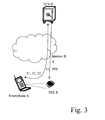
- Fig. 3 shows the usage of a Fig. 2 in a virtual safe runtime environment of a security server TCS D downloaded app from a smartphone A, according to an embodiment of the invention.
- step 31 the user first invokes from the smartphone A the virtual secure runtime environment on the security server TCS D under which the app is implemented.
- Smartphone A effectively represents a terminal client and security server TCS D a terminal server in a terminal service relationship between smartphone A and security server TCS D.
- Security server TCS D reads from database DB the authentication key KA_E of the secure server Smartphone A runtime environment TEE E off.
- the secure runtime environment TEE E of the smartphone A and the virtual secure runtime environment of the security server TCS D perform mutual authentication with the authentication key KA_E and generate cryptographic session keys.
- all data (applications, control commands, etc.) transmitted between the virtual secure runtime environment of the security server TCS D and the real secure runtime environment TEE E of the smartphone A is encrypted with a session key.
- step 31 the real or virtual secure runtime environment usually performs a secure PIN or password query.
- the security server TCS D provides encrypted image data PIX which decrypts the real secure runtime environment TEE E and is displayed on the display by the user's smartphone A.
- the real secure runtime environment TEE E of the smartphone A transmits inputs (entered, for example, via keyboard, touchscreen display) with e.g. Control commands of the user to the virtual secure runtime environment of the security server TCS D.
- the virtual runtime environment of the security server TCS D offers the user on the smartphone display a selection menu with two different modes: Mode A Remote Desktop and Mode B Remote App.
- the security server TCS D provides a full virtualized smartphone runtime environment that includes all apps installed in the TCS D security server.
- the user practically obtains a virtual smartphone which is independent of his (physically present) real smartphone A, and to which the real smartphone A forms only the entry point. Due to the real safe runtime environment TEE E, the entry point is cryptologically secure.
- a Remote Desktop mode preferably only specially-tested App Store C apps are allowed to be installed on the TCS D security server. This prevents infected apps, such as Trojans, from getting infected apps into the virtual safe runtime environment and damaging other apps there.
- Remote App mode will run only one app at a time within the virtual secure runtime environment. If the user selects mode B, he thus additionally selects a desired app. This app has the ability to persist your data within the virtual safe runtime environment so that it will be available again at the next session. Since the app is the only one in the virtual secure runtime environment, it has no access to other apps on the security server TCS D, but only to the virtual secure smartphone runtime environment. Thus, even a normal (i.e., not particularly secure) browser app enables secure online banking, provided that it is executed on the TCS D in mode B. Since the browser app is executed alone within the virtual TCS TEE, a second, malicious app can not attack the browser app in principle.
- the virtual secure runtime environment on the security server - preferably - designed as a so-called sandbox. This makes it impossible to break out a malicious application from a virtual secure runtime environment.
- Other virtual runtime environments present in the security server TCS D are protected against attacks.
- step 33 the user-selected mode is executed.
- the user will now be able to work as usual with the apps of the complete smartphone safe virtual runtime environment (mode A) or the individual app (mode B) until he ends the session.
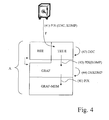
- Fig. 4 1 shows the mode of operation of a fade-in device with which a virtual secure runtime environment of a security server TCS D can be faded into a real secure runtime environment TEE E of a smartphone A, according to an embodiment of the invention.
- the fade-in device comprises a server fade-in part and a terminal fade-in part.
- the server overlay part generates an illustration PIX (pixel representation) of the virtual secure runtime environment of the security server TCS D that can be displayed on an output unit (display) of the smartphone A, including possibly one or more started apps.
- step 41 the secure virtual runtime environment of the security server TCS D sends the encrypted data over the secure channel F to the real secure runtime environment TEE E of the smartphone A.
- the decryption result is the compressed representation PIX (KOMP) and is provided in step 43 to a graphics processor GRAF of the smartphone.
- the graphic processor GRF the compressed representation PIX (KOMP) is decompressed (DECOMP) in step 44 under control of the safe runtime environment TEE E, whereby the display PIX which can be displayed by the smartphone display is restored.
- This representation PIX is stored in the graphics memory GRAF-MEM of the graphics processor GRAF in step 45 and displayed on the display.
- the computing power required for decompression is present in today's processors for smartphones, as they have directly integrated graphics units.
- the representation PIX is preferably output in full screen format on the display of the smartphone A. As a result, screens can not be displayed on the screen in addition to the screen from the safe runtime environment TEE E from the normal runtime environment REE, which could potentially be tampered with.
- the decompressor (step 44) for the image data from the security server TCS D is relatively easy due to the directly available graphics hardware, and even particularly simple in full-screen mode, since this converts only the incoming image data PIX (KOMP) in pixels to be displayed. All other parameters such as the resolution used, the design of the windows or user interface, are taken into account exclusively by the virtual smartphone OS on the security server TCS D and thus are not included in the real secure runtime environment TEE E.
- the secure display driver is therefore only of the (relatively uniform) Hardware of the Smartphone A dependent and therefore relatively simple and space-saving implementable.
- the encrypted and compressed representation PIX (ENC, KOMP) is decrypted in the real secure runtime environment TEE E, transferred to the normal runtime environment REE and decompressed in the normal runtime environment REE to the representation PIX.
- the displayable representation PIX is then displayed on the display of the smartphone A from the normal runtime environment REE.
Landscapes
- Engineering & Computer Science (AREA)
- Computer Security & Cryptography (AREA)
- Computer Networks & Wireless Communication (AREA)
- Signal Processing (AREA)
- Computer Hardware Design (AREA)
- Theoretical Computer Science (AREA)
- Physics & Mathematics (AREA)
- Software Systems (AREA)
- General Engineering & Computer Science (AREA)
- General Physics & Mathematics (AREA)
- Mathematical Physics (AREA)
- Computing Systems (AREA)
- Storage Device Security (AREA)
- Information Transfer Between Computers (AREA)
Abstract
Description
- Die Erfindung betrifft ein Endgerät-System umfassend ein mobiles Endgerät, in dem ein Sicherheitsbetriebssystem implementiert ist, unter dessen Steuerung in dem Endgerät eine sichere Laufzeitumgebung herstellbar ist.
- In mobilen Endgeräten wie Smartphones, (mobilfunkfähigen) Tablet PCs und dergleichen sind sichere Laufzeitumgebungen TEEs (TEE = trusted execution environment) bekannt, bei denen auf Software-Ebene eine Trennung zwischen Ausführungsumgebungen unterschiedlicher Sicherheitsniveaus erzeugt wird. Eine erste, auch "Normal Zone", "Normal World" oder "Rich Execution Environment REE" genannte unsichere oder normale Laufzeitumgebung ist durch ein Normalbetriebssystem (z.B. Android, Windows Phone, Symbian, iOS) gesteuert. Eine zweite, auch "Trustzone", "Trusted World", "Secure World" oder "Trusted Execution Environment TEE" genannte sichere oder vertrauenswürdige Laufzeitumgebung ist durch ein Sicherheitsbetriebssystem gesteuert.
- Das Dokument "Global Platform Device Technology: TEE System Architecture, Version 1.0, December 2011" beschreibt ein mobiles Endgerät mit einer normalen oder unsicheren Ausführungsumgebung "Rich Execution Environment (REE)" und einer sicheren Ausführungsumgebung "Trusted Execution Environment (TEE)" (vgl. Kapitel 1).
- Applikationen (z.B. Apps, Applets oder Treibern), die in der sicheren Laufzeitumgebung ausgeführt werden, stellt das Sicherheitsbetriebssystem Sicherheitsfunktionen wie Verschlüsselung und die Nutzung sicherer Kanäle zwischen dem Endgerät und externen Geräten (z.B. anderen Endgeräten oder Servern) für die Übertragung von Daten vom und zum Endgerät zur Verfügung. Applikationen, die in der normalen Laufzeitumgebung ausgeführt werden, stehen nur die Funktionen des Normalbetriebssystems zur Verfügung, nicht aber die Sicherheitsfunktionen des Sicherheitsbetriebssystems.
- Prinzipiell haben mobile Endgeräte, wie beispielsweise Smartphones, leistungsfähige Prozessoren und ein hohes Speichervolumen, insbesondere große Arbeitsspeicher RAM und große Applikationsspeicher (Programmspeicher). Dies gilt auch für Endgeräte mit zweigeteilter Laufzeitumgebung.
- In der sicheren Laufzeitumgebung nutzbar sind allerdings nur speziell angepasste Speicher, in denen die Sicherheitsfunktionen (z.B. Verschlüsselung, sichere Kanäle) des Sicherheitsbetriebssystems gewährleistet sind. Der hohe Aufwand dieser Anpassung wird nur für einen Teil der Speicher eines mobilen Endgeräts durchgeführt. Zusätzlich erschwert wird die Anpassung dadurch, dass es eine Vielzahl von unterschiedlichen Endgeräte-Typen gibt und die Anpassung für jeden Endgeräte-Typ individuell erfolgen muss.
- Der Gesamt-Arbeitsspeicher RAM eines leistungsfähigen Smartphones beträgt typischerweise zwei GigaByte (z.B. LG Google Nexus 4, Samsung Galaxy S4, Nokia Lumia 1020, ...). Dem Sicherheitsbetriebssystem stehen in einem Smartphone mit sicherer Laufzeitumgebung typischerweise nur 64 kByte im flüchtigen Arbeitsspeicher RAM zur Verfügung. Somit sind komplexe Applikationen in der sicheren Laufzeitumgebung nicht lauffähig.
- Doch nicht nur Speicher des Endgeräts müssen angepasst werden. Auch Applikationen für die sichere Laufzeitumgebung müssen speziell auf das Sicherheitsbetriebssystem angepasst entwickelt und zertifiziert werden. Dies führt dazu, dass das Sicherheitsbetriebssystem nur bei besonders finanzstarken und sicherheitsbewussten App-Entwicklungen eingebunden wird. Eine Vielzahl von Apps, wie sie von gängigen App-Stores (z.B. iTunes oder Google Play) angeboten werden, ist dagegen nur unter dem Normalbetriebssystem lauffähig und kann die Sicherheitsfunktionen des Sicherheitsbetriebssystem nicht nutzen. Somit läuft das Sicherheitsbetriebssystem an sich Gefahr, eine Randerscheinung zu bleiben.
- Der Erfindung liegt die Aufgabe zu Grunde, in einem mobilen Endgerät eine durch ein Sicherheitsbetriebssystem gesteuerte sichere Laufzeitumgebung zu ermöglichen, die einfacher zu handhaben ist, so dass in Folge die Akzeptanz des Sicherheitsbetriebssystems verbessert ist.
- Die Aufgabe wird gelöst durch ein Endgerät-System nach Anspruch 1. Vorteilhafte Ausgestaltungen der Erfindung sind in den abhängigen Ansprüchen angegeben.
- Das erfindungsgemäße Endgerät-System nach Anspruch 1 umfasst ein mobiles Endgerät, in dem ein Sicherheitsbetriebssystem implementiert ist, unter dessen Steuerung in dem Endgerät eine sichere Laufzeitumgebung herstellbar ist. Die sichere Laufzeitumgebung ist dazu vorgesehen, in der sicheren Laufzeitumgebung ausgeführten Applikationen die Sicherheitsfunktionalitäten - z.B. Verschlüsselung und sichere Kanäle zur Datenübertragung vom und zum Endgerät - des Sicherheitsbetriebssystems bereitzustellen.
- Das erfindungsgemäße Endgerät-System nach Anspruch 1 ist gekennzeichnet durch
- einen Sicherheitsserver, auf dem ein Server-Sicherheitsbetriebssystem implementiert ist, unter dessen Steuerung eine virtuelle sichere Laufzeitumgebung auf dem Sicherheitsserver herstellbar ist,
- einen sicheren Kanal, über den die virtuelle sichere Laufzeitumgebung des Sicherheitsservers an die sichere Laufzeitumgebung des Endgeräts übertragbar ist, und
- eine Einblend-Einrichtung, mit der die virtuelle sichere Laufzeitumgebung des Sicherheitsservers über den sicheren Kanal in die sichere Laufzeitumgebung des Endgeräts einblendbar ist, so dass die tatsächlich auf dem Sicherheitsserver hergestellte virtuelle Laufzeitumgebung als scheinbar auf dem Endgerät hergestellt erscheint.
- Im erfindungsgemäßen Endgerät-System laufen angepasste Applikation, die unter dem Sicherheitsbetriebssystem laufen sollen, auf dem Sicherheitsserver ab. Die sichere Laufzeitumgebung des mobilen Endgeräts wird lediglich als sicherer Zugriffspunkt auf die virtuelle sichere Laufzeitumgebung auf dem Sicherheitsserver verwendet. Beschränkte sichere Ressourcen (z.B. sicherer Arbeitsspeicher, sicherer Applikationsspeicher) des Endgeräts stellen für die Ausführung der angepassten Applikationen keine Beschränkung dar. Auf dem Sicherheitsserver andererseits ist es einfach möglich, nur einen einzigen Servertyp vorzusehen, im Unterschied zu vielen unterschiedlichen Endgeräte-Typen. Wird nur ein einziger Servertyp vorgesehen, müssen Anpassungen von Ressourcen des Servers (z.B. Arbeitsspeicher, Applikationsspeicher) und von Applikationen an ein Sicherheitsbetriebssystem nur für diesen einzigen Servertyp durchgeführt werden. Daher ist es auf dem Sicherheitsserver einfacher als auf Endgeräten, große Mengen an Arbeitsspeicher und Applikationsspeicher unter Verwaltung eines Sicherheitsbetriebssystems bereitzustellen. Ebenso ist es auf dem Sicherheitsserver einfacher als auf Endgeräten, eine Vielzahl von Applikationen in für das Sicherheitsbetriebssystem angepasster Form anzubieten. Somit steigt auch die Bereitschaft von Applikationsanbietern, ihre Applikationen (auch) in einer auf ein Sicherheitsbetriebssystem angepassten Form anzubieten.
- Daher ist mit dem Endgerät-System gemäß Anspruch 1 erreicht, dass die sichere Laufzeitumgebung, in der die Applikationen laufen sollen, nämlich hier die virtuelle sichere Laufzeitumgebung, leichter handhabbar ist, d.h. mit sicherem Speicher und angepassten Applikationen ausstattbar ist. Hierdurch ist die Akzeptanz des Sicherheitsbetriebssystems an sich verbessert.
- Wahlweise ist der Kanal zwischen dem Sicherheitsserver und dem Endgerät durch gegenseitige Authentisierung und verschlüsselte Datenübertragung zwischen dem Sicherheitsserver und dem Endgerät geschützt.
- Wahlweise weist das Endgerät-System weiter auf:
- eine Schnittstelle zu einer Datenbank, in der ein Authentisierungsschlüssel abgelegt ist, der für eine Authentisierung des Sicherheitsservers gegenüber der sicheren Laufzeitumgebung des Endgeräts erforderlich ist, und
- eine Kanalherstellungs-Einrichtung, die dazu eingerichtet ist, dass bei einer Herstellung des sicheren Kanals zwischen dem Sicherheitsserver und dem Endgerät der Authentisierungsschlüssel durch den Sicherheitsserver aus der Datenbank ausgelesen wird.
- Die Einblend-Einrichtung umfasst wahlweise einen auf dem Sicherheitsserver eingerichteten Server-Einblend-Teil und einen auf dem Endgerät eingerichteten Endgerät-Einblend-Teil. Der Server-Einblend-Teil ist dazu eingerichtet, zu der virtuellen sicheren Laufzeitumgebung des Sicherheitsservers eine auf einer Ausgabeeinheit des Endgeräts darstellbare Darstellung der virtuellen sicheren Laufzeitumgebung des Sicherheitsservers zu erzeugen. Der Endgerät-Einblend-Teil ist dazu eingerichtet, die vom Server-Einblend-Teil erzeugte Darstellung der virtuellen sicheren Laufzeitumgebung des Sicherheitsservers entgegenzunehmen und an der Ausgabeeinheit, z.B. einem Display, des Endgeräts darzustellen. Der Server-Einblend-Teil verleiht dem Sicherheitsserver die Funktion eines Terminalservers. Der Endgerät-Einblend-Teil verleiht dem Endgerät die Funktion eines Terminal-Client. Ein Nutzer, der die Ausgabeeinheit (z.B. Display) des Endgeräts betrachtet, sieht darauf die Aktivität der virtuellen sicheren Laufzeitumgebung des Sicherheitsservers. Falls in der sicheren Laufzeitumgebung ein oder mehrere Applikationen ausgeführt werden, erzeugt der Server-Einblend-Teil zu der bzw. den Applikation(en) ebenfalls eine darstellbare Darstellung für die Ausgabeeinheit, z.B. Display, des Endgeräts.
- Wahlweise ist der Server-Einblend-Teil dazu eingerichtet, eine durch einen Grafiktreiber eines Displays des Endgeräts verarbeitbare Darstellung der virtuellen sicheren Laufzeitumgebung des Sicherheitsservers zu erzeugen, und der Endgerät-Einblend-Teil dazu eingerichtet, die erzeugte Darstellung an den Grafiktreiber des Displays des Endgeräts bereitzustellen. Ggf. in der virtuellen sicheren Laufzeitumgebung ausgeführte Applikationen werden ebenfalls in eine Darstellung gebracht, die der Grafiktreiber des Endgeräts direkt verarbeiten kann, um an der Ausgabeeinheit (z.B. Display) die Applikation anzuzeigen.
- Wahlweise umfasst das Endgerät-System weiter eine Applikations-Lade-Einrichtung, die dazu eingerichtet ist, mittels des Endgeräts Applikationen von einem Applikations-Anbieter herunterzuladen. Die Applikations-Lade-Einrichtung umfasst einen auf dem Sicherheitsserver eingerichteten Server-Lade-Teil, der dazu eingerichtet ist, auf eine Aufforderung vom Endgerät hin die Applikation herunterzuladen, so dass die Applikation vom Endgerät aus zur Ausführung aufrufbar ist. Die Applikation kann dabei z.B. in den Sicherheitsserver oder in das Endgerät geladen werden, wie nachfolgend noch beschrieben ist. Wahlweise umfasst die Applikations-Lade-Einrichtung weiter einen Endgerät-Lade-Teil, der dazu eingerichtet ist, vom Endgerät aus eine Aufforderung zum Herunterladen einer Applikation an den Applikations-Anbieter zu übermitteln.
- Wahlweise umfasst die Applikations-Lade-Einrichtung weiter eine Ladeziel-Festlegungs-Einrichtung, mit der ein Ladeziel festlegbar ist, an welches die Applikation geladen wird. Dabei ist als Ladeziel festlegbar: entweder der Sicherheitsserver, so dass die auf den Sicherheitsserver heruntergeladene Applikation in der virtuellen sicheren Laufzeitumgebung ausführbar ist, oder das Endgerät, so dass die in das Endgerät heruntergeladene Applikation im Endgerät ausführbar ist. Der Nutzer des Endgeräts kann somit auswählen, ob er Applikationen aus z.B. einem App-Store in sein Endgerät lädt oder in die virtuelle Ausführungsumgebung des Sicherheitsservers. Vorzugsweise wählt der Nutzer für sicherheitskritische Applikationen den Sicherheitsserver als Ladeziel aus.
- Wahlweise ist das Ladeziel durch Auswahl einer Applikation festlegbar. Beispielsweise wird, indem der Nutzer eine sicherheitskritische Applikation auswählt, die für eine sichere Laufzeitumgebung angepasst ist, ohne Eingriffsmöglichkeit durch den Nutzer der Sicherheitsserver als Ladeziel festgelegt. Für normale Applikationen wird wahlweise automatisch das Endgerät als Ladeziel festgelegt.
- Alternativ, falls entsprechende Applikations-Varianten zur Verfügung stehen, kann der Nutzer auswählen, ob eine sicherheitskritische Applikation in die reale sichere Laufzeitumgebung des Endgeräts oder in die virtuelle sichere Laufzeitumgebung des Sicherheitsservers geladen wird. Der Sicherheitsserver kann wahlweise insbesondere dann als Ladeziel ausgewählt werden, wenn das Endgerät keinen Platz mehr für sichere Applikationen bietet.
- Wahlweise wird in einem vorgeschalteten Prüfschritt, bevor das Ladeziel festgelegt wird, geprüft, ob für das Endgerät eine virtuelle sichere Laufzeitumgebung auf einem Sicherheitsserver verfügbar ist.
- Wahlweise ist in dem Endgerät weiter ein Normalbetriebssystem implementiert, unter dessen Steuerung in dem Endgerät eine normale Laufzeitumgebung herstellbar ist. Dabei ist die in das Endgerät heruntergeladene Applikation entweder in der sicheren Laufzeitumgebung des Endgeräts oder in der normalen Laufzeitumgebung des Endgeräts ausführbar.
- Insbesondere kann bei einem Endgerät, das eine normale und eine sichere Laufzeitumgebung hat, beim Herunterladen eine Auswahlmöglichkeit zwischen den Ladezielen normale Laufzeitumgebung des Endgeräts, reale sichere Laufzeitumgebung des Endgeräts und virtuelle sichere Laufzeitumgebung des Sicherheitsservers bestehen.
- Wahlweise umfasst das Endgerät-System weiter zumindest eine Applikation, die auf dem Sicherheitsserver implementiert ist, und die aus der sicheren Laufzeitumgebung des Endgeräts heraus derart aufrufbar ist, dass die Applikation, sobald sie aufgerufen ist, tatsächlich auf dem Sicherheitsserver in der virtuellen sicheren Laufzeitumgebung des Sicherheitsservers ausgeführt wird und scheinbar auf dem Endgerät ausgeführt wird.
- Gemäß einer ersten Ausführungsform ("Remote Desktop", entfernte Benutzeroberfläche) können mehrere Applikationen gleichzeitig auf dem Sicherheitsserver aufgerufen sein und erfindungsgemäß in die reale sichere Laufzeitumgebung Endgerät eingeblendet sein. In diesem Fall ist auf dem Sicherheitsserver ein vollständiges virtuelles Endgerät hergestellt, das in die "leere" reale sichere Laufzeitumgebung des realen Endgeräts eingeblendet wird. Die virtuelle Benutzeroberfläche auf dem Sicherheitsserver wird in die reale Benutzeroberfläche auf dem Endgerät eingeblendet. Die reale sichere Laufzeitumgebung des realen Endgeräts bildet nur einen sicheren Endpunkt und Zugriffspunkt auf das virtuelle sichere Endgerät.
- Gemäß einer zweiten Ausführungsform ("Remote App", entfernte Applikation) kann jeweils nur eine einzige Applikation gleichzeitig aufgerufen sein. Hierdurch ist eine - möglicherweise schädliche - Wechselwirkung zwischen unterschiedlichen Applikationen verhindert. Denn in der virtuellen Laufzeitumgebung läuft isoliert nur eine einzige Applikation, wie in einer aus z.B. dem Java Bereich bekannten sogenannten Sandbox. Insbesondere kann in diesem Fall, vorausgesetzt die erste Applikation an sich ist sicher, keine zweite, Virus- oder Trojaner-behaftete Applikation Schäden an der ersten Applikation verursachen, da ja neben der ersten Applikation keine zweite Applikation in die virtuelle Laufzeitumgebung hereingelassen wird.
- Wahlweise sind im Sicherheitsserver mehrere virtuelle sichere Laufzeitumgebungen vorgesehen. Wahlweise umfassen die mehreren virtuellen sicheren Laufzeitumgebungen die Laufzeitumgebungen von mehreren einzelnen Applikationen, wobei in jeder Laufzeitumgebung eine einzige Applikation zur isolierten Ausführung implementiert ist (d.h. mehrere Laufzeitumgebungen im "Remote App" Modus). Wahlweise umfassen, zusätzlich oder alternativ, die mehreren virtuellen sicheren Laufzeitumgebungen die Laufzeitumgebungen zu mehreren unterschiedlichen körperlichen Endgeräten.
- Im Folgenden wird die Erfindung an Hand von Ausführungsbeispielen und unter Bezugnahme auf die Zeichnung näher erläutert, in der zeigen:
- Fig. 1
- das Herunterladen einer App, mittels eines Smartphones, aus einem App-Store in das Smartphone, gemäß dem Stand der Technik;
- Fig. 2
- das Herunterladen einer App, mittels eines Smartphones, aus einem App-Store in eine virtuelle sichere Laufzeitumgebung eines Sicherheitsservers TCS, gemäß einer Ausführungsform der Erfindung;
- Fig. 3
- die Nutzung einer gemäß
Fig. 2 in eine virtuelle sichere Laufzeitumgebung eines Sicherheitsservers TCS heruntergeladenen App von einem Smartphone aus, gemäß einer Ausführungsform der Erfindung; - Fig. 4
- die Funktionsweise einer Einblend-Einrichtung, mit der eine virtuelle sichere Laufzeitumgebung eines Sicherheitsservers in eine reale sichere Laufzeitumgebung eines Smartphones einblendbar ist, gemäß einer Ausführungsform der Erfindung.
-
Fig. 1 zeigt das Herunterladen einer App (Applikation), mittels eines Smartphones A, aus einem App-Store C über das Internet B in das Smartphone A, gemäß dem Stand der Technik. In einem Schritt 11 loggt sich ein Benutzer des Smartphones A über das Internet B im App-Store C ein und wählt die von ihm gewünschte App aus. In einem Schritt 12 wird die gewünschte App auf das Smartphone A übertragen und dort installiert. Nun steht die App dem Benutzer zur Verfügung und kann wie gewohnt genutzt werden. -
Fig. 2 zeigt das Herunterladen einer App, mittels eines Smartphones A, aus einem App-Store C in eine virtuelle sichere Laufzeitumgebung eines Sicherheitsservers TCS D, gemäß einer Ausführungsform der Erfindung. Im Vergleich zum Verfahren ausFig. 1 ist beim Verfahren ausFig. 2 zusätzlich ein Sicherheitsserver TCS (TCS = Trusted Cloud Server) D beteiligt. - In einem Registrierungsschritt (in
Fig. 2 nicht dargestellt) lässt der Benutzer des Smartphones A beim App-Store C ein Profil PR_A für sein Smartphone A anlegen. Der App-Store C zieht das Profil PR_A heran, wenn der Benutzer künftig mit dem Smartphone A Apps herunterlädt. Im Profil PR_A ist ein Hinweis ->TCS vermerkt, dass für das Smartphone A eine virtuelle Laufzeitumgebung auf einem Sicherheitsserver TCS D verfügbar ist. Darüber hinaus sind im Profil PR_A des Smartphones A eine IP-Adresse des Smartphones und eine Login-Benutzerkennung vermerkt. Weiter ist im Profil PR_A eine Verknüpfung ->KA_E angelegt, die es dem App-Store C ermöglicht, den Authentisierungsschlüssel KA_E der realen sicheren Laufzeitumgebung TEE E des Smartphones A zu ermitteln. - Nachfolgend wird, weiter unter Bezugnahme auf
Fig. 2 , das Herunterladen einer App beschrieben. - In Schritt 21 loggt sich der Benutzer des Smartphones A über das Internet B im App-Store C ein. Der App-Store C erkennt, dass im Profil TR(A) des Benutzers bzw. des Smartphones A ein Verweis ->TCS auf einen Sicherheitsserver TCS D hinterlegt ist.
- In Schritt 22 kontaktiert der App-Store C in Teilschritt 22-1 den Sicherheitsserver TCS D und stellt dem Sicherheitsserver TCS D die IP-Adresse des Smartphones A und/ oder die Login-Benutzerkennung, die der Nutzer zuvor zum Login Schritt 21 verwendet hat, zur Verfügung. Der Sicherheitsserver TCS D holt in Teilschritt 22-2 anhand der Login-Benutzerkennung (oder / und anhand der IP-Adresse) den Authentisierungsschlüssel KA_E der zugehörigen realen sicheren Laufzeitumgebung TEE E des Smartphones A aus einer Datenbank DB, in der Authentisierungsschlüssel einer Vielzahl von sicheren Laufzeitumgebungen einer Vielzahl von Smartphones abgespeichert sind.
- In Schritt 23 stellt der Sicherheitsserver TCS D unter Verwendung der IP-Adresse des Smartphones A eine Verbindung mit der realen sicheren Laufzeitumgebung TEE E des Smartphones A her und führt mit Hilfe des zuvor ermittelten Authentisierungsschlüssels KA_E eine gegenseitige Authentisierung mit dem TEE E durch. Ist die Authentisierung erfolgreich, dann stammt insbesondere das Login vom Smartphone A mit der passenden sicheren Laufzeitumgebung TEE E und gilt als verifiziert. Schließlich vereinbaren die reale sicheren Laufzeitumgebung TEE E des Smartphones A und die virtuelle sichere Laufzeitumgebung des Sicherheitsservers TCS D Sitzungsschlüssel. Alle nachfolgenden Datenübertragungen zwischen der realen und der virtuellen sicheren Laufzeitumgebung erfolgen verschlüsselt mit einem Sitzungsschlüssel.
- In Schritt 24 teilt der Sicherheitsserver TCS D dem App-Store C die erfolgreiche Verifizierung des Smartphone A mit. Daraufhin bietet der App-Store C dem Benutzer zwei Installationsziele für die gewählte App an: Die normale Laufzeitumgebung REE des Smartphones A - was einer ganz normalen Installation entspricht - und die virtuelle sichere Laufzeitumgebung (gesteuert durch ein virtuelles, emuliertes Smartphone-Sicherheits-Betriebssystem) im Sicherheitsserver TCS D - was aus Sicht des Benutzers einer "sicheren" Installation entspricht. Wählt der Benutzer die normale Installation, wird die App wie bekannt auf das Smartphone A heruntergeladen und dort installiert. Für diesen Fall endet das Verfahren hier.
- Wählt der Benutzer jedoch die "sichere Installation", wird mit Schritt 25 fortgefahren. Der Download der gewählten App werden nun in die virtuelle sichere Laufzeitumgebung des Sicherheitsservers TCS D durchgeführt.
- Um die - meist interaktive - Installation der App innerhalb des Sicherheitsservers TCS D durchführen zu können, eröffnet der Sicherheitsserver TCS D in Schritt 26 eine verschlüsselte Verbindung mit der realen sicheren Laufzeitumgebung TEE E des Smartphones A. Zur realen sicheren Laufzeitumgebung TEE E hin überträgt der Sicherheitsserver TCS D einen komprimierten Datenstrom mit dem Bildschirminhalt, der anlässlich der Installation der App angezeigt werden soll. Der Datenstrom beinhaltet eine Darstellung des Bildschirminhalts in einem Format, das durch das Display des Smartphones A unmittelbar darstellbar ist, also z.B. Steuerungsanweisungen für die einzelnen Pixel des Displays des Smartphones A. Die reale sichere Laufzeitumgebung TEE E des Smartphones A nimmt den Bildschirminhalt entgegen und stellt ihn auf dem (Display des) Smartphone A dar. Der Benutzer nimmt während des Herunterladens und Installierens der App am Smartphone A Eingaben vor, z.B. am Touchscreen des Displays, oder/und an einer Tastatur oder einzelnen Tasten. Die reale sichere Laufzeitumgebung TEE E des Smartphones A überträgt die Eingaben des Benutzers zum Sicherheitsserver TCS D, so dass auf dem Sicherheitsserver TCS D den Eingaben entsprechende Steuerungen zur Steuerung der Installation vorgenommen werden. Mit dem Start der Installation der App im Sicherheitsserver TCS D ist die Installation demnach sofort auch auf dem Smartphone A sichtbar. Sollten im Rahmen der Installation Benutzereingaben erforderlich sein, sind diese ebenfalls möglich. Falls weiter der Tastaturtreiber in der realen sicheren Laufzeitumgebung TEE E implementiert ist, was bevorzugt der Fall ist, sind zudem die Benutzereingaben vor Manipulationen durch Trojaner auf dem Smartphone A geschützt.
- Optional kann vor Beginn der App-Installation eine sichere PIN- oder Passwortabfrage durch die reale sichere Laufzeitumgebung TEE E oder durch den Sicherheitsserver TCS D erfolgen.
- In Schritt 27 meldet der Sicherheitsserver TCS D die erfolgreiche Installation zurück an den App-Store C, so dass dieser sowohl die App als installiert vermerken als auch die erfolgreiche Installation für den Benutzer anzeigen kann. Gleichzeitig wird die in Schritt 26 aufgebaute Verbindung zum Sicherheitsserver TCS D wieder getrennt, so dass für den Benutzer auf dem Smartphone A wieder der Webbrowser des Smartphones A mit dem App-Store C sichtbar wird.
-
Fig. 3 zeigt die Nutzung einer gemäßFig. 2 in eine virtuelle sichere Laufzeitumgebung eines Sicherheitsservers TCS D heruntergeladenen App von einem Smartphone A aus, gemäß einer Ausführungsform der Erfindung. - In Schritt 31 ruft der Benutzer zunächst vom Smartphone A aus die virtuelle sichere Laufzeitumgebung auf dem Sicherheitsserver TCS D auf, unter der die App implementiert ist. Das Smartphone A stellt gewissermaßen einen Terminal-Client und der Sicherheitsserver TCS D einen Terminal-Server in einem Terminal-Dienst-Verhältnis zwischen dem Smartphone A und dem Sicherheitsserver TCS D dar. Der Sicherheitsserver TCS D liest aus der Datenbank DB den Authentisierungsschlüssel KA_E der sicheren Laufzeitumgebung TEE E des Smartphones A aus. Die sichere Laufzeitumgebung TEE E des Smartphones A und die virtuelle sichere Laufzeitumgebung des Sicherheitsservers TCS D führen mit dem Authentisierungsschlüssel KA_E eine gegenseitige Authentisierung durch und erzeugen kryptographische Sitzungsschlüssel. Nachfolgend werden alle zwischen der virtuellen sicheren Laufzeitumgebung des Sicherheitsservers TCS D und der realen sicheren Laufzeitumgebung TEE E des Smartphones A übertragenen Daten (Applikationen, Steuerungsbefehle, ...) mit einem Sitzungsschlüssel verschlüsselt.
- Üblicherweise führt in Schritt 31 zudem die reale oder virtuelle sichere Laufzeitumgebung eine sichere PIN- oder Passwortabfrage durch.
- In Schritt 32 stellt der Sicherheitsserver TCS D verschlüsselte Bilddaten PIX bereit, die die reale sichere Laufzeitumgebung TEE E entschlüsselt und vom Smartphone A des Benutzers auf dem Display darstellen lässt. In umgekehrter Richtung sendet die reale sichere Laufzeitumgebung TEE E des Smartphone A Eingaben (eingegeben z.B. über Tastatur, Touchschreen-Display) mit z.B. Steuerungsbefehlen des Benutzers an die virtuelle sichere Laufzeitumgebung des Sicherheitsservers TCS D.
- Die virtuelle Laufzeitumgebung des Sicherheitsservers TCS D bietet dem Benutzer auf dem Smartphone-Display ein Auswahlmenü mit zwei unterschiedlichen Modi an: Modus A Remote Desktop und Modus B Remote App.
- Im Modus A Remote Desktop stellt der Sicherheitsserver TCS D eine vollständige virtualisierte Smartphone-Laufzeitumgebung zur Verfügung, welche alle Apps umfasst, die im Sicherheitsserver TCS D installiert wurden. In diesem Modus erhält der Benutzer praktisch ein virtuelles Smartphone, welches von seinem (physisch vorhandenen) realen Smartphone A unabhängig ist, und zu dem das reale Smartphone A nur den Einstiegspunkt bildet. Durch die reale sichere Laufzeitumgebung TEE E ist der Einstiegspunkt kryptologisch sicher. Im Modus A Remote Desktop dürfen vorzugsweise nur speziell geprüfte Apps des App-Store C auf dem Sicherheitsserver TCS D installiert werden. Hierdurch wird verhindert, dass mit Schadsoftware, z.B. Trojanern, infizierte Apps in die virtuelle sichere Laufzeitumgebung gelangen und dort andere Apps schädigen.
- Im Modus B Remote App wird innerhalb der virtuellen sicheren Laufzeitumgebung immer nur eine einzige App auf einmal ausgeführt. Falls der Benutzer Modus B wählt, wählt er somit zusätzlich eine gewünschte App aus. Diese App besitzt die Möglichkeit, ihre Daten persistent innerhalb der virtuellen sicheren Laufzeitumgebung zu speichern, so dass diese bei der nächsten Sitzung wieder vorhanden sind. Da die App die einzige in der virtuellen sicheren Laufzeitumgebung ist, besitzt sie keinen Zugriff auf andere Apps auf dem Sicherheitsserver TCS D, sondern nur auf die virtuelle sichere Smartphone-Laufzeitumgebung. Somit ermöglicht bereits eine ganz normale (d.h. nicht besonders gesicherte) Browser-App sicheres Online-Banking-sofern diese beim TCS D in Modus B ausgeführt wird. Da die Browser-App alleine innerhalb des virtuellen TCS-TEE ausgeführt wird, kann prinzipbedingt keine zweite, bösartige App die Browser-App angreifen. Gleichzeitig ist die virtuelle sichere Laufzeitumgebung auf dem Sicherheitsserver - vorzugsweise - als sogenannte Sandbox gestaltet. Hierdurch ist ein Ausbrechen einer bösartigen Applikation aus einer virtuellen sicheren Laufzeitumgebung nicht möglich. Andere im Sicherheitsserver TCS D vorhandene virtuelle Laufzeitumgebungen sind vor Angriffen geschützt.
- In Schritt 33 wird der vom Benutzer gewählte Modus ausgeführt. Der Benutzer kann nun mit den Apps der virtuellen sicheren Smartphone-Komplett-Laufzeitumgebung (Modus A) bzw. der einzelnen App (Modus B) wie gewohnt arbeiten, bis er die Sitzung beendet.
-
Fig. 4 zeigt die Funktionsweise einer Einblend-Einrichtung, mit der eine virtuelle sichere Laufzeitumgebung eines Sicherheitsservers TCS D in eine reale sichere Laufzeitumgebung TEE E eines Smartphones A einblendbar ist, gemäß einer Ausführungsform der Erfindung. Die Einblend-Einrichtung umfasst einen Server-Einblend-Teil und einen Endgerät-Einblend-Teil. - Der Server-Einblend-Teil erzeugt eine auf einer Ausgabeeinheit (Display) des Smartphone A darstellbare Darstellung PIX (Pixeldarstellung) der virtuellen sicheren Laufzeitumgebung des Sicherheitsservers TCS D, ggf. einschließlich einer oder mehrerer gestarteter Apps. Die virtuelle sichere Laufzeitumgebung des Sicherheitsservers TCS D komprimiert (KOMP) die Darstellung PIX und verschlüsselt (ENC) die komprimierte Darstellung PIX (KOMP) mit einem Sitzungsschlüssel zu einem Chiffrat PIX(ENC, KOMP), mit ENC = encrypt = verschlüsseln und KOMP = komprimieren.
- In Schritt 41 sendet die virtuelle sichere Laufzeitumgebung des Sicherheitsservers TCS D das Chiffrat über den sicheren Kanal F an die reale sichere Laufzeitumgebung TEE E des Smartphones A. In der realen sicheren Laufzeitumgebung TEE E des Smartphones A wird das Chiffrat in Schritt 42 entschlüsselt (DEC = decrypt = entschlüsseln). Das Entschlüsselungsergebnis ist die komprimierte Darstellung PIX(KOMP) und wird in Schritt 43 an einen Grafikprozessor GRAF des Smartphone bereitgestellt. Im Grafikprozessor GRF wird in Schritt 44, unter Steuerung der sicheren Laufzeitumgebung TEE E, die komprimierte Darstellung PIX(KOMP) dekomprimiert (DEKOMP), wodurch die durch das Smartphone-Display darstellbare Darstellung PIX wiederhergestellt wird. Diese Darstellung PIX wird in Schritt 45 in den Grafikspeicher GRAF-MEM des Grafikprozessors GRAF abgelegt und auf dem Display zur Anzeige gebracht. Die für die Dekomprimierung notwendige Rechenleistung ist in heutigen Prozessoren für Smartphones vorhanden, da diese über direkt integrierte Grafikeinheiten verfügen. Die Darstellung PIX wird vorzugsweise im Vollbildformat auf dem Display des Smartphone A ausgegeben. Hierdurch können auf dem Display neben der aus der sicheren Laufzeitumgebung TEE E stammenden Bildschirmanzeige keine Bildschirmanzeigen aus der normalen Laufzeitumgebung REE erscheinen, die möglicherweise manipuliert sein könnten.
- Der Dekompressor (Schritt 44) für die Bilddaten vom Sicherheitsserver TCS D fällt aufgrund der direkt verfügbaren Grafikhardware relativ einfach aus, und bei Vollbildmodus sogar besonders einfach, da dieser nur die ankommenden Bilddaten PIX(KOMP) in darzustellende Pixel umwandelt. Alle anderen Parameter wie verwendete Auflösung, das Design der Fenster bzw. Benutzeroberfläche, werden ausschließlich vom virtuellen Smartphone-OS beim Sicherheitsserver TCS D berücksichtigt und entfallen somit innerhalb der realen sicheren Laufzeitumgebung TEE E. Der sichere Displaytreiber ist somit nur von der (relativ einheitlichen) Hardware des Smartphone A abhängig und deshalb relativ einfach und platzsparend implementierbar.
- Gemäß einer zu
Fig. 4 alternativen Ausführungsform wird die verschlüsselte und komprimierte Darstellung PIX(ENC, KOMP) in der realen sicheren Laufzeitumgebung TEE E entschlüsselt, an die normale Laufzeitumgebung REE übergeben und in der normalen Laufzeitumgebung REE dekomprimiert zur Darstellung PIX. Die darstellbare Darstellung PIX wird dann aus der normalen Laufzeitumgebung REE heraus auf dem Display des Smartphone A zur Anzeige gebracht.
Claims (11)
- Endgerät-System umfassend ein mobiles Endgerät (A), in dem ein Sicherheitsbetriebssystem (E) implementiert ist, unter dessen Steuerung in dem Endgerät (A) eine sichere Laufzeitumgebung (E, TEE) herstellbar ist, gekennzeichnet durch- einen Sicherheitsserver (D), auf dem ein Server-Sicherheitsbetriebssystem implementiert ist, unter dessen Steuerung eine virtuelle sichere Laufzeitumgebung auf dem Sicherheitsserver (D) herstellbar ist,- einen sicheren Kanal (F), über den die virtuelle sichere Laufzeitumgebung des Sicherheitsservers (D) an die sichere Laufzeitumgebung (E) des Endgeräts (A) übertragbar ist, und- eine Einblend-Einrichtung, mit der die virtuelle sichere Laufzeitumgebung des Sicherheitsservers (D) in die sichere Laufzeitumgebung (E) des Endgeräts (A) einblendbar ist, so dass die tatsächlich auf dem Sicherheitsserver (D) hergestellte virtuelle Laufzeitumgebung als scheinbar auf dem Endgerät (A) hergestellt erscheint.
- Endgerät-System nach Anspruch 1, wobei der Kanal (F) dadurch sicher ist, dass er durch gegenseitige Authentisierung und/ oder verschlüsselte Datenübertragung zwischen dem Sicherheitsserver (D) und dem Endgerät (A) geschützt ist.
- Endgerät-System nach Anspruch 2, das weiter aufweist:- eine Schnittstelle zu einer Datenbank (DB), in der ein Authentisierungsschlüssel (KA) abgelegt ist, der für eine Authentisierung des Sicherheitsservers (D) gegenüber der sicheren Laufzeitumgebung des Endgeräts (A) erforderlich ist, und- eine Kanalherstellungs-Einrichtung, die dazu eingerichtet ist, dass bei einer Herstellung des sicheren Kanals (F) zwischen dem Sicherheitsserver (D) und dem Endgerät (A) der Authentisierungsschlüssel (KA) durch den Sicherheitsserver (D) aus der Datenbank (DB) ausgelesen wird.
- Endgerät-System nach einem der Ansprüche 1 bis 3, wobei die Einblend-Einrichtung einen auf dem Sicherheitsserver (D) eingerichteten Server-Einblend-Teil und einen auf dem Endgerät (A) eingerichteten Endgerät-Einblend-Teil umfasst, wobei- der Server-Einblend-Teil dazu eingerichtet ist, zu der virtuellen sicheren Laufzeitumgebung des Sicherheitsservers (D) eine auf einer Ausgabeeinheit des Endgeräts (A) darstellbare Darstellung der virtuellen sicheren Laufzeitumgebung des Sicherheitsservers (D) zu erzeugen, und- der Endgerät-Einblend-Teil dazu eingerichtet ist, die erzeugte Darstellung der virtuellen sicheren Laufzeitumgebung des Sicherheitsservers (D) entgegenzunehmen und an der Ausgabeeinheit des Endgeräts (A) darzustellen.
- Endgerät-System nach Anspruch 4, wobei- der Server-Einblend-Teil dazu eingerichtet ist, eine durch einen Grafiktreiber eines Displays des Endgeräts (A) verarbeitbare Darstellung (PIX) der virtuellen sicheren Laufzeitumgebung des Sicherheitsservers (D) zu erzeugen und- der Endgerät-Einblend-Teil dazu eingerichtet ist, die erzeugte Darstellung (PIX) an den Grafiktreiber des Displays des Endgeräts (A) bereitzustellen.
- Endgerät-System nach einem der Ansprüche 1 bis 5,
das weiter eine Applikations-Lade-Einrichtung umfasst, die- dazu eingerichtet ist, mittels des Endgeräts (A) Applikationen von einem Applikations-Anbieter (C) herunterzuladen, und- einen auf dem Sicherheitsserver (D) eingerichteten Server-Lade-Teil umfasst, der dazu eingerichtet ist, auf die Aufforderung vom Endgerät (A) hin die Applikation herunterzuladen, so dass die Applikation vom Endgerät (A) aus zur Ausführung aufrufbar ist. - Endgerät-System nach Anspruch 6, wobei die Applikations-Lade-Einrichtung weiter eine Ladeziel-Festlegungs-Einrichtung umfasst, mit der ein Ladeziel festlegbar ist, an welches die Applikation geladen wird, wobei als Ladeziel festlegbar ist:- entweder der Sicherheitsserver (D), so dass die auf den Sicherheitsserver (D) heruntergeladene Applikation in der virtuellen sicheren Laufzeitumgebung ausführbar ist,- oder das Endgerät (A), so dass die in das Endgerät (A) heruntergeladene Applikation im Endgerät (A) ausführbar ist.
- Endgerät-System nach Anspruch 7, wobei in dem Endgerät (A) weiter ein Normalbetriebssystem implementiert ist, unter dessen Steuerung in dem Endgerät (A) eine normale Laufzeitumgebung (E) herstellbar ist, und wobei die in das Endgerät (A) heruntergeladene Applikation entweder in der sicheren Laufzeitumgebung des Endgeräts (A) oder in der normalen Laufzeitumgebung des Endgeräts (A) ausführbar ist.
- Endgerät-System nach einem der Ansprüche 1 bis 8, das weiter zumindest eine Applikation umfasst, die auf dem Sicherheitsserver (D) implementiert ist und aus der sicheren Laufzeitumgebung des Endgeräts (A) heraus derart aufrufbar ist, dass die Applikation, sobald sie aufgerufen ist, tatsächlich auf dem Sicherheitsserver (D) in der virtuellen sicheren Laufzeitumgebung des Sicherheitsservers (D) ausgeführt wird und scheinbar auf dem Endgerät (A) ausgeführt wird.
- Endgerät-System nach Anspruch 9, wobei mehrere Applikationen gleichzeitig aufgerufen sein können.
- Endgerät-System nach Anspruch 9, wobei jeweils nur eine einzige Applikation gleichzeitig aufgerufen sein kann.
Applications Claiming Priority (1)
| Application Number | Priority Date | Filing Date | Title |
|---|---|---|---|
| DE201310017458 DE102013017458A1 (de) | 2013-10-21 | 2013-10-21 | Mobiles Endgerät-System mit Sicherheitsbetriebssystem |
Publications (2)
| Publication Number | Publication Date |
|---|---|
| EP2863605A1 true EP2863605A1 (de) | 2015-04-22 |
| EP2863605B1 EP2863605B1 (de) | 2018-03-28 |
Family
ID=51751875
Family Applications (1)
| Application Number | Title | Priority Date | Filing Date |
|---|---|---|---|
| EP14003522.1A Active EP2863605B1 (de) | 2013-10-21 | 2014-10-14 | Mobiles endgerät-system mit sicherheitsbetriebssystem |
Country Status (2)
| Country | Link |
|---|---|
| EP (1) | EP2863605B1 (de) |
| DE (1) | DE102013017458A1 (de) |
Families Citing this family (1)
| Publication number | Priority date | Publication date | Assignee | Title |
|---|---|---|---|---|
| DE102015000656A1 (de) * | 2015-01-20 | 2016-07-21 | Giesecke & Devrient Gmbh | Laufzeitumgebung für mobiles Endgerät, die ein Bereitstellen eines Sicherheits-Dienstes ermöglicht |
Citations (2)
| Publication number | Priority date | Publication date | Assignee | Title |
|---|---|---|---|---|
| EP2378455A2 (de) * | 2010-04-18 | 2011-10-19 | Layer 7 Technologies, Inc. | Geschützter Anwendungsstapel und Verfahren und System zu seiner Verwendung |
| EP2387203A1 (de) * | 2010-05-10 | 2011-11-16 | Fujitsu Limited | Bilderübertragung von einem Server zu einem Thin-Client |
-
2013
- 2013-10-21 DE DE201310017458 patent/DE102013017458A1/de not_active Withdrawn
-
2014
- 2014-10-14 EP EP14003522.1A patent/EP2863605B1/de active Active
Patent Citations (2)
| Publication number | Priority date | Publication date | Assignee | Title |
|---|---|---|---|---|
| EP2378455A2 (de) * | 2010-04-18 | 2011-10-19 | Layer 7 Technologies, Inc. | Geschützter Anwendungsstapel und Verfahren und System zu seiner Verwendung |
| EP2387203A1 (de) * | 2010-05-10 | 2011-11-16 | Fujitsu Limited | Bilderübertragung von einem Server zu einem Thin-Client |
Non-Patent Citations (2)
| Title |
|---|
| "GlobalPlatform Device Technology TEE System Architecture", 1 December 2011 (2011-12-01), pages 1 - 24, XP055117057, Retrieved from the Internet <URL:http://www.globalplatform.org/specificationsdevice.asp> [retrieved on 20140508] * |
| GLOBAL PLATFORM DEVICE TECHNOLOGY: TEE SYSTEM ARCHITECTURE, December 2011 (2011-12-01) |
Also Published As
| Publication number | Publication date |
|---|---|
| DE102013017458A1 (de) | 2015-04-23 |
| EP2863605B1 (de) | 2018-03-28 |
Similar Documents
| Publication | Publication Date | Title |
|---|---|---|
| DE112005001672B4 (de) | Verfahren zum Liefern eines geheimen Direktnachweisschlüssels an Vorrichtungen unter Verwendung eines Onlinedienstes | |
| EP3574610B1 (de) | Verfahren zum durchführen einer zweifaktorauthentifizierung | |
| DE102004062203B4 (de) | Datenverarbeitungseinrichtung, Telekommunikations-Endgerät und Verfahren zur Datenverarbeitung mittels einer Datenverarbeitungseinrichtung | |
| EP3078177B1 (de) | Verfahren zum zugriff auf einen datenspeicher eines cloud-computersystems mit hilfe eines modifizierten domain name systems (dns) | |
| EP3125492A1 (de) | Verfahren und system zum erzeugen eines sicheren kommunikationskanals für endgeräte | |
| DE102011051498A1 (de) | Gesicherter Zugriff auf Daten in einem Gerät | |
| DE112011103580B4 (de) | Verfahren, sichere Einheit, System und Computerprogrammprodukt für das sichere Verwalten des Benutzerzugriffs auf ein Dateisystem | |
| EP2692157A2 (de) | Aktualisierung einer datenträgerapplikation | |
| DE102011108069A1 (de) | Verfahren zum Absichern einer Transaktion | |
| EP3248130A1 (de) | Laufzeitumgebung für mobiles endgerät, die ein bereitstellen eines sicherheits-dienstes ermöglicht | |
| EP4288886B1 (de) | Bereitstellung von zu schützenden daten in einer sicheren ausführungsumgebung eines datenverarbeitungssystems | |
| EP3403214B1 (de) | Verfahren und einrichtung zum bereitstellen einer kryptographischen sicherheitsfunktion für den betrieb eines geräts | |
| EP3422234A1 (de) | Container-image, computerprogrammprodukt und verfahren | |
| EP2863605B1 (de) | Mobiles endgerät-system mit sicherheitsbetriebssystem | |
| CH701203B1 (de) | Tragbares Gerät und Verfahren zum sicheren Austauschen von Daten mit einem fernen Computer. | |
| EP3720039B1 (de) | Verfahren für das konfigurieren eines sicherheitsmoduls mit mindestens einem abgeleiteten schlüssel | |
| EP3113438B1 (de) | Verfahren zur konfiguration von elektronischen geräten, insbesondere zur konfiguration von komponenten eines zugangskontrollsystems | |
| EP3497606B1 (de) | Individuelles verschlüsseln von steuerbefehlen | |
| EP3121992B1 (de) | Sichere elektronische unterzeichnung von information | |
| EP3248136B1 (de) | Verfahren zum betreiben einer computereinheit mit einer sicheren laufzeitumgebung sowie eine solche computereinheit | |
| EP2491513A1 (de) | Verfahren und system zum bereitstellen von edrm-geschützten datenobjekten | |
| EP3414879A1 (de) | Verfahren zum einsatz von kryptographie- und authentifizierungs-verfahren und system zur durchführung des verfahrens | |
| DE102010052246A1 (de) | Verfahren zum Zugang zu einem Betriebssystem, Wechselspeichermedium und Verwendung eines Wechselspeichermediums | |
| EP3101875B1 (de) | Ändern von einstellungen einer auf einem mobilen endgerät laufenden applikation | |
| DE60226245T2 (de) | Verfahren und Vorrichtung zur Handlung eines vertrauenswürdigen Uhrwertes |
Legal Events
| Date | Code | Title | Description |
|---|---|---|---|
| PUAI | Public reference made under article 153(3) epc to a published international application that has entered the european phase |
Free format text: ORIGINAL CODE: 0009012 |
|
| 17P | Request for examination filed |
Effective date: 20141014 |
|
| AK | Designated contracting states |
Kind code of ref document: A1 Designated state(s): AL AT BE BG CH CY CZ DE DK EE ES FI FR GB GR HR HU IE IS IT LI LT LU LV MC MK MT NL NO PL PT RO RS SE SI SK SM TR |
|
| AX | Request for extension of the european patent |
Extension state: BA ME |
|
| R17P | Request for examination filed (corrected) |
Effective date: 20151022 |
|
| RBV | Designated contracting states (corrected) |
Designated state(s): AL AT BE BG CH CY CZ DE DK EE ES FI FR GB GR HR HU IE IS IT LI LT LU LV MC MK MT NL NO PL PT RO RS SE SI SK SM TR |
|
| RAP1 | Party data changed (applicant data changed or rights of an application transferred) |
Owner name: GIESECKE+DEVRIENT MOBILE SECURITY GMBH |
|
| GRAP | Despatch of communication of intention to grant a patent |
Free format text: ORIGINAL CODE: EPIDOSNIGR1 |
|
| INTG | Intention to grant announced |
Effective date: 20171020 |
|
| RIC1 | Information provided on ipc code assigned before grant |
Ipc: H04L 29/08 20060101ALI20171009BHEP Ipc: G06F 9/44 20060101ALI20171009BHEP Ipc: H04L 29/06 20060101AFI20171009BHEP Ipc: H04W 4/00 20090101ALN20171009BHEP Ipc: G06F 21/53 20130101ALI20171009BHEP Ipc: H04W 12/06 20090101ALI20171009BHEP Ipc: G06F 21/00 20130101ALI20171009BHEP Ipc: G06F 21/74 20130101ALI20171009BHEP Ipc: H04W 12/02 20090101ALI20171009BHEP |
|
| GRAS | Grant fee paid |
Free format text: ORIGINAL CODE: EPIDOSNIGR3 |
|
| GRAA | (expected) grant |
Free format text: ORIGINAL CODE: 0009210 |
|
| AK | Designated contracting states |
Kind code of ref document: B1 Designated state(s): AL AT BE BG CH CY CZ DE DK EE ES FI FR GB GR HR HU IE IS IT LI LT LU LV MC MK MT NL NO PL PT RO RS SE SI SK SM TR |
|
| REG | Reference to a national code |
Ref country code: GB Ref legal event code: FG4D Free format text: NOT ENGLISH |
|
| REG | Reference to a national code |
Ref country code: CH Ref legal event code: EP |
|
| REG | Reference to a national code |
Ref country code: AT Ref legal event code: REF Ref document number: 984391 Country of ref document: AT Kind code of ref document: T Effective date: 20180415 |
|
| REG | Reference to a national code |
Ref country code: IE Ref legal event code: FG4D Free format text: LANGUAGE OF EP DOCUMENT: GERMAN |
|
| REG | Reference to a national code |
Ref country code: DE Ref legal event code: R096 Ref document number: 502014007723 Country of ref document: DE |
|
| PG25 | Lapsed in a contracting state [announced via postgrant information from national office to epo] |
Ref country code: FI Free format text: LAPSE BECAUSE OF FAILURE TO SUBMIT A TRANSLATION OF THE DESCRIPTION OR TO PAY THE FEE WITHIN THE PRESCRIBED TIME-LIMIT Effective date: 20180328 Ref country code: HR Free format text: LAPSE BECAUSE OF FAILURE TO SUBMIT A TRANSLATION OF THE DESCRIPTION OR TO PAY THE FEE WITHIN THE PRESCRIBED TIME-LIMIT Effective date: 20180328 Ref country code: LT Free format text: LAPSE BECAUSE OF FAILURE TO SUBMIT A TRANSLATION OF THE DESCRIPTION OR TO PAY THE FEE WITHIN THE PRESCRIBED TIME-LIMIT Effective date: 20180328 Ref country code: NO Free format text: LAPSE BECAUSE OF FAILURE TO SUBMIT A TRANSLATION OF THE DESCRIPTION OR TO PAY THE FEE WITHIN THE PRESCRIBED TIME-LIMIT Effective date: 20180628 |
|
| REG | Reference to a national code |
Ref country code: NL Ref legal event code: MP Effective date: 20180328 |
|
| REG | Reference to a national code |
Ref country code: LT Ref legal event code: MG4D |
|
| PG25 | Lapsed in a contracting state [announced via postgrant information from national office to epo] |
Ref country code: RS Free format text: LAPSE BECAUSE OF FAILURE TO SUBMIT A TRANSLATION OF THE DESCRIPTION OR TO PAY THE FEE WITHIN THE PRESCRIBED TIME-LIMIT Effective date: 20180328 Ref country code: BG Free format text: LAPSE BECAUSE OF FAILURE TO SUBMIT A TRANSLATION OF THE DESCRIPTION OR TO PAY THE FEE WITHIN THE PRESCRIBED TIME-LIMIT Effective date: 20180628 Ref country code: SE Free format text: LAPSE BECAUSE OF FAILURE TO SUBMIT A TRANSLATION OF THE DESCRIPTION OR TO PAY THE FEE WITHIN THE PRESCRIBED TIME-LIMIT Effective date: 20180328 Ref country code: LV Free format text: LAPSE BECAUSE OF FAILURE TO SUBMIT A TRANSLATION OF THE DESCRIPTION OR TO PAY THE FEE WITHIN THE PRESCRIBED TIME-LIMIT Effective date: 20180328 Ref country code: GR Free format text: LAPSE BECAUSE OF FAILURE TO SUBMIT A TRANSLATION OF THE DESCRIPTION OR TO PAY THE FEE WITHIN THE PRESCRIBED TIME-LIMIT Effective date: 20180629 |
|
| PG25 | Lapsed in a contracting state [announced via postgrant information from national office to epo] |
Ref country code: MT Free format text: LAPSE BECAUSE OF FAILURE TO SUBMIT A TRANSLATION OF THE DESCRIPTION OR TO PAY THE FEE WITHIN THE PRESCRIBED TIME-LIMIT Effective date: 20180328 |
|
| REG | Reference to a national code |
Ref country code: FR Ref legal event code: PLFP Year of fee payment: 5 |
|
| PG25 | Lapsed in a contracting state [announced via postgrant information from national office to epo] |
Ref country code: EE Free format text: LAPSE BECAUSE OF FAILURE TO SUBMIT A TRANSLATION OF THE DESCRIPTION OR TO PAY THE FEE WITHIN THE PRESCRIBED TIME-LIMIT Effective date: 20180328 Ref country code: PL Free format text: LAPSE BECAUSE OF FAILURE TO SUBMIT A TRANSLATION OF THE DESCRIPTION OR TO PAY THE FEE WITHIN THE PRESCRIBED TIME-LIMIT Effective date: 20180328 Ref country code: NL Free format text: LAPSE BECAUSE OF FAILURE TO SUBMIT A TRANSLATION OF THE DESCRIPTION OR TO PAY THE FEE WITHIN THE PRESCRIBED TIME-LIMIT Effective date: 20180328 Ref country code: IT Free format text: LAPSE BECAUSE OF FAILURE TO SUBMIT A TRANSLATION OF THE DESCRIPTION OR TO PAY THE FEE WITHIN THE PRESCRIBED TIME-LIMIT Effective date: 20180328 Ref country code: RO Free format text: LAPSE BECAUSE OF FAILURE TO SUBMIT A TRANSLATION OF THE DESCRIPTION OR TO PAY THE FEE WITHIN THE PRESCRIBED TIME-LIMIT Effective date: 20180328 Ref country code: AL Free format text: LAPSE BECAUSE OF FAILURE TO SUBMIT A TRANSLATION OF THE DESCRIPTION OR TO PAY THE FEE WITHIN THE PRESCRIBED TIME-LIMIT Effective date: 20180328 Ref country code: ES Free format text: LAPSE BECAUSE OF FAILURE TO SUBMIT A TRANSLATION OF THE DESCRIPTION OR TO PAY THE FEE WITHIN THE PRESCRIBED TIME-LIMIT Effective date: 20180328 |
|
| PG25 | Lapsed in a contracting state [announced via postgrant information from national office to epo] |
Ref country code: SK Free format text: LAPSE BECAUSE OF FAILURE TO SUBMIT A TRANSLATION OF THE DESCRIPTION OR TO PAY THE FEE WITHIN THE PRESCRIBED TIME-LIMIT Effective date: 20180328 Ref country code: SM Free format text: LAPSE BECAUSE OF FAILURE TO SUBMIT A TRANSLATION OF THE DESCRIPTION OR TO PAY THE FEE WITHIN THE PRESCRIBED TIME-LIMIT Effective date: 20180328 Ref country code: CZ Free format text: LAPSE BECAUSE OF FAILURE TO SUBMIT A TRANSLATION OF THE DESCRIPTION OR TO PAY THE FEE WITHIN THE PRESCRIBED TIME-LIMIT Effective date: 20180328 |
|
| PG25 | Lapsed in a contracting state [announced via postgrant information from national office to epo] |
Ref country code: PT Free format text: LAPSE BECAUSE OF FAILURE TO SUBMIT A TRANSLATION OF THE DESCRIPTION OR TO PAY THE FEE WITHIN THE PRESCRIBED TIME-LIMIT Effective date: 20180730 |
|
| REG | Reference to a national code |
Ref country code: DE Ref legal event code: R097 Ref document number: 502014007723 Country of ref document: DE |
|
| PG25 | Lapsed in a contracting state [announced via postgrant information from national office to epo] |
Ref country code: DK Free format text: LAPSE BECAUSE OF FAILURE TO SUBMIT A TRANSLATION OF THE DESCRIPTION OR TO PAY THE FEE WITHIN THE PRESCRIBED TIME-LIMIT Effective date: 20180328 |
|
| PLBE | No opposition filed within time limit |
Free format text: ORIGINAL CODE: 0009261 |
|
| STAA | Information on the status of an ep patent application or granted ep patent |
Free format text: STATUS: NO OPPOSITION FILED WITHIN TIME LIMIT |
|
| 26N | No opposition filed |
Effective date: 20190103 |
|
| PG25 | Lapsed in a contracting state [announced via postgrant information from national office to epo] |
Ref country code: SI Free format text: LAPSE BECAUSE OF FAILURE TO SUBMIT A TRANSLATION OF THE DESCRIPTION OR TO PAY THE FEE WITHIN THE PRESCRIBED TIME-LIMIT Effective date: 20180328 |
|
| REG | Reference to a national code |
Ref country code: CH Ref legal event code: PL |
|
| REG | Reference to a national code |
Ref country code: BE Ref legal event code: MM Effective date: 20181031 |
|
| PG25 | Lapsed in a contracting state [announced via postgrant information from national office to epo] |
Ref country code: MC Free format text: LAPSE BECAUSE OF FAILURE TO SUBMIT A TRANSLATION OF THE DESCRIPTION OR TO PAY THE FEE WITHIN THE PRESCRIBED TIME-LIMIT Effective date: 20180328 Ref country code: LU Free format text: LAPSE BECAUSE OF NON-PAYMENT OF DUE FEES Effective date: 20181014 |
|
| REG | Reference to a national code |
Ref country code: IE Ref legal event code: MM4A |
|
| PG25 | Lapsed in a contracting state [announced via postgrant information from national office to epo] |
Ref country code: BE Free format text: LAPSE BECAUSE OF NON-PAYMENT OF DUE FEES Effective date: 20181031 Ref country code: CH Free format text: LAPSE BECAUSE OF NON-PAYMENT OF DUE FEES Effective date: 20181031 Ref country code: LI Free format text: LAPSE BECAUSE OF NON-PAYMENT OF DUE FEES Effective date: 20181031 |
|
| PG25 | Lapsed in a contracting state [announced via postgrant information from national office to epo] |
Ref country code: IE Free format text: LAPSE BECAUSE OF NON-PAYMENT OF DUE FEES Effective date: 20181014 |
|
| PG25 | Lapsed in a contracting state [announced via postgrant information from national office to epo] |
Ref country code: TR Free format text: LAPSE BECAUSE OF FAILURE TO SUBMIT A TRANSLATION OF THE DESCRIPTION OR TO PAY THE FEE WITHIN THE PRESCRIBED TIME-LIMIT Effective date: 20180328 |
|
| PG25 | Lapsed in a contracting state [announced via postgrant information from national office to epo] |
Ref country code: MK Free format text: LAPSE BECAUSE OF NON-PAYMENT OF DUE FEES Effective date: 20180328 Ref country code: HU Free format text: LAPSE BECAUSE OF FAILURE TO SUBMIT A TRANSLATION OF THE DESCRIPTION OR TO PAY THE FEE WITHIN THE PRESCRIBED TIME-LIMIT; INVALID AB INITIO Effective date: 20141014 Ref country code: CY Free format text: LAPSE BECAUSE OF FAILURE TO SUBMIT A TRANSLATION OF THE DESCRIPTION OR TO PAY THE FEE WITHIN THE PRESCRIBED TIME-LIMIT Effective date: 20180328 |
|
| PG25 | Lapsed in a contracting state [announced via postgrant information from national office to epo] |
Ref country code: IS Free format text: LAPSE BECAUSE OF FAILURE TO SUBMIT A TRANSLATION OF THE DESCRIPTION OR TO PAY THE FEE WITHIN THE PRESCRIBED TIME-LIMIT Effective date: 20180728 |
|
| REG | Reference to a national code |
Ref country code: AT Ref legal event code: MM01 Ref document number: 984391 Country of ref document: AT Kind code of ref document: T Effective date: 20191014 |
|
| PG25 | Lapsed in a contracting state [announced via postgrant information from national office to epo] |
Ref country code: AT Free format text: LAPSE BECAUSE OF NON-PAYMENT OF DUE FEES Effective date: 20191014 |
|
| REG | Reference to a national code |
Ref country code: DE Ref legal event code: R079 Ref document number: 502014007723 Country of ref document: DE Free format text: PREVIOUS MAIN CLASS: H04L0029060000 Ipc: H04L0065000000 |
|
| P01 | Opt-out of the competence of the unified patent court (upc) registered |
Effective date: 20230520 |
|
| REG | Reference to a national code |
Ref country code: DE Ref legal event code: R081 Ref document number: 502014007723 Country of ref document: DE Owner name: GIESECKE+DEVRIENT EPAYMENTS GMBH, DE Free format text: FORMER OWNER: GIESECKE+DEVRIENT MOBILE SECURITY GMBH, 81677 MUENCHEN, DE |
|
| PGFP | Annual fee paid to national office [announced via postgrant information from national office to epo] |
Ref country code: DE Payment date: 20251020 Year of fee payment: 12 |
|
| PGFP | Annual fee paid to national office [announced via postgrant information from national office to epo] |
Ref country code: GB Payment date: 20251024 Year of fee payment: 12 |
|
| PGFP | Annual fee paid to national office [announced via postgrant information from national office to epo] |
Ref country code: FR Payment date: 20251029 Year of fee payment: 12 |