EP2863595B1 - Topology stratification and flooding processing method and apparatus - Google Patents
Topology stratification and flooding processing method and apparatus Download PDFInfo
- Publication number
- EP2863595B1 EP2863595B1 EP13852964.9A EP13852964A EP2863595B1 EP 2863595 B1 EP2863595 B1 EP 2863595B1 EP 13852964 A EP13852964 A EP 13852964A EP 2863595 B1 EP2863595 B1 EP 2863595B1
- Authority
- EP
- European Patent Office
- Prior art keywords
- switch
- host
- port
- destination
- controller
- Prior art date
- Legal status (The legal status is an assumption and is not a legal conclusion. Google has not performed a legal analysis and makes no representation as to the accuracy of the status listed.)
- Active
Links
Images



Classifications
-
- H—ELECTRICITY
- H04—ELECTRIC COMMUNICATION TECHNIQUE
- H04L—TRANSMISSION OF DIGITAL INFORMATION, e.g. TELEGRAPHIC COMMUNICATION
- H04L45/00—Routing or path finding of packets in data switching networks
- H04L45/02—Topology update or discovery
-
- H—ELECTRICITY
- H04—ELECTRIC COMMUNICATION TECHNIQUE
- H04L—TRANSMISSION OF DIGITAL INFORMATION, e.g. TELEGRAPHIC COMMUNICATION
- H04L45/00—Routing or path finding of packets in data switching networks
- H04L45/32—Flooding
-
- H—ELECTRICITY
- H04—ELECTRIC COMMUNICATION TECHNIQUE
- H04L—TRANSMISSION OF DIGITAL INFORMATION, e.g. TELEGRAPHIC COMMUNICATION
- H04L45/00—Routing or path finding of packets in data switching networks
- H04L45/74—Address processing for routing
- H04L45/745—Address table lookup; Address filtering
-
- H—ELECTRICITY
- H04—ELECTRIC COMMUNICATION TECHNIQUE
- H04L—TRANSMISSION OF DIGITAL INFORMATION, e.g. TELEGRAPHIC COMMUNICATION
- H04L2101/00—Indexing scheme associated with group H04L61/00
- H04L2101/60—Types of network addresses
- H04L2101/618—Details of network addresses
- H04L2101/622—Layer-2 addresses, e.g. medium access control [MAC] addresses
-
- H—ELECTRICITY
- H04—ELECTRIC COMMUNICATION TECHNIQUE
- H04L—TRANSMISSION OF DIGITAL INFORMATION, e.g. TELEGRAPHIC COMMUNICATION
- H04L61/00—Network arrangements, protocols or services for addressing or naming
- H04L61/09—Mapping addresses
- H04L61/10—Mapping addresses of different types
- H04L61/103—Mapping addresses of different types across network layers, e.g. resolution of network layer into physical layer addresses or address resolution protocol [ARP]
-
- H—ELECTRICITY
- H04—ELECTRIC COMMUNICATION TECHNIQUE
- H04L—TRANSMISSION OF DIGITAL INFORMATION, e.g. TELEGRAPHIC COMMUNICATION
- H04L61/00—Network arrangements, protocols or services for addressing or naming
- H04L61/50—Address allocation
- H04L61/5007—Internet protocol [IP] addresses
- H04L61/5014—Internet protocol [IP] addresses using dynamic host configuration protocol [DHCP] or bootstrap protocol [BOOTP]
Definitions
- the present invention relates to the field of communications systems, and in particular, to a topology stratification and a flooding processing method and apparatus.
- each switch On a conventional computer network, each switch is capable of acquiring only information about an adjacent switch, and a global network view is not available for each switch.
- a network based on an SDN (Software Defined Network, software defined network) technology is an important trend of future network development.
- a core idea of an SDN is separating a control plane of a network device from a data forwarding plane of the network device.
- a switch performs forwarding strictly based on a forwarding table; the switch provides an interface, API (Application Programming Interface, application programming interface) for a controller to control; and the switch and the controller follow a certain protocol.
- API Application Programming Interface
- a routing table is empty during initialization of a switch.
- the received data packet is reported to a controller to request a forwarding policy.
- the controller selects a route for the switch and delivers a corresponding routing table to the switch if a destination address is found in a local MAC table of physical addresses of devices. If no destination address of the reported data packet is found in the local MAC table, the controller instructs the switch to flood the data packet to ports of all other switches except for a receiving port on a local network.
- the data packet may be repeatedly broadcast on the network, causing a broadcast storm.
- WO 2010/080163 A1 discusses a computer network including a first switch and a neighboring switch, wherein the first switch floods the computer network as a result of a forwarding table miss and the neighboring switch acts as a barrier to prevent the flood from propagating into unrelated areas of the computer network.
- a method of reducing flooding within a computer network includes intentionally flooding the computer network when a new forwarding table entry is made by a first network switch, such that information contained within the new forwarding table entry is recorded by a neighboring network switch which subsequently blocks messages which are received on a proper destination port.
- US 2011/0080855 A1 discusses a method for building scalable Ethernet switch network and huge Ethernet switches.
- the switch network is composed of a plurality of tiers of Ethernet switches forming a fat-tree topology.
- the bottommost tier connects to the end-stations.
- All switches except those in the top tier are typical IEEE802.1Q switches configured purposefully such that all packets from the end-stations are forwarded upstream to the top tier and are tagged with ingress port information.
- the top-tier switches possess a novel learning and forwarding capability such that a received packet is forwarded downstream to the destination end-station through one of a plurality of possible paths selected by a load balancing algorithm.
- Embodiments of the present invention provide a flooding processing method and apparatus comprising topology stratification, which may stratify and differentiate switches on a network, thereby efficiently restraining flooding, eliminating repeated broadcasting of a data packet on the network, and improving link utilization.
- topology stratification which may stratify and differentiate switches on a network, thereby efficiently restraining flooding, eliminating repeated broadcasting of a data packet on the network, and improving link utilization.
- the acquiring, by a controller according to topology information of a switch on a network, a switch connected to a host includes:
- the method further includes:
- the acquiring, by the controller, a destination port if no destination address of the data packet exists includes:
- a flooding processing method includes:
- the acquiring, by the controller, a destination port if no destination address of the data packet exists includes:
- the data packet is an Address Resolution Protocol ARP request and/or an unknown unicast frame and/or Dynamic Host Configuration Protocol DHCP data.
- the method further includes:
- the method further includes:
- a topology stratification apparatus includes:
- the apparatus further includes:
- the second acquiring unit is specifically adapted to acquire, according to topology stratification, a port among enabled ports of the switch connected to the destination host and use the port as the destination port, where the port is not connected to another switch.
- a flooding processing apparatus includes:
- the acquiring unit includes:
- the data packet is an Address Resolution Protocol ARP request and/or an unknown unicast frame and/or Dynamic Host Configuration Protocol DHCP data.
- the apparatus further includes:
- a controller receives a data packet that is reported by a switch connected to a source host; then the controller searches a local MAC address table of physical addresses of devices to determine whether a destination address of the data packet exists, and the controller acquires a destination port if no destination address of the data packet exists, where the destination port is a port of a switch connected to a destination host, and the destination host is another host different from the source host; finally, the controller uses the destination port as a destination address to generate a routing table, and sends the routing table to the switch connected to the source host, so that the switch connected to the source host forwards the data packet according to the routing table.
- a controller On an SDN network, if no destination address of a data packet reported by a switch is found in the local MAC table, the controller generally instructs the switch to flood the data packet to ports of all other switches except for a receiving port on a local network. However, the data packet may be repeatedly broadcast on the network, causing a broadcast storm.
- a controller performs topology stratification on switches on a network, and configures a routing table for a switch when no destination address of a data packet reported by the switch can be found in a local MAC address table.
- the switch forwards the data packet only to a port of a switch connected to a destination host that is acquired by the controller according to the topology stratification, thereby efficiently restraining flooding, eliminating repeated broadcasting of the data packet on the network, and improving link utilization.
- An example provides a topology stratification method. As shown in FIG. 1 , the method includes:
- the controller acquires enabled ports of the switch according to the topology information of the switch on the network; the controller determines whether a port connected to the host exists among the enabled ports of the switch; and if a port connected to the host exists among the enabled ports of the switch, the controller confirms that the switch is the switch connected to the host.
- the enabled ports of the switch include ports: Port 1, Port 2, Port 3, Port 4, and Port 5, where Port 1, Port 2, and Port 3 connect to another switch.
- the controller may determine that Port 4 and Port 5 of the switch are ports connected to the host.
- N indicates a layer on which the switch is located, and N is a positive integer.
- the controller configures a switch with a port connected to the host as a layer 1 switch.
- the controller configures a switch directly connected to the layer 1 switch among the unstratified switches as a layer 2 switch; therefore, by analog, a switch directly connected to a layer N-1 switch among the unstratified switches is the layer N switch. According to this rule, all switches on the network can be classified.
- the method may further include the following:
- the controller When the controller receives the data packet that is reported by the switch connected to the source host, the controller searches a local MAC address table of physical addresses of devices to determine whether a destination address of the data packet exists; the controller acquires a destination port according to topology stratification if no destination address of the data packet exists, where the destination port is a port of a switch connected to a destination host, and the destination host is another host different from the source host; and the controller uses the destination port as a destination address to generate a routing table, and sends the routing table to the switch connected to the source host, so that the switch connected to the source host forwards the data packet according to the routing table.
- a switch topology structure on the network that is provided in this example may be as shown in FIG. 7
- a switch topology structure on an existing network may be as shown in FIG. 6 .
- switches on a network are not differentiated
- the topology stratification method provided in this example can stratify switches on a network, that is, the switches on the network can be differentiated according to layers, so that a controller is capable of controlling a switch to purposefully forward a data packet, thereby efficiently restraining flooding, eliminating repeated broadcasting of the data packet on the network, and improving link utilization.
- an entity of the apparatus may be a controller, and the apparatus may include a first acquiring unit 21 and a configuration unit 22.
- the first acquiring unit 21 may be adapted to acquire, according to topology information of a switch on a network, a switch connected to a host.
- the first acquiring unit 21 may specifically include an acquiring module 2101, a determining module 2102, and a confirming module 2103.
- the acquiring module 2101 may be adapted to acquire enabled ports of the switch according to the topology information of the switch on the network.
- the determining module 2102 may be adapted to determine whether a port connected to the host exists among the enabled ports of the switch, where the enabled ports of the switch are acquired by the acquiring module 2101.
- the confirming module 2103 may be adapted to: if the determining module 2102 determines that a port connected to the host exists among the enabled ports of the switch, confirm that the switch is the switch connected to the host.
- the configuration unit 22 may be adapted to configure the switch connected to the host and acquired by the first acquiring unit 21 as a layer 1 switch.
- the first acquiring unit 21 may be further adapted to acquire unstratified switches on the network.
- the configuration unit 22 may be further adapted to configure a switch directly connected to a layer N switch among the unstratified switches that are acquired by the first acquiring unit 21 as a layer N+1 switch, where N indicates a layer on which the switch is located, and N is a positive integer.
- the apparatus may further include a searching unit 23, a second acquiring unit 24, and a generating unit 25.
- the searching unit 23 may be adapted to: when a data packet that is reported by a switch connected to a source host is received, search a local MAC address table of physical addresses of devices to determine whether a destination address of the data packet exists.
- the second acquiring unit 24 may be adapted to acquire a destination port if the searching unit 23 determines through searching that no destination address of the data packet exists, where the destination port is a port of a switch connected to a destination host, and the destination host is another host different from the source host.
- the second acquiring unit 24 may be specifically adapted to acquire, according to topology stratification, a port among enabled ports of the switch connected to the destination host and use the port as the destination port, where the port is not connected to another switch.
- the generating unit 25 may be adapted to use the destination port acquired by the second acquiring unit 24 as a destination address to generate a routing table, and send the routing table to the switch connected to the source host, so that the switch connected to the source host forwards the data packet according to the routing table.
- the topology stratification apparatus stratifies switches on a network, that is, the switches on the network can be differentiated according to layers, so that a controller is capable of controlling a switch to purposefully forward a data packet, thereby efficiently restraining flooding, eliminating repeated broadcasting of the data packet on the network, and improving link utilization.
- An example provides a flooding processing method. As shown in FIG. 3 , the method includes:
- the data packet is an Address Resolution Protocol ARP request and/or an unknown unicast frame and/or Dynamic Host Configuration Protocol DHCP data.
- a rule of switch classification in this embodiment is based on the topology stratification method provided in FIG. 1 .
- the data packet is forwarded according to the destination address.
- the controller performs topology stratification on switches on a network, then acquires, according to the topology stratification, a port among enabled ports of the switch connected to the destination host, and uses the port as the destination port, where the port is not connected to another switch.
- the method may further include the following: If a destination address of the ARP request exists in the local MAC address table, the controller directly responds to the ARP request sent by the source host. After step 303, the method may further include the following: A port to which a host is connected having unknown information is selected from the destination ports, and the port to which a host is connected having unknown information is used as the destination address. In this way, unicast data packets of ARP can be efficiently converged, and unnecessary data packets can be reduced on the network.
- host 1 pings (an executable command) host 9, and at this time, an ARP request sent by host 1 is unicast to host 4, host 6, and host 9 according to a decision of the controller; then host 1 pings host 6, and at this time, the ARP request sent by host 1 is unicast to host 4 and host 6 according to a decision of the controller; and subsequently, host 1 pings host 4, and at this time, the ARP request sent by host 1 is unicast only to host 4.
- the controller has known information about all hosts. Therefore, when a ping operation is performed again, the controller is capable of directly responding to the ARP request. Specifically, the controller may send a MAC address of a destination host to a host that initiates the request.
- the switch connected to the source host is allowed to forward the data packet according to the routing table.
- a controller performs topology stratification on locations of switches on a network, and configures a routing table for a switch when no destination address of a data packet reported by the switch can be found in a local MAC address table.
- the switch forwards the data packet only to a port of a switch connected to a destination host, thereby efficiently restraining flooding, eliminating repeated broadcasting of the data packet on the network, and improving link utilization.
- the apparatus may include a receiving unit 41, a searching unit 42, an acquiring unit 43, and a sending unit 44.
- the receiving unit 41 may be adapted to receive a data packet that is reported by a switch connected to a source host.
- the data packet is an Address Resolution Protocol ARP request and/or an unknown unicast frame and/or Dynamic Host Configuration Protocol DHCP data.
- the searching unit 42 may be adapted to search a local MAC address table of physical addresses of devices to determine whether a destination address of the data packet received by the receiving unit 41 exists.
- the acquiring unit 43 may be adapted to acquire a destination port if the searching unit 42 determines through searching that no destination address of the data packet exists in the MAC table.
- the destination port is a port of a switch connected to a destination host, and the destination host is another host different from the source host.
- the acquiring unit 43 may specifically include a stratification module 4301 and an acquiring module 4302.
- the stratification module 4301 may be adapted to perform topology stratification on switches on a network.
- the acquiring module 4302 may be adapted to acquire, according to the topology stratification performed by the stratification module, a port among enabled ports of the switch connected to the destination host and use the port as the destination port, where the port is not connected to another switch.
- the sending unit 44 may be adapted to use the destination port acquired by the acquiring unit 43 as a destination address to generate a routing table, and send the routing table to the switch connected to the source host.
- the switch connected to the source host is allowed to forward the data packet according to the routing table.
- the apparatus may further include a selecting unit 45 and a responding unit 46.
- the selecting unit 45 may be adapted to select a port to which a host is connected having unknown information from the destination ports acquired by the acquiring unit 43 and use the port to which a host is connected having unknown information as the destination address.
- the responding unit 46 is adapted to: if a destination address of the ARP request exists in the local MAC address table, directly respond to the ARP request that is sent by the source host and received by the receiving unit 41.
- An entity of the flooding processing apparatus provided in this embodiment may be a controller.
- the controller may be deployed on a server device but is not limited to this. As shown in FIG. 5 , the controller includes a receiver 51, a processor 52, and a transmitter 53.
- the receiver 51 may be adapted to receive a data packet that is reported by a switch connected to a source host.
- the processor 52 may be adapted to search a local MAC address table of physical addresses of devices to determine whether a destination address of the data packet received by the receiver 51 exists.
- the processor 52 may be further adapted to acquire a destination port if no destination address of the data packet exists in the MAC table, where the destination port is a port of a switch connected to a destination host, and the destination host is another host different from the source host.
- the transmitter 53 may be adapted to use the destination port acquired by the processor 52 as a destination address to generate a routing table, and send the routing table to the switch connected to the source host, so that the switch connected to the source host forwards the data packet according to the routing table.
- the processor 52 may be specifically adapted to perform topology stratification on switches on a network, then acquire, according to the topology stratification, a port among enabled ports of the switch connected to the destination host, and use the port as the destination port, where the port is not connected to another switch.
- the processor 52 may be further specifically adapted to select a port to which a host is connected having unknown information from the destination ports and use the port to which a host is connected having unknown information as the destination address.
- the processor 52 may be further specifically adapted to: if a destination address of an ARP request exists in the local MAC address table, directly respond to the ARP request that is sent by the source host and received by the receiver 31.
- a controller performs topology stratification on locations of switches on a network, and configures a routing table for a switch when no destination address of a data packet reported by the switch can be found in a local MAC address table.
- the switch forwards the data packet only to a port of a switch connected to a destination host, thereby efficiently restraining flooding, eliminating repeated broadcasting of the data packet on the network, and improving link utilization.
- the topology stratification apparatus and the flooding processing apparatus that are provided in the examples of the present invention can implement the foregoing method embodiments. For specific function implementation, refer to the description in the method examples. No further details are provided herein.
- the topology stratification method and apparatus, and the flooding processing method and apparatus are applicable to, but not limited to, the field of communications systems.
- the aforementioned program may be stored in a computer readable storage medium. When the program runs, the processes of the foregoing methods in the embodiments are performed.
- the storage medium may be a magnetic disk, an optical disk, a Read-Only Memory (Read-Only Memory, ROM), a Random Access Memory (Read-Only Memory, RAM), or the like.
Landscapes
- Engineering & Computer Science (AREA)
- Computer Networks & Wireless Communication (AREA)
- Signal Processing (AREA)
- Data Exchanges In Wide-Area Networks (AREA)
Description
- The present invention relates to the field of communications systems, and in particular, to a topology stratification and a flooding processing method and apparatus.
- On a conventional computer network, each switch is capable of acquiring only information about an adjacent switch, and a global network view is not available for each switch. A network based on an SDN (Software Defined Network, software defined network) technology is an important trend of future network development. A core idea of an SDN is separating a control plane of a network device from a data forwarding plane of the network device. A switch performs forwarding strictly based on a forwarding table; the switch provides an interface, API (Application Programming Interface, application programming interface) for a controller to control; and the switch and the controller follow a certain protocol.
- On an SDN network, a routing table is empty during initialization of a switch. When no matched routing table is found in the switch for a received data packet, the received data packet is reported to a controller to request a forwarding policy. For the data packet reported by the switch, the controller selects a route for the switch and delivers a corresponding routing table to the switch if a destination address is found in a local MAC table of physical addresses of devices. If no destination address of the reported data packet is found in the local MAC table, the controller instructs the switch to flood the data packet to ports of all other switches except for a receiving port on a local network. However, the data packet may be repeatedly broadcast on the network, causing a broadcast storm.
-
WO 2010/080163 A1 discusses a computer network including a first switch and a neighboring switch, wherein the first switch floods the computer network as a result of a forwarding table miss and the neighboring switch acts as a barrier to prevent the flood from propagating into unrelated areas of the computer network. A method of reducing flooding within a computer network includes intentionally flooding the computer network when a new forwarding table entry is made by a first network switch, such that information contained within the new forwarding table entry is recorded by a neighboring network switch which subsequently blocks messages which are received on a proper destination port. -
US 2011/0080855 A1 discusses a method for building scalable Ethernet switch network and huge Ethernet switches. The switch network is composed of a plurality of tiers of Ethernet switches forming a fat-tree topology. The bottommost tier connects to the end-stations. All switches except those in the top tier are typical IEEE802.1Q switches configured purposefully such that all packets from the end-stations are forwarded upstream to the top tier and are tagged with ingress port information. The top-tier switches possess a novel learning and forwarding capability such that a received packet is forwarded downstream to the destination end-station through one of a plurality of possible paths selected by a load balancing algorithm. - Embodiments of the present invention provide a flooding processing method and apparatus comprising topology stratification, which may stratify and differentiate switches on a network, thereby efficiently restraining flooding, eliminating repeated broadcasting of a data packet on the network, and improving link utilization. The invention is defined by the claims.
- The embodiments of the present invention adopt the following technical solutions:
- A topology stratification method includes:
- acquiring, by a controller according to topology information of a switch on a network, a switch connected to a host;
- configuring, by the controller, the switch connected to the host as a
layer 1 switch; and - acquiring, by the controller, unstratified switches on the network, and configuring a switch directly connected to a layer N switch among the unstratified switches as a layer N+1 switch, where N indicates a layer on which the switch is located, and N is a positive integer.
- The acquiring, by a controller according to topology information of a switch on a network, a switch connected to a host includes:
- acquiring, by the controller, enabled ports of the switch according to the topology information of the switch on the network;
- determining, by the controller, whether a port connected to the host exists among the enabled ports of the switch; and
- if a port connected to the host exists among the enabled ports of the switch, confirming, by the controller, that the switch is the switch connected to the host.
- After the acquiring, by the controller, unstratified switches on the network, and configuring a switch directly connected to a layer N switch among the unstratified switches as a layer N+1 switch, the method further includes:
- when the controller receives a data packet that is reported by a switch connected to a source host, searching, by the controller, a local MAC address table of physical addresses of devices to determine whether a destination address of the data packet exists;
- acquiring, by the controller, a destination port if no destination address of the data packet exists, where the destination port is a port of a switch connected to a destination host, and the destination host is another host different from the source host; and
- using, by the controller, the destination port as a destination address to generate a routing table, and sending the routing table to the switch connected to the source host, so that the switch connected to the source host forwards the data packet according to the routing table.
- The acquiring, by the controller, a destination port if no destination address of the data packet exists includes:
- acquiring, by the controller according to topology stratification, a port among enabled ports of the switch connected to the destination host and using the port as the destination port, where the port is not connected to another switch.
- A flooding processing method includes:
- receiving, by a controller, a data packet that is reported by a switch connected to a source host;
- searching, by the controller, a local MAC address table of physical addresses of devices to determine whether a destination address of the data packet exists;
- acquiring, by the controller, a destination port if no destination address of the data packet exists, where the destination port is a port of a switch connected to a destination host, and the destination host is another host different from the source host; and
- using, by the controller, the destination port as a destination address to generate a routing table, and sending the routing table to the switch connected to the source host, so that the switch connected to the source host forwards the data packet according to the routing table.
- The acquiring, by the controller, a destination port if no destination address of the data packet exists includes:
- performing, by the controller, topology stratification on switches on a network;
- acquiring, by the controller according to the topology stratification, a port among enabled ports of the switch connected to the destination host and using the port as the destination port, where the port is not connected to another switch.
- The data packet is an Address Resolution Protocol ARP request and/or an unknown unicast frame and/or Dynamic Host Configuration Protocol DHCP data.
- When the data packet is an Address Resolution Protocol ARP request, after the acquiring, by the controller, a destination port if no destination address of the data packet exists, the method further includes:
- selecting, by the controller, a port to which a host is connected having unknown information from the destination ports and using the port to which a host is connected having unknown information as the destination address.
- When the data packet is an Address Resolution Protocol ARP request, before the acquiring, by the controller, a destination port if no destination address of the data packet exists, the method further includes:
- if a destination address of the ARP request exists in the local MAC address table, directly responding to, by the controller, the ARP request sent by the source host.
- A topology stratification apparatus includes:
- a first acquiring unit, adapted to acquire, according to topology information of a switch on a network, a switch connected to a host;
- a configuration unit, adapted to configure the switch connected to the host and acquired by the first acquiring unit as a
layer 1 switch; where: - the first acquiring unit is further adapted to acquire unstratified switches on the network; and
- the configuration unit is further adapted to configure a switch directly connected to a layer N switch among the unstratified switches that are acquired by the first acquiring unit as a layer N+1 switch, where N indicates a layer on which the switch is located, and N is a positive integer. The acquiring unit includes:
- an acquiring module, adapted to acquire enabled ports of the switch according to the topology information of the switch on the network;
- a determining module, adapted to determine whether a port connected to the host exists among the enabled ports of the switch, where the enabled ports of the switch are acquired by the acquiring module; and
- a confirming module, adapted to: if the determining module determines that a port connected to the host exists among the enabled ports of the switch, confirm that the switch is the switch connected to the host.
- The apparatus further includes:
- a searching unit, adapted to: when a data packet that is reported by a switch connected to a source host is received, search a local MAC address table of physical addresses of devices to determine whether a destination address of the data packet exists;
- a second acquiring unit, adapted to acquire a destination port if the searching unit determines through searching that no destination address of the data packet exists, where the destination port is a port of a switch connected to a destination host, and the destination host is another host different from the source host; and
- a generating unit, adapted to use the destination port acquired by the second acquiring unit as a destination address to generate a routing table, and send the routing table to the switch connected to the source host, so that the switch connected to the source host forwards the data packet according to the routing table.
- The second acquiring unit is specifically adapted to acquire, according to topology stratification, a port among enabled ports of the switch connected to the destination host and use the port as the destination port, where the port is not connected to another switch.
- A flooding processing apparatus includes:
- a receiving unit, adapted to receive a data packet that is reported by a switch connected to a source host;
- a searching unit, adapted to search a local MAC address table of physical addresses of devices to determine whether a destination address of the data packet received by the receiving unit exists;
- an acquiring unit, adapted to acquire a destination port if the searching unit determines through searching that no destination address of the data packet exists in the MAC table, where the destination port is a port of a switch connected to a destination host, and the destination host is another host different from the source host; and
- a sending unit, adapted to use the destination port acquired by the acquiring unit as a destination address to generate a routing table, and send the routing table to the switch connected to the source host and a switch that needs to forward the data packet, so that the switch connected to the source host and the switch that needs to forward the data packet forward the data packet according to the routing table.
- The acquiring unit includes:
- a stratification module, adapted to perform topology stratification on switches on a network; and
- an acquiring module, adapted to acquire, according to the topology stratification performed by the stratification module, a port among enabled ports of the switch connected to the destination host and use the port as the destination port, where the port is not connected to another switch.
- The data packet is an Address Resolution Protocol ARP request and/or an unknown unicast frame and/or Dynamic Host Configuration Protocol DHCP data.
- The apparatus further includes:
- a selecting unit, adapted to select a port to which a host is connected having unknown information from the destination ports acquired by the acquiring unit and use the port to which a host is connected having unknown information as the destination address; and
- a responding unit, adapted to: if a destination address of the ARP request exists in the local MAC address table, directly respond to the ARP request that is sent by the source host and received by the receiving unit.
- The embodiments of the present invention provide a topology stratification and a flooding processing method and apparatus. First, a controller receives a data packet that is reported by a switch connected to a source host; then the controller searches a local MAC address table of physical addresses of devices to determine whether a destination address of the data packet exists, and the controller acquires a destination port if no destination address of the data packet exists, where the destination port is a port of a switch connected to a destination host, and the destination host is another host different from the source host; finally, the controller uses the destination port as a destination address to generate a routing table, and sends the routing table to the switch connected to the source host, so that the switch connected to the source host forwards the data packet according to the routing table. On an SDN network, if no destination address of a data packet reported by a switch is found in the local MAC table, the controller generally instructs the switch to flood the data packet to ports of all other switches except for a receiving port on a local network. However, the data packet may be repeatedly broadcast on the network, causing a broadcast storm. In the embodiments of the present invention, a controller performs topology stratification on switches on a network, and configures a routing table for a switch when no destination address of a data packet reported by the switch can be found in a local MAC address table. In this way, the switch forwards the data packet only to a port of a switch connected to a destination host that is acquired by the controller according to the topology stratification, thereby efficiently restraining flooding, eliminating repeated broadcasting of the data packet on the network, and improving link utilization.
- To illustrate the technical solutions in the embodiments of the present invention more clearly, the following briefly introduces the accompanying drawings required for describing the embodiments or the prior art. Apparently, the accompanying drawings in the following description show merely some embodiments of the present invention, and a person of ordinary skill in the art may still derive other drawings from these accompanying drawings without creative efforts.
-
FIG. 1 is a flowchart of a topology stratification method according to an embodiment of the present invention; -
FIG. 2 is a schematic structural diagram of a topology stratification apparatus according to an embodiment of the present invention; -
FIG. 3 is a flowchart of a flooding processing method according to an embodiment of the present invention; -
FIG. 4 is a schematic structural diagram of a flooding processing apparatus according to an embodiment of the present invention; -
FIG. 5 is a schematic structural diagram of a controller according to an embodiment of the present invention; -
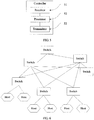
FIG. 6 illustrates a topology structure of switches on an existing network according to the prior art; -
FIG. 7 illustrates a topology structure of switches on a network according to an embodiment of the present invention; and -
FIG. 8 is a schematic diagram of a status of a port of a switch according to an embodiment of the present invention. - The following clearly and completely describes the technical solutions in the embodiments of the present invention with reference to the accompanying drawings in the embodiments of the present invention. Apparently, the described embodiments are merely a part rather than all of the embodiments of the present invention. All other embodiments obtained by a person of ordinary skill in the art based on the embodiments of the present invention without creative efforts shall fall within the protection scope of the present invention.
- To make the advantages of the technical solutions of the present invention more comprehensible, the following describes the present invention in detail with reference to the accompanying drawings and the embodiments.
- An example provides a topology stratification method. As shown in
FIG. 1 , the method includes: - 101. A controller acquires, according to topology information of a switch on a network, a switch connected to a host.
- Specifically, the controller acquires enabled ports of the switch according to the topology information of the switch on the network; the controller determines whether a port connected to the host exists among the enabled ports of the switch; and if a port connected to the host exists among the enabled ports of the switch, the controller confirms that the switch is the switch connected to the host.
- For example, in
FIG. 8 , the enabled ports of the switch include ports:Port 1,Port 2,Port 3,Port 4, andPort 5, wherePort 1,Port 2, andPort 3 connect to another switch. In this case, the controller may determine thatPort 4 andPort 5 of the switch are ports connected to the host. - 102. The controller configures the switch connected to the host as a
layer 1 switch. - 103. The controller acquires unstratified switches on the network, and configures a switch directly connected to a layer N switch among the unstratified switches as a layer N+1 switch.
- N indicates a layer on which the switch is located, and N is a positive integer.
- Specifically, the controller configures a switch with a port connected to the host as a
layer 1 switch. Likewise, the controller configures a switch directly connected to thelayer 1 switch among the unstratified switches as alayer 2 switch; therefore, by analog, a switch directly connected to a layer N-1 switch among the unstratified switches is the layer N switch. According to this rule, all switches on the network can be classified. - For the topology stratification method provided in this example, a specific data structure may be as follows: <key, value> = (layer i, value), i = 1, 2, ..., N. In this case, the
layer 1 switch is stored as: Key=layer1; Value=<Sw ID, Ports to hosts, last seen Time>; thelayer 2 switch directly connected to thelayer 1 switch is stored as: Key=layer2; Value= <Sw ID, Links to layer1, last seen Time>. The layer N switch connected to the layer (N-1) switch is stored as: Key=layer N; Value= <SwID, Links to layer(N-1), last seen Time>. By analog, the classification continues until all switches are classified. When addition/deletion of a host and/or addition/deletion of a switch and/or addition/deletion of a link on the network causes a change to a location of a switch, a data structure of thelayer 1 switch is updated, and a location of another switch connected to the switch is updated, and so on, until all switches are updated. - Further, after
step 103, the method may further include the following: When the controller receives the data packet that is reported by the switch connected to the source host, the controller searches a local MAC address table of physical addresses of devices to determine whether a destination address of the data packet exists; the controller acquires a destination port according to topology stratification if no destination address of the data packet exists, where the destination port is a port of a switch connected to a destination host, and the destination host is another host different from the source host; and the controller uses the destination port as a destination address to generate a routing table, and sends the routing table to the switch connected to the source host, so that the switch connected to the source host forwards the data packet according to the routing table. - A switch topology structure on the network that is provided in this example may be as shown in
FIG. 7 , while a switch topology structure on an existing network may be as shown inFIG. 6 . As can be seen from the figures that, in the existing topology structure, switches on a network are not differentiated, while the topology stratification method provided in this example can stratify switches on a network, that is, the switches on the network can be differentiated according to layers, so that a controller is capable of controlling a switch to purposefully forward a data packet, thereby efficiently restraining flooding, eliminating repeated broadcasting of the data packet on the network, and improving link utilization. - An example provides a topology stratification apparatus. As shown in
FIG. 2 , an entity of the apparatus may be a controller, and the apparatus may include a first acquiringunit 21 and a configuration unit 22. - The first acquiring
unit 21 may be adapted to acquire, according to topology information of a switch on a network, a switch connected to a host. - The first acquiring
unit 21 may specifically include an acquiringmodule 2101, a determiningmodule 2102, and a confirmingmodule 2103. - The acquiring
module 2101 may be adapted to acquire enabled ports of the switch according to the topology information of the switch on the network. - The determining
module 2102 may be adapted to determine whether a port connected to the host exists among the enabled ports of the switch, where the enabled ports of the switch are acquired by the acquiringmodule 2101. - The confirming
module 2103 may be adapted to: if the determiningmodule 2102 determines that a port connected to the host exists among the enabled ports of the switch, confirm that the switch is the switch connected to the host. - The configuration unit 22 may be adapted to configure the switch connected to the host and acquired by the first acquiring
unit 21 as alayer 1 switch. - The first acquiring
unit 21 may be further adapted to acquire unstratified switches on the network. - The configuration unit 22 may be further adapted to configure a switch directly connected to a layer N switch among the unstratified switches that are acquired by the first acquiring
unit 21 as a layer N+1 switch, where N indicates a layer on which the switch is located, and N is a positive integer. Further, the apparatus may further include a searchingunit 23, a second acquiringunit 24, and a generatingunit 25. - The searching
unit 23 may be adapted to: when a data packet that is reported by a switch connected to a source host is received, search a local MAC address table of physical addresses of devices to determine whether a destination address of the data packet exists. - The second acquiring
unit 24 may be adapted to acquire a destination port if the searchingunit 23 determines through searching that no destination address of the data packet exists, where the destination port is a port of a switch connected to a destination host, and the destination host is another host different from the source host. - The second acquiring
unit 24 may be specifically adapted to acquire, according to topology stratification, a port among enabled ports of the switch connected to the destination host and use the port as the destination port, where the port is not connected to another switch. - The generating
unit 25 may be adapted to use the destination port acquired by the second acquiringunit 24 as a destination address to generate a routing table, and send the routing table to the switch connected to the source host, so that the switch connected to the source host forwards the data packet according to the routing table. - It should be noted that, for other corresponding descriptions about each functional unit of the topology stratification apparatus provided in this example, reference may be made to the corresponding description in
FIG. 1 . No further details are provided in this example. - The topology stratification apparatus provided in this example stratifies switches on a network, that is, the switches on the network can be differentiated according to layers, so that a controller is capable of controlling a switch to purposefully forward a data packet, thereby efficiently restraining flooding, eliminating repeated broadcasting of the data packet on the network, and improving link utilization.
- An example provides a flooding processing method. As shown in
FIG. 3 , the method includes: - 301. A controller receives a data packet that is reported by a switch connected to a source host.
- The data packet is an Address Resolution Protocol ARP request and/or an unknown unicast frame and/or Dynamic Host Configuration Protocol DHCP data. A rule of switch classification in this embodiment is based on the topology stratification method provided in
FIG. 1 . - 302. The controller searches a local MAC address table of physical addresses of devices to determine whether a destination address of the data packet exists.
- Optionally, if the destination address of the data packet exists, the data packet is forwarded according to the destination address.
- 303. The controller acquires a destination port if no destination address of the data packet exists. The destination port is a port of a switch connected to a destination host, the destination host is another host different from the source host, and there may be one or more destination hosts.
- Specifically, the controller performs topology stratification on switches on a network, then acquires, according to the topology stratification, a port among enabled ports of the switch connected to the destination host, and uses the port as the destination port, where the port is not connected to another switch.
- Optionally, when the data packet is an Address Resolution Protocol ARP request, before
step 303, the method may further include the following: If a destination address of the ARP request exists in the local MAC address table, the controller directly responds to the ARP request sent by the source host. Afterstep 303, the method may further include the following: A port to which a host is connected having unknown information is selected from the destination ports, and the port to which a host is connected having unknown information is used as the destination address. In this way, unicast data packets of ARP can be efficiently converged, and unnecessary data packets can be reduced on the network. - For example, first,
host 1 pings (an executable command) host 9, and at this time, an ARP request sent byhost 1 is unicast to host 4, host 6, and host 9 according to a decision of the controller; then host 1 pings host 6, and at this time, the ARP request sent byhost 1 is unicast to host 4 and host 6 according to a decision of the controller; and subsequently,host 1pings host 4, and at this time, the ARP request sent byhost 1 is unicast only tohost 4. In this way, unicast data packets of ARP can be efficiently converged, and unnecessary data packets can be reduced on the network. Afterward, the controller has known information about all hosts. Therefore, when a ping operation is performed again, the controller is capable of directly responding to the ARP request. Specifically, the controller may send a MAC address of a destination host to a host that initiates the request. - 304. The controller uses the destination port as a destination address to generate a routing table, and sends the routing table to the switch connected to the source host.
- Further, the switch connected to the source host is allowed to forward the data packet according to the routing table.
- In the method provided in this example, a controller performs topology stratification on locations of switches on a network, and configures a routing table for a switch when no destination address of a data packet reported by the switch can be found in a local MAC address table. In this way, the switch forwards the data packet only to a port of a switch connected to a destination host, thereby efficiently restraining flooding, eliminating repeated broadcasting of the data packet on the network, and improving link utilization.
- An example provides a flooding processing apparatus. As shown in
FIG. 4 , the apparatus may include a receivingunit 41, a searchingunit 42, an acquiringunit 43, and a sendingunit 44. - The receiving
unit 41 may be adapted to receive a data packet that is reported by a switch connected to a source host. - The data packet is an Address Resolution Protocol ARP request and/or an unknown unicast frame and/or Dynamic Host Configuration Protocol DHCP data.
- The searching
unit 42 may be adapted to search a local MAC address table of physical addresses of devices to determine whether a destination address of the data packet received by the receivingunit 41 exists. - The acquiring
unit 43 may be adapted to acquire a destination port if the searchingunit 42 determines through searching that no destination address of the data packet exists in the MAC table. - The destination port is a port of a switch connected to a destination host, and the destination host is another host different from the source host.
- The acquiring
unit 43 may specifically include astratification module 4301 and an acquiringmodule 4302. - The
stratification module 4301 may be adapted to perform topology stratification on switches on a network. - The acquiring
module 4302 may be adapted to acquire, according to the topology stratification performed by the stratification module, a port among enabled ports of the switch connected to the destination host and use the port as the destination port, where the port is not connected to another switch. - The sending
unit 44 may be adapted to use the destination port acquired by the acquiringunit 43 as a destination address to generate a routing table, and send the routing table to the switch connected to the source host. - Further, the switch connected to the source host is allowed to forward the data packet according to the routing table.
- The apparatus may further include a selecting
unit 45 and a respondingunit 46. - The selecting
unit 45 may be adapted to select a port to which a host is connected having unknown information from the destination ports acquired by the acquiringunit 43 and use the port to which a host is connected having unknown information as the destination address. - The responding
unit 46 is adapted to: if a destination address of the ARP request exists in the local MAC address table, directly respond to the ARP request that is sent by the source host and received by the receivingunit 41. - An entity of the flooding processing apparatus provided in this embodiment may be a controller.
- The controller may be deployed on a server device but is not limited to this. As shown in
FIG. 5 , the controller includes areceiver 51, aprocessor 52, and atransmitter 53. - The
receiver 51 may be adapted to receive a data packet that is reported by a switch connected to a source host. - The
processor 52 may be adapted to search a local MAC address table of physical addresses of devices to determine whether a destination address of the data packet received by thereceiver 51 exists. - The
processor 52 may be further adapted to acquire a destination port if no destination address of the data packet exists in the MAC table, where the destination port is a port of a switch connected to a destination host, and the destination host is another host different from the source host. - The
transmitter 53 may be adapted to use the destination port acquired by theprocessor 52 as a destination address to generate a routing table, and send the routing table to the switch connected to the source host, so that the switch connected to the source host forwards the data packet according to the routing table. - The
processor 52 may be specifically adapted to perform topology stratification on switches on a network, then acquire, according to the topology stratification, a port among enabled ports of the switch connected to the destination host, and use the port as the destination port, where the port is not connected to another switch. - The
processor 52 may be further specifically adapted to select a port to which a host is connected having unknown information from the destination ports and use the port to which a host is connected having unknown information as the destination address. - The
processor 52 may be further specifically adapted to: if a destination address of an ARP request exists in the local MAC address table, directly respond to the ARP request that is sent by the source host and received by the receiver 31. - It should be noted that, for other corresponding descriptions about each functional unit of the flooding processing apparatus and controller that are provided in this example, reference may be made to the corresponding description in
FIG. 3 . No further details are provided in this example. - According to the apparatus provided in this example, a controller performs topology stratification on locations of switches on a network, and configures a routing table for a switch when no destination address of a data packet reported by the switch can be found in a local MAC address table. In this way, the switch forwards the data packet only to a port of a switch connected to a destination host, thereby efficiently restraining flooding, eliminating repeated broadcasting of the data packet on the network, and improving link utilization.
- The topology stratification apparatus and the flooding processing apparatus that are provided in the examples of the present invention can implement the foregoing method embodiments. For specific function implementation, refer to the description in the method examples. No further details are provided herein. The topology stratification method and apparatus, and the flooding processing method and apparatus are applicable to, but not limited to, the field of communications systems.
- A person of ordinary skill in the art may understand that all or a part of the processes of the methods in the embodiments may be implemented by a computer program instructing relevant hardware. The aforementioned program may be stored in a computer readable storage medium. When the program runs, the processes of the foregoing methods in the embodiments are performed. The storage medium may be a magnetic disk, an optical disk, a Read-Only Memory (Read-Only Memory, ROM), a Random Access Memory (Read-Only Memory, RAM), or the like.
- The foregoing descriptions are merely specific examples of the present invention, but are not intended to limit the protection scope of the present invention. Any variation or replacement readily figured out by a person skilled in the art within the technical scope disclosed in the present invention shall fall within the protection scope of the present invention. Therefore, the protection scope of the present invention shall be subject to the protection scope of the claims.
Claims (10)
- A flooding processing method, comprising:receiving (301), by a controller in a Software Defined Network SDN, a data packet that is reported by a switch connected to a source host;searching (302), by the controller, a local MAC address table of MAC addresses of devices to determine whether a destination address of the data packet exists;acquiring (303), by the controller, a destination port if no destination address of the data packet exists comprising:performing, by the controller, topology stratification on switches on a network, said topology stratification comprising:acquiring (101), by the controller according to topology information of a switch on a network, a switch connected to a host;configuring (102), by the controller, the switch connected to the host as a layer 1 switch; andacquiring (103), by the controller, unstratified switches on the network, and configuring a switch directly connected to a layer N switch among the unstratified switches as a layer N+1 switch, wherein N indicates a layer on which the switch is located, and N is a positive integer;acquiring, by the controller according to the topology stratification, the port of the switch connected to the destination host and using the port as the destination port,wherein the destination host is another host different from the source host; andusing (304), by the controller, the destination port as a destination address to generate a routing table, and sending the routing table to the switch connected to the source host, so that the switch connected to the source host forwards the data packet according to the routing table.
- The flooding processing method according to claim 1, wherein the data packet is an Address Resolution Protocol ARP request and/or an unknown unicast frame and/or Dynamic Host Configuration Protocol DHCP data.
- The flooding processing method according to any one of claims 1-2, wherein when the data packet is an Address Resolution Protocol ARP request, after the acquiring, by the controller, a destination port if no destination address of the data packet exists, the method further comprises:selecting, by the controller, a port to which a host is connected having unknown information from the destination ports and using the port to which a host is connected having unknown information as the destination address.
- The flooding processing method according to any one of claims 1-3, wherein when the data packet is an Address Resolution Protocol ARP request, before the acquiring, by the controller, a destination port if no destination address of the data packet exists, the method further comprises:if a destination address of the ARP request exists in the local MAC address table, directly responding to, by the controller, the ARP request sent by the source host.
- The flooding processing method according to claim 1, wherein the acquiring (101), by a controller according to topology information of a switch on a network, a switch connected to a host further comprises:acquiring, by the controller, enabled ports of the switch according to the topology information of the switch on the network;determining, by the controller, whether a port connected to the host exists among the enabled ports of the switch; andif a port connected to the host exists among the enabled ports of the switch, confirming, by the controller, that the switch is the switch connected to the host.
- A flooding processing apparatus in a controller of a Software Defined Network SDN, comprising:a receiving unit (41), adapted to receive a data packet that is reported by a switch connected to a source host;a searching unit (42), adapted to search a local MAC address table of MAC addresses of devices to determine whether a destination address of the data packet received by the receiving unit (41) exists;an acquiring unit (43), adapted to acquire a destination port if the searching unit (42) determines through searching that no destination address of the data packet exists in the MAC table,wherein the acquiring unit (43) comprises:a stratification module (4301), adapted to perform topology stratification on switches on a network, the stratification module (4301) comprising a topology stratification apparatus comprising:a first acquiring unit (21), adapted to acquire, according to topology information of a switch on a network, a switch connected to a host; anda configuration unit (22), adapted to configure the switch connected to the host and acquired by the first acquiring (21) unit as a layer 1 switch; wherein:the first acquiring unit (21) is further adapted to acquire unstratified switches on the network; andthe configuration unit (22) is further adapted to configure a switch directly connected to a layer N switch among the unstratified switches that are acquired by the first acquiring unit (21) as a layer N+1 switch, wherein N indicates a layer on which the switch is located, and N is a positive integer; andan acquiring module (4302), adapted to acquire, according to the topology stratification performed by the stratification module (4301), a port of the switch connected to the destination host and use the port as the destination port, wherein the destination host is another host different from the source host; anda sending unit (44), adapted to use the destination port acquired by the acquiring unit as a destination address to generate a routing table, and send the routing table to the switch connected to the source host, so that the switch connected to the source host forwards the data packet according to the routing table.
- The flooding processing apparatus according to claim 6, wherein the data packet is an Address Resolution Protocol ARP request and/or an unknown unicast frame and/or Dynamic Host Configuration Protocol DHCP data.
- The flooding processing apparatus according to any one of claims 6-7, wherein when the data packet is an ARP request, the apparatus further comprises:a selecting unit (45), adapted to select a port to which a host is connected having unknown information from the destination ports acquired by the acquiring unit (43) and use the port to which a host is connected having unknown information as the destination address.
- The flooding processing apparatus according to any one of claims 6-8, wherein when the data packet is an ARP request, the apparatus further comprises:a responding unit (46), adapted to: if a destination address of the ARP request exists in the local MAC address table, directly respond to the ARP request that is sent by the source host and received by the receiving unit (41).
- The flooding processing apparatus according to claim 6, wherein the first acquiring unit (21) of the topology stratification apparatus comprises:an acquiring module (2101), adapted to acquire enabled ports of the switch according to the topology information of the switch on the network;a determining module (2102), adapted to determine whether a port connected to the host exists among the enabled ports of the switch, wherein the enabled ports of the switch are acquired by the acquiring module (2101); anda confirming module (2103), adapted to: if the determining module determines that a port connected to the host exists among the enabled ports of the switch, confirm that the switch is the switch connected to the host.
Applications Claiming Priority (2)
| Application Number | Priority Date | Filing Date | Title |
|---|---|---|---|
| CN201210444069.4A CN103812779B (en) | 2012-11-08 | 2012-11-08 | The processing method of flooding, device |
| PCT/CN2013/073481 WO2014071718A1 (en) | 2012-11-08 | 2013-03-29 | Topology grading method and apparatus, and flooding processing method and apparatus |
Publications (3)
| Publication Number | Publication Date |
|---|---|
| EP2863595A1 EP2863595A1 (en) | 2015-04-22 |
| EP2863595A4 EP2863595A4 (en) | 2016-01-06 |
| EP2863595B1 true EP2863595B1 (en) | 2018-01-03 |
Family
ID=50684000
Family Applications (1)
| Application Number | Title | Priority Date | Filing Date |
|---|---|---|---|
| EP13852964.9A Active EP2863595B1 (en) | 2012-11-08 | 2013-03-29 | Topology stratification and flooding processing method and apparatus |
Country Status (4)
| Country | Link |
|---|---|
| US (1) | US9722924B2 (en) |
| EP (1) | EP2863595B1 (en) |
| CN (1) | CN103812779B (en) |
| WO (1) | WO2014071718A1 (en) |
Cited By (1)
| Publication number | Priority date | Publication date | Assignee | Title |
|---|---|---|---|---|
| WO2026029969A1 (en) * | 2024-08-01 | 2026-02-05 | Microchip Technology Incorporated | SYSTEM AND METHODS FOR PCIe MULTIHOST COMMUNICATION |
Families Citing this family (9)
| Publication number | Priority date | Publication date | Assignee | Title |
|---|---|---|---|---|
| US9426060B2 (en) * | 2013-08-07 | 2016-08-23 | International Business Machines Corporation | Software defined network (SDN) switch clusters having layer-3 distributed router functionality |
| CN106664248B (en) * | 2014-08-28 | 2020-04-14 | 华为技术有限公司 | Method and controller for routing packets in software-defined networking |
| CN104601380B (en) * | 2015-01-30 | 2018-10-12 | 新华三技术有限公司 | A kind of software defined network controller and its method for restoring host information |
| CN108028801B (en) | 2015-07-27 | 2021-02-23 | 华为技术有限公司 | A SDN-based ARP implementation method and device |
| WO2017113300A1 (en) * | 2015-12-31 | 2017-07-06 | 华为技术有限公司 | Route determining method, network configuration method and related device |
| CN106961394A (en) * | 2017-03-31 | 2017-07-18 | 联想(北京)有限公司 | Suppress interchanger to flood the method and apparatus of storm |
| US11308109B2 (en) * | 2018-10-12 | 2022-04-19 | International Business Machines Corporation | Transfer between different combinations of source and destination nodes |
| CN114244763B (en) * | 2021-12-20 | 2023-11-17 | 中电福富信息科技有限公司 | Dynamic network topology management method and system based on rule engine |
| CN117062010A (en) * | 2022-05-05 | 2023-11-14 | 大唐移动通信设备有限公司 | Data transmission processing method and device |
Family Cites Families (19)
| Publication number | Priority date | Publication date | Assignee | Title |
|---|---|---|---|---|
| CN100388716C (en) | 2002-08-28 | 2008-05-14 | 华为技术有限公司 | A method for suppressing the flow of broadcast messages during bridge forwarding |
| US7801125B2 (en) * | 2004-10-22 | 2010-09-21 | Cisco Technology, Inc. | Forwarding table reduction and multipath network forwarding |
| US7636352B2 (en) * | 2006-08-22 | 2009-12-22 | Vitesse Semiconductor Corporation | Maintaining filtering database consistency |
| CN101188510A (en) * | 2006-11-16 | 2008-05-28 | 华为技术有限公司 | Method, device and system for centralized address control |
| CN101217492A (en) * | 2008-01-04 | 2008-07-09 | 福建星网锐捷网络有限公司 | Address information processing method and device and system |
| US20110270979A1 (en) | 2009-01-12 | 2011-11-03 | Schlansker Michael S | Reducing Propagation Of Message Floods In Computer Networks |
| JP4688946B2 (en) * | 2009-06-15 | 2011-05-25 | 富士通株式会社 | Switch and address learning method |
| US8358597B2 (en) * | 2009-10-01 | 2013-01-22 | Hei Tao Fung | Method for building scalable Ethernet switch network and huge Ethernet switch |
| WO2011093860A1 (en) * | 2010-01-28 | 2011-08-04 | Hewlett-Packard Development Company, L.P. | Teaching a network device using unsolicited teaching messages |
| US8989187B2 (en) * | 2010-06-04 | 2015-03-24 | Coraid, Inc. | Method and system of scaling a cloud computing network |
| US10103939B2 (en) * | 2010-07-06 | 2018-10-16 | Nicira, Inc. | Network control apparatus and method for populating logical datapath sets |
| US9525647B2 (en) * | 2010-07-06 | 2016-12-20 | Nicira, Inc. | Network control apparatus and method for creating and modifying logical switching elements |
| US8472447B2 (en) * | 2010-08-04 | 2013-06-25 | Alcatel Lucent | IP multicast snooping and routing with multi-chassis link aggregation |
| CN102143007A (en) * | 2011-05-03 | 2011-08-03 | 中国南方电网有限责任公司 | Distribution-based hierarchical network topology discovery method |
| CN102420775A (en) * | 2012-01-10 | 2012-04-18 | 西安电子科技大学 | Routing method for module-expansion-based data center network topology system |
| CN102647715A (en) * | 2012-03-27 | 2012-08-22 | 华为技术有限公司 | Method for delivering authentication target MAC (Media Access Control) address of EAP (Extensible Authentication Protocol) authentication |
| US9036638B2 (en) * | 2012-08-09 | 2015-05-19 | International Business Machines Corporation | Avoiding unknown unicast floods resulting from MAC address table overflows |
| CN103685009B (en) * | 2012-08-31 | 2017-04-26 | 华为技术有限公司 | Data packet processing method and system as well as controller |
| US9461943B2 (en) * | 2012-09-12 | 2016-10-04 | Cisco Technology, Inc. | Network assisted virtual machine mobility |
-
2012
- 2012-11-08 CN CN201210444069.4A patent/CN103812779B/en active Active
-
2013
- 2013-03-29 WO PCT/CN2013/073481 patent/WO2014071718A1/en not_active Ceased
- 2013-03-29 EP EP13852964.9A patent/EP2863595B1/en active Active
-
2015
- 2015-03-18 US US14/661,374 patent/US9722924B2/en active Active
Non-Patent Citations (1)
| Title |
|---|
| None * |
Cited By (1)
| Publication number | Priority date | Publication date | Assignee | Title |
|---|---|---|---|---|
| WO2026029969A1 (en) * | 2024-08-01 | 2026-02-05 | Microchip Technology Incorporated | SYSTEM AND METHODS FOR PCIe MULTIHOST COMMUNICATION |
Also Published As
| Publication number | Publication date |
|---|---|
| US20150195201A1 (en) | 2015-07-09 |
| CN103812779B (en) | 2018-03-09 |
| US9722924B2 (en) | 2017-08-01 |
| WO2014071718A1 (en) | 2014-05-15 |
| EP2863595A1 (en) | 2015-04-22 |
| EP2863595A4 (en) | 2016-01-06 |
| CN103812779A (en) | 2014-05-21 |
Similar Documents
| Publication | Publication Date | Title |
|---|---|---|
| US9722924B2 (en) | Topology stratification method and apparatus, and flooding processing method and apparatus | |
| JP7461355B2 (en) | Loop collision avoidance in network computing environments. | |
| US9191271B2 (en) | Fast traffic recovery in VRRP based routers | |
| US7233991B2 (en) | Self-healing tree network | |
| US9325616B2 (en) | Packet sending method and network device | |
| EP3223476B1 (en) | Method, system, and apparatus for preventing tromboning in inter-subnet traffic within data center architectures | |
| CN113261242A (en) | Overlay network routing using programmable switches | |
| CN113273142A (en) | Shunt controller control for programmable switch | |
| CN113302898A (en) | Virtual routing controller for peer-to-peer interconnection of client devices | |
| US9231831B2 (en) | Method and network system of converting a layer two network from a spanning tree protocol mode to a routed mesh mode without a spanning tree protocol | |
| WO2015095996A1 (en) | Technique for network service availability | |
| US20180183706A1 (en) | Apparatus, system, and method for distributing routing-protocol information in clos fabrics | |
| CN102447639B (en) | A kind of policy routing method and device | |
| US20250193046A1 (en) | Communication method and related device thereof | |
| US10972384B2 (en) | Processing of data stream | |
| US20220360519A1 (en) | Method and device for packet forwarding | |
| US20240080267A1 (en) | Systems and methods for asymmetrical peer forwarding in an sd-wan environment | |
| TW202431823A (en) | System for telemetry monitoring of bgp prefixes in a network topology | |
| TW202431822A (en) | Method for telemetry monitoring of bgp prefixes in a network topology | |
| US8675669B2 (en) | Policy homomorphic network extension | |
| US20210119826A1 (en) | Layer-2 dedicated line network system and configuration method | |
| US11025536B1 (en) | Support for flooding in encapsulation and inter-VLAN communication via proxy-ARP | |
| CN102404218A (en) | Method and device for switching tunnels | |
| US20140293827A1 (en) | Method And Apparatus For Peer Node Synchronization | |
| JP2026501195A (en) | Method and apparatus for telemetry monitoring of BGP prefixes in a network topology |
Legal Events
| Date | Code | Title | Description |
|---|---|---|---|
| PUAI | Public reference made under article 153(3) epc to a published international application that has entered the european phase |
Free format text: ORIGINAL CODE: 0009012 |
|
| 17P | Request for examination filed |
Effective date: 20150116 |
|
| AK | Designated contracting states |
Kind code of ref document: A1 Designated state(s): AL AT BE BG CH CY CZ DE DK EE ES FI FR GB GR HR HU IE IS IT LI LT LU LV MC MK MT NL NO PL PT RO RS SE SI SK SM TR |
|
| AX | Request for extension of the european patent |
Extension state: BA ME |
|
| RIC1 | Information provided on ipc code assigned before grant |
Ipc: H04L 12/721 20130101ALI20150729BHEP Ipc: H04L 12/715 20130101AFI20150729BHEP Ipc: H04L 12/741 20130101ALI20150729BHEP Ipc: H04L 29/12 20060101ALI20150729BHEP Ipc: H04L 12/751 20130101ALI20150729BHEP Ipc: H04L 12/747 20130101ALI20150729BHEP |
|
| RA4 | Supplementary search report drawn up and despatched (corrected) |
Effective date: 20151203 |
|
| RIC1 | Information provided on ipc code assigned before grant |
Ipc: H04L 12/747 20130101ALI20151127BHEP Ipc: H04L 12/24 20060101ALN20151127BHEP Ipc: H04L 12/751 20130101ALI20151127BHEP Ipc: H04L 12/715 20130101AFI20151127BHEP Ipc: H04L 12/721 20130101ALI20151127BHEP Ipc: H04L 12/741 20130101ALI20151127BHEP Ipc: H04L 29/12 20060101ALI20151127BHEP Ipc: H04L 12/753 20130101ALI20151127BHEP |
|
| DAX | Request for extension of the european patent (deleted) | ||
| GRAP | Despatch of communication of intention to grant a patent |
Free format text: ORIGINAL CODE: EPIDOSNIGR1 |
|
| RIC1 | Information provided on ipc code assigned before grant |
Ipc: H04L 12/741 20130101ALI20170704BHEP Ipc: H04L 12/715 20130101AFI20170704BHEP Ipc: H04L 12/747 20130101ALI20170704BHEP Ipc: H04L 12/753 20130101ALI20170704BHEP Ipc: H04L 12/751 20130101ALI20170704BHEP Ipc: H04L 12/721 20130101ALI20170704BHEP Ipc: H04L 29/12 20060101ALI20170704BHEP Ipc: H04L 12/24 20060101ALN20170704BHEP |
|
| INTG | Intention to grant announced |
Effective date: 20170721 |
|
| GRAS | Grant fee paid |
Free format text: ORIGINAL CODE: EPIDOSNIGR3 |
|
| GRAA | (expected) grant |
Free format text: ORIGINAL CODE: 0009210 |
|
| AK | Designated contracting states |
Kind code of ref document: B1 Designated state(s): AL AT BE BG CH CY CZ DE DK EE ES FI FR GB GR HR HU IE IS IT LI LT LU LV MC MK MT NL NO PL PT RO RS SE SI SK SM TR |
|
| REG | Reference to a national code |
Ref country code: GB Ref legal event code: FG4D |
|
| REG | Reference to a national code |
Ref country code: CH Ref legal event code: EP Ref country code: AT Ref legal event code: REF Ref document number: 961214 Country of ref document: AT Kind code of ref document: T Effective date: 20180115 |
|
| REG | Reference to a national code |
Ref country code: IE Ref legal event code: FG4D |
|
| REG | Reference to a national code |
Ref country code: DE Ref legal event code: R096 Ref document number: 602013031803 Country of ref document: DE |
|
| REG | Reference to a national code |
Ref country code: FR Ref legal event code: PLFP Year of fee payment: 6 |
|
| REG | Reference to a national code |
Ref country code: NL Ref legal event code: MP Effective date: 20180103 |
|
| REG | Reference to a national code |
Ref country code: LT Ref legal event code: MG4D |
|
| REG | Reference to a national code |
Ref country code: AT Ref legal event code: MK05 Ref document number: 961214 Country of ref document: AT Kind code of ref document: T Effective date: 20180103 |
|
| PG25 | Lapsed in a contracting state [announced via postgrant information from national office to epo] |
Ref country code: NL Free format text: LAPSE BECAUSE OF FAILURE TO SUBMIT A TRANSLATION OF THE DESCRIPTION OR TO PAY THE FEE WITHIN THE PRESCRIBED TIME-LIMIT Effective date: 20180103 |
|
| PG25 | Lapsed in a contracting state [announced via postgrant information from national office to epo] |
Ref country code: ES Free format text: LAPSE BECAUSE OF FAILURE TO SUBMIT A TRANSLATION OF THE DESCRIPTION OR TO PAY THE FEE WITHIN THE PRESCRIBED TIME-LIMIT Effective date: 20180103 Ref country code: HR Free format text: LAPSE BECAUSE OF FAILURE TO SUBMIT A TRANSLATION OF THE DESCRIPTION OR TO PAY THE FEE WITHIN THE PRESCRIBED TIME-LIMIT Effective date: 20180103 Ref country code: NO Free format text: LAPSE BECAUSE OF FAILURE TO SUBMIT A TRANSLATION OF THE DESCRIPTION OR TO PAY THE FEE WITHIN THE PRESCRIBED TIME-LIMIT Effective date: 20180403 Ref country code: LT Free format text: LAPSE BECAUSE OF FAILURE TO SUBMIT A TRANSLATION OF THE DESCRIPTION OR TO PAY THE FEE WITHIN THE PRESCRIBED TIME-LIMIT Effective date: 20180103 Ref country code: FI Free format text: LAPSE BECAUSE OF FAILURE TO SUBMIT A TRANSLATION OF THE DESCRIPTION OR TO PAY THE FEE WITHIN THE PRESCRIBED TIME-LIMIT Effective date: 20180103 Ref country code: CY Free format text: LAPSE BECAUSE OF FAILURE TO SUBMIT A TRANSLATION OF THE DESCRIPTION OR TO PAY THE FEE WITHIN THE PRESCRIBED TIME-LIMIT Effective date: 20180103 |
|
| PG25 | Lapsed in a contracting state [announced via postgrant information from national office to epo] |
Ref country code: IS Free format text: LAPSE BECAUSE OF FAILURE TO SUBMIT A TRANSLATION OF THE DESCRIPTION OR TO PAY THE FEE WITHIN THE PRESCRIBED TIME-LIMIT Effective date: 20180503 Ref country code: LV Free format text: LAPSE BECAUSE OF FAILURE TO SUBMIT A TRANSLATION OF THE DESCRIPTION OR TO PAY THE FEE WITHIN THE PRESCRIBED TIME-LIMIT Effective date: 20180103 Ref country code: SE Free format text: LAPSE BECAUSE OF FAILURE TO SUBMIT A TRANSLATION OF THE DESCRIPTION OR TO PAY THE FEE WITHIN THE PRESCRIBED TIME-LIMIT Effective date: 20180103 Ref country code: PL Free format text: LAPSE BECAUSE OF FAILURE TO SUBMIT A TRANSLATION OF THE DESCRIPTION OR TO PAY THE FEE WITHIN THE PRESCRIBED TIME-LIMIT Effective date: 20180103 Ref country code: GR Free format text: LAPSE BECAUSE OF FAILURE TO SUBMIT A TRANSLATION OF THE DESCRIPTION OR TO PAY THE FEE WITHIN THE PRESCRIBED TIME-LIMIT Effective date: 20180404 Ref country code: BG Free format text: LAPSE BECAUSE OF FAILURE TO SUBMIT A TRANSLATION OF THE DESCRIPTION OR TO PAY THE FEE WITHIN THE PRESCRIBED TIME-LIMIT Effective date: 20180403 Ref country code: RS Free format text: LAPSE BECAUSE OF FAILURE TO SUBMIT A TRANSLATION OF THE DESCRIPTION OR TO PAY THE FEE WITHIN THE PRESCRIBED TIME-LIMIT Effective date: 20180103 Ref country code: AT Free format text: LAPSE BECAUSE OF FAILURE TO SUBMIT A TRANSLATION OF THE DESCRIPTION OR TO PAY THE FEE WITHIN THE PRESCRIBED TIME-LIMIT Effective date: 20180103 |
|
| REG | Reference to a national code |
Ref country code: DE Ref legal event code: R097 Ref document number: 602013031803 Country of ref document: DE |
|
| PG25 | Lapsed in a contracting state [announced via postgrant information from national office to epo] |
Ref country code: RO Free format text: LAPSE BECAUSE OF FAILURE TO SUBMIT A TRANSLATION OF THE DESCRIPTION OR TO PAY THE FEE WITHIN THE PRESCRIBED TIME-LIMIT Effective date: 20180103 Ref country code: AL Free format text: LAPSE BECAUSE OF FAILURE TO SUBMIT A TRANSLATION OF THE DESCRIPTION OR TO PAY THE FEE WITHIN THE PRESCRIBED TIME-LIMIT Effective date: 20180103 Ref country code: EE Free format text: LAPSE BECAUSE OF FAILURE TO SUBMIT A TRANSLATION OF THE DESCRIPTION OR TO PAY THE FEE WITHIN THE PRESCRIBED TIME-LIMIT Effective date: 20180103 |
|
| REG | Reference to a national code |
Ref country code: CH Ref legal event code: PL |
|
| PLBE | No opposition filed within time limit |
Free format text: ORIGINAL CODE: 0009261 |
|
| STAA | Information on the status of an ep patent application or granted ep patent |
Free format text: STATUS: NO OPPOSITION FILED WITHIN TIME LIMIT |
|
| PG25 | Lapsed in a contracting state [announced via postgrant information from national office to epo] |
Ref country code: SM Free format text: LAPSE BECAUSE OF FAILURE TO SUBMIT A TRANSLATION OF THE DESCRIPTION OR TO PAY THE FEE WITHIN THE PRESCRIBED TIME-LIMIT Effective date: 20180103 Ref country code: CZ Free format text: LAPSE BECAUSE OF FAILURE TO SUBMIT A TRANSLATION OF THE DESCRIPTION OR TO PAY THE FEE WITHIN THE PRESCRIBED TIME-LIMIT Effective date: 20180103 Ref country code: SK Free format text: LAPSE BECAUSE OF FAILURE TO SUBMIT A TRANSLATION OF THE DESCRIPTION OR TO PAY THE FEE WITHIN THE PRESCRIBED TIME-LIMIT Effective date: 20180103 Ref country code: MC Free format text: LAPSE BECAUSE OF FAILURE TO SUBMIT A TRANSLATION OF THE DESCRIPTION OR TO PAY THE FEE WITHIN THE PRESCRIBED TIME-LIMIT Effective date: 20180103 Ref country code: DK Free format text: LAPSE BECAUSE OF FAILURE TO SUBMIT A TRANSLATION OF THE DESCRIPTION OR TO PAY THE FEE WITHIN THE PRESCRIBED TIME-LIMIT Effective date: 20180103 |
|
| REG | Reference to a national code |
Ref country code: BE Ref legal event code: MM Effective date: 20180331 |
|
| 26N | No opposition filed |
Effective date: 20181005 |
|
| REG | Reference to a national code |
Ref country code: IE Ref legal event code: MM4A |
|
| PG25 | Lapsed in a contracting state [announced via postgrant information from national office to epo] |
Ref country code: LU Free format text: LAPSE BECAUSE OF NON-PAYMENT OF DUE FEES Effective date: 20180329 |
|
| PG25 | Lapsed in a contracting state [announced via postgrant information from national office to epo] |
Ref country code: IE Free format text: LAPSE BECAUSE OF NON-PAYMENT OF DUE FEES Effective date: 20180329 |
|
| PG25 | Lapsed in a contracting state [announced via postgrant information from national office to epo] |
Ref country code: CH Free format text: LAPSE BECAUSE OF NON-PAYMENT OF DUE FEES Effective date: 20180331 Ref country code: LI Free format text: LAPSE BECAUSE OF NON-PAYMENT OF DUE FEES Effective date: 20180331 Ref country code: SI Free format text: LAPSE BECAUSE OF FAILURE TO SUBMIT A TRANSLATION OF THE DESCRIPTION OR TO PAY THE FEE WITHIN THE PRESCRIBED TIME-LIMIT Effective date: 20180103 Ref country code: BE Free format text: LAPSE BECAUSE OF NON-PAYMENT OF DUE FEES Effective date: 20180331 |
|
| PG25 | Lapsed in a contracting state [announced via postgrant information from national office to epo] |
Ref country code: MT Free format text: LAPSE BECAUSE OF NON-PAYMENT OF DUE FEES Effective date: 20180329 |
|
| PG25 | Lapsed in a contracting state [announced via postgrant information from national office to epo] |
Ref country code: TR Free format text: LAPSE BECAUSE OF FAILURE TO SUBMIT A TRANSLATION OF THE DESCRIPTION OR TO PAY THE FEE WITHIN THE PRESCRIBED TIME-LIMIT Effective date: 20180103 |
|
| PG25 | Lapsed in a contracting state [announced via postgrant information from national office to epo] |
Ref country code: PT Free format text: LAPSE BECAUSE OF FAILURE TO SUBMIT A TRANSLATION OF THE DESCRIPTION OR TO PAY THE FEE WITHIN THE PRESCRIBED TIME-LIMIT Effective date: 20180103 |
|
| PG25 | Lapsed in a contracting state [announced via postgrant information from national office to epo] |
Ref country code: HU Free format text: LAPSE BECAUSE OF FAILURE TO SUBMIT A TRANSLATION OF THE DESCRIPTION OR TO PAY THE FEE WITHIN THE PRESCRIBED TIME-LIMIT; INVALID AB INITIO Effective date: 20130329 Ref country code: MK Free format text: LAPSE BECAUSE OF NON-PAYMENT OF DUE FEES Effective date: 20180103 |
|
| REG | Reference to a national code |
Ref country code: DE Ref legal event code: R079 Ref document number: 602013031803 Country of ref document: DE Free format text: PREVIOUS MAIN CLASS: H04L0012715000 Ipc: H04L0045640000 |
|
| PGFP | Annual fee paid to national office [announced via postgrant information from national office to epo] |
Ref country code: DE Payment date: 20250204 Year of fee payment: 13 |
|
| PGFP | Annual fee paid to national office [announced via postgrant information from national office to epo] |
Ref country code: FR Payment date: 20250210 Year of fee payment: 13 |
|
| PGFP | Annual fee paid to national office [announced via postgrant information from national office to epo] |
Ref country code: IT Payment date: 20250211 Year of fee payment: 13 Ref country code: GB Payment date: 20250206 Year of fee payment: 13 |