EP2860708A1 - Device for detecting thickness of sheet-type medium and method thereof - Google Patents
Device for detecting thickness of sheet-type medium and method thereof Download PDFInfo
- Publication number
- EP2860708A1 EP2860708A1 EP20130804529 EP13804529A EP2860708A1 EP 2860708 A1 EP2860708 A1 EP 2860708A1 EP 20130804529 EP20130804529 EP 20130804529 EP 13804529 A EP13804529 A EP 13804529A EP 2860708 A1 EP2860708 A1 EP 2860708A1
- Authority
- EP
- European Patent Office
- Prior art keywords
- thickness
- zero value
- detecting
- sheet medium
- detection
- Prior art date
- Legal status (The legal status is an assumption and is not a legal conclusion. Google has not performed a legal analysis and makes no representation as to the accuracy of the status listed.)
- Granted
Links
Images


Classifications
-
- G—PHYSICS
- G01—MEASURING; TESTING
- G01B—MEASURING LENGTH, THICKNESS OR SIMILAR LINEAR DIMENSIONS; MEASURING ANGLES; MEASURING AREAS; MEASURING IRREGULARITIES OF SURFACES OR CONTOURS
- G01B21/00—Measuring arrangements or details thereof, where the measuring technique is not covered by the other groups of this subclass, unspecified or not relevant
- G01B21/02—Measuring arrangements or details thereof, where the measuring technique is not covered by the other groups of this subclass, unspecified or not relevant for measuring length, width, or thickness
- G01B21/08—Measuring arrangements or details thereof, where the measuring technique is not covered by the other groups of this subclass, unspecified or not relevant for measuring length, width, or thickness for measuring thickness
-
- G—PHYSICS
- G07—CHECKING-DEVICES
- G07D—HANDLING OF COINS OR VALUABLE PAPERS, e.g. TESTING, SORTING BY DENOMINATIONS, COUNTING, DISPENSING, CHANGING OR DEPOSITING
- G07D7/00—Testing specially adapted to determine the identity or genuineness of valuable papers or for segregating those which are unacceptable, e.g. banknotes that are alien to a currency
- G07D7/16—Testing the dimensions
- G07D7/164—Thickness
-
- G—PHYSICS
- G01—MEASURING; TESTING
- G01B—MEASURING LENGTH, THICKNESS OR SIMILAR LINEAR DIMENSIONS; MEASURING ANGLES; MEASURING AREAS; MEASURING IRREGULARITIES OF SURFACES OR CONTOURS
- G01B2210/00—Aspects not specifically covered by any group under G01B, e.g. of wheel alignment, caliper-like sensors
- G01B2210/40—Caliper-like sensors
- G01B2210/42—Caliper-like sensors with one or more detectors on a single side of the object to be measured and with a backing surface of support or reference on the other side
Definitions
- the present application relates to a thickness detection technology, and particularly to a method and a device for continuously detecting the thickness of a sheet medium in the process of continuous convey of it.
- the degree of automatic processing of the financial currency is more and more high, in the process of automatic processing of the currency, it is desirable to obtain and detect the authenticity, new and old etc. information of the currency, so as to reduce the degree of manual intervention and to provide convenience to human on the use of the currency.
- obtaining the thickness of the currency to be processed is a basic detection means.
- the thickness information can be used to determine the information of new and bad, authenticity, incompleteness or paste of tape etc. of the current currency, the above information is necessary means to determine whether the current currency meets the circulation conditions.
- a thickness data collecting device used commonly in a current financial self-service equipment includes a conveying roll 1 for conveying banknote, a detecting roll 2 opposite to the conveying roll 1, a plate spring 3 being arranged against the detecting roll 2 on the side opposite to the conveying roll, a distance sensor 4 arranged above the plate spring, with the distance sensor 4 being used for detecting a distance value between the plate spring 3 and the distance sensor 4.
- the distance d is referred to as a zero value of the thickness detecting device, and when the banknote passes by, the actual thickness value of the banknote being detected can be obtained by the distance data detected by the sensor 4 actually subtracting the above zero value.
- the performance of all machinery and electronic equipment will aging along with a period of use time, and the equipment will be subjected to shake due to change of the operating environment or during being moved, thus a change in performance parameter is caused thereof.
- the actual mechanical zero value may fluctuate during detecting the thickness of the banknote.
- the detected thickness value is inaccurate too, thus it's unable to meet the use of the financial self-service equipment which requires high precision.
- One of the objects of the present application is to provide a device for detecting the thickness of a sheet medium which not only can effectively eliminate the problem of a large detection deviation due to the changes in operating environment, but also can avoid the problem that the detected thickness is inaccurate due to abrupt change in detection value caused by the mechanical fluctuations of the dynamic zero value.
- the device for detecting the thickness of a sheet medium includes:
- a n is a dynamic detection zero value used in detecting the thickness of the n-th sheet medium
- bn represents a standard zero value used in detecting the thickness of the n-th sheet medium
- b n-1 is a standard zero value used in detecting the thickness of (n-1)-th sheet medium
- b 0 A 0 , with A 0 being a preset distance detection zero value.
- the t is equal to 0.2.
- the device for detecting the thickness of a sheet medium further includes a sheet medium entry determining module for determining whether sheet medium thickness detection is to be started.
- a plate spring is arranged against the detecting roll on the side opposite to the conveying roll to achieve the elastic displacement of the detecting roll relative to the conveying roll, and the sensor is placed above the plate spring and remains stationary relative to the conveying roll.
- Another one of the objects of the present application is to provide a method for detecting the thickness of a sheet medium, the detecting method includes:
- a n is a dynamic detection zero value used in detecting the thickness of the n-th sheet medium
- b n represents a standard zero value used in detecting the thickness of the n-th sheet medium
- b n-1 is a standard zero value used in detecting the thickness of (n-1)-th sheet medium
- b 0 A 0 , with A 0 being a preset distance detection zero value.
- t ranges from 0.05 to 0.25, and preferably, the t is equal to 0.2.
- the method for detecting the thickness of a sheet medium has the advantages as follows:
- a plurality of the thickness detecting devices can be arranged on the path through which the banknote passes according to requirement, when the banknote passes by, the plurality of the thickness detecting devices will generate corresponding banknote thickness detection data, and when each banknote passes through the thickness detecting device, a group of thickness detection values will be generated. If the banknote is smooth, the generated group of thickness values is uniform and is the actual thickness of the banknote; if there are changes in the thickness of the banknote, for example a tape is attached to the banknote and the position of the tape is detected, the calculated group of thickness values varies accordingly.
- the device for detecting the thickness of a sheet medium includes:
- plate spring 3 in the present embodiment is merely one solution for achieving the elastic displacement of the detecting roll 2 relative to the conveying roll 1, in order to achieve this elastic displacement, the people skilled in the art may also employ the means of a spring pulling or of a torsion spring limiting to a rotating shaft of the detecting roll, which will not be described in detailed herein.
- the sensor 4 can directly obtain the distance information between the detecting roll 2 and the sensor 4 to calculate the thickness value of the sheet medium passing by.
- the process of detecting the thickness of a sheet medium carried out by the device for detecting the thickness of a sheet medium according to the present application includes steps as follows:
- a n is a dynamic detection zero value used in detecting the thickness of the n-th sheet medium
- b n represents a standard zero value used in detecting the thickness of the n-th sheet medium
- b n-1 is a standard zero value used in detecting the thickness of (n-1)-th sheet medium
- b 0 A 0 , with A 0 being a preset distance detection zero value.
- the t is equal to 0.2.
- a sheet medium entry determining module may be added to the device for detecting the thickness of a sheet medium, so as to guide the sensor to collect and obtain accurate dynamic zero value.
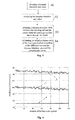
- Figure 4 is a data statistical chart related to sheet medium thickness detection performed by adopting a fixed zero value method.
- a initial fixed zero value of the device for detecting the thickness of a sheet medium is determined firstly, the means generally used in the prior art is that, before the device for detecting the thickness of a sheet medium is used, the detection zero value d when no medium enters is detected by N (N>0) times, each of the detection zero values is U 1 , U 2 , whil,U N , the corresponding fixed zero value can be calculated through a formula as follow:
- a 0 U 1 + U 2 + ... ... + U N / N
- the preset fixed zero value for sheet medium thickness detection used in the present experiment is 50 micrometers.
- the experimental thickness data is collected by using a standard test medium with a thickness of 100 micrometers.
- a standard test medium with a thickness of 100 micrometers.
- the horizontal coordinate representing the number of the test medium, i.e. the sequence of the test medium
- the vertical coordinate representing the thickness data
- the unit is micrometer
- a statistical chart as shown in Figure 4 is formed, where the lower data line a represents the standard zero value used for calculating the thickness data of each test medium, that is the preset fixed zero value 50 micrometers, the upper data line b represents the collected detection thickness value of each test medium, and the intermediate data line c represents the detection thickness value of test medium that is calculated according to the difference between the detection thickness value and the preset fixed zero value.
- Figure 5 is a data statistical chart related to sheet medium thickness detection performed by adopting a dynamic zero value method, similarly, the experimental thickness data is collected by using a standard test medium with a thickness of 100 micrometers. With the horizontal coordinate representing the number of the test medium, i.e.
- a statistical chart as shown in Figure 5 is formed, where the lower data line a1 represents the standard zero value used for calculating the thickness data of each test medium, that is the dynamic zero value collected before each time of collecting the detection thickness value of the test medium, the upper data line b1 represents the collected detection thickness value of each test medium, and the intermediate data line c1 represents the detection thickness value of test medium that is calculated according to the difference between the detection thickness value and the dynamic zero value.
- the experimental thickness data is collected by using a standard test medium with a thickness of 100 micrometers, with the horizontal coordinate represents the number of the test medium, i.e. the sequence of the test medium, and with the vertical coordinate represents the thickness data, and the unit is micrometer, the statistical chart as shown in Figure 6 is formed, where the lower data line a2 represents the standard zero value used for calculating the thickness data of each test medium, that is the standard zero value obtained by correcting the dynamic zero value d collected before each time of collecting the detection thickness value of the test medium according to a correcting formula, the upper data line b2 represents the collected detection thickness value of each test medium, and the intermediate data line c2 represents the detection thickness value of test medium that is calculated according to the difference between the detection thickness value and the dynamic zero value.
- the lower data line a2 represents the standard zero value used for calculating the thickness data of each test medium, that is the standard zero value obtained by correcting the dynamic zero value d collected before each time of collecting the detection thickness value of the test medium according to a correcting formula
- the standard zero value formed after being corrected through the zero value correcting method according to the present application renders the finally calculated detection thickness value does not seriously deviate from the thickness value 100 micrometers of the standard medium.
- the solution not only can solve the problem of the detection data being inaccurate caused by aging of the detecting device and changing in environment, but also can solve the problem of the detection data being inaccurate caused by sudden fluctuations during data collection because of the inherent nature of the zero value detecting device itself.
Landscapes
- Physics & Mathematics (AREA)
- General Physics & Mathematics (AREA)
- Length Measuring Devices With Unspecified Measuring Means (AREA)
- Inspection Of Paper Currency And Valuable Securities (AREA)
- Controlling Sheets Or Webs (AREA)
- A Measuring Device Byusing Mechanical Method (AREA)
Abstract
Description
- This application claims the benefit of Chinese Patent Application No.
201210191067.9 - The present application relates to a thickness detection technology, and particularly to a method and a device for continuously detecting the thickness of a sheet medium in the process of continuous convey of it.
- Currently, the degree of automatic processing of the financial currency is more and more high, in the process of automatic processing of the currency, it is desirable to obtain and detect the authenticity, new and old etc. information of the currency, so as to reduce the degree of manual intervention and to provide convenience to human on the use of the currency.
- In the process of automatic processing, obtaining the thickness of the currency to be processed is a basic detection means. The thickness information can be used to determine the information of new and bad, authenticity, incompleteness or paste of tape etc. of the current currency, the above information is necessary means to determine whether the current currency meets the circulation conditions.
- As shown in
Figure 1 , a thickness data collecting device used commonly in a current financial self-service equipment includes aconveying roll 1 for conveying banknote, a detectingroll 2 opposite to theconveying roll 1, aplate spring 3 being arranged against the detectingroll 2 on the side opposite to the conveying roll, adistance sensor 4 arranged above the plate spring, with thedistance sensor 4 being used for detecting a distance value between theplate spring 3 and thedistance sensor 4. In view of the current distance detecting means, in order to obtain the thickness of a piece ofbanknote 5, a distance d between thesensor 4 and theplate spring 3 when no banknote is conveyed is set firstly, the distance d is referred to as a zero value of the thickness detecting device, and when the banknote passes by, the actual thickness value of the banknote being detected can be obtained by the distance data detected by thesensor 4 actually subtracting the above zero value. - It is well known that the performance of all machinery and electronic equipment will aging along with a period of use time, and the equipment will be subjected to shake due to change of the operating environment or during being moved, thus a change in performance parameter is caused thereof. In terms of the thickness detecting devices, the actual mechanical zero value may fluctuate during detecting the thickness of the banknote. When a inaccurate zero value is used, the detected thickness value is inaccurate too, thus it's unable to meet the use of the financial self-service equipment which requires high precision.
- Currently, there are two methods for setting the related zero value, including:
- 1. fixed zero value method, that is, making the zero value d=d0, where do is a zero value constant of a factory setting. This method has the drawback as follow: when the thickness detecting device is used for a long period of time and thus aging, or the equipment is subjected to shock during being moved, the actual zero value will change, however the fixed zero value do is still used during actual detection, so that large errors will be caused in the collected thickness data.
- 2. dynamic zero value method, that is, a zero value is detected each time before a banknote passes by, and which serves as the zero value for detecting this piece of banknote. This method employs real time collected data as the zero value, thus avoiding the affect caused by changes in operating environment and other factors, and being more accurate compared with the fixed zero value. However this method still has the problem as follow: because of the inherent nature of the zero value detecting device itself, there are fluctuations in the collected data, that is, the multiple zero values collected in the same environment are different from each other, when a large deviation arises in the collected zero value, a large deviation arises in the actual thickness detection value, abnormity of the collected thickness data will be caused, thus a instability of the whole self-service financial service equipment is caused.
- One of the objects of the present application is to provide a device for detecting the thickness of a sheet medium which not only can effectively eliminate the problem of a large detection deviation due to the changes in operating environment, but also can avoid the problem that the detected thickness is inaccurate due to abrupt change in detection value caused by the mechanical fluctuations of the dynamic zero value.
- The device for detecting the thickness of a sheet medium includes:
- a conveying roll, configured to convey a sheet medium;
- a detecting roll, arranged opposite to the conveying roll, configured to clamp and convey the sheet medium together with the conveying roll in the process of convey and is elastically displaced relative to the conveying roll;
- a sensor, configured to obtain a distance variation value between the detecting roll and the sensor;
- a thickness calculating unite, configured to calculate a sheet medium thickness value according to a distance detection value between the detecting roll and the sensor obtained by the sensor when the sheet medium passes by and a standard zero value between the detecting roll and the sensor obtained by the sensor before the sheet medium enters;
- wherein the device for detecting the thickness of a sheet medium further includes:
- a zero value correcting unit, configured to correct a dynamic detection zero value between the detecting roll and the sensor obtained by the sensor before the sheet medium enters according to a zero value correcting formula to obtain the standard zero value;
- a date storing unite, configured to store a preset distance detection zero value and operating data used by the zero value correcting unit.
- Preferably, the zero value correcting formula is as follow:

where, an is a dynamic detection zero value used in detecting the thickness of the n-th sheet medium;
bn represents a standard zero value used in detecting the thickness of the n-th sheet medium;
bn-1 is a standard zero value used in detecting the thickness of (n-1)-th sheet medium;
n is a natural number greater than 0, and when n=1, that is, the detection is performed for the first time, b0 = A0, with A0 being a preset distance detection zero value. - Specifically, the larger the correlativity coefficient t, the higher the self-adapting speed, and the worse the stability; on the contrary, the smaller the correlativity coefficient t, the lower the self-adapting speed, and the better the stability.
- Particularly, when t is equal to 0, bn =bn-1......bo=Ao, bn degenerates as the fixed zero value; when t is equal to 1, bn = an, bn degenerates as the dynamic zero value; and it should be avoided that t is equal to 0 or 1, experimental result shows that when t ranges from 0.05 to 0.2, a good engineering effect can be achieved. Preferably, the t is equal to 0.2.
- Preferably, the device for detecting the thickness of a sheet medium further includes a sheet medium entry determining module for determining whether sheet medium thickness detection is to be started.
- Preferably, a plate spring is arranged against the detecting roll on the side opposite to the conveying roll to achieve the elastic displacement of the detecting roll relative to the conveying roll, and the sensor is placed above the plate spring and remains stationary relative to the conveying roll.
- Another one of the objects of the present application is to provide a method for detecting the thickness of a sheet medium, the detecting method includes:
- S1. obtaining a dynamic detection zero value between a detecting roll and a sensor before a sheet medium enters;
- S2. correcting the dynamic detection zero value according to a zero value correcting formula to obtain a standard zero value;
- S3. obtaining a distance detection value between the detecting roll and the sensor when the sheet medium passes through the sensor;
- S4. calculating the actual thickness value of the sheet medium according to the difference between the distance detection value and the standard zero value.
- Preferably, the zero value correcting formula is as follow:

where, an is a dynamic detection zero value used in detecting the thickness of the n-th sheet medium;
bn represents a standard zero value used in detecting the thickness of the n-th sheet medium;
bn-1 is a standard zero value used in detecting the thickness of (n-1)-th sheet medium;
n is a natural number greater than 0, and when n=1, that is, the detection is performed for the first time, b0 = A0, with A0 being a preset distance detection zero value. - Further, t ranges from 0.05 to 0.25, and preferably, the t is equal to 0.2.
- As compared with the prior art, the method for detecting the thickness of a sheet medium has the advantages as follows:
- 1. because a real time standard zero value is adopted in the method, the problem of the detection data being inaccurate caused by actual zero value being changed because of the thickness detecting device being used for a long period of time and thus aging or the equipment being subjected to shock during being moved can be effectively solved.
- 2. because the real time standard zero value is obtained by weighted correcting the dynamic zero value and the historical standard zero value, the problem of the detection data being inaccurate caused by sudden fluctuations during data collection because of the inherent nature of the zero value detecting device itself can be effectively solved.
-
-
Figure 1 is a structural schematic view of a device for collecting a thickness data used commonly currently; -
Figure 2 is a construction schematic view of a device for detecting the thickness of a sheet medium according to the present application; -
Figure 3 is a flow schematic diagram of a method for detecting the thickness of a sheet medium according to the present application; -
Figure 4 is a data statistical chart related to sheet medium thickness detection performed by adopting a fixed zero value method; -
Figure 5 is a data statistical chart related to sheet medium thickness detection performed by adopting a dynamic zero value method; -
Figure 6 is a data statistical chart related to sheet medium thickness detection performed by adopting the method according to the present application. - In order to further illustrate the present application, technical solutions of the present application will be further described in detail hereinafter in conjunction with the accompanying drawings. According to the difference about the detection accuracy requirements on banknote thickness data, a plurality of thickness detecting devices ranging from one to dozens can be arranged, the thickness detecting devices are independent of each other, but the operating principle thereof is completely the same, only the installation positions are different.
- In order to illustrate the technical solutions of the present application briefly, only one thickness detecting device is described in detail. In actual use, a plurality of the thickness detecting devices can be arranged on the path through which the banknote passes according to requirement, when the banknote passes by, the plurality of the thickness detecting devices will generate corresponding banknote thickness detection data, and when each banknote passes through the thickness detecting device, a group of thickness detection values will be generated. If the banknote is smooth, the generated group of thickness values is uniform and is the actual thickness of the banknote; if there are changes in the thickness of the banknote, for example a tape is attached to the banknote and the position of the tape is detected, the calculated group of thickness values varies accordingly.
- Referring to
Figure 2 , the device for detecting the thickness of a sheet medium according to the present application includes: - a conveying
roll 1 for conveying a sheet medium; a detectingroll 2 that is opposite to the conveyingroll 1 for clamping and conveying the sheet medium together with the conveying roll in the process of convey and is elastically displaced relative to the conveying roll; aplate spring 3 arranged against the detectingroll 2 on the side opposite to the conveyingroll 1; asensor 4 arranged above the plate spring for obtaining a distance variation value between theplate spring 3 and thesensor 4; athickness calculating unite 6 configured to calculate a sheet medium thickness value according to a distance detection value between theplate spring 3 and thesensor 4 obtained by thesensor 4 when the sheet medium passes by and a standard zero value between theplate spring 3 and the sensor obtained by thesensor 4 before the sheet medium enters. In order to obtain a accurate standard zero value, the device for detecting the thickness of a sheet medium further includes: a zerovalue correcting unit 7 for correcting a dynamic detection zero value between the detecting roll and the sensor obtained by the sensor before the sheet medium enters according to a zero value correcting formula to obtain the standard zero value; and a date storing unite 8 for storing a preset distance detection zero value and operating data for the zero value correction. - It should be noted that the use of
plate spring 3 in the present embodiment is merely one solution for achieving the elastic displacement of the detectingroll 2 relative to the conveyingroll 1, in order to achieve this elastic displacement, the people skilled in the art may also employ the means of a spring pulling or of a torsion spring limiting to a rotating shaft of the detecting roll, which will not be described in detailed herein. Of course, in a solution the above plate spring is not used, thesensor 4 can directly obtain the distance information between the detectingroll 2 and thesensor 4 to calculate the thickness value of the sheet medium passing by. - Referring to
Figure 3 , the process of detecting the thickness of a sheet medium carried out by the device for detecting the thickness of a sheet medium according to the present application includes steps as follows: - S1. obtaining a dynamic detection zero value between a detecting roll and a sensor before a sheet medium enters;
- S2. correcting the dynamic detection zero value according to a zero value correcting formula to obtain a standard zero value;
- S3. obtaining a distance detection value between the detecting roll and the sensor when the sheet medium passes through the sensor;
- S4. calculating the actual thickness value of the sheet medium according to the difference between the distance detection value and the standard zero value.
- Here, the correcting formula employed in the present embodiment is as follow:

where, an is a dynamic detection zero value used in detecting the thickness of the n-th sheet medium;
bn represents a standard zero value used in detecting the thickness of the n-th sheet medium;
bn-1 is a standard zero value used in detecting the thickness of (n-1)-th sheet medium;
n is a natural number larger than 0, and when n=1, that is, the detection is performed for the first time, b0 = A0, with A0 being a preset distance detection zero value. - Specifically, the larger the correlativity coefficient t, the higher the self-adapting speed, and the worse the stability; on the contrary, the smaller the correlativity coefficient t, the lower the self-adapting speed, and the better the stability.
- Particularly, when t is equal to 0, bn =bn-1......b0=A0, bn degenerates as a fixed zero value; when t is equal to 1, bn= an, bn degenerates as a dynamic zero value; and it should be avoided that t is equal to 0 or 1, experimental result shows that when t ranges from 0.05 to 0.2, a good engineering effect can be achieved. Preferably, the t is equal to 0.2.
- The above embodiment described above is merely one of the embodiments for achieving the second object of the present application, optimizations can be made by the people skilled in the art applying any prior art known to them, for example, in order to accurately obtain a dynamic zero value data, a sheet medium entry determining module may be added to the device for detecting the thickness of a sheet medium, so as to guide the sensor to collect and obtain accurate dynamic zero value.
- Next, in order to further illustrate the advantage of the method for detecting the thickness of a sheet medium according to the present application as compared with the method for detecting thickness in the prior art, the following experimental data are provided.
-
Figure 4 is a data statistical chart related to sheet medium thickness detection performed by adopting a fixed zero value method. A initial fixed zero value of the device for detecting the thickness of a sheet medium is determined firstly, the means generally used in the prior art is that, before the device for detecting the thickness of a sheet medium is used, the detection zero value d when no medium enters is detected by N (N>0) times, each of the detection zero values is U1, U2,......,UN, the corresponding fixed zero value can be calculated through a formula as follow:
- The preset fixed zero value for sheet medium thickness detection used in the present experiment is 50 micrometers.
- Then, by using the above fixed zero value as the standard zero value for sheet medium thickness detection, the experimental thickness data is collected by using a standard test medium with a thickness of 100 micrometers. With the horizontal coordinate representing the number of the test medium, i.e. the sequence of the test medium, and with the vertical coordinate representing the thickness data, and the unit is micrometer, a statistical chart as shown in
Figure 4 is formed, where the lower data line a represents the standard zero value used for calculating the thickness data of each test medium, that is the preset fixed zero value 50 micrometers, the upper data line b represents the collected detection thickness value of each test medium, and the intermediate data line c represents the detection thickness value of test medium that is calculated according to the difference between the detection thickness value and the preset fixed zero value. - As can be seen from
Figure 4 , when the test environment of the device for detecting the thickness of a sheet medium is changed, the data line b drifts downward, which thus results in that finally calculated data line c, that is the detection thickness value, is completely away from thereal thickness 100 micrometers of the standard test medium, thereby serious detect errors are caused. -
Figure 5 is a data statistical chart related to sheet medium thickness detection performed by adopting a dynamic zero value method, similarly, the experimental thickness data is collected by using a standard test medium with a thickness of 100 micrometers. With the horizontal coordinate representing the number of the test medium, i.e. the sequence of the test medium, and with the vertical coordinate representing the thickness data, and the unit is micrometer, a statistical chart as shown inFigure 5 is formed, where the lower data line a1 represents the standard zero value used for calculating the thickness data of each test medium, that is the dynamic zero value collected before each time of collecting the detection thickness value of the test medium, the upper data line b1 represents the collected detection thickness value of each test medium, and the intermediate data line c1 represents the detection thickness value of test medium that is calculated according to the difference between the detection thickness value and the dynamic zero value. - As can be seen from
Figure 5 , because of the jitter of the detection components, large fluctuations are generated in data collection, such as the point p in the Figure. When an instantaneous large deviation arises in the collected zero value, the finally calculated detection thickness value largely deviates from the standard 100 micrometers, thereby causing the detected thickness data being severely abnormal. - Referring to
Figure 6 , a data statistical chart related to sheet medium thickness detection performed by adopting the method according to the present application is illustrated. - Similarly, the experimental thickness data is collected by using a standard test medium with a thickness of 100 micrometers, with the horizontal coordinate represents the number of the test medium, i.e. the sequence of the test medium, and with the vertical coordinate represents the thickness data, and the unit is micrometer, the statistical chart as shown in
Figure 6 is formed, where the lower data line a2 represents the standard zero value used for calculating the thickness data of each test medium, that is the standard zero value obtained by correcting the dynamic zero value d collected before each time of collecting the detection thickness value of the test medium according to a correcting formula, the upper data line b2 represents the collected detection thickness value of each test medium, and the intermediate data line c2 represents the detection thickness value of test medium that is calculated according to the difference between the detection thickness value and the dynamic zero value. - The correcting formula employed is as follow:

where - 1) an represents a dynamic zero value collected before the n-th banknote passes by; if the dynamic zero value method is employed, an is a dynamic zero value used in detecting the n-th banknote;
- 2) bn represents a self-adapting zero value used in detecting the n-th banknote; bn-1 is a self-adapting zero value used in detecting the (n-1)-th banknote;
- 3) n is a natural number larger than 0, and when n=1, that is, the detection is performed for the first time, b0 = A0, with A0 being a preset distance detection zero value;
- 4) t is a correlativity coefficient, 0<t<1; the larger the t, the higher the self-adapting speed, and the worse the stability; on the contrary, the smaller the t, the lower the self-adapting speed, and the better the stability.
- 5) particularly, when t is equal to 0, bn =bn-1......b0=A0, and bn degenerates as the fixed zero value; when t is equal to 1, bn = an, bn degenerates as the dynamic zero value; and it should be avoided that t is equal to 0 or 1, when t ranges from 0.05 to 0.2, a good engineering effect can be achieved.
- The present experimental test takes t=0.2 as an example, in the present method, the standard zero value calculating formula of the n-th banknote is as follow: bn = 0.8×bn-1+0.2×an, where b0=A0=50 micrometers.
- As can be seen from
Figure 6 , the standard zero value formed after being corrected through the zero value correcting method according to the present application renders the finally calculated detection thickness value does not seriously deviate from thethickness value 100 micrometers of the standard medium. Thus, the solution not only can solve the problem of the detection data being inaccurate caused by aging of the detecting device and changing in environment, but also can solve the problem of the detection data being inaccurate caused by sudden fluctuations during data collection because of the inherent nature of the zero value detecting device itself. - The above-described embodiments are only preferred embodiments of the present application, it goes without saying that the scope of the claims thereof can be limited to this, It should be noted that, for the person skilled in the art, many modifications and improvements may be made to the present application without departing from the principle of the present application, and these modifications and improvements are also deemed to fall into the protection scope of the present application.
Claims (11)
- A device for detecting the thickness of a sheet medium, comprising:a conveying roll, configured to convey a sheet medium;a detecting roll, arranged opposite to the conveying roll, configured to clamp and convey the sheet medium together with the conveying roll in the process of convey and is elastically displaced relative to the conveying roll;a sensor, configured to obtain a distance variation value between the detecting roll and the sensor;a thickness calculating unite, configured to calculate a sheet medium thickness value according to a distance detection value between the detecting roll and the sensor obtained by the sensor when the sheet medium passes by and a standard zero value between the detecting roll and the sensor obtained by the sensor before the sheet medium enters;wherein the device for detecting the thickness of a sheet medium further comprises:a zero value correcting unit, configured to correct a dynamic detection zero value between the detecting roll and the sensor obtained by the sensor before the sheet medium enters according to a zero value correcting formula to obtain the standard zero value;a date storing unite, configured to store a preset distance detection zero value and operating data used by the zero value correcting unit.
- The device for detecting the thickness of a sheet medium according to claim 1, wherein the zero value correcting formula is as follow:

where, an is a dynamic detection zero value used in detecting the thickness of the n-th sheet medium;
bn represents a standard zero value used in detecting the thickness of the n-th sheet medium;
bn-1 is a standard zero value used in detecting the thickness of (n-1)-th sheet medium;
n is a natural number greater than 0, and when n=1, that is, the detection is performed for the first time, b0 = A0, with A0 being a preset distance detection zero value. - The device for detecting the thickness of a sheet medium according to claim 2, wherein t ranges from 0.05 to 0.25.
- The device for detecting the thickness of a sheet medium according to claim 2 or 3, wherein the t is equal to 0.2.
- The device for detecting the thickness of a sheet medium according to claim 4, further comprising a sheet medium entry determining module, configured to determine whether sheet medium thickness detection is to be started.
- The device for detecting the thickness of a sheet medium according to claim 1, wherein a plate spring is arranged against the detecting roll on the side opposite to the conveying roll to achieve the elastic displacement of the detecting roll relative to the conveying roll.
- The device for detecting the thickness of a sheet medium according to claim 6, wherein the sensor is arranged above the plate spring and relatively static to the conveying roll.
- A method for detecting the thickness of a sheet medium, comprising:S1. obtaining a dynamic detection zero value between a detecting roll and a sensor before a sheet medium enters;S2. correcting the dynamic detection zero value according to a zero value correcting formula to obtain a standard zero value;S3. obtaining a distance detection value between the detecting roll and the sensor when the sheet medium passes through the sensor;S4. calculating the actual thickness value of the sheet medium according to the difference between the distance detection value and the standard zero value.
- The method for detecting the thickness of a sheet medium according to claim 8, wherein the zero value correcting formula is as follow:

where, an is a dynamic detection zero value used in detecting the thickness of the n-th sheet medium;
bn represents a standard zero value used in detecting the thickness of the n-th sheet medium;
bn-1 is a standard zero value used in detecting the thickness of (n-1)-th sheet medium;
n is a natural number greater than 0, and when n=1, that is, the detection is performed for the first time, b0 = A0, with A0 being a preset distance detection zero value. - The method for detecting the thickness of a sheet medium according to claim 9, wherein t ranges from 0.05 to 0.25.
- The method for detecting the thickness of a sheet medium according to claim 9 or 10, wherein the t is equal to 0.2.
Applications Claiming Priority (2)
| Application Number | Priority Date | Filing Date | Title |
|---|---|---|---|
| CN201210191067.9A CN102722933B (en) | 2012-06-11 | 2012-06-11 | Device for detecting thickness of sheet medium and method thereof |
| PCT/CN2013/073549 WO2013185501A1 (en) | 2012-06-11 | 2013-04-01 | Device for detecting thickness of sheet-type medium and method thereof |
Publications (3)
| Publication Number | Publication Date |
|---|---|
| EP2860708A1 true EP2860708A1 (en) | 2015-04-15 |
| EP2860708A4 EP2860708A4 (en) | 2015-06-03 |
| EP2860708B1 EP2860708B1 (en) | 2020-10-07 |
Family
ID=46948679
Family Applications (1)
| Application Number | Title | Priority Date | Filing Date |
|---|---|---|---|
| EP13804529.9A Active EP2860708B1 (en) | 2012-06-11 | 2013-04-01 | Device for detecting thickness of sheet-type medium and method thereof |
Country Status (8)
| Country | Link |
|---|---|
| US (1) | US9683840B2 (en) |
| EP (1) | EP2860708B1 (en) |
| CN (1) | CN102722933B (en) |
| AU (1) | AU2013276048B2 (en) |
| CL (1) | CL2014001267A1 (en) |
| IN (1) | IN2014MN01016A (en) |
| WO (1) | WO2013185501A1 (en) |
| ZA (1) | ZA201403588B (en) |
Cited By (3)
| Publication number | Priority date | Publication date | Assignee | Title |
|---|---|---|---|---|
| US9672679B2 (en) | 2013-12-12 | 2017-06-06 | Grg Banking Equipment Co., Ltd. | Device for detecting thickness of sheet medium and method thereof |
| US9897443B2 (en) | 2015-02-05 | 2018-02-20 | Grg Banking Equipment Co., Ltd. | Thickness detection device for sheet medium |
| TWI645374B (en) * | 2016-12-16 | 2018-12-21 | 啟樺機械工業股份有限公司 | Device for detecting thickness and thickness variation of a sheetlike object |
Families Citing this family (17)
| Publication number | Priority date | Publication date | Assignee | Title |
|---|---|---|---|---|
| CN102722933B (en) * | 2012-06-11 | 2014-08-20 | 广州广电运通金融电子股份有限公司 | Device for detecting thickness of sheet medium and method thereof |
| CN103106729B (en) * | 2012-12-24 | 2015-05-13 | 广州广电运通金融电子股份有限公司 | Sheet type medium thickness identifying device and identifying method thereof |
| CN103136842A (en) * | 2013-01-29 | 2013-06-05 | 广州广电运通金融电子股份有限公司 | Thickness measurement device for sheet-type medium |
| CN103743333B (en) * | 2014-01-22 | 2016-08-17 | 广州广电运通金融电子股份有限公司 | The device of eddy current detection stiff thickness |
| CN105528826A (en) * | 2014-09-30 | 2016-04-27 | 恒银金融科技有限公司 | Sensor fine tuning mechanism for automatic finance service terminal |
| CN104266626A (en) * | 2014-10-23 | 2015-01-07 | 成都卓微科技有限公司 | Multifunctional thickness gauge |
| CN104296712A (en) * | 2014-10-29 | 2015-01-21 | 深圳怡化电脑股份有限公司 | Thickness sensor detection device and method |
| CN105652776A (en) * | 2014-11-11 | 2016-06-08 | 宁夏嘉翔自控技术有限公司 | Magazine bookbinding missing page counting system of distance sensor |
| CN105652777A (en) * | 2014-11-11 | 2016-06-08 | 宁夏嘉翔自控技术有限公司 | Magazine bookbinding meter multi-page counting system of distance sensor |
| JP6358211B2 (en) * | 2015-09-16 | 2018-07-18 | コニカミノルタ株式会社 | Paper transport device, image forming apparatus, control method for paper transport device, and control program for paper transport device |
| CN105374106B (en) * | 2015-11-04 | 2018-03-16 | 东方通信股份有限公司 | A kind of ATM note detection device and detection method |
| CN105427447B (en) * | 2015-11-04 | 2018-03-16 | 东方通信股份有限公司 | ATM note detection device and detection method |
| CN106067213B (en) * | 2016-05-25 | 2019-02-01 | 深圳怡化电脑股份有限公司 | A kind of device for detecting thickness of medium and method |
| CN106910274B (en) * | 2017-02-28 | 2019-03-12 | 深圳怡化电脑股份有限公司 | A kind of dielectric thickness measurement method, device and ATM machine |
| CN107131859A (en) * | 2017-06-20 | 2017-09-05 | 深圳怡化电脑股份有限公司 | A kind of calibration equipment of thickness transducer |
| CN109559423B (en) * | 2018-11-23 | 2020-11-06 | 威海华菱光电股份有限公司 | Detection method, detection device, storage medium and processor |
| CN113725111B (en) * | 2021-08-27 | 2024-01-30 | 苏州晶睿半导体科技有限公司 | Testing device for compound semiconductor chip |
Family Cites Families (15)
| Publication number | Priority date | Publication date | Assignee | Title |
|---|---|---|---|---|
| GB8432438D0 (en) | 1984-12-21 | 1985-02-06 | De La Rue Syst | Sensing sheets |
| JP2511487B2 (en) | 1988-02-16 | 1996-06-26 | 沖電気工業株式会社 | Conveyor paper thickness detector |
| JP2567279B2 (en) | 1988-04-26 | 1996-12-25 | ローレルバンクマシン株式会社 | Sheet thickness detector |
| JP3760375B2 (en) * | 2000-12-22 | 2006-03-29 | 日立オムロンターミナルソリューションズ株式会社 | Banknote handling equipment |
| JP2003081463A (en) * | 2001-09-12 | 2003-03-19 | Toshiba Corp | Paper removal equipment |
| JP4924334B2 (en) | 2007-09-28 | 2012-04-25 | 沖電気工業株式会社 | Medium thickness detector |
| CN101158569B (en) * | 2007-11-16 | 2010-06-09 | 中钞长城金融设备控股有限公司 | Paper money thickness testing apparatus |
| JP2009129390A (en) | 2007-11-28 | 2009-06-11 | Oki Electric Ind Co Ltd | Medium discrimination device |
| JP4623436B2 (en) | 2008-04-02 | 2011-02-02 | 富士ゼロックス株式会社 | Recording medium thickness measurement device, recording medium double feed detection device, and image forming apparatus |
| JP2010257292A (en) * | 2009-04-27 | 2010-11-11 | Hitachi Omron Terminal Solutions Corp | Medium thickness detector |
| JP4850940B2 (en) * | 2009-08-26 | 2012-01-11 | キヤノン株式会社 | Image forming apparatus |
| JP2012030937A (en) * | 2010-07-30 | 2012-02-16 | Kyocera Mita Corp | Sheet feeding device and image forming apparatus |
| CN101968903B (en) * | 2010-09-21 | 2012-08-29 | 广州广电运通金融电子股份有限公司 | Valuable file identification method and system |
| CN101996433B (en) * | 2010-09-21 | 2012-10-03 | 广州广电运通金融电子股份有限公司 | Thickness identification device of slice-type medium and identification method thereof |
| CN102722933B (en) * | 2012-06-11 | 2014-08-20 | 广州广电运通金融电子股份有限公司 | Device for detecting thickness of sheet medium and method thereof |
-
2012
- 2012-06-11 CN CN201210191067.9A patent/CN102722933B/en active Active
-
2013
- 2013-04-01 EP EP13804529.9A patent/EP2860708B1/en active Active
- 2013-04-01 AU AU2013276048A patent/AU2013276048B2/en not_active Ceased
- 2013-04-01 WO PCT/CN2013/073549 patent/WO2013185501A1/en not_active Ceased
- 2013-04-01 US US14/353,482 patent/US9683840B2/en not_active Expired - Fee Related
- 2013-04-01 IN IN1016MUN2014 patent/IN2014MN01016A/en unknown
-
2014
- 2014-05-14 CL CL2014001267A patent/CL2014001267A1/en unknown
- 2014-05-16 ZA ZA2014/03588A patent/ZA201403588B/en unknown
Cited By (3)
| Publication number | Priority date | Publication date | Assignee | Title |
|---|---|---|---|---|
| US9672679B2 (en) | 2013-12-12 | 2017-06-06 | Grg Banking Equipment Co., Ltd. | Device for detecting thickness of sheet medium and method thereof |
| US9897443B2 (en) | 2015-02-05 | 2018-02-20 | Grg Banking Equipment Co., Ltd. | Thickness detection device for sheet medium |
| TWI645374B (en) * | 2016-12-16 | 2018-12-21 | 啟樺機械工業股份有限公司 | Device for detecting thickness and thickness variation of a sheetlike object |
Also Published As
| Publication number | Publication date |
|---|---|
| WO2013185501A1 (en) | 2013-12-19 |
| CN102722933A (en) | 2012-10-10 |
| CL2014001267A1 (en) | 2014-08-01 |
| CN102722933B (en) | 2014-08-20 |
| EP2860708B1 (en) | 2020-10-07 |
| US9683840B2 (en) | 2017-06-20 |
| AU2013276048B2 (en) | 2015-01-22 |
| US20140309958A1 (en) | 2014-10-16 |
| AU2013276048A1 (en) | 2014-05-08 |
| ZA201403588B (en) | 2015-07-29 |
| EP2860708A4 (en) | 2015-06-03 |
| IN2014MN01016A (en) | 2015-07-03 |
Similar Documents
| Publication | Publication Date | Title |
|---|---|---|
| US9683840B2 (en) | Device for detecting thickness of sheet-type medium and method thereof | |
| CN101815665B (en) | Accurate tracking of web features through the process | |
| US9869548B2 (en) | Method for determining the inclination of a tower | |
| US8825423B1 (en) | Calibration verification | |
| CN102564361B (en) | Ray-type thickness gauge and calibration method thereof | |
| US20160349037A1 (en) | Target Material Thickness Measuring Apparatus | |
| JP5170240B2 (en) | Thickness control device for rolling mill | |
| CN105574985B (en) | A kind of test method and system of thickness transducer | |
| JPWO2016162945A1 (en) | Cell analysis apparatus and cell analysis method | |
| WO2025194676A1 (en) | Pointer meter reading recognition method for intelligent inspection robot | |
| KR101877341B1 (en) | Method for aligning a straightening roller of a straightening roller system | |
| CN118435047A (en) | Battery cell detection method, device, system, processor and controller | |
| CN105170705A (en) | Automatic inlet leveling machine and leveling method thereof | |
| KR20230045125A (en) | System for measuring roll gap and method thereof | |
| US20130274910A1 (en) | Method for controlling a production facility by high-resolution location tracking of workpieces | |
| CN112199832A (en) | A method and device for on-line evaluation of strip warpage height | |
| CN114705147B (en) | Diaphragm bending detection device and method for detecting diaphragm bending | |
| CN104317543B (en) | The position judging method and system of joined screen display unit | |
| CN108413881B (en) | Thickness detection method and device, and thickness image sensor | |
| US9746961B2 (en) | Background signal processing system and background signal processing method | |
| JP2575748B2 (en) | Paper sheet abnormality detection device | |
| US9569033B2 (en) | Background signal processing system and background signal processing method | |
| JP2015158443A (en) | Method and apparatus for measuring thickness of striped steel sheet | |
| CN103846287A (en) | Rolling control device and rolling control method | |
| KR20170074594A (en) | Device for measuring build-up of coil |
Legal Events
| Date | Code | Title | Description |
|---|---|---|---|
| PUAI | Public reference made under article 153(3) epc to a published international application that has entered the european phase |
Free format text: ORIGINAL CODE: 0009012 |
|
| 17P | Request for examination filed |
Effective date: 20140408 |
|
| AK | Designated contracting states |
Kind code of ref document: A1 Designated state(s): AL AT BE BG CH CY CZ DE DK EE ES FI FR GB GR HR HU IE IS IT LI LT LU LV MC MK MT NL NO PL PT RO RS SE SI SK SM TR |
|
| AX | Request for extension of the european patent |
Extension state: BA ME |
|
| RA4 | Supplementary search report drawn up and despatched (corrected) |
Effective date: 20150508 |
|
| RIC1 | Information provided on ipc code assigned before grant |
Ipc: G07D 7/16 20060101AFI20150430BHEP Ipc: G01B 21/04 20060101ALI20150430BHEP Ipc: G01B 21/08 20060101ALI20150430BHEP |
|
| DAX | Request for extension of the european patent (deleted) | ||
| GRAP | Despatch of communication of intention to grant a patent |
Free format text: ORIGINAL CODE: EPIDOSNIGR1 |
|
| STAA | Information on the status of an ep patent application or granted ep patent |
Free format text: STATUS: GRANT OF PATENT IS INTENDED |
|
| RIC1 | Information provided on ipc code assigned before grant |
Ipc: G07D 7/16 20160101AFI20200331BHEP Ipc: G07D 7/164 20160101ALI20200331BHEP Ipc: G01B 21/08 20060101ALI20200331BHEP Ipc: G01B 21/04 20060101ALI20200331BHEP |
|
| INTG | Intention to grant announced |
Effective date: 20200421 |
|
| GRAS | Grant fee paid |
Free format text: ORIGINAL CODE: EPIDOSNIGR3 |
|
| GRAA | (expected) grant |
Free format text: ORIGINAL CODE: 0009210 |
|
| STAA | Information on the status of an ep patent application or granted ep patent |
Free format text: STATUS: THE PATENT HAS BEEN GRANTED |
|
| AK | Designated contracting states |
Kind code of ref document: B1 Designated state(s): AL AT BE BG CH CY CZ DE DK EE ES FI FR GB GR HR HU IE IS IT LI LT LU LV MC MK MT NL NO PL PT RO RS SE SI SK SM TR |
|
| REG | Reference to a national code |
Ref country code: GB Ref legal event code: FG4D |
|
| REG | Reference to a national code |
Ref country code: AT Ref legal event code: REF Ref document number: 1321979 Country of ref document: AT Kind code of ref document: T Effective date: 20201015 Ref country code: CH Ref legal event code: EP |
|
| REG | Reference to a national code |
Ref country code: IE Ref legal event code: FG4D |
|
| REG | Reference to a national code |
Ref country code: DE Ref legal event code: R096 Ref document number: 602013073137 Country of ref document: DE |
|
| REG | Reference to a national code |
Ref country code: NL Ref legal event code: MP Effective date: 20201007 |
|
| REG | Reference to a national code |
Ref country code: AT Ref legal event code: MK05 Ref document number: 1321979 Country of ref document: AT Kind code of ref document: T Effective date: 20201007 |
|
| PG25 | Lapsed in a contracting state [announced via postgrant information from national office to epo] |
Ref country code: RS Free format text: LAPSE BECAUSE OF FAILURE TO SUBMIT A TRANSLATION OF THE DESCRIPTION OR TO PAY THE FEE WITHIN THE PRESCRIBED TIME-LIMIT Effective date: 20201007 Ref country code: FI Free format text: LAPSE BECAUSE OF FAILURE TO SUBMIT A TRANSLATION OF THE DESCRIPTION OR TO PAY THE FEE WITHIN THE PRESCRIBED TIME-LIMIT Effective date: 20201007 Ref country code: NL Free format text: LAPSE BECAUSE OF FAILURE TO SUBMIT A TRANSLATION OF THE DESCRIPTION OR TO PAY THE FEE WITHIN THE PRESCRIBED TIME-LIMIT Effective date: 20201007 Ref country code: PT Free format text: LAPSE BECAUSE OF FAILURE TO SUBMIT A TRANSLATION OF THE DESCRIPTION OR TO PAY THE FEE WITHIN THE PRESCRIBED TIME-LIMIT Effective date: 20210208 Ref country code: NO Free format text: LAPSE BECAUSE OF FAILURE TO SUBMIT A TRANSLATION OF THE DESCRIPTION OR TO PAY THE FEE WITHIN THE PRESCRIBED TIME-LIMIT Effective date: 20210107 Ref country code: GR Free format text: LAPSE BECAUSE OF FAILURE TO SUBMIT A TRANSLATION OF THE DESCRIPTION OR TO PAY THE FEE WITHIN THE PRESCRIBED TIME-LIMIT Effective date: 20210108 |
|
| REG | Reference to a national code |
Ref country code: LT Ref legal event code: MG4D |
|
| PG25 | Lapsed in a contracting state [announced via postgrant information from national office to epo] |
Ref country code: IS Free format text: LAPSE BECAUSE OF FAILURE TO SUBMIT A TRANSLATION OF THE DESCRIPTION OR TO PAY THE FEE WITHIN THE PRESCRIBED TIME-LIMIT Effective date: 20210207 Ref country code: PL Free format text: LAPSE BECAUSE OF FAILURE TO SUBMIT A TRANSLATION OF THE DESCRIPTION OR TO PAY THE FEE WITHIN THE PRESCRIBED TIME-LIMIT Effective date: 20201007 Ref country code: SE Free format text: LAPSE BECAUSE OF FAILURE TO SUBMIT A TRANSLATION OF THE DESCRIPTION OR TO PAY THE FEE WITHIN THE PRESCRIBED TIME-LIMIT Effective date: 20201007 Ref country code: LV Free format text: LAPSE BECAUSE OF FAILURE TO SUBMIT A TRANSLATION OF THE DESCRIPTION OR TO PAY THE FEE WITHIN THE PRESCRIBED TIME-LIMIT Effective date: 20201007 Ref country code: ES Free format text: LAPSE BECAUSE OF FAILURE TO SUBMIT A TRANSLATION OF THE DESCRIPTION OR TO PAY THE FEE WITHIN THE PRESCRIBED TIME-LIMIT Effective date: 20201007 Ref country code: AT Free format text: LAPSE BECAUSE OF FAILURE TO SUBMIT A TRANSLATION OF THE DESCRIPTION OR TO PAY THE FEE WITHIN THE PRESCRIBED TIME-LIMIT Effective date: 20201007 Ref country code: BG Free format text: LAPSE BECAUSE OF FAILURE TO SUBMIT A TRANSLATION OF THE DESCRIPTION OR TO PAY THE FEE WITHIN THE PRESCRIBED TIME-LIMIT Effective date: 20210107 |
|
| PG25 | Lapsed in a contracting state [announced via postgrant information from national office to epo] |
Ref country code: HR Free format text: LAPSE BECAUSE OF FAILURE TO SUBMIT A TRANSLATION OF THE DESCRIPTION OR TO PAY THE FEE WITHIN THE PRESCRIBED TIME-LIMIT Effective date: 20201007 |
|
| REG | Reference to a national code |
Ref country code: DE Ref legal event code: R097 Ref document number: 602013073137 Country of ref document: DE |
|
| PG25 | Lapsed in a contracting state [announced via postgrant information from national office to epo] |
Ref country code: SK Free format text: LAPSE BECAUSE OF FAILURE TO SUBMIT A TRANSLATION OF THE DESCRIPTION OR TO PAY THE FEE WITHIN THE PRESCRIBED TIME-LIMIT Effective date: 20201007 Ref country code: RO Free format text: LAPSE BECAUSE OF FAILURE TO SUBMIT A TRANSLATION OF THE DESCRIPTION OR TO PAY THE FEE WITHIN THE PRESCRIBED TIME-LIMIT Effective date: 20201007 Ref country code: LT Free format text: LAPSE BECAUSE OF FAILURE TO SUBMIT A TRANSLATION OF THE DESCRIPTION OR TO PAY THE FEE WITHIN THE PRESCRIBED TIME-LIMIT Effective date: 20201007 Ref country code: CZ Free format text: LAPSE BECAUSE OF FAILURE TO SUBMIT A TRANSLATION OF THE DESCRIPTION OR TO PAY THE FEE WITHIN THE PRESCRIBED TIME-LIMIT Effective date: 20201007 Ref country code: EE Free format text: LAPSE BECAUSE OF FAILURE TO SUBMIT A TRANSLATION OF THE DESCRIPTION OR TO PAY THE FEE WITHIN THE PRESCRIBED TIME-LIMIT Effective date: 20201007 Ref country code: SM Free format text: LAPSE BECAUSE OF FAILURE TO SUBMIT A TRANSLATION OF THE DESCRIPTION OR TO PAY THE FEE WITHIN THE PRESCRIBED TIME-LIMIT Effective date: 20201007 |
|
| PLBE | No opposition filed within time limit |
Free format text: ORIGINAL CODE: 0009261 |
|
| STAA | Information on the status of an ep patent application or granted ep patent |
Free format text: STATUS: NO OPPOSITION FILED WITHIN TIME LIMIT |
|
| PG25 | Lapsed in a contracting state [announced via postgrant information from national office to epo] |
Ref country code: DK Free format text: LAPSE BECAUSE OF FAILURE TO SUBMIT A TRANSLATION OF THE DESCRIPTION OR TO PAY THE FEE WITHIN THE PRESCRIBED TIME-LIMIT Effective date: 20201007 |
|
| 26N | No opposition filed |
Effective date: 20210708 |
|
| PG25 | Lapsed in a contracting state [announced via postgrant information from national office to epo] |
Ref country code: AL Free format text: LAPSE BECAUSE OF FAILURE TO SUBMIT A TRANSLATION OF THE DESCRIPTION OR TO PAY THE FEE WITHIN THE PRESCRIBED TIME-LIMIT Effective date: 20201007 |
|
| PG25 | Lapsed in a contracting state [announced via postgrant information from national office to epo] |
Ref country code: SI Free format text: LAPSE BECAUSE OF FAILURE TO SUBMIT A TRANSLATION OF THE DESCRIPTION OR TO PAY THE FEE WITHIN THE PRESCRIBED TIME-LIMIT Effective date: 20201007 Ref country code: MC Free format text: LAPSE BECAUSE OF FAILURE TO SUBMIT A TRANSLATION OF THE DESCRIPTION OR TO PAY THE FEE WITHIN THE PRESCRIBED TIME-LIMIT Effective date: 20201007 |
|
| GBPC | Gb: european patent ceased through non-payment of renewal fee |
Effective date: 20210401 |
|
| PG25 | Lapsed in a contracting state [announced via postgrant information from national office to epo] |
Ref country code: LU Free format text: LAPSE BECAUSE OF NON-PAYMENT OF DUE FEES Effective date: 20210401 |
|
| REG | Reference to a national code |
Ref country code: BE Ref legal event code: MM Effective date: 20210430 |
|
| PG25 | Lapsed in a contracting state [announced via postgrant information from national office to epo] |
Ref country code: LI Free format text: LAPSE BECAUSE OF NON-PAYMENT OF DUE FEES Effective date: 20210430 Ref country code: GB Free format text: LAPSE BECAUSE OF NON-PAYMENT OF DUE FEES Effective date: 20210401 Ref country code: FR Free format text: LAPSE BECAUSE OF NON-PAYMENT OF DUE FEES Effective date: 20210430 Ref country code: CH Free format text: LAPSE BECAUSE OF NON-PAYMENT OF DUE FEES Effective date: 20210430 |
|
| PG25 | Lapsed in a contracting state [announced via postgrant information from national office to epo] |
Ref country code: IE Free format text: LAPSE BECAUSE OF NON-PAYMENT OF DUE FEES Effective date: 20210401 |
|
| PG25 | Lapsed in a contracting state [announced via postgrant information from national office to epo] |
Ref country code: IS Free format text: LAPSE BECAUSE OF FAILURE TO SUBMIT A TRANSLATION OF THE DESCRIPTION OR TO PAY THE FEE WITHIN THE PRESCRIBED TIME-LIMIT Effective date: 20210207 |
|
| PG25 | Lapsed in a contracting state [announced via postgrant information from national office to epo] |
Ref country code: BE Free format text: LAPSE BECAUSE OF NON-PAYMENT OF DUE FEES Effective date: 20210430 |
|
| PG25 | Lapsed in a contracting state [announced via postgrant information from national office to epo] |
Ref country code: HU Free format text: LAPSE BECAUSE OF FAILURE TO SUBMIT A TRANSLATION OF THE DESCRIPTION OR TO PAY THE FEE WITHIN THE PRESCRIBED TIME-LIMIT; INVALID AB INITIO Effective date: 20130401 |
|
| PG25 | Lapsed in a contracting state [announced via postgrant information from national office to epo] |
Ref country code: CY Free format text: LAPSE BECAUSE OF FAILURE TO SUBMIT A TRANSLATION OF THE DESCRIPTION OR TO PAY THE FEE WITHIN THE PRESCRIBED TIME-LIMIT Effective date: 20201007 |
|
| PG25 | Lapsed in a contracting state [announced via postgrant information from national office to epo] |
Ref country code: MK Free format text: LAPSE BECAUSE OF FAILURE TO SUBMIT A TRANSLATION OF THE DESCRIPTION OR TO PAY THE FEE WITHIN THE PRESCRIBED TIME-LIMIT Effective date: 20201007 |
|
| PG25 | Lapsed in a contracting state [announced via postgrant information from national office to epo] |
Ref country code: MT Free format text: LAPSE BECAUSE OF FAILURE TO SUBMIT A TRANSLATION OF THE DESCRIPTION OR TO PAY THE FEE WITHIN THE PRESCRIBED TIME-LIMIT Effective date: 20201007 |
|
| PGFP | Annual fee paid to national office [announced via postgrant information from national office to epo] |
Ref country code: DE Payment date: 20250520 Year of fee payment: 13 |
|
| PGFP | Annual fee paid to national office [announced via postgrant information from national office to epo] |
Ref country code: IT Payment date: 20250430 Year of fee payment: 13 |
|
| PGFP | Annual fee paid to national office [announced via postgrant information from national office to epo] |
Ref country code: TR Payment date: 20260227 Year of fee payment: 14 |