EP2858516B1 - Taste modifiers - Google Patents
Taste modifiers Download PDFInfo
- Publication number
- EP2858516B1 EP2858516B1 EP13732106.3A EP13732106A EP2858516B1 EP 2858516 B1 EP2858516 B1 EP 2858516B1 EP 13732106 A EP13732106 A EP 13732106A EP 2858516 B1 EP2858516 B1 EP 2858516B1
- Authority
- EP
- European Patent Office
- Prior art keywords
- compound
- mmol
- ppm
- compounds
- gamma decalactone
- Prior art date
- Legal status (The legal status is an assumption and is not a legal conclusion. Google has not performed a legal analysis and makes no representation as to the accuracy of the status listed.)
- Active
Links
- PNRBORAIUVPGKQ-UHFFFAOYSA-N CC(CC1)OC2C1OC2 Chemical compound CC(CC1)OC2C1OC2 PNRBORAIUVPGKQ-UHFFFAOYSA-N 0.000 description 1
- SZXJOXHALDXHPQ-UHFFFAOYSA-N CCCCCC(C1OCCC1)O Chemical compound CCCCCC(C1OCCC1)O SZXJOXHALDXHPQ-UHFFFAOYSA-N 0.000 description 1
- SZXJOXHALDXHPQ-RGURZIINSA-N CCCCC[C@@H](C1OCCC1)O Chemical compound CCCCC[C@@H](C1OCCC1)O SZXJOXHALDXHPQ-RGURZIINSA-N 0.000 description 1
Classifications
-
- A—HUMAN NECESSITIES
- A23—FOODS OR FOODSTUFFS; TREATMENT THEREOF, NOT COVERED BY OTHER CLASSES
- A23L—FOODS, FOODSTUFFS OR NON-ALCOHOLIC BEVERAGES, NOT OTHERWISE PROVIDED FOR; PREPARATION OR TREATMENT THEREOF
- A23L27/00—Spices; Flavouring agents or condiments; Artificial sweetening agents; Table salts; Dietetic salt substitutes; Preparation or treatment thereof
- A23L27/20—Synthetic spices, flavouring agents or condiments
- A23L27/202—Aliphatic compounds
- A23L27/2024—Aliphatic compounds having oxygen as the only hetero atom
- A23L27/2026—Hydroxy compounds
-
- A—HUMAN NECESSITIES
- A23—FOODS OR FOODSTUFFS; TREATMENT THEREOF, NOT COVERED BY OTHER CLASSES
- A23C—DAIRY PRODUCTS, e.g. MILK, BUTTER OR CHEESE; MILK OR CHEESE SUBSTITUTES; PREPARATION THEREOF
- A23C9/00—Milk preparations; Milk powder or milk powder preparations
- A23C9/12—Fermented milk preparations; Treatment using microorganisms or enzymes
- A23C9/13—Fermented milk preparations; Treatment using microorganisms or enzymes using additives
- A23C9/1307—Milk products or derivatives; Fruit or vegetable juices; Sugars, sugar alcohols, sweeteners; Oligosaccharides; Organic acids or salts thereof or acidifying agents; Flavours, dyes or pigments; Inert or aerosol gases; Carbonation methods
-
- A—HUMAN NECESSITIES
- A23—FOODS OR FOODSTUFFS; TREATMENT THEREOF, NOT COVERED BY OTHER CLASSES
- A23C—DAIRY PRODUCTS, e.g. MILK, BUTTER OR CHEESE; MILK OR CHEESE SUBSTITUTES; PREPARATION THEREOF
- A23C9/00—Milk preparations; Milk powder or milk powder preparations
- A23C9/12—Fermented milk preparations; Treatment using microorganisms or enzymes
- A23C9/13—Fermented milk preparations; Treatment using microorganisms or enzymes using additives
- A23C9/1315—Non-milk proteins or fats; Seeds, pulses, cereals or soja; Fatty acids, phospholipids, mono- or diglycerides or derivatives therefrom; Egg products
-
- A—HUMAN NECESSITIES
- A23—FOODS OR FOODSTUFFS; TREATMENT THEREOF, NOT COVERED BY OTHER CLASSES
- A23C—DAIRY PRODUCTS, e.g. MILK, BUTTER OR CHEESE; MILK OR CHEESE SUBSTITUTES; PREPARATION THEREOF
- A23C9/00—Milk preparations; Milk powder or milk powder preparations
- A23C9/152—Milk preparations; Milk powder or milk powder preparations containing additives
- A23C9/1528—Fatty acids; Mono- or diglycerides; Petroleum jelly; Paraffine; Phospholipids; Derivatives thereof
-
- A—HUMAN NECESSITIES
- A23—FOODS OR FOODSTUFFS; TREATMENT THEREOF, NOT COVERED BY OTHER CLASSES
- A23C—DAIRY PRODUCTS, e.g. MILK, BUTTER OR CHEESE; MILK OR CHEESE SUBSTITUTES; PREPARATION THEREOF
- A23C9/00—Milk preparations; Milk powder or milk powder preparations
- A23C9/152—Milk preparations; Milk powder or milk powder preparations containing additives
- A23C9/156—Flavoured milk preparations ; Addition of fruits, vegetables, sugars, sugar alcohols or sweeteners
-
- A—HUMAN NECESSITIES
- A23—FOODS OR FOODSTUFFS; TREATMENT THEREOF, NOT COVERED BY OTHER CLASSES
- A23L—FOODS, FOODSTUFFS OR NON-ALCOHOLIC BEVERAGES, NOT OTHERWISE PROVIDED FOR; PREPARATION OR TREATMENT THEREOF
- A23L2/00—Non-alcoholic beverages; Dry compositions or concentrates therefor; Preparation or treatment thereof
- A23L2/52—Adding ingredients
- A23L2/56—Flavouring or bittering agents
-
- A—HUMAN NECESSITIES
- A23—FOODS OR FOODSTUFFS; TREATMENT THEREOF, NOT COVERED BY OTHER CLASSES
- A23L—FOODS, FOODSTUFFS OR NON-ALCOHOLIC BEVERAGES, NOT OTHERWISE PROVIDED FOR; PREPARATION OR TREATMENT THEREOF
- A23L27/00—Spices; Flavouring agents or condiments; Artificial sweetening agents; Table salts; Dietetic salt substitutes; Preparation or treatment thereof
- A23L27/20—Synthetic spices, flavouring agents or condiments
- A23L27/202—Aliphatic compounds
- A23L27/2024—Aliphatic compounds having oxygen as the only hetero atom
- A23L27/2028—Carboxy compounds
-
- A—HUMAN NECESSITIES
- A23—FOODS OR FOODSTUFFS; TREATMENT THEREOF, NOT COVERED BY OTHER CLASSES
- A23L—FOODS, FOODSTUFFS OR NON-ALCOHOLIC BEVERAGES, NOT OTHERWISE PROVIDED FOR; PREPARATION OR TREATMENT THEREOF
- A23L27/00—Spices; Flavouring agents or condiments; Artificial sweetening agents; Table salts; Dietetic salt substitutes; Preparation or treatment thereof
- A23L27/20—Synthetic spices, flavouring agents or condiments
- A23L27/205—Heterocyclic compounds
- A23L27/2052—Heterocyclic compounds having oxygen or sulfur as the only hetero atoms
-
- A—HUMAN NECESSITIES
- A23—FOODS OR FOODSTUFFS; TREATMENT THEREOF, NOT COVERED BY OTHER CLASSES
- A23L—FOODS, FOODSTUFFS OR NON-ALCOHOLIC BEVERAGES, NOT OTHERWISE PROVIDED FOR; PREPARATION OR TREATMENT THEREOF
- A23L27/00—Spices; Flavouring agents or condiments; Artificial sweetening agents; Table salts; Dietetic salt substitutes; Preparation or treatment thereof
- A23L27/88—Taste or flavour enhancing agents
-
- C—CHEMISTRY; METALLURGY
- C07—ORGANIC CHEMISTRY
- C07C—ACYCLIC OR CARBOCYCLIC COMPOUNDS
- C07C59/00—Compounds having carboxyl groups bound to acyclic carbon atoms and containing any of the groups OH, O—metal, —CHO, keto, ether, groups, groups, or groups
- C07C59/01—Saturated compounds having only one carboxyl group and containing hydroxy or O-metal groups
-
- C—CHEMISTRY; METALLURGY
- C07—ORGANIC CHEMISTRY
- C07C—ACYCLIC OR CARBOCYCLIC COMPOUNDS
- C07C59/00—Compounds having carboxyl groups bound to acyclic carbon atoms and containing any of the groups OH, O—metal, —CHO, keto, ether, groups, groups, or groups
- C07C59/147—Saturated compounds having only one carboxyl group and containing —CHO groups
-
- C—CHEMISTRY; METALLURGY
- C07—ORGANIC CHEMISTRY
- C07C—ACYCLIC OR CARBOCYCLIC COMPOUNDS
- C07C59/00—Compounds having carboxyl groups bound to acyclic carbon atoms and containing any of the groups OH, O—metal, —CHO, keto, ether, groups, groups, or groups
- C07C59/185—Saturated compounds having only one carboxyl group and containing keto groups
-
- C—CHEMISTRY; METALLURGY
- C07—ORGANIC CHEMISTRY
- C07D—HETEROCYCLIC COMPOUNDS
- C07D307/00—Heterocyclic compounds containing five-membered rings having one oxygen atom as the only ring hetero atom
- C07D307/02—Heterocyclic compounds containing five-membered rings having one oxygen atom as the only ring hetero atom not condensed with other rings
- C07D307/04—Heterocyclic compounds containing five-membered rings having one oxygen atom as the only ring hetero atom not condensed with other rings having no double bonds between ring members or between ring members and non-ring members
- C07D307/18—Heterocyclic compounds containing five-membered rings having one oxygen atom as the only ring hetero atom not condensed with other rings having no double bonds between ring members or between ring members and non-ring members with hetero atoms or with carbon atoms having three bonds to hetero atoms with at the most one bond to halogen, e.g. ester or nitrile radicals, directly attached to ring carbon atoms
- C07D307/20—Oxygen atoms
-
- C—CHEMISTRY; METALLURGY
- C07—ORGANIC CHEMISTRY
- C07D—HETEROCYCLIC COMPOUNDS
- C07D307/00—Heterocyclic compounds containing five-membered rings having one oxygen atom as the only ring hetero atom
- C07D307/02—Heterocyclic compounds containing five-membered rings having one oxygen atom as the only ring hetero atom not condensed with other rings
- C07D307/26—Heterocyclic compounds containing five-membered rings having one oxygen atom as the only ring hetero atom not condensed with other rings having one double bond between ring members or between a ring member and a non-ring member
- C07D307/30—Heterocyclic compounds containing five-membered rings having one oxygen atom as the only ring hetero atom not condensed with other rings having one double bond between ring members or between a ring member and a non-ring member with hetero atoms or with carbon atoms having three bonds to hetero atoms with at the most one bond to halogen, e.g. ester or nitrile radicals, directly attached to ring carbon atoms
- C07D307/32—Oxygen atoms
- C07D307/33—Oxygen atoms in position 2, the oxygen atom being in its keto or unsubstituted enol form
Definitions
- This disclosure provides a method of modifying the taste of a consumable, comprising adding to a consumable base at least one compound of the formula I in which
- n. m and Y are selected according to the following table: n Y m 1 CO 2,3,5,6 1 CHOH 2,3 3 CO or CHOH 1,2,3 4 CO 2,3 4 CHOH 1,2,3 5 CO 1,2 5 CHOH 1 5 CH 2 OH - 5 CHO - 6 CO 1 6 CH 2 OH - 6 CHO - 7 CHO -
- novel compounds are 8-hydroxy gamma decalactone and 9-hydroxy gamma decalactone.
- the synthesis of the hydroxy- ⁇ -lactones 3 may be carried out in one step from the appropriate hydroxyolefin 2 using a radical-mediated atom transfer cyclization approach, scheme 3 ( Yorimitsu, Hideki; Wakabayashi, Katsuyu; Shinokubo, Hiroshi and Oshima, Koichiro, Bulletin of the Chemical Society of Japan (2001), 74(10), 1963-1970 ).
- scheme 3 Yorimitsu, Hideki; Wakabayashi, Katsuyu; Shinokubo, Hiroshi and Oshima, Koichiro, Bulletin of the Chemical Society of Japan (2001), 74(10), 1963-1970 .
- the desired hydroxylolefin 2 is not commercially available then it can be prepared in two steps from the commercial hydroxyolefin by oxidation to the aldehyde using PDC, Dess-Martin reagent or another aldehyde selective oxidant familiar to those skilled in the art.
- a consumable base is the totality of all the ingredients of a consumable, except for the compound hereinabove defined. These ingredients will depend on the nature of the consumable and may be selected from any of those known to and used by the art, in art-recognised quantities.
- anti-caking agents include, but are not limited to, anti-caking agents, anti-foaming agents, anti-oxidants, binders, colourants, diluents, disintegrants, emulsifiers, encapsulating agents or formulations, enzymes, fats, flavour-enhancers, flavouring agents, gums, lubricants, polysaccharides, preservatives, proteins, solubilisers, solvents, stabilisers, sugar-derivatives, surfactants, sweetening agents, vitamins, waxes, and the like.
- Solvents which may be used are known to those skilled in the art and include e.g. ethanol, ethylene glycol, propylene glycol, glycerine and triacetin.
- Encapsulants and gums include maltodextrin, gum arabic, alginates, gelatine, modified starch, and polysaccharides.
- additives, excipients, carriers, diluents or solvents for flavour or fragrance compounds may be found e.g. in " Perfume and Flavour Materials of Natural Origin", S. Arctander, Ed., Elizabeth, N.J., 1960 ; in “ Perfume and Flavour Chemicals”, S. Arctander, Ed., Vol. I & II, Allured Publishing Corporation, Carol Stream, USA, 1994 ; in “ Flavourings", E. Ziegler and H.
- proportion of the compound hereinabove described (more than one may be used) used in a consumable will vary according to the nature of the consumable and the nature and strength of the effect desired by the flavorist. However, typical non-limiting proportions are from 0.3-20ppm when A is (i) and from 0.5-25ppm when A is (ii).
- the compounds may be used in any kind of consumable.
- consumables include:
- the addition of the compounds hereinabove described confers desirable effects on the consumables, such as increased creamyness/mouthfeel in a yogurt or low-fat milk product, and the masking of bitter after-tastes in consumables containing ingredients that are bitter or that have bitter after-tastes.
- materials such as whey protein frequently found in dairy applications, and high-intensity sweeteners with known bitter lingering such as rebaudioside A, AspartameTM, Acesulfame KTM and sucralose, frequently used in beverages and low sugar dietary/health products.
- concentrations for use in these uses may vary over a wide range, depending on the nature of the consumable and the desired end-result, but typical figures are shown in the following table: moiety Creaminess/mouthfeel masking (i) 3-20ppm 0.3-15ppm (ii) 2-25ppm 0.5-15ppm
- the reaction was filtered through a pad of silica gel using 9:1 pentane:MTBE (500 ml).
- the eluant was distilled off at atmospheric pressure followed by further evaporation by rotavap, with the water bath at 22° C and the vacuum at 180 mbar. This provided hept-6-enal (9.8g, 100%) as a clear oil, which was used without further purification.
- Hept-6-enal (9.51 g, 85 mmol) from step a) above was dissolved in Diethyl ether (200 ml) and cooled to 5° C. Next, methylmagnesium bromide (26.5 ml, 85 mmol) was added dropwise maintaining an internal reaction temperature between 8° and 9.5° C. After the addition was complete, the reaction stirred for 1.5 hours at 5° C. A TLC using 80:20 hexane:EtOAc staining with potassium permanganate was made against the starting material. The starting material had been consumed and a new, more polar spot was observed. The reaction was carefully quenched with saturated ammonium chloride (30 ml) producing a white suspension.
- Oct-7-en-2-ol (2 g, 15.60 mmol) was added to a 4 dram vial followed by 2-iodoacetamide (0.962 g, 5.20 mmol), Water (0.52 ml) and (E)-4,4'-(diazene-1,2-diyl)bis(4-cyanopentanoic acid) (0.729 g, 2.60 mmol).
- the contents were sparged with argon for five minutes and then capped under Argon and heated to 75° C, in the dark, overnight. The next day, the contents were transferred to saturated NaHCO 3 (25 ml) and extracted with EtOAc (2x50 ml). The organic layer was dried (Na 2 SO 4 ), filtered and concentrated.
- the crude was purified on SiO 2 using a gradient of 100% hexane to 100% EtOAc staining with KMnO 4 to visualize the spots.
- the semi-pure oil derived from the first chromatography was taken up in a small amount of DCM and rechromatographed using a 40g high resolution (silicycle) SiO 2 column and a gradient of 100% hexane to 100% EtOAc provided the above titled product (194 mg, 20%) as a mixture of diastereomers.
- the eluant was distilled off at atmospheric pressure.
- the contents were placed on the rotavap, with the water bath at room temperature and the vacuum at 180 mbar. This provided the desired product as a clear oil (5.89 g, 60.1%) which was used without further purification.
- Hex-5-enal (5.89 g, 60.0 mmol) was added to a 500 ml 3-neck flask and dissolved in dry diethyl ether (200 ml). This solution was cooled using an ice bath. Monitoring the reaction temperature and maintaining it between 7° and 10° C a solution of ethylmagnesium bromide (60.0 ml, 60.0 mmol) was added such that the reaction temperature never rose above 10° C. After the addition was complete, the reaction stirred for 1.5 hours at 5° C. A TLC (80:20 hexane:EtOAc visualizing spots with potassium permanganate stain), which indicated that the starting material had been consumed and a new, more polar spot had been generated.
- Oct-7-en-3-ol (2 g, 15.60 mmol) was added to a 4 dram vial followed by 2-iodoacetamide (0.962 g, 5.20 mmol), Water (0.52 ml) and (E)-4,4'-(diazene-1,2-diyl)bis(4-cyanopentanoic acid) (0.729 g, 2.60 mmol).
- the contents were sparged with argon for five minutes and then capped under Argon and heated to 75° C, in the dark, overnight. The next day, the contents were transferred to saturated NaHCO 3 (25 ml), and extracted with EtOAc (2x50 ml). The organic layer was dried (Na 2 SO 4 ), filtered and concentrated.
- Non-1-en-4-ol (10 g, 70.3 mmol) was added to a 4 dram vial followed by Water (2.34 ml), 2-iodoacetamide (4.33 g, 23.43 mmol) and (E)-4,4'-(diazene-1,2-diyl)bis(4-cyanopentanoic acid) (3.28 g, 11.72 mmol).
- the mixture was sparged with argon for 5 minutes and then capped under argon and heated to 75° C overnight in the dark. The next morning the reaction was poured into saturated NaHCO 3 (80 ml) and extracted with ethyl acetate (2x200 ml).
- the ethyl acetate layer was dried (Na 2 SO 4 ) and then evaporated providing a dark orange oil.
- a TLC 50:50 hexane:EtOAc visualization with potassium permanganate stain
- the product was purified by chromatography using a gradient of 100% hexane to 40:60 hexane:EtOAc. Isolation of the product containing fractions provided a clear oil (3.48g, 74.1%), which contained a mixture of diastereomers.
- Skim milk was used as a base to evaluate the creamyness/mouthfeel enhancement properties of the compounds. Samples with compound were compared to the base without compound added. Results are shown in Table 1 below. Table 1: Skim milk evaluation 9-hydroxy gamma decalactone No mouthfeel 10 8-hydroxy gamma decalactone Some mouthfeel effect 10
- Kefir Evaluation Compound Taste Description Concentration 8-hydroxy gamma decalactone Much creamier, fattier, fuller, creamier backend 2 8-hydroxy gamma decalactone more mid body, creamier 5 9-hydroxy gamma decalactone More creamy than control, upfront fullness, slightly creamier, fattier, dairy like, front to mid seems more creamier 2 9-hydroxy gamma decalactone More dairy note, more mid body, fullness mid profile, slightly creamier 5
- a tasting base was prepared with 300 ppm Rebaudioside A in water. Compounds were added to the base in the concentrations indicated in the table and compared to the base without compound added. Taste descriptors are listed in Table 4 below. Table 4: Rebaudioside A evaluation Compound Taste Description Concentration (ppm) 9-hydroxy gamma decalactone Slight fatty note at end, earthy, preserve-like 2 9-hydroxy gamma decalactone Not much 5 9-hydroxy gamma decalactone High offnote, changes profile, earthy, green, herby, slight bitter reduction, slightly fruity, back linger reduced 10 8-hydroxy gamma decalactone Masks lots of bitter, less lingering, offnote, slight fatty/coconut note, slight sweet/bitter linger, moldy earthy, preserve like 2 8-hydroxy gamma decalactone Some masking 5 8-hydroxy gamma decalactone High offnote, masks more sweetness than bitterness, completely changes profile, earthy, herby, slight bitter reduction 10
- Red BullTM Energy drink was used as a base to evaluate the masking properties of the compounds. Compounds were added to the base in the concentrations indicated in the table and compared to the base without compound added. Taste descriptors are listed in Table 5 below. Table 5: Red BullTM drink evaluation Compound Taste Description Concentration (ppm) 9-hydroxy gamma decalactone Less sweetness, strong linger 5 9-hydroxy gamma decalactone Good masking, offnote 10 8-hydroxy gamma decalactone Good masking, less sweet upfront 5 8-hydroxy gamma decalactone Offnote, similar to control 10
Landscapes
- Chemical & Material Sciences (AREA)
- Organic Chemistry (AREA)
- Life Sciences & Earth Sciences (AREA)
- Engineering & Computer Science (AREA)
- Food Science & Technology (AREA)
- Polymers & Plastics (AREA)
- Nutrition Science (AREA)
- Health & Medical Sciences (AREA)
- Biophysics (AREA)
- Microbiology (AREA)
- Oil, Petroleum & Natural Gas (AREA)
- Organic Low-Molecular-Weight Compounds And Preparation Thereof (AREA)
- Seasonings (AREA)
- Cosmetics (AREA)
Description
- Compounds for modifying the taste of consumables such as foodstuffs, beverages, confectionery and the like are widely used. They do not themselves add flavour to the consumable, but they provide desirable ancillary benefits, such as enhanced mouthfeel and creaminess, or masking undesirable characteristics of other ingredients, such as the bitter aftertaste associated with some sweeteners used in place of sugar in dietary products.
- There have been investigations of the sources of creaminess in full-fat cream, for example, by Schlutt et al in J. Agr. Food. Chem, 2007, 55, 9634-9645. A range of compounds, including a number of lactones, was tested, and it was found that only δ-tetradecalactone was able to enhance the retronasal cream flavour in a product, other lactones merely influencing the melting behaviour of cream in the mouth. Japanese publication
2011-083264 - Further lactones that were found to enhance cream flavour are described in
WO2011/145048 ,EP0473842 ,US3530149 ,EP1769687 andUS2010/0062030 . - There is now provided a class of compounds that provides such desirable effects. This disclosure provides a method of modifying the taste of a consumable, comprising adding to a consumable base at least one compound of the formula I

- (a) A is selected from the moiety
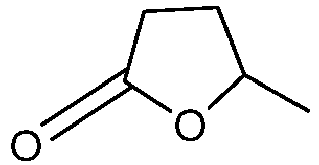
- (b) n is from 0-7 and
- (c) Z is a C1-7 linear alkane, and Y is selected from -CHOH and -CO.
- Some of the taste modifiers are novel compounds. There is therefore also provided a compound of the formula II,

n Y m 1 CO 2,3,5,6 1 CHOH 2,3 3 CO or CHOH 1,2,3 4 CO 2,3 4 CHOH 1,2,3 5 CO 1,2 5 CHOH 1 5 CH2OH - 5 CHO - 6 CO 1 6 CH2OH - 6 CHO - 7 CHO - - Particular examples of these novel compounds are 8-hydroxy gamma decalactone and 9-hydroxy gamma decalactone.
- The synthesis of the hydroxy-γ-lactones 3 may be carried out in one step from the appropriate hydroxyolefin 2 using a radical-mediated atom transfer cyclization approach, scheme 3 (Yorimitsu, Hideki; Wakabayashi, Katsuyu; Shinokubo, Hiroshi and Oshima, Koichiro, Bulletin of the Chemical Society of Japan (2001), 74(10), 1963-1970). Alternatively, if the desired hydroxylolefin 2 is not commercially available then it can be prepared in two steps from the commercial hydroxyolefin by oxidation to the aldehyde using PDC, Dess-Martin reagent or another aldehyde selective oxidant familiar to those skilled in the art. One skilled in the art will recognize that there are numerous ways that one might prepare the hydroxyolefin starting materials. One important point is that if n=2, then the cyclization of the hydroxyl may occur providing carboxytetrahydrofurans as byproducts (Yorimitsu, Hideki; Wakabayashi, Katsuyu; Shinokubo, Hiroshi; Oshima, Koichiro. Tetrahedron Letters (1999), 40(3), 519-522).

- The compounds hereinabove described may be added to consumable bases. A consumable base is the totality of all the ingredients of a consumable, except for the compound hereinabove defined. These ingredients will depend on the nature of the consumable and may be selected from any of those known to and used by the art, in art-recognised quantities. These include, but are not limited to, anti-caking agents, anti-foaming agents, anti-oxidants, binders, colourants, diluents, disintegrants, emulsifiers, encapsulating agents or formulations, enzymes, fats, flavour-enhancers, flavouring agents, gums, lubricants, polysaccharides, preservatives, proteins, solubilisers, solvents, stabilisers, sugar-derivatives, surfactants, sweetening agents, vitamins, waxes, and the like. Solvents which may be used are known to those skilled in the art and include e.g. ethanol, ethylene glycol, propylene glycol, glycerine and triacetin. Encapsulants and gums include maltodextrin, gum arabic, alginates, gelatine, modified starch, and polysaccharides. Examples of additives, excipients, carriers, diluents or solvents for flavour or fragrance compounds may be found e.g. in "Perfume and Flavour Materials of Natural Origin", S. Arctander, Ed., Elizabeth, N.J., 1960; in "Perfume and Flavour Chemicals", S. Arctander, Ed., Vol. I & II, Allured Publishing Corporation, Carol Stream, USA, 1994; in "Flavourings", E. Ziegler and H. Ziegler (ed.), Wiley-VCH Weinheim, 1998, and "CTFA Cosmetic Ingredient Handbook", J.M. Nikitakis (ed.), 1st ed., The Cosmetic, Toiletry and Fragrance Association, Inc., Washington, 1988.
- The proportion of the compound hereinabove described (more than one may be used) used in a consumable will vary according to the nature of the consumable and the nature and strength of the effect desired by the flavorist. However, typical non-limiting proportions are from 0.3-20ppm when A is (i) and from 0.5-25ppm when A is (ii).
- The compounds may be used in any kind of consumable. Non-limiting examples of such consumables include:
- wet/liquid soups regardless of concentration or container, including frozen soups. For the purpose of this definition soup(s) means a food prepared from meat, poultry, fish, vegetables, grains, fruit and other ingredients, cooked in a liquid which may include visible pieces of some or all of these ingredients. It may be clear (as a broth) or thick (as a chowder), smooth, pureed or chunky, ready-to-serve, semi- condensed or condensed and may be served hot or cold, as a first course or as the main course of a meal or as a between meal snack (sipped like a beverage). Soup may be used as an ingredient for preparing other meal components and may range from broths (consommé) to sauces (cream or cheese-based soups);
- dehydrated and culinary foods, including cooking aid products such as: powders, granules, pastes, concentrated liquid products, including concentrated bouillon, bouillon and bouillon like products in pressed cubes, tablets or powder or granulated form, which are sold separately as a finished product or as an ingredient within a product, sauces and recipe mixes (regardless of technology);
- meal solutions products such as: dehydrated and freeze dried soups, including dehydrated soup mixes, dehydrated instant soups, dehydrated ready-to-cook soups, dehydrated or ambient preparations of ready-made dishes, meals and single serve entrees including pasta, potato and rice dishes;
- meal embellishment products such as: condiments, marinades, salad dressings, salad toppings, dips, breading, batter mixes, shelf stable spreads, barbecue sauces, liquid recipe mixes, concentrates, sauces or sauce mixes, including recipe mixes for salad, sold as a finished product or as an ingredient within a product, whether dehydrated, liquid or frozen;
- beverages, including beverage mixes and concentrates, including but not limited to, alcoholic and non-alcoholic ready to drink and dry powdered beverages, carbonated and non-carbonated beverages, e.g., sodas, fruit or vegetable juices, alcoholic and non-alcoholic beverages, confectionery products, e.g., cakes, cookies, pies, candies, chewing gums, gelatins, ice creams, sorbets, puddings, jams, jellies, salad dressings, and other condiments, cereal, and other breakfast foods, canned fruits and fruit sauces and the like;
- milk, cheese, yoghurt and other dairy products.
- The addition of the compounds hereinabove described confers desirable effects on the consumables, such as increased creamyness/mouthfeel in a yogurt or low-fat milk product, and the masking of bitter after-tastes in consumables containing ingredients that are bitter or that have bitter after-tastes. Particular examples are materials such as whey protein frequently found in dairy applications, and high-intensity sweeteners with known bitter lingering such as rebaudioside A, Aspartame™, Acesulfame K™ and sucralose, frequently used in beverages and low sugar dietary/health products. The concentrations for use in these uses may vary over a wide range, depending on the nature of the consumable and the desired end-result, but typical figures are shown in the following table:
moiety Creaminess/mouthfeel masking (i) 3-20ppm 0.3-15ppm (ii) 2-25ppm 0.5-15ppm - (The moieties refer to those of the formulae above. The ppm are with reference to the entire consumable.)
- The disclosure is further described with reference to the following non-limiting examples.
-

- Celite (26.9 g, 100 mmol) and pyridinium chlorochromate (28.3 g, 131 mmol) were placed in a 500 ml round bottom flask equipped with a stir bar and Dichloromethane (225 ml) was added. This orange slurry was stirred for five minutes at 22° C. Next, hept-6-en-1-ol (10 g, 88 mmol) was added and the contents were stirred at 22° C. After 2.5 hours, the reaction was determined to be complete by TLC (70:30 hexane:EtOAc) using potassium permanganate stain to visualize the spots. The reaction was filtered through a pad of silica gel using 9:1 pentane:MTBE (500 ml). The eluant was distilled off at atmospheric pressure followed by further evaporation by rotavap, with the water bath at 22° C and the vacuum at 180 mbar. This provided hept-6-enal (9.8g, 100%) as a clear oil, which was used without further purification. 1H NMR (300 MHz, CDCl3, ppm) 1.38-1.49 (m, 2H), 1.60-1.70 (m, 2 H), 2.04-2.12 (m, 2 H), 2.44 (ddd, J 1= 7 Hz, J 2= 2Hz, 2 H), 4.94-5.05 (m, 2 H), 5.72-5.86 (m, 1 H), 9.77 (t, J= 2 Hz, 1 H); 13C NMR (75 MHz, CDCl3, ppm) 21.7, 28.5, 33.6, 43.9, 115.0, 138.4, 202.7; GC/MS calculated for C7H12O 112, observed (M-1) 111.
- a Rosillo, Marta; Arnaiz, Eduardo; Abdi, Delbrin; Blanco-Urgoiti, Jaime; Dominguez, Gema; Perez-Castells, Javier. European Journal of Organic Chemistry (2008), (23), 3917-3927.
- Hept-6-enal (9.51 g, 85 mmol) from step a) above was dissolved in Diethyl ether (200 ml) and cooled to 5° C. Next, methylmagnesium bromide (26.5 ml, 85 mmol) was added dropwise maintaining an internal reaction temperature between 8° and 9.5° C. After the addition was complete, the reaction stirred for 1.5 hours at 5° C. A TLC using 80:20 hexane:EtOAc staining with potassium permanganate was made against the starting material. The starting material had been consumed and a new, more polar spot was observed. The reaction was carefully quenched with saturated ammonium chloride (30 ml) producing a white suspension. The contents were transferred to a 1L separatory funnel and diluted with MTBE (300 ml) and water (100 ml). The layers were separated and the aqueous was extracted with MTBE (75 ml). The organic layers were combined, dried (Na2SO4), filtered and concentrated. This product was isolated as a clear oil and used without further purification. 1H NMR (300 MHz, CDCl3, ppm) 1.18 (d, J= 6 Hz), 1.28-1.50 (m, 6 H), 1.75-1.88 (br s, 1 H), 2.00-2.12 (m, 2 H), 3.73-3.82 (m, 1 H), 4.92-5.03 (m, 2 H), 5.74-5.87 (m, 1 H); 13C NMR (75 MHz, CDCl3, ppm) 23.6, 25.4, 29.0, 33.8, 39.3, 68.1, 114.5, 139.0; GC/MS calculated for C8H16O 128, observed (M-1) 127.
- Oct-7-en-2-ol (2 g, 15.60 mmol) was added to a 4 dram vial followed by 2-iodoacetamide (0.962 g, 5.20 mmol), Water (0.52 ml) and (E)-4,4'-(diazene-1,2-diyl)bis(4-cyanopentanoic acid) (0.729 g, 2.60 mmol). The contents were sparged with argon for five minutes and then capped under Argon and heated to 75° C, in the dark, overnight. The next day, the contents were transferred to saturated NaHCO3 (25 ml) and extracted with EtOAc (2x50 ml). The organic layer was dried (Na2SO4), filtered and concentrated. The crude was purified on SiO2 using a gradient of 100% hexane to 100% EtOAc staining with KMnO4 to visualize the spots. The semi-pure oil derived from the first chromatography was taken up in a small amount of DCM and rechromatographed using a 40g high resolution (silicycle) SiO2 column and a gradient of 100% hexane to 100% EtOAc provided the above titled product (194 mg, 20%) as a mixture of diastereomers. 1H NMR (300 MHz, CDCl3, ppm) 1.19 (d, J= 6 Hz, 3 H), 1.35-1.50 (m, 7 H), 1.55-1.93 (m, 3 H), 2.26-2.38 (m, 1 H), 2.50-2.56 (m, 2 H), 3.74-3.84 (br m, 1 H), 4.44-4.54 (m, 1 H); 13C NMR (75 MHz, CDCl3, ppm) 23.8, 25.5, 25.6, 25.7, 28.2, 29.0, 35.7, 35.8, 39.2, 68.1, 81.1, 177.4; GC/MS calculated for C10H18O3 186, observed (M-2) 184.
-

- Celite (26.9g, 100 mmol) and pyridinium chlorochromate (32.3g, 150 mmol) were placed in a 500 ml round bottom flask equipped with a stir bar and dichloromethane (225 ml). The orange slurry was stirred for five minutes at room temperature. Next, hex-5-en-1-ol (10 g, 100 mmol) was added over two minutes and the contents were stirred at room temperature for 2.5hours. TLC (70:30 hexane:EtOAc), using potassium permanganate stain to visualize the spots, indicated a complete reaction. The reaction was filtered through a pad of silica gel using 9:1 pentane:MTBE (500 ml). The eluant was distilled off at atmospheric pressure. The contents were placed on the rotavap, with the water bath at room temperature and the vacuum at 180 mbar. This provided the desired product as a clear oil (5.89 g, 60.1%) which was used without further purification. 1H NMR (300 MHz, CDCl3, ppm) 1.64-1.80 (m, 2 H), 2.04-2.10 (m, 2 H), 2.45 (dt, J 1= 7 Hz, J 2= 2 Hz, 2 H), 4.94-5.07 (m, 2 H), 5.70-5.84 (m, 1 H), 9.77 (t, J= 2 Hz, 1 H); 13C NMR (75 MHz, CDCl3, ppm) 21.3, 33.1, 43.2, 115.7, 137.7, 202.6; GC/MS calculated for C6H10O 98, observed 98.
- Hex-5-enal (5.89 g, 60.0 mmol) was added to a 500 ml 3-neck flask and dissolved in dry diethyl ether (200 ml). This solution was cooled using an ice bath. Monitoring the reaction temperature and maintaining it between 7° and 10° C a solution of ethylmagnesium bromide (60.0 ml, 60.0 mmol) was added such that the reaction temperature never rose above 10° C. After the addition was complete, the reaction stirred for 1.5 hours at 5° C. A TLC (80:20 hexane:EtOAc visualizing spots with potassium permanganate stain), which indicated that the starting material had been consumed and a new, more polar spot had been generated. The reaction was carefully quenched with saturated ammonium chloride (30 ml) producing a white suspension. The contents were transferred to a 1L separatory funnel and diluted with MTBE (300 ml) and water (100 ml). The layers were separated and the aqueous was extracted with MTBE (75 ml). The organic layers were combined, dried (Na2SO4), filtered and concentrated. This product was isolated as a clear oil and used without further purification. 1H NMR (300 MHz, CDCl3, ppm) 0.94 (t, J= 7 Hz, 3 H), 1.35-1.61 (m, 6 H), 1.70-1.91 (m, 1 H), 2.01-2.12 (m, 2 H), 3.49-3.54 (m, 1 H), 4.92-5.04 (m, 2 H), 5.74-5.88 (m, 1 H); 13C NMR (75 MHz, CDCl3, ppm) 10.0, 25.1, 30.3, 33.9, 36.5, 73.2, 114.6, 138.9; GC/MS calculated for C8H16O 128, observed (M-H) 127.
- Oct-7-en-3-ol (2 g, 15.60 mmol) was added to a 4 dram vial followed by 2-iodoacetamide (0.962 g, 5.20 mmol), Water (0.52 ml) and (E)-4,4'-(diazene-1,2-diyl)bis(4-cyanopentanoic acid) (0.729 g, 2.60 mmol). The contents were sparged with argon for five minutes and then capped under Argon and heated to 75° C, in the dark, overnight. The next day, the contents were transferred to saturated NaHCO3 (25 ml), and extracted with EtOAc (2x50 ml). The organic layer was dried (Na2SO4), filtered and concentrated. The crude was purified on SiO2 using a gradient of 100% hexane to 100% EtOAc staining with KMnO4 to visualize the spots. Concentration of the product containing fractions gave an oil, which was taken up in a small amount of DCM and rechromatographed using a 40g high resolution (silicycle) SiO2 column and a gradient of 100% hexane to 100% EtOAc. Careful TLC (75%:25% EtOAc:hexane) eluting each plate two times and staining with KMnO4 allowed the separation of the desired product from a less polar byproduct. 1H NMR (300 MHz, CDCl3, ppm) 0.94 (t, J= 7 Hz, 3 H), 1.36-1.52 (m, 7 H), 1.55-1.93 (m, 3 H), 2.28-2.39 (m, 1 H), 2.51-2.56 (m, 2 H), 3.51-3.55 (m, 1 H), 4.47-4.53 (m, 1 H); 13C NMR (75 MHz, CDCl3, ppm) 10.0, 21.6, 21.8, 28.1, 28.2, 29.0, 30.4, 35.7, 35.8, 36.6, 36.7, 73.1, 73.2, 81.06, 81.1, 177.4; GC/MS calculated for C10H18O3 186, observed (M-2) 184.
-

- Non-1-en-4-ol (10 g, 70.3 mmol) was added to a 4 dram vial followed by Water (2.34 ml), 2-iodoacetamide (4.33 g, 23.43 mmol) and (E)-4,4'-(diazene-1,2-diyl)bis(4-cyanopentanoic acid) (3.28 g, 11.72 mmol). The mixture was sparged with argon for 5 minutes and then capped under argon and heated to 75° C overnight in the dark. The next morning the reaction was poured into saturated NaHCO3 (80 ml) and extracted with ethyl acetate (2x200 ml). The ethyl acetate layer was dried (Na2SO4) and then evaporated providing a dark orange oil. A TLC (50:50 hexane:EtOAc visualization with potassium permanganate stain) showed the unreacted nonenol (Rf∼0.8-0.9) along with a new spot lower on the plate (Rf∼0.3-0.4). The product was purified by chromatography using a gradient of 100% hexane to 40:60 hexane:EtOAc. Isolation of the product containing fractions provided a clear oil (3.48g, 74.1%), which contained a mixture of diastereomers. 1H NMR (300 MHz, CDCl3, ppm) 0.89 (t, J= 7 Hz, 3 H), 1.25-1.40 (m, 5 H), 1.41-1.55 (m, 3 H), 1.62-1.98 (m, 3 H), 2.10-2.22 (br s, 1 H), 2.31-2.45 (m, 1 H), 2.51-2.55 (m, 2 H), 3.76-3.91 (m, 1 H), 4.65-4.85 (m, 1 H); 13C NMR (75 MHz, CDCl3, ppm) 14.2, 22.8, 25.3, 28.5, 28.67, 28.7, 29.1, 31.9, 37.7, 38.2, 42.8, 43.3, 68.6, 69.5, 78.4, 79.7, 177.1, 177.4; GC/MS calculated for C11H20O3 200, observed (M-1) 199.
-

- Dichloromethane (64 ml) and hexanal (1.567 ml, 12.80 mmol) was added to a 250 ml round bottom flask and cooled to -78° C. Next, (furan-2-yloxy)trimethylsilane (2.105 ml, 12.80 mmol) and hexanal (1.567 ml, 12.80 mmol) were added followed by triethylsilyl trifluoromethanesulfonate (0.579 ml, 2.56 mmol). The contents were stirred at -78° C for 2 hours. After 2hours, 2 M HCl was added (10 ml) and the contents were warmed to room temperature, washed with brine (2x50 ml) and dried (MgSO4). The solvent was evaporated and the residue was purified by flash chromatography on SiO2 using a gradient of 100% hexane to 50:50 hexane:EtOAc providing the desired product (1.37g, 58.1%) as a clear oil. GC/MS calculated for C10H16O3 184, observed 184.
- 5-(1-Hydroxyhexyl)furan-2(5H)-one (1.37 g, 7.44 mmol) was dissolved in ethyl acetate (20 ml) and treated with Pd/C 10% (0.137 g). The contents were pumped and purged 4-5 times with Ar. Finally, a balloon of hydrogen was added and the pump purge cycle was repeated with hydrogen. The reaction was stirred overnight. The next day, the reaction was filtered through celite, washing well with EtOAc and the solvent was concentrated. The product was purified by flash chromatography on SiO2 using a gradient of 100% hexane to 50:50 hexane/EtOAc. This provided the desired product (1.32 g, 95%), a clear oil, as an 8:2 mixture of threo (major) and erythro (minor). 1H NMR (300 MHz, CDCl3, ppm) 0.90 (t, J= 7 Hz, 3 H), 1.23-1.38 (m, 5 H), 1.48-1.61 (m, 3 H), 2.10-2.31 (m, 2 H), 2.46-2.67 (m, 3 H), 3.51-3.61 (br m, 0.8 H), 3.88-3.95 (br m, 0.2 H), 4.40-4.47 (m, 1 H); 13C NMR (75 MHz, CDCl3, ppm) 14.1, 21.2, 22.6, 24.2, 25.3, 25.4, 28.8, 28.9, 31.8, 31.83, 32.1, 33.0, 71.5, 73.6, 83.1, 83.2, 177.7, 177.9; GC/MS calculated for C10H18O3 186, observed 186.
- Skim milk was used as a base to evaluate the creamyness/mouthfeel enhancement properties of the compounds. Samples with compound were compared to the base without compound added. Results are shown in Table 1 below.
Table 1: Skim milk evaluation 9-hydroxy gamma decalactone No mouthfeel 10 8-hydroxy gamma decalactone Some mouthfeel effect 10 - A commercial Kefir drink was used as a base to evaluate the creamyness/mouthfeel enhancement properties of the compounds. Samples with compound were compared to the base without compound added. Results are shown in Table 2 below.
Table 2: Kefir Evaluation Compound Taste Description Concentration (ppm) 8-hydroxy gamma decalactone Much creamier, fattier, fuller, creamier backend 2 8-hydroxy gamma decalactone more mid body, creamier 5 9-hydroxy gamma decalactone More creamy than control, upfront fullness, slightly creamier, fattier, dairy like, front to mid seems more creamier 2 9-hydroxy gamma decalactone More dairy note, more mid body, fullness mid profile, slightly creamier 5 - Compounds were prepared in a sucralose base containing 80 ppm sucralose in water. Compounds were evaluated in the base and compared to the base without any compound added. Taste descriptors are listed in the table below.
- A solution containing 80 ppm sucralose in water was used as a base to evaluate the bitter masking properties of the compounds. Samples with compound were compared to the base without compound added. Results are shown in Table 3 below.
Table 3: Sucralose evaluation Compound Taste Description Concentration (ppm) 9-hydroxy gamma decalactone Floral, little masking, waxy, slightly musty, better upfront 2 9-hydroxy gamma decalactone Some effect 5 9-hydroxy gamma decalactone High offnote, masks sweetness and bitterness at end, earthy, herby, green, reduces bitterness, masks back end, delayed waxy/mouthcoating effect 10 8-hydroxy gamma decalactone Floral, little masking, waxy, plastic, fatty note, slight upfront masking 2 8-hydroxy gamma decalactone Some effect 5 8-hydroxy gamma decalactone Masks sweetness, floral, herby, green, slight fatty character, mouthcoating, lingering, dairy fatty acid note 10 - A tasting base was prepared with 300 ppm Rebaudioside A in water. Compounds were added to the base in the concentrations indicated in the table and compared to the base without compound added. Taste descriptors are listed in Table 4 below.
Table 4: Rebaudioside A evaluation Compound Taste Description Concentration (ppm) 9-hydroxy gamma decalactone Slight fatty note at end, earthy, preserve-like 2 9-hydroxy gamma decalactone Not much 5 9-hydroxy gamma decalactone High offnote, changes profile, earthy, green, herby, slight bitter reduction, slightly fruity, back linger reduced 10 8-hydroxy gamma decalactone Masks lots of bitter, less lingering, offnote, slight fatty/coconut note, slight sweet/bitter linger, moldy earthy, preserve like 2 8-hydroxy gamma decalactone Some masking 5 8-hydroxy gamma decalactone High offnote, masks more sweetness than bitterness, completely changes profile, earthy, herby, slight bitter reduction 10 - A commercial Red Bull™ Energy drink was used as a base to evaluate the masking properties of the compounds. Compounds were added to the base in the concentrations indicated in the table and compared to the base without compound added. Taste descriptors are listed in Table 5 below.
Table 5: Red Bull™ drink evaluation Compound Taste Description Concentration (ppm) 9-hydroxy gamma decalactone Less sweetness, strong linger 5 9-hydroxy gamma decalactone Good masking, offnote 10 8-hydroxy gamma decalactone Good masking, less sweet upfront 5 8-hydroxy gamma decalactone Offnote, similar to control 10 - The preceding examples are for the purpose of illustration only and it is understood that variations and modifications can be made by one skilled in the art without departing from the scope of the invention.
Claims (6)
- A method of modifying the taste of a consumable, comprising adding to a consumable base at least one compound of the formula I
 (a) A is the moiety
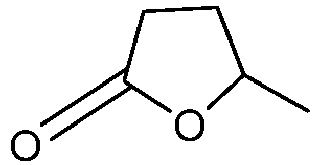 (b) n is from 0-7
and(c) Z is a C1-7 linear alkane, and Y is selected from -CHOH and -CO-. - A method according to claim 1, in which the modified taste comprises an enhanced mouthfeel or creaminess.
- A method according to claim 1, in which the modified taste comprises a reduction of bitterness contributed by other ingredients of the consumable.
- A compound of the formula II,

n Y m 1 CO 2,3,5,6 1 CHOH 2,3 3 CO or CHOH 1,2,3 4 CO 2,3 4 CHOH 1,2,3 5 CO 1,2 5 CHOH 1 5 CH2OH - 5 CHO - 6 CO 1 6 CH2OH - 6 CHO - 7 CHO - - Compound according to claim 4, wherein the compound is 8-hydroxy gamma decalactone.
- Compound according to claim 4, wherein the compound is 9-hydroxy gamma decalactone.
Applications Claiming Priority (2)
| Application Number | Priority Date | Filing Date | Title |
|---|---|---|---|
| US201261658476P | 2012-06-12 | 2012-06-12 | |
| PCT/EP2013/062007 WO2013186203A2 (en) | 2012-06-12 | 2013-06-11 | Taste modifiers |
Publications (2)
| Publication Number | Publication Date |
|---|---|
| EP2858516A2 EP2858516A2 (en) | 2015-04-15 |
| EP2858516B1 true EP2858516B1 (en) | 2017-06-07 |
Family
ID=49715500
Family Applications (1)
| Application Number | Title | Priority Date | Filing Date |
|---|---|---|---|
| EP13732106.3A Active EP2858516B1 (en) | 2012-06-12 | 2013-06-11 | Taste modifiers |
Country Status (3)
| Country | Link |
|---|---|
| US (1) | US9480280B2 (en) |
| EP (1) | EP2858516B1 (en) |
| WO (1) | WO2013186203A2 (en) |
Families Citing this family (3)
| Publication number | Priority date | Publication date | Assignee | Title |
|---|---|---|---|---|
| PT3331381T (en) * | 2015-08-07 | 2022-01-05 | V Mane Fils | Composition comprising taste modulation compounds, their use and foodstuff comprising them |
| US11151981B2 (en) * | 2019-10-10 | 2021-10-19 | International Business Machines Corporation | Audio quality of speech in sound systems |
| WO2022270560A1 (en) * | 2021-06-22 | 2022-12-29 | 不二製油グループ本社株式会社 | Masking flavorant |
Family Cites Families (7)
| Publication number | Priority date | Publication date | Assignee | Title |
|---|---|---|---|---|
| US3530149A (en) | 1966-12-23 | 1970-09-22 | Collins Chem Co Inc | Method of preparing alpha-methyl-gamma-isobutyl-butyrolactone |
| ATE132327T1 (en) | 1990-08-07 | 1996-01-15 | Quest Int | GAMMA JASMOLACTONES CONTAINING A FLAVOR COMPOSITION, THE USE OF SUCH A FLAVOR COMPOSITION OR GAMMA LACTONES FOR FLAVORING FOODS, AND THE FLAVORED FOODS |
| US20040234668A1 (en) * | 2002-12-06 | 2004-11-25 | Fuji Oil Co., Ltd. | Oil and fat for producing confectionery, process for producing the same, and product using the same |
| US7674489B2 (en) | 2005-09-30 | 2010-03-09 | Kraft Foods Global Brands Llc | Fresh cheese products containing biogenerated flavor components and methods for producing |
| WO2007141102A1 (en) | 2006-06-02 | 2007-12-13 | Symrise Gmbh & Co. Kg | Use of diacetyl dimer as an aromatic and/or flavouring substance |
| JP2011083264A (en) | 2009-10-19 | 2011-04-28 | Soda Aromatic Co Ltd | Oil and fat feel enhancer |
| JP5752241B2 (en) | 2010-05-18 | 2015-07-22 | フイルメニツヒ ソシエテ アノニムFirmenich Sa | 5-Alkenyl-2-oxo-tetrahydrofuran derivatives as flavoring agents |
-
2013
- 2013-03-12 US US13/795,200 patent/US9480280B2/en active Active
- 2013-06-11 WO PCT/EP2013/062007 patent/WO2013186203A2/en not_active Ceased
- 2013-06-11 EP EP13732106.3A patent/EP2858516B1/en active Active
Also Published As
| Publication number | Publication date |
|---|---|
| WO2013186203A2 (en) | 2013-12-19 |
| WO2013186203A3 (en) | 2014-02-06 |
| EP2858516A2 (en) | 2015-04-15 |
| US20130330457A1 (en) | 2013-12-12 |
| US9480280B2 (en) | 2016-11-01 |
Similar Documents
| Publication | Publication Date | Title |
|---|---|---|
| JP5612683B2 (en) | Pyridine derivatives with umami flavor | |
| EP2830438B1 (en) | N-acyl derivatives of gamma amino-butyric acid as food flavouring compounds, powder compositions containing them | |
| EP2830439B1 (en) | N-acyl-gaba derivatives for the improvement of the flavour profile of edible compositions | |
| EP2830437B1 (en) | N-acylated 1-aminocycloalkyl carboxylic acids as food flavouring compounds | |
| JP7846273B2 (en) | Flavor-modifying ingredients | |
| SG184154A1 (en) | Salty taste enhancer and kelp extract comprising the same | |
| JP5688995B2 (en) | Flavor improver | |
| US9480280B2 (en) | Taste modifiers | |
| JP5452017B2 (en) | Novel thiolane compounds and uses thereof | |
| JP6113256B2 (en) | Oily feeling imparting or enhancing agent full of natural feeling | |
| US3928644A (en) | Novel vegetable flavored foodstuff and vegetable flavor compositions containing 2-phenyl-4-pentenal and/or dimethyl acetal thereof | |
| EP3364776B1 (en) | Method of enhancing sweetness with cellobiose | |
| CN106659204B (en) | sweetener composition | |
| JP2019187345A (en) | Flavor improver for food and drink | |
| JP2024024766A (en) | 3-methyldodecane-4-olide and fragrance compositions using the same | |
| JP7478939B2 (en) | Flavor improver and novel acetoxy fatty acid ethyl ester having flavor improving effect | |
| JP7547717B2 (en) | Dairy protein flavor improver and novel compound having dairy protein flavor improving effect | |
| EP1858351B1 (en) | Flavoring ingredients | |
| JP6113257B2 (en) | Pealy freshness imparting or enhancing agent reminiscent of citrus peel | |
| EP2770845A2 (en) | Organic compounds | |
| JP4092380B2 (en) | Perfume composition containing nerolide-loxide and method for producing the same | |
| WO2025186080A1 (en) | Compositions and methods for taste modulation | |
| GB2511742A (en) | Off-taste masking | |
| CN105792670B (en) | Organic compounds | |
| EP3057447B1 (en) | Organic compounds having taste-modifying properties |
Legal Events
| Date | Code | Title | Description |
|---|---|---|---|
| PUAI | Public reference made under article 153(3) epc to a published international application that has entered the european phase |
Free format text: ORIGINAL CODE: 0009012 |
|
| 17P | Request for examination filed |
Effective date: 20141110 |
|
| AK | Designated contracting states |
Kind code of ref document: A2 Designated state(s): AL AT BE BG CH CY CZ DE DK EE ES FI FR GB GR HR HU IE IS IT LI LT LU LV MC MK MT NL NO PL PT RO RS SE SI SK SM TR |
|
| AX | Request for extension of the european patent |
Extension state: BA ME |
|
| DAX | Request for extension of the european patent (deleted) | ||
| 17Q | First examination report despatched |
Effective date: 20160418 |
|
| REG | Reference to a national code |
Ref country code: DE Ref legal event code: R079 Ref document number: 602013021981 Country of ref document: DE Free format text: PREVIOUS MAIN CLASS: A23L0001220000 Ipc: C07D0307200000 |
|
| GRAP | Despatch of communication of intention to grant a patent |
Free format text: ORIGINAL CODE: EPIDOSNIGR1 |
|
| RIC1 | Information provided on ipc code assigned before grant |
Ipc: C07C 59/147 20060101ALI20161221BHEP Ipc: C07C 59/185 20060101ALI20161221BHEP Ipc: A23L 27/20 20160101ALI20161221BHEP Ipc: C07D 307/20 20060101AFI20161221BHEP Ipc: C07C 59/01 20060101ALI20161221BHEP |
|
| INTG | Intention to grant announced |
Effective date: 20170119 |
|
| GRAS | Grant fee paid |
Free format text: ORIGINAL CODE: EPIDOSNIGR3 |
|
| AK | Designated contracting states |
Kind code of ref document: B1 Designated state(s): AL AT BE BG CH CY CZ DE DK EE ES FI FR GB GR HR HU IE IS IT LI LT LU LV MC MK MT NL NO PL PT RO RS SE SI SK SM TR |
|
| REG | Reference to a national code |
Ref country code: GB Ref legal event code: FG4D |
|
| GRAA | (expected) grant |
Free format text: ORIGINAL CODE: 0009210 |
|
| REG | Reference to a national code |
Ref country code: CH Ref legal event code: EP Ref country code: AT Ref legal event code: REF Ref document number: 899133 Country of ref document: AT Kind code of ref document: T Effective date: 20170615 |
|
| REG | Reference to a national code |
Ref country code: FR Ref legal event code: PLFP Year of fee payment: 5 |
|
| REG | Reference to a national code |
Ref country code: IE Ref legal event code: FG4D |
|
| REG | Reference to a national code |
Ref country code: DE Ref legal event code: R096 Ref document number: 602013021981 Country of ref document: DE |
|
| REG | Reference to a national code |
Ref country code: CH Ref legal event code: NV Representative=s name: GIVAUDAN SCHWEIZ AG GLOBAL PATENTS, CH |
|
| REG | Reference to a national code |
Ref country code: NL Ref legal event code: FP |
|
| REG | Reference to a national code |
Ref country code: LT Ref legal event code: MG4D |
|
| PG25 | Lapsed in a contracting state [announced via postgrant information from national office to epo] |
Ref country code: FI Free format text: LAPSE BECAUSE OF FAILURE TO SUBMIT A TRANSLATION OF THE DESCRIPTION OR TO PAY THE FEE WITHIN THE PRESCRIBED TIME-LIMIT Effective date: 20170607 Ref country code: GR Free format text: LAPSE BECAUSE OF FAILURE TO SUBMIT A TRANSLATION OF THE DESCRIPTION OR TO PAY THE FEE WITHIN THE PRESCRIBED TIME-LIMIT Effective date: 20170908 Ref country code: ES Free format text: LAPSE BECAUSE OF FAILURE TO SUBMIT A TRANSLATION OF THE DESCRIPTION OR TO PAY THE FEE WITHIN THE PRESCRIBED TIME-LIMIT Effective date: 20170607 Ref country code: LT Free format text: LAPSE BECAUSE OF FAILURE TO SUBMIT A TRANSLATION OF THE DESCRIPTION OR TO PAY THE FEE WITHIN THE PRESCRIBED TIME-LIMIT Effective date: 20170607 Ref country code: HR Free format text: LAPSE BECAUSE OF FAILURE TO SUBMIT A TRANSLATION OF THE DESCRIPTION OR TO PAY THE FEE WITHIN THE PRESCRIBED TIME-LIMIT Effective date: 20170607 Ref country code: NO Free format text: LAPSE BECAUSE OF FAILURE TO SUBMIT A TRANSLATION OF THE DESCRIPTION OR TO PAY THE FEE WITHIN THE PRESCRIBED TIME-LIMIT Effective date: 20170907 |
|
| REG | Reference to a national code |
Ref country code: AT Ref legal event code: MK05 Ref document number: 899133 Country of ref document: AT Kind code of ref document: T Effective date: 20170607 |
|
| PG25 | Lapsed in a contracting state [announced via postgrant information from national office to epo] |
Ref country code: BG Free format text: LAPSE BECAUSE OF FAILURE TO SUBMIT A TRANSLATION OF THE DESCRIPTION OR TO PAY THE FEE WITHIN THE PRESCRIBED TIME-LIMIT Effective date: 20170907 Ref country code: RS Free format text: LAPSE BECAUSE OF FAILURE TO SUBMIT A TRANSLATION OF THE DESCRIPTION OR TO PAY THE FEE WITHIN THE PRESCRIBED TIME-LIMIT Effective date: 20170607 Ref country code: LV Free format text: LAPSE BECAUSE OF FAILURE TO SUBMIT A TRANSLATION OF THE DESCRIPTION OR TO PAY THE FEE WITHIN THE PRESCRIBED TIME-LIMIT Effective date: 20170607 Ref country code: SE Free format text: LAPSE BECAUSE OF FAILURE TO SUBMIT A TRANSLATION OF THE DESCRIPTION OR TO PAY THE FEE WITHIN THE PRESCRIBED TIME-LIMIT Effective date: 20170607 |
|
| PG25 | Lapsed in a contracting state [announced via postgrant information from national office to epo] |
Ref country code: EE Free format text: LAPSE BECAUSE OF FAILURE TO SUBMIT A TRANSLATION OF THE DESCRIPTION OR TO PAY THE FEE WITHIN THE PRESCRIBED TIME-LIMIT Effective date: 20170607 Ref country code: SK Free format text: LAPSE BECAUSE OF FAILURE TO SUBMIT A TRANSLATION OF THE DESCRIPTION OR TO PAY THE FEE WITHIN THE PRESCRIBED TIME-LIMIT Effective date: 20170607 Ref country code: AT Free format text: LAPSE BECAUSE OF FAILURE TO SUBMIT A TRANSLATION OF THE DESCRIPTION OR TO PAY THE FEE WITHIN THE PRESCRIBED TIME-LIMIT Effective date: 20170607 Ref country code: CZ Free format text: LAPSE BECAUSE OF FAILURE TO SUBMIT A TRANSLATION OF THE DESCRIPTION OR TO PAY THE FEE WITHIN THE PRESCRIBED TIME-LIMIT Effective date: 20170607 Ref country code: RO Free format text: LAPSE BECAUSE OF FAILURE TO SUBMIT A TRANSLATION OF THE DESCRIPTION OR TO PAY THE FEE WITHIN THE PRESCRIBED TIME-LIMIT Effective date: 20170607 |
|
| PG25 | Lapsed in a contracting state [announced via postgrant information from national office to epo] |
Ref country code: PL Free format text: LAPSE BECAUSE OF FAILURE TO SUBMIT A TRANSLATION OF THE DESCRIPTION OR TO PAY THE FEE WITHIN THE PRESCRIBED TIME-LIMIT Effective date: 20170607 Ref country code: IT Free format text: LAPSE BECAUSE OF FAILURE TO SUBMIT A TRANSLATION OF THE DESCRIPTION OR TO PAY THE FEE WITHIN THE PRESCRIBED TIME-LIMIT Effective date: 20170607 Ref country code: IS Free format text: LAPSE BECAUSE OF FAILURE TO SUBMIT A TRANSLATION OF THE DESCRIPTION OR TO PAY THE FEE WITHIN THE PRESCRIBED TIME-LIMIT Effective date: 20171007 Ref country code: SM Free format text: LAPSE BECAUSE OF FAILURE TO SUBMIT A TRANSLATION OF THE DESCRIPTION OR TO PAY THE FEE WITHIN THE PRESCRIBED TIME-LIMIT Effective date: 20170607 |
|
| REG | Reference to a national code |
Ref country code: DE Ref legal event code: R097 Ref document number: 602013021981 Country of ref document: DE |
|
| REG | Reference to a national code |
Ref country code: IE Ref legal event code: MM4A |
|
| PG25 | Lapsed in a contracting state [announced via postgrant information from national office to epo] |
Ref country code: MC Free format text: LAPSE BECAUSE OF FAILURE TO SUBMIT A TRANSLATION OF THE DESCRIPTION OR TO PAY THE FEE WITHIN THE PRESCRIBED TIME-LIMIT Effective date: 20170607 |
|
| PLBE | No opposition filed within time limit |
Free format text: ORIGINAL CODE: 0009261 |
|
| STAA | Information on the status of an ep patent application or granted ep patent |
Free format text: STATUS: NO OPPOSITION FILED WITHIN TIME LIMIT |
|
| PG25 | Lapsed in a contracting state [announced via postgrant information from national office to epo] |
Ref country code: DK Free format text: LAPSE BECAUSE OF FAILURE TO SUBMIT A TRANSLATION OF THE DESCRIPTION OR TO PAY THE FEE WITHIN THE PRESCRIBED TIME-LIMIT Effective date: 20170607 Ref country code: IE Free format text: LAPSE BECAUSE OF NON-PAYMENT OF DUE FEES Effective date: 20170611 Ref country code: LU Free format text: LAPSE BECAUSE OF NON-PAYMENT OF DUE FEES Effective date: 20170611 |
|
| 26N | No opposition filed |
Effective date: 20180308 |
|
| PG25 | Lapsed in a contracting state [announced via postgrant information from national office to epo] |
Ref country code: SI Free format text: LAPSE BECAUSE OF FAILURE TO SUBMIT A TRANSLATION OF THE DESCRIPTION OR TO PAY THE FEE WITHIN THE PRESCRIBED TIME-LIMIT Effective date: 20170607 |
|
| REG | Reference to a national code |
Ref country code: BE Ref legal event code: MM Effective date: 20170630 |
|
| REG | Reference to a national code |
Ref country code: FR Ref legal event code: PLFP Year of fee payment: 6 |
|
| PG25 | Lapsed in a contracting state [announced via postgrant information from national office to epo] |
Ref country code: BE Free format text: LAPSE BECAUSE OF NON-PAYMENT OF DUE FEES Effective date: 20170630 |
|
| PG25 | Lapsed in a contracting state [announced via postgrant information from national office to epo] |
Ref country code: MT Free format text: LAPSE BECAUSE OF NON-PAYMENT OF DUE FEES Effective date: 20170611 |
|
| PG25 | Lapsed in a contracting state [announced via postgrant information from national office to epo] |
Ref country code: HU Free format text: LAPSE BECAUSE OF FAILURE TO SUBMIT A TRANSLATION OF THE DESCRIPTION OR TO PAY THE FEE WITHIN THE PRESCRIBED TIME-LIMIT; INVALID AB INITIO Effective date: 20130611 |
|
| REG | Reference to a national code |
Ref country code: CH Ref legal event code: NV Representative=s name: GIVAUDAN INTERNATIONAL SA GLOBAL PATENTS, CH |
|
| PG25 | Lapsed in a contracting state [announced via postgrant information from national office to epo] |
Ref country code: CY Free format text: LAPSE BECAUSE OF FAILURE TO SUBMIT A TRANSLATION OF THE DESCRIPTION OR TO PAY THE FEE WITHIN THE PRESCRIBED TIME-LIMIT Effective date: 20170607 |
|
| PG25 | Lapsed in a contracting state [announced via postgrant information from national office to epo] |
Ref country code: MK Free format text: LAPSE BECAUSE OF FAILURE TO SUBMIT A TRANSLATION OF THE DESCRIPTION OR TO PAY THE FEE WITHIN THE PRESCRIBED TIME-LIMIT Effective date: 20170607 |
|
| PG25 | Lapsed in a contracting state [announced via postgrant information from national office to epo] |
Ref country code: TR Free format text: LAPSE BECAUSE OF FAILURE TO SUBMIT A TRANSLATION OF THE DESCRIPTION OR TO PAY THE FEE WITHIN THE PRESCRIBED TIME-LIMIT Effective date: 20170607 |
|
| PG25 | Lapsed in a contracting state [announced via postgrant information from national office to epo] |
Ref country code: PT Free format text: LAPSE BECAUSE OF FAILURE TO SUBMIT A TRANSLATION OF THE DESCRIPTION OR TO PAY THE FEE WITHIN THE PRESCRIBED TIME-LIMIT Effective date: 20170607 |
|
| PG25 | Lapsed in a contracting state [announced via postgrant information from national office to epo] |
Ref country code: AL Free format text: LAPSE BECAUSE OF FAILURE TO SUBMIT A TRANSLATION OF THE DESCRIPTION OR TO PAY THE FEE WITHIN THE PRESCRIBED TIME-LIMIT Effective date: 20170607 |
|
| P01 | Opt-out of the competence of the unified patent court (upc) registered |
Effective date: 20230502 |
|
| PGFP | Annual fee paid to national office [announced via postgrant information from national office to epo] |
Ref country code: DE Payment date: 20250618 Year of fee payment: 13 |
|
| PGFP | Annual fee paid to national office [announced via postgrant information from national office to epo] |
Ref country code: GB Payment date: 20250618 Year of fee payment: 13 |
|
| PGFP | Annual fee paid to national office [announced via postgrant information from national office to epo] |
Ref country code: NL Payment date: 20250618 Year of fee payment: 13 |
|
| PGFP | Annual fee paid to national office [announced via postgrant information from national office to epo] |
Ref country code: FR Payment date: 20250624 Year of fee payment: 13 |
|
| PGFP | Annual fee paid to national office [announced via postgrant information from national office to epo] |
Ref country code: CH Payment date: 20250701 Year of fee payment: 13 |