EP2857974A2 - Testing framework for policy-based workflows - Google Patents
Testing framework for policy-based workflows Download PDFInfo
- Publication number
- EP2857974A2 EP2857974A2 EP14187280.4A EP14187280A EP2857974A2 EP 2857974 A2 EP2857974 A2 EP 2857974A2 EP 14187280 A EP14187280 A EP 14187280A EP 2857974 A2 EP2857974 A2 EP 2857974A2
- Authority
- EP
- European Patent Office
- Prior art keywords
- policy
- path
- workflow
- control flow
- flow graph
- Prior art date
- Legal status (The legal status is an assumption and is not a legal conclusion. Google has not performed a legal analysis and makes no representation as to the accuracy of the status listed.)
- Ceased
Links
Images



Classifications
-
- G—PHYSICS
- G06—COMPUTING OR CALCULATING; COUNTING
- G06F—ELECTRIC DIGITAL DATA PROCESSING
- G06F11/00—Error detection; Error correction; Monitoring
- G06F11/36—Prevention of errors by analysis, debugging or testing of software
- G06F11/3668—Testing of software
- G06F11/3672—Test management
- G06F11/3684—Test management for test design, e.g. generating new test cases
-
- G—PHYSICS
- G06—COMPUTING OR CALCULATING; COUNTING
- G06F—ELECTRIC DIGITAL DATA PROCESSING
- G06F9/00—Arrangements for program control, e.g. control units
- G06F9/06—Arrangements for program control, e.g. control units using stored programs, i.e. using an internal store of processing equipment to receive or retain programs
- G06F9/46—Multiprogramming arrangements
- G06F9/52—Program synchronisation; Mutual exclusion, e.g. by means of semaphores
Definitions
- the path enumeration logic 302 may determine the vertices-edges combination(s) for some or all of the paths that reach (and end at) the end point vertex. Accordingly, the path enumeration logic 302 may determine a set of policy control flow graph paths 330 from the policy control flow graph 320.
- the workflow 400 receives an input request (e.g., for a particular book) and extracts a content type of the input request into a variable "CT.”
- an input request e.g., for a particular book
- the workflow 400 converts the input request from JSON to XML.
- the workflow 400 may, for example, execute a ToJSON transcoding function on the input request that converts the payload of the input request from JSON format to XML format.
- the workflow 400 sends the input request to Server1.
- Figure 5 shows an example of process 500 the test generation logic 124 may employ to determine path constraints for a path in a workflow.
- the example process 500 shown in Figure 5 illustrates how the test generation logic 124 may determine path constraints for path D (listed above) of the exemplary policy-based XML workflow 400 shown in Figure 4 , i.e.., the path in the workflow 400 with the path ordering of node 401 > node 402 > node 404 > node 406 > node 407 > node 408.
- the test generation logic 124 may sequentially examine the nodes in this path, and update path constraints for path D of workflow 400 based on the characteristics or effect of the currently examined node.
- the test generation logic 124 may apply a set of test inputs 134 to a current version and previous version of the input policy-based workflow. By comparing the results, the test generation logic 124 may identify differences in the results caused by the version change in the policy-based workflow. In that regard, the test generation logic 124 may identify expected differences in the results (e.g., expected from modified policies and/or condition) and unexpected differences (e.g., crashing errors that may have been inadvertently triggered based on the version difference). In this way, the test generation logic 124 may use testing results from the previous or current version of the input workflow as testing oracles 136 to identify issues in the workflow that need resolution or debugging. In some variations, a tester may inspect the result differences and update one or more values of the testing oracles 136.
- All or part of the logic described above may be implemented as instructions for execution by a processor, controller, or other processing device and may be stored in a tangible or non-transitory machine-readable or computer-readable medium such as flash memory, volatile memory, non-volatile memory, random access memory (RAM) or read only memory (ROM), erasable programmable read only memory (EPROM) or other machine-readable medium such as a compact disc read only memory (CDROM), or magnetic or optical disk.
- a product such as a computer program product, may include a storage medium and computer readable instructions stored on the medium, which when executed in an endpoint, computer system, or other device, cause the device to perform operations according to any of the description above.
- the system may be implemented in many different ways.
- the processing capability described above may be distributed among multiple system components, such as among multiple processors and memories, optionally including multiple distributed processing systems.
- Parameters, databases, and other data structures may be separately stored and managed, may be incorporated into a single memory or database, may be logically and physically organized in many different ways, and may implemented in many ways, including data structures such as linked lists, hash tables, or implicit storage mechanisms.
- Programs may be parts (e.g., subroutines) of a single program, separate programs, distributed across several memories and processors, or implemented in many different ways, such as in a library, such as a shared library (e.g., a dynamic link library (DLL)).
- the DLL for example, may store code that performs any of the system processing described above. While various embodiments of the systems and methods have been described, it will be apparent to those of ordinary skill in the art that many more embodiments and implementations are possible within the scope of the systems and methods.
Landscapes
- Engineering & Computer Science (AREA)
- Theoretical Computer Science (AREA)
- Computer Hardware Design (AREA)
- Quality & Reliability (AREA)
- Physics & Mathematics (AREA)
- General Engineering & Computer Science (AREA)
- General Physics & Mathematics (AREA)
- Management, Administration, Business Operations System, And Electronic Commerce (AREA)
- Data Exchanges In Wide-Area Networks (AREA)
- Stored Programmes (AREA)
- Debugging And Monitoring (AREA)
Abstract
Description
- This disclosure relates to a framework for test generation. This disclosure also relates to generating a testing framework for policy-based Extensible Markup Language (XML) workflows.
- Rapid advances in technology have resulted in increasingly large applications that process increasingly large amounts of data. Applications can reach thousands, to hundreds of thousands, and even millions of lines of code. As one example, a workflow application may include several thousands of lines of code and include millions to billions or more of possible paths to traverse through the workflow. Developers may produce code, including workflow applications, without a systematic testing framework to comprehensively or effectively test the code. Manually generating tests to comprehensively test the code may be laborious, cost multiple days of effort, or be completely infeasible in some cases. Some conventional automated testing techniques include randomly selecting input test values to test the XML code or partially testing a workflow by checking the validity of selected paths (e.g. by traversing the selected paths). These and other existing automated testing methods may be incomplete and inefficient, as complex code may require a great number of executions to identify feasible paths and may errantly return infeasible paths.
- The descriptions below include methods, systems, logic, and devices for automated, comprehensive testing of a policy-based workflow.
- In one aspect, a method may be performed by a processor of a system. The method may include the steps of receiving a policy-based Extensible Markup Language (XML) workflow comprising multiple policy nodes and multiple condition nodes, the multiple policy nodes and multiple condition nodes accessible through a common input point in the policy-based XML workflow; parsing the policy-based XML workflow to construct a policy control flow graph for the policy-based XML workflow; identifying paths in the policy control flow graph; determining path constraints for the paths in the policy control flow graph, the path constraints identifying one or more path conditions for traversing a respective path in the policy control flow graph; generating a set of test inputs for the policy-based XML workflow using the path constraints, where the set of test inputs, when input into the policy-based XML workflow cause the policy-based XML workflow to traverse the identified paths in the policy control flow graph; and storing the generated set of test inputs into a memory of the system.
- In another aspect, a system may include code parsing logic, path enumeration logic, constraint collection logic, and constraint solving logic. The code parsing logic may be configured to receive a policy-based Extensible Markup Language (XML) workflow comprising multiple policy nodes and multiple condition nodes, the multiple policy nodes and multiple condition nodes accessible through a common input point in the policy-based XML workflow and parse the policy-based XML workflow to construct a policy control flow graph for the policy-based XML workflow. The path enumeration logic may be configured to identify paths in the policy control flow graph. The constraint collection logic may be configured to determine path constraints for the paths in the policy control flow graph, the path constraints identifying one or more path conditions for traversing a respective path in the policy control flow graph. The constraint solving logic may be configured to generate a set of test inputs for the policy-based XML workflow using the path constraints, where the set of test inputs, when input into the policy-based XML workflow cause the policy-based XML workflow to traverse the identified paths in the policy control flow graph.
- In another aspect, a non-transitory computer readable medium may include processor executable instructions, that when executed by a processor, cause a system to: receive a policy-based workflow comprising multiple policy nodes and multiple condition nodes, the multiple policy nodes and multiple condition nodes accessible through a common input point in the policy-based XML workflow; parse the policy-based workflow to construct a policy control flow graph for the policy-based workflow; identify paths in the policy control flow graph; filter the identified paths into a set of filtered paths; determine path constraints for the set of filtered paths, the path constraints identifying one or more path conditions for traversing a respective filtered path in the set of filtered paths; and generate a set of test inputs for the policy-based workflow using the path constraints, where the set of test inputs, when input into the policy-based XML workflow cause the policy-based workflow to traverse the set of filtered paths.
- The processor-executable instructions may also cause the system to filter the identified paths into the set of filter paths according to a filtering criterion.
- Further, the filtered set of paths may comprise each feasible path in the policy control flow graph. The filtered set of paths may comprise feasible paths that traverse a particular node in policy control flow graph.
- The processor-executable instructions may cause the system to determine the path constraints by: identifying a subpath in the policy control flow graph, the subpath not including an endpoint node in the policy control flow graph. Determining the path constraints may further include determining a path condition for reaching the subpath in the policy control flow graph.
- Also, the processor-executable instructions may cause the system to generate the set of test inputs by generating a first test input that satisfies the path constraints for one of the identified paths.
- Features applicable to one of the aspects above may be combined with features of another aspect. For example, in the method aspect described above, the paths identified in the policy control flow graph may be filtered into a set of filtered paths. The path constraints may be determined for the set of filtered paths and the test inputs may cause the policy based workflow to traverse the set of filtered paths. These features may also be applicable to the system aspect described above.
- The innovation may be better understood with reference to the following drawings and description. In the figures, like reference numerals designate corresponding parts throughout the different views.
-
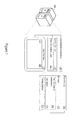
Figure 1 shows an example of a system for testing a policy-based Extensible Markup Language (XML) workflow. -
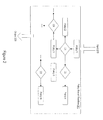
Figure 2 shows an example of a policy-based workflow that the test generation logic may generate test inputs for. -
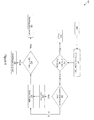
Figure 3 shows an example of a process the test generation logic may employ to generate test inputs. -
Figure 4 shows an example of a policy-based XML workflow that the test generation logic may generate test inputs for. -
Figure 5 shows an example of process the test generation logic may employ to determine path constraints for a path in a workflow. -
Figure 6 shows an example of logic for generating a set of tests for comprehensively testing a policy-based workflow. -
Figure 1 shows an example of asystem 100 for testing a policy-based Extensible Markup Language (XML) workflow. Thesystem 100 may include acommunication interface 120,system circuitry 121, and auser interface 122. Thecommunication interface 120 may support communication across any number of networks and according to any number communication standards, protocols, methods, topologies, or configurations. The user interface 112 may include a graphical user interface (GUI) 126 to present an output to or receive inputs from a user. - The
system circuitry 121 may implement any of the processing performed by thesystem 100 in hardware, firmware, software, or any combination thereof. Thesystem circuitry 121 includestest generation logic 124. As discussed in greater detail below, thetest generation logic 124 may generate a set of tests that comprehensively test the policy-based XML workflow. In that regard, a system executing the set of tests (e.g., test inputs) may traverse each feasible path of the policy-based XML workflow. A feasible path may refer to a path in the policy-based XML workflow that an input can cause the workflow to traverse through. A path in the workflow may refer to an ordering of nodes in the policy-based workflow that ends at an end point node and that an input to the workflow may traverse through. - In some implementations, the
system circuitry 121 includes one ormore processors 130 and amemory 131. Thememory 131 may storetest generation instructions 132,test inputs 134, andtesting oracles 136. Theprocessors 130 may execute thetest generation instructions 132 to generate a set oftest inputs 134 for comprehensively testing a policy-based XML workflow. Thetesting oracles 136 may specify previous or expected outputs for the set ofinput tests 134. Thetesting oracles 136 may be configured, adapted, or adjusted by a system administrator or code tester, for example. -
Figure 2 shows an example of a policy-basedworkflow 200 that thetest generation logic 124 may generatetest inputs 134 for. The policy basedworkflow 200 may be implemented in XML, for example. Various tools allow users to generate or write policy-based XML workflows. Some examples include application programming interface (API) management tools such as Apigee(R), Layer7 Technologies, and WSO2(TM), integration tools such as Mulesoft(TM) and WSO2, Extensible Stylesheet Language (XSL) Transformation tools, access control policy evaluation tools, Business Process Execution Language (BPEL) engines, and more. - The policy-based
workflow 200 may receive aninput 210 and implement a processing flow to produce anoutput 220. The type and format of theinput 210 may vary depending on the purpose of the policy-basedworkflow 200. When the policy-basedworkflow 200 is implemented as part of an API management system or access control policy system, theinput 210 may take the form of a HyperText Transfer Protocol (HTTP) request, for instance. When the policy-basedworkflow 200 is implemented as part of an XSL transformation system, theinput 210 may take the form of an XML document. - The policy-based
workflow 200 may include multiple points (e.g., nodes) to process or direct aninput 210. For example, the exemplary policy-basedworkflow 200 includes policy nodes and condition nodes. Policy-based workflows may be characterized in that they are only accessible from a limited number of input or entry points. In that regard, the only point to control or perturb a path in theworkflow 200 may be at these input points. As shown inFigure 2 , theworkflow 200 includes the policies labeled as "Policy 1," "Policy 2," "Policy 3," "Policy 4", "Policy 5", and "Policy N," with the node labeled as "Policy 1" acting as the only entry point to theworkflow 200. In processing aparticular input 210, the policy-basedworkflow 200 may execute particular policies in theworkflow 200 depending on conditions of different variables, e.g., depending on the value of input variables included as part of theinput 210, output variables included as part of theoutput 220, system variables, variables processed by previous policies in theworkflow 200, and others. Conditions in the policy-basedworkflow 200 may specify which of the policies in theworkflow 200 to execute, e.g., by controlling the direction or path taken by theinput 210 in theworkflow 200. As seen inFigure 2 , theexemplary workflow 200 includes the conditions labeled as "C1," "C2," "C3," and "CN." Variables and conditions included in aparticular workflow 200 may vary depending on the specific system implementing theworkflow 200 or purpose of theworkflow 200. - A policy in the policy-based
workflow 200 may include processing logic that manipulates an input, output, or control flow of theworkflow 200. For example, a "Quota" policy may affect the control flow of the policy-basedworkflow 200 by limiting how often a client app is permitted to invoke an API over a given time interval. A workflow policy may affect the state of theworkflow 200 by extracting or manipulating variables, such as input, output, or system variables. Examples of such policies may include policies that assign a variable value or extract a variable value from an input, output, or system variable. Some policies in theworkflow 200 may manipulate the format of theinput 210 oroutput 220. For instance, a JSON2XML policy in theworkflow 200 may convert aninput 210 implemented in a JavaScript Object Notation (JSON) format into an XML format. In that regard, the JSON2XML policy may have a pre-condition that theinput 210 be in a JSON format and a post-condition that the processed input is in XML format. - The policy-based
workflow 200 produces anoutput 220. As examples, theoutput 220 may take the form of an HTTP response in an API management system, and accept/deny message for an access control policy, or an output XML or HTML document for an XSL transformation system. - The
test generation logic 124 generates a set oftest inputs 134 for the policy-basedworkflow 200. Thetest generation logic 124 may generate thetest inputs 134 as inputs into the policy-basedworkflow 200 that traverse, for example, each feasible path in theworkflow 200. In that regard, thetest inputs 134, when input into the policy-basedworkflow 200, may cover every feasible path in theworkflow 200, thus allowing comprehensive testing of the policy-basedworkflow 200. - The
test generation logic 124 may quickly and efficiently generate thetest inputs 134 for theworkflow 200 in an automated fashion, even with for workflows of increased size. A policy-based XML workflow may include thousands of lines of code and multiple policies and conditions. As an illustrative example, a policy-based XML workflow with fifty (50) conditions may include as many as 2^50 number of possible paths. Even if not every one of the 2^50 possible number of paths are feasible, thetest generation logic 124 may generatetest inputs 134 that cover each of the millions or billions (or more) of feasible paths in the illustrative policy-based XML policy with 50 conditions. -
Figure 3 shows an example aprocess 300 thetest generation logic 124 may employ to generatetest inputs 134. In some implementations, thetest generation logic 124 includescode parsing logic 301,path enumeration logic 302,constraint collection logic 303, andconstraint solving logic 304, as shown inFigure 3 . - The
test generation logic 124 may receive aninput workflow 310 and parse theinput workflow 310 using thecode parsing logic 301. Thetest generation logic 124 may, in some instances, adapt theinput workflow 310 into a format recognizable by thecode parsing logic 301. For instance, thesystem 100 may implement thecode parsing logic 301 to specifically parse XML code. Upon receiving aninput workflow 310 in a format other than XML (e.g., JSON), thetest generation logic 124 or other logic in thesystem 100 may transcode theinput workflow 310 into XML format, e.g., as proxy code. - The
code parsing logic 301 may parse theinput workflow 310 or proxy code to construct a policy control flow graph (PCFG) 320. The policy control flow graph may refer to a representation of the policy-based workflow in the form of a data structure identifying the relationships between nodes in a workflow. Thecode parsing logic 301 may parse XML code to identify the policies and/or conditions specified in theinput workflow 310. In some variations, thecode parsing logic 301 represents the identified policies or conditions of theinput workflow 310 as vertices in the policycontrol flow graph 320. Thecode parsing logic 301 may also identify edges between policies or conditions in theinput workflow 310 and represent the identified edges in the policycontrol flow graph 320. A particular vertex or edge in the policycontrol flow graph 320 may include one or more conditions for reaching the particular vertex or traversing the particular edge. Thecode parsing logic 301 may represent the policycontrol flow graph 320 as a collection of vertices and edges, e.g., as a Java Graph object. - In some implementations, the
code parsing logic 301 may represent all policies, conditions, and/or edges of theinput workflow 310 in the policycontrol flow graph 320. In other implementations, thecode parsing logic 301 may represent less than all of the policies, conditions, and/or edges of the input workflow in the policycontrol flow graph 320. - Continuing discussion of the
exemplary process 300, thepath enumeration logic 302 may enumerate, e.g., identify, paths in theinput workflow 310 by processing the policycontrol flow graph 320. Thepath enumeration logic 302 may identify paths in the policycontrol flow graph 320 by, for example, identifying an end point vertex (e.g., node) and determining the vertices-edges combination(s) in the policycontrol flow graph 320 that reach the end point vertex. As another example, thepath enumeration logic 302 may sequentially process vertices and edges in the policycontrol flow graph 320, e.g., starting from the input point of theinput workflow 310. Upon identifying an end point vertex, thepath enumeration logic 302 may determine the vertices-edges combination(s) for some or all of the paths that reach (and end at) the end point vertex. Accordingly, thepath enumeration logic 302 may determine a set of policy controlflow graph paths 330 from the policycontrol flow graph 320. - The
path enumeration logic 302 may determine the set of policy controlflow graph paths 330 to include some or all of the possible paths in theinput workflow 310. In various implementations, the set of policy controlflow graph paths 330 may include all of the feasible paths in theinput workflow 310 and not include non-feasible paths in theinput workflow 310. A non-feasible path may refer to a path in a policy-based workflow that no input can cause the workflow to traverse through or that the workflow can never execute. One example of a non-feasible path is a path that includes conflicting condition requirements. In this example, the non-feasible path may include a first vertex (e.g., first policy) that can only be reached when a particular input variable is greater than the threshold value as well as a second vertex (e.g., second policy) that can only be reached when the particular input variable is less than the threshold value. Accordingly, thepath enumeration logic 302 may filter or exclude non-feasible paths in theinput workflow 310 from the policy controlflow graph paths 330. - In some variations, the
path enumeration logic 302 may determine the set of policy controlflow graph paths 330 to include a particular subset of the feasible paths ininput policy 310. For example, thepath enumeration logic 302 may exclude some feasible paths from set of the path controlflow graph paths 330 according to any number of filtering criteria. One example of a filtering criterion, discussed above, may specify excluding non-feasible paths from the path controlflow graph paths 330. Another exemplary filtering criterion may specify excluding paths (feasible and/or non-feasible) that traverse a particular vertex or edge in the policycontrol flow graph 320. Yet another exemplary filtering criterion may specify including feasible paths that traverse a particular vertex or edge in thepolicy control graph 320 and excluding non-feasible paths as well as feasible paths that do not traverse the particular vertex or edge. Thetest generation logic 124 may specify various additional or alternative filtering criteria, such as path criteria for paths exceeding a path length threshold (e.g., in number of vertices or edges), paths manipulating or accessing a particular variable, paths that trigger a particular condition or set of conditions, and more. - Continuing, the
constraint collection logic 303 may determinepath constraints 340 for the set of paths included in the policy controlflow graph paths 330. Path constraints for a particular path may refer to the conditions, variables, format, state, or other characteristics that an input (e.g., request) to theinput workflow 310 would include to traverse the particular path. In doing so, theconstraint collection logic 303 may examine a particular path to identify the system state and/or path conditions to inputworkflow 310 to traverse that particular path. Theconstraint collection logic 303 may sequentially examine nodes in the particular path and update the path constraints for the particular path based a change in the system state caused by the current node, particular path condition required to traverse from the current node to a subsequent node, and more. In that regard, theconstraint collection logic 303 may append (e.g., add) a path condition to traverse from the current node to a subsequent node to previously determined path condition(s) for traversing to the current node. Theconstraint collection logic 303 may continue to examine nodes in the particular path until reaching an end point (e.g., end node) of the particular path. - In some variations, the
path constraints 340 may include a set of constraints for each path in the policycontrol flow graphs 330. In other variations, theconstraint collection logic 303 may generatepath constraints 340 for select paths in thePCFG paths 330 that meet one or more path filtering criteria, including any of criteria discussed above. In that regard, thetest generation logic 124 may filter the number of paths for whichtest inputs 134 are determined at various points in theexemplary process 300, by excluding edges and/or vertices when generating the policycontrol flow graph 320, by excluding particular paths when determining the policy controlflow graph paths 330, by foregoing determining constraints for particular paths when determining thepath constraints 340, or any combination thereof. - Continuing the
exemplary process 300, theconstraint solving logic 304 may process, e.g., solve, thepath constraints 340 to produce one ormore test inputs 134. Put another way, theconstraint solving logic 304 may determine, as thetest inputs 134, the inputs to theinput workflow 310 that satisfy thepath constraints 340. Thus, thetest generation logic 124 may determine a set oftest inputs 134 that traverse each feasible path in theinput workflow 310. Thetest inputs 134 allow comprehensive testing of theinput workflow 310 by testing each feasible path in theinput workflow 310. - An illustrative example of determining path constraints for a path in an exemplary workflow and solving the path constraints to determine an output test for the exemplary workflow is presented next in
Figures 4 and5 . -
Figure 4 shows an example of a policy-basedXML workflow 400 that thetest generation logic 124 may generatetest inputs 134 for. In the particular example shown inFigure 4 , the policy-basedXML workflow 400 is implemented in XML as part of a bookstore API that links to two backend servers on which electronic books are stored. One backend server stores books with a book category of "fiction" and the other back server stores books with a book category of "non-fiction." The backend servers accept XML requests. - The policy-based
XML workflow 400 inFigure 4 includes nine (9) nodes, including the policy nodes labeled asnodes nodes workflow 400 operates as follows: - At
policy node 401, theworkflow 400 receives an input request (e.g., for a particular book) and extracts a content type of the input request into a variable "CT." - At
condition node 402, theworkflow 400 determines whether the content type of the input request, as identified in the variable "CT," is neither JSON nor XML. If true (i.e., the content type of the input request not JSON or XML), theworkflow 400 proceeds topolicy node 403. If false (i.e., the content type of the input request is either JSON or XML), theworkflow 400 proceeds to thecondition node 404. - At
policy node 403, the "FAULT" policy sends an error message to a user.Policy node 403 is an end point vertex, and thus one path in theworkflow 400 can be identified as the path sequentially traversing the following nodes:node 401 >node 402 >node 403. - At
condition node 404, theworkflow 400 determines whether the content type of input request is JSON, for example by evaluating the condition "Header.ContentType == JSON". As another implementation, thecondition node 404 may examine the variable CT, which also stores the content type of the input request. When the content type of the input request is JSON, theworkflow 400 proceeds topolicy node 405. When the content type of the input request is not JSON (as evaluated at condition node 404), theworkflow 400 proceeds topolicy node 406. - At
policy node 405, theworkflow 400 converts the input request from JSON to XML. Theworkflow 400 may, for example, execute a ToJSON transcoding function on the input request that converts the payload of the input request from JSON format to XML format. - At
policy node 406, theworkflow 400 determines the category of book requested in the input request by extracting an XPATH expression of the input request into a variable "Cat." For example, theworkflow 400 may perform the following: "Cat = Request.xpath(/Bookstore/Book/Category)." - At
condition node 407, theworkflow 400 determines whether the category of book requested in the input request is fiction by evaluating a condition on the "Cat" variable. Theworkflow 400 may execute the following condition: "Cat == Fiction." When the "Cat" variable indicates the input request is requesting a book of category fiction, theworkflow 400 proceeds topolicy node 408. When not, theworkflow 400 proceeds topolicy node 409. - At
policy node 408, theworkflow 400 sends the input request to Server1. - At
policy node 409, theworkflow 400 sends the input request to Server2. - The
test generation logic 124 may determine a set oftest inputs 134 that, when executed, traverse each feasible path in the policy-basedXML workflow 400. In doing so, thetest generation logic 124 may construct a policycontrol flow graph 320 of theworkflow 400 and determine a set of policy controlflow graph paths 330 for theworkflow 400, e.g., as described above. In particular, thetest generation logic 124 may determine all five (5) feasible paths of theworkflow 400 as the set of policy controlflow graph paths 330, which are as follows: - Path A:
node 401 >node 402 >node 403. - Path B:
node 401 >node 402 >node 404 >node 405 >node 406 >node 407 >node 408. - Path C:
node 401 >node 402 >node 404 >node 405 >node 406 > node 7 > node 9. -
Path D: node 401 >node 402 >node 404 >node 406 >node 407 >node 408. - Path E:
node 401 >node 402 >node 404 >node 406 >node 407 >node 409. - The
test generation logic 124 may determine path constraints for each of the five feasible paths in theworkflow 400. One example is presented next inFigure 5 . -
Figure 5 shows an example ofprocess 500 thetest generation logic 124 may employ to determine path constraints for a path in a workflow. In particular, theexample process 500 shown inFigure 5 illustrates how thetest generation logic 124 may determine path constraints for path D (listed above) of the exemplary policy-basedXML workflow 400 shown inFigure 4 , i.e.., the path in theworkflow 400 with the path ordering ofnode 401 >node 402 >node 404 >node 406 >node 407 >node 408. Thetest generation logic 124 may sequentially examine the nodes in this path, and update path constraints for path D ofworkflow 400 based on the characteristics or effect of the currently examined node. - The
process 500 inFigure 5 includes various points which specify the system state (labeled as "State") and path conditions (labeled as "PC") identified by thetest generation logic 124 after examining a particular node in the policy-basedworkflow 400. As seen inFigure 5 , theexemplary process 500 includes the points labeled as point 501-506. - The
test generation logic 124 may examine an initial node in a path or workflow. In the example shown inFigure 5 , thetest generation logic 124 examinesnode 401, which is the initial node in the policy-basedworkflow 400 as well as the initial node in path D. After examiningnode 401, thetest generation logic 124 identifies the system state and path conditions specified in thepoint 501. In particular, thetest generation logic 124 may determine that after reachingnode 401, the system state of theworkflow 400 includes the variable "CT" with an extracted value of the content type of the header of an input request. The path condition to traverse fromnode 401 tonode 402 is "1" as theworkflow 400 always proceeds fromnode 401 tonode 402. - After examining
node 402, thetest generation logic 124 identifies the system state and path conditions specified in thepoint 502. Thetest generation logic 124 may identifynode 402 as a condition node and determine that no change is made to the system state. Also, thetest generation logic 124 may determine that to traverse fromnode 402 tonode 404, the condition specified innode 402 must be evaluated to be false, e.g., that the content type of the input request is either JSON or XML. Accordingly, thetest generation logic 124 may update the path conditions to be "Header.ContentType == XML || Header.ContentType == JSON." Atpoint 502, the path conditions may specify the particular conditions that may be specified in an input request for theworkflow 400 to traverse a particular subpath in theworkflow 400 or path D, i.e.,node 401 >node 402 >node 404. - The
test generation logic 124 may similarly examine the remaining nodes in path D ofworkflow 400. After examiningcondition node 404, thetest generation logic 124 identifies the system state and path conditions specified in thepoint 503. Thetest generation logic 124 may determine that to traverse fromnode 404 tonode 405, the condition "Header.ContentType == JSON" as specified incondition node 404 must be evaluated to be true. Accordingly, thetest generation logic 124 may add the path condition fromnode 404 >node 405 to the previously determined path conditions fornode 401 >node 402 >node 405, which results in the path condition: "(Header.ContentType == XML || Header.ContentType == JSON") && Header.ContentType == JSON." Thetest generation logic 124 may simplify the path condition expression to be "Header.ContentType == JSON," as shown inpoint 503. - After examining
node 405, thetest generation logic 124 identifies the system state and path conditions specified in thepoint 504. Asnode 405 always traverses tonode 406 in theworkflow 400, thetest generation logic 124 may determine no changes to the path conditions. Thetest generation logic 124 may update the system state based on the JSON2XML function performed atnode 405 by updating the system state to reflect the conversion of payload content type from JSON to XML. As seen inFigure 5 ,point 504 includes the added variable information: "Request.Payload = ToXML(Request.Payload)." Similarly, after examiningnode 406, thetest generation logic 124 identifies the system state and path conditions specified in thepoint 505, which updates the system state to further include the variable information for the variable "Cat" that identifies the category of book requested by the input request. - After examining
node 407, thetest generation logic 124 identifies the system state and path conditions specified in thepoint 506. Thetest generation logic 124 may determine the condition for traversing fromnode 407 tonode 408 in path D of theworkflow 400. Specifically, thetest generation logic 124 may determine the condition "Cat == Fiction" must be evaluated to be TRUE, and accordingly append the condition "ToXML(Request.Payload).xpath(/Bookstore/Book/Category) == 'Fiction'" (e.g., the path condition to traverse fromnode 407 to node 408) to the previously determined path condition of "Header.ContentType == JSON" (e.g., the previously determined path conditions for reachingnode 407 along path D). - The
test generation logic 124 may cease examining nodes for collecting path constraints in response to identifying or examining an end point node in a path. In the example shown inFigure 5 , thetest generation logic 124 identifiesnode 408 as an end point node in theworkflow 400, thus ending path D. Thetest generation logic 124 may determine that executing the policy specified innode 408 does not impact the system state or path conditions, and thus determines the path constraints of path D of the workflow as the system state specified inpoint 506, the path conditions specified inpoint 506, or both. In some variations, thetest generation logic 124 determines the path constraints as the path conditions to reach a particular node in a workflow along a particular path in the workflow, e.g., the path conditions determined by thetest generation logic 124 to reachnode 408 along path D in theworkflow 400. - In some variations, the
test generation logic 124 determines the path constraints for previously enumerated paths in a workflow. In other variations, thetest generation logic 124 may examine nodes and determine path constraints for one or more subpaths in the workflow (e.g., ordering of nodes in the workflow that does not include an end point node) before identifying a path (e.g., ordering of nodes in the workflow that includes an end point node). In these variations, thetest generation logic 124 may collect constraints and determine paths simultaneously, for instance. - As one exemplary illustration, the
test generation logic 124 may process (e.g., examine) some or all of the nodes in a workflow, the edges between nodes in the workflow, or both. Thetest generation logic 124 may determine whether a currently examined node is an end point node. For a current node that is not an end point node, thetest generation logic 124 may determine the path conditions for some or all of the subpaths to reach the current node. Then, for a subsequent node linked to the current node, thetest generation logic 124 may determine append the path condition to traverse to the subsequent node from the current node to the determined path conditions for reaching the current node. In this regard, thetest generation logic 124 may sequentially and systematically determine path conditions for traversing various nodes in the workflow through various subpaths. When the current node is an end point node, thetest generation logic 124 may identify one or more paths in the workflow that conclude at the end point node and determine the respective path constraints for the one or more paths as the path conditions for traversing to the endpoint node across various subpaths in the workflow. Thetest generation logic 124 may, for example, determine path constraints for the feasible paths in the workflow. - The
test generation logic 124 may generate a test input according to the path constraints of a particular path in a policy-based workflow. The test input may be in the form of an input (e.g., input request) to the workflow that traverses the particular path of the policy-based workflow. In that regard, thetest generation logic 124 may test specific policies and/or conditions in the workflow even when the only access to the policy-based workflow to perturb a path to reach the specific policies and/or conditions is at an initial input to the workflow or system front-end. - The
test generation logic 124 may generate the test input according to the path constraints of a particular path in an input format supported by a workflow. Returning to the example shown inFigure 5 , thetest generation logic 124 may process, e.g., solve, the following path constraint for path D in the exemplary policy-basedworkflow 400 ofFigure 4 : "ToXML(Request.Payload).xpath(/Bookstore/Book/Category) == 'Fiction' && Header.ContentType == JSON." For example, thetest generation logic 124 may solve the path constraint for path D by generating a test input as the following cURL request, executable from a command line in a system executing cURL software:
      curl http://bookstore.server.com/getBooks -H "ContentType: test/json"
       '{
             "Bookstore": [
             {
                    "Book": [
                   {
                          "Category": "Fiction"
                          "Name": "..."
                          "Author": "..."
                   }]
             }]
       }'
The system may be implemented in many different ways. Each module, such as the
Claims (15)
- A computer-implemented method comprising:receiving, by a processor of a system, a policy-based Extensible Markup Language (XML) workflow comprising multiple policy nodes and multiple condition nodes, the multiple policy nodes and multiple condition nodes accessible through a common input point in the policy-based XML workflow;parsing, by the processor, the policy-based XML workflow to construct a policy control flow graph for the policy-based XML workflow;identifying, through the processor, paths in the policy control flow graph;determining, by the processor, path constraints for the paths in the policy control flow graph, the path constraints identifying one or more path conditions for traversing a respective path in the policy control flow graph;generating, with the processor, a set of test inputs for the policy-based XML workflow using the path constraints, where the set of test inputs, when input into the policy-based XML workflow, cause the policy-based XML workflow to traverse the identified paths in the policy control flow graph; andstoring, by the processor, the generated set of test inputs in a memory of the system.
- The computer-implemented method of claim 1, where identifying comprises identifying each feasible path in policy control flow graph.
- The computer-implemented method of claim 1, where identifying comprises identifying each feasible path in policy control flow graph without identifying any non-feasible paths in the policy control flow graph.
- The computer-implemented method of any one of the preceding claims, where determining path constraints for the paths in the policy control flow graph comprises:Identifying, through the processor, a subpath in the policy control flow graph, the subpath not including an endpoint node in the policy control flow graph; anddetermining, through the processor, a path condition for reaching the subpath in the policy control flow graph.
- The computer-implemented method of any one of the preceding claims, where determining path constraints for paths in the policy control flow graph comprises:identifying, in the policy control flow graph, a first node and a second node linked to the first node;determining a path condition for traversing from the first node to the second node; andappending the path condition to a previously determined path condition for reaching the first node.
- The computer-implemented method of any one of the preceding claims, where generating the set of test inputs comprises generating a first test input that satisfies the path constraints for one of the identified paths.
- The computer-implemented method of any one of the preceding claims, further comprising:accessing, through the processor, a set of testing oracles for the policy-based XML workflow;testing, through the processor, the policy-based XML workflow using the set of test inputs; andcomparing, through the processor, a result of the testing with the testing oracles.
- A system comprising:a processor; andmemory in communication with the processor, the memory having stored thereon:code parsing logic, that when executed by the processor, is configured to:receive a policy-based Extensible Markup Language (XML) workflow comprising multiple policy nodes and multiple condition nodes, the multiple policy nodes and multiple condition nodes accessible through a common input point in the policy-based XML workflow; andparse the policy-based XML workflow to construct a policy control flow graph for the policy-based XML workflow; andpath enumeration logic, that when executed by the processor, is configured to:policy control flow graph; andconstraint collection logic, that when executed by the processor, is configured to:determine path constraints for the paths in the policy control flow graph, the path constraints identifying one or more path conditions for traversing a respective path in the policy control flow graph; andconstraint solving logic, that when executed by the processor, is configured to:generate a set of test inputs for the policy-based XML workflow using the path constraints, where the set of test inputs, when input into the policy-based XML workflow cause the policy-based XML workflow to traverse the identified paths in the policy control flow graph.
- The system of claim 8, where the path enumeration logic is configured to identify, as the paths in the policy control flow graph, each feasible path in the policy control flow graph.
- The system of claim 8, where the path enumeration logic is configured to identify, as the paths in the policy control flow graph, each feasible path in the policy control flow graph without identifying any non-feasible path in the policy control flow graph.
- The system of any one of claims 8 to 10, where the constraint collection logic is configured to determine the path constraints by:identifying a subpath in the policy control flow graph, the subpath not including an endpoint node in the policy control flow graph; anddetermining a path condition for reaching the subpath in the policy control flow graph.
- The system of any one of claims 8 to 12, where the constraint collection logic is configured to determine the path constraints by:identifying, in the policy control flow graph, a first node and a second node linked to the first node;determining a path condition for traversing from the first node to the second node; andappending the path condition to a previously determined path condition for reaching the first node.
- The system of any one of claims 8 to 12, where the constraint solving logic is configured to generate the set of test inputs by:generating a first test input that satisfies the path constraints for one of the identified paths.
- The system of any one of claims 8 to 13, the memory having further stored thereon testing logic, that when executed by the processor, is configured to:access a set of testing oracles for the policy-based XML workflow;input the set of test inputs into the policy-based XML workflow to obtain test results; andcompare the test results with the testing oracles.
- A non-transitory computer readable medium comprising:processor executable instructions, that when executed by a processor,cause a system to perform operations according to the method of any one of claims 1 to 7.
Applications Claiming Priority (1)
| Application Number | Priority Date | Filing Date | Title |
|---|---|---|---|
| US14/044,467 US9367434B2 (en) | 2013-10-02 | 2013-10-02 | Testing framework for policy-based workflows |
Publications (2)
| Publication Number | Publication Date |
|---|---|
| EP2857974A2 true EP2857974A2 (en) | 2015-04-08 |
| EP2857974A3 EP2857974A3 (en) | 2015-07-22 |
Family
ID=51687824
Family Applications (1)
| Application Number | Title | Priority Date | Filing Date |
|---|---|---|---|
| EP14187280.4A Ceased EP2857974A3 (en) | 2013-10-02 | 2014-10-01 | Testing framework for policy-based workflows |
Country Status (3)
| Country | Link |
|---|---|
| US (1) | US9367434B2 (en) |
| EP (1) | EP2857974A3 (en) |
| AU (1) | AU2014240232B2 (en) |
Families Citing this family (24)
| Publication number | Priority date | Publication date | Assignee | Title |
|---|---|---|---|---|
| US10169571B1 (en) * | 2012-07-18 | 2019-01-01 | Sequitur Labs, Inc. | System and method for secure, policy-based access control for mobile computing devices |
| EP3216177B1 (en) | 2014-11-06 | 2021-04-14 | Hewlett Packard Enterprise Development LP | Network policy graphs |
| WO2017014770A1 (en) | 2015-07-22 | 2017-01-26 | Hewlett Packard Enterprise Development Lp | Adding metadata associated with a composite network policy |
| US9766927B1 (en) * | 2015-10-06 | 2017-09-19 | Amazon Technologies, Inc. | Data flow management in processing workflows |
| US10289534B1 (en) * | 2015-10-29 | 2019-05-14 | Amdocs Development Limited | System, method, and computer program for efficiently automating business flow testing |
| US10642720B2 (en) * | 2016-09-15 | 2020-05-05 | Talend, Inc. | Test case generator built into data-integration workflow editor |
| US10095600B2 (en) | 2016-10-07 | 2018-10-09 | International Business Machines Corporation | Real-time globalization verification on development operations |
| US10812342B2 (en) | 2017-04-28 | 2020-10-20 | Hewlett Packard Enterprise Development Lp | Generating composite network policy |
| US11343352B1 (en) | 2017-06-21 | 2022-05-24 | Amazon Technologies, Inc. | Customer-facing service for service coordination |
| US10635789B1 (en) | 2017-06-21 | 2020-04-28 | Amazon Technologies, Inc. | Request authorization using recipe-based service coordination |
| US10289533B2 (en) * | 2017-08-30 | 2019-05-14 | Sap Se | Managing extraction of data for testing |
| KR101904911B1 (en) * | 2017-10-13 | 2018-10-08 | 한국인터넷진흥원 | Method for Automatically Detecting Security Vulnerability Based on Hybrid Fuzzing, and Apparatus thereof |
| CN109582577A (en) * | 2018-11-30 | 2019-04-05 | 成都德辰博睿信息技术有限公司 | Wireless device detection method, device, computer equipment and storage medium |
| US10684966B1 (en) | 2019-02-21 | 2020-06-16 | Amazon Technologies, Inc. | Orchestrating dataflows with inferred data store interactions |
| US11106569B1 (en) | 2019-05-23 | 2021-08-31 | Iqvia Inc. | Requirements to test system and method |
| US11899566B1 (en) * | 2020-05-15 | 2024-02-13 | Google Llc | Training and/or using machine learning model(s) for automatic generation of test case(s) for source code |
| US11941413B2 (en) | 2020-06-29 | 2024-03-26 | Amazon Technologies, Inc. | Managed control plane service |
| US11948005B2 (en) | 2020-06-29 | 2024-04-02 | Amazon Technologies, Inc. | Managed integration of constituent services of multi-service applications |
| US11348019B2 (en) * | 2020-08-06 | 2022-05-31 | Cisco Technology, Inc. | Advanced workflow based self-serve automation system |
| US12086141B1 (en) | 2021-12-10 | 2024-09-10 | Amazon Technologies, Inc. | Coordination of services using PartiQL queries |
| CN115934519B (en) * | 2022-11-28 | 2025-11-18 | 卫宁健康科技集团股份有限公司 | Testing methods, equipment, and media based on Unified Modeling Language (UML) flowcharts |
| US12158881B2 (en) * | 2022-12-13 | 2024-12-03 | Evernorth Strategic Development, Inc. | Systems and methods for automated dynamic database search queries |
| US12169450B1 (en) * | 2024-01-15 | 2024-12-17 | Morgan Stanley Services Group Inc. | System and method for software workflow test creation |
| CN118012004B (en) * | 2024-01-26 | 2024-10-29 | 北京航空航天大学 | Multi-target test data generation method based on self-adaptive resonance topological network |
Family Cites Families (7)
| Publication number | Priority date | Publication date | Assignee | Title |
|---|---|---|---|---|
| CA2447443A1 (en) | 2003-10-29 | 2005-04-29 | Ibm Canada Limited - Ibm Canada Limitee | Method and system for optimizing a software program using interprocedural code motion |
| US8239238B2 (en) * | 2005-03-21 | 2012-08-07 | Microsoft Corporation | Methods and apparatus for encoding a work item type definition |
| US8494832B2 (en) | 2007-06-20 | 2013-07-23 | Sanjeev Krishnan | Method and apparatus for software simulation |
| WO2009029760A1 (en) * | 2007-08-31 | 2009-03-05 | Iosemantics, Llc | Quality assurance tools for use with source code and a semantic model |
| US8479171B2 (en) * | 2010-05-24 | 2013-07-02 | Fujitsu Limited | Generating test sets using intelligent variable selection and test set compaction |
| US8656370B2 (en) * | 2011-08-26 | 2014-02-18 | Fujitsu Limited | Symbolic execution of javascript software using a control flow graph |
| US10223246B2 (en) * | 2012-07-30 | 2019-03-05 | Infosys Limited | System and method for functional test case generation of end-to-end business process models |
-
2013
- 2013-10-02 US US14/044,467 patent/US9367434B2/en active Active
-
2014
- 2014-10-01 EP EP14187280.4A patent/EP2857974A3/en not_active Ceased
- 2014-10-01 AU AU2014240232A patent/AU2014240232B2/en not_active Ceased
Non-Patent Citations (1)
| Title |
|---|
| None |
Also Published As
| Publication number | Publication date |
|---|---|
| AU2014240232A1 (en) | 2015-04-16 |
| US9367434B2 (en) | 2016-06-14 |
| AU2014240232B2 (en) | 2015-12-17 |
| EP2857974A3 (en) | 2015-07-22 |
| US20150095895A1 (en) | 2015-04-02 |
Similar Documents
| Publication | Publication Date | Title |
|---|---|---|
| AU2014240232B2 (en) | Testing framework for policy-based workflows | |
| US10177996B2 (en) | System and method for validating documentation of representational state transfer (REST) services | |
| US10949178B1 (en) | Method and system for decomposing a global application programming interface (API) graph into an application-specific API subgraph | |
| US8549138B2 (en) | Web test generation | |
| US9734044B2 (en) | Automatic test case generation | |
| US11216342B2 (en) | Methods for improved auditing of web sites and devices thereof | |
| US20130036108A1 (en) | Method and system for assisting users with operating network devices | |
| US20130191439A1 (en) | Managing script file dependencies and load times | |
| US9037552B2 (en) | Methods for analyzing a database and devices thereof | |
| US8713368B2 (en) | Methods for testing OData services | |
| US9940464B2 (en) | Static security analysis using a hybrid representation of string values | |
| US11030384B2 (en) | Identification of sequential browsing operations | |
| US10831565B2 (en) | Fault tolerant adapter system to consume database as a service | |
| CN114385148B (en) | A method, apparatus, device, and storage medium for implementing linkage functions. | |
| US20120151497A1 (en) | Programmatic modification of a message flow during runtime | |
| CN109324958B (en) | A REST unified verification method, device, device and readable storage medium | |
| WO2024235253A1 (en) | Buried point processing method and apparatus | |
| US20110238633A1 (en) | Electronic file comparator | |
| US11176022B2 (en) | Health diagnostics and analytics for object repositories | |
| Mayer et al. | A quantitative study on the re-executability of publicly shared scientific workflows | |
| US20140337069A1 (en) | Deriving business transactions from web logs | |
| US20230094137A1 (en) | Generating and visualizing a data structure of a management model of an application server | |
| US20210382908A1 (en) | Dataset integration for a computing platform | |
| JP7470769B1 (en) | How to analyze cloud API changes | |
| CN118349718A (en) | DrissionPage-based webpage data acquisition method, drissionPage-based webpage data acquisition equipment and medium |
Legal Events
| Date | Code | Title | Description |
|---|---|---|---|
| PUAI | Public reference made under article 153(3) epc to a published international application that has entered the european phase |
Free format text: ORIGINAL CODE: 0009012 |
|
| 17P | Request for examination filed |
Effective date: 20141001 |
|
| AK | Designated contracting states |
Kind code of ref document: A2 Designated state(s): AL AT BE BG CH CY CZ DE DK EE ES FI FR GB GR HR HU IE IS IT LI LT LU LV MC MK MT NL NO PL PT RO RS SE SI SK SM TR |
|
| AX | Request for extension of the european patent |
Extension state: BA ME |
|
| PUAL | Search report despatched |
Free format text: ORIGINAL CODE: 0009013 |
|
| AK | Designated contracting states |
Kind code of ref document: A3 Designated state(s): AL AT BE BG CH CY CZ DE DK EE ES FI FR GB GR HR HU IE IS IT LI LT LU LV MC MK MT NL NO PL PT RO RS SE SI SK SM TR |
|
| AX | Request for extension of the european patent |
Extension state: BA ME |
|
| RIC1 | Information provided on ipc code assigned before grant |
Ipc: G06F 11/36 20060101AFI20150615BHEP |
|
| R17P | Request for examination filed (corrected) |
Effective date: 20160114 |
|
| RBV | Designated contracting states (corrected) |
Designated state(s): AL AT BE BG CH CY CZ DE DK EE ES FI FR GB GR HR HU IE IS IT LI LT LU LV MC MK MT NL NO PL PT RO RS SE SI SK SM TR |
|
| STAA | Information on the status of an ep patent application or granted ep patent |
Free format text: STATUS: THE APPLICATION HAS BEEN REFUSED |
|
| 18R | Application refused |
Effective date: 20181116 |