EP2856727B1 - Methods and apparatus for media transmission in telecommunications networks - Google Patents
Methods and apparatus for media transmission in telecommunications networks Download PDFInfo
- Publication number
- EP2856727B1 EP2856727B1 EP12756471.4A EP12756471A EP2856727B1 EP 2856727 B1 EP2856727 B1 EP 2856727B1 EP 12756471 A EP12756471 A EP 12756471A EP 2856727 B1 EP2856727 B1 EP 2856727B1
- Authority
- EP
- European Patent Office
- Prior art keywords
- rtp
- ims
- transport protocol
- media transport
- packet
- Prior art date
- Legal status (The legal status is an assumption and is not a legal conclusion. Google has not performed a legal analysis and makes no representation as to the accuracy of the status listed.)
- Not-in-force
Links
- 238000000034 method Methods 0.000 title claims description 37
- 230000005540 biological transmission Effects 0.000 title claims description 13
- 230000027455 binding Effects 0.000 claims description 45
- 238000009739 binding Methods 0.000 claims description 45
- 238000004590 computer program Methods 0.000 claims description 7
- 230000007704 transition Effects 0.000 claims description 4
- 230000006870 function Effects 0.000 description 10
- 230000011664 signaling Effects 0.000 description 8
- 238000013519 translation Methods 0.000 description 7
- 230000014616 translation Effects 0.000 description 7
- 238000004891 communication Methods 0.000 description 6
- 238000006243 chemical reaction Methods 0.000 description 5
- 238000013507 mapping Methods 0.000 description 5
- 230000008569 process Effects 0.000 description 5
- 230000010354 integration Effects 0.000 description 3
- 238000010586 diagram Methods 0.000 description 2
- 230000000977 initiatory effect Effects 0.000 description 2
- 239000012092 media component Substances 0.000 description 2
- 238000012545 processing Methods 0.000 description 2
- 238000012546 transfer Methods 0.000 description 2
- 239000003795 chemical substances by application Substances 0.000 description 1
- 238000005516 engineering process Methods 0.000 description 1
- 238000001914 filtration Methods 0.000 description 1
- 230000003993 interaction Effects 0.000 description 1
- 230000002452 interceptive effect Effects 0.000 description 1
- 238000005259 measurement Methods 0.000 description 1
- 238000012986 modification Methods 0.000 description 1
- 230000004048 modification Effects 0.000 description 1
- 230000004044 response Effects 0.000 description 1
Images


Classifications
-
- H—ELECTRICITY
- H04—ELECTRIC COMMUNICATION TECHNIQUE
- H04L—TRANSMISSION OF DIGITAL INFORMATION, e.g. TELEGRAPHIC COMMUNICATION
- H04L65/00—Network arrangements, protocols or services for supporting real-time applications in data packet communication
- H04L65/60—Network streaming of media packets
- H04L65/75—Media network packet handling
- H04L65/762—Media network packet handling at the source
-
- H—ELECTRICITY
- H04—ELECTRIC COMMUNICATION TECHNIQUE
- H04L—TRANSMISSION OF DIGITAL INFORMATION, e.g. TELEGRAPHIC COMMUNICATION
- H04L65/00—Network arrangements, protocols or services for supporting real-time applications in data packet communication
- H04L65/10—Architectures or entities
- H04L65/1016—IP multimedia subsystem [IMS]
-
- H—ELECTRICITY
- H04—ELECTRIC COMMUNICATION TECHNIQUE
- H04L—TRANSMISSION OF DIGITAL INFORMATION, e.g. TELEGRAPHIC COMMUNICATION
- H04L65/00—Network arrangements, protocols or services for supporting real-time applications in data packet communication
- H04L65/10—Architectures or entities
- H04L65/102—Gateways
- H04L65/1023—Media gateways
- H04L65/103—Media gateways in the network
-
- H—ELECTRICITY
- H04—ELECTRIC COMMUNICATION TECHNIQUE
- H04L—TRANSMISSION OF DIGITAL INFORMATION, e.g. TELEGRAPHIC COMMUNICATION
- H04L65/00—Network arrangements, protocols or services for supporting real-time applications in data packet communication
- H04L65/10—Architectures or entities
- H04L65/102—Gateways
- H04L65/1043—Gateway controllers, e.g. media gateway control protocol [MGCP] controllers
-
- H—ELECTRICITY
- H04—ELECTRIC COMMUNICATION TECHNIQUE
- H04L—TRANSMISSION OF DIGITAL INFORMATION, e.g. TELEGRAPHIC COMMUNICATION
- H04L65/00—Network arrangements, protocols or services for supporting real-time applications in data packet communication
- H04L65/60—Network streaming of media packets
- H04L65/65—Network streaming protocols, e.g. real-time transport protocol [RTP] or real-time control protocol [RTCP]
Definitions
- the present invention relates to methods and apparatus for media transmission in telecommunications networks. More particularly, the invention relates to methods and apparatus for supporting the transmission of media to and from an endpoint of an IP Multimedia Subsystem session, wherein the endpoint implements an alternative media transport protocol other than Real-time Transport Protocol.
- the IP Multimedia Subsystem is the technology defined by the Third Generation Partnership Project (3GPP) to provide IP Multimedia services over telecommunication networks (see 3GPP TS 22.228, TS 23.228, TS 24.229, TS 29.228, TS 29.229, TS 29.328 and TS 29.329).
- IMS provides key features to enrich the end-user person-to-person communication experience through the integration and interaction of services.
- IMS allows new rich person-to-person (client-to-client) as well as person-to-content (client-to-server) communications over an IP-based network.
- the IMS is able to connect to both PSTN/ISDN (Public Switched Telephone Network/Integrated Services Digital Network) as well as the Internet.
- PSTN/ISDN Public Switched Telephone Network/Integrated Services Digital Network
- FIG. 1 illustrates schematically the architecture for the IMS core network and its relationship to an IP-Connectivity Access Network (IP-CAN).
- IP-CAN IP-Connectivity Access Network
- CSCFs Call/Session Control Functions
- BGCFs Border Gateway Control Functions
- MRFCs Media Resource Function Controllers
- the 3GPP architecture defines three types of CSCFs: a Proxy CSCF (P-CSCF) is the first point of contact within the IMS for a SIP terminal; a Serving CSCF (S-CSCF) provides services to the subscriber; and an Interrogating CSCF (I-CSCF) identifies the correct S-CSCF and forwards to that S-CSCF a request received from a SIP terminal via a P-CSCF.
- P-CSCF Proxy CSCF
- S-CSCF Serving CSCF
- I-CSCF Interrogating CSCF
- the P-CSCF serves as a Back-to-Back User Agent (SIP B2BUA).
- SIP B2BUA Back-to-Back User Agent
- the P-CSCF is responsible for forwarding SIP registration messages from the SIP terminal (e.g. the User Equipment (UE)), to the I-CSCF and subsequent call set-up requests and responses to the S-CSCF.
- the P-CSCF maintains the mapping between logical subscriber SIP URI address and physical UE IP address and a security association, for both authentication and confidentiality.
- the P CSCF may include an IMS Application Level Gateway (IMS-ALG) function.
- IMS-ALG IMS Application Level Gateway
- the P-CSCF/IMS-ALG interacts with an IMS Access Gateway (IMS-AGW), over the Iq interface, for control of the boundary at the signalling and media layers (e.g. including pinhole firewall, Network Address and Port Translations (NAPT) lawful intercept and numerous other features).
- IMS-AGW IMS Access Gateway
- media layers e.g. including pinhole firewall, Network Address and Port Translations (NAPT) lawful intercept and numerous other features.
- the IMS-AGW controls the transport boundary at layers 3 and 4 between subscribers and the service provider's network. This function acts as a pinhole firewall and NAT device protecting the service provider's IMS network. It controls access by packet filtering on IP address/port and opening/closing gates (pinholes) into the network. It uses NAPT to hide the IP addresses/ports of the service elements in the IMS network. Other features include QoS packet marking, bandwidth and signalling rate policing, usage metering and QoS measurements for the media flows.
- the IMS-AGW sits at the boundary between an access network and a core network, at the core network side, and provides the functionality of a Core Border Gateway Function (C-BGF). It is also noted that the combination/integration of the P-CSCF and IMS-ALG at the signalling plane and the IMS-AGW at the media plane on the access side provides a Session Border Controller (SBC).
- SBC Session Border Controller
- the Interconnect Border Control Function provides overall control of the boundary between different service provider networks. It provides security for the IMS network in terms of signaling information by implementing a Topology-Hiding Inter-network Gateway (THIG) sub-function, and IPv4-IPv6 inter-working by implementing an IMS ALG.
- the IMS ALG provides the necessary application function for SIP/SDP protocol stack in order to establish communication between IPv6 and IPv4 SIP applications.
- the IMS ALG receives an incoming SIP message, and changes the appropriate SIP/SDP parameters, translating the IPv6 address to IPv4 addresses and vice versa.
- the IBCF also invokes the Inter-Working Function (described below) when connecting non-SIP or non-IPv6 networks, and performs admission control and bandwidth allocation using local policies or via interface to PCRF elements. Lastly, the IBCF interacts with TrGW for control of the boundary at the transport layers including pinhole firewall, NAPT and numerous other features.
- the Transition Gateway controls the transport boundary between service provider networks at layers 3 and 4 (e.g. with similar media functions as the IMS-AGW).
- the TrGW is located within the media path and controlled by the IBCF, provides network address/port translation and IPv4/IPv6 protocol translation, and supports proactive and reactive transcoding.
- the TrGW sits at the boundary between two core networks and provides the functionality of an Interconnection BGF (I-BGF).
- I-BGF Interconnection BGF
- SBC Session Border Controller
- telecommunications network operators want to be able to easily and quickly integrate and deploy services combining web and Internet applications with telecommunications network capabilities. It is therefore desired that telecommunication networks are able to support voice and video communications to and from web applications provided on User Equipment (UE).
- UE User Equipment
- web browsers and web applications use protocols such as Hypertext Transfer Protocol (HTTP), Real-time Transport Protocol (RTP) in conjunction with the RTP Control Protocol (RTCP), and Real Time Messaging Protocol (RTMP) for delivering and controlling media.
- HTTP Hypertext Transfer Protocol
- RTP Real-time Transport Protocol
- RTCP Real-time Transport Protocol
- RTMP Real Time Messaging Protocol
- the IMS core network makes use of the Session Initiation Protocol (SIP) to set up and control calls or sessions between user terminals (or user terminals and application servers), and media transmissions are carried using the Real-time Transport Protocol (RTP).
- SIP Session Initiation Protocol
- RTP Real-time Transport Protocol
- SDP Session Description Protocol
- SIP signalling is used to describe and negotiate the media components of the session (e.g. port numbers, protocols, codecs).
- an IMS-AGW at the boundary between the access network and the IMS core network may be required to act as a media gateway/server with respect to the UE, and may therefore be required handle the conversion between RTP used for media transmission by the IMS and some other media transport protocol that is used by the web browser/application provided at the UE, such as RTMP.
- RTP radio frequency
- some other media transport protocol such as RTMP
- SDP used by the IMS to describe and negotiate the media components of a session makes use of dynamically allocated RTP payload type numbers to identify the codec/media format(s) that can be used for the media, and one of these dynamically allocated RTP payload type numbers must be included in the payload type (PT) header field of corresponding RTP packets to identify the codec/media format that has been used for media carried in the payload. Therefore, when translating between RTP media packets and alternative media transport protocol media packets, it may not be possible to simply translate between an RTP payload type number and a statically defined codec identifier used by the alternative media transport protocol.
- the P-CSCF/IMS-ALG that serves the first UE will then communicate the negotiated codecs to the IMS-AGW in H.248 commands sent over the Iq interface, by including the negotiated SDP in a H.248 command, the IMS-AGW will not know which of these commonly supported codecs the UEs will actually select to use for the media.
- the IMS-AGW subsequently receives an RTP packet that includes the dynamically allocated RTP payload type number of the selected common codec, the IMS-AGW will not be able to determine the codec to which this dynamically allocated RTP payload type number relates, and will therefore be unable to determine the statically defined codec identifier that needs to be included in a corresponding alternative media transport protocol media packet.
- the IMS-AGW could determine the codec to which this statically defined codec identifier relates, but will be unable to determine the dynamically allocated RTP payload type number that needs to be included in a corresponding RTP packet.
- the 3GPP draft specification "3GPP TS 23.334 V11.0.0 (2012-03), IP Multimedia Subsystem (IMS) Application Level Gateway (IMS-ALG) - IMS Access Gateway (IMS- AGW) interface" defines the stage 2 description for the Iq reference point between the P-CSCF (IMS-ALG) and the IMS-AGW. Said reference point conveys the necessary information that is needed to allocate, modify and release (IP) transport addresses.
- IMS-AGW IP Multimedia Subsystem Access Gateway
- RTP Real-time Transport Protocol
- the method comprises the IMS-AGW receiving instructions from an IMS Application Level Gateway (IMS-ALG) for an alternative media transport protocol connection with the endpoint and a RTP connection within the IMS, the instructions including more than one RTP payload type number and a dynamic binding of each of the more than one RTP payload type number to a statically defined codec identifier.
- IMS-AGW stores the dynamic binding of each of the more than one RTP payload type number to a statically defined codec identifier.
- the IMS-AGW uses the stored binding to map between an RTP payload type number and a codec identifier used by the alternative media transport protocol.
- the RTP connection may be between the IMS-AGW and any one of a further IMS-AGW, a IMS Transition Gateway (TrGW), and a Media Gateway (MGW).
- the alternative media transport protocol may be the Real Time Messaging Protocol (RTMP).
- the method may comprise, for an alternative media transport protocol packet received from the endpoint, translating the alternative media transport protocol packet to a RTP packet, including using the stored binding to map between a codec identifier included in the alternative media transport protocol packet and an RTP payload type number to be included in the RTP packet.
- the method may then further comprise obtaining a codec identifier from the alternative media transport protocol packet, using the stored binding to determine a RTP payload type number associated with the codec identified by the codec identifier, generating a RTP packet corresponding to the alternative media transport protocol packet, including the determined RTP payload type number in the RTP packet, and transmitting the RTP packet.
- the method may comprise, for a RTP packet received from the IMS, translating the RTP packet to an alternative media transport protocol packet, including using the stored binding to map between an RTP payload type number included in the RTP packet and a codec identifier to be included in the alternative media transport protocol packet.
- the method may then further comprise obtaining a RTP payload type number from the RTP packet, using the stored binding to determine a codec identifier associated with the codec identified by the RTP payload type number, generating an alternative media transport protocol packet corresponding to the RTP packet, including the determined codec identifier in the alternative media transport protocol packet, and transmitting the alternative media transport protocol packet.
- an apparatus configured to operate as an IP Multimedia Subsystem Access Gateway (IMS-AGW) and to support the transmission of media to and from an endpoint using an IMS, wherein the endpoint implements an alternative media transport protocol other than Real-time Transport Protocol (RTP).
- IMS-AGW IP Multimedia Subsystem Access Gateway
- RTP Real-time Transport Protocol
- the apparatus may further comprise a second receiver configured to receive an alternative media transport protocol packet from the endpoint.
- the processor may then be configured to translate the alternative media transport protocol packet to a RTP packet, including using the stored binding to map between a codec identifier included in the alternative media transport protocol packet and an RTP payload type number to be included in the RTP packet.
- the processor may be further configured to obtain a statically defined codec identifier from the alternative media transport protocol packet, to use the stored binding to determine a RTP payload type number dynamically allocated to the codec identified by the statically defined codec identifier, to generate a RTP packet corresponding to the alternative media transport protocol packet, and to include the determined RTP payload type number in the RTP packet.
- the apparatus may also further comprise a transmitter configured to transmit the RTP packet.
- the apparatus may further comprise a second receiver configured to receive a RTP packet received from the IMS.
- the processor may then be configured to translate the RTP packet to an alternative media transport protocol packet, including using the stored binding to map between an RTP payload type number included in the RTP packet and a codec identifier to be included in the alternative media transport protocol packet.
- the processor may be further configured to obtain a RTP payload type number from the RTP packet, using the stored binding to determine a codec identifier associated with the codec identified by the RTP payload type number, generating an alternative media transport protocol packet corresponding to the RTP packet, and include the determined codec identifier in the alternative media transport protocol packet.
- the apparatus may also further comprise a transmitter configured to transmit the alternative media transport protocol packet.
- the RTP connection may be between the IMS-AGW and any one of a further IMS-AGW, a IMS Transition Gateway (TrGW), and a Media Gateway (MGW).
- the alternative media transport protocol may be the Real Time Messaging Protocol (RTMP).
- a computer program comprising computer program code means adapted to perform all the steps of the method of the first aspect when said program is run on a computer.
- a computer program according to the third aspect embodied on a computer readable medium.
- An end point is typically located in a UE, but can also be located in a network entity.
- an IMS-AGW when an IMS-AGW receives instructions, from an IMS-ALG, for an alternative media transport protocol connection with an endpoint/participant in a session and an RTP connection within the IMS, and these instructions include more than one RTP payload type number and a dynamic binding of each of the more than one RTP payload type number to a statically defined codec identifier, the IMS-AGW is configured to store the dynamic binding of each of the more than one RTP payload type number to a statically defined codec identifier.
- the IMS-AGW is then configured to use the stored binding, when translating between alternative media transport protocol packets carried by the alternative media transport protocol connection and the RTP packets carried by the RTP connection, to map between an RTP payload type number and a codec identifier used by the alternative media transport protocol.
- the IMS-AGW can thereby ensure that, when the participants in a media session support more than one common codec and at least one of the participants doesn't use RTP for media transport, the translated media packets will correctly identify which of the commonly supported codecs has been selected for the media.
- the IMS-AGW is configured to accept instructions for a media session from an IMS-ALG (i.e. H.248 command messages) that include a dynamic binding between a dynamically allocated RTP payload type number and a statically defined identifier of each of the more than one common codecs that could be used for the media session, and to store the dynamic binding.
- IMS-ALG i.e. H.248 command messages
- the IMS-AGW is further configured to process media packets received within the media session to obtain one of a RTP payload type number and a codec identifier of the common codec that has been selected for the media, to use the stored dynamic binding to map the obtained RTP payload type number or codec identifier to the other of an RTP payload type number and a codec identifier, to translate the received media packets from either RTP or the alternative media transport protocol to the other of RTP or the alternative media transport protocol, and to include the other of RTP payload type number and a codec identifier in the translated media packets.
- the IMS-AGW is configured to both store the dynamic bindings received from the IMS-ALG (i.e. during the codec negotiation) and to use the stored dynamic bindings to map between a dynamically allocated RTP payload type number and a codec identifier used by an alternative media transport protocol
- the methods and apparatus described herein enable the IMS-AGW to translate between RTP and the alternative media transport protocol, even when the negotiation of the media session has established that more one common codec is supported by the participants.
- FIG. 2 is a flow diagram illustrating an example of the method outlined above.
- the user of a first UE i.e. a session endpoint/participant
- the web browser on the first UE implements RTMP as the media transport protocol whilst the IMS implements RTP as the media transport protocol.
- both the first UE and the second UE support a number of common codes for audio and video.
- both RTP and RTMP support G.711 using either of Pulse Code Modulation ⁇ -law (PCMU) and Pulse Code Modulation A-law (PCMA).
- PCMU Pulse Code Modulation ⁇ -law
- PCMA Pulse Code Modulation A-law
- both RTP and RTMP support H.264 using either of the Constrained Baseline Profile (CBP) and Baseline Profile (BP).
- CBP Constrained Baseline Profile
- BP Baseline Profile
- the web browser uses HTTP-REST to interact with a functional entity provided within the access network and referred to herein as a HTTP-to-SIP Gateway (H2S GW).
- the H2S GW translates between HTTP-REST and SIP, and acts as an IMS terminal emulator for control signalling, as described further in PCT/EP2012/053679 .
- the methods and apparatus are equally applicable to a scenario in which the media is transmitted to the first UE.
- the IMS-AGW serving the first UE i.e. the terminating IMS-AGW
- the terminating IMS-AGW would subsequently receive an RTP packet from an originating IMS-AGW that includes a payload type number of the selected common codec in the PT header field, and would then use the stored bindings to determine the RTP encoding name of the selected common codec before mapping the determined RTP encoding name to a codec identifier that is associated with the selected common codec by RTMP.
- the terminating IMS-AGW would then send an RTMP packet to the first UE including the media from the RTP message and the determined identifier of the selected common codec.
- the P-CSCF/IMS-ALG serving the first UE would modify the SDP within a SIP INVITE message sent to the first UE from RTMP to RTP, and the SDP within a corresponding SIP 200 OK message sent from the first UE from RTP to RTMP.
- the methods and apparatus are equally applicable to a scenario in which the media is transmitted between endpoints/participants that are connected to different IP-CANs, such that the media is transmitted between an IMS-AGW and a TrGW, and between an endpoint/participant connected to an IP-CAN and an endpoint/participant connected to a circuit switched access network, such that media is transmitted between an IMS-AGW and an IMS Media Gateway (IMS-MGW).
- IMS-MGW IMS Media Gateway
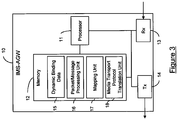
- FIG. 3 illustrates schematically an example of an IMS-AGW 10 for implementing the transmission media to or from an endpoint/particpant using an IMS in accordance with the methods described above.
- the IMS-AGW 10 can be implemented as a combination of computer hardware and software.
- the IMS-AGW 10 comprises a processor 11, a memory 12, a receiver 13 and a transmitter 14.
- the memory 12 stores the various programs/executable files that are implemented by the processor 11, and also provides a storage unit for any required data such as dynamic binding data 15.
- the programs/executable files stored in the memory 12, and implemented by the processor 1, include but are not limited to a packet/message processing unit 16, a mapping unit 17 and a media transport protocol translation unit 18.
- the packet/message processing unit 16 can be configured to extract dynamic binding data from received H.248 command messages, to store the dynamic binding data in the memory, and to extract a payload type number or codec identifier from a received media transport protocol packet/message.
- the mapping unit 17 can be configured to map a payload type number obtained from a received media transport protocol packet to a corresponding codec identifier, or a codec identifier obtained from a received media transport protocol packet to a corresponding payload type number.
- the media transport protocol translation unit 18 can be configured to translate received media transport protocol packets to packets that use a different media transport protocol, and to include either a payload type number or codec identifier provided by the mapping unit into the translated packets.
Landscapes
- Engineering & Computer Science (AREA)
- Multimedia (AREA)
- Computer Networks & Wireless Communication (AREA)
- Signal Processing (AREA)
- Data Exchanges In Wide-Area Networks (AREA)
- Telephonic Communication Services (AREA)
Description
- The present invention relates to methods and apparatus for media transmission in telecommunications networks. More particularly, the invention relates to methods and apparatus for supporting the transmission of media to and from an endpoint of an IP Multimedia Subsystem session, wherein the endpoint implements an alternative media transport protocol other than Real-time Transport Protocol.
- The IP Multimedia Subsystem (IMS) is the technology defined by the Third Generation Partnership Project (3GPP) to provide IP Multimedia services over telecommunication networks (see 3GPP TS 22.228, TS 23.228, TS 24.229, TS 29.228, TS 29.229, TS 29.328 and TS 29.329). IMS provides key features to enrich the end-user person-to-person communication experience through the integration and interaction of services. IMS allows new rich person-to-person (client-to-client) as well as person-to-content (client-to-server) communications over an IP-based network. The IMS is able to connect to both PSTN/ISDN (Public Switched Telephone Network/Integrated Services Digital Network) as well as the Internet.
-
Figure 1 illustrates schematically the architecture for the IMS core network and its relationship to an IP-Connectivity Access Network (IP-CAN). In the IMS core network, Call/Session Control Functions (CSCFs) operate as SIP proxies, and interface with other entities such as Border Gateway Control Functions (BGCFs) and Media Resource Function Controllers (MRFCs) amongst others. The 3GPP architecture defines three types of CSCFs: a Proxy CSCF (P-CSCF) is the first point of contact within the IMS for a SIP terminal; a Serving CSCF (S-CSCF) provides services to the subscriber; and an Interrogating CSCF (I-CSCF) identifies the correct S-CSCF and forwards to that S-CSCF a request received from a SIP terminal via a P-CSCF. - The P-CSCF, as the initial SIP signalling contact point for subscribers, serves as a Back-to-Back User Agent (SIP B2BUA). The P-CSCF is responsible for forwarding SIP registration messages from the SIP terminal (e.g. the User Equipment (UE)), to the I-CSCF and subsequent call set-up requests and responses to the S-CSCF. The P-CSCF maintains the mapping between logical subscriber SIP URI address and physical UE IP address and a security association, for both authentication and confidentiality. When supporting IMS communication for a UE residing behind a NAT or when IP address translation is needed between the IP CAN and the IMS domain on the media path only, the P CSCF may include an IMS Application Level Gateway (IMS-ALG) function. The P-CSCF/IMS-ALG interacts with an IMS Access Gateway (IMS-AGW), over the Iq interface, for control of the boundary at the signalling and media layers (e.g. including pinhole firewall, Network Address and Port Translations (NAPT) lawful intercept and numerous other features).
- The IMS-AGW controls the transport boundary at layers 3 and 4 between subscribers and the service provider's network. This function acts as a pinhole firewall and NAT device protecting the service provider's IMS network. It controls access by packet filtering on IP address/port and opening/closing gates (pinholes) into the network. It uses NAPT to hide the IP addresses/ports of the service elements in the IMS network. Other features include QoS packet marking, bandwidth and signalling rate policing, usage metering and QoS measurements for the media flows. The IMS-AGW sits at the boundary between an access network and a core network, at the core network side, and provides the functionality of a Core Border Gateway Function (C-BGF). It is also noted that the combination/integration of the P-CSCF and IMS-ALG at the signalling plane and the IMS-AGW at the media plane on the access side provides a Session Border Controller (SBC).
- The Interconnect Border Control Function (IBCF) provides overall control of the boundary between different service provider networks. It provides security for the IMS network in terms of signaling information by implementing a Topology-Hiding Inter-network Gateway (THIG) sub-function, and IPv4-IPv6 inter-working by implementing an IMS ALG. The IMS ALG provides the necessary application function for SIP/SDP protocol stack in order to establish communication between IPv6 and IPv4 SIP applications. The IMS ALG receives an incoming SIP message, and changes the appropriate SIP/SDP parameters, translating the IPv6 address to IPv4 addresses and vice versa. The IBCF also invokes the Inter-Working Function (described below) when connecting non-SIP or non-IPv6 networks, and performs admission control and bandwidth allocation using local policies or via interface to PCRF elements. Lastly, the IBCF interacts with TrGW for control of the boundary at the transport layers including pinhole firewall, NAPT and numerous other features.
- The Transition Gateway (TrGW) controls the transport boundary between service provider networks at layers 3 and 4 (e.g. with similar media functions as the IMS-AGW). The TrGW is located within the media path and controlled by the IBCF, provides network address/port translation and IPv4/IPv6 protocol translation, and supports proactive and reactive transcoding. The TrGW sits at the boundary between two core networks and provides the functionality of an Interconnection BGF (I-BGF). It is also noted that the combination/integration of the IBCF at the signalling plane and TrGW at the media plane on the interconnect side also provides a Session Border Controller (SBC).
- In order to provide consumers with a comprehensive communication and interactive service experience on any web browser based device, telecommunications network operators want to be able to easily and quickly integrate and deploy services combining web and Internet applications with telecommunications network capabilities. It is therefore desired that telecommunication networks are able to support voice and video communications to and from web applications provided on User Equipment (UE). However, web browsers and web applications use protocols such as Hypertext Transfer Protocol (HTTP), Real-time Transport Protocol (RTP) in conjunction with the RTP Control Protocol (RTCP), and Real Time Messaging Protocol (RTMP) for delivering and controlling media. In contrast, the IMS core network makes use of the Session Initiation Protocol (SIP) to set up and control calls or sessions between user terminals (or user terminals and application servers), and media transmissions are carried using the Real-time Transport Protocol (RTP). The Session Description Protocol (SDP), carried by SIP signalling, is used to describe and negotiate the media components of the session (e.g. port numbers, protocols, codecs).
- In order to transmit media to and from a web browser/application provided at a UE through an IMS, an IMS-AGW at the boundary between the access network and the IMS core network may be required to act as a media gateway/server with respect to the UE, and may therefore be required handle the conversion between RTP used for media transmission by the IMS and some other media transport protocol that is used by the web browser/application provided at the UE, such as RTMP. However, it has been recognised here that media transport protocol conversion/translation between RTP and some alternative media transport protocol may not be straightforward to implement.
- In this regard, SDP used by the IMS to describe and negotiate the media components of a session makes use of dynamically allocated RTP payload type numbers to identify the codec/media format(s) that can be used for the media, and one of these dynamically allocated RTP payload type numbers must be included in the payload type (PT) header field of corresponding RTP packets to identify the codec/media format that has been used for media carried in the payload. Therefore, when translating between RTP media packets and alternative media transport protocol media packets, it may not be possible to simply translate between an RTP payload type number and a statically defined codec identifier used by the alternative media transport protocol.
- This is particularly problematic when the negotiation of a session between two participants/end points establishes that more one common codec is supported by the participants, and at least one of the participants uses an alternative media transport protocol other than RTP. For example, when a first UE that implements RTMP wants to exchange media with second UE via the IMS, and both the first UE and the second UE support a number of common codecs, the first UE and the second UE will agree on more than one commonly supported codec during the negotiation of the session. Whilst the P-CSCF/IMS-ALG that serves the first UE will then communicate the negotiated codecs to the IMS-AGW in H.248 commands sent over the Iq interface, by including the negotiated SDP in a H.248 command, the IMS-AGW will not know which of these commonly supported codecs the UEs will actually select to use for the media. Consequently, if the IMS-AGW subsequently receives an RTP packet that includes the dynamically allocated RTP payload type number of the selected common codec, the IMS-AGW will not be able to determine the codec to which this dynamically allocated RTP payload type number relates, and will therefore be unable to determine the statically defined codec identifier that needs to be included in a corresponding alternative media transport protocol media packet. Similarly, if the IMS-AGW receives an alternative media transport protocol packet that includes a statically defined codec identifier of the selected common codec, the IMS-AGW could determine the codec to which this statically defined codec identifier relates, but will be unable to determine the dynamically allocated RTP payload type number that needs to be included in a corresponding RTP packet. The 3GPP draft specification "3GPP TS 23.334 V11.0.0 (2012-03), IP Multimedia Subsystem (IMS) Application Level Gateway (IMS-ALG) - IMS Access Gateway (IMS- AGW) interface" defines the stage 2 description for the Iq reference point between the P-CSCF (IMS-ALG) and the IMS-AGW. Said reference point conveys the necessary information that is needed to allocate, modify and release (IP) transport addresses.
- Chapter 4 "RTP data Transfer Protocol" in Colin Perkins publication "RTP Audio and Video for the internet" 2004 (ISBN: 978-0-672-32249-5) describes and explains the basics and the features of the RTP protocol.
- It is therefore an object of the present invention to provide methods and apparatus for supporting the transmission of media to and from an endpoint of session using an IMS, wherein the endpoint implements an alternative media transport protocol other than the RTP implemented by the IMS. In this respect, the invention is defined in
independent method claim 1, independent apparatus claim 8 and inindependent claim 16 related to a computer program. According to a first aspect of the present invention, there is provided a method of operating an IP Multimedia Subsystem Access Gateway (IMS-AGW) in order to support the transmission of media to and from an endpoint, using an IMS, wherein the endpoint implements an alternative media transport protocol other than Real-time Transport Protocol (RTP). The method comprises the IMS-AGW receiving instructions from an IMS Application Level Gateway (IMS-ALG) for an alternative media transport protocol connection with the endpoint and a RTP connection within the IMS, the instructions including more than one RTP payload type number and a dynamic binding of each of the more than one RTP payload type number to a statically defined codec identifier. The IMS-AGW stores the dynamic binding of each of the more than one RTP payload type number to a statically defined codec identifier. Then, when translating between alternative media transport protocol packets carried by the alternative media transport protocol connection and the RTP packets carried by the RTP connection, the IMS-AGW uses the stored binding to map between an RTP payload type number and a codec identifier used by the alternative media transport protocol. - By way of example, the RTP connection may be between the IMS-AGW and any one of a further IMS-AGW, a IMS Transition Gateway (TrGW), and a Media Gateway (MGW). Also by way of example, the alternative media transport protocol may be the Real Time Messaging Protocol (RTMP).
- The method may comprise, for an alternative media transport protocol packet received from the endpoint, translating the alternative media transport protocol packet to a RTP packet, including using the stored binding to map between a codec identifier included in the alternative media transport protocol packet and an RTP payload type number to be included in the RTP packet. The method may then further comprise obtaining a codec identifier from the alternative media transport protocol packet, using the stored binding to determine a RTP payload type number associated with the codec identified by the codec identifier, generating a RTP packet corresponding to the alternative media transport protocol packet, including the determined RTP payload type number in the RTP packet, and transmitting the RTP packet.
- The method may comprise, for a RTP packet received from the IMS, translating the RTP packet to an alternative media transport protocol packet, including using the stored binding to map between an RTP payload type number included in the RTP packet and a codec identifier to be included in the alternative media transport protocol packet. The method may then further comprise obtaining a RTP payload type number from the RTP packet, using the stored binding to determine a codec identifier associated with the codec identified by the RTP payload type number, generating an alternative media transport protocol packet corresponding to the RTP packet, including the determined codec identifier in the alternative media transport protocol packet, and transmitting the alternative media transport protocol packet.
- According to a second aspect of the present invention there is provided an apparatus configured to operate as an IP Multimedia Subsystem Access Gateway (IMS-AGW) and to support the transmission of media to and from an endpoint using an IMS, wherein the endpoint implements an alternative media transport protocol other than Real-time Transport Protocol (RTP). The apparatus comprises:
- a first receiver configured to receive instructions from an IMS Application Level Gateway (IMS-ALG) for an alternative media transport protocol connection with the UE and a RTP connection within the IMS, the instructions including more than one RTP payload type number and a dynamic binding of each of the more than one RTP payload type number to a statically defined codec identifier;
- a memory configured to store the dynamic binding of each of the more than one RTP payload type number to a statically defined codec identifier;
- a processor configured to translate between alternative media transport protocol packets carried by the alternative media transport protocol connection and RTP packets carried by the RTP connection, including using the stored binding to map between an RTP payload type number and a codec identifier used by the alternative media transport protocol.
- The apparatus may further comprise a second receiver configured to receive an alternative media transport protocol packet from the endpoint. The processor may then be configured to translate the alternative media transport protocol packet to a RTP packet, including using the stored binding to map between a codec identifier included in the alternative media transport protocol packet and an RTP payload type number to be included in the RTP packet. The processor may be further configured to obtain a statically defined codec identifier from the alternative media transport protocol packet, to use the stored binding to determine a RTP payload type number dynamically allocated to the codec identified by the statically defined codec identifier, to generate a RTP packet corresponding to the alternative media transport protocol packet, and to include the determined RTP payload type number in the RTP packet. The apparatus may also further comprise a transmitter configured to transmit the RTP packet.
- The apparatus may further comprise a second receiver configured to receive a RTP packet received from the IMS. The processor may then be configured to translate the RTP packet to an alternative media transport protocol packet, including using the stored binding to map between an RTP payload type number included in the RTP packet and a codec identifier to be included in the alternative media transport protocol packet. The processor may be further configured to obtain a RTP payload type number from the RTP packet, using the stored binding to determine a codec identifier associated with the codec identified by the RTP payload type number, generating an alternative media transport protocol packet corresponding to the RTP packet, and include the determined codec identifier in the alternative media transport protocol packet. The apparatus may also further comprise a transmitter configured to transmit the alternative media transport protocol packet.
- By way of example, the RTP connection may be between the IMS-AGW and any one of a further IMS-AGW, a IMS Transition Gateway (TrGW), and a Media Gateway (MGW). Also by way of example, the alternative media transport protocol may be the Real Time Messaging Protocol (RTMP).
- According to a third aspect of the present invention there is provided a computer program comprising computer program code means adapted to perform all the steps of the method of the first aspect when said program is run on a computer.
- According to a fourth aspect of the present invention there is provided a computer program according to the third aspect embodied on a computer readable medium.
-
-
Figure 1 illustrates schematically the architecture for the IMS core network and its relationship to an IP-CAN; -
Figure 2 is a flow diagram illustrating an example of the process of a first UE initiating a media session with a second UE via the IMS according to a method described herein; and -
Figure 3 illustrates schematically an example of an IMS-AGW suitable for implementing the methods described herein. - There will now be described methods and apparatus for supporting the transmission of media to and from an endpoint/participant of session using an IMS, wherein the endpoint/participant implements an alternative media transport protocol other than the RTP implemented by the IMS. An end point is typically located in a UE, but can also be located in a network entity.
- It is proposed herein that, when an IMS-AGW receives instructions, from an IMS-ALG, for an alternative media transport protocol connection with an endpoint/participant in a session and an RTP connection within the IMS, and these instructions include more than one RTP payload type number and a dynamic binding of each of the more than one RTP payload type number to a statically defined codec identifier, the IMS-AGW is configured to store the dynamic binding of each of the more than one RTP payload type number to a statically defined codec identifier. The IMS-AGW is then configured to use the stored binding, when translating between alternative media transport protocol packets carried by the alternative media transport protocol connection and the RTP packets carried by the RTP connection, to map between an RTP payload type number and a codec identifier used by the alternative media transport protocol. The IMS-AGW can thereby ensure that, when the participants in a media session support more than one common codec and at least one of the participants doesn't use RTP for media transport, the translated media packets will correctly identify which of the commonly supported codecs has been selected for the media.
- In order to be able to implement the above proposed method, the IMS-AGW is configured to accept instructions for a media session from an IMS-ALG (i.e. H.248 command messages) that include a dynamic binding between a dynamically allocated RTP payload type number and a statically defined identifier of each of the more than one common codecs that could be used for the media session, and to store the dynamic binding. The IMS-AGW is further configured to process media packets received within the media session to obtain one of a RTP payload type number and a codec identifier of the common codec that has been selected for the media, to use the stored dynamic binding to map the obtained RTP payload type number or codec identifier to the other of an RTP payload type number and a codec identifier, to translate the received media packets from either RTP or the alternative media transport protocol to the other of RTP or the alternative media transport protocol, and to include the other of RTP payload type number and a codec identifier in the translated media packets.
- By providing that the IMS-AGW is configured to both store the dynamic bindings received from the IMS-ALG (i.e. during the codec negotiation) and to use the stored dynamic bindings to map between a dynamically allocated RTP payload type number and a codec identifier used by an alternative media transport protocol, the methods and apparatus described herein enable the IMS-AGW to translate between RTP and the alternative media transport protocol, even when the negotiation of the media session has established that more one common codec is supported by the participants.
-
Figure 2 is a flow diagram illustrating an example of the method outlined above. In this example, the user of a first UE (i.e. a session endpoint/participant) wants to use a web browser on the first UE to establish a voice call to a second UE via the IMS. The web browser on the first UE implements RTMP as the media transport protocol whilst the IMS implements RTP as the media transport protocol. As such, both the first UE and the second UE support a number of common codes for audio and video. In particular, for audio, both RTP and RTMP support G.711 using either of Pulse Code Modulation µ-law (PCMU) and Pulse Code Modulation A-law (PCMA). Similarly, for video, both RTP and RTMP support H.264 using either of the Constrained Baseline Profile (CBP) and Baseline Profile (BP). In order to allow the web browser on the first UE to setup and control the session within the IMS, the web browser uses HTTP-REST to interact with a functional entity provided within the access network and referred to herein as a HTTP-to-SIP Gateway (H2S GW). The H2S GW translates between HTTP-REST and SIP, and acts as an IMS terminal emulator for control signalling, as described further inPCT/EP2012/053679 - The steps performed are as follows:
- A1. The user of the first UE starts a voice call using the web browser on the first UE. For example, the user may press on a button within a web page presented on the Graphical User Interface (GUI) of the first UE.
- A2. The web browser/HTTP client of the first UE generates a corresponding HTTP-REST message indicating that it wants to establish a voice call. This HTTP-REST message includes the codecs that the first UE supports. In this example, the first UE supports the PCMU and PCMA audio codecs. The HTTP-REST message can also include other parameters/attributes for the call, such as the media transport protocol to be used.
- A3. The HTTP-REST message is received by a H2S GW in the access network used by the first UE. The H2S GW translates the HTTP-REST message to an equivalent SIP INVITE message including an SDP offer and transmits the SIP INVITE message towards the IMS. For example, the SDP body of the SIP INVITE could take the format:
- m=audio 9 TCP/RTMP 98 99
- a=rtpmap:98 pcmu/8000
- a=rtpmap:99 pcma/8000
- A4. The SIP INVITE message is received by an P-CSCF/IMS-ALG on the originating side of the IMS that serves the first UE. The P-CSCF/IMS-ALG determines that the SIP INVITE message has been received from the H2S GW and that the SDP within the SIP INVITE specifies RTMP as the media transport protocol. The P-CSCF/IMS-ALG thereby determines that the IMS-AGW should be configured to perform RTMP to RTP conversion and sends a H.248 Add command to the IMS-AGW on the originating side of the IMS core network. The H.248 Add command instructs the IMS-AGW that a RTMP termination/connection is required to the first UE and that an RTP termination/connection is required with an IMS media gateway that serves the second UE.
- A5. Upon receipt of the H.248 Add command, the originating IMS-AGW creates a H.248 context and reserves resources for a RTP connection in the IMS and for a RTMP connection to the UE. The originating IMS-AGW sends a reply to the H.248 Add command.
- A6. As the originating P-CSCF/IMS-ALG has determined that the SDP within the received SIP INVITE specifies RTMP, the originating P-CSCF/IMS-ALG is aware that this media transport protocol cannot be used by the IMS, and therefore modifies the SDP to specify that RTP will be used as the media transport protocol within the IMS (i.e. after conversion by the IMS-AGW). For example, the modified SDP body of the SIP INVITE could take the format:
- m=audio 10000 RTP AVP 98 99
- a=rtpmap:98 pcmu/8000
- a=rtpmap:99 pcma/8000
- A7. The SIP INVITE message is received by the terminating P-CSCF/IMS-ALG, which therefore sends a H.248 Add command to an IMS-AGW on the terminating side of the IMS core network. The H.248 Add command instructs the terminating IMS-AGW that a RTP termination/connection is required to the second UE and that an RTP termination/connection is required with the originating IMS-AGW.
- A8. Upon receipt of the H.248 Add command, the terminating IMS-AGW creates a H.248 context and reserves resources for a RTP connection in the IMS and for a RTP connection to the UE. The terminating IMS-AGW sends a reply to the H.248 Add command.
- A9. The terminating P-CSCF/IMS-ALG sends the SIP INVITE (including the modified SDP body) towards the second UE.
- A10.The second UE receives the SIP INVITE including the SDP offer defined by the modified SDP body. The second UE generates a
SIP 200 OK including an SDP body that defines the SDP answer. In this case, the second UE supports all of the codecs included in the SDP offer, and therefore generates an SDP answer that corresponds to the SDP offer. For example, the SDP body of theSIP 200 OK could take the format:- m=audio 10000 RTP/AVP 98 99
- a=rtpmap:98 pcmu/8000
- a=rtpmap:99 pcma/8000
SIP 200 OK message therefore specifies that the media type is audio, that RTP is to be used to transport the media, and includes two payload type numbers. The SDP body therefore also includes an rtpmap attribute line for each payload type number that dynamically binds the payload type number to an encoding name that identifies the codec/media format. In this example, the media line includes the payload type numbers 98 and 99, the first rtpmap attribute line therefore binds the payload type number 98 to the PCMU codec/media format, and the second rtpmap attribute line binds the payload type number 99 to the PCMA codec/media format. - A11.The
SIP 200 OK message is received by the terminating P-CSCF/IMS-ALG. The terminating P-CSCF/IMS-ALG then sends a H.248 Modify command to the terminating IMS-AGW and includes the SDP body from theSIP 200 OK message in the Remote descriptor/parameter of the RTP termination. For example, the H.248 Modify command could take the format:
- A12.The terminating IMS-AGW sends a reply to the H.248 Modify command.
- A13.The terminating P-CSCF/IMS-ALG sends the
SIP 200 OK message through the IMS core network to the originating P-CSCF/IMS-ALG. - A14.The
SIP 200 OK message is received by the originating P-CSCF/IMS-ALG. The originating P-CSCF/IMS-ALG then sends a H.248 Modify command to the originating IMS-AGW and includes the SDP body from theSIP 200 OK message in the Remote descriptor/parameter of the RTMP termination. For example, the H.248 Modify command could take the format:
- A15.The IMS-AGW receives the H.248 Modify command from the P-CSCF/IMS-ALG. The IMS-AGW processes H.248 Modify command to obtain the dynamic binding information from the SDP, and stores the dynamic binding information (i.e. the binding between each RTP payload type number and the statically defined encoding name of corresponding codec).
- A16.The originating IMS-AGW sends a reply to the H.248 Modify command.
- A17.As the originating P-CSCF/IMS-ALG is aware that the SIP INVITE to which the
SIP 200 OK relates was received from a H2S GW, and that the SDP within the SIP INVITE specified RTMP, the originating P-CSCF/IMS-ALG is aware that the first UE does not support RTP as specified in the SDP of theSIP 200 OK. The P-CSCF/IMS-ALG therefore modifies the SDP answer to specify that RTMP will be used as the media transport protocol to the first UE (i.e. after conversion by the IMS-AGW). For example, the modified SDP body of the SIP INVITE could take the format:- m=audio 9 TCP/RTMP 98 99
- a=rtpmap:98 pcmu/8000
- a=rtpmap:99 pcma/8000
SIP 200 OK message including the modified SDP to the H2S GW. - A18.The
SIP 200 OK message is received by the H2S GW. The H2S GW translates theSIP 200 OK message to an equivalent HTTP-REST message indicating that the called user has accepted the call and that the second UE also supports the PCMU and PCMA audio codecs. The originating H2S GW transmits the HTTP-REST message to the first UE. - A19.The first UE receives the HTTP-REST message indicating that the called user has accepted the call. The web browser of the first UE then generates an RTMP connect command message, and sends the RTMP connect command message to the originating IMS-AGW.
- A20.The originating IMS-AGW receives RTMP connect command message and establishes a RTMP connection between the originating IMS-AGW and the first UE, and an RTP connection between the originating IMS-AGW and the terminating IMS-AGW through the IMS.
- A21.As the originating IMS-AGW established an RTP connection with the terminating IMS-AGW, the terminating IMS-AGW establishes the associated RTP connection to the second UE.
- A22.The first UE selects which of the commonly supported codecs that it intends to use for the media, and sends an RTMP publish/play packet/message to the IMS-AGW that includes an identifier for the selected codec within the RTMP publish/play message. As the first UE is implementing the RTMP media transport protocol, the codec identifier included within the RTMP message is associated with the selected codec in accordance with the RTMP standards. In this example, the first UE selects the PCMU audio codec and therefore includes statically defined codec identifier "8" within the "SoundFormat" field in the F4V header of RTMP message, as the number 8 stands for "G.711 mU-law logarithmic PCM" (i.e. PMCU).
- A23.The RTMP publish/play packet/message is received by the originating IMS-AGW. The originating IMS-AGW processes the received RTMP publish/play message and identifies the codec identifier. The originating IMS-AGW maps the codec identifier received in the RTMP message to the corresponding encoding name used for the codec by RTP. The originating IMS-AGW then uses the stored dynamic bindings to determine the dynamically assigned payload type number of the selected common codec, generates a corresponding RTP packet/message and includes the payload type number associated with the selected common codec in the RTP packet. The originating IMS-AGW then sends the RTP message to the terminating IMS-AGW (i.e. for transmission to the second UE).
- Whilst the example illustrated in
Figure 2 describes a scenario in which media is transmitted from the first UE (i.e. endpoint/participant) using RTMP (i.e. that is not supported by the IMS), the methods and apparatus are equally applicable to a scenario in which the media is transmitted to the first UE. In this scenario, the IMS-AGW serving the first UE (i.e. the terminating IMS-AGW) will again store the dynamic bindings of the more than one common codecs received from the P-CSCF/IMS-ALG during the media negotiation. However, the terminating IMS-AGW would subsequently receive an RTP packet from an originating IMS-AGW that includes a payload type number of the selected common codec in the PT header field, and would then use the stored bindings to determine the RTP encoding name of the selected common codec before mapping the determined RTP encoding name to a codec identifier that is associated with the selected common codec by RTMP. The terminating IMS-AGW would then send an RTMP packet to the first UE including the media from the RTP message and the determined identifier of the selected common codec. In addition, in a scenario which the media is transmitted to the first UE, the P-CSCF/IMS-ALG serving the first UE would modify the SDP within a SIP INVITE message sent to the first UE from RTMP to RTP, and the SDP within acorresponding SIP 200 OK message sent from the first UE from RTP to RTMP. - Furthermore, whilst the example illustrated in
Figure 2 relates to a scenario in which media is transmitted between a first UE (i.e. endpoint/participant) and a second UE (i.e. endpoint/participant) that are connected to the same IP-CAN, such that the media is transmitted between two IMS-AGW, the methods and apparatus are equally applicable to a scenario in which the media is transmitted between endpoints/participants that are connected to different IP-CANs, such that the media is transmitted between an IMS-AGW and a TrGW, and between an endpoint/participant connected to an IP-CAN and an endpoint/participant connected to a circuit switched access network, such that media is transmitted between an IMS-AGW and an IMS Media Gateway (IMS-MGW). -
Figure 3 illustrates schematically an example of an IMS-AGW 10 for implementing the transmission media to or from an endpoint/particpant using an IMS in accordance with the methods described above. The IMS-AGW 10 can be implemented as a combination of computer hardware and software. The IMS-AGW 10 comprises aprocessor 11, amemory 12, areceiver 13 and atransmitter 14. Thememory 12 stores the various programs/executable files that are implemented by theprocessor 11, and also provides a storage unit for any required data such as dynamicbinding data 15. The programs/executable files stored in thememory 12, and implemented by theprocessor 1, include but are not limited to a packet/message processing unit 16, amapping unit 17 and a media transportprotocol translation unit 18. The packet/message processing unit 16 can be configured to extract dynamic binding data from received H.248 command messages, to store the dynamic binding data in the memory, and to extract a payload type number or codec identifier from a received media transport protocol packet/message. Themapping unit 17 can be configured to map a payload type number obtained from a received media transport protocol packet to a corresponding codec identifier, or a codec identifier obtained from a received media transport protocol packet to a corresponding payload type number. The media transportprotocol translation unit 18 can be configured to translate received media transport protocol packets to packets that use a different media transport protocol, and to include either a payload type number or codec identifier provided by the mapping unit into the translated packets. - It will be appreciated by the person of skill in the art that various modifications may be made to the above-described embodiments without departing from the scope of the present invention. For example, whilst the above-described examples relate to the process of implementing an audio session through an IMS, the above-described methods and apparatus could equally be used to implement a video session through the IMS. Furthermore, whilst the above-described examples relate to a scenario in which a first UE implements RTMP and a second UE implements RTP, the methods and apparatus described herein are equally to any scenario in which an endpoint of an IMS session implements an alternative media transport protocol other than RTP. For example, the methods and apparatus described are equally applicable to scenario in which a first UE wants to exchange media with a second UE using an IMS, wherein both the first UE and the second UE implement RTMP.
Claims (17)
- A method of operating an IP Multimedia Subsystem, IMS, Access Gateway, IMS-AGW, in order to support the transmission of media to and from an endpoint, using an IMS, wherein the endpoint implements an alternative media transport protocol other than Real-time Transport Protocol, RTP, the method comprising:receiving by the IMS-AGW instructions from an IMS Application Level Gateway, IMS-ALG, for an alternative media transport protocol connection with the endpoint and a RTP connection within the IMS (A14), the instructions including more than one RTP payload type number and a dynamic binding of each of the more than one RTP payload type number to a statically defined codec identifier;storing by the IMS-AGW the dynamic binding of each of the more than one RTP payload type number to a statically defined codec identifier (A15); andwhen translating by the IMS-AGW between alternative media transport protocol packets carried by the alternative media transport protocol connection and the RTP packets carried by the RTP connection, using the stored binding to map between an RTP payload type number and a codec identifier used by the alternative media transport protocol (A23).
- A method as claimed in claim 1, and further comprising:
for an alternative media transport protocol packet received from the endpoint (A22), translating the alternative media transport protocol packet to a RTP packet, including using the stored binding to map between a codec identifier included in the alternative media transport protocol packet and an RTP payload type number to be included in the RTP packet (A23). - A method as claimed in claim 2, and further comprising:
obtaining a codec identifier from the alternative media transport protocol packet, using the stored binding to determine a RTP payload type number associated with the codec identified by the codec identifier, generating a RTP packet corresponding to the alternative media transport protocol packet, including the determined RTP payload type number in the RTP packet, and transmitting the RTP packet. - A method as claimed in claim 1, and further comprising:for a RTP packet received from the IMS, translating the RTP packet to an alternative media transport protocol packet, including using the stored binding to map between an RTP payload type number included in the RTP packet and a codec identifier to be included in the alternative media transport protocol packet.
- A method as claimed in claim 2, and further comprising:
obtaining a RTP payload type number from the RTP packet, using the stored binding to determine a codec identifier associated with the codec identified by the RTP payload type number, generating an alternative media transport protocol packet corresponding to the RTP packet, including the determined codec identifier in the alternative media transport protocol packet, and transmitting the alternative media transport protocol packet. - A method as claimed in any preceding claim, wherein the RTP connection is between the IMS-AGW and any one of:a further IMS-AGW;a IMS Transition Gateway, TrGW; anda Media Gateway.
- A method as claimed in any preceding claim, wherein the alternative media transport protocol is Real Time Messaging Protocol, RTMP.
- An apparatus configured to operate as an IP Multimedia Subsystem, IMS, Access Gateway (10), IMS-AGW, and to support the transmission of media to and from an endpoint using an IMS, wherein the endpoint implements an alternative media transport protocol other than Real-time Transport Protocol, RTP, the apparatus comprising:a first receiver (13) configured to receive instructions from an IMS Application Level Gateway, IMS-ALG, for an alternative media transport protocol connection with the UE and a RTP connection within the IMS, the instructions including more than one RTP payload type number and a dynamic binding of each of the more than one RTP payload type number to a statically defined codec identifier;a memory (12) configured to store the dynamic binding of each of the more than one RTP payload type number to a statically defined codec identifier;a processor (11) configured to translate between alternative media transport protocol packets carried by the alternative media transport protocol connection and RTP packets carried by the RTP connection, including using the stored binding to map between an RTP payload type number and a codec identifier used by the alternative media transport protocol.
- An apparatus as claimed in claim 8, and further comprising a second receiver (13) configured to receive an alternative media transport protocol packet from the endpoint, and wherein the processor (11) is configured to translate the alternative media transport protocol packet to a RTP packet, including using the stored binding to map between a codec identifier included in the alternative media transport protocol packet and an RTP payload type number to be included in the RTP packet.
- An apparatus as claimed in claim 9, wherein the processor (11) is further configured to obtain a statically defined codec identifier from the alternative media transport protocol packet, use the stored binding to determine a RTP payload type number dynamically allocated to the codec identified by the statically defined codec identifier, generate a RTP packet corresponding to the alternative media transport protocol packet, and include the determined RTP payload type number in the RTP packet.
- An apparatus as claimed in any of claims 9 or 10, and further comprising a transmitter (14) configured to transmit the RTP packet.
- An apparatus as claimed in claim 8, and further comprising a second receiver (13) configured to receive a RTP packet received from the IMS, and wherein the processor (11) is configured to translate the RTP packet to an alternative media transport protocol packet, including using the stored binding to map between an RTP payload type number included in the RTP packet and a codec identifier to be included in the alternative media transport protocol packet.
- An apparatus as claimed in claim 12, wherein the processor (11) is further configured to obtain a RTP payload type number from the RTP packet, using the stored binding to determine a codec identifier associated with the codec identified by the RTP payload type number, generating an alternative media transport protocol packet corresponding to the RTP packet, and include the determined codec identifier in the alternative media transport protocol packet.
- An apparatus as claimed in any of claims 12 or 13, and further comprising a transmitter (14) configured to transmit the alternative media transport protocol packet.
- An apparatus as claimed in any of claims 8 to 14, wherein the alternative media transport protocol is Real Time Messaging Protocol, RTMP.
- A computer program comprising computer program code means adapted to perform all the steps of any of claims 1 to 7 when said program is run on a computer.
- A computer program as claimed in claim 16 embodied on a computer readable medium.
Applications Claiming Priority (2)
| Application Number | Priority Date | Filing Date | Title |
|---|---|---|---|
| IN1711DE2012 | 2012-06-04 | ||
| PCT/EP2012/067629 WO2013182256A1 (en) | 2012-06-04 | 2012-09-10 | Methods and apparatus for media transmission in telecommunications networks |
Publications (2)
| Publication Number | Publication Date |
|---|---|
| EP2856727A1 EP2856727A1 (en) | 2015-04-08 |
| EP2856727B1 true EP2856727B1 (en) | 2018-06-06 |
Family
ID=46826514
Family Applications (1)
| Application Number | Title | Priority Date | Filing Date |
|---|---|---|---|
| EP12756471.4A Not-in-force EP2856727B1 (en) | 2012-06-04 | 2012-09-10 | Methods and apparatus for media transmission in telecommunications networks |
Country Status (3)
| Country | Link |
|---|---|
| US (1) | US10412136B2 (en) |
| EP (1) | EP2856727B1 (en) |
| WO (1) | WO2013182256A1 (en) |
Families Citing this family (16)
| Publication number | Priority date | Publication date | Assignee | Title |
|---|---|---|---|---|
| CN103986763B (en) * | 2014-05-13 | 2017-08-25 | 中国科学院地理科学与资源研究所 | A kind of visual vector data streaming method of web oriented and system |
| US10148703B2 (en) | 2014-10-09 | 2018-12-04 | T-Mobile Usa, Inc. | Service capabilities in heterogeneous network |
| US9769646B2 (en) * | 2015-02-26 | 2017-09-19 | T-Mobile Usa, Inc. | Realm translation in an IMS network |
| FR3034608A1 (en) * | 2015-03-31 | 2016-10-07 | Orange | METHOD FOR PRIORIZING MEDIA FLOW IN A COMMUNICATIONS NETWORK |
| JP6636157B2 (en) | 2016-07-14 | 2020-01-29 | 日本電信電話株式会社 | Communication method and communication program |
| CN107632988A (en) * | 2016-07-18 | 2018-01-26 | 杭州海康威视数字技术股份有限公司 | Browser voice method of sending and receiving, device and voice inter-speaking system |
| WO2018038652A1 (en) * | 2016-08-23 | 2018-03-01 | Telefonaktiebolaget Lm Ericsson (Publ) | Improved lawful interception |
| US9826072B1 (en) * | 2016-09-29 | 2017-11-21 | T-Mobile Usa, Inc. | Network-terminal interoperation using compatible payloads |
| US11799922B2 (en) | 2016-12-21 | 2023-10-24 | T-Mobile Usa, Inc. | Network core facilitating terminal interoperation |
| US10771509B2 (en) | 2017-03-31 | 2020-09-08 | T-Mobile Usa, Inc. | Terminal interoperation using called-terminal functional characteristics |
| CN114450925B (en) * | 2019-09-24 | 2024-08-02 | 诺基亚通信公司 | Media resource optimization |
| CN112584440B (en) * | 2019-09-30 | 2022-12-27 | 华为技术有限公司 | Method and device for playing video media |
| CN112671674B (en) * | 2019-10-16 | 2023-03-28 | 华为技术有限公司 | Method, system and related device for processing call |
| CN115086782B (en) * | 2022-05-10 | 2023-11-03 | 南方电网数字平台科技(广东)有限公司 | Media data transmission method and device |
| EP4351104B1 (en) * | 2022-10-07 | 2026-02-04 | Vodafone Group Services Limited | Telecommunications network entity and method |
| CN115767484B (en) * | 2022-11-07 | 2024-07-09 | 中国联合网络通信集团有限公司 | Call processing method, device, server, system and medium in customer service scene |
Family Cites Families (12)
| Publication number | Priority date | Publication date | Assignee | Title |
|---|---|---|---|---|
| US7546376B2 (en) | 2000-11-06 | 2009-06-09 | Telefonaktiebolaget Lm Ericsson (Publ) | Media binding to coordinate quality of service requirements for media flows in a multimedia session with IP bearer resources |
| WO2002037753A2 (en) | 2000-11-06 | 2002-05-10 | Telefonaktiebolaget L M Ericsson (Publ) | Media binding to coordinate quality of service requirements for media flows in a multimedia session with ip bearer resources |
| US20080107108A1 (en) * | 2006-11-03 | 2008-05-08 | Nokia Corporation | System and method for enabling fast switching between psse channels |
| US9307079B2 (en) * | 2006-12-08 | 2016-04-05 | Telefonaktiebolaget L M Ericsson (Publ) | Handling announcement media in a communication network environment |
| US9350764B2 (en) * | 2009-03-13 | 2016-05-24 | Rakuten, Inc. | Gateway apparatus and method and communication system |
| US8755372B2 (en) * | 2009-04-27 | 2014-06-17 | Five9, Inc. | Secure customer service proxy portal |
| WO2011023601A1 (en) * | 2009-08-25 | 2011-03-03 | Nokia Siemens Networks Oy | Control of codec negotiation for communication connection |
| US9003044B2 (en) | 2010-07-26 | 2015-04-07 | T-Mobile Usa, Inc. | Home hub for IP multimedia subsystem (IMS)/Web services interaction |
| US8811393B2 (en) * | 2010-10-04 | 2014-08-19 | Cisco Technology, Inc. | IP address version interworking in communication networks |
| ES2387437B1 (en) | 2010-11-19 | 2013-05-20 | Telefónica, S.A. | COMMUNICATIONS SYSTEM AND METHOD FOR COMMUNICATIONS BETWEEN INTERNET AND NGN / IMS SUBSYSTEMS. |
| EP2664117B1 (en) * | 2011-01-10 | 2015-03-25 | Telefonaktiebolaget LM Ericsson (publ) | Caching of announcements at the edge of a packet switched telecommunication network |
| WO2013127469A1 (en) | 2012-03-02 | 2013-09-06 | Telefonaktiebolaget L M Ericsson (Publ) | Methods and apparatus for media transmission in telecommunications networks |
-
2012
- 2012-09-10 EP EP12756471.4A patent/EP2856727B1/en not_active Not-in-force
- 2012-09-10 US US14/404,986 patent/US10412136B2/en not_active Expired - Fee Related
- 2012-09-10 WO PCT/EP2012/067629 patent/WO2013182256A1/en not_active Ceased
Non-Patent Citations (1)
| Title |
|---|
| None * |
Also Published As
| Publication number | Publication date |
|---|---|
| WO2013182256A9 (en) | 2014-04-10 |
| US10412136B2 (en) | 2019-09-10 |
| US20150172349A1 (en) | 2015-06-18 |
| EP2856727A1 (en) | 2015-04-08 |
| WO2013182256A1 (en) | 2013-12-12 |
Similar Documents
| Publication | Publication Date | Title |
|---|---|---|
| US10412136B2 (en) | Methods and apparatus for media transmission in telecommunications networks | |
| CN101627601B (en) | Method and apparatus for remote access to a home network | |
| EP1949641B1 (en) | Handling quality of service in a communication system | |
| JP5189104B2 (en) | Method and apparatus for enabling multimedia communication with a private network | |
| KR101018589B1 (en) | Method and apparatus for accessing IP multimedia subsystem | |
| EP2116006B1 (en) | Method for remotely controlling multimedia communication across local networks. | |
| US20090092109A1 (en) | Method and Apparatus for Enabling Discovery Within a Home Network | |
| US20130266004A1 (en) | Communications system and a method for communications between internet and ngn/ims subsystems | |
| US20100195610A1 (en) | Method, device and system for improving broadcast services | |
| CN101114985B (en) | Coding/decoding transition system and method | |
| CN102223386A (en) | Method, device and system for remotely accessing home network | |
| WO2013127469A1 (en) | Methods and apparatus for media transmission in telecommunications networks | |
| EP1964353B1 (en) | Method for establishing a unicast media session | |
| US20150032791A1 (en) | Method and application for controlling application server invocation in an ims | |
| Khandelwal | The importance of standard IMS Architecture | |
| WO2009036605A1 (en) | Method and system for processing sip message with rtsp encapsulation in ims | |
| KR20110054794A (en) | Method and apparatus for call processing according to instant messaging service |
Legal Events
| Date | Code | Title | Description |
|---|---|---|---|
| PUAI | Public reference made under article 153(3) epc to a published international application that has entered the european phase |
Free format text: ORIGINAL CODE: 0009012 |
|
| 17P | Request for examination filed |
Effective date: 20141120 |
|
| AK | Designated contracting states |
Kind code of ref document: A1 Designated state(s): AL AT BE BG CH CY CZ DE DK EE ES FI FR GB GR HR HU IE IS IT LI LT LU LV MC MK MT NL NO PL PT RO RS SE SI SK SM TR |
|
| AX | Request for extension of the european patent |
Extension state: BA ME |
|
| DAX | Request for extension of the european patent (deleted) | ||
| GRAP | Despatch of communication of intention to grant a patent |
Free format text: ORIGINAL CODE: EPIDOSNIGR1 |
|
| STAA | Information on the status of an ep patent application or granted ep patent |
Free format text: STATUS: GRANT OF PATENT IS INTENDED |
|
| INTG | Intention to grant announced |
Effective date: 20180214 |
|
| GRAS | Grant fee paid |
Free format text: ORIGINAL CODE: EPIDOSNIGR3 |
|
| GRAA | (expected) grant |
Free format text: ORIGINAL CODE: 0009210 |
|
| STAA | Information on the status of an ep patent application or granted ep patent |
Free format text: STATUS: THE PATENT HAS BEEN GRANTED |
|
| AK | Designated contracting states |
Kind code of ref document: B1 Designated state(s): AL AT BE BG CH CY CZ DE DK EE ES FI FR GB GR HR HU IE IS IT LI LT LU LV MC MK MT NL NO PL PT RO RS SE SI SK SM TR |
|
| REG | Reference to a national code |
Ref country code: GB Ref legal event code: FG4D |
|
| REG | Reference to a national code |
Ref country code: CH Ref legal event code: EP Ref country code: AT Ref legal event code: REF Ref document number: 1007278 Country of ref document: AT Kind code of ref document: T Effective date: 20180615 |
|
| REG | Reference to a national code |
Ref country code: IE Ref legal event code: FG4D |
|
| REG | Reference to a national code |
Ref country code: DE Ref legal event code: R096 Ref document number: 602012047173 Country of ref document: DE |
|
| REG | Reference to a national code |
Ref country code: NL Ref legal event code: MP Effective date: 20180606 |
|
| REG | Reference to a national code |
Ref country code: LT Ref legal event code: MG4D |
|
| PG25 | Lapsed in a contracting state [announced via postgrant information from national office to epo] |
Ref country code: NO Free format text: LAPSE BECAUSE OF FAILURE TO SUBMIT A TRANSLATION OF THE DESCRIPTION OR TO PAY THE FEE WITHIN THE PRESCRIBED TIME-LIMIT Effective date: 20180906 Ref country code: BG Free format text: LAPSE BECAUSE OF FAILURE TO SUBMIT A TRANSLATION OF THE DESCRIPTION OR TO PAY THE FEE WITHIN THE PRESCRIBED TIME-LIMIT Effective date: 20180906 Ref country code: FI Free format text: LAPSE BECAUSE OF FAILURE TO SUBMIT A TRANSLATION OF THE DESCRIPTION OR TO PAY THE FEE WITHIN THE PRESCRIBED TIME-LIMIT Effective date: 20180606 Ref country code: LT Free format text: LAPSE BECAUSE OF FAILURE TO SUBMIT A TRANSLATION OF THE DESCRIPTION OR TO PAY THE FEE WITHIN THE PRESCRIBED TIME-LIMIT Effective date: 20180606 Ref country code: SE Free format text: LAPSE BECAUSE OF FAILURE TO SUBMIT A TRANSLATION OF THE DESCRIPTION OR TO PAY THE FEE WITHIN THE PRESCRIBED TIME-LIMIT Effective date: 20180606 Ref country code: ES Free format text: LAPSE BECAUSE OF FAILURE TO SUBMIT A TRANSLATION OF THE DESCRIPTION OR TO PAY THE FEE WITHIN THE PRESCRIBED TIME-LIMIT Effective date: 20180606 Ref country code: CY Free format text: LAPSE BECAUSE OF FAILURE TO SUBMIT A TRANSLATION OF THE DESCRIPTION OR TO PAY THE FEE WITHIN THE PRESCRIBED TIME-LIMIT Effective date: 20180606 |
|
| PG25 | Lapsed in a contracting state [announced via postgrant information from national office to epo] |
Ref country code: RS Free format text: LAPSE BECAUSE OF FAILURE TO SUBMIT A TRANSLATION OF THE DESCRIPTION OR TO PAY THE FEE WITHIN THE PRESCRIBED TIME-LIMIT Effective date: 20180606 Ref country code: GR Free format text: LAPSE BECAUSE OF FAILURE TO SUBMIT A TRANSLATION OF THE DESCRIPTION OR TO PAY THE FEE WITHIN THE PRESCRIBED TIME-LIMIT Effective date: 20180907 Ref country code: HR Free format text: LAPSE BECAUSE OF FAILURE TO SUBMIT A TRANSLATION OF THE DESCRIPTION OR TO PAY THE FEE WITHIN THE PRESCRIBED TIME-LIMIT Effective date: 20180606 Ref country code: LV Free format text: LAPSE BECAUSE OF FAILURE TO SUBMIT A TRANSLATION OF THE DESCRIPTION OR TO PAY THE FEE WITHIN THE PRESCRIBED TIME-LIMIT Effective date: 20180606 |
|
| REG | Reference to a national code |
Ref country code: AT Ref legal event code: MK05 Ref document number: 1007278 Country of ref document: AT Kind code of ref document: T Effective date: 20180606 |
|
| PG25 | Lapsed in a contracting state [announced via postgrant information from national office to epo] |
Ref country code: NL Free format text: LAPSE BECAUSE OF FAILURE TO SUBMIT A TRANSLATION OF THE DESCRIPTION OR TO PAY THE FEE WITHIN THE PRESCRIBED TIME-LIMIT Effective date: 20180606 |
|
| PG25 | Lapsed in a contracting state [announced via postgrant information from national office to epo] |
Ref country code: IS Free format text: LAPSE BECAUSE OF FAILURE TO SUBMIT A TRANSLATION OF THE DESCRIPTION OR TO PAY THE FEE WITHIN THE PRESCRIBED TIME-LIMIT Effective date: 20181006 Ref country code: AT Free format text: LAPSE BECAUSE OF FAILURE TO SUBMIT A TRANSLATION OF THE DESCRIPTION OR TO PAY THE FEE WITHIN THE PRESCRIBED TIME-LIMIT Effective date: 20180606 Ref country code: EE Free format text: LAPSE BECAUSE OF FAILURE TO SUBMIT A TRANSLATION OF THE DESCRIPTION OR TO PAY THE FEE WITHIN THE PRESCRIBED TIME-LIMIT Effective date: 20180606 Ref country code: CZ Free format text: LAPSE BECAUSE OF FAILURE TO SUBMIT A TRANSLATION OF THE DESCRIPTION OR TO PAY THE FEE WITHIN THE PRESCRIBED TIME-LIMIT Effective date: 20180606 Ref country code: RO Free format text: LAPSE BECAUSE OF FAILURE TO SUBMIT A TRANSLATION OF THE DESCRIPTION OR TO PAY THE FEE WITHIN THE PRESCRIBED TIME-LIMIT Effective date: 20180606 Ref country code: SK Free format text: LAPSE BECAUSE OF FAILURE TO SUBMIT A TRANSLATION OF THE DESCRIPTION OR TO PAY THE FEE WITHIN THE PRESCRIBED TIME-LIMIT Effective date: 20180606 Ref country code: PL Free format text: LAPSE BECAUSE OF FAILURE TO SUBMIT A TRANSLATION OF THE DESCRIPTION OR TO PAY THE FEE WITHIN THE PRESCRIBED TIME-LIMIT Effective date: 20180606 |
|
| PG25 | Lapsed in a contracting state [announced via postgrant information from national office to epo] |
Ref country code: SM Free format text: LAPSE BECAUSE OF FAILURE TO SUBMIT A TRANSLATION OF THE DESCRIPTION OR TO PAY THE FEE WITHIN THE PRESCRIBED TIME-LIMIT Effective date: 20180606 Ref country code: IT Free format text: LAPSE BECAUSE OF FAILURE TO SUBMIT A TRANSLATION OF THE DESCRIPTION OR TO PAY THE FEE WITHIN THE PRESCRIBED TIME-LIMIT Effective date: 20180606 |
|
| REG | Reference to a national code |
Ref country code: DE Ref legal event code: R097 Ref document number: 602012047173 Country of ref document: DE |
|
| PLBE | No opposition filed within time limit |
Free format text: ORIGINAL CODE: 0009261 |
|
| STAA | Information on the status of an ep patent application or granted ep patent |
Free format text: STATUS: NO OPPOSITION FILED WITHIN TIME LIMIT |
|
| PG25 | Lapsed in a contracting state [announced via postgrant information from national office to epo] |
Ref country code: MC Free format text: LAPSE BECAUSE OF FAILURE TO SUBMIT A TRANSLATION OF THE DESCRIPTION OR TO PAY THE FEE WITHIN THE PRESCRIBED TIME-LIMIT Effective date: 20180606 |
|
| REG | Reference to a national code |
Ref country code: CH Ref legal event code: PL |
|
| 26N | No opposition filed |
Effective date: 20190307 |
|
| PG25 | Lapsed in a contracting state [announced via postgrant information from national office to epo] |
Ref country code: SI Free format text: LAPSE BECAUSE OF FAILURE TO SUBMIT A TRANSLATION OF THE DESCRIPTION OR TO PAY THE FEE WITHIN THE PRESCRIBED TIME-LIMIT Effective date: 20180606 Ref country code: DK Free format text: LAPSE BECAUSE OF FAILURE TO SUBMIT A TRANSLATION OF THE DESCRIPTION OR TO PAY THE FEE WITHIN THE PRESCRIBED TIME-LIMIT Effective date: 20180606 |
|
| REG | Reference to a national code |
Ref country code: BE Ref legal event code: MM Effective date: 20180930 |
|
| REG | Reference to a national code |
Ref country code: IE Ref legal event code: MM4A |
|
| PG25 | Lapsed in a contracting state [announced via postgrant information from national office to epo] |
Ref country code: LU Free format text: LAPSE BECAUSE OF NON-PAYMENT OF DUE FEES Effective date: 20180910 |
|
| PG25 | Lapsed in a contracting state [announced via postgrant information from national office to epo] |
Ref country code: IE Free format text: LAPSE BECAUSE OF NON-PAYMENT OF DUE FEES Effective date: 20180910 |
|
| PG25 | Lapsed in a contracting state [announced via postgrant information from national office to epo] |
Ref country code: LI Free format text: LAPSE BECAUSE OF NON-PAYMENT OF DUE FEES Effective date: 20180930 Ref country code: CH Free format text: LAPSE BECAUSE OF NON-PAYMENT OF DUE FEES Effective date: 20180930 Ref country code: FR Free format text: LAPSE BECAUSE OF NON-PAYMENT OF DUE FEES Effective date: 20180930 Ref country code: BE Free format text: LAPSE BECAUSE OF NON-PAYMENT OF DUE FEES Effective date: 20180930 |
|
| PG25 | Lapsed in a contracting state [announced via postgrant information from national office to epo] |
Ref country code: AL Free format text: LAPSE BECAUSE OF FAILURE TO SUBMIT A TRANSLATION OF THE DESCRIPTION OR TO PAY THE FEE WITHIN THE PRESCRIBED TIME-LIMIT Effective date: 20180606 |
|
| PG25 | Lapsed in a contracting state [announced via postgrant information from national office to epo] |
Ref country code: MT Free format text: LAPSE BECAUSE OF NON-PAYMENT OF DUE FEES Effective date: 20180910 |
|
| PG25 | Lapsed in a contracting state [announced via postgrant information from national office to epo] |
Ref country code: TR Free format text: LAPSE BECAUSE OF FAILURE TO SUBMIT A TRANSLATION OF THE DESCRIPTION OR TO PAY THE FEE WITHIN THE PRESCRIBED TIME-LIMIT Effective date: 20180606 |
|
| PG25 | Lapsed in a contracting state [announced via postgrant information from national office to epo] |
Ref country code: PT Free format text: LAPSE BECAUSE OF FAILURE TO SUBMIT A TRANSLATION OF THE DESCRIPTION OR TO PAY THE FEE WITHIN THE PRESCRIBED TIME-LIMIT Effective date: 20180606 Ref country code: HU Free format text: LAPSE BECAUSE OF FAILURE TO SUBMIT A TRANSLATION OF THE DESCRIPTION OR TO PAY THE FEE WITHIN THE PRESCRIBED TIME-LIMIT; INVALID AB INITIO Effective date: 20120910 |
|
| PG25 | Lapsed in a contracting state [announced via postgrant information from national office to epo] |
Ref country code: MK Free format text: LAPSE BECAUSE OF NON-PAYMENT OF DUE FEES Effective date: 20180606 |
|
| REG | Reference to a national code |
Ref country code: DE Ref legal event code: R079 Ref document number: 602012047173 Country of ref document: DE Free format text: PREVIOUS MAIN CLASS: H04L0029060000 Ipc: H04L0065000000 |
|
| PGFP | Annual fee paid to national office [announced via postgrant information from national office to epo] |
Ref country code: GB Payment date: 20210927 Year of fee payment: 10 Ref country code: DE Payment date: 20210929 Year of fee payment: 10 |
|
| REG | Reference to a national code |
Ref country code: DE Ref legal event code: R119 Ref document number: 602012047173 Country of ref document: DE |
|
| GBPC | Gb: european patent ceased through non-payment of renewal fee |
Effective date: 20220910 |
|
| PG25 | Lapsed in a contracting state [announced via postgrant information from national office to epo] |
Ref country code: DE Free format text: LAPSE BECAUSE OF NON-PAYMENT OF DUE FEES Effective date: 20230401 |
|
| PG25 | Lapsed in a contracting state [announced via postgrant information from national office to epo] |
Ref country code: GB Free format text: LAPSE BECAUSE OF NON-PAYMENT OF DUE FEES Effective date: 20220910 |