EP2855459B1 - Aminoquinazoline and pyridopyrimidine derivatives - Google Patents
Aminoquinazoline and pyridopyrimidine derivatives Download PDFInfo
- Publication number
- EP2855459B1 EP2855459B1 EP13725654.1A EP13725654A EP2855459B1 EP 2855459 B1 EP2855459 B1 EP 2855459B1 EP 13725654 A EP13725654 A EP 13725654A EP 2855459 B1 EP2855459 B1 EP 2855459B1
- Authority
- EP
- European Patent Office
- Prior art keywords
- pyrimidin
- pyrido
- amine
- methyl
- aminopyrido
- Prior art date
- Legal status (The legal status is an assumption and is not a legal conclusion. Google has not performed a legal analysis and makes no representation as to the accuracy of the status listed.)
- Active
Links
- 0 **c1cc(F)cc(CNC2CCOCC2)c1 Chemical compound **c1cc(F)cc(CNC2CCOCC2)c1 0.000 description 7
- MIQVXMJLPGYLPC-UHFFFAOYSA-N CNc(ncnc1cc2)c1nc2-c1cccc(F)c1 Chemical compound CNc(ncnc1cc2)c1nc2-c1cccc(F)c1 MIQVXMJLPGYLPC-UHFFFAOYSA-N 0.000 description 2
- WEDOWINRFLQWET-UHFFFAOYSA-N Nc1c(cc(cc2)-c3cccc(NC(NC4CCCC4)=O)c3)c2ncn1 Chemical compound Nc1c(cc(cc2)-c3cccc(NC(NC4CCCC4)=O)c3)c2ncn1 WEDOWINRFLQWET-UHFFFAOYSA-N 0.000 description 2
- ZSDVXCVTLVTWAD-UHFFFAOYSA-N C(C1CNCCC1)c1cncc[n]1 Chemical compound C(C1CNCCC1)c1cncc[n]1 ZSDVXCVTLVTWAD-UHFFFAOYSA-N 0.000 description 1
- CYWMMILXIQHCOS-UHFFFAOYSA-N C(C1C[N-]CC1)c1ccccn1 Chemical compound C(C1C[N-]CC1)c1ccccn1 CYWMMILXIQHCOS-UHFFFAOYSA-N 0.000 description 1
- BDRXIHMSZOYUAN-UHFFFAOYSA-N CC(C)C(N1CCN(C)CC1)=O Chemical compound CC(C)C(N1CCN(C)CC1)=O BDRXIHMSZOYUAN-UHFFFAOYSA-N 0.000 description 1
- XEHASCYYIYUPCX-UHFFFAOYSA-N CC(N(CC1)CCC1NCc1cc(F)cc(C)c1)=O Chemical compound CC(N(CC1)CCC1NCc1cc(F)cc(C)c1)=O XEHASCYYIYUPCX-UHFFFAOYSA-N 0.000 description 1
- XTWHPMCAAZDGGT-UHFFFAOYSA-N CC(Nc1cc(-c2cc3c(N)ncnc3cc2)cc(F)c1)=O Chemical compound CC(Nc1cc(-c2cc3c(N)ncnc3cc2)cc(F)c1)=O XTWHPMCAAZDGGT-UHFFFAOYSA-N 0.000 description 1
- OHRGXGOPLCRTRH-UHFFFAOYSA-N CC1(C)OB(c2cc(-c3n[nH]cc3C)cc(F)c2)OC1(C)C Chemical compound CC1(C)OB(c2cc(-c3n[nH]cc3C)cc(F)c2)OC1(C)C OHRGXGOPLCRTRH-UHFFFAOYSA-N 0.000 description 1
- RVXBLJYNRUEBIZ-UHFFFAOYSA-N CC1ON=C(C2CN(C)CCC2)N1 Chemical compound CC1ON=C(C2CN(C)CCC2)N1 RVXBLJYNRUEBIZ-UHFFFAOYSA-N 0.000 description 1
- WDZDVSYAMDZFBM-UHFFFAOYSA-N CN(C)c1nccc(C2CN(CSC)CCC2)n1 Chemical compound CN(C)c1nccc(C2CN(CSC)CCC2)n1 WDZDVSYAMDZFBM-UHFFFAOYSA-N 0.000 description 1
- RXYPXQSKLGGKOL-UHFFFAOYSA-N CN1CCN(C)CC1 Chemical compound CN1CCN(C)CC1 RXYPXQSKLGGKOL-UHFFFAOYSA-N 0.000 description 1
- QXZLNTSPJZJSIW-UHFFFAOYSA-N CNC(C1CN(C)CC1)=O Chemical compound CNC(C1CN(C)CC1)=O QXZLNTSPJZJSIW-UHFFFAOYSA-N 0.000 description 1
- YSGGJJFUBBZZRA-UHFFFAOYSA-N CNC(c1cc(-c2nc3c(N)ncnc3cc2)cc(F)c1)=O Chemical compound CNC(c1cc(-c2nc3c(N)ncnc3cc2)cc(F)c1)=O YSGGJJFUBBZZRA-UHFFFAOYSA-N 0.000 description 1
- HFRAIQDUWJODKF-UHFFFAOYSA-N CNCC1NCCC1 Chemical compound CNCC1NCCC1 HFRAIQDUWJODKF-UHFFFAOYSA-N 0.000 description 1
- AOUQILCXOQBADO-UHFFFAOYSA-N C[n]1c(CC2CN(C)CCC2)ncc1 Chemical compound C[n]1c(CC2CN(C)CCC2)ncc1 AOUQILCXOQBADO-UHFFFAOYSA-N 0.000 description 1
- DQBZYWJNHOLUFR-UHFFFAOYSA-N Cc1c[nH]nc1-c1cc(-c2nc3c(N)ncnc3cc2)cc(F)c1 Chemical compound Cc1c[nH]nc1-c1cc(-c2nc3c(N)ncnc3cc2)cc(F)c1 DQBZYWJNHOLUFR-UHFFFAOYSA-N 0.000 description 1
- ZCBCLZJALQFLTK-UHFFFAOYSA-N Cc1c[nH]nc1C1CN(C)CCC1 Chemical compound Cc1c[nH]nc1C1CN(C)CCC1 ZCBCLZJALQFLTK-UHFFFAOYSA-N 0.000 description 1
- OVHDJFQIAVVZQI-UHFFFAOYSA-N Cc1cc(CNC(CC2)CCC2N)ccc1 Chemical compound Cc1cc(CNC(CC2)CCC2N)ccc1 OVHDJFQIAVVZQI-UHFFFAOYSA-N 0.000 description 1
- UGNVOEOLXRDBEE-UHFFFAOYSA-N Cc1cc(CNCCN2CCCC2)ccc1 Chemical compound Cc1cc(CNCCN2CCCC2)ccc1 UGNVOEOLXRDBEE-UHFFFAOYSA-N 0.000 description 1
- RHLFMDPKKHUBST-UHFFFAOYSA-N Cc1cc(CNCCN2CCOCC2)cc(F)c1 Chemical compound Cc1cc(CNCCN2CCOCC2)cc(F)c1 RHLFMDPKKHUBST-UHFFFAOYSA-N 0.000 description 1
- YORIPKCDWWMGQR-UHFFFAOYSA-N Cc1cc(CNCCO)ccc1 Chemical compound Cc1cc(CNCCO)ccc1 YORIPKCDWWMGQR-UHFFFAOYSA-N 0.000 description 1
- LAAHPMITVONVPH-UHFFFAOYSA-N Cc1cc(F)cc(CNCC2N(C)CCCC2)c1 Chemical compound Cc1cc(F)cc(CNCC2N(C)CCCC2)c1 LAAHPMITVONVPH-UHFFFAOYSA-N 0.000 description 1
- NXQRCQBERAYLSB-UHFFFAOYSA-N Cc1cc(OC)cc(F)c1 Chemical compound Cc1cc(OC)cc(F)c1 NXQRCQBERAYLSB-UHFFFAOYSA-N 0.000 description 1
- RNEONLBFYOIGJD-UHFFFAOYSA-N Fc1cc(Br)cc(N(C2)C22COC2)c1 Chemical compound Fc1cc(Br)cc(N(C2)C22COC2)c1 RNEONLBFYOIGJD-UHFFFAOYSA-N 0.000 description 1
- SUDFCBLIYJNFRU-UHFFFAOYSA-N Fc1cc(N=C2COC2)cc(Br)c1 Chemical compound Fc1cc(N=C2COC2)cc(Br)c1 SUDFCBLIYJNFRU-UHFFFAOYSA-N 0.000 description 1
- PXPRHPOOCGJXLP-UHFFFAOYSA-N Nc(ncnc1cc2)c1nc2-c(cc1)ccc1F Chemical compound Nc(ncnc1cc2)c1nc2-c(cc1)ccc1F PXPRHPOOCGJXLP-UHFFFAOYSA-N 0.000 description 1
- LLALNONGBQVJFZ-UHFFFAOYSA-N Nc(ncnc1cc2)c1nc2-c1cc(F)cc(C(O)=O)c1 Chemical compound Nc(ncnc1cc2)c1nc2-c1cc(F)cc(C(O)=O)c1 LLALNONGBQVJFZ-UHFFFAOYSA-N 0.000 description 1
- IANHYGZKMPCSRH-UHFFFAOYSA-N Nc(ncnc1cc2)c1nc2-c1cccc(C(F)(F)F)c1 Chemical compound Nc(ncnc1cc2)c1nc2-c1cccc(C(F)(F)F)c1 IANHYGZKMPCSRH-UHFFFAOYSA-N 0.000 description 1
- TWTLUQDFSDYZKO-UHFFFAOYSA-N Nc(ncnc1cc2)c1nc2-c1cccc(F)c1 Chemical compound Nc(ncnc1cc2)c1nc2-c1cccc(F)c1 TWTLUQDFSDYZKO-UHFFFAOYSA-N 0.000 description 1
- ZBJXZENFOGIDBW-UHFFFAOYSA-N Nc(ncnc1cc2)c1nc2-c1cccc(OC(F)(F)F)c1 Chemical compound Nc(ncnc1cc2)c1nc2-c1cccc(OC(F)(F)F)c1 ZBJXZENFOGIDBW-UHFFFAOYSA-N 0.000 description 1
- QPYPQWUXCWISAT-UHFFFAOYSA-N Nc(ncnc1cc2)c1nc2Cl Chemical compound Nc(ncnc1cc2)c1nc2Cl QPYPQWUXCWISAT-UHFFFAOYSA-N 0.000 description 1
- XWTUEVWCDCVKJU-UHFFFAOYSA-N Nc1cccc(-c2cc3c(N)ncnc3cc2)c1 Chemical compound Nc1cccc(-c2cc3c(N)ncnc3cc2)c1 XWTUEVWCDCVKJU-UHFFFAOYSA-N 0.000 description 1
- CZALJDQHONFVFU-UHFFFAOYSA-N O=C=NC1CCCC1 Chemical compound O=C=NC1CCCC1 CZALJDQHONFVFU-UHFFFAOYSA-N 0.000 description 1
Classifications
-
- A—HUMAN NECESSITIES
- A61—MEDICAL OR VETERINARY SCIENCE; HYGIENE
- A61K—PREPARATIONS FOR MEDICAL, DENTAL OR TOILETRY PURPOSES
- A61K31/00—Medicinal preparations containing organic active ingredients
- A61K31/33—Heterocyclic compounds
- A61K31/395—Heterocyclic compounds having nitrogen as a ring hetero atom, e.g. guanethidine or rifamycins
- A61K31/495—Heterocyclic compounds having nitrogen as a ring hetero atom, e.g. guanethidine or rifamycins having six-membered rings with two or more nitrogen atoms as the only ring heteroatoms, e.g. piperazine or tetrazines
- A61K31/505—Pyrimidines; Hydrogenated pyrimidines, e.g. trimethoprim
- A61K31/519—Pyrimidines; Hydrogenated pyrimidines, e.g. trimethoprim ortho- or peri-condensed with heterocyclic rings
-
- A—HUMAN NECESSITIES
- A61—MEDICAL OR VETERINARY SCIENCE; HYGIENE
- A61K—PREPARATIONS FOR MEDICAL, DENTAL OR TOILETRY PURPOSES
- A61K31/00—Medicinal preparations containing organic active ingredients
- A61K31/33—Heterocyclic compounds
- A61K31/395—Heterocyclic compounds having nitrogen as a ring hetero atom, e.g. guanethidine or rifamycins
- A61K31/495—Heterocyclic compounds having nitrogen as a ring hetero atom, e.g. guanethidine or rifamycins having six-membered rings with two or more nitrogen atoms as the only ring heteroatoms, e.g. piperazine or tetrazines
- A61K31/505—Pyrimidines; Hydrogenated pyrimidines, e.g. trimethoprim
- A61K31/517—Pyrimidines; Hydrogenated pyrimidines, e.g. trimethoprim ortho- or peri-condensed with carbocyclic ring systems, e.g. quinazoline, perimidine
-
- A—HUMAN NECESSITIES
- A61—MEDICAL OR VETERINARY SCIENCE; HYGIENE
- A61K—PREPARATIONS FOR MEDICAL, DENTAL OR TOILETRY PURPOSES
- A61K31/00—Medicinal preparations containing organic active ingredients
- A61K31/33—Heterocyclic compounds
- A61K31/395—Heterocyclic compounds having nitrogen as a ring hetero atom, e.g. guanethidine or rifamycins
- A61K31/535—Heterocyclic compounds having nitrogen as a ring hetero atom, e.g. guanethidine or rifamycins having six-membered rings with at least one nitrogen and one oxygen as the ring hetero atoms, e.g. 1,2-oxazines
- A61K31/5375—1,4-Oxazines, e.g. morpholine
- A61K31/5377—1,4-Oxazines, e.g. morpholine not condensed and containing further heterocyclic rings, e.g. timolol
-
- A—HUMAN NECESSITIES
- A61—MEDICAL OR VETERINARY SCIENCE; HYGIENE
- A61K—PREPARATIONS FOR MEDICAL, DENTAL OR TOILETRY PURPOSES
- A61K31/00—Medicinal preparations containing organic active ingredients
- A61K31/33—Heterocyclic compounds
- A61K31/395—Heterocyclic compounds having nitrogen as a ring hetero atom, e.g. guanethidine or rifamycins
- A61K31/55—Heterocyclic compounds having nitrogen as a ring hetero atom, e.g. guanethidine or rifamycins having seven-membered rings, e.g. azelastine, pentylenetetrazole
- A61K31/551—Heterocyclic compounds having nitrogen as a ring hetero atom, e.g. guanethidine or rifamycins having seven-membered rings, e.g. azelastine, pentylenetetrazole having two nitrogen atoms, e.g. dilazep
-
- A—HUMAN NECESSITIES
- A61—MEDICAL OR VETERINARY SCIENCE; HYGIENE
- A61K—PREPARATIONS FOR MEDICAL, DENTAL OR TOILETRY PURPOSES
- A61K31/00—Medicinal preparations containing organic active ingredients
- A61K31/33—Heterocyclic compounds
- A61K31/395—Heterocyclic compounds having nitrogen as a ring hetero atom, e.g. guanethidine or rifamycins
- A61K31/55—Heterocyclic compounds having nitrogen as a ring hetero atom, e.g. guanethidine or rifamycins having seven-membered rings, e.g. azelastine, pentylenetetrazole
- A61K31/553—Heterocyclic compounds having nitrogen as a ring hetero atom, e.g. guanethidine or rifamycins having seven-membered rings, e.g. azelastine, pentylenetetrazole having at least one nitrogen and one oxygen as ring hetero atoms, e.g. loxapine, staurosporine
-
- A—HUMAN NECESSITIES
- A61—MEDICAL OR VETERINARY SCIENCE; HYGIENE
- A61P—SPECIFIC THERAPEUTIC ACTIVITY OF CHEMICAL COMPOUNDS OR MEDICINAL PREPARATIONS
- A61P35/00—Antineoplastic agents
-
- A—HUMAN NECESSITIES
- A61—MEDICAL OR VETERINARY SCIENCE; HYGIENE
- A61P—SPECIFIC THERAPEUTIC ACTIVITY OF CHEMICAL COMPOUNDS OR MEDICINAL PREPARATIONS
- A61P43/00—Drugs for specific purposes, not provided for in groups A61P1/00-A61P41/00
-
- A—HUMAN NECESSITIES
- A61—MEDICAL OR VETERINARY SCIENCE; HYGIENE
- A61P—SPECIFIC THERAPEUTIC ACTIVITY OF CHEMICAL COMPOUNDS OR MEDICINAL PREPARATIONS
- A61P9/00—Drugs for disorders of the cardiovascular system
-
- C—CHEMISTRY; METALLURGY
- C07—ORGANIC CHEMISTRY
- C07D—HETEROCYCLIC COMPOUNDS
- C07D239/00—Heterocyclic compounds containing 1,3-diazine or hydrogenated 1,3-diazine rings
- C07D239/70—Heterocyclic compounds containing 1,3-diazine or hydrogenated 1,3-diazine rings condensed with carbocyclic rings or ring systems
- C07D239/72—Quinazolines; Hydrogenated quinazolines
- C07D239/86—Quinazolines; Hydrogenated quinazolines with hetero atoms directly attached in position 4
- C07D239/94—Nitrogen atoms
-
- C—CHEMISTRY; METALLURGY
- C07—ORGANIC CHEMISTRY
- C07D—HETEROCYCLIC COMPOUNDS
- C07D239/00—Heterocyclic compounds containing 1,3-diazine or hydrogenated 1,3-diazine rings
- C07D239/70—Heterocyclic compounds containing 1,3-diazine or hydrogenated 1,3-diazine rings condensed with carbocyclic rings or ring systems
- C07D239/72—Quinazolines; Hydrogenated quinazolines
- C07D239/95—Quinazolines; Hydrogenated quinazolines with hetero atoms directly attached in positions 2 and 4
-
- C—CHEMISTRY; METALLURGY
- C07—ORGANIC CHEMISTRY
- C07D—HETEROCYCLIC COMPOUNDS
- C07D401/00—Heterocyclic compounds containing two or more hetero rings, having nitrogen atoms as the only ring hetero atoms, at least one ring being a six-membered ring with only one nitrogen atom
- C07D401/02—Heterocyclic compounds containing two or more hetero rings, having nitrogen atoms as the only ring hetero atoms, at least one ring being a six-membered ring with only one nitrogen atom containing two hetero rings
- C07D401/04—Heterocyclic compounds containing two or more hetero rings, having nitrogen atoms as the only ring hetero atoms, at least one ring being a six-membered ring with only one nitrogen atom containing two hetero rings directly linked by a ring-member-to-ring-member bond
-
- C—CHEMISTRY; METALLURGY
- C07—ORGANIC CHEMISTRY
- C07D—HETEROCYCLIC COMPOUNDS
- C07D401/00—Heterocyclic compounds containing two or more hetero rings, having nitrogen atoms as the only ring hetero atoms, at least one ring being a six-membered ring with only one nitrogen atom
- C07D401/02—Heterocyclic compounds containing two or more hetero rings, having nitrogen atoms as the only ring hetero atoms, at least one ring being a six-membered ring with only one nitrogen atom containing two hetero rings
- C07D401/06—Heterocyclic compounds containing two or more hetero rings, having nitrogen atoms as the only ring hetero atoms, at least one ring being a six-membered ring with only one nitrogen atom containing two hetero rings linked by a carbon chain containing only aliphatic carbon atoms
-
- C—CHEMISTRY; METALLURGY
- C07—ORGANIC CHEMISTRY
- C07D—HETEROCYCLIC COMPOUNDS
- C07D403/00—Heterocyclic compounds containing two or more hetero rings, having nitrogen atoms as the only ring hetero atoms, not provided for by group C07D401/00
- C07D403/02—Heterocyclic compounds containing two or more hetero rings, having nitrogen atoms as the only ring hetero atoms, not provided for by group C07D401/00 containing two hetero rings
- C07D403/06—Heterocyclic compounds containing two or more hetero rings, having nitrogen atoms as the only ring hetero atoms, not provided for by group C07D401/00 containing two hetero rings linked by a carbon chain containing only aliphatic carbon atoms
-
- C—CHEMISTRY; METALLURGY
- C07—ORGANIC CHEMISTRY
- C07D—HETEROCYCLIC COMPOUNDS
- C07D403/00—Heterocyclic compounds containing two or more hetero rings, having nitrogen atoms as the only ring hetero atoms, not provided for by group C07D401/00
- C07D403/02—Heterocyclic compounds containing two or more hetero rings, having nitrogen atoms as the only ring hetero atoms, not provided for by group C07D401/00 containing two hetero rings
- C07D403/12—Heterocyclic compounds containing two or more hetero rings, having nitrogen atoms as the only ring hetero atoms, not provided for by group C07D401/00 containing two hetero rings linked by a chain containing hetero atoms as chain links
-
- C—CHEMISTRY; METALLURGY
- C07—ORGANIC CHEMISTRY
- C07D—HETEROCYCLIC COMPOUNDS
- C07D405/00—Heterocyclic compounds containing both one or more hetero rings having oxygen atoms as the only ring hetero atoms, and one or more rings having nitrogen as the only ring hetero atom
- C07D405/02—Heterocyclic compounds containing both one or more hetero rings having oxygen atoms as the only ring hetero atoms, and one or more rings having nitrogen as the only ring hetero atom containing two hetero rings
- C07D405/12—Heterocyclic compounds containing both one or more hetero rings having oxygen atoms as the only ring hetero atoms, and one or more rings having nitrogen as the only ring hetero atom containing two hetero rings linked by a chain containing hetero atoms as chain links
-
- C—CHEMISTRY; METALLURGY
- C07—ORGANIC CHEMISTRY
- C07D—HETEROCYCLIC COMPOUNDS
- C07D413/00—Heterocyclic compounds containing two or more hetero rings, at least one ring having nitrogen and oxygen atoms as the only ring hetero atoms
- C07D413/02—Heterocyclic compounds containing two or more hetero rings, at least one ring having nitrogen and oxygen atoms as the only ring hetero atoms containing two hetero rings
- C07D413/12—Heterocyclic compounds containing two or more hetero rings, at least one ring having nitrogen and oxygen atoms as the only ring hetero atoms containing two hetero rings linked by a chain containing hetero atoms as chain links
-
- C—CHEMISTRY; METALLURGY
- C07—ORGANIC CHEMISTRY
- C07D—HETEROCYCLIC COMPOUNDS
- C07D471/00—Heterocyclic compounds containing nitrogen atoms as the only ring hetero atoms in the condensed system, at least one ring being a six-membered ring with one nitrogen atom, not provided for by groups C07D451/00 - C07D463/00
- C07D471/02—Heterocyclic compounds containing nitrogen atoms as the only ring hetero atoms in the condensed system, at least one ring being a six-membered ring with one nitrogen atom, not provided for by groups C07D451/00 - C07D463/00 in which the condensed system contains two hetero rings
- C07D471/04—Ortho-condensed systems
-
- C—CHEMISTRY; METALLURGY
- C07—ORGANIC CHEMISTRY
- C07D—HETEROCYCLIC COMPOUNDS
- C07D487/00—Heterocyclic compounds containing nitrogen atoms as the only ring hetero atoms in the condensed system, not provided for by groups C07D451/00 - C07D477/00
- C07D487/02—Heterocyclic compounds containing nitrogen atoms as the only ring hetero atoms in the condensed system, not provided for by groups C07D451/00 - C07D477/00 in which the condensed system contains two hetero rings
- C07D487/04—Ortho-condensed systems
Definitions
- the present invention relates to organic compounds useful for therapy and/or prophylaxis in a mammal, and in particular to the inhibition of MAP4K4 useful for treating cancer.
- Angiogenesis the process by which new blood vessels develop from existing vasculature, is a critical step in the progression of solid tumors.
- endothelial cells In response to growth factors, a subset of endothelial cells is activated and migrate away from their parent vessels. Though many factors such as VEGF and FGF have been implicated in promoting the migration of endothelial cells, little is known about what molecules regulate and coordinate the migratory machinery in this cohort of highly motile cells.
- vascular formation is a complex but orderly biological event involving all or many of the following steps: a) Endothelial cells (ECs) within existing vessels proliferate, or new ECs form via differentiation from progenitor cells; b) Newly formed ECs migrate to target sites and coalesce to form cord-like structures; c) vascular cords then undergo tubulogenesis to form vessels with a central lumen d) existing cords or vessels send out sprouts to form secondary vessels; e) primitive vascular plexus undergo further remodeling and reshaping; and f) peri-endothelial cells are recruited to encase the endothelial tubes, providing maintenance and modulatory functions to the vessels; such cells including pericytes for small capillaries, smooth muscle cells for larger vessels,
- Angiogenesis is implicated in the pathogenesis of a variety of disorders. These include malignant tumor growth, atherosclerosis, retrolental fibroplasia, hemangiomas, chronic inflammation, intraocular neovascular diseases such as proliferative retinopathies, e.g., diabetic retinopathy, age-related neovascular macular degeneration (nvAMD), neovascular glaucoma, immune rejection of transplanted corneal tissue and other tissues, rheumatoid arthritis, and psoriasis.
- proliferative retinopathies e.g., diabetic retinopathy, age-related neovascular macular degeneration (nvAMD), neovascular glaucoma
- nvAMD age-related neovascular macular degeneration
- neovascular glaucoma immune rejection of transplanted corneal tissue and other tissues
- rheumatoid arthritis rheuma
- Garner A. "Vascular diseases", in: Pathobiology of Ocular Disease. A Dynamic Approach, Garner A., Klintworth G K, eds., 2nd Edition (Marcel Dekker, NY, 1994), pp 1625-1710 .
- angiogenesis appears to be crucial for the transition from hyperplasia to neoplasia, and for providing nourishment for the growth and metastasis of the tumor.
- Folkman et al. Nature 339:58 (1989 ).
- the neovascularization allows the tumor cells to acquire a growth advantage and proliferative autonomy compared to the normal cells.
- a tumor usually begins as a single aberrant cell, which can proliferate only to a size of a few cubic millimeters due to the distance from available capillary beds, and it can stay 'dormant' without further growth and dissemination for a long period of time.
- MAP4K4 may play a role in promoting tumor cell migration/invasion.
- MAP4K4 RNAi inhibited both migration and invasion of SKOV3 human ovarian cancer cells in vitro ( Collins et al, 2006, PNAS 103:3775-3780 ).
- WO2008/080001 discloses pyrrolo[2,5-b]pyridines as kinase inhibitors.
- the present invention provides a method for inhibiting angiogenesis in an animal, e.g., a mammal by inhibition of MAP4K4.
- the invention relates to compounds of Formula (I): and stereoisomers, geometric isomers, tautomers, and pharmaceutically acceptable salts thereof, wherein A, R 1 R 2 and R 3 are as defined herein.
- Compounds of Formula (I) can be useful as MAP4K4 inhibitors.
- Another aspect of the invention provides a pharmaceutical composition
- a pharmaceutical composition comprising a Formula (I) compound and a pharmaceutically acceptable carrier, glidant, diluent, or excipient.
- Another aspect of the invention provides the use of a Formula (I) compound in the manufacture of a medicament for treating cancer.
- Also described is a method of treating a disease or disorder which method comprises administering a Formula (I) compound to a patient with cancer.
- the methods of treating cancer include where the cancer is breast, ovary, cervix, prostate, testis, genitourinary tract, esophagus, larynx, glioblastoma, neuroblastoma, stomach, skin, keratoacanthoma, lung, epidermoid carcinoma, large cell carcinoma, non-small cell lung carcinoma (NSCLC), small cell carcinoma, lung adenocarcinoma, bone, colon, adenoma, pancreas, adenocarcinoma, thyroid, follicular carcinoma, undifferentiated carcinoma, papillary carcinoma, seminoma, melanoma, sarcoma, bladder carcinoma, liver carcinoma and biliary passages, kidney carcinoma, pancreatic, myeloid disorders, lymphoma, hairy cells, buccal cavity, naso-pharyngeal, pharynx, lip, tongue, mouth, small intestine, colon-rectum, large intestine, rectum, brain and central
- kits for treating a condition modulated by the inhibition MAP4K4 comprising a first pharmaceutical composition comprising a Formula (I) compound; and instructions for use.
- compositions of the disclosure include: (i) method for preventing or treating conditions, disorders or diseases mediated by the activation of the MAP4K4 enzyme, in a subject in need of such treatment, which method comprises administering to said subject an effective amount of a compound of Formula (I) or a pharmaceutically acceptable salt thereof, in free form or in a pharmaceutically acceptable salt form as a pharmaceutical, in any of the methods as indicated herein; (ii) a compound of the Formula (I) in free form or in pharmaceutically acceptable salt form for use as a pharmaceutical in any of the methods described herein, in particular for the use in one or more MAP4K4 mediated diseases; (iii) the use of a compound of Formula (I) in free form or in pharmaceutically acceptable salt form in any of the methods as indicated herein, in particular for the treatment of one or more MAP4K4 mediated diseases; (iv) the use of a compound of Formula (I) in free form or in pharmaceutically acceptable salt form in any of the methods as indicated herein, in particular for the manufacture of
- C 1 -C 12 -alkoxy means a C 1 -C 12 -alkyl group, wherein alkyl is as defined herein, that is linked to the rest of a molecule or to another group through an oxygen atom.
- alkoxy include methoxy, ethoxy, n-propoxy, isopropoxy and the different butoxy isomers and R 1 groups as exemplified therein.
- (C 1 -C 12 -alkylenyl) n -C 1 -C 12 -alkoxy means either a (C 1 -C 12 -alkylenyl)-C 1 -C 12 -alkoxy or a C 1 -C 12 -alkoxy group, wherein alkylenyl and alkoxy are as defined herein.
- alkyl refers to a saturated linear or branched-chain monovalent hydrocarbon radical of one to twelve carbon atoms (C 1 -C 12 ), wherein the alkyl radical may be optionally substituted independently with one or more substituent(s) described below.
- an alkyl radical is one to eight carbon atoms (C 1 -C 8 ), or one to six carbon atoms (C 1 -C 6 ).
- alkyl groups include, but are not limited to, methyl (Me, -CH 3 ), ethyl (Et, -CH 2 CH 3 ), 1-propyl (n-Pr, n-propyl, -CH 2 CH 2 CH 3 ), 2-propyl (i-Pr, i-propyl, -CH(CH 3 ) 2 ), 1-butyl (n-Bu, n-butyl, -CH 2 CH 2 CH 2 CH 3 ), 2-methyl-1-propyl (i-Bu, i-butyl, -CH 2 CH(CH 3 ) 2 ), 2-butyl (s-Bu, s-butyl, -CH(CH 3 )CH 2 CH 3 ), 2-methyl-2-propyl (t-Bu, t-butyl, -C(CH 3 ) 3 ), 1-pentyl (n-pentyl, -CH 2 CH 2 CH 2 CH 3 ), 2-pentyl (-CH(CH(CH 2
- alkylene or "alkylenyl” as used herein refers to a saturated linear or branched-chain divalent hydrocarbon radical of one to twelve carbon atoms (C 1 -C 12 ), wherein the alkylene radical may be optionally substituted independently with one or more substituent(s) described below.
- an alkylene radical is one to eight carbon atoms (C 1 -C 8 ), or one to six carbon atoms (C 1 -C 6 ).
- alkylene groups include, but are not limited to, methylene (-CH 2 -), ethylene (-CH 2 CH 2 -), propylene (-CH 2 CH 2 CH 2 -), and R 1 groups as exemplified therein.
- Aryl means a monovalent aromatic hydrocarbon radical of 6-20 carbon atoms (C 6 -C 20 ) or C 6 -C 20 -aryl, derived by the removal of one hydrogen atom from a single carbon atom of a parent aromatic ring system. Some aryl groups are represented in the exemplary structures as "Ar”.
- Aryl includes bicyclic radicals comprising an aromatic ring fused to a saturated, partially unsaturated ring, or aromatic carbocyclic ring.
- Typical aryl groups include, but are not limited to, radicals derived from benzene (phenyl), substituted benzenes, naphthalene, anthracene, biphenyl, indenyl, indanyl, 1,2-dihydronaphthalene, 1,2,3,4-tetrahydronaphthyl, and the like.
- Aryl groups are optionally substituted independently with one or more substituent(s) described herein. Further non limiting examples of aryl groups can be found in the definition of R 1 herein.
- aryloxy denotes an -O-aryl group, wherein aryl is as defined herein.
- Non-limiting examples of -O-aryl groups are -O-phenyl and -O-naphthyl groups..
- cyanoalkyl refers to an alky group as defined herein that is substituted by one or more cyano group, for example one cyano group.
- cyanoalkyl are C 1 -C 12 -cyanoalkyl groups.
- cyanoalkyl are C 1 -C 6 -cyanoalkyl groups, for example cyanomethyl and cyanoethyl.
- carrier refers to a monovalent non-aromatic, saturated or partially unsaturated ring having 3 to 12 carbon atoms (C 3 -C 12 ) as a monocyclic ring or 7 to 12 carbon atoms as a bicyclic ring.
- Bicyclic carbocycles having 7 to 12 atoms can be arranged, for example, as a bicyclo [4,5], [5,5], [5,6] or [6,6] system, and bicyclic carbocycles having 9 or 10 ring atoms can be arranged as a bicyclo [5,6] or [6,6] system, or as bridged systems such as bicyclo[2.2.1]heptane, bicyclo[2.2.2]octane and bicyclo[3.2.2]nonane.
- monocyclic carbocycles include, but are not limited to, cyclopropyl, cyclobutyl, cyclopentyl, 1-cyclopent-l-enyl, 1-cyclopent-2-enyl, 1-cyclopent-3-enyl, cyclohexyl, 1-cyclohex-1-enyl, 1-cyclohex-2-enyl, 1-cyclohex-3-enyl, cyclohexadienyl, cycloheptyl, cyclooctyl, cyclononyl, cyclodecyl, cycloundecyl, cyclododecyl, adamantanyl, and R 2 groups as exemplified therein.
- halo denotes chloro, iodo, fluoro and bromo, in one embodiment halo are fluoro, chloro and bromo, and yet in another embodiment fluoro and chloro.
- haloalkyl denotes an alkyl group as defined above wherein at least one of the hydrogen atoms of the alkyl group is replaced by a halogen atom, preferably fluoro or chloro, most preferably fluoro.
- haloalkyl include C 1 -C 12 -haloalkyl groups, but are not limited to, methyl, ethyl, propyl, isopropyl, isobutyl, sec-butyl, tert-butyl, pentyl or n-hexyl wherein one or more hydrogen atoms are replaced by Cl, F, Br or I atom(s), as well as those haloalkyl groups specifically illustrated by the examples herein below.
- haloalkyl groups are monofluoro-, difluoro- or trifluoro-methyl, -ethyl or -propyl, for example 3,3,3-trifluoropropyl, 2-fluoroethyl, 2,2,2-trifluoroethyl, fluoromethyl, trifluoromethyl.
- C 1 -C 12 -haloalkyl means a haloalkyl group having 1 to 12 carbon atoms, wherein the haloalkyl is as defined herein.
- haloalkoxy denotes a alkoxy group as defined herein wherein at least one of the hydrogen atoms of the alkoxy group is replaced by a halogen atom, preferably fluoro or chloro, most preferably fluoro.
- haloalkoxy examples include C 1 -C 12 -haloalkoxy groups, but are not limited to, methoxy, ethoxy, propyloxy, isopropyloxy, isobutyloyx, sec-butyloxy, tert-butyloxy, pentyloxy or n-hexyloxy wherein one or more hydrogen atoms are replaced by Cl, F, Br or I atom(s), as well as those haloalkoxy groups specifically illustrated by the examples herein below.
- haloalkoxy groups are monofluoro-, difluoro- or trifluoro-methoxy, -ethoxy or -propyloxy, for example 3,3,3-trifluoropropyloxy, 2-fluoroethoxy, 2,2,2-trifluoroethoxy, fluoromethoxy, trifluoromethoxy.
- C 1 -C 12 -haloalkoxy groups are C 1 -C 6 -haloalkoxy groups.
- heterocycle refers to a saturated or a partially unsaturated (i.e., having one or more double and/or triple bonds within the ring) carbocyclic radical of 3 to about 20 ring atoms in which at least one ring atom is a heteroatom selected from nitrogen, oxygen, phosphorus and sulfur, the remaining ring atoms being C, where one or more ring atoms is optionally substituted independently with one or more substituent(s) described below.
- heterocycly groups are C 2 -C 12 -heterocyclyl, i.e.
- heterocyclyl groups comprising 2 to 12 carbon atoms and 1 to 4 (1, 2, 3 or 4) heteroatoms selected from N, O, P, and S.
- a heterocycle may be a monocycle having 3 to 7 ring members (2 to 6 carbon atoms and 1 to 4 heteroatoms selected from N, O, P, and S) or a bicycle having 7 to 10 ring members (4 to 9 carbon atoms and 1 to 6 heteroatoms selected from N, O, P, and S), for example: a bicyclo [4,5], [5,5], [5,6], or [6,6] system.
- Heterocycles are described in Paquette, Leo A.; "Principles of Modern Heterocyclic Chemistry" (W.A.
- Heterocyclyl also includes radicals where heterocycle radicals are fused with a saturated, partially unsaturated ring, or aromatic carbocyclic or heterocyclic ring.
- heterocyclic rings include, but are not limited to, pyrrolidinyl, tetrahydrofuranyl, dihydrofuranyl, tetrahydrothienyl, tetrahydropyranyl, dihydropyranyl, tetrahydrothiopyranyl, piperidino, piperidonyl, morpholino, thiomorpholino, thioxanyl, piperazinyl, homopiperazinyl, azetidinyl, oxetanyl, thietanyl, homopiperidinyl, oxepanyl, thiepanyl, oxazepinyl, diazepinyl, thiazepinyl, 2-pyrrolinyl, 3-pyrrolinyl, indolinyl, 2H-pyranyl, 4H-pyranyl, dioxanyl, 1,3-dioxolanyl, pyrazolinyl, dithiany
- Spiro moieties are also included within the scope of this definition.
- the heterocycle groups herein are optionally substituted independently with one or more substituent(s) described herein.
- heteroaryl refers to a monovalent aromatic radical of 5-, 6-, or 7-membered rings, and includes fused ring systems (at least one of which is aromatic) of 5-20 atoms containing one or more heteroatoms independently selected from nitrogen, oxygen, and sulfur.
- heteroaryl groups include C 2 -C 12 -heteroaryls which denotes monocyclic of bicyclic heteroaryl having 2 to 12 carbon atoms and one or more heteroatoms independently selected from nitrogen, oxygen, and sulfur, for example, 1, 2, 3 or 4 heteroatoms independently selected from nitrogen, oxygen, and sulfur.
- heteroaryl groups are pyridinyl (including, for example, 2-hydroxypyridinyl), imidazolyl, imidazopyridinyl, pyrimidinyl (including, for example, 4-hydroxypyrimidinyl), pyrazolyl, triazolyl, pyrazinyl, tetrazolyl, furyl, thienyl, isoxazolyl, thiazolyl, oxadiazolyl, oxazolyl, isothiazolyl, pyrrolyl, quinolinyl, isoquinolinyl, tetrahydroisoquinolinyl, indolyl, benzimidazolyl, benzofuranyl, cinnolinyl, indazolyl, indolizinyl, phthalazinyl, pyridazinyl, triazinyl, isoindolyl, pteridinyl, purinyl, o
- Heteroaryl groups are optionally substituted independently with one or more substituent(s) described herein, for example alkyl, alkoxy, cyano, halo, oxo, NH 2 , OH, hydroxyalkyl, amido groups. Further examples of heteroaryl groups and of possible substituents can be found in the definition of R 2 .
- heteroaryloxy as used herein means an -O-heteroaryl, wherein heteroaryl is as defined herein.
- the heterocycle or heteroaryl groups may be carbon (carbon-linked), or nitrogen (nitrogen-linked) bonded where such is possible.
- carbon bonded heterocycles or heteroaryls are bonded at position 2, 3, 4, 5, or 6 of a pyridine, position 3, 4, 5, or 6 of a pyridazine, position 2, 4, 5, or 6 of a pyrimidine, position 2, 3, 5, or 6 of a pyrazine, position 2, 3, 4, or 5 of a furan, tetrahydrofuran, thiofuran, thiophene, pyrrole or tetrahydropyrrole, position 2, 4, or 5 of an oxazole, imidazole or thiazole, position 3, 4, or 5 of an isoxazole, pyrazole, or isothiazole, position 2 or 3 of an aziridine, position 2, 3, or 4 of an azetidine, position 2, 3, 4, 5, 6, 7, or 8 of a quinoline or position 1, 3, 4, 5, 6,
- nitrogen bonded heterocycles or heteroaryls are bonded at position 1 of an aziridine, azetidine, pyrrole, pyrrolidine, 2-pyrroline, 3-pyrroline, imidazole, imidazolidine, 2-imidazoline, 3-imidazoline, pyrazole, pyrazoline, 2-pyrazoline, 3-pyrazoline, piperidine, piperazine, indole, indoline, 1H-indazole, benzimidazole, position 2 of a isoindole, or isoindoline, position 4 of a morpholine, and position 9 of a carbazole, or ⁇ -carboline.
- hydroxy denotes a group of formula -OH.
- hydroxyalkyl denotes an alkyl group as defined above wherein at least one of the hydrogen atoms of the alkyl group is replaced by a hydroxy group.
- hydroxyalkyl include, but are not limited to, methyl, ethyl, propyl, isopropyl, isobutyl, sec-butyl, tert-butyl, pentyl or n-hexyl wherein one or more hydrogen atoms are replaced by OH, as well as those hydroxyalkyl groups specifically illustrated by the examples herein below.
- C 1 -C 12 -hydroxyalkyl means a hydroxyalkyl group having 1 to 12 carbon atoms, wherein hydroxyalkyl is as defined herein.
- substituent denotes a substitution by 1, 2, 3, 4, 5, 6, 7, 8, 9, 10, 11 or 12 substituent(s) that can be independently selected from the list following this expression. In one embodiment, one or more substituent(s) denotes 1, 2, 3, 4 or 5 substituents. In one embodiment, one or more substituent(s) denotes 1, 2 or 3 substituents.
- beneficial or desired clinical results include, but are not limited to, alleviation of symptoms, diminishment of extent of disease, stabilized (i.e., not worsening) state of disease, delay or slowing of disease progression, amelioration or palliation of the disease state, and remission (whether partial or total), whether detectable or undetectable.
- Treatment can also mean prolonging survival as compared to expected survival if not receiving treatment.
- Those in need of treatment include those already with the condition or disorder as well as those prone to have the condition or disorder or those in which the condition or disorder is to be prevented.
- terapéuticaally effective amount means an amount of a compound of the present invention that (i) treats or prevents the particular disease, condition, or disorder, (ii) attenuates, ameliorates, or eliminates one or more symptoms of the particular disease, condition, or disorder, or (iii) prevents or delays the onset of one or more symptoms of the particular disease, condition, or disorder described herein.
- the therapeutically effective amount of the drug may reduce the number of cancer cells; reduce the tumor size; inhibit (i.e., slow to some extent and preferably stop) cancer cell infiltration into peripheral organs; inhibit (i.e., slow to some extent and preferably stop) tumor metastasis; inhibit, to some extent, tumor growth; and/or relieve to some extent one or more of the symptoms associated with the cancer.
- the drug may prevent growth and/or kill existing cancer cells, it may be cytostatic and/or cytotoxic.
- efficacy can be measured, for example, by assessing the time to disease progression (TTP) and/or determining the response rate (RR).
- cancer refers to or describe the physiological condition in mammals that is typically characterized by unregulated cell growth.
- a “tumor” comprises one or more cancerous cells. Examples of cancer include, but are not limited to, carcinoma, lymphoma, blastoma, sarcoma, and leukemia or lymphoid malignancies.
- squamous cell cancer e.g., epithelial squamous cell cancer
- lung cancer including small-cell lung cancer, non-small cell lung cancer ("NSCLC"), adenocarcinoma of the lung and squamous carcinoma of the lung, cancer of the peritoneum, hepatocellular cancer, gastric or stomach cancer including gastrointestinal cancer, pancreatic cancer, glioblastoma, cervical cancer, ovarian cancer, liver cancer, bladder cancer, hepatoma, breast cancer, colon cancer, rectal cancer, colorectal cancer, endometrial or uterine carcinoma, salivary gland carcinoma, kidney or renal cancer, prostate cancer, vulval cancer, thyroid cancer, hepatic carcinoma, anal carcinoma, penile carcinoma, head and neck cancer, multiple myeloma, acute myelogenous leukemia, chronic lymphoid leukemia, chronic myelogenous leukemia, lymphocytic leukemia, myeloid leukemia, oral cavity
- NSCLC non
- chiral refers to molecules which have the property of non-superimposability of the mirror image partner, while the term “achiral” refers to molecules which are superimposable on their mirror image partner.
- stereoisomers refers to compounds which have identical chemical constitution, but differ with regard to the arrangement of the atoms or groups in space. Stereoisomers include enantiomers and diastereomers.
- Diastereomer refers to a stereoisomer with two or more centers of chirality and whose molecules are not mirror images of one another. Diastereomers have different physical properties, e.g. melting points, boiling points, spectral properties, and reactivities. Mixtures of diastereomers may separate under high resolution analytical procedures such as electrophoresis and chromatography. Diastereomers include geometric isomers, cis/trans and E/Z isomers, and atropisomers.
- Enantiomers refer to two stereoisomers of a compound which are non-superimposable mirror images of one another.
- the compounds of the invention may contain asymmetric or chiral centers, and therefore exist in different stereoisomeric forms. It is intended that all stereoisomeric forms of the compounds of the invention, including but not limited to, diastereomers, enantiomers and atropisomers, as well as mixtures thereof such as racemic mixtures, form part of the present invention.
- optically active compounds i.e., they have the ability to rotate the plane of plane-polarized light.
- the prefixes D and L, or R and S are used to denote the absolute configuration of the molecule about its chiral center(s).
- the prefixes d and 1 or (+) and (-) are employed to designate the sign of rotation of plane-polarized light by the compound, with (-) or 1 meaning that the compound is levorotatory.
- a compound prefixed with (+) or d is dextrorotatory. For a given chemical structure, these stereoisomers are identical except that they are mirror images of one another.
- a specific stereoisomer may also be referred to as an enantiomer, and a mixture of such isomers is often called an enantiomeric mixture.
- a 50:50 mixture of enantiomers is referred to as a racemic mixture or a racemate, which may occur where there has been no stereoselection or stereospecificity in a chemical reaction or process.
- the terms “racemic mixture” and “racemate” refer to an equimolar mixture of two enantiomeric species, devoid of optical activity.
- tautomer or “tautomeric form” refers to structural isomers of different energies which are interconvertible via a low energy barrier.
- proton tautomers also known as prototropic tautomers
- Valence tautomers include interconversions by reorganization of some of the bonding electrons.
- phrases "pharmaceutically acceptable salt” as used herein, refers to pharmaceutically acceptable organic or inorganic salts of a compound of the invention.
- Exemplary salts include, but are not limited, to sulfate, citrate, acetate, oxalate, chloride, bromide, iodide, nitrate, bisulfate, phosphate, acid phosphate, isonicotinate, lactate, salicylate, acid citrate, tartrate, oleate, tannate, pantothenate, bitartrate, ascorbate, succinate, maleate, gentisinate, fumarate, gluconate, glucuronate, saccharate, formate, benzoate, glutamate, methanesulfonate "mesylate", ethanesulfonate, benzenesulfonate, p-toluenesulfonate, and pamoate (i.e., 1,1'-methylene-bis(
- a pharmaceutically acceptable salt may involve the inclusion of another molecule such as an acetate ion, a succinate ion or other counter ion.
- the counter ion may be any organic or inorganic moiety that stabilizes the charge on the parent compound.
- a pharmaceutically acceptable salt may have more than one charged atom in its structure. Instances where multiple charged atoms are part of the pharmaceutically acceptable salt can have multiple counter ions. Hence, a pharmaceutically acceptable salt can have one or more charged atoms and/or one or more counter ion.
- the desired pharmaceutically acceptable salt may be prepared by any suitable method available in the art, for example, treatment of the free base with an inorganic acid, such as hydrochloric acid, hydrobromic acid, sulfuric acid, nitric acid, methanesulfonic acid, phosphoric acid and the like, or with an organic acid, such as acetic acid, trifluoroacetic acid, maleic acid, succinic acid, mandelic acid, fumaric acid, malonic acid, pyruvic acid, oxalic acid, glycolic acid, salicylic acid, a pyranosidyl acid, such as glucuronic acid or galacturonic acid, an alpha hydroxy acid, such as citric acid or tartaric acid, an amino acid, such as aspartic acid or glutamic acid, an aromatic acid, such as benzoic acid or cinnamic acid, a sulfonic acid, such as p-toluenesulfonic acid or
- the desired pharmaceutically acceptable salt may be prepared by any suitable method, for example, treatment of the free acid with an inorganic or organic base, such as an amine (primary, secondary or tertiary), an alkali metal hydroxide or alkaline earth metal hydroxide, or the like.
- suitable salts include, but are not limited to, organic salts derived from amino acids, such as glycine and arginine, ammonia, primary, secondary, and tertiary amines, and cyclic amines, such as piperidine, morpholine and piperazine, and inorganic salts derived from sodium, calcium, potassium, magnesium, manganese, iron, copper, zinc, aluminum and lithium.
- phrases "pharmaceutically acceptable” indicates that the substance or composition must be compatible chemically and/or toxicologically, with the other ingredients comprising a formulation, and/or the mammal being treated therewith.
- a “solvate” refers to an association or complex of one or more solvent molecules and a compound of the invention.
- solvents that form solvates include, but are not limited to, water, isopropanol, ethanol, methanol, DMSO, ethylacetate, acetic acid, and ethanolamine.
- any formula or structure given herein, including Formula (I) compounds, is also intended to represent isotopically labeled forms of the compounds as well as unlabeled forms.
- Isotopically labeled compounds have structures depicted by the formulas given herein except that one or more atoms are replaced by an atom having a selected atomic mass or mass number.
- isotopes that can be incorporated into compounds of the invention include isotopes of hydrogen, carbon, nitrogen, oxygen, phosphorous, fluorine, and chlorine, such as, but not limited to 2H (deuterium, D), 3H (tritium), 11C, 13C, 14C, 15N, 18F, 31P, 32P, 35S, 36C1, and 1251.
- isotopically labeled compounds of the present invention for example those into which radioactive isotopes such as 3H, 13C, and 14C are incorporated.
- Such isotopically labelled compounds may be useful in metabolic studies, reaction kinetic studies, detection or imaging techniques, such as positron emission tomography (PET) or single-photon emission computed tomography (SPECT) including drug or substrate tissue distribution assays, or in radioactive treatment of patients.
- Deuterium labelled or substituted therapeutic compounds of the invention may have improved DMPK (drug metabolism and pharmacokinetics) properties, relating to distribution, metabolism, and excretion (ADME).
- DMPK drug metabolism and pharmacokinetics
- substitution with heavier isotopes such as deuterium may afford certain therapeutic advantages resulting from greater metabolic stability, for example increased in vivo half-life or reduced dosage requirements.
- An 18F labeled compound may be useful for PET or SPECT studies.
- Isotopically labeled compounds of this invention and prodrugs thereof can generally be prepared by carrying out the procedures disclosed in the schemes or in the examples and preparations described below by substituting a readily available isotopically labeled reagent for a non-isotopically labeled reagent.
- substitution with heavier isotopes, particularly deuterium i.e., 2H or D
- substitution with heavier isotopes, particularly deuterium may afford certain therapeutic advantages resulting from greater metabolic stability, for example increased in vivo half-life or reduced dosage requirements or an improvement in therapeutic index.
- deuterium in this context is regarded as a substituent in the compound of the formula (I).
- concentration of such a heavier isotope, specifically deuterium may be defined by an isotopic enrichment factor.
- any atom not specifically designated as a particular isotope is meant to represent any stable isotope of that atom.
- a position is designated specifically as "H” or "hydrogen”
- the position is understood to have hydrogen at its natural abundance isotopic composition.
- any atom specifically designated as a deuterium (D) is meant to represent deuterium.
- the invention relates to compounds of Formula (I): and stereoisomers, geometric isomers, tautomers, and pharmaceutically acceptable salts thereof, wherein:
- the disclosure relates to compounds of Formula (I-a-1): and stereoisomers, geometric isomers, tautomers, and pharmaceutically acceptable salts thereof, wherein R 1 and R 2 are as described herein.
- the disclosure relates to compounds of Formula (I-a-2): and stereoisomers, geometric isomers, tautomers, and pharmaceutically acceptable salts thereof, wherein R 1 is as described herein.
- the invention relates to compounds of Formula (I-b): and stereoisomers, geometric isomers, tautomers, and pharmaceutically acceptable salts thereof, wherein R 1 , R 2 and R 3 are as described herein.
- the invention relates to compounds of Formula (I-b-1): and stereoisomers, geometric isomers, tautomers, and pharmaceutically acceptable salts thereof, wherein R 1 and R 2 are as described herein.
- the invention relates to compounds of Formula (I-b-2): and stereoisomers, geometric isomers, tautomers, and pharmaceutically acceptable salts thereof, wherein R 1 is as described herein.
- R 2 is H.
- R 2 is -C(O)-NH-heterocyclyl unsubstituted or substituted by one or more R g or -N(C 1 -C 12 -alkyl)-C(O)-C 1 -C 12 -alkyl, and -N(C 1 -C 12 -alkyl) 2 .
- R 2 is -C(O)-NH-heterocyclyl, which heterocyclyl is selected from 1,4-diazepane, piperazine, piperidine, pyrrolidine, azetidine, 1,4-oxazepane, 1,1-dioxo-tetrahydrothiophene, morpholine, oxetane, tetrahydropyrane, tetrahydrofurane, and is unsubstituted or substituted by one or more R g or -N(C 1 -C 12 -alkyl)-C(O)-C 1 -C 12 -alkyl, and -N(C 1 -C 12 -alkyl) 2 .
- R 2 is CN
- R 2 is -C(O)-NH(C 1 -C 12 -alkyl)-NH-C(O)-C 1 -C 12 -alkyl.
- R 2 is C(O)-N(C 1 -C 12 -alkyl)(C 1 -C 12 -alkoxy).
- R 2 is -C(O)-N(C 1 -C 12 -alkyl)(C 1 -C 12 -alkylalkoxy).
- R 2 is -C(O)-NH(heterocyclyl) unsubstituted or substituted by one or more R g or -N(C 1 -C 12 -alkyl)-C(O)-C 1 -C 12 -alkyl, and -N(C 1 -C 12 -alkyl) 2 .
- R 2 is -C(O)-NH(C 1 -C 12 -alkyl-heterocyclyl) unsubstituted or substituted by one or more R g or -N(C 1 -C 12 -alkyl)-C(O)-C 1 -C 12 -alkyl, and -N(C 1 -C 12 -alkyl) 2 .
- R 2 is -C(O)-N(C 1 -C 12 -alkyl)(heterocyclyl) unsubstituted or substituted by one or more R g or -N(C 1 -C 12 -alkyl)-C(O)-C 1 -C 12 -alkyl, and -N(C 1 -C 12 -alkyl) 2 .
- this heterocyclyl is selected from 1,4-diazepane, piperazine, piperidine, pyrrolidine, azetidine, 1,4-oxazepane, 1,1 -dioxo-tetrahydrothiophene, morpholine, oxetane, tetrahydropyrane, tetrahydrofurane, and is unsubstituted or substituted by one or more R g or -N(C 1 -C 12 -alkyl)-C(O)-C 1 -C 12 -alkyl, and -N(C 1 -C 12 -alkyl) 2 .
- R 2 is -C(O)-heterocyclyl unsubstituted or substituted by one or more R g or-N(C 1 -C 12 -alkyl)-C(O)-C 1 -C 12 -alkyl, and -N(C 1 -C 12 -alkyl) 2 .
- this heterocyclyl is selected from 1,4-diazepane, piperazine, piperidine, pyrrolidine, azetidine, 1,4-oxazepane, 1,1-dioxo-tetrahydrothiophene, morpholine, oxetane, tetrahydropyrane, tetrahydrofurane, and is unsubstituted or substituted by one or more R g or -N(C 1 -C 12 -alkyl)-C(O)-C 1 -C 12 -alkyl, and -N(C 1 -C 12 -alkyl) 2 .
- n is 0. In one embodiment n is 1.
- R 3 is H.
- R 3 is i-butyl. In one embodiment, R 3 is C 1 -C 12 -haloalkyl. In one embodiment, R 3 is cyclobutyl. In one embodiment, R 3 is -C(O)-C 1 -C 12 -alkyl-C 3 -C 6 -cycloalkyl. In one embodiment, R 3 is -C(O)-C 1 -C 12 -alkyl-heterocyclyl.
- this heterocyclyl is selected from 1,4-diazepane, piperazine, piperidine, pyrrolidine, azetidine, 1,4-oxazepane, 1,1-dioxo-tetrahydrothiophene, morpholine, oxetane, tetrahydropyrane, tetrahydrofurane, and is unsubstituted or substituted by one or more R g .
- R 3 is -C(O)-C 1 -C 12 -alkyl-C 6 -C 20 -aryl, for example methylphenyl.
- R 3 is -C(O)-C 1 -C 12 -alkyl-heteroaryl, for example 5 or 6 membered heteroaryls comprising 1, 2 or 3 heteroatom(s) selected from N, O or S. In one embodiment, R 3 is pyridinyl.
- R 1 is C 6 -C 20 -aryl. In one embodiment R 1 is phenyl.
- R 1 is C 6 -C 20 -aryl (for example phenyl) unsubstituted or substituted by one or more substituent(s) selected from the group consisting of CN, OH, NH 2 , halo, C 1 -C 12 -alkyl, C 1 -C 12 -alkoxy unsubstituted or substituted by one or more substituent(s) selected from the group consisting: of C 3 -C 6 -cycloalkyl, heterocyclyl, aryl and heteroaryl; and C 1 -C 12 -hydroxyalkyl, for example the following groups:
- R 1 is C 6 -C 20 -aryl unsubstituted or substituted by one or more substituent(s) selected from the group consisting of C 1 -C 12 -haloalkyl and C 1 -C 12 -haloalkoxy, for example the following groups:
- R 1 is C 6 -C 20 -aryl unsubstituted or substituted by one or more (C 1 -C 12 -alkylenyl) n -C(O)OH, wherein n is 0 or 1.
- R 1 is C 6 -C 20 -aryl unsubstituted or substituted by one or more substituent(s) selected from the group consisting of C 6 -C 20 -aryl and C 3 -C 6 -cycloalkyl, each of which is unsubstituted or substituted by one or more R g , and R g is as defined herein.
- R 1 is C 6 -C 20 -aryl unsubstituted or substituted by (C 1 -C 12 -alkylenyl) n -heterocyclyl selected from the group consisting of 1,4-diazepane, piperazine, piperidine, pyrrolidine, azetidine, 1,4-oxazepane, 1,1-dioxo-tetrahydrothiophene, morpholine, oxetane, tetrahydropyrane, tetrahydrofurane, each of which is unsubstituted or substituted by one or more substituent(s) selected from the group consisting of: halo, oxo, OH, NH 2 , C 1 -C 12 -alkyl, C 1 -C 12 -hydroxyalkyl, C 1 -C 12 -haloalkyl,(C 1 -C 12 -alkylenyl) n-
- R 1 is C 6 -C 20 -aryl unsubstituted or substituted by one or more (C 1 -C 12 -alkylenyl) n -heteroaryl unsubstituted or substituted by one or more substituent(s) selected from the group consisting of: halo, OH, NH 2 , C 1 -C 12 -alkyl, C 1 -C 12 -hydroxyalkyl, C 1 -C 12 -haloalkyl, (C 1 -C 12 -alkylenyl) n- C 1 -C 12 -alkoxy, -NH(C 1 -C 12 -alkyl), -N(C 1 -C 12 -alkyl) 2 , -N(C 1 -C 12 -alkyl)C(O)-C 1 -C 12 -alkyl, -C(O)-C 1 -C 12 -alkyl, -C(O)-C
- R 1 is C 6 -C 20 -aryl unsubstituted or substituted by one or more (C 1 -C 12 -alkylenyl) n -NR a R b ; wherein R a and R b are independently selected from: H, C 1 -C 12 -alkyl, C 1 -C 12 -hydroxyalkyl, C 1 -C 12 -haloalkyl, (C 1 -C 12 -alkylenyl) n- C 1 -C 12 -alkoxy, -S(O) 2 -(C 1 -C 12 -alkylenyl) n -heterocyclyl unsubstituted or substituted by one or more R g , C 1 -C 12 -alkylenyl-C 6 -C 20 -aryl, which aryl is unsubstituted or substituted by one or more R g , (C 1 -C 12 -alkyl
- R 1 is C 6 -C 20 -aryl unsubstituted or substituted by one or more (C 1 -C 12 -alkylenyl) n -C(O)NR c R d , wherein R c and R d are independently selected from H, C 1 -C 12 -alkyl, C 1 -C 12 -haloalkyl, (C 1 -C 12 -alkylenyl) n- C 1 -C 12 -alkoxy, C 1 -C 12 -alkylenyl-NH(C 1 -C 12 -alkyl), C 1 -C 12 -alkylenyl-N(C 1 -C 12 -alkyl) 2 , (C 1 -C 12 -alkylenyl) n -heterocyclyl, unsubstituted or substituted by one or more substituent(s) selected from the group consisting of: oxo, -C
- R 1 is C 6 -C 20 -aryl unsubstituted or substituted by one or more (C 1 -C 12 -alkylenyl) n -NR e C(O)R f , wherein R e is H and R f is C 1 -C 12 -alkyl, C 1 -C 12 -haloalkyl, (C 1 -C 12 -alkylenyl) n -C 1 -C 12 -alkoxy, C 1 -C 12 -hydroxyalkyl, (C 1 -C 12 -alkylenyl) n -NH(C 1 -C 12 -alkyl), (C 1 -C 12 -alkylenyl)-N(C 1 -C 12 -alkyl) 2 , (C 1 -C 12 -alkylenyl) n -heterocyclyl unsubstituted or substituted by one or more R g
- R 1 is C 6 -C 20 -aryl it can for example be phenyl.
- R 1 is pyridine. In one embodiment, R 1 is pyridine unsubstituted or substituted by one or more substituent(s) selected from the group consisting of: CN; NH 2 ; Halo; C 1 -C 12 -alkyl; C 1 -C 12 -haloalkyl; (C 1 -C 12 -alkylenyl) n -NR a R b ; wherein R a and R b are independently selected from: H, C 1 -C 12 -alkylenyl-N(C 1 -C 12 -alkyl) 2 and (C 1 -C 12 -alkylenyl) n -heterocyclyl unsubstituted or substituted by one or more oxo, C(O)-C 1 -C 12 -alkyl, -C(O)O-C 1 -C 12 -alkyl and R g , wherein R g is as defined herein
- R 1 is N-linked piperidine unsubstituted or substituted by C 1 -C 12 -alkyl, (C 1 -C 12 -alkylenyl) n- C 1 -C 12 -alkoxy, C 1 -C 12 -hydroxyalkyl, C 1 -C 12 -haloalkyl, (C 1 -C 12 -alkylenyl) n -heteroaryl unsubstituted or substituted by one or more substituent(s) selected from the group consisting of: OH, C 1 -C 12 -alkyl, C 1 -C 12 -haloalkyl, (C 1 -C 12 -alkylenyl) n -C 1 -C 12 -alkoxy, -N(C 1 -C 12 -alkyl) 2 , -C(O)-NH 2 , -C(O)-NH(C 1 -C 12 -alkyl
- R 1 is N-linked piperazine.
- R 1 is N-linked piperazine unsubstituted or substituted by one or more substituent(s) selected from the group consisting of: C 1 -C 12 -alkyl, -C(O)-C 1 -C 12 -alkyl, (C 1 -C 12 -alkylenyl) n -C(O)OH, and (C 1 -C 12 -alkylenyl) n -C(O)O-C 1 -C 12 -alkyl, and n is as defined herein, for example the following groups:
- R 1 is N-linked pyrrolidine. In one embodiment, R 1 is N-linked pyrrolidine unsubstituted or substituted by one or more substituent(s) selected from the group consisting of: C 1 -C 12 -haloalkyl, (C 1 -C 12 -alkylenyl) n -heterocyclyl, (C 1 -C 12 -alkylenyl) n -NR e C(O)R f , wherein R e is H or C 1 -C 12 -alkyl, R f is C 1 -C 12 -alkyl, (C 1 -C 12 -alkylenyl) n -heteroaryl unsubstituted or substituted by one or more substituent(s) selected from the group consisting of: C 1 -C 12 -alkyl, C 1 -C 12 -hydroxyalkyl, -NH(C 1 -C 12 -alkyl
- R 1 is N-linked morpholine. In one embodiment, R 1 is N-linked morpholine unsubstituted or substituted by heteroaryl or (C 1 -C 12 -alkylenyl) n -C(O)NR c R d , wherein R c and R d are independently selected from H, C 1 -C 12 -alkyl, and (C 1 -C 12 -alkylenyl) n -C 3 -C 6 -cycloalkyl unsubstituted or substituted by one or more R g , wherein n and R g are as defined herein, for example the following groups:
- R 1 is octahydropyrrolo[1,2-a]pyrazine:
- R 1 is 1H-pyrazol-4-yl, unsubstituted or substituted by C 1 -C 12 -alkyl, for example the following group:
- R 1 is C 6 -C 20 -aryloxy. In one embodiment, R 1 is -O-phenyl unsubstituted or substituted by one or more substituent(s) selected from the group consisting of: halo, CN, C 1 -C 12 -alkyl and -C(O)-NH 2 , for example the following groups:
- R 1 is heteroaryloxy. In one embodiment, R 1 is -O-pyridine. In one embodiment, R 1 is -O-pyridine unusbstituted or substituted by one or more halo or C 1 -C 12 -alkyl, for example the following groups.
- R 1 is -NR-(C 1 -C 12 -alkylenyl) n -C 3 -C 6 -cycloalkyl.
- R 1 is -NH-cyclopentyl, or -NH-cyclohexyl unsubstituted or substituted by C 1 -C 12 -alkyl for example the following groups, wherein R is as defined herein:
- R 1 is -NR-(C 1 -C 12 -alkylenyl) n -heterocyclyl. In one embodiment R 1 is -NR-(C 1 -C 12 -alkylenyl) n -piperidine unsubstituted or substituted by -C(O)-C 1 -C 12 -alkyl or -C(O)O-C 1 -C 12 -alkyl, wherein R is as defined herein, for example the following groups:
- R 1 is -NR-(C 1 -C 12 -alkylenyl) n -C 6 -C 20 -aryl. In one embodiment R 1 is -NR-(C 1 -C 12 -alkylenyl) n -phenyl unsubstituted or substituted by halo, C 1 -C 12 -alkyl, 5 or 6 membered heterocyclyl comprising 1, 2 or 3 heteroatom(s) selected from N, O and S, for example the following groups, wherein R is as defined herein:
- R 1 is -NR-(C 1 -C 12 -alkylenyl) n -heteroaryl. In one embodiment R 1 is -NR-(C 1 -C 12 -alkylenyl) n -pyridine or -NR-(C 1 -C 12 -alkylenyl) n -pyrimidine, each of which can be unsubstituted or substituted by C 1 -C 12 -alkyl, wherein R is as defined herein, for example the following groups:
- R 1 is -NR-(C 1 -C 12 -alkylenyl) n -C 6 -C 20 -aryloxy. In one embodiment R 1 is -NR-(C 1 -C 12 -alkylenyl) n -O-phenyl unsubstituted or substituted by halo, for example the following group, wherein R is as defined herein:
- R 1 is -NR-C 1 -C 12 -hydroxyalkyl, for example the following group:
- the compounds of Formula (I) are those compounds wherein:
- heterocyclyl can be selected from the following groups selected from the group consisting of 1,4-diazepane, piperazine, piperidine, pyrrolidine, azetidine, 1,4-oxazepane, 1,1-dioxo-tetrahydrothiophene, morpholine, oxetane, tetrahydropyrane, tetrahydrofurane, each of which is unsubstituted or substituted as described herein.
- the compound of Formula (I) is selected from the following compounds of examples 1 to 368: Only those compounds which fall within the scope of claims 1 form part of the invention, the others are reference examples.
- 1 6-(2-fluoro-4-pyridyl)pyrido[3,2-]pyrimidin-4-amine 2
- the invention relates to a compound according to the invention for use as therapeutically active substance.
- the invention relates to a pharmaceutical composition
- a pharmaceutical composition comprising a compound according to the invention and a therapeutically inert carrier.
- the invention relates to a compound according to the invention for the treatment or prophylaxis of cancer.
- the invention relates to the use of a compound according to the invention for the preparation of a medicament for the treatment or prophylaxis of cancer.
- the invention relates to a compound according to the invention for use in the treatment or prophylaxis of cancer.
- the invention cancer is selected from the groups consisting of the following cancers: breast, ovary, cervix, prostate, testis, genitourinary tract, esophagus, larynx, glioblastoma, neuroblastoma, stomach, skin, keratoacanthoma, lung, epidermoid carcinoma, large cell carcinoma, non-small cell lung carcinoma (NSCLC), small cell carcinoma, lung adenocarcinoma, bone, colon, adenoma, pancreas, adenocarcinoma, thyroid, follicular carcinoma, undifferentiated carcinoma, papillary carcinoma, seminoma, melanoma, sarcoma, bladder carcinoma, liver carcinoma and biliary passages, kidney carcinoma, pancreatic, myeloid disorders, lymphoma, hairy cells, buccal cavity, naso-pharyngeal, pharynx, lip, tongue, mouth, small intestine, colon-rectum, large intestin
- a Formula (I) compound for the therapeutic treatment (including prophylactic treatment) of mammals including humans, it is normally formulated in accordance with standard pharmaceutical practice as a pharmaceutical composition.
- a pharmaceutical composition comprising a compound of this invention in association with a pharmaceutically acceptable diluent or carrier.
- a typical formulation is prepared by mixing a compound of the present invention and a carrier, diluent or excipient.
- Suitable carriers, diluents and excipients are well known to those skilled in the art and include materials such as carbohydrates, waxes, water soluble and/or swellable polymers, hydrophilic or hydrophobic materials, gelatin, oils, solvents, water and the like.
- the particular carrier, diluent or excipient used will depend upon the means and purpose for which the compound of the present invention is being applied. Solvents are generally selected based on solvents recognized by persons skilled in the art as safe (GRAS) to be administered to a mammal.
- GRAS solvents recognized by persons skilled in the art as safe
- safe solvents are non-toxic aqueous solvents such as water and other non-toxic solvents that are soluble or miscible in water.
- Suitable aqueous solvents include water, ethanol, propylene glycol, polyethylene glycols (e.g., PEG 400, PEG 300), etc. and mixtures thereof.
- the formulations may also include one or more buffers, stabilizing agents, surfactants, wetting agents, lubricating agents, emulsifiers, suspending agents, preservatives, antioxidants, opaquing agents, glidants, processing aids, colorants, sweeteners, perfuming agents, flavoring agents and other known additives to provide an elegant presentation of the drug (i.e., a compound of the present invention or pharmaceutical composition thereof) or aid in the manufacturing of the pharmaceutical product (i.e., medicament).
- buffers stabilizing agents, surfactants, wetting agents, lubricating agents, emulsifiers, suspending agents, preservatives, antioxidants, opaquing agents, glidants, processing aids, colorants, sweeteners, perfuming agents, flavoring agents and other known additives to provide an elegant presentation of the drug (i.e., a compound of the present invention or pharmaceutical composition thereof) or aid in the manufacturing of the pharmaceutical product (i.e., medicament).
- the formulations may be prepared using conventional dissolution and mixing procedures.
- the bulk drug substance i.e., compound of the present invention or stabilized form of the compound (e.g., complex with a cyclodextrin derivative or other known complexation agent) is dissolved in a suitable solvent in the presence of one or more of the excipients described above.
- the compound of the present invention is typically formulated into pharmaceutical dosage forms to provide an easily controllable dosage of the drug and to enable patient compliance with the prescribed regimen.
- the pharmaceutical composition (or formulation) for application may be packaged in a variety of ways depending upon the method used for administering the drug.
- an article for distribution includes a container having deposited therein the pharmaceutical formulation in an appropriate form.
- Suitable containers are well known to those skilled in the art and include materials such as bottles (plastic and glass), sachets, ampoules, plastic bags, metal cylinders, and the like.
- the container may also include a tamper-proof assemblage to prevent indiscreet access to the contents of the package.
- the container has deposited thereon a label that describes the contents of the container. The label may also include appropriate warnings.
- compositions of the compounds of the present invention may be prepared for various routes and types of administration.
- a compound of Formula (I) having the desired degree of purity may optionally be mixed with pharmaceutically acceptable diluents, carriers, excipients or stabilizers ( Remington's Pharmaceutical Sciences (1980) 16th edition, Osol, A. Ed .), in the form of a lyophilized formulation, milled powder, or an aqueous solution.
- Formulation may be conducted by mixing at ambient temperature at the appropriate pH, and at the desired degree of purity, with physiologically acceptable carriers, i.e., carriers that are non-toxic to recipients at the dosages and concentrations employed.
- the pH of the formulation depends mainly on the particular use and the concentration of compound, but may range from about 3 to about 8.
- Formulation in an acetate buffer at pH 5 is a suitable embodiment.
- the compound ordinarily can be stored as a solid composition, a lyophilized formulation or as an aqueous solution.
- compositions of the invention will be formulated, dosed and administered in a fashion, i.e., amounts, concentrations, schedules, course, vehicles and route of administration, consistent with good medical practice.
- Factors for consideration in this context include the particular disorder being treated, the particular mammal being treated, the clinical condition of the individual patient, the cause of the disorder, the site of delivery of the agent, the method of administration, the scheduling of administration, and other factors known to medical practitioners.
- the "therapeutically effective amount" of the compound to be administered will be governed by such considerations, and is the minimum amount necessary to prevent, ameliorate, or treat the hyperproliferative disorder.
- the initial pharmaceutically effective amount of the inhibitor administered parenterally per dose will be in the range of about 0.01-100 mg/kg, namely about 0.1 to 20 mg/kg of patient body weight per day, with the typical initial range of compound used being 0.3 to 15 mg/kg/day.
- Acceptable diluents, carriers, excipients and stabilizers are nontoxic to recipients at the dosages and concentrations employed, and include buffers such as phosphate, citrate and other organic acids; antioxidants including ascorbic acid and methionine; preservatives (such as octadecyldimethylbenzyl ammonium chloride; hexamethonium chloride; benzalkonium chloride, benzethonium chloride; phenol, butyl or benzyl alcohol; alkyl parabens such as methyl or propyl paraben; catechol; resorcinol; cyclohexanol; 3-pentanol; and m-cresol); low molecular weight (less than about 10 residues) polypeptides; proteins, such as serum albumin, gelatin, or immunoglobulins; hydrophilic polymers such as polyvinylpyrrolidone; amino acids such as glycine, glutamine, asparagine,
- the active pharmaceutical ingredients may also be entrapped in microcapsules prepared, for example, by coacervation techniques or by interfacial polymerization, for example, hydroxymethylcellulose or gelatin-microcapsules and poly-(methylmethacylate) microcapsules, respectively, in colloidal drug delivery systems (for example, liposomes, albumin microspheres, microemulsions, nano-particles and nanocapsules) or in macroemulsions.
- colloidal drug delivery systems for example, liposomes, albumin microspheres, microemulsions, nano-particles and nanocapsules
- Sustained-release preparations of compounds of Formula (I) may be prepared. Suitable examples of sustained-release preparations include semipermeable matrices of solid hydrophobic polymers containing a compound of Formula (I), which matrices are in the form of shaped articles, e.g., films, or microcapsules.
- sustained-release matrices include polyesters, hydrogels (for example, poly(2-hydroxyethyl-methacrylate), or poly(vinyl alcohol)), polylactides ( US 3773919 ), copolymers of L-glutamic acid and gamma-ethyl-L-glutamate, non-degradable ethylene-vinyl acetate, degradable lactic acid-glycolic acid copolymers such as the LUPRON DEPOTTM (injectable microspheres composed of lactic acid-glycolic acid copolymer and leuprolide acetate) and poly-D-(-)-3-hydroxybutyric acid.
- polyesters for example, poly(2-hydroxyethyl-methacrylate), or poly(vinyl alcohol)
- polylactides US 3773919
- copolymers of L-glutamic acid and gamma-ethyl-L-glutamate non-degradable ethylene-vinyl acetate
- the formulations include those suitable for the administration routes detailed herein.
- the formulations may conveniently be presented in unit dosage form and may be prepared by any of the methods well known in the art of pharmacy. Techniques and formulations generally are found in Remington's Pharmaceutical Sciences (Mack Publishing Co., Easton, PA ). Such methods include the step of bringing into association the active ingredient with the carrier which constitutes one or more accessory ingredients. In general the formulations are prepared by uniformly and intimately bringing into association the active ingredient with liquid carriers or finely divided solid carriers or both, and then, if necessary, shaping the product.
- Formulations of a compound of Formula (I) suitable for oral administration may be prepared as discrete units such as pills, capsules, cachets or tablets each containing a predetermined amount of a compound of Formula (I).
- Compressed tablets may be prepared by compressing in a suitable machine the active ingredient in a free-flowing form such as a powder or granules, optionally mixed with a binder, lubricant, inert diluent, preservative, surface active or dispersing agent.
- Molded tablets may be made by molding in a suitable machine a mixture of the powdered active ingredient moistened with an inert liquid diluent.
- the tablets may optionally be coated or scored and optionally are formulated so as to provide slow or controlled release of the active ingredient therefrom.
- Tablets, troches, lozenges, aqueous or oil suspensions, dispersible powders or granules, emulsions, hard or soft capsules, e.g., gelatin capsules, syrups or elixirs may be prepared for oral use.
- Formulations of compounds of Formula (I) intended for oral use may be prepared according to any method known to the art for the manufacture of pharmaceutical compositions and such compositions may contain one or more agents including sweetening agents, flavoring agents, coloring agents and preserving agents, in order to provide a palatable preparation. Tablets containing the active ingredient in admixture with non-toxic pharmaceutically acceptable excipient which are suitable for manufacture of tablets are acceptable.
- excipients may be, for example, inert diluents, such as calcium or sodium carbonate, lactose, calcium or sodium phosphate; granulating and disintegrating agents, such as maize starch, or alginic acid; binding agents, such as starch, gelatin or acacia; and lubricating agents, such as magnesium stearate, stearic acid or talc. Tablets may be uncoated or may be coated by known techniques including microencapsulation to delay disintegration and adsorption in the gastrointestinal tract and thereby provide a sustained action over a longer period. For example, a time delay material such as glyceryl monostearate or glyceryl distearate alone or with a wax may be employed.
- inert diluents such as calcium or sodium carbonate, lactose, calcium or sodium phosphate
- granulating and disintegrating agents such as maize starch, or alginic acid
- binding agents such as starch, ge
- the formulations may be applied as a topical ointment or cream containing the active ingredient(s) in an amount of, for example, 0.075 to 20% w/w.
- the active ingredients may be employed with either a paraffinic or a water-miscible ointment base.
- the active ingredients may be formulated in a cream with an oil-in-water cream base.
- the aqueous phase of the cream base may include a polyhydric alcohol, i.e., an alcohol having two or more hydroxy groups such as propylene glycol, butane 1,3-diol, mannitol, sorbitol, glycerol and polyethylene glycol (including PEG 400) and mixtures thereof.
- the topical formulations may desirably include a compound which enhances absorption or penetration of the active ingredient through the skin or other affected areas. Examples of such dermal penetration enhancers include dimethyl sulfoxide and related analogs.
- the oily phase of the emulsions of this invention may be constituted from known ingredients in a known manner, including a mixture of at least one emulsifier with a fat or an oil, or with both a fat and an oil.
- a hydrophilic emulsifier included together with a lipophilic emulsifier acts as a stabilizer.
- the emulsifier(s) with or without stabilizer(s) make up the so-called emulsifying wax
- the wax together with the oil and fat make up the so-called emulsifying ointment base which forms the oily dispersed phase of the cream formulations.
- Emulsifiers and emulsion stabilizers suitable for use in the formulation of the invention include Tween® 60, Span® 80, cetostearyl alcohol, benzyl alcohol, myristyl alcohol, glyceryl mono-stearate and sodium lauryl sulfate.
- Aqueous suspensions of Formula (I) compounds contain the active materials in admixture with excipients suitable for the manufacture of aqueous suspensions.
- excipients include a suspending agent, such as sodium carboxymethylcellulose, croscarmellose, povidone, methylcellulose, hydroxypropyl methylcellulose, sodium alginate, polyvinylpyrrolidone, gum tragacanth and gum acacia, and dispersing or wetting agents such as a naturally occurring phosphatide (e.g., lecithin), a condensation product of an alkylene oxide with a fatty acid (e.g., polyoxyethylene stearate), a condensation product of ethylene oxide with a long chain aliphatic alcohol (e.g., heptadecaethyleneoxycetanol), a condensation product of ethylene oxide with a partial ester derived from a fatty acid and a hexitol anhydride (e.g., polyoxyethylene sorbitan monoo
- the aqueous suspension may also contain one or more preservatives such as ethyl or n-propyl p-hydroxybenzoate, one or more coloring agents, one or more flavoring agents and one or more sweetening agents, such as sucrose or saccharin.
- preservatives such as ethyl or n-propyl p-hydroxybenzoate
- coloring agents such as a coloring agent
- flavoring agents such as sucrose or saccharin.
- sweetening agents such as sucrose or saccharin.
- compositions of compounds of Formula (I) may be in the form of a sterile injectable preparation, such as a sterile injectable aqueous or oleaginous suspension.
- a sterile injectable preparation such as a sterile injectable aqueous or oleaginous suspension.
- This suspension may be formulated according to the known art using those suitable dispersing or wetting agents and suspending agents which have been mentioned above.
- the sterile injectable preparation may also be a sterile injectable solution or suspension in a non-toxic parenterally acceptable diluent or solvent, such as a solution in 1,3-butanediol or prepared as a lyophilized powder.
- a non-toxic parenterally acceptable diluent or solvent such as a solution in 1,3-butanediol or prepared as a lyophilized powder.
- acceptable vehicles and solvents that may be employed are water, Ringer's solution and isotonic sodium chloride solution.
- sterile fixed oils may conventionally be employed as a solvent or suspending medium.
- any bland fixed oil may be employed including synthetic mono- or diglycerides.
- fatty acids such as oleic acid may likewise be used in the preparation of injectables.
- a time-release formulation intended for oral administration to humans may contain approximately 1 to 1000 mg of active material compounded with an appropriate and convenient amount of carrier material which may vary from about 5 to about 95% of the total compositions (weight:weight).
- the pharmaceutical composition can be prepared to provide easily measurable amounts for administration.
- an aqueous solution intended for intravenous infusion may contain from about 3 to 500 ⁇ g of the active ingredient per milliliter of solution in order that infusion of a suitable volume at a rate of about 30 mL/hr can occur.
- Formulations suitable for parenteral administration include aqueous and non-aqueous sterile injection solutions which may contain anti-oxidants, buffers, bacteriostats and solutes which render the formulation isotonic with the blood of the intended recipient; and aqueous and non-aqueous sterile suspensions which may include suspending agents and thickening agents.
- Formulations suitable for topical administration to the eye also include eye drops wherein the active ingredient is dissolved or suspended in a suitable carrier, especially an aqueous solvent for the active ingredient.
- the active ingredient is preferably present in such formulations in a concentration of about 0.5 to 20% w/w, for example about 0.5 to 10% w/w, for example about 1.5% w/w.
- Formulations suitable for topical administration in the mouth include lozenges comprising the active ingredient in a flavored basis, usually sucrose and acacia or tragacanth; pastilles comprising the active ingredient in an inert basis such as gelatin and glycerin, or sucrose and acacia; and mouthwashes comprising the active ingredient in a suitable liquid carrier.
- Formulations for rectal administration may be presented as a suppository with a suitable base comprising for example cocoa butter or a salicylate.
- Formulations suitable for intrapulmonary or nasal administration have a particle size for example in the range of 0.1 to 500 microns (including particle sizes in a range between 0.1 and 500 microns in increments microns such as 0.5, 1,30 microns, 35 microns, etc.), which is administered by rapid inhalation through the nasal passage or by inhalation through the mouth so as to reach the alveolar sacs.
- Suitable formulations include aqueous or oily solutions of the active ingredient.
- Formulations suitable for aerosol or dry powder administration may be prepared according to conventional methods and may be delivered with other therapeutic agents such as compounds heretofore used in the treatment or prophylaxis disorders as described below.
- Formulations suitable for vaginal administration may be presented as pessaries, tampons, creams, gels, pastes, foams or spray formulations containing in addition to the active ingredient such carriers as are known in the art to be appropriate.
- the formulations may be packaged in unit-dose or multi-dose containers, for example sealed ampoules and vials, and may be stored in a freeze-dried (lyophilized) condition requiring only the addition of the sterile liquid carrier, for example water, for injection immediately prior to use.
- sterile liquid carrier for example water
- Extemporaneous injection solutions and suspensions are prepared from sterile powders, granules and tablets of the kind previously described.
- Preferred unit dosage formulations are those containing a daily dose or unit daily sub-dose, as herein above recited, or an appropriate fraction thereof, of the active ingredient.
- the invention further provides veterinary compositions comprising at least one active ingredient as above defined together with a veterinary carrier therefore.
- Veterinary carriers are materials useful for the purpose of administering the composition and may be solid, liquid or gaseous materials which are otherwise inert or acceptable in the veterinary art and are compatible with the active ingredient. These veterinary compositions may be administered parenterally, orally or by any other desired route.
- the compounds of Formula (I) may be employed alone or in combination with other therapeutic agents for the treatment of a disease or disorder described herein, such as inflammation or a hyperproliferative disorder (e.g., cancer).
- a compound of Formula (I) is combined in a pharmaceutical combination formulation, or dosing regimen as combination therapy, with a second therapeutic compound that has anti-inflammatory or anti-hyperproliferative properties or that is useful for treating an inflammation, immune-response disorder, or hyperproliferative disorder (e.g., cancer).
- the second therapeutic agent may be an NSAID anti-inflammatory agent.
- the second therapeutic agent may be a chemotherapeutic agent.
- the second compound of the pharmaceutical combination formulation or dosing regimen preferably has complementary activities to the compound of Formula (I) such that they do not adversely affect each other.
- Such compounds are suitably present in combination in amounts that are effective for the purpose intended.
- a composition of this invention comprises a compound of Formula (I), or a stereoisomer, tautomer, or pharmaceutically acceptable salt or prodrug thereof, in combination with a therapeutic agent such as an NSAID.
- the combination therapy may be administered as a simultaneous or sequential regimen.
- the combination may be administered in two or more administrations.
- the combined administration includes coadministration, using separate formulations or a single pharmaceutical formulation, and consecutive administration in either order, wherein preferably there is a time period while both (or all) active agents simultaneously exert their biological activities.
- Suitable dosages for any of the above coadministered agents are those presently used and may be lowered due to the combined action (synergy) of the newly identified agent and other therapeutic agents or treatments.
- the combination therapy may provide "synergy” and prove “synergistic", i.e., the effect achieved when the active ingredients used together is greater than the sum of the effects that results from using the compounds separately.
- a synergistic effect may be attained when the active ingredients are: (1) co-formulated and administered or delivered simultaneously in a combined, unit dosage formulation; (2) delivered by alternation or in parallel as separate formulations; or (3) by some other regimen.
- a synergistic effect may be attained when the compounds are administered or delivered sequentially, e.g., by different injections in separate syringes, separate pills or capsules, or separate infusions.
- an effective dosage of each active ingredient is administered sequentially, i.e., serially
- effective dosages of two or more active ingredients are administered together.
- a compound of Formula (I), or a stereoisomer, tautomer, or pharmaceutically acceptable salt thereof may be combined with other therapeutic, hormonal or antibody agents such as those described herein, as well as combined with surgical therapy and radiotherapy.
- Combination therapies according to the present invention thus comprise the administration of at least one compound of Formula (I), or a stereoisomer, tautomer, or pharmaceutically acceptable salt thereof, and the use of at least one other cancer treatment method.
- the amounts of the compound(s) of Formula (I) and the other pharmaceutically active chemotherapeutic agent(s) and the relative timings of administration will be selected in order to achieve the desired combined therapeutic effect.
- kits containing materials useful for the treatment of the diseases and disorders described above.
- the kit comprises a container comprising a compound of Formula (I).
- the kit may further comprise a label or package insert, on or associated with the container.
- package insert is used to refer to instructions customarily included in commercial packages of therapeutic products, that contain information about the indications, usage, dosage, administration, contraindications and/or warnings concerning the use of such therapeutic products.
- Suitable containers include, for example, bottles, vials, syringes, blister pack, etc.
- the container may be formed from a variety of materials such as glass or plastic.
- the container may hold a compound of Formula (I) or a formulation thereof which is effective for treating the condition and may have a sterile access port (for example, the container may be an intravenous solution bag or a vial having a stopper pierceable by a hypodermic injection needle).
- At least one active agent in the composition is a compound of Formula (I).
- the label or package insert indicates that the composition is used for treating the condition of choice, such as cancer.
- the label or package insert may indicate that the patient to be treated is one having a disorder such as a hyperproliferative disorder, neurodegeneration, cardiac hypertrophy, pain, migraine or a neurotraumatic disease or event.
- the label or package inserts indicates that the composition comprising a compound of Formula (I) can be used to treat a disorder resulting from abnormal cell growth.
- the label or package insert may also indicate that the composition can be used to treat other disorders.
- the article of manufacture may further comprise a second container comprising a pharmaceutically acceptable buffer, such as bacteriostatic water for injection (BWFI), phosphate-buffered saline, Ringer's solution and dextrose solution. It may further include other materials desirable from a commercial and user standpoint, including other buffers, diluents, filters, needles, and syringes.
- the kit may further comprise directions for the administration of the compound of Formula (I) and, if present, the second pharmaceutical formulation.
- the kit may further comprise directions for the simultaneous, sequential or separate administration of the first and second pharmaceutical compositions to a patient in need thereof.
- kits are suitable for the delivery of solid oral forms of a compound of Formula (I), such as tablets or capsules.
- a kit preferably includes a number of unit dosages.
- Such kits can include a card having the dosages oriented in the order of their intended use.
- An example of such a kit is a "blister pack".
- Blister packs are well known in the packaging industry and are widely used for packaging pharmaceutical unit dosage forms.
- a memory aid can be provided, for example in the form of numbers, letters, or other markings or with a calendar insert, designating the days in the treatment schedule in which the dosages can be administered.
- a kit may comprise (a) a first container with a compound of Formula (I) contained therein; and optionally (b) a second container with a second pharmaceutical formulation contained therein, wherein the second pharmaceutical formulation comprises a second compound with anti-hyperproliferative activity.
- the kit may further comprise a third container comprising a pharmaceutically-acceptable buffer, such as bacteriostatic water for injection (BWFI), phosphate-buffered saline, Ringer's solution and dextrose solution. It may further include other materials desirable from a commercial and user standpoint, including other buffers, diluents, filters, needles, and syringes.
- BWFI bacteriostatic water for injection
- the kit may comprise a container for containing the separate compositions such as a divided bottle or a divided foil packet, however, the separate compositions may also be contained within a single, undivided container.
- the kit comprises directions for the administration of the separate components.
- the kit form is particularly advantageous when the separate components are preferably administered in different dosage forms (e.g., oral and parenteral), are administered at different dosage intervals, or when titration of the individual components of the combination is desired by the prescribing physician.
- MAP4K4 as a key regulator of endothelial membrane dynamics during migration. Loss of MAP4K4 expression or MAP4K4 kinase activity in vitro reduces retraction of subcellular membrane protrusions, leading to the lengthening of these protrusions and persistent subcellular membrane branching, which ultimately impairs cell motility.
- the inventors have discovered that vascular-specific MAP4K4 knockout in mice results in severe hemorrhage and edema by E14.5 that culminates in embryonic lethality at ⁇ E16.5. Embryonic endothelial cells have long aberrant protrusions, increased subcellular membrane branches, and delayed migration, with decreased vascular coverage in multiple organs.
- MAP4K4 in endothelial cells regulates the endothelial cell membrane dynamics during sprouting angiogenesis.
- inhibition of MAP4K4 kinase activity with small molecule inhibitors reduced cancer cell migration without affecting their proliferation or survival. Inhibition of MAP4K4 can therefore be useful for treating cancer by both reducing the tumor blood supply to decrease tumor growth, and by decreasing invasion/metastasis --- the main cause of cancer fatality.
- the inventors have developped MAP4K4 antagonists that can be useful for the treatment of angiogenesis and cancer.
- the relative efficacies of Formula (I) compounds as inhibitors of an enzyme activity can be established by determining the concentrations at which each compound inhibits the activity to a predefined extent and then comparing the results.
- the preferred determination is the concentration that inhibits 50% of the activity in a biochemical assay, i.e., the 50% inhibitory concentration or "IC 50 ".
- Determination of IC 50 values can be accomplished using conventional techniques known in the art. In general, an IC 50 can be determined by measuring the activity of a given enzyme in the presence of a range of concentrations of the inhibitor under study. The experimentally obtained values of enzyme activity then are plotted against the inhibitor concentrations used.
- the concentration of the inhibitor that shows 50% enzyme activity is taken as the IC 50 value.
- other inhibitory concentrations can be defined through appropriate determinations of activity. For example, in some settings it can be desirable to establish a 90% inhibitory concentration, i.e., IC 90 , etc.
- a "selective MAP4K4 inhibitor” can be understood to refer to a compound that exhibits a 50% inhibitory concentration (IC 50 ) with respect to MAP4K4 that is at least at least 10-fold lower than the IC 50 value with respect to any or all of the other MAP4K4 family members.
- MAP4K4 kinase activity of Formula (I) compounds Determination of the activity of MAP4K4 kinase activity of Formula (I) compounds is possible by a number of direct and indirect detection methods.
- the range of IC50 values for inhibition of MAP4K4 was less than 1 nM (nanomolar) to about 10 ⁇ M (micromolar).
- Certain exemplary compounds of the invention had MAP4K4 inhibitory IC 50 values less than 10 nM.
- Certain Formula (I) compounds may have antiangiogenesis activity to treat hyperproliferative disorders such as cancer.
- the Formula (I) compounds may inhibit angiogenesis in mammals and may be useful for treating human cancer patients.
- Example section of this patent application herein shows Formula (I) compounds that were made, characterized, and tested for inhibition of MAP4K4 and selectivity according to the methods of this invention, and have the corresponding structures and names (ChemBioDraw Ultra, Version 11.0, CambridgeSoft Corp., Cambridge MA).
- Thecompounds of Formula (I) may be synthesized by synthetic routes that include processes analogous to those well-known in the chemical arts, particularly in light of the description contained herein, and those for other heterocycles described in: Comprehensive Heterocyclic Chemistry II, Editors Katritzky and Rees, Elsevier, 1997, e.g. Volume 3 ; Liebigs Annalen der Chemie, (9):1910-16, (1985 ); Helvetica Chimica Acta, 41:1052-60, (1958 ); Arzneistoff-Forschung, 40(12):1328-31, (1990 ).
- Synthetic chemistry transformations and protecting group methodologies useful in synthesizing Formula (I) compounds and necessary reagents and intermediates are known in the art and include, for example, those described in R. Larock, Comprehensive Organic Transformations, VCH Publishers (1989 ); T. W. Greene and P. G.M. Wuts, Protective Groups in Organic Synthesis, 3rd Ed., John Wiley and Sons (1999 ); and L. Paquette, ed., Encyclopedia of Reagents for Organic Synthesis, John Wiley and Sons (1995 ) and subsequent editions thereof.
- Compounds of Formula (I) may be prepared singly or as compound libraries comprising at least 2, for example 5 to 1,000 compounds, or 10 to 100 compounds.
- Libraries of compounds of Formula (I) may be prepared by a combinatorial 'split and mix' approach or by multiple parallel syntheses using either solution phase or solid phase chemistry, by procedures known to those skilled in the art.
- a compound library comprising at least 2 compounds, or pharmaceutically acceptable salts thereof.
- Suitable amino-protecting groups include acetyl, trifluoroacetyl, t-butoxycarbonyl (BOC), benzyloxycarbonyl (CBz) and 9-fluorenylmethyleneoxycarbonyl (Fmoc).
- BOC t-butoxycarbonyl
- CBz benzyloxycarbonyl
- Fmoc 9-fluorenylmethyleneoxycarbonyl
- a method for adding a group R 3 to the compounds of Formula I is shown in General Method B.
- a compound of Formula B-1 in a solvent e.g. DMF
- a base e.g. sodium hydride dispersed in mineral oil
- X is halogen, e.g. Cl or I.
- R 1 is an nitrogen linked group so that D-1 is a carbamate.
- R 1 can for example be -NR-C 1 -C 12 -hydroxyalkyl, -NR-(C 1 -C 12 -alkylenyl) n -C 3 -C 6 -cycloalkyl, -NR-(C 1 -C 12 -alkylenyl) n -heterocyclyl, -NR-(C 1 -C 12 -alkylenyl) n -C 6 -C 20 -aryl,-NR-(C 1 -C 12 -alkylenyl) n -heteroaryl, -NR-(C 1 -C 12 -alkylenyl) n -C 6 -C 20 -aryloxy, C 6 -C 20 -aryl, pyridine, N-linked piperidine, N-linked pyrrolidine, N
- esters can be deprotected and reacted with a compound of Formula D-1 in appropriate media, e.g.base and solvent such as e.g. triethylamine and DMA.
- General Method E is useful to prepare compounds of Formula I wherein R 1 is a phenyl group that is optionally substituted and bears a -(CH 2 )-NR a R b , wherein R a and R b are as defined herein.
- R 2 and R 3 are as defined herein.
- Compound of Formula E-1 can be coupled with the phenyl derivative depicted in the scheme above with suitable coupling reagents such as a palladium catalyst e.g. Pd(PPh 3 ) 4 in an appropriate solvent.
- a reductive amination is performed, for example using sodium cyanoborohydride. Non-limiting examples of such reaction can be found in the examples below.
- the person skilled in the art will recognize that the same procedure could be used for compounds of Formula I wherein R 1 is heteroaryl substituted by the -(CH 2 )-NR a R b group.
- General Method G is a variant of the General Method F useful to prepare compounds of Formula G-2 which correspond to compounds of Formula I, wherein R 1 is a group of formula -OR.
- R 1 is a group of formula -OR.
- R 2 are as defined herein and R is aryl or heteroaryl which is optionally substituted.
- the reaction conditions are similar to those described in General Method F. Non-limiting examples of such reaction can be found in the examples below.
- the person skilled in the art will recognize that a group R 3 can be added to the compounds of Formula G-2 by using General Method B.
- General Method K provides for the preparation of compounds of Formula K-2, which are compounds of Formula I wherein R 2 is -C(O)-NH(C 1 -C 12 -alkyl)-NH-C(O)-C 1 -C 12 -alkyl, -C(O)-N(C 1 -C 12 -alkyl) 2 -C 1 -C 12 -alkoxy, -C(O)-N(C 1 -C 12 -alkyl)-heterocyclyl, -C(O)-heterocyclyl, which heterocyclyl groups are unsubstituted or substituted by one or more R g or -N(C 1 -C 12 -alkyl)-C(O)-C 1 -C 12 -alkyl, and -N(C 1 -C 12 -alkyl) 2 group, as represented by the group -(CO)-NR 5 R 6 .
- General Method L provides for the preparation of compounds of Formula L-2, which are compounds of Formula I wherein R 1 is a phenyl group substituted by an amide group.
- R 2 , R 3 , R e and R f are as defined herein.
- a compound of Formula L-1 in a solvent e.g. DMF
- R f -CO 2 H with coupling reagents such as DIPEA/HATU.
- General Method K is useful to prepare compounds of Formula K-2, which correspond to compounds of Formula I wherein R 1 is aryloxy or heteroaryloxy as defined herein.
- a compound of Formula K-1 in a solvent e.g. DMA
- a base e.g. potassium carbonate
- ROH a compound of Formula ROH
- LCMS High Pressure Liquid Chromatography / Mass Spectrometry experiments to determine retention times (R T ) and associated mass ions
- the spectrometers may have an electrospray source operating in positive and negative ion mode. Additional detection is achieved using a evaporative light scattering detector.
- 6-(2-fluoro-4-pyridyl)pyrido[3,2-d]pyrimidin-4-amine 50 mg, 0.21 mmol 1 was treated with hydrogen chloride (4 mol/L) in 1,4-dioxane. The mixture was heated to 80°C for 1 hour. Cooled to room temperature and basified with 4 N NaOH. Yellow precipitate was collected, and purified with Prep HPLC, 30 mg of 4-(4-aminopyrido[3,2-d]pyrimidin-6-yl)pyridin-2(1H)-one 2 was obtained (yield 60%). LC/MS (ESI+): m/z 240 (M+H).
- 6-chloropyrido[3,2-d]pyrimidin-4-amine 3-A 500 mg, 2.8 mmol
- acetonitrile 5 mL
- 3-borono-benzoic acid CAS 269404-73-6
- PDCL 2 PDCL 2
- DPPF PDCL 2
- 1 M POTASSIUM CARBONATE solution 8 mL
- the reaction vial was purged with nitrogen, and heated to 80°C for 1 hour.
- LCMS showed 100% conversion to desired product. Yellow ppt. was filtered and LCMS indicated it is pure product 3-(4-aminopyrido[3,2-d]pyrimidin-6-yl) benzoic acid 14.
- the filtrate was concentrate and purified with reverse phase C-18 column to provide more product.
- 6-(3-fluorophenyl)pyrido[3,2-d]pyrimidin-4-amine 1 (100 mg, 0.42 mmol) in DMF was treated with sodium hydride 60% dispersion in mineral oil (25 mg, 0.63 mmol) followed by 2-iodopropane (0.04 mL, 0.42 mmol), stirred at room temperature for 2 hrs. The reaction mixture was poured on ice, and extracted with EtOAc three times. The combined organic layers were dried with sodium sulfate and concentrated to dry. The crude was purified by ISCO eluting with 100% EtOAc to give pure 6-(3-fluorophenyl)-N-isopropylpyrido[3,2-d]pyrimidin-4-amine 25.
- the amine 1 (150 mg, 0.62 mmol) was treated with sodium hydride 60% dispersion in mineral oil (37 mg, 0.94 mmol) and iodomethane (0.04 mL, 0.62 mmol) to provide 6-(3-fluorophenyl)-N-methylpyrido[3,2-d]pyrimidin-4-amine 26.
- the amine 1 (100 mg, 0.42 mmol) was treated with sodium hydride 60% dispersion in mineral oil (25 mg, 0.62 mmol) and bromocyclobutane (56 mg, 0.42 mmol) to provide N-cyclobutyl-6-(3-fluorophenyl)pyrido[3,2-d]pyrimidin-4-amine 27 and N-(cyclopropylmethyl)-6-(3-fluorophenyl)pyrido[3,2-d]pyrimidin-4-amine 28.
- the amine 1 (150 mg, 0.62 mmol) was treated with sodium hydride 60% dispersion in mineral oil (37 mg, 0.94 mmol) and iodoethane (0.05 mL, 0.62 mmol) to provide 6-(3-fluorophenyl)-N-ethylpyrido[3,2-d]pyrimidin-4-amine 29.
- Step 1 3-(4-Aminopyrido[3,2-d]pyrimidin-6-yl)-5-fluorobenzaldehyde (3).
- a suspension of 6-chloropyrido[3,2-d]pyrimidin-4-amine (1) (3.61 g, 20 mmol), 3-fluoro-5-formylphenylboronic acid (CAS 328956-60-1) (4.03 g, 24 mmol, 1.2 eq), Pd(PPh 3 ) 4 (1.16 g, 1.0 mmol, 0.05 eq), and K 2 CO 3 (5.53 g, 40 mmol, 2.0 eq) in a mixture of dioxane (100 mL) and H 2 O (10 mL) was heated at 100 °C for 3 h.
- Step 2 Ethyl 4-(3-(4-aminopyrido[3,2-d]pyrimidin-6-yl)-5-fluorobenzylamino)piperidine -1-carboxylate.
- ethyl 4-aminopiperidine-1-carboxylate (CAS 58859-46-4) (100 mg, 0.6 mmol) and HOAc (0.3 ml) in MeOH (5 mL) were stirred at r.t. for 30 min, NaBH 3 CN (76 mg, 1.2 mmol) was added to solution. The reaction mixture was stirred at r.t. overnight.
- Step 1 3-Bromo-5-fluoro- N -(2-(pyrrolidin-1-yl)ethyl)aniline (31-A)
- Step 3 6-(3-Fluoro-5-(2-(pyrrolidin-1-yl)ethylamino)phenyl)pyrido[3,2-d]pyrimidin-4-amine (31)
- Step 1 3-Bromo-5-fluoro- N -(oxetan-3-ylidene)aniline (3).
- Step 4 N -(3-fluoro-5-(4,4,5,5-tetramethyl-1,3,2-dioxaborolan-2-yl)phenyl)-3-(pyrrolidin-1-yl methyl)oxetan-3-amine
- Step 5 6-(3-Fluoro-5-(3-(pyrrolidin-1-ylmethyl)oxetan-3-ylamino)phenyl)pyrido[3,2-d] pyrimidin-4-amine
- Step 1 tert -Butyl 6-(3-fluoro-5-(pyrrolidine-1-sulfonamido)phenyl)pyrido 3,2-d] yrimidin-4-ylcarbamate
- Step 2 N -(3-(4-aminopyrido[3,2-d]pyrimidin-6-yl)-5-fluorophenyl)pyrrolidine-1-sulfonamide
- N-(3-(4-aminopyrido[3,2-d]pyrimidin-6-yl)-5-fluorophenyl)-2-(piperidin-1-yl)ethanesulfonamide was prepared according to the procedure described in example 34 in which in step 2, the reaction was performed with piperidine instead of morpholine.
- N-(3-(4-aminopyrido[3,2-d]pyrimidin-6-yl)-5-fluorophenyl)-2-(4-methylpiperazin-1-yl)ethanesulfo namide was prepared according to the procedure described in example 34 in which in step 2, the reaction was performed with piperidine instead of morpholine.
- Step 3 (E)-1-(3-bromo-5-fluorophenyl)-3-(dimethylamino)-2-methylprop-2-en-1-one
- Step 5 3-(3-Fluoro-5-(4,4,5,5-tetramethyl-1,3,2-dioxaborolan-2-yl)phenyl)-4-methyl-1H-pyrazole
- Step 4 6-(3-Fluoro-5-(4-methyl-1H-pyrazol-3-yl)phenyl)pyrido[3,2-d]pyrimidin-4-amine
- Step 2 2-(3-(Cyclopentyloxy)phenyl)-4,4,5,5-tetramethyl-1,3,2-dioxaborolane (41-B).
- tert-butyl 3-formylpiperidine-1-carboxylate 42-A 200 mg, 0.94 mmol, commercially available
- oxaldehyde 40% in water (0.8 equiv., 0.75022 mmol, 108.9 mg).
- the reaction was cooled to 0°C, then ammonia (7 mol/L) in methanol (10 equiv., 9.4 mmol, 1.3397 mL) was slowly added.
- the reaction was then capped and shaken over for 72h at room temperature.
- the reaction was mostly concentrated, then partitioned with dichloromethane : water.
- Organic phase was extracted, dried over sodium sulfate, filtered, and concentrated. Recovered tert-butyl 3-(1H-imidazol-2-yl)piperidine-1-carboxylate was carried directly on to the deprotection step.
- the reactions were capped and stirred under microwave irradiation for 30 minutes at 130°C. The reaction was then transferred to an 8ml vial, and concentrated via GeneVac. To the crude material was added dichloromethane (0.25 mL) followed by trifluoroacetic acid (0.5 mL).
- 6-iodo-N-(4-pyridyl)quinazolin-4-amine 95 mg, 0.2729 mmol
- (3-chlorophenyl)boronic acid 1.2 equiv., 0.33 mmol, 51.21 mg
- 1-4 dioxane 0.8 mL
- potassium phosphate tribasic (2M in H2O, 3 equiv., 0.82 mmol, 0.41 mL)
- Bis(di- tert -butyl(4-dimethylaminophenyl)phosphine)dichloropalladium(II) 0.05 equiv.; 0.014 mmol, 10 mg).
- N-cyclopropyl-6-iodo-quinazolin-4-amine (0.25 mmol 78 mg)
- (3-chlorophenyl)boronic acid (1.2 equiv., 0.30 mmol, 47 mg)
- 1-4 dioxane 0.6 mL
- potassium phosphate tribasic (2M in H2O, 3 equiv., 0.75 mmol, 0.0.38 mL)
- Bis(di- tert -butyl(4-dimethylaminophenyl)phosphine)dichloropalladium(II) (0.05 equiv.; 0.013 mmol, 9 mg).
- Step 1 6-chloro-8-iodo-3H-quinazolin-4-one 53-A
- 6-chloro-8-iodo-3H-quinazolin-4-one 1000 mg, 3.3 mmol;
- thionyl chloride 50 mL
- DMF 0.1 mL
- the product was then azeotroped 2x with DCM, then dried under vacuum yielding 4,6-dichloro-8-iodo-quinazoline, carried immediately to the next step.
- 6-chloro-8-iodo-quinazolin-4-amine 450 mg, 1.47 mmol
- dimethylformamide 2 mL
- zinc cyanide 0.65 equiv., 1.0 mmol, 115 mg
- palladium tetra is(triphenylphosphine) 0.1 equiv., 0.15 mmol
- 179 mg The reaction was capped and shaken at 110°C overnight. The reaction was cooled to room temperature, diluted with 3 mL of dichloromethane, and 2 mL of water was added.
- Step 1 4-amino-6-chloro-quinazoline-8-carboxylate 54-A
- 6-chloro-8-iodo-quinazolin-4-amine 53-C 250 mg, 0.81833 mmol
- PdCl2(dppf)CH2Cl2 0.1 equiv., 0.08) mmol, 66 mg
- methanol 1 mL
- triethylamine 3 equiv., 2.46 mmol, 0.3459 mL
- Step 2 4-amino-6-(3-fluorophenyl)quinazoline-8-carboxylic acid 54-B
- Step 3 N-(2-acetamidoethyl)-4-amino-6-(3-fluorophenyl)quinazoline-8-carboxamide 54
- Step 1 4-bromo-N-(2-pyrrolidin-1-ylethyl)pyridin-2-amine 55-A
- 6-bromoquinazolin-4-amine 1000 mg, 4.5 mmol
- bis(pinacolato)diborane 2 equiv., 8.9 mmol, 2390 mg
- the reaction was capped and shaken for 1h at 100°C. The reaction was then cooled to room temperature, then extracted. The aqueous was further extracted with dichloromethane, and combined with the dioxane extract and concentrated. The crude was purified by reverse phase HPLC, yielding 5 mg of desired product.
- the amine 1 (50 mg, 0.21 mmol) was treated with sodium hydride 60% dispersion in mineral oil (13 mg, 0.31 mmol) and iodoethane (57 mg, 0.31 mmol) to provide 6-(3-fluorophenyl)-N-isobutylpyrido[3,2-d]pyrimidin-4-amine.
- the kinase activity of purified human MAP4K4 kinase domain was measured by monitoring the phosphorylation of a peptide substrate derived from moesin protein (Leu-Gly-Arg-Asp-Lys-Tyr-Lys-Thr-Leu-Arg-Gln-Ile-Arg-Gln) fluorescently labeled on the N-terminus with 5-carboxyfluorescein using the Caliper LabChip technology (Caliper Life Sciences, Hopkinton, MA).
- IC50 inhibition constants
- compounds were serially diluted in DMSO and added to 10 uL kinase reactions containing 1 nM purified MAP4K4 enzyme, 1 uM peptide substrate, 10 uM ATP, 10 mM MgCl 2 , 1 mM EGTA, 50 mM Hepes pH 7.2, 1 mM DTT, 0.01% Triton X-100, and 2% DMSO. Reactions were incubated at room temperature in Perkin Elmer Proxiplates for 45 minutes and stopped by the addition of 10 uL of an EDTA-containing solution (50 mM Hepes pH 7.2, 40 mM EDTA, 0.02% Triton X-100). The fraction of phosphorylated peptide was determined as a fraction of total peptide substrate using the Caliper Lab Chip 3000 according to the manufacturer's instructions. IC 50 values were determined using the four-parameter non-linear fit model.
- 6-(3-chlorophenyl)isoquinolin-1-amine 3.3 6-(3-chloro-5-fluoro-phenyl)quinazolin-4-amine 0.226 6-(3-chlorophenyl)pyrido[3,2-d]pyrimidine-2,4-diamine 0.783 6-(3-chlorophenyl)-N-cyclopropyl-quinazolin-4-amine 0.646 6-(3-fluorophenyl)quinazolin-4-amine 0.0459 3-(4-aminoquinazolin-6-yl)-5-chloro-benzamide 1.3 6-(3-chlorophenyl)-N-isobutyl-quinazolin-4-amine 0.604 6-(3-chlorophenyl)-N-cyclobutyl-quinazolin-4-amine 0.67 6-(3-chlorophenyl)-N-(2,2-difluoroethyl)quinazol
- 6-(4-methoxy-1-piperidyl)pyrido[3,2-d]pyrimidin-4-amine 7.9 6-[3-(dimethylamino)pyrrolidin-1-yl]pyrido[3,2-d]pyrimidin-4-amine 10.0 ethyl 4-[(4-aminopyrido[3,2-d]pyrimidin-6-yl)amino]piperidine-1-carboxylate 10.0 6-(3,4,6,7,8,8a-hexahydro-1H-pyrrolo[1,2-a]pyrazin-2-yl)pyrido[3,2-d]pyrimidin-4-amine 10.0 N6-cyclopentylpyrido[3,2-d]pyrimidine-4,6-diamine 1.2 4-(4-aminopyrido[3,2-d]pyrimidin-6-yl)-N-cyclopentyl-morpholine-2-carboxamide 10.0 6-[3-(6-methyl-2-pyridyl)
Landscapes
- Chemical & Material Sciences (AREA)
- Organic Chemistry (AREA)
- Health & Medical Sciences (AREA)
- Life Sciences & Earth Sciences (AREA)
- Pharmacology & Pharmacy (AREA)
- Animal Behavior & Ethology (AREA)
- General Health & Medical Sciences (AREA)
- Public Health (AREA)
- Veterinary Medicine (AREA)
- Medicinal Chemistry (AREA)
- Epidemiology (AREA)
- General Chemical & Material Sciences (AREA)
- Chemical Kinetics & Catalysis (AREA)
- Nuclear Medicine, Radiotherapy & Molecular Imaging (AREA)
- Bioinformatics & Cheminformatics (AREA)
- Engineering & Computer Science (AREA)
- Cardiology (AREA)
- Heart & Thoracic Surgery (AREA)
- Pharmaceuticals Containing Other Organic And Inorganic Compounds (AREA)
- Nitrogen Condensed Heterocyclic Rings (AREA)
- Plural Heterocyclic Compounds (AREA)
- Nitrogen And Oxygen Or Sulfur-Condensed Heterocyclic Ring Systems (AREA)
Description
- The present invention relates to organic compounds useful for therapy and/or prophylaxis in a mammal, and in particular to the inhibition of MAP4K4 useful for treating cancer.
- Angiogenesis, the process by which new blood vessels develop from existing vasculature, is a critical step in the progression of solid tumors. In response to growth factors, a subset of endothelial cells is activated and migrate away from their parent vessels. Though many factors such as VEGF and FGF have been implicated in promoting the migration of endothelial cells, little is known about what molecules regulate and coordinate the migratory machinery in this cohort of highly motile cells.
- Development of a vascular system is a fundamental requirement for many physiological and pathological processes. Active growth of embryos and tumors requires an adequate blood supply. Pro-angiogenic factors promote new blood vessel formation and maintenance via a process generally referred to as angiogenesis. Vascular formation is a complex but orderly biological event involving all or many of the following steps: a) Endothelial cells (ECs) within existing vessels proliferate, or new ECs form via differentiation from progenitor cells; b) Newly formed ECs migrate to target sites and coalesce to form cord-like structures; c) vascular cords then undergo tubulogenesis to form vessels with a central lumen d) existing cords or vessels send out sprouts to form secondary vessels; e) primitive vascular plexus undergo further remodeling and reshaping; and f) peri-endothelial cells are recruited to encase the endothelial tubes, providing maintenance and modulatory functions to the vessels; such cells including pericytes for small capillaries, smooth muscle cells for larger vessels, and myocardial cells in the heart. Hanahan, D. Science 277:48-50 (1997); Hogan, B. L. & Kolodziej, P. A. Nature Reviews Genetics. 3:513-23 (2002); Lubarsky, B. & Krasnow, M. A. Cell. 112:19-28 (2003).
- Angiogenesis is implicated in the pathogenesis of a variety of disorders. These include malignant tumor growth, atherosclerosis, retrolental fibroplasia, hemangiomas, chronic inflammation, intraocular neovascular diseases such as proliferative retinopathies, e.g., diabetic retinopathy, age-related neovascular macular degeneration (nvAMD), neovascular glaucoma, immune rejection of transplanted corneal tissue and other tissues, rheumatoid arthritis, and psoriasis. Folkman et al., J. Biol. Chem., 267:10931-10934 (1992); Klagsbrun et al., Annu. Rev. Physiol. 53:217-239 (1991); and Garner A., "Vascular diseases", in: Pathobiology of Ocular Disease. A Dynamic Approach, Garner A., Klintworth G K, eds., 2nd Edition (Marcel Dekker, NY, 1994), pp 1625-1710.
- In the case of tumor growth, angiogenesis appears to be crucial for the transition from hyperplasia to neoplasia, and for providing nourishment for the growth and metastasis of the tumor. Folkman et al., Nature 339:58 (1989). The neovascularization allows the tumor cells to acquire a growth advantage and proliferative autonomy compared to the normal cells. A tumor usually begins as a single aberrant cell, which can proliferate only to a size of a few cubic millimeters due to the distance from available capillary beds, and it can stay 'dormant' without further growth and dissemination for a long period of time. Some tumor cells then switch to the angiogenic phenotype to activate endothelial cells, which proliferate and mature into new capillary blood vessels. These newly formed blood vessels not only allow for continued growth of the primary tumor, but also for the dissemination and recolonization of metastatic tumor cells. Accordingly, a correlation has been observed between density of microvessels in tumor sections and patient survival in breast cancer as well as in several other tumors. Weidner et al., N. Engl. J. Med 324:1-6 (1991); Horak et al., Lancet 340:1120-1124 (1992); Macchiarini et al., Lancet 340:145-146 (1992). The precise mechanisms that control the angiogenic switch is not well understood, but it is believed that neovascularization of tumor mass results from the net balance of a multitude of angiogenesis stimulators and inhibitors (Folkman, 1995, Nat Med 1(1):27-31). MAP4K4 may play a role in promoting tumor cell migration/invasion. MAP4K4 RNAi inhibited both migration and invasion of SKOV3 human ovarian cancer cells in vitro (Collins et al, 2006, PNAS 103:3775-3780). Analysis of human tumors, including pancreatic, hepatocellular and colorectal cancer, shows a link between high MAP4K4 expression and worse prognosis, with increased tumor size and increased metastasis (Liang et al, 2008, Clin Cancer Res 14:7043-7049, Liu et al, 2011, Clin Cancer Res 17:710-720, Hao et al, 2010, J Pathol 220:475-489).
-
WO2008/080001 discloses pyrrolo[2,5-b]pyridines as kinase inhibitors. - The present invention provides a method for inhibiting angiogenesis in an animal, e.g., a mammal by inhibition of MAP4K4.
- In one aspect the invention relates to compounds of Formula (I):

- Another aspect of the invention provides a pharmaceutical composition comprising a Formula (I) compound and a pharmaceutically acceptable carrier, glidant, diluent, or excipient.
- Another aspect of the invention provides the use of a Formula (I) compound in the manufacture of a medicament for treating cancer.
- Also described are methods of using the Formula (I) compounds for in vitro, in situ, and in vivo diagnosis or treatment of mammalian cells, organisms, or associated pathological conditions, such as cancer.
- Also described is the use of compounds of Formula (I) and compounds described herein according to the invention in the inhibition of angiogenesis, cell migration, cell proliferation, cell survival or treatment of cancer.
- Also described is a method of treating a disease or disorder which method comprises administering a Formula (I) compound to a patient with cancer.
- The methods of treating cancer include where the cancer is breast, ovary, cervix, prostate, testis, genitourinary tract, esophagus, larynx, glioblastoma, neuroblastoma, stomach, skin, keratoacanthoma, lung, epidermoid carcinoma, large cell carcinoma, non-small cell lung carcinoma (NSCLC), small cell carcinoma, lung adenocarcinoma, bone, colon, adenoma, pancreas, adenocarcinoma, thyroid, follicular carcinoma, undifferentiated carcinoma, papillary carcinoma, seminoma, melanoma, sarcoma, bladder carcinoma, liver carcinoma and biliary passages, kidney carcinoma, pancreatic, myeloid disorders, lymphoma, hairy cells, buccal cavity, naso-pharyngeal, pharynx, lip, tongue, mouth, small intestine, colon-rectum, large intestine, rectum, brain and central nervous system, Hodgkin's, leukemia, bronchus, thyroid, liver and intrahepatic bile duct, hepatocellular, gastric, glioma/glioblastoma, endometrial, melanoma, kidney and renal pelvis, urinary bladder, uterine corpus, uterine cervix, multiple myeloma, acute myelogenous leukemia, chronic lymphoid leukemia, chronic myelogenous leukemia, lymphocytic leukemia, myeloid leukemia, oral cavity and pharynx, non-Hodgkin lymphoma, melanoma, or villous colon adenoma.
- Another aspect of the invention provides a kit for treating a condition modulated by the inhibition MAP4K4, comprising a first pharmaceutical composition comprising a Formula (I) compound; and instructions for use.
- Other aspects of the disclosure include: (i) method for preventing or treating conditions, disorders or diseases mediated by the activation of the MAP4K4 enzyme, in a subject in need of such treatment, which method comprises administering to said subject an effective amount of a compound of Formula (I) or a pharmaceutically acceptable salt thereof, in free form or in a pharmaceutically acceptable salt form as a pharmaceutical, in any of the methods as indicated herein; (ii) a compound of the Formula (I) in free form or in pharmaceutically acceptable salt form for use as a pharmaceutical in any of the methods described herein, in particular for the use in one or more MAP4K4 mediated diseases; (iii) the use of a compound of Formula (I) in free form or in pharmaceutically acceptable salt form in any of the methods as indicated herein, in particular for the treatment of one or more MAP4K4 mediated diseases; (iv) the use of a compound of Formula (I) in free form or in pharmaceutically acceptable salt form in any of the methods as indicated herein, in particular for the manufacture of a medicament for the treatment of one or more MAP4K4 mediated diseases.
- Reference will now be made in detail to certain embodiments of the invention, examples of which are illustrated in the accompanying structures and formulas. While the invention will be described in conjunction with the enumerated embodiments, it will be understood that they are not intended to limit the invention to those embodiments. On the contrary, the invention is intended to cover all alternatives, modifications, and equivalents which may be included within the scope of the present invention as defined by the claims. One skilled in the art will recognize many methods and materials similar or equivalent to those described herein, which could be used in the practice of the present invention. The present invention is in no way limited to the methods and materials described. In the event that one or more of the incorporated literature, patents, and similar materials differs from or contradicts this application, including but not limited to defined terms, term usage, described techniques, or the like, this application controls.
- The term "C1-C12-alkoxy" means a C1-C12-alkyl group, wherein alkyl is as defined herein, that is linked to the rest of a molecule or to another group through an oxygen atom. Illustrative, non limiting examples of alkoxy include methoxy, ethoxy, n-propoxy, isopropoxy and the different butoxy isomers and R1 groups as exemplified therein.
- The expression "(C1-C12-alkylenyl)n-C1-C12-alkoxy" means either a (C1-C12-alkylenyl)-C1-C12-alkoxy or a C1-C12-alkoxy group, wherein alkylenyl and alkoxy are as defined herein.
- The term "alkyl" as used herein refers to a saturated linear or branched-chain monovalent hydrocarbon radical of one to twelve carbon atoms (C1-C12), wherein the alkyl radical may be optionally substituted independently with one or more substituent(s) described below. In another embodiment, an alkyl radical is one to eight carbon atoms (C1-C8), or one to six carbon atoms (C1-C6). Examples of alkyl groups include, but are not limited to, methyl (Me, -CH3), ethyl (Et, -CH2CH3), 1-propyl (n-Pr, n-propyl, -CH2CH2CH3), 2-propyl (i-Pr, i-propyl, -CH(CH3)2), 1-butyl (n-Bu, n-butyl, -CH2CH2CH2CH3), 2-methyl-1-propyl (i-Bu, i-butyl, -CH2CH(CH3)2), 2-butyl (s-Bu, s-butyl, -CH(CH3)CH2CH3), 2-methyl-2-propyl (t-Bu, t-butyl, -C(CH3)3), 1-pentyl (n-pentyl, -CH2CH2CH2CH2CH3), 2-pentyl (-CH(CH3)CH2CH2CH3), 3-pentyl (-CH(CH2CH3)2), 2-methyl-2-butyl (-C(CH3)2CH2CH3), 3-methyl-2-butyl (-CH(CH3)CH(CH3)2), 3-methyl-1-butyl (-CH2CH2CH(CH3)2), 2-methyl-1-butyl (-CH2CH(CH3)CH2CH3), 1-hexyl (-CH2CH2CH2CH2CH2CH3), 2-hexyl (-CH(CH3)CH2CH2CH2CH3), 3-hexyl (-CH(CH2CH3)(CH2CH2CH3)), 2-methyl-2-pentyl (-C(CH3)2CH2CH2CH3), 3-methyl-2-pentyl (-CH(CH3)CH(CH3)CH2CH3), 4-methyl-2-pentyl (-CH(CH3)CH2CH(CH3)2), 3-methyl-3-pentyl (-C(CH3)(CH2CH3)2), 2-methyl-3-pentyl (-CH(CH2CH3)CH(CH3)2), 2,3-dimethyl-2-butyl (-C(CH3)2CH(CH3)2), 3,3-dimethyl-2-butyl (-CH(CH3)C(CH3)3, 1-heptyl, 1-octyl, and R2 groups as exemplified therein.
- The term "alkylene" or "alkylenyl" as used herein refers to a saturated linear or branched-chain divalent hydrocarbon radical of one to twelve carbon atoms (C1-C12), wherein the alkylene radical may be optionally substituted independently with one or more substituent(s) described below. In another embodiment, an alkylene radical is one to eight carbon atoms (C1-C8), or one to six carbon atoms (C1-C6). Examples of alkylene groups include, but are not limited to, methylene (-CH2-), ethylene (-CH2CH2-), propylene (-CH2CH2CH2-), and R1 groups as exemplified therein.
- "Aryl" means a monovalent aromatic hydrocarbon radical of 6-20 carbon atoms (C6-C20) or C6-C20-aryl, derived by the removal of one hydrogen atom from a single carbon atom of a parent aromatic ring system. Some aryl groups are represented in the exemplary structures as "Ar". Aryl includes bicyclic radicals comprising an aromatic ring fused to a saturated, partially unsaturated ring, or aromatic carbocyclic ring. Typical aryl groups include, but are not limited to, radicals derived from benzene (phenyl), substituted benzenes, naphthalene, anthracene, biphenyl, indenyl, indanyl, 1,2-dihydronaphthalene, 1,2,3,4-tetrahydronaphthyl, and the like. Aryl groups are optionally substituted independently with one or more substituent(s) described herein. Further non limiting examples of aryl groups can be found in the definition of R1 herein.
- "aryloxy" as used herein denotes an -O-aryl group, wherein aryl is as defined herein. Non-limiting examples of -O-aryl groups are -O-phenyl and -O-naphthyl groups..
- The term "cyanoalkyl" as used herein refers to an alky group as defined herein that is substituted by one or more cyano group, for example one cyano group. In certain embodiments "cyanoalkyl" are C1-C12-cyanoalkyl groups. In other embodiments "cyanoalkyl" are C1-C6-cyanoalkyl groups, for example cyanomethyl and cyanoethyl.
- The terms "carbocycle", "carbocyclyl", "carbocyclic ring" and "cycloalkyl" refer to a monovalent non-aromatic, saturated or partially unsaturated ring having 3 to 12 carbon atoms (C3-C12) as a monocyclic ring or 7 to 12 carbon atoms as a bicyclic ring. Bicyclic carbocycles having 7 to 12 atoms can be arranged, for example, as a bicyclo [4,5], [5,5], [5,6] or [6,6] system, and bicyclic carbocycles having 9 or 10 ring atoms can be arranged as a bicyclo [5,6] or [6,6] system, or as bridged systems such as bicyclo[2.2.1]heptane, bicyclo[2.2.2]octane and bicyclo[3.2.2]nonane. Examples of monocyclic carbocycles include, but are not limited to, cyclopropyl, cyclobutyl, cyclopentyl, 1-cyclopent-l-enyl, 1-cyclopent-2-enyl, 1-cyclopent-3-enyl, cyclohexyl, 1-cyclohex-1-enyl, 1-cyclohex-2-enyl, 1-cyclohex-3-enyl, cyclohexadienyl, cycloheptyl, cyclooctyl, cyclononyl, cyclodecyl, cycloundecyl, cyclododecyl, adamantanyl, and R2 groups as exemplified therein.
- The term "halo" denotes chloro, iodo, fluoro and bromo, in one embodiment halo are fluoro, chloro and bromo, and yet in another embodiment fluoro and chloro.
- The term "haloalkyl" denotes an alkyl group as defined above wherein at least one of the hydrogen atoms of the alkyl group is replaced by a halogen atom, preferably fluoro or chloro, most preferably fluoro. Examples of haloalkyl include C1-C12-haloalkyl groups, but are not limited to, methyl, ethyl, propyl, isopropyl, isobutyl, sec-butyl, tert-butyl, pentyl or n-hexyl wherein one or more hydrogen atoms are replaced by Cl, F, Br or I atom(s), as well as those haloalkyl groups specifically illustrated by the examples herein below. Among the preferred haloalkyl groups are monofluoro-, difluoro- or trifluoro-methyl, -ethyl or -propyl, for example 3,3,3-trifluoropropyl, 2-fluoroethyl, 2,2,2-trifluoroethyl, fluoromethyl, trifluoromethyl. The term "C1-C12-haloalkyl" means a haloalkyl group having 1 to 12 carbon atoms, wherein the haloalkyl is as defined herein.
- The term "haloalkoxy" denotes a alkoxy group as defined herein wherein at least one of the hydrogen atoms of the alkoxy group is replaced by a halogen atom, preferably fluoro or chloro, most preferably fluoro. Examples of haloalkoxy include C1-C12-haloalkoxy groups, but are not limited to, methoxy, ethoxy, propyloxy, isopropyloxy, isobutyloyx, sec-butyloxy, tert-butyloxy, pentyloxy or n-hexyloxy wherein one or more hydrogen atoms are replaced by Cl, F, Br or I atom(s), as well as those haloalkoxy groups specifically illustrated by the examples herein below. Among the preferred haloalkoxy groups are monofluoro-, difluoro- or trifluoro-methoxy, -ethoxy or -propyloxy, for example 3,3,3-trifluoropropyloxy, 2-fluoroethoxy, 2,2,2-trifluoroethoxy, fluoromethoxy, trifluoromethoxy. In a certain embodiment C1-C12-haloalkoxy groups are C1-C6-haloalkoxy groups.
- The terms "heterocycle," "heterocyclyl" and "heterocyclic ring" are used interchangeably herein and refer to a saturated or a partially unsaturated (i.e., having one or more double and/or triple bonds within the ring) carbocyclic radical of 3 to about 20 ring atoms in which at least one ring atom is a heteroatom selected from nitrogen, oxygen, phosphorus and sulfur, the remaining ring atoms being C, where one or more ring atoms is optionally substituted independently with one or more substituent(s) described below. Examples of heterocycly groups are C2-C12-heterocyclyl, i.e. heterocyclyl groups comprising 2 to 12 carbon atoms and 1 to 4 (1, 2, 3 or 4) heteroatoms selected from N, O, P, and S. A heterocycle may be a monocycle having 3 to 7 ring members (2 to 6 carbon atoms and 1 to 4 heteroatoms selected from N, O, P, and S) or a bicycle having 7 to 10 ring members (4 to 9 carbon atoms and 1 to 6 heteroatoms selected from N, O, P, and S), for example: a bicyclo [4,5], [5,5], [5,6], or [6,6] system. Heterocycles are described in Paquette, Leo A.; "Principles of Modern Heterocyclic Chemistry" (W.A. Benjamin, New York, 1968), particularly Chapters 1, 3, 4, 6, 7, and 9; "The Chemistry of Heterocyclic Compounds, A series of Monographs" (John Wiley & Sons, New York, 1950 to present), in particular Volumes 13, 14, 16, 19, and 28; and J. Am. Chem. Soc. (1960) 82:5566. "Heterocyclyl" also includes radicals where heterocycle radicals are fused with a saturated, partially unsaturated ring, or aromatic carbocyclic or heterocyclic ring. Examples of heterocyclic rings include, but are not limited to, pyrrolidinyl, tetrahydrofuranyl, dihydrofuranyl, tetrahydrothienyl, tetrahydropyranyl, dihydropyranyl, tetrahydrothiopyranyl, piperidino, piperidonyl, morpholino, thiomorpholino, thioxanyl, piperazinyl, homopiperazinyl, azetidinyl, oxetanyl, thietanyl, homopiperidinyl, oxepanyl, thiepanyl, oxazepinyl, diazepinyl, thiazepinyl, 2-pyrrolinyl, 3-pyrrolinyl, indolinyl, 2H-pyranyl, 4H-pyranyl, dioxanyl, 1,3-dioxolanyl, pyrazolinyl, dithianyl, dithiolanyl, dihydropyranyl, dihydrothienyl, dihydrofuranyl, dihydroisoquinolinyl, tetrahydroisoquinolinyl, pyrazolidinylimidazolinyl, imidazolidinyl, 2-oxa-5-azabicyclo[2.2.2]octane, 3-oxa-8-azabicyclo[3.2.1]octane, 8-oxa-3-azabicyclo[3.2.1]octane, 6-oxa-3-azabicyclo[3.1.1]heptane, 2-oxa-5-azabicyclo[2.2.1]heptane, 3-azabicyco[3.1.0]hexanyl, 3-azabicyclo[4.1.0]heptanyl, azabicyclo[2.2.2]hexanyl, 3H-indolyl quinolizinyl and N-pyridyl ureas. Spiro moieties are also included within the scope of this definition. Examples of a heterocyclic group wherein 2 ring carbon atoms are substituted with oxo (=O) moieties are pyrimidinonyl and 1,1-dioxo-thiomorpholinyl. The heterocycle groups herein are optionally substituted independently with one or more substituent(s) described herein.
- The term "heteroaryl" refers to a monovalent aromatic radical of 5-, 6-, or 7-membered rings, and includes fused ring systems (at least one of which is aromatic) of 5-20 atoms containing one or more heteroatoms independently selected from nitrogen, oxygen, and sulfur. Examples of heteroaryl groups include C2-C12-heteroaryls which denotes monocyclic of bicyclic heteroaryl having 2 to 12 carbon atoms and one or more heteroatoms independently selected from nitrogen, oxygen, and sulfur, for example, 1, 2, 3 or 4 heteroatoms independently selected from nitrogen, oxygen, and sulfur. Non limiting examples of heteroaryl groups are pyridinyl (including, for example, 2-hydroxypyridinyl), imidazolyl, imidazopyridinyl, pyrimidinyl (including, for example, 4-hydroxypyrimidinyl), pyrazolyl, triazolyl, pyrazinyl, tetrazolyl, furyl, thienyl, isoxazolyl, thiazolyl, oxadiazolyl, oxazolyl, isothiazolyl, pyrrolyl, quinolinyl, isoquinolinyl, tetrahydroisoquinolinyl, indolyl, benzimidazolyl, benzofuranyl, cinnolinyl, indazolyl, indolizinyl, phthalazinyl, pyridazinyl, triazinyl, isoindolyl, pteridinyl, purinyl, oxadiazolyl, triazolyl, thiadiazolyl, thiadiazolyl, furazanyl, benzofurazanyl, benzothiophenyl, benzothiazolyl, benzoxazolyl, quinazolinyl, quinoxalinyl, naphthyridinyl, and furopyridinyl. Heteroaryl groups are optionally substituted independently with one or more substituent(s) described herein, for example alkyl, alkoxy, cyano, halo, oxo, NH2, OH, hydroxyalkyl, amido groups. Further examples of heteroaryl groups and of possible substituents can be found in the definition of R2.
- The term "heteroaryloxy" as used herein means an -O-heteroaryl, wherein heteroaryl is as defined herein.
- The heterocycle or heteroaryl groups may be carbon (carbon-linked), or nitrogen (nitrogen-linked) bonded where such is possible. By way of example and not limitation, carbon bonded heterocycles or heteroaryls are bonded at position 2, 3, 4, 5, or 6 of a pyridine, position 3, 4, 5, or 6 of a pyridazine, position 2, 4, 5, or 6 of a pyrimidine, position 2, 3, 5, or 6 of a pyrazine, position 2, 3, 4, or 5 of a furan, tetrahydrofuran, thiofuran, thiophene, pyrrole or tetrahydropyrrole, position 2, 4, or 5 of an oxazole, imidazole or thiazole, position 3, 4, or 5 of an isoxazole, pyrazole, or isothiazole, position 2 or 3 of an aziridine, position 2, 3, or 4 of an azetidine, position 2, 3, 4, 5, 6, 7, or 8 of a quinoline or position 1, 3, 4, 5, 6, 7, or 8 of an isoquinoline. Ring nitrogen atoms of the heterocycle or heteroaryl groups may be bonded with oxygen to form N-oxides.
- By way of example and not limitation, nitrogen bonded heterocycles or heteroaryls are bonded at position 1 of an aziridine, azetidine, pyrrole, pyrrolidine, 2-pyrroline, 3-pyrroline, imidazole, imidazolidine, 2-imidazoline, 3-imidazoline, pyrazole, pyrazoline, 2-pyrazoline, 3-pyrazoline, piperidine, piperazine, indole, indoline, 1H-indazole, benzimidazole, position 2 of a isoindole, or isoindoline, position 4 of a morpholine, and position 9 of a carbazole, or β-carboline.
- The term "hydroxy" denotes a group of formula -OH.
- The term "hydroxyalkyl" denotes an alkyl group as defined above wherein at least one of the hydrogen atoms of the alkyl group is replaced by a hydroxy group. Examples of hydroxyalkyl include, but are not limited to, methyl, ethyl, propyl, isopropyl, isobutyl, sec-butyl, tert-butyl, pentyl or n-hexyl wherein one or more hydrogen atoms are replaced by OH, as well as those hydroxyalkyl groups specifically illustrated by the examples herein below. The term "C1-C12-hydroxyalkyl" means a hydroxyalkyl group having 1 to 12 carbon atoms, wherein hydroxyalkyl is as defined herein.
- Oxo denotes a group of formula =O.
- The expression "one or more substituent" denotes a substitution by 1, 2, 3, 4, 5, 6, 7, 8, 9, 10, 11 or 12 substituent(s) that can be independently selected from the list following this expression. In one embodiment, one or more substituent(s) denotes 1, 2, 3, 4 or 5 substituents. In one embodiment, one or more substituent(s) denotes 1, 2 or 3 substituents.
- The terms "treat" and "treatment" refer to both therapeutic treatment and prophylactic or preventative measures, wherein the object is to prevent or slow down (lessen) an undesired physiological change or disorder, such as the development or spread of cancer. For purposes of this invention, beneficial or desired clinical results include, but are not limited to, alleviation of symptoms, diminishment of extent of disease, stabilized (i.e., not worsening) state of disease, delay or slowing of disease progression, amelioration or palliation of the disease state, and remission (whether partial or total), whether detectable or undetectable. "Treatment" can also mean prolonging survival as compared to expected survival if not receiving treatment. Those in need of treatment include those already with the condition or disorder as well as those prone to have the condition or disorder or those in which the condition or disorder is to be prevented.
- The phrase "therapeutically effective amount" means an amount of a compound of the present invention that (i) treats or prevents the particular disease, condition, or disorder, (ii) attenuates, ameliorates, or eliminates one or more symptoms of the particular disease, condition, or disorder, or (iii) prevents or delays the onset of one or more symptoms of the particular disease, condition, or disorder described herein. In the case of cancer, the therapeutically effective amount of the drug may reduce the number of cancer cells; reduce the tumor size; inhibit (i.e., slow to some extent and preferably stop) cancer cell infiltration into peripheral organs; inhibit (i.e., slow to some extent and preferably stop) tumor metastasis; inhibit, to some extent, tumor growth; and/or relieve to some extent one or more of the symptoms associated with the cancer. To the extent the drug may prevent growth and/or kill existing cancer cells, it may be cytostatic and/or cytotoxic. For cancer therapy, efficacy can be measured, for example, by assessing the time to disease progression (TTP) and/or determining the response rate (RR).
- The terms "cancer" refers to or describe the physiological condition in mammals that is typically characterized by unregulated cell growth. A "tumor" comprises one or more cancerous cells. Examples of cancer include, but are not limited to, carcinoma, lymphoma, blastoma, sarcoma, and leukemia or lymphoid malignancies. More particular examples of such cancers include squamous cell cancer (e.g., epithelial squamous cell cancer), lung cancer including small-cell lung cancer, non-small cell lung cancer ("NSCLC"), adenocarcinoma of the lung and squamous carcinoma of the lung, cancer of the peritoneum, hepatocellular cancer, gastric or stomach cancer including gastrointestinal cancer, pancreatic cancer, glioblastoma, cervical cancer, ovarian cancer, liver cancer, bladder cancer, hepatoma, breast cancer, colon cancer, rectal cancer, colorectal cancer, endometrial or uterine carcinoma, salivary gland carcinoma, kidney or renal cancer, prostate cancer, vulval cancer, thyroid cancer, hepatic carcinoma, anal carcinoma, penile carcinoma, head and neck cancer, multiple myeloma, acute myelogenous leukemia, chronic lymphoid leukemia, chronic myelogenous leukemia, lymphocytic leukemia, myeloid leukemia, oral cavity and pharynx, non-Hodgkin lymphoma, melanoma, and villous colon adenoma.
- The term "chiral" refers to molecules which have the property of non-superimposability of the mirror image partner, while the term "achiral" refers to molecules which are superimposable on their mirror image partner.
- The term "stereoisomers" refers to compounds which have identical chemical constitution, but differ with regard to the arrangement of the atoms or groups in space. Stereoisomers include enantiomers and diastereomers.
- "Diastereomer" refers to a stereoisomer with two or more centers of chirality and whose molecules are not mirror images of one another. Diastereomers have different physical properties, e.g. melting points, boiling points, spectral properties, and reactivities. Mixtures of diastereomers may separate under high resolution analytical procedures such as electrophoresis and chromatography. Diastereomers include geometric isomers, cis/trans and E/Z isomers, and atropisomers.
- "Enantiomers" refer to two stereoisomers of a compound which are non-superimposable mirror images of one another.
- Stereochemical definitions and conventions used herein generally follow S. P. Parker, Ed., McGraw-Hill Dictionary of Chemical Terms (1984) McGraw-Hill Book Company, New York; and Eliel, E. and Wilen, S., "Stereochemistry of Organic Compounds", John Wiley & Sons, Inc., New York, 1994. The compounds of the invention may contain asymmetric or chiral centers, and therefore exist in different stereoisomeric forms. It is intended that all stereoisomeric forms of the compounds of the invention, including but not limited to, diastereomers, enantiomers and atropisomers, as well as mixtures thereof such as racemic mixtures, form part of the present invention. Many organic compounds exist in optically active forms, i.e., they have the ability to rotate the plane of plane-polarized light. In describing an optically active compound, the prefixes D and L, or R and S, are used to denote the absolute configuration of the molecule about its chiral center(s). The prefixes d and 1 or (+) and (-) are employed to designate the sign of rotation of plane-polarized light by the compound, with (-) or 1 meaning that the compound is levorotatory. A compound prefixed with (+) or d is dextrorotatory. For a given chemical structure, these stereoisomers are identical except that they are mirror images of one another. A specific stereoisomer may also be referred to as an enantiomer, and a mixture of such isomers is often called an enantiomeric mixture. A 50:50 mixture of enantiomers is referred to as a racemic mixture or a racemate, which may occur where there has been no stereoselection or stereospecificity in a chemical reaction or process. The terms "racemic mixture" and "racemate" refer to an equimolar mixture of two enantiomeric species, devoid of optical activity.
- The term "tautomer" or "tautomeric form" refers to structural isomers of different energies which are interconvertible via a low energy barrier. For example, proton tautomers (also known as prototropic tautomers) include interconversions via migration of a proton, such as keto-enol and imine-enamine isomerizations. Valence tautomers include interconversions by reorganization of some of the bonding electrons.
- The phrase "pharmaceutically acceptable salt" as used herein, refers to pharmaceutically acceptable organic or inorganic salts of a compound of the invention. Exemplary salts include, but are not limited, to sulfate, citrate, acetate, oxalate, chloride, bromide, iodide, nitrate, bisulfate, phosphate, acid phosphate, isonicotinate, lactate, salicylate, acid citrate, tartrate, oleate, tannate, pantothenate, bitartrate, ascorbate, succinate, maleate, gentisinate, fumarate, gluconate, glucuronate, saccharate, formate, benzoate, glutamate, methanesulfonate "mesylate", ethanesulfonate, benzenesulfonate, p-toluenesulfonate, and pamoate (i.e., 1,1'-methylene-bis(2-hydroxy-3-naphthoate)) salts. A pharmaceutically acceptable salt may involve the inclusion of another molecule such as an acetate ion, a succinate ion or other counter ion. The counter ion may be any organic or inorganic moiety that stabilizes the charge on the parent compound. Furthermore, a pharmaceutically acceptable salt may have more than one charged atom in its structure. Instances where multiple charged atoms are part of the pharmaceutically acceptable salt can have multiple counter ions. Hence, a pharmaceutically acceptable salt can have one or more charged atoms and/or one or more counter ion.
- If the compound of the invention is a base, the desired pharmaceutically acceptable salt may be prepared by any suitable method available in the art, for example, treatment of the free base with an inorganic acid, such as hydrochloric acid, hydrobromic acid, sulfuric acid, nitric acid, methanesulfonic acid, phosphoric acid and the like, or with an organic acid, such as acetic acid, trifluoroacetic acid, maleic acid, succinic acid, mandelic acid, fumaric acid, malonic acid, pyruvic acid, oxalic acid, glycolic acid, salicylic acid, a pyranosidyl acid, such as glucuronic acid or galacturonic acid, an alpha hydroxy acid, such as citric acid or tartaric acid, an amino acid, such as aspartic acid or glutamic acid, an aromatic acid, such as benzoic acid or cinnamic acid, a sulfonic acid, such as p-toluenesulfonic acid or ethanesulfonic acid, or the like.
- If the compound of the invention is an acid, the desired pharmaceutically acceptable salt may be prepared by any suitable method, for example, treatment of the free acid with an inorganic or organic base, such as an amine (primary, secondary or tertiary), an alkali metal hydroxide or alkaline earth metal hydroxide, or the like. Illustrative examples of suitable salts include, but are not limited to, organic salts derived from amino acids, such as glycine and arginine, ammonia, primary, secondary, and tertiary amines, and cyclic amines, such as piperidine, morpholine and piperazine, and inorganic salts derived from sodium, calcium, potassium, magnesium, manganese, iron, copper, zinc, aluminum and lithium.
- The phrase "pharmaceutically acceptable" indicates that the substance or composition must be compatible chemically and/or toxicologically, with the other ingredients comprising a formulation, and/or the mammal being treated therewith.
- A "solvate" refers to an association or complex of one or more solvent molecules and a compound of the invention. Examples of solvents that form solvates include, but are not limited to, water, isopropanol, ethanol, methanol, DMSO, ethylacetate, acetic acid, and ethanolamine.
- The terms "compound of this invention," and "compounds of the present invention" and "compounds of Formula (I)" include compounds of Formulas (I), (I-b), those specific compounds described herein which fall within the scope of claim 1 and stereoisomers, tautomers, solvates, and pharmaceutically acceptable salts thereof.
- Any formula or structure given herein, including Formula (I) compounds, is also intended to represent hydrates, solvates, and polymorphs of such compounds, and mixtures thereof.
- Any formula or structure given herein, including Formula (I) compounds, is also intended to represent isotopically labeled forms of the compounds as well as unlabeled forms. Isotopically labeled compounds have structures depicted by the formulas given herein except that one or more atoms are replaced by an atom having a selected atomic mass or mass number. Examples of isotopes that can be incorporated into compounds of the invention include isotopes of hydrogen, carbon, nitrogen, oxygen, phosphorous, fluorine, and chlorine, such as, but not limited to 2H (deuterium, D), 3H (tritium), 11C, 13C, 14C, 15N, 18F, 31P, 32P, 35S, 36C1, and 1251. Various isotopically labeled compounds of the present invention, for example those into which radioactive isotopes such as 3H, 13C, and 14C are incorporated. Such isotopically labelled compounds may be useful in metabolic studies, reaction kinetic studies, detection or imaging techniques, such as positron emission tomography (PET) or single-photon emission computed tomography (SPECT) including drug or substrate tissue distribution assays, or in radioactive treatment of patients. Deuterium labelled or substituted therapeutic compounds of the invention may have improved DMPK (drug metabolism and pharmacokinetics) properties, relating to distribution, metabolism, and excretion (ADME). Substitution with heavier isotopes such as deuterium may afford certain therapeutic advantages resulting from greater metabolic stability, for example increased in vivo half-life or reduced dosage requirements. An 18F labeled compound may be useful for PET or SPECT studies. Isotopically labeled compounds of this invention and prodrugs thereof can generally be prepared by carrying out the procedures disclosed in the schemes or in the examples and preparations described below by substituting a readily available isotopically labeled reagent for a non-isotopically labeled reagent. Further, substitution with heavier isotopes, particularly deuterium (i.e., 2H or D) may afford certain therapeutic advantages resulting from greater metabolic stability, for example increased in vivo half-life or reduced dosage requirements or an improvement in therapeutic index. It is understood that deuterium in this context is regarded as a substituent in the compound of the formula (I). The concentration of such a heavier isotope, specifically deuterium, may be defined by an isotopic enrichment factor. In the compounds of this invention any atom not specifically designated as a particular isotope is meant to represent any stable isotope of that atom. Unless otherwise stated, when a position is designated specifically as "H" or "hydrogen", the position is understood to have hydrogen at its natural abundance isotopic composition. Accordingly, in the compounds of this invention any atom specifically designated as a deuterium (D) is meant to represent deuterium. In one aspect, the invention relates to compounds of Formula (I):

wherein: - A is N;
- R1 is -NR-C1-C12-hydroxyalkyl, -NR-(C1-C12-alkylenyl)n-C3-C6-cycloalkyl, -NR-(C1-C12-alkylenyl)n-heterocyclyl, -NR-(C1-C12-alkylenyl)n-C6-C20-aryl, -NR-(C1-C12-alkylenyl)n-heteroaryl, -NR-(C1-C12-alkylenyl)n-C6-C20-aryloxy, C6-C20-aryl, pyridine, N-linked piperidine, N-linked pyrrolidine, , N-linked piperazine, N-linked morpholine, 1H-pyrazol-4-yl, C6-C20-aryloxy or heteroaryloxy, each of which can be unsubstituted or substituted by one or more substituent(s) selected from the group consisting of:
- CN;
- oxo;
- OH;
- NH2;
- halo;
- C1-C12-alkyl;
- (C1-C12-alkylenyl)n-C1-C12-alkoxy, unsubstituted or substituted by one or more substituent(s) selected from the group consisting of C3-C6-cycloalkyl, heterocyclyl, aryl and heteroaryl;
- C1-C12-hydroxyalkyl;
- C1-C12-haloalkyl;
- C1-C12-haloalkoxy;
- (C1-C12-alkylenyl)n-C(O)O-C1-C12-alkyl;
- -C(O)-C1-C12-alkyl;
- O-R', wherein R' is C3-C6-cycloalkyl, heterocycloalkyl, aryl or heteroaryl, each of which are unsubstituted or substituted by one or more Rg;
- (C1-C12-alkylenyl)n-cycloalkyl or (C1-C12-alkylenyl)n-heterocyclyl unsubstituted or substituted by one or more substituent(s) selected from the group consisting of:
∘ halo, oxo, OH, NH2, C1-C12-alkyl, C1-C12-hydroxyalkyl, C1-C12-haloalkyl, (C1-C12-alkylenyl)n-C1-C12-alkoxy, -NH(C1-C12-alkyl), -N(C1-C12-alkyl)2, -N(C1-C12-alkyl)-C(O)-C1-C12-alkyl, -C(O)-C1-C12-alkyl, -C(O)O-C1-C12-alkyl, (C1-C12-alkylenyl)n-C(O)-NH2, (C1-C12-alkylenyl)n-C(O)-NH(C1-C12-alkyl), -C(O)-NH(C1-C12-hydroxyalkyl), (C1-C12-alkylenyl)n-C(O)-N(C1-C12-alkyl)2, -C(O)-NH(C1-C12-haloalkyl), -C(O)-NH-heterocyclyl, -S(O)2-C1-C12-alkyl, -S(O)2-N(C1-C12-alkyl)2, -C(O)OH, -C(O)-heterocyclyl, (C1-C12-alkylenyl)n-heterocyclyl and (C1-C12-alkylenyl)n-heteroaryl, which heterocyclyl and heteroaryl group(s) can be unsubstituted or substituted by one or more substituent(s) selected from the group consisting of:
▪ OH, NH2, halo, C1-C12-alkyl, C1-C12-alkoxy, C1-C12-haloalkyl and C1-C12-hydroxyalkyl; - (C1-C12-alkylenyl)n-aryl or (C1-C12-alkylenyl)n-heteroaryl, wherein the aryl or heteroaryl is unsubstituted or substituted by one or more substituent(s) selected from the group consisting of:
∘ halo, OH, NH2, C1-C12-alkyl, C1-C12-hydroxyalkyl, C1-C12-haloalkyl, (C1-C12-alkylenyl)n-C1-C12-alkoxy, -NH(C1-C12-alkyl), -N(C1-C12-alkyl)2, -N(C1-C12-alkyl)C(O)-C1-C12-alkyl, -C(O)-C1-C12-alkyl, -C(O)-NH2, -C(O)-NH(C1-C12-alkyl), -C(O)-NH(C1-C12-hydroxyalkyl), -C(O)-N(C1-C12-alkyl)2, -C(O)-NH(C1-C12-haloalkyl), -C(O)-NH-heterocyclyl, -S(O)2-C1-C12-alkyl, -S(O)2-N(C1-C12-alkyl)2, C1-C12-alkylenyl-C(O)N(C1-C12-alkyl)2, -C(O)OH, -C(O)-heterocyclyl and heterocyclyl, which heterocyclyl group(s) can be unsubstituted or substituted by one or more substituent(s) selected from the group consisting of:
▪ OH, NH2, halo, C1-C12-alkyl, C1-C12-alkoxy, C1-C12-haloalkyl, and C1-C12-hydroxyalkyl; - (C1-C12-alkylenyl)n-NRaRb, wherein Ra and Rb are independently selected from:
- ∘ H,
- ∘ C1-C12-alkyl,
- ∘ C1-C12-hydroxyalkyl,
- ∘ C1-C12-haloalkyl,
- ∘ (C1-C12-alkylenyl)n-C1-C12-alkoxy,
- ∘ -S(O)2-(C1-C12-alkylenyl)n-heterocyclyl unsubstituted or substituted by one or more Rg,
- ∘ (C1-C12-alkylenyl)n-C6-C20-aryl, which aryl is unsubstituted or substituted by one or more Rg,
- ∘ (C1-C12-alkylenyl)n-C3-C6-cycloalkyl unsubstituted or substituted by one or more Rg,
- ∘ (C1-C12-alkylenyl)n-heterocyclyl unsubstituted or substituted by one or more oxo, -C(O)-C1-C12-alkyl, -C(O)O-C1-C12-alkyl or Rg,
- ∘ C1-C12-alkylenyl-C(O)-heteroaryl unsubstituted or substituted by one or more Rg,
- ∘ C1-C12-alkylenyl-NH2,
- ∘ C1-C12-alkylenyl-NH(C1-C12-alkyl),
- ∘ C1-C12-alkylenyl-N(C1-C12-alkyl)2,
- ∘ C1-C12-alkylenyl-C(O)NH2,
- ∘ C1-C12-alkylenyl-C(O)NH(C1-C12-alkyl),
- ∘ C1-C12-alkylenyl-C(O)N(C1-C12-alkyl)2,
- (C1-C12-alkylenyl)n-C(O)NRcRd, wherein Rc and Rd are independently selected from:
- ∘ H,
- ∘ C1-C12-alkyl,
- ∘ C1-C12-hydroxyalkyl,
- ∘ C1-C12-haloalkyl,
- ∘ (C1-C12-alkylenyl)n-C1-C12-alkoxy,
- ∘ C1-C12-alkylenyl-NH(C1-C12-alkyl),
- ∘ C1-C12-alkylenyl-N(C1-C12-alkyl)2,
- ∘ (C1-C12-alkylenyl)n-heterocyclyl, unsubstituted or substituted by one or more substituent(s) selected from the group consisting of oxo, -C(O)-C1-C12-alkyl and Rg,
- ∘ (C1-C12-alkylenyl)n-C3-C6-cycloalkyl unsubstituted or substituted by one or more Rg,
- ∘ (C1-C12-alkylenyl)n-C6-C20-aryl unsubstituted or substituted by one or more Rg,
- ∘ -NH-C3-C6-cycloalkyl;
- ∘ or Rc and Rd together with the nitrogen atom to which they are attached, form a 5 or 6 membered heterocyclyl which can or cannot comprise 1 or 2 additional heteroatom selected from N, O or S;
- (C1-C12-alkylenyl)n-NReC(O)Rf, wherein Re is H or C1-C12-alkyl, Rf is halo, CN, OH, C1-C12-alkyl, C1-C12-haloalkyl,(C1-C12-alkylenyl)n-C1-C12-alkoxy, C1-C12-hydroxyalkyl, C1-C12-cyanoalkyl, (C1-C12-alkylenyl)n-NH2, (C1-C12-alkylenyl)n-NH(C1-C12-alkyl), (C1-C12-alkylenyl)n-N(C1-C12-alkyl)2, (C1-C12-alkylenyl)n-C3-C6-cycloalkyl, (C1-C12-alkylenyl)n-heterocyclyl, (C1-C12-alkylenyl)n-NH-C3-C6-cycloalkyl, wherein said cycloalkyl, heterocyclyl, aryl or heteroaryl are unusubstituted or substituted by oxo, -C(O)-C1-C12-alkyl or one or more Rg;
- R2 is H, CN, -C(O)-NH(C1-C12-alkyl)-NH-C(O)-C1-C12-alkyl, -C(O)-N(C1-C12-alkyl)(C1-C12-alkoxy), -C(O)-N(C1-C12-alkyl)(C1-C12-alkylalkoxy), -C(O)-NH(heterocyclyl), -C(O)-NH(C1-C12-alkyl-heterocyclyl), -C(O)-N(C1-C12-alkyl)(heterocyclyl), -C(O)-heterocyclyl, which heterocyclyl groups are unsubstituted or substituted by one or more Rg or -N(C1-C12-alkyl)-C(O)-C1-C12-alkyl, and -N(C1-C12-alkyl)2;
- R3 is H, i-butyl, C1-C12-haloalkyl, cyclobutyl, -C(O)-C1-C12-alkyl-C3-C6-cycloalkyl, -C(O)-C1-C12-alkyl-heterocyclyl -C(O)-C1-C12-alkyl-C6-C20-aryl, -C(O)-C1-C12-alkyl-heteroaryl and pyridinyl;
- R is H or C1-C12-alkyl;
- Rg is H, OH, halo, NH2, C1-C12-alkyl, (C1-C12-alkylenyl)n-C1-C12-alkoxy, C1-C12-haloalkyl, C1-C12-haloalkoxy, C1-C12-hydroxyalkyl, and C1-C12-cyanoalkyl;
- n is 0 or 1;
- wherein in the preceeding heteroaryl groups are 5 or 6 membered heteroaryls comprising 1, 2 or 3 heteroatom(s) selected from N, O or S and heterocyclyl groups are 5 to 10 membered heterocyclyls comprising 1, 2 or 3 heteroatom(s) selected from N, O or S;
- with the proviso that the compounds of Formula I is not:


WO2009134973 as sirtuin modulators.WO2009134973 does not describe that these compounds can be useful to as MAP4K4 inhibitors or to treat angiogenesis. 6-phenylpyrido[3,2-d]pyrimidin-4-amine CAS 1025987-15-0 is commercially available and no pharmaceutical use thereof is described. 6-(4-chlorophenyl)quinazolin-4-amine, N-(4-(4-aminoquinazolin-6-yl)phenyl)acetamide, 6-(3,4-dimethoxyphenyl)quinazolin-4-amine and 6-(4-fluorophenyl)quinazolin-4-amine are described inWO2008009078 as useful for the treatment of viral infections.WO2008009078 does not describe these compounds as being useful as MAP4K4 inhibitors or to treat angiogenesis. 6-(4-fluorophenyl)pyrido[3,2-d]pyrimidin-4-amine is described inWO2006135993 as useful for the treatment of hepatitis.WO2006135993 does not describe this compound as being useful as MAP4K4 inhibitors or to treat angiogenesis. 6-(5-amino-2-methylphenyl)quinazolin-4-amine, 6-(3-aminophenyl)quinazolin-4-amine, 6-(4-aminophenyl)quinazolin-4-amine, (S)-3-(4-aminoquinazolin-6-yl)-4-methyl-N-((tetrahydrofuran-2-yl)methyl)benzamide, 3-(4-aminoquinazolin-6-yl)-N-cyclopentyl-4-methylbenzamide, - 3-(4-aminoquinazolin-6-yl)-N-cyclopropyl-4-methylbenzamide,
- 3-(4-amino-6-quinazolinyl)-N-(cyclopropylmethyl) -4-methyl-benzamide, and 3-(4-amino-6-quinazolinyl)-4-methyl-N-[[(2S)-tetrahydro-2-furanyl]methyl]-benzamide are described in
WO2006039718 as Tie-2 inhibitors, not as MAP4K4 inhibitors. 6-phenoxyquinazolin-4-amine and 6-(4-methyl-1-piperazinyl)-4-Quinazolinamine are described inEP30156 WO2006044509 (ex. 420) as Alk4 and TGFβRI inhibitors.WO2006044509 does not describe this compound as being useful as MAP4K4 inhibitors or to treat angiogenesis. 4-amino-6-phenyl-8-Quinazolinecarbonitrile is described in Volume 36, Issue 10 (October, 1, 1993), Pages 2273-2280 (compound 6dA). No pharmaceutical use is associated thereto. N6-(2-amino-4-pyrimidinyl)-4,6-Quinazolinediamine is described inUS 2,643,253 . - Also described are compounds of Formula (I-a):

- In one embodiment, the disclosure relates to compounds of Formula (I-a-1):

- In one embodiment, the disclosure relates to compounds of Formula (I-a-2):

- In one embodiment, the invention relates to compounds of Formula (I-b):
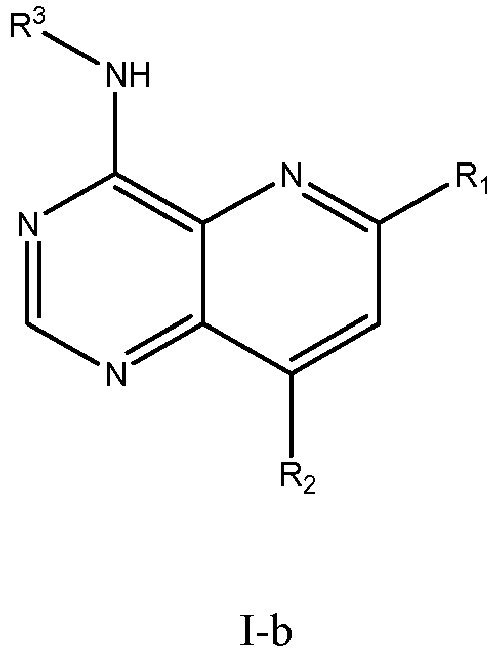
- In one embodiment, the invention relates to compounds of Formula (I-b-1):

- In one embodiment, the invention relates to compounds of Formula (I-b-2):

- In one embodiment of the present invention, R2 is H.
- In one embodiment, R2 is -C(O)-NH-heterocyclyl unsubstituted or substituted by one or more Rg or -N(C1-C12-alkyl)-C(O)-C1-C12-alkyl, and -N(C1-C12-alkyl)2.
- In one embodiment, R2 is -C(O)-NH-heterocyclyl, which heterocyclyl is selected from 1,4-diazepane, piperazine, piperidine, pyrrolidine, azetidine, 1,4-oxazepane, 1,1-dioxo-tetrahydrothiophene, morpholine, oxetane, tetrahydropyrane, tetrahydrofurane, and is unsubstituted or substituted by one or more Rg or -N(C1-C12-alkyl)-C(O)-C1-C12-alkyl, and -N(C1-C12-alkyl)2.
- In one embodiment, R2 is CN.
- In one embodiment, R2 is -C(O)-NH(C1-C12-alkyl)-NH-C(O)-C1-C12-alkyl.
- In one embodiment, R2 is C(O)-N(C1-C12-alkyl)(C1-C12-alkoxy).
- In one embodiment, R2 is -C(O)-N(C1-C12-alkyl)(C1-C12-alkylalkoxy).
- In one embodiment, R2 is -C(O)-NH(heterocyclyl) unsubstituted or substituted by one or more Rg or -N(C1-C12-alkyl)-C(O)-C1-C12-alkyl, and -N(C1-C12-alkyl)2.
- In one embodiment, R2 is -C(O)-NH(C1-C12-alkyl-heterocyclyl) unsubstituted or substituted by one or more Rg or -N(C1-C12-alkyl)-C(O)-C1-C12-alkyl, and -N(C1-C12-alkyl)2.
- In one embodiment, R2 is -C(O)-N(C1-C12-alkyl)(heterocyclyl) unsubstituted or substituted by one or more Rg or -N(C1-C12-alkyl)-C(O)-C1-C12-alkyl, and -N(C1-C12-alkyl)2. In one embodiment this heterocyclyl is selected from 1,4-diazepane, piperazine, piperidine, pyrrolidine, azetidine, 1,4-oxazepane, 1,1 -dioxo-tetrahydrothiophene, morpholine, oxetane, tetrahydropyrane, tetrahydrofurane, and is unsubstituted or substituted by one or more Rg or -N(C1-C12-alkyl)-C(O)-C1-C12-alkyl, and -N(C1-C12-alkyl)2.
- In one embodiment, R2 is -C(O)-heterocyclyl unsubstituted or substituted by one or more Rg or-N(C1-C12-alkyl)-C(O)-C1-C12-alkyl, and -N(C1-C12-alkyl)2. In one embodiment, this heterocyclyl is selected from 1,4-diazepane, piperazine, piperidine, pyrrolidine, azetidine, 1,4-oxazepane, 1,1-dioxo-tetrahydrothiophene, morpholine, oxetane, tetrahydropyrane, tetrahydrofurane, and is unsubstituted or substituted by one or more Rg or -N(C1-C12-alkyl)-C(O)-C1-C12-alkyl, and -N(C1-C12-alkyl)2.
- In one embodiment n is 0. In one embodiment n is 1.
- In one embodiment, R3 is H.
- In one embodiment, R3 is i-butyl. In one embodiment, R3 is C1-C12-haloalkyl. In one embodiment, R3 is cyclobutyl. In one embodiment, R3 is -C(O)-C1-C12-alkyl-C3-C6-cycloalkyl. In one embodiment, R3 is -C(O)-C1-C12-alkyl-heterocyclyl. In one embodiment, this heterocyclyl is selected from 1,4-diazepane, piperazine, piperidine, pyrrolidine, azetidine, 1,4-oxazepane, 1,1-dioxo-tetrahydrothiophene, morpholine, oxetane, tetrahydropyrane, tetrahydrofurane, and is unsubstituted or substituted by one or more Rg. In one embodiment, R3 is -C(O)-C1-C12-alkyl-C6-C20-aryl, for example methylphenyl. In one embodiment, R3 is -C(O)-C1-C12-alkyl-heteroaryl, for example 5 or 6 membered heteroaryls comprising 1, 2 or 3 heteroatom(s) selected from N, O or S. In one embodiment, R3 is pyridinyl.
- In one embodiment R1 is C6-C20-aryl. In one embodiment R1 is phenyl.
- In one embodiment R1 is C6-C20-aryl (for example phenyl) unsubstituted or substituted by one or more substituent(s) selected from the group consisting of CN, OH, NH2, halo, C1-C12-alkyl, C1-C12-alkoxy unsubstituted or substituted by one or more substituent(s) selected from the group consisting: of C3-C6-cycloalkyl, heterocyclyl, aryl and heteroaryl; and C1-C12-hydroxyalkyl, for example the following groups:


- In one embodiment R1 is C6-C20-aryl unsubstituted or substituted by one or more substituent(s) selected from the group consisting of C1-C12-haloalkyl and C1-C12-haloalkoxy, for example the following groups:

- In one embodiment R1 is C6-C20-aryl unsubstituted or substituted by one or more (C1-C12-alkylenyl)n-C(O)OH, wherein n is 0 or 1.
- In one embodiment R1 is C6-C20-aryl unsubstituted or substituted by one or more substituent(s) selected from the group consisting of C6-C20-aryl and C3-C6-cycloalkyl, each of which is unsubstituted or substituted by one or more Rg, and Rg is as defined herein.
- In one embodiment R1 is C6-C20-aryl unsubstituted or substituted by (C1-C12-alkylenyl)n-heterocyclyl selected from the group consisting of 1,4-diazepane, piperazine, piperidine, pyrrolidine, azetidine, 1,4-oxazepane, 1,1-dioxo-tetrahydrothiophene, morpholine, oxetane, tetrahydropyrane, tetrahydrofurane, each of which is unsubstituted or substituted by one or more substituent(s) selected from the group consisting of: halo, oxo, OH, NH2, C1-C12-alkyl, C1-C12-hydroxyalkyl, C1-C12-haloalkyl,(C1-C12-alkylenyl)n-C1-C12-alkoxy, -NH(C1-C12-alkyl), -N(C1-C12-alkyl)2, -C(O)-C1-C12-alkyl, -C(O)O-C1-C12-alkyl, (C1-C12-alkylenyl)n-C(O)-NH(C1-C12-alkyl), -C(O)-NH(C1-C12-hydroxyalkyl), (C1-C12-alkylenyl)n-C(O)-N(C1-C12-alkyl)2, -C(O)-NH(C1-C12-haloalkyl), -C(O)-NH-heterocyclyl, -S(O)2-C1-C12-alkyl, -S(O)2-N(C1-C12-alkyl)2, C1-C12-alkylenyl-C(O)N(C1-C12-alkyl)2, -C(O)OH, -C(O)-heterocyclyl, heterocyclyl and (C1-C12-alkylenyl)n-heteroaryl, which heterocyclyl and heteroaryl group(s) can be unsubstituted or substituted by one or more substituent(s) selected from the group consisting of: OH, NH2, halo, C1-C12-alkyl, C1-C12-alkoxy, C1-C12-haloalkyl and C1-C12-hydroxyalkyl; and n is 0 or 1, for example the following groups:


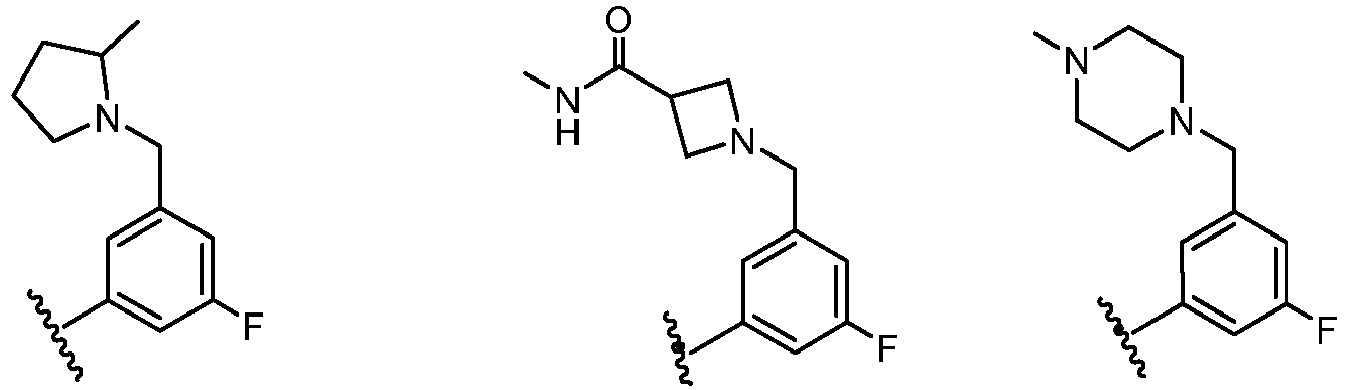
- In one embodiment R1 is C6-C20-aryl unsubstituted or substituted by one or more (C1-C12-alkylenyl)n-heteroaryl unsubstituted or substituted by one or more substituent(s) selected from the group consisting of: halo, OH, NH2, C1-C12-alkyl, C1-C12-hydroxyalkyl, C1-C12-haloalkyl, (C1-C12-alkylenyl)n-C1-C12-alkoxy, -NH(C1-C12-alkyl), -N(C1-C12-alkyl)2, -N(C1-C12-alkyl)C(O)-C1-C12-alkyl, -C(O)-C1-C12-alkyl, -C(O)-NH2, -C(O)-NH(C1-C12-alkyl), -C(O)-NH(C1-C12-hydroxyalkyl), -C(O)-N(C1-C12-alkyl)2, -C(O)-NH(C1-C12-haloalkyl), -C(O)-NH-heterocyclyl, -S(O)2-C1-C12-alkyl, -S(O)2-N(C1-C12-alkyl)2, C1-C12-alkylenyl-C(O)N(C1-C12-alkyl)2, -C(O)OH, -C(O)-heterocyclyl and heterocyclyl, which heterocyclyl group(s) can be unsubstituted or substituted by one or more substituent(s) selected from the group consisting of: OH, NH2, halo, C1-C12-alkyl, C1-C12-alkoxy, C1-C12-haloalkyl, and C1-C12-hydroxyalkyl and n is 0 or 1.
- In one embodiment R1 is C6-C20-aryl unsubstituted or substituted by one or more (C1-C12-alkylenyl)n-NRaRb; wherein Ra and Rb are independently selected from: H, C1-C12-alkyl, C1-C12-hydroxyalkyl, C1-C12-haloalkyl, (C1-C12-alkylenyl)n-C1-C12-alkoxy, -S(O)2-(C1-C12-alkylenyl)n-heterocyclyl unsubstituted or substituted by one or more Rg, C1-C12-alkylenyl-C6-C20-aryl, which aryl is unsubstituted or substituted by one or more Rg, (C1-C12-alkylenyl)n-C3-C6-cycloalkyl unsubstituted or substituted by one or more Rg, (C1-C12-alkylenyl)n-heterocyclyl unsubstituted or substituted by one or more oxo, -C(O)-C1-C12-alkyl, -C(O)O-C1-C12-alkyl and Rg, C1-C12-alkylenyl-C(O)-heteroaryl unsubstituted or substituted by one or more Rg, C1-C12-alkylenyl-NH2, C1-C12-alkylenyl-NH(C1-C12-alkyl), C1-C12-alkylenyl-N(C1-C12-alkyl)2, C1-C12-alkylenyl-C(O)NH2, C1-C12-alkylenyl-C(O)NH(C1-C12-alkyl), C1-C12-alkylenyl-C(O)N(C1-C12-alkyl)2, Rg is as defined herein and n is 0 or 1, for example the following groups:


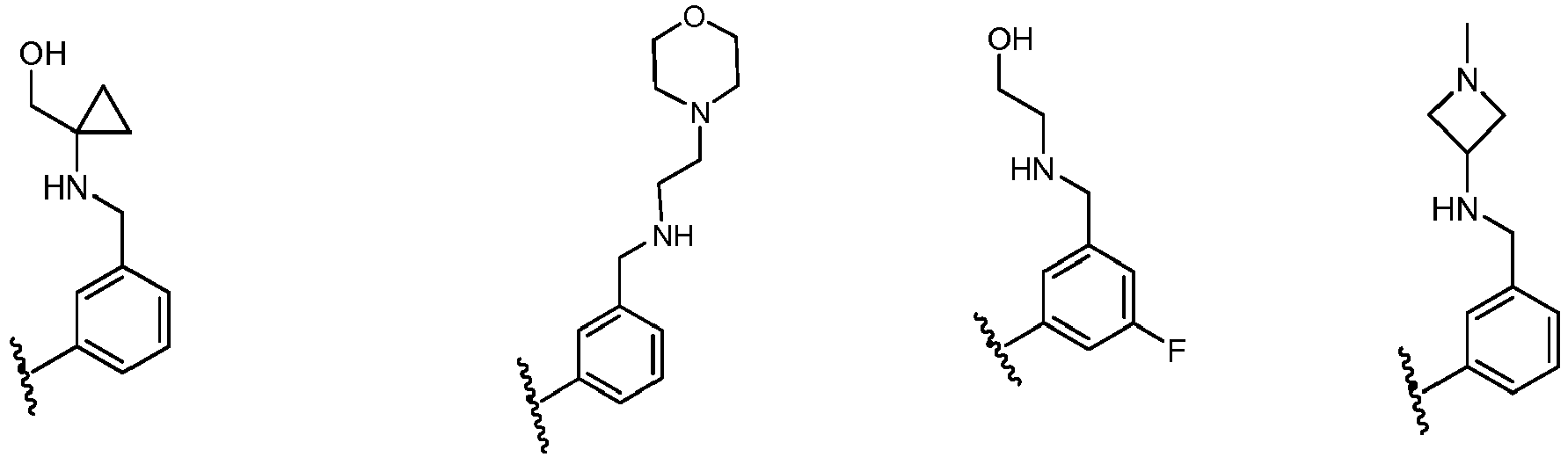

- In one embodiment R1 is C6-C20-aryl unsubstituted or substituted by one or more (C1-C12-alkylenyl)n-C(O)NRcRd, wherein Rc and Rd are independently selected from H, C1-C12-alkyl, C1-C12-haloalkyl, (C1-C12-alkylenyl)n-C1-C12-alkoxy, C1-C12-alkylenyl-NH(C1-C12-alkyl), C1-C12-alkylenyl-N(C1-C12-alkyl)2, (C1-C12-alkylenyl)n-heterocyclyl, unsubstituted or substituted by one or more substituent(s) selected from the group consisting of: oxo, -C(O)-C1-C12-alkyl and Rg, (C1-C12-alkylenyl)n-C3-C6-cycloalkyl unsubstituted or substituted by one or more Rg, -NH-C3-C6-cycloalkyl; wherein Rg is as defined herein and n is 0 or 1, for example the following groups:

- In one embodiment R1 is C6-C20-aryl unsubstituted or substituted by one or more (C1-C12-alkylenyl)n-NReC(O)Rf, wherein Re is H and Rf is C1-C12-alkyl, C1-C12-haloalkyl, (C1-C12-alkylenyl)n-C1-C12-alkoxy, C1-C12-hydroxyalkyl, (C1-C12-alkylenyl)n-NH(C1-C12-alkyl), (C1-C12-alkylenyl)-N(C1-C12-alkyl)2, (C1-C12-alkylenyl)n-heterocyclyl unsubstituted or substituted by one or more Rg, (C1-C12-alkylenyl)n-C3-C6-cycloalkyl, unsubstituted or substituted by one or more Rg and Rg is as defined herein and n is 0 or 1, for example the following groups:


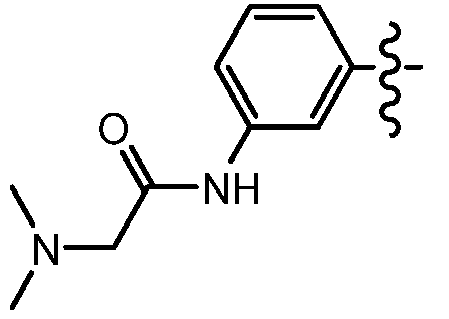
- In all embodiments wherein R1 is C6-C20-aryl it can for example be phenyl.
- In one embodiment, R1 is pyridine. In one embodiment, R1 is pyridine unsubstituted or substituted by one or more substituent(s) selected from the group consisting of: CN; NH2; Halo; C1-C12-alkyl; C1-C12-haloalkyl; (C1-C12-alkylenyl)n-NRaRb; wherein Ra and Rb are independently selected from: H, C1-C12-alkylenyl-N(C1-C12-alkyl)2 and (C1-C12-alkylenyl)n-heterocyclyl unsubstituted or substituted by one or more oxo, C(O)-C1-C12-alkyl, -C(O)O-C1-C12-alkyl and Rg, wherein Rg is as defined herein and n is 0 or 1, for example the following groups:


- In one embodiment, R1 is N-linked piperidine unsubstituted or substituted by C1-C12-alkyl, (C1-C12-alkylenyl)n-C1-C12-alkoxy, C1-C12-hydroxyalkyl, C1-C12-haloalkyl, (C1-C12-alkylenyl)n-heteroaryl unsubstituted or substituted by one or more substituent(s) selected from the group consisting of: OH, C1-C12-alkyl, C1-C12-haloalkyl, (C1-C12-alkylenyl)n-C1-C12-alkoxy, -N(C1-C12-alkyl)2, -C(O)-NH2, -C(O)-NH(C1-C12-alkyl), -C(O)-N(C1-C12-alkyl)2, and -S(O)2-C1-C12-alkyl, (C1-C12-alkylenyl)n-C(O)NRcRd, wherein Rc and Rd are independently selected from: H, C1-C12-alkyl, (C1-C12-alkylenyl)n-C1-C12-alkoxy, and(C1-C12-alkylenyl)n-heterocyclyl, unsubstituted or substituted by one or more Rg, or Rc and Rd together with the nitrogen atom to which they are attached, form a 5 or 6 membered heterocyclyl comprising 1 or 2 additional heteroatom selected from N, O or S, or is (C1-C12-alkylenyl)n-NReC(O)Rf, wherein Re is H and Rf is (C1-C12-alkylenyl)n-C1-C12-alkoxy, (C1-C12-alkylenyl)n-heterocyclyl, and n and Rg are as defined herein, for example the following groups:
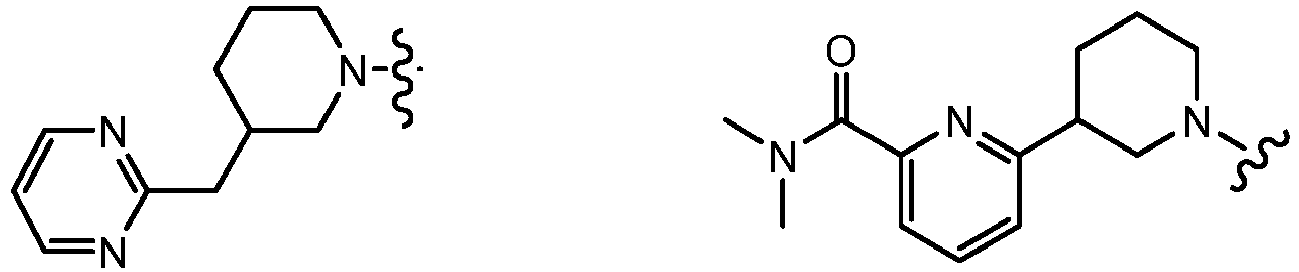


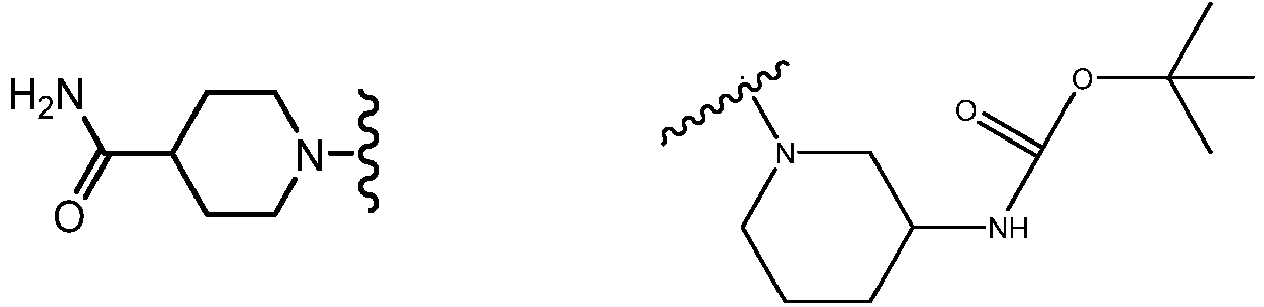


- In one embodiment, R1 is N-linked piperazine. In one embodiment, R1 is N-linked piperazine unsubstituted or substituted by one or more substituent(s) selected from the group consisting of: C1-C12-alkyl, -C(O)-C1-C12-alkyl, (C1-C12-alkylenyl)n-C(O)OH, and (C1-C12-alkylenyl)n-C(O)O-C1-C12-alkyl, and n is as defined herein, for example the following groups:



- In one embodiment, R1 is N-linked pyrrolidine. In one embodiment, R1 is N-linked pyrrolidine unsubstituted or substituted by one or more substituent(s) selected from the group consisting of: C1-C12-haloalkyl, (C1-C12-alkylenyl)n-heterocyclyl, (C1-C12-alkylenyl)n-NReC(O)Rf, wherein Re is H or C1-C12-alkyl, Rf is C1-C12-alkyl, (C1-C12-alkylenyl)n-heteroaryl unsubstituted or substituted by one or more substituent(s) selected from the group consisting of: C1-C12-alkyl, C1-C12-hydroxyalkyl, -NH(C1-C12-alkyl), and N(C1-C12-alkyl)2, (C1-C12-alkylenyl)n-NRaRb, wherein Ra and Rb are independently selected from H and C1-C12-alkyl; (C1-C12-alkylenyl)n-C(O)NRcRd, wherein Rc and Rd are independently selected from H and C1-C12-alkyl, for example the following groups:




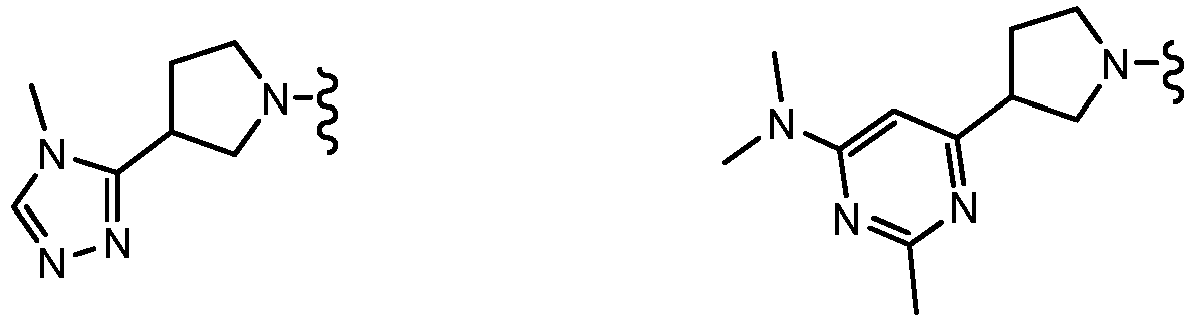

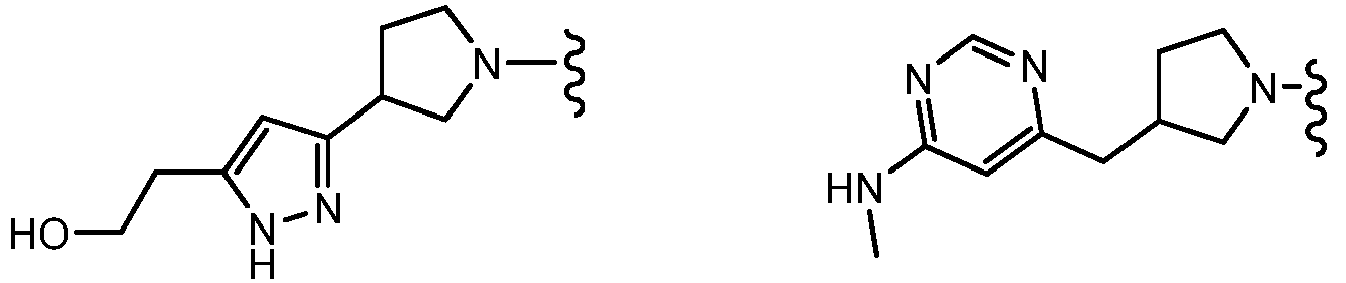




- In one embodiment, R1 is N-linked morpholine. In one embodiment, R1 is N-linked morpholine unsubstituted or substituted by heteroaryl or (C1-C12-alkylenyl)n-C(O)NRcRd, wherein Rc and Rd are independently selected from H, C1-C12-alkyl, and (C1-C12-alkylenyl)n-C3-C6-cycloalkyl unsubstituted or substituted by one or more Rg, wherein n and Rg are as defined herein, for example the following groups:

- In one embodiment R1 is octahydropyrrolo[1,2-a]pyrazine:

- In one embodiment R1 is 1H-pyrazol-4-yl, unsubstituted or substituted by C1-C12-alkyl, for example the following group:

- In one embodiment, R1 is C6-C20-aryloxy. In one embodiment, R1 is -O-phenyl unsubstituted or substituted by one or more substituent(s) selected from the group consisting of: halo, CN, C1-C12-alkyl and -C(O)-NH2, for example the following groups:


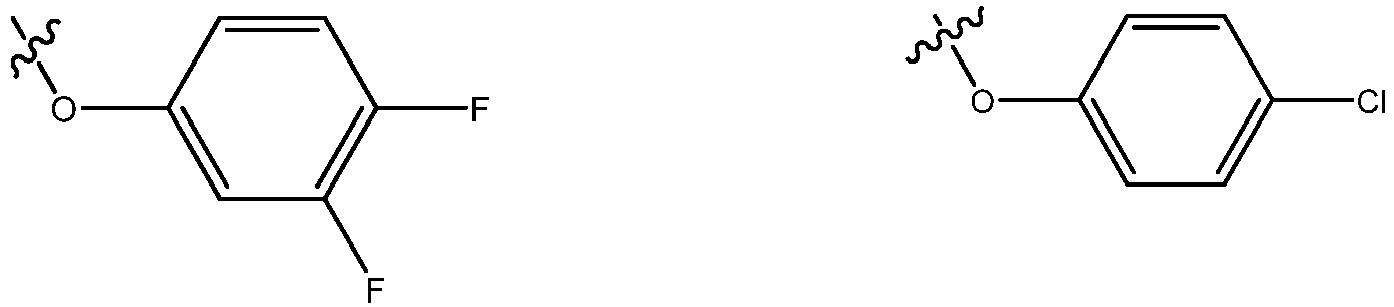


- In one embodiment, R1 is heteroaryloxy. In one embodiment, R1 is -O-pyridine. In one embodiment, R1 is -O-pyridine unusbstituted or substituted by one or more halo or C1-C12-alkyl, for example the following groups.


- In one embodiment R1 is -NR-(C1-C12-alkylenyl)n-C3-C6-cycloalkyl. In one embodiment R1 is -NH-cyclopentyl, or -NH-cyclohexyl unsubstituted or substituted by C1-C12-alkyl for example the following groups, wherein R is as defined herein:

- In one embodiment R1 is -NR-(C1-C12-alkylenyl)n-heterocyclyl. In one embodiment R1 is -NR-(C1-C12-alkylenyl)n-piperidine unsubstituted or substituted by -C(O)-C1-C12-alkyl or -C(O)O-C1-C12-alkyl, wherein R is as defined herein, for example the following groups:

- In one embodiment R1 is -NR-(C1-C12-alkylenyl)n-C6-C20-aryl. In one embodiment R1 is -NR-(C1-C12-alkylenyl)n-phenyl unsubstituted or substituted by halo, C1-C12-alkyl, 5 or 6 membered heterocyclyl comprising 1, 2 or 3 heteroatom(s) selected from N, O and S, for example the following groups, wherein R is as defined herein:


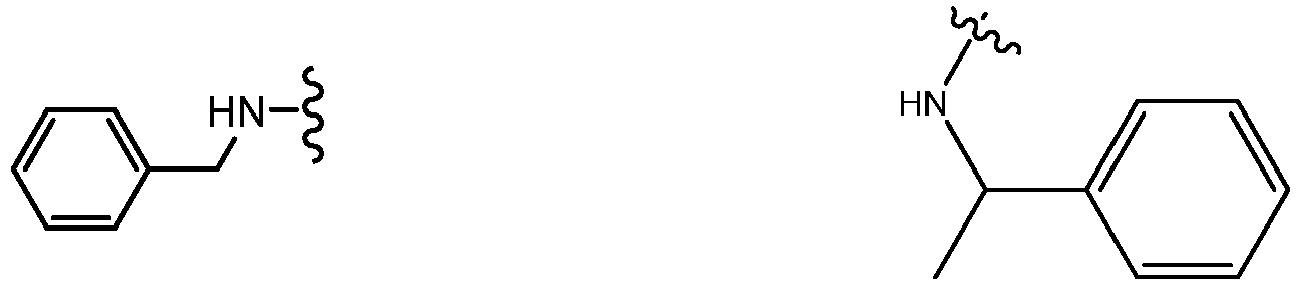


- In one embodiment R1 is -NR-(C1-C12-alkylenyl)n-heteroaryl. In one embodiment R1 is -NR-(C1-C12-alkylenyl)n-pyridine or -NR-(C1-C12-alkylenyl)n-pyrimidine, each of which can be unsubstituted or substituted by C1-C12-alkyl, wherein R is as defined herein, for example the following groups:


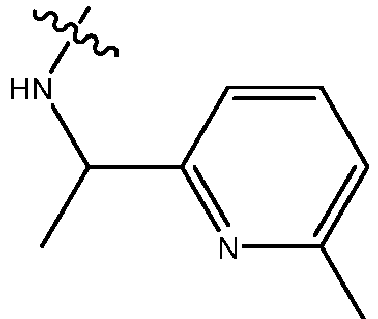
- In one embodiment R1 is -NR-(C1-C12-alkylenyl)n-C6-C20-aryloxy. In one embodiment R1 is -NR-(C1-C12-alkylenyl)n-O-phenyl unsubstituted or substituted by halo, for example the following group, wherein R is as defined herein:

- In one embodiment R1 is -NR-C1-C12-hydroxyalkyl, for example the following group:

- In one embodiment the compounds of Formula (I) are those compounds wherein:
- R1 is C6-C20-aryl unsubstituted;
- C6-C20-aryl substituted by one or more substituent(s) selected from the group consisting of CN, OH, NH2, halo, C1-C12-alkyl, C1-C12-alkoxy unsubstituted or substituted by one or more substituent(s) selected from the group consisting of C3-C6-cycloalkyl, heterocyclyl, aryl and heteroaryl or C1-C12-hydroxyalkyl;
- C6-C20-aryl substituted by one or more substituent(s) selected from the group consisting of C1-C12-haloalkyl and C1-C12-haloalkoxy;
- C6-C20-aryl substituted by (C1-C12-alkylenyl)n-heterocyclyl selected from the group consisting of 1,4-diazepane, piperazine, piperidine, pyrrolidine, azetidine, 1,4-oxazepane, 1,1-dioxo-tetrahydrothiophene, morpholine, oxetane, tetrahydropyrane, tetrahydrofurane, each of which is unsubstituted or substituted by one or more substituent(s) selected from the group consisting of: halo, oxo, OH, NH2, C1-C12-alkyl, C1-C12-hydroxyalkyl, C1-C12-haloalkyl, (C1-C12-alkylenyl)n-C1-C12-alkoxy, -NH(C1-C12-alkyl), -N(C1-C12-alkyl)2,-C(O)-C1-C12-alkyl, -C(O)O-C1-C12-alkyl, (C1-C12-alkylenyl)n-C(O)-NH(C1-C12-alkyl), -C(O)-NH(C1-C12-hydroxyalkyl), (C1-C12-alkylenyl)n-C(O)-N(C1-C12-alkyl)2, -C(O)-NH(C1-C12-haloalkyl), -C(O)-NH-heterocyclyl, -S(O)2-C1-C12-alkyl, -S(O)2-N(C1-C12-alkyl)2, C1-C12-alkylenyl-C(O)N(C1-C12-alkyl)2, -C(O)OH, -C(O)-heterocyclyl, heterocyclyl and (C1-C12-alkylenyl)n-heteroaryl, which heterocyclyl and heteroaryl group(s) can be unsubstituted or substituted by one or more substituent(s) selected from the group consisting of: OH, NH2, halo, C1-C12-alkyl, C1-C12-alkoxy, C1-C12-haloalkyl and C1-C12-hydroxyalkyl;
- C6-C20-aryl substituted by one or more (C1-C12-alkylenyl)n-NRaRb; wherein Ra and Rb are independently selected from: H, C1-C12-alkyl, C1-C12-hydroxyalkyl, C1-C12-haloalkyl, (C1-C12-alkylenyl)n-C1-C12-alkoxy, -S(O)2-(C1-C12-alkylenyl)n-heterocyclyl unsubstituted or substituted by one or more Rg, C1-C12-alkylenyl-C6-C20-aryl, which aryl is unsubstituted or substituted by one or more Rg, (C1-C12-alkylenyl)n-C3-C6-cycloalkyl unsubstituted or substituted by one or more Rg, (C1-C12-alkylenyl)n-heterocyclyl unsubstituted or substituted by one or more oxo, -C(O)-C1-C12-alkyl, -C(O)O-C1-C12-alkyl and Rg, C1-C12-alkylenyl-C(O)-heteroaryl unsubstituted or substituted by one or more Rg, C1-C12-alkylenyl-NH2, C1-C12-alkylenyl-NH(C1-C12-alkyl), C1-C12-alkylenyl-N(C1-C12-alkyl)2, C1-C12-alkylenyl-C(O)NH2, C1-C12-alkylenyl-C(O)NH(C1-C12-alkyl), C1-C12-alkylenyl-C(O)N(C1-C12-alkyl)2;
- C6-C20-aryl substituted by one or more (C1-C12-alkylenyl)n-C(O)NRcRd, wherein Rc and Rd are independently selected from C1-C12-alkyl, C1-C12-haloalkyl, (C1-C12-alkylenyl)n-C1-C12-alkoxy, C1-C12-alkylenyl-NH(C1-C12-alkyl), C1-C12-alkylenyl-N(C1-C12-alkyl)2, (C1-C12-alkylenyl)n-heterocyclyl, unsubstituted or substituted by one or more substituent(s) selected from the group consisting of: oxo, -C(O)-C1-C12-alkyl and Rg, (C1-C12-alkylenyl)n-C3-C6-cycloalkyl unsubstituted or substituted by one or more Rg, and -NH-C3-C6-cycloalkyl;
- C6-C20-aryl substituted by one or more (C1-C12-alkylenyl)n-NReC(O)Rf, wherein Re is H and Rf is C1-C12-alkyl, C1-C12-haloalkyl, (C1-C12-alkylenyl)n-C1-C12-alkoxy, C1-C12-hydroxyalkyl, (C1-C12-alkylenyl)-NH(C1-C12-alkyl), (C1-C12-alkylenyl)-N(C1-C12-alkyl)2, (C1-C12-alkylenyl)n-heterocyclyl unsubstituted or substituted by one or more Rg, or (C1-C12-alkylenyl)n-C3-C6-cycloalkyl unsubstituted or substituted by one or more Rg;
- Pyridine unsubstituted or substituted by one or more substituent(s) selected from the group consisting of: CN; NH2; Halo; C1-C12-alkyl; C1-C12-haloalkyl; (C1-C12-alkylenyl)n-NRaRb; wherein Ra and Rb are independently selected from: H, (C1-C12-alkylenyl)n-heterocyclyl unsubstituted or substituted by one or more oxo, C(O)-C1-C12-alkyl, -C(O)O-C1-C12-alkyl and Rg, and C1-C12-alkylenyl-N(C1-C12-alkyl)2;
- N-linked piperidine unsubstituted or substituted by C1-C12-alkyl, C1-C12-alkylenyl-C1-C12-alkoxy, C1-C12-alkoxy, C1-C12-hydroxyalkyl, C1-C12-haloalkyl, (C1-C12-alkylenyl)n-heteroaryl unsubstituted or substituted by one or more substituent(s) selected from the group consisting of: OH, C1-C12-alkyl, C1-C12-haloalkyl, (C1-C12-alkylenyl)-C1-C12-alkoxy, -N(C1-C12-alkyl)2, -C(O)-NH2, -C(O)-NH(C1-C12-alkyl), -C(O)-N(C1-C12-alkyl)2, and -S(O)2-C1-C12-alkyl, (C1-C12-alkylenyl)n-C(O)NRcRd, wherein Rc and Rd are independently selected from: H, C1-C12-alkyl, (C1-C12-alkylenyl)n-C1-C12-alkoxy, and(C1-C12-alkylenyl)n-heterocyclyl, unsubstituted or substituted by one or more Rg, or Rc and Rd together with the nitrogen atom to which they are attached, form a 5 or 6 membered heterocyclyl comprising 1 or 2 additional heteroatom selected from N, O or S, or is (C1-C12-alkylenyl)n-NReC(O)Rf, wherein Re is H and Rf is (C1-C12-alkylenyl)n-C1-C12-alkoxy, (C1-C12-alkylenyl)n-heterocyclyl;
- N-linked piperazine unsubstituted or substituted by one or more substituent(s) selected from the group consisting of: C1-C12-alkyl, -C(O)-C1-C12-alkyl, (C1-C12-alkylenyl)n-C(O)OH, and (C1-C12-alkylenyl)n-C(O)O-C1-C12-alkyl;
- N-linked pyrrolidine unsubstituted or substituted by one or more substituent(s) selected from the group consisting of: C1-C12-haloalkyl, (C1-C12-alkylenyl)n-heterocyclyl, (C1-C12-alkylenyl)n-NReC(O)Rf, wherein Re is H or C1-C12-alkyl, Rf is C1-C12-alkyl, (C1-C12-alkylenyl)n-heteroaryl unsubstituted or substituted by one or more substituent(s) selected from the group consisting of: C1-C12-alkyl, C1-C12-hydroxyalkyl, -NH(C1-C12-alkyl), and N(C1-C12-alkyl)2, (C1-C12-alkylenyl)n-NRaRb, wherein Ra and Rb are independently selected from H and C1-C12-alkyl, (C1-C12-alkylenyl)n-C(O)NRcRd, wherein Rc and Rd are independently selected from H and C1-C12-alkyl;
- N-linked morpholine unsubstituted or substituted by heteroaryl or (C1-C12-alkylenyl)n-C(O)NRcRd, wherein Rc and Rd are independently selected from H, C1-C12-alkyl, and (C1-C12-alkylenyl)n-C3-C6-cycloalkyl unsubstituted or substituted by one or more Rg;
- 1H-pyrazol-4-yl unsubstituted or substituted by C1-C12-alkyl;
- -O-phenyl unsubstituted or substituted by one or more substituent(s) selected from the group consisting of: halo, CN, C1-C12-alkyl and -C(O)-NH2,
- -O-pyridine unsubstituted unusbstituted or substituted by one or more halo or C1-C12-alkyl;
- -NH-cyclopentyl, or -NH-cyclohexyl unsubstituted or substituted by C1-C12-alkyl;
- -NR-(C1-C12-alkylenyl)n-piperidine unsubstituted or substituted by -C(O)-C1-C12-alkyl or -C(O)O-C1-C12-alkyl;
- -NR-(C1-C12-alkylenyl)n-phenyl unsubstituted or substituted by halo, C1-C12-alkyl, 5 or 6 membered heterocyclyl comprising 1, 2 or 3 heteroatom(s) selected from N, O and S;
- -NR-(C1-C12-alkylenyl)n-pyridine or -NR-(C1-C12-alkylenyl)n-pyrimidine, each of which can be unsubstituted or substituted by C1-C12-alkyl;
- -NR-(C1-C12-alkylenyl)n-O-phenyl unsubstituted or substituted by halo,
- -NR-C1-C12-hydroxyalkyl;
- R2 and R3 are H; n is 0 or 1, R is H or C1-C12-alkyl and Rg is; and stereoisomers, geometric isomers, tautomers, and pharmaceutically acceptable salts thereof.
- In all embodiments herein, heterocyclyl can be selected from the following groups selected from the group consisting of 1,4-diazepane, piperazine, piperidine, pyrrolidine, azetidine, 1,4-oxazepane, 1,1-dioxo-tetrahydrothiophene, morpholine, oxetane, tetrahydropyrane, tetrahydrofurane, each of which is unsubstituted or substituted as described herein.
- In one embodiment of the disclosure, the compound of Formula (I) is selected from the following compounds of examples 1 to 368: Only those compounds which fall within the scope of claims 1 form part of the invention, the others are reference examples.
1 6-(2-fluoro-4-pyridyl)pyrido[3,2-]pyrimidin-4-amine 2 4-(4-aminopyrido[3,2-d]pyrimidin-6-yl)pyridin-2(1H)-one 3 3-(4-aminopyrido[3,2-d]pyrimidin-6-yl)-5-fluorobenzoic acid 4 3-(4-aminopyrido[3,2-d]pyrimidin-6-yl)-5-fluoro-N-(1-hydroxy-2-methylpropan-2-yl) benzamide 5 3-(4-aminopyrido[3,2-d]pyrimidin-6-yl)-5-fluoro-N-methylbenzamide 6 3-(4-aminopyrido[3,2-d]pyrimidin-6-yl)-N-cyclobutyl-5-fluorobenzamide 7 3-(4-aminopyrido[3,2-d]pyrimidin-6-yl)-5-fluoro-N-(2-hydroxyethyl)benzamide 8 3-(4-aminopyrido[3,2-d]pyrimidin-6-yl)-5-fluoro-N-(3-hydroxycyclobutyl)benzamide 9 3-(4-aminopyrido[3,2-d]pyrimidin-6-yl)-5-fluoro-N-(1-hydroxypropan-2-yl)benzamide 10 3-(4-ammopyrido[3,2-d]pyrimidin-6-yl)-5-fluoro-N-((1-methylpiperidin-4-yl)methyl)benzamide 11 3-(4-aminopyrido[3,2-d]pyrimidin-6-yl)-5-fluoro-N-(2-morpholinoethyl)benzamide 12 3-(4-aminopyrido[3,2-d]pyrimidin-6-yl)-N-(2-(dimethylamino)ethyl)-5-fluorobenzamide 13 3-(4-aminopyrido[3,2-d]pyrimidin-6-yl)-5-fluoro-N-(2-(pyrrolidin-1-yl)ethyl)benzamide 14 3-(4-aminopyrido[3,2-d]pyrimidin-6-yl) benzoic acid 15 3-(4-aminopyrido[3,2-d]pyrimidin-6-yl)-N-(3-hydroxycyclobutyl)benzamide 16 3-(4-aminopyrido[3,2-d]pyrimidin-6-yl)-N-(2-hydroxyethyl)benzamide 17 3-(4-aminopyrido[3,2-d]pyrimidin-6-yl)-N-(1-hydroxypropan-2-yl)benzamide 18 3-(4-aminopyrido[3,2-d]pyrimidin-6-yl)-N-(1-hydroxy-2-methylpropan-2-yl)benzamide 19 3-(4-aminopyrido[3,2-d]pyrimidin-6-yl)-N-cyclobutylbenzamide 20 3-(4-aminopyrido[3,2-d]pyrimidin-6-yl)-N-methylbenzamide 21 3-(4-aminopyrido[3,2-d]pyrimidin-6-yl)-N-(2-morpholinoethyl)benzamide 22 3-(4-aminopyrido[3,2-d]pyrimidin-6-yl)-N-((1-methylpiperidin-4-yl)methyl)benzamide 23 3-(4-aminopyrido[3,2-d]pyrimidin-6-yl)-N-(2-(dimethylamino)ethyl)benzamide 24 3-(4-aminopyrido[3,2-d]pyrimidin-6-yl)-N-(2-(pyrrolidin-1-yl)ethyl)benzamide 25 6-(3-fluorophenyl)-N-isopropylpyrido[3,2-d]pyrimidin-4-amine 26 6-(3-fluorophenyl)-N-methylpyrido[3,2-d]pyrimidin-4-amine 27 N-(cyclobutyl)-6-(3-fluorophenyl)pyrido[3,2-d]pyrimidin-4-amine 28 N-(cyclopropylmethyl)-6-(3-fluorophenyl)pyrido[3,2-d]pyrimidin-4-amine 29 6-(3-fluorophenyl)-N-ethylpyrido[3,2-d]pyrimidin-4-amine 30 Ethyl 4-(3-(4-aminopyrido[3,2-d]pyrimidin-6-yl)-5-fluorobenzylamino)piperidine -1-carboxylate 31 6-(3-fluoro-5-(2-(pyrrolidin-1-yl)ethylamino)phenyl)pyrido[3,2-d]pyrimidin-4-amine 32 6-(3-Fluoro-5-(3-(pyrrolidin-1-ylmethyl)oxetan-3-ylamino)phenyl)pyrido[3,2-d] pyrimidin-4-amine 33 N-(3-(4-aminopyrido[3,2-d]pyrimidin-6-yl)-5-fluorophenyl)pyrrolidine-1-sulfonamide 34 2-Morpholin-4-yl-ethanesulfonic acid [3-(4-amino-pyrido[3,2-d]pyrimidin-6-yl) -5-fluoro-phenyl]-amide 35 N-(3-(4-aminopyrido[3,2-d]pyrimidin-6-yl)-5-fluorophenyl)-2-(piperidin-1-yl)ethanesulfonamide 36 N-(3-(4-aminopyrido[3,2-d]pyrimidin-6-yl)-5-fluorophenyl)-2-(4-methylpiperazin-1-yl)ethanesulfonamide 37 6-[3-(2-Pyrrolidin-1-ylmethyl-cyclopropyl)-phenyl]-pyrido[3,2-d]pyrimidin-4-ylamine 38 6-(3-(Pyridin-2-yloxy)phenyl)pyrido[3,2-d]pyrimidin-4-amine 39 6-(3-Fluoro-5-(4-methyl-1H-pyrazol-3-yl)phenyl)pyrido[3,2-d]pyrimidin-4-amine 40 6-(3-(4-methyl-1H-pyrazol-3-yl)phenyl)pyrido[3,2-d]pyrimidin-4-amine 41 6-(3-(Cyclopentyloxy)phenyl)pyrido[3,2-d]pyrimidin-4-amine 42 6-(3-(1H-imidazol-2-yl)piperidin-1-yl)pyrido[3,2-d]pyrimidin-4-amine 43 tert-butyl N-[(3S)-1-(4-aminopyrido[3,2-d]pyrimidin-6-yl)-3-piperidyl]carbamate 44 (S)-6-(3-aminopiperidin-1-yl)pyrido[3,2-d]pyrimidin-4-amine 45 N-[(3S)-1-(4-aminopyrido[3,2-d]pyrimidin-6-yl)-3-piperidyl]-3-methoxy-propanamide 46 N-[3-(4-aminoquinazolin-6-yl)-5-fluoro-phenyl]acetamide 47 N-[3-(4-aminoquinazolin-6-yl)-5-fluoro-phenyl]-2-morpholino-acetamide 48 N-(6-(3-amino-5-fluorophenyl)pyrido[3,2-d]pyrimidin-4-yl)-2-(pyrrolidin-1-yl)acetamide 49 N-(3-(4-aminopyrido[3,2-d]pyrimidin-6-yl)-5-fluorophenyl)-2-(pyrrolidin-1-yl)acetamide 50 N6-(2-methylbenzyl)pyrido[3,2-d]pyrimidine-4,6-diamine 51 6-(o-tolyloxy)pyrido[3,2-d]pyrimidin-4-amine 52 6-(3-chlorophenyl)-N-(pyridin-4-yl)quinazolin-4-amine 53 6-(3-chlorophenyl)-N-cyclopropylquinazolin-4-amine 54 4-amino-6-(3-fluorophenyl)quinazoline-8-carbonitrile 55 N-(2-acetamidoethyl)-4-amino-6-(3-fluorophenyl)quinazoline-8-carboxamide 56 6-(2-(2-(pyrrolidin-1-yl)ethylamino)pyridin-4-yl)quinazolin-4-amine 57 6-(3-(2-(pyrrolidin-1-yl)ethoxyl)phenyl)pyrido[3,2-d]pyrimidin-4-amine 58 1-(3-(4-aminoquinazolin-6-yl)phenyl)-3-cyclopentylurea 59 6-(3-fluorophenyl)-N-isobutylpyrido[3,2-d]pyrimidin-4-amine 60 1-[4-(4-aminopyrido[3,2-d]pyrimidin-6-yl)piperazin-1-yl]ethanone 61 6-[3-(4-methyl-1H-pyrazol-3-yl)-1-piperidyl]pyrido[3,2-d]pyrimidin-4-amine 62 6-(3-(1,4-dimethyl-1H-pyrazol-3-yl)piperidin-1 -yl)pyrido[3,2-d]pyrimidin-4-amine 63 6-(3-(1,4-dimethyl-1H-pyrazol-5-yl)piperidin-1 -yl)pyrido[3,2-d]pyrimidin-4-amine 64 1-(4-(3-(4-aminopyrido[3,2-d]pyrimidin-6-yl)-5-fluorobenzyl)-1,4-diazepan-1-yl)ethanone 65 1-(4-(3-(4-aminopyrido[3,2-d]pyrimidin-6-yl)-5-fluorobenzyl)piperazin-1-yl)ethanone 66 1-(3-(4-ammopyrido[3,2-d]pyrimidm-6-yl)-5-fluorobenzyl)piperidin-4-ol 67 6-(3-fluoro-5-((methyl(1-methylpiperidin-4-yl)amino)methyl)phenyl)pyrido[3,2-d]pyrimidin-4-amine 68 (1-(3-(4-aminopyrido[3,2-d]pyrimidin-6-yl)-5-fluorobenzyl)piperidin-4-yl)methanol 69 2-(4-(3-(4-aminopyrido[3,2-d]pyrimidin-6-yl)-5-fluorobenzyl)piperazin-1-yl)ethanol 70 6-(3-fluoro-5-((4-(2-methoxyethyl)piperazin-1-yl)methyl)phenyl)pyrido[3,2-d]pyrimidin-4-amine 71 (S)-6-(3-((3-(dimethylamino)pyrrolidin-1-yl)methyl)-5-fluorophenyl)pyrido[3,2-d]pyrimidin-4-amine 72 4-(3-(4-aminopyrido[3,2-d]pyrimidin-6-yl)-5-fluorobenzyl)-N,N-dimethylpiperazine-1-carboxamide 73 1-(3-(4-aminopyrido[3,2-d]pyrimidin-6-yl)-5-fluorobenzyl)piperidine-4-carboxamide 74 6-(3-((3,3-difluoroazetidin-1-yl)methyl)-5-fluorophenyl)pyrido[3,2-d]pyrimidin-4-amine 75 4-(3-(4-aminopyrido[3,2-d]pyrimidin-6-yl)-5-fluorobenzyl)-N,N-dimethylpiperazine-1-sulfonamide 76 6-(3-((1,4-oxazepan-4-yl)methyl)-5-fluorophenyl)pyrido[3,2-d]pyrimidin-4-amine 77 2-(4-(3-(4-aminopyrido[3,2-d]pyrimidin-6-yl)-5-fluorobenzyl)piperazin-1-yl)-N,N-dimethyl acetamide 78 1-(4-(3-(4-aminopyrido[3,2-d]pyrimidin-6-yl)-5-fluorobenzyl)piperazin-1-yl)-2-methylpropan-1-one 79 6-(3-fluoro-5-((4-(methylsulfonyl)piperazin-1-yl)methyl)phenyl)pyrido[3,2-d]pyrimidin-4-amine 80 6-(3-fluoro-5-((methyl(1,1-dioxo-tetrahydrothiophen-3-yl)amino)methyl)phenyl)pyrido[3,2-d]pyrimidin-4-amine 81 2-((3-(4-aminopyrido[3,2-d]pyrimidin-6-yl)-5-fluorobenzyl)(methyl)amino)-1-morpholinoethanone 82 N-(1-(3-(4-aminopyrido[3,2-d]pyrimidin-6-yl)-5-fluorobenzyl)pyrrolidin-3-yl)-N-methylace tamide 83 (1-(3-(4-aminopyrido[3,2-d]pyrimidin-6-yl)-5-fluorobenzyl)azetidin-3-yl)(4-methylpiperazin-1-yl)methanone 84 6-(3-((4-(dimethylamino)piperidin-1-yl)methyl)-5-fluorophenyl)pyrido[3,2-d]pyrimidin-4-amine 85 6-(3-fluoro-5-((4-methoxypiperidin-1-yl)methyl)phenyl)pyrido[3,2-d]pyrimidin-4-amine 86 6-(3-fluoro-5-(pyrrolidin-1-ylmethyl)phenyl)pyrido[3,2-d]pyrimidin-4-amine 87 6-(3 -fluoro-5-((2-methylpyrrolidin-1-yl)methyl)phenyl)pyrido[3,2-d]pyrimidin-4-amine 88 6-(3-fluoro-5-((methyl(1-methylpyrrolidin-3-yl)amino)methyl)phenyl)pyrido[3,2-d]pyrimid in-4-amine 89 2-((3-(4-aminopyrido[3,2-d]pyrimidin-6-yl)-5-fluorobenzyl)(methyl)amino)-N,N-dimethylacetamide 90 6-(3-fluoro-5-(((2-methoxyethyl)(methyl)amino)methyl)phenyl)pyrido[3,2-d]pyrimidin-4-amine 91 4-(3-(4-aminopyrido[3,2-d]pyrimidin-6-yl)-5-fluorobenzyl)-N,1-dimethylpiperazine-2-carboxamide 92 1-(3-(4-aminopyrido[3,2-d]pyrimidin-6-yl)-5-fluorobenzyl)azetidine-3-carboxamide 93 1-(3-(4-aminopyrido[3,2-d]pyrimidin-6-yl)-5-fluorobenzyl)-N-methylpyrrolidine-3-carboxamide 94 1-(3-(4-aminopyrido[3,2-d]pyrimidin-6-yl)-5-fluorobenzyl)-N,N-dimethylazetidine-3-carboxamide 95 4-(3-(4-aminopyrido[3,2-d]pyrimidin-6-yl)-5-fluorobenzyl)-1-methylpiperazine-2-carboxamide 96 1-(3-(4-aminopyrido[3,2-d]pyrimidin-6-yl)-5-fluorobenzyl)-N-methylazetidine-3-carboxamide 97 2-(1-(3-(4-aminopyrido[3,2-d]pyrimidin-6-yl)-5-fluorobenzyl)piperidin-4-yl)-N,N-dimethylacetamide 98 4-(3-(4-aminopyrido[3,2-d]pyrimidin-6-yl)-5-fluorobenzyl)-N-methylmorpholine-2-carboxamide 99 6-(3-((3-(dimethylamino)pyrrolidin-1-yl)methyl)-5-fluorophenyl)pyrido[3,2-d]pyrimidin-4-amine 100 (1-(3-(4-aminopyrido[3,2-d]pyrimidin-6-yl)-5-fluorobenzyl)piperidin-3-yl)methanol 101 6-(3-fluoro-5-((3-morpholinopyrrolidin-1-yl)methyl)phenyl)pyrido[3,2-d]pyrimidin-4-amine 102 6-(3-fluoro-5-((4-methylpiperazin-1-yl)methyl)phenyl)pyrido[3,2-d]pyrimidin-4-amine 103 1-(3-(4-ammopyrido[3,2-d]pyrimidin-6-yl)-5-fluorobenzyl)piperidin-3-ol 104 (R)-1-(3-(4-aminopyrido[3,2-d]pyrimidin-6-yl)-5-fluorobenzyl)piperidin-3-ol 105 6-(3-((cyclopropylamino)methyl)-5-fluorophenyl)pyrido[3,2-d]pyrimidin-4-amine 106 2-(3-(4-aminopyrido[3,2-d]pyrimidin-6-yl)-5-fluorobenzylamino)ethanol 107 6-(3-((cyclopropylmethylamino)methyl)-5-fluorophenyl)pyrido[3,2-d]pyrimidin-4-amine hydrochloride 108 6-(3-((cyclobutylamino)methyl)-5-fluorophenyl)pyrido[3,2-d]pyrimidin-4-amine hydrochloride 109 6-(3-fluoro-5-((oxetan-3-ylamino)methyl)phenyl)pyrido[3,2-d]pyrimidin-4-amine hydrochloride 110 6-(3-fluoro-5-((isobutylamino)methyl)phenyl)pyrido[3,2-d]pyrimidin-4-amine 111 2-(3-(4-aminopyrido[3,2-d]pyrimidin-6-yl)-5-fluorobenzylamino)propan-1-ol hydrochloride 112 6-(3-((cyclopentylamino)methyl)-5-fluorophenyl)pyrido[3,2-d]pyrimidin-4-amine hydrochloride 113 N1-(3-(4-aminopyrido[3,2-d]pyrimidin-6-yl)-5-fluorobenzyl)-N2,N2-dimethylethane-1,2-di amine hydrochloride 114 6-(3-fluoro-5-((isopropylamino)methyl)phenyl)pyrido[3,2-d]pyrimidin-4-amine hydrochloride 115 6-(3-fluoro-5-((tetrahydro-2H-pyran-4-ylamino)methyl)phenyl)pyrido[3,2-d]pyrimidin-4-amine hydrochloride 116 6-(3-fluoro-5-(((tetrahydrofuran-3-yl)methylamino)methyl)phenyl)pyrido[3,2-d]pyrimidin-4-amine 117 2-(3-(4-aminopyrido[3,2-d]pyrimidin-6-yl)-5-fluorobenzylamino)-N,N-dimethylacetamide hydrochloride 118 6-(3-fluoro-5-((4-methylcyclohexylamino)methyl)phenyl)pyrido[3,2-d]pyrimidin-4-amine hydrochloride 119 6-(3-fluoro-5-((2-(pyrrolidin-1-yl)ethylamino)methyl)phenyl)pyrido[3,2-d]pyrimidin-4-amine hydrochloride 120 6-(3-fluoro-5-((1-methylpiperidin-4-ylamino)methyl)phenyl)pyrido[3,2-d]pyrimidin-4-amine hydrochloride 121 6-(3-((cyclopropylamino)methyl)phenyl)pyrido[3,2-d]pyrimidin-4-amine hydrochloride 122 2-(3-(4-aminopyrido[3,2-d]pyrimidin-6-yl)benzylamino)ethanol hydrochloride 123 6-(3-((cyclopropylmethylamino)methyl)phenyl)pyrido[3,2-d]pyrimidin-4-amine hydrochloride 124 6-(3-((cyclobutylamino)methyl)phenyl)pyrido[3,2-d]pyrimidin-4-amine 125 6-(3-((oxetan-3-ylamino)methyl)phenyl)pyrido[3,2-d]pyrimidin-4-amine 126 6-(3-((isobutylamino)methyl)phenyl)pyrido[3,2-d]pyrimidin-4-amine hydrochloride 127 2-(3-(4-aminopyrido[3,2-d]pyrimidin-6-yl)benzylamino)propan-1-ol hydrochloride 128 N1-(3-(4-aminopyrido[3,2-d]pyrimidin-6-yl)benzyl)-N2,N2-dimethylethane-1,2-diamine hydrochloride 129 6-(3-((isopropylamino)methyl)phenyl)pyrido[3,2-d]pyrimidin-4-amine hydrochloride 130 6-(3-((tetrahydro-2H-pyran-4-ylamino)methyl)phenyl)pyrido[3,2-d]pyrimidin-4-amine hydrochloride 131 6-(3-(((tetrahydrofuran-3-yl)methylamino)methyl)phenyl)pyrido[3,2-d]pyrimidin-4-amine hydrochloride 132 6-(3-fluoro-5-(((tetrahydro-2H-pyran-4-yl)methylamino)methyl)phenyl)pyrido[3,2-d]pyrimidin-4-amine hydrochloride 133 4-(3-(4-aminopyrido[3,2-d]pyrimidin-6-yl)-5-fluorobenzylamino)cyclohexanol 134 (1-(3-(4-aminopyrido[3,2-d]pyrimidm-6-yl)-5-fluorobenzylamino)cyclopropyl)methanol hydrochloride 135 6-(3-fluoro-5-(((1-methylpiperidin-2-yl)methylamino)methyl)phenyl)pyrido[3,2-d]pyrimidin-4-amine hydrochloride 136 6-(3-fluoro-5-(((1-methylpiperidin-4-yl)methylamino)methyl)phenyl)pyrido[3,2-d]pyrimidin-4-amine hydrochloride 137 6-(3-fluoro-5-((2-morpholinoethylamino)methyl)phenyl)pyrido[3,2-d]pyrimidin-4-amine hydrochloride 138 1-(4-(3-(4-aminopyrido[3,2-d]pyrimidin-6-yl)-5-fluorobenzylamino)piperidin-1-yl)ethanone hydrochloride 139 6-(3-fluoro-5-((2-methyl-1-morpholinopropan-2-ylamino)methyl)phenyl)pyrido[3,2-d]pyrimidin-4-amine hydrochloride 140 6-(3-fluoro-5-((1-methylazetidin-3-ylamino)methyl)phenyl)pyrido[3,2-d]pyrimidin-4-amine hydrochloride 141 ethyl 4-(3-(4-aminopyrido[3,2-d]pyrimidin-6-yl)-5-fluorobenzylamino)piperidine-1-carboxylate hydrochloride 142 2-(3-(4-aminopyrido[3,2-d]pyrimidin-6-yl)benzylamino)propan-1-ol hydrochloride 143 6-(3-((cyclopentylamino)methyl)phenyl)pyrido[3,2-d]pyrimidin-4-amine hydrochloride 144 2-(3-(4-aminopyrido[3,2-d]pyrimidin-6-yl)benzylamino)-N,N-dimethylacetamide hydrochloride 145 6-(3-((4-methylcyclohexylamino)methyl)phenyl)pyrido[3,2-d]pyrimidin-4-amine hydrochloride 146 6-(3-((2-(pyrrolidin-1-yl)ethylamino)methyl)phenyl)pyrido[3,2-d]pyrimidin-4-amine hydrochloride 147 6-(3-((1-methylpiperidin-4-ylamino)methyl)phenyl)pyrido[3,2-d]pyrimidin-4-amine hydrochloride 148 6-(3-(((tetrahydro-2H-pyran-4-yl)methylamino)methyl)phenyl)pyrido[3,2-d]pyrimidin-4-amine hydrochloride 149 N1-(3-(4-aminopyrido[3,2-d]pyrimidin-6-yl)benzyl)cyclohexane-1,4-diamine hydrochloride 150 (1-(3-(4-aminopyrido[3,2-d]pyrimidin-6-yl)benzylamino)cyclopropyl)methanol hydrochloride 151 6-(3-(((1-methylpiperidin-2-yl)methylamino)methyl)phenyl)pyrido[3,2-d]pyrimidin-4-amine hydrochloride 152 6-(3-(((1-methylpiperidin-4-yl)methylamino)methyl)phenyl)pyrido[3,2-d]pyrimidin-4-amine hydrochloride 153 6-(3-((2-morpholinoethylamino)methyl)phenyl)pyrido[3,2-d]pyrimidin-4-amine hydrochloride 154 1-(4-(3-(4-aminopyrido[3,2-d]pyrimidin-6-yl)benzylamino)piperidin-1-yl)ethanone hydrochloride 155 6-(3-((2-methyl-1-morpholinopropan-2-ylamino)methyl)phenyl)pyrido[3,2-d]pyrimidin-4-amine hydrochloride 156 6-(3-((1-methylazetidin-3-ylamino)methyl)phenyl)pyrido[3,2-d]pyrimidin-4-amine hydrochloride 157 ethyl4-(3-(4-aminopyrido[3,2-d]pyrimidin-6-yl)benzylamino)piperidine-1-carboxylate hydrochloride 158 6-(3-chlorophenyl)quinazolin-4-amine 159 N-[3-(4-aminoquinazolin-6-yl)phenyl]acetamide 160 tert-butyl N-[4-[4-aminoquinazolin-6-yl)phenyl]carbamate 161 5-(4-aminoquinazolin-6-yl)pyridine-3-carbonitrile 162 6-(m-tolyl)quinazolin-4-amine 163 6-(2-fluorophenyl)quinazolin-4-amine 164 3-(4-aminoquinazolin-6-yl)benzonitrile 165 4-(4-aminoquinazolin-6-yl)benzonitrile 166 6-(4-methoxyphenyl)quinazolin-4-amine 167 6-(3-methoxyphenyl)quinazolin-4-amine 168 6-(2-methoxyphenyl)quinazolin-4-amine 169 7-(3-chlorophenyl)quinazoline-2,4-diamine 170 6-(3-chlorophenyl)isoquinolin-1-amine 171 6-(3-chloro-5-fluoro-phenyl)quinazolin-4-amine 172 6-(3-chlorophenyl)pyrido[3,2-d]pyrimidine-2,4-diamine 173 6-(3-chlorophenyl)-N-cyclopropyl-quinazolin-4-amine 174 6-(3-fluorophenyl)quinazolin-4-amine 175 3-(4-aminoquinazolin-6-yl)-5-chloro-benzamide 176 6-(3-chlorophenyl)-N-isobutyl-quinazolin-4-amine 177 6-(3-chlorophenyl)-N-cyclobutyl-quinazolin-4-amine 178 6-(3-chlorophenyl)-N-(2,2-difluoroethyl)quinazolin-4-amine 179 6-(3-chlorophenyl)-N-ethyl-quinazolin-4-amine 180 6-(3-chlorophenyl)-N-methyl-quinazolin-4-amine 181 6-(3-chlorophenyl)pyrido[3,2-d]pyrimidin-4-amine 182 6-(5-chloro-2-methyl-phenyl)quinazolin-4-amine 183 6-(3,5-dichlorophenyl)quinazolin-4-amine 184 6-(3-fluorophenyl)pyrido[3,2-d]pyrimidin-4-amine 185 3-(4-aminoquinazolin-6-yl)-5-fluoro-benzonitrile 186 6-(3,5-difluorophenyl)quinazolin-4-amine 187 6-(3-amino-5-fluoro-phenyl)quinazolin-4-amine 188 N-[3-(4-aminoquinazolin-6-yl)-5-fluoro-phenyl]-2-tetrahydrofuran-2-yl-acetamide 189 N-[3-(4-aminoquinazolin-6-yl)-5-fluoro-phenyl]tetrahydropyran-4-carboxamide 190 1-acetyl-N-[3-(4-aminoquinazolin-6-yl)-5-fluoro-phenyl]azetidine-3-carboxamide 191 N-[3-(4-aminoquinazolin-6-yl)-5-fluoro-phenyl]-2-pyrrolidin-1-yl-acetamide 192 N-[3-(4-aminoquinazolin-6-yl)-5-fluoro-phenyl]-3-(dimethylamino)propanamide 193 N-[3-(4-aminoquinazolin-6-yl)-5-fluoro-phenyl]cyclobutanecarboxamide 194 N-[3-(4-aminoquinazolin-6-yl)-5-fluoro-phenyl]-2-cyclopropyl-acetamide 195 N-[3-(4-aminoquinazolin-6-yl)-5-fluoro-phenyl]tetrahydrofuran-2-carboxamide 196 N-[3-(4-aminoquinazolin-6-yl)-5-fluoro-phenyl]-3-methoxy-propanamide 197 N-[3-(4-aminoquinazolin-6-yl)-5-fluoro-phenyl]-4-methyl-morpholine-2-carboxamide 198 6-(3-methyl-1-piperidyl)pyrido[3,2-d]pyrimidin-4-amine 199 6-(3-methoxy-1-piperidyl)pyrido[3,2-d]pyrimidin-4-amine 200 6-[3-(trifluoromethyl)pyrrolidin-1-yl]pyrido[3,2-d]pyrimidin-4-amine 201 6-[3-(trifluoromethyl)-1-piperidyl]pyrido[3,2-d]pyrimidin-4-amine 202 6-[3-(methoxymethyl)-1-piperidyl]pyrido[3,2-d]pyrimidin-4-amine 203 [1-(4-aminopyrido[3,2-d]pyrimidin-6-yl)-3-piperidyl]methanol 204 6-(4-pyridyl)quinazolin-4-amine 205 6-(2-methyl-4-pyridyl)quinazolin-4-amine 206 N-[3-(4-aminoquinazolin-6-yl)phenyl]-2-cyclopropyl-acetamide 207 N-[3-(4-aminoquinazolin-6-yl)phenyl]cyclobutanecarboxamide 208 N-[3-(4-aminoquinazolin-6-yl)phenyl]propanamide 209 N-[3-(4-aminoquinazolin-6-yl)phenyl]-2,2-difluoro-acetamide 210 N-[3-(4-aminoquinazolin-6-yl)phenyl]-3,3,3-trifluoro-propanamide 211 N-[3-(4-aminoquinazolin-6-yl)phenyl]tetrahydropyran-4-carboxamide 212 N-[3-(4-aminoquinazolin-6-yl)phenyl]-4-methyl-morpholine-2-carboxamide 213 N-[3-(4-aminoquinazolin-6-yl)phenyl]-2,2-difluoro-cyclopropanecarboxamide 214 N-[3-(4-aminoquinazolin-6-yl)phenyl]tetrahydrofuran-2-carboxamide 215 N-[3-(4-aminoquinazolin-6-yl)phenyl]tetrahydrofuran-3-carboxamide 216 N-[3-(4-aminoquinazolin-6-yl)phenyl]-2-pyrrolidin-1-yl-acetamide 217 N-[3-(4-aminoquinazolin-6-yl)phenyl]-2-tetrahydrofuran-2-yl-acetamide 218 N-[3-(4-aminoquinazolin-6-yl)phenyl]-2,2-dimethyl-propanamide 219 N-[3-(4-aminoquinazolin-6-yl)phenyl]-3-methoxy-propanamide 220 N-[3-(4-aminoquinazolin-6-yl)phenyl]-2-morpholino-acetamide 221 2-[3-(4-aminoquinazolin-6-yl)phenyl]-N-cyclopentyl-acetamide 222 N-[3-(4-aminoquinazolin-6-yl)phenyl]-2-pyrrolidin-1-yl-propanamide 223 2-[3-(4-aminoquinazolin-6-yl)phenyl]-N-cyclopentyl-N-methyl-acetamide 224 N-[3-(4-aminoquinazolin-6-yl)phenyl]-2-(dimethylamino)acetamide 225 N6-[2-(4-fluorophenyl)ethyl]pyrido[3,2-d]pyrimidine-4,6-diamine 226 6-(1-piperidyl)pyrido[3,2-d]pyrimidin-4-amine 227 [1-(4-aminopyrido[3,2-d]pyrimidin-6-yl)-4-piperidyl]-pyrrolidin-1-yl-methanone 228 6-(3-morpholinopyrrolidin-1-yl)pyrido[3,2-d]pyrimidin-4-amine 229 6-[4-(2-methoxyethyl)piperazin-1-yl]pyrido[3,2-d]pyrimidin-4-amine 230 N-[1-(4-aminopyrido[3,2-d]pyrimidin-6-yl)pyrrolidin-3-yl]-N-methyl-acetamide 231 1-[4-(4-aminopyrido[3,2-d]pyrimidin-6-yl)piperazin-1-yl]ethanone 232 1-[4-(4-aminopyrido[3,2-d]pyrimidin-6-yl)piperazin-1-yl]-2-methyl-propan-1-one 233 6-[3-(4-methyl-1H-pyrazol-3-yl)-1-piperidyl]pyridof3,2-d]pyrimidin-4-amine 234 tert-butyl 4-(4-aminopyrido[3,2-d]pyrimidin-6-yl)-2-methyl-piperazine-1-carboxylate 235 2-[1-(4-aminopyrido[3,2-d]pyrimidin-6-yl)-4-piperidyl]-N-methyl-acetamide 236 6-[4-(1H-pyrazol-5-yl)-1-piperidyl]pyrido[3,2-d]pyrimidin-4-amine 237 6-[4-(6-methyl-2-pyridyl)-1-piperidyl]pyrido[3,2-d]pyrimidin-4-amine 238 6-(3-morpholmo-1-piperidyl)pyrido[3,2-d]pyrimidin-4-amine 239 6-[3-(5-methyl-2-pyridyl)-1-piperidyl]pyrido[3,2-d]pyrimidin-4-amine 240 6-[3-[(1-methylimidazol-2-yl)methyl]pyrrolidin-1-yl]pyrido[3,2-d]pyrimidin-4-amine 241 6-[3-(5-methyl-1,2,4-oxadiazol-3-yl)-1-piperidyl]pyrido[3,2-d]pyrimidin-4-amine 242 6-[4-(3-methylimidazol-4-yl)-1-piperidyl]pyrido[3,2-d]pyrimidin-4-amine 243 6-(3-amino-5-fluoro-phenyl)pyrido[3,2-d]pyrimidin-4-amine 244 6-[3-(4-pyridylmethyl)pyrrolidin-1-yl]pyrido[3,2-d]pyrimidin-4-amine 245 6-[3-(3-methylimidazol-4-yl)pyrrolidin-1-yl]pyrido[3,2-d]pyrimidin-4-amine 246 6-[3-(3-methyl-1,2,4-oxadiazol-5-yl)-1-piperidyl]pyrido[3,2-d]pyrimidin-4-amine 247 1-(4-aminopyrido[3,2-d]pyrimidin-6-yl)-N-methyl-pyrrolidine-3-carboxamide 248 6-[3-(2-pyridylmethyl)pyrrolidin-1-yl]pyrido[3,2-d]pyrimidin-4-amine 249 6-[3-(3-methyl-1,2,4-oxadiazol-5-yl)pyrrolidin-1-yl]pyrido[3,2-d]pyrimidin-4-amine 250 6-[3-(3-pyridylmethyl)pyrrolidin-1-yl]pyrido[3,2-d]pyrimidin-4-amine 251 6-(4-methylpiperazin-1-yl)pyrido[3,2-d]pyrimidin-4-amine 252 6-(4-methoxy-1-piperidyl)pyrido[3,2-d]pyrimidin-4-amine 253 6-[3-(dimethylamino)pyrrolidin-1-yl]pyrido[3,2-d]pyrimidin-4-amine 254 ethyl 4-[(4-aminopyrido[3,2-d]pyrimidin-6-yl)amino]piperidine-1-carboxylate 255 6-(3,4,6,7,8,8a-hexahydro-1H-pyrrolo[1,2-a]pyrazin-2-yl)pyrido[3,2-d]pyrimidin-4-amine 256 N6-cyclopentylpyrido[3,2-d]pyrimidine-4,6-diamine 257 4-(4-aminopyrido[3,2-d]pyrimidin-6-yl)-N-cyclopentyl-morpholine-2-carboxamide 258 6-[3-(6-methyl-2-pyridyl)-1-piperidyl]pyrido[3,2-d]pyrimidin-4-amine 259 tert-butyl 4-(4-aminopyrido[3,2-d]pyrimidin-6-yl)piperazine-1-carboxylate 260 6-[4-(5-methyl-1,2,4-oxadiazol-3-yl)-1-piperidyl]pyrido[3,2-d]pyrimidin-4-amine 261 1-[3-(4-aminoquinazolin-6-yl)phenyl]-3-cyclopentyl-urea 262 N-[3-(4-aminoquinazolin-6-yl)phenyl]-2-(2-oxopyrrolidin-1-yl)acetamide 263 N-[3-(4-aminopyrido[3,2-d]pyrimidin-6-yl)-5-fluoro-phenyl]-2-cyclopentyl-acetamide 264 2-[3-(4-aminoquinazolin-6-yl)phenyl]ethanol 265 3-(4-aminoquinazolin-6-yl)phenol 266 6-(3-amino-4-fluoro-phenyl)quinazolin-4-amine 267 6-(3-ethoxyphenyl)quinazolin-4-amine 268 6-phenylquinazolin-4-amine 269 6-(5-amino-2-fluoro-phenyl)quinazolin-4-amine 270 N6-benzylpyrido[3,2-d]pyrimidine-4,6-diamine 271 6-[3-(4-methyl-1H-pyrazol-3-yl)-1-piperidyl]pyrido[3,2-d]pyrimidin-4-amine 272 6-[3-(4-methyl-1H-pyrazol-3-yl)-1-piperidyl]pyrido[3,2-d]pyrimidin-4-amine 273 6-[3-(4,6-dimethylpyrimidin-2-yl)-1-piperidyl]pyrido[3,2-d]pyrimidin-4-amine 274 6-[1-(4-aminopyrido[3,2-d]pyrimidin-6-yl)-3-piperidyl]-N,N-dimethyl-pyridine-2-carboxamide 275 6-[3-[(5-methyl-2-pyridyl)methyl]pyrrolidin-1-yl]pyrido[3,2-d]pyrimidin-4-amine 276 6-[3-(pyrimidin-2-ylmethyl)pyrrolidin-1-yl]pyrido[3,2-d]pyrimidin-4-amine 277 6-[3-[6-(dimethylamino)-2-pyridyl]-1-piperidyl]pyrido[3,2-d]pyrimidin-4-amine 278 6-[3-(pyrimidin-2-ylmethyl)-1-piperidyl]pyrido[3,2-d]pyrimidin-4-amine 279 6-[3-(4-methylsulfonyl-1H-pyrazol-5-yl)-1-piperidyl]pyridp[3,2-d]pyrimidin-4-amine 280 6-[3-[6-(dimethylamino)pyrazin-2-yl]-1-piperidyl]pyrido[3,2-d]pyrimidin-4-amine 281 6-[3-[[6-(methylamino)pyrimidin-4-yl]methyl]pyrrolidin-1-yl]pyrido[3,2-d]pyrimidin-4-amine 282 6-[3-(2-methylpyrimidin-4-yl)pyrrolidin-1-yl]pyrido[3,2-d]pyrimidin-4-amine 283 6-[3-[6-(dimethylamino)-2-methyl-pyrimidin-4-yl]pyrrolidin-1-yl]pyrido[3,2-d]pyrimidin-4 -amine 284 6-[3-[[6-(dimethylamino)pyrimidin-4-yl]methyl]-1-piperidyl]pyrido[3,2-d]pyrimidin-4-amine 285 6-[3-(1H-pyrazol-3-yl)pyrrolidin-1-yl]pyrido[3,2-d]pyrimidin-4-amine 286 6-[3-[[6-(dimethylamino)pyrimidin-4-yl]methyl]pyrrolidin-1-yl]pyrido[3,2-d]pyrimidin-4-amine 287 6-[3-[2-(dimethylamino)pyrimidin-4-yl]-1-piperidyl]pyrido[3,2-d]pyrimidin-4-amine 288 6-[1-(4-aminopyrido[3,2-d]pyrimidin-6-yl)-3-piperidyl]pyridine-2-carboxamide 289 6-[3-[3-(dimethylamino)pyrazin-2-yl]-1-piperidyl]pyrido[3,2-d]pyrimidin-4-amine 290 6-[3-(2-methylpyrimidin-4-yl)-1-piperidyl]pyrido[3,2-d]pyrimidin-4-amine 291 6-(3-pyrimidin-4-yl-1-piperidyl)pyrido[3,2-d]pyrimidin-4-amine 292 6-[3-[5-(trifluoromethyl1)-1H-pyrazol-3-yl]-1-piperidyl]pyrido[3,2-d]pyrimidin-4-amine 293 6-(3-pyrazin-2-yl-1-piperidyl)pyrido[3,2-d]pyrimidin-4-amine 294 6-[3-(pyrazin-2-ylmethyl)-1-piperidyl]pyrido[3,2-d]pyrimidin-4-amine 295 6-[3-[5-(dimethylamino)-2-pyridyl]-1-piperidyl]pyrido[3,2-d]pyrimidin-4-amine 296 6-[3-(4-methylpyrimidin-2-yl)-1-piperidyl]pyrido[3,2-d]pyrimidin-4-amine 297 6-[3-(2-pyridyl)-1-piperidyl]pyrido[3,2-d]pyrimidin-4-amine 298 6-[3-(4-methyl-1,2,4-triazol-3-yl)-1-piperidyl]pyrido[3,2-d]pyrimidin-4-amine 299 6-13-[5-(metoxymethyl)-1,2,4-oxadiazol-3-yl]-1-piperidyl]pyrido[3,2-d]pyrimidin-4-amine 300 6-[1-(4-aminopyrido[3,2-d]pyrimidin-6-yl)-3-piperidyl]-N-methyl-pyridine-2-carboxamide 301 6-[3-(5-methylsulfonylpyrimidin-4-yl)-1-piperidyl]pyrido[3,2-d]pyrimidin-4-amine 302 6-[3-(4-pyridyl)pyrrolidin-1-yl]pyrido[3,2-d]pyrimidin-4-amine 303 4-amino-6-(3-fluorophenyl)-N-methyl-N-(1-methylpyrrolidin-3-yl)quinazoline-8-carboxamide 304 4-amino-6-(3-fluorophenyl)-N-(2-methoxyethyl)-N-methyl-quinazoline-8-carboxamide 305 4-amino-6-(3-fluorophenyl)-N-(2-pyrrolidin-1-ylethyl)quinazoline-8-carboxamide 306 6-(2-ethyl-4-pyridyl)pyrido[3,2-d]pyrimidin-4-amine 307 6-(2-methyl-4-pyridyl)pyrido[3,2-d]pyrimidin-4-amine 308 4-amino-6-(3-fluorophenyl)quinazolin-8-yl]-[3-(dimethylamino)pyrrolidin-1-yl]methanone 309 4-amino-6-(3-fluorophenyl)quinazolin-8-yl]-[4-(dimethylamino)-1-piperidyl]methanone 310 [4-amino-6-(3-fluorophenyl)quinazolin-8-yl]-(3-hydroxyazetidin-1-yl)methanone 311 4-amino-6-(3-fluorophenyl)-N-(oxetan-3-yl)quinazoline-8-carboxamide 312 [4-amino-6-(3-fluorophenyl)quinazolin-8-yl]-(4-methylpiperazin-1-yl)methanone 313 6-[3-[(1-methylimidazol-2-yl)methyl]-1-piperidyl]pyrido[3,2-d]pyrimidin-4-amine 314 N-[3-(4-aminopyrido[3,2-d]pyrimidin-6-yl)-5-fluoro-phenyl]-2-pyrrolidin-1-yl-acetamide 315 N-[6-(3-amino-5-fluoro-phenyl)pyrido[3,2-d]pyrimidin-4-yl]-2-pyrrolidin-1-yl-acetamide 316 3-(4-aminopyrido[3,2-d]pyrimidin-6-yl)phenol 317 6-[6-(1-methyl-3-piperidyl)-3-pyridyl]quinazolin-4-amine 318 5-[1-(4-aminopyrido[3,2-d]pyrimidin-6-yl)-3-piperidyl]-2-methyl-pyrazol-3-ol 319 6-[2-(2-pyrrolidin-1-ylethylamino)-4-pyridyl]quinazolin-4-amine 320 6-[3-(2-pyrrolidin-1-ylethoxy)phenyl]pyrido[3,2-d]pyrimidin-4-amine 321 6-[3-(1H-pyrazol-3-yl)-1-piperidyl]pyrido[3,2-d]pyrimidin-4-amine 322 6-[2-(1H-pyrazol-3-yl)morpholin-4-yl]pyrido[3,2-d]pyrimidin-4-amine 323 6-[3-(1H-imidazol-2-yl)-1-piperidyl]pyrido[3,2-d]pyrimidin-4-amine 324 N-[4-(4-aminoquinazolin-6-yl)-2-pyridyl]-N',N'-dimethyl-ethane-1,2-diamine 325 tert-butyl N-[(3R)-1-(4-aminopyrido[3,2-d]pyrimidin-6-yl)-3-piperidyl]carbamate 326 6-[(3S)-3-amino-1-piperidyl]pyrido[3,2-d]pyrimidin-4-amine 327 6-[(3R)-3-amino-1-piperidyl]pyrido[3,2-d]pyrimidin-4-amine 328 N-[(3S)-1-(4-aminopyrido[3,2-d]pyrimidin-6-yl)-3-piperidyl]-3-pyrrolidin-1-yl-propanamide 329 N-[(3S)-1-(4-aminopyrido[3,2-d]pyrimidin-6-yl)-3-piperidyl]-2-(4-methylpiperazin-1-yl)acetamide 330 N-[(3R)-1-(4-aminopyrido[3,2-d]pyrimidin-6-yl)-3-piperidyl]-3-methoxy-propanamide 331 N-[(3R)-1-(4-aminopyrido[3,2-d]pyrimidin-6-yl)-3-piperidyl]-3-pyrrolidin-1-yl-propanamide 332 N-[(3R)-1-(4-ammopyrido[3,2-d]pyrimidm-6-yl)-3-piperidyl]-2-(4-methylpiperazm-1-yl)acetamide 333 N6-[(2-fluorophenyl)methyl]pyrido[3,2-d]pyrimidine-4,6-diamine 334 N6-(1-phenylethyl)pyrido[3,2-d]pyrimidine-4,6-diamine 335 6-[2-(trifluoromethyl)-4-pyridyl]pyrido[3,2-d]pyrimidin-4-amine 336 6-(2-methylphenoxy)pyrido[3,2-d]pyrimidin-4-amine 337 6-(3-methylphenoxy)pyrido[3,2-d]pyrimidin-4-amine 338 6-(4-pyridyloxy)pyrido[3,2-d]pyrimidin-4-amine 339 6-(4-methylphenoxy)pyrido[3,2-d]pyrimidin-4-amine 340 6-(3-fluorophenoxy)pyrido[3,2-d]pyrimidin-4-amine 341 2-(4-aminopyrido[3,2-d]pyrimidin-6-yl)oxybenzonitrile 342 6-[(6-methyl-3-pyridyl)oxy]pyrido[3,2-d]pyrimidin-4-amine 343 6-[(2-methyl-3-pyridyl)oxy]pyrido[3,2-d]pyrimidin-4-amine 344 6-phenoxypyrido[3,2-d]pyrimidin-4-amine 345 6-(3-pyridyloxy)pyrido[3,2-d]pyrimidin-4-amine 346 4-(4-aminopyrido[3,2-d]pyrimidin-6-yl)oxybenzamide 347 4-(4-aminopyrido[3,2-d]pyrimidin-6-yl)oxybenzonitrile 348 3-(4-aminopyrido[3,2-d]pyrimidin-6-yl)oxybenzonitrile 349 6-(2-chlorophenoxy)pyrido[3,2-d]pyrimidin-4-amine 350 6-(4-methoxyphenoxy)pyrido[3,2-d]pyrimidin-4-amine 351 6-(4-chlorophenoxy)pyrido[3,2-d]pyrimidin-4-amine 352 6-(3-chlorophenoxy)pyrido[3,2-d]pyrimidin-4-amine 353 6-(2,4-difluorophenoxy)pyrido[3,2-d]pyrimidin-4-amine 354 6-(3,4-difluorophenoxy)pyrido[3,2-d]pyrimidin-4-amine 355 N6-[(2-chlorophenyl)methyl]pyrido[3,2-d]pyrimidine-4,6-diamine 356 6-(2-fluorophenoxy)pyrido[3,2-d]pyrimidin-4-amine 357 N6-[(3-chlorophenyl)methyl]pyrido[3,2-d]pyrimidine-4,6-diamine 358 N6-[(4-chlorophenyl)methyl]pyrido[3,2-d]pyrimidine-4,6-diamine 359 N6-(o-tolylmethyl)pyrido[3,2-d]pyrimidine-4,6-diamine 360 N6-[1-(6-methyl-2-pyridyl)ethyl]pyrido[3,2-d]pyrimidine-4,6-diamine 361 N6-[(3-pyrrolidin-1-ylphenyl)methyl]pyrido[3,2-d]pyrimidine-4,6-diamine 362 N6-(pyrazin-2-ylmethyl)pyrido[3,2-d]pyrimidine-4,6-diamine 363 6-[3-(difluoromethoxy)phenyl]pyrido[3,2-d]pyrimidin-4-amine 364 6-(3-(6-methylpyridin-2-yloxy)phenyl)pyrido[3,2-d]pyrimidin-4-amine 365 6-(3-isopropoxyphenyl)pyrido[3,2-d]pyrimidin-4-amine 366 6-(1H-indazol-4-yl)pyrido[3,2-d]pyrimidin-4-amine 367 6-(3-methoxyphenyl)pyrido[3,2-d]pyrimidin-4-amine 368 N1-(3-(4-aminopyrido[3,2-d]pyrimidin-6-yl)-5-fluorophenyl)-N3,N3-dimethylpropane-1,3-diamine formate - In one embodiment, the invention relates to a compound according to the invention for use as therapeutically active substance.
- In one embodiment, the invention relates to a pharmaceutical composition comprising a compound according to the invention and a therapeutically inert carrier.
- In one embodiment, the invention relates to a compound according to the invention for the treatment or prophylaxis of cancer.
- In one embodiment, the invention relates to the use of a compound according to the invention for the preparation of a medicament for the treatment or prophylaxis of cancer.
- In one embodiment, the invention relates to a compound according to the invention for use in the treatment or prophylaxis of cancer.
- Also described is a method for the treatment or prophylaxis of cancer which method comprises administering an effective amount of a compound according to the invention.
- In one embodiment, the invention cancer is selected from the groups consisting of the following cancers: breast, ovary, cervix, prostate, testis, genitourinary tract, esophagus, larynx, glioblastoma, neuroblastoma, stomach, skin, keratoacanthoma, lung, epidermoid carcinoma, large cell carcinoma, non-small cell lung carcinoma (NSCLC), small cell carcinoma, lung adenocarcinoma, bone, colon, adenoma, pancreas, adenocarcinoma, thyroid, follicular carcinoma, undifferentiated carcinoma, papillary carcinoma, seminoma, melanoma, sarcoma, bladder carcinoma, liver carcinoma and biliary passages, kidney carcinoma, pancreatic, myeloid disorders, lymphoma, hairy cells, buccal cavity, naso-pharyngeal, pharynx, lip, tongue, mouth, small intestine, colon-rectum, large intestine, rectum, brain and central nervous system, Hodgkin's, leukemia, bronchus, thyroid, liver and intrahepatic bile duct, hepatocellular, gastric, glioma/glioblastoma, endometrial, melanoma, kidney and renal pelvis, urinary bladder, uterine corpus, uterine cervix, multiple myeloma, acute myelogenous leukemia, chronic lymphoid leukemia, chronic myelogenous leukemia, lymphocytic leukemia, myeloid leukemia, oral cavity and pharynx, non-Hodgkin lymphoma, melanoma, or villous colon adenoma
- In order to use a Formula (I) compound for the therapeutic treatment (including prophylactic treatment) of mammals including humans, it is normally formulated in accordance with standard pharmaceutical practice as a pharmaceutical composition. According to this aspect of the invention there is provided a pharmaceutical composition comprising a compound of this invention in association with a pharmaceutically acceptable diluent or carrier.
- A typical formulation is prepared by mixing a compound of the present invention and a carrier, diluent or excipient. Suitable carriers, diluents and excipients are well known to those skilled in the art and include materials such as carbohydrates, waxes, water soluble and/or swellable polymers, hydrophilic or hydrophobic materials, gelatin, oils, solvents, water and the like. The particular carrier, diluent or excipient used will depend upon the means and purpose for which the compound of the present invention is being applied. Solvents are generally selected based on solvents recognized by persons skilled in the art as safe (GRAS) to be administered to a mammal. In general, safe solvents are non-toxic aqueous solvents such as water and other non-toxic solvents that are soluble or miscible in water. Suitable aqueous solvents include water, ethanol, propylene glycol, polyethylene glycols (e.g., PEG 400, PEG 300), etc. and mixtures thereof. The formulations may also include one or more buffers, stabilizing agents, surfactants, wetting agents, lubricating agents, emulsifiers, suspending agents, preservatives, antioxidants, opaquing agents, glidants, processing aids, colorants, sweeteners, perfuming agents, flavoring agents and other known additives to provide an elegant presentation of the drug (i.e., a compound of the present invention or pharmaceutical composition thereof) or aid in the manufacturing of the pharmaceutical product (i.e., medicament).
- The formulations may be prepared using conventional dissolution and mixing procedures. For example, the bulk drug substance (i.e., compound of the present invention or stabilized form of the compound (e.g., complex with a cyclodextrin derivative or other known complexation agent) is dissolved in a suitable solvent in the presence of one or more of the excipients described above. The compound of the present invention is typically formulated into pharmaceutical dosage forms to provide an easily controllable dosage of the drug and to enable patient compliance with the prescribed regimen.
- The pharmaceutical composition (or formulation) for application may be packaged in a variety of ways depending upon the method used for administering the drug. Generally, an article for distribution includes a container having deposited therein the pharmaceutical formulation in an appropriate form. Suitable containers are well known to those skilled in the art and include materials such as bottles (plastic and glass), sachets, ampoules, plastic bags, metal cylinders, and the like. The container may also include a tamper-proof assemblage to prevent indiscreet access to the contents of the package. In addition, the container has deposited thereon a label that describes the contents of the container. The label may also include appropriate warnings.
- Pharmaceutical formulations of the compounds of the present invention may be prepared for various routes and types of administration. For example, a compound of Formula (I) having the desired degree of purity may optionally be mixed with pharmaceutically acceptable diluents, carriers, excipients or stabilizers (Remington's Pharmaceutical Sciences (1980) 16th edition, Osol, A. Ed.), in the form of a lyophilized formulation, milled powder, or an aqueous solution. Formulation may be conducted by mixing at ambient temperature at the appropriate pH, and at the desired degree of purity, with physiologically acceptable carriers, i.e., carriers that are non-toxic to recipients at the dosages and concentrations employed. The pH of the formulation depends mainly on the particular use and the concentration of compound, but may range from about 3 to about 8. Formulation in an acetate buffer at pH 5 is a suitable embodiment.
- The compound ordinarily can be stored as a solid composition, a lyophilized formulation or as an aqueous solution.
- The pharmaceutical compositions of the invention will be formulated, dosed and administered in a fashion, i.e., amounts, concentrations, schedules, course, vehicles and route of administration, consistent with good medical practice. Factors for consideration in this context include the particular disorder being treated, the particular mammal being treated, the clinical condition of the individual patient, the cause of the disorder, the site of delivery of the agent, the method of administration, the scheduling of administration, and other factors known to medical practitioners. The "therapeutically effective amount" of the compound to be administered will be governed by such considerations, and is the minimum amount necessary to prevent, ameliorate, or treat the hyperproliferative disorder.
- As a general proposition, the initial pharmaceutically effective amount of the inhibitor administered parenterally per dose will be in the range of about 0.01-100 mg/kg, namely about 0.1 to 20 mg/kg of patient body weight per day, with the typical initial range of compound used being 0.3 to 15 mg/kg/day.
- Acceptable diluents, carriers, excipients and stabilizers are nontoxic to recipients at the dosages and concentrations employed, and include buffers such as phosphate, citrate and other organic acids; antioxidants including ascorbic acid and methionine; preservatives (such as octadecyldimethylbenzyl ammonium chloride; hexamethonium chloride; benzalkonium chloride, benzethonium chloride; phenol, butyl or benzyl alcohol; alkyl parabens such as methyl or propyl paraben; catechol; resorcinol; cyclohexanol; 3-pentanol; and m-cresol); low molecular weight (less than about 10 residues) polypeptides; proteins, such as serum albumin, gelatin, or immunoglobulins; hydrophilic polymers such as polyvinylpyrrolidone; amino acids such as glycine, glutamine, asparagine, histidine, arginine, or lysine; monosaccharides, disaccharides and other carbohydrates including glucose, mannose, or dextrins; chelating agents such as EDTA; sugars such as sucrose, mannitol, trehalose or sorbitol; salt-forming counter-ions such as sodium; metal complexes (e.g., Zn-protein complexes); and/or non-ionic surfactants such as TWEEN™, PLURONICS™ or polyethylene glycol (PEG). The active pharmaceutical ingredients may also be entrapped in microcapsules prepared, for example, by coacervation techniques or by interfacial polymerization, for example, hydroxymethylcellulose or gelatin-microcapsules and poly-(methylmethacylate) microcapsules, respectively, in colloidal drug delivery systems (for example, liposomes, albumin microspheres, microemulsions, nano-particles and nanocapsules) or in macroemulsions. Such techniques are disclosed in Remington's Pharmaceutical Sciences 16th edition, Osol, A. Ed. (1980).
- Sustained-release preparations of compounds of Formula (I) may be prepared. Suitable examples of sustained-release preparations include semipermeable matrices of solid hydrophobic polymers containing a compound of Formula (I), which matrices are in the form of shaped articles, e.g., films, or microcapsules. Examples of sustained-release matrices include polyesters, hydrogels (for example, poly(2-hydroxyethyl-methacrylate), or poly(vinyl alcohol)), polylactides (
US 3773919 ), copolymers of L-glutamic acid and gamma-ethyl-L-glutamate, non-degradable ethylene-vinyl acetate, degradable lactic acid-glycolic acid copolymers such as the LUPRON DEPOT™ (injectable microspheres composed of lactic acid-glycolic acid copolymer and leuprolide acetate) and poly-D-(-)-3-hydroxybutyric acid. - The formulations include those suitable for the administration routes detailed herein. The formulations may conveniently be presented in unit dosage form and may be prepared by any of the methods well known in the art of pharmacy. Techniques and formulations generally are found in Remington's Pharmaceutical Sciences (Mack Publishing Co., Easton, PA). Such methods include the step of bringing into association the active ingredient with the carrier which constitutes one or more accessory ingredients. In general the formulations are prepared by uniformly and intimately bringing into association the active ingredient with liquid carriers or finely divided solid carriers or both, and then, if necessary, shaping the product.
- Formulations of a compound of Formula (I) suitable for oral administration may be prepared as discrete units such as pills, capsules, cachets or tablets each containing a predetermined amount of a compound of Formula (I). Compressed tablets may be prepared by compressing in a suitable machine the active ingredient in a free-flowing form such as a powder or granules, optionally mixed with a binder, lubricant, inert diluent, preservative, surface active or dispersing agent. Molded tablets may be made by molding in a suitable machine a mixture of the powdered active ingredient moistened with an inert liquid diluent. The tablets may optionally be coated or scored and optionally are formulated so as to provide slow or controlled release of the active ingredient therefrom. Tablets, troches, lozenges, aqueous or oil suspensions, dispersible powders or granules, emulsions, hard or soft capsules, e.g., gelatin capsules, syrups or elixirs may be prepared for oral use. Formulations of compounds of Formula (I) intended for oral use may be prepared according to any method known to the art for the manufacture of pharmaceutical compositions and such compositions may contain one or more agents including sweetening agents, flavoring agents, coloring agents and preserving agents, in order to provide a palatable preparation. Tablets containing the active ingredient in admixture with non-toxic pharmaceutically acceptable excipient which are suitable for manufacture of tablets are acceptable. These excipients may be, for example, inert diluents, such as calcium or sodium carbonate, lactose, calcium or sodium phosphate; granulating and disintegrating agents, such as maize starch, or alginic acid; binding agents, such as starch, gelatin or acacia; and lubricating agents, such as magnesium stearate, stearic acid or talc. Tablets may be uncoated or may be coated by known techniques including microencapsulation to delay disintegration and adsorption in the gastrointestinal tract and thereby provide a sustained action over a longer period. For example, a time delay material such as glyceryl monostearate or glyceryl distearate alone or with a wax may be employed.
- For treatment of the eye or other external tissues, e.g., mouth and skin, the formulations may be applied as a topical ointment or cream containing the active ingredient(s) in an amount of, for example, 0.075 to 20% w/w. When formulated in an ointment, the active ingredients may be employed with either a paraffinic or a water-miscible ointment base. Alternatively, the active ingredients may be formulated in a cream with an oil-in-water cream base. If desired, the aqueous phase of the cream base may include a polyhydric alcohol, i.e., an alcohol having two or more hydroxy groups such as propylene glycol, butane 1,3-diol, mannitol, sorbitol, glycerol and polyethylene glycol (including PEG 400) and mixtures thereof. The topical formulations may desirably include a compound which enhances absorption or penetration of the active ingredient through the skin or other affected areas. Examples of such dermal penetration enhancers include dimethyl sulfoxide and related analogs. The oily phase of the emulsions of this invention may be constituted from known ingredients in a known manner, including a mixture of at least one emulsifier with a fat or an oil, or with both a fat and an oil. A hydrophilic emulsifier included together with a lipophilic emulsifier acts as a stabilizer. Together, the emulsifier(s) with or without stabilizer(s) make up the so-called emulsifying wax, and the wax together with the oil and fat make up the so-called emulsifying ointment base which forms the oily dispersed phase of the cream formulations. Emulsifiers and emulsion stabilizers suitable for use in the formulation of the invention include Tween® 60, Span® 80, cetostearyl alcohol, benzyl alcohol, myristyl alcohol, glyceryl mono-stearate and sodium lauryl sulfate.
- Aqueous suspensions of Formula (I) compounds contain the active materials in admixture with excipients suitable for the manufacture of aqueous suspensions. Such excipients include a suspending agent, such as sodium carboxymethylcellulose, croscarmellose, povidone, methylcellulose, hydroxypropyl methylcellulose, sodium alginate, polyvinylpyrrolidone, gum tragacanth and gum acacia, and dispersing or wetting agents such as a naturally occurring phosphatide (e.g., lecithin), a condensation product of an alkylene oxide with a fatty acid (e.g., polyoxyethylene stearate), a condensation product of ethylene oxide with a long chain aliphatic alcohol (e.g., heptadecaethyleneoxycetanol), a condensation product of ethylene oxide with a partial ester derived from a fatty acid and a hexitol anhydride (e.g., polyoxyethylene sorbitan monooleate). The aqueous suspension may also contain one or more preservatives such as ethyl or n-propyl p-hydroxybenzoate, one or more coloring agents, one or more flavoring agents and one or more sweetening agents, such as sucrose or saccharin.
- The pharmaceutical compositions of compounds of Formula (I) may be in the form of a sterile injectable preparation, such as a sterile injectable aqueous or oleaginous suspension. This suspension may be formulated according to the known art using those suitable dispersing or wetting agents and suspending agents which have been mentioned above. The sterile injectable preparation may also be a sterile injectable solution or suspension in a non-toxic parenterally acceptable diluent or solvent, such as a solution in 1,3-butanediol or prepared as a lyophilized powder. Among the acceptable vehicles and solvents that may be employed are water, Ringer's solution and isotonic sodium chloride solution. In addition, sterile fixed oils may conventionally be employed as a solvent or suspending medium. For this purpose any bland fixed oil may be employed including synthetic mono- or diglycerides. In addition, fatty acids such as oleic acid may likewise be used in the preparation of injectables.
- The amount of active ingredient that may be combined with the carrier material to produce a single dosage form will vary depending upon the host treated and the particular mode of administration. For example, a time-release formulation intended for oral administration to humans may contain approximately 1 to 1000 mg of active material compounded with an appropriate and convenient amount of carrier material which may vary from about 5 to about 95% of the total compositions (weight:weight). The pharmaceutical composition can be prepared to provide easily measurable amounts for administration. For example, an aqueous solution intended for intravenous infusion may contain from about 3 to 500 µg of the active ingredient per milliliter of solution in order that infusion of a suitable volume at a rate of about 30 mL/hr can occur.
- Formulations suitable for parenteral administration include aqueous and non-aqueous sterile injection solutions which may contain anti-oxidants, buffers, bacteriostats and solutes which render the formulation isotonic with the blood of the intended recipient; and aqueous and non-aqueous sterile suspensions which may include suspending agents and thickening agents.
- Formulations suitable for topical administration to the eye also include eye drops wherein the active ingredient is dissolved or suspended in a suitable carrier, especially an aqueous solvent for the active ingredient. The active ingredient is preferably present in such formulations in a concentration of about 0.5 to 20% w/w, for example about 0.5 to 10% w/w, for example about 1.5% w/w.
- Formulations suitable for topical administration in the mouth include lozenges comprising the active ingredient in a flavored basis, usually sucrose and acacia or tragacanth; pastilles comprising the active ingredient in an inert basis such as gelatin and glycerin, or sucrose and acacia; and mouthwashes comprising the active ingredient in a suitable liquid carrier.
- Formulations for rectal administration may be presented as a suppository with a suitable base comprising for example cocoa butter or a salicylate.
- Formulations suitable for intrapulmonary or nasal administration have a particle size for example in the range of 0.1 to 500 microns (including particle sizes in a range between 0.1 and 500 microns in increments microns such as 0.5, 1,30 microns, 35 microns, etc.), which is administered by rapid inhalation through the nasal passage or by inhalation through the mouth so as to reach the alveolar sacs. Suitable formulations include aqueous or oily solutions of the active ingredient. Formulations suitable for aerosol or dry powder administration may be prepared according to conventional methods and may be delivered with other therapeutic agents such as compounds heretofore used in the treatment or prophylaxis disorders as described below.
- Formulations suitable for vaginal administration may be presented as pessaries, tampons, creams, gels, pastes, foams or spray formulations containing in addition to the active ingredient such carriers as are known in the art to be appropriate.
- The formulations may be packaged in unit-dose or multi-dose containers, for example sealed ampoules and vials, and may be stored in a freeze-dried (lyophilized) condition requiring only the addition of the sterile liquid carrier, for example water, for injection immediately prior to use. Extemporaneous injection solutions and suspensions are prepared from sterile powders, granules and tablets of the kind previously described. Preferred unit dosage formulations are those containing a daily dose or unit daily sub-dose, as herein above recited, or an appropriate fraction thereof, of the active ingredient.
- The invention further provides veterinary compositions comprising at least one active ingredient as above defined together with a veterinary carrier therefore. Veterinary carriers are materials useful for the purpose of administering the composition and may be solid, liquid or gaseous materials which are otherwise inert or acceptable in the veterinary art and are compatible with the active ingredient. These veterinary compositions may be administered parenterally, orally or by any other desired route.
- The compounds of Formula (I) may be employed alone or in combination with other therapeutic agents for the treatment of a disease or disorder described herein, such as inflammation or a hyperproliferative disorder (e.g., cancer). In certain embodiments, a compound of Formula (I) is combined in a pharmaceutical combination formulation, or dosing regimen as combination therapy, with a second therapeutic compound that has anti-inflammatory or anti-hyperproliferative properties or that is useful for treating an inflammation, immune-response disorder, or hyperproliferative disorder (e.g., cancer). The second therapeutic agent may be an NSAID anti-inflammatory agent. The second therapeutic agent may be a chemotherapeutic agent. The second compound of the pharmaceutical combination formulation or dosing regimen preferably has complementary activities to the compound of Formula (I) such that they do not adversely affect each other. Such compounds are suitably present in combination in amounts that are effective for the purpose intended. In one embodiment, a composition of this invention comprises a compound of Formula (I), or a stereoisomer, tautomer, or pharmaceutically acceptable salt or prodrug thereof, in combination with a therapeutic agent such as an NSAID.
- The combination therapy may be administered as a simultaneous or sequential regimen. When administered sequentially, the combination may be administered in two or more administrations. The combined administration includes coadministration, using separate formulations or a single pharmaceutical formulation, and consecutive administration in either order, wherein preferably there is a time period while both (or all) active agents simultaneously exert their biological activities.
- Suitable dosages for any of the above coadministered agents are those presently used and may be lowered due to the combined action (synergy) of the newly identified agent and other therapeutic agents or treatments.
- The combination therapy may provide "synergy" and prove "synergistic", i.e., the effect achieved when the active ingredients used together is greater than the sum of the effects that results from using the compounds separately. A synergistic effect may be attained when the active ingredients are: (1) co-formulated and administered or delivered simultaneously in a combined, unit dosage formulation; (2) delivered by alternation or in parallel as separate formulations; or (3) by some other regimen. When delivered in alternation therapy, a synergistic effect may be attained when the compounds are administered or delivered sequentially, e.g., by different injections in separate syringes, separate pills or capsules, or separate infusions. In general, during alternation therapy, an effective dosage of each active ingredient is administered sequentially, i.e., serially, whereas in combination therapy, effective dosages of two or more active ingredients are administered together.
- In a particular embodiment of therapy, a compound of Formula (I), or a stereoisomer, tautomer, or pharmaceutically acceptable salt thereof, may be combined with other therapeutic, hormonal or antibody agents such as those described herein, as well as combined with surgical therapy and radiotherapy. Combination therapies according to the present invention thus comprise the administration of at least one compound of Formula (I), or a stereoisomer, tautomer, or pharmaceutically acceptable salt thereof, and the use of at least one other cancer treatment method. The amounts of the compound(s) of Formula (I) and the other pharmaceutically active chemotherapeutic agent(s) and the relative timings of administration will be selected in order to achieve the desired combined therapeutic effect.
- In another embodiment of the invention, an article of manufacture, or "kit", containing materials useful for the treatment of the diseases and disorders described above is provided. In one embodiment, the kit comprises a container comprising a compound of Formula (I). The kit may further comprise a label or package insert, on or associated with the container. The term "package insert" is used to refer to instructions customarily included in commercial packages of therapeutic products, that contain information about the indications, usage, dosage, administration, contraindications and/or warnings concerning the use of such therapeutic products. Suitable containers include, for example, bottles, vials, syringes, blister pack, etc. The container may be formed from a variety of materials such as glass or plastic. The container may hold a compound of Formula (I) or a formulation thereof which is effective for treating the condition and may have a sterile access port (for example, the container may be an intravenous solution bag or a vial having a stopper pierceable by a hypodermic injection needle). At least one active agent in the composition is a compound of Formula (I). The label or package insert indicates that the composition is used for treating the condition of choice, such as cancer. In addition, the label or package insert may indicate that the patient to be treated is one having a disorder such as a hyperproliferative disorder, neurodegeneration, cardiac hypertrophy, pain, migraine or a neurotraumatic disease or event. In one embodiment, the label or package inserts indicates that the composition comprising a compound of Formula (I) can be used to treat a disorder resulting from abnormal cell growth. The label or package insert may also indicate that the composition can be used to treat other disorders. Alternatively, or additionally, the article of manufacture may further comprise a second container comprising a pharmaceutically acceptable buffer, such as bacteriostatic water for injection (BWFI), phosphate-buffered saline, Ringer's solution and dextrose solution. It may further include other materials desirable from a commercial and user standpoint, including other buffers, diluents, filters, needles, and syringes.
- The kit may further comprise directions for the administration of the compound of Formula (I) and, if present, the second pharmaceutical formulation. For example, if the kit comprises a first composition comprising a compound of Formula (I) and a second pharmaceutical formulation, the kit may further comprise directions for the simultaneous, sequential or separate administration of the first and second pharmaceutical compositions to a patient in need thereof.
- In another embodiment, the kits are suitable for the delivery of solid oral forms of a compound of Formula (I), such as tablets or capsules. Such a kit preferably includes a number of unit dosages. Such kits can include a card having the dosages oriented in the order of their intended use. An example of such a kit is a "blister pack". Blister packs are well known in the packaging industry and are widely used for packaging pharmaceutical unit dosage forms. If desired, a memory aid can be provided, for example in the form of numbers, letters, or other markings or with a calendar insert, designating the days in the treatment schedule in which the dosages can be administered.
- According to one embodiment, a kit may comprise (a) a first container with a compound of Formula (I) contained therein; and optionally (b) a second container with a second pharmaceutical formulation contained therein, wherein the second pharmaceutical formulation comprises a second compound with anti-hyperproliferative activity. Alternatively, or additionally, the kit may further comprise a third container comprising a pharmaceutically-acceptable buffer, such as bacteriostatic water for injection (BWFI), phosphate-buffered saline, Ringer's solution and dextrose solution. It may further include other materials desirable from a commercial and user standpoint, including other buffers, diluents, filters, needles, and syringes.
- In certain other embodiments wherein the kit comprises a composition of Formula (I) and a second therapeutic agent, the kit may comprise a container for containing the separate compositions such as a divided bottle or a divided foil packet, however, the separate compositions may also be contained within a single, undivided container. Typically, the kit comprises directions for the administration of the separate components. The kit form is particularly advantageous when the separate components are preferably administered in different dosage forms (e.g., oral and parenteral), are administered at different dosage intervals, or when titration of the individual components of the combination is desired by the prescribing physician.
- Within the scope of the present invention the inventors have identified MAP4K4 as a key regulator of endothelial membrane dynamics during migration. Loss of MAP4K4 expression or MAP4K4 kinase activity in vitro reduces retraction of subcellular membrane protrusions, leading to the lengthening of these protrusions and persistent subcellular membrane branching, which ultimately impairs cell motility. The inventors have discovered that vascular-specific MAP4K4 knockout in mice results in severe hemorrhage and edema by E14.5 that culminates in embryonic lethality at ∼E16.5. Embryonic endothelial cells have long aberrant protrusions, increased subcellular membrane branches, and delayed migration, with decreased vascular coverage in multiple organs.
- The inventors have discovered that MAP4K4 in endothelial cells regulates the endothelial cell membrane dynamics during sprouting angiogenesis. The inventors discovered that inhibition of MAP4K4 kinase activity with small molecule inhibitors reduced cancer cell migration without affecting their proliferation or survival. Inhibition of MAP4K4 can therefore be useful for treating cancer by both reducing the tumor blood supply to decrease tumor growth, and by decreasing invasion/metastasis --- the main cause of cancer fatality. The inventors have developped MAP4K4 antagonists that can be useful for the treatment of angiogenesis and cancer.
- The relative efficacies of Formula (I) compounds as inhibitors of an enzyme activity (or other biological activity) can be established by determining the concentrations at which each compound inhibits the activity to a predefined extent and then comparing the results. Typically, the preferred determination is the concentration that inhibits 50% of the activity in a biochemical assay, i.e., the 50% inhibitory concentration or "IC50". Determination of IC50 values can be accomplished using conventional techniques known in the art. In general, an IC50 can be determined by measuring the activity of a given enzyme in the presence of a range of concentrations of the inhibitor under study. The experimentally obtained values of enzyme activity then are plotted against the inhibitor concentrations used. The concentration of the inhibitor that shows 50% enzyme activity (as compared to the activity in the absence of any inhibitor) is taken as the IC50 value. Analogously, other inhibitory concentrations can be defined through appropriate determinations of activity. For example, in some settings it can be desirable to establish a 90% inhibitory concentration, i.e., IC90, etc.
- Accordingly, a "selective MAP4K4 inhibitor" can be understood to refer to a compound that exhibits a 50% inhibitory concentration (IC50) with respect to MAP4K4 that is at least at least 10-fold lower than the IC50 value with respect to any or all of the other MAP4K4 family members.
- Determination of the activity of MAP4K4 kinase activity of Formula (I) compounds is possible by a number of direct and indirect detection methods. The range of IC50 values for inhibition of MAP4K4 was less than 1 nM (nanomolar) to about 10 µM (micromolar). Certain exemplary compounds of the invention had MAP4K4 inhibitory IC50 values less than 10 nM. Certain Formula (I) compounds may have antiangiogenesis activity to treat hyperproliferative disorders such as cancer. The Formula (I) compounds may inhibit angiogenesis in mammals and may be useful for treating human cancer patients.
- The Example section of this patent application herein shows Formula (I) compounds that were made, characterized, and tested for inhibition of MAP4K4 and selectivity according to the methods of this invention, and have the corresponding structures and names (ChemBioDraw Ultra, Version 11.0, CambridgeSoft Corp., Cambridge MA).
- Thecompounds of Formula (I) may be synthesized by synthetic routes that include processes analogous to those well-known in the chemical arts, particularly in light of the description contained herein, and those for other heterocycles described in: Comprehensive Heterocyclic Chemistry II, Editors Katritzky and Rees, Elsevier, 1997, e.g. Volume 3; Liebigs Annalen der Chemie, (9):1910-16, (1985); Helvetica Chimica Acta, 41:1052-60, (1958); Arzneimittel-Forschung, 40(12):1328-31, (1990). Starting materials are generally available from commercial sources such as Aldrich Chemicals (Milwaukee, WI) or are readily prepared using methods well known to those skilled in the art (e.g., prepared by methods generally described in Louis F. Fieser and Mary Fieser, Reagents for Organic Synthesis, v. 1-23, Wiley, N.Y. (1967-2006 ed.), or Beilsteins Handbuch der organischen Chemie, 4, Aufl. ed. Springer-Verlag, Berlin, including supplements (also available via the Beilstein online database).
- Synthetic chemistry transformations and protecting group methodologies (protection and deprotection) useful in synthesizing Formula (I) compounds and necessary reagents and intermediates are known in the art and include, for example, those described in R. Larock, Comprehensive Organic Transformations, VCH Publishers (1989); T. W. Greene and P. G.M. Wuts, Protective Groups in Organic Synthesis, 3rd Ed., John Wiley and Sons (1999); and L. Paquette, ed., Encyclopedia of Reagents for Organic Synthesis, John Wiley and Sons (1995) and subsequent editions thereof.
- Compounds of Formula (I) may be prepared singly or as compound libraries comprising at least 2, for example 5 to 1,000 compounds, or 10 to 100 compounds. Libraries of compounds of Formula (I) may be prepared by a combinatorial 'split and mix' approach or by multiple parallel syntheses using either solution phase or solid phase chemistry, by procedures known to those skilled in the art. Thus according to a further aspect of the invention there is provided a compound library comprising at least 2 compounds, or pharmaceutically acceptable salts thereof.
- In preparing compounds of Formulas I, protection of remote functionality (e.g., primary or secondary amine) of intermediates may be necessary. The need for such protection will vary depending on the nature of the remote functionality and the conditions of the preparation methods. Suitable amino-protecting groups include acetyl, trifluoroacetyl, t-butoxycarbonyl (BOC), benzyloxycarbonyl (CBz) and 9-fluorenylmethyleneoxycarbonyl (Fmoc). The need for such protection is readily determined by one skilled in the art. For a general description of protecting groups and their use, see T. W. Greene, Protective Groups in Organic Synthesis, John Wiley & Sons, New York, 1991.
- For illustrative purposes, the following schemes show general methods for preparing compounds of Formula (I) according to the invention, as well as key intermediates. For a more detailed description of the individual reaction steps, see the Examples sections. Those skilled in the art will appreciate that other synthetic routes may be used to synthesize the inventive compounds. Although specific starting materials and reagents are depicted and discussed in the General Procedures, Examples, and schemes, other starting materials and reagents can be easily substituted to provide a variety of derivatives and/or reaction conditions. In addition, many of the exemplary compounds prepared by the described methods can be further modified in light of this disclosure using conventional chemistry well known to those skilled in the art.
-

- The compound of Formula I wherein A, R1, R2 and R3 are as defined herein, can be made according to the two step method of General Method A:
- Step 1: a compound R1-Br is treated in a suspension with 4,4,4',4',5,5,5',5'-octamethyl-2,2'-Bi-1,3,2-dioxaborolane (CAS 73183-34-3, about 1.2 eq), with a catalytic system such as e.g. Pd(dppf)Cl2 and KOAc (about 2 eq) in a solvent, e.g. DMSO, heated (e.g. about 90C for about 3 h). The reaction solution can then be partitioned between EtOAc and brine. The combined organic layer can be washed with water, concentrated and used in next step without further purification.
- Step 2: the compound of Formula I can be obtained by reacting a compound A-1 (excess) with a compound of formula A-2 in a catalytic system, such as Pd(PPh3)4 and Cs2CO3 in an appropriate solvent, e.g. dioxane/H2O by heating (e.g. about 90C for about 2 hours). The reaction solution can be partitioned between EtOAc and brine. The combined organic layer can be washed with water concentrated and purified by prep-HPLC.
-

- A method for adding a group R3 to the compounds of Formula I is shown in General Method B. According to this method, a compound of Formula B-1 in a solvent (e.g. DMF) is treated with a base e.g. sodium hydride dispersed in mineral oil and then reacted with a compound of Formula X-R3 (or X-R4) wherein X is halogen, e.g. Cl or I.
-

- General Method C provides for the preparation of compounds of Formula C-2, which are compounds of Formula I wherein R1 is a phenyl group substituted by an amide group. In this scheme R2, R3, Rc and Rd are as defined herein. According to this method, a compound of Formula C-1 in a solvent (e.g. DMF) is coupled with an amine NH2-R with coupling reagents such as DIPEA/HATU. The person skilled in the art will recognize that the same procedure could be used for compounds of Formula I wherein R1 is heteroaryl substituted by an amido group.
-
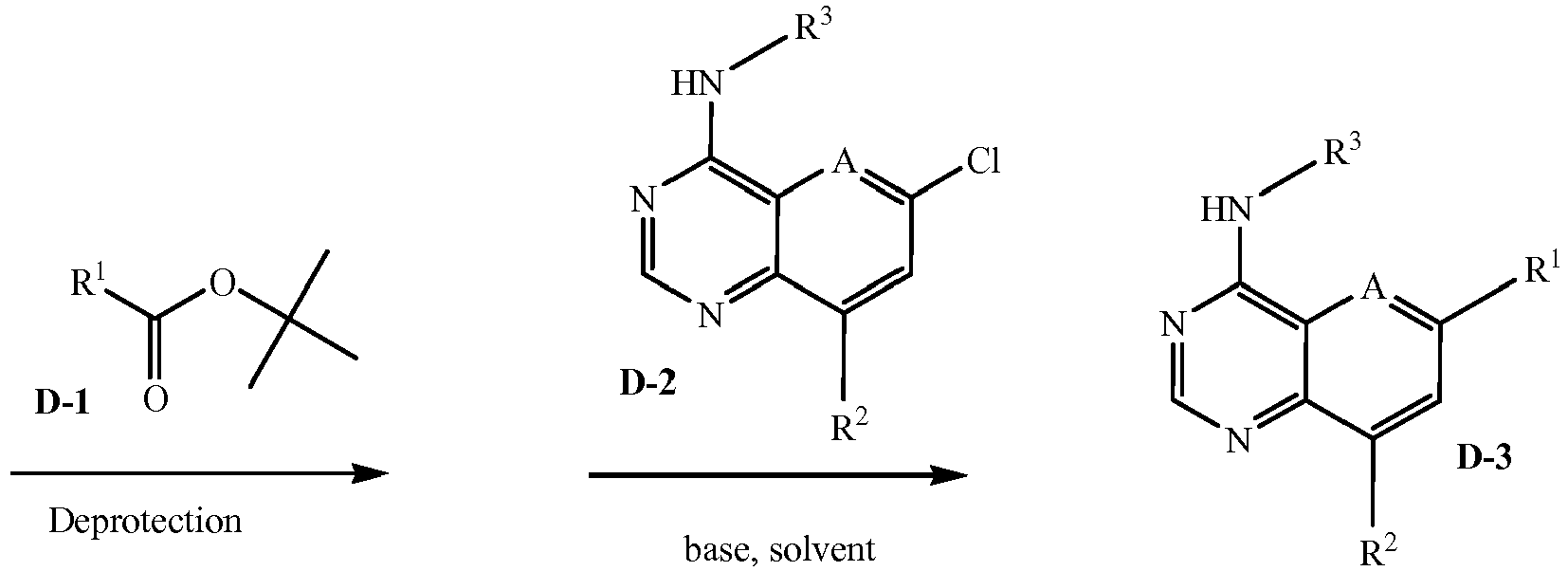
- General Method D is useful for preparing compounds of Formula I wherein R1 is an nitrogen linked group so that D-1 is a carbamate. R1 can for example be -NR-C1-C12-hydroxyalkyl, -NR-(C1-C12-alkylenyl)n-C3-C6-cycloalkyl, -NR-(C1-C12-alkylenyl)n-heterocyclyl, -NR-(C1-C12-alkylenyl)n-C6-C20-aryl,-NR-(C1-C12-alkylenyl)n-heteroaryl, -NR-(C1-C12-alkylenyl)n-C6-C20-aryloxy, C6-C20-aryl, pyridine, N-linked piperidine, N-linked pyrrolidine, N-linked morpholine, 1H-pyrazol-4-yl . These heterocycles can be substituted. Possible substituents for this heterocycle group are as defined herein. A, R2 and R3 are as defined herein. According to General Method D, the esters can be deprotected and reacted with a compound of Formula D-1 in appropriate media, e.g.base and solvent such as e.g. triethylamine and DMA.
-

- General Method E is useful to prepare compounds of Formula I wherein R1 is a phenyl group that is optionally substituted and bears a -(CH2)-NRaRb, wherein Ra and Rb are as defined herein. In this scheme A, R2 and R3 are as defined herein. In a first step, Compound of Formula E-1 can be coupled with the phenyl derivative depicted in the scheme above with suitable coupling reagents such as a palladium catalyst e.g. Pd(PPh3)4 in an appropriate solvent. In a second step, a reductive amination is performed, for example using sodium cyanoborohydride. Non-limiting examples of such reaction can be found in the examples below. The person skilled in the art will recognize that the same procedure could be used for compounds of Formula I wherein R1 is heteroaryl substituted by the -(CH2)-NRaRb group.
-

- General Method F is useful to prepare compounds of Formula F-2 which are compounds of Formula I, wherein R1 is a phenyl group substituted by an oxygen-linked group of formula -OR, wherein R is any group linked through O as defined herein, such as for example alkyl, haloalkyl. In this scheme A, R2 and R3 are as defined herein. A compound of Formula F-1 is reacted with a compound of Formula R-Cl in a suitable medium, e.g. in dimethylformamide in the presence of cesium carbonate or potassium carbonate as a promoter for the alkylation of the alcool. Non-limiting examples of such reaction can be found in the examples below. The person skilled in the art will recognize that the same procedure could be used for compounds of Formula I wherein R1 is heteroaryl substituted by the -OR group.
-

- General Method G is a variant of the General Method F useful to prepare compounds of Formula G-2 which correspond to compounds of Formula I, wherein R1 is a group of formula -OR. In this scheme A and R2 are as defined herein and R is aryl or heteroaryl which is optionally substituted. The reaction conditions are similar to those described in General Method F. Non-limiting examples of such reaction can be found in the examples below. The person skilled in the art will recognize that a group R3 can be added to the compounds of Formula G-2 by using General Method B.
-

- General Method H is useful to prepare compounds of Formula H-2, which correspond to compounds of Formula I, wherein R1 is phenyl group substituted by an urea group of formula -NRe(CO)Rf. In this urea, Re and Rf are as defined herein for the compounds of Formula I. In this scheme, A, R2 and R3 are as defined herein. The person skilled in the art will recognize that the same procedure could be used for compounds of Formula I wherein R1 is heteroaryl substituted by an urea group.
-

- General Method I is useful to prepare compounds of Formula I wherein R1 is a phenyl group substituted by an amido group. In this amido group, Re and Rf are as defined herein for the compounds of Formula I and X is halo. The person skilled in the art will recognize that the same procedure could be used for compounds of Formula I wherein R1 is heteroaryl substituted by an amido group.
-
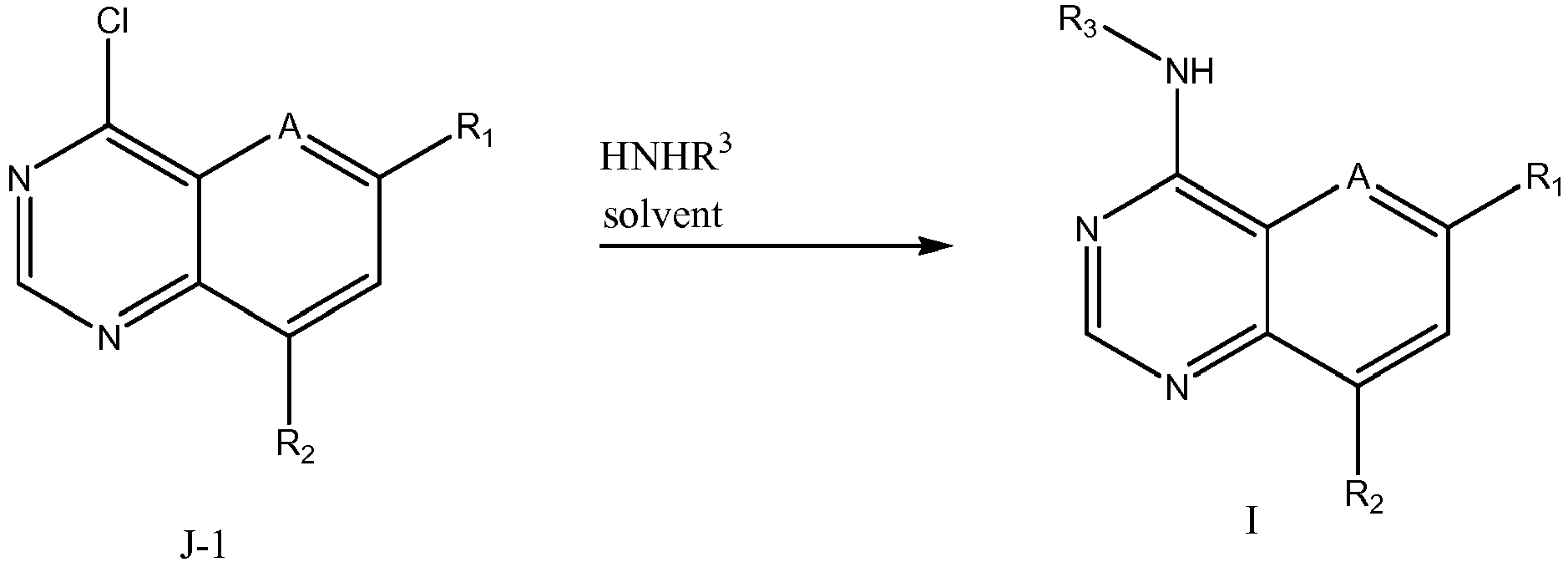
- According to General Method J, a compound of Formula J-1 in a solvent (e.g. DMF) is treated with a base e.g. triethylamine and then reacted with a compound of Formula HN-R3. In this scheme A, R1, R2 and R3 are as defined herein.
-

- General Method K provides for the preparation of compounds of Formula K-2, which are compounds of Formula I wherein R2 is -C(O)-NH(C1-C12-alkyl)-NH-C(O)-C1-C12-alkyl, -C(O)-N(C1-C12-alkyl)2-C1-C12-alkoxy, -C(O)-N(C1-C12-alkyl)-heterocyclyl, -C(O)-heterocyclyl, which heterocyclyl groups are unsubstituted or substituted by one or more Rg or -N(C1-C12-alkyl)-C(O)-C1-C12-alkyl, and -N(C1-C12-alkyl)2 group, as represented by the group -(CO)-NR5R6. According to this method, a compound of Formula K-1 in a solvent (e.g. DMF) is coupled with an amine HNR5R6 with coupling reagents such as DIPEA/HATU.
-

- General Method L provides for the preparation of compounds of Formula L-2, which are compounds of Formula I wherein R1 is a phenyl group substituted by an amide group. In this scheme A, R2, R3, Re and Rf are as defined herein. According to this method, a compound of Formula L-1 in a solvent (e.g. DMF) is coupled with an acid Rf-CO2H with coupling reagents such as DIPEA/HATU.
-

- General Method K is useful to prepare compounds of Formula K-2, which correspond to compounds of Formula I wherein R1 is aryloxy or heteroaryloxy as defined herein. A compound of Formula K-1 in a solvent (e.g. DMA) is treated with a base e.g. potassium carbonate and then reacted with a compound of Formula ROH.
- The invention will be more fully understood by reference to the following examples. They should not, however, be construed as limiting the scope of the invention.
- Only those of the following examples which fall within the scope of claim 1 form part of the invention, the others are reference examples.
- The chemical reactions described in the Examples may be readily adapted to prepare a number of other MAP4K4 inhibitors of the invention, and alternative methods for preparing the compounds of this invention are deemed to be within the scope of this invention. For example, the synthesis of non-exemplified compounds according to the invention may be successfully performed by modifications apparent to those skilled in the art, e.g., by appropriately protecting reactive functional groups, by utilizing other suitable reagents known in the art other than those described, and/or by making routine modifications of reaction conditions. Alternatively, other reactions disclosed herein or known in the art will be recognized as having applicability for preparing other compounds of the invention.
- 1H NMR spectra were recorded at ambient temperature using an NMR spectrometer, including a Varian Unity Inova (400MHz) spectrometer with a triple resonance 5mm probe. Chemical shifts are expressed in ppm relative to tetramethylsilane. The following abbreviations have been used: br = broad signal, s = singlet, d = doublet, dd = double doublet, t = triplet, q = quartet, m = multiplet.
- High Pressure Liquid Chromatography / Mass Spectrometry (LCMS) experiments to determine retention times (RT) and associated mass ions may be performed. The spectrometers may have an electrospray source operating in positive and negative ion mode. Additional detection is achieved using a evaporative light scattering detector.
- Unless otherwise stated, all reactions were performed under an inert, i.e. argon or nitrogen, atmosphere.
- AcOH: Acetic acid; BOC: Di-tert-butyl dicarbonate; DCM: Dichloromethane; DIPEA: Diisopropylethylamine; DMAP: 4-Dimethylaminopyridine; EtOAc: Ethyl acetate; HATU: (2-(7-Aza-1H-benzotriazole-1-yl)-1,1,3,3-tetramethyluronium hexafluorophosphate); HCl: Hydrochloric acid; MeOH: Methanol; NaBH4: Sodium borohydride, NBS: N-Bromosuccinimide; NH4Cl: Ammonium chloride; NMR: Nuclear magnetic resonance; Pd(dppf)Cl2: [1,1'-Bis(diphenylphosphino)ferrocene]dichloropalladium(II), complex with dichloromethane; RT: Room temperature; TFA: Trifluoroacetic acid; THF: Tetrahydrofuran.
-

- 1H NMR (400 MHz, DMSO) δ 8.62 - 8.57 (d, J = 8.8 Hz, 1H), 8.48 - 8.43 (s, 2H), 8.43 - 8.40 (d, J = 5.3 Hz, 1H), 8.39 - 8.35 (d, J = 5.3 Hz, 1H), 8.35-8.33 (s, 1H), 8.24-8.20 (d, J = 8.8 Hz, 1H), 8.15 - 8.09 (s, 1H).
-

- 6-(2-fluoro-4-pyridyl)pyrido[3,2-d]pyrimidin-4-amine (50 mg, 0.21 mmol) 1 was treated with hydrogen chloride (4 mol/L) in 1,4-dioxane. The mixture was heated to 80°C for 1 hour. Cooled to room temperature and basified with 4 N NaOH. Yellow precipitate was collected, and purified with Prep HPLC, 30 mg of 4-(4-aminopyrido[3,2-d]pyrimidin-6-yl)pyridin-2(1H)-one 2 was obtained (yield 60%). LC/MS (ESI+): m/z 240 (M+H). 1H NMR (400 MHz, DMSO) δ 8.39 (d, J = 8.7 Hz, 1H), 8.18 (s, 1H), 8.15 (d, J = 8.6 Hz, 1H), 7.52 (d, J = 6.9 Hz, 1H), 7.11 (d, J = 1.6 Hz, 1H), 7.00 (dd, J=6.9, 1.8 Hz, 1H).
-

- 6-chloropyrido[3,2-d]pyrimidin-4-amine (500 mg, 2.8 mmol) 3-A in acetonitrile (5 mL) was treated with 3-borono-5-fluoro-benzoic acid (CAS 269404-73-6) (560 mg, 3 mL), PDCL2(DPPF) (202 mg, 0.28 mmol) and 1 M potassium carbonate solution (8 mL). The reaction vial was purged with nitrogen, and heated to 80°C for 1 hour. LCMS showed 100% conversion to desired product. Yellow precipitate was collected and LCMS indicated it is pure product 3-(4-aminopyrido[3,2-d]pyrimidin-6-yl)-5-fluorobenzoic acid 3. The filtrate was concentrate and purified by prep HPLC. LC/MS (ESI+): m/z 285 (M+H).
-

- 3-(4-aminopyrido[3,2-d]pyrimidin-6-yl)-5-fluoro-benzoic acid (100 mg, 0.35 mmol) 3 in DMF was treated with DIPEA (0.3 mL, 1.76 mmol) followed by HATU (279 mg, 0.7 mmol). The mixture was stirred at room temperature for 10 minutes, then 2-amino-2-methyl-propan-1-ol (, CAS-124-68-5) (0.07 mL, 0.7 mmol) was added and continue stirred at room temperature overnight. Saturated sodium bicarbonate was added, and the mixture was extracted with EtOAc. The combined organics were dried over sodium sulfate and concentrated. The crude was purified by Prep HPLC to give 15 mg of 3-(4-aminopyrido[3,2-d]pyrimidin-6-yl)-5-fluoro-N-(1-hydroxy-2-methylpropan-2-yl) benzamide 4. LC/MS (ESI+): m/z 356 (M+H). 1H NMR (400 MHz, DMSO) δ 8.55 (t, J = 8.7 Hz, 1H), 8.47 (s, 1H), 8.44 (d, J = 7.1 Hz, 1H), 8.18 (t, J = 8.8 Hz, 1H), 7.82 (d, J = 24.4 Hz, 1H), 7.71 (d, J = 9.4 Hz, 1H), 4.87 (t, J = 6.0 Hz, 1H), 3.58 (d, J = 5.8 Hz, 2H), 2.07 (s, 2H), 1.36 (s, 6H).
-


- Following the same reaction and purification procedure, the acid 3 (50 mg, 0.18 mmol) was reacted with methyl amine 2M in THF (0.18 mL, 0.35 mmol), HATU (103 mg, 0.6 mmol) and DIPEA (0.15 mL, 0.88 mmol) in DMF (1 mL) at room temperature to provide 3-(4-aminopyrido[3,2-d]pyrimidin-6-yl)-5-fluoro-N-methylbenzamide 5. LC/MS (ESI+): m/z 298 (M+H). 1H NMR (400 MHz, DMSO) δ 8.71 (d, J = 4.5 Hz, 1H), 8.59 (dd, J = 7.4, 4.0 Hz, 2H), 8.54 (d, J = 8.9 Hz, 1H), 8.47 (s, 1H), 8.28 (s, 1H), 8.20 (d, J = 8.8 Hz, 1H), 8.06 (s, 1H), 7.72 (d, J = 9.2 Hz, 1H), 2.87 (d, J = 4.5 Hz, 3H).
-

- Following the same reaction and purification procedure as above, the acid 3 (50 mg, 0.18 mmol) was reacted with cyclobutanamine (CAS-2516-34-9) (0.03 mL, 0.35 mmol), HATU (103 mg, 0.35 mmol) and DIPEA (0.15 mL, 0.88 mmol) in DMF (1 mL) at room temperature to provide 3-(4-aminopyrido[3,2-d]pyrimidin-6-yl)-N-cyclobutyl-5-fluorobenzamide 6. LC/MS (ESI+): m/z 338 (M+H). 1H NMR (400 MHz, DMSO) δ 8.84 (d, J = 7.3 Hz, 1H), 8.63 (d, J = 10.3 Hz, 1H), 8.55 (dd, J = 7.6, 5.1 Hz, 2H), 8.47-8.40 (m, 1H), 8.29 (d, J = 12.0 Hz, 1H), 8.19 (dd, J = 15.7, 10.5 Hz, 1H), 8.04 (s, 1H), 7.73 (d, J = 9.2 Hz, 1H), 4.47 (dq, J = 15.8, 7.9 Hz, 1H), 2.36 - 2.21 (m, 2H), 2.21 -2.03 (m, 2H), 1.84 -1.61 (m, 2H).
-

- Following the same reaction and purification procedure, the acid 3 (100 mg, 0.35 mmol) was reacted with 2-aminoethanol (CAS 141-43-5) (43 mg, 0.7 mmol), HATU (276 mg, 0.7 mmol) and DIPEA (0.30 mL, 1.8 mmol) in DMF (1 mL) at room temperature to provide 3-(4-aminopyrido[3,2-d]pyrimidin-6-yl)-5-fluoro-N-(2-hydroxyethyl)benzamide 7. LC/MS (ESI+): m/z 328 (M+H).
-

- Following the same reaction and purification procedure, the acid 3 (50 mg, 0.17 mmol) was reacted with 2-aminocyclobutanol (CAS 4640-44-2) (30 mg, 0.35 mmol), HATU (135 mg, 0.35 mmol) and DIPEA (0.15 mL, 0.9 mmol) in DMF (1 mL) at room temperature to provide 3-(4-aminopyrido[3,2-d]pyrimidin-6-yl)-5-fluoro-N-(3-hydroxycyclobutyl)benzamide 8 as a mixture of cis and trans isomer. LC/MS (ESI+): m/z 354 (M+H). 1H NMR (400 MHz, DMSO) δ 8.81 (d, J = 6.9 Hz, 1H), 8.63 (d, J = 10.2 Hz, 1H), 8.54 (dd, J = 10.1, 8.9 Hz, 3H), 8.44 (s, 1H), 8.31 (s, 1H), 8.20 (d, J = 8.8 Hz, 1H), 8.03 (s, 1H), 7.73 (d, J = 8.2 Hz, 2H), 5.15 (d, J = 5.4 Hz, 1H), 5.05 (d, J = 5.2 Hz, 1H), 4.48 (d, J = 6.2 Hz, 1H), 4.37 (d, J = 4.7 Hz, 1H), 4.04 - 3.84 (m, 2H), 2.96 - 2.84 (m, 1H), 2.69 - 2.54 (m, 2H), 2.39 - 2.28 (m, 1H), 2.21 (ddd, J = 12.6, 8.1, 4.7 Hz, 1H), 1.97 (ddd, J = 17.2, 8.7, 2.7 Hz, 2H).
-

- Following the same reaction and purification procedure as above, the acid 3 (60 mg, 0.21 mmol) was reacted with 2-aminopropan-1-ol (CAS 78-91-1) (0.03 mL, 0.42 mmol), HATU (166 mg, 0.42 mmol) and DIPEA (0.18 mL, 1.1 mmol) in DMF (1 mL) at room temperature to provide 3-(4-aminopyrido[3,2-d]pyrimidin-6-yl)-5-fluoro-N-(1-hydroxypropan-2-yl)benzamide 9. LC/MS (ESI+): m/z 342 (M+H). 1H NMR (400 MHz, DMSO) δ 8.64 (d, J = 10.3 Hz, 1H), 8.56 (d, J = 8.7 Hz, 2H), 8.43 (d, J = 5.5 Hz, 1H), 8.38 (d, J = 7.9 Hz, 1H), 8.30 (s, 1H), 8.21 (d, J = 8.8 Hz, 1H), 8.03 (s, 1H), 7.75 (d, J= 9.4 Hz, 1H), 4.77 (t, J= 5.8 Hz, 1H), 4.17 - 3.99 (m, 1H), 3.52 (dt, J= 11.2, 5.7 Hz, 1H), 3.46-3.36 (m, 1H), 1.19 (d, J = 6.7 Hz, 3H).
-

- Following the same reaction and purification procedure as above, the acid 3 (60 mg, 0.21 mmol) was reacted with (1-methyl-4-piperidyl)methanamine (CAS 7149-42-0) (54 mg, 0.42 mmol), HATU (166 mg, 0.42 mmol) and DIPEA (0.18 mL, 1.1 mmol) in DMF (1 mL) at room temperature to provide 3-(4-aminopyrido[3,2-d]pyrimidin-6-yl)-5-fluoro-N-((l-methylpiperidin-4-yl)methyl)benzamide 10. LC/MS (ESI+): m/z 395 (M+H). 1H NMR (400 MHz, DMSO) δ 8.53 (d, J = 8.8 Hz, 1H), 8.48 (d, J = 10.6 Hz, 1H), 8.46-8.38 (m, 1H), 8.32(s, 1H), 8.22 (s, 1H), 8.14 (d, J = 8.8 Hz, 1H), 7.99 (s, 1H), 7.33 (d, J = 8.5 Hz, 1H), 2.90 (d, J = 7.8 Hz, 2H), 2.84 - 2.63 (m, 4H), 2.19 (s, 1H), 2.03 (s, 3H), 1.82 (s, 2H), 1.66 (s, 2H).
-

- Following the same reaction and purification procedure, the acid 3 (60 mg, 0.21 mmol) was reacted with 2-morpholinoethanamine (CAS 2038-03-1) (55 mg, 0.42 mmol), HATU (166 mg, 0.42 mmol) and DIPEA (0.18 mL, 1.1 mmol) in DMF (1 mL) at room temperature to provide 3-(4-aminopyrido[3,2-d]pyrimidin-6-yl)-5-fluoro-N-(2-morpholinoethyl)benzamide 11. LC/MS (ESI+): m/z 397 (M+H). 1H NMR (400 MHz, DMSO) δ 8.70 (t, J = 5.6 Hz, 1H), 8.62 (d, J = 10.2 Hz, 1H), 8.54 (dd, J = 17.5, 8.6 Hz, 2H), 8.44 (s, 1H), 8.28 (s, 1H), 8.20 (d, J = 8.8 Hz, 1H), 8.05 (s, 1H), 7.72 (d, J = 9.3 Hz, 1H), 3.67-3.52 (m, 4H), 3.46 (dd, J = 13.1, 6.6 Hz, 2H), 2.55-2.51 (m, 2H), 2.47-2.41 (m, 4H).
-


- Following the same reaction and purification procedure, the acid 3 (100 mg, 0.35 mmol) was reacted with N,N'-dimethylethane-1,2-diamine (CAS 5752-40-9) (0.08 mL, 0.7 mmol), HATU (165 mg, 0.42 mmol) and DIPEA (0.30 mL, 1.8 mmol) in DMF (1 mL) at room temperature to provide 3-(4-aminopyrido[3,2-d]pyrimidin-6-yl)-N-(2-(dimethylamino)ethyl)-5-fluorobenzamide 12. LC/MS (ESI+): m/z 355 (M+H). 1H NMR (400 MHz, DMSO) δ 8.69 (t, J = 5.5 Hz, 1H), 8.62 (d, J = 8.8 Hz, 1H), 8.57 (dd, J = 19.4, 10.5 Hz, 2H), 8.44 (s, 1H), 8.27 (d, J = 8.8 Hz, 1H), 8.20 (d, J = 8.8 Hz, 1H), 8.05 (s, 1H), 7.73 (d, J = 9.3 Hz, 1H), 3.43 (dd, J = 12.8, 6.6 Hz, 2H), 2.46 (t, J = 6.9 Hz, 2H), 2.21 (s, 6H).
-

- 3-(4-aminopyrido[3,2-d]pyrimidin-6-yl)-5-fluoro-benzoic acid 3 (110 mg, 0.39 mmol) in DME (2 mL) was treated with triethylamine (0.11 mL, 0.77 mmol) and cooled in ice bath with salt, methanolsulfonyl chloride (0.05 mL, 0.58 mmol) was added, and continue stirred for 1 hour in ice bath, then 2-pyrrolidin-1-ylethanamine (CAS 7154-73-6) (0.07 mL, 0.58 mmol) was added, the reaction was stirred overnight. The reaction mixture was purified with prep HPLC to give pure 3-(4-aminopyrido[3,2-d]pyrimidin-6-yl)-5-fluoro-N-(2-(pyrrolidin-1-yl)ethyl)benzamide 13. LC/MS (ESI+): m/z 381 (M+H). 1H NMR (400 MHz, DMSO) δ 8.75 (t, J = 5.6 Hz, 1H), 8.66 - 8.49 (m, 3H), 8.44 (s, 1H), 8.29 (s, 1H), 8.20 (t, J = 4.4 Hz, 2H), 8.05 (s, 1H), 7.73 (d, J = 9.4 Hz, 1H), 3.62 - 3.39 (m, 2H), 2.65 (t, J = 7.0 Hz, 2H), 2.54 (s, 4H), 1.82 - 1.59 (m, 4H).
-

- 6-chloropyrido[3,2-d]pyrimidin-4-amine 3-A (500 mg, 2.8 mmol) in acetonitrile (5 mL) was treated with 3-borono-benzoic acid (CAS 269404-73-6) (560 mg, 3 mL), PDCL2(DPPF) (202 mg, 0.28 mmol) and 1 M POTASSIUM CARBONATE solution (8 mL). The reaction vial was purged with nitrogen, and heated to 80°C for 1 hour. LCMS showed 100% conversion to desired product. Yellow ppt. was filtered and LCMS indicated it is pure product 3-(4-aminopyrido[3,2-d]pyrimidin-6-yl) benzoic acid 14. The filtrate was concentrate and purified with reverse phase C-18 column to provide more product. LC/MS (ESI+): m/z 267 (M+H).
-

- Following the same reaction and purification procedure, the acid 14 (90 mg, 0.34 mmol) was reacted with 2-aminocyclobutanol (CAS 4640-44-2) (59 mg, 0.68 mmol), HATU (145 mg, 0.38 mmol) and DIPEA (0.3 mL, 1.7 mmol) in DMF (1 mL) at room temperature to provide 3-(4-aminopyrido[3,2-d]pyrimidin-6-yl)-N-(3-hydroxycyclobutyl)benzamide 15 as a mixture of cis and trans isomer. LC/MS (ESI+): m/z 336 (M+H). 1H NMR (400 MHz, DMSO) δ 8.80 - 8.66 (m, 2H), 8.61 (d, J = 7.8 Hz, 1H), 8.56-8.47 (m, 1H), 8.43 (s, 1H), 8.19 (d, J = 8.8 Hz, 1H), 8.06 (d, J = 32.4 Hz, 2H), 8.01 - 7.91 (m, 1H), 7.63 (t, J = 7.8 Hz, 1H), 5.12 (d, J = 5.4 Hz, 1H), 5.03 (d, J = 5.3 Hz, 1H), 4.50 (d, J = 6.5 Hz, 1H), 4.37 (s, 1H), 4.03 - 3.81 (m, 2H), 2.95 - 2.78 (m, 1H), 2.62 (ddd, J = 12.7, 11.7, 8.9 Hz, 1H), 2.40-2.27 (m, 1H), 2.20 (ddd, J = 12.4, 8.0, 4.5 Hz, 1H), 1.97 (ddd, J= 17.3, 8.6, 2.8 Hz, 2H).
-
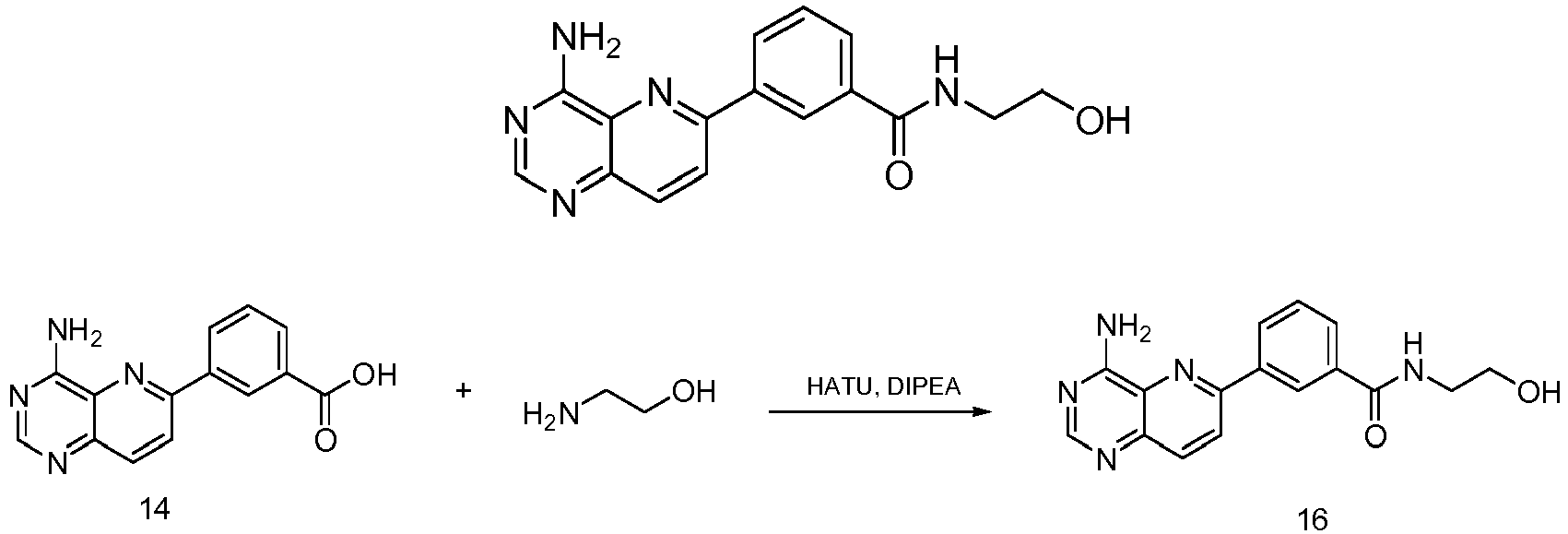
- Following the same reaction and purification procedure, the acid 14 (80 mg, 0.30 mmol) was reacted with 2-aminoethanol (CAS 141-43-5) (36 mg, 0.6 mmol), HATU (141 mg, 0.36 mmol) and DIPEA (0.26 mL, 1.5 mmol) in DMF (1 mL) at room temperature to provide 3-(4-aminopyrido[3,2-d]pyrimidin-6-yl)-N-(2-hydroxyethyl)benzamide 16. LC/MS (ESI+): m/z 309 (M+H). 1H NMR (400 MHz, DMSO) S 8.76 (s, 1H), 8.64 (t, J = 5.5 Hz, 1H), 8.60 (d, J = 7.9 Hz, 1H), 8.51 (d, J = 8.9 Hz, 1H), 8.43 (s, 1H), 8.17 (t, J = 12.9 Hz, 1H), 8.07 (d, J = 24.4 Hz, 2H), 7.98 (d, J = 7.7 Hz, 1H), 7.68 - 7.56 (m, 1H), 4.76 (t, J = 5.6 Hz, 1H), 3.57 (q, J = 6.0 Hz, 2H), 3.41 (q, J = 6.0 Hz, 2H).
-

- Following the same reaction and purification procedure, the acid 14 (80 mg, 0.30 mmol) was reacted with 2-aminopropan-1-ol (CAS 78-91-1) (0.05 mL, 0.6 mmol), HATU (141 mg, 0.36 mmol) and DIPEA (0.26 mL, 1.5 mmol) in DMF (1 mL) at room temperature to provide 3-(4-aminopyrido[3,2-d]pyrimidin-6-yl)-N-(1-hydroxypropan-2-yl)benzamide 17. LC/MS (ESI+): m/z 323 (M+H). 1HNMR (400 MHz, DMSO) δ 8.70 (s, 1H), 8.61 (t, J = 13.5 Hz, 1H), 8.57 - 8.48 (m, 1H), 8.43 (s, 1H), 8.29 (d, J = 7.9 Hz, 1H), 8.19 (dd, J = 8.8, 3.1 Hz, 1H), 8.05 (d, J = 30.8 Hz, 2H), 7.97 (d, J = 7.7 Hz, 1H), 7.63 (t, J = 7.8 Hz, 1H), 4.76 (s, 1H), 4.18-4.00 (m, 1H), 3.52 (dd, J = 10.5, 5.7 Hz, 1H), 3.46-3.35 (m, 1H), 1.19 (d, J = 6.7 Hz, 3H).
-

- Following the same reaction and purification procedure, the acid 14 (80 mg, 0.30 mmol) was reacted with 2-amino-2-methylpropan-1-ol (CAS 124-68-5) (53 mg, 0.6 mmol), HATU (129 mg, 0.3 mmol) and DIPEA (0.26 mL, 1.5 mmol) in DMF (1 mL) at room temperature to provide 3-(4-aminopyrido[3,2-d]pyrimidin-6-yl)-N-(1-hydroxy-2-methylpropan-2-yl)benzamide 18. LC/MS (ESI+): m/z 338 (M+H). 1HNMR (400 MHz, DMSO) δ 8.69 - 8.55 (m, 2H), 8.51 (d, J = 8.9 Hz, 1H), 8.43 (s, 1H), 8.18 (d, J = 8.8 Hz, 1H), 8.05 (d, J = 39.6 Hz, 2H), 7.91 (d, J = 7.7 Hz, 1H), 7.76 (s, 1H), 7.61 (t, J = 7.7 Hz, 1H), 4.90 (t, J = 6.0 Hz, 1H), 3.57 (d, J = 6.0 Hz, 2H), 1.36 (s, 6H).
-

- Following the same reaction and purification procedure, the acid 14 (90 mg, 0.34 mmol) was reacted with cyclobutanamine (CAS-2516-34-9) (48 mg, 0.68 mmol), HATU (146 mg, 0.38 mmol) and DIPEA (0.3 mL, 1.7 mmol) in DMF (1 mL) at room temperature to provide 3-(4-aminopyrido[3,2-d]pyrimidin-6-yl)-N-cyclobutylbenzamide 19. LC/MS (ESI+): m/z 320 (M+H). 1H NMR (400 MHz, DMSO) δ 8.76 (d, J = 7.4 Hz, 1H), 8.70 (s, 1H), 8.59 (t, J = 12.2 Hz, 1H), 8.51 (d, J = 8.9 Hz, 1H), 8.43 (s, 1H), 8.19 (d, J = 8.8 Hz, 1H), 8.06 (d, J=33.2 Hz, 1H), 7.95 (d, J = 7.8 Hz, 1H), 7.63 (t, J = 7.8 Hz, 1H), 4.48 (dq, J = 16.3, 8.2 Hz, 1H), 2.37 - 2.22 (m, 2H), 2.22 - 1.99 (m, 2H), 1.79 - 1.60 (m, 2H).
-

- Following the same reaction and purification procedure, the acid 14 (50 mg, 0.18 mmol) was reacted with methyl amine 2M in THF (0.18 mL, 0.35 mmol), HATU (103 mg, 0.6 mmol) and DIPEA (0.15 mL, 0.88 mmol) in DMF (1 mL) at room temperature to provide 3-(4-aminopyrido[3,2-d]pyrimidin-6-yl)-N-methylbenzamide 20. LC/MS (ESI+): m/z 280 (M+H). 1H NMR (400 MHz, DMSO) δ 8.76 (s, 1H), 8.59 (dd, J = 10.4, 6.2 Hz, 2H), 8.49 (d, J = 8.9 Hz, 1H), 8.43 (d, J = 5.3 Hz, 1H), 8.18 (d, J = 8.8 Hz, 1H), 8.07 (d, J = 17.7 Hz, 2H), 7.96 (d, J = 7.7 Hz, 1H), 7.63 (t, J = 7.8 Hz, 1H), 2.83 (t, J = 24.6 Hz, 3H).
-

- Following the same reaction and purification procedure, the acid 14 (80 mg, 0.3 mmol) was reacted with 2-morpholinoethanamine (CAS 2038-03-1) (78 mg, 0.6 mmol), HATU (129 mg, 0.33 mmol) and DIPEA (0.26 mL, 1.5 mmol) in DMF (1 mL) at room temperature to provide 3-(4-aminopyrido[3,2-d]pyrimidin-6-yl)-N-(2-morpholinoethyl)benzamide 21. LC/MS (ESI+): m/z 379 (M+H). 1H NMR (400 MHz, DMSO) δ 8.73 (s, 1H), 8.60 (d, J = 7.5 Hz, 2H), 8.50 (d, J = 8.9 Hz, 1H), 8.43 (d, J = 4.9 Hz, 1H), 8.19 (d, J = 8.8 Hz, 1H), 8.06 (d, J = 13.7 Hz, 2H), 7.96 (d, J = 7.8 Hz, 1H), 7.64 (t, J = 7.8 Hz, 1H), 3.67 - 3.53 (m, 4H), 3.47 (dd, J = 13.2, 6.6 Hz, 2H), 2.53 (d, J = 7.1 Hz, 2H), 2.48 - 2.40 (m, 4H).
-

- Following the same reaction and purification procedure, the acid 14 (80 mg, 0.30 mmol) was reacted with (1-methyl-4-piperidyl)methanamine (CAS 7149-42-0) (77 mg, 0.6 mmol), HATU (129 mg, 0.33 mmol) and DIPEA (0.26 mL, 1.5 mmol) in DMF (1 mL) at room temperature to provide 3-(4-aminopyrido[3,2-d]pyrimidin-6-yl)-N-((1-methylpiperidin-4-yl)methyl)benzamide 22. LC/MS (ESI+): m/z 377 (M+H). 1H NMR (400 MHz, DMSO) δ 8.48 (d, J = 8.8 Hz, 2H), 8.42 (s, 2H), 8.23 (s, 1H), 8.14 (d, J = 8.8 Hz, 2H), 7.96 (s, 1H), 7.59 (t, J = 7.7 Hz, 1H), 7.45 (d, J = 6.9 Hz, 1H), 2.90 (s, 2H), 2.73 (d, J = 52.3 Hz, 4H), 2.19 (s, 1H), 2.04 (s, 3H), 1.83 (s, 2H), 1.64 (s, 2H).
-

- Following the same reaction and purification procedure, the acid 14 (100 mg, 0.38 mmol) was reacted with N,N'-dimethylethane-1,2-diamine (CAS 5752-40-9) (0.08 mL, 0.75 mmol), HATU (177 mg, 0.45 mmol) and DIPEA (0.33 mL, 1.9 mmol) in DMF (1 mL) at room temperature to provide 3-(4-aminopyrido[3,2-d]pyrimidin-6-yl)-N-(2-(dimethylamino)ethyl)benzamide 23. LC/MS (ESI+): m/z 337 (M+H). 1H NMR (400 MHz, DMSO) δ 8.74 (s, 1H), 8.60 (d, J = 6.6 Hz, 2H), 8.50 (d, J = 8.9 Hz, 1H), 8.43 (s, 1H), 8.28 - 8.14 (m, 1H), 8.06 (d, J = 19.6 Hz, 2H), 7.97 (d, J = 7.8 Hz, 1H), 7.64 (t, J = 7.8 Hz, 1H), 3.44 (dd, J = 12.9, 6.6 Hz, 2H), 2.47 (d, J = 6.9 Hz, 2H), 2.22 (s, 6H).
-

- 3-(4-aminopyrido[3,2-d]pyrimidin-6-yl)-benzoic acid 14 (100 mg, 0.39 mmol) in DCM (2 mL) was heated with thionyl chloride (0.11 mL, 0.77 mmol) at 80°C for 1 hour, the mixture was cooled to room temperature and concentrated to dry, 2-pyrrolidin-1-ylethanamine (CAS 7154-73-6) (0.05 mL, 0.58 mmol) was then added, and was stirred overnight. The reaction mixture was purified with prep HPLC to give pure 3-(4-aminopyrido[3,2-d]pyrimidin-6-yl)-N-(2-(pyrrolidin-1-yl)ethyl)benzamide 24. LC/MS (ESI+): m/z 363 (M+H).
1H NMR (400 MHz, DMSO) δ 8.74 (s, 1H), 8.65 (t, J = 5.7 Hz, 1H), 8.60 (d, J = 7.9 Hz, 1H), 8.50 (d, J = 8.9 Hz, 1H), 8.43 (d, J = 5.6 Hz, 1H), 8.25 - 8.13 (m, 2H), 8.07 (d, J = 19.9 Hz, 2H), 7.97 (d, J = 7.8 Hz, 1H), 7.64 (t, J = 7.8 Hz, 1H), 3.46 (dt, J = 18.6, 9.4 Hz, 2H), 2.67 (t, J = 7.0 Hz, 2H), 2.61 - 2.52 (m, 4H), 1.78 -1.60 (m, 4H). -


- 6-(3-fluorophenyl)pyrido[3,2-d]pyrimidin-4-amine 1 (100 mg, 0.42 mmol) in DMF was treated with sodium hydride 60% dispersion in mineral oil (25 mg, 0.63 mmol) followed by 2-iodopropane (0.04 mL, 0.42 mmol), stirred at room temperature for 2 hrs. The reaction mixture was poured on ice, and extracted with EtOAc three times. The combined organic layers were dried with sodium sulfate and concentrated to dry. The crude was purified by ISCO eluting with 100% EtOAc to give pure 6-(3-fluorophenyl)-N-isopropylpyrido[3,2-d]pyrimidin-4-amine 25. LC/MS (ESI+): m/z 283 (M+H). 1H NMR (400 MHz, DMSO) δ 8.53 - 8.43 (m, 2H), 8.37 (d, J = 10.8 Hz, 1H), 8.21 (t, J = 8.4 Hz, 2H), 8.15 (d, J = 8.8 Hz, 1H), 7.60 (dd, J = 14.2, 8.0 Hz, 1H), 7.34 (td, J = 8.5, 2.5 Hz, 1H), 4.56 (dq, J = 13.3, 6.7 Hz, 1H), 1.35 (d, J = 6.6 Hz, 6H).
-

- Following the same reaction and purification procedure, the amine 1 (150 mg, 0.62 mmol) was treated with sodium hydride 60% dispersion in mineral oil (37 mg, 0.94 mmol) and iodomethane (0.04 mL, 0.62 mmol) to provide 6-(3-fluorophenyl)-N-methylpyrido[3,2-d]pyrimidin-4-amine 26. LC/MS (ESI+): m/z 255 (M+H). 1H NMR (400 MHz, DMSO) δ 8.89 (s, 1H), 8.38 - 8.19 (m, 1H), 8.19 - 8.03 (m, 3H), 7.96 (d, J = 8.5 Hz, 1H), 7.58 (dd, J = 14.3, 7.8 Hz, 1H), 7.32 (dd, J = 10.1, 8.0 Hz, 1H), 3.49 (s, 3H).
-

-

- Following the same reaction and purification procedure, the amine 1 (100 mg, 0.42 mmol) was treated with sodium hydride 60% dispersion in mineral oil (25 mg, 0.62 mmol) and bromocyclobutane (56 mg, 0.42 mmol) to provide N-cyclobutyl-6-(3-fluorophenyl)pyrido[3,2-d]pyrimidin-4-amine 27 and N-(cyclopropylmethyl)-6-(3-fluorophenyl)pyrido[3,2-d]pyrimidin-4-amine 28. LC/MS (ESI+): m/z 295 (M+H). 1H NMR (400 MHz, DMSO) δ 8.80 (t, J = 6.1 Hz, 1H), 8.48 (d, J = 7.2 Hz, 2H), 8.39 (d, J = 10.9 Hz, 1H), 8.22 (d, J = 7.9 Hz, 1H), 8.15 (d, J = 8.8 Hz, 1H), 7.60 (dd, J = 14.3, 7.9 Hz, 1H), 7.34 (td, J = 8.5, 2.4 Hz, 1H), 3.50 (t, J = 6.5 Hz, 2H), 1.27 (dd, J = 13.4, 6.1 Hz, 1H), 0.52 - 0.42 (m, 2H), 0.42-0.31 (m, 2H).
1H NMR (400 MHz, DMSO) δ 8.80 (t, J = 6.1 Hz, 1H), 8.48 (d, J = 7.2 Hz, 2H), 8.39 (d, J = 10.9 Hz, 1H), 8.22 (d, J = 7.9 Hz, 1H), 8.15 (d, J = 8.8 Hz, 1H), 7.60 (dd, J = 14.3, 7.9 Hz, 1H), 7.34 (td, J = 8.5, 2.4 Hz, 1H), 3.50 (t, J = 6.5 Hz, 2H), 1.27 (dd, J = 13.4, 6.1 Hz, 1H), 0.55-0.41 (m, 2H), 0.41 - 0.28 (m, 2H). -


- Following the same reaction and purification procedure, the amine 1 (150 mg, 0.62 mmol) was treated with sodium hydride 60% dispersion in mineral oil (37 mg, 0.94 mmol) and iodoethane (0.05 mL, 0.62 mmol) to provide 6-(3-fluorophenyl)-N-ethylpyrido[3,2-d]pyrimidin-4-amine 29. LC/MS (ESI+): m/z 269 (M+H).
1H NMR (400 MHz, DMSO) δ 8.74 (t, J = 5.8 Hz, 1H), 8.47 (d, J = 8.2 Hz, 2H), 8.40 (d, J = 10.9 Hz, 1H), 8.22 (d, J = 7.8 Hz, 1H), 8.14 (d, J = 8.8 Hz, 1H), 7.59 (dd, J = 14.3, 7.9 Hz, 1H), 7.34 (td, J = 8.5, 2.4 Hz, 1H), 3.65 (p, J = 7.0 Hz, 2H), 1.27 (t, J = 7.1 Hz, 3H). -


- Step 1: 3-(4-Aminopyrido[3,2-d]pyrimidin-6-yl)-5-fluorobenzaldehyde (3). A suspension of 6-chloropyrido[3,2-d]pyrimidin-4-amine (1) (3.61 g, 20 mmol), 3-fluoro-5-formylphenylboronic acid (CAS 328956-60-1) (4.03 g, 24 mmol, 1.2 eq), Pd(PPh3)4 (1.16 g, 1.0 mmol, 0.05 eq), and K2CO3(5.53 g, 40 mmol, 2.0 eq) in a mixture of dioxane (100 mL) and H2O (10 mL) was heated at 100 °C for 3 h. After it was cooled to r.t., the reaction was extracted with EtOAc (100 mL) and water (60 mL). The organic layer were washed with water and concentrated. The yellow solid was recrystallized in MeCN to give the titled product (4.8 g, yield: 90%).

- Step 2: Ethyl 4-(3-(4-aminopyrido[3,2-d]pyrimidin-6-yl)-5-fluorobenzylamino)piperidine -1-carboxylate. After a solution of compound 30-A (110 mg, 0.4 mmol), ethyl 4-aminopiperidine-1-carboxylate (CAS 58859-46-4) (100 mg, 0.6 mmol) and HOAc (0.3 ml) in MeOH (5 mL) were stirred at r.t. for 30 min, NaBH3CN (76 mg, 1.2 mmol) was added to solution. The reaction mixture was stirred at r.t. overnight. MeOH was removed by reduced pressure and the residue was partitioned between EtOAc (10 mL) and aqueous NaHCO3 solution (0.5 M, 10 mL). The organic layer was concentrated, and purified by pre-HPLC to give the title product (55 mg, 32%). LCMS (ESI, 0-60AB, 2 min), RT= 0.942, M+H = 446.9
1H NMR (400 MHz, DMSO-d6 ) δ 10.05-9.93 (m, 4H), 8.92 (s, 1H), 8.85 (s, 1H), 8.77 (d, J = 8.8 Hz, 1H), 8.47 (d, J = 10.4 Hz, 1H), 8.38 (d, J = 8.8 Hz, 1H), 7.66 (d, J = 8.4 Hz, 1H), 4.32 (m, 1H), 4.07-4.02 (m, 4H), 3.30 (s, 1H), 2.84-2.80 (m, 2H), 2.19-2.17 (m 2H), 1.68-1.59 (m, 2H), 1.19 (t, J = 7.2 Hz, 3H). -


-

- A solution of 3-bromo-5-fluoroaniline (CAS 134168-97-1) (380 mg, 2.0 mmol) and 1-(2-chloroethyl)pyrrolidine (CAS 5050-41-9) (380 mg, 2.2 mmol) in NMP (20 mL) was heated to 120 °C overnight. The solution was diluted with EtOAc (100 mL) and washed with saturated Na2CO3 aqueous solution (3×40mL). The combined organic layer were dried over Na2SO4, concentrated and purified by prep-TLC (DCM: MeOH = 10:1) to give the titled product (290 mg, 50%). LCMS (0-60 AB), RT = 1.076 min, M+H: 289.0
-

- A suspension of 31-A (290 mg, 1.0 mmol), 4,4,4',4',5,5,5',5'-octamethyl-2,2'-Bi-1,3,2-dioxaborolane (CAS 73183-34-3), (300 mg, 1.2 mmol), Pd(dppf)Cl2(30 mg) and KOAc (200 mg, 2.0 mmol) in DMSO (6 mL) was heated at 90 °C for 3 h. The reaction solution was partitioned between EtOAc (100 mL) and brine (35 mL). The combined organic layer was washed with water (3×30 mL), concentrated and used in next step without further purification.
-

- A suspension of crude 31-B (300 mg, 1.0 mmol), 3-A (150 mg, 0.80 mmol), Pd(PPh3)4 (30 mg) and Cs2CO3 (600 mg, 1.8 mmol) in dioxane/H2O (10 mL/1.0 mL) was stirred at 90 °C for 2 h. The reaction solution was partitioned between EtOAc (100 mL) and brine (35 mL). The combined organic layer was washed with water (3×30 mL), concentrated and purified by prep-HPLC (25 mg, 8.9%). LCMS (0-60AB), RT = 0.904 min, M+H 352.9 1H-NMR (Methanol-d4, 400 MHz): δ 8.53 (s, 1H), 8.35 (s, 1H), 8.23 (d, J = 8.8 Hz, 1H), 8.03 (d, J = 8.8 Hz, 1H)), 7.33 (s, 1H), 7.24 (d, J = 10.4 Hz, 1H), 6.49 (d, J = 11.2 Hz, 1H), 3.60-3.57 (m, 2H), 3.37 -3.28 (m, 6H), 2.07-2.04 (m, 2H).
-


-

- To a solution of 3-bromo-5-fluoroaniline (CAS 134168-97-1) (3.0 g, 16 mmol) in EtOH (50 mL), was added HOAc (900 mg, 16 mmol), and oxetan-3-one (CAS 6704-31-0) (2.4 g, 32 mmol). The mixture was stirred at reflux for overnight. It was poured into water (100 mL) and extract with EtOAc (100 mL × 2). The combined organic layers was dried over Na2SO4 and concentrated in vacuum to give the crude product (3.0 g, 77%).
-

- To a solution of 32-A (8.1 g, 36 mmol) in DMSO (50 mL), was added NaH (1.9 g, 48 mmol) slowly, and the mixture was stirred at r.t. for 30 min. dimethyl-sulfoxonium methylide (commercially available) (3.0 g, 12 mmol) in DMSO (10 mL) was added dropwise to the mixture at r.t. After the mixture was stirred at r.t. overnight, it was poured into water (100 mL) and extracted with EtOAc (100 mL × 2), and the combined organic layer was washed with sat. NaCl (50 mL × 2), dried over Na2SO4 and concentrated in vacuum to give the crude product (3.0 g, 95%).
-

- To a solution of 32-B (3.0 g, crude) in toluene (50 mL), was added pyrrolidine (commercially available) (3 g, 42 mmol), and the mixture was stirred at reflux overnight under N2. It was poured into water (100 mL) and extract with EtOAc (100 mL × 2). The combined organic layers was dried over Na2SO4 and concentrated in vacuum and purified by column chromatography (PE:EtOAc = 1:2 to 1:4) to give the product as yellow oil (1.6 g, yield 30% for 3 steps).
-

- To a solution of 32-C (600 mg, 1.8 mmol) in DMSO (20 mL), was added 4,4,4',4',5,5,5',5'-octamethyl-2,2'-Bi-1,3,2-dioxaborolane (CAS 73183-34-3), (930 mg, 3.6 mmol), K2CO3 (500 mg, 3.6 mmol), and Pd(dppf)Cl2 (135 mg, 0.18 mmol). The mixture was stirred at 80°C for 2 h under N2, and poured into water (50 mL). The mixture was extract by EtOAc (100 mL × 2) and the combined organic layers was dried over Na2SO4 and concentrated in vacuum to give the crude product (600 mg, about 50%).
-

- To a solution of 32-C (250 mg, 0.66 mmol) in a mixture of DMSO and H2O (20/5 mL), was added 3-A (150 mg, 0.79 mmol), K2CO3 (270 mg, 2.0 mmol), and Pd(ata-Phos)2Cl2 (60 mg, 0.07 mmol). The mixture was stirred at 80°C overnight under N2, and poured into water (50 mL). It was extract with EtOAc (100 mL × 3) and the combined organic layers was dried over Na2SO4 and concentrated in vacuum and purified by prep-HPLC to give product as white solid (70 mg, yield 10%, over 2 steps). LCMS (0-60, AB, 2 min), 0.818 min, MH+ = 395.2; 1H NMR (400MHz, DMSO-d6) δ 8.39 (s, 1H), 8.26 (d, J = 8.8 Hz, 1H), 8.12 (t, J = 2.0 Hz, 1H), 8.00 (s, 1H), 7.95 (s, 1H), 7.54 (d, J = 10.4 Hz, 1H), 7.14 (s, 1H), 6.66 (s, 1H), 6.31 (d, J = 11.2 Hz, 2H).
-

-

- Pyrrolidine-1-sulfonyl chloride (CAS 1689-02-7) (56 mg, 0.92 mmol) was added to a solution of tert-butyl 6-(3-amino-5-fluorophenyl)pyrido[3,2-d] pyrimidin-4-ylcarbamate (33-A) (300 mg, 0.84 mmol) in pyridine at ice bath. After the reaction mixture was stirred at 60 °C for 4 h, it was partitioned between water and EtOAc and purifiled by prep-TLC (PE:EtOAc=2: 1) to give title product (250 mg, 61%).
-

- To a solution of compound 33-B (250 mg, 0.51 mmol) in MeOH was added HCl-MeOH. The reaction mixture was stirred at r.t. for 3 h. The mixture was partitioned between water and EtOAc. The solvent was removed and the crude product was purified by prep-HPLC to give the title product (6 mg, 3 %). 1H NMR (400 MHz, MeOH-d4 ) δ 8.72 (s, 1H), 8.51 (d, J = 9.2 Hz, 1H), 8.25 (d, J = 8.8 Hz, 1H), 7.94-7.91 (m, 1H), 7.83(t, J = 1.8 Hz, 1H), 7.15 (dt, J = 10.4, 2.2 Hz, 1H), 3.35-3.29 (m, 4H), 1.88-1.85 (m, 4H).
-


-

- 2-Morpholin-4-yl-ethanesulfonic acid (3-bromo-5-fluoro-phenyl)-amide (5). To a solution of 3-bromo-5-fluoroaniline (CAS 134168-97-1) (1.0 g, 5.3 mmol) and 2,6-lutidine (2.8 g, 26.5 mmol) in anhydrous DCM (30 mL), was added dropwise 2-chloro-ethanesulfonyl chloride (CAS 1622-32-8) (1.0 g, 6.3 mmol) in DCM (5 mL) at r.t. The mixture was stirred at r.t. for 30 min, and compound 34-A (1.5 g, 16 mmol) was added and stirred for 1 h. Water (50 mL) was added, and the mixture was extracted with EtOAc (100 mlL × 2). The combined organic layers was washed with sat NaCl (50 mL), dried over Na2SO4, concentrated, and purified by column to give the product (700 mg, yield 37 %).
-

- A mixture of Compound 34-B (500 mg, 1.3 mmol), BIS(PINACOLATO)DIBORON (CAS 73183-34-3) (680 mg, 2.6 mmol), KOAc (400 mg, 4.3 mmol), and Pd(dppf)Cl2 (110 mg, 0.14 mmol) in DMSO (20 mL) was stirred at 80°C for 3 h under N2. It was poured into water (50 mL). The resulting mixture was extract by EtOAc (100 mL×2) and the combined organic layers was washed with sat NaCl (50 mL), dried over Na2SO4 and concentrated in vacuum to give the crude product. (400 mg, crude, 55%).
-

- To a solution of compound 7 (250 mg, 0.66 mmol) in a mixture of DMSO (20 mL) and H2O (5 mL), was added compound 8 (150 mg, 0.79 mmol), K2CO3 (270 mg, 2.0 mmol), and Pd(ata-Phos)2Cl2 (60 mg, 0.07 mmol). The mixture was stirred at 80°C overnight under N2, and poured into water (50 mL). The resulting mixture was extract with EtOAc (100 mL×3) and the combined organic layers was dried over Na2SO4, concentrated in vacuum and purified by prep-HPLC to give product as white solid (35 mg, yield 12%). LCMS (0-60AB, 2 min) 1.037 min, M+H = 432.8;
1H NMR (400MHz, DMSO-d6 ) δ8.46 (s, 1H), 8.39 (d, J = 7.2 Hz, 1H), 8.16 (d, J = 9.2 Hz, 1H), 7.48 (t, J = 2.0 Hz, 1H), 7.05-7.37 (m, 1H), 6.58-6.54 (m, 1H), 3.77-3.72 (m, 6H), 3.38-3.24 (m, 6H). -

- N-(3-(4-aminopyrido[3,2-d]pyrimidin-6-yl)-5-fluorophenyl)-2-(piperidin-1-yl)ethanesulfonamide was prepared according to the procedure described in example 34 in which in step 2, the reaction was performed with piperidine instead of morpholine. Yield, 9%, LCMS 1.112 min, 430.9, 0-60AB 1H NMR (400MHz, MeOD-d4) δ 8.74 (s, 1H), 8.59 (d, J = 9.2 Hz, 1H), 8.25 (d, J = 8.8 Hz, 1H), 7.75 (t, J = 1.6 Hz, 1H), 7.43-7.40 (m, 1H), 6.62-6.58 (m, 1H), 3.77 (t, J = 6.4 Hz, 2H), 3.30-3.26 (m, 6H), 1.69-1.58 (m, 6H).
-

- N-(3-(4-aminopyrido[3,2-d]pyrimidin-6-yl)-5-fluorophenyl)-2-(4-methylpiperazin-1-yl)ethanesulfo namide was prepared according to the procedure described in example 34 in which in step 2, the reaction was performed with piperidine instead of morpholine. Yield, 10%, LCMS 1.096 min, 446.0, 0-60AB, 1H NMR (400MHz, MeOD-d4 ) δ 8.42 (s, 1H), 8.36 (d, J = 9.4 Hz, 1H), 8.14 (d, J = 6.4 Hz, 1H), 7.51 (m, 1H), 7.37-7.30 (m, 1H), 6.55 (d, J = 4.8 Hz, 1H), 3.77 (t, J = 6.4 Hz, 2H), 3.43-3.37 (m, 6H), 2.75 (m, 4H), 2.46 (s, 3H).
-


-

- To a solution of (E)-3-(3-bromophenyl)acrylic acid (CAS 14473-91-7) (2.0 g, 8.9 mmol) in anhydrous THF (50 mL), was added DIPEA (3.5 g, 26.5 mmol), HATU (4.7 g, 13.3 mmol), and pyrrolidine (1.4 g, 19.0 mmol). After the mixture was stirred at r.t. for 4 h, it was poured into water (100 mL) and the resulting mixture was extract by EtOAc (100 mL × 2). The combined organic layers was washed with HCl (0.5 M, 30 mL), sat NaCl (50 mL), dried over Na2SO4 and concentrated in vacuum to give the crude product (2.0 g, yield 80 %).
-

- To a solution of 37-A (4.7 g, 21.3 mmol) in DMSO (30 mL), was added NaH (1.1 g, 28.5 mmol) slowly, and the mixture was stirred at r.t. for 30 min. TMSOI (CAS 1774-47-6) (2.0 g, 7.1 mmol) in DMSO (10 mL) was added dropwise to the mixture at r.t. After the mixture was stirred at r.t. overnight, it was poured into water (100 mL). The mixture was extracted with EtOAc (100 mL×2), and the combined organic layer was washed sat NaCl (50 mL × 2), dried over Na2SO4 and concentrated in vacuum and purified by column chromatography (PE:EtOAc=3:1 to 10:1) to give the desired product (1.2 g, yield 60 %).
-

- Compound 3 (1.2 g, 4.1 mmol) in dry THF (30 mL) was added dropwise to a suspension of LiAlH4 (460 mg, 13 mmol) in dry THF (10 mL) carefully at r.t. The mixture was stirred at 40-50°C for 2 h under N2, and cooled to 0°C. MeOH (10 mL) was added dropwise to the mixture carefully, and then the mixture was poured into water (50 mL). The mixture was extracted with EtOAc (100 mL × 2), and the combined organic layer was washed with sat NaCl (50 mL × 2), and dried over Na2SO4 and concentrated in vacuum to give the crude product. The crude product was purified by column chromatography on silica gel (PE:EtOAc=1:3 to 1:6) to give the desired product (500 mg, yield 45 %).
-

- (8). To a solution of Compound 6 (400 mg, 1.4 mmol) in DMSO (20 mL) was added Bis(pinacolato)doboron (CAS18183-34-3) (720 mg, 2.8 mmol), KOAc (400 mg, 4.3 mmol), and Pd(dppf)Cl2 (110 mg, 0.14 mmol). After the mixture was stirred at 80°C for 3 h under N2, it was poured into water (50 mL). The resulting mixture was extract with EtOAc (100 mL×2) and the combined organic layers was washed with sat NaCl (50 mL), dried over Na2SO4 and concentrated in vacuum to give the crude product (400 mg, crude, 45%).

- 6-[3-(2-Pyrrolidin-1-ylmethyl-cyclopropyl)-phenyl]-pyrido[3,2-d]pyrimidin-4-ylamine. To solution of compound 37-D (200 mg, 0.6 mmol) in a mixture of DMSO-H2O (20/5 mL), were added compound 3-A (130 mg, 7.2 mmol), K2CO3 (250 mg, 1.8 mmol), and Pd(PPh3)4 (110 mg, 0.14 mmol). After the mixture was stirred at 100°C for 5 h under N2, it was poured into water (50 mL). The resulting mixture was extract with EtOAc (100 mLx2) and the combined organic layers was sat NaCl (50 mL), dried over Na2SO4 concentrated in vacuum, and purified by prep-HPLC to give the product as white solid (13 mg, yield 6.3 %). LCMS (0-60AB, 2 min) 0.919 min, M+H = 345.9; 1H NMR (400MHz, DMSO-d6) δ 8.74 (s, 1H), 8.66 (d, J = 8.8 Hz, 1H), 8.27 (d, J = 9.2 Hz, 1H), 8.21 (m, 2H), 7.54 (t, J = 8.4 Hz, 1H), 7.36 (d, J = 7.6 Hz, 1H), 3.75-3.65 (m, 1H), 3.32-3.15 (m, 3H), 2.30-2.03 (m, 6H), 1.66 (m, 1H), 1.42-1.24 (m, 2H).
-

-
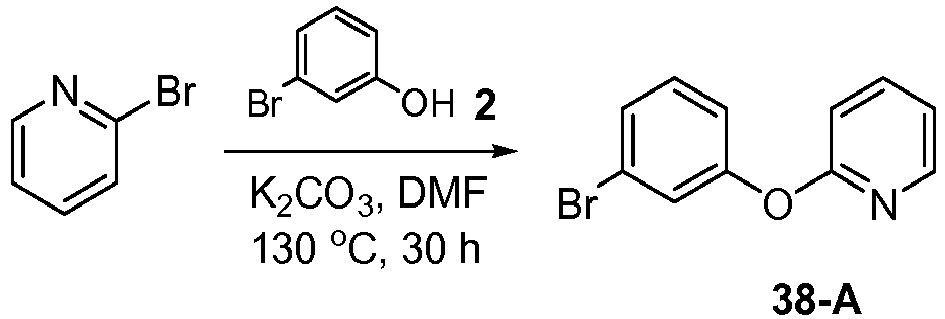
- A suspension of 2-bromopyridine (commercially available) (2.0 g, 13.6 mmol), 3-bromophenol (CAS591-20-8) (4.4 g, 24.9 mmol), K2CO3 (5.2 g, 40 mmol) in DMF (30 mL) was stirred at 130 °C for 30 h. The mixture was filtered, concentrated, and purified by column chromatography to give titled compound (1.0 g, 30.3%).
-

- A suspension of 38-A (1.0 g, 4.0 mmol), bis(pinacolato)diboron (CAS 78183-34-3) (1.27 g, 5.5 mmol), Pd(dpppf)Cl2 (290 mg, 0.40 mmol), and KOAc (1.2 g, 12 mmol) in dioxane (50 mL) was stirred at 100 °C under N2 for 3 h. The mixture was filtered, concentrated, and purified by column chromatography to give the title compound (800 mg, 67.8%).
-

- A suspension of 38-B (300 mg, 1.66 mmol), 3-A (740 mg, 2.5 mmol), Pd(PPh3)4 (196 mg, 0.17 mmol), K2CO3 (690 mg, 4.98 mmol) in dioxane (30 mL) was stirred at 100 °C for 3 h under N2. The mixture was filtered, concentrated, and purified by column chromatography to give (330 mg, 63.2%). LCMS (0-60AB, 2 min), 0.938 min, MH+ = 315.9; 1H-NMR (DMSO-d6, 400 MHz): δ 8.44 (d, J = 8.8 Hz, 1H), 8.67 (s, 1H), 8.38 (s, 1H), 8.28 (s, 1H), 8.23-8.05 (m, 4H), 7.75 (s, 1H), 7.90-7.86 (m, 1H), 7.55 (t, J = 8.0 Hz, 1H), 7.26-7.20 (m, 1H), 7.18-7.05 (m, 2H).
-


-
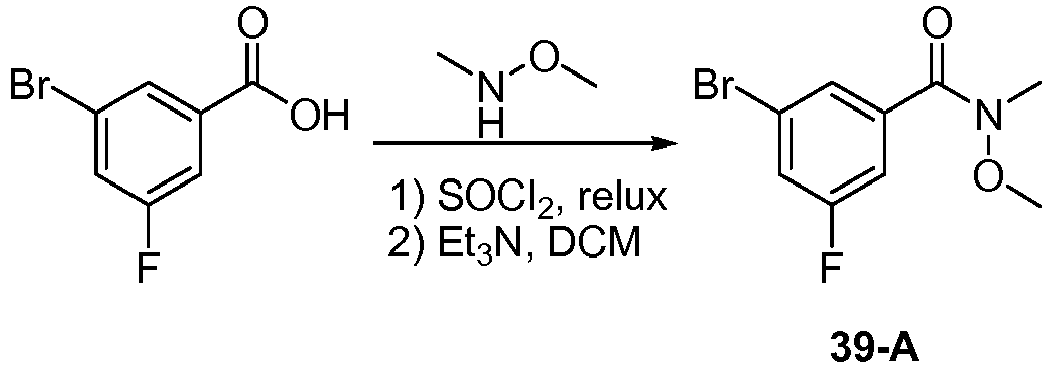
- A solution of 3-bromo-5-fluorobenzoic acid (commercially available) (10.0 g, 45.7 mmol) in thionyl chloride (80 mL) was heated at reflux for 2 hours. Thionyl chloride was removed under reduced pressure and the residue was added to solution of N,O-dimethylhydroxylamine hydrochloride (5.32 g, 54.8 mmol) and Et3N (10.1 g, 0.1 mol) in DCM (300 mL) dropwise at 0 °C. After the reaction mixture was stirred at r.t. overnight, it was washed with water (3×100 mL), brine, dried over anhydrous Na2SO4 and concentrated. The colorless oil was used in next step without further purification (11.0 g, yield: 95%).
-

- Ethyl magnesium bromide (3.0 M, 16.5 mL, 49.5 mmol) was added to a solution of 39-A (11.0 g, 45.1 mmol) in anhydrous THF (250 mL) dropwise at 0 °C and maintained the temperature below 5 °C. After addition, the reaction warmed to r.t. and stirred over night. The reaction was quenched with a NH4Cl solution. The organic layer was washed with water, brine, dried over anhydrous Na2SO4, concentrated and purified by column chromatography (PE :EtOAc=20:1) to give the title compound as a colorless oil (8.0 g, yield: 83%).
-
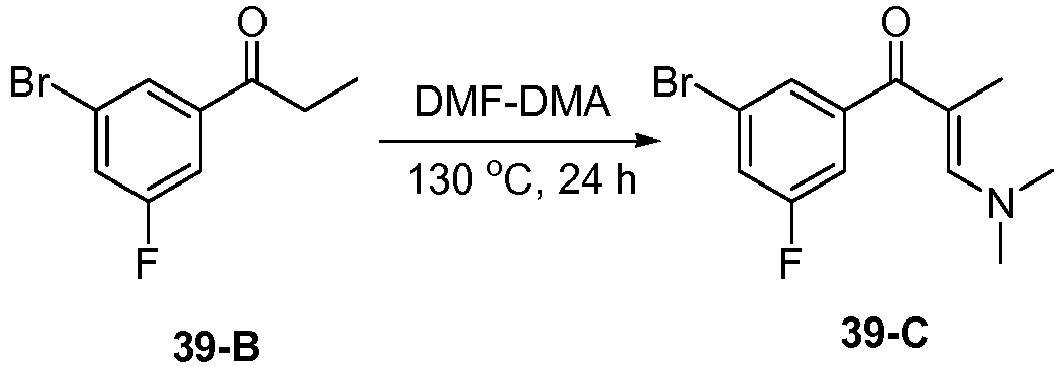
- A solution of 39-B (7.9 g, 37.1 mmol) in DMF-DMA (30 mL) was heated at 130 °C and stirred over night. The solvent was removed and the residue was used in next step without further purification.
-
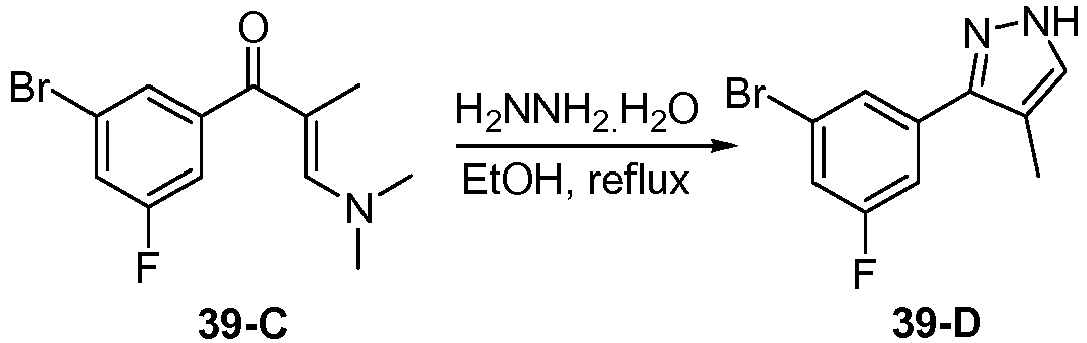
- A solution of crude 39-C (10. g, 37.0 mmol) and hydrazine hydrate (5 mL) in ethanol (40 mL) was heated at reflux for 2 h. Ethanol was removed and the residue was partitioned between EtOAc (200 mL) and brine (70 mL). The organic layer was dried over anhydrous Na2SO4, concentrated and purified by column (PE:EtOAc= 10 :1) to give the titled product as a yellow solid (4.5 g, 48%).
-

-

- A suspension of crude 39-E (350 mg, 1.0 mmol), 3-A (150 mg, 0.80 mmol), Pd(PPh3)4 (30 mg) and Cs2CO3 (600 mg, 1.8 mmol) in a mixture of dioxane/H2O (10 mL/1 mL) was heated to 90°C for 2 h. The reaction solution was partitioned between EtOAc (100 mL) and brine (35 mL). The combined organic layer was washed with water (3×30 mL), concentrated and purified by prep-HPLC (49 mg, 19%). LCMS (ESI, 10-80AB, 2 min): RT = 0.858 min, M+H = 321.1. 1H NMR (DMSO-d6, 400 MHz): δ 12.87-12.80 (bs, 1H), 8.55-8.52 (d, J = 8.8 Hz, 1H), 8.48-8.37 (m, 4H), 8.24 (s, 1H), 8.18 (d, J= 8.8 Hz, 1H), 8.15 (s, 1H), 7.59 (s, 1H), 7.53 (d, J = 10 Hz, 1H), 2.26 (s, 3H).
-

- 6-(3-(4-methyl-1H-pyrazol-3-yl)phenyl)pyrido[3,2-d]pyrimidin-4-amine was prepared according to the procedure described in example 39. Yield 18%, LCMS 10-80AB, 303.1, 8.838 min, 1H-NMR (DMSO-d6, 400 MHz): δ 12.92-12.76 (bs, 1H), 8.56 (s, 1H), 8.52-8.49 (m, 2H), 8.39 (d, J = 10.4 Hz, 1H)), 8.35-8.28 (m, 2H), 8.19-8.17 (d, J = 8.8 Hz, 1H), 7.75 (d, J = 8.0 Hz, 1H), 7.63 (t, J = 8.0 Hz, 1H), 7.55 (s, 1H), 2.27 (s, 3H).
-

-

- A mixture of 3-bromophenol (commercially available) (1.72 g, 10 mmol), bromocyclopentane (commercially available) (2.96 g, 20 mmol), and K2CO3 (2.56 g, 20 mmol) in acetone (30 mL) was stirred at 80°C for 18 h. The solvent was removed under reduced pressure and the mixture was extracted with EtOAc (100 mL×2). The combined organic layers was washed with sat NaCl (50 mL), dried over Na2SO4, concentrated, and purified by column to give the title product (1.8 g, yield 75 %).
-

- A mixture of 41-A (1.2 g, 5 mmol), 4,4,4',4',5,5,5',5'-octamethyl-2,2'-Bi-1,3,2-dioxaborolane (CAS 73183-34-3) (2.54 g, 10 mmol), KOAc (980 mg, 10 mmol), and Pd(dppf)Cl2 (366 mg, 0.5 mmol) in DMF (20 mL) was purged 3 times and heated at 110°C for 2 h at N2. It was poured into water (50 mL) and extract with EtOAc (100 mL×2). The combined organic layers was washed with sat NaCl (50 mL), dried over Na2SO4 and concentrated in vacuum to give the crude title product (1.0 g, yield 71.4%).
-

- A mixture of 41-B (500 mg, 1.74 mmol), 3-A (312 mg, 1.74 mmol), Cs2CO3 (1.13 g, 3.48 mmol) and Pd(dppf)Cl2 (127.3 mg, 0.174 mmol) in a mixture of dioxane-H2O (10-1 mL) was heated under a irradiation of MW, at 130°C for 30 min under N2. It was filtered, concentrated and purified by pre-HPLC to give the title compound 41 (47.6 mg, 8.9%). LCMS (0-60AB, ESI): RT = 1.129 min, M+H+ = 307.1; 1H NMR (400MHz, DMSO-d6) δ8.41 (d, J = 8.8 Hz, 2H), 8.10 (d, J = 8.8 Hz, 2H), 7.97 (s, 1H), 7.90 (s, 2H), 7.41 (t, J = 8.0 Hz, 1H), 7.021 (s, J = 8.4 Hz, 1H), 5.02 (s, 1H), 1.96 (s, 2H), 1.74 (s, 4H), 1.61 (s, 2H).
-


- To an 8 mL screw-cap vial was added tert-butyl 3-formylpiperidine-1-carboxylate 42-A (200 mg, 0.94 mmol, commercially available) and oxaldehyde, 40% in water (0.8 equiv., 0.75022 mmol, 108.9 mg). The reaction was cooled to 0°C, then ammonia (7 mol/L) in methanol (10 equiv., 9.4 mmol, 1.3397 mL) was slowly added. The reaction was then capped and shaken over for 72h at room temperature. The reaction was mostly concentrated, then partitioned with dichloromethane : water. Organic phase was extracted, dried over sodium sulfate, filtered, and concentrated. Recovered tert-butyl 3-(1H-imidazol-2-yl)piperidine-1-carboxylate was carried directly on to the deprotection step.
- To an 8 mL screw-cap vial was added tert-butyl 3-(1H-imidazol-2-yl)piperidine-1-carboxylate 42-B (172 mg, 0.68 mmol), methanol (2 mL), and HCl/dioxane (4 mol/L) (8 mmol, 2 mL) . The reaction was capped and shaken at room temperature for 4h. The reaction was then concentrated, then azeotroped with methanol. 6-chloropyrido[3,2-d]pyrimidin-4-amine was carried directly forward to the N-alkylation step without purification.
- To an 8 mL screw-cap vial was added 6-chloropyrido[3,2-d]pyrimidin-4-amine 10 (1 equiv., 0.68 mmol, 123 mg), 3-(1H-imidazol-2-yl)piperidine hydrochloride (1 equiv., 0.68 mmol, 128 mg), triethylamine (3 equiv., 2.05 mmol, 0.287 mL) and DMA (2 mL). The reaction was capped and shaken at 100°C overnight. The reaction was then cooled to room temperature, diluted with dichloromethane, and washed with water. The organic was then concentrated, then purified by reverse phase HPLC, yielding 16 mg of product. 1H NMR (400 MHz, DMSO) δ 8.20 - 8.14 (m, 3H), 7.82 - 7.77 (m, 1H), 7.54 - 7.49 (d, J = 9.4 Hz, 1H), 7.38 - 7.28 (d, J = 8.1 Hz, 2H), 6.96 - 6.94 (s, 2H), 4.79-4.71 (d, J = 12.7 Hz, 1H), 4.53 - 4.46 (d, J = 17.4 Hz, 1H), 3.17 - 3.07 (m, 1H), 3.07 - 2.96 (m, 1H), 2.96-2.84 (m, 1H), 2.18-2.08 (m, 1H), 1.91 - 1.77 (m, 2H), 1.66 - 1.51 (m, 1H). LCMS M/Z (M+H) = 296.
-

- To 40 mL screw-cap vials was added 6-chloropyrido[3,2-d]pyrimidin-4-amine (2.00 g, 11.1 mmol) followed by tert-butyl N-[(3S)-3-piperidyl]carbamate (1.1 equiv., 12.2 mmol, 2.44g) then dimethylacetamide (10 mL) and triethylamine (3 equiv., 33.2 mmol, 4.65 mL). The reaction was capped and shaken at 100°C for 42h, then an additional 24h at 115°C. The reaction was cooled to room temperature, then partitioned with ethyl acetate : water. Residual chloride starting material was removed by filtration. The filtrate phases were separated, and the organics dried over sodium sulfate, filtered and concentrated, yielding 2.53 g of product. 1H NMR (400 MHz, DMSO) δ 8.19 - 8.13 (s, 1H), 7.81 - 7.74 (d, J = 9.3 Hz, 1H), 7.43 - 7.39 (d, J = 9.1 Hz, 1H), 6.95-6.85 (d, J = 6.6 Hz, 1H), 4.32 - 4.19 (m, 2H), 3.50 - 3.38 (m, 1H), 3.19 - 3.04 (m, 1H), 2.96 - 2.85 (m, 1H), 1.90 - 1.80 (m, 1H), 1.80 - 1.67 (m, 1H), 1.60 - 1.34 (m, 11H). LCMS M/Z (M+H) = 345.
-

-

- To an 8 mL screw-cap vial was added (S)-6-(3-aminopiperidin-1-yl)pyrido[3,2-d]pyrimidin-4-amine trihydrochloride 44 (0.15 mmol, 53 mg) followed by 3-methoxypropanoic acid (1.2 equiv., 0.18 mmol, 19 mg), HATU (1.2 equiv., 0.18 mmol, 68 mg), dimethylformamide (1 mL), then triethylamine (6 equiv., 0.90 mmol, 0.13 mL). The reaction was capped and shaken at room temperature overnight. The reaction was diluted with 3 mL DCM, and washed with 2 mL water. Organic was concentrated via GeneVac, then purified by reverse phase HPLC, yielding 15 mg of desired product. 1H NMR (400 MHz, DMSO) δ 8.19 - 8.14 (s, 1H), 7.91 -7.83 (d, J = 7.0 Hz, 1H), 7.82 -7.73 (d, J = 9.3 Hz, 1H), 7.44 - 7.3 8 (d, J = 9.3 Hz, 1H), 7.38 - 7.18 (m, 2H), 4.25 - 4.17 (d, J = 12.7 Hz, 1H), 4.17 - 4.08 (d, J = 13.8 Hz, 1H), 3.85 -3.72 (m, 1H), 3.58-3.48 (m, 2H), 3.23 - 3.18 (s, 3H), 3.10-2.99 (m, 1H), 2.37-2.28 (m, 2H), 1.90 -1.81 (m, 1H), 1.81 -1.70 (m, J = 8.7 Hz, 1H), 1.63 - 1.40 (m, 2H). LCMS M/Z (M+H) = 331.
-

- To a 4 mL screw-cap vial was added 6-(3-amino-5-fluoro-phenyl)quinazolin-4-amine, 25 mg; 0.10 mmol) followed by DCM (0.5 mL), TEA (2 equiv., 0.20 mmol, 0.0277 mL), and acetyl chloride (2 equiv., 0.20 mmol, 15.43 mg). The reaction was capped and shaken at room temperature for 2h. Reaction was then diluted with 2mL dichloromethane, and washed with water. Resultant precipitate was collected by filtration, then purified by reverse phase HPLC. Purification recovered 6 mg of desired product. 1HNMR (400 MHz, DMSO) δ 10.35 - 10.24 (s, 1H), 8.61 - 8.49 (d, J = 1.7 Hz, 1H), 8.43 -8.36 (s, 1H), 8.05 - 7.97 (dd, J = 8.7, 1.8 Hz, 1H), 7.98 - 7.82 (bs, 1H), 7.77-7.73 (d, J = 8.7 Hz, 1H), 7.71 - 7.67 (s, 1H), 7.65 - 7.56 (d, J = 11.2 Hz, 1H), 7.42 - 7.30 (d, J = 10.0 Hz, 1H), 2.11 - 2.08 (s, 3H). LCMS M/Z (M+H) 297.
-

- To 2-morpholinoacetic acid (0.175 mmol, 25 mg) in a 4 mL vial was added HATU (0.175 mmol, 69 mg), 6-(3-amino-5-fluoro-phenyl)quinazolin-4-amine, 0.15 mmol, 38 mg), and TEA (0.30 mmol, 0.042 mL). The vial was capped and shaken overnight at room temperature. The reaction was then diluted with 3 mL DCM, then washed with 2 mL water. Organic phase was concentrated, and then purified by reverse phase HPLC yielding 20 mg of desired product. 1H NMR (400 MHz, DMSO) δ 10.07 - 9.93 (s, 1H), 8.60-8.52 (d, J = 1.8 Hz, 1H), 8.42 - 8.39 (s, 1H), 8.08-8.03 (dd, J = 8.7, 1.9 Hz, 1H), 7.93 - 7.66 (m, 4H), 7.44 - 7.35 (d, J = 10.0 Hz, 1H), 3.71 - 3.63 (m, 4H), 3.20 - 3.17 (s, 2H), 2.56 - 2.51 (m, 4H). LCMS M/Z (M+H) 382.
-

-

- To a 4 mL vial was added 6-(3-amino-5-fluoro-phenyl)pyrido[3,2-d]pyrimidin-4-amine , 50 mg; 0.20 mmol) followed by HATU (1.1 equiv., 0.22 mmol,84.48 mg), 2-pyrrolidin-1-ylacetic acid, (1.1 equiv.; 0.22 mmol, 28 mg), DMF (0.5 mL), and triethylamine (2 equiv., 0.40 mmol, 0.055 mL). The reactions were capped and shaken at room temperature overnight. The following morning the reaction was diluted with 2 mL DCM, and washed with 1 mL water. The organic was concentrated in vacuo, the crude was then purified by reverse phase HPLC, yielding 4.5 mg of Example 166, N-(6-(3-amino-5-fluorophenyl)pyrido[3,2-d]pyrimidin-4-yl)-2-(pyrrolidin-1-yl)acetamide, 1H NMR (400 MHz, DMSO) δ 11.83 - 11.71 (s, 1H), 9.01 - 8.93 (s, 1H), 8.48 - 8.38 (m, 2H), 7.30 - 7.20 (m, 2H), 6.54 - 6.49 (d, J = 11.3 Hz, 1H), 5.69 - 5.60 (s, 2H), 3.51 - 3.47 (s, 2H), 2.81 - 2.71 (m, 4H), 1.93 - 1.83 (m, 4H), LCMS M/Z (M+H) = 367, and 3 mg of Example 167, N-(3-(4-aminopyrido[3,2-d]pyrimidin-6-yl)-5-fluorophenyl)-2-(pyrrolidin-1-yl)acetamide, 1H NMR (400 MHz, DMSO) δ 9.97 - 9.91 (s, 1H), 8.44 - 8.41 (s, 1H), 8.37 - 8.33 (d, J = 8.9 Hz, 1H), 8.31 - 8.26 (s, 1H), 8.21 - 8.07 (m, 3H), 8.07-7.99 (s, 1H), 7.91 - 7.86 (d, J = 11.1 Hz, 1H), 2.67 - 2.59 (m, 4H), 1.83 - 1.76 (m, 4H). LCMS M/Z (M+H) = 367.
-

- Step 1: tert-butyl N-tert-butoxycarbonyl-N-(6-chloropyrido[3,2-d]pyrimidin-4-yl)carbamate (50-A) To a round bottom flask was added 6-chloropyrido[3,2-d]pyrimidin-4-amine 1 (5.00 g, 27.7 mmol) followed by Boc anhydride (2.1 equiv., 58.1 mmol, 12.6 g), dichloromethane (200 mL), diisopropylethylamine (3 equiv., 83.1 mmol, 10.8 g) and catalytic 4-dimethylaminopyridine (0.05 equiv., 1.38 mmol, 173 mg). The reaction was stirred at 40°C overnight. Reaction was then concentrated. Crude product was purified by flash chromatography, 15-50% EA : Heptane, yielding 6.74g of product. LCMS M/Z (M+H) = 381
- Step 2: N6-(2-methylbenzyl)pyrido[3,2-d]pyrimidine-4,6-diamine (50)
- To a microwave vial was added tert-butyl
- N-tert-butoxycarbonyl-N-(6-chloropyrido[3,2-d]pyrimidin-4-yl)carbamate 50-A (0.20 mmol, 76 mg) followed by 3-methylbenzyl amine (2 equiv., 0.4 mmol, 48 mg), DIPEA (3 equiv., 0.6 mmol, 78 mg), and dimethylacetamide (0.5 mL). The reactions were capped and stirred under microwave irradiation for 30 minutes at 130°C.The reaction was then transferred to an 8ml vial, and concentrated via GeneVac. To the crude material was added dichloromethane (0.25 mL) followed by trifluoroacetic acid (0.5 mL). The reaction was capped and shaken at room temperature for one hour. The reaction was then concentrated, and the crude purified by reverse phase HPLC to yield 11 mg of product. 1H NMR (400 MHz, DMSO) δ 8.16 - 8.11 (s, 1H), 7.69 - 7.62 (d, J = 9.1 Hz, 1H), 7.53 - 7.46 (t, J = 5.5 Hz, 1H), 7.40 - 7.33 (m, 1H), 7.22 - 7.11 (m, 3H), 7.11 - 7.07 (d, J = 9.1 Hz, 1H), 4.70 - 4.62 (d, J = 5.5 Hz, 2H), 2.37 - 2.33 (s, 3H). LCMS M/Z (M+H) = 266.
-

- To an 8 mL screw-cap vial was added tert-butyl N-tert-butoxycarbonyl-N-(6-chloropyrido[3,2-d]pyrimidin-4-yl)carbamate 50-A (0.20 mmol, 76 mg) followed by 2-methylphenol (2 equiv., 0.40 mmol, 43 mg), potassium carbonate (2 equiv., 0.40 mmol, 55 mg) and dimethylacetamide (0.4 mL), and 4-dimethylaminopyridine, 0.05 equiv., 0.01 mmol, 1 mg). The reactions were capped and shaken at 80°C for 2h. The reaction was filtered, and concentrated via GeneVac. Crude was then taken up in dichloromethane (0.25 mL), followed by trifluoroacetic acid (0.5 mL). The reaction was capped and shaken for 1h, then concentrated. Crude was purified by reverse phase HPLC to yield 27 mg of product. 1H NMR (400 MHz, DMSO) δ 8.40 - 8.33 (s, 1H), 8.17-8.11 (d, J = 9.0 Hz, 1H), 7.44 - 7.35 (dd, J = 13.1, 8.3 Hz, 2H), 7.32 -7.26 (m, 1H), 7.26 - 7.17 (m, 2H), 2.17 - 2.13 (s, 3H). LCMS M/Z (M+H) = 253.
-


- To a vial was added 4-chloro-6-iodo-quinazoline (100 mg; 0.34 mmol, commercially available), pyridin-4-amine (3 equiv., 1.03 mmol, 97.19 mg, commercially available), and 2 drops of 4M HCl/dioxane . The reaction vial was heated until solids melted. LCMS of resultant solution showed clean product formation. Upon cooling the product re-solidified. The solid was suspended in dichloromethane : water, and collected by filtration. 95 mg of
- 6-iodo-N-(4-pyridyl)quinazolin-4-amine was recovered as an orange solid, which was carried on directly to the Suzuki step. LCMS M/Z (M+H) = 350.
- To an 8 mL screw-cap vial was added 6-iodo-N-(4-pyridyl)quinazolin-4-amine (95 mg, 0.2729 mmol), (3-chlorophenyl)boronic acid, (1.2 equiv., 0.33 mmol, 51.21 mg), 1-4 dioxane (0.8 mL), potassium phosphate tribasic, (2M in H2O, 3 equiv., 0.82 mmol, 0.41 mL), and Bis(di-tert-butyl(4-dimethylaminophenyl)phosphine)dichloropalladium(II) (0.05 equiv.; 0.014 mmol, 10 mg). The reaction was capped and shaken at 60°C for 1 h. The reaction was then diluted with 4 mL dichloromethane and washed with water. Organic phase was then concentrated. Crude was purified by reverse phase HPLC yielding 31 mg of product. 1H NMR (400 MHz, DMSO) 8 10.22 - 10.07 (s, 1H), 8.92 - 8.86 (s, 1H), 8.82 - 8.75 (s, 1H), 8.56 - 8.49 (d, J = 5.4 Hz, 2H), 8.31 - 8.25 (m, 1H), 8.05 - 7.97 (m, 3H), 7.97 - 7.91 (d, J = 8.7 Hz, 1H), 7.90 - 7.84 (d, J = 7.7 Hz, 1H), 7.64 - 7.57 (t, J = 7.8 Hz, 1H), 7.57 - 7.50 (d, J = 8.0 Hz, 1H). LCMS M/Z (M+H) = 333.
-

- To 8 mL screw-cap vials was added 4-chloro-6-iodo-quinazoline (0.25 mmol, 73 mg), cyclopropyl amine 3 equiv., 0.75 mmol, 43 mg), and dimethylformamide (0.5 mL). The reaction was capped and shaken at 60°C for 3h. The crude N-cyclopropyl-6-iodo-quinazolin-4-amine was then cooled to room temperature, concentrated via GeneVac, and then carried on to the Suzuki step. LCMS M/Z (M+H) = 312.
- To an 8 mL screw-cap vial was added N-cyclopropyl-6-iodo-quinazolin-4-amine (0.25 mmol 78 mg), (3-chlorophenyl)boronic acid, (1.2 equiv., 0.30 mmol, 47 mg), 1-4 dioxane (0.6 mL), potassium phosphate tribasic, (2M in H2O, 3 equiv., 0.75 mmol, 0.0.38 mL), and Bis(di-tert-butyl(4-dimethylaminophenyl)phosphine)dichloropalladium(II) (0.05 equiv.; 0.013 mmol, 9 mg). The reaction was capped and shaken at 60°C for 1h. The reaction was cooled to room temperature and the phases separated. Organic phase was then concentrated. Crude was purified by reverse phase HPLC yielding 35 mg of product. 1H NMR (400 MHz, DMSO) δ 8.60 - 8.49 (m, 2H), 8.44 - 8.35 (s, 1H), 8.18 - 8.05 (d, J = 8.7, 1H), 7.93 - 7.87 (s, 1H), 7.84 - 7.71 (m, 2H), 7.62 - 7.51 (t, J = 7.9 Hz, 1H), 7.51 - 7.43 (d, J = 8.4 Hz, 1H), 3.12 - 2.98 (m, 1H), 0.90 - 0.78 (m, 2H), 0.72 - 0.64 (m, 2H). LCMS M/Z (M+H) = 296.
-


- To a round bottom flask was added formamide (4 equiv.,13.5 mmol, 605 mg) and 2-amino-5-chloro-3-iodo-benzoic acid (1000 mg, 3.4 mmol). The reaction was capped and shaken at 130°C for 72h. The reaction was cooled to room temperature, then the precipitate was collected by filtration and washed 3x with water. The precipitate was dried under vacuum, yielding 881 mg of 6-chloro-8-iodo-3H-quinazolin-4-one as a purple solid. 1H NMR (400 MHz, DMSO) δ 12.66 - 12.49 (s, 1H), 8.40 - 8.37 (d, J = 2.4 Hz, 1H), 8.24 - 8.21 (s, 1H), 8.09 - 8.05 (d, J = 2.4 Hz, 1H). LCMS M/Z (M+H) = 307.
- To a round bottom flask was added 6-chloro-8-iodo-3H-quinazolin-4-one (1000 mg, 3.3 mmol;) and thionyl chloride (50 mL). DMF (0.1 mL) was then added, and the reaction was stirred at reflux for 2h. The reaction was cooled to room temperature, then concentrated via rotovap. The product was then azeotroped 2x with DCM, then dried under vacuum yielding 4,6-dichloro-8-iodo-quinazoline, carried immediately to the next step. 1H NMR (400 MHz, DMSO) δ 9.24 - 9.20 (s, 1H), 8.77 - 8.73 (d, J = 2.2 Hz, 1H), 8.36 - 8.31 (d, J = 2.2 Hz, 1H).
- To 4,6-dichloro-8-iodo-quinazoline (1.00g, 3.08 mmol) was added 2.4 mL of 7N ammonia/methanol. The mixture was capped and shaken overnight at room temperature. The rxn was then concentrated via rotovap yielding product as a white solid. The product was purified by flash column (2.5-10% Methanol: Dichloromethane), yielding 450 mg of 6-chloro-8-iodo-quinazolin-4-amine. 1H NMR (400 MHz, DMSO) δ 8.51-8.45 (s, 1H), 8.45-8.41 (d, J = 2.0 Hz, 1H), 8.41-8.35 (d, J = 1.9 Hz, 1H), 8.12-7.92 (bs, 2H). LCMS M/Z (M+H) = 306.
- To an 8 mL screw-cap vial was added 6-chloro-8-iodo-quinazolin-4-amine (450 mg, 1.47 mmol), dimethylformamide (2 mL), zinc cyanide (0.65 equiv., 1.0 mmol, 115 mg), and palladium tetra is(triphenylphosphine), (0.1 equiv., 0.15 mmol), 179 mg). The reaction was capped and shaken at 110°C overnight. The reaction was cooled to room temperature, diluted with 3 mL of dichloromethane, and 2 mL of water was added. The precipitate that followed was collected by filtration, and washed with water, then dichloromethane yielding 240 mg of 4-amino-6-chloro-quinazoline-8-carbonitrile as a light yellow solid. 1H NMR (400 MHz, DMSO) δ 8.72-8.67 (d, J = 2.2 Hz, 1H), 8.54-8.50 (s, 1H), 8.50-8.46 (d, J = 2.1 Hz, 1H), 8.29-8.22 (bs, 2H). LCMS M/Z (M+H) = 205.
- To an 8 mL vial was added 4-amino-6-chloro-quinazoline-8-carbonitrile (100 mg, 0.49 mmol) followed by (3-fluorophenyl)boronic acid (2 equiv., 1.0 mmol, 0.13676 g), potassium phosphate tribasic (2M in water, 4 equiv., 2.0 mmol, 1 mL), Bis(di-tert-butyl(4-dimethylaminophenyl)phosphine)dichloropalladium(II) (0.05 equiv., 0.024 mmol, 17 mg) and dioxane (2 mL). The reaction was capped and shaken at 100°C for 2h. The reaction was cooled to room temperature, then diluted with 4 mL ethyl acetate and 3 mL water. The resulting precipitate was collected by filtration, yielding 72 mg of desired product. 1H NMR (400 MHz, DMSO) δ 8.94 - 8.89 (d, J = 1.5 Hz, 1H), 8.77 - 8.72 (d, J = 1.4 Hz, 1H), 8.55-8.50 (s, 1H), 8.43 - 8.13 (s, 2H), 7.83 - 7.74 (t, J = 8.5 Hz, 2H), 7.63 - 7.55 (dd, J = 14.5, 8.0 Hz, 1H), 7.33 - 7.25 (dd, J = 12.5, 4.5 Hz, 1H). LCMS M/Z (M+H) = 265.
-

- To a 50 mL round bottom flask was added 6-chloro-8-iodo-quinazolin-4-amine 53-C (250 mg, 0.81833 mmol), PdCl2(dppf)CH2Cl2 (0.1 equiv., 0.08) mmol, 66 mg), methanol (1 mL), and triethylamine (3 equiv., 2.46 mmol, 0.3459 mL). The reaction was vacuum purged, and backfilled with 1 atm of carbon monoxide. The purge was repeated 3x, then the reaction was stirred at 40°C for 4h. The reaction was concentrated. The reaction was repeated 4 times on 1g, 1.55g, 1.55g, and 0.5g scale as above, with reaction temperatures of room temperature to 40°C. The reactions were combined, concentrated, then partitioned with ethyl acetate and water. Solids were removed by filtration, and the filtrate phases separated. The organic was dried over sodium sulfate, filtered, and concentrated. Crude was purified by flash chromatography (0-10% methanol: dichloromethane) yielding 640 mg of 4-amino-6-chloro-quinazoline-8-carboxylate. LCMS M/Z (M+H) = 265.
- To a 20 mL screw-cap vial was added methyl 4-amino-6-chloro-quinazoline-8-carboxylate(640 mg; 1.8 mmol), (3-fluorophenyl)boronic acid (2 equiv., 3.6 mmol, 0.49753 g), dioxane (10 mL), Bis(di-tert-butyl(4-dimethylaminophenyl)phosphine)dichloropalladium(II) (0.05 equiv. 0.09 mmol, 0.062945 g), and potassium phosphate tribasic (2M in water, 4 equiv., 7.2 mmol, 3.6 mL) . The reaction was capped and shaken at 100°C for 4h. LCMS showed complete Suzuki coupling, as well as saponified ester. The Reaction was cooled to room temperature, and partitioned with water and ethyl acetate. The organic was extracted 2 additional times with water. The combined aqueous was acidified to pH 2 with conc. HC1. The resulting precipitate was collected via filtration, yielding 350 mg of 4-amino-6-(3-fluorophenyl)quinazoline-8-carboxylic acid, ~85% pure. Product was carried directly on to the amide formation. LCMS M/Z (M+H) = 284.
- To a 4 mL screw-cap vial was added 4-amino-6-(3-fluorophenyl)quinazoline-8-carboxylic acid (0.10 mmol, 28 mg) followed by N-(2-aminoethyl)acetamide (2 equiv., 0.20 mmol, 20 mg), HATU (1.1 equiv., 0.11 mmol, 43 mg), dimethylformamide (0.5 mL), and triethylamine (3 equiv., 0.30 mmol, 0.042 mL). The reaction was capped and shaken at 50°C for 4h. The reaction was cooled to room temperature, diluted with 2.5 ml dichloromethane and washed with 1 ml water. Organic was concentrated, then the crude was purified by reverse phase HPLC, yielding 6 mg of desired product. 1H NMR (400 MHz, DMSO) δ 11.17 - 11.07 (t, J = 5.6 Hz, 1H), 8.89 - 8.75 (m, 2H), 8.54 - 8.50 (s, 1H), 8.44 - 8.06 (m, 2H), 8.06 - 7.99 (t, J = 5.5 Hz, 1H), 7.75 - 7.64 (m, 2H), 7.64 - 7.53 (m, 1H), 7.35 - 7.22 (m, 1H), 3.53 - 3.44 (m, 2H), 3.32 - 3.26 (m, 2H), 1.85 - 1.82 (s, 3H). LCMS M/Z (M+H) = 368.
-

- To a 4 mL screw-cap vial was added 4-bromo-2-fluoro-pyridine (100 mg, 0.57 mmol), 2-pyrrolidin-1-ylethanamine (1.1 equiv., 0.63 mmol, 71 mg), and dimethylformamide (0.25 mL). The reaction was capped and shaken at 100°C for 3h. TLC showed new spot, with no starting material present. The reaction was concentrated, and
- 4-bromo-N-(2-pyrrolidin-1-ylethyl)pyridin-2-amine was carried directly on to the Suzuki cross-coupling step.
- To a 40 mL screw-cap vial was added 6-bromoquinazolin-4-amine (1000 mg, 4.5 mmol), bis(pinacolato)diborane (2 equiv., 8.9 mmol, 2390 mg),
- Bis(di-tert-butyl(4-dimethylaminophenyl)phosphine)dichloropalladium(II) (0.05 equiv., 0.22 mmol, 158 mg), potassium acetate (3 equiv., 13.4 mmol, 2.00 mol/L, 6.69 mL), and dimethylformamide (12 mL, 153 mmol, 11300 mg). The reaction was capped and shaken at 90°C overnight. The reaction was cooled to room temperature, then partitioned with ethyl acetate : water. Solids were filtered off (palladium + by-product). Phases were separated. Organic was dried over sodium sulfate, filtered, and concentrated, yielding 6-(4,4,5,5-tetramethyl-1,3,2-dioxaborolan-2-yl)quinazolin-4-amine. The boronic ester was carried directly to the cross coupling step due to potential instability.
- To an 8 mL screw-cap vial was added 6-(4,4,5,5-tetramethyl-1,3,2-dioxaborolan-2-yl)quinazolin-4-amine (26 mg; 0.096 mmol, 26 mg) followed by 4-bromo-N-(2-pyrrolidin-1-ylethyl)pyridin-2-amine (2 equiv., 0.19 mmol, 52 mg, Bis(di-tert-butyl(4-dimethylaminophenyl)phosphine)dichloropalladium(II) (0.05 equiv., 0.005 mmol, 4 mg, dioxane (0.4 mL), and potassium phosphate tribasic (2M in water, 4 equiv., 0.38 mmol, 0.19 mL) . The reaction was capped and shaken for 1h at 100°C. The reaction was then cooled to room temperature, then extracted. The aqueous was further extracted with dichloromethane, and combined with the dioxane extract and concentrated. The crude was purified by reverse phase HPLC, yielding 5 mg of desired product. 1H NMR (400 MHz, DMSO) δ 8.62 - 8.56 (s, 1H), 8.42 - 8.38 (s, 1H), 8.32 - 8.16 (m, 2H), 8.11- 8.02 (m, 2H), 7.77 - 7.72 (d, J = 8.7 Hz, 1H), 6.98 - 6.92 (d, J = 5.4 Hz, 1H), 6.90 - 6.84 (s, 1H), 6.53 - 6.44 (t, J = 5.4 Hz, 1H), 3.49 - 3.40 (t, J = 6.7 Hz, 2H), 2.73 - 2.65 (t, J = 6.7 Hz, 2H), 2.64 - 2.55 (m, 4H), 1.80 - 1.63 (m, 4H). LCMS M/Z (M+H) = 335.
-

- To a 4 mL screw-cap vial was added 3-(4-aminopyrido[3,2-d]pyrimidin-6-yl)phenol (100 mg; 0.32 mmol) followed by 1-(2-chloroethyl)pyrrolidine hydrochloride (CAS 7050-67-1) (1.1 equiv., 0.35 mmol, 59 mg) cesium carbonate (5 equiv., 1.57 mmol, 513 mg) and dimethylformamide (0.6 mL). The reaction was capped at shaken at 80°C overnight. The reaction was cooled to room temperature, diluted with dichloromethane, and washed with water. Organic phase was concentrated, then purified by reverse phase HPLC yielding 16 mg of desired product. 1H NMR (400 MHz, DMSO) δ 8.48 - 8.39 (m, 2H), 8.15 - 8.08 (m, 2H), 8.00 - 7.89 (m, 3H), 7.47 - 7.40 (t, J = 7.9 Hz, 1H), 7.12 - 7.03 (dd, J = 8.1, 2.3 Hz, 1H), 4.27 - 4.18 (t, J = 5.9 Hz, 2H), 2.90 - 2.81 (t, J = 5.9 Hz, 2H), 2.59 - 2.53 (m, 4H), 1.76 - 1.66 (m, 4H). LCMS M/Z (M+H) = 336.
-

- To a 4 mL screw-cap vial was added 6-(3-aminophenyl)quinazolin-4-amine (35 mg; 0.15 mmol) followed by dimethylformamide (0.5 mL) and isocyanatocyclopentane (1.1 equiv., 0.16 mmol,18 mg). The reaction was stirred at room temperature overnight. The following morning the crude reaction mix was directly purified by reverse phase HPLC, yielding 19 mg of desired product. 1H NMR (400 MHz, DMSO) δ 8.51 - 8.45 (d, J = 1.8 Hz, 1H), 8.45 - 8.40 (s, 1H), 8.40 - 8.37 (s, 1H), 8.03 - 7.95 (dd, J = 8.7, 1.9 Hz, 1H), 7.95 - 7.76 (s, 2H), 7.76 - 7.70 (d, J = 8.7 Hz, 1H), 7.43 - 7.28 (m, 3H), 6.33 - 6.20 (d, J = 7.2 Hz, 1H), 4.04-3.90 (dd, J = 13.4, 6.7 Hz, 1H), 1.93 - 1.80 (m, 2H), 1.74 - 1.46 (m, 4H), 1.46 - 1.32 (m, 2H). LCMS M/Z (M+H) = 348.
-

- The amine 1 (50 mg, 0.21 mmol) was treated with sodium hydride 60% dispersion in mineral oil (13 mg, 0.31 mmol) and iodoethane (57 mg, 0.31 mmol) to provide 6-(3-fluorophenyl)-N-isobutylpyrido[3,2-d]pyrimidin-4-amine. LC/MS (ESI+): m/z 297 (M+H). 1H NMR (400 MHz, DMSO) δ 8.73 (t, J = 6.1 Hz, 1H), 8.47 (d, J = 7.0 Hz, 2H), 8.40 (d, J = 10.9 Hz, 1H), 8.22 (d, J = 7.8 Hz, 1H), 8.15 (d, J = 8.8 Hz, 1H), 7.59 (dd, J = 14.3, 7.9 Hz, 1H), 7.34 (td, J = 8.5, 2.4 Hz, 1H), 3.45 (t, J = 6.7 Hz, 2H), 2.12 (dp, J = 13.5, 6.8 Hz, 1H), 0.96 (d, J = 6.7 Hz, 6H).
-

- To 1-[4-(4-aminopyrido[3,2-d]pyrimidin-6-yl)piperazin-1-yl]ethanone (1.5 equiv., 0.3 mmol, 38 mg) in an 8 mL screw-cap vial was added 6-chloropyrido[3,2-d]pyrimidin-4-amine (0.2 mmol, 36 mg), DMA; 0.25 mL, and triethylamine (3 equiv., 0.6 mmol, 0.084 mL).
- The reaction was capped and shaken overnight at 100°C. The following morning the reaction was cooled to room temperature, and partitioned with water and dichloromethane. The organic was concentrated via GeneVac, then purified by reverse phase HPLC, yielding 6 mg of desired product. 1H NMR (400 MHz, DMSO) δ 8.22 - 8.15 (s, 1H), 7.85 - 7.78 (d, J = 9.3 Hz, 1H), 7.51 - 7.45 (d, J = 9.3 Hz, 1H), 7.45 - 7.26 (bs, 2H), 3.82 - 3.74 (m, 2H), 3.74 - 3.67 (m, 2H), 3.63 - 3.49 (m, 4H), 2.09 - 2.01 (s, 3H). LCMS M/Z (M+H) 273.
-
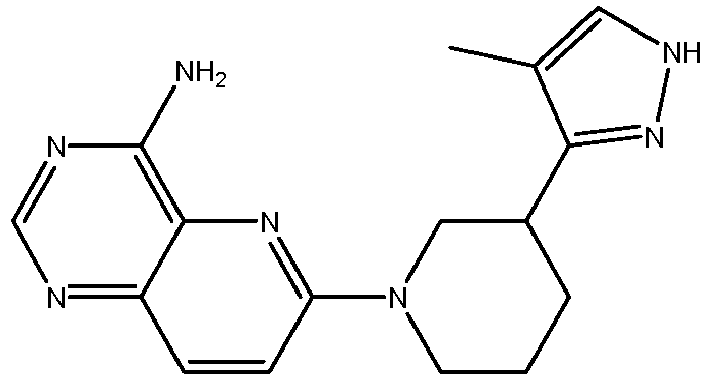
- The racemic 6-[3-(4-methyl-1H-pyrazol-3-yl)-1-piperidyl]pyrido[3,2-d]pyrimidin-4-amine was synthesized as exemplified in Example 42, on 75 mg scale. The product was purified by chiral HPLC, yielding 35 mg of peak 1 (1H NMR (400 MHz, DMSO) δ 12.49 -12.14 (m, 1H), 8.22 - 8.10 (s, 1H), 7.84 - 7.71 (d, J = 9.3 Hz, 1H), 7.56 - 7.47 (d, J = 9.4 Hz, 1H), 7.43 - 7.16 (bs, 2H), 4.75 - 4.51 (m, 2H), 3.08 - 2.88 (m, 2H), 2.88 - 2.68 (s, 1H), 1.97 - 1.73 (m, 3H), 1.67 - 1.50 (m, 1H). LCMS M/Z (M+H) 310, and 33 mg of peak 2, (1H NMR (400 MHz, DMSO) δ 12.49 - 12.14 (m, 1H), 8.22 - 8.10 (s, 1H), 7.84 - 7.71 (d, J = 9.3 Hz, 1H), 7.56 - 7.47 (d, J = 9.4 Hz, 1H), 7.43 - 7.16 (bs, 2H), 4.75 - 4.51 (m, 2H), 3.08 - 2.88 (m, 2H), 2.88 - 2.68 (s, 1H), 1.97 - 1.73 (m, 3H), 1.67 - 1.50 (m, 1H). LCMS M/Z (M+H) 310
-

-

- To an 8 mL screw-cap vial was added +/-6-[3-(4-methyl-1H-pyrazol-3-yl)-1-piperidyl]pyrido[3,2-d]pyrimidin-4-amine (172 mg; 0.56 mmol) and DMF (2 mL). Sodium hydride (60% in oil; 1.3 equiv.; 0.73 mmol; 60 mass%; 29 mg) was then slowly added. The reaction was then loosely capped and shaken for 15 minutes. Iodomethane; (1.1 equiv., 0.61 mmol, 86.80 mg) was then added. The reaction was capped and shaken at room temperature overnight. The following morning the reactions were diluted with DCM and washed with water. Aqueous was extracted 2x with DCM, then organics were combined, dried over sodium sulfate, filtered, and concentrated. The crude product was purified by reverse phase HPLC. Mixture of diastereomers were then separated by SCF chiral chromatography. All 4 diastereomers were isolated. 6-(3-(1,4-dimethyl-IH-pyrazol-3-yl)piperidin-1-yl)pyrido[3,2-d]pyrimidin-4-amine, peak 1, 9 mg, 1H NMR (400 MHz, DMSO) δ 8.18 - 8.14 (s, 1H), 7.79 - 7.73 (d, J = 9.3 Hz, 1H), 7.52 - 7.43 (d, J = 9.4 Hz, 1H), 7.39 - 7.33 (s, 1H), 4.74 - 4.64 (d, J = 12.9 Hz, 1H), 4.64 - 4.5 1 (d, J = 12.6 Hz, 1H), 3.76 - 3.70 (s, 3H), 3.07 - 2.86 (m, 2H), 2.79 - 2.66 (m, 1H), 2.02 - 1.98 (s, 3H), 1.98 - 1.90 (d, J = 10.1 Hz, 1H), 1.86 - 1.73 (m, 2H), 1.64 - 1.52 (m, 1H). LCMS M/Z (M+H) = 324.
- 6-(3-(1,4-dimethyl-IH-pyrazol-3-yl)piperidin-1-yl)pyrido[3,2-d]pyrimidin-4-amine, peak 2, 10 mg, 1H NMR (400 MHz, DMSO) δ 8.18 - 8.14 (s, 1H), 7.79 - 7.73 (d, J = 9.3 Hz, 1H), 7.52 - 7.43 (d, J = 9.4 Hz, 1H), 7.39 -7.33 (s, 1H), 4.74 - 4.64 (d, J = 12.9 Hz, 1H), 4.64 - 4.51 (d, J= 12.6 Hz, 1H), 3.76 - 3.70 (s, 3H), 3.07 - 2.86 (m, 2H), 2.79 - 2.66 (m, 1H), 2.02 - 1.98 (s, 3H), 1.98 - 1.90 (d, J = 10.1 Hz, 1H), 1.86 - 1.73 (m, 2H), 1.64 - 1.52 (m, 1H). LCMS M/Z (M+H) = 324.
- 6-(3-(1,4-dimethyl-IH-pyrazol-5-yl)piperidin-1-yl)pyrido[3,2-d]pyrimidin-4-amine, peak 1, 4 mg, 1H NMR (400 MHz, DMSO) δ 8.17 - 8.14 (s, 1H), 7.81 - 7.74 (d, J = 9.3 Hz, 1H), 7.57 - 7.51 (d, J = 9.4 Hz, 1H), 7.44 - 7.27 (bs, 2H), 7.14 - 7.10 (s, 1H), 4.79 - 4.68 (d, J = 12.4 Hz, 1H), 4.64 - 4.55 (d, J = 12.9 Hz, 1H), 3.79 - 3.75 (s, 3H), 3.19 - 3.07 (t, J = 12.3 Hz, 1H), 3.07 - 2.88 (m, 2H), 2.14 - 2.10 (s, 3H), 2.10 - 1.95 (m, 1H), 1.95 - 1.86 (m, 1H), 1.86 - 1.75 (m, 1H), 1.65 - 1.48 (m, 1H).
LCMS M/Z (M+H) = 324. - Example 219, 6-(3-(1,4-dimethyl-1H-pyrazol-5-yl)piperidin-1 -yl)pyrido[3,2-d]pyrimidin-4-amine, peak 2,4 mg, 1H NMR (400 MHz, DMSO) δ 8.17 - 8.14 (s, 1H), 7.81 - 7.74 (d, J = 9.3 Hz, 1H), 7.57 -7.51 (d, J = 9.4 Hz, 1H), 7.44 - 7.27 (bs, 2H), 7.14-7.10 (s, 1H), 4.79 - 4.68 (d, J = 12.4 Hz, 1H), 4.64 - 4.55 (d, J = 12.9 Hz, 1H), 3.79 - 3.75 (s, 3H), 3.19 - 3.07 (t, J = 12.3 Hz, 1H), 3.07 - 2.88 (m, 2H), 2.14 -2.10 (s, 3H), 2.10 -1.95 (m, 1H), 1.95 - 1.86 (m, 1H), 1.86 - 1.75 (m, 1H), 1.65-1.48(m, 1H). LCMS M/Z (M+H) = 324.
- Compounds of examples 64 to368 below have been prepared according to the General Methods described herein, or methods known in the art.


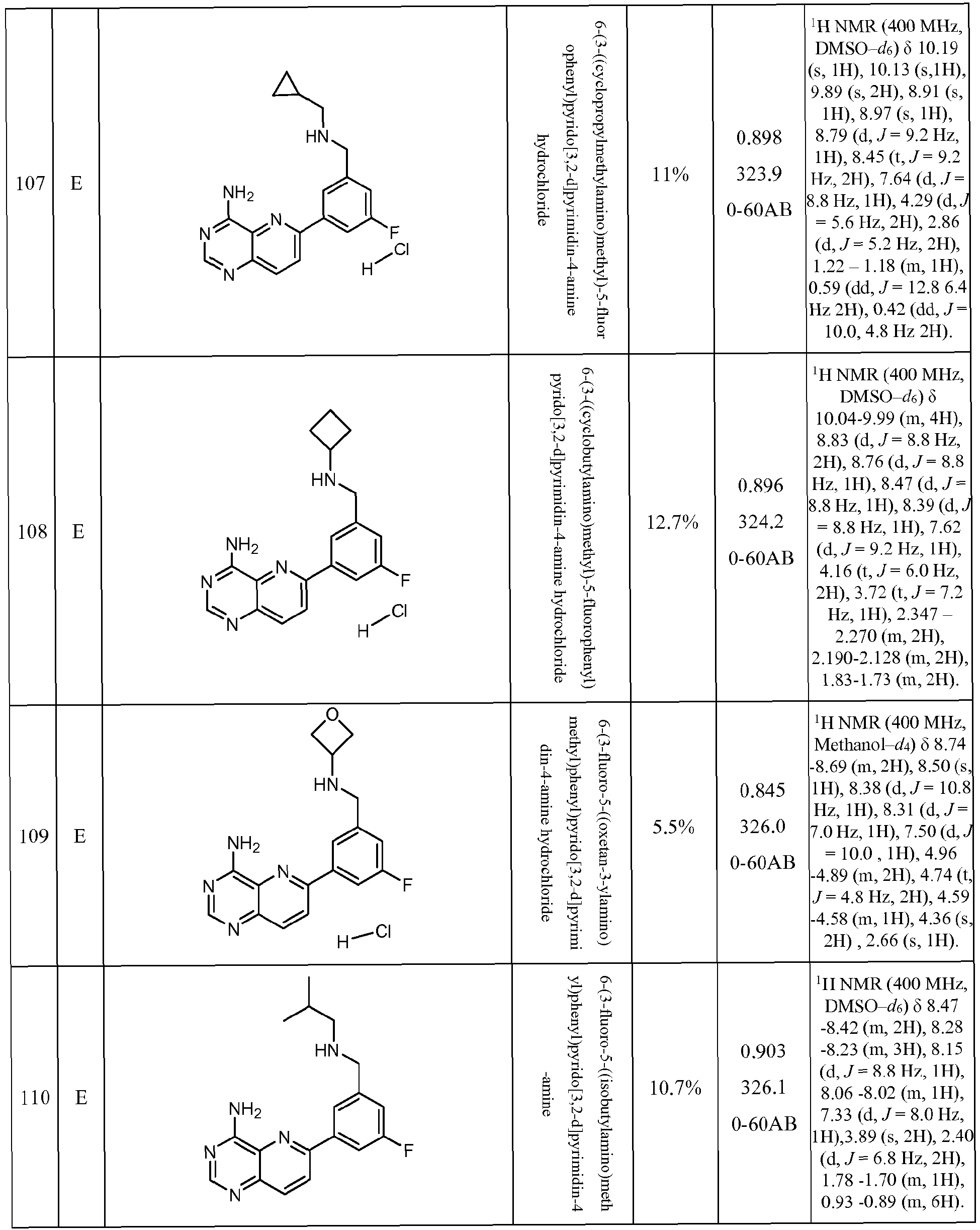


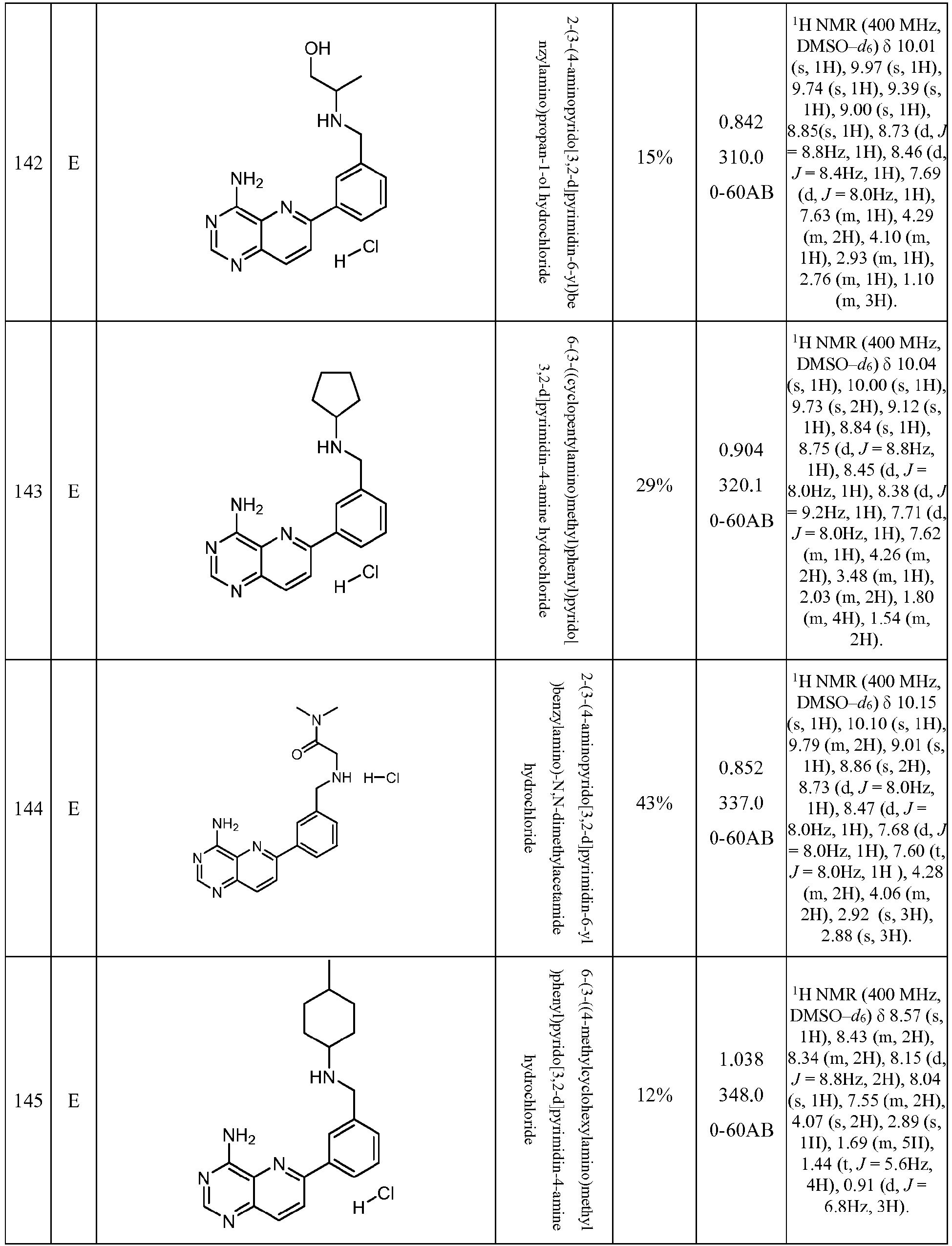


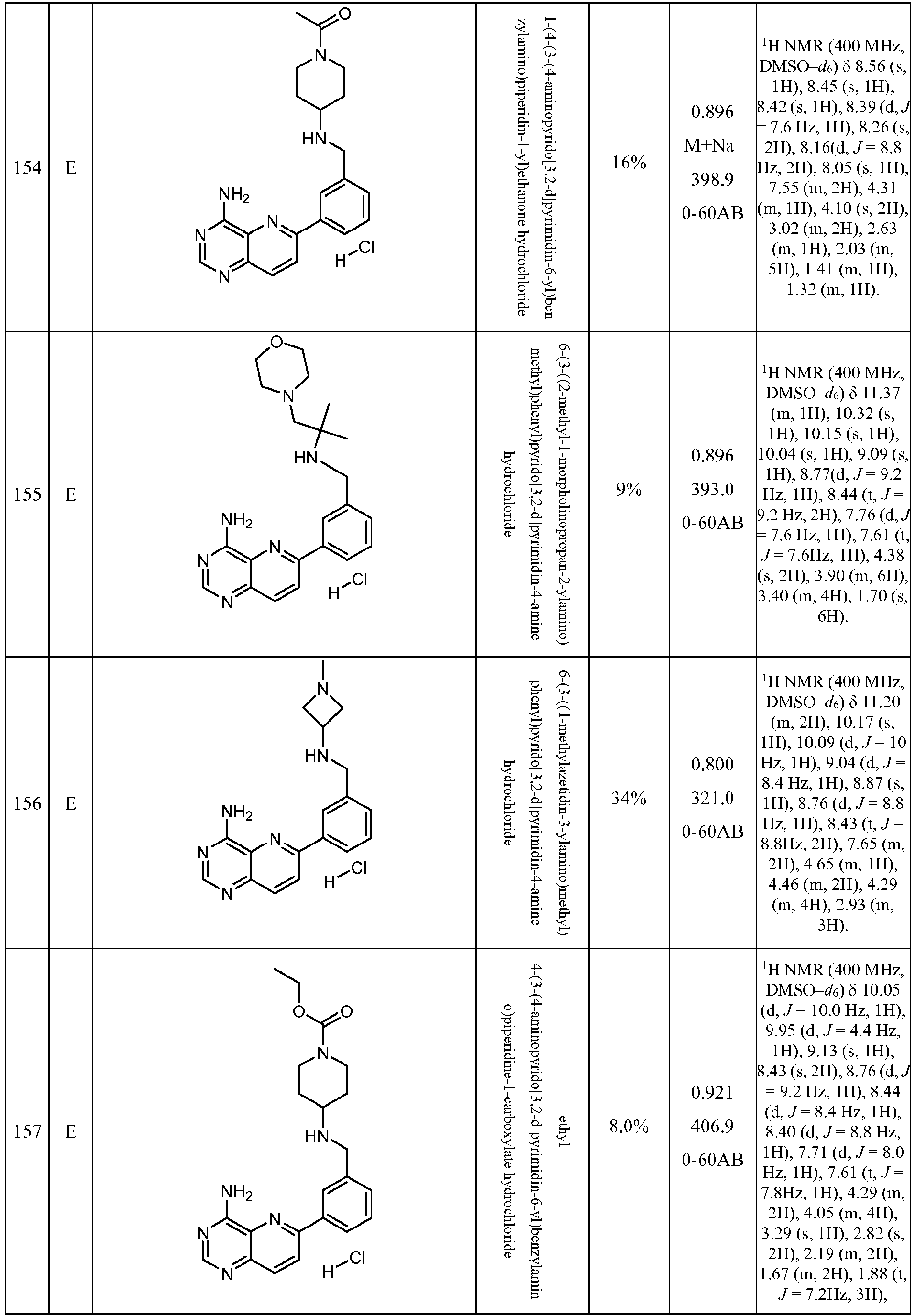
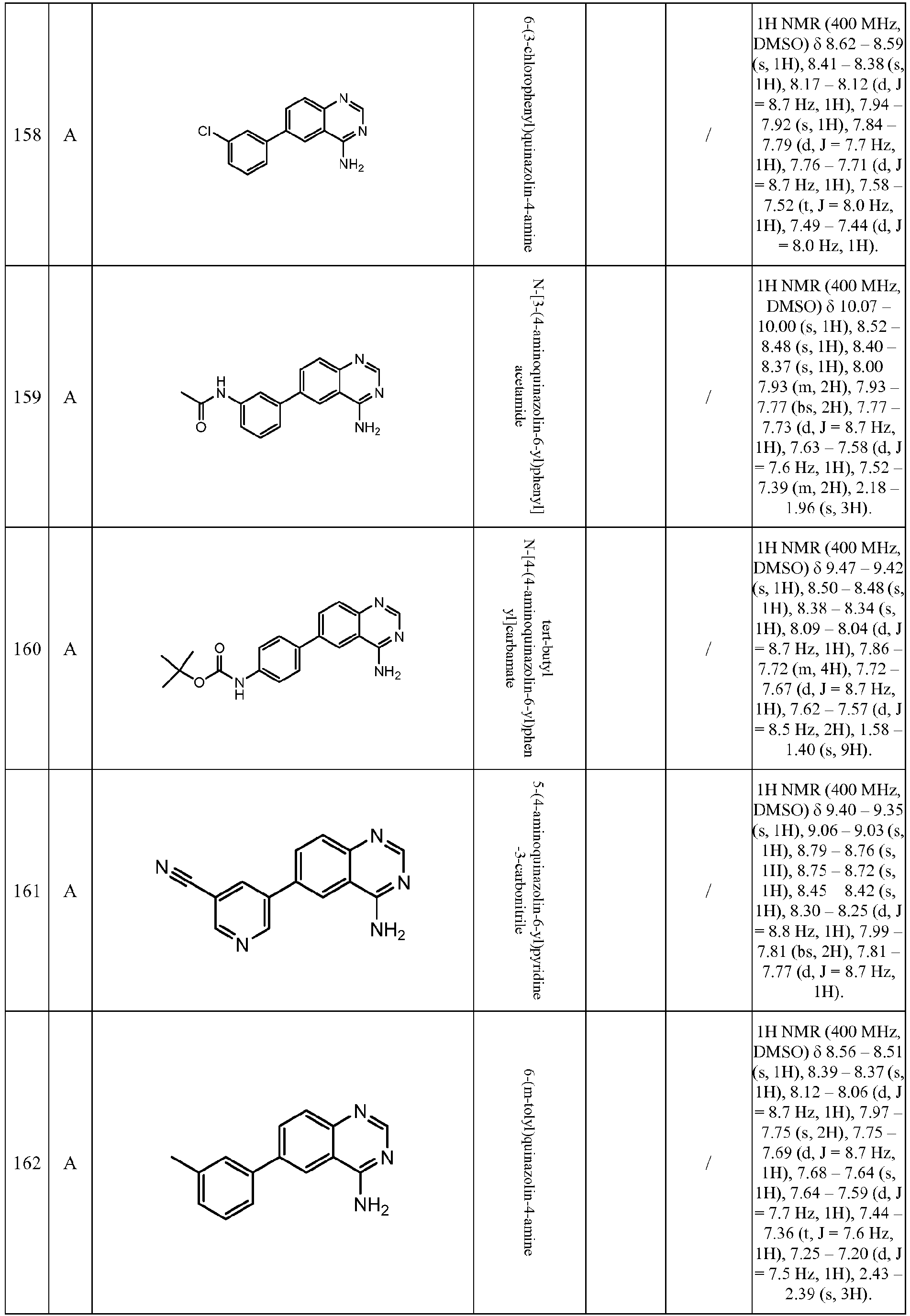


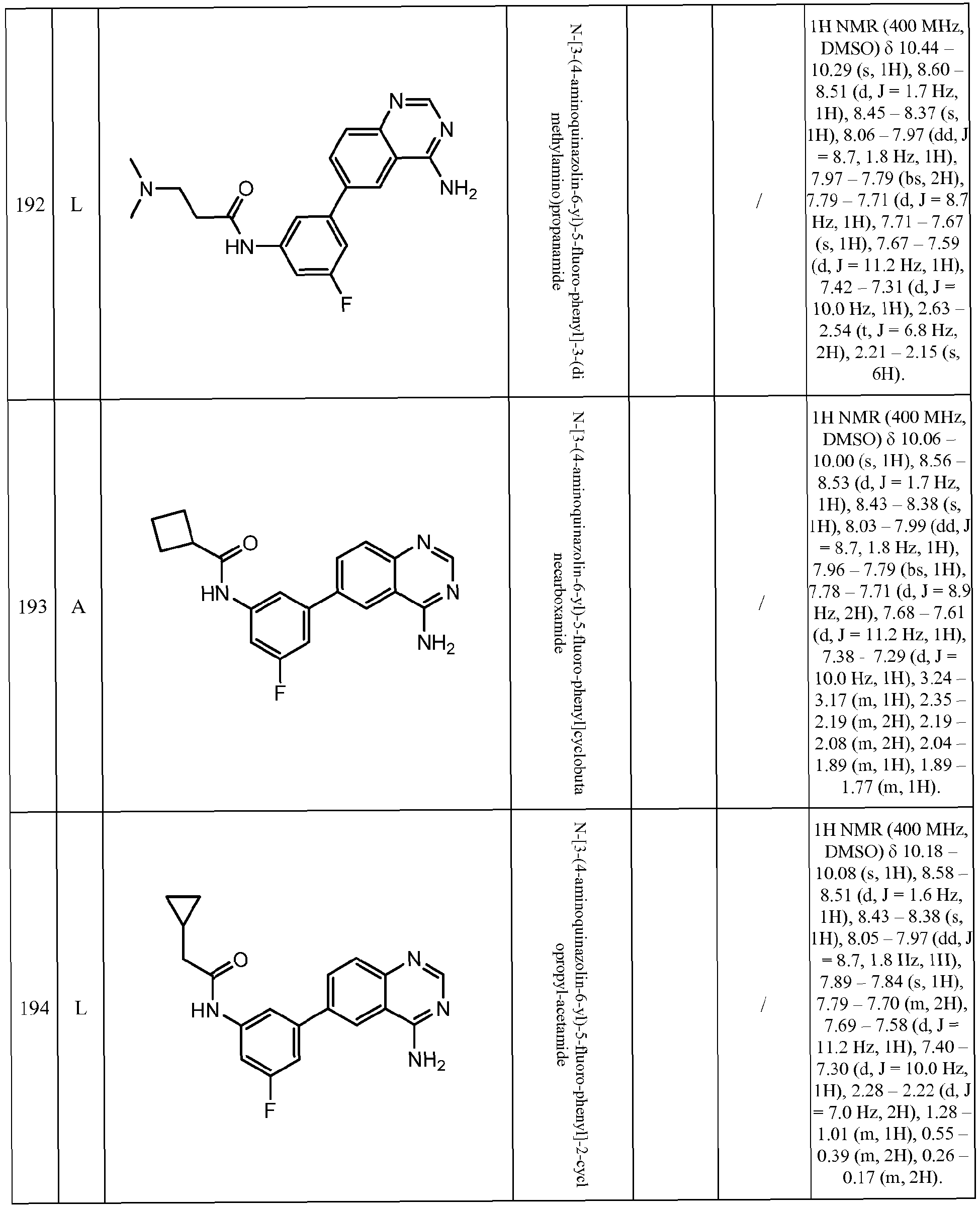


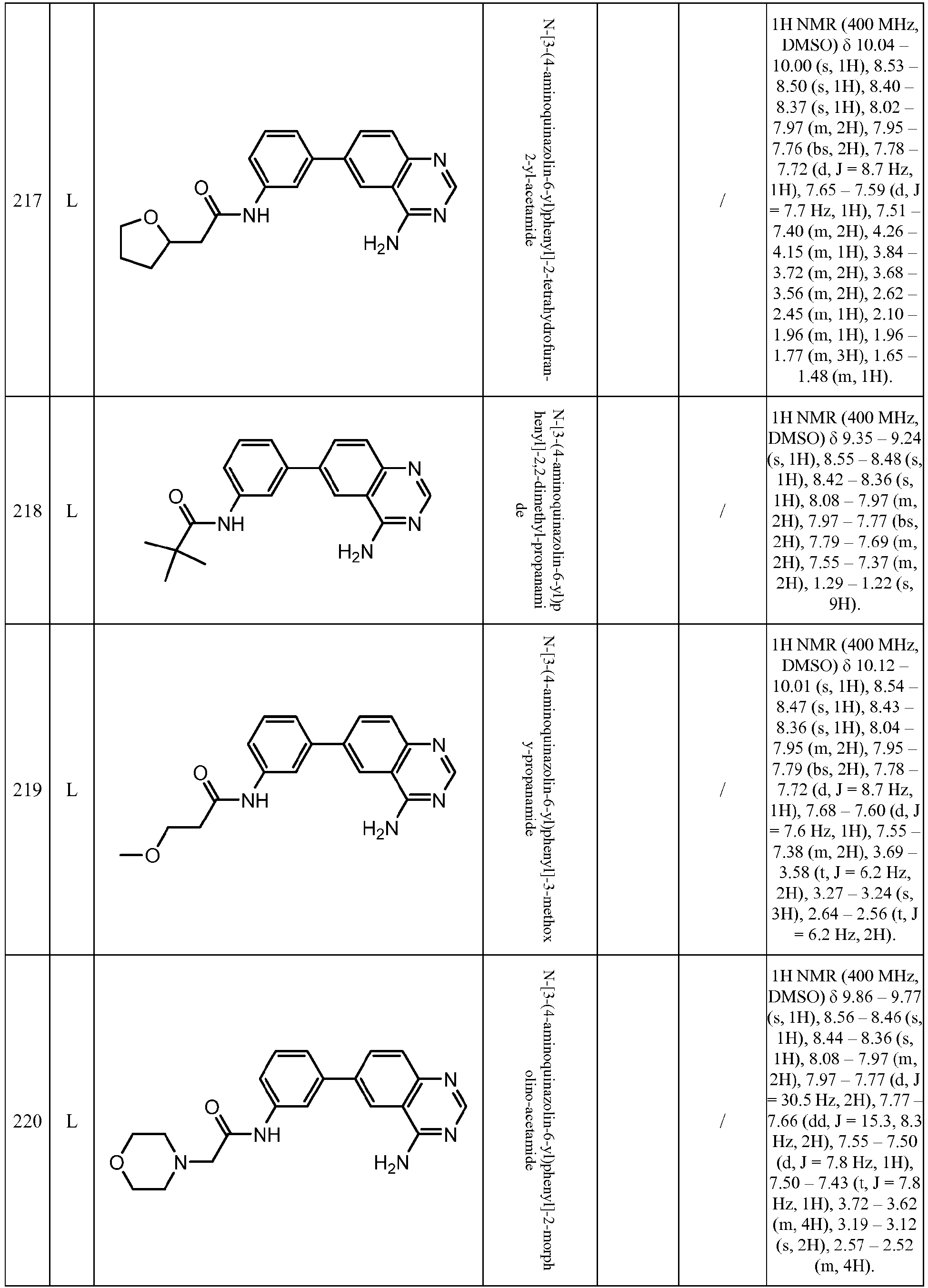


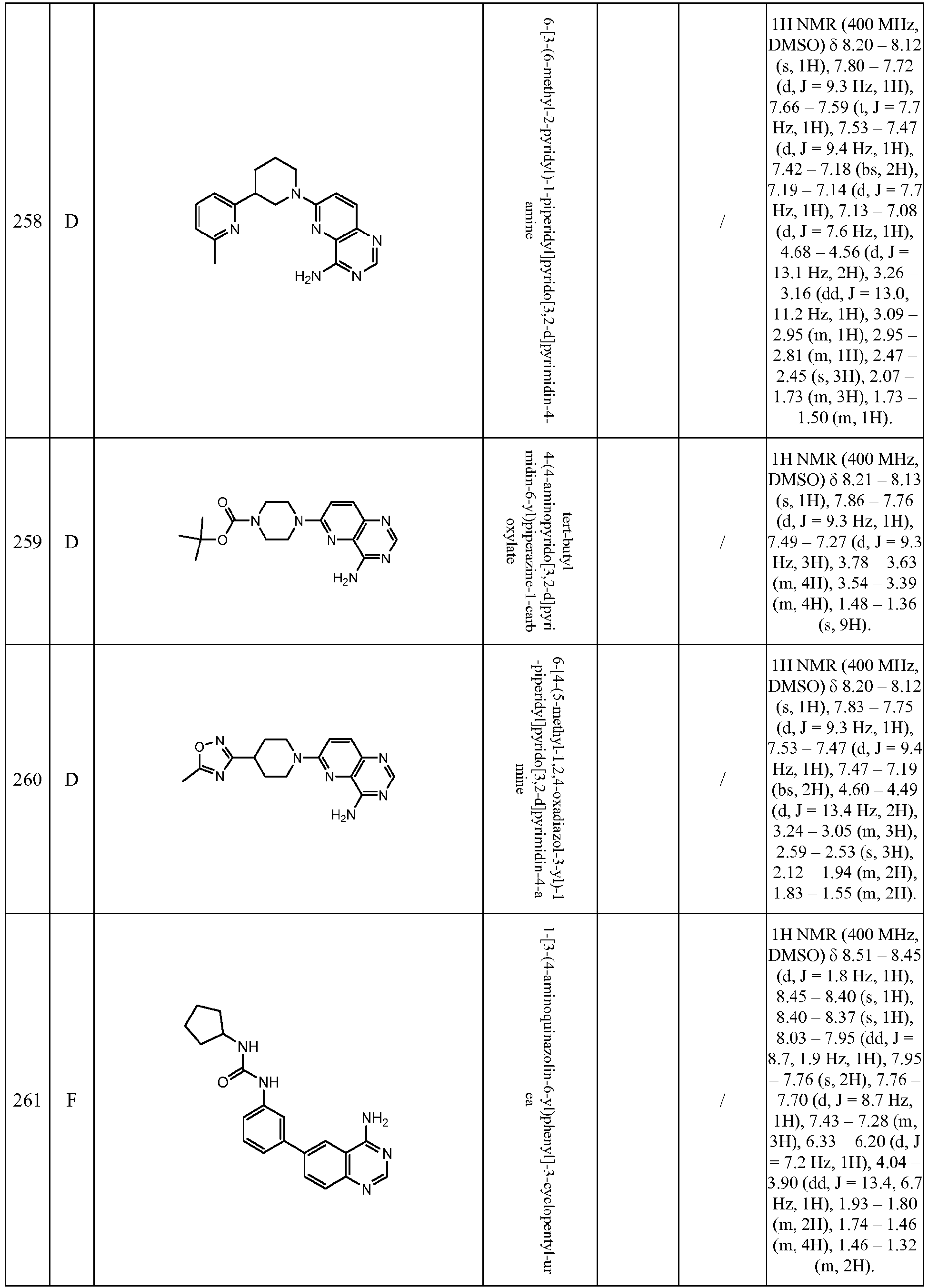


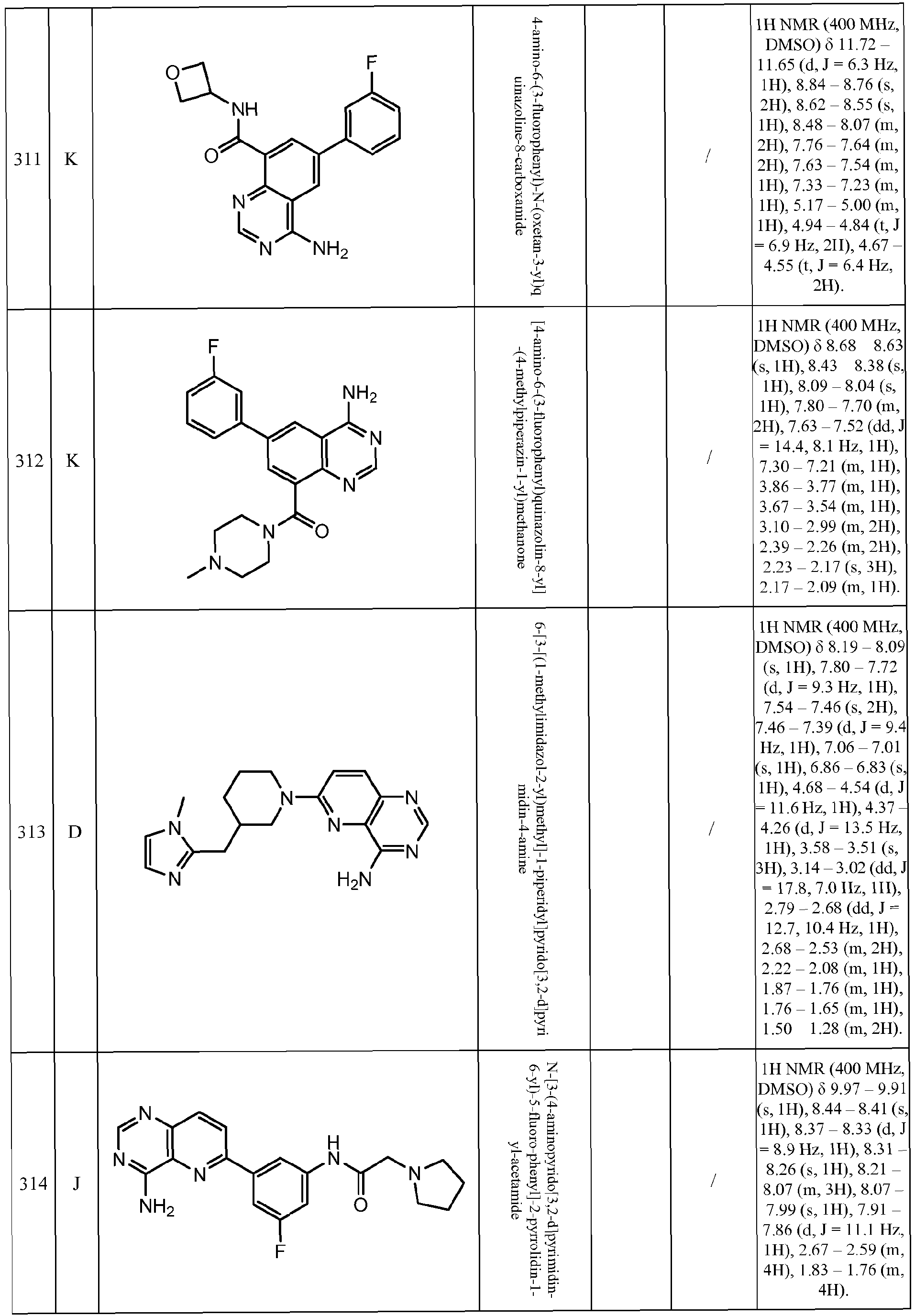


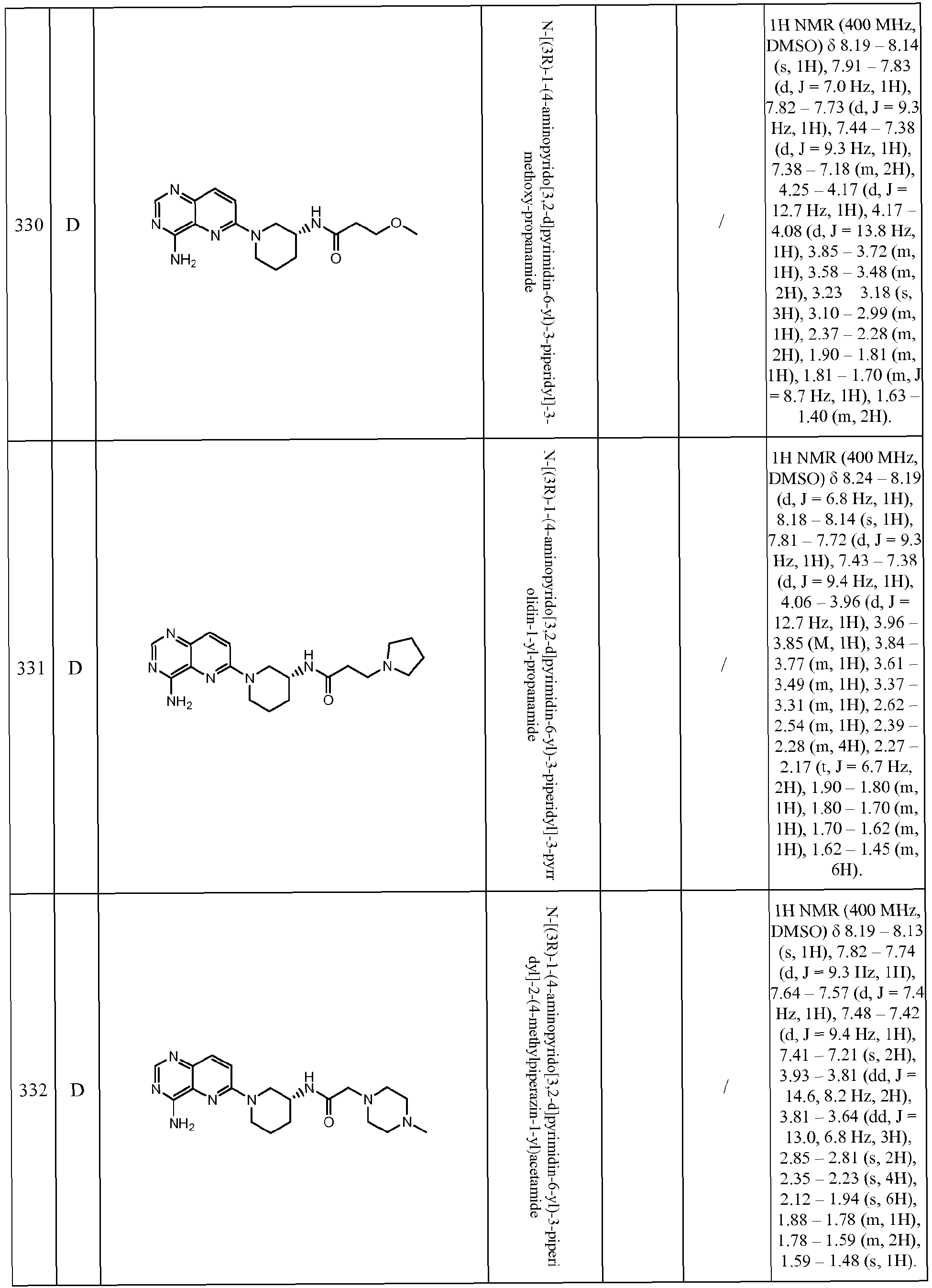


- The kinase activity of purified human MAP4K4 kinase domain was measured by monitoring the phosphorylation of a peptide substrate derived from moesin protein (Leu-Gly-Arg-Asp-Lys-Tyr-Lys-Thr-Leu-Arg-Gln-Ile-Arg-Gln) fluorescently labeled on the N-terminus with 5-carboxyfluorescein using the Caliper LabChip technology (Caliper Life Sciences, Hopkinton, MA). To determine inhibition constants (IC50), compounds were serially diluted in DMSO and added to 10 uL kinase reactions containing 1 nM purified MAP4K4 enzyme, 1 uM peptide substrate, 10 uM ATP, 10 mM MgCl2, 1 mM EGTA, 50 mM Hepes pH 7.2, 1 mM DTT, 0.01% Triton X-100, and 2% DMSO. Reactions were incubated at room temperature in Perkin Elmer Proxiplates for 45 minutes and stopped by the addition of 10 uL of an EDTA-containing solution (50 mM Hepes pH 7.2, 40 mM EDTA, 0.02% Triton X-100). The fraction of phosphorylated peptide was determined as a fraction of total peptide substrate using the Caliper Lab Chip 3000 according to the manufacturer's instructions. IC50 values were determined using the four-parameter non-linear fit model.
- The compounds of the present invention were tested for their capacity to inhibit a MAP4K4 activity and activation as described herein.
Compound MAP4K4 ICs0 (µM) 6-(3-chlorophenyl)quinazolin-4-amine 0.0927 N-[3-(4-ammoqumazolm-6-yl)phenyl]acetamide 0.783 tert-butyl N-[4-(4-aminoquinazolin-6-yl)phenyl]carbamate 0.503 5-(4-aminoquinazolin-6-yl)pyridine-3-carbonitrile 6.2 6-(m-tolyl)quinazolin-4-amine 0.415 6-(2-fluorophenyl)quinazolin-4-amine 0.341 3-(4-aminoquinazolin-6-yl)benzonitrile 0.258 4-(4-aminoquinazolin-6-yl)benzonitrile 2.6 6-(4-methoxyphenyl)quinazolin-4-amine 1.2 6-(3-methoxyphenyl)quinazolin-4-amine 0.591 6-(2-methoxyphenyl)quinazolin-4-amine 0.751 6-(3-chlorophenyl)-N-(4-pyridyl)quinazolin-4-amine 0.579 7-(3-chlorophenyl)quinazoline-2,4-diamine 10. 6-(3-chlorophenyl)isoquinolin-1-amine 3.3 6-(3-chloro-5-fluoro-phenyl)quinazolin-4-amine 0.226 6-(3-chlorophenyl)pyrido[3,2-d]pyrimidine-2,4-diamine 0.783 6-(3-chlorophenyl)-N-cyclopropyl-quinazolin-4-amine 0.646 6-(3-fluorophenyl)quinazolin-4-amine 0.0459 3-(4-aminoquinazolin-6-yl)-5-chloro-benzamide 1.3 6-(3-chlorophenyl)-N-isobutyl-quinazolin-4-amine 0.604 6-(3-chlorophenyl)-N-cyclobutyl-quinazolin-4-amine 0.67 6-(3-chlorophenyl)-N-(2,2-difluoroethyl)quinazolin-4-amine 0.404 6-(3-chlorophenyl)-N-ethyl-quinazolin-4-amine 0.337 6-(3-chlorophenyl)-N-methyl-quinazolin-4-amine 0.348 6-(3-chlorophenyl)pyrido[3,2-d]pyrimidin-4-amine 0.0197 6-(5-chloro-2-methyl-phenyl)quinazolin-4-amine 0.0905 6-(3,5-dichlorophenyl)quinazolin-4-amine 0.497 6-(3-fluorophenyl)pyrido[3,2-d]pyrimidin-4-amine 0.0118 3-(4-aminoquinazolin-6-yl)-5-fluoro-benzonitrile 0.413 6-(3,5-difluorophenyl)quinazolin-4-amine 0.19 6-(3-amino-5-fluoro-phenyl)quinazolin-4-amine 0.084 N-[3-(4-aminoquinazolin-6-yl)-5-fluoro-phenyl]acetamide 0.665 4-amino-6-(3-fluorophenyl)quinazoline-8-carbonitrile 1.0 N-[3-(4-aminoquinazolin-6-yl)-5-fluoro-phenyl]-2-tetrahydrofuran-2-yl-acetamide 0.844 N-[3-(4-aminoquinazolin-6-yl)-5-fluoro-phenyl]tetrahydropyran-4-carboxamide 0.42 1-acetyl-N-[3-(4-aminoquinazolin-6-yl)-5-fluoro-phenyl]azetidine-3-carboxamide 0.172 N-[3-(4-aminoquinazolin-6-yl)-5-fluoro-phenyl]-2-pyrrolidin-1-yl-acetamide 0.0586 N-[3-(4-aminoquinazolin-6-yl)-5-fluoro-phenyl]-3-(dimethylamino)propanamide 0.0884 N-[3-(4-aminoquinazolin-6-yl)-5-fluoro-phenyl]-2-morpholino-acetamide 0.273 N-[3-(4-aminoquinazolin-6-yl)-5-fluoro-phenyl]cyclobutanecarboxamide 0.424 N-[3-(4-aminoquinazolin-6-yl)-5-fluoro-phenyl]-2-cyclopropyl-acetamide 0.54 N-[3-(4-aminoquinazolin-6-yl)-5-fluoro-phenyl]tetrahydrofuran-2-carboxamide 1.5 N-[3-(4-aminoquinazolin-6-yl)-5-fluoro-phenyl]-3-methoxy-propanamide 0.432 N-[3-(4-aminoquinazolin-6-yl)-5-fluoro-phenyl]-4-methyl-morpholine-2-carboxami de 0.264 6-(3-methyl-1-piperidyl)pyrido[3,2-d]pyrimidin-4-amine 0.825 6-(3-methoxy-1-piperidyl)pyrido[3,2-d]pyrimidin-4-amine 1.3 6-[3-(trifluoromethyl)pyrrolidin-1-yl]pyrido[3,2-d]pyrimidin-4-amine 1.8 6-[3-(trifluoromethyl)-1-piperidyl]-1-pyrido[3,2-d]pyrimidin-4-amine 3.9 6-[3-(methoxymethyl)-1-piperidyl]pyrido[3,2-d]pyrimidin-4-amine 1.6 [1-(4-aminopyrido[3,2-d]pyrimidin-6-yl)-3-piperidyl]methanol 1.9 6-(4-pyridyl)quinazolin-4-amine 0.19 6-(2-methyl-4-pyridyl)quinazolin-4-amine 0.148 N-[3-(4-aminoquinazolin-6-yl)phenyl]-2-cyclopropyl-acetamide 0.653 N-[3-(4-aminoquinazolin-6-yl)phenyl]cyclobutanecarboxamide 0.676 N-[3-(4-aminoquinazolin-6-yl)phenyl]propanamide 0.982 N-[3-(4-aminoquinazolin-6-yl)phenyl]-2,2-difluoro-acetamide 0.433 N-[3-(4-aminoquinazolin-6-yl)phenyl]-3,3,3-trifluoro-propanamide 0.468 N-[3-(4-aminoquinazolin-6-yl)phenyl]tetrahydropyran-4-carboxamide 1.7 N-[3-(4-aminoquinazolin-6-yl)phenyl]-4-methyl-morpholine-2-carboxamide 0.777 N-[3-(4-aminoquinazolin-6-yl)phenyl]-2,2-difluoro-cyclopropanecarboxamide 0.981 N-[3-(4-aminoquinazolin-6-yl)phenyl]tetrahydrofuran-2-carboxamide 1.1 N-[3-(4-aminoquinazolin-6-yl)phenyl]tetrahydrofuran-3-carboxamide 0.438 N-[3-(4-aminoquinazolin-6-yl)phenyl]-2-pyrrolidin-1-yl-acetamide 0.216 N-[3-(4-aminoquinazolin-6-yl)phenyl]-2-tetrahydrofuran-2-yl-acetamide 1.7 N-[3-(4-aminoquinazolin-6-yl)phenyl]-2,2-dimethyl-propanamide 2.6 N-[3-(4-aminoquinazolin-6-yl)phenyl]-3-methoxy-propanamide 1.3 N-[3-(4-aminoquinazolin-6-yl)phenyl]-2-morpholino-acetamide 1.4 2-[3-(4-aminoquinazolin-6-yl)phenyl]-N-cyclopentyl-acetamide 1.3 N-[3-(4-aminoquinazolin-6-yl)phenyl]-2-pyrrolidin-1-yl-propanamide 0.899 2-[3-(4-aminoquinazolin-6-yl)phenyl]-N-cyclopentyl-N-methyl-acetamide 1.6 N-[3-(4-aminoquinazolin-6-yl)phenyl]-2-(dimethylamino)acetamide 0.263 N6-[2-(4-fluorophenyl)ethyl]pyrido[3,2-d]pyrimidine-4,6-diamine 0.0701 6-(1-piperidyl)pyrido[3,2-d]pyrimidin-4-amine 0.445 [1-(4-aminopyrido[3,2-d]pyrimidin-6-yl)-4-piperidyl]-pyrrolidin-1-yl-methanone 10.0 6-(3-morpholinopyrrolidin-1-yl)pyrido[3,2-d]pyrimidin-4-amine 10.0 6-[4-(2-methoxyethyl)piperazin-1-yl]pyrido[3,2-d]pyrimidin-4-amine 10.0 N-[1-(4-aminopyrido[3,2-d]pyrimidin-6-yl)pyrrolidin-3-yl]-N-methyl-acetamide 4.0 1-[4-(4-aminopyrido[3,2-d]pyrimidin-6-yl)piperazin-1-yl]ethanone 8.1 1-[4-(4-aminopyrido[3,2-d]pyrimidin-6-yl)piperazin-1-yl]-2-methyl-propan-1-one 10. 6-[3-(4-methyl-1H-pyrazol-3-yl)-1-piperidyl]pyrido[3,2-d]pyrimidin-4-amine 0.0121 tert-butyl 4-(4-aminopyrido[3,2-d]pyrimidin-6-yl)-2-methyl-piperazine-1-carboxylate 5.3 2-[1-(4-aminopyrido[3,2-d]pyrimidin-6-yl)-4-piperidyl]-N-methyl-acetamide 10.0 6-[4-1-piperidyl]pyrido[3,2-d]pyrimidin-4-amine 4.1 6-[4-(6-methyl-2-pyridyl)-1-piperidyl]pyrido[3,2-d]pyrimidin-4-amine 8.5 6-(3-morpholino-1-piperidyl)pyrido[3,2-d]pyrimidin-4-amine 10.0 6-[3-(5-methyl-2-pyridyl)-1-piperidyl]pyrido[3,2-d]pyrimidin-4-amine 1.5 6-[3-[(1-methylimidazol-2-yl)methyl]pyrrolidin-1-yl]pyrido[3,2-d]pyrimidin-4-amine 0.945 6-[3-(5-methyl-1,2,4-oxadiazol-3-yl)-1-piperidyl]pyrido[3,2-d]pyrimidin-4-amine 10.0 6- [4-(3-methylimidazol-4-yl)-1-piperidyl]pyrido[3,2-d]pyrimidin-4-amine 10.0 6-(3-amino-5-fluoro-phenyl)pyrido[3,2-d]pyrimidin-4-amine 0.0169 6-[3-(4-pyridylmethyl)pyrrolidin-1-yl]pyrido[3,2-d]pyrimidin-4-amine 1.8 6-[3-(3-methylimidazol-4-yl)pyrrolidin-1-yl]pyrido[3,2-d]pyrimidin-4-amine 3.1 6-[3-(3-methyl-1,2,4-oxadiazol-5-yl)-1-piperidyl]pyrido[3,2-d]pyrimidin-4-amine 8.4 1-(4-aminopyrido[3,2-d]pyrimidin-6-yl)-N-methyl-pyrrolidine-3-carboxamide 4.0 6-[3-(2-pyridylmethyl)pyrrolidin-1-yl]pyrido[3,2-d]pyrimidin-4-amine 0.0656 6-[3-(3-methyl-1,2,4-oxadiazol-5-yl)pyrrolidin-yl]pyrido[3,2-d]pyrimidin-4-amin e 4.6 6-[3-(3-pyridylmethyl)pyrrolidin-1-yl]pyrido[3,2-d]pyrimidin-4-amine 0.934 6-(4-methylpiperazin-1-yl)pyrido[3,2-d]pyrimidin-4-amine 10. 6-(4-methoxy-1-piperidyl)pyrido[3,2-d]pyrimidin-4-amine 7.9 6-[3-(dimethylamino)pyrrolidin-1-yl]pyrido[3,2-d]pyrimidin-4-amine 10.0 ethyl 4-[(4-aminopyrido[3,2-d]pyrimidin-6-yl)amino]piperidine-1-carboxylate 10.0 6-(3,4,6,7,8,8a-hexahydro-1H-pyrrolo[1,2-a]pyrazin-2-yl)pyrido[3,2-d]pyrimidin-4-amine 10.0 N6-cyclopentylpyrido[3,2-d]pyrimidine-4,6-diamine 1.2 4-(4-aminopyrido[3,2-d]pyrimidin-6-yl)-N-cyclopentyl-morpholine-2-carboxamide 10.0 6-[3-(6-methyl-2-pyridyl)-1-piperidyl]pyrido[3,2-d]pyrimidin-4-amine 0.145 tert-butyl 4-(4-aminopyrido[3,2-d]pyrimidin-6-yl)piperazine-1-carboxylate 10.0 6-[4-(5-methyl-1,2,4-oxadiazol-3-yl)-1-piperidyl]pyrido[3,2-d]pyrimidin-4-amine 10.0 1-[3-(4-aminoquinazolin-6-yl)phenyl]-3-cyclopentyl-urea 0.136 N-[3-(4-aminoquinazolin-6-yl)phenyl]-2-(2-oxopyrrolidin-1-yl)acetamide 0.328 N-[3-(4-aminopyrido[3,2-d]pyrimidin-6-yl)-5-fluoro-phenyl]-2-cyclopentyl-acetami de 0.107 2-[3-(4-aminoquinazolin-6-yl)phenyl]ethanol 0.38 3-(4-aminoquinazolin-6-yl)phenol 0.0147 6-(3-amino-4-fluoro-phenyl)quinazolin-4-amine 0.228 6-(3-ethoxyphenyl)quinazolin-4-amine 0.157 6-phenylquinazolin-4-amine 0.0812 6-(5-amino-2-fluoro-phenyl)quinazolin-4-amine 0.174 N6-benzylpyrido[3,2-d]pyrimidine-4,6-diamine 0.161 6-[3-(4-methyl-1H-pyrazol-3-yl)-1-piperidyl]pyrido[3,2-d]pyrimidin-4-amine 1.0 6-[3-(4-methyl-1H-pyrazol-3-yl)-1-piperidyl]pyrido[3,2-d]pyrimidin-4-amine 0.0062 6-[3-(4,6-dimethylpyrimidin-2-yl)-1-piperidyl]pyrido[3,2-d]pyrimidin-4-amine 10.0 6-[1-(4-aminopyrido[3,2-d]pyrimidin-6-yl)-3-piperidyl]-N,N-dimethyl-pyridine-2-c arboxamide 5.4 6-[3-[(5-methyl-2-pyridyl)methyl]pyrrolidin-1-yl]pyrido[3,2-d]pyrimidin-4-amine 1.3 6-[3-(pyrimidin-2-ylmethyl)pyrrolidin-1-yl]pyrido[3,2-d]pyrimidin-4-amine 0.46 6-[3-[6-(dimethylamino)-2-pyridyl]-1-piperidyl]pyrido[3,2-d]pyrimidin-4-amine 0.29 6-[3-(pyrimidin-2-ylmethyl)-1-piperidyl]pyrido[3,2-d]pyrimidin-4-amine 2.9 6-[3-(4-methylsulfonyl-1H-pyrazol-5-yl)-1-piperidyl]pyrido[3,2-d]pyrimidin-4-ami ne 9.6 6-[3-[6-(dimethylamino)pyrazin-2-yl]-1-piperidyl]pyrido[3,2-d]pyrimidin-4-amine 4.6 6-[3-[[6-(methylamino)pyrimidin-4-yl]methyl]pyrrolidin-1-yl]pyrido[3,2-d]pyrimid in-4-amine 3.5 6-[3-(2-methylpyrimidin-4-yl)pyrrolidin-1-yl]pyrido[3,2-d]pyrimidin-4-amine 10.0 6-[3-[6-(dimethylamino)-2-methyl-pyrimidin-4-yl]pyrrolidin-1-yl]pyrido[3,2-d]pyrimidin-4-amine 10.0 6-[3-[[6-(dimethylamino)pyrimidin-4-yl]methyl]-1-piperidyl]pyrido[3,2-d]pyrimidin-4-amine 10.0 6-[3-(1H-pyrazol-3-yl)pyrrolidin-1-yl]pyrido[3,2-d]pyrimidin-4-amine 1.3 6-[3-[[6-(dimethylamino)pyrimidin-4-yl]methyl]pyrrolidin-1-yl]pyrido[3,2-d]pyrim idin-4-amine 6.2 6-[3-[2-(dimethylamino)pyrimidin-4-yl]-1-piperidyl]pyrido[3,2-d]pyrimidin-4-amin e 0.93 6-[1-(4-aminopyrido[3,2-d]pyrimidin-6-yl)-3-piperidyl]pyridine-2-carboxamide 0.803 6-[3-[3-(dimethylamino)pyrazin-2-yl]-1-piperidyl]pyrido[3,2-d]pyrimidin-4-amine 4.6 6-[3-(2-methylpyrimidin-4-yl)-1-piperidyl]pyrido[3,2-d]pyrimidin-4-amine 1.9 6-(3-pyrimidin-4-yl-1-piperidyl)pyrido[3,2-d]pyrimidin-4-amine 0.59 6-[3-[5-(trifluoromethyl)-1H-pyrazol-3-yl]-1-piperidyl]pyrido[3,2-d]pyrimidm-4-a mine 2.2 6-(3-pyrazin-2-yl-1-piperidyl)pyrido[3,2-d]pyrimidin-4-amine 0.872 6-[3-(pyrazin-2-ylmethyl)-1-piperidyl]pyrido[3,2-d]pyrimidin-4-amine 4.9 6-[3-[5-(dimethylamino)-2-pyridyl]-1-piperidyl]pyrido[3,2-d]pyrimidin-4-amine 10. 6-[3-(4-methylpyrimidin-2-yl)-1-piperidyl]pyrido[3,2-d]pyrimidin-4-amine 4.2 6-[3-(2-pyridyl)-1-piperidyl]pyrido[3,2-d]pyrimidin-4-amine 0.0764 6-[3-(4-methyl-1,2,4-triazol-3-yl)-1-piperidyl]pyrido[3,2-d]pyrimidin-4-amine 3.2 6-[3-[5-(methoxymethyl)-1,2,4-oxadiazol-3-yl]-1-piperidyl]pyrido[3,2-d]pyrimidin-4-amine 5.5 6-[1-(4-aminopyrido[3,2-d]pyrimidin-6-yl)-3-piperidyl]-N-methyl-pyridine-2-carbo xamide 3.8 6-[3-(5-methylsulfonylpyrimidin-4-yl)-1-piperidyl]pyrido[3,2-d]pyrimidin-4-amine 10.0 6-[3-(4-pyridyl)pyrrolidin-1-yl]pyrido[3,2-d]pyrimidin-4-amine 4.0 4-amino-6-(3-fluorophenyl)-N-methyl-N-(1-methylpyrrolidin-3-yl)quinazoline-8-ca rboxamide 6.5 4-amino-6-(3-fluorophenyl)-N-(2-methoxyethyl)-N-methyl-quinazoline-8-carboxa mide 10.0 4-amino-6-(3-fluorophenyl)-N-(2-pyrrolidin-1-ylethyl)quinazoline-8-carboxamide 8.8 N-(2-acetamidoethyl)-4-amino-6-(3-fluorophenyl)quinazoline-8-carboxamide 6.3 6-(2-fluoro-4-pyridyl)pyrido[3,2-d]pyrimidin-4-amine 0.0115 6-(2-ethyl-4-pyridyl)pyrido[3,2-d]pyrimidin-4-amine 0.204 6-(2-methyl-4-pyridyl)pyrido[3,2-d]pyrimidin-4-amine 0.0505 [4-amino-6-(3-fluorophenyl)quinazolin-8-yl]-[3-(dimethylamino)pyrrolidin-1-yl]me thanone 5.4 [4-amino-6-(3-fluorophenyl)quinazolin-8-yl]-[4-(dimethylamino)-1-piperidyl]metha none 3.6 [4-amino-6-(3-fluorophenyl)quinazolin-8-yl]-(3-hydroxyazetidin-1-yl)methanone 4.1 4-amino-6-(3-fluorophenyl)-N-(oxetan-3-yl)quinazoline-8-carboxamide 0.776 [4-amino-6-(3-fluorophenyl)quinazolin-8-yl]-(4-methylpiperazin-1-yl)methanone 1.6 6-[3-[(1-methylimidazol-2-yl)methyl]-1-piperidyl]pyrido[3,2-d]pyrimidin-4-amine 9.3 N-[3-(4-aminopyrido[3,2-d]pyrimidin-6-yl)-5-fluoro-phenyl]-2-pyrrolidin-1-yl-acetamide 0.00725 N-[6-(3-amino-5-fluoro-phenyl)pyrido[3,2-d]pyrimidin-4-yl]-2-pyrrolidin-1-yl-acet amide 0.232 3-(4-aminopyrido[3,2-d]pyrimidin-6-yl)phenol 0.011 6-[6-(1-methyl-3-piperidyl)-3-pyridyl]quinazolin-4-amine 4.4 5-[1-(4-aminopyrido[3,2-d]pyrimidin-6-yl)-3-piperidyl]-2-methyl-pyrazol-3-ol 10.0 6-[2-(2-pyrrolidin-1-ylethylamino)-4-pyridyl]quinazolin-4-amine 3.3 6-[3-(2-pyrrolidin-1-ylethoxy)phenyl]pyrido[3,2-d]pyrimidin-4-amine 0.226 6-[3-(1H-pyrazol-3-yl)-1-piperidyl]pyrido [3,2-d]pyrimidin-4-amine 0.515 6-[2-(1H-pyrazol-3-yl)morpholin-4-yl]pyrido[3,2-d]pyrimidin-4-amine 3.0 6-[3-(1,4-dimethylpyrazol-3-yl)-1-piperidyl]pyrido[3,2-d]pyrimidin-4-amine 5.0 6-[3-(2,4-dimethylpyrazol-3-yl)-1-piperidyl]pyrido[3,2-d]pyrimidin-4-amine 0.0939 6-[3-(1,4-dimethylpyrazol-3-yl)-1-piperidyl]pyrido[3,2-d]pyrimidin-4-amine 0.0321 6-[3-(2,4-dimethylpyrazol-3-yl)-1-piperidyl]pyrido[3,2-d]pyrimidin-4-amine 1.8 6-[3-(1H-imidazol-2-yl)-1-piperidyl]pyrido[3,2-d]pyrimidin-4-amine 8.2 N-[4-(4-aminoquinazolin-6-yl)-2-pyridyl]-N',N'-dimethyl-ethane-1,2-diamine 1.2 1-[4-[[3-(4-aminopyrido[3,2-d]pyrimidin-6-yl)-5-fluoro-phenyl]methyl]-1,4-diazep an-1-yl]ethanone 0.476 1-[4-[[3-(4-aminopyrido[3,2-d]pyrimidin-6-yl)-5-fluoro-phenyl]methyl]piperazin-1-yl]ethanone 0.553 1-[[3-(4-aminopyrido[3,2-d]pyrimidin-6-yl)-5-fluoro-phenyl]methyl]piperidin-4-ol 0.634 [1-[[3-(4-aminopyrido[3,2-d]pyrimidin-6-yl)-5-fluoro-phenyl]methyl]-4-piperidyl] methanol 1.3 2-[4-[[3-(4-aminopyrido[3,2-d]pyrimidin-6-yl)-5-fluoro-phenyl]methyl]piperazin-1-yl]ethanol 0.347 6-[3-fluoro-5-[[4-(2-methoxyethyl)piperazin-1-yl]methyl]phenyl]pyrido[3,2-d]pyri midin-4-amine 0.416 4-[[3-(4-aminopyrido[3,2-d]pyrimidin-6-yl)-5-fluoro-phenyl]methyl]-N,N-dimethyl -piperazine-1-carboxamide 0.527 1-[[3-(4-aminopyrido[3,2-d]pyrimidin-6-yl)-5-fluoro-phenyl]methyl]piperidine-4-c arboxamide 0.908 6-[3-[(3,3-difluoroazetidin-1-yl)methyl]-5-fluoro-phenyl]pyrido[3,2-d]pyrimidin-4-amine 0.212 4-[[3-(4-aminopyrido[3,2-d]pyrimidin-6-yl)-5-fluoro-phenyl]methyl]-N,N-dimethyl -piperazine-1-sulfonamide 0.507 6-[3-fluoro-5-(1,4-oxazepan-4-ylmethyl)phenyl]pyrido[3,2-d]pyrimidin-4-amine 0.645 2-[4-[[3-(4-aminopyrido[3,2-d]pyrimidin-6-yl)-5-fluoro-phenyl]methyl]piperazin-1-yl]-N,N-dimethyl-acetamide 0.585 1-[4-[[3-(4-aminopyrido[3,2-d]pyrimidin-6-y1)-5-fluoro-phenyl]methyl]piperazin-1-yl]-2-methyl-propan-1-one 0.513 6-[3-fluoro-5-[(4-methylsulfonylpiperazin-1-yl)methyl]phenyl]pyrido[3,2-d]pyrimi din-4-amine 0.49 6-[3-[[(1,1-dioxothiolan-3-yl)-methyl-amino]methyl]-5-fluoro-phenyl]pyrido[3,2-d] pyrimidin-4-amine 0.325 2-[[3-(4-aminopyrido[3,2-d]pyrimidin-6-yl)-5-fluoro-phenyl]methyl-methyl-amino] -1 -morpholino-ethanone 0.705 N-[1-[[3-(4-aminopyrido[3,2-d]pyrimidin-6-yl)-5-fluoro-phenyl]methyl]pyrrolidin-3-yl]-N-methyl-acetamide 0.999 [1-[[3-(4-aminopyrido[3,2-d]pyrimidin-6-yl)-5-fluoro-phenyl]methyl]azetidin-3-yl]-(4-methylpiperazin-1-yl)methanone 0.264 6-[3-[[4-(dimethylamino)-1-piperidyl]methyl]-5-fluoro-phenyl]pyrido[3,2-d]pyrimidin-4-amine 0.43 6-[3-fluoro-5-[(4-methoxy-1-piperidyl)methyl]phenyl]pyrido[3,2-d]pyrimidin-4-amine 1.1 6-[3-fluoro-5-(pyrrolidin-1-ylmethyl)phenyl]pyrido[3,2-d]pyrimidin-4-amine 0.554 6-[3-fluoro-5-[(2-methylpyrrolidin-1-yl)methyl]phenyl]pyrido[3,2-d]pyrimidin-4-amine 2.3 6-[3-fluoro-5-[[methyl-(1-methylpyrrolidin-3-yl)amino]methyl]phenyl]pyrido[3,2-d]pyrimidin-4-amine 0.271 2-[[3-(4-aminopyrido[3,2-d]pyrimidin-6-yl)-5-fluoro-phenyl]methyl-methyl-amino]-N,N-dimethyl-acetamide 1.5 6-[3-fluoro-5-[[2-methoxyethyl(methyl)amino]methyl]phenyl]pyrido[3,2-d]pyrimid in-4-amine 0.521 4-[[3-(4-aminopyrido[3,2-d]pyrimidin-6-yl)-5-fluoro-phenyl]methyl]-N,1-dimethyl-piperazine-2-carboxamide 0.975 1-[[3-(4-aminopyrido[3,2-d]pyrimidin-6-yl)-5-fluoro-phenyl]methyl]azetidine-3-carboxamide 0.186 1-[[3-(4-aminopyrido[3,2-d]pyrimidin-6-yl)-5-fluoro-phenyl]methyl]-N-methyl-pyrrolidine-3-carboxamide 0.731 1-[[3-(4-aminopyrido[3,2-d]pyrimidin-6-yl)-5-fluoro-phenyl]methyl]-N,N-dimethyl-azetidine- 3-carboxamide 0.461 4-[[3-(4-aminopyrido[3,2-d]pyrimidin-6-yl)-5-fluoro-phenyl]methyl]-1-methyl-piperazine-2-carboxamide 0.36 1-[[3-(4-aminopyrido[3,2-d]pyrimidin-6-yl)-5-fluoro-phenyl]methyl]-N-methyl-azetidine-3-carboxamide 0.226 2-[1-[[3-(4-aminopyrido[3,2-d]pyrimidin-6-yl)-5-fluoro-phenyl]methyl]-4-piperidyl]-N,N-dimethyl-acetamide 0.508 4-[[3-(4-aminopyrido[3,2-d]pyrimidin-6-yl)-5-fluoro-phenyl]methyl]-N-methyl-mor pholine-2-carboxamide 0.952 [1-[[3-(4-aminopyrido[3,2-d]pyrimidin-6-yl)-5-fluoro-phenyl]methyl]-3-piperidyl] methanol 0.947 6-[3-fluoro-5-[(4-methylpiperazin-1-yl)methyl]phenyl]pyrido[3,2-d]pyrimidin-4-amine 0.374 1-[[3-(4-aminopyrido[3,2-d]pyrimidin-6-yl)-5-fluoro-phenyl]methyl]piperidin-3-ol 0.711 (3R)-1-[[3-(4-aminopyrido[3,2-d]pyrimidin-6-yl)-5-fluoro-phenyl]methyl]piperidin-3-ol 0.571 6-[3-fluoro-5-[[methyl-(1-methyl-4-piperidyl)amino]methyl]phenyl]pyrido[3,2-d]py rimidin-4-amine 0.449 6-[3-[[(3S)-3-(dimethylamino)pyrrolidin-1-yl]methyl]-5-fluoro-phenyl]pyrido[3,2-d]pyrimidin-4-amine 0.598 6-[3-[[3-(dimethylamino)pyrrolidin-1-yl]methyl]-5-fluoro-phenyl]pyrido[3,2-d]pyrimidin-4-amine 0.547 6-[3-fluoro-5-[(3-morpholinopyrrolidin-1-yl)methyl]phenyl]pyrido[3,2-d]pyrimidin -4-amine 1.6 tert-butyl N-[(3R)-1-(4-aminopyrido[3,2-d]pyrimidin-6-yl)-3-piperidyl]carbamate 10. tert-butyl N-[(3S)-1-(4-ammopyrido[3,2-d]pyrimidm-6-yl)-3-piperidyl]carbamate 5.6 6-[(3S)-3-amino-1-piperidyl]pyrido[3,2-d]pyrimidin-4-amine 10.0 6-[(3R)-3-amino-1-piperidyl]pyrido[3,2-d]pyrimidin-4-amine 10.0 N-[(3S)-1-(4-aminopyrido[3,2-d]pyrimidin-6-yl)-3-piperidyl]-3-methoxy-propanamide 9.3 N-[(3S)-1-(4-aminopyrido[3,2-d]pyrimidin-6-yl)-3-piperidyl]-3-pyrrolidin-1-yl-propanamide 1.9 N-[(3S)-1-(4-aminopyrido[3,2-d]pyrimidin-6-yl)-3-piperidyl]-2-(4-methylpiperazin-1-yl)acetamide 10.0 N-[(3R)-1-(4-aminopyrido[3,2-d]pyrimidin-6-yl)-3-piperidyl]-3-methoxy-propanamide 10.0 N-[(3R)-1-(4-aminopyrido[3,2-d]pyrimidin-6-yl)-3-piperidyl]-3-pyrrolidin-1-yl-propanamide 10.0 N-[(3R)-1-(4-aminopyrido[3,2-d]pyrimidin-6-yl)-3-piperidyl]-2-(4-methylpiperazin -1-yl)acetamide 10.0 4-(4-aminopyrido[3,2-d]pyrimidin-6-yl)-1H-pyridin-2-one 3.1 N6-[(2-fluorophenyl)methyl]pyrido[3,2-d]pyrimidine-4,6-diamine 0.253 N6-(1-phenylethyl)pyrido[3,2-d]pyrimidine-4,6-diamme 2.7 6-[2-(trifluoromethyl)-4-pyridyl]pyrido[3,2-d]pyrimidin-4-amine 2.2 6-(2-methylphenoxy)pyrido[3,2-d]pyrimidin-4-amine 2.2 6-(3-methylphenoxy)pyrido[3,2-d]pyrimidin-4-amine 0.818 6-(4-pyridyloxy)pyrido[3,2-d]pyrimidin-4-amine 2.9 6-(4-methylphenoxy)pyrido[3,2-d]pyrimidin-4-amine 0.746 6-(3-fluorophenoxy)pyrido[3,2-d]pyrimidin-4-amine 1.3 2-(4-aminopyrido[3,2-d]pyrimidin-6-yl)oxybenzonitrile 3.1 6-[(6-methyl-3-pyridyl)oxy]pyridor[3,2-d]pyrimidin-4-amine 1.0 6-[(2-methyl-3-pyridyl)oxy]pyrido[3,2-d]pyrimidin-4-amine 5.2 6-phenoxypyrido[3,2-d]pyrimidin-4-amine 1.6 6-(3-pyridyloxy)pyrido[3,2-d]pyrimidin-4-amine 1.2 4-(4-aminopyrido[3,2-d]pyrimidin-6-yl)oxybenzamide 5.0 4-(4-aminopyrido[3,2-d]pyrimidin-6-yl)oxybenzonitrile 3.6 3-(4-aminopyrido[3,2-d]pyrimidin-6-yl)oxybenzonitrile 0.625 6-(2-chlorophenoxy)pyrido[3,2-d]pyrimidin-4-amine 1.4 6-(4-methoxyphenoxy)pyrido[3,2-d]pyrimidin-4-amine 1.4 6-(3-chlorophenoxy)pyrido[3,2-d]pyrimidin-4-amine 0.145 6-(2,4-difluorophenoxy)pyrido[3,2-d]pyrimidin-4-amine 0.634 6-(3,4-difluorophenoxy)pyrido[3,2-d]pyrimidin-4-amine 0.623 N6-[(2-chlorophenyl)methyl]pyrido[3,2-d]pyrimidine-4,6-diamine 0.528 6-(2-fluorophenoxy)pyrido[3,2-d]pyrimidin-4-amine 1.3 N6-[(3-chlorophenyl)methyl]pyrido[3,2-d]pyrimidine-4,6-diamine 0.0856 N6-[(4-chlorophenyl)methyl]pyrido[3,2-d]pyrimidine-4,6-diamine 1.6 N6-(o-tolymethyl)pyrido[3,2-d]pyrimidine-4,6-diamine 0.556 N6-[1-(6-methyl-2-pyridyl)ethyl]pyrido[3,2-d]pyrimidine-4,6-diamine 9.4 N6-[(3-pyrrolidin-1-ylphenyl)methyl]pyrido[3,2-d]pyrimidine-4,6-diamine 2.2 N6-(pyrazin-2-ylmethyl)pyrido[3,2-d]pyrimidine-4,6-diamine 4.8 3-(4-aminopyrido[3,2-d]pyrimidin-6-yl)-5-fluoro-N-(2-hydroxy-1,1-dimethyl-ethyl)benzamide 2.0 3-(4-aminopyrido[3,2-d]pyrimidin-6-yl)-5-fluoro-N-methyl-benzamide 0.382 3-(4-aminopyrido[3,2-d]pyrimidin-6-yl)-5-fluoro-N-(2-hydroxyethyl)benzamide 0.783 3-(4-aminopyrido[3,2-d]pyrimidin-6-yl)-5-fluoro-N-(3-hydroxycyclobutyl)benzami de 1.5 3-(4-aminopyrido[3,2-d]pyrimidin-6-yl)-N-(3-hydroxycyclobutyl)benzamide 2.3 3-(4-aminopyrido[3,2-d]pyrimidin-6-yl)-N-(2-hydroxyethyl)benzamide 1.1 3-(4-aminopyrido[3,2-d]pyrimidin-6-yl)-N-(2-hydroxy-1-methyl-ethyl)benzamide 2.3 3-(4-aminopyrido[3,2-d]pyrimidin-6-yl)-5-fluoro-N-(2-hydroxy-1-methyl-ethyl)benzamide 1.1 3-(4-aminopyrido[3,2-d]pyrimidin-6-yl)-N-(2-hydroxy-1,1-dimethyl-ethyl)benzami de 2.6 3-(4-aminopyrido[3,2-d]pyrimidin-6-yl)-N-cyclobutyl-benzamide 1.1 3-(4-ammopyrido[3,2-d]pyrimidm-6-yl)-5-fluoro-N-[(1-methyl-4-piperidyl)methyl]benzamide 6.0 3-(4-aminopyrido[3,2-d]pyrimidin-6-yl)-5-fluoro-N-(2-morpholinoethyl)benzamide 0.855 6-[3-fluoro-5-(2-pyrrolidin-1-ylethylamino)phenyl]pyrido[3,2-d]pyrimidin-4-amine 0.0888 3-(4-aminopyrido[3,2-d]pyrimidin-6-yl)-N-methyl-benzamide 0.847 3-(4-aminopyrido[3,2-d]pyrimidin-6-yl)N-(2-morpholinoethyl)benzamide 0.895 3-(4-aminopyrido[3,2-d]pyrimidin-6-yl)-5-fluoro-N-(2-pyrrolidin-1-ylethyl)benzam ide 0.256 3-(4-aminopyrido[3,2-d]pyrimidin-6-yl)-N-(2-pyrrolidin-1-ylethyl)benzamide 0.403 3-(4-aminopyrido[3,2-d]pyrimidin-6-yl)-N-[2-(dimethylamino)ethyl]-5-fluoro-benzamide 0.215 3-(4-aminopyrido[3,2-d]pyrimidin-6-yl)-N-[2-(dimethylamino)ethyl]benzamide 0.453 3-(4-aminopyrido[3,2-d]pyrimidm-6-yl)-N-[(1-methyl-4-piperidyl)methyl]benzami de 5.6 N-[3-(4-aminopyrido[3,2-d]pyrimidin-6-yl)-5-fluoro-phenyl]-2-(1-piperidyl)ethanesulfonamide 0.484 N-[3-(4-aminopyrido[3,2-d]pyrimidin-6-yl)-5-fluoro-phenyl]-2-(4-methylpiperazin-1-yl)ethanesulfonamide 0.138 N-[3-(4-aminopyrido[3,2-d]pyrimidin-6-yl)-5-fluoro-phenyl]-2-morpholino-ethanesulfonamide 0.32 6-[3-fluoro-5-[[3-(pyrrolidin-1-ylmethyl)oxetan-3-yl]amino]phenyl]pyrido[3,2-d]pyrimidin-4-amine 3.1 6-(3-fluorophenyl)-N-isopropyl-pyrido[3,2-d]pyrimidin-4-amine 0.705 6-(3-fluorophenyl)-N-methyl-pyrido[3,2-d]pyrimidin-4-amine 0.597 N-cyclobutyl-6-(3-fluorophenyl)pyrido[3,2-d]pyrimidin-4-amine 0.673 N-(cyclopropylmethyl)-6-(3-fluorophenyl)pyrido[3,2-d]pyrimidin-4-amine 0.432 N-ethyl-6-(3-fluorophenyl)pyrido[3,2-d]pyrimidin-4-amine 0.267 6-(3-fluorophenyl)-N-isobutyl-pyrido[3,2-d]pyrimidin-4-amine 0.49 N-[3-(4-aminopyrido[3,2-d]pyrimidin-6-yl)-5-fluoro-phenyl]-N',N'-dimethyl-propa ne-1,3-diamine 0.0955 6-[3-(difluoromethoxy)phenyl]pyrido[3,2-d]pyrimidin-4-amine 0.0718 N-[3-(4-aminopyrido[3,2-d]pyrimidin-6-yl)-5-fluoro-phenyl]pyrrolidine-1-sulfonamide 0.623 6-[3-[(cyclopropylamino)methyl]-5-fluoro-phenyl]pyrido[3,2-d]pyrimidin-4-amine 0.11 2-[[3-(4-aminopyrido[3,2-d]pyrimidin-6-yl)-5-fluoro-phenyl]methylamino]ethanol 0.131 6-[3-fluoro-5-[(isobutylamino)methyl]phenyl]pyrido[3,2-d]pyrimidin-4-amine 0.724 4-[[3-(4-aminopyrido[3,2-d]pyrimidin-6-yl)-5-fluoro-phenyl]methylamino]cyclohexanol 1.6 6-[3-(2-pyridyloxy)phenyl]pyrido[3,2-d]pyrimidin-4-amine 0.0257 6-[3-[2-(pyrrolidin-1-ylmethyl)cyclopropyl]phenyl]pyrido[3,2-d]pyrimidin-4-amine 0.977 6-[3-[(cyclopropylmethylamino)methyl]-5-fluoro-phenyl]pyrido[3,2-d]pyrimidin-4-amine 0.193 6-[3-[(cyclobutylamino)methyl]-5-fluoro-phenyl]pyrido[3,2-d]pyrimidin-4-amine 0.14 6-[3-fluoro-5-[(oxetan-3-ylamino)methyl]phenyl]pyrido[3,2-d]pyrimidin-4-amine 0.249 2-[[3-(4-aminopyrido[3,2-d]pyrimidin-6-yl)-5-fluoro-phenyl]methylamino]propan-1-ol 0.267 6-[3-[(cyclopentylamino)methyl]-5-fluoro-phenyl]pyrido[3,2-d]pyrimidin-4-amine 0.258 6-[3-fluoro-5-[(isopropylamino)methyl]phenyl]pyrido[3,2-d]pyrimidin-4-amine 0.29 6-[3-fluoro-5-[(tetrahydropyran-4-ylamino)methyl]phenyl]pyrido[3,2-d]pyrimidin-4-amine 0.288 6-[3-fluoro-5-[(tetrahydrofuran-3-ylmethylamino)methyl]phenyl]pyrido[3,2-d]pyri midin-4-amine 0.288 6-[3-fluoro-5-[[(1-methyl-4-piperidyl)amino]methyl]phenyl]pyrido[3,2-d]pyrimidin -4-amine 0.55 [1-[[3-(4-aminopyrido[3,2-d]pyrimidin-6-yl)-5-fluoro-phenyl]methylamino]cyclopropyl]methanol 0.206 ethyl 4-[[3-(4-aminopyrido[3,2-d]pyrimidin-6-yl)-5-fluoro-phenyl]methylamino]piperidine-1 -carboxylate 0.71 2-[[3-(4-aminopyrido[3,2-d]pyrimidin-6-yl)phenyl]methylamino]ethanol 0.451 6-[3-[(cyclopropylmethylamino)methyl]phenyl]pyrido[3,2-d]pyrimidin-4-amine 0.707 6-[3-[(cyclobutylamino)methyl]phenyl]pyrido[3,2-d]pyrimidin-4-amine 0.578 6-[3-[(isobutylamino)methyl]phenyl]pyrido[3,2-d]pyrimidin-4-amine 1.6 [1-[[3-(4-aminopyrido[3,2-d]pyrimidin-6-yl)phenyl]methylamino]cyclopropyl]methanol 0.655 N-[[3-(4-aminopyrido[3,2-d]pyrimidin-6-yl)-5-fluoro-phenyl]methyl]-N',N'-dimethyl-ethane-1,2-diamine 0.0955 2-[[3-(4-aminopyrido[3,2-d]pyrimidin-6-yl)-5-fluoro-phenyl]methylamino]-N,N-dimethyl-acetamide 0.335 6-[3-fluoro-5-[(2-pyrrolidin-1-ylethylamino)methyl]phenyl]pyrido[3,2-d]pyrimidin-4-amine 0.0669 6-[3-fluoro-5-[(tetrahydropyran-4-ylmethylamino)methyl]phenyl]pyrido[3,2-d]pyrimidin-4-amine 0.785 6-[3-fluoro-5-[[(1-methyl-2-piperidyl)methylamino]methyl]phenyl]pyrido[3,2-d]pyrimidin-4-amine 0.311 6-[3-fluoro-5-[[(1-methyl-4-piperidyl)methylamino]methyl]phenyl]pyrido[3,2-d]pyrimidin-4-amine 0.664 6-[3-fluoro-5-[(2-morpholinoethylamino)methyl]phenyl]pyrido[3,2-d]pyrimidin-4-amine 0.481 1-[4-[[3-(4-aminopyrido[3,2-d]pyrimidin-6-yl)-5-fluoro-phenyl]methylamino]-1-piperidyl]ethanone 0.70 6-[3-fluoro-5-[[(1-methylazetidin-3-yl)amino]methyl]phenyl]pyrido[3,2-d]pyrimidin-4-amine 0.124 6-[3-[(cyclopropylamino)methyl]phenyl]pyrido[3,2-d]pyrimidin-4-amine 0.225 2-[[3-(4-aminopyrido[3,2-d]pyrimidin-6-yl)phenyl]methylamino]propan-1-ol 0.538 6-[3-[(cyclopentylamino)methyl]phenyl]pyrido[3,2-d]pyrimidin-4-amine 0.646 N-[[3-(4-aminopyrido[3,2-d]pyrimidin-6-yl)phenyl]methyl]-N',N'-dimethyl-ethane-1,2-diamine 0.197 6-[3-[(isopropylamino)methyl]phenyl]pyrido[3,2-d]pyrimidin-4-amine 0.786 6-[3-[(tetrahydropyran-4-ylamino)methyl]phenyl]pyrido[3,2-d]pyrimidin-4-amine 0.648 6-[3-[(tetrahydrofuran-3-ylmethylamino)methyl]phenyl]pyrido[3,2-d]pyrimidin-4-amine 0.701 2-[[3-(4-aminopyrido[3,2-d]pyrimidin-6-yl)phenyl]methylamino]-N,N-dimethyl-acetamide 0.979 6-[3-[(2-pyrrolidin-1-ylethylamino)methyl]phenyl]pyrido[3,2-d]pyrimidin-4-amine 0.177 6-[3-[[(1-methyl-4-piperidyl)amino]methyl]phenyl]pyrido[3,2-d]pyrimidin-4-amine 1.8 6-[3-[(tetrahydropyran-4-ylmethylamino)methyl]phenyl]pyrido[3,2-d]pyrimidin-4-amine 3.8 6-[3-[[(1-methyl-2-piperidyl)methylamino]methyl]phenyl]pyrido[3,2-d]pyrimidin-4-amine 0.613 6-[3-[[(1-methyl-4-piperidyl)methylamino]methyl]phenyl]pyrido[3,2-d]pyrimidin-4-amine 2.7 6-[3-[(2-morpholinoethylamino)methyl]phenyl]pyrido[3,2-d]pyrimidin-4-amine 1.6 6-[3-[[(1-methylazetidin-3-yl)amino]methyl]phenyl]pyrido[3,2-d]pyrimidin-4-amine 0.44 ethyl 4-[[3-(4-aminopyrido[3,2-d]pyrimidin-6-yl)phenyl]methylamino]piperidine-1-carboxylate 1.5 6-[3-[(oxetan-3-ylamino)methyl]phenyl]pyrido[3,2-d]pyrimidin-4-amine 0.377 6-[3-[[(1,1-dimethyl-2-morpholino-ethyl)amino]methyl]-5-fluoro-phenyl]pyrido[3,2 -d]pyrimidin-4-amine 4.1 6-[3-fluoro-5-(4-methyl-1H-pyrazol-3-yl)phenyl]pyrido[3,2-d]pyrimidin-4-amine 0.0101 6-[3-(4-methyl-1H-pyrazol-3-yl)phenyl]pyrido[3,2-d]pyrimidin-4-amine 0.00311 6-[3-[[(1,1-dimethyl-2-morpholino-ethyl)amino]methyl]phenyl]pyrido[3,2-d]pyrimidin-4-amine 9.3 6-(3-methoxyphenyl)pyrido[3,2-d]pyrimidin-4-amine 0.0997 6-(3-isopropoxyphenyl)pyrido[3,2-d]pyrimidin-4-amine 0.179 - The foregoing description is considered as illustrative only of the principles of the invention. Further, since numerous modifications and changes will be readily apparent to those skilled in the art, it is not desired to limit the invention to the exact construction and process shown as described above. Accordingly, all suitable modifications and equivalents may be considered to fall within the scope of the invention as defined by the claims that follow.
- The words "comprise," "comprising," "include," "including," and "includes" when used in this specification and in the following claims are intended to specify the presence of stated features, integers, components, or steps, but they do not preclude the presence or addition of one or more other features, integers, components, steps, or groups thereof.
Claims (16)
- A compound of Formula (I)b:

wherein:A is N;R1 is -NR-C1-C12-hydroxyalkyl, -NR-(C1-C12-alkylenyl)n-C3-C6-cycloalkyl, -NR-(C1-C12-alkylenyl)n-heterocyclyl, -NR-(C1-C12-alkylenyl)n-C6-C20-aryl, -NR-(C1-C12-alkylenyl)n-heteroaryl, -NR-(C1-C12-alkylenyl)n-C6-C20-aryloxy, C6-C20-aryl, pyridine, N-linked piperidine, N-linked pyrrolidine, N-linked piperazine, N-linked morpholine, 1H-pyrazol-4-yl, C6-C20-aryloxy or heteroaryloxy, each of which can be unsubstituted or substituted by one or more substituent(s) selected from the group consisting of:• CN;• oxo;• OH;• NH2;• halo;• C1-C12-alkyl;• (C1-C12-alkylenyl)n-C1-C12-alkoxy, unsubstituted or substituted by one or more substituent(s) selected from the group consisting of C3-C6-cycloalkyl, heterocyclyl, aryl and heteroaryl;• C1-C12-hydroxyalkyl;• C1-C12-haloalkyl;• C1-C12-haloalkoxy;• (C1-C12-alkylenyl)n-C(O)O-C1-C12-alkyl;• -C(O)-C1-C12-alkyl;• O-R', wherein R' is C3-C6-cycloalkyl, heterocycloalkyl, aryl or heteroaryl, each of which are unsubstituted or substituted by one or more Rg;• (C1-C12-alkylenyl)n-cycloalkyl or (C1-C12-alkylenyl)n-heterocyclyl unsubstituted or substituted by one or more substituent(s) selected from the group consisting of:
∘ halo, oxo, OH, NH2, C1-C12-alkyl, C1-C12-hydroxyalkyl, C1-C12-haloalkyl, (C1-C12-alkylenyl)n-C1-C12-alkoxy, -NH(C1-C12-alkyl), -N(C1-C12-alkyl)2, -N(C1-C12-alkyl)-C(O)-C1-C12-alkyl, -C(O)-C1-C12-alkyl, -C(O)O-C1-C12-alkyl, (C1-C12-alkylenyl)n-C(O)-NH2, (C1-C12-alkylenyl)n-C(O)-NH(C1-C12-alkyl), -C(O)-NH(C1-C12-hydroxyalkyl), (C1-C12-alkylenyl)n-C(O)-N(C1-C12-alkyl)2, -C(O)-NH(C1-C12-haloalkyl), -C(O)-NH-heterocyclyl, -S(O)2-C1-C12-alkyl, -S(O)2-N(C1-C12-alkyl)2, - C(O)OH, -C(O)-heterocyclyl, (C1-C12-alkylenyl)n-heterocyclyl and (C1-C12-alkylenyl)n-heteroaryl, which heterocyclyl and heteroaryl group(s) can be unsubstituted or substituted by one or more substituent(s) selected from the group consisting of:
▪ OH, NH2, halo, C1-C12-alkyl, C1-C12-alkoxy, C1-C12-haloalkyl and C1-C12-hydroxyalkyl;• (C1-C12-alkylenyl)n-aryl or (C1-C12-alkylenyl)n-heteroaryl, wherein the aryl or heteroaryl is unsubstituted or substituted by one or more substituent(s) selected from the group consisting of:
∘ halo, OH, NH2, C1-C12-alkyl, C1-C12-hydroxyalkyl, C1-C12-haloalkyl, (C1-C12-alkylenyl)n-C1-C12-alkoxy, -NH(C1-C12-alkyl), -N(C1-C12-alkyl)2, -N(C1-C12-alkyl)C(O)-C1-C12-alkyl, -C(O)-C1-C12-alkyl, -C(O)-NH2, -C(O)-NH(C1-C12-alkyl), -C(O)-NH(C1-C12-hydroxyalkyl), -C(O)-N(C1-C12-alkyl)2, -C(O)-NH(C1-C12-haloalkyl), -C(O)-NH-heterocyclyl, -S(O)2-C1-C12-alkyl, -S(O)2-N(C1-C12-alkyl)2, C1-C12-alkylenyl-C(O)N(C1-C12-alkyl)2, -C(O)OH, -C(O)-heterocyclyl and heterocyclyl, which heterocyclyl group(s) can be unsubstituted or substituted by one or more substituent(s) selected from the group consisting of:
▪ OH, NH2, halo, C1-C12-alkyl, C1-C12-alkoxy, C1-C12-haloalkyl, and C1-C12-hydroxyalkyl;• (C1-C12-alkylenyl)n-NRaRb, wherein Ra and Rb are independently selected from:∘ H,∘ C1-C12-alkyl,∘ C1-C12-hydroxyalkyl,∘ C1-C12-haloalkyl,∘ (C1-C12-alkylenyl)n-C1-C12-alkoxy,∘ -S(O)2-(C1-C12-alkylenyl)n-heterocyclyl unsubstituted or substituted by one or more Rg,∘ (C1-C12-alkylenyl)n-C6-C20-aryl, which aryl is unsubstituted or substituted by one or more Rg,∘ (C1-C12-alkylenyl)n-C3-C6-cycloalkyl unsubstituted or substituted by one or more Rg,∘ (C1-C12-alkylenyl)n-heterocyclyl unsubstituted or substituted by one or more oxo, - C(O)-C1-C12-alkyl, -C(O)O-C1-C12-alkyl or Rg,∘ C1-C12-alkylenyl-C(O)-heteroaryl unsubstituted or substituted by one or more Rg,∘ C1-C12-alkylenyl-NH2,∘ C1-C12-alkylenyl-NH(C1-C12-alkyl),∘ C1-C12-alkylenyl-N(C1-C12-alkyl)2,∘ C1-C12-alkylenyl-C(O)NH2,∘ C1-C12-alkylenyl-C(O)NH(C1-C12-alkyl),∘ C1-C12-alkylenyl-C(O)N(C1-C12-alkyl)2,• (C1-C12-alkylenyl)n-C(O)NRcRd, wherein Rc and Rd are independently selected from:∘ H,∘ C1-C12-alkyl,∘ C1-C12-hydroxyalkyl,∘ C1-C12-haloalkyl,∘ (C1-C12-alkylenyl)n-C1-C12-alkoxy,∘ C1-C12-alkylenyl-NH(C1-C12-alkyl),∘ C1-C12-alkylenyl-N(C1-C12-alkyl)2,∘ (C1-C12-alkylenyl)n-heterocyclyl, unsubstituted or substituted by one or more substituent(s) selected from the group consisting of oxo, -C(O)-C1-C12-alkyl and Rg,∘ (C1-C12-alkylenyl)n-C3-C6-cycloalkyl unsubstituted or substituted by one or more Rg,∘ (C1-C12-alkylenyl)n-C6-C20-aryl unsubstituted or substituted by one or more Rg,∘ -NH-C3-C6-cycloalkyl;∘ or Rc and Rd together with the nitrogen atom to which they are attached, form a 5 or 6 membered heterocyclyl which can or cannot comprise 1 or 2 additional heteroatom selected from N, O or S;• (C1-C12-alkylenyl)n-NReC(O)Rf, wherein Re is H or C1-C12-alkyl, Rf is halo, CN, OH, C1-C12-alkyl, C1-C12-haloalkyl, (C1-C12-alkylenyl)n-C1-C12-alkoxy, C1-C12-hydroxyalkyl, C1-C12-cyanoalkyl, (C1-C12-alkylenyl)n-NH2, (C1-C12-alkylenyl)n-NH(C1-C12-alkyl), (C1-C12-alkylenyl)n-N(C1-C12-alkyl)2, (C1-C12-alkylenyl)n-C3-C6-cycloalkyl, (C1-C12-alkylenyl)n-heterocyclyl, (C1-C12-alkylenyl)n-NH-C3-C6-cycloalkyl, wherein said cycloalkyl, heterocyclyl, aryl or heteroaryl are unusubstituted or substituted by oxo, -C(O)-C1-C12-alkyl or one or more Rg;R2 is H, CN, -C(O)-NH(C1-C12-alkyl)-NH-C(O)-C1-C12-alkyl, -C(O)-N(C1-C12-alkyl)(C1-C12-alkoxy), -C(O)-N(C1-C12-alkyl)(C1-C12-alkylalkoxy), -C(O)-NH(heterocyclyl), -C(O)-NH(C1-C12-alkyl-heterocyclyl), -C(O)-N(C1-C12-alkyl)(heterocyclyl), -C(O)-heterocyclyl, which heterocyclyl groups are unsubstituted or substituted by one or more Rg or -N(C1-C12-alkyl)-C(O)-C1-C12-alkyl, and -N(C1-C12-alkyl)2;R3 is H, i-butyl, C1-C12-haloalkyl, cyclobutyl, -C(O)-C1-C12-alkyl-C3-C6-cycloalkyl, -C(O)-C1-C12-alkyl-heterocyclyl -C(O)-C1-C12-alkyl-C6-C20-aryl, -C(O)-C1-C12-alkyl-heteroaryl and pyridinyl,;R is H or C1-C12-alkyl;Rg is H, OH, halo, NH2, C1-C12-alkyl, (C1-C12-alkylenyl)n-C1-C12-alkoxy, C1-C12-haloalkyl, C1-C12-haloalkoxy, C1-C12-hydroxyalkyl, and C1-C12-cyanoalkyl;n is 0 or 1;wherein in the preceeding heteroaryl groups are 5 or 6 membered heteroaryls comprising 1, 2 or 3 heteroatom(s) selected from N, O or S and heterocyclyl groups are 5 to 10 membered heterocyclyls comprising 1, 2 or 3 heteroatom(s) selected from N, O or S;with the proviso that the compounds of Formula I is not:

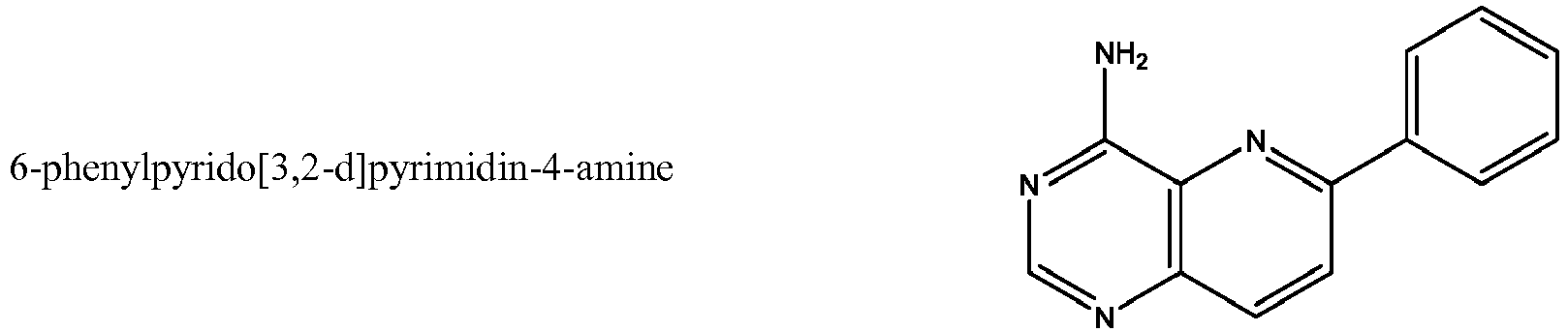

- The compounds of claim 1, wherein R2 is -C(O)-NH-heterocyclyl unsubstituted or substituted by one or more Rg or -N(C1-C12-alkyl)-C(O)-C1-C12-alkyl, and -N(C1-C12-alkyl)2.
- The compounds of claim 1, wherein R2 is -C(O)-NH(C1-C12-alkyl)-NH-C(O)-C1-C12-alkyl.
- The compounds claim 1, wherein R2 is -C(O)-N(C1-C12-alkyl)(C1-C12-alkoxy).
- The compounds of any one of claims 1 to 4, wherein R3 is i-butyl.
- The compounds of any one of claims 1 to 4, wherein R3 is cyclobutyl.
- The compounds of any one of claims 1 to 4, wherein R3 is -C(O)-C1-C12-alkyl-C3-C6-cycloalkyl.
- The compounds of any one of claims 1 to 4, wherein R3 is -C(O)- C1-C12-alkyl-heterocyclyl.
- The compounds of any one of claims 1 to 8, wherein R1 is C6-C20-aryl unsubstituted or substituted by one or more substituent(s) selected from the group consisting of CN, OH, NH2, halo, C1-C12-alkyl, C1-C12-alkoxy unsubstituted or substituted by one or more substituent(s) selected from the group consisting: of C3-C6-cycloalkyl, heterocyclyl, aryl and heteroaryl; and C1-C12-hydroxyalky.
- The compounds of any one of claims 1 to 8, wherein R1 is C6-C20-aryl unsubstituted or substituted by one or more substituent(s) selected from the group consisting of C1-C12-haloalkyl and C1-C12-haloalkoxy.
- The compounds of claim 1 wherein they are selected from the group consisting of:6-(2-fluoro-4-pyridyl)pyrido[3,2-d]pyrimidin-4-amine4-(4-aminopyrido[3,2-d]pyrimidin-6-yl)pyridin-2(1H)-one3-(4-aminopyrido[3,2-d]pyrimidin-6-yl)-5-fluoro-N-(1-hydroxy-2-methylpropan-2-yl) benzamide3-(4-aminopyrido[3,2-d]pyrimidin-6-yl)-5-fluoro-N-methylbenzamide3-(4-aminopyrido[3,2-d]pyrimidin-6-yl)-N-cyclobutyl-5-fluorobenzamide3-(4-aminopyrido[3,2-d]pyrimidin-6-yl)-5-fluoro-N-(2-hydroxyethyl)benzamide3-(4-aminopyrido[3,2-d]pyrimidin-6-yl)-5-fluoro-N-(3-hydroxycyclobutyl)benzamide3-(4-aminopyrido[3,2-d]pyrimidin-6-yl)-5-fluoro-N-(1-hydroxypropan-2-yl)benzamide3-(4-aminopyrido[3,2-d]pyrimidin-6-yl)-5-fluoro-N-((1-methylpiperidin-4-yl)methyl)benzamide3-(4-aminopyrido[3,2-d]pyrimidin-6-yl)-5-fluoro-N-(2-morpholinoethyl)benzamide3-(4-aminopyrido[3,2-d]pyrimidin-6-yl)-N-(2-(dimethylamino)ethyl)-5-fluorobenzamide3-(4-aminopyrido[3,2-d]pyrimidin-6-yl)-5-fluoro-N-(2-(pyrrolidin-1-yl)ethyl)benzamide3-(4-aminopyrido[3,2-d]pyrimidin-6-yl)-N-(3-hydroxycyclobutyl)benzamide3-(4-aminopyrido[3,2-d]pyrimidin-6-yl)-N-(2-hydroxyethyl)benzamide3-(4-aminopyrido[3,2-d]pyrimidin-6-yl)-N-(1-hydroxypropan-2-yl)benzamide3-(4-aminopyrido[3,2-d]pyrimidin-6-yl)-N-(1-hydroxy-2-methylpropan-2-yl)benzamide3-(4-aminopyrido[3,2-d]pyrimidin-6-yl)-N-cyclobutylbenzamide3-(4-aminopyrido[3,2-d]pyrimidin-6-yl)-N-methylbenzamide3-(4-aminopyrido[3,2-d]pyrimidin-6-yl)-N-(2-morpholinoethyl)benzamide3-(4-aminopyrido[3,2-d]pyrimidm-6-yl)-N-((1-methylpiperidin-4-yl)methyl)benzamide3-(4-aminopyrido[3,2-d]pyrimidin-6-yl)-N-(2-(dimethylamino)ethyl)benzamide3-(4-aminopyrido[3,2-d]pyrimidin-6-yl)-N-(2-(pyrrolidin-1-yl)ethyl)benzamideN-(cyclobutyl)-6-(3-fluorophenyl)pyrido[3,2-d]pyrimidin-4-amineN-(cyclopropylmethyl)-6-(3-fluorophenyl)pyrido[3,2-d]pyrimidin-4-amineEthyl 4-(3-(4-aminopyrido[3,2-d]pyrimidin-6-yl)-5-fluorobenzylamino)piperidine-1-carboxylate6-(3-fluoro-5-(2-(pyrrolidin-1-yl)ethylamino)phenyl)pyrido[3,2-d]pyrimidin-4-amine6-(3-Fluoro-5-(3-(pyrrolidin-1-ylmethyl)oxetan-3-ylamino)phenyl)pyrido[3,2-d] pyrimidin-4-amineN-(3-(4-aminopyrido[3,2-d]pyrimidin-6-yl)-5-fluorophenyl)pyrrolidine-1-sulfonamide2-Morpholin-4-yl-ethanesulfonic acid [3-(4-amino-pyrido[3,2-d]pyrimidin-6-yl)-5-fluoro-phenyl]-amideN-(3-(4-aminopyrido[3,2-d]pyrimidin-6-yl)-5-fluorophenyl)-2-(piperidin-1-yl)ethanesulfonamideN-(3-(4-aminopyrido[3,2-d]pyrimidin-6-yl)-5-fluorophenyl)-2-(4-methylpiperazin-1-yl)ethanesulfonamide6-[3-(2-Pyrrolidin-1-ylmethyl-cyclopropyl)-phenyl]-pyrido[3,2-d]pyrimidin-4-ylamine6-(3-(Pyridin-2-yloxy)phenyl)pyrido[3,2-d]pyrimidin-4-amine6-(3-Fluoro-5-(4-methyl-1H-pyrazol-3-yl)phenyl)pyrido[3,2-d]pyrimidin-4-amine6-(3-(4-methyl-1H-pyrazol-3-yl)phenyl)pyrido[3,2-d]pyrimidin-4-amine6-(3-(Cyclopentyloxy)phenyl)pyrido[3,2-d]pyrimidin-4-amine6-(3-(1H-imidazol-2-yl)piperidin-1-yl)pyrido[3,2-d]pyrimidin-4-aminetert-butyl N-[(3S)-1-(4-aminopyrido[3,2-d]pyrimidin-6-yl)-3-piperidyl]carbamate(S)-6-(3-aminopiperidin-1-yl)pyrido[3,2-d]pyrimidin-4-amineN-[(3S)-1-(4-aminopyrido[3,2-d]pyrimidin-6-yl)-3-piperidyl]-3-methoxy-propanamideN-(6-(3-amino-5-fluorophenyl)pyrido[3,2-d]pyrimidin-4-yl)-2-(pyrrolidin-1-yl)acetamideN-(3-(4-aminopyrido[3,2-d]pyrimidin-6-yl)-5-fluorophenyl)-2-(pyrrolidin-1-yl)acetamide N6-(2-methylbenzyl)pyrido[3,2-d]pyrimidine-4,6-diamine6-(o-tolyloxy)pyrido[3,2-d]pyrimidin-4-amine6-(3-(2-(pyrrolidin-1-yl)ethoxyl)phenyl)pyrido[3,2-d]pyrimidin-4-amine6-(3-fluorophenyl)-N-isobutylpyrido[3,2-d]pyrimidin-4-amine1-[4-(4-aminopyrido[3,2-d]pyrimidin-6-yl)piperazin-1-yl]ethanone6-[3-(4-methyl-1H-pyrazol-3-yl)-1-piperidyl]pyrido[3,2-d]pyrimidin-4-amine6-(3-(1,4-dimethyl-1H-pyrazol-3-yl)piperidin-1-yl)pyrido[3,2-d]pyrimidin-4-amine6-(3-(1,4-dimethyl-1H-pyrazol-5-yl)piperidin-1-yl)pyrido[3,2-d]pyrimidin-4-amine1-(4-(3-(4-aminopyrido[3,2-d]pyrimidin-6-yl)-5-fluorobenzyl)-1,4-diazepan-1-yl)ethanone1-(4-(3-(4-aminopyrido[3,2-d]pyrimidin-6-yl)-5-fluorobenzyl)piperazin-1-yl)ethanone1-(3-(4-aminopyrido[3,2-d]pyrimidin-6-yl)-5-fluorobenzyl)piperidin-4-ol6-(3-fluoro-5-((methyl(1-methylpiperidin-4-yl)amino)methyl)phenyl)pyrido[3,2-d]pyrimidin-4-amine(1-(3-(4-aminopyrido[3,2-d]pyrimidin-6-yl)-5-fluorobenzyl)piperidin-4-yl)methanol2-(4-(3-(4-aminopyrido[3,2-d]pyrimidin-6-yl)-5-fluorobenzyl)piperazin-1-yl)ethanol6-(3-fluoro-5-((4-(2-methoxyethyl)piperazin-1-yl)methyl)phenyl)pyrido[3,2-d]pyrimidin-4-amine(S)-6-(3-((3-(dimethylamino)pyrrolidin-1-yl)methyl)-5-fluorophenyl)pyrido[3,2-d]pyrimidin-4-amine4-(3-(4-aminopyrido[3,2-d]pyrimidin-6-yl)-5-fluorobenzyl)-N,N-dimethylpiperazine-1-carboxamide1-(3-(4-aminopyrido[3,2-d]pyrimidin-6-yl)-5-fluorobenzyl)piperidine-4-carboxamide6-(3-((3,3-difluoroazetidin-1-yl)methyl)-5-fluorophenyl)pyrido[3,2-d]pyrimidin-4-amine4-(3-(4-aminopyrido[3,2-d]pyrimidin-6-yl)-5-fluorobenzyl)-N,N-dimethylpiperazine-1-sulfonamide6-(3-((1,4-oxazepan-4-yl)methyl)-5-fluorophenyl)pyrido[3,2-d]pyrimidin-4-amine2-(4-(3-(4-aminopyrido[3,2-d]pyrimidin-6-yl)-5-fluorobenzyl)piperazin-1-yl)-N,N-dimethylacetamide1-(4-(3-(4-aminopyrido[3,2-d]pyrimidin-6-yl)-5-fluorobenzyl)piperazin-1-yl)-2-methylpropan-1-one6-(3-fluoro-5-((4-(methylsulfonyl)piperazin-1-yl)methyl)phenyl)pyrido[3,2-d]pyrimidin-4-amine6-(3-fluoro-5-((methyl(1,1-dioxo-tetrahydrothiophen-3-yl)amino)methyl)phenyl)pyrido[3,2-d]pyrimidin-4-amine2-((3-(4-aminopyrido[3,2-d]pyrimidin-6-yl)-5-fluorobenzyl)(methyl)amino)-1-morpholinoethanoneN-(1-(3-(4-aminopyrido[3,2-d]pyrimidin-6-yl)-5-fluorobenzyl)pyrrolidin-3-yl)-N-methylacetamide(1-(3-(4-aminopyrido[3,2-d]pyrimidin-6-yl)-5-fluorobenzyl)azetidin-3-yl)(4-methylpiperazin-1-yl)methanone6-(3-((4-(dimethylamino)piperidin-1-yl)methyl)-5-fluorophenyl)pyrido[3,2-d]pyrimidin-4-amine6-(3-fluoro-5-((4-methoxypiperidin-1-yl)methyl)phenyl)pyrido[3,2-d]pyrimidin-4-amine6-(3-fluoro-5-(pyrrolidin-1-ylmethyl)phenyl)pyrido[3,2-d]pyrimidin-4-amine6-(3-fluoro-5-((2-methylpyrrolidin-1-yl)methyl)phenyl)pyrido[3,2-d]pyrimidin-4-amine6-(3-fluoro-5-((methyl(1-methylpyrrolidin-3-yl)amino)methyl)phenyl)pyrido[3,2-d]pyrimidin-4-amine2-((3-(4-aminopyrido[3,2-d]pyrimidin-6-yl)-5-fluorobenzyl)(methyl)amino)-N,N-dimethylacetamide6-(3-fluoro-5-(((2-methoxyethyl)(methyl)amino)methyl)phenyl)pyrido[3,2-d]pyrimidin-4-amine4-(3-(4-aminopyrido[3,2-d]pyrimidin-6-yl)-5-fluorobenzyl)-N,1-dimethylpiperazine-2-carboxamide1-(3-(4-aminopyrido[3,2-d]pyrimidin-6-yl)-5-fluorobenzyl)azetidine-3-carboxamide1-(3-(4-aminopyrido[3,2-d]pyrimidin-6-yl)-5-fluorobenzyl)-N-methylpyrrolidine-3-carboxamide1-(3-(4-aminopyrido[3,2-d]pyrimidin-6-yl)-5-fluorobenzyl)-N,N-dimethylazetidine-3-carboxamide4-(3-(4-aminopyrido[3,2-d]pyrimidin-6-yl)-5-fluorobenzyl)-1-methylpiperazine-2-carboxamide1-(3-(4-aminopyrido[3,2-d]pyrimidin-6-yl)-5-fluorobenzyl)-N-methylazetidine-3-carboxamide2-(1-(3-(4-aminopyrido[3,2-d]pyrimidin-6-yl)-5-fluorobenzyl)piperidin-4-yl)-N,N-dimethylacetamide4-(3-(4-aminopyrido[3,2-d]pyrimidin-6-yl)-5-fluorobenzyl)-N-methylmorpholine-2-carboxamide6-(3-((3-(dimethylamino)pyrrolidin-1-yl)methyl)-5-fluorophenyl)pyrido[3,2-d]pyrimidin-4-amine(1-(3-(4-aminopyrido[3,2-d]pyrimidin-6-yl)-5-fluorobenzyl)piperidin-3-yl)methanol6-(3-fluoro-5-((3-morpholinopyrrolidin-1-yl)methyl)phenyl)pyrido[3,2-d]pyrimidin-4-amine6-(3-fluoro-5-((4-methylpiperazin-1-yl)methyl)phenyl)pyrido[3,2-d]pyrimidin-4-amine1-(3-(4-aminopyrido[3,2-d]pyrimidin-6-yl)-5-fluorobenzyl)piperidin-3-ol(R)-1-(3-(4-aminopyrido[3,2-d]pyrimidin-6-yl)-5-fluorobenzyl)piperidin-3-ol6-(3-((cyclopropylamino)methyl)-5-fluorophenyl)pyrido[3,2-d]pyrimidin-4-amine2-(3-(4-aminopyrido[3,2-d]pyrimidin-6-yl)-5-fluorobenzylamino)ethanol6-(3-((cyclopropylmethylamino)methyl)-5-fluorophenyl)pyrido[3,2-d]pyrimidin-4-amine hydrochloride6-(3-((cyclobutylamino)methyl)-5-fluorophenyl)pyrido[3,2-d]pyrimidin-4-amine hydrochloride6-(3-fluoro-5-((oxetan-3-ylamino)methyl)phenyl)pyrido[3,2-d]pyrimidin-4-amine hydrochloride6-(3-fluoro-5-((isobutylamino)methyl)phenyl)pyrido[3,2-d]pyrimidin-4-amine2-(3-(4-aminopyrido[3,2-d]pyrimidin-6-yl)-5-fluorobenzylamino)propan-1-ol hydrochloride6-(3-((cyclopentylamino)methyl)-5-fluorophenyl)pyrido[3,2-d]pyrimidin-4-amine hydrochlorideN1-(3-(4-aminopyrido[3,2-d]pyrimidin-6-yl)-5-fluorobenzyl)-N2,N2-dimethylethane-1,2-diamine hydrochloride6-(3-fluoro-5-((isopropylamino)methyl)phenyl)pyrido[3,2-d]pyrimidin-4-amine hydrochloride6-(3-fluoro-5-((tetrahydro-2H-pyran-4-ylamino)methyl)phenyl)pyrido[3,2-d]pyrimidin-4-amine hydrochloride6-(3-fluoro-5-(((tetrahydrofuran-3-yl)methylamino)methyl)phenyl)pyrido[3,2-d]pyrimidin-4-amine2-(3-(4-aminopyrido[3,2-d]pyrimidin-6-yl)-5-fluorobenzylamino)-N,N-dimethylacetamide hydrochloride6-(3-fluoro-5-((4-methylcyclohexylamino)methyl)phenyl)pyrido[3,2-d]pyrimidin-4-amine hydrochloride6-(3-fluoro-5-((2-(pyrrolidin-1-yl)ethylamino)methyl)phenyl)pyrido[3,2-d]pyrimidin-4-amine hydrochloride6-(3-fluoro-5-((1-methylpiperidin-4-ylamino)methyl)phenyl)pyrido[3,2-d]pyrimidin-4-amine hydrochloride6-(3-((cyclopropylamino)methyl)phenyl)pyrido[3,2-d]pyrimidin-4-amine hydrochloride2-(3-(4-aminopyrido[3,2-d]pyrimidin-6-yl)benzylamino)ethanol hydrochloride6-(3-((cyclopropylmethylamino)methyl)phenyl)pyrido[3,2-d]pyrimidin-4-amine hydrochloride6-(3-((cyclobutylamino)methyl)phenyl)pyrido[3,2-d]pyrimidin-4-amine6-(3-((oxetan-3-ylamino)methyl)phenyl)pyrido[3,2-d]pyrimidin-4-amine6-(3-((isobutylamino)methyl)phenyl)pyrido[3,2-d]pyrimidin-4-amine hydrochloride2-(3-(4-aminopyrido[3,2-d]pyrimidin-6-yl)benzylamino)propan-1-ol hydrochlorideN1-(3-(4-aminopyrido[3,2-d]pyrimidin-6-yl)benzyl)-N2,N2-dimethylethane-1,2-diamine hydrochloride6-(3-((isopropylamino)methyl)phenyl)pyrido[3,2-d]pyrimidin-4-amine hydrochloride6-(3-((tetrahydro-2H-pyran-4-ylamino)methyl)phenyl)pyrido[3,2-d]pyrimidin-4-amine hydrochloride6-(3-(((tetrahydrofuran-3-yl)methylamino)methyl)phenyl)pyrido[3,2-d]pyrimidin-4-amine hydrochloride6-(3-fluoro-5-(((tetrahydro-2H-pyran-4-yl)methylamino)methyl)phenyl)pyrido[3,2-d]pyrimidin-4-amine hydrochloride4-(3-(4-aminopyrido[3,2-d]pyrimidin-6-yl)-5-fluorobenzylamino)cyclohexanol(1-(3-(4-aminopyrido[3,2-d]pyrimidin-6-yl)-5-fluorobenzylamino)cyclopropyl)methanol hydrochloride6-(3-fluoro-5-(((1-methylpiperidin-2-yl)methylamino)methyl)phenyl)pyrido[3,2-d]pyrimidin-4-amine hydrochloride6-(3-fluoro-5-(((1-methylpiperidin-4-yl)methylamino)methyl)phenyl)pyrido[3,2-d]pyrimidin-4-amine hydrochloride6-(3-fluoro-5-((2-morpholinoethylamino)methyl)phenyl)pyrido[3,2-d]pyrimidin-4-amine hydrochloride1-(4-(3-(4-aminopyrido[3,2-d]pyrimidin-6-yl)-5-fluorobenzylamino)piperidin-1-yl)ethanone hydrochloride6-(3-fluoro-5-((2-methyl-1-morpholinopropan-2-ylamino)methyl)phenyl)pyrido[3,2-d]pyrimidin-4-amine hydrochloride6-(3-fluoro-5-((1-methylazetidin-3-ylamino)methyl)phenyl)pyrido[3,2-d]pyrimidin-4-amine hydrochlorideethyl 4-(3-(4-aminopyrido[3,2-d]pyrimidin-6-yl)-5-fluorobenzylamino)piperidine-1-carboxylate hydrochloride2-(3-(4-aminopyrido[3,2-d]pyrimidin-6-yl)benzylamino)propan-1-ol hydrochloride6-(3-((cyclopentylamino)methyl)phenyl)pyrido[3,2-d]pyrimidin-4-amine hydrochloride2-(3-(4-aminopyrido[3,2-d]pyrimidin-6-yl)benzylamino)-N,N-dimethylacetamide hydrochloride6-(3-((4-methylcyclohexylamino)methyl)phenyl)pyrido[3,2-d]pyrimidin-4-amine hydrochloride6-(3-((2-(pyrrolidin-1-yl)ethylamino)methyl)phenyl)pyrido[3,2-d]pyrimidin-4-amine hydrochloride6-(3-((1-methylpiperidin-4-ylamino)methyl)phenyl)pyrido[3,2-d]pyrimidin-4-amine hydrochloride6-(3-(((tetrahydro-2H-pyran-4-yl)methylamino)methyl)phenyl)pyrido[3,2-d]pyrimidin-4-amine hydrochlorideN1-(3-(4-aminopyrido[3,2-d]pyrimidin-6-yl)benzyl)cyclohexane-1,4-diamine hydrochloride(1-(3-(4-aminopyrido[3,2-d]pyrimidin-6-yl)benzylamino)cyclopropyl)methanol hydrochloride6-(3-(((1-methylpiperidin-2-yl)methylamino)methyl)phenyl)pyrido[3,2-d]pyrimidin-4-amine hydrochloride6-(3-(((1-methylpiperidin-4-yl)methylamino)methyl)phenyl)pyrido[3,2-d]pyrimidin-4-amine hydrochloride6-(3-((2-morpholinoethylamino)methyl)phenyl)pyrido[3,2-d]pyrimidin-4-amine hydrochloride1-(4-(3-(4-aminopyrido[3,2-d]pyrimidin-6-yl)benzylamino)piperidin-1-yl)ethanone hydrochloride6-(3-((2-methyl-l-morpholinopropan-2-ylamino)methyl)phenyl)pyrido[3,2-d]pyrimidin-4-amine hydrochloride6-(3-((1-methylazetidin-3-ylamino)methyl)phenyl)pyrido[3,2-d]pyrimidin-4-amine hydrochlorideEthyl 4-(3-(4-aminopyrido[3,2-d]pyrimidin-6-yl)benzylamino)piperidine-1-carboxylate hydrochloride6-(3-chlorophenyl)pyrido[3,2-d]pyrimidin-4-amine6-(3-fluorophenyl)pyrido[3,2-d]pyrimidin-4-amine6-(3-methyl-1-piperidyl)pyrido[3,2-d]pyrimidin-4-amine6-(3-methoxy-1-piperidyl)pyrido[3,2-d]pyrimidin-4-amine6-[3-(trifluoromethyl)pyrrolidin-1-yl]pyrido[3,2-d]pyrimidin-4-amine6-[3-(trifluoromethyl)-1-piperidyl]pyrido[3,2-d]pyrimidin-4-amine6-[3-(methoxymethyl)-1-piperidyl]pyrido[3,2-d]pyrimidin-4-amine[1-(4-aminopyrido[3,2-d]pyrimidin-6-yl)-3-piperidyl]methanolN6-[2-(4-fluorophenyl)ethyl]pyrido[3,2-d]pyrimidine-4,6-diamine6-(1-piperidyl)pyrido[3,2-d]pyrimidin-4-amine[1-(4-aminopyrido[3,2-d]pyrimidin-6-yl)-4-piperidyl]-pyrrolidin-1-yl-methanone6-(3-morpholinopyrrolidin-1-yl)pyrido[3,2-d]pyrimidin-4-amine6-[4-(2-methoxyethyl)piperazin-1-yl]pyrido[3,2-d]pyrimidin-4-amineN-[1-(4-aminopyrido[3,2-d]pyrimidin-6-yl)pyrrolidin-3-yl]-N-methyl-acetamide1-[4-(4-aminopyrido[3,2-d]pyrimidin-6-yl)piperazin-1-yl]ethanone1-[4-(4-aminopyrido[3,2-d]pyrimidin-6-yl)piperazin-1-yl]-2-methyl-propan-1-one6-[3-(4-methyl-1H-pyrazol-3-yl)-1-piperidyl]pyrido[3,2-d]pyrimidin-4-aminetert-butyl 4-(4-aminopyrido[3,2-d]pyrimidin-6-yl)-2-methyl-piperazine-1-carboxylate2-[1-(4-aminopyrido[3,2-d]pyrimidin-6-yl)-4-piperidyl]-N-methyl-acetamide6-[4-(1H-pyrazol-5-yl)-1-piperidyl]pyrido[3,2-d]pyrimidin-4-amine6-[4-(6-methyl-2-pyridyl)-1-piperidyl]pyrido[3,2-d]pyrimidin-4-amine6-(3-morpholino-1-piperidyl)pyrido[3,2-d]pyrimidin-4-amine6-[3-(5-methyl-2-pyridyl)-1-piperidyl]pyrido[3,2-d]pyrimidin-4-amine6-[3-[(1-methylimidazol-2-yl)methyl]pyrrolidin-1-yl]pyrido[3,2-d]pyrimidin-4-amine6-[3-(5-methyl-1,2,4-oxadiazol-3-yl)-1-piperidyl]pyrido[3,2-d]pyrimidin-4-amine6-[4-(3-methylimidazol-4-yl)-1-piperidyl]pyrido[3,2-d]pyrimidin-4-amine6-(3-amino-5-fluoro-phenyl)pyrido[3,2-d]pyrimidin-4-amine6-[3-(4-pyridylmethyl)pyrrolidin-1-yl]pyrido[3,2-d]pyrimidin-4-amine6-[3-(3-methylimidazol-4-yl)pyrrolidin-1-yl]pyrido[3,2-d]pyrimidin-4-amine6-[3-(3-methyl-1,2,4-oxadiazol-5-yl)-1-piperidyl]pyrido[3,2-d]pyrimidin-4-amine1-(4-aminopyrido[3,2-d]pyrimidin-6-yl)-N-methyl-pyrrolidine-3-carboxamide6-[3-(2-pyridylmethyl)pyrrolidin-1-yl]pyrido[3,2-d]pyrimidin-4-amine6-[3-(3-methyl-1,2,4-oxadiazol-5-yl)pyrrolidin-1-yl]pyrido[3,2-d]pyrimidin-4-amine6-[3-(3-pyridylmethyl)pyrrolidin-1-yl]pyrido[3,2-d]pyrimidin-4-amine6-(4-methylpiperazin-1-yl)pyrido[3,2-d]pyrimidin-4-amine6-(4-methoxy-1-piperidyl)pyrido[3,2-d]pyrimidin-4-amine6-[3-(dimethylamino)pyrrolidin-1-yl]pyrido[3,2-d]pyrimidin-4-amineethyl 4-[(4-aminopyrido[3,2-d]pyrimidin-6-yl)amino]piperidine-1-carboxylate6-(3,4,6,7,8,8a-hexahydro-1H-pyrrolo[1,2-a]pyrazin-2-yl)pyrido[3,2-d]pyrimidin-4-amineN6-cyclopentylpyrido[3,2-d]pyrimidine-4,6-diamine4-(4-aminopyrido[3,2-d]pyrimidin-6-yl)-N-cyclopentyl-morpholine-2-carboxamide6-[3-(6-methyl-2-pyridyl)-1-piperidyl]pyrido[3,2-d]pyrimidin-4-aminetert-butyl 4-(4-aminopyrido[3,2-d]pyrimidin-6-yl)piperazine-1-carboxylate6-[4-(5-methyl-1,2,4-oxadiazol-3-yl)-1-piperidyl]pyrido[3,2-d]pyrimidin-4-amineN-[3-(4-aminopyrido[3,2-d]pyrimidin-6-yl)-5-fluoro-phenyl]-2-cyclopentyl-acetamideN6-benzylpyrido[3,2-d]pyrimidine-4,6-diamine6-[3-(4-methyl-1H-pyrazol-3-yl)-1-piperidyl]pyrido[3,2-d]pyrimidin-4-amine6-[3-(4-methyl-1H-pyrazol-3-yl)-1-piperidyl]pyrido[3,2-d]pyrimidin-4-amine6-[3-(4,6-dimethylpyrimidin-2-yl)-1-piperidyl]pyrido[3,2-d]pyrimidin-4-amine6-[1-(4-aminopyrido[3,2-d]pyrimidin-6-yl)-3-piperidyl]-N,N-dimethyl-pyridine-2-carboxamide6-[3-[(5-methyl-2-pyridyl)methyl]pyrrolidin-1-yl]pyrido[3,2-d]pyrimidin-4-amine6-[3-(pyrimidin-2-ylmethyl)pyrrolidin-1-yl]pyrido[3,2-d]pyrimidin-4-amine6-[3-[6-(dimethylamino)-2-pyridyl]-1-piperidyl]pyrido[3,2-d]pyrimidin-4-amine6-[3-(pyrimidin-2-ylmethyl)-1-piperidyl]pyrido[3,2-d]pyrimidin-4-amine6-[3-(4-methylsulfonyl-1H-pyrazol-5-yl)-1-piperidyl]pyrido[3,2-d]pyrimidin-4-amine6-[3-[6-(dimethylamino)pyrazin-2-yl]-1-piperidyl]pyrido[3,2-d]pyrimidin-4-amine6-[3-[[6-(methylamino)pyrimidin-4-yl]methyl]pyrrolidin-1-yl]pyrido[3,2-d]pyrimidin-4-amine6-[3-(2-methylpyrimidin-4-yl)pyrrolidin-1-yl]pyrido[3,2-d]pyrimidin-4-amine6-[3-[6-(dimethylamino)-2-methyl-pyrimidin-4-yl]pyrrolidin-1-yl]pyrido[3,2-d]pyrimidin-4-amine6-[3-[[6-(dimethylamino)pyrimidin-4-yl]methyl]-1-piperidyl]pyrido[3,2-d]pyrimidin-4-amine6-[3-(1H-pyrazol-3-yl)pyrrolidin-1-yl]pyrido[3,2-d]pyrimidin-4-amine6-[3-[[6-(dimethylamino)pyrimidin-4-yl]methyl]pyrrolidin-1-yl]pyrido[3,2-d]pyrimidin-4-amine6-[3-[2-(dimethylamino)pyrimidin-4-yl]-1-piperidyl]pyrido[3,2-d]pyrimidin-4-amine6-[1-(4-aminopyrido[3,2-d]pyrimidin-6-yl)-3-piperidyl]pyridine-2-carboxamide6-[3-[3-(dimethylamino)pyrazin-2-yl]-1-piperidyl]pyrido[3,2-d]pyrimidin-4-amine6-[3-(2-methylpyrimidin-4-yl)-1-piperidyl]pyrido[3,2-d]pyrimidin-4-amine6-(3-pyrimidin-4-yl-1-piperidyl)pyrido[3,2-d]pyrimidin-4-amine6-[3-[5-(trifluoromethyl)-1H-pyrazol-3-yl]-1-piperidyl]pyrido[3,2-d]pyrimidin-4-amine6-(3-pyrazin-2-yl-1-piperidyl)pyrido[3,2-d]pyrimidin-4-amine6-[3-(pyrazin-2-ylmethyl)-1-piperidyl]pyrido[3,2-d]pyrimidin-4-amine6-[3-[5-(dimethylamino)-2-pyridyl]-1-piperidyl]pyrido[3,2-d]pyrimidin-4-amine6-[3-(4-methylpyrimidin-2-yl)-1-piperidyl]pyrido[3,2-d]pyrimidin-4-amine6-[3-(2-pyridyl)-1-piperidyl]pyrido[3,2-d]pyrimidin-4-amine6-[3-(4-methyl-1,2,4-triazol-3-yl)-1-piperidyl]pyrido[3,2-d]pyrimidin-4-amine6-[3-[5-(methoxymethyl)-1,2,4-oxadiazol-3-yl]-1-piperidyl]pyrido[3,2-d]pyrimidin-4-amine6-[1-(4-aminopyrido[3,2-d]pyrimidin-6-yl)-3-piperidyl]-N-methyl-pyridine-2-carboxamide6-[3-(5-methylsulfonylpyrimidin-4-yl)-1-piperidyl]pyrido[3,2-d]pyrimidin-4-amine6-[3-(4-pyridyl)pyrrolidin-1-yl]pyrido[3,2-d]pyrimidin-4-amine6-(2-ethyl-4-pyridyl)pyrido[3,2-d]pyrimidin-4-amine6-(2-methyl-4-pyridyl)pyrido[3,2-d]pyrimidin-4-amine6-[3-[(1-methylimidazol-2-yl)methyl]-1-piperidyl]pyrido[3,2-d]pyrimidin-4-amineN-[3-(4-aminopyrido[3,2-d]pyrimidin-6-yl)-5-fluoro-phenyl]-2-pyrrolidin-1-yl-acetamideN-[6-(3-amino-5-fluoro-phenyl)pyrido[3,2-d]pyrimidin-4-yl]-2-pyrrolidin-1-yl-acetamide3-(4-aminopyrido[3,2-d]pyrimidin-6-yl)phenol5-[1-(4-aminopyrido[3,2-d]pyrimidin-6-yl)-3-piperidyl]-2-methyl-pyrazol-3-ol6-[3-(2-pyrrolidin-1-ylethoxy)phenyl]pyrido[3,2-d]pyrimidin-4-amine6-[3-(1H-pyrazol-3-yl)-1-piperidyl]pyrido[3,2-d]pyrimidin-4-amine6-[2-(1H-pyrazol-3-yl)morpholin-4-yl]pyrido[3,2-d]pyrimidin-4-amine6-[3-(1H-imidazol-2-yl)-1-piperidyl]pyrido[3,2-d]pyrimidin-4-aminetert-butyl N-[(3R)-1-(4-aminopyrido[3,2-d]pyrimidin-6-yl)-3-piperidyl]carbamate6-[(3S)-3-amino-1-piperidyl]pyrido[3,2-d]pyrimidin-4-amine6-[(3R)-3-amino-1-piperidyl]pyrido[3,2-d]pyrimidin-4-amineN-[(3S)-1-(4-aminopyrido[3,2-d]pyrimidin-6-yl)-3-piperidyl]-3-pyrrolidin-1-yl-propanamideN-[(3S)-1-(4-aminopyrido[3,2-d]pyrimidin-6-yl)-3-piperidyl]-2-(4-methylpiperazin-1-yl)acetamideN-[(3R)-1-(4-aminopyrido[3,2-d]pyrimidin-6-yl)-3-piperidyl]-3-methoxy-propanamideN-[(3R)-1-(4-aminopyrido[3,2-d]pyrimidin-6-yl)-3-piperidyl]-3-pyrrolidin-1-yl-propanamideN-[(3R)-1-(4-aminopyrido[3,2-d]pyrimidin-6-yl)-3-piperidyl]-2-(4-methylpiperazin-1-yl)acetamideN6-[(2-fluorophenyl)methyl]pyrido[3,2-d]pyrimidine-4,6-diamineN6-(1-phenylethyl)pyrido[3,2-d]pyrimidine-4,6-diamine6-[2-(trifluoromethyl)-4-pyridyl]pyrido[3,2-d]pyrimidin-4-amine6-(2-methylphenoxy)pyrido[3,2-d]pyrimidin-4-amine6-(3-methylphenoxy)pyrido[3,2-d]pyrimidin-4-amine6-(4-pyridyloxy)pyrido[3,2-d]pyrimidin-4-amine6-(4-methylphenoxy)pyrido[3,2-d]pyrimidin-4-amine6-(3-fluorophenoxy)pyrido[3,2-d]pyrimidin-4-amine2-(4-aminopyrido[3,2-d]pyrimidin-6-yl)oxybenzonitrile6-[(6-methyl-3-pyridyl)oxy]pyrido[3,2-d]pyrimidin-4-amine6-[(2-methyl-3-pyridyl)oxy]pyrido[3,2-d]pyrimidin-4-amine6-phenoxypyrido[3,2-d]pyrimidin-4-amine6-(3-pyridyloxy)pyrido[3,2-d]pyrimidin-4-amine4-(4-aminopyrido[3,2-d]pyrimidin-6-yl)oxybenzamide4-(4-aminopyrido[3,2-d]pyrimidin-6-yl)oxybenzonitrile3-(4-aminopyrido[3,2-d]pyrimidin-6-yl)oxybenzonitrile6-(2-chlorophenoxy)pyrido[3,2-d]pyrimidin-4-amine6-(4-methoxyphenoxy)pyrido[3,2-d]pyrimidin-4-amine6-(4-chlorophenoxy)pyrido[3,2-d]pyrimidin-4-amine6-(3-chlorophenoxy)pyrido[3,2-d]pyrimidin-4-amine6-(2,4-difluorophenoxy)pyrido[3,2-d]pyrimidin-4-amine6-(3,4-difluorophenoxy)pyrido[3,2-d]pyrimidin-4-amineN6-[(2-chlorophenyl)methyl]pyrido[3,2-d]pyrimidine-4,6-diamine6-(2-fluorophenoxy)pyrido[3,2-d]pyrimidin-4-amineN6-[(3-chlorophenyl)methyl]pyrido[3,2-d]pyrimidine-4,6-diamineN6-[(4-chlorophenyl)methyl]pyrido[3,2-d]pyrimidine-4,6-diamineN6-(o-tolylmethyl)pyrido[3,2-d]pyrimidine-4,6-diamineN6-[1-(6-methyl-2-pyridyl)ethyl]pyrido[3,2-d]pyrimidine-4,6-diamineN6-[(3-pyrrolidin-1-ylphenyl)methyl]pyrido[3,2-d]pyrimidine-4,6-diamineN6-(pyrazin-2-ylmethyl)pyrido[3,2-d]pyrimidine-4,6-diamine6-[3-(difluoromethoxy)phenyl]pyrido[3,2-d]pyrimidin-4-amine6-(3-(6-methylpyridin-2-yloxy)phenyl)pyrido[3,2-d]pyrimidin-4-amine6-(3-isopropoxyphenyl)pyrido[3,2-d]pyrimidin-4-amine6-(3-methoxyphenyl)pyrido[3,2-d]pyrimidin-4-amine, andN1-(3-(4-aminopyrido[3,2-d]pyrimidin-6-yl)-5-fluorophenyl)-N3,N3-dimethylpropane-1,3-diamine formate, as free bases, pharmaceutical salts and stereoisomers thereof.
- The compounds of claim 1 wherein they are selected from the group consisting of:N6-[1-(6-methyl-2-pyridyl)ethyl]pyrido[3,2-d]pyrimidine-4,6-diamineN6-[(3-pyrrolidin-1-ylphenyl)methyl]pyrido[3,2-d]pyrimidine-4,6-diamineN6-(pyrazin-2-ylmethyl)pyrido[3,2-d]pyrimidine-4,6-diamine6-[3-(difluo romethoxy)phenyl]pyrido[3,2-d]pyrimidin-4-amine6-(3-(6-methylpyridin-2-yloxy)phenyl)pyrido[3,2-d]pyrimidin-4-amine.
- The compounds of claim 1 wherein they are selected from the group consisting of: N6-[1-(6-methyl-2-pyridyl)ethyl]pyrido[3,2-d]pyrimidine-4,6-diamine.
- A compound of any one of claims 1 to 13, for use as therapeutically active substance.
- A pharmaceutical composition comprising a compound in accordance with any one of claims 1 to 13 and a therapeutically inert carrier.
- A compound according to any one of claims 1 to 13 for use in the treatment or prevention of cancer.
Applications Claiming Priority (2)
| Application Number | Priority Date | Filing Date | Title |
|---|---|---|---|
| US201261653812P | 2012-05-31 | 2012-05-31 | |
| PCT/EP2013/060884 WO2013178591A1 (en) | 2012-05-31 | 2013-05-27 | Aminoquinazoline and pyridopyrimidine derivatives |
Publications (2)
| Publication Number | Publication Date |
|---|---|
| EP2855459A1 EP2855459A1 (en) | 2015-04-08 |
| EP2855459B1 true EP2855459B1 (en) | 2020-04-29 |
Family
ID=48536860
Family Applications (1)
| Application Number | Title | Priority Date | Filing Date |
|---|---|---|---|
| EP13725654.1A Active EP2855459B1 (en) | 2012-05-31 | 2013-05-27 | Aminoquinazoline and pyridopyrimidine derivatives |
Country Status (10)
| Country | Link |
|---|---|
| US (3) | US9382241B2 (en) |
| EP (1) | EP2855459B1 (en) |
| JP (1) | JP6231085B2 (en) |
| KR (1) | KR20150020228A (en) |
| CN (1) | CN104507933B (en) |
| BR (1) | BR112014029404A2 (en) |
| CA (1) | CA2870407A1 (en) |
| MX (1) | MX2014014531A (en) |
| RU (1) | RU2014149684A (en) |
| WO (1) | WO2013178591A1 (en) |
Families Citing this family (23)
| Publication number | Priority date | Publication date | Assignee | Title |
|---|---|---|---|---|
| MX2014014531A (en) * | 2012-05-31 | 2015-04-08 | Hoffmann La Roche | Aminoquinazoline and pyridopyrimidine derivatives. |
| CA2927527C (en) | 2013-11-20 | 2021-06-01 | Sanwa Kagaku Kenkyusho Co., Ltd. | Novel 3-azabicyclo[3.1.0]hexane derivative and use thereof as u-opioid receptor antagonist |
| CN107001379B (en) | 2014-11-06 | 2022-11-01 | Bial研发投资股份有限公司 | Substituted pyrazolo [1,5-a ] pyrimidines and their use in the treatment of medical disorders |
| AU2015342883B2 (en) | 2014-11-06 | 2020-07-02 | Bial - R&D Investments, S.A. | Substituted pyrrolo(1,2-a)pyrimidines and their use in the treatment of medical disorders |
| WO2016073889A1 (en) | 2014-11-06 | 2016-05-12 | Lysosomal Therapeutics Inc. | Substituted imidazo[1,5-a]pyrimidines and their use in the treatment of medical disorders |
| WO2016089977A1 (en) * | 2014-12-03 | 2016-06-09 | Celgene Corporation | Substituted indazole compounds, compositions thereof, and methods of treatment therewith |
| WO2017176962A1 (en) | 2016-04-06 | 2017-10-12 | Lysosomal Therapeutics, Inc. | Pyrrolo[1,2-a]pyrimidinyl carboxamide compounds and their use in the treatment of medical disorders |
| WO2017176960A1 (en) | 2016-04-06 | 2017-10-12 | Lysosomal Therapeutics Inc. | Pyrazolo[1,5-a]pyrimidinyl carboxamide compounds and their use in the treatment of medical disorders |
| US10787454B2 (en) | 2016-04-06 | 2020-09-29 | BIAL—BioTech Investments, Inc. | Imidazo[1,5-a]pyrimidinyl carboxamide compounds and their use in the treatment of medical disorders |
| MX389579B (en) | 2016-05-05 | 2025-03-20 | Bial R&D Invest S A | SUBSTITUTED IMIDAZO[1,2-b]PYRIDAZINES, SUBSTITUTED IMIDAZO[1,5-b]PYRIDAZINES, RELATED COMPOUNDS AND THEIR USE IN THE TREATMENT OF MEDICAL DISORDERS |
| WO2017192929A1 (en) * | 2016-05-05 | 2017-11-09 | Lysosomal Therapeutics Inc. | SUBSTITUTED PYRROLO[1,2-α]TRIAZINES AND RELATED COMPOUNDS AND THEIR USE IN THE TREATMENT OF MEDICAL DISORDERS |
| WO2017192931A1 (en) | 2016-05-05 | 2017-11-09 | Lysosomal Therapeutics Inc. | SUBSTITUTED IMDAZO[1,2-α]PYRIDINES, SUBSTITUTED IMIDAZO[1,2-α]PYRAZINES, RELATED COMPOUNDS, AND THEIR USE IN THE TREATMENT OF MEDICAL DISORDERS |
| TWI795381B (en) | 2016-12-21 | 2023-03-11 | 比利時商健生藥品公司 | Pyrazole derivatives as malt1 inhibitors |
| CN108239076B (en) * | 2016-12-26 | 2021-07-06 | 中国医学科学院药物研究所 | Quinazoline compound and its preparation method, use and pharmaceutical composition |
| WO2019081477A1 (en) | 2017-10-26 | 2019-05-02 | Bayer Cropscience Aktiengesellschaft | SUBSTITUTED PYRAZOLE AND THEIR SALTS AND THEIR USE AS HERBICIDAL ACTIVE SUBSTANCES |
| WO2019081485A1 (en) | 2017-10-26 | 2019-05-02 | Bayer Cropscience Aktiengesellschaft | SUBSTITUTED PYRAZOLE AND THEIR SALTS AND THEIR USE AS HERBICIDAL ACTIVE SUBSTANCES |
| WO2020169736A1 (en) * | 2019-02-22 | 2020-08-27 | Janssen Pharmaceutica Nv | Crystalline form of 1-(1-oxo-1,2-dihydroisoquinolin-5-yl)-5-(trifluoromethyl)-n-(2-(trifluoromethyl)pyridin-4-yl)-1h-pyrazole-4-carboxamide monohydrate |
| MA55593A (en) | 2019-04-11 | 2022-02-16 | Janssen Pharmaceutica Nv | PYRIDINE CYCLES CONTAINING DERIVATIVES SERVING AS MALT1 INHIBITORS |
| AU2021222818A1 (en) * | 2020-02-17 | 2022-09-01 | Alesta Therapeutics BV | GCN2 modulator compounds |
| WO2025054368A1 (en) * | 2023-09-06 | 2025-03-13 | Nico Therapeutics, Inc. | Compounds, compositions, and methods |
| WO2025068487A1 (en) * | 2023-09-27 | 2025-04-03 | Solgate Gmbh | New heterocyclic compounds binding to slc15a4 |
| WO2025240835A2 (en) * | 2024-05-17 | 2025-11-20 | Prelude Therapeutics Incorporated | Jak2 inhibitors and their use as pharmaceuticals |
| WO2026083261A1 (en) * | 2024-10-14 | 2026-04-23 | Janssen Pharmaceutica Nv | (2-(methylphenyl)quinazolin-4-yl)amine derivatives as bfl-1 inhibitors for the treatment of cancer |
Family Cites Families (22)
| Publication number | Priority date | Publication date | Assignee | Title |
|---|---|---|---|---|
| GB696692A (en) | 1950-12-06 | 1953-09-09 | Ici Ltd | New quinazoline derivatives |
| US3773919A (en) | 1969-10-23 | 1973-11-20 | Du Pont | Polylactide-drug mixtures |
| IE51802B1 (en) | 1979-12-03 | 1987-04-01 | Fujisawa Pharmaceutical Co | Quinazoline derivatives,processes for their preparation and pharmaceutical compositions containing them |
| JPS5695174A (en) * | 1979-12-03 | 1981-08-01 | Fujisawa Pharmaceut Co Ltd | Quinazoline derivative |
| US4377530A (en) | 1982-03-05 | 1983-03-22 | American Cyanamid Company | Manufacture of isocyanates |
| SI20582A (en) * | 2000-05-05 | 2001-12-31 | Univerza V Ljubljani | Novel thrombine inhibitors, their preparation and use |
| CL2004000234A1 (en) * | 2003-02-12 | 2005-04-15 | Biogen Idec Inc | DERIVATIVE COMPOUNDS 3- (PIRIDIN-2-IL) -4-HETEROARIL-PIRAZOL SUBSTITUTED, ANTAGONISTS OF AIK5 AND / OR AIK4; PHARMACEUTICAL COMPOSITION AND USE OF THE COMPOUND IN THE TREATMENT OF FIBROTIC DISORDERS AS SCLERODERMIA, LUPUS NEFRITICO, CICATRIZACION DE HERID |
| AU2005223610B2 (en) * | 2004-03-23 | 2008-05-29 | Banyu Pharmaceutical Co., Ltd. | Substituted quinazoline or pyridopyrimidine derivative |
| US20070054916A1 (en) * | 2004-10-01 | 2007-03-08 | Amgen Inc. | Aryl nitrogen-containing bicyclic compounds and methods of use |
| AU2005295734A1 (en) * | 2004-10-15 | 2006-04-27 | Biogen Idec Ma Inc. | Methods of treating vascular injuries |
| DK2395004T3 (en) | 2005-06-22 | 2016-03-21 | Plexxikon Inc | Pyrrolo [2,3-b] pyridine derivatives as protein kinase inhibitors |
| JP2008543888A (en) * | 2005-06-24 | 2008-12-04 | ギリアード サイエンシーズ, インコーポレイテッド | Pyrido (3,2-d) pyrimidine and pharmaceutical compositions useful for treating hepatitis C |
| DE102006012251A1 (en) * | 2006-03-15 | 2007-11-08 | Grünenthal GmbH | Substituted 4-aminoquinazoline derivatives and their use for the preparation of medicaments |
| WO2008009078A2 (en) | 2006-07-20 | 2008-01-24 | Gilead Sciences, Inc. | 4,6-dl- and 2,4,6-trisubstituted quinazoline derivatives useful for treating viral infections |
| PE20081581A1 (en) | 2006-12-21 | 2008-11-12 | Plexxikon Inc | PIRROLO [2,3-b] PYRIDINES COMPOUNDS AS KINASE MODULATORS |
| WO2008080015A2 (en) * | 2006-12-21 | 2008-07-03 | Plexxikon, Inc. | Compounds and methods for kinase modulation, and indications therefor |
| GB0714602D0 (en) | 2007-07-26 | 2007-09-05 | Novathera Ltd | Process |
| EA021938B1 (en) * | 2008-05-01 | 2015-10-30 | Сертрис Фармасьютикалз, Инк. | Quenolines and related analogs as sirtuin modulators |
| WO2010111527A1 (en) | 2009-03-26 | 2010-09-30 | Plexxikon, Inc. | Pyrazolo [ 3, 4 -b] pyridines as kinase inhibitors and their medical use |
| WO2012125668A1 (en) * | 2011-03-17 | 2012-09-20 | Merck Sharp & Dohme Corp. | TrkA KINASE INHIBITORS, COMPOSITIONS AND METHODS THEREOF |
| MX2014014531A (en) * | 2012-05-31 | 2015-04-08 | Hoffmann La Roche | Aminoquinazoline and pyridopyrimidine derivatives. |
| CN104409057B (en) * | 2014-11-14 | 2017-09-29 | 深圳市华星光电技术有限公司 | A kind of scan drive circuit |
-
2013
- 2013-05-27 MX MX2014014531A patent/MX2014014531A/en unknown
- 2013-05-27 EP EP13725654.1A patent/EP2855459B1/en active Active
- 2013-05-27 RU RU2014149684A patent/RU2014149684A/en not_active Application Discontinuation
- 2013-05-27 CA CA2870407A patent/CA2870407A1/en not_active Abandoned
- 2013-05-27 JP JP2015514452A patent/JP6231085B2/en not_active Expired - Fee Related
- 2013-05-27 KR KR1020147036895A patent/KR20150020228A/en not_active Withdrawn
- 2013-05-27 BR BR112014029404A patent/BR112014029404A2/en not_active IP Right Cessation
- 2013-05-27 WO PCT/EP2013/060884 patent/WO2013178591A1/en not_active Ceased
- 2013-05-27 CN CN201380040547.8A patent/CN104507933B/en not_active Expired - Fee Related
- 2013-05-31 US US13/906,626 patent/US9382241B2/en not_active Expired - Fee Related
-
2016
- 2016-06-16 US US15/184,310 patent/US9592235B2/en not_active Expired - Fee Related
-
2017
- 2017-03-09 US US15/454,793 patent/US9855269B2/en not_active Expired - Fee Related
Non-Patent Citations (1)
| Title |
|---|
| None * |
Also Published As
| Publication number | Publication date |
|---|---|
| MX2014014531A (en) | 2015-04-08 |
| US9592235B2 (en) | 2017-03-14 |
| US20160296525A1 (en) | 2016-10-13 |
| RU2014149684A (en) | 2016-07-20 |
| JP2015522552A (en) | 2015-08-06 |
| KR20150020228A (en) | 2015-02-25 |
| CN104507933A (en) | 2015-04-08 |
| JP6231085B2 (en) | 2017-11-15 |
| BR112014029404A2 (en) | 2017-06-27 |
| US20130324516A1 (en) | 2013-12-05 |
| HK1209107A1 (en) | 2016-03-24 |
| US9382241B2 (en) | 2016-07-05 |
| CN104507933B (en) | 2017-10-31 |
| WO2013178591A1 (en) | 2013-12-05 |
| US20170173026A1 (en) | 2017-06-22 |
| US9855269B2 (en) | 2018-01-02 |
| EP2855459A1 (en) | 2015-04-08 |
| CA2870407A1 (en) | 2013-12-05 |
Similar Documents
| Publication | Publication Date | Title |
|---|---|---|
| US9855269B2 (en) | Aminoquinazoline and pyridopyrimidine derivatives | |
| JP7041070B2 (en) | Amine-substituted aryl or heteroaryl compounds as EHMT1 and EHMT2 inhibitors | |
| JP6462911B2 (en) | 6- (5-hydroxy-1H-pyrazol-1-yl) nicotinamide derivatives and their use as PHD inhibitors | |
| AU2022349569A1 (en) | Pyridine derivative and use thereof | |
| TWI588141B (en) | Substituted benzyl carbazole | |
| EP2809652B1 (en) | Isoquinoline and naphthyridine derivatives | |
| CA3107365A1 (en) | Pyrazine compounds and uses thereof | |
| WO2015140133A1 (en) | Piperidine-dione derivatives | |
| WO2005105814A1 (en) | Tetracyclic inhibitors of janus kinases | |
| MX2014008647A (en) | Pyrazine carboxamide compound. | |
| TW202140446A (en) | Quinolinyl phosphine oxide compound and its composition and use | |
| JP7710756B2 (en) | CTLA-4 small molecule degrader and uses thereof | |
| CN119451961A (en) | A carboxamide derivative with RSK inhibitory effect, a pharmaceutical composition containing the same and its use | |
| HK1209107B (en) | Aminoquinazoline and pyridopyrimidine derivatives | |
| CN121752567A (en) | Pyrazolopyrimidinone compounds for use in methods of inhibiting WEE 1A kinase | |
| HK1202291B (en) | Isoquinoline and naphthyridine derivatives |
Legal Events
| Date | Code | Title | Description |
|---|---|---|---|
| PUAI | Public reference made under article 153(3) epc to a published international application that has entered the european phase |
Free format text: ORIGINAL CODE: 0009012 |
|
| 17P | Request for examination filed |
Effective date: 20150105 |
|
| AK | Designated contracting states |
Kind code of ref document: A1 Designated state(s): AL AT BE BG CH CY CZ DE DK EE ES FI FR GB GR HR HU IE IS IT LI LT LU LV MC MK MT NL NO PL PT RO RS SE SI SK SM TR |
|
| AX | Request for extension of the european patent |
Extension state: BA ME |
|
| DAX | Request for extension of the european patent (deleted) | ||
| 17Q | First examination report despatched |
Effective date: 20151223 |
|
| STAA | Information on the status of an ep patent application or granted ep patent |
Free format text: STATUS: EXAMINATION IS IN PROGRESS |
|
| GRAP | Despatch of communication of intention to grant a patent |
Free format text: ORIGINAL CODE: EPIDOSNIGR1 |
|
| STAA | Information on the status of an ep patent application or granted ep patent |
Free format text: STATUS: GRANT OF PATENT IS INTENDED |
|
| INTG | Intention to grant announced |
Effective date: 20190326 |
|
| GRAJ | Information related to disapproval of communication of intention to grant by the applicant or resumption of examination proceedings by the epo deleted |
Free format text: ORIGINAL CODE: EPIDOSDIGR1 |
|
| STAA | Information on the status of an ep patent application or granted ep patent |
Free format text: STATUS: EXAMINATION IS IN PROGRESS |
|
| INTC | Intention to grant announced (deleted) | ||
| GRAP | Despatch of communication of intention to grant a patent |
Free format text: ORIGINAL CODE: EPIDOSNIGR1 |
|
| STAA | Information on the status of an ep patent application or granted ep patent |
Free format text: STATUS: GRANT OF PATENT IS INTENDED |
|
| INTG | Intention to grant announced |
Effective date: 20190723 |
|
| GRAJ | Information related to disapproval of communication of intention to grant by the applicant or resumption of examination proceedings by the epo deleted |
Free format text: ORIGINAL CODE: EPIDOSDIGR1 |
|
| STAA | Information on the status of an ep patent application or granted ep patent |
Free format text: STATUS: EXAMINATION IS IN PROGRESS |
|
| GRAP | Despatch of communication of intention to grant a patent |
Free format text: ORIGINAL CODE: EPIDOSNIGR1 |
|
| STAA | Information on the status of an ep patent application or granted ep patent |
Free format text: STATUS: GRANT OF PATENT IS INTENDED |
|
| INTC | Intention to grant announced (deleted) | ||
| INTG | Intention to grant announced |
Effective date: 20191211 |
|
| GRAS | Grant fee paid |
Free format text: ORIGINAL CODE: EPIDOSNIGR3 |
|
| GRAA | (expected) grant |
Free format text: ORIGINAL CODE: 0009210 |
|
| STAA | Information on the status of an ep patent application or granted ep patent |
Free format text: STATUS: THE PATENT HAS BEEN GRANTED |
|
| AK | Designated contracting states |
Kind code of ref document: B1 Designated state(s): AL AT BE BG CH CY CZ DE DK EE ES FI FR GB GR HR HU IE IS IT LI LT LU LV MC MK MT NL NO PL PT RO RS SE SI SK SM TR |
|
| REG | Reference to a national code |
Ref country code: GB Ref legal event code: FG4D |
|
| REG | Reference to a national code |
Ref country code: CH Ref legal event code: EP |
|
| REG | Reference to a national code |
Ref country code: AT Ref legal event code: REF Ref document number: 1263114 Country of ref document: AT Kind code of ref document: T Effective date: 20200515 |
|
| REG | Reference to a national code |
Ref country code: DE Ref legal event code: R096 Ref document number: 602013068420 Country of ref document: DE |
|
| REG | Reference to a national code |
Ref country code: IE Ref legal event code: FG4D |
|
| REG | Reference to a national code |
Ref country code: NL Ref legal event code: MP Effective date: 20200429 |
|
| REG | Reference to a national code |
Ref country code: LT Ref legal event code: MG4D |
|
| PG25 | Lapsed in a contracting state [announced via postgrant information from national office to epo] |
Ref country code: GR Free format text: LAPSE BECAUSE OF FAILURE TO SUBMIT A TRANSLATION OF THE DESCRIPTION OR TO PAY THE FEE WITHIN THE PRESCRIBED TIME-LIMIT Effective date: 20200730 Ref country code: LT Free format text: LAPSE BECAUSE OF FAILURE TO SUBMIT A TRANSLATION OF THE DESCRIPTION OR TO PAY THE FEE WITHIN THE PRESCRIBED TIME-LIMIT Effective date: 20200429 Ref country code: NO Free format text: LAPSE BECAUSE OF FAILURE TO SUBMIT A TRANSLATION OF THE DESCRIPTION OR TO PAY THE FEE WITHIN THE PRESCRIBED TIME-LIMIT Effective date: 20200729 Ref country code: PT Free format text: LAPSE BECAUSE OF FAILURE TO SUBMIT A TRANSLATION OF THE DESCRIPTION OR TO PAY THE FEE WITHIN THE PRESCRIBED TIME-LIMIT Effective date: 20200831 Ref country code: IS Free format text: LAPSE BECAUSE OF FAILURE TO SUBMIT A TRANSLATION OF THE DESCRIPTION OR TO PAY THE FEE WITHIN THE PRESCRIBED TIME-LIMIT Effective date: 20200829 Ref country code: SE Free format text: LAPSE BECAUSE OF FAILURE TO SUBMIT A TRANSLATION OF THE DESCRIPTION OR TO PAY THE FEE WITHIN THE PRESCRIBED TIME-LIMIT Effective date: 20200429 Ref country code: FI Free format text: LAPSE BECAUSE OF FAILURE TO SUBMIT A TRANSLATION OF THE DESCRIPTION OR TO PAY THE FEE WITHIN THE PRESCRIBED TIME-LIMIT Effective date: 20200429 |
|
| REG | Reference to a national code |
Ref country code: AT Ref legal event code: MK05 Ref document number: 1263114 Country of ref document: AT Kind code of ref document: T Effective date: 20200429 |
|
| PG25 | Lapsed in a contracting state [announced via postgrant information from national office to epo] |
Ref country code: HR Free format text: LAPSE BECAUSE OF FAILURE TO SUBMIT A TRANSLATION OF THE DESCRIPTION OR TO PAY THE FEE WITHIN THE PRESCRIBED TIME-LIMIT Effective date: 20200429 Ref country code: LV Free format text: LAPSE BECAUSE OF FAILURE TO SUBMIT A TRANSLATION OF THE DESCRIPTION OR TO PAY THE FEE WITHIN THE PRESCRIBED TIME-LIMIT Effective date: 20200429 Ref country code: BG Free format text: LAPSE BECAUSE OF FAILURE TO SUBMIT A TRANSLATION OF THE DESCRIPTION OR TO PAY THE FEE WITHIN THE PRESCRIBED TIME-LIMIT Effective date: 20200729 Ref country code: RS Free format text: LAPSE BECAUSE OF FAILURE TO SUBMIT A TRANSLATION OF THE DESCRIPTION OR TO PAY THE FEE WITHIN THE PRESCRIBED TIME-LIMIT Effective date: 20200429 |
|
| PG25 | Lapsed in a contracting state [announced via postgrant information from national office to epo] |
Ref country code: NL Free format text: LAPSE BECAUSE OF FAILURE TO SUBMIT A TRANSLATION OF THE DESCRIPTION OR TO PAY THE FEE WITHIN THE PRESCRIBED TIME-LIMIT Effective date: 20200429 Ref country code: AL Free format text: LAPSE BECAUSE OF FAILURE TO SUBMIT A TRANSLATION OF THE DESCRIPTION OR TO PAY THE FEE WITHIN THE PRESCRIBED TIME-LIMIT Effective date: 20200429 |
|
| PG25 | Lapsed in a contracting state [announced via postgrant information from national office to epo] |
Ref country code: SM Free format text: LAPSE BECAUSE OF FAILURE TO SUBMIT A TRANSLATION OF THE DESCRIPTION OR TO PAY THE FEE WITHIN THE PRESCRIBED TIME-LIMIT Effective date: 20200429 Ref country code: RO Free format text: LAPSE BECAUSE OF FAILURE TO SUBMIT A TRANSLATION OF THE DESCRIPTION OR TO PAY THE FEE WITHIN THE PRESCRIBED TIME-LIMIT Effective date: 20200429 Ref country code: CZ Free format text: LAPSE BECAUSE OF FAILURE TO SUBMIT A TRANSLATION OF THE DESCRIPTION OR TO PAY THE FEE WITHIN THE PRESCRIBED TIME-LIMIT Effective date: 20200429 Ref country code: ES Free format text: LAPSE BECAUSE OF FAILURE TO SUBMIT A TRANSLATION OF THE DESCRIPTION OR TO PAY THE FEE WITHIN THE PRESCRIBED TIME-LIMIT Effective date: 20200429 Ref country code: MC Free format text: LAPSE BECAUSE OF FAILURE TO SUBMIT A TRANSLATION OF THE DESCRIPTION OR TO PAY THE FEE WITHIN THE PRESCRIBED TIME-LIMIT Effective date: 20200429 Ref country code: AT Free format text: LAPSE BECAUSE OF FAILURE TO SUBMIT A TRANSLATION OF THE DESCRIPTION OR TO PAY THE FEE WITHIN THE PRESCRIBED TIME-LIMIT Effective date: 20200429 Ref country code: EE Free format text: LAPSE BECAUSE OF FAILURE TO SUBMIT A TRANSLATION OF THE DESCRIPTION OR TO PAY THE FEE WITHIN THE PRESCRIBED TIME-LIMIT Effective date: 20200429 Ref country code: IT Free format text: LAPSE BECAUSE OF FAILURE TO SUBMIT A TRANSLATION OF THE DESCRIPTION OR TO PAY THE FEE WITHIN THE PRESCRIBED TIME-LIMIT Effective date: 20200429 Ref country code: DK Free format text: LAPSE BECAUSE OF FAILURE TO SUBMIT A TRANSLATION OF THE DESCRIPTION OR TO PAY THE FEE WITHIN THE PRESCRIBED TIME-LIMIT Effective date: 20200429 |
|
| REG | Reference to a national code |
Ref country code: DE Ref legal event code: R097 Ref document number: 602013068420 Country of ref document: DE |
|
| PG25 | Lapsed in a contracting state [announced via postgrant information from national office to epo] |
Ref country code: SK Free format text: LAPSE BECAUSE OF FAILURE TO SUBMIT A TRANSLATION OF THE DESCRIPTION OR TO PAY THE FEE WITHIN THE PRESCRIBED TIME-LIMIT Effective date: 20200429 Ref country code: PL Free format text: LAPSE BECAUSE OF FAILURE TO SUBMIT A TRANSLATION OF THE DESCRIPTION OR TO PAY THE FEE WITHIN THE PRESCRIBED TIME-LIMIT Effective date: 20200429 |
|
| PLBE | No opposition filed within time limit |
Free format text: ORIGINAL CODE: 0009261 |
|
| STAA | Information on the status of an ep patent application or granted ep patent |
Free format text: STATUS: NO OPPOSITION FILED WITHIN TIME LIMIT |
|
| REG | Reference to a national code |
Ref country code: BE Ref legal event code: MM Effective date: 20200531 |
|
| PG25 | Lapsed in a contracting state [announced via postgrant information from national office to epo] |
Ref country code: LU Free format text: LAPSE BECAUSE OF NON-PAYMENT OF DUE FEES Effective date: 20200527 |
|
| 26N | No opposition filed |
Effective date: 20210201 |
|
| PG25 | Lapsed in a contracting state [announced via postgrant information from national office to epo] |
Ref country code: IE Free format text: LAPSE BECAUSE OF NON-PAYMENT OF DUE FEES Effective date: 20200527 |
|
| PG25 | Lapsed in a contracting state [announced via postgrant information from national office to epo] |
Ref country code: BE Free format text: LAPSE BECAUSE OF NON-PAYMENT OF DUE FEES Effective date: 20200531 Ref country code: SI Free format text: LAPSE BECAUSE OF FAILURE TO SUBMIT A TRANSLATION OF THE DESCRIPTION OR TO PAY THE FEE WITHIN THE PRESCRIBED TIME-LIMIT Effective date: 20200429 |
|
| PGFP | Annual fee paid to national office [announced via postgrant information from national office to epo] |
Ref country code: DE Payment date: 20210413 Year of fee payment: 9 Ref country code: FR Payment date: 20210420 Year of fee payment: 9 |
|
| PGFP | Annual fee paid to national office [announced via postgrant information from national office to epo] |
Ref country code: CH Payment date: 20210412 Year of fee payment: 9 Ref country code: GB Payment date: 20210428 Year of fee payment: 9 |
|
| PG25 | Lapsed in a contracting state [announced via postgrant information from national office to epo] |
Ref country code: TR Free format text: LAPSE BECAUSE OF FAILURE TO SUBMIT A TRANSLATION OF THE DESCRIPTION OR TO PAY THE FEE WITHIN THE PRESCRIBED TIME-LIMIT Effective date: 20200429 Ref country code: MT Free format text: LAPSE BECAUSE OF FAILURE TO SUBMIT A TRANSLATION OF THE DESCRIPTION OR TO PAY THE FEE WITHIN THE PRESCRIBED TIME-LIMIT Effective date: 20200429 Ref country code: CY Free format text: LAPSE BECAUSE OF FAILURE TO SUBMIT A TRANSLATION OF THE DESCRIPTION OR TO PAY THE FEE WITHIN THE PRESCRIBED TIME-LIMIT Effective date: 20200429 |
|
| PG25 | Lapsed in a contracting state [announced via postgrant information from national office to epo] |
Ref country code: MK Free format text: LAPSE BECAUSE OF FAILURE TO SUBMIT A TRANSLATION OF THE DESCRIPTION OR TO PAY THE FEE WITHIN THE PRESCRIBED TIME-LIMIT Effective date: 20200429 |
|
| REG | Reference to a national code |
Ref country code: DE Ref legal event code: R119 Ref document number: 602013068420 Country of ref document: DE |
|
| REG | Reference to a national code |
Ref country code: CH Ref legal event code: PL |
|
| GBPC | Gb: european patent ceased through non-payment of renewal fee |
Effective date: 20220527 |
|
| PG25 | Lapsed in a contracting state [announced via postgrant information from national office to epo] |
Ref country code: LI Free format text: LAPSE BECAUSE OF NON-PAYMENT OF DUE FEES Effective date: 20220531 Ref country code: CH Free format text: LAPSE BECAUSE OF NON-PAYMENT OF DUE FEES Effective date: 20220531 |
|
| PG25 | Lapsed in a contracting state [announced via postgrant information from national office to epo] |
Ref country code: FR Free format text: LAPSE BECAUSE OF NON-PAYMENT OF DUE FEES Effective date: 20220531 |
|
| PG25 | Lapsed in a contracting state [announced via postgrant information from national office to epo] |
Ref country code: GB Free format text: LAPSE BECAUSE OF NON-PAYMENT OF DUE FEES Effective date: 20220527 Ref country code: DE Free format text: LAPSE BECAUSE OF NON-PAYMENT OF DUE FEES Effective date: 20221201 |