EP2854374A1 - Method and device for managing terminal in home network and home network - Google Patents
Method and device for managing terminal in home network and home network Download PDFInfo
- Publication number
- EP2854374A1 EP2854374A1 EP20130858923 EP13858923A EP2854374A1 EP 2854374 A1 EP2854374 A1 EP 2854374A1 EP 20130858923 EP20130858923 EP 20130858923 EP 13858923 A EP13858923 A EP 13858923A EP 2854374 A1 EP2854374 A1 EP 2854374A1
- Authority
- EP
- European Patent Office
- Prior art keywords
- service
- terminal
- application identifier
- virtual client
- gateway
- Prior art date
- Legal status (The legal status is an assumption and is not a legal conclusion. Google has not performed a legal analysis and makes no representation as to the accuracy of the status listed.)
- Granted
Links
Images


Classifications
-
- H—ELECTRICITY
- H04—ELECTRIC COMMUNICATION TECHNIQUE
- H04L—TRANSMISSION OF DIGITAL INFORMATION, e.g. TELEGRAPHIC COMMUNICATION
- H04L67/00—Network arrangements or protocols for supporting network services or applications
- H04L67/50—Network services
- H04L67/56—Provisioning of proxy services
- H04L67/562—Brokering proxy services
-
- H—ELECTRICITY
- H04—ELECTRIC COMMUNICATION TECHNIQUE
- H04L—TRANSMISSION OF DIGITAL INFORMATION, e.g. TELEGRAPHIC COMMUNICATION
- H04L12/00—Data switching networks
- H04L12/28—Data switching networks characterised by path configuration, e.g. LAN [Local Area Networks] or WAN [Wide Area Networks]
- H04L12/2803—Home automation networks
- H04L12/283—Processing of data at an internetworking point of a home automation network
- H04L12/2834—Switching of information between an external network and a home network
-
- H—ELECTRICITY
- H04—ELECTRIC COMMUNICATION TECHNIQUE
- H04L—TRANSMISSION OF DIGITAL INFORMATION, e.g. TELEGRAPHIC COMMUNICATION
- H04L41/00—Arrangements for maintenance, administration or management of data switching networks, e.g. of packet switching networks
- H04L41/02—Standardisation; Integration
- H04L41/022—Multivendor or multi-standard integration
-
- H—ELECTRICITY
- H04—ELECTRIC COMMUNICATION TECHNIQUE
- H04L—TRANSMISSION OF DIGITAL INFORMATION, e.g. TELEGRAPHIC COMMUNICATION
- H04L67/00—Network arrangements or protocols for supporting network services or applications
- H04L67/01—Protocols
- H04L67/10—Protocols in which an application is distributed across nodes in the network
-
- H—ELECTRICITY
- H04—ELECTRIC COMMUNICATION TECHNIQUE
- H04L—TRANSMISSION OF DIGITAL INFORMATION, e.g. TELEGRAPHIC COMMUNICATION
- H04L67/00—Network arrangements or protocols for supporting network services or applications
- H04L67/50—Network services
- H04L67/51—Discovery or management thereof, e.g. service location protocol [SLP] or web services
-
- H—ELECTRICITY
- H04—ELECTRIC COMMUNICATION TECHNIQUE
- H04L—TRANSMISSION OF DIGITAL INFORMATION, e.g. TELEGRAPHIC COMMUNICATION
- H04L41/00—Arrangements for maintenance, administration or management of data switching networks, e.g. of packet switching networks
- H04L41/04—Network management architectures or arrangements
- H04L41/052—Network management architectures or arrangements using standardised network management architectures, e.g. telecommunication management network [TMN] or unified network management architecture [UNMA]
-
- H—ELECTRICITY
- H04—ELECTRIC COMMUNICATION TECHNIQUE
- H04W—WIRELESS COMMUNICATION NETWORKS
- H04W4/00—Services specially adapted for wireless communication networks; Facilities therefor
- H04W4/30—Services specially adapted for particular environments, situations or purposes
- H04W4/38—Services specially adapted for particular environments, situations or purposes for collecting sensor information
-
- H—ELECTRICITY
- H04—ELECTRIC COMMUNICATION TECHNIQUE
- H04W—WIRELESS COMMUNICATION NETWORKS
- H04W84/00—Network topologies
- H04W84/02—Hierarchically pre-organised networks, e.g. paging networks, cellular networks, WLAN [Wireless Local Area Network] or WLL [Wireless Local Loop]
- H04W84/10—Small scale networks; Flat hierarchical networks
- H04W84/12—WLAN [Wireless Local Area Networks]
Definitions
- the present invention relates to communications technologies, and in particular, to a method for terminal management in a home network, a device, and a home network.
- the digital subscriber line (Digital Subscriber Line, DSL for short) is a broadband access technology, and is currently applied extensively in home networks for broadband access.
- a TR-069 standard of the Broadband Forum (Broadband Forum) defines a TR-069 terminal and a method for remotely managing a TR-069 terminal by an operator.
- a non-TR-069 terminal for example, a ZigBee (ZigBee) device, which needs to be remotely managed by the operator, also emerges in a home network.
- ZigBee ZigBee
- a method for managing a non-TR-069 terminal in a home network is defined in a PD-174 standard of the Broadband Forum (Broadband Forum).
- a home gateway acts as a proxy to create an independent virtual TR-069 client for a proxied non-TR-069 terminal, and a service server manages the corresponding terminal by operating the virtual TR-069 client.
- the home gateway acts as a proxy to generate, in a data model of the home gateway, a data model for the proxied non-TR-069 terminal, and an ACS) manages the corresponding terminal by operating the data model of the gateway.
- the proxied non-TR-069 terminal can accept management by only one service server.
- a non-TR-069 terminal for example, a ZigBee device
- multiple service servers are required to manage the terminal.
- the conventional method for terminal management in the home network cannot be used to implement management of the terminal by multiple service servers.
- a aspect of the present invention provides a method for terminal management in a home network, for solving disadvantages of the prior art and implementing management of a terminal by multiple service servers.
- Another aspect of the present invention provides a device for terminal management in a home network, for solving disadvantages of the prior art and implementing management of a terminal by multiple service servers.
- Still another aspect of the present invention provides a home network, for solving disadvantages of the prior art and implementing management of a terminal by multiple service servers.
- a aspect of the present invention provides a method for terminal management in a home network, where the method includes:
- the method further includes: acquiring description information from the terminal, where the description information includes the second application identifier; and determining whether the application service corresponding to the second application identifier belongs to the application service corresponding to the first application identifier; or before the creating, according to the service template, a virtual client for an application service corresponding to the first application identifier, the method further includes: acquiring description information from the terminal, where the description information includes the second application identifier; and after the creating, according to the service template, a virtual client for an application service corresponding to the first application identifier, the method further includes: determining whether the application service corresponding to the second application identifier belongs to
- the service template further includes: a uniform resource locator URL of the service server corresponding to the first application identifier, and a user name and password of a corresponding connection request.
- an implementation manner is further provided, where, the implementing, by the virtual client, message exchange between the service server corresponding to the first application identifier and the terminal includes:
- the terminal includes a ZigBee device
- the description information of the terminal includes: a node description file and at least one brief description file, where the brief description file includes the second application identifier
- the acquiring description information from the terminal includes:
- an implementation manner is further provided, where, the implementing, by the virtual client, message exchange between the service server corresponding to the first application identifier and the terminal includes:
- Another aspect of the present invention provides a method for terminal management in a home network, where the method includes:
- Still another aspect of the present invention provides a home gateway, including:
- the second acquiring unit is specifically configured to acquire description information from the terminal, where the description information includes the second application identifier.
- the service template further includes: a uniform resource locator URL of the service server corresponding to the first application identifier, and a user name and password of a corresponding connection request.
- the terminal includes a ZigBee ZigBee device
- the description information of the terminal includes: a node description file and at least one brief description file, where the brief description file includes the second application identifier
- the second acquiring unit is specifically configured to acquire the description information of the terminal from the terminal by using a command of a service discovery function.
- the client unit is specifically configured to cause the virtual client to send a message indicating that the virtual client is online, to the corresponding service server; cause the virtual client to receive a command request message delivered by the corresponding service server and after performing protocol conversion on the command request message, send the command request message to the terminal, so that the terminal executes a command in the command request message and returns a command response message to the corresponding virtual client on the home gateway; and cause the virtual client to receive the command response message returned by the terminal and after performing protocol conversion on the command response message, send the command response message to the corresponding service server.
- the terminal includes a ZigBee ZigBee device
- the description information of the terminal includes: a node description file and at least one brief description file, where the brief description file includes the second application identifier
- the second acquiring unit is specifically configured to acquire the description information of the terminal from a ZigBee gateway, where the description information of the terminal is uploaded to the ZigBee gateway by using a ZigBee device profile ZDP command when the terminal joins a ZigBee network; or the second acquiring unit is specifically configured to invoke a device discovery report function of a ZigBee gateway, so that the ZigBee gateway acquires and returns the description information of the terminal.
- the client unit is specifically configured to cause the virtual client to send a message indicating that the virtual client is online, to the corresponding service server; cause the virtual client to receive a command request message delivered by the corresponding service server and forward the command request message to the ZigBee gateway, so that the ZigBee gateway sends, after performing protocol conversion on the command request message, the command request message to the terminal, so that the terminal executes a command in the command request message and returns a command response message to the ZigBee gateway, so that the ZigBee gateway sends, after performing protocol conversion on the command response message, the command response message to the corresponding virtual client on the home gateway; and cause the virtual client to receive the command response message returned by the ZigBee gateway and forward the command response message to the corresponding service server.
- Still another aspect of the present invention provides a gateway auto-configuration server ACS, including:
- Still another aspect of the present invention provides a home network, including:
- the service template further includes: a uniform resource locator URL of the service server corresponding to the first application identifier, and a user name and password of a corresponding connection request.
- the terminal includes a ZigBee ZigBee device
- the description information of the terminal includes: a node description file and at least one brief description file, where the brief description file includes the second application identifier
- the home gateway is specifically configured to acquire the description information of the terminal from the terminal by using a command of a service discovery function.
- the at least one service server is specifically configured to deliver a command request message to the corresponding virtual client on the home gateway;
- the home gateway is specifically configured to cause the virtual client to respectively send a message indicating that the virtual client is online, to the corresponding service server, cause the virtual client to respectively receive the command request message delivered by the corresponding service server and after performing protocol conversion on the command request message, send the command request message to the terminal, and cause the virtual client to receive a command response message returned by the terminal and after performing protocol conversion on the command response message, send the command response message to the corresponding service server;
- the terminal is specifically configured to execute a command in the command request message from the home gateway, and return the command response message to the corresponding virtual client on the home gateway.
- the home network further includes a ZigBee gateway;
- the terminal includes a ZigBee device;
- the description information of the terminal includes: a node description file and at least one brief description file, where the brief description file includes the second application identifier;
- the home gateway is specifically configured to acquire the description information of the terminal from the ZigBee gateway, where the description information of the terminal is uploaded to the ZigBee gateway by using a ZigBee device profile ZDP command when the terminal joins a ZigBee network; or the home gateway is specifically configured to invoke a device discovery report function of the ZigBee gateway, so that the ZigBee gateway is specifically configured to acquire and return the description information of the terminal.
- the at least one service server is specifically configured to deliver a command request message to the corresponding virtual client on the home gateway;
- the home gateway is specifically configured to cause the virtual client to respectively send a message indicating that the virtual client is online, to the corresponding service server, cause the virtual client to respectively receive the command request message delivered by the corresponding service server and forward the command request message to the ZigBee gateway, and cause the virtual client to receive a command response message returned by the ZigBee gateway and forward the command response message to the corresponding service server;
- the ZigBee gateway is specifically configured to send, after performing protocol conversion on the command request message, the command request message to the terminal, and send, after performing protocol conversion on the command response message, the command response message to the corresponding virtual client on the home gateway;
- the terminal is specifically configured to execute a command in the command request message, and return the command response message to the ZigBee gateway.
- a gateway ACS generates a service template, where the service template includes a first application identifier corresponding to a service server; and a home gateway creates a corresponding virtual client for the service server according to the first application identifier in the service template, matches a terminal with the virtual client according to a second application identifier in description information of the terminal and the first application identifier, maps the description information of the terminal to the matched virtual client, and uses the virtual client to implement information exchange between the corresponding service server and the terminal, thereby implementing management of the terminal by the service server by using the virtual client set on the home gateway.
- a home network includes: at least one service server, at least one terminal, one home gateway, and one gateway auto-configuration server (Auto-configuration Server, ACS for short) managing the home gateway.
- the terminal may be a home electrical appliance such as an air conditioner
- the service server may be a home autonomous server
- the gateway ACS is configured to configure the home gateway, where the home autonomous server controls, by using the home gateway, running of the air conditioner.
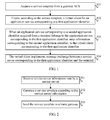
- FIG. 1 is a flowchart of a method for terminal management in a home network according to Embodiment 1 of the present invention. As shown in FIG. 1 , the method includes the following process.
- Step 101 Acquire a service template from a gateway ACS.
- a home gateway acquires a service template from a gateway ACS.
- the service template is generated by the gateway ACS according to service server information received from at least one service server.
- the service server is corresponding to one application service
- the service template includes at least one first application identifier, where the first application identifier is corresponding to one application service.
- Step 102 Create, according to the service template, a virtual client for an application service corresponding to a first application identifier.
- Step 103 When an application service corresponding to a second application identifier acquired from a terminal belongs to the application service corresponding to the first application identifier, map information corresponding to the second application identifier, to the virtual client corresponding to the first application identifier.
- the second application identifier may be acquired in the following manner: acquiring description information from the terminal, where the description information includes at least one second application identifier.
- Step 104 The virtual client implements message exchange between a service server corresponding to the first application identifier and the terminal.
- the second application identifier in step 103 is acquired from the terminal.
- the second application identifier may be acquired by acquiring the description information from the terminal.
- the foregoing solution specifically includes the following three implementation manners.
- Step 1 Execute the foregoing step 101, that is, acquire the service template from the gateway ACS, where the service template includes the first application identifier.
- Step 2 Acquire the description information from the terminal, where the description information includes the second application identifier.
- Step 3 Determine whether the application service corresponding to the second application identifier is the application service corresponding to the first application identifier. After step 3, step 4 is executed. In addition, when a determining result in step 3 is that the application service corresponding to the second application identifier belongs to the application service corresponding to the first application identifier, step 5 is executed continuously after step 4 is executed.
- Step 4 Execute the foregoing step 102, that is, create, according to the service template, the virtual client for the application service corresponding to the first application identifier.
- Step 5 Execute the foregoing step 103, that is, when the application service corresponding to the second application identifier acquired from the terminal belongs to the application service corresponding to the first application identifier, map the information corresponding to the second application identifier, to the virtual client corresponding to the first application identifier.
- Step 6 Execute the foregoing step 104, that is, the virtual client implements message exchange between the service server corresponding to the first application identifier and the terminal.
- Step 1 Execute the foregoing step 101, that is, acquire the service template from the gateway ACS, where the service template includes the first application identifier.
- Step 2 Execute the foregoing step 102, that is, create, according to the service template, the virtual client for the application service corresponding to the first application identifier.
- Step 3 Acquire the description information from the terminal, where the description information includes the second application identifier.
- Step 4 Determine whether the application service corresponding to the second application identifier is the application service corresponding to the first application identifier.
- step 5 is executed.
- Step 5 Execute the foregoing step 103, that is, when the application service corresponding to the second application identifier acquired from the terminal belongs to the application service corresponding to the first application identifier, map the information corresponding to the second application identifier, to the virtual client corresponding to the first application identifier.
- Step 6 Execute the foregoing step 104, that is, the virtual client implements message exchange between the service server corresponding to the first application identifier and the terminal.
- Step 1 Execute the foregoing step 101, that is, acquire the service template from the gateway ACS, where the service template includes the first application identifier.
- Step 2 Acquire the description information from the terminal, where the description information includes the second application identifier.
- Step 3 Execute the foregoing step 102, that is, create, according to the service template, the virtual client for the application service corresponding to the first application identifier.
- Step 4 Determine whether the application service corresponding to the second application identifier is the application service corresponding to the first application identifier. When a determining result in step 4 is that the application service corresponding to the second application identifier belongs to the application service corresponding to the first application identifier, step 5 is executed.
- Step 5 Execute the foregoing step 103, that is, when the application service corresponding to the second application identifier acquired from the terminal belongs to the application service corresponding to the first application identifier, map the information corresponding to the second application identifier, to the virtual client corresponding to the first application identifier.
- Step 6 Execute the foregoing step 104, that is, the virtual client implements message exchange between the service server corresponding to the first application identifier and the terminal.
- a corresponding virtual client is created for a service server according to a first application identifier in a service template generated by a gateway ACS, where the service template includes the first application identifier corresponding to the service server; a terminal is matched with the virtual client according to a second application identifier from the terminal and the first application identifier; description information of the terminal is mapped to the matched virtual client, and the virtual client is used to implement information exchange between the corresponding service server and the terminal, thereby implementing management of the terminal by multiple service servers by using the virtual client set on.
- FIG. 2 is a flowchart of a method for terminal management in a home network according to Embodiment 2 of the present invention. As shown in FIG. 2 , the method includes the following process.
- Step 201 Receive service server information sent by a service server.
- service server information sent by at least one service server is received.
- the service server is corresponding to one application service.
- Step 202 Generate a service template according to the service server information.
- the service template is generated according to the service server information received from at least one service server, where the service template includes at least one first application identifier, where the first application identifier is corresponding to one application service.
- Step 203 Send the service template to a home gateway.
- the service template is sent to the home gateway, so that the home gateway creates, according to the service template, a virtual client for the application service corresponding to the first application identifier and when an application service corresponding to a second application identifier acquired from a terminal belongs to the application service corresponding to the first application identifier, maps information corresponding to the second application identifier, to the virtual client corresponding to the first application identifier, where the virtual client on the home gateway implements message exchange between the service server corresponding to the first application identifier and the terminal.
- message exchange between the service server corresponding to the client and the terminal is implemented by using the virtual client on the home gateway, a control message of the service server is sent to the terminal, and management of the terminal by the service server is implemented.
- a service template is generated and sent to a home gateway, where the service template includes a first application identifier corresponding to a service server, so that the home gateway creates a corresponding virtual client for the service server according to the first application identifier in the service template, matches a terminal with the virtual client according to a second application identifier from the terminal and the first application identifier, maps description information of the terminal to the matched virtual client, and uses the virtual client to implement information exchange between the corresponding service server and the terminal, thereby implementing management of the terminal by multiple service servers by using the virtual client set on the home gateway.
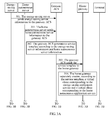
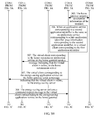
- FIG. 3A , FIG. 3B , and FIG. 3C are a signaling flowchart of a method for terminal management in a home network according to Embodiment 3 of the present invention.
- a home network includes two service servers, which are an energy-saving server and a home autonomous server respectively, and a terminal needs to be managed by the two service servers.
- the energy-saving server is corresponding to an energy-saving application service
- the home autonomous server is corresponding to a home autonomous application service.
- the method includes the following process.
- Step 301 An energy-saving server sends energy-saving server information to a gateway ACS, and a home autonomous server sends home autonomous server information to the gateway ACS.
- the home network includes the two service servers: the energy-saving server and the home autonomous server.
- the service server information sent by the energy-saving server is specifically the energy-saving server information
- the service server information sent by the home autonomous server is specifically the home autonomous server information.
- Step 302 The gateway ACS generates a service template according to the energy-saving server information and home autonomous server information.
- the gateway ACS receives the service server information sent by the at least one service server, and generates the service template according to the service server information.
- the service template includes at least one first application identifier, where the first application identifier is corresponding to one application service. Because the service server is corresponding to one application service, the first application identifier is also corresponding to one service server. Further, the service template may further include: a uniform resource locator (Uniform/Universal Resource Locator, URL for short) of the service server corresponding to the first application identifier, and a user name and password of a connection request corresponding to the first application identifier.
- URL Uniform/Universal Resource Locator
- the gateway ACS receives the energy-saving server information sent by the energy-saving server and the home autonomous server information sent by the home autonomous server, and generates the service template according to the energy-saving server information and home autonomous server information.
- the service template includes two first application identifiers, where one first application identifier is corresponding to the energy-saving server, and the other first application identifier is corresponding to the home autonomous server.
- Step 303 The gateway ACS sends the service template to a home gateway.
- Step 304 The home gateway separately creates, according to the service template, a virtual client corresponding to the energy-saving application service and a virtual client corresponding to the home autonomous application service.
- the home gateway creates, according to the service template, a corresponding virtual client for the service server corresponding to the first application identifier in the service template.
- the home gateway creates, according to the service template, a corresponding virtual client for the first application identifier corresponding to the energy-saving server in the service template, where the virtual client is a client corresponding to the energy-saving server; the home gateway creates, according to the service template, a corresponding virtual client for the first application identifier corresponding to the home autonomous server in the service template, where the virtual client is a client corresponding to the home autonomous server. That is, the home gateway separately creates, according to the service template, the client corresponding to the energy-saving server and the client corresponding to the home autonomous server.
- Step 305 The home gateway acquires description information of the terminal.
- the home gateway acquires the description information of the terminal, where the description information of the terminal includes at least one second application identifier and information corresponding to the second application identifier.
- the description information of the terminal may include a node description file and at least one brief description file, where the brief description file includes one second application identifier. Therefore, the description information of the terminal totally includes at least one second application identifier.
- the terminal may be specifically a ZigBee device.
- a specific method for acquiring the description information of the terminal by the home gateway may be: acquiring, by the home gateway, the description information of the terminal from the terminal by using a command of a service discovery function.
- the home gateway acquires the description information of the ZigeBee device by using a series of commands of a device and service discovery function of a ZigBee protocol.
- Step 306 When an application service corresponding to a second application identifier belongs to an application service corresponding to a first application identifier, map information corresponding to the second application identifier, to a virtual client corresponding to the first application identifier.
- the home gateway compares the second application identifier in the brief description file with the first application identifier in the service template according to the acquired description information of the terminal; when the application service corresponding to the second application identifier belongs to the application service corresponding to the first application identifier, the home gateway maps the description information of the terminal to which the second application identifier belongs, to the virtual client corresponding to the first application identifier.
- a specific mapping method may be as follows: The home gateway generates a data model of the terminal according to the description information of the terminal, and embeds the data model of the terminal into a data model of the virtual client corresponding to the first application identifier.
- the terminal needs to be managed by both the energy-saving server and the home autonomous server; therefore, the description information of the terminal includes two second application identifiers, where one second application identifier is corresponding to the energy-saving server, and the other second application identifier is corresponding to the home autonomous server.
- the home gateway compares the second application identifier with the first application identifier.
- the application service corresponding to the second application identifier belongs to the application service corresponding to the first application service, and therefore the home gateway maps the description information of the terminal corresponding to the second application identifier, to the virtual client corresponding to the energy-saving application service.
- the application service corresponding to the second application identifier corresponding to the home autonomous application service belongs to the application service corresponding to the first application identifier corresponding to the home autonomous application service, and therefore the home gateway maps the description information of the terminal corresponding to the second application identifier, to the virtual client corresponding to the home autonomous application service.
- step 306 message exchange between the service server corresponding to the first application identifier and the terminal is implemented by using the virtual client on the home gateway. Thereby, a control message of the service server is sent to the terminal, and management of the terminal by the service server is implemented.
- the process may include the following steps 307 to step 311.
- Step 307 The virtual client corresponding to the energy-saving application service on the home gateway sends a message indicating that the virtual client is online, to the energy-saving server, and the virtual client corresponding to the home autonomous application service on the home gateway sends a message indicating that the virtual client is online, to the home autonomous server.
- the virtual client on the home gateway sends the message indicating that the virtual client is online, to the corresponding service server.
- the virtual client corresponding to the energy-saving application service on the home gateway establishes a session with the energy-saving server, and sends the indication that the virtual client is online, to the energy-saving server by using an Inform (Inform for short) message, where the Inform message includes a data model of the virtual client corresponding to the energy-saving application service, and optionally, the Inform message may further include the data model of the terminal, and the home gateway informs the energy-saving server about generation of the virtual client by using the Inform message;
- the virtual client corresponding to the home autonomous application service on the home gateway establishes a session with the home autonomous server, and sends the indication that the virtual client is online, to the home autonomous server by using an Inform message, where the Inform message includes a data model of the virtual client corresponding to the home autonomous application service, and optionally, the Inform message may further include the data model of the terminal, and the home gateway informs the home autonomous server
- Step 308 The energy-saving server delivers a command request message to the virtual client corresponding to the energy-saving application service on the home gateway, and the home autonomous server delivers a command request message to the virtual client corresponding to the home autonomous application service on the home gateway.
- each service server delivers the command request message to the corresponding virtual client on the home gateway.
- the energy-saving server invokes, by using a Set Parameter (Set Parameter for short) method, a command on the data model of the terminal in the virtual client corresponding to the energy-saving application service on the home gateway, so as to deliver the command request message to the virtual client corresponding to the energy-saving application service;
- the home autonomous server invokes, by using a Set Parameter method, a command on the data model of the terminal in the virtual client corresponding to the home autonomous application service on the home gateway, so as to deliver the command request message to the virtual client corresponding to the home autonomous application service.
- Step 309 The virtual client corresponding to the energy-saving application service on the home gateway receives the command request message delivered by the energy-saving server, and after performing protocol conversion on the command request message, sends the command request message to the terminal; the virtual client corresponding to the home autonomous application service on the home gateway receives the command request message delivered by the home autonomous server, and after performing protocol conversion on the command request message, sends the command request message to the terminal.
- the virtual client on the home gateway receives the command request message delivered by the corresponding service server, and after performing protocol conversion on the command request message, sends the command request message to the terminal.
- the virtual client corresponding to the energy-saving application service on the home gateway receives the command request message delivered by the energy-saving server, and after performing protocol conversion on the command request message delivered by the energy-saving server, sends the command request message to the terminal;
- the virtual client corresponding to the home autonomous application service on the home gateway receives the command request message delivered by the home autonomous server, and after performing protocol conversion on the command request message delivered by the home autonomous server, sends the command request message to the terminal.
- Step 310 The terminal executes a command in the command request message delivered by the energy-saving server and returns a command response message to the virtual client corresponding to the energy-saving application service on the home gateway; the terminal executes a command in the command request message delivered by the home autonomous server and returns a command response message to the virtual client corresponding to the home autonomous application service on the home gateway.
- the terminal executes the command in the command request message and returns the command response message to the corresponding virtual client on the home gateway.
- the virtual client corresponding to the energy-saving application service on the home gateway sends the command request message to the terminal, so that the terminal executes the command in the command request message.
- the terminal returns a command response message to the virtual client corresponding to the energy-saving application service on the home gateway.
- the virtual client corresponding to the home autonomous application service on the home gateway After performing protocol conversion on the command request message delivered by the home autonomous server, the virtual client corresponding to the home autonomous application service on the home gateway sends the command request message to the terminal, so that the terminal executes the command in the command request message. Because the command request message comes from the virtual client corresponding to the home autonomous application service on the home gateway, and is corresponding to the home autonomous server, the terminal returns a command response message to the virtual client corresponding to the home autonomous application service on the home gateway.
- Step 311 The virtual client corresponding to the energy-saving application service on the home gateway receives the command response message returned by the terminal, and after performing protocol conversion on the command response message, sends the command response message to the energy-saving server; the virtual client corresponding to the home autonomous application service on the home gateway receives the command response message returned by the terminal, and after performing protocol conversion on the command response message, sends the command response message to the home autonomous server.
- the virtual client on the home gateway receives the command response message returned by the terminal, and after performing protocol conversion on the command response message, sends the command response message to the corresponding service server.
- the virtual client corresponding to the energy-saving application service on the home gateway receives the command response message returned by the terminal, and after performing protocol conversion on the command response message, sends the command response message to the energy-saving server;
- the virtual client corresponding to the home autonomous application service on the home gateway receives the command response message returned by the terminal, and after performing protocol conversion on the command response message, sends the command response message to the home autonomous server.
- a gateway ACS generates a service template, where the service template includes multiple first application identifiers respectively corresponding to multiple service servers; and a home gateway creates corresponding virtual clients for the service servers according to the first application identifiers in the service template, matches a terminal with the virtual clients according to second application identifiers in description information of the terminal and the first application identifiers, maps the description information of the terminal to the matched virtual clients, and uses the virtual clients to implement information exchange between the corresponding service servers and the terminal, thereby implementing management of the terminal by the multiple service servers by using the multiple virtual clients set on the home gateway.
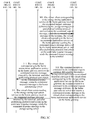
- FIG. 4A , FIG. 4B , and FIG. 4C are a signaling flowchart of a method for terminal management in a home network according to Embodiment 4 of the present invention.
- a home network includes two service servers, which are an energy-saving server and a home autonomous server respectively, and a terminal needs to be managed by the two service servers.
- the terminal is a ZigBee device
- the home network includes a ZigBee gateway, where the ZigBee gateway implements information exchange between a home gateway and the ZigBee device.
- the managed terminal may be not only a ZigBee device, but also other types of devices, for example, a Bluetooth (Bluetooth) device and a Z-Wave device.
- Z-Wave is a wireless networking specification dominated by a Danish company Zensys.
- a ZigBee gateway is used as a bridging gateway; in a case in which the terminal is a Bluetooth device, a Bluetooth gateway is used as a bridging gateway to implement a function of the ZigBee gateway in Embodiment 4 of the present invention; in a case in which the terminal is a Z-Wave device, a Z-Wave gateway is used as a bridging gateway to implement a function of the ZigBee gateway in Embodiment 4 of the present invention.
- the energy-saving server is corresponding to an energy-saving application service
- the home autonomous server is corresponding to a home autonomous application service.
- the method includes the following process.
- Step 401 An energy-saving server sends energy-saving server information to a gateway ACS, and a home autonomous server sends home autonomous server information to the gateway ACS.
- the home network includes the two service servers: the energy-saving server and the home autonomous server.
- the service server information sent by the energy-saving server is specifically the energy-saving server information
- the service server information sent by the home autonomous server is specifically the home autonomous server information.
- Step 402 The gateway ACS generates a service template according to the energy-saving server information and home autonomous server information.
- the gateway ACS receives the service server information sent by the at least one service server, and generates the service template according to the service server information.
- the service template includes at least one first application identifier, where the first application identifier is corresponding to a service server. Further, the service template may further include: a URL of the service server corresponding to the first application identifier, and a user name and password of a connection request corresponding to the first application identifier.
- the gateway ACS receives the energy-saving server information sent by the energy-saving server and the home autonomous server information sent by the home autonomous server, and generates the service template according to the energy-saving server information and home autonomous server information.
- the service template includes two first application identifiers, where one first application identifier is corresponding to the energy-saving server, and the other first application identifier is corresponding to the home autonomous server.
- Step 403 The gateway ACS sends the service template to a home gateway.
- Step 404 The home gateway separately creates, according to the service template, a virtual client corresponding to the energy-saving application service and a virtual client corresponding to the home autonomous application service.
- the home gateway creates, according to the service template, a corresponding virtual client for the service server corresponding to the first application identifier in the service template.
- the home gateway creates, according to the service template, a corresponding virtual client for the first application identifier corresponding to the energy-saving server in the service template, where the virtual client is a client corresponding to the energy-saving server; the home gateway creates, according to the service template, a corresponding virtual client for the first application identifier corresponding to the home autonomous server in the service template, where the virtual client is a client corresponding to the home autonomous server. That is, the home gateway separately creates, according to the service template, the client corresponding to the energy-saving server and the client corresponding to the home autonomous server.
- Step 405 The home gateway acquires description information of the terminal by using the ZigBee gateway.
- the home gateway acquires the description information of the terminal.
- the description information of the terminal includes at least one second application identifier and information corresponding to the second application identifier.
- the description information of the terminal may include a node description file and at least one brief description file, where the brief description file includes one second application identifier. Therefore, the description information of the terminal totally includes at least one second application identifier.
- the terminal is a ZigBee device
- the home gateway acquires the description information of the terminal by using the ZigBee gateway.
- a specific method of this step may adopt the following two methods.
- Method 1 The home gateway acquires the description information of the terminal from the ZigBee gateway, where the description information of the terminal is uploaded to the ZigBee gateway by using a ZigBee device profile (ZigBee Device Profile, ZDP for short) command when the terminal joins a ZigBee network.
- a ZigBee device profile ZigBee Device Profile, ZDP for short
- the ZigBee device uploads the description information of the device to the ZigBee gateway by using a series of ZDP commands; then, when step 405 is executed, the home gateway acquires the description information of the ZigBee device on the ZigBee gateway by using a series of ZDP commands.
- Method 2 The home gateway invokes a device discovery report function of the ZigBee gateway, so that the ZigBee gateway acquires the description information of the terminal and returns the description information of the terminal to the home gateway.
- Step 406 When an application service corresponding to a second application identifier belongs to an application service corresponding to a first application identifier, map information corresponding to the second application identifier, to a virtual client corresponding to the first application identifier.
- the home gateway compares the second application identifier in the brief description file with the first application identifier in the service template according to the acquired description information of the terminal; when the application service corresponding to the second application identifier belongs to the application service corresponding to the first application identifier, the home gateway maps the description information of the terminal corresponding to the second application identifier, to the virtual client corresponding to the first application identifier.
- a specific mapping method may be as follows: The home gateway generates a data model of the terminal according to the description information of the terminal, and embeds the data model of the terminal into a data model of the virtual client corresponding to the first application identifier.
- the terminal needs to be managed by both the energy-saving server and the home autonomous server; therefore, the description information of the terminal includes two second application identifiers, where one second application identifier is corresponding to the energy-saving application service, and the other second application identifier is corresponding to the home autonomous application service.
- the home gateway compares the second application identifier with the first application identifier.
- the application service corresponding to the second application identifier corresponding to the energy-saving application service belongs to the application service corresponding to the first application identifier corresponding to the energy-saving application service, and therefore the home gateway maps the description information of the terminal corresponding to the second application identifier, to the virtual client corresponding to the energy-saving application service.
- the application service corresponding to the second application identifier corresponding to the home autonomous application service belongs to the application service corresponding to the first application identifier corresponding to the home autonomous application service, and therefore the home gateway maps the description information of the terminal corresponding to the second application identifier, to the virtual client corresponding to the home autonomous application service.
- step 406 message exchange between the service server corresponding to the first application identifier and the terminal is implemented by using the virtual client on the home gateway. Thereby, a control message of the service server is sent to the terminal, and management of the terminal by the service server is implemented.
- the process may include the following steps 407 to step 413.
- Step 407 The virtual client corresponding to the energy-saving application service on the home gateway sends a message indicating that the virtual client is online, to the energy-saving server, and the virtual client corresponding to the home autonomous application service on the home gateway sends a message indicating that the virtual client is online, to the home autonomous server.
- the virtual client on the home gateway sends the message indicating that the virtual client is online, to the corresponding service server.
- the virtual client corresponding to the energy-saving application service on the home gateway establishes a session with the energy-saving server, where the Inform message includes a data model of the virtual client corresponding to the energy-saving application service, and optionally, the Inform message may further include the data model of the terminal, and the home gateway informs the energy-saving server about generation of the virtual client by using the Inform message;
- the virtual client corresponding to the home autonomous application service on the home gateway establishes a session with the home autonomous server, and sends the message indicating that the virtual client is online, to the home autonomous server by using an Inform message, where the Inform message includes a data model of the virtual client corresponding to the home autonomous application service, and optionally, the Inform message may further include the data model of the terminal, and the home gateway informs the home autonomous server about generation of the virtual client by using the Inform message.
- Step 408 The energy-saving server delivers a command request message to the virtual client corresponding to the energy-saving application service on the home gateway, and the home autonomous server delivers a command request message to the virtual client corresponding to the home autonomous application service on the home gateway.
- the service server delivers the command request message to the corresponding virtual client on the home gateway.
- the energy-saving server invokes, by using a Set Parameter method, a command on the data model of the terminal in the virtual client corresponding to the energy-saving application service on the home gateway, so as to deliver the command request message to the virtual client corresponding to the energy-saving application service;
- the home autonomous server invokes, by using a Set Parameter method, a command on the data model of the terminal in the virtual client corresponding to the home autonomous application service on the home gateway, so as to deliver the command request message to the virtual client corresponding to the home autonomous application service.
- Step 409 The virtual client corresponding to the energy-saving application service on the home gateway receives the command request message delivered by the energy-saving server, and forwards the command request message to a ZigBee gateway; the virtual client corresponding to the home autonomous application service on the home gateway receives the command request message delivered by the home autonomous server, and forwards the command request message to the ZigBee gateway.
- the virtual client on the home gateway receives the command request message delivered by the corresponding service server, and forwards the command request message to the ZigBee gateway.
- the virtual client corresponding to the energy-saving application service on the home gateway receives the command request message delivered by the energy-saving server, and forwards the command request message to the ZigBee gateway according to a ZigBee gateway specification by invoking a corresponding Internet Protocol (Internet Protocol, IP for short) interface of the ZigBee gateway.
- the virtual client corresponding to the home autonomous application service on the home gateway receives the command request message delivered by the home autonomous server, and forwards the command request message to the ZigBee gateway according to the ZigBee gateway specification by invoking the corresponding IP interface of the ZigBee gateway.
- Step 410 After performing protocol conversion on the command request message, the ZigBee gateway sends the command request message to the terminal.
- the ZigBee gateway receives the command request messages from the virtual client corresponding to the energy-saving application service and virtual client corresponding to the home autonomous application service on the home gateway, and after performing protocol conversion on the command request messages, sends the command request messages to the terminal.
- Step 411 The terminal executes a command in the command request message and returns a command response message to the ZigBee gateway.
- the terminal executes the command in the command request message on which protocol conversion is performed by the ZigBee gateway, where the command request message comes from the energy-saving server and home autonomous server, and after executing the command, returns the command response message to the ZigBee gateway.
- Step 412 After performing protocol conversion on the command response message, the ZigBee gateway sends the command response message to the virtual client corresponding to the energy-saving application service on the home gateway; after performing protocol conversion on the command response message, the ZigBee gateway sends the command response message to the virtual client corresponding to the home autonomous application service on the home gateway.
- the ZigBee gateway receives the command request message returned by the terminal, and after performing protocol conversion on the command response message, returns the command response message to the corresponding virtual client on the home gateway. Specifically, after the terminal executes the command in the command request message delivered by the energy-saving ACS, where protocol conversion is performed on the command request message by the ZigBee gateway, the terminal returns the command response message corresponding to the energy-saving server, to the ZigBee gateway; and after performing protocol conversion on the command response message, the ZigBee gateway returns the command response message to the virtual client corresponding to the energy-saving application service.
- the terminal After the terminal executes the command in the command request message delivered by the home autonomous ACS, where protocol conversion is performed on the command request message by the ZigBee gateway, the terminal returns the command response message corresponding to the home autonomous server, to the ZigBee gateway; and after performing protocol conversion on the command response message, the ZigBee gateway returns the command response message to the virtual client corresponding to the home autonomous application service.
- Step 413 The virtual client corresponding to the energy-saving application service on the home gateway receives the command response message returned by the ZigBee gateway, and sends the command response message to the energy-saving server; the virtual client corresponding to the home autonomous application service on the home gateway receives the command response message returned by the ZigBee gateway, and sends the command response message to the home autonomous server.
- the virtual client on the home gateway receives the command response message returned by the ZigBee gateway, and forwards the command response message to the corresponding service server.
- the virtual client corresponding to the energy-saving application service on the home gateway receives the command response message returned by the ZigBee gateway, and sends the command response message to the energy-saving server;
- the virtual client corresponding to the home autonomous application service on the home gateway receives the command response message returned by the ZigBee gateway, and sends the command response message to the home autonomous server.
- a gateway ACS generates a service template, where the service template includes multiple first application identifiers respectively corresponding to multiple service servers; and a home gateway creates corresponding virtual clients for the service servers according to the first application identifiers in the service template, matches a terminal with the virtual clients according to second application identifiers in description information of the terminal and the first application identifiers, maps the description information of the terminal to the matched virtual clients, and uses the virtual clients to implement information exchange between the corresponding service servers and the terminal, thereby implementing management of the terminal by the multiple service servers by using the multiple virtual clients set on the home gateway.
- the home network includes a ZigBee gateway; the home gateway implements information exchange with the terminal by using the ZigBee gateway, acquires the description information of the terminal, and sends command messages of the multiple service servers to the terminal, thereby implementing management of the terminal by the multiple service servers.
- FIG. 5 is a schematic structural diagram of a home network according to Embodiment 5 of the present invention.
- the home network includes at least: at least one service server 51, a gateway ACS 52, a home gateway 53, and a terminal 54, where a quantity of the service servers 51 is at least one.
- the terminal 54 is a ZigBee device
- the home network may further include a ZigBee gateway 55.
- the at least one service server 51 is configured to send service server information to the gateway ACS 52, and implement message exchange with the terminal 54 by using a corresponding virtual client on the home gateway 53.
- the gateway ACS 52 is configured to generate a service template according to the service server information received from the at least one service server 51.
- the service template includes a first application identifier, where the first application identifier is corresponding to one application service.
- the home gateway 53 is configured to acquire the service template from the gateway ACS 52, create, according to the service template, the corresponding virtual client for the application service corresponding to the first application identifier, and when an application service corresponding to a second application identifier from the terminal 54 belongs to the application service corresponding to the first application identifier, map information corresponding to the second application identifier, to the virtual client corresponding to the first application identifier, where the virtual client implements message exchange between the service server 51 corresponding to the first application identifier and the terminal 54.
- the terminal 54 is configured to provide the second application identifier of the terminal 54 for the home gateway 53, where the second application identifier is corresponding to one application service, and configured to implement, through the virtual client on the home gateway 53, message exchange with the service server 51 corresponding to the virtual client.
- the terminal 54 is specifically configured to provide description information of the terminal 54 for the home gateway 53.
- the home gateway 53 is specifically configured to acquire the description information from the terminal 54.
- the description information includes the second application identifier.
- the service template may further include: a URL of the service server 51 corresponding to the first application identifier, and a user name and password of a connection request corresponding to the first application identifier.
- the description information of the terminal 54 includes: a node description file and at least one brief description file, where the brief description file includes one second application identifier.
- the terminal 54 may be a ZigBee device.
- the home gateway 53 is specifically configured to acquire the description information of the terminal 54 from the terminal 54 by using a command of a service discovery function.
- the at least one service server 51 is specifically configured to deliver a command request message to the corresponding virtual client on the home gateway 53.
- the home gateway 53 is specifically configured to cause the virtual client to send a message indicating that the virtual client is online, to the corresponding service server, cause the virtual client to receive the command request message delivered by the corresponding service server 51 and after performing protocol conversion on the command request message, send the command request message to the terminal 54, and cause the virtual client to receive a command response message returned by the terminal 54 and after performing protocol conversion on the command response message, send the command response message to the corresponding service server 51.
- the terminal 54 is specifically configured to execute a command in the command request message from the home gateway 53, and return the command response message to the corresponding virtual client on the home gateway 53.
- the home network may further include the ZigBee gateway 55.
- the terminal 54 may be a ZigBee device.
- the home gateway 53 is specifically configured to acquire the description information of the terminal 54 from the ZigBee gateway 55, where the description information of the terminal 54 is uploaded to the ZigBee gateway 55 by using a ZDP command when the terminal 54 joins a ZigBee network.
- the home gateway 53 is specifically configured to invoke a device discovery report function of the ZigBee gateway 55, so that the ZigBee gateway 55 is specifically configured to acquire the description information of the terminal 54 and return the description information of the terminal 54 to the home gateway 53.
- the at least one service server 51 is specifically configured to deliver a command request message to the corresponding virtual client on the home gateway 53.
- the home gateway 53 is specifically configured to cause the virtual client to send a message indicating that the virtual client is online, to the corresponding service server, cause the virtual client to receive the command request message delivered by the corresponding service server 51 and forward the command request message to the ZigBee gateway 55, and cause the virtual client to receive a command response message returned by the ZigBee gateway 55 and forward the command response message to the corresponding service server 51.
- the ZigBee gateway 55 is specifically configured to send, after performing protocol conversion on the command request message, the command request message to the terminal 54, and send, after performing protocol conversion on the command response message, the command response message to the corresponding virtual client on the home gateway 53.
- the terminal 54 is specifically configured to execute a command in the command request message, and return the command response message to the ZigBee gateway 55.
- a gateway ACS in a home network generates a service template, where the service template includes multiple first application identifiers respectively corresponding to multiple service servers in the home network; and a home gateway in the home network creates corresponding virtual clients for the service servers in the home network according to the first application identifiers in the service template, matches a terminal with the virtual clients according to second application identifiers in description information of the terminal in the home network and the first application identifiers, maps the description information of the terminal to the matched virtual clients, and uses the virtual clients to implement information exchange between the corresponding service servers and the terminal, thereby implementing management of the terminal by the multiple service servers by using the multiple virtual clients set on the home gateway.
- FIG. 6 is a schematic structural diagram of a home gateway according to Embodiment 6 of the present invention.
- the home gateway includes at least a first acquiring unit 61, a second acquiring unit 62, and a client unit 63.
- the first acquiring unit 61 is configured to acquire a service template from a gateway ACS.
- the service template is generated by the gateway ACS according to service server information received from at least one service server.
- the service server is corresponding to one application service, and the service template includes a first application identifier, where the first application identifier is corresponding to one application service.
- the second acquiring unit 62 is configured to acquire a second application identifier from a terminal, where the second application identifier is corresponding to one application service.
- the client unit 63 is configured to create, according to the service template from the first acquiring unit 61, a virtual client for the application service corresponding to the first application identifier, and when the application service corresponding to the second application identifier from the second acquiring unit 62 belongs to the application service corresponding to the first application identifier, map information corresponding to the second application identifier from the second acquiring unit 62, to the virtual client corresponding to the first application identifier, where the virtual client implements message exchange between the service server corresponding to the first application identifier and the terminal.
- the second acquiring unit 62 is specifically configured to acquire description information from the terminal, where the description information includes the second application identifier.
- the service template further includes: a URL of the service server corresponding to the first application identifier, and a user name and password of a corresponding connection request.
- the description information of the terminal includes: a node description file and at least one brief description file, where the brief description file includes the second application identifier.
- the terminal may be a ZigBee device; correspondingly, the second acquiring unit 62 is specifically configured to acquire the description information of the terminal from the terminal by using a command of a service discovery function.
- the client unit 63 is specifically configured to cause the virtual client to send a message indicating that the virtual client is online, to the corresponding service server; cause the virtual client to receive a command request message delivered by the corresponding service server and after performing protocol conversion on the command request message, send the command request message to the terminal, so that the terminal executes a command in the command request message and returns a command response message to the corresponding virtual client on the home gateway; and cause the virtual client to receive the command response message returned by the terminal and after performing protocol conversion on the command response message, send the command response message to the corresponding service server.
- the terminal may be a ZigBee device, and the second acquiring unit 62 is connected to the ZigBee device by using a ZigBee gateway.
- the second acquiring unit 62 is specifically configured to acquire the description information of the terminal from the ZigBee gateway, where the description information of the terminal is uploaded to the ZigBee gateway by using a ZDP command when the terminal joins a ZigBee network.
- the second acquiring unit 62 is specifically configured to invoke a device discovery report function of the ZigBee gateway, so that the ZigBee gateway acquires the description information of the terminal and returns the description information of the terminal to the home gateway.
- the client unit 63 is specifically configured to cause the virtual client to send a message indicating that the virtual client is online, to the corresponding service server; cause the virtual client to receive a command request message delivered by the corresponding service server and forward the command request message to the ZigBee gateway, so that the ZigBee gateway sends, after performing protocol conversion on the command request message, the command request message to the terminal, so that the terminal executes a command in the command request message and returns a command response message to the ZigBee gateway, so that the ZigBee gateway sends, after performing protocol conversion on the command response message, the command response message to the corresponding virtual client on the home gateway; and cause the virtual client to receive the command response message returned by the ZigBee gateway and forward the command response message to the corresponding service server.
- a first acquiring unit of a home gateway acquires a service template generated by a gateway ACS, where the service template includes multiple first application identifiers respectively corresponding to multiple service servers; a second acquiring unit of the home gateway acquires description information of a terminal; a client unit of the home gateway creates corresponding virtual clients for the service servers according to the first application identifiers in the service template, matches the terminal with the virtual clients according to second application identifiers in the description information of the terminal and the first application identifiers, maps the description information of the terminal to the matched virtual clients, and uses the virtual clients to implement information exchange between the corresponding service servers and the terminal, thereby implementing management of the terminal by the multiple service servers by using the multiple virtual clients set on the home gateway.
- FIG. 7 is a schematic structural diagram of a gateway ACS according to Embodiment 7 of the present invention.
- the gateway ACS includes at least a receiving unit 71, a generating unit 72, and a sending unit 73.
- the receiving unit 71 is configured to receive service server information sent by at least one service server, where the service server is corresponding to one application service.
- the generating unit 72 is configured to generate a service template according to the service server information from the receiving unit 71.
- the service template includes a first application identifier, where the first application identifier is corresponding to one application service.
- the sending unit 73 is configured to send the service template from the generating unit 72 to a home gateway, so that the home gateway creates, according to the service template, a virtual client for the application service corresponding to the first application identifier and when an application service corresponding to a second application identifier acquired from a terminal belongs to the application service corresponding to the first application identifier, maps information corresponding to the second application identifier, to the virtual client corresponding to the first application identifier, where the virtual client on the home gateway implements message exchange between the service server corresponding to the first application identifier and the terminal.
- a receiving unit of a gateway ACS receives service server information from multiple service servers; a generating unit generates a service template according to the information, where the service template includes multiple first application identifiers respectively corresponding to the multiple service servers; and a sending unit sends the service template to a home gateway, so that the home gateway creates corresponding virtual clients for the service servers according to the first application identifiers in the service template, matches a terminal with the virtual clients according to second application identifiers in description information of the terminal and the first application identifiers, maps the description information of the terminal to the matched virtual clients, and uses the virtual clients to implement information exchange between the corresponding service servers and the terminal, thereby implementing management of the terminal by the multiple service servers by using the multiple virtual clients set on the home gateway.
- FIG. 8 is a schematic structural diagram of a home gateway according to Embodiment 8 of the present invention.
- the home gateway includes at least a first receiver 81, a second receiver 82, and a processor 83.
- the first receiver 81 is configured to acquire a service template from a gateway ACS.
- the service template is generated by the gateway ACS according to service server information received from at least one service server.
- the service server is corresponding to one application service, and the service template includes a first application identifier, where the first application identifier is corresponding to one application service.
- the second receiver 82 is configured to acquire a second application identifier from a terminal, where the second application identifier is corresponding to one application service.
- the processor 83 is configured to create, according to the service template from the first acquiring unit 81, a virtual client for the application service corresponding to the first application identifier, and when the application service corresponding to the second application identifier from the second receiver 82 belongs to the application service corresponding to the first application identifier, map information corresponding to the second application identifier from the second receiver 82, to the virtual client corresponding to the first application identifier, where the virtual client implements message exchange between the service server corresponding to the first application identifier and the terminal.
- the second receiver 82 is specifically configured to acquire description information from the terminal, where the description information includes the second application identifier.
- the service template further includes: a URL of the service server corresponding to the first application identifier, and a user name and password of a corresponding connection request.
- the description information of the terminal includes: a node description file and at least one brief description file, where the brief description file includes the second application identifier.
- the terminal may be a ZigBee device; correspondingly, the second receiver 82 is specifically configured to acquire the description information of the terminal from the terminal by using a command of a service discovery function.
- the processor 83 is specifically configured to cause the virtual client to send a message indicating that the virtual client is online, to the corresponding service server; cause the virtual client to receive a command request message delivered by the corresponding service server and after performing protocol conversion on the command request message, send the command request message to the terminal, so that the terminal executes a command in the command request message and returns a command response message to the corresponding virtual client on the home gateway; and cause the virtual client to receive the command response message returned by the terminal and after performing protocol conversion on the command response message, send the command response message to the corresponding service server.
- the terminal may be a ZigBee device, and correspondingly, the second receiver 82 is connected to the ZigBee device by using a ZigBee gateway.
- the second receiver 82 is specifically configured to acquire the description information of the terminal from the ZigBee gateway, where the description information of the terminal is uploaded to the ZigBee gateway by using a ZDP command when the terminal joins a ZigBee network.
- the second receiver 82 is specifically configured to invoke a device discovery report function of the ZigBee gateway, so that the ZigBee gateway acquires the description information of the terminal and returns the description information of the terminal to the home gateway.
- the processor 83 is specifically configured to cause the virtual client to send a message indicating that the virtual client is online, to the corresponding service server; cause the virtual client to receive a command request message delivered by the corresponding service server and forward the command request message to the ZigBee gateway, so that the ZigBee gateway sends, after performing protocol conversion on the command request message, the command request message to the terminal, so that the terminal executes a command in the command request message and returns a command response message to the ZigBee gateway, so that the ZigBee gateway sends, after performing protocol conversion on the command response message, the command response message to the corresponding virtual client on the home gateway; and cause the virtual client to receive the command response message returned by the ZigBee gateway and forward the command response message to the corresponding service server.
- a first acquiring unit of a home gateway acquires a service template generated by a gateway ACS, where the service template includes multiple first application identifiers respectively corresponding to multiple service servers; a second acquiring unit of the home gateway acquires description information of a terminal; a client unit of the home gateway creates corresponding virtual clients for the service servers according to the first application identifiers in the service template, matches the terminal with the virtual clients according to second application identifiers in the description information of the terminal and the first application identifiers, maps the description information of the terminal to the matched virtual clients, and uses the virtual clients to implement information exchange between the corresponding service servers and the terminal, thereby implementing management of the terminal by the multiple service servers by using the multiple virtual clients set on the home gateway.
- FIG. 9 is a schematic structural diagram of a gateway ACS according to Embodiment 9 of the present invention.
- the gateway ACS includes at least a receiver 91, a processor 92, and a sender 93.
- the receiver 91 is configured to receive service server information sent by at least one service server, where the service server is corresponding to one application service.
- the processor 92 is configured to generate a service template according to the service server information from the receiver 91.
- the service template includes a first application identifier, where the first application identifier is corresponding to one application service.
- the sender 93 is configured to send the service template from the processor 92 to a home gateway, so that the home gateway creates, according to the service template, a virtual client for the application service corresponding to the first application identifier and when an application service corresponding to a second application identifier acquired from a terminal belongs to the application service corresponding to the first application identifier, maps information corresponding to the second application identifier, to the virtual client corresponding to the first application identifier, where the virtual client on the home gateway implements message exchange between the service server corresponding to the first application identifier and the terminal.
- a receiving unit of a gateway ACS receives service server information from multiple service servers; a generating unit generates a service template according to the information, where the service template includes multiple first application identifiers respectively corresponding to the multiple service servers; and a sending unit sends the service template to a home gateway, so that the home gateway creates corresponding virtual clients for the service servers according to the first application identifiers in the service template, matches a terminal with the virtual clients according to second application identifiers in description information of the terminal and the first application identifiers, maps the description information of the terminal to the matched virtual clients, and uses the virtual clients to implement information exchange between the corresponding service servers and the terminal, thereby implementing management of the terminal by the multiple service servers by using the multiple virtual clients set on the home gateway.
- the program may be stored in a computer readable storage medium.
- the foregoing storage medium includes: any medium that can store program code, such as a ROM, a RAM, a magnetic disk, or an optical disc.
Landscapes
- Engineering & Computer Science (AREA)
- Computer Networks & Wireless Communication (AREA)
- Signal Processing (AREA)
- Automation & Control Theory (AREA)
- Computing Systems (AREA)
- Computer And Data Communications (AREA)
- Telephonic Communication Services (AREA)
- Mobile Radio Communication Systems (AREA)
- Small-Scale Networks (AREA)
Abstract
Description
- This application claims priority to Chinese Patent Application No.
CN 201210498875.X - The present invention relates to communications technologies, and in particular, to a method for terminal management in a home network, a device, and a home network.
- The digital subscriber line (Digital Subscriber Line, DSL for short) is a broadband access technology, and is currently applied extensively in home networks for broadband access. A TR-069 standard of the Broadband Forum (Broadband Forum) defines a TR-069 terminal and a method for remotely managing a TR-069 terminal by an operator. With development of a home network technology, a non-TR-069 terminal, for example, a ZigBee (ZigBee) device, which needs to be remotely managed by the operator, also emerges in a home network.
- Currently, a method for managing a non-TR-069 terminal in a home network is defined in a PD-174 standard of the Broadband Forum (Broadband Forum). By using a virtual device mechanism, a home gateway acts as a proxy to create an independent virtual TR-069 client for a proxied non-TR-069 terminal, and a service server manages the corresponding terminal by operating the virtual TR-069 client. By using an embedded object mechanism, the home gateway acts as a proxy to generate, in a data model of the home gateway, a data model for the proxied non-TR-069 terminal, and an ACS) manages the corresponding terminal by operating the data model of the gateway.
- By using the foregoing method for terminal management as defined in the PD-174 standard, the proxied non-TR-069 terminal can accept management by only one service server. However, in the home network, a non-TR-069 terminal (for example, a ZigBee device) is required to concurrently implement multiple applications, and therefore, multiple service servers are required to manage the terminal. The conventional method for terminal management in the home network cannot be used to implement management of the terminal by multiple service servers.
- A aspect of the present invention provides a method for terminal management in a home network, for solving disadvantages of the prior art and implementing management of a terminal by multiple service servers.
- Another aspect of the present invention provides a device for terminal management in a home network, for solving disadvantages of the prior art and implementing management of a terminal by multiple service servers.
- Still another aspect of the present invention provides a home network, for solving disadvantages of the prior art and implementing management of a terminal by multiple service servers.
- A aspect of the present invention provides a method for terminal management in a home network, where the method includes:
- acquiring a service template from a gateway auto-configuration server ACS, where the service template includes a first application identifier;
- creating, according to the service template, a virtual client for an application service corresponding to the first application identifier;
- when an application service corresponding to a second application identifier acquired from a terminal belongs to the application service corresponding to the first application identifier, mapping information corresponding to the second application identifier, to the virtual client corresponding to the first application identifier; and
- implementing, by the virtual client, message exchange between a service server corresponding to the first application identifier and the terminal.
- With reference to the foregoing aspect an implementation manner is further provided, where,
after the acquiring a service template from a gateway auto-configuration server ACS and before the creating, according to the service template, a virtual client for an application service corresponding to the first application identifier, or after the creating, according to the service template, a virtual client for an application service corresponding to the first application identifier, the method further includes: acquiring description information from the terminal, where the description information includes the second application identifier; and determining whether the application service corresponding to the second application identifier belongs to the application service corresponding to the first application identifier; or
before the creating, according to the service template, a virtual client for an application service corresponding to the first application identifier, the method further includes: acquiring description information from the terminal, where the description information includes the second application identifier; and after the creating, according to the service template, a virtual client for an application service corresponding to the first application identifier, the method further includes: determining whether the application service corresponding to the second application identifier belongs to the application service corresponding to the first application identifier. - With reference to the foregoing aspect and any one possible implementation manner, an implementation manner is further provided, where,
the service template further includes: a uniform resource locator URL of the service server corresponding to the first application identifier, and a user name and password of a corresponding connection request. - With reference to the foregoing aspect and any one possible implementation manner, an implementation manner is further provided,, where:
- the terminal includes a ZigBee ZigBee device;
- the description information of the terminal includes: a node description file and at least one brief description file, where the brief description file includes the second application identifier; and
- the acquiring description information from the terminal includes: acquiring the description information of the terminal from the terminal by using a command of a service discovery function.
- With reference to the foregoing aspect and any one possible implementation manner, an implementation manner is further provided, where,
the implementing, by the virtual client, message exchange between the service server corresponding to the first application identifier and the terminal includes: - sending, by the virtual client, a message indicating that the virtual client is online, to the service server corresponding to the first application identifier;
- receiving, by the virtual client, a command request message delivered by the service server corresponding to the first application identifier, and after performing protocol conversion on the command request message, sending the command request message to the terminal, so that the terminal executes a command in the command request message and returns a command response message to the corresponding virtual client; and
- receiving, by the virtual client, the command response message returned by the terminal, and after performing protocol conversion on the command response message, sending the command response message to the corresponding service server.
- With reference to the foregoing aspect and any one possible implementation manner, an implementation manner is further provided, where,
the terminal includes a ZigBee device;
the description information of the terminal includes: a node description file and at least one brief description file, where the brief description file includes the second application identifier; and
the acquiring description information from the terminal includes: - acquiring the description information of the terminal from a ZigBee gateway, where the description information of the terminal is uploaded to the ZigBee gateway by using a ZigBee device profile ZDP command when the terminal joins a ZigBee network; or
- invoking a device discovery report function of a ZigBee gateway, so that the ZigBee gateway acquires and returns the description information of the terminal.
- With reference to the foregoing aspect and any one possible implementation manner, an implementation manner is further provided, where, the implementing, by the virtual client, message exchange between the service server corresponding to the first application identifier and the terminal includes:
- sending, by the virtual client, a message indicating that the virtual client is online, to the service server corresponding to the first application identifier;
- receiving, by the virtual client, a command request message delivered by the service server corresponding to the first application identifier, and forwarding the command request message to the ZigBee gateway, so that the ZigBee gateway sends, after performing protocol conversion on the command request message, the command request message to the terminal, so that the terminal executes a command in the command request message and returns a command response message to the ZigBee gateway, so that the ZigBee gateway sends, after performing protocol conversion on the command response message, the command response message to the corresponding virtual client; and
- receiving, by the virtual client, the command response message returned by the ZigBee gateway, and forwarding the command response message to the corresponding service server.
- Another aspect of the present invention provides a method for terminal management in a home network, where the method includes:
- receiving service server information sent by a service server, where the service server is corresponding to one application service;
- generating a service template according to the service server information, where the service template includes a first application identifier; and
- sending the service template to a home gateway, so that the home gateway creates, according to the service template, a virtual client for the application service corresponding to the first application identifier and when an application service corresponding to a second application identifier acquired from a terminal belongs to the application service corresponding to the first application identifier, maps information corresponding to the second application identifier, to the virtual client corresponding to the first application identifier, where the virtual client on the home gateway implements message exchange between the service server corresponding to the first application identifier and the terminal.
- Still another aspect of the present invention provides a home gateway, including:
- a first acquiring unit, configured to acquire a service template from a gateway auto-configuration server ACS, where the service template includes a first application identifier;
- a second acquiring unit, configured to acquire a second application identifier from a terminal; and
- a client unit, configured to create, according to the service template from the first acquiring unit, a virtual client for an application service corresponding to the first application identifier, and when an application service corresponding to the second application identifier from the second acquiring unit belongs to the application service corresponding to the first application identifier, map information corresponding to the second application identifier, to the virtual client corresponding to the first application identifier, where the virtual client implements message exchange between a service server corresponding to the first application identifier and the terminal.
- With reference to the foregoing aspect and any one possible implementation manner, an implementation manner is further provided, where,
the second acquiring unit is specifically configured to acquire description information from the terminal, where the description information includes the second application identifier. - With reference to the foregoing aspect and any one possible implementation manner, an implementation manner is further provided, where,
the service template further includes: a uniform resource locator URL of the service server corresponding to the first application identifier, and a user name and password of a corresponding connection request. - With reference to the foregoing aspect and any one possible implementation manner, an implementation manner is further provided, where,
the terminal includes a ZigBee ZigBee device;
the description information of the terminal includes: a node description file and at least one brief description file, where the brief description file includes the second application identifier; and
the second acquiring unit is specifically configured to acquire the description information of the terminal from the terminal by using a command of a service discovery function. - With reference to the foregoing aspect and any one possible implementation manner, an implementation manner is further provided, where,
the client unit is specifically configured to cause the virtual client to send a message indicating that the virtual client is online, to the corresponding service server; cause the virtual client to receive a command request message delivered by the corresponding service server and after performing protocol conversion on the command request message, send the command request message to the terminal, so that the terminal executes a command in the command request message and returns a command response message to the corresponding virtual client on the home gateway; and cause the virtual client to receive the command response message returned by the terminal and after performing protocol conversion on the command response message, send the command response message to the corresponding service server. - With reference to the foregoing aspect and any one possible implementation manner, an implementation manner is further provided, where,
the terminal includes a ZigBee ZigBee device;
the description information of the terminal includes: a node description file and at least one brief description file, where the brief description file includes the second application identifier; and
the second acquiring unit is specifically configured to acquire the description information of the terminal from a ZigBee gateway, where the description information of the terminal is uploaded to the ZigBee gateway by using a ZigBee device profile ZDP command when the terminal joins a ZigBee network; or
the second acquiring unit is specifically configured to invoke a device discovery report function of a ZigBee gateway, so that the ZigBee gateway acquires and returns the description information of the terminal. - With reference to the foregoing aspect and any one possible implementation manner, an implementation manner is further provided, where,
the client unit is specifically configured to cause the virtual client to send a message indicating that the virtual client is online, to the corresponding service server; cause the virtual client to receive a command request message delivered by the corresponding service server and forward the command request message to the ZigBee gateway, so that the ZigBee gateway sends, after performing protocol conversion on the command request message, the command request message to the terminal, so that the terminal executes a command in the command request message and returns a command response message to the ZigBee gateway, so that the ZigBee gateway sends, after performing protocol conversion on the command response message, the command response message to the corresponding virtual client on the home gateway; and cause the virtual client to receive the command response message returned by the ZigBee gateway and forward the command response message to the corresponding service server. - Still another aspect of the present invention provides a gateway auto-configuration server ACS, including:
- a receiving unit, configured to receive service server information sent by a service server, where the service server is corresponding to one application service;
- a generating unit, configured to generate a service template according to the service server information from the receiving unit, where the service template includes a first application identifier; and
- a sending unit, configured to send the service template from the generating unit to a home gateway, so that the home gateway creates, according to the service template, a virtual client for the application service corresponding to the first application identifier and when an application service corresponding to a second application identifier acquired from a terminal belongs to the application service corresponding to the first application identifier, maps information corresponding to the second application identifier, to the virtual client corresponding to the first application identifier, where the virtual client implements message exchange between the service server corresponding to the first application identifier and the terminal.
- Still another aspect of the present invention provides a home network, including:
- at least one service server, where the service server is corresponding to one application service, and is configured to send service server information to a gateway ACS, and implement message exchange with a terminal by using a corresponding virtual client on a home gateway;
- the gateway ACS, configured to generate a service template according to the service server information received from the service server, where the service template includes a first application identifier;
- the terminal, configured to provide a second application identifier of the terminal for the home gateway, and configured to implement, through the virtual client on the home gateway, message exchange with the service server corresponding to the virtual client; and
- the home gateway, configured to acquire the service template from the gateway ACS, create, according to the service template, the virtual client for the application service corresponding to the first application identifier, and when an application service corresponding to the second application identifier from the terminal belongs to the application service corresponding to the first application identifier, map information corresponding to the second application identifier, to the virtual client corresponding to the first application identifier, where the virtual client implements message exchange between the service server corresponding to the first application identifier and the terminal.
- With reference to the foregoing aspect and any one possible implementation manner, an implementation manner is further provided, where,
the service template further includes: a uniform resource locator URL of the service server corresponding to the first application identifier, and a user name and password of a corresponding connection request. - With reference to the foregoing aspect and any one possible implementation manner, an implementation manner is further provided, where,
the terminal includes a ZigBee ZigBee device;
the description information of the terminal includes: a node description file and at least one brief description file, where the brief description file includes the second application identifier; and
the home gateway is specifically configured to acquire the description information of the terminal from the terminal by using a command of a service discovery function. - With reference to the foregoing aspect and any one possible implementation manner, an implementation manner is further provided, where,
the at least one service server is specifically configured to deliver a command request message to the corresponding virtual client on the home gateway;
the home gateway is specifically configured to cause the virtual client to respectively send a message indicating that the virtual client is online, to the corresponding service server, cause the virtual client to respectively receive the command request message delivered by the corresponding service server and after performing protocol conversion on the command request message, send the command request message to the terminal, and cause the virtual client to receive a command response message returned by the terminal and after performing protocol conversion on the command response message, send the command response message to the corresponding service server; and
the terminal is specifically configured to execute a command in the command request message from the home gateway, and return the command response message to the corresponding virtual client on the home gateway. - With reference to the foregoing aspect and any one possible implementation manner, an implementation manner is further provided, where,
the home network further includes a ZigBee gateway;
the terminal includes a ZigBee device;
the description information of the terminal includes: a node description file and at least one brief description file, where the brief description file includes the second application identifier; and
the home gateway is specifically configured to acquire the description information of the terminal from the ZigBee gateway, where the description information of the terminal is uploaded to the ZigBee gateway by using a ZigBee device profile ZDP command when the terminal joins a ZigBee network; or
the home gateway is specifically configured to invoke a device discovery report function of the ZigBee gateway, so that the ZigBee gateway is specifically configured to acquire and return the description information of the terminal. - With reference to the foregoing aspect and any one possible implementation manner, an implementation manner is further provided, where,
the at least one service server is specifically configured to deliver a command request message to the corresponding virtual client on the home gateway;
the home gateway is specifically configured to cause the virtual client to respectively send a message indicating that the virtual client is online, to the corresponding service server, cause the virtual client to respectively receive the command request message delivered by the corresponding service server and forward the command request message to the ZigBee gateway, and cause the virtual client to receive a command response message returned by the ZigBee gateway and forward the command response message to the corresponding service server;
the ZigBee gateway is specifically configured to send, after performing protocol conversion on the command request message, the command request message to the terminal, and send, after performing protocol conversion on the command response message, the command response message to the corresponding virtual client on the home gateway; and
the terminal is specifically configured to execute a command in the command request message, and return the command response message to the ZigBee gateway. - As may be seen from the summary of the invention, a gateway ACS generates a service template, where the service template includes a first application identifier corresponding to a service server; and a home gateway creates a corresponding virtual client for the service server according to the first application identifier in the service template, matches a terminal with the virtual client according to a second application identifier in description information of the terminal and the first application identifier, maps the description information of the terminal to the matched virtual client, and uses the virtual client to implement information exchange between the corresponding service server and the terminal, thereby implementing management of the terminal by the service server by using the virtual client set on the home gateway.
- To describe the technical solutions in the embodiments of the present invention or in the prior art more clearly, the following briefly introduces the accompanying drawings required for describing the embodiments or the prior art. Apparently, the accompanying drawings in the following description show merely some embodiments of the present invention, and a person of ordinary skill in the art may still derive other drawings from these accompanying drawings without creative efforts.
-
FIG. 1 is a flowchart of a method for terminal management in a home network according to Embodiment 1 of the present invention; -
FIG. 2 is a flowchart of a method for terminal management in a home network according to Embodiment 2 of the present invention; -
FIG. 3A ,FIG. 3B , andFIG. 3C are a signaling flowchart of a method for terminal management in a home network according to Embodiment 3 of the present invention; -
FIG. 4A ,FIG. 4B , andFIG. 4C are a signaling flowchart of a method for terminal management in a home network according to Embodiment 4 of the present invention; -
FIG. 5 is a schematic structural diagram of a home network according to Embodiment 5 of the present invention; -
FIG. 6 is a schematic structural diagram of a home gateway according to Embodiment 6 of the present invention; -
FIG. 7 is a schematic structural diagram of a gateway ACS according to Embodiment 7 of the present invention; -
FIG. 8 is a schematic structural diagram of a home gateway according to Embodiment 8 of the present invention; and -
FIG. 9 is a schematic structural diagram of a gateway ACS according to Embodiment 9 of the present invention. - The following clearly and completely describes the technical solutions in the embodiments of the present invention with reference to the accompanying drawings in the embodiments of the present invention. Apparently, the described embodiments are merely a part rather than all of the embodiments of the present invention. All other embodiments obtained by a person of ordinary skill in the art based on the embodiments of the present invention without creative efforts shall fall within the protection scope of the present invention.
- In the following embodiments of the present invention, a home network includes: at least one service server, at least one terminal, one home gateway, and one gateway auto-configuration server (Auto-configuration Server, ACS for short) managing the home gateway. For example, the terminal may be a home electrical appliance such as an air conditioner, the service server may be a home autonomous server, and the gateway ACS is configured to configure the home gateway, where the home autonomous server controls, by using the home gateway, running of the air conditioner.
-
FIG. 1 is a flowchart of a method for terminal management in a home network according to Embodiment 1 of the present invention. As shown inFIG. 1 , the method includes the following process. - Step 101: Acquire a service template from a gateway ACS.
- In this step, a home gateway acquires a service template from a gateway ACS. Specifically, the service template is generated by the gateway ACS according to service server information received from at least one service server. The service server is corresponding to one application service, and the service template includes at least one first application identifier, where the first application identifier is corresponding to one application service.
- Step 102: Create, according to the service template, a virtual client for an application service corresponding to a first application identifier.
- Step 103: When an application service corresponding to a second application identifier acquired from a terminal belongs to the application service corresponding to the first application identifier, map information corresponding to the second application identifier, to the virtual client corresponding to the first application identifier.
- Specifically, the second application identifier may be acquired in the following manner: acquiring description information from the terminal, where the description information includes at least one second application identifier.
- Step 104: The virtual client implements message exchange between a service server corresponding to the first application identifier and the terminal.
- In this step, message exchange between the service server corresponding to the client and the terminal is implemented by using the virtual client. Thereby, a control message of the service server is sent to the terminal, and management of the terminal by the service server is implemented.
- In the foregoing technical solution, the second application identifier in
step 103 is acquired from the terminal. The second application identifier may be acquired by acquiring the description information from the terminal. According to a different execution sequence of the foregoing steps, the foregoing solution specifically includes the following three implementation manners. - Step 1: Execute the foregoing
step 101, that is, acquire the service template from the gateway ACS, where the service template includes the first application identifier. - Step 2: Acquire the description information from the terminal, where the description information includes the second application identifier.
- Step 3: Determine whether the application service corresponding to the second application identifier is the application service corresponding to the first application identifier. After step 3, step 4 is executed. In addition, when a determining result in step 3 is that the application service corresponding to the second application identifier belongs to the application service corresponding to the first application identifier, step 5 is executed continuously after step 4 is executed.
- Step 4: Execute the foregoing
step 102, that is, create, according to the service template, the virtual client for the application service corresponding to the first application identifier. - Step 5: Execute the foregoing
step 103, that is, when the application service corresponding to the second application identifier acquired from the terminal belongs to the application service corresponding to the first application identifier, map the information corresponding to the second application identifier, to the virtual client corresponding to the first application identifier. - Step 6: Execute the foregoing
step 104, that is, the virtual client implements message exchange between the service server corresponding to the first application identifier and the terminal. - Step 1: Execute the foregoing
step 101, that is, acquire the service template from the gateway ACS, where the service template includes the first application identifier. - Step 2: Execute the foregoing
step 102, that is, create, according to the service template, the virtual client for the application service corresponding to the first application identifier. Step 3: Acquire the description information from the terminal, where the description information includes the second application identifier. - Step 4: Determine whether the application service corresponding to the second application identifier is the application service corresponding to the first application identifier. When a determining result in step 4 is that the application service corresponding to the second application identifier belongs to the application service corresponding to the first application identifier, step 5 is executed.
- Step 5: Execute the foregoing
step 103, that is, when the application service corresponding to the second application identifier acquired from the terminal belongs to the application service corresponding to the first application identifier, map the information corresponding to the second application identifier, to the virtual client corresponding to the first application identifier. - Step 6: Execute the foregoing
step 104, that is, the virtual client implements message exchange between the service server corresponding to the first application identifier and the terminal. - Step 1: Execute the foregoing
step 101, that is, acquire the service template from the gateway ACS, where the service template includes the first application identifier. - Step 2: Acquire the description information from the terminal, where the description information includes the second application identifier.
- Step 3: Execute the foregoing
step 102, that is, create, according to the service template, the virtual client for the application service corresponding to the first application identifier. Step 4: Determine whether the application service corresponding to the second application identifier is the application service corresponding to the first application identifier. When a determining result in step 4 is that the application service corresponding to the second application identifier belongs to the application service corresponding to the first application identifier, step 5 is executed. - Step 5: Execute the foregoing
step 103, that is, when the application service corresponding to the second application identifier acquired from the terminal belongs to the application service corresponding to the first application identifier, map the information corresponding to the second application identifier, to the virtual client corresponding to the first application identifier. - Step 6: Execute the foregoing
step 104, that is, the virtual client implements message exchange between the service server corresponding to the first application identifier and the terminal. - In Embodiment 1 of the present invention, a corresponding virtual client is created for a service server according to a first application identifier in a service template generated by a gateway ACS, where the service template includes the first application identifier corresponding to the service server; a terminal is matched with the virtual client according to a second application identifier from the terminal and the first application identifier; description information of the terminal is mapped to the matched virtual client, and the virtual client is used to implement information exchange between the corresponding service server and the terminal, thereby implementing management of the terminal by multiple service servers by using the virtual client set on.
-
FIG. 2 is a flowchart of a method for terminal management in a home network according to Embodiment 2 of the present invention. As shown inFIG. 2 , the method includes the following process. - Step 201: Receive service server information sent by a service server.
- In this step, service server information sent by at least one service server is received. Specifically, the service server is corresponding to one application service.
- Step 202: Generate a service template according to the service server information.
- In this step, the service template is generated according to the service server information received from at least one service server, where the service template includes at least one first application identifier, where the first application identifier is corresponding to one application service.
- Step 203: Send the service template to a home gateway.
- In this step, the service template is sent to the home gateway, so that the home gateway creates, according to the service template, a virtual client for the application service corresponding to the first application identifier and when an application service corresponding to a second application identifier acquired from a terminal belongs to the application service corresponding to the first application identifier, maps information corresponding to the second application identifier, to the virtual client corresponding to the first application identifier, where the virtual client on the home gateway implements message exchange between the service server corresponding to the first application identifier and the terminal. Thereby, message exchange between the service server corresponding to the client and the terminal is implemented by using the virtual client on the home gateway, a control message of the service server is sent to the terminal, and management of the terminal by the service server is implemented.
- In Embodiment 2 of the present invention, a service template is generated and sent to a home gateway, where the service template includes a first application identifier corresponding to a service server, so that the home gateway creates a corresponding virtual client for the service server according to the first application identifier in the service template, matches a terminal with the virtual client according to a second application identifier from the terminal and the first application identifier, maps description information of the terminal to the matched virtual client, and uses the virtual client to implement information exchange between the corresponding service server and the terminal, thereby implementing management of the terminal by multiple service servers by using the virtual client set on the home gateway.
-
FIG. 3A ,FIG. 3B , andFIG. 3C are a signaling flowchart of a method for terminal management in a home network according to Embodiment 3 of the present invention. In Embodiment 3 of the present invention, for example, a home network includes two service servers, which are an energy-saving server and a home autonomous server respectively, and a terminal needs to be managed by the two service servers. Specifically, the energy-saving server is corresponding to an energy-saving application service, and the home autonomous server is corresponding to a home autonomous application service. As shown inFIG. 3A ,FIG. 3B , andFIG. 3C , the method includes the following process. - Step 301: An energy-saving server sends energy-saving server information to a gateway ACS, and a home autonomous server sends home autonomous server information to the gateway ACS.
- In this step, at least one service server in the home network sends service server information to the gateway ACS. Specifically, in Embodiment 3 of the present invention, the home network includes the two service servers: the energy-saving server and the home autonomous server. The service server information sent by the energy-saving server is specifically the energy-saving server information, and the service server information sent by the home autonomous server is specifically the home autonomous server information.
- Step 302: The gateway ACS generates a service template according to the energy-saving server information and home autonomous server information.
- In this step, the gateway ACS receives the service server information sent by the at least one service server, and generates the service template according to the service server information. The service template includes at least one first application identifier, where the first application identifier is corresponding to one application service. Because the service server is corresponding to one application service, the first application identifier is also corresponding to one service server. Further, the service template may further include: a uniform resource locator (Uniform/Universal Resource Locator, URL for short) of the service server corresponding to the first application identifier, and a user name and password of a connection request corresponding to the first application identifier. Specifically, in Embodiment 3 of the present invention, the gateway ACS receives the energy-saving server information sent by the energy-saving server and the home autonomous server information sent by the home autonomous server, and generates the service template according to the energy-saving server information and home autonomous server information. The service template includes two first application identifiers, where one first application identifier is corresponding to the energy-saving server, and the other first application identifier is corresponding to the home autonomous server.
- Step 303: The gateway ACS sends the service template to a home gateway.
- Step 304: The home gateway separately creates, according to the service template, a virtual client corresponding to the energy-saving application service and a virtual client corresponding to the home autonomous application service.
- In this step, the home gateway creates, according to the service template, a corresponding virtual client for the service server corresponding to the first application identifier in the service template. Specifically, in Embodiment 3 of the present invention, the home gateway creates, according to the service template, a corresponding virtual client for the first application identifier corresponding to the energy-saving server in the service template, where the virtual client is a client corresponding to the energy-saving server; the home gateway creates, according to the service template, a corresponding virtual client for the first application identifier corresponding to the home autonomous server in the service template, where the virtual client is a client corresponding to the home autonomous server. That is, the home gateway separately creates, according to the service template, the client corresponding to the energy-saving server and the client corresponding to the home autonomous server.
- Step 305: The home gateway acquires description information of the terminal.
- In this step, the home gateway acquires the description information of the terminal, where the description information of the terminal includes at least one second application identifier and information corresponding to the second application identifier. Specifically, the description information of the terminal may include a node description file and at least one brief description file, where the brief description file includes one second application identifier. Therefore, the description information of the terminal totally includes at least one second application identifier. In the embodiment of the present invention, the terminal may be specifically a ZigBee device. Correspondingly, a specific method for acquiring the description information of the terminal by the home gateway may be: acquiring, by the home gateway, the description information of the terminal from the terminal by using a command of a service discovery function. For example, the home gateway acquires the description information of the ZigeBee device by using a series of commands of a device and service discovery function of a ZigBee protocol.
- Step 306: When an application service corresponding to a second application identifier belongs to an application service corresponding to a first application identifier, map information corresponding to the second application identifier, to a virtual client corresponding to the first application identifier.
- In this step, specifically, the home gateway compares the second application identifier in the brief description file with the first application identifier in the service template according to the acquired description information of the terminal; when the application service corresponding to the second application identifier belongs to the application service corresponding to the first application identifier, the home gateway maps the description information of the terminal to which the second application identifier belongs, to the virtual client corresponding to the first application identifier. A specific mapping method may be as follows: The home gateway generates a data model of the terminal according to the description information of the terminal, and embeds the data model of the terminal into a data model of the virtual client corresponding to the first application identifier. In Embodiment 3 of the present invention, for example, the terminal needs to be managed by both the energy-saving server and the home autonomous server; therefore, the description information of the terminal includes two second application identifiers, where one second application identifier is corresponding to the energy-saving server, and the other second application identifier is corresponding to the home autonomous server. The home gateway compares the second application identifier with the first application identifier. The application service corresponding to the second application identifier belongs to the application service corresponding to the first application service, and therefore the home gateway maps the description information of the terminal corresponding to the second application identifier, to the virtual client corresponding to the energy-saving application service. The application service corresponding to the second application identifier corresponding to the home autonomous application service belongs to the application service corresponding to the first application identifier corresponding to the home autonomous application service, and therefore the home gateway maps the description information of the terminal corresponding to the second application identifier, to the virtual client corresponding to the home autonomous application service.
- After step 306, message exchange between the service server corresponding to the first application identifier and the terminal is implemented by using the virtual client on the home gateway. Thereby, a control message of the service server is sent to the terminal, and management of the terminal by the service server is implemented. Specifically, the process may include the following steps 307 to step 311.
- Step 307: The virtual client corresponding to the energy-saving application service on the home gateway sends a message indicating that the virtual client is online, to the energy-saving server, and the virtual client corresponding to the home autonomous application service on the home gateway sends a message indicating that the virtual client is online, to the home autonomous server.
- In this step, the virtual client on the home gateway sends the message indicating that the virtual client is online, to the corresponding service server. Specifically, the virtual client corresponding to the energy-saving application service on the home gateway establishes a session with the energy-saving server, and sends the indication that the virtual client is online, to the energy-saving server by using an Inform (Inform for short) message, where the Inform message includes a data model of the virtual client corresponding to the energy-saving application service, and optionally, the Inform message may further include the data model of the terminal, and the home gateway informs the energy-saving server about generation of the virtual client by using the Inform message; the virtual client corresponding to the home autonomous application service on the home gateway establishes a session with the home autonomous server, and sends the indication that the virtual client is online, to the home autonomous server by using an Inform message, where the Inform message includes a data model of the virtual client corresponding to the home autonomous application service, and optionally, the Inform message may further include the data model of the terminal, and the home gateway informs the home autonomous server about generation of the virtual client by using the Inform message.
- Step 308: The energy-saving server delivers a command request message to the virtual client corresponding to the energy-saving application service on the home gateway, and the home autonomous server delivers a command request message to the virtual client corresponding to the home autonomous application service on the home gateway.
- In this step, each service server delivers the command request message to the corresponding virtual client on the home gateway. Specifically, in Embodiment 3 of the present invention, the energy-saving server invokes, by using a Set Parameter (Set Parameter for short) method, a command on the data model of the terminal in the virtual client corresponding to the energy-saving application service on the home gateway, so as to deliver the command request message to the virtual client corresponding to the energy-saving application service; the home autonomous server invokes, by using a Set Parameter method, a command on the data model of the terminal in the virtual client corresponding to the home autonomous application service on the home gateway, so as to deliver the command request message to the virtual client corresponding to the home autonomous application service.
- Step 309: The virtual client corresponding to the energy-saving application service on the home gateway receives the command request message delivered by the energy-saving server, and after performing protocol conversion on the command request message, sends the command request message to the terminal; the virtual client corresponding to the home autonomous application service on the home gateway receives the command request message delivered by the home autonomous server, and after performing protocol conversion on the command request message, sends the command request message to the terminal.
- In this step, the virtual client on the home gateway receives the command request message delivered by the corresponding service server, and after performing protocol conversion on the command request message, sends the command request message to the terminal. Specifically, in Embodiment 3 of the present invention, the virtual client corresponding to the energy-saving application service on the home gateway receives the command request message delivered by the energy-saving server, and after performing protocol conversion on the command request message delivered by the energy-saving server, sends the command request message to the terminal; the virtual client corresponding to the home autonomous application service on the home gateway receives the command request message delivered by the home autonomous server, and after performing protocol conversion on the command request message delivered by the home autonomous server, sends the command request message to the terminal.
- Step 310: The terminal executes a command in the command request message delivered by the energy-saving server and returns a command response message to the virtual client corresponding to the energy-saving application service on the home gateway; the terminal executes a command in the command request message delivered by the home autonomous server and returns a command response message to the virtual client corresponding to the home autonomous application service on the home gateway.
- In this step, the terminal executes the command in the command request message and returns the command response message to the corresponding virtual client on the home gateway. Specifically, after performing protocol conversion on the command request message delivered by the energy-saving server, the virtual client corresponding to the energy-saving application service on the home gateway sends the command request message to the terminal, so that the terminal executes the command in the command request message. Because the command request message comes from the virtual client corresponding to the energy-saving application service on the home gateway, and is corresponding to the energy-saving server, the terminal returns a command response message to the virtual client corresponding to the energy-saving application service on the home gateway. After performing protocol conversion on the command request message delivered by the home autonomous server, the virtual client corresponding to the home autonomous application service on the home gateway sends the command request message to the terminal, so that the terminal executes the command in the command request message. Because the command request message comes from the virtual client corresponding to the home autonomous application service on the home gateway, and is corresponding to the home autonomous server, the terminal returns a command response message to the virtual client corresponding to the home autonomous application service on the home gateway.
- Step 311: The virtual client corresponding to the energy-saving application service on the home gateway receives the command response message returned by the terminal, and after performing protocol conversion on the command response message, sends the command response message to the energy-saving server; the virtual client corresponding to the home autonomous application service on the home gateway receives the command response message returned by the terminal, and after performing protocol conversion on the command response message, sends the command response message to the home autonomous server.
- In this step, the virtual client on the home gateway receives the command response message returned by the terminal, and after performing protocol conversion on the command response message, sends the command response message to the corresponding service server. Specifically, the virtual client corresponding to the energy-saving application service on the home gateway receives the command response message returned by the terminal, and after performing protocol conversion on the command response message, sends the command response message to the energy-saving server; the virtual client corresponding to the home autonomous application service on the home gateway receives the command response message returned by the terminal, and after performing protocol conversion on the command response message, sends the command response message to the home autonomous server.
- In Embodiment 3 of the present invention, a gateway ACS generates a service template, where the service template includes multiple first application identifiers respectively corresponding to multiple service servers; and a home gateway creates corresponding virtual clients for the service servers according to the first application identifiers in the service template, matches a terminal with the virtual clients according to second application identifiers in description information of the terminal and the first application identifiers, maps the description information of the terminal to the matched virtual clients, and uses the virtual clients to implement information exchange between the corresponding service servers and the terminal, thereby implementing management of the terminal by the multiple service servers by using the multiple virtual clients set on the home gateway.
-
FIG. 4A ,FIG. 4B , andFIG. 4C are a signaling flowchart of a method for terminal management in a home network according to Embodiment 4 of the present invention. In Embodiment 4 of the present invention, for example, a home network includes two service servers, which are an energy-saving server and a home autonomous server respectively, and a terminal needs to be managed by the two service servers. In addition, in Embodiment 4 of the present invention, for example, the terminal is a ZigBee device, and the home network includes a ZigBee gateway, where the ZigBee gateway implements information exchange between a home gateway and the ZigBee device. In an actual application, the managed terminal may be not only a ZigBee device, but also other types of devices, for example, a Bluetooth (Bluetooth) device and a Z-Wave device. Z-Wave is a wireless networking specification dominated by a Danish company Zensys. In a case in which the terminal is a ZigBee device, a ZigBee gateway is used as a bridging gateway; in a case in which the terminal is a Bluetooth device, a Bluetooth gateway is used as a bridging gateway to implement a function of the ZigBee gateway in Embodiment 4 of the present invention; in a case in which the terminal is a Z-Wave device, a Z-Wave gateway is used as a bridging gateway to implement a function of the ZigBee gateway in Embodiment 4 of the present invention. Specifically, the energy-saving server is corresponding to an energy-saving application service, and the home autonomous server is corresponding to a home autonomous application service. As shown inFIG. 4A ,FIG. 4B , andFIG. 4C , the method includes the following process. - Step 401: An energy-saving server sends energy-saving server information to a gateway ACS, and a home autonomous server sends home autonomous server information to the gateway ACS.
- In this step, at least one service server in the home network sends service server information to the gateway ACS. Specifically, in Embodiment 4 of the present invention, the home network includes the two service servers: the energy-saving server and the home autonomous server. The service server information sent by the energy-saving server is specifically the energy-saving server information, and the service server information sent by the home autonomous server is specifically the home autonomous server information.
- Step 402: The gateway ACS generates a service template according to the energy-saving server information and home autonomous server information.
- In this step, the gateway ACS receives the service server information sent by the at least one service server, and generates the service template according to the service server information. The service template includes at least one first application identifier, where the first application identifier is corresponding to a service server. Further, the service template may further include: a URL of the service server corresponding to the first application identifier, and a user name and password of a connection request corresponding to the first application identifier. Specifically, in Embodiment 4 of the present invention, the gateway ACS receives the energy-saving server information sent by the energy-saving server and the home autonomous server information sent by the home autonomous server, and generates the service template according to the energy-saving server information and home autonomous server information. The service template includes two first application identifiers, where one first application identifier is corresponding to the energy-saving server, and the other first application identifier is corresponding to the home autonomous server.
- Step 403: The gateway ACS sends the service template to a home gateway.
- Step 404: The home gateway separately creates, according to the service template, a virtual client corresponding to the energy-saving application service and a virtual client corresponding to the home autonomous application service.
- In this step, the home gateway creates, according to the service template, a corresponding virtual client for the service server corresponding to the first application identifier in the service template. Specifically, in Embodiment 4 of the present invention, the home gateway creates, according to the service template, a corresponding virtual client for the first application identifier corresponding to the energy-saving server in the service template, where the virtual client is a client corresponding to the energy-saving server; the home gateway creates, according to the service template, a corresponding virtual client for the first application identifier corresponding to the home autonomous server in the service template, where the virtual client is a client corresponding to the home autonomous server. That is, the home gateway separately creates, according to the service template, the client corresponding to the energy-saving server and the client corresponding to the home autonomous server.
- Step 405: The home gateway acquires description information of the terminal by using the ZigBee gateway.
- In this step, the home gateway acquires the description information of the terminal. The description information of the terminal includes at least one second application identifier and information corresponding to the second application identifier. Specifically, the description information of the terminal may include a node description file and at least one brief description file, where the brief description file includes one second application identifier. Therefore, the description information of the terminal totally includes at least one second application identifier.
- In Embodiment 4 of the present invention, specifically, the terminal is a ZigBee device, and the home gateway acquires the description information of the terminal by using the ZigBee gateway. A specific method of this step may adopt the following two methods.
- Method 1: The home gateway acquires the description information of the terminal from the ZigBee gateway, where the description information of the terminal is uploaded to the ZigBee gateway by using a ZigBee device profile (ZigBee Device Profile, ZDP for short) command when the terminal joins a ZigBee network. Specifically, by using method 1, when the ZigBee device joins the ZigBee network, the ZigBee device uploads the description information of the device to the ZigBee gateway by using a series of ZDP commands; then, when step 405 is executed, the home gateway acquires the description information of the ZigBee device on the ZigBee gateway by using a series of ZDP commands.
- Method 2: The home gateway invokes a device discovery report function of the ZigBee gateway, so that the ZigBee gateway acquires the description information of the terminal and returns the description information of the terminal to the home gateway.
- Step 406: When an application service corresponding to a second application identifier belongs to an application service corresponding to a first application identifier, map information corresponding to the second application identifier, to a virtual client corresponding to the first application identifier.
- In this step, specifically, the home gateway compares the second application identifier in the brief description file with the first application identifier in the service template according to the acquired description information of the terminal; when the application service corresponding to the second application identifier belongs to the application service corresponding to the first application identifier, the home gateway maps the description information of the terminal corresponding to the second application identifier, to the virtual client corresponding to the first application identifier. A specific mapping method may be as follows: The home gateway generates a data model of the terminal according to the description information of the terminal, and embeds the data model of the terminal into a data model of the virtual client corresponding to the first application identifier. In Embodiment 4 of the present invention, for example, the terminal needs to be managed by both the energy-saving server and the home autonomous server; therefore, the description information of the terminal includes two second application identifiers, where one second application identifier is corresponding to the energy-saving application service, and the other second application identifier is corresponding to the home autonomous application service. The home gateway compares the second application identifier with the first application identifier. The application service corresponding to the second application identifier corresponding to the energy-saving application service belongs to the application service corresponding to the first application identifier corresponding to the energy-saving application service, and therefore the home gateway maps the description information of the terminal corresponding to the second application identifier, to the virtual client corresponding to the energy-saving application service. The application service corresponding to the second application identifier corresponding to the home autonomous application service belongs to the application service corresponding to the first application identifier corresponding to the home autonomous application service, and therefore the home gateway maps the description information of the terminal corresponding to the second application identifier, to the virtual client corresponding to the home autonomous application service.
- After
step 406, message exchange between the service server corresponding to the first application identifier and the terminal is implemented by using the virtual client on the home gateway. Thereby, a control message of the service server is sent to the terminal, and management of the terminal by the service server is implemented. Specifically, the process may include the followingsteps 407 to step 413. - Step 407: The virtual client corresponding to the energy-saving application service on the home gateway sends a message indicating that the virtual client is online, to the energy-saving server, and the virtual client corresponding to the home autonomous application service on the home gateway sends a message indicating that the virtual client is online, to the home autonomous server.
- In this step, the virtual client on the home gateway sends the message indicating that the virtual client is online, to the corresponding service server. Specifically, the virtual client corresponding to the energy-saving application service on the home gateway establishes a session with the energy-saving server, where the Inform message includes a data model of the virtual client corresponding to the energy-saving application service, and optionally, the Inform message may further include the data model of the terminal, and the home gateway informs the energy-saving server about generation of the virtual client by using the Inform message; the virtual client corresponding to the home autonomous application service on the home gateway establishes a session with the home autonomous server, and sends the message indicating that the virtual client is online, to the home autonomous server by using an Inform message, where the Inform message includes a data model of the virtual client corresponding to the home autonomous application service, and optionally, the Inform message may further include the data model of the terminal, and the home gateway informs the home autonomous server about generation of the virtual client by using the Inform message.
- Step 408: The energy-saving server delivers a command request message to the virtual client corresponding to the energy-saving application service on the home gateway, and the home autonomous server delivers a command request message to the virtual client corresponding to the home autonomous application service on the home gateway.
- In this step, the service server delivers the command request message to the corresponding virtual client on the home gateway. Specifically, in Embodiment 4 of the present invention, the energy-saving server invokes, by using a Set Parameter method, a command on the data model of the terminal in the virtual client corresponding to the energy-saving application service on the home gateway, so as to deliver the command request message to the virtual client corresponding to the energy-saving application service; the home autonomous server invokes, by using a Set Parameter method, a command on the data model of the terminal in the virtual client corresponding to the home autonomous application service on the home gateway, so as to deliver the command request message to the virtual client corresponding to the home autonomous application service.
- Step 409: The virtual client corresponding to the energy-saving application service on the home gateway receives the command request message delivered by the energy-saving server, and forwards the command request message to a ZigBee gateway; the virtual client corresponding to the home autonomous application service on the home gateway receives the command request message delivered by the home autonomous server, and forwards the command request message to the ZigBee gateway.
- In this step, the virtual client on the home gateway receives the command request message delivered by the corresponding service server, and forwards the command request message to the ZigBee gateway. Specifically, the virtual client corresponding to the energy-saving application service on the home gateway receives the command request message delivered by the energy-saving server, and forwards the command request message to the ZigBee gateway according to a ZigBee gateway specification by invoking a corresponding Internet Protocol (Internet Protocol, IP for short) interface of the ZigBee gateway. The virtual client corresponding to the home autonomous application service on the home gateway receives the command request message delivered by the home autonomous server, and forwards the command request message to the ZigBee gateway according to the ZigBee gateway specification by invoking the corresponding IP interface of the ZigBee gateway.
- Step 410: After performing protocol conversion on the command request message, the ZigBee gateway sends the command request message to the terminal.
- In this step, the ZigBee gateway receives the command request messages from the virtual client corresponding to the energy-saving application service and virtual client corresponding to the home autonomous application service on the home gateway, and after performing protocol conversion on the command request messages, sends the command request messages to the terminal.
- Step 411: The terminal executes a command in the command request message and returns a command response message to the ZigBee gateway.
- In this step, specifically, the terminal executes the command in the command request message on which protocol conversion is performed by the ZigBee gateway, where the command request message comes from the energy-saving server and home autonomous server, and after executing the command, returns the command response message to the ZigBee gateway.
- Step 412: After performing protocol conversion on the command response message, the ZigBee gateway sends the command response message to the virtual client corresponding to the energy-saving application service on the home gateway; after performing protocol conversion on the command response message, the ZigBee gateway sends the command response message to the virtual client corresponding to the home autonomous application service on the home gateway.
- In this step, the ZigBee gateway receives the command request message returned by the terminal, and after performing protocol conversion on the command response message, returns the command response message to the corresponding virtual client on the home gateway. Specifically, after the terminal executes the command in the command request message delivered by the energy-saving ACS, where protocol conversion is performed on the command request message by the ZigBee gateway, the terminal returns the command response message corresponding to the energy-saving server, to the ZigBee gateway; and after performing protocol conversion on the command response message, the ZigBee gateway returns the command response message to the virtual client corresponding to the energy-saving application service. After the terminal executes the command in the command request message delivered by the home autonomous ACS, where protocol conversion is performed on the command request message by the ZigBee gateway, the terminal returns the command response message corresponding to the home autonomous server, to the ZigBee gateway; and after performing protocol conversion on the command response message, the ZigBee gateway returns the command response message to the virtual client corresponding to the home autonomous application service.
- Step 413: The virtual client corresponding to the energy-saving application service on the home gateway receives the command response message returned by the ZigBee gateway, and sends the command response message to the energy-saving server; the virtual client corresponding to the home autonomous application service on the home gateway receives the command response message returned by the ZigBee gateway, and sends the command response message to the home autonomous server.
- In this step, the virtual client on the home gateway receives the command response message returned by the ZigBee gateway, and forwards the command response message to the corresponding service server. Specifically, the virtual client corresponding to the energy-saving application service on the home gateway receives the command response message returned by the ZigBee gateway, and sends the command response message to the energy-saving server; the virtual client corresponding to the home autonomous application service on the home gateway receives the command response message returned by the ZigBee gateway, and sends the command response message to the home autonomous server.
- In Embodiment 4 of the present invention, a gateway ACS generates a service template, where the service template includes multiple first application identifiers respectively corresponding to multiple service servers; and a home gateway creates corresponding virtual clients for the service servers according to the first application identifiers in the service template, matches a terminal with the virtual clients according to second application identifiers in description information of the terminal and the first application identifiers, maps the description information of the terminal to the matched virtual clients, and uses the virtual clients to implement information exchange between the corresponding service servers and the terminal, thereby implementing management of the terminal by the multiple service servers by using the multiple virtual clients set on the home gateway. In addition, the home network includes a ZigBee gateway; the home gateway implements information exchange with the terminal by using the ZigBee gateway, acquires the description information of the terminal, and sends command messages of the multiple service servers to the terminal, thereby implementing management of the terminal by the multiple service servers.
-
FIG. 5 is a schematic structural diagram of a home network according to Embodiment 5 of the present invention. As shown inFIG. 5 , the home network includes at least: at least oneservice server 51, agateway ACS 52, ahome gateway 53, and a terminal 54, where a quantity of theservice servers 51 is at least one. Further, when the terminal 54 is a ZigBee device, the home network may further include aZigBee gateway 55. - The at least one
service server 51 is configured to send service server information to thegateway ACS 52, and implement message exchange with the terminal 54 by using a corresponding virtual client on thehome gateway 53. - The
gateway ACS 52 is configured to generate a service template according to the service server information received from the at least oneservice server 51. The service template includes a first application identifier, where the first application identifier is corresponding to one application service. - The
home gateway 53 is configured to acquire the service template from thegateway ACS 52, create, according to the service template, the corresponding virtual client for the application service corresponding to the first application identifier, and when an application service corresponding to a second application identifier from the terminal 54 belongs to the application service corresponding to the first application identifier, map information corresponding to the second application identifier, to the virtual client corresponding to the first application identifier, where the virtual client implements message exchange between theservice server 51 corresponding to the first application identifier and the terminal 54. - The terminal 54 is configured to provide the second application identifier of the terminal 54 for the
home gateway 53, where the second application identifier is corresponding to one application service, and configured to implement, through the virtual client on thehome gateway 53, message exchange with theservice server 51 corresponding to the virtual client. - On a basis of the foregoing technical solution, further, the terminal 54 is specifically configured to provide description information of the terminal 54 for the
home gateway 53. Thehome gateway 53 is specifically configured to acquire the description information from the terminal 54. The description information includes the second application identifier. - On a basis of the foregoing technical solution, further, the service template may further include: a URL of the
service server 51 corresponding to the first application identifier, and a user name and password of a connection request corresponding to the first application identifier. - On a basis of the foregoing technical solution, further, the description information of the terminal 54 includes: a node description file and at least one brief description file, where the brief description file includes one second application identifier.
- In a case in which the home network does not include the
ZigBee gateway 55, on a basis of the foregoing technical solution, specifically, the terminal 54 may be a ZigBee device. Thehome gateway 53 is specifically configured to acquire the description information of the terminal 54 from the terminal 54 by using a command of a service discovery function. Correspondingly, the at least oneservice server 51 is specifically configured to deliver a command request message to the corresponding virtual client on thehome gateway 53. Correspondingly, thehome gateway 53 is specifically configured to cause the virtual client to send a message indicating that the virtual client is online, to the corresponding service server, cause the virtual client to receive the command request message delivered by thecorresponding service server 51 and after performing protocol conversion on the command request message, send the command request message to the terminal 54, and cause the virtual client to receive a command response message returned by the terminal 54 and after performing protocol conversion on the command response message, send the command response message to thecorresponding service server 51. Correspondingly, the terminal 54 is specifically configured to execute a command in the command request message from thehome gateway 53, and return the command response message to the corresponding virtual client on thehome gateway 53. - On a basis of the foregoing technical solution, further, the home network may further include the
ZigBee gateway 55. The terminal 54 may be a ZigBee device. Correspondingly, thehome gateway 53 is specifically configured to acquire the description information of the terminal 54 from theZigBee gateway 55, where the description information of the terminal 54 is uploaded to theZigBee gateway 55 by using a ZDP command when the terminal 54 joins a ZigBee network. Alternatively, correspondingly, thehome gateway 53 is specifically configured to invoke a device discovery report function of theZigBee gateway 55, so that theZigBee gateway 55 is specifically configured to acquire the description information of the terminal 54 and return the description information of the terminal 54 to thehome gateway 53. Correspondingly, the at least oneservice server 51 is specifically configured to deliver a command request message to the corresponding virtual client on thehome gateway 53. Correspondingly, thehome gateway 53 is specifically configured to cause the virtual client to send a message indicating that the virtual client is online, to the corresponding service server, cause the virtual client to receive the command request message delivered by thecorresponding service server 51 and forward the command request message to theZigBee gateway 55, and cause the virtual client to receive a command response message returned by theZigBee gateway 55 and forward the command response message to thecorresponding service server 51. Correspondingly, theZigBee gateway 55 is specifically configured to send, after performing protocol conversion on the command request message, the command request message to the terminal 54, and send, after performing protocol conversion on the command response message, the command response message to the corresponding virtual client on thehome gateway 53. Correspondingly, the terminal 54 is specifically configured to execute a command in the command request message, and return the command response message to theZigBee gateway 55. - In Embodiment 5 of the present invention, a gateway ACS in a home network generates a service template, where the service template includes multiple first application identifiers respectively corresponding to multiple service servers in the home network; and a home gateway in the home network creates corresponding virtual clients for the service servers in the home network according to the first application identifiers in the service template, matches a terminal with the virtual clients according to second application identifiers in description information of the terminal in the home network and the first application identifiers, maps the description information of the terminal to the matched virtual clients, and uses the virtual clients to implement information exchange between the corresponding service servers and the terminal, thereby implementing management of the terminal by the multiple service servers by using the multiple virtual clients set on the home gateway.
-
FIG. 6 is a schematic structural diagram of a home gateway according to Embodiment 6 of the present invention. As shown inFIG. 6 , the home gateway includes at least a first acquiringunit 61, a second acquiringunit 62, and aclient unit 63. - The first acquiring
unit 61 is configured to acquire a service template from a gateway ACS. The service template is generated by the gateway ACS according to service server information received from at least one service server. The service server is corresponding to one application service, and the service template includes a first application identifier, where the first application identifier is corresponding to one application service. - The second acquiring
unit 62 is configured to acquire a second application identifier from a terminal, where the second application identifier is corresponding to one application service. - The
client unit 63 is configured to create, according to the service template from the first acquiringunit 61, a virtual client for the application service corresponding to the first application identifier, and when the application service corresponding to the second application identifier from the second acquiringunit 62 belongs to the application service corresponding to the first application identifier, map information corresponding to the second application identifier from the second acquiringunit 62, to the virtual client corresponding to the first application identifier, where the virtual client implements message exchange between the service server corresponding to the first application identifier and the terminal. - On a basis of the foregoing technical solution, further, the second acquiring
unit 62 is specifically configured to acquire description information from the terminal, where the description information includes the second application identifier. - On a basis of the foregoing technical solution, further, the service template further includes: a URL of the service server corresponding to the first application identifier, and a user name and password of a corresponding connection request.
- On a basis of the foregoing technical solution, further, the description information of the terminal includes: a node description file and at least one brief description file, where the brief description file includes the second application identifier.
- On a basis of the foregoing technical solution, specifically, the terminal may be a ZigBee device; correspondingly, the second acquiring
unit 62 is specifically configured to acquire the description information of the terminal from the terminal by using a command of a service discovery function. Correspondingly, theclient unit 63 is specifically configured to cause the virtual client to send a message indicating that the virtual client is online, to the corresponding service server; cause the virtual client to receive a command request message delivered by the corresponding service server and after performing protocol conversion on the command request message, send the command request message to the terminal, so that the terminal executes a command in the command request message and returns a command response message to the corresponding virtual client on the home gateway; and cause the virtual client to receive the command response message returned by the terminal and after performing protocol conversion on the command response message, send the command response message to the corresponding service server. - On a basis of the foregoing technical solution, specifically, the terminal may be a ZigBee device, and the second acquiring
unit 62 is connected to the ZigBee device by using a ZigBee gateway. Correspondingly, the second acquiringunit 62 is specifically configured to acquire the description information of the terminal from the ZigBee gateway, where the description information of the terminal is uploaded to the ZigBee gateway by using a ZDP command when the terminal joins a ZigBee network. Alternatively, the second acquiringunit 62 is specifically configured to invoke a device discovery report function of the ZigBee gateway, so that the ZigBee gateway acquires the description information of the terminal and returns the description information of the terminal to the home gateway. Correspondingly, theclient unit 63 is specifically configured to cause the virtual client to send a message indicating that the virtual client is online, to the corresponding service server; cause the virtual client to receive a command request message delivered by the corresponding service server and forward the command request message to the ZigBee gateway, so that the ZigBee gateway sends, after performing protocol conversion on the command request message, the command request message to the terminal, so that the terminal executes a command in the command request message and returns a command response message to the ZigBee gateway, so that the ZigBee gateway sends, after performing protocol conversion on the command response message, the command response message to the corresponding virtual client on the home gateway; and cause the virtual client to receive the command response message returned by the ZigBee gateway and forward the command response message to the corresponding service server. - In Embodiment 6 of the present invention, a first acquiring unit of a home gateway acquires a service template generated by a gateway ACS, where the service template includes multiple first application identifiers respectively corresponding to multiple service servers; a second acquiring unit of the home gateway acquires description information of a terminal; a client unit of the home gateway creates corresponding virtual clients for the service servers according to the first application identifiers in the service template, matches the terminal with the virtual clients according to second application identifiers in the description information of the terminal and the first application identifiers, maps the description information of the terminal to the matched virtual clients, and uses the virtual clients to implement information exchange between the corresponding service servers and the terminal, thereby implementing management of the terminal by the multiple service servers by using the multiple virtual clients set on the home gateway.
-
FIG. 7 is a schematic structural diagram of a gateway ACS according to Embodiment 7 of the present invention. As shown inFIG. 7 , the gateway ACS includes at least a receivingunit 71, a generatingunit 72, and a sendingunit 73. - The receiving
unit 71 is configured to receive service server information sent by at least one service server, where the service server is corresponding to one application service. - The generating
unit 72 is configured to generate a service template according to the service server information from the receivingunit 71. The service template includes a first application identifier, where the first application identifier is corresponding to one application service. - The sending
unit 73 is configured to send the service template from the generatingunit 72 to a home gateway, so that the home gateway creates, according to the service template, a virtual client for the application service corresponding to the first application identifier and when an application service corresponding to a second application identifier acquired from a terminal belongs to the application service corresponding to the first application identifier, maps information corresponding to the second application identifier, to the virtual client corresponding to the first application identifier, where the virtual client on the home gateway implements message exchange between the service server corresponding to the first application identifier and the terminal. - In Embodiment 7 of the present invention, a receiving unit of a gateway ACS receives service server information from multiple service servers; a generating unit generates a service template according to the information, where the service template includes multiple first application identifiers respectively corresponding to the multiple service servers; and a sending unit sends the service template to a home gateway, so that the home gateway creates corresponding virtual clients for the service servers according to the first application identifiers in the service template, matches a terminal with the virtual clients according to second application identifiers in description information of the terminal and the first application identifiers, maps the description information of the terminal to the matched virtual clients, and uses the virtual clients to implement information exchange between the corresponding service servers and the terminal, thereby implementing management of the terminal by the multiple service servers by using the multiple virtual clients set on the home gateway.
-
FIG. 8 is a schematic structural diagram of a home gateway according to Embodiment 8 of the present invention. As shown inFIG. 8 , the home gateway includes at least afirst receiver 81, asecond receiver 82, and aprocessor 83. - The
first receiver 81 is configured to acquire a service template from a gateway ACS. The service template is generated by the gateway ACS according to service server information received from at least one service server. The service server is corresponding to one application service, and the service template includes a first application identifier, where the first application identifier is corresponding to one application service. - The
second receiver 82 is configured to acquire a second application identifier from a terminal, where the second application identifier is corresponding to one application service. - The
processor 83 is configured to create, according to the service template from the first acquiringunit 81, a virtual client for the application service corresponding to the first application identifier, and when the application service corresponding to the second application identifier from thesecond receiver 82 belongs to the application service corresponding to the first application identifier, map information corresponding to the second application identifier from thesecond receiver 82, to the virtual client corresponding to the first application identifier, where the virtual client implements message exchange between the service server corresponding to the first application identifier and the terminal. - On a basis of the foregoing technical solution, further, the
second receiver 82 is specifically configured to acquire description information from the terminal, where the description information includes the second application identifier. - On a basis of the foregoing technical solution, further, the service template further includes: a URL of the service server corresponding to the first application identifier, and a user name and password of a corresponding connection request.
- On a basis of the foregoing technical solution, further, the description information of the terminal includes: a node description file and at least one brief description file, where the brief description file includes the second application identifier.
- On a basis of the foregoing technical solution, specifically, the terminal may be a ZigBee device; correspondingly, the
second receiver 82 is specifically configured to acquire the description information of the terminal from the terminal by using a command of a service discovery function. Correspondingly, theprocessor 83 is specifically configured to cause the virtual client to send a message indicating that the virtual client is online, to the corresponding service server; cause the virtual client to receive a command request message delivered by the corresponding service server and after performing protocol conversion on the command request message, send the command request message to the terminal, so that the terminal executes a command in the command request message and returns a command response message to the corresponding virtual client on the home gateway; and cause the virtual client to receive the command response message returned by the terminal and after performing protocol conversion on the command response message, send the command response message to the corresponding service server. - On a basis of the foregoing technical solution, specifically, the terminal may be a ZigBee device, and correspondingly, the
second receiver 82 is connected to the ZigBee device by using a ZigBee gateway. Correspondingly, thesecond receiver 82 is specifically configured to acquire the description information of the terminal from the ZigBee gateway, where the description information of the terminal is uploaded to the ZigBee gateway by using a ZDP command when the terminal joins a ZigBee network. Alternatively, thesecond receiver 82 is specifically configured to invoke a device discovery report function of the ZigBee gateway, so that the ZigBee gateway acquires the description information of the terminal and returns the description information of the terminal to the home gateway. Correspondingly, theprocessor 83 is specifically configured to cause the virtual client to send a message indicating that the virtual client is online, to the corresponding service server; cause the virtual client to receive a command request message delivered by the corresponding service server and forward the command request message to the ZigBee gateway, so that the ZigBee gateway sends, after performing protocol conversion on the command request message, the command request message to the terminal, so that the terminal executes a command in the command request message and returns a command response message to the ZigBee gateway, so that the ZigBee gateway sends, after performing protocol conversion on the command response message, the command response message to the corresponding virtual client on the home gateway; and cause the virtual client to receive the command response message returned by the ZigBee gateway and forward the command response message to the corresponding service server. - In Embodiment 8 of the present invention, a first acquiring unit of a home gateway acquires a service template generated by a gateway ACS, where the service template includes multiple first application identifiers respectively corresponding to multiple service servers; a second acquiring unit of the home gateway acquires description information of a terminal; a client unit of the home gateway creates corresponding virtual clients for the service servers according to the first application identifiers in the service template, matches the terminal with the virtual clients according to second application identifiers in the description information of the terminal and the first application identifiers, maps the description information of the terminal to the matched virtual clients, and uses the virtual clients to implement information exchange between the corresponding service servers and the terminal, thereby implementing management of the terminal by the multiple service servers by using the multiple virtual clients set on the home gateway.
-
FIG. 9 is a schematic structural diagram of a gateway ACS according to Embodiment 9 of the present invention. As shown inFIG. 9 , the gateway ACS includes at least areceiver 91, aprocessor 92, and asender 93. - The
receiver 91 is configured to receive service server information sent by at least one service server, where the service server is corresponding to one application service. - The
processor 92 is configured to generate a service template according to the service server information from thereceiver 91. The service template includes a first application identifier, where the first application identifier is corresponding to one application service. - The
sender 93 is configured to send the service template from theprocessor 92 to a home gateway, so that the home gateway creates, according to the service template, a virtual client for the application service corresponding to the first application identifier and when an application service corresponding to a second application identifier acquired from a terminal belongs to the application service corresponding to the first application identifier, maps information corresponding to the second application identifier, to the virtual client corresponding to the first application identifier, where the virtual client on the home gateway implements message exchange between the service server corresponding to the first application identifier and the terminal. - In Embodiment 9 of the present invention, a receiving unit of a gateway ACS receives service server information from multiple service servers; a generating unit generates a service template according to the information, where the service template includes multiple first application identifiers respectively corresponding to the multiple service servers; and a sending unit sends the service template to a home gateway, so that the home gateway creates corresponding virtual clients for the service servers according to the first application identifiers in the service template, matches a terminal with the virtual clients according to second application identifiers in description information of the terminal and the first application identifiers, maps the description information of the terminal to the matched virtual clients, and uses the virtual clients to implement information exchange between the corresponding service servers and the terminal, thereby implementing management of the terminal by the multiple service servers by using the multiple virtual clients set on the home gateway.
- It should be noted that: for brief description, the foregoing method embodiments are represented as a series of actions. However, a person skilled in the art should appreciate that the present invention is not limited to the described order of the actions, because according to the present invention, some steps may be performed in other orders or simultaneously. It should be further appreciated by a person skilled in the art that the embodiments described in this specification all belong to exemplary embodiments, and the involved actions and modules are not necessarily required by the present invention.
- In the foregoing embodiments, the description of each embodiment has respective focuses. For a part that is not described in detail in an embodiment, reference may be made to related descriptions in other embodiments.
- Persons of ordinary skill in the art may understand that all or a part of the steps of the method embodiments may be implemented by a program instructing relevant hardware. The program may be stored in a computer readable storage medium. When the program runs, the steps of the method embodiments are performed. The foregoing storage medium includes: any medium that can store program code, such as a ROM, a RAM, a magnetic disk, or an optical disc.
- Finally, it should be noted that the foregoing embodiments are merely intended for describing the technical solutions of the present invention, but not for limiting the present invention. Although the present invention is described in detail with reference to the foregoing embodiments, persons of ordinary skill in the art should understand that they may still make modifications to the technical solutions described in the foregoing embodiments or make equivalent replacements to some or all technical features thereof, without departing from the scope of the technical solutions of the embodiments of the present invention.
Claims (22)
- A method for terminal management in a home network, comprising:acquiring a service template from a gateway auto-configuration server ACS, wherein the service template comprises a first application identifier;creating, according to the service template, a virtual client for an application service corresponding to the first application identifier;when an application service corresponding to a second application identifier acquired from a terminal belongs to the application service corresponding to the first application identifier, mapping information corresponding to the second application identifier, to the virtual client corresponding to the first application identifier; andimplementing, by the virtual client, message exchange between a service server corresponding to the first application identifier and the terminal.
- The method according to claim 1, wherein:after the acquiring a service template from a gateway auto-configuration server ACS and before the creating, according to the service template, a virtual client for an application service corresponding to the first application identifier, or after the creating, according to the service template, a virtual client for an application service corresponding to the first application identifier, the method further comprises: acquiring description information from the terminal, wherein the description information comprises the second application identifier; and determining whether the application service corresponding to the second application identifier belongs to the application service corresponding to the first application identifier; orbefore the creating, according to the service template, a virtual client for an application service corresponding to the first application identifier, the method further comprises: acquiring description information from the terminal, wherein the description information comprises the second application identifier; and after the creating, according to the service template, a virtual client for an application service corresponding to the first application identifier, the method further comprises: determining whether the application service corresponding to the second application identifier belongs to the application service corresponding to the first application identifier.
- The method according to claim 1 or 2, wherein:the service template further comprises: a uniform resource locator URL of the service server corresponding to the first application identifier, and a user name and password of a corresponding connection request.
- The method according to any one of claims 2 or 3, wherein:the terminal comprises a ZigBee ZigBee device;the description information of the terminal comprises: a node description file and at least one brief description file, wherein the brief description file comprises the second application identifier; andthe acquiring description information from the terminal comprises: acquiring the description information of the terminal from the terminal by using a command of a service discovery function.
- The method according to any one of claims 1 to 3, wherein the implementing, by the virtual client, message exchange between the service server corresponding to the first application identifier and the terminal comprises:sending, by the virtual client, a message indicating that the virtual client is online, to the service server corresponding to the first application identifier;receiving, by the virtual client, a command request message delivered by the service server corresponding to the first application identifier, and after performing protocol conversion on the command request message, sending the command request message to the terminal, so that the terminal executes a command in the command request message and returns a command response message to the corresponding virtual client; andreceiving, by the virtual client, the command response message returned by the terminal, and after performing protocol conversion on the command response message, sending the command response message to the corresponding service server.
- The method according to any one of claims 1 to 3, wherein:the terminal comprises a ZigBee device;the description information of the terminal comprises: a node description file and at least one brief description file, wherein the brief description file comprises the second application identifier; andthe acquiring description information from the terminal comprises:acquiring the description information of the terminal from a ZigBee gateway, wherein the description information of the terminal is uploaded to the ZigBee gateway by using a ZigBee device profile ZDP command when the terminal joins a ZigBee network; orinvoking a device discovery report function of a ZigBee gateway, so that the ZigBee gateway acquires and returns the description information of the terminal.
- The method according to claim 6, wherein the implementing, by the virtual client, message exchange between the service server corresponding to the first application identifier and the terminal comprises:sending, by the virtual client, a message indicating that the virtual client is online, to the service server corresponding to the first application identifier;receiving, by the virtual client, a command request message delivered by the service server corresponding to the first application identifier, and forwarding the command request message to the ZigBee gateway, so that the ZigBee gateway sends, after performing protocol conversion on the command request message, the command request message to the terminal, so that the terminal executes a command in the command request message and returns a command response message to the ZigBee gateway, so that the ZigBee gateway sends, after performing protocol conversion on the command response message, the command response message to the corresponding virtual client; andreceiving, by the virtual client, the command response message returned by the ZigBee gateway, and forwarding the command response message to the corresponding service server.
- A method for terminal management in a home network, comprising:receiving service server information sent by a service server, wherein the service server is corresponding to one application service;generating a service template according to the service server information, wherein the service template comprises a first application identifier; andsending the service template to a home gateway, so that the home gateway creates, according to the service template, a virtual client for the application service corresponding to the first application identifier and when an application service corresponding to a second application identifier acquired from a terminal belongs to the application service corresponding to the first application identifier, maps information corresponding to the second application identifier, to the virtual client corresponding to the first application identifier, wherein the virtual client on the home gateway implements message exchange between the service server corresponding to the first application identifier and the terminal.
- A home gateway, comprising:a first acquiring unit, configured to acquire a service template from a gateway auto-configuration server ACS, wherein the service template comprises a first application identifier;a second acquiring unit, configured to acquire a second application identifier from a terminal; anda client unit, configured to create, according to the service template from the first acquiring unit, a virtual client for an application service corresponding to the first application identifier, and when an application service corresponding to the second application identifier from the second acquiring unit belongs to the application service corresponding to the first application identifier, map information corresponding to the second application identifier, to the virtual client corresponding to the first application identifier, wherein the virtual client implements message exchange between a service server corresponding to the first application identifier and the terminal.
- The home gateway according to claim 9, wherein:the second acquiring unit is specifically configured to acquire description information from the terminal, wherein the description information comprises the second application identifier.
- The home gateway according to claim 9 or 10, wherein:the service template further comprises: a uniform resource locator URL of the service server corresponding to the first application identifier, and a user name and password of a corresponding connection request.
- The home gateway according to claim 10 or 11, wherein:the terminal comprises a ZigBee ZigBee device;the description information of the terminal comprises: a node description file and at least one brief description file, wherein the brief description file comprises the second application identifier; andthe second acquiring unit is specifically configured to acquire the description information of the terminal from the terminal by using a command of a service discovery function.
- The home gateway according to any one of claims 9 to 11, wherein:the client unit is specifically configured to cause the virtual client to send a message indicating that the virtual client is online, to the corresponding service server; cause the virtual client to receive a command request message delivered by the corresponding service server and after performing protocol conversion on the command request message, send the command request message to the terminal, so that the terminal executes a command in the command request message and returns a command response message to the corresponding virtual client on the home gateway; and cause the virtual client to receive the command response message returned by the terminal and after performing protocol conversion on the command response message, send the command response message to the corresponding service server.
- The home gateway according to any one of claims 9 to 11, wherein:the terminal comprises a ZigBee ZigBee device;the description information of the terminal comprises: a node description file and at least one brief description file, wherein the brief description file comprises the second application identifier; andthe second acquiring unit is specifically configured to acquire the description information of the terminal from a ZigBee gateway, wherein the description information of the terminal is uploaded to the ZigBee gateway by using a ZigBee device profile ZDP command when the terminal joins a ZigBee network; orthe second acquiring unit is specifically configured to invoke a device discovery report function of a ZigBee gateway, so that the ZigBee gateway acquires and returns the description information of the terminal.
- The home gateway according to claim 14, wherein:the client unit is specifically configured to cause the virtual client to send a message indicating that the virtual client is online, to the corresponding service server; cause the virtual client to receive a command request message delivered by the corresponding service server and forward the command request message to the ZigBee gateway, so that the ZigBee gateway sends, after performing protocol conversion on the command request message, the command request message to the terminal, so that the terminal executes a command in the command request message and returns a command response message to the ZigBee gateway, so that the ZigBee gateway sends, after performing protocol conversion on the command response message, the command response message to the corresponding virtual client on the home gateway; and cause the virtual client to receive the command response message returned by the ZigBee gateway and forward the command response message to the corresponding service server.
- A gateway auto-configuration server ACS, comprising:a receiving unit, configured to receive service server information sent by a service server, wherein the service server is corresponding to one application service;a generating unit, configured to generate a service template according to the service server information from the receiving unit, wherein the service template comprises a first application identifier; anda sending unit, configured to send the service template from the generating unit to a home gateway, so that the home gateway creates, according to the service template, a virtual client for the application service corresponding to the first application identifier and when an application service corresponding to a second application identifier acquired from a terminal belongs to the application service corresponding to the first application identifier, maps information corresponding to the second application identifier, to the virtual client corresponding to the first application identifier, wherein the virtual client implements message exchange between the service server corresponding to the first application identifier and the terminal.
- A home network, comprising:at least one service server, wherein the service server is corresponding to one application service, and is configured to send service server information to a gateway ACS, and implement message exchange with a terminal device by using a corresponding virtual client on a home gateway;the gateway ACS, configured to generate a service template according to the service server information received from the service server, wherein the service template comprises a first application identifier;the terminal device, configured to provide a second application identifier of the terminal device for the home gateway, and configured to implement, through the virtual client on the home gateway, message exchange with the service server corresponding to the virtual client; andthe home gateway, configured to acquire the service template from the gateway ACS, create, according to the service template, the virtual client for the application service corresponding to the first application identifier, and when an application service corresponding to the second application identifier from the terminal device belongs to the application service corresponding to the first application identifier, map information corresponding to the second application identifier, to the virtual client corresponding to the first application identifier, wherein the virtual client implements message exchange between the service server corresponding to the first application identifier and the terminal device.
- The home network according to claim 17, wherein:the service template further comprises: a uniform resource locator URL of the service server corresponding to the first application identifier, and a user name and password of a corresponding connection request.
- The home network according to claim 17 or 18, wherein:the terminal device comprises a ZigBee ZigBee device;the description information of the terminal device comprises: a node description file and at least one brief description file, wherein the brief description file comprises the second application identifier; andthe home gateway is specifically configured to acquire the description information of the terminal device from the terminal device by using a command of a service discovery function.
- The home network according to claim 19, wherein:the at least one service server is specifically configured to deliver a command request message to the corresponding virtual client on the home gateway;the home gateway is specifically configured to cause the virtual client to send a message indicating that the virtual client is online, to the corresponding service server, cause the virtual client to receive the command request message delivered by the corresponding service server and after performing protocol conversion on the command request message, send the command request message to the terminal device, and cause the virtual client to receive a command response message returned by the terminal device and after performing protocol conversion on the command response message, send the command response message to the corresponding service server; andthe terminal device is specifically configured to execute a command in the command request message from the home gateway, and return the command response message to the corresponding virtual client on the home gateway.
- The home network according to claim 17 or 18, wherein:the home network further comprises a ZigBee gateway;the terminal device comprises a ZigBee device;the description information of the terminal device comprises: a node description file and at least one brief description file, wherein the brief description file comprises the second application identifier; andthe home gateway is specifically configured to acquire the description information of the terminal device from the ZigBee gateway, wherein the description information of the terminal device is uploaded to the ZigBee gateway by using a ZigBee device profile ZDP command when the terminal device joins a ZigBee network; orthe home gateway is specifically configured to invoke a device discovery report function of the ZigBee gateway, so that the ZigBee gateway is specifically configured to acquire and return the description information of the terminal device.
- The home network according to claim 21, wherein:the at least one service server is specifically configured to deliver a command request message to the corresponding virtual client on the home gateway;the home gateway is specifically configured to cause the virtual client to send a message indicating that the virtual client is online, to the corresponding service server, cause the virtual client to receive the command request message delivered by the corresponding service server and forward the command request message to the ZigBee gateway, and cause the virtual client to receive a command response message returned by the ZigBee gateway and forward the command response message to the corresponding service server;the ZigBee gateway is specifically configured to send, after performing protocol conversion on the command request message, the command request message to the terminal device, and send, after performing protocol conversion on the command response message, the command response message to the corresponding virtual client on the home gateway; andthe terminal device is specifically configured to execute a command in the command request message, and return the command response message to the ZigBee gateway.
Applications Claiming Priority (2)
| Application Number | Priority Date | Filing Date | Title |
|---|---|---|---|
| CN201210498875.XA CN103856497B (en) | 2012-11-29 | 2012-11-29 | Terminal management method, equipment and home network in home network |
| PCT/CN2013/085077 WO2014082501A1 (en) | 2012-11-29 | 2013-10-12 | Method and device for managing terminal in home network and home network |
Publications (3)
| Publication Number | Publication Date |
|---|---|
| EP2854374A1 true EP2854374A1 (en) | 2015-04-01 |
| EP2854374A4 EP2854374A4 (en) | 2015-08-12 |
| EP2854374B1 EP2854374B1 (en) | 2018-01-10 |
Family
ID=50827160
Family Applications (1)
| Application Number | Title | Priority Date | Filing Date |
|---|---|---|---|
| EP13858923.9A Active EP2854374B1 (en) | 2012-11-29 | 2013-10-12 | Method and device for managing terminal in home network and home network |
Country Status (4)
| Country | Link |
|---|---|
| US (1) | US9973567B2 (en) |
| EP (1) | EP2854374B1 (en) |
| CN (1) | CN103856497B (en) |
| WO (1) | WO2014082501A1 (en) |
Cited By (2)
| Publication number | Priority date | Publication date | Assignee | Title |
|---|---|---|---|---|
| EP3195690A4 (en) * | 2014-09-18 | 2018-03-14 | Alcatel Lucent | Zigbee system management employing a tr-069 enabled cpe proxy |
| EP3293941A1 (en) * | 2016-09-09 | 2018-03-14 | Johnson Controls Technology Company | Smart gateway devices, systems and methods for providing communication between hvac system networks |
Families Citing this family (19)
| Publication number | Priority date | Publication date | Assignee | Title |
|---|---|---|---|---|
| WO2015049259A1 (en) * | 2013-10-04 | 2015-04-09 | Koninklijke Philips N.V. | Method and apparatus for inter-profile commissioning in a network |
| JP6204800B2 (en) * | 2013-11-18 | 2017-09-27 | キヤノン株式会社 | COMMUNICATION DEVICE, COMMUNICATION DEVICE CONTROL METHOD, AND PROGRAM |
| US10250698B2 (en) * | 2014-08-25 | 2019-04-02 | Futurewei Technologies, Inc. | System and method for securing pre-association service discovery |
| US10469346B2 (en) * | 2015-01-30 | 2019-11-05 | Splunk Inc. | Correlating performance data of client and host to identify performance issue of a third device |
| CN105991313A (en) * | 2015-01-30 | 2016-10-05 | 中兴通讯股份有限公司 | Management method of home network equipment and network management system |
| EP3751875A1 (en) * | 2015-04-02 | 2020-12-16 | Google LLC | Efficient network stack for wireless application protocols |
| CN106487849B (en) * | 2015-08-28 | 2019-08-23 | 阿里巴巴集团控股有限公司 | A redirection-based information transmission method and device |
| CN108958825B (en) * | 2017-05-19 | 2021-10-22 | 腾讯科技(深圳)有限公司 | Information configuration method and device |
| US10387129B2 (en) * | 2017-06-29 | 2019-08-20 | General Electric Company | Deployment of environment-agnostic services |
| CN107360039A (en) * | 2017-08-16 | 2017-11-17 | 上海斐讯数据通信技术有限公司 | A kind of method and system that are shared, obtaining network function configuration |
| US11206318B2 (en) * | 2019-04-16 | 2021-12-21 | Abb Schweiz Ag | Cloud interoperability |
| US11368306B2 (en) | 2020-08-14 | 2022-06-21 | Oracle International Corporation | Techniques for using signed nonces to secure cloud shells |
| US11327673B1 (en) | 2020-10-23 | 2022-05-10 | Oracle International Corporation | Techniques for persisting data across instances of a cloud shell |
| US11374792B2 (en) | 2020-08-14 | 2022-06-28 | Oracle International Corporation | Techniques for utilizing multiple network interfaces for a cloud shell |
| CN113285842B (en) * | 2021-07-22 | 2021-10-12 | 武汉长光科技有限公司 | Network terminal management method and device, electronic equipment and storage medium |
| CN113904939B (en) * | 2021-10-27 | 2023-07-28 | 中国联合网络通信集团有限公司 | A method, device and storage medium for managing target terminals |
| CA3256623A1 (en) * | 2022-05-31 | 2023-12-07 | Technological Resources Pty Limited | Ensuring backwards compatbility between a supervisory system and on-device control software |
| CN115296945B (en) * | 2022-06-28 | 2024-03-22 | 青岛海尔科技有限公司 | Control method, system and device of equipment, storage medium and electronic device |
| WO2024050832A1 (en) * | 2022-09-09 | 2024-03-14 | Oppo广东移动通信有限公司 | Command transmission method and apparatus, chip, storage medium and computer program |
Family Cites Families (9)
| Publication number | Priority date | Publication date | Assignee | Title |
|---|---|---|---|---|
| CN1176536C (en) * | 2002-09-29 | 2004-11-17 | 联想(北京)有限公司 | System and method for controlling electrical applicances in household network |
| CN101141418B (en) * | 2006-09-08 | 2010-04-21 | 中国电信股份有限公司 | Strategy based family network service identifying system and method |
| US9209995B2 (en) | 2006-12-29 | 2015-12-08 | Prodea Systems, Inc. | Presence status notification from digital endpoint devices through a multi-services gateway device at the user premises |
| US8365215B2 (en) * | 2007-10-11 | 2013-01-29 | At&T Intellectual Property I, L.P. | Methods, systems and computer program products for providing ad insertion via a multimedia applications gateway |
| US7941528B2 (en) * | 2007-10-11 | 2011-05-10 | At&T Intellectual Property I, L.P. | Methods, systems and computer program products for providing a multimedia applications gateway |
| CN101667926A (en) * | 2008-09-02 | 2010-03-10 | 中兴通讯股份有限公司 | Remote management method and remote management system of terminal equipment and agent equipment |
| CN101783736B (en) | 2009-01-15 | 2016-09-07 | 华为终端有限公司 | A kind of terminal accepts the method for multiserver administration, device and communication system |
| CN102469131A (en) * | 2010-11-15 | 2012-05-23 | 中兴通讯股份有限公司 | Terminal, system and service provision method based on virtualization technology |
| WO2012109531A2 (en) * | 2011-02-11 | 2012-08-16 | Interdigital Patent Holdings, Inc. | Systems, methods and apparatus for managing machine-to-machine (m2m) entities |
-
2012
- 2012-11-29 CN CN201210498875.XA patent/CN103856497B/en active Active
-
2013
- 2013-10-12 WO PCT/CN2013/085077 patent/WO2014082501A1/en not_active Ceased
- 2013-10-12 EP EP13858923.9A patent/EP2854374B1/en active Active
-
2014
- 2014-12-26 US US14/583,423 patent/US9973567B2/en active Active
Cited By (7)
| Publication number | Priority date | Publication date | Assignee | Title |
|---|---|---|---|---|
| EP3195690A4 (en) * | 2014-09-18 | 2018-03-14 | Alcatel Lucent | Zigbee system management employing a tr-069 enabled cpe proxy |
| EP3293941A1 (en) * | 2016-09-09 | 2018-03-14 | Johnson Controls Technology Company | Smart gateway devices, systems and methods for providing communication between hvac system networks |
| US10419243B2 (en) | 2016-09-09 | 2019-09-17 | Johnson Controls Technology Company | Smart gateway devices, systems and methods for providing communication between HVAC system networks |
| US11057244B2 (en) | 2016-09-09 | 2021-07-06 | Johnson Controls Technology Company | Smart gateway devices, systems and methods for providing communication between HVAC system networks |
| US11637720B2 (en) | 2016-09-09 | 2023-04-25 | Johnson Controls Tyco IP Holdings LLP | Smart gateway devices, systems and methods for providing communication between HVAC system networks |
| US12003349B2 (en) | 2016-09-09 | 2024-06-04 | Tyco Fire & Security Gmbh | Smart gateway devices, systems and methods for providing communication between HVAC system networks |
| US12506640B2 (en) | 2016-09-09 | 2025-12-23 | Tyco Fire & Security Gmbh | Smart gateway devices, systems and methods for providing communication between HVAC system networks |
Also Published As
| Publication number | Publication date |
|---|---|
| CN103856497B (en) | 2017-06-06 |
| US9973567B2 (en) | 2018-05-15 |
| EP2854374A4 (en) | 2015-08-12 |
| WO2014082501A1 (en) | 2014-06-05 |
| US20150113052A1 (en) | 2015-04-23 |
| CN103856497A (en) | 2014-06-11 |
| EP2854374B1 (en) | 2018-01-10 |
Similar Documents
| Publication | Publication Date | Title |
|---|---|---|
| EP2854374B1 (en) | Method and device for managing terminal in home network and home network | |
| CN113411215B (en) | Time-sensitive network centralized user configuration method and system based on OPC UA | |
| KR100942480B1 (en) | Communication devices, systems, and methods for remotely managing local network devices | |
| CN103441881B (en) | unified device management method | |
| US9391837B2 (en) | Method, proxy device, and system for managing terminal device | |
| CN106169967A (en) | A kind of subscription client, household electrical appliance and control method thereof | |
| CN101304350A (en) | Method and system for accessing home network equipment and home network access equipment | |
| CN112804338A (en) | Method for remote communication between Web front end and Internet of things equipment | |
| CN101567861A (en) | Data synchronization method and application system between heterogeneous application systems | |
| KR101002842B1 (en) | Group management method in interworking system of I M P S system and S I M P L E I M system | |
| CN112073244A (en) | TR069 protocol-based message processing method and system | |
| CN101783774A (en) | Network device connection method, system and device | |
| CN103873271A (en) | Gateway EoC terminal, and management system and management method thereof | |
| EP2854375B1 (en) | Communication processing method, server and terminal | |
| CN113347623B (en) | Method and system for uploading sub-equipment | |
| CN114143372B (en) | End network control method and system based on converged network shunt | |
| CN104168302B (en) | Equipment manipulation implementation method, system and proxy gateway | |
| CN105493465B (en) | Method, device and non-transitory medium of XMPP-based UPnP device architecture for cloud computing in network environment | |
| EP2466814B1 (en) | Method, remote access server and system for configuring quality of service | |
| CN112769799B (en) | Centralized control equipment, intranet penetration method thereof and storage medium | |
| CN102480461B (en) | Method and system for realizing long-distance collaboration application | |
| CN111781848A (en) | Server connection method, device and system based on intelligent household equipment | |
| Tanganelli et al. | A distributed architecture for discovery and access in the internet of things | |
| CN106878352A (en) | A method for realizing remote access, AllJoyn gateway agent, cloud server and mobile device | |
| CN102571861B (en) | Remote access method, server and network system |
Legal Events
| Date | Code | Title | Description |
|---|---|---|---|
| PUAI | Public reference made under article 153(3) epc to a published international application that has entered the european phase |
Free format text: ORIGINAL CODE: 0009012 |
|
| 17P | Request for examination filed |
Effective date: 20141223 |
|
| AK | Designated contracting states |
Kind code of ref document: A1 Designated state(s): AL AT BE BG CH CY CZ DE DK EE ES FI FR GB GR HR HU IE IS IT LI LT LU LV MC MK MT NL NO PL PT RO RS SE SI SK SM TR |
|
| AX | Request for extension of the european patent |
Extension state: BA ME |
|
| RA4 | Supplementary search report drawn up and despatched (corrected) |
Effective date: 20150714 |
|
| RIC1 | Information provided on ipc code assigned before grant |
Ipc: H04L 29/08 20060101AFI20150708BHEP Ipc: H04W 4/00 20090101ALI20150708BHEP Ipc: H04L 12/28 20060101ALI20150708BHEP Ipc: H04L 12/24 20060101ALI20150708BHEP Ipc: H04L 29/06 20060101ALI20150708BHEP |
|
| DAX | Request for extension of the european patent (deleted) | ||
| REG | Reference to a national code |
Ref country code: DE Ref legal event code: R079 Ref document number: 602013032213 Country of ref document: DE Free format text: PREVIOUS MAIN CLASS: H04L0029080000 Ipc: H04W0084120000 |
|
| GRAP | Despatch of communication of intention to grant a patent |
Free format text: ORIGINAL CODE: EPIDOSNIGR1 |
|
| RIC1 | Information provided on ipc code assigned before grant |
Ipc: H04W 4/00 20090101ALI20170719BHEP Ipc: H04W 84/12 20090101AFI20170719BHEP Ipc: H04L 29/06 20060101ALI20170719BHEP Ipc: H04L 29/08 20060101ALI20170719BHEP Ipc: H04L 12/28 20060101ALI20170719BHEP Ipc: H04L 12/24 20060101ALI20170719BHEP |
|
| INTG | Intention to grant announced |
Effective date: 20170804 |
|
| RIN1 | Information on inventor provided before grant (corrected) |
Inventor name: CHEN, XINMIAO Inventor name: ZHANG, QINLIANG Inventor name: ZHU, YU Inventor name: ZHAO, JUNJIE |
|
| RAP1 | Party data changed (applicant data changed or rights of an application transferred) |
Owner name: HUAWEI DEVICE (DONGGUAN) CO., LTD. |
|
| GRAJ | Information related to disapproval of communication of intention to grant by the applicant or resumption of examination proceedings by the epo deleted |
Free format text: ORIGINAL CODE: EPIDOSDIGR1 |
|
| GRAR | Information related to intention to grant a patent recorded |
Free format text: ORIGINAL CODE: EPIDOSNIGR71 |
|
| GRAS | Grant fee paid |
Free format text: ORIGINAL CODE: EPIDOSNIGR3 |
|
| GRAA | (expected) grant |
Free format text: ORIGINAL CODE: 0009210 |
|
| INTC | Intention to grant announced (deleted) | ||
| AK | Designated contracting states |
Kind code of ref document: B1 Designated state(s): AL AT BE BG CH CY CZ DE DK EE ES FI FR GB GR HR HU IE IS IT LI LT LU LV MC MK MT NL NO PL PT RO RS SE SI SK SM TR |
|
| INTG | Intention to grant announced |
Effective date: 20171205 |
|
| REG | Reference to a national code |
Ref country code: CH Ref legal event code: EP Ref country code: AT Ref legal event code: REF Ref document number: 963763 Country of ref document: AT Kind code of ref document: T Effective date: 20180115 |
|
| REG | Reference to a national code |
Ref country code: IE Ref legal event code: FG4D |
|
| REG | Reference to a national code |
Ref country code: DE Ref legal event code: R096 Ref document number: 602013032213 Country of ref document: DE |
|
| REG | Reference to a national code |
Ref country code: NL Ref legal event code: FP |
|
| REG | Reference to a national code |
Ref country code: AT Ref legal event code: MK05 Ref document number: 963763 Country of ref document: AT Kind code of ref document: T Effective date: 20180110 |
|
| PG25 | Lapsed in a contracting state [announced via postgrant information from national office to epo] |
Ref country code: ES Free format text: LAPSE BECAUSE OF FAILURE TO SUBMIT A TRANSLATION OF THE DESCRIPTION OR TO PAY THE FEE WITHIN THE PRESCRIBED TIME-LIMIT Effective date: 20180110 Ref country code: HR Free format text: LAPSE BECAUSE OF FAILURE TO SUBMIT A TRANSLATION OF THE DESCRIPTION OR TO PAY THE FEE WITHIN THE PRESCRIBED TIME-LIMIT Effective date: 20180110 Ref country code: CY Free format text: LAPSE BECAUSE OF FAILURE TO SUBMIT A TRANSLATION OF THE DESCRIPTION OR TO PAY THE FEE WITHIN THE PRESCRIBED TIME-LIMIT Effective date: 20180110 Ref country code: LT Free format text: LAPSE BECAUSE OF FAILURE TO SUBMIT A TRANSLATION OF THE DESCRIPTION OR TO PAY THE FEE WITHIN THE PRESCRIBED TIME-LIMIT Effective date: 20180110 Ref country code: FI Free format text: LAPSE BECAUSE OF FAILURE TO SUBMIT A TRANSLATION OF THE DESCRIPTION OR TO PAY THE FEE WITHIN THE PRESCRIBED TIME-LIMIT Effective date: 20180110 Ref country code: NO Free format text: LAPSE BECAUSE OF FAILURE TO SUBMIT A TRANSLATION OF THE DESCRIPTION OR TO PAY THE FEE WITHIN THE PRESCRIBED TIME-LIMIT Effective date: 20180410 |
|
| PG25 | Lapsed in a contracting state [announced via postgrant information from national office to epo] |
Ref country code: AT Free format text: LAPSE BECAUSE OF FAILURE TO SUBMIT A TRANSLATION OF THE DESCRIPTION OR TO PAY THE FEE WITHIN THE PRESCRIBED TIME-LIMIT Effective date: 20180110 Ref country code: BG Free format text: LAPSE BECAUSE OF FAILURE TO SUBMIT A TRANSLATION OF THE DESCRIPTION OR TO PAY THE FEE WITHIN THE PRESCRIBED TIME-LIMIT Effective date: 20180410 Ref country code: GR Free format text: LAPSE BECAUSE OF FAILURE TO SUBMIT A TRANSLATION OF THE DESCRIPTION OR TO PAY THE FEE WITHIN THE PRESCRIBED TIME-LIMIT Effective date: 20180411 Ref country code: PL Free format text: LAPSE BECAUSE OF FAILURE TO SUBMIT A TRANSLATION OF THE DESCRIPTION OR TO PAY THE FEE WITHIN THE PRESCRIBED TIME-LIMIT Effective date: 20180110 Ref country code: RS Free format text: LAPSE BECAUSE OF FAILURE TO SUBMIT A TRANSLATION OF THE DESCRIPTION OR TO PAY THE FEE WITHIN THE PRESCRIBED TIME-LIMIT Effective date: 20180110 Ref country code: LV Free format text: LAPSE BECAUSE OF FAILURE TO SUBMIT A TRANSLATION OF THE DESCRIPTION OR TO PAY THE FEE WITHIN THE PRESCRIBED TIME-LIMIT Effective date: 20180110 Ref country code: SE Free format text: LAPSE BECAUSE OF FAILURE TO SUBMIT A TRANSLATION OF THE DESCRIPTION OR TO PAY THE FEE WITHIN THE PRESCRIBED TIME-LIMIT Effective date: 20180110 Ref country code: IS Free format text: LAPSE BECAUSE OF FAILURE TO SUBMIT A TRANSLATION OF THE DESCRIPTION OR TO PAY THE FEE WITHIN THE PRESCRIBED TIME-LIMIT Effective date: 20180510 |
|
| REG | Reference to a national code |
Ref country code: FR Ref legal event code: PLFP Year of fee payment: 6 |
|
| REG | Reference to a national code |
Ref country code: DE Ref legal event code: R097 Ref document number: 602013032213 Country of ref document: DE |
|
| PG25 | Lapsed in a contracting state [announced via postgrant information from national office to epo] |
Ref country code: AL Free format text: LAPSE BECAUSE OF FAILURE TO SUBMIT A TRANSLATION OF THE DESCRIPTION OR TO PAY THE FEE WITHIN THE PRESCRIBED TIME-LIMIT Effective date: 20180110 Ref country code: RO Free format text: LAPSE BECAUSE OF FAILURE TO SUBMIT A TRANSLATION OF THE DESCRIPTION OR TO PAY THE FEE WITHIN THE PRESCRIBED TIME-LIMIT Effective date: 20180110 Ref country code: EE Free format text: LAPSE BECAUSE OF FAILURE TO SUBMIT A TRANSLATION OF THE DESCRIPTION OR TO PAY THE FEE WITHIN THE PRESCRIBED TIME-LIMIT Effective date: 20180110 Ref country code: IT Free format text: LAPSE BECAUSE OF FAILURE TO SUBMIT A TRANSLATION OF THE DESCRIPTION OR TO PAY THE FEE WITHIN THE PRESCRIBED TIME-LIMIT Effective date: 20180110 |
|
| PLBE | No opposition filed within time limit |
Free format text: ORIGINAL CODE: 0009261 |
|
| STAA | Information on the status of an ep patent application or granted ep patent |
Free format text: STATUS: NO OPPOSITION FILED WITHIN TIME LIMIT |
|
| PG25 | Lapsed in a contracting state [announced via postgrant information from national office to epo] |
Ref country code: SM Free format text: LAPSE BECAUSE OF FAILURE TO SUBMIT A TRANSLATION OF THE DESCRIPTION OR TO PAY THE FEE WITHIN THE PRESCRIBED TIME-LIMIT Effective date: 20180110 Ref country code: DK Free format text: LAPSE BECAUSE OF FAILURE TO SUBMIT A TRANSLATION OF THE DESCRIPTION OR TO PAY THE FEE WITHIN THE PRESCRIBED TIME-LIMIT Effective date: 20180110 Ref country code: CZ Free format text: LAPSE BECAUSE OF FAILURE TO SUBMIT A TRANSLATION OF THE DESCRIPTION OR TO PAY THE FEE WITHIN THE PRESCRIBED TIME-LIMIT Effective date: 20180110 Ref country code: SK Free format text: LAPSE BECAUSE OF FAILURE TO SUBMIT A TRANSLATION OF THE DESCRIPTION OR TO PAY THE FEE WITHIN THE PRESCRIBED TIME-LIMIT Effective date: 20180110 |
|
| 26N | No opposition filed |
Effective date: 20181011 |
|
| PG25 | Lapsed in a contracting state [announced via postgrant information from national office to epo] |
Ref country code: SI Free format text: LAPSE BECAUSE OF FAILURE TO SUBMIT A TRANSLATION OF THE DESCRIPTION OR TO PAY THE FEE WITHIN THE PRESCRIBED TIME-LIMIT Effective date: 20180110 |
|
| REG | Reference to a national code |
Ref country code: CH Ref legal event code: PL |
|
| REG | Reference to a national code |
Ref country code: NL Ref legal event code: HC Owner name: HUAWEI DEVICE CO., LTD.; CN Free format text: DETAILS ASSIGNMENT: CHANGE OF OWNER(S), CHANGE OF OWNER(S) NAME; FORMER OWNER NAME: HUAWEI DEVICE (DONGGUAN) CO., LTD. Effective date: 20190514 Ref country code: BE Ref legal event code: MM Effective date: 20181031 |
|
| PG25 | Lapsed in a contracting state [announced via postgrant information from national office to epo] |
Ref country code: MC Free format text: LAPSE BECAUSE OF FAILURE TO SUBMIT A TRANSLATION OF THE DESCRIPTION OR TO PAY THE FEE WITHIN THE PRESCRIBED TIME-LIMIT Effective date: 20180110 Ref country code: LU Free format text: LAPSE BECAUSE OF NON-PAYMENT OF DUE FEES Effective date: 20181012 |
|
| REG | Reference to a national code |
Ref country code: DE Ref legal event code: R081 Ref document number: 602013032213 Country of ref document: DE Owner name: HUAWEI DEVICE CO., LTD., DONGGUAN, CN Free format text: FORMER OWNER: HUAWEI DEVICE (DONGGUAN) CO., LTD., DONGGUAN, GUANGDONG, CN |
|
| REG | Reference to a national code |
Ref country code: IE Ref legal event code: MM4A |
|
| PG25 | Lapsed in a contracting state [announced via postgrant information from national office to epo] |
Ref country code: LI Free format text: LAPSE BECAUSE OF NON-PAYMENT OF DUE FEES Effective date: 20181031 Ref country code: CH Free format text: LAPSE BECAUSE OF NON-PAYMENT OF DUE FEES Effective date: 20181031 Ref country code: BE Free format text: LAPSE BECAUSE OF NON-PAYMENT OF DUE FEES Effective date: 20181031 |
|
| PG25 | Lapsed in a contracting state [announced via postgrant information from national office to epo] |
Ref country code: IE Free format text: LAPSE BECAUSE OF NON-PAYMENT OF DUE FEES Effective date: 20181012 |
|
| PG25 | Lapsed in a contracting state [announced via postgrant information from national office to epo] |
Ref country code: MT Free format text: LAPSE BECAUSE OF NON-PAYMENT OF DUE FEES Effective date: 20181012 |
|
| PG25 | Lapsed in a contracting state [announced via postgrant information from national office to epo] |
Ref country code: TR Free format text: LAPSE BECAUSE OF FAILURE TO SUBMIT A TRANSLATION OF THE DESCRIPTION OR TO PAY THE FEE WITHIN THE PRESCRIBED TIME-LIMIT Effective date: 20180110 |
|
| PG25 | Lapsed in a contracting state [announced via postgrant information from national office to epo] |
Ref country code: PT Free format text: LAPSE BECAUSE OF FAILURE TO SUBMIT A TRANSLATION OF THE DESCRIPTION OR TO PAY THE FEE WITHIN THE PRESCRIBED TIME-LIMIT Effective date: 20180110 |
|
| PG25 | Lapsed in a contracting state [announced via postgrant information from national office to epo] |
Ref country code: HU Free format text: LAPSE BECAUSE OF FAILURE TO SUBMIT A TRANSLATION OF THE DESCRIPTION OR TO PAY THE FEE WITHIN THE PRESCRIBED TIME-LIMIT; INVALID AB INITIO Effective date: 20131012 Ref country code: MK Free format text: LAPSE BECAUSE OF NON-PAYMENT OF DUE FEES Effective date: 20180110 |
|
| P01 | Opt-out of the competence of the unified patent court (upc) registered |
Free format text: CASE NUMBER: UPC_APP_118018/2023 Effective date: 20230510 |
|
| PGFP | Annual fee paid to national office [announced via postgrant information from national office to epo] |
Ref country code: NL Payment date: 20250912 Year of fee payment: 13 |
|
| PGFP | Annual fee paid to national office [announced via postgrant information from national office to epo] |
Ref country code: GB Payment date: 20250904 Year of fee payment: 13 |
|
| PGFP | Annual fee paid to national office [announced via postgrant information from national office to epo] |
Ref country code: FR Payment date: 20250908 Year of fee payment: 13 |
|
| PGFP | Annual fee paid to national office [announced via postgrant information from national office to epo] |
Ref country code: DE Payment date: 20250902 Year of fee payment: 13 |