EP2854082A2 - Objective metrics measuring value of employees - Google Patents
Objective metrics measuring value of employees Download PDFInfo
- Publication number
- EP2854082A2 EP2854082A2 EP20140181180 EP14181180A EP2854082A2 EP 2854082 A2 EP2854082 A2 EP 2854082A2 EP 20140181180 EP20140181180 EP 20140181180 EP 14181180 A EP14181180 A EP 14181180A EP 2854082 A2 EP2854082 A2 EP 2854082A2
- Authority
- EP
- European Patent Office
- Prior art keywords
- enterprise
- employee
- metrics
- employees
- date
- Prior art date
- Legal status (The legal status is an assumption and is not a legal conclusion. Google has not performed a legal analysis and makes no representation as to the accuracy of the status listed.)
- Withdrawn
Links
Images

Classifications
-
- G—PHYSICS
- G06—COMPUTING OR CALCULATING; COUNTING
- G06Q—INFORMATION AND COMMUNICATION TECHNOLOGY [ICT] SPECIALLY ADAPTED FOR ADMINISTRATIVE, COMMERCIAL, FINANCIAL, MANAGERIAL OR SUPERVISORY PURPOSES; SYSTEMS OR METHODS SPECIALLY ADAPTED FOR ADMINISTRATIVE, COMMERCIAL, FINANCIAL, MANAGERIAL OR SUPERVISORY PURPOSES, NOT OTHERWISE PROVIDED FOR
- G06Q10/00—Administration; Management
- G06Q10/06—Resources, workflows, human or project management; Enterprise or organisation planning; Enterprise or organisation modelling
- G06Q10/063—Operations research, analysis or management
- G06Q10/0639—Performance analysis of employees; Performance analysis of enterprise or organisation operations
- G06Q10/06398—Performance of employee with respect to a job function
-
- G—PHYSICS
- G06—COMPUTING OR CALCULATING; COUNTING
- G06Q—INFORMATION AND COMMUNICATION TECHNOLOGY [ICT] SPECIALLY ADAPTED FOR ADMINISTRATIVE, COMMERCIAL, FINANCIAL, MANAGERIAL OR SUPERVISORY PURPOSES; SYSTEMS OR METHODS SPECIALLY ADAPTED FOR ADMINISTRATIVE, COMMERCIAL, FINANCIAL, MANAGERIAL OR SUPERVISORY PURPOSES, NOT OTHERWISE PROVIDED FOR
- G06Q10/00—Administration; Management
- G06Q10/06—Resources, workflows, human or project management; Enterprise or organisation planning; Enterprise or organisation modelling
- G06Q10/063—Operations research, analysis or management
- G06Q10/0631—Resource planning, allocation, distributing or scheduling for enterprises or organisations
- G06Q10/06311—Scheduling, planning or task assignment for a person or group
-
- G—PHYSICS
- G06—COMPUTING OR CALCULATING; COUNTING
- G06Q—INFORMATION AND COMMUNICATION TECHNOLOGY [ICT] SPECIALLY ADAPTED FOR ADMINISTRATIVE, COMMERCIAL, FINANCIAL, MANAGERIAL OR SUPERVISORY PURPOSES; SYSTEMS OR METHODS SPECIALLY ADAPTED FOR ADMINISTRATIVE, COMMERCIAL, FINANCIAL, MANAGERIAL OR SUPERVISORY PURPOSES, NOT OTHERWISE PROVIDED FOR
- G06Q10/00—Administration; Management
- G06Q10/06—Resources, workflows, human or project management; Enterprise or organisation planning; Enterprise or organisation modelling
- G06Q10/063—Operations research, analysis or management
- G06Q10/0631—Resource planning, allocation, distributing or scheduling for enterprises or organisations
- G06Q10/06311—Scheduling, planning or task assignment for a person or group
- G06Q10/063118—Staff planning in a project environment
-
- H—ELECTRICITY
- H04—ELECTRIC COMMUNICATION TECHNIQUE
- H04W—WIRELESS COMMUNICATION NETWORKS
- H04W4/00—Services specially adapted for wireless communication networks; Facilities therefor
- H04W4/02—Services making use of location information
-
- H—ELECTRICITY
- H04—ELECTRIC COMMUNICATION TECHNIQUE
- H04W—WIRELESS COMMUNICATION NETWORKS
- H04W4/00—Services specially adapted for wireless communication networks; Facilities therefor
- H04W4/30—Services specially adapted for particular environments, situations or purposes
- H04W4/38—Services specially adapted for particular environments, situations or purposes for collecting sensor information
Definitions
- Businesses operate with specific goals, like profitability or top-line sales, much like a sport's team operates with a goal of a winning record or specific scores in a match.
- Great managers and great coaches understand the dimensions of strength and weakness in each of their workers/players, creating winning combinations or individuals whose performance minimizes costs while maximizing potential is an art and not a science at present.
- objective metrics measuring value of employees are presented.
- a processor-implemented method programmed in memory or a non-transitory processor-readable medium and to execute on one or more processors of a device configured to execute the method, comprising: tracking, via the device, a date and time that an employee is physically present at an enterprise; monitoring, via the device, one or more enterprise metrics for the date and time at the enterprise; and correlating, via the device, one or more performance values for the one or more enterprise metrics with the employee physically present.
- the method optionally further comprises: obtaining, via the device, other performance values associated with other enterprise metrics and for other dates and times for the employee and for other employees.
- the method optionally further comprises: training, via the device, a Bayesian Network based at least in part on the one or more performance values, the one or more enterprise metrics, other performance values for the other enterprise metrics, the employee, and the other employees.
- the method optionally further comprises: generating, via the device, from the Bayesian Network one or more outcome weights for each employee with respect to other employees, the enterprise metrics, and the other enterprise metrics.
- the method optionally further comprises: generating, via the device, an overall contribution score for a particular employee based at least in part on summing the particular employee's one or more outcome weights.
- the method optionally further comprises: predicting, via the device, from the Bayesian Network outcomes for different proposed combinations of the employees based at least in part on a future time and date at the enterprise.
- the method optionally further comprises: proposing, via the device, an optimal grouping of the employees with one another for the future date and time.
- Tracking optionally further includes using a geographical position communicated from an application on a mobile device of the employee to track the date and time the employee is physically present at the enterprise.
- Tracking optionally further includes using an enterprise check-in technology to determine when the employee is physically present at the enterprise for the date and time.
- Monitoring optionally further includes acquiring a transactional metric for a transaction occurring at the enterprise on the date and time as the enterprise metric.
- Correlating optionally further includes assigning an objective contribution value to the employee based on a calculation of the one or more enterprise metrics for the date and time.
- a system comprising: a server having a numerical analysis module; wherein the numerical analysis is configured to be trained based at least in part on gathered one or more enterprise metrics, one or more enterprise performance ratings for the one or more enterprise metrics, and one or more employee identifiers for one or more employees physically present during one or more transactions tied to the one or more enterprise metrics, and wherein the numerical analysis module is further configured to generate outcome one or more contribution ratings for each employee.
- the numerical analysis module may be a Bayesian Network.
- the server may be a cloud server.
- a processor-implemented method programmed in memory or a non-transitory processor-readable medium and to execute on one or more processors of a device configured to execute the method, comprising: obtaining, at the device, one or more transaction details for one or more transactions occurring at an enterprise; receiving, at the device, one or more employee identifiers for one or more employees present during each transaction at the enterprise; packaging, at the device, the one or more transaction details and the one or more employee identifiers with one or more enterprise performance ratings for each of the transactions to form one or more packaged metrics; and transmitting, from the device, the one or more packaged metrics to an evaluation service to obtain one or more objective contribution ratings for each employee.
- the method optionally further comprises: periodically updating the evaluation service with additional packaged metrics for other transactions to get updated objective contribution ratings.
- Obtaining optionally further includes acquiring the transaction details from one or more Point-Of-Sale (POS) devices present at the enterprise.
- POS Point-Of-Sale
- Receiving optionally further includes obtaining some of the employee identifiers from geographic coordinates associated with mobile devices of some employees or from check-in technology present at the enterprise.
- Packaging optionally further includes obtaining the one or more enterprise performance values from evaluation of one or more enterprise rules or one or more policies that map one or more values for the one or more transaction details to the one or more enterprise performance ratings.
- a method for objectively measuring a value for an employee is provided. Specifically, in an embodiment, a date and time that an employee is physically present at an enterprise is tracked. Next, one or more enterprise metrics are measured for the date and time at the enterprise. Finally, one or more performance values for the one or more enterprise metrics are correlated with the employee being physically present at the enterprise.
- FIG. 1 is a diagram of a method 100 for objectively measuring a value for an employee, according to an example embodiment.
- the method 100 (hereinafter “employee evaluator service”) is implemented as instructions programmed and residing within memory and/or a non-transitory computer-readable (processor-readable) storage medium and executed by one or more processors of a device.
- the processors are specifically configured and programmed to process the employee evaluator service.
- the employee evaluator service is operational over a network.
- the network is wired, wireless, or a combination of wired and wireless.
- the employee evaluator service tracks a date and time that an employee is physically present at an enterprise facility. That is, the specific date and time that an employee is present at a facility is noted by the employee evaluator service.
- the employee evaluator service uses a geographical position communicated from an application on a mobile device of an employee to track the date and time the employee is physically present at the enterprise or facility of the enterprise. So, suppose a mobile device includes an app that communicates in near-real time the geographical position of the employee and that position indicates that the employee is present at the facility.
- the employee evaluator service uses an enterprise check-in technology to determine when the employee is physically present at the enterprise for the date and time.
- the check-in technology can include a scanner that detects radio frequency and the like and detects when the employee is checked in based on a smart tag or badge.
- biometrics utilizing a variety of checks can occur, including facial recognition, retinal scan, etc.
- the employee can have any type of detectable radio source on his /her person that is detected.
- the employee evaluator service monitors one or more enterprise metrics for the date and time at the enterprise. So, the employee being present at the facility for a given date and time is all recorded and noted by the employee evaluator service.
- the employee evaluator service acquires a transactional metric for a transaction occurring at the enterprise on the date and time as the enterprise metric. So, transaction information occurring when the employee is present at the facility of the enterprise is recorded and noted.
- the employee evaluator service correlates one or more performance values for the one or more enterprise metrics with the employee being physically present at the facility of the enterprise.
- the enterprise metrics may be evaluated in view of policy and threshold to map to predefined performance values, such that specific transaction metrics or enterprise metrics are considered to be better than other metrics based on threshold values that define the performance values.
- the employee evaluator service assigns an objective contribution value to the employee based on a calculation of the one or more enterprise metrics for the date and time. So, when the performance values for the metrics are considered good based on a threshold and scale, the employee receives a good contribution value also based on a sliding scale.
- the employee evaluator service obtains other performance values associated with other enterprise metrics and for other dates and times for the employee and other employees.
- the employee evaluator service trains a Bayesian Network based at least in part on one or more performance values, the one or more enterprise metrics, other performance values for the enterprise metrics, the employee, and the other employees.
- the employee evaluator service generates from the Bayesian Network one or more outcome weights for each employee with respect to other employees, the enterprise metrics, and the other enterprise metrics. So, if the performance values are better for a given employee then the outcome values are better relative to other employees and their performance values.
- the employee evaluator service generates an overall contribution score for a particular employee based at least in part on summing the particular employees one or more outcome weights.
- the employee evaluator service predicts from the Bayesian Network outcomes for different combinations of the employees based at least in part on a future date and time at the enterprise. So, predication and forecasting can be used via the Bayesian Network. In fact, any credit assignment technique can be used and in a Bayesian Network is not required in each instance. Basically, credit is attributed to the presence of an employee based on outcome with some predefined specified conditions. So, a Key Employee gets credit for positive results based on that Key Employee being present at a facility when the positive results are noted.
- the employee evaluator service proposes an optimal grouping of the employees with one another for the future date and time. So, select groupings of optimal employee work combinations can be identified and used.
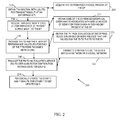
- FIG. 2 is a diagram of another method 200 for objectively measuring a value for an employee, according to an example embodiment.
- the method 200 (hereinafter “correlation service”) is implemented as instruction and programmed within memory and/or a non-transitory computer-readable (processor-readable) storage medium that executes on one or more processors of a device; the processors of the device are specifically configured to execute the correlation service.
- the correlation service is operational over a network; the network is wired, wireless, or a combination of wired and wireless.
- correlation service describes another and in some ways enhanced perspective of the employee evaluation service represented by the method 100 of the FIG. 1 , discussed above.
- the correlation service obtains one or more transaction details for one or more transactions occurring at an enterprise.
- the correlation service acquires the transaction details from one or more POS (Point-Of-Sale) devices present at the enterprise.
- POS Point-Of-Sale
- the correlation service receives one or more employee identifiers for one or more employees present during each transaction at the enterprise.
- the transaction is non-monetary, such as consumer survey results.
- the correlation service obtains some of the employee identifiers from geographical coordinates associated with mobile devices of some employees or from check-in technology present at the enterprise.
- the correlation service packages the one or more transaction details and the one or more employee identifiers with one or more enterprise performance ratings for each of the transactions to form the one or more packaged metrics.
- the correlation service obtains the one or more enterprise performance ratings from evaluation of one or more enterprise rules or one or more policies that map one or more values for the one or more transaction details to the one or more enterprise performance ratings.
- the correlation service transmits the one or more packaged metrics to an evaluation service to obtain one or more objective contribution ratings for each employee. So, the variables permit the evaluation service to identify a contribution value for the employee.
- the correlation service formats the one or more packaged metrics for the evaluation service.
- the evaluation service is a Bayesian Network or a Neural Network.
- the correlation service periodically updates the evaluation service with additional packaged metrics for other transactions to get updated contribution ratings.
- Businesses generate hour-by-hour data indicating sales, profits and employees "on the clock.”
- Social media and survey tools add to this information by providing a measure of consumer satisfaction with the business.
- other variables like speed of service measurement can be extracted from the transaction times and telemetry devices operated by the business.
- All of this information forms a data set for a credit assignment machine learning solution.
- Business metrics are used as labels with specific values for each deemed poor, medium, good, etc. according to the goals of the business.
- the data set is therefore labeled and can be used to train a machine learning algorithm such as a Bayesian Network (Neural Network) or a hidden Markov model that evolves a specific weight for each outcome metric as assigned to each team member. Any one team member will therefore have a "score" for his or her contribution to the overall team's ability to deliver each of the key metrics (speed of service, quality of services, profitability, total sales, etc. depending on the specific data that is being trained).
- These scores are referred to as Individual Per Business Metric Contribution Scores or IPBMC scores.
- the quality of IPBMC scores (i.e. their accuracy) is dependent on the consistency of the individual as well as the size of the data set that is being analyzed.
- IPBMC scores will by definition provide a measure of any one individual's ability to influence business performance, allowing for stack-ranking and other traditional approaches to employee management but with new and better (more complete) information. This is a first advantage.
- IPBMC scores for any group of employees can be used to predict the performance of the group at a future time.
- IPBMC score sets can be used to improve scheduling algorithms, resulting in more predictable business performance. This is accomplished, for example, using a generative model (essentially a machine learning algorithm running in reverse) that predicts performance of the team against the goal metrics. (Monte Carlo methods, boatsman machines and other methods known in the industry.) Boltzman machines and other well-known algorithms fill this purpose. Comparing multiple theoretical teams (permutations of the available employees) results in recommended best-fit groups of employees. External constraints such as reliability of the individual or overtime wages can be overlaid with the results of the generative team score to determine a final schedule choice.
- the examples presented have been focused on giving credit for an employee being present when positive outcomes occur, it is to be noted that the positive outcomes may continue for some extended period of time at a facility even after an employee has physically left a facility.
- This correlation can be tracked and noted as well. For example, this can be done by measuring key metrics for some period of time after the key employee's visit and associating the results of that time with the employee's own performance. It may even be that observation of metrics show that after a given employee's visit, performance is great for short period but then suffers in the long term. This could happen, for example, in an employee is aggressively discounting products. It might appear that business is up but once the discounts are gone, the business falls further than the gains.
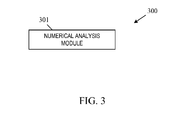
- FIG. 3 is a diagram of an employee contribution system 300, according to an example embodiment.
- the components of the employee contribution system 300 are programmed and resided within memory and/or a non-transitory computer-readable medium and execute on one or more processors of one or more devices.
- the employee contribution system 300 is operational over a network and the network can be wired, wireless, or a combination of wired and wireless.
- the employee contribution system 300 includes a numerical analysis module 301.
- the employee contribution system 300 includes a server having a numerical analysis module 301 programmed within memory and/or a non-transitory computer-readable storage media as executable instructions.
- the server executes the numerical analysis module 301.
- Example aspects associated with the numerical analysis module 301 were presented above with reference to the FIGS. 1 and 2 .
- the numerical analysis module 301 is configured to be trained based on at least in part on gathering one or more enterprise metrics, one or more enterprise performance ratings for the one or more enterprise metrics, and one or more employee identifiers for one or more employees physically present during one or more transactions tied to one or more enterprise metrics.
- the numerical analysis module 301 is further configured to generate one or more contribution ratings for each employee.
- the numerical analysis module 301 is a Bayesian Network.
- the server is a cloud server.
Landscapes
- Business, Economics & Management (AREA)
- Human Resources & Organizations (AREA)
- Engineering & Computer Science (AREA)
- Strategic Management (AREA)
- Entrepreneurship & Innovation (AREA)
- Economics (AREA)
- Development Economics (AREA)
- Educational Administration (AREA)
- Operations Research (AREA)
- Marketing (AREA)
- Game Theory and Decision Science (AREA)
- Quality & Reliability (AREA)
- Tourism & Hospitality (AREA)
- Physics & Mathematics (AREA)
- General Business, Economics & Management (AREA)
- General Physics & Mathematics (AREA)
- Theoretical Computer Science (AREA)
- Management, Administration, Business Operations System, And Electronic Commerce (AREA)
- Measurement Of The Respiration, Hearing Ability, Form, And Blood Characteristics Of Living Organisms (AREA)
Abstract
Description
- In many industries, such as the hospitality industry, there is a belief that key employees, such as executives, can influence performance of an enterprise facility when those key employees are physically present at the facility.
- As a result, many industries require key employees to visit and spend a designated amount of time at each or predefined facilities.
- In most instances, industries do not have metrics that validate their assumptions about the presences of key employees at facilities impacting the performance of those facilities. In other words, there is a gut feel that the key employees are needed at the facilities but there is no real objective measure to show that the gut feel is a correct assumption.
- Also, some facilities may be hard to visit or get to and these facilities are often believed to suffer when key employees do not visit them in a calendar year.
- Moreover, if may not just be that key management employees influence performance but there may very well be employees at a facility or even groups of select employees at a facility that can influence that facilities performance. Presently, there is no mechanism that tracks or tries to record whether these employees or groups of employees can in fact favorably or negatively impact enterprise performance at a given enterprise facility.
- Additionally, no real team is simply the sum of its parts. Different people play different roles or represent different positions, whether in the workplace or in sports (or even video games), and complement each other in unique and distinct ways. The problem of credit assignment refers to the ability to assign credit for overall team success to anyone member. Solving this problem aims to assist in providing incentives and compensation for individuals as well as making choices for appropriate individuals to add or replace on a given team.
- Businesses operate with specific goals, like profitability or top-line sales, much like a sport's team operates with a goal of a winning record or specific scores in a match. Great managers and great coaches understand the dimensions of strength and weakness in each of their workers/players, creating winning combinations or individuals whose performance minimizes costs while maximizing potential is an art and not a science at present.
- In fact, most managers lack the perspective of deep knowledge of their workers' skills because of the demands of business operations. For modern businesses, the manager is as a much of the team as he or she is a coach making choices.
- In various embodiments, objective metrics measuring value of employees are presented.
- According to a first aspect of the present invention there is provided a processor-implemented method programmed in memory or a non-transitory processor-readable medium and to execute on one or more processors of a device configured to execute the method, comprising: tracking, via the device, a date and time that an employee is physically present at an enterprise; monitoring, via the device, one or more enterprise metrics for the date and time at the enterprise; and correlating, via the device, one or more performance values for the one or more enterprise metrics with the employee physically present.
- The method optionally further comprises: obtaining, via the device, other performance values associated with other enterprise metrics and for other dates and times for the employee and for other employees.
- The method optionally further comprises: training, via the device, a Bayesian Network based at least in part on the one or more performance values, the one or more enterprise metrics, other performance values for the other enterprise metrics, the employee, and the other employees.
- The method optionally further comprises: generating, via the device, from the Bayesian Network one or more outcome weights for each employee with respect to other employees, the enterprise metrics, and the other enterprise metrics.
- The method optionally further comprises: generating, via the device, an overall contribution score for a particular employee based at least in part on summing the particular employee's one or more outcome weights.
- The method optionally further comprises: predicting, via the device, from the Bayesian Network outcomes for different proposed combinations of the employees based at least in part on a future time and date at the enterprise.
- The method optionally further comprises: proposing, via the device, an optimal grouping of the employees with one another for the future date and time.
- Tracking optionally further includes using a geographical position communicated from an application on a mobile device of the employee to track the date and time the employee is physically present at the enterprise.
- Tracking optionally further includes using an enterprise check-in technology to determine when the employee is physically present at the enterprise for the date and time.
- Monitoring optionally further includes acquiring a transactional metric for a transaction occurring at the enterprise on the date and time as the enterprise metric.
- Correlating optionally further includes assigning an objective contribution value to the employee based on a calculation of the one or more enterprise metrics for the date and time.
- According to a second aspect of the present invention there is provided a system comprising: a server having a numerical analysis module; wherein the numerical analysis is configured to be trained based at least in part on gathered one or more enterprise metrics, one or more enterprise performance ratings for the one or more enterprise metrics, and one or more employee identifiers for one or more employees physically present during one or more transactions tied to the one or more enterprise metrics, and wherein the numerical analysis module is further configured to generate outcome one or more contribution ratings for each employee.
- The numerical analysis module may be a Bayesian Network.
- The server may be a cloud server.
- According to a third aspect of the present invention there is provided a processor-implemented method programmed in memory or a non-transitory processor-readable medium and to execute on one or more processors of a device configured to execute the method, comprising: obtaining, at the device, one or more transaction details for one or more transactions occurring at an enterprise; receiving, at the device, one or more employee identifiers for one or more employees present during each transaction at the enterprise; packaging, at the device, the one or more transaction details and the one or more employee identifiers with one or more enterprise performance ratings for each of the transactions to form one or more packaged metrics; and transmitting, from the device, the one or more packaged metrics to an evaluation service to obtain one or more objective contribution ratings for each employee.
- The method optionally further comprises: periodically updating the evaluation service with additional packaged metrics for other transactions to get updated objective contribution ratings.
- Obtaining optionally further includes acquiring the transaction details from one or more Point-Of-Sale (POS) devices present at the enterprise.
- Receiving optionally further includes obtaining some of the employee identifiers from geographic coordinates associated with mobile devices of some employees or from check-in technology present at the enterprise.
- Packaging optionally further includes obtaining the one or more enterprise performance values from evaluation of one or more enterprise rules or one or more policies that map one or more values for the one or more transaction details to the one or more enterprise performance ratings.
- Transmitting optionally further includes formatting the one or more packaged metrics for the evaluation service, the evaluation service is a Bayesian Network or a Neural Network.
- According to an embodiment, a method for objectively measuring a value for an employee is provided. Specifically, in an embodiment, a date and time that an employee is physically present at an enterprise is tracked. Next, one or more enterprise metrics are measured for the date and time at the enterprise. Finally, one or more performance values for the one or more enterprise metrics are correlated with the employee being physically present at the enterprise.
- These and other aspects of the present invention will become apparent from the following specific description, given by way of example, with reference to the accompanying drawings, in which:
-
FIG. 1 is a diagram of a method for objectively measuring a value for an employee, according to an example embodiment; -
FIG. 2 is a diagram of another method for objectively measuring a value for an employee, according to an example embodiment; and -
FIG. 3 is a diagram of an employee contribution system, according to an example embodiment. -
FIG. 1 is a diagram of amethod 100 for objectively measuring a value for an employee, according to an example embodiment. The method 100 (hereinafter "employee evaluator service") is implemented as instructions programmed and residing within memory and/or a non-transitory computer-readable (processor-readable) storage medium and executed by one or more processors of a device. The processors are specifically configured and programmed to process the employee evaluator service. The employee evaluator service is operational over a network. The network is wired, wireless, or a combination of wired and wireless. - At 110, the employee evaluator service tracks a date and time that an employee is physically present at an enterprise facility. That is, the specific date and time that an employee is present at a facility is noted by the employee evaluator service.
- According to an embodiment, at 111, the employee evaluator service uses a geographical position communicated from an application on a mobile device of an employee to track the date and time the employee is physically present at the enterprise or facility of the enterprise. So, suppose a mobile device includes an app that communicates in near-real time the geographical position of the employee and that position indicates that the employee is present at the facility.
- In another case, at 112, the employee evaluator service uses an enterprise check-in technology to determine when the employee is physically present at the enterprise for the date and time. The check-in technology can include a scanner that detects radio frequency and the like and detects when the employee is checked in based on a smart tag or badge. In some instances, biometrics utilizing a variety of checks can occur, including facial recognition, retinal scan, etc. Moreover, the employee can have any type of detectable radio source on his /her person that is detected.
- At 120, the employee evaluator service monitors one or more enterprise metrics for the date and time at the enterprise. So, the employee being present at the facility for a given date and time is all recorded and noted by the employee evaluator service.
- According to an embodiment at 121, the employee evaluator service acquires a transactional metric for a transaction occurring at the enterprise on the date and time as the enterprise metric. So, transaction information occurring when the employee is present at the facility of the enterprise is recorded and noted.
- At 130, the employee evaluator service correlates one or more performance values for the one or more enterprise metrics with the employee being physically present at the facility of the enterprise.
- So, the enterprise metrics may be evaluated in view of policy and threshold to map to predefined performance values, such that specific transaction metrics or enterprise metrics are considered to be better than other metrics based on threshold values that define the performance values.
- According to an embodiment, at 131, the employee evaluator service assigns an objective contribution value to the employee based on a calculation of the one or more enterprise metrics for the date and time. So, when the performance values for the metrics are considered good based on a threshold and scale, the employee receives a good contribution value also based on a sliding scale.
- In an embodiment, at 140, the employee evaluator service obtains other performance values associated with other enterprise metrics and for other dates and times for the employee and other employees.
- Continuing with the embodiment of 140 and at 141, the employee evaluator service trains a Bayesian Network based at least in part on one or more performance values, the one or more enterprise metrics, other performance values for the enterprise metrics, the employee, and the other employees.
- Continuing with the embodiment of 141 and at 142, the employee evaluator service generates from the Bayesian Network one or more outcome weights for each employee with respect to other employees, the enterprise metrics, and the other enterprise metrics. So, if the performance values are better for a given employee then the outcome values are better relative to other employees and their performance values.
- Continuing with the embodiment of 142 and at 143, the employee evaluator service generates an overall contribution score for a particular employee based at least in part on summing the particular employees one or more outcome weights.
- Continuing with the embodiment of 142 and at 144, the employee evaluator service predicts from the Bayesian Network outcomes for different combinations of the employees based at least in part on a future date and time at the enterprise. So, predication and forecasting can be used via the Bayesian Network. In fact, any credit assignment technique can be used and in a Bayesian Network is not required in each instance. Basically, credit is attributed to the presence of an employee based on outcome with some predefined specified conditions. So, a Key Employee gets credit for positive results based on that Key Employee being present at a facility when the positive results are noted.
- Continuing with the embodiment of 144 and at 145, the employee evaluator service proposes an optimal grouping of the employees with one another for the future date and time. So, select groupings of optimal employee work combinations can be identified and used.
-
FIG. 2 is a diagram of anothermethod 200 for objectively measuring a value for an employee, according to an example embodiment. The method 200 (hereinafter "correlation service") is implemented as instruction and programmed within memory and/or a non-transitory computer-readable (processor-readable) storage medium that executes on one or more processors of a device; the processors of the device are specifically configured to execute the correlation service. The correlation service is operational over a network; the network is wired, wireless, or a combination of wired and wireless. - Whereas the correlation service describes another and in some ways enhanced perspective of the employee evaluation service represented by the
method 100 of theFIG. 1 , discussed above. - At 210, the correlation service obtains one or more transaction details for one or more transactions occurring at an enterprise.
- According to an embodiment, at 211, the correlation service acquires the transaction details from one or more POS (Point-Of-Sale) devices present at the enterprise.
- At 220, the correlation service receives one or more employee identifiers for one or more employees present during each transaction at the enterprise. In some cases, the transaction is non-monetary, such as consumer survey results.
- In an embodiment, at 221, the correlation service obtains some of the employee identifiers from geographical coordinates associated with mobile devices of some employees or from check-in technology present at the enterprise.
- At 230, the correlation service packages the one or more transaction details and the one or more employee identifiers with one or more enterprise performance ratings for each of the transactions to form the one or more packaged metrics.
- According to an embodiment, at 231, the correlation service obtains the one or more enterprise performance ratings from evaluation of one or more enterprise rules or one or more policies that map one or more values for the one or more transaction details to the one or more enterprise performance ratings.
- At 240, the correlation service transmits the one or more packaged metrics to an evaluation service to obtain one or more objective contribution ratings for each employee. So, the variables permit the evaluation service to identify a contribution value for the employee.
- In an embodiment, at 241, the correlation service formats the one or more packaged metrics for the evaluation service. The evaluation service is a Bayesian Network or a Neural Network.
- According to an embodiment, at 250, the correlation service periodically updates the evaluation service with additional packaged metrics for other transactions to get updated contribution ratings.
- Consider the following illustrations with respect to the correlation service.
- Businesses generate hour-by-hour data indicating sales, profits and employees "on the clock." Social media and survey tools add to this information by providing a measure of consumer satisfaction with the business. In addition other variables like speed of service measurement can be extracted from the transaction times and telemetry devices operated by the business.
- All of this information forms a data set for a credit assignment machine learning solution. Business metrics are used as labels with specific values for each deemed poor, medium, good, etc. according to the goals of the business. The data set is therefore labeled and can be used to train a machine learning algorithm such as a Bayesian Network (Neural Network) or a hidden Markov model that evolves a specific weight for each outcome metric as assigned to each team member. Any one team member will therefore have a "score" for his or her contribution to the overall team's ability to deliver each of the key metrics (speed of service, quality of services, profitability, total sales, etc. depending on the specific data that is being trained). These scores are referred to as Individual Per Business Metric Contribution Scores or IPBMC scores. The quality of IPBMC scores (i.e. their accuracy) is dependent on the consistency of the individual as well as the size of the data set that is being analyzed.
- IPBMC scores will by definition provide a measure of any one individual's ability to influence business performance, allowing for stack-ranking and other traditional approaches to employee management but with new and better (more complete) information. This is a first advantage.
- In addition, IPBMC scores for any group of employees can be used to predict the performance of the group at a future time. In other words, IPBMC score sets can be used to improve scheduling algorithms, resulting in more predictable business performance. This is accomplished, for example, using a generative model (essentially a machine learning algorithm running in reverse) that predicts performance of the team against the goal metrics. (Monte Carlo methods, boatsman machines and other methods known in the industry.) Boltzman machines and other well-known algorithms fill this purpose. Comparing multiple theoretical teams (permutations of the available employees) results in recommended best-fit groups of employees. External constraints such as reliability of the individual or overtime wages can be overlaid with the results of the generative team score to determine a final schedule choice.
- Although, the examples presented have been focused on giving credit for an employee being present when positive outcomes occur, it is to be noted that the positive outcomes may continue for some extended period of time at a facility even after an employee has physically left a facility. This correlation can be tracked and noted as well. For example, this can be done by measuring key metrics for some period of time after the key employee's visit and associating the results of that time with the employee's own performance. It may even be that observation of metrics show that after a given employee's visit, performance is great for short period but then suffers in the long term. This could happen, for example, in an employee is aggressively discounting products. It might appear that business is up but once the discounts are gone, the business falls further than the gains.
-
FIG. 3 is a diagram of anemployee contribution system 300, according to an example embodiment. The components of theemployee contribution system 300 are programmed and resided within memory and/or a non-transitory computer-readable medium and execute on one or more processors of one or more devices. Theemployee contribution system 300 is operational over a network and the network can be wired, wireless, or a combination of wired and wireless. - The
employee contribution system 300 includes anumerical analysis module 301. - The
employee contribution system 300 includes a server having anumerical analysis module 301 programmed within memory and/or a non-transitory computer-readable storage media as executable instructions. The server executes thenumerical analysis module 301. Example aspects associated with thenumerical analysis module 301 were presented above with reference to theFIGS. 1 and2 . - The
numerical analysis module 301 is configured to be trained based on at least in part on gathering one or more enterprise metrics, one or more enterprise performance ratings for the one or more enterprise metrics, and one or more employee identifiers for one or more employees physically present during one or more transactions tied to one or more enterprise metrics. Thenumerical analysis module 301 is further configured to generate one or more contribution ratings for each employee. - According to an embodiment, the
numerical analysis module 301 is a Bayesian Network. - In an embodiment, the server is a cloud server.
- The above description is illustrative, and not restrictive. Many other embodiments will be apparent to those of skill in the art upon reviewing the above description. The scope of embodiments should therefore be determined with reference to the appended claims.
- In the foregoing description of the embodiments, various features are grouped together in a single embodiment for the purpose of streamlining the disclosure. This method of disclosure is not to be interpreted as reflecting that the claimed embodiments have more features than are expressly recited in each claim. Rather, as the following claims reflect, inventive subject matter lies in less than all features of a single disclosed embodiment.
Claims (14)
- A processor-implemented method programmed in memory or a non-transitory processor-readable medium and to execute on one or more processors of a device configured to execute the method, comprising:tracking, via the device, a date and time that an employee is physically present at an enterprise (step 110);monitoring, via the device, one or more enterprise metrics for the date and time at the enterprise (step 120); andcorrelating, via the device, one or more performance values for the one or more enterprise metrics with the employee physically present (step 130).
- The method of claim 1 further comprising, obtaining, via the device, other performance values associated with other enterprise metrics and for other dates and times for the employee and for other employees (step 140).
- The method of claim 2 further comprising, training, via the device, a Bayesian Network based at least in part on the one or more performance values, the one or more enterprise metrics, other performance values for the other enterprise metrics, the employee, and the other employees (step 141).
- The method of claim 3 further comprising, generating, via the device, from the Bayesian Network one or more outcome weights for each employee with respect to other employees, the enterprise metrics, and the other enterprise metrics.
- The method of claim 4 further comprising, generating, via the device, an overall contribution score for a particular employee based at least in part on summing the particular employee's one or more outcome weights (step 142).
- The method of claim 4 further comprising, predicting, via the device, from the Bayesian Network outcomes for different proposed combinations of the employees based at least in part on a future time and date at the enterprise (step 144).
- The method of claim 6 further comprising, proposing, via the device, an optimal grouping of the employees with one another for the future date and time (step 145).
- The method of any preceding claim, wherein tracking further includes using a geographical position communicated from an application on a mobile device of the employee to track the date and time the employee is physically present at the enterprise (step 111).
- The method of any preceding claim, wherein tracking further includes using an enterprise check-in technology to determine when the employee is physically present at the enterprise for the date and time (step 121).
- The method of any preceding claim, wherein monitoring further includes acquiring a transactional metric for a transaction occurring at the enterprise on the date and time as the enterprise metric (step 122).
- The method of any preceding claim, wherein correlating further includes assigning an objective contribution value to the employee based on a calculation of the one or more enterprise metrics for the date and time (step 131).
- A system (300) comprising:a server having a numerical analysis module (301);wherein the numerical analysis module (301) is configured to be trained based at least in part on gathered one or more enterprise metrics, one or more enterprise performance ratings for the one or more enterprise metrics, and one or more employee identifiers for one or more employees physically present during one or more transactions tied to the one or more enterprise metrics, and wherein the numerical analysis module (301) is further configured to generate one or more contribution ratings for each employee.
- The system of claim 12, wherein the numerical analysis module (301) is a Bayesian Network.
- The system of claim 12 or 13, wherein the server is a cloud server.
Applications Claiming Priority (1)
| Application Number | Priority Date | Filing Date | Title |
|---|---|---|---|
| US14/041,582 US20150095120A1 (en) | 2013-09-30 | 2013-09-30 | Objective metrics measuring value of employees |
Publications (2)
| Publication Number | Publication Date |
|---|---|
| EP2854082A2 true EP2854082A2 (en) | 2015-04-01 |
| EP2854082A3 EP2854082A3 (en) | 2015-04-29 |
Family
ID=51355468
Family Applications (1)
| Application Number | Title | Priority Date | Filing Date |
|---|---|---|---|
| EP20140181180 Withdrawn EP2854082A3 (en) | 2013-09-30 | 2014-08-15 | Objective metrics measuring value of employees |
Country Status (2)
| Country | Link |
|---|---|
| US (1) | US20150095120A1 (en) |
| EP (1) | EP2854082A3 (en) |
Families Citing this family (3)
| Publication number | Priority date | Publication date | Assignee | Title |
|---|---|---|---|---|
| US20150120590A1 (en) * | 2013-10-25 | 2015-04-30 | Salesforce.Com, Inc. | Method and system for generating human resources value recommendations |
| US11294944B2 (en) * | 2018-06-03 | 2022-04-05 | Apple Inc. | Correction and completion of search queries |
| CN115796457A (en) * | 2023-02-03 | 2023-03-14 | 山东铁路投资控股集团有限公司 | Personnel and enterprise rating method and system based on multidimensional data |
Family Cites Families (24)
| Publication number | Priority date | Publication date | Assignee | Title |
|---|---|---|---|---|
| US6970810B1 (en) * | 2000-07-31 | 2005-11-29 | Ncr Corporation | Method and apparatus for storing retail performance metrics |
| US7483842B1 (en) * | 2001-02-21 | 2009-01-27 | The Yacobian Group | System and method for determining recommended action based on measuring and analyzing store and employee data |
| US20090138342A1 (en) * | 2001-11-14 | 2009-05-28 | Retaildna, Llc | Method and system for providing an employee award using artificial intelligence |
| US8027869B2 (en) * | 2001-11-27 | 2011-09-27 | Siebel Systems, Inc. | Method and system for monitoring achievement and attainment and calculating compensation via time-based organization hierarchies |
| US6975963B2 (en) * | 2002-09-30 | 2005-12-13 | Mcdata Corporation | Method and system for storing and reporting network performance metrics using histograms |
| US8251287B2 (en) * | 2003-06-26 | 2012-08-28 | Copper Range, Inc. | Site-specific access management |
| US7385479B1 (en) * | 2004-11-12 | 2008-06-10 | Esp Systems, Llc | Service personnel communication system |
| US7698188B2 (en) * | 2005-11-03 | 2010-04-13 | Beta-Rubicon Technologies, Llc | Electronic enterprise capital marketplace and monitoring apparatus and method |
| US20070250417A1 (en) * | 2005-12-14 | 2007-10-25 | Hcom Holdings Llc | Methods and apparatus for determining and using human capital metrics as measures of economic value of persons to an organization |
| WO2008036386A2 (en) * | 2006-09-21 | 2008-03-27 | Rutgers, The State University Of New Jersey | Method and apparatus for using bayesian networks for localization |
| US9129230B2 (en) * | 2007-04-04 | 2015-09-08 | Pathfinders International, Llc | Virtual badge, device and method |
| US20090193080A1 (en) * | 2008-01-24 | 2009-07-30 | Intuit Inc. | Method and system for automating organizational tasks using a wireless node network |
| JP2009211574A (en) * | 2008-03-06 | 2009-09-17 | Hitachi Ltd | Server and sensor network system for measuring quality of activity |
| US8172722B2 (en) * | 2008-12-05 | 2012-05-08 | Nike, Inc. | Athletic performance monitoring systems and methods in a team sports environment |
| US9042876B2 (en) * | 2009-02-17 | 2015-05-26 | Lookout, Inc. | System and method for uploading location information based on device movement |
| US8145515B2 (en) * | 2009-05-18 | 2012-03-27 | Target Brands, Inc. | On-demand performance reports |
| US20140058801A1 (en) * | 2010-06-04 | 2014-02-27 | Sapience Analytics Private Limited | System And Method To Measure, Aggregate And Analyze Exact Effort And Time Productivity |
| US20110302003A1 (en) * | 2010-06-04 | 2011-12-08 | Deodhar Swati Shirish | System And Method To Measure, Aggregate And Analyze Exact Effort And Time Productivity |
| US20120053472A1 (en) * | 2010-08-30 | 2012-03-01 | Bao Tran | Inexpensive non-invasive safety monitoring apparatus |
| US8396822B2 (en) * | 2010-12-23 | 2013-03-12 | Yahoo! Inc. | Clustering cookies for identifying unique mobile devices |
| US20120323626A1 (en) * | 2011-06-20 | 2012-12-20 | Objective Logistics | Apparatus for scheduling staff based on normalized performance |
| CN202650137U (en) * | 2012-06-11 | 2013-01-02 | 深圳市小兵智能科技有限公司 | Touch control type POS machine |
| US20140164073A1 (en) * | 2012-12-07 | 2014-06-12 | Globoforce Limited | Systems and Methods for Analyzing Recognition Data for Talent and Culture Discovery |
| US9257150B2 (en) * | 2013-09-20 | 2016-02-09 | Panera, Llc | Techniques for analyzing operations of one or more restaurants |
-
2013
- 2013-09-30 US US14/041,582 patent/US20150095120A1/en not_active Abandoned
-
2014
- 2014-08-15 EP EP20140181180 patent/EP2854082A3/en not_active Withdrawn
Non-Patent Citations (1)
| Title |
|---|
| None |
Also Published As
| Publication number | Publication date |
|---|---|
| EP2854082A3 (en) | 2015-04-29 |
| US20150095120A1 (en) | 2015-04-02 |
Similar Documents
| Publication | Publication Date | Title |
|---|---|---|
| Gaur et al. | Strengthening people analytics through wearable IOT device for real-time data collection | |
| US8560344B2 (en) | Behavior monitoring and reinforcement system and method | |
| Kamau et al. | Efficacy of monitoring and evaluation function in achieving project success in Kenya: a conceptual framework | |
| US20160342929A1 (en) | Method for determining staffing needs based in part on sensor inputs | |
| KR101881630B1 (en) | Method and system for providing evaluation information and pattern information using data obtained from user terminal | |
| CA3066330A1 (en) | Improved detection of fraudulent transactions | |
| US20100217712A1 (en) | Method for Sales Forecasting in Business-to-Business Sales Management | |
| Udo | Rethinking the effectiveness measures of decision support systems | |
| Lasalewo et al. | THE EFFECT OF COMPETITIVE ADVANTAGE AND HUMAN ADVANTAGE ON INDUSTRIAL COMPETITIVE STRATEGY (Case Study: SMIs in Gorontalo Province). | |
| US20150095120A1 (en) | Objective metrics measuring value of employees | |
| Wahba | Talent management practices effect on employee engagement: Applied in logistics sector in Egypt | |
| Uford et al. | Post COVID-19 hospitality business and sales performance in Uyo metropolis | |
| JP7542712B2 (en) | Psychological state measurement system and psychological state measurement method | |
| Ali et al. | Narcissistic leadership and project success in IT industry: Moderating the role of risk management technology | |
| US20170278034A1 (en) | Creating alternative wellness activities based on tracked worker activity | |
| Tambovtsev | Management without measurement | |
| Huus | People Data: how to use and apply human capital metrics in your company | |
| Chiong et al. | Generative AI and job satisfaction: Evidence from Glassdoor employee reviews | |
| Spasić et al. | The impact of digitization of the cost accounting system on organizational efficiency and effectiveness in the healthcare sector of the Republic of Serbia | |
| Ezugwu et al. | The effect of total quality management on performance in public enterprise | |
| CN114503138A (en) | Casino management system and method for managing and evaluating casino employees | |
| Cant | Employee engagement and performance: A study of South African retail organisations circa COVID-19 | |
| Uddin et al. | Adaptive Training Program Optimization in Human Resource Development Using Reinforcement Learning and Multilayer Perceptron Models | |
| Suseno et al. | Determining bonus in Enterprise Resource Planning at Human Resource Management module using Key Performance Indicator | |
| Dawar et al. | Dynamics of quality of work life: A study of life insurance sector |
Legal Events
| Date | Code | Title | Description |
|---|---|---|---|
| PUAL | Search report despatched |
Free format text: ORIGINAL CODE: 0009013 |
|
| PUAI | Public reference made under article 153(3) epc to a published international application that has entered the european phase |
Free format text: ORIGINAL CODE: 0009012 |
|
| 17P | Request for examination filed |
Effective date: 20140815 |
|
| AK | Designated contracting states |
Kind code of ref document: A2 Designated state(s): AL AT BE BG CH CY CZ DE DK EE ES FI FR GB GR HR HU IE IS IT LI LT LU LV MC MK MT NL NO PL PT RO RS SE SI SK SM TR |
|
| AX | Request for extension of the european patent |
Extension state: BA ME |
|
| AK | Designated contracting states |
Kind code of ref document: A3 Designated state(s): AL AT BE BG CH CY CZ DE DK EE ES FI FR GB GR HR HU IE IS IT LI LT LU LV MC MK MT NL NO PL PT RO RS SE SI SK SM TR |
|
| AX | Request for extension of the european patent |
Extension state: BA ME |
|
| RIC1 | Information provided on ipc code assigned before grant |
Ipc: H04W 64/00 20090101ALI20150324BHEP Ipc: G06Q 10/06 20120101AFI20150324BHEP |
|
| R17P | Request for examination filed (corrected) |
Effective date: 20151029 |
|
| RBV | Designated contracting states (corrected) |
Designated state(s): AL AT BE BG CH CY CZ DE DK EE ES FI FR GB GR HR HU IE IS IT LI LT LU LV MC MK MT NL NO PL PT RO RS SE SI SK SM TR |
|
| 17Q | First examination report despatched |
Effective date: 20161222 |
|
| STAA | Information on the status of an ep patent application or granted ep patent |
Free format text: STATUS: THE APPLICATION HAS BEEN WITHDRAWN |
|
| 18W | Application withdrawn |
Effective date: 20170320 |