EP2854015A1 - Communication storage system - Google Patents
Communication storage system Download PDFInfo
- Publication number
- EP2854015A1 EP2854015A1 EP20130306307 EP13306307A EP2854015A1 EP 2854015 A1 EP2854015 A1 EP 2854015A1 EP 20130306307 EP20130306307 EP 20130306307 EP 13306307 A EP13306307 A EP 13306307A EP 2854015 A1 EP2854015 A1 EP 2854015A1
- Authority
- EP
- European Patent Office
- Prior art keywords
- storage
- messages
- message
- storage unit
- module
- Prior art date
- Legal status (The legal status is an assumption and is not a legal conclusion. Google has not performed a legal analysis and makes no representation as to the accuracy of the status listed.)
- Granted
Links
Images

Classifications
-
- G—PHYSICS
- G06—COMPUTING OR CALCULATING; COUNTING
- G06F—ELECTRIC DIGITAL DATA PROCESSING
- G06F3/00—Input arrangements for transferring data to be processed into a form capable of being handled by the computer; Output arrangements for transferring data from processing unit to output unit, e.g. interface arrangements
- G06F3/06—Digital input from, or digital output to, record carriers, e.g. RAID, emulated record carriers or networked record carriers
- G06F3/0601—Interfaces specially adapted for storage systems
- G06F3/0602—Interfaces specially adapted for storage systems specifically adapted to achieve a particular effect
- G06F3/061—Improving I/O performance
- G06F3/0611—Improving I/O performance in relation to response time
-
- G—PHYSICS
- G06—COMPUTING OR CALCULATING; COUNTING
- G06F—ELECTRIC DIGITAL DATA PROCESSING
- G06F3/00—Input arrangements for transferring data to be processed into a form capable of being handled by the computer; Output arrangements for transferring data from processing unit to output unit, e.g. interface arrangements
- G06F3/06—Digital input from, or digital output to, record carriers, e.g. RAID, emulated record carriers or networked record carriers
- G06F3/0601—Interfaces specially adapted for storage systems
- G06F3/0628—Interfaces specially adapted for storage systems making use of a particular technique
- G06F3/0629—Configuration or reconfiguration of storage systems
- G06F3/0631—Configuration or reconfiguration of storage systems by allocating resources to storage systems
-
- G—PHYSICS
- G06—COMPUTING OR CALCULATING; COUNTING
- G06F—ELECTRIC DIGITAL DATA PROCESSING
- G06F3/00—Input arrangements for transferring data to be processed into a form capable of being handled by the computer; Output arrangements for transferring data from processing unit to output unit, e.g. interface arrangements
- G06F3/06—Digital input from, or digital output to, record carriers, e.g. RAID, emulated record carriers or networked record carriers
- G06F3/0601—Interfaces specially adapted for storage systems
- G06F3/0668—Interfaces specially adapted for storage systems adopting a particular infrastructure
- G06F3/0671—In-line storage system
- G06F3/0683—Plurality of storage devices
- G06F3/0685—Hybrid storage combining heterogeneous device types, e.g. hierarchical storage, hybrid arrays
-
- H—ELECTRICITY
- H04—ELECTRIC COMMUNICATION TECHNIQUE
- H04L—TRANSMISSION OF DIGITAL INFORMATION, e.g. TELEGRAPHIC COMMUNICATION
- H04L51/00—User-to-user messaging in packet-switching networks, transmitted according to store-and-forward or real-time protocols, e.g. e-mail
- H04L51/42—Mailbox-related aspects, e.g. synchronisation of mailboxes
-
- H—ELECTRICITY
- H04—ELECTRIC COMMUNICATION TECHNIQUE
- H04L—TRANSMISSION OF DIGITAL INFORMATION, e.g. TELEGRAPHIC COMMUNICATION
- H04L51/00—User-to-user messaging in packet-switching networks, transmitted according to store-and-forward or real-time protocols, e.g. e-mail
- H04L51/56—Unified messaging, e.g. interactions between e-mail, instant messaging or converged IP messaging [CPM]
Definitions
- the present invention relates communication systems, and in particular to storage conditions for communication systems.
- Telecommunication systems such as email, voice mail or Visual Voice Mail (VVM) systems typically comprise a processor for operation and execution, and a storage module for storing telecommunication data.
- VVM Visual Voice Mail
- the storage is often used as both a transitory cache for storing information as well as for permanent storage of information and data of the telecommunication system.
- messaging systems such as an email or voice mail or VVM systems must provide fast response time and large capacity.
- Fast access to all stored messages is normally onerous as fast storage modules are much more expensive than slow storage modules, but slower storage modules may compromise performance, particularly for systems with large number of concurrent access (such as serving many different concurrent users).
- an embodiment herein provides for a communication system adapted for storing communication messages destined for one or more recipients, said system comprising a processor, a first storage unit, and a second storage unit, wherein said messages are stored in a unique physical location on either the first storage unit or the second storage unit, and wherein the processor is configured to determine on which of said first or second storage unit to store said messages.
- An advantage of this embodiment is to provide two types of storage and to distribute stored messages between first and second storages based on usage scenarios.
- the end user's behavior for example a cell-phone user's behavior, may be used to determine a point in time when messages ought to be moved from a first storage to a second storage to maximize the cost and operational efficiency constraints.
- Another embodiment provides for a method for storing communication messages destined for one or more recipient, in a communication system comprising a first storage module and a second storage module, said method being characterized by the steps of receiving message data destined for storage on said system; and of storing said message data in either of said first storage module or said second storage module in function of predetermined characteristics of said transmission data.
- the embodiments herein disclose a system and method of storing information in servers in a cost- and operationally-effective manner.
- the embodiment is adapted for use in email server applications, or in voicemail and visual voice mail (VVM) systems.
- VVM voicemail and visual voice mail
- Figure 1 illustrates an exemplary embodiment of a communication system 1 comprising an input/output (I/O) interface device 3 adapted to be in communication with an end user 100 via a network link 99.
- the communication interface 3 may be wired or wireless, and may be direct or via an intermediate network such as internet or an enterprise network.
- the end user 100 upon variants of the present embodiment, may be a physical person (for example in the case of voicemail) or an intermediate software application present on a user's device.
- the system 1 and the communication interface 3 are controlled by a server application 5 operating on a processor device.
- the server application 5 may be configured for use as en email server or as a voicemail server.
- the system 1 further comprises a first storage device 7, and a second storage device 9.
- the first storage device 7 is known as a fast storage 7
- the second storage device 9 is known as a slow storage 9. Both fast and slow storages 7, 9 are adapted for storing information thereon.
- fast storage devices 7 are to be understood as low latency storage devices.
- “Response time” and “low latency” are similar notions and will be used interchangeably.
- High latency can cause long pauses during a communication session that impact customer satisfaction, and as such is sought to be minimized for the purposes of everyday operations.
- the storage module response time is the critical factor for data stored in this storage.
- a fast storage 7 may for example be an SSD (Solid State Drive) connected with a SATA (Serial Advance Technology Attachment) interface. More particularly, a fast storage 7 is more generally a storage unit based upon integrated circuit (IC) technology comprising storage elements of the electronic kind that stores data persistently. For example, access time for a typical fast storage 7 is less than 100 microseconds (ie. ⁇ 100 ⁇ s).
- the slower storage 9 is understood to mean higher response time, higher capacity, and cheaper storage options with commensurate lower performance as compared to fast storage drive 7.
- a slow storage 9 could take the form of a Network Attached Storage (NAS) with higher latency but larger capacity and lower cost per unit of storage.
- NAS Network Attached Storage
- Another variant of slow storage 9 is in the form of electromechanical storage disks comprising spinning magnetic disks and read/write heads.
- access time for a typical slow storage 7 is between 2 and 12 milliseconds (ie. 2 - 12 ms)
- fast and slow storage are of the same storage nature, with the fast storage 7 being privileged for high-value, high cost missions, and the slower storage 9 being used for lower value, lower cost missions.
- the key factor being the relative performance rather than the absolute performance parameters.
- the fast storage 7 divides its storage capacity between the different data types :
- the INDEX module 7A is adapted to hold information about storage locations of each individual data storage elements 7B. As such, the INDEX module 7A is an index pointing towards physical locations in the fast storage containing the data storage elements 7B. In other words, the INDEX module 7B allows to reference the physical location of all data elements 7B.
- the many individual data storage elements 7B each represent a single file or message or piece of content information.
- each instance of a data storage element 7B represents a message comprising metadata information (information such as "from”, “to”, “time called”, “seen” or “new”etc).
- Each data storage element 7B, or each "file" may for example be stored in RFC 822 format.
- figure 1 illustrates three distinct messages stored on the system: one message being stored on the fast storage 7, and two messages being stored on the slow storage 9. Each message is referenced with a numerical index number "1", “2", “3” reflecting the numerical index given by the server 5. Furthermore, each data message element 7B, 9B is illustrated with a part of the metadata apparent, indicating where the voicemail message has been read by the end user 100 (the metadata thus indicating "SEEN"), or is yet to be consulted by the user 100 (the metadata thus indicating "NEW").
- the CACHE module 7C comprises a storage area on the fast storage module 5 to store the most important information needed for all standard operations. For example, for the case of voicemails or emails, the CACHE module 7C contains the most important header information (ie. Subject, From, To, List of components, IMAP flags) for all messages stored in both fast storage module 7 and slow storage module 9. The header information is needed for most sessions.
- the CACHE module 7C does not usually store the body of the message - the body is typically stored in the data storage elements 7B or 9B.
- the INDEX module 7A and the CACHE module 7C are controlled by the server application 5. Only the server application 5 is allowed to modify the INDEX module 7A and CACHE module 7C.
- the system 1 further comprises a storage distribution module 13 associated with the server 5.
- the storage distribution module 13 comprises a rule algorithm configured to determine the storage location of data (such as the data storage elements 7B, 9B) between the storage modules available in function of capacities and operational requirements of the system 1.
- the server's storage distribution module 13 determines if the message should be stored in fast storage module 7 or in slow storage module 9. This decision is taken based on received command syntax.
- the server application 5 adds new information to the INDEX module 7A, CACHE module 7C and store body of the message in chosen storage module 7B or 9B.
- the server storage distribution module 13 is also responsible for determining the moment when stored messages are marked as SEEN by client or may be too old and should be transferred to slow storage module 9 with modification of INDEX module 7A.
- server 5 may be configured to invoke the storage distribution module 13 periodically or upon a trigger action (such as whenever the user 100 interacts with the server 5).
- the storage distribution module 13 determines how, when, and under what conditions data storage elements 7B, 9B are moved between storage alternatives, specifically between the fast storage module 7 and the slow storage module 9.
- the server application message distribution module 13 may have :
- the data distribution module 13 for transferring for example comprises rules such as the following (non limiting):
- the IMAP server application 5 receives an IMAP APPEND command with new message in RFC 822 format via the network interface 3.
- the IMAP application 5 subsequently reads the INDEX module 7A and the CACHE module 7C on the fast storage 7 to determine where free physical areas on the storage drives 7, 9 may exist to store the newly received message.
- the IMAP server application 5 parses the message body received in APPEND command to find important header information (eg, Subject, From, To) and adds them to CACHE information 7C stored in the fast storage 7.
- the data distribution module 13 decides to store NEW message in fast storage 7 and set the correct location in INDEX data 7A.
- the application 5 writes message body, in the appropriate data storage elements 7B or 9B as determined by the data distribution module 13.
- the server 5 sends an IMAP OK message to client 100 to inform that APPEND command was completed with success.
- Figures 2 and 3 illustrate exemplary use cases of the system of figure 1 for an IMAP4 email server in communication with the distal email client 100.
- the email client 100 may be a mobile device or a fixed device, and may have limited onboard storage or ample onboard storage means.
- the email client 100 communicates with the system 1 via the interface port 3 under control of the server application 5.
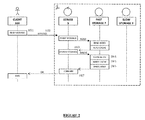
- figure 2 illustrates a use case of storing an email message on the system 1.
- the client 100 composes a new email message (step S01) via an onboard email composer.
- the client 100 sends an IMAP "APPEND" command (step S02).
- the IMAP server 5 parses the command, interrogates the data distribution module 13 to determine if the message should be stored in fast module 7 or in slow storage module 9 (S03) and updates the INDEX module 7A with the new physical message storage location (S04). Then the server 5 stores headers, flags in CACHE module 7C (S05) and body of message in fast storage 7 (S06).
- CACHE 7C comprises a copy of most important message headers, flags and message structure.
- This enables the mail client 100 to send IMAP commands FETCH BODYSTRUCTURE and FETCH FLAGS that needs only information stored in cache 7C. This is sufficient for the user 100 to retrieve a list of available messages with subject and state (NEW or SEEN). This avoids opening large message file (the BODY) to display the list or play the list in telephone session. The file with message body is needed only when client chooses the individual message from the list and decides to open the content.
- the system 1 then sends a confirmation message "OK" (S109) to signal that the operation completed successfully.
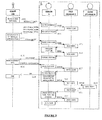
- Figure 3 illustrates another use case for another operation of the system of figure 2 , in which the client 100 wishes to retrieve email messages present on the system 1.
- the client 100 When client 100 log in to voicemail IMAP server, the client 100 sends a IMAP4 "FETCH FLAGS" command (S10) to the server 5.
- the system 1 looks at any unretrieved email messages in its cache storage on the fast storage 7, and returns list of messages with flags (S11).
- This FETCH 1:* FLAGS command does not need access to body of messages.
- the client application can determinate ID of all new messages based on FLAGS received from server.
- the client 100 might want to download the unretrieved messages to its own local storage.
- the client 100 sends a IMAP4 "FETCH 3 BODY" command (S12).
- the system 1 will now look (S13) at the index 7A to determine where the data has been stored, go to that location in the fast storage 7 to read the body of the targeted messages (S14).
- the system 1 then sends a response with message content to the client (S15).
- the client 100 may wish to mark the emails as "read”, also known as "seen”.
- the client 100 sends a IMAP4 "STORE 3 +FLAG (SEEN)" command (S16). This command results in the fast storage 7 updating its cache (S17) to signal the message as having been read.
- the IMAP server 5 send IMAP OK response to client that message has been marked as "seen” (S18).
- the server 5 reads the body of the message (S19), writes the body in the slow storage 9 (S20), deletes the old message still present in the fast storage (S21), then updates the index 7A to point to the new physical storage location (S22).
- the email message is now still present on the server, but only in a physical location which is slower to access but is cheaper to maintain, and for no appreciable difference to the performance of the system for the average user in most cases.
- IMAP FETCH commands are sent to messaging system 1 only for NEW messages.
- the IMAP FETCH commands for SEEN messages are very rare. The statistical degradation in the performance is therefore very slight.
- S16 SEEN flag
- S16 may trigger asynchronous move of a message body from a fast storage 7 to a slower storage 9.
- the process can be delayed if the processor is busy or the fast and/or slow storages 7,9 are busy.
- pointer to a message body is always stored on the fast storage 7.
- the pointer to the message body is stored in the index 7A portion of the fast storage 7.
- the NEW messages will be stored in fast storage 7 e.g. on internal SSD drive.
- the mobile client will retrieve the message the state will change from NEW to SEEN and the message will be moved from fast storage 7 to slower storage 9 or it will be scheduled to be moved to slower storage 9 when server is not used heavily.
- the data distribution module 13 may trigger the server application 5 to move to slower storage 9 messages that have been in NEW state for defined number of days.
- the system 1 can also detect subscriber accounts (e.g. mailboxes) where clients 100 never retrieve their messages and stop using fast storage 9 for such accounts.
- subscriber accounts e.g. mailboxes
- SEEN messages will happen only when a mobile client 100 will explicitly request it e.g. due to change of a software version of the mobile client or periodically to sync up.
- the data distribution module 13 can look at the user access profile of the user 100. In particular, certain low profile users may accumulate messages and seldom consult or retrieve his or her messages. As such, the data distribution module 13 can determine that it is operational efficient to store this user's messages in slow storage, freeing up storage capacity for heavy and frequent users of the system to store messages in the fast storage 7.
- the embodiments presented herein are advantageous in particular for a real time system with large capacity, for example one having a large number of user accounts. It allows fast response time for most common operations and large capacity for rarely used messages.
- the idea should allow decreasing a cost of storage - fast enterprise SSD drives are extremely expensive and usually their cost exceeds couple of times a cost of a server.
- the fast storage such as SSD drives has higher cost per GB than a large external storage.
- program storage devices e.g., digital data storage media, which are machine or computer readable and encode machine-executable or computer-executable programs of instructions where said instructions perform some or all of the steps of methods described herein.
- the program storage devices may be, e.g., digital memories, magnetic storage media such as a magnetic disks or tapes, hard drives, or optically readable digital data storage media.
- the embodiments are also intended to cover computers programmed to perform said steps of methods described herein.
Landscapes
- Engineering & Computer Science (AREA)
- Theoretical Computer Science (AREA)
- Human Computer Interaction (AREA)
- Physics & Mathematics (AREA)
- General Engineering & Computer Science (AREA)
- General Physics & Mathematics (AREA)
- Computer Networks & Wireless Communication (AREA)
- Signal Processing (AREA)
- Telephonic Communication Services (AREA)
Abstract
Description
- The present invention relates communication systems, and in particular to storage conditions for communication systems.
- This section introduces aspects that may be helpful in facilitating a better understanding of the invention. Accordingly, the statements of this section are to be read in this light and are not to be understood as admissions about what is in the prior art or what is not in the prior art.
- Telecommunication systems such as email, voice mail or Visual Voice Mail (VVM) systems typically comprise a processor for operation and execution, and a storage module for storing telecommunication data.
- The storage is often used as both a transitory cache for storing information as well as for permanent storage of information and data of the telecommunication system.
- As such, there is an inherent conflict in this mode of operation. Indeed, messaging systems such as an email or voice mail or VVM systems must provide fast response time and large capacity. Fast access to all stored messages is normally onerous as fast storage modules are much more expensive than slow storage modules, but slower storage modules may compromise performance, particularly for systems with large number of concurrent access (such as serving many different concurrent users).
- A solution is sought to address this situation, allowing for a better use of storage modules to increase performance while lowering costs of telecommunication systems.
- In view of the foregoing, an embodiment herein provides for a communication system adapted for storing communication messages destined for one or more recipients, said system comprising a processor, a first storage unit, and a second storage unit, wherein said messages are stored in a unique physical location on either the first storage unit or the second storage unit, and wherein the processor is configured to determine on which of said first or second storage unit to store said messages.
- An advantage of this embodiment is to provide two types of storage and to distribute stored messages between first and second storages based on usage scenarios. The end user's behavior, for example a cell-phone user's behavior, may be used to determine a point in time when messages ought to be moved from a first storage to a second storage to maximize the cost and operational efficiency constraints.
- For instance, in a typical voicemail scenario a user will listen to a new voicemail message and then delete it a short time after. The voicemail message is therefore never kept on servers very long and this situation would not warrant for the message to be moved to slow type of storage. This can limit the number of input/output (I/O) operations for slower storage. Only messages with important information that is saved for future retrieval may be stored in slower storage to decrease the storage costs while minimally impacting day-to-day operational requirements (principally lag in retrieving the information) for large number of I/O operations as is typical on a voicemail server.
- Another embodiment provides for a method for storing communication messages destined for one or more recipient, in a communication system comprising a first storage module and a second storage module, said method being characterized by the steps of receiving message data destined for storage on said system; and of storing said message data in either of said first storage module or said second storage module in function of predetermined characteristics of said transmission data.
- These and other aspects of the embodiments herein will be better appreciated and understood when considered in conjunction with the following description and the accompanying drawings.
-
-
Figure 1 illustrates a system adapted for storing messages according to a first embodiment; -
Figure 2 and3 illustrate exemplary use cases of a system according to variants of the embodiment offigure 1 . - The embodiments herein and the various features and advantageous details thereof are explained more fully with reference to the non-limiting embodiments that are illustrated in the accompanying, drawings and detailed in the following description. Descriptions of well known components and processing techniques are omitted so as to not unnecessarily obscure the embodiments herein. The examples used herein are intended merely to facilitate an understanding of ways in which the embodiments herein may be practiced and to further enable those of skill in the art to practice the embodiments herein. Accordingly, the samples should not be construed as limiting the scope of the embodiments herein.
- The embodiments herein disclose a system and method of storing information in servers in a cost- and operationally-effective manner. In particular, the embodiment is adapted for use in email server applications, or in voicemail and visual voice mail (VVM) systems.
-
Figure 1 illustrates an exemplary embodiment of acommunication system 1 comprising an input/output (I/O)interface device 3 adapted to be in communication with anend user 100 via anetwork link 99. Thecommunication interface 3 may be wired or wireless, and may be direct or via an intermediate network such as internet or an enterprise network. - The
end user 100, upon variants of the present embodiment, may be a physical person (for example in the case of voicemail) or an intermediate software application present on a user's device. - One user is here illustrated, however many such users may exist and operate in the same manner.
- The
system 1 and thecommunication interface 3 are controlled by aserver application 5 operating on a processor device. Depending upon the application, theserver application 5 may be configured for use as en email server or as a voicemail server. - The
system 1 further comprises afirst storage device 7, and asecond storage device 9. Thefirst storage device 7 is known as afast storage 7, and thesecond storage device 9 is known as aslow storage 9. Both fast andslow storages - For the purposes of the present description,
fast storage devices 7 are to be understood as low latency storage devices. "Response time" and "low latency" are similar notions and will be used interchangeably. - High latency can cause long pauses during a communication session that impact customer satisfaction, and as such is sought to be minimized for the purposes of everyday operations. The storage module response time is the critical factor for data stored in this storage.
- A
fast storage 7 may for example be an SSD (Solid State Drive) connected with a SATA (Serial Advance Technology Attachment) interface. More particularly, afast storage 7 is more generally a storage unit based upon integrated circuit (IC) technology comprising storage elements of the electronic kind that stores data persistently. For example, access time for a typicalfast storage 7 is less than 100 microseconds (ie. <100µs). - However, the problem with SSD is the high cost per unit of storage ($ / GB of storage) and the limited number of expandability potential coupled with relatively low storage capacities per storage module.
- The
slower storage 9 is understood to mean higher response time, higher capacity, and cheaper storage options with commensurate lower performance as compared tofast storage drive 7. - For example, a
slow storage 9 could take the form of a Network Attached Storage (NAS) with higher latency but larger capacity and lower cost per unit of storage. Another variant ofslow storage 9 is in the form of electromechanical storage disks comprising spinning magnetic disks and read/write heads. For example, access time for a typicalslow storage 7 is between 2 and 12 milliseconds (ie. 2 - 12 ms) - In other words, fast and slow storage are of the same storage nature, with the
fast storage 7 being privileged for high-value, high cost missions, and theslower storage 9 being used for lower value, lower cost missions. The key factor being the relative performance rather than the absolute performance parameters. - The
fast storage 7 divides its storage capacity between the different data types : - an
INDEX module 7A, -
data storage elements 7B, and - a CACHE module 7C.
- The
INDEX module 7A is adapted to hold information about storage locations of each individualdata storage elements 7B. As such, theINDEX module 7A is an index pointing towards physical locations in the fast storage containing thedata storage elements 7B. In other words, theINDEX module 7B allows to reference the physical location of alldata elements 7B. - It is to be noted that there is only the need for a
unique INDEX module 7A across all the fast orslow storages slow storage 9 indata storage elements 9B will also be referenced by theINDEX module 7A. - The many individual
data storage elements 7B each represent a single file or message or piece of content information. For example, each instance of adata storage element 7B represents a message comprising metadata information (information such as "from", "to", "time called", "seen" or "new"etc). Eachdata storage element 7B, or each "file", may for example be stored in RFC 822 format. - It is to be noted that
figure 1 illustrates three distinct messages stored on the system: one message being stored on thefast storage 7, and two messages being stored on theslow storage 9. Each message is referenced with a numerical index number "1", "2", "3" reflecting the numerical index given by theserver 5. Furthermore, eachdata message element - The CACHE module 7C comprises a storage area on the
fast storage module 5 to store the most important information needed for all standard operations. For example, for the case of voicemails or emails, the CACHE module 7C contains the most important header information (ie. Subject, From, To, List of components, IMAP flags) for all messages stored in bothfast storage module 7 andslow storage module 9. The header information is needed for most sessions. The CACHE module 7C does not usually store the body of the message - the body is typically stored in thedata storage elements - The
INDEX module 7A and the CACHE module 7C are controlled by theserver application 5. Only theserver application 5 is allowed to modify theINDEX module 7A and CACHE module 7C. - The
system 1 further comprises astorage distribution module 13 associated with theserver 5. Thestorage distribution module 13 comprises a rule algorithm configured to determine the storage location of data (such as thedata storage elements system 1. - As a new emails or voicemail messages are deposited in the
system 1, the server'sstorage distribution module 13 determines if the message should be stored infast storage module 7 or inslow storage module 9. This decision is taken based on received command syntax. Theserver application 5 adds new information to theINDEX module 7A, CACHE module 7C and store body of the message in chosenstorage module - The server
storage distribution module 13 is also responsible for determining the moment when stored messages are marked as SEEN by client or may be too old and should be transferred to slowstorage module 9 with modification ofINDEX module 7A. - It should be noted that the
server 5 may be configured to invoke thestorage distribution module 13 periodically or upon a trigger action (such as whenever theuser 100 interacts with the server 5). - As such, the
storage distribution module 13 determines how, when, and under what conditionsdata storage elements fast storage module 7 and theslow storage module 9. - The server application
message distribution module 13 may have : - fixed rules,
- fixed rules which may be added, subtracted or modified by an administrator, or
- a further learning algorithm associated therewith in order for rules to be added, subtracted or modified autonomously by the
IMAP application 5 in function of constraints programmed into thesystem 1. - The
data distribution module 13 for transferring for example comprises rules such as the following (non limiting): - messages NOT SEEN by an
end user 100 should be stored infast storage 7 and messages SEEN and ARCHIVED by anend user 100 should be stored inslow storage 9; - messages having not been consulted by an
end user 100 should be stored infast storage 7 and messages having been consulted by anend user 100 should be stored inslow storage 9; - messages younger than a predetermined age should be stored in
fast storage 7 and messages older than said predetermined age should be stored inslow storage 9; - A set limit of messages may be set in the
fast storage 7, and further messages stored in theslow storage 9, and preferably in increasing order of age such that the young messages are always privileged to be stored in thefast storage 7; - When the NEW NOT SEEN message is flagged as SEEN by
client 100 the message body is moved fromfast storage 7 to slowstorage 9 and the INDEX file is updated to point for SLOW STORAGE; and/or - messages for users with a high relative usage activity pattern should be stored in
fast storage 7, and messages for users with a low activity profile should be stored inslow storage 9. - In a typical use case for email systems, when the
system 1 receives an email message, theIMAP server application 5 receives an IMAP APPEND command with new message in RFC 822 format via thenetwork interface 3. - The
IMAP application 5 subsequently reads theINDEX module 7A and the CACHE module 7C on thefast storage 7 to determine where free physical areas on the storage drives 7, 9 may exist to store the newly received message. - Then, the
IMAP server application 5 parses the message body received in APPEND command to find important header information (eg, Subject, From, To) and adds them to CACHE information 7C stored in thefast storage 7. Thedata distribution module 13 decides to store NEW message infast storage 7 and set the correct location inINDEX data 7A. Then theapplication 5 writes message body, in the appropriatedata storage elements data distribution module 13. - To finish, the
server 5 sends an IMAP OK message toclient 100 to inform that APPEND command was completed with success. -
Figures 2 and3 illustrate exemplary use cases of the system offigure 1 for an IMAP4 email server in communication with thedistal email client 100. - The
email client 100 may be a mobile device or a fixed device, and may have limited onboard storage or ample onboard storage means. - Furthermore, the
email client 100 communicates with thesystem 1 via theinterface port 3 under control of theserver application 5. - Turning more specifically to
figure 2 illustrates a use case of storing an email message on thesystem 1. - The
client 100 composes a new email message (step S01) via an onboard email composer. - When the email message is completed, the
client 100 sends an IMAP "APPEND" command (step S02). TheIMAP server 5 parses the command, interrogates thedata distribution module 13 to determine if the message should be stored infast module 7 or in slow storage module 9 (S03) and updates theINDEX module 7A with the new physical message storage location (S04). Then theserver 5 stores headers, flags in CACHE module 7C (S05) and body of message in fast storage 7 (S06). - This is particularly advantageous, as the CACHE 7C comprises a copy of most important message headers, flags and message structure. This enables the
mail client 100 to send IMAP commands FETCH BODYSTRUCTURE and FETCH FLAGS that needs only information stored in cache 7C. This is sufficient for theuser 100 to retrieve a list of available messages with subject and state (NEW or SEEN). This avoids opening large message file (the BODY) to display the list or play the list in telephone session. The file with message body is needed only when client chooses the individual message from the list and decides to open the content. - The
system 1 then sends a confirmation message "OK" (S109) to signal that the operation completed successfully. -
Figure 3 illustrates another use case for another operation of the system offigure 2 , in which theclient 100 wishes to retrieve email messages present on thesystem 1. - When
client 100 log in to voicemail IMAP server, theclient 100 sends a IMAP4 "FETCH FLAGS" command (S10) to theserver 5. Thesystem 1 looks at any unretrieved email messages in its cache storage on thefast storage 7, and returns list of messages with flags (S11). This FETCH 1:* FLAGS command does not need access to body of messages. The client application can determinate ID of all new messages based on FLAGS received from server. - Next, the
client 100 might want to download the unretrieved messages to its own local storage. As such, theclient 100 sends a IMAP4 "FETCH 3 BODY" command (S12). Thesystem 1 will now look (S13) at theindex 7A to determine where the data has been stored, go to that location in thefast storage 7 to read the body of the targeted messages (S14). Thesystem 1 then sends a response with message content to the client (S15). - Once the email has been retrieved, the
client 100 may wish to mark the emails as "read", also known as "seen". - As such, the
client 100 sends a IMAP4 "STORE 3 +FLAG (SEEN)" command (S16). This command results in thefast storage 7 updating its cache (S17) to signal the message as having been read. - The
IMAP server 5 send IMAP OK response to client that message has been marked as "seen" (S18). - Furthermore, the
system 1, viaIMAP server application 5 and its associateddata distribution module 13, determined that an applicable rule is the transfer of messages having been retrieved a first time from thefast storage 7 to theslow storage 9. - As such, the
server 5 reads the body of the message (S19), writes the body in the slow storage 9 (S20), deletes the old message still present in the fast storage (S21), then updates theindex 7A to point to the new physical storage location (S22). - The email message is now still present on the server, but only in a physical location which is slower to access but is cheaper to maintain, and for no appreciable difference to the performance of the system for the average user in most cases.
- Indeed, the IMAP FETCH commands are sent to
messaging system 1 only for NEW messages. The IMAP FETCH commands for SEEN messages are very rare. The statistical degradation in the performance is therefore very slight. - It is to be noted that the update of a SEEN flag (S16) may trigger asynchronous move of a message body from a
fast storage 7 to aslower storage 9. The process can be delayed if the processor is busy or the fast and/orslow storages - It is to be further noted that the pointer to a message body is always stored on the
fast storage 7. The pointer to the message body is stored in theindex 7A portion of thefast storage 7. - The above described use cases are of course applicable to other situations and technologies. Indeed, it is particularly advantageous for example for messaging systems such as voice messaging systems or VVM systems where messages can be divided into two states: NEW and SEEN. NEW messages need to be retrieved more quickly, and are likely to be retrieved with more regularity than messages in the SEEN state.
- The NEW messages will be stored in
fast storage 7 e.g. on internal SSD drive. When the mobile client will retrieve the message the state will change from NEW to SEEN and the message will be moved fromfast storage 7 toslower storage 9 or it will be scheduled to be moved toslower storage 9 when server is not used heavily. - In another variant, the
data distribution module 13 may trigger theserver application 5 to move toslower storage 9 messages that have been in NEW state for defined number of days. - The
system 1 can also detect subscriber accounts (e.g. mailboxes) whereclients 100 never retrieve their messages and stop usingfast storage 9 for such accounts. - The retrieval of SEEN messages will happen only when a
mobile client 100 will explicitly request it e.g. due to change of a software version of the mobile client or periodically to sync up. - In yet another variant, the
data distribution module 13 can look at the user access profile of theuser 100. In particular, certain low profile users may accumulate messages and seldom consult or retrieve his or her messages. As such, thedata distribution module 13 can determine that it is operational efficient to store this user's messages in slow storage, freeing up storage capacity for heavy and frequent users of the system to store messages in thefast storage 7. - In particular, the embodiments presented herein are advantageous in particular for a real time system with large capacity, for example one having a large number of user accounts. It allows fast response time for most common operations and large capacity for rarely used messages. The idea should allow decreasing a cost of storage - fast enterprise SSD drives are extremely expensive and usually their cost exceeds couple of times a cost of a server. The fast storage such as SSD drives has higher cost per GB than a large external storage. By combining SSDs with an external storage we can offer much larger capacity and fast access to NEW messages. This solution will be transparent to an external client using protocol like IMAP4.
- Having information about the state of a message allows to predict what messages will be retrieved in near future and should be kept in a faster storage until a mobile client application marks them as read. With standard caching solutions we cannot guarantee that the data will stay in a fast storage until a mobile client marks it as read.
- If we would use only the fast storage the cost of this solution with the same capacity would be much higher.
- If we would use only the slower storage the response time would be much longer and such a system capacity would not be acceptable by a customer.
- A person of skill in the art would readily recognize that steps of various above-described methods can be performed by programmed computers. Herein, some embodiments are intended to cover program storage devices, e.g., digital data storage media, which are machine or computer readable and encode machine-executable or computer-executable programs of instructions where said instructions perform some or all of the steps of methods described herein. The program storage devices may be, e.g., digital memories, magnetic storage media such as a magnetic disks or tapes, hard drives, or optically readable digital data storage media. The embodiments are also intended to cover computers programmed to perform said steps of methods described herein.
- The present inventions may be embodied in other specific apparatus and/or methods. The described embodiments are to be considered in all respects as only illustrative and not restrictive. In particular, the scope of the invention is indicated by the appended claims rather than by the description and figures herein. All changes that come within the meaning and range of equivalency of the claims are to be embraced within their scope.
Claims (11)
- A communication system (1) adapted for storing communication messages destined for one or more recipients (100), said system comprising a processor (5), a first storage unit (7), and a second storage unit (9),
wherein said messages are stored in a unique physical location on either the first storage unit or the second storage unit, and
wherein the processor is configured to determine on which of said first or second storage unit to store said messages. - A system according to claim 1, wherein said processor (5) determines on which of said first or second storage unit to store said messages in function of at least one predetermined condition.
- A system according to claim 1 or 2, wherein the first and second storage units are differentiated by their access time parameter.
- A system according to claim 3, wherein the first storage unit (7) is based upon integrated circuit technology comprising storage elements of the electronic kind that stores data persistently, and wherein the second storage unit is based upon electromechanical storage disks comprising spinning magnetic disks and read/write heads.
- A system according to any one of the preceding claims, where said predetermined conditions are based on the time the message is received by the system.
- A system according to any one of the preceding claims, where said predetermined conditions are based on whether the message has been visualized at least once by the recipient.
- A system according to any one of the preceding claims, where said predetermined conditions are based on a usage profile of the recipient (100), the usage profile being based on the frequency of access of said system by said recipient in a given time period.
- A system according to any one of the preceding claims, wherein the system is adapted for storing voicemail messages.
- A system according to any one of the preceding claims, wherein the system is adapted for storing email messages.
- Method for storing communication messages destined for one or more recipient, in a communication system comprising a first storage module (7) and a second storage module (9),
said method being characterized by the steps of :- receiving message data destined for storage on said system;- storing said message data in either of said first storage module or said second storage module in function of predetermined characteristics of said transmission data. - Method according to claim 10, further comprising the further step of periodically reviewing all message data stored in both the first storage module or the second storage module and moving message data to the other of the first storage module or the second storage module in function of said predetermined characteristics.
Priority Applications (2)
| Application Number | Priority Date | Filing Date | Title |
|---|---|---|---|
| ES13306307T ES2755942T3 (en) | 2013-09-25 | 2013-09-25 | Communication storage system |
| EP13306307.3A EP2854015B1 (en) | 2013-09-25 | 2013-09-25 | Communication storage system |
Applications Claiming Priority (1)
| Application Number | Priority Date | Filing Date | Title |
|---|---|---|---|
| EP13306307.3A EP2854015B1 (en) | 2013-09-25 | 2013-09-25 | Communication storage system |
Publications (2)
| Publication Number | Publication Date |
|---|---|
| EP2854015A1 true EP2854015A1 (en) | 2015-04-01 |
| EP2854015B1 EP2854015B1 (en) | 2019-09-04 |
Family
ID=49328471
Family Applications (1)
| Application Number | Title | Priority Date | Filing Date |
|---|---|---|---|
| EP13306307.3A Active EP2854015B1 (en) | 2013-09-25 | 2013-09-25 | Communication storage system |
Country Status (2)
| Country | Link |
|---|---|
| EP (1) | EP2854015B1 (en) |
| ES (1) | ES2755942T3 (en) |
Citations (4)
| Publication number | Priority date | Publication date | Assignee | Title |
|---|---|---|---|---|
| WO2002082457A2 (en) * | 2001-04-04 | 2002-10-17 | Aprilis, Incorporated | Hybrid data storage system |
| US20080034049A1 (en) * | 2006-08-05 | 2008-02-07 | Terry Lee Stokes | System and Method for the Capture and Archival of Electronic Communications |
| US20090282191A1 (en) * | 2008-05-08 | 2009-11-12 | Robert Depta | Operating Method for a Memory Subsystem and Devices for Executing the Operating Method |
| GB2491245A (en) * | 2011-05-20 | 2012-11-28 | Phillip Michael Birtwell | A Video-telephone System Message Storage Device Enabling Cross Compatibility between Video and Non-video Enabled Systems |
-
2013
- 2013-09-25 EP EP13306307.3A patent/EP2854015B1/en active Active
- 2013-09-25 ES ES13306307T patent/ES2755942T3/en active Active
Patent Citations (4)
| Publication number | Priority date | Publication date | Assignee | Title |
|---|---|---|---|---|
| WO2002082457A2 (en) * | 2001-04-04 | 2002-10-17 | Aprilis, Incorporated | Hybrid data storage system |
| US20080034049A1 (en) * | 2006-08-05 | 2008-02-07 | Terry Lee Stokes | System and Method for the Capture and Archival of Electronic Communications |
| US20090282191A1 (en) * | 2008-05-08 | 2009-11-12 | Robert Depta | Operating Method for a Memory Subsystem and Devices for Executing the Operating Method |
| GB2491245A (en) * | 2011-05-20 | 2012-11-28 | Phillip Michael Birtwell | A Video-telephone System Message Storage Device Enabling Cross Compatibility between Video and Non-video Enabled Systems |
Also Published As
| Publication number | Publication date |
|---|---|
| ES2755942T3 (en) | 2020-04-24 |
| EP2854015B1 (en) | 2019-09-04 |
Similar Documents
| Publication | Publication Date | Title |
|---|---|---|
| JP5383660B2 (en) | Synchronization of email messages between external email servers and / or local email servers and / or wireless devices | |
| US7730148B1 (en) | Backfilling a local email archive store | |
| CN101741730B (en) | Method and equipment for downloading file and method and system for providing file downloading service | |
| JP2010525740A (en) | Apparatus and method for caching email messages within a wireless data service | |
| CN107786623B (en) | Message asynchronous processing method and device | |
| EP3422271A1 (en) | Mail information management method and associated apparatus | |
| CN113923213A (en) | Directory-level quality of service control method, system and access node | |
| WO2026032148A1 (en) | Email data storage platform and method | |
| US20150244638A1 (en) | Configurable pacing for messaging systems | |
| US20100319003A1 (en) | Mobile communications device programmed with message logging capability | |
| CN104216659A (en) | Off-line message storage method and servers | |
| US8856241B1 (en) | Management of email archive server requests | |
| EP2854015B1 (en) | Communication storage system | |
| CN113742131A (en) | Method, electronic device and computer program product for storage management | |
| US8156188B1 (en) | Email archive server priming for a content request | |
| JP5431408B2 (en) | Mail system | |
| US8239447B2 (en) | Retrieving data using an asynchronous buffer | |
| AU2010273075B2 (en) | System and method for multimedia messaging service processing | |
| CN108228624A (en) | Data acquisition and update method, piece list service system and piece single system | |
| CN111352900A (en) | Virtualized application file access method, device, server and storage medium | |
| US8930464B1 (en) | Email content pre-caching to a local archive store | |
| EP3378202B1 (en) | Archiving messages without message copying | |
| CN109407988A (en) | Cold data storage system and its storage method | |
| CN114327947A (en) | Subscription message processing method and device, electronic equipment and automatic driving vehicle | |
| JP5864133B2 (en) | Program and server |
Legal Events
| Date | Code | Title | Description |
|---|---|---|---|
| PUAI | Public reference made under article 153(3) epc to a published international application that has entered the european phase |
Free format text: ORIGINAL CODE: 0009012 |
|
| 17P | Request for examination filed |
Effective date: 20140930 |
|
| AK | Designated contracting states |
Kind code of ref document: A1 Designated state(s): AL AT BE BG CH CY CZ DE DK EE ES FI FR GB GR HR HU IE IS IT LI LT LU LV MC MK MT NL NO PL PT RO RS SE SI SK SM TR |
|
| AX | Request for extension of the european patent |
Extension state: BA ME |
|
| RBV | Designated contracting states (corrected) |
Designated state(s): AL AT BE BG CH CY CZ DE DK EE ES FI FR GB GR HR HU IE IS IT LI LT LU LV MC MK MT NL NO PL PT RO RS SE SI SK SM TR |
|
| RAP1 | Party data changed (applicant data changed or rights of an application transferred) |
Owner name: ALCATEL LUCENT |
|
| GRAP | Despatch of communication of intention to grant a patent |
Free format text: ORIGINAL CODE: EPIDOSNIGR1 |
|
| STAA | Information on the status of an ep patent application or granted ep patent |
Free format text: STATUS: GRANT OF PATENT IS INTENDED |
|
| INTG | Intention to grant announced |
Effective date: 20190329 |
|
| GRAS | Grant fee paid |
Free format text: ORIGINAL CODE: EPIDOSNIGR3 |
|
| GRAA | (expected) grant |
Free format text: ORIGINAL CODE: 0009210 |
|
| STAA | Information on the status of an ep patent application or granted ep patent |
Free format text: STATUS: THE PATENT HAS BEEN GRANTED |
|
| AK | Designated contracting states |
Kind code of ref document: B1 Designated state(s): AL AT BE BG CH CY CZ DE DK EE ES FI FR GB GR HR HU IE IS IT LI LT LU LV MC MK MT NL NO PL PT RO RS SE SI SK SM TR |
|
| REG | Reference to a national code |
Ref country code: GB Ref legal event code: FG4D |
|
| REG | Reference to a national code |
Ref country code: CH Ref legal event code: EP |
|
| REG | Reference to a national code |
Ref country code: AT Ref legal event code: REF Ref document number: 1176318 Country of ref document: AT Kind code of ref document: T Effective date: 20190915 |
|
| REG | Reference to a national code |
Ref country code: DE Ref legal event code: R096 Ref document number: 602013059983 Country of ref document: DE |
|
| REG | Reference to a national code |
Ref country code: IE Ref legal event code: FG4D |
|
| REG | Reference to a national code |
Ref country code: NL Ref legal event code: MP Effective date: 20190904 |
|
| REG | Reference to a national code |
Ref country code: LT Ref legal event code: MG4D |
|
| PG25 | Lapsed in a contracting state [announced via postgrant information from national office to epo] |
Ref country code: FI Free format text: LAPSE BECAUSE OF FAILURE TO SUBMIT A TRANSLATION OF THE DESCRIPTION OR TO PAY THE FEE WITHIN THE PRESCRIBED TIME-LIMIT Effective date: 20190904 Ref country code: LT Free format text: LAPSE BECAUSE OF FAILURE TO SUBMIT A TRANSLATION OF THE DESCRIPTION OR TO PAY THE FEE WITHIN THE PRESCRIBED TIME-LIMIT Effective date: 20190904 Ref country code: HR Free format text: LAPSE BECAUSE OF FAILURE TO SUBMIT A TRANSLATION OF THE DESCRIPTION OR TO PAY THE FEE WITHIN THE PRESCRIBED TIME-LIMIT Effective date: 20190904 Ref country code: BG Free format text: LAPSE BECAUSE OF FAILURE TO SUBMIT A TRANSLATION OF THE DESCRIPTION OR TO PAY THE FEE WITHIN THE PRESCRIBED TIME-LIMIT Effective date: 20191204 Ref country code: NO Free format text: LAPSE BECAUSE OF FAILURE TO SUBMIT A TRANSLATION OF THE DESCRIPTION OR TO PAY THE FEE WITHIN THE PRESCRIBED TIME-LIMIT Effective date: 20191204 Ref country code: SE Free format text: LAPSE BECAUSE OF FAILURE TO SUBMIT A TRANSLATION OF THE DESCRIPTION OR TO PAY THE FEE WITHIN THE PRESCRIBED TIME-LIMIT Effective date: 20190904 |
|
| PG25 | Lapsed in a contracting state [announced via postgrant information from national office to epo] |
Ref country code: GR Free format text: LAPSE BECAUSE OF FAILURE TO SUBMIT A TRANSLATION OF THE DESCRIPTION OR TO PAY THE FEE WITHIN THE PRESCRIBED TIME-LIMIT Effective date: 20191205 Ref country code: RS Free format text: LAPSE BECAUSE OF FAILURE TO SUBMIT A TRANSLATION OF THE DESCRIPTION OR TO PAY THE FEE WITHIN THE PRESCRIBED TIME-LIMIT Effective date: 20190904 Ref country code: LV Free format text: LAPSE BECAUSE OF FAILURE TO SUBMIT A TRANSLATION OF THE DESCRIPTION OR TO PAY THE FEE WITHIN THE PRESCRIBED TIME-LIMIT Effective date: 20190904 Ref country code: AL Free format text: LAPSE BECAUSE OF FAILURE TO SUBMIT A TRANSLATION OF THE DESCRIPTION OR TO PAY THE FEE WITHIN THE PRESCRIBED TIME-LIMIT Effective date: 20190904 |
|
| REG | Reference to a national code |
Ref country code: AT Ref legal event code: MK05 Ref document number: 1176318 Country of ref document: AT Kind code of ref document: T Effective date: 20190904 |
|
| REG | Reference to a national code |
Ref country code: ES Ref legal event code: FG2A Ref document number: 2755942 Country of ref document: ES Kind code of ref document: T3 Effective date: 20200424 |
|
| PG25 | Lapsed in a contracting state [announced via postgrant information from national office to epo] |
Ref country code: AT Free format text: LAPSE BECAUSE OF FAILURE TO SUBMIT A TRANSLATION OF THE DESCRIPTION OR TO PAY THE FEE WITHIN THE PRESCRIBED TIME-LIMIT Effective date: 20190904 Ref country code: NL Free format text: LAPSE BECAUSE OF FAILURE TO SUBMIT A TRANSLATION OF THE DESCRIPTION OR TO PAY THE FEE WITHIN THE PRESCRIBED TIME-LIMIT Effective date: 20190904 Ref country code: IT Free format text: LAPSE BECAUSE OF FAILURE TO SUBMIT A TRANSLATION OF THE DESCRIPTION OR TO PAY THE FEE WITHIN THE PRESCRIBED TIME-LIMIT Effective date: 20190904 Ref country code: RO Free format text: LAPSE BECAUSE OF FAILURE TO SUBMIT A TRANSLATION OF THE DESCRIPTION OR TO PAY THE FEE WITHIN THE PRESCRIBED TIME-LIMIT Effective date: 20190904 Ref country code: EE Free format text: LAPSE BECAUSE OF FAILURE TO SUBMIT A TRANSLATION OF THE DESCRIPTION OR TO PAY THE FEE WITHIN THE PRESCRIBED TIME-LIMIT Effective date: 20190904 Ref country code: PT Free format text: LAPSE BECAUSE OF FAILURE TO SUBMIT A TRANSLATION OF THE DESCRIPTION OR TO PAY THE FEE WITHIN THE PRESCRIBED TIME-LIMIT Effective date: 20200106 Ref country code: PL Free format text: LAPSE BECAUSE OF FAILURE TO SUBMIT A TRANSLATION OF THE DESCRIPTION OR TO PAY THE FEE WITHIN THE PRESCRIBED TIME-LIMIT Effective date: 20190904 |
|
| PG25 | Lapsed in a contracting state [announced via postgrant information from national office to epo] |
Ref country code: SK Free format text: LAPSE BECAUSE OF FAILURE TO SUBMIT A TRANSLATION OF THE DESCRIPTION OR TO PAY THE FEE WITHIN THE PRESCRIBED TIME-LIMIT Effective date: 20190904 Ref country code: SM Free format text: LAPSE BECAUSE OF FAILURE TO SUBMIT A TRANSLATION OF THE DESCRIPTION OR TO PAY THE FEE WITHIN THE PRESCRIBED TIME-LIMIT Effective date: 20190904 Ref country code: IS Free format text: LAPSE BECAUSE OF FAILURE TO SUBMIT A TRANSLATION OF THE DESCRIPTION OR TO PAY THE FEE WITHIN THE PRESCRIBED TIME-LIMIT Effective date: 20200224 Ref country code: CZ Free format text: LAPSE BECAUSE OF FAILURE TO SUBMIT A TRANSLATION OF THE DESCRIPTION OR TO PAY THE FEE WITHIN THE PRESCRIBED TIME-LIMIT Effective date: 20190904 |
|
| REG | Reference to a national code |
Ref country code: CH Ref legal event code: PL |
|
| REG | Reference to a national code |
Ref country code: DE Ref legal event code: R097 Ref document number: 602013059983 Country of ref document: DE |
|
| PLBE | No opposition filed within time limit |
Free format text: ORIGINAL CODE: 0009261 |
|
| STAA | Information on the status of an ep patent application or granted ep patent |
Free format text: STATUS: NO OPPOSITION FILED WITHIN TIME LIMIT |
|
| PG2D | Information on lapse in contracting state deleted |
Ref country code: IS |
|
| PG25 | Lapsed in a contracting state [announced via postgrant information from national office to epo] |
Ref country code: LU Free format text: LAPSE BECAUSE OF NON-PAYMENT OF DUE FEES Effective date: 20190925 Ref country code: LI Free format text: LAPSE BECAUSE OF NON-PAYMENT OF DUE FEES Effective date: 20190930 Ref country code: CH Free format text: LAPSE BECAUSE OF NON-PAYMENT OF DUE FEES Effective date: 20190930 Ref country code: DK Free format text: LAPSE BECAUSE OF FAILURE TO SUBMIT A TRANSLATION OF THE DESCRIPTION OR TO PAY THE FEE WITHIN THE PRESCRIBED TIME-LIMIT Effective date: 20190904 Ref country code: IE Free format text: LAPSE BECAUSE OF NON-PAYMENT OF DUE FEES Effective date: 20190925 Ref country code: IS Free format text: LAPSE BECAUSE OF FAILURE TO SUBMIT A TRANSLATION OF THE DESCRIPTION OR TO PAY THE FEE WITHIN THE PRESCRIBED TIME-LIMIT Effective date: 20200105 |
|
| REG | Reference to a national code |
Ref country code: BE Ref legal event code: MM Effective date: 20190930 |
|
| 26N | No opposition filed |
Effective date: 20200605 |
|
| PG25 | Lapsed in a contracting state [announced via postgrant information from national office to epo] |
Ref country code: MC Free format text: LAPSE BECAUSE OF FAILURE TO SUBMIT A TRANSLATION OF THE DESCRIPTION OR TO PAY THE FEE WITHIN THE PRESCRIBED TIME-LIMIT Effective date: 20190904 Ref country code: SI Free format text: LAPSE BECAUSE OF FAILURE TO SUBMIT A TRANSLATION OF THE DESCRIPTION OR TO PAY THE FEE WITHIN THE PRESCRIBED TIME-LIMIT Effective date: 20190904 Ref country code: BE Free format text: LAPSE BECAUSE OF NON-PAYMENT OF DUE FEES Effective date: 20190930 |
|
| PG25 | Lapsed in a contracting state [announced via postgrant information from national office to epo] |
Ref country code: CY Free format text: LAPSE BECAUSE OF FAILURE TO SUBMIT A TRANSLATION OF THE DESCRIPTION OR TO PAY THE FEE WITHIN THE PRESCRIBED TIME-LIMIT Effective date: 20190904 |
|
| PG25 | Lapsed in a contracting state [announced via postgrant information from national office to epo] |
Ref country code: HU Free format text: LAPSE BECAUSE OF FAILURE TO SUBMIT A TRANSLATION OF THE DESCRIPTION OR TO PAY THE FEE WITHIN THE PRESCRIBED TIME-LIMIT; INVALID AB INITIO Effective date: 20130925 Ref country code: MT Free format text: LAPSE BECAUSE OF FAILURE TO SUBMIT A TRANSLATION OF THE DESCRIPTION OR TO PAY THE FEE WITHIN THE PRESCRIBED TIME-LIMIT Effective date: 20190904 |
|
| PG25 | Lapsed in a contracting state [announced via postgrant information from national office to epo] |
Ref country code: TR Free format text: LAPSE BECAUSE OF FAILURE TO SUBMIT A TRANSLATION OF THE DESCRIPTION OR TO PAY THE FEE WITHIN THE PRESCRIBED TIME-LIMIT Effective date: 20190904 |
|
| PG25 | Lapsed in a contracting state [announced via postgrant information from national office to epo] |
Ref country code: MK Free format text: LAPSE BECAUSE OF FAILURE TO SUBMIT A TRANSLATION OF THE DESCRIPTION OR TO PAY THE FEE WITHIN THE PRESCRIBED TIME-LIMIT Effective date: 20190904 |
|
| P01 | Opt-out of the competence of the unified patent court (upc) registered |
Effective date: 20230606 |
|
| PGFP | Annual fee paid to national office [announced via postgrant information from national office to epo] |
Ref country code: GB Payment date: 20260227 Year of fee payment: 13 |
|
| PGFP | Annual fee paid to national office [announced via postgrant information from national office to epo] |
Ref country code: ES Payment date: 20260202 Year of fee payment: 13 |
|
| PGFP | Annual fee paid to national office [announced via postgrant information from national office to epo] |
Ref country code: DE Payment date: 20260227 Year of fee payment: 13 |
|
| PGFP | Annual fee paid to national office [announced via postgrant information from national office to epo] |
Ref country code: FR Payment date: 20260225 Year of fee payment: 13 |