EP2853059B1 - Encryption key generation - Google Patents
Encryption key generation Download PDFInfo
- Publication number
- EP2853059B1 EP2853059B1 EP13728787.6A EP13728787A EP2853059B1 EP 2853059 B1 EP2853059 B1 EP 2853059B1 EP 13728787 A EP13728787 A EP 13728787A EP 2853059 B1 EP2853059 B1 EP 2853059B1
- Authority
- EP
- European Patent Office
- Prior art keywords
- encryption key
- new
- encryption
- scramble
- variables
- Prior art date
- Legal status (The legal status is an assumption and is not a legal conclusion. Google has not performed a legal analysis and makes no representation as to the accuracy of the status listed.)
- Active
Links
Images




Classifications
-
- H—ELECTRICITY
- H04—ELECTRIC COMMUNICATION TECHNIQUE
- H04L—TRANSMISSION OF DIGITAL INFORMATION, e.g. TELEGRAPHIC COMMUNICATION
- H04L9/00—Cryptographic mechanisms or cryptographic arrangements for secret or secure communications; Network security protocols
- H04L9/08—Key distribution or management, e.g. generation, sharing or updating, of cryptographic keys or passwords
- H04L9/0816—Key establishment, i.e. cryptographic processes or cryptographic protocols whereby a shared secret becomes available to two or more parties, for subsequent use
-
- G—PHYSICS
- G06—COMPUTING OR CALCULATING; COUNTING
- G06K—GRAPHICAL DATA READING; PRESENTATION OF DATA; RECORD CARRIERS; HANDLING RECORD CARRIERS
- G06K19/00—Record carriers for use with machines and with at least a part designed to carry digital markings
- G06K19/06—Record carriers for use with machines and with at least a part designed to carry digital markings characterised by the kind of the digital marking, e.g. shape, nature, code
- G06K19/06009—Record carriers for use with machines and with at least a part designed to carry digital markings characterised by the kind of the digital marking, e.g. shape, nature, code with optically detectable marking
- G06K19/06046—Constructional details
- G06K19/06112—Constructional details the marking being simulated using a light source, e.g. a barcode shown on a display or a laser beam with time-varying intensity profile
-
- G—PHYSICS
- G06—COMPUTING OR CALCULATING; COUNTING
- G06K—GRAPHICAL DATA READING; PRESENTATION OF DATA; RECORD CARRIERS; HANDLING RECORD CARRIERS
- G06K19/00—Record carriers for use with machines and with at least a part designed to carry digital markings
- G06K19/06—Record carriers for use with machines and with at least a part designed to carry digital markings characterised by the kind of the digital marking, e.g. shape, nature, code
- G06K19/08—Record carriers for use with machines and with at least a part designed to carry digital markings characterised by the kind of the digital marking, e.g. shape, nature, code using markings of different kinds or more than one marking of the same kind in the same record carrier, e.g. one marking being sensed by optical and the other by magnetic means
- G06K19/10—Record carriers for use with machines and with at least a part designed to carry digital markings characterised by the kind of the digital marking, e.g. shape, nature, code using markings of different kinds or more than one marking of the same kind in the same record carrier, e.g. one marking being sensed by optical and the other by magnetic means at least one kind of marking being used for authentication, e.g. of credit or identity cards
- G06K19/14—Record carriers for use with machines and with at least a part designed to carry digital markings characterised by the kind of the digital marking, e.g. shape, nature, code using markings of different kinds or more than one marking of the same kind in the same record carrier, e.g. one marking being sensed by optical and the other by magnetic means at least one kind of marking being used for authentication, e.g. of credit or identity cards the marking being sensed by radiation
-
- G—PHYSICS
- G06—COMPUTING OR CALCULATING; COUNTING
- G06K—GRAPHICAL DATA READING; PRESENTATION OF DATA; RECORD CARRIERS; HANDLING RECORD CARRIERS
- G06K7/00—Methods or arrangements for sensing record carriers, e.g. for reading patterns
- G06K7/10—Methods or arrangements for sensing record carriers, e.g. for reading patterns by electromagnetic radiation, e.g. optical sensing; by corpuscular radiation
- G06K7/14—Methods or arrangements for sensing record carriers, e.g. for reading patterns by electromagnetic radiation, e.g. optical sensing; by corpuscular radiation using light without selection of wavelength, e.g. sensing reflected white light
- G06K7/1404—Methods for optical code recognition
- G06K7/1408—Methods for optical code recognition the method being specifically adapted for the type of code
- G06K7/1434—Barcodes with supplemental or add-on codes
-
- G—PHYSICS
- G06—COMPUTING OR CALCULATING; COUNTING
- G06Q—INFORMATION AND COMMUNICATION TECHNOLOGY [ICT] SPECIALLY ADAPTED FOR ADMINISTRATIVE, COMMERCIAL, FINANCIAL, MANAGERIAL OR SUPERVISORY PURPOSES; SYSTEMS OR METHODS SPECIALLY ADAPTED FOR ADMINISTRATIVE, COMMERCIAL, FINANCIAL, MANAGERIAL OR SUPERVISORY PURPOSES, NOT OTHERWISE PROVIDED FOR
- G06Q20/00—Payment architectures, schemes or protocols
- G06Q20/30—Payment architectures, schemes or protocols characterised by the use of specific devices or networks
- G06Q20/32—Payment architectures, schemes or protocols characterised by the use of specific devices or networks using wireless devices
- G06Q20/327—Short range or proximity payments by means of M-devices
- G06Q20/3274—Short range or proximity payments by means of M-devices using a pictured code, e.g. barcode or QR-code, being displayed on the M-device
-
- G—PHYSICS
- G06—COMPUTING OR CALCULATING; COUNTING
- G06Q—INFORMATION AND COMMUNICATION TECHNOLOGY [ICT] SPECIALLY ADAPTED FOR ADMINISTRATIVE, COMMERCIAL, FINANCIAL, MANAGERIAL OR SUPERVISORY PURPOSES; SYSTEMS OR METHODS SPECIALLY ADAPTED FOR ADMINISTRATIVE, COMMERCIAL, FINANCIAL, MANAGERIAL OR SUPERVISORY PURPOSES, NOT OTHERWISE PROVIDED FOR
- G06Q20/00—Payment architectures, schemes or protocols
- G06Q20/38—Payment protocols; Details thereof
- G06Q20/40—Authorisation, e.g. identification of payer or payee, verification of customer or shop credentials; Review and approval of payers, e.g. check credit lines or negative lists
-
- G—PHYSICS
- G09—EDUCATION; CRYPTOGRAPHY; DISPLAY; ADVERTISING; SEALS
- G09C—CIPHERING OR DECIPHERING APPARATUS FOR CRYPTOGRAPHIC OR OTHER PURPOSES INVOLVING THE NEED FOR SECRECY
- G09C5/00—Ciphering apparatus or methods not provided for in the preceding groups, e.g. involving the concealment or deformation of graphic data such as designs, written or printed messages
-
- H—ELECTRICITY
- H04—ELECTRIC COMMUNICATION TECHNIQUE
- H04L—TRANSMISSION OF DIGITAL INFORMATION, e.g. TELEGRAPHIC COMMUNICATION
- H04L9/00—Cryptographic mechanisms or cryptographic arrangements for secret or secure communications; Network security protocols
- H04L9/08—Key distribution or management, e.g. generation, sharing or updating, of cryptographic keys or passwords
- H04L9/0861—Generation of secret information including derivation or calculation of cryptographic keys or passwords
-
- H—ELECTRICITY
- H04—ELECTRIC COMMUNICATION TECHNIQUE
- H04L—TRANSMISSION OF DIGITAL INFORMATION, e.g. TELEGRAPHIC COMMUNICATION
- H04L9/00—Cryptographic mechanisms or cryptographic arrangements for secret or secure communications; Network security protocols
- H04L9/08—Key distribution or management, e.g. generation, sharing or updating, of cryptographic keys or passwords
- H04L9/0861—Generation of secret information including derivation or calculation of cryptographic keys or passwords
- H04L9/0869—Generation of secret information including derivation or calculation of cryptographic keys or passwords involving random numbers or seeds
-
- H—ELECTRICITY
- H04—ELECTRIC COMMUNICATION TECHNIQUE
- H04L—TRANSMISSION OF DIGITAL INFORMATION, e.g. TELEGRAPHIC COMMUNICATION
- H04L9/00—Cryptographic mechanisms or cryptographic arrangements for secret or secure communications; Network security protocols
- H04L9/14—Cryptographic mechanisms or cryptographic arrangements for secret or secure communications; Network security protocols using a plurality of keys or algorithms
-
- H—ELECTRICITY
- H04—ELECTRIC COMMUNICATION TECHNIQUE
- H04L—TRANSMISSION OF DIGITAL INFORMATION, e.g. TELEGRAPHIC COMMUNICATION
- H04L9/00—Cryptographic mechanisms or cryptographic arrangements for secret or secure communications; Network security protocols
- H04L9/32—Cryptographic mechanisms or cryptographic arrangements for secret or secure communications; Network security protocols including means for verifying the identity or authority of a user of the system or for message authentication, e.g. authorization, entity authentication, data integrity or data verification, non-repudiation, key authentication or verification of credentials
- H04L9/3236—Cryptographic mechanisms or cryptographic arrangements for secret or secure communications; Network security protocols including means for verifying the identity or authority of a user of the system or for message authentication, e.g. authorization, entity authentication, data integrity or data verification, non-repudiation, key authentication or verification of credentials using cryptographic hash functions
- H04L9/3242—Cryptographic mechanisms or cryptographic arrangements for secret or secure communications; Network security protocols including means for verifying the identity or authority of a user of the system or for message authentication, e.g. authorization, entity authentication, data integrity or data verification, non-repudiation, key authentication or verification of credentials using cryptographic hash functions involving keyed hash functions, e.g. message authentication codes [MACs], CBC-MAC or HMAC
-
- H—ELECTRICITY
- H04—ELECTRIC COMMUNICATION TECHNIQUE
- H04L—TRANSMISSION OF DIGITAL INFORMATION, e.g. TELEGRAPHIC COMMUNICATION
- H04L2209/00—Additional information or applications relating to cryptographic mechanisms or cryptographic arrangements for secret or secure communication H04L9/00
- H04L2209/56—Financial cryptography, e.g. electronic payment or e-cash
Definitions
- the method comprises after generation of the encryption key, transmitting the encryption key to an encryption key server.
- the encryption look-up table comprises a look-up table that maps input values such as integers to mathematical functions.
- An example of the encryption look-up table is set out in the table below: Encryption Look-up Table Input value Function 0 Add (+) 1 Multiply ( ⁇ ) 2 Divide ( ⁇ ) 3 Subtract (-) 4 Multiply by x 2 5 Add (+) 6 Multiply ( ⁇ ) 7 Divide ( ⁇ ) 8 Subtract (-) 9 Multiply by x 2
- the third grid is associated with the third integer of the user defined variable (i.e. 0 which is the third integer of 04/01/1980). As with the first grid, from the look up table it can be seen that this is associated with the add (+) function.
Landscapes
- Engineering & Computer Science (AREA)
- Physics & Mathematics (AREA)
- Computer Security & Cryptography (AREA)
- General Physics & Mathematics (AREA)
- Theoretical Computer Science (AREA)
- Computer Networks & Wireless Communication (AREA)
- Business, Economics & Management (AREA)
- Signal Processing (AREA)
- Accounting & Taxation (AREA)
- General Business, Economics & Management (AREA)
- Strategic Management (AREA)
- Power Engineering (AREA)
- Optics & Photonics (AREA)
- Toxicology (AREA)
- Electromagnetism (AREA)
- General Health & Medical Sciences (AREA)
- Health & Medical Sciences (AREA)
- Artificial Intelligence (AREA)
- Computer Vision & Pattern Recognition (AREA)
- Finance (AREA)
- Mobile Radio Communication Systems (AREA)
- Telephone Function (AREA)
- Financial Or Insurance-Related Operations Such As Payment And Settlement (AREA)
- Cash Registers Or Receiving Machines (AREA)
Description
- The present invention relates to encryption techniques and in particular techniques for generating encryption keys.
- Techniques for encrypting data using encryption keys are well known and widely used. Techniques include symmetric key encryption whereby the same key is used to encrypt and decrypt data.
- Using techniques such as this it is very important to ensure the secrecy of the key between the sender and recipient of the data and to take steps to reduce the likelihood that the secret key can be guessed by a third party.
- In order to reduce as far as possible the chance that a secret key can be guessed, it is important that the secret key is generated in as random a fashion as possible - i.e. a sequence of keys generated by a key generator is ideally as unpredictable and uncorrelated as possible. Moreover, to further improve security and reduce the likelihood that an encrypted message can be intercepted and decrypted by an unauthorised third party, it is desirable to regularly update the key. However, many conventional techniques generate only a single encryption key and rely on security measures to keep this key secret.
- As is known in the art, using many conventional techniques, the more random a number sequence is, the more computationally intensive it is to create. Moreover, prime numbers which are frequently used when generating encryption keys are notoriously difficult to compute (this is exemplified by efforts to identify Mersenne primes for example the Great Internet Mersenne Prime Search (http://www.mersenne.org/default.php)).
- In some applications, for example mobile devices where processing power and battery life is limited, this can pose a problem.
- Accordingly, it is desirable to provide an encryption key generation technique that is both optimally random whilst limiting the computational intensity required to generate the encryption keys.
-
US2006/0251250 discloses a method for generating a succession of pseudo-random numbers comprising choosing at least one chaotic map, choosing a seed for the map and a number of iterations. Generating the pseudo-random numbers from the final state of the map iterated from the current number of iterations starting from the current seed and repeating this, a number of times, each time generating a new seed for the chaotic map or a new number of iterations as a function of the final state. -
US2006/0156187 discloses an apparatus for multiple polynomial-based random number generation using a select signal to select a polynomial from a look up table, the selected polynomial being used as an input to a linear feedback shift register. The initial selection of the value from the LUT is performed in response to a select signal which in some cases may be a signal from a truly random source. -
US5608801 discloses a way of generating a cryptographic hash function that may be used for virus protection and data security or as a digital signature. - According to a first aspect of the invention there is provided a method of generating an encryption key as defined in
claim 1. - In order to ensure the robustness of encryption keys, it is important that they are generated in as unpredictable a way as possible. In other words, it must be as difficult as possible for third parties to predict an encryption key.
However, the need to improve unpredictability must be balanced against the fact that as the randomness of a series of numbers generated using conventional techniques increase so does the processing resource required to generate the sequence. - In accordance with the present invention, a technique is provided allowing robust (i.e. difficult to predict) encryption keys to be generated by, for example, a user device such as a smartphone, using seed variables that are readily available to the user device.
- The technique uses variables input by a user (for example, dates, words, signature "squiggles" entered via a touchpad etc.) to define the parameters of a number of scrambling functions. The scrambling functions are then used to combine environmental variables. Environmental variables are variables that typically vary randomly and are associated with the detectable environment around a device. Environmental variables could be light levels, temperature, movement information (g-force), battery level and so on detected by components and sensors that are conventionally incorporated into user devices. Although potentially varying within a limited range of values, environmental variables have a high degree of entropy and are readily detected and processed by user devices such as smartphones.
- The outputs of the various scrambling functions are then combined to produce a scramble code (i.e. a string of data) which is highly randomised and from which an encryption key can be derived.
- Because the input variables can be quite small and because the process includes only two "randomising" steps (i.e. defining the scrambling functions and then applying the scrambling functions to the environmental variables), advantageously the technique requires a reduced amount of processing resource to produce random encryption keys that can then be used to encrypt data. Moreover, the source of random values to seed the process (i.e. the user defined variables and the environmental variables) are secure (i.e. hard to predict) and obtained with minimised computational requirement.
- Moreover, the encryption key generation process can be readily repeated to regenerate new encryption keys, to further increase the robustness of any encryption scheme using the encryption keys. This contrasts with many conventional techniques which do not regenerate encryption keys.
- Furthermore, the key can be regenerated using newly collected environmental variables whilst using the previously defined scrambling functions. Thus even if some aspect of the original key is compromised (for example the user defined variables), the fact that a new key can be generated using the environmental variables means that the replacement key will be generated with a high degree of randomness and would still be very hard (i.e. almost impossible) to predict.
- Each scrambling function uses an encryption grid such that prior to combination of the environmental variables, at least one environmental variable is translated from a first value to a second value using the encryption grid. Each encryption grid is populated with a series of values defined by one or more of the user input variables.
- Optionally, the combination of environmental variables is using a mathematical function associated with each grid. The mathematical function is selected based on one of the user defined variables.
- Optionally, the mathematical function is based on an encryption function table mapping values to mathematical functions.
- Optionally, the encryption key is generated by selecting characters from a subset of the characters of the scramble code, the selection based on a predetermined selection function.
- Optionally, the predetermined selection function comprises selecting every nth character of the scramble code.
- Optionally, the method comprises, after a determined interval, collecting a plurality of new random environmental variables; calculating a plurality of new scramble values; each new scramble value comprising a combination of the new environmental variables combined in accordance with one of the plurality of scrambling functions; combining the new scramble values to produce a new scramble code, and generating a new encryption key from the new scramble code.
- Optionally, the method comprises after generation of the encryption key, transmitting the encryption key to an encryption key server.
- Optionally, the encryption key is encrypted before being transmitted using an initialisation encryption key, previously provided.
- Optionally, the method comprises after generation of the new encryption key, encrypting the new encryption key with the previously generated encryption key and transmitting the encrypted new encryption key to the encryption key server.
- Optionally, the method comprises encrypting data with the encryption key.
- According to a second aspect of the invention, there is provided a method of transmitting encrypted data as defined in
claim 6. - Optionally, the encrypted data is communicated from the first device to the second device via a radio interface.
- According to a third aspect of the invention, there is provided an encryption key generating device as defined in
claim 7. - Each scrambling function uses an encryption grid such that prior to combination of the environmental variables, at least one environmental variable is translated from a first value to a second value using the encryption grid, each encryption grid populated with a series of values defined by one or more of the user input variables.
- Optionally, for the encryption key generating device, the combination of environmental variables is using mathematical function associated with each grid, the mathematical function selected based on one of the user defined variables.
- Optionally, for the encryption key generating device the mathematical function is based on an encryption function table mapping values to mathematical functions.
- Optionally, for the encryption key generating device, the encryption key is generated by selecting characters from a subset of the characters of the scramble code, the selection based on a predetermined selection function.
- Optionally, for the encryption key generating device, the predetermined selection function comprises selecting every nth character of the scramble code.
- Optionally, for the encryption key generating device, after a determined interval, the environmental variable detection means are arranged to collect a plurality of new random environmental variables and the processor is arranged to calculate a plurality of new scramble values, each new scramble value comprising a combination of the new environmental variables combined in accordance with one of the plurality of scrambling functions. The processor is further arranged to combine the new scramble values to produce a new scramble code, and generate a new encryption key from the new scramble code.
- Optionally, the encryption key generating device further comprises transmitting means, wherein after the processor has generated the encryption key, the transmitting means transmits the encryption key to an encryption key server.
- Optionally, the processor encrypts the encryption key using an initialisation encryption key, previously provided before transmission.
- Optionally, after the processor has generated the new encryption key, the processor encrypts the new encryption key with the previously generated encryption key and the transmitting means transmits the encrypted new encryption key to the encryption key server.
- Optionally, the processor is further arranged to encrypt data with the encryption key.
- According to a fourth aspect of the invention there is provided a system for transmitting encrypted data according to
claim 10. - Optionally, encrypted data is transmitted from the first device to the second device via a radio interface.
- According to a fifth aspect of the invention there is provided a computer program comprising computer readable instructions which when executed on a computer perform a method according to the first aspect of the invention.
- In accordance with a sixth aspect of the invention there is provided a computer program product on which is stored computer readable instructions according to the fifth aspect.
- Further aspects and features of the invention are defined in the claims.
- Embodiments of the present invention will now be described by way of example only with reference to the accompanying drawings where like parts are provided with corresponding reference numerals and in which:
-
Figure 1 provides a schematic diagram of an example of a system for generating a secure encryption key on a user device; -
Figure 2 provides a schematic diagram illustrating the concept of encryption grids; -
Figure 3 provides a flow chart summarising an initialisation process in which an authorisation key is generated; -
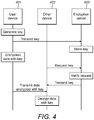
Figure 4 provides a simplified schematic diagram illustrating an example of a process by which data encrypted with an encryption key can be transmitted from a user device to another device; -
Figure 5 provides a flow chart summarising a reconfiguration process in which a replacement encryption key is generated, and -
Figure 6 provides a flow diagram illustrating a process for generating a encryption key in accordance with the present technique. -
Figure 1 provides a schematic diagram of an example of a system for generating a secure encryption key on a user device such as a smartphone. - A
user device 101 is arranged to download a "hollow" encryption app from anapp server 102 and then download a complete version of the app from anencryption key server 103. - As is known in the art, an "app" is a computer program typically stored on a remote server (e.g. the app server 103) and which is typically selected for downloading onto a user device by a user of the user device. The user device can download the app from the remote server using suitably arranged downloading software pre-installed on the user device. Once downloaded, the app is typically installed on the user device.
- Although not shown, as is known in the art, the
user device 101 typically comprises a processor and a memory along with a display, an input interface (such as a touch screen) for receiving user input and a transceiver for transmitting data to and receiving data from other network nodes. Theuser device 101 can communicate with theapp server 102 and theencryption app server 103 using any suitable means, for example by using internet protocol (IP) based communication via an IP network (not shown). The user device can access the IP network using any suitable means for example using a wireless communication interface (for example provided by a cellular telecommunication network, or a wireless data connection such as WiFi). - The user device also typically includes a number of sensors and input detectors which can detect environmental variables, i.e. associated with the environment and condition around the user device. Typically, environmental variables are variables derived from particular characteristics of the environment around the user device and/or the state/condition of the user device that can be automatically detected by the user device without the need for further user input. The environmental variables would be expected to vary over time and are to a greater or lesser degree unique to the user device and are therefore difficult to predict or guess. For example, the environmental variables can relate to one or more of biological, geographical, chronological or atmospheric conditions as detected at the user device. Examples include ambient light conditions, ambient temperature, geographic location, ID of a base station to which the user device is connected, detected speed of the user device relative to one or more base stations and so on. For example the user device may include a camera device. The secure data transmission software may be arranged to control the camera device to determine a value associated with current ambient light conditions. In another example, the user device may be arranged to detect a base station identity with which the user device currently has a radio link with.
- The hollow app contains a limited amount of data namely data for representing the app visually on the user device (i.e. a graphical icon) and download instruction code for identifying the encryption key server and downloading the complete version of the encryption app from the encryption key server.
- When the hollow app is downloaded onto the
user device 101 it is installed which causes the graphical icon to be displayed on a display of theuser device 101. - A user can activate the hollow app by selecting the graphical icon displayed on the display of the
user device 101 using techniques known in the art. - Upon activation of the hollow app, the
user device 101 runs the download instruction code which causes theuser device 101 to send a download request to theencryption key server 103 for the complete version of the encryption app. A complete version of the encryption app is then downloaded from theencryption key server 103 and is installed in the fashion of a conventional app. The complete version of the encryption app is provided with initialisation data including an authorisation key and an encryption look-up table. When the encryption app is installed, an initialisation process commences. The initialisation process is for generating an initial (i.e. first) encryption key. - In the initialisation process, the encryption app prompts a user to enter various input data (user defined variables) and also collects input data from various time-varying input values (i.e. environmental variables discussed above) that are available to the user device and that a third party would have limited or no knowledge.
- The user defined variables and environmental variables are used as input to a key generation process which produces the first user generated encryption key.
- The encryption app then encrypts this newly generated encryption key using the authorisation key that was downloaded with the initialisation data with the complete version of the encryption app. The encrypted version of the first user generated encryption key is then transmitted from the user device to the secure encryption
key server 103. - The encryption key generation process uses the user defined variables to define the parameters of a number of scrambling functions. The environmental variables are then combined together a number of times, each time producing a scramble value. An overall scramble code is then produced based on a combination of all the scramble values. The way in which the environmental variables are combined each time is determined based on one of the scrambling functions.
- A simplified example illustrating the process by which the first user generated encryption key is generated is explained in more detail below.
- In one example the user defined variables input by the user are from a date (e.g. 4/1/1980) comprising eight integers. The environmental variables comprises a light level (e.g. 10 units) taken from a light sensor on the user device (e.g. a camera) and a number corresponding to a current radio access technology (RAT) with which the user device is connected to a nearby cellular network base station (e.g. 2G = 2). This environmental variable will typically be available from firmware controlling a radio transceiver of the user device. This is summarised in the table below:
Input Variables User defined variable Environmental Variables 04/01/1980 10 2 - As mentioned above, when the complete version of the encryption app was downloaded, this included initialisation data which included an encryption look-up table. The encryption look-up table comprises a look-up table that maps input values such as integers to mathematical functions. An example of the encryption look-up table is set out in the table below:
Encryption Look-up Table Input value Function 0 Add (+) 1 Multiply (×) 2 Divide (÷) 3 Subtract (-) 4 Multiply by x 25 Add (+) 6 Multiply (×) 7 Divide (÷) 8 Subtract (-) 9 Multiply by x2 - The encryption look-up table is generated at the encryption key server, for example at the instance that the hollow app requests the complete version of the app be downloaded. The encryption key server is arranged to generate a different encryption look-up table each time a version of the complete encryption app is downloaded. Accordingly, the chances of two or more different instances of the encryption app (e.g. downloaded by different user devices at different times) using the same encryption look-up table during the initialisation process is highly remote.
- At a first step of generating the initial (first) encryption key, the encryption app is arranged to map the input user defined variable into a list of functions based on the encryption look-up table. For the examples shown above:
Mapping input values to functions using encryption look-up table Input User defined variable (i.e. 04/01/1980) Mapped Function from encryption look-up table 0 Add (+) 4 Multiply by x 20 Add (+) 1 Multiply (×) 1 Multiply (×) 9 Multiply by x2 8 Subtract (-) 0 Add (+) - At a next step a series of encryption grids are generated. An encryption grid is generated for each input user defined variable. In the current example eight grids are produced. This is shown in
Figure 2 . -
Figure 2 provides a schematic diagram illustrating the concept of encryption grids. Each grid shown inFigure 2 comprises a four by four grid comprising 16 cells. The cells are populated with consecutive integers between 0 and 9 arranged in a sequential order from left to right, top row to bottom row. The first integer of each grid (i.e. the cell in the top left hand corner of each grid as shown inFigure 2 ) corresponds to the integer for which that grid is generated. For example the first grid starts at "0" (corresponding to the first integer of 04/01/1980); the second grid starts at "4" (corresponding to the second integer of 04/01/1980); the third grid starts at "0" (corresponding to the third integer of 04/01/1980), and so on. - Each grid is associated with a mathematical function. The mathematical function associated with a particular grid is determined by the encryption look-up table and the corresponding user defined variable. The first grid is associated with the first integer of the user defined variable (i.e. 0 which is the first integer of 04/01/1980). From the look up table it can be seen that this is associated with the add (+) function.
- The second grid is associated with the second integer of the user defined variable (i.e. 4 which is the second integer of 04/01/1980). From the look up table it can be seen that this is associated with the multiply by x2 function.
- The third grid is associated with the third integer of the user defined variable (i.e. 0 which is the third integer of 04/01/1980). As with the first grid, from the look up table it can be seen that this is associated with the add (+) function.
- The grids shown in
Figure 2 comprise the scramble functions mentioned above. As can be understood, the mathematical function and the specific sequence of numbers populating each grid are determined by at least one part of the user defined variables. - At a next step, the environmental variables are combined a number of times in accordance with the scramble functions provided by the encryption grids which provide a number of scramble values.
- For example, for each scramble function (i.e. encryption grid) a numerical value (i.e. scramble value) is derived. The numerical value is based on a combination of one of the environmental variables with value from the grid selected using the other environmental variable, and using the mathematical function associated with the grid. Thus a translation of the second environmental variable occurs based on the values in the grid.
- For example, an integer is selected from the first grid using one of the environmental variables. The environmental variable relating to the RAT is 2. Accordingly, an integer from the grid can be selected by selecting the cell in the second column from the right and second row from the top, i.e. 5.
- Next, the selected integer is combined with the other environmental variable using the function associated with that grid. The function associated with the first grid is add (+) and the other environmental variable is 10. Thus the numerical value derived from the first grid is 15.
- The same process is performed to derive a numerical value from the second grid. Taking the environmental variable relating to the RAT, an integer is selected from the second grid from the cell in the second column from the right and second row from the top, i.e. 9.
- The function associated with that grid is multiply by x2. Taking the integer value from the grid as x, the numerical value derived from the second grid is 10 × 92 i.e. 810.
- Using the same process to derive numerical values (i.e. scramble values) for each grid gives:
First grid: 15 Second grid: 810 Third grid: 15 Fourth grid: 60 Fifth grid: 60 Sixth grid: 160 Seventh grid: 8 Eighth grid: 15. - At a next step, all the numerical values derived from the grids are combined to produce a scramble code. For example the scramble values set out above can be summed to produce scramble code. For the example described above, the scramble code is 1143 (i.e. 15 + 810 + 15 + 60 + 60 + 160 + 8 + 15 = 1143).
- Typically, the scramble code (i.e. the sum of the numerical values (scramble values) derived from the grids) will be a much larger number than the four digit number (1143) generated in the simplified example explained above.
- This can be achieved by collecting a greater number of input user defined variables and a greater number of environmental variables during the initialisation process. As will be understood, this will result in a greater number of grids. Moreover, the mathematical functions used in the encryption look-up table can be chosen to produce larger numbers than the simple functions identified in the example encryption look-up table shown above.
- Typically the scramble code may comprise a value that may be, for example 1000 characters long for normal encryption applications (e.g. securing payment authorisation) or several orders of magnitude greater than this for highly secure (e.g. military) applications, for example 1000000 characters long.
- In any case, once the scramble code has been generated, a size reducing selection function is applied whereby the size of the scramble value is reduced. This can be achieved using any suitable function, for example selecting every nth character of the scramble code to provide an encryption key of the desired size (i.e. length). For example, to reduce the length of the scramble code by a factor of 10, every 10th character could be selected.
- As will be understood, the terms "characters" can refer to any suitable representation of the scramble code such as integers, digits, binary bits, hexadecimal characters etc. Similarly, the numerical values described above, can be represented in any suitable character format e.g. digit form, binary form, hexadecimal form etc.
- The output of the selection function corresponds to the first user defined encryption key. Typically, the key generated from the selection function may be 120 characters long.
- In the example described above, the user input variables comprise a date (i.e. a sequence of 8 digits). However, any suitable information that can be readily input by a user can be used (e.g. favourite colour, city of birth etc. and converted into a numerical value using, for example, an ASCII code). In some examples, if the user device includes suitable means to enable drawing input from a user, the encryption app may prompt a user to draw a picture, draw a signature, make a random "squiggle" etc. The co-ordinates of the input drawing can be converted to a numerical value and used as the user input variables. Indeed any suitable input that a user can provide that produces data from which numerical data can be derived (e.g. recording a sound, taking an image with a camera device etc.) can be used for generating the user input variables.
- Other variations to the key generation process described above are also envisaged.
- In the example described above, only two environmental variables are collected and combined. In other examples, more environmental variables may be collected and combined in accordance with the scrambling functions. For example, three, six or ten, or any suitable number. In some examples, only a subset of the collected environmental variables will be combined.
- For example, in the example described above, only one environmental variable is translated using an encryption grid (i.e. the environmental variable associated with the RAT). However, in some examples all of the environmental variables will be translated before being combined using the mathematical function. In other examples, the number populating the encryption grids need not be consecutive starting from a lowest number (i.e. 0,1,2,3,4,5,6,7,8,9,0,1,2,3... etc.) but could be any suitable sequence of numbers (e.g. all evens followed by all odds: 0,2,4,6,8,1,3,5,7,9,0,2,4,6..etc) or a sequence based on a Fibonacci sequence e.g. (0,1,1,2,3,5,8,13,21,34,55... etc.).
- In the example above, the scramble function is described in terms of a plurality of encryption grids. It will be understood that the term "grid" and the representation of the encryption grids in
Figure 2 are intended to illustrate the process whereby at least one of the environmental variables is translated to another value based on a translation determined by the user defined variables. When the encryption app is implemented it will be understood that a process that is mathematically equivalent (i.e. representative) to the generation and use of the encryption grids will be used although the grids themselves are not actually physically manifested and displayed. - When the first user defined encryption key has been generated, it is encrypted using the authorisation key that was downloaded with the initialisation data with the complete version of the encryption app. The encrypted version of the first user generated encryption key is then transmitted from the user device to the secure encryption key server.
-
Figure 3 provides a flow chart summarising the initialisation process. - At a first step s301 the user input variables are collected by encryption app prompting a user of the user device to input data that can be used to generate the user input variables.
- At a second step s302 the environmental variables are collected by the encryption app controlling the user device to collect various time-varying variables that can be detected by the user device.
- At a third step s303 a number of encryption grids are generated using the user input variables as described above.
- At a fourth step s304 numerical values are generated for each encryption grid using the collected environmental variables.
- At a fifth step s305 the numerical values generated for each encryption grid are combined to produce a scramble code.
- At a sixth step s306 a size reduction function is applied to the scramble code to produce the first user generated encryption key.
- At a seventh step s307 the first user generated encryption key is encrypted with the authorisation key.
- At an eighth step s308 the encrypted first user generated encryption key is transmitted to the encryption key server.
- Once the secure encryption key server has received a copy of the first user generated encryption key the user device is able to communicate secure data to another node (e.g. other device or server) as illustrated in the example shown in
Figure 4 . -
Figure 4 provides a simplified schematic diagram illustrating an example of a process by which data encrypted with an encryption key as described above can be transmitted from auser device 401 to another device 402 (such as another user device, server or any other network device or node) once the encryption key has been transmitted from theuser device 401 to anencryption key server 403. - The
user device 401 generates and encrypts the key and transmits it to the encryption key server as described with reference toFigure 3 . Theencryption key server 403 then decrypts and stores the user generated encryption key. - When a need arises for the
user device 401 to transmit encrypted data to the other device 402 (for example by virtue of any suitable interaction between theuser device 401 and theother device 402, not shown inFigure 4 ), the user device encrypts the data with the encryption key. - As will be understood, any suitable method for encrypting the data with the encryption key can be used. For example any suitable block cipher or stream cipher can be used. Any suitable key encryption technique using for example a subtractive key encryption process or a multiplicative key encryption process can be used.
- The
other device 402 transmits a key request to the encryption key server. Typically, the encryption key server will perform a suitable verification of this request (using any technique known in the art, for example by verifying that theother device 402 is on a list of approved network nodes). On successful completion of the verification of the request, the encryption key server transmits a copy of the encryption key to theother device 402. Meanwhile, theuser device 401 transmits the encrypted data to the other device. Upon receipt of both the encrypted data from theuser device 401 and the copy of the encryption key from theencryption key server 403, theother device 402 can decrypt the encrypted data. - As will be understood, the data encryption process described above can be used to transmit any suitable type of data. In some examples, the technique could be used for securely transmitting data files, such as documents, spread sheets, image data, video data and so on.
- Moreover encrypted data can be transmitted between a first device (e.g. user device 401) and a second device (e.g. other device 402) using any suitable channel. If the first and second devices where smart phones, the encrypted data would be transmitted via a PLMN or WiFi connection to an IP network in the same way that data is conventionally transmitted between cellular user devices. However, in some examples, both the first device and second device may communicate data directly to each other if provided with suitable radio transceivers. This could be achieved using a suitably adapted radio interface such as Bluetooth, Zigbee and so on.
- In other examples, the encrypted data could be authorisation data for authorising a process enabling the
user device 401 to authorise a payment to be made. For example, the data could be payment authorisation data sent fromuser device 401 authorising the other device 402 (which could be a bank server) to initiate a payment. In such examples there may be an intermediate device (not shown) such as a second user device. In such examples, if a user of theuser device 401 wishes to make a payment to a user of the second user device, payment authorisation data, indicating a payment amount for example, could be generated on theuser device 401 and encrypted using the encryption key. The payment data (still encrypted) could then be transmitted to the second user device. The second user device could then transmit this, as a payment request message, to the bank server (other device 402). If the bank server (other device 402) can decrypt the payment message using the encryption key (thebank server 402 having previously received the encrypted key from the encryption key server 403), this indicates that the payment request is legitimate and a payment can be authorised from an account of a user of the user device to an account of a user of the second user device. - Periodically, the encryption app running on the user device is arranged to perform a reconfiguration process, whereby the user defined key is re-generated (i.e. a new user defined encryption key is generated) and communicated back to the encryption key server.
- This reconfiguration process is explained in more detail with reference to
Figure 5. Figure 5 provides a flow chart summarising the reconfiguration process. At a first step s501 it is determined that a reconfiguration is required. - In some examples the encryption app determines that the reconfiguration process is performed at set intervals (for example once every 24 hours). Alternatively, the frequency with which the reconfiguration process occurs can be determined by one of the input variables. For example, the first digit of the user input variable 04/01/1980 is 0. This could determine that the reconfiguration process occurs every ten hours. Alternatively, the interval until the first reconfiguration could be determined by the first digit of the user input variable, the interval until the second reconfiguration could be determined by the second digit of the input variable, the interval until the third reconfiguration could be determined by the third digit of the input variable and so on. Thus, taking 04/01/1980 as the input variable, the intervals between the reconfiguration processes being performed could be: 10 hours, 4 hours, 10 hours, 1 hour, 9 hours, 8 hours, 10 hours and so on, for example repeating this pattern on a loop or using some other input variable to randomise the intervals between reconfiguration.
- At a second step s502 the environmental variables are collected by the encryption app controlling the user device to collect various time-varying variables that can be detected by the user device.
- At a third step s503 numerical values are generated for each encryption grid using the collected environmental variables.
- At a fourth step s504 the numerical values generated for each encryption grid are combined to produce a scramble code.
- At a fifth step s505 a size reduction function is applied to the scramble code to produce a new user generated encryption key.
- At a sixth step s506 the first user generated encryption key is encrypted with the current user generated encryption key (if this is the first time the reconfiguration process has been performed then the current user generated encryption key will be the first user generated encryption key).
- At a seventh step s507 the encrypted first user generated encryption key is transmitted to the encryption key server.
- In some examples, before steps s502 to s507 are performed the encryption app performs a spawning process to further enhance security. The app contains code which when executed causes a copy of the app to be generated at a new memory location within the user device. This copied version of the encryption app performs the reconfiguration process shown in
Figure 5 , and once complete, deletes the original version of the encryption app. - In some examples, during the reconfiguration process, further aspects of the encryption key generation process are modified. For example, the encryption grids may be modified by modifying the mathematical functions associated with each grid. This can be achieved by modifying the encryption look-up table in accordance with one of the newly collected environmental variables. For example, the "input values" shown in the encryption look-up table could be replaced with variables (e.g. integers) derived from the newly collected environmental variables.
- As described above, the encryption key is generated by applying a selection function to the scramble code which selects a subset of the data forming the scramble code. In some examples, unused data from the scramble code can be used to seed other security functions (such as app firewalls) operating within the encryption app.
- In the examples described above, the process of generating the encryption key has been described mainly in terms of a downloaded app running on a user device such as a smartphone. However, it will be understood that other suitable devices such as personal computers, tablet devices, games consoles, personal digital assistants
- (PDAs), personal media players, set-top boxes etc. could be used. Alternatively, the process could be run on a server or other networked or distributed node or entity. In other words, any device with a suitable processor and on which is loaded a computer program comprising computer readable instructions for implementing the key generation technique described above can be used to generate encryption keys in accordance with the present technique.
-
Figure 6 provides a flow diagram illustrating a process for generating a encryption key in accordance with the present technique. - At a first step s601 a plurality of user defined variables defined by input from a user are collected;
At a second step s602 a plurality of environmental variables associated with varying environmental conditions are collected;
At a third step s603 parameters of a plurality of scrambling functions are defined using the user defined variables;
At a fourth step s604 a plurality of scramble values are calculated, each scramble value comprising a combination of environmental variables combined in accordance with one of the plurality of scrambling functions;
At a fifth step s605, the scramble values are combined to produce a scramble code, and
At a sixth step s606, an encryption key is generated from the scramble code. - Various modifications and adaptations can be made without departing from the scope of the invention.
- For example, the user defined variables referenced above, have been described mainly in terms of a user physically entering information into a device such as a user device. However, in other examples, for example where the key generation process is run on software running on a server that is physically remote from a user, the user defined variables could be generated by the server itself based on information previously provided by a user or by randomly generated data. Furthermore, in the examples above the encryption key generation technique has been described mainly in terms of a network node (e.g. a user device) sending encrypted data to another network node (e.g. a payment authorisation server or other user device). As will be understood, the encrypted data can be transmitted between nodes using any suitable medium. However, in some examples the technique can be used to secure a data communication channel between two devices, connected by, for example, a radio interface.
- It will be understood that the particular component parts of which the various systems described above are comprised are in some examples logical designations. Accordingly, the functionality that these component parts provide may be manifested in ways that do not conform precisely to the forms described above and shown in the diagrams. For example aspects of the invention, particularly the processes running on the user device and the encryption key server may be implemented in the form of a computer program product comprising instructions (i.e. a computer program) that may be implemented on a processor, stored on a data sub-carrier such as a floppy disk, optical disk, hard disk, PROM, RAM, flash memory or any combination of these or other storage media, or transmitted via data signals on a network such as an Ethernet, a wireless network, the Internet, or any combination of these of other networks, or realised in hardware as an ASIC (application specific integrated circuit) or an FPGA (field programmable gate array) or other configurable or bespoke circuit suitable to use in adapting the conventional equivalent device.
Claims (11)
- A method of generating an encryption key, the method comprising, running at a user device, a computer program, which controls the user device to:collect a plurality of environmental variables associated with varying environmental conditions (S302, 602) to which the user device is exposed;collect a plurality of further variables (S301, 501, 601) said further variables comprising one of: values physically input by a user to the user device; values generated by a server based on information previously provided by a user or by randomly generated data;define parameters of a plurality of scrambling functions using the further variables (S303, 603);calculate a plurality of scramble values, each scramble value comprising a combination of the environmental variables combined in accordance with one of the plurality of scrambling functions (S304, 604);combine the scramble values to produce a scramble code (S305, 605);generate the encryption key from the scramble code (S306, 606); andcollect a plurality of new environmental variables (S502);calculate a plurality of new scramble values, each new scramble value comprising a combination of the new environmental variables combined in accordance with one of the plurality of scrambling functions (S504);combine the new scramble values to produce a new scramble code (S505); andgenerate a new encryption key from the new scramble code (S505) and whereineach scrambling function uses an encryption grid such that prior to combination of the environmental variables, at least one environmental variable is translated from a first value to a second value using the encryption grid, each encryption grid populated with a series of values defined by one or more of the user input variables.
- The method according to any previous claim, wherein the encryption key is generated by selecting characters from a subset of the characters of the scramble code, the selection based on a predetermined selection function.
- A method according to claim 2, wherein the predetermined selection function comprises selecting every nth character of the scramble code.
- The method according to any previous claim, wherein said steps of: collecting a plurality of new random environmental variables; calculating a plurality of new scramble values, each new scramble value comprising a combination of the new environmental variables combined in accordance with one of the plurality of scrambling functions; combining the new scramble values to produce a new scramble code, and generating a new encryption key from the new scramble code, are performed after a determined interval.
- The method according to claim 4, wherein said steps of generating said new encryption key are performed repeatedly at set intervals.
- A method of transmitting encrypted data comprising,
at a first device, generating an encryption key according to a method of any preceding claim and transmitting said encryption key to an encryption key server;
generating encrypted data at the first device by encrypting data in accordance with the encryption key;
communicating the encrypted data from the first device to a second device;
transmitting a copy of the encryption key from the encryption key server to the second device, and
decrypting the encrypted data at the second device in accordance with a copy of the encryption key, and
repeating the method for said new encryption key generated in said method of any preceding claim. - An encryption key generating device comprising environmental variable detection means, the environmental variable detection means arranged to collect environmental variables associated with varying environmental conditions to which the environmental variable detection means are exposed thereby providing environmental variables; and input detection means arranged to collect input from a user, thereby providing further variables; wherein
the device further comprises a processor arranged to define the parameters of a plurality of scrambling functions using said further variables and to calculate a plurality of scramble values, each scramble value comprising a combination of environmental variables combined in accordance with one of the plurality of scrambling functions, wherein the processor is further arranged to combine the scramble values to produce a scramble code, and generate an encryption key from the scramble code; wherein
the detection means is configured to collect a plurality of new environmental variables, and the processor is configured to calculate a plurality of new scramble values, each new scramble value comprising a combination of the new environmental variables combined in accordance with one of the plurality of scrambling functions and to combine the new scramble values to produce a new scramble code, and to generate a new encryption key from the new scramble code, and
the device is a user device operating under the control of a computer program running on the processor of the user device, wherein
each scrambling function uses an encryption grid such that prior to combination of the environmental variables, at least one environmental variable is translated from a first value to a second value using the encryption grid, each encryption grid populated with a series of values defined by one or more of the user input variables. - An encryption key generating device according to claim 7, wherein said encryption key generating device is configured to perform said steps of generating said new encryption key after a determined interval.
- An encryption key generating device according to any one of claims 7 or 8, wherein said processor is configured to encrypt said new encryption key with the previously generated encryption key, said encryption key generating device further comprising transmitting means, said transmitting means being configured to transmit the encrypted new encryption key to an encryption key server.
- A system for transmitting encrypted data, said system comprising a first device comprising an encryption key generating device according to any of claims 7 to 9, and an encryption key server, said first device arranged to periodically generate encryption keys and transmit the encryption keys to the encryption key server, said system further comprising a second device, said encryption key server arranged to transmit the encryption keys to the second device, wherein the first device is arranged to encrypt data using one of the encryption keys, generating encrypted data, and transmit the encrypted data to the second device, and the second device is arranged to decrypt the data using the corresponding one of the encryption keys transmitted from the encryption key server.
- A computer program comprising computer readable instructions which when executed on a computer perform a method according to any of claims 1 to 6.
Applications Claiming Priority (2)
| Application Number | Priority Date | Filing Date | Title |
|---|---|---|---|
| GB1208750.8A GB2502140A (en) | 2012-05-18 | 2012-05-18 | System and method for transmitting data |
| PCT/GB2013/051284 WO2013171507A1 (en) | 2012-05-18 | 2013-05-17 | Encryption key generation |
Publications (2)
| Publication Number | Publication Date |
|---|---|
| EP2853059A1 EP2853059A1 (en) | 2015-04-01 |
| EP2853059B1 true EP2853059B1 (en) | 2020-05-13 |
Family
ID=46546278
Family Applications (2)
| Application Number | Title | Priority Date | Filing Date |
|---|---|---|---|
| EP13728786.8A Ceased EP2852925A1 (en) | 2012-05-18 | 2013-05-17 | System and method for transmitting data |
| EP13728787.6A Active EP2853059B1 (en) | 2012-05-18 | 2013-05-17 | Encryption key generation |
Family Applications Before (1)
| Application Number | Title | Priority Date | Filing Date |
|---|---|---|---|
| EP13728786.8A Ceased EP2852925A1 (en) | 2012-05-18 | 2013-05-17 | System and method for transmitting data |
Country Status (5)
| Country | Link |
|---|---|
| US (2) | US9509498B2 (en) |
| EP (2) | EP2852925A1 (en) |
| CN (1) | CN104662570A (en) |
| GB (1) | GB2502140A (en) |
| WO (2) | WO2013171506A1 (en) |
Families Citing this family (31)
| Publication number | Priority date | Publication date | Assignee | Title |
|---|---|---|---|---|
| US20130282590A1 (en) * | 2012-04-19 | 2013-10-24 | Ebay, Inc. | Electronic payments using visual code |
| US20150046336A1 (en) * | 2013-08-09 | 2015-02-12 | Mastercard International Incorporated | System and method of using a secondary screen on a mobile device as a secure and convenient transacting mechanism |
| WO2015145211A1 (en) * | 2014-03-27 | 2015-10-01 | Kam Fu Chan | Token key infrastructure and method for cloud services |
| EP3149883B1 (en) * | 2014-05-26 | 2019-04-24 | Nokia Technologies OY | Management of cryptographic keys |
| US10353488B2 (en) * | 2014-05-30 | 2019-07-16 | Hewlett-Packard Development Company, L.P. | Positional input on displays |
| US20160307186A1 (en) * | 2015-04-20 | 2016-10-20 | Mastercard International Incorporated | Verification of contactless payment card for provisioning of payment credentials to mobile device |
| US20160342774A1 (en) * | 2015-05-21 | 2016-11-24 | Castar, Inc. | Method of co-located software object sharing for multi-player augmented reality games |
| US11184335B1 (en) * | 2015-05-29 | 2021-11-23 | Acronis International Gmbh | Remote private key security |
| FR3050049B1 (en) * | 2016-04-08 | 2018-03-23 | Airbus Operations (S.A.S.) | FLOATING UNIT, AIRCRAFT, AND METHOD FOR TRANSMITTING FLIGHT INSTRUCTIONS FROM A GROUND UNIT TO AN AIRCRAFT |
| US9590958B1 (en) * | 2016-04-14 | 2017-03-07 | Wickr Inc. | Secure file transfer |
| CN209881936U (en) * | 2018-01-12 | 2019-12-31 | 新加坡能源创新发展有限公司 | Data transmission system |
| US11436537B2 (en) | 2018-03-09 | 2022-09-06 | Raytheon Company | Machine learning technique selection and improvement |
| US11340603B2 (en) | 2019-04-11 | 2022-05-24 | Raytheon Company | Behavior monitoring using convolutional data modeling |
| US11507847B2 (en) | 2019-07-25 | 2022-11-22 | Raytheon Company | Gene expression programming |
| US11321462B2 (en) | 2018-04-10 | 2022-05-03 | Raytheon Company | Device behavior anomaly detection |
| US11381599B2 (en) | 2018-04-10 | 2022-07-05 | Raytheon Company | Cyber chaff using spatial voting |
| US11132923B2 (en) * | 2018-04-10 | 2021-09-28 | Raytheon Company | Encryption using spatial voting |
| EP3794506B1 (en) * | 2018-05-15 | 2025-01-22 | Logmore Oy | Electronic device and data-transmission system |
| US11341235B2 (en) | 2019-02-21 | 2022-05-24 | Raytheon Company | Anomaly detection with adaptive auto grouping |
| CN110263882B (en) * | 2019-03-11 | 2023-09-01 | 北京奇艺世纪科技有限公司 | Image generation method, information acquisition method, device and electronic equipment |
| CN110110539B (en) * | 2019-05-10 | 2022-10-11 | 四川大学 | Two-dimensional code-based integrated imaging three-dimensional information encryption method |
| AU2020335028A1 (en) * | 2019-08-23 | 2022-03-17 | Commonwealth Scientific And Industrial Research Organisation | Secure environment for cryptographic key generation |
| US20220400004A1 (en) * | 2019-10-16 | 2022-12-15 | Hewlett-Packard Development Company, L.P. | Generating keys |
| CN110765478B (en) * | 2019-11-07 | 2020-07-31 | 城云科技(中国)有限公司 | Big data information secure storage encryption system and method thereof |
| CN111143786B (en) * | 2019-12-25 | 2022-04-19 | 卓尔智联(武汉)研究院有限公司 | Account verification password generation method and account verification method based on verification password |
| US11381395B2 (en) * | 2020-03-05 | 2022-07-05 | Citrix Systems, Inc. | System and methods for encryption based on environmental factors |
| US10825017B1 (en) | 2020-04-20 | 2020-11-03 | Capital One Services, Llc | Authorizing a payment with a multi-function transaction card |
| CN111885530A (en) * | 2020-07-21 | 2020-11-03 | 成都英孚克斯科技有限公司 | Weighing data acquisition unit and method based on data integration encryption |
| CN113286297B (en) * | 2021-07-22 | 2021-10-12 | 深圳市同富信息技术有限公司 | Wireless data encryption transmission method, device, computer equipment and storage medium |
| US12512969B2 (en) * | 2022-12-23 | 2025-12-30 | F5, Inc. | Methods for managing hardware security servers and devices thereof |
| US20260039459A1 (en) * | 2024-07-31 | 2026-02-05 | Verizon Patent And Licensing Inc. | Systems and methods for ai/ml-based cryptography analysis and remediation using hybrid cryptography techniques |
Family Cites Families (17)
| Publication number | Priority date | Publication date | Assignee | Title |
|---|---|---|---|---|
| US5450491A (en) * | 1993-08-26 | 1995-09-12 | At&T Corp. | Authenticator card and system |
| US5608801A (en) * | 1995-11-16 | 1997-03-04 | Bell Communications Research, Inc. | Efficient cryptographic hash functions and methods for amplifying the security of hash functions and pseudo-random functions |
| CN1283829A (en) * | 1999-08-04 | 2001-02-14 | 杨萌 | Method for checking antiforge bar code of commodities over network |
| JP3534250B2 (en) * | 2002-04-23 | 2004-06-07 | 中村 憲生 | Dynamic barcode display device, dynamic barcode generation method, and storage medium for generating dynamic barcode. |
| TW591630B (en) * | 2002-06-04 | 2004-06-11 | Key Technology Corp | Data security device of storage medium and data security method |
| US7367514B2 (en) | 2003-07-03 | 2008-05-06 | Hand Held Products, Inc. | Reprogramming system including reprogramming symbol |
| JP2006040046A (en) * | 2004-07-28 | 2006-02-09 | Sony Corp | Information processing system and information processing method |
| TWI269222B (en) * | 2004-12-29 | 2006-12-21 | Univ Tsinghua | Random number generating method and its equipment with a multiple polynomial |
| CN1848131A (en) * | 2005-04-05 | 2006-10-18 | 全谱科技股份有限公司 | Method and framework for identity verification using barcode images |
| ITVA20050027A1 (en) | 2005-05-03 | 2006-11-04 | St Microelectronics Srl | METHOD OF GENERATION OF SUCCESSIONS OF NUMBERS OR BIT PSEUDO CASUALI |
| US7810720B2 (en) * | 2005-06-13 | 2010-10-12 | Robert Lovett | Account payment using barcode information exchange |
| US20110208659A1 (en) * | 2006-08-15 | 2011-08-25 | Last Mile Technologies, Llc | Method and apparatus for making secure transactions using an internet accessible device and application |
| US8152068B2 (en) | 2007-12-31 | 2012-04-10 | Pitney Bowes Inc. | Systems and methods for producing and processing time dependent dynamic barcodes in a mail delivery system |
| GB2478712A (en) * | 2010-03-15 | 2011-09-21 | David Jackson | Authorisation system |
| WO2012111019A1 (en) * | 2011-02-14 | 2012-08-23 | Ravi Jagannathan | Automated mobile transaction processing system and method |
| GB2489247A (en) * | 2011-03-21 | 2012-09-26 | Big Box Software Ltd | Method for secure communication of machine-readable encoded data |
| US8567681B2 (en) * | 2011-03-22 | 2013-10-29 | Carefusion 303, Inc. | Displaying a barcode on a display of an infusion pump |
-
2012
- 2012-05-18 GB GB1208750.8A patent/GB2502140A/en not_active Withdrawn
-
2013
- 2013-05-17 US US14/401,670 patent/US9509498B2/en active Active
- 2013-05-17 EP EP13728786.8A patent/EP2852925A1/en not_active Ceased
- 2013-05-17 WO PCT/GB2013/051283 patent/WO2013171506A1/en not_active Ceased
- 2013-05-17 CN CN201380035346.9A patent/CN104662570A/en active Pending
- 2013-05-17 EP EP13728787.6A patent/EP2853059B1/en active Active
- 2013-05-17 US US14/401,956 patent/US9608805B2/en active Active
- 2013-05-17 WO PCT/GB2013/051284 patent/WO2013171507A1/en not_active Ceased
Non-Patent Citations (1)
| Title |
|---|
| ANONYMOUS: "Hardware random number generator - Wikipedia", 12 May 2012 (2012-05-12), XP055322080, Retrieved from the Internet <URL:https://en.wikipedia.org/w/index.php?title=Hardware_random_number_generator&oldid=492159940> [retrieved on 20161123] * |
Also Published As
| Publication number | Publication date |
|---|---|
| US9509498B2 (en) | 2016-11-29 |
| US20150131796A1 (en) | 2015-05-14 |
| GB2502140A (en) | 2013-11-20 |
| US9608805B2 (en) | 2017-03-28 |
| CN104662570A (en) | 2015-05-27 |
| WO2013171506A1 (en) | 2013-11-21 |
| US20150102104A1 (en) | 2015-04-16 |
| EP2852925A1 (en) | 2015-04-01 |
| EP2853059A1 (en) | 2015-04-01 |
| WO2013171507A1 (en) | 2013-11-21 |
| GB201208750D0 (en) | 2012-07-04 |
Similar Documents
| Publication | Publication Date | Title |
|---|---|---|
| US9608805B2 (en) | Encryption key generation | |
| KR102432299B1 (en) | Systems and methods for encryption and decryption based on quantum key distribution | |
| EP3779717B1 (en) | Multiparty secure computing method, device, and electronic device | |
| WO2021231087A1 (en) | Constructing a distributed ledger transaction on a cold hardware wallet | |
| CN113726512B (en) | Key generation and distribution method, key generation device, and key management system | |
| JP2016158189A (en) | Key change direction control system and key change direction control method | |
| WO2016153430A1 (en) | Method of obfuscating data | |
| CN111193588B (en) | Information processing method and device based on process and storage medium | |
| CN112003696A (en) | SM9 key generation method, system, electronic equipment, device and storage medium | |
| US9473471B2 (en) | Method, apparatus and system for performing proxy transformation | |
| CN109873700A (en) | Key generation method, device, computer readable storage medium and terminal device | |
| JP2005252384A (en) | Encrypted data storage server system, encrypted data storage method, and re-encryption method | |
| CN112889240A (en) | Server device, communication terminal, communication system, and program | |
| US20080165954A1 (en) | System for encrypting and decrypting data using derivative equations and factors | |
| Mehmood et al. | Enhanced lightweight and compromised-resilient image encryption for resource constrained environments | |
| CN111010283B (en) | Method and apparatus for generating information | |
| CN114499836B (en) | Key management method, device, computer equipment and readable storage medium | |
| WO2017209816A1 (en) | Data encryption techniques | |
| CN111953480A (en) | Key generation device and method, operation key generation device and method | |
| JP5945525B2 (en) | KEY EXCHANGE SYSTEM, KEY EXCHANGE DEVICE, ITS METHOD, AND PROGRAM | |
| CN103501220A (en) | Encryption method and device | |
| KR101793528B1 (en) | Certificateless public key encryption system and receiving terminal | |
| JP2015065615A (en) | Data encryption apparatus, data encryption program, and data encryption method | |
| KR101146510B1 (en) | System for encrypting synchronization database and method therefor | |
| CA3034028C (en) | Cryptography method and system for securing data via electronic transmission |
Legal Events
| Date | Code | Title | Description |
|---|---|---|---|
| PUAI | Public reference made under article 153(3) epc to a published international application that has entered the european phase |
Free format text: ORIGINAL CODE: 0009012 |
|
| 17P | Request for examination filed |
Effective date: 20141211 |
|
| AK | Designated contracting states |
Kind code of ref document: A1 Designated state(s): AL AT BE BG CH CY CZ DE DK EE ES FI FR GB GR HR HU IE IS IT LI LT LU LV MC MK MT NL NO PL PT RO RS SE SI SK SM TR |
|
| AX | Request for extension of the european patent |
Extension state: BA ME |
|
| DAX | Request for extension of the european patent (deleted) | ||
| STAA | Information on the status of an ep patent application or granted ep patent |
Free format text: STATUS: EXAMINATION IS IN PROGRESS |
|
| 17Q | First examination report despatched |
Effective date: 20161129 |
|
| 19U | Interruption of proceedings before grant |
Effective date: 20160212 |
|
| 19W | Proceedings resumed before grant after interruption of proceedings |
Effective date: 20180903 |
|
| RAP1 | Party data changed (applicant data changed or rights of an application transferred) |
Owner name: OMLIS LIMITED |
|
| GRAP | Despatch of communication of intention to grant a patent |
Free format text: ORIGINAL CODE: EPIDOSNIGR1 |
|
| STAA | Information on the status of an ep patent application or granted ep patent |
Free format text: STATUS: GRANT OF PATENT IS INTENDED |
|
| INTG | Intention to grant announced |
Effective date: 20191202 |
|
| GRAS | Grant fee paid |
Free format text: ORIGINAL CODE: EPIDOSNIGR3 |
|
| GRAA | (expected) grant |
Free format text: ORIGINAL CODE: 0009210 |
|
| STAA | Information on the status of an ep patent application or granted ep patent |
Free format text: STATUS: THE PATENT HAS BEEN GRANTED |
|
| AK | Designated contracting states |
Kind code of ref document: B1 Designated state(s): AL AT BE BG CH CY CZ DE DK EE ES FI FR GB GR HR HU IE IS IT LI LT LU LV MC MK MT NL NO PL PT RO RS SE SI SK SM TR |
|
| REG | Reference to a national code |
Ref country code: GB Ref legal event code: FG4D |
|
| REG | Reference to a national code |
Ref country code: CH Ref legal event code: EP |
|
| REG | Reference to a national code |
Ref country code: DE Ref legal event code: R096 Ref document number: 602013069053 Country of ref document: DE |
|
| REG | Reference to a national code |
Ref country code: AT Ref legal event code: REF Ref document number: 1271660 Country of ref document: AT Kind code of ref document: T Effective date: 20200615 |
|
| REG | Reference to a national code |
Ref country code: LT Ref legal event code: MG4D |
|
| REG | Reference to a national code |
Ref country code: NL Ref legal event code: MP Effective date: 20200513 |
|
| PG25 | Lapsed in a contracting state [announced via postgrant information from national office to epo] |
Ref country code: LT Free format text: LAPSE BECAUSE OF FAILURE TO SUBMIT A TRANSLATION OF THE DESCRIPTION OR TO PAY THE FEE WITHIN THE PRESCRIBED TIME-LIMIT Effective date: 20200513 Ref country code: GR Free format text: LAPSE BECAUSE OF FAILURE TO SUBMIT A TRANSLATION OF THE DESCRIPTION OR TO PAY THE FEE WITHIN THE PRESCRIBED TIME-LIMIT Effective date: 20200814 Ref country code: NO Free format text: LAPSE BECAUSE OF FAILURE TO SUBMIT A TRANSLATION OF THE DESCRIPTION OR TO PAY THE FEE WITHIN THE PRESCRIBED TIME-LIMIT Effective date: 20200813 Ref country code: SE Free format text: LAPSE BECAUSE OF FAILURE TO SUBMIT A TRANSLATION OF THE DESCRIPTION OR TO PAY THE FEE WITHIN THE PRESCRIBED TIME-LIMIT Effective date: 20200513 Ref country code: FI Free format text: LAPSE BECAUSE OF FAILURE TO SUBMIT A TRANSLATION OF THE DESCRIPTION OR TO PAY THE FEE WITHIN THE PRESCRIBED TIME-LIMIT Effective date: 20200513 Ref country code: PT Free format text: LAPSE BECAUSE OF FAILURE TO SUBMIT A TRANSLATION OF THE DESCRIPTION OR TO PAY THE FEE WITHIN THE PRESCRIBED TIME-LIMIT Effective date: 20200914 Ref country code: IS Free format text: LAPSE BECAUSE OF FAILURE TO SUBMIT A TRANSLATION OF THE DESCRIPTION OR TO PAY THE FEE WITHIN THE PRESCRIBED TIME-LIMIT Effective date: 20200913 |
|
| PG25 | Lapsed in a contracting state [announced via postgrant information from national office to epo] |
Ref country code: RS Free format text: LAPSE BECAUSE OF FAILURE TO SUBMIT A TRANSLATION OF THE DESCRIPTION OR TO PAY THE FEE WITHIN THE PRESCRIBED TIME-LIMIT Effective date: 20200513 Ref country code: HR Free format text: LAPSE BECAUSE OF FAILURE TO SUBMIT A TRANSLATION OF THE DESCRIPTION OR TO PAY THE FEE WITHIN THE PRESCRIBED TIME-LIMIT Effective date: 20200513 Ref country code: LV Free format text: LAPSE BECAUSE OF FAILURE TO SUBMIT A TRANSLATION OF THE DESCRIPTION OR TO PAY THE FEE WITHIN THE PRESCRIBED TIME-LIMIT Effective date: 20200513 Ref country code: BG Free format text: LAPSE BECAUSE OF FAILURE TO SUBMIT A TRANSLATION OF THE DESCRIPTION OR TO PAY THE FEE WITHIN THE PRESCRIBED TIME-LIMIT Effective date: 20200813 |
|
| REG | Reference to a national code |
Ref country code: AT Ref legal event code: MK05 Ref document number: 1271660 Country of ref document: AT Kind code of ref document: T Effective date: 20200513 |
|
| PG25 | Lapsed in a contracting state [announced via postgrant information from national office to epo] |
Ref country code: NL Free format text: LAPSE BECAUSE OF FAILURE TO SUBMIT A TRANSLATION OF THE DESCRIPTION OR TO PAY THE FEE WITHIN THE PRESCRIBED TIME-LIMIT Effective date: 20200513 Ref country code: AL Free format text: LAPSE BECAUSE OF FAILURE TO SUBMIT A TRANSLATION OF THE DESCRIPTION OR TO PAY THE FEE WITHIN THE PRESCRIBED TIME-LIMIT Effective date: 20200513 |
|
| PG25 | Lapsed in a contracting state [announced via postgrant information from national office to epo] |
Ref country code: CZ Free format text: LAPSE BECAUSE OF FAILURE TO SUBMIT A TRANSLATION OF THE DESCRIPTION OR TO PAY THE FEE WITHIN THE PRESCRIBED TIME-LIMIT Effective date: 20200513 Ref country code: RO Free format text: LAPSE BECAUSE OF FAILURE TO SUBMIT A TRANSLATION OF THE DESCRIPTION OR TO PAY THE FEE WITHIN THE PRESCRIBED TIME-LIMIT Effective date: 20200513 Ref country code: AT Free format text: LAPSE BECAUSE OF FAILURE TO SUBMIT A TRANSLATION OF THE DESCRIPTION OR TO PAY THE FEE WITHIN THE PRESCRIBED TIME-LIMIT Effective date: 20200513 Ref country code: DK Free format text: LAPSE BECAUSE OF FAILURE TO SUBMIT A TRANSLATION OF THE DESCRIPTION OR TO PAY THE FEE WITHIN THE PRESCRIBED TIME-LIMIT Effective date: 20200513 Ref country code: IT Free format text: LAPSE BECAUSE OF FAILURE TO SUBMIT A TRANSLATION OF THE DESCRIPTION OR TO PAY THE FEE WITHIN THE PRESCRIBED TIME-LIMIT Effective date: 20200513 Ref country code: EE Free format text: LAPSE BECAUSE OF FAILURE TO SUBMIT A TRANSLATION OF THE DESCRIPTION OR TO PAY THE FEE WITHIN THE PRESCRIBED TIME-LIMIT Effective date: 20200513 Ref country code: SM Free format text: LAPSE BECAUSE OF FAILURE TO SUBMIT A TRANSLATION OF THE DESCRIPTION OR TO PAY THE FEE WITHIN THE PRESCRIBED TIME-LIMIT Effective date: 20200513 Ref country code: CH Free format text: LAPSE BECAUSE OF NON-PAYMENT OF DUE FEES Effective date: 20200531 Ref country code: LI Free format text: LAPSE BECAUSE OF NON-PAYMENT OF DUE FEES Effective date: 20200531 Ref country code: ES Free format text: LAPSE BECAUSE OF FAILURE TO SUBMIT A TRANSLATION OF THE DESCRIPTION OR TO PAY THE FEE WITHIN THE PRESCRIBED TIME-LIMIT Effective date: 20200513 |
|
| REG | Reference to a national code |
Ref country code: DE Ref legal event code: R097 Ref document number: 602013069053 Country of ref document: DE |
|
| PG25 | Lapsed in a contracting state [announced via postgrant information from national office to epo] |
Ref country code: MC Free format text: LAPSE BECAUSE OF FAILURE TO SUBMIT A TRANSLATION OF THE DESCRIPTION OR TO PAY THE FEE WITHIN THE PRESCRIBED TIME-LIMIT Effective date: 20200513 Ref country code: SK Free format text: LAPSE BECAUSE OF FAILURE TO SUBMIT A TRANSLATION OF THE DESCRIPTION OR TO PAY THE FEE WITHIN THE PRESCRIBED TIME-LIMIT Effective date: 20200513 Ref country code: PL Free format text: LAPSE BECAUSE OF FAILURE TO SUBMIT A TRANSLATION OF THE DESCRIPTION OR TO PAY THE FEE WITHIN THE PRESCRIBED TIME-LIMIT Effective date: 20200513 |
|
| PLBE | No opposition filed within time limit |
Free format text: ORIGINAL CODE: 0009261 |
|
| REG | Reference to a national code |
Ref country code: BE Ref legal event code: MM Effective date: 20200531 |
|
| STAA | Information on the status of an ep patent application or granted ep patent |
Free format text: STATUS: NO OPPOSITION FILED WITHIN TIME LIMIT |
|
| PG25 | Lapsed in a contracting state [announced via postgrant information from national office to epo] |
Ref country code: LU Free format text: LAPSE BECAUSE OF NON-PAYMENT OF DUE FEES Effective date: 20200517 |
|
| 26N | No opposition filed |
Effective date: 20210216 |
|
| PG25 | Lapsed in a contracting state [announced via postgrant information from national office to epo] |
Ref country code: IE Free format text: LAPSE BECAUSE OF NON-PAYMENT OF DUE FEES Effective date: 20200517 |
|
| PG25 | Lapsed in a contracting state [announced via postgrant information from national office to epo] |
Ref country code: BE Free format text: LAPSE BECAUSE OF NON-PAYMENT OF DUE FEES Effective date: 20200531 Ref country code: SI Free format text: LAPSE BECAUSE OF FAILURE TO SUBMIT A TRANSLATION OF THE DESCRIPTION OR TO PAY THE FEE WITHIN THE PRESCRIBED TIME-LIMIT Effective date: 20200513 |
|
| PG25 | Lapsed in a contracting state [announced via postgrant information from national office to epo] |
Ref country code: TR Free format text: LAPSE BECAUSE OF FAILURE TO SUBMIT A TRANSLATION OF THE DESCRIPTION OR TO PAY THE FEE WITHIN THE PRESCRIBED TIME-LIMIT Effective date: 20200513 Ref country code: MT Free format text: LAPSE BECAUSE OF FAILURE TO SUBMIT A TRANSLATION OF THE DESCRIPTION OR TO PAY THE FEE WITHIN THE PRESCRIBED TIME-LIMIT Effective date: 20200513 Ref country code: CY Free format text: LAPSE BECAUSE OF FAILURE TO SUBMIT A TRANSLATION OF THE DESCRIPTION OR TO PAY THE FEE WITHIN THE PRESCRIBED TIME-LIMIT Effective date: 20200513 |
|
| PG25 | Lapsed in a contracting state [announced via postgrant information from national office to epo] |
Ref country code: MK Free format text: LAPSE BECAUSE OF FAILURE TO SUBMIT A TRANSLATION OF THE DESCRIPTION OR TO PAY THE FEE WITHIN THE PRESCRIBED TIME-LIMIT Effective date: 20200513 |
|
| PGFP | Annual fee paid to national office [announced via postgrant information from national office to epo] |
Ref country code: DE Payment date: 20250603 Year of fee payment: 13 |
|
| PGFP | Annual fee paid to national office [announced via postgrant information from national office to epo] |
Ref country code: GB Payment date: 20250509 Year of fee payment: 13 |
|
| PGFP | Annual fee paid to national office [announced via postgrant information from national office to epo] |
Ref country code: FR Payment date: 20250509 Year of fee payment: 13 |
|
| REG | Reference to a national code |
Ref country code: GB Ref legal event code: 732E Free format text: REGISTERED BETWEEN 20250814 AND 20250820 |
|
| REG | Reference to a national code |
Ref country code: DE Ref legal event code: R081 Ref document number: 602013069053 Country of ref document: DE Owner name: MIRACL DIGITAL SERVICES LIMITED, GB Free format text: FORMER OWNER: OMLIS LIMITED, LONDON, GB |