EP2851877A1 - IC card, information processing method, computer readable recording medium and program - Google Patents
IC card, information processing method, computer readable recording medium and program Download PDFInfo
- Publication number
- EP2851877A1 EP2851877A1 EP14158532.3A EP14158532A EP2851877A1 EP 2851877 A1 EP2851877 A1 EP 2851877A1 EP 14158532 A EP14158532 A EP 14158532A EP 2851877 A1 EP2851877 A1 EP 2851877A1
- Authority
- EP
- European Patent Office
- Prior art keywords
- command
- card
- data
- response
- issue
- Prior art date
- Legal status (The legal status is an assumption and is not a legal conclusion. Google has not performed a legal analysis and makes no representation as to the accuracy of the status listed.)
- Granted
Links
Images



Classifications
-
- G—PHYSICS
- G06—COMPUTING OR CALCULATING; COUNTING
- G06K—GRAPHICAL DATA READING; PRESENTATION OF DATA; RECORD CARRIERS; HANDLING RECORD CARRIERS
- G06K19/00—Record carriers for use with machines and with at least a part designed to carry digital markings
- G06K19/06—Record carriers for use with machines and with at least a part designed to carry digital markings characterised by the kind of the digital marking, e.g. shape, nature, code
- G06K19/067—Record carriers with conductive marks, printed circuits or semiconductor circuit elements, e.g. credit or identity cards also with resonating or responding marks without active components
- G06K19/07—Record carriers with conductive marks, printed circuits or semiconductor circuit elements, e.g. credit or identity cards also with resonating or responding marks without active components with integrated circuit chips
-
- G—PHYSICS
- G06—COMPUTING OR CALCULATING; COUNTING
- G06F—ELECTRIC DIGITAL DATA PROCESSING
- G06F3/00—Input arrangements for transferring data to be processed into a form capable of being handled by the computer; Output arrangements for transferring data from processing unit to output unit, e.g. interface arrangements
- G06F3/06—Digital input from, or digital output to, record carriers, e.g. RAID, emulated record carriers or networked record carriers
- G06F3/0601—Interfaces specially adapted for storage systems
- G06F3/0628—Interfaces specially adapted for storage systems making use of a particular technique
- G06F3/0655—Vertical data movement, i.e. input-output transfer; data movement between one or more hosts and one or more storage devices
- G06F3/0659—Command handling arrangements, e.g. command buffers, queues, command scheduling
-
- G—PHYSICS
- G06—COMPUTING OR CALCULATING; COUNTING
- G06Q—INFORMATION AND COMMUNICATION TECHNOLOGY [ICT] SPECIALLY ADAPTED FOR ADMINISTRATIVE, COMMERCIAL, FINANCIAL, MANAGERIAL OR SUPERVISORY PURPOSES; SYSTEMS OR METHODS SPECIALLY ADAPTED FOR ADMINISTRATIVE, COMMERCIAL, FINANCIAL, MANAGERIAL OR SUPERVISORY PURPOSES, NOT OTHERWISE PROVIDED FOR
- G06Q20/00—Payment architectures, schemes or protocols
- G06Q20/30—Payment architectures, schemes or protocols characterised by the use of specific devices or networks
- G06Q20/34—Payment architectures, schemes or protocols characterised by the use of specific devices or networks using cards, e.g. integrated circuit [IC] cards or magnetic cards
- G06Q20/354—Card activation or deactivation
-
- G—PHYSICS
- G06—COMPUTING OR CALCULATING; COUNTING
- G06F—ELECTRIC DIGITAL DATA PROCESSING
- G06F3/00—Input arrangements for transferring data to be processed into a form capable of being handled by the computer; Output arrangements for transferring data from processing unit to output unit, e.g. interface arrangements
- G06F3/06—Digital input from, or digital output to, record carriers, e.g. RAID, emulated record carriers or networked record carriers
- G06F3/0601—Interfaces specially adapted for storage systems
- G06F3/0602—Interfaces specially adapted for storage systems specifically adapted to achieve a particular effect
- G06F3/062—Securing storage systems
- G06F3/0622—Securing storage systems in relation to access
-
- G—PHYSICS
- G06—COMPUTING OR CALCULATING; COUNTING
- G06F—ELECTRIC DIGITAL DATA PROCESSING
- G06F3/00—Input arrangements for transferring data to be processed into a form capable of being handled by the computer; Output arrangements for transferring data from processing unit to output unit, e.g. interface arrangements
- G06F3/06—Digital input from, or digital output to, record carriers, e.g. RAID, emulated record carriers or networked record carriers
- G06F3/0601—Interfaces specially adapted for storage systems
- G06F3/0668—Interfaces specially adapted for storage systems adopting a particular infrastructure
- G06F3/0671—In-line storage system
- G06F3/0673—Single storage device
- G06F3/068—Hybrid storage device
-
- G—PHYSICS
- G06—COMPUTING OR CALCULATING; COUNTING
- G06Q—INFORMATION AND COMMUNICATION TECHNOLOGY [ICT] SPECIALLY ADAPTED FOR ADMINISTRATIVE, COMMERCIAL, FINANCIAL, MANAGERIAL OR SUPERVISORY PURPOSES; SYSTEMS OR METHODS SPECIALLY ADAPTED FOR ADMINISTRATIVE, COMMERCIAL, FINANCIAL, MANAGERIAL OR SUPERVISORY PURPOSES, NOT OTHERWISE PROVIDED FOR
- G06Q20/00—Payment architectures, schemes or protocols
- G06Q20/30—Payment architectures, schemes or protocols characterised by the use of specific devices or networks
- G06Q20/34—Payment architectures, schemes or protocols characterised by the use of specific devices or networks using cards, e.g. integrated circuit [IC] cards or magnetic cards
- G06Q20/355—Personalisation of cards for use
Definitions
- An embodiment of the invention relates to an IC card, an information processing method, a computer readable recording medium and a program.
- the IC card is used in various fields as an ID card, such as an employee ID card, a membership card, an insurance card and so on, for example, in addition to a credit card, a commuter pass, a passport, a driver's license, and a settlement of other commercial transaction.
- the IC card includes an IC (integrated circuit) chip that has a nonvolatile data memory and a control element such as a CPU and the like.
- the IC card is subjected to issue processing by an issuing device, and thereby the IC card becomes in an issue state.
- the issuing device As for the issuing device, its setting is changed for every product (IC card) from which file structure differs, and the issuing device performs different issue processing to those different products. That is, in an IC card issuing company that manages an issuing device, a work to change the setting for every product from which the file structure differs is required, and the work is a burden for the IC card issuing company.
- an IC card includes an IC module and a substrate in which the IC module is buried.
- the IC module includes a memory section and a control section.
- the memory section stores information showing a file structure.
- the control section receives a first command, transmits a first response containing information showing a file structure in response to reception of the first command, receives a second command which is transmitted in response to the first response and which includes a first data searched from the information showing the file structure, and set up the first to the IC module itself in response to reception of the second data command.
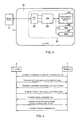
- Fig. 1 is a block diagram showing a schematic structure of an IC card system concerning the embodiment.
- the IC card system includes a terminal 1 (issuing device) and an IC card 2 (portable electronic device).
- the terminal 1 includes a control section 11, a display 12, a keyboard 13, and a reader-writer 14.
- the terminal is capable of communicating with the IC card 2, and the terminal 1 transmits data to the IC card 2, and receives data from the IC card 2.
- the terminal 1 transmits an issue command to the IC card 2, performs issue processing to the IC card, and makes the IC card be in an issue state, for example.
- the control section 11 is capable of performing a plurality of applications alternatively.
- the display 12 displays a result of communication with the IC card 2, a result of authentication with the IC card 2, etc.
- the keyboard 13 inputs a character, a number, etc. to the control section 11.
- the reader-writer communicates with the IC card 2.
- the IC card 2 may be any of a contact type card, a noncontact type card (wireless card), and a combination type card that supports both the noncontact type and the contact type.
- Fig. 2 is a block diagram showing a schematic structure of the reader-writer concerning the embodiment.
- the reader-writer 14 includes a communication I/F 142, a CPU 143, a data memory (nonvolatile memory) 144, an RAM 145, and an ROM 146.
- the CPU143 controls transmission of a command etc. to the IC card 2, detects a response from the IC card 2, and further controls transmission of a command etc. to the IC card 2 based on the response from IC card 2.
- Fig. 3 is a block diagram showing a schematic structure of the IC card concerning the embodiment.
- the IC card 2 includes a plastic card (substrate) 2a and an IC module (IC chip) 20, for example.
- the IC module 20 has a communication I/F 201, a CPU 204, a data memory (nonvolatile memory, such as EEPROM, FRAM, FLASH) 205, an RAM 206, and an ROM 207.
- EEPROM electrically erasable programmable read-only memory
- the RAM 206 performs as a working memory.
- the ROM 207 holds IC card programs executed by the CPU 204.
- the CPU 204 operates based on the IC card programs etc. that are stored in the ROM 207.
- the CPU 204 reads data stored in the data memory 205 or the RAM 206, and writes data to the data memory 205 or the RAM 206.
- the CPU 204 interprets and executes the command (the command transmitted from the terminal 1) received via the communication I/F 201, and controls reply of a command execution result to the terminal 1 via the communication I/F 201.
- the data memory 205 stores a Main File (which is abbreviated as a MF), a plurality of Dedicated Files (which are abbreviated as DFs) belong to the MF, and an Elementary File (which is abbreviated as an EF) belong to each Dedicated File, for example.
- the MF is a DF located in the top level, one or more of DFs belong to the MF, and one or more of EFs belong to each DF.
- One or more data objects are stored in these MF, DF and EF.
- the data object is structured by kind information (tag value) that shows classification of a value field, data length information (length) that shows a data length of the value field, and the value field (value).
- the CPU 204 etc. of the IC card 2 performs the issue processing (transmission of a response and change for the present state of the IC card 2 from an issue state to an issue completion state) explained by this embodiment.
- the control section 11, the reader-writer 14, etc. of the terminal 1 perform the issue processing (transmission of a command, a search of data, etc.) explained by this embodiment.
- the issue command is a command used in order to set personal information and data for internal control to the IC card.
- This response data is data that controls the terminal 1.
- this response data includes information that shows the file structure of the IC card 2, for example.
- the terminal 1 Upon receiving the response data, the terminal 1 performs the issue processing based on the information that shows the file structure of the IC card 2. That is, the terminal 1 performs the issue processing based on a setting according to the file structure of the IC card 2. Thereby, the terminal 1 can issue an IC card according to the file structure for every product (IC card) easily.
- issuing shall be completed by setting data required for the issue, such as the personal information, the data for internal control, etc. to the IC card 2.
- Fig. 4 is a flow chart that summarized transmission and reception of the command between the terminal 1 and the IC card 2, about mutual authentication and the first half of issue processing.
- Fig. 5 is a flow chart summarized focusing on the IC card 2 about mutual authentication and issue processing.
- the IC card 2 and the terminal 1 exchange information by the command and the response.
- the IC card 2 starts (ST101).
- the terminal 1 transmits a command C01 for mutual authentication to the IC card 2, and the IC card 2 receives the command C01 for mutual authentication (ST102) and transmits data for mutual authentication to the terminal 1 (ST103), for example.
- the terminal 1 transmits a command C02 for mutual authentication to the IC card 2 in response to this, and the IC card 2 receives the command C02 for mutual authentication (ST104) and transmits a mutual authentication result to the terminal 1 (ST105).
- the terminal 1 transmits an issue command C1 to the IC card 2 in response to this, and the IC card 2 receives the issue command C1 (ST106) and transmits information that shows file structure of the IC card to the terminal 1 (ST107).
- the IC card 2 and the terminal 1 check mutual justification with the command C01 for mutual authentication, and the command C02 for mutual authentication.
- This method uses a generally known method like EMV Card Personalization Specification v.1.1 2007 (a common issue specification of a credit industry standard), for example. Then, when the terminal 1 transmits the issue command C1 to the IC card 2, the IC card 2 transmits the information that shows the file structure to the terminal 11.
- the information showing the file structure may be data (shown in Fig. 8 , for example) in which Tags (identification information, abbreviated as "T”) and Lengths (length, abbreviated as "L”) of a series of data set up later are gathered, or may be a Tag of data set up next, for example.
- the terminal 1 changes a system of data that is transmitted after this according to the information that shows this file structure.
- the terminal 1 issues an issue command C2-1, and the IC card 2 receives the issue command C2-1 (ST111) and sets data specified by the issue command C2-1 inside the IC card (ST112), for example. Then, the terminal 1 issues an issue command C2-2, and the IC card 2 receives the issue command C2-2 (ST113) and sets data specified by the issue command C2-2 inside the IC card (ST114). Finally, the terminal 1 issues a final issue command C2-n, and the IC card 2 receives the issue command C2-n (ST115), sets data specified by the issue command C2-n inside the card (ST116), and changes a phase into an operation phase (issue completion state) from an issue phase (issue state) (ST130). Thereby, the IC card 2 sets a plurality of data inside the card.
- the terminal 1 issues a issue command C3-1, and the IC card 2 receives the issue command C3-1 (ST121) and sets data specified by the issue command C3-1 inside the IC card (ST122). Then, the terminal 1 issues an issue command C3-2, and the IC card 2 receives the issue command C3-2 (ST123) and sets data specified by the issue command C3-2 inside the IC card (ST124).
- the terminal 1 issues a final issue command C3-n
- the IC card 2 receives the issue command C3-n (ST125), sets data specified by the issue command C3-n inside the card (ST126), and changes a phase into the operation phase (issue completion state) from an issue phase (issue state) (ST130).
- the IC card 2 sets a plurality of data inside the card.
- the terminal 1 can set up the data to the product (IC card) according to the file structure for every product (IC card) by setting (storing) the information that shows the file structure to the IC card beforehand.
- the above explanation shows an example in which the data are set to two kinds of products.
- the A Company sets up the information that shows the file structure to the IC card 2, and ships the IC card 2 to the B Company that manages and operates the terminal 1, for example.
- the B Company performs the issue processing to the received IC card 2 by the terminal 1.
- the terminal 1 transmits the issue command to the IC card 2
- the terminal 1 can receive the information that shows the file structure from the IC card 2.
- the terminal 1 can set up the data corresponding to the IC card 2 to the terminal 1 itself by checking the file structure automatically based on this information. Thereby, it becomes unnecessary to perform an original setting to the terminal 1 side for every product (the IC card 2) from which the file structure differs.
- the control section 11 of the terminal 1 can analyze the information that shows the file structure transmitted from the IC card 2.
- the terminal 1 transmits a command that chooses application to the IC card 2, and when the IC card 2 succeeds in selection of the application, the IC card 2 replies to the terminal 1 a status word SW1 that shows the success in selection.
- the terminal 1 transmits the command C01 for mutual authentication to the IC card 2
- the IC card 2 transmits data for mutual authentication and a status word SW2 that shows the success in mutual authentication to the terminal 1.
- the terminal 1 transmits the command C02 for mutual authentication to the IC card 2
- the IC card 2 transmits a status word SW3 that shows a result of mutual authentication to the terminal 1.
- the IC card 2 receives the issue command C1, and transmits a response including the information that shows the internal structure of the file shown in Fig. 8 to the terminal 1.
- the terminal 1 sets data corresponding to an identifier ID1 to the data portion of the issue command C2-1 in a format shown in Fig. 9 , and transmits the issue command C2-1 to the IC card 2.
- the IC card 2 receives the issue command C2-1, and replies a status word SW4 that shows the success in setting to the terminal 1.
- the terminal 1 sets data corresponding to an identifier ID2 to the data portion of the issue command C2-2 in the format shown in Fig. 9 , and transmits the issue command C2-2 to the IC card 2.
- the IC card 2 receives the issue command C2-2, and replies a status word SW5 that shows the success in setting to the terminal 1.
- the terminal 1 sets data corresponding to an identifier IDN to the data portion of an issue command C2-n in the format shown in Fig. 9 , and transmits the issue command C2-n to the IC card 2.
- the IC card 2 receives the issue command C2-n, and replies a status word SW6 that shows the success in setting to the terminal 1.
- the information showing the file structure inside the IC card may be data (shown in Fig. 8 , for example) in which the identifiers and the lengths of data corresponding to the identifiers of a series of data set up later are connected, or may be an identifier and a length of data corresponding to the identifier of data set up next (shown in Fig. 9 , for example), for example.
- the terminal 1 sets data to the data portion of the issue command C1 in the format shown in Fig. 9 , and transmits the issue command C1 to the IC card 2.
- an identifier that is set to the data portion is 0xFFFF, for example.
- the IC card 2 confirms that the identifier of the data portion of the issue command is 0xFFFF (ST201, YES), and then the IC card 2 searches an EF in which the data showing the internal file structure of the IC card 2 is set (ST202).
- an target EF exists (ST203, YES)
- the IC card 2 connects data in the format shown in Fig. 8 set to the EF and a status word SW which shows the success, and transmits the connected data to the terminal 1 (ST205).
- the terminal 1 transmits an issue command according to the data of the internal file structure of the IC card 2 shown in this Fig. 8 .
- the terminal 1 sets data corresponding to an identifier 1 to the data portion of the issue command in the format shown in Fig. 9 , and transmits the issue command.
- the IC card 2 searches an EF corresponding to this identifier and an offset from the head of the EF according to Fig. 10 (ST211), and sets data corresponding to the identifier 1 to the EF corresponding to the identifier 1 (ST212, YES), (ST214).
- the terminal 1 sets data corresponding to an identifier 2 to the data portion of the issue command in the format shown in Fig. 9 , and transmits the issue command.
- the IC card 2 searches an EF corresponding to this identifier and an offset from the head of the EF according to Fig. 10 (ST211), and sets data corresponding to the identifier 2 to the EF corresponding to the identifier 2 (ST212, YES), (ST214).
- the terminal 1 and the IC card 2 repeat and perform the above-mentioned processing, and eventually set data corresponding to the identifier n to an offset specified of the EF corresponding to the identifier n.
- the IC card 2 checks whether all the identifiers that exist in Fig. 10 have been set up as shown in Fig. 7 (ST215). When all identifiers are set up (ST215, YES), the IC card 2 connects the identifier that shows that issue is completed and the status word SW that shows the success, and transmits the connected data to the terminal (ST217).
- the terminal 1 When the terminal 1 receives the identifier showing that issue is completed, the terminal 1 transmits the issue command showing that a command is a final issue command to the IC card 2, in order to complete the issue.
- the IC card 2 When the IC card 2 receives the issue command showing that the command is the final issue command, the IC card 2 changes (updates) the application into the issue completion state from the issue state, and after this the IC card 2 shifts to a state of replying an error SW when receiving the issue command.
- the IC card 2 replies a response data to the issue command used in order to set up the personal information or the data for internal control to the IC card 2, and in which the terminal 1 (an issuing machine) changes the processing according to the response data.
- the issue corresponding to the file structure inside the IC card for every product (the IC card 2) is attained, and discrimination of two or more products is attained and the issue process of the IC card can be increased in efficiency.
- Fig. 11 is a flow chart summarized focusing on processing corresponding to a response in the terminal side in the IC card system concerning the embodiment.
- the IC card 2 receives the issue command C1, and transmits a response including information (T1, L1, T2, L2, T3, L3 ..., for example) which shows the internal structure of the file shown in Fig. 8 to the terminal 1.
- the terminal 1 receives the response including the information (T1, L1, T2, L2, T3, L3 ..., for example) which shows the internal structure of the file, and searches data corresponding to T1 (identification information) with reference to a database of the terminal 1 side shown in Fig. 12 based on the information that shows the internal structure of the file, and transmits the issue command containing T1, L1 and Data1 to the IC card 2.
- the IC card 2 receives the issue command containing T1, L1 and Data1, sets Data1 contained in the issue command to a predetermined EF with reference to the table shown in Fig. 10 based on T1 contained in the issue command, and replies the status word SW that shows normality.
- the terminal 1 searches data corresponding to T2 with reference to the database of the terminal 1 side shown in Fig. 9 based on the information which shows the internal structure of the file, and transmits the issue command containing T2, L2 and Data 2 to the IC card 2.
- the IC card 2 receives the issue command containing T2, L2 and Data2, sets Data2 contained in the issue command to a predetermined EF with reference to the table shown in Fig. 10 based on T2 contained in the issue command, and replies the status word SW that shows normality.
- the above-mentioned processing (the issue processing) is realizable by performing software. Accordingly, a program that performs the procedure of the above-mentioned processing and the database shown in Fig. 12 are stored in a computer readable recording medium. Then, this program is installed to a usual computer through this recording medium. The computer executes this program and thereby the above-mentioned processing is realized.
- the terminal 1 downloads the above-mentioned program (and the database), stores the downloaded program, and thereby can complete installation of the program, for example. Thereby, the terminal 1 equivalent to the above-mentioned computer can realize the above-mentioned processing easily based on the installed above-mentioned program.
- the terminal 1 can read the above-mentioned program from the computer readable recoding medium, can store the read program, and can complete installation of the program.
- the embodiment has following effective advantage.
- the IC card used for a credit card covers various kinds of IC cards from a high performance product to a low performance product (some function of cipher is not supported, for example), and there is a plurality of products.
- the issue data which is needed for each product can be identified at a issue machine (the terminal 2) side. Since the issue machine can identify a plurality of products, the issue machine can increase the efficiency of the issue process of the IC card.
Landscapes
- Engineering & Computer Science (AREA)
- Theoretical Computer Science (AREA)
- Physics & Mathematics (AREA)
- General Physics & Mathematics (AREA)
- Business, Economics & Management (AREA)
- Microelectronics & Electronic Packaging (AREA)
- Accounting & Taxation (AREA)
- Strategic Management (AREA)
- Computer Networks & Wireless Communication (AREA)
- General Business, Economics & Management (AREA)
- Human Computer Interaction (AREA)
- General Engineering & Computer Science (AREA)
- Computer Hardware Design (AREA)
- Credit Cards Or The Like (AREA)
- Financial Or Insurance-Related Operations Such As Payment And Settlement (AREA)
Abstract
Description
- An embodiment of the invention relates to an IC card, an information processing method, a computer readable recording medium and a program.
- In recent years, in every country in the world, the IC card has spread splendidly. The IC card is used in various fields as an ID card, such as an employee ID card, a membership card, an insurance card and so on, for example, in addition to a credit card, a commuter pass, a passport, a driver's license, and a settlement of other commercial transaction. The IC card includes an IC (integrated circuit) chip that has a nonvolatile data memory and a control element such as a CPU and the like.
- The IC card is subjected to issue processing by an issuing device, and thereby the IC card becomes in an issue state.
- As for the issuing device, its setting is changed for every product (IC card) from which file structure differs, and the issuing device performs different issue processing to those different products. That is, in an IC card issuing company that manages an issuing device, a work to change the setting for every product from which the file structure differs is required, and the work is a burden for the IC card issuing company.
- On the other hand, in an IC card manufacturing company that manufactures the IC cards, there arises a labor to prepare an issue manual etc. for every IC card from which the file structure differs. Moreover, the issue manual in a language of each country is needed because the IC card is issued in every country in the world.
-
-
Fig. 1 is a block diagram showing a schematic structure of an IC card system (in an another name, a smart card system) concerning an embodiment. -
Fig. 2 is a block diagram showing a schematic structure of a reader-writer concerning the embodiment. -
Fig. 3 is a block diagram showing a schematic structure of an IC card concerning the embodiment. -
Fig. 4 is a flow chart that summarized transmission and reception of the command between a terminal and an IC card, about mutual authentication and the first half of issue processing in the IC card system concerning the embodiment. -
Fig. 5 is a flow chart that summarized the mutual authentication and the issue processing in the IC card system concerning the embodiment focusing on the IC card. -
Fig. 6 is a flow chart that summarized transmission and reception of the information between the terminal and the IC card, about the mutual authentication and the issue processing in the IC card system concerning the embodiment. -
Fig. 7 is a flow chart that summarized processing of the IC card about issue processing including the identification processing etc. of an issue command in the IC card system concerning the embodiment. -
Fig. 8 shows an example of information that shows an internal structure of a file transmitted and received by the IC card system concerning the embodiment. -
Fig. 9 shows an example of information that shows the internal structure of the file transmitted and received by the IC card system concerning the embodiment. -
Fig. 10 shows an example of a table held by the IC card concerning the embodiment. -
Fig. 11 is a flow chart summarized focusing on processing corresponding to a response of the terminal in the IC card system concerning the embodiment. -
Fig. 12 shows an example of a database referred to by the terminal in the IC card system concerning the embodiment. - According to an embodiment, an IC card includes an IC module and a substrate in which the IC module is buried. The IC module includes a memory section and a control section. The memory section stores information showing a file structure. The control section receives a first command, transmits a first response containing information showing a file structure in response to reception of the first command, receives a second command which is transmitted in response to the first response and which includes a first data searched from the information showing the file structure, and set up the first to the IC module itself in response to reception of the second data command. The IC card having the above-mentioned structure, can simplify issue processing.
- Hereinafter, an embodiment is explained with reference to the drawings.
-
Fig. 1 is a block diagram showing a schematic structure of an IC card system concerning the embodiment. As shown inFig. 1 , the IC card system includes a terminal 1 (issuing device) and an IC card 2 (portable electronic device). Theterminal 1 includes acontrol section 11, adisplay 12, akeyboard 13, and a reader-writer 14. The terminal is capable of communicating with theIC card 2, and theterminal 1 transmits data to theIC card 2, and receives data from theIC card 2. Theterminal 1 transmits an issue command to theIC card 2, performs issue processing to the IC card, and makes the IC card be in an issue state, for example. - The
control section 11 is capable of performing a plurality of applications alternatively. Thedisplay 12 displays a result of communication with theIC card 2, a result of authentication with theIC card 2, etc. Thekeyboard 13 inputs a character, a number, etc. to thecontrol section 11. The reader-writer communicates with theIC card 2. - In addition, the
IC card 2 may be any of a contact type card, a noncontact type card (wireless card), and a combination type card that supports both the noncontact type and the contact type. -
Fig. 2 is a block diagram showing a schematic structure of the reader-writer concerning the embodiment. As shown inFig. 2 , the reader-writer 14 includes a communication I/F 142, aCPU 143, a data memory (nonvolatile memory) 144, anRAM 145, and anROM 146. The CPU143 controls transmission of a command etc. to theIC card 2, detects a response from theIC card 2, and further controls transmission of a command etc. to theIC card 2 based on the response fromIC card 2. -
Fig. 3 is a block diagram showing a schematic structure of the IC card concerning the embodiment. As shown inFig. 3 , theIC card 2 includes a plastic card (substrate) 2a and an IC module (IC chip) 20, for example. TheIC module 20 has a communication I/F 201, aCPU 204, a data memory (nonvolatile memory, such as EEPROM, FRAM, FLASH) 205, anRAM 206, and anROM 207. In addition, although theIC card 2 described above is explained as an example of a portable electronic device, the embodiment is not limited to this. The portable electronic device may be an SIM-shaped IC card, for example. - The
RAM 206 performs as a working memory. TheROM 207 holds IC card programs executed by theCPU 204. TheCPU 204 operates based on the IC card programs etc. that are stored in theROM 207. Moreover, theCPU 204 reads data stored in thedata memory 205 or theRAM 206, and writes data to thedata memory 205 or theRAM 206. Furthermore, theCPU 204 interprets and executes the command (the command transmitted from the terminal 1) received via the communication I/F 201, and controls reply of a command execution result to theterminal 1 via the communication I/F 201. - The
data memory 205 stores a Main File (which is abbreviated as a MF), a plurality of Dedicated Files (which are abbreviated as DFs) belong to the MF, and an Elementary File (which is abbreviated as an EF) belong to each Dedicated File, for example. The MF is a DF located in the top level, one or more of DFs belong to the MF, and one or more of EFs belong to each DF. One or more data objects are stored in these MF, DF and EF. The data object is structured by kind information (tag value) that shows classification of a value field, data length information (length) that shows a data length of the value field, and the value field (value). - Next, an outline of issue processing is explained.
- The
CPU 204 etc. of theIC card 2 performs the issue processing (transmission of a response and change for the present state of theIC card 2 from an issue state to an issue completion state) explained by this embodiment. Moreover, thecontrol section 11, the reader-writer 14, etc. of theterminal 1 perform the issue processing (transmission of a command, a search of data, etc.) explained by this embodiment. - In the issue processing, the reader-
writer 14 of theterminal 1 transmits an issue command (an identifier = 0xFFFF is included, for example) to theIC card 2. The issue command is a command used in order to set personal information and data for internal control to the IC card. TheIC card 2 has a mechanism that replies a response data when it receives the issue command and detects the identifier = 0xFFFF. This response data is data that controls theterminal 1. Moreover, this response data includes information that shows the file structure of theIC card 2, for example. Upon receiving the response data, theterminal 1 performs the issue processing based on the information that shows the file structure of theIC card 2. That is, theterminal 1 performs the issue processing based on a setting according to the file structure of theIC card 2. Thereby, theterminal 1 can issue an IC card according to the file structure for every product (IC card) easily. - Here, issuing shall be completed by setting data required for the issue, such as the personal information, the data for internal control, etc. to the
IC card 2. -
Fig. 4 is a flow chart that summarized transmission and reception of the command between the terminal 1 and theIC card 2, about mutual authentication and the first half of issue processing.Fig. 5 is a flow chart summarized focusing on theIC card 2 about mutual authentication and issue processing. - As shown in
Fig. 4 andFig. 5 , theIC card 2 and theterminal 1 exchange information by the command and the response. First, theIC card 2 starts (ST101). Theterminal 1 transmits a command C01 for mutual authentication to theIC card 2, and theIC card 2 receives the command C01 for mutual authentication (ST102) and transmits data for mutual authentication to the terminal 1 (ST103), for example. Theterminal 1 transmits a command C02 for mutual authentication to theIC card 2 in response to this, and theIC card 2 receives the command C02 for mutual authentication (ST104) and transmits a mutual authentication result to the terminal 1 (ST105). Theterminal 1 transmits an issue command C1 to theIC card 2 in response to this, and theIC card 2 receives the issue command C1 (ST106) and transmits information that shows file structure of the IC card to the terminal 1 (ST107). - As mentioned above, the
IC card 2 and theterminal 1 check mutual justification with the command C01 for mutual authentication, and the command C02 for mutual authentication. This method uses a generally known method like EMV Card Personalization Specification v.1.1 2007 (a common issue specification of a credit industry standard), for example. Then, when theterminal 1 transmits the issue command C1 to theIC card 2, theIC card 2 transmits the information that shows the file structure to the terminal 11. - The information showing the file structure may be data (shown in
Fig. 8 , for example) in which Tags (identification information, abbreviated as "T") and Lengths (length, abbreviated as "L") of a series of data set up later are gathered, or may be a Tag of data set up next, for example. The terminal 1 changes a system of data that is transmitted after this according to the information that shows this file structure. - According to the information that shows the file structure, the terminal 1 issues an issue command C2-1, and the
IC card 2 receives the issue command C2-1 (ST111) and sets data specified by the issue command C2-1 inside the IC card (ST112), for example. Then, the terminal 1 issues an issue command C2-2, and theIC card 2 receives the issue command C2-2 (ST113) and sets data specified by the issue command C2-2 inside the IC card (ST114). Finally, the terminal 1 issues a final issue command C2-n, and theIC card 2 receives the issue command C2-n (ST115), sets data specified by the issue command C2-n inside the card (ST116), and changes a phase into an operation phase (issue completion state) from an issue phase (issue state) (ST130). Thereby, theIC card 2 sets a plurality of data inside the card. - Or, according to the information (a second information) that shows the file structure, the terminal 1 issues a issue command C3-1, and the
IC card 2 receives the issue command C3-1 (ST121) and sets data specified by the issue command C3-1 inside the IC card (ST122). Then, the terminal 1 issues an issue command C3-2, and theIC card 2 receives the issue command C3-2 (ST123) and sets data specified by the issue command C3-2 inside the IC card (ST124). Finally, the terminal 1 issues a final issue command C3-n, and theIC card 2 receives the issue command C3-n (ST125), sets data specified by the issue command C3-n inside the card (ST126), and changes a phase into the operation phase (issue completion state) from an issue phase (issue state) (ST130). Thereby, theIC card 2 sets a plurality of data inside the card. - Thereby, the
terminal 1 can set up the data to the product (IC card) according to the file structure for every product (IC card) by setting (storing) the information that shows the file structure to the IC card beforehand. The above explanation shows an example in which the data are set to two kinds of products. - The A Company sets up the information that shows the file structure to the
IC card 2, and ships theIC card 2 to the B Company that manages and operates theterminal 1, for example. The B Company performs the issue processing to the receivedIC card 2 by theterminal 1. When theterminal 1 transmits the issue command to theIC card 2, theterminal 1 can receive the information that shows the file structure from theIC card 2. Theterminal 1 can set up the data corresponding to theIC card 2 to theterminal 1 itself by checking the file structure automatically based on this information. Thereby, it becomes unnecessary to perform an original setting to theterminal 1 side for every product (the IC card 2) from which the file structure differs. In addition, thecontrol section 11 of theterminal 1 can analyze the information that shows the file structure transmitted from theIC card 2. - Next, with reference to
Fig. 6 andFig. 7 , the above-mentioned issue processing is explained in more detail. - The
terminal 1 transmits a command that chooses application to theIC card 2, and when theIC card 2 succeeds in selection of the application, theIC card 2 replies to the terminal 1 a status word SW1 that shows the success in selection. In response to this, theterminal 1 transmits the command C01 for mutual authentication to theIC card 2, and theIC card 2 transmits data for mutual authentication and a status word SW2 that shows the success in mutual authentication to theterminal 1. In response to this, theterminal 1 transmits the command C02 for mutual authentication to theIC card 2, and theIC card 2 transmits a status word SW3 that shows a result of mutual authentication to theterminal 1. - The
terminal 1 sets data to a data portion of the issue command in a format shown inFig. 9 , and transmits the issue command C1 (for example, an identifier = 0xFFFF is included) to theIC card 2, for example. TheIC card 2 receives the issue command C1, and transmits a response including the information that shows the internal structure of the file shown inFig. 8 to theterminal 1. - The
terminal 1 sets data corresponding to an identifier ID1 to the data portion of the issue command C2-1 in a format shown inFig. 9 , and transmits the issue command C2-1 to theIC card 2. TheIC card 2 receives the issue command C2-1, and replies a status word SW4 that shows the success in setting to theterminal 1. - The
terminal 1 sets data corresponding to an identifier ID2 to the data portion of the issue command C2-2 in the format shown inFig. 9 , and transmits the issue command C2-2 to theIC card 2. TheIC card 2 receives the issue command C2-2, and replies a status word SW5 that shows the success in setting to theterminal 1. - Repeating the above, the
terminal 1 sets data corresponding to an identifier IDN to the data portion of an issue command C2-n in the format shown inFig. 9 , and transmits the issue command C2-n to theIC card 2. TheIC card 2 receives the issue command C2-n, and replies a status word SW6 that shows the success in setting to theterminal 1. - The information showing the file structure inside the IC card may be data (shown in
Fig. 8 , for example) in which the identifiers and the lengths of data corresponding to the identifiers of a series of data set up later are connected, or may be an identifier and a length of data corresponding to the identifier of data set up next (shown inFig. 9 , for example), for example. - The case where the data in which the identifiers and the lengths of data corresponding to the identifiers of a series of data are connected, as shown in
Fig. 8 , is replied to theterminal 1 is explained. - The
terminal 1 sets data to the data portion of the issue command C1 in the format shown inFig. 9 , and transmits the issue command C1 to theIC card 2. In that case, an identifier that is set to the data portion is 0xFFFF, for example. As shown inFig. 7 , theIC card 2 confirms that the identifier of the data portion of the issue command is 0xFFFF (ST201, YES), and then theIC card 2 searches an EF in which the data showing the internal file structure of theIC card 2 is set (ST202). When an target EF exists (ST203, YES), theIC card 2 connects data in the format shown inFig. 8 set to the EF and a status word SW which shows the success, and transmits the connected data to the terminal 1 (ST205). - After this, the
terminal 1 transmits an issue command according to the data of the internal file structure of theIC card 2 shown in thisFig. 8 . Theterminal 1 sets data corresponding to anidentifier 1 to the data portion of the issue command in the format shown inFig. 9 , and transmits the issue command. As shown inFig. 7 , theIC card 2 searches an EF corresponding to this identifier and an offset from the head of the EF according toFig. 10 (ST211), and sets data corresponding to theidentifier 1 to the EF corresponding to the identifier 1 (ST212, YES), (ST214). - Moreover, next, the
terminal 1 sets data corresponding to anidentifier 2 to the data portion of the issue command in the format shown inFig. 9 , and transmits the issue command. TheIC card 2 searches an EF corresponding to this identifier and an offset from the head of the EF according toFig. 10 (ST211), and sets data corresponding to theidentifier 2 to the EF corresponding to the identifier 2 (ST212, YES), (ST214). - After this, the
terminal 1 and theIC card 2 repeat and perform the above-mentioned processing, and eventually set data corresponding to the identifier n to an offset specified of the EF corresponding to the identifier n. - At this time, the
IC card 2 checks whether all the identifiers that exist inFig. 10 have been set up as shown inFig. 7 (ST215). When all identifiers are set up (ST215, YES), theIC card 2 connects the identifier that shows that issue is completed and the status word SW that shows the success, and transmits the connected data to the terminal (ST217). - When the
terminal 1 receives the identifier showing that issue is completed, theterminal 1 transmits the issue command showing that a command is a final issue command to theIC card 2, in order to complete the issue. - When the
IC card 2 receives the issue command showing that the command is the final issue command, theIC card 2 changes (updates) the application into the issue completion state from the issue state, and after this theIC card 2 shifts to a state of replying an error SW when receiving the issue command. - Thus, there is provided a system in which the
IC card 2 replies a response data to the issue command used in order to set up the personal information or the data for internal control to theIC card 2, and in which the terminal 1 (an issuing machine) changes the processing according to the response data. - By this means, in the IC card system, the issue corresponding to the file structure inside the IC card for every product (the IC card 2) is attained, and discrimination of two or more products is attained and the issue process of the IC card can be increased in efficiency.
-
Fig. 11 is a flow chart summarized focusing on processing corresponding to a response in the terminal side in the IC card system concerning the embodiment. - As explained above, the
terminal 1 sets the data to a data portion of the issue command in a format shown inFig. 9 , and transmits the issue command C1 (for example, an identifier = 0xFFFF is included) to theIC card 2. TheIC card 2 receives the issue command C1, and transmits a response including information (T1, L1, T2, L2, T3, L3 ..., for example) which shows the internal structure of the file shown inFig. 8 to theterminal 1. - The
terminal 1 receives the response including the information (T1, L1, T2, L2, T3, L3 ..., for example) which shows the internal structure of the file, and searches data corresponding to T1 (identification information) with reference to a database of theterminal 1 side shown inFig. 12 based on the information that shows the internal structure of the file, and transmits the issue command containing T1, L1 and Data1 to theIC card 2. TheIC card 2 receives the issue command containing T1, L1 and Data1, sets Data1 contained in the issue command to a predetermined EF with reference to the table shown inFig. 10 based on T1 contained in the issue command, and replies the status word SW that shows normality. Similarly, the terminal 1 searches data corresponding to T2 with reference to the database of theterminal 1 side shown inFig. 9 based on the information which shows the internal structure of the file, and transmits the issue command containing T2, L2 andData 2 to theIC card 2. TheIC card 2 receives the issue command containing T2, L2 and Data2, sets Data2 contained in the issue command to a predetermined EF with reference to the table shown inFig. 10 based on T2 contained in the issue command, and replies the status word SW that shows normality. - In addition, the above-mentioned processing (the issue processing) is realizable by performing software. Accordingly, a program that performs the procedure of the above-mentioned processing and the database shown in
Fig. 12 are stored in a computer readable recording medium. Then, this program is installed to a usual computer through this recording medium. The computer executes this program and thereby the above-mentioned processing is realized. - The
terminal 1 downloads the above-mentioned program (and the database), stores the downloaded program, and thereby can complete installation of the program, for example. Thereby, theterminal 1 equivalent to the above-mentioned computer can realize the above-mentioned processing easily based on the installed above-mentioned program. - Moreover, the
terminal 1 can read the above-mentioned program from the computer readable recoding medium, can store the read program, and can complete installation of the program. - Hereinafter, the embodiment is summarized.
- 1) The IC card of the embodiment is an IC card that can execute a command instructed from the outside. The IC card of the embodiment can reply the data by which the file structure inside the IC card can be identified, in response to a received command, as the response data.
- 2) The data by which the file structure inside the IC card can be identified is the data in which a plurality of identifiers and lengths of data corresponding to the identifiers for a series of data are connected.
- 3) The data by which the file structure inside the IC card can be identified is an identifier of data that is set up immediately behind a length and the length of data corresponding to the identifier.
- 4) When the IC card receives an issue command for setting up the personal information and the data for internal control of the IC card, the IC card checks that data that needs setting up has been issued, and can reply a special identifier showing the result as a response data.
- 5) In order to reply the data by which the file structure inside the IC card can be identified as the response data, a command that the IC card receives is the issue command for identifying the personal information and the data for the internal control of the IC card.
- 6) The terminal of the embodiment is a terminal that can execute the command instructed from the outside. When the terminal receives the data by which the file structure inside the IC card can be identified as the response data, the terminal can analyze the data, can set the personal information and the data for the internal control of the IC card which correspond the data to the data portion of the issue command for setting them up, and can transmit the issue command to the IC card
- As mentioned above, the embodiment has following effective advantage.
- The IC card used for a credit card covers various kinds of IC cards from a high performance product to a low performance product (some function of cipher is not supported, for example), and there is a plurality of products.
- According to the embodiment, the issue data which is needed for each product (the IC card 2) can be identified at a issue machine (the terminal 2) side. Since the issue machine can identify a plurality of products, the issue machine can increase the efficiency of the issue process of the IC card.
- While an embodiment has been described, the embodiment has been presented by way of example only, and is not intended to limit the scope of the inventions. Indeed, the novel embodiment described herein may be embodied in a variety of other forms; furthermore, various omissions, substitutions and changes in the form of the embodiment described herein may be made without departing from the spirit of the inventions. The accompanying claims and their equivalents are intended to cover such a form or modifications as would fall within the scope and spirit of the inventions.
Claims (10)
- An IC card, comprising:an IC module; anda substrate in which the IC module is buried;wherein the IC module includesa memory section to store information showing a file structure; anda control section toreceive a first command,transmit a first response containing information showing a file structure in response to reception of the first command,receive a second command which is transmitted in response to the first response, and which includes a first data searched from the information showing the file structure, andset up the first to the IC module itself in response to reception of the second data command.
- The IC card according to claim 2. wherein the control section sets up the first data and change a present state into an issue completion state.
- The IC card according to claim 1, wherein
the control section
transmits the first response containing the information showing the file structure which includes a first identification information and a first length, and
receives the second command containing the first identification information and the first data which is searched based on the first identification information. - The IC card according to claim 3, wherein the control section set up the first data contained in the second command based on the first identification information contained in the second command.
- The IC card according to claim 1, wherein the control section
transmits the first response containing information showing the file structure which contains a first identification information, a first length, a second information and a second length,
receives a second command containing the first identification information and the first data searched based on the first identification information, and
receives a third command containing the second identification information and the second data searched based on the second identification information. - The IC card according to claim 5, wherein the control section
sets up the first data contained in the second command based on the first identification information contained in the second command, and
sets up the second data contained in the third command based on the second identification information contained in the third command. - The IC card according to claim 6, wherein the control section the control section sets up the second data and changes a present state into an issue completion state.
- An information processing method comprising:receiving a first command;transmitting a first response containing information showing a file structure in response to reception of the first command;receiving a second command which is transmitted in response to the first response, and which includes a first data searched from the information showing the file structure; andsetting up the first data in response to reception of the second command.
- A computer readable recording medium which stores a program that makes a computer perform process comprising steps of:transmitting a first command;receiving a first response containing information showing a file structure in response to transmission of the first command,searching the first data based on the information showing the file structure, andtransmitting a second command containing the first data.
- A program which makes a computer perform process comprising steps of:transmitting a first command;receiving a first response containing information showing a file structure in response to transmission of the first command;searching the first data based on the information showing the file structure; andtransmitting a second command containing the first data.
Applications Claiming Priority (1)
| Application Number | Priority Date | Filing Date | Title |
|---|---|---|---|
| JP2013193550A JP6352609B2 (en) | 2013-09-18 | 2013-09-18 | IC card, information processing method, information storage medium, and information processing program |
Publications (2)
| Publication Number | Publication Date |
|---|---|
| EP2851877A1 true EP2851877A1 (en) | 2015-03-25 |
| EP2851877B1 EP2851877B1 (en) | 2017-06-14 |
Family
ID=50336070
Family Applications (1)
| Application Number | Title | Priority Date | Filing Date |
|---|---|---|---|
| EP14158532.3A Active EP2851877B1 (en) | 2013-09-18 | 2014-03-10 | IC card, information processing method, computer readable recording medium and program |
Country Status (5)
| Country | Link |
|---|---|
| US (1) | US9557934B2 (en) |
| EP (1) | EP2851877B1 (en) |
| JP (1) | JP6352609B2 (en) |
| KR (1) | KR101613003B1 (en) |
| SG (1) | SG10201400488XA (en) |
Families Citing this family (1)
| Publication number | Priority date | Publication date | Assignee | Title |
|---|---|---|---|---|
| JP6461759B2 (en) | 2015-09-17 | 2019-01-30 | 株式会社東芝 | IC card and IC module |
Citations (5)
| Publication number | Priority date | Publication date | Assignee | Title |
|---|---|---|---|---|
| EP0780813A2 (en) * | 1995-12-20 | 1997-06-25 | Fujitsu Limited | IC card, IC card reading/writing apparatus, host for an IC card reading/writing apparatus, IC card system, and method for allowing use of multiple vendors in an IC card system |
| EP1260944A2 (en) * | 2001-05-14 | 2002-11-27 | Kabushiki Kaisha Toshiba | IC card issuance system |
| JP2006243871A (en) * | 2005-03-01 | 2006-09-14 | Nippon Telegr & Teleph Corp <Ntt> | IC card data management method, IC card data management system, and IC card data management program |
| US20080203157A1 (en) * | 2006-09-07 | 2008-08-28 | Datacard Corporation | Storage and transport mechanism for a self-service card kiosk with return and reissue capability |
| EP2228775A2 (en) * | 2009-03-10 | 2010-09-15 | Kabushiki Kaisha Toshiba | Information storage medium, authentication data generation method, and medium authentication system |
Family Cites Families (10)
| Publication number | Priority date | Publication date | Assignee | Title |
|---|---|---|---|---|
| JP3568970B2 (en) | 1993-04-12 | 2004-09-22 | 株式会社東芝 | IC card issuing device |
| FR2729775B1 (en) * | 1995-01-23 | 1997-02-21 | France Telecom | CARD READER TERMINAL AND MULTI-APPLICATION PROCESSING PROCESS OF SUCH A TERMINAL |
| AUPP274098A0 (en) * | 1998-04-01 | 1998-04-30 | Chip Application Technologies Limited | Data carrying device and systems for use therewith |
| DE19839847A1 (en) * | 1998-09-02 | 2000-03-09 | Ibm | Storage of data objects in the memory of a chip card |
| JP2006018790A (en) * | 2003-12-18 | 2006-01-19 | Konica Minolta Photo Imaging Inc | Id card creating system and id card creating method |
| EP1873728B1 (en) | 2006-06-29 | 2013-11-27 | Incard SA | Method for configuring an IC Card in order to receive personalization commands |
| FR2908202B1 (en) | 2006-11-07 | 2009-03-13 | Oberthur Card Syst Sa | METHOD AND DEVICE FOR CUSTOMIZING A PORTABLE ELECTRONIC ENTITY |
| JP5235460B2 (en) | 2008-03-21 | 2013-07-10 | 株式会社日立製作所 | Terminal, information storage medium, service providing system, and data updating method |
| JP5889653B2 (en) * | 2012-01-27 | 2016-03-22 | 株式会社東芝 | IC card |
| JP6102305B2 (en) * | 2013-02-14 | 2017-03-29 | 大日本印刷株式会社 | IC chip issuance program, IC chip issuance control device, and IC card issuance system |
-
2013
- 2013-09-18 JP JP2013193550A patent/JP6352609B2/en active Active
-
2014
- 2014-02-28 KR KR1020140024268A patent/KR101613003B1/en active Active
- 2014-03-07 SG SG10201400488XA patent/SG10201400488XA/en unknown
- 2014-03-10 US US14/202,076 patent/US9557934B2/en active Active
- 2014-03-10 EP EP14158532.3A patent/EP2851877B1/en active Active
Patent Citations (5)
| Publication number | Priority date | Publication date | Assignee | Title |
|---|---|---|---|---|
| EP0780813A2 (en) * | 1995-12-20 | 1997-06-25 | Fujitsu Limited | IC card, IC card reading/writing apparatus, host for an IC card reading/writing apparatus, IC card system, and method for allowing use of multiple vendors in an IC card system |
| EP1260944A2 (en) * | 2001-05-14 | 2002-11-27 | Kabushiki Kaisha Toshiba | IC card issuance system |
| JP2006243871A (en) * | 2005-03-01 | 2006-09-14 | Nippon Telegr & Teleph Corp <Ntt> | IC card data management method, IC card data management system, and IC card data management program |
| US20080203157A1 (en) * | 2006-09-07 | 2008-08-28 | Datacard Corporation | Storage and transport mechanism for a self-service card kiosk with return and reissue capability |
| EP2228775A2 (en) * | 2009-03-10 | 2010-09-15 | Kabushiki Kaisha Toshiba | Information storage medium, authentication data generation method, and medium authentication system |
Also Published As
| Publication number | Publication date |
|---|---|
| JP6352609B2 (en) | 2018-07-04 |
| SG10201400488XA (en) | 2015-04-29 |
| US20150081972A1 (en) | 2015-03-19 |
| KR101613003B1 (en) | 2016-04-15 |
| JP2015060406A (en) | 2015-03-30 |
| US9557934B2 (en) | 2017-01-31 |
| KR20150032452A (en) | 2015-03-26 |
| EP2851877B1 (en) | 2017-06-14 |
Similar Documents
| Publication | Publication Date | Title |
|---|---|---|
| CN101303723B (en) | Portable terminal | |
| US9418224B2 (en) | Portable electronic device and control method of portable electronic device | |
| US8931705B2 (en) | IC card, mobile electronic device and data processing method in IC card | |
| JP2015501039A (en) | Writing data in the smart card's non-volatile memory | |
| US8112662B2 (en) | Portable electronic apparatus, processing apparatus for portable electronic apparatus, and data processing method in portable electronic apparatus | |
| US8977824B2 (en) | Portable electronic apparatus and method of controlling a portable electronic apparatus | |
| EP2851877B1 (en) | IC card, information processing method, computer readable recording medium and program | |
| US20090012975A1 (en) | Portable electronic device and file management method for use in portable electronic device | |
| US7922095B2 (en) | Information storage medium and medium processing system | |
| EP2717193B1 (en) | IC card, portable electronic device, and reader/ writer | |
| US5862402A (en) | System for rapidly issuing IC cards by proving an association between stored issue data and discrimination data then issuing IC cards pursuant to the issue data | |
| JP5889653B2 (en) | IC card | |
| EP1384197B1 (en) | Method of manufacturing smart cards | |
| JP2011198106A (en) | Portable electronic device | |
| JP2011060136A (en) | Portable electronic apparatus, and data management method in the same | |
| JP2006012026A (en) | Portable information storage medium and program thereof | |
| JP7005934B2 (en) | Electronic information storage medium, IC card, data transmission method, data writing method, data transmission program and data writing program | |
| JP7438432B1 (en) | Electronic information storage medium, IC chip, IC card, record writing method, and program | |
| JP4836707B2 (en) | Portable electronic device and IC card | |
| US20070124530A1 (en) | Portable electronic device and control method of portable electronic device | |
| JP2014006631A (en) | Ic card and portable electronic device | |
| JP2023039526A (en) | Contactless communication device, contactless chip, and upper layer message processing method | |
| JP2009176034A (en) | Portable electronic device and data management method | |
| JP2005011008A (en) | IC card | |
| JP2013025705A (en) | Ic card, ic card manufacturing method, ic card issuing method, and portable electronic device |
Legal Events
| Date | Code | Title | Description |
|---|---|---|---|
| PUAI | Public reference made under article 153(3) epc to a published international application that has entered the european phase |
Free format text: ORIGINAL CODE: 0009012 |
|
| 17P | Request for examination filed |
Effective date: 20140310 |
|
| AK | Designated contracting states |
Kind code of ref document: A1 Designated state(s): AL AT BE BG CH CY CZ DE DK EE ES FI FR GB GR HR HU IE IS IT LI LT LU LV MC MK MT NL NO PL PT RO RS SE SI SK SM TR |
|
| AX | Request for extension of the european patent |
Extension state: BA ME |
|
| 17Q | First examination report despatched |
Effective date: 20151102 |
|
| STAA | Information on the status of an ep patent application or granted ep patent |
Free format text: STATUS: EXAMINATION IS IN PROGRESS |
|
| GRAP | Despatch of communication of intention to grant a patent |
Free format text: ORIGINAL CODE: EPIDOSNIGR1 |
|
| STAA | Information on the status of an ep patent application or granted ep patent |
Free format text: STATUS: GRANT OF PATENT IS INTENDED |
|
| INTG | Intention to grant announced |
Effective date: 20170130 |
|
| GRAS | Grant fee paid |
Free format text: ORIGINAL CODE: EPIDOSNIGR3 |
|
| GRAA | (expected) grant |
Free format text: ORIGINAL CODE: 0009210 |
|
| STAA | Information on the status of an ep patent application or granted ep patent |
Free format text: STATUS: THE PATENT HAS BEEN GRANTED |
|
| AK | Designated contracting states |
Kind code of ref document: B1 Designated state(s): AL AT BE BG CH CY CZ DE DK EE ES FI FR GB GR HR HU IE IS IT LI LT LU LV MC MK MT NL NO PL PT RO RS SE SI SK SM TR |
|
| REG | Reference to a national code |
Ref country code: GB Ref legal event code: FG4D |
|
| REG | Reference to a national code |
Ref country code: CH Ref legal event code: EP Ref country code: AT Ref legal event code: REF Ref document number: 901638 Country of ref document: AT Kind code of ref document: T Effective date: 20170615 |
|
| REG | Reference to a national code |
Ref country code: IE Ref legal event code: FG4D |
|
| REG | Reference to a national code |
Ref country code: DE Ref legal event code: R096 Ref document number: 602014010649 Country of ref document: DE |
|
| REG | Reference to a national code |
Ref country code: NL Ref legal event code: MP Effective date: 20170614 |
|
| REG | Reference to a national code |
Ref country code: LT Ref legal event code: MG4D |
|
| PG25 | Lapsed in a contracting state [announced via postgrant information from national office to epo] |
Ref country code: LT Free format text: LAPSE BECAUSE OF FAILURE TO SUBMIT A TRANSLATION OF THE DESCRIPTION OR TO PAY THE FEE WITHIN THE PRESCRIBED TIME-LIMIT Effective date: 20170614 Ref country code: GR Free format text: LAPSE BECAUSE OF FAILURE TO SUBMIT A TRANSLATION OF THE DESCRIPTION OR TO PAY THE FEE WITHIN THE PRESCRIBED TIME-LIMIT Effective date: 20170915 Ref country code: NO Free format text: LAPSE BECAUSE OF FAILURE TO SUBMIT A TRANSLATION OF THE DESCRIPTION OR TO PAY THE FEE WITHIN THE PRESCRIBED TIME-LIMIT Effective date: 20170914 Ref country code: FI Free format text: LAPSE BECAUSE OF FAILURE TO SUBMIT A TRANSLATION OF THE DESCRIPTION OR TO PAY THE FEE WITHIN THE PRESCRIBED TIME-LIMIT Effective date: 20170614 Ref country code: HR Free format text: LAPSE BECAUSE OF FAILURE TO SUBMIT A TRANSLATION OF THE DESCRIPTION OR TO PAY THE FEE WITHIN THE PRESCRIBED TIME-LIMIT Effective date: 20170614 |
|
| REG | Reference to a national code |
Ref country code: AT Ref legal event code: MK05 Ref document number: 901638 Country of ref document: AT Kind code of ref document: T Effective date: 20170614 |
|
| PG25 | Lapsed in a contracting state [announced via postgrant information from national office to epo] |
Ref country code: NL Free format text: LAPSE BECAUSE OF FAILURE TO SUBMIT A TRANSLATION OF THE DESCRIPTION OR TO PAY THE FEE WITHIN THE PRESCRIBED TIME-LIMIT Effective date: 20170614 Ref country code: SE Free format text: LAPSE BECAUSE OF FAILURE TO SUBMIT A TRANSLATION OF THE DESCRIPTION OR TO PAY THE FEE WITHIN THE PRESCRIBED TIME-LIMIT Effective date: 20170614 Ref country code: RS Free format text: LAPSE BECAUSE OF FAILURE TO SUBMIT A TRANSLATION OF THE DESCRIPTION OR TO PAY THE FEE WITHIN THE PRESCRIBED TIME-LIMIT Effective date: 20170614 Ref country code: LV Free format text: LAPSE BECAUSE OF FAILURE TO SUBMIT A TRANSLATION OF THE DESCRIPTION OR TO PAY THE FEE WITHIN THE PRESCRIBED TIME-LIMIT Effective date: 20170614 Ref country code: BG Free format text: LAPSE BECAUSE OF FAILURE TO SUBMIT A TRANSLATION OF THE DESCRIPTION OR TO PAY THE FEE WITHIN THE PRESCRIBED TIME-LIMIT Effective date: 20170914 |
|
| PG25 | Lapsed in a contracting state [announced via postgrant information from national office to epo] |
Ref country code: SK Free format text: LAPSE BECAUSE OF FAILURE TO SUBMIT A TRANSLATION OF THE DESCRIPTION OR TO PAY THE FEE WITHIN THE PRESCRIBED TIME-LIMIT Effective date: 20170614 Ref country code: CZ Free format text: LAPSE BECAUSE OF FAILURE TO SUBMIT A TRANSLATION OF THE DESCRIPTION OR TO PAY THE FEE WITHIN THE PRESCRIBED TIME-LIMIT Effective date: 20170614 Ref country code: RO Free format text: LAPSE BECAUSE OF FAILURE TO SUBMIT A TRANSLATION OF THE DESCRIPTION OR TO PAY THE FEE WITHIN THE PRESCRIBED TIME-LIMIT Effective date: 20170614 Ref country code: AT Free format text: LAPSE BECAUSE OF FAILURE TO SUBMIT A TRANSLATION OF THE DESCRIPTION OR TO PAY THE FEE WITHIN THE PRESCRIBED TIME-LIMIT Effective date: 20170614 Ref country code: EE Free format text: LAPSE BECAUSE OF FAILURE TO SUBMIT A TRANSLATION OF THE DESCRIPTION OR TO PAY THE FEE WITHIN THE PRESCRIBED TIME-LIMIT Effective date: 20170614 |
|
| REG | Reference to a national code |
Ref country code: FR Ref legal event code: PLFP Year of fee payment: 5 |
|
| PG25 | Lapsed in a contracting state [announced via postgrant information from national office to epo] |
Ref country code: SM Free format text: LAPSE BECAUSE OF FAILURE TO SUBMIT A TRANSLATION OF THE DESCRIPTION OR TO PAY THE FEE WITHIN THE PRESCRIBED TIME-LIMIT Effective date: 20170614 Ref country code: IS Free format text: LAPSE BECAUSE OF FAILURE TO SUBMIT A TRANSLATION OF THE DESCRIPTION OR TO PAY THE FEE WITHIN THE PRESCRIBED TIME-LIMIT Effective date: 20171014 Ref country code: ES Free format text: LAPSE BECAUSE OF FAILURE TO SUBMIT A TRANSLATION OF THE DESCRIPTION OR TO PAY THE FEE WITHIN THE PRESCRIBED TIME-LIMIT Effective date: 20170614 Ref country code: PL Free format text: LAPSE BECAUSE OF FAILURE TO SUBMIT A TRANSLATION OF THE DESCRIPTION OR TO PAY THE FEE WITHIN THE PRESCRIBED TIME-LIMIT Effective date: 20170614 Ref country code: IT Free format text: LAPSE BECAUSE OF FAILURE TO SUBMIT A TRANSLATION OF THE DESCRIPTION OR TO PAY THE FEE WITHIN THE PRESCRIBED TIME-LIMIT Effective date: 20170614 |
|
| REG | Reference to a national code |
Ref country code: DE Ref legal event code: R097 Ref document number: 602014010649 Country of ref document: DE |
|
| PLBE | No opposition filed within time limit |
Free format text: ORIGINAL CODE: 0009261 |
|
| STAA | Information on the status of an ep patent application or granted ep patent |
Free format text: STATUS: NO OPPOSITION FILED WITHIN TIME LIMIT |
|
| PG25 | Lapsed in a contracting state [announced via postgrant information from national office to epo] |
Ref country code: DK Free format text: LAPSE BECAUSE OF FAILURE TO SUBMIT A TRANSLATION OF THE DESCRIPTION OR TO PAY THE FEE WITHIN THE PRESCRIBED TIME-LIMIT Effective date: 20170614 |
|
| 26N | No opposition filed |
Effective date: 20180315 |
|
| PG25 | Lapsed in a contracting state [announced via postgrant information from national office to epo] |
Ref country code: SI Free format text: LAPSE BECAUSE OF FAILURE TO SUBMIT A TRANSLATION OF THE DESCRIPTION OR TO PAY THE FEE WITHIN THE PRESCRIBED TIME-LIMIT Effective date: 20170614 |
|
| REG | Reference to a national code |
Ref country code: CH Ref legal event code: PL |
|
| GBPC | Gb: european patent ceased through non-payment of renewal fee |
Effective date: 20180310 |
|
| PG25 | Lapsed in a contracting state [announced via postgrant information from national office to epo] |
Ref country code: MC Free format text: LAPSE BECAUSE OF FAILURE TO SUBMIT A TRANSLATION OF THE DESCRIPTION OR TO PAY THE FEE WITHIN THE PRESCRIBED TIME-LIMIT Effective date: 20170614 |
|
| REG | Reference to a national code |
Ref country code: BE Ref legal event code: MM Effective date: 20180331 |
|
| REG | Reference to a national code |
Ref country code: IE Ref legal event code: MM4A |
|
| PG25 | Lapsed in a contracting state [announced via postgrant information from national office to epo] |
Ref country code: LU Free format text: LAPSE BECAUSE OF NON-PAYMENT OF DUE FEES Effective date: 20180310 |
|
| PG25 | Lapsed in a contracting state [announced via postgrant information from national office to epo] |
Ref country code: IE Free format text: LAPSE BECAUSE OF NON-PAYMENT OF DUE FEES Effective date: 20180310 |
|
| PG25 | Lapsed in a contracting state [announced via postgrant information from national office to epo] |
Ref country code: LI Free format text: LAPSE BECAUSE OF NON-PAYMENT OF DUE FEES Effective date: 20180331 Ref country code: BE Free format text: LAPSE BECAUSE OF NON-PAYMENT OF DUE FEES Effective date: 20180331 Ref country code: GB Free format text: LAPSE BECAUSE OF NON-PAYMENT OF DUE FEES Effective date: 20180310 Ref country code: CH Free format text: LAPSE BECAUSE OF NON-PAYMENT OF DUE FEES Effective date: 20180331 |
|
| PG25 | Lapsed in a contracting state [announced via postgrant information from national office to epo] |
Ref country code: MT Free format text: LAPSE BECAUSE OF NON-PAYMENT OF DUE FEES Effective date: 20180310 |
|
| PG25 | Lapsed in a contracting state [announced via postgrant information from national office to epo] |
Ref country code: TR Free format text: LAPSE BECAUSE OF FAILURE TO SUBMIT A TRANSLATION OF THE DESCRIPTION OR TO PAY THE FEE WITHIN THE PRESCRIBED TIME-LIMIT Effective date: 20170614 |
|
| PG25 | Lapsed in a contracting state [announced via postgrant information from national office to epo] |
Ref country code: PT Free format text: LAPSE BECAUSE OF FAILURE TO SUBMIT A TRANSLATION OF THE DESCRIPTION OR TO PAY THE FEE WITHIN THE PRESCRIBED TIME-LIMIT Effective date: 20170614 |
|
| PG25 | Lapsed in a contracting state [announced via postgrant information from national office to epo] |
Ref country code: CY Free format text: LAPSE BECAUSE OF FAILURE TO SUBMIT A TRANSLATION OF THE DESCRIPTION OR TO PAY THE FEE WITHIN THE PRESCRIBED TIME-LIMIT Effective date: 20170614 Ref country code: HU Free format text: LAPSE BECAUSE OF FAILURE TO SUBMIT A TRANSLATION OF THE DESCRIPTION OR TO PAY THE FEE WITHIN THE PRESCRIBED TIME-LIMIT; INVALID AB INITIO Effective date: 20140310 Ref country code: MK Free format text: LAPSE BECAUSE OF NON-PAYMENT OF DUE FEES Effective date: 20170614 |
|
| PG25 | Lapsed in a contracting state [announced via postgrant information from national office to epo] |
Ref country code: AL Free format text: LAPSE BECAUSE OF FAILURE TO SUBMIT A TRANSLATION OF THE DESCRIPTION OR TO PAY THE FEE WITHIN THE PRESCRIBED TIME-LIMIT Effective date: 20170614 |
|
| PGFP | Annual fee paid to national office [announced via postgrant information from national office to epo] |
Ref country code: FR Payment date: 20251231 Year of fee payment: 13 |
|
| PGFP | Annual fee paid to national office [announced via postgrant information from national office to epo] |
Ref country code: DE Payment date: 20260102 Year of fee payment: 13 |