EP2851748A1 - Optoelectronic photodetector (variants) - Google Patents
Optoelectronic photodetector (variants) Download PDFInfo
- Publication number
- EP2851748A1 EP2851748A1 EP13856531.2A EP13856531A EP2851748A1 EP 2851748 A1 EP2851748 A1 EP 2851748A1 EP 13856531 A EP13856531 A EP 13856531A EP 2851748 A1 EP2851748 A1 EP 2851748A1
- Authority
- EP
- European Patent Office
- Prior art keywords
- matrices
- lenses
- row
- groups
- group
- Prior art date
- Legal status (The legal status is an assumption and is not a legal conclusion. Google has not performed a legal analysis and makes no representation as to the accuracy of the status listed.)
- Granted
Links
- 230000005693 optoelectronics Effects 0.000 title claims abstract description 16
- 239000011159 matrix material Substances 0.000 claims abstract description 16
- 238000006073 displacement reaction Methods 0.000 claims description 4
- 238000005516 engineering process Methods 0.000 abstract description 3
- 238000003384 imaging method Methods 0.000 abstract description 3
- 238000004132 cross linking Methods 0.000 abstract description 2
- PCTMTFRHKVHKIS-BMFZQQSSSA-N (1s,3r,4e,6e,8e,10e,12e,14e,16e,18s,19r,20r,21s,25r,27r,30r,31r,33s,35r,37s,38r)-3-[(2r,3s,4s,5s,6r)-4-amino-3,5-dihydroxy-6-methyloxan-2-yl]oxy-19,25,27,30,31,33,35,37-octahydroxy-18,20,21-trimethyl-23-oxo-22,39-dioxabicyclo[33.3.1]nonatriaconta-4,6,8,10 Chemical compound C1C=C2C[C@@H](OS(O)(=O)=O)CC[C@]2(C)[C@@H]2[C@@H]1[C@@H]1CC[C@H]([C@H](C)CCCC(C)C)[C@@]1(C)CC2.O[C@H]1[C@@H](N)[C@H](O)[C@@H](C)O[C@H]1O[C@H]1/C=C/C=C/C=C/C=C/C=C/C=C/C=C/[C@H](C)[C@@H](O)[C@@H](C)[C@H](C)OC(=O)C[C@H](O)C[C@H](O)CC[C@@H](O)[C@H](O)C[C@H](O)C[C@](O)(C[C@H](O)[C@H]2C(O)=O)O[C@H]2C1 PCTMTFRHKVHKIS-BMFZQQSSSA-N 0.000 description 6
- 230000009466 transformation Effects 0.000 description 4
- 238000009432 framing Methods 0.000 description 3
- 230000003287 optical effect Effects 0.000 description 3
- 238000004364 calculation method Methods 0.000 description 2
- 239000013078 crystal Substances 0.000 description 2
- 238000004519 manufacturing process Methods 0.000 description 2
- 241000854350 Enicospilus group Species 0.000 description 1
- 230000015572 biosynthetic process Effects 0.000 description 1
- 239000002131 composite material Substances 0.000 description 1
- 230000021615 conjugation Effects 0.000 description 1
- 230000000694 effects Effects 0.000 description 1
- 230000010354 integration Effects 0.000 description 1
- 239000000463 material Substances 0.000 description 1
- 230000013011 mating Effects 0.000 description 1
- 238000000034 method Methods 0.000 description 1
- 230000002194 synthesizing effect Effects 0.000 description 1
- 238000000844 transformation Methods 0.000 description 1
- 230000000007 visual effect Effects 0.000 description 1
Images



Classifications
-
- H—ELECTRICITY
- H10—SEMICONDUCTOR DEVICES; ELECTRIC SOLID-STATE DEVICES NOT OTHERWISE PROVIDED FOR
- H10F—INORGANIC SEMICONDUCTOR DEVICES SENSITIVE TO INFRARED RADIATION, LIGHT, ELECTROMAGNETIC RADIATION OF SHORTER WAVELENGTH OR CORPUSCULAR RADIATION
- H10F39/00—Integrated devices, or assemblies of multiple devices, comprising at least one element covered by group H10F30/00, e.g. radiation detectors comprising photodiode arrays
- H10F39/80—Constructional details of image sensors
- H10F39/806—Optical elements or arrangements associated with the image sensors
-
- G—PHYSICS
- G01—MEASURING; TESTING
- G01C—MEASURING DISTANCES, LEVELS OR BEARINGS; SURVEYING; NAVIGATION; GYROSCOPIC INSTRUMENTS; PHOTOGRAMMETRY OR VIDEOGRAMMETRY
- G01C11/00—Photogrammetry or videogrammetry, e.g. stereogrammetry; Photographic surveying
- G01C11/02—Picture taking arrangements specially adapted for photogrammetry or photographic surveying, e.g. controlling overlapping of pictures
-
- G—PHYSICS
- G03—PHOTOGRAPHY; CINEMATOGRAPHY; ANALOGOUS TECHNIQUES USING WAVES OTHER THAN OPTICAL WAVES; ELECTROGRAPHY; HOLOGRAPHY
- G03B—APPARATUS OR ARRANGEMENTS FOR TAKING PHOTOGRAPHS OR FOR PROJECTING OR VIEWING THEM; APPARATUS OR ARRANGEMENTS EMPLOYING ANALOGOUS TECHNIQUES USING WAVES OTHER THAN OPTICAL WAVES; ACCESSORIES THEREFOR
- G03B37/00—Panoramic or wide-screen photography; Photographing extended surfaces, e.g. for surveying; Photographing internal surfaces, e.g. of pipe
- G03B37/04—Panoramic or wide-screen photography; Photographing extended surfaces, e.g. for surveying; Photographing internal surfaces, e.g. of pipe with cameras or projectors providing touching or overlapping fields of view
-
- H—ELECTRICITY
- H04—ELECTRIC COMMUNICATION TECHNIQUE
- H04N—PICTORIAL COMMUNICATION, e.g. TELEVISION
- H04N23/00—Cameras or camera modules comprising electronic image sensors; Control thereof
- H04N23/45—Cameras or camera modules comprising electronic image sensors; Control thereof for generating image signals from two or more image sensors being of different type or operating in different modes, e.g. with a CMOS sensor for moving images in combination with a charge-coupled device [CCD] for still images
-
- H—ELECTRICITY
- H04—ELECTRIC COMMUNICATION TECHNIQUE
- H04N—PICTORIAL COMMUNICATION, e.g. TELEVISION
- H04N23/00—Cameras or camera modules comprising electronic image sensors; Control thereof
- H04N23/60—Control of cameras or camera modules
- H04N23/698—Control of cameras or camera modules for achieving an enlarged field of view, e.g. panoramic image capture
-
- H—ELECTRICITY
- H04—ELECTRIC COMMUNICATION TECHNIQUE
- H04N—PICTORIAL COMMUNICATION, e.g. TELEVISION
- H04N23/00—Cameras or camera modules comprising electronic image sensors; Control thereof
- H04N23/90—Arrangement of cameras or camera modules, e.g. multiple cameras in TV studios or sports stadiums
-
- H—ELECTRICITY
- H10—SEMICONDUCTOR DEVICES; ELECTRIC SOLID-STATE DEVICES NOT OTHERWISE PROVIDED FOR
- H10F—INORGANIC SEMICONDUCTOR DEVICES SENSITIVE TO INFRARED RADIATION, LIGHT, ELECTROMAGNETIC RADIATION OF SHORTER WAVELENGTH OR CORPUSCULAR RADIATION
- H10F39/00—Integrated devices, or assemblies of multiple devices, comprising at least one element covered by group H10F30/00, e.g. radiation detectors comprising photodiode arrays
- H10F39/80—Constructional details of image sensors
- H10F39/802—Geometry or disposition of elements in pixels, e.g. address-lines or gate electrodes
Definitions
- the present invention relates to digital photographic technology, in particular, to optoelectonic systems (EOS), and can be used to obtain mosaic digital photographic images.
- EOS optoelectonic systems
- the disadvantage of the known devices of this type is the small image field obtained due to the sizes of the sensor and the lens.
- the closest technical solution to the method of the present invention is an optoelectonic photo sensor for aerial photography comprising an optical system and an electronic photosensitive device located on the focal surface of the system ( US Application No. 2011/0122300, 2011 ).
- subframe's transformation into frames is described in each particular case with one generating function, which refers to the class of piecewise-linear polynomial transformations and rule sets for assigning one or another subframes space subareas to non-overlapping adjacent space subareas of the output frame.
- the output image can be obtained free from the perspective effect, can be adjusted to the theoretical projection (frame, panoramic, etc.), and can include previously known space-determined distortions preset listed in a table (grid-scale model).
- the technical result of the invention is an increased imaging format of the optoelectronic photo sensor and reduced geometric and chromatic distortions.
- an optic system comprising at least two lenses
- the photosensitive electronic device comprises a plurality of individual groups of identical digital photosensitive matrices corresponding to the plurality of lenses with the total number of all the matrices not exceeding the number of lenses; wherein the matrices of each group are located in a row with gaps not exceeding in size the product of the number of effective pixels multiplied by the actual pixel size in one matrix along the symmetry axis thereof, oriented along a row, multiplied by the number of groups minus one, wherein the groups of matrices are located in parallel rows with each on the focal surface of the corresponding lens in such a way that the matrices of one group are displaced with respect to the matrices of another group along the direction of their row to a distance not exceeding the length of the maximum gap between matrices in the row.
- the second embodiment comprises an optic system having at least two lenses, while the photosensitive electronic device comprises a plurality of individual groups of the same digital photosensitive matrices corresponding to the plurality of lenses with the total number of all matrices not exceeding the number of lenses; wherein the matrices of each group are located on the focal surface of the corresponding lens in a row with gaps along one axis comprising eponymous symmetry axes of the matrices, wherein the axes of the row of matrices from different groups are located in parallel planes, whereupon projections of optic axes of the lenses form an angle, expressed In radians, and not exceeding the quotient of the distance between adjacent matrices in the row divided by the product of lenses' number multiplied by their focal distance.
- the third embodiment has a characteristic condition, wherein the matrices of one group are displaced with respect to the matrices of another group along the direction of their row to a distance not exceeding the length of the maximum gap between the matrices In the row, wherein the axes of the row of matrices from different groups are located in parallel planes whereupon projections of optic axes of the lenses form an angle, which size is inversely proportional to the size of displacement of one group of matrices with respect to another, said angle Is expressed In radians and does not exceed the quotient of the distance between adjacent matrices in a row divided by the product of the number of lenses multiplied by their focal distance.
- Such design contemplates the use of several small individual lenses instead of one large and expensive lens as well as many small matrices instead of one expensive big matrix.
- An optoelectronic photo sensor comprises holders 1 for lenses 2 with optic axes 3.
- Digital photosensitive matrices 4 are arranged on cards 5.
- Axes 3 jointly form equivalent optic axis 6 of the optoelectronic photo sensor.
- the matrices form a single filed of the image on combined field 7 from individual images ABCD corresponding to the eponymous matrices 4.
- Matrices 4 form individual groups ABCD and EFGH located on the focal surface of corresponding lenses 2.
- Groups 9 of matrices 4 are arranged in a row along axis 8 with gaps not exceeding in size the product of the number of effective pixels multiplied by the physical size of a pixel of one matrix 4 along the symmetry axis thereof, oriented along the row, multiplied by the number of groups minus one.
- the groups of matrices are arranged in parallel rows - each on the focal surface of the corresponding lens.
- Matrices 4 of one group ABCD are displaced with respect to matrices 4 of the other group EFGH along the direction of their row to a distance not exceeding the length of the maximum gap between the matrices In the row.
- an image of the same scene will be formed on the focal planes of the lenses with the accuracy up to the observation parallaxes (linear, taking Into account the distance between the lenses and, In general,, angular, accounting for possible non-parallelization of the optic axes) as an overlapping image formed by matrices 4 of the group ABCD of combined field 7. If matrices 4 are arranged in groups of four, the image will consist of mated groups AEBFCGDH ( Fig.2 ).
- angle 10 is inversely proportional to the displacement distance of one group of matrices with respect to another, i.e. the third embodiment provides a single continuous view field when one row of matrices is displaced with respect to another to a distance not exceeding the length of the gap between matrices 4 in the row.
- the proposed optoelectronic photo sensor is equivalent to the conditional lens with axis (c-c), wherein the view field thereof contains an image, which is practically identical to the image formed in the view fields of lenses (a-a) and (b-b) - I.e., real lenses (a-a) and (b-b) repeat the scene visible in virtual lens (c-c) twice in the image space with the same focal distance and viewing angle as those in lenses 2.
- the proposed optoelectronic photo sensor uses a sensor, 6.38 x 5.26 mm In size, with the diagonal of the reading workspace of 1:2.7 in., which corresponds to the overall view field dimensions of 5.53 x 4.09 mm, at the aspect ratio 4:3.
- Said optoelectronic photo sensor is used in the following way:
- matrices A and C are fixed in holders 5 in the focal plane of lens (a-a) at some distance from one to another, wherein said distance is shorter than the overall dimensions of the matrix.
- Matrices B and D B are located in the focal plane of lens (b-b) in similar holders with a gap in-between as well.
- View fields (a-a), (b-b) and (c-c), disregarding parallaxes, are identical.
- Alignment of said arrangement of sensor B In the view field of lens (b-b) satisfies the condition of mating image B zone with Image A zone with a small (several dozen points) overlap, which is achieved because the holders of matrices A and B are located in view fields of different lenses and move independently, wherein 20 points with pixel size 3.275 ⁇ m make about 0.06-0.07 mm and linear alignment with such movements can be performed by technical means.
- positions of matrix C are aligned in the focal plane of lens (a-a) to achieve minimum overlapping with matrix B along the adjacent side. Then, similar alignment is performed for the position of matrix sensor D with respect to focal plane (b-b). When a satisfactory result is achieved, positions of holders 5 of matrices 4 are mechanically fixed.
- Optic characteristics of the lenses ensure a balanced size of the matrix sensor and optic space resolution that is sufficient for placing four matrices 4 under the lens onto unified holders 5.
- the optoelectronic photo sensor of such design will have a view field equivalent to view field 8 of adjacent matrices.
- adjacent rows 9 of matrices may not be displaced with respect to each other, i.e. groups of matrices 4 are arranged in the same way on all lenses 2.
- lenses 2 are tilted with respect to each other along axes 8.
- Axes 8 are intercrossed and lie in parallel planes. Projections of optic axes of lenses to these planes form angle 10, expressed in radians, that does not exceed the quotient of the distance between adjacent matrices 4 in the row divided by the product of lenses' number multiplied by their focal distance.
- matrices 4 form separate groups ABCD and EFGH located on the focal plane of corresponding lens 2.
- Groups 9 of matrices 4 are arranged in a row along axis 8 with gaps in between.
- Groups of matrices are arranged in parallel rows - each on the focal surface of the corresponding lens. Provided that there is a specified angle between optic axes of the lenses, in the focal planes thereof there will be formed an image of the same scene as an overlapping image formed by matrices 4 of group ABCD of combined field 7. If matrices 4 are arranged in groups of four, the image will consist of mated groups AEBFCGDH ( Fig.3 ).
- the third embodiment reflects the intermediate position of matrices and angles between optic axes of lenses, when angle 10 is inversely proportional to the displacement distance of one group of matrices with respect to another ( Fig. 4 ).
- the proposed design of optoelectronic photo sensor provides one single continuous view field of the surface surveyed from a plurality of individual lenses and a plurality of Individual matrices, said design is either impossible to create with a single, however large, lens and a single large matrix, or, if created, would be unreasonably expensive and have extremely large dimensions and weight.
Landscapes
- Engineering & Computer Science (AREA)
- Multimedia (AREA)
- Signal Processing (AREA)
- Physics & Mathematics (AREA)
- General Physics & Mathematics (AREA)
- Radar, Positioning & Navigation (AREA)
- Remote Sensing (AREA)
- Human Computer Interaction (AREA)
- Transforming Light Signals Into Electric Signals (AREA)
- Studio Devices (AREA)
- Photometry And Measurement Of Optical Pulse Characteristics (AREA)
- Stereoscopic And Panoramic Photography (AREA)
Abstract
Description
- The present invention relates to digital photographic technology, in particular, to optoelectonic systems (EOS), and can be used to obtain mosaic digital photographic images.
- There is a known optoelectronic photo sensor, comprising a lens and a digital sensor located in the focal plane of the lens (China patent No.
CN 101556758, 2010 ). - There Is a known digital camera with an optical system and a digital electronic sensor located in the focal plane of the optical system (
US Application No. 2012/0082441, 2012 ). - The disadvantage of the known devices of this type is the small image field obtained due to the sizes of the sensor and the lens.
- The closest technical solution to the method of the present invention is an optoelectonic photo sensor for aerial photography comprising an optical system and an electronic photosensitive device located on the focal surface of the system (
US Application No. 2011/0122300, 2011 ). - The abovementioned known classical designs "one lens - one matrix" have limitations that are especially significant for aerial survey systems. The size (and pixel dimensions) of digital photo sensors is technologically and physically limited and practically every existing individual photo sensor has a smaller number of photosensitive elements than any large-format film carrier in classical aerial photography systems. Said disadvantage can be compensated in a monoscopic system by using hybrid sensors based on several photo sensors with outputs located on three, two, or one crystal face (Instrument case). Although fairly capacious hybrid photo sensors are known in the art: 8,192x8,192 pixels (64 M), size129x129 mm, Loral Fairchild (USA), a hybrid of 8 matrices with single-side outputs; 8,192x8,192 pixels (64 M) size 90x90 mm, Fortune Aerospace (USA), a hybrid of 4 matrices with double-ended outputs, the hybrid approach is not promising for use due to the following main reasons: technologically complicated manufacturing of "mosaic" hybrid matrices with a minimum gap between mosaic elements matching the complicated production process of matrices themselves; impossibility of obtaining resulting capacity of the sensor that would exceed the capacity of initial matrices more than 4 to 5 times; necessity to use initial matrices with maximum available capacity requiring a long time (at a preset reading rate) to read the composite picture and prepared using the "frame readout" technology (requiring mechanical shutters, low framing rate, and, as a result, significant limitation of the carrier speed).
- Multiple-lens aerial photography systems synthesizing resulting images (frame) from several simultaneously obtained base Images (subframes) are free from disadvantages inherent to hybrid photo sensors and from some other limitations typical to EOS with the "one lens - one matrix" scheme. The most significant feature of EOS with such scheme is that each of the lenses forms its own image space, independent of image spaces of other lenses, that participates in framing as an argument of three-dimensional overridden function, which is neither smooth, nor monotonous, nor continuous. Moreover, over-determination of the three-dimensional function generating a frame from subframes Is that each point In each of the base image spaces (or at least in two adjacent base spaces) can correspond to the same point of the native frame spaces. Thus, the subframe's transformation into frames is described in each particular case with one generating function, which refers to the class of piecewise-linear polynomial transformations and rule sets for assigning one or another subframes space subareas to non-overlapping adjacent space subareas of the output frame.
- Such approach to building photographic equipment is possible only in digital photography - when a picture is recorded onto a plane covered with photo-sensitive material and integration of several pictures into one frame requires, as a minimum, a secondary projection or, in simpler cases, image transformers. In addition, photographic correction of the Inevitable image distortions caused by the conjugation of several different scale images located in non-parallel focal planes is difficult if not impossible. Conversely, for digital images the task of piecewise-linear correction comes down to calculation of transformation of base pictures into the initial one using the polynomial model with subsequent formation of a single mosaic image. Concomitantly with said calculations, some changes can be made to take into account (eliminate):
- the slope of photographing axis to the landscape being depicted (perspective distortions);
- distortion of lenses used;
- deviation of real focal distances from the theoretical (scale correction);
- relative position of lenses (for multiple-lens scheme).
- Application of said approach to the building of systems with several lenses and several matrices located thereunder can yield an optoelectronic system free from all or most of projection type constraints, provided that the complex of transformation functions is defined unambiguously. Thus, the output image can be obtained free from the perspective effect, can be adjusted to the theoretical projection (frame, panoramic, etc.), and can include previously known space-determined distortions preset listed in a table (grid-scale model).
- The technical result of the invention is an increased imaging format of the optoelectronic photo sensor and reduced geometric and chromatic distortions.
- Said technical result is achieved by creating an optic system comprising at least two lenses, while the photosensitive electronic device comprises a plurality of individual groups of identical digital photosensitive matrices corresponding to the plurality of lenses with the total number of all the matrices not exceeding the number of lenses; wherein the matrices of each group are located in a row with gaps not exceeding in size the product of the number of effective pixels multiplied by the actual pixel size in one matrix along the symmetry axis thereof, oriented along a row, multiplied by the number of groups minus one, wherein the groups of matrices are located in parallel rows with each on the focal surface of the corresponding lens in such a way that the matrices of one group are displaced with respect to the matrices of another group along the direction of their row to a distance not exceeding the length of the maximum gap between matrices in the row.
- The second embodiment comprises an optic system having at least two lenses, while the photosensitive electronic device comprises a plurality of individual groups of the same digital photosensitive matrices corresponding to the plurality of lenses with the total number of all matrices not exceeding the number of lenses; wherein the matrices of each group are located on the focal surface of the corresponding lens in a row with gaps along one axis comprising eponymous symmetry axes of the matrices, wherein the axes of the row of matrices from different groups are located in parallel planes, whereupon projections of optic axes of the lenses form an angle, expressed In radians, and not exceeding the quotient of the distance between adjacent matrices in the row divided by the product of lenses' number multiplied by their focal distance.
- The third embodiment has a characteristic condition, wherein the matrices of one group are displaced with respect to the matrices of another group along the direction of their row to a distance not exceeding the length of the maximum gap between the matrices In the row, wherein the axes of the row of matrices from different groups are located in parallel planes whereupon projections of optic axes of the lenses form an angle, which size is inversely proportional to the size of displacement of one group of matrices with respect to another, said angle Is expressed In radians and does not exceed the quotient of the distance between adjacent matrices in a row divided by the product of the number of lenses multiplied by their focal distance.
- Said distinctive features are essential.
- A photo sensor with a plurality of identical lenses and rows of staggered identical matrices, which are located on a shared focal surface with gaps between adjacent matrices not exceeding the length of the effective pixel number, and oriented along a row, creates a single large framing field from many individual matrices. Such design contemplates the use of several small individual lenses instead of one large and expensive lens as well as many small matrices instead of one expensive big matrix.
- The features of the second and third embodiments also ensure achieving the technical result.
- Arrangement of lenses at an angle to each other and the strictly defined dependence on the focal distance and the length of the gap between matrices in a row ensure continuous imaging by individual matrices over the surveyed surface with preset overlapping for subsequent cross-linking of images into one single film.
-
-
Fig. 1 shows a schematic representation of the first embodiment of an optoelectronic photo sensor consisting of two lenses and four matrices. -
Fig. 2 shows a scheme of eight matrices arranged in two groups of four matrices for two lenses as per the first embodiment. -
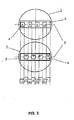
Fig. 3 shows a scheme of matrices arranged on two lenses as per the second embodiment. -
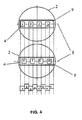
Fig. 4 shows a scheme of matrices arranged on two lenses as per the third embodiment. -
Fig. 5 shows an arrangement of lenses of optic axes for the second and third embodiments. - An optoelectronic photo sensor comprises
holders 1 forlenses 2 withoptic axes 3. Digitalphotosensitive matrices 4 are arranged oncards 5.Axes 3 jointly form equivalent optic axis 6 of the optoelectronic photo sensor. The matrices form a single filed of the image on combined field 7 from individual images ABCD corresponding to theeponymous matrices 4. -
Matrices 4 form individual groups ABCD and EFGH located on the focal surface ofcorresponding lenses 2.Groups 9 ofmatrices 4 are arranged in a row alongaxis 8 with gaps not exceeding in size the product of the number of effective pixels multiplied by the physical size of a pixel of onematrix 4 along the symmetry axis thereof, oriented along the row, multiplied by the number of groups minus one. The groups of matrices are arranged in parallel rows - each on the focal surface of the corresponding lens.Matrices 4 of one group ABCD are displaced with respect tomatrices 4 of the other group EFGH along the direction of their row to a distance not exceeding the length of the maximum gap between the matrices In the row. Provided that the surveyed objects are located at a sufficient distance from the lenses, an image of the same scene will be formed on the focal planes of the lenses with the accuracy up to the observation parallaxes (linear, taking Into account the distance between the lenses and, In general,, angular, accounting for possible non-parallelization of the optic axes) as an overlapping image formed bymatrices 4 of the group ABCD of combined field 7. Ifmatrices 4 are arranged in groups of four, the image will consist of mated groups AEBFCGDH (Fig.2 ). - In the second and third embodiments, projections of
optic axes 3 oflenses 2 onto parallelplanes comprising axes 8, form angle 10, expressed in radians, and not exceeding the quotient of the distance betweenadjacent matrices 4 In a row divided by the product of lenses' number multiplied by their focal distance. In the third embodiment, angle 10 is inversely proportional to the displacement distance of one group of matrices with respect to another, i.e. the third embodiment provides a single continuous view field when one row of matrices is displaced with respect to another to a distance not exceeding the length of the gap betweenmatrices 4 in the row. - The proposed optoelectronic photo sensor is equivalent to the conditional lens with axis (c-c), wherein the view field thereof contains an image, which is practically identical to the image formed in the view fields of lenses (a-a) and (b-b) - I.e., real lenses (a-a) and (b-b) repeat the scene visible in virtual lens (c-c) twice in the image space with the same focal distance and viewing angle as those in
lenses 2. - Using at least two lenses instead of one is necessary to ensure a continuous view field when employing real matrices wherein the size of photosensitive area is significantly smaller than their full geometric dimension (due to the crystal case, lead frame and, actually, the outputs). The proposed optoelectronic photo sensor uses a sensor, 6.38 x 5.26 mm In size, with the diagonal of the reading workspace of 1:2.7 in., which corresponds to the overall view field dimensions of 5.53 x 4.09 mm, at the aspect ratio 4:3.
- Said optoelectronic photo sensor is used in the following way:
- As
Fig. 1 shows, matrices A and C are fixed inholders 5 in the focal plane of lens (a-a) at some distance from one to another, wherein said distance is shorter than the overall dimensions of the matrix. Matrices B and D B are located in the focal plane of lens (b-b) in similar holders with a gap in-between as well. View fields (a-a), (b-b) and (c-c), disregarding parallaxes, are identical. - Alignment of said arrangement of sensor B In the view field of lens (b-b) satisfies the condition of mating image B zone with Image A zone with a small (several dozen points) overlap, which is achieved because the holders of matrices A and B are located in view fields of different lenses and move independently, wherein 20 points with pixel size 3.275 µm make about 0.06-0.07 mm and linear alignment with such movements can be performed by technical means.
- Then, by fixing the position of matrices A-B, positions of matrix C are aligned in the focal plane of lens (a-a) to achieve minimum overlapping with matrix B along the adjacent side. Then, similar alignment is performed for the position of matrix sensor D with respect to focal plane (b-b). When a satisfactory result is achieved, positions of
holders 5 ofmatrices 4 are mechanically fixed. - All aforementioned operations are performed under visual control by observing view field (c-c), which jointly displays the data received from all matrices (optic sensors). The proposed device is technically feasible as long as the size of the matrix's visible area exceeds the size of the adjacent matrix frames and
holders 5, at least in the direction of assembling. - Optic characteristics of the lenses ensure a balanced size of the matrix sensor and optic space resolution that is sufficient for placing four
matrices 4 under the lens ontounified holders 5. Respectively, the optoelectronic photo sensor of such design will have a view field equivalent to viewfield 8 of adjacent matrices. - In the second embodiment,
adjacent rows 9 of matrices may not be displaced with respect to each other, i.e. groups ofmatrices 4 are arranged in the same way on alllenses 2. However,lenses 2 are tilted with respect to each other alongaxes 8.Axes 8 are intercrossed and lie in parallel planes. Projections of optic axes of lenses to these planes form angle 10, expressed in radians, that does not exceed the quotient of the distance betweenadjacent matrices 4 in the row divided by the product of lenses' number multiplied by their focal distance. - Similar to the first embodiment,
matrices 4 form separate groups ABCD and EFGH located on the focal plane ofcorresponding lens 2.Groups 9 ofmatrices 4 are arranged in a row alongaxis 8 with gaps in between. Groups of matrices are arranged in parallel rows - each on the focal surface of the corresponding lens. Provided that there is a specified angle between optic axes of the lenses, in the focal planes thereof there will be formed an image of the same scene as an overlapping image formed bymatrices 4 of group ABCD of combined field 7. Ifmatrices 4 are arranged in groups of four, the image will consist of mated groups AEBFCGDH (Fig.3 ). - The third embodiment reflects the intermediate position of matrices and angles between optic axes of lenses, when angle 10 is inversely proportional to the displacement distance of one group of matrices with respect to another (
Fig. 4 ). - The proposed design of optoelectronic photo sensor provides one single continuous view field of the surface surveyed from a plurality of individual lenses and a plurality of Individual matrices, said design is either impossible to create with a single, however large, lens and a single large matrix, or, if created, would be unreasonably expensive and have extremely large dimensions and weight.
Claims (3)
- An optoelectronic photo sensor comprising an optic system and an electronic photosensitive device located on the focal surface thereof, wherein the optic system comprises at least two lenses, while the electronic photosensitive device comprises separate groups of identical digital photosensitive matrices corresponding to the number of lenses, wherein the total number of all matrices is no less than the number of lenses, wherein the matrices of each group are arranged in a row with gaps in between not exceeding in size the product of the number of effective pixels multiplied by the physical pixel size in one matrix along the symmetry axis, oriented along the row, multiplied by the number of groups minus one; wherein the groups of matrices are arranged in parallel rows with each on the focal surface of the corresponding lens in such a way that the matrices of one group are displaced with respect to the matrices of another group along the direction of their row to a distance not exceeding the length of the maximum gap between matrices in the row.
- An optoelectronic photo sensor, comprising an optic system and an electronic photosensitive device located on the focal surface thereof, wherein the optic system comprises at least two lenses, while the electronic photosensitive device comprises separate groups of identical digital photosensitive matrices corresponding to the number of lenses, wherein the total number of all matrices is no less than the number of lenses, wherein the matrices of each group are arranged on the focal surface of the corresponding lens in a row with gaps along one axis comprising eponymous symmetry axes of the matrices; wherein the axes of the row of matrices in different groups are located In parallel planes whereupon projections of optic axes of the lenses form an angle expressed in radians, and not exceeding the quotient of the distance between adjacent matrices in the row divided by the product of lenses' number multiplied by their focal distance.
- An optoelectronic photo sensor, comprising an optic system and an electronic photosensitive device located on the focal surface thereof, wherein the optic system comprises at least two lenses, while the electronic photosensitive device comprises separate groups of identical digital photosensitive matrices corresponding to the number of lenses, wherein the total number of all matrices is no less than the number of lenses, wherein the matrices of each group are arranged on the focal surface of the corresponding lens in a row with gaps along one axis, comprising eponymous symmetry axes of the matrices; wherein the size of the gaps in between said matrices does not exceed the product of the number of effective pixels multiplied by the physical pixel size in one matrix along the symmetry axis, oriented along the row, multiplied by the number of groups minus one; wherein the groups of matrices are arranged In parallel rows so that the matrices of one group are displaced with respect to the matrices of the other group along the direction of their row to a distance not exceeding the length of the maximum gap between matrices In the row, while the axes of the rows of matrices of different groups are located in parallel planes, whereupon projections of optic axes of the lenses form an angle, which size is inversely proportional to the size of displacement between the groups of matrices with respect to each other, said angle Is expressed in radians and does not exceed the quotient of the distance between adjacent matrices in the row divided by the product of the number of lenses multiplied by their focal distance.
Applications Claiming Priority (2)
| Application Number | Priority Date | Filing Date | Title |
|---|---|---|---|
| RU2012149706/28A RU2518365C1 (en) | 2012-11-22 | 2012-11-22 | Optical-electronic photodetector (versions) |
| PCT/RU2013/000995 WO2014081341A1 (en) | 2012-11-22 | 2013-11-08 | Optoelectronic photodetector (variants) |
Publications (3)
| Publication Number | Publication Date |
|---|---|
| EP2851748A1 true EP2851748A1 (en) | 2015-03-25 |
| EP2851748A4 EP2851748A4 (en) | 2015-09-30 |
| EP2851748B1 EP2851748B1 (en) | 2018-05-02 |
Family
ID=50775154
Family Applications (1)
| Application Number | Title | Priority Date | Filing Date |
|---|---|---|---|
| EP13856531.2A Not-in-force EP2851748B1 (en) | 2012-11-22 | 2013-11-08 | Optoelectronic photodetector (variants) |
Country Status (5)
| Country | Link |
|---|---|
| US (1) | US9356062B2 (en) |
| EP (1) | EP2851748B1 (en) |
| CA (1) | CA2879526C (en) |
| RU (1) | RU2518365C1 (en) |
| WO (1) | WO2014081341A1 (en) |
Families Citing this family (3)
| Publication number | Priority date | Publication date | Assignee | Title |
|---|---|---|---|---|
| RU2571452C1 (en) * | 2014-10-15 | 2015-12-20 | Федеральное государственное бюджетное учреждение науки Институт физики полупроводников им. А.В. Ржанова Сибирского отделения Российской академии наук (ИФП СО РАН) | Method of assembling pixelated large-format photodetector module from photodetector modules of smaller area |
| RU2599917C1 (en) * | 2015-07-28 | 2016-10-20 | Публичное акционерное общество "Красногорский завод им. С.А. Зверева" | Photographic device with variable direction of photographing, controlled value of field of view and scale of photography |
| WO2020237288A1 (en) * | 2019-05-24 | 2020-12-03 | Aerometrex Pty Ltd | An aerial imaging system and method |
Family Cites Families (13)
| Publication number | Priority date | Publication date | Assignee | Title |
|---|---|---|---|---|
| JPS5942511B2 (en) * | 1982-04-13 | 1984-10-15 | 株式会社東芝 | Contact sensor |
| EP1384046B1 (en) * | 2001-05-04 | 2018-10-03 | Vexcel Imaging GmbH | Digital camera for and method of obtaining overlapping images |
| UA73299C2 (en) * | 2001-11-15 | 2005-07-15 | Optoelectronic device for air photography ?? ?? ???? | |
| US7893957B2 (en) * | 2002-08-28 | 2011-02-22 | Visual Intelligence, LP | Retinal array compound camera system |
| RU44838U1 (en) * | 2004-11-26 | 2005-03-27 | Автономная некоммерческая организация "Космос-Наука и Техника" | AVIATION OPTICAL-ELECTRONIC SYSTEM OF MONITORING AND REGISTRATION |
| US7206136B2 (en) * | 2005-02-18 | 2007-04-17 | Eastman Kodak Company | Digital camera using multiple lenses and image sensors to provide an extended zoom range |
| US20090268983A1 (en) * | 2005-07-25 | 2009-10-29 | The Regents Of The University Of California | Digital imaging system and method using multiple digital image sensors to produce large high-resolution gapless mosaic images |
| IL180223A0 (en) * | 2006-12-20 | 2007-05-15 | Elbit Sys Electro Optics Elop | Airborne photogrammetric imaging system and method |
| DE102008058311A1 (en) * | 2008-11-18 | 2010-07-22 | Jena-Optronik Gmbh | Arrangement for missile-based image data recording from the surface of a celestial body |
| CN101556758B (en) | 2009-04-23 | 2010-12-01 | 杭州镭星科技有限公司 | Method for realizing displaying of high dynamic luminance range images by a plurality of projecting cameras |
| US8665316B2 (en) * | 2009-11-24 | 2014-03-04 | Microsoft Corporation | Multi-resolution digital large format camera with multiple detector arrays |
| US8542286B2 (en) | 2009-11-24 | 2013-09-24 | Microsoft Corporation | Large format digital camera with multiple optical systems and detector arrays |
| US8548313B2 (en) | 2010-09-30 | 2013-10-01 | Trimble Germany Gmbh | Aerial digital camera and method of controlling the same |
-
2012
- 2012-11-22 RU RU2012149706/28A patent/RU2518365C1/en active
-
2013
- 2013-11-08 CA CA2879526A patent/CA2879526C/en not_active Expired - Fee Related
- 2013-11-08 US US14/413,701 patent/US9356062B2/en not_active Expired - Fee Related
- 2013-11-08 WO PCT/RU2013/000995 patent/WO2014081341A1/en not_active Ceased
- 2013-11-08 EP EP13856531.2A patent/EP2851748B1/en not_active Not-in-force
Also Published As
| Publication number | Publication date |
|---|---|
| RU2518365C1 (en) | 2014-06-10 |
| US20150187829A1 (en) | 2015-07-02 |
| US9356062B2 (en) | 2016-05-31 |
| EP2851748A4 (en) | 2015-09-30 |
| RU2012149706A (en) | 2014-05-27 |
| CA2879526A1 (en) | 2014-05-30 |
| EP2851748B1 (en) | 2018-05-02 |
| WO2014081341A1 (en) | 2014-05-30 |
| CA2879526C (en) | 2018-05-01 |
Similar Documents
| Publication | Publication Date | Title |
|---|---|---|
| US20190373246A1 (en) | Multi-lens camera with a single image sensor | |
| CN101883215B (en) | Imaging device | |
| EP2836872B1 (en) | System, device, and vehicle for recording panoramic images | |
| US10887576B2 (en) | Light field data representation | |
| US10129529B2 (en) | Method and apparatus for taking and displaying multi-view orthostereoscopic 3D images | |
| JP4178469B2 (en) | How to configure aerial photo image data set | |
| CA2879526C (en) | Optoelectronic photo sensor | |
| JP5767502B2 (en) | 3D image display device | |
| JP4768367B2 (en) | Stereoscopic image pickup apparatus and stereoscopic image display apparatus | |
| JP3676916B2 (en) | Stereoscopic imaging device and stereoscopic display device | |
| CN105137606A (en) | Digital-micromirror-device-based stereoscopic vision imaging apparatus and method | |
| WO2018139250A1 (en) | Entire celestial-sphere image capture device | |
| US20100289881A1 (en) | Camera for multiple perspective image capturing | |
| US20220308355A1 (en) | Striped mirror image splitter | |
| JP2003005315A (en) | 3D image capturing device | |
| WO2011129387A1 (en) | Image capture device | |
| JP2012003175A (en) | Stereoscopic image display device | |
| CN106303490B (en) | Projection device | |
| JP2016131297A (en) | Stereoscopic image generation device, stereoscopic image generation method and program | |
| JP6055595B2 (en) | Stereoscopic image capturing apparatus and stereoscopic image display apparatus | |
| CN216622868U (en) | Slit grating and naked eye three-dimensional image display device | |
| US9064766B2 (en) | Solid-state imaging device | |
| WO2025071604A1 (en) | Striped mirror image splitter | |
| JP6192222B2 (en) | Imaging device | |
| US8654390B1 (en) | Lenticular print and method of creating |
Legal Events
| Date | Code | Title | Description |
|---|---|---|---|
| PUAI | Public reference made under article 153(3) epc to a published international application that has entered the european phase |
Free format text: ORIGINAL CODE: 0009012 |
|
| 17P | Request for examination filed |
Effective date: 20141215 |
|
| AK | Designated contracting states |
Kind code of ref document: A1 Designated state(s): AL AT BE BG CH CY CZ DE DK EE ES FI FR GB GR HR HU IE IS IT LI LT LU LV MC MK MT NL NO PL PT RO RS SE SI SK SM TR |
|
| AX | Request for extension of the european patent |
Extension state: BA ME |
|
| RA4 | Supplementary search report drawn up and despatched (corrected) |
Effective date: 20150827 |
|
| RIC1 | Information provided on ipc code assigned before grant |
Ipc: G01C 11/02 20060101ALI20150821BHEP Ipc: G03B 37/04 20060101AFI20150821BHEP |
|
| DAX | Request for extension of the european patent (deleted) | ||
| 17Q | First examination report despatched |
Effective date: 20160428 |
|
| GRAP | Despatch of communication of intention to grant a patent |
Free format text: ORIGINAL CODE: EPIDOSNIGR1 |
|
| INTG | Intention to grant announced |
Effective date: 20180125 |
|
| GRAS | Grant fee paid |
Free format text: ORIGINAL CODE: EPIDOSNIGR3 |
|
| GRAA | (expected) grant |
Free format text: ORIGINAL CODE: 0009210 |
|
| RAP1 | Party data changed (applicant data changed or rights of an application transferred) |
Owner name: MAXIMYAK, SERGEY PETROVICH Owner name: IVANOV, VASILYI PETROVICH Owner name: GRIBACH, ALEKSANDR ALEKSEEVICH Owner name: BEZOBRAZOV, VLADIMIR SERGEEVICH Owner name: BARYSHNIKOV, ALEKSANDR NIKOLAEVICH |
|
| RIN1 | Information on inventor provided before grant (corrected) |
Inventor name: MAXIMYAK, SERGEY PETROVICH Inventor name: IVANOV, VASILYI PETROVICH Inventor name: BARYSHNIKOV, ALEKSANDR NIKOLAEVICH Inventor name: GRIBACH, ALEKSANDR ALEKSEEVICH Inventor name: BEZOBRAZOV, VLADIMIR SERGEEVICH |
|
| AK | Designated contracting states |
Kind code of ref document: B1 Designated state(s): AL AT BE BG CH CY CZ DE DK EE ES FI FR GB GR HR HU IE IS IT LI LT LU LV MC MK MT NL NO PL PT RO RS SE SI SK SM TR |
|
| REG | Reference to a national code |
Ref country code: GB Ref legal event code: FG4D |
|
| REG | Reference to a national code |
Ref country code: CH Ref legal event code: EP Ref country code: AT Ref legal event code: REF Ref document number: 995880 Country of ref document: AT Kind code of ref document: T Effective date: 20180515 |
|
| REG | Reference to a national code |
Ref country code: DE Ref legal event code: R096 Ref document number: 602013037054 Country of ref document: DE Ref country code: IE Ref legal event code: FG4D |
|
| REG | Reference to a national code |
Ref country code: SE Ref legal event code: TRGR |
|
| REG | Reference to a national code |
Ref country code: NL Ref legal event code: MP Effective date: 20180502 |
|
| REG | Reference to a national code |
Ref country code: LT Ref legal event code: MG4D |
|
| PG25 | Lapsed in a contracting state [announced via postgrant information from national office to epo] |
Ref country code: ES Free format text: LAPSE BECAUSE OF FAILURE TO SUBMIT A TRANSLATION OF THE DESCRIPTION OR TO PAY THE FEE WITHIN THE PRESCRIBED TIME-LIMIT Effective date: 20180502 Ref country code: LT Free format text: LAPSE BECAUSE OF FAILURE TO SUBMIT A TRANSLATION OF THE DESCRIPTION OR TO PAY THE FEE WITHIN THE PRESCRIBED TIME-LIMIT Effective date: 20180502 Ref country code: FI Free format text: LAPSE BECAUSE OF FAILURE TO SUBMIT A TRANSLATION OF THE DESCRIPTION OR TO PAY THE FEE WITHIN THE PRESCRIBED TIME-LIMIT Effective date: 20180502 Ref country code: BG Free format text: LAPSE BECAUSE OF FAILURE TO SUBMIT A TRANSLATION OF THE DESCRIPTION OR TO PAY THE FEE WITHIN THE PRESCRIBED TIME-LIMIT Effective date: 20180802 Ref country code: NO Free format text: LAPSE BECAUSE OF FAILURE TO SUBMIT A TRANSLATION OF THE DESCRIPTION OR TO PAY THE FEE WITHIN THE PRESCRIBED TIME-LIMIT Effective date: 20180802 |
|
| PG25 | Lapsed in a contracting state [announced via postgrant information from national office to epo] |
Ref country code: GR Free format text: LAPSE BECAUSE OF FAILURE TO SUBMIT A TRANSLATION OF THE DESCRIPTION OR TO PAY THE FEE WITHIN THE PRESCRIBED TIME-LIMIT Effective date: 20180803 Ref country code: RS Free format text: LAPSE BECAUSE OF FAILURE TO SUBMIT A TRANSLATION OF THE DESCRIPTION OR TO PAY THE FEE WITHIN THE PRESCRIBED TIME-LIMIT Effective date: 20180502 Ref country code: LV Free format text: LAPSE BECAUSE OF FAILURE TO SUBMIT A TRANSLATION OF THE DESCRIPTION OR TO PAY THE FEE WITHIN THE PRESCRIBED TIME-LIMIT Effective date: 20180502 Ref country code: HR Free format text: LAPSE BECAUSE OF FAILURE TO SUBMIT A TRANSLATION OF THE DESCRIPTION OR TO PAY THE FEE WITHIN THE PRESCRIBED TIME-LIMIT Effective date: 20180502 Ref country code: NL Free format text: LAPSE BECAUSE OF FAILURE TO SUBMIT A TRANSLATION OF THE DESCRIPTION OR TO PAY THE FEE WITHIN THE PRESCRIBED TIME-LIMIT Effective date: 20180502 |
|
| PG25 | Lapsed in a contracting state [announced via postgrant information from national office to epo] |
Ref country code: CZ Free format text: LAPSE BECAUSE OF FAILURE TO SUBMIT A TRANSLATION OF THE DESCRIPTION OR TO PAY THE FEE WITHIN THE PRESCRIBED TIME-LIMIT Effective date: 20180502 Ref country code: RO Free format text: LAPSE BECAUSE OF FAILURE TO SUBMIT A TRANSLATION OF THE DESCRIPTION OR TO PAY THE FEE WITHIN THE PRESCRIBED TIME-LIMIT Effective date: 20180502 Ref country code: SK Free format text: LAPSE BECAUSE OF FAILURE TO SUBMIT A TRANSLATION OF THE DESCRIPTION OR TO PAY THE FEE WITHIN THE PRESCRIBED TIME-LIMIT Effective date: 20180502 Ref country code: DK Free format text: LAPSE BECAUSE OF FAILURE TO SUBMIT A TRANSLATION OF THE DESCRIPTION OR TO PAY THE FEE WITHIN THE PRESCRIBED TIME-LIMIT Effective date: 20180502 Ref country code: PL Free format text: LAPSE BECAUSE OF FAILURE TO SUBMIT A TRANSLATION OF THE DESCRIPTION OR TO PAY THE FEE WITHIN THE PRESCRIBED TIME-LIMIT Effective date: 20180502 Ref country code: EE Free format text: LAPSE BECAUSE OF FAILURE TO SUBMIT A TRANSLATION OF THE DESCRIPTION OR TO PAY THE FEE WITHIN THE PRESCRIBED TIME-LIMIT Effective date: 20180502 |
|
| REG | Reference to a national code |
Ref country code: DE Ref legal event code: R097 Ref document number: 602013037054 Country of ref document: DE |
|
| PG25 | Lapsed in a contracting state [announced via postgrant information from national office to epo] |
Ref country code: SM Free format text: LAPSE BECAUSE OF FAILURE TO SUBMIT A TRANSLATION OF THE DESCRIPTION OR TO PAY THE FEE WITHIN THE PRESCRIBED TIME-LIMIT Effective date: 20180502 Ref country code: IT Free format text: LAPSE BECAUSE OF FAILURE TO SUBMIT A TRANSLATION OF THE DESCRIPTION OR TO PAY THE FEE WITHIN THE PRESCRIBED TIME-LIMIT Effective date: 20180502 |
|
| PLBE | No opposition filed within time limit |
Free format text: ORIGINAL CODE: 0009261 |
|
| STAA | Information on the status of an ep patent application or granted ep patent |
Free format text: STATUS: NO OPPOSITION FILED WITHIN TIME LIMIT |
|
| 26N | No opposition filed |
Effective date: 20190205 |
|
| PG25 | Lapsed in a contracting state [announced via postgrant information from national office to epo] |
Ref country code: SI Free format text: LAPSE BECAUSE OF FAILURE TO SUBMIT A TRANSLATION OF THE DESCRIPTION OR TO PAY THE FEE WITHIN THE PRESCRIBED TIME-LIMIT Effective date: 20180502 |
|
| GBPC | Gb: european patent ceased through non-payment of renewal fee |
Effective date: 20181108 |
|
| PG25 | Lapsed in a contracting state [announced via postgrant information from national office to epo] |
Ref country code: LU Free format text: LAPSE BECAUSE OF NON-PAYMENT OF DUE FEES Effective date: 20181108 Ref country code: MC Free format text: LAPSE BECAUSE OF FAILURE TO SUBMIT A TRANSLATION OF THE DESCRIPTION OR TO PAY THE FEE WITHIN THE PRESCRIBED TIME-LIMIT Effective date: 20180502 |
|
| REG | Reference to a national code |
Ref country code: BE Ref legal event code: MM Effective date: 20181130 |
|
| REG | Reference to a national code |
Ref country code: IE Ref legal event code: MM4A |
|
| PG25 | Lapsed in a contracting state [announced via postgrant information from national office to epo] |
Ref country code: IE Free format text: LAPSE BECAUSE OF NON-PAYMENT OF DUE FEES Effective date: 20181108 Ref country code: FR Free format text: LAPSE BECAUSE OF NON-PAYMENT OF DUE FEES Effective date: 20181130 |
|
| PG25 | Lapsed in a contracting state [announced via postgrant information from national office to epo] |
Ref country code: BE Free format text: LAPSE BECAUSE OF NON-PAYMENT OF DUE FEES Effective date: 20181130 Ref country code: AL Free format text: LAPSE BECAUSE OF FAILURE TO SUBMIT A TRANSLATION OF THE DESCRIPTION OR TO PAY THE FEE WITHIN THE PRESCRIBED TIME-LIMIT Effective date: 20180502 |
|
| PG25 | Lapsed in a contracting state [announced via postgrant information from national office to epo] |
Ref country code: GB Free format text: LAPSE BECAUSE OF NON-PAYMENT OF DUE FEES Effective date: 20181108 |
|
| PG25 | Lapsed in a contracting state [announced via postgrant information from national office to epo] |
Ref country code: MT Free format text: LAPSE BECAUSE OF NON-PAYMENT OF DUE FEES Effective date: 20181108 |
|
| PG25 | Lapsed in a contracting state [announced via postgrant information from national office to epo] |
Ref country code: TR Free format text: LAPSE BECAUSE OF FAILURE TO SUBMIT A TRANSLATION OF THE DESCRIPTION OR TO PAY THE FEE WITHIN THE PRESCRIBED TIME-LIMIT Effective date: 20180502 |
|
| PG25 | Lapsed in a contracting state [announced via postgrant information from national office to epo] |
Ref country code: PT Free format text: LAPSE BECAUSE OF FAILURE TO SUBMIT A TRANSLATION OF THE DESCRIPTION OR TO PAY THE FEE WITHIN THE PRESCRIBED TIME-LIMIT Effective date: 20180502 |
|
| PG25 | Lapsed in a contracting state [announced via postgrant information from national office to epo] |
Ref country code: MK Free format text: LAPSE BECAUSE OF NON-PAYMENT OF DUE FEES Effective date: 20180502 Ref country code: CY Free format text: LAPSE BECAUSE OF FAILURE TO SUBMIT A TRANSLATION OF THE DESCRIPTION OR TO PAY THE FEE WITHIN THE PRESCRIBED TIME-LIMIT Effective date: 20180502 Ref country code: HU Free format text: LAPSE BECAUSE OF FAILURE TO SUBMIT A TRANSLATION OF THE DESCRIPTION OR TO PAY THE FEE WITHIN THE PRESCRIBED TIME-LIMIT; INVALID AB INITIO Effective date: 20131108 |
|
| PG25 | Lapsed in a contracting state [announced via postgrant information from national office to epo] |
Ref country code: IS Free format text: LAPSE BECAUSE OF FAILURE TO SUBMIT A TRANSLATION OF THE DESCRIPTION OR TO PAY THE FEE WITHIN THE PRESCRIBED TIME-LIMIT Effective date: 20180902 |
|
| PGFP | Annual fee paid to national office [announced via postgrant information from national office to epo] |
Ref country code: AT Payment date: 20211119 Year of fee payment: 9 Ref country code: SE Payment date: 20211118 Year of fee payment: 9 Ref country code: DE Payment date: 20211118 Year of fee payment: 9 |
|
| REG | Reference to a national code |
Ref country code: AT Ref legal event code: UEP Ref document number: 995880 Country of ref document: AT Kind code of ref document: T Effective date: 20180502 |
|
| PGFP | Annual fee paid to national office [announced via postgrant information from national office to epo] |
Ref country code: CH Payment date: 20211119 Year of fee payment: 9 |
|
| REG | Reference to a national code |
Ref country code: DE Ref legal event code: R119 Ref document number: 602013037054 Country of ref document: DE |
|
| REG | Reference to a national code |
Ref country code: CH Ref legal event code: PL |
|
| REG | Reference to a national code |
Ref country code: SE Ref legal event code: EUG |
|
| REG | Reference to a national code |
Ref country code: AT Ref legal event code: MM01 Ref document number: 995880 Country of ref document: AT Kind code of ref document: T Effective date: 20221108 |
|
| PG25 | Lapsed in a contracting state [announced via postgrant information from national office to epo] |
Ref country code: LI Free format text: LAPSE BECAUSE OF NON-PAYMENT OF DUE FEES Effective date: 20221130 Ref country code: CH Free format text: LAPSE BECAUSE OF NON-PAYMENT OF DUE FEES Effective date: 20221130 Ref country code: AT Free format text: LAPSE BECAUSE OF NON-PAYMENT OF DUE FEES Effective date: 20221108 |
|
| PG25 | Lapsed in a contracting state [announced via postgrant information from national office to epo] |
Ref country code: SE Free format text: LAPSE BECAUSE OF NON-PAYMENT OF DUE FEES Effective date: 20221109 |
|
| PG25 | Lapsed in a contracting state [announced via postgrant information from national office to epo] |
Ref country code: DE Free format text: LAPSE BECAUSE OF NON-PAYMENT OF DUE FEES Effective date: 20230601 |