EP2846811B1 - Antibacterial calcium-based materials - Google Patents
Antibacterial calcium-based materials Download PDFInfo
- Publication number
- EP2846811B1 EP2846811B1 EP13787118.2A EP13787118A EP2846811B1 EP 2846811 B1 EP2846811 B1 EP 2846811B1 EP 13787118 A EP13787118 A EP 13787118A EP 2846811 B1 EP2846811 B1 EP 2846811B1
- Authority
- EP
- European Patent Office
- Prior art keywords
- calcium
- lithium
- ttcp
- phosphate
- paa
- Prior art date
- Legal status (The legal status is an assumption and is not a legal conclusion. Google has not performed a legal analysis and makes no representation as to the accuracy of the status listed.)
- Active
Links
Images


Classifications
-
- A—HUMAN NECESSITIES
- A61—MEDICAL OR VETERINARY SCIENCE; HYGIENE
- A61L—METHODS OR APPARATUS FOR STERILISING MATERIALS OR OBJECTS IN GENERAL; DISINFECTION, STERILISATION OR DEODORISATION OF AIR; CHEMICAL ASPECTS OF BANDAGES, DRESSINGS, ABSORBENT PADS OR SURGICAL ARTICLES; MATERIALS FOR BANDAGES, DRESSINGS, ABSORBENT PADS OR SURGICAL ARTICLES
- A61L27/00—Materials for grafts or prostheses or for coating grafts or prostheses
- A61L27/02—Inorganic materials
- A61L27/04—Metals or alloys
-
- A—HUMAN NECESSITIES
- A61—MEDICAL OR VETERINARY SCIENCE; HYGIENE
- A61K—PREPARATIONS FOR MEDICAL, DENTAL OR TOILETRY PURPOSES
- A61K33/00—Medicinal preparations containing inorganic active ingredients
- A61K33/06—Aluminium, calcium or magnesium; Compounds thereof, e.g. clay
-
- A—HUMAN NECESSITIES
- A61—MEDICAL OR VETERINARY SCIENCE; HYGIENE
- A61F—FILTERS IMPLANTABLE INTO BLOOD VESSELS; PROSTHESES; DEVICES PROVIDING PATENCY TO, OR PREVENTING COLLAPSING OF, TUBULAR STRUCTURES OF THE BODY, e.g. STENTS; ORTHOPAEDIC, NURSING OR CONTRACEPTIVE DEVICES; FOMENTATION; TREATMENT OR PROTECTION OF EYES OR EARS; BANDAGES, DRESSINGS OR ABSORBENT PADS; FIRST-AID KITS
- A61F2/00—Filters implantable into blood vessels; Prostheses, i.e. artificial substitutes or replacements for parts of the body; Appliances for connecting them with the body; Devices providing patency to, or preventing collapsing of, tubular structures of the body, e.g. stents
- A61F2/02—Prostheses implantable into the body
- A61F2/28—Bones
-
- A—HUMAN NECESSITIES
- A61—MEDICAL OR VETERINARY SCIENCE; HYGIENE
- A61K—PREPARATIONS FOR MEDICAL, DENTAL OR TOILETRY PURPOSES
- A61K33/00—Medicinal preparations containing inorganic active ingredients
- A61K33/14—Alkali metal chlorides; Alkaline earth metal chlorides
-
- A—HUMAN NECESSITIES
- A61—MEDICAL OR VETERINARY SCIENCE; HYGIENE
- A61K—PREPARATIONS FOR MEDICAL, DENTAL OR TOILETRY PURPOSES
- A61K33/00—Medicinal preparations containing inorganic active ingredients
- A61K33/42—Phosphorus; Compounds thereof
-
- A—HUMAN NECESSITIES
- A61—MEDICAL OR VETERINARY SCIENCE; HYGIENE
- A61L—METHODS OR APPARATUS FOR STERILISING MATERIALS OR OBJECTS IN GENERAL; DISINFECTION, STERILISATION OR DEODORISATION OF AIR; CHEMICAL ASPECTS OF BANDAGES, DRESSINGS, ABSORBENT PADS OR SURGICAL ARTICLES; MATERIALS FOR BANDAGES, DRESSINGS, ABSORBENT PADS OR SURGICAL ARTICLES
- A61L24/00—Surgical adhesives or cements; Adhesives for colostomy devices
- A61L24/001—Use of materials characterised by their function or physical properties
- A61L24/0015—Medicaments; Biocides
-
- A—HUMAN NECESSITIES
- A61—MEDICAL OR VETERINARY SCIENCE; HYGIENE
- A61L—METHODS OR APPARATUS FOR STERILISING MATERIALS OR OBJECTS IN GENERAL; DISINFECTION, STERILISATION OR DEODORISATION OF AIR; CHEMICAL ASPECTS OF BANDAGES, DRESSINGS, ABSORBENT PADS OR SURGICAL ARTICLES; MATERIALS FOR BANDAGES, DRESSINGS, ABSORBENT PADS OR SURGICAL ARTICLES
- A61L24/00—Surgical adhesives or cements; Adhesives for colostomy devices
- A61L24/02—Surgical adhesives or cements; Adhesives for colostomy devices containing inorganic materials
-
- A—HUMAN NECESSITIES
- A61—MEDICAL OR VETERINARY SCIENCE; HYGIENE
- A61L—METHODS OR APPARATUS FOR STERILISING MATERIALS OR OBJECTS IN GENERAL; DISINFECTION, STERILISATION OR DEODORISATION OF AIR; CHEMICAL ASPECTS OF BANDAGES, DRESSINGS, ABSORBENT PADS OR SURGICAL ARTICLES; MATERIALS FOR BANDAGES, DRESSINGS, ABSORBENT PADS OR SURGICAL ARTICLES
- A61L27/00—Materials for grafts or prostheses or for coating grafts or prostheses
- A61L27/02—Inorganic materials
-
- A—HUMAN NECESSITIES
- A61—MEDICAL OR VETERINARY SCIENCE; HYGIENE
- A61L—METHODS OR APPARATUS FOR STERILISING MATERIALS OR OBJECTS IN GENERAL; DISINFECTION, STERILISATION OR DEODORISATION OF AIR; CHEMICAL ASPECTS OF BANDAGES, DRESSINGS, ABSORBENT PADS OR SURGICAL ARTICLES; MATERIALS FOR BANDAGES, DRESSINGS, ABSORBENT PADS OR SURGICAL ARTICLES
- A61L27/00—Materials for grafts or prostheses or for coating grafts or prostheses
- A61L27/02—Inorganic materials
- A61L27/12—Phosphorus-containing materials, e.g. apatite
-
- A—HUMAN NECESSITIES
- A61—MEDICAL OR VETERINARY SCIENCE; HYGIENE
- A61L—METHODS OR APPARATUS FOR STERILISING MATERIALS OR OBJECTS IN GENERAL; DISINFECTION, STERILISATION OR DEODORISATION OF AIR; CHEMICAL ASPECTS OF BANDAGES, DRESSINGS, ABSORBENT PADS OR SURGICAL ARTICLES; MATERIALS FOR BANDAGES, DRESSINGS, ABSORBENT PADS OR SURGICAL ARTICLES
- A61L27/00—Materials for grafts or prostheses or for coating grafts or prostheses
- A61L27/14—Macromolecular materials
- A61L27/16—Macromolecular materials obtained by reactions only involving carbon-to-carbon unsaturated bonds
-
- A—HUMAN NECESSITIES
- A61—MEDICAL OR VETERINARY SCIENCE; HYGIENE
- A61L—METHODS OR APPARATUS FOR STERILISING MATERIALS OR OBJECTS IN GENERAL; DISINFECTION, STERILISATION OR DEODORISATION OF AIR; CHEMICAL ASPECTS OF BANDAGES, DRESSINGS, ABSORBENT PADS OR SURGICAL ARTICLES; MATERIALS FOR BANDAGES, DRESSINGS, ABSORBENT PADS OR SURGICAL ARTICLES
- A61L27/00—Materials for grafts or prostheses or for coating grafts or prostheses
- A61L27/50—Materials characterised by their function or physical properties, e.g. injectable or lubricating compositions, shape-memory materials, surface modified materials
- A61L27/54—Biologically active materials, e.g. therapeutic substances
-
- A—HUMAN NECESSITIES
- A61—MEDICAL OR VETERINARY SCIENCE; HYGIENE
- A61P—SPECIFIC THERAPEUTIC ACTIVITY OF CHEMICAL COMPOUNDS OR MEDICINAL PREPARATIONS
- A61P19/00—Drugs for skeletal disorders
- A61P19/08—Drugs for skeletal disorders for bone diseases, e.g. rachitism, Paget's disease
-
- A—HUMAN NECESSITIES
- A61—MEDICAL OR VETERINARY SCIENCE; HYGIENE
- A61P—SPECIFIC THERAPEUTIC ACTIVITY OF CHEMICAL COMPOUNDS OR MEDICINAL PREPARATIONS
- A61P31/00—Antiinfectives, i.e. antibiotics, antiseptics, chemotherapeutics
-
- A—HUMAN NECESSITIES
- A61—MEDICAL OR VETERINARY SCIENCE; HYGIENE
- A61P—SPECIFIC THERAPEUTIC ACTIVITY OF CHEMICAL COMPOUNDS OR MEDICINAL PREPARATIONS
- A61P31/00—Antiinfectives, i.e. antibiotics, antiseptics, chemotherapeutics
- A61P31/04—Antibacterial agents
-
- A—HUMAN NECESSITIES
- A61—MEDICAL OR VETERINARY SCIENCE; HYGIENE
- A61L—METHODS OR APPARATUS FOR STERILISING MATERIALS OR OBJECTS IN GENERAL; DISINFECTION, STERILISATION OR DEODORISATION OF AIR; CHEMICAL ASPECTS OF BANDAGES, DRESSINGS, ABSORBENT PADS OR SURGICAL ARTICLES; MATERIALS FOR BANDAGES, DRESSINGS, ABSORBENT PADS OR SURGICAL ARTICLES
- A61L2300/00—Biologically active materials used in bandages, wound dressings, absorbent pads or medical devices
- A61L2300/10—Biologically active materials used in bandages, wound dressings, absorbent pads or medical devices containing or releasing inorganic materials
- A61L2300/102—Metals or metal compounds, e.g. salts such as bicarbonates, carbonates, oxides, zeolites, silicates
-
- A—HUMAN NECESSITIES
- A61—MEDICAL OR VETERINARY SCIENCE; HYGIENE
- A61L—METHODS OR APPARATUS FOR STERILISING MATERIALS OR OBJECTS IN GENERAL; DISINFECTION, STERILISATION OR DEODORISATION OF AIR; CHEMICAL ASPECTS OF BANDAGES, DRESSINGS, ABSORBENT PADS OR SURGICAL ARTICLES; MATERIALS FOR BANDAGES, DRESSINGS, ABSORBENT PADS OR SURGICAL ARTICLES
- A61L2300/00—Biologically active materials used in bandages, wound dressings, absorbent pads or medical devices
- A61L2300/40—Biologically active materials used in bandages, wound dressings, absorbent pads or medical devices characterised by a specific therapeutic activity or mode of action
- A61L2300/404—Biocides, antimicrobial agents, antiseptic agents
-
- A—HUMAN NECESSITIES
- A61—MEDICAL OR VETERINARY SCIENCE; HYGIENE
- A61L—METHODS OR APPARATUS FOR STERILISING MATERIALS OR OBJECTS IN GENERAL; DISINFECTION, STERILISATION OR DEODORISATION OF AIR; CHEMICAL ASPECTS OF BANDAGES, DRESSINGS, ABSORBENT PADS OR SURGICAL ARTICLES; MATERIALS FOR BANDAGES, DRESSINGS, ABSORBENT PADS OR SURGICAL ARTICLES
- A61L2430/00—Materials or treatment for tissue regeneration
- A61L2430/02—Materials or treatment for tissue regeneration for reconstruction of bones; weight-bearing implants
-
- A—HUMAN NECESSITIES
- A61—MEDICAL OR VETERINARY SCIENCE; HYGIENE
- A61L—METHODS OR APPARATUS FOR STERILISING MATERIALS OR OBJECTS IN GENERAL; DISINFECTION, STERILISATION OR DEODORISATION OF AIR; CHEMICAL ASPECTS OF BANDAGES, DRESSINGS, ABSORBENT PADS OR SURGICAL ARTICLES; MATERIALS FOR BANDAGES, DRESSINGS, ABSORBENT PADS OR SURGICAL ARTICLES
- A61L2430/00—Materials or treatment for tissue regeneration
- A61L2430/12—Materials or treatment for tissue regeneration for dental implants or prostheses
Definitions
- the present invention is related to an anti-bacterial preparation for treating bone. More specifically, the present invention is related to an anti-bacterial preparation for treating bone which is a lithium-containing calcium-based material.
- the proposed antibacterial implants include polymeric systems ( Alt et al, Biomaterials Volume 25, Issue 18, August 2004, Pages 4383-4391 ; Shi et al., Biomaterials Volume 27, Issue 11, April 2006, Pages 2440-2449 ; Marks et al., The Journal of Bone and Joint Surgery. American Volume 1976, 58(3): 358-64 ), metallic systems ( Visai et al., Int J Artif Organs. 2011 Sep; 34(9): 929-46 ; Heidenau et al., J Mater Sci Mater Med. 2005 Oct; 16(10): 883-8 ; Fiedler et al., Int J Artif Organs. 2011 Sep; 34(9): 882-8 ; Cao et al., Biomaterials.
- a primary objective of the present invention is to provide anti-bacterial preparation for treating a bone, wherein the preparation comprises a solid component comprising a lithium compound and a calcium compound as defined by claim 1, wherein the solid component is a powder component, a block, or granules or pieces obtained by breaking up said block. Further, the present invention is also aimed to provide the anti-bacterial preparation, for use in a method of using the anti-bacterial preparation in treating a bone, as defined in claims 9 and 13.
- the anti-bacterial preparation provided according to the present invention comprises a solid component comprising a lithium compound and a calcium compound, wherein the anti-bacterial preparation shows an improved anti-bacterial ability in comparison with a preparation containing the calcium compound but free of the lithium compound.
- a Hanks' solution with the anti-bacterial preparation of the present invention immersed therein with a ratio of solution: anti-bacterial preparation 10 cc/g exhibits a pH value of not less 10.
- the anti-bacterial preparation contains about 5-80%, more preferably about 10-70% of the lithium compound, based on the weight of the solid component.
- the lithium compound is a lithium salt, lithium oxide, lithium amide (LiNH 2 ), lithium hydroxide or lithium halide; and more preferably lithium carbonate, lithium sulfate, lithium phosphate, lithium oxide, lithium fluoride, lithium acetate, lithium bromide, lithium hydroxide, lithium nitrate, lithium nitrite, lithium iodide, lithium molybdate (Li 2 MoO 4 ), lithium tetraborate (Li 2 B 4 O 7 ), lithium citrate tetrahydrate (Li 3 C 6 H 5 O 7 .4H 2 O), or lithium stearate (LiC 18 H 35 O 2 ); and most preferably lithium carbonate, or lithium phosphate.
- lithium carbonate, lithium sulfate, lithium phosphate lithium oxide, lithium fluoride, lithium acetate, lithium bromide, lithium hydroxide, lithium nitrate, lithium nitrite, lithium iodide, lithium molybdate (Li 2 MoO 4 ),
- the calcium compound is selected from the group consisting of a calcium phosphate, calcium sulfate, calcium oxide, calcium carbonate, calcium hydroxide, calcium magnesium phosphate, calcium nitrate, calcium citrate, calcium chloride and a mixture thereof; and more preferably the calcium compound is a calcium sulfate, a calcium phosphate source, or a mixture thereof.
- the calcium phosphate is tetracalcium phosphate (TTCP), dicalcium phosphate, tricalcium phosphate, monocalcium phosphate or a mixture thereof.
- the calcium sulfate is calcium sulfate hemihydrate (CSH), calcium sulfate dehydrate (CSD), anhydrous calcium sulfate, or a mixture thereof.
- the anti-bacterial preparation further comprises a setting liquid component with a liquid to powder ratio of 0.20 ml/g to 0.80 ml/g, when the solid component is the powder component.
- the present invention also provides a method for treating a subject comprising forming a bone cement paste by mixing the powder component and the setting liquid component of the anti-bacterial preparation of the present invention; and filling a hole or cavity in a bone with said bone cement paste which sets hard in the hole or cavity in need of said treatment.
- the calcium compound is selected from the group consisting of calcium phosphate, calcium sulfate, calcium oxide, calcium carbonate, calcium hydroxide, calcium magnesium phosphate, hydroxyapitite, or a mixture thereof, and preferably is selected from the group consisting of tetracalcium phosphate, dicalcium phosphate, hydroxyapitite, calcium sulfate dihydrate, calcium sulfate hemihydrate, or a mixture thereof.
- the present invention also provides a method for treating a subject comprising implanting said block, said granules or said pieces of the anti-bacterial preparation of the present invention in said subject in need of said treatment.
- the anti-bacterial preparation further comprises a lithium retarding agent which slows down the lithium compound releasing from said anti-bacterial preparation.
- the lithium retarding agent is poly(acrylic acid).
- the TTCP powder was fabricated in-house from the reaction of dicalcium pyrophosphate (Ca 2 P 2 O 7 ) (Alfa, USA) and calcium carbonate (CaCO 3 ) (Katayama Chem. Co., Tokyo, Japan) using the method suggested by Brown and Epstein [Journal of Research of the National Bureau of Standards - A Physics and Chemistry 6 (1965) 69A 12 ].
- TTCP powder was prepared by mixing Ca 2 P 2 O 7 powder with CaCO 3 powder uniformly for 12 hours.
- the mixing ratio of Ca 2 P 2 O 7 powder to CaCO 3 powder was 1:1.27 (weight ratio) and the powder mixture was heated to 1400°C to allow two powders to react to form TTCP.
- TTCP and DCPA powders were uniformly mixed in a ball miller in a molar ratio of 1:1 to obtain a TTCP/DCPA mixed powder.
- TTCP and CSH powders were uniformly mixed in a ball miller to obtain a TTCP/CSH mixed powder.
- Appropriate amounts of the TTCP/DCPA mixed powder (in a molar ratio of 1:1) and CSH powder were uniformly mixed in a ball miller to obtain a TTCP/DCPA/CSH mixed powder.
- Li compound(s) for example, lithium carbonate, lithium phosphate, lithium sulfate, or lithium oxide
- TTCP, TTCP/DCPA, TTCP/CSH or TTCP/DCPA/CSH were uniformly mixed in a ball miller to obtain a TTCP/Li compound, TTCP/DCPA/Li compound, TTCP/CSH/Li compound or TTCP/DCPA/CSH/Li compound mixed powder.
- PAA poly(acrylic acid)
- PAA-containing (NH 4 ) 2 HPO 4 setting solutions of different concentrations were prepared by adding different volume percentages of the PAA aqueous solution into the (NH 4 ) 2 HPO 4 solutions.
- a series of TTCP/Li compound, TTCP/DCPA/Li compound, TTCP/CSH/Li compound and TTCP/DCPA/CSH/Li compound cement pastes with and without PAA were respectively prepared by mixing appropriate amounts of each mixed powders and (NH 4 ) 2 HPO 4 setting solutions with and without PAA addition at appropriate L/P ratios.
- the working time of cement paste was determined by the time after that the cement paste was no longer workable.
- the setting time of cement paste was measured according to the standard method set forth in ISO 1566 for dental zinc phosphate cements. The cement is considered set when a 400 gm weight loaded onto a Vicat needle with a 1 mm diameter tip fails to make a perceptible circular indentation on the surface of the cement.
- TTCP/Li compound Preparation of TTCP/Li compound, TTCP/DCPA/Li compound, TTCP/CSH/Li compound and TTCP/DCPA/CSH/Li compound blocks and granules with and without PAA
- TTCP/Li compound, TTCP/DCPA/Li compound, TTCP/CSH/Li compound or TTCP/DCPA/CSH/Li compound mixed powder were mixed with (NH 4 ) 2 HPO 4 setting solution with or without PAA with a desirable L/P ratio to form a cement paste.
- the paste Prior to being fully hardened, the paste was placed in a mold under a desirable pressure (e.g., 450 Kgf or 156 MPa) to squeeze a portion of the liquid out of the paste.
- a desirable pressure e.g., 450 Kgf or 156 MPa
- some block samples were further impregnated in an impregnation solution (for example, 1-3 M (NH 4 ) 2 HPO 4 or K 2 HPO 4 ) at a desirable temperature (for example, 0-50°C) for a desirable period of time (for example, 1 day) to increase strength, followed by drying in an oven (for example, at 50°C for 1 day).
- the block was crushed into granules with a desirable particle size distribution range.
- the mold can be tailor-made to produce a block with a desirable shape and geometry.
- the cytotoxicity test was performed according to ISO 10993-5.
- the extraction method was used.
- NIH/3T3 fibroblasts seeding density 5000 per well
- DMEM Dulbecco's modified essential medium
- bovine serum 10%
- PSF 1%
- An extract was prepared by immersing a hardened cement paste in the culture medium at a ratio of 0.1 (g/ml) at 37°C for 24h and then collecting the liquid by centrifugation.
- the extract was added to the 96 well microplate (100 ⁇ l per well) incubated in a 5% CO 2 humidified atmosphere at 37°C.
- TSB medium 6g Tryptone (Neogen, USA), 2g Soytone (Soytone BD, USA) and 2g NaCl (J.T. Baker, USA) were placed into a beaker filled with 400 ml of double distilled water and mixed with a stir bar. After total dissolution, the pH of the solution was adjusted to 7.3 and the solution was autoclaved (121°C, 1.2 kg/cm 2 ) for 30 min.
- TSA Tryptic Soy Agar
- TSA medium 6g Tryptone (Neogen, USA), 2g Soytone (Soytone BD, USA), 2g NaCl (J.T. Baker, USA) and 6g Agar (Neogen, USA) were placed into a beaker filled with 400 ml of double distilled water and mixed with a stir bar. After total dissolution, the pH of the solution was adjusted to 7.3 and the solution was autoclaved (121°C,1.2 kg/cm 2 ) for 30 min. After being sterilized, the TSA medium was poured into a petri dish and allowed hardened. The TSA medium was then placed into an incubator at 30°C.
- SA staphylococcus aureus
- PBS phosphate buffered saline
- the absorbance was assayed using an ELISA reader (Sunrise, Tecan, Switzerland) at 600 nm to determine the bacterial concentration (cfu/ml) (200 ⁇ l of PBS was used as a negative control). Once determined, an appropriate volume of SA containing medium was transferred into a 1 micro centrifuge tube, wherein TSB was added to adjust bacterial concentration to 3.5 X 10 6 (cfu/ml). The tube was shaked for 15 seconds to allow thorough mixing. 100 ⁇ l of the SA containing medium was removed and dropped evenly across the agar plate. Once the broth was distributed evenly on agar plate and became almost dry, samples to be tested were placed on top of the agar and the petri dish was covered with a parafilm. The dish was placed in an incubator (LM-570R, Yih Der, Taiwan) at 37°C for 24 hours. Bacteria colony formation was then observed and colony diameters measured.
- LM-570R Yih Der, Taiwan
- the samples were placed on a table for 1 hour to become dry.
- Four samples were then placed into a 20 ml glass vial, wherein 8 ml Hanks' solution was added with a solid/liquid ratio of 0.1 g/ml.
- the glass vial was put into a water bath at 37°C for 1, 2, 3, 5, and 7 days.
- the Hanks' solution was changed daily.
- the samples were placed into a 50°C oven for 24 hours, then stored in a zip lock bag.
- Example 1 Antibacterial test on commercially pure lithium salts (not according to the invention).
- Antibacterial tests were conducted on a series of commercially pure lithium compounds, including Li 2 SO 4 , Li 3 PO 4 , Li 2 CO 3 , Li 2 O, and LiF.
- Samples were either dry-molded under a pressure of 450 kgf into a 3 mm high, 6 mm dia. cylinder without being mixed with a setting solution, or wet-molded under 1.4 MPa into a 3 mm high, 6 mm dia. cylinder with being mixed with a 0.6 M (NH 4 ) 2 HPO 4 setting solution at L/P ratios 0.2-0.6 (0.20 for Li 2 SO 4 , 0.25 for Li 3 PO 4 , 0.60 for Li 2 CO 3 )
- the TTCP/Li 2 CO 3 powder was mixed with 0.6M (NH 4 ) 2 HPO 4 setting solution containing 3, 5, or 10 vol% PAA solution at L/P ratio of 0.45 cc/g to obtain a TTCP/Li/PAA cement paste.
- the TTCP/Li/PAA block samples were prepared from pressure-molding the TTCP/Li/PAA cement paste under a pressure of 450 kgf. Table 3.
- the TTCP/DCPA/Li compound powder was mixed with 0.6 M (NH 4 ) 2 HPO 4 setting solution with L/P ratio of 0.35 to obtain a TTCP/DCPA/Li cement paste.
- the 3 mm high, 6 mm dia. block samples were prepared from pressure-molding the cement paste under a pressure of 1.4 MPa. Table 7.
- the 3 mm high, 6 mm dia. block samples were prepared from pressure-molding the cement paste under a pressure of 450 kgf. Table 8.
- TTCP/DCPA/Li/KCI block samples Antibacterial tests were conducted on TTCP/DCPA/Li/KCI block samples.
- the mixed powder was mixed with 0.6M (NH 4 ) 2 HPO 4 setting solution at L/P ratio of 0.50 cc/g to obtain a TTCP/DCPA/Li/KCI cement paste.
- the 3 mm high, 6 mm dia. block samples were prepared from pressure-molding the cement paste under a pressure of 450 kgf.
- the TTCP/CSH/Li powder was mixed with 0.6 M (NH 4 ) 2 HPO 4 setting solution containing 3, 5, or 10 vol% PAA solution with L/P ratio of 0.35 to obtain a TTCP/CSH/Li/PAA cement paste.
- the 3 mm high, 6 mm dia. block samples were prepared from pressure-molding the cement paste under a pressure of 450 kgf. Table 12.
- the mixed powder containing 65 wt% TTCP/DCPA powder and 35 wt% CSH powder is designated "TTCP/DCPA/CSH sample 65/35" or simply "65/35";
- the mixed powder containing 45 wt% TTCP/DCPA powder and 55 wt% CSH powder is designated "TTCP/DCPA/CSH sample 45/55" or simply "45/55"; and so forth.
- Table 16 the mixed powder containing 65 wt% TTCP/DCPA powder and 35 wt% CSH powder is designated “TTCP/DCPA/CSH sample 65/35" or simply "65/35";
- the mixed powder containing 45 wt% TTCP/DCPA powder and 55 wt% CSH powder is designated "TTCP/DCPA/CSH sample 45/55" or simply "45/55"; and so forth.
- the "65/35"/alkaline metal salt mixed powder was mixed with 0.6 M (NH 4 ) 2 HPO 4 setting solution with L/P ratio of 0.35 g/cc to obtain a TTCP/DCPA/CSH/alkaline metal salt cement paste.
- the 3 mm high, 6 mm dia. block samples were prepared from pressure-molding the cement paste under a pressure of 450 kgf.
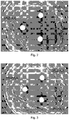
- Figure 1 shows the results of the antibacterial tests for the TTCP/DCPA/CSH/Li samples and TTCP/DCPA/CSH/alkaline metal salt samples.
- TTCP/DCPA/CSH/Li/PAA block samples Immersion, pH measurement, weight loss, cytotoxicity and antibacterial tests were conducted on a variety of TTCP/DCPA/CSH/Li/PAA block samples.
- the mixed powder containing 65 wt% TTCP/DCPA powder and 35 wt% CSH powder is designated "TTCP/DCPA/CSH sample 65/35" or simply "65/35";
- the mixed powder containing 45 wt% TTCP/DCPA powder and 55 wt% CSH powder is designated "TTCP/DCPA/CSH sample 45/55" or simply "45/55"; and so forth.
- TTCP/DCPA:CSH 65:35 by weight
- Li 2 CO 3 powder TTCP/DCPA/CSH/Li mixed powder
- the resulting TTCP/DCPA/CSH/Li powder was mixed with 0.6 M (NH 4 ) 2 HPO 4 setting solution containing 3 vol% PAA solution with L/P ratio of 0.35 cc/g to obtain a TTCP/DCPA/CSH/Li/PAA cement paste.
- the 3 mm high, 6 mm dia. block samples were prepared from pressure-molding the cement paste under a pressure of 450 kgf.
- the resulting TTCP/DCPA/CSH/Li powder was mixed with 0.6 M (NH 4 ) 2 HPO 4 setting solution containing 3, 5, or 10 vol% PAA solution with L/P ratio of 0.35 to obtain a TTCP/DCPA/CSH/Li/PAA cement paste.
- the 3 mm high, 6 mm dia. block samples were prepared from pressure-molding the cement paste under a pressure of 450 kgf.
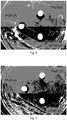
- Figs. 2 to 5 show the TTCP/DCPA/CSH/Li/PAA blocks prepared above immersed in Hanks' solution for one, two, three and five days, respectively.
- the resulting TTCP/DCPA/CSH/Li salt powder was mixed with 0.6 M, 1 M, 2 M or 3 M (NH 4 ) 2 HPO 4 setting solution containing 10 vol% PAA solution with a L/P ratio ranging from 0.35 g/cc to 0.7 g/cc to obtain a TTCP/DCPA/CSH/Li salt /PAA cement paste.
- the resulting paste was injected into 37°C water using a 5 cc syringe attaching with or without a surgical needle to test the injectability of the cement pastes. The amount of residual cement (cement remaining in the syringe after normal hand-injection) was measured and considered as an index of injectability of the cement.
- the CaCO 3 /Ca 2 P 2 O 7 /Li salt mixed powder was mixed with 0.6 M (NH 4 ) 2 HPO 4 setting solution with L/P ratio of 0.35 g/cc to obtain a CaCO 3 /Ca 2 P 2 O 7 /Li salt cement paste.
- the 3 mm high, 6 mm dia. block samples were prepared from pressure-molding the cement paste under a pressure of 450 kgf. The block samples were heated to 600°C for 1h or 3h.
- Figure 6 shows antibacterial zones of CaCO 3 /Ca 2 P 2 O 7 /Li blocks prepared according to the present invention without immersion.
- UV-sterilized sample (either granule or cement) to be tested was put in a 12-well plate, wherein was added 1 ml Tryptone Soya Broth (TSB) with 10 6 live S. aureusbacteria in each well (concentration: 10 6 colony-forming units (CFU) per ml). S. aureusbacteria were cultured with the sample anaerobically at 37°C. One cultured without sample was considered as a positive control in each study group. The viability of the bacterial suspensions incubated with different samples was assessed using Tryptone Soya Agar (TSA) solid agar plates. After cultivation for 24h, broth of each well was sequentially diluted and plated.
- TSA Tryptone Soya Agar
Landscapes
- Health & Medical Sciences (AREA)
- Chemical & Material Sciences (AREA)
- Life Sciences & Earth Sciences (AREA)
- Veterinary Medicine (AREA)
- Public Health (AREA)
- General Health & Medical Sciences (AREA)
- Animal Behavior & Ethology (AREA)
- Medicinal Chemistry (AREA)
- Epidemiology (AREA)
- Inorganic Chemistry (AREA)
- Oral & Maxillofacial Surgery (AREA)
- Transplantation (AREA)
- Dermatology (AREA)
- Pharmacology & Pharmacy (AREA)
- Engineering & Computer Science (AREA)
- Biomedical Technology (AREA)
- Surgery (AREA)
- Molecular Biology (AREA)
- Chemical Kinetics & Catalysis (AREA)
- Nuclear Medicine, Radiotherapy & Molecular Imaging (AREA)
- General Chemical & Material Sciences (AREA)
- Organic Chemistry (AREA)
- Orthopedic Medicine & Surgery (AREA)
- Materials Engineering (AREA)
- Oncology (AREA)
- Communicable Diseases (AREA)
- Physical Education & Sports Medicine (AREA)
- Cardiology (AREA)
- Heart & Thoracic Surgery (AREA)
- Vascular Medicine (AREA)
- Rheumatology (AREA)
- Bioinformatics & Cheminformatics (AREA)
- Materials For Medical Uses (AREA)
- Medicinal Preparation (AREA)
- Pharmaceuticals Containing Other Organic And Inorganic Compounds (AREA)
Description
- The present invention is related to an anti-bacterial preparation for treating bone. More specifically, the present invention is related to an anti-bacterial preparation for treating bone which is a lithium-containing calcium-based material.
- Despite considerable research and development efforts, the problem of infections related to biomedical devices and implants persists. Bacteria evidently can readily colonize surfaces of synthetic materials, such as those used for the fabrication of catheters, hip and knee implants, dental implants, and many other devices. Infections linked to implant devices are a serious hospital problem and very often are a major cause of implant failure (Shi et al., Int J Artif Organs. 2008 Sep; 31 (9):777-85; Zhao et al., J Biomed Mater Res B Appl Biomater. 2009 Oct; 91 (1):470-80; Vasilev et al., Expert Rev Med Devices. 2009 Sep; 6(5):553-67). As the growing colony encapsulates itself with a protective exocellular bacterial polysaccharide layer, the biofilm becomes much harder to combat than circulating bacteria (Vasilev et al., Expert Rev Med Devices. 2009 Sep; 6(5): 553-67). According to Ratner (UW Today 1999-12-14), once the bacteria get on the device, they are extremely difficult to remove and very resistant to treatment and It can take 100 times the concentration of an antibiotic to kill the bacteria when they are attached as it takes to kill them when they're free. The reason may be a protective biofilm that bacteria produce after they become established. When that happens, often the only way to treat the infection is to remove the device from the patient. The key to stopping infections, then, lies in killing bacteria that come near the device before they form an attachment.
- A number of strategies have been developed for the modification of implant or implant surface to inhibit bacterial adhesion and growth, including the 7 incorporation of Na, K and Cl compounds (Mari'a et al., 2012; Uwe et al., 2005), nitric oxide (Nablo BJ et al., 2005), antibiotics such as gentamicin, cephalothin, carbenicillin, amoxicillin, cefamandol, tobramycin and vancomycin (Stallmann HP et al., 2006; Stallmann HP et al., 2006; Bohner M et al., 2000; Zhao L et al., 2009; Zhao L et al., 2009; Akif et al., 2008; Helen et al., 2010; A.Dion et al., 2005), silver and chitosan nanoparticles (Huiliang et al., 2010; Volker et al., 2003; Ewald A et al., 2011; Shi Z et al., 2006), TiO2 (Lingzhou et al., 2011 ; Bogdan et al., 2009), ion implanted copper and silver (N. Matsumoto et al., 2009; Jayesh et al., 2008), etc., and a number of review articles have been published (Vasilev et al., Expert Rev Med Devices. 2009 Sep; 6(5): 553-67; Cao and Liu, Wiley Interdiscip Rev Nanomed Nanobiotechnol.2010 Nov-Dec; 2(6): 670-84; Chaloupka et al., Trends Biotechnol. 2010 Nov; 28(11):580-8. Epub 2010 Aug 18). The proposed antibacterial implants include polymeric systems (Alt et al, Biomaterials Volume 25, Issue 18, August 2004, Pages 4383-4391; Shi et al., Biomaterials Volume 27, Issue 11, April 2006, Pages 2440-2449; Marks et al., The Journal of Bone and Joint Surgery. American Volume 1976, 58(3): 358-64), metallic systems (Visai et al., Int J Artif Organs. 2011 Sep; 34(9): 929-46; Heidenau et al., J Mater Sci Mater Med. 2005 Oct; 16(10): 883-8; Fiedler et al., Int J Artif Organs. 2011 Sep; 34(9): 882-8; Cao et al., Biomaterials. 2011 Jan;32(3):693-705), Kazemzadeh-Narbat M et al., 2010; Yoshinari M et al., 2001; Yoshinari M et al., 2010), and ceramic systems (Gbureck et al., Biomaterials. 2005 Dec; 26(34):6880-6; Kim et al., 2007, Key Engineering Materials, 330-332, 791; Bohner et al., Journal of Pharmaceutical Sciences Volume 86, ). Other solutions, such as the one of
WO 2011/040851 A1 use the change in pH and temperature generated during cement curing. - A primary objective of the present invention is to provide anti-bacterial preparation for treating a bone, wherein the preparation comprises a solid component comprising a lithium compound and a calcium compound as defined by claim 1, wherein the solid component is a powder component, a block, or granules or pieces obtained by breaking up said block. Further, the present invention is also aimed to provide the anti-bacterial preparation, for use in a method of using the anti-bacterial preparation in treating a bone, as defined in claims 9 and 13. The anti-bacterial preparation provided according to the present invention comprises a solid component comprising a lithium compound and a calcium compound, wherein the anti-bacterial preparation shows an improved anti-bacterial ability in comparison with a preparation containing the calcium compound but free of the lithium compound.
- A Hanks' solution with the anti-bacterial preparation of the present invention immersed therein with a ratio of solution: anti-bacterial preparation = 10 cc/g exhibits a pH value of not less 10.
- Preferably, the anti-bacterial preparation contains about 5-80%, more preferably about 10-70% of the lithium compound, based on the weight of the solid component.
- Preferably, the lithium compound is a lithium salt, lithium oxide, lithium amide (LiNH2), lithium hydroxide or lithium halide; and more preferably lithium carbonate, lithium sulfate, lithium phosphate, lithium oxide, lithium fluoride, lithium acetate, lithium bromide, lithium hydroxide, lithium nitrate, lithium nitrite, lithium iodide, lithium molybdate (Li2MoO4), lithium tetraborate (Li2B4O7), lithium citrate tetrahydrate (Li3C6H5O7.4H2O), or lithium stearate (LiC18H35O2); and most preferably lithium carbonate, or lithium phosphate. When the solid component is the powder component, the calcium compound is selected from the group consisting of a calcium phosphate, calcium sulfate, calcium oxide, calcium carbonate, calcium hydroxide, calcium magnesium phosphate, calcium nitrate, calcium citrate, calcium chloride and a mixture thereof; and more preferably the calcium compound is a calcium sulfate, a calcium phosphate source, or a mixture thereof. Preferably, the calcium phosphate is tetracalcium phosphate (TTCP), dicalcium phosphate, tricalcium phosphate, monocalcium phosphate or a mixture thereof. Preferably, the calcium sulfate is calcium sulfate hemihydrate (CSH), calcium sulfate dehydrate (CSD), anhydrous calcium sulfate, or a mixture thereof.
- Preferably, the anti-bacterial preparation further comprises a setting liquid component with a liquid to powder ratio of 0.20 ml/g to 0.80 ml/g, when the solid component is the powder component.
- The present invention also provides a method for treating a subject comprising forming a bone cement paste by mixing the powder component and the setting liquid component of the anti-bacterial preparation of the present invention; and filling a hole or cavity in a bone with said bone cement paste which sets hard in the hole or cavity in need of said treatment. When the solid component is the block, or the granules or pieces obtained by breaking up said block, the calcium compound is selected from the group consisting of calcium phosphate, calcium sulfate, calcium oxide, calcium carbonate, calcium hydroxide, calcium magnesium phosphate, hydroxyapitite, or a mixture thereof, and preferably is selected from the group consisting of tetracalcium phosphate, dicalcium phosphate, hydroxyapitite, calcium sulfate dihydrate, calcium sulfate hemihydrate, or a mixture thereof.
- The present invention also provides a method for treating a subject comprising implanting said block, said granules or said pieces of the anti-bacterial preparation of the present invention in said subject in need of said treatment.
- Preferably, the anti-bacterial preparation further comprises a lithium retarding agent which slows down the lithium compound releasing from said anti-bacterial preparation. More preferably, the lithium retarding agent is poly(acrylic acid). Preferably, the anti-bacterial preparation comprises, based on the total weight of the anti-bacterial preparation, 0.01-5% of poly(acrylic acid) having a repeating unit of -(CH2-C(COOH)H)n-, wherein n = 50 - 50000, preferably 1000-5000, and more preferably 1500-2500.
- Major advantages of the present invention:
- (a) The inventive antibacterial agent (lithium compound) is not an antibiotic and thus is free from all kinds of antibiotic-related side effects.
- (b) The inventive antibacterial lithium compound can gradually dissolve from an implant after it is implanted, keeping bacteria from approaching the implant. Furthermore, the dissolution rate of the antibacterial lithium compound can be adjusted to avoid its concentration being too high, causing negative response of the surrounding tissues, or being too low, causing insufficient antibacterial effect.
- (c) The effective antibacterial duration can be adjusted to avoid being too long or too short. Unlike those implant devices incorporating permanent antibacterial agents such as metallic antibacterial agents, the duration of the present inventive antibacterial preparation can be so designed that, at the end of the desired antibacterial duration (the majority of antibacterial agent has been released), the biocompatibility of the implant will readily increase to a normal, acceptable level.
- (d) After the inventive antibacterial lithium compound dissolves, pores of designed sizes are formed that enhance bioresorption rate of the implant by allowing surrounding bone cells to grow into the pores.
-
-
Figure 1 shows antibacterial zones of TTCP/DCPA/CSH/Li samples prepared according to the present invention and TTCP/DCPA/CSH/alkaline metal salt samples. -
Figures 2 to 5 show antibacterial zones of TTCP/DCPA/CSH/Li/PAA blocks prepared according to the present invention immersed in Hanks' solution for one, two, three and five days, respectively. -
Figure 6 shows antibacterial zones of CaCO3/Ca2P2O7/Li blocks prepared according to the present invention without immersion. - Preferred embodiments of the present invention include but not limited to the following items:
- 1. An anti-bacterial formula for treating a bony site, as defined by claim 1.
- 2. The anti-bacterial formula of Item 1 contains about 5-80%, more preferably about 10-70% of the lithium source, based on the weight of the calcium source and the lithium source.
- 3. The lithium source in Item 1 is selected from the group consisting of lithium carbonate, lithium sulfate, lithium phosphate, lithium oxide, lithium fluoride, lithium acetate, lithium bromide, lithium hydroxide, lithium nitrate, lithium nitrite, lithium iodide, lithium molybdate (Li2MoO4), lithium amide (LiNH2), lithium tetraborate (Li2B4O7), lithium citrate tetrahydrate (Li3C6H5O7.4H2O), lithium stearate (LiC18H35O2).
- 4. The lithium source in Item 2 is lithium carbonate and/or lithium phosphate.
- 5. The calcium source in Item 1 is calcium phosphate, calcium sulfate, calcium oxide, calcium carbonate, calcium hydroxide, calcium magnesium phosphate, calcium nitrate, calcium citrate, calcium chloride, or a mixture thereof.
- 6. The calcium phosphate in
Item 5 is tetracalcium phosphate (TTCP), dicalcium phosphate, tricalcium phosphate (TCP), hydroxyapatite (HA), or a mixture thereof. - 7. The dicalcium phosphate in Item 6 is dicalcium phosphate anhdydrous (DCPA).
- 8. The calcium sulfate in
Item 5 is calcium sulfate hemihydrate (CSH), calcium sulfate dihydrate (CSD), anhydrous calcium sulfate, or a mixture thereof. - 9. The calcium source in
Item 5 comprises calcium phosphate and calcium sulfate. - 10. The calcium phosphate in Item 9 comprises tetracalcium phosphate (TTCP).
- 11. The calcium phosphate in
Item 10 further comprises dicalcium phosphate. - 12. The dicalcium phosphate in Item 11 is dicalcium phosphate anhdydrous (DCPA).
- 13.The calcium sulfate in Item 9 comprises calcium sulfate hemihydrate (CSH).
- 14.The anti-bacterial formula in Item 1 further comprises a lithium retarding agent which can slow down lithium release from said anti-bacterial formula.
- 15.The lithium retarding agent in Item 14 is poly(acrylic acid) (PAA).
- 16. The anti-bacterial formula in Item 15 comprises, based on the total weight of the anti-bacterial preparation, 0.01-5% of poly(acrylic acid) having a repeating unit of -(CH2-C(COOH)H)n-, wherein n = 50 - 50000, preferably 1000-5000, and more preferably 1500-2500.
- 17. The anti-bacterial formula in Item 1 further comprises a pore-forming agent, thereby pores form in vivo after dissolution of said pore-forming agent.
- 18. The pore-forming agent in Item 17 is selected from the group consisting of LiCl, KCl, NaCl, MgCl2, CaCl2, NalO3, Kl, Na3PO4, K3PO4, Na2CO3, amino acid-sodium salt, amino acid-potassium salt, glucose, polysaccharide, fatty acid-sodium salt, fatty acid-potassium salt, potassium bitartrate (KHC4H4O6), potassium carbonate, potassium gluconate (KC6H11O7), potassium-sodium tartrate (KNaC4H4O6·4H2O), potassium sulfate (K2SO4), sodium sulfate, sodium lactate and mannitol.
- 19. The pore-forming agent in Item 18 is about 10-80% in volume, preferably about 20-60% in volume, based on the volume of the calcium source and the lithium source.
- 20. The anti-bacterial formula in Item 1 is in powder form, cement form, dense block (pre-molded) form, dense granule form, porous block (pre-molded) form, porous granule form, or a mixture thereof.
- 21. The anti-bacterial formula in cement form in Item 20 further comprises a setting liquid agent, thereby mixing said calcium source, said lithium source, and said setting liquid agent, a cement paste can be formed.
- 22.The setting liquid agent in Item 21 comprises ammonium ion (NH4 +) in a concentration of about 0.01 M to about 2 M.
- 23.The setting liquid agent in Item 22 is a solution of NH4H2PO4, (NH4)2HPO4, (NH4)3PO4·3H2O, (NH4)3PO4, or a mixture thereof.
- 24.The setting liquid agent in Item 23 is a solution of (NH4)2HPO4.
- 25.The liquid-to-powder ratio in Item 24 is about 0.1 cc/g to about 1.0 cc/g, preferably about 0.2 cc/g to about 0.8 cc/g.
- 26. The anti-bacterial formula in dense block (pre-molded) form in Item 20 is prepared by a method comprising preparing a cement paste by mixing a cement powder and a setting liquid agent in Item 21; shaping the paste in a mold; and removing the mold to form a dense block.
- 27. The method in Item 26 further comprises pressurizing said paste in said mold before said paste becomes set to remove a portion of liquid from said paste, so that a liquid-to-powder ratio of said paste decreases, wherein the pressure applied to the paste in the mold is from about 1 MPa to 500 MPa, preferably from 100 MPa to 500 MPa.
- 28. The method in Item 26 further comprises impregnating the dense block with an impregnating liquid for a period of time, so that a compressive strength of the resulting impregnated block removed from the impregnating liquid is increased compared to that of said block without said impregnating treatment.
- 29.The impregnating liquid in Item 28 is a phosphate-containing solution having a phosphate concentration from about 0.1M to about 3M.
- 30. The anti-bacterial formula in dense granule form in Item 20 is prepared by a method comprising preparing a cement paste by mixing a cement powder and a setting liquid agent in Item 21; shaping the paste in a mold; removing the mold to form a dense block; and crushing said dense block into dense granules.
- 31. The method in Item 30 further comprises pressurizing said paste in said mold before said paste becomes set to remove a portion of liquid from said paste, so that a liquid-to-powder ratio of said paste decreases, wherein the pressure applied to the paste in the mold is from about 1 MPa to 500 MPa, preferably from 100 MPa to 500 MPa.
- 32. The method in Item 30 further comprises impregnating the dense granules with an impregnating liquid for a period of time, so that a compressive strength of the resulting impregnated dense granules removed from the impregnating liquid is increased compared to that of said granules without said impregnating treatment.
- 33.The impregnating liquid in Item 32 is a phosphate-containing solution having a phosphate concentration from about 0.1M to about 3M.
- 34. The anti-bacterial formula in porous block form in Item 20 is prepared by a method comprising preparing a cement paste by mixing a cement powder and a setting liquid agent in Item (21), wherein a pore-forming agent is added into the cement; shaping the paste in a mold; removing the mold to form a block article; and immersing said block article in an immersing liquid to dissolve at least a portion of said pore-forming agent in the immersing liquid, creating pores therein, so that a porous block is formed, and preferably the porous block has a porosity of 50-90 vol%.
- 35. The method in Item 34 further comprises pressurizing said paste in said mold before said paste becomes set to remove a portion of liquid from said paste, so that a liquid-to-powder ratio of said paste decreases, wherein the pressure applied to the paste in the mold is from about 1 MPa to 500 MPa, preferably from 100 MPa to 500 MPa.
- 36. The method in Item 34 further comprises impregnating the porous block with an impregnating liquid for a period of time, so that a compressive strength of the resulting impregnated porous block removed from the impregnating liquid is increased compared to that of said porous block without said impregnating treatment.
- 37.The impregnating liquid in Item 36 is a phosphate-containing solution having a phosphate concentration from about 0.1M to about 3M.
- 38. The anti-bacterial formula in porous granule form in Item 20 is prepared by a method comprising preparing a cement paste by mixing a cement powder and a setting liquid agent in Item 21, wherein a pore-forming agent is added into the cement; shaping the paste in a mold; removing the mold to form a block article; immersing said block article in an immersing liquid to dissolve at least a portion of said pore-forming agent in the immersing liquid, creating pores therein, so that a porous block is formed, and preferably the porous block has a porosity of 50-90 vol%; and crushing said porous block into porous granules.
- 39. The anti-bacterial formula in porous granule form in Item 20 is prepared by a method comprising preparing a cement paste by mixing a cement powder and a setting liquid agent in Item 21, wherein a pore-forming agent is added into the cement; shaping the paste in a mold; removing the mold to form a dense block article; crushing said dense block article into dense granules; and immersing said dense granules in an immersing liquid to dissolve at least a portion of said pore-forming agent in the immersing liquid, creating pores therein, so that porous granules are formed, and preferably the porous granules have a porosity of 50-90 vol%.
- 40. The methods in Items 38 or 39 further comprise pressurizing said paste in said mold before said paste becomes set to remove a portion of liquid from said paste, so that a liquid-to-powder ratio of said paste decreases, wherein the pressure applied to the paste in the mold is from about 1 MPa to 500 MPa, preferably from 100 MPa to 500 MPa.
- 41. The methods in Item 38 or 39 further comprise impregnating the porous block with an impregnating liquid for a period of time, so that a compressive strength of the resulting impregnated porous granules removed from the impregnating liquid is increased compared to that of said porous granules without said impregnating treatment.
- 42.The impregnating liquid in Item 41 is a phosphate-containing solution having a phosphate concentration from about 0.1M to about 3M.
- 43. The pore-forming agent in Items 34 or 38 is selected from the group consisting of LiCI, KCI, NaCl, MgCl2, CaCl2, NaO3, Kl, Na3PO4, K3PO4, Na2CO3, amino acid-sodium salt, amino acid-potassium salt, glucose, polysaccharide, fatty acid-sodium salt, fatty acid-potassium salt, potassium bitartrate (KHC4H4O6), potassium carbonate, potassium gluconate (KC6H11O7), potassium-sodium tartrate (KNaC4H4O6·4H2O), potassium sulfate (K2SO4), sodium sulfate, sodium lactate and mannitol.
- 44. The anti-bacterial formula in Item 1 further comprises a growth factor, a BMP, living cells, or a drug.
- 45. The bony site in Item 1 is an orthopedic site or a dental site.
- 46. The orthopedic site or dental site in Item 45 is a fractured site, a diseased site, or an infected site.
- 47.The diseased site in Item 46 is a gum-diseased site.
- 48. The bony site in (1), wherein a pH value is increased to at least 10 when at least a portion of said anti-bacterial formula is dissolved at said site.
-
- TTCP: tetracalcium phosphate
- DCPA: dicalcium phosphate anhydrous
- CSH: calcium sulfate hemihydrate
- PAA: poly(acrylic acid)
- L/P ratio: liquid/powder ratio
- The TTCP powder was fabricated in-house from the reaction of dicalcium pyrophosphate (Ca2P2O7) (Alfa, USA) and calcium carbonate (CaCO3) (Katayama Chem. Co., Tokyo, Japan) using the method suggested by Brown and Epstein [Journal of Research of the National Bureau of Standards - A Physics and Chemistry 6 (1965) 69A 12].
- TTCP powder was prepared by mixing Ca2P2O7 powder with CaCO3 powder uniformly for 12 hours. The mixing ratio of Ca2P2O7 powder to CaCO3 powder was 1:1.27 (weight ratio) and the powder mixture was heated to 1400°C to allow two powders to react to form TTCP.
- Appropriate amounts of TTCP and DCPA powders were uniformly mixed in a ball miller in a molar ratio of 1:1 to obtain a TTCP/DCPA mixed powder. Appropriate amounts of TTCP and CSH powders were uniformly mixed in a ball miller to obtain a TTCP/CSH mixed powder. Appropriate amounts of the TTCP/DCPA mixed powder (in a molar ratio of 1:1) and CSH powder were uniformly mixed in a ball miller to obtain a TTCP/DCPA/CSH mixed powder.
- Appropriate amounts of Li compound(s) (for example, lithium carbonate, lithium phosphate, lithium sulfate, or lithium oxide) and TTCP, TTCP/DCPA, TTCP/CSH or TTCP/DCPA/CSH were uniformly mixed in a ball miller to obtain a TTCP/Li compound, TTCP/DCPA/Li compound, TTCP/CSH/Li compound or TTCP/DCPA/CSH/Li compound mixed powder.
- (NH4)2HPO4 solutions with and without PAA addition were both used as setting solution and their effects on the antibacterial behavior of various Li-containing samples were compared. The poly(acrylic acid) (abbreviated as PAA) used in this study has a molecular weight of 150,000 and was obtained as 25 wt% aqueous solution (reagent grade, Showa, Japan). PAA-containing (NH4)2HPO4 setting solutions of different concentrations were prepared by adding different volume percentages of the PAA aqueous solution into the (NH4)2HPO4 solutions.
- A series of TTCP/Li compound, TTCP/DCPA/Li compound, TTCP/CSH/Li compound and TTCP/DCPA/CSH/Li compound cement pastes with and without PAA were respectively prepared by mixing appropriate amounts of each mixed powders and (NH4)2HPO4 setting solutions with and without PAA addition at appropriate L/P ratios.
- The working time of cement paste was determined by the time after that the cement paste was no longer workable. The setting time of cement paste was measured according to the standard method set forth in ISO 1566 for dental zinc phosphate cements. The cement is considered set when a 400 gm weight loaded onto a Vicat needle with a 1 mm diameter tip fails to make a perceptible circular indentation on the surface of the cement.
- Appropriate amounts of TTCP/Li compound, TTCP/DCPA/Li compound, TTCP/CSH/Li compound or TTCP/DCPA/CSH/Li compound mixed powder were mixed with (NH4)2HPO4 setting solution with or without PAA with a desirable L/P ratio to form a cement paste.
- Prior to being fully hardened, the paste was placed in a mold under a desirable pressure (e.g., 450 Kgf or 156 MPa) to squeeze a portion of the liquid out of the paste. After being removed from the mold, optionally, some block samples were further impregnated in an impregnation solution (for example, 1-3 M (NH4)2HPO4 or K2HPO4) at a desirable temperature (for example, 0-50°C) for a desirable period of time (for example, 1 day) to increase strength, followed by drying in an oven (for example, at 50°C for 1 day). Optionally the block was crushed into granules with a desirable particle size distribution range. Optionally, the mold can be tailor-made to produce a block with a desirable shape and geometry.
- Various Li-containing samples were immersed in Hanks' solution (with a pH value of 7.4) with a solution/sample ratio of 10 cc/g for different periods of time (1d, 2d, 3d, 5d and 7d). Their immersion-induced weight losses and pH changes in the solution were determined. The Hanks' solution was refreshed daily during immersion test to help maintain uniform ion concentrations of the solution. The pH values of the solution were measured using a pH meter (Suntex Instruments SP2300, Taipei, Taiwan).
- The cytotoxicity test was performed according to ISO 10993-5. The extraction method was used. NIH/3T3 fibroblasts (seeding density 5000 per well) were pre-cultured for 24h in Dulbecco's modified essential medium (DMEM) supplemented with bovine serum (10%) and PSF (1%). An extract was prepared by immersing a hardened cement paste in the culture medium at a ratio of 0.1 (g/ml) at 37°C for 24h and then collecting the liquid by centrifugation. The extract was added to the 96 well microplate (100 µl per well) incubated in a 5% CO2 humidified atmosphere at 37°C. After 24h, the extract was sucked out and then a mixture of the culture medium (100 µl) and WST-1 (10 µl) was added to the wells and incubated for 1h at 37°C. Cell viability was measured by using the WST-1 assay. This is a colorimetric assay of mitochondrial dehydrogenase activity where the absorbance at 450 nm is proportional to the amount of dehydrogenase activity in the cell. After 1h incubation, the mixture of medium and WST-1 was transferred to a 96 well microplate and the absorbance at 450 nm was measured with an ELISA reader. Al2O3 powder was also assayed as a control. Four bars were tested for each sample (n=4).
Table 2. Cell line used for cytotoxicity test Cell name NIH/3T3 Cell number BCRC 60008 Type Mouse NIH/Swiss embryo Growth property Adherent, 5% CO2, 37°C Morphology Fibroblast Cell culture medium 90% Dulbecco's modified Eagle's medium (DMEM) +10% bovine serum Freeze medium 93% culture medium + 7% DMSO - To prepare a TSB medium, 6g Tryptone (Neogen, USA), 2g Soytone (Soytone BD, USA) and 2g NaCl (J.T. Baker, USA) were placed into a beaker filled with 400 ml of double distilled water and mixed with a stir bar. After total dissolution, the pH of the solution was adjusted to 7.3 and the solution was autoclaved (121°C, 1.2 kg/cm2) for 30 min.
- To prepare a TSA medium, 6g Tryptone (Neogen, USA), 2g Soytone (Soytone BD, USA), 2g NaCl (J.T. Baker, USA) and 6g Agar (Neogen, USA) were placed into a beaker filled with 400 ml of double distilled water and mixed with a stir bar. After total dissolution, the pH of the solution was adjusted to 7.3 and the solution was autoclaved (121°C,1.2 kg/cm2) for 30 min. After being sterilized, the TSA medium was poured into a petri dish and allowed hardened. The TSA medium was then placed into an incubator at 30°C.
- 1 ml staphylococcus aureus (SA) containing TSB medium was transferred into a 15 ml centrifuge tube, wherein 10 ml phosphate buffered saline (PBS) was added and mixed gently. The mixture was centrifuged (KUBOTA 5922, Japan) at 3000 rpm for 10 minutes. The supernatant was removed and a SA pellet remained. 1 ml PBS was then added to suspend the pellet. 20 µl of the SA suspension and 180 µl PBS were transferred into each well of a 96 well plate. The absorbance was assayed using an ELISA reader (Sunrise, Tecan, Switzerland) at 600 nm to determine the bacterial concentration (cfu/ml) (200 µl of PBS was used as a negative control). Once determined, an appropriate volume of SA containing medium was transferred into a 1 micro centrifuge tube, wherein TSB was added to adjust bacterial concentration to 3.5 X 10⁶ (cfu/ml). The tube was shaked for 15 seconds to allow thorough mixing. 100 µl of the SA containing medium was removed and dropped evenly across the agar plate. Once the broth was distributed evenly on agar plate and became almost dry, samples to be tested were placed on top of the agar and the petri dish was covered with a parafilm. The dish was placed in an incubator (LM-570R, Yih Der, Taiwan) at 37°C for 24 hours. Bacteria colony formation was then observed and colony diameters measured.
- After being loaded, the samples were placed on a table for 1 hour to become dry. Four samples were then placed into a 20 ml glass vial, wherein 8 ml Hanks' solution was added with a solid/liquid ratio of 0.1 g/ml. The glass vial was put into a water bath at 37°C for 1, 2, 3, 5, and 7 days. The Hanks' solution was changed daily. Once having been soaked for desired periods of time, the samples were placed into a 50°C oven for 24 hours, then stored in a zip lock bag.
- Antibacterial tests were conducted on a series of commercially pure lithium compounds, including Li2SO4, Li3PO4, Li2CO3, Li2O, and LiF.
- Samples were either dry-molded under a pressure of 450 kgf into a 3 mm high, 6 mm dia. cylinder without being mixed with a setting solution, or wet-molded under 1.4 MPa into a 3 mm high, 6 mm dia. cylinder with being mixed with a 0.6 M (NH4)2HPO4 setting solution at L/P ratios 0.2-0.6 (0.20 for Li2SO4, 0.25 for Li3PO4, 0.60 for Li2CO3)
-
- (1) All tested lithium compounds (Li2SO4, Li3PO4, Li2CO3, Li2O and LiF) demonstrate a high antibacterial behavior.
- (2) Except Li2CO3, all dry-molded (without being mixed with a setting solution) lithium compounds are more or less disintegrated/dissolved in TSB agar plate.
- (3) All wet-molded (mixed with 0.6 M (NH4)2HPO4 at L/P =0.2-0.6 cc/g) Li compounds do not disintegrate in TSB agar plate.
- (4) Wet-molded Li2SO4 and Li2CO3 samples show two largest anti-bacterial zones (22 mm and 18 mm, respectively)
- Immersion, pH measurement, weight loss, cytotoxicity and antibacterial tests were conducted on TTCP/Li and TTCP/Li/PAA block samples.
- The TTCP/Li/PAA blocks were prepared by mixing appropriate amounts of TTCP powder and Li2CO3 powder (TTCP : Li2CO3 = 1 : 1 by weight) to obtain a TTCP/Li2CO3 mixed powder. The TTCP/Li2CO3 powder was mixed with 0.6M (NH4)2HPO4 setting solution containing 3, 5, or 10 vol% PAA solution at L/P ratio of 0.45 cc/g to obtain a TTCP/Li/PAA cement paste. The TTCP/Li/PAA block samples were prepared from pressure-molding the TTCP/Li/PAA cement paste under a pressure of 450 kgf.
Table 3. Average diameters (mm) of antibacterial zones of TTCP/Li/PAA blocks immersed in Hanks' solution for different periods of time (days). 1d 2d 3d 5d 7d 3% PAA 11.4 10.3 8.5 6 6 5% PAA 11.5 11.4 11.3 6 6 10% PAA 12.6 12.5 11.7 6.7 6 (Note: The measured antibacterial zones include 6 mm dia. sample) -
- (1) The addition of PAA prolongs the antibacterial effect of the TTCP/Li formula.
- (2) Sample with setting solution containing 3 vol% PAA shows an antibacterial zone of 11.4 mm after being immersed in Hanks' solution for 1d; 10.3 mm for 2d; 8.5 mm for 3d.
- (3) Sample with setting solution containing 5 vol% PAA shows an antibacterial zone 11.5 mm after being immersed in Hanks' solution for 1d; 11.4 mm for 2d; 11.2 mm for 3d.
- (4) Sample with setting solution containing 10 vol% PAA shows an anti-bacterial zone 12.6 mm after being immersed in Hanks' solution for 1d; 12.5 mm for 2d; 11.7 mm for 3d; 6.7 mm for 5d.
-
- (1) Average pH values of Hanks' solutions are all higher than 10, even higher than 12 in some cases.
-
- (1) Average weight losses of all samples immersed in Hanks' solution increase with immersion time.
- (2) The weight loss increased with PAA content.
- (3) After 10 d, 27.4% of the weight is lost for 3% PAA sample; 37.9% weight is lost for 5% PAA sample; and 42.8% weight is lost for 10% PAA sample. This result is desirable, since, after the rather quick dissolution of the Li compounds, a highly porous structure is developed in the implant material that can increase the bioresorption rate of the implant.
-
- (1) Average cell viability values of all samples immersed in Hanks' solution increase with immersion time, indicating the biocompatibility level continues to increase due to gradual consumption of the Li compound. This result is desirable, since the best result would be that, after the stage of high antibacterial effect, the implant material would gradually recover its biocompatibility level.
- (2) After 7 d, the cell viability values of 10% PAA sample are significantly higher than those of 3% PAA and 5% PAA samples.
- Immersion, pH measurement, weight loss, cytotoxicity and antibacterial tests were conducted on TTCP/DCPA/Li and TTCP/DCPA/Li/PAA block samples.
- The TTCP/DCPA/Li blocks were prepared by mixing appropriate amounts of TTCP/DCPA powders (1:1 in molar ratio) and Li compound (Li2CO3 or Li2O) powder (Li2CO3or Li2O= 10 wt% or 30 wt% of all powder components) to obtain a TTCP/DCPA/Li compound mixed powder. The TTCP/DCPA/Li compound powder was mixed with 0.6 M (NH4)2HPO4 setting solution with L/P ratio of 0.35 to obtain a TTCP/DCPA/Li cement paste. The 3 mm high, 6 mm dia. block samples were prepared from pressure-molding the cement paste under a pressure of 1.4 MPa.
Table 7. pH values of the PBS extract of TTCP/DCPA/Li samples immersed in 37°C PBS for 24h Sample : PBS (weight ratio) TTCP/DCPA: Li2CO3 = 90:10 by weight TTCP/DCPA: Li2CO3 = 70:30 by weight TTCP/DCPA: Li2O = 90:10 by weight 1:5 10.5 10.4 12.6 1:10 10.6 10.5 12.7 -
- (1) Sample containing 90 wt% TTCP/DCPA and 10 wt% Li2O shows an anti-bacterial zone of 22 mm.
- (2) Sample containing 70 wt% TTCP/DCPA and 30 wt% Li2CO3 shows an anti-bacterial zone 24 mm.
- (3) The pH values of the extract are all higher than 10, even higher than 12 for Li2O sample.
- The TTCP/DCPA/Li/PAA blocks were prepared by mixing appropriate amounts of TTCP/DCPA powders (1:1 in molar ratio) and Li2CO3 powder (TTCP/DCPA : Li2CO3 = 1 : 1 by weight) to obtain a TTCP/DCPA/Li mixed powder, which was then mixed with 0.6 M (NH4)2HPO4 setting solution containing 3, 5, or 10 vol% PAA solution at L/P of 0.35 cc/g to obtain a TTCP/DCPA/Li/PAA cement paste. The 3 mm high, 6 mm dia. block samples were prepared from pressure-molding the cement paste under a pressure of 450 kgf.
Table 8. Average diameters (mm) of antibacterial zones of TTCP/DCPA/Li/PAA blocks immersed in Hanks' solution for different periods of time (days). 1d 2d 3d 5d 7d 3% PAA 12.5 9.9 9.8 6 6 5% PAA 12.7 10.6 10.9 7.3 6 10% PAA 11.9 11.5 10.6 8.8 6.9 (Note: The measured antibacterial zones include 6 mm dia. sample) -
- (1) The addition of PAA prolongs the antibacterial effect of the TTCP/DCPA/Li formula.
- (2) Sample with setting solution containing 3vol%PAA shows an antibacterial zone of 12.5 mm after being immersed in Hanks' solution for 1d; 9.9 mm for 2d; 9.8 mm for 3d.
- (3) Sample with setting solution containing 5 vol% PAA shows an antibacterial zone 12.7 mm after being immersed in Hanks' solution for 1d; 10.6 mm for 2d; 10.9 mm for 3d; 7.3 mm for 5d.
- (4) Sample with setting solution containing 10vol% PAA shows an anti-bacterial zone 11.9 mm after being immersed in Hanks' solution for 1d; 11.5 mm for 2d; 10.6 mm for 3d; 8.8 mm for 5d; 6.9 mm for 7d.
-
- (1) Average pH values of Hanks' solution are all higher than 10.
-
- (1) Average weight losses of all samples immersed in Hanks' solution increase with immersion time.
- (2) The weight loss increases with PAA content, especially after 7d. This result is desirable, since, after the rather quick dissolution of the Li compounds, a highly porous structure is developed in the implant material that can increase the bioresorption rate of the implant.
-
- (1) Average cell viability values of all samples immersed in Hanks' solution increase with immersion time, indicating the biocompatibility level continues to increase due to gradual consumption of the Li compound. This result is desirable, since the best result would be that, after the stage of high antibacterial effect, the implant material would gradually recover its biocompatibility level.
- (2) After 3 d, the cell viability values of 10% PAA sample are significantly higher than those of 3% PAA and 5% PAA samples. After 10 d, the cell viability value of 10% PAA sample reaches 80.3.
- Antibacterial tests were conducted on TTCP/DCPA/Li/KCI block samples. The TTCP/DCPA/Li/KCI blocks were prepared by mixing appropriate amounts of TTCP/DCPA powders (1:1 in molar ratio) and Li2O powder (Li2O= 10 wt% of all powder components) and further with 100-200 µm KCl powder (TTCP/DCPA/Li powder : KCL powder = 60 : 40 by weight) to obtain a TTCP/DCPA/Li/KCI mixed powder. The mixed powder was mixed with 0.6M (NH4)2HPO4 setting solution at L/P ratio of 0.50 cc/g to obtain a TTCP/DCPA/Li/KCI cement paste. The 3 mm high, 6 mm dia. block samples were prepared from pressure-molding the cement paste under a pressure of 450 kgf.
-
- (1) The above-described TTCP/DCPA/Li samples show an average antibacterial zone of 21 mm.
- (2) The above-described TTCP/DCPA/Li/KCI samples show an average antibacterial zone of 22 mm.
- Immersion, pH measurement, weight loss, cytotoxicity and antibacterial tests were conducted on TTCP/CSH/Li and TTCP/CSH/Li/PAA block samples.
- The TTCP/CSH/Li/PAA blocks were prepared by mixing appropriate amounts of TTCP/CSH powder (65 : 35 by weight) and Li2CO3 powder (TTCP/CSH : Li2CO3 = 1 : 1 by weight) to obtain a TTCP/CSH/Li mixed powder. The TTCP/CSH/Li powder was mixed with 0.6 M (NH4)2HPO4 setting solution containing 3, 5, or 10 vol% PAA solution with L/P ratio of 0.35 to obtain a TTCP/CSH/Li/PAA cement paste. The 3 mm high, 6 mm dia. block samples were prepared from pressure-molding the cement paste under a pressure of 450 kgf.
Table 12. Average diameters (mm) of antibacterial zones of TTCP/CSH/Li/PAA blocks immersed in Hanks' solution for different periods of time (days). 1d 2d 3d 5d 7d 3% PAA 11.7 8.0 6 6 6 5% PAA 12.7 8.0 6 6 6 10% PAA 13.0 10.0 11.0 6 6 (Note: The measured antibacterial zones include 6 mm dia. sample) -
- (1) The addition of PAA prolongs the antibacterial effect of the TTCP/CSH/Li formula.
- (2) Sample with setting solution containing 3 vol% PAA shows an antibacterial zone of 11.7 mm after being immersed in Hanks' solution for 1d; 8.0 mm for 2d;
- (3) Sample with setting solution containing 5 vol% PAA shows an antibacterial zone 12.7 mm after being immersed in Hanks' solution for 1d; 8.0 mm for 2d;
- (4) Sample with setting solution containing 10 vol% PAA shows an anti-bacterial zone 13.0 mm after being immersed in Hanks' solution for 1d; 10.0 mm for 2d; 11.0 mm for 3d.
-
- (1) Average pH values of Hanks' solution are all higher than 10, even higher than 12 in some cases.
-
- (1) Average weight losses of all samples immersed in Hanks' solution increase with immersion time.
- (2) The weight loss increases with PAA content, especially after 7d. This result is desirable, since, after the rather quick dissolution of the Li compounds, a highly porous structure is developed in the implant material that can increase the bioresorption rate of the implant.
-
- (1) Average cell viability values of all samples immersed in Hanks' solution increase with immersion time, indicating the biocompatibility level continued to increase due to gradual consumption of the Li compound. This result is desirable, since the best result would be that, after the stage of high antibacterial effect, the implant material would gradually recover its biocompatibility level.
- (2) After 10 d, the cell viability value of 10% PAA sample reaches 76.7 and is significantly higher than those of 3% PAA and 5% PAA samples.
- Antibacterial tests were conducted on a variety of TTCP/DCPA/CSH/Li block samples. The TTCP/DCPA/CSH/Li blocks were prepared by mixing appropriate amounts of TTCP/DCPA/CSH powder and Li2CO3 powder (TTCP/DCPA/CSH : Li2CO3 = 1 : 1 by weight) to obtain a TTCP/DCPA/CSH/Li mixed powder, wherein TTCP : DCPA = 1 : 1 by mole and the TTCP/DCPA : CSH weight ratios are listed in Table 16. For example, the mixed powder containing 65 wt% TTCP/DCPA powder and 35 wt% CSH powder is designated "TTCP/DCPA/CSH sample 65/35" or simply "65/35"; the mixed powder containing 45 wt% TTCP/DCPA powder and 55 wt% CSH powder is designated "TTCP/DCPA/CSH sample 45/55" or simply "45/55"; and so forth.
Table 16. TTCP/DCPA/CSH sample designations TTCP/DCPA/CSH sample designation TTCP/DCPA:CSH (by weight) TTCP:DCPA:CSH (by weight) "90/10" 90:10 2.69:1:0.41 "85/15" 85:15 2.69:1:0.65 "80/20" 80:20 2.69:1:0.92 "75/25" 75:25 2.69:1:1.23 "65/35" 65:35 2.69:1:1.99 "55/45" 55:45 2.69:1:3.02 "45/55" 45:55 2.69:1:4.51 "35/65" 35:65 2.69:1:6.85 "25/75" 25:75 2.69:1:11.07 "10/90" 10:90 2.69:1:33.21 - Antibacterial tests were conducted on "65/35" mixed with a series of alkaline metal salts (Li2CO3, KCI or NaCl powder), wherein "65/35" : alkaline metal salt = 1:1 by weight. The "65/35"/alkaline metal salt mixed powder was mixed with 0.6 M (NH4)2HPO4 setting solution with L/P ratio of 0.35 g/cc to obtain a TTCP/DCPA/CSH/alkaline metal salt cement paste. The 3 mm high, 6 mm dia. block samples were prepared from pressure-molding the cement paste under a pressure of 450 kgf.
-
Figure 1 shows the results of the antibacterial tests for the TTCP/DCPA/CSH/Li samples and TTCP/DCPA/CSH/alkaline metal salt samples. -
- (1) Among three alkaline metal (Li, Na and K) salts tested, only Li-based alkaline metal salt (Li2CO3) shows a strong antibacterial effect with an antibacterial zone of 13 mm (for both Nihon Shiyaku and JT Baker products);
- (2) No antibacterial zone was observed for samples prepared from Na salt or K salt.
- Antibacterial tests were conducted on "65/35" mixed with a series of different Li compounds (Li2SO4, Li3PO4, Li2CO3, Li2O), wherein "65/35" : Li compound = 1 : 1 by weight. The "65/35"/Li compound mixed powder was mixed with 0.6 M (NH4)2HPO4 setting solution with L/P ratio of 0.3-0.5 g/cc (0.3 for Li2SO4; 0.35 for Li3PO4 and Li2CO3; 0.5 for Li2O) to obtain a TTCP/DCPA/CSH/Li cement paste. The 3 mm high, 6 mm dia. block samples were prepared from pressure-molding the cement paste under a pressure of 450 kgf.
-
- (1) Sample containing Li2O shows the strongest antibacterial effect, although it was disintegrated in TSB agar plate.
- (2) Samples containing Li2O and Li2CO3 show stronger antibacterial effect than those containing Li2SO4 or Li3PO4.
- Antibacterial tests were conducted on "55/45" mixed with Li2CO3 powder, wherein "55/45" : Li2CO3 = 1:1 or 7:3 by weight. The "55/45"/Li2CO3 powder was mixed with 0.6 M (NH4)2HPO4 setting solution with L/P ratio of 0.35 g/cc to obtain a TTCP/DCPA/CSH/Li salt cement paste. The 3 mm high, 6 mm dia. block samples were prepared from pressure-molding the cement paste under a pressure of 1.4 MPa.
-
- (1) Sample containing 70 wt% "55/45" and 30 wt%Li2CO3 shows an antibacterial zone of 13 mm;
- (2) Sample containing 50 wt%"55/45" and 50wt%Li2CO3 shows an antibacterial zone of 17 mm.
- Antibacterial tests were conducted on "65/35" mixed with Li2CO3, wherein "65/35" : Li2CO3 = 7 : 3 by weight. The "65/35"/Li2CO3 powder was mixed with 0.6 M (NH4)2HPO4 setting solution with L/P ratio of 0.35 g/cc to obtain a TTCP/DCPA/CSH/Li salt cement paste. The 3 mm high, 6 mm dia. block samples were prepared from pressure-molding the cement paste under a pressure of 450 kgf. The TTCP/DCPA/CSH/Li salt block samples were subsequently heated to 400°C for 1h or 2h.
-
- (1) TTCP/DCPA/CSH/Li salt block sample heated to 400°C for 1h shows an antibacterial zone of 15 mm;
- (2) TTCP/DCPA/CSH/Li salt block sample heated to 400°C for 2h shows an antibacterial zone of 16 mm.
- Immersion, pH measurement, weight loss, cytotoxicity and antibacterial tests were conducted on a variety of TTCP/DCPA/CSH/Li/PAA block samples. The TTCP/DCPA/CSH/Li/PAA blocks were prepared by mixing appropriate amounts of TTCP/DCPA/CSH powder and Li2CO3 powder with a desired TTCP/DCPA/CSH : Li2CO3 weight ratio (for example 1:1 by weight) to obtain a TTCP/DCPA/CSH/Li mixed powder, wherein TTCP : DCPA = 1 : 1 by mole and the TTCP/DCPA : CSH weight ratios are listed in Table 16. For example, the mixed powder containing 65 wt% TTCP/DCPA powder and 35 wt% CSH powder is designated "TTCP/DCPA/CSH sample 65/35" or simply "65/35"; the mixed powder containing 45 wt% TTCP/DCPA powder and 55 wt% CSH powder is designated "TTCP/DCPA/CSH sample 45/55" or simply "45/55"; and so forth.
- "65/35" powder (TTCP/DCPA:CSH = 65:35 by weight) is mixed with Li2CO3 powder ("65/35" : Li2CO3= 70 : 30 by weight) to obtain a TTCP/DCPA/CSH/Li mixed powder. The resulting TTCP/DCPA/CSH/Li powder was mixed with 0.6 M (NH4)2HPO4 setting solution containing 3 vol% PAA solution with L/P ratio of 0.35 cc/g to obtain a TTCP/DCPA/CSH/Li/PAA cement paste. The 3 mm high, 6 mm dia. block samples were prepared from pressure-molding the cement paste under a pressure of 450 kgf.
-
- (1) 3% PAA sample shows an anti-bacterial zone 15 mm.
- The TTCP/DCPA/CSH/Li/PAA blocks were prepared by mixing appropriate amounts of "65/35" powder and Li2CO3 powder ("65/35" : Li2CO3 = 1 : 1 by weight) to obtain a TTCP/DCPA/CSH/Li mixed powder, wherein TTCP:DCPA = 1:1 by mole and TTCP/DCPA : CSH = 65:35 by weight. The resulting TTCP/DCPA/CSH/Li powder was mixed with 0.6 M (NH4)2HPO4 setting solution containing 3, 5, or 10 vol% PAA solution with L/P ratio of 0.35 to obtain a TTCP/DCPA/CSH/Li/PAA cement paste. The 3 mm high, 6 mm dia. block samples were prepared from pressure-molding the cement paste under a pressure of 450 kgf.
-
Figs. 2 to 5 show the TTCP/DCPA/CSH/Li/PAA blocks prepared above immersed in Hanks' solution for one, two, three and five days, respectively.Table 17. Average diameters (mm) of antibacterial zones of TTCP/DCPA/CSH/Li/PAA blocks immersed in Hanks' solution for different periods of time (days). 1d 2d 3d 5d 7d 3% PAA 11.0 8.0 6.3 6 6 5% PAA 10.7 10.0 6.7 6 6 10% PAA 11.0 10.0 10.0 9.0 7.5 (Note: The measured antibacterial zones include b mm dia. sample) -
- (1) The addition of PAA prolongs the antibacterial effect of the TTCP/DCPA/CSH/Li formula.
- (2) Sample with setting solution containing 3 vol% PAA shows an antibacterial zone of 11.0 mm after being immersed in Hanks' solution for 1d; 8.0 mm for 2d; 6.3 mm for 3d.
- (3) Sample with setting solution containing 5 vol% PAA shows an antibacterial zone 10.7 mm after being immersed in Hanks' solution for 1d; 10.0 mm for 2d; 6.7 mm for 3d.
- (4) Sample with setting solution containing 10vol% PAA shows an anti-bacterial zone 11.0 mm after being immersed in Hanks' solution for 1d; 10.0 mm for 2d; 10.0 mm for 3d; 9.0 mm for 5d; 7.5 mm for 7d.
-
- (1) Average pH values of Hanks' solution are all higher than 10, even higher than 11 in some cases.
-
- (1)Average weight losses of all samples immersed in Hanks' solution increase with immersion time. After 7d, more than 40% of the weight is lost.
- (2)The weight loss increases with PAA content, especially after 5d. This result is desirable, since, after the rather quick dissolution of the Li compounds, a highly porous structure is developed in the implant material that can increase the bioresorption rate of the implant.
-
- (1) Average cell viability values of all samples immersed in Hanks' solution increase with immersion time, indicating the biocompatibility level continues to increase due to gradual consumption of the Li compound. This result is desirable, since the best result would be that, after the stage of high antibacterial effect, the implant material would gradually recover its biocompatibility level.
- (2) The average cell viability values of 10% PAA sample were significantly higher than those of 3% PAA sample and 5% PAA sample. After 10 d, the cell viability values of 10% PAA sample reached 86.1.
- Injectability tests were conducted on of TTCP/DCPA/CSH/Li salt/PAA cement pastes. The TTCP/DCPA/CSH/Li salt/PAA cement pastes were prepared by mixing appropriate amounts of "65/35" powder and Li2CO3 powder ("65/35" : Li2CO3 = 1 : 1 by weight) to obtain a TTCP/DCPA/CSH/Li salt mixed powder, wherein TTCP : DCPA = 1 : 1 by mole and TTCP/DCPA : CSH = 65:35 by weight. The resulting TTCP/DCPA/CSH/Li salt powder was mixed with 0.6 M, 1 M, 2 M or 3 M (NH4)2HPO4 setting solution containing 10 vol% PAA solution with a L/P ratio ranging from 0.35 g/cc to 0.7 g/cc to obtain a TTCP/DCPA/CSH/Li salt /PAA cement paste. The resulting paste was injected into 37°C water using a 5 cc syringe attaching with or without a surgical needle to test the injectability of the cement pastes. The amount of residual cement (cement remaining in the syringe after normal hand-injection) was measured and considered as an index of injectability of the cement. (The higher amount of residual cement indicates the lower injectability)
Table 21. Residual cement (wt%) in syringe after hand-injection of TTCP/DCPA/CSH/Li salt/PAA cement paste through a 5 cc syringe without needle attached. (NH4)2HPO4 conc. L/P = 0.35 cc/g L/P = 0.40 cc/g L/P = 0.45 cc/g 0.6 M 78.6 10.3 0 1 M 100 22.8 0 2 M 100 0 0 3 M 100 0 0 Table 22. Residual cement (wt%) in syringe after hand-injection of TTCP/DCPA/CSH/Li salt /PAA cement paste through a 5 cc syringe attached with a 11 cm long, 0.6 mm inner dia. "18G" stainless steel needle. (NH4)2HPO4 conc. L/P= 0.40 L/P= 0.45 L/P= 0.50 L/P= 0.55 L/P= 0.60 L/P= 0.65 L/P= 0.70 1 M 100 90.1 70.8 20.2 0 0 0 2 M 100 95.2 88.1 80.8 60.2 34.2 0 -
- (1) The amount of residual cement in syringe decreases with increasing L/P ratio.
- (2) The amount of residual cement in syringe increases with increasing setting solution concentration.
- Antibacterial tests were conducted on CaCO3/Ca2P2O7/Li salt samples. The CaCO3/ Ca2P2O7/Li salt samples were prepared by mixing appropriate amounts of CaCO3 and Ca2P2O7 powders (CaCO3 : Ca2P2O7 = 1 : 1.27 by weight) with Li2CO3 powder, wherein CaCO3/Ca2P2O7: Li2CO3 = 1 : 1 or 7 : 3 by weight, to obtain a CaCO3/Ca2P2O7/Li salt mixed powder. The CaCO3/Ca2P2O7/Li salt mixed powder was mixed with 0.6 M (NH4)2HPO4 setting solution with L/P ratio of 0.35 g/cc to obtain a CaCO3/Ca2P2O7/Li salt cement paste. The 3 mm high, 6 mm dia. block samples were prepared from pressure-molding the cement paste under a pressure of 450 kgf. The block samples were heated to 600°C for 1h or 3h.
-
Figure 6 shows antibacterial zones of CaCO3/Ca2P2O7/Li blocks prepared according to the present invention without immersion. -
- (1) Sample containing 70 wt% CaCO3/Ca2P2O7 and 30 wt% Li2CO3 and heated to 600°C for 1h shows an antibacterial zone of 12 mm.
- (2) Sample containing 70 wt% CaCO3/Ca2P2O7 and 30 wt% Li2CO3 and heated to 600°C for 3h shows an antibacterial zone of 18 mm.
- (3) Sample containing 50 wt% CaCO3/Ca2P2O7 and 50 wt% Li2CO3 and heated to 600°C for 1h shows an antibacterial zone of 19.5 mm.
- (4) Sample containing 50 wt% CaCO3/Ca2P2O7 and 50wt% Li2CO3 and heated to 600°C for 3h shows an antibacterial zone of 22.8 mm.
- Appropriate amount of UV-sterilized sample (either granule or cement) to be tested was put in a 12-well plate, wherein was added 1 ml Tryptone Soya Broth (TSB) with 106 live S. aureusbacteria in each well (concentration: 106 colony-forming units (CFU) per ml). S. aureusbacteria were cultured with the sample anaerobically at 37°C. One cultured without sample was considered as a positive control in each study group. The viability of the bacterial suspensions incubated with different samples was assessed using Tryptone Soya Agar (TSA) solid agar plates. After cultivation for 24h, broth of each well was sequentially diluted and plated. The growth of bacteria was evaluated after cultivation on agar plates at 37°C for 24 h. Then colony-forming units (CFU) were counted to calculate concentration using the equation,


- Appropriate amounts of UV-sterilized Li3PO4 or Li2CO3 salt were each mixed with 1 ml TSB and tested for their antimicrobial activity values using the aforementioned method. The results are shown in Table 23.
Table 23 Li salt Li salt amount/TSB (g/ml) Antimicrobial activity (24h)(%) Li3PO4 0.06 98.9 Li3PO4 0.08 98.9 Li3PO4 0.10 97.4 Li3PO4 0.12 98.8 Li3PO4 0.14 99.8 Li2CO3 0.06 100 Li2CO3 0.08 100 Li2CO3 0.10 100 Li2CO3 0.12 100 Li2CO3 0.14 100 -
- (1) The 24h antimicrobial activity values of Li3PO4 salt samples with 0.06-0.12 g Li3PO4 salt in 1 ml TSB are in the range of about 97.4-98.9%. The 24h antimicrobial activity value of the sample with 0.14 g Li3PO4 salt in 1 ml TSB reaches 99.8%.
- (2) All Li2CO3 salt samples show a 24h antimicrobial activity value of 100%.
- Appropriate amounts of "65/35" powder were mixed with appropriate amounts of Li3PO4 or Li2CO3 salt to form TTCP/DCPA/CSH/Li salt mixed powder with different Li salt ratios. The mixed powder was mixed with 0.6 M (NH4)2HPO4 solution to form a cement paste. Prior to being fully hardened, the paste was placed in a stainless steel mold under a pressure of 450 Kgf to squeeze a portion of the liquid out of the paste. After being hardened and removed from the mold, the hardened block was crushed and sieved into granules with a particle size range of about 0.4-1.2 mm. 0.2 g UV-sterilized thus-obtained granular sample was mixed with 1 ml TSB and tested for its antimicrobial activity using the aforementioned method. The results are shown in Table 24.
-
Sample antimicrobial activity (24) (%) Li3PO4 : 65/35 = 25 : 75 in weight 81 Li3PO4 : 65/35 = 50 : 50in weight 100 Li2PO3 : 65/35 = 25 : 75 in weight 100 Li2PO3 : 65/35 = 50: 50 in weight 100 -
- (1) For Li3PO4-containing granular samples, the 24h antimicrobial activity value increases with increasing Li3PO4 salt content. The 24h antimicrobial activity value of the sample containing 50 wt% Li3PO4 reaches 100%.
- (2) The 24h antimicrobial activity values of both Li2CO3-containing samples reach 100%.
| Chemical | Formula | Manufacturer | Location |
| Dicalcium pyrophosphate | Ca2P2O7 | Alfa | USA |
| Tetracalcium phosphate (TTCP) | Ca4(PO4)2O | Fabricated in-house | Taiwan |
| Dicalcium phosphate anhydrous (DCPA) | CaHPO4 | ACROS and Innophos | New jersey, USA |
| Calcium sulfate hemihydrate (CSH) | CaSO4·1/2H2O | Showa | Tokyo, Japan |
| Diammonium hydrogen phosphate | (NH4)2HPO4 | Showa | Tokyo, Japan |
| Calcium carbonate | CaCO3 | Katayama | Japan |
| Lithium sulfate | Li2SO4 (99% purity) | Nihon Shiyaku Industries | Osaka, Japan |
| Lithium phosphate | Li3PO4 (99% purity) | Nihon Shiyaku Industries | Osaka, Japan |
| Lithium carbonate | Li2CO3 (99% purity) | Nihon Shiyaku Industries | Osaka, Japan |
| Lithium carbonate | JT Baker | ||
| Lithium oxide | Li2O (99% purity) | Alfa | USA |
| Lithium fluoride | LiF (98% purity) | Nihon Shiyaku Industries | Osaka, Japan |
| Poly(acrylic acid) (PAA) | -(CH2-C(COOH)H)n | Showa | Tokyo, Japan |
| 1d | 2d | 3d | 4d | 5d | 6d | 7d | | 9d | 10d | ||
| 3% PAA | 11.4 | 12.2 | 12.0 | 11.6 | 11.2 | 10.7 | 10.6 | 10.5 | 10.4 | 10.3 | |
| 5% PAA | 10.7 | 11.9 | 12.1 | 11.8 | 11.4 | 11.1 | 10.7 | 10.6 | 10.4 | 10.3 | |
| 10% PAA | 10.5 | 11.0 | 11.5 | 11.9 | 11.5 | 11.1 | 10.7 | 10.6 | 10.4 | 10.3 |
| 1d | 2d | 3d | | 7d | 10d | ||
| 3% PAA | 11.4 | 14.9 | 17 | 23.8 | 24.4 | 27.4 | |
| 5% PAA | 12.4 | 20.9 | 24.9 | 28.5 | 30.1 | 37.9 | |
| 10% PAA | 15.3 | 22.5 | 28.9 | 38.6 | 39.6 | 42.8 |
| 1d | 2d | 3d | | 7d | 10d | ||
| 3% PAA | 39.8 | 41.2 | 42.0 | 43.2 | 43.4 | 50.0 | |
| 5% PAA | 38.2 | 40.9 | 42.7 | 44.6 | 48.6 | 51.8 | |
| 10% PAA | 40.8 | 42.9 | 45.1 | 44.8 | 57.4 | 75.0 |
| 1d | 2d | 3d | 4d | 5d | 6d | 7d | | 9d | 10d | ||
| 3% PAA | 10.5 | 10.5 | 10.8 | 10.8 | 10.6 | 10.5 | 10.4 | - | - | - | |
| 5% PAA | 10.5 | 10.7 | 10.7 | 10.7 | 10.8 | 10.6 | 10.4 | - | - | - | |
| 10% PAA | 10.5 | 10.8 | 10.8 | 10.8 | 10.7 | 10.7 | 10.7 | - | - | - |
| 1d | 2d | 3d | | 7d | 10d | ||
| 3% PAA | 7.6 | 14 | 25.1 | 27.2 | 27.4 | - | |
| 5% PAA | 8.5 | 14.3 | 26.1 | 32.1 | 33.9 | - | |
| 10% PAA | 8.6 | 20.9 | 26.6 | 32.3 | 41.0 | - |
| 1d | 2d | 3d | | 7d | 10d | ||
| 3% PAA | 26.0 | 43.1 | 42.9 | - | - | 48.1 | |
| 5% PAA | 25.7 | 44.0 | 43.9 | - | - | 70.6 | |
| 10% PAA | 27.3 | 44.9 | 51.2 | - | - | 80.3 |
| 1d | 2d | 3d | 4d | 5d | 6d | 7d | | 9d | 10d | ||
| 3% PAA | 11.9 | 12.1 | 11.5 | 11.0 | 10.8 | 10.5 | 10.5 | - | - | - | |
| 5% PAA | 10.9 | 12.2 | 11.8 | 11.1 | 10.9 | 10.6 | 10.5 | - | - | - | |
| 10% PAA | 10.2 | 11.5 | 12.1 | 11.6 | 11.1 | 10.7 | 10.6 | - | - | - |
| 1d | 2d | 3d | | 7d | 10d | ||
| 3% PAA | 20.7 | 24.6 | 25.0 | 31.8 | 33.8 | ||
| 5% PAA | 18.6 | 25.9 | 30.2 | 33.3 | 37.4 | ||
| 10% PAA | 19.1 | 27.4 | 32.4 | 33.3 | 40.0 |
| 1d | 2d | 3d | | 7d | 10d | ||
| 3% PAA | 38.1 | 39.7 | 40.2 | 40.7 | 50.8 | 51.9 | |
| 5% PAA | 38.5 | 40.0 | 42.2 | 42.9 | 54.7 | 60.9 | |
| 10% PAA | 42.2 | 42.6 | 43.1 | 43.7 | 55.1 | 76.7 |
| 1d | 2d | 3d | 4d | 5d | 6d | 7d | | 9d | 10d | ||
| 3% PAA | 10.1 | 11.1 | 11.0 | 10.8 | 10.6 | 10.5 | 10.4 | 10.3 | 10.2 | 10.1 | |
| 5% PAA | 10.1 | 11.1 | 11.2 | 10.8 | 10.7 | 10.5 | 10.5 | 10.3 | 10.2 | 10.1 | |
| 10% PAA | 10.2 | 10.7 | 10.6 | 10.7 | 10.9 | 10.7 | 10.7 | 10.6 | 10.3 | 10.2 |
| 1d | 2d | 3d | | 7d | 10d | ||
| 3% PAA | 19.5 | 25.8 | 29.5 | 35.3 | 41.2 | 43.2 | |
| 5% PAA | 17.3 | 22.8 | 28.3 | 31.7 | 42.9 | 45.6 | |
| 10% PAA | 15.2 | 23.3 | 28.7 | 40.2 | 48.3 | 49.5 |
| 1d | 2d | 3d | | 7d | 10d | ||
| 3% PAA | 49.9 | 50.2 | 50.5 | 51.0 | 54.2 | 54.2 | |
| 5% PAA | 55.6 | 55.5 | 55.6 | 58.6 | 59.3 | 60.3 | |
| 10% PAA | 64.6 | 65.9 | 64.4 | 65.1 | 68.3 | 86.1 |
Claims (14)
- An anti-bacterial preparation comprising a solid component comprising a lithium compound and a calcium compound, wherein the solid component is a powder component, a block, or granules or pieces obtained by breaking up said block, wherein
when the solid component is the powder component, the calcium compound is selected from the group consisting of a calcium phosphate, calcium sulfate, calcium oxide, calcium carbonate, calcium hydroxide, calcium magnesium phosphate, calcium nitrate, calcium citrate, calcium chloride and a mixture thereof; and
when the solid component is the block, or the granules or pieces obtained by breaking up said block, the calcium compound is selected from the group consisting of calcium phosphate, calcium sulfate, calcium oxide, calcium carbonate, calcium hydroxide, calcium magnesium phosphate, hydroxyapatite, and a mixture thereof. - The preparation of claim 1 which shows an improved antibacterial ability in comparison with a preparation containing the calcium compound but free of the lithium compound.
- The preparation of claim 1, wherein a Hanks' solution with the anti-bacterial preparation immersed therein in a ratio of solution: anti-bacterial preparation = 10 cc/g exhibits a pH value of not less 10.
- The preparation of claim 1, wherein the anti-bacterial preparation contains 5-80% of the lithium compound, based on the weight of the solid component.
- The preparation of claim 1, wherein the lithium compound is a lithium salt, lithium oxide, lithium amide (LiNH2), lithium hydroxide or lithium halide.
- The preparation of claim 1, wherein the lithium compound is lithium carbonate, lithium sulfate, lithium phosphate, lithium oxide, lithium fluoride, lithium acetate, lithium bromide, lithium hydroxide, lithium nitrate, lithium nitrite, lithium iodide, lithium molybdate (Li2MoO4), lithium tetraborate (Li2B4O7), lithium citrate tetrahydrate (Li3C6H5O7.4H2O), or lithium stearate (LiC18H35O2), and preferably the lithium compound is lithium carbonate, or lithium phosphate.
- The preparation of claim 1, wherein the solid component is a powder component comprising the lithium component and the calcium component, wherein the calcium compound is selected from the group consisting of a calcium phosphate, calcium sulfate, calcium oxide, calcium carbonate, calcium hydroxide, calcium magnesium phosphate, calcium nitrate, calcium citrate, calcium chloride and a mixture thereof, preferably the calcium compound is a calcium sulfate, a calcium phosphate, or a mixture thereof, and more preferably, the calcium phosphate is tetracalcium phosphate (TTCP), dicalcium phosphate, tricalcium phosphate, monocalcium phosphate or a mixture, and the calcium sulfate is calcium sulfate hemihydrate (CSH), calcium sulfate dehydrate (CSD), anhydrous calcium sulfate, or a mixture thereof.
- The preparation of claim 7, wherein the anti-bacterial preparation further comprises a setting liquid component with a liquid to powder ratio of 0.20 ml/g to 0.80 ml/g.
- An anti-bacterial preparation set forth in claim 8 for use in treating bone, comprising forming a bone cement paste by mixing the powder component and the setting liquid component; said bone cement paste being suitable for filling a hole or cavity in a bone and hardening in the hole or cavity, thereby forming a bone implant.
- The preparation of claim 1, wherein the solid component is a block and wherein the block is preferably a porous block having a porosity of 50-90 vol%.
- The preparation of claim 1, wherein the solid component is granules or pieces obtained by breaking up a block and wherein the granules or pieces are preferably porous having a porosity of 50-90 vol%.
- The preparation of claim 10 or 11, wherein the calcium compound is selected from the group consisting of calcium phosphate, calcium sulfate, calcium oxide, calcium carbonate, calcium hydroxide, calcium magnesium phosphate, hydroxyapitite, and a mixture thereof, and preferably the calcium compound is selected from the group consisting of tetracalcium phosphate, dicalcium phosphate, hydroxyapitite, calcium sulfate dihydrate, calcium sulfate hemihydrate, and a mixture thereof.
- An anti-bacterial preparation set forth in claims 10 or 11 for use in treating bone, said block, said granules or said pieces being suitable for implanting in a patient, thereby forming a bone implant.
- The preparation of claim 1 further comprising a lithium retarding agent which slows down the lithium compound releasing from said anti-bacterial preparation, preferably the lithium retarding agent is poly(acrylic acid), and more preferably the anti-bacterial preparation comprises, based on the total weight of the anti-bacterial preparation, 0.01-5% of poly(acrylic acid) having a repeating unit of -(CH2-C(COOH)H)n-, wherein n = 50 - 50000, and preferably n = 1000 - 5000.
Applications Claiming Priority (2)
| Application Number | Priority Date | Filing Date | Title |
|---|---|---|---|
| US201261643500P | 2012-05-07 | 2012-05-07 | |
| PCT/US2013/039661 WO2013169633A1 (en) | 2012-05-07 | 2013-05-06 | Antibacterial calcium-based materials |
Publications (3)
| Publication Number | Publication Date |
|---|---|
| EP2846811A1 EP2846811A1 (en) | 2015-03-18 |
| EP2846811A4 EP2846811A4 (en) | 2015-05-06 |
| EP2846811B1 true EP2846811B1 (en) | 2018-03-14 |
Family
ID=49512698
Family Applications (1)
| Application Number | Title | Priority Date | Filing Date |
|---|---|---|---|
| EP13787118.2A Active EP2846811B1 (en) | 2012-05-07 | 2013-05-06 | Antibacterial calcium-based materials |
Country Status (7)
| Country | Link |
|---|---|
| US (2) | US10207023B2 (en) |
| EP (1) | EP2846811B1 (en) |
| JP (1) | JP6174684B2 (en) |
| KR (3) | KR20150004826A (en) |
| CN (2) | CN104302300B (en) |
| TW (1) | TWI630003B (en) |
| WO (1) | WO2013169633A1 (en) |
Families Citing this family (5)
| Publication number | Priority date | Publication date | Assignee | Title |
|---|---|---|---|---|
| TWI651103B (en) | 2013-12-13 | 2019-02-21 | 萊特醫技股份有限公司 | Multiphase bone graft replacement material |
| CN110558311A (en) * | 2019-09-17 | 2019-12-13 | 海南医学院第一附属医院 | A kind of medical material for preserving isolated bones in wounds and its preparation method |
| KR102284280B1 (en) * | 2019-12-13 | 2021-08-02 | 가톨릭대학교 산학협력단 | Coating composition with color prevention function, and Temporary crown using the same |
| US20250073263A1 (en) * | 2023-08-29 | 2025-03-06 | Joy Medical Devices Corporation | Method for killing osteosarcoma cells with a bone cement preparation comprising calcium and lithium |
| CN117339026B (en) * | 2023-11-09 | 2024-05-14 | 广州医科大学附属口腔医院(广州医科大学羊城医院) | Preparation and application of absorbable stent for implantation into human alveolar bone |
Citations (1)
| Publication number | Priority date | Publication date | Assignee | Title |
|---|---|---|---|---|
| WO2011040851A1 (en) * | 2009-10-02 | 2011-04-07 | Doxa Ab | Calcium aluminate based paste for stabilizing dental implants and restoring tissue attachment after surgery and methods therefor |
Family Cites Families (21)
| Publication number | Priority date | Publication date | Assignee | Title |
|---|---|---|---|---|
| JPS6117409A (en) * | 1984-07-02 | 1986-01-25 | Meishin Toryo Kk | Preparation of amorphous calcium phosphate and bio-compatible composition composed mainly thereof |
| US5705273A (en) * | 1995-03-08 | 1998-01-06 | The Ohio State University | Method for strengthening dental restorative materials |
| US6071528A (en) * | 1997-02-19 | 2000-06-06 | Ultradent Products, Inc. | Adhesive antimicrobial and/or reparative dentin stimulating dental compositions and methods for forming and using such compositions |
| JP2000313817A (en) * | 1999-04-30 | 2000-11-14 | Ishizuka Glass Co Ltd | Resin additive |
| SE0201052D0 (en) * | 2002-04-04 | 2002-04-04 | Cerbio Tech Ab | Biocompatible cement compositions and method of manufacturing |
| CN1475279B (en) * | 2002-08-13 | 2010-04-14 | 中国科学院福建物质结构研究所 | A kind of preparation method of hydroxyapatite bone cement artificial bone |
| US6930144B2 (en) * | 2003-06-24 | 2005-08-16 | Hewlett-Packard Development Company, L.P. | Cement system including a binder for use in freeform fabrication |
| DE102004026432A1 (en) * | 2004-05-29 | 2005-12-22 | Schott Ag | Glass compositions as antimicrobial additive for dental materials and their use |
| JP4764685B2 (en) * | 2005-09-20 | 2011-09-07 | 旭ファイバーグラス株式会社 | Antibacterial agent, resin composition containing the same and molding material |
| WO2008102214A2 (en) * | 2007-02-22 | 2008-08-28 | Ghassemian Pour Bavandi, Madjid | Endodontic filling material |
| EP2014259A1 (en) * | 2007-07-09 | 2009-01-14 | Astra Tech AB | A bone tissue implant comprising lithium ions |
| WO2009029734A2 (en) * | 2007-08-28 | 2009-03-05 | Pioneer Surgical Technology, Inc. | Cement products and methods of making and using the same |
| US8052787B2 (en) * | 2007-09-28 | 2011-11-08 | National Taiwan University | Bio-material and method of preparation thereof |
| KR100957543B1 (en) * | 2008-01-28 | 2010-05-11 | 연세대학교 산학협력단 | Composition for bone replacement containing amorphous calcium phosphate |
| EP2252338B1 (en) * | 2008-02-20 | 2014-01-01 | Augma Biomaterials Ltd. | Bone graft material and uses thereof |
| WO2009105614A2 (en) * | 2008-02-22 | 2009-08-27 | Dermal Technologies, Llc | Compositions for tissue augmentation |
| EP2268327B1 (en) * | 2008-02-29 | 2019-05-29 | Smith & Nephew, Inc. | Coating and coating method |
| US8778378B2 (en) * | 2009-12-21 | 2014-07-15 | Orthovita, Inc. | Bioactive antibacterial bone graft materials |
| WO2012030664A1 (en) * | 2010-08-30 | 2012-03-08 | Pulmatrix, Inc. | Dry powder formulations and methods for treating pulmonary diseases |
| EP2626058B1 (en) * | 2010-10-06 | 2019-05-01 | Kuraray Noritake Dental Inc. | Dentinal tubule sealant and method for producing the same |
| US8784551B2 (en) * | 2010-10-19 | 2014-07-22 | National Cheng Kung University | Bone cement formula and bioresorbable hardened bone cement composites prepared with the same |
-
2013
- 2013-05-06 US US13/887,416 patent/US10207023B2/en active Active
- 2013-05-06 EP EP13787118.2A patent/EP2846811B1/en active Active
- 2013-05-06 JP JP2015511567A patent/JP6174684B2/en active Active
- 2013-05-06 CN CN201380023551.3A patent/CN104302300B/en active Active
- 2013-05-06 WO PCT/US2013/039661 patent/WO2013169633A1/en not_active Ceased
- 2013-05-06 KR KR1020147031072A patent/KR20150004826A/en not_active Ceased
- 2013-05-06 KR KR1020207015455A patent/KR102214257B1/en active Active
- 2013-05-06 TW TW102116122A patent/TWI630003B/en active
- 2013-05-06 CN CN201711401529.4A patent/CN107982574B/en active Active
- 2013-05-06 KR KR1020207012751A patent/KR20200050477A/en not_active Ceased
-
2018
- 2018-12-18 US US16/223,773 patent/US20190117826A1/en not_active Abandoned
Patent Citations (1)
| Publication number | Priority date | Publication date | Assignee | Title |
|---|---|---|---|---|
| WO2011040851A1 (en) * | 2009-10-02 | 2011-04-07 | Doxa Ab | Calcium aluminate based paste for stabilizing dental implants and restoring tissue attachment after surgery and methods therefor |
Also Published As
| Publication number | Publication date |
|---|---|
| US20190117826A1 (en) | 2019-04-25 |
| KR20200065099A (en) | 2020-06-08 |
| JP6174684B2 (en) | 2017-08-02 |
| CN104302300A (en) | 2015-01-21 |
| KR20200050477A (en) | 2020-05-11 |
| CN104302300B (en) | 2018-09-14 |
| TWI630003B (en) | 2018-07-21 |
| EP2846811A1 (en) | 2015-03-18 |
| TW201345570A (en) | 2013-11-16 |
| WO2013169633A1 (en) | 2013-11-14 |
| EP2846811A4 (en) | 2015-05-06 |
| CN107982574A (en) | 2018-05-04 |
| CN107982574B (en) | 2021-01-01 |
| JP2015520148A (en) | 2015-07-16 |
| KR20150004826A (en) | 2015-01-13 |
| KR102214257B1 (en) | 2021-02-09 |
| US10207023B2 (en) | 2019-02-19 |
| US20130295193A1 (en) | 2013-11-07 |
Similar Documents
| Publication | Publication Date | Title |
|---|---|---|
| US20190117826A1 (en) | Antibacterial calcium-based materials | |
| Nilawar et al. | Surface engineering of biodegradable implants: Emerging trends in bioactive ceramic coatings and mechanical treatments | |
| Ewald et al. | Silver-doped calcium phosphate cements with antimicrobial activity | |
| Zhang et al. | 3D-printed bioceramic scaffolds with antibacterial and osteogenic activity | |
| US8821911B2 (en) | Coating and coating method | |
| Wang et al. | Evaluation of three-dimensional silver-doped borate bioactive glass scaffolds for bone repair: Biodegradability, biocompatibility, and antibacterial activity | |
| Zhao et al. | Ag-incorporated FHA coating on pure Mg: degradation and in vitro antibacterial properties | |
| Chen et al. | Microstructure, corrosion properties and bio-compatibility of calcium zinc phosphate coating on pure iron for biomedical application | |
| US8784551B2 (en) | Bone cement formula and bioresorbable hardened bone cement composites prepared with the same | |
| Gokcekaya et al. | In vitro evaluation of Ag-containing calcium phosphates: Effectiveness of Ag-incorporated β-tricalcium phosphate | |
| Siek et al. | Evaluation of antibacterial activity and cytocompatibility of α-TCP based bone cements with silver-doped hydroxyapatite and CaCO3 | |
| Lv et al. | Evaluation of the antibacterial properties and in-vitro cell compatibilities of doped copper oxide/hydroxyapatite composites | |
| Tang et al. | Gentamicin-loaded carbonated hydroxyapatite coatings with hierarchically porous structures: drug delivery properties, bactericidal properties and biocompatibility | |
| CN111840652A (en) | Bone repair material and preparation method thereof | |
| Mouriño et al. | Physicochemical, biological and drug-release properties of gallium crosslinked alginate/nanoparticulate bioactive glass composite films | |
| IT201600091766A1 (en) | IMPLANTABLE MEDICAL DEVICES HAVING A COATING LAYER WITH ANTIMICROBIAL PROPERTIES BASED ON NANOSTRUCTURED HYDROXYAPATITIS. | |
| Pesode et al. | A review-recent advances on antibacterial coating on magnesium alloys by micro arc oxidation for biomedical applications | |
| Czechowska et al. | The importance of chitosan and nano-TiHA in cement-type composites on the basis of calcium sulfate | |
| Suwanprateeb et al. | Preparation and characterizations of antibiotic impregnated microporous nano-hydroxyapatite for osteomyelitis treatment | |
| EP2450064B1 (en) | Bone Cement Formula and Bioresorbable Hardened Bone Cement Composites Prepared with the Same | |
| Wen et al. | Fabrication of porous α-TCP/gellan gum scaffold for bone tissue engineering | |
| Lenka et al. | Enhanced bone regeneration with curcumin incorporated and Sr-substituted biphasic calcium phosphate ceramics: Synthesis, characterisation and biomedical applications | |
| CN103948964B (en) | A kind of preparation method of bone-grafting material of adiponectin bag quilt | |
| Maharubin et al. | Surface Modifications of Titanium With Covalently-Bonded Silver Nanoparticles for Antimicrobial Applications | |
| Hermawan et al. | Development and characterization of silver containing calcium phosphate coatings on pure iron foam intended for bone scaffold applications |
Legal Events
| Date | Code | Title | Description |
|---|---|---|---|
| PUAI | Public reference made under article 153(3) epc to a published international application that has entered the european phase |
Free format text: ORIGINAL CODE: 0009012 |
|
| 17P | Request for examination filed |
Effective date: 20141103 |
|
| AK | Designated contracting states |
Kind code of ref document: A1 Designated state(s): AL AT BE BG CH CY CZ DE DK EE ES FI FR GB GR HR HU IE IS IT LI LT LU LV MC MK MT NL NO PL PT RO RS SE SI SK SM TR |
|
| AX | Request for extension of the european patent |
Extension state: BA ME |
|
| RA4 | Supplementary search report drawn up and despatched (corrected) |
Effective date: 20150408 |
|
| RIC1 | Information provided on ipc code assigned before grant |
Ipc: A61P 31/00 20060101ALI20150331BHEP Ipc: A61K 33/14 20060101ALI20150331BHEP Ipc: A61K 33/06 20060101AFI20150331BHEP Ipc: A61L 24/00 20060101ALI20150331BHEP Ipc: A61P 31/04 20060101ALI20150331BHEP |
|
| DAX | Request for extension of the european patent (deleted) | ||
| 17Q | First examination report despatched |
Effective date: 20160902 |
|
| REG | Reference to a national code |
Ref country code: DE Ref legal event code: R079 Ref document number: 602013034448 Country of ref document: DE Free format text: PREVIOUS MAIN CLASS: A61K0033060000 Ipc: A61L0027020000 |
|
| RIC1 | Information provided on ipc code assigned before grant |
Ipc: A61L 27/54 20060101ALI20170817BHEP Ipc: A61L 27/02 20060101AFI20170817BHEP Ipc: A61L 24/02 20060101ALI20170817BHEP Ipc: A61L 27/12 20060101ALI20170817BHEP Ipc: A61L 24/00 20060101ALI20170817BHEP |
|
| GRAP | Despatch of communication of intention to grant a patent |
Free format text: ORIGINAL CODE: EPIDOSNIGR1 |
|
| INTG | Intention to grant announced |
Effective date: 20170922 |
|
| GRAS | Grant fee paid |
Free format text: ORIGINAL CODE: EPIDOSNIGR3 |
|
| GRAA | (expected) grant |
Free format text: ORIGINAL CODE: 0009210 |
|
| AK | Designated contracting states |
Kind code of ref document: B1 Designated state(s): AL AT BE BG CH CY CZ DE DK EE ES FI FR GB GR HR HU IE IS IT LI LT LU LV MC MK MT NL NO PL PT RO RS SE SI SK SM TR |
|
| REG | Reference to a national code |
Ref country code: GB Ref legal event code: FG4D |
|
| REG | Reference to a national code |
Ref country code: CH Ref legal event code: EP Ref country code: AT Ref legal event code: REF Ref document number: 978218 Country of ref document: AT Kind code of ref document: T Effective date: 20180315 |
|
| REG | Reference to a national code |
Ref country code: IE Ref legal event code: FG4D |
|
| REG | Reference to a national code |
Ref country code: DE Ref legal event code: R096 Ref document number: 602013034448 Country of ref document: DE |
|
| REG | Reference to a national code |
Ref country code: CH Ref legal event code: NV Representative=s name: BOVARD AG PATENT- UND MARKENANWAELTE, CH |
|
| REG | Reference to a national code |
Ref country code: FR Ref legal event code: PLFP Year of fee payment: 6 |
|
| REG | Reference to a national code |
Ref country code: NL Ref legal event code: MP Effective date: 20180314 |
|
| REG | Reference to a national code |
Ref country code: LT Ref legal event code: MG4D |
|
| PG25 | Lapsed in a contracting state [announced via postgrant information from national office to epo] |
Ref country code: HR Free format text: LAPSE BECAUSE OF FAILURE TO SUBMIT A TRANSLATION OF THE DESCRIPTION OR TO PAY THE FEE WITHIN THE PRESCRIBED TIME-LIMIT Effective date: 20180314 Ref country code: CY Free format text: LAPSE BECAUSE OF FAILURE TO SUBMIT A TRANSLATION OF THE DESCRIPTION OR TO PAY THE FEE WITHIN THE PRESCRIBED TIME-LIMIT Effective date: 20180314 Ref country code: FI Free format text: LAPSE BECAUSE OF FAILURE TO SUBMIT A TRANSLATION OF THE DESCRIPTION OR TO PAY THE FEE WITHIN THE PRESCRIBED TIME-LIMIT Effective date: 20180314 Ref country code: LT Free format text: LAPSE BECAUSE OF FAILURE TO SUBMIT A TRANSLATION OF THE DESCRIPTION OR TO PAY THE FEE WITHIN THE PRESCRIBED TIME-LIMIT Effective date: 20180314 Ref country code: NO Free format text: LAPSE BECAUSE OF FAILURE TO SUBMIT A TRANSLATION OF THE DESCRIPTION OR TO PAY THE FEE WITHIN THE PRESCRIBED TIME-LIMIT Effective date: 20180614 |
|
| REG | Reference to a national code |
Ref country code: AT Ref legal event code: MK05 Ref document number: 978218 Country of ref document: AT Kind code of ref document: T Effective date: 20180314 |
|
| PG25 | Lapsed in a contracting state [announced via postgrant information from national office to epo] |
Ref country code: GR Free format text: LAPSE BECAUSE OF FAILURE TO SUBMIT A TRANSLATION OF THE DESCRIPTION OR TO PAY THE FEE WITHIN THE PRESCRIBED TIME-LIMIT Effective date: 20180615 Ref country code: RS Free format text: LAPSE BECAUSE OF FAILURE TO SUBMIT A TRANSLATION OF THE DESCRIPTION OR TO PAY THE FEE WITHIN THE PRESCRIBED TIME-LIMIT Effective date: 20180314 Ref country code: LV Free format text: LAPSE BECAUSE OF FAILURE TO SUBMIT A TRANSLATION OF THE DESCRIPTION OR TO PAY THE FEE WITHIN THE PRESCRIBED TIME-LIMIT Effective date: 20180314 Ref country code: SE Free format text: LAPSE BECAUSE OF FAILURE TO SUBMIT A TRANSLATION OF THE DESCRIPTION OR TO PAY THE FEE WITHIN THE PRESCRIBED TIME-LIMIT Effective date: 20180314 Ref country code: BG Free format text: LAPSE BECAUSE OF FAILURE TO SUBMIT A TRANSLATION OF THE DESCRIPTION OR TO PAY THE FEE WITHIN THE PRESCRIBED TIME-LIMIT Effective date: 20180614 |
|
| PG25 | Lapsed in a contracting state [announced via postgrant information from national office to epo] |
Ref country code: IT Free format text: LAPSE BECAUSE OF FAILURE TO SUBMIT A TRANSLATION OF THE DESCRIPTION OR TO PAY THE FEE WITHIN THE PRESCRIBED TIME-LIMIT Effective date: 20180314 Ref country code: AL Free format text: LAPSE BECAUSE OF FAILURE TO SUBMIT A TRANSLATION OF THE DESCRIPTION OR TO PAY THE FEE WITHIN THE PRESCRIBED TIME-LIMIT Effective date: 20180314 Ref country code: ES Free format text: LAPSE BECAUSE OF FAILURE TO SUBMIT A TRANSLATION OF THE DESCRIPTION OR TO PAY THE FEE WITHIN THE PRESCRIBED TIME-LIMIT Effective date: 20180314 Ref country code: PL Free format text: LAPSE BECAUSE OF FAILURE TO SUBMIT A TRANSLATION OF THE DESCRIPTION OR TO PAY THE FEE WITHIN THE PRESCRIBED TIME-LIMIT Effective date: 20180314 Ref country code: EE Free format text: LAPSE BECAUSE OF FAILURE TO SUBMIT A TRANSLATION OF THE DESCRIPTION OR TO PAY THE FEE WITHIN THE PRESCRIBED TIME-LIMIT Effective date: 20180314 Ref country code: NL Free format text: LAPSE BECAUSE OF FAILURE TO SUBMIT A TRANSLATION OF THE DESCRIPTION OR TO PAY THE FEE WITHIN THE PRESCRIBED TIME-LIMIT Effective date: 20180314 Ref country code: RO Free format text: LAPSE BECAUSE OF FAILURE TO SUBMIT A TRANSLATION OF THE DESCRIPTION OR TO PAY THE FEE WITHIN THE PRESCRIBED TIME-LIMIT Effective date: 20180314 |
|
| PG25 | Lapsed in a contracting state [announced via postgrant information from national office to epo] |
Ref country code: AT Free format text: LAPSE BECAUSE OF FAILURE TO SUBMIT A TRANSLATION OF THE DESCRIPTION OR TO PAY THE FEE WITHIN THE PRESCRIBED TIME-LIMIT Effective date: 20180314 Ref country code: SM Free format text: LAPSE BECAUSE OF FAILURE TO SUBMIT A TRANSLATION OF THE DESCRIPTION OR TO PAY THE FEE WITHIN THE PRESCRIBED TIME-LIMIT Effective date: 20180314 Ref country code: CZ Free format text: LAPSE BECAUSE OF FAILURE TO SUBMIT A TRANSLATION OF THE DESCRIPTION OR TO PAY THE FEE WITHIN THE PRESCRIBED TIME-LIMIT Effective date: 20180314 Ref country code: SK Free format text: LAPSE BECAUSE OF FAILURE TO SUBMIT A TRANSLATION OF THE DESCRIPTION OR TO PAY THE FEE WITHIN THE PRESCRIBED TIME-LIMIT Effective date: 20180314 |
|
| REG | Reference to a national code |
Ref country code: DE Ref legal event code: R097 Ref document number: 602013034448 Country of ref document: DE |
|
| PG25 | Lapsed in a contracting state [announced via postgrant information from national office to epo] |
Ref country code: PT Free format text: LAPSE BECAUSE OF FAILURE TO SUBMIT A TRANSLATION OF THE DESCRIPTION OR TO PAY THE FEE WITHIN THE PRESCRIBED TIME-LIMIT Effective date: 20180716 |
|
| PLBE | No opposition filed within time limit |
Free format text: ORIGINAL CODE: 0009261 |
|
| STAA | Information on the status of an ep patent application or granted ep patent |
Free format text: STATUS: NO OPPOSITION FILED WITHIN TIME LIMIT |
|
| REG | Reference to a national code |
Ref country code: BE Ref legal event code: MM Effective date: 20180531 |
|
| PG25 | Lapsed in a contracting state [announced via postgrant information from national office to epo] |
Ref country code: DK Free format text: LAPSE BECAUSE OF FAILURE TO SUBMIT A TRANSLATION OF THE DESCRIPTION OR TO PAY THE FEE WITHIN THE PRESCRIBED TIME-LIMIT Effective date: 20180314 Ref country code: MC Free format text: LAPSE BECAUSE OF FAILURE TO SUBMIT A TRANSLATION OF THE DESCRIPTION OR TO PAY THE FEE WITHIN THE PRESCRIBED TIME-LIMIT Effective date: 20180314 |
|
| 26N | No opposition filed |
Effective date: 20181217 |
|
| PG25 | Lapsed in a contracting state [announced via postgrant information from national office to epo] |
Ref country code: SI Free format text: LAPSE BECAUSE OF FAILURE TO SUBMIT A TRANSLATION OF THE DESCRIPTION OR TO PAY THE FEE WITHIN THE PRESCRIBED TIME-LIMIT Effective date: 20180314 |
|
| PG25 | Lapsed in a contracting state [announced via postgrant information from national office to epo] |
Ref country code: LU Free format text: LAPSE BECAUSE OF NON-PAYMENT OF DUE FEES Effective date: 20180506 |
|
| PG25 | Lapsed in a contracting state [announced via postgrant information from national office to epo] |
Ref country code: BE Free format text: LAPSE BECAUSE OF NON-PAYMENT OF DUE FEES Effective date: 20180531 |
|
| PGFP | Annual fee paid to national office [announced via postgrant information from national office to epo] |
Ref country code: IE Payment date: 20190524 Year of fee payment: 7 |
|
| PG25 | Lapsed in a contracting state [announced via postgrant information from national office to epo] |
Ref country code: MT Free format text: LAPSE BECAUSE OF NON-PAYMENT OF DUE FEES Effective date: 20180506 |
|
| PG25 | Lapsed in a contracting state [announced via postgrant information from national office to epo] |
Ref country code: TR Free format text: LAPSE BECAUSE OF FAILURE TO SUBMIT A TRANSLATION OF THE DESCRIPTION OR TO PAY THE FEE WITHIN THE PRESCRIBED TIME-LIMIT Effective date: 20180314 |
|
| PG25 | Lapsed in a contracting state [announced via postgrant information from national office to epo] |
Ref country code: HU Free format text: LAPSE BECAUSE OF FAILURE TO SUBMIT A TRANSLATION OF THE DESCRIPTION OR TO PAY THE FEE WITHIN THE PRESCRIBED TIME-LIMIT; INVALID AB INITIO Effective date: 20130506 |
|
| PG25 | Lapsed in a contracting state [announced via postgrant information from national office to epo] |
Ref country code: MK Free format text: LAPSE BECAUSE OF NON-PAYMENT OF DUE FEES Effective date: 20180314 |
|
| PG25 | Lapsed in a contracting state [announced via postgrant information from national office to epo] |
Ref country code: IS Free format text: LAPSE BECAUSE OF FAILURE TO SUBMIT A TRANSLATION OF THE DESCRIPTION OR TO PAY THE FEE WITHIN THE PRESCRIBED TIME-LIMIT Effective date: 20180714 |
|
| PG25 | Lapsed in a contracting state [announced via postgrant information from national office to epo] |
Ref country code: IE Free format text: LAPSE BECAUSE OF NON-PAYMENT OF DUE FEES Effective date: 20200506 |
|
| REG | Reference to a national code |
Ref country code: GB Ref legal event code: 732E Free format text: REGISTERED BETWEEN 20240502 AND 20240508 |
|
| PGFP | Annual fee paid to national office [announced via postgrant information from national office to epo] |
Ref country code: CH Payment date: 20240602 Year of fee payment: 12 |
|
| REG | Reference to a national code |
Ref country code: DE Ref legal event code: R081 Ref document number: 602013034448 Country of ref document: DE Owner name: JOY MEDICAL DEVICES CORP., TW Free format text: FORMER OWNERS: CHEN, CHANG-KENG, DAYUAN TOWNSHIP, TAOYUAN COUNTY, TW; JU, CHIEN-PING, KANSAS CITY, MO., US; LIN, JIIN-HUEY CHERN, WINNETKA, ILL., US; YANG, BING-CHEN, KAOHSIUNG CITY, TW |
|
| REG | Reference to a national code |
Ref country code: CH Ref legal event code: H13 Free format text: ST27 STATUS EVENT CODE: U-0-0-H10-H13 (AS PROVIDED BY THE NATIONAL OFFICE) Effective date: 20251223 |
|
| PG25 | Lapsed in a contracting state [announced via postgrant information from national office to epo] |
Ref country code: CH Free format text: LAPSE BECAUSE OF NON-PAYMENT OF DUE FEES Effective date: 20250531 |
|
| PGFP | Annual fee paid to national office [announced via postgrant information from national office to epo] |
Ref country code: GB Payment date: 20260527 Year of fee payment: 14 |
|
| PGFP | Annual fee paid to national office [announced via postgrant information from national office to epo] |
Ref country code: DE Payment date: 20260527 Year of fee payment: 14 |
|
| PGFP | Annual fee paid to national office [announced via postgrant information from national office to epo] |
Ref country code: FR Payment date: 20260528 Year of fee payment: 14 |