EP2845854B1 - Deuterated benzopyran compound and application thereof - Google Patents
Deuterated benzopyran compound and application thereof Download PDFInfo
- Publication number
- EP2845854B1 EP2845854B1 EP12879240.5A EP12879240A EP2845854B1 EP 2845854 B1 EP2845854 B1 EP 2845854B1 EP 12879240 A EP12879240 A EP 12879240A EP 2845854 B1 EP2845854 B1 EP 2845854B1
- Authority
- EP
- European Patent Office
- Prior art keywords
- trifluoromethyl
- chromene
- carboxylic acid
- compound
- pharmaceutically acceptable
- Prior art date
- Legal status (The legal status is an assumption and is not a legal conclusion. Google has not performed a legal analysis and makes no representation as to the accuracy of the status listed.)
- Active
Links
- 0 CCOC(C1=Cc(cc(cc2C(*)(*)*)OC(F)(F)F)c2OC1C(F)(F)F)=O Chemical compound CCOC(C1=Cc(cc(cc2C(*)(*)*)OC(F)(F)F)c2OC1C(F)(F)F)=O 0.000 description 3
Classifications
-
- A—HUMAN NECESSITIES
- A61—MEDICAL OR VETERINARY SCIENCE; HYGIENE
- A61K—PREPARATIONS FOR MEDICAL, DENTAL OR TOILETRY PURPOSES
- A61K31/00—Medicinal preparations containing organic active ingredients
- A61K31/33—Heterocyclic compounds
- A61K31/335—Heterocyclic compounds having oxygen as the only ring hetero atom, e.g. fungichromin
- A61K31/35—Heterocyclic compounds having oxygen as the only ring hetero atom, e.g. fungichromin having six-membered rings with one oxygen as the only ring hetero atom
- A61K31/352—Heterocyclic compounds having oxygen as the only ring hetero atom, e.g. fungichromin having six-membered rings with one oxygen as the only ring hetero atom condensed with carbocyclic rings, e.g. methantheline
- A61K31/353—3,4-Dihydrobenzopyrans, e.g. chroman, catechin
-
- A—HUMAN NECESSITIES
- A61—MEDICAL OR VETERINARY SCIENCE; HYGIENE
- A61K—PREPARATIONS FOR MEDICAL, DENTAL OR TOILETRY PURPOSES
- A61K31/00—Medicinal preparations containing organic active ingredients
- A61K31/33—Heterocyclic compounds
- A61K31/38—Heterocyclic compounds having sulfur as a ring hetero atom
- A61K31/382—Heterocyclic compounds having sulfur as a ring hetero atom having six-membered rings, e.g. thioxanthenes
-
- A—HUMAN NECESSITIES
- A61—MEDICAL OR VETERINARY SCIENCE; HYGIENE
- A61K—PREPARATIONS FOR MEDICAL, DENTAL OR TOILETRY PURPOSES
- A61K31/00—Medicinal preparations containing organic active ingredients
- A61K31/33—Heterocyclic compounds
- A61K31/395—Heterocyclic compounds having nitrogen as a ring hetero atom, e.g. guanethidine or rifamycins
- A61K31/435—Heterocyclic compounds having nitrogen as a ring hetero atom, e.g. guanethidine or rifamycins having six-membered rings with one nitrogen as the only ring hetero atom
- A61K31/47—Quinolines; Isoquinolines
-
- A—HUMAN NECESSITIES
- A61—MEDICAL OR VETERINARY SCIENCE; HYGIENE
- A61P—SPECIFIC THERAPEUTIC ACTIVITY OF CHEMICAL COMPOUNDS OR MEDICINAL PREPARATIONS
- A61P1/00—Drugs for disorders of the alimentary tract or the digestive system
- A61P1/02—Stomatological preparations, e.g. drugs for caries, aphtae, periodontitis
-
- A—HUMAN NECESSITIES
- A61—MEDICAL OR VETERINARY SCIENCE; HYGIENE
- A61P—SPECIFIC THERAPEUTIC ACTIVITY OF CHEMICAL COMPOUNDS OR MEDICINAL PREPARATIONS
- A61P1/00—Drugs for disorders of the alimentary tract or the digestive system
- A61P1/04—Drugs for disorders of the alimentary tract or the digestive system for ulcers, gastritis or reflux esophagitis, e.g. antacids, inhibitors of acid secretion, mucosal protectants
-
- A—HUMAN NECESSITIES
- A61—MEDICAL OR VETERINARY SCIENCE; HYGIENE
- A61P—SPECIFIC THERAPEUTIC ACTIVITY OF CHEMICAL COMPOUNDS OR MEDICINAL PREPARATIONS
- A61P1/00—Drugs for disorders of the alimentary tract or the digestive system
- A61P1/16—Drugs for disorders of the alimentary tract or the digestive system for liver or gallbladder disorders, e.g. hepatoprotective agents, cholagogues, litholytics
-
- A—HUMAN NECESSITIES
- A61—MEDICAL OR VETERINARY SCIENCE; HYGIENE
- A61P—SPECIFIC THERAPEUTIC ACTIVITY OF CHEMICAL COMPOUNDS OR MEDICINAL PREPARATIONS
- A61P1/00—Drugs for disorders of the alimentary tract or the digestive system
- A61P1/18—Drugs for disorders of the alimentary tract or the digestive system for pancreatic disorders, e.g. pancreatic enzymes
-
- A—HUMAN NECESSITIES
- A61—MEDICAL OR VETERINARY SCIENCE; HYGIENE
- A61P—SPECIFIC THERAPEUTIC ACTIVITY OF CHEMICAL COMPOUNDS OR MEDICINAL PREPARATIONS
- A61P11/00—Drugs for disorders of the respiratory system
-
- A—HUMAN NECESSITIES
- A61—MEDICAL OR VETERINARY SCIENCE; HYGIENE
- A61P—SPECIFIC THERAPEUTIC ACTIVITY OF CHEMICAL COMPOUNDS OR MEDICINAL PREPARATIONS
- A61P11/00—Drugs for disorders of the respiratory system
- A61P11/02—Nasal agents, e.g. decongestants
-
- A—HUMAN NECESSITIES
- A61—MEDICAL OR VETERINARY SCIENCE; HYGIENE
- A61P—SPECIFIC THERAPEUTIC ACTIVITY OF CHEMICAL COMPOUNDS OR MEDICINAL PREPARATIONS
- A61P13/00—Drugs for disorders of the urinary system
- A61P13/08—Drugs for disorders of the urinary system of the prostate
-
- A—HUMAN NECESSITIES
- A61—MEDICAL OR VETERINARY SCIENCE; HYGIENE
- A61P—SPECIFIC THERAPEUTIC ACTIVITY OF CHEMICAL COMPOUNDS OR MEDICINAL PREPARATIONS
- A61P15/00—Drugs for genital or sexual disorders; Contraceptives
-
- A—HUMAN NECESSITIES
- A61—MEDICAL OR VETERINARY SCIENCE; HYGIENE
- A61P—SPECIFIC THERAPEUTIC ACTIVITY OF CHEMICAL COMPOUNDS OR MEDICINAL PREPARATIONS
- A61P17/00—Drugs for dermatological disorders
-
- A—HUMAN NECESSITIES
- A61—MEDICAL OR VETERINARY SCIENCE; HYGIENE
- A61P—SPECIFIC THERAPEUTIC ACTIVITY OF CHEMICAL COMPOUNDS OR MEDICINAL PREPARATIONS
- A61P17/00—Drugs for dermatological disorders
- A61P17/04—Antipruritics
-
- A—HUMAN NECESSITIES
- A61—MEDICAL OR VETERINARY SCIENCE; HYGIENE
- A61P—SPECIFIC THERAPEUTIC ACTIVITY OF CHEMICAL COMPOUNDS OR MEDICINAL PREPARATIONS
- A61P17/00—Drugs for dermatological disorders
- A61P17/06—Antipsoriatics
-
- A—HUMAN NECESSITIES
- A61—MEDICAL OR VETERINARY SCIENCE; HYGIENE
- A61P—SPECIFIC THERAPEUTIC ACTIVITY OF CHEMICAL COMPOUNDS OR MEDICINAL PREPARATIONS
- A61P17/00—Drugs for dermatological disorders
- A61P17/08—Antiseborrheics
-
- A—HUMAN NECESSITIES
- A61—MEDICAL OR VETERINARY SCIENCE; HYGIENE
- A61P—SPECIFIC THERAPEUTIC ACTIVITY OF CHEMICAL COMPOUNDS OR MEDICINAL PREPARATIONS
- A61P19/00—Drugs for skeletal disorders
- A61P19/02—Drugs for skeletal disorders for joint disorders, e.g. arthritis, arthrosis
-
- A—HUMAN NECESSITIES
- A61—MEDICAL OR VETERINARY SCIENCE; HYGIENE
- A61P—SPECIFIC THERAPEUTIC ACTIVITY OF CHEMICAL COMPOUNDS OR MEDICINAL PREPARATIONS
- A61P21/00—Drugs for disorders of the muscular or neuromuscular system
-
- A—HUMAN NECESSITIES
- A61—MEDICAL OR VETERINARY SCIENCE; HYGIENE
- A61P—SPECIFIC THERAPEUTIC ACTIVITY OF CHEMICAL COMPOUNDS OR MEDICINAL PREPARATIONS
- A61P25/00—Drugs for disorders of the nervous system
-
- A—HUMAN NECESSITIES
- A61—MEDICAL OR VETERINARY SCIENCE; HYGIENE
- A61P—SPECIFIC THERAPEUTIC ACTIVITY OF CHEMICAL COMPOUNDS OR MEDICINAL PREPARATIONS
- A61P25/00—Drugs for disorders of the nervous system
- A61P25/06—Antimigraine agents
-
- A—HUMAN NECESSITIES
- A61—MEDICAL OR VETERINARY SCIENCE; HYGIENE
- A61P—SPECIFIC THERAPEUTIC ACTIVITY OF CHEMICAL COMPOUNDS OR MEDICINAL PREPARATIONS
- A61P25/00—Drugs for disorders of the nervous system
- A61P25/18—Antipsychotics, i.e. neuroleptics; Drugs for mania or schizophrenia
-
- A—HUMAN NECESSITIES
- A61—MEDICAL OR VETERINARY SCIENCE; HYGIENE
- A61P—SPECIFIC THERAPEUTIC ACTIVITY OF CHEMICAL COMPOUNDS OR MEDICINAL PREPARATIONS
- A61P25/00—Drugs for disorders of the nervous system
- A61P25/28—Drugs for disorders of the nervous system for treating neurodegenerative disorders of the central nervous system, e.g. nootropic agents, cognition enhancers, drugs for treating Alzheimer's disease or other forms of dementia
-
- A—HUMAN NECESSITIES
- A61—MEDICAL OR VETERINARY SCIENCE; HYGIENE
- A61P—SPECIFIC THERAPEUTIC ACTIVITY OF CHEMICAL COMPOUNDS OR MEDICINAL PREPARATIONS
- A61P27/00—Drugs for disorders of the senses
- A61P27/02—Ophthalmic agents
-
- A—HUMAN NECESSITIES
- A61—MEDICAL OR VETERINARY SCIENCE; HYGIENE
- A61P—SPECIFIC THERAPEUTIC ACTIVITY OF CHEMICAL COMPOUNDS OR MEDICINAL PREPARATIONS
- A61P29/00—Non-central analgesic, antipyretic or antiinflammatory agents, e.g. antirheumatic agents; Non-steroidal antiinflammatory drugs [NSAID]
-
- A—HUMAN NECESSITIES
- A61—MEDICAL OR VETERINARY SCIENCE; HYGIENE
- A61P—SPECIFIC THERAPEUTIC ACTIVITY OF CHEMICAL COMPOUNDS OR MEDICINAL PREPARATIONS
- A61P3/00—Drugs for disorders of the metabolism
- A61P3/08—Drugs for disorders of the metabolism for glucose homeostasis
- A61P3/10—Drugs for disorders of the metabolism for glucose homeostasis for hyperglycaemia, e.g. antidiabetics
-
- A—HUMAN NECESSITIES
- A61—MEDICAL OR VETERINARY SCIENCE; HYGIENE
- A61P—SPECIFIC THERAPEUTIC ACTIVITY OF CHEMICAL COMPOUNDS OR MEDICINAL PREPARATIONS
- A61P31/00—Antiinfectives, i.e. antibiotics, antiseptics, chemotherapeutics
- A61P31/12—Antivirals
-
- A—HUMAN NECESSITIES
- A61—MEDICAL OR VETERINARY SCIENCE; HYGIENE
- A61P—SPECIFIC THERAPEUTIC ACTIVITY OF CHEMICAL COMPOUNDS OR MEDICINAL PREPARATIONS
- A61P35/00—Antineoplastic agents
-
- A—HUMAN NECESSITIES
- A61—MEDICAL OR VETERINARY SCIENCE; HYGIENE
- A61P—SPECIFIC THERAPEUTIC ACTIVITY OF CHEMICAL COMPOUNDS OR MEDICINAL PREPARATIONS
- A61P35/00—Antineoplastic agents
- A61P35/02—Antineoplastic agents specific for leukemia
-
- A—HUMAN NECESSITIES
- A61—MEDICAL OR VETERINARY SCIENCE; HYGIENE
- A61P—SPECIFIC THERAPEUTIC ACTIVITY OF CHEMICAL COMPOUNDS OR MEDICINAL PREPARATIONS
- A61P37/00—Drugs for immunological or allergic disorders
-
- A—HUMAN NECESSITIES
- A61—MEDICAL OR VETERINARY SCIENCE; HYGIENE
- A61P—SPECIFIC THERAPEUTIC ACTIVITY OF CHEMICAL COMPOUNDS OR MEDICINAL PREPARATIONS
- A61P37/00—Drugs for immunological or allergic disorders
- A61P37/02—Immunomodulators
-
- A—HUMAN NECESSITIES
- A61—MEDICAL OR VETERINARY SCIENCE; HYGIENE
- A61P—SPECIFIC THERAPEUTIC ACTIVITY OF CHEMICAL COMPOUNDS OR MEDICINAL PREPARATIONS
- A61P37/00—Drugs for immunological or allergic disorders
- A61P37/08—Antiallergic agents
-
- A—HUMAN NECESSITIES
- A61—MEDICAL OR VETERINARY SCIENCE; HYGIENE
- A61P—SPECIFIC THERAPEUTIC ACTIVITY OF CHEMICAL COMPOUNDS OR MEDICINAL PREPARATIONS
- A61P43/00—Drugs for specific purposes, not provided for in groups A61P1/00-A61P41/00
-
- A—HUMAN NECESSITIES
- A61—MEDICAL OR VETERINARY SCIENCE; HYGIENE
- A61P—SPECIFIC THERAPEUTIC ACTIVITY OF CHEMICAL COMPOUNDS OR MEDICINAL PREPARATIONS
- A61P5/00—Drugs for disorders of the endocrine system
-
- A—HUMAN NECESSITIES
- A61—MEDICAL OR VETERINARY SCIENCE; HYGIENE
- A61P—SPECIFIC THERAPEUTIC ACTIVITY OF CHEMICAL COMPOUNDS OR MEDICINAL PREPARATIONS
- A61P7/00—Drugs for disorders of the blood or the extracellular fluid
- A61P7/02—Antithrombotic agents; Anticoagulants; Platelet aggregation inhibitors
-
- A—HUMAN NECESSITIES
- A61—MEDICAL OR VETERINARY SCIENCE; HYGIENE
- A61P—SPECIFIC THERAPEUTIC ACTIVITY OF CHEMICAL COMPOUNDS OR MEDICINAL PREPARATIONS
- A61P7/00—Drugs for disorders of the blood or the extracellular fluid
- A61P7/06—Antianaemics
-
- A—HUMAN NECESSITIES
- A61—MEDICAL OR VETERINARY SCIENCE; HYGIENE
- A61P—SPECIFIC THERAPEUTIC ACTIVITY OF CHEMICAL COMPOUNDS OR MEDICINAL PREPARATIONS
- A61P9/00—Drugs for disorders of the cardiovascular system
-
- A—HUMAN NECESSITIES
- A61—MEDICAL OR VETERINARY SCIENCE; HYGIENE
- A61P—SPECIFIC THERAPEUTIC ACTIVITY OF CHEMICAL COMPOUNDS OR MEDICINAL PREPARATIONS
- A61P9/00—Drugs for disorders of the cardiovascular system
- A61P9/10—Drugs for disorders of the cardiovascular system for treating ischaemic or atherosclerotic diseases, e.g. antianginal drugs, coronary vasodilators, drugs for myocardial infarction, retinopathy, cerebrovascula insufficiency, renal arteriosclerosis
-
- C—CHEMISTRY; METALLURGY
- C07—ORGANIC CHEMISTRY
- C07D—HETEROCYCLIC COMPOUNDS
- C07D311/00—Heterocyclic compounds containing six-membered rings having one oxygen atom as the only hetero atom, condensed with other rings
- C07D311/02—Heterocyclic compounds containing six-membered rings having one oxygen atom as the only hetero atom, condensed with other rings ortho- or peri-condensed with carbocyclic rings or ring systems
- C07D311/04—Benzo[b]pyrans, not hydrogenated in the carbocyclic ring
- C07D311/58—Benzo[b]pyrans, not hydrogenated in the carbocyclic ring other than with oxygen or sulphur atoms in position 2 or 4
Definitions
- the present invention belongs to the field of chemical pharmaceuticals, particularly relates to deuterated benzopyran compounds and application thereof.
- Inflammation as one of extremely common diseases, severely threatens human health and even brings great impacts on people's living quality.
- arthritis which is one of the most common chronic diseases as example, it is estimated that there are total more than one hundred types, of which osteoarthritis and rheumatoid arthritis are the most common.
- the traditional nonsteroidal anti-inflammatory drugs serve as the main anti-inflammatory and analgesic drugs for treating arthritis, including Ibuprofen, Diclofenac sodium, Meloxicam, Nabumetone , Naproxen, etc.
- Such drugs on one hand, have anti-inflammatory and analgesic effects, and on the other hand, lead to a variety of severe gastrointestinal adverse reactions complications, for example, epigastric distress, ulcer, gastrointestinal bleeding, perforation and intestinal obstruction and etc. An estimated 60%-80% of such severe gastrointestinal complications have no signal of outbreak.
- NSAIDs nonsteroidal anti-inflammatory drugs
- Bayer Company in Germany marketed a variant, acetylsalicylic acid, under the name of aspirin which is the prototype of NSAIDs.
- Aspirin marked the beginning of the modern anti-inflammatory treatment era, and over the next half-century, served as the main drug for anti-inflammatory treatment.
- NSAIDs of many types and structures had been successfully developed and marketed.
- Pyrazolone drugs appeared in the 1950s, have excellent anti-inflammatory and analgesic effects, but deleterious effects on the bone marrow and other systems.
- COXs Cyclooxygenases
- NSAIDs nonsteroidal anti-inflammatory drugs
- COXs function as catalytic synthesizing the intermediates, i.e., endoperoxides, (PGG2 and PGH2), of bioactive media such as prostaglandins (PGs) and thromboxane A2 (TXA2).
- PGE2 and PGI2 catalytically synthesized by COX-1 existing in normal tissues have cellular stabilization and protection functions.
- COX-2 is cytokine-induced and just exists in the damaged tissues. Prostaglandins catalytically synthesized by COX-2 are inflammatory with high capability of inducing inflammation and pain. The selective inhibition of COX-2 reduces the prostaglandins synthesized, so that the anti-inflammatory and analgesic effects are realized. As can be seen, the selective inhibition of COX-2 achieves not only the anti-inflammatory and analgesic purposes and also the reduced toxic or side effects to the gastrointestinal tract and kidney. Therefore, seeking COX-2 selective inhibitors is a major direction for the research and development of a new generation of NSAIDs. The fundamental research of COX-2 and the clinical application and safety assessment of COX-2 selective inhibitors become the common concerns of many subjects.
- COX protein Cyclooxygenase (COX) protein was once believed to be produced by a single gene.
- COX is fundamentally composed of three independently folded units, i.e., epidermal growth factor domain, membrane binding domain and enzymatic activity domain.
- the second isoenzyme of COX which is different from the "typical" COX in both structure and function, was found in various cells.
- the typical COX as constitutive enzyme was named as COX-1 and the other COX as inducible enzyme was named as COX-2.
- the protein of COX-2 is made up of 604 amino acids. According to the well known crystal structure of COX, by the sequencing of COX-2, the difference in active sites between COX-2 and COX-1 is determined.
- the 523rd amino acid of COX-2 is valine, the structure of which is smaller than the leucine in a corresponding site of COX-1. Another difference lies in that there is a small recess which is produced in a different position on the 384th side-chain of leucine between COX-1 and COX-2. This difference exists because there are large non-steroidal anti-inflammatory drugs (NSAIDS) binding sites, so that the inhibition dedicated to COX-2 from the substrate is realized by enhancing the affinity with respect to the occupation of the macromolecule substrate.
- NSAIDS non-steroidal anti-inflammatory drugs
- Coxibs NSAIDs COX-2 selective inhibitors represented by Celecoxib, Rofecoxib and Valdecoxib are emerged in this context, with less adverse reactions on the gastrointestinal tract as their major advantage.
- COX-2 selective inhibitors have less adverse reactions on the gastrointestinal tract and less toxicity to the kidney than common non-steroidal anti-inflammatory drugs as they do not work on COX-1 and have no impact on the synthesis of PGI2 which may protect the gastrointestinal tract and the kidney.
- the COX-2 selective inhibitors for example, Celecoxib, have an efficacy on chronic inflammation approximating to NSAIDs. However, they have quick analgesic effects slightly weaker when compared with Ibuprofen and will cause a high incidence of cardiovascular side-effects. Over time, more adverse reactions have been further recognized, including: the recognition of adverse cardiovascular events caused as the COX-2 selective inhibitors have no inhibition to COX-1 and thromboxane A2 (TXA2) on the platelets.
- TXA2 thromboxane A2
- COX-2 inhibitors A consensus has been reached on the clinical research of the COX-2 inhibitors. Specifically, due to different chemical structures, drugs even of the type may be completely different in safety; and some COX-2 inhibitors may even have cardiovascular protection function. The most important is that COX-2 selective inhibitors can produce more benefits than the traditional non-steroidal anti-inflammatory drugs, particularly in the reduction of gastrointestinal side effects. Hence, the search and development of anti-inflammatory and analgesic drugs still focus on COX-2 selective inhibitors.
- Benzopyran compounds themselves, as novel COX-2 selective inhibitors have carboxyl groups which will not be reacted with the hydrophobic groups in the active sites of COX-2.
- Benzopyran drug candidates differentiated from diarylheterocyclicoxib compounds, have the same efficacy and selectivity as the diarylheterocyclicoxib compounds and show the capability to reduce the tactile allodynia in the rat model of neuropathic pain. It has been proved that benzopyran compounds have better treatment effects on inflammation and pain than the existing coxib compounds, and such compounds have a potential kidney protection function, thereby reducing the possibility of hypertension caused by the internal structure and the pharmacological and physiological properties. Hence, the development of such COX-2 selective inhibitors as anti-inflammatory and analgesic drugs is of great significance.
- CN 1257489 discloses a class of benzopyran derivatives for use in treating cyclooxygenase-2 mediated disorders.
- CN1329607 discloses a class of benzopyrans, benzothiopyrans, dihydroquinolines, dihydronaphthalenes, and analogs thereof, for use in treating cyclooxygenase-2 mediated disorders.
- an objective of the present invention is to provide novel deuterated benzopyran compounds.
- X is 0 or S; R is selected from carboxyl, C 1 -C 3 Cyclocarbonyl, aryl-substituted C 1 -C 3 Cyclocarbonyl and C 1 -C 3 alkoxycarbonyl; and R 1 is selected from haloalkyl, cycloalkyl and phenyl.
- R 2 is selected from one or more of the following groups to form deuterated compounds:
- X is 0 or S; R is carboxyl; R 1 is trifluoromethyl or pentafluoromethyl; R2 is optionally selected from one or more groups to form deuterated compounds:
- the X is 0; R is carboxyl; R 1 trifluoromethyl; R2 is optionally selected from one or more groups to form deuterated compounds:
- the compound is selected from:
- Another objective of the present invention is to provide an application of the deuterated benzopyran compounds described above, or pharmaceutically acceptable salts or stereoisomers thereof, or prodrug molecules thereof, in preparing anti-inflammatory and analgesic drugs or preparing drugs for preventing or treating tumors.
- the inflammation mainly comprises rheumatoid arthritis, gouty arthritis, osteoarthritis and rachitis, further comprises one of systemic lupus erythematosus, psoriasis, eczema, skin inflammation and postpartum inflammation, bowel disease, gastritis, irritable bowel syndrome, headache, exarteritis, thyroiditis, aplastic anemia, retinitis, conjunctivitis, retinopathy, uveitis, hemeralopia, acute ocular tissue injury, viral infection and cystic fibrosis, allergic rhinitis, postpartum pain, toothache, muscle pain, cancer pain, aneurysm, coronary plaque inflammation, inflammation caused by bacteria, inflammation caused by viruses, inflammation caused by surgery, ocular vascular hyperplasia, retinal vascular hyperplasia and gastriculcer.
- systemic lupus erythematosus psoriasis
- eczema
- the tumor is one of hemangioma, endometriosis, gastrointestinal stromal tumor, histiocytic lymphoma, non-small cell lung cancer, small-cell lung cancer, lung adenocarcinoma, squamous cell carcinoma, pancreatic cancer, breast cancer, prostate cancer, liver cancer, skin cancer, squamous cell carcinoma, nasopharyngeal carcinoma and leukemia.
- Another objective of the present invention is to provide pharmaceutical compositions.
- compositions composed of the deuterated benzopyran compounds described above, or pharmaceutically acceptable salts or stereoisomers thereof, or prodrug molecules thereof, and pharmaceutically acceptable carriers.
- any variable e.g., R1, R, etc.
- its definition on each occurrence is independent at every other occurrence.
- combinations of substituents and variables are permissible only if such combinations result in stable compounds.
- Lines drawn into the ring systems from substituents indicate that the indicated bond may be attached to any of the substitutable ring atoms. If the ring system is polycyclic, it is intended that the bond be attached to any of the suitable carbon atoms on the proximal ring only.
- substituents and substitution patterns on the compounds of the instant invention can be selected by one of ordinary skill in the art to provide compounds that are chemically stable and that can be readily synthesized by techniques known in the art, as well as those methods set forth below, from readily available starting materials. If a substituent is itself substituted with more than one group, it is understood that these multiple groups may be on the same carbon or on different carbons, so long as a stable structure results.
- deuterium as used herein is intended to mean a single deuterium atom, where the deuterium radicals are attached onto the carbon atoms or oxygen atoms to form deuterted compounds.
- alkyl and “alkylene” are intended to include both branched and straight-chain saturated aliphatic hydrocarbon groups having the specified number of carbon atoms.
- C 1 -C 5 as in “C 1 -C 5 alkyl” is defined to include groups having 1, 2, 3, 4 or 5 carbon atoms in a linear or branched arrangement.
- C 1 -C 5 alkyl specifically includes methyl, ethyl, n-propyl, isopropyl, n-butyl, t-butyl, isobutyl, pentyl, etc.
- cycloalkyl means a monocyclic saturated aliphatic hydrocarbon group having the specified number of carbon atoms.
- cycloalkyl includes cyclopropyl, methyl-cyclopropyl, 2,2-dimethyl-cyclobutyl, 2-ethyl-cyclopentyl, cyclohexyl, etc.
- Alkoxy represents either a cyclic or non-cyclic alkyl group of indicated number of carbon atoms attached through an oxygen bridge. “Alkoxy” therefore encompasses the definitions of alkyl and cycloalkyl above.
- aryl as used herein is intended to mean any stable monocyclic or bicyclic carbon ring of up to 7 atoms in each ring, wherein at least one ring is aromatic.
- aryl elements include phenyl, naphthyl, tetrahydronaphthyl, indanyl and biphenyl.
- the aryl substituent is bicyclic and one ring is non-aromatic, it is understood that attachment is via the aromatic ring.
- heteroaryl represents a stable monocyclic or bicyclic ring of up to 7 atoms in each ring, wherein at least one ring is aromatic and contains from 1 to 4 heteroatoms selected from the group consisting of O, N and S.
- Heteroaryl groups within the scope of this definition include but are not limited to: acridinyl, carbazolyl, cinnolinyl, quinoxalinyl, pyrrazolyl, indolyl, benzotriazolyl, furyl, thienyl, benzothiophenyl, benzofuryl, quinolyl,isoquinolyl, oxazolyl, isoxazoyl, indolyl, pyrazinyl, pyridazinyl, pyridyl, pyrimidinyl, pyrrolyl and tetrahydroquinoline.
- heteroaryl is also understood to include the N-oxide derivative of any nitrogen-containing heteroaryl.
- heteroaryl substituent is bicyclic and one ring is non-aromatic or contains no heteroatoms, it is understood that attachment is via the aromatic ring or via the heteroatom containing ring, respectively.
- Sulfamine as used herein is "-SO2NH2-”.
- halo or “halogen” as used herein is intended to include chlorine, fluorine, bromine and iodine.
- alkyl, cycloalkyl, aryl, heteroaryl, heterocyclic substituents may be or not substituted.
- (C 1 -C 6 ) alkyl may be substituted by one, two or three substitutents selected from OH, halogen, alkoxyl, dialkylamino, or heterocyclic such as morpholinyl, piperidinyl.
- the free form of compounds of Formula I is the free form of compounds of Formula I, as well as the pharmaceutically acceptable salts and stereoisomers thereof.
- Some of the specific compounds exemplified herein are the protonated salts of amine compounds.
- the term "free form” refers to the amine compounds in non-salt form.
- the encompassed pharmaceutically acceptable salts not only include the salts exemplified for the specific compounds described herein, but also all the typical pharmaceutically acceptable salts of the free form of compounds of Formula I.
- the free form of the specific salt compounds described may be isolated using techniques known in the art.
- the free form may be regenerated by treating the salt with a suitable dilute aqueous base solution such as dilute aqueous NaOH, potassium carbonate, ammonia and sodium bicarbonate.
- a suitable dilute aqueous base solution such as dilute aqueous NaOH, potassium carbonate, ammonia and sodium bicarbonate.
- the free forms may differ from their respective salt forms somewhat in certain physical properties, such as solubility in polar solvents, but the acid and base salts are otherwise pharmaceutically equivalent to their respective free forms for purposes of the invention.
- the pharmaceutically acceptable salts of the present invention may be synthesized from the compounds of the present invention which contain a basic or acidic moiety by conventional chemical methods.
- the salts of the basic compounds are prepared either by ion exchange chromatography or by making the free base react with stoichiometric amounts or with an excess of the desired salt-forming inorganic or organic acid in a suitable solvent or various combinations of solvents.
- the salts of the acidic compounds are formed by reactions with the appropriate inorganic or organic base.
- pharmaceutically acceptable salts of the compounds of the present invention include the conventional non-toxic salts of the compounds of this invention as formed by making a basic instant compound react with an inorganic or organic acid.
- conventional non-toxic salts include those derived from inorganic acids such as hydrochloric, hydrobromic, sulfuric, sulfamic, phosphoric, nitric and the like, as well as salts prepared from organic acids such as acetic, propionic, succinic, glycolic, stearic, lactic, malic, tartaric, citric, ascorbic, pamoic, maleic, hydroxymaleic, phenylacetic, glutamic, benzoic, salicylic, sulfanilic, 2-acetoxy-benzoic, fumaric, toluenesulfonic, methanesulfonic, ethane disulfonic, oxalic, isethionic, trifluoroacetic and the like.
- suitable “pharmaceutically acceptable salts” refers to salts prepared form pharmaceutically acceptable non-toxic bases including inorganic bases and organic bases.
- Salts derived from inorganic bases include aluminum, ammonium, calcium, copper, ferric, ferrous, lithium, magnesium, manganic salts, manganous, potassium, sodium, zinc and the like. Particularly preferred are the ammonium, calcium, magnesium, potassium and sodium salts.
- Salts derived from pharmaceutically acceptable organic non-toxic bases include salts of primary, secondary and tertiary amines, substituted amines including naturally occurring substituted amines, cyclic amines and basic ion exchange resins, such as arginine, betaine caffeine, choline, N,N1-dibenzylethylenediamine, diethylamin, 2-diethylaminoethanol, 2-dimethylaminoethanol, ethanolamine, ethylenediamine, N-ethylmorpholine, N-ethylpiperidine, glucamine, glucosamine, histidine, hydrabamine, isopropylamine, lysine, methylglucamine, morpholine, piperazine, piperidine, polyamine resins, procaine, purines, theobromine, triethylamine, trimethylamine tripropylamine, tromethamine and the like.
- basic ion exchange resins such as arginine, be
- the compounds of the present invention are potentially internal salts or zwitterions, since under physiological conditions a deprotonated acidic moiety in the compound, such as a carboxyl group, may be anionic, and this electronic charge might then be balanced off internally against the cationic charge of a protonated or alkylated basic moiety, such as a quaternary nitrogen atom.
- the present invention relates to deuterated benzopyran compounds having structure features as shown in Formula (I). With excellent anti-inflammatory and analgesic effects and the capability to inhibit growth of tumor cells, such compounds are novel COX-2 selective inhibitors.
- the compounds and pharmaceutically acceptable salts thereof disclosed by the present application can be applied in preparing anti-inflammatory and analgesic drugs and drugs for treating or preventing tumors.
- the compounds of the present invention may be prepared by using the following reactions besides the methods which have been published in articles or well validated in the experimental procedures. Therefore, the synthetic solutions below are just illustrative and not intended to limit the compounds or any specific substituent. The number of the substituents in the solution does not need to comply with the number specified in the Claims. Furthermore, for clear, the Formula (I) showing a single substitution may allow compounds with multiple substituents.
- the compounds of the present invention may be administrated alone or in pharmaceutical combinations with pharmaceutically acceptable receptors, accessories or diluents to mammals, preferably human beings, for example, by oral, subcutaneous, intraperitoneal, intravenous, rectal, topical, ocular, pulmonary, nasal and parenteral.
- the oral dose is 0.1-500mg/day/kg administrated in a single dose daily, or in two, three, four or some other times a day, or in sustained release forms.
- the dose is preferably 0.1-1500mg/day/kg, more preferably 0.5-100mg/day/kg.
- the daily dose is 1-100mg/day/kg.
- the daily dose for adults may be as low as 0.1 mg/day.
- compositions containing active ingredients may be in a form suitable for oral administration, for example, tablets, lozenges, aqueous or oily suspensions, dispersible powders or granules, emulsions, hard or soft capsules, or syrups or elixirs.
- Compositions intended for oral administration may be prepared according to any method known in the art of the manufacture of pharmaceutical compositions, and such compositions may contain one or more agents selected from the group consisting of sweetening agents, flavoring agents, coloring agents and preserving agents in order to provide pharmaceutically elegant and palatable preparations. Tablets contain the active ingredient in admixture with non-toxic pharmaceutically acceptable excipients which are suitable for the manufacture of tablets.
- excipients may be, for example, inert diluents, such as calcium carbonate, sodium carbonate, lactose, calcium phosphate or sodium phosphate; granulating and disintegrating agents, for example, microcrystalline cellulose, sodium crosscarmellose, corn starch, or alginic acid; binding agents, for example starch, gelatin, polyvinyl-pyrrolidone or acacia, and lubricating agents, for example, magnesium stearate, stearic acid or talc.
- the tablets may be uncoated or they may be coated by known techniques to mask the unpleasant taste of the drug or delay disintegration and absorption in the gastrointestinal tract and thereby provide a sustained action over a longer period.
- a water soluble taste masking material such as hydroxypropyl-methylcellulose or hydroxypropylcellulose, or a time delay material such as ethyl cellulose, cellulose acetate butyrate may be employed.
- the dose of tablets may be 0.1 mg/tab, 0.2mg/tab, 0.25mg/tab, 0.5mg/tab, 1mg/tab, 2mg/tab, 5mg/tab, 10mg/tab, 25mg/tab, 50mg/tab, 100mg/tab and 250mg/tab.
- the dose of other forms, such as capsulates, may be referenced similarly.
- Formulations for oral use may also be presented as hard gelatin capsules where the active ingredients are mixed with inert solid diluents, for example, calcium carbonate, calcium phosphate or kaolin, or, as soft gelatin capsules where the active ingredients are mixed with water soluble carriers such as polyethyleneglycol or an oil medium, for example peanut oil, liquid paraffin or olive oil.
- inert solid diluents for example, calcium carbonate, calcium phosphate or kaolin
- water soluble carriers such as polyethyleneglycol or an oil medium, for example peanut oil, liquid paraffin or olive oil.
- Aqueous suspensions contain active materials in admixture with excipients suitable for the manufacture of aqueous suspensions.
- excipients are suspending agents, for example sodium carboxymethylcellulose, methylcellulose, hydroxypropylmethyl-cellulose, sodium alginate, polyvinyl-pyrrolidone, gum tragacanth and gum acacia; dispersing or wetting agents may be a naturally-occurring phosphatide, for example lecithin, or condensation products of an alkylene oxide with fatty acids, for example polyoxyethylene stearate, or condensation products of ethylene oxide with long chain aliphatic alcohols, for example heptadecaethyleneoxycetanol, or condensation products of ethylene oxide with partial esters derived from fatty acids and a hexitol such as polyoxyethylene sorbitol monooleate, or condensation products of ethylene oxide with partial esters derived from fatty acids and hexitol anhydrides, for example polyethylene sorbitan monoole
- the aqueous suspensions may also contain one or more preservatives, for example ethyl, or n-propyl p-hydroxybenzoate, one or more coloring agents, one or more flavoring agents, and one or more sweetening agents such as sucrose, saccharin or aspartame.
- preservatives for example ethyl, or n-propyl p-hydroxybenzoate
- coloring agents for example ethyl, or n-propyl p-hydroxybenzoate
- flavoring agents for example ethyl, or n-propyl p-hydroxybenzoate
- sweetening agents such as sucrose, saccharin or aspartame.
- Oily suspensions may be formulated by suspending the active ingredients in a vegetable oil, for example arachis oil, olive oil, sesame oil or coconut oil, or in mineral oil such as liquid paraffin.
- the oily suspensions may contain thickening agents, for example beeswax, hard paraffin or cetyl alcohol. Sweetening agents such as those set forth above and flavoring agents may be added to provide a palatable oral preparation.
- These compositions may be preserved by the addition of an anti-oxidant such as butylated hydroxyanisol or alpha-tocopherol.
- Dispersible powders and granules suitable for preparation of an aqueous suspension by the addition of water provide the active ingredients in admixture with dispersing or wetting agent, suspending agent and one or more preservatives. Suitable dispersing or wetting agents and suspending agents have been exemplified by those already mentioned above. Additional excipients, for example sweetening, flavoring and coloring agents, may also be present. These compositions may be preserved by the addition of an anti-oxidant such as ascorbic acid.
- the pharmaceutical compositions of the present invention may also be in a form of oil-in-water emulsions.
- the oily phase may be a vegetable oil, for example olive oil or arachis oil, or a mineral oil, for example liquid paraffin or mixtures of these.
- Suitable emulsifying agents may be naturally occurring phosphatides, for example soy bean lecithin, and esters or partial esters derived from fatty acids and hexitol anhydrides, for example sorbitan monooleate, and condensation products of the said partial esters with ethylene oxide, for example polyoxyethylene sorbitan monooleate.
- the emulsions may also contain sweetening agents, flavoring agents, preservatives and antioxidants.
- Syrups and elixirs may be formulated with sweetening agents, for example glycerol, propylene glycol, sorbitol or sucrose. Such formulations may also contain demulcents, preservatives, flavoring agents, coloring agents and antioxidants.
- sweetening agents for example glycerol, propylene glycol, sorbitol or sucrose.
- Such formulations may also contain demulcents, preservatives, flavoring agents, coloring agents and antioxidants.
- compositions may be in a form of sterile injectable aqueous solutions.
- acceptable carriers and solvents that may be employed are water, Ringer's solution and isotonic sodium chloride solution.
- the sterile injectable preparation may also be a sterile injectable oil-in-water microemulsion where the active ingredients are dissolved in the oily phase.
- the active ingredients may be first dissolved in a mixture of soybean oil and lecithin. The oil solution is then introduced into a water and glycerol mixture and processed to form microemulations.
- the injectable solutions or microemulsions may be introduced into a patient's blood stream by local bolus injection. Alternatively, it may be advantageous to administer the solution or microemulsion in such a way as to maintain a constant circulating concentration of the instant compound.
- a continuous intravenous delivery device may be utilized. An embodiment of such a device is the Deltec CADD-PLUSTM model 5400 intravenous pump.
- the pharmaceutical compositions may be in a form of a sterile injectable aqueous or oleagenous suspension for intramuscular and subcutaneous administration.
- This suspension may be formulated according to the known art using those suitable dispersing or wetting agents and suspending agents which have been mentioned above.
- the sterile injectable preparation may also be a sterile injectable solution or suspension in a non-toxic parenterally acceptable diluent or solvent, for example as a solution in 1,3-butane diol.
- nonvolatile oils are conventionally employed as a solvent or suspending medium.
- any bland nonvolatile oil may be employed including synthetic mono- or diglycerides.
- fatty acids such as oleic acid find use in the preparation of injectables.
- Compounds of Formula I may also be administered in the form of suppositories for rectal administration of the drug.
- These compositions may be prepared by mixing the drug with a suitable non-irritating excipient which is solid at normal temperature but liquid at the rectal temperature and will therefore melt in the rectum to release the drug.
- suitable non-irritating excipient include cocoa butter, glycerinated gelatin, hydrogenated vegetable oils, mixtures of polyethylene glycols of various molecular weights and fatty acid esters of polyethylene glycol.
- topical use creams, ointments, jellies, solutions or suspensions, etc., containing the compounds of Formula I are employed. (For purposes of this application, topical application shall include mouth washes and gargles.)
- the compounds of the present invention may be administered in intranasal form via topical use of suitable intranasal carriers and delivery devices, or via transdermal routes, using those forms of transdermal skin patches well known to those of ordinary skill in the art.
- the dose administration will, of course, be continuous rather than intermittent throughout the dose regimen.
- the compounds of the present invention may also be delivered as a suppository employing bases such as cocoa butter, glycerinated gelatin, hydrogenated vegetable oils, mixtures of polyethylene glycols of various molecular weights and fatty acid esters of polyethylene glycol.
- the daily dose will normally be determined by the prescribing physician with the dose generally varying according to the age, weight, sex and response of the individual patient, as well as the severity of the patient's symptoms.
- the compounds of Formula I may be used in combination with other drugs which have been known to be useful in the treatment or amelioration of the diseases or similar diseases.
- such other drugs may be administered, by a route administration and in a dose commonly used, and contemporaneously or sequentially with the compounds of Formula I.
- a pharmaceutical composition containing one or more other known drugs and the compounds of Formula I is preferred.
- the combined therapy also includes therapies in which the compounds of Formula I and one or more other known drugs are administered on overlapping schedules.
- the compounds of Formula I and the other known drugs may be used in a lower dose than when they are used alone.
- Drugs or active ingredients which may be used in combination with the compounds of Formula I include but are not limited to:
- the above combinations include combinations of the compounds of Formula I not only with one of drugs mention above, but also with two or more than two of these drugs.
- Step 2 6-(methyl-D3)-2-(trifluoromethyl)- 2H -chromence-3-carboxylate
- Step 3 6-(methyl-D3)-2-(trifluoromethyl)- 2H -chromence-3-carboxylic acid
- Step 2 ethyl 8-iodo-6-(trifluoromethoxy)-2-(trifluoromethyl)-2H-chromene- 3-carboxylate
- Step 3 ethyl 6-(trifluoromethoxy)-2-(trifluoromethyl)-8-((trimethylsilyl)ethynyl) -2H- chromen-3-carboxylate
- Step 4 ethyl 8-(ethynyl-D1)-6-(trifluoromethoxy)-2-(trifluoromethyl)- 2H -chromene-3-carboxylate
- Step 5 8-(ethyl-D5)-6-(trifluoromethoxy)-2-(trifluoromethyl)- 2H -chromene -3-carboxylate
- Step 6 8-(ethyl-d5)-6-(trifluoromethoxy)-2-(trifluoromethyl)- 2H -chromene-3- carboxylic acid
- Step 6 ethyl 6-chloro-5,7- (dimethyl-D6)-2-(trifluoromethyl)- 2H -chromene-3-carboxylate
- Step 7 ethyl 6-chloro-5,7-(dimethyl-D6)-2-(trifluoromethyl)- 2H -chromene-3- carboxylic acid
- Step 5 ethyl 6-bromo-5,7-(dimethyl-D6)-2-(trifluoromethyl)- 2H -chromene-3-carboxylate
- Step 6 ethyl 6- bromo-5,7-(dimethyl-D6)-2-(trifluoromethyl)- 2H -chromene-3- carboxylic acid
- Step 6 ethyl 6-chloro-8-(methyl-D3)-2-(trifluoromethyl)-2H-chromene-3- carboxylate
- Step 7 6-chloro-8-(methyl-D3)-2-(trifluoromethyl)-2H-chromene-3-carboxylic acid
- Step 5 ethyl 6-bromo-8-(methyl-D3)-2-(trifluoromethyl)-2H-chromene-3- carboxylate
- Step 5 ethyl 6,8-(dimethyl-D6)-2-(trifluoromethyl)- 2H -chromene-3-carboxylate
- Step 6 6,8-(dimethyl-D6)-2-(trifluoromethyl)- 2H -chromene-3-carboxylic acid
- Step 6 ethyl 8-chloro-6-(methyl-D3)-2-(trifluoromethyl)- 2H -chromene-3- carboxylate
- Step 7 8-chloro-6-(methyl-D3)-2-(trifluoromethyl)- 2H -chromene-3-carboxylic acid
- Step 6 ethyl 6,8-dibromo-5,7-(dimethyl-D6)-2-(trifluoromethyl)-2H-chromene- 3-carboxylate
- Step 7 6,8-dibromo-5,7-(dimethyl-D6)-2-(trifluoromethyl)-2H-chromene-3- carboxylic acid
- Deuterated benzopyran compounds of different concentrations were uniformly mixed with ovine COX-1 and human recombinant COX-2 for incubation for 15min, respectively, and then the system was added with Heme and ADHP for incubation for another 2min and finally added with substrate arachidonic acid.
- the light emission intensity of the reaction product at 595nm was immediately detected by a microplate reader under exciting light at 530nm. The results showed that deuterated benzopyran compounds may significantly inhibit the enzyme reaction rate of COX-2 and have good selectivity.
- venous blood of healthy donors was collected with a non-anticoagulation tube and a heparin tube
- deuterated benzopyran compounds of different concentrations (1 ⁇ 10 -8 to 1 ⁇ 10 -4 ) were mixed with the blood in the non-anticoagulation tube
- the supernatant was collected after the blood was coagulated and then measured by ELISA in terms of the yield of TXB2
- deuterated benzopyran compounds of different concentrations (1 ⁇ 10 -8 to 1 ⁇ 10 -4 ) were mixed with the blood in the heparin tube, the mixture was added with lipopolysaccharide until the final concentration was 100 ⁇ g/mL, mixed uniformly and then kept stand overnight at 37°C, the supernatant was collected by centrifugation and then measured by ELISA in terms of the yield of PGE2.
- 50% inhibitory concentration (IC50) values are calculated as shown in Table 1. (The used compounds were compounds prepared in Embodiments 1-9 and expressed by Drug No.
- Table 1 Inhibition IC50 of part of compounds onto two isomerases COXs and inhibition IC50 onto generation of TXB2/PGE2 in the whole blood test Drug No.
- GIBH-1006 >100uM 56.06nM 20.5uM 79.5uM GIBH-1004 >100uM >10uM >100uM 67.5uM GIBH-1016 >100uM 179.5nM >100uM >100uM GIBH-1008 >100uM 61.75nM 65.1 uM 78.5uM GIBH-1010 >100uM 67.10nM 38.9uM >100uM GIBH-1012 >100uM 54.46nM >100uM >100uM GIBH-1014 31.75uM 36.84nM >100uM 45.22uM GIBH-1018 >100uM 63.74nM >100uM 78.90uM GIBH-1051 5.446uM 84.10nM 70.64uM >100uM
- a ratio of the selectivity of the compound GIBH-1008 to COX-2 to the selectivity of the compound GIBH-1008 to COX-1 is greater than 1619
- a ratio of the selectivity of the compound GIBH-1018 to COX-2 to the selectivity of the compound GIBH-1018 to COX-1 is greater than 1569
- a ratio of the selectivity of the compound GIBH-1014 to COX-2 to the selectivity of the compound GIBH-1014 to COX-1 is 862.
- the human whole blood COX enzyme activity test also indicates that the compounds GIBH1014 and GIBH1018 and the compound GIBH-1014 have better selectivity to the inhibition of COX-2 enzyme of blood cells.
- Test on pharmacokinetics and bioavailability of rats four male SD rats per group, single-dose, oral administration 2.5-25mg/kg, vein 1-5mg/kg, animal blood samples are collected at proper time points after drug administration, heparin anticoagulation, 3000rpm*10min, collect supernatant, storage at -20°C for LC/MS analysis.
- the blood samples employ acetonitrile to precipitate protein, 16000rpm*30min, and the supernatant is used for LC/MS analysis.
- Data is performed with parameter fitting by DAS2.0, and the bioavailability of oral administration of compounds is calculated according AUC data. The results refer to the following table.
- AUC Absolute Under the Curve: the area under the curve of concentration of drug in blood plasma against time, standing for the bioavailability of drug (the fraction of drug absorbed by human body). The larger the AUC is, the higher the bioavailability is; otherwise, the bioavailability is low.
- the AUC is called "area under concentration-time curve". For example, the AUC value of GIBH-1006 is highest, so the bioavailability of GIBH-1006 is also maximal.
- the peak concentration refers to the maximum plasma-drug concentration on the concentration-time curve, i.e., the maximum serum concentration that a drug may achieve after the drug has been administrated.
- the peak concentration is closely related to clinical applications of a drug.
- the drug may have a conspicuous effect after the concentration of the drug reaches the peak concentration, while the drug may have a toxic response if the concentration of the drug is beyond a safe range.
- the peak concentration is also an important indicator for the measurement of preparation absorption and safety.
- T1/2 half life time: is the time required for the drug plasma concentration to decrease by 50%, reflecting the speed of elimination by biotransformation or excretion.
- Tmax Peak Time: time required for the curve of drug concentration in human plasma to reach the highest concentration (peak concentration). Short peak time indicates quick absorption and effect and short residence time; and long peak time indicates slow absorption and effect and long residence time. Tmax is an important index of drug application and preparation research.
- BA bioavailability: the speed and degree of absorption in the systemic circulation. BA is further divided into absolute bioavailability and relative bioavailability.
- the absolute bioavailability is a percentage of absorption of other forms and doses of this drug by organism when this drug is administrated intravenously and utilized 100%; and the relative bioavailability is a percentage of utilization of other forms of this drug when a certain form (for example, water preparation for oral administration) is unitized 100%.
Landscapes
- Health & Medical Sciences (AREA)
- Chemical & Material Sciences (AREA)
- Life Sciences & Earth Sciences (AREA)
- Organic Chemistry (AREA)
- Veterinary Medicine (AREA)
- Public Health (AREA)
- General Health & Medical Sciences (AREA)
- Animal Behavior & Ethology (AREA)
- Medicinal Chemistry (AREA)
- Pharmacology & Pharmacy (AREA)
- Chemical Kinetics & Catalysis (AREA)
- General Chemical & Material Sciences (AREA)
- Nuclear Medicine, Radiotherapy & Molecular Imaging (AREA)
- Bioinformatics & Cheminformatics (AREA)
- Engineering & Computer Science (AREA)
- Epidemiology (AREA)
- Diabetes (AREA)
- Neurology (AREA)
- Immunology (AREA)
- Biomedical Technology (AREA)
- Neurosurgery (AREA)
- Hematology (AREA)
- Dermatology (AREA)
- Endocrinology (AREA)
- Pulmonology (AREA)
- Rheumatology (AREA)
- Oncology (AREA)
- Cardiology (AREA)
- Physical Education & Sports Medicine (AREA)
- Orthopedic Medicine & Surgery (AREA)
- Heart & Thoracic Surgery (AREA)
- Pain & Pain Management (AREA)
- Psychiatry (AREA)
- Urology & Nephrology (AREA)
- Hospice & Palliative Care (AREA)
- Communicable Diseases (AREA)
- Virology (AREA)
- Ophthalmology & Optometry (AREA)
- Vascular Medicine (AREA)
- Emergency Medicine (AREA)
Description
- The present invention belongs to the field of chemical pharmaceuticals, particularly relates to deuterated benzopyran compounds and application thereof.
- Inflammation, as one of extremely common diseases, severely threatens human health and even brings great impacts on people's living quality. Taking arthritis which is one of the most common chronic diseases as example, it is estimated that there are total more than one hundred types, of which osteoarthritis and rheumatoid arthritis are the most common. There are about 355 million people suffering from a variety of joint diseases around the world, of which about 190 million people are osteoarthritis patients and more than 16.5 million people are rheumatoid arthritis patients. It is estimated that there are more than 100 million arthritis patients in China and this number is increasingly every year. Although there are already anti-inflammatory and analgesic drugs (belonging to COX-2 inhibitors) available on the market, it is still unable to meet the increasing needs of clinical patients. Accordingly, the research and development of anti-inflammatory and analgesic drugs is still an important direction of drug development.
- The traditional nonsteroidal anti-inflammatory drugs (traditional NSAIDs or non-selective NSAIDs) serve as the main anti-inflammatory and analgesic drugs for treating arthritis, including Ibuprofen, Diclofenac sodium, Meloxicam, Nabumetone , Naproxen, etc. Such drugs, on one hand, have anti-inflammatory and analgesic effects, and on the other hand, lead to a variety of severe gastrointestinal adverse reactions complications, for example, epigastric distress, ulcer, gastrointestinal bleeding, perforation and intestinal obstruction and etc. An estimated 60%-80% of such severe gastrointestinal complications have no signal of outbreak. It is speculated by some scholars that, possibly because masking the progress of ulcer by the analgesic effects of such drugs causes the chronic blood loss unconscious, resulting in aggravation even massive hemorrhage without warning, making it too difficult to prevent or control. It is an unfortunate fact that, in America, about 16,500 people, as high as the number of those died of AIDS, died of gastrointestinal bleeding caused by such traditional nonsteroidal anti-inflammatory drugs in 1997, increasing the medical burden on society and family. Therefore, while remaining the excellent anti-inflammation and analgesic effects, developing anti-inflammatory and analgesic drugs capable of decreasing the incidences of severe adverse reactions becomes one of the issues concerned by the medical profession around the world.
- The history of nonsteroidal anti-inflammatory drugs (NSAIDs) is a struggle against pain. Specifically, in 1899, the Bayer Company in Germany marketed a variant, acetylsalicylic acid, under the name of aspirin which is the prototype of NSAIDs. Aspirin marked the beginning of the modern anti-inflammatory treatment era, and over the next half-century, served as the main drug for anti-inflammatory treatment. Thereafter, NSAIDs of many types and structures had been successfully developed and marketed. Pyrazolone drugs, appeared in the 1950s, have excellent anti-inflammatory and analgesic effects, but deleterious effects on the bone marrow and other systems. One of indole acetic acid drugs (Indometacin), appeared in the 1960s, had been replaced by Sulindac and Acemetacin marketed in 1980s, due to its severe adverse reactions on gastrointestinal tract, liver and kidney and thus inapplicability to the old and patients suffering from liver, kidney and cardiovascular complications, in spite of excellent anti-inflammatory, analgesic and antipyretic effects. In 1970s, propionic acid drugs for example Ibuprofen, phenylacetic acid drugs for example Diclofenac Sodium, Oxicams for example Proxicam, Anthranilic acid drugs for example Etofenamate appeared. In 1980s, Naproxen was also one of the products marketed. In 1990s, cyclooxygenase-2 (COX-2) selective inhibitors were developed. NSAIDs, which can selectively inhibit the COX-1 and COX-2 enzyme activity, become the mainstream of research and development of anti-inflammatory and analgesic drugs.
- Cyclooxygenases (COXs) are primary targets of the nonsteroidal anti-inflammatory drugs (NSAIDs). COXs function as catalytic synthesizing the intermediates, i.e., endoperoxides, (PGG2 and PGH2), of bioactive media such as prostaglandins (PGs) and thromboxane A2 (TXA2). In recent years, it has been found that COXs have two isomers, i.e., COX-1 and COX-2. These two isomers are 60% homologous, but different in both cellular distribution of tissues and biologic functions. PGE2 and PGI2 catalytically synthesized by COX-1 existing in normal tissues have cellular stabilization and protection functions. For example, in the gastric mucosa, PGE2 may promote the secretion of gastric mucus and protect the gastric mucosa. Gastric mucosa damage will be caused in the case of inhibited PGE2 biosynthesis or hyposecretion. COX-2 is cytokine-induced and just exists in the damaged tissues. Prostaglandins catalytically synthesized by COX-2 are inflammatory with high capability of inducing inflammation and pain. The selective inhibition of COX-2 reduces the prostaglandins synthesized, so that the anti-inflammatory and analgesic effects are realized. As can be seen, the selective inhibition of COX-2 achieves not only the anti-inflammatory and analgesic purposes and also the reduced toxic or side effects to the gastrointestinal tract and kidney. Therefore, seeking COX-2 selective inhibitors is a major direction for the research and development of a new generation of NSAIDs. The fundamental research of COX-2 and the clinical application and safety assessment of COX-2 selective inhibitors become the common concerns of many subjects.
- Cyclooxygenase (COX) protein was once believed to be produced by a single gene. COX is fundamentally composed of three independently folded units, i.e., epidermal growth factor domain, membrane binding domain and enzymatic activity domain. In 1990, the second isoenzyme of COX, which is different from the "typical" COX in both structure and function, was found in various cells. Hence, the typical COX as constitutive enzyme was named as COX-1 and the other COX as inducible enzyme was named as COX-2. The protein of COX-2 is made up of 604 amino acids. According to the well known crystal structure of COX, by the sequencing of COX-2, the difference in active sites between COX-2 and COX-1 is determined. The 523rd amino acid of COX-2 is valine, the structure of which is smaller than the leucine in a corresponding site of COX-1. Another difference lies in that there is a small recess which is produced in a different position on the 384th side-chain of leucine between COX-1 and COX-2. This difference exists because there are large non-steroidal anti-inflammatory drugs (NSAIDS) binding sites, so that the inhibition dedicated to COX-2 from the substrate is realized by enhancing the affinity with respect to the occupation of the macromolecule substrate. The discovery of COX-2 provides important theoretic basis for the development and use of the COX-2 selective inhibitors.
- Most scholars believe that the pharmacological effects and adverse reactions of NSAIDs depend on the level of inhibition to COX-1 and COX-2. Specifically, the level of inhibition to COX-1 is higher, the adverse reactions on the digestive tract, kidney and etc. are severer; and, the level of inhibition to COX-2 is higher, the anti-inflammatory and analgesic effects are greater. Coxibs NSAIDs (COX-2 selective inhibitors) represented by Celecoxib, Rofecoxib and Valdecoxib are emerged in this context, with less adverse reactions on the gastrointestinal tract as their major advantage. It is generally recognized that COX-2 selective inhibitors have less adverse reactions on the gastrointestinal tract and less toxicity to the kidney than common non-steroidal anti-inflammatory drugs as they do not work on COX-1 and have no impact on the synthesis of PGI2 which may protect the gastrointestinal tract and the kidney. The COX-2 selective inhibitors, for example, Celecoxib, have an efficacy on chronic inflammation approximating to NSAIDs. However, they have quick analgesic effects slightly weaker when compared with Ibuprofen and will cause a high incidence of cardiovascular side-effects. Over time, more adverse reactions have been further recognized, including: the recognition of adverse cardiovascular events caused as the COX-2 selective inhibitors have no inhibition to COX-1 and thromboxane A2 (TXA2) on the platelets.
- A consensus has been reached on the clinical research of the COX-2 inhibitors. Specifically, due to different chemical structures, drugs even of the type may be completely different in safety; and some COX-2 inhibitors may even have cardiovascular protection function. The most important is that COX-2 selective inhibitors can produce more benefits than the traditional non-steroidal anti-inflammatory drugs, particularly in the reduction of gastrointestinal side effects. Hence, the search and development of anti-inflammatory and analgesic drugs still focus on COX-2 selective inhibitors.
- Benzopyran compounds themselves, as novel COX-2 selective inhibitors, have carboxyl groups which will not be reacted with the hydrophobic groups in the active sites of COX-2. Benzopyran drug candidates, differentiated from diarylheterocyclicoxib compounds, have the same efficacy and selectivity as the diarylheterocyclicoxib compounds and show the capability to reduce the tactile allodynia in the rat model of neuropathic pain. It has been proved that benzopyran compounds have better treatment effects on inflammation and pain than the existing coxib compounds, and such compounds have a potential kidney protection function, thereby reducing the possibility of hypertension caused by the internal structure and the pharmacological and physiological properties. Hence, the development of such COX-2 selective inhibitors as anti-inflammatory and analgesic drugs is of great significance.
- The following Chinese patent publications represent the known state of the art:
CN 1257489 discloses a class of benzopyran derivatives for use in treating cyclooxygenase-2 mediated disorders.CN1329607 discloses a class of benzopyrans, benzothiopyrans, dihydroquinolines, dihydronaphthalenes, and analogs thereof, for use in treating cyclooxygenase-2 mediated disorders. - Accordingly, an objective of the present invention is to provide novel deuterated benzopyran compounds.
- The technical solution will be described specifically as below.
- Deuterated benzopyran compounds having structure features as shown in Formula (I), or pharmaceutically acceptable salts or stereoisomers thereof, or prodrug molecules thereof:

- X is optionally selected from O, S or NRa;
- Ra is optionally selected from:
- 1) H;
- 2) C1-C3 alkyl;
- 3) C3-C6 Cycloalkyl;
- 4) C1-C3 alkyl substituted by one or two halogen; and
- 5) aryl.
- R is optionally selected from:
- 1) carboxyl;
- 2) acylamino;
- 3) alkylsulfonyl; and
- 4) alkoxycarbonyl;
- R1 is optionally selected from:
- 1) haloalkyl;
- 2) alkyl;
- 3) aralkyl; and
- 4) cycloalkyl;
- R2 is selected from one or more of the following groups to form deutero-naphthyl:
- 1) deuterium;
- 2) halogen;
- 3) alkyl or deutero-alkyl;
- 4) aralkyl or deutero-aralkyl;
- 5) alkoxy or deutero-alkoxy;
- 6) aryloxy or deutero-aryloxy;
- 7) heteroaryloxy or deutero-heteroaryloxy;
- 8) arylalkoxy or deutero-arylalkoxy;
- 9) heteroarylalkoxy or deutero-heteroarylalkoxy;
- 10) haloalkoxy or deutero-haloalkoxy;
- 11) haloalkoxy or deutero-haloalkoxy;
- 12) amino or deutero-amino;
- 13) substituted amino or substituted deutero-amino;
- 14) sulfamidyl or deutero-sulfamidyl;
- 15) substituted sulfamidyl or substituted deutero-sulfamidyl;
- 16) carbonyl;
- 17) substituted carbonyl or substituted deutero-carbonyl; and
- R2 reacts with benzene to form deutero-naphthyl.
- In some of embodiments, X is 0 or S;
R is selected from carboxyl, C1-C3 Cyclocarbonyl, aryl-substituted C1-C3 Cyclocarbonyl and C1-C3 alkoxycarbonyl; and
R1 is selected from haloalkyl, cycloalkyl and phenyl. - R2 is selected from one or more of the following groups to form deuterated compounds:
- 1) deuterium;
- 2) halogen;
- 3) alkyl or deutero-alkyl;
- 4) alkoxy or deutero-alkoxy;
- 5) haloalkyl or deutero-haloalkyl;
- 6) alkylamino or deutero-alkylamino;
- 7) nitryl;
- 8) alkylated sulfamidyl or deutero-alkylated sulfamidyl;
- 10) acyl or deutero-acyl;
- 11)aryl or deutero-aryl; and
- In some of embodiments, X is 0 or S; R is carboxyl; R1 is trifluoromethyl or pentafluoromethyl;
R2 is optionally selected from one or more groups to form deuterated compounds: - 1) deuterium;
- 2) halogen;
- 3) methyl, ethyl, isopropyl, tert-butyl, or, deutero-methyl, deutero-ethyl, deutero-isopropyl, deutero-tert-butyl;
- 4) trifluoromethyl, trifluoromethoxy;
- 5) haloalkyl or deutero-haloalkyl;
- 6) alkylated sulfamidyl or deutero-alkylated sulfamidyl;
- 7) methylsulfonyl or deutero-methylsulfonyl;
- 8) aroyl or deutero-aroyl;
- 9) aryl or deutero-aryl; and
- In some of embodiments, the X is 0; R is carboxyl; R1 trifluoromethyl;
R2 is optionally selected from one or more groups to form deuterated compounds: - 1) deuterium;
- 2) halogen;
- 3) methyl, ethyl, isopropyl, tert-butyl, or, deutero-methyl, deutero-ethyl, deutero-isopropyl, deutero-tert-butyl;
- 4) trifluoromethyl, trifluoromethoxy;
- 5) haloalkyl or deutero-haloalkyl; and
- 6) aryl or deutero-aryl.
- In some of embodiments, the compound is selected from:
- 6-(methyl-D3)-2-(trifluoromethyl)-2H-chromence-3-carboxylic acid;
- 8-(ethyl-D5)-6-(trifluoromethoxy)-2-(trifluoromethyl)-2H-chromene-3- carboxylic acid;
- 6-chloro-5,7-(dimethyl-D6)-2-(trifluoromethyl)-2H-chromene-3-carboxylic acid;
- 6-bromo-5,7-(dimethyl-D6)-2-(trifluoromethyl)-2H-chromene-3-carboxylic acid;
- 6-chloro-8-(methyl-D3)-2-(trifluoromethyl)-2H-chromene-3-carboxylic acid;
- 6-bromo-8-(methyl-D3)-2-(trifluoromethyl)-2H-chromene-3- carboxylic acid;
- 8-chloro-6-(methyl-D3)-2-(trifluoromethyl)-2H-chromene-3-carboxylic acid;
- 6,8-dibromo-5,7-(dimethyl-D6)-2-(trifluoromethyl)-2H-chromene-3-carboxylic acid;
- 7-(methyl-D3)-2-(trifluoromethyl)-2H-chromene-3-carboxylic acid;
- 7-(ethyl-D3)-2-(trifluoromethyl)-2H-chromene-3-carboxylic acid;
- 6-chloro-7-(methyl-D3)-2-(trifluoromethyl)-2H-chromene-3-carboxylic acid;
- 8-(1-methylhexyl-D15)-2-(trifluoromethyl)-2H-chromene-3-carboxylic acid;
- 6-chloro-8-(methyl-D3)-2-(trifluoromethyl)-2H-chromene-3-carboxylic acid;
- 6-chloro-7-(1,1-dimethylhexyl-D17)-2-(trifluoromethyl)-2H-chromene-3-carboxylic acid;
- 6-chloro-8-(1-methylhexyl-D15)-2-(trifluoromethyl)-2H-chromene-3-carboxylic acid;
- 7-(1-methylhexyl-D15)-2-(trifluoromethyl)-2H-chromene-3-carboxylic acid;
- 6-chloro-7-(hexyl-D13)-2-(trifluoromethyl)-2H-chromene-3-carboxylic acid;
- 8-(hexyl-D13)-2-(trifluoromethyl)-2H-chromene-3-carboxylic acid;
- 7,8-(dimethyl-D6)-2-(trifluoromethyl)-2H-chromene-3-carboxylic acid; and
- 6-chloro-8-(hexyl-D13)-2-(trifluoromethyl)-2H-chromene-3-carboxylic acid.
- Another objective of the present invention is to provide an application of the deuterated benzopyran compounds described above, or pharmaceutically acceptable salts or stereoisomers thereof, or prodrug molecules thereof, in preparing anti-inflammatory and analgesic drugs or preparing drugs for preventing or treating tumors.
- The technical solution will be described specifically as below.
- Disclosed is an application of the deuterated benzopyran compounds described above, or pharmaceutically acceptable salts or stereoisomers thereof, or prodrug molecules thereof, in preparing anti-inflammatory and analgesic drugs or preparing drugs for preventing or treating tumors.
- In some of embodiments, the inflammation mainly comprises rheumatoid arthritis, gouty arthritis, osteoarthritis and rachitis, further comprises one of systemic lupus erythematosus, psoriasis, eczema, skin inflammation and postpartum inflammation, bowel disease, gastritis, irritable bowel syndrome, headache, exarteritis, thyroiditis, aplastic anemia, retinitis, conjunctivitis, retinopathy, uveitis, hemeralopia, acute ocular tissue injury, viral infection and cystic fibrosis, allergic rhinitis, postpartum pain, toothache, muscle pain, cancer pain, aneurysm, coronary plaque inflammation, inflammation caused by bacteria, inflammation caused by viruses, inflammation caused by surgery, ocular vascular hyperplasia, retinal vascular hyperplasia and gastriculcer.
- In some of embodiments, the tumor is one of hemangioma, endometriosis, gastrointestinal stromal tumor, histiocytic lymphoma, non-small cell lung cancer, small-cell lung cancer, lung adenocarcinoma, squamous cell carcinoma, pancreatic cancer, breast cancer, prostate cancer, liver cancer, skin cancer, squamous cell carcinoma, nasopharyngeal carcinoma and leukemia.
- Another objective of the present invention is to provide pharmaceutical compositions.
- The technical solution will be described specifically as below.
- Disclosed are pharmaceutical compositions composed of the deuterated benzopyran compounds described above, or pharmaceutically acceptable salts or stereoisomers thereof, or prodrug molecules thereof, and pharmaceutically acceptable carriers.
- When any variable (e.g., R1, R, etc.) occurs more than one time in any constituent, its definition on each occurrence is independent at every other occurrence. Also, combinations of substituents and variables are permissible only if such combinations result in stable compounds. Lines drawn into the ring systems from substituents indicate that the indicated bond may be attached to any of the substitutable ring atoms. If the ring system is polycyclic, it is intended that the bond be attached to any of the suitable carbon atoms on the proximal ring only. It is understood that substituents and substitution patterns on the compounds of the instant invention can be selected by one of ordinary skill in the art to provide compounds that are chemically stable and that can be readily synthesized by techniques known in the art, as well as those methods set forth below, from readily available starting materials. If a substituent is itself substituted with more than one group, it is understood that these multiple groups may be on the same carbon or on different carbons, so long as a stable structure results.
- The term "deuterium" as used herein is intended to mean a single deuterium atom, where the deuterium radicals are attached onto the carbon atoms or oxygen atoms to form deuterted compounds. As used herein, the terms "alkyl" and "alkylene" are intended to include both branched and straight-chain saturated aliphatic hydrocarbon groups having the specified number of carbon atoms. For example, "C1-C5" as in "C1-C5 alkyl" is defined to include groups having 1, 2, 3, 4 or 5 carbon atoms in a linear or branched arrangement. For example, "C1-C5alkyl" specifically includes methyl, ethyl, n-propyl, isopropyl, n-butyl, t-butyl, isobutyl, pentyl, etc. The term "cycloalkyl" means a monocyclic saturated aliphatic hydrocarbon group having the specified number of carbon atoms. For example, "cycloalkyl" includes cyclopropyl, methyl-cyclopropyl, 2,2-dimethyl-cyclobutyl, 2-ethyl-cyclopentyl, cyclohexyl, etc.
- "Alkoxy" represents either a cyclic or non-cyclic alkyl group of indicated number of carbon atoms attached through an oxygen bridge. "Alkoxy" therefore encompasses the definitions of alkyl and cycloalkyl above.
- The term "aryl" as used herein is intended to mean any stable monocyclic or bicyclic carbon ring of up to 7 atoms in each ring, wherein at least one ring is aromatic. Examples of such aryl elements include phenyl, naphthyl, tetrahydronaphthyl, indanyl and biphenyl. In cases where the aryl substituent is bicyclic and one ring is non-aromatic, it is understood that attachment is via the aromatic ring.
- The term "heteroaryl" as used herein represents a stable monocyclic or bicyclic ring of up to 7 atoms in each ring, wherein at least one ring is aromatic and contains from 1 to 4 heteroatoms selected from the group consisting of O, N and S. Heteroaryl groups within the scope of this definition include but are not limited to: acridinyl, carbazolyl, cinnolinyl, quinoxalinyl, pyrrazolyl, indolyl, benzotriazolyl, furyl, thienyl, benzothiophenyl, benzofuryl, quinolyl,isoquinolyl, oxazolyl, isoxazoyl, indolyl, pyrazinyl, pyridazinyl, pyridyl, pyrimidinyl, pyrrolyl and tetrahydroquinoline. As with the definition of heterocycle below, "heteroaryl" is also understood to include the N-oxide derivative of any nitrogen-containing heteroaryl. In cases where the heteroaryl substituent is bicyclic and one ring is non-aromatic or contains no heteroatoms, it is understood that attachment is via the aromatic ring or via the heteroatom containing ring, respectively.
- Sulfamine as used herein is "-SO2NH2-". As appreciated by those skilled in the art, "halo" or "halogen" as used herein is intended to include chlorine, fluorine, bromine and iodine.
- Unless specifically defined, alkyl, cycloalkyl, aryl, heteroaryl, heterocyclic substituents may be or not substituted. For example, (C1-C6) alkyl may be substituted by one, two or three substitutents selected from OH, halogen, alkoxyl, dialkylamino, or heterocyclic such as morpholinyl, piperidinyl.
- Included in the present invention is the free form of compounds of Formula I, as well as the pharmaceutically acceptable salts and stereoisomers thereof. Some of the specific compounds exemplified herein are the protonated salts of amine compounds. The term "free form" refers to the amine compounds in non-salt form. The encompassed pharmaceutically acceptable salts not only include the salts exemplified for the specific compounds described herein, but also all the typical pharmaceutically acceptable salts of the free form of compounds of Formula I. The free form of the specific salt compounds described may be isolated using techniques known in the art. For example, the free form may be regenerated by treating the salt with a suitable dilute aqueous base solution such as dilute aqueous NaOH, potassium carbonate, ammonia and sodium bicarbonate. The free forms may differ from their respective salt forms somewhat in certain physical properties, such as solubility in polar solvents, but the acid and base salts are otherwise pharmaceutically equivalent to their respective free forms for purposes of the invention.
- The pharmaceutically acceptable salts of the present invention may be synthesized from the compounds of the present invention which contain a basic or acidic moiety by conventional chemical methods. Generally, the salts of the basic compounds are prepared either by ion exchange chromatography or by making the free base react with stoichiometric amounts or with an excess of the desired salt-forming inorganic or organic acid in a suitable solvent or various combinations of solvents. Similarly, the salts of the acidic compounds are formed by reactions with the appropriate inorganic or organic base.
- Thus, pharmaceutically acceptable salts of the compounds of the present invention include the conventional non-toxic salts of the compounds of this invention as formed by making a basic instant compound react with an inorganic or organic acid. For example, conventional non-toxic salts include those derived from inorganic acids such as hydrochloric, hydrobromic, sulfuric, sulfamic, phosphoric, nitric and the like, as well as salts prepared from organic acids such as acetic, propionic, succinic, glycolic, stearic, lactic, malic, tartaric, citric, ascorbic, pamoic, maleic, hydroxymaleic, phenylacetic, glutamic, benzoic, salicylic, sulfanilic, 2-acetoxy-benzoic, fumaric, toluenesulfonic, methanesulfonic, ethane disulfonic, oxalic, isethionic, trifluoroacetic and the like.
- When the compound of the present invention is acidic, suitable "pharmaceutically acceptable salts" refers to salts prepared form pharmaceutically acceptable non-toxic bases including inorganic bases and organic bases. Salts derived from inorganic bases include aluminum, ammonium, calcium, copper, ferric, ferrous, lithium, magnesium, manganic salts, manganous, potassium, sodium, zinc and the like. Particularly preferred are the ammonium, calcium, magnesium, potassium and sodium salts. Salts derived from pharmaceutically acceptable organic non-toxic bases include salts of primary, secondary and tertiary amines, substituted amines including naturally occurring substituted amines, cyclic amines and basic ion exchange resins, such as arginine, betaine caffeine, choline, N,N1-dibenzylethylenediamine, diethylamin, 2-diethylaminoethanol, 2-dimethylaminoethanol, ethanolamine, ethylenediamine, N-ethylmorpholine, N-ethylpiperidine, glucamine, glucosamine, histidine, hydrabamine, isopropylamine, lysine, methylglucamine, morpholine, piperazine, piperidine, polyamine resins, procaine, purines, theobromine, triethylamine, trimethylamine tripropylamine, tromethamine and the like.
- It will be noted that, the compounds of the present invention are potentially internal salts or zwitterions, since under physiological conditions a deprotonated acidic moiety in the compound, such as a carboxyl group, may be anionic, and this electronic charge might then be balanced off internally against the cationic charge of a protonated or alkylated basic moiety, such as a quaternary nitrogen atom.
- The present invention relates to deuterated benzopyran compounds having structure features as shown in Formula (I). With excellent anti-inflammatory and analgesic effects and the capability to inhibit growth of tumor cells, such compounds are novel COX-2 selective inhibitors. The compounds and pharmaceutically acceptable salts thereof disclosed by the present application can be applied in preparing anti-inflammatory and analgesic drugs and drugs for treating or preventing tumors.
- The compounds of the present invention may be prepared by using the following reactions besides the methods which have been published in articles or well validated in the experimental procedures. Therefore, the synthetic solutions below are just illustrative and not intended to limit the compounds or any specific substituent. The number of the substituents in the solution does not need to comply with the number specified in the Claims. Furthermore, for clear, the Formula (I) showing a single substitution may allow compounds with multiple substituents.
- Based on the standard pharmaceutical technology, the compounds of the present invention may be administrated alone or in pharmaceutical combinations with pharmaceutically acceptable receptors, accessories or diluents to mammals, preferably human beings, for example, by oral, subcutaneous, intraperitoneal, intravenous, rectal, topical, ocular, pulmonary, nasal and parenteral.
- When compounds of Formula (I) are used in cancer patients for anti-inflammatory and analgesic purposes or treatment, the oral dose is 0.1-500mg/day/kg administrated in a single dose daily, or in two, three, four or some other times a day, or in sustained release forms. For most large mammals, the dose is preferably 0.1-1500mg/day/kg, more preferably 0.5-100mg/day/kg. For patients of average weight of 70kg, the daily dose is 1-100mg/day/kg. For some particularly highly active compounds, the daily dose for adults may be as low as 0.1 mg/day.
- The pharmaceutical compositions containing active ingredients may be in a form suitable for oral administration, for example, tablets, lozenges, aqueous or oily suspensions, dispersible powders or granules, emulsions, hard or soft capsules, or syrups or elixirs. Compositions intended for oral administration may be prepared according to any method known in the art of the manufacture of pharmaceutical compositions, and such compositions may contain one or more agents selected from the group consisting of sweetening agents, flavoring agents, coloring agents and preserving agents in order to provide pharmaceutically elegant and palatable preparations. Tablets contain the active ingredient in admixture with non-toxic pharmaceutically acceptable excipients which are suitable for the manufacture of tablets. These excipients may be, for example, inert diluents, such as calcium carbonate, sodium carbonate, lactose, calcium phosphate or sodium phosphate; granulating and disintegrating agents, for example, microcrystalline cellulose, sodium crosscarmellose, corn starch, or alginic acid; binding agents, for example starch, gelatin, polyvinyl-pyrrolidone or acacia, and lubricating agents, for example, magnesium stearate, stearic acid or talc. The tablets may be uncoated or they may be coated by known techniques to mask the unpleasant taste of the drug or delay disintegration and absorption in the gastrointestinal tract and thereby provide a sustained action over a longer period. For example, a water soluble taste masking material such as hydroxypropyl-methylcellulose or hydroxypropylcellulose, or a time delay material such as ethyl cellulose, cellulose acetate butyrate may be employed. The dose of tablets may be 0.1 mg/tab, 0.2mg/tab, 0.25mg/tab, 0.5mg/tab, 1mg/tab, 2mg/tab, 5mg/tab, 10mg/tab, 25mg/tab, 50mg/tab, 100mg/tab and 250mg/tab. The dose of other forms, such as capsulates, may be referenced similarly.
- Formulations for oral use may also be presented as hard gelatin capsules where the active ingredients are mixed with inert solid diluents, for example, calcium carbonate, calcium phosphate or kaolin, or, as soft gelatin capsules where the active ingredients are mixed with water soluble carriers such as polyethyleneglycol or an oil medium, for example peanut oil, liquid paraffin or olive oil.
- Aqueous suspensions contain active materials in admixture with excipients suitable for the manufacture of aqueous suspensions. Such excipients are suspending agents, for example sodium carboxymethylcellulose, methylcellulose, hydroxypropylmethyl-cellulose, sodium alginate, polyvinyl-pyrrolidone, gum tragacanth and gum acacia; dispersing or wetting agents may be a naturally-occurring phosphatide, for example lecithin, or condensation products of an alkylene oxide with fatty acids, for example polyoxyethylene stearate, or condensation products of ethylene oxide with long chain aliphatic alcohols, for example heptadecaethyleneoxycetanol, or condensation products of ethylene oxide with partial esters derived from fatty acids and a hexitol such as polyoxyethylene sorbitol monooleate, or condensation products of ethylene oxide with partial esters derived from fatty acids and hexitol anhydrides, for example polyethylene sorbitan monooleate. The aqueous suspensions may also contain one or more preservatives, for example ethyl, or n-propyl p-hydroxybenzoate, one or more coloring agents, one or more flavoring agents,
and one or more sweetening agents such as sucrose, saccharin or aspartame. - Oily suspensions may be formulated by suspending the active ingredients in a vegetable oil, for example arachis oil, olive oil, sesame oil or coconut oil, or in mineral oil such as liquid paraffin. The oily suspensions may contain thickening agents, for example beeswax, hard paraffin or cetyl alcohol. Sweetening agents such as those set forth above and flavoring agents may be added to provide a palatable oral preparation. These compositions may be preserved by the addition of an anti-oxidant such as butylated hydroxyanisol or alpha-tocopherol.
- Dispersible powders and granules suitable for preparation of an aqueous suspension by the addition of water provide the active ingredients in admixture with dispersing or wetting agent, suspending agent and one or more preservatives. Suitable dispersing or wetting agents and suspending agents have been exemplified by those already mentioned above. Additional excipients, for example sweetening, flavoring and coloring agents, may also be present. These compositions may be preserved by the addition of an anti-oxidant such as ascorbic acid.
- The pharmaceutical compositions of the present invention may also be in a form of oil-in-water emulsions. The oily phase may be a vegetable oil, for example olive oil or arachis oil, or a mineral oil, for example liquid paraffin or mixtures of these. Suitable emulsifying agents may be naturally occurring phosphatides, for example soy bean lecithin, and esters or partial esters derived from fatty acids and hexitol anhydrides, for example sorbitan monooleate, and condensation products of the said partial esters with ethylene oxide, for example polyoxyethylene sorbitan monooleate. The emulsions may also contain sweetening agents, flavoring agents, preservatives and antioxidants.
- Syrups and elixirs may be formulated with sweetening agents, for example glycerol, propylene glycol, sorbitol or sucrose. Such formulations may also contain demulcents, preservatives, flavoring agents, coloring agents and antioxidants.
- The pharmaceutical compositions may be in a form of sterile injectable aqueous solutions. Among the acceptable carriers and solvents that may be employed are water, Ringer's solution and isotonic sodium chloride solution.
- The sterile injectable preparation may also be a sterile injectable oil-in-water microemulsion where the active ingredients are dissolved in the oily phase. For example, the active ingredients may be first dissolved in a mixture of soybean oil and lecithin. The oil solution is then introduced into a water and glycerol mixture and processed to form microemulations.
- The injectable solutions or microemulsions may be introduced into a patient's blood stream by local bolus injection. Alternatively, it may be advantageous to administer the solution or microemulsion in such a way as to maintain a constant circulating concentration of the instant compound. In order to maintain such a constant concentration, a continuous intravenous delivery device may be utilized. An embodiment of such a device is the Deltec CADD-PLUS™ model 5400 intravenous pump.
- The pharmaceutical compositions may be in a form of a sterile injectable aqueous or oleagenous suspension for intramuscular and subcutaneous administration. This suspension may be formulated according to the known art using those suitable dispersing or wetting agents and suspending agents which have been mentioned above. The sterile injectable preparation may also be a sterile injectable solution or suspension in a non-toxic parenterally acceptable diluent or solvent, for example as a solution in 1,3-butane diol. In addition, nonvolatile oils are conventionally employed as a solvent or suspending medium. For this purpose, any bland nonvolatile oil may be employed including synthetic mono- or diglycerides. In addition, fatty acids such as oleic acid find use in the preparation of injectables.
- Compounds of Formula I may also be administered in the form of suppositories for rectal administration of the drug. These compositions may be prepared by mixing the drug with a suitable non-irritating excipient which is solid at normal temperature but liquid at the rectal temperature and will therefore melt in the rectum to release the drug. Such materials include cocoa butter, glycerinated gelatin, hydrogenated vegetable oils, mixtures of polyethylene glycols of various molecular weights and fatty acid esters of polyethylene glycol.
- For topical use, creams, ointments, jellies, solutions or suspensions, etc., containing the compounds of Formula I are employed. (For purposes of this application, topical application shall include mouth washes and gargles.)
- The compounds of the present invention may be administered in intranasal form via topical use of suitable intranasal carriers and delivery devices, or via transdermal routes, using those forms of transdermal skin patches well known to those of ordinary skill in the art. To be administered in the form of a transdermal delivery system, the dose administration will, of course, be continuous rather than intermittent throughout the dose regimen. The compounds of the present invention may also be delivered as a suppository employing bases such as cocoa butter, glycerinated gelatin, hydrogenated vegetable oils, mixtures of polyethylene glycols of various molecular weights and fatty acid esters of polyethylene glycol.
- When the compounds of the present invention are administered to a human subject, the daily dose will normally be determined by the prescribing physician with the dose generally varying according to the age, weight, sex and response of the individual patient, as well as the severity of the patient's symptoms.
- The metabolites of the compounds and pharmaceutically acceptable salts thereof disclosed in the present invention, and prodrugs that may be converted to the compounds and pharmaceutically acceptable salts thereof disclosed in the present invention are encompassed in the claims of the present application.
- The compounds of Formula I may be used in combination with other drugs which have been known to be useful in the treatment or amelioration of the diseases or similar diseases. In the combined administration, such other drugs may be administered, by a route administration and in a dose commonly used, and contemporaneously or sequentially with the compounds of Formula I. When the compounds of Formula I are used contemporaneously with one or more other drugs, a pharmaceutical composition containing one or more other known drugs and the compounds of Formula I is preferred. The combined therapy also includes therapies in which the compounds of Formula I and one or more other known drugs are administered on overlapping schedules. When used in combination with one or more other drugs, the compounds of Formula I and the other known drugs may be used in a lower dose than when they are used alone.
- Drugs or active ingredients which may be used in combination with the compounds of Formula I include but are not limited to:
- 1) traditional steroid anti-inflammatory and analgesic drugs, for example, Dexamethasone, Diethylstilestrol;
- 2) non-steroid anti-inflammatory and analgesic drugs, for example, Diclofenac, Chlorfenamic Acid, Analgin, Amino beaver, Aspirin, Butazodine, Piroxicam, Indometacin, Naproxen, Ibuprofen, Piroxicam, Celecoxib, Nabumetone, Ketoprofen, Ketorolac, Tetraclofenamic acid, Sulindac, Magnesium salicylate, Natrium salicylicum, Magnesium choline salicyalte, Diflunisal, Sasapyrine;
- 3) LTB4 receptor antagonist, for example, CGS-25019C, ETH-615, T-0757, LY-213024, LY-210073, LY223982, LY233469, ONO-LB457, ONO-4057, ONO-LB-448, SC-53228, SC-41930, SC-50605, SC-51146, SB-209247;
- 4) 5-LO inhibitors, for example, A-76745, 78773, ABT761, CMI-392, E-3040, ML-3000, PF-5901, EF-40, F-1322, ML-3000, R-840;
- 5) iNOS inhibitors;
- 6) LTA4 hydrolase inhibitors, for example, RP-64966;
- 7) Mu receptor antagonist;
- 8) Kappa receptor antagonist;
- 9) neurokinins receptor antagonist;
- 10) antibiotic anticancer drugs, for example, Taiho 4181-A, Takeda TAN-868A, Fujisawa FK-973, Bristol-Myers BL-6859, KM-5539, KT-5432;
- 11) alkylation of anticancer drugs, for example, Shionogi 254-S, Sanofi CY-233, Degussa D-19-384, NCI NSC-164395, NCI NSC-342215, Proter PTT-119;
- 12) antimetabolite drugs, for example, Lilly DATHF, Lilly LY-188011, Lilly LY-264618, NCI NSC-127716, NCI NSC-164880, NCI NSC-39661, NCI NSC-612567;
- 13) hormonal anticancer drugs;
- 14) immune anticancer drugs;
- 15) interferon anticancer drugs;
- 16) radioprotector, for example, AD-5,1-201, MM-159, WR-151327, FUT-187;
- 17) some other mixed anticancer drugs, for example, Biotec AD-5, Kyorin AHC-52, Ajinomoto CDAF, Chemex CHX-100, Merz D-609;
- The above combinations include combinations of the compounds of Formula I not only with one of drugs mention above, but also with two or more than two of these drugs.
- The present invention will be further explained as below by embodiments.
-

-

- 4-(methyl-D3)-phenol (0.90g, 8.1mmol) was dissolved into trifluoroacetic acid (6mL) and then slowly added with hexamethylenetetramine (1.3g, 9.6mmol). The system was reacted at 80°C for 1 hr, cooled to room temperature, added with water (6mL) and then stirred for 0.5hrs. At the end of reaction, saturated sodium bicarbonate solution was added and extracted with ethyl acetate, and the organic phase was washed with brine, dried and evaporated in vacuum to obtain 0.30g of the product (27%) by column chromatography.
1HNMR (400 MHz, d-CDCl3), δ 10.74 (s,1H), 9.77 (s,1H), 7.24 (d,2H), 6.80 (s,1H) -

- The resulting product (0.25g, 1.8mmol) from step 1, anhydrous K2CO3 (0.25g, 1.8mmol) and ethyl 4,4,4-trifluorocrotonate (1.2g, 7.2mmol) were mixed in DMF (10mL), and then the system was heated to 85°C for reaction for 2hrs. At the end of reaction, the reaction system was cooled to room temperature and added with water, the mixture was extracted with ethyl acetate, and the organic phase was dried and evaporated in vacuum to obtain 0.39g of the product (76%) by column chromatography.
1HNMR (400 MHz, d6 -DMSO), δ 7.88 (s, 1 H), 7.31 (s, 1 H), 7.20 (d, 1 H), 6.92 (d, 1 H), 5.91(m,1H), 4.24(dd,2H),1.26(t,3H)
MS (MM-ES+APCI), m/z: 290 (M + H+) -

- The resulting product (0.3g, 1.0mmol) from step 2 was dissolved into a solution (20mL, alcohol/water=10/1), then slowly added with NaOH (0.12g, 3.0mmol), and stirred at room temperature overnight. At the end of reaction, t the reaction system was evaporated to remove alcohol, adjusted pH to 3 and extracted with ethyl acetate/water, and the organic phase was dried and evaporated in vacuum to obtain 0.14g of the product (54%).
1HNMR (400 MHz, d6 -DMSO), δ 7.80 (s, 1 H), 7.28 (s, 1 H), 7.18 (d, 1 H), 6.91 (d, 1 H), 5.83(m, 1 H)
MS (MM-ES+APCI), m/z: 260 (M - H+) -

-

- 2-hydroxy-5-(trifluoromethoxy) benzaldehyde (2.0g, 9.7mmol) was dissolved into DMF (20mL) and then added with NIS (5.4g, 24mmol) in batches. The mixture was stirred for 2 days at room temperature. At the end of reaction, saturated sodium thiosulfate solution was added and extracted with ethyl acetate, and the organic phase was dried and evaporated in vacuum to obtain the product (0.30g, 78%) by column chromatography.
1HNMR (400 MHz, d-CDCl3), δ 11.75 (s, 1 H), 9.71 (s, 1 H), 7.84 (d, 1 H), 7.42 (s,1H)
MS (MM-ES+APCI), m/z: 331 (M - H+) -

- The resulting product (2.5g, 7.5mmol) from step 1, triethylamine (2mL) and ethyl 4,4,4-trifluorocrotonate (5.1g, 30mmol) were mixed in DMF (10mL), and then the system was heated to 85°C for reaction for 48hrs. At the end of reaction, the reaction system was cooled to room temperature, added with water and extracted with ethyl acetate, and the organic phase was dried and evaporated in vacuum to obtain 2.5g of the product (69%) by column chromatography.
1HNMR (400 MHz, d-CDCl3), δ 7.60 (s, 2H), 7.10 (s, 1 H), 5.81 (m, 1 H), 4.30(dd, 2H), 1.33(m,3H)
MS (MM-ES+APCI), m/z: 481 (M-H+) -

- The resulting product (2.5g, 5.2mmol) from step 2, Cul (0.29g, 1.5mmol), tetra(triphenylphosphine) palladium (0.60g, 0.50mmol) and triethylamine (1.2mL) were mixed in toulene (20mL), and the system was stirred for 2 days at room temperature under the protection of nitrogen. At the end of reaction, the reaction system was added with water and then extracted with ethyl acetate, and the organic phase was dried and evaporated in vacuum to obtain 2.2g of the product (94%) by column chromatography.
MS (MM-ES+APCI), m/z: 453 (M+H+) -

- The resulting product (2.3g, 5.0mmol) from step 3 and K2CO3 (1.4, 10mmol) were added in alcohol (20mL), and the system was stirred for 30min at room temperature and then added with D2O (20mL). The mixed solution was extracted with ethyl acetate, and the organic phase was dried and evaporated in vacuum to obtain 1.5g of the product (79%) by column chromatography.
1HNMR (400 MHz, d-CDCl3), δ 7.65 (s, 1H), 7.31 (s, 1H), 7.09 (s, 1H), 5.79 (m, 1H),.4.35(dd,2H),1.27(t,3H)
MS (MM-ES+APCI), m/z: 382 (M+H+) -

- A sealed bottle was added with the resulting product (0.90g, 2.4mmol) from step 4, Pd/C (0.1 g) and ethyl acetate (1.2mL) and then passed through with D2 for replacement until the sealed bottle was filled up with D2 (30Psi). The system was reacted for 1hr at room temperature and then filtered with kieselguhr, and the filtrate was dried and evaporated in vacuum to obtain 0.9g of the product (96%) by column chromatography.
MS (MM-ES+APCI), m/z: 390 (M+H+) -

- The resulting product (0.9g, 2.3mmol) from step 5 was dissolved in mixed solution (30mL, tetrahydrofuran/methanol/water=10/1/1), and the solution was slowly added with NaOH (0.9g, 24mmol) and then stirred overnight at room temperature. At the end of reaction, the reaction system was evaporated to remove methanol, then adjusted pH to 3 and extracted with ethyl acetate, and the organic phase was dried and evaporated in vacuum to obtain 0.5g of the product (62%).
1HNMR (400 MHz, d-CDCl3), δ 7.79 (s, 1 H), 7.08 (s, 1 H), 6.98 (s, 1 H), 5.73(m,1H)
MS (MM-ES+APCI), m/z: 360 (M-H+) -
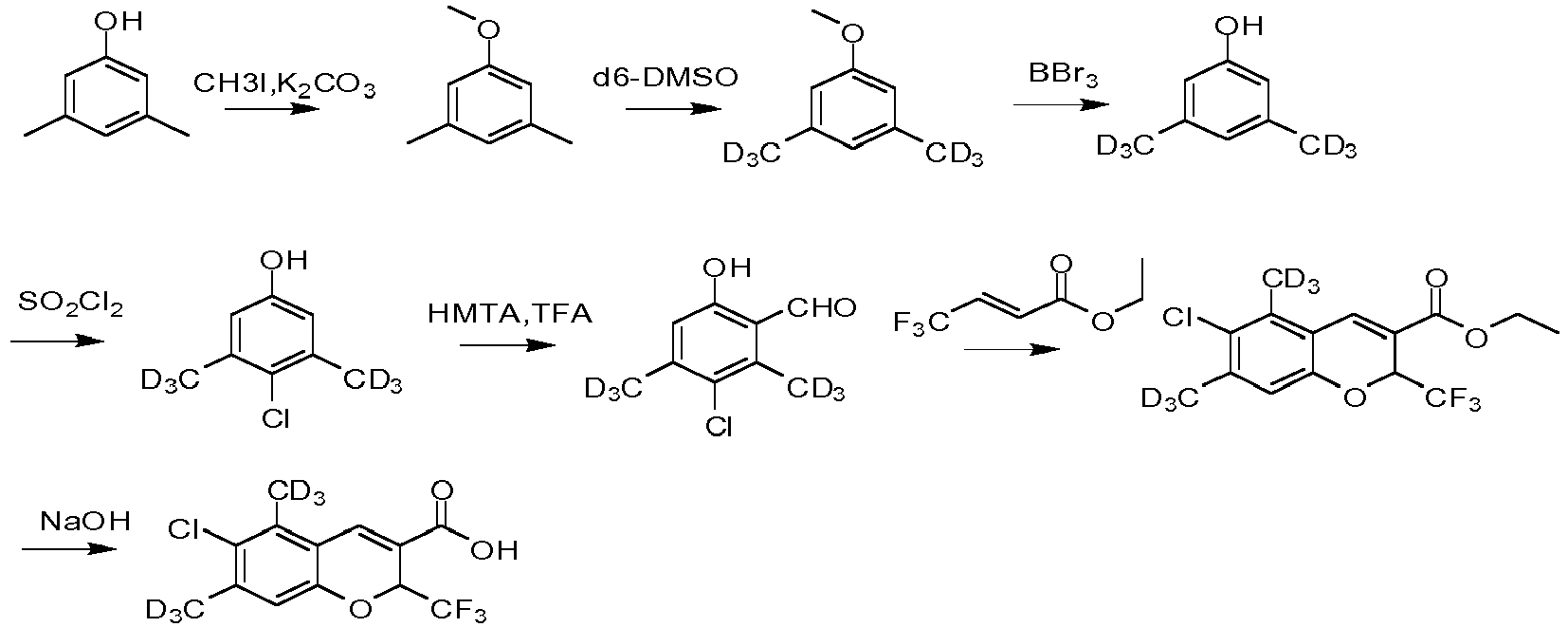
-

- 3,5-xylenol (10g, 0.082mol) and anhydrous potassium carbonate (34g, 0.25mol) were added into DMF (150mL) and then iodomethane (12.8g, 0.090mmol) was dropped under an ice bath. The system was stirred overnight at room temperature. At the end of reaction, the reaction system was added with water and then extracted with ethyl acetate, and the organic phase was washed with saturated brine, then dried and evaporated in vacuum to obtain 10g of the product (90%) by column chromatography.
1HNMR (400 MHz, d-CDCl3), δ 6.60(s, 1 H), 6.53 (s, 2H), 3.77 (s, 3H), 2.29 (s, 6H) -
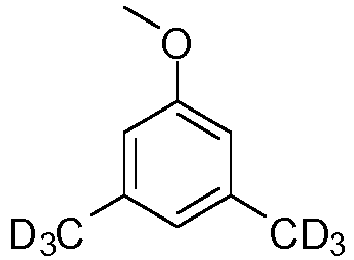
- The resulting product (6.0g, 0.044mol) from step 1, potassium tert-butoxide (20g, 0.18mol) and deuterated DMSO (15mL) were added into a single-neck bottle, and the system was replaced with argon and then reacted at 120°C for 3hrs. The reaction system was cooled to room temperature, added with a proper amount of deuterium oxide, oscillated and extracted with ethyl acetate. The organic phase was washed with water, dried and evaporated in vacuum. The obtained liquid was treated again and the post-treatment operations were repeated to obtain 5g of the product (80%).
1HNMR (400 MHz, d6 -DMSO), δ 6.56(s, 1 H), 6.53 (s, 1 H), 3.7(s, 3H) -

- The resulting product (5g, 0.035mol) from step 2 was dissolved in anhydrous dichloromethane (20mL) and then dropwise added with dichloromethane solution (20mL) of boron tribromide (17.6g, 0.070mol) under an ice bath, after dropping, the system continued to be stirred for 2hrs. At the end of reaction, the reaction system was poured into ice water and then extracted with ethyl acetate, and the organic phase was washed with saturated brine, dried and evaporated in vacuum to obtain 4g of the product (89%) by column chromatography.
1HNMR (400 MHz, d6 -DMSO), δ 9.06(s, 1 H), 6.40 (s, 1 H), 6.36(s, 1 H) -

- The resulting product (1.2g, 9.4mmol) from step 3 and SO2Cl2 (1.27, 9.4mmol) were added in CCl4 (20mL), and the system was refluxed for 5hrs and then evaporated in vacuum to obtain 1g of the product (65%) by column chromatography.
1HNMR (400 MHz, d6 -DMSO), δ 9.37(s, 1 H), 6.57 (s, 2H) -

- The resulting product (1.0g, 6.2mmol) from step 4 was dissolved in trifluoroacetic acid (10mL), and the system was stirred for 1 hr at 80 °C and then slowly added with hexamethylenetetramine (1 g, 7.1mmol). The system was reacted at 80°C for 1 hr, cooled to room temperature, added with 10mL of water and then stirred for 0.5hrs. At the end of reaction, saturated sodium bicarbonate solution was added and extracted with ethyl acetate, and the organic phase was washed with brine, dried and evaporated in vacuum to obtain 0.50g of the product (42%) by column chromatography.
1HNMR (400 MHz, d6 -DMSO), δ 11.39(s, 1H), 10.36 (s, 1 H), 6.86 (s, 1 H) -

- The resulting product (0.50, 2.6mmol) from step 5, ethyl 4,4,4-trifluorocrotonate (1.7g, 10.1mmol) and anhydrous potassium carbonate (0.36g, 5.6mmol) were dissolved in DMF (20mL), and then the system was stirred for 2hrs at 90°C. At the end of reaction, the reaction system was cooled to room temperature and added with water, the mixture was extracted with ethyl acetate, and the organic phase was dried and evaporated in vacuum to obtain 0.60g of the product (67%) by column chromatography.
1HNMR (400 MHz, d6 -DMSO), δ 7.98(s, 1 H), 7.01 (s, 1 H), 6.0 (m, 1H) ,4.28 (dd, 2H), 1.27 (t, 3H)
MS (MM-ES+APCI), m/z: 342(M + H+) -

- The resulting product (0.60g, 1.76mol) from step 6, sodium hydroxide (704mg, 17.6mmol), alcohol (20mL) and water (2mL) were added into a single-neck bottle, and the system was stirred overnight at room temperature. At the end of reaction, the reaction system was evaporated to remove alcohol, then adjusted pH to 3 and extracted with ethyl acetate. The organic phase was washed with saturated brine, dried and evaporated in vacuum to obtain 0.50g of the product (91%).
1HNMR (400 MHz, d-CDCl3), δ 8.09(s, 1 H), 6.81 (s, 1 H), 5.63 (m, 1 H)
MS (MM-ES+APCI), m/z: 312(M - H+) -

-

- 3,5-xylenol (10g, 0.082mol) and anhydrous potassium carbonate (34g, 0.25mol) were added into DMF (150mL) and then iodomethane (12.8g, 0.090mmol) was dropped under an ice bath. The system was stirred overnight at room temperature. At the end of reaction, the reaction system was added with water and then extracted with ethyl acetate, and the organic phase was washed with saturated brine, then dried and evaporated in vacuum to obtain 10g of the product (90%) by column chromatography.
1HNMR (400 MHz, d-CDCl3), δ 6.60(s, 1 H), 6.53 (s, 2H), 3.77 (s, 3H), 2.29 (s, 6H) -

- The resulting product (6.0g, 0.044mol) from step 1, potassium tert-butoxide (20g, 0.18mol) and deuterated DMSO (15mL) were added into a single-neck bottle, and the system was replaced with argon and then reacted at 120°C for 3hrs. The reaction system was cooled to room temperature, added with a proper amount of deuterium oxide, oscillated and extracted with ethyl acetate. The organic phase was washed with water, dried and evaporated in vacuum. The obtained liquid was treated again and the post-treatment operations were repeated to obtain 5g of the product (80%).
1HNMR (400 MHz, d6 -DMSO), δ 6.56(s, 1 H), 6.53 (s, 1 H), 3.7(s,3H) -

- Under the anhydrous conditions, in a single-neck bottle, the resulting product (1.0g, 8.0mol) from step 2 was dissolved in dichloromethane (1 0mL) and then dropwise added with dichloromethane solution (10mL) of boron tribromide (4.0g, 16mmol) under an ice bath, after dropping, the system continued to be stirred for 2hrs. At the end of reaction, the reaction system was poured into ice water and then extracted with ethyl acetate, and the organic phase was washed with saturated brine, dried and evaporated in vacuum to obtain 1.3g of the product (80%) by column chromatography.
1HNMR (400 MHz, d6 -DMSO), δ 9.06(s, 1 H), 6.39 (s, 1 H), 6.36(s, 1 H) -

- The resulting product (0.50g, 2.4mmol) from step 3 was dissolved in trifluoroacetic acid (5mL) and then slowly added with hexamethylenetetramine (0.41g, 2.9mmol). The system was reacted at 80°C for 1 hr, cooled to room temperature, added with 10mL of water and then stirred for 0.5hrs. At the end of reaction, saturated sodium bicarbonate solution was added and extracted with ethyl acetate, and the organic phase was washed with brine, dried and evaporated in vacuum to obtain 0.45g of the product (79%) by column chromatography.
1HNMR (400 MHz, d6 -DMSO), δ 11.9(s, 1H), 10.03 (s, 1 H), 7.77(s, 1H), 7.69(s, 1 H) -

- The resulting product (0.45g, 1.9mmol) from step 4, ethyl 4,4,4-trifluorocrotonate (1.3g, 7.6mmol) and anhydrous potassium carbonate (2.6g, 1.9mmol) were dissolved in DMF (10mL), and then the system was stirred for 2hrs at 90°C. At the end of reaction, the reaction system was cooled to room temperature and added with water, the mixture was extracted with ethyl acetate, and the organic phase was dried and evaporated in vacuum to obtain 0.40g of the product (55%) by column chromatography.
1HNMR (400 MHz, d-CDCl3), δ 7.88(s, 1 H), 6.76 (s, 1 H), 5.7(m, 1 H), 4.3(dd, 2H),1.35(t, 3H)
MS (MM-ES+APCI), m/z: 384 (M-H+) -
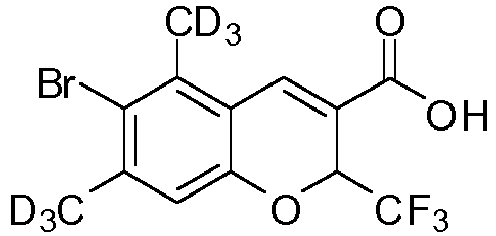
- The resulting product (0.4g, 1.3mol) from step 5, sodium hydroxide (0.52g, 13mol), alcohol (20mL) and water (2mL) were added into a single-neck bottle in turn, and the system was stirred overnight at room temperature. At the end of reaction, the reaction system was adjusted with 7% of hydrochloric acid until pH to 7, and extracted with ethyl acetate. The organic phase was washed with saturated brine, dried and evaporated in vacuum to obtain 0.30g of the product (84%).
1HNMR (400 MHz, d-CDCl3), δ 8.01 (s, 1 H), 6.78 (s, 1 H), 5.77(m, 1 H)
MS (MM-ES+APCI), m/z: 356 (M-H+) -

-

- o-cresol (3.0g, 0.028mol) and anhydrous potassium carbonate (7.7g, 0.056mol) were dissolved into 50 ml of DMF and then iodomethane (3.9g, 0.028mmol) was dropped under an ice bath. The system was stirred overnight at room temperature. At the end of reaction, the reaction system was added with water and then extracted with ethyl acetate, and the organic phase was washed with saturated brine, then dried and evaporated in vacuum to obtain 3g of the product (89%) by column chromatography.
1HNMR (400 MHz, d6 -DMSO), δ 7.15(m, 2H), 6.92 (d, 1H), 6.84 (m, 1H), 3.77 (s, 3H),2.10(s,3H) -

- The resulting product (3g, 0.024mol) from step 1, potassium tert-butoxide (10.8g, 0.096mol) and deuterated DMSO (15mL) were added into a single-neck bottle, and the system was replaced with argon and then reacted at 120°C for 3hrs. The reaction system was cooled to room temperature, added with a proper amount of deuterium oxide, oscillated and extracted with ethyl acetate. The organic phase was washed with water, dried and evaporated in vacuum to obtain 1g of the product (33%).
1HNMR (400 MHz, d6 -DMSO), δ 7.15(m,2H), 6.92 (d, 1H), 6.84 (m, 1H), 3.77 (s, 3H) -

- The resulting product (1.0g, 8mmol) from step 2 and SO2Cl2 (2.16g, 16mmol) were mixed in CCl4 (30mL), and the system is refluxed for 5hrs and evaporated in vacuum to obtain 1 g of the product (78%) by column chromatography.
1HNMR (400 MHz, d-CDCl3), δ 7.09(d, 2H), 6.80 (d, 1 H), 3.80(s, 3H) -

- Under the anhydrous conditions, in a single-neck bottle, the resulting product (1.0g, 6.3mol) from step 3 was dissolved in dichloromethane (10mL) and then dropwise added with dichloromethane solution (10mL) of boron tribromide (1.6g, 12.6mmol) under an ice bath, after dropping, the system continued to be stirred for 4hrs. At the end of reaction, the reaction system was poured into ice water and then extracted with dichloromethane, and the organic phase was washed with saturated brine, dried and evaporated in vacuum to obtain 0.8g of the product (87%) by column chromatography.
1HNMR (400 MHz, d-CDCl3), δ 7.11 (s, 1 H), 7.06(d, 1 H), 6.70(d,1H) -

- The resulting product (0.80g, 5.5mmol) from step 4 was dissolved in trifluoroacetic acid (5mL) and then slowly added with hexamethylenetetramine (0.92g, 6.6mmol). The system was reacted at 80°C for 1 hr, cooled to room temperature, added with 10mL of water and stirred for 0.5hrs. At the end of reaction, saturated sodium bicarbonate solution was added and extracted with ethyl acetate, and the organic phase was washed with brine, dried and evaporated in vacuum to obtain 0.55g of the product (57%) by column chromatography.
1HNMR (400 MHz, d-CDCl3), δ 11.18(s, 1 H), 9.84 (s, 1 H), 7.55(d, 2H) -

- The resulting product (0.50, 2.6mmol) from step 5, ethyl 4,4,4-trifluorocrotonate (1.7g, 10.1mmol) and anhydrous potassium carbonate (0.36g, 5.6mmol) were dissolved in DMF (20mL), and then the system was stirred for 2hrs at 90°C. At the end of reaction, the reaction system was cooled to room temperature and added with water, the mixture was extracted with ethyl acetate, and the organic phase was dried and evaporated in vacuum to obtain 0.50g of the product (50%) by column chromatography.
1HNMR (400 MHz, d-CDCl3), δ 7.65(s, 1H), 7.16 (s, 1H), 7.07(s, 1H), 5.73(m, 1H), 4.30(m, 2H),1.27(m,3H) -

- The resulting product (0.50g, 1.54mol) from step 6, sodium hydroxide (624mg, 15.6mmol), alcohol (20mL) and water (2mL) were added in a single-neck bottle, and the system was stirred overnight at room temperature. At the end of reaction, the reaction system was evaporated to remove alcohol, then adjusted pH to 3 and extracted with ethyl acetate. The organic phase was washed with saturated brine, dried and evaporated in vacuum to obtain 0.40g of the product (88%).
1HNMR (400 MHz, d6 -DMSO), δ 13.4(s, 1H), 7.84 (s, 1H), 7.46(s, 1H), 7.35(s, 1H), 5.96(m, 1 H) -
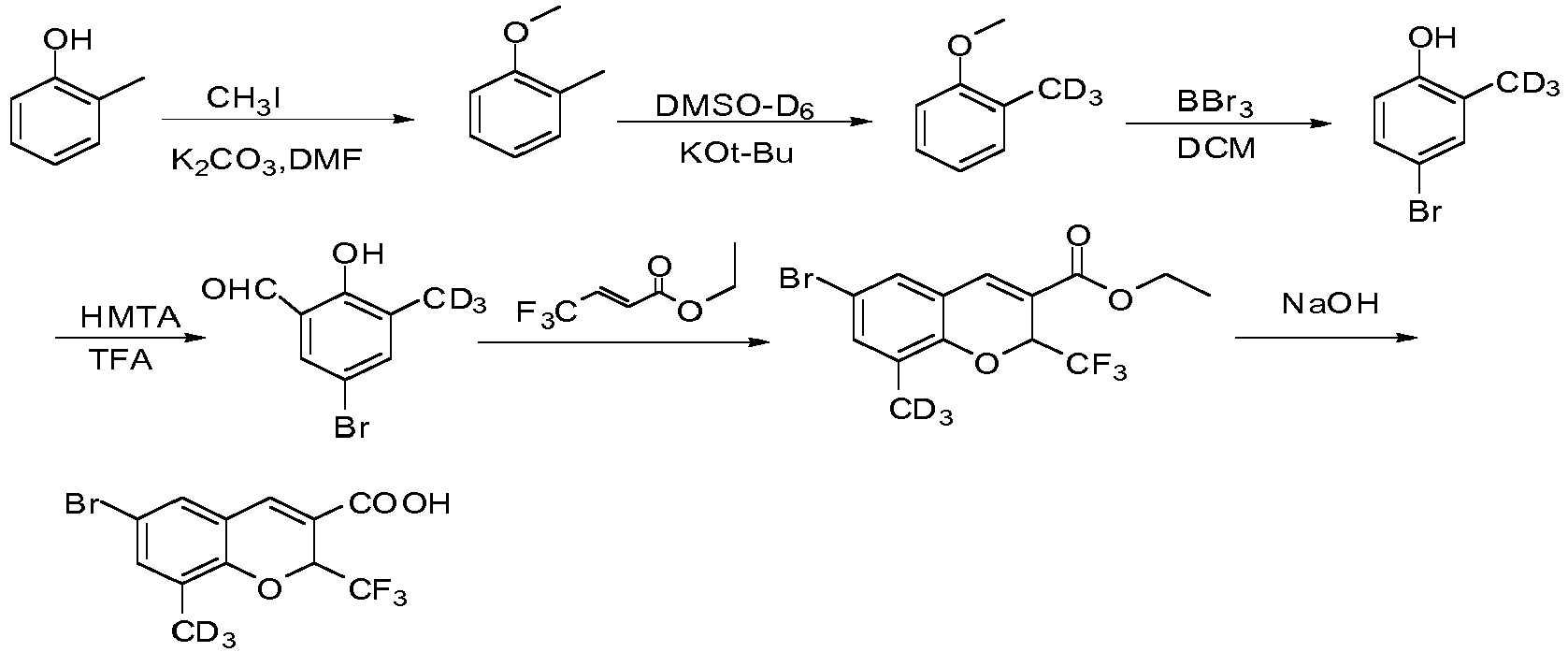
-

- o-cresol (5g, 0.046mol) and anhydrous potassium carbonate (19.17g, 0.14mol) were dissolved into DMF (75mL) and then iodomethane (6.65g, 0.046mmol) was dropped under an ice bath. The system was stirred overnight at room temperature. At the end of reaction, the reaction system was added with water and then extracted with ethyl acetate, and the organic phase was washed with saturated brine, then dried and evaporated in vacuum to obtain the product 4.72g (83.5%) by column chromatography.
MS(MM-ES+APCI), m/z: 123 (M+ + H+) -

- The resulting product (1g, 8.02mmol) from step 1, potassium tert-butoxide 3.68g (33.0mmol) and deuterated DMSO (2.5mL) were added into a single-neck bottle, and the system was replaced with argon and then reacted at 120°C for 3hrs. The reaction system was cooled to room temperature, added with a proper amount of deuterium oxide, oscillated and extracted with ethyl acetate. The organic phase was washed with brine, dried and evaporated in vacuum. The obtained liquid was treated again and the post- treatment operations were repeated to obtain the product 0.85g (83%).
1HNMR (400MHz, d6 -DMSO), δppm 7.15 (m, 2H), 6.92 (d, 1 H, J=0.4Hz), 6.84 (d, 1 H, J=22.4Hz), 3.77 (s,3H) -

- The resulting product (0.85g, 6.8mmol) from step 2 was dissolved in anhydrous dichloromethane (20mL) and then dropwise added with dichloromethane solution (25mL) of boron tribromide (1.6g, 12.6mmol) under an ice bath, and the system was stirred for 2hrs at room temperature. At the end of reaction, the reaction system was poured into ice water and then extracted with dichloromethane, and the organic phase was washed with saturated brine, dried and evaporated in vacuum to obtain the product 0.68g (53%) by column chromatography.
1HNMR(400MHz, d-CDCl3),δppm 7.24(s,1H), 7.17(d,1H,J=10.8Hz), 6.65(d,1H,J=8.4Hz) -

- The resulting product (0.68g, 3.6mmol) from step 3 was dissolved in trifluoroacetic acid (5mL), and the system was stirred for 1hr at 80°C and then slowly added with hexamethylenetetramine (0.61g, 4.3mmol). The system was reacted at 80°C for 1 hr, cooled to room temperature, added with 10mL of water and stirred for 0.5hrs. At the end of reaction, saturated sodium bicarbonate solution was added and extracted with ethyl acetate, and the organic phase was washed with brine, dried and evaporated in vacuum to obtain 0.21g of the product (26.7%) by column chromatography.
1HNMR (400MHz, d6 -DMSO), δppm10.88(s,1H), 10.03(s,1H), 7.77(s,1H), 7.67(s,1H) -

- The resulting product (0.21 g, 0.96mmol) from step 4, ethyl 4,4,4-trifluorocrotonate (0.65g, 3.80mmol) and anhydrous potassium carbonate (0.133g, 0.96mmol) added in a single-neck bottle were dissolved in DMF (10mL), and then the system was stirred for 6hrs at 80°C. The system was added with water and then extracted with ethyl acetate, and the organic phase was dried and evaporated in vacuum to obtain 100mg of the product (28.2%) by column chromatography.
1HNMR (400MHz, d6 -DMSO), δppm7.91 (s,1 H), 7.63(s,1 H), 7.49(s,1 H), 6.05(m,1 H), 4.25 (dd,2H,J=6Hz), 1.27(t,3H) -

- The resulting product (100mg, 0.27mol) from step 5, sodium hydroxide (109mg, 0.27mmol), alcohol (2mL) and water (0.2mL) were added into a single-neck bottle, and the system was stirred overnight at room temperature. At the end of reaction, the reaction system was adjusted pH to 3, and then extracted with ethyl acetate. The organic phase was washed with saturated brine, dried and evaporated in vacuum to obtain 89mg of the product (96.1%).
1HNMR (400MHz, d6 -DMSO), δppm7.82(s,1H), 7.56(s,1H), 7.46(s,1H), 5.95(m,1H)
MS(MM-ES+APCI), m/z: 339 (M - H+) -

-

- 2,4-dimethylphenol (7.5g, 0.062mol) and anhydrous potassium carbonate (25.4g, 0.18mol) were dissolved into DMF (75mL) and then iodomethane (8.83g, 0.062mol) was dropped under an ice bath. The system was stirred overnight at room temperature. At the end of reaction, the reaction system was added with water and then extracted with ethyl acetate, and the organic phase was washed with saturated brine, then dried and evaporated in vacuum to obtain 7.11g of the product (85%) by column chromatography.
MS(MM-ES+APCI), m/z: 137 (M + H+) -

- The resulting product (5g, 0.037mol) from step 1, potassium tert-butoxide (16.473g, 0.15mol) and deuterated DMSO (12mL) were added into a single-neck bottle, and the system was replaced with argon and then reacted at 120°C for 3hrs. The reaction system was cooled to room temperature, added with a proper amount of deuterium oxide, oscillated and extracted with ethyl acetate. The organic phase was washed with water, dried and evaporated in vacuum. The obtained liquid was treated again and the post-treatment operations were repeated to obtain 2.86g of the product (54.7%).
1HNMR (400MHz, d6 -DMSO), δppm 6.93 (d,1H,J=2Hz), 6.90(s,1H), 6.77(d,1H), 3.71 (s,3H) -

- The resulting product (5g, 0.035mol) from step 2 was dissolved in anhydrous dichloromethane (80mL) and then dropwise added with dichloromethane solution (80mL) of boron tribromide (17.6g, 0.070mol) under an ice bath, after dropping, the system continued to be stirred for 4hrs. At the end of reaction, the reaction system was poured into ice water and then extracted with dichloromethane, and the organic phase was washed with saturated brine, dried and evaporated in vacuum to obtain 3.32g of the product (73.6%) by column chromatography.
1HNMR(400MHz, d6 -DMSO), δppm8.87(s,1H), 6.81(s,1H), 6.73(d,1H), 6.60(d,1H) -

- The resulting product (3.32g, 0.026mol) from step 3 was dissolved in trifluoroacetic acid (20mL), and the system was stirred for 1hr at 80°C and then slowly added with hexamethylenetetramine (4.37g, 0.031 mol). The system was reacted at 80°C for 1 hr, cooled to room temperature, added with 10mL of water and stirred for 0.5hrs. At the end of reaction, saturated sodium bicarbonate solution was added and extracted with ethyl acetate, and the organic phase was washed with brine, dried and evaporated in vacuum to obtain 2.04g of the product (49.6%) by column chromatography.
1HNMR(400MHz, d6 -DMSO), δppm10.78(s,1H), 9.98(s,1H), 7.37(s,1H), 7.31(s,1H) -

- The resulting product (2.02g, 0.013mol) from step 4, ethyl 4,4,4-trifluorocrotonate (4.30g, 0.026mol) and anhydrous potassium carbonate (1.76g, 0.013mol) were dissolved in DMF (70mL), and then the system was stirred for 6hrs at 80°C. At the end of reaction, the reaction system was cooled to room temperature, added with water and then extracted with ethyl acetate, and the organic phase was dried and evaporated in vacuum to obtain 2.35g of the product (60.1 %) by column chromatography.
1HNMR(400MHz, d6 -DMSO), δppm 7.84(s,1H), 7.13(s,1H), 7.09(s,1H), 5.94(m,1H), 4.25(dd,1 H), 1.27(t,3H) -

- The resulting product (2.35g, 7.68mmol) from step 5, sodium hydroxide (3g, 76.8mmol), alcohol (40mL) and water (4mL) were added into a single-neck bottle in turn, and the system was stirred overnight at room temperature. At the end of reaction, the reaction system was adjusted pH to 3, and then extracted with ethyl acetate. The organic phase was washed with saturated brine, dried and evaporated in vacuum to obtain 1.61g of the product (75.4%).
1HNMR(400MHz, d6 -DMSO), δppm 13.19(s,1H), 7.77(s,1H), 7.10(s,1H), 7.80(s,1H), 5.88(m,1 H)
MS(MM-ES+APCI), m/z: 277 (M - H+) -

-

- p-cresol (20g, 0.19mol) and anhydrous potassium carbonate (75g, 0.54mol) were added into DMF (500mL) and then iodomethane (27g, 0.19mol) was dropped under an ice bath. The system was stirred overnight at room temperature. At the end of reaction, the reaction system was added with water and then extracted with ethyl acetate, and the organic phase was washed with saturated brine, then dried and evaporated in vacuum to obtain 20g of the product (86%) by column chromatography.
MS(MM-ES+APCI), m/z: 123 (M + H+) -

- The resulting product (20g, 0.16mol) from step 1, potassium tert-butoxide (76g, 0.64mol) and deuterated DMSO (60mL) were added into a single-neck bottle, and the system was replaced with argon and then reacted at 120°C for 3hrs. The reaction system was cooled to room temperature, added with a proper amount of deuterium oxide, oscillated and extracted with ethyl acetate. The organic phase was washed with water, dried and evaporated in vacuum. The obtained liquid was treated again and the post-treatment operations were repeated to obtain 10g of the product (50%).
MS(MM-ES+APCI), m/z: 126 (M + H+) -

- The resulting product (2.0g, 0.016mol) from step 2 was dissolved in anhydrous dichloromethane (40mL) and then dropwise added with dichloromethane solution (40mL) of boron tribromide (8.0g, 0.032mol) under an ice bath, after droppping, the system continued to be stirred for 2hrs. At the end of reaction, the reaction system was poured into ice water and then extracted with dichloromethane, and the organic phase was washed with saturated brine, dried and evaporated in vacuum to obtain 1g of the product (58%) by column chromatography.
-

- The resulting product (1.0g, 9.0mmol) from step 3 and SO2Cl2 (1.2g, 9.0mmol) were added in CCl4 (20mL), and the system was refluxed for 5hrs and then evaporated in vacuum to obtain 0.60g of the product (46%) by column chromatography.
-

- The resulting product (0.60g, 4.1mmol) from step 4 was dissolved in trifluoroacetic acid (20mL), and the system was stirred for 1hr at 80°C and then slowly added with hexamethylenetetramine (0.69g, 4.9mmol). The system was reacted at 80°C for 1 hr, cooled to room temperature, added with 10mL of water and then stirred for 0.5hrs. At the end of reaction, saturated sodium bicarbonate solution was added and extracted with ethyl acetate, and the organic phase was washed with brine, dried and evaporated in vacuum to obtain 0.25g of the product (35%) by column chromatography.
1HNMR (400 MHz, d6 -DMSO), δ 10.9(s, 1 H), 10.11 (s, 1 H), 7.60 (s, 1 H), 7.52 (s, 1 H) -

- The resulting product (0.25g, 1.4mmol) from step 5, ethyl 4,4,4-trifluorocrotonate (0.48g, 2.8mmol) and anhydrous potassium carbonate (0.46g, 2.8mmol) were dissolved in DMF (10mL), and then the system was stirred for 3hrs at 90°C. At the end of reaction, the reaction system was cooled to room temperature and added with water, the mixture was extracted with ethyl acetate, and the organic phase was dried and evaporated in vacuum to obtain 0.2g of the product (44%) by column chromatography.
1HNMR (400 MHz, d6 -DMSO), δ 7.39(s, 1 H), 7.31 (s, 1 H), 6.1 (m, 1H) ,4.27 (dd, 2H), 1.30 (t, 3H)
MS (MM-ES+APCI), m/z: 325(M + H+) -

- The resulting product (0.20g, 0.60mmol) from step 6, sodium hydroxide (0.48g, 12mmol), alcohol (20mL) and water (2mL) were added into a single-neck bottle, and the system was stirred overnight at room temperature. At the end of reaction, the reaction system was adjusted pH to 3 and extracted with ethyl acetate. The organic phase was washed with saturated brine, dried and evaporated in vacuum to obtain 0.15g of the product (85%).
1HNMR (400 MHz, d-CDCl3), δ 8.09(s, 1 H), 6.81 (s, 1 H), 5.63 (m, 1 H)
MS (MM-ES+APCI), m/z: 395(M - H+) -

-
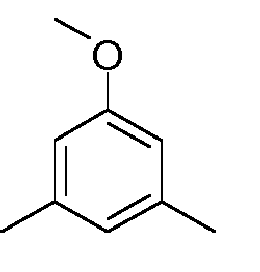
- 3,5-xylenol (10g, 0.082mol) and anhydrous potassium carbonate (34g, 0.25mol) were added into DMF (150mL) and then iodomethane (12.8g, 0.090mol) was dropped under an ice bath. The mixture was stirred overnight at room temperature. At the end of reaction, the reaction system was added with water and then extracted with ethyl acetate, and the organic phase was washed with saturated brine, then dried and evaporated in vacuum to obtain 10g of the product (90%) by column chromatography.
1 HNMR (400 MHz, d-CDCl3), δ 6.60(s, 1 H), 6.53 (s, 2H), 3.77(s, 3H), 2.29 (s, 6H) -

- The resulting product (6.0g, 0.044mol) from step 1, potassium tert-butoxide (20g, 0.18mol) and deuterated DMSO (15mL) were added into a single-neck bottle, and the system was replaced with argon and then reacted at 120°C for 3hrs. The reaction system was cooled to room temperature, added with a proper amount of deuterium oxide, oscillated and extracted with ethyl acetate. The organic phase was washed with water, dried and evaporated in vacuum. The obtained liquid was treated again and the post- treatment operations were repeated to obtain 5g of the product (80%).
1HNMR (400 MHz, d6 -DMSO), δ 6.56(s, 1 H), 6.55(s, 1H), 6.53 (s, 1 H), 3.7(s, 3H) -

- Under the anhydrous conditions, in a single-neck bottle, the resulting product (1.0g, 8.0mmol) from step 2 was dissolved in dichloromethane (10mL) and then dropwise added with dichloromethane solution (10mL) of boron tribromide (4.0g, 16mmol) under an ice bath, after dropping, the system continued to be stirred for 2hrs. At the end of reaction, the reaction system was poured into ice water and then extracted with dichloromethane, and the organic phase was washed with saturated brine, dried and evaporated in vacuum to obtain 1.3g of the product (80%) by column chromatography.
1HNMR (400 MHz, d6 -DMSO), δ 9.92(s, 1 H), 6.58(s, 2H). -

- Under the anhydrous conditions, the resulting product (1g, 4.83mmol) from step 3 was dissolved in dichloromethane (10mL) and then dropwise added with dichloromethane solution (5mL) of liquid bromine (0.81g, 5.07mmol) under an ice bath, after dropping, the system continued to be stirred overnight at room temperature. At the end of reaction, the reaction system was added with sodium hydrogen sulfite solution for removing excessive bromine, evaporated to remove dichloromethane and extracted with ethyl acetate/water. The organic phase was washed with saturated brine, dried and evaporated in vacuum to obtain 1.25g of the product (90.5%) by column chromatography.
1HNMR (400 MHz, d6 -DMSO), δ 10.30(s, 1 H), 6.82 (s, 1 H) -

- The resulting product (0.50g, 1.75mmol) from step 4 was dissolved in trifluoroacetic acid (5mL), and the mixture was slowly added with hexamethylenetetramine (0.29g, 2.10mmol). The system was reacted at 80°C for 1hr, cooled to room temperature, added with 10mL of water and then stirred for 0.5hrs. At the end of reaction, saturated sodium bicarbonate solution was added and extracted with ethyl acetate, and the organic phase was washed with brine, dried and evaporated in vacuum to obtain 0.34g of the product (61.9%) by column chromatography.
1HNMR (400 MHz, d6 -DMSO), δ 12.72(s, 1 H), 10.30 (s, 1 H) -

- The resulting product (0.34g, 1.08mmol) from step 5, ethyl 4,4,4-trifluorocrotonate (0.72g, 4.32mmol) and anhydrous potassium carbonate (0.15g, 1.08mmol) were dissolved in DMF (6mL), and then the system was stirred for 6hrs at 90°C. At the end of reaction, the reaction system was cooled to room temperature and added with water, the mixture was extracted with ethyl acetate, and the organic phase was dried and evaporated in vacuum to obtain 0.12g of the product (23.9%) by column chromatography.
1 HNMR (400 MHz, d-CDCl3), δ 7.95(s, 1H),5.80(m, 1H), 4.34(dd, 2H), 1.36(t, 3H) -

- The resulting product (0.12g, 0.26mmol) from step 6, sodium hydroxide (0.10g, 2.6mmol), alcohol (4mL) and water (0.4mL) were added into a single-neck bottle, and the system was stirred overnight at room temperature. The reaction system was adjusted with 7% hydrochloric acid until pH to 7 and extracted with ethyl acetate. The organic phase was washed with saturated brine, dried and evaporated in vacuum to obtain 43mg of the product (38.0%).
1HNMR (400 MHz, d-CDCl3), δ 8.08(s, 1 H), 5.77(m, 1 H)
MS (MM-ES+APCI), m/z:435 (M-H+) - The synthetic method refers to Embodiment 1.
1HNMR (400 MHz, d-CDCl3), δ 7.86(s, 1 H), 7.13 (d, 1 H), 7.00 (s, 1H), 6.75 (d, 1 H), 5.36 (m, 1 H) - The synthetic method refers to Embodiment 1.
1HNMR (400 MHz, d-CDCl3), δ 8.03(s, 1 H), 7.06 (s, 1 H), 6.50 (s, 1 H), 5.46 (m, 1 H) - The synthetic method refers to Embodiment 1.
1HNMR (400 MHz, d-CDCl3), δ 8.01 (s, 1 H), 6.85 (s, 1 H), 6.77 (s, 1 H), 5.35 (m, 1 H) - The synthetic method refers to Embodiment 1.
1HNMR (400 MHz, d-CDCl3), δ 7.95 (s, 1 H), 6.94 (d, 1 H), 6.63 (d, 1 H), 5.56(m, 1 H) - Deuterated benzopyran compounds of different concentrations were uniformly mixed with ovine COX-1 and human recombinant COX-2 for incubation for 15min, respectively, and then the system was added with Heme and ADHP for incubation for another 2min and finally added with substrate arachidonic acid. The light emission intensity of the reaction product at 595nm was immediately detected by a microplate reader under exciting light at 530nm. The results showed that deuterated benzopyran compounds may significantly inhibit the enzyme reaction rate of COX-2 and have good selectivity. In the whole blood assay, venous blood of healthy donors was collected with a non-anticoagulation tube and a heparin tube, deuterated benzopyran compounds of different concentrations (1×10⁻⁸ to 1×10⁻⁴) were mixed with the blood in the non-anticoagulation tube, the supernatant was collected after the blood was coagulated and then measured by ELISA in terms of the yield of TXB2; and deuterated benzopyran compounds of different concentrations (1×10⁻⁸ to 1×10⁻⁴) were mixed with the blood in the heparin tube, the mixture was added with lipopolysaccharide until the final concentration was 100 µg/mL, mixed uniformly and then kept stand overnight at 37°C, the supernatant was collected by centrifugation and then measured by ELISA in terms of the yield of PGE2. According to the inhibition effects of the deuterated benzopyran compounds on the two isomerases and the inhibition effects of the deuterated benzopyran compounds on TXB2/PGE2 in the blood, 50% inhibitory concentration (IC50) values are calculated as shown in Table 1. (The used compounds were compounds prepared in Embodiments 1-9 and expressed by Drug No. in Table 1, and GIBH-1004, GIBH-1006, GIBH-1008, GIBH-1010, GIBH-1012, GIBH-1014, GIBH-1016, GIBH-1018 and GIBH-1051 were corresponding to the compounds prepared in Embodiments 1-9, respectively.)
Table 1 Inhibition IC50 of part of compounds onto two isomerases COXs and inhibition IC50 onto generation of TXB2/PGE2 in the whole blood test Drug No. COX-1 COX-2 TXB2 PGE2 GIBH-1006 >100uM 56.06nM 20.5uM 79.5uM GIBH-1004 >100uM >10uM >100uM 67.5uM GIBH-1016 >100uM 179.5nM >100uM >100uM GIBH-1008 >100uM 61.75nM 65.1 uM 78.5uM GIBH-1010 >100uM 67.10nM 38.9uM >100uM GIBH-1012 >100uM 54.46nM >100uM >100uM GIBH-1014 31.75uM 36.84nM >100uM 45.22uM GIBH-1018 >100uM 63.74nM >100uM 78.90uM GIBH-1051 5.446uM 84.10nM 70.64uM >100uM - It can be seen from the enzyme activity test as shown in Table 1 that, a series of compounds of the present invention have a nanomole level of inhibition IC50 values onto the activity of human recombinant COX-2 and has relatively poor inhibition onto the activity of COX-1. It is indicated that COX-2 has better section inhibition. For example, the IC50 value of the enzyme COX-2 of the compound GIBH-1008 is 61.75 nanomole, while the IC50 value of COX-1 is greater than 100 micromole. Thus, a ratio of the selectivity of the compound GIBH-1008 to COX-2 to the selectivity of the compound GIBH-1008 to COX-1 is greater than 1619, a ratio of the selectivity of the compound GIBH-1018 to COX-2 to the selectivity of the compound GIBH-1018 to COX-1 is greater than 1569, and a ratio of the selectivity of the compound GIBH-1014 to COX-2 to the selectivity of the compound GIBH-1014 to COX-1 is 862. The human whole blood COX enzyme activity test also indicates that the compounds GIBH1014 and GIBH1018 and the compound GIBH-1014 have better selectivity to the inhibition of COX-2 enzyme of blood cells.
- Test on pharmacokinetics and bioavailability of rats: four male SD rats per group, single-dose, oral administration 2.5-25mg/kg, vein 1-5mg/kg, animal blood samples are collected at proper time points after drug administration, heparin anticoagulation, 3000rpm*10min, collect supernatant, storage at -20°C for LC/MS analysis. The blood samples employ acetonitrile to precipitate protein, 16000rpm*30min, and the supernatant is used for LC/MS analysis. Data is performed with parameter fitting by DAS2.0, and the bioavailability of oral administration of compounds is calculated according AUC data. The results refer to the following table.
Table 3 Pharmacokinetic study results of part of compounds Rat PK The number of animals Dose mg/kg AUC ug/L*h Cmax ug/l t½ h Tmax h BA% Vd l/kg GIBH-1006 ♂4 25 511440.9 29525 9.54 1.625 78.6 0.68 GIBH-1004 ♂4 25 180839.6 34150 2.88 0.563 46.1 0.58 GIBH-1016 ♂4 2.5 4325.4 4405 1.04 0.187 65.1 0.94 GIBH-1008 ♂4 10 118331.4 20900 2.1 1.167 92.8 0.26 GIBH-1010 ♂4 10 84789.7 21399 3.35 0.5 111.8 0.57 GIBH-1012 ♂4 2.5 38881.9 8945 3.37 0.5 110.7 GIBH-1014 ♂4 10 142687 35300 5.2 0.417 107.4 0.53 GIBH-1018 ♂4 2.5 28340.5 11805 2.43 0.271 90.6 0.31 GIBH-1051 ♂4 2.5 13028.2 4485 1.759 0.688 63.7 1.004 - AUC (Area Under the Curve): the area under the curve of concentration of drug in blood plasma against time, standing for the bioavailability of drug (the fraction of drug absorbed by human body). The larger the AUC is, the higher the bioavailability is; otherwise, the bioavailability is low. The AUC is called "area under concentration-time curve". For example, the AUC value of GIBH-1006 is highest, so the bioavailability of GIBH-1006 is also maximal.
- Cmax: the peak concentration refers to the maximum plasma-drug concentration on the concentration-time curve, i.e., the maximum serum concentration that a drug may achieve after the drug has been administrated. The peak concentration is closely related to clinical applications of a drug. The drug may have a conspicuous effect after the concentration of the drug reaches the peak concentration, while the drug may have a toxic response if the concentration of the drug is beyond a safe range. In addition, the peak concentration is also an important indicator for the measurement of preparation absorption and safety.
- T1/2 (half life time): is the time required for the drug plasma concentration to decrease by 50%, reflecting the speed of elimination by biotransformation or excretion.
- Tmax (Peak Time): time required for the curve of drug concentration in human plasma to reach the highest concentration (peak concentration). Short peak time indicates quick absorption and effect and short residence time; and long peak time indicates slow absorption and effect and long residence time. Tmax is an important index of drug application and preparation research.
- BA (bioavailability): the speed and degree of absorption in the systemic circulation. BA is further divided into absolute bioavailability and relative bioavailability. The absolute bioavailability is a percentage of absorption of other forms and doses of this drug by organism when this drug is administrated intravenously and utilized 100%; and the relative bioavailability is a percentage of utilization of other forms of this drug when a certain form (for example, water preparation for oral administration) is unitized 100%.
- Vd (apparent volume of distribution): a ratio of the amount of drugs in the body to the drug plasma concentration when the drugs reach a dynamic balance in the body. According to the plasma concentration (c), it is estimated a volume that the total amount (A) of administrated compounds would have to occupy, that is, Vd=A/c (unit: mL or mL/kg (body weight)). The smaller the Vd is, the quicker the excretion is and the shorter the residence time is; instead, the larger the Vd is, the slower the excretion is and the longer the residence time is. Vd is a theoretical volume, not a specifically physiological volume in the body. However, Vd may reflect the degree of distribution of drugs or the degree of binding with macromolecules in the tissues.
- The embodiments mentioned above are merely several implementations of the present invention. Although these embodiments have been described specifically and in details, these embodiments shall not be regarded as any limitation to the present patent. It should be noted that, those killed in the art may make various variations and improvements without departing from the concept of the present invention, and those variations and improvements shall fall into the protection scope of the present invention. Therefore, the protection scope of the present invention is subject to the claims.
Claims (14)
- A deuterated benzopyran compound of Formula (I) or a pharmaceutically acceptable salt thereof:
 R is carboxyl;R1 is trifluoromethyl; andR2 is one or more substituents independently selected from the group consisting of deuteromethyl, deutero-ethyl, trifluoromethoxy, chlorine, bromine, and iodine, wherein at least one R2 is deutero-methyl or deutero-ethyl.
 - The deuterated benzopyran compound or pharmaceutically acceptable salt according to claim 1, characterized in that the compound is selected from:6-(methyl-D3)-2-(trifluoromethyl)-2H-chromene-3-carboxylic acid;8-(ethyl-D5)-6-(trifluoromethoxy)-2-(trifluoromethyl)-2H-chromene-3-carboxylic acid;6-chloro-5,7-(dimethyl-D6)-2-(trifluoromethyl)-2H-chromene-3-carboxylic acid;6-bromo-5,7-(dimethyl-D6)-2-(trifluoromethyl)-2H-chromene-3-carboxylic acid;6-chloro-8-(methyl-D3)-2-(trifluoromethyl)-2H-chromene-3-carboxylic acid;6-bromo-8-(methyl-D3)-2-(trifluoromethyl)-2H-chromene-3-carboxylic acid;8-chloro-6-(methyl-D3)-2-(trifluoromethyl)-2H-chromene-3-carboxylic acid; and6,8-dibromo-5,7-(dimethyl-D6)-2-(trifluoromethyl)-2H-chromene-3-carboxylic acid.
- The deuterated benzopyran compound or pharmaceutically acceptable salt according to claim 2, characterized in that the compound is 6-(methyl-D3)-2-(trifluoromethyl)-2H-chromene-3-carboxylic acid or a salt thereof.
- The deuterated benzopyran compound or pharmaceutically acceptable salt according to claim 2, characterized in that the compound is 8-(ethyl-D5)-6-(trifluoromethoxy)-2-(trifluoromethyl)-2H-chromene-3-carboxylic acid or a salt thereof.
- The deuterated benzopyran compound or pharmaceutically acceptable salt according to claim 2, characterized in that the compound is 6-chloro-5,7-(dimethyl-D6)-2-(trifluoromethyl)-2H-chromene-3-carboxylic acid or a salt thereof.
- The deuterated benzopyran compound or pharmaceutically acceptable salt according to claim 2, characterized in that the compound is 6-bromo-5,7-(dimethyl-D6)-2-(trifluoromethyl)-2H-chromene-3-carboxylic acid or a salt thereof.
- The deuterated benzopyran compound or pharmaceutically acceptable salt according to claim 2, characterized in that the compound is 6-chloro-8-(methyl-D3)-2-(trifluoromethyl)-2H-chromene-3-carboxylic acid or a salt thereof.
- The deuterated benzopyran compound or pharmaceutically acceptable salt according to claim 2, characterized in that the compound is 6-bromo-8-(methyl-D3)-2-(trifluoromethyl)-2H-chromene-3-carboxylic acid.
- The deuterated benzopyran compound or pharmaceutically acceptable salt according to claim 2, characterized in that the compound is 8-chloro-6-(methyl-D3)-2-(trifluoromethyl)-2H-chromene-3-carboxylic acid or a salt thereof.
- The deuterated benzopyran compound or pharmaceutically acceptable salt according to claim 2, characterized in that the compound is 6,8-dibromo-5,7-(dimethyl-D6)-2-(trifluoromethyl)-2H-chromene-3-carboxylic acid or a salt thereof.
- The deuterated benzopyran compound or pharmaceutically acceptable salt according to any one of the preceding claims for use in preparing anti-inflammatory and analgesic drugs or preparing drugs for preventing or treating tumors.
- The deuterated benzopyran compound or pharmaceutically acceptable salt according to any one of the preceding claims for use in the treatment of inflammation characterized by rheumatoid arthritis, gouty arthritis, osteoarthritis and rachitis; or by one of systemic lupus erythematosus, psoriasis, eczema, skin inflammation and postpartum inflammation, bowel disease, gastritis, irritable bowel syndrome, headache, exarteritis, thyroiditis, aplastic anemia, retinitis, conjunctivitis, retinopathy, uveitis, hemeralopia, acute ocular tissue injury, viral infection and cystic fibrosis, allergic rhinitis, postpartum pain, toothache, muscle pain, cancer pain, aneurysm, coronary plaque inflammation, inflammation caused by bacteria, inflammation caused by viruses, inflammation caused by surgery, ocular vascular hyperplasia, retinal vascular hyperplasia, and gastric ulcer.
- The deuterated benzopyran compound or pharmaceutically acceptable salt according to any one of the preceding claims for use in the treatment of tumors, characterized in that the tumor is one of hemangioma, endometriosis, gastrointestinal stromal tumor, histiocytic lymphoma, non-small cell lung cancer, small-cell lung cancer, lung adenocarcinoma, squamous cell carcinoma, pancreatic cancer, breast cancer, prostate cancer, liver cancer, skin cancer, squamous cell carcinoma, nasopharyngeal carcinoma, and leukemia.
- A pharmaceutical composition comprising a deuterated benzopyran compound or pharmaceutically acceptable salt according to any one of the preceding claims and a pharmaceutically acceptable carrier.
Priority Applications (5)
| Application Number | Priority Date | Filing Date | Title |
|---|---|---|---|
| RS20161098A RS55522B1 (en) | 2012-06-18 | 2012-08-10 | DEUTSERED BENZOPIRANE UNIT AND ITS APPLICATION |
| SI201230822A SI2845854T1 (en) | 2012-06-18 | 2012-08-10 | Deuterated benzopyran compound and application thereof |
| PL12879240T PL2845854T3 (en) | 2012-06-18 | 2012-08-10 | Deuterated benzopyran compound and application thereof |
| HRP20161644TT HRP20161644T1 (en) | 2012-06-18 | 2012-08-10 | COMPOUND OF DEUTERATED BENZOPIRAN AND ITS APPLICATION |
| SM20170079T SMT201700079T1 (en) | 2012-06-18 | 2012-08-10 | Deuterated benzopyran compound and application thereof |
Applications Claiming Priority (2)
| Application Number | Priority Date | Filing Date | Title |
|---|---|---|---|
| CN201210202059.XA CN102757417B (en) | 2012-06-18 | 2012-06-18 | Deuterated benzopyran compounds and their applications |
| PCT/CN2012/079968 WO2013189121A1 (en) | 2012-06-18 | 2012-08-10 | Deuterated benzopyran compound and application thereof |
Publications (3)
| Publication Number | Publication Date |
|---|---|
| EP2845854A4 EP2845854A4 (en) | 2015-03-11 |
| EP2845854A1 EP2845854A1 (en) | 2015-03-11 |
| EP2845854B1 true EP2845854B1 (en) | 2016-09-21 |
Family
ID=47052099
Family Applications (1)
| Application Number | Title | Priority Date | Filing Date |
|---|---|---|---|
| EP12879240.5A Active EP2845854B1 (en) | 2012-06-18 | 2012-08-10 | Deuterated benzopyran compound and application thereof |
Country Status (17)
| Country | Link |
|---|---|
| US (3) | US9371305B2 (en) |
| EP (1) | EP2845854B1 (en) |
| JP (1) | JP6227635B2 (en) |
| CN (1) | CN102757417B (en) |
| CA (1) | CA2875721C (en) |
| CY (1) | CY1118398T1 (en) |
| DK (1) | DK2845854T3 (en) |
| ES (1) | ES2606925T3 (en) |
| HR (1) | HRP20161644T1 (en) |
| HU (1) | HUE031172T2 (en) |
| LT (1) | LT2845854T (en) |
| PL (1) | PL2845854T3 (en) |
| PT (1) | PT2845854T (en) |
| RS (1) | RS55522B1 (en) |
| SI (1) | SI2845854T1 (en) |
| SM (2) | SMT201700079T1 (en) |
| WO (1) | WO2013189121A1 (en) |
Families Citing this family (8)
| Publication number | Priority date | Publication date | Assignee | Title |
|---|---|---|---|---|
| CN102757417B (en) * | 2012-06-18 | 2014-09-24 | 中国科学院广州生物医药与健康研究院 | Deuterated benzopyran compounds and their applications |
| CN103012350B (en) * | 2012-12-07 | 2015-02-04 | 中国科学院广州生物医药与健康研究院 | Synthetic method of benzopyran chiral compound |
| CN103044477B (en) * | 2012-12-07 | 2015-08-05 | 中国科学院广州生物医药与健康研究院 | Trimethyl silicane replaces benzopyrans compounds and application thereof |
| WO2015109014A1 (en) * | 2014-01-14 | 2015-07-23 | Euclises Pharmaceuticals, Inc. | No-releasing nonoate(oxygen-bound)chromene conjugates |
| MX388579B (en) | 2016-01-08 | 2025-03-20 | Euclises Pharmaceuticals Inc | COMBINATION OF A CHROMENE COMPOUND AND A SECOND ACTIVE AGENT. |
| CN105585547A (en) * | 2016-03-09 | 2016-05-18 | 中国科学院广州生物医药与健康研究院 | 4-sulfur pentafluoride phenol compound, preparing method and preparing method for sulfur pentafluoride substituted benzopyran compound |
| CN119367540A (en) * | 2023-07-26 | 2025-01-28 | 中国科学院广州生物医药与健康研究院 | Application of cyclooxygenase type II inhibitors |
| CN119954759B (en) * | 2025-01-03 | 2025-10-21 | 安炎达医药技术(广州)有限公司 | A benzopyran COX-2 inhibitor and its application |
Family Cites Families (11)
| Publication number | Priority date | Publication date | Assignee | Title |
|---|---|---|---|---|
| CN1087725C (en) * | 1994-03-25 | 2002-07-17 | 同位素技术有限公司 | Enhancement of the effect of drugs by deuteration |
| US6034256A (en) * | 1997-04-21 | 2000-03-07 | G.D. Searle & Co. | Substituted benzopyran derivatives for the treatment of inflammation |
| US6077850A (en) * | 1997-04-21 | 2000-06-20 | G.D. Searle & Co. | Substituted benzopyran analogs for the treatment of inflammation |
| US7329401B2 (en) * | 2002-04-15 | 2008-02-12 | The Regents Of The University Of California | Cyclooxygenase-2 selective agents useful as imaging probes and related methods |
| US20050148627A1 (en) * | 2003-03-31 | 2005-07-07 | Jeffery Carter | Benzopyran compounds for use in the treatment and prevention of inflammation related conditions |
| US7259266B2 (en) * | 2003-03-31 | 2007-08-21 | Pharmacia Corporation | Benzopyran compounds useful for treating inflammatory conditions |
| AU2007286186A1 (en) | 2006-08-08 | 2008-02-21 | Auspex Pharmaceuticals, Inc. | Preparation and utility of substituted quinazoline compounds with alpha-adrenergic blocking effects |
| US8227451B2 (en) * | 2008-11-12 | 2012-07-24 | Auspex Pharmaceuticals | Phenylacetic acid inhibitors of cyclooxygenase |
| US20100129366A1 (en) * | 2008-11-21 | 2010-05-27 | Auspex Pharmaceuticals, Inc. | Thiazole inhibitors of cyclooxygenase |
| CN102757417B (en) * | 2012-06-18 | 2014-09-24 | 中国科学院广州生物医药与健康研究院 | Deuterated benzopyran compounds and their applications |
| CN103012350B (en) * | 2012-12-07 | 2015-02-04 | 中国科学院广州生物医药与健康研究院 | Synthetic method of benzopyran chiral compound |
-
2012
- 2012-06-18 CN CN201210202059.XA patent/CN102757417B/en active Active
- 2012-08-10 WO PCT/CN2012/079968 patent/WO2013189121A1/en not_active Ceased
- 2012-08-10 US US14/401,600 patent/US9371305B2/en active Active
- 2012-08-10 CA CA2875721A patent/CA2875721C/en active Active
- 2012-08-10 EP EP12879240.5A patent/EP2845854B1/en active Active
- 2012-08-10 HU HUE12879240A patent/HUE031172T2/en unknown
- 2012-08-10 LT LTEP12879240.5T patent/LT2845854T/en unknown
- 2012-08-10 JP JP2015516409A patent/JP6227635B2/en active Active
- 2012-08-10 PL PL12879240T patent/PL2845854T3/en unknown
- 2012-08-10 PT PT128792405T patent/PT2845854T/en unknown
- 2012-08-10 RS RS20161098A patent/RS55522B1/en unknown
- 2012-08-10 SM SM20170079T patent/SMT201700079T1/en unknown
- 2012-08-10 DK DK12879240.5T patent/DK2845854T3/en active
- 2012-08-10 SI SI201230822A patent/SI2845854T1/en unknown
- 2012-08-10 ES ES12879240.5T patent/ES2606925T3/en active Active
- 2012-08-10 HR HRP20161644TT patent/HRP20161644T1/en unknown
-
2016
- 2016-06-14 US US15/182,496 patent/US9763914B2/en active Active
- 2016-06-14 US US15/182,525 patent/US9770432B2/en active Active
- 2016-12-01 CY CY20161101243T patent/CY1118398T1/en unknown
-
2017
- 2017-02-03 SM SM201700079T patent/SMT201700079B/en unknown
Non-Patent Citations (1)
| Title |
|---|
| YANMEI ZHAGN ET AL: "synthesis of deuterated benzopyran derivatives as selective COX-2 inhibitors with improved pharmacokinetic properties", ACS MEDICINAL CHEMISTRY LETTERS, vol. 5, 2014 * |
Also Published As
| Publication number | Publication date |
|---|---|
| EP2845854A4 (en) | 2015-03-11 |
| EP2845854A1 (en) | 2015-03-11 |
| SMT201700079T1 (en) | 2017-03-08 |
| RS55522B1 (en) | 2017-05-31 |
| US20170020843A1 (en) | 2017-01-26 |
| ES2606925T3 (en) | 2017-03-28 |
| HUE031172T2 (en) | 2017-07-28 |
| US20150133538A1 (en) | 2015-05-14 |
| PT2845854T (en) | 2016-12-13 |
| CN102757417A (en) | 2012-10-31 |
| US20160287556A1 (en) | 2016-10-06 |
| CA2875721C (en) | 2021-07-06 |
| US9371305B2 (en) | 2016-06-21 |
| CN102757417B (en) | 2014-09-24 |
| PL2845854T3 (en) | 2017-07-31 |
| CY1118398T1 (en) | 2017-06-28 |
| US9770432B2 (en) | 2017-09-26 |
| US9763914B2 (en) | 2017-09-19 |
| JP6227635B2 (en) | 2017-11-08 |
| HRP20161644T1 (en) | 2017-01-27 |
| DK2845854T3 (en) | 2017-01-09 |
| LT2845854T (en) | 2017-03-10 |
| SI2845854T1 (en) | 2017-02-28 |
| CA2875721A1 (en) | 2013-12-27 |
| JP2015519378A (en) | 2015-07-09 |
| SMT201700079B (en) | 2017-03-08 |
| WO2013189121A1 (en) | 2013-12-27 |
Similar Documents
| Publication | Publication Date | Title |
|---|---|---|
| US9770432B2 (en) | Deuterated benzopyran compounds and the use in the treatment of pain and inflammation | |
| CZ20001621A3 (en) | Indazole bioisostere replacement of catechol in therapeutically active compounds | |
| CA2977626C (en) | Substituted pyrimidine compounds as phosphatidylinositol 3-kinase .delta. inhibitor and use thereof | |
| CA2729217C (en) | 6-substituted phenoxychroman carboxylic acid derivatives | |
| CN1705473A (en) | Chromones and chromone derivatives and uses thereof | |
| UA75328C2 (en) | Substituted benzopyran derivatives, pharmaceutical composition and a method for the treatment of inflammation, pain and cancer | |
| US20230192588A1 (en) | Cannabidiolic acid (cbda) derivatives and uses thereof | |
| JP6088639B2 (en) | Antimalarial | |
| IL153352A (en) | Coumarin derivatives with comt inhibiting activity | |
| HUP9800374A2 (en) | Sulfonamide-substituted chromanes process for producing them, their use as medicines and pharmaceutical composition containing them | |
| WO2021245676A1 (en) | Cannabidiolic acid (cbda) derivatives and uses thereof | |
| CN110041272B (en) | 2- (2-chlorphenyl) quinazoline-4 (3H) -ketone derivative and preparation method and application thereof | |
| You et al. | Synthesis and anticoccidial activity of 4-(2-methoxyphenyl)-2-oxobutylquinazolinone derivatives | |
| CN103044477B (en) | Trimethyl silicane replaces benzopyrans compounds and application thereof | |
| CN104860914B (en) | Sulfur pentafluoride replaces benzopyrans compounds and its application | |
| WO2021245675A1 (en) | Cannabidiolic acid (cbda) derivatives and uses thereof | |
| CN116554153A (en) | Tertiary amide compounds and their medicinal uses | |
| RU2631317C1 (en) | Selective inhibitors of cycloxygenase and method for their production | |
| CN119954759B (en) | A benzopyran COX-2 inhibitor and its application | |
| FR2551753A2 (en) | 1,2,3-Benzotriazin-4-ones, process for preparing them and medicinal products containing them | |
| CN121494842A (en) | Acetamide compounds containing benzothiophene, their preparation methods and applications, and pharmaceutical compositions. | |
| HK1235780A1 (en) | 6-substituted phenoxychroman carboxylic acid derivatives | |
| JPH08511254A (en) | 2-oxo-1,2,3,4-tetrahydroquinoline derivative | |
| HK1155735B (en) | 6-substituted phenoxychroman carboxylic acid derivatives |
Legal Events
| Date | Code | Title | Description |
|---|---|---|---|
| PUAI | Public reference made under article 153(3) epc to a published international application that has entered the european phase |
Free format text: ORIGINAL CODE: 0009012 |
|
| 17P | Request for examination filed |
Effective date: 20141204 |
|
| A4 | Supplementary search report drawn up and despatched |
Effective date: 20150204 |
|
| AK | Designated contracting states |
Kind code of ref document: A1 Designated state(s): AL AT BE BG CH CY CZ DE DK EE ES FI FR GB GR HR HU IE IS IT LI LT LU LV MC MK MT NL NO PL PT RO RS SE SI SK SM TR |
|
| AX | Request for extension of the european patent |
Extension state: BA ME |
|
| DAX | Request for extension of the european patent (deleted) | ||
| GRAP | Despatch of communication of intention to grant a patent |
Free format text: ORIGINAL CODE: EPIDOSNIGR1 |
|
| INTG | Intention to grant announced |
Effective date: 20151016 |
|
| GRAP | Despatch of communication of intention to grant a patent |
Free format text: ORIGINAL CODE: EPIDOSNIGR1 |
|
| INTG | Intention to grant announced |
Effective date: 20160318 |
|
| GRAS | Grant fee paid |
Free format text: ORIGINAL CODE: EPIDOSNIGR3 |
|
| GRAA | (expected) grant |
Free format text: ORIGINAL CODE: 0009210 |
|
| AK | Designated contracting states |
Kind code of ref document: B1 Designated state(s): AL AT BE BG CH CY CZ DE DK EE ES FI FR GB GR HR HU IE IS IT LI LT LU LV MC MK MT NL NO PL PT RO RS SE SI SK SM TR |
|
| REG | Reference to a national code |
Ref country code: GB Ref legal event code: FG4D |
|
| REG | Reference to a national code |
Ref country code: CH Ref legal event code: EP |
|
| REG | Reference to a national code |
Ref country code: AT Ref legal event code: REF Ref document number: 830948 Country of ref document: AT Kind code of ref document: T Effective date: 20161015 |
|
| REG | Reference to a national code |
Ref country code: IE Ref legal event code: FG4D |
|
| REG | Reference to a national code |
Ref country code: DE Ref legal event code: R096 Ref document number: 602012023412 Country of ref document: DE |
|
| REG | Reference to a national code |
Ref country code: HR Ref legal event code: TUEP Ref document number: P20161644 Country of ref document: HR Ref country code: RO Ref legal event code: EPE |
|
| REG | Reference to a national code |
Ref country code: PT Ref legal event code: SC4A Ref document number: 2845854 Country of ref document: PT Date of ref document: 20161213 Kind code of ref document: T Free format text: AVAILABILITY OF NATIONAL TRANSLATION Effective date: 20161206 |
|
| REG | Reference to a national code |
Ref country code: SE Ref legal event code: TRGR |
|
| REG | Reference to a national code |
Ref country code: NL Ref legal event code: FP |
|
| REG | Reference to a national code |
Ref country code: CH Ref legal event code: NV Representative=s name: LEMAN CONSULTING S.A., CH |
|
| REG | Reference to a national code |
Ref country code: DK Ref legal event code: T3 Effective date: 20170103 |
|
| REG | Reference to a national code |
Ref country code: HR Ref legal event code: T1PR Ref document number: P20161644 Country of ref document: HR |
|
| REG | Reference to a national code |
Ref country code: NO Ref legal event code: T2 Effective date: 20160921 |
|
| REG | Reference to a national code |
Ref country code: EE Ref legal event code: FG4A Ref document number: E012996 Country of ref document: EE Effective date: 20161202 |
|
| REG | Reference to a national code |
Ref country code: DE Ref legal event code: R097 Ref document number: 602012023412 Country of ref document: DE |
|
| REG | Reference to a national code |
Ref country code: SK Ref legal event code: T3 Ref document number: E 23188 Country of ref document: SK |
|
| PLBE | No opposition filed within time limit |
Free format text: ORIGINAL CODE: 0009261 |
|
| REG | Reference to a national code |
Ref country code: HU Ref legal event code: AG4A Ref document number: E031172 Country of ref document: HU |
|
| STAA | Information on the status of an ep patent application or granted ep patent |
Free format text: STATUS: NO OPPOSITION FILED WITHIN TIME LIMIT |
|
| REG | Reference to a national code |
Ref country code: FR Ref legal event code: PLFP Year of fee payment: 6 |
|
| 26N | No opposition filed |
Effective date: 20170622 |
|
| REG | Reference to a national code |
Ref country code: CH Ref legal event code: NV Representative=s name: IP PARTNERS J. WENGER, CH |
|
| REG | Reference to a national code |
Ref country code: FR Ref legal event code: PLFP Year of fee payment: 7 |
|
| REG | Reference to a national code |
Ref country code: AT Ref legal event code: UEP Ref document number: 830948 Country of ref document: AT Kind code of ref document: T Effective date: 20160921 |
|
| REG | Reference to a national code |
Ref country code: HR Ref legal event code: ODRP Ref document number: P20161644 Country of ref document: HR Payment date: 20190719 Year of fee payment: 8 |
|
| REG | Reference to a national code |
Ref country code: HR Ref legal event code: ODRP Ref document number: P20161644 Country of ref document: HR Payment date: 20200723 Year of fee payment: 9 |
|
| REG | Reference to a national code |
Ref country code: HR Ref legal event code: ODRP Ref document number: P20161644 Country of ref document: HR Payment date: 20210720 Year of fee payment: 10 |
|
| REG | Reference to a national code |
Ref country code: HR Ref legal event code: ODRP Ref document number: P20161644 Country of ref document: HR Payment date: 20220721 Year of fee payment: 11 |
|
| REG | Reference to a national code |
Ref country code: EE Ref legal event code: HC1A Ref document number: E012996 Country of ref document: EE |
|
| REG | Reference to a national code |
Ref country code: HR Ref legal event code: ODRP Ref document number: P20161644 Country of ref document: HR Payment date: 20230718 Year of fee payment: 12 |
|
| REG | Reference to a national code |
Ref country code: GB Ref legal event code: 732E Free format text: REGISTERED BETWEEN 20240104 AND 20240110 |
|
| REG | Reference to a national code |
Ref country code: NO Ref legal event code: CREP Representative=s name: MURGITROYD & COMPANY, MANNERHEIMVAEGEN 12 B, 5TR Ref country code: NO Ref legal event code: CHAD Owner name: INFLAMAX PHARMACEUTICALS LIMITED, CN |
|
| REG | Reference to a national code |
Ref country code: DE Ref legal event code: R081 Ref document number: 602012023412 Country of ref document: DE Owner name: LNFLAMAX PHARMACEUTICALS LTD., CN Free format text: FORMER OWNER: GUANGZHOU INSTITUTE OF BIOMEDICINE AND HEALTH, CHINESE ACADEMY OF SCIENCES, GUANGZHOU, CN |
|
| REG | Reference to a national code |
Ref country code: NL Ref legal event code: PD Owner name: INFLAMAX PHARMACEUTICALS LIMITED; CN Free format text: DETAILS ASSIGNMENT: CHANGE OF OWNER(S), ASSIGNMENT; FORMER OWNER NAME: GUANGZHOU INSTITUTE OF BIOMEDICINE AND HEALTH, CHINESE ACADEMY OF SCIENCES Effective date: 20240411 |
|
| REG | Reference to a national code |
Ref country code: AT Ref legal event code: PC Ref document number: 830948 Country of ref document: AT Kind code of ref document: T Owner name: INFLAMAX PHARMACEUTICALS LIMITED, CN Effective date: 20240405 |
|
| REG | Reference to a national code |
Ref country code: BE Ref legal event code: PD Owner name: INFLAMAX PHARMACEUTICALS LIMITED; CN Free format text: DETAILS ASSIGNMENT: CHANGE OF OWNER(S), ASSIGNMENT; FORMER OWNER NAME: GUANGZHOU INSTITUTE OF BIOMEDICINE AND HEALTH, CHINESE ACADEMY OF SCIENCES Effective date: 20240402 |
|
| REG | Reference to a national code |
Ref country code: ES Ref legal event code: PC2A Owner name: INFLAMAX PHARMACEUTICALS LIMITED Effective date: 20240913 |
|
| REG | Reference to a national code |
Ref country code: HR Ref legal event code: ODRP Ref document number: P20161644 Country of ref document: HR Payment date: 20240918 Year of fee payment: 13 |
|
| PGFP | Annual fee paid to national office [announced via postgrant information from national office to epo] |
Ref country code: SI Payment date: 20250717 Year of fee payment: 14 |
|
| REG | Reference to a national code |
Ref country code: HR Ref legal event code: ODRP Ref document number: P20161644 Country of ref document: HR Payment date: 20250731 Year of fee payment: 14 |
|
| PGFP | Annual fee paid to national office [announced via postgrant information from national office to epo] |
Ref country code: LU Payment date: 20250827 Year of fee payment: 14 Ref country code: NL Payment date: 20250826 Year of fee payment: 14 |
|
| PGFP | Annual fee paid to national office [announced via postgrant information from national office to epo] |
Ref country code: HU Payment date: 20250730 Year of fee payment: 14 |
|
| PGFP | Annual fee paid to national office [announced via postgrant information from national office to epo] |
Ref country code: SM Payment date: 20250723 Year of fee payment: 14 |
|
| PGFP | Annual fee paid to national office [announced via postgrant information from national office to epo] |
Ref country code: ES Payment date: 20250901 Year of fee payment: 14 Ref country code: PT Payment date: 20250723 Year of fee payment: 14 Ref country code: FI Payment date: 20250825 Year of fee payment: 14 |
|
| PGFP | Annual fee paid to national office [announced via postgrant information from national office to epo] |
Ref country code: LT Payment date: 20250721 Year of fee payment: 14 Ref country code: DK Payment date: 20250825 Year of fee payment: 14 Ref country code: DE Payment date: 20250827 Year of fee payment: 14 |
|
| PGFP | Annual fee paid to national office [announced via postgrant information from national office to epo] |
Ref country code: MC Payment date: 20250722 Year of fee payment: 14 Ref country code: NO Payment date: 20250827 Year of fee payment: 14 Ref country code: GR Payment date: 20250826 Year of fee payment: 14 |
|
| PGFP | Annual fee paid to national office [announced via postgrant information from national office to epo] |
Ref country code: PL Payment date: 20250724 Year of fee payment: 14 Ref country code: TR Payment date: 20250721 Year of fee payment: 14 Ref country code: IT Payment date: 20250820 Year of fee payment: 14 |
|
| PGFP | Annual fee paid to national office [announced via postgrant information from national office to epo] |
Ref country code: BG Payment date: 20250820 Year of fee payment: 14 Ref country code: BE Payment date: 20250827 Year of fee payment: 14 Ref country code: GB Payment date: 20250827 Year of fee payment: 14 |
|
| PGFP | Annual fee paid to national office [announced via postgrant information from national office to epo] |
Ref country code: HR Payment date: 20250731 Year of fee payment: 14 |
|
| PGFP | Annual fee paid to national office [announced via postgrant information from national office to epo] |
Ref country code: AL Payment date: 20250731 Year of fee payment: 14 Ref country code: FR Payment date: 20250825 Year of fee payment: 14 Ref country code: AT Payment date: 20250827 Year of fee payment: 14 |
|
| PGFP | Annual fee paid to national office [announced via postgrant information from national office to epo] |
Ref country code: MT Payment date: 20250723 Year of fee payment: 14 Ref country code: CH Payment date: 20250901 Year of fee payment: 14 Ref country code: SE Payment date: 20250827 Year of fee payment: 14 |
|
| PGFP | Annual fee paid to national office [announced via postgrant information from national office to epo] |
Ref country code: CZ Payment date: 20250724 Year of fee payment: 14 Ref country code: RS Payment date: 20250718 Year of fee payment: 14 Ref country code: IE Payment date: 20250827 Year of fee payment: 14 Ref country code: EE Payment date: 20250721 Year of fee payment: 14 |
|
| PGFP | Annual fee paid to national office [announced via postgrant information from national office to epo] |
Ref country code: RO Payment date: 20250725 Year of fee payment: 14 |
|
| PGFP | Annual fee paid to national office [announced via postgrant information from national office to epo] |
Ref country code: SK Payment date: 20250718 Year of fee payment: 14 |
|
| PGFP | Annual fee paid to national office [announced via postgrant information from national office to epo] |
Ref country code: IS Payment date: 20250805 Year of fee payment: 14 |
|
| PGFP | Annual fee paid to national office [announced via postgrant information from national office to epo] |
Ref country code: LV Payment date: 20250718 Year of fee payment: 14 |
|
| PGFP | Annual fee paid to national office [announced via postgrant information from national office to epo] |
Ref country code: MK Payment date: 20250721 Year of fee payment: 14 |
|
| PGFP | Annual fee paid to national office [announced via postgrant information from national office to epo] |
Ref country code: CY Payment date: 20250724 Year of fee payment: 14 |