EP2844568B1 - Containers having improved vacuum resistance - Google Patents
Containers having improved vacuum resistance Download PDFInfo
- Publication number
- EP2844568B1 EP2844568B1 EP13715231.0A EP13715231A EP2844568B1 EP 2844568 B1 EP2844568 B1 EP 2844568B1 EP 13715231 A EP13715231 A EP 13715231A EP 2844568 B1 EP2844568 B1 EP 2844568B1
- Authority
- EP
- European Patent Office
- Prior art keywords
- container
- rib
- horizontal
- panel
- cut
- Prior art date
- Legal status (The legal status is an assumption and is not a legal conclusion. Google has not performed a legal analysis and makes no representation as to the accuracy of the status listed.)
- Not-in-force
Links
- 239000004033 plastic Substances 0.000 claims description 9
- 229920003023 plastic Polymers 0.000 claims description 9
- 238000007373 indentation Methods 0.000 claims description 7
- 239000007788 liquid Substances 0.000 description 13
- 239000000047 product Substances 0.000 description 13
- 239000012530 fluid Substances 0.000 description 11
- 239000000463 material Substances 0.000 description 10
- 230000008901 benefit Effects 0.000 description 9
- 239000001301 oxygen Substances 0.000 description 8
- 229910052760 oxygen Inorganic materials 0.000 description 8
- QVGXLLKOCUKJST-UHFFFAOYSA-N atomic oxygen Chemical compound [O] QVGXLLKOCUKJST-UHFFFAOYSA-N 0.000 description 7
- 238000004519 manufacturing process Methods 0.000 description 7
- 238000003860 storage Methods 0.000 description 6
- 238000010521 absorption reaction Methods 0.000 description 5
- 238000000071 blow moulding Methods 0.000 description 4
- 230000007613 environmental effect Effects 0.000 description 4
- -1 for example Substances 0.000 description 4
- 238000004806 packaging method and process Methods 0.000 description 4
- 229920000139 polyethylene terephthalate Polymers 0.000 description 3
- 239000004698 Polyethylene Substances 0.000 description 2
- 239000004743 Polypropylene Substances 0.000 description 2
- 230000015572 biosynthetic process Effects 0.000 description 2
- 235000014171 carbonated beverage Nutrition 0.000 description 2
- 230000008859 change Effects 0.000 description 2
- 230000008602 contraction Effects 0.000 description 2
- 230000001419 dependent effect Effects 0.000 description 2
- 238000009826 distribution Methods 0.000 description 2
- 229920001903 high density polyethylene Polymers 0.000 description 2
- 239000004700 high-density polyethylene Substances 0.000 description 2
- 229920001684 low density polyethylene Polymers 0.000 description 2
- 239000004702 low-density polyethylene Substances 0.000 description 2
- 238000012986 modification Methods 0.000 description 2
- 230000004048 modification Effects 0.000 description 2
- 239000005020 polyethylene terephthalate Substances 0.000 description 2
- 239000002994 raw material Substances 0.000 description 2
- 230000009467 reduction Effects 0.000 description 2
- 238000007665 sagging Methods 0.000 description 2
- XLYOFNOQVPJJNP-UHFFFAOYSA-N water Substances O XLYOFNOQVPJJNP-UHFFFAOYSA-N 0.000 description 2
- VGGSQFUCUMXWEO-UHFFFAOYSA-N Ethene Chemical compound C=C VGGSQFUCUMXWEO-UHFFFAOYSA-N 0.000 description 1
- 241001122767 Theaceae Species 0.000 description 1
- 235000013361 beverage Nutrition 0.000 description 1
- 230000006835 compression Effects 0.000 description 1
- 238000007906 compression Methods 0.000 description 1
- 238000005520 cutting process Methods 0.000 description 1
- 230000007423 decrease Effects 0.000 description 1
- 230000003247 decreasing effect Effects 0.000 description 1
- 230000007547 defect Effects 0.000 description 1
- 235000015897 energy drink Nutrition 0.000 description 1
- 238000010101 extrusion blow moulding Methods 0.000 description 1
- 238000010103 injection stretch blow moulding Methods 0.000 description 1
- 239000012263 liquid product Substances 0.000 description 1
- 238000000034 method Methods 0.000 description 1
- 150000002926 oxygen Chemical class 0.000 description 1
- 230000008447 perception Effects 0.000 description 1
- 239000012466 permeate Substances 0.000 description 1
- 239000002985 plastic film Substances 0.000 description 1
- 229920006255 plastic film Polymers 0.000 description 1
- 229920000573 polyethylene Polymers 0.000 description 1
- 239000002952 polymeric resin Substances 0.000 description 1
- 229920001155 polypropylene Polymers 0.000 description 1
- 230000008569 process Effects 0.000 description 1
- 238000004064 recycling Methods 0.000 description 1
- 229920005989 resin Polymers 0.000 description 1
- 239000011347 resin Substances 0.000 description 1
- 229920003002 synthetic resin Polymers 0.000 description 1
- 231100000331 toxic Toxicity 0.000 description 1
- 230000002588 toxic effect Effects 0.000 description 1
- 230000000007 visual effect Effects 0.000 description 1
- 239000002699 waste material Substances 0.000 description 1
Images

Classifications
-
- B—PERFORMING OPERATIONS; TRANSPORTING
- B65—CONVEYING; PACKING; STORING; HANDLING THIN OR FILAMENTARY MATERIAL
- B65D—CONTAINERS FOR STORAGE OR TRANSPORT OF ARTICLES OR MATERIALS, e.g. BAGS, BARRELS, BOTTLES, BOXES, CANS, CARTONS, CRATES, DRUMS, JARS, TANKS, HOPPERS, FORWARDING CONTAINERS; ACCESSORIES, CLOSURES, OR FITTINGS THEREFOR; PACKAGING ELEMENTS; PACKAGES
- B65D1/00—Rigid or semi-rigid containers having bodies formed in one piece, e.g. by casting metallic material, by moulding plastics, by blowing vitreous material, by throwing ceramic material, by moulding pulped fibrous material or by deep-drawing operations performed on sheet material
- B65D1/02—Bottles or similar containers with necks or like restricted apertures, designed for pouring contents
- B65D1/0223—Bottles or similar containers with necks or like restricted apertures, designed for pouring contents characterised by shape
- B65D1/0261—Bottom construction
- B65D1/0284—Bottom construction having a discontinuous contact surface, e.g. discrete feet
-
- B—PERFORMING OPERATIONS; TRANSPORTING
- B65—CONVEYING; PACKING; STORING; HANDLING THIN OR FILAMENTARY MATERIAL
- B65D—CONTAINERS FOR STORAGE OR TRANSPORT OF ARTICLES OR MATERIALS, e.g. BAGS, BARRELS, BOTTLES, BOXES, CANS, CARTONS, CRATES, DRUMS, JARS, TANKS, HOPPERS, FORWARDING CONTAINERS; ACCESSORIES, CLOSURES, OR FITTINGS THEREFOR; PACKAGING ELEMENTS; PACKAGES
- B65D1/00—Rigid or semi-rigid containers having bodies formed in one piece, e.g. by casting metallic material, by moulding plastics, by blowing vitreous material, by throwing ceramic material, by moulding pulped fibrous material or by deep-drawing operations performed on sheet material
- B65D1/02—Bottles or similar containers with necks or like restricted apertures, designed for pouring contents
- B65D1/0223—Bottles or similar containers with necks or like restricted apertures, designed for pouring contents characterised by shape
-
- B—PERFORMING OPERATIONS; TRANSPORTING
- B65—CONVEYING; PACKING; STORING; HANDLING THIN OR FILAMENTARY MATERIAL
- B65D—CONTAINERS FOR STORAGE OR TRANSPORT OF ARTICLES OR MATERIALS, e.g. BAGS, BARRELS, BOTTLES, BOXES, CANS, CARTONS, CRATES, DRUMS, JARS, TANKS, HOPPERS, FORWARDING CONTAINERS; ACCESSORIES, CLOSURES, OR FITTINGS THEREFOR; PACKAGING ELEMENTS; PACKAGES
- B65D1/00—Rigid or semi-rigid containers having bodies formed in one piece, e.g. by casting metallic material, by moulding plastics, by blowing vitreous material, by throwing ceramic material, by moulding pulped fibrous material or by deep-drawing operations performed on sheet material
- B65D1/40—Details of walls
- B65D1/42—Reinforcing or strengthening parts or members
- B65D1/44—Corrugations
-
- B—PERFORMING OPERATIONS; TRANSPORTING
- B65—CONVEYING; PACKING; STORING; HANDLING THIN OR FILAMENTARY MATERIAL
- B65D—CONTAINERS FOR STORAGE OR TRANSPORT OF ARTICLES OR MATERIALS, e.g. BAGS, BARRELS, BOTTLES, BOXES, CANS, CARTONS, CRATES, DRUMS, JARS, TANKS, HOPPERS, FORWARDING CONTAINERS; ACCESSORIES, CLOSURES, OR FITTINGS THEREFOR; PACKAGING ELEMENTS; PACKAGES
- B65D79/00—Kinds or details of packages, not otherwise provided for
-
- B—PERFORMING OPERATIONS; TRANSPORTING
- B65—CONVEYING; PACKING; STORING; HANDLING THIN OR FILAMENTARY MATERIAL
- B65D—CONTAINERS FOR STORAGE OR TRANSPORT OF ARTICLES OR MATERIALS, e.g. BAGS, BARRELS, BOTTLES, BOXES, CANS, CARTONS, CRATES, DRUMS, JARS, TANKS, HOPPERS, FORWARDING CONTAINERS; ACCESSORIES, CLOSURES, OR FITTINGS THEREFOR; PACKAGING ELEMENTS; PACKAGES
- B65D79/00—Kinds or details of packages, not otherwise provided for
- B65D79/005—Packages having deformable parts for indicating or neutralizing internal pressure-variations by other means than venting
- B65D79/008—Packages having deformable parts for indicating or neutralizing internal pressure-variations by other means than venting the deformable part being located in a rigid or semi-rigid container, e.g. in bottles or jars
- B65D79/0084—Packages having deformable parts for indicating or neutralizing internal pressure-variations by other means than venting the deformable part being located in a rigid or semi-rigid container, e.g. in bottles or jars in the sidewall or shoulder part thereof
-
- B—PERFORMING OPERATIONS; TRANSPORTING
- B65—CONVEYING; PACKING; STORING; HANDLING THIN OR FILAMENTARY MATERIAL
- B65D—CONTAINERS FOR STORAGE OR TRANSPORT OF ARTICLES OR MATERIALS, e.g. BAGS, BARRELS, BOTTLES, BOXES, CANS, CARTONS, CRATES, DRUMS, JARS, TANKS, HOPPERS, FORWARDING CONTAINERS; ACCESSORIES, CLOSURES, OR FITTINGS THEREFOR; PACKAGING ELEMENTS; PACKAGES
- B65D2501/00—Containers having bodies formed in one piece
- B65D2501/0009—Bottles or similar containers with necks or like restricted apertures designed for pouring contents
- B65D2501/0018—Ribs
- B65D2501/0036—Hollow circonferential ribs
-
- B—PERFORMING OPERATIONS; TRANSPORTING
- B65—CONVEYING; PACKING; STORING; HANDLING THIN OR FILAMENTARY MATERIAL
- B65D—CONTAINERS FOR STORAGE OR TRANSPORT OF ARTICLES OR MATERIALS, e.g. BAGS, BARRELS, BOTTLES, BOXES, CANS, CARTONS, CRATES, DRUMS, JARS, TANKS, HOPPERS, FORWARDING CONTAINERS; ACCESSORIES, CLOSURES, OR FITTINGS THEREFOR; PACKAGING ELEMENTS; PACKAGES
- B65D2501/00—Containers having bodies formed in one piece
- B65D2501/0009—Bottles or similar containers with necks or like restricted apertures designed for pouring contents
- B65D2501/0081—Bottles of non-circular cross-section
Definitions
- the present disclosure generally relates to containers. More specifically, the present disclosure relates to lightweight containers according to the preamble of claims 1 and 5 and having improved vacuum resistance capacities and improved aesthetics.
- the shape and size of fluid containers can depend, among other things, on the amount of fluid to be housed, the type of fluid to be housed, consumer demands and desired aesthetics.
- toxic fluids may be required to be housed in containers that have thicker walls and a more rigid structure.
- the market for these types of fluids is determined by safety of the containers more so than that container's aesthetics.
- consumable fluids such as water may be housed in containers that generally have thinner walls and a less rigid structure. Indeed, the market for consumable fluids may be determined by the aesthetics desired by the consumer instead of safety requirements.
- the container should be able to withstand different environmental factors encountered during, for example, manufacturing, shipping and retail shelf stocking or storage.
- One example of such an environmental factor includes oxygen absorption into the product housed in the container.
- certain liquid consumer products are susceptible to absorption of oxygen that is present in the headspace of the container and/or oxygen that ingresses from the outside environment. This oxygen absorption can create a vacuum inside the container that can attribute to deformation of the bottle, resulting in poor overall aesthetics. Accordingly, a need exists for a lightweight fluid container having improved structural features as well as desirable aesthetic characteristics.
- the present disclosure relates to lightweight, vacuum-resistant containers for housing liquid products.
- the present disclosure provides a plastic container according to claims 1 and 5. Additional features are defined in the dependent claims.
- An advantage of the present disclosure is to provide an improved container.
- Another advantage of the present disclosure is to provide a lightweight container that resists vacuum deformation.
- Still another advantage of the present disclosure is to provide a container having improved vacuum-resistance features.
- Yet another advantage of the present disclosure is to provide a container having improved aesthetics.
- Another advantage of the present disclosure is to provide a container that is constructed and arranged for easy handling by a consumer.
- the present disclosure relates to lightweight, vacuum-resistant bottles and/or containers for providing consumable products and other fluids.
- the bottles are constructed and arranged to be vacuum resistant to provide a lightweight bottle having not only improved structural features, but also improved aesthetics.
- liquid consumable products are oxygen sensitive. This becomes increasing relevant, for example, when the liquid consumable products are shelf-stable and may spend an amount of time sitting on a retail shelf.
- oxygen may be absorbed by the product from the headspace in the container or from the outside environment that permeates through the container walls. Such oxygen absorption can induce a vacuum inside the bottle that causes the bottle to deform.
- bottles can be exposed to widely varying temperature and pressure changes (e.g., bottle contraction in the refrigerator), liquid losses, and external forces that jostle and shake the bottle.
- the bottles contain carbonated fluids
- these types of environmental factors can contribute to internal pressures or vacuums that affect the overall quality of the product purchased by the consumer.
- existing types of vacuum panels, or thin plastic labels can occupy large areas of the exterior of the bottle to which they are added and tend to have great visual impact.
- the shrink sleeve labels do not always follow the slightly inverted shape of the bottle created by the vacuum, thereby accounting for poor aesthetics of the bottle.
- a lightweight plastic container e.g., polyethylene terepthalate
- a lightweight plastic container e.g., polyethylene terepthalate
- containers with fully circumferential, horizontal ribs must increase the rib dimensions to create a lightweight container.
- the ribs are more visible to the consumer, which provides for less than optimal aesthetic properties.
- providing panels on the containers provides a more visually appealing container, but requires more plastic material, which creates a heavier container.
- containers of the present disclosure include features that help to avoid bottle deformation that would cause loss of stability of the container and the potential perception of the consumer that the container has a defect and is not suitable for purchase.
- containers of the present disclosure may include interrupted panels having an intersecting, curved, horizontal rib.
- Containers of the present disclosure may also include a smaller section in the middle of the bottle and high drafted corners.
- containers of the present disclosure may be used to house carbonated liquids, or may be exposed to temperature and/or pressure changes during packaging, shipping, storage and/or retail display.
- Any of the above-described factors e.g., carbonation, temperature changes, pressure changes, oxygen absorption, etc.
- carbonation, temperature changes, pressure changes, oxygen absorption, etc. can contribute to the presence of an internal vacuum within a sealed container when the container houses a liquid. This is problematic for aesthetic reasons because internal vacuums created within the sealed container can cause deformation of the container that can pull the walls of the container away from any exterior label (e.g., sleeve), creating an undesirable aesthetic.
- Applicants have surprisingly found, however, that certain structural features can help to improve a container's vacuum resistance to avoid undesired container deformation.
- a container “sleeve” is a thin, plastic film that may include indicia thereon and is typically used in the marketplace for product identification and for displaying product information.
- the present disclosure provides a container, or bottle, 10 having a mouth 12, a neck 14, a shoulder 16, a body 18, and a base 20.
- Container 10 may be sized to hold any suitable volume of a liquid such as, for example, from about 50 to 5000 mL including 100 mL, 200 mL, 300 mL, 400 mL, 500 mL, 600 mL, 700 mL, 800 mL, 900 mL, 1000 mL, 1500 mL, 2000 mL, 2500 mL, 3000 mL, 3500 mL, 4000 mL, 4500 mL and the like.
- container 10 has a volume of about 900 mL.
- containers of the present disclosure are lightweight containers.
- the containers of the present disclosure may require from about 10% to about 25% less material to manufacture than similar containers not having the features described herein.
- the containers of the present disclosure may have a weight ranging from about 10 g to about 40 g, or from about 15 g to about 35 g, or from about 20 g to about 30 g, or about 25g or 27 g.
- Containers of the present disclosure may be configured to house any type of liquid therein.
- the containers are configured to house a consumable liquid such as, for example, water, an energy drink, a carbonated drink, tea, coffee, etc.
- the containers are sized and configured to house a carbonated beverage.
- Suitable materials for manufacturing containers of the present disclosure can include, for example, polymeric materials.
- materials for manufacturing bottles of the present disclosure can include, but are not limited to, polyethylene (“PE”), low density polyethylene (“LDPE”), high density polyethylene (“HDPE”), polypropylene (“PP”) or polyethylene terephthalate (“PET”).
- the containers of the present disclosure can be manufactured using any suitable manufacturing process such as, for example, conventional extrusion blow molding, stretch blow molding, injection stretch blow molding, and the like.
- Mouth 12 may be any size and shape known in the art so long as liquid may be introduced into container 10 and may be poured or otherwise removed from container 10.
- mouth 12 may be substantially circular in shape and have a diameter ranging from about 10 mm to about 50 mm, or about 15 mm, 20 mm, 25 mm, 30 mm, 35 mm, 40 mm, 45 mm, or the like.
- mouth 12 has a diameter that is about 33 mm.
- Neck 14 may also have any size and shape known in the art so long as liquid may be introduced into container 10 and may be poured or otherwise removed from container 10.
- neck 14 is substantially cylindrical in shape having a diameter that corresponds to a diameter of mouth 12.
- neck 14 may have a tapered geometry such that neck 14 is substantially conical in shape and tapers up to mouth 12.
- the skilled artisan will appreciate that the shape and size of neck 14 are not limited to the shape and size of mouth 12.
- Neck 14 may have a height (from mouth 12 to shoulder 16) from about 5 mm to about 45 mm, or about 10 mm, 15 mm, 20 mm, 25 mm, 30 mm, 35 mm, 40 mm, or the like. In an embodiment, neck 14 has a height of about 25 mm.
- Container 10 can further include an air tight cap 22 attached to neck 14, as shown in FIG. 2 .
- Cap 22 can be any type of cap known in the art for use with containers similar to those described herein.
- Cap 22 may be manufactured from the same or a different type of polymeric material as container 10, and may be attached to container 10 by re-closeable threads, or may be snap-fit, friction-fit, etc. Accordingly, in an embodiment, cap 22 includes internal threads (not shown) that are constructed and arranged to mate with external threads 24 of neck 14.
- shoulder 16 of container 10 in FIG. 1 extends from a bottom portion of neck 14 downward to a top portion of body 18.
- shoulder 16 comprises a shape that is substantially a square pyramid frustum.
- a "square pyramid frustum" means that shoulder 16 has a shape that very closely resembles a square pyramid having four triangular faces and one imaginary square face (not shown) at a base of the square pyramid, and having a top portion (e.g., the apex) of the square pyramid lopped-off. Shoulder 16 has a lopped-off apex since shoulder 16 tapers into neck 14 for functionality of container 10.
- the "square pyramid frustum" shape also includes edges 28 between triangular faces 26, and edges 30 between each triangular face 26 and the imaginary square base, as will be discussed further below. Edges 28, 30 may be rounded or substantially flat.
- Shoulder 16 may have a height (from a bottom of neck 14 to a top of body 18) ranging from about 15 mm to about 50 mm, or about 20 mm, 25 mm, 30 mm, 35 mm, 40 mm, 45 mm, or the like. In an embodiment, shoulder 16 has a height that is about 35 mm.
- shoulder 16 may have a width and a length ranging from about 40 mm to about 80 mm, or about 45 mm, 50 mm, 55 mm, 60 mm, 65 mm, 70 mm, 75 mm, or the like. In an embodiment, the width and the length of a bottom portion of shoulder 16 are the same and are about 60 mm. Alternatively, the width and the length of a bottom portion of shoulder 16 may be different.
- containers of the present disclosure may be used to house carbonated liquids, or may be exposed to temperature and/or pressure changes during packaging, shipping, storage and/or retail display. Any of the above-described factors (e.g., carbonation, temperature changes, pressure changes, etc.) can contribute to the presence of an internal vacuum within sealed container 10 when container 10 houses a liquid. This is problematic for aesthetic reasons because triangular faces 26 can buckle, or sag, towards an interior of container 10.
- container 10 includes an exterior label (not shown) (e.g., a sleeve, a sticker, shrink-wrap, plastic wrap, etc.) that covers at least a portion of triangular faces 26.
- an exterior label e.g., a sleeve, a sticker, shrink-wrap, plastic wrap, etc.
- sagging of triangular faces 26 can pull them away from any exterior label, creating an undesirable aesthetic.
- containers 10 when containers 10 are mass produced for retail distribution, they may be packaged, shipped, stored and/or displayed in a stacked position that exposes containers 10 to top-loading.
- Substantially square-shaped, or substantially rectangular-shaped containers do not distribute load well and are susceptible to buckling under top-loading.
- Applicants have surprisingly found, however, that certain structural features can help to improve a container's performance when exposed to an internal vacuum, top-loading, or compressive forces.
- cut-away portion 32 that may be included on each triangular face 26.
- cut-away portion 32 has a substantially oval-shaped panel 34 that is intersected by an interrupted, curved, horizontal rib 36 to divide panel 34 into to bean-shaped portions 34a, 34b.
- Curved, horizontal rib 36 is described as "interrupted” because it does not extend all the way around container 10 but is, instead, interrupted around container 10.
- Interrupted, curved, horizontal rib 36 follows the curves of bean-shaped portions 34a, 34b and, as such, curves in a vertical direction (i.e., upward and/or downward) along a side of container 10.
- cut-away portion 32 may have any desired shape and/or size so long as cut-away portion 32 includes a panel that is intersected by a substantially horizontal rib.
- cut-away portion 32 may include a circular panel that is intersected by a horizontal rib to create two, semi-circular shaped portions of the panel.
- cut-away portion 32 may include a square panel that is intersected by a horizontal rib to create two rectangular shaped portions of the panel.
- interrupted, curved, horizontal rib 36 need not be curved, but may be substantially straight, sinusoidal, etc., so long as horizontal rib 36 is substantially in a horizontal plane.
- Cut-away portion 32 may also extend a certain distance inward toward a center of container 10 (i.e., the depth of cut-away portion 32).
- cut-away portion 32 may have a depth that ranges from about 0.5 to about 5 mm, or 1 mm, 1.5 mm, 2 mm, 2.5 mm, 3 mm, 3.5 mm, 4 mm, 4.5 mm, or the like. In an embodiment, cut-away portion 32 has a depth of about 1.5 mm.
- interrupted, curved, horizontal rib 36 may have a height along a side of container 10 that ranges from about 0.5 to about 5 mm, or 1 mm, 1.5 mm, 2 mm, 2.5 mm, 3 mm, 3.5 mm, 4 mm, 4.5 mm, or the like. In an embodiment, interrupted, curved, horizontal rib 36 has a height of about 1.5 mm.
- top bean-shaped portion 50a has a height ("h") of about 2.6 mm and bottom bean-shaped portion 50b has a height ("h") of about 6.3 mm.
- the bean-shaped portions may have a height ranging from about 1 mm to about 10 mm, or from about 2 mm to about 9 mm, or from about 3 mm to about 8 mm, or from about 4 mm to about 7 mm, or from about 5 mm to about 6 mm, or about 1.5, or 2.5, or 3.5, or 4.5, or 5.5, or 6.5, or 7.5, or 8.5, or 9.5, or the like.
- cut-away portion 32 helps to resist any internal vacuum that may be created in container 10 during packaging, shipping, storage and/or retail display. Applicants performed various tests to determine the best possible shape and size of cut-away portion 32 to resist vacuum deformation and surprisingly concluded that the panel/rib feature provided improved resistance to vacuum deformation.
- a cut-away portion of the present disclosure is described herein as being “cut-away,” the feature is not meant to be limited to formation by actually cutting material out of container 10. Instead, a “cut-away” portion is meant to describe an area of container 10 having a specific shape and a wall thickness that is less than the wall thickness of a surrounding portion of container 10. Accordingly, a cut-away portion of the present disclosure may be formed into a container preform during a blow-molding process, may be cut out of a container after formation of container 10, or may be formed by other known processes for creating such features. In an embodiment, a cut-away portion is formed into the container during blow-molding.
- the decreased thickness of a cut-away portion is formed as a product of the greater stretching of the polymer resin that occurs near the edges of the cut-away portion during blow-molding.
- a mold used to form a plastic preform into a container having a cut-away portion includes a correspondingly-shaped projection that extends into an interior of the mold.
- cut-away portion 32 is located in a center of triangular face 26, as measured vertically and horizontally. The skilled artisan will appreciate, however, that cut-away portion 32 may be moved slightly higher, lower, left or right of the center of triangular face 16. Similarly, the cut-away portion 32 may be oriented in any direction including left, right, up, down, or combinations thereof. Cut-away portion 32 may have a height that comprises from about 10% to about 80% of a height of triangular face 16, or about 20%, 30%, 40%, 50%, 60%, 70%, or the like. Similarly, cut-away portion 32 may have a width that comprises from about 10% to about 80% of a width of triangular face 16, or about 20%, 30%, 40%, 50%, 60%, 70%, or the like.
- Body 18 may have any size and shape known in the art and is not limited to a substantially square or substantially rectangular shape.
- body 18 may have a shape selected from the group consisting of round, cylindrical, square, rectangular, ovoid, etc. In an embodiment, however, body 18 has a shape that is substantially square or substantially rectangular.
- body 18 of FIG. 1 may have edges 38 that are rounded if body 18 is substantially square or substantially rectangular in shape, as best shown in FIG. 1 . Providing edges 38 that are rounded will help to improve the performance of the present containers when exposed to top-loading, or compressive forces. Alternatively, edges 38 may be substantially flat.
- Body 18 may have any length, width or height known in the art.
- body 18 may have a height ranging from about 50 mm to about 110 mm, or about 55 mm, 60 mm, 65 mm, 70 mm, 75 mm, 80 mm, 85 mm, 90 mm, 95 mm, 100 mm, 105 mm, or the like.
- body 18 has a height of about 80 mm. If body 18 is substantially square-shaped or substantially rectangular-shaped with a specific length and width, the length and width may be the same. Alternatively, the width of body 18 may be different from the length of body 18. Even further, the length and width of body 18 may change with respect to the height of body 18. For example, and as shown in FIG.
- body 18 may include at least a first portion 40 and a second portion 42, each portion having substantially flat, vertical portion 40a, 42a, and an inward-directed slope portion 40b, 42b, as measured with respect to a vertical, central axis of container 10.
- Inward-directed slope portions 40b, 42b may have an angle ranging from about 5° to about 45°, or about 10°, 15°, 20°, 25°, 30°, 35°, or the like.
- inward-directed slope portions 40b, 42b have an angle of about 15°. Accordingly, as the height of container 10 increase or decreases, either or both of the length and width of body 18 may change as well. Such a configuration provides the added benefit of ease of handling and grip for the consumer.
- the inward-directed slope portions 40b, 42b of body 18 meet at a tapered portion of body 18 that helps consumer to grip container 10 for ease of handling.
- inward-directed slope portions 40b, 42b have an increased draft that makes portions 40b, 42b taller and longer than similar beverage containers.
- the tapered portion of body 18 where inward-directed sloped portions 40b, 42b of body 18 meet may also include a fully circumferential, horizontal rib 44 that also helps a consumer to grip container 10 for ease of handling.
- circumferential rib it is meant that a rib (e.g., an indented or protruding elongated shape) extends all the way around container 10 in a substantially horizontal plane.
- Container 10 may have any number of circumferential ribs 44 and is not limited to just one. Circumferential rib 44 may also be located at any place along the height of body 18.
- Circumferential rib 44 may have a height that ranges from about 0.5 to about 5 mm, or 1 mm, 1.5 mm, 2 mm, 2.5 mm, 3 mm, 3.5 mm, 4 mm, 4.5 mm, or the like. Circumferential rib 44 may also extend a certain amount into interior of container 10. For example, rib 44 may have a height in the vertical direction along body 18 of container 10 of about 0.5 to about 5 mm, or 1 mm, 1.5 mm, 2 mm, 2.5 mm, 3 mm, 3.5 mm, 4 mm, 4.5 mm, or the like. In an embodiment, rib 44 has a height of about 1.5 mm. Applicants have found that rib 44 can help to maintain an intended shape of container 10.
- rib 44 can help to limit container 10 from forming an oval shape during use. Rib 44 also enables even contraction of container 10 vertically, thereby allowing internal pressure to build within and enabling greater top-loading.
- a middle section of container 10 will have a smaller diameter that provides improved gripping for the consumer.
- the containers have optimized dimensions that allow for grip convenience, material stretching feasibility, and greater compression resistance than other portions of container 10.
- a center portion of the containers includes a reduced cross-section that provides for at least two different handling possibilities: 1) a grip from the side section that gives full rigidity; and 2) a grip from the diagonal that gives flexible handling. Accordingly, the consumer can either feel a rigid grip or a flexible grip.
- container 10 at a center portion thereof also provides several additional advantages including, for example, the ability to apply a half-sleeve to container 10, noise-less grip when handling, easier pouring of the contents of container 10, and a stronger grip required to squeeze the bottle radially, which increases consumer trust in the structure of the bottle and reduces the chance of spillage. Additionally, the dimensions of the bottle (e.g., square-shaped, taller, thinner) allow the bottles to lay down in a storage position (e.g., on a retail shelf or in a refrigerator) to avoid cluttering of smaller storage spaces. Further, using less material to manufacture containers 10 (e.g., a reduction in mass from about 32 g to about 25 g) makes it easier to squeeze the bottles in the axial direction for recycling purposes.
- a storage position e.g., on a retail shelf or in a refrigerator
- body 18 may also include any number of circumferential ribs 46 located on flat, vertical portions 40a, 42a of body 18.
- Body 18 may have any number of circumferential ribs 46 ranging, for example, from about 1 to about 10, or 2, 3, 4, 5, 6, 7, 8, 9, or the like.
- Circumferential ribs 46 may be adjacent each other in a vertical direction or may be adjacent a cut-away portion 48, or any combination thereof.
- Cut-away portion 48 is similar to cut-away portion 32 because it includes a substantially oval-shaped panel 50 that is intersected by a curved, horizontal rib 52 to divide panel 50 into to bean-shaped portions 50a, 50b.
- Curved, horizontal rib 52 follows the curves of bean-shaped portions 50a, 50b and, as such, curves in a vertical direction (i.e., upward and/or downward) along a side of container 10.
- panel 50 of cut-away portion 48 may also have the same or different dimensions as panel 34 of cut-away portion 32. Cut-away portion 48 is different than cut-away portion 32 at least in that cut-away portion 48 does not include an interrupted horizontal rib 36, but rather a fully circumferential rib 52 that extends all the way around container 10, and possibly intersects other panels 50.
- a plurality of circumferential ribs 46 are provided, a plurality of cut-away portions 48 are provided, and the circumferential ribs 46 and cut-away portions 48 alternate in a vertical direction, as shown in Fig. 1 .
- containers 10 are not limited to such a configuration, and that any number of circumferential ribs 46 or cut-away portions 48 may be provided and may be arranged in any combination thereof.
- Container 10 can have a broad base 20 so as to be able to stand up when the container is completely filled, partially filled or empty.
- Base 20 can have any size or shape known in the art. However, in an embodiment, base 20 includes a size and shape corresponding to the size and shape of body 18. In this regard, if body 18 is substantially square-shaped with a specific length and width, base 20 may also be substantially square-shaped with the same length and width. Alternatively, the skilled artisan will appreciate that base 20 is not limited to the size and shape of body 18 and may have a different size and shape than body 18.
- Base 20 may have a height ranging from about 5 mm to about 45 mm, or about 10 mm, or 15 mm, or 20 mm, or 25 mm, or 30 mm, or 35 mm, or 40 mm, or the like.
- Base 20 may be substantially vertical in arrangement, or may be shaped (e.g., semi-circular), or may taper inward in an upward direction from a bottom surface 48 of container 10.
- Base 20 is shaped and configured to contract under vertical load, absorbing and distributing loads over a greater area.
- base 20 may also include one or more circumferential ribs 46 that may or may not have the same size and shape as the circumferential ribs 46 provided on body 18.
- a bottom surface 54 of container 10 may also include a punt 56 formed therein, as shown by FIG. 2 . Punt 56 may provide additional structural integrity to container 10 and may aid in stacking containers 10 one on top of another.
- the structural features (e.g., increased draft corners, reduced middle section circumference, cut-away portions, etc.) of the present containers described herein advantageously allow for a preform of less mass to be used.
- the reduced use of resin in the containers provides the advantage of a lower cost per unit and increased sustainability when compared to a bottle without such structural features.
- the containers of the present disclosure are able to be manufactured using a raw material reduction from about 10% to about 25%, if not greater. Further, by manufacturing the containers of the present disclosure using lower amounts of raw materials, the bottles can provide lower environmental and waste impact. Along the same lines, the bottles can be constructed to use less disposal volume than other plastic bottles designed for similar uses.
- the containers of the present disclosure can also improve vacuum resistance and the ease of use and handling by manufacturers, retails and consumers.
- the structural features described herein provide for reduced vacuum deformation to help achieve a pre-set shape of the containers that is desirable by consumers.
- the containers have optimized dimensions that allow for grip convenience and material stretching feasibility.
- a center portion of the containers includes a reduced cross-section that provides for at least two different handling possibilities: 1) a grip from the side section that gives full rigidity; and 2) a grip from the diagonal that gives flexible handling.
Landscapes
- Engineering & Computer Science (AREA)
- Mechanical Engineering (AREA)
- Ceramic Engineering (AREA)
- Containers Having Bodies Formed In One Piece (AREA)
Description
- The present disclosure generally relates to containers. More specifically, the present disclosure relates to lightweight containers according to the preamble of claims 1 and 5 and having improved vacuum resistance capacities and improved aesthetics.
- Currently, the market comprises many different shapes and sizes of containers capable of housing fluids. The shape and size of fluid containers can depend, among other things, on the amount of fluid to be housed, the type of fluid to be housed, consumer demands and desired aesthetics. For example, toxic fluids may be required to be housed in containers that have thicker walls and a more rigid structure. More often than not, the market for these types of fluids is determined by safety of the containers more so than that container's aesthetics. On the contrary, consumable fluids such as water may be housed in containers that generally have thinner walls and a less rigid structure. Indeed, the market for consumable fluids may be determined by the aesthetics desired by the consumer instead of safety requirements.
- Regardless of the specific size and shape of a container, the container should be able to withstand different environmental factors encountered during, for example, manufacturing, shipping and retail shelf stocking or storage. One example of such an environmental factor includes oxygen absorption into the product housed in the container. In this regard, certain liquid consumer products are susceptible to absorption of oxygen that is present in the headspace of the container and/or oxygen that ingresses from the outside environment. This oxygen absorption can create a vacuum inside the container that can attribute to deformation of the bottle, resulting in poor overall aesthetics. Accordingly, a need exists for a lightweight fluid container having improved structural features as well as desirable aesthetic characteristics.
- The present disclosure relates to lightweight, vacuum-resistant containers for housing liquid products. In a general embodiment, the present disclosure provides a plastic container according to claims 1 and 5. Additional features are defined in the dependent claims.
- An advantage of the present disclosure is to provide an improved container.
- Another advantage of the present disclosure is to provide a lightweight container that resists vacuum deformation.
- Still another advantage of the present disclosure is to provide a container having improved vacuum-resistance features.
- Yet another advantage of the present disclosure is to provide a container having improved aesthetics.
- Another advantage of the present disclosure is to provide a container that is constructed and arranged for easy handling by a consumer.
- Additional features and advantages are described herein, and will be apparent from the following Detailed Description and the figures.
-
-
Figure 1 shows a perspective view of a container in an embodiment of the present disclosure. -
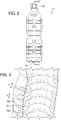
Figure 2 shows a side view of a container in an embodiment of the present disclosure. -
Figure 3 shows a cut-away, cross-sectional view of the container ofFigure 2 in an embodiment of the present disclosure. - The present disclosure relates to lightweight, vacuum-resistant bottles and/or containers for providing consumable products and other fluids. The bottles are constructed and arranged to be vacuum resistant to provide a lightweight bottle having not only improved structural features, but also improved aesthetics.
- It is known that many liquid consumable products are oxygen sensitive. This becomes increasing relevant, for example, when the liquid consumable products are shelf-stable and may spend an amount of time sitting on a retail shelf. During the shelf-life of a product, oxygen may be absorbed by the product from the headspace in the container or from the outside environment that permeates through the container walls. Such oxygen absorption can induce a vacuum inside the bottle that causes the bottle to deform. Similarly, during packaging, distribution and retail stocking, bottles can be exposed to widely varying temperature and pressure changes (e.g., bottle contraction in the refrigerator), liquid losses, and external forces that jostle and shake the bottle. If, for example, the bottles contain carbonated fluids, these types of environmental factors can contribute to internal pressures or vacuums that affect the overall quality of the product purchased by the consumer. For example, existing types of vacuum panels, or thin plastic labels, can occupy large areas of the exterior of the bottle to which they are added and tend to have great visual impact. When an internal vacuum is created within the bottle, the shrink sleeve labels do not always follow the slightly inverted shape of the bottle created by the vacuum, thereby accounting for poor aesthetics of the bottle.
- Applicants do not believe that any product currently exists on the market that provides a lightweight plastic container (e.g., polyethylene terepthalate) having an improved product sleeve appearance as a result of increased vacuum resistance from modified ribs or indentations in the container. Indeed, containers with fully circumferential, horizontal ribs must increase the rib dimensions to create a lightweight container. As such, the ribs are more visible to the consumer, which provides for less than optimal aesthetic properties. Further, providing panels on the containers provides a more visually appealing container, but requires more plastic material, which creates a heavier container.
- In contrast, Applicants have surprisingly discovered how to provide a lightweight container that resists internal vacuums. In this regard, containers of the present disclosure include features that help to avoid bottle deformation that would cause loss of stability of the container and the potential perception of the consumer that the container has a defect and is not suitable for purchase. For example, containers of the present disclosure may include interrupted panels having an intersecting, curved, horizontal rib. Containers of the present disclosure may also include a smaller section in the middle of the bottle and high drafted corners.
- As mentioned previously, containers of the present disclosure may be used to house carbonated liquids, or may be exposed to temperature and/or pressure changes during packaging, shipping, storage and/or retail display. Any of the above-described factors (e.g., carbonation, temperature changes, pressure changes, oxygen absorption, etc.) can contribute to the presence of an internal vacuum within a sealed container when the container houses a liquid. This is problematic for aesthetic reasons because internal vacuums created within the sealed container can cause deformation of the container that can pull the walls of the container away from any exterior label (e.g., sleeve), creating an undesirable aesthetic. Applicants have surprisingly found, however, that certain structural features can help to improve a container's vacuum resistance to avoid undesired container deformation.
- As used herein, and as would be immediately appreciated by the skilled artisan, a container "sleeve" is a thin, plastic film that may include indicia thereon and is typically used in the marketplace for product identification and for displaying product information.
- As illustrated in
FIG. 1 , in an embodiment, the present disclosure provides a container, or bottle, 10 having amouth 12, aneck 14, ashoulder 16, abody 18, and abase 20.Container 10 may be sized to hold any suitable volume of a liquid such as, for example, from about 50 to 5000 mL including 100 mL, 200 mL, 300 mL, 400 mL, 500 mL, 600 mL, 700 mL, 800 mL, 900 mL, 1000 mL, 1500 mL, 2000 mL, 2500 mL, 3000 mL, 3500 mL, 4000 mL, 4500 mL and the like. In an embodiment,container 10 has a volume of about 900 mL. - As disclosed above, containers of the present disclosure are lightweight containers. In this regard, the containers of the present disclosure may require from about 10% to about 25% less material to manufacture than similar containers not having the features described herein. The containers of the present disclosure may have a weight ranging from about 10 g to about 40 g, or from about 15 g to about 35 g, or from about 20 g to about 30 g, or about 25g or 27 g.
- Containers of the present disclosure may be configured to house any type of liquid therein. In an embodiment, the containers are configured to house a consumable liquid such as, for example, water, an energy drink, a carbonated drink, tea, coffee, etc. In an embodiment, the containers are sized and configured to house a carbonated beverage.
- Suitable materials for manufacturing containers of the present disclosure can include, for example, polymeric materials. Specifically, materials for manufacturing bottles of the present disclosure can include, but are not limited to, polyethylene ("PE"), low density polyethylene ("LDPE"), high density polyethylene ("HDPE"), polypropylene ("PP") or polyethylene terephthalate ("PET"). Further, the containers of the present disclosure can be manufactured using any suitable manufacturing process such as, for example, conventional extrusion blow molding, stretch blow molding, injection stretch blow molding, and the like.
-
Mouth 12 may be any size and shape known in the art so long as liquid may be introduced intocontainer 10 and may be poured or otherwise removed fromcontainer 10. In an embodiment,mouth 12 may be substantially circular in shape and have a diameter ranging from about 10 mm to about 50 mm, or about 15 mm, 20 mm, 25 mm, 30 mm, 35 mm, 40 mm, 45 mm, or the like. In an embodiment,mouth 12 has a diameter that is about 33 mm. -
Neck 14 may also have any size and shape known in the art so long as liquid may be introduced intocontainer 10 and may be poured or otherwise removed fromcontainer 10. In an embodiment,neck 14 is substantially cylindrical in shape having a diameter that corresponds to a diameter ofmouth 12. Alternatively,neck 14 may have a tapered geometry such thatneck 14 is substantially conical in shape and tapers up tomouth 12. The skilled artisan will appreciate that the shape and size ofneck 14 are not limited to the shape and size ofmouth 12.Neck 14 may have a height (frommouth 12 to shoulder 16) from about 5 mm to about 45 mm, or about 10 mm, 15 mm, 20 mm, 25 mm, 30 mm, 35 mm, 40 mm, or the like. In an embodiment,neck 14 has a height of about 25 mm. -
Container 10 can further include an airtight cap 22 attached toneck 14, as shown inFIG. 2 .Cap 22 can be any type of cap known in the art for use with containers similar to those described herein.Cap 22 may be manufactured from the same or a different type of polymeric material ascontainer 10, and may be attached tocontainer 10 by re-closeable threads, or may be snap-fit, friction-fit, etc. Accordingly, in an embodiment,cap 22 includes internal threads (not shown) that are constructed and arranged to mate withexternal threads 24 ofneck 14. -
Shoulder 16 ofcontainer 10 inFIG. 1 extends from a bottom portion ofneck 14 downward to a top portion ofbody 18. In an embodiment whereincontainer 10 is substantially square or rectangular in shape,shoulder 16 comprises a shape that is substantially a square pyramid frustum. As used herein, a "square pyramid frustum" means thatshoulder 16 has a shape that very closely resembles a square pyramid having four triangular faces and one imaginary square face (not shown) at a base of the square pyramid, and having a top portion (e.g., the apex) of the square pyramid lopped-off.Shoulder 16 has a lopped-off apex sinceshoulder 16 tapers intoneck 14 for functionality ofcontainer 10. Further, the "square pyramid frustum" shape also includesedges 28 between triangular faces 26, and edges 30 between eachtriangular face 26 and the imaginary square base, as will be discussed further below.Edges -
Shoulder 16 may have a height (from a bottom ofneck 14 to a top of body 18) ranging from about 15 mm to about 50 mm, or about 20 mm, 25 mm, 30 mm, 35 mm, 40 mm, 45 mm, or the like. In an embodiment,shoulder 16 has a height that is about 35 mm. At a bottom portion (e.g., before body 18),shoulder 16 may have a width and a length ranging from about 40 mm to about 80 mm, or about 45 mm, 50 mm, 55 mm, 60 mm, 65 mm, 70 mm, 75 mm, or the like. In an embodiment, the width and the length of a bottom portion ofshoulder 16 are the same and are about 60 mm. Alternatively, the width and the length of a bottom portion ofshoulder 16 may be different. - As mentioned previously, containers of the present disclosure may be used to house carbonated liquids, or may be exposed to temperature and/or pressure changes during packaging, shipping, storage and/or retail display. Any of the above-described factors (e.g., carbonation, temperature changes, pressure changes, etc.) can contribute to the presence of an internal vacuum within sealed
container 10 whencontainer 10 houses a liquid. This is problematic for aesthetic reasons because triangular faces 26 can buckle, or sag, towards an interior ofcontainer 10. Sagging of this nature causes an unappealing aesthetic forcontainer 10 that may be even further emphasized whencontainer 10 includes an exterior label (not shown) (e.g., a sleeve, a sticker, shrink-wrap, plastic wrap, etc.) that covers at least a portion of triangular faces 26. In this regard, sagging of triangular faces 26 can pull them away from any exterior label, creating an undesirable aesthetic. - Additionally, when
containers 10 are mass produced for retail distribution, they may be packaged, shipped, stored and/or displayed in a stacked position that exposescontainers 10 to top-loading. Substantially square-shaped, or substantially rectangular-shaped containers, however, do not distribute load well and are susceptible to buckling under top-loading. Applicants have surprisingly found, however, that certain structural features can help to improve a container's performance when exposed to an internal vacuum, top-loading, or compressive forces. - One such feature is a cut-away
portion 32 that may be included on eachtriangular face 26. As shown inFIGS. 1 and2 , cut-awayportion 32 has a substantially oval-shaped panel 34 that is intersected by an interrupted, curved,horizontal rib 36 to divide panel 34 into to bean-shapedportions horizontal rib 36 is described as "interrupted" because it does not extend all the way aroundcontainer 10 but is, instead, interrupted aroundcontainer 10. Interrupted, curved,horizontal rib 36 follows the curves of bean-shapedportions container 10. The skilled artisan will appreciate, however, that the improved vacuum resistance is not dependent, for example, on the bean-shaped portions of cut-awayportion 32, and that cut-awayportion 32 may have any desired shape and/or size so long as cut-awayportion 32 includes a panel that is intersected by a substantially horizontal rib. In this regard, cut-awayportion 32 may include a circular panel that is intersected by a horizontal rib to create two, semi-circular shaped portions of the panel. Alternatively, cut-awayportion 32 may include a square panel that is intersected by a horizontal rib to create two rectangular shaped portions of the panel. In a similar manner, interrupted, curved,horizontal rib 36 need not be curved, but may be substantially straight, sinusoidal, etc., so long ashorizontal rib 36 is substantially in a horizontal plane. - Cut-away
portion 32 may also extend a certain distance inward toward a center of container 10 (i.e., the depth of cut-away portion 32). For example, cut-awayportion 32 may have a depth that ranges from about 0.5 to about 5 mm, or 1 mm, 1.5 mm, 2 mm, 2.5 mm, 3 mm, 3.5 mm, 4 mm, 4.5 mm, or the like. In an embodiment, cut-awayportion 32 has a depth of about 1.5 mm. Similarly, interrupted, curved,horizontal rib 36 may have a height along a side ofcontainer 10 that ranges from about 0.5 to about 5 mm, or 1 mm, 1.5 mm, 2 mm, 2.5 mm, 3 mm, 3.5 mm, 4 mm, 4.5 mm, or the like. In an embodiment, interrupted, curved,horizontal rib 36 has a height of about 1.5 mm. - The bean-shaped portions of the panel may have the same or different heights a middle portion. In an embodiment, for example, as shown in
FIG. 3 , top bean-shapedportion 50a has a height ("h") of about 2.6 mm and bottom bean-shapedportion 50b has a height ("h") of about 6.3 mm. The skilled artisan will appreciate, however, that the bean-shaped portions may have a height ranging from about 1 mm to about 10 mm, or from about 2 mm to about 9 mm, or from about 3 mm to about 8 mm, or from about 4 mm to about 7 mm, or from about 5 mm to about 6 mm, or about 1.5, or 2.5, or 3.5, or 4.5, or 5.5, or 6.5, or 7.5, or 8.5, or 9.5, or the like. - Applicants have surprisingly found that providing cut-away
portion 32 helps to resist any internal vacuum that may be created incontainer 10 during packaging, shipping, storage and/or retail display. Applicants performed various tests to determine the best possible shape and size of cut-awayportion 32 to resist vacuum deformation and surprisingly concluded that the panel/rib feature provided improved resistance to vacuum deformation. - The skilled artisan will appreciate that, although a cut-away portion of the present disclosure is described herein as being "cut-away," the feature is not meant to be limited to formation by actually cutting material out of
container 10. Instead, a "cut-away" portion is meant to describe an area ofcontainer 10 having a specific shape and a wall thickness that is less than the wall thickness of a surrounding portion ofcontainer 10. Accordingly, a cut-away portion of the present disclosure may be formed into a container preform during a blow-molding process, may be cut out of a container after formation ofcontainer 10, or may be formed by other known processes for creating such features. In an embodiment, a cut-away portion is formed into the container during blow-molding. In this regard, the decreased thickness of a cut-away portion is formed as a product of the greater stretching of the polymer resin that occurs near the edges of the cut-away portion during blow-molding. The skilled artisan will understand, then, that a mold used to form a plastic preform into a container having a cut-away portion includes a correspondingly-shaped projection that extends into an interior of the mold. - In an embodiment, cut-away
portion 32 is located in a center oftriangular face 26, as measured vertically and horizontally. The skilled artisan will appreciate, however, that cut-awayportion 32 may be moved slightly higher, lower, left or right of the center oftriangular face 16. Similarly, the cut-awayportion 32 may be oriented in any direction including left, right, up, down, or combinations thereof. Cut-awayportion 32 may have a height that comprises from about 10% to about 80% of a height oftriangular face 16, or about 20%, 30%, 40%, 50%, 60%, 70%, or the like. Similarly, cut-awayportion 32 may have a width that comprises from about 10% to about 80% of a width oftriangular face 16, or about 20%, 30%, 40%, 50%, 60%, 70%, or the like. - Immediately below
shoulder 16 isbody 18 ofcontainer 10.Body 18 may have any size and shape known in the art and is not limited to a substantially square or substantially rectangular shape. For example,body 18 may have a shape selected from the group consisting of round, cylindrical, square, rectangular, ovoid, etc. In an embodiment, however,body 18 has a shape that is substantially square or substantially rectangular. - Similar to
shoulder 16,body 18 ofFIG. 1 may haveedges 38 that are rounded ifbody 18 is substantially square or substantially rectangular in shape, as best shown inFIG. 1 . Providing edges 38 that are rounded will help to improve the performance of the present containers when exposed to top-loading, or compressive forces. Alternatively, edges 38 may be substantially flat. -
Body 18 may have any length, width or height known in the art. In this regard,body 18 may have a height ranging from about 50 mm to about 110 mm, or about 55 mm, 60 mm, 65 mm, 70 mm, 75 mm, 80 mm, 85 mm, 90 mm, 95 mm, 100 mm, 105 mm, or the like. In an embodiment,body 18 has a height of about 80 mm. Ifbody 18 is substantially square-shaped or substantially rectangular-shaped with a specific length and width, the length and width may be the same. Alternatively, the width ofbody 18 may be different from the length ofbody 18. Even further, the length and width ofbody 18 may change with respect to the height ofbody 18. For example, and as shown inFIG. 1 ,body 18 may include at least afirst portion 40 and asecond portion 42, each portion having substantially flat,vertical portion slope portion container 10. Inward-directedslope portions slope portions container 10 increase or decreases, either or both of the length and width ofbody 18 may change as well. Such a configuration provides the added benefit of ease of handling and grip for the consumer. In this regard, the inward-directedslope portions body 18 meet at a tapered portion ofbody 18 that helps consumer to gripcontainer 10 for ease of handling. - Further, inward-directed
slope portions portions FIG. 1 , the tapered portion ofbody 18 where inward-directedsloped portions body 18 meet may also include a fully circumferential,horizontal rib 44 that also helps a consumer to gripcontainer 10 for ease of handling. By "circumferential rib," it is meant that a rib (e.g., an indented or protruding elongated shape) extends all the way aroundcontainer 10 in a substantially horizontal plane.Container 10 may have any number ofcircumferential ribs 44 and is not limited to just one.Circumferential rib 44 may also be located at any place along the height ofbody 18. -
Circumferential rib 44 may have a height that ranges from about 0.5 to about 5 mm, or 1 mm, 1.5 mm, 2 mm, 2.5 mm, 3 mm, 3.5 mm, 4 mm, 4.5 mm, or the like.Circumferential rib 44 may also extend a certain amount into interior ofcontainer 10. For example,rib 44 may have a height in the vertical direction alongbody 18 ofcontainer 10 of about 0.5 to about 5 mm, or 1 mm, 1.5 mm, 2 mm, 2.5 mm, 3 mm, 3.5 mm, 4 mm, 4.5 mm, or the like. In an embodiment,rib 44 has a height of about 1.5 mm. Applicants have found thatrib 44 can help to maintain an intended shape ofcontainer 10. For example, ifcontainer 10 has a substantially square-shape or a substantially-rectangular shape,rib 44 can help to limitcontainer 10 from forming an oval shape during use.Rib 44 also enables even contraction ofcontainer 10 vertically, thereby allowing internal pressure to build within and enabling greater top-loading. - As a result of
circumferential rib 44 andportions container 10 will have a smaller diameter that provides improved gripping for the consumer. In this regard, the containers have optimized dimensions that allow for grip convenience, material stretching feasibility, and greater compression resistance than other portions ofcontainer 10. In this regard, a center portion of the containers includes a reduced cross-section that provides for at least two different handling possibilities: 1) a grip from the side section that gives full rigidity; and 2) a grip from the diagonal that gives flexible handling. Accordingly, the consumer can either feel a rigid grip or a flexible grip. - The configuration of
container 10 at a center portion thereof also provides several additional advantages including, for example, the ability to apply a half-sleeve tocontainer 10, noise-less grip when handling, easier pouring of the contents ofcontainer 10, and a stronger grip required to squeeze the bottle radially, which increases consumer trust in the structure of the bottle and reduces the chance of spillage. Additionally, the dimensions of the bottle (e.g., square-shaped, taller, thinner) allow the bottles to lay down in a storage position (e.g., on a retail shelf or in a refrigerator) to avoid cluttering of smaller storage spaces. Further, using less material to manufacture containers 10 (e.g., a reduction in mass from about 32 g to about 25 g) makes it easier to squeeze the bottles in the axial direction for recycling purposes. - In addition to the centrally-located
circumferential rib 44,body 18 may also include any number ofcircumferential ribs 46 located on flat,vertical portions body 18.Body 18 may have any number ofcircumferential ribs 46 ranging, for example, from about 1 to about 10, or 2, 3, 4, 5, 6, 7, 8, 9, or the like.Circumferential ribs 46 may be adjacent each other in a vertical direction or may be adjacent a cut-awayportion 48, or any combination thereof. Cut-awayportion 48 is similar to cut-awayportion 32 because it includes a substantially oval-shapedpanel 50 that is intersected by a curved,horizontal rib 52 to dividepanel 50 into to bean-shapedportions horizontal rib 52 follows the curves of bean-shapedportions container 10. The skilled artisan will appreciate thatpanel 50 of cut-awayportion 48 may also have the same or different dimensions as panel 34 of cut-awayportion 32. Cut-awayportion 48 is different than cut-awayportion 32 at least in that cut-awayportion 48 does not include an interruptedhorizontal rib 36, but rather a fullycircumferential rib 52 that extends all the way aroundcontainer 10, and possibly intersectsother panels 50. - In an embodiment, a plurality of
circumferential ribs 46 are provided, a plurality of cut-awayportions 48 are provided, and thecircumferential ribs 46 and cut-awayportions 48 alternate in a vertical direction, as shown inFig. 1 . The skilled artisan will appreciate, however, thatcontainers 10 are not limited to such a configuration, and that any number ofcircumferential ribs 46 or cut-awayportions 48 may be provided and may be arranged in any combination thereof. -
Container 10 can have abroad base 20 so as to be able to stand up when the container is completely filled, partially filled or empty.Base 20 can have any size or shape known in the art. However, in an embodiment,base 20 includes a size and shape corresponding to the size and shape ofbody 18. In this regard, ifbody 18 is substantially square-shaped with a specific length and width,base 20 may also be substantially square-shaped with the same length and width. Alternatively, the skilled artisan will appreciate thatbase 20 is not limited to the size and shape ofbody 18 and may have a different size and shape thanbody 18.Base 20 may have a height ranging from about 5 mm to about 45 mm, or about 10 mm, or 15 mm, or 20 mm, or 25 mm, or 30 mm, or 35 mm, or 40 mm, or the like.Base 20 may be substantially vertical in arrangement, or may be shaped (e.g., semi-circular), or may taper inward in an upward direction from abottom surface 48 ofcontainer 10.Base 20 is shaped and configured to contract under vertical load, absorbing and distributing loads over a greater area. - Similar to
body 18,base 20 may also include one or morecircumferential ribs 46 that may or may not have the same size and shape as thecircumferential ribs 46 provided onbody 18. Further, abottom surface 54 ofcontainer 10 may also include a punt 56 formed therein, as shown byFIG. 2 . Punt 56 may provide additional structural integrity tocontainer 10 and may aid in stackingcontainers 10 one on top of another. - The structural features (e.g., increased draft corners, reduced middle section circumference, cut-away portions, etc.) of the present containers described herein advantageously allow for a preform of less mass to be used. The reduced use of resin in the containers provides the advantage of a lower cost per unit and increased sustainability when compared to a bottle without such structural features. In this regard, the containers of the present disclosure are able to be manufactured using a raw material reduction from about 10% to about 25%, if not greater. Further, by manufacturing the containers of the present disclosure using lower amounts of raw materials, the bottles can provide lower environmental and waste impact. Along the same lines, the bottles can be constructed to use less disposal volume than other plastic bottles designed for similar uses.
- Additionally, the containers of the present disclosure can also improve vacuum resistance and the ease of use and handling by manufacturers, retails and consumers. In this regard, the structural features described herein provide for reduced vacuum deformation to help achieve a pre-set shape of the containers that is desirable by consumers. Further, the containers have optimized dimensions that allow for grip convenience and material stretching feasibility. In this regard, a center portion of the containers includes a reduced cross-section that provides for at least two different handling possibilities: 1) a grip from the side section that gives full rigidity; and 2) a grip from the diagonal that gives flexible handling.
- It should be understood that various changes and modifications to the presently preferred embodiments described herein will be apparent to those skilled in the art. Such changes and modifications can be made without departing from the scope of the present subject matter which is defined by the appended claims.
Claims (10)
- A plastic container (10) comprising a substantially rectangular-shaped body (18) comprising at least one cut-away portion (32, 48) on a first side of the body, the cut-away portion (32) having a panel (34, 50) that is intersected by a horizontal rib (36, 52) that extends along an outer perimeter of the container in a substantially horizontal plane, characterized in that the intersecting horizontal rib (36, 52) is curved at a location where it intersects the panel (34, 50) and the panel (34, 50) comprises two complimentary shaped indentations (34a, 34b; 50a, 50b) formed on either side of the intersecting horizontal rib (36, 52), the two complimentary shaped indentations (34a, 34b; 50a, 50b) being in the form of two complimentary bean-shaped portions formed by the intersecting curved horizontal rib (36, 52).
- The container of Claim 1, wherein the intersecting horizontal rib (36,52) is one of an interrupted rib (36) and a fully circumferential rib (52).
- The container of Claim 1, the body further comprising a second panel on a second side of the body, wherein the second panel is located in the same horizontal plane as the first panel (34, 50).
- The container of Claim 1 further comprising a mouth (12) and a shoulder (16) between the mouth (12) and the body (18), the shoulder (16) comprising four faces (26) arranged in a square pyramid frustum shape, at least one of the four faces (16) comprising a cut-away portion (32) having a panel (34) intersected by an interrupted horizontal rib (32).
- A plastic container comprising:a neck (14) defining a mouth (12) of the container (10); anda body (18) comprising a plurality of horizontal ribs (46,52) extending along an outer perimeter of the container, wherein each rib is located in a different horizontal plane, characterized in that each of the plurality of horizontal ribs (46,52) is a fully circumferential horizontal rib and least one of the horizontal ribs (52) is located intermediate two complimentary-shaped indentations (50a, 50b)wherein the complimentary-shaped indentations (50a, 50b) are bean-shaped panels.
- The container of Claim 5, wherein every other horizontal rib (52) is located intermediate two complimentary-shaped indentations (50a, 50b).
- The container of Claim 5, wherein the body (18) comprises four sides and each side comprises a plurality of horizontal ribs (52) located intermediate two complimentary-shaped indentations (50a, 50b).
- The container of Claim 5, wherein the body (18) comprises at least one wall having first and second opposing inwardly-sloped portions (40b, 42b) forming an elongated middle section of the container.
- The container of Claim 5 the container (10) further comprising a weight ranging from about 23 g to about 27 g.
- The container of claim 6 further comprising a substantially rectangular shaped body (18).
Applications Claiming Priority (2)
| Application Number | Priority Date | Filing Date | Title |
|---|---|---|---|
| US201261640079P | 2012-04-30 | 2012-04-30 | |
| PCT/EP2013/057547 WO2013164170A1 (en) | 2012-04-30 | 2013-04-11 | Containers having improved vacuum resistance |
Publications (2)
| Publication Number | Publication Date |
|---|---|
| EP2844568A1 EP2844568A1 (en) | 2015-03-11 |
| EP2844568B1 true EP2844568B1 (en) | 2017-08-16 |
Family
ID=48083190
Family Applications (1)
| Application Number | Title | Priority Date | Filing Date |
|---|---|---|---|
| EP13715231.0A Not-in-force EP2844568B1 (en) | 2012-04-30 | 2013-04-11 | Containers having improved vacuum resistance |
Country Status (5)
| Country | Link |
|---|---|
| US (1) | US9434499B2 (en) |
| EP (1) | EP2844568B1 (en) |
| JP (1) | JP6348485B2 (en) |
| CN (1) | CN104271454B (en) |
| WO (1) | WO2013164170A1 (en) |
Families Citing this family (12)
| Publication number | Priority date | Publication date | Assignee | Title |
|---|---|---|---|---|
| CN104703776A (en) * | 2012-08-31 | 2015-06-10 | 依云矿泉水股份有限公司 | Bottle, method of making the same and use of FDCA and diol monomers in such bottle |
| US20150327718A1 (en) | 2014-02-14 | 2015-11-19 | Remington Designs, Llc | Apparatuses and methods for solute extraction |
| US9327872B2 (en) | 2014-03-06 | 2016-05-03 | Fisher Scientific Company, L.L.C. | Product container having narrowed waist portion |
| MX2017005111A (en) | 2014-10-23 | 2018-02-12 | Amcor Group Gmbh | Vacuum panel for non-round containers. |
| FR3028501A1 (en) * | 2014-11-19 | 2016-05-20 | Jean-Pierre Malandrino | CONTAINER EQUIPPED WITH AN IDENTIFICATION BRAND |
| WO2018047586A1 (en) * | 2016-09-06 | 2018-03-15 | 東洋製罐株式会社 | Synthetic resin bottle |
| JP7139105B2 (en) * | 2017-10-20 | 2022-09-20 | 日精エー・エス・ビー機械株式会社 | Resin container |
| ES3036087T3 (en) * | 2018-05-31 | 2025-09-12 | Nestle Sa | Bottle with grip portion |
| US11884447B2 (en) | 2018-11-14 | 2024-01-30 | Amcor Rigid Packaging Usa, Llc | Container shoulder rib |
| US11155379B2 (en) * | 2018-12-21 | 2021-10-26 | Colgate-Palmolive Company | Container apparatus |
| JP7677880B2 (en) * | 2021-12-15 | 2025-05-15 | アサヒ飲料株式会社 | Plastic bottles and beverage products |
| USD1085883S1 (en) * | 2023-09-28 | 2025-07-29 | Plastipak Packaging, Inc. | Container base |
Citations (1)
| Publication number | Priority date | Publication date | Assignee | Title |
|---|---|---|---|---|
| US20080190944A1 (en) * | 2007-02-13 | 2008-08-14 | Plastipak Packaging, Inc. | Stackable container with angled neck finish |
Family Cites Families (18)
| Publication number | Priority date | Publication date | Assignee | Title |
|---|---|---|---|---|
| JPH07112856B2 (en) * | 1985-07-30 | 1995-12-06 | 株式会社吉野工業所 | Container with dent panel with reinforcing ribs |
| FR2625974B1 (en) * | 1988-01-14 | 1990-04-27 | Sidel Sa | BOTTLE IN THERMOPLASTIC MATERIAL |
| US5005716A (en) * | 1988-06-24 | 1991-04-09 | Hoover Universal, Inc. | Polyester container for hot fill liquids |
| JPH0644806Y2 (en) * | 1989-07-10 | 1994-11-16 | 株式会社吉野工業所 | Bottle made of synthetic resin |
| JP3772230B2 (en) * | 1995-03-31 | 2006-05-10 | 株式会社吉野工業所 | Synthetic resin square hollow container |
| JPH10203519A (en) * | 1997-01-17 | 1998-08-04 | Dainippon Printing Co Ltd | Plastic bottle |
| EP1099638A4 (en) * | 1999-02-27 | 2009-06-10 | Yoshino Kogyosho Co Ltd | Synthetic resin thin wall container |
| JP3942803B2 (en) | 2000-05-17 | 2007-07-11 | 株式会社吉野工業所 | Bottle vacuum absorption panel |
| JP2002326619A (en) | 2001-04-27 | 2002-11-12 | Yoshino Kogyosho Co Ltd | Blow-molded bottle |
| JP4098135B2 (en) * | 2003-03-28 | 2008-06-11 | 株式会社吉野工業所 | Synthetic resin square bottle |
| JP2007039109A (en) * | 2005-08-04 | 2007-02-15 | Nippon Koka Cola Kk | Bottle container for beverage use |
| FR2899204B1 (en) * | 2006-04-04 | 2008-06-20 | Eaux Minerales D Evian Saeme S | BOTTLE OF PLASTIC MATERIAL HAVING A PORTION OF GRIPPING |
| JP4843363B2 (en) * | 2006-04-27 | 2011-12-21 | ザ・コカ−コーラ・カンパニー | Plastic bottle |
| FR2907763B1 (en) * | 2006-10-27 | 2010-12-10 | Sidel Participations | CONTAINER, IN PARTICULAR BOTTLE, THERMOPLASTIC MATERIAL |
| US8567624B2 (en) * | 2009-06-30 | 2013-10-29 | Ocean Spray Cranberries, Inc. | Lightweight, high strength bottle |
| US8813996B2 (en) * | 2010-03-10 | 2014-08-26 | Amcor Limited | Heat set container |
| US8646646B2 (en) * | 2010-03-19 | 2014-02-11 | Graham Packaging Company, L.P. | Reinforced retortable plastic containers |
| JP2011230854A (en) * | 2011-08-23 | 2011-11-17 | Coca Cola Co:The | Plastic bottle |
-
2013
- 2013-04-11 WO PCT/EP2013/057547 patent/WO2013164170A1/en not_active Ceased
- 2013-04-11 US US14/397,794 patent/US9434499B2/en not_active Expired - Fee Related
- 2013-04-11 CN CN201380022778.6A patent/CN104271454B/en active Active
- 2013-04-11 EP EP13715231.0A patent/EP2844568B1/en not_active Not-in-force
- 2013-04-11 JP JP2015509354A patent/JP6348485B2/en active Active
Patent Citations (1)
| Publication number | Priority date | Publication date | Assignee | Title |
|---|---|---|---|---|
| US20080190944A1 (en) * | 2007-02-13 | 2008-08-14 | Plastipak Packaging, Inc. | Stackable container with angled neck finish |
Also Published As
| Publication number | Publication date |
|---|---|
| CN104271454B (en) | 2017-03-08 |
| CN104271454A (en) | 2015-01-07 |
| WO2013164170A1 (en) | 2013-11-07 |
| EP2844568A1 (en) | 2015-03-11 |
| JP6348485B2 (en) | 2018-06-27 |
| US9434499B2 (en) | 2016-09-06 |
| JP2015515423A (en) | 2015-05-28 |
| US20150108081A1 (en) | 2015-04-23 |
Similar Documents
| Publication | Publication Date | Title |
|---|---|---|
| US9434499B2 (en) | Containers having improved vacuum resistance | |
| US20150001172A1 (en) | Load-bearing and vacuum-resistant containers | |
| US20150129536A1 (en) | Lightweight, vacuum-resistant containers having offset horizontal ribs | |
| CA2807497C (en) | Plastic container configured for case-less shipping | |
| US20090166314A1 (en) | Plastic bottle | |
| CN112105563B (en) | Container | |
| US20160311570A1 (en) | Lightweight containers with improved load resistance | |
| US20160297557A1 (en) | Vacuum-resistant containers having offset horizontal ribs and panels | |
| JP6623520B2 (en) | Plastic bottle | |
| US20250026553A1 (en) | Container and packaging system | |
| JP7173433B2 (en) | plastic bottle | |
| JP2020063065A (en) | Plastic bottle | |
| JP7410449B2 (en) | plastic bottle | |
| US20260021926A1 (en) | Containers having corner pillars and dynamic panels between the pillars, and methods of making and using such containers | |
| US11203457B2 (en) | Blow molded plastic container with integrated spout | |
| US20260021927A1 (en) | Containers having swirl ribs which resist lateral ovalization of the container, and methods of making and using such containers | |
| WO2022152702A1 (en) | Container for liquids | |
| JP2024086217A (en) | Plastic container |
Legal Events
| Date | Code | Title | Description |
|---|---|---|---|
| PUAI | Public reference made under article 153(3) epc to a published international application that has entered the european phase |
Free format text: ORIGINAL CODE: 0009012 |
|
| 17P | Request for examination filed |
Effective date: 20141201 |
|
| AK | Designated contracting states |
Kind code of ref document: A1 Designated state(s): AL AT BE BG CH CY CZ DE DK EE ES FI FR GB GR HR HU IE IS IT LI LT LU LV MC MK MT NL NO PL PT RO RS SE SI SK SM TR |
|
| AX | Request for extension of the european patent |
Extension state: BA ME |
|
| DAX | Request for extension of the european patent (deleted) | ||
| 17Q | First examination report despatched |
Effective date: 20151211 |
|
| GRAP | Despatch of communication of intention to grant a patent |
Free format text: ORIGINAL CODE: EPIDOSNIGR1 |
|
| INTG | Intention to grant announced |
Effective date: 20170419 |
|
| GRAS | Grant fee paid |
Free format text: ORIGINAL CODE: EPIDOSNIGR3 |
|
| GRAA | (expected) grant |
Free format text: ORIGINAL CODE: 0009210 |
|
| AK | Designated contracting states |
Kind code of ref document: B1 Designated state(s): AL AT BE BG CH CY CZ DE DK EE ES FI FR GB GR HR HU IE IS IT LI LT LU LV MC MK MT NL NO PL PT RO RS SE SI SK SM TR |
|
| REG | Reference to a national code |
Ref country code: GB Ref legal event code: FG4D |
|
| REG | Reference to a national code |
Ref country code: CH Ref legal event code: EP |
|
| REG | Reference to a national code |
Ref country code: IE Ref legal event code: FG4D |
|
| REG | Reference to a national code |
Ref country code: AT Ref legal event code: REF Ref document number: 918791 Country of ref document: AT Kind code of ref document: T Effective date: 20170915 |
|
| REG | Reference to a national code |
Ref country code: DE Ref legal event code: R096 Ref document number: 602013025082 Country of ref document: DE |
|
| REG | Reference to a national code |
Ref country code: NL Ref legal event code: MP Effective date: 20170816 |
|
| REG | Reference to a national code |
Ref country code: LT Ref legal event code: MG4D |
|
| REG | Reference to a national code |
Ref country code: AT Ref legal event code: MK05 Ref document number: 918791 Country of ref document: AT Kind code of ref document: T Effective date: 20170816 |
|
| PG25 | Lapsed in a contracting state [announced via postgrant information from national office to epo] |
Ref country code: SE Free format text: LAPSE BECAUSE OF FAILURE TO SUBMIT A TRANSLATION OF THE DESCRIPTION OR TO PAY THE FEE WITHIN THE PRESCRIBED TIME-LIMIT Effective date: 20170816 Ref country code: NO Free format text: LAPSE BECAUSE OF FAILURE TO SUBMIT A TRANSLATION OF THE DESCRIPTION OR TO PAY THE FEE WITHIN THE PRESCRIBED TIME-LIMIT Effective date: 20171116 Ref country code: NL Free format text: LAPSE BECAUSE OF FAILURE TO SUBMIT A TRANSLATION OF THE DESCRIPTION OR TO PAY THE FEE WITHIN THE PRESCRIBED TIME-LIMIT Effective date: 20170816 Ref country code: LT Free format text: LAPSE BECAUSE OF FAILURE TO SUBMIT A TRANSLATION OF THE DESCRIPTION OR TO PAY THE FEE WITHIN THE PRESCRIBED TIME-LIMIT Effective date: 20170816 Ref country code: AT Free format text: LAPSE BECAUSE OF FAILURE TO SUBMIT A TRANSLATION OF THE DESCRIPTION OR TO PAY THE FEE WITHIN THE PRESCRIBED TIME-LIMIT Effective date: 20170816 Ref country code: FI Free format text: LAPSE BECAUSE OF FAILURE TO SUBMIT A TRANSLATION OF THE DESCRIPTION OR TO PAY THE FEE WITHIN THE PRESCRIBED TIME-LIMIT Effective date: 20170816 |
|
| PG25 | Lapsed in a contracting state [announced via postgrant information from national office to epo] |
Ref country code: LV Free format text: LAPSE BECAUSE OF FAILURE TO SUBMIT A TRANSLATION OF THE DESCRIPTION OR TO PAY THE FEE WITHIN THE PRESCRIBED TIME-LIMIT Effective date: 20170816 Ref country code: RS Free format text: LAPSE BECAUSE OF FAILURE TO SUBMIT A TRANSLATION OF THE DESCRIPTION OR TO PAY THE FEE WITHIN THE PRESCRIBED TIME-LIMIT Effective date: 20170816 Ref country code: GR Free format text: LAPSE BECAUSE OF FAILURE TO SUBMIT A TRANSLATION OF THE DESCRIPTION OR TO PAY THE FEE WITHIN THE PRESCRIBED TIME-LIMIT Effective date: 20171117 Ref country code: IS Free format text: LAPSE BECAUSE OF FAILURE TO SUBMIT A TRANSLATION OF THE DESCRIPTION OR TO PAY THE FEE WITHIN THE PRESCRIBED TIME-LIMIT Effective date: 20171216 Ref country code: ES Free format text: LAPSE BECAUSE OF FAILURE TO SUBMIT A TRANSLATION OF THE DESCRIPTION OR TO PAY THE FEE WITHIN THE PRESCRIBED TIME-LIMIT Effective date: 20170816 Ref country code: PL Free format text: LAPSE BECAUSE OF FAILURE TO SUBMIT A TRANSLATION OF THE DESCRIPTION OR TO PAY THE FEE WITHIN THE PRESCRIBED TIME-LIMIT Effective date: 20170816 Ref country code: BG Free format text: LAPSE BECAUSE OF FAILURE TO SUBMIT A TRANSLATION OF THE DESCRIPTION OR TO PAY THE FEE WITHIN THE PRESCRIBED TIME-LIMIT Effective date: 20171116 |
|
| REG | Reference to a national code |
Ref country code: FR Ref legal event code: PLFP Year of fee payment: 6 |
|
| PG25 | Lapsed in a contracting state [announced via postgrant information from national office to epo] |
Ref country code: DK Free format text: LAPSE BECAUSE OF FAILURE TO SUBMIT A TRANSLATION OF THE DESCRIPTION OR TO PAY THE FEE WITHIN THE PRESCRIBED TIME-LIMIT Effective date: 20170816 Ref country code: CZ Free format text: LAPSE BECAUSE OF FAILURE TO SUBMIT A TRANSLATION OF THE DESCRIPTION OR TO PAY THE FEE WITHIN THE PRESCRIBED TIME-LIMIT Effective date: 20170816 Ref country code: RO Free format text: LAPSE BECAUSE OF FAILURE TO SUBMIT A TRANSLATION OF THE DESCRIPTION OR TO PAY THE FEE WITHIN THE PRESCRIBED TIME-LIMIT Effective date: 20170816 |
|
| REG | Reference to a national code |
Ref country code: DE Ref legal event code: R097 Ref document number: 602013025082 Country of ref document: DE |
|
| PG25 | Lapsed in a contracting state [announced via postgrant information from national office to epo] |
Ref country code: IT Free format text: LAPSE BECAUSE OF FAILURE TO SUBMIT A TRANSLATION OF THE DESCRIPTION OR TO PAY THE FEE WITHIN THE PRESCRIBED TIME-LIMIT Effective date: 20170816 Ref country code: EE Free format text: LAPSE BECAUSE OF FAILURE TO SUBMIT A TRANSLATION OF THE DESCRIPTION OR TO PAY THE FEE WITHIN THE PRESCRIBED TIME-LIMIT Effective date: 20170816 Ref country code: SM Free format text: LAPSE BECAUSE OF FAILURE TO SUBMIT A TRANSLATION OF THE DESCRIPTION OR TO PAY THE FEE WITHIN THE PRESCRIBED TIME-LIMIT Effective date: 20170816 Ref country code: SK Free format text: LAPSE BECAUSE OF FAILURE TO SUBMIT A TRANSLATION OF THE DESCRIPTION OR TO PAY THE FEE WITHIN THE PRESCRIBED TIME-LIMIT Effective date: 20170816 |
|
| PLBE | No opposition filed within time limit |
Free format text: ORIGINAL CODE: 0009261 |
|
| STAA | Information on the status of an ep patent application or granted ep patent |
Free format text: STATUS: NO OPPOSITION FILED WITHIN TIME LIMIT |
|
| 26N | No opposition filed |
Effective date: 20180517 |
|
| PG25 | Lapsed in a contracting state [announced via postgrant information from national office to epo] |
Ref country code: SI Free format text: LAPSE BECAUSE OF FAILURE TO SUBMIT A TRANSLATION OF THE DESCRIPTION OR TO PAY THE FEE WITHIN THE PRESCRIBED TIME-LIMIT Effective date: 20170816 |
|
| PG25 | Lapsed in a contracting state [announced via postgrant information from national office to epo] |
Ref country code: MC Free format text: LAPSE BECAUSE OF FAILURE TO SUBMIT A TRANSLATION OF THE DESCRIPTION OR TO PAY THE FEE WITHIN THE PRESCRIBED TIME-LIMIT Effective date: 20170816 |
|
| REG | Reference to a national code |
Ref country code: CH Ref legal event code: PL |
|
| REG | Reference to a national code |
Ref country code: BE Ref legal event code: MM Effective date: 20180430 |
|
| REG | Reference to a national code |
Ref country code: IE Ref legal event code: MM4A |
|
| PG25 | Lapsed in a contracting state [announced via postgrant information from national office to epo] |
Ref country code: LU Free format text: LAPSE BECAUSE OF NON-PAYMENT OF DUE FEES Effective date: 20180411 |
|
| PG25 | Lapsed in a contracting state [announced via postgrant information from national office to epo] |
Ref country code: BE Free format text: LAPSE BECAUSE OF NON-PAYMENT OF DUE FEES Effective date: 20180430 Ref country code: CH Free format text: LAPSE BECAUSE OF NON-PAYMENT OF DUE FEES Effective date: 20180430 Ref country code: LI Free format text: LAPSE BECAUSE OF NON-PAYMENT OF DUE FEES Effective date: 20180430 |
|
| PG25 | Lapsed in a contracting state [announced via postgrant information from national office to epo] |
Ref country code: IE Free format text: LAPSE BECAUSE OF NON-PAYMENT OF DUE FEES Effective date: 20180411 |
|
| REG | Reference to a national code |
Ref country code: GB Ref legal event code: 732E Free format text: REGISTERED BETWEEN 20190801 AND 20190807 |
|
| PG25 | Lapsed in a contracting state [announced via postgrant information from national office to epo] |
Ref country code: MT Free format text: LAPSE BECAUSE OF NON-PAYMENT OF DUE FEES Effective date: 20180411 |
|
| REG | Reference to a national code |
Ref country code: DE Ref legal event code: R082 Ref document number: 602013025082 Country of ref document: DE Representative=s name: MITSCHERLICH, PATENT- UND RECHTSANWAELTE PARTM, DE Ref country code: DE Ref legal event code: R081 Ref document number: 602013025082 Country of ref document: DE Owner name: SOCIETE DES PRODUITS NESTLE S.A., CH Free format text: FORMER OWNER: NESTEC S.A., VEVEY, CH |
|
| PG25 | Lapsed in a contracting state [announced via postgrant information from national office to epo] |
Ref country code: TR Free format text: LAPSE BECAUSE OF FAILURE TO SUBMIT A TRANSLATION OF THE DESCRIPTION OR TO PAY THE FEE WITHIN THE PRESCRIBED TIME-LIMIT Effective date: 20170816 |
|
| PG25 | Lapsed in a contracting state [announced via postgrant information from national office to epo] |
Ref country code: HU Free format text: LAPSE BECAUSE OF FAILURE TO SUBMIT A TRANSLATION OF THE DESCRIPTION OR TO PAY THE FEE WITHIN THE PRESCRIBED TIME-LIMIT; INVALID AB INITIO Effective date: 20130411 Ref country code: PT Free format text: LAPSE BECAUSE OF FAILURE TO SUBMIT A TRANSLATION OF THE DESCRIPTION OR TO PAY THE FEE WITHIN THE PRESCRIBED TIME-LIMIT Effective date: 20170816 |
|
| PG25 | Lapsed in a contracting state [announced via postgrant information from national office to epo] |
Ref country code: CY Free format text: LAPSE BECAUSE OF FAILURE TO SUBMIT A TRANSLATION OF THE DESCRIPTION OR TO PAY THE FEE WITHIN THE PRESCRIBED TIME-LIMIT Effective date: 20170816 Ref country code: HR Free format text: LAPSE BECAUSE OF FAILURE TO SUBMIT A TRANSLATION OF THE DESCRIPTION OR TO PAY THE FEE WITHIN THE PRESCRIBED TIME-LIMIT Effective date: 20170816 Ref country code: MK Free format text: LAPSE BECAUSE OF NON-PAYMENT OF DUE FEES Effective date: 20170816 |
|
| PGFP | Annual fee paid to national office [announced via postgrant information from national office to epo] |
Ref country code: FR Payment date: 20200312 Year of fee payment: 8 |
|
| PG25 | Lapsed in a contracting state [announced via postgrant information from national office to epo] |
Ref country code: AL Free format text: LAPSE BECAUSE OF FAILURE TO SUBMIT A TRANSLATION OF THE DESCRIPTION OR TO PAY THE FEE WITHIN THE PRESCRIBED TIME-LIMIT Effective date: 20170816 |
|
| PGFP | Annual fee paid to national office [announced via postgrant information from national office to epo] |
Ref country code: DE Payment date: 20200331 Year of fee payment: 8 |
|
| PGFP | Annual fee paid to national office [announced via postgrant information from national office to epo] |
Ref country code: GB Payment date: 20200401 Year of fee payment: 8 |
|
| REG | Reference to a national code |
Ref country code: DE Ref legal event code: R119 Ref document number: 602013025082 Country of ref document: DE |
|
| GBPC | Gb: european patent ceased through non-payment of renewal fee |
Effective date: 20210411 |
|
| PG25 | Lapsed in a contracting state [announced via postgrant information from national office to epo] |
Ref country code: DE Free format text: LAPSE BECAUSE OF NON-PAYMENT OF DUE FEES Effective date: 20211103 Ref country code: GB Free format text: LAPSE BECAUSE OF NON-PAYMENT OF DUE FEES Effective date: 20210411 Ref country code: FR Free format text: LAPSE BECAUSE OF NON-PAYMENT OF DUE FEES Effective date: 20210430 |