EP2843057A1 - Method for determining the presence or absence of Shiga Toxin-producing Escherichia Coli (STEC) in a food sample - Google Patents
Method for determining the presence or absence of Shiga Toxin-producing Escherichia Coli (STEC) in a food sample Download PDFInfo
- Publication number
- EP2843057A1 EP2843057A1 EP13182864.2A EP13182864A EP2843057A1 EP 2843057 A1 EP2843057 A1 EP 2843057A1 EP 13182864 A EP13182864 A EP 13182864A EP 2843057 A1 EP2843057 A1 EP 2843057A1
- Authority
- EP
- European Patent Office
- Prior art keywords
- coli
- serogroup
- stec
- genes
- eae
- Prior art date
- Legal status (The legal status is an assumption and is not a legal conclusion. Google has not performed a legal analysis and makes no representation as to the accuracy of the status listed.)
- Granted
Links
Images


Classifications
-
- C—CHEMISTRY; METALLURGY
- C12—BIOCHEMISTRY; BEER; SPIRITS; WINE; VINEGAR; MICROBIOLOGY; ENZYMOLOGY; MUTATION OR GENETIC ENGINEERING
- C12Q—MEASURING OR TESTING PROCESSES INVOLVING ENZYMES, NUCLEIC ACIDS OR MICROORGANISMS; COMPOSITIONS OR TEST PAPERS THEREFOR; PROCESSES OF PREPARING SUCH COMPOSITIONS; CONDITION-RESPONSIVE CONTROL IN MICROBIOLOGICAL OR ENZYMOLOGICAL PROCESSES
- C12Q1/00—Measuring or testing processes involving enzymes, nucleic acids or microorganisms; Compositions therefor; Processes of preparing such compositions
- C12Q1/68—Measuring or testing processes involving enzymes, nucleic acids or microorganisms; Compositions therefor; Processes of preparing such compositions involving nucleic acids
- C12Q1/6876—Nucleic acid products used in the analysis of nucleic acids, e.g. primers or probes
- C12Q1/6888—Nucleic acid products used in the analysis of nucleic acids, e.g. primers or probes for detection or identification of organisms
- C12Q1/689—Nucleic acid products used in the analysis of nucleic acids, e.g. primers or probes for detection or identification of organisms for bacteria
-
- C—CHEMISTRY; METALLURGY
- C12—BIOCHEMISTRY; BEER; SPIRITS; WINE; VINEGAR; MICROBIOLOGY; ENZYMOLOGY; MUTATION OR GENETIC ENGINEERING
- C12Q—MEASURING OR TESTING PROCESSES INVOLVING ENZYMES, NUCLEIC ACIDS OR MICROORGANISMS; COMPOSITIONS OR TEST PAPERS THEREFOR; PROCESSES OF PREPARING SUCH COMPOSITIONS; CONDITION-RESPONSIVE CONTROL IN MICROBIOLOGICAL OR ENZYMOLOGICAL PROCESSES
- C12Q2600/00—Oligonucleotides characterized by their use
- C12Q2600/158—Expression markers
Definitions
- the present invention relates to a method for determining the presence or absence of Shiga toxin-producing Escherichia coli (STEC) in food samples, a reaction cartridge to be used in such method, and an apparatus to accommodate the reaction cartridge.
- STOC Shiga toxin-producing Escherichia coli
- STEC Top7 The United States Department of Agriculture (USDA) has implemented regulations applicable to the analysis of certain raw beef products which define in addition to the serogroup O157 six further serogroups as identified above as adulterants.
- USDA United States Department of Agriculture
- a food sample is added to a culture medium enabling growth of E. coli to provide an E. coli stock medium.
- lysis of the E. coli in the stock medium provides for a sample solution comprising E. coli DNA.
- PCR polymerase chain reaction
- the object of the present invention is to provide a method which will lead within a shorter period of time to reliable results with respect to the presence or absence of pathogenic STEC in food samples.
- the method according to the present invention allows both a decrease of the rate of false positive results as well as an optimization of colony isolation. Thereby the determination of the presence or absence of one or more specific serogroups of Shiga toxin-producing E. coli (STEC) in a food sample can be remarkably simplified.
- the present invention provides a method for the identification and confirmation of the presence or absence of highly pathogenic STEC in food samples in a very time efficient manner in that, after an E. coli stock medium is obtained by incubating the food sample in a culture medium and the lysis of the E. coli contained in the stock medium, this DNA containing sample solution is subjected to a first series of PCR using specific primers. This may be called a first screening step.
- This first screening step allows the simultaneous detection of stx1 and/or stx2 virulence genes encoding for Shiga toxins, the eae subtype encoding for an intimin specifically associated with one or more serogroups, and the biomarker gene of each serogroup.
- the detection of the eae subtypes allows to substantially reduce the number of false positive samples.
- the positive samples are subjected to a second screening step, wherein an immunoconcentrate derived from the E. coli stock medium is checked once again in a PCR analysis.
- part of the immunoconcentrate is plated on chromogenic media in order to isolate the respective STEC strain as colonies.
- the DNA derived from these isolated colonies may be PCR tested to confirm the presence of both stx and eae virulence genes, and optionally the serogroup biomarker genes.
- the final results are available within about 12 h starting off from the food sample. In case of positive samples the final results are available in about 2 days.
- the invention furthermore relates to reaction cartridges according to claim 13 designed to be used in the inventive method outlined above.
- Another aspect of the present invention resides in an apparatus defined in claim 15.
- the method of the present invention includes verification of the presence of the one or more specific serogroups of STEC comprising
- the verification of the presence of the one or more specific serogroups of STEC further comprises, in case that stx1 and/or stx2 as well as the eae genes are amplified in the second series of PCRs:
- the series of PCRs are performed with specific labeled DNA probes to allow a detection of the amplified genes or fragments thereof.
- the specific serogroup(s) to be determined are preferably selected from O157, O26, O45, O103, O111, O121 and O145.
- the method of the present invention allows identifying of one or several of the specific serogroups, more preferably the method comprises the determination of the presence or absence of all serogroups O157, 026, 045, O103, O111, O121 and O145 in one step.
- eae ⁇ for 026, eae ⁇ for O145 and O157, eae ⁇ for 045, O103 and O121, and eae ⁇ for 0111.
- the specific biomarker genes are selected from the O-antigen transporter genes of the respective serogroups.
- the method of the present invention is applicable to a broad range of food samples, preferably the food sample is selected from raw meat, a raw dairy product, or a raw vegetable product, in particular a sprout.
- the culture medium used for the incubation step preferably is selected from buffered peptone water, optionally comprising acriflavine; tryptic soy broth (TSB), optionally comprising novobiocine; and modified tryptic soy broth (mTSB), optionally comprising novobiocine.
- TBS tryptic soy broth
- mTSB modified tryptic soy broth
- the method of the present invention performs the PCRs of each series preferably simultaneously in an automated manner, such that the device used for the PCRs allows an automatic evaluation and indication of the final result.
- the antibodies used for the immunoconcentration are selected from monoclonal antibodies or polyclonal antibodies.
- the chromogenic medium used for plating the immunoconcentrates is preferably selected from Cefixime-Tellurite Sorbitol McConkey (CT-SMAC); modified Rainbow Agar (mRBA) comprising novobiocine, cefixime trihydrate and potassium tellurite; Tryptone Bile X Glucuronide medium (TBX); and Cefixime-Tellurite Rhamnose McConkey (CT-RMAC).
- C-SMAC Cefixime-Tellurite Sorbitol McConkey
- mRBA modified Rainbow Agar
- TBX Tryptone Bile X Glucuronide medium
- C-RMAC Cefixime-Tellurite Rhamnose McConkey
- the present invention also relates to a reaction cartridge specifically adapted to be used in the method of the present invention.
- Such reaction cartridge is designed for performing a series of PCRs on a DNA-containing sample solution and comprises a plurality of reaction chambers and a reservoir.
- the sample solution can be fed into the reservoir and homogeneously distributed into the reaction chambers via conduits connecting each reaction chamber with the reservoir.
- At least some of the reaction chambers are preloaded with primers and probes to amplify the following E. coli genes or fragments thereof:
- the invention also relates to an apparatus for automatically performing a series of PCRs, wherein this apparatus is adapted to accommodate the above-mentioned reaction cartridge.
- the apparatus comprises
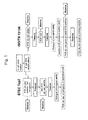
- Figure 1 shows on the left hand side a preferred workflow for the method of the present invention titled STEC Top7. On the right hand side a conventional worflow corresponding to ISO/TS 13136:2012 is shown.
- Both methods start off with a food sample which has been incubated in a culture medium enabling growth of E.coli resulting in an enriched sample ( E. coli stock medium).
- lysis of the E.coli grown in the culture medium is performed, e.g., in a lysis plate of 96 tubes (not shown) in order to obtain a sample solution comprising E. coli DNA.
- the sample solution is subjected to a first series of polymerase chain reactions (PCR), using primers and probes to amplify the specific E. coli genes or fragments thereof.
- PCR polymerase chain reactions
- the workflow encompasses at this step the amplification of all STEC Top7, i.e., stx1, stx2, eae variants (subtypes) and biomarker genes for each of O157, O26, O45, O103, O111, O121 and O145.
- the inventive workflow is terminated within a period of about 12 h or less (about 11 h for the incubation and lysis and about 1 h for the PCR).
- immunoconcentrates of the E. coli stock medium are prepared using antibodies directed against the STEC of the respective one or more serogroups, followed by
- the immunoconcentrates are in addition plated on a chromogenic medium to enable growth of isolated E. coli colonies.
- DNA is isolated from the isolated colonies and subjected in a third series of PCRs using primers to amplify E. coli genes or fragments thereof. Thereby the serogroup of pathogenic STEC may be identified. In such case the final results are available in about 2 days or less.
- the workflow according to the conventional ISO/TS 13136:2012 differs from the inventive method in that the first screening is directed to stx and the generic eae genes.
- the second screening step only the STEC Top5 are covered whereas the method of the present invention may cover all of the Top7 serogroups.
- the conventional workflow needs about 24 h in case only negative results are obtained at the first stage. In case positve results have to be confirmed the workflow takes about 4 days.
- Figure 2 shows the method of the present invention in comparison with the method as proposed by the Microbiology Laboratory Guidebook of the US-Department of Agriculture, 3rd Edition, 1998 (MLG 5 & MLG 5B.01), which needs about 24 h in case only negative results are obtained and about 3 days to confirm positive results.
- Figure 3 shows a schematic representation of an apparatus 10 suitable for carrying out the PCRs of the inventive method.
- the apparatus 10 comprises a reaction cartridge 12 of a preferably discshaped configuration having a plurality of reaction chambers or wells 14 at the outer periphery thereof and a reservoir 16 in a central position, said reaction chambers 14 being connected to the reservoir via radially extending channels 18.
- Such a preferred reaction cartridge 12 which is also referred to as "GeneDisc” in the following, is shown in more detail in Figures 4 and 5 .
- a typical number of wells 14 of a reaction cartridge 12 is thirty-six.
- the wells 14 may be grouped in a plurality of sectors 19, e.g., six sectors (referred to as GeneDisc sectors).
- the wells 14 of a group of a sector 19 may be connected via individual channels 18 to a common partition 22 of the reservoir 16.
- Such a cartridge 12 may be modified to provide a cartridge of the present invention wherein at least some of the reaction chambers 14 are preloaded with primers and probes to amplify stx1 and/or stx2, and the subtypes of the eae gene of one or more serogroups selected from O157, O26, O45, O103, O111, O121 and O145, or fragments of the respective genes.
- reaction chambers 14 are also preloaded with primers and probes to amplify the biomarker genes specific for one or more of these serogroups.
- the apparatus 10 further includes a preferably ring-shaped heating device 24 having four distinct zones (of which three zones 26, 27, 28 are visible) that can be heated to four different temperatures.
- the reaction cartridge 12 is placed on top of the heating device 24.
- the wells 14 of the reaction cartridge 12 are positioned close to or in contact with the heating device 24.
- the apparatus 10 includes means 30 for rotating the reaction cartridge 12 with respect to the heating device 24 allowing a cyclic variation in the temperature of the reaction chambers or wells 14.
- the temperature in each zone of the heating device 24 can be homogeneous or, if necessary, the temperature can vary along a gradient.
- the apparatus 10 further includes fluorescence excitation and detection means 32 disposed above the cartridge 12 so as to excite and measure the fluorescence of the contents of the reaction chambers 14 for each cycle.
- Such an apparatus 10 is disclosed in detail in WO 2002/009877 A1 and is available as GeneDisc Cycler (Pall GeneDisc Technologies).
- each PCR cycle requires a first phase where the wells are heated to a temperature of about 95 °C to denature the target DNA, then a second phase with a temperature of about 55 °C to about 65 °C for primer annealing, and a third phase for elongation of the DNA-strands, normally carried out at about 72 °C.
- PCR can be carried out with simplified cycles in accordance with the inventive method, in which annealing and elongation are carried out at the same temperature, such that each cycle requires only two different temperatures.
- the individual zones of the heating device 24 of the apparatus 10 are set to achieve such temperatures.
- primers and probes specific for the target sequences to be amplified are pre-distributed in the reaction chambers or wells 14.
- the reservoir 16 or its partitions is/are intended to receive a fluid composed of a sample of nucleic acids to be analyzed and the reagents required for a polymerase chain amplification reaction, with the exception of primers and probes.
- the reaction chambers 14 can contain the reagents necessary for a real-time PCR reaction other than the primers mentioned above.
- the reaction chambers 14 also comprise, in addition to the primers, one or more probes that are specific to the sequence to be amplified.
- the distribution of the probes in the reaction chambers 14 can also be such that certain chamber comprise probes specific to the sequences to be amplified and other chamber comprise control probes, which do not a priori recognize the sequence to be amplified.
- probes can be labelled and, if a plurality of probes are present in one and the same reaction chamber (for example a probe specific to the sequence to be amplified and a control probe), these probes will preferably be labelled with different fluorophores.
- the PCR reactions are carried out and evaluated by the apparatus 10 in an automated manner, i.e., without need for a user intervention after the reaction cartridge 12 has been inserted into the apparatus 10.
- the amplified sequences can be detected by the detection means 32 as mentioned above, and the result for each sequence to be amplified can be indicated to the user.
- the apparatus 10 is modified according to the present invention and further comprises control means which not only control the performance of the PCRs, but also serve to evaluate the amplified sequences detected by the detection means 32 to provide the user with a final result.
- the input signals from the detection means 32 corresponding to the detected E. coli genes are evaluated according to an algorithm, such that a final result is generated by the modified apparatus 10 for each serogroup depending on the detection results for stx1 and/or stx2, for the subtypes of the eae gene of that serogroup, and optionally for the biomarker gene specific for that serogroup.
- FIG. 6 A simpified flow diagram of a preferred algorithm implemented in the modified apparatus 10 is shown in Figure 6 .
- PCR results for stx, the eae variant (subtype) and the biomarker gene for a given serogroup are evaluated.
- the PCR results can be "positive”, “negative” or “unusable”.
- the stx genes encoding Shiga toxins are the priority targets, so that a negative PCR result for these genes leads to a negative final result, no matter what the PCR result for the eae and biomarker genes are.
- the final result can be "positive” (STEC present), "negative” (STEC absent) or "invalid” (in which case the assay should be repeated).
- a positive final result requires a positive PCR result for all three target genes.
- the algorithm is performed by a software stored in the control means of the modified apparatus 10 according to the present invention.
- the inventive apparatus 10 further comprises indicator, e.g., display means (not shown) for optically and/or acoustically indicating, e.g., displaying the final result for each STEC serogroup.
- indicator e.g., display means (not shown) for optically and/or acoustically indicating, e.g., displaying the final result for each STEC serogroup.
- a food sample to be checked for the presence or absence of one or more specific serogroups of Shiga toxin-producing E. coli was incubated in a conventional culture medium (e.g., buffered peptone water) prewarmed at 41.5 ⁇ 1 °C to enable growth of E. coli yielding an enriched sample (E. coli stock medium).
- a conventional culture medium e.g., buffered peptone water
- 50 ⁇ L portions of the enriched sample were transferred into a prefilled lysis plate comprising 96 tubes each of which is prefilled with 500 ⁇ L of Chelex-100 diluted to 20% by weight in water.
- the lysis plate is placed for 10 min in a thermal block preheated to 102 ⁇ 2 °C.
- the aluminium sheet is pierced with a tip to collect 36 ⁇ L portions of lysate which are transferred to a 6-sector disc reaction cartidge.
- the remaining E. coli stock medium is stored at 5 ⁇ 3 °C for use in the subsequent verification step.
- Each sector of this STEC Top7 GeneDisc comprises 6 individual wells, containing dehydrated primers and probes enabling the detection of 14 target genes (see Tables 1 and 2, wherein the serogroups stand for the respective biomarker genes).
- Table 1 Configuration of a STEC Top7 GeneDisc sector.
- Well ID Reporter FAM Reporter ROX 1 O145 inhibition control 2 eae ⁇ stx1 & stx2 3 eae ⁇ eae ⁇ 4 eae ⁇ O111 5 O157 O26 6 O45/O103/O121
- Table 2 Sequence ID numbers of the primers and probes used in the GeneDisc assay.
- the nucleotide sequences are disclosed in the attached sequence listing. Designation of the primers and probes Sequence ID number inhibition control forward primer SEQ ID NO: 1 inhibition control reverse primer SEQ ID NO: 2 inhibition control probe SEQ ID NO: 3 O26 forward primer SEQ ID NO: 4 O26 reverse primer SEQ ID NO: 5 O26 probe SEQ ID NO: 6 O45 forward primer SEQ ID NO: 7 O45 reverse primer SEQ ID NO: 8 O45 probe SEQ ID NO: 9 O103 forward primer SEQ ID NO: 10 O103 reverse primer SEQ ID NO: 11 O103 probe SEQ ID NO: 12 O111 forward primer SEQ ID NO: 13 O111 reverse primer SEQ ID NO: 14 O111 probe SEQ ID NO: 15 O121 forward primer SEQ ID NO: 16 O121 reverse primer SEQ ID NO: 17 O121 probe SEQ ID NO: 18 O145 forward primer SEQ ID NO: 19 O145 reverse primer SEQ ID NO: 20 O145 probe SEQ ID NO: 21 O157 forward primer SEQ ID NO: 22 O157 reverse primer SEQ ID NO: 23 O157
- the PCR results of the different target genes which are obtained by the fluorimetric detection are evaluated according to an algorithm by a software running in the GeneDisc Cycler.
- Table 3 shows the algorithm results as a function of the PCR results for a given serogroup.
- stx1 and stx2 are the priority targets, so that a negative PCR result for these genes leads to a negative final result, no matter what the PCR result for the eae and biomarker genes are.
- Table 3 Algorithm for evaluation of PCR results.
- the fully automated PCR evaluation allows to indicate, especially to display a final result for each of the STEC Top7 serogroups to be detected, so that the user does not need to evaluate the PCR results for the single genes by himself.
- the final result is preferably displayed as a color code, i.e., GREEN for the absence of the STEC serogroup, RED for the presence of the STEC serogroup, and GREY for an invalid result (in which case the assay should be repeated).
- An additional evaluation of the inhibition control may indicate that a PCR inhibitor is present in the sample solution, in which case the assay should be repeated after a 1:10 dilution.
- the inventive method (also referred to as “GeneDisc STEC Top7 method” in the following) was tested on raw beef meat (25 g and 375 g) and raw dairy products (25 g).
- Example 1 Raw beef meat (25 g)
- the GeneDisc STEC Top7 method was evaluated on 2,476 fresh minced beef samples collected in supermarkets of 92 departments of France. 25 g of each sample were admixed with 225 mL of buffered peptone water then incubated at 37 °C for 18h to 24h. After PCR screening, bacterial isolation by direct plating was performed from PCR positive samples, according to the ISO 13136 technical specification recommendations. The purpose of this study was to compare the screening approach described in the ISO 13136 technical specification ( stx, eae and serogroup) to the STEC Top7 screening approach including the eae variants (subtypes) instead of the generic eae gene. The results are reported in Table 4.
- Table 4 Evaluation of the entire GeneDisc STEC Top7 method with 2,476 naturally contaminated fresh minced beef samples. Screening steps Fresh minced beef Number Prevalence % Total number of samples 2,476 100 stx + , eae + , Top7 + 84 3.4 stx + , eae variant + , Top7 + 29 1.2 Colony isolation 7 0.3
- the GeneDisc STEC Top7 method was evaluated on 1,448 raw dairy products including 1,072 raw milk samples and 376 raw milk cheeses. 25 g of each sample were diluted in 225 mL of buffered peptone water supplemented with novobiocin (10 mg/L). Samples were incubated at 37 °C for 18h ⁇ 2h. The purpose of this Example was to compare the screening approach described in the ISO13136 technical specification ( stx, eae and serogroup) to the STEC Top7 screening approach including the eae variants instead of the generic eae gene. The results are reported in the Table 5. Table 5: Evaluation of the entire GeneDisc STEC Top7 method with 1,448 naturally contaminated raw dairy samples.
- Example 3 Raw beef meat (375 g)
- the GeneDisc STEC Top7 method gave only 1 presumptive positive sample from the mTSBn enrichment. This presumptive result was confirmed by culture method.
- the USDA-FSIS method detected 9 potential positive samples. Only 1 was confirmed by the culture method. The sample naturally contaminated with STEC O157 was detected by both methods and confirmed by culture.
- the GeneDisc method detected 1 potential positive sample enriched either in mTSB or in mTSBn which were confirmed by the culture method.
- the USDA-FSIS MLG 5B.01 method detected 1 other potential positive sample enriched in mTSBn which was not confirmed. More interestingly, the presumptive positive sample by the GeneDisc method, confirmed by culture, was not detected by the PCR screening of the USDA-FSIS MLG 5B.01 method.
- the GeneDisc STEC Top7 method and the reference method gave 2 and 10 presumptive positive samples, respectively.
- Cultural confirmation of all samples yielded 3 Top7 STEC isolates whose 2 were given as presumptive positive samples by the GeneDisc method (O157 and 026). Only 1 of the presumptive positive samples obtained by the reference method was confirmed (O157).
- the prevalence of the GeneDisc and the USDA-FSIS methods were 0.36% and 1.82%, respectively.
- Table 7 demonstrates in a summary the important differences of the inventive method and the method of ISO/TS 13136:2012.
- Table 7 Sample Type Fresh minced beef (25 g) Raw milk (25 g) Raw milk cheese (25 g) Number of samples tested 2,476 1,072 376 Reduction of positive samples due to eae variant screening 65.5% 33.5% 35.0% Reduction of positive samples due to IMC-PCR ND 75.5% 65.4%
Landscapes
- Chemical & Material Sciences (AREA)
- Life Sciences & Earth Sciences (AREA)
- Analytical Chemistry (AREA)
- Proteomics, Peptides & Aminoacids (AREA)
- Organic Chemistry (AREA)
- Zoology (AREA)
- Wood Science & Technology (AREA)
- Health & Medical Sciences (AREA)
- Engineering & Computer Science (AREA)
- Microbiology (AREA)
- Immunology (AREA)
- Molecular Biology (AREA)
- Biotechnology (AREA)
- Biophysics (AREA)
- Physics & Mathematics (AREA)
- Biochemistry (AREA)
- Bioinformatics & Cheminformatics (AREA)
- General Engineering & Computer Science (AREA)
- General Health & Medical Sciences (AREA)
- Genetics & Genomics (AREA)
- Measuring Or Testing Involving Enzymes Or Micro-Organisms (AREA)
- Apparatus Associated With Microorganisms And Enzymes (AREA)
Abstract
Description
- The present invention relates to a method for determining the presence or absence of Shiga toxin-producing Escherichia coli (STEC) in food samples, a reaction cartridge to be used in such method, and an apparatus to accommodate the reaction cartridge.
- Among the strains of STEC, seven serogroups, i.e., O157, O26, O45, O103, O111, O121, and O145, have been identified to be associated with severe illness in humans. These serogroups are referred to in the following as STEC Top7. The United States Department of Agriculture (USDA) has implemented regulations applicable to the analysis of certain raw beef products which define in addition to the serogroup O157 six further serogroups as identified above as adulterants.
- When determining the presence or absence of these strains of STEC, typically a food sample is added to a culture medium enabling growth of E. coli to provide an E. coli stock medium.
- Subsequently, lysis of the E. coli in the stock medium provides for a sample solution comprising E. coli DNA.
- The subsequent detection of the above-mentioned serogroups in the samples in a reliable manner using conventional methods is a time consuming procedure.
- The use of polymerase chain reaction (PCR) for detecting the major STEC virulence genes stx1, stx2, eae, and serogroup-specific genes is set out in the ISO 13136 technical specification (ISO/TS 13136:2012). PCR positive samples have to be confirmed by cultural methods as the different genes could belong to different strains, leading to false positive results.
- The object of the present invention is to provide a method which will lead within a shorter period of time to reliable results with respect to the presence or absence of pathogenic STEC in food samples.
- This object is solved by a method as set out in claim 1.
- Surprisingly, because of its specific workflow the method according to the present invention allows both a decrease of the rate of false positive results as well as an optimization of colony isolation. Thereby the determination of the presence or absence of one or more specific serogroups of Shiga toxin-producing E. coli (STEC) in a food sample can be remarkably simplified.
- More specifically, the present invention provides a method for the identification and confirmation of the presence or absence of highly pathogenic STEC in food samples in a very time efficient manner in that, after an E. coli stock medium is obtained by incubating the food sample in a culture medium and the lysis of the E. coli contained in the stock medium, this DNA containing sample solution is subjected to a first series of PCR using specific primers. This may be called a first screening step. This first screening step allows the simultaneous detection of stx1 and/or stx2 virulence genes encoding for Shiga toxins, the eae subtype encoding for an intimin specifically associated with one or more serogroups, and the biomarker gene of each serogroup.
- Subsequently, presumptive positive samples will have to be confirmed.
- The detection of the eae subtypes allows to substantially reduce the number of false positive samples.
- In a preferred embodiment, the positive samples are subjected to a second screening step, wherein an immunoconcentrate derived from the E. coli stock medium is checked once again in a PCR analysis.
- In case this second screening step yields positive results, part of the immunoconcentrate is plated on chromogenic media in order to isolate the respective STEC strain as colonies.
- The DNA derived from these isolated colonies may be PCR tested to confirm the presence of both stx and eae virulence genes, and optionally the serogroup biomarker genes.
- In case of negative samples, the final results are available within about 12 h starting off from the food sample. In case of positive samples the final results are available in about 2 days.
- The invention furthermore relates to reaction cartridges according to claim 13 designed to be used in the inventive method outlined above.
- Another aspect of the present invention resides in an apparatus defined in claim 15.
- Preferably, the method of the present invention includes verification of the presence of the one or more specific serogroups of STEC comprising
- performing an immunoconcentration of the culture medium with the incubated food sample for each serogroup, using antibodies directed against the STEC of the respective serogroup;
- isolating DNA from the immunoconcentrates; and
- subjecting the DNA to a second series of PCRs, using primers to amplify the following E. coli genes or fragments thereof:
- ● stx1 and/or stx2,
- ● the subtypes of the eae genes of the respective serogroups, and
- ● optionally, the biomarker genes specific for the respective serogroups.
- More preferably, the verification of the presence of the one or more specific serogroups of STEC further comprises, in case that stx1 and/or stx2 as well as the eae genes are amplified in the second series of PCRs:
- plating the immunoconcentrates on a chromogenic medium to enable growth of isolated E. coli colonies;
- isolating DNA from the isolated colonies; and
- subjecting the DNA to a third series of PCRs, using primers to amplify the following E. coli genes or fragments thereof:
- ● stx1 and/or stx2,
- ● the subtypes of the eae genes of the respective serogroups, and
- ● optionally, the biomarker genes specific for the respective serogroups.
- Preferably, the series of PCRs are performed with specific labeled DNA probes to allow a detection of the amplified genes or fragments thereof.
- According to the present invention the specific serogroup(s) to be determined are preferably selected from O157, O26, O45, O103, O111, O121 and O145.
- While the method of the present invention allows identifying of one or several of the specific serogroups, more preferably the method comprises the determination of the presence or absence of all serogroups O157, 026, 045, O103, O111, O121 and O145 in one step.
- It is furthermore preferred to select the subtypes of the eae gene to be amplified in the series of PCRs from eae β for 026, eae γ for O145 and O157, eae ε for 045, O103 and O121, and eae θ for 0111.
- When performing the method of the present invention, preferably the specific biomarker genes are selected from the O-antigen transporter genes of the respective serogroups.
- While the method of the present invention is applicable to a broad range of food samples, preferably the food sample is selected from raw meat, a raw dairy product, or a raw vegetable product, in particular a sprout.
- The culture medium used for the incubation step preferably is selected from buffered peptone water, optionally comprising acriflavine; tryptic soy broth (TSB), optionally comprising novobiocine; and modified tryptic soy broth (mTSB), optionally comprising novobiocine.
- The method of the present invention performs the PCRs of each series preferably simultaneously in an automated manner, such that the device used for the PCRs allows an automatic evaluation and indication of the final result.
- In accordance with a preferred variant of the method of the present invention the antibodies used for the immunoconcentration are selected from monoclonal antibodies or polyclonal antibodies.
- The chromogenic medium used for plating the immunoconcentrates is preferably selected from Cefixime-Tellurite Sorbitol McConkey (CT-SMAC); modified Rainbow Agar (mRBA) comprising novobiocine, cefixime trihydrate and potassium tellurite; Tryptone Bile X Glucuronide medium (TBX); and Cefixime-Tellurite Rhamnose McConkey (CT-RMAC).
- The present invention also relates to a reaction cartridge specifically adapted to be used in the method of the present invention.
- Such reaction cartridge is designed for performing a series of PCRs on a DNA-containing sample solution and comprises a plurality of reaction chambers and a reservoir. The sample solution can be fed into the reservoir and homogeneously distributed into the reaction chambers via conduits connecting each reaction chamber with the reservoir. At least some of the reaction chambers are preloaded with primers and probes to amplify the following E. coli genes or fragments thereof:
- stx1 and/or stx2,
- the subtypes of the eae gene of one or more serogroups selected from O157, O26, O45, O103, O111, O121 and O145, and
- optionally, biomarker genes specific for one or more serogroups
selected from O157, O26, O45, O103, O111, O121 and O145. - Furthermore, the invention also relates to an apparatus for automatically performing a series of PCRs, wherein this apparatus is adapted to accommodate the above-mentioned reaction cartridge. The apparatus comprises
- detection means for detecting the amplified E. coli genes with the aid of the respective probes;
- control means for controlling the performance of the PCRs,
wherein a software is stored in the control means which is able to evaluate the detected E. coli genes according to an algorithm, such that a final result is generated for each serogroup depending on the detection results for stx1 and/or stx2, for the subtypes of the eae gene of that serogroup, and optionally for the biomarker gene specific for that serogroup; and - display means for optically and/or acoustically indicating the final result for each serogroup.
- The afore-mentioned aspects and advantages of the present invention will be disclosed in more detail below in connection with the drawings and specific examples.
- In the drawings:
- Figure 1
- shows the inventive method in comparison with a prior art method (
ISO 13136 technical specification); - Figure 2
- shows the inventive method in comparison with a further prior art method;
- Figure 3
- shows a schematic representation of an apparatus for a PCR analysis according to the present invention;
- Figure 4
- shows a cross-sectional view of a PCR reaction cartridge of the present invention;
- Figure 5
- shows a top view of the PCR reaction cartridge of the present invention; and
- Figure 6
- shows a flow diagram of an algorithm for generating a final result as a function of PCR results.
-
Figure 1 shows on the left hand side a preferred workflow for the method of the present invention titled STEC Top7. On the right hand side a conventional worflow corresponding to ISO/TS 13136:2012 is shown. - Both methods start off with a food sample which has been incubated in a culture medium enabling growth of E.coli resulting in an enriched sample (E. coli stock medium).
- Subsequently lysis of the E.coli grown in the culture medium is performed, e.g., in a lysis plate of 96 tubes (not shown) in order to obtain a sample solution comprising E. coli DNA.
- So far the procedure is the same for the inventive method and the conventional workflow.
- According to the inventive workflow, the sample solution is subjected to a first series of polymerase chain reactions (PCR), using primers and probes to amplify the specific E. coli genes or fragments thereof. Preferably, as indicated in
Figure 1 , the workflow encompasses at this step the amplification of all STEC Top7, i.e., stx1, stx2, eae variants (subtypes) and biomarker genes for each of O157, O26, O45, O103, O111, O121 and O145. In the absence of any of these serogroups, the inventive workflow is terminated within a period of about 12 h or less (about 11 h for the incubation and lysis and about 1 h for the PCR). - In case positive results are reported, immunoconcentrates of the E. coli stock medium are prepared using antibodies directed against the STEC of the respective one or more serogroups, followed by
- isolating DNA from the immunoconcentrates; and
- subjecting the DNA to a second series of PCRs, using primers to amplify the following E. coli genes or fragments thereof:
- ● stx1 and/or stx2,
- ● the subtyp of the eae genes of the respective serogroups,
and - ● optionally, the biomarker genes specific for the respective serogroups.
- If negative results are obtained the workflow may be terminated.
- In case positive results are obtained, preferably the immunoconcentrates are in addition plated on a chromogenic medium to enable growth of isolated E. coli colonies. In a further step, DNA is isolated from the isolated colonies and subjected in a third series of PCRs using primers to amplify E. coli genes or fragments thereof. Thereby the serogroup of pathogenic STEC may be identified. In such case the final results are available in about 2 days or less.
- The workflow according to the conventional ISO/TS 13136:2012 differs from the inventive method in that the first screening is directed to stx and the generic eae genes. In the second screening step only the STEC Top5 are covered whereas the method of the present invention may cover all of the Top7 serogroups.
- The conventional workflow needs about 24 h in case only negative results are obtained at the first stage. In case positve results have to be confirmed the workflow takes about 4 days.
-
Figure 2 shows the method of the present invention in comparison with the method as proposed by the Microbiology Laboratory Guidebook of the US-Department of Agriculture, 3rd Edition, 1998 (MLG 5 & MLG 5B.01), which needs about 24 h in case only negative results are obtained and about 3 days to confirm positive results. -
Figure 3 shows a schematic representation of anapparatus 10 suitable for carrying out the PCRs of the inventive method. - The
apparatus 10 comprises areaction cartridge 12 of a preferably discshaped configuration having a plurality of reaction chambers orwells 14 at the outer periphery thereof and areservoir 16 in a central position, saidreaction chambers 14 being connected to the reservoir via radially extendingchannels 18. - Such a
preferred reaction cartridge 12, which is also referred to as "GeneDisc" in the following, is shown in more detail inFigures 4 and 5 . - A typical number of
wells 14 of areaction cartridge 12 is thirty-six. Thewells 14 may be grouped in a plurality ofsectors 19, e.g., six sectors (referred to as GeneDisc sectors). Thewells 14 of a group of asector 19 may be connected viaindividual channels 18 to acommon partition 22 of thereservoir 16. - Such a
cartridge 12 may be modified to provide a cartridge of the present invention wherein at least some of thereaction chambers 14 are preloaded with primers and probes to amplify stx1 and/or stx2, and the subtypes of the eae gene of one or more serogroups selected from O157, O26, O45, O103, O111, O121 and O145, or fragments of the respective genes. Preferably,reaction chambers 14 are also preloaded with primers and probes to amplify the biomarker genes specific for one or more of these serogroups. - The
apparatus 10 further includes a preferably ring-shapedheating device 24 having four distinct zones (of which threezones reaction cartridge 12 is placed on top of theheating device 24. Thewells 14 of thereaction cartridge 12 are positioned close to or in contact with theheating device 24. - The
apparatus 10 includesmeans 30 for rotating thereaction cartridge 12 with respect to theheating device 24 allowing a cyclic variation in the temperature of the reaction chambers orwells 14. - The temperature in each zone of the
heating device 24 can be homogeneous or, if necessary, the temperature can vary along a gradient. - The
apparatus 10 further includes fluorescence excitation and detection means 32 disposed above thecartridge 12 so as to excite and measure the fluorescence of the contents of thereaction chambers 14 for each cycle. - Such an
apparatus 10 is disclosed in detail inWO 2002/009877 A1 and is available as GeneDisc Cycler (Pall GeneDisc Technologies). - Usually, each PCR cycle requires a first phase where the wells are heated to a temperature of about 95 °C to denature the target DNA, then a second phase with a temperature of about 55 °C to about 65 °C for primer annealing, and a third phase for elongation of the DNA-strands, normally carried out at about 72 °C. However, PCR can be carried out with simplified cycles in accordance with the inventive method, in which annealing and elongation are carried out at the same temperature, such that each cycle requires only two different temperatures. The individual zones of the
heating device 24 of theapparatus 10 are set to achieve such temperatures. - Preferably, primers and probes specific for the target sequences to be amplified are pre-distributed in the reaction chambers or
wells 14. Thereservoir 16 or its partitions is/are intended to receive a fluid composed of a sample of nucleic acids to be analyzed and the reagents required for a polymerase chain amplification reaction, with the exception of primers and probes. - In a preferred variation, it is possible to distribute, from a reservoir, a fluid containing a sample of nucleic acids to be analyzed and the reagents necessary for PCR in a plurality of reaction chambers containing specific primers and probes for the target nucleic acid sequences to be amplified, and to cause the amplification process by continuously subjecting the contents of the chambers to different temperatures in succession (namely those required for denaturation, annealing and elongation) a plurality of times by means of a cyclic relative movement of the
reaction cartridge 12 including saidreaction chambers 14 and saidheating device 24 having four distinct zones that can be heated to different temperatures. - If necessary, the
reaction chambers 14 can contain the reagents necessary for a real-time PCR reaction other than the primers mentioned above. In a preferred embodiment of the apparatus, thereaction chambers 14 also comprise, in addition to the primers, one or more probes that are specific to the sequence to be amplified. The distribution of the probes in thereaction chambers 14 can also be such that certain chamber comprise probes specific to the sequences to be amplified and other chamber comprise control probes, which do not a priori recognize the sequence to be amplified. These probes can be labelled and, if a plurality of probes are present in one and the same reaction chamber (for example a probe specific to the sequence to be amplified and a control probe), these probes will preferably be labelled with different fluorophores. - Preferably, the PCR reactions are carried out and evaluated by the
apparatus 10 in an automated manner, i.e., without need for a user intervention after thereaction cartridge 12 has been inserted into theapparatus 10. With the aid of the fluorescence-labelled probes, the amplified sequences can be detected by the detection means 32 as mentioned above, and the result for each sequence to be amplified can be indicated to the user. - In a preferred embodiment, the
apparatus 10 is modified according to the present invention and further comprises control means which not only control the performance of the PCRs, but also serve to evaluate the amplified sequences detected by the detection means 32 to provide the user with a final result. - When performing the inventive method, the input signals from the detection means 32 corresponding to the detected E. coli genes are evaluated according to an algorithm, such that a final result is generated by the modified
apparatus 10 for each serogroup depending on the detection results for stx1 and/or stx2, for the subtypes of the eae gene of that serogroup, and optionally for the biomarker gene specific for that serogroup. - A simpified flow diagram of a preferred algorithm implemented in the modified
apparatus 10 is shown inFigure 6 . In this case, PCR results for stx, the eae variant (subtype) and the biomarker gene for a given serogroup are evaluated. The PCR results can be "positive", "negative" or "unusable". In this algorithm, the stx genes encoding Shiga toxins are the priority targets, so that a negative PCR result for these genes leads to a negative final result, no matter what the PCR result for the eae and biomarker genes are. The final result can be "positive" (STEC present), "negative" (STEC absent) or "invalid" (in which case the assay should be repeated). A positive final result requires a positive PCR result for all three target genes. - The algorithm is performed by a software stored in the control means of the modified
apparatus 10 according to the present invention. - The
inventive apparatus 10 further comprises indicator, e.g., display means (not shown) for optically and/or acoustically indicating, e.g., displaying the final result for each STEC serogroup. - A food sample to be checked for the presence or absence of one or more specific serogroups of Shiga toxin-producing E. coli was incubated in a conventional culture medium (e.g., buffered peptone water) prewarmed at 41.5 ± 1 °C to enable growth of E. coli yielding an enriched sample (E. coli stock medium). 50 µL portions of the enriched sample were transferred into a prefilled lysis plate comprising 96 tubes each of which is prefilled with 500 µL of Chelex-100 diluted to 20% by weight in water. After closure of the tubes with an aluminium sheet, the lysis plate is placed for 10 min in a thermal block preheated to 102 ± 2 °C. When the lysis step is completed, the aluminium sheet is pierced with a tip to collect 36 µL portions of lysate which are transferred to a 6-sector disc reaction cartidge.
- The remaining E. coli stock medium is stored at 5 ± 3 °C for use in the subsequent verification step.
- The lysates are allowed to sit at room temperature for 5 min, then loaded into the reaction cartidge (i.e., one sample per sector). Each sector of this STEC Top7 GeneDisc comprises 6 individual wells, containing dehydrated primers and probes enabling the detection of 14 target genes (see Tables 1 and 2, wherein the serogroups stand for the respective biomarker genes).
- Fluorimetric detection of the PCR products is enabled by the use of probes labelled with one of the two fluorophores (reporters) FAM (= carboxyfluorescin) and ROX (= carboxyrhodamin), so that each well can be used for amplification of two or three genes.
Table 1: Configuration of a STEC Top7 GeneDisc sector. Well ID Reporter FAM Reporter ROX 1 O145 inhibition control 2 eae ε stx1 & stx2 3 eae β eae γ 4 eae θ O111 5 O157 O26 6 O45/O103/O121 Table 2: Sequence ID numbers of the primers and probes used in the GeneDisc assay. The nucleotide sequences are disclosed in the attached sequence listing. Designation of the primers and probes Sequence ID number inhibition control forward primer SEQ ID NO: 1 inhibition control reverse primer SEQ ID NO: 2 inhibition control probe SEQ ID NO: 3 O26 forward primer SEQ ID NO: 4 O26 reverse primer SEQ ID NO: 5 O26 probe SEQ ID NO: 6 O45 forward primer SEQ ID NO: 7 O45 reverse primer SEQ ID NO: 8 O45 probe SEQ ID NO: 9 O103 forward primer SEQ ID NO: 10 O103 reverse primer SEQ ID NO: 11 O103 probe SEQ ID NO: 12 O111 forward primer SEQ ID NO: 13 O111 reverse primer SEQ ID NO: 14 O111 probe SEQ ID NO: 15 O121 forward primer SEQ ID NO: 16 O121 reverse primer SEQ ID NO: 17 O121 probe SEQ ID NO: 18 O145 forward primer SEQ ID NO: 19 O145 reverse primer SEQ ID NO: 20 O145 probe SEQ ID NO: 21 O157 forward primer SEQ ID NO: 22 O157 reverse primer SEQ ID NO: 23 O157 probe SEQ ID NO: 24 eae β forward primer SEQ ID NO: 25 eae β reverse primer SEQ ID NO: 26 eae β probe SEQ ID NO: 27 eae γ forward primer SEQ ID NO: 28 eae γ reverse primer SEQ ID NO: 29 eae γ probe SEQ ID NO: 30 eae θ forward primer SEQ ID NO: 31 eae θ reverse primer SEQ ID NO: 32 eae θ probe SEQ ID NO: 33 eae ε forward primer SEQ ID NO: 34 eae ε reverse primer 1 SEQ ID NO: 35 eae ε reverse primer 2 SEQ ID NO: 36 eae ε probe SEQ ID NO: 37 stx1 forward primer SEQ ID NO: 38 stx2 forward primer SEQ ID NO: 39 stx1 reverse primer SEQ ID NO: 40 stx2 reverse primer 1 SEQ ID NO: 41 stx2 reverse primer 2 SEQ ID NO: 42 stx2 probe SEQ ID NO: 43 stx1 probe SEQ ID NO: 44 - For each sample, the PCR results of the different target genes which are obtained by the fluorimetric detection are evaluated according to an algorithm by a software running in the GeneDisc Cycler. Table 3 shows the algorithm results as a function of the PCR results for a given serogroup. In this algorithm, stx1 and stx2 are the priority targets, so that a negative PCR result for these genes leads to a negative final result, no matter what the PCR result for the eae and biomarker genes are.
Table 3: Algorithm for evaluation of PCR results. PCR result for target genes (1=positive, 2=negative, 3=unusable) Final result for a given serogroup stx1 and/or stx2 eae variant Serogroup biomarker Algorithm result Color code 2 1 or 2 or 3 1 or 2 or 3 2 GREEN 1 or 3 2 1 or 2 or 3 2 GREEN 1 or 3 1 or 2 or 3 2 2 GREEN 1 1 1 1 RED 1 1 3 3 GREY 1 3 1 3 GREY 1 3 3 3 GREY 3 1 or 3 1 or 3 3 GREY - The fully automated PCR evaluation allows to indicate, especially to display a final result for each of the STEC Top7 serogroups to be detected, so that the user does not need to evaluate the PCR results for the single genes by himself. The final result is preferably displayed as a color code, i.e., GREEN for the absence of the STEC serogroup, RED for the presence of the STEC serogroup, and GREY for an invalid result (in which case the assay should be repeated).
- An additional evaluation of the inhibition control may indicate that a PCR inhibitor is present in the sample solution, in which case the assay should be repeated after a 1:10 dilution.
- In case of a positive PCR result in the GeneDisc assay, 100 µL to 1 mL of enriched sample were incubated with specific antibodies for one of the presumptive positive STEC Top7 to prepare an immunoconcentrate. After 1 to 4 washing steps, the concentrated cells (immunoconcentrate) were eluted with PBS comprising 0.05% by weight of Tween 20. Half of the cells are used for PCR analysis with the STEC Top7 GeneDisc plates. In case of a positive result for the targeted genes, the remaining part of the cells are plated on specific chromogenic agar media. Up to 6 isolated colonies are tested with the STEC Top7 GeneDisc for a final confirmation.
- The inventive method (also referred to as "GeneDisc STEC Top7 method" in the following) was tested on raw beef meat (25 g and 375 g) and raw dairy products (25 g).
- The GeneDisc STEC Top7 method was evaluated on 2,476 fresh minced beef samples collected in supermarkets of 92 departments of France. 25 g of each sample were admixed with 225 mL of buffered peptone water then incubated at 37 °C for 18h to 24h. After PCR screening, bacterial isolation by direct plating was performed from PCR positive samples, according to the
ISO 13136 technical specification recommendations. The purpose of this study was to compare the screening approach described in theISO 13136 technical specification (stx, eae and serogroup) to the STEC Top7 screening approach including the eae variants (subtypes) instead of the generic eae gene. The results are reported in Table 4.Table 4: Evaluation of the entire GeneDisc STEC Top7 method with 2,476 naturally contaminated fresh minced beef samples. Screening steps Fresh minced beef Number Prevalence % Total number of samples 2,476 100 stx + , eae + , Top7+ 84 3.4 stx + , eae variant+, Top7+ 29 1.2 Colony isolation 7 0.3 - This Example demonstrates that the first screening of eae variant genes associated to serogroup encoding genes and stx genes allowed to significantly decrease the number of PCR positive samples from 84 to 29. Indeed, the rates of PCR positive samples for the
ISO 13136 approach and the GeneDisc STEC Top7 method were 3.4 and 1.2%, respectively. - The GeneDisc STEC Top7 method was evaluated on 1,448 raw dairy products including 1,072 raw milk samples and 376 raw milk cheeses. 25 g of each sample were diluted in 225 mL of buffered peptone water supplemented with novobiocin (10 mg/L). Samples were incubated at 37 °C for 18h ± 2h. The purpose of this Example was to compare the screening approach described in the ISO13136 technical specification (stx, eae and serogroup) to the STEC Top7 screening approach including the eae variants instead of the generic eae gene. The results are reported in the Table 5.
Table 5: Evaluation of the entire GeneDisc STEC Top7 method with 1,448 naturally contaminated raw dairy samples. Screening steps Raw milk Raw milk cheese Global prevalence Number Prevalence % Number Prevalence % Total number of samples 1,072 100 376 100 100 stx + , eae + , Top7+ 245 22.9 160 42.6 28.0 stx + , eae variant+, Top7+ 163 15.2 104 27.7 18.4 IMC-PCR conform 40 3.7 36 9.6 5.2 Colony isolation 7 0.7 6 1.6 0.9 - The results showed again that the detection of eae variant genes in first screening allowed to decrease the rate of PCR positive samples by 33.6% and 35.0% in raw milk samples and raw milk cheeses, respectively. The second screening step of the STEC Top7 method, based on IMC-PCR, induced a significant decrease of presumptive positive samples by 75.7% and 65.3% in raw milk samples and in raw milk cheese samples, respectively, indicating that in most samples the different targeted genes should be carried by different E. coli strains.
- Evaluation of the entire method was also realized on 375 g raw beef meat samples, including 400 ground beef samples and 150 beef trim samples processed in 4 facilities across the US. The inventive GeneDisc method was compared to the USDA-FSIS MLG 5B.01 method. 375 g of each sample were diluted in either 1.5 L of mTSB or 975 mL of mTSB with novobiocin (mTSBn). Samples were incubated at 42 °C. The incubation time depended on the enrichment broth: 12 h for the mTSB, 15 h for the mTSBn. Presumptive positive samples were confirmed according to reference methods (USDA-FSIS MLG 5 & 5B.01). The results are reported in Table 6.
Table 6: Evaluation of the entire GeneDisc STEC Top7 method with 550 naturally contaminated raw beef meat samples. Sample type Enrichment broth GeneDisc STEC Top7 method USDA-FSIS method MLG 5 & 5B.01 PCR positive samples Confirmation PCR positive samples Confirmation Ground Beef mTSB (12 h) 0/400 NA 0/400 NA mTSBn (15 h) 1/400 1/1 (O157) 9/400 1/8 (O157) Beef Trim mTSB (12 h) 1/150 1/1 (O26) 0/150 NA mTSBn (15 h) 1/150 1/1 (O26) 1/150 0/1 Prevalence 0.36% 0.36% 1.82% 0.18% - Among 400 ground beef samples, the GeneDisc STEC Top7 method gave only 1 presumptive positive sample from the mTSBn enrichment. This presumptive result was confirmed by culture method. The USDA-FSIS method detected 9 potential positive samples. Only 1 was confirmed by the culture method. The sample naturally contaminated with STEC O157 was detected by both methods and confirmed by culture.
- Among 150 beef trim samples, the GeneDisc method detected 1 potential positive sample enriched either in mTSB or in mTSBn which were confirmed by the culture method. The USDA-FSIS MLG 5B.01 method detected 1 other potential positive sample enriched in mTSBn which was not confirmed. More interestingly, the presumptive positive sample by the GeneDisc method, confirmed by culture, was not detected by the PCR screening of the USDA-FSIS MLG 5B.01 method.
- The GeneDisc STEC Top7 method and the reference method gave 2 and 10 presumptive positive samples, respectively. Cultural confirmation of all samples yielded 3 Top7 STEC isolates whose 2 were given as presumptive positive samples by the GeneDisc method (O157 and 026). Only 1 of the presumptive positive samples obtained by the reference method was confirmed (O157). The prevalence of the GeneDisc and the USDA-FSIS methods were 0.36% and 1.82%, respectively.
- Table 7 demonstrates in a summary the important differences of the inventive method and the method of ISO/TS 13136:2012.
Table 7 Sample Type Fresh minced beef (25 g) Raw milk (25 g) Raw milk cheese (25 g) Number of samples tested 2,476 1,072 376 Reduction of positive samples due to eae variant screening 65.5% 33.5% 35.0% Reduction of positive samples due to IMC-PCR ND 75.5% 65.4% 


Claims (15)
- A method for determining the presence or absence of one or more specific serogroups of pathogenic Shiga toxin-producing E. coli (STEC) in a food sample, comprising- incubating the food sample in a culture medium enabling growth of E. coli to obtain an E. coli stock medium;- performing a lysis of the E. coli in the stock medium to obtain a sample solution comprising E. coli DNA; and- subjecting the sample solution to a first series of polymerase chain reactions (PCR), using primers to amplify the following E. coli genes or fragments thereof:● stx1 and/or stx2 encoding Shiga toxin 1 and Shiga toxin 2, respectively,● for each STEC serogroup to be determined, the subtype of the eae gene of that serogroup encoding an intimin, and● for each STEC serogroup to be determined, a biomarker
gene specific for that serogroup;
and, in case that stx1 and/or stx2 as well as the eae gene and the specific biomarker gene for at least one serogroup are amplified in the first series of PCRs:- verifying the presence of the one or more specific serogroups of STEC by performing a second series of PCRs on concentrates of the E. coli stock medium and, optionally, a third series of PCRs on single E. coli colonies derived from the concentrates. - The method of claim 1, wherein the verification of the presence of the one or more specific serogroups of STEC comprises- performing an immunoconcentration of the E. coli stock medium for each serogroup, using antibodies directed against the STEC of the respective serogroup;- isolating DNA from the immunoconcentrates; and- subjecting the DNA to a second series of PCRs, using primers to amplify the following E. coli genes or fragments thereof:● stx1 and/or stx2,● the subtypes of the eae gene of the respective serogroups,
and● optionally, the biomarker genes specific for the respective serogroups. - The method of claim 2, wherein the verification of the presence of the one or more specific serogroups of STEC further comprises, in case that stx1 and/or stx2 as well as the eae genes are amplified in the second series of PCRs:- plating the immunoconcentrates on a chromogenic medium to enable growth of isolated E. coli colonies;- isolating DNA from the isolated colonies; and- subjecting the DNA to a third series of PCRs, using primers to amplify the following E. coli genes or fragments thereof:● stx1 and/or stx2,● the subtypes of the eae gene of the respective serogroups,
and● optionally, the biomarker genes specific for the respective serogroups. - The method of any one of the preceding claims, wherein the series of PCRs are performed with specific labeled DNA probes to allow a detection of the amplified genes or fragments.
- The method of any one of the preceding claims, wherein the specific serogroup(s) to be determined are selected from O157, O26, O45, O103, O111, O121 and O145.
- The method of claim 5, comprising the determination of the presence or absence of all serogroups O157, 026, 045, O103, 0111, O121 and O145.
- The method of claim 5 or claim 6, wherein the subtypes of the eae gene to be amplified in the series of PCRs are selected from eae β for 026, eae γ for O145 and O157, eae ε for 045, O103 and O121, and eae θ for 0111.
- The method of any one of the preceding claims, wherein the specific biomarker genes are selected from the O-antigen transporter genes of the respective serogroups.
- The method of any one of the preceding claims, wherein the food sample is selected from raw meat, in particular raw beef meat, a raw dairy product, or a raw vegetable product, in particular a sprout.
- The method of any one of the preceding claims, wherein the culture medium for the incubation step is selected from buffered peptone water, optionally comprising acriflavine; tryptic soy broth (TSB), optionally comprising novobiocine; and modified tryptic soy broth (mTSB), optionally comprising novobiocine.
- The method of any one of the preceding claims, wherein the PCRs of each series are performed simultaneously in an automated manner.
- The method of any one of claims 3 to 11, wherein the chromogenic medium is selected from Cefixime-Tellurite Sorbitol McConkey (CT-SMAC); modified Rainbow Agar (mRBA) comprising novobiocine, cefixime trihydrate and potassium tellurite; Tryptone Bile X Glucuronide medium (TBX); and Cefixime-Tellurite Rhamnose McConkey (CT-RMAC).
- A reaction cartridge for performing a series of PCRs on a DNA-containing sample solution comprising a plurality of reaction chambers and a reservoir from which the sample solution can be homogeneously distributed into the reaction chambers, wherein at least some of the reaction chambers are preloaded with primers and probes to amplify the following E. coli genes or fragments thereof:- stx1 and/or stx2, and- the subtypes of the eae gene of one or more serogroups selected from O157, 026, 045, O103, 0111, O121 and O145.
- The reaction cartridge of claim 13, wherein further at least some of the reaction chambers are preloaded with primers and probes to amplify the following E. coli genes or fragments thereof:- biomarker genes specific for one or more serogroups selected from O157, 026, 045, O103, 0111, O121 and O145.
- An apparatus for automatically performing a series of PCRs, wherein the apparatus is adapted to accommodate the reaction cartridge of claim 13 or 14, and wherein the apparatus comprises- detection means for detecting the amplified E. coli genes with the aid of the respective probes;- control means for controlling the performance of the PCRs,
wherein a software is stored in the control means which is able to evaluate the detected E. coli genes according to an algorithm, such that a final result is generated for each serogroup depending on the detection results for stx1 and/or stx2, for the subtypes of the eae gene of that serogroup, and optionally for the biomarker gene specific for that serogroup; and- indicator means for optically and/or acoustically indicating the final result for each serogroup.
Priority Applications (6)
| Application Number | Priority Date | Filing Date | Title |
|---|---|---|---|
| EP13182864.2A EP2843057B1 (en) | 2013-09-03 | 2013-09-03 | Method for determining the presence or absence of shiga toxin-producing Escherichia coli (STEC) in a food sample |
| SG10201404572YA SG10201404572YA (en) | 2013-09-03 | 2014-08-01 | Method for Determining the Presence or Absence of Shiga Toxin-Producing Escherichia Coli (STEC) in a Food Sample |
| JP2014158871A JP6544847B2 (en) | 2013-09-03 | 2014-08-04 | Method for determining the presence or absence of Shiga toxin-producing Escherichia coli (STEC) in food samples |
| CA2859890A CA2859890C (en) | 2013-09-03 | 2014-08-15 | Method for determining the presence or absence of shiga toxin-producing escherichia coli (stec) in a food sample |
| US14/466,417 US9580757B2 (en) | 2013-09-03 | 2014-08-22 | Method for determining the presence or absence of shiga toxin-producing Escherichia coli (STEC) in a food sample |
| CN201410442833.3A CN104419766B (en) | 2013-09-03 | 2014-09-02 | Method for determining the presence or absence of shiga toxin-producing escherichia coli (STEC) in a food sample |
Applications Claiming Priority (1)
| Application Number | Priority Date | Filing Date | Title |
|---|---|---|---|
| EP13182864.2A EP2843057B1 (en) | 2013-09-03 | 2013-09-03 | Method for determining the presence or absence of shiga toxin-producing Escherichia coli (STEC) in a food sample |
Publications (2)
| Publication Number | Publication Date |
|---|---|
| EP2843057A1 true EP2843057A1 (en) | 2015-03-04 |
| EP2843057B1 EP2843057B1 (en) | 2017-12-27 |
Family
ID=49118336
Family Applications (1)
| Application Number | Title | Priority Date | Filing Date |
|---|---|---|---|
| EP13182864.2A Not-in-force EP2843057B1 (en) | 2013-09-03 | 2013-09-03 | Method for determining the presence or absence of shiga toxin-producing Escherichia coli (STEC) in a food sample |
Country Status (6)
| Country | Link |
|---|---|
| US (1) | US9580757B2 (en) |
| EP (1) | EP2843057B1 (en) |
| JP (1) | JP6544847B2 (en) |
| CN (1) | CN104419766B (en) |
| CA (1) | CA2859890C (en) |
| SG (1) | SG10201404572YA (en) |
Cited By (1)
| Publication number | Priority date | Publication date | Assignee | Title |
|---|---|---|---|---|
| EP4484578A1 (en) * | 2023-06-29 | 2025-01-01 | Biomérieux | Method for the detection and confirmation of shigatoxin-producing escherichia coli and/or enterohemorrhagic e. coli |
Families Citing this family (9)
| Publication number | Priority date | Publication date | Assignee | Title |
|---|---|---|---|---|
| CN105779584A (en) * | 2015-12-18 | 2016-07-20 | 珠海出入境检验检疫局检验检疫技术中心 | Primer and probe group for detecting escherichia coli O111, kit and PCR (polymerase chain reaction) detection method |
| CN105779585A (en) * | 2015-12-18 | 2016-07-20 | 珠海出入境检验检疫局检验检疫技术中心 | Primer and probe group for detecting enterohemorrhagic escherichia coli, kit and PCR (polymerase chain reaction) detection method |
| SG11201903333SA (en) | 2017-12-29 | 2019-08-27 | Clear Labs Inc | Automated priming and library loading services |
| US12325883B2 (en) * | 2019-01-15 | 2025-06-10 | Neogen Food Safety Us Holdco Corporation | Loop-mediated isothermal amplification primers for Shiga toxin-producing E. coli (STEC) detection |
| CN110982916B (en) * | 2020-01-02 | 2023-06-09 | 刘思洁 | Primer combination and detection kit for detecting shiga toxin-producing escherichia coli |
| CN111548950A (en) * | 2020-03-31 | 2020-08-18 | 西北农林科技大学 | A purification method of Shiga toxin-producing Escherichia coli contaminated by Proteus |
| KR102438017B1 (en) * | 2020-11-09 | 2022-08-31 | 대한민국 | Method and Kit for Identifying F18 encoding enterotoxigenic and shigatoxin-producing Escherichia coli in Pigs using PNA probe |
| KR102520374B1 (en) * | 2020-12-07 | 2023-04-20 | 대한민국 | Method and Kit for Identifying the serotype of Actinobacillus pleuropneumoniae causing pneumonia in Pigs using PNA probe |
| CN116903710B (en) * | 2023-09-12 | 2023-11-14 | 山东省农业科学院畜牧兽医研究所 | Phage targeting protein molecule and application thereof in identifying shiga toxin-producing escherichia coli of O103 antigen serotype |
Citations (2)
| Publication number | Priority date | Publication date | Assignee | Title |
|---|---|---|---|---|
| WO2002009877A1 (en) | 2000-07-28 | 2002-02-07 | Genesystems | Device for heat-dependent chain amplification of target nucleic acid sequences |
| WO2011018762A1 (en) * | 2009-08-11 | 2011-02-17 | Agence Nationale Chargee De La Securite Sanitaire De L'alimentation, De L'environnement Et Du Travail | An assay for determining a molecular risk assessment of a complex polymicrobial sample suspected to contain an ehec |
Family Cites Families (1)
| Publication number | Priority date | Publication date | Assignee | Title |
|---|---|---|---|---|
| EP2748332B1 (en) | 2011-08-24 | 2018-06-13 | Oxoid Limited | Compositions and methods for the detection of multiple microorganisms |
-
2013
- 2013-09-03 EP EP13182864.2A patent/EP2843057B1/en not_active Not-in-force
-
2014
- 2014-08-01 SG SG10201404572YA patent/SG10201404572YA/en unknown
- 2014-08-04 JP JP2014158871A patent/JP6544847B2/en not_active Expired - Fee Related
- 2014-08-15 CA CA2859890A patent/CA2859890C/en active Active
- 2014-08-22 US US14/466,417 patent/US9580757B2/en not_active Expired - Fee Related
- 2014-09-02 CN CN201410442833.3A patent/CN104419766B/en not_active Expired - Fee Related
Patent Citations (2)
| Publication number | Priority date | Publication date | Assignee | Title |
|---|---|---|---|---|
| WO2002009877A1 (en) | 2000-07-28 | 2002-02-07 | Genesystems | Device for heat-dependent chain amplification of target nucleic acid sequences |
| WO2011018762A1 (en) * | 2009-08-11 | 2011-02-17 | Agence Nationale Chargee De La Securite Sanitaire De L'alimentation, De L'environnement Et Du Travail | An assay for determining a molecular risk assessment of a complex polymicrobial sample suspected to contain an ehec |
Non-Patent Citations (6)
| Title |
|---|
| "GeneDisc Cycler: An easy, rapid, reliable method for pathogen detection", 1 January 2011 (2011-01-01), XP055089133, Retrieved from the Internet <URL:http://www.pall.com/pdfs/Biopharmaceuticals/11-4449_USD2811_GenedisCycler_SS_LR.pdf> [retrieved on 20131119] * |
| "Microbiology Laboratory Guidebook of the US- Department of Agriculture", 1998 |
| E. M. NIELSEN ET AL: "Detection and Characterization of Verocytotoxin-Producing Escherichia coli by Automated 5' Nuclease PCR Assay", JOURNAL OF CLINICAL MICROBIOLOGY, vol. 41, no. 7, 1 July 2003 (2003-07-01), pages 2884 - 2893, XP055089223, ISSN: 0095-1137, DOI: 10.1128/JCM.41.7.2884-2893.2003 * |
| J. MADIC ET AL: "Detection of Shiga Toxin-Producing Escherichia coli Serotypes O26:H11, O103:H2, O111:H8, O145:H28, and O157:H7 in Raw-Milk Cheeses by Using Multiplex Real-Time PCR", APPLIED AND ENVIRONMENTAL MICROBIOLOGY, vol. 77, no. 6, 15 March 2011 (2011-03-15), pages 2035 - 2041, XP055089150, ISSN: 0099-2240, DOI: 10.1128/AEM.02089-10 * |
| PINA M FRATAMICO ET AL: "Detection by Multiplex Real-Time Polymerase Chain Reaction Assays and Isolation of Shiga Toxin-Producing Escherichia coli Serogroups O26, O45, O103, O111, O121, and O145 in Ground Beef", FOODBORNE PATHOGENS AND DISEASE, 1 May 2011 (2011-05-01), United States, pages 61 - 607, XP055089372, Retrieved from the Internet <URL:http://www.ncbi.nlm.nih.gov/pubmed/21214490> DOI: 10.1089/fpd.2010.0773 * |
| PINA M. FRATAMICO ET AL: "Detection of Shiga toxin-producing Escherichia coli in ground beef using the GeneDisc real-time PCR system", FRONTIERS IN CELLULAR AND INFECTION MICROBIOLOGY, vol. 2, 1 January 2012 (2012-01-01), XP055082962, DOI: 10.3389/fcimb.2012.00152 * |
Cited By (2)
| Publication number | Priority date | Publication date | Assignee | Title |
|---|---|---|---|---|
| EP4484578A1 (en) * | 2023-06-29 | 2025-01-01 | Biomérieux | Method for the detection and confirmation of shigatoxin-producing escherichia coli and/or enterohemorrhagic e. coli |
| WO2025003119A1 (en) * | 2023-06-29 | 2025-01-02 | Biomerieux | Method for detecting and confirming shiga toxin-producing escherichia coli and/or enterohaemorrhagic e. coli |
Also Published As
| Publication number | Publication date |
|---|---|
| CA2859890A1 (en) | 2015-03-03 |
| CN104419766A (en) | 2015-03-18 |
| JP6544847B2 (en) | 2019-07-17 |
| CN104419766B (en) | 2020-07-10 |
| JP2015057048A (en) | 2015-03-26 |
| SG10201404572YA (en) | 2015-04-29 |
| EP2843057B1 (en) | 2017-12-27 |
| US9580757B2 (en) | 2017-02-28 |
| CA2859890C (en) | 2022-10-11 |
| US20150072343A1 (en) | 2015-03-12 |
Similar Documents
| Publication | Publication Date | Title |
|---|---|---|
| US9580757B2 (en) | Method for determining the presence or absence of shiga toxin-producing Escherichia coli (STEC) in a food sample | |
| US8304214B2 (en) | Methods for multiplexing amplification reactions | |
| US8323898B2 (en) | Method for identifying pathogenic microorganisms responsible for infection by extracting the DNA of a microorganism | |
| US8883488B2 (en) | Detection of food threat agents and food-borne pathogens | |
| EP2902506B1 (en) | Detection of listeria species in food and environmental samples, methods and compositions thereof | |
| Wachiralurpan et al. | Development of a rapid screening test for Listeria monocytogenes in raw chicken meat using loop-mediated isothermal amplification (LAMP) and lateral flow dipstick (LFD) | |
| CN111440886A (en) | Primer group, kit and detection method for rapidly detecting carbapenemase gene | |
| KR20170003403A (en) | Method for detecting food borne pathogens using digital PCR | |
| US20180230520A1 (en) | Primers for the detection and typing of carbapenemase-producing bacterial strains and detection method and kit | |
| Bölske et al. | Diagnosis of paratuberculosis by PCR. | |
| Peterson et al. | Identification of bacterial and fungal pathogens directly from clinical blood cultures using whole genome sequencing | |
| US6268143B1 (en) | Automated high throughput E. coli o157:H7 PCR detection system and uses thereof | |
| Ryan et al. | Evaluation of rapid molecular detection assays for Salmonella in challenging food matrices at low inoculation levels and using difficult-to-detect strains | |
| EP2009118B1 (en) | Method for the detection and quantification of Mycobacterium avium subspecies paratuberculosis on the base of the polymerase chain reaction in the real time | |
| Fach et al. | An innovative molecular detection tool for tracking and tracing Clostridium botulinum types A, B, E, F and other botulinum neurotoxin producing Clostridia based on the GeneDisc cycler | |
| Wielinga et al. | Evaluation of DNA extraction methods for Bacillus anthracis spores spiked to food and feed matrices at biosafety level 3 conditions | |
| Badger et al. | Diagnostic accuracy of phenotypic assays for determining antimicrobial resistance status in Staphylococcus pseudintermedius isolates from canine clinical cases | |
| RU2346987C2 (en) | Method and set for rapid pertussis diagnosis | |
| RU2783023C1 (en) | Method for detecting the csh 1 cold shock gene in vibrio cholerae strains using real-time pcr | |
| ÖZER | A REVIEW OF CULTURAL AND MOLECULAR DETECTION OF Listeria monocytogenesIN FOOD | |
| EP2074231B1 (en) | A method for specific detection of salmonella spp | |
| JP7756898B2 (en) | PCR primers for distinguishing atypical O serogroups of Escherichia coli and multiplex PCR kits | |
| RU2756854C1 (en) | Differentiation of francisella tularensis strains by molecular genetic typing | |
| RU2738358C1 (en) | Set of oligonucleotide primers and fluorescent-labelled probes and method for detecting dna of agents of glanders and melioidosis by pcr method with product detection in real time | |
| Kim et al. | Multiplex Real-time PCR Detection of Salmonella enterica Serovars in Egg Matrices: A Comparative Genomics Approach and Inhibition Assessment |
Legal Events
| Date | Code | Title | Description |
|---|---|---|---|
| 17P | Request for examination filed |
Effective date: 20130903 |
|
| AK | Designated contracting states |
Kind code of ref document: A1 Designated state(s): AL AT BE BG CH CY CZ DE DK EE ES FI FR GB GR HR HU IE IS IT LI LT LU LV MC MK MT NL NO PL PT RO RS SE SI SK SM TR |
|
| AX | Request for extension of the european patent |
Extension state: BA ME |
|
| PUAI | Public reference made under article 153(3) epc to a published international application that has entered the european phase |
Free format text: ORIGINAL CODE: 0009012 |
|
| R17P | Request for examination filed (corrected) |
Effective date: 20150904 |
|
| RBV | Designated contracting states (corrected) |
Designated state(s): AL AT BE BG CH CY CZ DE DK EE ES FI FR GB GR HR HU IE IS IT LI LT LU LV MC MK MT NL NO PL PT RO RS SE SI SK SM TR |
|
| 17Q | First examination report despatched |
Effective date: 20160408 |
|
| GRAP | Despatch of communication of intention to grant a patent |
Free format text: ORIGINAL CODE: EPIDOSNIGR1 |
|
| INTG | Intention to grant announced |
Effective date: 20170720 |
|
| GRAS | Grant fee paid |
Free format text: ORIGINAL CODE: EPIDOSNIGR3 |
|
| GRAA | (expected) grant |
Free format text: ORIGINAL CODE: 0009210 |
|
| AK | Designated contracting states |
Kind code of ref document: B1 Designated state(s): AL AT BE BG CH CY CZ DE DK EE ES FI FR GB GR HR HU IE IS IT LI LT LU LV MC MK MT NL NO PL PT RO RS SE SI SK SM TR |
|
| REG | Reference to a national code |
Ref country code: GB Ref legal event code: FG4D |
|
| REG | Reference to a national code |
Ref country code: CH Ref legal event code: EP |
|
| REG | Reference to a national code |
Ref country code: AT Ref legal event code: REF Ref document number: 958347 Country of ref document: AT Kind code of ref document: T Effective date: 20180115 |
|
| REG | Reference to a national code |
Ref country code: IE Ref legal event code: FG4D |
|
| REG | Reference to a national code |
Ref country code: DE Ref legal event code: R096 Ref document number: 602013031293 Country of ref document: DE |
|
| PG25 | Lapsed in a contracting state [announced via postgrant information from national office to epo] |
Ref country code: LT Free format text: LAPSE BECAUSE OF FAILURE TO SUBMIT A TRANSLATION OF THE DESCRIPTION OR TO PAY THE FEE WITHIN THE PRESCRIBED TIME-LIMIT Effective date: 20171227 Ref country code: FI Free format text: LAPSE BECAUSE OF FAILURE TO SUBMIT A TRANSLATION OF THE DESCRIPTION OR TO PAY THE FEE WITHIN THE PRESCRIBED TIME-LIMIT Effective date: 20171227 Ref country code: NO Free format text: LAPSE BECAUSE OF FAILURE TO SUBMIT A TRANSLATION OF THE DESCRIPTION OR TO PAY THE FEE WITHIN THE PRESCRIBED TIME-LIMIT Effective date: 20180327 |
|
| REG | Reference to a national code |
Ref country code: NL Ref legal event code: MP Effective date: 20171227 |
|
| REG | Reference to a national code |
Ref country code: LT Ref legal event code: MG4D |
|
| REG | Reference to a national code |
Ref country code: AT Ref legal event code: MK05 Ref document number: 958347 Country of ref document: AT Kind code of ref document: T Effective date: 20171227 |
|
| PG25 | Lapsed in a contracting state [announced via postgrant information from national office to epo] |
Ref country code: GR Free format text: LAPSE BECAUSE OF FAILURE TO SUBMIT A TRANSLATION OF THE DESCRIPTION OR TO PAY THE FEE WITHIN THE PRESCRIBED TIME-LIMIT Effective date: 20180328 Ref country code: RS Free format text: LAPSE BECAUSE OF FAILURE TO SUBMIT A TRANSLATION OF THE DESCRIPTION OR TO PAY THE FEE WITHIN THE PRESCRIBED TIME-LIMIT Effective date: 20171227 Ref country code: HR Free format text: LAPSE BECAUSE OF FAILURE TO SUBMIT A TRANSLATION OF THE DESCRIPTION OR TO PAY THE FEE WITHIN THE PRESCRIBED TIME-LIMIT Effective date: 20171227 Ref country code: LV Free format text: LAPSE BECAUSE OF FAILURE TO SUBMIT A TRANSLATION OF THE DESCRIPTION OR TO PAY THE FEE WITHIN THE PRESCRIBED TIME-LIMIT Effective date: 20171227 Ref country code: BG Free format text: LAPSE BECAUSE OF FAILURE TO SUBMIT A TRANSLATION OF THE DESCRIPTION OR TO PAY THE FEE WITHIN THE PRESCRIBED TIME-LIMIT Effective date: 20180327 |
|
| PG25 | Lapsed in a contracting state [announced via postgrant information from national office to epo] |
Ref country code: NL Free format text: LAPSE BECAUSE OF FAILURE TO SUBMIT A TRANSLATION OF THE DESCRIPTION OR TO PAY THE FEE WITHIN THE PRESCRIBED TIME-LIMIT Effective date: 20171227 |
|
| PG25 | Lapsed in a contracting state [announced via postgrant information from national office to epo] |
Ref country code: ES Free format text: LAPSE BECAUSE OF FAILURE TO SUBMIT A TRANSLATION OF THE DESCRIPTION OR TO PAY THE FEE WITHIN THE PRESCRIBED TIME-LIMIT Effective date: 20171227 Ref country code: SK Free format text: LAPSE BECAUSE OF FAILURE TO SUBMIT A TRANSLATION OF THE DESCRIPTION OR TO PAY THE FEE WITHIN THE PRESCRIBED TIME-LIMIT Effective date: 20171227 Ref country code: CZ Free format text: LAPSE BECAUSE OF FAILURE TO SUBMIT A TRANSLATION OF THE DESCRIPTION OR TO PAY THE FEE WITHIN THE PRESCRIBED TIME-LIMIT Effective date: 20171227 Ref country code: CY Free format text: LAPSE BECAUSE OF FAILURE TO SUBMIT A TRANSLATION OF THE DESCRIPTION OR TO PAY THE FEE WITHIN THE PRESCRIBED TIME-LIMIT Effective date: 20171227 Ref country code: EE Free format text: LAPSE BECAUSE OF FAILURE TO SUBMIT A TRANSLATION OF THE DESCRIPTION OR TO PAY THE FEE WITHIN THE PRESCRIBED TIME-LIMIT Effective date: 20171227 |
|
| PG25 | Lapsed in a contracting state [announced via postgrant information from national office to epo] |
Ref country code: SM Free format text: LAPSE BECAUSE OF FAILURE TO SUBMIT A TRANSLATION OF THE DESCRIPTION OR TO PAY THE FEE WITHIN THE PRESCRIBED TIME-LIMIT Effective date: 20171227 Ref country code: PL Free format text: LAPSE BECAUSE OF FAILURE TO SUBMIT A TRANSLATION OF THE DESCRIPTION OR TO PAY THE FEE WITHIN THE PRESCRIBED TIME-LIMIT Effective date: 20171227 Ref country code: IS Free format text: LAPSE BECAUSE OF FAILURE TO SUBMIT A TRANSLATION OF THE DESCRIPTION OR TO PAY THE FEE WITHIN THE PRESCRIBED TIME-LIMIT Effective date: 20180427 Ref country code: RO Free format text: LAPSE BECAUSE OF FAILURE TO SUBMIT A TRANSLATION OF THE DESCRIPTION OR TO PAY THE FEE WITHIN THE PRESCRIBED TIME-LIMIT Effective date: 20171227 Ref country code: AT Free format text: LAPSE BECAUSE OF FAILURE TO SUBMIT A TRANSLATION OF THE DESCRIPTION OR TO PAY THE FEE WITHIN THE PRESCRIBED TIME-LIMIT Effective date: 20171227 |
|
| REG | Reference to a national code |
Ref country code: FR Ref legal event code: PLFP Year of fee payment: 6 |
|
| REG | Reference to a national code |
Ref country code: DE Ref legal event code: R097 Ref document number: 602013031293 Country of ref document: DE |
|
| PLBE | No opposition filed within time limit |
Free format text: ORIGINAL CODE: 0009261 |
|
| STAA | Information on the status of an ep patent application or granted ep patent |
Free format text: STATUS: NO OPPOSITION FILED WITHIN TIME LIMIT |
|
| PG25 | Lapsed in a contracting state [announced via postgrant information from national office to epo] |
Ref country code: DK Free format text: LAPSE BECAUSE OF FAILURE TO SUBMIT A TRANSLATION OF THE DESCRIPTION OR TO PAY THE FEE WITHIN THE PRESCRIBED TIME-LIMIT Effective date: 20171227 |
|
| 26N | No opposition filed |
Effective date: 20180928 |
|
| PG25 | Lapsed in a contracting state [announced via postgrant information from national office to epo] |
Ref country code: SI Free format text: LAPSE BECAUSE OF FAILURE TO SUBMIT A TRANSLATION OF THE DESCRIPTION OR TO PAY THE FEE WITHIN THE PRESCRIBED TIME-LIMIT Effective date: 20171227 |
|
| PG25 | Lapsed in a contracting state [announced via postgrant information from national office to epo] |
Ref country code: MC Free format text: LAPSE BECAUSE OF FAILURE TO SUBMIT A TRANSLATION OF THE DESCRIPTION OR TO PAY THE FEE WITHIN THE PRESCRIBED TIME-LIMIT Effective date: 20171227 |
|
| REG | Reference to a national code |
Ref country code: CH Ref legal event code: PL |
|
| REG | Reference to a national code |
Ref country code: BE Ref legal event code: MM Effective date: 20180930 |
|
| REG | Reference to a national code |
Ref country code: IE Ref legal event code: MM4A |
|
| PG25 | Lapsed in a contracting state [announced via postgrant information from national office to epo] |
Ref country code: LU Free format text: LAPSE BECAUSE OF NON-PAYMENT OF DUE FEES Effective date: 20180903 |
|
| PG25 | Lapsed in a contracting state [announced via postgrant information from national office to epo] |
Ref country code: IE Free format text: LAPSE BECAUSE OF NON-PAYMENT OF DUE FEES Effective date: 20180903 |
|
| PG25 | Lapsed in a contracting state [announced via postgrant information from national office to epo] |
Ref country code: BE Free format text: LAPSE BECAUSE OF NON-PAYMENT OF DUE FEES Effective date: 20180930 Ref country code: CH Free format text: LAPSE BECAUSE OF NON-PAYMENT OF DUE FEES Effective date: 20180930 Ref country code: LI Free format text: LAPSE BECAUSE OF NON-PAYMENT OF DUE FEES Effective date: 20180930 |
|
| PG25 | Lapsed in a contracting state [announced via postgrant information from national office to epo] |
Ref country code: MT Free format text: LAPSE BECAUSE OF NON-PAYMENT OF DUE FEES Effective date: 20180903 |
|
| PG25 | Lapsed in a contracting state [announced via postgrant information from national office to epo] |
Ref country code: TR Free format text: LAPSE BECAUSE OF FAILURE TO SUBMIT A TRANSLATION OF THE DESCRIPTION OR TO PAY THE FEE WITHIN THE PRESCRIBED TIME-LIMIT Effective date: 20171227 |
|
| PG25 | Lapsed in a contracting state [announced via postgrant information from national office to epo] |
Ref country code: PT Free format text: LAPSE BECAUSE OF FAILURE TO SUBMIT A TRANSLATION OF THE DESCRIPTION OR TO PAY THE FEE WITHIN THE PRESCRIBED TIME-LIMIT Effective date: 20171227 Ref country code: HU Free format text: LAPSE BECAUSE OF FAILURE TO SUBMIT A TRANSLATION OF THE DESCRIPTION OR TO PAY THE FEE WITHIN THE PRESCRIBED TIME-LIMIT; INVALID AB INITIO Effective date: 20130903 |
|
| PG25 | Lapsed in a contracting state [announced via postgrant information from national office to epo] |
Ref country code: MK Free format text: LAPSE BECAUSE OF NON-PAYMENT OF DUE FEES Effective date: 20171227 Ref country code: SE Free format text: LAPSE BECAUSE OF FAILURE TO SUBMIT A TRANSLATION OF THE DESCRIPTION OR TO PAY THE FEE WITHIN THE PRESCRIBED TIME-LIMIT Effective date: 20171227 |
|
| PG25 | Lapsed in a contracting state [announced via postgrant information from national office to epo] |
Ref country code: AL Free format text: LAPSE BECAUSE OF FAILURE TO SUBMIT A TRANSLATION OF THE DESCRIPTION OR TO PAY THE FEE WITHIN THE PRESCRIBED TIME-LIMIT Effective date: 20171227 |
|
| P01 | Opt-out of the competence of the unified patent court (upc) registered |
Effective date: 20230530 |
|
| PGFP | Annual fee paid to national office [announced via postgrant information from national office to epo] |
Ref country code: IT Payment date: 20230810 Year of fee payment: 11 Ref country code: GB Payment date: 20230713 Year of fee payment: 11 |
|
| PGFP | Annual fee paid to national office [announced via postgrant information from national office to epo] |
Ref country code: FR Payment date: 20230703 Year of fee payment: 11 Ref country code: DE Payment date: 20230712 Year of fee payment: 11 |
|
| REG | Reference to a national code |
Ref country code: DE Ref legal event code: R119 Ref document number: 602013031293 Country of ref document: DE |
|
| GBPC | Gb: european patent ceased through non-payment of renewal fee |
Effective date: 20240903 |
|
| PG25 | Lapsed in a contracting state [announced via postgrant information from national office to epo] |
Ref country code: DE Free format text: LAPSE BECAUSE OF NON-PAYMENT OF DUE FEES Effective date: 20250401 |
|
| PG25 | Lapsed in a contracting state [announced via postgrant information from national office to epo] |
Ref country code: GB Free format text: LAPSE BECAUSE OF NON-PAYMENT OF DUE FEES Effective date: 20240903 |
|
| PG25 | Lapsed in a contracting state [announced via postgrant information from national office to epo] |
Ref country code: IT Free format text: LAPSE BECAUSE OF NON-PAYMENT OF DUE FEES Effective date: 20240903 |
|
| PG25 | Lapsed in a contracting state [announced via postgrant information from national office to epo] |
Ref country code: FR Free format text: LAPSE BECAUSE OF NON-PAYMENT OF DUE FEES Effective date: 20240930 |