EP2842908A1 - Production of metal difluorophosphates in liquid phase - Google Patents
Production of metal difluorophosphates in liquid phase Download PDFInfo
- Publication number
- EP2842908A1 EP2842908A1 EP13182079.7A EP13182079A EP2842908A1 EP 2842908 A1 EP2842908 A1 EP 2842908A1 EP 13182079 A EP13182079 A EP 13182079A EP 2842908 A1 EP2842908 A1 EP 2842908A1
- Authority
- EP
- European Patent Office
- Prior art keywords
- reaction
- lithium
- lipo
- organic solvent
- process according
- Prior art date
- Legal status (The legal status is an assumption and is not a legal conclusion. Google has not performed a legal analysis and makes no representation as to the accuracy of the status listed.)
- Ceased
Links
- 238000004519 manufacturing process Methods 0.000 title claims abstract description 14
- 229910052751 metal Inorganic materials 0.000 title abstract description 15
- 239000002184 metal Substances 0.000 title abstract description 15
- DGTVXEHQMSJRPE-UHFFFAOYSA-N difluorophosphinic acid Chemical class OP(F)(F)=O DGTVXEHQMSJRPE-UHFFFAOYSA-N 0.000 title abstract description 11
- 239000007791 liquid phase Substances 0.000 title 1
- 239000000203 mixture Substances 0.000 claims abstract description 33
- FFUQCRZBKUBHQT-UHFFFAOYSA-N phosphoryl fluoride Chemical compound FP(F)(F)=O FFUQCRZBKUBHQT-UHFFFAOYSA-N 0.000 claims abstract description 32
- 229910012265 LiPO2F2 Inorganic materials 0.000 claims abstract description 26
- 150000001875 compounds Chemical class 0.000 claims abstract description 24
- 238000000034 method Methods 0.000 claims abstract description 23
- 239000003960 organic solvent Substances 0.000 claims abstract description 23
- BVKZGUZCCUSVTD-UHFFFAOYSA-L Carbonate Chemical compound [O-]C([O-])=O BVKZGUZCCUSVTD-UHFFFAOYSA-L 0.000 claims abstract description 4
- 238000006243 chemical reaction Methods 0.000 claims description 34
- TWQULNDIKKJZPH-UHFFFAOYSA-K trilithium;phosphate Chemical compound [Li+].[Li+].[Li+].[O-]P([O-])([O-])=O TWQULNDIKKJZPH-UHFFFAOYSA-K 0.000 claims description 17
- 239000003792 electrolyte Substances 0.000 claims description 8
- 238000000634 powder X-ray diffraction Methods 0.000 claims description 8
- XTHFKEDIFFGKHM-UHFFFAOYSA-N Dimethoxyethane Chemical group COCCOC XTHFKEDIFFGKHM-UHFFFAOYSA-N 0.000 claims description 7
- HBBGRARXTFLTSG-UHFFFAOYSA-N Lithium ion Chemical compound [Li+] HBBGRARXTFLTSG-UHFFFAOYSA-N 0.000 claims description 7
- 229910016086 MPO2F2 Inorganic materials 0.000 claims description 7
- 229910001416 lithium ion Inorganic materials 0.000 claims description 7
- 238000006386 neutralization reaction Methods 0.000 claims description 7
- 239000002904 solvent Substances 0.000 claims description 7
- QTJOIXXDCCFVFV-UHFFFAOYSA-N [Li].[O] Chemical compound [Li].[O] QTJOIXXDCCFVFV-UHFFFAOYSA-N 0.000 claims description 6
- JDZCKJOXGCMJGS-UHFFFAOYSA-N [Li].[S] Chemical compound [Li].[S] JDZCKJOXGCMJGS-UHFFFAOYSA-N 0.000 claims description 6
- 229920000570 polyether Polymers 0.000 claims description 6
- 229910013915 M3PO4 Inorganic materials 0.000 claims description 5
- 239000004721 Polyphenylene oxide Substances 0.000 claims description 5
- 238000002425 crystallisation Methods 0.000 claims description 4
- XGZVUEUWXADBQD-UHFFFAOYSA-L lithium carbonate Chemical compound [Li+].[Li+].[O-]C([O-])=O XGZVUEUWXADBQD-UHFFFAOYSA-L 0.000 claims description 4
- 229910052808 lithium carbonate Inorganic materials 0.000 claims description 4
- 238000001694 spray drying Methods 0.000 claims description 3
- 238000001704 evaporation Methods 0.000 claims description 2
- 230000008020 evaporation Effects 0.000 claims description 2
- 238000001914 filtration Methods 0.000 claims description 2
- 238000004108 freeze drying Methods 0.000 claims description 2
- 229910052744 lithium Inorganic materials 0.000 claims description 2
- 229910019256 POF3 Inorganic materials 0.000 claims 2
- 229910001386 lithium phosphate Inorganic materials 0.000 claims 1
- 239000008151 electrolyte solution Substances 0.000 abstract description 7
- 229940021013 electrolyte solution Drugs 0.000 abstract description 7
- BVKZGUZCCUSVTD-UHFFFAOYSA-M Bicarbonate Chemical compound OC([O-])=O BVKZGUZCCUSVTD-UHFFFAOYSA-M 0.000 abstract description 3
- NBIIXXVUZAFLBC-UHFFFAOYSA-K phosphate Chemical compound [O-]P([O-])([O-])=O NBIIXXVUZAFLBC-UHFFFAOYSA-K 0.000 abstract description 2
- OBCUTHMOOONNBS-UHFFFAOYSA-N phosphorus pentafluoride Chemical compound FP(F)(F)(F)F OBCUTHMOOONNBS-UHFFFAOYSA-N 0.000 abstract description 2
- WEVYAHXRMPXWCK-UHFFFAOYSA-N Acetonitrile Chemical compound CC#N WEVYAHXRMPXWCK-UHFFFAOYSA-N 0.000 description 6
- CSCPPACGZOOCGX-UHFFFAOYSA-N Acetone Chemical compound CC(C)=O CSCPPACGZOOCGX-UHFFFAOYSA-N 0.000 description 5
- 239000004809 Teflon Substances 0.000 description 4
- 229920006362 Teflon® Polymers 0.000 description 4
- -1 acyclic ethers Chemical class 0.000 description 4
- 125000000217 alkyl group Chemical group 0.000 description 4
- 125000002947 alkylene group Chemical group 0.000 description 4
- 125000005842 heteroatom Chemical group 0.000 description 4
- 239000000047 product Substances 0.000 description 4
- 230000035484 reaction time Effects 0.000 description 4
- 239000000243 solution Substances 0.000 description 4
- IJGRMHOSHXDMSA-UHFFFAOYSA-N Atomic nitrogen Chemical compound N#N IJGRMHOSHXDMSA-UHFFFAOYSA-N 0.000 description 3
- 229910001290 LiPF6 Inorganic materials 0.000 description 3
- ZMXDDKWLCZADIW-UHFFFAOYSA-N N,N-Dimethylformamide Chemical compound CN(C)C=O ZMXDDKWLCZADIW-UHFFFAOYSA-N 0.000 description 3
- 150000004649 carbonic acid derivatives Chemical class 0.000 description 3
- 125000004122 cyclic group Chemical group 0.000 description 3
- 239000011541 reaction mixture Substances 0.000 description 3
- 239000007787 solid Substances 0.000 description 3
- SBLRHMKNNHXPHG-UHFFFAOYSA-N 4-fluoro-1,3-dioxolan-2-one Chemical compound FC1COC(=O)O1 SBLRHMKNNHXPHG-UHFFFAOYSA-N 0.000 description 2
- 125000003118 aryl group Chemical group 0.000 description 2
- 125000000732 arylene group Chemical group 0.000 description 2
- 239000007795 chemical reaction product Substances 0.000 description 2
- 239000000706 filtrate Substances 0.000 description 2
- 238000007654 immersion Methods 0.000 description 2
- 239000012535 impurity Substances 0.000 description 2
- 150000002739 metals Chemical class 0.000 description 2
- 125000004430 oxygen atom Chemical group O* 0.000 description 2
- XHXFXVLFKHQFAL-UHFFFAOYSA-N phosphoryl trichloride Chemical compound ClP(Cl)(Cl)=O XHXFXVLFKHQFAL-UHFFFAOYSA-N 0.000 description 2
- 239000000843 powder Substances 0.000 description 2
- RUOJZAUFBMNUDX-UHFFFAOYSA-N propylene carbonate Chemical compound CC1COC(=O)O1 RUOJZAUFBMNUDX-UHFFFAOYSA-N 0.000 description 2
- 230000005855 radiation Effects 0.000 description 2
- 150000003839 salts Chemical class 0.000 description 2
- BHHYHSUAOQUXJK-UHFFFAOYSA-L zinc fluoride Chemical compound F[Zn]F BHHYHSUAOQUXJK-UHFFFAOYSA-L 0.000 description 2
- LZDKZFUFMNSQCJ-UHFFFAOYSA-N 1,2-diethoxyethane Chemical compound CCOCCOCC LZDKZFUFMNSQCJ-UHFFFAOYSA-N 0.000 description 1
- GQOHLWDAFMGAAB-UHFFFAOYSA-N 1-fluoroethyl methyl carbonate Chemical compound COC(=O)OC(C)F GQOHLWDAFMGAAB-UHFFFAOYSA-N 0.000 description 1
- XQQZRZQVBFHBHL-UHFFFAOYSA-N 12-crown-4 Chemical compound C1COCCOCCOCCO1 XQQZRZQVBFHBHL-UHFFFAOYSA-N 0.000 description 1
- VFTFKUDGYRBSAL-UHFFFAOYSA-N 15-crown-5 Chemical compound C1COCCOCCOCCOCCO1 VFTFKUDGYRBSAL-UHFFFAOYSA-N 0.000 description 1
- XEZNGIUYQVAUSS-UHFFFAOYSA-N 18-crown-6 Chemical compound C1COCCOCCOCCOCCOCCO1 XEZNGIUYQVAUSS-UHFFFAOYSA-N 0.000 description 1
- 238000004293 19F NMR spectroscopy Methods 0.000 description 1
- BUPLCMMXKFWTTA-UHFFFAOYSA-N 4-methylidene-1,3-dioxetan-2-one Chemical compound C=C1OC(=O)O1 BUPLCMMXKFWTTA-UHFFFAOYSA-N 0.000 description 1
- OIFBSDVPJOWBCH-UHFFFAOYSA-N Diethyl carbonate Chemical compound CCOC(=O)OCC OIFBSDVPJOWBCH-UHFFFAOYSA-N 0.000 description 1
- KMTRUDSVKNLOMY-UHFFFAOYSA-N Ethylene carbonate Chemical compound O=C1OCCO1 KMTRUDSVKNLOMY-UHFFFAOYSA-N 0.000 description 1
- 101000801643 Homo sapiens Retinal-specific phospholipid-transporting ATPase ABCA4 Proteins 0.000 description 1
- 229910012258 LiPO Inorganic materials 0.000 description 1
- 229910000792 Monel Inorganic materials 0.000 description 1
- NBIIXXVUZAFLBC-UHFFFAOYSA-N Phosphoric acid Chemical compound OP(O)(O)=O NBIIXXVUZAFLBC-UHFFFAOYSA-N 0.000 description 1
- 102100033617 Retinal-specific phospholipid-transporting ATPase ABCA4 Human genes 0.000 description 1
- 229910000831 Steel Inorganic materials 0.000 description 1
- QAOWNCQODCNURD-UHFFFAOYSA-N Sulfuric acid Chemical compound OS(O)(=O)=O QAOWNCQODCNURD-UHFFFAOYSA-N 0.000 description 1
- 238000002441 X-ray diffraction Methods 0.000 description 1
- CSCPPACGZOOCGX-WFGJKAKNSA-N acetone d6 Chemical compound [2H]C([2H])([2H])C(=O)C([2H])([2H])[2H] CSCPPACGZOOCGX-WFGJKAKNSA-N 0.000 description 1
- 239000000159 acid neutralizing agent Substances 0.000 description 1
- 230000002378 acidificating effect Effects 0.000 description 1
- 125000002015 acyclic group Chemical group 0.000 description 1
- 239000000654 additive Substances 0.000 description 1
- 230000000996 additive effect Effects 0.000 description 1
- 229910052788 barium Inorganic materials 0.000 description 1
- 239000006227 byproduct Substances 0.000 description 1
- 229910052791 calcium Inorganic materials 0.000 description 1
- 229910052799 carbon Inorganic materials 0.000 description 1
- 125000004432 carbon atom Chemical group C* 0.000 description 1
- 238000005260 corrosion Methods 0.000 description 1
- 230000007797 corrosion Effects 0.000 description 1
- 150000003983 crown ethers Chemical class 0.000 description 1
- 239000012043 crude product Substances 0.000 description 1
- 239000013078 crystal Substances 0.000 description 1
- YSSSPARMOAYJTE-UHFFFAOYSA-N dibenzo-18-crown-6 Chemical compound O1CCOCCOC2=CC=CC=C2OCCOCCOC2=CC=CC=C21 YSSSPARMOAYJTE-UHFFFAOYSA-N 0.000 description 1
- IEJIGPNLZYLLBP-UHFFFAOYSA-N dimethyl carbonate Chemical compound COC(=O)OC IEJIGPNLZYLLBP-UHFFFAOYSA-N 0.000 description 1
- 229910001873 dinitrogen Inorganic materials 0.000 description 1
- 238000004090 dissolution Methods 0.000 description 1
- 238000005265 energy consumption Methods 0.000 description 1
- 238000005516 engineering process Methods 0.000 description 1
- 150000002148 esters Chemical class 0.000 description 1
- 125000002573 ethenylidene group Chemical group [*]=C=C([H])[H] 0.000 description 1
- JBTWLSYIZRCDFO-UHFFFAOYSA-N ethyl methyl carbonate Chemical compound CCOC(=O)OC JBTWLSYIZRCDFO-UHFFFAOYSA-N 0.000 description 1
- 238000000605 extraction Methods 0.000 description 1
- 239000012025 fluorinating agent Substances 0.000 description 1
- 238000003682 fluorination reaction Methods 0.000 description 1
- 229910052731 fluorine Inorganic materials 0.000 description 1
- 239000011737 fluorine Substances 0.000 description 1
- 125000001153 fluoro group Chemical group F* 0.000 description 1
- 238000002955 isolation Methods 0.000 description 1
- 150000002576 ketones Chemical class 0.000 description 1
- 239000007788 liquid Substances 0.000 description 1
- IGILRSKEFZLPKG-UHFFFAOYSA-M lithium;difluorophosphinate Chemical compound [Li+].[O-]P(F)(F)=O IGILRSKEFZLPKG-UHFFFAOYSA-M 0.000 description 1
- 229910052749 magnesium Inorganic materials 0.000 description 1
- 239000000463 material Substances 0.000 description 1
- 238000005259 measurement Methods 0.000 description 1
- 238000002844 melting Methods 0.000 description 1
- 230000008018 melting Effects 0.000 description 1
- 229910021645 metal ion Inorganic materials 0.000 description 1
- GRVDJDISBSALJP-UHFFFAOYSA-N methyloxidanyl Chemical compound [O]C GRVDJDISBSALJP-UHFFFAOYSA-N 0.000 description 1
- 150000002825 nitriles Chemical class 0.000 description 1
- 229910052757 nitrogen Inorganic materials 0.000 description 1
- 239000012299 nitrogen atmosphere Substances 0.000 description 1
- 238000010899 nucleation Methods 0.000 description 1
- 239000002245 particle Substances 0.000 description 1
- UHZYTMXLRWXGPK-UHFFFAOYSA-N phosphorus pentachloride Chemical compound ClP(Cl)(Cl)(Cl)Cl UHZYTMXLRWXGPK-UHFFFAOYSA-N 0.000 description 1
- FAIAAWCVCHQXDN-UHFFFAOYSA-N phosphorus trichloride Chemical compound ClP(Cl)Cl FAIAAWCVCHQXDN-UHFFFAOYSA-N 0.000 description 1
- 239000000376 reactant Substances 0.000 description 1
- 230000036632 reaction speed Effects 0.000 description 1
- 238000005185 salting out Methods 0.000 description 1
- 239000012047 saturated solution Substances 0.000 description 1
- 239000002002 slurry Substances 0.000 description 1
- 239000011877 solvent mixture Substances 0.000 description 1
- 239000007921 spray Substances 0.000 description 1
- 239000007858 starting material Substances 0.000 description 1
- 239000010959 steel Substances 0.000 description 1
- 238000003756 stirring Methods 0.000 description 1
- 229910052712 strontium Inorganic materials 0.000 description 1
- 239000000126 substance Substances 0.000 description 1
- HXJUTPCZVOIRIF-UHFFFAOYSA-N sulfolane Chemical compound O=S1(=O)CCCC1 HXJUTPCZVOIRIF-UHFFFAOYSA-N 0.000 description 1
- 150000003457 sulfones Chemical class 0.000 description 1
- 239000003039 volatile agent Substances 0.000 description 1
- XLYOFNOQVPJJNP-UHFFFAOYSA-N water Substances O XLYOFNOQVPJJNP-UHFFFAOYSA-N 0.000 description 1
- 238000010626 work up procedure Methods 0.000 description 1
- 229910052725 zinc Inorganic materials 0.000 description 1
Images
Classifications
-
- C—CHEMISTRY; METALLURGY
- C01—INORGANIC CHEMISTRY
- C01B—NON-METALLIC ELEMENTS; COMPOUNDS THEREOF; METALLOIDS OR COMPOUNDS THEREOF NOT COVERED BY SUBCLASS C01C
- C01B25/00—Phosphorus; Compounds thereof
- C01B25/16—Oxyacids of phosphorus; Salts thereof
- C01B25/26—Phosphates
- C01B25/455—Phosphates containing halogen
-
- H—ELECTRICITY
- H01—ELECTRIC ELEMENTS
- H01M—PROCESSES OR MEANS, e.g. BATTERIES, FOR THE DIRECT CONVERSION OF CHEMICAL ENERGY INTO ELECTRICAL ENERGY
- H01M10/00—Secondary cells; Manufacture thereof
- H01M10/05—Accumulators with non-aqueous electrolyte
- H01M10/052—Li-accumulators
-
- H—ELECTRICITY
- H01—ELECTRIC ELEMENTS
- H01M—PROCESSES OR MEANS, e.g. BATTERIES, FOR THE DIRECT CONVERSION OF CHEMICAL ENERGY INTO ELECTRICAL ENERGY
- H01M10/00—Secondary cells; Manufacture thereof
- H01M10/05—Accumulators with non-aqueous electrolyte
- H01M10/056—Accumulators with non-aqueous electrolyte characterised by the materials used as electrolytes, e.g. mixed inorganic/organic electrolytes
- H01M10/0564—Accumulators with non-aqueous electrolyte characterised by the materials used as electrolytes, e.g. mixed inorganic/organic electrolytes the electrolyte being constituted of organic materials only
- H01M10/0566—Liquid materials
- H01M10/0567—Liquid materials characterised by the additives
-
- C—CHEMISTRY; METALLURGY
- C01—INORGANIC CHEMISTRY
- C01P—INDEXING SCHEME RELATING TO STRUCTURAL AND PHYSICAL ASPECTS OF SOLID INORGANIC COMPOUNDS
- C01P2002/00—Crystal-structural characteristics
- C01P2002/70—Crystal-structural characteristics defined by measured X-ray, neutron or electron diffraction data
- C01P2002/72—Crystal-structural characteristics defined by measured X-ray, neutron or electron diffraction data by d-values or two theta-values, e.g. as X-ray diagram
-
- Y—GENERAL TAGGING OF NEW TECHNOLOGICAL DEVELOPMENTS; GENERAL TAGGING OF CROSS-SECTIONAL TECHNOLOGIES SPANNING OVER SEVERAL SECTIONS OF THE IPC; TECHNICAL SUBJECTS COVERED BY FORMER USPC CROSS-REFERENCE ART COLLECTIONS [XRACs] AND DIGESTS
- Y02—TECHNOLOGIES OR APPLICATIONS FOR MITIGATION OR ADAPTATION AGAINST CLIMATE CHANGE
- Y02E—REDUCTION OF GREENHOUSE GAS [GHG] EMISSIONS, RELATED TO ENERGY GENERATION, TRANSMISSION OR DISTRIBUTION
- Y02E60/00—Enabling technologies; Technologies with a potential or indirect contribution to GHG emissions mitigation
- Y02E60/10—Energy storage using batteries
Definitions
- the present invention relates to a method for the production of metal difluorophosphates, specifically to the production of LiPO 2 F 2 , in an organic solvent. More specifically, it relates to a method for the production of metal difluorophosphates comprising a step of reacting a compound selected from the group consisting of phosphorus pentafluoride (PF 5 ), phosphoryl fluoride (POF 3 ), and mixtures thereof, with a metal orthophosphate, bicarbonate or carbonate.
- PF 5 phosphorus pentafluoride
- POF 3 phosphoryl fluoride
- the present invention is also directed to novel crystalline forms of LiPO 2 F 2 and electrolyte compositions comprising them.
- Metal difluorophosphates are useful compounds in electrolyte compositions for metal ion batteries.
- lithium difluorophosphate LiPO 2 F 2
- electrolyte salt or additive for an electrolyte composition comprising an electrolyte salt for lithium ion batteries.
- WO 2012/016924 describes the reaction of solid Li 3 PO 4 with gaseous POF 3 or gaseous PF 5 to yield LiPO 2 F 2 . Furthermore, WO 2012/016924 outlines the possibility of performing the process in presence of an organic solvent for the gaseous POF 3 or the gaseous PF 5 as well as the use of an organic solvent for the extraction of the reaction product.
- the invention makes available an improved process for the production of metal difluorophosphates, specifically for the production of LiPO 2 F 2 in a technically feasible and economical manner. It is an object of the present invention to provide a process for the production of metal difluorophosphates, specifically for the production of LiPO 2 F 2 , which is advantageous in terms of the overall yield, the purity, the physicochemical properties including but not limited to the crystallinity and/or density of the product, the energy consumption, the safety requirements, the ease of work-up, and/or the side-product profile. Furthermore, it is an object of the present invention to provide LiPO 2 F 2 in a crystal form which is advantageous in terms of stability, solubility, dissolution rate, and/or ease of handling.
- one embodiment of the present invention is a process for the production of a compound of the general formula MPO 2 F 2 , wherein M is Li, Na or K, comprising a reaction step (I) of a compound of general formula M 3 PO 4 , M 3 PO 4 , M 2 CO 3 , and MHCO 3 , or a mixture thereof, wherein each M is defined as above, with POF 3 , PF 5 or a mixture thereof, to form the compound of general formula MPO 2 F 2 , wherein the reaction is performed in the presence of an organic solvent, preferably in an organic solvent in which the compound of general formula MPO 2 F 2 has a solubility of > 1 g/l at ambient conditions, preferably of > 5 g/l, more preferably of > 10 g/l.
- the inventive process is not limited to the metals M as given above. It can also be used to produce metal difluorophosphates of other metals like Mg, Zn, Ca, Sr, Ba, or Fe.
- M is Li.
- the reaction is the reaction of Li 3 PO 4 with POF 3 to form LiPO 2 F 2 .
- LiPO 2 F 2 is produced by the reaction of phosphoryl fluoride (POF 3 ) and lithium orthophosphate (Li 3 PO 4 ) following the reaction scheme : 2POF 3 + Li 3 PO 4 ⁇ 3 LiPO 2 F 2
- the reaction is exothermic. Generally, the temperature of the reaction mixture rises upon addition of the POF 3 to the mixture of the Li 3 PO 4 and the organic solvent.
- the addition of the POF3 is advantageously started at ambient temperature and the temperature in the reaction mixture rises while reaching a maximum temperature at some point during the addition of POF 3 .
- the process is performed at a maximum reaction temperature from 0 to 85°C, preferably at a maximum reaction temperature from 30 to 60°C.
- the initial molar ratio of POF 3 to Li 3 PO 4 is equal to or greater than 1 and equal to or lower than 3.
- organic solvent is intended to denote any compound comprising at least one carbon atom that is liquid under the reaction conditions.
- the organic solvent does not react with any of the starting materials or the reaction product.
- Useful examples of an organic solvent are aprotic organic solvents, for example cyclic and acyclic ethers, esters, ketones, carbonates, nitriles, sulfones and mixtures thereof wherein the solubility of the compound of general formula MPO 2 F 2 is > 1 g/l at ambient conditions.
- useful organic solvents include acetone, acetonitrile, dimethylformamide, sulfolane.
- ambient conditions is intended to denote conditions referring to the standard ambient temperature and pressure (25°C, 100 kPa).
- solute is intended to denote the analytical composition of a saturated solution expressed as a proportion of a designated solute in a designated solvent according to IUPAC definition.
- the organic solvent is a diether or a polyether, more preferably a diether, most preferably the diether is 1,2 dimethoxyethane.
- diether is intended to denote a compound comprising two moieties of the structural motif "C-O-C", i.e. a compound comprising two oxygen atoms each directly connected to two groups selected from alkyl, alkylene, (hetero)aryl or (hetero)arylene.
- polyether is intended to denote a compound comprising at least three moieties of the structural motif "C-O-C", i.e.
- a compound comprising at least three oxygen atoms each directly connected to two groups selected from alkyl, alkylene, (hetero)aryl or (hetero)arylene.
- the diether and/or polyether can advantageously be substituted, for example substituted by fluorine.
- the diether and/or polyether can advantageously be cyclic or acyclic.
- Useful examples of diethers are 1,2-diethoxyethane.
- Useful examples of polyethers are glymes of the general formula CH 3 O(CH 2 CH 2 O) n CH 3 with n > 1 or crown ethers, for example 12-crown-4, 15-crown-5, 18-crown-6, dibenzo-18-crown-6.
- the organic solvent is 1,2-dimethoxyethane.
- Phosphoryl fluoride can be obtained commercially, e.g. from ABCR GmbH & Co. KG, or can be prepared by a known process in the art.
- POF 3 can be prepared by fluorination of phosphoryl chloride with HF and/or other fluorinating agents, for example, ZnF 2 .
- it may be also prepared by the reaction of H 3 PO 4 /P 2 O 5 , HF/H 2 O and SO 3 /H 2 SO 4 .
- the POF 3 obtained may contain PF 5 as impurity, or vice versa, PF 5 may comprise POF 3 as impurity.
- PF 5 may be obtained commercially, e.g. from Praxair, or it may be prepared from PCl 5 and HF or, as described in EP-A-0816287 , for example from PCl 3 , Cl 2 and HF.
- Li 3 PO 4 is commercially available, e.g. from Strem Chemicals, Inc, Newburyport, USA, or from Chemetall GmbH, Germany. It is a solid with a melting point far above 1000°C.
- the reaction between PF 5 and Li 3 PO 4 , between POF 3 and Li 3 PO 4 and between mixtures of POF 3 and PF 5 , respectively, and Li 3 PO 4 is performed in the absence of water or moisture.
- the reaction may be performed at least for a part of its duration in the presence of anhydrous organic solvents. It is preferred to perform the reaction in apparatus made from steel or other materials resistant against corrosion, e.g. in reactors made of or clad with Monel metal and/or Teflon ® .
- Li 3 PO 4 is preferably applied in the form of small particles, e.g. in the form of a powder. If desired, it can be dried before introducing it into the reaction.
- the reactants POF 3 or PF 5 can be introduced into the reaction in gaseous form or in the form of a solution in suitable organic solvents, preferably in gaseous form, more preferably by means of an immersion tube. If the POF 3 or PF 5 are introduced in form of a solution it is preferred that the same solvent or solvent mixture is used for the reaction and for preparing the POF 3 or PF 5 solution.
- the reaction time is selected such that the desired degree of conversion is achieved. Often, a reaction time of 1 second to 5 hours gives good results for the reaction between POF 3 , PF 5 and any mixtures thereof with Li 3 PO 4 . For the reaction between POF 3 and Li 3 PO 4 , a preferred reaction time of 0.5 to 5 hours gives good results. For the reaction between PF 5 or mixtures of PF 5 and POF 3 and Li 3 PO 4 , a preferred reaction time of 0.5 to 2 hours, most preferably of around 1 hour gives good results, too. The reaction speed is very fast.
- the compound of general formula M 3 PO 4 or the compound of general formula MF has a solubility in the organic solvent present in reaction step (I) of ⁇ 1 g/l at ambient conditions.
- a slurry of the compound of general formula M 3 PO 4 or the compound of general formula MF is generally prepared to which the POF 3 , PF 5 or the mixtures thereof is added.
- the mixture obtained after the reaction step (I) can be too acidic leading to a product after isolation of lower quality.
- the mixture obtained after the reaction step (I) is subjected to a neutralization step.
- the neutralization step is performed in the presence of Li 2 CO 3 .
- the neutralization agent preferably a carbonate or bicarbonate, more preferably lithium carbonate
- the pH of the mixture after the neutralization step is from 4 to 7, preferably from 5.5 to 6.5, more preferably about 6.
- the mixture obtained after reaction step (I) and the subsequent neutralization step is subjected to a filtration step.
- the product is isolated by means of spray drying, evaporation of the solvent, crystallisation, lyophilization or a mixture thereof, preferably by means of spray-drying. If a crystallisation step is performed, this step can be performed using cold crystallisation, anti-solvent crystallisation, seeding or a mixture of these technologies.
- Another aspect of the present invention concerns crystalline LiPO 2 F 2 characterized by an X-ray powder diffraction pattern showing the two strongest peaks at 22.6 ⁇ 0.2 and 27.3 ⁇ 0.2 ° 2-Theta, preferably characterized by an X-ray powder diffraction pattern showing the four strongest peaks at 19.9 ⁇ 0.2, 20.6 ⁇ 0.2, 22.6 ⁇ 0.2, 27.3 ⁇ 0.2 ° 2-Theta.
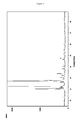
- Still another aspect of the present invention concerns crystalline LiPO 2 F 2 characterized by an X-ray powder diffraction pattern essentially as shown in Figure 1 .
- a further aspect concerns crystalline LiPO 2 F 2 characterized by a bulk density of ⁇ 500 g/l, preferably between 100 and 400 g/l, more preferably between 200 and 300 g/l.
- Yet another aspect of the present invention concerns an electrolyte composition for lithium-ion batteries, lithium-sulfur batteries and/or lithium-oxygen batteries comprising the crystalline LiPO 2 F 2 according to this invention and further comprising a solvent suitable for electrolyte solutions for lithium-ion batteries, lithium-sulfur batteries and/or lithium-oxygen batteries.
- Solvents suitable for electrolyte solutions for lithium-ion batteries, lithium-sulfur batteries and/or lithium-oxygen batteries are known in the art. Suitable examples include the group of dialkyl carbonates (which are linear) and alkylene carbonates (which are cyclic), and wherein the term “alkyl” denotes preferably C1 to C4 alkyl, the term “alkylene” denotes preferably C2 to C7 alkylene groups, including a vinylidene group, acetone, acetonitrile, linear dialkyl carbonates, e.g. dimethyl carbonate, diethyl carbonate, methyl ethyl carbonate, cyclic alkylene carbonates, e.g.
- ethylene carbonate, propylene carbonate, and vinylidene carbonate and fluorinated derivatives of the compounds mentioned in this paragraph, e.g. 1-fluoroethyl methyl carbonate, 4-fluoroethylene carbonate or 1-fluoroethyl allyl carbonate.
- the concentration of the metal difluorophosphates of the invention in the electrolyte solution is preferably 1 ⁇ 0.2 molar.
- the electrolyte solution may comprise LiPF 6 and LiPO 2 F 2 .
- the combined concentration of the two compounds in the electrolyte solution is preferably 1 ⁇ 0.2 molar.
- the crude product is dried at 100°C and 100 mbar using a flow of nitrogen of 100 1/h for 18 h to yield 146 g (90 %) of the product.
- Example 2 Electrolyte solution for lithium ion batteries, lithium sulfur batteries and / or lithium-oxygen batteries
Landscapes
- Chemical & Material Sciences (AREA)
- Engineering & Computer Science (AREA)
- Organic Chemistry (AREA)
- Manufacturing & Machinery (AREA)
- Chemical Kinetics & Catalysis (AREA)
- Electrochemistry (AREA)
- General Chemical & Material Sciences (AREA)
- Inorganic Chemistry (AREA)
- Materials Engineering (AREA)
- Physics & Mathematics (AREA)
- Condensed Matter Physics & Semiconductors (AREA)
- General Physics & Mathematics (AREA)
- Secondary Cells (AREA)
Abstract
The present invention relates to a method for the production of metal difluorophosphates, specifically to the production of LiPO2F2, in an organic solvent. More specifically, it relates to a method for the production of metal difluorophosphates comprising a step of reacting a compound selected from the group consisting of phosphorus pentafluoride (PF5), phosphoryl fluoride (POF3), and mixtures thereof, with a metal orthophosphate, bicarbonate or carbonate in an organic solvent, preferably in an organic solvent which dissolves the product metal difluorophosphates. The present invention is also directed to novel crystalline forms of LiPO2F2 and electrolyte solutions thereof.
Description
- The present invention relates to a method for the production of metal difluorophosphates, specifically to the production of LiPO2F2, in an organic solvent. More specifically, it relates to a method for the production of metal difluorophosphates comprising a step of reacting a compound selected from the group consisting of phosphorus pentafluoride (PF5), phosphoryl fluoride (POF3), and mixtures thereof, with a metal orthophosphate, bicarbonate or carbonate. The present invention is also directed to novel crystalline forms of LiPO2F2 and electrolyte compositions comprising them.
- Metal difluorophosphates are useful compounds in electrolyte compositions for metal ion batteries. As a specific example, lithium difluorophosphate, LiPO2F2, is useful as electrolyte salt or additive for an electrolyte composition comprising an electrolyte salt for lithium ion batteries.
-
WO 2012/016924 describes the reaction of solid Li3PO4 with gaseous POF3 or gaseous PF5 to yield LiPO2F2. Furthermore,WO 2012/016924 outlines the possibility of performing the process in presence of an organic solvent for the gaseous POF3 or the gaseous PF5 as well as the use of an organic solvent for the extraction of the reaction product. - Now therefore, the invention makes available an improved process for the production of metal difluorophosphates, specifically for the production of LiPO2F2 in a technically feasible and economical manner. It is an object of the present invention to provide a process for the production of metal difluorophosphates, specifically for the production of LiPO2F2, which is advantageous in terms of the overall yield, the purity, the physicochemical properties including but not limited to the crystallinity and/or density of the product, the energy consumption, the safety requirements, the ease of work-up, and/or the side-product profile. Furthermore, it is an object of the present invention to provide LiPO2F2 in a crystal form which is advantageous in terms of stability, solubility, dissolution rate, and/or ease of handling.
- This object and other objects are achieved by the invention as outlined in the patent claims.
- Accordingly, one embodiment of the present invention is a process for the production of a compound of the general formula MPO2F2, wherein M is Li, Na or K, comprising a reaction step (I) of a compound of general formula M3PO4, M3PO4, M2CO3, and MHCO3, or a mixture thereof, wherein each M is defined as above, with POF3, PF5 or a mixture thereof, to form the compound of general formula MPO2F2, wherein the reaction is performed in the presence of an organic solvent, preferably in an organic solvent in which the compound of general formula MPO2F2 has a solubility of > 1 g/l at ambient conditions, preferably of > 5 g/l, more preferably of > 10 g/l. The inventive process is not limited to the metals M as given above. It can also be used to produce metal difluorophosphates of other metals like Mg, Zn, Ca, Sr, Ba, or Fe.
- In a preferred embodiment, M is Li. In a more preferred embodiment, the reaction is the reaction of Li3PO4 with POF3 to form LiPO2F2. Accordingly, LiPO2F2 is produced by the reaction of phosphoryl fluoride (POF3) and lithium orthophosphate (Li3PO4) following the reaction scheme :
2POF3 + Li3PO4 → 3 LiPO2F2
- The reaction is exothermic. Generally, the temperature of the reaction mixture rises upon addition of the POF3 to the mixture of the Li3PO4 and the organic solvent. The addition of the POF3 is advantageously started at ambient temperature and the temperature in the reaction mixture rises while reaching a maximum temperature at some point during the addition of POF3. In a preferred embodiment, the process is performed at a maximum reaction temperature from 0 to 85°C, preferably at a maximum reaction temperature from 30 to 60°C.
- In another preferred embodiment, the initial molar ratio of POF3 to Li3PO4 is equal to or greater than 1 and equal to or lower than 3.
- The term "organic solvent" is intended to denote any compound comprising at least one carbon atom that is liquid under the reaction conditions. Advantageously, the organic solvent does not react with any of the starting materials or the reaction product. Useful examples of an organic solvent are aprotic organic solvents, for example cyclic and acyclic ethers, esters, ketones, carbonates, nitriles, sulfones and mixtures thereof wherein the solubility of the compound of general formula MPO2F2 is > 1 g/l at ambient conditions. Examples of useful organic solvents include acetone, acetonitrile, dimethylformamide, sulfolane.
- The term "ambient conditions" is intended to denote conditions referring to the standard ambient temperature and pressure (25°C, 100 kPa).
- The term "solubility" is intended to denote the analytical composition of a saturated solution expressed as a proportion of a designated solute in a designated solvent according to IUPAC definition.
- In a preferred embodiment, the organic solvent is a diether or a polyether, more preferably a diether, most preferably the diether is 1,2 dimethoxyethane. The term "diether" is intended to denote a compound comprising two moieties of the structural motif "C-O-C", i.e. a compound comprising two oxygen atoms each directly connected to two groups selected from alkyl, alkylene, (hetero)aryl or (hetero)arylene. The term "polyether" is intended to denote a compound comprising at least three moieties of the structural motif "C-O-C", i.e. a compound comprising at least three oxygen atoms each directly connected to two groups selected from alkyl, alkylene, (hetero)aryl or (hetero)arylene. The diether and/or polyether can advantageously be substituted, for example substituted by fluorine. The diether and/or polyether can advantageously be cyclic or acyclic. Useful examples of diethers are 1,2-diethoxyethane. Useful examples of polyethers are glymes of the general
formula CH3O(CH2CH2O)nCH3 with n > 1 or crown ethers, for example 12-crown-4, 15-crown-5, 18-crown-6, dibenzo-18-crown-6. Most preferably, the organic solvent is 1,2-dimethoxyethane. - Phosphoryl fluoride (POF3) can be obtained commercially, e.g. from ABCR GmbH & Co. KG, or can be prepared by a known process in the art. For example, POF3 can be prepared by fluorination of phosphoryl chloride with HF and/or other fluorinating agents, for example, ZnF2. Alternatively, it may be also prepared by the reaction of H3PO4/P2O5, HF/H2O and SO3/H2SO4. Sometimes, the POF3 obtained may contain PF5 as impurity, or vice versa, PF5 may comprise POF3 as impurity. The advantage of the process of the invention is that even such mixtures can be applied without impact on the yield.
- PF5 may be obtained commercially, e.g. from Praxair, or it may be prepared from PCl5 and HF or, as described in
EP-A-0816287 , for example from PCl3, Cl2 and HF. - Li3PO4 is commercially available, e.g. from Strem Chemicals, Inc, Newburyport, USA, or from Chemetall GmbH, Germany. It is a solid with a melting point far above 1000°C.
- Preferably, the reaction between PF5 and Li3PO4, between POF3 and Li3PO4 and between mixtures of POF3 and PF5, respectively, and Li3PO4 is performed in the absence of water or moisture. Thus, the reaction may be performed at least for a part of its duration in the presence of anhydrous organic solvents. It is preferred to perform the reaction in apparatus made from steel or other materials resistant against corrosion, e.g. in reactors made of or clad with Monel metal and/or Teflon®.
- Li3PO4 is preferably applied in the form of small particles, e.g. in the form of a powder. If desired, it can be dried before introducing it into the reaction.
- The reactants POF3 or PF5, respectively, can be introduced into the reaction in gaseous form or in the form of a solution in suitable organic solvents, preferably in gaseous form, more preferably by means of an immersion tube. If the POF3 or PF5 are introduced in form of a solution it is preferred that the same solvent or solvent mixture is used for the reaction and for preparing the POF3 or PF5 solution.
- The reaction time is selected such that the desired degree of conversion is achieved. Often, a reaction time of 1 second to 5 hours gives good results for the reaction between POF3, PF5 and any mixtures thereof with Li3PO4. For the reaction between POF3 and Li3PO4, a preferred reaction time of 0.5 to 5 hours gives good results. For the reaction between PF5 or mixtures of PF5 and POF3 and Li3PO4, a preferred reaction time of 0.5 to 2 hours, most preferably of around 1 hour gives good results, too. The reaction speed is very fast.
- In another preferred embodiment the compound of general formula M3PO4 or the compound of general formula MF has a solubility in the organic solvent present in reaction step (I) of < 1 g/l at ambient conditions. Thus, a slurry of the compound of general formula M3PO4 or the compound of general formula MF is generally prepared to which the POF3, PF5 or the mixtures thereof is added.
- The mixture obtained after the reaction step (I) can be too acidic leading to a product after isolation of lower quality. Thus, in another preferred embodiment the mixture obtained after the reaction step (I) is subjected to a neutralization step. Preferably, the neutralization step is performed in the presence of Li2CO3. To this end, the neutralization agent, preferably a carbonate or bicarbonate, more preferably lithium carbonate, is added to the mixture after the reaction step (I), preferably added in solid form. Advantageously, the pH of the mixture after the neutralization step is from 4 to 7, preferably from 5.5 to 6.5, more preferably about 6.
- In yet another preferred embodiment the mixture obtained after reaction step (I) and the subsequent neutralization step is subjected to a filtration step.
- In still another preferred embodiment the product is isolated by means of spray drying, evaporation of the solvent, crystallisation, lyophilization or a mixture thereof, preferably by means of spray-drying. If a crystallisation step is performed, this step can be performed using cold crystallisation, anti-solvent crystallisation, seeding or a mixture of these technologies.
- Another aspect of the present invention concerns crystalline LiPO2F2 characterized by an X-ray powder diffraction pattern showing the two strongest peaks at 22.6 ± 0.2 and 27.3 ± 0.2 ° 2-Theta, preferably characterized by an X-ray powder diffraction pattern showing the four strongest peaks at 19.9 ± 0.2, 20.6 ± 0.2, 22.6 ± 0.2, 27.3 ± 0.2 ° 2-Theta.
- Still another aspect of the present invention concerns crystalline LiPO2F2 characterized by an X-ray powder diffraction pattern essentially as shown in
Figure 1 . - A further aspect concerns crystalline LiPO2F2 characterized by a bulk density of < 500 g/l, preferably between 100 and 400 g/l, more preferably between 200 and 300 g/l.
- Yet another aspect of the present invention concerns an electrolyte composition for lithium-ion batteries, lithium-sulfur batteries and/or lithium-oxygen batteries comprising the crystalline LiPO2F2 according to this invention and further comprising a solvent suitable for electrolyte solutions for lithium-ion batteries, lithium-sulfur batteries and/or lithium-oxygen batteries.
- Solvents suitable for electrolyte solutions for lithium-ion batteries, lithium-sulfur batteries and/or lithium-oxygen batteries are known in the art. Suitable examples include the group of dialkyl carbonates (which are linear) and alkylene carbonates (which are cyclic), and wherein the term "alkyl" denotes preferably C1 to C4 alkyl, the term "alkylene" denotes preferably C2 to C7 alkylene groups, including a vinylidene group, acetone, acetonitrile, linear dialkyl carbonates, e.g. dimethyl carbonate, diethyl carbonate, methyl ethyl carbonate, cyclic alkylene carbonates, e.g. ethylene carbonate, propylene carbonate, and vinylidene carbonate, and fluorinated derivatives of the compounds mentioned in this paragraph, e.g. 1-fluoroethyl methyl carbonate, 4-fluoroethylene carbonate or 1-fluoroethyl allyl carbonate.
- The concentration of the metal difluorophosphates of the invention in the electrolyte solution is preferably 1 ± 0.2 molar. Often, the electrolyte solution may comprise LiPF6 and LiPO2F2. In the case, the combined concentration of the two compounds in the electrolyte solution is preferably 1 ± 0.2 molar.
- Should the disclosure of any of the patents, patent applications, and publications that are incorporated herein by reference be in conflict with the present description to the extent that it might render a term unclear, the present description shall take precedence.
- 58 g Li3PO4 was dried at 200°C for 18 h and subsequently placed in a Teflon® reactor equipped with a paddle mixer and a Teflon® condenser. Dimethoxyethane (500 ml) was added and the mixture was stirred at 200 rpm. The reaction vessel was subjected to a nitrogen atmosphere and subsequently, POF3 (103.4 g) was introduced into the mixture via an immersion tube at room temperature over a period of 4.5 h. After the introduction of POF3 was completed, reaction mixture and vessel were flushed with nitrogen gas for 30 min. 25 g lithium carbonate was added and stirring continued for another 10 min. The mixture was filtered through a 10 µm Teflon® filter with suction (300 mbar on the filtrate side). The filtrate showed pH 6. Volatiles were removed by means of a spray dryer (Buechi B-295- Inert Loop) under the following conditions: inlet temperature 202°C, outlet temperature 115°C, feed rate 7 g/min.
- The crude product is dried at 100°C and 100 mbar using a flow of nitrogen of 100 1/h for 18 h to yield 146 g (90 %) of the product.
- PXRD (powder X-ray diffraction): Samples were analysed on a Bruker AXS D8 Advance powder X-ray diffractometer. The wavelength of the radiation was 1.5406A. Measurement conditions were as follows.
radiation Cu K α source 38 kV / 40 mA detector Vantec-1 detector slit 10.39 mm detector antiscattering slit 6.17 mm divergence slit v6.00 antiscattering slit 0.5° 2θ range 2° ≤ 2θ ≤ 55° step size 0.017° step time 0.2s Table 1 : XRD data for the compound according to example 1 Position [° 2 Theta] Intensity [counts] Position [° 2 Theta] Intensity [counts] 13,03 538,88 46,08 310,03 19,91 7900,17 46,52 1011,01 20,64 9222,67 46,89 509,58 21,37 1732,4 47,55 1897,22 21,78 2100,5 48,29 272,25 22,55 17484,82 50,88 588,15 23,32 631,65 51,81 479,78 26,27 2304,76 53,45 560,08 27,31 16984,9 54,33 464,72 27,86 6620,6 55,12 674,57 28,45 729,11 56,35 306,58 29,59 439,26 57,41 269,72 30,56 1769,7 57,72 302,43 32,25 885,48 59,08 343,91 32,51 1351,54 59,66 203,39 33,90 2813,27 60,61 544,44 35,42 426,98 62,45 340,32 37,64 245,17 67,40 246,56 38,13 1005,28 68,07 288,53 38,67 394,43 69,21 269,34 39,53 381,03 69,72 167,86 40,46 1695,09 71,07 206,26 42,01 549,94 71,84 280,12 43,51 344,46 73,04 151,94 44,94 446,99 - 19F-NMR (470.94 MHz; D6-acetone) : -84.25 ppm (doublet, J= 926 Hz) The bulk density at ambient conditions of the LiPO2F2 according to example 1 was determined to be 280 g/l. In a comparable example, the bulk density of the LiPO2F2 prepared according to example 3 of
WO 2012/016924 was determined to be 560 g/l. - 117 g LiPF6, 23 g LiPO2F2 (obtained analogously to example 1), 50 g 4-fluoroethylene carbonate and propylene carbonate are mixed in amount such that a total volume of 1 liter is obtained. The resulting solution contains 0.77 mol LiPF6 and 0.23 mol LiPO2F2.
Claims (15)
- A process for the production of a compound of general formula MPO2F2, wherein M is Li, Na or K, comprising a reaction step (I) of a compound of the general formula M3PO4, M2CO3, MHCO3 or a mixture thereof, wherein each M is defined as above, with POF3, PF5 or a mixture thereof, to form the compound of general formula MPO2F2, wherein the reaction is performed in the presence of an organic solvent.
- The process of claim 1 wherein the compound of general formula MPO2F2 has a solubility in the organic solvent of > 1 g/l at ambient conditions.
- The process according to claim 2 wherein M is Li.
- The process according to claim 3 wherein the reaction is a reaction of Li3PO4 with POF3 to form LiPO2F2.
- The process according to any one of the claims 1 to 4 wherein the organic solvent is a diether or a polyether.
- The process according to claim 5 wherein the organic solvent is a diether.
- The process according to claim 6 wherein the diether is 1,2-dimethoxyethane.
- The process according to any one of the claims 1 to 7 wherein the mixture obtained after the reaction step (I) is subjected to a neutralization step.
- The process of step 8 wherein the neutralization step is performed in the presence of a carbonate, preferably in the presence of Li2CO3.
- The process according to claim 8 or 9 wherein the mixture obtained after reaction step (I) and the subsequent neutralization step is subjected to a filtration step.
- The process according to any one of the claims 1 to 10 wherein the product is isolated by means of spray drying, evaporation of the solvent, crystallisation, lyophilization or a mixture thereof.
- Crystalline LiPO2F2 characterized by an X-ray powder diffraction pattern showing the two strongest peaks at 22.6 ± 0.2 and 27.3 ± 0.2 ° 2-Theta.
- The crystalline LiPO2F2 according to claim 12 characterized by an X-ray powder diffraction pattern showing the four strongest peaks at 19.9 ± 0.2, 20.6 ± 0.2, 22.6 ± 0.2, 27.3 ± 0.2 ° 2-Theta.
- Crystalline LiPO2F2 characterized by an X-ray powder diffraction pattern essentially as shown in Figure 1.
- An electrolyte composition for lithium-ion batteries, lithium-sulfur batteries and/or lithium-oxygen batteries comprising the crystalline LiPO2F2 according to any one of the claims 11 to 14 and further comprising a solvent suitable for electrolyte composition for lithium-ion batteries, lithium-sulfur batteries and/or lithium-oxygen batteries.
Priority Applications (2)
| Application Number | Priority Date | Filing Date | Title |
|---|---|---|---|
| EP13182079.7A EP2842908A1 (en) | 2013-08-28 | 2013-08-28 | Production of metal difluorophosphates in liquid phase |
| PCT/EP2014/067622 WO2015028346A1 (en) | 2013-08-28 | 2014-08-19 | Production of metal difluorophosphates in an inorganic solvent |
Applications Claiming Priority (1)
| Application Number | Priority Date | Filing Date | Title |
|---|---|---|---|
| EP13182079.7A EP2842908A1 (en) | 2013-08-28 | 2013-08-28 | Production of metal difluorophosphates in liquid phase |
Publications (1)
| Publication Number | Publication Date |
|---|---|
| EP2842908A1 true EP2842908A1 (en) | 2015-03-04 |
Family
ID=49035474
Family Applications (1)
| Application Number | Title | Priority Date | Filing Date |
|---|---|---|---|
| EP13182079.7A Ceased EP2842908A1 (en) | 2013-08-28 | 2013-08-28 | Production of metal difluorophosphates in liquid phase |
Country Status (1)
| Country | Link |
|---|---|
| EP (1) | EP2842908A1 (en) |
Cited By (4)
| Publication number | Priority date | Publication date | Assignee | Title |
|---|---|---|---|---|
| CN106025197A (en) * | 2016-05-18 | 2016-10-12 | 宁波中科孚奇能源科技有限公司 | Preparation method of carbon-coated lead powder composite for lead-carbon battery |
| CN106829908A (en) * | 2016-12-23 | 2017-06-13 | 山东海容电源材料有限公司 | A kind of preparation method of difluorophosphate and the non-aqueous electrolyte for lithium ion cell containing difluorophosphate |
| EP3231769A4 (en) * | 2014-12-09 | 2018-08-22 | Central Glass Company, Limited | Manufacturing method for lithium difluorophosphate powder, and lithium difluorophosphate |
| CN111924860A (en) * | 2020-09-14 | 2020-11-13 | 湖南博信新能源科技有限公司 | Preparation method of composite lithium salt concentrated solution |
Citations (3)
| Publication number | Priority date | Publication date | Assignee | Title |
|---|---|---|---|---|
| EP0816287A1 (en) | 1996-06-26 | 1998-01-07 | Solvay Fluor und Derivate GmbH | Preparation of anorganic pentafluorides |
| WO2012016924A1 (en) | 2010-08-04 | 2012-02-09 | Solvay Sa | Manufacture of lipo2f2 from pof3 or pf5 |
| WO2013023902A1 (en) * | 2011-08-16 | 2013-02-21 | Solvay Sa | Manufacture of mixtures comprising lipo2f2 and lipf6 |
-
2013
- 2013-08-28 EP EP13182079.7A patent/EP2842908A1/en not_active Ceased
Patent Citations (3)
| Publication number | Priority date | Publication date | Assignee | Title |
|---|---|---|---|---|
| EP0816287A1 (en) | 1996-06-26 | 1998-01-07 | Solvay Fluor und Derivate GmbH | Preparation of anorganic pentafluorides |
| WO2012016924A1 (en) | 2010-08-04 | 2012-02-09 | Solvay Sa | Manufacture of lipo2f2 from pof3 or pf5 |
| WO2013023902A1 (en) * | 2011-08-16 | 2013-02-21 | Solvay Sa | Manufacture of mixtures comprising lipo2f2 and lipf6 |
Cited By (5)
| Publication number | Priority date | Publication date | Assignee | Title |
|---|---|---|---|---|
| EP3231769A4 (en) * | 2014-12-09 | 2018-08-22 | Central Glass Company, Limited | Manufacturing method for lithium difluorophosphate powder, and lithium difluorophosphate |
| US10329155B2 (en) | 2014-12-09 | 2019-06-25 | Central Glass Company, Limited | Manufacturing method for lithium difluorophosphate powder, and lithium difluorophosphate |
| CN106025197A (en) * | 2016-05-18 | 2016-10-12 | 宁波中科孚奇能源科技有限公司 | Preparation method of carbon-coated lead powder composite for lead-carbon battery |
| CN106829908A (en) * | 2016-12-23 | 2017-06-13 | 山东海容电源材料有限公司 | A kind of preparation method of difluorophosphate and the non-aqueous electrolyte for lithium ion cell containing difluorophosphate |
| CN111924860A (en) * | 2020-09-14 | 2020-11-13 | 湖南博信新能源科技有限公司 | Preparation method of composite lithium salt concentrated solution |
Similar Documents
| Publication | Publication Date | Title |
|---|---|---|
| WO2015028346A1 (en) | Production of metal difluorophosphates in an inorganic solvent | |
| ES2634678T3 (en) | Manufacturing method for ammonium salt of fluorosulfonylimide | |
| CN103052592B (en) | Fabrication of LiPO2F2 from POF3 or PF5 | |
| CN111498819B (en) | Preparation of imides containing fluorosulfonyl groups | |
| KR101345271B1 (en) | Fluorosulfony limide salt and method for producing fluorosulfonyl imide salt | |
| US11597650B2 (en) | Method for preparing lithium bis(fluorosulfonyl)imide | |
| ES2656857T3 (en) | Procedure for the production of fluorosulfonylimide ammonium salt | |
| WO2018201711A1 (en) | Method for preparing lithium bis (fluorosulfonyl) imide | |
| WO2020099527A1 (en) | Method for producing alkali sulfonyl imide salts | |
| US9343774B2 (en) | Method for producing a lithium hexafluorophosphate concentrated liquid | |
| JP2022552308A (en) | Bis(fluorosulfonyl)imide salt and method for its preparation | |
| KR20140054228A (en) | Manufacture of mixtures comprising lipo2f2 and lipf6 | |
| EP3715321B1 (en) | Process for the preparation of a bisfluorosulfonylimide salt | |
| JP2010189372A (en) | Fluorosulfonylimides and method for producing the same | |
| CN113148971A (en) | Preparation method of lithium difluorophosphate | |
| WO2022053002A1 (en) | Purification of bis (fluorosulfonyl) imide salt | |
| KR20230118912A (en) | Process for producing onium sulfonyl imide salts and alkali metal sulfonyl imide salts | |
| JP5401336B2 (en) | Method for producing fluorosulfonylimide salt | |
| CN115088112A (en) | Composition, electrolyte material, and electrolyte | |
| JP7654516B2 (en) | Method for producing difluorophosphate salts | |
| US20090143613A1 (en) | Potassium perfluoroalkanesulfonate and method for producing the same | |
| JP2011148711A (en) | Method for producing 2-cyano-1,3-diketonate salt, and ionic liquid | |
| KR20240160579A (en) | Process for producing bis(fluorosulfonyl)imide salts | |
| KR20250155950A (en) | Method for Preparing Lithium Carbonate from By-product in Producing Bis(fluorosulfonyl)imide | |
| KR20250155949A (en) | Method for Preparing Lithium Fluoride from By-product in Producing Bis(fluorosulfonyl)imide |
Legal Events
| Date | Code | Title | Description |
|---|---|---|---|
| 17P | Request for examination filed |
Effective date: 20130828 |
|
| AK | Designated contracting states |
Kind code of ref document: A1 Designated state(s): AL AT BE BG CH CY CZ DE DK EE ES FI FR GB GR HR HU IE IS IT LI LT LU LV MC MK MT NL NO PL PT RO RS SE SI SK SM TR |
|
| AX | Request for extension of the european patent |
Extension state: BA ME |
|
| PUAI | Public reference made under article 153(3) epc to a published international application that has entered the european phase |
Free format text: ORIGINAL CODE: 0009012 |
|
| STAA | Information on the status of an ep patent application or granted ep patent |
Free format text: STATUS: THE APPLICATION HAS BEEN REFUSED |
|
| 18R | Application refused |
Effective date: 20150321 |