EP2837802A1 - Dual-fuel diesel engine - Google Patents
Dual-fuel diesel engine Download PDFInfo
- Publication number
- EP2837802A1 EP2837802A1 EP13775868.6A EP13775868A EP2837802A1 EP 2837802 A1 EP2837802 A1 EP 2837802A1 EP 13775868 A EP13775868 A EP 13775868A EP 2837802 A1 EP2837802 A1 EP 2837802A1
- Authority
- EP
- European Patent Office
- Prior art keywords
- fuel
- dual
- injection
- diesel engine
- injectors
- Prior art date
- Legal status (The legal status is an assumption and is not a legal conclusion. Google has not performed a legal analysis and makes no representation as to the accuracy of the status listed.)
- Withdrawn
Links
- 239000000446 fuel Substances 0.000 title claims abstract description 273
- 238000002347 injection Methods 0.000 claims abstract description 81
- 239000007924 injection Substances 0.000 claims abstract description 81
- 238000002485 combustion reaction Methods 0.000 claims abstract description 47
- 239000007789 gas Substances 0.000 description 52
- 238000010586 diagram Methods 0.000 description 6
- 230000002000 scavenging effect Effects 0.000 description 5
- VNWKTOKETHGBQD-UHFFFAOYSA-N methane Chemical compound C VNWKTOKETHGBQD-UHFFFAOYSA-N 0.000 description 4
- 238000005299 abrasion Methods 0.000 description 3
- 238000001514 detection method Methods 0.000 description 2
- 239000003345 natural gas Substances 0.000 description 2
- 230000000694 effects Effects 0.000 description 1
- 239000000463 material Substances 0.000 description 1
- 239000000779 smoke Substances 0.000 description 1
- 239000000243 solution Substances 0.000 description 1
- 239000000126 substance Substances 0.000 description 1
- 238000011144 upstream manufacturing Methods 0.000 description 1
Images


Classifications
-
- F—MECHANICAL ENGINEERING; LIGHTING; HEATING; WEAPONS; BLASTING
- F02—COMBUSTION ENGINES; HOT-GAS OR COMBUSTION-PRODUCT ENGINE PLANTS
- F02D—CONTROLLING COMBUSTION ENGINES
- F02D41/00—Electrical control of supply of combustible mixture or its constituents
- F02D41/30—Controlling fuel injection
- F02D41/3011—Controlling fuel injection according to or using specific or several modes of combustion
- F02D41/3017—Controlling fuel injection according to or using specific or several modes of combustion characterised by the mode(s) being used
- F02D41/3035—Controlling fuel injection according to or using specific or several modes of combustion characterised by the mode(s) being used a mode being the premixed charge compression-ignition mode
- F02D41/3041—Controlling fuel injection according to or using specific or several modes of combustion characterised by the mode(s) being used a mode being the premixed charge compression-ignition mode with means for triggering compression ignition, e.g. spark plug
- F02D41/3047—Controlling fuel injection according to or using specific or several modes of combustion characterised by the mode(s) being used a mode being the premixed charge compression-ignition mode with means for triggering compression ignition, e.g. spark plug said means being a secondary injection of fuel
-
- F—MECHANICAL ENGINEERING; LIGHTING; HEATING; WEAPONS; BLASTING
- F02—COMBUSTION ENGINES; HOT-GAS OR COMBUSTION-PRODUCT ENGINE PLANTS
- F02B—INTERNAL-COMBUSTION PISTON ENGINES; COMBUSTION ENGINES IN GENERAL
- F02B25/00—Engines characterised by using fresh charge for scavenging cylinders
- F02B25/02—Engines characterised by using fresh charge for scavenging cylinders using unidirectional scavenging
- F02B25/04—Engines having ports both in cylinder head and in cylinder wall near bottom of piston stroke
-
- F—MECHANICAL ENGINEERING; LIGHTING; HEATING; WEAPONS; BLASTING
- F02—COMBUSTION ENGINES; HOT-GAS OR COMBUSTION-PRODUCT ENGINE PLANTS
- F02B—INTERNAL-COMBUSTION PISTON ENGINES; COMBUSTION ENGINES IN GENERAL
- F02B7/00—Engines characterised by the fuel-air charge being ignited by compression ignition of an additional fuel
- F02B7/06—Engines characterised by the fuel-air charge being ignited by compression ignition of an additional fuel the fuel in the charge being gaseous
-
- F—MECHANICAL ENGINEERING; LIGHTING; HEATING; WEAPONS; BLASTING
- F02—COMBUSTION ENGINES; HOT-GAS OR COMBUSTION-PRODUCT ENGINE PLANTS
- F02D—CONTROLLING COMBUSTION ENGINES
- F02D19/00—Controlling engines characterised by their use of non-liquid fuels, pluralities of fuels, or non-fuel substances added to the combustible mixtures
- F02D19/06—Controlling engines characterised by their use of non-liquid fuels, pluralities of fuels, or non-fuel substances added to the combustible mixtures peculiar to engines working with pluralities of fuels, e.g. alternatively with light and heavy fuel oil, other than engines indifferent to the fuel consumed
- F02D19/0663—Details on the fuel supply system, e.g. tanks, valves, pipes, pumps, rails, injectors or mixers
- F02D19/0686—Injectors
- F02D19/0689—Injectors for in-cylinder direct injection
-
- F—MECHANICAL ENGINEERING; LIGHTING; HEATING; WEAPONS; BLASTING
- F02—COMBUSTION ENGINES; HOT-GAS OR COMBUSTION-PRODUCT ENGINE PLANTS
- F02D—CONTROLLING COMBUSTION ENGINES
- F02D19/00—Controlling engines characterised by their use of non-liquid fuels, pluralities of fuels, or non-fuel substances added to the combustible mixtures
- F02D19/06—Controlling engines characterised by their use of non-liquid fuels, pluralities of fuels, or non-fuel substances added to the combustible mixtures peculiar to engines working with pluralities of fuels, e.g. alternatively with light and heavy fuel oil, other than engines indifferent to the fuel consumed
- F02D19/0663—Details on the fuel supply system, e.g. tanks, valves, pipes, pumps, rails, injectors or mixers
- F02D19/0686—Injectors
- F02D19/0692—Arrangement of multiple injectors per combustion chamber
-
- F—MECHANICAL ENGINEERING; LIGHTING; HEATING; WEAPONS; BLASTING
- F02—COMBUSTION ENGINES; HOT-GAS OR COMBUSTION-PRODUCT ENGINE PLANTS
- F02D—CONTROLLING COMBUSTION ENGINES
- F02D19/00—Controlling engines characterised by their use of non-liquid fuels, pluralities of fuels, or non-fuel substances added to the combustible mixtures
- F02D19/06—Controlling engines characterised by their use of non-liquid fuels, pluralities of fuels, or non-fuel substances added to the combustible mixtures peculiar to engines working with pluralities of fuels, e.g. alternatively with light and heavy fuel oil, other than engines indifferent to the fuel consumed
- F02D19/08—Controlling engines characterised by their use of non-liquid fuels, pluralities of fuels, or non-fuel substances added to the combustible mixtures peculiar to engines working with pluralities of fuels, e.g. alternatively with light and heavy fuel oil, other than engines indifferent to the fuel consumed simultaneously using pluralities of fuels
- F02D19/10—Controlling engines characterised by their use of non-liquid fuels, pluralities of fuels, or non-fuel substances added to the combustible mixtures peculiar to engines working with pluralities of fuels, e.g. alternatively with light and heavy fuel oil, other than engines indifferent to the fuel consumed simultaneously using pluralities of fuels peculiar to compression-ignition engines in which the main fuel is gaseous
-
- F—MECHANICAL ENGINEERING; LIGHTING; HEATING; WEAPONS; BLASTING
- F02—COMBUSTION ENGINES; HOT-GAS OR COMBUSTION-PRODUCT ENGINE PLANTS
- F02D—CONTROLLING COMBUSTION ENGINES
- F02D41/00—Electrical control of supply of combustible mixture or its constituents
- F02D41/0025—Controlling engines characterised by use of non-liquid fuels, pluralities of fuels, or non-fuel substances added to the combustible mixtures
- F02D41/0027—Controlling engines characterised by use of non-liquid fuels, pluralities of fuels, or non-fuel substances added to the combustible mixtures the fuel being gaseous
-
- F—MECHANICAL ENGINEERING; LIGHTING; HEATING; WEAPONS; BLASTING
- F02—COMBUSTION ENGINES; HOT-GAS OR COMBUSTION-PRODUCT ENGINE PLANTS
- F02D—CONTROLLING COMBUSTION ENGINES
- F02D41/00—Electrical control of supply of combustible mixture or its constituents
- F02D41/30—Controlling fuel injection
- F02D41/3094—Controlling fuel injection the fuel injection being effected by at least two different injectors, e.g. one in the intake manifold and one in the cylinder
-
- F—MECHANICAL ENGINEERING; LIGHTING; HEATING; WEAPONS; BLASTING
- F02—COMBUSTION ENGINES; HOT-GAS OR COMBUSTION-PRODUCT ENGINE PLANTS
- F02D—CONTROLLING COMBUSTION ENGINES
- F02D41/00—Electrical control of supply of combustible mixture or its constituents
- F02D41/30—Controlling fuel injection
- F02D41/38—Controlling fuel injection of the high pressure type
-
- F—MECHANICAL ENGINEERING; LIGHTING; HEATING; WEAPONS; BLASTING
- F02—COMBUSTION ENGINES; HOT-GAS OR COMBUSTION-PRODUCT ENGINE PLANTS
- F02M—SUPPLYING COMBUSTION ENGINES IN GENERAL WITH COMBUSTIBLE MIXTURES OR CONSTITUENTS THEREOF
- F02M21/00—Apparatus for supplying engines with non-liquid fuels, e.g. gaseous fuels stored in liquid form
- F02M21/02—Apparatus for supplying engines with non-liquid fuels, e.g. gaseous fuels stored in liquid form for gaseous fuels
- F02M21/0218—Details on the gaseous fuel supply system, e.g. tanks, valves, pipes, pumps, rails, injectors or mixers
- F02M21/0284—Arrangement of multiple injectors or fuel-air mixers per combustion chamber
-
- F—MECHANICAL ENGINEERING; LIGHTING; HEATING; WEAPONS; BLASTING
- F02—COMBUSTION ENGINES; HOT-GAS OR COMBUSTION-PRODUCT ENGINE PLANTS
- F02D—CONTROLLING COMBUSTION ENGINES
- F02D41/00—Electrical control of supply of combustible mixture or its constituents
- F02D41/30—Controlling fuel injection
- F02D41/38—Controlling fuel injection of the high pressure type
- F02D2041/389—Controlling fuel injection of the high pressure type for injecting directly into the cylinder
-
- F—MECHANICAL ENGINEERING; LIGHTING; HEATING; WEAPONS; BLASTING
- F02—COMBUSTION ENGINES; HOT-GAS OR COMBUSTION-PRODUCT ENGINE PLANTS
- F02M—SUPPLYING COMBUSTION ENGINES IN GENERAL WITH COMBUSTIBLE MIXTURES OR CONSTITUENTS THEREOF
- F02M43/00—Fuel-injection apparatus operating simultaneously on two or more fuels, or on a liquid fuel and another liquid, e.g. the other liquid being an anti-knock additive
- F02M43/04—Injectors peculiar thereto
-
- Y—GENERAL TAGGING OF NEW TECHNOLOGICAL DEVELOPMENTS; GENERAL TAGGING OF CROSS-SECTIONAL TECHNOLOGIES SPANNING OVER SEVERAL SECTIONS OF THE IPC; TECHNICAL SUBJECTS COVERED BY FORMER USPC CROSS-REFERENCE ART COLLECTIONS [XRACs] AND DIGESTS
- Y02—TECHNOLOGIES OR APPLICATIONS FOR MITIGATION OR ADAPTATION AGAINST CLIMATE CHANGE
- Y02T—CLIMATE CHANGE MITIGATION TECHNOLOGIES RELATED TO TRANSPORTATION
- Y02T10/00—Road transport of goods or passengers
- Y02T10/10—Internal combustion engine [ICE] based vehicles
- Y02T10/12—Improving ICE efficiencies
-
- Y—GENERAL TAGGING OF NEW TECHNOLOGICAL DEVELOPMENTS; GENERAL TAGGING OF CROSS-SECTIONAL TECHNOLOGIES SPANNING OVER SEVERAL SECTIONS OF THE IPC; TECHNICAL SUBJECTS COVERED BY FORMER USPC CROSS-REFERENCE ART COLLECTIONS [XRACs] AND DIGESTS
- Y02—TECHNOLOGIES OR APPLICATIONS FOR MITIGATION OR ADAPTATION AGAINST CLIMATE CHANGE
- Y02T—CLIMATE CHANGE MITIGATION TECHNOLOGIES RELATED TO TRANSPORTATION
- Y02T10/00—Road transport of goods or passengers
- Y02T10/10—Internal combustion engine [ICE] based vehicles
- Y02T10/30—Use of alternative fuels, e.g. biofuels
Definitions
- the present invention relates to a dual-fuel diesel engine in which an oil fuel such as gas oil having high compression-ignition properties is used as a pilot fuel and a gas fuel being a main fuel is combusted by causing self-ignition of the oil fuel.
- an oil fuel such as gas oil having high compression-ignition properties
- a gas fuel being a main fuel is combusted by causing self-ignition of the oil fuel.
- a dual-fuel diesel engine in which a gas fuel such as natural gas is used as a main fuel while an oil fuel having high compression-ignition properties is used as a pilot fuel, and the gas fuel being the main fuel is combusted by causing the oil fuel to self-ignite inside a high-temperature combustion chamber.
- An object of a dual-fuel diesel engine is to use a gas fuel so that emission of CO 2 , harmful substances such as black smoke, etc is reduced upon combustion.
- Patent Documents 1 and 2 disclose a dual-fuel diesel engine.
- the dual-fuel diesel engine in Patent Document 1 is configured such that a pilot fuel injection valve is positioned upstream in the direction of a swirl flow of a gas fuel injection valve, and a pilot fuel and a gas fuel are injected in the flowing direction of the swirl, so as to securely ignite the gas fuel.
- Patent Document 2 proposes a structure for a dual-fuel diesel engine which makes it possible to modify an existing diesel engine to a dual-fuel diesel engine at low cost.
- a gas fuel is used as a main fuel besides an oil fuel so as to make exhaust gas less harmful and to reduce fuel cost.
- a minimum limit amount exists in the injection.
- the ratio of the amount of injection of an oil fuel to that of a gas fuel may become higher than a desired value. Accordingly, there is a problem that it is not possible to make exhaust gas less harmful and reduce fuel cost to a desired standard.
- the present invention is to, in view of the above problem of the prior art, reduce the amount of oil fuel injection so as to make exhaust gas less harmful and reduce fuel cost in a low-load operating range of a dual-fuel diesel engines.
- a dual-fuel diesel engine of the present invention includes a plurality of dual-fuel injectors disposed on a cylinder head, each of the dual-fuel injectors including a pilot fuel injector configured to inject an oil fuel as a pilot fuel into a combustion chamber and a gas fuel injector configured to inject a gas fuel as a main fuel into the combustion chamber.
- the dual-fuel diesel engine of the present invention includes an engine control unit capable of performing a first fuel-injection cycle repeatedly, the first fuel-injection cycle being such that only a part of the dual-fuel injectors among the plurality of the dual-fuel injectors inject fuel in a single combustion cycle, and each of the plurality of the dual-fuel injectors injects the fuel at least once in a series of combustion cycles.
- the two dual-fuel injectors inject fuel alternately in every combustion cycle.
- the dual-fuel injectors inject fuel one at a time in rotation, or two of the dual-fuel injectors inject fuel at the same time and then remaining one of the dual-fuel injectors injects fuel in the next combustion cycle.
- fuel is injected according to this.
- fuel-injection cycle fuel is injected not from particular dual-fuel injectors but from all of the dual-fuel injectors evenly. As a result, it is possible to prevent abrasion or burnout from disproportionately occurring in particular dual-fuel injectors.
- a low-load operating range in which the first fuel-injection cycle is started may be set in advance for the engine control unit, and the first fuel-injection cycle may be operated by the engine control unit in the low-load operating range. As a result, it is possible to automate operation of the first fuel-injection cycle.
- the dual-fuel diesel engine of the present invention having a plurality of cylinders, it may be configured such that the engine control unit is capable of performing the first fuel-injection cycle in each of the cylinders repeatedly, and the engine control unit is capable of performing a second fuel-injection cycle repeatedly, the second fuel-injection cycle being such that only a part of the cylinders among the plurality of the cylinders perform the first fuel-injection cycle in a single combustion cycle, and each of the plurality of the cylinders performs the first fuel-injection cycle at least once in a series of combustion cycles.
- a low-load operating range in which the first fuel-injection cycle and the second fuel-injection cycle are performed may be set in advance for the engine control unit, so that the engine control unit performs the above fuel-injection cycle and the second fuel-injection cycle in the low-load operating range.
- the dual-fuel diesel engine of the present invention it is possible to reduce the amount of injection of the oil fuel in each combustion cycle by causing a part of the dual-fuel injectors among the plurality of the dual-fuel injectors to inject fuel and to combust the fuel in one combustion cycle.
- a part of the dual-fuel injectors among the plurality of the dual-fuel injectors it is possible to maintain the ratio of amount of injection of the oil fuel to that of the gas fuel to be in a range where complete combustion is possible, and thus it is possible to make the exhaust gas less harmful and to reduce the fuel cost.
- all of the dual-fuel injectors inject fuel at least once in a series of combustion cycles, which makes it possible to prevent abrasion, burnout, or the like from occurring disproportionally in particular dual-fuel injectors.
- the first embodiment of a dual-fuel diesel engine of the present invention will be described in reference to FIGs. 1 to 5B .
- the present embodiment is an example where the present invention is applied to a two-cycle dual-fuel diesel engine.
- a dual-fuel diesel engine 10A of the present embodiment includes a cylinder 12 of a cylindrical shape, a cylinder head 14 connected to the upper end of the cylinder 12, and a piston 16 housed inside the cylinder 12 so as to be freely reciprocable.
- a combustion chamber “c" is defined by the surrounding wall 12a of the cylinder 12, the cylinder head 14, and the top face 16a of the piston 16.
- Piston rings 18 are disposed on the outer circumferential face of the piston 16 so as to seal a gap between the outer circumferential face of the piston 16 and the surrounding wall 12a of the cylinder 12.
- a plurality of scavenging ports 20 are opened with equal intervals in the circumferential direction.
- the scavenging ports 20 are formed above the top face 16a of the piston 16 at the region of the bottom dead center (as indicated by the double-dotted chain line in the drawing).
- an exhaust valve 22 is disposed on the exhaust port for opening and closing the exhaust port.
- this exhaust valve 22 is kept open until the piston 16 reaches the position of approximately 100° before top dead center. Accordingly, the air supplied to the combustion chamber "c" from the scavenging ports 20 scavenge the exhaust gas that has remained in the combustion chamber "c" from the previous stroke.
- a pair of dual-fuel injectors 24a, 24b is disposed around the exhaust valve 22.
- the dual-fuel injectors 24a, 24b are arranged so that they are symmetric about the central axis line of the cylinder 12 with an interval of 180° from each other.
- Each of the dual-fuel injectors 24a, 24b includes a gas fuel injector 26 that injects a gas fuel "g” such as natural gas to the combustion chamber "c" and a pilot fuel injector 28 that similarly injects an oil fuel "o" having high compression-ignition properties to the combustion chamber "c".
- the gas fuel injector 26 and the pilot fuel injector 28 are connected to an engine control unit (ECU) 30 by cables 32, so that operation of fuel injection is controlled by the ECU 12.
- the ECU 12 is connected to a crank angle sensor 36 that detects a rotation angle of a crank shaft 34 and to a rotation speed sensor 37 that detects a rotation speed of the crank shaft 34 through cables 38.
- the ECU 12 detects a phase of the piston 16 by receiving a detection signal of a rotation angle of the crank shaft 34 from the crank angle sensor 36 through one of the cables 38. Further, the ECU 12 detects load factor of the dual-fuel diesel engine 10 from a detection value of the rotation speed sensor 37 through one of the cables 38.
- the gas fuel injector 26 and the pilot fuel injector 28 inject a gas fuel "g” and an oil fuel “o” into the combustion chamber "c" at a predetermined timing based on a signal transmitted from the ECU 12.
- the gas fuel injector 26 and the pilot fuel injector 28 inject their corresponding fuel nearly at the same time.
- the oil fuel "o” having high compression-ignition properties self-ignites, which causes the gas fuel "g” injected nearly at the same time so as to generate flame in the combustion chamber "c".
- FIG. 3A is a diagram of a fuel injection mode of the dual-fuel diesel engine 10A
- FIG. 3B is a diagram of a fuel injection mode of a conventional dual-fuel diesel engine.
- x-axis is the load factor of the dual-fuel diesel engine 10
- y-axis is the total amount of heat of the injected fuel.
- Rg represents the gas fuel region
- Ro represents the oil fuel region.
- the gas fuel injector 26 and the pilot fuel injector 28 have a minimum limit amount for injection due to their structural reasons or the characteristics of their fuels.
- FIGs. 1 is a diagram of a fuel injection mode of the dual-fuel diesel engine 10A
- FIG. 3B is a diagram of a fuel injection mode of a conventional dual-fuel diesel engine.
- x-axis is the load factor of the dual-fuel diesel engine 10
- y-axis is the total amount of heat of the injected fuel.
- Rg represents the gas fuel region
- Ro represents the oil fuel region.
- the minimum limit amount of injection (amount of heat) for one gas fuel injector 26 is 7%
- the minimum limit amount of injection (amount of heat) for one pilot fuel injector 28 is 3%.
- an extremely-low-load operating range i.e., in a range where the load factor is from 0 to 10%, only the oil fuel is injected in view of ignition performance.
- the gas fuel injector 26 and the pilot fuel injector 28 of the dual-fuel injectors 24a inject their corresponding fuels.
- the gas fuel injector 26 and the pilot fuel injector 28 of the dual-fuel injectors 24b inject fuels. This is alternately performed in every combustion cycle.
- FIG. 3A it is possible to reduce the amount of injection (amount of heat) of the oil fuel to 3% in the load factor range of from 10 to 20%.
- FIG. 5A is an example of configuration of the gas fuel injector 26, and FIG. 5B is an example of configuration of the pilot fuel injector 28.
- a space “v" is defined inside a cylindrical housing 40 in the axial direction.
- the space “v” houses a needle valve 44 integrated with a piston 42 and a piston 46 for increasing spring force so that they are freely slidable.
- a coil spring 48 is interposed between the piston 42 and the piston 46 for increasing spring force.
- a flow path 50 communicating with a space at the top face side of the piston 46 for increasing spring force, a flow path 52 that supplies working oil "w” to a space at the bottom face side of the piston 42, and a flow path 54 that supplies the gas fuel "g” are formed by boring. Further, a nozzle hole 56 is formed by boring on an injecting part 40a disposed in the combustion chamber "c".
- a working oil supply path 60 is connected to the flow path 52, and an electromagnetic opening-and-closing valve 62 is disposed in the working oil supply path 60.
- the configuration of the pilot fuel injector 28 is similar to that of the gas fuel injector 26 besides that there is no flow path 52.
- An oil fuel supply path 64 is connected to the flow path 54 and an electromagnetic opening-and-closing valve 66 is disposed in the oil fuel supply path 64.
- the gas fuel injector 26 it is possible to control injection of the gas fuel “g” by controlling supply of the working oil “w” by the ECU 12.
- the pilot fuel injector 28 it is possible to control injection of the oil fuel “o” by controlling supply of the oil fuel “o” by the ECU 12.
- the ECU 12 automatically shifts to the fuel-injection cycle illustrated in FIGs. 4A and 4B .
- the configurations of the gas fuel injector 26 and the pilot fuel injector 28 are not limited to the configurations illustrated in FIGs. 5A and 5B .
- a pair of dual-fuel injectors 24a, 24b is configured to inject fuel alternately.
- a pair of dual-fuel injectors 24a, 24b inject fuel alternately, it is possible to prevent abrasion, burnout, or the like from occurring disproportionally in one of the dual-fuel injectors.
- a dual-fuel diesel engine unit 10B of the present embodiment includes a plurality of cylinders (seven in FIG. 6 ) each having the similar configuration to that of the cylinder 12 of the dual-fuel diesel engine 10A in the above embodiment.
- Each of the seven cylinders 70a to 70g is controlled by the ECU 12 so as to perform a fuel-injection cycle similar to that of the above embodiment. That is, each of the cylinders 70a to 70g includes a pair of dual-fuel injectors 24a and 24b, which inject fuel alternately.
- FIG. 6A illustrates a state upon an odd-numbered rotation
- FIG. 6B illustrates a state upon an even-numbered rotation of the crank shaft 34.
- a first group of cylinders 70a, 70c, 70e and 70g among the seven cylinders 70a to 70g inject fuel from the dual-fuel injectors 24a, 24b for ignition.
- fuel injection of a second group of cylinders 70b, 70d, and 70f is stopped.
- fuel injection timing at an even-numbered rotation of the crank shaft 34 fuel injection of the first group is stopped and fuel injection of the second group is performed, contrary to the case of the odd-numbered rotation. The above operation is performed alternately.
- the present embodiment compared to a conventional dual-fuel diesel engine having the same configuration, it is possible to halve oil fuel in each cylinder. Further, as the fuel-injection cycle is performed by the dual-fuel diesel engine as a whole, it is possible to reduce the amount of injection of the oil fuel to a quarter compared to the conventional case. While the cylinders 70a to 70g are divided into two groups to perform fuel injection and ignition alternately in the present embodiment, the cylinders 70a to 70g may be divided into three groups or more instead so that the three groups or more perform fuel injection and ignition one by one in order. As a result, it is possible to further reduce the amount of injection of the oil fuel.
- first and second embodiments are both an example where the present invention is applied to a two-cycle dual-fuel diesel engine, the present invention can be also applied to a four-cycle dual-fuel diesel gas engine.
- the present invention in the low-load operating range of the dual-fuel diesel engine, it is possible to reduce the ratio of the amount of injection of oil fuel to the amount of injection of gas fuel, which makes it possible to make exhaust gas less harmful and to reduce fuel cost.
Landscapes
- Engineering & Computer Science (AREA)
- Chemical & Material Sciences (AREA)
- Combustion & Propulsion (AREA)
- Mechanical Engineering (AREA)
- General Engineering & Computer Science (AREA)
- Oil, Petroleum & Natural Gas (AREA)
- Chemical Kinetics & Catalysis (AREA)
- General Chemical & Material Sciences (AREA)
- Output Control And Ontrol Of Special Type Engine (AREA)
- Fuel-Injection Apparatus (AREA)
- Electrical Control Of Air Or Fuel Supplied To Internal-Combustion Engine (AREA)
- Combustion Methods Of Internal-Combustion Engines (AREA)
Abstract
Description
- The present invention relates to a dual-fuel diesel engine in which an oil fuel such as gas oil having high compression-ignition properties is used as a pilot fuel and a gas fuel being a main fuel is combusted by causing self-ignition of the oil fuel.
- Conventionally, there has been known a dual-fuel diesel engine in which a gas fuel such as natural gas is used as a main fuel while an oil fuel having high compression-ignition properties is used as a pilot fuel, and the gas fuel being the main fuel is combusted by causing the oil fuel to self-ignite inside a high-temperature combustion chamber. An object of a dual-fuel diesel engine is to use a gas fuel so that emission of CO2, harmful substances such as black smoke, etc is reduced upon combustion.
-
Patent Documents Patent Document 1 is configured such that a pilot fuel injection valve is positioned upstream in the direction of a swirl flow of a gas fuel injection valve, and a pilot fuel and a gas fuel are injected in the flowing direction of the swirl, so as to securely ignite the gas fuel.Patent Document 2 proposes a structure for a dual-fuel diesel engine which makes it possible to modify an existing diesel engine to a dual-fuel diesel engine at low cost. -
- Patent Document 1:
JPS62-45339 - Patent Document 2:
JP2003-193874 - As described above, in a dual-fuel diesel engine, a gas fuel is used as a main fuel besides an oil fuel so as to make exhaust gas less harmful and to reduce fuel cost. However, due to the structure of an oil fuel injection valve or a gas fuel injection valve, or due to the characteristics of the fuels thereof, a minimum limit amount exists in the injection. Thus, in a part of a low-load operating range, the ratio of the amount of injection of an oil fuel to that of a gas fuel may become higher than a desired value. Accordingly, there is a problem that it is not possible to make exhaust gas less harmful and reduce fuel cost to a desired standard.
- The present invention is to, in view of the above problem of the prior art, reduce the amount of oil fuel injection so as to make exhaust gas less harmful and reduce fuel cost in a low-load operating range of a dual-fuel diesel engines.
- A dual-fuel diesel engine of the present invention includes a plurality of dual-fuel injectors disposed on a cylinder head, each of the dual-fuel injectors including a pilot fuel injector configured to inject an oil fuel as a pilot fuel into a combustion chamber and a gas fuel injector configured to inject a gas fuel as a main fuel into the combustion chamber. In order to achieve the above object, the dual-fuel diesel engine of the present invention includes an engine control unit capable of performing a first fuel-injection cycle repeatedly, the first fuel-injection cycle being such that only a part of the dual-fuel injectors among the plurality of the dual-fuel injectors inject fuel in a single combustion cycle, and each of the plurality of the dual-fuel injectors injects the fuel at least once in a series of combustion cycles.
- In view of the amount of heat that the fuel retains, it is possible to reduce the amount of injection of the oil fuel in each combustion cycle by performing the first fuel-injection cycle in the low-load operating range where it is not necessary to inject the fuel from all of the dual-fuel injectors at the same time in one combustion cycle to ignite the fuel. Thus, it is possible to increase the ratio of the gas fuel so as to perform complete combustion. As a result, it is possible to make exhaust gas less harmful and to reduce fuel cost.
- In this first fuel-injection cycle, for instance, in the case where two dual-fuel injectors are disposed on the cylinder, the two dual-fuel injectors inject fuel alternately in every combustion cycle. In the case where three dual-fuel injectors are disposed, for instance, the dual-fuel injectors inject fuel one at a time in rotation, or two of the dual-fuel injectors inject fuel at the same time and then remaining one of the dual-fuel injectors injects fuel in the next combustion cycle. In the case there are four dual-fuel injectors provided, fuel is injected according to this. In the above fuel-injection cycle, fuel is injected not from particular dual-fuel injectors but from all of the dual-fuel injectors evenly. As a result, it is possible to prevent abrasion or burnout from disproportionately occurring in particular dual-fuel injectors.
- By disposing two dual-fuel injectors on the cylinder so that the two dual-fuel injectors inject fuel alternately in every combustion cycle, it becomes easier to control operation of the dual-fuel injectors. Thus, it becomes unnecessary to provide a complex control mechanism. As a result, it is possible to reduce the cost for the control mechanism.
- Further, a low-load operating range in which the first fuel-injection cycle is started may be set in advance for the engine control unit, and the first fuel-injection cycle may be operated by the engine control unit in the low-load operating range. As a result, it is possible to automate operation of the first fuel-injection cycle.
- Still further, for the dual-fuel diesel engine of the present invention having a plurality of cylinders, it may be configured such that the engine control unit is capable of performing the first fuel-injection cycle in each of the cylinders repeatedly, and the engine control unit is capable of performing a second fuel-injection cycle repeatedly, the second fuel-injection cycle being such that only a part of the cylinders among the plurality of the cylinders perform the first fuel-injection cycle in a single combustion cycle, and each of the plurality of the cylinders performs the first fuel-injection cycle at least once in a series of combustion cycles.
- As described above, when there are a plurality of cylinders, it is possible to synergistically reduce the amount of injection of the oil fuel by performing in combination the first fuel-injection cycle in each cylinder and the second fuel combustion cycle with the plurality of cylinders. As a result, it is possible to further make exhaust gas harmless and reduce fuel cost.
- Further, a low-load operating range in which the first fuel-injection cycle and the second fuel-injection cycle are performed may be set in advance for the engine control unit, so that the engine control unit performs the above fuel-injection cycle and the second fuel-injection cycle in the low-load operating range. As a result, it is possible to automate simultaneous operation of these two fuel-injection cycles.
- According to the dual-fuel diesel engine of the present invention, it is possible to reduce the amount of injection of the oil fuel in each combustion cycle by causing a part of the dual-fuel injectors among the plurality of the dual-fuel injectors to inject fuel and to combust the fuel in one combustion cycle. As a result, it is possible to maintain the ratio of amount of injection of the oil fuel to that of the gas fuel to be in a range where complete combustion is possible, and thus it is possible to make the exhaust gas less harmful and to reduce the fuel cost. Further, all of the dual-fuel injectors inject fuel at least once in a series of combustion cycles, which makes it possible to prevent abrasion, burnout, or the like from occurring disproportionally in particular dual-fuel injectors.
-
-
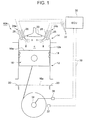
FIG. 1 is a front cross-sectional view of one embodiment of a dual-fuel diesel engine of the present invention. -
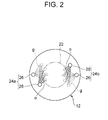
FIG. 2 is a side cross-sectional view of the dual-fuel diesel engine according to the above embodiment. -
FIG. 3A is a diagram of a fuel injection mode of the dual-fuel diesel engine according to the above embodiment, andFIG. 3B is a diagram of a fuel injection mode of a conventional dual-fuel diesel engine. -
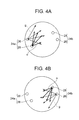
FIGs. 4A and 4B are explanatory diagrams of fuel injection type of the dual-fuel injection according to the above embodiment. -
FIGs. 5A and 5B are illustrations of a partial configuration of the dual-fuel diesel engine according to the above embodiment.FIG. 5A is a front cross-sectional view of a gas fuel injector andFIG. 5B is a front cross-sectional view of an oil fuel injector. -
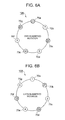
FIGs. 6A and 6B are schematic diagrams of one embodiment of a dual-fuel diesel engine unit according to the present invention. - Embodiments of the present invention will now be described in detail with reference to the accompanying drawings. It is intended, however, that unless particularly specified, dimensions, materials, shapes, relative positions and the like of components described in the embodiments shall be interpreted as illustrative only and not limitative of the scope of the present invention.
- The first embodiment of a dual-fuel diesel engine of the present invention will be described in reference to
FIGs. 1 to 5B . The present embodiment is an example where the present invention is applied to a two-cycle dual-fuel diesel engine. - As illustrated in
FIG. 1 , a dual-fuel diesel engine 10A of the present embodiment includes acylinder 12 of a cylindrical shape, acylinder head 14 connected to the upper end of thecylinder 12, and apiston 16 housed inside thecylinder 12 so as to be freely reciprocable. A combustion chamber "c" is defined by the surroundingwall 12a of thecylinder 12, thecylinder head 14, and thetop face 16a of thepiston 16. Piston rings 18 are disposed on the outer circumferential face of thepiston 16 so as to seal a gap between the outer circumferential face of thepiston 16 and the surroundingwall 12a of thecylinder 12. - On the surrounding
wall 12a at a bottom region of thecylinder 12, a plurality of scavengingports 20 are opened with equal intervals in the circumferential direction. The scavengingports 20 are formed above thetop face 16a of thepiston 16 at the region of the bottom dead center (as indicated by the double-dotted chain line in the drawing). Upon thepiston 16 being positioned in the region of the bottom dead center, air is supplied to the combustion chamber "c" from the scavengingports 20. - Further, while an exhaust port opens at the center of the
cylinder head 14, anexhaust valve 22 is disposed on the exhaust port for opening and closing the exhaust port. In the scavenging stroke in which thepiston 16 ascends, thisexhaust valve 22 is kept open until thepiston 16 reaches the position of approximately 100° before top dead center. Accordingly, the air supplied to the combustion chamber "c" from the scavengingports 20 scavenge the exhaust gas that has remained in the combustion chamber "c" from the previous stroke. - On the
cylinder head 14, a pair of dual-fuel injectors exhaust valve 22. The dual-fuel injectors cylinder 12 with an interval of 180° from each other. Each of the dual-fuel injectors gas fuel injector 26 that injects a gas fuel "g" such as natural gas to the combustion chamber "c" and apilot fuel injector 28 that similarly injects an oil fuel "o" having high compression-ignition properties to the combustion chamber "c". - The
gas fuel injector 26 and thepilot fuel injector 28 are connected to an engine control unit (ECU) 30 bycables 32, so that operation of fuel injection is controlled by theECU 12. TheECU 12 is connected to acrank angle sensor 36 that detects a rotation angle of acrank shaft 34 and to arotation speed sensor 37 that detects a rotation speed of thecrank shaft 34 throughcables 38. TheECU 12 detects a phase of thepiston 16 by receiving a detection signal of a rotation angle of thecrank shaft 34 from thecrank angle sensor 36 through one of thecables 38. Further, theECU 12 detects load factor of the dual-fuel diesel engine 10 from a detection value of therotation speed sensor 37 through one of thecables 38. - The
gas fuel injector 26 and thepilot fuel injector 28 inject a gas fuel "g" and an oil fuel "o" into the combustion chamber "c" at a predetermined timing based on a signal transmitted from theECU 12. Upon thepiston 16 being in the vicinity of the top dead center (for instance, at 0° to 100° before top dead center), thegas fuel injector 26 and thepilot fuel injector 28 inject their corresponding fuel nearly at the same time. In the combustion chamber "c" of a high-temperature atmosphere, the oil fuel "o" having high compression-ignition properties self-ignites, which causes the gas fuel "g" injected nearly at the same time so as to generate flame in the combustion chamber "c". -
FIG. 3A is a diagram of a fuel injection mode of the dual-fuel diesel engine 10A, andFIG. 3B is a diagram of a fuel injection mode of a conventional dual-fuel diesel engine. InFIGs. 3A and 3B , x-axis is the load factor of the dual-fuel diesel engine 10 and y-axis is the total amount of heat of the injected fuel. Rg represents the gas fuel region and Ro represents the oil fuel region. As described above, thegas fuel injector 26 and thepilot fuel injector 28 have a minimum limit amount for injection due to their structural reasons or the characteristics of their fuels. InFIGs. 3A and 3B , the minimum limit amount of injection (amount of heat) for onegas fuel injector 26 is 7%, and the minimum limit amount of injection (amount of heat) for onepilot fuel injector 28 is 3%. Further, in an extremely-low-load operating range, i.e., in a range where the load factor is from 0 to 10%, only the oil fuel is injected in view of ignition performance. - In a range where the load factor exceeds 20%, fuel is injected from both of the dual-
fuel injectors gas fuel injectors 26 and thepilot fuel injectors 28 are controlled by theECU 12 so as to achieve a fuel-injection cycle in which the fuel is injected by a pair of dual-fuel injectors FIGs. 4A and 4B . - As illustrated in
FIG. 4A , when thepiston 16 is at a fuel injecting timing at the vicinity of the top dead center, thegas fuel injector 26 and thepilot fuel injector 28 of the dual-fuel injectors 24a inject their corresponding fuels. InFIG. 4B , in the subsequent combustion cycle, thegas fuel injector 26 and thepilot fuel injector 28 of the dual-fuel injectors 24b inject fuels. This is alternately performed in every combustion cycle. As a result, as illustrated inFIG. 3A , it is possible to reduce the amount of injection (amount of heat) of the oil fuel to 3% in the load factor range of from 10 to 20%. - On the other hand, in the conventional fuel injection mode illustrated in
FIG. 3B , a pair of dual-fuel injectors fuel injectors -
FIG. 5A is an example of configuration of thegas fuel injector 26, andFIG. 5B is an example of configuration of thepilot fuel injector 28. As to thegas fuel injector 26 ofFIG. 5A , a space "v" is defined inside acylindrical housing 40 in the axial direction. The space "v" houses aneedle valve 44 integrated with apiston 42 and apiston 46 for increasing spring force so that they are freely slidable. Acoil spring 48 is interposed between thepiston 42 and thepiston 46 for increasing spring force. On thecylindrical housing 40, aflow path 50 communicating with a space at the top face side of thepiston 46 for increasing spring force, aflow path 52 that supplies working oil "w" to a space at the bottom face side of thepiston 42, and aflow path 54 that supplies the gas fuel "g" are formed by boring. Further, anozzle hole 56 is formed by boring on an injectingpart 40a disposed in the combustion chamber "c". - A working
oil supply path 60 is connected to theflow path 52, and an electromagnetic opening-and-closingvalve 62 is disposed in the workingoil supply path 60. Once the electromagnetic opening-and-closingvalve 62 is opened by a command of theECU 12 and the working oil "w" is supplied to theflow path 52, theneedle valve 44 ascends so that theflow path 52 communicates with thenozzle hole 56 through aflow path 58. Thus, the gas fuel "g" supplied from aflow path 54 is injected into the combustion chamber "c" from thenozzle hole 56. When the working oil "w" is not supplied to theflow path 52, theflow path 58 is blocked by theneedle valve 44 and thus the gas fuel "g" is not injected into the combustion chamber "c". Also, spring force of thecoil spring 48 acting on theneedle valve 44 can be adjusted by supplying working oil or working air to theflow path 50. - In
FIG. 5B , the configuration of thepilot fuel injector 28 is similar to that of thegas fuel injector 26 besides that there is noflow path 52. An oilfuel supply path 64 is connected to theflow path 54 and an electromagnetic opening-and-closingvalve 66 is disposed in the oilfuel supply path 64. Once the electromagnetic opening-and-closingvalve 66 is opened by a command of theECU 12 and the oil fuel "o" is supplied to theflow path 54, theneedle valve 44 ascends due to the pressure of the oil fuel "o" so that theflow path 54 communicates with theflow path 58. Thus, the oil fuel "o" is injected into the combustion chamber "c" from thenozzle hole 56. - For the
gas fuel injector 26, it is possible to control injection of the gas fuel "g" by controlling supply of the working oil "w" by theECU 12. For thepilot fuel injector 28, it is possible to control injection of the oil fuel "o" by controlling supply of the oil fuel "o" by theECU 12. In the present embodiment, once the load factor of the dual-fuel diesel engine 10 falls in the range of from 10 to 20%, theECU 12 automatically shifts to the fuel-injection cycle illustrated inFIGs. 4A and 4B . Herein, the configurations of thegas fuel injector 26 and thepilot fuel injector 28 are not limited to the configurations illustrated inFIGs. 5A and 5B . - According to the present embodiment, a pair of dual-
fuel injectors fuel injectors - Still further, by causing the pair of dual-
fuel injectors fuel injectors ECU 12, which makes it possible to reduce the cost of a control mechanism. Moreover, by theECU 12, it is possible to automate performing the fuel combustion cycle in the range where the load factor of the dual-fuel diesel engine 10 is from 10 to 20%. - Herein, by providing three dual-fuel injectors for one cylinder so that the three dual-fuel injectors inject fuel one by one in order in every combustion cycle, it is possible to reduce the amount of injection (amount of heat) for the oil fuel to 2% in the load factor range of from 10 to 16%. By providing four dual-fuel injectors, it is possible to further reduce the amount of injection (amount of heat) for the oil fuel.
- Next, one embodiment of a dual-fuel diesel engine unit of the present invention will be described in reference to
FIGs. 6A and 6B . A dual-fueldiesel engine unit 10B of the present embodiment includes a plurality of cylinders (seven inFIG. 6 ) each having the similar configuration to that of thecylinder 12 of the dual-fuel diesel engine 10A in the above embodiment. Each of the sevencylinders 70a to 70g is controlled by theECU 12 so as to perform a fuel-injection cycle similar to that of the above embodiment. That is, each of thecylinders 70a to 70g includes a pair of dual-fuel injectors -
FIG. 6A illustrates a state upon an odd-numbered rotation andFIG. 6B illustrates a state upon an even-numbered rotation of thecrank shaft 34. By theECU 12, in a combustion cycle upon an odd-numbered rotation of thecrank shaft 34, a first group ofcylinders cylinders 70a to 70g inject fuel from the dual-fuel injectors cylinders crank shaft 34, fuel injection of the first group is stopped and fuel injection of the second group is performed, contrary to the case of the odd-numbered rotation. The above operation is performed alternately. - According to the present embodiment, compared to a conventional dual-fuel diesel engine having the same configuration, it is possible to halve oil fuel in each cylinder. Further, as the fuel-injection cycle is performed by the dual-fuel diesel engine as a whole, it is possible to reduce the amount of injection of the oil fuel to a quarter compared to the conventional case. While the
cylinders 70a to 70g are divided into two groups to perform fuel injection and ignition alternately in the present embodiment, thecylinders 70a to 70g may be divided into three groups or more instead so that the three groups or more perform fuel injection and ignition one by one in order. As a result, it is possible to further reduce the amount of injection of the oil fuel. - While the above first and second embodiments are both an example where the present invention is applied to a two-cycle dual-fuel diesel engine, the present invention can be also applied to a four-cycle dual-fuel diesel gas engine.
- According to the present invention, in the low-load operating range of the dual-fuel diesel engine, it is possible to reduce the ratio of the amount of injection of oil fuel to the amount of injection of gas fuel, which makes it possible to make exhaust gas less harmful and to reduce fuel cost.
Claims (5)
- A dual-fuel diesel engine comprising:a plurality of dual-fuel injectors disposed on a cylinder head, each of the dual-fuel injectors including a pilot fuel injector configured to inject an oil fuel as a pilot fuel into a combustion chamber and a gas fuel injector configured to inject a gas fuel as a main fuel into the combustion chamber; andan engine control unit capable of performing a first fuel-injection cycle repeatedly, the first fuel-injection cycle being such that only a part of the dual-fuel injectors among the plurality of the dual-fuel injectors inject fuel in a single combustion cycle, and each of the plurality of the dual-fuel injectors injects the fuel at least once in a series of combustion cycles.
- The dual-fuel diesel engine according to claim 1,
wherein two of the dual-fuel injectors are disposed on the cylinder, and
wherein the first fuel-injection cycle is configured such that the two dual-fuel injectors alternately inject the fuel in every single combustion cycle. - The dual-fuel diesel engine according to claim 1,
wherein a load operating range in which the first fuel-injection cycle is performed is set in advance for the engine control unit, and
wherein the first fuel-injection cycle is performed by the engine control unit in the load operating range. - The dual-fuel diesel engine according to any of claims 1 to 3,
wherein the dual-fuel diesel engine includes a plurality of cylinders,
wherein the engine control unit is capable of performing the first fuel-injection cycle in each of the cylinders, and
wherein the engine control unit is capable of performing a second fuel-injection cycle repeatedly, the second fuel-injection cycle being such that only a part of the cylinders among the plurality of the cylinders perform the first fuel-injection cycle in a single combustion cycle, and each of the plurality of the cylinders performs the first fuel-injection cycle at least once in a series of combustion cycles. - The dual-fuel diesel engine according to any of claim 4,
wherein a load operating range in which the first fuel-injection cycle and the second fuel-injection cycle are performed is set in advance for the engine control unit, and
wherein the first fuel-injection cycle and the second fuel-injection cycle are performed by the engine control unit upon reaching the load operating range.
Applications Claiming Priority (2)
| Application Number | Priority Date | Filing Date | Title |
|---|---|---|---|
| JP2012090233A JP5984469B2 (en) | 2012-04-11 | 2012-04-11 | Dual fuel diesel engine |
| PCT/JP2013/052935 WO2013153843A1 (en) | 2012-04-11 | 2013-02-07 | Dual-fuel diesel engine |
Publications (2)
| Publication Number | Publication Date |
|---|---|
| EP2837802A1 true EP2837802A1 (en) | 2015-02-18 |
| EP2837802A4 EP2837802A4 (en) | 2016-03-16 |
Family
ID=49327423
Family Applications (1)
| Application Number | Title | Priority Date | Filing Date |
|---|---|---|---|
| EP13775868.6A Withdrawn EP2837802A4 (en) | 2012-04-11 | 2013-02-07 | Dual-fuel diesel engine |
Country Status (6)
| Country | Link |
|---|---|
| US (1) | US20150300284A1 (en) |
| EP (1) | EP2837802A4 (en) |
| JP (1) | JP5984469B2 (en) |
| KR (1) | KR101564866B1 (en) |
| CN (1) | CN104126066B (en) |
| WO (1) | WO2013153843A1 (en) |
Cited By (2)
| Publication number | Priority date | Publication date | Assignee | Title |
|---|---|---|---|---|
| US10066590B2 (en) | 2015-02-27 | 2018-09-04 | Avl Powertrain Engineering, Inc. | Opposed piston three nozzle combustion chamber design |
| US10161371B2 (en) | 2015-02-27 | 2018-12-25 | Avl Powertrain Engineering, Inc. | Opposed piston three nozzle piston bowl design |
Families Citing this family (16)
| Publication number | Priority date | Publication date | Assignee | Title |
|---|---|---|---|---|
| WO2015162636A1 (en) * | 2014-04-22 | 2015-10-29 | 川崎重工業株式会社 | Engine drive system and ship |
| DK178519B1 (en) * | 2014-10-17 | 2016-05-09 | Man Diesel & Turbo Deutschland | A fuel valve for injecting gaseous fuel into a combustion chamber of a self-igniting internal combustion engine and method |
| KR102231547B1 (en) * | 2015-06-17 | 2021-03-23 | 바르실라 핀랜드 오이 | Method for operating multi-cylinder piston engine and piston engine |
| CN106930849B (en) * | 2015-12-29 | 2020-10-02 | 长城汽车股份有限公司 | Switching control method, system and vehicle for dual-fuel engine combustion mode |
| US20190085776A1 (en) * | 2017-08-29 | 2019-03-21 | American Gas & Technology | Diesel to natural gas conversion system |
| CN109386396B (en) * | 2018-09-29 | 2021-09-10 | 哈尔滨工程大学 | Combustion control method for natural gas engine |
| JP7132146B2 (en) * | 2019-02-07 | 2022-09-06 | 株式会社Soken | fuel injection system |
| DE102019209232A1 (en) * | 2019-06-26 | 2020-12-31 | Technische Universität München | HPDF operating method for an internal combustion engine, internal combustion engine and working device |
| DK180809B1 (en) * | 2020-12-09 | 2022-04-07 | Man Energy Solutions Filial Af Man Energy Solutions Se Tyskland | Internal combustion engine |
| US11795869B1 (en) | 2022-10-27 | 2023-10-24 | Deere & Company | Work vehicle compression ignition power system with intake heat exchanger |
| CN115450810B (en) * | 2022-10-28 | 2025-02-11 | 中船动力研究院有限公司 | Dual fuel coordinated injection system and ship |
| US12320310B2 (en) * | 2022-10-31 | 2025-06-03 | Deere & Company | Work vehicle compression ignition power system having thermally stratified engine combustion chambers |
| US12553395B2 (en) | 2022-12-22 | 2026-02-17 | Deere & Company | Work vehicle power system with dynamic auto-ignition assistance compression ratios |
| CN118564340B (en) * | 2024-06-03 | 2025-11-25 | 中船动力研究院有限公司 | A modular multi-fuel reserved low-carbon and zero-carbon dual-fuel engine |
| US12435676B1 (en) * | 2024-08-06 | 2025-10-07 | Deere & Company | Dual-fuel engine systems for work vehicle |
| CN119062491A (en) * | 2024-11-05 | 2024-12-03 | 潍柴动力股份有限公司 | Dual direct injection fuel supply system and control method |
Family Cites Families (19)
| Publication number | Priority date | Publication date | Assignee | Title |
|---|---|---|---|---|
| DE3219132C2 (en) | 1982-05-21 | 1985-11-21 | Karl Mayer Textil-Maschinen-Fabrik Gmbh, 6053 Obertshausen | Direct warping machine with a device for regulating the warping speed |
| JPS604761U (en) * | 1983-06-23 | 1985-01-14 | 三井造船株式会社 | Arrangement structure of fuel injection valve in dual fuel engine |
| JPS6245339U (en) * | 1985-09-10 | 1987-03-19 | ||
| JPH0240289Y2 (en) * | 1985-09-11 | 1990-10-26 | ||
| US4831993A (en) * | 1987-12-28 | 1989-05-23 | Erik Kelgard | Method of operating carburetted dual-fuel engines with diesel pilot oil injection |
| JPH05340295A (en) * | 1992-06-09 | 1993-12-21 | Toyota Motor Corp | Control device for multi-cylinder internal combustion engine |
| US5365902A (en) * | 1993-09-10 | 1994-11-22 | General Electric Company | Method and apparatus for introducing fuel into a duel fuel system using the H-combustion process |
| DE19621297C1 (en) * | 1996-05-28 | 1997-12-04 | Man B & W Diesel Ag | Device for control and regulation of ignition oil injection in gas engine |
| JP3827102B2 (en) * | 1996-06-10 | 2006-09-27 | 株式会社新エィシーイー | Fuel injection control method for diesel engine |
| AU2001261245A1 (en) * | 2000-05-08 | 2001-11-20 | Cummins, Inc. | Multiple operating mode engine and method of operation |
| TW491930B (en) * | 2000-10-10 | 2002-06-21 | Waertsilae Nsd Schweiz Ag | Method for the injection of fuel |
| JP2003193874A (en) | 2001-12-26 | 2003-07-09 | Nippon Ekosu Kk | Dual fuel diesel engine combining gas fuel |
| US7270089B2 (en) * | 2003-06-11 | 2007-09-18 | Clean Air Power, Inc. | Method and apparatus for controlling transition between operating modes in a multimode engine |
| US6866016B2 (en) * | 2003-07-14 | 2005-03-15 | General Electric Company | System and method for controlling ignition in internal combustion engines |
| JP2006046208A (en) * | 2004-08-05 | 2006-02-16 | Toyota Motor Corp | In-cylinder internal combustion engine |
| US7121254B2 (en) * | 2005-02-17 | 2006-10-17 | General Motors Corporation | Compression-ignited IC engine and method of operation |
| US7966992B2 (en) * | 2009-02-15 | 2011-06-28 | Ford Global Technologies, Llc | Combustion control using ion sense feedback and multi-strike spark to manage high dilution and lean AFR |
| JP5163530B2 (en) * | 2009-02-19 | 2013-03-13 | 日産自動車株式会社 | Compression ignition internal combustion engine |
| US8688351B2 (en) * | 2010-02-26 | 2014-04-01 | Clean Air Power, Inc. | Modification of engine control signal timing by emulation of engine position sensors |
-
2012
- 2012-04-11 JP JP2012090233A patent/JP5984469B2/en active Active
-
2013
- 2013-02-07 US US14/383,766 patent/US20150300284A1/en not_active Abandoned
- 2013-02-07 CN CN201380010623.0A patent/CN104126066B/en active Active
- 2013-02-07 WO PCT/JP2013/052935 patent/WO2013153843A1/en not_active Ceased
- 2013-02-07 KR KR1020147026710A patent/KR101564866B1/en active Active
- 2013-02-07 EP EP13775868.6A patent/EP2837802A4/en not_active Withdrawn
Cited By (2)
| Publication number | Priority date | Publication date | Assignee | Title |
|---|---|---|---|---|
| US10066590B2 (en) | 2015-02-27 | 2018-09-04 | Avl Powertrain Engineering, Inc. | Opposed piston three nozzle combustion chamber design |
| US10161371B2 (en) | 2015-02-27 | 2018-12-25 | Avl Powertrain Engineering, Inc. | Opposed piston three nozzle piston bowl design |
Also Published As
| Publication number | Publication date |
|---|---|
| CN104126066B (en) | 2018-05-11 |
| US20150300284A1 (en) | 2015-10-22 |
| JP5984469B2 (en) | 2016-09-06 |
| KR101564866B1 (en) | 2015-10-30 |
| CN104126066A (en) | 2014-10-29 |
| JP2013217336A (en) | 2013-10-24 |
| KR20140134685A (en) | 2014-11-24 |
| EP2837802A4 (en) | 2016-03-16 |
| WO2013153843A1 (en) | 2013-10-17 |
Similar Documents
| Publication | Publication Date | Title |
|---|---|---|
| EP2837802A1 (en) | Dual-fuel diesel engine | |
| EP2837789A1 (en) | 2-cycle gas engine | |
| CN104995392B (en) | Mid-Cycle Fuel Injection Strategies | |
| FI127022B (en) | Two-stroke internal combustion engine and method of operating it | |
| CN105822460B (en) | Gas supply and ignition device for gas engine | |
| KR101564867B1 (en) | Dual-fuel diesel engine and method for operating same | |
| EP2826978A1 (en) | A two-stroke internal combustion engine, method operating a two-stroke internal combustion engine and method of converting a two-stroke engine | |
| AU2013205863B2 (en) | Method for operating an engine | |
| US20180066571A1 (en) | Internal combustion engine and method for operating an internal combustion engine | |
| US20160252011A1 (en) | Two-cycle gas engine | |
| EP2998559A1 (en) | Fuel gas injection valve, dual fuel gas engine, and method for injecting fuel gas | |
| JP5922830B1 (en) | Gas engine | |
| JP2022107648A (en) | Dual fuel large diesel engine method of operation and dual fuel large diesel engine | |
| JP5192177B2 (en) | Sub-chamber engine | |
| CN109973202B (en) | Control device for internal combustion engine | |
| JP2017155735A (en) | Crosshead type internal combustion engine | |
| CN114233464A (en) | Combustion system, engine and combustion control method | |
| KR102314994B1 (en) | Gas-operated internal combustion engine and method of operation thereof |
Legal Events
| Date | Code | Title | Description |
|---|---|---|---|
| PUAI | Public reference made under article 153(3) epc to a published international application that has entered the european phase |
Free format text: ORIGINAL CODE: 0009012 |
|
| 17P | Request for examination filed |
Effective date: 20140904 |
|
| AK | Designated contracting states |
Kind code of ref document: A1 Designated state(s): AL AT BE BG CH CY CZ DE DK EE ES FI FR GB GR HR HU IE IS IT LI LT LU LV MC MK MT NL NO PL PT RO RS SE SI SK SM TR |
|
| AX | Request for extension of the european patent |
Extension state: BA ME |
|
| DAX | Request for extension of the european patent (deleted) | ||
| RA4 | Supplementary search report drawn up and despatched (corrected) |
Effective date: 20160211 |
|
| RIC1 | Information provided on ipc code assigned before grant |
Ipc: F02M 37/00 20060101ALI20160205BHEP Ipc: F02M 61/14 20060101ALI20160205BHEP Ipc: F02D 19/02 20060101ALI20160205BHEP Ipc: F02D 19/08 20060101AFI20160205BHEP Ipc: F02D 17/02 20060101ALI20160205BHEP Ipc: F02M 21/02 20060101ALI20160205BHEP |
|
| STAA | Information on the status of an ep patent application or granted ep patent |
Free format text: STATUS: THE APPLICATION IS DEEMED TO BE WITHDRAWN |
|
| 18D | Application deemed to be withdrawn |
Effective date: 20160913 |