EP2836077B1 - New fermented dairy product comprising microcapsules and process for preparing the same - Google Patents
New fermented dairy product comprising microcapsules and process for preparing the same Download PDFInfo
- Publication number
- EP2836077B1 EP2836077B1 EP12720957.5A EP12720957A EP2836077B1 EP 2836077 B1 EP2836077 B1 EP 2836077B1 EP 12720957 A EP12720957 A EP 12720957A EP 2836077 B1 EP2836077 B1 EP 2836077B1
- Authority
- EP
- European Patent Office
- Prior art keywords
- vitamin
- microcapsules
- juice
- fermented
- dairy product
- Prior art date
- Legal status (The legal status is an assumption and is not a legal conclusion. Google has not performed a legal analysis and makes no representation as to the accuracy of the status listed.)
- Not-in-force
Links
Images


Classifications
-
- A—HUMAN NECESSITIES
- A23—FOODS OR FOODSTUFFS; TREATMENT THEREOF, NOT COVERED BY OTHER CLASSES
- A23C—DAIRY PRODUCTS, e.g. MILK, BUTTER OR CHEESE; MILK OR CHEESE SUBSTITUTES; PREPARATION THEREOF
- A23C9/00—Milk preparations; Milk powder or milk powder preparations
- A23C9/12—Fermented milk preparations; Treatment using microorganisms or enzymes
- A23C9/13—Fermented milk preparations; Treatment using microorganisms or enzymes using additives
- A23C9/1322—Inorganic compounds; Minerals, including organic salts thereof, oligo-elements; Amino-acids, peptides, protein-hydrolysates or derivatives; Nucleic acids or derivatives; Yeast extract or autolysate; Vitamins; Antibiotics; Bacteriocins
-
- A—HUMAN NECESSITIES
- A23—FOODS OR FOODSTUFFS; TREATMENT THEREOF, NOT COVERED BY OTHER CLASSES
- A23C—DAIRY PRODUCTS, e.g. MILK, BUTTER OR CHEESE; MILK OR CHEESE SUBSTITUTES; PREPARATION THEREOF
- A23C9/00—Milk preparations; Milk powder or milk powder preparations
- A23C9/12—Fermented milk preparations; Treatment using microorganisms or enzymes
- A23C9/123—Fermented milk preparations; Treatment using microorganisms or enzymes using only microorganisms of the genus lactobacteriaceae; Yoghurt
- A23C9/1234—Fermented milk preparations; Treatment using microorganisms or enzymes using only microorganisms of the genus lactobacteriaceae; Yoghurt characterised by using a Lactobacillus sp. other than Lactobacillus Bulgaricus, including Bificlobacterium sp.
-
- A—HUMAN NECESSITIES
- A23—FOODS OR FOODSTUFFS; TREATMENT THEREOF, NOT COVERED BY OTHER CLASSES
- A23C—DAIRY PRODUCTS, e.g. MILK, BUTTER OR CHEESE; MILK OR CHEESE SUBSTITUTES; PREPARATION THEREOF
- A23C9/00—Milk preparations; Milk powder or milk powder preparations
- A23C9/12—Fermented milk preparations; Treatment using microorganisms or enzymes
- A23C9/123—Fermented milk preparations; Treatment using microorganisms or enzymes using only microorganisms of the genus lactobacteriaceae; Yoghurt
- A23C9/1238—Fermented milk preparations; Treatment using microorganisms or enzymes using only microorganisms of the genus lactobacteriaceae; Yoghurt using specific L. bulgaricus or S. thermophilus microorganisms; using entrapped or encapsulated yoghurt bacteria; Physical or chemical treatment of L. bulgaricus or S. thermophilus cultures; Fermentation only with L. bulgaricus or only with S. thermophilus
-
- A—HUMAN NECESSITIES
- A23—FOODS OR FOODSTUFFS; TREATMENT THEREOF, NOT COVERED BY OTHER CLASSES
- A23C—DAIRY PRODUCTS, e.g. MILK, BUTTER OR CHEESE; MILK OR CHEESE SUBSTITUTES; PREPARATION THEREOF
- A23C9/00—Milk preparations; Milk powder or milk powder preparations
- A23C9/12—Fermented milk preparations; Treatment using microorganisms or enzymes
- A23C9/13—Fermented milk preparations; Treatment using microorganisms or enzymes using additives
- A23C9/133—Fruit or vegetables
-
- A—HUMAN NECESSITIES
- A23—FOODS OR FOODSTUFFS; TREATMENT THEREOF, NOT COVERED BY OTHER CLASSES
- A23C—DAIRY PRODUCTS, e.g. MILK, BUTTER OR CHEESE; MILK OR CHEESE SUBSTITUTES; PREPARATION THEREOF
- A23C9/00—Milk preparations; Milk powder or milk powder preparations
- A23C9/12—Fermented milk preparations; Treatment using microorganisms or enzymes
- A23C9/13—Fermented milk preparations; Treatment using microorganisms or enzymes using additives
- A23C9/137—Thickening substances
-
- A—HUMAN NECESSITIES
- A61—MEDICAL OR VETERINARY SCIENCE; HYGIENE
- A61K—PREPARATIONS FOR MEDICAL, DENTAL OR TOILETRY PURPOSES
- A61K9/00—Medicinal preparations characterised by special physical form
- A61K9/20—Pills, tablets, discs, rods
- A61K9/2072—Pills, tablets, discs, rods characterised by shape, structure or size; Tablets with holes, special break lines or identification marks; Partially coated tablets; Disintegrating flat shaped forms
- A61K9/2077—Tablets comprising drug-containing microparticles in a substantial amount of supporting matrix; Multiparticulate tablets
- A61K9/2081—Tablets comprising drug-containing microparticles in a substantial amount of supporting matrix; Multiparticulate tablets with microcapsules or coated microparticles according to A61K9/50
-
- A—HUMAN NECESSITIES
- A23—FOODS OR FOODSTUFFS; TREATMENT THEREOF, NOT COVERED BY OTHER CLASSES
- A23C—DAIRY PRODUCTS, e.g. MILK, BUTTER OR CHEESE; MILK OR CHEESE SUBSTITUTES; PREPARATION THEREOF
- A23C2210/00—Physical treatment of dairy products
- A23C2210/40—Microencapsulation; Encapsulation of particles
-
- A—HUMAN NECESSITIES
- A23—FOODS OR FOODSTUFFS; TREATMENT THEREOF, NOT COVERED BY OTHER CLASSES
- A23V—INDEXING SCHEME RELATING TO FOODS, FOODSTUFFS OR NON-ALCOHOLIC BEVERAGES AND LACTIC OR PROPIONIC ACID BACTERIA USED IN FOODSTUFFS OR FOOD PREPARATION
- A23V2400/00—Lactic or propionic acid bacteria
- A23V2400/11—Lactobacillus
- A23V2400/125—Casei
-
- A—HUMAN NECESSITIES
- A23—FOODS OR FOODSTUFFS; TREATMENT THEREOF, NOT COVERED BY OTHER CLASSES
- A23V—INDEXING SCHEME RELATING TO FOODS, FOODSTUFFS OR NON-ALCOHOLIC BEVERAGES AND LACTIC OR PROPIONIC ACID BACTERIA USED IN FOODSTUFFS OR FOOD PREPARATION
- A23V2400/00—Lactic or propionic acid bacteria
- A23V2400/21—Streptococcus, lactococcus
- A23V2400/249—Thermophilus
Definitions
- the present invention relates to the field of fermented dairy product and to its process of preparation.
- the present invention relates to a fermented dairy product comprising microcapsules of oxidizable active.
- Products such as dairy fermented products are well known. They typically comprise milk or milk components (including water), fermented by lactic acid bacteria. Such products are available in various forms, including “yogurts” and “fermented milk products”. Fermented milk products of the yoghurt type are obtained by fermentation of the milk with a combination of strains of lactic bacteria Streptococcus thermophilus and Lactobacillus bulgaricus. These products are available with various nutritional profiles depending typically on the amount of fat, protein, and carbohydrates, and added sugar, in the composition. The presence of lactic acid bacteria, and the fermentation typically allow proteins of milk or milk components to coagulate and thus to provide texture. The viscosity can then be adjusted by stirring. Moreover, the lactic acid bacteria have well known to have beneficial effects on health. It has been shown that some lactic bacteria, in particular lactobacilli and bifidobacteria improve immunity against infectious agents ( Paubert-Braquet et al. Int J. Immunother. 11, 153-161 (1995 )).
- Vitamin C is a water soluble vitamin that must be provided in the human diet because it is not synthesized by the body.
- Vitamin C or L-ascorbic acid or L-ascorbate is an essential nutrient for humans and certain other animal species. It is physiologically required for synthesis of many essential tissues as well as biomolecules including neurotransmitters, fat transport molecules and for catabolism of a portion of the body's cholesterol.
- Vitamin C is also an effective antioxidant in vivo for protecting many proteins, fats, carbohydrates and nucleic acids from damaging reactive oxygen and free radical species. For all these reasons, it is important to have products which can provide a daily intake of vitamin C.
- ascorbic acid In addition to its benefits as a nutritional value in food products, ascorbic acid is also used extensively in food industry for its many functional contributions to product quality. Acting as an antioxidant, ascorbic acid can improve the color and palatability of many kinds of food products. By removing oxygen from its surroundings ascorbic acid in its reduced form becomes the oxidized form, dehydroascorbic acid. This oxidizing action reduces the available oxygen in its immediate environment, making ascorbic acid an effective antioxidant.
- vitamin C is added as a nutrient to food product, the stability of the vitamin C over the shelf-life of the products becomes important. During the preservation, in particular storage and transportation of products with vitamin C, there is a strong loss of vitamin C. Oxygen is the most destructive ingredient causing degradation of vitamin C. Publication of Gliguem et al. (J. Dairy Sci. 88: 891-899, 2005 ) describe processing and storage factors affecting the stability of vitamin C and its levels persisting in milk. These include the sterilization process, extent of oxygen and light penetration of the packaging, and the duration of storage. In conclusion, only packaging comprising an oxygen and light barrier is compatible with vitamin C fortification of milk. Furthermore, short storage time or low storage temperature is needed to retard vitamin C degradation. There is a need for a dairy product having a low rate of loss of vitamin C during a long period of storage (at least 35 days), regardless the packaging used.
- US2011/0217410 describes foods and beverages with vitamin C in a manner such that vitamin C dissolved in an aqueous solution or suspension is protected against oxidative degradation. This involves the joint inclusion of a dissolved water-soluble vitamin C and a water insoluble chemical derivative of vitamin C in the aqueous medium.
- the water insoluble chemical derivative of vitamin C is ascorbyl palmitate, in particular microparticulate form of ascorbyl palmitate.
- This document shows that the vitamin C can be stabilized against oxidation in an aqueous medium by adding water-insoluble microparticulate ascorbyl palmitate, where the microparticulate ascorbyl palmitate is maintained in a substantially undissolved state, as a suspension in the product.
- the product does not describe microparticles of vitamin C but particles of ascorbyl palmitate. Moreover, this document does not describe a milk composition, in particular a fermented milk composition with at least a Lactobacillus casei strain and a Streptococcus thermophilus strain.
- KR20040048749 discloses iron fortified milk which contains vitamin C microencapsulated by polyglycerol monostearate, preventing oxidation of iron.
- WO9734496 and WO9948386 both describe yoghurt or yoghurt-like products fortified with encapsulated Vitamin C.
- other encapsulating agents than those of the present invention are used.
- RDA recommended daily allowances
- a fermented dairy product in which the amount of viable lactic bacteria is maintained until the end of the shelf life.
- probiotics are live bacteria or active fractions thereof, that provide a health benefit to a host upon consumption.
- the inventors have surprisingly found that the Streptococcus thermophilus count decrease in contact with vitamin C.
- ascorbic acid tend to improve the viability of probiotic bacteria of the yogurt ( Rajiv I. Dave et al. Int Dairy Journal 7 (1997) 435-443 ).
- a fermented dairy product providing from 15% and 100% of RDA (Recommended dietary allowances) of oxidizable active, in particular vitamin C until the end of the shelf life of the product, having good organoleptic properties (no off-tastes, good mouth feel, no granular aspect in mouth%) and containing a sufficient level of viable lactic bacteria.
- RDA Recommended dietary allowances
- the present invention addresses at least one of the problems or needs above mentioned with a fermented dairy product comprising microcapsules of Vitamin C as the oxidizable active, and a fermented milk composition.
- the present invention particularly relates to a fermented dairy product comprising microcapsules of Vitamin C and a fermented milk composition wherein the said fermented milk composition comprises at least a Streptococcus thermophilus strain.
- the microcapsules according to the invention are microcapsules of Vitamin C comprise a core and a coating, said coating surrounding the core.
- coating used in the present invention means any layer (or coating layer) surrounding the core, once the encapsulating composition is applied and dried.
- the"core comprises or consists in Vitamin C.
- oxidizable herein designates an agent which is able to become oxidized in contact with oxygen, in other words which is capable of undergoing a chemical reaction with oxygen.
- active “agent” “substance” can be used interchangeably. Outside the scope of the claimed invention, the oxidizable active is selected from the group comprising vitamin C, vitamin B5, vitamin B6, vitamin B8, vitamin B9, vitamin A, vitamin D3, vitamin K and vitamin E or a mixture thereof.
- the oxidizable active is vitamin C, in particular natural vitamin C or synthetic vitamin C.
- synthetic vitamin C used in the present invention designates salts of vitamin C.
- natural vitamin C designates fruit or vegetable preparation comprising vitamin C or a mixture of fruit and vegetable preparation comprising vitamin C, which is optionally dried.
- the vitamin C is salts of L. ascorbic acid, in particular sodium L-ascorbate, calcium L-ascorbate and iron L-ascorbate
- the vitamin C is a fruit juice comprising vitamin C in particular acerola juice, camu camu juice, rosehip juice, goji berry juice, blackcurrants juice, kiwi juice, orange juice, cranberries juice, bananas juice, pears juice, pomegranate juice, apples juice, grapes juice and mixtures thereof.
- the fruit juice can be a liquid juice, a concentrated or dried juice.
- the fruit juice can also comprises additives like starch and its derivatives, pectin, agar agar, carraghenans, gums or polysaccharides.
- the coating comprises or consists in an encapsulating composition selected from the group comprising or consisting of alginate, salts of alginate, starch, modified starch, sources of celluloses, cellulose gum, maltodextrin, ascorbyl palmitate, sugars, gelatins, polysaccharides, proteins and mixtures thereof.
- the encapsulating composition comprises alginate and ascorbyl palmitate.
- the encapsulating composition comprises at least a modified starch, alginate and cellulose gum, optionally in combination with maltodextrin.
- the microcapsules of Vitamin C have an average diameter lower than 200 ⁇ m, in particular lower than 100 ⁇ m, more particularly lower than 50 ⁇ m.
- the term « average diameter » refers to the volume medium diameter D (v;0,5) meaning that approximately 50 volume % of the microcapsules have an equivalent spherical diameter that is smaller than the average diameter and approximately 50 volume % of the microcapsules have an equivalent spherical diameter that is greater than the average diameter.
- the fermented diary product according to the invention is characterized in that 90% of microcapsules have a diameter lower than 200 ⁇ m, more particularly 70% of microcapsules have a diameter between 80 and 150 ⁇ m and 30% of microcapsules have a diameter between 150 and 200 ⁇ m.
- the microcapsules of Vitamin C are in a fruit preparation or a technological mass.
- fruit preparation designates fruit juice or fruit puree with or without pieces of fruits as the same kind of fruit than the puree or different kind of fruit.
- fruit puree or “fruit compote” can be used interchangeably.
- technological mass used in the invention describes a liquid composition without fruits or fruit juices, such as water.
- the fruit preparation and the technological mass can comprise or contain stabilizers such as alginate, starch, modified starch, sources of celluloses, cellulose gum, maltodextrin, ascorbyl palmitate, sugars, gelatins, polysaccharides, proteins and mixtures thereof and/or one or more ingredients selected among vitamins and/or minerals, said vitamins or minerals are selected from the group consisting of beta-carotene, vitamin A, vitamin B1, vitamin B2, vitamin B6, vitamin B12, vitamin D3, vitamin E, calcium, magnesium, iron, iodine, copper, manganese, potassium, chromium, molybdenum, boron, betaine, glutamic acid.
- stabilizers such as alginate, starch, modified starch, sources of celluloses, cellulose gum, maltodextrin, ascorbyl palmitate, sugars, gelatins, polysaccharides, proteins and mixtures thereof and/or one or more ingredients selected among vitamins and/or minerals, said vitamins or minerals are selected from the group consisting
- the amount of vitamin C can represent between 15% and 150% of RDA (Recommended dietary allowances), more particularly between 30% and 80% of RDA, even more particularly between 40% and 70% of RDA.
- 100g of said fermented dairy product comprises from 12 to 50 mg of vitamin C, in particular from 24 to 40 mg, more particularly from 30 to 35 mg of vitamin C, at the end of the shelf life, in particular up to 45 days, more particularly up to at 35 days.
- the product of the invention at the end of the process can contain for 100 g of said fermented dairy product, from 30 to 70 mg of vitamin C, in particular from 33 to 62 mg, of vitamin C.
- the rate of loss of vitamin C in said product is lower than 40%, in particular lower than 35%, even more particularly lower than 25%.
- the fermented dairy product according to the invention comprises from 1.10 5 to 1.10 8 CFU/ml, more particularly from 8.10 6 to 5.10 7 CFU/ml of Streptococcus thermophilus strain, in particular at the end of the shelf life of the product.
- Streptococcus thermophilus strain is selected among the strains which were deposited at the CNCM under the reference 1-2773, I-2778 and 1-2835.
- the fermented dairy product according to the invention comprises from 1.10 5 to 1.10 9 CFU/ml of Lactobacillus casei strain.
- Lactobacillus casei strain is selected among the Lactobacillus casei ssp. paracasei strain or the Lactobacillus paracasei ssp. paracasei strain.
- the said Lactobacillus casei ssp. paracasei strain can be the strain which was deposited at the CNCM under the reference I-1518.
- the product of the invention can comprises at least Streptococcus thermophilus strain and/or at least Lactobacillus casei strain in the fermented milk composition.
- the term "fermented milk composition” is a milk composition fermented with at least Streptococcus thermophilus strain and/or at least Lactobacillus casei strain. During the fermentation of the milk composition, the strains produce lactic acid and the number of lactic acid bacteria increases. Lactic acid bacteria and fermented products are well known by the one skilled in the art.
- milk composition according to the invention, means a milk product, a milk-based product or a milk-based food product. These compositions comprise milk or milk components, wherein the milk chemical composition is modified for example by fermentation.
- a "milk based composition” encompassed "milk containing" composition.
- the milk and/or milk components are preferably cow milk.
- the fermented milk composition could be typically a fermented milk product or yogurt.
- fermented milks or “yogurts” have the usual meanings attributed to them in the dairy industry, i.e products which are intended for animal consumption, more particularly human consumption, and which are derived from acidifying lactic fermentation of a dairy substrate (animal milk, in particular cow milk). More particularly the denomination " fermented milk” (degree n.
- deg 88.-1203 of December 30th, 1988 is reserved for a dairy product prepared with skimmed milk or not, or condensed milks or powders some, having undergone a heat treatment at least equivalent to pasteurization, and sown with producing micro-organisms of lactic acid such as the lactobacilli (Lactobacillus acidophilus, L. casei, L. plantarum, L. reuteri, L. johnsonii ), the certain streptococci ( Streptococcus thermophilus ), bifidobacteria and the lactococci ones.
- lactobacilli Lactobacillus acidophilus, L. casei, L. plantarum, L. reuteri, L. johnsonii
- Streptococcus thermophilus the certain streptococci
- bifidobacteria lactococci ones.
- yogurt is reserved for the fermented milk obtained, using standard methods, by the development of specific thermophilic lactic bacteria designated Lactobacillus bulgaricus (also designated Lactobacillus delbrueckii subsp. Bulgaricus ) and Streptococcus thermophilus, which must be alive in the finished product, in an amount of at least 1.10 7 CFU/ml of S. thermophilus and L. bulgaricus strain per gram of product.
- Lactobacillus bulgaricus also designated Lactobacillus delbrueckii subsp. Bulgaricus
- Streptococcus thermophilus which must be alive in the finished product, in an amount of at least 1.10 7 CFU/ml of S. thermophilus and L. bulgaricus strain per gram of product.
- the fermented milk composition comprises at least one bacteria selected from the genera Lactobacillus, Streptococcus, Lactococcus, and Bifidobacterium.
- the fermented milk composition comprises Lactobacillus bulgaricus.
- the fermented dairy product according to the invention comprises one or more ingredients selected among vitamins and/or minerals, said vitamins being not encapsulated, said ingredients can be selected from the group consisting of beta-carotene, vitamin A, vitamin B1, vitamin B2, vitamin B6, vitamin B12, vitamin D3, vitamin E, calcium, magnesium, iron, iodine, copper, manganese, potassium, chromium, molybdenum, boron, betaine, glutamic acid.
- the fermented dairy product comprises vitamin D3 and/or vitamin B6.
- Vitamin B6, or pyridoxine is a component of the vitamin B complex and plays several physiologic roles, in particular in formation and health of red blood cells and blood vessels, nerve function, teeth or in amino acid metabolism or antioxidant properties.
- Vitamin D3 or cholecalciferol is a component of the vitamin D complex.
- 100g of said fermented dairy product comprises from 0,5 to 15 ⁇ g of vitamin D3, in particular from 0,6 to 10 ⁇ g, more particularly from 0,7 to 4 ⁇ g of vitamin D3.
- 100g of said fermented dairy product comprises 0,85 ⁇ g of vitamin D3.
- the amount of vitamin D3 can represent 15 % or 20% or 25% or 50% or 70% or even 100% of RDA (Recomanded dietary allowances).
- 100g of said fermented dairy product comprises from 0,05 to 2,5 mg of vitamin B6, in particular from 0,08 to 2 mg, more particularly from 0,12 to 1,5 mg of vitamin B6.
- 100g of said fermented dairy product comprises 0,15 mg of vitamin B6.
- the amount of vitamin B6 can represent 15 % or 20% or 25% or 50% or 70% or even 100% of RDA (Recomanded dietary allowances).
- the fermented dairy product according to the invention comprises one or more additives selected from sweeteners, coloring agents, flavors, flavor enhancers, sugars, preservatives and combinations thereof.
- the fermented dairy product according to the invention comprises:
- the fermented dairy product according to the invention comprises from 0,01 to 5%, in particular from 0,005 to 1% of microcapsules of vitamin C by weight of fruit preparation or of technological mass.
- the fermented dairy product according to the invention comprises from 5 % to 90% of orange juice or technological mass comprising from 0.01% to 5% of microcapsules of vitamin C by weight of juice or technological mass.
- the present invention also relates to a method comprising the step of dispersing of microcapsules Vitamin c with a fermented milk composition.
- the method comprises:
- step b) comprises the following steps:
- the step b) is necessary after the step a), more particularly after an optionally step of homogenization.
- Microcapsules of vitamin C were prepared by a step of spraying on particles consisting in vitamin C (sodium ascorbate), or particles comprising vitamin C (acerola juice), with the encapsulating compositions below mentioned. Then the microcapsules are dried to obtain dried microcapsules. 3 kinds of microcapsules of vitamin C were prepared either from acerola juice (Table 1) or from sodium ascorbate (Table 2), wherein the microcapsules A and microcapsules B are comparative to microcapsules C accodring to the claimed invention.
- Table 1 microcapsules of natural vitamin C
- Ingredients Microcapsules A g/100g of dried capsule Acerola juice 60-65 Modified starch 20-30 Maltodextrin 5-20 Alginate 3-10 Cellulose gum 1-5
- Table 2 microcapsules of synthetic vitamin C with 2 different encapsulating compositions
- Ingredients Microcapsules B g/100g of dried capsule Sodium ascorbate 60-65 Modified amidon 25-33 Alginate 5-10 Cellulose gum 1-5
- Ingredients Microcapsules C g/100g of dried capsule Sodium ascorbate 90-97 Alginate 3-10 Ascorbyl palmitate 0,2-1
- Lactobacillus casei strain and Streptococcus thermophilus strains was prepared.
- the Lactobacillus casei used is Lactobacillus casei CNCM I-1518.
- the Streptococcus thermophilus used are CNCM 1-2773, CNCM 1-2835, CNCM 1-2778.
- the fermentation step is well known by the one skilled in the art.
- the preparation of the fermented milk composition is standard for the other steps of preparation.
- Microcapsules A, B and C are prepared and mixed in a fruit preparation, in particular orange juice.
- the orange juice with microcapsules is pasteurized at a temperature of at least 85°C during 11 min, then the juice is cooled and storage in cool conditions before the mixing step. Then, 12% orange juice is added in a fermented milk composition.
- EXAMPLE 2 Analysis of vitamin C microcapsules in optical microscopy in the fermented dairy products A and C.
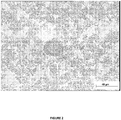
- FIGURES 1 and 2 represent an optical microscopy view of the microcapsules C and A in the fermented dairy product C and A.
- microcapsule C Stability of microcapsule C was analyzed during the storage of microcapsules up to 60 days.
- Figure 3 shows that during the storage time, microcapsules have a good stability when suspended in a dairy product (HPLC method standard deviation: ⁇ 10%; NF-V0135).
- the stability is determined by the measurement of the rate of vitamin C for each of the products A, B and C, the day of the production (D3) and 35 days after (D35), using the High Performance Liquid Chromatography.
- the rate of loss of vitamin C corresponds to the report of the amount of vitamin C at D35 versus the amount of vitamin C at D3.
- microcapsules C and comparative microcapsules B ensure significant synthetic vitamin C stability when compared to the control i) Evaluation of the stability of the natural vitamin C microencapsulated and vitamin C non encapsulated (control) Microcapsules A non encapsulated vitamin C D35/D3 2 (% of relative stability) 67.15 * 20.21 Standard deviation 6.5 3.4 1 RDA: EU 100% RDA is 80mg ; 2 vitamin C was analyzed using HPLC method at D3 and D35; * significant versus control (no capsules)
- microcapsules A ensure a significant synthetic vitamin C stability when compared to the control
- Microcapsules of synthetic (C and D) or natural vitamin C (A) were incorporated in the dairy products as of 80% RDA 1 or 30% RDA respectively. Streptococcus thermophilus counts were analyzed at D4, D14 and D35. Results are the expression of at least three experiments.
Landscapes
- Life Sciences & Earth Sciences (AREA)
- Chemical & Material Sciences (AREA)
- Engineering & Computer Science (AREA)
- Microbiology (AREA)
- Food Science & Technology (AREA)
- Polymers & Plastics (AREA)
- Health & Medical Sciences (AREA)
- Biochemistry (AREA)
- Molecular Biology (AREA)
- Proteomics, Peptides & Aminoacids (AREA)
- Nutrition Science (AREA)
- Animal Behavior & Ethology (AREA)
- General Health & Medical Sciences (AREA)
- Public Health (AREA)
- Veterinary Medicine (AREA)
- Bioinformatics & Cheminformatics (AREA)
- Medicinal Chemistry (AREA)
- Epidemiology (AREA)
- Pharmacology & Pharmacy (AREA)
- Coloring Foods And Improving Nutritive Qualities (AREA)
- Dairy Products (AREA)
Description
- The present invention relates to the field of fermented dairy product and to its process of preparation. In particular, the present invention relates to a fermented dairy product comprising microcapsules of oxidizable active.
- Products such as dairy fermented products are well known. They typically comprise milk or milk components (including water), fermented by lactic acid bacteria. Such products are available in various forms, including "yogurts" and "fermented milk products". Fermented milk products of the yoghurt type are obtained by fermentation of the milk with a combination of strains of lactic bacteria Streptococcus thermophilus and Lactobacillus bulgaricus. These products are available with various nutritional profiles depending typically on the amount of fat, protein, and carbohydrates, and added sugar, in the composition. The presence of lactic acid bacteria, and the fermentation typically allow proteins of milk or milk components to coagulate and thus to provide texture. The viscosity can then be adjusted by stirring. Moreover, the lactic acid bacteria have well known to have beneficial effects on health. It has been shown that some lactic bacteria, in particular lactobacilli and bifidobacteria improve immunity against infectious agents (Paubert-Braquet et al. Int J. Immunother. 11, 153-161 (1995)).
- Known on the market is the existence of milk-based or milk-derived products that are supplemented with the addition of external substances. In particular in the dairy field, there are products derived from fermented milk, such as yoghurts, that are supplemented with the addition of a wide variety of foodstuffs selected from: minerals, vitamins, fruits and others. Therefore, the consumer could find products (beverage, milk product) containing supplemented vitamin C and it is still common to see nutritional labels food and beverage packages claiming to provide between 10% and 100% or more per serving of the daily value of vitamin C (60mg). Unfortunately, most if not all of these foods don't have the amount of vitamin C above mentioned at the end of the shelf life. These products don't guarantee to the consumer, the minimum daily requirements of vitamin C during all the storage of the product, and in particular at the end of the shelf life of the product (at least 35 days).
- Vitamin C (ascorbic acid) is a water soluble vitamin that must be provided in the human diet because it is not synthesized by the body. Vitamin C or L-ascorbic acid or L-ascorbate is an essential nutrient for humans and certain other animal species. It is physiologically required for synthesis of many essential tissues as well as biomolecules including neurotransmitters, fat transport molecules and for catabolism of a portion of the body's cholesterol. Vitamin C is also an effective antioxidant in vivo for protecting many proteins, fats, carbohydrates and nucleic acids from damaging reactive oxygen and free radical species. For all these reasons, it is important to have products which can provide a daily intake of vitamin C. In addition to its benefits as a nutritional value in food products, ascorbic acid is also used extensively in food industry for its many functional contributions to product quality. Acting as an antioxidant, ascorbic acid can improve the color and palatability of many kinds of food products. By removing oxygen from its surroundings ascorbic acid in its reduced form becomes the oxidized form, dehydroascorbic acid. This oxidizing action reduces the available oxygen in its immediate environment, making ascorbic acid an effective antioxidant.
- If vitamin C is added as a nutrient to food product, the stability of the vitamin C over the shelf-life of the products becomes important. During the preservation, in particular storage and transportation of products with vitamin C, there is a strong loss of vitamin C. Oxygen is the most destructive ingredient causing degradation of vitamin C. Publication of Gliguem et al. (J. Dairy Sci. 88: 891-899, 2005) describe processing and storage factors affecting the stability of vitamin C and its levels persisting in milk. These include the sterilization process, extent of oxygen and light penetration of the packaging, and the duration of storage. In conclusion, only packaging comprising an oxygen and light barrier is compatible with vitamin C fortification of milk. Furthermore, short storage time or low storage temperature is needed to retard vitamin C degradation. There is a need for a dairy product having a low rate of loss of vitamin C during a long period of storage (at least 35 days), regardless the packaging used.
- The problem of the oxidation of vitamin C during storage could be solved by adding a compensating concentration before the process, such that the recommended level is still present at the end of the shelf life. However, the degradation of high amounts of vitamin C in milk could have some deleterious effects on other aspects of the nutritional quality (Birlouez-Aragon et al. 2004).
- Up to now, number efforts have been reported to slow the degradation of ascorbic acid. For examples: reducing the availability of oxygen, reducing the pH of the composition or adding oxygen scavengers. Several chemistries that might help stabilize vitamin C have also been investigated to some degree, including mixed phase emulsions and sacrificial phenolic antioxydants.
-
US2011/0217410 describes foods and beverages with vitamin C in a manner such that vitamin C dissolved in an aqueous solution or suspension is protected against oxidative degradation. This involves the joint inclusion of a dissolved water-soluble vitamin C and a water insoluble chemical derivative of vitamin C in the aqueous medium. The water insoluble chemical derivative of vitamin C is ascorbyl palmitate, in particular microparticulate form of ascorbyl palmitate. This document shows that the vitamin C can be stabilized against oxidation in an aqueous medium by adding water-insoluble microparticulate ascorbyl palmitate, where the microparticulate ascorbyl palmitate is maintained in a substantially undissolved state, as a suspension in the product. The product does not describe microparticles of vitamin C but particles of ascorbyl palmitate. Moreover, this document does not describe a milk composition, in particular a fermented milk composition with at least a Lactobacillus casei strain and a Streptococcus thermophilus strain. -
KR20040048749 -
WO9734496 WO9948386 - Hence, it is desirable to provide a fermented dairy product providing from 15% and 100% of RDA (Recommended dietary allowances) of oxidizable active, in particular vitamin C until the end of the shelf life of the product, having good organoleptic properties (no off-tastes, good mouth feel, no granular aspect in mouth...) and containing a sufficient level of viable lactic bacteria.
- The present invention addresses at least one of the problems or needs above mentioned with a fermented dairy product comprising microcapsules of Vitamin C as the oxidizable active, and a fermented milk composition.
- The present invention particularly relates to a fermented dairy product comprising microcapsules of Vitamin C and a fermented milk composition wherein the said fermented milk composition comprises at least a Streptococcus thermophilus strain.
- The microcapsules according to the invention are microcapsules of Vitamin C comprise a core and a coating, said coating surrounding the core. The term "coating" used in the present invention means any layer (or coating layer) surrounding the core, once the encapsulating composition is applied and dried. In the present invention, the"core" comprises or consists in Vitamin C. The term "oxidizable" herein designates an agent which is able to become oxidized in contact with oxygen, in other words which is capable of undergoing a chemical reaction with oxygen. The term "active" "agent" "substance" can be used interchangeably. Outside the scope of the claimed invention, the oxidizable active is selected from the group comprising vitamin C, vitamin B5, vitamin B6, vitamin B8, vitamin B9, vitamin A, vitamin D3, vitamin K and vitamin E or a mixture thereof.
- In the claimed invention, the oxidizable active is vitamin C, in particular natural vitamin C or synthetic vitamin C. The term "synthetic vitamin C" used in the present invention designates salts of vitamin C. The term "natural vitamin C" designates fruit or vegetable preparation comprising vitamin C or a mixture of fruit and vegetable preparation comprising vitamin C, which is optionally dried.
- In a particularly embodiment, the vitamin C is salts of L. ascorbic acid, in particular sodium L-ascorbate, calcium L-ascorbate and iron L-ascorbate
- In another embodiment, the vitamin C is a fruit juice comprising vitamin C in particular acerola juice, camu camu juice, rosehip juice, goji berry juice, blackcurrants juice, kiwi juice, orange juice, cranberries juice, bananas juice, pears juice, pomegranate juice, apples juice, grapes juice and mixtures thereof. The fruit juice can be a liquid juice, a concentrated or dried juice. The fruit juice can also comprises additives like starch and its derivatives, pectin, agar agar, carraghenans, gums or polysaccharides. Outside the scope of the claimed invention, the coating comprises or consists in an encapsulating composition selected from the group comprising or consisting of alginate, salts of alginate, starch, modified starch, sources of celluloses, cellulose gum, maltodextrin, ascorbyl palmitate, sugars, gelatins, polysaccharides, proteins and mixtures thereof. In the claimed invention, the encapsulating composition comprises alginate and ascorbyl palmitate. Again outside the scope of the claimed invention, the encapsulating composition comprises at least a modified starch, alginate and cellulose gum, optionally in combination with maltodextrin.
- In an advantageous embodiment, the microcapsules of Vitamin C have an average diameter lower than 200 µm, in particular lower than 100 µm, more particularly lower than 50 µm. The term « average diameter » refers to the volume medium diameter D (v;0,5) meaning that approximately 50 volume % of the microcapsules have an equivalent spherical diameter that is smaller than the average diameter and approximately 50 volume % of the microcapsules have an equivalent spherical diameter that is greater than the average diameter. Particularly, the fermented diary product according to the invention is characterized in that 90% of microcapsules have a diameter lower than 200 µm, more particularly 70% of microcapsules have a diameter between 80 and 150 µm and 30% of microcapsules have a diameter between 150 and 200 µm.
- In an advantageous embodiment, the microcapsules of Vitamin C are in a fruit preparation or a technological mass. According to the invention, the term "fruit preparation" designates fruit juice or fruit puree with or without pieces of fruits as the same kind of fruit than the puree or different kind of fruit. The term "fruit puree" or "fruit compote" can be used interchangeably. The term "technological mass" used in the invention describes a liquid composition without fruits or fruit juices, such as water. The fruit preparation and the technological mass can comprise or contain stabilizers such as alginate, starch, modified starch, sources of celluloses, cellulose gum, maltodextrin, ascorbyl palmitate, sugars, gelatins, polysaccharides, proteins and mixtures thereof and/or one or more ingredients selected among vitamins and/or minerals, said vitamins or minerals are selected from the group consisting of beta-carotene, vitamin A, vitamin B1, vitamin B2, vitamin B6, vitamin B12, vitamin D3, vitamin E, calcium, magnesium, iron, iodine, copper, manganese, potassium, chromium, molybdenum, boron, betaine, glutamic acid.
- In a particularly embodiment, the amount of vitamin C can represent between 15% and 150% of RDA (Recommended dietary allowances), more particularly between 30% and 80% of RDA, even more particularly between 40% and 70% of RDA.
- In an advantageous embodiment, 100g of said fermented dairy product comprises from 12 to 50 mg of vitamin C, in particular from 24 to 40 mg, more particularly from 30 to 35 mg of vitamin C, at the end of the shelf life, in particular up to 45 days, more particularly up to at 35 days. The product of the invention at the end of the process can contain for 100 g of said fermented dairy product, from 30 to 70 mg of vitamin C, in particular from 33 to 62 mg, of vitamin C.
- In another embodiment, the rate of loss of vitamin C in said product is lower than 40%, in particular lower than 35%, even more particularly lower than 25%.
- In a particularly embodiment, the fermented dairy product according to the invention comprises from 1.105 to 1.108 CFU/ml, more particularly from 8.106 to 5.107 CFU/ml of Streptococcus thermophilus strain, in particular at the end of the shelf life of the product. In a more preferred embodiment, Streptococcus thermophilus strain is selected among the strains which were deposited at the CNCM under the reference 1-2773, I-2778 and 1-2835.
- In a particularly embodiment, the fermented dairy product according to the invention comprises from 1.105 to 1.109 CFU/ml of Lactobacillus casei strain. According to the invention, Lactobacillus casei strain is selected among the Lactobacillus casei ssp. paracasei strain or the Lactobacillus paracasei ssp. paracasei strain. The said Lactobacillus casei ssp. paracasei strain can be the strain which was deposited at the CNCM under the reference I-1518.
- The product of the invention can comprises at least Streptococcus thermophilus strain and/or at least Lactobacillus casei strain in the fermented milk composition.
- The term "fermented milk composition" is a milk composition fermented with at least Streptococcus thermophilus strain and/or at least Lactobacillus casei strain. During the fermentation of the milk composition, the strains produce lactic acid and the number of lactic acid bacteria increases. Lactic acid bacteria and fermented products are well known by the one skilled in the art. The term "milk composition" according to the invention, means a milk product, a milk-based product or a milk-based food product. These compositions comprise milk or milk components, wherein the milk chemical composition is modified for example by fermentation. Herein a "milk based composition" encompassed "milk containing" composition. The milk and/or milk components are preferably cow milk. The fermented milk composition could be typically a fermented milk product or yogurt. The term "fermented milks" or "yogurts" have the usual meanings attributed to them in the dairy industry, i.e products which are intended for animal consumption, more particularly human consumption, and which are derived from acidifying lactic fermentation of a dairy substrate (animal milk, in particular cow milk). More particularly the denomination "fermented milk" (degree n. deg 88.-1203 of December 30th, 1988) is reserved for a dairy product prepared with skimmed milk or not, or condensed milks or powders some, having undergone a heat treatment at least equivalent to pasteurization, and sown with producing micro-organisms of lactic acid such as the lactobacilli (Lactobacillus acidophilus, L. casei, L. plantarum, L. reuteri, L. johnsonii), the certain streptococci (Streptococcus thermophilus), bifidobacteria and the lactococci ones. Moreover, the term "yogurt" is reserved for the fermented milk obtained, using standard methods, by the development of specific thermophilic lactic bacteria designated Lactobacillus bulgaricus (also designated Lactobacillus delbrueckii subsp. Bulgaricus) and Streptococcus thermophilus, which must be alive in the finished product, in an amount of at least 1.107 CFU/ml of S. thermophilus and L. bulgaricus strain per gram of product.
- In a particularly embodiment, the fermented milk composition comprises at least one bacteria selected from the genera Lactobacillus, Streptococcus, Lactococcus, and Bifidobacterium.
- In a preferred embodiment, the fermented milk composition comprises Lactobacillus bulgaricus.
- In another embodiment, the fermented dairy product according to the invention comprises one or more ingredients selected among vitamins and/or minerals, said vitamins being not encapsulated, said ingredients can be selected from the group consisting of beta-carotene, vitamin A, vitamin B1, vitamin B2, vitamin B6, vitamin B12, vitamin D3, vitamin E, calcium, magnesium, iron, iodine, copper, manganese, potassium, chromium, molybdenum, boron, betaine, glutamic acid.
- In a preferred embodiment, the fermented dairy product comprises vitamin D3 and/or vitamin B6. Vitamin B6, or pyridoxine is a component of the vitamin B complex and plays several physiologic roles, in particular in formation and health of red blood cells and blood vessels, nerve function, teeth or in amino acid metabolism or antioxidant properties. Vitamin D3 or cholecalciferol is a component of the vitamin D complex.
- In a preferred embodiment, 100g of said fermented dairy product comprises from 0,5 to 15 µg of vitamin D3, in particular from 0,6 to 10 µg, more particularly from 0,7 to 4 µg of vitamin D3.
- In more preferred embodiment of the present invention, 100g of said fermented dairy product comprises 0,85 µg of vitamin D3. In a more advantageous embodiment, the amount of vitamin D3 can represent 15 % or 20% or 25% or 50% or 70% or even 100% of RDA (Recomanded dietary allowances).
- In a preferred embodiment, 100g of said fermented dairy product comprises from 0,05 to 2,5 mg of vitamin B6, in particular from 0,08 to 2 mg, more particularly from 0,12 to 1,5 mg of vitamin B6. In an advantageous embodiment of the present invention, 100g of said fermented dairy product comprises 0,15 mg of vitamin B6. In a more advantageous embodiment, the amount of vitamin B6 can represent 15 % or 20% or 25% or 50% or 70% or even 100% of RDA (Recomanded dietary allowances).
- In an advantageous embodiment, the fermented dairy product according to the invention comprises one or more additives selected from sweeteners, coloring agents, flavors, flavor enhancers, sugars, preservatives and combinations thereof.
- In a preferred embodiment, the fermented dairy product according to the invention comprises:
- from 0,005 to 5 % of microcapsules of vitamin C by weight of product, in particular from 0,015 to 3,5%, more particularly from 0.2 to 2% of microcapsules of vitamin C by weight of product, and
- from 1% to 99,95 % of fermented milk composition by weight of product, in particular from 10 to 80%, more particularly from 50 to 70% of fermented milk composition by weight of product, wherein the said fermented milk composition comprises a least Lactobacillus casei strain and/or Streptococcus thermophilus strain.
- In a more preferred embodiment, the fermented dairy product according to the invention comprises from 0,01 to 5%, in particular from 0,005 to 1% of microcapsules of vitamin C by weight of fruit preparation or of technological mass.
- In another embodiment, the fermented dairy product according to the invention comprises from 5 % to 90% of orange juice or technological mass comprising from 0.01% to 5% of microcapsules of vitamin C by weight of juice or technological mass.
- The present invention also relates to a method comprising the step of dispersing of microcapsules Vitamin c with a fermented milk composition.
- In another embodiment of the present invention, the method comprises:
- a) a step of fermentation of a milk composition with Lactobacillus casei and Streptococcus thermophilus to obtain a fermented milk composition, and
- b) a step of mixing of the fermented milk composition obtained in step a) with at least 0,005 to 5 % by weight of the product, of microcapsules of Vitamin C.
- In a preferred embodiment, the method according to the invention wherein step b) comprises the following steps:
- b1) preparing microcapsules of vitamin C,
- b2) mixing microcapsules obtained in step b1) with a fruit preparation or a technological mass,
- b3) pasteurizing at a temperature of at least 85°C during 11 min,
- b4) mixing the pasteurized composition of microcapsules of vitamin C obtained in step b3) in the fermented milk composition obtained in step a).
- In a more preferred embodiment, in the method according to the invention, the step b) is necessary after the step a), more particularly after an optionally step of homogenization.
- This invention is illustrated by the following figures:
-
FIGURE 1: figure 1 represents an optical microscopy view of the microcapsules C in the fermented dairy product C. -
FIGURE 2: figure 2 represents an optical microscopy view of the microcapsules A in the fermented dairy product A. -
FIGURE 3: figure 3 shows the vitamin C relative stability (%) of microcapsules C in the fermented dairy product C. - Further details or advantages of the invention might appear in the following non limitative examples.
- Microcapsules of vitamin C were prepared by a step of spraying on particles consisting in vitamin C (sodium ascorbate), or particles comprising vitamin C (acerola juice), with the encapsulating compositions below mentioned. Then the microcapsules are dried to obtain dried microcapsules. 3 kinds of microcapsules of vitamin C were prepared either from acerola juice (Table 1) or from sodium ascorbate (Table 2), wherein the microcapsules A and microcapsules B are comparative to microcapsules C accodring to the claimed invention.
Ex : Table 1: microcapsules of natural vitamin C Ingredients : Microcapsules A g/100g of dried capsule Acerola juice 60-65 Modified starch 20-30 Maltodextrin 5-20 Alginate 3-10 Cellulose gum 1-5 Table 2: microcapsules of synthetic vitamin C with 2 different encapsulating compositions Ingredients : Microcapsules B g/100g of dried capsule Sodium ascorbate 60-65 Modified amidon 25-33 Alginate 5-10 Cellulose gum 1-5 Ingredients : Microcapsules C g/100g of dried capsule Sodium ascorbate 90-97 Alginate 3-10 Ascorbyl palmitate 0,2-1 - Milk fermented with Lactobacillus casei strain and Streptococcus thermophilus strains was prepared. The Lactobacillus casei used is Lactobacillus casei CNCM I-1518. The Streptococcus thermophilus used are CNCM 1-2773, CNCM 1-2835, CNCM 1-2778. The fermentation step is well known by the one skilled in the art. The preparation of the fermented milk composition is standard for the other steps of preparation.
- Microcapsules A, B and C are prepared and mixed in a fruit preparation, in particular orange juice. The orange juice with microcapsules is pasteurized at a temperature of at least 85°C during 11 min, then the juice is cooled and storage in cool conditions before the mixing step. Then, 12% orange juice is added in a fermented milk composition.
-
FIGURES 1 and2 represent an optical microscopy view of the microcapsules C and A in the fermented dairy product C and A. - From the
Figures 1 and2 , it can be observed that the coating according to the invention surrounding regularly the core ensuring a good stability of the vitamin C during the time and a good protection of the elements of the fermented milk composition in contact with these microcapsules. - These characteristics allow a long packaging time of the fermented dairy products A and C without significant degradation of its qualities, in particular organoleptic qualities.
- Stability of microcapsule C was analyzed during the storage of microcapsules up to 60 days.
Figure 3 shows that during the storage time, microcapsules have a good stability when suspended in a dairy product (HPLC method standard deviation: ±10%; NF-V0135). - The stability is determined by the measurement of the rate of vitamin C for each of the products A, B and C, the day of the production (D3) and 35 days after (D35), using the High Performance Liquid Chromatography. The rate of loss of vitamin C corresponds to the report of the amount of vitamin C at D35 versus the amount of vitamin C at D3.
- Stability of microcapsules A, B and C was analyzed in fermented dairy products A, B and C Microcapsules of synthetic vitamin C comparative microcapsules B and microcapsules C according to the claimed invention or of natural vitamin C comparative microcapsule
A) were incorporated in the dairy products as of 80% RDA1 or 30% RDA respectively. Results are the expression of at least three experiments.
i) Evaluation of the stability of the synthetic vitamin C microencapsulated and vitamin C non encapsulated (control)microcapsule C microcapsule B non encapsulated vitamin C D35/D32 (% of relative stability) 73.18* 59.12* 27.53 Standard deviation 11.27 13.36 11.88 1 RDA: EU 100% RDA is 80mg ;
2vitamin C was analyzed using HPLC method at D3 and D35
*significant versus control (no capsules) - At 80% RDA, results demonstrated that microcapsules C and comparative microcapsules B ensure significant synthetic vitamin C stability when compared to the control
i) Evaluation of the stability of the natural vitamin C microencapsulated and vitamin C non encapsulated (control)Microcapsules A non encapsulated vitamin C D35/D32 (% of relative stability) 67.15* 20.21 Standard deviation 6.5 3.4 1RDA: EU 100% RDA is 80mg ;
2vitamin C was analyzed using HPLC method at D3 and D35;
*significant versus control (no capsules) - At 30% RDA, results demonstrated that microcapsules A ensure a significant synthetic vitamin C stability when compared to the control
- Microcapsules of synthetic (C and D) or natural vitamin C (A) were incorporated in the dairy products as of 80% RDA1 or 30% RDA respectively. Streptococcus thermophilus counts were analyzed at D4, D14 and D35. Results are the expression of at least three experiments.
ii) Evaluation of the Streptococcus thermophilus counts stability during the product shelf-life (35days) when using microcapsules of synthetic vitamin C (C and D) and vitamin C non encapsulated (control)Cfu/ml of product Microcapsules C Microcapsules D non encapsulated D4 5.28E+08 5.40E+08 4.50E+08 D14 1.98E+08 2.10E+08 1.46E+08 D35 7.96E+07* 9.24E+07* 3.22E+05 *significant versus control (no capsules)
At 80% RDA, results demonstrated a significant stability of the Streptococcus thermophilus counts at the end of the shelf-life (35 days) when using microcapsules of synthetic vitamin C (microcapsules and D) compared to the control
ii) Evaluation of the Streptococcus thermophilus counts stability during the product shelf-life (35days) when using microcapsules of natural vitamin C comparative microcapsule A) and vitamin C non encapsulated (control)Cfu/ml of product Microcapsules A non encapsulated D4 2.81E+08 3.93E+08 D14 8.78E+07 3.61E+07 D35 1.34E+07 <E+05 *significant versus control (no capsules)
At 30% RDA, results demonstrated a significant stability of the Streptococcus thermophilus counts at the end of the shelf-life (35 days) when using microcapsules of synthetic vitamin C comparative microcapsule A) compared to control.
Claims (15)
- A fermented dairy product comprising:- microcapsules of vitamin C, whose coating consists in an encapsulating composition comprising alginate and ascorbyl palmitate, and- a fermented milk composition.
- The fermented dairy product according to claim 1 comprising:- said microcapsules of vitamin C, and- a fermented milk composition wherein the said fermented milk composition comprises at least a Streptococcus thermophilus strain and at least a Lactobacillus casei strain.
- The fermented dairy product according to anyone of claims 1 to 2, characterized in that the vitamin C is salts of L. ascorbic acid, in particular sodium L-ascorbate, calcium L-ascorbate and iron L-ascorbate.
- The fermented dairy product according to claim 1 to 3, characterized in that the vitamin C is a fruit preparation comprising vitamin C in particular acerola juice, camu camu juice, rosehip juice, goji berry juice, blackcurrants juice, kiwi juice, orange juice, cranberries juice, bananas juice, pears juice, pomegranate juice, apples juice, grapes juice and mixtures thereof.
- The fermented dairy product according to claim 4, characterized in that the fruit juice is a liquid juice or a concentrated or dried juice.
- The fermented dairy product according to any one of claims 1 to 5, characterized in that the encapsulating composition consists in alginate and ascorbyl palmitate.
- The fermented dairy product according to anyone of claims 1 to 6, wherein the microcapsules of vitamin C have an average diameter lower than 200 µm, in particular lower than 100 µm, more particularly lower than 50 µm.
- The fermented dairy product according to anyone of claims 1 to 7, characterized in that 100g of said fermented dairy product comprises from 12 to 50 mg of vitamin C, in particular from 24 to 40 mg, more particularly from 30 to 35 mg of vitamin C, at the end of the shelf life.
- The fermented dairy product according to anyone of claims 1 to 8, wherein said product comprises from 1.105 to 1.108 CFU/ml, more particularly from 8.106 to 5.107 CFU/ml of Streptococcus thermophilus.
- The fermented dairy product according to anyone of claims 1 to 9 comprising:- from 0,005 to 5 % of microcapsules of vitamin C by weight of product, in particular from 0,015 to 3,5%, more particularly from 0.2 to 2% of microcapsules of vitamin C by weight of product, and- from 1% to 99,95 % of fermented milk composition by weight of product, in particular from 10 to 80%, more particularly from 50 to 70% of fermented milk composition by weight of product.
- The fermented dairy product according to anyone of claims 1 to 10 comprising from 5 % to 90% of orange juice comprising from 0.01% to 5% of microcapsules of vitamin C by weight of juice.
- A method for preparing a fermented dairy product as defined in claims 1 to 11, said method comprising the step of dispersing said microcapsules of vitamin C with a fermented milk composition.
- The method according to claim 12, comprising:a) a step of fermentation of a milk composition with Lactobacillus casei and Streptococcus thermophilus to obtain a fermented milk composition, andb) a step of mixing of the fermented milk composition obtained in step a) with at least 0,005 to 5 % by weight of the product, of said microcapsules of vitamin C.
- The method according to claim 13, wherein in step b) the fermented milk composition obtained in step a) is mixed with a fruit preparation comprising said microcapsules of vitamin C.
- The method for preparing a fermented dairy product according to anyone of claims 13 to 14 , wherein step b) comprises the following steps:- b1) preparing said microcapsules of vitamin C,- b2) mixing microcapsules obtained in step b1) with a fruit preparation,- b3) pasteurizing at a temperature of at least 85°C during 11 min,- b4) mixing the pasteurized composition of microcapsules of vitamin C obtained in step b3) in the fermented milk composition obtained in step a).
Applications Claiming Priority (1)
| Application Number | Priority Date | Filing Date | Title |
|---|---|---|---|
| PCT/IB2012/000839 WO2013153414A1 (en) | 2012-04-12 | 2012-04-12 | New fermented dairy product comprising microcapsules and process for preparing the same |
Publications (2)
| Publication Number | Publication Date |
|---|---|
| EP2836077A1 EP2836077A1 (en) | 2015-02-18 |
| EP2836077B1 true EP2836077B1 (en) | 2017-12-27 |
Family
ID=46085095
Family Applications (1)
| Application Number | Title | Priority Date | Filing Date |
|---|---|---|---|
| EP12720957.5A Not-in-force EP2836077B1 (en) | 2012-04-12 | 2012-04-12 | New fermented dairy product comprising microcapsules and process for preparing the same |
Country Status (5)
| Country | Link |
|---|---|
| US (1) | US20150296821A1 (en) |
| EP (1) | EP2836077B1 (en) |
| ES (1) | ES2662850T3 (en) |
| RU (1) | RU2644331C2 (en) |
| WO (1) | WO2013153414A1 (en) |
Families Citing this family (5)
| Publication number | Priority date | Publication date | Assignee | Title |
|---|---|---|---|---|
| CN104397180A (en) * | 2014-12-04 | 2015-03-11 | 衡阳师范学院 | Yam bean lactic acid bacteria fermented beverage as well as preparation method thereof |
| WO2016177698A1 (en) * | 2015-05-07 | 2016-11-10 | Compagnie Gervais Danone | Manufacture of strained fermented dairy products |
| CN111838317B (en) * | 2020-08-18 | 2023-01-24 | 青岛迎春乐食品有限公司 | Preparation method of barley and Ruye yoghourt |
| CN112753766A (en) * | 2020-12-29 | 2021-05-07 | 光明乳业股份有限公司 | Turmeric yoghourt beverage and preparation method thereof |
| KR102607143B1 (en) * | 2021-02-09 | 2023-11-29 | 권용휘 | Multifunctional yogurt and manufacturing method thereof |
Citations (3)
| Publication number | Priority date | Publication date | Assignee | Title |
|---|---|---|---|---|
| WO2007102915A2 (en) * | 2005-12-16 | 2007-09-13 | Solae, Llc | Encapsulated phospholipid-stabilized oxidizable material |
| WO2009005720A1 (en) * | 2007-06-27 | 2009-01-08 | Bunge Oils, Inc. | Microencapsulated oil product and method of making same |
| WO2015055775A1 (en) * | 2013-10-16 | 2015-04-23 | Idcaps | Multilayer microcapsules containing an oxidizable active, and a process for preparing the same |
Family Cites Families (14)
| Publication number | Priority date | Publication date | Assignee | Title |
|---|---|---|---|---|
| US3851083A (en) * | 1972-10-25 | 1974-11-26 | Pillsbury Co | Process for forming stable food pieces |
| US4749575A (en) * | 1983-10-03 | 1988-06-07 | Bio-Dar Ltd. | Microencapsulated medicament in sweet matrix |
| US5626883A (en) * | 1994-04-15 | 1997-05-06 | Metagenics, Inc. | Ascorbic acid compositions providing enhanced human immune system activity |
| GR1002668B (en) * | 1996-03-15 | 1997-04-14 | N | Process for addition of sterile gaseous nitrogen and pharmaceutically active substances to solid yoghurt. |
| EP1342548B1 (en) * | 1996-10-28 | 2015-12-23 | General Mills, Inc. | Embedding and encapsulation of controlled release particles and encapsulated product |
| US6190591B1 (en) * | 1996-10-28 | 2001-02-20 | General Mills, Inc. | Embedding and encapsulation of controlled release particles |
| AT407821B (en) * | 1998-03-24 | 2001-06-25 | Franz Dr Stueckler | MEDIUM BASED ON NATURAL SUBSTANCES |
| KR20040048749A (en) | 2002-12-04 | 2004-06-10 | 곽해수 | Microencapsulation of vitamin C and iron fortified milk with Microencapsulation of vitamin C |
| US20080044481A1 (en) * | 2004-05-27 | 2008-02-21 | Mordechai Harel | Microparticles for Oral Delivery |
| EP1906759A2 (en) * | 2005-07-07 | 2008-04-09 | Ocean Nutrition Canada Limited | Food articles with delivery devices and methods for the preparation thereof |
| EP1836902A1 (en) * | 2006-03-23 | 2007-09-26 | Firmenich Sa | Extruded glassy vitamin C particles |
| US8221809B2 (en) * | 2006-06-22 | 2012-07-17 | Martek Biosciences Corporation | Encapsulated labile compound compositions and methods of making the same |
| FR2914148B1 (en) * | 2007-04-02 | 2009-07-03 | Gervais Danone Sa | PROCESS FOR MAKING ICE DESSERT FROM ICE-MIXED COMPOSITION |
| US20110217410A1 (en) | 2010-02-11 | 2011-09-08 | Daniel Perlman | Stabilized vitamin c in foods and beverages |
-
2012
- 2012-04-12 RU RU2014145483A patent/RU2644331C2/en not_active IP Right Cessation
- 2012-04-12 US US14/391,877 patent/US20150296821A1/en not_active Abandoned
- 2012-04-12 WO PCT/IB2012/000839 patent/WO2013153414A1/en not_active Ceased
- 2012-04-12 ES ES12720957.5T patent/ES2662850T3/en active Active
- 2012-04-12 EP EP12720957.5A patent/EP2836077B1/en not_active Not-in-force
Patent Citations (3)
| Publication number | Priority date | Publication date | Assignee | Title |
|---|---|---|---|---|
| WO2007102915A2 (en) * | 2005-12-16 | 2007-09-13 | Solae, Llc | Encapsulated phospholipid-stabilized oxidizable material |
| WO2009005720A1 (en) * | 2007-06-27 | 2009-01-08 | Bunge Oils, Inc. | Microencapsulated oil product and method of making same |
| WO2015055775A1 (en) * | 2013-10-16 | 2015-04-23 | Idcaps | Multilayer microcapsules containing an oxidizable active, and a process for preparing the same |
Also Published As
| Publication number | Publication date |
|---|---|
| RU2644331C2 (en) | 2018-02-08 |
| ES2662850T3 (en) | 2018-04-10 |
| EP2836077A1 (en) | 2015-02-18 |
| RU2014145483A (en) | 2016-05-27 |
| US20150296821A1 (en) | 2015-10-22 |
| WO2013153414A1 (en) | 2013-10-17 |
Similar Documents
| Publication | Publication Date | Title |
|---|---|---|
| Shah | Yogurt in health and disease prevention | |
| JP6961339B2 (en) | Beverage containing microbial cells | |
| US20080299255A1 (en) | Juice beverages with probiotic bacteria | |
| RU2468591C1 (en) | Whey beverage production method | |
| Rotar et al. | Effect of goji berries and honey on lactic acid bacteria viability and shelf life stability of yoghurt | |
| EP2124585B1 (en) | Method of manufacturing an edible product comprising fruit,omega-3 polyunsaturated fatty acids and iron | |
| EP2547214B1 (en) | Dried fermented dairy product containing a high density of living bifidobacteria | |
| Soliman et al. | Characteristics of fermented camel’s milk fortified with kiwi or avocado fruits | |
| US20150296821A1 (en) | Fermented Dairy Product Comprising Microcapsules And Process For Preparing The Same | |
| Hossain et al. | Potentials of two lactobacilli in probiotic fruit juice development and evaluation of their biochemical and organoleptic stability during refrigerated storage | |
| Buniowska-Olejnik et al. | Storage quality and antioxidant properties of yogurt fortified with highly bioavailable formula of curcumin | |
| Pimentel et al. | Brazilian yogurt-like products | |
| WO2020076803A1 (en) | Pasteurized fermented milk prepared with seaweed meal | |
| Minj et al. | Significance of fortification of beneficial natural ingredients in milk and milk products | |
| Darwish et al. | Angiotensin-converting enzyme (ACE-1) inhibitory and antioxidant activities of probiotic yogurt enriched with rice bran | |
| TWI760507B (en) | Non-carbonated liquid food and drink containing microbial cells, and method for improving the dispersibility of sediment or aggregate of microbial cell powder in food and drink | |
| de Fátima Bimbatti et al. | Development and evaluation of fermented milk with Lactobacillus acidophilus added to concentrated cranberry (Vaccinium macrocarpon) juice with the potential to minimize the recurrence of urinary tract infections | |
| EP2796050A1 (en) | Lactic acid bacteria capable of enhancing fruit flavour | |
| Mohammadi et al. | Investigating the physicochemical, microbial, and rheological characteristics of synbiotic Doogh enriched with β-glucan and encapsulated probiotic bacteria | |
| CN104602530A (en) | Fermented dairy products fortified with iron and tocopherols | |
| Sadhna Mishra et al. | Process optimization for yogurt preparation incorporated with encapsulated Caesalpinia bonducella Flem. seed extract | |
| Pachekrepapol et al. | Impact of calcium fortification on physicochemical, rheological and microbiological properties of stirred yogurts blended with banana purée | |
| JP7730626B2 (en) | Iron-containing foods and drinks containing berry juice | |
| Refaey et al. | Development of a Novel Multifunctional Probiotic Yogurt Fortified with Bacillus clausii and Carrot Powder with Enhanced Nutritional, Sensory, Rheological and Ultrastructural Properties | |
| Sbehat et al. | Microencapsulation of Probiotics for Food Functionalization: An Update on Literature Reviews. Microorganisms 2022, 10, 1948 |
Legal Events
| Date | Code | Title | Description |
|---|---|---|---|
| PUAI | Public reference made under article 153(3) epc to a published international application that has entered the european phase |
Free format text: ORIGINAL CODE: 0009012 |
|
| 17P | Request for examination filed |
Effective date: 20141112 |
|
| AK | Designated contracting states |
Kind code of ref document: A1 Designated state(s): AL AT BE BG CH CY CZ DE DK EE ES FI FR GB GR HR HU IE IS IT LI LT LU LV MC MK MT NL NO PL PT RO RS SE SI SK SM TR |
|
| AX | Request for extension of the european patent |
Extension state: BA ME |
|
| DAX | Request for extension of the european patent (deleted) | ||
| GRAP | Despatch of communication of intention to grant a patent |
Free format text: ORIGINAL CODE: EPIDOSNIGR1 |
|
| RIC1 | Information provided on ipc code assigned before grant |
Ipc: A23C 9/137 20060101ALI20170616BHEP Ipc: A23C 9/13 20060101AFI20170616BHEP |
|
| INTG | Intention to grant announced |
Effective date: 20170713 |
|
| GRAS | Grant fee paid |
Free format text: ORIGINAL CODE: EPIDOSNIGR3 |
|
| GRAA | (expected) grant |
Free format text: ORIGINAL CODE: 0009210 |
|
| AK | Designated contracting states |
Kind code of ref document: B1 Designated state(s): AL AT BE BG CH CY CZ DE DK EE ES FI FR GB GR HR HU IE IS IT LI LT LU LV MC MK MT NL NO PL PT RO RS SE SI SK SM TR |
|
| REG | Reference to a national code |
Ref country code: GB Ref legal event code: FG4D |
|
| REG | Reference to a national code |
Ref country code: CH Ref legal event code: EP |
|
| REG | Reference to a national code |
Ref country code: AT Ref legal event code: REF Ref document number: 957520 Country of ref document: AT Kind code of ref document: T Effective date: 20180115 |
|
| REG | Reference to a national code |
Ref country code: IE Ref legal event code: FG4D |
|
| REG | Reference to a national code |
Ref country code: DE Ref legal event code: R096 Ref document number: 602012041342 Country of ref document: DE |
|
| REG | Reference to a national code |
Ref country code: NL Ref legal event code: FP |
|
| REG | Reference to a national code |
Ref country code: ES Ref legal event code: FG2A Ref document number: 2662850 Country of ref document: ES Kind code of ref document: T3 Effective date: 20180410 |
|
| REG | Reference to a national code |
Ref country code: FR Ref legal event code: PLFP Year of fee payment: 7 |
|
| PG25 | Lapsed in a contracting state [announced via postgrant information from national office to epo] |
Ref country code: LT Free format text: LAPSE BECAUSE OF FAILURE TO SUBMIT A TRANSLATION OF THE DESCRIPTION OR TO PAY THE FEE WITHIN THE PRESCRIBED TIME-LIMIT Effective date: 20171227 Ref country code: FI Free format text: LAPSE BECAUSE OF FAILURE TO SUBMIT A TRANSLATION OF THE DESCRIPTION OR TO PAY THE FEE WITHIN THE PRESCRIBED TIME-LIMIT Effective date: 20171227 Ref country code: NO Free format text: LAPSE BECAUSE OF FAILURE TO SUBMIT A TRANSLATION OF THE DESCRIPTION OR TO PAY THE FEE WITHIN THE PRESCRIBED TIME-LIMIT Effective date: 20180327 |
|
| REG | Reference to a national code |
Ref country code: LT Ref legal event code: MG4D |
|
| REG | Reference to a national code |
Ref country code: AT Ref legal event code: MK05 Ref document number: 957520 Country of ref document: AT Kind code of ref document: T Effective date: 20171227 |
|
| PG25 | Lapsed in a contracting state [announced via postgrant information from national office to epo] |
Ref country code: LV Free format text: LAPSE BECAUSE OF FAILURE TO SUBMIT A TRANSLATION OF THE DESCRIPTION OR TO PAY THE FEE WITHIN THE PRESCRIBED TIME-LIMIT Effective date: 20171227 Ref country code: HR Free format text: LAPSE BECAUSE OF FAILURE TO SUBMIT A TRANSLATION OF THE DESCRIPTION OR TO PAY THE FEE WITHIN THE PRESCRIBED TIME-LIMIT Effective date: 20171227 Ref country code: GR Free format text: LAPSE BECAUSE OF FAILURE TO SUBMIT A TRANSLATION OF THE DESCRIPTION OR TO PAY THE FEE WITHIN THE PRESCRIBED TIME-LIMIT Effective date: 20180328 Ref country code: RS Free format text: LAPSE BECAUSE OF FAILURE TO SUBMIT A TRANSLATION OF THE DESCRIPTION OR TO PAY THE FEE WITHIN THE PRESCRIBED TIME-LIMIT Effective date: 20171227 Ref country code: BG Free format text: LAPSE BECAUSE OF FAILURE TO SUBMIT A TRANSLATION OF THE DESCRIPTION OR TO PAY THE FEE WITHIN THE PRESCRIBED TIME-LIMIT Effective date: 20180327 |
|
| PGFP | Annual fee paid to national office [announced via postgrant information from national office to epo] |
Ref country code: NL Payment date: 20180410 Year of fee payment: 7 |
|
| PG25 | Lapsed in a contracting state [announced via postgrant information from national office to epo] |
Ref country code: SK Free format text: LAPSE BECAUSE OF FAILURE TO SUBMIT A TRANSLATION OF THE DESCRIPTION OR TO PAY THE FEE WITHIN THE PRESCRIBED TIME-LIMIT Effective date: 20171227 Ref country code: EE Free format text: LAPSE BECAUSE OF FAILURE TO SUBMIT A TRANSLATION OF THE DESCRIPTION OR TO PAY THE FEE WITHIN THE PRESCRIBED TIME-LIMIT Effective date: 20171227 Ref country code: CY Free format text: LAPSE BECAUSE OF FAILURE TO SUBMIT A TRANSLATION OF THE DESCRIPTION OR TO PAY THE FEE WITHIN THE PRESCRIBED TIME-LIMIT Effective date: 20171227 Ref country code: CZ Free format text: LAPSE BECAUSE OF FAILURE TO SUBMIT A TRANSLATION OF THE DESCRIPTION OR TO PAY THE FEE WITHIN THE PRESCRIBED TIME-LIMIT Effective date: 20171227 |
|
| PGFP | Annual fee paid to national office [announced via postgrant information from national office to epo] |
Ref country code: DE Payment date: 20180426 Year of fee payment: 7 Ref country code: ES Payment date: 20180502 Year of fee payment: 7 |
|
| PG25 | Lapsed in a contracting state [announced via postgrant information from national office to epo] |
Ref country code: IS Free format text: LAPSE BECAUSE OF FAILURE TO SUBMIT A TRANSLATION OF THE DESCRIPTION OR TO PAY THE FEE WITHIN THE PRESCRIBED TIME-LIMIT Effective date: 20180427 Ref country code: SM Free format text: LAPSE BECAUSE OF FAILURE TO SUBMIT A TRANSLATION OF THE DESCRIPTION OR TO PAY THE FEE WITHIN THE PRESCRIBED TIME-LIMIT Effective date: 20171227 Ref country code: RO Free format text: LAPSE BECAUSE OF FAILURE TO SUBMIT A TRANSLATION OF THE DESCRIPTION OR TO PAY THE FEE WITHIN THE PRESCRIBED TIME-LIMIT Effective date: 20171227 Ref country code: AT Free format text: LAPSE BECAUSE OF FAILURE TO SUBMIT A TRANSLATION OF THE DESCRIPTION OR TO PAY THE FEE WITHIN THE PRESCRIBED TIME-LIMIT Effective date: 20171227 Ref country code: IT Free format text: LAPSE BECAUSE OF FAILURE TO SUBMIT A TRANSLATION OF THE DESCRIPTION OR TO PAY THE FEE WITHIN THE PRESCRIBED TIME-LIMIT Effective date: 20171227 Ref country code: PL Free format text: LAPSE BECAUSE OF FAILURE TO SUBMIT A TRANSLATION OF THE DESCRIPTION OR TO PAY THE FEE WITHIN THE PRESCRIBED TIME-LIMIT Effective date: 20171227 |
|
| PGFP | Annual fee paid to national office [announced via postgrant information from national office to epo] |
Ref country code: FR Payment date: 20180413 Year of fee payment: 7 |
|
| REG | Reference to a national code |
Ref country code: DE Ref legal event code: R097 Ref document number: 602012041342 Country of ref document: DE |
|
| PGFP | Annual fee paid to national office [announced via postgrant information from national office to epo] |
Ref country code: GB Payment date: 20180417 Year of fee payment: 7 |
|
| PLBE | No opposition filed within time limit |
Free format text: ORIGINAL CODE: 0009261 |
|
| STAA | Information on the status of an ep patent application or granted ep patent |
Free format text: STATUS: NO OPPOSITION FILED WITHIN TIME LIMIT |
|
| PG25 | Lapsed in a contracting state [announced via postgrant information from national office to epo] |
Ref country code: MC Free format text: LAPSE BECAUSE OF FAILURE TO SUBMIT A TRANSLATION OF THE DESCRIPTION OR TO PAY THE FEE WITHIN THE PRESCRIBED TIME-LIMIT Effective date: 20171227 Ref country code: DK Free format text: LAPSE BECAUSE OF FAILURE TO SUBMIT A TRANSLATION OF THE DESCRIPTION OR TO PAY THE FEE WITHIN THE PRESCRIBED TIME-LIMIT Effective date: 20171227 |
|
| REG | Reference to a national code |
Ref country code: CH Ref legal event code: PL |
|
| 26N | No opposition filed |
Effective date: 20180928 |
|
| REG | Reference to a national code |
Ref country code: BE Ref legal event code: MM Effective date: 20180430 |
|
| REG | Reference to a national code |
Ref country code: IE Ref legal event code: MM4A |
|
| PG25 | Lapsed in a contracting state [announced via postgrant information from national office to epo] |
Ref country code: LU Free format text: LAPSE BECAUSE OF NON-PAYMENT OF DUE FEES Effective date: 20180412 |
|
| PG25 | Lapsed in a contracting state [announced via postgrant information from national office to epo] |
Ref country code: BE Free format text: LAPSE BECAUSE OF NON-PAYMENT OF DUE FEES Effective date: 20180430 Ref country code: SI Free format text: LAPSE BECAUSE OF FAILURE TO SUBMIT A TRANSLATION OF THE DESCRIPTION OR TO PAY THE FEE WITHIN THE PRESCRIBED TIME-LIMIT Effective date: 20171227 Ref country code: CH Free format text: LAPSE BECAUSE OF NON-PAYMENT OF DUE FEES Effective date: 20180430 Ref country code: LI Free format text: LAPSE BECAUSE OF NON-PAYMENT OF DUE FEES Effective date: 20180430 |
|
| PG25 | Lapsed in a contracting state [announced via postgrant information from national office to epo] |
Ref country code: IE Free format text: LAPSE BECAUSE OF NON-PAYMENT OF DUE FEES Effective date: 20180412 |
|
| REG | Reference to a national code |
Ref country code: DE Ref legal event code: R119 Ref document number: 602012041342 Country of ref document: DE |
|
| REG | Reference to a national code |
Ref country code: NL Ref legal event code: MM Effective date: 20190501 |
|
| GBPC | Gb: european patent ceased through non-payment of renewal fee |
Effective date: 20190412 |
|
| PG25 | Lapsed in a contracting state [announced via postgrant information from national office to epo] |
Ref country code: GB Free format text: LAPSE BECAUSE OF NON-PAYMENT OF DUE FEES Effective date: 20190412 Ref country code: MT Free format text: LAPSE BECAUSE OF NON-PAYMENT OF DUE FEES Effective date: 20180412 Ref country code: DE Free format text: LAPSE BECAUSE OF NON-PAYMENT OF DUE FEES Effective date: 20191101 Ref country code: NL Free format text: LAPSE BECAUSE OF NON-PAYMENT OF DUE FEES Effective date: 20190501 |
|
| PG25 | Lapsed in a contracting state [announced via postgrant information from national office to epo] |
Ref country code: FR Free format text: LAPSE BECAUSE OF NON-PAYMENT OF DUE FEES Effective date: 20190430 |
|
| PG25 | Lapsed in a contracting state [announced via postgrant information from national office to epo] |
Ref country code: TR Free format text: LAPSE BECAUSE OF FAILURE TO SUBMIT A TRANSLATION OF THE DESCRIPTION OR TO PAY THE FEE WITHIN THE PRESCRIBED TIME-LIMIT Effective date: 20171227 |
|
| PG25 | Lapsed in a contracting state [announced via postgrant information from national office to epo] |
Ref country code: HU Free format text: LAPSE BECAUSE OF FAILURE TO SUBMIT A TRANSLATION OF THE DESCRIPTION OR TO PAY THE FEE WITHIN THE PRESCRIBED TIME-LIMIT; INVALID AB INITIO Effective date: 20120412 Ref country code: PT Free format text: LAPSE BECAUSE OF FAILURE TO SUBMIT A TRANSLATION OF THE DESCRIPTION OR TO PAY THE FEE WITHIN THE PRESCRIBED TIME-LIMIT Effective date: 20171227 |
|
| PG25 | Lapsed in a contracting state [announced via postgrant information from national office to epo] |
Ref country code: MK Free format text: LAPSE BECAUSE OF NON-PAYMENT OF DUE FEES Effective date: 20171227 Ref country code: SE Free format text: LAPSE BECAUSE OF FAILURE TO SUBMIT A TRANSLATION OF THE DESCRIPTION OR TO PAY THE FEE WITHIN THE PRESCRIBED TIME-LIMIT Effective date: 20171227 |
|
| PG25 | Lapsed in a contracting state [announced via postgrant information from national office to epo] |
Ref country code: AL Free format text: LAPSE BECAUSE OF FAILURE TO SUBMIT A TRANSLATION OF THE DESCRIPTION OR TO PAY THE FEE WITHIN THE PRESCRIBED TIME-LIMIT Effective date: 20171227 |
|
| REG | Reference to a national code |
Ref country code: ES Ref legal event code: FD2A Effective date: 20200831 |
|
| PG25 | Lapsed in a contracting state [announced via postgrant information from national office to epo] |
Ref country code: ES Free format text: LAPSE BECAUSE OF NON-PAYMENT OF DUE FEES Effective date: 20190413 |