EP2835848A1 - Cathode material for secondary battery having improved lifetime characteristics and preparation method therefor - Google Patents
Cathode material for secondary battery having improved lifetime characteristics and preparation method therefor Download PDFInfo
- Publication number
- EP2835848A1 EP2835848A1 EP13801317.2A EP13801317A EP2835848A1 EP 2835848 A1 EP2835848 A1 EP 2835848A1 EP 13801317 A EP13801317 A EP 13801317A EP 2835848 A1 EP2835848 A1 EP 2835848A1
- Authority
- EP
- European Patent Office
- Prior art keywords
- lithium
- oxide particles
- active material
- cathode active
- transition metal
- Prior art date
- Legal status (The legal status is an assumption and is not a legal conclusion. Google has not performed a legal analysis and makes no representation as to the accuracy of the status listed.)
- Granted
Links
Images

Classifications
-
- H—ELECTRICITY
- H01—ELECTRIC ELEMENTS
- H01M—PROCESSES OR MEANS, e.g. BATTERIES, FOR THE DIRECT CONVERSION OF CHEMICAL ENERGY INTO ELECTRICAL ENERGY
- H01M4/00—Electrodes
- H01M4/02—Electrodes composed of, or comprising, active material
- H01M4/13—Electrodes for accumulators with non-aqueous electrolyte, e.g. for lithium-accumulators; Processes of manufacture thereof
- H01M4/131—Electrodes based on mixed oxides or hydroxides, or on mixtures of oxides or hydroxides, e.g. LiCoOx
-
- C—CHEMISTRY; METALLURGY
- C01—INORGANIC CHEMISTRY
- C01G—COMPOUNDS CONTAINING METALS NOT COVERED BY SUBCLASSES C01D OR C01F
- C01G23/00—Compounds of titanium
- C01G23/003—Titanates
- C01G23/005—Alkali titanates
-
- C—CHEMISTRY; METALLURGY
- C01—INORGANIC CHEMISTRY
- C01G—COMPOUNDS CONTAINING METALS NOT COVERED BY SUBCLASSES C01D OR C01F
- C01G45/00—Compounds of manganese
- C01G45/12—Complex oxides containing manganese and at least one other metal element
- C01G45/1221—Manganates or manganites with trivalent manganese, tetravalent manganese or mixtures thereof
- C01G45/125—Manganates or manganites with trivalent manganese, tetravalent manganese or mixtures thereof of the type (MnO3)n-, e.g. CaMnO3
- C01G45/1257—Manganates or manganites with trivalent manganese, tetravalent manganese or mixtures thereof of the type (MnO3)n-, e.g. CaMnO3 containing lithium, e.g. Li2MnO3 or Li2(MxMn1-x)O3
-
- C—CHEMISTRY; METALLURGY
- C01—INORGANIC CHEMISTRY
- C01G—COMPOUNDS CONTAINING METALS NOT COVERED BY SUBCLASSES C01D OR C01F
- C01G51/00—Compounds of cobalt
- C01G51/40—Complex oxides containing cobalt and at least one other metal element
- C01G51/42—Complex oxides containing cobalt and at least one other metal element containing alkali metals, e.g. LiCoO2
- C01G51/44—Complex oxides containing cobalt and at least one other metal element containing alkali metals, e.g. LiCoO2 containing manganese
- C01G51/50—Complex oxides containing cobalt and at least one other metal element containing alkali metals, e.g. LiCoO2 containing manganese of the type (MnO2)n-, e.g. Li(CoxMn1-x)O2 or Li(MyCoxMn1-x-y)O2
-
- H—ELECTRICITY
- H01—ELECTRIC ELEMENTS
- H01M—PROCESSES OR MEANS, e.g. BATTERIES, FOR THE DIRECT CONVERSION OF CHEMICAL ENERGY INTO ELECTRICAL ENERGY
- H01M4/00—Electrodes
- H01M4/02—Electrodes composed of, or comprising, active material
- H01M4/13—Electrodes for accumulators with non-aqueous electrolyte, e.g. for lithium-accumulators; Processes of manufacture thereof
- H01M4/139—Processes of manufacture
- H01M4/1391—Processes of manufacture of electrodes based on mixed oxides or hydroxides, or on mixtures of oxides or hydroxides, e.g. LiCoOx
-
- H—ELECTRICITY
- H01—ELECTRIC ELEMENTS
- H01M—PROCESSES OR MEANS, e.g. BATTERIES, FOR THE DIRECT CONVERSION OF CHEMICAL ENERGY INTO ELECTRICAL ENERGY
- H01M4/00—Electrodes
- H01M4/02—Electrodes composed of, or comprising, active material
- H01M4/36—Selection of substances as active materials, active masses, active liquids
- H01M4/362—Composites
- H01M4/364—Composites as mixtures
-
- H—ELECTRICITY
- H01—ELECTRIC ELEMENTS
- H01M—PROCESSES OR MEANS, e.g. BATTERIES, FOR THE DIRECT CONVERSION OF CHEMICAL ENERGY INTO ELECTRICAL ENERGY
- H01M4/00—Electrodes
- H01M4/02—Electrodes composed of, or comprising, active material
- H01M4/36—Selection of substances as active materials, active masses, active liquids
- H01M4/362—Composites
- H01M4/366—Composites as layered products
-
- H—ELECTRICITY
- H01—ELECTRIC ELEMENTS
- H01M—PROCESSES OR MEANS, e.g. BATTERIES, FOR THE DIRECT CONVERSION OF CHEMICAL ENERGY INTO ELECTRICAL ENERGY
- H01M4/00—Electrodes
- H01M4/02—Electrodes composed of, or comprising, active material
- H01M4/36—Selection of substances as active materials, active masses, active liquids
- H01M4/48—Selection of substances as active materials, active masses, active liquids of inorganic oxides or hydroxides
- H01M4/485—Selection of substances as active materials, active masses, active liquids of inorganic oxides or hydroxides of mixed oxides or hydroxides for inserting or intercalating light metals, e.g. LiTi2O4 or LiTi2OxFy
-
- H—ELECTRICITY
- H01—ELECTRIC ELEMENTS
- H01M—PROCESSES OR MEANS, e.g. BATTERIES, FOR THE DIRECT CONVERSION OF CHEMICAL ENERGY INTO ELECTRICAL ENERGY
- H01M4/00—Electrodes
- H01M4/02—Electrodes composed of, or comprising, active material
- H01M4/36—Selection of substances as active materials, active masses, active liquids
- H01M4/48—Selection of substances as active materials, active masses, active liquids of inorganic oxides or hydroxides
- H01M4/50—Selection of substances as active materials, active masses, active liquids of inorganic oxides or hydroxides of manganese
- H01M4/505—Selection of substances as active materials, active masses, active liquids of inorganic oxides or hydroxides of manganese of mixed oxides or hydroxides containing manganese for inserting or intercalating light metals, e.g. LiMn2O4 or LiMn2OxFy
-
- H—ELECTRICITY
- H01—ELECTRIC ELEMENTS
- H01M—PROCESSES OR MEANS, e.g. BATTERIES, FOR THE DIRECT CONVERSION OF CHEMICAL ENERGY INTO ELECTRICAL ENERGY
- H01M4/00—Electrodes
- H01M4/02—Electrodes composed of, or comprising, active material
- H01M4/36—Selection of substances as active materials, active masses, active liquids
- H01M4/48—Selection of substances as active materials, active masses, active liquids of inorganic oxides or hydroxides
- H01M4/52—Selection of substances as active materials, active masses, active liquids of inorganic oxides or hydroxides of nickel, cobalt or iron
- H01M4/525—Selection of substances as active materials, active masses, active liquids of inorganic oxides or hydroxides of nickel, cobalt or iron of mixed oxides or hydroxides containing iron, cobalt or nickel for inserting or intercalating light metals, e.g. LiNiO2, LiCoO2 or LiCoOxFy
-
- H—ELECTRICITY
- H01—ELECTRIC ELEMENTS
- H01M—PROCESSES OR MEANS, e.g. BATTERIES, FOR THE DIRECT CONVERSION OF CHEMICAL ENERGY INTO ELECTRICAL ENERGY
- H01M4/00—Electrodes
- H01M4/02—Electrodes composed of, or comprising, active material
- H01M4/36—Selection of substances as active materials, active masses, active liquids
- H01M4/58—Selection of substances as active materials, active masses, active liquids of inorganic compounds other than oxides or hydroxides, e.g. sulfides, selenides, tellurides, halogenides or LiCoFy; of polyanionic structures, e.g. phosphates, silicates or borates
-
- C—CHEMISTRY; METALLURGY
- C01—INORGANIC CHEMISTRY
- C01P—INDEXING SCHEME RELATING TO STRUCTURAL AND PHYSICAL ASPECTS OF SOLID INORGANIC COMPOUNDS
- C01P2004/00—Particle morphology
- C01P2004/01—Particle morphology depicted by an image
- C01P2004/03—Particle morphology depicted by an image obtained by SEM
-
- C—CHEMISTRY; METALLURGY
- C01—INORGANIC CHEMISTRY
- C01P—INDEXING SCHEME RELATING TO STRUCTURAL AND PHYSICAL ASPECTS OF SOLID INORGANIC COMPOUNDS
- C01P2004/00—Particle morphology
- C01P2004/80—Particles consisting of a mixture of two or more inorganic phases
- C01P2004/82—Particles consisting of a mixture of two or more inorganic phases two phases having the same anion, e.g. both oxidic phases
-
- C—CHEMISTRY; METALLURGY
- C01—INORGANIC CHEMISTRY
- C01P—INDEXING SCHEME RELATING TO STRUCTURAL AND PHYSICAL ASPECTS OF SOLID INORGANIC COMPOUNDS
- C01P2004/00—Particle morphology
- C01P2004/80—Particles consisting of a mixture of two or more inorganic phases
- C01P2004/82—Particles consisting of a mixture of two or more inorganic phases two phases having the same anion, e.g. both oxidic phases
- C01P2004/84—Particles consisting of a mixture of two or more inorganic phases two phases having the same anion, e.g. both oxidic phases one phase coated with the other
-
- H—ELECTRICITY
- H01—ELECTRIC ELEMENTS
- H01M—PROCESSES OR MEANS, e.g. BATTERIES, FOR THE DIRECT CONVERSION OF CHEMICAL ENERGY INTO ELECTRICAL ENERGY
- H01M10/00—Secondary cells; Manufacture thereof
- H01M10/05—Accumulators with non-aqueous electrolyte
- H01M10/052—Li-accumulators
-
- H—ELECTRICITY
- H01—ELECTRIC ELEMENTS
- H01M—PROCESSES OR MEANS, e.g. BATTERIES, FOR THE DIRECT CONVERSION OF CHEMICAL ENERGY INTO ELECTRICAL ENERGY
- H01M10/00—Secondary cells; Manufacture thereof
- H01M10/05—Accumulators with non-aqueous electrolyte
- H01M10/052—Li-accumulators
- H01M10/0525—Rocking-chair batteries, i.e. batteries with lithium insertion or intercalation in both electrodes; Lithium-ion batteries
-
- H—ELECTRICITY
- H01—ELECTRIC ELEMENTS
- H01M—PROCESSES OR MEANS, e.g. BATTERIES, FOR THE DIRECT CONVERSION OF CHEMICAL ENERGY INTO ELECTRICAL ENERGY
- H01M2220/00—Batteries for particular applications
- H01M2220/20—Batteries in motive systems, e.g. vehicle, ship, plane
-
- Y—GENERAL TAGGING OF NEW TECHNOLOGICAL DEVELOPMENTS; GENERAL TAGGING OF CROSS-SECTIONAL TECHNOLOGIES SPANNING OVER SEVERAL SECTIONS OF THE IPC; TECHNICAL SUBJECTS COVERED BY FORMER USPC CROSS-REFERENCE ART COLLECTIONS [XRACs] AND DIGESTS
- Y02—TECHNOLOGIES OR APPLICATIONS FOR MITIGATION OR ADAPTATION AGAINST CLIMATE CHANGE
- Y02E—REDUCTION OF GREENHOUSE GAS [GHG] EMISSIONS, RELATED TO ENERGY GENERATION, TRANSMISSION OR DISTRIBUTION
- Y02E60/00—Enabling technologies; Technologies with a potential or indirect contribution to GHG emissions mitigation
- Y02E60/10—Energy storage using batteries
-
- Y—GENERAL TAGGING OF NEW TECHNOLOGICAL DEVELOPMENTS; GENERAL TAGGING OF CROSS-SECTIONAL TECHNOLOGIES SPANNING OVER SEVERAL SECTIONS OF THE IPC; TECHNICAL SUBJECTS COVERED BY FORMER USPC CROSS-REFERENCE ART COLLECTIONS [XRACs] AND DIGESTS
- Y02—TECHNOLOGIES OR APPLICATIONS FOR MITIGATION OR ADAPTATION AGAINST CLIMATE CHANGE
- Y02T—CLIMATE CHANGE MITIGATION TECHNOLOGIES RELATED TO TRANSPORTATION
- Y02T10/00—Road transport of goods or passengers
- Y02T10/60—Other road transportation technologies with climate change mitigation effect
- Y02T10/70—Energy storage systems for electromobility, e.g. batteries
Definitions
- the present invention relates to a cathode active material for secondary batteries that has enhanced lifespan characteristics and a method of preparing the same.
- lithium secondary batteries which exhibit high energy density and operating potential and have long cycle lifespan and a low self-discharge rate, are commercially available and widely used.
- EVs electric vehicles
- HEVs hybrid EVs
- fossil fuels such as gasoline vehicles, diesel vehicles, and the like, which are one of the main causes of air pollution
- a nickel metal-hydride secondary battery As a power source of EVs, HEVs, and the like, a nickel metal-hydride secondary battery is mainly used. However, research into lithium secondary batteries having high energy density, high discharge voltage and output stability is actively underway and some such lithium secondary batteries are commercially available.
- lithium secondary batteries used in EVs require high energy density, high short-term power output, and use for 10 years or longer under harsh conditions and thus need to have much higher safety and longer lifespan than existing small lithium secondary batteries.
- a cathode is formed of a lithium cobalt oxide having a layered structure such as LiCoO 2 and an anode is formed of a graphite-based material.
- Lithium cobalt oxides are currently widely used due to excellent physical properties such as excellent cycle characteristics as compared to LiNiO 2 and LiMn 2 O4.
- lithium cobalt oxides are disadvantageous in that cobalt (Co) is eluted at high voltage or under high-temperature conditions.
- the coating process reduces active reaction area and thus interfacial resistance may increase and high-rate charge and discharge characteristics may be deteriorated.
- the present invention aims to address the aforementioned problems of the related art and to achieve technical goals that have long been sought.
- An object of the present invention is to provide a cathode active material having enhanced high voltage lifespan characteristics and including lithium cobalt oxide particles and a method of preparing the same.
- a cathode active material in which lithium cobalt oxide particles and manganese (Mn) or titanium (Ti)-containing lithium transition metal oxide particles co-exist.
- the Mn or Ti-containing lithium transition metal oxide particles may be inserted into the lithium cobalt oxide particles or grain boundaries of the lithium cobalt oxide particles.
- grain boundaries as used herein means boundary surfaces between the lithium cobalt oxide particles.
- the Mn or Ti-containing lithium transition metal oxide particles and the lithium cobalt oxide particles co-exist and thus phase transition does not occur during high-rate charge and discharge and, since the compound consisting of Mn or Ti and the compound consisting of lithium (Li) act as a solid electrolyte, power output characteristics are enhanced.
- the Mn-containing lithium transition metal oxide particles may be Li 2 MnO 3 particles.
- Li 2 MnO 3 has very high structural stability because a mixed layer of Li and Mn is present in a layered crystal structure thereof and Mn exists as a stable tetravalent cation.
- Li 2 MnO 3 is electrochemically inert and thus is unable to be used as a cathode active material, but may be used as a cathode active material by forming a solid solution with LiMO 2 where M is Co, Ni, Ni 0.5 Mn 0.5 , or Mn.
- the solid solution exhibits flat level section characteristics in a high voltage range of 4.3 V to 4.6 V during charging and thus may enhance overall specific capacity of the cathode active material.
- the Ti-containing lithium transition metal oxide particles may be Li 2 TiO 3 particles or Li 4 Ti 5 O 12 particles.
- Li 4 Ti 5 O 12 has a structurally stable spinel structure and electrochemical activity and thus may increase overall specific capacity of the cathode active material.
- the Mn or Ti-containing lithium transition metal oxide particles may have a smaller or greater average diameter than the lithium cobalt oxide particles.
- the lithium cobalt oxide particles may have a diameter of 5 ⁇ m to 30 ⁇ m
- the transition metal oxide particles may have a diameter of 5 ⁇ m or less
- the final material may have a structure in which LiCoO 2 and Li 2 MnO 3 (or Li 2 TiO 3 , Li 4 Ti 5 O 12 , or the like) are separately present or Li 2 MnO 3 is inserted into LiCoO 2 , thus being present only in the form of LiCoO 2 .
- the cathode active material may further include an electrochemically inert lithium compound on outer surfaces of the lithium cobalt oxide particles.
- the lithium compound may be LiOH or Li 2 CO 3 .
- a Mn or Ti-containing lithium transition metal oxide is synthesized in a lithium cobalt oxide through reaction between lithium impurities that co-exist with the lithium cobalt oxide particles and Mn or Ti-containing compounds and, accordingly, overall structural stability of the cathode active material may be enhanced.
- the present invention provides a method of preparing the cathode active material, including:
- the mixing process may be performed by solid phase reaction or wet mixing.
- the solid phase reaction may be a method of mixing a solid-phase lithium cobalt oxide and a solid-phase transition metal source compound, e.g., a compound selected from the group consisting of MnO 2 , MnCO 3 , MnOOH, TiO 2 , TiCO 3 , and TiOOH.
- a solid-phase transition metal source compound e.g., a compound selected from the group consisting of MnO 2 , MnCO 3 , MnOOH, TiO 2 , TiCO 3 , and TiOOH.
- the wet mixing may, for example, be a method of dipping a solid-phase lithium cobalt oxide in an aqueous solution or alcohol-based solution of Mn(CH 3 COO) 3 , Mn(CH 3 COO) 2 MnSO 4 , Mn(NO 3 ) 2 , Ti(CH 3 COO) 3 , Ti(CH 3 COO) 2 TiSO 4 , or Ti(NO 3 ) 2 .
- a mix ratio of the lithium cobalt oxide to the Mn or Ti-containing compound may be determined according to a molar ratio of elements of the final product.
- the present invention also provides a cathode mixture for secondary batteries that includes the cathode active material described above and a cathode for secondary batteries that includes the cathode mixture.
- the cathode mixture may further selectively include a conductive material, a binder, a filler, and the like, in addition to the cathode active material.
- the conductive material is typically added in an amount of 1 to 30 wt % based on the total weight of the mixture including the cathode active material.
- the conductive material there is no particular limit as to the conductive material, so long as it does not cause chemical changes in the fabricated battery and has conductivity.
- Examples of conductive materials include graphite such as natural or artificial graphite; carbon black such as carbon black, acetylene black, Ketjen black, channel black, furnace black, lamp black, and thermal black; conductive fibers such as carbon fibers and metallic fibers; metallic powders such as carbon fluoride powder, aluminum powder, and nickel powder; conductive whiskers such as zinc oxide and potassium titanate; conductive metal oxides such as titanium oxide; and polyphenylene derivatives.
- the binder is a component assisting in binding between an active material and the conductive material and in binding of the active material to a current collector.
- the binder is typically added in an amount of 1 to 30 wt % based on the total weight of the mixture including the cathode active material.
- binder examples include, but are not limited to, polyvinylidene fluoride, polyvinyl alcohols, carboxymethylcellulose (CMC), starch, hydroxypropylcellulose, regenerated cellulose, polyvinyl pyrrolidone, tetrafluoroethylene, polyethylene, polypropylene, ethylene-propylene-diene terpolymer (EPDM), sulfonated EPDM, styrene butadiene rubber, fluorine rubber, and various copolymers.
- CMC carboxymethylcellulose
- EPDM ethylene-propylene-diene terpolymer
- EPDM ethylene-propylene-diene terpolymer
- EPDM ethylene-propylene-diene terpolymer
- sulfonated EPDM styrene butadiene rubber
- fluorine rubber fluorine rubber
- the filler is optionally used as a component to inhibit cathode expansion.
- the filler is not particularly limited so long as it is a fibrous material that does not cause chemical changes in the fabricated battery.
- examples of the filler include olefin-based polymers such as polyethylene and polypropylene; and fibrous materials such as glass fiber and carbon fiber.
- the cathode according to the present invention may be manufactured by coating, on a cathode current collector, a slurry prepared by mixing the cathode mixture including the above-described compounds with a solvent such as NMP or the like and drying and pressing the coated cathode current collector.
- the cathode current collector is generally fabricated to a thickness of 3 to 500 ⁇ m.
- the cathode current collector is not particularly limited so long as it does not cause chemical changes in the fabricated lithium secondary battery and has conductivity.
- the cathode current collector may be made of stainless steel, aluminum, nickel, titanium, sintered carbon, aluminum or stainless steel surface-treated with carbon, nickel, titanium, or silver, or the like.
- the cathode current collector may have fine irregularities at a surface thereof to increase adhesion between the cathode active material and the cathode current collector.
- the cathode current collector may be used in any of various forms including films, sheets, foils, nets, porous structures, foams, and non-woven fabrics.
- the present invention also provides a lithium secondary battery including the cathode, an anode, a separator, and a lithium salt-containing non-aqueous electrolyte.
- the anode may be manufactured by, for example, coating an anode mixture including an anode active material on an anode current collector and drying the coated anode current collector.
- the anode mixture may further include the above-described components.
- anode active material examples include carbon such as hard carbon and graphite-based carbon; metal composite oxides such as Li x Fe 2 O 3 where 0 ⁇ x ⁇ 1, Li x WO 2 where 0 ⁇ x ⁇ 1, Sn x Me 1-x Me' y O z where Me: Mn, Fe, Pb, or Ge; Me': Al, B, P, Si, Groups I, II and III elements, or halogens; 0 ⁇ x ⁇ 1; 1 ⁇ y ⁇ 3; and 1 ⁇ z ⁇ 8; lithium metals; lithium alloys; silicon-based alloys; tin-based alloys; metal oxides such as SnO, SnO 2 , PbO, PbO 2 , Pb 2 O 3 , Pb 3 O 4 , Sb 2 O 3 , Sb 2 O 4 , Sb 2 O 5 , GeO, GeO 2 , Bi 2 O 3 , Bi 2 O 4 , and Bi 2 O 5 ; conductive polymers such as polyacetylene; and Li-Co-
- the anode current collector is typically fabricated to a thickness of 3 to 500 ⁇ m.
- the anode current collector is not particularly limited so long as it does not cause chemical changes in the fabricated battery and has high conductivity.
- the anode current collector may be made of copper, stainless steel, aluminum, nickel, titanium, sintered carbon, copper or stainless steel surface-treated with carbon, nickel, titanium, or silver, and aluminum-cadmium alloys. Similar to the cathode current collector, the anode current collector may also have fine irregularities at a surface thereof to enhance adhesion between the anode current collector and the anode active material and be used in various forms including films, sheets, foils, nets, porous structures, foams, and non-woven fabrics.
- the separator is disposed between the cathode and the anode and, as the separator, a thin insulating film with high ion permeability and high mechanical strength is used.
- the separator generally has a pore diameter of 0.01 to 10 ⁇ m and a thickness of 5 to 300 ⁇ m.
- the separator for example, sheets or non-woven fabrics, made of an olefin-based polymer such as polypropylene; or glass fibers or polyethylene, which have chemical resistance and hydrophobicity, are used.
- a solid electrolyte such as a polymer or the like is used as an electrolyte
- the solid electrolyte may also serve as a separator.
- the lithium salt-containing non-aqueous electrolyte consists of an electrolyte and a lithium salt.
- the electrolyte may be a non-aqueous organic solvent, an organic solid electrolyte, an inorganic solid electrolyte, or the like.
- non-aqueous organic solvent examples include non-protic organic solvents such as N-methyl-2-pyrrolidinone, propylene carbonate, ethylene carbonate, butylene carbonate, dimethyl carbonate, diethyl carbonate, gamma-butyrolactone, 1,2-dimethoxy ethane, tetrahydrofuran, 2-methyl tetrahydrofuran, dimethylsulfoxide, 1,3-dioxolane, formamide, dimethylformamide, dioxolane, acetonitrile, nitromethane, methyl formate, methyl acetate, phosphoric acid triester, trimethoxy methane, dioxolane derivatives, sulfolane, methyl sulfolane, 1,3-dimethyl-2-imidazolidinone, propylene carbonate derivatives, tetrahydrofuran derivatives, ether, methyl propionate, and ethyl propionate.
- organic solid electrolyte examples include polyethylene derivatives, polyethylene oxide derivatives, polypropylene oxide derivatives, phosphoric acid ester polymers, poly agitation lysine, polyester sulfide, polyvinyl alcohols, polyvinylidene fluoride, and polymers containing ionic dissociation groups.
- Examples of the inorganic solid electrolyte include, but are not limited to, nitrides, halides and sulfates of lithium (Li) such as Li 3 N, LiI, Li 5 NI 2 . Li 3 N-LiI-LiOH, LiSiO 4 , LiSiO 4 -LiI-LiOH, Li 2 SiS 3 , Li 4 SiO 4 , Li 4 SiO 4 -LiI-LiOH, and Li 3 PO 4 -Li 2 S-SiS 2 .
- Li lithium
- the lithium salt is a material that is readily soluble in the non-aqueous electrolyte and examples thereof include, but are not limited to, LiCl, LiBr, LiI, LiClO 4 , LiBF 4 , LiB 10 Cl 10 , LiPF 6 , LiCF 3 SO 3 , LiCF 3 CO 2 , LiAsF 6 , LiSbF 6 , LiAlCl 4 , CH 3 SO 3 Li, CF 3 SO 3 Li, (CF 3 SO 2 ) 2 NLi, chloroborane lithium, lower aliphatic carboxylic acid lithium, lithium tetraphenyl borate, and imides.
- pyridine triethylphosphite, triethanolamine, cyclic ether, ethylenediamine, n-glyme, hexaphosphoric triamide, nitrobenzene derivatives, sulfur, quinone imine dyes, N-substituted oxazolidinone, N,N-substituted imidazolidine, ethylene glycol dialkyl ether, ammonium salts, pyrrole, 2-methoxy ethanol, aluminum trichloride or the like may be added to the electrolyte.
- the electrolyte may further include halogen-containing solvents such as carbon tetrachloride and ethylene trifluoride.
- the non-aqueous electrolyte may further include carbon dioxide gas, fluoro-ethylene carbonate (FEC), propene sultone (PRS), fluoro-propylene carbonate (FPC), or the like.
- the secondary battery according to the present invention may be used in a battery cell used as a power source of small devices and may also be used as a unit battery of a medium and large-scale battery module including a plurality of battery cells.
- the present invention also provides a battery pack including the battery module as a power source of a medium and large-scale device.
- the medium and large-scale device include, but are not limited to, electric vehicles (EVs), hybrid EVs (HEVs), and plug-in HEVs (PHEVs); and devices for storing power.
- Solid-phase LiCoO 2 and solid-phase MnCO 3 were mixed and calcined at a temperature of 890°C to 930°C to prepare LiCoO 2 treated with the Mn source, the Mn-treated LiCoO 2 , a conductive material, and a binder were weighed so as to have a weight ratio of 95:2.5:2.5, added to NMP and mixed therein to prepare a cathode mixture, and the cathode mixture was coated on 20 ⁇ thick Al foil, and the coated Al foil was pressed and dried, thereby completing fabrication of an electrode.
- the electrode was subjected to blanking into a coin shape, and the coin-shaped electrode, Li metal as an anode, and a carbonate electrolyte containing 1M LiPF 6 were used to manufacture a coin cell.
- Solid-phase LiCoO 2 was immersed in an aqueous MnSO 4 solution and calcined at a temperature of 890°C to 930°C for 10 hours to prepare LiCoO 2 treated with the Mn source, the Mn-treated LiCoO 2 , a conductive material, and a binder were weighed so as to have a weight ratio of 95:2.5:2.5, added to NMP and mixed therein to prepare a cathode mixture, and the cathode mixture was coated on 20 ⁇ m thick Al foil to a thickness of 200 ⁇ m, and the coated Al foil was pressed and dried, thereby completing fabrication of an electrode.
- the electrode was subjected to blanking into a coin shape, and the coin-shaped electrode, Li metal as an anode, and a carbonate electrolyte containing 1M LiPF 6 were used to manufacture a coin cell.
- a coin cell was manufactured in the same manner as in Example 1, except that LiCoO 2 not treated with a Mn source (Bare LiCoO 2 ) was used.
- Table 3 Unit Comparative Example Example 1 0.1 C % 100.0 100.0 0.2 C 98.9 99.7 0.5 C 96.6 99.3 1.0 C 92.9 98.9 2.0 C 87.7 97.3
- a cathode active material according to the present invention has a structure in which Mn or Ti-containing lithium transition metal oxide particles produced through reaction with lithium impurities coexist with lithium cobalt oxide particles in the cathode active material and thus exhibits enhanced high-voltage lifespan characteristics and power output characteristics.
Landscapes
- Chemical & Material Sciences (AREA)
- Chemical Kinetics & Catalysis (AREA)
- Electrochemistry (AREA)
- General Chemical & Material Sciences (AREA)
- Inorganic Chemistry (AREA)
- Organic Chemistry (AREA)
- Composite Materials (AREA)
- Engineering & Computer Science (AREA)
- Materials Engineering (AREA)
- Life Sciences & Earth Sciences (AREA)
- Environmental & Geological Engineering (AREA)
- General Life Sciences & Earth Sciences (AREA)
- Geology (AREA)
- Manufacturing & Machinery (AREA)
- Battery Electrode And Active Subsutance (AREA)
- Secondary Cells (AREA)
Abstract
Description
- The present invention relates to a cathode active material for secondary batteries that has enhanced lifespan characteristics and a method of preparing the same.
- As mobile device technology continues to develop and demand therefor continues to increase, demand for secondary batteries as energy sources is rapidly increasing. Among these secondary batteries, lithium secondary batteries, which exhibit high energy density and operating potential and have long cycle lifespan and a low self-discharge rate, are commercially available and widely used.
- In addition, as interest in environmental problems is recently increasing, research into electric vehicles (EVs), hybrid EVs (HEVs), and the like that can replace vehicles using fossil fuels, such as gasoline vehicles, diesel vehicles, and the like, which are one of the main causes of air pollution, is actively underway.
- As a power source of EVs, HEVs, and the like, a nickel metal-hydride secondary battery is mainly used. However, research into lithium secondary batteries having high energy density, high discharge voltage and output stability is actively underway and some such lithium secondary batteries are commercially available.
- In particular, lithium secondary batteries used in EVs require high energy density, high short-term power output, and use for 10 years or longer under harsh conditions and thus need to have much higher safety and longer lifespan than existing small lithium secondary batteries.
- In a lithium ion secondary battery used in conventional small batteries, in general, a cathode is formed of a lithium cobalt oxide having a layered structure such as LiCoO2 and an anode is formed of a graphite-based material.
- Lithium cobalt oxides are currently widely used due to excellent physical properties such as excellent cycle characteristics as compared to LiNiO2 and LiMn2O4. However, such lithium cobalt oxides are disadvantageous in that cobalt (Co) is eluted at high voltage or under high-temperature conditions.
- To address these problems, technology for partially substituting Co with Al, Mg, B, or the like or technologies for surface treatment of a lithium cobalt oxide with a metal oxide such as Al2O3, Mg2O, TiO2, or the like are known.
- However, when Co is partially substituted with the above-described metals or a surface of a lithium cobalt oxide is coated with a metal oxide, specific capacity may decrease due to addition of a coating material that does not directly participate in charge and discharge reaction, and a metal oxide with very low electrical conductivity mainly constitutes the coating material, which results in reduced conductivity.
- In addition, the coating process reduces active reaction area and thus interfacial resistance may increase and high-rate charge and discharge characteristics may be deteriorated.
- Therefore, there is an urgent need to develop technology for fundamentally addressing these problems and enhancing high voltage lifespan characteristics of a lithium cobalt oxide.
- The present invention aims to address the aforementioned problems of the related art and to achieve technical goals that have long been sought.
- An object of the present invention is to provide a cathode active material having enhanced high voltage lifespan characteristics and including lithium cobalt oxide particles and a method of preparing the same.
- In accordance with one aspect of the present invention, provided is a cathode active material in which lithium cobalt oxide particles and manganese (Mn) or titanium (Ti)-containing lithium transition metal oxide particles co-exist.
- The Mn or Ti-containing lithium transition metal oxide particles may be inserted into the lithium cobalt oxide particles or grain boundaries of the lithium cobalt oxide particles. The term "grain boundaries" as used herein means boundary surfaces between the lithium cobalt oxide particles.
- As such, in the cathode active material according to the present invention, the Mn or Ti-containing lithium transition metal oxide particles and the lithium cobalt oxide particles co-exist and thus phase transition does not occur during high-rate charge and discharge and, since the compound consisting of Mn or Ti and the compound consisting of lithium (Li) act as a solid electrolyte, power output characteristics are enhanced.
- In one non-limiting embodiment, the Mn-containing lithium transition metal oxide particles may be Li2MnO3 particles.
- Li2MnO3 has very high structural stability because a mixed layer of Li and Mn is present in a layered crystal structure thereof and Mn exists as a stable tetravalent cation.
- Li2MnO3 is electrochemically inert and thus is unable to be used as a cathode active material, but may be used as a cathode active material by forming a solid solution with LiMO2 where M is Co, Ni, Ni0.5Mn0.5, or Mn. In this case, the solid solution exhibits flat level section characteristics in a high voltage range of 4.3 V to 4.6 V during charging and thus may enhance overall specific capacity of the cathode active material.
- In another non-limiting embodiment, the Ti-containing lithium transition metal oxide particles may be Li2TiO3 particles or Li4Ti5O12 particles.
- Li4Ti5O12 has a structurally stable spinel structure and electrochemical activity and thus may increase overall specific capacity of the cathode active material.
- The Mn or Ti-containing lithium transition metal oxide particles may have a smaller or greater average diameter than the lithium cobalt oxide particles. For example, the lithium cobalt oxide particles may have a diameter of 5 µm to 30 µm, the transition metal oxide particles may have a diameter of 5 µm or less, and the final material may have a structure in which LiCoO2 and Li2MnO3 (or Li2TiO3, Li4Ti5O12, or the like) are separately present or Li2MnO3 is inserted into LiCoO2, thus being present only in the form of LiCoO2.
- The cathode active material may further include an electrochemically inert lithium compound on outer surfaces of the lithium cobalt oxide particles. In particular, the lithium compound may be LiOH or Li2CO3.
- In a process of preparing a general lithium cobalt oxide, a large amount of lithium impurities is present after calcination and such lithium impurities adversely affect a manufacturing process of a secondary battery and high-temperature storage characteristics of a battery cell.
- However, according to a method of preparing the cathode active material, which will be described below in detail, in the cathode active material including lithium cobalt oxide particles, a Mn or Ti-containing lithium transition metal oxide is synthesized in a lithium cobalt oxide through reaction between lithium impurities that co-exist with the lithium cobalt oxide particles and Mn or Ti-containing compounds and, accordingly, overall structural stability of the cathode active material may be enhanced.
- With regard to this, the present invention provides a method of preparing the cathode active material, including:
- mixing a lithium cobalt oxide and a Mn or Ti-containing compound;
- raising the temperature of the mixture to 800°C so as to form Mn or Ti-containing lithium transition metal oxide particles; and
- performing calcination at a temperature of 850°C to 950°C so that the lithium transition metal oxide particles are inserted into lithium cobalt oxide particles or grain boundaries of the lithium cobalt oxide particles.
- The mixing process may be performed by solid phase reaction or wet mixing.
- In particular, the solid phase reaction may be a method of mixing a solid-phase lithium cobalt oxide and a solid-phase transition metal source compound, e.g., a compound selected from the group consisting of MnO2, MnCO3, MnOOH, TiO2, TiCO3, and TiOOH.
- The wet mixing may, for example, be a method of dipping a solid-phase lithium cobalt oxide in an aqueous solution or alcohol-based solution of Mn(CH3COO)3, Mn(CH3COO)2 MnSO4, Mn(NO3)2, Ti(CH3COO)3, Ti(CH3COO)2 TiSO4, or Ti(NO3)2.
- In the mixing process, a mix ratio of the lithium cobalt oxide to the Mn or Ti-containing compound may be determined according to a molar ratio of elements of the final product.
- A detailed description of the preparation method will be provided in Examples, which will be described below.
- The present invention also provides a cathode mixture for secondary batteries that includes the cathode active material described above and a cathode for secondary batteries that includes the cathode mixture.
- The cathode mixture may further selectively include a conductive material, a binder, a filler, and the like, in addition to the cathode active material.
- The conductive material is typically added in an amount of 1 to 30 wt % based on the total weight of the mixture including the cathode active material. There is no particular limit as to the conductive material, so long as it does not cause chemical changes in the fabricated battery and has conductivity. Examples of conductive materials include graphite such as natural or artificial graphite; carbon black such as carbon black, acetylene black, Ketjen black, channel black, furnace black, lamp black, and thermal black; conductive fibers such as carbon fibers and metallic fibers; metallic powders such as carbon fluoride powder, aluminum powder, and nickel powder; conductive whiskers such as zinc oxide and potassium titanate; conductive metal oxides such as titanium oxide; and polyphenylene derivatives.
- The binder is a component assisting in binding between an active material and the conductive material and in binding of the active material to a current collector. The binder is typically added in an amount of 1 to 30 wt % based on the total weight of the mixture including the cathode active material. Examples of the binder include, but are not limited to, polyvinylidene fluoride, polyvinyl alcohols, carboxymethylcellulose (CMC), starch, hydroxypropylcellulose, regenerated cellulose, polyvinyl pyrrolidone, tetrafluoroethylene, polyethylene, polypropylene, ethylene-propylene-diene terpolymer (EPDM), sulfonated EPDM, styrene butadiene rubber, fluorine rubber, and various copolymers.
- The filler is optionally used as a component to inhibit cathode expansion. The filler is not particularly limited so long as it is a fibrous material that does not cause chemical changes in the fabricated battery. Examples of the filler include olefin-based polymers such as polyethylene and polypropylene; and fibrous materials such as glass fiber and carbon fiber.
- The cathode according to the present invention may be manufactured by coating, on a cathode current collector, a slurry prepared by mixing the cathode mixture including the above-described compounds with a solvent such as NMP or the like and drying and pressing the coated cathode current collector.
- The cathode current collector is generally fabricated to a thickness of 3 to 500 µm. The cathode current collector is not particularly limited so long as it does not cause chemical changes in the fabricated lithium secondary battery and has conductivity. For example, the cathode current collector may be made of stainless steel, aluminum, nickel, titanium, sintered carbon, aluminum or stainless steel surface-treated with carbon, nickel, titanium, or silver, or the like. The cathode current collector may have fine irregularities at a surface thereof to increase adhesion between the cathode active material and the cathode current collector. In addition, the cathode current collector may be used in any of various forms including films, sheets, foils, nets, porous structures, foams, and non-woven fabrics.
- The present invention also provides a lithium secondary battery including the cathode, an anode, a separator, and a lithium salt-containing non-aqueous electrolyte.
- The anode may be manufactured by, for example, coating an anode mixture including an anode active material on an anode current collector and drying the coated anode current collector. As desired, the anode mixture may further include the above-described components.
- Examples of the anode active material include carbon such as hard carbon and graphite-based carbon; metal composite oxides such as LixFe2O3 where 0≤x≤1, LixWO2 where 0≤x≤1, SnxMe1-xMe'yOz where Me: Mn, Fe, Pb, or Ge; Me': Al, B, P, Si, Groups I, II and III elements, or halogens; 0≤x≤1; 1≤y≤3; and 1≤z≤8; lithium metals; lithium alloys; silicon-based alloys; tin-based alloys; metal oxides such as SnO, SnO2, PbO, PbO2, Pb2O3, Pb3O4, Sb2O3, Sb2O4, Sb2O5, GeO, GeO2, Bi2O3, Bi2O4, and Bi2O5; conductive polymers such as polyacetylene; and Li-Co-Ni-based materials.
- The anode current collector is typically fabricated to a thickness of 3 to 500 µm. The anode current collector is not particularly limited so long as it does not cause chemical changes in the fabricated battery and has high conductivity. For example, the anode current collector may be made of copper, stainless steel, aluminum, nickel, titanium, sintered carbon, copper or stainless steel surface-treated with carbon, nickel, titanium, or silver, and aluminum-cadmium alloys. Similar to the cathode current collector, the anode current collector may also have fine irregularities at a surface thereof to enhance adhesion between the anode current collector and the anode active material and be used in various forms including films, sheets, foils, nets, porous structures, foams, and non-woven fabrics.
- The separator is disposed between the cathode and the anode and, as the separator, a thin insulating film with high ion permeability and high mechanical strength is used. The separator generally has a pore diameter of 0.01 to 10 µm and a thickness of 5 to 300 µm. As the separator, for example, sheets or non-woven fabrics, made of an olefin-based polymer such as polypropylene; or glass fibers or polyethylene, which have chemical resistance and hydrophobicity, are used. When a solid electrolyte such as a polymer or the like is used as an electrolyte, the solid electrolyte may also serve as a separator.
- The lithium salt-containing non-aqueous electrolyte consists of an electrolyte and a lithium salt. The electrolyte may be a non-aqueous organic solvent, an organic solid electrolyte, an inorganic solid electrolyte, or the like.
- Examples of the non-aqueous organic solvent include non-protic organic solvents such as N-methyl-2-pyrrolidinone, propylene carbonate, ethylene carbonate, butylene carbonate, dimethyl carbonate, diethyl carbonate, gamma-butyrolactone, 1,2-dimethoxy ethane, tetrahydrofuran, 2-methyl tetrahydrofuran, dimethylsulfoxide, 1,3-dioxolane, formamide, dimethylformamide, dioxolane, acetonitrile, nitromethane, methyl formate, methyl acetate, phosphoric acid triester, trimethoxy methane, dioxolane derivatives, sulfolane, methyl sulfolane, 1,3-dimethyl-2-imidazolidinone, propylene carbonate derivatives, tetrahydrofuran derivatives, ether, methyl propionate, and ethyl propionate.
- Examples of the organic solid electrolyte include polyethylene derivatives, polyethylene oxide derivatives, polypropylene oxide derivatives, phosphoric acid ester polymers, poly agitation lysine, polyester sulfide, polyvinyl alcohols, polyvinylidene fluoride, and polymers containing ionic dissociation groups.
- Examples of the inorganic solid electrolyte include, but are not limited to, nitrides, halides and sulfates of lithium (Li) such as Li3N, LiI, Li5NI2. Li3N-LiI-LiOH, LiSiO4, LiSiO4-LiI-LiOH, Li2SiS3, Li4SiO4, Li4SiO4-LiI-LiOH, and Li3PO4-Li2S-SiS2.
- The lithium salt is a material that is readily soluble in the non-aqueous electrolyte and examples thereof include, but are not limited to, LiCl, LiBr, LiI, LiClO4, LiBF4, LiB10Cl10, LiPF6, LiCF3SO3, LiCF3CO2, LiAsF6, LiSbF6, LiAlCl4, CH3SO3Li, CF3SO3Li, (CF3SO2)2NLi, chloroborane lithium, lower aliphatic carboxylic acid lithium, lithium tetraphenyl borate, and imides.
- In addition, in order to improve charge/discharge characteristics and flame retardancy, for example, pyridine, triethylphosphite, triethanolamine, cyclic ether, ethylenediamine, n-glyme, hexaphosphoric triamide, nitrobenzene derivatives, sulfur, quinone imine dyes, N-substituted oxazolidinone, N,N-substituted imidazolidine, ethylene glycol dialkyl ether, ammonium salts, pyrrole, 2-methoxy ethanol, aluminum trichloride or the like may be added to the electrolyte. If necessary, in order to impart incombustibility, the electrolyte may further include halogen-containing solvents such as carbon tetrachloride and ethylene trifluoride. Further, in order to improve high-temperature storage characteristics, the non-aqueous electrolyte may further include carbon dioxide gas, fluoro-ethylene carbonate (FEC), propene sultone (PRS), fluoro-propylene carbonate (FPC), or the like.
- The secondary battery according to the present invention may be used in a battery cell used as a power source of small devices and may also be used as a unit battery of a medium and large-scale battery module including a plurality of battery cells.
- The present invention also provides a battery pack including the battery module as a power source of a medium and large-scale device. Examples of the medium and large-scale device include, but are not limited to, electric vehicles (EVs), hybrid EVs (HEVs), and plug-in HEVs (PHEVs); and devices for storing power.
- The above and other objects, features and other advantages of the present invention will be more clearly understood from the following detailed description taken in conjunction with the accompanying drawings, in which:
-
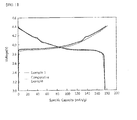
FIG. 1 is a graph showing comparison in initial charge and discharge efficiency between batteries according to Example 1 and Comparative Example; -
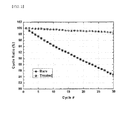
FIGS. 2 and3 are graphs showing comparison between cycle characteristics of the batteries of Example 1 and Comparative Example; and -
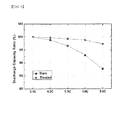
FIG. 4 is a graph showing comparison between discharge capacities according to C-rate of the batteries of Example 1 and Comparative Example. - Now, the present invention will be described in more detail with reference to the accompanying drawings and the following examples. These examples are only provided for illustration of the present invention and should not be construed as limiting the scope and spirit of the present invention.
- Solid-phase LiCoO2 and solid-phase MnCO3 were mixed and calcined at a temperature of 890°C to 930°C to prepare LiCoO2 treated with the Mn source, the Mn-treated LiCoO2, a conductive material, and a binder were weighed so as to have a weight ratio of 95:2.5:2.5, added to NMP and mixed therein to prepare a cathode mixture, and the cathode mixture was coated on 20 µ thick Al foil, and the coated Al foil was pressed and dried, thereby completing fabrication of an electrode. The electrode was subjected to blanking into a coin shape, and the coin-shaped electrode, Li metal as an anode, and a carbonate electrolyte containing 1M LiPF6 were used to manufacture a coin cell.
- Solid-phase LiCoO2 was immersed in an aqueous MnSO4 solution and calcined at a temperature of 890°C to 930°C for 10 hours to prepare LiCoO2 treated with the Mn source, the Mn-treated LiCoO2, a conductive material, and a binder were weighed so as to have a weight ratio of 95:2.5:2.5, added to NMP and mixed therein to prepare a cathode mixture, and the cathode mixture was coated on 20 µm thick Al foil to a thickness of 200 µm, and the coated Al foil was pressed and dried, thereby completing fabrication of an electrode. The electrode was subjected to blanking into a coin shape, and the coin-shaped electrode, Li metal as an anode, and a carbonate electrolyte containing 1M LiPF6 were used to manufacture a coin cell.
- A coin cell was manufactured in the same manner as in Example 1, except that LiCoO2 not treated with a Mn source (Bare LiCoO2) was used.
- The cells of Example 1 and Comparative Example were subjected to charging and discharging at 3.0 to 4.4 V under the following conditions: charging at 0.1 C and discharging at 0.1 C (1C=150 mA/g) and initial charge and discharge efficiencies thereof were compared. Results are shown in Table 1 and
FIG. 1 below.<Table 1> Unit Comparative Example Example 1 1st charge mAh/g 181.0 177.7 1st discharge 175.4 175 Efficiency % 96.9 98.5 - The cells of Example 1 and Comparative Example were subjected to 30 charging and discharging cycles at 3.0 to 4.4 V under the following conditions: charging at 0.5 C and discharging at 0.5 C (1C=150 mA/g) and cycle characteristics thereof were compared. Results are shown in Table 2 below and
FIGS. 2 and3 . Referring toFIG. 3 , it can be confirmed that the cell of Comparative Example 1 exhibits significantly decreased specific capacity as cycles are repeated unlike the cell of Example 1.<Table 2> Unit Comparative Example Example 1 Cycle (30 times) % 84.6 98.4 - The cells of Example 1 and Comparative Example were subjected to charging and discharging at 3.0 to 4.4 V under the following conditions: charging at 0.5 C and discharging at 0.1C, 0.2C, 0.5C, 1.0C, and 2.0C (1C=150 mA/g) and rate-limiting characteristics thereof were compared. Results are shown in Table 3 below and
FIG. 4 .<Table 3> Unit Comparative Example Example 1 0.1 C % 100.0 100.0 0.2 C 98.9 99.7 0.5 C 96.6 99.3 1.0 C 92.9 98.9 2.0 C 87.7 97.3 - Although the preferred embodiments of the present invention have been disclosed for illustrative purposes, those skilled in the art will appreciate that various modifications, additions and substitutions are possible, without departing from the scope and spirit of the invention as disclosed in the accompanying claims.
- As described above, a cathode active material according to the present invention has a structure in which Mn or Ti-containing lithium transition metal oxide particles produced through reaction with lithium impurities coexist with lithium cobalt oxide particles in the cathode active material and thus exhibits enhanced high-voltage lifespan characteristics and power output characteristics.
Claims (18)
- A cathode active material in which lithium cobalt oxide particles and manganese (Mn) or titanium (Ti)-containing lithium transition metal oxide particles coexist.
- The cathode active material according to claim 1, wherein the Mn or Ti-containing lithium transition metal oxide particles are present in the lithium cobalt oxide particles or grain boundaries of the lithium cobalt oxide particles.
- The cathode active material according to claim 1, wherein the Mn-containing lithium transition metal oxide particles comprise Li2MnO3.
- The cathode active material according to claim 1, wherein the Ti-containing lithium transition metal oxide particles comprise Li2TiO3 or Li4Ti5O12.
- The cathode active material according to claim 1, wherein the lithium cobalt oxide particles have a diameter of 5 µm to 30 µm, and the lithium transition metal oxide particles have a diameter of 5 µm or less and are present in the lithium cobalt oxide particles or grain boundaries of the lithium cobalt oxide particles.
- The cathode active material according to claim 1, wherein the cathode active material further comprises an electrochemically inert lithium compound on outer surfaces of the lithium cobalt oxide particles.
- The cathode active material according to claim 6, wherein the lithium compound is LiOH.
- The cathode active material according to claim 6, wherein the lithium compound is Li2CO3.
- A lithium secondary battery comprising the cathode active material according to any one of claims 1 to 8.
- A battery module comprising the lithium secondary battery according to claim 9 as a unit battery.
- A battery pack comprising the battery module according to claim 10.
- A device using the battery pack according to claim 11 as a power source.
- The device according to claim 12, wherein the device is an electric vehicle, a hybrid electric vehicle, a plug-in hybrid electric vehicle, or a device for storing power.
- A method of preparing a cathode active material, the method comprising:mixing a lithium cobalt oxide and a manganese (Mn) or titanium (Ti)-containing compound;raising a temperature of the mixture to 800°C so as to form Mn or Ti-containing lithium transition metal oxide particles; andcalcining the resultant mixture at a temperature of 850°C to 950°C so that the lithium transition metal oxide particles are inserted into particles or grain boundaries of the lithium cobalt oxide.
- The method according to claim 14, wherein the mixing comprises mixing a solid-phase lithium cobalt oxide and a solid-phase transition metal source compound.
- The method according to claim 15, wherein the solid-phase transition metal source compound is selected from the group consisting of MnO2, MnCO3, MnOOH, TiO2, TiCO3, and TiOOH.
- The method according to claim 14, wherein the mixing comprises mixing a solid-phase lithium cobalt oxide and a liquid-phase transition metal source compound.
- The method according to claim 17, wherein the liquid-phase transition metal source compound is an aqueous solution or alcohol-based solution of Mn(CH3COO)3, Mn(CH3COO)2, MnSO4, Mn(NO3)2, Ti(CH3COO)3, Ti(CH3COO)2, TiSO4, or Ti(NO3)2.
Applications Claiming Priority (2)
| Application Number | Priority Date | Filing Date | Title |
|---|---|---|---|
| KR1020120059526A KR101836436B1 (en) | 2012-06-04 | 2012-06-04 | Positive Active Material for Secondary Battery Having Improved Cycle Life Charateristics and Method for Preparation of the Same |
| PCT/KR2013/004931 WO2013183919A1 (en) | 2012-06-04 | 2013-06-04 | Cathode material for secondary battery having improved lifetime characteristics and preparation method therefor |
Publications (3)
| Publication Number | Publication Date |
|---|---|
| EP2835848A1 true EP2835848A1 (en) | 2015-02-11 |
| EP2835848A4 EP2835848A4 (en) | 2015-09-16 |
| EP2835848B1 EP2835848B1 (en) | 2018-09-19 |
Family
ID=49712263
Family Applications (1)
| Application Number | Title | Priority Date | Filing Date |
|---|---|---|---|
| EP13801317.2A Active EP2835848B1 (en) | 2012-06-04 | 2013-06-04 | Cathode material for secondary battery having improved lifetime characteristics and preparation method therefor |
Country Status (5)
| Country | Link |
|---|---|
| US (1) | US10573880B2 (en) |
| EP (1) | EP2835848B1 (en) |
| KR (1) | KR101836436B1 (en) |
| CN (1) | CN104412424B (en) |
| WO (1) | WO2013183919A1 (en) |
Families Citing this family (3)
| Publication number | Priority date | Publication date | Assignee | Title |
|---|---|---|---|---|
| KR102272265B1 (en) | 2014-11-21 | 2021-07-05 | 삼성에스디아이 주식회사 | Positive active material for rechargeable lithium battery, method of preparing same, and rechargeable lithium battery including same |
| WO2018198967A1 (en) * | 2017-04-27 | 2018-11-01 | 株式会社村田製作所 | Positive electrode active material, positive electrode, battery, battery pack, electronic apparatus, electric vehicle, electricity storage device, and electric power system |
| EP3686160B1 (en) * | 2017-11-13 | 2025-12-31 | LG Energy Solution, Ltd. | ACTIVE MATERIAL FOR A LITHIUM COBALT-BASED POSITIVE ELECTRODE, METHOD FOR ITS PREPARATION, POSITIVE ELECTRODE THEREIN AND SECONDARY BATTERY |
Family Cites Families (14)
| Publication number | Priority date | Publication date | Assignee | Title |
|---|---|---|---|---|
| US7566479B2 (en) * | 2003-06-23 | 2009-07-28 | Lg Chem, Ltd. | Method for the synthesis of surface-modified materials |
| KR100932256B1 (en) * | 2006-03-20 | 2009-12-16 | 주식회사 엘지화학 | High-performance cathode material for lithium secondary battery |
| JP5629460B2 (en) * | 2006-03-20 | 2014-11-19 | エルジー・ケム・リミテッド | Stoichiometric lithium cobalt oxide and method for preparing the same |
| JP2007280836A (en) * | 2006-04-10 | 2007-10-25 | Sony Corp | Negative electrode mixture for non-aqueous electrolyte secondary battery and non-aqueous electrolyte secondary battery |
| JP5077131B2 (en) * | 2007-08-02 | 2012-11-21 | ソニー株式会社 | Positive electrode active material, positive electrode using the same, and nonaqueous electrolyte secondary battery |
| EP2466671A3 (en) * | 2007-09-04 | 2012-08-22 | Mitsubishi Chemical Corporation | Lithium transition metal-based compound powder, method for manufacturing the same, spray-dried substance serving as firing precursor thereof, and lithium secondary battery positive electrode and lithium secondary battery using the same |
| WO2010113403A1 (en) | 2009-03-31 | 2010-10-07 | パナソニック株式会社 | Method for producing positive electrode for lithium ion battery, positive electrode for lithium ion battery, and lithium ion battery using the positive electrode |
| JP5749650B2 (en) * | 2009-10-05 | 2015-07-15 | 日本化学工業株式会社 | Positive electrode active material for lithium secondary battery, method for producing the same, and lithium secondary battery |
| JP2011134670A (en) * | 2009-12-25 | 2011-07-07 | Toyota Motor Corp | Lithium secondary battery positive electrode active material |
| JP5099168B2 (en) * | 2010-04-16 | 2012-12-12 | 株式会社豊田自動織機 | Lithium ion secondary battery |
| JP2012038539A (en) * | 2010-08-06 | 2012-02-23 | Toyota Motor Corp | battery |
| JP5732351B2 (en) * | 2010-09-02 | 2015-06-10 | 日本化学工業株式会社 | Method for producing lithium cobalt oxide |
| JP2011159639A (en) * | 2011-05-23 | 2011-08-18 | Toyota Motor Corp | Electrode body, method for manufacturing the same, and lithium ion secondary battery |
| CN103548185B (en) * | 2011-05-30 | 2016-10-12 | 日本电气株式会社 | Secondary cell active substance and use its secondary cell |
-
2012
- 2012-06-04 KR KR1020120059526A patent/KR101836436B1/en active Active
-
2013
- 2013-06-04 WO PCT/KR2013/004931 patent/WO2013183919A1/en not_active Ceased
- 2013-06-04 EP EP13801317.2A patent/EP2835848B1/en active Active
- 2013-06-04 CN CN201380023896.9A patent/CN104412424B/en active Active
-
2014
- 2014-11-05 US US14/533,528 patent/US10573880B2/en active Active
Also Published As
| Publication number | Publication date |
|---|---|
| CN104412424A (en) | 2015-03-11 |
| EP2835848B1 (en) | 2018-09-19 |
| CN104412424B (en) | 2020-06-19 |
| KR101836436B1 (en) | 2018-03-08 |
| WO2013183919A1 (en) | 2013-12-12 |
| US10573880B2 (en) | 2020-02-25 |
| EP2835848A4 (en) | 2015-09-16 |
| US20150056508A1 (en) | 2015-02-26 |
| KR20130136026A (en) | 2013-12-12 |
Similar Documents
| Publication | Publication Date | Title |
|---|---|---|
| US11289695B2 (en) | Positive electrode active material comprising lithium-rich lithium manganese-based oxide and further comprising lithium tungsten compound, or additionally tungsten compound on the lithium-rich lithium manganese-based oxide, and positive electrode for lithium secondary battery comprising the same | |
| EP3340348B1 (en) | Positive electrode active material for lithium secondary battery, containing high-voltage lithium cobalt oxide having doping element, and method for preparing same | |
| EP2869369B1 (en) | Cathode active material for secondary battery and secondary battery comprising same | |
| US9905841B2 (en) | Cathode active material and lithium secondary battery including the same, and method of manufacturing cathode active material | |
| EP2806486B1 (en) | Cathode active material, lithium secondary battery for controlling impurities or swelling containing same, and preparation method of cathode active material with improved productivity | |
| EP2811562B1 (en) | Method of manufacturing electrode for lithium secondary cell | |
| EP2942329B1 (en) | Lithium manganese-based oxide and positive electrode active substance comprising same | |
| EP3016185B1 (en) | Lithium cobalt-based complex oxide having good lifespan properties, and secondary battery anode active material including same | |
| US8852806B2 (en) | Positive active material for secondary battery of improved rate capability | |
| EP2511972B1 (en) | Cathode active material and lithium secondary battery using same | |
| US8277980B2 (en) | Cathode active material for lithium secondary battery | |
| US10573880B2 (en) | Cathode active material for secondary battery with enhanced lifespan characteristics and method of preparing the same | |
| KR101217461B1 (en) | Composite Comprising Manganese-Based Cathode Active Material and Method of Preparing the Same | |
| US20120012780A1 (en) | Cathode active material for lithium secondary battery | |
| KR20150106851A (en) | Cathode Active Material and Lithium Secondary Battery Comprising the Same | |
| KR101547919B1 (en) | Positive Active Material for Secondary Battery Having Improved Cycle Life Characteristics and Method for Preparation the Same | |
| US9276264B2 (en) | Cathode active material for secondary batteries | |
| KR20130136035A (en) | Positive active material for secondary battery having high temperature storage performance and method for preparation of the same |
Legal Events
| Date | Code | Title | Description |
|---|---|---|---|
| PUAI | Public reference made under article 153(3) epc to a published international application that has entered the european phase |
Free format text: ORIGINAL CODE: 0009012 |
|
| 17P | Request for examination filed |
Effective date: 20141103 |
|
| AK | Designated contracting states |
Kind code of ref document: A1 Designated state(s): AL AT BE BG CH CY CZ DE DK EE ES FI FR GB GR HR HU IE IS IT LI LT LU LV MC MK MT NL NO PL PT RO RS SE SI SK SM TR |
|
| AX | Request for extension of the european patent |
Extension state: BA ME |
|
| DAX | Request for extension of the european patent (deleted) | ||
| RA4 | Supplementary search report drawn up and despatched (corrected) |
Effective date: 20150817 |
|
| RIC1 | Information provided on ipc code assigned before grant |
Ipc: C01G 51/00 20060101ALI20150811BHEP Ipc: H01M 4/36 20060101ALI20150811BHEP Ipc: H01M 4/52 20100101AFI20150811BHEP Ipc: H01M 10/052 20100101ALN20150811BHEP |
|
| 17Q | First examination report despatched |
Effective date: 20160426 |
|
| STAA | Information on the status of an ep patent application or granted ep patent |
Free format text: STATUS: EXAMINATION IS IN PROGRESS |
|
| GRAP | Despatch of communication of intention to grant a patent |
Free format text: ORIGINAL CODE: EPIDOSNIGR1 |
|
| STAA | Information on the status of an ep patent application or granted ep patent |
Free format text: STATUS: GRANT OF PATENT IS INTENDED |
|
| RIC1 | Information provided on ipc code assigned before grant |
Ipc: H01M 10/052 20100101ALN20180523BHEP Ipc: H01M 4/36 20060101ALI20180523BHEP Ipc: C01G 23/00 20060101ALI20180523BHEP Ipc: H01M 4/505 20100101ALI20180523BHEP Ipc: H01M 4/485 20100101ALI20180523BHEP Ipc: C01G 51/00 20060101ALI20180523BHEP Ipc: H01M 4/525 20100101AFI20180523BHEP Ipc: C01G 45/12 20060101ALI20180523BHEP |
|
| INTG | Intention to grant announced |
Effective date: 20180606 |
|
| RIC1 | Information provided on ipc code assigned before grant |
Ipc: H01M 4/485 20100101ALI20180525BHEP Ipc: C01G 51/00 20060101ALI20180525BHEP Ipc: H01M 4/36 20060101ALI20180525BHEP Ipc: H01M 4/505 20100101ALI20180525BHEP Ipc: H01M 10/052 20100101ALN20180525BHEP Ipc: H01M 4/525 20100101AFI20180525BHEP Ipc: C01G 45/12 20060101ALI20180525BHEP Ipc: C01G 23/00 20060101ALI20180525BHEP |
|
| GRAS | Grant fee paid |
Free format text: ORIGINAL CODE: EPIDOSNIGR3 |
|
| GRAA | (expected) grant |
Free format text: ORIGINAL CODE: 0009210 |
|
| STAA | Information on the status of an ep patent application or granted ep patent |
Free format text: STATUS: THE PATENT HAS BEEN GRANTED |
|
| AK | Designated contracting states |
Kind code of ref document: B1 Designated state(s): AL AT BE BG CH CY CZ DE DK EE ES FI FR GB GR HR HU IE IS IT LI LT LU LV MC MK MT NL NO PL PT RO RS SE SI SK SM TR |
|
| RAP1 | Party data changed (applicant data changed or rights of an application transferred) |
Owner name: LG CHEM, LTD. |
|
| REG | Reference to a national code |
Ref country code: GB Ref legal event code: FG4D |
|
| REG | Reference to a national code |
Ref country code: CH Ref legal event code: EP |
|
| REG | Reference to a national code |
Ref country code: DE Ref legal event code: R096 Ref document number: 602013043956 Country of ref document: DE |
|
| REG | Reference to a national code |
Ref country code: AT Ref legal event code: REF Ref document number: 1044292 Country of ref document: AT Kind code of ref document: T Effective date: 20181015 |
|
| REG | Reference to a national code |
Ref country code: IE Ref legal event code: FG4D |
|
| REG | Reference to a national code |
Ref country code: NL Ref legal event code: MP Effective date: 20180919 |
|
| PG25 | Lapsed in a contracting state [announced via postgrant information from national office to epo] |
Ref country code: SE Free format text: LAPSE BECAUSE OF FAILURE TO SUBMIT A TRANSLATION OF THE DESCRIPTION OR TO PAY THE FEE WITHIN THE PRESCRIBED TIME-LIMIT Effective date: 20180919 Ref country code: NO Free format text: LAPSE BECAUSE OF FAILURE TO SUBMIT A TRANSLATION OF THE DESCRIPTION OR TO PAY THE FEE WITHIN THE PRESCRIBED TIME-LIMIT Effective date: 20181219 Ref country code: FI Free format text: LAPSE BECAUSE OF FAILURE TO SUBMIT A TRANSLATION OF THE DESCRIPTION OR TO PAY THE FEE WITHIN THE PRESCRIBED TIME-LIMIT Effective date: 20180919 Ref country code: RS Free format text: LAPSE BECAUSE OF FAILURE TO SUBMIT A TRANSLATION OF THE DESCRIPTION OR TO PAY THE FEE WITHIN THE PRESCRIBED TIME-LIMIT Effective date: 20180919 Ref country code: BG Free format text: LAPSE BECAUSE OF FAILURE TO SUBMIT A TRANSLATION OF THE DESCRIPTION OR TO PAY THE FEE WITHIN THE PRESCRIBED TIME-LIMIT Effective date: 20181219 Ref country code: GR Free format text: LAPSE BECAUSE OF FAILURE TO SUBMIT A TRANSLATION OF THE DESCRIPTION OR TO PAY THE FEE WITHIN THE PRESCRIBED TIME-LIMIT Effective date: 20181220 Ref country code: LT Free format text: LAPSE BECAUSE OF FAILURE TO SUBMIT A TRANSLATION OF THE DESCRIPTION OR TO PAY THE FEE WITHIN THE PRESCRIBED TIME-LIMIT Effective date: 20180919 |
|
| REG | Reference to a national code |
Ref country code: LT Ref legal event code: MG4D |
|
| PG25 | Lapsed in a contracting state [announced via postgrant information from national office to epo] |
Ref country code: HR Free format text: LAPSE BECAUSE OF FAILURE TO SUBMIT A TRANSLATION OF THE DESCRIPTION OR TO PAY THE FEE WITHIN THE PRESCRIBED TIME-LIMIT Effective date: 20180919 Ref country code: LV Free format text: LAPSE BECAUSE OF FAILURE TO SUBMIT A TRANSLATION OF THE DESCRIPTION OR TO PAY THE FEE WITHIN THE PRESCRIBED TIME-LIMIT Effective date: 20180919 Ref country code: AL Free format text: LAPSE BECAUSE OF FAILURE TO SUBMIT A TRANSLATION OF THE DESCRIPTION OR TO PAY THE FEE WITHIN THE PRESCRIBED TIME-LIMIT Effective date: 20180919 |
|
| REG | Reference to a national code |
Ref country code: AT Ref legal event code: MK05 Ref document number: 1044292 Country of ref document: AT Kind code of ref document: T Effective date: 20180919 |
|
| PG25 | Lapsed in a contracting state [announced via postgrant information from national office to epo] |
Ref country code: CZ Free format text: LAPSE BECAUSE OF FAILURE TO SUBMIT A TRANSLATION OF THE DESCRIPTION OR TO PAY THE FEE WITHIN THE PRESCRIBED TIME-LIMIT Effective date: 20180919 Ref country code: RO Free format text: LAPSE BECAUSE OF FAILURE TO SUBMIT A TRANSLATION OF THE DESCRIPTION OR TO PAY THE FEE WITHIN THE PRESCRIBED TIME-LIMIT Effective date: 20180919 Ref country code: ES Free format text: LAPSE BECAUSE OF FAILURE TO SUBMIT A TRANSLATION OF THE DESCRIPTION OR TO PAY THE FEE WITHIN THE PRESCRIBED TIME-LIMIT Effective date: 20180919 Ref country code: IS Free format text: LAPSE BECAUSE OF FAILURE TO SUBMIT A TRANSLATION OF THE DESCRIPTION OR TO PAY THE FEE WITHIN THE PRESCRIBED TIME-LIMIT Effective date: 20190119 Ref country code: PL Free format text: LAPSE BECAUSE OF FAILURE TO SUBMIT A TRANSLATION OF THE DESCRIPTION OR TO PAY THE FEE WITHIN THE PRESCRIBED TIME-LIMIT Effective date: 20180919 Ref country code: EE Free format text: LAPSE BECAUSE OF FAILURE TO SUBMIT A TRANSLATION OF THE DESCRIPTION OR TO PAY THE FEE WITHIN THE PRESCRIBED TIME-LIMIT Effective date: 20180919 Ref country code: AT Free format text: LAPSE BECAUSE OF FAILURE TO SUBMIT A TRANSLATION OF THE DESCRIPTION OR TO PAY THE FEE WITHIN THE PRESCRIBED TIME-LIMIT Effective date: 20180919 Ref country code: NL Free format text: LAPSE BECAUSE OF FAILURE TO SUBMIT A TRANSLATION OF THE DESCRIPTION OR TO PAY THE FEE WITHIN THE PRESCRIBED TIME-LIMIT Effective date: 20180919 Ref country code: IT Free format text: LAPSE BECAUSE OF FAILURE TO SUBMIT A TRANSLATION OF THE DESCRIPTION OR TO PAY THE FEE WITHIN THE PRESCRIBED TIME-LIMIT Effective date: 20180919 |
|
| PG25 | Lapsed in a contracting state [announced via postgrant information from national office to epo] |
Ref country code: SM Free format text: LAPSE BECAUSE OF FAILURE TO SUBMIT A TRANSLATION OF THE DESCRIPTION OR TO PAY THE FEE WITHIN THE PRESCRIBED TIME-LIMIT Effective date: 20180919 Ref country code: SK Free format text: LAPSE BECAUSE OF FAILURE TO SUBMIT A TRANSLATION OF THE DESCRIPTION OR TO PAY THE FEE WITHIN THE PRESCRIBED TIME-LIMIT Effective date: 20180919 Ref country code: PT Free format text: LAPSE BECAUSE OF FAILURE TO SUBMIT A TRANSLATION OF THE DESCRIPTION OR TO PAY THE FEE WITHIN THE PRESCRIBED TIME-LIMIT Effective date: 20190119 |
|
| REG | Reference to a national code |
Ref country code: DE Ref legal event code: R097 Ref document number: 602013043956 Country of ref document: DE |
|
| PLBE | No opposition filed within time limit |
Free format text: ORIGINAL CODE: 0009261 |
|
| STAA | Information on the status of an ep patent application or granted ep patent |
Free format text: STATUS: NO OPPOSITION FILED WITHIN TIME LIMIT |
|
| PG25 | Lapsed in a contracting state [announced via postgrant information from national office to epo] |
Ref country code: DK Free format text: LAPSE BECAUSE OF FAILURE TO SUBMIT A TRANSLATION OF THE DESCRIPTION OR TO PAY THE FEE WITHIN THE PRESCRIBED TIME-LIMIT Effective date: 20180919 |
|
| 26N | No opposition filed |
Effective date: 20190620 |
|
| PG25 | Lapsed in a contracting state [announced via postgrant information from national office to epo] |
Ref country code: SI Free format text: LAPSE BECAUSE OF FAILURE TO SUBMIT A TRANSLATION OF THE DESCRIPTION OR TO PAY THE FEE WITHIN THE PRESCRIBED TIME-LIMIT Effective date: 20180919 |
|
| PG25 | Lapsed in a contracting state [announced via postgrant information from national office to epo] |
Ref country code: MC Free format text: LAPSE BECAUSE OF FAILURE TO SUBMIT A TRANSLATION OF THE DESCRIPTION OR TO PAY THE FEE WITHIN THE PRESCRIBED TIME-LIMIT Effective date: 20180919 |
|
| REG | Reference to a national code |
Ref country code: CH Ref legal event code: PL |
|
| REG | Reference to a national code |
Ref country code: BE Ref legal event code: MM Effective date: 20190630 |
|
| PG25 | Lapsed in a contracting state [announced via postgrant information from national office to epo] |
Ref country code: TR Free format text: LAPSE BECAUSE OF FAILURE TO SUBMIT A TRANSLATION OF THE DESCRIPTION OR TO PAY THE FEE WITHIN THE PRESCRIBED TIME-LIMIT Effective date: 20180919 |
|
| PG25 | Lapsed in a contracting state [announced via postgrant information from national office to epo] |
Ref country code: IE Free format text: LAPSE BECAUSE OF NON-PAYMENT OF DUE FEES Effective date: 20190604 |
|
| PG25 | Lapsed in a contracting state [announced via postgrant information from national office to epo] |
Ref country code: LU Free format text: LAPSE BECAUSE OF NON-PAYMENT OF DUE FEES Effective date: 20190604 Ref country code: BE Free format text: LAPSE BECAUSE OF NON-PAYMENT OF DUE FEES Effective date: 20190630 Ref country code: CH Free format text: LAPSE BECAUSE OF NON-PAYMENT OF DUE FEES Effective date: 20190630 Ref country code: LI Free format text: LAPSE BECAUSE OF NON-PAYMENT OF DUE FEES Effective date: 20190630 |
|
| PG25 | Lapsed in a contracting state [announced via postgrant information from national office to epo] |
Ref country code: CY Free format text: LAPSE BECAUSE OF FAILURE TO SUBMIT A TRANSLATION OF THE DESCRIPTION OR TO PAY THE FEE WITHIN THE PRESCRIBED TIME-LIMIT Effective date: 20180919 |
|
| PG25 | Lapsed in a contracting state [announced via postgrant information from national office to epo] |
Ref country code: HU Free format text: LAPSE BECAUSE OF FAILURE TO SUBMIT A TRANSLATION OF THE DESCRIPTION OR TO PAY THE FEE WITHIN THE PRESCRIBED TIME-LIMIT; INVALID AB INITIO Effective date: 20130604 Ref country code: MT Free format text: LAPSE BECAUSE OF FAILURE TO SUBMIT A TRANSLATION OF THE DESCRIPTION OR TO PAY THE FEE WITHIN THE PRESCRIBED TIME-LIMIT Effective date: 20180919 |
|
| PG25 | Lapsed in a contracting state [announced via postgrant information from national office to epo] |
Ref country code: MK Free format text: LAPSE BECAUSE OF FAILURE TO SUBMIT A TRANSLATION OF THE DESCRIPTION OR TO PAY THE FEE WITHIN THE PRESCRIBED TIME-LIMIT Effective date: 20180919 |
|
| P01 | Opt-out of the competence of the unified patent court (upc) registered |
Effective date: 20230323 |
|
| REG | Reference to a national code |
Ref country code: DE Ref legal event code: R081 Ref document number: 602013043956 Country of ref document: DE Owner name: LG ENERGY SOLUTION, LTD., KR Free format text: FORMER OWNER: LG CHEM, LTD., SEOUL, KR |
|
| REG | Reference to a national code |
Ref country code: GB Ref legal event code: 732E Free format text: REGISTERED BETWEEN 20230824 AND 20230831 |
|
| PGFP | Annual fee paid to national office [announced via postgrant information from national office to epo] |
Ref country code: DE Payment date: 20250520 Year of fee payment: 13 |
|
| PGFP | Annual fee paid to national office [announced via postgrant information from national office to epo] |
Ref country code: GB Payment date: 20250520 Year of fee payment: 13 |
|
| PGFP | Annual fee paid to national office [announced via postgrant information from national office to epo] |
Ref country code: FR Payment date: 20250521 Year of fee payment: 13 |