EP2835781A1 - Réévaluation de données de trajet - Google Patents
Réévaluation de données de trajet Download PDFInfo
- Publication number
- EP2835781A1 EP2835781A1 EP13290187.7A EP13290187A EP2835781A1 EP 2835781 A1 EP2835781 A1 EP 2835781A1 EP 13290187 A EP13290187 A EP 13290187A EP 2835781 A1 EP2835781 A1 EP 2835781A1
- Authority
- EP
- European Patent Office
- Prior art keywords
- segment
- previously
- booked
- candidate
- availability
- Prior art date
- Legal status (The legal status is an assumption and is not a legal conclusion. Google has not performed a legal analysis and makes no representation as to the accuracy of the status listed.)
- Withdrawn
Links
Images





Classifications
-
- G—PHYSICS
- G06—COMPUTING OR CALCULATING; COUNTING
- G06Q—INFORMATION AND COMMUNICATION TECHNOLOGY [ICT] SPECIALLY ADAPTED FOR ADMINISTRATIVE, COMMERCIAL, FINANCIAL, MANAGERIAL OR SUPERVISORY PURPOSES; SYSTEMS OR METHODS SPECIALLY ADAPTED FOR ADMINISTRATIVE, COMMERCIAL, FINANCIAL, MANAGERIAL OR SUPERVISORY PURPOSES, NOT OTHERWISE PROVIDED FOR
- G06Q50/00—Information and communication technology [ICT] specially adapted for implementation of business processes of specific business sectors, e.g. utilities or tourism
- G06Q50/10—Services
- G06Q50/14—Travel agencies
-
- G—PHYSICS
- G06—COMPUTING OR CALCULATING; COUNTING
- G06Q—INFORMATION AND COMMUNICATION TECHNOLOGY [ICT] SPECIALLY ADAPTED FOR ADMINISTRATIVE, COMMERCIAL, FINANCIAL, MANAGERIAL OR SUPERVISORY PURPOSES; SYSTEMS OR METHODS SPECIALLY ADAPTED FOR ADMINISTRATIVE, COMMERCIAL, FINANCIAL, MANAGERIAL OR SUPERVISORY PURPOSES, NOT OTHERWISE PROVIDED FOR
- G06Q10/00—Administration; Management
- G06Q10/02—Reservations, e.g. for tickets, services or events
- G06Q10/028—Reservations, e.g. for tickets, services or events for seating or spaces in a venue
- G06Q10/0283—Reservations, e.g. for tickets, services or events for seating or spaces in a venue for travel seating
Definitions
- the invention is generally related to computers and computer software, and in particular to methods, systems, and computer program products for re-evaluating travel related data.
- Computer technology is increasingly used in the travel industry to manage and support travel reservations, as well as data associated therewith.
- third party reservation agents such as travel agents
- travel agents often utilize computer based reservation terminals to interface with a travel reservation system, such as a Global Distribution System (GDS), to book travel arrangements for a customer.
- GDS Global Distribution System
- a travel agent may initiate a reservation session between a reservation terminal and the travel reservation system to book one or more travel inventory items associated with travel related services (e.g., flights, hotels, rail transportation, dining reservations, etc.) for a customer during the reservation session.
- travel related services e.g., flights, hotels, rail transportation, dining reservations, etc.
- interfacing with the travel reservation systems using a reservation terminal may be inflexible when booking one or more travel related services, and may require a travel agent to repeat actions when booking travel related services and/or modifying a booking.
- Embodiments of the invention generally comprise a method, system, and computer program product for processing a transaction request associated with a travel record that includes one or more previously-booked segments.
- a transaction request that identifies one or more requested segments may be received at an inventory system.
- a processor of the inventory system may analyze the one or more requested segments and the travel record to identify at least one particular previously-booked segment of the travel record as a candidate for re-evaluation segment, where such identification may be based at least in part on whether the at least one particular previously-booked segment and the requested segment correspond to a particular journey.
- An availability of the particular journey may be computed by computing an availability for the requested segment and an updated availability for the at least one candidate for re-evaluation segment.
- a sell decision may be generated based at least in part on the computed availability for the particular journey, and the travel record may be updated based at least in part on the computed availability for the particular journey.
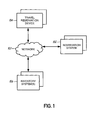
- FIG. 1 is a block diagram of one or more reservation systems, inventory systems, and travel reservation devices consistent with embodiments of the invention.
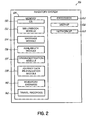
- FIG. 2A is a block diagram of an inventory system of FIG. 1 .
- FIG. 2B is a block diagram of a reservation system of FIG. 1 .
- FIG. 3 is a block diagram of a travel reservation device of FIG. 1 .
- FIG. 4 is a flowchart illustrating a sequence of operations that may be performed by the inventory system of FIG. 2 to re-evaluate one or more bookings of a travel record.
- FIG. 5 is a flowchart illustrating a sequence of operations that may be performed by the inventory system of FIG. 2 to identify one or more previously-booked segments of a travel record as candidate for re-evaluation segments.
- FIG. 6 is a flowchart illustrating a sequence of operations that may be performed by the inventory system of FIG. 2 to determine whether to update a booking status in a travel record associated with a candidate for re-evaluation segment.
- FIG. 7A is a diagrammatic illustration that provides an example processing of a transaction request by the inventory system of FIG. 2 consistent with embodiments of the invention.
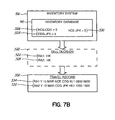
- FIG. 7B is a diagrammatic illustration that provides an example processing of a sell decision corresponding to the transaction request of FIG. 7A by the inventory system of FIG. 2 consistent with embodiments of the invention.
- FIG. 7C is a diagrammatic illustration that provides an example processing of a sell decision corresponding to the transaction request of FIG. 7A by the inventory system of FIG. 2 consistent with embodiments of the invention.
- FIG. 8A is a diagrammatic illustration that provides an example processing of a transaction request by the inventory system of FIG. 2 consistent with embodiments of the invention.
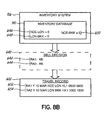
- FIG. 8B is a diagrammatic illustration that provides an example processing of a sell decision corresponding to the transaction request of FIG. 8A by the inventory system of FIG. 2 consistent with embodiments of the invention.
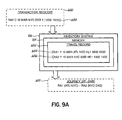
- FIG. 9A is a diagrammatic illustration that provides an example processing of a transaction request by the inventory system of FIG. 2 consistent with embodiments of the invention.
- FIG. 9B is a diagrammatic illustration that provides an example processing of a sell decision corresponding to the transaction request of FIG. 9A by the inventory system of FIG. 2 consistent with embodiments of the invention.
- Embodiments of the invention provide a system, method, and computer program product for re-evaluating availability for one or more previously-booked segments of a travel record based at least in part on a requested segment received in a transaction request associated with the travel record.
- a segment may refer to a segment of travel for a travel item, such as a flight between an origin and destination.
- a segment may refer to a travel item that is a part of a journey.
- a travel record for the passenger may include a first booked segment for ATL to CLT and a second booked segment for CLT to JFK.
- availability for segments and journeys may be different.
- availability for the first segment (ATL-CLT), the second segment (CLT-JFK), and the entire journey (ATL-CLT-JFK) may be different for the corresponding travel items.
- a travel provider may reserve space for the first segment (ATL-CLT) and the second segment (CLT-JFK) for passengers desiring to book both segments together (i.e., the journey).
- the first segment (ATL-CLT) and second segment (CLT-JFK) may be described as corresponding to a particular journey - where the journey generally refers to the origin and destination of all the segments of the journey (ATL-JFK).
- travel reservations may be made for a passenger by a travel agent, where the travel agent interfaces with a reservation system via a travel reservation device, such as a personal computer.
- the reservation system interfaces with one or more inventory systems to determine availability for travel inventory items and book available travel inventory items for the passenger.
- a travel agent may interface with a reservation system to book one or more segments for one or more travel items.
- the travel agent may book segments that correspond to a particular journey in different transaction requests and/or at different times, which may lead to the inventory system evaluating transaction requests to determine availability based on the availability of each segment rather than the availability of each segment in the context of the journey.
- availability for segments of a journey may differ from availability for each segment individually.
- some reservation systems may deny and/or waitlist one or more segments based on the availability of the one or more segments individually, even though the one or more segments correspond to a particular journey for which travel inventory items may be available.
- an availability of one or more previously-booked segments of a travel record may be re-evaluated in response to a transaction request including a requested segment that corresponds to a particular journey with at least one of the previously-booked segments.
- the availability of a requested segment that corresponds to a particular journey with at least one or more previously-booked segments may be evaluated based on availability associated with the particular journey even if more than one reservation session is used to book the segments corresponding to the particular journey.
- a booking for each of one or more previously-booked segments may be updated/modified when one or more subsequent travel requests include one or more requested segments that correspond to the same journey as the previously-booked segments of a travel record.
- Embodiments of the invention may identify one or more previously-booked segments that correspond to a journey with a requested segment, where each identified previously-booked segment may be identified as a candidate for re-evaluation segment.
- a booking status for each candidate for re-evaluation segment may be modified and/or updated dynamically concurrent with booking each requested segment.
- a reservation system 102 may be implemented as one or more servers.
- the reservation system 102 may be connected to a communication network 103, where the communication network 103 may comprise the Internet, a local area network (LAN), a wide area network (WAN), a cellular voice/data network, one or more high speed bus connections, and/or other such types of communication networks.
- LAN local area network
- WAN wide area network
- cellular voice/data network one or more high speed bus connections, and/or other such types of communication networks.
- a travel reservation device 104 may be connected to the communication network 103, such that a reservation agent (e.g., travel agency or other such travel reservation service) may initialize a reservation session with the reservation system 102 to communicate a booking request and/or other such relevant data to the reservation system 102.
- the travel reservation device 104 may be a personal computing device, tablet computer, thin client terminal, smart phone and/or other such computing device.
- One or more servers for one or more inventory systems 106 of one or more travel merchants are connected to the communication network 103.
- the reservation system 102 may initialize an inventory session over the communication network 103 with each inventory system 106 for which a travel inventory item is to be booked.
- a reservation agent may interface with the reservation system 102 using the travel reservation device 104 in a reservation session to provide data for a booking request.
- the reservation system interfaces with each inventory system 106 of each travel merchant that provides a travel inventory item needed for the booking request in an inventory session.
- the reservation system 102 and inventory system 106 are described herein as separate entities, the invention is not so limited.
- reservation system 102 or inventory system 106 may be implemented on either the reservation system 102 and/or inventory system 106.
- the reservation system 102 and/or inventory system may be components of a GDS.
- FIG. 2A provides a block diagram that illustrates components of an inventory system 106 consistent with some embodiments of the invention.
- FIG. 2A provides a block diagram that illustrates the components of the one or more servers of an inventory system 106 consistent with embodiments of the invention.
- the inventory system 106 includes at least one processor 122 including at least one hardware-based microprocessor and a memory 124 coupled to the at least one processor 122.
- the memory 124 may represent the random access memory (RAM) devices comprising the main storage of inventory system 106, as well as any supplemental levels of memory, e.g., cache memories, non-volatile or backup memories (e.g., programmable or flash memories), read-only memories, etc.
- RAM random access memory
- memory 124 may be considered to include memory storage physically located elsewhere in the inventory system 106, e.g., any cache memory in a microprocessor, as well as any storage capacity used as a virtual memory, e.g., as stored on a mass storage device or on another computer coupled to the inventory system 106 via the communication network 103, such as a memory of the reservation system 102.
- the inventory system 106 may include a user interface 126 incorporating one or more user input/output devices, e.g., a keyboard, a pointing device, a display, a printer, etc. Otherwise, input may be retrieved via another computer or terminal (e.g., the travel reservation device 104 and/or the reservation system 102) over a network interface 128 coupled to the communication network 103.
- the inventory system 106 also may be in communication with one or more mass storage devices, which may be, for example, internal hard disk storage devices, external hard disk storage devices, external databases, storage area network devices, etc.
- the inventory system 106 typically operates under the control of an operating system 130 and executes or otherwise relies upon various computer software applications, components, programs, objects, modules, data structures, etc., including for example, a sell/rebook module 132, a marriage module 134, an availability module 136, an origin/destination module 137, and/or a journey data re-evaluation module 138.
- the memory 124 of the inventory system 106 may generally store one or more databases including for example, an inventory database 140 and/or data corresponding to one or more travel records 142.
- Each database 140 may include data and supporting data structures that store and organize the data.
- each database 140 may be arranged with any database organization and/or structure including, but not limited to, a relational database, a hierarchical database, a network database, and/or combinations thereof.
- a database management system in the form of a computer software application executing as instructions on a processing unit of the inventory system 106 is used to access the information or data stored in records of the databases 140 in response to a query.
- the inventory database 140 generally stores inventory data corresponding to travel inventory items of a travel merchant that the inventory system 106 is configured to manage.
- the inventory data that may be stored in the inventory database 140 may include available travel inventory items, uncommitted booked travel inventory items, committed booked travel inventory items, a load factor for a group/type of travel inventory items (e.g., the number of booked seats on a flight-date for a cabin compared to the total number of seats on the flight-date for the cabin), time to departure for each type of travel inventory item, and/or other such information.
- a load factor for a group/type of travel inventory items e.g., the number of booked seats on a flight-date for a cabin compared to the total number of seats on the flight-date for the cabin
- time to departure for each type of travel inventory item e.g., time to departure for each type of travel inventory item, and/or other such information.
- the modules 132-138 and/or other such modules/applications may be executing on the inventory system 106, and the modules 132-138 may cause the processor 122 to perform operations consistent with embodiments of the invention.
- the sell/rebook module 132 may be configured to analyze a received transaction request, and determine a travel inventory item for the transaction request by communicating with the origin/destination module 137, the marriage module 134, and/or the availability module 136.
- the origin/destination module 137 computes the itinerary of each passenger based on the content of each transaction request received by the sell/rebook module 132.
- the marriage module 134 applies protection logic to flight-date segments that have been determined to be an origin and destination (i.e., O&D) by the origin/destination module 137.
- the availability module 136 may query the inventory database 140 to determine travel inventory item availability. In general, the availability module 136 may calculate travel inventory item availability based at least in part on data stored in the inventory database 140. Consistent with embodiments of the invention, the journey data re-evaluation module may analyze one or more previously-booked segments of a travel record as well as one or more requested segments of the transaction request to determine whether a different availability status may be booked for any of the previously-booked segments and/or any of the requested segments based on whether any of the previously-booked segments and any of the requested segments correspond to a particular journey.
- FIG. 2B provides a block diagram that illustrates the components of the one or more servers of the reservation system 102.
- the reservation system 102 includes at least one processor 160 including at least one hardware-based microprocessor and a memory 162 coupled to the at least one processor 160.
- the memory 162 may represent the random access memory (RAM) devices comprising the main storage of reservation system 102, as well as any supplemental levels of memory, e.g., cache memories, non-volatile or backup memories (e.g., programmable or flash memories), read-only memories, etc.
- RAM random access memory
- memory 162 may be considered to include memory storage physically located elsewhere in the reservation system 102, e.g., any cache memory in a microprocessor, as well as any storage capacity used as a virtual memory, e.g., as stored on a mass storage device or on another computer coupled to the reservation system 102.
- the reservation system 102 may include a user interface 164 incorporating one or more user input/output devices, e.g., a keyboard, a pointing device, a display, a printer, etc. Otherwise, input may be received via another computer or terminal (e.g., the inventory system 106, the travel reservation device 104) over a network interface 168 coupled to the communication network 103.
- the reservation system 102 also may be in communication with one or more mass storage devices, which may be, for example, internal hard disk storage devices, external hard disk storage devices, external databases, storage area network devices, etc.
- the reservation system 102 typically operates under the control of an operating system 170 and executes or otherwise relies upon various computer software applications, components, programs, objects, modules, data structures, etc., including for example, a reservation module 172 and a ticketing module 174.
- the reservation module 172 may be configured to generate a reserved travel booking based on received booking data.
- the ticketing module 174 may be generally configured to issue a travel ticket for a reserved travel booking.
- a travel and reservation system 102 may also execute on one or more processors in another computer coupled to the reservation system 102 via the communication network 103, e.g., in a distributed or client-server computing environment, whereby the processing required to implement the functions of a computer program may be allocated to multiple computers over a network.
- some of the functionality described herein as being incorporated into a travel and reservation system 102 may be implemented in one or more servers.
- the memory 162 may generally store one or more data structures including for example a travel record database 176.
- the travel record database 176 may store collected data for booking transactions in travel records 178, where the collected data may be organized by passenger, reservation agent, reservation session, and/or other such parameters.
- the collected data of a travel record may include one or more bookings for travel items for a particular passenger/customer.
- a travel record may include a booking for one or more flights for the passenger.
- a travel record 178 may comprise a passenger name record associated with the passenger.
- a travel reservation device 104 may be a personal computer, thin client terminal, tablet computer, and/or other such computing devices.
- the travel reservation device may comprise at least one processor 190 coupled to a memory 192.
- the travel reservation device 104 may include a user interface 194 incorporating one or more user input/output devices, e.g., a keyboard, a pointing device, a display, a printer, etc.
- the travel reservation device 104 may include a network interface 196 configured to communicate data to and from the communication network 103.
- the travel reservation device 104 typically operates under the control of an operating system and/or application and executes or otherwise relies upon various computer software applications, components, programs, objects, modules, data structures, etc., including for example, a reservation application 198.
- the reservation application 198 may be executed by the processor 190 of the travel reservation device 104 to interface with an operator (e.g., a travel agent) via the user interface 194 such that booking data may be input for reserving a travel booking.
- the reservation application 198 may cause the input booking data to be communicated to the reservation system 102 such that a travel booking may be reserved based on the booking data.
- the reservation application 198 executes on the travel reservation device 104 to generate a front end through which a travel agent may interface with the reservation system 102, which in turn interfaces with one or more inventory systems 106 to reserve a travel booking for a travel customer during one or more booking sessions.
- the travel reservation device 104 executing the reservation application 198 may operate as a remote terminal connected to reservation system 102, and a travel agent may reserve a travel booking for a travel customer by interfacing with the reservation system 102 using the travel reservation device 104.
- the travel reservation device 104 executing the reservation application 198 may provide a command line interface (e.g., cryptic interface) to a global distribution system (GDS) embodied by the reservation system 102.
- GDS global distribution system
- the booking data communicated by the travel reservation device 104 may be in a travel agency format, such as cryptic.
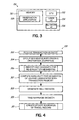
- FIG. 4 provides a flowchart 300 that illustrates a sequence of operations that may be performed by the inventory system 106 consistent with some embodiments of the invention to re-evaluate a booking status of previously-booked segments and/or requested segments for a particular passenger.
- the inventory system 106 may receive a transaction request for a travel record (block 302).
- the transaction request generally includes at least one requested segment for which a transaction is requested.
- the transaction request generally includes data corresponding to the travel record, where such data may include, for example data identifying a previously booked segment and a status of the previously booked segment.
- the requested transaction may be a sell transaction, rebook transaction, and/or other such types of transactions.
- the inventory system 106 may analyze the travel record and the transaction request to group any previously-booked segments of the travel record and the at least one requested segments of the transaction request into one or more journeys based at least in part on an origin and destination associated with each segment (block 304).
- the inventory system 106 identifies any previously-booked segments as a candidate for re-evaluation segment (block 306).
- a previously-booked segment may be identified as a candidate for re-evaluation segment based at least in part on whether the previously-booked segment is grouped in a journey with at least one requested segment.
- embodiments of the invention may group the first and second segments into a journey (ATL-CLT-JFK) and identify the first segment (ATL-CLT) as a candidate for re-evaluation.
- the inventory system 106 may compute an availability for the at least one requested segment of the transaction request and an updated availability for each candidate for re-evaluation segment (block 307). Based at least in part on the computed availability for the requested segment and the computed updated availability for the at least one candidate for re-evaluation segment, the inventory system 106 may generate a sell decision for the at least one requested segment and the at least one candidate for re-evaluation segment (block 308). The inventory system 106 may make a marriage decision for the at least one requested segment and the at least one candidate for re-evaluation segment (block 309).
- the reservation system 106 may update the travel record by updating and/or creating bookings for the at least one candidate for re-evaluation segment and the at least one requested segment (block 310).
- the reservation system 102 may update the travel record to create a booking for each of the at least one requested segments based at least in part on the computed availability in the sell decision for the at least one requested segment.
- the reservation system 102 may update a booking of each candidate for re-evaluation segment based at least on part on the updated availability in the sell decision.
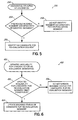
- FIG. 5 this figure provides flowchart 350 that illustrates a sequence of operations that may be performed by the inventory system 106 to identify one or more previously-booked segments of a travel record as a candidate for re-evaluation segment consistent with some embodiments of the invention.
- one or more requested segments of a transaction request for the travel record may be grouped with one or more previously-booked segments of the travel record into one or more journeys.
- the inventory system 106 may analyze the one or more journey groups, and for each previously-booked segment of the travel record the inventory system determines whether the previously-booked segment is grouped with a requested segment in a journey (block 354).
- the inventory system 106 may identify the previously-booked segment as a candidate for re-evaluation segment (block 356).
- the inventory system does not identify the previously-booked segment as a candidate for re-evaluation (block 358) and further processing (i.e., computing availability and updating booking status) is not performed for the previously-booked segment.
- FIG. 6 provides a flowchart 400 that illustrates a sequence of operations that may be performed by the reservation system 102 to determine whether to update a booking status for a candidate for re-evaluation segment based at least in part on an updated availability computed for the candidate for re-evaluation segment consistent with embodiments of the invention and indicated in a sell decision received by the reservation system 102.
- an updated availability for each candidate for re-evaluation segment may be computed by the inventory system 106.
- the inventory system may determine whether to update a booking status for the candidate for re-evaluation segment based at least in part on whether the computed updated availability meets re-evaluation conditions (block 404).
- the inventory system may not update the booking status for the candidate for re-evaluation segment (block 406).
- the inventory system 106 may update the booking status of the candidate for re-evaluation segment based on the updated availability (block 408).
- a previously-booked segment/candidate for re-evaluation segment may have a booking status of denied (UC), waitlisted (HL), or confirmed (HK).
- the booking status of a candidate for re-evaluation segment may be updated if an improved booking status may be booked based on the computed updated availability.
- availability for a requested segment of the transaction request may be computed based on the journey and/or the availability of the individual requested segment. In some embodiments that determine availability based on origin/destination availability, the availability of the origin/destination is utilized in determining the availability of the requested segment.
- the booking status of the candidate for re-evaluation segment may be updated from waitlisted to confirmed.
- the booking status of the candidate for re-evaluation segment may be updated from denied to waitlisted.
- the booking status for a candidate for re-evaluation segment is waitlisted and the updated availability indicates that the booking status may be updated to denied, the booking status of the candidate for re-evaluation segment may not be updated.
- the booking status of previously-booked segments of a travel record may be re-evaluated such that a different availability associated with a journey may be realized for the previously-booked segments when a requested segment of a transaction request and such previously-booked segments correspond to a particular journey.
- the booking status of a previously-booked segment may be re-evaluated concurrent with booking a requested segment when the previously-booked segment and the requested segment are grouped in a journey.
- the booking status of a previously-booked segment may be selectively updated if the booking status may be improved (e.g., canceled to waitlisted or confirmed, waitlisted to confirmed).
- the booking status is not updated.
- FIGS. 7A-C provide diagrammatic illustrations directed to processing an example transaction request 500 for an example travel record 502 by an inventory system 106 consistent with embodiments of the invention.
- the travel record 502 for a passenger includes a booking for a previously-booked segment 504 ('RA1 10 MAR NCE CDG HL1 0800 0900') where the previously-booked segment 504 (referred to for purposes of the example as 'RA1') is for a flight on March 10 from Nice, France (NCE) to Paris, France (CDG) and the booking status for the segment is waitlisted (HL).
- the example transaction request 500 includes a requested segment 506 ('RA2 Y 10 MAR CDG JFK 1 (1000 1500)'), where the requested segment 506 (referred to for purposes of the example as 'RA2') for a flight on March 10 from CDG to New York (JFK).
- a requested segment 506 'RA2 Y 10 MAR CDG JFK 1 (1000 1500)'
- the requested segment 506 referred to for purposes of the example as 'RA2'
- the requested segment 506 referred to for purposes of the example as 'RA2'
- the requested segment 506 referred to for purposes of the example as 'RA2'
- JFK CDG to New York
- embodiments of the invention may group previously-booked segments and requested segments by journey.
- the inventory system 106 may group the previously-booked segment RA1 504 and the requested
- the previously-booked segment RA1 502 includes NCE as the origin and CDG as a destination and the requested segment RA2 includes CDG as the origin and JFK as the destination, and the inventory system 106 may group the segments RA1, RA2 504, 506 into the journey 508 (NCE-JFK).
- the previously-booked segment RA1 may be identified as a candidate for re-evaluation segment because segment RA1 is grouped in the same journey as the requested segment RA2.
- FIG. 7B illustrates an example sell decision 520 that indicates a booking status based on computed updated availability 522 for the previously-booked segment RA1 504 and a booking status based on computed availability 524 for the requested segment RA2 506 of FIG. 7A .
- the inventory database 140 of the inventory system 106 may be queried to compute availability. As shown, the inventory database 140 indicates availability for the NCE-CDE segment 526 is zero, there are five travel inventory items available for the CDG-JFK segment 528, and there are five travel inventory items available for the NCE-JFK journey 530.
- the sell decision would indicate a booking status of waitlist (HL) or deny (UC).
- HL waitlist
- UC deny
- the updated availability for the previously-booked segment RA1 is based on the availability associated with the journey 530. Therefore, as shown, the updated availability 522 for the previously-booked segment RA1 indicates that an updated booking status is confirmed (HK), and the availability 524 for the requested segment RA2 indicates that the booking status is also confirmed (HK).
- the travel record 502 may be updated to include the booking for the requested segment RA2 532 and an updated booking status for the previously-booked segment RA1 534, where, as shown, the booking status for the previously-booked segment RA1 534 has been updated to a confirmed from waitlist status (KL1).
- the segments 532, 534 may be married to thereby prevent cancellation of either segment 532, 534 individually thereafter.
- FIG. 7C illustrates an example sell decision 540 that indicates a computed updated availability 542 for the previously-booked segment RA1 506 and a computed availability 544 for the requested segment 506 of FIG. 7A .
- the inventory database 140 of the inventory system 106 may be queried to compute availability.
- the inventory database 140 indicates availability for the NCE-CDE segment 546 is zero, there are five travel inventory items available for the CDG-JFK segment 548, and the availability for the NCE-JFK journey 550 is zero. Therefore, in this example, as compared to the example of FIG. 7B , there is not availability for the NCE-JFK journey nor the NCE-CDG segment.
- the computed updated availability 542 for the previously-booked segment indicates that the booking status is denied (UC)
- the computed availability 544 for the requested segment indicates that the booking status is denied (UC).
- the booking status of a candidate for re-evaluation segment may not be updated based on the updated availability if the booking status is not improved.
- the booking status for the previously-booked segment RA1 is waitlisted, while the updated availability 542 indicates a booking status of denied. Therefore, in this example, the booking status for the booking for segment RA1 552 is not updated in the travel record 502, i.e., the booking status remains waitlisted (HL1).
- availability may be re-evaluated for a previously-booked segment of a travel record in response to receiving a transaction request for a requested segment, when the previously-booked segment and the requested segment correspond to a particular journey (i.e., the previously-booked segment and the requested segment are grouped in a particular journey).
- re-evaluating the availability of a previously-booked segment in the context of a journey may improve a booking status of the previously-booked segment.
- FIG. 7B re-evaluating the availability of a previously-booked segment in the context of a journey may improve a booking status of the previously-booked segment.
- embodiments of the invention may not update the booking status based on the updated availability thereby leaving the booking status unchanged for the previously-booked segment. Consistent with some embodiments of the invention, re-evaluating the booking status of a previously-booked segment in the context of a journey with a requested segment may allow a travel agent to maintain a booking status for the previously-booked segment unless the booking status may be improved based on the updated availability.
- the travel record 602 for a passenger includes a booking for a previously-booked segment 604 ('RA1 10 MAR NCE LON HL1 0800 0900') where the previously-booked segment 604 (referred to for purposes of the example as 'RA1') is for a flight on March 10 from Nice, France (NCE) to London, United Kingdom (LON) and the booking status for the segment is waitlisted (HL).
- 'RA1 10 MAR NCE LON HL1 0800 0900' the previously-booked segment 604
- 'RA1' is for a flight on March 10 from Nice, France (NCE) to London, United Kingdom (LON) and the booking status for the segment is waitlisted (HL).
- the example transaction request 600 includes a requested segment 606 ('RA2 Y 10 MAR LON BKK 1 (1000 1500)'), where the requested segment 606 (referred to for purposes of the example as 'RA2') is for a flight on March 10 from LON to Bangkok, Thailand (BKK).
- the inventory system 106 may group the previously-booked segment RA1 604 and the requested segment RA2 606 into a particular journey 608 based on the origin and destination of each segment 604, 606.
- FIG. 8B illustrates an example sell decision 640 that indicates a booking status based on computed updated availability 642 for the previously-booked segment RA1 606 and a booking status based on computed availability 644 for the requested segment 606 of FIG. 8A .
- the inventory database 140 indicates that zero travel inventory items are available for a NCE-LON segment 646, zero travel inventory items are available for a LON-BKK segment, and 5 travel inventory items are available for a NCE-BKK journey 650.
- a conventional inventory system may not re-evaluate a booking status/compute an updated availability for previously-booked segments that correspond to a journey with a requested segment.
- a conventional inventory system may compute availability for the requested segment as indicating a booking status of denied (UC) or waitlisted (HL) because the LON-BKK segment availability 648 is zero.
- the computed availability may indicate a confirmed booking status (HK) for the requested segment may be confirmed, but the booking status of the previously booked segment may remain waitlisted (HL).
- an updated availability of the previously-booked segment and an availability for the requested segment may be computed in the context of the particular journey (i.e., the availability for the NCE-BKK journey 650). Therefore, as shown, the sell decision 640 indicates a confirmed booking status (HK) 642 for the previously-booked segment RA1 and a confirmed booking status (HK) 644 for the requested segment RA2.
- the inventory system 106 may update the travel record 602 by updating the booking status of the booking for the previously requested segment RA1 652 based on the updated availability 642 by changing the booking status of waitlisted (HL) to confirmed from waitlist (KL).
- the inventory system 106 may book the requested segment RA2 654 with a booking status of confirmed (HK). As discussed previously, in response to the confirmed booking of the previously booked segment RA1 and the requested segment RA2, the segments RA1, RA2 may be married as a booking fraud prevention measure.
- FIGS. 9A and 9B provide diagrammatic illustrations directed to processing an example transaction request 680 for an example travel record 682 by an inventory system 106 consistent with embodiments of the invention.
- the travel record 682 includes bookings for two previously-booked segments: a first previously-booked segment ('RA1 Y 10 MAR ATL NYC HL1 0800 0900') 684 that corresponds to a flight on March 10 from Atlanta (ATL) to New York (NYC) that has a waitlisted booking status (HL1) for booking class 'Y'; and a second previously-booked segment RA2 686 that corresponds to a flight on March 10 from NYC to Dubai, United Arab Emirates that has a confirmed booking (HK1) status for booking class 'Y'.
- the transaction request 680 is a rebook request that requests to book an updated booking class (i.e., booking class 'C') for the second segment RA2 ('RA2 C 10 MAR NYC DXB 1 (1000 1500)') 688.
- This type of transaction may also be referred to as a booking class update.
- the segments RA1, RA2 may be grouped into a journey (ATL-DXB) 690 based on the origin and destination of each segment RA1, RA2. Therefore, based on the requested segment and the journey 690, segment RA1 may be identified as a candidate for re-evaluation segment.
- FIG. 9B illustrates an example sell decision 700 that indicates a booking status based on a computed updated availability 702 for the first previously-booked segment RA1 684 and a booking status based on a computed availability 704 for the requested updated booking status requested segment RA2 688 of FIG. 9A .
- the inventory database 140 indicates zero availability for an ATL-NYC segment 706 and a NYC-DXB segment 708. Furthermore, as shown, in this example, availability for an ATL-DXB journey is different between booking classes, where there is zero availability for booking class 'Y' 710 and four travel inventory items for booking class 'C' 712.
- the sell decision 700 includes an updated booking status for the first previously-booked segment RA1 702 of confirmed (HK), and the sell decision 700 further includes the booking status for the request to change the booking class for the second previously-booked segment RA2 of 704 confirmed (HK).
- the inventory system 106 may update the travel record based at least in part on the updated availability for the first previously-booked segment RA1 702 and the availability for the requested segment booking class change 704.
- the booking status of RA1 segment 714 has been updated to confirmed from waitlist (KL) and the booking status of RA2 segment 716 has been updated to confirmed (HK) and the booking class has been updated to 'C'.
- availability for or more previously-booked segments of a travel record may be re-evaluated concurrent with computing the availability of one or more requested segments of a transaction request for the travel record when the one or more previously-booked segments and the one or more requested segments correspond to a particular journey.
- re-evaluating availability for one or more previously-booked segments in the context of a journey may allow a booking status of each previously-booked segment to be improved.
- a booking for a previously-booked segment is not updated unless the booking status may be improved.
- embodiments of the invention may group one or more previously-booked segments of a travel record and/or one or more requested segments of a transaction request into one or more journeys based at least in part on the origin and destination of each segment. Any previously-booked segments that are grouped into a journey with at least one requested segment may be identified as a candidate for re-evaluation segment. Consistent with embodiments of the invention, an inventory system may compute an updated availability for each candidate for re-evaluation segment concurrent with computing availability for at least one requested segment grouped with the candidate for re-evaluation.
- an availability of travel inventory items corresponding to a particular journey may be used to re-evaluate the booking status for at least one previously-booked segment concurrent with booking at least one requested segment, when the at least one previously-booked segment and the at least one requested segment are grouped in a particular journey.
- embodiments of the invention are not so limited.
- embodiments of the invention may be implemented to process cancellation and/or rebooking requests, such as the example rebooking request illustrated in FIGS. 9A-9C .
- a transaction may cancel a booking for a particular segment that is grouped into a journey with a surviving booked segment, and the inventory may re-evaluate the availability of the surviving segment concurrent with processing the cancellation for the requested segment.
- routines executed to implement the embodiments of the invention will be referred to herein as "computer program code,” or simply "program code.”
- Program code typically comprises one or more instructions that are resident at various times in various memory and storage devices in a computer, and that, when read and executed by one or more processors in a computer, cause that computer to perform the steps necessary to execute steps or elements embodying the various aspects of the invention.
- the program code embodied in any of the applications, modules, and/or components described herein is capable of being individually or collectively distributed as a program product in a variety of different forms.
- the program code may be distributed using a computer readable media, which may include computer readable storage media and communication media.
- Computer readable storage media which is inherently non-transitory, may include volatile and non-volatile, and removable and non-removable tangible media implemented in any method or technology for storage of information, such as computer-readable instructions, data structures, program modules, or other data.
- Computer readable storage media may further include RAM, ROM, erasable programmable read-only memory (EPROM), electrically erasable programmable read-only memory (EEPROM), flash memory or other solid state memory technology, portable compact disc read-only memory (CD-ROM), or other optical storage, magnetic cassettes, magnetic tape, magnetic disk storage or other magnetic storage devices, or any other medium that can be used to store the desired information and which can be read by a computer.
- Communication media may embody computer readable instructions, data structures or other program modules.
- communication media may include wired media such as a wired network or direct-wired connection, and wireless media such as acoustic, RF, infrared and other wireless media. Combinations of any of the above may also be included within the scope of computer readable media.
- These computer program instructions may also be stored in a computer readable medium that can direct a computer, other types of programmable data processing apparatus, or other devices to function in a particular manner, such that the instructions stored in the computer readable medium produce an article of manufacture including instructions that implement the function/act specified in the block or blocks of the flowchart and/or block diagram.
- the computer program instructions may also be loaded onto a computer, other programmable data processing apparatus, or another device to cause a series of computations to be performed on the computer, the other processing apparatus, or the other device to produce a computer implemented process such that the executed instructions provide one or more processes for implementing the functions/acts specified in the flowchart and/or block diagram block or blocks.
Landscapes
- Business, Economics & Management (AREA)
- Tourism & Hospitality (AREA)
- Engineering & Computer Science (AREA)
- Strategic Management (AREA)
- Theoretical Computer Science (AREA)
- Human Resources & Organizations (AREA)
- Marketing (AREA)
- General Physics & Mathematics (AREA)
- Economics (AREA)
- Physics & Mathematics (AREA)
- General Business, Economics & Management (AREA)
- Primary Health Care (AREA)
- Health & Medical Sciences (AREA)
- General Health & Medical Sciences (AREA)
- Development Economics (AREA)
- Entrepreneurship & Innovation (AREA)
- Operations Research (AREA)
- Quality & Reliability (AREA)
- Management, Administration, Business Operations System, And Electronic Commerce (AREA)
Priority Applications (4)
| Application Number | Priority Date | Filing Date | Title |
|---|---|---|---|
| EP13290187.7A EP2835781A1 (fr) | 2013-08-05 | 2013-08-05 | Réévaluation de données de trajet |
| KR1020140084441A KR20150016890A (ko) | 2013-08-05 | 2014-07-07 | 여정 데이터 재평가 방법 |
| CA2858019A CA2858019A1 (fr) | 2013-08-05 | 2014-07-31 | Reevaluation de donnees de trajet |
| AU2014208305A AU2014208305A1 (en) | 2013-08-05 | 2014-08-04 | Journey data re-evaluation |
Applications Claiming Priority (1)
| Application Number | Priority Date | Filing Date | Title |
|---|---|---|---|
| EP13290187.7A EP2835781A1 (fr) | 2013-08-05 | 2013-08-05 | Réévaluation de données de trajet |
Publications (1)
| Publication Number | Publication Date |
|---|---|
| EP2835781A1 true EP2835781A1 (fr) | 2015-02-11 |
Family
ID=49000423
Family Applications (1)
| Application Number | Title | Priority Date | Filing Date |
|---|---|---|---|
| EP13290187.7A Withdrawn EP2835781A1 (fr) | 2013-08-05 | 2013-08-05 | Réévaluation de données de trajet |
Country Status (1)
| Country | Link |
|---|---|
| EP (1) | EP2835781A1 (fr) |
Citations (1)
| Publication number | Priority date | Publication date | Assignee | Title |
|---|---|---|---|---|
| EP2605209A1 (fr) * | 2011-12-13 | 2013-06-19 | Amadeus | Système et procédé pour la fourniture d'informations améliorées à l'inventaire |
-
2013
- 2013-08-05 EP EP13290187.7A patent/EP2835781A1/fr not_active Withdrawn
Patent Citations (1)
| Publication number | Priority date | Publication date | Assignee | Title |
|---|---|---|---|---|
| EP2605209A1 (fr) * | 2011-12-13 | 2013-06-19 | Amadeus | Système et procédé pour la fourniture d'informations améliorées à l'inventaire |
Similar Documents
| Publication | Publication Date | Title |
|---|---|---|
| US20150178642A1 (en) | Dynamic travel planner | |
| US10147055B2 (en) | Aggregation record for managing ancillary travel services | |
| US20150058050A1 (en) | Contextualized travel offers | |
| US20150039356A1 (en) | Journey data re-evaluation | |
| US20160125069A1 (en) | Dynamic database object management | |
| US20160321344A1 (en) | Implementing a database of pricing records | |
| US20080004920A1 (en) | Airline management system generating routings in real-time | |
| US20150134373A1 (en) | Low cost travel ticketing | |
| US20160086102A1 (en) | Corporate recognition for travel related services | |
| EP3016042A1 (fr) | Mémoire cache à disponibilité segmentée | |
| US20160012353A1 (en) | Automated flight exchange for low cost carriers | |
| EP2998746A1 (fr) | Identification de société pour services de voyage | |
| CA2858019A1 (fr) | Reevaluation de donnees de trajet | |
| EP2975560A1 (fr) | Échange de vol automatique pour transporteurs low cost | |
| CA2887255A1 (fr) | Systeme de reservation a entree sur support informatique | |
| US20150294235A1 (en) | Electronic miscellaneous document handling in response to involuntary modifications of ancillary services | |
| EP2933761A1 (fr) | Procédé, système et produit de programme informatique de gestion de documents annexes électroniques pour des modifications involontaires de passagers de services auxiliaires | |
| US20150371152A1 (en) | Dynamic availability localization for travel services | |
| EP3051467A1 (fr) | Incorporation de l'impact des recettes des services auxiliaires dans un système d'inventaire dirigé par les recettes | |
| US20160155139A1 (en) | Interacting with a database storing discounts | |
| EP3089094A1 (fr) | Mise en uvre d'une base de données d'enregistrements de tarification | |
| EP3082077A1 (fr) | Sélection des résultats de recherche permettant de répondre à une interrogation de recherche | |
| AU2015201818A1 (en) | System and method for generating an electronic miscellaneous document | |
| CA2925679C (fr) | Selection de resultats de recherche en vue de repondre a une demande de recherche | |
| EP2874108A1 (fr) | Établissement de billets pour voyages économiques |
Legal Events
| Date | Code | Title | Description |
|---|---|---|---|
| PUAI | Public reference made under article 153(3) epc to a published international application that has entered the european phase |
Free format text: ORIGINAL CODE: 0009012 |
|
| 17P | Request for examination filed |
Effective date: 20130805 |
|
| AK | Designated contracting states |
Kind code of ref document: A1 Designated state(s): AL AT BE BG CH CY CZ DE DK EE ES FI FR GB GR HR HU IE IS IT LI LT LU LV MC MK MT NL NO PL PT RO RS SE SI SK SM TR |
|
| AX | Request for extension of the european patent |
Extension state: BA ME |
|
| STAA | Information on the status of an ep patent application or granted ep patent |
Free format text: STATUS: THE APPLICATION IS DEEMED TO BE WITHDRAWN |
|
| 18D | Application deemed to be withdrawn |
Effective date: 20150812 |