EP2835136A1 - Somatostatin Receptor Modulator for the treatment of infertility - Google Patents
Somatostatin Receptor Modulator for the treatment of infertility Download PDFInfo
- Publication number
- EP2835136A1 EP2835136A1 EP13179533.8A EP13179533A EP2835136A1 EP 2835136 A1 EP2835136 A1 EP 2835136A1 EP 13179533 A EP13179533 A EP 13179533A EP 2835136 A1 EP2835136 A1 EP 2835136A1
- Authority
- EP
- European Patent Office
- Prior art keywords
- compound
- cys
- pharmaceutically acceptable
- acceptable salt
- thr
- Prior art date
- Legal status (The legal status is an assumption and is not a legal conclusion. Google has not performed a legal analysis and makes no representation as to the accuracy of the status listed.)
- Withdrawn
Links
- 238000011282 treatment Methods 0.000 title claims abstract description 43
- 208000000509 infertility Diseases 0.000 title claims abstract description 26
- 230000036512 infertility Effects 0.000 title claims abstract description 26
- 231100000535 infertility Toxicity 0.000 title claims abstract description 26
- 108050001286 Somatostatin Receptor Proteins 0.000 title description 21
- 102000011096 Somatostatin receptor Human genes 0.000 title description 21
- 229940075993 receptor modulator Drugs 0.000 title description 8
- 230000002611 ovarian Effects 0.000 claims abstract description 78
- 230000012010 growth Effects 0.000 claims abstract description 65
- 238000000034 method Methods 0.000 claims abstract description 39
- 239000008194 pharmaceutical composition Substances 0.000 claims abstract description 39
- 230000001133 acceleration Effects 0.000 claims abstract description 28
- 150000001875 compounds Chemical class 0.000 claims description 245
- 150000003839 salts Chemical class 0.000 claims description 106
- 239000002207 metabolite Substances 0.000 claims description 91
- 230000001850 reproductive effect Effects 0.000 claims description 24
- 238000000338 in vitro Methods 0.000 claims description 18
- 210000000287 oocyte Anatomy 0.000 claims description 17
- 238000004458 analytical method Methods 0.000 claims description 14
- 238000004519 manufacturing process Methods 0.000 claims description 14
- 241000124008 Mammalia Species 0.000 claims description 10
- 230000000638 stimulation Effects 0.000 claims description 10
- 230000004720 fertilization Effects 0.000 claims description 9
- 230000002110 toxicologic effect Effects 0.000 claims description 7
- 231100000027 toxicology Toxicity 0.000 claims description 7
- 230000003442 weekly effect Effects 0.000 claims description 7
- NHXLMOGPVYXJNR-ATOGVRKGSA-N somatostatin Chemical compound C([C@H]1C(=O)N[C@H](C(N[C@@H](CO)C(=O)N[C@@H](CSSC[C@@H](C(=O)N[C@@H](CCCCN)C(=O)N[C@@H](CC(N)=O)C(=O)N[C@@H](CC=2C=CC=CC=2)C(=O)N[C@@H](CC=2C=CC=CC=2)C(=O)N[C@@H](CC=2C3=CC=CC=C3NC=2)C(=O)N[C@@H](CCCCN)C(=O)N[C@H](C(=O)N1)[C@@H](C)O)NC(=O)CNC(=O)[C@H](C)N)C(O)=O)=O)[C@H](O)C)C1=CC=CC=C1 NHXLMOGPVYXJNR-ATOGVRKGSA-N 0.000 abstract description 54
- 102000005157 Somatostatin Human genes 0.000 abstract description 46
- 108010056088 Somatostatin Proteins 0.000 abstract description 46
- 229960000553 somatostatin Drugs 0.000 abstract description 46
- 108090000765 processed proteins & peptides Proteins 0.000 abstract description 20
- 230000000694 effects Effects 0.000 abstract description 15
- 239000005557 antagonist Substances 0.000 abstract description 13
- 239000000556 agonist Substances 0.000 abstract description 8
- 230000009977 dual effect Effects 0.000 abstract description 6
- 210000001672 ovary Anatomy 0.000 description 31
- 239000000203 mixture Substances 0.000 description 18
- 241001465754 Metazoa Species 0.000 description 16
- 238000011161 development Methods 0.000 description 16
- 230000018109 developmental process Effects 0.000 description 16
- 210000002394 ovarian follicle Anatomy 0.000 description 16
- 239000000243 solution Substances 0.000 description 13
- 230000009467 reduction Effects 0.000 description 12
- 239000000126 substance Substances 0.000 description 12
- 230000006907 apoptotic process Effects 0.000 description 11
- 230000003325 follicular Effects 0.000 description 11
- 230000000284 resting effect Effects 0.000 description 11
- 238000007920 subcutaneous administration Methods 0.000 description 11
- 102100020880 Kit ligand Human genes 0.000 description 10
- 241000282567 Macaca fascicularis Species 0.000 description 10
- 108010039445 Stem Cell Factor Proteins 0.000 description 10
- 238000012360 testing method Methods 0.000 description 10
- 241000700159 Rattus Species 0.000 description 9
- 230000009471 action Effects 0.000 description 9
- 230000000144 pharmacologic effect Effects 0.000 description 9
- 210000002966 serum Anatomy 0.000 description 9
- -1 fatty acid esters Chemical class 0.000 description 8
- 206010036601 premature menopause Diseases 0.000 description 8
- 102000003974 Fibroblast growth factor 2 Human genes 0.000 description 7
- 108090000379 Fibroblast growth factor 2 Proteins 0.000 description 7
- 239000003814 drug Substances 0.000 description 7
- 238000009472 formulation Methods 0.000 description 7
- 210000002503 granulosa cell Anatomy 0.000 description 7
- 241000282693 Cercopithecidae Species 0.000 description 6
- IAZDPXIOMUYVGZ-UHFFFAOYSA-N Dimethylsulphoxide Chemical compound CS(C)=O IAZDPXIOMUYVGZ-UHFFFAOYSA-N 0.000 description 6
- PEDCQBHIVMGVHV-UHFFFAOYSA-N Glycerine Chemical compound OCC(O)CO PEDCQBHIVMGVHV-UHFFFAOYSA-N 0.000 description 6
- VEXZGXHMUGYJMC-UHFFFAOYSA-N Hydrochloric acid Chemical compound Cl VEXZGXHMUGYJMC-UHFFFAOYSA-N 0.000 description 6
- 230000001270 agonistic effect Effects 0.000 description 6
- 230000003042 antagnostic effect Effects 0.000 description 6
- 230000004071 biological effect Effects 0.000 description 6
- 201000010099 disease Diseases 0.000 description 6
- 208000037265 diseases, disorders, signs and symptoms Diseases 0.000 description 6
- 238000002360 preparation method Methods 0.000 description 6
- 230000008569 process Effects 0.000 description 6
- 108090000623 proteins and genes Proteins 0.000 description 6
- 239000003981 vehicle Substances 0.000 description 6
- CIWBSHSKHKDKBQ-JLAZNSOCSA-N Ascorbic acid Chemical compound OC[C@H](O)[C@H]1OC(=O)C(O)=C1O CIWBSHSKHKDKBQ-JLAZNSOCSA-N 0.000 description 5
- 102000001189 Cyclic Peptides Human genes 0.000 description 5
- 108010069514 Cyclic Peptides Proteins 0.000 description 5
- LFQSCWFLJHTTHZ-UHFFFAOYSA-N Ethanol Chemical compound CCO LFQSCWFLJHTTHZ-UHFFFAOYSA-N 0.000 description 5
- 102000006771 Gonadotropins Human genes 0.000 description 5
- 108010086677 Gonadotropins Proteins 0.000 description 5
- FAPWRFPIFSIZLT-UHFFFAOYSA-M Sodium chloride Chemical compound [Na+].[Cl-] FAPWRFPIFSIZLT-UHFFFAOYSA-M 0.000 description 5
- 229940024606 amino acid Drugs 0.000 description 5
- 235000001014 amino acid Nutrition 0.000 description 5
- 150000001413 amino acids Chemical class 0.000 description 5
- 230000037396 body weight Effects 0.000 description 5
- 125000004122 cyclic group Chemical group 0.000 description 5
- 239000002622 gonadotropin Substances 0.000 description 5
- 238000001727 in vivo Methods 0.000 description 5
- 238000001990 intravenous administration Methods 0.000 description 5
- 239000000463 material Substances 0.000 description 5
- 230000000624 ovulatory effect Effects 0.000 description 5
- 201000010065 polycystic ovary syndrome Diseases 0.000 description 5
- 229920001223 polyethylene glycol Polymers 0.000 description 5
- 238000012552 review Methods 0.000 description 5
- 239000003381 stabilizer Substances 0.000 description 5
- GUBGYTABKSRVRQ-QKKXKWKRSA-N Lactose Natural products OC[C@H]1O[C@@H](O[C@H]2[C@H](O)[C@@H](O)C(O)O[C@@H]2CO)[C@H](O)[C@@H](O)[C@H]1O GUBGYTABKSRVRQ-QKKXKWKRSA-N 0.000 description 4
- 208000002500 Primary Ovarian Insufficiency Diseases 0.000 description 4
- RJKFOVLPORLFTN-LEKSSAKUSA-N Progesterone Chemical compound C1CC2=CC(=O)CC[C@]2(C)[C@@H]2[C@@H]1[C@@H]1CC[C@H](C(=O)C)[C@@]1(C)CC2 RJKFOVLPORLFTN-LEKSSAKUSA-N 0.000 description 4
- 229940121856 Somatostatin receptor antagonist Drugs 0.000 description 4
- 230000004913 activation Effects 0.000 description 4
- 239000003098 androgen Substances 0.000 description 4
- 239000002775 capsule Substances 0.000 description 4
- 210000004027 cell Anatomy 0.000 description 4
- 238000013461 design Methods 0.000 description 4
- 230000002124 endocrine Effects 0.000 description 4
- 230000014509 gene expression Effects 0.000 description 4
- 230000035800 maturation Effects 0.000 description 4
- 239000000546 pharmaceutical excipient Substances 0.000 description 4
- 239000006187 pill Substances 0.000 description 4
- 208000017942 premature ovarian failure 1 Diseases 0.000 description 4
- 102000004196 processed proteins & peptides Human genes 0.000 description 4
- 230000007115 recruitment Effects 0.000 description 4
- 230000004044 response Effects 0.000 description 4
- 239000004094 surface-active agent Substances 0.000 description 4
- 239000003826 tablet Substances 0.000 description 4
- JNYAEWCLZODPBN-JGWLITMVSA-N (2r,3r,4s)-2-[(1r)-1,2-dihydroxyethyl]oxolane-3,4-diol Chemical compound OC[C@@H](O)[C@H]1OC[C@H](O)[C@H]1O JNYAEWCLZODPBN-JGWLITMVSA-N 0.000 description 3
- WVDDGKGOMKODPV-UHFFFAOYSA-N Benzyl alcohol Chemical compound OCC1=CC=CC=C1 WVDDGKGOMKODPV-UHFFFAOYSA-N 0.000 description 3
- XEKOWRVHYACXOJ-UHFFFAOYSA-N Ethyl acetate Chemical compound CCOC(C)=O XEKOWRVHYACXOJ-UHFFFAOYSA-N 0.000 description 3
- WQZGKKKJIJFFOK-GASJEMHNSA-N Glucose Natural products OC[C@H]1OC(O)[C@H](O)[C@@H](O)[C@@H]1O WQZGKKKJIJFFOK-GASJEMHNSA-N 0.000 description 3
- 102000018997 Growth Hormone Human genes 0.000 description 3
- 108010051696 Growth Hormone Proteins 0.000 description 3
- 101000829153 Homo sapiens Somatostatin receptor type 5 Proteins 0.000 description 3
- KFZMGEQAYNKOFK-UHFFFAOYSA-N Isopropanol Chemical compound CC(C)O KFZMGEQAYNKOFK-UHFFFAOYSA-N 0.000 description 3
- ZMXDDKWLCZADIW-UHFFFAOYSA-N N,N-Dimethylformamide Chemical compound CN(C)C=O ZMXDDKWLCZADIW-UHFFFAOYSA-N 0.000 description 3
- 238000011887 Necropsy Methods 0.000 description 3
- 229920003171 Poly (ethylene oxide) Polymers 0.000 description 3
- 229920001213 Polysorbate 20 Polymers 0.000 description 3
- KWYUFKZDYYNOTN-UHFFFAOYSA-M Potassium hydroxide Chemical compound [OH-].[K+] KWYUFKZDYYNOTN-UHFFFAOYSA-M 0.000 description 3
- DNIAPMSPPWPWGF-UHFFFAOYSA-N Propylene glycol Chemical compound CC(O)CO DNIAPMSPPWPWGF-UHFFFAOYSA-N 0.000 description 3
- 102100023806 Somatostatin receptor type 5 Human genes 0.000 description 3
- CZMRCDWAGMRECN-UGDNZRGBSA-N Sucrose Chemical compound O[C@H]1[C@H](O)[C@@H](CO)O[C@@]1(CO)O[C@@H]1[C@H](O)[C@@H](O)[C@H](O)[C@@H](CO)O1 CZMRCDWAGMRECN-UGDNZRGBSA-N 0.000 description 3
- 229930006000 Sucrose Natural products 0.000 description 3
- 230000003698 anagen phase Effects 0.000 description 3
- 229940030486 androgens Drugs 0.000 description 3
- 230000009286 beneficial effect Effects 0.000 description 3
- 239000000872 buffer Substances 0.000 description 3
- 239000000969 carrier Substances 0.000 description 3
- 150000005829 chemical entities Chemical class 0.000 description 3
- 239000003795 chemical substances by application Substances 0.000 description 3
- KRKNYBCHXYNGOX-UHFFFAOYSA-N citric acid Chemical compound OC(=O)CC(O)(C(O)=O)CC(O)=O KRKNYBCHXYNGOX-UHFFFAOYSA-N 0.000 description 3
- 238000003776 cleavage reaction Methods 0.000 description 3
- 238000000576 coating method Methods 0.000 description 3
- 229920001577 copolymer Polymers 0.000 description 3
- 230000003111 delayed effect Effects 0.000 description 3
- 230000001419 dependent effect Effects 0.000 description 3
- 229940079593 drug Drugs 0.000 description 3
- 238000005516 engineering process Methods 0.000 description 3
- 235000019441 ethanol Nutrition 0.000 description 3
- 230000035558 fertility Effects 0.000 description 3
- 239000000122 growth hormone Substances 0.000 description 3
- 238000006460 hydrolysis reaction Methods 0.000 description 3
- 230000000977 initiatory effect Effects 0.000 description 3
- 230000007246 mechanism Effects 0.000 description 3
- 230000009245 menopause Effects 0.000 description 3
- 210000000056 organ Anatomy 0.000 description 3
- 239000012188 paraffin wax Substances 0.000 description 3
- 239000000825 pharmaceutical preparation Substances 0.000 description 3
- 235000010486 polyoxyethylene sorbitan monolaurate Nutrition 0.000 description 3
- 239000013641 positive control Substances 0.000 description 3
- 238000005070 sampling Methods 0.000 description 3
- 230000007017 scission Effects 0.000 description 3
- 239000011780 sodium chloride Substances 0.000 description 3
- 239000007909 solid dosage form Substances 0.000 description 3
- 230000002269 spontaneous effect Effects 0.000 description 3
- 238000003860 storage Methods 0.000 description 3
- 239000005720 sucrose Substances 0.000 description 3
- 239000000725 suspension Substances 0.000 description 3
- 238000003786 synthesis reaction Methods 0.000 description 3
- 238000002560 therapeutic procedure Methods 0.000 description 3
- 230000001960 triggered effect Effects 0.000 description 3
- XLYOFNOQVPJJNP-UHFFFAOYSA-N water Substances O XLYOFNOQVPJJNP-UHFFFAOYSA-N 0.000 description 3
- PUPZLCDOIYMWBV-UHFFFAOYSA-N (+/-)-1,3-Butanediol Chemical compound CC(O)CCO PUPZLCDOIYMWBV-UHFFFAOYSA-N 0.000 description 2
- VVEJUSYNERNRME-XGFVQVCISA-N (4r,7s,10r,13s,16r,19s,22r,25s,28r,31s)-13,28-bis(4-aminobutyl)-25-(2-amino-2-oxoethyl)-31-[[2-[[(2s)-2-aminopropanoyl]amino]acetyl]amino]-19,22-dibenzyl-10-[(1r)-1-hydroxyethyl]-7-(hydroxymethyl)-16-(1h-indol-3-ylmethyl)-6,9,12,15,18,21,24,27,30-nonaoxo- Chemical group C([C@H]1C(=O)N[C@H](CC=2C3=CC=CC=C3NC=2)C(=O)N[C@@H](CCCCN)C(=O)N[C@@H](C(N[C@@H](CO)C(=O)N[C@@H](CSSC[C@H](C(=O)N[C@H](CCCCN)C(=O)N[C@@H](CC(N)=O)C(=O)N[C@H](CC=2C=CC=CC=2)C(=O)N1)NC(=O)CNC(=O)[C@H](C)N)C(O)=O)=O)[C@H](O)C)C1=CC=CC=C1 VVEJUSYNERNRME-XGFVQVCISA-N 0.000 description 2
- VBICKXHEKHSIBG-UHFFFAOYSA-N 1-monostearoylglycerol Chemical compound CCCCCCCCCCCCCCCCCC(=O)OCC(O)CO VBICKXHEKHSIBG-UHFFFAOYSA-N 0.000 description 2
- IIZPXYDJLKNOIY-JXPKJXOSSA-N 1-palmitoyl-2-arachidonoyl-sn-glycero-3-phosphocholine Chemical compound CCCCCCCCCCCCCCCC(=O)OC[C@H](COP([O-])(=O)OCC[N+](C)(C)C)OC(=O)CCC\C=C/C\C=C/C\C=C/C\C=C/CCCCC IIZPXYDJLKNOIY-JXPKJXOSSA-N 0.000 description 2
- QTBSBXVTEAMEQO-UHFFFAOYSA-N Acetic acid Chemical compound CC(O)=O QTBSBXVTEAMEQO-UHFFFAOYSA-N 0.000 description 2
- 229920001817 Agar Polymers 0.000 description 2
- GUBGYTABKSRVRQ-XLOQQCSPSA-N Alpha-Lactose Chemical compound O[C@@H]1[C@@H](O)[C@@H](O)[C@@H](CO)O[C@H]1O[C@@H]1[C@@H](CO)O[C@H](O)[C@H](O)[C@H]1O GUBGYTABKSRVRQ-XLOQQCSPSA-N 0.000 description 2
- 201000005670 Anovulation Diseases 0.000 description 2
- 206010002659 Anovulatory cycle Diseases 0.000 description 2
- 241000283690 Bos taurus Species 0.000 description 2
- VTYYLEPIZMXCLO-UHFFFAOYSA-L Calcium carbonate Chemical compound [Ca+2].[O-]C([O-])=O VTYYLEPIZMXCLO-UHFFFAOYSA-L 0.000 description 2
- KRKNYBCHXYNGOX-UHFFFAOYSA-K Citrate Chemical compound [O-]C(=O)CC(O)(CC([O-])=O)C([O-])=O KRKNYBCHXYNGOX-UHFFFAOYSA-K 0.000 description 2
- FBPFZTCFMRRESA-FSIIMWSLSA-N D-Glucitol Natural products OC[C@H](O)[C@H](O)[C@@H](O)[C@H](O)CO FBPFZTCFMRRESA-FSIIMWSLSA-N 0.000 description 2
- FBPFZTCFMRRESA-KVTDHHQDSA-N D-Mannitol Chemical compound OC[C@@H](O)[C@@H](O)[C@H](O)[C@H](O)CO FBPFZTCFMRRESA-KVTDHHQDSA-N 0.000 description 2
- 125000000028 D-cysteine group Chemical group [H]N([H])[C@@]([H])(C(=O)[*])C(S[H])([H])[H] 0.000 description 2
- FBPFZTCFMRRESA-JGWLITMVSA-N D-glucitol Chemical compound OC[C@H](O)[C@@H](O)[C@H](O)[C@H](O)CO FBPFZTCFMRRESA-JGWLITMVSA-N 0.000 description 2
- 206010012205 Delayed puberty Diseases 0.000 description 2
- FEWJPZIEWOKRBE-JCYAYHJZSA-N Dextrotartaric acid Chemical compound OC(=O)[C@H](O)[C@@H](O)C(O)=O FEWJPZIEWOKRBE-JCYAYHJZSA-N 0.000 description 2
- KCXVZYZYPLLWCC-UHFFFAOYSA-N EDTA Chemical compound OC(=O)CN(CC(O)=O)CCN(CC(O)=O)CC(O)=O KCXVZYZYPLLWCC-UHFFFAOYSA-N 0.000 description 2
- 206010015548 Euthanasia Diseases 0.000 description 2
- OHCQJHSOBUTRHG-KGGHGJDLSA-N FORSKOLIN Chemical compound O=C([C@@]12O)C[C@](C)(C=C)O[C@]1(C)[C@@H](OC(=O)C)[C@@H](O)[C@@H]1[C@]2(C)[C@@H](O)CCC1(C)C OHCQJHSOBUTRHG-KGGHGJDLSA-N 0.000 description 2
- 108010010803 Gelatin Proteins 0.000 description 2
- 241000206672 Gelidium Species 0.000 description 2
- DHMQDGOQFOQNFH-UHFFFAOYSA-N Glycine Chemical compound NCC(O)=O DHMQDGOQFOQNFH-UHFFFAOYSA-N 0.000 description 2
- 241000282412 Homo Species 0.000 description 2
- 101000829127 Homo sapiens Somatostatin receptor type 2 Proteins 0.000 description 2
- QIGBRXMKCJKVMJ-UHFFFAOYSA-N Hydroquinone Chemical compound OC1=CC=C(O)C=C1 QIGBRXMKCJKVMJ-UHFFFAOYSA-N 0.000 description 2
- DGAQECJNVWCQMB-PUAWFVPOSA-M Ilexoside XXIX Chemical compound C[C@@H]1CC[C@@]2(CC[C@@]3(C(=CC[C@H]4[C@]3(CC[C@@H]5[C@@]4(CC[C@@H](C5(C)C)OS(=O)(=O)[O-])C)C)[C@@H]2[C@]1(C)O)C)C(=O)O[C@H]6[C@@H]([C@H]([C@@H]([C@H](O6)CO)O)O)O.[Na+] DGAQECJNVWCQMB-PUAWFVPOSA-M 0.000 description 2
- 108090000723 Insulin-Like Growth Factor I Proteins 0.000 description 2
- 102000004218 Insulin-Like Growth Factor I Human genes 0.000 description 2
- WHUUTDBJXJRKMK-VKHMYHEASA-N L-glutamic acid Chemical compound OC(=O)[C@@H](N)CCC(O)=O WHUUTDBJXJRKMK-VKHMYHEASA-N 0.000 description 2
- KDXKERNSBIXSRK-UHFFFAOYSA-N Lysine Natural products NCCCCC(N)C(O)=O KDXKERNSBIXSRK-UHFFFAOYSA-N 0.000 description 2
- 239000004472 Lysine Substances 0.000 description 2
- 229930195725 Mannitol Natural products 0.000 description 2
- 206010028980 Neoplasm Diseases 0.000 description 2
- 206010033165 Ovarian failure Diseases 0.000 description 2
- 229910019142 PO4 Inorganic materials 0.000 description 2
- ISWSIDIOOBJBQZ-UHFFFAOYSA-N Phenol Natural products OC1=CC=CC=C1 ISWSIDIOOBJBQZ-UHFFFAOYSA-N 0.000 description 2
- 206010036049 Polycystic ovaries Diseases 0.000 description 2
- 239000002202 Polyethylene glycol Substances 0.000 description 2
- 229920002690 Polyoxyl 40 HydrogenatedCastorOil Polymers 0.000 description 2
- ZTHYODDOHIVTJV-UHFFFAOYSA-N Propyl gallate Chemical compound CCCOC(=O)C1=CC(O)=C(O)C(O)=C1 ZTHYODDOHIVTJV-UHFFFAOYSA-N 0.000 description 2
- 206010039897 Sedation Diseases 0.000 description 2
- CDBYLPFSWZWCQE-UHFFFAOYSA-L Sodium Carbonate Chemical compound [Na+].[Na+].[O-]C([O-])=O CDBYLPFSWZWCQE-UHFFFAOYSA-L 0.000 description 2
- 229940123051 Somatostatin receptor agonist Drugs 0.000 description 2
- 102100029329 Somatostatin receptor type 1 Human genes 0.000 description 2
- 102100023802 Somatostatin receptor type 2 Human genes 0.000 description 2
- 229920002472 Starch Polymers 0.000 description 2
- RAHZWNYVWXNFOC-UHFFFAOYSA-N Sulphur dioxide Chemical compound O=S=O RAHZWNYVWXNFOC-UHFFFAOYSA-N 0.000 description 2
- 101710120037 Toxin CcdB Proteins 0.000 description 2
- 235000010419 agar Nutrition 0.000 description 2
- 235000010443 alginic acid Nutrition 0.000 description 2
- 229920000615 alginic acid Polymers 0.000 description 2
- 125000000217 alkyl group Chemical group 0.000 description 2
- 230000009435 amidation Effects 0.000 description 2
- 238000007112 amidation reaction Methods 0.000 description 2
- 150000001408 amides Chemical group 0.000 description 2
- 231100000552 anovulation Toxicity 0.000 description 2
- 239000003963 antioxidant agent Substances 0.000 description 2
- 235000006708 antioxidants Nutrition 0.000 description 2
- 235000010323 ascorbic acid Nutrition 0.000 description 2
- 229960005070 ascorbic acid Drugs 0.000 description 2
- 239000011668 ascorbic acid Substances 0.000 description 2
- 230000008901 benefit Effects 0.000 description 2
- 239000000440 bentonite Substances 0.000 description 2
- 235000012216 bentonite Nutrition 0.000 description 2
- 229910000278 bentonite Inorganic materials 0.000 description 2
- SVPXDRXYRYOSEX-UHFFFAOYSA-N bentoquatam Chemical compound O.O=[Si]=O.O=[Al]O[Al]=O SVPXDRXYRYOSEX-UHFFFAOYSA-N 0.000 description 2
- SESFRYSPDFLNCH-UHFFFAOYSA-N benzyl benzoate Chemical compound C=1C=CC=CC=1C(=O)OCC1=CC=CC=C1 SESFRYSPDFLNCH-UHFFFAOYSA-N 0.000 description 2
- WQZGKKKJIJFFOK-VFUOTHLCSA-N beta-D-glucose Chemical compound OC[C@H]1O[C@@H](O)[C@H](O)[C@@H](O)[C@@H]1O WQZGKKKJIJFFOK-VFUOTHLCSA-N 0.000 description 2
- 229920000249 biocompatible polymer Polymers 0.000 description 2
- 230000033228 biological regulation Effects 0.000 description 2
- 230000015572 biosynthetic process Effects 0.000 description 2
- 201000011510 cancer Diseases 0.000 description 2
- 239000004359 castor oil Substances 0.000 description 2
- YCIMNLLNPGFGHC-UHFFFAOYSA-N catechol Chemical compound OC1=CC=CC=C1O YCIMNLLNPGFGHC-UHFFFAOYSA-N 0.000 description 2
- 210000003169 central nervous system Anatomy 0.000 description 2
- 230000008859 change Effects 0.000 description 2
- 239000002738 chelating agent Substances 0.000 description 2
- 238000013270 controlled release Methods 0.000 description 2
- 230000006240 deamidation Effects 0.000 description 2
- 238000007257 deesterification reaction Methods 0.000 description 2
- 239000003405 delayed action preparation Substances 0.000 description 2
- 239000003937 drug carrier Substances 0.000 description 2
- 230000002255 enzymatic effect Effects 0.000 description 2
- 230000032050 esterification Effects 0.000 description 2
- 238000005886 esterification reaction Methods 0.000 description 2
- 238000011156 evaluation Methods 0.000 description 2
- 239000000194 fatty acid Substances 0.000 description 2
- 239000000945 filler Substances 0.000 description 2
- 238000001914 filtration Methods 0.000 description 2
- 230000008014 freezing Effects 0.000 description 2
- 238000007710 freezing Methods 0.000 description 2
- 238000002825 functional assay Methods 0.000 description 2
- 229920000159 gelatin Polymers 0.000 description 2
- 239000008273 gelatin Substances 0.000 description 2
- 235000019322 gelatine Nutrition 0.000 description 2
- 235000011852 gelatine desserts Nutrition 0.000 description 2
- 230000008570 general process Effects 0.000 description 2
- 239000008103 glucose Substances 0.000 description 2
- 229940094892 gonadotropins Drugs 0.000 description 2
- 239000008187 granular material Substances 0.000 description 2
- 229940093915 gynecological organic acid Drugs 0.000 description 2
- 229940088597 hormone Drugs 0.000 description 2
- 239000005556 hormone Substances 0.000 description 2
- 230000007062 hydrolysis Effects 0.000 description 2
- 238000011065 in-situ storage Methods 0.000 description 2
- 230000006698 induction Effects 0.000 description 2
- 238000002347 injection Methods 0.000 description 2
- 239000007924 injection Substances 0.000 description 2
- 238000011835 investigation Methods 0.000 description 2
- 239000008101 lactose Substances 0.000 description 2
- 239000000787 lecithin Substances 0.000 description 2
- 235000010445 lecithin Nutrition 0.000 description 2
- 229940067606 lecithin Drugs 0.000 description 2
- RGLRXNKKBLIBQS-XNHQSDQCSA-N leuprolide acetate Chemical compound CC(O)=O.CCNC(=O)[C@@H]1CCCN1C(=O)[C@H](CCCNC(N)=N)NC(=O)[C@H](CC(C)C)NC(=O)[C@@H](CC(C)C)NC(=O)[C@@H](NC(=O)[C@H](CO)NC(=O)[C@H](CC=1C2=CC=CC=C2NC=1)NC(=O)[C@H](CC=1N=CNC=1)NC(=O)[C@H]1NC(=O)CC1)CC1=CC=C(O)C=C1 RGLRXNKKBLIBQS-XNHQSDQCSA-N 0.000 description 2
- 239000008297 liquid dosage form Substances 0.000 description 2
- RLSSMJSEOOYNOY-UHFFFAOYSA-N m-cresol Chemical compound CC1=CC=CC(O)=C1 RLSSMJSEOOYNOY-UHFFFAOYSA-N 0.000 description 2
- HQKMJHAJHXVSDF-UHFFFAOYSA-L magnesium stearate Chemical compound [Mg+2].CCCCCCCCCCCCCCCCCC([O-])=O.CCCCCCCCCCCCCCCCCC([O-])=O HQKMJHAJHXVSDF-UHFFFAOYSA-L 0.000 description 2
- 239000000594 mannitol Substances 0.000 description 2
- 235000010355 mannitol Nutrition 0.000 description 2
- HCZKYJDFEPMADG-TXEJJXNPSA-N masoprocol Chemical compound C([C@H](C)[C@H](C)CC=1C=C(O)C(O)=CC=1)C1=CC=C(O)C(O)=C1 HCZKYJDFEPMADG-TXEJJXNPSA-N 0.000 description 2
- 238000005259 measurement Methods 0.000 description 2
- 102000006240 membrane receptors Human genes 0.000 description 2
- 108020004084 membrane receptors Proteins 0.000 description 2
- 230000002503 metabolic effect Effects 0.000 description 2
- 125000002496 methyl group Chemical group [H]C([H])([H])* 0.000 description 2
- 230000004048 modification Effects 0.000 description 2
- 238000012986 modification Methods 0.000 description 2
- 230000000877 morphologic effect Effects 0.000 description 2
- 229910052757 nitrogen Inorganic materials 0.000 description 2
- 239000003921 oil Substances 0.000 description 2
- 235000019198 oils Nutrition 0.000 description 2
- 150000007524 organic acids Chemical class 0.000 description 2
- 235000005985 organic acids Nutrition 0.000 description 2
- 201000004535 ovarian dysfunction Diseases 0.000 description 2
- 231100000539 ovarian failure Toxicity 0.000 description 2
- 230000026816 ovarian follicle atresia Effects 0.000 description 2
- 230000016087 ovulation Effects 0.000 description 2
- 230000003647 oxidation Effects 0.000 description 2
- 238000007254 oxidation reaction Methods 0.000 description 2
- 210000000496 pancreas Anatomy 0.000 description 2
- AQIXEPGDORPWBJ-UHFFFAOYSA-N pentan-3-ol Chemical compound CCC(O)CC AQIXEPGDORPWBJ-UHFFFAOYSA-N 0.000 description 2
- 230000035699 permeability Effects 0.000 description 2
- 239000010452 phosphate Substances 0.000 description 2
- NBIIXXVUZAFLBC-UHFFFAOYSA-K phosphate Chemical compound [O-]P([O-])([O-])=O NBIIXXVUZAFLBC-UHFFFAOYSA-K 0.000 description 2
- 230000001817 pituitary effect Effects 0.000 description 2
- 229920001184 polypeptide Polymers 0.000 description 2
- 229920000136 polysorbate Polymers 0.000 description 2
- 235000013855 polyvinylpyrrolidone Nutrition 0.000 description 2
- 239000001267 polyvinylpyrrolidone Substances 0.000 description 2
- 229920000036 polyvinylpyrrolidone Polymers 0.000 description 2
- 239000002244 precipitate Substances 0.000 description 2
- 238000002203 pretreatment Methods 0.000 description 2
- 238000012545 processing Methods 0.000 description 2
- 239000000047 product Substances 0.000 description 2
- 239000000186 progesterone Substances 0.000 description 2
- 229960003387 progesterone Drugs 0.000 description 2
- QELSKZZBTMNZEB-UHFFFAOYSA-N propylparaben Chemical compound CCCOC(=O)C1=CC=C(O)C=C1 QELSKZZBTMNZEB-UHFFFAOYSA-N 0.000 description 2
- 235000018102 proteins Nutrition 0.000 description 2
- 102000004169 proteins and genes Human genes 0.000 description 2
- 238000011084 recovery Methods 0.000 description 2
- 238000006722 reduction reaction Methods 0.000 description 2
- 229920005989 resin Polymers 0.000 description 2
- 239000011347 resin Substances 0.000 description 2
- GHMLBKRAJCXXBS-UHFFFAOYSA-N resorcinol Chemical compound OC1=CC=CC(O)=C1 GHMLBKRAJCXXBS-UHFFFAOYSA-N 0.000 description 2
- 238000004007 reversed phase HPLC Methods 0.000 description 2
- 230000028327 secretion Effects 0.000 description 2
- 230000036280 sedation Effects 0.000 description 2
- HEMHJVSKTPXQMS-UHFFFAOYSA-M sodium hydroxide Inorganic materials [OH-].[Na+] HEMHJVSKTPXQMS-UHFFFAOYSA-M 0.000 description 2
- GEHJYWRUCIMESM-UHFFFAOYSA-L sodium sulfite Chemical compound [Na+].[Na+].[O-]S([O-])=O GEHJYWRUCIMESM-UHFFFAOYSA-L 0.000 description 2
- 239000007787 solid Substances 0.000 description 2
- 239000002904 solvent Substances 0.000 description 2
- 108010082379 somatostatin receptor type 1 Proteins 0.000 description 2
- GGYTXJNZMFRSLX-DFTNLTQTSA-N somatostatin-28 Chemical group N([C@@H](C)C(=O)N[C@@H](CCSC)C(=O)N[C@@H](C)C(=O)N1[C@@H](CCC1)C(=O)N[C@@H](CCCNC(N)=N)C(=O)N[C@@H](CCC(O)=O)C(=O)N[C@@H](CCCNC(N)=N)C(=O)N[C@@H](CCCCN)C(=O)N[C@@H](C)C(=O)NCC(=O)N[C@@H]1C(N[C@@H](CCCCN)C(=O)N[C@@H](CC(N)=O)C(=O)N[C@@H](CC=2C=CC=CC=2)C(=O)N[C@@H](CC=2C=CC=CC=2)C(=O)N[C@@H](CC=2C3=CC=CC=C3NC=2)C(=O)N[C@@H](CCCCN)C(=O)N[C@H](C(=O)N[C@@H](CC=2C=CC=CC=2)C(=O)N[C@H](C(=O)N[C@@H](CO)C(=O)N[C@@H](CSSC1)C(O)=O)[C@@H](C)O)[C@@H](C)O)=O)C(=O)[C@@H]1CCCN1C(=O)[C@H](CC(N)=O)NC(=O)[C@H](CO)NC(=O)[C@H](CC(N)=O)NC(=O)[C@H](C)NC(=O)[C@@H](N)CO GGYTXJNZMFRSLX-DFTNLTQTSA-N 0.000 description 2
- 210000001764 somatotrope Anatomy 0.000 description 2
- 239000000600 sorbitol Substances 0.000 description 2
- 241000894007 species Species 0.000 description 2
- 238000011272 standard treatment Methods 0.000 description 2
- 235000019698 starch Nutrition 0.000 description 2
- 230000004936 stimulating effect Effects 0.000 description 2
- 210000002784 stomach Anatomy 0.000 description 2
- 238000010257 thawing Methods 0.000 description 2
- CWERGRDVMFNCDR-UHFFFAOYSA-N thioglycolic acid Chemical compound OC(=O)CS CWERGRDVMFNCDR-UHFFFAOYSA-N 0.000 description 2
- VZCYOOQTPOCHFL-UHFFFAOYSA-N trans-butenedioic acid Natural products OC(=O)C=CC(O)=O VZCYOOQTPOCHFL-UHFFFAOYSA-N 0.000 description 2
- 230000001052 transient effect Effects 0.000 description 2
- 230000007704 transition Effects 0.000 description 2
- 239000006213 vaginal ring Substances 0.000 description 2
- 238000005406 washing Methods 0.000 description 2
- HDTRYLNUVZCQOY-UHFFFAOYSA-N α-D-glucopyranosyl-α-D-glucopyranoside Natural products OC1C(O)C(O)C(CO)OC1OC1C(O)C(O)C(O)C(CO)O1 HDTRYLNUVZCQOY-UHFFFAOYSA-N 0.000 description 1
- QIJRTFXNRTXDIP-UHFFFAOYSA-N (1-carboxy-2-sulfanylethyl)azanium;chloride;hydrate Chemical compound O.Cl.SCC(N)C(O)=O QIJRTFXNRTXDIP-UHFFFAOYSA-N 0.000 description 1
- ADOHASQZJSJZBT-AREMUKBSSA-N (2r)-2-(9h-fluoren-9-ylmethoxycarbonylamino)-3-[1-[(2-methylpropan-2-yl)oxycarbonyl]indol-3-yl]propanoic acid Chemical compound C12=CC=CC=C2N(C(=O)OC(C)(C)C)C=C1C[C@H](C(O)=O)NC(=O)OCC1C2=CC=CC=C2C2=CC=CC=C21 ADOHASQZJSJZBT-AREMUKBSSA-N 0.000 description 1
- KLBPUVPNPAJWHZ-UMSFTDKQSA-N (2r)-2-(9h-fluoren-9-ylmethoxycarbonylamino)-3-tritylsulfanylpropanoic acid Chemical compound C([C@@H](C(=O)O)NC(=O)OCC1C2=CC=CC=C2C2=CC=CC=C21)SC(C=1C=CC=CC=1)(C=1C=CC=CC=1)C1=CC=CC=C1 KLBPUVPNPAJWHZ-UMSFTDKQSA-N 0.000 description 1
- JYUTZJVERLGMQZ-SANMLTNESA-N (2s)-2-(9h-fluoren-9-ylmethoxycarbonylamino)-3-naphthalen-2-ylpropanoic acid Chemical compound C12=CC=CC=C2C2=CC=CC=C2C1COC(=O)N[C@H](C(=O)O)CC1=CC=C(C=CC=C2)C2=C1 JYUTZJVERLGMQZ-SANMLTNESA-N 0.000 description 1
- SCSSXJVRZMQUKA-NRFANRHFSA-N (2s)-2-(9h-fluoren-9-ylmethoxycarbonylamino)-3-pyridin-4-ylpropanoic acid Chemical compound C([C@@H](C(=O)O)NC(=O)OCC1C2=CC=CC=C2C2=CC=CC=C21)C1=CC=NC=C1 SCSSXJVRZMQUKA-NRFANRHFSA-N 0.000 description 1
- KLBPUVPNPAJWHZ-UUWRZZSWSA-N (2s)-2-(9h-fluoren-9-ylmethoxycarbonylamino)-3-tritylsulfanylpropanoic acid Chemical compound C([C@H](C(=O)O)NC(=O)OCC1C2=CC=CC=C2C2=CC=CC=C21)SC(C=1C=CC=CC=1)(C=1C=CC=CC=1)C1=CC=CC=C1 KLBPUVPNPAJWHZ-UUWRZZSWSA-N 0.000 description 1
- UMRUUWFGLGNQLI-QFIPXVFZSA-N (2s)-2-(9h-fluoren-9-ylmethoxycarbonylamino)-6-[(2-methylpropan-2-yl)oxycarbonylamino]hexanoic acid Chemical compound C1=CC=C2C(COC(=O)N[C@@H](CCCCNC(=O)OC(C)(C)C)C(O)=O)C3=CC=CC=C3C2=C1 UMRUUWFGLGNQLI-QFIPXVFZSA-N 0.000 description 1
- XMQUEQJCYRFIQS-YFKPBYRVSA-N (2s)-2-amino-5-ethoxy-5-oxopentanoic acid Chemical compound CCOC(=O)CC[C@H](N)C(O)=O XMQUEQJCYRFIQS-YFKPBYRVSA-N 0.000 description 1
- NVZVRXJTMCMDNR-NRFANRHFSA-N (2s)-3-cyclopentyl-2-(9h-fluoren-9-ylmethoxycarbonylamino)propanoic acid Chemical compound C([C@@H](C(=O)O)NC(=O)OCC1C2=CC=CC=C2C2=CC=CC=C21)C1CCCC1 NVZVRXJTMCMDNR-NRFANRHFSA-N 0.000 description 1
- LZOLWEQBVPVDPR-VLIAUNLRSA-N (2s,3r)-2-(9h-fluoren-9-ylmethoxycarbonylamino)-3-[(2-methylpropan-2-yl)oxy]butanoic acid Chemical compound C1=CC=C2C(COC(=O)N[C@@H]([C@H](OC(C)(C)C)C)C(O)=O)C3=CC=CC=C3C2=C1 LZOLWEQBVPVDPR-VLIAUNLRSA-N 0.000 description 1
- GVJHHUAWPYXKBD-IEOSBIPESA-N (R)-alpha-Tocopherol Natural products OC1=C(C)C(C)=C2O[C@@](CCC[C@H](C)CCC[C@H](C)CCCC(C)C)(C)CCC2=C1C GVJHHUAWPYXKBD-IEOSBIPESA-N 0.000 description 1
- 125000003088 (fluoren-9-ylmethoxy)carbonyl group Chemical group 0.000 description 1
- 229940058015 1,3-butylene glycol Drugs 0.000 description 1
- OIQOAYVCKAHSEJ-UHFFFAOYSA-N 2-[2,3-bis(2-hydroxyethoxy)propoxy]ethanol;hexadecanoic acid;octadecanoic acid Chemical compound OCCOCC(OCCO)COCCO.CCCCCCCCCCCCCCCC(O)=O.CCCCCCCCCCCCCCCCCC(O)=O OIQOAYVCKAHSEJ-UHFFFAOYSA-N 0.000 description 1
- XLMXUUQMSMKFMH-UZRURVBFSA-N 2-hydroxyethyl (z,12r)-12-hydroxyoctadec-9-enoate Chemical compound CCCCCC[C@@H](O)C\C=C/CCCCCCCC(=O)OCCO XLMXUUQMSMKFMH-UZRURVBFSA-N 0.000 description 1
- QTBSBXVTEAMEQO-UHFFFAOYSA-M Acetate Chemical compound CC([O-])=O QTBSBXVTEAMEQO-UHFFFAOYSA-M 0.000 description 1
- 239000005995 Aluminium silicate Substances 0.000 description 1
- 235000003276 Apios tuberosa Nutrition 0.000 description 1
- 244000105624 Arachis hypogaea Species 0.000 description 1
- 235000010777 Arachis hypogaea Nutrition 0.000 description 1
- 235000010744 Arachis villosulicarpa Nutrition 0.000 description 1
- 239000004475 Arginine Substances 0.000 description 1
- 102000014654 Aromatase Human genes 0.000 description 1
- 108010078554 Aromatase Proteins 0.000 description 1
- DCXYFEDJOCDNAF-UHFFFAOYSA-N Asparagine Natural products OC(=O)C(N)CC(N)=O DCXYFEDJOCDNAF-UHFFFAOYSA-N 0.000 description 1
- 241000416162 Astragalus gummifer Species 0.000 description 1
- 239000011547 Bouin solution Substances 0.000 description 1
- 239000004255 Butylated hydroxyanisole Substances 0.000 description 1
- 239000004322 Butylated hydroxytoluene Substances 0.000 description 1
- NLZUEZXRPGMBCV-UHFFFAOYSA-N Butylhydroxytoluene Chemical compound CC1=CC(C(C)(C)C)=C(O)C(C(C)(C)C)=C1 NLZUEZXRPGMBCV-UHFFFAOYSA-N 0.000 description 1
- OYPRJOBELJOOCE-UHFFFAOYSA-N Calcium Chemical compound [Ca] OYPRJOBELJOOCE-UHFFFAOYSA-N 0.000 description 1
- 241000283707 Capra Species 0.000 description 1
- 229920002134 Carboxymethyl cellulose Polymers 0.000 description 1
- CIWBSHSKHKDKBQ-DUZGATOHSA-N D-isoascorbic acid Chemical compound OC[C@@H](O)[C@H]1OC(=O)C(O)=C1O CIWBSHSKHKDKBQ-DUZGATOHSA-N 0.000 description 1
- WQZGKKKJIJFFOK-QTVWNMPRSA-N D-mannopyranose Chemical compound OC[C@H]1OC(O)[C@@H](O)[C@@H](O)[C@@H]1O WQZGKKKJIJFFOK-QTVWNMPRSA-N 0.000 description 1
- SUZLHDUTVMZSEV-UHFFFAOYSA-N Deoxycoleonol Natural products C12C(=O)CC(C)(C=C)OC2(C)C(OC(=O)C)C(O)C2C1(C)C(O)CCC2(C)C SUZLHDUTVMZSEV-UHFFFAOYSA-N 0.000 description 1
- 239000004375 Dextrin Substances 0.000 description 1
- 229920001353 Dextrin Polymers 0.000 description 1
- 235000019739 Dicalciumphosphate Nutrition 0.000 description 1
- 208000017701 Endocrine disease Diseases 0.000 description 1
- 239000004606 Fillers/Extenders Substances 0.000 description 1
- 102000012673 Follicle Stimulating Hormone Human genes 0.000 description 1
- 108010079345 Follicle Stimulating Hormone Proteins 0.000 description 1
- VZCYOOQTPOCHFL-OWOJBTEDSA-N Fumaric acid Chemical compound OC(=O)\C=C\C(O)=O VZCYOOQTPOCHFL-OWOJBTEDSA-N 0.000 description 1
- 239000004471 Glycine Substances 0.000 description 1
- 239000004705 High-molecular-weight polyethylene Substances 0.000 description 1
- 101000829138 Homo sapiens Somatostatin receptor type 3 Proteins 0.000 description 1
- CPELXLSAUQHCOX-UHFFFAOYSA-N Hydrogen bromide Chemical compound Br CPELXLSAUQHCOX-UHFFFAOYSA-N 0.000 description 1
- 108060003951 Immunoglobulin Proteins 0.000 description 1
- YQEZLKZALYSWHR-UHFFFAOYSA-N Ketamine Chemical compound C=1C=CC=C(Cl)C=1C1(NC)CCCCC1=O YQEZLKZALYSWHR-UHFFFAOYSA-N 0.000 description 1
- PWKSKIMOESPYIA-BYPYZUCNSA-N L-N-acetyl-Cysteine Chemical compound CC(=O)N[C@@H](CS)C(O)=O PWKSKIMOESPYIA-BYPYZUCNSA-N 0.000 description 1
- ODKSFYDXXFIFQN-BYPYZUCNSA-P L-argininium(2+) Chemical compound NC(=[NH2+])NCCC[C@H]([NH3+])C(O)=O ODKSFYDXXFIFQN-BYPYZUCNSA-P 0.000 description 1
- QAQJMLQRFWZOBN-LAUBAEHRSA-N L-ascorbyl-6-palmitate Chemical compound CCCCCCCCCCCCCCCC(=O)OC[C@H](O)[C@H]1OC(=O)C(O)=C1O QAQJMLQRFWZOBN-LAUBAEHRSA-N 0.000 description 1
- 239000011786 L-ascorbyl-6-palmitate Substances 0.000 description 1
- DCXYFEDJOCDNAF-REOHCLBHSA-N L-asparagine Chemical compound OC(=O)[C@@H](N)CC(N)=O DCXYFEDJOCDNAF-REOHCLBHSA-N 0.000 description 1
- ZDXPYRJPNDTMRX-VKHMYHEASA-N L-glutamine Chemical compound OC(=O)[C@@H](N)CCC(N)=O ZDXPYRJPNDTMRX-VKHMYHEASA-N 0.000 description 1
- HNDVDQJCIGZPNO-YFKPBYRVSA-N L-histidine Chemical compound OC(=O)[C@@H](N)CC1=CN=CN1 HNDVDQJCIGZPNO-YFKPBYRVSA-N 0.000 description 1
- KDXKERNSBIXSRK-YFKPBYRVSA-N L-lysine Chemical compound NCCCC[C@H](N)C(O)=O KDXKERNSBIXSRK-YFKPBYRVSA-N 0.000 description 1
- FFEARJCKVFRZRR-BYPYZUCNSA-N L-methionine Chemical compound CSCC[C@H](N)C(O)=O FFEARJCKVFRZRR-BYPYZUCNSA-N 0.000 description 1
- JVTAAEKCZFNVCJ-UHFFFAOYSA-M Lactate Chemical compound CC(O)C([O-])=O JVTAAEKCZFNVCJ-UHFFFAOYSA-M 0.000 description 1
- 240000007472 Leucaena leucocephala Species 0.000 description 1
- 235000010643 Leucaena leucocephala Nutrition 0.000 description 1
- 108010000817 Leuprolide Proteins 0.000 description 1
- 241000282553 Macaca Species 0.000 description 1
- 240000003183 Manihot esculenta Species 0.000 description 1
- 235000016735 Manihot esculenta subsp esculenta Nutrition 0.000 description 1
- 208000037196 Medullary thyroid carcinoma Diseases 0.000 description 1
- AFVFQIVMOAPDHO-UHFFFAOYSA-M Methanesulfonate Chemical compound CS([O-])(=O)=O AFVFQIVMOAPDHO-UHFFFAOYSA-M 0.000 description 1
- 229920000168 Microcrystalline cellulose Polymers 0.000 description 1
- FSVCELGFZIQNCK-UHFFFAOYSA-N N,N-bis(2-hydroxyethyl)glycine Chemical compound OCCN(CCO)CC(O)=O FSVCELGFZIQNCK-UHFFFAOYSA-N 0.000 description 1
- 229910002651 NO3 Inorganic materials 0.000 description 1
- NHNBFGGVMKEFGY-UHFFFAOYSA-N Nitrate Chemical compound [O-][N+]([O-])=O NHNBFGGVMKEFGY-UHFFFAOYSA-N 0.000 description 1
- 240000007817 Olea europaea Species 0.000 description 1
- 229920002685 Polyoxyl 35CastorOil Polymers 0.000 description 1
- 229920001219 Polysorbate 40 Polymers 0.000 description 1
- 229920001214 Polysorbate 60 Polymers 0.000 description 1
- 235000004443 Ricinus communis Nutrition 0.000 description 1
- 108010071390 Serum Albumin Proteins 0.000 description 1
- 102000007562 Serum Albumin Human genes 0.000 description 1
- DBMJMQXJHONAFJ-UHFFFAOYSA-M Sodium laurylsulphate Chemical compound [Na+].CCCCCCCCCCCCOS([O-])(=O)=O DBMJMQXJHONAFJ-UHFFFAOYSA-M 0.000 description 1
- 235000002595 Solanum tuberosum Nutrition 0.000 description 1
- 244000061456 Solanum tuberosum Species 0.000 description 1
- 102100023803 Somatostatin receptor type 3 Human genes 0.000 description 1
- 102100023801 Somatostatin receptor type 4 Human genes 0.000 description 1
- SSZBUIDZHHWXNJ-UHFFFAOYSA-N Stearinsaeure-hexadecylester Natural products CCCCCCCCCCCCCCCCCC(=O)OCCCCCCCCCCCCCCCC SSZBUIDZHHWXNJ-UHFFFAOYSA-N 0.000 description 1
- 241000282887 Suidae Species 0.000 description 1
- QAOWNCQODCNURD-UHFFFAOYSA-L Sulfate Chemical compound [O-]S([O-])(=O)=O QAOWNCQODCNURD-UHFFFAOYSA-L 0.000 description 1
- FEWJPZIEWOKRBE-UHFFFAOYSA-N Tartaric acid Natural products [H+].[H+].[O-]C(=O)C(O)C(O)C([O-])=O FEWJPZIEWOKRBE-UHFFFAOYSA-N 0.000 description 1
- 229920001615 Tragacanth Polymers 0.000 description 1
- HDTRYLNUVZCQOY-WSWWMNSNSA-N Trehalose Natural products O[C@@H]1[C@@H](O)[C@@H](O)[C@@H](CO)O[C@@H]1O[C@@H]1[C@H](O)[C@@H](O)[C@@H](O)[C@@H](CO)O1 HDTRYLNUVZCQOY-WSWWMNSNSA-N 0.000 description 1
- 208000026928 Turner syndrome Diseases 0.000 description 1
- 240000008042 Zea mays Species 0.000 description 1
- 235000005824 Zea mays ssp. parviglumis Nutrition 0.000 description 1
- 235000002017 Zea mays subsp mays Nutrition 0.000 description 1
- 239000001089 [(2R)-oxolan-2-yl]methanol Substances 0.000 description 1
- 230000005856 abnormality Effects 0.000 description 1
- 239000002250 absorbent Substances 0.000 description 1
- 230000002745 absorbent Effects 0.000 description 1
- 239000003655 absorption accelerator Substances 0.000 description 1
- 229960000583 acetic acid Drugs 0.000 description 1
- 229960004308 acetylcysteine Drugs 0.000 description 1
- 239000004480 active ingredient Substances 0.000 description 1
- 239000002671 adjuvant Substances 0.000 description 1
- 239000000443 aerosol Substances 0.000 description 1
- 239000000783 alginic acid Substances 0.000 description 1
- 229960001126 alginic acid Drugs 0.000 description 1
- 150000004781 alginic acids Chemical class 0.000 description 1
- 229940087168 alpha tocopherol Drugs 0.000 description 1
- HDTRYLNUVZCQOY-LIZSDCNHSA-N alpha,alpha-trehalose Chemical compound O[C@@H]1[C@@H](O)[C@H](O)[C@@H](CO)O[C@@H]1O[C@@H]1[C@H](O)[C@@H](O)[C@H](O)[C@@H](CO)O1 HDTRYLNUVZCQOY-LIZSDCNHSA-N 0.000 description 1
- 229910052782 aluminium Inorganic materials 0.000 description 1
- XAGFODPZIPBFFR-UHFFFAOYSA-N aluminium Chemical compound [Al] XAGFODPZIPBFFR-UHFFFAOYSA-N 0.000 description 1
- 235000012211 aluminium silicate Nutrition 0.000 description 1
- 230000002513 anti-ovulatory effect Effects 0.000 description 1
- 229940027983 antiseptic and disinfectant quaternary ammonium compound Drugs 0.000 description 1
- ODKSFYDXXFIFQN-UHFFFAOYSA-N arginine Natural products OC(=O)C(N)CCCNC(N)=N ODKSFYDXXFIFQN-UHFFFAOYSA-N 0.000 description 1
- 235000010385 ascorbyl palmitate Nutrition 0.000 description 1
- 229960001230 asparagine Drugs 0.000 description 1
- 235000009582 asparagine Nutrition 0.000 description 1
- 238000003556 assay Methods 0.000 description 1
- 239000008228 bacteriostatic water for injection Substances 0.000 description 1
- 229960000686 benzalkonium chloride Drugs 0.000 description 1
- 229960001950 benzethonium chloride Drugs 0.000 description 1
- UREZNYTWGJKWBI-UHFFFAOYSA-M benzethonium chloride Chemical compound [Cl-].C1=CC(C(C)(C)CC(C)(C)C)=CC=C1OCCOCC[N+](C)(C)CC1=CC=CC=C1 UREZNYTWGJKWBI-UHFFFAOYSA-M 0.000 description 1
- 229960004217 benzyl alcohol Drugs 0.000 description 1
- 235000019445 benzyl alcohol Nutrition 0.000 description 1
- 229960002903 benzyl benzoate Drugs 0.000 description 1
- CADWTSSKOVRVJC-UHFFFAOYSA-N benzyl(dimethyl)azanium;chloride Chemical compound [Cl-].C[NH+](C)CC1=CC=CC=C1 CADWTSSKOVRVJC-UHFFFAOYSA-N 0.000 description 1
- 239000011230 binding agent Substances 0.000 description 1
- 230000031018 biological processes and functions Effects 0.000 description 1
- HUTDDBSSHVOYJR-UHFFFAOYSA-H bis[(2-oxo-1,3,2$l^{5},4$l^{2}-dioxaphosphaplumbetan-2-yl)oxy]lead Chemical compound [Pb+2].[Pb+2].[Pb+2].[O-]P([O-])([O-])=O.[O-]P([O-])([O-])=O HUTDDBSSHVOYJR-UHFFFAOYSA-H 0.000 description 1
- 210000004369 blood Anatomy 0.000 description 1
- 239000008280 blood Substances 0.000 description 1
- 239000006172 buffering agent Substances 0.000 description 1
- DQXBYHZEEUGOBF-UHFFFAOYSA-N but-3-enoic acid;ethene Chemical compound C=C.OC(=O)CC=C DQXBYHZEEUGOBF-UHFFFAOYSA-N 0.000 description 1
- 235000019437 butane-1,3-diol Nutrition 0.000 description 1
- LRHPLDYGYMQRHN-UHFFFAOYSA-N butyl alcohol Substances CCCCO LRHPLDYGYMQRHN-UHFFFAOYSA-N 0.000 description 1
- 125000000484 butyl group Chemical group [H]C([*])([H])C([H])([H])C([H])([H])C([H])([H])[H] 0.000 description 1
- 235000019282 butylated hydroxyanisole Nutrition 0.000 description 1
- 229940043253 butylated hydroxyanisole Drugs 0.000 description 1
- CZBZUDVBLSSABA-UHFFFAOYSA-N butylated hydroxyanisole Chemical compound COC1=CC=C(O)C(C(C)(C)C)=C1.COC1=CC=C(O)C=C1C(C)(C)C CZBZUDVBLSSABA-UHFFFAOYSA-N 0.000 description 1
- 235000010354 butylated hydroxytoluene Nutrition 0.000 description 1
- 229940095259 butylated hydroxytoluene Drugs 0.000 description 1
- 230000003491 cAMP production Effects 0.000 description 1
- 239000011575 calcium Substances 0.000 description 1
- 229910052791 calcium Inorganic materials 0.000 description 1
- 229910000019 calcium carbonate Inorganic materials 0.000 description 1
- 235000010216 calcium carbonate Nutrition 0.000 description 1
- 239000001506 calcium phosphate Substances 0.000 description 1
- CJZGTCYPCWQAJB-UHFFFAOYSA-L calcium stearate Chemical compound [Ca+2].CCCCCCCCCCCCCCCCCC([O-])=O.CCCCCCCCCCCCCCCCCC([O-])=O CJZGTCYPCWQAJB-UHFFFAOYSA-L 0.000 description 1
- 239000008116 calcium stearate Substances 0.000 description 1
- 235000013539 calcium stearate Nutrition 0.000 description 1
- 150000001720 carbohydrates Chemical class 0.000 description 1
- 235000014633 carbohydrates Nutrition 0.000 description 1
- 239000001768 carboxy methyl cellulose Substances 0.000 description 1
- 235000010948 carboxy methyl cellulose Nutrition 0.000 description 1
- 239000008112 carboxymethyl-cellulose Substances 0.000 description 1
- 235000019438 castor oil Nutrition 0.000 description 1
- 230000010261 cell growth Effects 0.000 description 1
- 229960000541 cetyl alcohol Drugs 0.000 description 1
- 239000003153 chemical reaction reagent Substances 0.000 description 1
- 238000002512 chemotherapy Methods 0.000 description 1
- 239000012829 chemotherapy agent Substances 0.000 description 1
- 239000004927 clay Substances 0.000 description 1
- 239000011248 coating agent Substances 0.000 description 1
- OHCQJHSOBUTRHG-UHFFFAOYSA-N colforsin Natural products OC12C(=O)CC(C)(C=C)OC1(C)C(OC(=O)C)C(O)C1C2(C)C(O)CCC1(C)C OHCQJHSOBUTRHG-UHFFFAOYSA-N 0.000 description 1
- 230000001276 controlling effect Effects 0.000 description 1
- 235000005822 corn Nutrition 0.000 description 1
- 210000004246 corpus luteum Anatomy 0.000 description 1
- ZKALIGRYJXFMNS-XBDDSDALSA-N corticostatin Chemical compound OC(=O)CC[C@@H](C(O)=O)NC(=O)[C@H](CC(C)C)NC(=O)[C@@H]1CCCN1C(=O)[C@@H](NC(=O)[C@H](C)NC(=O)[C@H](CCC(O)=O)NC(=O)[C@H](C)NC(=O)[C@H](CO)NC(=O)[C@H](CCC(O)=O)NC(=O)[C@H](CC(O)=O)NC(=O)[C@H](CCC(O)=O)NC(=O)[C@H](C)NC(=O)CNC(=O)[C@H](CC(N)=O)NC(=O)[C@H]1N(CCC1)C(=O)[C@H](CC=1C=CC(O)=CC=1)NC(=O)[C@@H](NC(=O)[C@H](CCCCN)NC(=O)[C@@H](NC(=O)[C@H]1N(CCC1)C(=O)[C@H](CCCNC(N)=N)NC(=O)[C@H](CCCNC(N)=N)NC(=O)[C@H](CCCCN)NC(=O)[C@H](CCCCN)NC(=O)CNC(=O)[C@@H](NC(=O)[C@H]1N(CCC1)C(=O)[C@H](CCCCN)NC(=O)CNC(=O)[C@H](CC=1C2=CC=CC=C2NC=1)NC(=O)[C@H](CCCNC(N)=N)NC(=O)[C@@H](N)CC=1C=CC=CC=1)C(C)C)C(C)C)C(C)C)CC1=CC=CC=C1 ZKALIGRYJXFMNS-XBDDSDALSA-N 0.000 description 1
- 108010068597 corticostatin Proteins 0.000 description 1
- 235000012343 cottonseed oil Nutrition 0.000 description 1
- 230000001186 cumulative effect Effects 0.000 description 1
- HPXRVTGHNJAIIH-UHFFFAOYSA-N cyclohexanol Chemical compound OC1CCCCC1 HPXRVTGHNJAIIH-UHFFFAOYSA-N 0.000 description 1
- 229960001305 cysteine hydrochloride Drugs 0.000 description 1
- 230000007423 decrease Effects 0.000 description 1
- 230000003247 decreasing effect Effects 0.000 description 1
- 230000003412 degenerative effect Effects 0.000 description 1
- 235000019425 dextrin Nutrition 0.000 description 1
- 238000010586 diagram Methods 0.000 description 1
- NEFBYIFKOOEVPA-UHFFFAOYSA-K dicalcium phosphate Chemical compound [Ca+2].[Ca+2].[O-]P([O-])([O-])=O NEFBYIFKOOEVPA-UHFFFAOYSA-K 0.000 description 1
- 229940038472 dicalcium phosphate Drugs 0.000 description 1
- 229910000390 dicalcium phosphate Inorganic materials 0.000 description 1
- 235000014113 dietary fatty acids Nutrition 0.000 description 1
- 238000005906 dihydroxylation reaction Methods 0.000 description 1
- 239000003085 diluting agent Substances 0.000 description 1
- 238000010790 dilution Methods 0.000 description 1
- 239000012895 dilution Substances 0.000 description 1
- 239000001177 diphosphate Substances 0.000 description 1
- XPPKVPWEQAFLFU-UHFFFAOYSA-J diphosphate(4-) Chemical compound [O-]P([O-])(=O)OP([O-])([O-])=O XPPKVPWEQAFLFU-UHFFFAOYSA-J 0.000 description 1
- 235000011180 diphosphates Nutrition 0.000 description 1
- LOKCTEFSRHRXRJ-UHFFFAOYSA-I dipotassium trisodium dihydrogen phosphate hydrogen phosphate dichloride Chemical compound P(=O)(O)(O)[O-].[K+].P(=O)(O)([O-])[O-].[Na+].[Na+].[Cl-].[K+].[Cl-].[Na+] LOKCTEFSRHRXRJ-UHFFFAOYSA-I 0.000 description 1
- 150000002016 disaccharides Chemical class 0.000 description 1
- 239000006185 dispersion Substances 0.000 description 1
- 239000002552 dosage form Substances 0.000 description 1
- 229940125542 dual agonist Drugs 0.000 description 1
- 229960001484 edetic acid Drugs 0.000 description 1
- 239000003995 emulsifying agent Substances 0.000 description 1
- 239000000839 emulsion Substances 0.000 description 1
- 239000003623 enhancer Substances 0.000 description 1
- 239000002702 enteric coating Substances 0.000 description 1
- 238000009505 enteric coating Methods 0.000 description 1
- 235000010350 erythorbic acid Nutrition 0.000 description 1
- HCZKYJDFEPMADG-UHFFFAOYSA-N erythro-nordihydroguaiaretic acid Natural products C=1C=C(O)C(O)=CC=1CC(C)C(C)CC1=CC=C(O)C(O)=C1 HCZKYJDFEPMADG-UHFFFAOYSA-N 0.000 description 1
- 150000002148 esters Chemical class 0.000 description 1
- 229940093499 ethyl acetate Drugs 0.000 description 1
- 239000005038 ethylene vinyl acetate Substances 0.000 description 1
- 238000013401 experimental design Methods 0.000 description 1
- 229930195729 fatty acid Natural products 0.000 description 1
- 210000004996 female reproductive system Anatomy 0.000 description 1
- 239000013020 final formulation Substances 0.000 description 1
- 125000005519 fluorenylmethyloxycarbonyl group Chemical group 0.000 description 1
- 239000012634 fragment Substances 0.000 description 1
- 238000013467 fragmentation Methods 0.000 description 1
- 238000006062 fragmentation reaction Methods 0.000 description 1
- 125000000524 functional group Chemical class 0.000 description 1
- 230000004927 fusion Effects 0.000 description 1
- 210000001035 gastrointestinal tract Anatomy 0.000 description 1
- 239000007903 gelatin capsule Substances 0.000 description 1
- 230000002068 genetic effect Effects 0.000 description 1
- 239000012362 glacial acetic acid Substances 0.000 description 1
- 239000011521 glass Substances 0.000 description 1
- 235000001727 glucose Nutrition 0.000 description 1
- 230000023611 glucuronidation Effects 0.000 description 1
- 229960002989 glutamic acid Drugs 0.000 description 1
- ZDXPYRJPNDTMRX-UHFFFAOYSA-N glutamine Natural products OC(=O)C(N)CCC(N)=O ZDXPYRJPNDTMRX-UHFFFAOYSA-N 0.000 description 1
- YQEMORVAKMFKLG-UHFFFAOYSA-N glycerine monostearate Natural products CCCCCCCCCCCCCCCCCC(=O)OC(CO)CO YQEMORVAKMFKLG-UHFFFAOYSA-N 0.000 description 1
- SVUQHVRAGMNPLW-UHFFFAOYSA-N glycerol monostearate Natural products CCCCCCCCCCCCCCCCC(=O)OCC(O)CO SVUQHVRAGMNPLW-UHFFFAOYSA-N 0.000 description 1
- ZEMPKEQAKRGZGQ-XOQCFJPHSA-N glycerol triricinoleate Natural products CCCCCC[C@@H](O)CC=CCCCCCCCC(=O)OC[C@@H](COC(=O)CCCCCCCC=CC[C@@H](O)CCCCCC)OC(=O)CCCCCCCC=CC[C@H](O)CCCCCC ZEMPKEQAKRGZGQ-XOQCFJPHSA-N 0.000 description 1
- 239000003102 growth factor Substances 0.000 description 1
- 239000001963 growth medium Substances 0.000 description 1
- 230000036541 health Effects 0.000 description 1
- BXWNKGSJHAJOGX-UHFFFAOYSA-N hexadecan-1-ol Chemical compound CCCCCCCCCCCCCCCCO BXWNKGSJHAJOGX-UHFFFAOYSA-N 0.000 description 1
- HNDVDQJCIGZPNO-UHFFFAOYSA-N histidine Natural products OC(=O)C(N)CC1=CN=CN1 HNDVDQJCIGZPNO-UHFFFAOYSA-N 0.000 description 1
- 238000012735 histological processing Methods 0.000 description 1
- 239000003906 humectant Substances 0.000 description 1
- 239000000017 hydrogel Substances 0.000 description 1
- XMBWDFGMSWQBCA-UHFFFAOYSA-N hydrogen iodide Chemical compound I XMBWDFGMSWQBCA-UHFFFAOYSA-N 0.000 description 1
- 229920001477 hydrophilic polymer Polymers 0.000 description 1
- 229920001600 hydrophobic polymer Polymers 0.000 description 1
- 229960004337 hydroquinone Drugs 0.000 description 1
- 238000003365 immunocytochemistry Methods 0.000 description 1
- 102000018358 immunoglobulin Human genes 0.000 description 1
- 229940072221 immunoglobulins Drugs 0.000 description 1
- 239000007943 implant Substances 0.000 description 1
- 230000000415 inactivating effect Effects 0.000 description 1
- 230000002779 inactivation Effects 0.000 description 1
- 239000003701 inert diluent Substances 0.000 description 1
- 230000002401 inhibitory effect Effects 0.000 description 1
- 230000005764 inhibitory process Effects 0.000 description 1
- 230000031891 intestinal absorption Effects 0.000 description 1
- 238000007918 intramuscular administration Methods 0.000 description 1
- 238000007912 intraperitoneal administration Methods 0.000 description 1
- 230000005865 ionizing radiation Effects 0.000 description 1
- 229940026239 isoascorbic acid Drugs 0.000 description 1
- NLYAJNPCOHFWQQ-UHFFFAOYSA-N kaolin Chemical compound O.O.O=[Al]O[Si](=O)O[Si](=O)O[Al]=O NLYAJNPCOHFWQQ-UHFFFAOYSA-N 0.000 description 1
- 229960003299 ketamine Drugs 0.000 description 1
- 238000002350 laparotomy Methods 0.000 description 1
- 229960004338 leuprorelin Drugs 0.000 description 1
- 239000007937 lozenge Substances 0.000 description 1
- 239000000314 lubricant Substances 0.000 description 1
- 235000019359 magnesium stearate Nutrition 0.000 description 1
- 238000012423 maintenance Methods 0.000 description 1
- VZCYOOQTPOCHFL-UPHRSURJSA-N maleic acid Chemical compound OC(=O)\C=C/C(O)=O VZCYOOQTPOCHFL-UPHRSURJSA-N 0.000 description 1
- 229960003951 masoprocol Drugs 0.000 description 1
- 239000011159 matrix material Substances 0.000 description 1
- 208000023356 medullary thyroid gland carcinoma Diseases 0.000 description 1
- 239000012528 membrane Substances 0.000 description 1
- 208000030159 metabolic disease Diseases 0.000 description 1
- 230000004060 metabolic process Effects 0.000 description 1
- 229910052751 metal Inorganic materials 0.000 description 1
- 239000002184 metal Chemical class 0.000 description 1
- WSFSSNUMVMOOMR-NJFSPNSNSA-N methanone Chemical compound O=[14CH2] WSFSSNUMVMOOMR-NJFSPNSNSA-N 0.000 description 1
- 229930182817 methionine Natural products 0.000 description 1
- 235000010270 methyl p-hydroxybenzoate Nutrition 0.000 description 1
- 239000004292 methyl p-hydroxybenzoate Substances 0.000 description 1
- 230000011987 methylation Effects 0.000 description 1
- 238000007069 methylation reaction Methods 0.000 description 1
- 229960002216 methylparaben Drugs 0.000 description 1
- 238000010208 microarray analysis Methods 0.000 description 1
- 239000003094 microcapsule Substances 0.000 description 1
- 229940016286 microcrystalline cellulose Drugs 0.000 description 1
- 235000019813 microcrystalline cellulose Nutrition 0.000 description 1
- 239000008108 microcrystalline cellulose Substances 0.000 description 1
- 239000004005 microsphere Substances 0.000 description 1
- 150000007522 mineralic acids Chemical class 0.000 description 1
- CQDGTJPVBWZJAZ-UHFFFAOYSA-N monoethyl carbonate Chemical compound CCOC(O)=O CQDGTJPVBWZJAZ-UHFFFAOYSA-N 0.000 description 1
- 150000002772 monosaccharides Chemical class 0.000 description 1
- PJUIMOJAAPLTRJ-UHFFFAOYSA-N monothioglycerol Chemical compound OCC(O)CS PJUIMOJAAPLTRJ-UHFFFAOYSA-N 0.000 description 1
- 230000035772 mutation Effects 0.000 description 1
- IJGRMHOSHXDMSA-UHFFFAOYSA-N nitrogen Substances N#N IJGRMHOSHXDMSA-UHFFFAOYSA-N 0.000 description 1
- 125000004433 nitrogen atom Chemical group N* 0.000 description 1
- QJGQUHMNIGDVPM-UHFFFAOYSA-N nitrogen group Chemical group [N] QJGQUHMNIGDVPM-UHFFFAOYSA-N 0.000 description 1
- 239000002736 nonionic surfactant Substances 0.000 description 1
- 231100000252 nontoxic Toxicity 0.000 description 1
- 230000003000 nontoxic effect Effects 0.000 description 1
- QIQXTHQIDYTFRH-UHFFFAOYSA-N octadecanoic acid Chemical compound CCCCCCCCCCCCCCCCCC(O)=O QIQXTHQIDYTFRH-UHFFFAOYSA-N 0.000 description 1
- 239000002674 ointment Substances 0.000 description 1
- 229940049964 oleate Drugs 0.000 description 1
- ZQPPMHVWECSIRJ-KTKRTIGZSA-N oleic acid Chemical compound CCCCCCCC\C=C/CCCCCCCC(O)=O ZQPPMHVWECSIRJ-KTKRTIGZSA-N 0.000 description 1
- 239000004006 olive oil Substances 0.000 description 1
- 210000003101 oviduct Anatomy 0.000 description 1
- LXCFILQKKLGQFO-UHFFFAOYSA-N p-hydroxybenzoic acid methyl ester Natural products COC(=O)C1=CC=C(O)C=C1 LXCFILQKKLGQFO-UHFFFAOYSA-N 0.000 description 1
- 230000036961 partial effect Effects 0.000 description 1
- 239000002245 particle Substances 0.000 description 1
- WEXRUCMBJFQVBZ-UHFFFAOYSA-N pentobarbital Chemical compound CCCC(C)C1(CC)C(=O)NC(=O)NC1=O WEXRUCMBJFQVBZ-UHFFFAOYSA-N 0.000 description 1
- 229960001412 pentobarbital Drugs 0.000 description 1
- 238000010647 peptide synthesis reaction Methods 0.000 description 1
- 239000000816 peptidomimetic Substances 0.000 description 1
- 239000008180 pharmaceutical surfactant Substances 0.000 description 1
- 230000003285 pharmacodynamic effect Effects 0.000 description 1
- 239000012071 phase Substances 0.000 description 1
- WVDDGKGOMKODPV-ZQBYOMGUSA-N phenyl(114C)methanol Chemical compound O[14CH2]C1=CC=CC=C1 WVDDGKGOMKODPV-ZQBYOMGUSA-N 0.000 description 1
- 239000002953 phosphate buffered saline Substances 0.000 description 1
- 230000035479 physiological effects, processes and functions Effects 0.000 description 1
- OXNIZHLAWKMVMX-UHFFFAOYSA-N picric acid Chemical compound OC1=C([N+]([O-])=O)C=C([N+]([O-])=O)C=C1[N+]([O-])=O OXNIZHLAWKMVMX-UHFFFAOYSA-N 0.000 description 1
- 229920003023 plastic Polymers 0.000 description 1
- 239000004033 plastic Substances 0.000 description 1
- 229920001983 poloxamer Polymers 0.000 description 1
- 229920001200 poly(ethylene-vinyl acetate) Polymers 0.000 description 1
- 229920000747 poly(lactic acid) Polymers 0.000 description 1
- 229920000728 polyester Polymers 0.000 description 1
- 229920002338 polyhydroxyethylmethacrylate Polymers 0.000 description 1
- 239000000256 polyoxyethylene sorbitan monolaurate Substances 0.000 description 1
- 235000010482 polyoxyethylene sorbitan monooleate Nutrition 0.000 description 1
- 229920000053 polysorbate 80 Polymers 0.000 description 1
- 229920002451 polyvinyl alcohol Polymers 0.000 description 1
- 239000000843 powder Substances 0.000 description 1
- 230000002028 premature Effects 0.000 description 1
- 239000003755 preservative agent Substances 0.000 description 1
- 230000002265 prevention Effects 0.000 description 1
- 230000003449 preventive effect Effects 0.000 description 1
- 230000000750 progressive effect Effects 0.000 description 1
- 230000035755 proliferation Effects 0.000 description 1
- 239000000473 propyl gallate Substances 0.000 description 1
- 235000010388 propyl gallate Nutrition 0.000 description 1
- 229940075579 propyl gallate Drugs 0.000 description 1
- 235000010232 propyl p-hydroxybenzoate Nutrition 0.000 description 1
- 239000004405 propyl p-hydroxybenzoate Substances 0.000 description 1
- 229960004063 propylene glycol Drugs 0.000 description 1
- 229960003415 propylparaben Drugs 0.000 description 1
- 230000001681 protective effect Effects 0.000 description 1
- 238000000159 protein binding assay Methods 0.000 description 1
- 238000011002 quantification Methods 0.000 description 1
- 150000003856 quaternary ammonium compounds Chemical class 0.000 description 1
- 230000005855 radiation Effects 0.000 description 1
- 102000005962 receptors Human genes 0.000 description 1
- 108020003175 receptors Proteins 0.000 description 1
- 238000010188 recombinant method Methods 0.000 description 1
- 230000006798 recombination Effects 0.000 description 1
- 238000005215 recombination Methods 0.000 description 1
- 230000002829 reductive effect Effects 0.000 description 1
- 230000001105 regulatory effect Effects 0.000 description 1
- 210000004994 reproductive system Anatomy 0.000 description 1
- 210000005000 reproductive tract Anatomy 0.000 description 1
- 238000002271 resection Methods 0.000 description 1
- QEVHRUUCFGRFIF-MDEJGZGSSA-N reserpine Chemical compound O([C@H]1[C@@H]([C@H]([C@H]2C[C@@H]3C4=C(C5=CC=C(OC)C=C5N4)CCN3C[C@H]2C1)C(=O)OC)OC)C(=O)C1=CC(OC)=C(OC)C(OC)=C1 QEVHRUUCFGRFIF-MDEJGZGSSA-N 0.000 description 1
- 239000003340 retarding agent Substances 0.000 description 1
- XWGJFPHUCFXLBL-UHFFFAOYSA-M rongalite Chemical compound [Na+].OCS([O-])=O XWGJFPHUCFXLBL-UHFFFAOYSA-M 0.000 description 1
- 230000009758 senescence Effects 0.000 description 1
- 210000000717 sertoli cell Anatomy 0.000 description 1
- 239000008159 sesame oil Substances 0.000 description 1
- 235000011803 sesame oil Nutrition 0.000 description 1
- 150000004760 silicates Chemical class 0.000 description 1
- RMAQACBXLXPBSY-UHFFFAOYSA-N silicic acid Chemical compound O[Si](O)(O)O RMAQACBXLXPBSY-UHFFFAOYSA-N 0.000 description 1
- 235000012239 silicon dioxide Nutrition 0.000 description 1
- 150000003384 small molecules Chemical class 0.000 description 1
- 239000011734 sodium Substances 0.000 description 1
- 229910052708 sodium Inorganic materials 0.000 description 1
- 229910000029 sodium carbonate Inorganic materials 0.000 description 1
- 239000001509 sodium citrate Substances 0.000 description 1
- NLJMYIDDQXHKNR-UHFFFAOYSA-K sodium citrate Chemical compound O.O.[Na+].[Na+].[Na+].[O-]C(=O)CC(O)(CC([O-])=O)C([O-])=O NLJMYIDDQXHKNR-UHFFFAOYSA-K 0.000 description 1
- HRZFUMHJMZEROT-UHFFFAOYSA-L sodium disulfite Chemical compound [Na+].[Na+].[O-]S(=O)S([O-])(=O)=O HRZFUMHJMZEROT-UHFFFAOYSA-L 0.000 description 1
- 235000019333 sodium laurylsulphate Nutrition 0.000 description 1
- 229940001584 sodium metabisulfite Drugs 0.000 description 1
- 235000010262 sodium metabisulphite Nutrition 0.000 description 1
- 235000010265 sodium sulphite Nutrition 0.000 description 1
- AKHNMLFCWUSKQB-UHFFFAOYSA-L sodium thiosulfate Chemical compound [Na+].[Na+].[O-]S([O-])(=O)=S AKHNMLFCWUSKQB-UHFFFAOYSA-L 0.000 description 1
- 235000019345 sodium thiosulphate Nutrition 0.000 description 1
- 239000008247 solid mixture Substances 0.000 description 1
- 239000007790 solid phase Substances 0.000 description 1
- 108090000586 somatostatin receptor 2 Proteins 0.000 description 1
- 102000004052 somatostatin receptor 2 Human genes 0.000 description 1
- 108090000680 somatostatin receptor 5 Proteins 0.000 description 1
- 102000004115 somatostatin receptor 5 Human genes 0.000 description 1
- NHXLMOGPVYXJNR-ULWVLGNYSA-N somatostatin receptor ligand Chemical class C([C@H]1C(=O)N[C@@H](C(N[C@@H](CO)C(=O)N[C@@H](CSSC[C@H](C(=O)N[C@H](CCCCN)C(=O)N[C@@H](CC(N)=O)C(=O)N[C@H](CC=2C=CC=CC=2)C(=O)N[C@@H](CC=2C=CC=CC=2)C(=O)N[C@@H](CC=2C3=CC=CC=C3NC=2)C(=O)N[C@@H](CCCCN)C(=O)N[C@@H](C(=O)N1)[C@@H](C)O)NC(=O)CNC(=O)[C@H](C)N)C(O)=O)=O)[C@H](O)C)C1=CC=CC=C1 NHXLMOGPVYXJNR-ULWVLGNYSA-N 0.000 description 1
- 108010064556 somatostatin receptor subtype-4 Proteins 0.000 description 1
- 239000007921 spray Substances 0.000 description 1
- 238000010186 staining Methods 0.000 description 1
- 239000008107 starch Substances 0.000 description 1
- SFVFIFLLYFPGHH-UHFFFAOYSA-M stearalkonium chloride Chemical compound [Cl-].CCCCCCCCCCCCCCCCCC[N+](C)(C)CC1=CC=CC=C1 SFVFIFLLYFPGHH-UHFFFAOYSA-M 0.000 description 1
- 210000000130 stem cell Anatomy 0.000 description 1
- 238000011146 sterile filtration Methods 0.000 description 1
- 230000010009 steroidogenesis Effects 0.000 description 1
- 150000003431 steroids Chemical class 0.000 description 1
- 238000003756 stirring Methods 0.000 description 1
- 238000013517 stratification Methods 0.000 description 1
- 239000007929 subcutaneous injection Substances 0.000 description 1
- 238000010254 subcutaneous injection Methods 0.000 description 1
- KDYFGRWQOYBRFD-UHFFFAOYSA-L succinate(2-) Chemical compound [O-]C(=O)CCC([O-])=O KDYFGRWQOYBRFD-UHFFFAOYSA-L 0.000 description 1
- 235000000346 sugar Nutrition 0.000 description 1
- 150000008163 sugars Chemical class 0.000 description 1
- 230000019635 sulfation Effects 0.000 description 1
- 238000005670 sulfation reaction Methods 0.000 description 1
- 229940044609 sulfur dioxide Drugs 0.000 description 1
- 229910021653 sulphate ion Inorganic materials 0.000 description 1
- 235000010269 sulphur dioxide Nutrition 0.000 description 1
- 239000000829 suppository Substances 0.000 description 1
- 239000000375 suspending agent Substances 0.000 description 1
- 238000013268 sustained release Methods 0.000 description 1
- 239000012730 sustained-release form Substances 0.000 description 1
- 239000006188 syrup Substances 0.000 description 1
- 235000020357 syrup Nutrition 0.000 description 1
- 239000000454 talc Substances 0.000 description 1
- 229910052623 talc Inorganic materials 0.000 description 1
- 235000012222 talc Nutrition 0.000 description 1
- 239000011975 tartaric acid Substances 0.000 description 1
- 235000002906 tartaric acid Nutrition 0.000 description 1
- 229940095064 tartrate Drugs 0.000 description 1
- MFPWEWYKQYMWRO-UHFFFAOYSA-N tert-butyl carboxy carbonate Chemical group CC(C)(C)OC(=O)OC(O)=O MFPWEWYKQYMWRO-UHFFFAOYSA-N 0.000 description 1
- 210000001550 testis Anatomy 0.000 description 1
- BSYVTEYKTMYBMK-UHFFFAOYSA-N tetrahydrofurfuryl alcohol Chemical compound OCC1CCCO1 BSYVTEYKTMYBMK-UHFFFAOYSA-N 0.000 description 1
- 210000003684 theca cell Anatomy 0.000 description 1
- 230000001225 therapeutic effect Effects 0.000 description 1
- 229940035024 thioglycerol Drugs 0.000 description 1
- 208000013818 thyroid gland medullary carcinoma Diseases 0.000 description 1
- AOBORMOPSGHCAX-DGHZZKTQSA-N tocofersolan Chemical compound OCCOC(=O)CCC(=O)OC1=C(C)C(C)=C2O[C@](CCC[C@H](C)CCC[C@H](C)CCCC(C)C)(C)CCC2=C1C AOBORMOPSGHCAX-DGHZZKTQSA-N 0.000 description 1
- 229960000984 tocofersolan Drugs 0.000 description 1
- JOXIMZWYDAKGHI-UHFFFAOYSA-M toluene-4-sulfonate Chemical compound CC1=CC=C(S([O-])(=O)=O)C=C1 JOXIMZWYDAKGHI-UHFFFAOYSA-M 0.000 description 1
- 235000010487 tragacanth Nutrition 0.000 description 1
- 239000000196 tragacanth Substances 0.000 description 1
- 229940116362 tragacanth Drugs 0.000 description 1
- 230000009261 transgenic effect Effects 0.000 description 1
- 238000002054 transplantation Methods 0.000 description 1
- 210000004291 uterus Anatomy 0.000 description 1
- 210000001215 vagina Anatomy 0.000 description 1
- 239000001993 wax Substances 0.000 description 1
- 239000000080 wetting agent Substances 0.000 description 1
- 239000002076 α-tocopherol Substances 0.000 description 1
- 235000004835 α-tocopherol Nutrition 0.000 description 1
Images


Classifications
-
- A—HUMAN NECESSITIES
- A61—MEDICAL OR VETERINARY SCIENCE; HYGIENE
- A61K—PREPARATIONS FOR MEDICAL, DENTAL OR TOILETRY PURPOSES
- A61K38/00—Medicinal preparations containing peptides
- A61K38/16—Peptides having more than 20 amino acids; Gastrins; Somatostatins; Melanotropins; Derivatives thereof
- A61K38/17—Peptides having more than 20 amino acids; Gastrins; Somatostatins; Melanotropins; Derivatives thereof from animals; from humans
- A61K38/22—Hormones
- A61K38/31—Somatostatins
-
- A—HUMAN NECESSITIES
- A61—MEDICAL OR VETERINARY SCIENCE; HYGIENE
- A61P—SPECIFIC THERAPEUTIC ACTIVITY OF CHEMICAL COMPOUNDS OR MEDICINAL PREPARATIONS
- A61P15/00—Drugs for genital or sexual disorders; Contraceptives
- A61P15/08—Drugs for genital or sexual disorders; Contraceptives for gonadal disorders or for enhancing fertility, e.g. inducers of ovulation or of spermatogenesis
Definitions
- the present invention relates to the acceleration of the start of growth of the quiescent follicles and/or to slowing down the depletion of the ovarian reserve by using a peptide having dual somatostatin antagonist/agonist activity, in order to treat infertility.
- the invention also relates to pharmaceutical composition and kit containing said peptide, and treatment methods, particularly treatment of infertility by using said peptide.
- oocytes In women, as in all mammals, fertility is dependent on the presence in the ovaries of female gametes called "oocytes". In humans, the oocyte capital is constituted once and for all at birth; the number of oocytes is then comprised between 500 000 and 1 million per ovary. These oocytes are surrounded by a few granulosa cells; this functional group is called an ovarian follicle ( Gougeon, A, Endocrine Reviews (1996), 17,121-155 ).
- the depletion of the oocyte capital corresponds clinically to menopause.
- the dormant follicles present in the ovary at a given time constitute the "ovarian reserve".
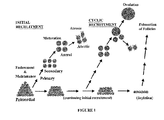
- Two mechanisms are involved in the progressive depletion of the ovarian reserve. Approximately 80% of the follicles disappear at the start via an apoptosis process, while the remaining 20% start to grow. The latter then begin a long process of development (approximately 6 months) in which a minority of them (approximately 400 over a lifetime) will arrive at the stage of preovulatory follicles containing a mature oocyte which is able to be fertilized ( Gougeon A., Endocrine Reviews (1996), 17, 121-155 ). The majority of the growing follicles disappear through apoptosis leading to their involution; apoptosis strikes them at any stage of their development.
- the change from the quiescent follicle stage to the growing follicle stage is a phenomenon which is continuous but of variable intensity. In particular, it accelerates in the 10 to 15 years preceding menopause, from approximately 38 years of age ( Gougeon A., Endocrine Reviews (1996), 17, 121-155 ).
- the factors stimulating the first stages of growth are relatively well known. They include gonadotropins luteinizing hormones (LH) and follicle-stimulating hormones (FSH) but particularly growth factors and steroids such as androgens.
- LH gonadotropins luteinizing hormones
- FSH follicle-stimulating hormones
- the mechanisms controlling the initiation of follicle growth are not well known. It is well established that this stage of folliculogenesis is not dependent on gonadotropins (LH and FSH) (cf. for example Bullun, S. and Adashi, E., Williams Textbook of Endocrinology, Tenth Edition (2003), 587-664 ).
- Kit ligand is the first peptide that was demonstrated to trigger initiation of follicular growth. This is based on the analysis of the ovarian phenotype of animals bearing spontaneous inactivating mutations ( Huang E.J. et al, Dev Biol 1993; 157:100-109 ) and experimental studies ( Yoshida H. et al, Dev. Biol. 1997; 184:122-137 , Parrott J.A. et al, Endocrinology 199; 140:4262-4271 ).
- Basic fibroblast growth factor was found to induce primordial follicle development similar to what has been demonstrated for kit ligand/stem cell factor (KL).
- Basic FGF was localized to primordial and early developing follicles by immunocytochemistry and was primarily observed in the oocytes.
- Treatment of bovine ovarian theca cells and stroma cells with bFGF was found to promote cell growth ( Skinner MK et al, Mol. Cell Endocrinol., 2001; 175; 123-130 ).
- Somatostatin is a cyclic peptide present in two forms in the organism, one form containing 14 amino acids and one form containing 28 amino acids. The biological activity of these two forms of SST is similar.
- the SST-14 form is the predominant form in the central nervous system. It inhibits the secretion of the growth hormone by the somatotrope cells of the anterior pituitary.
- the SST-28 form is preferably expressed in the stomach and the pancreas.
- the biological activity of SST is induced by means of a series of membrane receptors coupled with a protein G, 5 sub-types of which have been characterized, namely the sub-types SSTR1 to SSTR5 ( Reubi, J.
- SST receptors have been identified in the ovary of the rat ( Lidor, A. et al., Gynecol. Endocrinol. (1998), 12(2), 97-101 ) as well as in the human ovary in particular the sub-types 1, 2A and 5 ( Strauss et al., Hum. Reprod. (2003), 18, Suppl. 1, P-495 ).
- SST SST might play a role in maintaining follicles at the resting stage.
- SST is a peptide having a well-known effect in endocrine tissues: it inhibits cAMP generation (Ben-Shlomo et al., 2007) and it also inhibits KL production by sertoli cells (similar to granulosa cells) in the boar testis (Godard et al., 2001).
- SST when administered in vivo , decreases the number of ovarian preovulatory follicles (Nestorovic et al., 2004), and, in vitro , SST inhibits both FSH-stimulated aromatase and progesterone production by granulosa cells (Andreani et al., 1995). In porcine granulosa cells, SST inhibits LH - and forskolin-stimulated production of cAMP (Rajkumar et al., 1992), and might inhibit the preovulatory oocyte nuclear maturation (Mori et al., 1985).
- SST directly inhibits both IGF -BP1 and progesterone synthesis by preovulatory granulosa cells (Holst et al., 1997). Following an in vivo treatment of patients with SST, LH release, androgen production and circulating levels of IGF-1 were reduced, whereas those of IGF-BP3 were increased (Fulghesu et al., 1995; Piaditis et al., 1996).
- SST When co-administered with FSH in patients suffering from a polycystic ovary syndrome, SST decreased circulating levels of LH, growth hormone and IGF-I, but did not affect FSH-stimulated follicular growth (Lidor et al., 1998; van der Meer et al., 1998). Taken together, these facts show that SST may have an effect on LH release and ovarian steroidogenesis in the mammalian ovary.
- SST is one of the factor, if not the sole, maintaining follicles at the resting stage.
- SST may inhibit production of KL. Consequently, antagonists of the SSTR can stimulate entry of resting follicles into the growth phase.
- the somatostatin receptor modulator analogs can be a cyclic or non-cyclic polypeptide, a fusion or recombination protein, a non-peptidic chemical entity (i.e. peptidomimetic, small molecules)) or also a "SS-like" peptide such as corticostatin.
- somatostatin modulator analogs initiate an increase in the number of follicles in the growth phase, which are therefore able to be stimulated with the standard treatments in order to reach the stage of pre-ovulatory follicles in women in need thereof.
- Somatostatin modulator analogs can be used in vitro to induce early follicle growth in follicle cultures for the production of mature oocytes intended for fertilization.
- the somatostatin modulator analog is added to the culture media used to support in vitro follicle development.
- the ability of the somatostatin modulator analogs to induce early follicle growth can also be used in the field of toxicological analyses.
- the addition to the follicle sample of a somatostatin modulator analog makes it possible to accelerate follicle growth and thus to more easily observe any effect of slowing of said growth caused by said novel chemical entities.
- somatostatin modulator analog Another clinical situation which may benefit from a treatment by somatostatin modulator analog is the graft (preferably an autograft) of an ovary or of ovary fragments.
- the resumption of ovarian function is often temporary and is accompanied by a premature depletion of the number of primordial follicles ( Baird, D. T. et al., Endocrinology (1999), 140, 462-471 ). It has in fact been demonstrated that, during the transplantation, the granulosa cells of the growing follicles are more inclined to start apoptosis than those of the primordial follicles ( Liu, J. et al., Hum. Reprod. (2002), 17, 605-611 ).
- Somatostatin modulator analogs can be added to the various media for sampling, washing, preserving, freezing and thawing of ovarian tissue for the purpose of grafts. They can be used as a protective adjuvant for the media for sampling, washing, preserving, freezing and thawing of ovarian tissue.
- somatostatin modulator analog in patients with polycystic ovaries is also beneficial.
- polycystic ovaries have an abnormally high follicle population (cf. Hughesdon, Obstet. Gynecol. Surv. (1982), 37(2), 59-77 ).
- the excessive production of androgens by these follicles in an excessive quantity could be the origin of the metabolic and endocrine disorders observed in these patients.
- a significant reduction of this follicle population by ovarian resection, cauterization or ultraviolet radiation constitutes one of the most effective therapies because it allows the patients to ovulate at approximately 80% and to become pregnant at a cumulative rate of 75% over 18 months.
- somatostatin modulator analog should bring about a reduction in the number of growing follicles and therefore of the supernumerary antral follicles producing androgens resulting in the resumption of fertile ovulatory cycles of a temporary or permanent nature.
- somatostatin modulator analog in patients who are about to have, are currently having or have had chemotherapy or irradiation (for therapeutic or other purposes) reduces the risk of early menopause by preventing the accelerated activation of the follicular reserve which would make it more sensitive to the chemotherapy agents or to the ionizing radiation.
- somatostatin modulator analogs can be used in the context of in vitro or in vivo fertilizations in animals of high commercial value.
- animals with high commercial value can in particular be horses, bovines, ovines or goats; they can also be animals of transgenic origin.
- the patent application WO2005034989 discloses the use of somatostatin analogs, in the regulation of the ovarian follicular reserve.
- the invention primarily relates to the use of somatostatin or one of the agonistic analogs to regulate the ovarian follicular reserve or to the use of an antagonistic analog of somatostatin to accelerate the start of growing of quiescent follicles in non-menopausal women.
- Several classes of somatostatin antagonist analogs and agonist analogs are described but none of them have been claimed to have a dual agonist/antagonist profile.
- somatostatin receptor ligand antagonists or agonists disclosed in WO2005034989 do not encompass nor disclose Compound Cpa-[D-Cys-4-Pal-D-Trp-Lys-Thr-Cys]-2-Nal-NH 2 (Compound "A") according to the invention.
- a representative somatostatin antagonist analog described in WO2005034989 is an N-alkylated peptide of formula Cpa-[D-Cys-4-Pal-D-Trp-N-Me-Lys-Thr-Cys]-2-Nal-NH 2 (Compound "B”).
- the only difference between Compound "A” and the representative compound of WO2005034989 is the methyl-group attached to the nitrogen of the amide moiety of lysine.
- Compound Cpa-[D-Cys-4-Pal-D-Trp-Lys-Thr-Cys]-2-Nal-NH 2 was first described in WO2002070555 .
- This patent application discloses the biological activity (i.e. somatostatin agonistic and antagonistic activity on somatostatin receptor subtypes) of several cyclic and non-cyclic peptides.
- the patent application further discloses methods for modulating the rate of proliferation of medullary thyroid carcinoma cells using cyclic peptides.
- the usage of Compound "A” disclosed in WO2002070555 is distinct from that of the present invention in so far as it is confined to the treatment of cancer.
- Compound "A” is relevant for accelerating the recruitment and the maturation of human ovarian follicle from the follicular reserve and for slowing down the depletion of the ovarian reserve, as well.
- Compound "A” pharmacological effect is dominated by its antagonistic property resulting into a reduction of the proportion of primordial follicles when compared to ovarian follicles from the control animals and into an increase of the proportion of primary, secondary and pre-antral and antral follicles, when compared to ovarian follicles from the control animals.
- Compound "A” pharmacological effect is dominated by its agonistic property resulting into a slowdown of the apoptosis of the resting follicles and a protection of the ovarian reserve.
- the Applicants have found, in a surprising manner, that the dual somatostatin receptor agonist/antagonist compound Cpa-[D-Cys-4-Pal-D-Trp-Lys-Thr-Cys]-2-Nal-NH 2 (Compound "A”) has the capacity to modulate the somatostatin receptors' responses (Somatostatin Receptor Modulator), translating into a dual pharmacological effect on the ovarian reserve: 1) an acceleration of the start of growth of the quiescent follicles and/or 2) a protection of the quiescent follicles from apoptosis.
- Compound "A” has the capacity to modulate the somatostatin receptors' responses (Somatostatin Receptor Modulator), translating into a dual pharmacological effect on the ovarian reserve: 1) an acceleration of the start of growth of the quiescent follicles and/or 2) a protection of the quiescent follicles from apoptosis.
- a medicament comprising Compound "A” and/or its non N-alkylated analogs in women with reproductive age leads to a slow down of the depletion of the ovarian reserve and/or an increase in the number of follicles in the growth phase and which are therefore able to be stimulated with the standard treatments in order to reach the stage of pre-ovulatory follicles.
- the present invention provides a new use of a peptide derivative, compound Cpa-[D-Cys-4-Pal-D-Trp-Lys-Thr-Cys]-2-Nal-NH 2 (Compound "A”) and its analogs, that have the ability to accelerate the growth of quiescent follicles from the follicular reserve and in the protection of the ovarian reserve from apoptosis, as well. Due to this dual pharmacological activity Compound "A” and its analogs are suitable for the treatment of infertility.
- the invention provides Compound Cpa-[D-Cys-4-Pal-D-Trp-Lys-Thr-Cys]-2-Nal-NH 2 (Compound "A”) and/or its non N-alkylated analogs, any pharmaceutically acceptable salt thereof or an active metabolite thereof for use to accelerate the start of growth of quiescent follicles and/or for use to slow down the depletion of the ovarian reserve.
- the invention provides a pharmaceutical composition
- a pharmaceutical composition comprising Compound Cpa-[D-Cys-4-Pal-D-Trp-Lys-Thr-Cys]-2-Nal-NH 2 (Compound "A”) and/or its non N-alkylated analogs, any pharmaceutically acceptable salt thereof or an active metabolite thereof, for use to accelerate the start of growth of quiescent follicles and/or for use to slow down the depletion of the ovarian reserve.
- the invention provides a pharmaceutical pack or kit comprising one or more containers filled with Compound Cpa-[D-Cys-4-Pal-D-Trp-Lys-Thr-Cys]-2-Nal-NH 2 (Compound "A”) and/or its non N-alkylated analogs, any pharmaceutically acceptable salt thereof or an active metabolite thereof.
- the invention provides a method for the acceleration the start of growth of quiescent follicles and/or for slowing down the depletion of the ovarian reserve comprising administering Compound Cpa-[D-Cys-4-Pal-D-Trp-Lys-Thr-Cys]-2-Nal-NH 2 (Compound "A”) and/or its non N-alkylated analogs, any pharmaceutically acceptable salt thereof or an active metabolite thereof.
- the present invention relates to Compound Cpa-[D-Cys-4-Pal-D-Trp-Lys-Thr-Cys]-2-Nal-NH 2 (Compound "A”) and/or its non N-alkylated analogs, any pharmaceutically acceptable salt thereof or an active metabolite thereof for use to accelerate the start of growth of quiescent follicles and/or for use to slow down the depletion of the ovarian reserve.
- the invention relates to Compound Cpa-[D-Cys-4-Pal-D-Trp-Lys-Thr-Cys]-2-Nal-NH 2 (Compound "A”) and/or its non N-alkylated analogs, any pharmaceutically acceptable salt thereof or an active metabolite thereof, for use to accelerate the start of growth of quiescent follicles and/or for use to slow down the depletion of the ovarian reserve in order to treat infertility.
- the invention relates to Compound Cpa-[D-Cys-4-Pal-D-Trp-Lys-Thr-Cys]-2-Nal-NH 2 (Compound "A”) and/or its non N-alkylated analogs, any pharmaceutically acceptable salt thereof or an active metabolite thereof, for use to accelerate the start of growth of quiescent follicles and/or for use to slow down the depletion of the ovarian reserve, wherein said Compound "A”, any pharmaceutically acceptable salt thereof or an active metabolite thereof is to be administered to a mammal, preferably to a human being.
- the invention relates to Compound Cpa-[D-Cys-4-Pal-D-Trp-Lys-Thr-Cys]-2-Nal-NH 2 (Compound "A”) and/or its non N-alkylated analogs, any pharmaceutically acceptable salt thereof or an active metabolite thereof, for use to accelerate the start of growth of quiescent follicles and/or for use to slow down the depletion of the ovarian reserve, wherein said human being is a woman of reproductive age, women undergoing Assisted Reproductive Treatment and preferably women undergoing Assisted Reproductive Treatment but are poor responders to FSH stimulation.
- the invention relates to Compound Cpa-[D-Cys-4-Pal-D-Trp-Lys-Thr-Cys]-2-Nal-NH 2 (Compound "A”) and/or its non N-alkylated analogs, any pharmaceutically acceptable salt thereof or an active metabolite thereof, for use to accelerate the start of growth of quiescent follicles and/or for use to slow down the depletion of the ovarian reserve, wherein said Compound Cpa-[D-Cys-4-Pal-D-Trp-Lys-Thr-Cys]-2-Nal-NH 2 (Compound "A”) and/or its non N-alkylated analogs, or any pharmaceutically acceptable salt thereof or a pharmaceutical formulation thereof is to be administered orally, or parenterally, preferably subcutaneously.
- the invention relates to Compound Cpa-[D-Cys-4-Pal-D-Trp-Lys-Thr-Cys]-2-Nal-NH 2 (Compound “A”) and/or its non N-alkylated analogs, any pharmaceutically acceptable salt thereof or an active metabolite thereof, for use to accelerate the start of growth of quiescent follicles and/or for use to slow down the depletion of the ovarian reserve, wherein said Compound Cpa-[D-Cys-4-Pal-D-Trp-Lys-Thr-Cys]-2-Nal-NH 2 (Compound "A”) and/or its non N-alkylated analog, or any pharmaceutically acceptable salt thereof or an active metabolite thereof is administered daily, weekly or monthly.
- the invention relates to Compound Cpa-[D-Cys-4-Pal-D-Trp-Lys-Thr-Cys]-2-Nal-NH 2 (Compound "A”) and/or its non N-alkylated analogs, any pharmaceutically acceptable salt thereof or an active metabolite thereof, for use to accelerate the start of growth of quiescent follicles and/or for use to slow down the depletion of the ovarian reserve, wherein said Compound "A” and/or its non N-alkylated analog or any pharmaceutically acceptable salt thereof or an active metabolite thereof is administered in a daily dosage of 1 to 500 mg, preferably a daily dosage of 10mg to 200mg.
- the invention relates to Compound Cpa-[D-Cys-4-Pal-D-Trp-Lys-Thr-Cys]-2-Nal-NH 2 (Compound "A”) and/or its non N-alkylated analogs, any pharmaceutically acceptable salt thereof or an active metabolite thereof, for use to accelerate the start of growth of quiescent follicles and/or for use to slow down the depletion of the ovarian reserve, wherein the acceleration of the start of growth of quiescent follicles is for in vitro use in follicle cultures for the production of mature oocytes intended for fertilization.
- Compound "A” Compound Cpa-[D-Cys-4-Pal-D-Trp-Lys-Thr-Cys]-2-Nal-NH 2
- the invention relates to Compound Cpa-[D-Cys-4-Pal-D-Trp-Lys-Thr-Cys]-2-Nal-NH 2 (Compound "A”) and/or its non N-alkylated analogs, any pharmaceutically acceptable salt thereof or an active metabolite thereof, for use to accelerate the start of growth of quiescent follicles and/or for use to slow down the depletion of the ovarian reserve, wherein the acceleration of the start of growth of quiescent follicles is for use in toxicological analyses.
- the present invention also relates to a pharmaceutical composition
- a pharmaceutical composition comprising Compound Cpa-[D-Cys-4-Pal-D-Trp-Lys-Thr-Cys]-2-Nal-NH 2 (Compound "A”) and/or its non N-alkylated analogs, any pharmaceutically acceptable salt thereof or an active metabolite thereof, for use to accelerate the start of growth of quiescent follicles and/or for use to slow down the depletion of the ovarian reserve.
- the invention relates to a pharmaceutical composition
- a pharmaceutical composition comprising Compound Cpa-[D-Cys-4-Pal-D-Trp-Lys-Thr-Cys]-2-Nal-NH 2 (Compound "A”) and/or its non N-alkylated analogs, any pharmaceutically acceptable salt thereof or an active metabolite thereof for use to accelerate the start of growth of quiescent follicles and/or for use to slow down the depletion of the ovarian reserve, in order to the treatment of infertility.
- Compound Cpa-[D-Cys-4-Pal-D-Trp-Lys-Thr-Cys]-2-Nal-NH 2 Compound "A”
- any pharmaceutically acceptable salt thereof or an active metabolite thereof for use to accelerate the start of growth of quiescent follicles and/or for use to slow down the depletion of the ovarian reserve, in order to the treatment of infertility.
- the invention relates to a pharmaceutical composition
- a pharmaceutical composition comprising Compound Cpa-[D-Cys-4-Pal-D-Trp-Lys-Thr-Cys]-2-Nal-NH 2 (Compound "A”) and/or its non N-alkylated analogs, any pharmaceutically acceptable salt thereof or an active metabolite thereof, for use to accelerate the start of growth of quiescent follicles and/or for use to slow down the depletion of the ovarian reserve, wherein said Compound Cpa-[D-Cys-4-Pal-D-Trp-Lys-Thr-Cys]-2-Nal-NH 2 (Compound "A”) and/or its non N-alkylated analog, any pharmaceutically acceptable salt thereof or an active metabolite thereof is to be administered to a mammal, preferably to a human being.
- the invention relates to a pharmaceutical composition
- a pharmaceutical composition comprising Compound "A", any pharmaceutically acceptable salt thereof or an active metabolite thereof, for use to accelerate the start of growth of quiescent follicles and/or for use to slow down the depletion of the ovarian reserve, wherein said human being is a woman of reproductive age, women undergoing Assisted Reproductive Treatment and preferably women undergoing Assisted Reproductive Treatment but are poor responders to FSH stimulation.
- the invention relates to a pharmaceutical composition
- a pharmaceutical composition comprising Compound Cpa-[D-Cys-4-Pal-D-Trp-Lys-Thr-Cys]-2-Nal-NH 2 (Compound "A”) and/or its non N-alkylated analogs, any pharmaceutically acceptable salt thereof or an active metabolite thereof, for use to accelerate the start of growth of quiescent follicles and/or for use to slow down the depletion of the ovarian reserve, wherein said Compound Cpa-[D-Cys-4-Pal-D-Trp-Lys-Thr-Cys]-2-Nal-NH 2 (Compound "A”) and/or its non N-alkylated analog, or any pharmaceutically acceptable salt thereof or a pharmaceutical formulation thereof is to be administered orally, or parenterally, preferably subcutaneously.
- the invention relates to a pharmaceutical composition
- a pharmaceutical composition comprising Compound Cpa-[D-Cys-4-Pal-D-Trp-Lys-Thr-Cys]-2-Nal-NH 2 (Compound “A”) and/or its non N-alkylated analogs, any pharmaceutically acceptable salt thereof or an active metabolite thereof, for use to accelerate the start of growth of quiescent follicles and/or for use to slow down the depletion of the ovarian reserve, wherein said Compound Cpa-[D-Cys-4-Pal-D-Trp-Lys-Thr-Cys]-2-Nal-NH 2 (Compound "A”) and/or its non N-alkylated analog or any pharmaceutically acceptable salt thereof or a pharmaceutical formulation thereof is administered daily, weekly or monthly.
- the invention relates to a pharmaceutical composition
- a pharmaceutical composition comprising Compound Cpa-[D-Cys-4-Pal-D-Trp-Lys-Thr-Cys]-2-Nal-NH 2 (Compound “A”) and/or its non N-alkylated analogs, any pharmaceutically acceptable salt thereof or an active metabolite thereof, for use to accelerate the start of growth of quiescent follicles and/or for use to slow down the depletion of the ovarian reserve, wherein said Compound Cpa-[D-Cys-4-Pal-D-Trp-Lys-Thr-Cys]-2-Nal-NH 2 (Compound "A”) and/or its non N-alkylated analog or any pharmaceutically acceptable salt thereof or a pharmaceutical formulation thereof is administered in a daily dosage of 1 to 500 mg, preferably a daily dosage of 10mg to 200mg.
- the invention relates to a pharmaceutical composition
- a pharmaceutical composition comprising Compound Cpa-[D-Cys-4-Pal-D-Trp-Lys-Thr-Cys]-2-Nal-NH 2 (Compound "A”) and/or its non N-alkylated analogs, any pharmaceutically acceptable salt thereof or an active metabolite thereof, for use to accelerate the start of growth of quiescent follicles and/or for use to slow down the depletion of the ovarian reserve, wherein the acceleration of the start of growth of quiescent follicles is for in vitro use in follicle cultures for the production of mature oocytes intended for fertilization.
- Compound Cpa-[D-Cys-4-Pal-D-Trp-Lys-Thr-Cys]-2-Nal-NH 2 Compound "A”
- Compound "A” Compound Cpa-[D-Cys-4-Pal-D-Trp-Lys-Thr-C
- the invention relates to a pharmaceutical composition
- a pharmaceutical composition comprising Compound Cpa-[D-Cys-4-Pal-D-Trp-Lys-Thr-Cys]-2-Nal-NH 2 (Compound "A”) and/or its non N-alkylated analogs, any pharmaceutically acceptable salt thereof or an active metabolite thereof, for use to accelerate the start of growth of quiescent follicles and/or for use to slow down the depletion of the ovarian reserve, wherein the acceleration of the start of growth of quiescent follicles is for use in toxicological analyses.
- the present invention also relates to a pharmaceutical pack or kit comprising one or more containers filled with Compound Cpa-[D-Cys-4-Pal-D-Trp-Lys-Thr-Cys]-2-Nal-NH 2 (Compound "A”) and/or its non N-alkylated analogs, any pharmaceutically acceptable salt thereof or an active metabolite thereof.
- Compound "A" Compound Cpa-[D-Cys-4-Pal-D-Trp-Lys-Thr-Cys]-2-Nal-NH 2
- the present invention further relates to a method for the acceleration the start of growth of quiescent follicles and/or for slowing down the depletion of the ovarian reserve comprising administering Compound Cpa-[D-Cys-4-Pal-D-Trp-Lys-Thr-Cys]-2-Nal-NH 2 (Compound "A”) and/or its non N-alkylated analogs, any pharmaceutically acceptable salt thereof or an active metabolite thereof.
- the invention relates to to a method for the acceleration the start of growth of quiescent follicles and/or for slowing down the depletion of the ovarian reserve comprising administering Compound Cpa-[D-Cys-4-Pal-D-Trp-Lys-Thr-Cys]-2-Nal-NH 2 (Compound "A”) and/or its non N-alkylated analogs, any pharmaceutically acceptable salt thereof or an active metabolite thereof, for the treatment of infertility.
- Compound Cpa-[D-Cys-4-Pal-D-Trp-Lys-Thr-Cys]-2-Nal-NH 2 Compound "A”
- Compound "A" Compound Cpa-[D-Cys-4-Pal-D-Trp-Lys-Thr-Cys]-2-Nal-NH 2
- the invention relates to a method for the acceleration the start of growth of quiescent follicles and/or for slowing down the depletion of the ovarian reserve comprising administering Compound Cpa-[D-Cys-4-Pal-D-Trp-Lys-Thr-Cys]-2-Nal-NH 2 (Compound "A”) and/or its non N-alkylated analogs, any pharmaceutically acceptable salt thereof or an active metabolite thereof, wherein said Compound Cpa-[D-Cys-4-Pal-D-Trp-Lys-Thr-Cys]-2-Nal-NH 2 (Compound "A”) and/or its non N-alkylated analogs, any pharmaceutically acceptable salt thereof or an active metabolite thereof is to be administered to a mammal, preferably to a human being.
- the invention relates to a method for the acceleration the start of growth of quiescent follicles and/or for slowing down the depletion of the ovarian reserve comprising administering Compound Cpa-[D-Cys-4-Pal-D-Trp-Lys-Thr-Cys]-2-Nal-NH 2 (Compound "A”) and/or its non N-alkylated analogs, any pharmaceutically acceptable salt thereof or an active metabolite thereof, wherein said human being is woman of reproductive age, women undergoing Assisted Reproductive Treatment and preferably women undergoing Assisted Reproductive Treatment but are poor responders to FSH stimulation.
- Compound Cpa-[D-Cys-4-Pal-D-Trp-Lys-Thr-Cys]-2-Nal-NH 2 Compound "A”
- Compound "A" Compound Cpa-[D-Cys-4-Pal-D-Trp-Lys-Thr-Cys]-2-Nal-NH 2
- the invention relates to a method for the acceleration the start of growth of quiescent follicles and/or for slowing down the depletion of the ovarian reserve comprising administering Compound Cpa-[D-Cys-4-Pal-D-Trp-Lys-Thr-Cys]-2-Nal-NH 2 (Compound "A”) and/or its non N-alkylated analogs, any pharmaceutically acceptable salt thereof or an active metabolite thereof, wherein said Compound Cpa-[D-Cys-4-Pal-D-Trp-Lys-Thr-Cys]-2-Nal-NH 2 (Compound "A”) and/or its non N-alkylated analogs, any pharmaceutically acceptable salt thereof or an active metabolite thereof is to be administered orally, or parenterally, preferably subcutaneously.
- the invention relates to a method for the acceleration the start of growth of quiescent follicles and/or for slowing down the depletion of the ovarian reserve comprising administering Compound Cpa-[D-Cys-4-Pal-D-Trp-Lys-Thr-Cys]-2-Nal-NH 2 (Compound "A”) and/or its non N-alkylated analogs, any pharmaceutically acceptable salt thereof or an active metabolite thereof, wherein said Compound Cpa-[D-Cys-4-Pal-D-Trp-Lys-Thr-Cys]-2-Nal-NH 2 (Compound "A”) and/or its non N-alkylated analogs, any pharmaceutically acceptable salt thereof or an active metabolite thereof is to be administered daily, weekly or monthly.
- the invention relates to a method for the acceleration the start of growth of quiescent follicles and/or for slowing down the depletion of the ovarian reserve comprising administering Compound Cpa-[D-Cys-4-Pal-D-Trp-Lys-Thr-Cys]-2-Nal-NH 2 (Compound "A”) and/or its non N-alkylated analogs, any pharmaceutically acceptable salt thereof or an active metabolite thereof, wherein said Compound Cpa-[D-Cys-4-Pal-D-Trp-Lys-Thr-Cys]-2-Nal-NH 2 (Compound "A”) and/or its non N-alkylated analogs, any pharmaceutically acceptable salt thereof or an active metabolite thereof is to be administered in a daily dosage of 1 to 500 mg, preferably a daily dosage of 10mg to 200mg.
- the invention relates to a method for the acceleration the start of growth of quiescent follicles and/or for slowing down the depletion of the ovarian reserve comprising administering Compound Cpa-[D-Cys-4-Pal-D-Trp-Lys-Thr-Cys]-2-Nal-NH 2 (Compound "A”) and/or its non N-alkylated analogs, any pharmaceutically acceptable salt thereof or an active metabolite thereof, wherein the acceleration of the start of growth of quiescent follicles is for in vitro use in follicle cultures for the production of mature oocytes intended for fertilization.
- Compound Cpa-[D-Cys-4-Pal-D-Trp-Lys-Thr-Cys]-2-Nal-NH 2 Compound "A”
- Compound "A" Compound Cpa-[D-Cys-4-Pal-D-Trp-Lys-Thr-Cys]-2-Nal-
- the invention relates to a method for the acceleration the start of growth of quiescent follicles and/or for slowing down the depletion of the ovarian reserve comprising administering Compound Cpa-[D-Cys-4-Pal-D-Trp-Lys-Thr-Cys]-2-Nal-NH 2 (Compound "A”) and/or its non N-alkylated analogs, any pharmaceutically acceptable salt thereof or an active metabolite thereof, wherein the acceleration of the start of growth of quiescent follicles is for use in toxicological analyses.
- somatostatin receptor modulator is meant a compound that has a high binding affinity (e.g., K i of less than 100 nM, or preferably less than 10 nM, or more preferably less than 1 nM) for one or several somatostatin receptors; his binding affinity can readily been assessed by those skilled in the art.
- SST Natural or native Somatostatin
- SST-14 form is the predominant form in the central nervous system. It inhibits the secretion of the growth hormone by the somatotrope cells of the anterior pituitary.
- the SST-28 form is preferably expressed in the stomach and the pancreas.
- the biological activity of SST is induced by means of a series of membrane receptors coupled with a protein G, 5 sub-types of which have been characterized, namely the sub-types SSTR1, SSTR2, SSTR3, SSTR4 and SSTR5.
- modulating refers to altering (negatively or positively) the early follicle growth and/or ovarian follicle atresia by administering a somatostatin receptor agonist/antagonist, a pharmaceutically acceptable salt thereof or an active metabolite thereof.
- salts of the somatostatin receptor modulator Compound “A” is meant, in particular in the present application, addition salts with inorganic acids such as hydrochloride, hydrobromide, hydroiodide, sulphate, phosphate, diphosphate and nitrate or with organic acids such as acetate, maleate, fumarate, tartrate, succinate, citrate, lactate, methanesulphonate, p-toluenesulphonate, palmoate and stearate. Also included in the field of the present invention, when they can be used, the salts formed from bases such as sodium or potassium hydroxide. For other examples of pharmaceutically acceptable salts, reference can be made to “ Salt selection for basic drugs", Int. J. Pharm. (1986), 33, 201-217 .
- an "active metabolite” is a product produced through metabolism in the body of a specified compound or salt thereof and which exhibits the same biological activity as the specified compound. Active metabolites of a somatostatin receptor analog or of a salt of said somatostatin receptor analog may be identified using routine techniques known in the art and their activities determined using tests such as known in the art.
- Such metabolites may result for example from the oxidation, reduction, hydrolysis, amidation, deamidation, esterification, deesterification, enzymatic cleavage, monohydroxylation, dihydroxylation, methylation, glucuronidation, O-glucuronidation, sulfation, amide-hydrolysis, activation and the like, of the administered somatostatin receptor analog or of a salt of said somatostatin receptor analog.
- the invention includes active metabolites of somatostatin receptor analog or of a salt of said somatostatin receptor analog, including compounds produced by a process comprising contacting a compound of this invention with a mammal for a period of time sufficient to yield a metabolic product thereof.
- Such metabolite may also be produced in vitro by oxidation, reduction, hydrolysis, amidation, deamidation, esterification, deesterification, or enzymatic cleavage of the corresponding somatostatin receptor analog or salt of said somatostatin receptor analog.
- somatostatin analog is commonly used to describe compounds derived from the native structure and selected for their enhanced antagonist/agonist activity.
- somatostatin analog is thus meant a compound derived from the native structure of somatostatin and selected for its enhanced antagonist and/or agonist activity.
- a somatostatin analog can be either i) synthetic, i.e. obtained by chemical synthesis (e.g peptide synthesis) or ii) recombinant i.e. obtained by recombinant techniques, where the somatostatin analog amino acid sequence is encoded by a cloned gene and expressed and recovered from expression cells iii) peptidic or iv) non-peptidic.
- Compound "A” somatostatin receptor modulator of the chemical formula: Cpa-[D-Cys-4-Pal-D-Trp-Lys-Thr-Cys]-2-Nal-NH2
- the somatostatin receptor modulator Compound “A” is selected from the group comprising, but not limited to recombinant Compound “A” modulator analogs of somatostatin or synthetic Compound “A” modulator analogs of somatostatin.
- a “non N-alkylated analog" of Compound “A” is a cyclic or non cyclic peptide derived from the structure of Compound “A” with each nitrogen atom of the peptide amide bond being not substituted with an alkyl group.
- pre-ovulatory follicles is used to described growing follicles that are responsive to FSH stimulation.
- ovarian reserve or "ovarian follicular reserve” is used to described the number of remaining primordial follicles in the ovaries.
- the term "quiescent follicles" is used to describe dormant follicles or primordial follicles from the ovarian reserve.
- “Ovarian follicle atresia” or “apoptosis” refers to a process through which ovarian follicles undergo a degenerative process called atresia during reproductive life. Almost 99% of ovarian follicles undergo this process and only 1% proceeds into ovulation the few that are selected to become ovulatory follicles are transformed into corpora lutea following ovulation.
- the present invention also provides Compound "A", a pharmaceutically acceptable salt thereof or an active metabolite thereof, for its use to accelerate the maturation of the resting ovarian follicles from the follicular reserve and/or to preserve the ovarian reserve from rapid depletion, and therefore in infertility treatment.
- patient in need thereof is well-recognized in the art, and, is used herein to refer to a mammal and, more preferably, a human patient, and even more preferably a human female.
- a gynecological disease or condition refers to a disease or condition related to the health of the female reproductive system (uterus, vagina, and ovaries).
- treatment of infertility relates to the treatment of conditions selected from the group comprising Incipiens ovarian failure, Premature ovarian failure, infertility, anovulation, infertility characterized by "poor ovarian response" to gonadotropin therapy, delayed puberty, infertility associated with elevated FSH levels, pre-treatment to IVF and ART (Assisted Reproductive Technology), spontaneous premature ovarian failure (early menopause), polycystic ovarian disease (reduction of the number of growing follicles), and bad responders to COS (controlled ovarian stimulation).
- treatment of infertility relates also to the treatment using in vitro induction of early follicle growth in follicle cultures for the production of mature oocytes intended for fertilization.
- a Compound "A” a pharmaceutically acceptable salt thereof or an active metabolite thereof, for preparing a medicament in the treatment and/or prevention of a gynaecological disease or condition selected from the group comprising Incipiens ovarian failure, Premature ovarian failure, infertility, anovulation, infertility characterized by "poor ovarian response" to gonadotropin therapy, delayed puberty, infertility associated with elevated FSH levels, pre-treatment to IVF and ART (Assisted Reproductive Technology), spontaneous premature ovarian failure (early menopause), polycystic ovarian disease (reduction of the number of growing follicles), and bad responders to COS (controlled ovarian stimulation).
- a gynaecological disease or condition selected from the group comprising Incipiens ovarian failure, Premature ovarian failure, infertility, anovulation, infertility characterized by "poor ovarian response" to gonadotropin therapy,
- the pharmaceutical composition, preparation or medicament containing Compound "A", a pharmaceutically acceptable salt thereof or an active metabolite thereof, as applicable in this invention can be administered by parenteral route (subcutaneous, intravenous, intramuscular, intraperitoneal or in an implant), by oral, vaginal, intrauterine, rectal, nasal, sublingual or transdermal route.
- parenteral route subcutaneous, intravenous, intramuscular, intraperitoneal or in an implant
- oral, vaginal, intrauterine rectal, nasal, sublingual or transdermal route.
- Preferred route of administration is subcutaneous.
- One variation of the present invention also foresees a pharmaceutical composition or preparation suitable for oral administration of Compound "A”, a pharmaceutically acceptable salt thereof or an active metabolite thereof as defined in the present invention.
- Compound "A”, a pharmaceutically acceptable salt thereof or an active metabolite thereof may be orally administered in combination with a transient permeability enhancer allowing increase intestinal absorption. All transient permeability enhancement technology, well known by those skilled in the art are potential candidate to be used in this invention.
- Solid dosage forms for oral administration include capsules, tablets, pills, powders and granules.
- the active compound may be mixed with at least one inert, pharmaceutically acceptable excipient or carrier, such as sodium citrate or dicalcium phosphate and/or (a) fillers or extenders such as starches, lactose, sucrose, glucose, mannitol and silicic acid; (b) binders such as carboxymethylcellulose, alginates, gelatin, polyvinylpyrrolidone, sucrose and acacia; (c) humectants such as glycerol; (d) disintegrating agents such as agar-agar, calcium carbonate, potato or tapioca starch, alginic acid, certain silicates and sodium carbonate; (e) solution retarding agents such as paraffin; (f) absorption accelerators such as quaternary ammonium compounds; (g) wetting agents such as cetyl alcohol and glycerol monostearate; (h)
- compositions of a similar type may also be employed as fillers in soft and hard-filled gelatin capsules using such excipients as lactose or milk sugar as well as high molecular weight polyethylene glycols and the like.
- the solid dosage forms of tablets, capsules, pills and granules can be prepared with coatings and shells such as enteric coating and other coatings well-known in the pharmaceutical formulating art. They may optionally contain opacifying agents and may also be of a composition such that they release the active ingredient(s) only, or preferentially, in a certain part of the intestinal tract, optionally, in a delayed manner.
- coatings and shells such as enteric coating and other coatings well-known in the pharmaceutical formulating art. They may optionally contain opacifying agents and may also be of a composition such that they release the active ingredient(s) only, or preferentially, in a certain part of the intestinal tract, optionally, in a delayed manner.
- embedding compositions which can be used include polymeric substances and waxes.
- Liquid dosage forms for oral administration include pharmaceutically acceptable emulsions, solutions, suspensions, syrups and elixirs.
- the liquid dosage forms may contain inert diluents commonly used in the art such as, for example, water or other solvents, solubilizing agents and emulsifiers such as ethyl alcohol, isopropyl alcohol, ethyl carbonate, ethyl acetate, benzyl alcohol, benzyl benzoate, propylene glycol, 1,3-butylene glycol, dimethyl formamide, oils (in particular, cottonseed, groundnut, corn, germ, olive, castor and sesame oils), glycerol, tetrahydrofurfuryl alcohol, polyethylene glycols and fatty acid esters of sorbitan and mixtures thereof.
- inert diluents commonly used in the art such as, for example, water or other solvents, solubilizing agents and emulsifiers such as
- the formulation may contain suspending agents, as for example, ethoxylated isostearyl alcohols, polyoxyethylene sorbitol and sorbitan esters, microcrystalline cellulose, aluminum metahydroxide, bentonite, agar-agar and tragacanth, or mixtures of these substances, among others.
- suspending agents as for example, ethoxylated isostearyl alcohols, polyoxyethylene sorbitol and sorbitan esters, microcrystalline cellulose, aluminum metahydroxide, bentonite, agar-agar and tragacanth, or mixtures of these substances, among others.
- Useful intranasal formulations of Compound "A", a pharmaceutically acceptable salt thereof or an active metabolite thereof may contain stabilizers and surfactants.
- pharmaceutically acceptable surfactants are polyoxyethylene castor oil derivatives, such as polyoxyethylene-glycerol-triricinoleate, also known as polyoxyl 35 castor oil (CREMOPHOR EL), or polyoxyl 40 hydrogenated castor oil (CREMOPHOR RH40) (both available from BASF Corp.); mono-fatty acid esters of polyoxyethylene (20) sorbitan, such as polyoxyethylene (20) sorbitan monolaurate (TWEEN 80), polyoxyethylene monostearate (TWEEN 60), polyoxyethylene (20) sorbitan monopalmitate (TWEEN 40), or polyoxyethylene (20) sorbitan monolaurate (TWEEN 20) (all available from ICI Surfactants of Wilmington, Del.); polyglyceryl esters, such as polyglyceryl oleate; and polyoxyeth
- the surfactant will be between about 0.01% and 10% by weight of the pharmaceutical composition.
- the pharmaceutically useful stabilizers are antioxidants such as sodium sulfite, sodium metabisulfite, sodium thiosulfate, sodium formaldehyde sulfoxylate, sulfur dioxide, ascorbic acid, isoascorbic acid, thioglycerol, thioglycolic acid, cysteine hydrochloride, acetyl cysteine, ascorbyl palmitate, hydroquinone, propyl gallate, nordihydroguaiaretic acid, butylated hydroxytoluene, butylated hydroxyanisole, alpha-tocopherol and lecithin.
- the stabilizer will be between about 0.01% and 5% by weight of the pharmaceutical composition.
- Suspensions may also include chelating agents such as ethylene diamine tetraacetic acid, its derivatives and salts thereof, dihydroxyethyl glycine, citric acid and tartaric acid among others. Additionally, proper fluidity of a suspension can be maintained, for example, by the use of coating materials such as lecithin, by the maintenance of the required particle size in the case of dispersions and by the use of surfactants, such as those previously mentioned.
- chelating agents such as ethylene diamine tetraacetic acid, its derivatives and salts thereof, dihydroxyethyl glycine, citric acid and tartaric acid among others.
- proper fluidity of a suspension can be maintained, for example, by the use of coating materials such as lecithin, by the maintenance of the required particle size in the case of dispersions and by the use of surfactants, such as those previously mentioned.
- One embodiment of the present invention also foresees a pharmaceutical composition or preparation suitable for delayed and controlled release of Compound "A", a pharmaceutically acceptable salt thereof or an active metabolite thereof as defined in the present invention.
- the Compound "A”, a pharmaceutically acceptable salt thereof or an active metabolite thereof, for example, may be incorporated in a matrix of biocompatible polymer allowing delayed and controlled release. All biocompatible polymers, well known by those skilled in the art are potential candidate to be used in this invention. Vaginal rings or intra-uterine devices are also contemplated options.
- Sustained-release preparations may be prepared. Suitable examples of sustained-release preparations include semi permeable matrices of solid hydrophobic polymers containing Compound "A", a pharmaceutically acceptable salt thereof or an active metabolite thereof, which matrices are in the form of shaped articles, e.g. films, or microcapsules. Examples of sustained-release matrices include polyesters, hydrogels (for example, poly(2-hydroxyethyl-methacrylate), or poly(vinylalcohol)), polylactides ( U.S. Pat. No.
- copolymers of L-glutamic acid and [gamma] ethyl-L-glutamate non-degradable ethylenevinyl acetate
- degradable lactic acid-glycolic acid copolymers such as the LUPRON DEPOT(TM) (injectable microspheres composed of lactic acid-glycolic acid copolymer and leuprolide acetate), and poly-D-(-)-3-hydroxybutyric acid.
- the formulations to be used for in vivo administration must be sterile. This is readily accomplished for example by filtration through sterile filtration membranes.
- the dose of Compound “A” according to the present invention intended for the use in the acceleration of the start of growth of quiescent follicles and a protection of the ovarian reserve from apoptosis in women in reproductive age and in the treatment of infertility, varies according to the method of administration, the age and body weight of the subject to be treated as well as the condition of the subject, and the final decision is made by the attending doctor or vet. Such a quantity determined by the attending doctor is called “therapeutically effective amount" here.
- Compound “A” a pharmaceutically acceptable salt thereof or an active metabolite thereof will be administered, preferably daily. However, the appropriate period will depend notably on the age and body weight of the subject to be treated as well and the mode of administration and the formulation of Compound "A".
- Compound "A” a pharmaceutically acceptable salt thereof or an active metabolite thereof will be administered, every other day, once a week or once every month, preferably, as a onetime administration.
- Compound “A” a pharmaceutically acceptable salt thereof or an active metabolite thereof is administered at a daily dose between 0.1 to 1000 mg.
- the appropriate dosage will depend notably on the age and body weight of the subject to be treated as well and the mode of administration. Possible mode of administration include tablets, capsules, lozenges, pills, dental pastes, suppositories, inhalants, solutions, ointments, parenteral depots, vaginal rings and intra-uterine delivery systems.
- compositions or formulation described herein may be administered alone or in combination with other treatments, therapeutics or agents, either simultaneously or sequentially dependent upon the condition or disease to be treated.
- Compound "A” a pharmaceutically acceptable salt thereof or an active metabolite thereof in the method of the invention may be administered in association with, e.g. a recombinant follitropin either simultaneously or sequentially.
- Compound "A” a pharmaceutically acceptable salt thereof or an active metabolite thereof for use in the method as described herein, are usually in the form of a pharmaceutical composition that may contain one or more pharmaceutically acceptable carriers, such as excipients, carriers and/or auxiliaries or stabilizers which facilitate processing of the active compounds into preparation which can be used pharmaceutically.
- pharmaceutically acceptable carriers such as excipients, carriers and/or auxiliaries or stabilizers which facilitate processing of the active compounds into preparation which can be used pharmaceutically.
- Acceptable carriers, excipients, or stabilizers are non-toxic to recipients at the dosages and concentrations employed, and include buffers such as phosphate, citrate, and other organic acids; antioxidants including ascorbic acid and methionine; preservatives (such as octadecyldimethylbenzyl ammonium chloride; hexamethonium chloride; benzalkonium chloride, benzethonium chloride; phenol, butyl or benzyl alcohol; alkyl parabens such as methyl or propyl paraben; catechol; resorcinol; cyclohexanol; 3-pentanol; and m-cresol); low molecular weight (less than about 10 residues) polypeptides; proteins, such as serum albumin, gelatin, or immunoglobulins; hydrophilic polymers such as polyvinylpyrrolidone; amino acids such as glycine, glutamine, asparagine, histidine,
- the present invention also provides for a method of treating and/or preventing infertility in a patient in need thereof comprising administering to said patient a pharmaceutical composition comprising Compound "A", a pharmaceutically acceptable salt thereof or an active metabolite thereof.
- the present invention also contemplates a kit for treating and/or preventing a gynecological disease or condition comprising Compound "A", any pharmaceutically acceptable salt thereof or or an active metabolite thereof, or a pharmaceutical formulation thereof optionally with reagents and/or instructions for use.
- the Kit comprises a container and a label or package insert on or associated with the container.
- Suitable containers include, for example, bottles, vials, syringes, etc.
- the containers may be formed from a variety of materials such as glass or plastic.
- the container holds Compound "A", a pharmaceutically acceptable salt thereof or an active metabolite thereof of the invention which is effective for treating and/or preventing a gynecological disease or condition and may have a sterile access port (for example the container may be an intravenous solution bag or a vial having a stopper pierceable by a hypodermic injection needle or an aerosol spray device).
- the label or package insert indicates that the composition is used for treating the condition of the invention.
- the Kit may further comprise a second (or third) container comprising a pharmaceutically acceptable buffer, such as bacteriostatic water for injection (BWFI)5 phosphate-buffered saline, Ringer's solution and dextrose solution. It may further include other materials desirable from a commercial and user standpoint, including other buffers, diluents, filters, needles, and syringes.
- a pharmaceutically acceptable buffer such as bacteriostatic water for injection (BWFI)5 phosphate-buffered saline, Ringer's solution and dextrose solution.
- BWFI bacteriostatic water for injection
- It may further include other materials desirable from a commercial and user standpoint, including other buffers, diluents, filters, needles, and syringes.
- Compound “A” is a strong antagonist of somatostatin receptor 2 and an agonist of somatostatin receptor 5 while Compound “B” is reported in WO2005034989 to be an antagonist of the somatostatin receptors.
- Compound " A 2757 6.4 44 711 86 Strong antagonist of SSTR2 Agonist of SSTR5
- Compound " B 1000 17.1 66 1000 6 Antagonist
- the in vitro actions of Compound "A” and Compound “B” on rat primordial follicle development were also investigated with an ovarian organ culture system. Two procedures were used to assess the actions of the analogs. The first was to culture for 10 days the postnatal day 4 rat ovaries in the absence or presence of the analogs followed by a histological analysis of the ovary. The number of primordial follicles and developing follicles was determined to assess actions of the analogs on the induction of primordial follicle development. The second procedure was to culture for only 2 days the postnatal day 4 rat ovaries in the absence or presence of the analogs, followed by RNA collection from the ovary sample and analysis of the ovarian transcriptome with a microarray analysis.
- This experimental design determines the effects of the somatostatin analogs "A” and "B” on primordial follicle development using a morphological analysis of the follicle, and also determines the ability of the analogs to alter gene expression after a short treatment, prior to any change in follicle development, to assess the early event responses of the ovary to the analogs.
- the somatostatin analogs "A” and “B” did effect primordial follicle development in a different manner in a rat ovary organ culture procedure.
- the magnitude of the stimulatory effect of Compound “A” was similar to the positive controls of KL and bFGF while there is no significant effect of Compound “B” on the primordial follicle development (see FIGURES 2A and 2B ). Therefore, the results demonstrated that Compound “A” stimulate the transition of primordial follicles to primary follicles.
- the ability of the analogs "A” and “B” to alter on a molecular level gene expression of the ovary also supports the conclusion that the ovary is directly effected by the analogs (see FIGURES 3A and 3B ).
- N-alkylated peptides somatostatin analogs such as Compound "A” could be used as somatostatin receptor modulators and have a more appropriate biological profile than N-alkylated peptides somatostatin analogs for the optimal regulation of the ovarian follicular reserve and thus treatment of infertility.
- the main PD study was run for at least 97 days inclusive of a one-week pre-dosing period to obtain baseline observations and measurements.
- the first day of dosing was designated as Day 1. Dosing was carried out twice daily for 90 days.
- PK Dose Design Schedule Test Substance Dose Level (mg/kg) Dose Volume (mL/kg) Concentration (mg/mL) Route of Administration Number of Animals 1 st Dosing Compound “A” 2 0.67 3 IV 3 2- to 3-Week Washout/Recovery Period 2 nd Dosing Compound “A” 2 0.67 3 SC
- the vehicle/control substance which is mixture of saline, 0.1 N HCl, heat-inactivated monkey serum, and dimethylsulfoxide (DMSO), was prepared.
- the heat inactivated monkey serum was either prepared or supplied from a commercial source.
- Cynomolgus serum was thawed and placed in a 56 °C water bath for 30 min with occasional stirring. The serum was allowed to cool slowly to room temperature and then centrifuged at 13000 rpm for 10 minutes at room temperature in order to remove any precipitated material. The heat-inactivated serum was then divided into aliquots and stored frozen at -20 °C until used within one month after preparation.
- the final composition of this mixture was 0.001N HCl and 2% heat-inactivated monkey serum in saline. This can be used within 7 days when stored at 2-8 °C or for longer periods when stored at -20°C.
- test substance without considering the peptide purity
- the required amount of test substance was weighed and transferred into a suitable container.
- the drug was solubilized by adding the required amount of dimethyl sulfoxide (2% of the final formulation volume). The mixture was vortex-mixed or briefly sonicated until the drug was completely dissolved.
- the modified saline solution was gradually added until the final volume was achieved (at this point, precipitates may form).
- the mixture was acidified with dilute hydrochloric acid until pH 4 to dissolve the precipitates and then sterile-filtered (0.22 ⁇ m) prior to storage.
- the dosing solutions was prepared weekly and, when not in use, stored at approximately 4 °C (2-8 °C) or at the appropriate storage condition based on the results of the stability analysis of PGL1001 in the vehicle formulation. On the days of dosing, the dosing solutions were equilibrated to room temperature and was dispensed at room temperature using syringes of appropriate sizes. No dilutions or filtrations were required. Actual amounts prepared were documented in the raw data.
- the pelvic cavity was exposed by midventral laparotomy.
- the reproductive tract tissues including the ovaries were examined in situ . Any abnormalities were recorded with details of the location, colour, shape and size.
- the ovaries were photographed in situ before being carefully dissected free of surrounding tissue. Both ovaries were trimmed of the surrounding fat tissue, separated from the fallopian tubes, removed, measured, weighed, photographed, and immersed in 50 mL of Bouin's solution [75mL picric acid solution (1.3%), 20mL of formaldehyde, commercial solution (37%), and 5mL glacial acetic acid] for 24 hours and then transferred into 70% ethanol for histological processing. Carcasses were discarded following sampling of these tissues.
- the fixed ovarian tissues were processed for paraffin embedding, slide preparation and staining.
- the fixed ovaries which were embedded in paraffin should be serially sectioned at 5 ⁇ m. Every tenth section were processed/ mounted onto a slide, stained with Papanicolaou trichrome and sent to the consultant for microscopic examination.
- the consultant was blinded as to the treatment given so no information on the treatment or group was included in the slide identifier.
- the ovarian follicle count/analysis and histopathological evaluation was performed by the external consultant.
- a 90 day treatment with Compound "A” at a low dose such as 0.4mg/kg triggered a reduction of the proportion of primordial follicles and an increase of the proportion of primary, secondary and pre-antral and antral follicles, when compared to ovarian follicles from the control animals.
- a 90 day treatment with Compound "A” at high dose such as 2.0mg/kg triggered a reduction of the proportion of atresia in the resting follicle population when compared to the control animals.
- Compound "A” is relevant for accelerating the recruitment and the maturation of human ovarian follicle from the follicular reserve and for slowing down the depletion of the ovarian reserve.
- Compound "A” pharmacological effect is dominated by its antagonistic property resulting into a reduction of the proportion of primordial follicles when compared to ovarian follicles from the control animals.
- Compound "A” pharmacological effect is dominated by its agonistic property resulting into a slowdown of the apoptosis of the resting follicles and a protection of the ovarian reserve.
Landscapes
- Health & Medical Sciences (AREA)
- Life Sciences & Earth Sciences (AREA)
- Veterinary Medicine (AREA)
- Medicinal Chemistry (AREA)
- Engineering & Computer Science (AREA)
- Bioinformatics & Cheminformatics (AREA)
- Endocrinology (AREA)
- Chemical & Material Sciences (AREA)
- Public Health (AREA)
- General Health & Medical Sciences (AREA)
- Pharmacology & Pharmacy (AREA)
- Animal Behavior & Ethology (AREA)
- Reproductive Health (AREA)
- Chemical Kinetics & Catalysis (AREA)
- General Chemical & Material Sciences (AREA)
- Nuclear Medicine, Radiotherapy & Molecular Imaging (AREA)
- Pregnancy & Childbirth (AREA)
- Organic Chemistry (AREA)
- Gynecology & Obstetrics (AREA)
- Zoology (AREA)
- Gastroenterology & Hepatology (AREA)
- Immunology (AREA)
- Proteomics, Peptides & Aminoacids (AREA)
- Epidemiology (AREA)
- Medicines That Contain Protein Lipid Enzymes And Other Medicines (AREA)
Abstract
The present invention relates to the acceleration of the start of growth of the quiescent follicles and/or to slowing down the depletion of the ovarian reserve by using a peptide having dual somatostatin antagonist/agonist activity, in order to treat infertility. The invention also relates to pharmaceutical composition and kit containing said peptide, and treatment methods, particularly treatment of infertility by using said peptide.
Description
- The present invention relates to the acceleration of the start of growth of the quiescent follicles and/or to slowing down the depletion of the ovarian reserve by using a peptide having dual somatostatin antagonist/agonist activity, in order to treat infertility. The invention also relates to pharmaceutical composition and kit containing said peptide, and treatment methods, particularly treatment of infertility by using said peptide.
- In women, as in all mammals, fertility is dependent on the presence in the ovaries of female gametes called "oocytes". In humans, the oocyte capital is constituted once and for all at birth; the number of oocytes is then comprised between 500 000 and 1 million per ovary. These oocytes are surrounded by a few granulosa cells; this functional group is called an ovarian follicle (Gougeon, A, Endocrine Reviews (1996), 17,121-155).
- At birth, but also throughout life until menopause, the majority of the ovarian follicles are in a dormant state. From its constitution, the oocyte capital progressively diminishes: thus, there are approximately 200 000 follicles per ovary at puberty, approximately 80 000 at 20 years of age, approximately 30 000 at 30 years of age, approximately 10 000 at 40 years of age, the capital being practically depleted at around 50 years of age (cf. Gougeon, A. and Lefevre, B., Médecine de la reproduction, 3rd edition, Ed Flammarion, p49).
- The depletion of the oocyte capital corresponds clinically to menopause. The dormant follicles present in the ovary at a given time constitute the "ovarian reserve". Two mechanisms are involved in the progressive depletion of the ovarian reserve. Approximately 80% of the follicles disappear at the start via an apoptosis process, while the remaining 20% start to grow. The latter then begin a long process of development (approximately 6 months) in which a minority of them (approximately 400 over a lifetime) will arrive at the stage of preovulatory follicles containing a mature oocyte which is able to be fertilized (Gougeon A., Endocrine Reviews (1996), 17, 121-155). The majority of the growing follicles disappear through apoptosis leading to their involution; apoptosis strikes them at any stage of their development.
- The change from the quiescent follicle stage to the growing follicle stage is a phenomenon which is continuous but of variable intensity. In particular, it accelerates in the 10 to 15 years preceding menopause, from approximately 38 years of age (Gougeon A., Endocrine Reviews (1996), 17, 121-155).
- The factors stimulating the first stages of growth (starting from the large primary follicle) are relatively well known. They include gonadotropins luteinizing hormones (LH) and follicle-stimulating hormones (FSH) but particularly growth factors and steroids such as androgens. However, the mechanisms controlling the initiation of follicle growth are not well known. It is well established that this stage of folliculogenesis is not dependent on gonadotropins (LH and FSH) (cf. for example Bullun, S. and Adashi, E., Williams Textbook of Endocrinology, Tenth Edition (2003), 587-664).
- In mammals, the mechanisms regulating initiation of follicle growth, a critical step for female reproduction, remain poorly understood. Whether follicle growth results from activation of resting follicles, from removal of an inhibition, or both, remains to be established.
- Kit ligand (KL) is the first peptide that was demonstrated to trigger initiation of follicular growth. This is based on the analysis of the ovarian phenotype of animals bearing spontaneous inactivating mutations (Huang E.J. et al, Dev Biol 1993; 157:100-109) and experimental studies (Yoshida H. et al, Dev. Biol. 1997; 184:122-137, Parrott J.A. et al, Endocrinology 199; 140:4262-4271).
- Basic fibroblast growth factor (bFGF) was found to induce primordial follicle development similar to what has been demonstrated for kit ligand/stem cell factor (KL). Basic FGF was localized to primordial and early developing follicles by immunocytochemistry and was primarily observed in the oocytes. Treatment of bovine ovarian theca cells and stroma cells with bFGF was found to promote cell growth (Skinner MK et al, Mol. Cell Endocrinol., 2001; 175; 123-130).
- Somatostatin (SST) is a cyclic peptide present in two forms in the organism, one form containing 14 amino acids and one form containing 28 amino acids. The biological activity of these two forms of SST is similar. The SST-14 form is the predominant form in the central nervous system. It inhibits the secretion of the growth hormone by the somatotrope cells of the anterior pituitary. The SST-28 form is preferably expressed in the stomach and the pancreas. The biological activity of SST is induced by means of a series of membrane receptors coupled with a protein G, 5 sub-types of which have been characterized, namely the sub-types SSTR1 to SSTR5 (Reubi, J. C., Cancer Res., (1987) 47, 551-558; Resine, T.et al, Endocrin Reviews (1995) 16, 427-442; Lamberts, SW. et al., Endocrin Reviews (1991) 12, 450-482).
- The presence of SST in the ovary has been demonstrated in several species including pigs (Mori, T. et al., Acta Endocrinol. (Copenh.) (1984), 106(2), 254-259), rats (McNeill, D. L. et al., Am. J Anat. (1987), 179(3), 269-76) and in women (Holst et al., Hum. Reprod. (1994), 9(8), 1448-1451). SST receptors have been identified in the ovary of the rat (Lidor, A. et al., Gynecol. Endocrinol. (1998), 12(2), 97-101) as well as in the human ovary in particular the
sub-types 1, 2A and 5 (Strauss et al., Hum. Reprod. (2003), 18, Suppl. 1, P-495). - Some observations suggest that SST might play a role in maintaining follicles at the resting stage. SST is a peptide having a well-known effect in endocrine tissues: it inhibits cAMP generation (Ben-Shlomo et al., 2007) and it also inhibits KL production by sertoli cells (similar to granulosa cells) in the boar testis (Godard et al., 2001).
- In the rat, SST, when administered in vivo, decreases the number of ovarian preovulatory follicles (Nestorovic et al., 2004), and, in vitro, SST inhibits both FSH-stimulated aromatase and progesterone production by granulosa cells (Andreani et al., 1995). In porcine granulosa cells, SST inhibits LH - and forskolin-stimulated production of cAMP (Rajkumar et al., 1992), and might inhibit the preovulatory oocyte nuclear maturation (Mori et al., 1985). In humans, SST directly inhibits both IGF -BP1 and progesterone synthesis by preovulatory granulosa cells (Holst et al., 1997). Following an in vivo treatment of patients with SST, LH release, androgen production and circulating levels of IGF-1 were reduced, whereas those of IGF-BP3 were increased (Fulghesu et al., 1995; Piaditis et al., 1996). When co-administered with FSH in patients suffering from a polycystic ovary syndrome, SST decreased circulating levels of LH, growth hormone and IGF-I, but did not affect FSH-stimulated follicular growth (Lidor et al., 1998; van der Meer et al., 1998). Taken together, these facts show that SST may have an effect on LH release and ovarian steroidogenesis in the mammalian ovary.
- The above facts shows that SST is one of the factor, if not the sole, maintaining follicles at the resting stage. By inhibiting cAMP production by granulosa cells, SST may inhibit production of KL. Consequently, antagonists of the SSTR can stimulate entry of resting follicles into the growth phase.
- The somatostatin receptor modulator analogs can be a cyclic or non-cyclic polypeptide, a fusion or recombination protein, a non-peptidic chemical entity (i.e. peptidomimetic, small molecules)) or also a "SS-like" peptide such as corticostatin.
- In this manner, somatostatin modulator analogs initiate an increase in the number of follicles in the growth phase, which are therefore able to be stimulated with the standard treatments in order to reach the stage of pre-ovulatory follicles in women in need thereof.
- Somatostatin modulator analogs can be used in vitro to induce early follicle growth in follicle cultures for the production of mature oocytes intended for fertilization. The somatostatin modulator analog is added to the culture media used to support in vitro follicle development. Moreover, the ability of the somatostatin modulator analogs to induce early follicle growth can also be used in the field of toxicological analyses. In particular, during tests of the effect of new chemical entities on follicle growth, the addition to the follicle sample of a somatostatin modulator analog makes it possible to accelerate follicle growth and thus to more easily observe any effect of slowing of said growth caused by said novel chemical entities.
- There exists a set of clinical situations for which it is desirable from a medical perspective for the patient to slow the use of the ovarian reserve in order to delay the depletion of the latter and therefore to preserve the ovarian function and fertility. These situations are typically, and in a non-exclusive manner, patients at risk of early menopause that can be predicted on the basis of family antecedents, or genetic anomalies such as Turner syndrome (complete or partial). In this situation, the administration of a somatostatin modulator analog is a preventive measure and aims to slow the start of growth of the quiescent follicles.
- The same applies for patients having difficulty conceiving and for whom the chronological age or biological age of their ovaries corresponds to the period of acceleration of activation of the quiescent follicles.
- Another clinical situation which may benefit from a treatment by somatostatin modulator analog is the graft (preferably an autograft) of an ovary or of ovary fragments. In this context, the resumption of ovarian function is often temporary and is accompanied by a premature depletion of the number of primordial follicles (Baird, D. T. et al., Endocrinology (1999), 140, 462-471). It has in fact been demonstrated that, during the transplantation, the granulosa cells of the growing follicles are more inclined to start apoptosis than those of the primordial follicles (Liu, J. et al., Hum. Reprod. (2002), 17, 605-611). Moreover, the removal of ovarian tissue and its fragmentation causes the primordial follicles to move rapidly and en masse toward a stage of late primary follicles (cf. Wandji S-A, et al., Hum. Reprod. (1997), 12, 1993-2001; cf. also the control group of the example of the present application).
- Somatostatin modulator analogs can be added to the various media for sampling, washing, preserving, freezing and thawing of ovarian tissue for the purpose of grafts. They can be used as a protective adjuvant for the media for sampling, washing, preserving, freezing and thawing of ovarian tissue.
- The use of somatostatin modulator analog in patients with polycystic ovaries is also beneficial. In fact, numerous observations suggest that polycystic ovaries have an abnormally high follicle population (cf. Hughesdon, Obstet. Gynecol. Surv. (1982), 37(2), 59-77). The excessive production of androgens by these follicles in an excessive quantity could be the origin of the metabolic and endocrine disorders observed in these patients. Moreover, a significant reduction of this follicle population by ovarian resection, cauterization or ultraviolet radiation, constitutes one of the most effective therapies because it allows the patients to ovulate at approximately 80% and to become pregnant at a cumulative rate of 75% over 18 months. Thus, the regular administration of a somatostatin modulator analog should bring about a reduction in the number of growing follicles and therefore of the supernumerary antral follicles producing androgens resulting in the resumption of fertile ovulatory cycles of a temporary or permanent nature.
- Moreover, the use of somatostatin modulator analog in patients who are about to have, are currently having or have had chemotherapy or irradiation (for therapeutic or other purposes) reduces the risk of early menopause by preventing the accelerated activation of the follicular reserve which would make it more sensitive to the chemotherapy agents or to the ionizing radiation.
- Other applications can also be envisaged, in particular in the veterinary field. The invention could be used to save species, the use of somatostatin modulator analogs allowing the ovarian reserve of females to be preserved. Similarly, somatostatin modulator analogs can be used in the context of in vitro or in vivo fertilizations in animals of high commercial value. Such animals with high commercial value can in particular be horses, bovines, ovines or goats; they can also be animals of transgenic origin.
- The patent application
WO2005034989 discloses the use of somatostatin analogs, in the regulation of the ovarian follicular reserve. The invention primarily relates to the use of somatostatin or one of the agonistic analogs to regulate the ovarian follicular reserve or to the use of an antagonistic analog of somatostatin to accelerate the start of growing of quiescent follicles in non-menopausal women. Several classes of somatostatin antagonist analogs and agonist analogs are described but none of them have been claimed to have a dual agonist/antagonist profile. - It is reported that in neonatal mouse ovary a somatostatin receptor antagonist triggered a reduction of the percentages of primordial follicles and an increase of the percentages of primary and secondary follicles (A. Gougeon et al., 2010).
- The classes of somatostatin receptor ligand antagonists or agonists disclosed in
WO2005034989 do not encompass nor disclose Compound Cpa-[D-Cys-4-Pal-D-Trp-Lys-Thr-Cys]-2-Nal-NH2 (Compound "A") according to the invention. A representative somatostatin antagonist analog described inWO2005034989 is an N-alkylated peptide of formula Cpa-[D-Cys-4-Pal-D-Trp-N-Me-Lys-Thr-Cys]-2-Nal-NH2 (Compound "B"). The only difference between Compound "A" and the representative compound ofWO2005034989 is the methyl-group attached to the nitrogen of the amide moiety of lysine. - Compound Cpa-[D-Cys-4-Pal-D-Trp-Lys-Thr-Cys]-2-Nal-NH2 (Compound "A") was first described in
WO2002070555 . This patent application discloses the biological activity (i.e. somatostatin agonistic and antagonistic activity on somatostatin receptor subtypes) of several cyclic and non-cyclic peptides. The patent application further discloses methods for modulating the rate of proliferation of medullary thyroid carcinoma cells using cyclic peptides. Thus, the usage of Compound "A" disclosed inWO2002070555 is distinct from that of the present invention in so far as it is confined to the treatment of cancer. - The Applicants have found in a surprising manner that Compound "A" is relevant for accelerating the recruitment and the maturation of human ovarian follicle from the follicular reserve and for slowing down the depletion of the ovarian reserve, as well.
- At low dose, Compound "A" pharmacological effect is dominated by its antagonistic property resulting into a reduction of the proportion of primordial follicles when compared to ovarian follicles from the control animals and into an increase of the proportion of primary, secondary and pre-antral and antral follicles, when compared to ovarian follicles from the control animals.
- At high dose, Compound "A" pharmacological effect is dominated by its agonistic property resulting into a slowdown of the apoptosis of the resting follicles and a protection of the ovarian reserve.
- In order to describe the in vitro actions of Compound "A" and to establish its effect on primordial follicle development, Applicants accomplished assays on rat ovarian culture systems. The results of both in vitro measurements were compared to that of Compound "B", a structurally similar peptide disclosed in the patent application
WO2005034989 . - It was established by the investigation of the number of primordial follicles and developing follicles that the actions of the two analogs are distinct from each other and Compound "A" shows a similar action to that of positive controls of KL and bFGF. This difference was demonstrated also on a molecular level gene expression.
- The beneficial effects of Compound "A" were further investigated in a monkey in vivo model. The close similarity of the reproductive system, particularly with respect to ovarian morphology and ovarian cycle physiology and endocrinology, in cynomolgus macaques and in women makes the cynomolgus monkey a useful model for studies on ovarian cycle control, anovulatory fertility and ovarian reserve (Buse E., Zöller M. and Van Esch E. The Macaque Ovary, with Special Reference to the Cynomolgus Macaque (Macaca fascicularis). Toxicol Pathol 2008. 36: 24S).
- According to the results of the above investigation, the Applicants have found, in a surprising manner, that the dual somatostatin receptor agonist/antagonist compound Cpa-[D-Cys-4-Pal-D-Trp-Lys-Thr-Cys]-2-Nal-NH2 (Compound "A") has the capacity to modulate the somatostatin receptors' responses (Somatostatin Receptor Modulator), translating into a dual pharmacological effect on the ovarian reserve: 1) an acceleration of the start of growth of the quiescent follicles and/or 2) a protection of the quiescent follicles from apoptosis.
- The administration of a medicament comprising Compound "A" and/or its non N-alkylated analogs in women with reproductive age leads to a slow down of the depletion of the ovarian reserve and/or an increase in the number of follicles in the growth phase and which are therefore able to be stimulated with the standard treatments in order to reach the stage of pre-ovulatory follicles.
- The benefit of this discovery resides primarily in the possibility of using Compound "A" and its analogs in the treatment of infertility.
- The present invention provides a new use of a peptide derivative, compound Cpa-[D-Cys-4-Pal-D-Trp-Lys-Thr-Cys]-2-Nal-NH2 (Compound "A") and its analogs, that have the ability to accelerate the growth of quiescent follicles from the follicular reserve and in the protection of the ovarian reserve from apoptosis, as well. Due to this dual pharmacological activity Compound "A" and its analogs are suitable for the treatment of infertility.
- Accordingly, in one aspect the invention provides Compound Cpa-[D-Cys-4-Pal-D-Trp-Lys-Thr-Cys]-2-Nal-NH2 (Compound "A") and/or its non N-alkylated analogs, any pharmaceutically acceptable salt thereof or an active metabolite thereof for use to accelerate the start of growth of quiescent follicles and/or for use to slow down the depletion of the ovarian reserve.
- In a second aspect the invention provides a pharmaceutical composition comprising Compound Cpa-[D-Cys-4-Pal-D-Trp-Lys-Thr-Cys]-2-Nal-NH2 (Compound "A") and/or its non N-alkylated analogs, any pharmaceutically acceptable salt thereof or an active metabolite thereof, for use to accelerate the start of growth of quiescent follicles and/or for use to slow down the depletion of the ovarian reserve.
- In a third aspect the invention provides a pharmaceutical pack or kit comprising one or more containers filled with Compound Cpa-[D-Cys-4-Pal-D-Trp-Lys-Thr-Cys]-2-Nal-NH2 (Compound "A") and/or its non N-alkylated analogs, any pharmaceutically acceptable salt thereof or an active metabolite thereof.
- In a fourth aspect the invention provides a method for the acceleration the start of growth of quiescent follicles and/or for slowing down the depletion of the ovarian reserve comprising administering Compound Cpa-[D-Cys-4-Pal-D-Trp-Lys-Thr-Cys]-2-Nal-NH2 (Compound "A") and/or its non N-alkylated analogs, any pharmaceutically acceptable salt thereof or an active metabolite thereof.
- The present invention relates to Compound Cpa-[D-Cys-4-Pal-D-Trp-Lys-Thr-Cys]-2-Nal-NH2 (Compound "A") and/or its non N-alkylated analogs, any pharmaceutically acceptable salt thereof or an active metabolite thereof for use to accelerate the start of growth of quiescent follicles and/or for use to slow down the depletion of the ovarian reserve.
- In a preferred embodiment the invention relates to Compound Cpa-[D-Cys-4-Pal-D-Trp-Lys-Thr-Cys]-2-Nal-NH2 (Compound "A") and/or its non N-alkylated analogs, any pharmaceutically acceptable salt thereof or an active metabolite thereof, for use to accelerate the start of growth of quiescent follicles and/or for use to slow down the depletion of the ovarian reserve in order to treat infertility.
- In a still preferred embodiment the invention relates to Compound Cpa-[D-Cys-4-Pal-D-Trp-Lys-Thr-Cys]-2-Nal-NH2 (Compound "A") and/or its non N-alkylated analogs, any pharmaceutically acceptable salt thereof or an active metabolite thereof, for use to accelerate the start of growth of quiescent follicles and/or for use to slow down the depletion of the ovarian reserve, wherein said Compound "A", any pharmaceutically acceptable salt thereof or an active metabolite thereof is to be administered to a mammal, preferably to a human being.
- In a more preferred embodiment the invention relates to Compound Cpa-[D-Cys-4-Pal-D-Trp-Lys-Thr-Cys]-2-Nal-NH2 (Compound "A") and/or its non N-alkylated analogs, any pharmaceutically acceptable salt thereof or an active metabolite thereof, for use to accelerate the start of growth of quiescent follicles and/or for use to slow down the depletion of the ovarian reserve, wherein said human being is a woman of reproductive age, women undergoing Assisted Reproductive Treatment and preferably women undergoing Assisted Reproductive Treatment but are poor responders to FSH stimulation.
- In a further embodiment the invention relates to Compound Cpa-[D-Cys-4-Pal-D-Trp-Lys-Thr-Cys]-2-Nal-NH2 (Compound "A") and/or its non N-alkylated analogs, any pharmaceutically acceptable salt thereof or an active metabolite thereof, for use to accelerate the start of growth of quiescent follicles and/or for use to slow down the depletion of the ovarian reserve, wherein said Compound Cpa-[D-Cys-4-Pal-D-Trp-Lys-Thr-Cys]-2-Nal-NH2 (Compound "A") and/or its non N-alkylated analogs, or any pharmaceutically acceptable salt thereof or a pharmaceutical formulation thereof is to be administered orally, or parenterally, preferably subcutaneously.
- In an other embodiment the invention relates to Compound Cpa-[D-Cys-4-Pal-D-Trp-Lys-Thr-Cys]-2-Nal-NH2 (Compound "A") and/or its non N-alkylated analogs, any pharmaceutically acceptable salt thereof or an active metabolite thereof, for use to accelerate the start of growth of quiescent follicles and/or for use to slow down the depletion of the ovarian reserve, wherein said Compound Cpa-[D-Cys-4-Pal-D-Trp-Lys-Thr-Cys]-2-Nal-NH2 (Compound "A") and/or its non N-alkylated analog, or any pharmaceutically acceptable salt thereof or an active metabolite thereof is administered daily, weekly or monthly.
- In an other preferred embodiment the invention relates to Compound Cpa-[D-Cys-4-Pal-D-Trp-Lys-Thr-Cys]-2-Nal-NH2 (Compound "A") and/or its non N-alkylated analogs, any pharmaceutically acceptable salt thereof or an active metabolite thereof, for use to accelerate the start of growth of quiescent follicles and/or for use to slow down the depletion of the ovarian reserve, wherein said Compound "A" and/or its non N-alkylated analog or any pharmaceutically acceptable salt thereof or an active metabolite thereof is administered in a daily dosage of 1 to 500 mg, preferably a daily dosage of 10mg to 200mg.
- In a more preferred embodiment the invention relates to Compound Cpa-[D-Cys-4-Pal-D-Trp-Lys-Thr-Cys]-2-Nal-NH2 (Compound "A") and/or its non N-alkylated analogs, any pharmaceutically acceptable salt thereof or an active metabolite thereof, for use to accelerate the start of growth of quiescent follicles and/or for use to slow down the depletion of the ovarian reserve, wherein the acceleration of the start of growth of quiescent follicles is for in vitro use in follicle cultures for the production of mature oocytes intended for fertilization.
- In a most preferred embodiment the invention relates to Compound Cpa-[D-Cys-4-Pal-D-Trp-Lys-Thr-Cys]-2-Nal-NH2 (Compound "A") and/or its non N-alkylated analogs, any pharmaceutically acceptable salt thereof or an active metabolite thereof, for use to accelerate the start of growth of quiescent follicles and/or for use to slow down the depletion of the ovarian reserve, wherein the acceleration of the start of growth of quiescent follicles is for use in toxicological analyses.
- The present invention also relates to a pharmaceutical composition comprising Compound Cpa-[D-Cys-4-Pal-D-Trp-Lys-Thr-Cys]-2-Nal-NH2 (Compound "A") and/or its non N-alkylated analogs, any pharmaceutically acceptable salt thereof or an active metabolite thereof, for use to accelerate the start of growth of quiescent follicles and/or for use to slow down the depletion of the ovarian reserve.
- In a preferred embodiment the invention relates to a pharmaceutical composition comprising Compound Cpa-[D-Cys-4-Pal-D-Trp-Lys-Thr-Cys]-2-Nal-NH2 (Compound "A") and/or its non N-alkylated analogs, any pharmaceutically acceptable salt thereof or an active metabolite thereof for use to accelerate the start of growth of quiescent follicles and/or for use to slow down the depletion of the ovarian reserve, in order to the treatment of infertility.
- In a still preferred embodiment the invention relates to a pharmaceutical composition comprising Compound Cpa-[D-Cys-4-Pal-D-Trp-Lys-Thr-Cys]-2-Nal-NH2 (Compound "A") and/or its non N-alkylated analogs, any pharmaceutically acceptable salt thereof or an active metabolite thereof, for use to accelerate the start of growth of quiescent follicles and/or for use to slow down the depletion of the ovarian reserve, wherein said Compound Cpa-[D-Cys-4-Pal-D-Trp-Lys-Thr-Cys]-2-Nal-NH2 (Compound "A") and/or its non N-alkylated analog, any pharmaceutically acceptable salt thereof or an active metabolite thereof is to be administered to a mammal, preferably to a human being.
- In a more preferred embodiment the invention relates to a pharmaceutical composition comprising Compound "A", any pharmaceutically acceptable salt thereof or an active metabolite thereof, for use to accelerate the start of growth of quiescent follicles and/or for use to slow down the depletion of the ovarian reserve, wherein said human being is a woman of reproductive age, women undergoing Assisted Reproductive Treatment and preferably women undergoing Assisted Reproductive Treatment but are poor responders to FSH stimulation.
- In a further embodiment the invention relates to a pharmaceutical composition comprising Compound Cpa-[D-Cys-4-Pal-D-Trp-Lys-Thr-Cys]-2-Nal-NH2 (Compound "A") and/or its non N-alkylated analogs, any pharmaceutically acceptable salt thereof or an active metabolite thereof, for use to accelerate the start of growth of quiescent follicles and/or for use to slow down the depletion of the ovarian reserve, wherein said Compound Cpa-[D-Cys-4-Pal-D-Trp-Lys-Thr-Cys]-2-Nal-NH2 (Compound "A") and/or its non N-alkylated analog, or any pharmaceutically acceptable salt thereof or a pharmaceutical formulation thereof is to be administered orally, or parenterally, preferably subcutaneously.
- In an other embodiment the invention relates to a pharmaceutical composition comprising Compound Cpa-[D-Cys-4-Pal-D-Trp-Lys-Thr-Cys]-2-Nal-NH2 (Compound "A") and/or its non N-alkylated analogs, any pharmaceutically acceptable salt thereof or an active metabolite thereof, for use to accelerate the start of growth of quiescent follicles and/or for use to slow down the depletion of the ovarian reserve, wherein said Compound Cpa-[D-Cys-4-Pal-D-Trp-Lys-Thr-Cys]-2-Nal-NH2 (Compound "A") and/or its non N-alkylated analog or any pharmaceutically acceptable salt thereof or a pharmaceutical formulation thereof is administered daily, weekly or monthly.
- In an other preferred embodiment the invention relates to a pharmaceutical composition comprising Compound Cpa-[D-Cys-4-Pal-D-Trp-Lys-Thr-Cys]-2-Nal-NH2 (Compound "A") and/or its non N-alkylated analogs, any pharmaceutically acceptable salt thereof or an active metabolite thereof, for use to accelerate the start of growth of quiescent follicles and/or for use to slow down the depletion of the ovarian reserve, wherein said Compound Cpa-[D-Cys-4-Pal-D-Trp-Lys-Thr-Cys]-2-Nal-NH2 (Compound "A") and/or its non N-alkylated analog or any pharmaceutically acceptable salt thereof or a pharmaceutical formulation thereof is administered in a daily dosage of 1 to 500 mg, preferably a daily dosage of 10mg to 200mg.
- In a more preferred embodiment the invention relates to a pharmaceutical composition comprising Compound Cpa-[D-Cys-4-Pal-D-Trp-Lys-Thr-Cys]-2-Nal-NH2 (Compound "A") and/or its non N-alkylated analogs, any pharmaceutically acceptable salt thereof or an active metabolite thereof, for use to accelerate the start of growth of quiescent follicles and/or for use to slow down the depletion of the ovarian reserve, wherein the acceleration of the start of growth of quiescent follicles is for in vitro use in follicle cultures for the production of mature oocytes intended for fertilization.
- In a most preferred embodiment the invention relates to a pharmaceutical composition comprising Compound Cpa-[D-Cys-4-Pal-D-Trp-Lys-Thr-Cys]-2-Nal-NH2 (Compound "A") and/or its non N-alkylated analogs, any pharmaceutically acceptable salt thereof or an active metabolite thereof, for use to accelerate the start of growth of quiescent follicles and/or for use to slow down the depletion of the ovarian reserve, wherein the acceleration of the start of growth of quiescent follicles is for use in toxicological analyses.
- The present invention also relates to a pharmaceutical pack or kit comprising one or more containers filled with Compound Cpa-[D-Cys-4-Pal-D-Trp-Lys-Thr-Cys]-2-Nal-NH2 (Compound "A") and/or its non N-alkylated analogs, any pharmaceutically acceptable salt thereof or an active metabolite thereof.
- The present invention further relates to a method for the acceleration the start of growth of quiescent follicles and/or for slowing down the depletion of the ovarian reserve comprising administering Compound Cpa-[D-Cys-4-Pal-D-Trp-Lys-Thr-Cys]-2-Nal-NH2 (Compound "A") and/or its non N-alkylated analogs, any pharmaceutically acceptable salt thereof or an active metabolite thereof.
- In a preferred embodiment the invention relates to to a method for the acceleration the start of growth of quiescent follicles and/or for slowing down the depletion of the ovarian reserve comprising administering Compound Cpa-[D-Cys-4-Pal-D-Trp-Lys-Thr-Cys]-2-Nal-NH2 (Compound "A") and/or its non N-alkylated analogs, any pharmaceutically acceptable salt thereof or an active metabolite thereof, for the treatment of infertility.
- In a still preferred embodiment the invention relates to a method for the acceleration the start of growth of quiescent follicles and/or for slowing down the depletion of the ovarian reserve comprising administering Compound Cpa-[D-Cys-4-Pal-D-Trp-Lys-Thr-Cys]-2-Nal-NH2 (Compound "A") and/or its non N-alkylated analogs, any pharmaceutically acceptable salt thereof or an active metabolite thereof, wherein said Compound Cpa-[D-Cys-4-Pal-D-Trp-Lys-Thr-Cys]-2-Nal-NH2 (Compound "A") and/or its non N-alkylated analogs, any pharmaceutically acceptable salt thereof or an active metabolite thereof is to be administered to a mammal, preferably to a human being.
- In a more preferred embodiment the invention relates to a method for the acceleration the start of growth of quiescent follicles and/or for slowing down the depletion of the ovarian reserve comprising administering Compound Cpa-[D-Cys-4-Pal-D-Trp-Lys-Thr-Cys]-2-Nal-NH2 (Compound "A") and/or its non N-alkylated analogs, any pharmaceutically acceptable salt thereof or an active metabolite thereof, wherein said human being is woman of reproductive age, women undergoing Assisted Reproductive Treatment and preferably women undergoing Assisted Reproductive Treatment but are poor responders to FSH stimulation.
- In a further embodiment the invention relates to a method for the acceleration the start of growth of quiescent follicles and/or for slowing down the depletion of the ovarian reserve comprising administering Compound Cpa-[D-Cys-4-Pal-D-Trp-Lys-Thr-Cys]-2-Nal-NH2 (Compound "A") and/or its non N-alkylated analogs, any pharmaceutically acceptable salt thereof or an active metabolite thereof, wherein said Compound Cpa-[D-Cys-4-Pal-D-Trp-Lys-Thr-Cys]-2-Nal-NH2 (Compound "A") and/or its non N-alkylated analogs, any pharmaceutically acceptable salt thereof or an active metabolite thereof is to be administered orally, or parenterally, preferably subcutaneously.
- In an other embodiment the invention relates to a method for the acceleration the start of growth of quiescent follicles and/or for slowing down the depletion of the ovarian reserve comprising administering Compound Cpa-[D-Cys-4-Pal-D-Trp-Lys-Thr-Cys]-2-Nal-NH2 (Compound "A") and/or its non N-alkylated analogs, any pharmaceutically acceptable salt thereof or an active metabolite thereof, wherein said Compound Cpa-[D-Cys-4-Pal-D-Trp-Lys-Thr-Cys]-2-Nal-NH2 (Compound "A") and/or its non N-alkylated analogs, any pharmaceutically acceptable salt thereof or an active metabolite thereof is to be administered daily, weekly or monthly.
- In an other preferred embodiment the invention relates to a method for the acceleration the start of growth of quiescent follicles and/or for slowing down the depletion of the ovarian reserve comprising administering Compound Cpa-[D-Cys-4-Pal-D-Trp-Lys-Thr-Cys]-2-Nal-NH2 (Compound "A") and/or its non N-alkylated analogs, any pharmaceutically acceptable salt thereof or an active metabolite thereof, wherein said Compound Cpa-[D-Cys-4-Pal-D-Trp-Lys-Thr-Cys]-2-Nal-NH2 (Compound "A") and/or its non N-alkylated analogs, any pharmaceutically acceptable salt thereof or an active metabolite thereof is to be administered in a daily dosage of 1 to 500 mg, preferably a daily dosage of 10mg to 200mg.
- In a more preferred embodiment the invention relates to a method for the acceleration the start of growth of quiescent follicles and/or for slowing down the depletion of the ovarian reserve comprising administering Compound Cpa-[D-Cys-4-Pal-D-Trp-Lys-Thr-Cys]-2-Nal-NH2 (Compound "A") and/or its non N-alkylated analogs, any pharmaceutically acceptable salt thereof or an active metabolite thereof, wherein the acceleration of the start of growth of quiescent follicles is for in vitro use in follicle cultures for the production of mature oocytes intended for fertilization.
- In a most preferred embodiment the invention relates to a method for the acceleration the start of growth of quiescent follicles and/or for slowing down the depletion of the ovarian reserve comprising administering Compound Cpa-[D-Cys-4-Pal-D-Trp-Lys-Thr-Cys]-2-Nal-NH2 (Compound "A") and/or its non N-alkylated analogs, any pharmaceutically acceptable salt thereof or an active metabolite thereof, wherein the acceleration of the start of growth of quiescent follicles is for use in toxicological analyses.
- As used herein, by "somatostatin receptor modulator" is meant a compound that has a high binding affinity (e.g., Ki of less than 100 nM, or preferably less than 10 nM, or more preferably less than 1 nM) for one or several somatostatin receptors; his binding affinity can readily been assessed by those skilled in the art.
- Natural or native Somatostatin (SST) is a cyclic peptide present in two forms in the organism, one form containing 14 amino acids and one form containing 28 amino acids. The biological activity of these two forms of SST is similar. The SST-14 form is the predominant form in the central nervous system. It inhibits the secretion of the growth hormone by the somatotrope cells of the anterior pituitary. The SST-28 form is preferably expressed in the stomach and the pancreas. The biological activity of SST is induced by means of a series of membrane receptors coupled with a protein G, 5 sub-types of which have been characterized, namely the sub-types SSTR1, SSTR2, SSTR3, SSTR4 and SSTR5.
- As used herein, the term "modulating" (or "modulate") refers to altering (negatively or positively) the early follicle growth and/or ovarian follicle atresia by administering a somatostatin receptor agonist/antagonist, a pharmaceutically acceptable salt thereof or an active metabolite thereof.
- By "pharmaceutically acceptable salt" of the somatostatin receptor modulator, Compound "A" is meant, in particular in the present application, addition salts with inorganic acids such as hydrochloride, hydrobromide, hydroiodide, sulphate, phosphate, diphosphate and nitrate or with organic acids such as acetate, maleate, fumarate, tartrate, succinate, citrate, lactate, methanesulphonate, p-toluenesulphonate, palmoate and stearate. Also included in the field of the present invention, when they can be used, the salts formed from bases such as sodium or potassium hydroxide. For other examples of pharmaceutically acceptable salts, reference can be made to "Salt selection for basic drugs", Int. J. Pharm. (1986), 33, 201-217.
- An "active metabolite" is a product produced through metabolism in the body of a specified compound or salt thereof and which exhibits the same biological activity as the specified compound. Active metabolites of a somatostatin receptor analog or of a salt of said somatostatin receptor analog may be identified using routine techniques known in the art and their activities determined using tests such as known in the art. Such metabolites may result for example from the oxidation, reduction, hydrolysis, amidation, deamidation, esterification, deesterification, enzymatic cleavage, monohydroxylation, dihydroxylation, methylation, glucuronidation, O-glucuronidation, sulfation, amide-hydrolysis, activation and the like, of the administered somatostatin receptor analog or of a salt of said somatostatin receptor analog. Accordingly, the invention includes active metabolites of somatostatin receptor analog or of a salt of said somatostatin receptor analog, including compounds produced by a process comprising contacting a compound of this invention with a mammal for a period of time sufficient to yield a metabolic product thereof. Such metabolite may also be produced in vitro by oxidation, reduction, hydrolysis, amidation, deamidation, esterification, deesterification, or enzymatic cleavage of the corresponding somatostatin receptor analog or salt of said somatostatin receptor analog.
- The general term "analog" is commonly used to describe compounds derived from the native structure and selected for their enhanced antagonist/agonist activity. By "somatostatin analog" is thus meant a compound derived from the native structure of somatostatin and selected for its enhanced antagonist and/or agonist activity. A somatostatin analog can be either i) synthetic, i.e. obtained by chemical synthesis (e.g peptide synthesis) or ii) recombinant i.e. obtained by recombinant techniques, where the somatostatin analog amino acid sequence is encoded by a cloned gene and expressed and recovered from expression cells iii) peptidic or iv) non-peptidic.
-

- The somatostatin receptor modulator Compound "A" according to the invention is selected from the group comprising, but not limited to recombinant Compound "A" modulator analogs of somatostatin or synthetic Compound "A" modulator analogs of somatostatin.
- A "non N-alkylated analog" of Compound "A" is a cyclic or non cyclic peptide derived from the structure of Compound "A" with each nitrogen atom of the peptide amide bond being not substituted with an alkyl group.
- The term "pre-ovulatory follicles" is used to described growing follicles that are responsive to FSH stimulation.
- The term "ovarian reserve" or "ovarian follicular reserve" is used to described the number of remaining primordial follicles in the ovaries.
- The term "quiescent follicles" is used to describe dormant follicles or primordial follicles from the ovarian reserve.
- "Ovarian follicle atresia" or "apoptosis" refers to a process through which ovarian follicles undergo a degenerative process called atresia during reproductive life. Almost 99% of ovarian follicles undergo this process and only 1% proceeds into ovulation the few that are selected to become ovulatory follicles are transformed into corpora lutea following ovulation.
- The present invention also provides Compound "A", a pharmaceutically acceptable salt thereof or an active metabolite thereof, for its use to accelerate the maturation of the resting ovarian follicles from the follicular reserve and/or to preserve the ovarian reserve from rapid depletion, and therefore in infertility treatment.
- As used herein, "patient in need thereof" is well-recognized in the art, and, is used herein to refer to a mammal and, more preferably, a human patient, and even more preferably a human female.
- "A gynecological disease or condition" refers to a disease or condition related to the health of the female reproductive system (uterus, vagina, and ovaries).
- As used herein, "treatment of infertility" relates to the treatment of conditions selected from the group comprising Incipiens ovarian failure, Premature ovarian failure, infertility, anovulation, infertility characterized by "poor ovarian response" to gonadotropin therapy, delayed puberty, infertility associated with elevated FSH levels, pre-treatment to IVF and ART (Assisted Reproductive Technology), spontaneous premature ovarian failure (early menopause), polycystic ovarian disease (reduction of the number of growing follicles), and bad responders to COS (controlled ovarian stimulation). As use herein, "treatment of infertility" relates also to the treatment using in vitro induction of early follicle growth in follicle cultures for the production of mature oocytes intended for fertilization.
- Also contemplated is the use of a Compound "A", a pharmaceutically acceptable salt thereof or an active metabolite thereof, for preparing a medicament in the treatment and/or prevention of a gynaecological disease or condition selected from the group comprising Incipiens ovarian failure, Premature ovarian failure, infertility, anovulation, infertility characterized by "poor ovarian response" to gonadotropin therapy, delayed puberty, infertility associated with elevated FSH levels, pre-treatment to IVF and ART (Assisted Reproductive Technology), spontaneous premature ovarian failure (early menopause), polycystic ovarian disease (reduction of the number of growing follicles), and bad responders to COS (controlled ovarian stimulation).
- According to the present invention, the pharmaceutical composition, preparation or medicament containing Compound "A", a pharmaceutically acceptable salt thereof or an active metabolite thereof, as applicable in this invention, can be administered by parenteral route (subcutaneous, intravenous, intramuscular, intraperitoneal or in an implant), by oral, vaginal, intrauterine, rectal, nasal, sublingual or transdermal route.
- Preferred route of administration is subcutaneous.
- One variation of the present invention also foresees a pharmaceutical composition or preparation suitable for oral administration of Compound "A", a pharmaceutically acceptable salt thereof or an active metabolite thereof as defined in the present invention. Compound "A", a pharmaceutically acceptable salt thereof or an active metabolite thereof, for example, may be orally administered in combination with a transient permeability enhancer allowing increase intestinal absorption. All transient permeability enhancement technology, well known by those skilled in the art are potential candidate to be used in this invention.
- Solid dosage forms for oral administration include capsules, tablets, pills, powders and granules. In such solid dosage forms, the active compound may be mixed with at least one inert, pharmaceutically acceptable excipient or carrier, such as sodium citrate or dicalcium phosphate and/or (a) fillers or extenders such as starches, lactose, sucrose, glucose, mannitol and silicic acid; (b) binders such as carboxymethylcellulose, alginates, gelatin, polyvinylpyrrolidone, sucrose and acacia; (c) humectants such as glycerol; (d) disintegrating agents such as agar-agar, calcium carbonate, potato or tapioca starch, alginic acid, certain silicates and sodium carbonate; (e) solution retarding agents such as paraffin; (f) absorption accelerators such as quaternary ammonium compounds; (g) wetting agents such as cetyl alcohol and glycerol monostearate; (h) absorbents such as kaolin and bentonite clay; and (i) lubricants such as talc, calcium stearate, magnesium stearate, solid polyethylene glycols, sodium lauryl sulfate and mixtures thereof. In the case of capsules, tablets and pills, the dosage form may also comprise buffering agents.
- Solid compositions of a similar type may also be employed as fillers in soft and hard-filled gelatin capsules using such excipients as lactose or milk sugar as well as high molecular weight polyethylene glycols and the like.
- The solid dosage forms of tablets, capsules, pills and granules can be prepared with coatings and shells such as enteric coating and other coatings well-known in the pharmaceutical formulating art. They may optionally contain opacifying agents and may also be of a composition such that they release the active ingredient(s) only, or preferentially, in a certain part of the intestinal tract, optionally, in a delayed manner. Examples of embedding compositions which can be used include polymeric substances and waxes.
- Liquid dosage forms for oral administration include pharmaceutically acceptable emulsions, solutions, suspensions, syrups and elixirs. In addition to the active compounds, the liquid dosage forms may contain inert diluents commonly used in the art such as, for example, water or other solvents, solubilizing agents and emulsifiers such as ethyl alcohol, isopropyl alcohol, ethyl carbonate, ethyl acetate, benzyl alcohol, benzyl benzoate, propylene glycol, 1,3-butylene glycol, dimethyl formamide, oils (in particular, cottonseed, groundnut, corn, germ, olive, castor and sesame oils), glycerol, tetrahydrofurfuryl alcohol, polyethylene glycols and fatty acid esters of sorbitan and mixtures thereof.
- In cases where Compound "A", a pharmaceutically acceptable salt thereof or an active metabolite thereof is included in a solution, the formulation may contain suspending agents, as for example, ethoxylated isostearyl alcohols, polyoxyethylene sorbitol and sorbitan esters, microcrystalline cellulose, aluminum metahydroxide, bentonite, agar-agar and tragacanth, or mixtures of these substances, among others.
- Useful intranasal formulations of Compound "A", a pharmaceutically acceptable salt thereof or an active metabolite thereof may contain stabilizers and surfactants. Among the pharmaceutically acceptable surfactants are polyoxyethylene castor oil derivatives, such as polyoxyethylene-glycerol-triricinoleate, also known as polyoxyl 35 castor oil (CREMOPHOR EL), or polyoxyl 40 hydrogenated castor oil (CREMOPHOR RH40) (both available from BASF Corp.); mono-fatty acid esters of polyoxyethylene (20) sorbitan, such as polyoxyethylene (20) sorbitan monolaurate (TWEEN 80), polyoxyethylene monostearate (TWEEN 60), polyoxyethylene (20) sorbitan monopalmitate (TWEEN 40), or polyoxyethylene (20) sorbitan monolaurate (TWEEN 20) (all available from ICI Surfactants of Wilmington, Del.); polyglyceryl esters, such as polyglyceryl oleate; and polyoxyethylated kernel oil (LABRAFIL, available from Gattefosse Corp.). Preferably, the surfactant will be between about 0.01% and 10% by weight of the pharmaceutical composition. Among the pharmaceutically useful stabilizers are antioxidants such as sodium sulfite, sodium metabisulfite, sodium thiosulfate, sodium formaldehyde sulfoxylate, sulfur dioxide, ascorbic acid, isoascorbic acid, thioglycerol, thioglycolic acid, cysteine hydrochloride, acetyl cysteine, ascorbyl palmitate, hydroquinone, propyl gallate, nordihydroguaiaretic acid, butylated hydroxytoluene, butylated hydroxyanisole, alpha-tocopherol and lecithin. Preferably, the stabilizer will be between about 0.01% and 5% by weight of the pharmaceutical composition.
- Suspensions may also include chelating agents such as ethylene diamine tetraacetic acid, its derivatives and salts thereof, dihydroxyethyl glycine, citric acid and tartaric acid among others. Additionally, proper fluidity of a suspension can be maintained, for example, by the use of coating materials such as lecithin, by the maintenance of the required particle size in the case of dispersions and by the use of surfactants, such as those previously mentioned.
- One embodiment of the present invention also foresees a pharmaceutical composition or preparation suitable for delayed and controlled release of Compound "A", a pharmaceutically acceptable salt thereof or an active metabolite thereof as defined in the present invention. The Compound "A", a pharmaceutically acceptable salt thereof or an active metabolite thereof, for example, may be incorporated in a matrix of biocompatible polymer allowing delayed and controlled release. All biocompatible polymers, well known by those skilled in the art are potential candidate to be used in this invention. Vaginal rings or intra-uterine devices are also contemplated options.
- Sustained-release preparations may be prepared. Suitable examples of sustained-release preparations include semi permeable matrices of solid hydrophobic polymers containing Compound "A", a pharmaceutically acceptable salt thereof or an active metabolite thereof, which matrices are in the form of shaped articles, e.g. films, or microcapsules. Examples of sustained-release matrices include polyesters, hydrogels (for example, poly(2-hydroxyethyl-methacrylate), or poly(vinylalcohol)), polylactides (
U.S. Pat. No. 3,773,919 ), copolymers of L-glutamic acid and [gamma] ethyl-L-glutamate, non-degradable ethylenevinyl acetate, degradable lactic acid-glycolic acid copolymers such as the LUPRON DEPOT(TM) (injectable microspheres composed of lactic acid-glycolic acid copolymer and leuprolide acetate), and poly-D-(-)-3-hydroxybutyric acid. - The formulations to be used for in vivo administration must be sterile. This is readily accomplished for example by filtration through sterile filtration membranes.
- The dose of Compound "A" according to the present invention, intended for the use in the acceleration of the start of growth of quiescent follicles and a protection of the ovarian reserve from apoptosis in women in reproductive age and in the treatment of infertility, varies according to the method of administration, the age and body weight of the subject to be treated as well as the condition of the subject, and the final decision is made by the attending doctor or vet. Such a quantity determined by the attending doctor is called "therapeutically effective amount" here.
- Usually, Compound "A", a pharmaceutically acceptable salt thereof or an active metabolite thereof will be administered, preferably daily. However, the appropriate period will depend notably on the age and body weight of the subject to be treated as well and the mode of administration and the formulation of Compound "A".
- Alternatively, Compound "A", a pharmaceutically acceptable salt thereof or an active metabolite thereof will be administered, every other day, once a week or once every month, preferably, as a onetime administration.
- Usually, Compound "A", a pharmaceutically acceptable salt thereof or an active metabolite thereof is administered at a daily dose between 0.1 to 1000 mg. However, the appropriate dosage will depend notably on the age and body weight of the subject to be treated as well and the mode of administration. Possible mode of administration include tablets, capsules, lozenges, pills, dental pastes, suppositories, inhalants, solutions, ointments, parenteral depots, vaginal rings and intra-uterine delivery systems.
- Alternatively, or additionally, it will become apparent that the pharmaceutical composition or formulation described herein may be administered alone or in combination with other treatments, therapeutics or agents, either simultaneously or sequentially dependent upon the condition or disease to be treated. For example, Compound "A", a pharmaceutically acceptable salt thereof or an active metabolite thereof in the method of the invention may be administered in association with, e.g. a recombinant follitropin either simultaneously or sequentially.
- Compound "A", a pharmaceutically acceptable salt thereof or an active metabolite thereof for use in the method as described herein, are usually in the form of a pharmaceutical composition that may contain one or more pharmaceutically acceptable carriers, such as excipients, carriers and/or auxiliaries or stabilizers which facilitate processing of the active compounds into preparation which can be used pharmaceutically.
- Acceptable carriers, excipients, or stabilizers are non-toxic to recipients at the dosages and concentrations employed, and include buffers such as phosphate, citrate, and other organic acids; antioxidants including ascorbic acid and methionine; preservatives (such as octadecyldimethylbenzyl ammonium chloride; hexamethonium chloride; benzalkonium chloride, benzethonium chloride; phenol, butyl or benzyl alcohol; alkyl parabens such as methyl or propyl paraben; catechol; resorcinol; cyclohexanol; 3-pentanol; and m-cresol); low molecular weight (less than about 10 residues) polypeptides; proteins, such as serum albumin, gelatin, or immunoglobulins; hydrophilic polymers such as polyvinylpyrrolidone; amino acids such as glycine, glutamine, asparagine, histidine, arginine, or lysine; monosaccharides, disaccharides, and other carbohydrates including glucose, mannose, or dextrins; chelating agents such as EDTA; sugars such as sucrose, mannitol, trehalose or sorbitol; salt-forming counter-ions such as sodium; metal complexes (e.g. Zn-protein complexes); and/or non-ionic surfactants such as TWEEN®, PLURONICS® or polyethylene glycol (PEG).
- The present invention also provides for a method of treating and/or preventing infertility in a patient in need thereof comprising administering to said patient a pharmaceutical composition comprising Compound "A", a pharmaceutically acceptable salt thereof or an active metabolite thereof.
- The present invention also contemplates a kit for treating and/or preventing a gynecological disease or condition comprising Compound "A", any pharmaceutically acceptable salt thereof or or an active metabolite thereof, or a pharmaceutical formulation thereof optionally with reagents and/or instructions for use.
- Generally, the Kit comprises a container and a label or package insert on or associated with the container. Suitable containers include, for example, bottles, vials, syringes, etc. The containers may be formed from a variety of materials such as glass or plastic. The container holds Compound "A", a pharmaceutically acceptable salt thereof or an active metabolite thereof of the invention which is effective for treating and/or preventing a gynecological disease or condition and may have a sterile access port (for example the container may be an intravenous solution bag or a vial having a stopper pierceable by a hypodermic injection needle or an aerosol spray device). The label or package insert indicates that the composition is used for treating the condition of the invention.
- Alternatively, or additionally, the Kit may further comprise a second (or third) container comprising a pharmaceutically acceptable buffer, such as bacteriostatic water for injection (BWFI)5 phosphate-buffered saline, Ringer's solution and dextrose solution. It may further include other materials desirable from a commercial and user standpoint, including other buffers, diluents, filters, needles, and syringes.
- Those skilled in the art will appreciate that the invention described herein is susceptible to variations and modifications other than those specifically described. It is to be understood that the invention includes all such variations and modifications without departing from the spirit or essential characteristics thereof. The invention also includes all of the steps, features, compositions and compounds referred to or indicated in this specification, individually or collectively, and any and all combinations or any two or more of said steps or features. The present disclosure is therefore to be considered as in all aspects illustrated and not restrictive, the scope of the invention being indicated by the appended Claims, and all changes which come within the meaning and range of equivalency are intended to be embraced therein.
- Various references are cited throughout this Specification, each of which is incorporated herein by reference in its entirety.
- The foregoing description will be more fully understood with reference to the following Examples. Such Examples are, however, exemplary of methods of practicing the present invention and are not intended to limit the scope of the invention.
-
-
FIGURE 1 : Life history of ovarian follicles
A fixed number of primordial follicles are endowed during early life, and most of them are maintained in a resting state. Growth of some of these dormant follicles is initiated before and throughout reproductive life (Initial recruitment). Follicles develop through primordial, primary, and secondary stages before acquiring an antral cavity. At the antral stage most follicles undergo atresia; however, under optimal gonadotropin stimulation that occurs after puberty, a few of them are rescued (Cyclic recruitment) to reach the preovulatory stage. Eventually, depletion of the pool of resting follicles leads to ovarian follicle exhaustion and senescence. -
FIGURE 2A & 2B : Histological analysis of 4-day post-natal rat ovaries cultured for 10 days in the presence or absence of somatostin receptor modulator compounds "A" and somatostatin receptor antagonist "B"
A positive control of Kit Ligand (KL) and basic fibroblast growth factor (bFGF) is used and shown to stimulate the primordial to primary follicle transition approximately 20% during the 10-day organ culture. Compound "A" also stimulated primordial follicle development while there is no significant effect of Compound "B" on the primordial follicle development at the same concentration. -
FIGURE 3A : Dendogram for Compound "A" and Compound "B" affected genes -
FIGURE 3B : Venn diagram of the number of genes differentially expressed (p<0.05) between treated (Compound "A" or Compound "B") and control ovaries
The data fromFIGURE 3A and 3B demonstrate that the actions of the two analogs "A" and "B" were distinct from each other on the gene level, supporting different biological actions for the two analogs. -
FIGURE 4 : Pharmacokinetics of Compound "A" in young adult female Cynomolgus monkeys via intravenous (IV) mode of administration or via subcutaneous (SC) mode of administration
When administered at 2mg/kg, Compound "A" has a similar plasma exposure intravenously than via the subcutaneous route. -
FIGURE 5A ,5B ,5C &5D : Histological quantification of changes in follicle development in ovaries from young adult female cynomolgus monkeys treated with the somatostatin modulator Compound "A"
At low dose, Compound "A" pharmacological effect is dominated by its antagonistic property resulting into a reduction of the proportion of primordial follicles when compared to ovarian follicles from the control animals and into an increase of the proportion of primary, secondary and pre-antral and antral follicles, when compared to ovarian follicles from the control animals.
At high dose, Compound "A" pharmacological effect is dominated by its agonistic property resulting into a slowdown of the apoptosis of the resting follicles and a protection of the ovarian reserve. - Compound "A" is synthesized by solid phase chemistry, using standard Fmoc-protection strategy and purified by reverse-phase HPLC, reaching purity desired. The general process is as follows:
- The sequence of Compound "A": Cpa-DCys-4Pal-DTrp-Lys-Thr-Cys-2Nal-NH2 (DCys&Cys Bridge)
- The general process:
- ① Fmoc-2Nal-OH(useRink Amide MBHA-resin to link)→
- ② Add Fmoc-Cys(Trt)-OH→
- ③ Then dehydrate and add Fmoc-Thr(tBu)-OH→
- ④ Then dehydrate and add Fmoc-Lys(Boc)-OH→
- ⑤ Then dehydrate and add Fmoc-D-Trp(Boc)-OH→
- ⑥ Then dehydrate and add Fmoc-4Pal-OH→
- ⑦ Then dehydrate and add Fmoc-D-Cys(Trt)-OH→
- ⑧ Then dehydrate and add Fmoc-Cpa-OH→
- ⑨ Then dehydrate and cleavage of Fmoc (Fluorenylmethyloxycarbonyl) and Boc (tert-butyl dicarbonate) protecting group from NH2-resin
- ⑩ Crude peptide oxide to get disulfide bridge between DCys and Cys→ Then purified by reverse-phase HPLC to reach the purity desired.
- Based on in vitro binding assays and in vitro functional assay, Compound "A" is a strong antagonist of
somatostatin receptor 2 and an agonist ofsomatostatin receptor 5 while Compound "B" is reported inWO2005034989 to be an antagonist of the somatostatin receptors.Peptide hsst1 Ki(nM) hsst2 Ki(nM) hsst3 Ki(nM) hsst4 Ki(nM) hsst5 Ki(nM) Functional assay (Calcium mobilisation) Compound "A" 2757 6.4 44 711 86 Strong antagonist of SSTR2 Agonist of SSTR5 Compound "B" 1000 17.1 66 1000 6 Antagonist - The in vitro actions of Compound "A" and Compound "B" on rat primordial follicle development were also investigated with an ovarian organ culture system. Two procedures were used to assess the actions of the analogs. The first was to culture for 10 days the postnatal day 4 rat ovaries in the absence or presence of the analogs followed by a histological analysis of the ovary. The number of primordial follicles and developing follicles was determined to assess actions of the analogs on the induction of primordial follicle development. The second procedure was to culture for only 2 days the postnatal day 4 rat ovaries in the absence or presence of the analogs, followed by RNA collection from the ovary sample and analysis of the ovarian transcriptome with a microarray analysis. This experimental design determines the effects of the somatostatin analogs "A" and "B" on primordial follicle development using a morphological analysis of the follicle, and also determines the ability of the analogs to alter gene expression after a short treatment, prior to any change in follicle development, to assess the early event responses of the ovary to the analogs.
- The somatostatin analogs "A" and "B" did effect primordial follicle development in a different manner in a rat ovary organ culture procedure. The magnitude of the stimulatory effect of Compound "A" was similar to the positive controls of KL and bFGF while there is no significant effect of Compound "B" on the primordial follicle development (see
FIGURES 2A and 2B ). Therefore, the results demonstrated that Compound "A" stimulate the transition of primordial follicles to primary follicles. The ability of the analogs "A" and "B" to alter on a molecular level gene expression of the ovary, also supports the conclusion that the ovary is directly effected by the analogs (seeFIGURES 3A and 3B ). Surprisingly, the actions of the two analogs "A" and "B" were distinct from each other, again supporting different actions for the two. From the above facts the conclusion can be drawn that the somatostatin analogs do alter on a molecular level ovary function, which appears to correlate to the morphological effects observed on primordial follicle development. - The data above demonstrated that non N-alkylated peptides somatostatin analogs such as Compound "A" could be used as somatostatin receptor modulators and have a more appropriate biological profile than N-alkylated peptides somatostatin analogs for the optimal regulation of the ovarian follicular reserve and thus treatment of infertility.
- The main PD study was run for at least 97 days inclusive of a one-week pre-dosing period to obtain baseline observations and measurements. The first day of dosing was designated as
Day 1. Dosing was carried out twice daily for 90 days.
- For the preliminary PK study phase, 3 female cynomolgus monkeys were selected and received the test substance, Compound "A" as outlined below. The test substance was administered intravenously at 2 mg/kg on the first day. Following a 2- to 3-week washout/recovery period, a second administration at 2 mg/kg via the subcutaneous (SC) route was performed.
PK Dose Design Schedule Test Substance Dose Level (mg/kg) Dose Volume (mL/kg) Concentration (mg/mL) Route of Administration Number of Animals 1st Dosing Compound "A" 2 0.67 3 IV 3 2- to 3-Week Washout/ Recovery Period 2nd Dosing Compound "A" 2 0.67 3 SC - For the main PD study, nine (9) young adult female cynomolgus monkeys, which included the 3 animals that have been included to the PK study, was assigned to one of 3 dose groups (
Groups - The dose volume was adjusted to the latest body weight recorded prior to dosing. Immediately post injection of test substance, 0.5 mL of the vehicle was administered to flush the system.
Main Pharmacodynamic Study Dose Design Group Test Substance Dose Level (mg/kg) Dose Volume (mL/kg) Concentration (mg/mL) Route of Administration Number of Animals 1 Vehicle 0 - 0 SC 3 2 Compound "A" 0.4* (Low) 0.67 0.6 SC 3 3 Compound "A" 2 (High) 0.67 3 SC 3 - All animals received subcutaneous injections of Compound "A" or the vehicle twice daily for 90 days.
- The vehicle/control substance, which is mixture of saline, 0.1 N HCl, heat-inactivated monkey serum, and dimethylsulfoxide (DMSO), was prepared. The heat inactivated monkey serum was either prepared or supplied from a commercial source.
- Cynomolgus serum was thawed and placed in a 56 °C water bath for 30 min with occasional stirring. The serum was allowed to cool slowly to room temperature and then centrifuged at 13000 rpm for 10 minutes at room temperature in order to remove any precipitated material. The heat-inactivated serum was then divided into aliquots and stored frozen at -20 °C until used within one month after preparation.
- Commercially available sterile filtered heat-inactivated cynomolgus serum did not require further processing and was stored according to the supplier's recommendation.
- Two (2) mL of 0.1 N HCl and 4 mL of heat-inactivated monkey serum (prepared in Maccine or from a commercial supplier) was added to 194 mL of commercially available sterile saline. The pH of the solution was measured and adjusted to pH 4.0 using a dilute solution of HCl. The solution was sterile-filtered (0.22µm) before storage.
- The final composition of this mixture was 0.001N HCl and 2% heat-inactivated monkey serum in saline. This can be used within 7 days when stored at 2-8 °C or for longer periods when stored at -20°C.
- The required amount of test substance (without considering the peptide purity) was weighed and transferred into a suitable container. The drug was solubilized by adding the required amount of dimethyl sulfoxide (2% of the final formulation volume). The mixture was vortex-mixed or briefly sonicated until the drug was completely dissolved.
- The modified saline solution was gradually added until the final volume was achieved (at this point, precipitates may form). The mixture was acidified with dilute hydrochloric acid until pH 4 to dissolve the precipitates and then sterile-filtered (0.22µm) prior to storage.
- The dosing solutions was prepared weekly and, when not in use, stored at approximately 4 °C (2-8 °C) or at the appropriate storage condition based on the results of the stability analysis of PGL1001 in the vehicle formulation. On the days of dosing, the dosing solutions were equilibrated to room temperature and was dispensed at room temperature using syringes of appropriate sizes. No dilutions or filtrations were required. Actual amounts prepared were documented in the raw data.
- On the day of necropsy, blood samples were collected after an overnight fast and prior to sedation and euthanasia. The body weights were recorded prior to euthanasia. At the end of the study, animals were euthanized with an overdose of sodium pentobarbital under ketamine sedation followed by a standard necropsy. An external and internal examination was performed before the removal of any organs.
- The pelvic cavity was exposed by midventral laparotomy. The reproductive tract tissues including the ovaries wer examined in situ. Any abnormalities were recorded with details of the location, colour, shape and size. The ovaries were photographed in situ before being carefully dissected free of surrounding tissue. Both ovaries were trimmed of the surrounding fat tissue, separated from the fallopian tubes, removed, measured, weighed, photographed, and immersed in 50 mL of Bouin's solution [75mL picric acid solution (1.3%), 20mL of formaldehyde, commercial solution (37%), and 5mL glacial acetic acid] for 24 hours and then transferred into 70% ethanol for histological processing. Carcasses were discarded following sampling of these tissues.
- The fixed ovarian tissues were processed for paraffin embedding, slide preparation and staining. The fixed ovaries which were embedded in paraffin should be serially sectioned at 5 µm. Every tenth section were processed/ mounted onto a slide, stained with Papanicolaou trichrome and sent to the consultant for microscopic examination. The consultant was blinded as to the treatment given so no information on the treatment or group was included in the slide identifier.
- The ovarian follicle count/analysis and histopathological evaluation was performed by the external consultant.
- In the cynomolgus monkeys, a 90 day treatment with Compound "A" at a low dose such as 0.4mg/kg triggered a reduction of the proportion of primordial follicles and an increase of the proportion of primary, secondary and pre-antral and antral follicles, when compared to ovarian follicles from the control animals. A 90 day treatment with Compound "A" at high dose such as 2.0mg/kg triggered a reduction of the proportion of atresia in the resting follicle population when compared to the control animals.
- These results suggest that Compound "A" is relevant for accelerating the recruitment and the maturation of human ovarian follicle from the follicular reserve and for slowing down the depletion of the ovarian reserve.
- At low dose, Compound "A" pharmacological effect is dominated by its antagonistic property resulting into a reduction of the proportion of primordial follicles when compared to ovarian follicles from the control animals.
- At high dose, Compound "A" pharmacological effect is dominated by its agonistic property resulting into a slowdown of the apoptosis of the resting follicles and a protection of the ovarian reserve.
- In this manner, the dual antagonistic/agonistic effect of Compound "A" manifests in distinct pharmacological effects that are beneficial in the treatment of infertility.
Claims (28)
- Compound Cpa-[D-Cys-4-Pal-D-Trp-Lys-Thr-Cys]-2-Nal-NH2 (Compound "A") and/or its non N-alkylated analogs, any pharmaceutically acceptable salt thereof or an active metabolite thereof for use to accelerate the start of growth of quiescent follicles and/or for use to slow down the depletion of the ovarian reserve.
- Compound Cpa-[D-Cys-4-Pal-D-Trp-Lys-Thr-Cys]-2-Nal-NH2 (Compound "A") and/or its non N-alkylated analogs, any pharmaceutically acceptable salt thereof or an active metabolite thereof, for use according to claim 1, in order to the treatment of infertility.
- Compound Cpa-[D-Cys-4-Pal-D-Trp-Lys-Thr-Cys]-2-Nal-NH2 (Compound "A") and/or its non N-alkylated analogs, any pharmaceutically acceptable salt thereof or an active metabolite thereof, for use according to claims 1 or 2, wherein said Compound "A", any pharmaceutically acceptable salt thereof or an active metabolite thereof is to be administered to a mammal, preferably to a human being.
- Compound Cpa-[D-Cys-4-Pal-D-Trp-Lys-Thr-Cys]-2-Nal-NH2 (Compound "A") and/or its non N-alkylated analogs, any pharmaceutically acceptable salt thereof or an active metabolite thereof, for use according to anyone of claims 1 to 3, wherein said human being is a woman of reproductive age, women undergoing Assisted Reproductive Treatment and preferably women undergoing Assisted Reproductive Treatment but are poor responders to FSH stimulation.
- Compound Cpa-[D-Cys-4-Pal-D-Trp-Lys-Thr-Cys]-2-Nal-NH2 (Compound "A") and/or its non N-alkylated analogs, any pharmaceutically acceptable salt thereof or an active metabolite thereof, for use according to anyone of claims 1 to 4, wherein said Compound "A" or any pharmaceutically acceptable salt thereof or a pharmaceutical formulation thereof is to be administered orally, or parenterally, preferably subcutaneously.
- Compound Cpa-[D-Cys-4-Pal-D-Trp-Lys-Thr-Cys]-2-Nal-NH2 (Compound "A") and/or its non N-alkylated analogs, any pharmaceutically acceptable salt thereof or an active metabolite thereof , for use according to anyone of claims 1 to 5, wherein said Compound Cpa-[D-Cys-4-Pal-D-Trp-Lys-Thr-Cys]-2-Nal-NH2 (Compound "A") and/or its non N-alkylated analog, or any pharmaceutically acceptable salt thereof or an active metabolite thereof is administered daily, weekly or monthly.
- Compound Cpa-[D-Cys-4-Pal-D-Trp-Lys-Thr-Cys]-2-Nal-NH2 (Compound "A") and/or its non N-alkylated analogs, any pharmaceutically acceptable salt thereof or an active metabolite thereof , for use according to anyone of claims 1 to 6, wherein said Compound "A" and/or its non N-alkylated analog or any pharmaceutically acceptable salt thereof or an active metabolite thereof is administered in a daily dosage of 1 to 500 mg, preferably a daily dosage of 10mg to 200mg.
- Compound Cpa-[D-Cys-4-Pal-D-Trp-Lys-Thr-Cys]-2-Nal-NH2 (Compound "A") and/or its non N-alkylated analogs, any pharmaceutically acceptable salt thereof or an active metabolite thereof, for use according to claim 1, wherein the acceleration of the start of growth of quiescent follicles is for in vitro use in follicle cultures for the production of mature oocytes intended for fertilization.
- Compound Cpa-[D-Cys-4-Pal-D-Trp-Lys-Thr-Cys]-2-Nal-NH2 (Compound "A") and/or its non N-alkylated analogs, any pharmaceutically acceptable salt thereof or an active metabolite thereof, for use according to claim 1, wherein the acceleration of the start of growth of quiescent follicles is for use in toxicological analyses.
- Pharmaceutical composition comprising Compound Cpa-[D-Cys-4-Pal-D-Trp-Lys-Thr-Cys]-2-Nal-NH2 (Compound "A") and/or its non N-alkylated analogs, any pharmaceutically acceptable salt thereof or an active metabolite thereof, for use to accelerate the start of growth of quiescent follicles and/or for use to slow down the depletion of the ovarian reserve.
- Pharmaceutical composition comprising Compound Cpa-[D-Cys-4-Pal-D-Trp-Lys-Thr-Cys]-2-Nal-NH2 (Compound "A") and/or its non N-alkylated analogs, any pharmaceutically acceptable salt thereof or an active metabolite thereof, for use according to claim 10, in order to the treatment of infertility.
- Pharmaceutical composition comprising Compound Cpa-[D-Cys-4-Pal-D-Trp-Lys-Thr-Cys]-2-Nal-NH2 (Compound "A") and/or its non N-alkylated analogs, any pharmaceutically acceptable salt thereof or an active metabolite thereof, for use according to claims 10 or 11, wherein said Compound Cpa-[D-Cys-4-Pal-D-Trp-Lys-Thr-Cys]-2-Nal-NH2 (Compound "A") and/or its non N-alkylated analog, any pharmaceutically acceptable salt thereof or an active metabolite thereof is to be administered to a mammal, preferably to a human being.
- Pharmaceutical composition comprising Compound "A", any pharmaceutically acceptable salt thereof or an active metabolite thereof, for use according to anyone of claims 10 to 12, wherein said human being is a woman of reproductive age, women undergoing Assisted Reproductive Treatment and preferably women undergoing Assisted Reproductive Treatment but are poor responders to FSH stimulation.
- Pharmaceutical composition comprising Compound Cpa-[D-Cys-4-Pal-D-Trp-Lys-Thr-Cys]-2-Nal-NH2 (Compound "A") and/or its non N-alkylated analogs, any pharmaceutically acceptable salt thereof or an active metabolite thereof, for use according to anyone of claims 10 to 13, wherein said Compound Cpa-[D-Cys-4-Pal-D-Trp-Lys-Thr-Cys]-2-Nal-NH2 (Compound "A") and/or its non N-alkylated analog, or any pharmaceutically acceptable salt thereof or a pharmaceutical formulation thereof is to be administered administered orally, or parenterally, preferably subcutaneously.
- Pharmaceutical composition comprising Compound Cpa-[D-Cys-4-Pal-D-Trp-Lys-Thr-Cys]-2-Nal-NH2 (Compound "A") and/or its non N-alkylated analogs, any pharmaceutically acceptable salt thereof or an active metabolite thereof, to anyone of claims 10 to 14, wherein said Compound Cpa-[D-Cys-4-Pal-D-Trp-Lys-Thr-Cys]-2-Nal-NH2 (Compound "A") and/or its non N-alkylated analog or any pharmaceutically acceptable salt thereof or a pharmaceutical formulation thereof is administered daily, weekly or monthly.
- Pharmaceutical composition comprising Compound Cpa-[D-Cys-4-Pal-D-Trp-Lys-Thr-Cys]-2-Nal-NH2 (Compound "A") and/or its non N-alkylated analogs, any pharmaceutically acceptable salt thereof or an active metabolite thereof, to anyone of claims 10 to 15, wherein said Compound Cpa-[D-Cys-4-Pal-D-Trp-Lys-Thr-Cys]-2-Nal-NH2 (Compound "A") and/or its non N-alkylated analog or any pharmaceutically acceptable salt thereof or a pharmaceutical formulation thereof is administered in a daily dosage of 1 to 500 mg, preferably a daily dosage of 10mg to 200mg.
- Pharmaceutical composition comprising Compound Cpa-[D-Cys-4-Pal-D-Trp-Lys-Thr-Cys]-2-Nal-NH2 (Compound "A") and/or its non N-alkylated analogs, any pharmaceutically acceptable salt thereof or an active metabolite thereof, for use according to claim 10, wherein the acceleration of the start of growth of quiescent follicles is for in vitro use in follicle cultures for the production of mature oocytes intended for fertilization..
- Pharmaceutical composition comprising Compound Cpa-[D-Cys-4-Pal-D-Trp-Lys-Thr-Cys]-2-Nal-NH2 (Compound "A") and/or its non N-alkylated analogs, any pharmaceutically acceptable salt thereof or an active metabolite thereof, for use according to claim 10, wherein the acceleration of the start of growth of quiescent follicles is for use in toxicological analyses.
- A pharmaceutical pack or kit comprising one or more containers filled with Compound Cpa-[D-Cys-4-Pal-D-Trp-Lys-Thr-Cys]-2-Nal-NH2 (Compound "A") and/or its non N-alkylated analogs, any pharmaceutically acceptable salt thereof or an active metabolite thereof.
- A method for the acceleration the start of growth of quiescent follicles and/or for slowing down the depletion of the ovarian reserve comprising administering Compound Cpa-[D-Cys-4-Pal-D-Trp-Lys-Thr-Cys]-2-Nal-NH2 (Compound "A") and/or its non N-alkylated analogs, any pharmaceutically acceptable salt thereof or an active metabolite thereof.
- The method according to claim 18, for the treatment of infertility.
- The method according to claims 18 or 19, wherein said Compound Cpa-[D-Cys-4-Pal-D-Trp-Lys-Thr-Cys]-2-Nal-NH2 (Compound "A") and/or its non N-alkylated analog, any pharmaceutically acceptable salt thereof or an active metabolite thereof is to be administered to a mammal, preferably to a human being.
- The method according to anyone of claims 20 to 22, wherein said human being is woman of reproductive age, women undergoing Assisted Reproductive Treatment and preferably women undergoing Assisted Reproductive Treatment but are poor responders to FSH stimulation.
- The method according to anyone of claims 20 to 23, wherein said Compound Cpa-[D-Cys-4-Pal-D-Trp-Lys-Thr-Cys]-2-Nal-NH2 (Compound "A") and/or its non N-alkylated analog, any pharmaceutically acceptable salt thereof or an active metabolite thereof is to be administered orally, or parenterally, preferably subcutaneously.
- The method according to anyone of claims 20 to 24, wherein said Compound Cpa-[D-Cys-4-Pal-D-Trp-Lys-Thr-Cys]-2-Nal-NH2 (Compound "A") and/or its non N-alkylated analog, any pharmaceutically acceptable salt thereof or an active metabolite thereof is to be administered daily, weekly or monthly.
- The method according to anyone of claims 20 to 25, wherein said Compound Cpa-[D-Cys-4-Pal-D-Trp-Lys-Thr-Cys]-2-Nal-NH2 (Compound "A") and/or its non N-alkylated analog, any pharmaceutically acceptable salt thereof or an active metabolite thereof is to be administered in a daily dosage of 1 to 500 mg, preferably a daily dosage of 10mg to 200mg.
- The method according to claim 20, wherein the acceleration of the start of growth of quiescent follicles is for in vitro use in follicle cultures for the production of mature oocytes intended for fertilization.
- The method according to claim 20, wherein the acceleration of the start of growth of quiescent follicles is for use in toxicological analyses.
Priority Applications (3)
| Application Number | Priority Date | Filing Date | Title |
|---|---|---|---|
| EP13179533.8A EP2835136A1 (en) | 2013-08-07 | 2013-08-07 | Somatostatin Receptor Modulator for the treatment of infertility |
| ARP140102987A AR097287A1 (en) | 2013-08-07 | 2014-08-07 | MODULATOR OF SOMATOSTATIN RECEPTORS TO TREAT INFERTILITY |
| PCT/IB2014/063760 WO2015019311A1 (en) | 2013-08-07 | 2014-08-07 | Somatostatin receptor modulator for the treatment of infertility |
Applications Claiming Priority (1)
| Application Number | Priority Date | Filing Date | Title |
|---|---|---|---|
| EP13179533.8A EP2835136A1 (en) | 2013-08-07 | 2013-08-07 | Somatostatin Receptor Modulator for the treatment of infertility |
Publications (1)
| Publication Number | Publication Date |
|---|---|
| EP2835136A1 true EP2835136A1 (en) | 2015-02-11 |
Family
ID=48917439
Family Applications (1)
| Application Number | Title | Priority Date | Filing Date |
|---|---|---|---|
| EP13179533.8A Withdrawn EP2835136A1 (en) | 2013-08-07 | 2013-08-07 | Somatostatin Receptor Modulator for the treatment of infertility |
Country Status (3)
| Country | Link |
|---|---|
| EP (1) | EP2835136A1 (en) |
| AR (1) | AR097287A1 (en) |
| WO (1) | WO2015019311A1 (en) |
Cited By (2)
| Publication number | Priority date | Publication date | Assignee | Title |
|---|---|---|---|---|
| RU2625723C1 (en) * | 2016-08-08 | 2017-07-18 | Общество с ограниченной ответственностью "ЦЕНТР РЕПРОДУКЦИИ ЧЕЛОВЕКА И ЭКО" | Method of pre-clinical diagnostics of premature of ovarians in women of reproductive age |
| WO2021129915A1 (en) | 2019-12-25 | 2021-07-01 | Владимир Глебович ЛУНИН | Gbd-sstad-sstad recombinant protein and method for producing and using same |
Citations (4)
| Publication number | Priority date | Publication date | Assignee | Title |
|---|---|---|---|---|
| US3773919A (en) | 1969-10-23 | 1973-11-20 | Du Pont | Polylactide-drug mixtures |
| WO2002070555A2 (en) | 2001-03-06 | 2002-09-12 | Il Consorzio Ferrara Richerche | Method of modulating the proliferation of medullary thyroid carcinoma cells |
| WO2005034989A2 (en) | 2003-10-10 | 2005-04-21 | Institut National De La Sante Et De La Recherche Medicale (I.N.S.E.R.N) | Use of somatostatin or one of the analogs thereof for producing a medicament serving to regulate the ovarian follicular reserve in non-menopausal women |
| WO2011151782A1 (en) * | 2010-06-02 | 2011-12-08 | Preglem Sa | A role for somatostatin to modulate initiation of follicular growth in the human ovary |
-
2013
- 2013-08-07 EP EP13179533.8A patent/EP2835136A1/en not_active Withdrawn
-
2014
- 2014-08-07 AR ARP140102987A patent/AR097287A1/en unknown
- 2014-08-07 WO PCT/IB2014/063760 patent/WO2015019311A1/en not_active Ceased
Patent Citations (7)
| Publication number | Priority date | Publication date | Assignee | Title |
|---|---|---|---|---|
| US3773919A (en) | 1969-10-23 | 1973-11-20 | Du Pont | Polylactide-drug mixtures |
| WO2002070555A2 (en) | 2001-03-06 | 2002-09-12 | Il Consorzio Ferrara Richerche | Method of modulating the proliferation of medullary thyroid carcinoma cells |
| WO2005034989A2 (en) | 2003-10-10 | 2005-04-21 | Institut National De La Sante Et De La Recherche Medicale (I.N.S.E.R.N) | Use of somatostatin or one of the analogs thereof for producing a medicament serving to regulate the ovarian follicular reserve in non-menopausal women |
| EP1680139B1 (en) * | 2003-10-10 | 2007-03-07 | Societe De Conseils De Recherches Et D'applications Scientifiques (S.C.R.A.S.) | Use of somatostatin or one of the analogs thereof for producing a medicament serving to regulate the ovarian follicular reserve in non-menopausal women |
| US20070155659A1 (en) * | 2003-10-10 | 2007-07-05 | Societe De Conseils De Recherches Et D'application | Use of somatostatin or one of its analogues for preparing a medicament intended to regulate the ovarian follicular reserve in non-menopausal women |
| US20110003749A2 (en) * | 2003-10-10 | 2011-01-06 | Preglem S.A. | Use of somatostatin or one of its analogues for preparing a medicament intended to regulate the ovarian follicular reserve in non-menopausal women |
| WO2011151782A1 (en) * | 2010-06-02 | 2011-12-08 | Preglem Sa | A role for somatostatin to modulate initiation of follicular growth in the human ovary |
Non-Patent Citations (23)
| Title |
|---|
| "Salt selection for basic drugs", INT. J. PHARM., vol. 33, 1986, pages 201 - 217 |
| ALAIN GOUGEON ET AL: "Kit Ligand and the Somatostatin Receptor Antagonist, BIM-23627, Stimulate in Vitro Resting Follicle Growth in the Neonatal Mouse Ovary", ENDOCRINOLOGY, THE ENDOCRINE SOCIETY, US, vol. 151, no. 3, 1 March 2010 (2010-03-01), pages 1299 - 1309, XP002657884, ISSN: 0013-7227, [retrieved on 20100107], DOI: 10.1210/EN.2009-0762 * |
| BAIRD, D. T. ET AL., ENDOCRINOLOGY, vol. 140, 1999, pages 462 - 471 |
| BULLUN, S.; ADASHI, E.: "Williams Textbook of Endocrinology", 2003, pages: 587 - 664 |
| BUSE E.; ZOLLER M.; VAN ESCH E.: "The Macaque Ovary, with Special Reference to the Cynomolgus Macaque (Macaca fascicularis", TOXICOL PATHOL, vol. 36, 2008, pages 24S |
| GOUGEON A., ENDOCRINE REVIEWS, vol. 17, 1996, pages 121 - 155 |
| GOUGEON, A, ENDOCRINE REVIEWS, vol. 17, 1996, pages 121 - 155 |
| GOUGEON, A.; LEFEVRE, B.: "Medecine de la reproduction", pages: 49 |
| HOLST ET AL., HUM. REPROD., vol. 9, no. 8, 1994, pages 1448 - 1451 |
| HUANG E.J. ET AL., DEV BIOL, vol. 157, 1993, pages 100 - 109 |
| HUGHESDON, OBSTET. GYNECOL. SURV., vol. 37, no. 2, 1982, pages 59 - 77 |
| LAMBERTS, SW. ET AL., ENDOCRIN REVIEWS, vol. 12, 1991, pages 450 - 482 |
| LIDOR, A. ET AL., GYNECOL. ENDOCRINOL., vol. 12, no. 2, 1998, pages 97 - 101 |
| LIU, J. ET AL., HUM. REPROD., vol. 17, 2002, pages 605 - 611 |
| MCNEILL, D. L. ET AL., AM. J ANAT., vol. 179, no. 3, 1987, pages 269 - 76 |
| MORI, T. ET AL., ACTA ENDOCRINOL. (COPENH., vol. 106, no. 2, 1984, pages 254 - 259 |
| PARROTT J.A. ET AL., ENDOCRINOLOGY, vol. 199, no. 140, pages 4262 - 4271 |
| RESINE, T. ET AL., ENDOCRIN REVIEWS, vol. 16, 1995, pages 427 - 442 |
| REUBI, J. C., CANCER RES., vol. 47, 1987, pages 551 - 558 |
| SKINNER MK ET AL., MOL. CELL ENDOCRINOL., vol. 175, 2001, pages 123 - 130 |
| STRAUSS ET AL., HUM. REPROD., vol. 18, no. 1, 2003, pages 495 |
| WANDJI S-A ET AL., HUM. REPROD., vol. 12, 1997, pages 1993 - 2001 |
| YOSHIDA H. ET AL., DEV. BIOL., vol. 184, 1997, pages 122 - 137 |
Cited By (3)
| Publication number | Priority date | Publication date | Assignee | Title |
|---|---|---|---|---|
| RU2625723C1 (en) * | 2016-08-08 | 2017-07-18 | Общество с ограниченной ответственностью "ЦЕНТР РЕПРОДУКЦИИ ЧЕЛОВЕКА И ЭКО" | Method of pre-clinical diagnostics of premature of ovarians in women of reproductive age |
| WO2021129915A1 (en) | 2019-12-25 | 2021-07-01 | Владимир Глебович ЛУНИН | Gbd-sstad-sstad recombinant protein and method for producing and using same |
| US12202875B2 (en) | 2019-12-25 | 2025-01-21 | Limited Liability Company “Urspharm” | GBD-SSTad-SSTad recombinant protein and method for producing and using same |
Also Published As
| Publication number | Publication date |
|---|---|
| AR097287A1 (en) | 2016-03-02 |
| WO2015019311A1 (en) | 2015-02-12 |
Similar Documents
| Publication | Publication Date | Title |
|---|---|---|
| JP5582477B2 (en) | Use of somatostatin or one of its homologues in the manufacture of a medicament intended to regulate follicular storage in amenopausal women | |
| WO2004087211A2 (en) | Inhibitors of phosphodiesterases in infertility | |
| Marshall et al. | Follicle-stimulating hormone amplifies the population of differentiated spermatogonia in the hypophysectomized testosterone-replaced adult rhesus monkey (Macaca mulatta) | |
| RS21004A (en) | Use of hcg in controlled ovarian hyperstimulation | |
| US7402558B2 (en) | Method for aiding implantation or decreasing miscarriage rate | |
| WO2015019311A1 (en) | Somatostatin receptor modulator for the treatment of infertility | |
| MXPA04002125A (en) | Use of lh in controlled ovarian hyperstimulation. | |
| WO2011151782A1 (en) | A role for somatostatin to modulate initiation of follicular growth in the human ovary | |
| EP1566184A1 (en) | Remedy for corneal failure | |
| EP1673105B1 (en) | Use of follicle stimulating hormone for reduction of spermatozoa chromosomal aberration in males | |
| Badawy | Oral agents for ovulation induction: Old drugs revisited and new drugs re-evaluated | |
| Ferreira Leão et al. | Gonadotropin in Assisted Reproduction: An Evolution Perspective | |
| Kılıçdağ et al. | Ovulation Triggers | |
| Cheong et al. | New concepts in ovarian stimulation | |
| Hodgen | Ovarian physiology and in vitro fertilization | |
| Hodgen | Perspectives on Ovarian Stimulation and in Vitro Fertilization in Primate Models | |
| AU2002324183A1 (en) | Use of hCG and LH in controlled ovarian hyperstimulation | |
| HK1067866B (en) | Use of lh in controlled ovarian hyperstimulation |
Legal Events
| Date | Code | Title | Description |
|---|---|---|---|
| PUAI | Public reference made under article 153(3) epc to a published international application that has entered the european phase |
Free format text: ORIGINAL CODE: 0009012 |
|
| 17P | Request for examination filed |
Effective date: 20130807 |
|
| AK | Designated contracting states |
Kind code of ref document: A1 Designated state(s): AL AT BE BG CH CY CZ DE DK EE ES FI FR GB GR HR HU IE IS IT LI LT LU LV MC MK MT NL NO PL PT RO RS SE SI SK SM TR |
|
| AX | Request for extension of the european patent |
Extension state: BA ME |
|
| STAA | Information on the status of an ep patent application or granted ep patent |
Free format text: STATUS: THE APPLICATION IS DEEMED TO BE WITHDRAWN |
|
| 18D | Application deemed to be withdrawn |
Effective date: 20150812 |