EP2833909B1 - Pcv/mycoplasma hyopneumoniae/prrs combination vaccine - Google Patents
Pcv/mycoplasma hyopneumoniae/prrs combination vaccine Download PDFInfo
- Publication number
- EP2833909B1 EP2833909B1 EP13717118.7A EP13717118A EP2833909B1 EP 2833909 B1 EP2833909 B1 EP 2833909B1 EP 13717118 A EP13717118 A EP 13717118A EP 2833909 B1 EP2833909 B1 EP 2833909B1
- Authority
- EP
- European Patent Office
- Prior art keywords
- hyo
- pcv2
- antigen
- composition
- virus
- Prior art date
- Legal status (The legal status is an assumption and is not a legal conclusion. Google has not performed a legal analysis and makes no representation as to the accuracy of the status listed.)
- Revoked
Links
Images


Classifications
-
- A—HUMAN NECESSITIES
- A61—MEDICAL OR VETERINARY SCIENCE; HYGIENE
- A61K—PREPARATIONS FOR MEDICAL, DENTAL OR TOILETRY PURPOSES
- A61K39/00—Medicinal preparations containing antigens or antibodies
- A61K39/02—Bacterial antigens
- A61K39/0208—Specific bacteria not otherwise provided for
-
- A—HUMAN NECESSITIES
- A61—MEDICAL OR VETERINARY SCIENCE; HYGIENE
- A61K—PREPARATIONS FOR MEDICAL, DENTAL OR TOILETRY PURPOSES
- A61K39/00—Medicinal preparations containing antigens or antibodies
- A61K39/02—Bacterial antigens
- A61K39/0241—Mollicutes, e.g. Mycoplasma, Erysipelothrix
-
- A—HUMAN NECESSITIES
- A61—MEDICAL OR VETERINARY SCIENCE; HYGIENE
- A61K—PREPARATIONS FOR MEDICAL, DENTAL OR TOILETRY PURPOSES
- A61K39/00—Medicinal preparations containing antigens or antibodies
- A61K39/12—Viral antigens
-
- A—HUMAN NECESSITIES
- A61—MEDICAL OR VETERINARY SCIENCE; HYGIENE
- A61K—PREPARATIONS FOR MEDICAL, DENTAL OR TOILETRY PURPOSES
- A61K39/00—Medicinal preparations containing antigens or antibodies
- A61K39/12—Viral antigens
- A61K39/295—Polyvalent viral antigens; Mixtures of viral and bacterial antigens
-
- A—HUMAN NECESSITIES
- A61—MEDICAL OR VETERINARY SCIENCE; HYGIENE
- A61P—SPECIFIC THERAPEUTIC ACTIVITY OF CHEMICAL COMPOUNDS OR MEDICINAL PREPARATIONS
- A61P11/00—Drugs for disorders of the respiratory system
-
- A—HUMAN NECESSITIES
- A61—MEDICAL OR VETERINARY SCIENCE; HYGIENE
- A61P—SPECIFIC THERAPEUTIC ACTIVITY OF CHEMICAL COMPOUNDS OR MEDICINAL PREPARATIONS
- A61P31/00—Antiinfectives, i.e. antibiotics, antiseptics, chemotherapeutics
- A61P31/04—Antibacterial agents
-
- A—HUMAN NECESSITIES
- A61—MEDICAL OR VETERINARY SCIENCE; HYGIENE
- A61P—SPECIFIC THERAPEUTIC ACTIVITY OF CHEMICAL COMPOUNDS OR MEDICINAL PREPARATIONS
- A61P31/00—Antiinfectives, i.e. antibiotics, antiseptics, chemotherapeutics
- A61P31/12—Antivirals
-
- A—HUMAN NECESSITIES
- A61—MEDICAL OR VETERINARY SCIENCE; HYGIENE
- A61P—SPECIFIC THERAPEUTIC ACTIVITY OF CHEMICAL COMPOUNDS OR MEDICINAL PREPARATIONS
- A61P37/00—Drugs for immunological or allergic disorders
- A61P37/02—Immunomodulators
- A61P37/04—Immunostimulants
-
- C—CHEMISTRY; METALLURGY
- C07—ORGANIC CHEMISTRY
- C07K—PEPTIDES
- C07K14/00—Peptides having more than 20 amino acids; Gastrins; Somatostatins; Melanotropins; Derivatives thereof
- C07K14/005—Peptides having more than 20 amino acids; Gastrins; Somatostatins; Melanotropins; Derivatives thereof from viruses
-
- C—CHEMISTRY; METALLURGY
- C07—ORGANIC CHEMISTRY
- C07K—PEPTIDES
- C07K14/00—Peptides having more than 20 amino acids; Gastrins; Somatostatins; Melanotropins; Derivatives thereof
- C07K14/195—Peptides having more than 20 amino acids; Gastrins; Somatostatins; Melanotropins; Derivatives thereof from bacteria
- C07K14/30—Peptides having more than 20 amino acids; Gastrins; Somatostatins; Melanotropins; Derivatives thereof from bacteria from Mycoplasmatales, e.g. Pleuropneumonia-like organisms [PPLO]
-
- C—CHEMISTRY; METALLURGY
- C12—BIOCHEMISTRY; BEER; SPIRITS; WINE; VINEGAR; MICROBIOLOGY; ENZYMOLOGY; MUTATION OR GENETIC ENGINEERING
- C12N—MICROORGANISMS OR ENZYMES; COMPOSITIONS THEREOF; PROPAGATING, PRESERVING, OR MAINTAINING MICROORGANISMS; MUTATION OR GENETIC ENGINEERING; CULTURE MEDIA
- C12N1/00—Microorganisms; Compositions thereof; Processes of propagating, maintaining or preserving microorganisms or compositions thereof; Processes of preparing or isolating a composition containing a microorganism; Culture media therefor
- C12N1/36—Adaptation or attenuation of cells
-
- A—HUMAN NECESSITIES
- A61—MEDICAL OR VETERINARY SCIENCE; HYGIENE
- A61K—PREPARATIONS FOR MEDICAL, DENTAL OR TOILETRY PURPOSES
- A61K39/00—Medicinal preparations containing antigens or antibodies
- A61K2039/51—Medicinal preparations containing antigens or antibodies comprising whole cells, viruses or DNA/RNA
- A61K2039/52—Bacterial cells; Fungal cells; Protozoal cells
- A61K2039/521—Bacterial cells; Fungal cells; Protozoal cells inactivated (killed)
-
- A—HUMAN NECESSITIES
- A61—MEDICAL OR VETERINARY SCIENCE; HYGIENE
- A61K—PREPARATIONS FOR MEDICAL, DENTAL OR TOILETRY PURPOSES
- A61K39/00—Medicinal preparations containing antigens or antibodies
- A61K2039/51—Medicinal preparations containing antigens or antibodies comprising whole cells, viruses or DNA/RNA
- A61K2039/525—Virus
- A61K2039/5252—Virus inactivated (killed)
-
- A—HUMAN NECESSITIES
- A61—MEDICAL OR VETERINARY SCIENCE; HYGIENE
- A61K—PREPARATIONS FOR MEDICAL, DENTAL OR TOILETRY PURPOSES
- A61K39/00—Medicinal preparations containing antigens or antibodies
- A61K2039/55—Medicinal preparations containing antigens or antibodies characterised by the host/recipient, e.g. newborn with maternal antibodies
- A61K2039/552—Veterinary vaccine
-
- A—HUMAN NECESSITIES
- A61—MEDICAL OR VETERINARY SCIENCE; HYGIENE
- A61K—PREPARATIONS FOR MEDICAL, DENTAL OR TOILETRY PURPOSES
- A61K39/00—Medicinal preparations containing antigens or antibodies
- A61K2039/555—Medicinal preparations containing antigens or antibodies characterised by a specific combination antigen/adjuvant
- A61K2039/55511—Organic adjuvants
- A61K2039/55566—Emulsions, e.g. Freund's adjuvant, MF59
-
- A—HUMAN NECESSITIES
- A61—MEDICAL OR VETERINARY SCIENCE; HYGIENE
- A61K—PREPARATIONS FOR MEDICAL, DENTAL OR TOILETRY PURPOSES
- A61K39/00—Medicinal preparations containing antigens or antibodies
- A61K2039/70—Multivalent vaccine
-
- C—CHEMISTRY; METALLURGY
- C12—BIOCHEMISTRY; BEER; SPIRITS; WINE; VINEGAR; MICROBIOLOGY; ENZYMOLOGY; MUTATION OR GENETIC ENGINEERING
- C12N—MICROORGANISMS OR ENZYMES; COMPOSITIONS THEREOF; PROPAGATING, PRESERVING, OR MAINTAINING MICROORGANISMS; MUTATION OR GENETIC ENGINEERING; CULTURE MEDIA
- C12N2750/00—MICROORGANISMS OR ENZYMES; COMPOSITIONS THEREOF; PROPAGATING, PRESERVING, OR MAINTAINING MICROORGANISMS; MUTATION OR GENETIC ENGINEERING; CULTURE MEDIA ssDNA viruses
- C12N2750/00011—Details
- C12N2750/10011—Circoviridae
- C12N2750/10034—Use of virus or viral component as vaccine, e.g. live-attenuated or inactivated virus, VLP, viral protein
-
- C—CHEMISTRY; METALLURGY
- C12—BIOCHEMISTRY; BEER; SPIRITS; WINE; VINEGAR; MICROBIOLOGY; ENZYMOLOGY; MUTATION OR GENETIC ENGINEERING
- C12N—MICROORGANISMS OR ENZYMES; COMPOSITIONS THEREOF; PROPAGATING, PRESERVING, OR MAINTAINING MICROORGANISMS; MUTATION OR GENETIC ENGINEERING; CULTURE MEDIA
- C12N2770/00—MICROORGANISMS OR ENZYMES; COMPOSITIONS THEREOF; PROPAGATING, PRESERVING, OR MAINTAINING MICROORGANISMS; MUTATION OR GENETIC ENGINEERING; CULTURE MEDIA ssRNA viruses positive-sense
- C12N2770/00011—Details
- C12N2770/10011—Arteriviridae
- C12N2770/10034—Use of virus or viral component as vaccine, e.g. live-attenuated or inactivated virus, VLP, viral protein
Definitions
- the present invention relates to porcine circovirus, Mycoplasma hyopneumoniae ( M. hyopneumoniae or M.hyo), and Porcine reproductive and respiratory syndrome (PRRS) virus. More particularly, the invention relates to a trivalent immunogenic composition comprising the supernatant of a Mycoplasma hyopneumoniae (M.hyo) culture; a porcine circovirus type 2 (PCV2) antigen; and a porcine reproductive and respiratory syndrome (PRRS) virus antigen, wherein the supernatant of the M.hyo culture has been separated from insoluble cellular material by centrifugation, filtration or precipitation and is free of both (i) IgG and (ii) immunocomplexes comprised of antigen bound to immunoglobulin and its use in a vaccine for protecting pigs against at least enzootic pneumonia and Post-weaning Multisystemic Wasting Syndrome (PMWS).
- PMWS Post-weaning Multisystemic
- Enzootic pneumonia in swine is caused by M.hyo.
- the disease is a chronic, non-fatal disease affecting pigs of all ages. Infected pigs show only mild symptoms of coughs and fever, but the disease has significant economic impact due to reduced feed efficiency and reduced weight gain.
- Enzootic pneumonia is transmitted from pig to pig through the nasal passages by airborne organisms expelled from the lungs of infected pigs.
- the primary infection by M.hyo may be followed by secondary infection by other mycoplasma species ( Mycoplasma hyorhinis and Mycoplasma flocculare ) as well as other bacterial pathogens.
- M.hyo is a small, prokaryotic microbe capable of a free living existence, although it is often found in association with eukaryotic cells because it has absolute requirements for exogenous sterols and fatty acids. These requirements generally necessitate growth in serum-containing media. M.hyo is bounded by a cell membrane, but not a cell wall.
- mycoplasmas The physical association of mycoplasmas with the host cell surface is the basis for the development and persistence of enzootic pneumonia.
- M.hyo infects the respiratory tract of swine, colonizing the trachea, bronchi, and bronchioles.
- the mycoplasma produces a ciliostatic factor which causes the cilia lining the respiratory passages to stop beating. Eventually, the cilia degenerate, leaving the pig prone to infection by secondary pathogens. Characteristic lesions of purple to gray areas of consolidation are observed in infected animals. Surveys of slaughtered animals revealed lesions in 30 to 80% of swine. Results from 37 herds in 13 states indicated that 99% of the herds had hogs with pneumonia lesions typical of enzootic pneumonia. Therefore, the need for effective preventative and treatment measures are great.
- Antibiotics such as tiamulin, trimethoprim, tetracyclines and lincomycin have some benefit, but are expensive and require prolonged use. Additionally, antibiotics have not been shown to effectively eliminate spread or reinfection of M.hyo. Prevention by maintaining pathogen-free herds is sometimes possible but reintroduction of M.hyo often occurs. Due to the serious economic consequences of swine pneumonia, vaccines against M.hyo have been sought. Vaccines containing preparations of mycoplasmal organisms grown in serum-containing medium have been marketed, but raise concerns regarding adverse reactions induced by serum components (such as immunocomplexes or non-immunogenic specific proteins) present in the immunizing material. Other attempts to provide M.
- hyo vaccines have been successful, but the disease remains widespread.
- a vaccine based on the supernatant of an M.hyo culture has been disclosed in Okada M. et al., 2000, Vaccine, 18: 2825-2831 .
- WO 2009/126356 discloses multivalent compositions comprising antigens from M. hyo and PCV2.
- An example shows the vaccination of piglets with a single dose of a mixture of three vaccines: lngelvac® MycoFLEXTM, lngelvac® PRRS MLVTM and lngelvac® CircoFlexTM.
- M.hyo and porcine circovirus type 2 are the two most prevalent pathogens that are encountered in the pig industry. Swine infected with PCV2 exhibit a syndrome commonly referred to as Post-weaning Multisystemic Wasting Syndrome (PMWS). PMWS is clinically characterized by wasting, paleness of the skin, unthriftiness, respiratory distress, diarrhea, icterus, and jaundice. In addition to PMWS, PCV2 has been associated with several other infections including pseudorabies, porcine reproductive and respiratory syndrome (PRRS), Glasser's disease, streptococcal meningitis, salmonellosis, postweaning colibacillosis, dietetic hepatosis, and suppurative bronchopneumonia. M.hyo is associated with enzootic pneumonia and has also been implicated as one of the major cofactors in the development of Porcine Circovirus Associated Disease (PCVAD).
- PCVAD Porcine Circovirus Associated Disease
- Porcine reproductive and respiratory syndrome is caused by an arterivirus, which has a particular affinity for the macrophages particularly those found in the lung (alveolar macrophages). These macrophages ingest and remove invading bacteria and viruses, but not in the case of the PRRS virus (PRRSV). In the case of the PRRS virus, it multiplies inside the macrophages producing more virus and kills the macrophages. Once PRRSV has entered a herd, it tends to remain present and active indefinitely. Up to 40% of the macrophages are destroyed, which allows bacteria and other viruses to proliferate and do damage.
- PRRS Porcine reproductive and respiratory syndrome
- PCV2/M.hyo/PRRS trivalent vaccine against PCV2, mycoplasma, and PRRSV infection in swine It would be highly desirable to provide a single dose trivalent vaccine.
- the PCV2/M.hyo component of the vaccine would be provided as a ready-to-use in one bottle liquid composition which can be easily combined with the PRRSV component such that all antigens can be administered to the pig simultaneously.
- the present invention provides a trivalent immunogenic composition
- a trivalent immunogenic composition comprising the supernatant of a Mycoplasma hyopneumoniae (M.hyo) culture; a porcine circovirus type 2 (PCV2) antigen; and a porcine reproductive and respiratory syndrome (PRRS) virus antigen, wherein the supernatant of the M.hyo culture has been separated from insoluble cellular material by centrifugation, filtration or precipitation and is free of both (i) IgG and (ii) immunocomplexes comprised of antigen bound to immunoglobulin.
- the soluble portion of the M.hyo whole cell preparation has been treated with protein-A or protein-G prior to being added to the immunogenic composition.
- the soluble portion of the M.hyo preparation and the PCV2 antigen are in the form of a ready-to-use liquid composition.
- the PRRS virus antigen is a genetically modified live virus.
- the genetically modified live PRRS virus is in the form of a lyophilized composition.
- the M.hyo preparation includes M.hyo protein antigens.
- the PCV2 antigen is in the form of a chimeric type-1-type 2 circovirus, the chimeric virus including an inactivated recombinant porcine circovirus type 1 expressing the porcine circovirus type 2 ORF2 protein.
- the PCV2 antigen is in the form of a recombinant ORF2 protein.
- the recombinant ORF2 protein is expressed from a baculovirus vector.
- the trivalent composition of the present invention elicits a protective immune response against M.hyo, PCV2, and PRRS virus.
- the immunogenic composition of the present invention further includes at least one additional antigen.
- the at least one additional antigen is protective against a microorganism that can cause disease in pigs.
- the microorganism includes bacteria, viruses, or protozoans.
- the microorganism is selected from, but is not limited to, the following: porcine parvovirus (PPV), Haemophilus parasuis, Pasteurella multocida, Streptococcum suis, Staphylococcus hyicus, Actinobacilllus pleuropneumoniae, Bordetella bronchiseptica, Salmonella choleraesuis, Salmonella enteritidis, Erysipelothrix rhusiopathiae, Mycoplama hyorhinis, Mycoplasma hyosynoviae, leptospira bacteria, Lawsonia intracellularis, swine influenza virus (SIV), Escherichia coli antigen, Brachyspira hyodysenteriae, porcine respiratory coronavirus, Porcine Epidemic Diarrhea (PED) virus, rotavirus
- PV porc
- the composition of the present invention further includes an adjuvant.
- the adjuvant is selected from, but is not limited to, the following: an oil-in-water adjuvant, a polymer and water adjuvant, a water-in-oil adjuvant, an aluminum hydroxide adjuvant, a vitamin E adjuvant and combinations thereof.
- the composition of the present invention further includes a pharmaceutically acceptable carrier.
- composition of the present invention elicits a protective immune response against M.hyo, PCV2 and PRRS virus when administered as a single dose administration.
- the present invention also provides a method of immunizing a pig against M.hyo, PCV2, and PRRS virus.
- This method includes administering to the pig a trivalent immunogenic composition comprising the supernatant of a Mycoplasma hyopneumoniae (M.hyo) culture; a porcine circovirus type 2 (PCV2) antigen; and a porcine reproductive and respiratory syndrome (PRRS) virus antigen, wherein the supernatant of the M.hyo culture has been separated from insoluble cellular material by centrifugation, filtration or precipitation and is free of both (i) IgG and (ii) immunocomplexes comprised of antigen bound to immunoglobulin.
- M.hyo Mycoplasma hyopneumoniae
- PCV2 porcine circovirus type 2
- PRRS porcine reproductive and respiratory syndrome
- the trivalent composition is administered intramuscularly, intradermally, transdermally, or subcutaneously. In another embodiment of the method of this invention, the trivalent composition is administered in a single dose.
- the composition is administered to pigs having maternally derived antibodies against at least one of M.hyo, PCV2, and PRRS virus. In a still further embodiment, the composition is administered to pigs having maternally derived antibodies against M.hyo, PCV2, and PRRS virus.
- the composition is administered to pigs at 3 weeks of age or older.
- the present invention also provides a method for preparing an immunogenic composition according to the present invention.
- This method includes i) culturing M.hyo in a suitable media over periods ranging from 18-144 hours; ii) subsequently inactivating the M. hyo culture; iii) harvesting the inactivated culture fluid, wherein the inactivated culture fluid comprises both a soluble liquid fraction and insoluble cellular material; iv) separating the soluble liquid fraction from the insoluble cellular material by centrifugation, filtration or precipitation; v) substantially removing both IgG and antigen/immunoglobulin immunocomplexes from the separated soluble liquid fraction to form the M.
- step vi) includes combining a ready-to-use liquid composition comprising both the PCV2 antigen and the M.hyo soluble portion with a lyophilized PRRS virus antigen.
- a kit according to the present invention includes a first bottle (or other suitable receptable) comprising a composition including both a PCV2 antigen and the supernatant of a Mycoplasma hyopneumoniae (M.hyo) culture; wherein the supernatant of the M.hyo culture has been separated from insoluble cellular material by centrifugation, filtration or precipitation and is free of both (i) IgG and (ii) antigen/immunoglobulin immunocomplexes; and a second bottle comprising PRRS virus antigen.
- the composition in the first bottle is provided as a ready-to-use liquid composition.
- the PRRS virus antigen component of the kit is in the form of a lyophilized composition.
- the kit includes an instruction manual with directions to combine the contents from the first bottle with the contents of the second bottle.
- the instruction manual further includes directions to administer the combined contents of the first and second bottles to a pig.
- the present invention provides a trivalent immunogenic composition
- a trivalent immunogenic composition comprising the supernatant of a Mycoplasma hyopneumoniae (M.hyo) culture; a porcine circovirus type 2 (PCV2) antigen; and a porcine reproductive and respiratory syndrome (PRRS) virus antigen, wherein the supernatant of the M.hyo culture has been separated from insoluble cellular material by centrifugation, filtration or precipitation and is free of both (i) IgG and (ii) immunocomplexes comprised of antigen bound to immunoglobulin.
- the trivalent composition elicits a protective immune response in a pig against PCV2, M.hyo, and PRRS virus.
- the insoluble fraction of the M.hyo whole cell preparation is non-immunogenic.
- the IgG-free M.hyo soluble preparation is immunogenic and can be effectively combined with antigens from other pathogens, such as PCV2 and PRRSV, without analytical or immunological interference between the antigens.
- Applicants have also surprisingly discovered that removing the immunoglobulin and the insoluble cell debris from the M.hyo preparation enhances the safety of the immunogenic composition.
- a protein antigen includes a plurality of protein antigens, including mixtures thereof.
- compositions and methods are intended to mean that the compositions and methods include the recited elements, but do not exclude other elements.
- a soluble portion of an M.hyo whole cell preparation refers to the supernatant of a Mycoplasma hyopneumoniae (M.hyo) culture; wherein the supernatant of the M.hyo culture has been separated from insoluble cellular material by centrifugation, filtration or precipitation and is free of both (i) IgG and (ii) immunocomplexes comprised of antigen bound to immunoglobulin.
- M.hyo Mycoplasma hyopneumoniae
- the supernatant fraction includes M.hyo-expressed soluble proteins (M.hyo protein antigens) that have been separated or isolated from insoluble proteins, whole bacteria, and other insoluble M.hyo cellular material by the conventional means of centrifugation, filtration, or precipitation.
- M.hyo protein antigens M.hyo protein antigens
- the soluble portion of the M.hyo whole cell preparation also includes heterologous proteins, such as those contained in the culture medium used for M.hyo fermentation.
- antigen refers to a compound, composition, or immunogenic substance that can stimulate the production of antibodies or a T-cell response, or both, in an animal, including compositions that are injected or absorbed into an animal.
- the immune response may be generated to the whole molecule, or to a portion of the molecule ( e.g., an epitope or hapten).
- an “immunogenic or immunological composition” refers to a composition of matter that comprises at least one antigen which elicits an immunological response in the host of a cellular and or antibody-mediated immune response to the composition or vaccine of interest.
- an immune response refers to a response elicited in an animal.
- An immune response may refer to cellular immunity (CMI); humoral immunity or may involve both.
- CMI cellular immunity
- the present invention also contemplates a response limited to a part of the immune system.
- an "immunological response” includes, but is not limited to, one or more of the following effects: the production or activation of antibodies, B cells, helper T cells, suppressor T cells, and/or cytotoxic T cells and/or yd T cells, directed specifically to an antigen or antigens included in the composition or vaccine of interest.
- the host will display either a therapeutic or protective immunological response such that resistance to new infection will be enhanced and/or the clinical severity of the disease reduced. Such protection will be demonstrated by either a reduction or lack of symptoms normally displayed by an infected host, a quicker recovery time and/or a lowered viral titer in the infected host.
- the term "immunogenicity" means capable of producing an immune response in a host animal against an antigen or antigens. This immune response forms the basis of the protective immunity elicited by a vaccine against a specific infectious organism.
- adjuvant means a composition comprised of one or more substances that enhances the immune response to an antigen(s).
- the mechanism of how an adjuvant operates is not entirely known. Some adjuvants are believed to enhance the immune response by slowly releasing the antigen, while other adjuvants are strongly immunogenic in their own right and are believed to function synergistically.
- multivalent means a vaccine containing more than one antigen whether from the same species (i.e., different isolates of Mycoplasma hyopneumoniae), from a different species (i.e., isolates from both Pasteurella hemolytica and Pasteurella multocida ), or a vaccine containing a combination of antigens from different genera (for example, a vaccine comprising antigens from Pasteurella multocida, Salmonella, Escherichia coli, Haemophilus somnus and Clostridium ).
- pig or "piglet” as used herein means an animal of porcine origin, while “sow” refers to a female of reproductive age and capability.
- a "gilt” is a female pig who has never been pregnant.
- virulent means an isolate that retains its ability to be infectious in an animal host.
- Inactivated vaccine means a vaccine composition containing an infectious organism or pathogen that is no longer capable of replication or growth.
- the pathogen may be bacterial, viral, protozoal or fungal in origin. Inactivation may be accomplished by a variety of methods including freeze-thawing, chemical treatment (for example, treatment with thimerosal or formalin), sonication, radiation, heat or any other convention means sufficient to prevent replication or growth of the organism while maintaining its immunogenicity.
- variant refers to a polypeptide or a nucleic acid sequence encoding a polypeptide, that has one or more conservative amino acid variations or other minor modifications such that the corresponding polypeptide has substantially equivalent function when compared to the wild-type polypeptide.
- Constant variation denotes the replacement of an amino acid residue by another biologically similar residue, or the replacement of a nucleotide in a nucleic acid sequence such that the encoded amino acid residue does not change or is another biologically similar residue.
- conservative variations include the substitution of one hydrophobic residue, such as isoleucine, valine, leucine or methionine for another hydrophobic residue, or the substitution of one polar residue, such as the substitution of arginine for lysine, glutamic acid for aspartic acid, or glutamine for asparagine, and the like.
- the term “conservative variation” also includes the use of a substituted amino acid in place of an unsubstituted parent amino acid provided that antibodies raised to the substituted polypeptide also immunoreact with the unsubstituted polypeptide.
- Suitable pharmaceutically acceptable carriers include, but are not limited to, sterile water, saline, glucose, dextrose, or buffered solutions. Carriers may include auxiliary agents including, but not limited to, diluents, stabilizers (i.e., sugars and amino acids), preservatives, wetting agents, emulsifying agents, pH buffering agents, viscosity enhancing additives, colors and the like.
- the term "vaccine composition” includes at least one antigen or immunogen in a pharmaceutically acceptable vehicle useful for inducing an immune response in a host.
- Vaccine compositions can be administered in dosages and by techniques well known to those skilled in the medical or veterinary arts, taking into consideration such factors as the age, sex, weight, species and condition of the recipient animal, and the route of administration.
- the route of administration can be percutaneous, via mucosal administration (e.g., oral, nasal, anal, vaginal) or via a parenteral route (intradermal, transdermal, intramuscular, subcutaneous, intravenous, or intraperitoneal).
- Vaccine compositions can be administered alone, or can be co-administered or sequentially administered with other treatments or therapies.
- Forms of administration may include suspensions, syrups or elixirs, and preparations for parenteral, subcutaneous, intradermal, intramuscular or intravenous administration (e.g., injectable administration) such as sterile suspensions or emulsions.
- Vaccine compositions may be administered as a spray or mixed in food and/or water or delivered in admixture with a suitable carrier, diluent, or excipient such as sterile water, physiological saline, glucose, or the like.
- compositions can contain auxiliary substances such as wetting or emulsifying agents, pH buffering agents, adjuvants, gelling or viscosity enhancing additives, preservatives, flavoring agents, colors, and the like, depending upon the route of administration and the preparation desired.
- auxiliary substances such as wetting or emulsifying agents, pH buffering agents, adjuvants, gelling or viscosity enhancing additives, preservatives, flavoring agents, colors, and the like, depending upon the route of administration and the preparation desired.
- Standard pharmaceutical texts such as "Remington's Pharmaceutical Sciences," 1990 may be consulted to prepare suitable preparations, without undue experimentation.
- North American PRRS virus means any PRRS virus having genetic characteristics associated with a North American PRRS virus isolate, such as, but not limited to the PRRS virus that was first isolated in the United States around the early 1990's (see, e.g., Collins, J. E., et al., 1992, J. Vet. Diagn. Invest. 4:117-126 ); North American PRRS virus isolate MN-1b ( Kwang, J. et al., 1994, J. Vet. Diagn. Invest. 6:293-296 ); the Quebec LAF-exp91 strain of PRRSV ( Mardassi, H. et al., 1995, Arch. Virol.
- North American PRRS virus isolate VR 2385 Meng, X.-J et al., 1994, J. Gen. Virol. 75:1795-1801 ). Additional examples of North American PRRS virus strains are described herein. Genetic characteristics refer to genomic nucleotide sequence similarity and amino acid sequence similarity shared by North American PRRS virus strains. Chinese PRRS virus strains generally evidence about 80-93% nucleotide sequence similarity with North American strains.
- European PRRS virus refers to any strain of PRRS virus having the genetic characteristics associated with the PRRS virus that was first isolated in Europe around 1991 (see, e.g., Wensvoort, G., et al., 1991, Vet. Q. 13:121-130 ). "European PRRS virus” is also sometimes referred to in the art as "Lelystad virus”. Further examples of European PRRS virus strains are described herein.
- a genetically modified virus is "attenuated” if it is less virulent than its unmodified parental strain.
- a strain is "less virulent” if it shows a statistically significant decrease in one or more parameters determining disease severity. Such parameters may include level of viremia, fever, severity of respiratory distress, severity of reproductive symptoms, or number or severity of lung lesions, etc.
- infectious clone is an isolated or cloned genome of the disease agent (e.g. viruses) that can be specifically and purposefully modified in the laboratory and then used to re-create the live genetically modified organism.
- a live genetically modified virus produced from the infectious clone can be employed in a live viral vaccine.
- inactivated virus vaccines can be prepared by treating the live virus derived from the infectious clone with inactivating agents such as formalin or hydrophobic solvents, acids, etc., by irradiation with ultraviolet light or X-rays, by heating, etc.
- M.hyo and M.hyo combination vaccines are made from killed whole cell mycoplasma preparations (bacterins).
- the present invention employs the supernatant of a Mycoplasma hyopneumoniae (M.hyo) culture; a porcine circovirus type 2 (PCV2) antigen; and a porcine reproductive and respiratory syndrome (PRRS) virus antigen, wherein the supernatant of the M.hyo culture has been separated from insoluble cellular material by centrifugation, filtration or precipitation and is free of both (i) IgG and (ii) immunocomplexes comprised of antigen bound to immunoglobulin.
- M.hyo Mycoplasma hyopneumoniae
- PCV2 porcine circovirus type 2
- PRRS porcine reproductive and respiratory syndrome
- M.hyo has absolute requirements for exogenous sterols and fatty acids. These requirements generally necessitate growth of M.hyo in serum-containing media, such as porcine serum. Separation of the insoluble material from the soluble portion of the M.hyo whole cell preparation (e.g., by centrifugation, filtration, or precipitation) does not remove the porcine IgG or immune complexes.
- the M.hyo soluble portion is treated with protein-A or protein-G in order to substantially remove the IgG and immune complexes contained in the culture supernatant.
- protein A treatment occurs post-M.hyo fermentation. This is alternatively referred to herein as downstream protein A treatment.
- upstream protein A treatment of the growth media i.e., before M.hyo fermentation
- Protein A binds to the Fc portion of IgG.
- Protein G binds preferentially to the Fc portion of IgG, but can also bind to the Fab region.
- Methods for purifying/removing total IgG from crude protein mixtures, such as tissue culture supernatant, serum and ascites fluid are known in the art.
- the soluble portion of the M.hyo preparation includes M.hyo protein antigens.
- the M.hyo supernatant fraction includes at least M.hyo protein antigens of approximately 46kD (p46), 64kD (p64) and 97kD (p97) molecular weights.
- the M.hyo protein of approximately 64kD (p64) may be alternatively referred to herein as the p65 surface antigen from M.hyo described by Kim et al. [Infect. Immun. 58(8):2637-2643 (1990 )], as well as in U.S. Patent No. 5,788,962 .
- the M.hyo culture supernatant includes the p46 whose corresponding nucleotide and amino acid sequences from the P-5722 strain are set forth in SEQ ID NOs: 1 and 2, respectively. It is further contemplated that variants of such p46 sequences can be employed in the compositions of the present invention, as described below.
- the M.hyo culture supernatant includes the p97 whose corresponding nucleotide and amino acid sequences from the P-5722 strain are set forth in SEQ ID NOs: 3and 4, respectively. It is further contemplated that variants of such p97sequences can be employed in the compositions of the present invention, as described below.
- the M.hyo culture supernatant may include further M.hyo specific protein antigens such as, but not limited to, proteins of approximately 41kD (p41), 42kD (p42), 89kD (p89), and 65kD (p65). See, Okada et al., 2000, J. Vet. Med. B 47:527-533 and Kim et al., 1990, Infect. Immun. 58(8):2637-2643 .
- the M.hyo culture supernatant can include M.hyo specific protein antigens of approximately102kD (p102) and 216kD (p216). See, U.S. Patent Nos. 6,162,435 and 7,419,806 to Minnion et al.
- Any M.hyo strain may be used as a starting material to produce the soluble portion of the M.hyo preparation of the compositions of the present invention.
- Suitable strains of M.hyo may be obtained from commercial or academic sources, including depositories such as the American Type Culture Collection (ATCC) (Manassas, Va.) and the NRRL Culture Collection (Agricultural Research Service, U.S. Department of Agriculture, Peoria, Ill.).
- the ATCC alone lists the following six strains of M.hyo for sale: M.hyo ATCC 25095, M.hyo ATCC 25617, M.hyo ATCC 25934, M.hyo ATCC 27714, M.hyo ATCC 27715, and M.hyo ATCC 25934D.
- a preferred strain of M.hyo for use in the embodiments of this invention is identified as strain P-5722-3, ATCC #55052, deposited on May 30, 1990 pursuant to the accessibility rules required by the U.S. Patent and Trademark Office.
- strains may also be obtained by recovering M.hyo from lung secretions or tissue from swine infected with known strains causing mycoplasmal pneumonia in swine.
- variants of the M.hyo sequences can be employed in the compositions of the present invention. Such variants could vary by as much as 10-20% in sequence identity and still retain the antigenic characteristics that render it useful in immunogenic compositions.
- the M.hyo variants have at least 80%, preferably at least 85%, more preferably at least 90%, even more preferably at least 95% sequence identify with the full-length genomic sequence of the wild-type M.hyo strain.
- the antigenic characteristics of an immunological composition can be, for example, estimated by the challenge experiment as provided in the Examples.
- the antigenic characteristic of a modified M.hyo antigen is still retained when the modified antigen confers at least 70%, preferably 80%, more preferably 90% of the protective immunity as compared to the wild-type M.hyo protein.
- M.hyo soluble p46 antigen is included in the compositions of the invention at a final concentration of about 1.5 ⁇ g/ml to about 10 ⁇ g/ml, preferably at about 2 ⁇ g/ml to about 6 ⁇ g/ml. It is noted that p46 is the protein used for the M.hyo potency test (see example section below).
- the M.hyo antigen can be included in the compositions at a final amount of about 5.5% to about 35% of the M.hyo whole culture protein A-treated supernatant.
- the M.hyo soluble preparation is both safe and efficacious against M.hyo and is suitable for single dose administration.
- Applicants have surprisingly discovered that the M.hyo soluble preparation can be effectively combined with antigens from other pathogens, including PCV2 and PRRS virus, without immunological interference between the antigens. This makes the M.hyo soluble preparation an effective platform for multivalent vaccines, including the PCV2/M.hyo/PRRS combination vaccine of this invention.
- the PCV2 and PRRS virus antigens may be given concurrently with the M.hyo composition (i.e., as three separate single vaccines), but preferably the M.hyo soluble preparation and the PCV2 antigen are combined together in the form of a ready-to-use liquid composition.
- This ready-to-use PCV2/M.hyo liquid composition can then be combined with the PRRS virus antigen such that all antigens can be administered simultaneously to the pig.
- the PRRS virus antigen is in a lyophilized state and the PCV2/M.hyo liquid composition can be used to re-hydrate the lyophilized PRRS virus antigen, thereby forming the trivalent composition.
- the immunogenic PCV2/M.hyo/PRRS compositions of the present invention include at least one additional antigen.
- the at least one additional antigen is protective against a microorganism that can cause disease in pigs.
- the at least one additional antigen component is protective against bacteria, viruses, or protozoans that are known to infect pigs.
- microorganisms include, but are not limited to, the following: porcine parvovirus (PPV), Haemophilus parasuis, Pasteurella multocida, Streptococcum suis, Staphylococcus hyicus, Actinobacilllus pleuropneumoniae, Bordetella bronchiseptica, Salmonella choleraesuis, Salmonella enteritidis, Erysipelothrix rhusiopathiae, Mycoplama hyorhinis, Mycoplasma hyosynoviae, leptospira bacteria, Lawsonia intracellularis, swine influenza virus (SIV), Escherichia coli antigen, Brachyspira hyodysenteriae, porcine respiratory coronavirus, Porcine Epidemic Diarr
- a PCV2/M.hyo component of the trivalent vaccine according to the present invention is provided as a ready-to-use in one bottle liquid composition.
- a ready-to-use composition requires no mixing of separate PCV2 and M.hyo monovalent vaccines, so there is no risk of contamination or additional labor associated with mixing and no requirement to use the mixture within a few hours.
- a one-bottle PCV2/M.hyo component cuts waste and refrigerator storage space in half.
- the PCV2 antigen component of an PCV2/M.hyo/PRRS combination vaccine is in the form of a chimeric type-1-type 2 circovirus.
- the chimeric virus includes an inactivated recombinant porcine circovirus type 1 expressing the porcine circovirus type 2 ORF2 protein.
- Chimeric porcine circoviruses and methods for their preparation are described in WO 03/049703 A2 , and also in US Patent Nos. 7,279,166 and 7,575,752 , which are incorporated herein by reference in their entirety.
- the full-length DNA sequence of the genome of the chimeric PCV1-2 virus corresponds to SEQ ID NO: 5. or variants thereof, as described below.
- the immunogenic ORF2 capsid gene of the chimeric PCV1-2 virus corresponds to SEQ ID NO: 6.
- the amino acid sequence of the immunogenic ORF2 protein expressed by the chimeric PCV1-2 virus corresponds to SEQ ID NO: 7.
- the full-length DNA sequence of the genome of the chimeric PCV1-2 virus corresponds to SEQ ID NO: 8.
- the immunogenic ORF2 capsid gene of the chimeric PCV1-2 virus corresponds to SEQ ID NO: 9.
- the amino acid sequence of the immunogenic ORF2 protein expressed by the chimeric PCV1-2 virus corresponds to SEQ ID NO: 10.
- PCV2 ORF2 DNA and protein of the chimeric PCV1-2 virus are not limited to the sequences described above sincePCV2 ORF2 DNA and protein is a highly conserved domain within PCV2 isolates.
- the PCV2 antigen component of an M.hyo/PCV2/PRRS combination vaccine is in the form of a recombinant ORF2 protein.
- the recombinant ORF2 protein is expressed from a baculovirus vector.
- other known expression vectors can be used, such as including, but not limited to, parapox vectors.
- the recombinant PCV2 ORF2 protein is that of SEQ ID NO: 11, which is encoded by SEQ ID NO: 12 (GenBank Accession No. AF086834).
- the recombinant ORF2 protein is that of SEQ ID NO: 13, which is encoded by SEQ ID NO: 14.
- the recombinant ORF2 protein corresponds to SEQ ID NO: 15.
- the recombinant PCV2 ORF2 protein corresponds to SEQ ID NO: 7.
- the recombinant PCV2 ORF2 protein corresponds to SEQ ID NO: 10.
- the present invention is not limited to the particular ORF2 DNA and protein sequences described above. Since PCV2 ORF2 DNA and protein is a highly conserved domain within PCV2 isolates, any PCV2 ORF2 is highly likely to be effective as the source of the PCV2 ORF2 DNA and/or polypeptide as used in the chimeric PCV1-2 virus or in the recombinant PCV2 protein.
- PCV2 isolate number 40895 deposited in the ATCC on December 7, 2001 and assigned ATCC Patent Deposit Designation PTA-3914.
- the genomic (nucleotide) sequence of the PCV2 isolate number 40895 is available under GenBank accession number AF264042.
- suitable PCV2 isolates from which the PCV2 ORF2 DNA and protein sequences can be derived include, but are not limited to, the following: Imp.999, Imp.1010-Stoon, Imp.1011-48121, and Imp.1011-48285.
- the GenBank accession numbers of the genomic sequences corresponding to these PCV2 isolates are AF055391, AF055392, AF055393 and AF055394, respectively.
- immunogenic portions of PCV2 ORF2 protein are used as the antigenic component in the composition.
- truncated and/or substituted forms or fragments of PCV2 ORF2 protein may be employed in the compositions of the present invention.
- variants of the PCV2 sequences can be employed in the compositions of the present invention. Such variants could vary by as much as 10-20% in sequence identity and still retain the antigenic characteristics that render it useful in immunogenic compositions.
- the PCV2 variants have at least 80%, preferably at least 85%, more preferably at least 90%, even more preferably at least 95% sequence identify with the full-length genomic sequence of the wild-type PCV2 isolate.
- the antigenic characteristics of an immunological composition can be, for example, estimated by the challenge experiment as provided in the Examples.
- the antigenic characteristic of a modified PCV2 antigen is still retained when the modified antigen confers at least 70%, preferably 80%, more preferably 90% of the protective immunity as compared to the wild-type PCV2 ORF2 protein.
- the PCV2 antigen component is provided in the immunogenic composition at an antigen inclusion level effective for inducing the desired immune response, namely reducing the incidence of or lessening the severity of clinical signs resulting from PCV2 infection.
- a chimeric PCV1-2 virus is included in the trivalent compositions of the invention at a level of at least 1.0 ⁇ RP ⁇ 5.0, wherein RP is the Relative Potency unit determined by ELISA antigen quantification (in vitro potency test) compared to a reference vaccine.
- a chimeric PCV1-2 virus is included in the composition of the invention at a final concentration of about 0.5% to about 5% of 20-times (20X) concentrated bulk PCV1-2 antigen.
- the PCV2 ORF2 recombinant protein is included in the trivalent compositions of the invention at a level of at least 0.2 ⁇ g antigen/ml of the final immunogenic composition ( ⁇ g/ml).
- the PCV2 ORF2 recombinant protein inclusion level is from about 0.2 to about 400 ⁇ g/ml.
- the PCV2 ORF2 recombinant protein inclusion level is from about 0.3 to about 200 ⁇ g/ml.
- the PCV2 ORF2 recombinant protein inclusion level is from about 0.35 to about 100 ⁇ g/ml.
- the PCV2 ORF2 recombinant protein inclusion level is from about 0.4 to about 50 ⁇ g/ml.
- a trivalent immunogenic composition of the present invention includes the inventive combination of M.hyo soluble antigens, a porcine circovirus type 2 (PCV2) antigen, and a PRRS virus antigen.
- the composition elicits a protective immune response in a pig against M.hyo, PCV2 and PRRS virus.
- a PCV2/M.hyo/ PRRS combination vaccine is provided as a single-dose, 2-bottle vaccine.
- a PCV2/M.hyo combination is provided as a stable liquid composition in a first bottle and a PRRS virus is provided in a lyophilized state in a second bottle.
- additional porcine antigens can be added to either the first or the second bottle.
- the PRRS virus component is provided as a lyophilized, genetically modified live virus.
- the PCV2/M.hyo liquid from a first bottle can be used to re-hydrate the PRRS virus in a second bottle so that all three antigens can be administered to the animal in a single-dose.
- PCV2/M.hyo/PRRS combination vaccines currently exist, they are provided as a single-dose, 3-bottle vaccine which requires the simultaneous administration of three separate vaccines (e.g., Ingelvac CircoFLEX®, Ingelvac MycoFLEX® and Ingelvac®PRRS MLV).
- the PRRS etiological agent was isolated for the first time in The Netherlands, and named as Lelystad virus. This virus was described in WO 92/21375 (Stichting Centraal Diegenees perennial Instituut). An isolate of the European PRRS virus was deposited in the Institut Pasteur of Paris, number 1-1102. The North American type was isolated almost simultaneously with the isolation of the European type virus, and is described in WO-93/03760 (Collins et al. ) An isolate of the North American type virus was deposited in the American Type Culture Collection (ATCC), number VR-2332.
- ATCC American Type Culture Collection
- WO 93/07898 (Akzo ) describes a European strain, and vaccines derived from it, deposited in CNCM (Institut Pasteur), number 1-1140.
- WO 93/14196 (Rhone-Merieux) describes a new strain isolated in France, deposited in CNCM (Institut Pasteur), number 1-1153.
- EP0595436 B1 Solvay describes a new North American type strain, more virulent than the one initially described, and vaccines thereof. This strain has been deposited in ATCC, but the deposit number is not detailed in the patent application.
- ES2074950 BA Cyanamid Iberica
- GB2282811 B2 describe a so-called “Spanish strain”, that is different from other European and North American strains. This "Spanish strain” has been deposited in European Animal Cell Culture Collection (EACCC), number V93070108.
- Suitable PRRS virus antigens for use in the PCV2/M.hyo/PRRS compositions of the present invention include North American PRRS virus isolates, Chinese PRRS virus strains, and European PRRS virus strains, as well as genetically modified versions of such isolates/strains.
- the PRRS virus antigen component employed in the compositions according to the present invention is a North American PRRS virus.
- the PRRS virus antigen component employed in the compositions of this invention is the North American PRRS virus isolate designated P129 or a live, genetically modified version thereof.
- the genetically modified PRRS virus is unable to produce a pathogenic infection yet is able to elicit an effective immunoprotective response against infection by the wild-type PRRS virus.
- a genetically modified PRRS virus for use in the compositions of the invention can be produced from an infectious clone.
- the preparation of an infectious cDNA clone of the North American PRRS virus isolate designated P129 is described in U.S. Pat. No. 6,500,662 which is hereby incorporated fully by reference.
- the sequence of P129 cDNA is disclosed in Genbank Accession Number AF494042 and in U.S. Pat. No. 6,500,662 .
- the nucleotide sequence of a non-virulent form of P129 for use in the compositions of the present invention is represented by SEQ ID NO: 16.
- the present invention is not limited to this sequence.
- This sequence and the sequences of other non-virulent forms of P129 are described in International Application No. PCT/IB2011/055003, filed November 9, 2011 , the contents of which (including any US National Stage filings based on this International Application) are incorporated herein by reference in their entirety.
- the PRRS virus is modified to prevent downregulation of interferon-mediated function.
- the PRRS virus antigen component employed in the compositions of the invention is the PRRS virus isolate designated ISU-55.
- the ISU-55 isolate was deposited in the American Type Culture Collection (ATCC), under the accession number VR2430.
- the nucleotide sequence of the ORF2 to ORF5 genes of the ISU-55 isolate is represented by SEQ ID NO:17.
- the nucleotide sequence of the ORF6 and ORF7 genes of the ISU-55 isolate is represented by SEQ ID NO: 18.
- Another suitable North American PRRS virus isolate which can be used in the compositions is ISU-12, which was deposited in the ATCC under the accession numbers VR2385 [3 x plaque purified] and VR2386 [non-plaque purified].
- Still other suitable North American PRRS virus isolates which can be employed in the compositions of this invention are the following: ISU-51, ISU-3927, ISU-1894, ISU-22 and ISU-79, which were deposited in the ATCC under the accession numbers VR2498, VR2431, VR2475, VR2429 and VR2474, respectively. Genetically modified versions of any of these ISU isolates can be employed in the compositions of this invention. These ISU isolates and the ISU-55 isolate are described in detail in the following U.S.
- the PRRS virus antigen component employed in the compositions according to the present invention is the North American type deposited in the American Type Culture Collection (ATCC), number VR-2332 or a genetically modified version thereof.
- the PRRS virus can be a modified live virus based on the isolate identified as ATCC VR2332, which is employed in INGELVAC® PRRS ATP and INGELVAC® PRRS MLV, from Boehringer Ingelheim Vetmedica, Inc.
- the PRRS virus antigen component employed in the compositions of the present invention is a European PRRS virus isolate or Lelystad virus or a genetically modified version thereof.
- An example of a suitable PRRS virus strain is identified as deposit No. 1-1102, described above. Nucleotide and amino acid sequences corresponding to the 1-1102 deposit are described in U.S. Patent no. 5,620,691 to Wensvoort et al , which is hereby fully incorporated herein by reference.
- the preparation of an infectious clone of a European PRRS virus isolate or Lelystad virus is described in U.S. Pat. No. 6,268,199 which is hereby fully incorporated herein by reference.
- PRRS virus isolates include, but are not limited to, those described above.
- live, genetically modified versions of the PRRS virus isolates can be employed in the compositions of the present invention.
- An infectious clone can be used to re-create such live genetically modified organisms.
- variants of the PRRS virus sequences can be employed in the compositions of the present invention. Such variants could vary by as much as 10-20% in sequence identity and still retain the antigenic characteristics that render it useful in immunogenic compositions.
- the PRRS virus variants have at least 80%, preferably at least 85%, more preferably at least 90%, even more preferably at least 95% sequence identify with the full-length genomic sequence of the wild-type PPRS virus isolate.
- the antigenic characteristics of an immunological composition can be, for example, estimated by challenge experiments.
- the antigenic characteristic of a modified PRRS virus antigen is still retained when the modified antigen confers at least 70%, preferably 80%, more preferably 90% of the protective immunity as compared to the wild-type PRRS virus antigen.
- the PRRS virus antigen component is a genetically modified, live virus which is included in the compositions of the invention at a level of at least 2.1 ⁇ TCID 50 ⁇ 5.2, wherein TCID 50 is the tissue culture infectious dose 50% determined by antigen quantification (in vitro potency test)
- the PCV2 antigen component of the PCV2/M.hyo/PRRS compositions of the invention can be in the form of a chimeric type-1-type 2 circovirus, the chimeric virus including an inactivated recombinant porcine circovirus type 1 expressing the porcine circovirus type 2 ORF2 protein.
- the PCV2 antigen component of the PCV2/M.hyo/PRRS compositions of the invention is in the form of a recombinant ORF2 protein.
- Suitable PCV2 antigens for use in the PCV2/M.hyo/PRRS compositions can be derived from any of the PCV2 isolates described above, as well as other PCV2 isolates.
- Suitable PCV2 antigens to be employed in the compositions of the invention include, but are not limited to, the PCV2 sequences described above and variants thereof.
- Vaccines of the present invention can be formulated following accepted convention to include acceptable carriers for animals, including humans (if applicable), such as standard buffers, stabilizers, diluents, preservatives, and/or solubilizers, and can also be formulated to facilitate sustained release.
- Diluents include water, saline, dextrose, ethanol, glycerol, and the like.
- Additives for isotonicity include sodium chloride, dextrose, mannitol, sorbitol, and lactose, among others.
- Stabilizers include albumin, among others.
- Other suitable vaccine vehicles and additives, including those that are particularly useful in formulating modified live vaccines, are known or will be apparent to those skilled in the art. See, e.g., Remington's Pharmaceutical Science, 18th ed., 1990, Mack Publishing , which is incorporated herein by reference.
- Vaccines of the present invention can further comprise one or more additional immunomodulatory components such as, e.g., an adjuvant or cytokine, among others.
- additional immunomodulatory components such as, e.g., an adjuvant or cytokine, among others.
- suitable adjuvants for use in the compositions of the present invention include the following: an oil-in-water adjuvant, a polymer and water adjuvant, a water-in-oil adjuvant, an aluminum hydroxide adjuvant, a vitamin E adjuvant and combinations thereof.
- adjuvants include, but are not limited to, complete Freund's adjuvant, incomplete Freund's adjuvant, Corynebacterium parvum, Bacillus Calmette Guerin, aluminum hydroxide gel, glucan, dextran sulfate, iron oxide, sodium alginate, Bacto-Adjuvant, certain synthetic polymers such as poly amino acids and co-polymers of amino acids, Block copolymer (CytRx, Atlanta, Ga.), QS-21 (Cambridge Biotech Inc., Cambridge Mass.), SAF-M (Chiron, Emeryville Calif.), AMPHIGEN® adjuvant, saponin, Quil A or other saponin fraction, monophosphoryl lipid A, and Avridine lipid-amine adjuvant (N,N-dioctadecyl-N',N'-bis(2-hydroxyethyl)-propanediamine), "REGRESSIN” (Vetrepharm, Athens, Ga.), paraffin oil,
- Non-limiting examples of oil-in-water emulsions useful in the vaccine of the invention include modified SEAM62 and SEAM 1/2 formulations.
- Modified SEAM62 is an oil-in-water emulsion containing 5% (v/v) squalene (Sigma), 1% (v/v) SPAN® 85 detergent (ICI Surfactants), 0.7% (v/v) TWEEN® 80 detergent (ICI Surfactants), 2.5% (v/v) ethanol, 200 ⁇ g/ml Quil A, 100 ⁇ g/ml cholesterol, and 0.5% (v/v) lecithin.
- Modified SEAM 1/2 is an oil-in-water emulsion comprising 5% (v/v) squalene, 1% (v/v) SPAN® 85 detergent, 0.7% (v/v) Tween 80 detergent, 2.5% (v/v) ethanol, 100 ⁇ g/ml Quil A, and 50 ⁇ g/ml cholesterol.
- SP oil designates an oil emulsion comprising a polyoxyethylene-polyoxypropylene block copolymer, squalane, polyoxyethylene sorbitan monooleate and a buffered salt solution.
- Polyoxyethylene-polyoxypropylene block copolymers are surfactants that aid in suspending solid and liquid components. These surfactants are commercially available as polymers under the trade name Pluronic®.
- the preferred surfactant is poloxamer 401 which is commercially available under the trade name Pluronic® L-121.
- the SP oil emulsion is an immunostimulating adjuvant mixture which will comprise about 1 to 3% vol/vol of block copolymer, about 2 to 6% vol/vol of squalane, more particularly about 3 to 6% of squalane, and about 0.1 to 0.5% vol/vol of polyoxyethylene sorbitan monooleate, with the remainder being a buffered salt solution.
- the SP-oil emulsion is present in the final composition in v/v amounts of about 1% to 25%, preferably about 2% to 15%, more preferably about 5% to 12% v/v.
- AMPHIGENTMadjuvant which consists of de-oiled lecithin dissolved in an oil, usually light liquid paraffin.
- adjuvants useful in the compositions of the invention are the following proprietary adjuvants: Microsol Diluvac Forte® duel emulsion adjuvant system, Emunade adjuvant, and Xsolve adjuvant. Both the Emunade and Xsolve adjuvants are emulsions of light mineral oil in water, but Emunade also contains alhydrogel, and d,l- ⁇ -tocopheryl acetate is part of the XSolve adjuvant.
- a still further example of a suitable adjuvant for use in the compositions of the invention is ImpranFLEXTM adjuvant (a water-in-oil adjuvant).
- a still further example of a suitable adjuvant is a Carbomer (Carbopol®) based adjuvant. Preferred Carbopol® adjuvants include Carbopol® 934 polymer and Carbopol®941 polymer.
- the adjuvant or adjuvant mixture is added in an amount of about 100 ⁇ g to about 10 mg per dose. In another embodiment, the adjuvant/adjuvant mixture is added in an amount of about 200 ⁇ g to about 5 mg per dose. In yet another embodiment, the adjuvant/adjuvant mixture is added in an amount of about 300 ⁇ g to about 1 mg/dose.
- the adjuvant or adjuvant mixture is typically present in the vaccine composition of the invention in v/v amounts of about 1% to 25%, preferably about 2% to 15%, more preferably about 5% to 12% v/v.
- immunomodulators that can be included in the vaccine include, e.g., one or more interleukins, interferons, or other known cytokines.
- the adjuvant may be a cyclodextrin derivative or a polyanionic polymer, such as those described in U.S. Pat. Nos. 6,165,995 and 6,610,310 , respectively.
- a further aspect relates to a method for preparing an immunogenic composition according to the present invention.
- This method comprises i) culturing M.hyo in a suitable media over periods ranging from 18-144 hours; ii) subsequently inactivating the M. hyo culture; iii) harvesting the inactivated culture fluid, wherein the inactivated culture fluid comprises both a soluble liquid fraction and insoluble cellular material; iv) separating the soluble liquid fraction from the insoluble cellular material by centrifugation, filtration or precipitation; v) substantially removing both IgG and antigen/immunoglobulin immunocomplexes from the separated soluble liquid fraction to form the M.
- step vi) includes combining a ready-to-use liquid composition including both the PCV2 antigen and the M.hyo soluble portion with a lyophilized PRRS virus antigen.
- PPLO Broth Mycoplasma Broth Base
- Mycoplasma Broth Base Mycoplasma Broth Base
- the culture of M.hyo is grown until late log phase growth, after which the culture is inactivated.
- the culture is inactivated by raising the pH (e.g., to about 7.8). This occurs by exposing the production culture to an inactivation agent, such as binary ethyleneimine (BEI).
- BEI binary ethyleneimine
- the BEI is generated in situ during incubation of L-bromoethylamine hydrobromide (BEA) in the production culture.
- the pH of the inactivated culture is neutralized, such as by adding an equivalent amount of an agent that neutralizes the inactivation agent within the solution.
- the inactivation agent is BEI and the neutralization agent is sodium thiosulfate.
- the pH of the inactivated culture is adjusted to about 7.4 by adding sodium thiosulfate.
- the soluble liquid fraction of the M.hyo whole cell preparation is separated from the insoluble cellular material using conventional methods. In one embodiment, this separation is by a filtration step. In another embodiment, this separation is by a centrifugation step. In yet another embodiment, the separation is by a precipitation step.
- the soluble liquid fraction of an inactivated, neutralized M.hyo whole cell preparation is treated with Protein A resin to substantially remove both the IgG and antigen/immunoglobulin immunocomplexes therein.
- Protein G resin can be used to substantially remove both the IgG and antigen/immunoglobulin immunocomplexes contained in the soluble liquid fraction. Methods for removing both IgG and antigen/immunoglobulin immunocomplexes with either Protein A or Protein G resins are well known in the art.
- the method for preparing a trivalent immunogenic composition comprises preparing the soluble M.hyo antigen as described above and mixing this with a PCV2 antigen, a PRRS virus antigen, a suitable adjuvant, and one or more pharmaceutically-acceptable carriers.
- This method optionally includes combining the PCV2 antigen and soluble M.hyo antigen to form a divalent composition and subsequently adding this divalent composition to a monovalent PRRS virus antigen composition to form the trivalent composition.
- kits refers to a plurality of components which are grouped together.
- a kit according to the present invention includes a first bottle (or other suitable receptable) comprising a composition comprising the supernatant of a Mycoplasma hyopneumoniae (M.hyo) culture; and a porcine circovirus type 2 (PCV2) antigen, wherein the supernatant of the M.hyo culture has been separated from insoluble cellular material by centrifugation, filtration or precipitation and is free of both (i) IgG and (ii) antigen/immunoglobulin immunocomplexes; and a second bottle comprising PRRS virus antigen.
- the kit further includes an instruction manual.
- the PCV2/M.hyo combination in the first bottle of the kit is provided as a ready-to-use liquid composition.
- the PRRS virus antigen is in the form of a genetically modified, live virus which is provided in a lyophilized state.
- the instruction manual will include the directions for re-hydrating the PRRS virus component in the second bottle with the liquid contents from the first bottle containing the PCV2/M.hyo combination.
- the instruction manual will also preferably include the directions to administer the combined contents from the first and second bottles to the pig.
- an immunogenic composition according to this invention is administered to pigs having maternally derived antibodies against at least one of M.hyo, PCV2 and PRRS virus. In other embodiments, an immunogenic composition of the present invention is administered to pigs having maternally derived antibodies against M.hyo, PCV2, and PRRS virus.
- a trivalent immunogenic composition according to the present invention is administered to a piglet aged 3 weeks or older.
- a trivalent vaccine composition according to the invention may also be used to re-vaccinate gilts pre-breeding.
- a gilt is a female pig that has never been pregnant.
- Vaccinated gilts will pass maternally derived antibodies onto their suckling newborns via colostrum.
- a trivalent vaccine according to the invention can be used to annually re-vaccinate breeding herds.
- a trivalent vaccine according to the present invention is administered to pigs (e.g., piglets or gilts) in one dose.
- a multivalent vaccine according to the present invention does not require mixing of separate PCV2 and M.hyo monovalent vaccines prior to administration, i.e., the PCV2/M.hyo component is provided as a ready-to-use formulation contained in one bottle.
- a multivalent formulation requires mixing of a divalent PCV2/M.hyo vaccine contained in a first bottle with a monovalent PRRS vaccine contained in a second bottle.
- additional antigens can be added to either of these bottles.
- the onset of immunity is from 2-3 weeks post-vaccination with a trivalent vaccine composition according to the present invention. In other embodiments, the duration of immunity is about 17-23 weeks post-vaccination with a trivalent vaccine composition according to the present invention.
- Example 1 Mycoplasma hyopneumoniae production methods for PCV2 combinable M.hyo antigen
- Porcine heart derived Pleuropenumonia-like Organism (PPLO) Broth (BD Biosciences catalog No. 21498) was made per manufacturer's directions (i.e., 21g/L) and yeast extract solution was made at 21g/L in USP. Yeast extract solution was then added to the PPLO at 6.25% and the mixture was sterilized by heating to 121°C for ⁇ 30 minutes. Cysteine hydrochloride was prepared at 90g/L and filter sterilized. Dextrose solution was made by adding 450 g of dextrose per liter of USP water followed by heat sterilization.
- PPLO Pleuropenumonia-like Organism
- porcine serum was added to the base medium at 10% followed by cysteine at 0.01% and dextrose at 1.0%.
- the medium was inoculated with a 10% v:v of a log phase culture of M. hyopeumoniae (strain P-5722-3).
- the culture was held at 37°C and pH and dO were maintained at 7.0 and 25%, respectively.
- the culture was inactivated was inactivated by binary ethylenimine (BEI), an aziridine compound, produced from 2-bromoethylamine hydrobromide.
- BEI binary ethylenimine
- the inactivation occurred by raising the pH to 7.8 by adding 2-bromoethylaminehydrobromide (BEA) to a final concentration of 4 mM and incubating for 24 hours.
- BEA 2-bromoethylaminehydrobromide
- the BEI was neutralized by addition of sodium thiosulfate at a 1:1 molar ratio followed by additional 24 hour incubation.
- the inactivated culture fluid was held at 2-8°C until further processing.
- the cPCV1-2 was constructed by cloning the immunogenic capsid gene of the pathogenic porcine circovirus type 2 (PCV2) into the genomic backbone of the nonpathogenic porcine circovirus type 1 (PCV1).
- PCV2 pathogenic porcine circovirus type 2
- PCV1 nonpathogenic porcine circovirus type 1
- PK-15 cells Meng, Virginia Polytechnic Institute and State University, Blacksburg, VA, and was used to infect Porcine Kidney (PK)-15 cells grown in Minimum Essential Medium (MEM) supplemented with 0.05% lactalbumin hydrolysate (LAH), 30 ⁇ g/mL gentamicin sulfate, and 5% fetal bovine serum.
- MEM Minimum Essential Medium
- LAH lactalbumin hydrolysate
- the resulting cPCV1-2 infected PK-15 cells were further expanded by serial passing four more times using the same growth medium except with 2-3% fetal bovine serum. The fifth passage was frozen, thawed and filtered, and the resulting lysates were used to prepare a pre-master seed and subsequent master seed.
- the medium which was used for producing virus seeds was the same as that used in producing virus stock.
- MEM, OptiMEM, or equivalent is the basal medium which can be used for planting the PK-15 cell line for outgrowth.
- the growth medium can be supplemented with up to 10% bovine serum, up to 0.5% lactalbumin hydrolysate, up to 0.5% bovine serum albumin, and up to 30 ⁇ g/mL gentamicin.
- MEM, OptiMEM, or equivalent is used.
- the virus propagation medium can be supplemented with up to 0.5% lactalbumin hydrolysate, up to 2% bovine serum, up to 0.5% bovine serum albumin, and up to 30 ⁇ g/mL gentamicin.
- Up to 5 g/L glucose and up to 5 mmol/L L-glutamine can be added to the growth medium and/or the virus propagation medium as required to sustain the cells.
- the cPCV1-2 master seed virus are added to a cell suspension of PK-15 cells and adsorbed for up to 3 hours. Seed virus is diluted in growth basal medium to provide a multiplicity of infection (MOI) of 0.1 - 0.0001.
- MOI multiplicity of infection
- Cultures of PK-15 cells are initially inoculated with working seed virus at the time of cell planting, or when cells reach approximately 20% to 50% confluency. This initial passage may be referred as "One-Step Infection Method" for the production of antigen stock, or may be further used for serial passages.
- the cPCV1-2 infected PK-15 cells are further expanded up to passage 7 by serial splits at the ratio of 1:5-20 for virus propagation.
- Culture medium containing an infected cell suspension from the previous passage serves as seed material for the next passage.
- the cPCV1-2 infected cells are incubated for three (3) to 14 days for each passage at 36 ⁇ 2°C when cells reach ⁇ 90% confluency.
- the cPCV1-2 virus causes observable cytopathic changes during viral replication. At harvest, rounding of cells and considerable floating debris is observed. Cultures are also observed for visual evidence of bacterial or fungal contamination.
- Table 1 Minimum and Maximum Times for Harvesting cPCV Antigen Method Minimum / Maximum Time Temperature Range One-Step Infection 5 to 16 days 36 ⁇ 2°C Serial Passage (MSV + 3 to MSV + 7) 16 to 36 Days 36 ⁇ 2°C
- the cPCV1-2 culture fluids are harvested into sterile vessels and are sampled for mycoplasma testing using known methods. Multiple harvests may be conducted from roller bottles, bioreactors and perfusion vessels.
- one or more antigen lots Prior to inactivation of the harvested cPCV1-2 virus, one or more antigen lots may be concentrated (e.g., up to 60X) by ultrafiltration. The concentrates may be washed with balanced salt solution to reduce serum proteins.
- Beta -propiolactone (BPL) is added to the pooled cPCV1-2 viral material to obtain an approximate concentration of 0.2% v/v.
- the pooled viral fluids are then agitated for a minimum of 15 minutes and then the inactivating bulk antigen fluids are transferred to a second sterile vessel.
- the transferred antigen fluids are maintained at 2 - 7°C, with constant agitation, for a minimum of 24 hours.
- a second addition of 0.2% v/v of BPL is added to the pooled suspension.
- the contents are subsequently agitated, transferred to a third vessel, and maintained at 2 - 7°C, with constant agitation, for an additional time of not less than 84 hours.
- the total inactivation time is not less than 108 hours and not more than 120 hours.
- the inactivation method is summarized in Table 2 below.
- the inactivation is terminated by the addition of a final concentration of not more than 0.1 M solution of sodium thiosulfate.
- the pH of the inactivated antigen stock is adjusted to about 6.8 using NaOH or HCl.
- a representative sample is taken from the pool and tested for completion of inactivation.
- the inactivated cPCV1-2 antigen product is standardized to a meet a target of greater than 1.0 RP as measured via potency ELISA.
- Inactivated fermentation fluid prepared as described above in Example 1 was treated for each indicated group as follows. These processed M.hyo antigens were employed in Example 4 below.
- M.hyo antigens preparations prepared as described above were tested for the recovery of M.hyo specific p46 antigen, and the presence of PCV2 antibody.
- M.hyo antigen preparations were tested for the presence of Torque Teno Virus (TTV), including genotype 1 (g1TTV) and genotype 2 (g2TTV). The results are presented below in Table 3.
- All experimental M.hyo vaccines were formulated with a final concentration of 5% Amphigen adjuvant.
- all vaccines were standardized with a p46 ELISA and preserved with thimerosol.
- the experimental vaccine formulations were prepared with M.hyo antigens processed according to treatments T02-T10 above.
- Treatment T01 corresponded to a placebo (no M.hyo antigen, only 5% Amphigen adjuvant)
- Treatment T11 is a positive control corresponding to an expired bacterin-based M.hyo vaccine (RespiSure-ONE®, Pfizer Animal Health).
- Example 5 Evaluation of the in vivo efficacy of M.hyo vaccines with M.hyo antigens from different downstream processes
- M hyo Mycoplasma hyopneumoniae
- DSP downstream processes
- Table 5 contains the lung lesion scores for the respective treatment groups. Statistical significance was determined by a Mixed Model Analysis of lung scores for each group.
- the p46 relative potency of the experimental vaccines was assessed by using a double antibody sandwich enzyme-linked immunosorbent assay (DAS ELISA).
- DAS ELISA results presented in Table 5 above indicate that all the experimental vaccines exceeded the target potency.
- the p46 relative potency was either maintained or increased during storage of the vaccines over a one-month period (data not shown).
- a perceived increase in potency over time was observed in centrifuged antigens with the exception of those antigens that were subjected to heat. While not wishing to be bound by any one theory, it is likely that cell "carcasses" are breaking up over time and released more of the membrane bound p46 antigen in the case of the centrifuged antigens.
- the chimeric virus was included in the compositions at an initial level of about 1.6 ⁇ RP, wherein the RP is the Relative Potency unit determined by PCV2 ELISA antigen quantification (in vitro potency test) compared to an efficacious reference vaccine.
- the level of chimeric PCV virus in the Protein-A treated supernatant was 1.5 RP as compared to 1.69 RP for the placebo. It was therefore concluded that there is no or minimal immunological interference between the Protein-A treated M.hyo soluble antigen preparation and PCV2 antigen of the chimeric virus.
- the PCV2 antigen was a killed PCV Type 1-Type 2 chimeric virus (Fostera PCV).
- the chimeric virus was combined with an M.hyo soluble antigen preparation that was substantially free of IgG (i.e., Protein A-treated supernatant).
- Inactivated M.hyo fermentation fluid (described above in Example 1) was treated for each indicated group as follows.
- T02-T04 Whole fermentation fluid containing live M. hyopneumoniae cells (described above) was centrifuged at ⁇ 20,000xg (Sorvall RC5B) and the supernatant collected and sterilized through a 0.2 ⁇ M filter.
- rProtein A Sepharose (part number 17-5199-03, GE Healthcare) was packed into a 1L chromatography column. After removal of the storage buffer and treatment with 2 column volumes of 1M acetic acid, the resin was equilibrated with 5 column volumes of 50 mM NaPO4/1M NaCl buffer, pH 7.04. Approximately 2 liters of the clarified/filtered M. hyopneumoniae antigen containing fluids were passed through the Protein A resin at a flow rate of 100 cm/hr. The flow through was collected and sterilized via 0.2 ⁇ M filter.
- T05 This is a positive control corresponding to a Fostera PCV-like formulation (no M.hyo antigen).
- the level of the chimeric virus in this Fostera PCV-like formulation was approximately at Minimum Immunizing Dose (MID) formulation levels.
- the chimeric virus was included in the PCV2/M.hyo experimental vaccines at similar formulation levels.
- All experimental PCV2/M.hyo vaccines were formulated with different adjuvant formulations.
- the experimental vaccine formulations were prepared with M.hyo antigens processed according to treatments T02-T04 above.
- Treatment T01 corresponded to a placebo (sterile saline).
- Pigs at 3 weeks of age were intramuscularly inoculated with a single dose of the different vaccine formulations described in Table 6 above. Sixteen animals were included in each of the treatment groups. Animals were challenged 21 days after vaccination with a virulent PCV2 field isolate.
- FIG 3 is a graph showing the PCV2 viremia results (PCV2 Quantitative PCR) observed with the different adjuvant platforms. It is noted that PCV2 viremia was used as the primary efficacy variable. The PCV2 viremia results are presented as DNA copies/ml. As shown in Figure 3 , all treatments had significantly less viremia compared to the placebo on days 28, 35 and 42 (challenge was day 21). The 10% SP-oil adjuvant had significantly less viremia compared to 5% Amphigen at Days 28 and 35. The 5% Amphigen plus 5% SLCD adjuvant had significantly less viremia compared to 5% Amphigen at Days 28 and 35. The 20% SLCD adjuvant platform had significantly less viremia compared to 5% Amphigen at Days 28, 35 and 42.
- Figure 4 is a graph showing the PCV2 ELISA results on days 1, 20 and 42 of the study (challenge was day 21). The status of each sample was expressed as a sample to positive ratio (S/P). As shown in Figure 4 , 20% SLCD was the only treatment which was significantly different from the placebo (T01) at both day 20 and day 42. Also, 5% Amphigen was the only treatment not significantly different from the placebo at day 20.
- Figure 5 is a graph showing the PCV2 fecal shed obtained with the T02-T04 treatments vs. the placebo (T01). These results are expressed as PCV2 DNA copies/ml. The results in Figure 5 indicate that all treatments had significantly less fecal shed when compared to the placebo at day 42. In addition, 5% Amphigen & 5% SLCD (T04) had significantly less fecal shed as compared to 5% Amphigen (T03) at day 42. No other treatment differences were noted.
- Figure 6 is a graph showing the PCV2 nasal shed obtained with the T02-T04 treatments vs. the placebo (T01). These results are expressed as PCV2 DNA copies/ml. The results in Figure 6 indicate that all treatments had significantly less nasal shed when compared to the placebo at day 42. In addition, 20% SLCD (T05) had significantly less nasal shed compared to 5% Amphigen (T03) at day 42. No other treatment differences were noted.
- FIGS. 7 are of two graphs showing the results of an interferon-gamma (IFN- ⁇ ) test that measures PCV2-specific cellular mediated immune (CMI) responses.
- the CMI results are shown post-vaccination/pre-challenge ( Figure 7A ), and post-vaccination/post-challenge ( Figure 7B ).
- stimulation of 5 x 10 6 cells was considered significant fixed.
- All PCV2/M.hyo experiment vaccines gave a detectable IFN- ⁇ response post-vaccination.
- the 10% SP-oil (T02) drove the strongest IFN- ⁇ response post-vaccination.
- the 20% SLCD (T05) induced an earlier response, but the lowest response at day 20.
- There was a large post-challenge response especially seen in the placebo group. Additionally, the post-challenge response was lower in the vaccinated pig treatment groups as compared to the placebo group.
- Table 7 shows the lymphoid depletion obtained with the experimental treatments contrasted to the placebo.
- Table 7 PCV2 Histopathology (Lymphoid Depletion) Lymphoid Depletion Contrasted to Placebo Treatment Positive Negative % Ever Pos. P-value Significant Placebo 9 7 56% NA NA 10% SP-oil 1 15 6% 0.0059 Yes 5% Amphigen 1 15 6% 0.0059 Yes 5% Amph+5% SLCD 0 16 0% 0.0008 Yes 20% SLCD 1 15 6% 0.0059 Yes
- Table 7 shows that all vaccines afforded strong protection against lymphoid depletion. Also, no statistically significant vaccine treatment contrasts were observed.
- Table 8 shows the immunohistochemistry obtained with the experimental treatments contrasted to the placebo.
- Table 8 PCV2 Histopathology (Immunohistochemistry) Immunohistochemistry Contrasted to Placebo Treatment Positive Negative % Ever Pos. P-value Significant Placebo 12 4 75% NA NA 10% SP-oil 0 16 0% 0.0001 Yes 5% Amphigen 1 15 6% 0.0002 Yes 5% Amph+5% SLCD 0 16 0% 0.0001 Yes 20% SLCD 0 16 6% 0.0001 Yes
- results presented in this example demonstrate that the M.hyo soluble antigen preparation does not interfere with PCV2 efficacy.
- the results also show that all the PCV/M.hyo experimental vaccine formulations provide efficacy against PCV2 challenge. Additionally, the results indicate that there are some statistical and numerical differences obtained with the different adjuvant formulations, with 10% SP-oil yielding the strongest efficacy.
- Example 8 Evaluation of M.hyo Efficacy of a 1-Bottle PCV2/M.hyo Combination Vaccine in with Different Adjuvant formulations
- Inactivated M.hyo fermentation fluid (described above in Example 1) was treated for each indicated group as follows.
- All experimental PCV2/M.hyo vaccines were formulated with different adjuvant formulations.
- the experimental vaccine formulations were prepared with M.hyo antigens processed according to treatments T02-T04.
- Treatment T01 corresponded to a placebo (sterile saline).
- Treatment T05 is a positive control corresponding to an expired RespiSure® vaccine, which is an M.hyo bacterin-based vaccine (Pfizer Animal Health).
- Pigs at 3 weeks of age were intramuscularly inoculated with a single dose of the different vaccine formulations described in Table 9 above. Fourteen animals were included in both the placebo and 10% SP-oil groups, thirteen animals were included in the positive control group, and sixteen animals were included in both the 5% Amphigen and 5% Amphigen + 5% SLCD groups.
- the placebo group had a mean lung lesion score of 13.1%, as compared to the 10% SP-oil and 5% Amphigen treatment groups which had mean lung scores of 4.3% and 4.7%, respectively. Both the 10% SP-oil and 5% Amphigen formulations reduced and/or prevented lung lesions.
- the experimental PCV/M.hyo vaccines formulated with 10% SP-oil or 5% Amphigen were considered efficacious.
- the PCV2 antigen did not appear to interfere with the M.hyo efficacy of these formulations.
- the experimental vaccine formulations were prepared with M.hyo antigens processed according to treatments T02-T08 above.
- T02, T03 and T04 corresponded to positive controls.
- Treatment T01 corresponded to a placebo (sterile saline).
- the M.hyo antigen corresponds to the M.hyo antigen from global M.hyo seed, Protein A treated supernatant.
- the information in the "Protein A Treatment” column indicates whether the M.hyo supernatant was treated with Protein A either before or after fermentation.
- Table 11 PCV2/M.hyo Experimental Vaccine Formulations Used for M.hyo Efficacy Study in SP-Oil Adjuvant Treatment Serial No. PCV1-2 Ag M.
- Pigs at 3 weeks of age were intramuscularly inoculated with a single dose of the different vaccine formulations described in Table 11 above. There were 18 pigs included in each treatment group. Animals were challenged 21 days after vaccination with a virulent M.hyo field isolate. Animals were necropsied 28 days after challenge and the lungs were removed and scored for consolidation consistent with M.hyo infection.
- Figure 8 (A & B) show the lung lesion scores for the respective treatment groups. Statistical significance was determined by a Mixed Model Analysis of lung scores for each group.
- Example 7 demonstrated PCV2 efficacy in a 1-bottle PCV2/M.hyo formulation employing the Protein A-treated M.hyo supernatant and utilizing SP-oil as the adjuvant.
- both M.hyo and PCV2 efficacy have been demonstrated in the 1-bottle PCV2/M.hyo combinations employing Protein A-treated M.hyo supernatant.
- PCV2 and M.hyo antigens were formulated at maximum release levels to further assess safety. These experimental formulations are described in Table 12 below.
- IVP indicates Investigational Veterinary Product (IVP).
- Table 12 PCV2/M.hyo Experimental Vaccine Formulations Used for Safety Study IVP Serial PCV1-2 Ag M Hyo* Ag Adjuvant Other Minimum Vaccine Vol.
- the safety parameters employed in this study were rectal temperature profile and injection site reaction.
- FIG. 9 is a flowchart which shows one embodiment of a manufacturing process used to prepare PCV2 compatible Protein-A treated M.hyo antigen.
- Inactivated whole cultures of M.hyo were clarified of cells via tangential flow filtration. Briefly, a polyether sulfone filter (GE Healthcare, part number 56-4102-49) with nominal pore size of 0.45 ⁇ M was sanitized with 0.5N sodium hydroxide solution followed by extensive rinsing with sterile USP water.
- Inactivated mycoplasma culture fluid was introduced to the apparatus at a recirculation rate targeted to 11.0 L/minute and a transmembrane pressure of ⁇ 5 PSI. Clarification was performed at room temperature. Filter permeate was collected and stored at 2-8°C until further processing.
- antigen containing fluids were treated with protein A resin to reduce antibody levels.
- MAbSelect protein A resin GE Healthcare
- the resin was equilibrated with 5 column volumes of 50 mM sodium phosphate, 250 mM NaCl buffer (pH 7.0).
- Antigen containing fluid equivalent to 10 column volumes, was loaded onto the resin at a linear flow rate of 100 cm/hour.
- the column flow through was collected and filter sterilized through a 0.2 micron filter. Regeneration of the column was achieved by flowing 3 column volumes of 25 mM acetate solution at pH 3.7 followed by 4 column volumes of 1M acetic acid solution.
- Anti-PCV2 antibodies and M. hyopneumoniae antigen levels were measured in the final antigen fluid via PCV2 specific antibody ELISA and p46 antigen quantification ELISA, respectively.
- Example 12 Evaluation of virucidal activity against PRRS virus
- results presented in this example demonstrate that 10% SP-oil is non-virucidal to PRRS virus.
- results presented in this example further demonstrate that the PCV/M.hyo formulation adjuvanted with 10% SP-oil was among those vaccine serials which were considered non-virucidal to PRRS virus (Table 13 and Table 14).
- the PCV/M.hyo formulation adjuvanted with 10% SP-oil was considered an effective platform on which to base a trivalent combination including PCV, M.hyo, and PRRS virus.
- a PCV/M.hyo formulation adjuvanted with an adjuvant platform which is non-virucidal to PRRS virus (see Table 13 and Table 14 above), is provided as a ready-to-use in one-bottle liquid composition.
- This 1-bottle PCV/M.hyo formulation employs Protein A-treated M.hyo supernatant. Both M.hyo and PCV2 efficacy have been demonstrated in such PCV2/M.hyo formulations employing M.hyo Protein A- treated supernatant (see Examples 7-9).
- this divalent PCV2/M.hyo formulation is combined with a monovalent PRRS virus antigen.
- a PCV/M.hyo combination in 10% SP-oil and corresponding to one of the vaccine serials L0711RK11, L0711RK12, L0711RK13 and L0711RK14 in Table 11 above is provided as a ready-to-use in one bottle liquid composition.
- the results presented in Example 12 above demonstrated that 10% SP-oil is non-virucidal to PRRS virus.
- Example 12 also demonstrated that PCV2/M.hyo formulations adjuvanted with 10% SP-oil were among those vaccine serials which were considered non-virucidal to PRRS virus.
- such a 1-bottle PCV2/M.hyo liquid composition is used to re-hydrate a lyophilized genetically modified live PRRS virus composition contained in a second bottle, such that all antigens are contained in a single bottle prior to being administered to a pig of a suitable age (e.g., at 3 weeks of age or older).
- the PRRS virus has the genomic sequence corresponding to SEQ ID NO: 16 or a variant thereof.
- the PRRS virus employed in the trivalent composition is the PRRS virus isolate designated ISU-55, which was deposited in the ATCC under the accession number VR 2430. Suitable amounts of the respective antigens are described herein. Desirably, all antigens are administered in a single dose to the pig.
- Example 14 Evaluation of PCV2 efficacy of a PCV2/M.hyo/PRRS combination vaccine followed by a PCV2 challenge
- This trivalent combination was prepared by re-hydrating a lyophilized genetically modified live PRRS virus (PRRS-MLV) with a one-bottle liquid formulation including a combination of porcine circovirus Type 1-Type 2 Chimera, killed virus and M.hyo bacterial extract (PCV2/M.hyo), which is adjuvanted using 10% SP-oil (see Example 13 above).
- PRRS-MLV lyophilized genetically modified live PRRS virus
- PCV2/M.hyo M.hyo bacterial extract
- Pigs at 3 weeks of age were intramuscularly inoculated with a single dose of the different vaccine formulations described in Table 15 above. Twenty-four animals were included in each of the treatment groups. Animals were challenged 21 days after vaccination with a virulent PCV2a isolate.
- PCV2 Quantitative PCR The PCV2 viremia results (PCV2 Quantitative PCR) observed in this study are presented in Figure 11 . It is noted that PCV2 viremia was used as the primary efficacy variable. The PCV2 viremia results are presented as DNA copies/ml. As shown in Figure 11 , all treatments had significantly less viremia (P ⁇ 0.001) compared to the placebo on days 28, 35 and 42 (challenge was day 21).
- Table 16 shows the significant protection against lymphoid depletion obtained with the experimental treatment (T02) contrasted to the placebo.
- Table 16 PCV2 Histopathology (Lymphoid Depletion) Lymphoid Depletion Contrasted to Placebo Treatment Positive Negative % Ever Pos. P-value Significant Placebo 13 8 61.9% NA NA T02 3 17 15% 0.047 Yes T03 7 13 35% 0.0780 No
- Table 17 shows the significant protection against Histiocytic Replacement obtained with the experimental treatment (T02) contrasted to the placebo.
- Table 17 PCV2 Histopathology (Histiocytic replacement) Histiocytic Replacement Contrasted to Placebo Treatment Positive Negative % Ever Pos. P-value Significant Placebo 11 10 52.4% NA NA T02 2 18 10% 0.0105 Yes T03 6 14 30% 0.1566 No
- Table 18 shows the immunohistochemistry obtained with the experimental treatments contrasted to the placebo. Both vaccines (T02 and T03) showed significant protection (P ⁇ 0.0059) against colonization of PCV2 antigen in lymphoid tissues. Table 18 PCV2 Histopathology (Immunohistochemistry) Immunohistochemistry Contrasted to Placebo Treatment Positive Negative % Ever Pos. P-value Significant Placebo 14 7 66.7% NA NA T02 3 17 15% 0.0030 Yes T03 4 16 20% 0.0059 Yes
- results presented in this example demonstrate that the experimental vaccines used in this study provided efficacy against a PCV2 challenge. Both potency levels of the vaccines provided significant protection against the primary variable as well as PCV2 colonization. However, the T02 group also provided significant protection against PCV2 lesions (lymphoid depletion and histiocytic replacement).
- Example 15 Evaluation of M.hyo efficacy of a PCV2/M.hyo/PRRS combination vaccine followed by M. hyo Challenge
- clarified M.hyo fermentation fluid (described above in Example 11) was used for each treatment group as follows.
- M.hyo antigen corresponds to the M.hyo antigen from global M.hyo seed, Protein A treated supernatant.
- Table 19 PCV2/M.hyo/PRRS Experimental Vaccine Formulations used for M. hyo Efficacy Study Group N CP or IVP Serial No.
- Pigs at 3 weeks of age were intramuscularly inoculated with a single dose of the different vaccine formulations described in Table 19 above.
- Animals were challenged 20 days after vaccination with a virulent M.hyo field isolate. Twenty five animals completed the study in group T01 and T03, and 24 completed the study in group T02. Animals were necropsied 28 days after challenge and the lungs were removed and scored for consolidation consistent with M.hyo infection.
- Table 20 below contains the lung lesion scores for the respective treatment groups. Statistical significance was determined by a Mixed Model Analysis of lung scores for each group.
- treatment group T03 Compared to the negative control group (T01), treatment group T03 demonstrated a significant reduction (P ⁇ 0.05) in percent lung with lesion compared to T01. The percent lung lesions for T02 were not significantly different from either T01 or T03.
- Example 16 Evaluation of PRRSV Efficacy of a PCV/M.hyo/PRRS combination vaccine
- Pigs are administered a single 2 mL intramuscular (IM) dose of an experimental Porcine Circovirus Type 1 - Type 2 Chimera, Killed Virus Vaccine- Mycoplasma Hyopneumoniae Bacterial Extract (T01), or an experimental Porcine Circovirus Type 1- 2 Chimera- Respiratory and Reproductive Syndrome Vaccine, Respiratory Form, Modified Live and Killed Virus - Mycoplasma Hyopneumoniae Bacterial Extract (T02, T03 and T04).
- the NTX group animals are housed in a separate pen from treatment groups during the vaccination phase of the study.
- NTX pigs Four weeks after vaccination the NTX pigs are euthanized and necropsied, prior to re-housing the treatment groups, to confirm absence of PRRSV lung lesions. All treated pigs are challenged with a virulent PRRSV challenge strain (NADC20). All remaining pigs are euthanized and necropsied ten (10) days after challenge. At necropsy, the percentage of consolidation for each lobe of the lung (left cranial, left middle, left caudal, right cranial, right middle, right caudal, and accessory) is scored and recorded as percent of the lobe observed with lesions. The PRRSV negative status of T01 pigs is tested (IDEXX ELISA) prior to challenge. Clinical observations are recorded once daily for the duration of study and body weights are taken prior to challenge and at necropsy.
- NADC20 virulent PRRSV challenge strain
- the experimental formulations are described below and in Table 21.
- the M.hyo antigen control lot is prepared as described in Example 11 above.
- the PCV2 antigen is a killed cPCV1-2 antigen prepared as described in Example 2 above. Prior to inactivation of the chimeric virus, the PCV2 antigen lot was concentrated 20X and the concentrates were washed with a balanced salt solution.
- the PCV/M.hyo one-bottle formulation (adjuvanted in 10% SP oil) is used to re-hydrate lyophilized modified live PRRSV.
- the M.hyo antigen corresponds to the M.hyo antigen from global M.hyo seed, Protein A treated supernatant.
- Serial numbers for the PRRSV preparations are to be determined (TBD).
- Table 21 Study Design Group N CP or IVP 1 Lot No. Study Days Vaccination Challenge Necropsy NTX 6 Sentinel NA At re-housing Lung Scores T01 24 PCV2 / M. hyo L0912RK12 Day 0 2 mL IM Right Neck Day 28 4 mL (1 mL per nostril + 2 mL IM injection) Left Neck Day 38 Lung Scores T02 24 PCV2/ M.
Landscapes
- Health & Medical Sciences (AREA)
- Life Sciences & Earth Sciences (AREA)
- Chemical & Material Sciences (AREA)
- General Health & Medical Sciences (AREA)
- Medicinal Chemistry (AREA)
- Veterinary Medicine (AREA)
- Public Health (AREA)
- Pharmacology & Pharmacy (AREA)
- Animal Behavior & Ethology (AREA)
- Immunology (AREA)
- Organic Chemistry (AREA)
- Microbiology (AREA)
- Virology (AREA)
- Mycology (AREA)
- Epidemiology (AREA)
- Engineering & Computer Science (AREA)
- Bioinformatics & Cheminformatics (AREA)
- Genetics & Genomics (AREA)
- Nuclear Medicine, Radiotherapy & Molecular Imaging (AREA)
- Chemical Kinetics & Catalysis (AREA)
- General Chemical & Material Sciences (AREA)
- Biotechnology (AREA)
- Zoology (AREA)
- Wood Science & Technology (AREA)
- Biochemistry (AREA)
- Oncology (AREA)
- Communicable Diseases (AREA)
- General Engineering & Computer Science (AREA)
- Biomedical Technology (AREA)
- Tropical Medicine & Parasitology (AREA)
- Cell Biology (AREA)
- Pulmonology (AREA)
- Gastroenterology & Hepatology (AREA)
- Biophysics (AREA)
- Molecular Biology (AREA)
- Proteomics, Peptides & Aminoacids (AREA)
- Medicines Containing Antibodies Or Antigens For Use As Internal Diagnostic Agents (AREA)
- Peptides Or Proteins (AREA)
Description
- The present invention relates to porcine circovirus, Mycoplasma hyopneumoniae (M. hyopneumoniae or M.hyo), and Porcine reproductive and respiratory syndrome (PRRS) virus. More particularly, the invention relates to a trivalent immunogenic composition comprising the supernatant of a Mycoplasma hyopneumoniae (M.hyo) culture; a porcine circovirus type 2 (PCV2) antigen; and a porcine reproductive and respiratory syndrome (PRRS) virus antigen, wherein the supernatant of the M.hyo culture has been separated from insoluble cellular material by centrifugation, filtration or precipitation and is free of both (i) IgG and (ii) immunocomplexes comprised of antigen bound to immunoglobulin and its use in a vaccine for protecting pigs against at least enzootic pneumonia and Post-weaning Multisystemic Wasting Syndrome (PMWS).
- Enzootic pneumonia in swine, also called mycoplasmal pneumonia, is caused by M.hyo. The disease is a chronic, non-fatal disease affecting pigs of all ages. Infected pigs show only mild symptoms of coughs and fever, but the disease has significant economic impact due to reduced feed efficiency and reduced weight gain. Enzootic pneumonia is transmitted from pig to pig through the nasal passages by airborne organisms expelled from the lungs of infected pigs. The primary infection by M.hyo may be followed by secondary infection by other mycoplasma species (Mycoplasma hyorhinis and Mycoplasma flocculare) as well as other bacterial pathogens.
- M.hyo is a small, prokaryotic microbe capable of a free living existence, although it is often found in association with eukaryotic cells because it has absolute requirements for exogenous sterols and fatty acids. These requirements generally necessitate growth in serum-containing media. M.hyo is bounded by a cell membrane, but not a cell wall.
- The physical association of mycoplasmas with the host cell surface is the basis for the development and persistence of enzootic pneumonia. M.hyo infects the respiratory tract of swine, colonizing the trachea, bronchi, and bronchioles. The mycoplasma produces a ciliostatic factor which causes the cilia lining the respiratory passages to stop beating. Eventually, the cilia degenerate, leaving the pig prone to infection by secondary pathogens. Characteristic lesions of purple to gray areas of consolidation are observed in infected animals. Surveys of slaughtered animals revealed lesions in 30 to 80% of swine. Results from 37 herds in 13 states indicated that 99% of the herds had hogs with pneumonia lesions typical of enzootic pneumonia. Therefore, the need for effective preventative and treatment measures are great.
- Antibiotics such as tiamulin, trimethoprim, tetracyclines and lincomycin have some benefit, but are expensive and require prolonged use. Additionally, antibiotics have not been shown to effectively eliminate spread or reinfection of M.hyo. Prevention by maintaining pathogen-free herds is sometimes possible but reintroduction of M.hyo often occurs. Due to the serious economic consequences of swine pneumonia, vaccines against M.hyo have been sought. Vaccines containing preparations of mycoplasmal organisms grown in serum-containing medium have been marketed, but raise concerns regarding adverse reactions induced by serum components (such as immunocomplexes or non-immunogenic specific proteins) present in the immunizing material. Other attempts to provide M. hyo vaccines have been successful, but the disease remains widespread. A vaccine based on the supernatant of an M.hyo culture has been disclosed in Okada M. et al., 2000, Vaccine, 18: 2825-2831.
WO 2009/126356 discloses multivalent compositions comprising antigens from M. hyo and PCV2. An example shows the vaccination of piglets with a single dose of a mixture of three vaccines: lngelvac® MycoFLEX™, lngelvac® PRRS MLV™ and lngelvac® CircoFlex™. - M.hyo and porcine circovirus type 2 (PCV2) are the two most prevalent pathogens that are encountered in the pig industry. Swine infected with PCV2 exhibit a syndrome commonly referred to as Post-weaning Multisystemic Wasting Syndrome (PMWS). PMWS is clinically characterized by wasting, paleness of the skin, unthriftiness, respiratory distress, diarrhea, icterus, and jaundice. In addition to PMWS, PCV2 has been associated with several other infections including pseudorabies, porcine reproductive and respiratory syndrome (PRRS), Glasser's disease, streptococcal meningitis, salmonellosis, postweaning colibacillosis, dietetic hepatosis, and suppurative bronchopneumonia. M.hyo is associated with enzootic pneumonia and has also been implicated as one of the major cofactors in the development of Porcine Circovirus Associated Disease (PCVAD).
- Porcine reproductive and respiratory syndrome (PRRS) is caused by an arterivirus, which has a particular affinity for the macrophages particularly those found in the lung (alveolar macrophages). These macrophages ingest and remove invading bacteria and viruses, but not in the case of the PRRS virus (PRRSV). In the case of the PRRS virus, it multiplies inside the macrophages producing more virus and kills the macrophages. Once PRRSV has entered a herd, it tends to remain present and active indefinitely. Up to 40% of the macrophages are destroyed, which allows bacteria and other viruses to proliferate and do damage. A common example of this is the noticeable increase in severity of enzootic pneumonia in grower/finisher units when they become infected with PRRSV. More than half of weaning-age PRRS virus-negative pigs become infected before going to market. What is needed is a PCV2/M.hyo/PRRS trivalent vaccine against PCV2, mycoplasma, and PRRSV infection in swine. It would be highly desirable to provide a single dose trivalent vaccine. Preferably, the PCV2/M.hyo component of the vaccine would be provided as a ready-to-use in one bottle liquid composition which can be easily combined with the PRRSV component such that all antigens can be administered to the pig simultaneously.
- The present invention provides a trivalent immunogenic composition comprising the supernatant of a Mycoplasma hyopneumoniae (M.hyo) culture; a porcine circovirus type 2 (PCV2) antigen; and a porcine reproductive and respiratory syndrome (PRRS) virus antigen, wherein the supernatant of the M.hyo culture has been separated from insoluble cellular material by centrifugation, filtration or precipitation and is free of both (i) IgG and (ii) immunocomplexes comprised of antigen bound to immunoglobulin. In one aspect, the soluble portion of the M.hyo whole cell preparation has been treated with protein-A or protein-G prior to being added to the immunogenic composition. In a further aspect, the soluble portion of the M.hyo preparation and the PCV2 antigen are in the form of a ready-to-use liquid composition.
- In one embodiment, the PRRS virus antigen is a genetically modified live virus. In another embodiment, the genetically modified live PRRS virus is in the form of a lyophilized composition.
- The M.hyo preparation includes M.hyo protein antigens.
- In one embodiment, the PCV2 antigen is in the form of a chimeric type-1-type 2 circovirus, the chimeric virus including an inactivated recombinant
porcine circovirus type 1 expressing the porcine circovirus type 2 ORF2 protein. In another embodiment, the PCV2 antigen is in the form of a recombinant ORF2 protein. In still another embodiment, the recombinant ORF2 protein is expressed from a baculovirus vector. - In some embodiments, the trivalent composition of the present invention elicits a protective immune response against M.hyo, PCV2, and PRRS virus. In other embodiments, the immunogenic composition of the present invention further includes at least one additional antigen. In one embodiment, the at least one additional antigen is protective against a microorganism that can cause disease in pigs.
- In one embodiment, the microorganism includes bacteria, viruses, or protozoans. In another embodiment, the microorganism is selected from, but is not limited to, the following: porcine parvovirus (PPV), Haemophilus parasuis, Pasteurella multocida, Streptococcum suis, Staphylococcus hyicus, Actinobacilllus pleuropneumoniae, Bordetella bronchiseptica, Salmonella choleraesuis, Salmonella enteritidis, Erysipelothrix rhusiopathiae, Mycoplama hyorhinis, Mycoplasma hyosynoviae, leptospira bacteria, Lawsonia intracellularis, swine influenza virus (SIV), Escherichia coli antigen, Brachyspira hyodysenteriae, porcine respiratory coronavirus, Porcine Epidemic Diarrhea (PED) virus, rotavirus, Torque teno virus (TTV), Porcine Cytomegalovirus, Porcine enteroviruses, Encephalomyocarditis virus, a pathogen causative of Aujesky's Disease, Classical Swine fever (CSF) and a pathogen causative of Swine Transmissable Gastroenteritis, or combinations thereof.
- In some embodiments, the composition of the present invention further includes an adjuvant. In one embodiment, the adjuvant is selected from, but is not limited to, the following: an oil-in-water adjuvant, a polymer and water adjuvant, a water-in-oil adjuvant, an aluminum hydroxide adjuvant, a vitamin E adjuvant and combinations thereof. In another embodiment, the composition of the present invention further includes a pharmaceutically acceptable carrier.
- In certain embodiments, the composition of the present invention elicits a protective immune response against M.hyo, PCV2 and PRRS virus when administered as a single dose administration.
- The present invention also provides a method of immunizing a pig against M.hyo, PCV2, and PRRS virus. This method includes administering to the pig a trivalent immunogenic composition comprising the supernatant of a Mycoplasma hyopneumoniae (M.hyo) culture; a porcine circovirus type 2 (PCV2) antigen; and a porcine reproductive and respiratory syndrome (PRRS) virus antigen, wherein the supernatant of the M.hyo culture has been separated from insoluble cellular material by centrifugation, filtration or precipitation and is free of both (i) IgG and (ii) immunocomplexes comprised of antigen bound to immunoglobulin.
- In one embodiment of the method of the present invention, the trivalent composition is administered intramuscularly, intradermally, transdermally, or subcutaneously. In another embodiment of the method of this invention, the trivalent composition is administered in a single dose.
- In a further embodiment, the composition is administered to pigs having maternally derived antibodies against at least one of M.hyo, PCV2, and PRRS virus. In a still further embodiment, the composition is administered to pigs having maternally derived antibodies against M.hyo, PCV2, and PRRS virus.
- In one embodiment, the composition is administered to pigs at 3 weeks of age or older.
- The present invention also provides a method for preparing an immunogenic composition according to the present invention. This method includes i) culturing M.hyo in a suitable media over periods ranging from 18-144 hours; ii) subsequently inactivating the M. hyo culture; iii) harvesting the inactivated culture fluid, wherein the inactivated culture fluid comprises both a soluble liquid fraction and insoluble cellular material; iv) separating the soluble liquid fraction from the insoluble cellular material by centrifugation, filtration or precipitation; v) substantially removing both IgG and antigen/immunoglobulin immunocomplexes from the separated soluble liquid fraction to form the M. hyo culture supernatant free of both (i) IgG and (ii) immunocomplexes comprised of antigen bound to immunoglobulin; and vi) subsequently combining the supernatant with a PCV2 antigen and a PRRS virus antigen. In one embodiment, step vi) includes combining a ready-to-use liquid composition comprising both the PCV2 antigen and the M.hyo soluble portion with a lyophilized PRRS virus antigen.
- In one embodiment, a kit according to the present invention includes a first bottle (or other suitable receptable) comprising a composition including both a PCV2 antigen and the supernatant of a Mycoplasma hyopneumoniae (M.hyo) culture; wherein the supernatant of the M.hyo culture has been separated from insoluble cellular material by centrifugation, filtration or precipitation and is free of both (i) IgG and (ii) antigen/immunoglobulin immunocomplexes; and a second bottle comprising PRRS virus antigen. In one embodiment, the composition in the first bottle is provided as a ready-to-use liquid composition. Optionally, the PRRS virus antigen component of the kit is in the form of a lyophilized composition. In another embodiment, the kit includes an instruction manual with directions to combine the contents from the first bottle with the contents of the second bottle. In yet another embodiment, the instruction manual further includes directions to administer the combined contents of the first and second bottles to a pig.
-
-
Figure 1 is a graph showing the efficacy of M.hyo monovalent vaccines prepared with M.hyo antigens from different treatments (T02-T10 described in Example 3) vs. a placebo (T01). The results are presented as % Lung Lesion Least Square Mean values. -
Figure 2 is a graph showing the PCV2 antigen potency results (PCV2 antigen ELISA) of M.hyo vaccines in combination with killed PCV Type1-Type2 chimeric virus. The chimeric virus was included in the compositions at an initial level of about 1.6≤ RP. The status of each sample is expressed as relative potency (RP). -
Figure 3 is a graph showing the PCV2 viremia results (PCV2 Quantitative PCR) observed with PCV/M.hyo vaccine formulations employing different adjuvant platforms. -
Figure 4 is a graph showing the PCV2 antibody ELISA (S/P) serological results observed with PCV/M.hyo vaccine formulations employing different adjuvant platforms ondays -
Figure 5 is a graph showing the PCV2 fecal shed obtained with the T02-T04 treatments described in Example 7 vs. a placebo (T01). The results are expressed as PCV2 DNA copies/ml. -
Figure 6 is a graph showing the PCV2 nasal shed obtained with the T02-T04 treatments described in Example 7 vs. the placebo (T01). The results are expressed as PCV2 DNA copies/ml. -
Figure 7 (A & B) are graphs showing the results of an interferon-gamma (IFN-γ) test that measures PCV2-specific cellular mediated immune (CMI) responses. The results of pos-vaccination/pre-challenge are presented inFigure 7A , and the results of post-vaccination/post-challenge are presented inFigure 7B . Stimulation of 5 x 10⁶ cells was considered significant. -
Figure 8 depicts the M.hyo efficacy of the PCV2/M.hyo experimental vaccine formulations in SP-oil. The lung scores for formulations employing M.hyo treatments T02-T08 vs. a placebo (T01) are depicted graphically inFigure 8A . The table inFigure 8B depicts the contrast of treatments T02-T08 with the placebo. -
Figure 9 is a flowchart which shows one embodiment of a manufacturing process used to prepare PCV2-compatible Protein-A treated M.hyo antigen. -
Figure 10 is a table showing the adjuvant evaluation for virucidal activity against PRRS virus. -
Figure 11 is a graph showing the PCV2 viremia results (PCV2 Quantitative PCR) observed with PCV2/M.hyo/PRRS experimental vaccine formulations. -
Figure 12 is a graph showing the PCV2 ELISA results observed with PCV2/M.hyo/PRRS experimental vaccine formulations on days -1,7,13, 20,28, 35 and 42 of the study (challenge was day 21). -
Figure 13 is a graph showing the PCV2 fecal shed obtained with the T02 and T03 treatments (PCV2/M.hyo/PRRS experimental vaccine formulations) described in Example 14 vs. the placebo (T01). -
- SEQ ID NO: 1 is one embodiment of a nucleotide sequence encoding p46 from the P-5722 strain of M.hyo;
- SEQ ID NO: 2 is one embodiment of an amino acid sequence corresponding to p46 from the P-5722 strain of M.hyo;
- SEQ ID NO: 3 is one embodiment of a nucleotide sequence encoding p97 from the P-5722 strain of M.hyo;
- SEQ ID NO: 4 is one embodiment of an amino acid sequence corresponding to p97 from the P-5722 strain of M.hyo;
- SEQ ID NO: 5 is one embodiment of a genomic sequence encoding a chimeric PCV1-2 virus;
- SEQ ID NO: 6 is one embodiment of a nucleotide sequence corresponding to ORF2 of a porcine circovirus;
- SEQ ID NO: 7 is one embodiment of an amino acid sequence corresponding to the ORF2 polypeptide of a porcine circovirus;
- SEQ ID NO: 8 is one embodiment of a genomic sequence encoding a chimeric PCV1-2 virus;
- SEQ ID NO: 9 is one embodiment of a nucleotide sequence corresponding to ORF2 of a porcine circovirus;
- SEQ ID NO: 10 is one embodiment of an amino acid sequence corresponding to the ORF2 polypeptide of a porcine circovirus;
- SEQ ID NO: 11 is one embodiment of an amino acid sequence corresponding to the ORF2 polypeptide of a porcine circovirus;
- SEQ ID NO: 12 is one embodiment of a nucleotide sequence encoding the amino acid sequence of SEQ ID NO: 11;
- SEQ ID NO: 13 is one embodiment of an amino acid sequence corresponding to the ORF2 polypeptide of a porcine circovirus;
- SEQ ID NO: 14 is one embodiment of a nucleotide sequence encoding the amino acid sequence of SEQ ID NO: 13;
- SEQ ID NO: 15 is one embodiment of an amino acid sequence corresponding to the ORF2 polypeptide of a porcine circovirus;
- SEQ ID NO: 16 is one embodiment of a genomic sequence of a non-virulent form of the North American PRRS virus isolate designated P129; and
- SEQ ID NO: 17 is one embodiment of a nucleotide sequence corresponding to ORF2 to ORF5 of the PRRSV isolate designated ISU-55.
- SEQ ID NO: 18 is one embodiment of a nucleotide sequence corresponding to ORF6 and ORF7 of the PRRSV isolate designated ISU-55.
- The present invention provides a trivalent immunogenic composition comprising the supernatant of a Mycoplasma hyopneumoniae (M.hyo) culture; a porcine circovirus type 2 (PCV2) antigen; and a porcine reproductive and respiratory syndrome (PRRS) virus antigen, wherein the supernatant of the M.hyo culture has been separated from insoluble cellular material by centrifugation, filtration or precipitation and is free of both (i) IgG and (ii) immunocomplexes comprised of antigen bound to immunoglobulin. In one embodiment, the trivalent composition elicits a protective immune response in a pig against PCV2, M.hyo, and PRRS virus.
- Applicants have surprisingly discovered that the insoluble fraction of the M.hyo whole cell preparation is non-immunogenic. In contrast, the IgG-free M.hyo soluble preparation is immunogenic and can be effectively combined with antigens from other pathogens, such as PCV2 and PRRSV, without analytical or immunological interference between the antigens. This makes the M.hyo soluble preparation an effective platform for the multivalent vaccines of this invention. Applicants have also surprisingly discovered that removing the immunoglobulin and the insoluble cell debris from the M.hyo preparation enhances the safety of the immunogenic composition.
- As used in the specification and claims, the singular form "a", "an" and "the" include plural references unless the context clearly dictates otherwise. For example, the term "a protein antigen" includes a plurality of protein antigens, including mixtures thereof.
- As used herein, the term "comprising" is intended to mean that the compositions and methods include the recited elements, but do not exclude other elements.
- As defined herein, a soluble portion of an M.hyo whole cell preparation refers to the supernatant of a Mycoplasma hyopneumoniae (M.hyo) culture; wherein the supernatant of the M.hyo culture has been separated from insoluble cellular material by centrifugation, filtration or precipitation and is free of both (i) IgG and (ii) immunocomplexes comprised of antigen bound to immunoglobulin. The supernatant fraction includes M.hyo-expressed soluble proteins (M.hyo protein antigens) that have been separated or isolated from insoluble proteins, whole bacteria, and other insoluble M.hyo cellular material by the conventional means of centrifugation, filtration, or precipitation. In addition to including M.hyo-specific soluble proteins, the soluble portion of the M.hyo whole cell preparation also includes heterologous proteins, such as those contained in the culture medium used for M.hyo fermentation.
- The term "antigen" refers to a compound, composition, or immunogenic substance that can stimulate the production of antibodies or a T-cell response, or both, in an animal, including compositions that are injected or absorbed into an animal. The immune response may be generated to the whole molecule, or to a portion of the molecule (e.g., an epitope or hapten).
- As defined herein, an "immunogenic or immunological composition", refers to a composition of matter that comprises at least one antigen which elicits an immunological response in the host of a cellular and or antibody-mediated immune response to the composition or vaccine of interest.
- The term "immune response" as used herein refers to a response elicited in an animal. An immune response may refer to cellular immunity (CMI); humoral immunity or may involve both. The present invention also contemplates a response limited to a part of the immune system. Usually, an "immunological response" includes, but is not limited to, one or more of the following effects: the production or activation of antibodies, B cells, helper T cells, suppressor T cells, and/or cytotoxic T cells and/or yd T cells, directed specifically to an antigen or antigens included in the composition or vaccine of interest. Preferably, the host will display either a therapeutic or protective immunological response such that resistance to new infection will be enhanced and/or the clinical severity of the disease reduced. Such protection will be demonstrated by either a reduction or lack of symptoms normally displayed by an infected host, a quicker recovery time and/or a lowered viral titer in the infected host.
- As used herein, the term "immunogenicity" means capable of producing an immune response in a host animal against an antigen or antigens. This immune response forms the basis of the protective immunity elicited by a vaccine against a specific infectious organism.
- An "adjuvant" as used herein means a composition comprised of one or more substances that enhances the immune response to an antigen(s). The mechanism of how an adjuvant operates is not entirely known. Some adjuvants are believed to enhance the immune response by slowly releasing the antigen, while other adjuvants are strongly immunogenic in their own right and are believed to function synergistically.
- As used herein, the term "multivalent" means a vaccine containing more than one antigen whether from the same species (i.e., different isolates of Mycoplasma hyopneumoniae), from a different species (i.e., isolates from both Pasteurella hemolytica and Pasteurella multocida), or a vaccine containing a combination of antigens from different genera (for example, a vaccine comprising antigens from Pasteurella multocida, Salmonella, Escherichia coli, Haemophilus somnus and Clostridium).
- The term "pig" or "piglet" as used herein means an animal of porcine origin, while "sow" refers to a female of reproductive age and capability. A "gilt" is a female pig who has never been pregnant.
- As used herein, the term "virulent" means an isolate that retains its ability to be infectious in an animal host.
- "Inactivated vaccine" means a vaccine composition containing an infectious organism or pathogen that is no longer capable of replication or growth. The pathogen may be bacterial, viral, protozoal or fungal in origin. Inactivation may be accomplished by a variety of methods including freeze-thawing, chemical treatment (for example, treatment with thimerosal or formalin), sonication, radiation, heat or any other convention means sufficient to prevent replication or growth of the organism while maintaining its immunogenicity.
- The term "variant" as used herein refers to a polypeptide or a nucleic acid sequence encoding a polypeptide, that has one or more conservative amino acid variations or other minor modifications such that the corresponding polypeptide has substantially equivalent function when compared to the wild-type polypeptide.
- "Conservative variation" denotes the replacement of an amino acid residue by another biologically similar residue, or the replacement of a nucleotide in a nucleic acid sequence such that the encoded amino acid residue does not change or is another biologically similar residue. Examples of conservative variations include the substitution of one hydrophobic residue, such as isoleucine, valine, leucine or methionine for another hydrophobic residue, or the substitution of one polar residue, such as the substitution of arginine for lysine, glutamic acid for aspartic acid, or glutamine for asparagine, and the like. The term "conservative variation" also includes the use of a substituted amino acid in place of an unsubstituted parent amino acid provided that antibodies raised to the substituted polypeptide also immunoreact with the unsubstituted polypeptide.
- As used herein, the terms "pharmaceutically acceptable carrier" and "pharmaceutically acceptable vehicle" are interchangeable and refer to a fluid vehicle for containing vaccine antigens that can be injected into a host without adverse effects. Suitable pharmaceutically acceptable carriers known in the art include, but are not limited to, sterile water, saline, glucose, dextrose, or buffered solutions. Carriers may include auxiliary agents including, but not limited to, diluents, stabilizers (i.e., sugars and amino acids), preservatives, wetting agents, emulsifying agents, pH buffering agents, viscosity enhancing additives, colors and the like.
- As used herein, the term "vaccine composition" includes at least one antigen or immunogen in a pharmaceutically acceptable vehicle useful for inducing an immune response in a host. Vaccine compositions can be administered in dosages and by techniques well known to those skilled in the medical or veterinary arts, taking into consideration such factors as the age, sex, weight, species and condition of the recipient animal, and the route of administration. The route of administration can be percutaneous, via mucosal administration (e.g., oral, nasal, anal, vaginal) or via a parenteral route (intradermal, transdermal, intramuscular, subcutaneous, intravenous, or intraperitoneal). Vaccine compositions can be administered alone, or can be co-administered or sequentially administered with other treatments or therapies. Forms of administration may include suspensions, syrups or elixirs, and preparations for parenteral, subcutaneous, intradermal, intramuscular or intravenous administration (e.g., injectable administration) such as sterile suspensions or emulsions. Vaccine compositions may be administered as a spray or mixed in food and/or water or delivered in admixture with a suitable carrier, diluent, or excipient such as sterile water, physiological saline, glucose, or the like. The compositions can contain auxiliary substances such as wetting or emulsifying agents, pH buffering agents, adjuvants, gelling or viscosity enhancing additives, preservatives, flavoring agents, colors, and the like, depending upon the route of administration and the preparation desired. Standard pharmaceutical texts, such as "Remington's Pharmaceutical Sciences," 1990 may be consulted to prepare suitable preparations, without undue experimentation.
- "North American PRRS virus" means any PRRS virus having genetic characteristics associated with a North American PRRS virus isolate, such as, but not limited to the PRRS virus that was first isolated in the United States around the early 1990's (see, e.g., Collins, J. E., et al., 1992, J. Vet. Diagn. Invest. 4:117-126); North American PRRS virus isolate MN-1b (Kwang, J. et al., 1994, J. Vet. Diagn. Invest. 6:293-296); the Quebec LAF-exp91 strain of PRRSV (Mardassi, H. et al., 1995, Arch. Virol. 140:1405-1418); and North American PRRS virus isolate VR 2385 (Meng, X.-J et al., 1994, J. Gen. Virol. 75:1795-1801). Additional examples of North American PRRS virus strains are described herein. Genetic characteristics refer to genomic nucleotide sequence similarity and amino acid sequence similarity shared by North American PRRS virus strains. Chinese PRRS virus strains generally evidence about 80-93% nucleotide sequence similarity with North American strains.
- "European PRRS virus" refers to any strain of PRRS virus having the genetic characteristics associated with the PRRS virus that was first isolated in Europe around 1991 (see, e.g., Wensvoort, G., et al., 1991, Vet. Q. 13:121-130). "European PRRS virus" is also sometimes referred to in the art as "Lelystad virus". Further examples of European PRRS virus strains are described herein.
- A genetically modified virus is "attenuated" if it is less virulent than its unmodified parental strain. A strain is "less virulent" if it shows a statistically significant decrease in one or more parameters determining disease severity. Such parameters may include level of viremia, fever, severity of respiratory distress, severity of reproductive symptoms, or number or severity of lung lesions, etc.
- An "Infectious clone" is an isolated or cloned genome of the disease agent (e.g. viruses) that can be specifically and purposefully modified in the laboratory and then used to re-create the live genetically modified organism. A live genetically modified virus produced from the infectious clone can be employed in a live viral vaccine. Alternatively, inactivated virus vaccines can be prepared by treating the live virus derived from the infectious clone with inactivating agents such as formalin or hydrophobic solvents, acids, etc., by irradiation with ultraviolet light or X-rays, by heating, etc.
- All currently available M.hyo and M.hyo combination vaccines are made from killed whole cell mycoplasma preparations (bacterins). In contrast, the present invention employs the supernatant of a Mycoplasma hyopneumoniae (M.hyo) culture; a porcine circovirus type 2 (PCV2) antigen; and a porcine reproductive and respiratory syndrome (PRRS) virus antigen, wherein the supernatant of the M.hyo culture has been separated from insoluble cellular material by centrifugation, filtration or precipitation and is free of both (i) IgG and (ii) immunocomplexes comprised of antigen bound to immunoglobulin.
- M.hyo has absolute requirements for exogenous sterols and fatty acids. These requirements generally necessitate growth of M.hyo in serum-containing media, such as porcine serum. Separation of the insoluble material from the soluble portion of the M.hyo whole cell preparation (e.g., by centrifugation, filtration, or precipitation) does not remove the porcine IgG or immune complexes. In one embodiment of the present invention, the M.hyo soluble portion is treated with protein-A or protein-G in order to substantially remove the IgG and immune complexes contained in the culture supernatant. In this embodiment, it is understood that protein A treatment occurs post-M.hyo fermentation. This is alternatively referred to herein as downstream protein A treatment. In another embodiment, upstream protein A treatment of the growth media (i.e., before M.hyo fermentation) can be employed. Protein A binds to the Fc portion of IgG. Protein G binds preferentially to the Fc portion of IgG, but can also bind to the Fab region. Methods for purifying/removing total IgG from crude protein mixtures, such as tissue culture supernatant, serum and ascites fluid are known in the art.
- The soluble portion of the M.hyo preparation includes M.hyo protein antigens.
- The M.hyo supernatant fraction includes at least M.hyo protein antigens of approximately 46kD (p46), 64kD (p64) and 97kD (p97) molecular weights. The M.hyo protein of approximately 64kD (p64) may be alternatively referred to herein as the p65 surface antigen from M.hyo described by Kim et al. [Infect. Immun. 58(8):2637-2643 (1990)], as well as in
U.S. Patent No. 5,788,962 . - Futo et al. described the cloning and characterization of a 46kD surface protein from M.hyo, which can be employed in the compositions of this invention [J. Bact 177: 1915-1917 (1995)]. In one embodiment, the M.hyo culture supernatant includes the p46 whose corresponding nucleotide and amino acid sequences from the P-5722 strain are set forth in SEQ ID NOs: 1 and 2, respectively. It is further contemplated that variants of such p46 sequences can be employed in the compositions of the present invention, as described below.
- Zhang et al. described and characterized a p97 adhesin protein of M.hyo [Infect. Immun. 63: 1013-1019, 1995]. Additionally, King et al. described a 124kD protein termed Mhp1 from the P-5722 strain of M.hyo and presented data suggesting that Mhp1 and p97 are the same protein [Vaccine 15:25-35 (1997)]. Such p97 proteins can be employed in the compositions of this invention. In one embodiment, the M.hyo culture supernatant includes the p97 whose corresponding nucleotide and amino acid sequences from the P-5722 strain are set forth in SEQ ID NOs:
3and 4, respectively. It is further contemplated that variants of such p97sequences can be employed in the compositions of the present invention, as described below. - The M.hyo culture supernatant may include further M.hyo specific protein antigens such as, but not limited to, proteins of approximately 41kD (p41), 42kD (p42), 89kD (p89), and 65kD (p65). See, Okada et al., 2000, J. Vet. Med. B 47:527-533 and Kim et al., 1990, Infect. Immun. 58(8):2637-2643. In addition, the M.hyo culture supernatant can include M.hyo specific protein antigens of approximately102kD (p102) and 216kD (p216). See,
U.S. Patent Nos. 6,162,435 and7,419,806 to Minnion et al. - Any M.hyo strain may be used as a starting material to produce the soluble portion of the M.hyo preparation of the compositions of the present invention. Suitable strains of M.hyo may be obtained from commercial or academic sources, including depositories such as the American Type Culture Collection (ATCC) (Manassas, Va.) and the NRRL Culture Collection (Agricultural Research Service, U.S. Department of Agriculture, Peoria, Ill.). The ATCC alone lists the following six strains of M.hyo for sale: M.hyo ATCC 25095, M.hyo ATCC 25617, M.hyo ATCC 25934, M.hyo ATCC 27714, M.hyo ATCC 27715, and M.hyo ATCC 25934D. A preferred strain of M.hyo for use in the embodiments of this invention is identified as strain P-5722-3, ATCC #55052, deposited on May 30, 1990 pursuant to the accessibility rules required by the U.S. Patent and Trademark Office. In view of the widespread dissemination of the disease, strains may also be obtained by recovering M.hyo from lung secretions or tissue from swine infected with known strains causing mycoplasmal pneumonia in swine.
- It is understood by those of skill in the art that variants of the M.hyo sequences can be employed in the compositions of the present invention. Such variants could vary by as much as 10-20% in sequence identity and still retain the antigenic characteristics that render it useful in immunogenic compositions. Preferably, the M.hyo variants have at least 80%, preferably at least 85%, more preferably at least 90%, even more preferably at least 95% sequence identify with the full-length genomic sequence of the wild-type M.hyo strain. The antigenic characteristics of an immunological composition can be, for example, estimated by the challenge experiment as provided in the Examples. Moreover, the antigenic characteristic of a modified M.hyo antigen is still retained when the modified antigen confers at least 70%, preferably 80%, more preferably 90% of the protective immunity as compared to the wild-type M.hyo protein.
- In one embodiment, M.hyo soluble p46 antigen is included in the compositions of the invention at a final concentration of about 1.5 µg/ml to about 10 µg/ml, preferably at about 2 µg/ml to about 6 µg/ml. It is noted that p46 is the protein used for the M.hyo potency test (see example section below). In another embodiment, the M.hyo antigen can be included in the compositions at a final amount of about 5.5% to about 35% of the M.hyo whole culture protein A-treated supernatant.
- The M.hyo soluble preparation is both safe and efficacious against M.hyo and is suitable for single dose administration. In addition, Applicants have surprisingly discovered that the M.hyo soluble preparation can be effectively combined with antigens from other pathogens, including PCV2 and PRRS virus, without immunological interference between the antigens. This makes the M.hyo soluble preparation an effective platform for multivalent vaccines, including the PCV2/M.hyo/PRRS combination vaccine of this invention. The PCV2 and PRRS virus antigens may be given concurrently with the M.hyo composition (i.e., as three separate single vaccines), but preferably the M.hyo soluble preparation and the PCV2 antigen are combined together in the form of a ready-to-use liquid composition. This ready-to-use PCV2/M.hyo liquid composition can then be combined with the PRRS virus antigen such that all antigens can be administered simultaneously to the pig. In some embodiments, the PRRS virus antigen is in a lyophilized state and the PCV2/M.hyo liquid composition can be used to re-hydrate the lyophilized PRRS virus antigen, thereby forming the trivalent composition.
- In one embodiment, the immunogenic PCV2/M.hyo/PRRS compositions of the present invention include at least one additional antigen. In one embodiment, the at least one additional antigen is protective against a microorganism that can cause disease in pigs.
- In some embodiments, the at least one additional antigen component is protective against bacteria, viruses, or protozoans that are known to infect pigs. Examples of such microorganisms include, but are not limited to, the following: porcine parvovirus (PPV), Haemophilus parasuis, Pasteurella multocida, Streptococcum suis, Staphylococcus hyicus, Actinobacilllus pleuropneumoniae, Bordetella bronchiseptica, Salmonella choleraesuis, Salmonella enteritidis, Erysipelothrix rhusiopathiae, Mycoplama hyorhinis, Mycoplasma hyosynoviae, leptospira bacteria, Lawsonia intracellularis, swine influenza virus (SIV), Escherichia coli antigen, Brachyspira hyodysenteriae, porcine respiratory coronavirus, Porcine Epidemic Diarrhea (PED) virus, rotavirus, Torque teno virus (TTV), Porcine Cytomegalovirus, Porcine enteroviruses, Encephalomyocarditis virus, a pathogen causative of Aujesky's Disease, Classical Swine fever (CSF) and a pathogen causative of Swine Transmissable Gastroenteritis, or combinations thereof.
- In one embodiment, a PCV2/M.hyo component of the trivalent vaccine according to the present invention is provided as a ready-to-use in one bottle liquid composition. Such a ready-to-use composition requires no mixing of separate PCV2 and M.hyo monovalent vaccines, so there is no risk of contamination or additional labor associated with mixing and no requirement to use the mixture within a few hours. Also, a one-bottle PCV2/M.hyo component cuts waste and refrigerator storage space in half.
- In some embodiments, the PCV2 antigen component of an PCV2/M.hyo/PRRS combination vaccine is in the form of a chimeric type-1-type 2 circovirus. The chimeric virus includes an inactivated recombinant
porcine circovirus type 1 expressing the porcine circovirus type 2 ORF2 protein. Chimeric porcine circoviruses and methods for their preparation are described inWO 03/049703 A2 US Patent Nos. 7,279,166 and7,575,752 , which are incorporated herein by reference in their entirety. - In one embodiment, the full-length DNA sequence of the genome of the chimeric PCV1-2 virus corresponds to SEQ ID NO: 5. or variants thereof, as described below. In another embodiment, the immunogenic ORF2 capsid gene of the chimeric PCV1-2 virus corresponds to SEQ ID NO: 6. In a further embodiment, the amino acid sequence of the immunogenic ORF2 protein expressed by the chimeric PCV1-2 virus corresponds to SEQ ID NO: 7.
- In yet another embodiment, the full-length DNA sequence of the genome of the chimeric PCV1-2 virus corresponds to SEQ ID NO: 8. In one embodiment, the immunogenic ORF2 capsid gene of the chimeric PCV1-2 virus corresponds to SEQ ID NO: 9. In a further embodiment, the amino acid sequence of the immunogenic ORF2 protein expressed by the chimeric PCV1-2 virus corresponds to SEQ ID NO: 10.
- However, the PCV2 ORF2 DNA and protein of the chimeric PCV1-2 virus are not limited to the sequences described above sincePCV2 ORF2 DNA and protein is a highly conserved domain within PCV2 isolates.
- In some embodiments, the PCV2 antigen component of an M.hyo/PCV2/PRRS combination vaccine is in the form of a recombinant ORF2 protein. In one embodiment, the recombinant ORF2 protein is expressed from a baculovirus vector. Alternatively, other known expression vectors can be used, such as including, but not limited to, parapox vectors.
- In one embodiment, the recombinant PCV2 ORF2 protein is that of SEQ ID NO: 11, which is encoded by SEQ ID NO: 12 (GenBank Accession No. AF086834). In another embodiment, the recombinant ORF2 protein is that of SEQ ID NO: 13, which is encoded by SEQ ID NO: 14. In yet another embodiment, the recombinant ORF2 protein corresponds to SEQ ID NO: 15. In still another embodiment, the recombinant PCV2 ORF2 protein corresponds to SEQ ID NO: 7. In a still further embodiment, the recombinant PCV2 ORF2 protein corresponds to SEQ ID NO: 10.
- However, the present invention is not limited to the particular ORF2 DNA and protein sequences described above. Since PCV2 ORF2 DNA and protein is a highly conserved domain within PCV2 isolates, any PCV2 ORF2 is highly likely to be effective as the source of the PCV2 ORF2 DNA and/or polypeptide as used in the chimeric PCV1-2 virus or in the recombinant PCV2 protein.
- An example of a suitable PCV2 isolate from which the PCV2 ORF2 DNA and protein sequences can be derived is PCV2 isolate number 40895 (deposited in the ATCC on December 7, 2001 and assigned ATCC Patent Deposit Designation PTA-3914). The genomic (nucleotide) sequence of the PCV2 isolate number 40895 is available under GenBank accession number AF264042. Other examples of suitable PCV2 isolates from which the PCV2 ORF2 DNA and protein sequences can be derived include, but are not limited to, the following: Imp.999, Imp.1010-Stoon, Imp.1011-48121, and Imp.1011-48285. The GenBank accession numbers of the genomic sequences corresponding to these PCV2 isolates are AF055391, AF055392, AF055393 and AF055394, respectively.
- In some forms, immunogenic portions of PCV2 ORF2 protein are used as the antigenic component in the composition. For example, truncated and/or substituted forms or fragments of PCV2 ORF2 protein may be employed in the compositions of the present invention.
- It is understood by those of skill in the art that variants of the PCV2 sequences can be employed in the compositions of the present invention. Such variants could vary by as much as 10-20% in sequence identity and still retain the antigenic characteristics that render it useful in immunogenic compositions. Preferably, the PCV2 variants have at least 80%, preferably at least 85%, more preferably at least 90%, even more preferably at least 95% sequence identify with the full-length genomic sequence of the wild-type PCV2 isolate. The antigenic characteristics of an immunological composition can be, for example, estimated by the challenge experiment as provided in the Examples. Moreover, the antigenic characteristic of a modified PCV2 antigen is still retained when the modified antigen confers at least 70%, preferably 80%, more preferably 90% of the protective immunity as compared to the wild-type PCV2 ORF2 protein.
- The PCV2 antigen component is provided in the immunogenic composition at an antigen inclusion level effective for inducing the desired immune response, namely reducing the incidence of or lessening the severity of clinical signs resulting from PCV2 infection.
- In one embodiment, a chimeric PCV1-2 virus is included in the trivalent compositions of the invention at a level of at least 1.0 ≤ RP≤ 5.0, wherein RP is the Relative Potency unit determined by ELISA antigen quantification (in vitro potency test) compared to a reference vaccine. In another embodiment, a chimeric PCV1-2 virus is included in the composition of the invention at a final concentration of about 0.5% to about 5% of 20-times (20X) concentrated bulk PCV1-2 antigen.
- In another embodiment, the PCV2 ORF2 recombinant protein is included in the trivalent compositions of the invention at a level of at least 0.2 µg antigen/ml of the final immunogenic composition (µg/ml). In a further embodiment, the PCV2 ORF2 recombinant protein inclusion level is from about 0.2 to about 400 µg/ml. In yet another embodiment, the PCV2 ORF2 recombinant protein inclusion level is from about 0.3 to about 200 µg/ml. In a still further embodiment, the PCV2 ORF2 recombinant protein inclusion level is from about 0.35 to about 100 µg/ml. In still another embodiment, the PCV2 ORF2 recombinant protein inclusion level is from about 0.4 to about 50 µg/ml.
- In one embodiment, a trivalent immunogenic composition of the present invention includes the inventive combination of M.hyo soluble antigens, a porcine circovirus type 2 (PCV2) antigen, and a PRRS virus antigen. In another embodiment, the composition elicits a protective immune response in a pig against M.hyo, PCV2 and PRRS virus.
- In one embodiment, a PCV2/M.hyo/ PRRS combination vaccine is provided as a single-dose, 2-bottle vaccine. For example, in some embodiments, a PCV2/M.hyo combination is provided as a stable liquid composition in a first bottle and a PRRS virus is provided in a lyophilized state in a second bottle. In some embodiments, additional porcine antigens can be added to either the first or the second bottle.
- In one embodiment, the PRRS virus component is provided as a lyophilized, genetically modified live virus. Prior to administration, the PCV2/M.hyo liquid from a first bottle can be used to re-hydrate the PRRS virus in a second bottle so that all three antigens can be administered to the animal in a single-dose. It is noted that although PCV2/M.hyo/PRRS combination vaccines currently exist, they are provided as a single-dose, 3-bottle vaccine which requires the simultaneous administration of three separate vaccines (e.g., Ingelvac CircoFLEX®, Ingelvac MycoFLEX® and Ingelvac®PRRS MLV).
- The PRRS etiological agent was isolated for the first time in The Netherlands, and named as Lelystad virus. This virus was described in
WO 92/21375 WO-93/03760 (Collins et al. - Different strains have been isolated from both the European and North American virus types.
WO 93/07898 (Akzo WO 93/14196 EP0595436 B1 (Solvay) describes a new North American type strain, more virulent than the one initially described, and vaccines thereof. This strain has been deposited in ATCC, but the deposit number is not detailed in the patent application. In addition,ES2074950 BA GB2282811 B2 - Suitable PRRS virus antigens for use in the PCV2/M.hyo/PRRS compositions of the present invention include North American PRRS virus isolates, Chinese PRRS virus strains, and European PRRS virus strains, as well as genetically modified versions of such isolates/strains. In one embodiment, the PRRS virus antigen component employed in the compositions according to the present invention is a North American PRRS virus.
- In some embodiments, the PRRS virus antigen component employed in the compositions of this invention is the North American PRRS virus isolate designated P129 or a live, genetically modified version thereof. Preferably, the genetically modified PRRS virus is unable to produce a pathogenic infection yet is able to elicit an effective immunoprotective response against infection by the wild-type PRRS virus.
- A genetically modified PRRS virus for use in the compositions of the invention can be produced from an infectious clone. The preparation of an infectious cDNA clone of the North American PRRS virus isolate designated P129 is described in
U.S. Pat. No. 6,500,662 which is hereby incorporated fully by reference. The sequence of P129 cDNA is disclosed in Genbank Accession Number AF494042 and inU.S. Pat. No. 6,500,662 . - In one embodiment, the nucleotide sequence of a non-virulent form of P129 for use in the compositions of the present invention is represented by SEQ ID NO: 16. However, the present invention is not limited to this sequence. This sequence and the sequences of other non-virulent forms of P129 are described in International Application No.
PCT/IB2011/055003, filed November 9, 2011 , the contents of which (including any US National Stage filings based on this International Application) are incorporated herein by reference in their entirety. Preferably, the PRRS virus is modified to prevent downregulation of interferon-mediated function. - In other embodiments, the PRRS virus antigen component employed in the compositions of the invention is the PRRS virus isolate designated ISU-55. The ISU-55 isolate was deposited in the American Type Culture Collection (ATCC), under the accession number VR2430. The nucleotide sequence of the ORF2 to ORF5 genes of the ISU-55 isolate is represented by SEQ ID NO:17. The nucleotide sequence of the ORF6 and ORF7 genes of the ISU-55 isolate is represented by SEQ ID NO: 18.
- Another suitable North American PRRS virus isolate which can be used in the compositions is ISU-12, which was deposited in the ATCC under the accession numbers VR2385 [3 x plaque purified] and VR2386 [non-plaque purified]. Still other suitable North American PRRS virus isolates which can be employed in the compositions of this invention are the following: ISU-51, ISU-3927, ISU-1894, ISU-22 and ISU-79, which were deposited in the ATCC under the accession numbers VR2498, VR2431, VR2475, VR2429 and VR2474, respectively. Genetically modified versions of any of these ISU isolates can be employed in the compositions of this invention. These ISU isolates and the ISU-55 isolate are described in detail in the following U.S. patents to Paul, et al:
US 5,695,766 ,6,110,467 ,6,251,397 ,6,251,404 ,6,380,376 ,6,592,873 ,6,773,908 ,6,977,078 ,7,223,854 ,7,264,802 ,7,264,957 , and7,517,976 , all of which are incorporated herein by reference in their entirety. - In still other embodiments, the PRRS virus antigen component employed in the compositions according to the present invention is the North American type deposited in the American Type Culture Collection (ATCC), number VR-2332 or a genetically modified version thereof. For example, the PRRS virus can be a modified live virus based on the isolate identified as ATCC VR2332, which is employed in INGELVAC® PRRS ATP and INGELVAC® PRRS MLV, from Boehringer Ingelheim Vetmedica, Inc.
- In still other embodiments, the PRRS virus antigen component employed in the compositions of the present invention is a European PRRS virus isolate or Lelystad virus or a genetically modified version thereof. An example of a suitable PRRS virus strain is identified as deposit No. 1-1102, described above. Nucleotide and amino acid sequences corresponding to the 1-1102 deposit are described in
U.S. Patent no. 5,620,691 to Wensvoort et al , which is hereby fully incorporated herein by reference. The preparation of an infectious clone of a European PRRS virus isolate or Lelystad virus is described inU.S. Pat. No. 6,268,199 which is hereby fully incorporated herein by reference. - Other examples of suitable PRRS virus isolates include, but are not limited to, those described above. Also, live, genetically modified versions of the PRRS virus isolates can be employed in the compositions of the present invention. An infectious clone can be used to re-create such live genetically modified organisms.
- It is understood by those of skill in the art that variants of the PRRS virus sequences can be employed in the compositions of the present invention. Such variants could vary by as much as 10-20% in sequence identity and still retain the antigenic characteristics that render it useful in immunogenic compositions. Preferably, the PRRS virus variants have at least 80%, preferably at least 85%, more preferably at least 90%, even more preferably at least 95% sequence identify with the full-length genomic sequence of the wild-type PPRS virus isolate. The antigenic characteristics of an immunological composition can be, for example, estimated by challenge experiments. Moreover, the antigenic characteristic of a modified PRRS virus antigen is still retained when the modified antigen confers at least 70%, preferably 80%, more preferably 90% of the protective immunity as compared to the wild-type PRRS virus antigen.
- In one embodiment, the PRRS virus antigen component is a genetically modified, live virus which is included in the compositions of the invention at a level of at least 2.1 ≤ TCID50≤ 5.2, wherein TCID50 is the tissue culture infectious dose 50% determined by antigen quantification (in vitro potency test)
- The PCV2 antigen component of the PCV2/M.hyo/PRRS compositions of the invention can be in the form of a chimeric type-1-type 2 circovirus, the chimeric virus including an inactivated recombinant
porcine circovirus type 1 expressing the porcine circovirus type 2 ORF2 protein. In another embodiment, the PCV2 antigen component of the PCV2/M.hyo/PRRS compositions of the invention is in the form of a recombinant ORF2 protein. - Suitable PCV2 antigens for use in the PCV2/M.hyo/PRRS compositions can be derived from any of the PCV2 isolates described above, as well as other PCV2 isolates. Suitable PCV2 antigens to be employed in the compositions of the invention include, but are not limited to, the PCV2 sequences described above and variants thereof.
- Vaccines of the present invention can be formulated following accepted convention to include acceptable carriers for animals, including humans (if applicable), such as standard buffers, stabilizers, diluents, preservatives, and/or solubilizers, and can also be formulated to facilitate sustained release. Diluents include water, saline, dextrose, ethanol, glycerol, and the like. Additives for isotonicity include sodium chloride, dextrose, mannitol, sorbitol, and lactose, among others. Stabilizers include albumin, among others. Other suitable vaccine vehicles and additives, including those that are particularly useful in formulating modified live vaccines, are known or will be apparent to those skilled in the art. See, e.g., Remington's Pharmaceutical Science, 18th ed., 1990, Mack Publishing, which is incorporated herein by reference.
- Vaccines of the present invention can further comprise one or more additional immunomodulatory components such as, e.g., an adjuvant or cytokine, among others. Types of suitable adjuvants for use in the compositions of the present invention include the following: an oil-in-water adjuvant, a polymer and water adjuvant, a water-in-oil adjuvant, an aluminum hydroxide adjuvant, a vitamin E adjuvant and combinations thereof. Some specific examples of adjuvants include, but are not limited to, complete Freund's adjuvant, incomplete Freund's adjuvant, Corynebacterium parvum, Bacillus Calmette Guerin, aluminum hydroxide gel, glucan, dextran sulfate, iron oxide, sodium alginate, Bacto-Adjuvant, certain synthetic polymers such as poly amino acids and co-polymers of amino acids, Block copolymer (CytRx, Atlanta, Ga.), QS-21 (Cambridge Biotech Inc., Cambridge Mass.), SAF-M (Chiron, Emeryville Calif.), AMPHIGEN® adjuvant, saponin, Quil A or other saponin fraction, monophosphoryl lipid A, and Avridine lipid-amine adjuvant (N,N-dioctadecyl-N',N'-bis(2-hydroxyethyl)-propanediamine), "REGRESSIN" (Vetrepharm, Athens, Ga.), paraffin oil, RIBI adjuvant system (Ribi Inc., Hamilton, Mont.), muramyl dipeptide and the like.
- Non-limiting examples of oil-in-water emulsions useful in the vaccine of the invention include modified SEAM62 and
SEAM 1/2 formulations. Modified SEAM62 is an oil-in-water emulsion containing 5% (v/v) squalene (Sigma), 1% (v/v) SPAN® 85 detergent (ICI Surfactants), 0.7% (v/v) TWEEN® 80 detergent (ICI Surfactants), 2.5% (v/v) ethanol, 200 µg/ml Quil A, 100 µg/ml cholesterol, and 0.5% (v/v) lecithin.Modified SEAM 1/2 is an oil-in-water emulsion comprising 5% (v/v) squalene, 1% (v/v) SPAN® 85 detergent, 0.7% (v/v) Tween 80 detergent, 2.5% (v/v) ethanol, 100 µg/ml Quil A, and 50 µg/ml cholesterol. - Another example of an adjuvant useful in the compositions of the invention is SP-oil. As used in the specification and claims, the term "SP oil" designates an oil emulsion comprising a polyoxyethylene-polyoxypropylene block copolymer, squalane, polyoxyethylene sorbitan monooleate and a buffered salt solution. Polyoxyethylene-polyoxypropylene block copolymers are surfactants that aid in suspending solid and liquid components. These surfactants are commercially available as polymers under the trade name Pluronic®. The preferred surfactant is poloxamer 401 which is commercially available under the trade name Pluronic® L-121. In general, the SP oil emulsion is an immunostimulating adjuvant mixture which will comprise about 1 to 3% vol/vol of block copolymer, about 2 to 6% vol/vol of squalane, more particularly about 3 to 6% of squalane, and about 0.1 to 0.5% vol/vol of polyoxyethylene sorbitan monooleate, with the remainder being a buffered salt solution. In one embodiment, the SP-oil emulsion is present in the final composition in v/v amounts of about 1% to 25%, preferably about 2% to 15%, more preferably about 5% to 12% v/v.
- Yet another example of a suitable adjuvant for use in the compositions of the invention is AMPHIGEN™adjuvant which consists of de-oiled lecithin dissolved in an oil, usually light liquid paraffin.
- Other examples of adjuvants useful in the compositions of the invention are the following proprietary adjuvants: Microsol Diluvac Forte® duel emulsion adjuvant system, Emunade adjuvant, and Xsolve adjuvant. Both the Emunade and Xsolve adjuvants are emulsions of light mineral oil in water, but Emunade also contains alhydrogel, and d,l-α-tocopheryl acetate is part of the XSolve adjuvant. A still further example of a suitable adjuvant for use in the compositions of the invention is ImpranFLEX™ adjuvant (a water-in-oil adjuvant). A still further example of a suitable adjuvant is a Carbomer (Carbopol®) based adjuvant. Preferred Carbopol® adjuvants include Carbopol® 934 polymer and Carbopol®941 polymer.
- In one embodiment, the adjuvant or adjuvant mixture is added in an amount of about 100 µg to about 10 mg per dose. In another embodiment, the adjuvant/adjuvant mixture is added in an amount of about 200 µg to about 5 mg per dose. In yet another embodiment, the adjuvant/adjuvant mixture is added in an amount of about 300 µg to about 1 mg/dose.
- The adjuvant or adjuvant mixture is typically present in the vaccine composition of the invention in v/v amounts of about 1% to 25%, preferably about 2% to 15%, more preferably about 5% to 12% v/v.
- Other "immunomodulators" that can be included in the vaccine include, e.g., one or more interleukins, interferons, or other known cytokines. In one embodiment, the adjuvant may be a cyclodextrin derivative or a polyanionic polymer, such as those described in
U.S. Pat. Nos. 6,165,995 and6,610,310 , respectively. - A further aspect relates to a method for preparing an immunogenic composition according to the present invention. This method comprises i) culturing M.hyo in a suitable media over periods ranging from 18-144 hours; ii) subsequently inactivating the M. hyo culture; iii) harvesting the inactivated culture fluid, wherein the inactivated culture fluid comprises both a soluble liquid fraction and insoluble cellular material; iv) separating the soluble liquid fraction from the insoluble cellular material by centrifugation, filtration or precipitation; v) substantially removing both IgG and antigen/immunoglobulin immunocomplexes from the separated soluble liquid fraction to form the M. hyo culture supernatant free of both (i) IgG and (ii) immunocomplexes comprised of antigen bound to immunoglobulin; and vi) subsequently combining the supernatant with a PCV2 antigen and a PRRS virus antigen. In some embodiments, step vi) includes combining a ready-to-use liquid composition including both the PCV2 antigen and the M.hyo soluble portion with a lyophilized PRRS virus antigen.
- An example of a suitable media for culturing M.hyo is PPLO Broth (Mycoplasma Broth Base), which when supplemented with nutritive enrichments, is used for isolating and cultivating Mycoplasma.
- In some embodiments, the culture of M.hyo is grown until late log phase growth, after which the culture is inactivated. In some other embodiments, the culture is inactivated by raising the pH (e.g., to about 7.8). This occurs by exposing the production culture to an inactivation agent, such as binary ethyleneimine (BEI). The BEI is generated in situ during incubation of L-bromoethylamine hydrobromide (BEA) in the production culture. Subsequently, the pH of the inactivated culture is neutralized, such as by adding an equivalent amount of an agent that neutralizes the inactivation agent within the solution. In some embodiments, the inactivation agent is BEI and the neutralization agent is sodium thiosulfate. In one embodiment, the pH of the inactivated culture is adjusted to about 7.4 by adding sodium thiosulfate.
- The soluble liquid fraction of the M.hyo whole cell preparation is separated from the insoluble cellular material using conventional methods. In one embodiment, this separation is by a filtration step. In another embodiment, this separation is by a centrifugation step. In yet another embodiment, the separation is by a precipitation step.
- In one embodiment, the soluble liquid fraction of an inactivated, neutralized M.hyo whole cell preparation is treated with Protein A resin to substantially remove both the IgG and antigen/immunoglobulin immunocomplexes therein. In other embodiments, Protein G resin can be used to substantially remove both the IgG and antigen/immunoglobulin immunocomplexes contained in the soluble liquid fraction. Methods for removing both IgG and antigen/immunoglobulin immunocomplexes with either Protein A or Protein G resins are well known in the art.
- According to a further aspect, the method for preparing a trivalent immunogenic composition according to the present invention comprises preparing the soluble M.hyo antigen as described above and mixing this with a PCV2 antigen, a PRRS virus antigen, a suitable adjuvant, and one or more pharmaceutically-acceptable carriers. This method optionally includes combining the PCV2 antigen and soluble M.hyo antigen to form a divalent composition and subsequently adding this divalent composition to a monovalent PRRS virus antigen composition to form the trivalent composition.
- A further aspect of the present invention relates to a kit. A "kit" refers to a plurality of components which are grouped together. In one embodiment, a kit according to the present invention includes a first bottle (or other suitable receptable) comprising a composition comprising the supernatant of a Mycoplasma hyopneumoniae (M.hyo) culture; and a porcine circovirus type 2 (PCV2) antigen, wherein the supernatant of the M.hyo culture has been separated from insoluble cellular material by centrifugation, filtration or precipitation and is free of both (i) IgG and (ii) antigen/immunoglobulin immunocomplexes; and a second bottle comprising PRRS virus antigen. In one embodiment, the kit further includes an instruction manual.
- In some embodiments, the PCV2/M.hyo combination in the first bottle of the kit is provided as a ready-to-use liquid composition. In further embodiments, the PRRS virus antigen is in the form of a genetically modified, live virus which is provided in a lyophilized state. In such instances, the instruction manual will include the directions for re-hydrating the PRRS virus component in the second bottle with the liquid contents from the first bottle containing the PCV2/M.hyo combination. The instruction manual will also preferably include the directions to administer the combined contents from the first and second bottles to the pig.
- In some embodiments, an immunogenic composition according to this invention is administered to pigs having maternally derived antibodies against at least one of M.hyo, PCV2 and PRRS virus. In other embodiments, an immunogenic composition of the present invention is administered to pigs having maternally derived antibodies against M.hyo, PCV2, and PRRS virus.
- In some embodiments, a trivalent immunogenic composition according to the present invention is administered to a piglet aged 3 weeks or older. However, it is contemplated that a trivalent vaccine composition according to the invention may also be used to re-vaccinate gilts pre-breeding. As is known in the art, a gilt is a female pig that has never been pregnant. Vaccinated gilts will pass maternally derived antibodies onto their suckling newborns via colostrum.
- It is further contemplated that a trivalent vaccine according to the invention can be used to annually re-vaccinate breeding herds. Preferably, a trivalent vaccine according to the present invention is administered to pigs (e.g., piglets or gilts) in one dose. In one embodiment, a multivalent vaccine according to the present invention does not require mixing of separate PCV2 and M.hyo monovalent vaccines prior to administration, i.e., the PCV2/M.hyo component is provided as a ready-to-use formulation contained in one bottle. In another embodiment, a multivalent formulation requires mixing of a divalent PCV2/M.hyo vaccine contained in a first bottle with a monovalent PRRS vaccine contained in a second bottle. Optionally, additional antigens can be added to either of these bottles.
- In some embodiments, the onset of immunity is from 2-3 weeks post-vaccination with a trivalent vaccine composition according to the present invention. In other embodiments, the duration of immunity is about 17-23 weeks post-vaccination with a trivalent vaccine composition according to the present invention.
- The following examples set forth preferred materials and procedures in accordance with the present invention. However, it is to be understood that these examples are provided by way of illustration only, and nothing therein should be deemed a limitation upon the overall scope of the invention.
- Media for seed scale and antigen production was prepared as follows. Porcine heart derived Pleuropenumonia-like Organism (PPLO) Broth (BD Biosciences catalog No. 21498) was made per manufacturer's directions (i.e., 21g/L) and yeast extract solution was made at 21g/L in USP. Yeast extract solution was then added to the PPLO at 6.25% and the mixture was sterilized by heating to 121°C for ≥ 30 minutes. Cysteine hydrochloride was prepared at 90g/L and filter sterilized. Dextrose solution was made by adding 450 g of dextrose per liter of USP water followed by heat sterilization. To prepare the final medium, porcine serum was added to the base medium at 10% followed by cysteine at 0.01% and dextrose at 1.0%. The medium was inoculated with a 10% v:v of a log phase culture of M. hyopeumoniae (strain P-5722-3). The culture was held at 37°C and pH and dO were maintained at 7.0 and 25%, respectively. At late log phase growth, the culture was inactivated was inactivated by binary ethylenimine (BEI), an aziridine compound, produced from 2-bromoethylamine hydrobromide. Specifically, the inactivation occurred by raising the pH to 7.8 by adding 2-bromoethylaminehydrobromide (BEA) to a final concentration of 4 mM and incubating for 24 hours. The BEI was neutralized by addition of sodium thiosulfate at a 1:1 molar ratio followed by additional 24 hour incubation. The inactivated culture fluid was held at 2-8°C until further processing.
- The cPCV1-2 was constructed by cloning the immunogenic capsid gene of the pathogenic porcine circovirus type 2 (PCV2) into the genomic backbone of the nonpathogenic porcine circovirus type 1 (PCV1). The procedure for construction of the chimeric DNA clone is described, for example, in
US Patent No. 7,279,166 , which is incorporated herein by reference in its entirety. An infectious stock of the chimeric virus was acquired from Dr. X. J. Meng, Virginia Polytechnic Institute and State University, Blacksburg, VA, and was used to infect Porcine Kidney (PK)-15 cells grown in Minimum Essential Medium (MEM) supplemented with 0.05% lactalbumin hydrolysate (LAH), 30 µg/mL gentamicin sulfate, and 5% fetal bovine serum. The resulting cPCV1-2 infected PK-15 cells were further expanded by serial passing four more times using the same growth medium except with 2-3% fetal bovine serum. The fifth passage was frozen, thawed and filtered, and the resulting lysates were used to prepare a pre-master seed and subsequent master seed. - The medium which was used for producing virus seeds was the same as that used in producing virus stock. For the growth medium, MEM, OptiMEM, or equivalent is the basal medium which can be used for planting the PK-15 cell line for outgrowth. The growth medium can be supplemented with up to 10% bovine serum, up to 0.5% lactalbumin hydrolysate, up to 0.5% bovine serum albumin, and up to 30 µg/mL gentamicin. For the virus propagation medium, MEM, OptiMEM, or equivalent is used. The virus propagation medium can be supplemented with up to 0.5% lactalbumin hydrolysate, up to 2% bovine serum, up to 0.5% bovine serum albumin, and up to 30 µg/mL gentamicin. Up to 5 g/L glucose and up to 5 mmol/L L-glutamine can be added to the growth medium and/or the virus propagation medium as required to sustain the cells.
- The cPCV1-2 master seed virus are added to a cell suspension of PK-15 cells and adsorbed for up to 3 hours. Seed virus is diluted in growth basal medium to provide a multiplicity of infection (MOI) of 0.1 - 0.0001.
- Cultures of PK-15 cells are initially inoculated with working seed virus at the time of cell planting, or when cells reach approximately 20% to 50% confluency. This initial passage may be referred as "One-Step Infection Method" for the production of antigen stock, or may be further used for serial passages. For serial passages, the cPCV1-2 infected PK-15 cells are further expanded up to
passage 7 by serial splits at the ratio of 1:5-20 for virus propagation. Culture medium containing an infected cell suspension from the previous passage serves as seed material for the next passage. The cPCV1-2 infected cells are incubated for three (3) to 14 days for each passage at 36 ± 2°C when cells reach ≥ 90% confluency. The cPCV1-2 virus causes observable cytopathic changes during viral replication. At harvest, rounding of cells and considerable floating debris is observed. Cultures are also observed for visual evidence of bacterial or fungal contamination. The incubation time between harvests for the cPCV antigen is provided in Table 1 below:Table 1 Minimum and Maximum Times for Harvesting cPCV Antigen Method Minimum / Maximum Time Temperature Range One- Step Infection 5 to 16 days 36 ± 2°C Serial Passage (MSV + 3 to MSV + 7) 16 to 36 Days 36 ± 2°C - The cPCV1-2 culture fluids are harvested into sterile vessels and are sampled for mycoplasma testing using known methods. Multiple harvests may be conducted from roller bottles, bioreactors and perfusion vessels.
- Prior to inactivation of the harvested cPCV1-2 virus, one or more antigen lots may be concentrated (e.g., up to 60X) by ultrafiltration. The concentrates may be washed with balanced salt solution to reduce serum proteins.
- The method of inactivation, attenuation, or detoxification of the cPCV1-2 virus will now be described. After cPCV antigen concentration, Beta-propiolactone (BPL) is added to the pooled cPCV1-2 viral material to obtain an approximate concentration of 0.2% v/v. The pooled viral fluids are then agitated for a minimum of 15 minutes and then the inactivating bulk antigen fluids are transferred to a second sterile vessel. The transferred antigen fluids are maintained at 2 - 7°C, with constant agitation, for a minimum of 24 hours. After a minimum of 24 hours, a second addition of 0.2% v/v of BPL is added to the pooled suspension. The contents are subsequently agitated, transferred to a third vessel, and maintained at 2 - 7°C, with constant agitation, for an additional time of not less than 84 hours. In general, the total inactivation time is not less than 108 hours and not more than 120 hours. The inactivation method is summarized in Table 2 below.
Table 2 Inactivation Method Inactivant Final Concentration Temp. Range Time-Hours (Min/Max) Beta-propiolactone (BPL) 0.4% v/v (2 x 0.2% v/v additions) 2 - 7°C (w/Agitation) 108 - 120 - The inactivation is terminated by the addition of a final concentration of not more than 0.1 M solution of sodium thiosulfate. The pH of the inactivated antigen stock is adjusted to about 6.8 using NaOH or HCl. Following inactivation, a representative sample is taken from the pool and tested for completion of inactivation. The inactivated cPCV1-2 antigen product is standardized to a meet a target of greater than 1.0 RP as measured via potency ELISA.
- Inactivated fermentation fluid (prepared as described above in Example 1) was treated for each indicated group as follows. These processed M.hyo antigens were employed in Example 4 below.
- T02: (Whole Bulk) Not processed.
- T03: (10X UF concentrated) Concentrated via tangential flow filtration via a 100 KDa molecular weight cutoff membrane (hollow fiber). Final volume reduction was equal to 10X.
- T04 & T05: (10X UF concentrated & centrifuged) Concentrated mycoplasma cells (from T03) were collected and washed one time with PBS via centrifugation at ∼20,000xg (Sorvall model RC5B).
- T06 & T07: (10X centrifuged) Inactivated fermentation fluid was centrifuged at ∼20,000xg (Sorvall RC5B) and washed one time by resuspending the cells in PBS followed by an additional centrifugation. Final volume reduction was equal to 10X.
- T08: (10X centrifuged & Heated) Mycoplasma cells were concentrated and washed per T06 and heated to 65°C for 10 minutes.
- T09: (Cell-free supernatant) Supernatant collected from the first centrifugation as described for T06 was filter sterilized through a 0.2 micron filter (Nalgene).
- T10: (Cell-free supernatant-Protein-A treated) Sterile supernatant (prepared per T09) was mixed with Protein A resin (Protein A Sepharose, Pharmacia Inc) at a 10:1 volume ratio for 4 hours. Resin was removed sterile filtration and filtered fluid was stored at 2-8°C. This process uses post-fermentation "downstream" protein A treatment to remove antibodies and immunocomplexes. Athough the present invention does not preclude upstream protein A treatment, the present inventors have found that in the case of M.hyo, upstream protein A treatment of the growth media led to p46 results which were lower and inconsistent as compared to untreated media (data not shown).
- The downstream processed M.hyo antigens preparations (prepared as described above) were tested for the recovery of M.hyo specific p46 antigen, and the presence of PCV2 antibody. In addition, these M.hyo antigen preparations were tested for the presence of Torque Teno Virus (TTV), including genotype 1 (g1TTV) and genotype 2 (g2TTV). The results are presented below in Table 3.
Table 3 Characterization of M.hyo Downstream Processed Antigens Bulk M.Hyo PCV2 ab qPCR DNA Treatment p46 RU/mL S/P ratio g1TTV g2TTV Whole bulk 809 0.248 1.00E+03 1.78E+03 10x UF concentrated 6666 0.819 1.00E+03 9.94E+03 10x UF conc. + Centrifuge 614 0.019 0 0 10x Centrifuged 763 -0.015 1.90E+02 1.91E+02 10x Centrifuged + Heated 690 -0.012 0 2.07E+02 Cell-free supe 719 0.242 4.20E+02 3.23E+03 Cell-free supe (Prot A) 826 -0.014 0 2.06E+03 - With reference to Table 3 above, recovery of the M.hyo-specific p46 antigen was demonstrated for each of the M.hyo downstream processed antigen preparations. In addition, the following treatments successfully removed PCV2 antibody: 10X UF concentrated & centrifuged, 10x centrifuged, 10X centrifuged & heated and Cell-free supernatant (Protein-A treated). With respect to TTV, the following treatments successfully removed g1TTV: 10X UF concentrated & centrifuged, 10x centrifuged & heated, and Cell-free supernatant (Protein-A treated). Only the treatment designated 10X UF concentrated & centrifuged removed g2TTV. Torque teno virus isolates, including
genotypes 1 and 2 are described inUS20110150913 , which is incorporated herein by reference in its entirety. - Since it is known in the art that Protein A binds IgG, it is understood by those of ordinary skill in the art that not only PCV2 antibody, but other swine antibodies, including PRRS antibody, HPS antibody, and SIV antibody will be effectively removed by the Protein-A treatment. This makes the Cell-free Protein-A treated M.hyo supernatant of this invention compatible not only with PCV2 antigen, but also with other porcine antigens due to the lack of immunological interference between the antigens. Additionally, the removal of the non-protective cell debris and removal of the immunoglobulin and antigen/immunoglobulin complexes is reasonably expected to make a safer vaccine.
- All experimental M.hyo vaccines were formulated with a final concentration of 5% Amphigen adjuvant. In addition, all vaccines were standardized with a p46 ELISA and preserved with thimerosol. The experimental vaccine formulations were prepared with M.hyo antigens processed according to treatments T02-T10 above. In addition, Treatment T01 corresponded to a placebo (no M.hyo antigen, only 5% Amphigen adjuvant) whereas Treatment T11 is a positive control corresponding to an expired bacterin-based M.hyo vaccine (RespiSure-ONE®, Pfizer Animal Health). These formulations are described in Table 4 below.
Table 4 M.hyo Experimental Vaccine Formulations Treatment IVP Serial* Target p46 units/ds M Hyo antigen (mL) Adjuvant (mL) Formulation Vol. (mL) T01 123639 (Placebo) 5% Amphigen only, No Antigen T02 L100211A 452 279.36 250 1000 T03 L100211B 452 6.78 50 200 T04 L100211C 452 73.62 50 200 T05 L100211D 816 132.90 50 200 T06 L100211E 452 59.24 50 200 T07 L100211F 816 106.95 50 200 T08 L100211G 452 65.51 50 200 T09 L100211H 452 62.87 50 200 T10 L100211J 452 54.72 50 200 T11 A827870 Expired "RespiSure" vaccine *Investigational Veterinary Product (IVP) Serial - This study was conducted to evaluate the in vivo efficacy of Mycoplasma hyopneumoniae (M hyo) vaccines with M hyo antigens from different downstream processes (DSP). Pigs at 3 weeks of age were intramuscularly inoculated with a single dose of the different vaccine formulations described in Table 4 above. Sixteen animals were included in each of the treatment groups. Animals were challenged 21 days after vaccination with a virulent M.hyo field isolate. Animals were necropsied 28 days after challenge and the lungs were removed and scored for consolidation consistent with M.hyo infection. The primary criterion for protection against M.hyo challenge was lung consolidation scores. It is generally accepted that there is a relationship between the size of the lung lesions caused by enzootic pneumonia and an adverse effect on growth rate. Table 5 below contains the lung lesion scores for the respective treatment groups. Statistical significance was determined by a Mixed Model Analysis of lung scores for each group.
Table 5 Lung Lesion Results Treatment Description p46 RP Target/ Observed % Lung Lesions Back Transformed LS Means Range % Lung with Lesions Contrast p-value Significant T01 Placebo (5% Amphigen) N/A 11.7 1.2 - 44.3 N/A N/A N/A T02 Whole bulk 13/15.6 1.2 0.1 - 18.5 T01 vs 02 0 Yes T03 Whole bulk UF 10x13/11.9 0.3 0.0 - 2.8 T01 vs 03 0 Yes T04 UF 10x + Centrifuged 13/28.1 5.9 0.0 - 40.5 T01 vs 04 0.1589 No T05 UF 10x + Centrifuged 24/48.2 3.7 0.0 - 42.3 T01 vs T05 0.0309 Yes T06 10x Centrifuged 13/30.4 4.7 0.0 - 23.6 T01 vs 06 0.0388 Yes T07 10x Centrifuged 24/57.4 4.6 0.3 - 37.3 T01 vs T07 0.0323 Yes T08 10x Centrifuged + Heat 13/17.7 4.5 0.3 - 21.7 T01 vs T08 0.0137 Yes T09 Supernatant (no cells) 13/14.1 1.4 0.0 - 33.0 T01 vs T09 0.0004 Yes T10 Supernatant + Prot A 13/12.1 3.1 0.0 - 25.8 T01 vs T10 0.0094 Yes T11 Expired RSO 13/12.5 2.2 0.1 - 32.1 T01 vs T11 0.0009 Yes - With reference to Table 5 above, the results with M.hyo antigens from different downstream processes indicated that all experimental vaccines except T04 significantly differed from the placebo. These M.hyo lesion results are depicted graphically in
Figure 1 . As shown inFigure 1 , T04 gave unacceptable results. All other treatments differed significantly from the placebo (T01). The lung consolidation scores indicated that T02, T03 and T09-T11 gave the most efficacious protection against M.hyo challenge. - The p46 relative potency of the experimental vaccines was assessed by using a double antibody sandwich enzyme-linked immunosorbent assay (DAS ELISA). The p46 DAS ELISA results presented in Table 5 above indicate that all the experimental vaccines exceeded the target potency. In addition, the p46 relative potency was either maintained or increased during storage of the vaccines over a one-month period (data not shown). A perceived increase in potency over time was observed in centrifuged antigens with the exception of those antigens that were subjected to heat. While not wishing to be bound by any one theory, it is likely that cell "carcasses" are breaking up over time and released more of the membrane bound p46 antigen in the case of the centrifuged antigens.
- This study was conducted to evaluate the compatibility of the M.hyo experimental vaccines with M hyo antigens from different downstream processes with PCV2 antigen. The M.hyo experimental vaccine formulations are described in Tables 4 and 5 above. The observed p46 relative potencies for these vaccines are described in Table 5 above. These M.hyo experimental vaccines were each combined with PCV2 antigen. In this example, the PCV2 antigen was a killed PCV Type 1-Type 2 chimeric virus (Fostera PCV) prepared as described above in Example 2. The chimeric virus was included in the compositions at an initial level of about 1.6 ≤ RP, wherein the RP is the Relative Potency unit determined by PCV2 ELISA antigen quantification (in vitro potency test) compared to an efficacious reference vaccine.
- The experimental M.hyo/PCV2 combination formulations were evaluated by PCV2 ELISA. The results are presented in
Figure 2 . As shown inFigure 2 , only the M.hyo antigen preparations from the following downstream processes were compatible with the PCV2 antigen: Ultrafiltration & Centrifugation (T04 & T05), Centrifugation (T06 & T07), Centrifugation plus heat (T08) and Protein A-treated Supernatant (T10). Of these, the M.hyo Protein A-treated supernatant was the most compatible with PCV2 antigen when compared to the placebo control which included the chimeric virus and Amphigen adjuvant, but no M.hyo antigen. The level of chimeric PCV virus in the Protein-A treated supernatant was 1.5 RP as compared to 1.69 RP for the placebo. It was therefore concluded that there is no or minimal immunological interference between the Protein-A treated M.hyo soluble antigen preparation and PCV2 antigen of the chimeric virus. - The in vivo efficacy of the Protein-A treated M.hyo supernatant demonstrated in Example 5 above together with the results described in the present example indicated that the Protein-A treated supernatant was a potentially effective platform for M.hyo-PCV2 combinations.
- This study was designed to evaluate the PCV2 efficacy in a 1-bottle PCV2/M.hyo combination vaccine in different adjuvant formulations. In this example, the PCV2 antigen was a killed PCV Type 1-Type 2 chimeric virus (Fostera PCV). The chimeric virus was combined with an M.hyo soluble antigen preparation that was substantially free of IgG (i.e., Protein A-treated supernatant).
- Inactivated M.hyo fermentation fluid (described above in Example 1) was treated for each indicated group as follows.
- T02-T04: Whole fermentation fluid containing live M. hyopneumoniae cells (described above) was centrifuged at ∼20,000xg (Sorvall RC5B) and the supernatant collected and sterilized through a 0.2 µM filter. rProtein A Sepharose (part number 17-5199-03, GE Healthcare) was packed into a 1L chromatography column. After removal of the storage buffer and treatment with 2 column volumes of 1M acetic acid, the resin was equilibrated with 5 column volumes of 50 mM NaPO4/1M NaCl buffer, pH 7.04. Approximately 2 liters of the clarified/filtered M. hyopneumoniae antigen containing fluids were passed through the Protein A resin at a flow rate of 100 cm/hr. The flow through was collected and sterilized via 0.2 µM filter.
- T05: This is a positive control corresponding to a Fostera PCV-like formulation (no M.hyo antigen). The level of the chimeric virus in this Fostera PCV-like formulation was approximately at Minimum Immunizing Dose (MID) formulation levels. The chimeric virus was included in the PCV2/M.hyo experimental vaccines at similar formulation levels.
- All experimental PCV2/M.hyo vaccines were formulated with different adjuvant formulations. The experimental vaccine formulations were prepared with M.hyo antigens processed according to treatments T02-T04 above. In addition, Treatment T01 corresponded to a placebo (sterile saline).
- All vaccines were standardized with a p46 ELISA and preserved with thimerosol.
These experimental formulations are described in Table 6 below, wherein the symbol * indicates the M hyo antigen from global M hyo seed, Protein A treated supernatant and the symbol ** indicates Investigational Veterinary Product (IVP) serial.Table 6 PCV2/M.hyo Experimental Vaccine Formulations Used for PCV2 Efficacy Study Treatment IVP Serial** PCV1-2 Ag M Hyo* Ag Adjuvant Other T01 87-244-DK (Placebo) NA Sterile Saline T02 L0411RK08 1.6 RP 7.5 RP 10% SP Oil NA T03 L0411RK09 5% Amphigen T04 L0611RK03 5% Amphigen + 5% SLCD T05 L0611RK04 NA 20% SLCD - Pigs at 3 weeks of age were intramuscularly inoculated with a single dose of the different vaccine formulations described in Table 6 above. Sixteen animals were included in each of the treatment groups. Animals were challenged 21 days after vaccination with a virulent PCV2 field isolate.
-
Figure 3 is a graph showing the PCV2 viremia results (PCV2 Quantitative PCR) observed with the different adjuvant platforms. It is noted that PCV2 viremia was used as the primary efficacy variable. The PCV2 viremia results are presented as DNA copies/ml. As shown inFigure 3 , all treatments had significantly less viremia compared to the placebo ondays day 21).The 10% SP-oil adjuvant had significantly less viremia compared to 5% Amphigen atDays Days Days - PCV2 Serology, PCV2 fecal shed, PCV2 nasal shed, Cell Mediated Immune (CMI) responses, lymphoid depletion, and Immunohistochemistry (IHC) were also monitored as secondary efficacy variables. These results will now be described below.
-
Figure 4 is a graph showing the PCV2 ELISA results ondays Figure 4 , 20% SLCD was the only treatment which was significantly different from the placebo (T01) at bothday 20 andday 42. Also, 5% Amphigen was the only treatment not significantly different from the placebo atday 20. -
Figure 5 is a graph showing the PCV2 fecal shed obtained with the T02-T04 treatments vs. the placebo (T01). These results are expressed as PCV2 DNA copies/ml. The results inFigure 5 indicate that all treatments had significantly less fecal shed when compared to the placebo atday 42. In addition, 5% Amphigen & 5% SLCD (T04) had significantly less fecal shed as compared to 5% Amphigen (T03) atday 42. No other treatment differences were noted. -
Figure 6 is a graph showing the PCV2 nasal shed obtained with the T02-T04 treatments vs. the placebo (T01). These results are expressed as PCV2 DNA copies/ml. The results inFigure 6 indicate that all treatments had significantly less nasal shed when compared to the placebo atday 42. In addition, 20% SLCD (T05) had significantly less nasal shed compared to 5% Amphigen (T03) atday 42. No other treatment differences were noted. -
Figure 7 (A & B) are of two graphs showing the results of an interferon-gamma (IFN-γ) test that measures PCV2-specific cellular mediated immune (CMI) responses. The CMI results are shown post-vaccination/pre-challenge (Figure 7A ), and post-vaccination/post-challenge (Figure 7B ). In these graphs, stimulation of 5 x 10⁶ cells was considered significant (...). All PCV2/M.hyo experiment vaccines gave a detectable IFN- γ response post-vaccination. The 10% SP-oil (T02) drove the strongest IFN- γ response post-vaccination. The 20% SLCD (T05) induced an earlier response, but the lowest response atday 20. There was a large post-challenge response, especially seen in the placebo group. Additionally, the post-challenge response was lower in the vaccinated pig treatment groups as compared to the placebo group. - Table 7 below shows the lymphoid depletion obtained with the experimental treatments contrasted to the placebo.
Table 7 PCV2 Histopathology (Lymphoid Depletion) Lymphoid Depletion Contrasted to Placebo Treatment Positive Negative % Ever Pos. P-value Significant Placebo 9 7 56 % NA NA 10% SP- oil 1 15 6% 0.0059 Yes 5 % Amphigen 1 15 6% 0.0059 Yes 5% Amph+5 % SLCD 0 16 0% 0.0008 Yes 20 % SLCD 1 15 6% 0.0059 Yes - The results presented in Table 7 above show that all vaccines afforded strong protection against lymphoid depletion. Also, no statistically significant vaccine treatment contrasts were observed. Table 8 below shows the immunohistochemistry obtained with the experimental treatments contrasted to the placebo.
Table 8 PCV2 Histopathology (Immunohistochemistry) Immunohistochemistry Contrasted to Placebo Treatment Positive Negative % Ever Pos. P-value Significant Placebo 12 4 75 % NA NA 10% SP- oil 0 16 0% 0.0001 Yes 5 % Amphigen 1 15 6% 0.0002 Yes 5% Amph+5 % SLCD 0 16 0% 0.0001 Yes 20 % SLCD 0 16 6% 0.0001 Yes - The results presented in Table 8 above show that all vaccines afforded strong protection against PCV2 colonization as evidenced by immunohistochemistry. Also, no statistically significant vaccine treatment contrasts were observed.
- In conclusion, the results presented in this example demonstrate that the M.hyo soluble antigen preparation does not interfere with PCV2 efficacy. The results also show that all the PCV/M.hyo experimental vaccine formulations provide efficacy against PCV2 challenge. Additionally, the results indicate that there are some statistical and numerical differences obtained with the different adjuvant formulations, with 10% SP-oil yielding the strongest efficacy.
- This study was designed to evaluate the M.hyo efficacy of a 1-bottle PCV2/M.hyo combination vaccine with different adjuvant formulations. The M.hyo antigen was combined with Porcine Circovirus (Type 1-Type 2 Chimera, or PCV1-2, killed virus) in one bottle.
- Inactivated M.hyo fermentation fluid (described above in Example 1) was treated for each indicated group as follows.
- T02-T04: These treatments were the same as those described for treatment groups T02-T04 in Example 7 above.
- T05: This was formulated with inactivated M.hyo cells (M.hyo bacterin) as described in Example 1 above under the heading "Fermentation and Inactivation".
- All experimental PCV2/M.hyo vaccines were formulated with different adjuvant formulations. The experimental vaccine formulations were prepared with M.hyo antigens processed according to treatments T02-T04. In addition, Treatment T01 corresponded to a placebo (sterile saline). Treatment T05 is a positive control corresponding to an expired RespiSure® vaccine, which is an M.hyo bacterin-based vaccine (Pfizer Animal Health).
- These experimental formulations are described in Table 9 below, wherein the symbol * indicates the M hyo antigen from global M hyo seed, Protein A treated supernatant and the symbol ** indicates Investigational Veterinary Product (IVP) serial.
Table 9 PCV2/M.hyo Experimental Vaccine Formulations Used for M.hyo Efficacy Study in Different Adjuvant Formulations Treatment IVP Serial ** PCV1-2 Ag M Hyo* Ag Adjuvant Other T01 87-244-DK (Placebo) NA Sterile Saline T02 L0411RK08 1.6 RP 7.5 RP 10% SP Oil NA T03 L0411RK09 5% Amphigen T04 L0611RK03 5% Amphigen + 5% SLCD T05 A827870 Expired "RespiSure" vaccine - Pigs at 3 weeks of age were intramuscularly inoculated with a single dose of the different vaccine formulations described in Table 9 above. Fourteen animals were included in both the placebo and 10% SP-oil groups, thirteen animals were included in the positive control group, and sixteen animals were included in both the 5% Amphigen and 5% Amphigen + 5% SLCD groups.
- Animals were challenged 21 days after vaccination with a virulent M.hyo field isolate. Animals were necropsied 28 days after challenge and the lungs were removed and scored for consolidation consistent with M.hyo infection. Table 10 below contains the lung lesion scores for the respective treatment groups. Statistical significance was determined by a Mixed Model Analysis of lung scores for each group.
Table 10 M.hyo Lung Lesions Treatment # Animal LS Mean Lung Lesion Range % Lung Lesion Placebo (T01) 14 13.1% 0.1 - 50.5 10% SP-oil (T02) 14 4.3% 0.0 - 50.8 5% Amphigen (T03) 16 4.7% 0.0 - 38.5 5% Amph+5% SLCD (T04) 16 12.0% 0.1 - 55.8 Expired RSO (T05) 13 2.28% 0.0 - 34.5 - As indicated in Table 10 above, the placebo group had a mean lung lesion score of 13.1%, as compared to the 10% SP-oil and 5% Amphigen treatment groups which had mean lung scores of 4.3% and 4.7%, respectively. Both the 10% SP-oil and 5% Amphigen formulations reduced and/or prevented lung lesions. Thus, the experimental PCV/M.hyo vaccines formulated with 10% SP-oil or 5% Amphigen were considered efficacious. The PCV2 antigen did not appear to interfere with the M.hyo efficacy of these formulations.
- In contrast, the 5% Amphigen + 5% SLCD group had a mean lung lesion score of 12.0%. which was an unacceptable result in that it was not different as compared to the placebo. Consequently, the experiment PCV/M.hyo vaccine formulated with 5% Amphigen + 5% SLCD was not considered as efficacious.
- It is noted that due to the reduced animal number and high variability in lung lesion scoring, no statistical treatment effect could be conclusively demonstrated in this study. For this reason, it was decided that another study would be designed to test the M.hyo efficacy of the PCV/M.hyo experimental formulations in 10% SP-oil. This repeat study is presented in Example 9 below.
- This study is a proof of concept designed to evaluate the M.hyo fraction efficacy of four experimental PCV2/M.hyo vaccines (Serials L0711RK11, L0711RK12, L0711RK13 and L0711RK14 in Table 11 below) prepared by different M.hyo manufacturing processes which utilize Protein A for IgG removal compared to control vaccines prepared with the standard M.hyo manufacturing process. Each of these four experimental PCV2/M.hyo vaccines included 10% SP-oil as the adjuvant.
-
- T02: Inactivated M. hyopneumoniae antigen as described under "Fermentation and Inactivation" in Example 1 above.
- T03 and T04: Formulated with inactivated M. hyopneumoniae cells as described under "Fermentation and Inactivation" in Example 1 above.
- T05: Protein A treatment of medium used to grow M. hyopneumoniae. PPLO (porcine heart derived) was made per manufacturer's directions (i.e., 21g/L) and yeast extract solution was made at 21g/L in USP. Yeast extract solution was added to the PPLO at 6.25% and the mixture was sterilized by heating to 121°C for ≥ 30 minutes. Cysteine hydrochloride was prepared at 90g/L and filter sterilized. Dextrose solution was made by adding 450 g of dextrose per liter of USP water followed by heat sterilization. To prepare the final medium, porcine serum was added to the base medium at 10% followed by cysteine at 0.01% and dextrose at 1.0%. Antibodies in the complete PPLO media were removed by treatment with protein A. Briefly, one liter of rProtein A Sepharose (part number 17-5199-03 GE Healthcare) was packed into a glass column(10 X 11.5 cm). After removal of storage buffer, the column was treated with 2 column volumes of 1M acetic acid. The resin was equilibrated with 5 column volumes of 50 mM NaPO4, 1M NaCl buffer (pH 7.0). Fifteen liters of complete PPLO medium was loaded onto the resin at a linear flow rate of 140 cm/hour. The column flow through was collected and filter sterilized through a 0.2 micron filter (Sartorius). The treated medium was used propagate M. hyopneumoniae cells as described under "Fermentation and Inactivation" above. Whole inactivated culture (including cells) was formulated into the final vaccine.
- T06: Inactivated M. hyopneumoniae cells were prepared as described under "Fermentation and Inactivation" in Example 1 above. The inactivated fermentation fluid was centrifuged at ∼20,000xg (Sorvall RC5B) for 30 min. and the supernatant was sterilized via 0.2 uM filtration. One hundred fifteen mls of rProtein A resin (part number 12-1279-04, MAbSelect, GE Healthcare) was packed into a chromatography column (5x6 cm). After removal of the storage buffer and treatment with 2 column volumes of 1M acetic acid, the resin was equilibrated with 5 column volumes of 50 mM NaPO4/1M NaCl buffer, pH 7.01. Approximately 1.2 liters of the clarified/filtered M. hyopneumoniae antigen containing fluids were passed through the resin at a flow rate of 120 cm/hr. The flow through was collected and sterilized via 0.2 µM filter.
- T07: Inactivated M. hyopneumoniae cells were prepared as described under "Fermentation and Inactivation" in Example 1 above. The inactivated fermentation fluid was clarified by via tangential flow filtration. Briefly, a polyether sulfone filter (GE HealthCare, part number 56-4102-71) with nominal pore size of 0.2 µM was sanitized with 0.5N sodium hydroxide solution followed by extensive rinsing with sterile USP water. Inactivated mycoplasma culture fluid was introduced to the apparatus at a recirculation rate targeted to 14.6L/minute and a transmembrane pressure of 2-3.4 PSI. Clarification was performed at room temperature. Filter permeate was collected and stored at 2-8C until further processing. One hundred fifteen mls of rProtein A resin (part number 12-1279-04, MAbSelect, GE Healthcare) was packed into a chromatography column (5x6 cm). After removal of the storage buffer and treatment with 2 column volumes of 1M acetic acid, the resin was equilibrated with 5 column volumes of 50 mM NaPO4/1M NaCl buffer, pH 7.01. Approximately 2.3 liters of the clarified/filtered M. hyopneumoniae antigen containing fluids were passed through the resin at a flow rate of 120 cm/hr. The flow through was collected and sterilized via 0.2 µM filter.
- T08: Inactivated M. hyopneumoniae cells were prepared as described under "Fermentation and Inactivation" above. The inactivated fermentation fluid was centrifuged at ∼20,000xg (Sorvall RC5B) for 30 min. and the supernatant was sterilized via 0.2 uM filtration. One hundred fifteen mls of rProtein A Sepharose (part number 17-5199-03 GE Healthcare) was packed into a chromatography column (5x6 cm). After removal of the storage buffer and treatment with 2 column volumes of 1M acetic acid, the resin was equilibrated with 5 column volumes of 50 mM NaPO4/1M NaCl buffer, pH 7.01. Approximately 1.2 liters of the clarified/filtered M. hyopneumoniae antigen containing fluids were passed through the resin at a flow rate of 120 cm/hr. The flow through was collected and sterilized via 0.2 uM filter.
- The experimental vaccine formulations were prepared with M.hyo antigens processed according to treatments T02-T08 above. T02, T03 and T04 corresponded to positive controls. In addition, Treatment T01 corresponded to a placebo (sterile saline).
- These experimental formulations are described in Table 11 below. The M.hyo antigen corresponds to the M.hyo antigen from global M.hyo seed, Protein A treated supernatant. The information in the "Protein A Treatment" column indicates whether the M.hyo supernatant was treated with Protein A either before or after fermentation.
Table 11 PCV2/M.hyo Experimental Vaccine Formulations Used for M.hyo Efficacy Study in SP-Oil Adjuvant Treatment Serial No. PCV1-2 Ag M. hyo Ag Protein A Treatment Supernatant Clarification Method Protein A Brand Adjuvant Other T01 L0311AS11 NA Sterile Saline T02 A828718 NA 13 Expired RespiSure One Amphigen NA T03 L0711RK09 1.5 RP 7.5 RP M.hyo without Protein A treatment and with PCV-2 10% SP Oil T04 L0711RK10 NA M.hyo without Protein A treatment and without PCV-2 T05 L0711RK11 1.5 RP Before NA Sepharose T06 L0711RK12 After Centrifuge MAbSelect T07 L0711RK13 After Filter MAbSelect T08 L0711RK14 After Centrifuge Sepharose - Pigs at 3 weeks of age were intramuscularly inoculated with a single dose of the different vaccine formulations described in Table 11 above. There were 18 pigs included in each treatment group. Animals were challenged 21 days after vaccination with a virulent M.hyo field isolate. Animals were necropsied 28 days after challenge and the lungs were removed and scored for consolidation consistent with M.hyo infection.
Figure 8 (A & B) show the lung lesion scores for the respective treatment groups. Statistical significance was determined by a Mixed Model Analysis of lung scores for each group. - The lung lesion results depicted in
Figures 8A and 8B indicate that of all the treatments, only two (T07 and T08) had 100% of pigs in the <5% lung lesion category. It is noted that strong statistical difference were observed in this study. - The results in the present example demonstrate significant M.hyo efficacy in a 1-bottle PCV2/M.hyo experimental formulation employing the Protein A-treated M.hyo supernatant and utilizing SP-oil as the adjuvant. Additionally, Example 7 above demonstrated PCV2 efficacy in a 1-bottle PCV2/M.hyo formulation employing the Protein A-treated M.hyo supernatant and utilizing SP-oil as the adjuvant. Taken together, both M.hyo and PCV2 efficacy have been demonstrated in the 1-bottle PCV2/M.hyo combinations employing Protein A-treated M.hyo supernatant.
- This study was conducted to evaluate in vivo safety of experimental PCV2-M.hyo vaccines formulated at maximum antigen dose in various adjuvant formulations in the host animal when given at the youngest age (3 weeks of age). Different adjuvant platforms were evaluated in order to determine which of these platforms provided an acceptable safety profile based on temperature, injection site reactions and clinical observations. A 20% SLCD/10% SP-oil formulation was used as a positive ("unsafe") control due to historic issues with injection site reactions observed by this investigative group and others.
- All vaccines were prepared with inactivated M. hyopneumoniae antigen as described under "Fermentation and Inactivation" in Example 1. M.hyo whole bulk antigen was used since it was known to contain soluble and insoluble M.hyo antigens, in addition to the immunoglobulins and immunocomplexes that would be removed upon protein A treatment. It is reasonable to conclude that removal of insoluble cell debris and immunuoglobulins and immunocomplexes will only further enhance the safety of the vaccine formulations. The intention of this study was to stringently test the safety of the various adjuvant formulations containing PCV2 antigen and M.hyo antigen. The PCV2 and M.hyo antigens were formulated at maximum release levels to further assess safety. These experimental formulations are described in Table 12 below. IVP indicates Investigational Veterinary Product (IVP).
Table 12 PCV2/M.hyo Experimental Vaccine Formulations Used for Safety Study IVP Serial PCV1-2 Ag M Hyo* Ag Adjuvant Other Minimum Vaccine Vol. (mL) 87-244-DK (Placebo) NA Sterile Saline NA L0411RK15 7.8 RP 13 RP 10% SP Oil NA 200 L0411RK16 5% Amphigen 200 L0611RK05 5% Amphigen + 5% SLCD 200 L0611RK06 20% SLCD + 10% SP Oil 200 * M hyo antigen = from global M hyo seed (whole bulk antigen). - The safety parameters employed in this study were rectal temperature profile and injection site reaction. The results of this study indicated that all candidate adjuvant platforms provided an acceptable safety profile in terms of rectal temperature profile and clinical observations (results not shown). Only the 20% SLCD + 10% SP-oil (i.e., positive control) was significantly different than the placebo vaccine and had a number of severe injection site reactions (results not shown).
-
Figure 9 is a flowchart which shows one embodiment of a manufacturing process used to prepare PCV2 compatible Protein-A treated M.hyo antigen. Inactivated whole cultures of M.hyo were clarified of cells via tangential flow filtration. Briefly, a polyether sulfone filter (GE Healthcare, part number 56-4102-49) with nominal pore size of 0.45 µM was sanitized with 0.5N sodium hydroxide solution followed by extensive rinsing with sterile USP water. Inactivated mycoplasma culture fluid was introduced to the apparatus at a recirculation rate targeted to 11.0 L/minute and a transmembrane pressure of ∼5 PSI. Clarification was performed at room temperature. Filter permeate was collected and stored at 2-8°C until further processing. - Following clarification, antigen containing fluids were treated with protein A resin to reduce antibody levels. Briefly, MAbSelect protein A resin (GE Healthcare) was packed into a glass column to a height of 12 cm. The resin was equilibrated with 5 column volumes of 50 mM sodium phosphate, 250 mM NaCl buffer (pH 7.0). Antigen containing fluid, equivalent to 10 column volumes, was loaded onto the resin at a linear flow rate of 100 cm/hour. The column flow through was collected and filter sterilized through a 0.2 micron filter. Regeneration of the column was achieved by flowing 3 column volumes of 25 mM acetate solution at pH 3.7 followed by 4 column volumes of 1M acetic acid solution. Anti-PCV2 antibodies and M. hyopneumoniae antigen levels were measured in the final antigen fluid via PCV2 specific antibody ELISA and p46 antigen quantification ELISA, respectively.
- The studies presented in this example were designed to evaluate the various adjuvant platforms for virucidal activity against PRRS virus. Initial experiments focused on adjuvant alone (i.e., the formulations did not contain PCV or M.hyo antigens). The adjuvant evaluation for PRRS virucidal activity is presented in
Figure 10 . Preliminary virucidal assessment indicated that 10% SP-oil, 0.2% Carbopol and 2.5% Amphigen are non-virucidal to PRRS virus. In contrast, the 20% SLCD adjuvant appeared to be virucidal to PRRS virus. - Further studies were performed to evaluate whether the PCV/M.hyo formulations adjuvanted with the different adjuvant platforms were non-virucidal to PRRS virus. These results are presented in Table 13 below, wherein the symbol * indicates those vaccine serials which were virucidal to PRRS virus.
Table 13 Results of PRRS Virucidal Assay with Different Formulations Vaccine Serial Used in Studies of Examples 7, 8, 10 Potency PRRS Virucidal Study Description Serial # p46 RP (ru/ds) PCV2 NVSL RP A B Examples 7,8,10 Sterile Saline (0.9% Sodium chloride) 87-244-DK (Placebo) Examples 7,8 cPCV (RP 1.6) + M Hyo Prot A treated (RP 7.5) in 10% SP Oil L0411RK08 7.1 1.29 -0.10 -0.13 Examples 7,8 cPCV (RP 1.6) + M Hyo Prot A treated (RP 7.5) in 5% Amphigen L0411RK09 7.3 1.33 -0.10 +0.14 Examples 7,8 cPCV (RP 1.6) + M Hyo Prot A treated (RP 7.5) in 5% Amph + 5% SLCD L0611RK03 6.9 1.15 -0.36 -0.33 Example 7 cPCV (RP 1.6) monovalent in 20% SLCD L0611RK04 1.50 -1.86* -0.50 Example 8 Expired RespiSure One serial A827870 12.6 Example 10 cPCV (RP 7.8) + M Hyo Whole Bulk (RP 13.3) in 10% SP Oil L0411RK15 14 1.03 -0.32 -0.03 Example 10 cPCV (RP 7.8) + M Hyo Whole Bulk (RP 13.3) in 5% Amphigen L0411RK16 15.5 1.12 -0.36 -0.53 Example 10 cPCV (RP 7.8) + M Hyo Whole Bulk (RP 13.3) in 5% Amph + 5% SLCD L0611RK05 17.5 1.50 -0.54 -0.33 Example 10 cPCV (RP 7.8) + M Hyo Whole Bulk (RP 13.3) in 20% SLCD + 10% SP Oil L0611RK06 15.9 1.13 -1.93* -0.99* *Indicates Virucidal (>0.7 log loss)
A - Virucidal assay control GMT ∼5.53 log/mL
B - Virucidal assay control GMT ∼6.42 log/mL - The results presented in Table 13 above indicate that 10% SP-oil is non-virucidal to PRRS virus. Further PCV/M.hyo vaccine serials were prepared using 10% SP-oil as the adjuvant (Table 14). The results shown in Table 14 below further demonstrate that 10% SP-oil is non-virucidal to PRRS virus. The test sample values in Table 14 were each higher (+ sign) than the virucidal assay control, which had a geometric mean titer (GMT) of about 5.9±0.5 log/ml.
Table 14 Results of Virucidal Assay with Different PCV/M.hyo Formulations Adjuvanted with 10% SP-oil Vaccine Serial Used Potency PRRS Virucidal Description Serial # p46 RP (ru/ds) Reference L1211RK15 PCV2 NVSL Reference L1211RK15 log10 TCID50/mL Sterile Diluent (sterile water) 1949122 na na cPCV + M Hyo Prot A treated in 10% SP Oil L0912RK12 1.62 2.60 +0.58 cPCV + M Hyo Prot A treated in 10% SP Oil L0912RK10 0.88 1.23 +0.58 cPCV + M Hyo Prot A treated in 10% SP Oil L0912RK11 1.24 2.62 +0.58 cPCV + M Hyo Prot A treated in 10% SP Oil L0912RK08 1.08 1.03 +0.91 cPCV + M Hyo Prot A treated in 10% SP Oil L0912RK09 1.65 2.06 +0.50 Virucidal Assay control GMT ∼ 5.9 ± 0.5 log/ml - The results presented in this example demonstrate that 10% SP-oil is non-virucidal to PRRS virus. The results presented in this example further demonstrate that the PCV/M.hyo formulation adjuvanted with 10% SP-oil was among those vaccine serials which were considered non-virucidal to PRRS virus (Table 13 and Table 14). In conclusion, the PCV/M.hyo formulation adjuvanted with 10% SP-oil was considered an effective platform on which to base a trivalent combination including PCV, M.hyo, and PRRS virus.
- A PCV/M.hyo formulation adjuvanted with an adjuvant platform which is non-virucidal to PRRS virus (see Table 13 and Table 14 above), is provided as a ready-to-use in one-bottle liquid composition. This 1-bottle PCV/M.hyo formulation employs Protein A-treated M.hyo supernatant. Both M.hyo and PCV2 efficacy have been demonstrated in such PCV2/M.hyo formulations employing M.hyo Protein A- treated supernatant (see Examples 7-9). In the present example, this divalent PCV2/M.hyo formulation is combined with a monovalent PRRS virus antigen.
- In one embodiment, a PCV/M.hyo combination in 10% SP-oil and corresponding to one of the vaccine serials L0711RK11, L0711RK12, L0711RK13 and L0711RK14 in Table 11 above is provided as a ready-to-use in one bottle liquid composition. The results presented in Example 12 above demonstrated that 10% SP-oil is non-virucidal to PRRS virus. Example 12 also demonstrated that PCV2/M.hyo formulations adjuvanted with 10% SP-oil were among those vaccine serials which were considered non-virucidal to PRRS virus. In the present example, such a 1-bottle PCV2/M.hyo liquid composition is used to re-hydrate a lyophilized genetically modified live PRRS virus composition contained in a second bottle, such that all antigens are contained in a single bottle prior to being administered to a pig of a suitable age (e.g., at 3 weeks of age or older).
- In one embodiment, the PRRS virus has the genomic sequence corresponding to SEQ ID NO: 16 or a variant thereof. In another embodiment, the PRRS virus employed in the trivalent composition is the PRRS virus isolate designated ISU-55, which was deposited in the ATCC under the accession number VR 2430. Suitable amounts of the respective antigens are described herein. Desirably, all antigens are administered in a single dose to the pig.
- This study was designed to evaluate the efficacy of the PCV1-2 chimera, killed virus fraction of an experimental PCV2/M.hyo/PPRS combination vaccine, administered intramuscularly once to pigs at 3 weeks of age and challenged with a virulent PCV2 isolate three weeks post vaccination. These trivalent vaccines included Porcine Circovirus Type 1- Type 2 Chimera, killed virus, Respiratory and Reproductive Syndrome Vaccine, Respiratory Form, Modified Live Virus, and Mycoplasma Hyopneumoniae Bacterial Extract.
- This trivalent combination was prepared by re-hydrating a lyophilized genetically modified live PRRS virus (PRRS-MLV) with a one-bottle liquid formulation including a combination of porcine circovirus Type 1-Type 2 Chimera, killed virus and M.hyo bacterial extract (PCV2/M.hyo), which is adjuvanted using 10% SP-oil (see Example 13 above). The experimental formulations administered throughout the course of the present study are described in Table 15 below.
Table 15 PCV2/M.hyo/PRRS Experimental Vaccine Formulations Used for PCV2 Efficacy Study Group N CP or IVP Serial No. Antigen Input1 Study Days Vaccination Challenge Necropsy T01 24 M hyo L1012RK10 ≥ 153 RU/ mL Day 0 2 mL IM Left Neck Day 21 1 mL IM 2 mL IN 40895 Day 42 ± 3 daysPRRSV MLV L1011CM14 4.5 log10 TCID50 T02 24 PCV2 M hyo L0912RK08 0.688% 102 RU/mL PRRSV MLV L1011CM14 4.5 log10 TCID50 T03 24 PCV2 M hyo L0912RK09 1.375% 153 RU/mL PRRSV MLV L1011CM14 4.5 log10 TCID50 IVP = Investigational Veterinary Product
CP = Control Product
IM = Intramuscularly
IN = Intranasal
1%=PCV2 antigen, RU/mL=M hyo antigen, log10 TCID50 =PRRSV antigen - Pigs at 3 weeks of age were intramuscularly inoculated with a single dose of the different vaccine formulations described in Table 15 above. Twenty-four animals were included in each of the treatment groups. Animals were challenged 21 days after vaccination with a virulent PCV2a isolate.
- The PCV2 viremia results (PCV2 Quantitative PCR) observed in this study are presented in
Figure 11 . It is noted that PCV2 viremia was used as the primary efficacy variable. The PCV2 viremia results are presented as DNA copies/ml. As shown inFigure 11 , all treatments had significantly less viremia (P<0.001) compared to the placebo ondays - PCV2 Serology, PCV2 fecal shed, lymphoid depletion, and Immunohistochemistry (IHC) were also monitored as secondary efficacy variables in this study. These results are described below.
- The PCV2 serology results are presented in
Figure 12 , which shows the PCV2 ELISA results on days -1,7,13, 20,28, 35 and 42 of the study (challenge was day 21). The status of each sample was expressed as a sample to positive ratio (S/P). These results show that compared to the placebo group, both treatment groups had significantly higher PCV2 antibody titers post-challenge (P<0.0345) - The PCV2 fecal shed obtained with the T02 and T03 treatments vs. the placebo (T01) is presented in
Figure 13 . These results are expressed as PCV2 DNA copies/ml. The results inFigure 13 indicate that both the T02 and T03 treatments had significantly less fecal shed (P<.0001) when compared to the placebo ondays - Table 16 below shows the significant protection against lymphoid depletion obtained with the experimental treatment (T02) contrasted to the placebo.
Table 16 PCV2 Histopathology (Lymphoid Depletion) Lymphoid Depletion Contrasted to Placebo Treatment Positive Negative % Ever Pos. P-value Significant Placebo 13 8 61.9% NA NA T02 3 17 15% 0.047 Yes T03 7 13 35% 0.0780 No - The results presented in Table 17 below shows the significant protection against Histiocytic Replacement obtained with the experimental treatment (T02) contrasted to the placebo.
Table 17 PCV2 Histopathology (Histiocytic replacement) Histiocytic Replacement Contrasted to Placebo Treatment Positive Negative % Ever Pos. P-value Significant Placebo 11 10 52.4% NA NA T02 2 18 10% 0.0105 Yes T03 6 14 30% 0.1566 No - Table 18 below shows the immunohistochemistry obtained with the experimental treatments contrasted to the placebo. Both vaccines (T02 and T03) showed significant protection (P<0.0059) against colonization of PCV2 antigen in lymphoid tissues.
Table 18 PCV2 Histopathology (Immunohistochemistry) Immunohistochemistry Contrasted to Placebo Treatment Positive Negative % Ever Pos. P-value Significant Placebo 14 7 66.7% NA NA T02 3 17 15% 0.0030 Yes T03 4 16 20% 0.0059 Yes - In conclusion, the results presented in this example demonstrate that the experimental vaccines used in this study provided efficacy against a PCV2 challenge. Both potency levels of the vaccines provided significant protection against the primary variable as well as PCV2 colonization. However, the T02 group also provided significant protection against PCV2 lesions (lymphoid depletion and histiocytic replacement).
- This study was designed to evaluate the efficacy of the M.hyo fraction of an experimental PCV2/M.hyo/PPRS combination vaccine, administered intramuscularly in susceptible pigs at 3 weeks of age and challenged with a virulent Mycoplasma hyopneumoniae isolate three weeks post vaccination. These trivalent vaccines included Porcine Circovirus Type 1- Type 2 Chimera, killed virus, Respiratory and Reproductive Syndrome Vaccine, Respiratory Form, Modified Live Virus, and Mycoplasma Hyopneumoniae Bacterial Extract.
- Inactivated, clarified M.hyo fermentation fluid (described above in Example 11) was used for each treatment group as follows.
- T01: A negative control treatment consisting of PCV1-2 vaccine without M. hyopneumoniae antigen which was used as diluent in a lyophilized PRRSV modified live vaccine.
- T02: Inactivated M. hyopneumoniae antigen was combined with Porcine Circovirus (Type 1-Type 2 Chimera, or PCV1-2, killed virus) in one bottle. The PCV1-2/ M. hyo combination was used as diluent in a lyophilized PRRSV modified live vaccine.
- T03: Inactivated M. hyopneumoniae antigen as described above in Example 11 with an additional step to concentrate the antigen 20X by molecular filtration was combined with Porcine Circovirus (Type 1-Type 2 Chimera, or PCV1-2, killed virus) in one bottle. The PCV1-2/ M. hyo combination was used as diluent in a lyophilized PRRSV modified live vaccine.
- These experimental formulations are described in Table 19 below. In Table 19, CP is control product and IVP is Investigational Veterinary Product. The M.hyo antigen corresponds to the M.hyo antigen from global M.hyo seed, Protein A treated supernatant.
Table 19 PCV2/M.hyo/PRRS Experimental Vaccine Formulations used for M. hyo Efficacy Study Group N CP or IVP Serial No. Potency NTX 5 Sentinel T01 25 PCV2 L0412RK13 4.3 Relative Potency Units PRRSV MLV L1011CM14 4.5 +/- 0.5 LOG10 FAID50/ mL T02 25 PCV2 L1211RK12 4.5 Relative Potency Units M hyo 2.7 Relative Potency Units PRRSV MLV L1011CM14 4.5 +/- 0.5 LOG10 FAID50/ mL T03 25 PCV2 M hyo -filter concentrated L0712RK33 3.4 Relative Potency Units 2.7 Relative Potency Units PRRSV MLV L1011CM14 4.5 +/- 0.5 LOG10 FAID50/mL - Pigs at 3 weeks of age were intramuscularly inoculated with a single dose of the different vaccine formulations described in Table 19 above. Animals were challenged 20 days after vaccination with a virulent M.hyo field isolate. Twenty five animals completed the study in group T01 and T03, and 24 completed the study in group T02. Animals were necropsied 28 days after challenge and the lungs were removed and scored for consolidation consistent with M.hyo infection. Table 20 below contains the lung lesion scores for the respective treatment groups. Statistical significance was determined by a Mixed Model Analysis of lung scores for each group.
Table 20 M.hyo Lung Lesions Treatment # Animal LS Mean Lung Lesion Range % Lung Lesion T01: PCV1-2, PRRSV MVL 25 7.65% 0.00 to 44.75 T02: PCV1-2/M.hyo, PRRSV MVL 24 4.38% 0.10 to 20.95 T03: PCV/Mhyo-filter concentrated, PRRSV MVL 25 2.23% 0.00 to 17.95 - Compared to the negative control group (T01), treatment group T03 demonstrated a significant reduction (P ≤ 0.05) in percent lung with lesion compared to T01. The percent lung lesions for T02 were not significantly different from either T01 or T03.
- The results in the present example demonstrate that an experimental trivalent vaccine formulation (T03 treatment) used in this study provided significant efficacy against M.hyo challenge.
- This study was designed to evaluate the efficacy of the PRRSV fraction of an experimental PCV2/M.hyo/PPRS combination vaccine.
- On
Day 0, approximately 102 clinically healthy, three week old pigs, sero-negative to PRRSV, SIV and M. hyopneumoniae and free of PCV viremia by PCR, are selected and allotted (blocked by litter) to one of the four treatment groups (24 per group) or a sentinel (NTX) group (6). Pigs are administered a single 2 mL intramuscular (IM) dose of an experimental Porcine Circovirus Type 1 - Type 2 Chimera, Killed Virus Vaccine- Mycoplasma Hyopneumoniae Bacterial Extract (T01), or an experimental Porcine Circovirus Type 1- 2 Chimera- Respiratory and Reproductive Syndrome Vaccine, Respiratory Form, Modified Live and Killed Virus - Mycoplasma Hyopneumoniae Bacterial Extract (T02, T03 and T04). The NTX group animals are housed in a separate pen from treatment groups during the vaccination phase of the study. Four weeks after vaccination the NTX pigs are euthanized and necropsied, prior to re-housing the treatment groups, to confirm absence of PRRSV lung lesions. All treated pigs are challenged with a virulent PRRSV challenge strain (NADC20). All remaining pigs are euthanized and necropsied ten (10) days after challenge. At necropsy, the percentage of consolidation for each lobe of the lung (left cranial, left middle, left caudal, right cranial, right middle, right caudal, and accessory) is scored and recorded as percent of the lobe observed with lesions. The PRRSV negative status of T01 pigs is tested (IDEXX ELISA) prior to challenge. Clinical observations are recorded once daily for the duration of study and body weights are taken prior to challenge and at necropsy. - The experimental formulations are described below and in Table 21. The M.hyo antigen control lot is prepared as described in Example 11 above. The PCV2 antigen is a killed cPCV1-2 antigen prepared as described in Example 2 above. Prior to inactivation of the chimeric virus, the PCV2 antigen lot was concentrated 20X and the concentrates were washed with a balanced salt solution. The PCV/M.hyo one-bottle formulation (adjuvanted in 10% SP oil) is used to re-hydrate lyophilized modified live PRRSV.
- T01: Experimental preparation of high passage Porcine Circovirus Type 1 - Type 2 Chimera, killed virus (1.65% of 20X concentrated antigen lot) and Mycoplasma Hyopneumoniae Bacterial Extract (Dose-9.0 RP; 153 RU/mL). T01 preparation corresponds to serial number L0912RK12 (PCV/M.hyo) and is a negative control (no PRRSV antigen).
- T02: Experimental preparation of high passage Porcine Circovirus Vaccine Type 1 - Type 2 Chimera, killed virus (1.65% of 20X concentrated antigen lot) and Mycoplasma Hyopneumoniae Bacterial Extract (Dose - 9.0 RP; 153 RU/mL) and Experimental preparation of high passage of Porcine Reproductive & Respiratory Syndrome Vaccine Respiratory Form, Modified Live Virus (MID (≤ 2.5 logs). T02 preparation corresponds to serial number L0912RK12 (PCV/M.hyo) + (PPRS MLV at MID ≤ 2.5 logs).
- T03: Experimental preparation of high passage Porcine Circovirus Vaccine Type 1 - Type 2 Chimera, killed virus (1.65% of 20X concentrated antigen lot) and Mycoplasma Hyopneumoniae Bacterial Extract (Dose - 9.0 RP; 153 RU/mL) and Experimental preparation of high passage of Porcine Reproductive & Respiratory Syndrome Vaccine Respiratory Form, Modified Live Virus (MID (≤ 3.0 logs). T03 preparation corresponds to serial number L0912RK12 (PCV/M.hyo) + (PPRS MLV at MID ≤ 3.0 logs).
- T04: Experimental preparation of high passage Porcine Circovirus Vaccine Type 1 - Type 2 Chimera, killed virus (1.65% of 20X concentrated antigen lot) and Mycoplasma Hyopneumoniae Bacterial Extract (Dose - 9.0 RP; 153 RU/mL) and Experimental preparation of high passage of Porcine Reproductive & Respiratory Syndrome Vaccine Respiratory Form, Modified Live Virus (MID (≤ 3.5 logs). T04 preparation corresponds to serial number L0912RK12 (PCV/M.hyo) + (PPRS MLV at MID ≤ 3.5 logs).
- These experimental formulations are described in Table 21 below. The M.hyo antigen corresponds to the M.hyo antigen from global M.hyo seed, Protein A treated supernatant. Serial numbers for the PRRSV preparations are to be determined (TBD).
Table 21 Study Design Group N CP or IVP1 Lot No. Study Days Vaccination Challenge Necropsy NTX 6 Sentinel NA At re-housing Lung Scores T01 24 PCV2 / M. hyo L0912RK12 Day 0 2 mL IM Right Neck Day 28 4 mL (1 mL per nostril + 2 mL IM injection) Left Neck Day 38 Lung Scores T02 24 PCV2/ M. hyo + PRRSV L0912RK12 + TBD T03 24 PCV2/ M. hyo + PRRSV L0912RK12 + TBD T04 24 PCV2/ M. hyo + PRRSV L0912RK12 + TBD 1Investigational Veterinary Product (IVP) = Porcine Circovirus Type 1-2 Chimera (PCV2), Killed Virus vaccine-Mycoplasma Hyopneumoniae (M hyo) Bacterial Extract adjuvanted with 10% SP Oil (diluent) - Porcine Reproductive & Respiratory Syndrome Vaccine, Respiratory Form, Modified Live Virus (PRRSV)
Control Product (CP) = Porcine Circovirus Type 1-2 Chimera (PCV2), Killed Virus vaccine- Mycoplasma Hyopneumoniae (M hyo) Bacterial Extract- without Porcine Reproductive & Respiratory Syndrome Vaccine fraction; Adjuvanted with 10% SP Oil
IM = Intramuscular
NA = Not Applicable -
- <110> Pfizer Inc.
Galvin, Jeffrey
Nitzel, Gregory
Garrett, Keith
Kulawik II, James
Ricker, Tracy
Smutzer, Megan - <120> PCV/Mycoplasma Hyopneumoniae/
PRRS Combination Vaccine - <130> PC71913A
- <150>
US 61/620,189
<151> 2012-04-04 - <160> 18
- <170> PatentIn version 3.4
- <210> 1
<211> 1260
<212> DNA
<213> Mycoplasma hyopneumoniae - <400> 1


- <210> 2
<211> 419
<212> PRT
<213> Mycoplasma hyopneumoniae - <400> 2


- <210> 3
<211> 3324
<212> DNA
<213> Mycoplasma hyopneumoniae - <400> 3


- <210> 4
<211> 1108
<212> PRT
<213> Mycoplasma hyopneumoniae - <400> 4


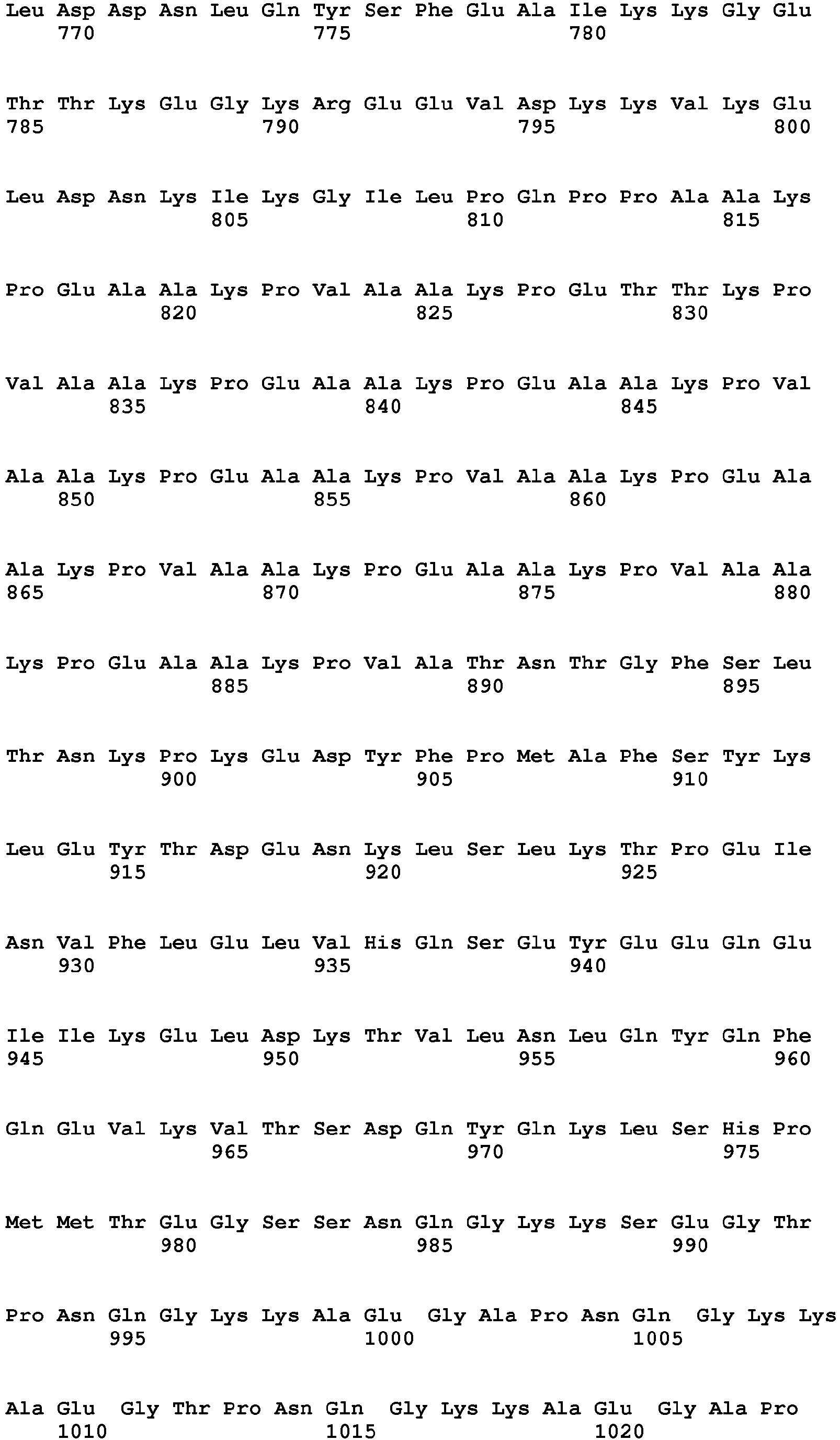

- <210> 5
<211> 1773
<212> DNA
<213> Porcine circovirus - <400> 5


- <210> 6
<211> 702
<212> DNA
<213> Porcine circovirus - <400> 6

- <210> 7
<211> 233
<212> PRT
<213> Porcine circovirus - <400> 7

- <210> 8
<211> 1767
<212> DNA
<213> Porcine circovirus - <400> 8
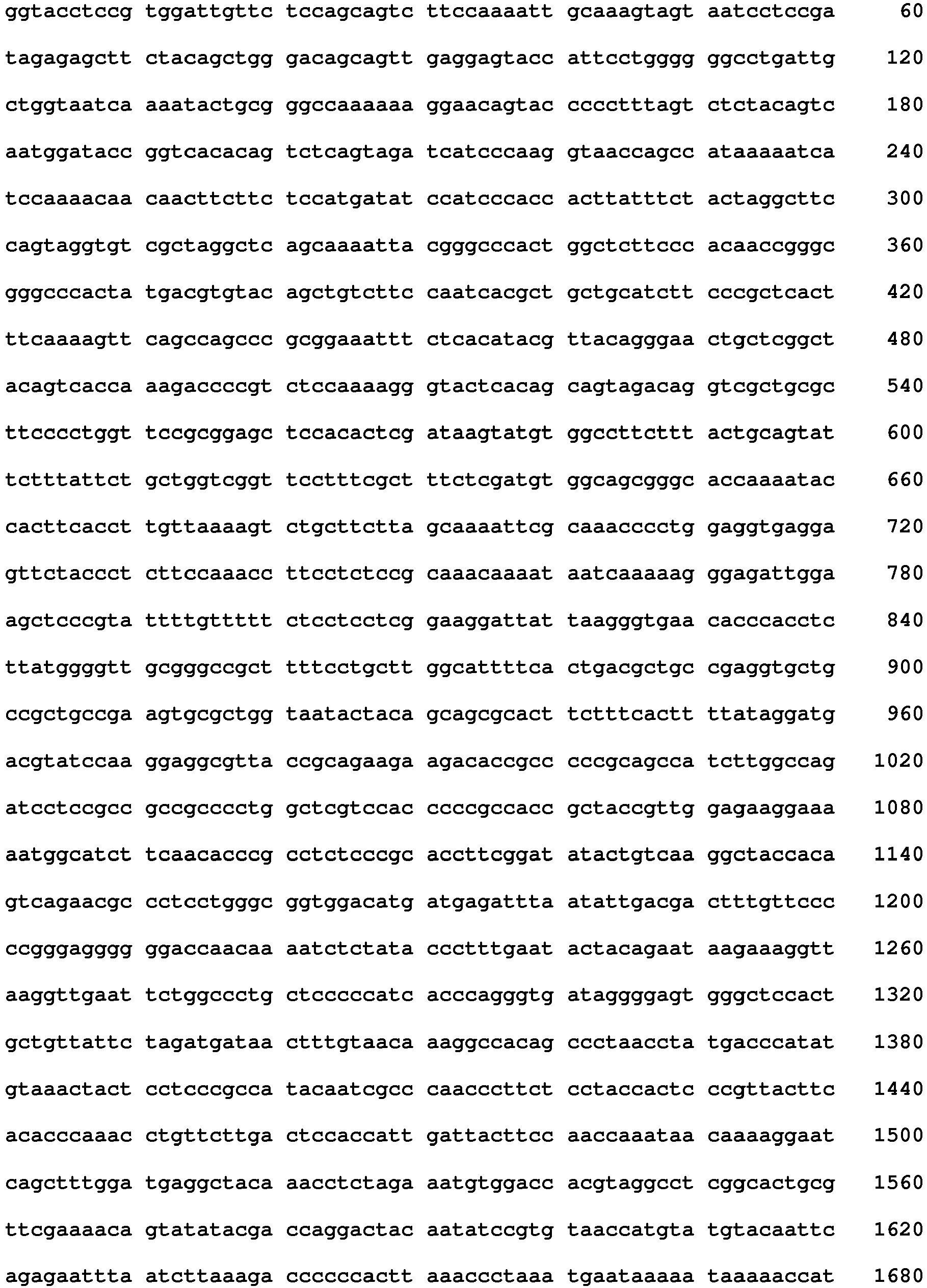

- <210> 9
<211> 702
<212> DNA
<213> Porcine circovirus - <400> 9
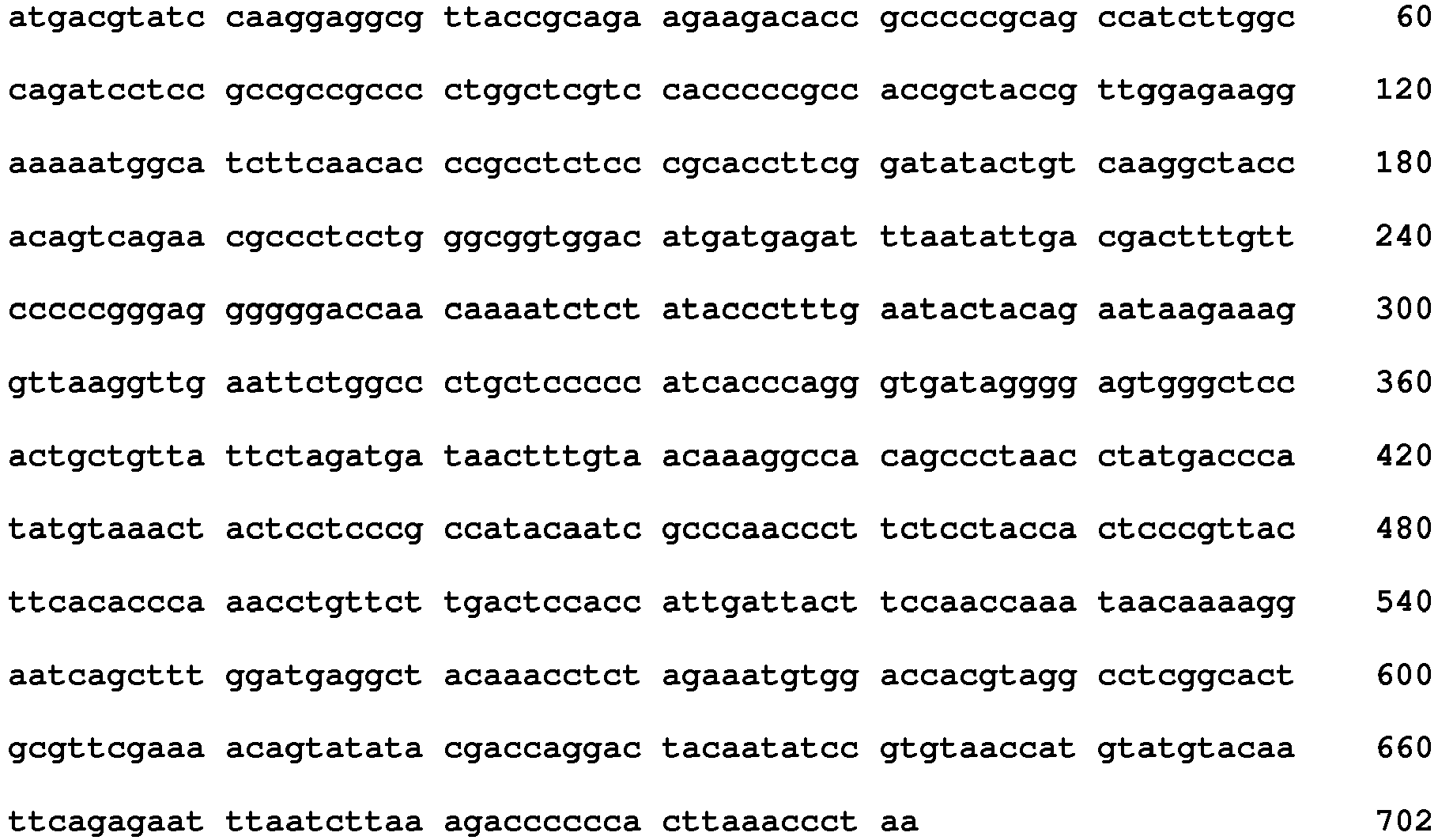
- <210> 10
<211> 233
<212> PRT
<213> Porcine circovirus - <400> 10


- <210> 11
<211> 233
<212> PRT
<213> Porcine circovirus - <400> 11


- <210> 12
<211> 713
<212> DNA
<213> Porcine circovirus - <400> 12


- <210> 13
<211> 233
<212> PRT
<213> Porcine circovirus - <400> 13


- <210> 14
<211> 713
<212> DNA
<213> Porcine circovirus - <400> 14

- <210> 15
<211> 233
<212> PRT
<213> Porcine circovirus - <400> 15
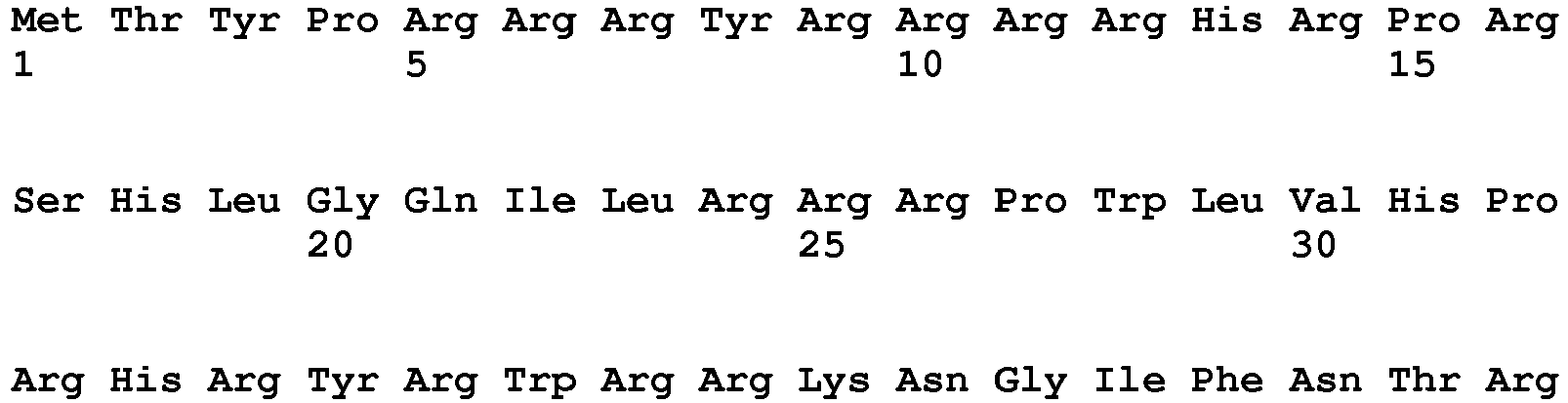

- <210> 16
<211> 15450
<212> DNA
<213> Porcine reproductive and respiratory syndrome virus - <400> 16


- <210> 17
<211> 2352
<212> DNA
<213> Porcine reproductive and respiratory syndrome virus - <400> 17

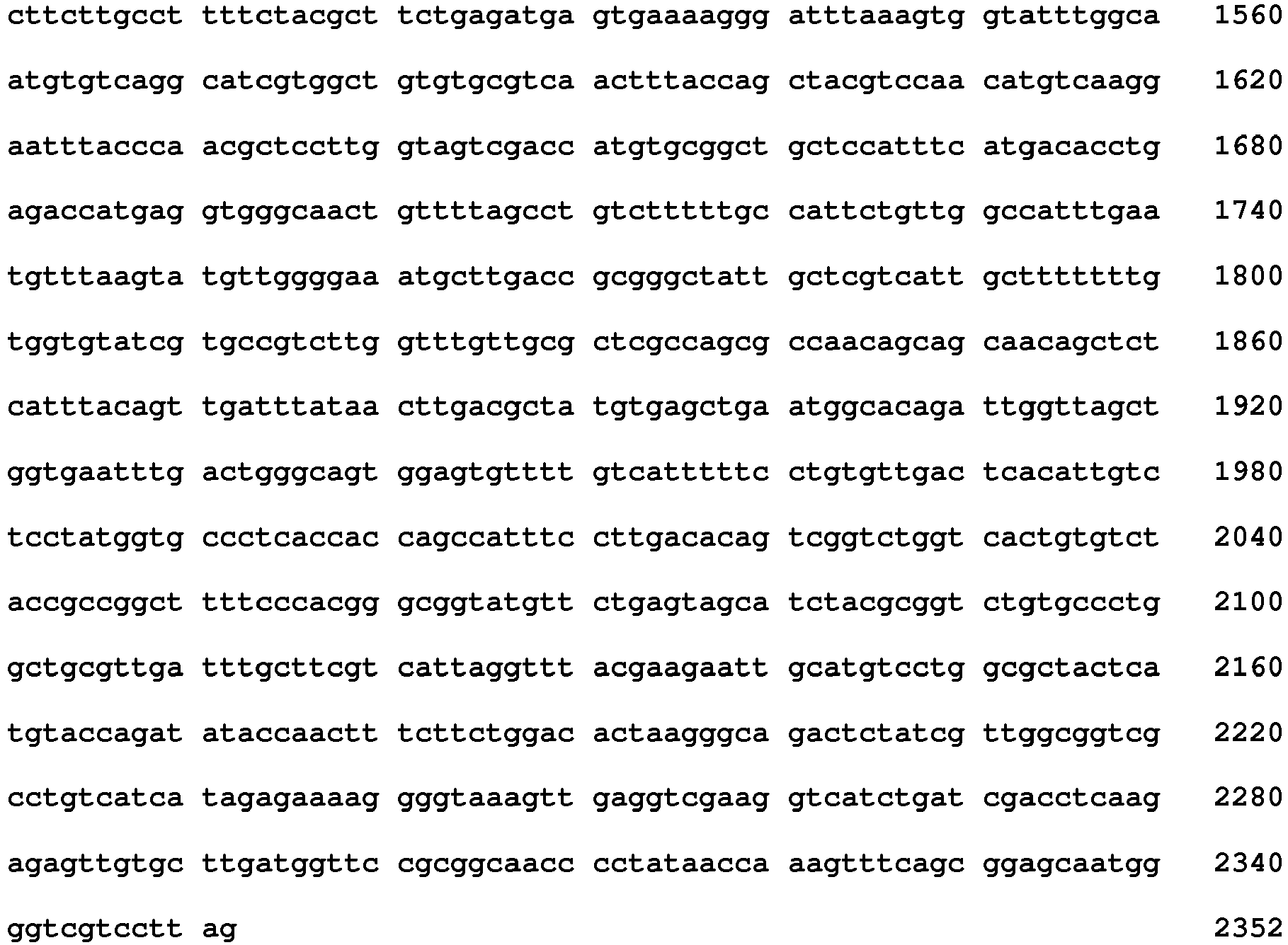
- <210> 18
<211> 886
<212> DNA
<213> Porcine reproductive and respiratory syndrome virus - <400> 18


Claims (16)
- A trivalent immunogenic composition comprising the supernatant of a Mycoplasma hyopneumoniae (M.hyo) culture; a porcine circovirus type 2 (PCV2) antigen; and a porcine reproductive and respiratory syndrome (PRRS) virus antigen, wherein the supernatant of the M.hyo culture has been separated from insoluble cellular material by centrifugation, filtration or precipitation and is free of both (i) IgG and (ii) immunocomplexes comprised of antigen bound to immunoglobulin.
- The composition of claim 1, wherein the supernatant of the M.hyo culture has been treated with protein-A or protein-G prior to being added to the immunogenic composition.
- The composition of claim 1 or 2, wherein the PRRS virus antigen is a genetically modified live virus.
- The composition of any one of claims 1 to 3, wherein the PCV2 antigen is in the form of a chimeric type-1-type 2 circovirus, said chimeric virus comprising an inactivated recombinant porcine circovirus type 1 expressing the porcine circovirus type 2 ORF2 protein.
- The composition of any one of claims 1 to 4, wherein the PCV2 antigen is in the form of a recombinant ORF2 protein.
- The composition of claim 5, wherein the recombinant ORF2 protein is expressed from a baculovirus vector.
- The composition of any one of claims 1 to 6, wherein the composition further comprises an adjuvant.
- The composition of claim 7, wherein the adjuvant is selected from the group consisting of an oil-in-water adjuvant, a polymer and water adjuvant, a water-in-oil adjuvant, an aluminum hydroxide adjuvant, a vitamin E adjuvant and combinations thereof.
- A composition as defined in any of claims 1 to 8 for use in immunizing a pig against M.hyo, PCV2, and PRRS virus, which comprises administering to the pig the composition of claim 1 to 8.
- The composition for the use of claim 9, wherein the composition is administered in a single dose.
- The composition for the use of claim 9 or 10, wherein the composition is administered to pigs having maternally derived antibodies against at least one of M.hyo, PCV2, and PRRS virus.
- The composition for the use of any one of claims 9 to 11, wherein the composition is administered to pigs at 3 weeks of age or older.
- A vaccine composition comprising an immunogenic composition as defined in any one of claims 1 to 8, wherein the composition further comprises a pharmaceutically acceptable carrier.
- A vaccine composition as defined in claim 13 for use in protecting pigs against enzootic pneumonia, Post-weaning Multisystemic Wasting Syndrome (PMWS) and porcine reproductive and respiratory syndrome.
- A kit comprising an immunogenic or vaccine composition as defined in any of claims 1 to 14, wherein a first bottle comprises both a PCV2 antigen and the supernatant of a Mycoplasma hyopneumoniae (M.hyo) culture, wherein the supernatant is free of both (i) IgG and (ii) antigen/immunoglobulin immunocomplexes, and a second bottle comprises PRRS virus antigen; and optionally, further including an instruction manual with directions to combine the contents of the first bottle with the contents of the second bottle and to administer the combined contents of the first and second bottles to a pig.
- A method for preparing an immunogenic composition as defined in any of claims 1 to 14, the method comprising:i) culturing M.hyo in a suitable media over periods ranging from 18-144 hours;ii) subsequently inactivating the M.hyo culture;iii) harvesting the inactivated culture fluid, wherein the inactivated culture fluid comprises both a soluble liquid fraction and insoluble cellular material;iv) separating the soluble liquid fraction from the insoluble cellular material by filtration, centrifugation or precipitation;v) removing both IgG and antigen/immunoglobulin immunocomplexes from the separated soluble liquid fraction to form the M. hyo culture supernatant free of both (i) IgG and (ii) immunocomplexes comprised of antigen bound to immunoglobulin; andvi) subsequently combining the supernatant with a PCV2 antigen and PRRS virus antigen .
Priority Applications (5)
| Application Number | Priority Date | Filing Date | Title |
|---|---|---|---|
| EP19155397.3A EP3508217A1 (en) | 2012-04-04 | 2013-04-03 | Pcv/mycoplasma hyopneumoniae/prrs combination vaccine |
| SI201331404T SI2833909T1 (en) | 2012-04-04 | 2013-04-03 | Pcv/mycoplasma hyopneumoniae/prrs combination vaccine |
| HRP20190466TT HRP20190466T1 (en) | 2012-04-04 | 2013-04-03 | PCV / MYCOPLASMA HYOPNEUMONIAE / PRRS combination vaccine |
| RS20190354A RS58480B1 (en) | 2012-04-04 | 2013-04-03 | Pcv/mycoplasma hyopneumoniae/prrs combination vaccine |
| PL13717118T PL2833909T3 (en) | 2012-04-04 | 2013-04-03 | Pcv/mycoplasma hyopneumoniae/prrs combination vaccine |
Applications Claiming Priority (2)
| Application Number | Priority Date | Filing Date | Title |
|---|---|---|---|
| US201261620189P | 2012-04-04 | 2012-04-04 | |
| PCT/US2013/035091 WO2013152086A1 (en) | 2012-04-04 | 2013-04-03 | Pcv/mycoplasma hyopneumoniae/prrs combination vaccine |
Related Child Applications (1)
| Application Number | Title | Priority Date | Filing Date |
|---|---|---|---|
| EP19155397.3A Division EP3508217A1 (en) | 2012-04-04 | 2013-04-03 | Pcv/mycoplasma hyopneumoniae/prrs combination vaccine |
Publications (2)
| Publication Number | Publication Date |
|---|---|
| EP2833909A1 EP2833909A1 (en) | 2015-02-11 |
| EP2833909B1 true EP2833909B1 (en) | 2019-02-06 |
Family
ID=48140160
Family Applications (2)
| Application Number | Title | Priority Date | Filing Date |
|---|---|---|---|
| EP19155397.3A Pending EP3508217A1 (en) | 2012-04-04 | 2013-04-03 | Pcv/mycoplasma hyopneumoniae/prrs combination vaccine |
| EP13717118.7A Revoked EP2833909B1 (en) | 2012-04-04 | 2013-04-03 | Pcv/mycoplasma hyopneumoniae/prrs combination vaccine |
Family Applications Before (1)
| Application Number | Title | Priority Date | Filing Date |
|---|---|---|---|
| EP19155397.3A Pending EP3508217A1 (en) | 2012-04-04 | 2013-04-03 | Pcv/mycoplasma hyopneumoniae/prrs combination vaccine |
Country Status (32)
| Country | Link |
|---|---|
| US (2) | US9125886B2 (en) |
| EP (2) | EP3508217A1 (en) |
| JP (1) | JP6271504B2 (en) |
| KR (1) | KR101808903B1 (en) |
| AR (1) | AR090614A1 (en) |
| AU (1) | AU2013243540C1 (en) |
| BR (1) | BR112014024775B1 (en) |
| CA (1) | CA2869601C (en) |
| CL (1) | CL2014002676A1 (en) |
| CO (1) | CO7160027A2 (en) |
| CR (1) | CR20140438A (en) |
| CY (1) | CY1121578T1 (en) |
| DK (1) | DK2833909T3 (en) |
| ES (1) | ES2719483T3 (en) |
| GT (1) | GT201400212A (en) |
| HR (2) | HRP20190466T1 (en) |
| HU (1) | HUE042405T2 (en) |
| LT (1) | LT2833909T (en) |
| MX (2) | MX354773B (en) |
| MY (1) | MY168549A (en) |
| NI (1) | NI201400118A (en) |
| PH (1) | PH12014502252A1 (en) |
| PL (1) | PL2833909T3 (en) |
| PT (1) | PT2833909T (en) |
| RS (1) | RS58480B1 (en) |
| RU (1) | RU2644256C2 (en) |
| SI (1) | SI2833909T1 (en) |
| TR (1) | TR201905176T4 (en) |
| TW (1) | TWI504406B (en) |
| UA (1) | UA114504C2 (en) |
| WO (1) | WO2013152086A1 (en) |
| ZA (1) | ZA201407133B (en) |
Cited By (1)
| Publication number | Priority date | Publication date | Assignee | Title |
|---|---|---|---|---|
| EP2842569B1 (en) | 2001-07-02 | 2019-04-10 | Zoetis Services LLC | One dose vaccination with Mycoplasma hyopneumoniae |
Families Citing this family (27)
| Publication number | Priority date | Publication date | Assignee | Title |
|---|---|---|---|---|
| US8546149B2 (en) | 2010-08-27 | 2013-10-01 | Intervet Inc. | Potency test for vaccine formulations |
| UA114503C2 (en) * | 2012-04-04 | 2017-06-26 | Зоетіс Сервісіз Ллс | PCV AND MYCOPLASMA HYOPNEUMONIA COMBINED VACCINE |
| UA114504C2 (en) * | 2012-04-04 | 2017-06-26 | Зоетіс Сервісіз Ллс | PCV, MYCOPLASMA HYOPNEUMONIA AND PRRS COMBINED VACCINE |
| US9120859B2 (en) | 2012-04-04 | 2015-09-01 | Zoetis Services Llc | Mycoplasma hyopneumoniae vaccine |
| SG11201505086QA (en) | 2012-12-28 | 2015-07-30 | Boehringer Ingelheim Vetmed | Immunogenic composition comprising mycoplasma antigens |
| PT2938747T (en) | 2012-12-28 | 2019-08-01 | Boehringer Ingelheim Vetmedica Gmbh | Method of making a mycoplasma vaccine |
| ES2882374T3 (en) | 2013-05-08 | 2021-12-01 | Pharmgate Biologics Inc | PCV2 and mycoplasma vaccine |
| CN105792841B (en) * | 2013-11-21 | 2019-07-26 | 财团法人农业科技研究院 | Composition for preventing and treating mycoplasma infection |
| EP3076997B1 (en) * | 2013-12-03 | 2018-08-29 | Intervet International B.V. | Swine vaccine against prrs and lawsonia intracellularis |
| ES2771899T3 (en) * | 2013-12-03 | 2020-07-07 | Intervet Int Bv | Porcine circovirus type 2 vaccine |
| CN104056265B (en) * | 2014-07-11 | 2016-04-27 | 江苏南农高科技股份有限公司 | Porcine circovirus 2 type, Porcine reproductive and respiratory syndrome bigeminy vaccine and preparation method thereof |
| ES2998010T3 (en) * | 2014-09-12 | 2025-02-18 | Intervet Int Bv | Vaccine for use in protecting a pig against porcine endemic diarrhea virus |
| EP3191125B1 (en) * | 2014-09-12 | 2024-11-20 | Intervet International B.V. | Vaccine for use in protecting offspring of a sow against porcine endemic diarrhea virus |
| JP6648138B2 (en) * | 2014-12-11 | 2020-02-14 | インターベット インターナショナル ベー. フェー. | Immediate use type PCV2 / M. Process for M. hyo combination vaccine |
| JP6839714B2 (en) * | 2015-12-28 | 2021-03-10 | ベーリンガー インゲルハイム アニマル ヘルス ユーエスエイ インコーポレイテッド | M Hyo Multiple Vaccine and Its Use |
| EP3432920A1 (en) | 2016-03-23 | 2019-01-30 | Intervet International B.V. | A vaccine for intradermal application against pcv2 and prrs virus infection |
| CN108697782A (en) * | 2016-03-23 | 2018-10-23 | 英特维特国际股份有限公司 | Combination vaccine against PCV2 virus and Mycoplasma hyopneumoniae infection |
| BR112019002614A2 (en) * | 2016-08-09 | 2019-07-02 | Agricultural Technology Research Institute | composition for preventing and treating mycoplasma hyorhinis, method for producing said composition, expression vector for producing the active ingredient of the composition, and method for producing a soluble protein |
| CN110072547B (en) * | 2016-12-14 | 2024-04-30 | 硕腾服务有限责任公司 | Effective pre-weaning vaccination against European strains of porcine reproductive and respiratory syndrome (PRRS) virus |
| EP3558351B1 (en) * | 2016-12-23 | 2022-01-26 | Intervet International B.V. | Combination vaccine for swine |
| US11311614B2 (en) | 2017-04-13 | 2022-04-26 | Intervet Inc. | Vaccines containing swine pathogens for associated non-mixed use |
| CN109280642B (en) * | 2017-07-21 | 2022-07-22 | 浙江海隆生物科技有限公司 | CHO cell strain, preparation method thereof, porcine circovirus type 2 Cap protein prepared from CHO cell strain and application thereof |
| MX2020005584A (en) | 2017-12-04 | 2020-09-14 | Intervet Int Bv | VACCINATION WITH REPLICON PARTICLES AND OIL ADJUVANT. |
| US11744883B2 (en) | 2017-12-22 | 2023-09-05 | Hipra Scientific, S.L.U. | Intradermal combination vaccine against mycoplasma and porcine circovirus |
| CN119488586A (en) * | 2018-03-26 | 2025-02-21 | 勃林格殷格翰动物保健美国有限公司 | Methods for preparing immunogenic compositions |
| KR102769557B1 (en) * | 2021-11-19 | 2025-02-20 | 주식회사 이노백 | Novel recombinant porcine circovirus 2 protein and uses thereof |
| CN119913202B (en) * | 2025-01-15 | 2025-09-19 | 北京华夏兴洋生物科技有限公司 | Recombinant vector, recombinant virus and application thereof for preparing swine triple vaccine |
Citations (9)
| Publication number | Priority date | Publication date | Assignee | Title |
|---|---|---|---|---|
| EP0283840A2 (en) | 1987-03-26 | 1988-09-28 | Ml Technology Ventures, L.P. | Mycoplasma hyopneumoniae antigen and uses therefor |
| US5084269A (en) | 1986-11-06 | 1992-01-28 | Kullenberg Fred W | Adjuvant for dose treatment with antigens |
| WO1996028472A1 (en) | 1995-03-16 | 1996-09-19 | The University Of Melbourne | Antigen composition against mycoplasma |
| US20090317423A1 (en) | 2008-01-23 | 2009-12-24 | Boehringer Ingelheim Vetmedica, Inc. | Pcv2 mycoplasma hyopneumoniae immunogenic compositions and methods of producing such compositions |
| EP2217271A1 (en) | 2007-11-06 | 2010-08-18 | Wyeth LLC | Mycoplasma hyopneumoniae avirulent -adjuvanted live vaccine |
| EP2327787A1 (en) | 2005-12-01 | 2011-06-01 | Consejo Superior de Investigaciones Cientificas | Nucleic acids encoding TGEV and PRRSV sequences for improved expression of PRRSV sequences |
| WO2012025612A1 (en) | 2010-08-27 | 2012-03-01 | Intervet International B.V. | Potency test for vaccine formulations |
| US8546149B2 (en) | 2010-08-27 | 2013-10-01 | Intervet Inc. | Potency test for vaccine formulations |
| US9687544B2 (en) | 2011-04-18 | 2017-06-27 | Ceva Sante Animale | Veterinary vaccine |
Family Cites Families (62)
| Publication number | Priority date | Publication date | Assignee | Title |
|---|---|---|---|---|
| US4606918A (en) | 1983-08-22 | 1986-08-19 | Syntex (U.S.A.) Inc. | Polyoxypropylene-polyoxyethylene block polymer based adjuvants |
| US4681870A (en) * | 1985-01-11 | 1987-07-21 | Imre Corporation | Protein A-silica immunoadsorbent and process for its production |
| JPH0832637B2 (en) | 1985-02-14 | 1996-03-29 | アクゾ・エヌ・ヴエー | Synthetic immunogen |
| ES2052685T3 (en) | 1987-03-17 | 1994-07-16 | Akzo Nv | METHOD TO PRODUCE A FREE ADJUVANT. |
| US5252328A (en) * | 1987-03-26 | 1993-10-12 | Martin Marietta Energy Systems, Inc. | Mycoplasma hyopneumoniae antigen and uses therefor |
| NZ226811A (en) | 1987-11-03 | 1991-06-25 | Syntex Inc | Adjuvant emulsion comprising a glycopeptide and non-toxic tetra-polyol or pop-poe block copolymer wherein oily particle size is less than 800am |
| US4985243A (en) | 1988-01-20 | 1991-01-15 | Ml Technology Ventures, L.P. | Composition and method for protecting against diseases caused by microorganisms |
| US5240706A (en) | 1989-04-07 | 1993-08-31 | Ml Technology Ventures, L.P. | Intranasal administration of Mycoplasma hyopneumoniae antigen |
| ZA906806B (en) | 1989-08-31 | 1991-06-26 | Ici Australia Operations | Plants |
| CA2082155C (en) | 1990-05-29 | 2008-04-15 | Krishnaswamy I. Dayalu | Swine pneumonia vaccine and method of preparation |
| US6113916A (en) | 1990-05-29 | 2000-09-05 | American Cyanamid Company | Method of enhancing cell mediated immune responses |
| US5695769A (en) | 1990-06-13 | 1997-12-09 | Pfizer Inc. | Pasteurella multocida toxoid vaccines |
| US5565205A (en) | 1990-08-16 | 1996-10-15 | Solvay Animal Health, Inc. | Inactivated Mycoplasma hypopneumoniae bacterin and method of use thereof |
| DE69201441T3 (en) | 1991-06-06 | 2008-12-04 | Boehringer Ingelheim Vetmedica Gmbh | ENTIRE MYSTERIOUS POVERTY, VACCINE COMPOSITIONS AND DIAGNOSIS KITS. |
| US5269315A (en) | 1991-08-16 | 1993-12-14 | The Regents Of The University Of California | Determining the nature of brain lesions by electroencephalography |
| DE601062T1 (en) | 1991-08-26 | 1995-05-18 | David Allen Benfield | VACCINE AGAINST AND DIAGNOSTIC METHOD FOR THE PIG INFERTILITY AND BREATHING SYNDROME (SUAS). |
| AU2684792A (en) | 1991-10-14 | 1993-05-21 | Akzo Nobel N.V. | Porcine reproductive respiratory syndrome vaccine and diagnostic |
| EP0669971B1 (en) | 1991-11-15 | 2003-03-19 | Pfizer Inc. | Method of producing gram-negative bacterial vaccines |
| FR2686097B1 (en) | 1992-01-14 | 1994-12-30 | Rhone Merieux | PREPARATION OF ANTIGENS AND MYSTERY DISEASE VIRUS VACCINES, ANTIGENS AND VACCINES OBTAINED FOR THE PREVENTION OF THIS DISEASE. |
| US5338543A (en) | 1992-02-27 | 1994-08-16 | Ambico, Inc. | Thimerosal inactivated mycoplasma hyopneumoniae vaccine |
| US5534256A (en) | 1992-07-02 | 1996-07-09 | University Of Saskatchewan | Haemophilus somnus outer membrane protein extract enriched with iron-regulated proteins |
| US5695766A (en) | 1992-10-30 | 1997-12-09 | Iowa State University Research Foundation | Highly virulent porcine reproductive and respiratory syndrome viruses which produce lesions in pigs and vaccines that protect pigs against said syndrome |
| US6251397B1 (en) | 1992-10-30 | 2001-06-26 | Iowa State University Research Foundation, Inc. | Proteins encoded by polynucleic acids isolated from a porcine reproductive and respiratory syndrome virus and immunogenic compositions containing the same |
| US6380376B1 (en) | 1992-10-30 | 2002-04-30 | Iowa State University Research Foundation | Proteins encoded by polynucleic acids of porcine reproductive and respiratory syndrome virus (PRRSV) |
| US6773908B1 (en) | 1992-10-30 | 2004-08-10 | Iowa State University Research Foundation, Inc. | Proteins encoded by polynucleic acids of porcine reproductive and respiratory syndrome virus (PRRSV) |
| US6592873B1 (en) | 1992-10-30 | 2003-07-15 | Iowa State University Research Foundation, Inc. | Polynucleic acids isolated from a porcine reproductive and respiratory syndrome virus (PRRSV) and proteins encoded by the polynucleic acids |
| ES2074950B1 (en) | 1993-09-17 | 1996-03-16 | Iberica Cyanamid | VACCINE FOR THE PREVENTION OF REPRODUCTIVE AND RESPIRATORY DISEASE OF THE SOW. |
| PT759780E (en) | 1994-05-10 | 2001-01-31 | American Home Prod | MODIFIED VSRB IMPROVED VACCINE |
| BE1008978A5 (en) | 1994-12-27 | 1996-10-01 | Solvay | Adjuvants for vaccines. |
| US5788962A (en) | 1995-01-17 | 1998-08-04 | The Curators Of The University Of Missouri | DNA sequences coding for mycoplasma hyopneumoniae surface antigens, corresponding proteins and use in vaccines and diagnostic procedures |
| US5820869A (en) | 1995-06-07 | 1998-10-13 | American Home Products Corporation | Recombinant raccoon pox viruses and their use as an effective vaccine against feline immunodeficiency virus infection |
| DE19601754A1 (en) | 1996-01-19 | 1997-07-24 | Hoechst Ag | Dictyocaulus viviparus antigen for the diagnosis of lung worm infestation and for vaccination |
| US5846735A (en) | 1996-04-18 | 1998-12-08 | University Of Iowa Research Foundation | Hepatitis C virus Fc-binding function |
| GB9622159D0 (en) | 1996-10-24 | 1996-12-18 | Solvay Sociutu Anonyme | Polyanionic polymers as adjuvants for mucosal immunization |
| EP0839912A1 (en) | 1996-10-30 | 1998-05-06 | Instituut Voor Dierhouderij En Diergezondheid (Id-Dlo) | Infectious clones of RNA viruses and vaccines and diagnostic assays derived thereof |
| EP0948625B1 (en) | 1996-12-20 | 2011-01-26 | The Board Of Regents, The University Of Texas System | Uspa1 and uspa2 antigens of moraxella catarrhalis |
| CA2311759A1 (en) | 1997-11-26 | 1999-06-03 | Tsungdas Hsu | Recombinant mycoplasma hyopneumoniae vaccine |
| US6342231B1 (en) | 1998-07-01 | 2002-01-29 | Akzo Nobel N.V. | Haemophilus parasuis vaccine and diagnostic |
| CA2290220C (en) | 1998-12-22 | 2013-11-19 | Pfizer Products Inc. | An infectious cdna clone of north american porcine reproductive and respiratory syndrome (prrs) virus and uses thereof |
| US6632439B2 (en) | 1999-09-29 | 2003-10-14 | Novartis Animal Health, Inc. | Fusobacterium necrophorum vaccine and method for making such vaccine |
| US6585981B1 (en) | 2000-07-27 | 2003-07-01 | Regents Of The University Of Minnesota | Temperature-sensitive live vaccine for Mycoplasma hyopneumoniae |
| MY129765A (en) | 2000-12-19 | 2007-04-30 | Wyeth Corp | Improved mycoplasma hyopneumoniae bacterin vaccine |
| US7018638B2 (en) | 2000-12-19 | 2006-03-28 | Wyeth | Mycoplasma hyopneumoniae bacterin vaccine |
| WO2003003941A2 (en) | 2001-07-02 | 2003-01-16 | Pfizer Products Inc. | One dose vaccination with mycoplasma hyopneumoniae |
| WO2003004051A2 (en) * | 2001-07-02 | 2003-01-16 | Pfizer Products Inc. | Mycoplasma hyopneumoniae vaccine and methods for reducing mycoplasma bovis pneumonia in cattle |
| US7279166B2 (en) | 2001-12-12 | 2007-10-09 | Virginia Tech Intellectual Properties, Inc. | Chimeric infectious DNA clones, chimeric porcine circoviruses and uses thereof |
| US7276353B2 (en) | 2001-12-12 | 2007-10-02 | Virginia Tech Intellectual Properties, Inc. | Chimeric infectious DNA clones, chimeric porcine circoviruses and uses thereof |
| EP1546357B1 (en) | 2002-06-28 | 2013-08-07 | Iowa State University Research Foundation, Inc. | Immunogenic mycoplasma hyopneumoniae polypeptides |
| US7371395B2 (en) | 2003-07-24 | 2008-05-13 | Merial Limited | Vaccine formulations |
| KR20070096019A (en) | 2005-01-13 | 2007-10-01 | 베링거잉겔하임베트메디카게엠베하 | Improved PRS Vaccine |
| KR101347503B1 (en) * | 2005-09-09 | 2014-01-02 | 인터벳 인터내셔널 비.브이. | Pcv-2 vaccine |
| EP1968630B1 (en) | 2005-12-29 | 2018-01-24 | Boehringer Ingelheim Vetmedica, Inc. | Multivalent pcv2 immunogenic compositions |
| ES2377576T3 (en) * | 2006-04-10 | 2012-03-29 | Intervet International Bv | PRRV Microplasm Vaccine |
| PL2007419T3 (en) | 2006-04-10 | 2012-09-28 | Intervet Int Bv | Vaccine against mycoplasma prrsv |
| TWI449533B (en) * | 2008-04-18 | 2014-08-21 | Intervet Int Bv | Vaccine for protection against lawsonia intracellularis, mycoplasma hyopneumoniae and porcine circo virus |
| US8444989B1 (en) | 2008-04-18 | 2013-05-21 | Boehringer Ingelheim Vetmedica Gmbh | One dose vaccination against mycoplasma infections of pigs |
| CN102256997A (en) | 2008-10-16 | 2011-11-23 | 美国辉瑞有限公司 | Torque teno virus (ttv) isolates and compositions |
| PL2569007T3 (en) | 2010-05-11 | 2016-04-29 | Intervet Int Bv | Vaccine against mycoplasma hyopneumoniae, suitable for administration in the presence of maternally derived antibodies |
| UA108902C2 (en) | 2010-11-10 | 2015-06-25 | NORTH AMERICAN REPRODUCTIVE AND RESPIRATORY PIG SYNDROME (PRRS) VIRUS | |
| US9120859B2 (en) * | 2012-04-04 | 2015-09-01 | Zoetis Services Llc | Mycoplasma hyopneumoniae vaccine |
| UA114504C2 (en) * | 2012-04-04 | 2017-06-26 | Зоетіс Сервісіз Ллс | PCV, MYCOPLASMA HYOPNEUMONIA AND PRRS COMBINED VACCINE |
| UA114503C2 (en) * | 2012-04-04 | 2017-06-26 | Зоетіс Сервісіз Ллс | PCV AND MYCOPLASMA HYOPNEUMONIA COMBINED VACCINE |
-
2013
- 2013-03-04 UA UAA201410839A patent/UA114504C2/en unknown
- 2013-03-26 US US13/850,331 patent/US9125886B2/en active Active
- 2013-04-02 TW TW102111963A patent/TWI504406B/en active
- 2013-04-03 DK DK13717118.7T patent/DK2833909T3/en active
- 2013-04-03 HR HRP20190466TT patent/HRP20190466T1/en unknown
- 2013-04-03 EP EP19155397.3A patent/EP3508217A1/en active Pending
- 2013-04-03 SI SI201331404T patent/SI2833909T1/en unknown
- 2013-04-03 EP EP13717118.7A patent/EP2833909B1/en not_active Revoked
- 2013-04-03 HU HUE13717118A patent/HUE042405T2/en unknown
- 2013-04-03 PT PT13717118T patent/PT2833909T/en unknown
- 2013-04-03 TR TR2019/05176T patent/TR201905176T4/en unknown
- 2013-04-03 JP JP2015504701A patent/JP6271504B2/en active Active
- 2013-04-03 MX MX2015015469A patent/MX354773B/en unknown
- 2013-04-03 ES ES13717118T patent/ES2719483T3/en active Active
- 2013-04-03 CA CA2869601A patent/CA2869601C/en active Active
- 2013-04-03 AU AU2013243540A patent/AU2013243540C1/en not_active Ceased
- 2013-04-03 LT LTEP13717118.7T patent/LT2833909T/en unknown
- 2013-04-03 MY MYPI2014702759A patent/MY168549A/en unknown
- 2013-04-03 KR KR1020147030871A patent/KR101808903B1/en active Active
- 2013-04-03 PL PL13717118T patent/PL2833909T3/en unknown
- 2013-04-03 MX MX2014012016A patent/MX336502B/en unknown
- 2013-04-03 RU RU2014140108A patent/RU2644256C2/en active
- 2013-04-03 HR HRP20140956AA patent/HRP20140956A2/en not_active Application Discontinuation
- 2013-04-03 WO PCT/US2013/035091 patent/WO2013152086A1/en not_active Ceased
- 2013-04-03 RS RS20190354A patent/RS58480B1/en unknown
- 2013-04-03 BR BR112014024775-7A patent/BR112014024775B1/en active IP Right Grant
- 2013-04-04 AR ARP130101115 patent/AR090614A1/en not_active Application Discontinuation
-
2014
- 2014-09-22 CR CR20140438A patent/CR20140438A/en unknown
- 2014-10-01 ZA ZA2014/07133A patent/ZA201407133B/en unknown
- 2014-10-03 PH PH12014502252A patent/PH12014502252A1/en unknown
- 2014-10-03 NI NI201400118A patent/NI201400118A/en unknown
- 2014-10-03 CL CL2014002676A patent/CL2014002676A1/en unknown
- 2014-10-03 CO CO14219866A patent/CO7160027A2/en unknown
- 2014-10-03 GT GT201400212A patent/GT201400212A/en unknown
-
2015
- 2015-05-14 US US14/712,454 patent/US9650601B2/en active Active
-
2019
- 2019-04-12 CY CY20191100407T patent/CY1121578T1/en unknown
Patent Citations (9)
| Publication number | Priority date | Publication date | Assignee | Title |
|---|---|---|---|---|
| US5084269A (en) | 1986-11-06 | 1992-01-28 | Kullenberg Fred W | Adjuvant for dose treatment with antigens |
| EP0283840A2 (en) | 1987-03-26 | 1988-09-28 | Ml Technology Ventures, L.P. | Mycoplasma hyopneumoniae antigen and uses therefor |
| WO1996028472A1 (en) | 1995-03-16 | 1996-09-19 | The University Of Melbourne | Antigen composition against mycoplasma |
| EP2327787A1 (en) | 2005-12-01 | 2011-06-01 | Consejo Superior de Investigaciones Cientificas | Nucleic acids encoding TGEV and PRRSV sequences for improved expression of PRRSV sequences |
| EP2217271A1 (en) | 2007-11-06 | 2010-08-18 | Wyeth LLC | Mycoplasma hyopneumoniae avirulent -adjuvanted live vaccine |
| US20090317423A1 (en) | 2008-01-23 | 2009-12-24 | Boehringer Ingelheim Vetmedica, Inc. | Pcv2 mycoplasma hyopneumoniae immunogenic compositions and methods of producing such compositions |
| WO2012025612A1 (en) | 2010-08-27 | 2012-03-01 | Intervet International B.V. | Potency test for vaccine formulations |
| US8546149B2 (en) | 2010-08-27 | 2013-10-01 | Intervet Inc. | Potency test for vaccine formulations |
| US9687544B2 (en) | 2011-04-18 | 2017-06-27 | Ceva Sante Animale | Veterinary vaccine |
Non-Patent Citations (36)
| Title |
|---|
| "Antibody Purification Handbook", 2002, AMERSHAM BIOSCIENCES, pages: Complete |
| "Committee for Human Medicinal Products (CHMP) notes for guidance of the clinical evaluation of vaccines", EMEA, 17 May 2005 (2005-05-17), pages 1 - 23, XP055565795 |
| "FOR THE EVALUATION OF COMBINATION VACCINES FOR PREVENTABLE DISEASES: PRODUCTION , TESTING AND CLINICAL STUDIES", FDA, April 1997 (1997-04-01), pages FP - 19, XP055565783 |
| "Methods in Mycoplasmology", 1983, article FREUNDT: "Culture Media for Classic Mycoplasms", pages: 127 - 135, XP055321252 |
| "MYCOBUSTER AR PLUS® Product Sheet in Japanese with English language", SALES RELEASE OF MYCOBUSTER AR, April 2006 (2006-04-01) |
| "MYCOBUSTER® Product Sheet in Japanese with English language translation", SALES RELEASE OF MYCOBUSTER, July 1997 (1997-07-01) |
| "Porcine Respiratory Disease Complex", THE PIG SITE, 12 February 2009 (2009-02-12), XP055565799, Retrieved from the Internet <URL:https://thepigsite.com/articles/porcine-respiratory-disease-complex> |
| "Responsible use of vaccines and vaccination in pig production", RUMA GUIDELINES, November 2006 (2006-11-01), pages 1 - 24, XP055565889 |
| ALLAN ET AL.: "Porcine Circoviruses: A Review", J. VET. DIAGN. INVEST., vol. 12, 2000, pages 3 - 14, XP055565876 |
| ANIMAL ET AL.: "PRRS Seroprevalence on U.S. Swine Operations", HEALTH INSPECTION SERVICE INFO SHEET, January 2009 (2009-01-01), XP055565880 |
| ANNUAL REPORT, 2003 |
| BAUTISTA ET AL.: "Seroprevalence of PRRS virus in the United States", SWINE HEALTH AND PRODUCTION, vol. 1, 1993, pages 4 - 8, XP055566012 |
| BOEHRINGER INGELHEIM: "Ingelvac CircoFLEX-MycoFLEX Material Safety Data Sheet", 23 June 2008 (2008-06-23), pages 1 - 10, XP055306404 |
| CHEN ET AL., VETERINARY MICROBIOLOGY, vol. 73, 2000, pages 301 - 310 |
| CHEN ET AL.: "Identification of a novel adhesin-like glycoproteinfrom Mycoplasma hyopneumoniae", VETERINARY MICROBIOLOGY, vol. 62, May 1998 (1998-05-01), pages 97 - 110, XP055565992 |
| DOUG HUTCHINSON: "New Advancements in the Control of Erysipelas and Mycoplasma Pneumonia, m+Rhusigen FAQS ABOUT M+RHUSIGEN", INTERVIEW ( PORK INDUSTRY TEAM OF SCHERING-PLOUGH ANIMAL HEALTH CORPORATION, 2005 |
| EICHMEYER ET AL.: "Efficacy of Ingelvac® PRRS MLV when rehydrated with a combination of Ingelvac MycoFLEX® and Ingelvac CircoFLEX®", ALLEN D. LEMAN SWINE CONFERENCE, 2010, pages 153, XP055565896 |
| ELLINGSON: "Vaccine efficacy of porcine reproductive and respiratory syndrome virus chimeras", VACCINE, vol. 28, no. 14, 2010, pages 2679 - 2686, XP026940371 |
| GILLESPIE ET AL.: "Porcine Circovirus Type 2 and Porcine Circovirus-Associated Disease", J. VET. INTERN MED., vol. 23, 2009, pages 1151 - 1163, XP055565869 |
| HAIWICK ET AL.: "Trivalent vaccine mixture protects against simultaneous challenge with M. hyopneumoniae, PCV2, and PRRS virus", ALLEN D. LEMAN SWINE CONFERENCE, 2010, pages 176, XP055565903 |
| KAISER ET AL.: "Mycoplasma hyopneumoniae efficacy and field safety evaluation of a 3-way Haemophilus parasuis/Mycoplasma hyopneumoniae combination bacterin", CONFERENCE PAPER, ALLEN D. LEMAN SWINE CONFERENCE, 2008, pages 31, XP055565848 |
| KENNETH MING-CHIH LAM: "Serologic and immunologic studies on Mycoplasma hyopneumoniae pneumonia of swine", RETROSPECTIVE THESES AND DISSERTATIONS, 1970, pages FP - 118, XP055565998 |
| KRICKA LJ: "Interferences in Immunoassay - Still a Threat", CLIN. CHEM., vol. 46, no. 8, 2000, pages 1037 - 1038, XP055321256 |
| LEFEVRE ET AL.: "Immune Responses in Pigs Vaccinated with Adjuvantedand Non-Adjuvanted A(Hl Nl)pdm/09 Influenza Vaccines Used in Human Immunization Programmes", PLOS ONE, vol. 7, no. 3, 9 March 2012 (2012-03-09), pages 1 - 10, XP055566026, Retrieved from the Internet <URL:https://doi.org/10.1371/journal.pone.0032400> |
| NEUBERGER ET AL.: "Innovation and Technology Contributing to the Development of Fostera™PCV MH", ZOETIS TECHNICAL UPDATE, October 2013 (2013-10-01), pages 1 - 4, XP055565772 |
| O'DEA: "Porcine circovirus infection", AUSTRALIA AND NEW ZEALAND STANDARD DIAGNOSTIC PROCEDURE, July 2010 (2010-07-01), XP055565863 |
| OKADA ET AL.: "Cytological and immunological changes in bronchoalveolar lavage fluid and histological observation of lung lesions in pigs immunized with Mycoplasma hyopneumoniae inactivated vaccine prepared from broth culture supernate", VACCINE, vol. 18, no. 25, June 2000 (2000-06-01), pages 2825 - 2831, XP004203572 |
| OKADA ET AL.: "Evaluation of Mycoplasma hyopneumoniae Inactivated Vaccine in Pigs under Field Conditions", J. VET. MED. SCI., vol. 61, no. 10, 1999, pages 1131 - 1135, XP055565881 |
| OKADA ET AL.: "Protective Effect of Vaccination with Culture Supernate of M. hyopneumoniae against Experimental Infection in Pigs", J. VET. MED., vol. 47, no. 7, September 2000 (2000-09-01), pages 527 - 533, XP055067074 |
| PIONTKOWSKI ET AL.: "Multi-site field study confirms safety of trivalent vaccine mixture", ALLEN D. LEMAN SWINE CONFERENCE, 2010, pages 177, XP055566019 |
| QUILITIS ET AL.: "Poster presentation . P235. Serological response to PRRS vaccination using a a mycoplasma bacterin (MYPRAVA SUIS) as diluents for a live attenuated PRRSV vaccine "AMERVAC PRRS"", PROCEEDINGS OF THE 21ST IPVS CONGRESS, 18 July 2010 (2010-07-18), Vancouver , Canada, pages 541, XP055565857 |
| RICE ET AL., G86-797 CAUSES OF VACCINATION-IMMUNIZATION FAILURES IN LIVESTOCK, vol. 229, 1986, Retrieved from the Internet <URL:https://diqitalcommons.unl.edu/extensionhist/229> |
| SELBY: "Interference in immunoassay", ANN. CLIN. BIOCHEM., vol. 36, 1999, pages 704 - 721, XP055321269 |
| SHEN ET AL.: "Interference of porcine circovirus type 2 ORF2 immunogenicity by ORF1 and ORF3 mixed DNA immunizations in mice", VIROLOGY, vol. 393, no. 1, 2009, pages 104 - 111, XP026641690 |
| STRAW ET AL.: "Diseases of Swine 9th edition", BLACKWELL, article STRAW, pages: 164 - 171, 298-307, XP055565968 |
| WISE ET AL.: "Major membrane surface proteins of Mycoplasma hyopneumoniae selectively modified by covalently bound lipid.", JOURNAL OF BACTERIOLOGY, vol. 169, 1987, pages 5546 - 5555, XP001008076 |
Cited By (1)
| Publication number | Priority date | Publication date | Assignee | Title |
|---|---|---|---|---|
| EP2842569B1 (en) | 2001-07-02 | 2019-04-10 | Zoetis Services LLC | One dose vaccination with Mycoplasma hyopneumoniae |
Also Published As
Similar Documents
| Publication | Publication Date | Title |
|---|---|---|
| US11141472B2 (en) | Mycoplasma hyopneumoniae vaccine | |
| EP2833909B1 (en) | Pcv/mycoplasma hyopneumoniae/prrs combination vaccine | |
| EP2833910B1 (en) | Pcv/mycoplasma hyopneumoniae combination vaccine | |
| HK40072009A (en) | Mycoplasma hyopneumoniae vaccine | |
| HK40010886A (en) | Pcv/mycoplasma hyopneumoniae/prrs combination vaccine | |
| HK40010885A (en) | Pcv/mycoplasma hyopneumoniae combination vaccine | |
| HK1207283B (en) | Pcv/mycoplasma hyopneumoniae/prrs combination vaccine | |
| HK1207284B (en) | Mycoplasma hyopneumoniae vaccine | |
| HK1206609B (en) | Pcv/mycoplasma hyopneumoniae combination vaccine |
Legal Events
| Date | Code | Title | Description |
|---|---|---|---|
| PUAI | Public reference made under article 153(3) epc to a published international application that has entered the european phase |
Free format text: ORIGINAL CODE: 0009012 |
|
| 17P | Request for examination filed |
Effective date: 20141104 |
|
| AK | Designated contracting states |
Kind code of ref document: A1 Designated state(s): AL AT BE BG CH CY CZ DE DK EE ES FI FR GB GR HR HU IE IS IT LI LT LU LV MC MK MT NL NO PL PT RO RS SE SI SK SM TR |
|
| AX | Request for extension of the european patent |
Extension state: BA ME |
|
| RIN1 | Information on inventor provided before grant (corrected) |
Inventor name: NITZEL, GREGORY P. Inventor name: RICKER, TRACY L. Inventor name: GARRETT, JOHN KEITH Inventor name: GALVIN, JEFFREY E. Inventor name: SMUTZER, MEGAN MARIE Inventor name: KULAWIK, JAMES R. II |
|
| DAX | Request for extension of the european patent (deleted) | ||
| RAP1 | Party data changed (applicant data changed or rights of an application transferred) |
Owner name: ZOETIS SERVICES LLC |
|
| REG | Reference to a national code |
Ref country code: HK Ref legal event code: DE Ref document number: 1207283 Country of ref document: HK |
|
| 17Q | First examination report despatched |
Effective date: 20160617 |
|
| STAA | Information on the status of an ep patent application or granted ep patent |
Free format text: STATUS: EXAMINATION IS IN PROGRESS |
|
| RAP1 | Party data changed (applicant data changed or rights of an application transferred) |
Owner name: ZOETIS SERVICES LLC |
|
| GRAP | Despatch of communication of intention to grant a patent |
Free format text: ORIGINAL CODE: EPIDOSNIGR1 |
|
| STAA | Information on the status of an ep patent application or granted ep patent |
Free format text: STATUS: GRANT OF PATENT IS INTENDED |
|
| INTG | Intention to grant announced |
Effective date: 20180307 |
|
| RIN1 | Information on inventor provided before grant (corrected) |
Inventor name: NITZEL, GREGORY P. Inventor name: KULAWIK, JAMES R. II Inventor name: RICKER, TRACY L. Inventor name: GALVIN, JEFFREY E. Inventor name: GARRETT, JOHN KEITH Inventor name: SMUTZER, MEGAN MARIE |
|
| GRAJ | Information related to disapproval of communication of intention to grant by the applicant or resumption of examination proceedings by the epo deleted |
Free format text: ORIGINAL CODE: EPIDOSDIGR1 |
|
| STAA | Information on the status of an ep patent application or granted ep patent |
Free format text: STATUS: EXAMINATION IS IN PROGRESS |
|
| GRAP | Despatch of communication of intention to grant a patent |
Free format text: ORIGINAL CODE: EPIDOSNIGR1 |
|
| STAA | Information on the status of an ep patent application or granted ep patent |
Free format text: STATUS: GRANT OF PATENT IS INTENDED |
|
| INTC | Intention to grant announced (deleted) | ||
| INTG | Intention to grant announced |
Effective date: 20180808 |
|
| GRAS | Grant fee paid |
Free format text: ORIGINAL CODE: EPIDOSNIGR3 |
|
| GRAA | (expected) grant |
Free format text: ORIGINAL CODE: 0009210 |
|
| STAA | Information on the status of an ep patent application or granted ep patent |
Free format text: STATUS: THE PATENT HAS BEEN GRANTED |
|
| AK | Designated contracting states |
Kind code of ref document: B1 Designated state(s): AL AT BE BG CH CY CZ DE DK EE ES FI FR GB GR HR HU IE IS IT LI LT LU LV MC MK MT NL NO PL PT RO RS SE SI SK SM TR |
|
| REG | Reference to a national code |
Ref country code: GB Ref legal event code: FG4D |
|
| REG | Reference to a national code |
Ref country code: DE Ref legal event code: R026 Ref document number: 602013050477 Country of ref document: DE |
|
| PLBI | Opposition filed |
Free format text: ORIGINAL CODE: 0009260 |
|
| REG | Reference to a national code |
Ref country code: AT Ref legal event code: REF Ref document number: 1094431 Country of ref document: AT Kind code of ref document: T Effective date: 20190215 Ref country code: CH Ref legal event code: EP |
|
| REG | Reference to a national code |
Ref country code: CH Ref legal event code: NV Representative=s name: E. BLUM AND CO. AG PATENT- UND MARKENANWAELTE , CH |
|
| REG | Reference to a national code |
Ref country code: IE Ref legal event code: FG4D |
|
| REG | Reference to a national code |
Ref country code: DE Ref legal event code: R096 Ref document number: 602013050477 Country of ref document: DE |
|
| REG | Reference to a national code |
Ref country code: HR Ref legal event code: TUEP Ref document number: P20190466 Country of ref document: HR |
|
| 26 | Opposition filed |
Opponent name: BOEHRINGER INGELHEIM ANIMAL HEALTH USA INC. Effective date: 20190207 |
|
| REG | Reference to a national code |
Ref country code: DK Ref legal event code: T3 Effective date: 20190325 |
|
| REG | Reference to a national code |
Ref country code: HR Ref legal event code: ODRP Ref document number: P20190466 Country of ref document: HR Payment date: 20190311 Year of fee payment: 7 |
|
| REG | Reference to a national code |
Ref country code: SE Ref legal event code: TRGR Ref country code: RO Ref legal event code: EPE |
|
| REG | Reference to a national code |
Ref country code: HR Ref legal event code: T1PR Ref document number: P20190466 Country of ref document: HR |
|
| REG | Reference to a national code |
Ref country code: NL Ref legal event code: FP |
|
| REG | Reference to a national code |
Ref country code: PT Ref legal event code: SC4A Ref document number: 2833909 Country of ref document: PT Date of ref document: 20190513 Kind code of ref document: T Free format text: AVAILABILITY OF NATIONAL TRANSLATION Effective date: 20190412 |
|
| REG | Reference to a national code |
Ref country code: NO Ref legal event code: T2 Effective date: 20190206 |
|
| REG | Reference to a national code |
Ref country code: EE Ref legal event code: FG4A Ref document number: E017246 Country of ref document: EE Effective date: 20190415 |
|
| REG | Reference to a national code |
Ref country code: HU Ref legal event code: AG4A Ref document number: E042405 Country of ref document: HU |
|
| REG | Reference to a national code |
Ref country code: ES Ref legal event code: FG2A Ref document number: 2719483 Country of ref document: ES Kind code of ref document: T3 Effective date: 20190710 |
|
| REG | Reference to a national code |
Ref country code: GR Ref legal event code: EP Ref document number: 20190401108 Country of ref document: GR Effective date: 20190620 |
|
| PG25 | Lapsed in a contracting state [announced via postgrant information from national office to epo] |
Ref country code: IS Free format text: LAPSE BECAUSE OF FAILURE TO SUBMIT A TRANSLATION OF THE DESCRIPTION OR TO PAY THE FEE WITHIN THE PRESCRIBED TIME-LIMIT Effective date: 20190606 |
|
| PLAX | Notice of opposition and request to file observation + time limit sent |
Free format text: ORIGINAL CODE: EPIDOSNOBS2 |
|
| PG25 | Lapsed in a contracting state [announced via postgrant information from national office to epo] |
Ref country code: SM Free format text: LAPSE BECAUSE OF FAILURE TO SUBMIT A TRANSLATION OF THE DESCRIPTION OR TO PAY THE FEE WITHIN THE PRESCRIBED TIME-LIMIT Effective date: 20190206 |
|
| PG25 | Lapsed in a contracting state [announced via postgrant information from national office to epo] |
Ref country code: MC Free format text: LAPSE BECAUSE OF FAILURE TO SUBMIT A TRANSLATION OF THE DESCRIPTION OR TO PAY THE FEE WITHIN THE PRESCRIBED TIME-LIMIT Effective date: 20190206 |
|
| PLBB | Reply of patent proprietor to notice(s) of opposition received |
Free format text: ORIGINAL CODE: EPIDOSNOBS3 |
|
| REG | Reference to a national code |
Ref country code: HR Ref legal event code: ODRP Ref document number: P20190466 Country of ref document: HR Payment date: 20200320 Year of fee payment: 8 |
|
| REG | Reference to a national code |
Ref country code: AT Ref legal event code: UEP Ref document number: 1094431 Country of ref document: AT Kind code of ref document: T Effective date: 20190206 |
|
| REG | Reference to a national code |
Ref country code: HR Ref legal event code: ODRP Ref document number: P20190466 Country of ref document: HR Payment date: 20210329 Year of fee payment: 9 |
|
| PG25 | Lapsed in a contracting state [announced via postgrant information from national office to epo] |
Ref country code: MT Free format text: LAPSE BECAUSE OF FAILURE TO SUBMIT A TRANSLATION OF THE DESCRIPTION OR TO PAY THE FEE WITHIN THE PRESCRIBED TIME-LIMIT Effective date: 20190206 |
|
| RDAF | Communication despatched that patent is revoked |
Free format text: ORIGINAL CODE: EPIDOSNREV1 |
|
| APBM | Appeal reference recorded |
Free format text: ORIGINAL CODE: EPIDOSNREFNO |
|
| APBP | Date of receipt of notice of appeal recorded |
Free format text: ORIGINAL CODE: EPIDOSNNOA2O |
|
| APAH | Appeal reference modified |
Free format text: ORIGINAL CODE: EPIDOSCREFNO |
|
| REG | Reference to a national code |
Ref country code: HR Ref legal event code: ODRP Ref document number: P20190466 Country of ref document: HR Payment date: 20220331 Year of fee payment: 10 |
|
| APBQ | Date of receipt of statement of grounds of appeal recorded |
Free format text: ORIGINAL CODE: EPIDOSNNOA3O |
|
| REG | Reference to a national code |
Ref country code: HR Ref legal event code: ODRP Ref document number: P20190466 Country of ref document: HR Payment date: 20230329 Year of fee payment: 11 |
|
| P01 | Opt-out of the competence of the unified patent court (upc) registered |
Effective date: 20230523 |
|
| PGFP | Annual fee paid to national office [announced via postgrant information from national office to epo] |
Ref country code: DE Payment date: 20230320 Year of fee payment: 11 |
|
| PGFP | Annual fee paid to national office [announced via postgrant information from national office to epo] |
Ref country code: GR Payment date: 20240326 Year of fee payment: 12 |
|
| REG | Reference to a national code |
Ref country code: HR Ref legal event code: ODRP Ref document number: P20190466 Country of ref document: HR Payment date: 20240320 Year of fee payment: 12 |
|
| PGFP | Annual fee paid to national office [announced via postgrant information from national office to epo] |
Ref country code: LT Payment date: 20240318 Year of fee payment: 12 |
|
| PGFP | Annual fee paid to national office [announced via postgrant information from national office to epo] |
Ref country code: LU Payment date: 20240319 Year of fee payment: 12 Ref country code: IE Payment date: 20240326 Year of fee payment: 12 Ref country code: NL Payment date: 20240319 Year of fee payment: 12 |
|
| REG | Reference to a national code |
Ref country code: DE Ref legal event code: R103 Ref document number: 602013050477 Country of ref document: DE Ref country code: DE Ref legal event code: R064 Ref document number: 602013050477 Country of ref document: DE |
|
| APBU | Appeal procedure closed |
Free format text: ORIGINAL CODE: EPIDOSNNOA9O |
|
| RDAE | Information deleted related to despatch of communication that patent is revoked |
Free format text: ORIGINAL CODE: EPIDOSDREV1 |
|
| RDAF | Communication despatched that patent is revoked |
Free format text: ORIGINAL CODE: EPIDOSNREV1 |
|
| RDAG | Patent revoked |
Free format text: ORIGINAL CODE: 0009271 |
|
| STAA | Information on the status of an ep patent application or granted ep patent |
Free format text: STATUS: PATENT REVOKED |
|
| PGFP | Annual fee paid to national office [announced via postgrant information from national office to epo] |
Ref country code: RO Payment date: 20240329 Year of fee payment: 12 Ref country code: FI Payment date: 20240327 Year of fee payment: 12 Ref country code: EE Payment date: 20240318 Year of fee payment: 12 Ref country code: CZ Payment date: 20240320 Year of fee payment: 12 Ref country code: BG Payment date: 20240321 Year of fee payment: 12 Ref country code: PT Payment date: 20240326 Year of fee payment: 12 Ref country code: SK Payment date: 20240315 Year of fee payment: 12 Ref country code: GB Payment date: 20240314 Year of fee payment: 12 |
|
| REG | Reference to a national code |
Ref country code: LT Ref legal event code: MM9A Effective date: 20330403 |
|
| REG | Reference to a national code |
Ref country code: CH Ref legal event code: PL |
|
| REG | Reference to a national code |
Ref country code: SK Ref legal event code: MC4A Ref document number: E 30625 Country of ref document: SK Effective date: 20240424 |
|
| 27W | Patent revoked |
Effective date: 20240424 |
|
| GBPR | Gb: patent revoked under art. 102 of the ep convention designating the uk as contracting state |
Effective date: 20240424 |
|
| PGFP | Annual fee paid to national office [announced via postgrant information from national office to epo] |
Ref country code: TR Payment date: 20240318 Year of fee payment: 12 Ref country code: PL Payment date: 20240318 Year of fee payment: 12 Ref country code: NO Payment date: 20240326 Year of fee payment: 12 Ref country code: LV Payment date: 20240318 Year of fee payment: 12 Ref country code: HR Payment date: 20240320 Year of fee payment: 12 Ref country code: FR Payment date: 20240315 Year of fee payment: 12 Ref country code: DK Payment date: 20240327 Year of fee payment: 12 Ref country code: BE Payment date: 20240319 Year of fee payment: 12 |
|
| REG | Reference to a national code |
Ref country code: HR Ref legal event code: PNEV Ref document number: P20190466 Country of ref document: HR |
|
| REG | Reference to a national code |
Ref country code: GR Ref legal event code: NF Ref document number: 20190401108 Country of ref document: GR Effective date: 20240611 |
|
| PG25 | Lapsed in a contracting state [announced via postgrant information from national office to epo] |
Ref country code: GR Free format text: THE PATENT HAS BEEN ANNULLED BY A DECISION OF A NATIONAL AUTHORITY Effective date: 20240516 |
|
| REG | Reference to a national code |
Ref country code: EE Ref legal event code: MF4A Ref document number: E017246 Country of ref document: EE Effective date: 20240528 |
|
| PG25 | Lapsed in a contracting state [announced via postgrant information from national office to epo] |
Ref country code: RS Free format text: THE PATENT HAS BEEN ANNULLED BY A DECISION OF A NATIONAL AUTHORITY; INVALID AB INITIO Effective date: 20130403 |
|
| PGFP | Annual fee paid to national office [announced via postgrant information from national office to epo] |
Ref country code: RS Payment date: 20240403 Year of fee payment: 12 Ref country code: CH Payment date: 20240501 Year of fee payment: 12 |
|
| PGFP | Annual fee paid to national office [announced via postgrant information from national office to epo] |
Ref country code: ES Payment date: 20240510 Year of fee payment: 12 |
|
| PGFP | Annual fee paid to national office [announced via postgrant information from national office to epo] |
Ref country code: AT Payment date: 20240326 Year of fee payment: 12 |
|
| PG25 | Lapsed in a contracting state [announced via postgrant information from national office to epo] |
Ref country code: RS Free format text: THE PATENT HAS BEEN ANNULLED BY A DECISION OF A NATIONAL AUTHORITY; INVALID AB INITIO Effective date: 20130403 Ref country code: GR Free format text: THE PATENT HAS BEEN ANNULLED BY A DECISION OF A NATIONAL AUTHORITY Effective date: 20240516 |
|
| PGFP | Annual fee paid to national office [announced via postgrant information from national office to epo] |
Ref country code: IT Payment date: 20240410 Year of fee payment: 12 Ref country code: CY Payment date: 20240320 Year of fee payment: 12 Ref country code: SI Payment date: 20240319 Year of fee payment: 12 |
|
| REG | Reference to a national code |
Ref country code: AT Ref legal event code: MA03 Ref document number: 1094431 Country of ref document: AT Kind code of ref document: T Effective date: 20240424 |
|
| PGFP | Annual fee paid to national office [announced via postgrant information from national office to epo] |
Ref country code: SE Payment date: 20240408 Year of fee payment: 12 Ref country code: HU Payment date: 20240327 Year of fee payment: 12 |
|
| PGFP | Annual fee paid to national office [announced via postgrant information from national office to epo] |
Ref country code: AL Payment date: 20240412 Year of fee payment: 12 |
|
| REG | Reference to a national code |
Ref country code: SE Ref legal event code: ECNC |
|
| PGFP | Annual fee paid to national office [announced via postgrant information from national office to epo] |
Ref country code: MK Payment date: 20240318 Year of fee payment: 12 |
|
| PG25 | Lapsed in a contracting state [announced via postgrant information from national office to epo] |
Ref country code: CY Free format text: LAPSE BECAUSE OF NON-PAYMENT OF DUE FEES Effective date: 20250403 |