EP2833295A2 - Convolutional-neural-network-based classifier and classifying method and training methods for the same - Google Patents
Convolutional-neural-network-based classifier and classifying method and training methods for the same Download PDFInfo
- Publication number
- EP2833295A2 EP2833295A2 EP20140174111 EP14174111A EP2833295A2 EP 2833295 A2 EP2833295 A2 EP 2833295A2 EP 20140174111 EP20140174111 EP 20140174111 EP 14174111 A EP14174111 A EP 14174111A EP 2833295 A2 EP2833295 A2 EP 2833295A2
- Authority
- EP
- European Patent Office
- Prior art keywords
- convolutional
- feature map
- network
- neural
- regions
- Prior art date
- Legal status (The legal status is an assumption and is not a legal conclusion. Google has not performed a legal analysis and makes no representation as to the accuracy of the status listed.)
- Withdrawn
Links
Images



Classifications
-
- G—PHYSICS
- G06—COMPUTING OR CALCULATING; COUNTING
- G06F—ELECTRIC DIGITAL DATA PROCESSING
- G06F18/00—Pattern recognition
- G06F18/20—Analysing
- G06F18/24—Classification techniques
- G06F18/241—Classification techniques relating to the classification model, e.g. parametric or non-parametric approaches
-
- G—PHYSICS
- G06—COMPUTING OR CALCULATING; COUNTING
- G06V—IMAGE OR VIDEO RECOGNITION OR UNDERSTANDING
- G06V10/00—Arrangements for image or video recognition or understanding
- G06V10/70—Arrangements for image or video recognition or understanding using pattern recognition or machine learning
- G06V10/764—Arrangements for image or video recognition or understanding using pattern recognition or machine learning using classification, e.g. of video objects
-
- G—PHYSICS
- G06—COMPUTING OR CALCULATING; COUNTING
- G06F—ELECTRIC DIGITAL DATA PROCESSING
- G06F18/00—Pattern recognition
- G06F18/20—Analysing
- G06F18/24—Classification techniques
-
- G—PHYSICS
- G06—COMPUTING OR CALCULATING; COUNTING
- G06F—ELECTRIC DIGITAL DATA PROCESSING
- G06F18/00—Pattern recognition
- G06F18/20—Analysing
- G06F18/24—Classification techniques
- G06F18/241—Classification techniques relating to the classification model, e.g. parametric or non-parametric approaches
- G06F18/2413—Classification techniques relating to the classification model, e.g. parametric or non-parametric approaches based on distances to training or reference patterns
- G06F18/24133—Distances to prototypes
- G06F18/24137—Distances to cluster centroïds
-
- G—PHYSICS
- G06—COMPUTING OR CALCULATING; COUNTING
- G06F—ELECTRIC DIGITAL DATA PROCESSING
- G06F18/00—Pattern recognition
- G06F18/20—Analysing
- G06F18/24—Classification techniques
- G06F18/243—Classification techniques relating to the number of classes
- G06F18/2431—Multiple classes
-
- G—PHYSICS
- G06—COMPUTING OR CALCULATING; COUNTING
- G06N—COMPUTING ARRANGEMENTS BASED ON SPECIFIC COMPUTATIONAL MODELS
- G06N3/00—Computing arrangements based on biological models
- G06N3/02—Neural networks
- G06N3/04—Architecture, e.g. interconnection topology
- G06N3/045—Combinations of networks
-
- G—PHYSICS
- G06—COMPUTING OR CALCULATING; COUNTING
- G06N—COMPUTING ARRANGEMENTS BASED ON SPECIFIC COMPUTATIONAL MODELS
- G06N3/00—Computing arrangements based on biological models
- G06N3/02—Neural networks
- G06N3/04—Architecture, e.g. interconnection topology
- G06N3/0464—Convolutional networks [CNN, ConvNet]
-
- G—PHYSICS
- G06—COMPUTING OR CALCULATING; COUNTING
- G06N—COMPUTING ARRANGEMENTS BASED ON SPECIFIC COMPUTATIONAL MODELS
- G06N3/00—Computing arrangements based on biological models
- G06N3/02—Neural networks
- G06N3/04—Architecture, e.g. interconnection topology
- G06N3/048—Activation functions
-
- G—PHYSICS
- G06—COMPUTING OR CALCULATING; COUNTING
- G06N—COMPUTING ARRANGEMENTS BASED ON SPECIFIC COMPUTATIONAL MODELS
- G06N3/00—Computing arrangements based on biological models
- G06N3/02—Neural networks
- G06N3/08—Learning methods
- G06N3/084—Backpropagation, e.g. using gradient descent
-
- G—PHYSICS
- G06—COMPUTING OR CALCULATING; COUNTING
- G06N—COMPUTING ARRANGEMENTS BASED ON SPECIFIC COMPUTATIONAL MODELS
- G06N3/00—Computing arrangements based on biological models
- G06N3/02—Neural networks
- G06N3/08—Learning methods
- G06N3/09—Supervised learning
-
- G—PHYSICS
- G06—COMPUTING OR CALCULATING; COUNTING
- G06V—IMAGE OR VIDEO RECOGNITION OR UNDERSTANDING
- G06V10/00—Arrangements for image or video recognition or understanding
- G06V10/40—Extraction of image or video features
- G06V10/44—Local feature extraction by analysis of parts of the pattern, e.g. by detecting edges, contours, loops, corners, strokes or intersections; Connectivity analysis, e.g. of connected components
- G06V10/443—Local feature extraction by analysis of parts of the pattern, e.g. by detecting edges, contours, loops, corners, strokes or intersections; Connectivity analysis, e.g. of connected components by matching or filtering
- G06V10/449—Biologically inspired filters, e.g. difference of Gaussians [DoG] or Gabor filters
- G06V10/451—Biologically inspired filters, e.g. difference of Gaussians [DoG] or Gabor filters with interaction between the filter responses, e.g. cortical complex cells
- G06V10/454—Integrating the filters into a hierarchical structure, e.g. convolutional neural networks [CNN]
Definitions
- less-constrained convolution operations 1' an 2' in FIG. 2 substitute for convolution operations 1 and 2 in FIG. 1 , respectively.
- a less-constrained convolution operation 3' is added prior to the full-connection operation.
- the less-constrained convolution operation in FIG. 2 is the aforementioned operation of performing convolution using a plurality of convolutional templates.
- FIG. 5 illustrates the process of calculating the response value of the neuron T2 in the feature map F3 in the layer L+1 in FIG. 3 using the conventional convolutional-neural-network-based classifier.
- the response value of the neuron T2 in the feature map F3 is obtained using response values (the response values are also correspondingly marked as S2, S3, S5 and S6) of neurons S2, S3, S5 and S6 (i.e.
- the four neurons at the right upper part of the feature map F1) in the feature map F1 and response values are correspondingly marked as S11, S12, S 14 and S15
- the response values are correspondingly marked as S11, S12, S 14 and S15
- neurons S11, S12, S 14 and S15 i.e. the four neurons at the right upper part of the feature map F2 in the layer L
- a template comprising weights w1, w2, w3 and w4 and a template comprising w5, w6, w7 and w8.
- the nonlinear transformation function Func() (also referred to as an activation function) in FIGS. 8 to 11 is configured to convert a negative convolution result to a positive small value.
- a convolution result refers to contents in the parentheses of the function Func().
- a point with a minimum value of the sum of the differences of the six groups as recorded is sought for in the stroke pixel summarizing map StrokeMap.
- the stroke pixel summarizing map StrokeMap is divided into four regions by means of a horizontal line and a vertical line of this point, and this dividing scheme is used as a dividing scheme of neurons on a feature map, that is, all the neurons on the feature map also correspond to four classes, with each class of neurons using the same convolutional templates.
- the layout of the convolutional-neural-network-based classifier according to the embodiment of the present invention is given; for example, the layout comprises the number of network layers, operations (less-constrained convolution, space max sampling, full-connection) on each layer, the number of feature maps and the size of feature maps on each layer, wherein the number of feature maps on an output layer is consistent with the class number of specific tasks. For example, for a digit recognition task, the number of feature maps of an output layer is 10, while for an English capital recognition task, the number of feature maps of an output layer is 26.
- this storage medium is not limited to the detachable medium 1511 as shown in FIG. 15 which stores therein with a program and which is distributed separately from devices to provide a program for a user.
- the detachable medium 1511 include a magnetic disk (including a floppy disk (registered trademark)), an optical disk (including a Compact Disk Read-Only Memory (CD-ROM) and a Digital Versatile Disk (DVD), a magneto optical disk (including a minidisk (MD) (a registered trademark)) and a semiconductor memory.
- the storage medium may be the ROM 1502, a hard disk included in the storage section 1508, etc., which store a program, and which are distributed together with a device including them to the user.
Landscapes
- Engineering & Computer Science (AREA)
- Theoretical Computer Science (AREA)
- Physics & Mathematics (AREA)
- General Physics & Mathematics (AREA)
- Artificial Intelligence (AREA)
- Evolutionary Computation (AREA)
- Data Mining & Analysis (AREA)
- Life Sciences & Earth Sciences (AREA)
- General Engineering & Computer Science (AREA)
- Health & Medical Sciences (AREA)
- General Health & Medical Sciences (AREA)
- Computing Systems (AREA)
- Computer Vision & Pattern Recognition (AREA)
- Software Systems (AREA)
- Molecular Biology (AREA)
- Biomedical Technology (AREA)
- Mathematical Physics (AREA)
- Computational Linguistics (AREA)
- Biophysics (AREA)
- Multimedia (AREA)
- Evolutionary Biology (AREA)
- Bioinformatics & Computational Biology (AREA)
- Bioinformatics & Cheminformatics (AREA)
- Databases & Information Systems (AREA)
- Medical Informatics (AREA)
- Biodiversity & Conservation Biology (AREA)
- Image Analysis (AREA)
Abstract
Description
- The present invention relates to the field of image recognition, and particularly to a convolutional-neural-network-based classifier, a classifying method by using a convolutional-neural-network-based classifier and a method for training the convolutional-neural-network-based classifier.
- A convolutional neural network (referred to as CNN for short) classifier is generally used for image recognition.
FIG. 1 illustrates a conventional convolutional-neural-network-based classifier.FIGS. 4-7 illustrate a process of calculating a response value of a neuron using a conventional convolutional-neural-network-based classifier. In the process of performing recognition using the conventional convolutional-neural-network-based classifier, taking hand-written digits for example, an image is inputted, and after a plurality of times of repeated operations of convolution, space max sampling and full connection are performed, the convolutional-neural-network-based classifier outputs confidence on each kind of digit, and an output with the highest confidence is a recognition result. Each box inFIG. 1 andFIGS. 4 to 7 is a feature map, for example F1, F2 and F3, and an input image may also be regarded as a feature map. - In the above method, the convolution operation performs a function of extracting a feature from a feature map in a previous layer. However, the convolution operation of the conventional convolutional-neural-network-based classifier limits the number of extractable features to a great extent, resulting in an insufficiently flexible structure of the convolutional-neural-network-based classifier.
- Hereinafter, brief descriptions of the present invention will be made, so as to provide a basic understanding to some aspects of the present invention. It should be understood that the brief descriptions are not exhaustive brief descriptions of the present invention. They are neither intended to determine the key or essential parts of the present invention nor intended to limit the scope of the present invention, but only aim to provide some concepts in a simplified form, for use as a preamble of more detailed descriptions addressed later.
- It is desirable to provide a convolutional-neural-network-based classifier, a classifying method by using a convolutional-neural-network-based classifier and a method for training the convolutional-neural-network-based classifier.
- According to one embodiment of an aspect of the present invention, there is provided a convolutional-neural-network-based classifier, comprising: a plurality of feature map layers, at least one feature map in at least one of the plurality of the feature map layers being divided into a plurality of regions; and a plurality of convolutional templates corresponding to the plurality of regions respectively, each of the convolutional templates being used for obtaining a response value of a neuron in the corresponding region.
- According to another embodiment of an aspect of the present invention, there is provided a classifying method by using a convolutional-neural-network-based classifier which comprises a plurality of feature map layers, comprising: dividing at least one feature map in at least one of the plurality of the feature map layers into a plurality of regions; performing forward propagation by inputting the an object to be classified into the convolutional-neural-network-based classifier to obtain an output result, during the forward propagation, each of the convolutional templates, which correspond to the plurality of regions respectively, is used for obtaining a response value of a neuron in the corresponding region; and classifying the object to be classified according to the output result.
- According to yet another embodiment of an aspect of the present invention, there is provided a method for training the convolutional-neural-network-based classifier, which comprises a plurality of feature map layers, comprising: dividing at least one feature map in the at least one of the plurality of the feature map layers into a plurality of regions; performing forward propagation by inputting a training sample with a known flag into the convolutional-neural-network-based classifier to obtain an output result, during the forward propagation, each of the convolutional templates, which correspond to the plurality of regions respectively, is used for obtaining a response value of a neuron in the corresponding region; performing back propagation according to the difference between the output result and the known flag to correct parameters of the convolutional-neural-network-based classifier comprising the weights in the convolutional template; and repeating the above steps until a predetermined condition is met.
- In addition, the embodiments of the present invention further provide a computer program for carrying out the above method.
- Besides, the embodiments of the present invention further provide a computer product program in the form of at least a computer-readable medium.
- These and other advantages of the present invention will become more apparent from the following detailed descriptions of the best embodiments of the present invention combined with the accompanying drawings.
- Hereinafter, embodiments of the present invention will be described combined with the attached drawings in order to facilitate the understanding to the above and other advantages and features of the present invention. The components in the attached drawings aim only to illustrate by way of example the principle of the present invention. In the attached Drawings, identical or similar technical features or components will be denoted by identical or similar reference signs.
-
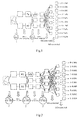
FIG. 1 is a schematic view illustrating a conventional convolutional-neural-network-based classifier; -
FIG. 2 is a schematic view illustrating a convolutional-neural-network-based classifier according to an embodiment of the present invention; -
FIG. 3 is a schematic view illustrating parts selected fromFIG. 1 or 2 ; -
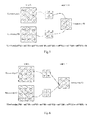
FIGS. 4 to 7 are schematic views illustrating a process of calculating a response value of a neuron using the conventional convolutional-neural-network-based classifier; -
FIGS. 8 to 11 are schematic views illustrating a process of calculating a response value of a neuron using the convolutional-neural-network-based classifier according to the embodiment of the present invention; -
FIG. 12 is a schematic view illustrating a dividing scheme of feature maps in the convolutional-neural-network-based classifier according to the embodiment of the present invention; -
FIG. 13 is a flowchart illustrating a method for training a convolutional-neural-network-based classifier according to an embodiment of the present invention; -
FIG. 14 is a flowchart illustrating a classifying method performed by a convolutional-neural-network-based classifier according to an embodiment of the present invention; and -
FIG. 15 is an exemplary structural view of a computing device that can be used for carrying out the classifying method performed by a convolutional-neural-network-based classifier and the method for training the convolutional-neural-network-based classifier according to the present disclosure. - Hereinafter, embodiments of the present invention will be described with reference to the attached drawings. Elements and features described in one figure or one embodiment of the present invention may be combined with elements and features illustrated in one or more other figures or embodiments. It should be noted that, for the purpose of clarity, representations and descriptions of components and processing irrelevant to the present application which are known to those ordinarily skilled in the art are omitted in the attached drawings and descriptions thereof.
-
FIG. 2 is a schematic view illustrating a convolutional-neural-network-based classifier according to an embodiment of the present invention.FIG. 3 is a schematic view illustrating parts selected fromFIG. 1 or 2 .FIGS. 8 to 11 are schematic views illustrating a process of calculating a response value of a neuron using the convolutional-neural-network-based classifier according to the embodiment of the present invention. - As shown in
FIG. 2 ,FIG. 3 andFIGS. 8-11 , the convolutional-neural-network-based classifier according to the embodiment of the present invention comprises a plurality of feature map layers, at least one feature map in at least one of the feature map layers being divided into a plurality of regions. The convolutional-neural-network-based classifier according to the embodiment of the present invention further comprises a plurality of convolutional templates corresponding to the plurality of regions respectively, each of the convolutional templates being used for obtaining a response value of a neuron in the corresponding region. - Specifically, comparing the convolutional-neural-network-based classifier as shown in
FIG. 2 with the conventional convolutional-neural-network-based classifier as shown inFIG. 1 , less-constrained convolution operations 1' an 2' inFIG. 2 substitute forconvolution operations FIG. 1 , respectively. In addition, as compared withFIG. 1 , inFIG. 2 , a less-constrained convolution operation 3' is added prior to the full-connection operation. The less-constrained convolution operation inFIG. 2 is the aforementioned operation of performing convolution using a plurality of convolutional templates. - In this text, the term "less-constrained convolution operation" refers to using different convolutional templates in calculating response values of neurons in the same feature map, wherein a layer where the feature map lies is called a "less-constrained convolution layer".
- In other embodiments, a network structure of the convolutional-neural-network-based classifier may be properly adjusted. For example, the number of paired operations of "less-constrained convolution-space max sampling" is increased or decreased, the number of the full-connection operation is increased or decreased, the number of the less-constrained convolution operation appearing separately is increased or decreased, the space max sampling operation is substituted with a space sub sampling operation, etc.
- To further describe the details of the less-constrained convolution operation, only parts of related features maps F1, F2 and F3 in
FIG. 2 are selected to make exemplary descriptions. For the parts selected fromFIG. 2 , please refer toFIG. 3 . As shown inFIG. 3 , two adjacent layers, Layer L and layer L+1, are selected. Hereinafter, the conventional convolutional-neural-network-based classifier and the convolutional-neural-network-based classifier according to the present invention will be compared with each other on the basis ofFIG. 3 , so as to find differences therebetween. -
FIGS. 4 to 7 illustrate a process of calculating response values (the response values are also correspondingly marked as T1, T2, T3 and T4) of neurons T1, T2, T3, and T4 in the feature map F3 in the layer L+1 inFIG. 3 using the conventional convolutional-neural-network-based classifier.FIGS. 8 to 11 illustrate a process of calculating response values (the response values are also correspondingly marked as T1, T2, T3 and T4) of neurons T1, T2, T3, and T4 in the feature map F3 in the layer L+1 inFIG. 3 using the convolutional-neural-network-based classifier according to the embodiments of the present invention. Hereinafter, the convolutional-neural-network-based classifier according to the present invention will be described through comparison. - Firstly, in order to facilitate understanding,
FIGS. 4 to 11 are described as follows: - (1) Each circle in
FIGS. 4 to 11 represents a neuron. - (2) All w values in
FIGS. 4 to 11 are values of the convolutional templates, and all the w values are learned through back propagation during the training of the neural network. - (3) The size of all the convolutional templates in
FIGS. 4 to 11 is 2×2; however, it would be understood that the size of the convolutional templates may be of any value in actual use. - (4) The dashed line in the feature map F3 in the layer L+1 in
FIGS. 8 to 11 indicates that all the neurons in the feature map F3 are divided into two classes, wherein each class of the neurons uses identical templates, that is, T1 and T2 use one group of convolutional templates, and T3 and T4 use another group of convolutional templates. As would be readily understood, however, the number of classes to which neurons in one feature map may be arbitrarily specified, and the manner of the dividing thereof may be determined according to specific tasks. For example, for handwritten characters recognition, dividing may be performed according to the stroke pixel density distribution. Various dividing schemes will be described below. - (5) Specific formulae for calculating the response values of the neurons T1, T2, T3 and T4 are provided at the lower part in
FIGS. 4 to 11 . The process of calculating the response values of the neurons in the layer L+1 is obtained by applying a slide window at the layer L, and multiplying the response values of the neurons in the slide window of the layer L by the corresponding values of the convolutional templates. In the formulae, b, b1 and b2 represent bias terms (learning is performed through back propagation during the training of the neutral network). In the formulae, function Func() represents a nonlinear transformation function, which uses a hyperbolic tangent function in a conventional method, and according to the embodiment of the present invention, a non-linear truncated function may be used to achieve the object of increasing a convergence speed, which will be described later. - Firstly, the process of calculating response values (the response values are also correspondingly marked as T1, T2, T3 and T4) of neurons T1, T2, T3, and T4 in the feature map F3 in the layer L+1 in
FIG. 3 using the conventional convolutional-neural-network-based classifier is described with reference toFIGS. 4-7 . -
FIG. 4 illustrates the process of calculating the response value of the neuron T1 in the feature map F3 in the layer L+1 inFIG. 3 using the conventional convolutional-neural-network-based classifier. As shown inFIG. 4 , in the conventional convolutional-neural-network-based classifier, the response value of the neuron T1 in the feature map F3 is obtained by using response values (the response values are also correspondingly marked as S1, S2, S4 and S5) of neurons S1, S2, S4 and S5 (i.e. the four neurons at the left upper part of the feature map F1) in the feature map F1 and response values (the response values are also correspondingly marked as S10, S11, S13 and S14) of neurons S10, S11, S13 and S14 (i.e. the four neurons at the left upper part of the feature map F2) in the feature map F2 in the layer L, as well as a template comprising weights w1, w2, w3 and w4 and a template comprising w5, w6, w7 and w8. Therefore, the response value T1 is as follows:
-
FIG. 5 illustrates the process of calculating the response value of the neuron T2 in the feature map F3 in the layer L+1 inFIG. 3 using the conventional convolutional-neural-network-based classifier. As shown inFIG. 5 , in the conventional convolutional-neural-network-based classifier, the response value of the neuron T2 in the feature map F3 is obtained using response values (the response values are also correspondingly marked as S2, S3, S5 and S6) of neurons S2, S3, S5 and S6 (i.e. the four neurons at the right upper part of the feature map F1) in the feature map F1 and response values (the response values are also correspondingly marked as S11, S12, S14 and S15) of neurons S11, S12, S14 and S15 (i.e. the four neurons at the right upper part of the feature map F2) in the feature map F2 in the layer L, as well as a template comprising weights w1, w2, w3 and w4 and a template comprising w5, w6, w7 and w8. Therefore, the response value T2 is as follows:
-
FIG. 6 illustrates the process of calculating the response value of the neuron T3 in the feature map F3 in the layer L+1 inFIG. 3 by using the conventional convolutional-neural-network-based classifier. As shown inFIG. 6 , in the conventional convolutional-neural-network-based classifier, the response value of the neuron T3 in the feature map F3 is obtained by using response values (the response values are correspondingly marked as S4, S5, S7 and S8) of neurons S4, S5, S7 and S8 (i.e. the four neurons at the left lower part of the feature map F1) in the feature map F1 and response values (the response values are correspondingly marked asS 13,S 14, S16 and S 17) of neurons S 13,S 14, S16 and S 17 (i.e. the four neurons at the right upper part of the feature map F2) in the feature map F2 in the layer L, as well as a template comprising weights w1, w2, w3 and w4 and a template comprising w5, w6, w7 and w8. Therefore, the response value T3 is as follows:
-
FIG. 7 illustrates the process of calculating the response value of the neuron T4 in the feature map F3 in the layer L+1 inFIG. 3 by using the conventional convolutional-neural-network-based classifier. As shown inFIG. 7 , in the conventional convolutional-neural-network-based classifier, the response value of the neuron T4 in the feature map F3 is obtained by using response values (the response values are correspondingly marked as S5, S6, S8 and S9) of neurons S5, S6, S8 and S9 (i.e. the four neurons at the right lower part of the feature map F1) in the feature map F1 and response values (the response values are correspondingly marked as S14,S 15,S 17 and S18) of neurons S14, S15, S16 and S18 (i.e. the four neurons at the right upper part of the feature map F2) in the feature map F2 in the layer L, as well as a template comprising weights w1, w2, w3 and w4 and a template comprising w5, w6, w7 and w8. Therefore, the response value T4 is as follows:
- As can be seen from
FIGS. 4 to 7 (in particular the calculation formulae provided therein), for the conventional convolutional manner, in calculating a response value of any neuron in the feature map F3 in the layer L+1: the feature map F1 in the layer L uses the same convolutional templates (w1, w2, w3, w4) all the time, and the feature map F2 in the layer L uses the same convolutional templates (w5, w6, w7, w8) all the time. - Now, the process of calculating the response values of the neurons T1, T2, T3 and T4 in the feature map F3 in the layer L+1 in
FIG. 3 by using the convolutional-neural-network-based classifier according to an embodiment of the present invention is described with reference toFIGS. 8 to 11 . - As shown in
FIGS. 8 to 11 , the feature map F3 is divided into upper and lower regions, wherein the response values of the neurons T1 and T2 in the upper region are calculated using one group of templates, while the response values of the neurons T3 and T4 in the lower region are calculated using another group of templates. -
FIG. 8 illustrates the process of calculating the response value of the neuron T1 in the feature map F3 in the layer L+1 inFIG. 3 by using the convolutional-neural-network-based classifier according to an embodiment of the present invention. As shown inFIG. 8 , in the convolutional-neural-network-based classifier according to the embodiments of the present invention, the response value of the neuron T1 in the feature map F3 is obtained by using response values (the response values are correspondingly marked as S1, S2, S4 and S5) of neurons S1, S2, S4 and S5 (i.e. the four neurons at the left upper part of the feature map F1) in the feature map F1 and response values (the response values are correspondingly marked as S10, S11, S13 and S 14) of neurons S10, S11,S 13 and S 14 (i.e. the four neurons at the left upper part of the feature map F2) in the feature map F2 in the layer L, as well as a template comprising weights w1, w2, w3 and w4 and a template comprising w5, w6, w7 and w8. Therefore, the response value T1 is as follows:
-
FIG. 9 illustrates the process of calculating the response value of the neuron T2 in the feature map F3 in the layer L+1 inFIG. 3 by using the convolutional-neural-network-based classifier according to the embodiments of the present invention. As shown inFIG. 9 , in the convolutional-neural-network-based classifier according to the embodiments of the present invention, the response value of the neuron T2 in the feature map F3 is obtained by using response values (the response values are correspondingly marked as S2, S3, S5 and S6) of neurons S2, S3, S5 and S6 (i.e. the four neurons at the right upper part of the feature map F1) in the feature map F1 and response values (the response values are correspondingly marked as S11, S12,S 14 and S15) of neurons S11, S12,S 14 and S15 (i.e. the four neurons at the right upper part of the feature map F2) in the feature map F2 in the layer L, as well as a template comprising weights w1, w2, w3 and w4 and a template comprising w5, w6, w7 and w8. Therefore, the response value T2 is as follows:
- It can be seen that the same set of templates is used in calculating the response values of the neurons T1 and T2 in the upper region of the feature map F3.
-
FIG. 10 illustrates the process of calculating the response value of the neuron T3 in the feature map F3 in the layer L+1 inFIG. 3 by using the convolutional-neural-network-based classifier according to the embodiments of the present invention. As shown inFIG. 10 , in the convolutional-neural-network-based classifier according to an embodiment of the present invention, the response value of the neuron T3 in the feature map F3 is obtained by using response values (the response values are correspondingly marked as S4, S5, S7 and S8) of neurons S4, S5, S7 and S8 (i.e. the four neurons at the left lower part of the feature map F1) in the feature map F1 and response values (the response values are correspondingly marked asS 13,S 14, S16 and S17) of neurons S 13,S 14, S16 and S 17 (i.e. the four neurons at the right upper part of the feature map F2) in the feature map F2 in the layer L, as well as a template comprising weights w9, w10, w11 and w12 and a template comprising w13, w14, w15 and w16. Therefore, the response value T3 is as follows:
-
FIG. 11 illustrates the process of calculating the response value of the neuron T4 in the feature map F3 in the layer L+1 inFIG. 3 using the convolutional-neural-network-based classifier according to the embodiments of the present invention. As shown inFIG. 11 , in the convolutional-neural-network-based classifier according to the embodiments of the present invention, the response value of the neuron T4 in the feature map F3 is obtained by using response values (the response values are correspondingly marked as S5, S6, S8 and S9) of neurons S5, S6, S8 and S9 (i.e. the four neurons at the right lower part of the feature map F1) in the feature map F1 and response values (the response values are correspondingly marked asS 14, S15, S17 and S18) of neurons S 14,S 15,S 17 and S18 (i.e. the four neurons at the right upper part of the feature map F2) in the feature map F2 in the layer L, as well as a template comprising weights w9, w10, w11 and w12 and a template comprising w13, w14, w15 and w16. Therefore, the response value T4 is as follows:
- As can be seen by comparing
FIGS. 8 to 11 (in particular the calculation formulae provided therein), for the less-constrained convolution operation, in calculating a response value of any neuron in the feature map F3 in the layer L+1: for the neurons T1 and T2 belonging to the same class, the feature map F1 in the layer L uses the same convolutional templates (w1, w2, w3, w4), and the feature map F2 in the layer L uses the same convolutional templates (w5, w6, w7, w8). For the neurons T3 and T4 belonging to another class, the feature map F1 in the layer L uses the convolutional templates (w9, w10, w11, w12), and the feature map F2 in the layer L uses the same convolutional templates (w13, w14, w15, w16). For the less-constrained convolution operation, in calculating response values of the respective neurons in the same feature map, neurons belonging to the same class use the same convolutional templates. - In the above embodiment, by less-constraining the convolution operation in such a way that convolution is performed using a plurality of convolutional templates between two feature maps (for example, F3 is convoluted with F1 using a plurality of templates), it is made possible that more features are extracted. According to mode recognition theory, a recognition effect of a statistical classifier depends mainly on the number and the validity of extracted features for a sample. The basic operations of feature extraction using a plurality of templates and feature extraction using a single template are consistent with each other (that is, both are convolution), and more features can be extracted by using a plurality of templates, so compared with the manner of using a single template, the method of using a plurality of templates has an advantage in terms of improving classification accuracy.
- In addition, according to the embodiment of the present application, an activation function used in calculating the response values may be configured to acquire positive response values, so as to increase a convergence speed.
- The nonlinear transformation function Func() (also referred to as an activation function) in
FIGS. 8 to 11 is configured to convert a negative convolution result to a positive small value. A convolution result refers to contents in the parentheses of the function Func(). For example, in calculating a response value of each neuron, a nonlinear truncated function is used as the nonlinear transformation function Func() inFIGS. 8-11 , as shown in the following formula (9):
- Where x represents a convolution result. For example, in the formula (5), x represents

- The above formula (9) means that all the values of x which are less than or equal to 0 are truncated to a small quantity ε which is slightly greater than 0, while the values of x which are originally greater than 0 are kept invariable. Hereinafter, setting the small quantity to be within a range of 0 to 10-6 is only an example; actually, the small quantity may be set to be a value within other ranges according to requirements.
- In another embodiment of the present invention, as the nonlinear transformation function Func() in
FIGS. 8 to 11 , a nonlinear truncated function configured to take an absolute value for a negative convolution result may be used, as shown in the following formula (10):
- As would be readily understood, the above formulae (9) and (10) are only examples; and other nonlinear transformation functions may be used according to requirements, as long as the functions are configured to acquire positive response values.
- By using a new activation function, i.e. an activation function configured to acquire positive response values, an increase in a convergence speed is made possible. The less-constrained convolution increases the number of the extracted features, causing a great increase in the total number of parameters of the whole convolutional neutral network, such that in a case where the total number of training samples are invariable, during network training the convergence speed will decrease, prolonging training time; using an activation function which acquires positive response values can increase the convergence speed, which is very advantageous.
- Hereinafter, the dividing scheme of feature maps in the convolutional-neural-network-based classifier according to the embodiment of the present invention is described.
- For the convolutional-neural-network-based classifier according to the embodiment of the present invention, in a training phase it is necessary to pre-determine a dividing scheme of feature maps. In one embodiment, for the convoultional neural network classifier as shown in
FIG. 2 , a dividing scheme of neurons on all the feature maps in the first less-constrained convolutional layer counted from the left is determined first, and then a dividing scheme of neurons on feature maps in remaining less-constrained convolutional layers. - A physical basis for determining a dividing schemes is described first.
- The physical basis for dividing schemes may be related to specific tasks. For example, in one embodiment, dividing of a plurality of regions (each region includes a predetermined number of neurons) in a feature map is performed based on the distribution of pixels of an image. Hereinafter, taking handwritten characters recognition for example, a dividing scheme based on stroke pixel distribution is introduced; a basic idea of this solution is seeking for a dividing scheme, so as to ensure a relatively small difference in the stroke pixel distribution between divided regions. For the sake of conciseness, the dividing scheme of neurons on all the feature maps in the first less-constrained convolutional layer counted from the left is introduced only for the convolutional neural network as shown in
FIG. 2 , and all the feature maps may adopt the same dividing scheme. - Assuming that there exists a total of N training samples, binarization is performed for all the character samples imagek (k=1, ..., N) used for training according to conventional methods, and then they are normalized to the same size (with a height of H and a width of W). Thereafter, all the character samples are added together in a point-to-point manner, so as to obtain a stroke pixel summarizing map StrokeMap :

- Since the binarization operation is performed, on the character samples regions which are 1 represent presence of stroke pixels and regions which are 0 represent an absence of stroke pixels. A value of each pixel on the stroke pixel summarizing map StrokeMap is an average value of numbers of times of all the training images having stroke pixels at the pixel position.
- All the pixels on the stroke pixel summarizing map StrokeMap are traversed, with the following operations being performed:
- (1) A current point (i, j) is determined on the stroke pixel summarizing map StrokeMap.
- (2) The stroke pixel summarizing map StrokeMap is divided into a predetermined number of regions, e.g. four regions, by means of a horizontal line and a vertical line of this point, and a sum of average values of numbers of times of stroke pixels in each of the regions (i.e. a sum of all the pixel values) is calculated.
- (3) Each two of the four regions are divided as one group, and a total of six
groups 
- A point with a minimum value of the sum of the differences of the six groups as recorded is sought for in the stroke pixel summarizing map StrokeMap. The stroke pixel summarizing map StrokeMap is divided into four regions by means of a horizontal line and a vertical line of this point, and this dividing scheme is used as a dividing scheme of neurons on a feature map, that is, all the neurons on the feature map also correspond to four classes, with each class of neurons using the same convolutional templates.
- In the above embodiment, the dividing of the plurality of regions of the feature map is performed based on a pixel distribution of the image, and specifically, is performed based on a quantity distribution of foreground pixels of a binary image of an image. As would be readily understood, however, the dividing of the plurality of regions may also be performed based on a density distribution of foreground pixels of a binary image of the image. For example, each region as divided may be made to have the same density.
- In addition, in one embodiment, dividing of a plurality of regions may be performed based on the structure of an image. Still taking a character image for example, for example an image to be divided is a handwritten character "". The character "
 " is of a left-right structure, and thus can be divided into left and right regions according to radicals, i.e. an image region containing "
 " and an image region containing "
 ". For example, an image to be divided is a handwritten character "6", the character "6" may be divided into upper and lower parts, i.e. an image region generally containing "o" and an image region generally containing the upper circular arc part. It should be noted that: each person has a different handwriting habit, so during actual dividing, a proportion of an image to be divided is not fixed, but floats on the basis of a predetermined proportion.
- Although performing the dividing of the regions based on the structure of an image or a binary image of an image is described herein by taking a handwritten character for example, it would be readily understood that the targeted image is not limited to a handwritten character but may be any other proper images, such as an image of a splintering cell, a map image and so on.
- The foregoing describes the physical basis for determining dividing schemes. Next, dividing schemes will be described according to whether dividing schemes between a plurality of less-constrained convolutional layers and between a plurality of feature maps are the same as each other. There exist dividing schemes of two levels, a first one of which is whether all the feature maps to which each sample corresponds use the same dividing scheme, and a second one of which is whether the same dividing scheme is used between samples. As far as this is concerned, the following four dividing schemes may be used for all feature maps in one convolutional-neural-network-based classifier:
- (1) All the samples use the same dividing scheme, wherein all the feature maps to which each sample corresponds use the same dividing scheme. Herein, "all the feature maps" refer to all the feature maps on a less-constrained convolutional layer.
- (2) All the samples use the same dividing scheme, wherein all the feature maps to which each sample corresponds use different dividing schemes. Herein, "all the feature maps" refer to all the feature maps on a less-constrained convolutional layer. The case where all the feature maps use different dividing schemes mainly covers the following two cases: (a) all the feature maps on each layer use the same dividing scheme, but dividing schemes used between layers are different; and (b) different dividing schemes are used between all the feature maps on each layer.
- (3) All the samples use different dividing schemes, wherein all the feature maps to which each sample corresponds use the same dividing scheme. Herein, "all the feature maps" refer to all the feature maps on a less-constrained convolutional layer.
- (4) All the samples use different dividing schemes, wherein all the feature maps to which each sample corresponds use different dividing schemes. Herein, "all the feature maps" refer to all the feature maps on a less-constrained convolutional layer. The case where all the feature maps use different dividing schemes mainly covers the following two cases: (a) all the feature maps on each layer use the same dividing scheme, but dividing schemes used between layers are different; and (b) different dividing schemes are used between all the feature maps on each layer.
- Hereinafter, one embodiment of the above scheme (4) of dividing will be described by way of an example.
FIG. 12 illustrates a process of applying three kinds of dividing schemes (red lines inFIG. 12 ) of an input sample "6" to three less-constrained convolutional layers respectively. All the samples use different dividing schemes, and all the feature maps on each layer use the same dividing scheme, but dividing schemes used between layers are different. - The foregoing describes dividing schemes according to whether dividing schemes between a plurality of less-constrained convolutional layers and between a plurality of feature maps are the same. Hereinafter, dividing schemes will be described according to whether dividing schemes for a plurality of different samples are fixed.
- In one embodiment, an image serving as a sample may be divided into a plurality of image regions according to a fixed scheme, and the plurality of image regions obtained by the dividing correspond to a plurality of regions of a feature map on a less-constrained convolutional layer respectively. Herein, for example, a fixed scheme may be determined based on general features of training samples. In other words, a fixed solution is determined based on general features of training samples, and then each training sample is divided according to the fixed scheme. A specific fixed scheme may be any one of the above schemes.
- In another embodiment, the convolutional-neural-network-based classifier further comprises a image dividing unit (not shown), which may divide an image serving as a sample into a plurality of image regions, and the plurality of image regions obtained by the dividing correspond to a plurality of regions on a less-constrained convolutional layer respectively. Herein, a dynamic solution may be determined based on personal features of training samples. In other words, since it is possible that personal features of one training sample are different from personal features of another training sample, dividing schemes for different training samples are possibly different. In this case, the image dividing unit may discriminately divide the image serving as the sample into a plurality of image regions based on the personal features of the training samples. A specific dividing scheme may also be any one of the above solutions.
- Hereinafter, a method 1300 for training the convolutional-neural-network-based classifier according to the embodiment of the present invention will be described with reference to
FIG. 13 . - As shown in
FIG. 13 , in Step S1302, at least one feature map in the at least one of the plurality of feature map layers included in the convolutional-neural-network-based classifier is divided into a plurality of regions. - For example, at least one feature map in the at least one layer may be divided into a plurality of regions by using one of the above dividing schemes.
- In addition, the layout of the convolutional-neural-network-based classifier according to the embodiment of the present invention is given; for example, the layout comprises the number of network layers, operations (less-constrained convolution, space max sampling, full-connection) on each layer, the number of feature maps and the size of feature maps on each layer, wherein the number of feature maps on an output layer is consistent with the class number of specific tasks. For example, for a digit recognition task, the number of feature maps of an output layer is 10, while for an English capital recognition task, the number of feature maps of an output layer is 26.
- In Step S1304, forward propagation is performed by putting a training sample with a known flag into the convolutional-neural-network-based classifier to obtain an output result, during the forward propagation, and each of the convolutional templates, which correspond to the plurality of regions respectively, is used for obtaining a response value of a neuron in the corresponding region. Preferably, the response value may be calculated by using an activation function configured to acquire a positive response value. For example, the activation function may be an activation function configured to take an absolute value for a negative convolutional result or to convert a negative convolutional result to a positive small value.
- For example, for weights of all the templates in the network, random initialization may be performed by using 0-1 distribution. Then, all the training samples are sequentially fed into the convolutional-neural-network-based classifier according to the embodiment of the present invention to perform training. For each of the training samples, an output result is obtained according to the forward propagation, i.e. a value of an output layer.
- In Step S1306, back propagation is performed according to the difference between the output result and the known flag to correct parameters of the convolutional-neural-network-based classifier comprising the weights in the convolutional template. In other words, the parameters of the convolutional-neural-network-based classifier not only comprise the weights in the convolutional template but also comprise other parameters.
- In Step S1308, it is judged whether a predetermined condition is met. For example, it is judged whether an error rate of the convolutional-neural-network-based classifier according to the embodiment of the present invention on a training set reaches or is lower than a predetermined value. However, it would be readily understood that the predetermined condition may also be other conditions, such as a predetermined time number or other convergence conditions and so on.
- If the predetermined condition is met in Step S1308, processing ends; otherwise, return to Step S1302.
- Hereinafter, a classifying method 1400 performed by a convolutional-neural-network-based classifier according to the embodiment of the present invention will be described with reference to
FIG. 14 . - As shown in
FIG. 14 , in Step S1402, at least one feature map in the at least one of the plurality of feature map layers included in the convolutional-neural-network-based classifier is divided into a plurality of regions. Herein, the feature maps are divided by using the same dividing manner as that used during training. - In Step S1404, forward propagation is performed by putting the an object to be classified into the convolutional-neural-network-based classifier to obtain an output result, and during the forward propagation, each of the convolutional templates, which correspond to the plurality of regions respectively, is used for obtaining a response value of a neuron in the corresponding region. Preferably, the response value may be calculated by using an activation function configured to acquire a positive response value. For example, the activation function may be an activation function configured to take an absolute value for a negative convolutional result or to convert a negative convolutional result to a positive small value.
- According to the embodiment of the present invention, by improving a convolution operation as a less-constrained convolution operation, it is made possible to improve the flexibility of the neural network classifier, thereby achieving the object of extracting more features to thereby further improve recognition accuracy. In addition, by improving the existing activation functions as activation functions configured to acquire a positive response value, it is made possible to increase a convergence speed.
- The foregoing combined with specific embodiments describes the basic principle of the present invention. However, it should be noted that: those ordinarily skilled in the art would appreciate that all or any step or component of the method and the apparatus of the embodiments of the present invention may be realized, in the form of hardware, firmware, software or combinations thereof, in any calculation means (including a processor, a storage medium, etc.) or a network of calculation means. This can be realized by those ordinarily skilled in the art by applying their basic programming skills after reviewing the descriptions of the embodiments of the present invention.
- Therefore, the desired effect of the present invention may also be achieved by running a program or a set of programs on any calculation means. The calculation means may be well-known versatile means. Therefore, the object of the present application may also be achieved by only providing a program product containing a program code for carrying out a method or means. That is, such a program product also constitutes an embodiment of an aspect of the present invention, and a storage medium storing such a program product also constitutes an embodiment of an aspect of the present invention. Obviously, the storage medium may be any well-known storage medium or any storage medium that would be developed in the future.
- In carrying out the embodiment of the present invention by means of software and/or firmware, a program constituting the software is installed from the storage medium or network to a computer having a dedicated hardware structure, e.g. the
versatile computer 1500 as shown inFIG. 15 , and the computer can perform various functions and so on when it is installed with various programs. - In
FIG. 15 , a central processing unit (CPU) 1501 performs various processing according to a program stored in a Read Only Memory (ROM) 1502 or a program loaded from astorage section 1508 to a Random Access Memory (RAM) 1503. In theRAM 1503, data needed in performing various processing by theCPU 1501 and so on is also stored according to requirements. TheCPU 1501, theROM 1502 and theRAM 1503 are linked to each other via abus 1504. An input/output interface 1505 is also linked to thebus 1504. - The following components are linked to the input/output interface 1505: an inputting section 1506 (including a keyboard, a mouse, etc.), an outputting section 1507 (including a display, such as a Cathode-Ray Tube (CRT), a Liquid Crystal Display (LCD) and so on, a loudspeaker, etc.), a storage section 1508 (including a hard disk, etc.), and a communication section 1509 (including a network interface card such as an LAN card, a modem and so on). The
communication section 1509 performs communication process via network such as Internet. Thecommunication section 1509 may also be linked to the input/output interface 1505 as needed. A detachable medium 1511 such as a magnetic disk, an optical disk, a magneto optical disk, a semiconductor memory and so on is installed on adriver 1511 according to requirements, such that a computer program read therefrom is installed into thestorage section 1508 according to requirements. - In carrying out the above series of processing by means of software, a program constituting software is installed from a network such as Internet or a storage medium such as the
detachable medium 1511. - As would be understood by those skilled in the art, this storage medium is not limited to the detachable medium 1511 as shown in
FIG. 15 which stores therein with a program and which is distributed separately from devices to provide a program for a user. Examples of the detachable medium 1511 include a magnetic disk (including a floppy disk (registered trademark)), an optical disk (including a Compact Disk Read-Only Memory (CD-ROM) and a Digital Versatile Disk (DVD), a magneto optical disk (including a minidisk (MD) (a registered trademark)) and a semiconductor memory. Or, the storage medium may be theROM 1502, a hard disk included in thestorage section 1508, etc., which store a program, and which are distributed together with a device including them to the user. - An embodiment of the present invention further proposes a program product storing a machine-readable instruction code. When the instruction code is read and executed by a machine, the above method according to the embodiment of the present invention can be carried out.
- Correspondingly, a storage medium for carrying the program product storing a machine-readable instruction code is also included by the disclosure of the present invention. The storage medium includes but is not limited to a floppy disk, an optical disk, a magneto optical disk, a memory card, a memory stick, etc.
- As would be readily understood by those ordinarily skilled in the art, the examples listed herein are only exemplary, and the present invention is not limited thereto.
- In the Description, expressions such "first", "second" and "Nth" are used for distinguishing the described features in terms of wording, so as to clearly describe embodiments of the present invention. Therefore, these expressions shall not be regarded as being limitative at all.
- As an example, the respective steps of the above method and the respective constituent modules and /or units of the above device may be embodied as software, firmware, hardware or combinations thereof, and serve as a part of a corresponding device. Specific means or manners that can be used for configuring the respective constituent modules and units in the above apparatus in the form of software, firmware, hardware or combinations thereof are well-known to those skilled in the art, which will not be repeatedly described herein.
- As an example, in carrying out the embodiment of the present invention by means of software and/or firmware, a program constituting the software is installed from the storage medium or network to a computer having a dedicated hardware structure, e.g. the
versatile computer 1500 as shown inFIG. 15 , and the computer can perform various functions and so on when it is installed with various programs. - In the foregoing descriptions of the detailed embodiments of the present invention, features described and/or shown for one embodiment may be used in one or more other embodiments in an identical or similar manner, be combined with features in other embodiments, or substitute for features in other embodiments.
- It should be emphasized that when used in this text the term "comprise/include" refers to existence of features, elements, steps of assemblies, without excluding existence or addition of one or more other features, elements, steps or assemblies.
- In addition, the method according to an embodiment of the present invention is not limited to be carried out in the temporal order described in the Description, but may also be carried out in parallel or separately in other temporal orders. Therefore, the order of carrying out the method described in the Description fails to constitute a limitation to the technical scope of the embodiment of the present invention.
- The present invention and the advantages thereof have been described above. However, it should be understood that various changes, substitutions or transformations may be carried out without departing from the scope of the present invention defined by the attached claims. In addition, the scope of the present invention is not limited only to the detailed embodiments of processes, devices, means, methods and steps described in the Description. From the disclosure of the present invention, those ordinarily skilled in the art would readily understand that, according to the present invention, processes, devices, means, methods or steps existing or to be developed in the future which perform a substantially the same function or obtains a substantially the same result as the corresponding embodiments herein may be used. Therefore, the attached claims aim to embrace such processes, devices, means, methods or steps within the scopes thereof.
- From the above descriptions, it can be seen that the disclosure at least discloses the following technical solutions:
-
Technical solution 1. A convolutional-neural-network-based classifier, comprising:- a plurality of feature map layers, at least one feature map in at least one of feature maps being divided into a plurality of regions; and
- a plurality of convolutional templates corresponding to the plurality of regions respectively, each of the convolutional templates being used for obtaining a response value of a neuron in the corresponding region.
-
Technical solution 2. The convolutional-neural-network-based classifier oftechnical solution 1, wherein the convolutional-neural-network-based classifier is configured for classifying an image, and the image is divided into a plurality of image regions, which correspond to the plurality of regions respectively, according to a fixed scheme. -
Technical solution 3. The convolutional-neural-network-based classifier oftechnical solution 1, wherein the convolutional-neural-network-based classifier is configured for classifying an image, and the convolutional-neural-network-based classifier further comprises a image dividing unit which is configured for dividing the image into a plurality of image regions corresponding to the plurality of regions respectively. -
Technical solution 4. The convolutional-neural-network-based classifier oftechnical solution 3, wherein the plurality of regions is divided based on a pixel distribution of the image. -
Technical solution 5. The convolutional-neural-network-based classifier oftechnical solution 4, wherein the plurality of regions is divided based on a quantity distribution or a density distribution of foreground pixels in a binary image of the image. -
Technical solution 6. The convolutional-neural-network-based classifier oftechnical solution 3, wherein the plurality of regions is divided based on a structure of the image. -
Technical solution 7. The convolutional-neural-network-based classifier of any one oftechnical solutions 1 to 6, wherein for different feature maps in the same feature map layer, or for feature maps in the different feature map layers, the different dividing schemes are used for dividing the plurality of regions. -
Technical solution 8. The convolutional-neural-network-based classifier of any one oftechnical solutions 1 to 6, wherein an activation function used for calculating the response value is configured for obtaining a positive response value. -
Technical solution 9. The convolutional-neural-network-based classifier oftechnical solution 8, wherein the activation function is configured to take an absolute value for a negative convolutional result or to convert a negative convolutional result to a positive small value. -
Technical solution 10. A classifying method by using a convolutional-neural-network-based classifier which comprises a plurality of feature map layers, comprising:- dividing at least one feature map in at least one of the plurality of the feature map layers into a plurality of regions;
- performing forward propagation by inputting an object to be classified into the convolutional-neural-network-based classifier to obtain an output result, during the forward propagation, each of the convolutional templates, which correspond to the plurality of regions respectively, is used for obtaining a response value of a neuron in the corresponding region; and
- classifying the object to be classified according to the output result.
-
Technical solution 11. The method oftechnical solution 10, wherein the object to be classified is an image, the step of dividing at least one feature map in at least one of the plurality of the feature map layers into a plurality of regions comprising:- dividing the image into a plurality of image regions, which correspond to the plurality of regions respectively.
-
Technical solution 12. The method oftechnical solution 11, wherein the object to be classified is an image, the step of dividing at least one feature map in the at least one of the plurality of the feature map layers into a plurality of regions comprising:- dividing the image into a plurality of image regions, which correspond to the plurality of regions respectively, according to a fixed scheme.
-
Technical solution 13. The method oftechnical solution 11, wherein the step of dividing at least one feature map in at least one of the plurality of the feature map layers into a plurality of regions comprises:- dividing the at least one feature map into the plurality of regions based on a pixel distribution of the image.
-
Technical solution 14. The method oftechnical solution 13, wherein the step of dividing at least one feature map in at least one of the plurality of the feature map layers into a plurality of regions comprises:- dividing the at least one feature map into the plurality of regions based on a quantity distribution or a density distribution of foreground pixels of a binary image of the image.
-
Technical solution 15. The method oftechnical solution 11, wherein the step of dividing at least one feature map in at least one of the plurality of the feature map layers into a plurality of regions comprises:- dividing the at least one feature map into the plurality of regions based on the structure of the image.
-
Technical solution 16. The method of any one oftechnical solutions 10 to 15, wherein the step of dividing at least one feature map in at least one of the plurality of the feature map layers into a plurality of regions comprises:- for different feature maps in the same layer of feature maps, or for feature maps in the different layers of feature maps, using different dividing schemes to dividing the plurality of regions.
-
Technical solution 17. The method of any one oftechnical solutions 10 to 15, wherein the step that each of the convolutional templates, which correspond to the plurality of regions respectively, is used for obtaining a response value of a neuron in the corresponding region comprises:- calculating the response value using an activation value configured to acquire a positive response value.
-
Technical solution 18. The method oftechnical solution 17, wherein the step that each of the convolutional templates, which correspond to the plurality of regions respectively, is used for obtaining a response value of a neuron in the corresponding region comprises:- calculating the response value using an activation value configured to take an absolute value for a negative convolutional result or to convert a negative convolutional result to a positive small value.
- Technical solution 19. A method for training the convolutional-neural-network-based classifier, which comprises a plurality of feature map layers, comprising:
- dividing at least one feature map in at least one of the plurality of the feature map layers into a plurality of regions;
- performing forward propagation by inputting a training sample with a known flag into the convolutional-neural-network-based classifier to obtain an output result, during the forward propagation, each of the convolutional templates, which correspond to the plurality of regions respectively, is used for obtaining a response value of a neuron in the corresponding region;
- performing back propagation according to the difference between the output result and the known flag to correct parameters of the convolutional-neural-network-based classifier comprising the weights in the convolutional template; and
- repeating the above steps until a predetermined condition is met.
- Technical solution 20. The method according to technical solution 19, wherein the training sample is an image, the step of dividing at least one feature map in at least one of the plurality of the feature map layers into a plurality of regions comprising:
- dividing the image into a plurality of images regions, which correspond to the plurality of regions respectively, according to a fixed scheme respectively, wherein the fixed scheme is determined based on general features of the training sample.
- Technical solution 21. The method according to technical solution 19, wherein the training sample is an image, the step of dividing at least one feature map in at least one of the plurality of the feature map layers into a plurality of regions comprising:
- dividing each image into a plurality of image regions, which correspond to the plurality of regions respectively, based on the personal features of each the image respectively.
- Technical solution 22. The method according to technical solution 21, wherein the step of dividing at least one feature map in at least one of the plurality of the feature map layers into a plurality of regions comprises:
- dividing the at least one feature map into the plurality of regions based on a pixel distribution of the image.
- Technical solution 23. The method according to technical solution 22, wherein the step of dividing at least one feature map in at least one of the plurality of the feature map layers into a plurality of regions comprises:
- dividing the at least one feature map into the plurality of regions based on a quantity distribution or a density distribution of foreground pixels of a binary image of the image.
- Technical solution 24. The method according to technical solution 21, wherein the step of dividing at least one feature map in at least one of the plurality of the feature map layers into a plurality of regions comprises:
- dividing the at least one feature map into the plurality of regions based on the structure of the image.
- Technical solution 25. The method of any one of technical solutions 19 to 25, wherein the step of dividing at least one feature map in at least one of the plurality of the feature map layers into a plurality of regions comprises:
- for different feature maps in the same layer of feature maps, or for feature maps in the different layers of feature maps, using different dividing schemes for the dividing of the plurality of regions.
- Technical solution 26. The method of any one of technical solutions 19 to 25, wherein the step that each of the convolutional templates, which correspond to the plurality of regions respectively, is used for obtaining a response value of a neuron in the corresponding region comprises:
- calculating the response value by using an activation value configured to acquire a positive response value.
- Technical solution 27. The method of technical solution 26, wherein the step that each of the convolutional templates, which correspond to the plurality of regions respectively, is used for obtaining a response value of a neuron in the corresponding region comprises:
- calculating the response value by using an activation value configured to take an absolute value for a negative convolutional result or to convert a negative convolutional result to a positive small value.
Claims (15)
- A convolutional-neural-network-based classifier, comprising:a plurality of feature map layers, at least one feature map in at least one of feature maps being divided into a plurality of regions; anda plurality of convolutional templates corresponding to the plurality of regions respectively, each of the convolutional templates being used for obtaining a response value of a neuron in the corresponding region.
- The convolutional-neural-network-based classifier of claim 1, wherein the convolutional-neural-network-based classifier is configured for classifying an image, and the image is divided into a plurality of image regions, which correspond to the plurality of regions respectively, according to a fixed scheme.
- The convolutional-neural-network-based classifier of claim 1, wherein the convolutional-neural-network-based classifier is configured for classifying an image, and the convolutional-neural-network-based classifier further comprises a image dividing unit which is configured for dividing the image into a plurality of image regions corresponding to the plurality of regions respectively.
- The convolutional-neural-network-based classifier of claim 3, wherein the plurality of regions is divided based on a pixel distribution of the image.
- The convolutional-neural-network-based classifier of claim 4, wherein the plurality of regions is divided based on a quantity distribution or a density distribution of foreground pixels in a binary image of the image.
- The convolutional-neural-network-based classifier of claim 3, wherein the plurality of regions is divided based on a structure of the image.
- The convolutional-neural-network-based classifier of any one of claims 1 to 6, wherein for different feature maps in the same feature map layer, or for feature maps in the different feature map layers, the different dividing schemes are used for dividing the plurality of regions.
- The convolutional-neural-network-based classifier of any one of claims 1 to 6, wherein an activation function used for calculating the response value is configured for obtaining a positive response value.
- The convolutional-neural-network-based classifier of claim 8, wherein the activation function is configured to take an absolute value for a negative convolutional result or to convert a negative convolutional result to a positive small value.
- A classifying method by using a convolutional-neural-network-based classifier which comprises a plurality of feature map layers, the method comprising:dividing at least one feature map in at least one of the plurality of the feature map layers into a plurality of regions;performing forward propagation by inputting an object to be classified into the convolutional-neural-network-based classifier to obtain an output result, during the forward propagation, each of the convolutional templates, which correspond to the plurality of regions respectively, is used for obtaining a response value of a neuron in the corresponding region; andclassifying the object to be classified according to the output result.
- The method of claim 10, wherein the object to be classified is an image, the step of dividing at least one feature map in at least one of the plurality of the feature map layers into a plurality of regions comprising:dividing the image into a plurality of image regions, which correspond to the plurality of regions respectively.
- The method of claim 11, wherein the object to be classified is an image, the step of dividing at least one feature map in the at least one of the plurality of the feature map layers into a plurality of regions comprising:dividing the image into a plurality of image regions, which correspond to the plurality of regions respectively, according to a fixed scheme.
- The method of claim 11, wherein the step of dividing at least one feature map in at least one of the plurality of the feature map layers into a plurality of regions comprises:dividing the at least one feature map into the plurality of regions based on a pixel distribution of the image.
- The method of claim 11, wherein the step of dividing at least one feature map in at least one of the plurality of the feature map layers into a plurality of regions comprises:dividing the at least one feature map into the plurality of regions based on the structure of the image.
- A method for training the convolutional-neural-network-based classifier, which comprises a plurality of feature map layers, comprising:dividing at least one feature map in at least one of the plurality of the feature map layers into a plurality of regions;performing forward propagation by inputting a training sample with a known flag into the convolutional-neural-network-based classifier to obtain an output result, during the forward propagation, each of the convolutional templates, which correspond to the plurality of regions respectively, is used for obtaining a response value of a neuron in the corresponding region;performing back propagation according to the difference between the output result and the known flag to correct parameters of the convolutional-neural-network-based classifier comprising the weights in the convolutional template; andrepeating the above steps until a predetermined condition is met.
Applications Claiming Priority (1)
| Application Number | Priority Date | Filing Date | Title |
|---|---|---|---|
| CN201310329465.7A CN104346622A (en) | 2013-07-31 | 2013-07-31 | Convolutional neural network classifier, and classifying method and training method thereof |
Publications (2)
| Publication Number | Publication Date |
|---|---|
| EP2833295A2 true EP2833295A2 (en) | 2015-02-04 |
| EP2833295A3 EP2833295A3 (en) | 2015-05-20 |
Family
ID=51059297
Family Applications (1)
| Application Number | Title | Priority Date | Filing Date |
|---|---|---|---|
| EP20140174111 Withdrawn EP2833295A3 (en) | 2013-07-31 | 2014-06-26 | Convolutional-neural-network-based classifier and classifying method and training methods for the same |
Country Status (4)
| Country | Link |
|---|---|
| US (1) | US9697444B2 (en) |
| EP (1) | EP2833295A3 (en) |
| JP (1) | JP2015032308A (en) |
| CN (1) | CN104346622A (en) |
Cited By (14)
| Publication number | Priority date | Publication date | Assignee | Title |
|---|---|---|---|---|
| CN105550749A (en) * | 2015-12-09 | 2016-05-04 | 四川长虹电器股份有限公司 | Method for constructing convolution neural network in novel network topological structure |
| US20160260014A1 (en) * | 2015-03-06 | 2016-09-08 | Panasonic Intellectual Property Management Co., Ltd. | Learning method and recording medium |
| CN106295666A (en) * | 2015-05-14 | 2017-01-04 | 佳能株式会社 | Grader generates, updates and method for checking object and device and image processing equipment |
| CN106680775A (en) * | 2016-12-12 | 2017-05-17 | 清华大学 | Method and system for automatically identifying radar signal modulation modes |
| WO2017096570A1 (en) * | 2015-12-10 | 2017-06-15 | Intel Corporation | Visual recognition using deep learning attributes |
| WO2017142397A1 (en) | 2016-02-19 | 2017-08-24 | Scyfer B.V. | Device and method for generating a group equivariant convolutional neural network |
| WO2017201676A1 (en) * | 2016-05-24 | 2017-11-30 | Intel Corporation | Self-adaptive window mechanism |
| CN107851195A (en) * | 2015-07-29 | 2018-03-27 | 诺基亚技术有限公司 | Object Detection Using Neural Networks |
| CN109241880A (en) * | 2018-08-22 | 2019-01-18 | 北京旷视科技有限公司 | Image processing method, image processing apparatus, computer readable storage medium |
| CN109643396A (en) * | 2016-06-17 | 2019-04-16 | 诺基亚技术有限公司 | Construct convolutional neural networks |
| US10810491B1 (en) | 2016-03-18 | 2020-10-20 | Amazon Technologies, Inc. | Real-time visualization of machine learning models |
| EP3709218A4 (en) * | 2017-11-09 | 2021-08-04 | BOE Technology Group Co., Ltd. | IMAGE CLASSIFICATION AND CONVERSION METHOD AND DEVICE, IMAGE PROCESSOR AND LEARNING PROCESS, AND SUPPORT |
| US11875250B1 (en) | 2017-06-19 | 2024-01-16 | Amazon Technologies, Inc. | Deep neural networks with semantically weighted loss functions |
| US12141513B2 (en) | 2018-10-31 | 2024-11-12 | International Business Machines Corporation | Method to map convolutional layers of deep neural network on a plurality of processing elements with SIMD execution units, private memories, and connected as a 2D systolic processor array |
Families Citing this family (97)
| Publication number | Priority date | Publication date | Assignee | Title |
|---|---|---|---|---|
| JP6488380B2 (en) * | 2014-12-17 | 2019-03-20 | ノキア テクノロジーズ オーユー | Object detection by neural network |
| US10127439B2 (en) * | 2015-01-15 | 2018-11-13 | Samsung Electronics Co., Ltd. | Object recognition method and apparatus |
| WO2016141282A1 (en) * | 2015-03-04 | 2016-09-09 | The Regents Of The University Of California | Convolutional neural network with tree pooling and tree feature map selection |
| KR20170128454A (en) * | 2015-03-11 | 2017-11-22 | 지멘스 악티엔게젤샤프트 | Systems and methods for deconvolutional network-based classification of cell images and videos |
| CN106033594B (en) * | 2015-03-11 | 2018-11-13 | 日本电气株式会社 | Spatial information restoration methods based on the obtained feature of convolutional neural networks and device |
| CN106156846B (en) * | 2015-03-30 | 2018-12-25 | 日本电气株式会社 | The treating method and apparatus of convolutional neural networks feature |
| CN106156712A (en) * | 2015-04-23 | 2016-11-23 | 信帧电子技术(北京)有限公司 | A kind of based on the ID (identity number) card No. recognition methods under natural scene and device |
| US10417555B2 (en) | 2015-05-29 | 2019-09-17 | Samsung Electronics Co., Ltd. | Data-optimized neural network traversal |
| WO2016197046A1 (en) | 2015-06-05 | 2016-12-08 | Google Inc. | Spatial transformer modules |
| US10452971B2 (en) | 2015-06-29 | 2019-10-22 | Microsoft Technology Licensing, Llc | Deep neural network partitioning on servers |
| US11244225B2 (en) * | 2015-07-10 | 2022-02-08 | Samsung Electronics Co., Ltd. | Neural network processor configurable using macro instructions |
| CN104992191B (en) * | 2015-07-23 | 2018-01-26 | 厦门大学 | Image Classification Method Based on Deep Learning Features and Maximum Confidence Path |
| EP4234053B1 (en) | 2015-08-03 | 2025-05-21 | Angel Playing Cards Co., Ltd. | Management system of substitute currency for gaming |
| US11074780B2 (en) | 2015-08-03 | 2021-07-27 | Angel Playing Cards Co., Ltd. | Management system of substitute currency for gaming |
| ES2985532T3 (en) | 2015-08-03 | 2024-11-06 | Angel Playing Cards Co Ltd | Fraud detection system in gaming room |
| US10970962B2 (en) | 2015-08-03 | 2021-04-06 | Angel Playing Cards Co., Ltd. | Management system of substitute currency for gaming |
| CN106485192B (en) * | 2015-09-02 | 2019-12-06 | 富士通株式会社 | Training method and device of neural network for image recognition |
| US20170076195A1 (en) * | 2015-09-10 | 2017-03-16 | Intel Corporation | Distributed neural networks for scalable real-time analytics |
| US10115032B2 (en) * | 2015-11-04 | 2018-10-30 | Nec Corporation | Universal correspondence network |
| CN105512676A (en) * | 2015-11-30 | 2016-04-20 | 华南理工大学 | Food recognition method at intelligent terminal |
| US9785855B2 (en) | 2015-12-17 | 2017-10-10 | Conduent Business Services, Llc | Coarse-to-fine cascade adaptations for license plate recognition with convolutional neural networks |
| CN105575119B (en) * | 2015-12-29 | 2018-06-19 | 大连楼兰科技股份有限公司 | Method and device for deep learning and recognition of road conditions and climate |
| US9858496B2 (en) | 2016-01-20 | 2018-01-02 | Microsoft Technology Licensing, Llc | Object detection and classification in images |
| AU2017228528A1 (en) | 2016-09-12 | 2018-03-29 | Angel Playing Cards Co., Ltd. | Chip measurement system |
| SG11201806537YA (en) | 2016-02-01 | 2018-08-30 | Angel Playing Cards Co Ltd | Game token management system |
| JP2017139646A (en) * | 2016-02-04 | 2017-08-10 | リコーイメージング株式会社 | Imaging apparatus |
| US10733503B2 (en) | 2016-02-18 | 2020-08-04 | Intel Corporation | Technologies for shifted neural networks |
| US20170249547A1 (en) * | 2016-02-26 | 2017-08-31 | The Board Of Trustees Of The Leland Stanford Junior University | Systems and Methods for Holistic Extraction of Features from Neural Networks |
| CN105787482A (en) * | 2016-02-26 | 2016-07-20 | 华北电力大学 | Specific target outline image segmentation method based on depth convolution neural network |
| CN107203775B (en) * | 2016-03-18 | 2021-07-27 | 斑马智行网络(香港)有限公司 | A method, apparatus and device for image classification |
| CN107239786B (en) * | 2016-03-29 | 2022-01-11 | 阿里巴巴集团控股有限公司 | Character recognition method and device |
| CN108140144B (en) * | 2016-03-31 | 2021-06-01 | 富士通株式会社 | A method, device and electronic device for training a neural network model |
| CN105930902B (en) * | 2016-04-18 | 2018-08-10 | 中国科学院计算技术研究所 | A neural network processing method and system |
| CN107329734B (en) * | 2016-04-29 | 2020-08-07 | 中科寒武纪科技股份有限公司 | Apparatus and method for performing convolutional neural network forward operation |
| CN106203327B (en) * | 2016-07-08 | 2019-04-19 | 清华大学 | Lung tumor recognition system and method based on convolutional neural network |
| CN107644251B (en) * | 2016-07-22 | 2020-09-18 | 北京市商汤科技开发有限公司 | Object classification method, device and system |
| US11410494B2 (en) | 2016-08-02 | 2022-08-09 | Angel Group Co., Ltd. | Game management system |
| SG10201913912PA (en) | 2016-08-02 | 2020-03-30 | Angel Playing Cards Co Ltd | Inspection system and management system |
| EP3497624A1 (en) * | 2016-08-13 | 2019-06-19 | Intel Corporation | Apparatuses, methods, and systems for neural networks |
| US12020174B2 (en) | 2016-08-16 | 2024-06-25 | Ebay Inc. | Selecting next user prompt types in an intelligent online personal assistant multi-turn dialog |
| KR102824640B1 (en) * | 2016-09-07 | 2025-06-25 | 삼성전자주식회사 | Recognition apparatus based on neural network and training method of neural network |
| US9715656B1 (en) | 2016-09-12 | 2017-07-25 | International Business Machines Corporation | Killing asymmetric resistive processing units for neural network training |
| US9646243B1 (en) | 2016-09-12 | 2017-05-09 | International Business Machines Corporation | Convolutional neural networks using resistive processing unit array |
| US20190228268A1 (en) * | 2016-09-14 | 2019-07-25 | Konica Minolta Laboratory U.S.A., Inc. | Method and system for cell image segmentation using multi-stage convolutional neural networks |
| CN107871314B (en) * | 2016-09-23 | 2022-02-18 | 商汤集团有限公司 | Sensitive image identification method and device |
| US11748978B2 (en) | 2016-10-16 | 2023-09-05 | Ebay Inc. | Intelligent online personal assistant with offline visual search database |
| US10860898B2 (en) | 2016-10-16 | 2020-12-08 | Ebay Inc. | Image analysis and prediction based visual search |
| US11200273B2 (en) | 2016-10-16 | 2021-12-14 | Ebay Inc. | Parallel prediction of multiple image aspects |
| US11004131B2 (en) | 2016-10-16 | 2021-05-11 | Ebay Inc. | Intelligent online personal assistant with multi-turn dialog based on visual search |
| US10970768B2 (en) | 2016-11-11 | 2021-04-06 | Ebay Inc. | Method, medium, and system for image text localization and comparison |
| KR101879207B1 (en) * | 2016-11-22 | 2018-07-17 | 주식회사 루닛 | Method and Apparatus for Recognizing Objects in a Weakly Supervised Learning Manner |
| US10685285B2 (en) * | 2016-11-23 | 2020-06-16 | Microsoft Technology Licensing, Llc | Mirror deep neural networks that regularize to linear networks |
| CN106778928B (en) * | 2016-12-21 | 2020-08-04 | 广州华多网络科技有限公司 | Image processing method and device |
| WO2018163005A1 (en) | 2017-03-10 | 2018-09-13 | 株式会社半導体エネルギー研究所 | Touch panel system, electronic device, and semiconductor device |
| US11269643B2 (en) | 2017-04-09 | 2022-03-08 | Intel Corporation | Data operations and finite state machine for machine learning via bypass of computational tasks based on frequently-used data values |
| JP7055818B2 (en) * | 2017-04-13 | 2022-04-18 | シーメンス・ヘルスケア・ダイアグノスティックス・インコーポレーテッド | HILIN evaluation method and device using convolutional neural network |
| US10783394B2 (en) | 2017-06-20 | 2020-09-22 | Nvidia Corporation | Equivariant landmark transformation for landmark localization |
| US10275646B2 (en) | 2017-08-03 | 2019-04-30 | Gyrfalcon Technology Inc. | Motion recognition via a two-dimensional symbol having multiple ideograms contained therein |
| CN107564580B (en) * | 2017-09-11 | 2019-02-12 | 合肥工业大学 | System and method of gastroscopic image auxiliary processing based on ensemble learning |
| KR102442055B1 (en) | 2017-09-26 | 2022-09-13 | 삼성전자주식회사 | Electronic apparatus and control method thereof |
| CN107944363B (en) * | 2017-11-15 | 2019-04-26 | 北京达佳互联信息技术有限公司 | Face image processing process, system and server |
| EP3489892B1 (en) * | 2017-11-24 | 2022-01-05 | Ficosa Adas, S.L.U. | Determining clean or dirty captured images |
| SG11202005289TA (en) | 2017-12-05 | 2020-07-29 | Angel Playing Cards Co Ltd | Management system |
| WO2019141896A1 (en) * | 2018-01-18 | 2019-07-25 | Nokia Technologies Oy | A method for neural networks |
| US11119915B2 (en) | 2018-02-08 | 2021-09-14 | Samsung Electronics Co., Ltd. | Dynamic memory mapping for neural networks |
| CN108460772B (en) * | 2018-02-13 | 2022-05-17 | 国家计算机网络与信息安全管理中心 | Advertisement harassment fax image detection system and method based on convolutional neural network |
| US10354122B1 (en) | 2018-03-02 | 2019-07-16 | Hong Kong Applied Science and Technology Research Institute Company Limited | Using masks to improve classification performance of convolutional neural networks with applications to cancer-cell screening |
| CN108875904A (en) * | 2018-04-04 | 2018-11-23 | 北京迈格威科技有限公司 | Image processing method, image processing apparatus and computer readable storage medium |
| US11537871B2 (en) | 2018-04-25 | 2022-12-27 | Fujitsu Limited | Deep neural network training for application program generation |
| US10225492B1 (en) * | 2018-07-23 | 2019-03-05 | Mp High Tech Solutions Pty Ltd. | User interfaces to configure a thermal imaging system |
| KR102631031B1 (en) | 2018-07-27 | 2024-01-29 | 삼성전자주식회사 | Method for detecting defects in semiconductor device |
| KR102169041B1 (en) | 2018-07-27 | 2020-10-23 | 박준혁 | Apparatus and method for determining the state of area including water in an image using color labeling |
| KR102745239B1 (en) * | 2018-09-06 | 2024-12-20 | 삼성전자주식회사 | Computing apparatus using convolutional neural network and operating method for the same |
| US10732942B2 (en) * | 2018-09-10 | 2020-08-04 | Adobe Inc. | Automatically categorizing and validating user-interface-design components using a design-component-neural network |
| TWI691930B (en) | 2018-09-19 | 2020-04-21 | 財團法人工業技術研究院 | Classification method and classification device based on neural network |
| CN109740668B (en) * | 2018-12-29 | 2021-03-30 | 北京市商汤科技开发有限公司 | Deep model training method and device, electronic equipment and storage medium |
| US11557107B2 (en) | 2019-01-02 | 2023-01-17 | Bank Of America Corporation | Intelligent recognition and extraction of numerical data from non-numerical graphical representations |
| CN110070101B (en) * | 2019-03-12 | 2024-05-14 | 平安科技(深圳)有限公司 | Plant species identification method and device, storage medium and computer equipment |
| US11238295B2 (en) * | 2019-03-19 | 2022-02-01 | International Business Machines Corporation | Distributed processing of a digital image |
| CN110009644B (en) * | 2019-03-26 | 2021-02-23 | 深兰科技(上海)有限公司 | Method and device for segmenting line pixels of feature map |
| CN111832713B (en) * | 2019-04-19 | 2024-06-18 | 北京灵汐科技有限公司 | Parallel computing method and computing device based on line buffer Linebuffer |
| US11551447B2 (en) | 2019-06-06 | 2023-01-10 | Omnix Labs, Inc. | Real-time video stream analysis system using deep neural networks |
| WO2021003378A1 (en) * | 2019-07-02 | 2021-01-07 | Insurance Services Office, Inc. | Computer vision systems and methods for blind localization of image forgery |
| US11551053B2 (en) * | 2019-08-15 | 2023-01-10 | Sap Se | Densely connected convolutional neural network for service ticket classification |
| CN110717905B (en) * | 2019-09-30 | 2022-07-05 | 上海联影智能医疗科技有限公司 | Brain image detection method, computer device, and storage medium |
| CN110852394B (en) * | 2019-11-13 | 2022-03-25 | 联想(北京)有限公司 | Data processing method and device, computer system and readable storage medium |
| CN111079863B (en) * | 2019-12-31 | 2023-05-19 | 重庆青信科技有限公司 | System for identifying focus tissue by utilizing spectral curve statistical fingerprint |
| CN111241969A (en) * | 2020-01-06 | 2020-06-05 | 北京三快在线科技有限公司 | Target detection method and device and corresponding model training method and device |
| JP2022520912A (en) * | 2020-01-22 | 2022-04-04 | 深▲チェン▼市商▲湯▼科技有限公司 | Data processing methods, devices and chips, electronic devices, storage media |
| JP7420607B2 (en) * | 2020-03-19 | 2024-01-23 | 本田技研工業株式会社 | Information processing device, information processing method, vehicle, information processing server, and program |
| CN111553346A (en) * | 2020-04-26 | 2020-08-18 | 佛山市南海区广工大数控装备协同创新研究院 | A scene text detection method based on character region awareness |
| US12002345B2 (en) * | 2020-05-22 | 2024-06-04 | Wipro Limited | Environment-based-threat alerting to user via mobile phone |
| US12112200B2 (en) | 2021-09-13 | 2024-10-08 | International Business Machines Corporation | Pipeline parallel computing using extended memory |
| KR20230106370A (en) * | 2022-01-06 | 2023-07-13 | 에스케이하이닉스 주식회사 | Electronic apparatus for training classification network and operating method thereof, and electronic apparatus using classification network |
| KR20230117662A (en) | 2022-02-01 | 2023-08-08 | 엔제루 구루푸 가부시키가이샤 | Management system |
| KR102823611B1 (en) * | 2022-11-10 | 2025-06-23 | 한국전자통신연구원 | Method and apparatus for generating of virtual concert enviroment in metaverse |
| CN116994078A (en) * | 2023-06-30 | 2023-11-03 | 贵州理工学院 | A convolutional neural network feature map selection method based on genetic algorithm |
Family Cites Families (2)
| Publication number | Priority date | Publication date | Assignee | Title |
|---|---|---|---|---|
| FR2667472A1 (en) * | 1990-10-02 | 1992-04-03 | Philips Electronique Lab | REAL-TIME BINARY SEGMENTATION DEVICE OF DIGITAL IMAGES. |
| US7747070B2 (en) | 2005-08-31 | 2010-06-29 | Microsoft Corporation | Training convolutional neural networks on graphics processing units |
-
2013
- 2013-07-31 CN CN201310329465.7A patent/CN104346622A/en active Pending
-
2014
- 2014-06-26 EP EP20140174111 patent/EP2833295A3/en not_active Withdrawn
- 2014-07-28 JP JP2014152783A patent/JP2015032308A/en not_active Withdrawn
- 2014-07-31 US US14/448,049 patent/US9697444B2/en not_active Expired - Fee Related
Non-Patent Citations (1)
| Title |
|---|
| None |
Cited By (26)
| Publication number | Priority date | Publication date | Assignee | Title |
|---|---|---|---|---|
| US20160260014A1 (en) * | 2015-03-06 | 2016-09-08 | Panasonic Intellectual Property Management Co., Ltd. | Learning method and recording medium |
| US9779354B2 (en) * | 2015-03-06 | 2017-10-03 | Panasonic Intellectual Property Management Co., Ltd. | Learning method and recording medium |
| CN106295666A (en) * | 2015-05-14 | 2017-01-04 | 佳能株式会社 | Grader generates, updates and method for checking object and device and image processing equipment |
| CN106295666B (en) * | 2015-05-14 | 2020-03-03 | 佳能株式会社 | Method and device for acquiring classifier and detecting object and image processing equipment |
| US10242295B2 (en) | 2015-05-14 | 2019-03-26 | Canon Kabushiki Kaisha | Method and apparatus for generating, updating classifier, detecting objects and image processing device |
| CN107851195A (en) * | 2015-07-29 | 2018-03-27 | 诺基亚技术有限公司 | Object Detection Using Neural Networks |
| US10614339B2 (en) | 2015-07-29 | 2020-04-07 | Nokia Technologies Oy | Object detection with neural network |
| CN107851195B (en) * | 2015-07-29 | 2022-02-11 | 诺基亚技术有限公司 | Object Detection Using Neural Networks |
| CN105550749A (en) * | 2015-12-09 | 2016-05-04 | 四川长虹电器股份有限公司 | Method for constructing convolution neural network in novel network topological structure |
| US9971953B2 (en) | 2015-12-10 | 2018-05-15 | Intel Corporation | Visual recognition using deep learning attributes |
| WO2017096570A1 (en) * | 2015-12-10 | 2017-06-15 | Intel Corporation | Visual recognition using deep learning attributes |
| WO2017142397A1 (en) | 2016-02-19 | 2017-08-24 | Scyfer B.V. | Device and method for generating a group equivariant convolutional neural network |
| US10810491B1 (en) | 2016-03-18 | 2020-10-20 | Amazon Technologies, Inc. | Real-time visualization of machine learning models |
| US12198046B2 (en) | 2016-03-18 | 2025-01-14 | Amazon Technologies, Inc. | Real-time visualization of machine learning models |
| CN109643395B (en) * | 2016-05-24 | 2024-03-05 | 英特尔公司 | Adaptive window mechanism |
| WO2017201676A1 (en) * | 2016-05-24 | 2017-11-30 | Intel Corporation | Self-adaptive window mechanism |
| CN109643395A (en) * | 2016-05-24 | 2019-04-16 | 英特尔公司 | Self-adapting window mechanism |
| CN109643396A (en) * | 2016-06-17 | 2019-04-16 | 诺基亚技术有限公司 | Construct convolutional neural networks |
| EP3472760A4 (en) * | 2016-06-17 | 2020-03-04 | Nokia Technologies Oy | CONSTRUCTION OF A NEURONAL CONVOLUTION NETWORK |
| CN106680775A (en) * | 2016-12-12 | 2017-05-17 | 清华大学 | Method and system for automatically identifying radar signal modulation modes |
| US11875250B1 (en) | 2017-06-19 | 2024-01-16 | Amazon Technologies, Inc. | Deep neural networks with semantically weighted loss functions |
| EP3709218A4 (en) * | 2017-11-09 | 2021-08-04 | BOE Technology Group Co., Ltd. | IMAGE CLASSIFICATION AND CONVERSION METHOD AND DEVICE, IMAGE PROCESSOR AND LEARNING PROCESS, AND SUPPORT |
| US11328184B2 (en) | 2017-11-09 | 2022-05-10 | Boe Technology Group Co., Ltd. | Image classification and conversion method and device, image processor and training method therefor, and medium |
| CN109241880B (en) * | 2018-08-22 | 2021-02-05 | 北京旷视科技有限公司 | Image processing method, image processing apparatus, computer-readable storage medium |
| CN109241880A (en) * | 2018-08-22 | 2019-01-18 | 北京旷视科技有限公司 | Image processing method, image processing apparatus, computer readable storage medium |
| US12141513B2 (en) | 2018-10-31 | 2024-11-12 | International Business Machines Corporation | Method to map convolutional layers of deep neural network on a plurality of processing elements with SIMD execution units, private memories, and connected as a 2D systolic processor array |
Also Published As
| Publication number | Publication date |
|---|---|
| US9697444B2 (en) | 2017-07-04 |
| EP2833295A3 (en) | 2015-05-20 |
| CN104346622A (en) | 2015-02-11 |
| JP2015032308A (en) | 2015-02-16 |
| US20150036920A1 (en) | 2015-02-05 |
Similar Documents
| Publication | Publication Date | Title |
|---|---|---|
| US9697444B2 (en) | Convolutional-neural-network-based classifier and classifying method and training methods for the same | |
| US11593945B2 (en) | Methods and systems for semantic augmentation of images | |
| CN110443239B (en) | Character image recognition method and device | |
| US20190180154A1 (en) | Text recognition using artificial intelligence | |
| US10891476B2 (en) | Method, system, and neural network for identifying direction of a document | |
| CN109948149B (en) | Text classification method and device | |
| US11544495B2 (en) | Attributionally robust training for weakly supervised localization and segmentation | |
| CN111488826A (en) | Text recognition method and device, electronic equipment and storage medium | |
| US10867169B2 (en) | Character recognition using hierarchical classification | |
| CN113822116B (en) | Text recognition method, device, computer equipment and storage medium | |
| CN111104941B (en) | Image direction correction method and device and electronic equipment | |
| US10643094B2 (en) | Method for line and word segmentation for handwritten text images | |
| US20210064912A1 (en) | Learning apparatus, system for generating captured image classification apparatus, apparatus for generating captured image classification apparatus, learning method, and program | |
| US11972625B2 (en) | Character-based representation learning for table data extraction using artificial intelligence techniques | |
| EP4288910B1 (en) | Continual learning neural network system training for classification type tasks | |
| US20180157991A1 (en) | Apparatus and method for evaluating complexity of classification task | |
| CN110598703A (en) | OCR (optical character recognition) method and device based on deep neural network | |
| CN113343981A (en) | Visual feature enhanced character recognition method, device and equipment | |
| Zhang et al. | Study of visual saliency detection via nonlocal anisotropic diffusion equation | |
| CN114595780B (en) | Image-text processing model training and image-text processing method, device, equipment and medium | |
| Loong et al. | Image‐based structural analysis for education purposes: A proof‐of‐concept study | |
| Rayar et al. | Comic text detection using neural network approach | |
| CN110263779A (en) | Text filed detection method and device, Method for text detection, computer-readable medium | |
| CN115293104A (en) | Layout generation method and device and exercise book generation method and device | |
| US10360993B2 (en) | Extract information from molecular pathway diagram |
Legal Events
| Date | Code | Title | Description |
|---|---|---|---|
| 17P | Request for examination filed |
Effective date: 20140626 |
|
| AK | Designated contracting states |
Kind code of ref document: A2 Designated state(s): AL AT BE BG CH CY CZ DE DK EE ES FI FR GB GR HR HU IE IS IT LI LT LU LV MC MK MT NL NO PL PT RO RS SE SI SK SM TR |
|
| AX | Request for extension of the european patent |
Extension state: BA ME |
|
| PUAI | Public reference made under article 153(3) epc to a published international application that has entered the european phase |
Free format text: ORIGINAL CODE: 0009012 |
|
| PUAL | Search report despatched |
Free format text: ORIGINAL CODE: 0009013 |
|
| AK | Designated contracting states |
Kind code of ref document: A3 Designated state(s): AL AT BE BG CH CY CZ DE DK EE ES FI FR GB GR HR HU IE IS IT LI LT LU LV MC MK MT NL NO PL PT RO RS SE SI SK SM TR |
|
| AX | Request for extension of the european patent |
Extension state: BA ME |
|
| RIC1 | Information provided on ipc code assigned before grant |
Ipc: G06K 9/62 20060101AFI20150413BHEP Ipc: G06K 9/46 20060101ALI20150413BHEP |
|
| R17P | Request for examination filed (corrected) |
Effective date: 20151105 |
|
| RBV | Designated contracting states (corrected) |
Designated state(s): AL AT BE BG CH CY CZ DE DK EE ES FI FR GB GR HR HU IE IS IT LI LT LU LV MC MK MT NL NO PL PT RO RS SE SI SK SM TR |
|
| 17Q | First examination report despatched |
Effective date: 20160704 |
|
| STAA | Information on the status of an ep patent application or granted ep patent |
Free format text: STATUS: THE APPLICATION HAS BEEN WITHDRAWN |
|
| 18W | Application withdrawn |
Effective date: 20170607 |