EP2832941A1 - Centralized unlocking operation apparatus for vehicle locking mechanism - Google Patents
Centralized unlocking operation apparatus for vehicle locking mechanism Download PDFInfo
- Publication number
- EP2832941A1 EP2832941A1 EP13769542.5A EP13769542A EP2832941A1 EP 2832941 A1 EP2832941 A1 EP 2832941A1 EP 13769542 A EP13769542 A EP 13769542A EP 2832941 A1 EP2832941 A1 EP 2832941A1
- Authority
- EP
- European Patent Office
- Prior art keywords
- operating
- main switch
- operating element
- locking mechanism
- pair
- Prior art date
- Legal status (The legal status is an assumption and is not a legal conclusion. Google has not performed a legal analysis and makes no representation as to the accuracy of the status listed.)
- Withdrawn
Links
Images





Classifications
-
- B—PERFORMING OPERATIONS; TRANSPORTING
- B62—LAND VEHICLES FOR TRAVELLING OTHERWISE THAN ON RAILS
- B62H—CYCLE STANDS; SUPPORTS OR HOLDERS FOR PARKING OR STORING CYCLES; APPLIANCES PREVENTING OR INDICATING UNAUTHORIZED USE OR THEFT OF CYCLES; LOCKS INTEGRAL WITH CYCLES; DEVICES FOR LEARNING TO RIDE CYCLES
- B62H5/00—Appliances preventing or indicating unauthorised use or theft of cycles; Locks integral with cycles
-
- B—PERFORMING OPERATIONS; TRANSPORTING
- B62—LAND VEHICLES FOR TRAVELLING OTHERWISE THAN ON RAILS
- B62K—CYCLES; CYCLE FRAMES; CYCLE STEERING DEVICES; RIDER-OPERATED TERMINAL CONTROLS SPECIALLY ADAPTED FOR CYCLES; CYCLE AXLE SUSPENSIONS; CYCLE SIDECARS, FORECARS, OR THE LIKE
- B62K19/00—Cycle frames
- B62K19/30—Frame parts shaped to receive other cycle parts or accessories
-
- E—FIXED CONSTRUCTIONS
- E05—LOCKS; KEYS; WINDOW OR DOOR FITTINGS; SAFES
- E05B—LOCKS; ACCESSORIES THEREFOR; HANDCUFFS
- E05B85/00—Details of vehicle locks not provided for in groups E05B77/00 - E05B83/00
-
- B—PERFORMING OPERATIONS; TRANSPORTING
- B60—VEHICLES IN GENERAL
- B60K—ARRANGEMENT OR MOUNTING OF PROPULSION UNITS OR OF TRANSMISSIONS IN VEHICLES; ARRANGEMENT OR MOUNTING OF PLURAL DIVERSE PRIME-MOVERS IN VEHICLES; AUXILIARY DRIVES FOR VEHICLES; INSTRUMENTATION OR DASHBOARDS FOR VEHICLES; ARRANGEMENTS IN CONNECTION WITH COOLING, AIR INTAKE, GAS EXHAUST OR FUEL SUPPLY OF PROPULSION UNITS IN VEHICLES
- B60K15/00—Arrangement in connection with fuel supply of combustion engines or other fuel consuming energy converters, e.g. fuel cells; Mounting or construction of fuel tanks
- B60K15/03—Fuel tanks
- B60K15/04—Tank inlets
- B60K15/0406—Filler caps for fuel tanks
-
- B—PERFORMING OPERATIONS; TRANSPORTING
- B62—LAND VEHICLES FOR TRAVELLING OTHERWISE THAN ON RAILS
- B62J—CYCLE SADDLES OR SEATS; AUXILIARY DEVICES OR ACCESSORIES SPECIALLY ADAPTED TO CYCLES AND NOT OTHERWISE PROVIDED FOR, e.g. ARTICLE CARRIERS OR CYCLE PROTECTORS
- B62J35/00—Fuel tanks specially adapted for motorcycles or engine-assisted cycles; Arrangements thereof
-
- B—PERFORMING OPERATIONS; TRANSPORTING
- B62—LAND VEHICLES FOR TRAVELLING OTHERWISE THAN ON RAILS
- B62K—CYCLES; CYCLE FRAMES; CYCLE STEERING DEVICES; RIDER-OPERATED TERMINAL CONTROLS SPECIALLY ADAPTED FOR CYCLES; CYCLE AXLE SUSPENSIONS; CYCLE SIDECARS, FORECARS, OR THE LIKE
- B62K19/00—Cycle frames
- B62K19/46—Luggage carriers forming part of frame
-
- Y—GENERAL TAGGING OF NEW TECHNOLOGICAL DEVELOPMENTS; GENERAL TAGGING OF CROSS-SECTIONAL TECHNOLOGIES SPANNING OVER SEVERAL SECTIONS OF THE IPC; TECHNICAL SUBJECTS COVERED BY FORMER USPC CROSS-REFERENCE ART COLLECTIONS [XRACs] AND DIGESTS
- Y10—TECHNICAL SUBJECTS COVERED BY FORMER USPC
- Y10T—TECHNICAL SUBJECTS COVERED BY FORMER US CLASSIFICATION
- Y10T70/00—Locks
- Y10T70/60—Systems
- Y10T70/625—Operation and control
- Y10T70/65—Central control
Definitions
- the present invention relates to a centralized unlocking operation apparatus for a vehicle locking mechanism, the apparatus including a main switch that is pivotingly operated, and an operating section that enables a plurality of locking mechanisms to be put into an unlocked state by means of a single operating element and that restricts operation of the operating element when the main switch is at a predetermined pivoted position.
- Patent Document 1 An arrangement for determining the feasibility of operating an operating section that enables a riding seat locking mechanism and a fuel filler cap locking mechanism in a motorcycle to be operated so as to be put into an unlocked state by pivoting a rotor of a key cylinder of a main switch to a predetermined position by operating a key is already known from Patent Document 1 and Patent Document 2.
- the operating section is disposed on only one side of the main switch, and there is a limit to the number of locking mechanisms as targets for operation.
- the present invention has been accomplished in light of such circumstances, and it is an object thereof to provide a centralized unlocking operation apparatus for a vehicle locking mechanism that can increase the number of locking mechanisms that can be operated so as to be put into an unlocked state.
- a centralized unlocking operation apparatus for a vehicle locking mechanism comprising a main switch that is pivotingly operated, and an operating section that enables a plurality of locking mechanisms to be put into an unlocked state by a single operating element and that restricts operation of the operating element when the main switch is at a predetermined pivoted position, characterized in that a pair of the operating sections each comprising the operating element are disposed on opposite sides of the main switch.
- a pair of restricting members are provided between a cam member that pivots in response to a pivoting operation of the main switch and the pair of operating sections such that one end of each of the restricting members abuts against an outer periphery of the cam member, the restricting members being capable of changing positions thereof in response to the pivoting position of the cam member between an operation allowed position in which operation of the operating element is allowed and an operation restricted position in which operation of the operating element is restricted by engagement with the operating element.
- a cam portion against which one end of one of the restricting members is made to abut and a cam portion against which one end of the other restricting member is made to abut are formed on the outer periphery of the cam member so as to be separated in an axial direction.
- the pair of operating sections that enable the plurality of locking mechanisms to be put into an unlocked state are disposed on opposite sides of the main switch, it is possible to increase the number of locking mechanisms that can be operated so as to be put into an unlocked state.
- the cam portion against which one end of one restricting member is made to abut and the cam portion against which one end of the other restricting member is made to abut are formed on the outer periphery of the cam member so as to be separated in the axial direction, even when the pivoted positions of the main switch for carrying out restriction of operation of the pair of operating sections are different from each other, it is possible to mutually independently set restriction of operation of the two operating sections.
- a front wheel WF is axially supported on a lower end part of a front fork 12 that is steerably supported on a head pipe 11 disposed at the front end of a vehicle body frame F of this scooter type motorcycle
- a rear wheel WR is axially supported on a rear part of a unit-swing engine UE that has a front end part swingably supported on an intermediate part of the vehicle body frame F
- a rear cushion 13 is provided between a rear part of the vehicle body frame F and the unit-swing engine UE.
- a fuel tank 14 is mounted on the vehicle body frame F in front of the unit-swing engine UE.
- a tandem type riding seat 15 is disposed above the unit-swing engine UE, the tandem type riding seat 15 being openably and closably supported on the rear part of the vehicle body frame F so that it can be opened sideways.
- a vehicle body cover 16 made of a synthetic resin, this vehicle body cover 16 including a front cowl 17 covering the head pipe 11 at the front end of the vehicle body frame F from the front, a pair of left and right front side covers 18 connected to left and right sides of the front cowl 17, an inner cover 19 connected to the front side covers 18 so as to cover the head pipe 11 from the rear, leg visor shields 20 joined to the two front side covers 18 and the inner cover 19 so as to cover a front of a leg part of a rider seated on the riding seat 15, a pair of left and right floor center covers 22 extending rearwardly while being connected to the leg visor shields 20 and forming by means of lower end parts footrest parts 21 for the rider to place feet on, a pair of left and right floor side covers 23 hanging down from the outer edges of the footrest parts 21, a pair of left and right body side covers 24 disposed beneath and on opposite sides of the riding seat 15 and
- a floor tunnel part 26 is formed, by means of part of the leg visor shields 20 and the floor center covers 22, from the rear to the head pipe 11 to the underneath of the front end of the riding seat 15, the floor tunnel part 26 bulging upwardly between the two footrest parts 21 and housing the fuel tank 14.
- a fuel lid 27 for the supply of fuel to the fuel tank 14 housed in the floor tunnel part 26 is disposed in an upper part of the floor tunnel part 26 so that it can be opened and closed, and a storage box 28 is disposed in the inner cover 19 so that it can be opened and closed. Closed states of the fuel lid 27, the riding seat 15, and the storage box 28 are maintained by means of locking mechanisms 29, 30, and 31, which individually correspond thereto.
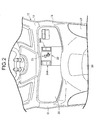
- a centralized unlocking operation apparatus 32 in accordance with the present invention is disposed in a middle part in the vehicle width direction of the inner cover 19 of the vehicle body cover 16 at a position adjacent to the storage box 28, the centralized unlocking operation apparatus 32 being formed from a main switch 33 and operating sections 34A and 34B disposed on opposite sides of the main switch 33.
- the main switch 33 includes a cylinder lock 36 operated by a mechanical key, an ignition switch 37 provided so as to be connected to one end part of the cylinder lock 36 so as to switch a switching mode by operation of the cylinder lock 36, and a shutter mechanism 38 provided so as to be connected to the other end part of the cylinder lock 36 so as to switch between a state in which insertion of the mechanical key into the cylinder lock 36 is allowed and a state in which insertion is prohibited, the cylinder lock 36 switching not only the switching mode of the ignition switch 37 but also switching between a steering locked state and a steering unlocked state.
- the shutter mechanism 38 is formed by pivotably housing a shutter plate 43 between a cover plate 40 fixedly disposed in a middle part in the vehicle width direction of the inner cover 19 and a support plate 41 joined to the cover plate 40, the shutter plate 43 being capable of opening and closing an insertion hole 42 provided in the cover plate 40.
- the insertion hole 42 is provided in the cover plate 40 so that the mechanical key can be inserted into the cylinder lock 36.
- a fitting recess 44 is provided in an outer face of the cover plate 40, a magnet key for determining whether or not pivoting of the shutter plate 43 is permitted being fitted into the fitting recess 44, and the shutter plate 43 is pivoted so as to open the insertion hole 42 by means of the magnet key being fitted into the fitting recess 44 and pivoted.
- a handle 45 projecting from the cover plate 40 may be held and pivoted, and a guide hole 46 for guiding the handle 45 is provided in the cover plate 40 so as to communicate with the fitting recess 44.
- a cylinder body 47 of the cylinder lock 36 is provided so as to be connected to the support plate 41, an end part, on the shutter mechanism 38 side, of a rotor 49 of the cylinder lock 38 is inserted into a circular opening 48 provided in the support plate 41 so as to correspond to the insertion hole 42, a cam member 50 relatively non-pivotably linked to the rotor 49 is housed between the cover plate 40 and the support plate 41 so as to be disposed between the shutter mechanism 38 and the cylinder lock 36, and a key hole 51 for the mechanical key to be inserted into is provided in the rotor 49 and the cam member 50.
- the cylinder lock 36 of the main switch 33 can pivot, as clearly shown in FIG. 3 , so as to occupy in sequence a lock position P1, an OFF position P2, an open position P3, and an ON position P4.
- the operating section 34A disposed on the left side of the main switch 33 includes a support case 52A fixed to the support plate 41, and an operating element 54A pivotably supported on the support case 52A via a first support shaft 53A.
- the support case 52A is formed from a first case member 55A disposed on the shutter mechanism 38 side of the main switch 33, a second case member 56A engaged with the first case member 55A while sandwiching the first case member 55A between itself and the shutter mechanism 38, and a third case member 57A engaged with the first and second case members 55A and 56A, the second case member 56A being secured to the support plate 41.
- the first support shaft 53A is provided between the first and second case members 55A and 56A.
- the operating element 54A includes a support portion 54a having a substantially U-shaped cross-sectional shape and having the first support shaft 53A inserted therethrough, and a pair of pressing portions 54b and 54c extending inwardly from the support portion 54a so as to be disposed on upper and lower sides of the support shaft 53.
- a cap 58A disposed between the first and second case members 55A and 56A is fitted onto the support portion 54a so that it can pivotingly operate the operating element 54A from the outside.
- a pair of levers 61A and 62A pivotably supported on a second support shaft 59A having an axis parallel to the first support shaft 53A and provided between the first and second case members 55A and 56A are disposed within the operating element 54A.
- Pressure-receiving portions 61a and 62a are provided on the levers 61A and 62A, the pressing portions 54b and 54c of the operating element 54A being capable of individually abutting against the pressure-receiving portions 61a and 62a, and wire linking portions 61b and 62b are also individually provided on the levers 61A and 62A.
- the operating element 54A can pivot between a neutral position in which as shown in FIG. 7 (a) neither of the pressing portions 54b and 54c abuts against the pressure-receiving portions 61a and 62a of the levers 61A and 62A, a pivoting position in which as shown in FIG. 7 (b) by pushing a lower part of the cap 58A the pressing portion 54b of the operating element 54A pushes the pressure-receiving portion 61a of the lever 61a so as to pivot the lever 61A, and a pivoting position in which as shown in FIG.
- the wire linking portion 62b on the lever 62A side is a spare and a wire is not linked thereto, and a wire 63 for transmitting an operating force for attaining an unlocked state to the locking mechanism 31 of the storage box 28 is linked to the wire linking portion 61b of the lever 61 A.
- a ball-receiving portion 64A which is recessed into a triangular shape, is provided in a middle part of the support portion 54a of the operating element 54A, a housing tube 67A housing part of a ball 65A that is in contact with the ball-receiving portion 64A is provided on the second case member 56A of the support case 52A, and a coil-shaped spring 66A provided between the second case member 56A and the ball 65A is housed in the housing tube portion 67A, the coil-shaped spring 66A exhibiting a spring force urging the ball 65A so that it is pressed against the ball-receiving portion 64A.
- the ball 65A and the spring 66A urge the operating element 54A toward the neutral position as shown in FIG. 7 (a) .
- the operating section 34B disposed on the right side of the main switch 33 is arranged symmetrically to the operating section 34A disposed on the left side of the main switch 33; parts corresponding to those of the operating section 34A are given the reference letter 'B', and a detailed explanation thereof is omitted.
- a wire 68 for transmitting an operating force for attaining an unlocked state to the locking mechanism 30 of the riding seat 15 is linked to a lever 61B that is pivoted by pushing a lower part of a cap 58B
- a wire 69 for transmitting an operating force for attaining an unlocked state to the locking mechanism 29 of the fuel lid 27 is linked to a lever 62B that is pivoted by pushing an upper part of the cap 58B.
- a pair of restricting members 70A and 70B are provided between the pair of operating sections 34A and 34R and the cam member 50, which pivots in response to pivoting of the main switch 33, so that one end of each of the restricting members 70A and 70B abuts against the outer periphery of cam member 50, the restricting members 70A and 70B being capable of changing their position in response to the pivoting position of the cam member 50 between an operation allowed position in which operation of the operating elements 54A and 54B is allowed and an operation restricted position in which restricting members 70A and 70B engage with the operating elements 54A and 54B so as to restrict operation of the operating elements 54A and 54B.
- Engagement holes 71A and 71B are provided in the operating elements 54A and 54B of the operating sections 34A and 34B, end parts, on the side opposite to the cam member 50, of the restricting members 70A and 70B being inserted through and engaged with the engagement holes 71 A and 71B, and through holes 72A and 72B are provided in the first case members 55A and 55B of the support cases 52A and 52B, the restricting members 70A and 70B being inserted through the through holes 72A and 72B.
- a cam portion 73A and a cam portion 73B are formed on the outer periphery of the cam member 50 so as to be separated in the axial direction, one end of the restricting member 70A disposed between the cam member 50 and one of the operating sections 34A abutting against the cam portion 73A, and one end of the restricting member 70B disposed between the cam member 50 and the other operating section 34B abutting against the cam portion 73B.
- the two restricting members 70A and 70B are urged by springs 74A and 74B provided in a compressed state between the restricting members 70A and 70B and the support plate 41 so as to abut against the cam portions 73A and 73B.
- the cam portion 73A against which one restricting member 70A is made to abut, is formed so as to restrict pivoting of the operating element 54A by making the restricting member 70A be inserted through and engaged with the engagement hole 71A of the operating element 54A when the main switch 33 is at the OFF position or the lock position.
- the locking mechanism 31 of the storage box 28 can be put into an unlocked state by operating the operating section 34A when the main switch 33 is at the ON position or the open position, and the locking mechanism 29 of the fuel lid 27 and the locking mechanism 30 of the riding seat 15 can be put into an unlocked state by operating the operating section 34B when the main switch 33 is at the open position.
- the pair of restricting members 70A and 70B are provided between the cam member 50, which pivots in response to pivoting of the main switch 33, and the pair of operating sections 34A and 34B so that one end of each of the restricting members 70A and 70B abuts against the outer periphery of the cam member 50, the restricting members 70A and 70B being capable of changing their position, in response to the pivoting position of the cam member 50, between the operation allowed position, in which operation of the operating elements 54A and 54B is allowed, and the operation restricted position, in which they engage with the operating elements 54A and 54B so as to restrict operation of the operating elements 54A and 54B, it becomes possible to restrict operation of the pair of operating sections 34A and 34B in response to the pivoted position of the main switch 33 by means of a simple arrangement.
- cam portion 73A, against which one end of one restricting member 70A is made to abut, and the cam portion 73B, against which one end of the other restricting member 70B is made to abut are formed on the outer periphery of the cam member 50 so as to be separated in the axial direction, even when the pivoted positions of the main switch 32 for carrying out restriction of operation of the pair of operating sections 43A and 43B are different from each other, it is possible to mutually independently set restriction of operation of the two operating sections 34A and 34B in response to the pivoted position of the main switch 33.
- the pivoted positions of the main switch 32 for restricting operation of the two operating sections 43A and 43B are different from each other, but it is possible to mutually independently set restriction of operation of the two operating sections 34A and 34B.
- the main switch 33 is pivotingly operated by the mechanical key, but the present invention may be applied to a smart system in which when a vehicle user carries a legitimate portable apparatus the switching mode of an ignition switch is changed by pivoting of a knob.
Landscapes
- Engineering & Computer Science (AREA)
- Mechanical Engineering (AREA)
- Lock And Its Accessories (AREA)
Abstract
Description
- The present invention relates to a centralized unlocking operation apparatus for a vehicle locking mechanism, the apparatus including a main switch that is pivotingly operated, and an operating section that enables a plurality of locking mechanisms to be put into an unlocked state by means of a single operating element and that restricts operation of the operating element when the main switch is at a predetermined pivoted position.
- An arrangement for determining the feasibility of operating an operating section that enables a riding seat locking mechanism and a fuel filler cap locking mechanism in a motorcycle to be operated so as to be put into an unlocked state by pivoting a rotor of a key cylinder of a main switch to a predetermined position by operating a key is already known from Patent Document 1 and
Patent Document 2. -
- Patent Document 1: Japanese Patent No.
4683479 - Patent Document 2: Japanese Patent Application Laid-open No.
2009-299318 - In the arrangements disclosed in
Patent Documents 1 and 2, the operating section is disposed on only one side of the main switch, and there is a limit to the number of locking mechanisms as targets for operation. - The present invention has been accomplished in light of such circumstances, and it is an object thereof to provide a centralized unlocking operation apparatus for a vehicle locking mechanism that can increase the number of locking mechanisms that can be operated so as to be put into an unlocked state.
- In order to attain the above object, according to a first aspect of the present invention, there is provided a centralized unlocking operation apparatus for a vehicle locking mechanism, the apparatus comprising a main switch that is pivotingly operated, and an operating section that enables a plurality of locking mechanisms to be put into an unlocked state by a single operating element and that restricts operation of the operating element when the main switch is at a predetermined pivoted position, characterized in that a pair of the operating sections each comprising the operating element are disposed on opposite sides of the main switch.
- Further, according to a second aspect of the present invention, in addition to the first aspect, a pair of restricting members are provided between a cam member that pivots in response to a pivoting operation of the main switch and the pair of operating sections such that one end of each of the restricting members abuts against an outer periphery of the cam member, the restricting members being capable of changing positions thereof in response to the pivoting position of the cam member between an operation allowed position in which operation of the operating element is allowed and an operation restricted position in which operation of the operating element is restricted by engagement with the operating element.
- Furthermore, according to a third aspect of the present invention, in addition to the second aspect, a cam portion against which one end of one of the restricting members is made to abut and a cam portion against which one end of the other restricting member is made to abut are formed on the outer periphery of the cam member so as to be separated in an axial direction.
- In accordance with the first aspect of the present invention, since the pair of operating sections that enable the plurality of locking mechanisms to be put into an unlocked state are disposed on opposite sides of the main switch, it is possible to increase the number of locking mechanisms that can be operated so as to be put into an unlocked state.
- Furthermore, in accordance with the second aspect of the present invention, it becomes possible to restrict operation of the pair of operating sections in response to the pivoted position of the main switch by means of a simple arrangement in which the pair of restricting members that change their position between the operation allowed position and the operation restricted position in response to the pivoting position of the cam member pivoting in response to a pivoting operation of the main switch are provided between the cam member and the pair of operating sections.
- Moreover, in accordance with the third aspect of the present invention, since the cam portion against which one end of one restricting member is made to abut and the cam portion against which one end of the other restricting member is made to abut are formed on the outer periphery of the cam member so as to be separated in the axial direction, even when the pivoted positions of the main switch for carrying out restriction of operation of the pair of operating sections are different from each other, it is possible to mutually independently set restriction of operation of the two operating sections.
-
- [
FIG. 1] FIG. 1 is a side view of a scooter type motorcycle. (first embodiment) - [
FIG. 2] FIG. 2 is a view in the direction ofarrow 2 inFig. 1 . (first embodiment) - [
FIG. 3] FIG. 3 is a perspective view of a centralized unlocking operation apparatus. (first embodiment) - [
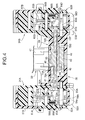
FIG. 4] FIG. 4 is a sectional view along line 4-4 inFIG. 3 . (first embodiment) - [
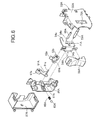
FIG. 5] FIG. 5 is an exploded perspective view of an essential part of a main switch. (first embodiment) - [
FIG. 6] FIG. 6 is an exploded perspective view of an operating section. (first embodiment) - [
FIG. 7] FIG. 7 is a view showing operating states of the operating section. (first embodiment) - [
FIG. 8] FIG. 8 shows a front view and a sectional view for explaining change in position of a restricting member displaced according to the pivoting position of a cam member. (first embodiment) -
- 29,30,31 Locking mechanism
- 32 Centralized unlocking operation apparatus
- 33 Main switch
- 34A, 34B Operating section
- 50 Cam member
- 54A, 54B Operating element
- 70A, 70B Restricting member
- 73A, 73B Cam portion
- A mode for carrying out the present invention is explained below by reference to the attached drawings.
- First, in
FIG. 1 , a front wheel WF is axially supported on a lower end part of afront fork 12 that is steerably supported on a head pipe 11 disposed at the front end of a vehicle body frame F of this scooter type motorcycle, a rear wheel WR is axially supported on a rear part of a unit-swing engine UE that has a front end part swingably supported on an intermediate part of the vehicle body frame F, and arear cushion 13 is provided between a rear part of the vehicle body frame F and the unit-swing engine UE. Afuel tank 14 is mounted on the vehicle body frame F in front of the unit-swing engine UE. Furthermore, a tandemtype riding seat 15 is disposed above the unit-swing engine UE, the tandemtype riding seat 15 being openably and closably supported on the rear part of the vehicle body frame F so that it can be opened sideways. - Part of the unit-swing engine UE, the vehicle body frame F, and the
fuel tank 14 are covered by avehicle body cover 16 made of a synthetic resin, thisvehicle body cover 16 including afront cowl 17 covering the head pipe 11 at the front end of the vehicle body frame F from the front, a pair of left and right front side covers 18 connected to left and right sides of thefront cowl 17, aninner cover 19 connected to the front side covers 18 so as to cover the head pipe 11 from the rear,leg visor shields 20 joined to the two front side covers 18 and theinner cover 19 so as to cover a front of a leg part of a rider seated on theriding seat 15, a pair of left and right floor center covers 22 extending rearwardly while being connected to theleg visor shields 20 and forming by means of lower endparts footrest parts 21 for the rider to place feet on, a pair of left and right floor side covers 23 hanging down from the outer edges of thefootrest parts 21, a pair of left and right body side covers 24 disposed beneath and on opposite sides of theriding seat 15 and extending rearwardly while being connected to thefloor side covers 23, and a rearlower cover 25 provided so as to be connected to a lower part on the rear side of thebody side covers 24. Afloor tunnel part 26 is formed, by means of part of theleg visor shields 20 and the floor center covers 22, from the rear to the head pipe 11 to the underneath of the front end of theriding seat 15, thefloor tunnel part 26 bulging upwardly between the twofootrest parts 21 and housing thefuel tank 14. - A
fuel lid 27 for the supply of fuel to thefuel tank 14 housed in thefloor tunnel part 26 is disposed in an upper part of thefloor tunnel part 26 so that it can be opened and closed, and astorage box 28 is disposed in theinner cover 19 so that it can be opened and closed. Closed states of thefuel lid 27, theriding seat 15, and thestorage box 28 are maintained by means oflocking mechanisms - In
FIG. 2 , a centralizedunlocking operation apparatus 32 in accordance with the present invention is disposed in a middle part in the vehicle width direction of theinner cover 19 of thevehicle body cover 16 at a position adjacent to thestorage box 28, the centralizedunlocking operation apparatus 32 being formed from amain switch 33 andoperating sections main switch 33. - Referring in addition to
FIG. 3 andFIG. 4 , themain switch 33 includes acylinder lock 36 operated by a mechanical key, anignition switch 37 provided so as to be connected to one end part of thecylinder lock 36 so as to switch a switching mode by operation of thecylinder lock 36, and ashutter mechanism 38 provided so as to be connected to the other end part of thecylinder lock 36 so as to switch between a state in which insertion of the mechanical key into thecylinder lock 36 is allowed and a state in which insertion is prohibited, thecylinder lock 36 switching not only the switching mode of theignition switch 37 but also switching between a steering locked state and a steering unlocked state. - The
shutter mechanism 38 is formed by pivotably housing ashutter plate 43 between acover plate 40 fixedly disposed in a middle part in the vehicle width direction of theinner cover 19 and asupport plate 41 joined to thecover plate 40, theshutter plate 43 being capable of opening and closing aninsertion hole 42 provided in thecover plate 40. Theinsertion hole 42 is provided in thecover plate 40 so that the mechanical key can be inserted into thecylinder lock 36. Furthermore, afitting recess 44 is provided in an outer face of thecover plate 40, a magnet key for determining whether or not pivoting of theshutter plate 43 is permitted being fitted into thefitting recess 44, and theshutter plate 43 is pivoted so as to open theinsertion hole 42 by means of the magnet key being fitted into thefitting recess 44 and pivoted. When closing theshutter plate 43, ahandle 45 projecting from thecover plate 40 may be held and pivoted, and aguide hole 46 for guiding thehandle 45 is provided in thecover plate 40 so as to communicate with thefitting recess 44. - Referring in addition to
FIG. 5 , acylinder body 47 of thecylinder lock 36 is provided so as to be connected to thesupport plate 41, an end part, on theshutter mechanism 38 side, of arotor 49 of thecylinder lock 38 is inserted into acircular opening 48 provided in thesupport plate 41 so as to correspond to theinsertion hole 42, acam member 50 relatively non-pivotably linked to therotor 49 is housed between thecover plate 40 and thesupport plate 41 so as to be disposed between theshutter mechanism 38 and thecylinder lock 36, and akey hole 51 for the mechanical key to be inserted into is provided in therotor 49 and thecam member 50. - The
cylinder lock 36 of themain switch 33 can pivot, as clearly shown inFIG. 3 , so as to occupy in sequence a lock position P1, an OFF position P2, an open position P3, and an ON position P4. - Referring in addition to
FIG. 6 , theoperating section 34A disposed on the left side of themain switch 33 includes asupport case 52A fixed to thesupport plate 41, and anoperating element 54A pivotably supported on thesupport case 52A via afirst support shaft 53A. - The
support case 52A is formed from afirst case member 55A disposed on theshutter mechanism 38 side of themain switch 33, asecond case member 56A engaged with thefirst case member 55A while sandwiching thefirst case member 55A between itself and theshutter mechanism 38, and athird case member 57A engaged with the first andsecond case members second case member 56A being secured to thesupport plate 41. - The
first support shaft 53A is provided between the first andsecond case members operating element 54A includes asupport portion 54a having a substantially U-shaped cross-sectional shape and having thefirst support shaft 53A inserted therethrough, and a pair ofpressing portions support portion 54a so as to be disposed on upper and lower sides of the support shaft 53. Acap 58A disposed between the first andsecond case members support portion 54a so that it can pivotingly operate theoperating element 54A from the outside. - On the other hand, a pair of
levers second support shaft 59A having an axis parallel to thefirst support shaft 53A and provided between the first andsecond case members operating element 54A. Pressure-receivingportions levers pressing portions operating element 54A being capable of individually abutting against the pressure-receivingportions wire linking portions levers - The
operating element 54A can pivot between a neutral position in which as shown inFIG. 7 (a) neither of thepressing portions portions levers FIG. 7 (b) by pushing a lower part of thecap 58A thepressing portion 54b of theoperating element 54A pushes the pressure-receivingportion 61a of thelever 61a so as to pivot thelever 61A, and a pivoting position in which as shown inFIG. 7 (c) by pushing an upper part of thecap 58A thepressing portion 54c of theoperating element 54A pushes the pressure-receivingportion 62a of thelever 62a so as to pivot thelever 62A. Linking a wire to thewire linking portions levers operating element 54A at the pivoting positions ofFIG. 7 (b) and FIG. 7 (c) , but in this embodiment thewire linking portion 62b on thelever 62A side is a spare and a wire is not linked thereto, and awire 63 for transmitting an operating force for attaining an unlocked state to thelocking mechanism 31 of thestorage box 28 is linked to thewire linking portion 61b of thelever 61 A. - A ball-receiving
portion 64A, which is recessed into a triangular shape, is provided in a middle part of thesupport portion 54a of theoperating element 54A, ahousing tube 67A housing part of aball 65A that is in contact with the ball-receivingportion 64A is provided on thesecond case member 56A of thesupport case 52A, and a coil-shapedspring 66A provided between thesecond case member 56A and theball 65A is housed in thehousing tube portion 67A, the coil-shapedspring 66A exhibiting a spring force urging theball 65A so that it is pressed against the ball-receivingportion 64A. Theball 65A and thespring 66A urge theoperating element 54A toward the neutral position as shown inFIG. 7 (a) . - The
operating section 34B disposed on the right side of themain switch 33 is arranged symmetrically to theoperating section 34A disposed on the left side of themain switch 33; parts corresponding to those of theoperating section 34A are given the reference letter 'B', and a detailed explanation thereof is omitted. - With regard to this
operating section 34B, a wire 68 (seeFIG. 1 ) for transmitting an operating force for attaining an unlocked state to thelocking mechanism 30 of the ridingseat 15 is linked to alever 61B that is pivoted by pushing a lower part of acap 58B, and a wire 69 (seeFIG. 1 ) for transmitting an operating force for attaining an unlocked state to thelocking mechanism 29 of thefuel lid 27 is linked to alever 62B that is pivoted by pushing an upper part of thecap 58B. - A pair of restricting
members operating sections 34A and 34R and thecam member 50, which pivots in response to pivoting of themain switch 33, so that one end of each of the restrictingmembers cam member 50, the restrictingmembers cam member 50 between an operation allowed position in which operation of theoperating elements members operating elements operating elements -
Engagement holes operating elements sections cam member 50, of the restrictingmembers holes first case members support cases members holes - On the other hand, a
cam portion 73A and acam portion 73B are formed on the outer periphery of thecam member 50 so as to be separated in the axial direction, one end of the restrictingmember 70A disposed between thecam member 50 and one of the operatingsections 34A abutting against thecam portion 73A, and one end of the restrictingmember 70B disposed between thecam member 50 and theother operating section 34B abutting against thecam portion 73B. The two restrictingmembers springs members support plate 41 so as to abut against thecam portions - As shown in
FIG. 8 , thecam portion 73A, against which one restrictingmember 70A is made to abut, is formed so as to restrict pivoting of theoperating element 54A by making the restrictingmember 70A be inserted through and engaged with theengagement hole 71A of theoperating element 54A when themain switch 33 is at the OFF position or the lock position. Thecam portion 73B, against which the other restrictingmember 70B is made to abut, is formed so as to restrict pivoting of theoperating element 54B by making the restrictingmember 70B be inserted through and engaged with theengagement hole 71B of theoperating element 54B when themain switch 33 is at the ON position, the OFF position, or the lock position. That is, thelocking mechanism 31 of thestorage box 28 can be put into an unlocked state by operating theoperating section 34A when themain switch 33 is at the ON position or the open position, and thelocking mechanism 29 of thefuel lid 27 and thelocking mechanism 30 of the ridingseat 15 can be put into an unlocked state by operating theoperating section 34B when themain switch 33 is at the open position. - The operation of this embodiment is now explained. Since the pair of
operating sections mechanisms 31; 29, 30 to be put into an unlocked state by means of thesingle operating element main switch 33 is at a predetermined pivoted position, restrict operation of theoperating elements main switch 33, it is possible to increase the number of lockingmechanisms 29 to 31 that can be operated so as to be put into an unlocked state. - Furthermore, since the pair of restricting
members cam member 50, which pivots in response to pivoting of themain switch 33, and the pair ofoperating sections members cam member 50, the restrictingmembers cam member 50, between the operation allowed position, in which operation of theoperating elements operating elements operating elements operating sections main switch 33 by means of a simple arrangement. - Furthermore, since the
cam portion 73A, against which one end of one restrictingmember 70A is made to abut, and thecam portion 73B, against which one end of the other restrictingmember 70B is made to abut, are formed on the outer periphery of thecam member 50 so as to be separated in the axial direction, even when the pivoted positions of themain switch 32 for carrying out restriction of operation of the pair of operating sections 43A and 43B are different from each other, it is possible to mutually independently set restriction of operation of the two operatingsections main switch 33. That is, with regard to one of the operating sections 43A, when themain switch 33 is at the OFF position or the lock position, an operation that puts thelocking mechanism 31 of thestorage box 28 into an unlocked state is restricted, and with regard to the other operating section 43B, when themain switch 33 is at the ON position, the OFF position, or the lock position, an operation that puts thelocking mechanism 29 of thefuel lid 27 and thelocking mechanism 30 of the ridingseat 15 into an unlocked state is restricted; the pivoted positions of themain switch 32 for restricting operation of the two operating sections 43A and 43B are different from each other, but it is possible to mutually independently set restriction of operation of the two operatingsections - An embodiment of the present invention is explained above, but the present invention is not limited to the embodiment and may be modified in a variety of ways as long as the modifications do not depart from the spirit and scope thereof.
- For example, in the embodiment above, the
main switch 33 is pivotingly operated by the mechanical key, but the present invention may be applied to a smart system in which when a vehicle user carries a legitimate portable apparatus the switching mode of an ignition switch is changed by pivoting of a knob.
Claims (3)
- A centralized unlocking operation apparatus for a vehicle locking mechanism, the apparatus comprising a main switch (33) that is pivotingly operated, and an operating section (34A, 34B) that enables a plurality of locking mechanisms (31; 29, 30) to be put into an unlocked state by a single operating element (54A, 54B) and that restricts operation of the operating element (54A, 54B) when the main switch (33) is at a predetermined pivoted position, characterized in that a pair of the operating sections (34A, 34B) each comprising the operating element (54A, 54B) are disposed on opposite sides of the main switch (33).
- The centralized unlocking operation apparatus for a vehicle locking mechanism according to Claim 1, wherein a pair of restricting members (70A, 70B) are provided between a cam member (50) that pivots in response to a pivoting operation of the main switch (33) and the pair of operating sections (34A, 34B) such that one end of each of the restricting members (70A, 70B) abuts against an outer periphery of the cam member (50), the restricting members (70A, 70B) being capable of changing positions thereof in response to the pivoting position of the cam member (50) between an operation allowed position in which operation of the operating element (54) is allowed and an operation restricted position in which operation of the operating element (54) is restricted by engagement with the operating element (54).
- The centralized unlocking operation apparatus for a vehicle locking mechanism according to Claim 2, wherein a cam portion (73A) against which one end of one of the restricting members (70A) is made to abut and a cam portion (73B) against which one end of the other restricting member (70B) is made to abut are formed on the outer periphery of the cam member (50) so as to be separated in an axial direction.
Applications Claiming Priority (2)
| Application Number | Priority Date | Filing Date | Title |
|---|---|---|---|
| JP2012074056A JP5764086B2 (en) | 2012-03-28 | 2012-03-28 | Centralized unlocking operation device for vehicle locking mechanism |
| PCT/JP2013/050221 WO2013145795A1 (en) | 2012-03-28 | 2013-01-09 | Centralized unlocking operation apparatus for vehicle locking mechanism |
Publications (2)
| Publication Number | Publication Date |
|---|---|
| EP2832941A1 true EP2832941A1 (en) | 2015-02-04 |
| EP2832941A4 EP2832941A4 (en) | 2015-12-09 |
Family
ID=49259082
Family Applications (1)
| Application Number | Title | Priority Date | Filing Date |
|---|---|---|---|
| EP13769542.5A Withdrawn EP2832941A4 (en) | 2012-03-28 | 2013-01-09 | Centralized unlocking operation apparatus for vehicle locking mechanism |
Country Status (6)
| Country | Link |
|---|---|
| US (1) | US9434434B2 (en) |
| EP (1) | EP2832941A4 (en) |
| JP (1) | JP5764086B2 (en) |
| CN (1) | CN104203734B (en) |
| PH (1) | PH12014501928B1 (en) |
| WO (1) | WO2013145795A1 (en) |
Families Citing this family (5)
| Publication number | Priority date | Publication date | Assignee | Title |
|---|---|---|---|---|
| JP5764086B2 (en) * | 2012-03-28 | 2015-08-12 | 株式会社ホンダロック | Centralized unlocking operation device for vehicle locking mechanism |
| DE102013019938A1 (en) * | 2013-10-14 | 2015-04-16 | Kiekert Ag | Locking unit for a motor vehicle |
| JP6407583B2 (en) * | 2014-06-30 | 2018-10-17 | 朝日電装株式会社 | Vehicle control device |
| CN112026964B (en) * | 2020-09-09 | 2025-05-02 | 天津爱玛运动用品有限公司 | Linkage lock mechanism and electric vehicle |
| CN113793435B (en) * | 2021-09-13 | 2023-07-21 | 东屋世安物联科技(江苏)股份有限公司 | Unlocking method and device of multi-locking execution mechanism, locking system and safe |
Family Cites Families (14)
| Publication number | Priority date | Publication date | Assignee | Title |
|---|---|---|---|---|
| US4142167A (en) * | 1977-10-06 | 1979-02-27 | Keeler Corporation | Solenoid operated, oppositely rotated actuator |
| JPH0674066B2 (en) * | 1986-11-12 | 1994-09-21 | 本田技研工業株式会社 | Centralized locking device for vehicle bag |
| JP3404250B2 (en) * | 1997-03-28 | 2003-05-06 | 朝日電装株式会社 | Ignition switch |
| JP2000336998A (en) * | 1999-05-26 | 2000-12-05 | Iic:Kk | U-shaped anti-theft device |
| DE19956674B4 (en) * | 1999-11-25 | 2005-12-01 | Siemens Ag | Central drive |
| JP4267790B2 (en) * | 2000-02-01 | 2009-05-27 | 本田技研工業株式会社 | Anti-theft device for motorcycles |
| JP4236094B2 (en) * | 2003-02-07 | 2009-03-11 | 本田技研工業株式会社 | Vehicle locking device |
| JP4694315B2 (en) * | 2005-08-31 | 2011-06-08 | 川崎重工業株式会社 | Seat lock guard structure |
| JP4683479B2 (en) * | 2005-12-27 | 2011-05-18 | 本田技研工業株式会社 | Vehicle locking device |
| ITRM20070191A1 (en) * | 2006-04-06 | 2007-10-07 | Suzuki Motor Corp | ELECTRONIC AUTHENTICATION SYSTEM FOR MOTORCYCLE |
| JP5164402B2 (en) * | 2007-03-16 | 2013-03-21 | ヤマハ発動機株式会社 | Motorcycle |
| KR20090004558U (en) * | 2007-11-09 | 2009-05-13 | 윤기석 | Anti-theft lock for motor cycle |
| JP5020895B2 (en) * | 2008-06-11 | 2012-09-05 | 株式会社ホンダロック | Centralized unlocking operation device for vehicle opening / closing mechanism |
| JP5764086B2 (en) * | 2012-03-28 | 2015-08-12 | 株式会社ホンダロック | Centralized unlocking operation device for vehicle locking mechanism |
-
2012
- 2012-03-28 JP JP2012074056A patent/JP5764086B2/en not_active Expired - Fee Related
-
2013
- 2013-01-09 EP EP13769542.5A patent/EP2832941A4/en not_active Withdrawn
- 2013-01-09 CN CN201380016485.7A patent/CN104203734B/en not_active Expired - Fee Related
- 2013-01-09 US US14/387,614 patent/US9434434B2/en not_active Expired - Fee Related
- 2013-01-09 WO PCT/JP2013/050221 patent/WO2013145795A1/en not_active Ceased
-
2014
- 2014-08-27 PH PH12014501928A patent/PH12014501928B1/en unknown
Also Published As
| Publication number | Publication date |
|---|---|
| CN104203734A (en) | 2014-12-10 |
| CN104203734B (en) | 2017-05-24 |
| PH12014501928A1 (en) | 2014-11-24 |
| WO2013145795A1 (en) | 2013-10-03 |
| PH12014501928B1 (en) | 2014-11-24 |
| JP5764086B2 (en) | 2015-08-12 |
| EP2832941A4 (en) | 2015-12-09 |
| JP2013204300A (en) | 2013-10-07 |
| US9434434B2 (en) | 2016-09-06 |
| US20150020559A1 (en) | 2015-01-22 |
Similar Documents
| Publication | Publication Date | Title |
|---|---|---|
| EP2832941A1 (en) | Centralized unlocking operation apparatus for vehicle locking mechanism | |
| EP1808366B1 (en) | Vehicular lock device | |
| EP2657438B1 (en) | Centralized unlocking operation device | |
| EP3053788B1 (en) | Emergency unlocking device for vehicle | |
| EP2960143B1 (en) | Vehicle, operation system for vehicle and method of installing operation system to vehicle | |
| JP6816095B2 (en) | Saddle-type vehicle storage structure | |
| JP5965417B2 (en) | Saddle bag lock device for saddle-ride type vehicles | |
| JP4673654B2 (en) | Side trunk locking device for motorcycles | |
| JP5020895B2 (en) | Centralized unlocking operation device for vehicle opening / closing mechanism | |
| JP5147481B2 (en) | Small vehicle seat structure | |
| JP2016044537A (en) | Lock system and saddle-riding type vehicle | |
| EP2119856B1 (en) | Lid opening operation device | |
| JP7626865B2 (en) | Tank cap | |
| EP3929013A1 (en) | Straddled vehicle | |
| JP7324804B2 (en) | saddle-riding vehicle | |
| EP3929015B1 (en) | Straddled vehicle cap for fuel tank | |
| JP6527181B2 (en) | Saddle-ride type vehicle | |
| JP2015067238A (en) | Emergency unlocking device for vehicle | |
| JP7628557B2 (en) | Storage box and vehicle | |
| JP7515692B2 (en) | Vehicle operation device and steering wheel lock device | |
| JP2009083635A (en) | Scooter type vehicle seat structure | |
| JP4504054B2 (en) | Seat structure for two- and three-wheeled vehicles | |
| JP2015116830A (en) | Lock mechanism of saddle riding type vehicle | |
| JP7523392B2 (en) | Vehicle operation device | |
| JP2008207695A (en) | Vehicle storage box structure |
Legal Events
| Date | Code | Title | Description |
|---|---|---|---|
| PUAI | Public reference made under article 153(3) epc to a published international application that has entered the european phase |
Free format text: ORIGINAL CODE: 0009012 |
|
| 17P | Request for examination filed |
Effective date: 20140903 |
|
| AK | Designated contracting states |
Kind code of ref document: A1 Designated state(s): AL AT BE BG CH CY CZ DE DK EE ES FI FR GB GR HR HU IE IS IT LI LT LU LV MC MK MT NL NO PL PT RO RS SE SI SK SM TR |
|
| AX | Request for extension of the european patent |
Extension state: BA ME |
|
| DAX | Request for extension of the european patent (deleted) | ||
| RA4 | Supplementary search report drawn up and despatched (corrected) |
Effective date: 20151106 |
|
| STAA | Information on the status of an ep patent application or granted ep patent |
Free format text: STATUS: EXAMINATION IS IN PROGRESS |
|
| 17Q | First examination report despatched |
Effective date: 20170814 |
|
| RIC1 | Information provided on ipc code assigned before grant |
Ipc: B62H 5/00 20060101AFI20190222BHEP |
|
| STAA | Information on the status of an ep patent application or granted ep patent |
Free format text: STATUS: THE APPLICATION IS DEEMED TO BE WITHDRAWN |
|
| 18D | Application deemed to be withdrawn |
Effective date: 20190801 |