EP2830668B1 - Amorphous carbon supported nanoparticles comprising oxides of lanthanides and method for preparing them - Google Patents
Amorphous carbon supported nanoparticles comprising oxides of lanthanides and method for preparing them Download PDFInfo
- Publication number
- EP2830668B1 EP2830668B1 EP13724378.8A EP13724378A EP2830668B1 EP 2830668 B1 EP2830668 B1 EP 2830668B1 EP 13724378 A EP13724378 A EP 13724378A EP 2830668 B1 EP2830668 B1 EP 2830668B1
- Authority
- EP
- European Patent Office
- Prior art keywords
- nanoparticles
- previous
- lanthanide
- oxide
- amorphous carbon
- Prior art date
- Legal status (The legal status is an assumption and is not a legal conclusion. Google has not performed a legal analysis and makes no representation as to the accuracy of the status listed.)
- Active
Links
Images


Classifications
-
- A—HUMAN NECESSITIES
- A61—MEDICAL OR VETERINARY SCIENCE; HYGIENE
- A61K—PREPARATIONS FOR MEDICAL, DENTAL OR TOILETRY PURPOSES
- A61K51/00—Preparations containing radioactive substances for use in therapy or testing in vivo
- A61K51/12—Preparations containing radioactive substances for use in therapy or testing in vivo characterised by a special physical form, e.g. emulsion, microcapsules, liposomes, characterized by a special physical form, e.g. emulsions, dispersions, microcapsules
- A61K51/1241—Preparations containing radioactive substances for use in therapy or testing in vivo characterised by a special physical form, e.g. emulsion, microcapsules, liposomes, characterized by a special physical form, e.g. emulsions, dispersions, microcapsules particles, powders, lyophilizates, adsorbates, e.g. polymers or resins for adsorption or ion-exchange resins
- A61K51/1244—Preparations containing radioactive substances for use in therapy or testing in vivo characterised by a special physical form, e.g. emulsion, microcapsules, liposomes, characterized by a special physical form, e.g. emulsions, dispersions, microcapsules particles, powders, lyophilizates, adsorbates, e.g. polymers or resins for adsorption or ion-exchange resins microparticles or nanoparticles, e.g. polymeric nanoparticles
- A61K51/1251—Preparations containing radioactive substances for use in therapy or testing in vivo characterised by a special physical form, e.g. emulsion, microcapsules, liposomes, characterized by a special physical form, e.g. emulsions, dispersions, microcapsules particles, powders, lyophilizates, adsorbates, e.g. polymers or resins for adsorption or ion-exchange resins microparticles or nanoparticles, e.g. polymeric nanoparticles micro- or nanospheres, micro- or nanobeads, micro- or nanocapsules
-
- A—HUMAN NECESSITIES
- A61—MEDICAL OR VETERINARY SCIENCE; HYGIENE
- A61K—PREPARATIONS FOR MEDICAL, DENTAL OR TOILETRY PURPOSES
- A61K51/00—Preparations containing radioactive substances for use in therapy or testing in vivo
- A61K51/12—Preparations containing radioactive substances for use in therapy or testing in vivo characterised by a special physical form, e.g. emulsion, microcapsules, liposomes, characterized by a special physical form, e.g. emulsions, dispersions, microcapsules
- A61K51/1241—Preparations containing radioactive substances for use in therapy or testing in vivo characterised by a special physical form, e.g. emulsion, microcapsules, liposomes, characterized by a special physical form, e.g. emulsions, dispersions, microcapsules particles, powders, lyophilizates, adsorbates, e.g. polymers or resins for adsorption or ion-exchange resins
- A61K51/1244—Preparations containing radioactive substances for use in therapy or testing in vivo characterised by a special physical form, e.g. emulsion, microcapsules, liposomes, characterized by a special physical form, e.g. emulsions, dispersions, microcapsules particles, powders, lyophilizates, adsorbates, e.g. polymers or resins for adsorption or ion-exchange resins microparticles or nanoparticles, e.g. polymeric nanoparticles
-
- A—HUMAN NECESSITIES
- A61—MEDICAL OR VETERINARY SCIENCE; HYGIENE
- A61P—SPECIFIC THERAPEUTIC ACTIVITY OF CHEMICAL COMPOUNDS OR MEDICINAL PREPARATIONS
- A61P1/00—Drugs for disorders of the alimentary tract or the digestive system
- A61P1/16—Drugs for disorders of the alimentary tract or the digestive system for liver or gallbladder disorders, e.g. hepatoprotective agents, cholagogues, litholytics
-
- A—HUMAN NECESSITIES
- A61—MEDICAL OR VETERINARY SCIENCE; HYGIENE
- A61P—SPECIFIC THERAPEUTIC ACTIVITY OF CHEMICAL COMPOUNDS OR MEDICINAL PREPARATIONS
- A61P13/00—Drugs for disorders of the urinary system
- A61P13/12—Drugs for disorders of the urinary system of the kidneys
-
- A—HUMAN NECESSITIES
- A61—MEDICAL OR VETERINARY SCIENCE; HYGIENE
- A61P—SPECIFIC THERAPEUTIC ACTIVITY OF CHEMICAL COMPOUNDS OR MEDICINAL PREPARATIONS
- A61P35/00—Antineoplastic agents
Definitions
- the invention is directed to bodies comprising nanoparticles of oxides of lanthanides, in particular holmium oxide (Ho 2 O 3 ), which are supported on amorphous carbon particles.
- the invention is further directed to processes for producing these bodies of carbon supported nanoparticles, as well as to these bodies of carbon supported nanoparticles for use in therapeutic applications.
- Upon neutron irradiation 165 Ho is converted to 166 Ho which is a beta-radiation emitter.
- the radio-active holmium has shown promising results in the radio-ablation treatment of tumors.
- Intratumoral injections of 166 Ho(NO 3 ) 3 in a rat model of malignant melanoma has shown promising results (see Lee, J.D. et al., Eur. J. Nucl. Med. 29(2002)221-230 ).
- Holmium is attractive since it is both a beta- and gamma-emitter when irradiated to Holmium-166 ( 166 Ho). Therefore it can be used both in nuclear imaging and radio ablation. Moreover, holmium can be visualized by computed tomography and MRI due to its high attenuation coefficient and paramagnetic properties, as described for instance by Bult, W. et al., Pharmaceut. Res. 26(2009)1371 . Poly(L-lactic acid) (PLLA) microspheres are known in the art, which are loaded with holmium acetylacetonate (HoACAC) ( Nijsen, J.F.W. et al., Eur. J. Nucl. Med. 26(1999)699-704 ). The PLLA coating was used to make the HoACAC biocompatible. By administration of these radioactive microspheres into the hepatic artery, they become trapped in the liver, particularly in and around tumors.
- HoACAC holm
- EP2383374 discloses metallic ferromagnetic nanoparticles, which are supported on amorphous or graphitic carbon particles. Also known in the art is the synthesis of ultrafine Gd 2 O 3 nanoparticles inside single-walled carbon nanohorns, as described by Miyawaki, J. et al., Journal of Physical Chemistry B 110(2006)5179-5181 . The disadvantage of carbon nanohorns is that the methods for producing such materials are difficult to scale up.
- An object of the present invention is to provide bodies comprising nanoparticles of one or more oxides of lanthanides, in particular holmium, which are supported by amorphous carbon.
- a further object is to provide these bodies of carbon particles having nanoparticles of oxides of lanthanides thereon and/or therein, in particular holmium, that may be used in radiotherapy.
- the present invention is directed to a body comprising an amorphous carbon particle having provided thereon nanoparticles of an oxide of lanthanide.
- nanoparticles typically have a diameter of 10 nm or less.
- the nanoparticles are present on the surface of the porous amorphous carbon particle, which surface includes the (inner) pore area.
- An amorphous carbon particle is a carbon material without long-range crystalline order. Short-range order exists, but with deviations of the interatomic distances and/or interbonding angles with respect to the graphite lattice as well as the diamond lattice, described by E. Fitzer et al., (IUPAC recommendations 1995) Pure & Applied Chemistry, 67(1995)473-506 .
- the nanoparticles can be administered when still supported on and/or present within the amorphous carbon particles.
- the bodies of amorphous carbon particles comprising the supported nanoparticles can be tailored to any desired size ranging from several tens of nanometers up to one millimeter or more. Typically their size ranges from 10 ⁇ m to 1000 ⁇ m, preferably from 15-500 ⁇ m, more preferably 20-400, and even more preferably 25-250 ⁇ m.
- the size of the bodies may be determined by the size of the starting material. After loading the carbon particles with the nanoparticles in accordance with the present invention, they may be crushed or milled, optionally followed by size separation (such as by sieving and/or separation based on density differences, e.g. in a fluidized bed or so called wind sieving) to obtain bodies of the desired size.
- the nanoparticles in the body of the present invention preferably have a diameter of 10 nm or less, more preferably the diameter is 5 nm or less.
- the bodies of the present invention may be used as a pharmaceutical.
- they may be used for treatment of the human or animal body by surgery or therapy and diagnostic methods.
- therapy may for instance comprise radiotherapy, in particular radio-embolization.
- They can be used for instance in the treatment of liver disorders or kidney disorders, in particular tumors, more in particular metastases.
- the bodies of the invention may be functionalized by attaching one or more active groups to the surface of the particles. Because the surface comprises amorphous carbon, it was found that it is relatively easy to attach chemical groups to the surface.
- active groups may be selected from nucleic acids, lipids, fatty acids, carbohydrates, polypeptides, amino acids, proteins, plasma, antibodies, antigens, liposomes, hormones, markers and combinations thereof.
- Another advantage of the bodies of the present invention is that since carbon functions as a neutron moderator, the carbon carrier is relatively stable against neutron irradiation.
- the lanthanides series comprises the fifteen metallic chemical elements with atomic numbers 57 through 71, i.e. the group consisting of La (atomic number 57), Ce (58), Pr (59), Nd (60), Pm (61), Sm (62), Eu (63), Gd (64), Tb (65), Dy (66), Ho (67), Er (68), Tm (69), Yb (70), and Lu (71) (lanthanum, cerium, praseodymium, neodymium, promethium, samarium, europium, gadolinium, terbium, dysprosium, holmium, erbium, thulium, ytterbium, and lutetium).
- Ho 2 O 3 is used as the oxide of lanthanide.
- the bodies are in the form of an amorphous carbon particle, which has pores throughout its volume. On the surface of these pores the nanoparticles are dispersed.
- One of the advantages of the present invention is that the dispersion of the nanoparticles is very homogeneous.
- the diameter of the bodies of the present invention refers to a spherical particle. In case the shape of the bodies deviates from spherical, the diameter refers to the largest dimension of the particle.
- the bodies of the present invention are spherical or essentially spherical, in particular having a sphericity of close to 1, for instance more than 0.75, preferably more than 0.85.
- the sphericity of a certain particle is the ratio of the surface area of a sphere having the same volume as said particle to the surface area of said particle.
- nanoparticles of crystalline oxide of lanthanide are typically essentially spherical, viz . having a sphericity of more than 0.85, preferably about 1.
- the crystal structure is the same as the normally occurring crystal structure of the bulk oxide material, which is cubic for all oxides of lanthanides.
- a homogeneous distribution of the lanthanide oxide precursor is important to produce small metal oxide particles homogeneously distributed throughout the obtained bodies. For this reason the carbon precursor material is contacted, in particular impregnated, with a solution of a salt of the corresponding lanthanide.
- Aqueous solutions are preferred.
- the corresponding lanthanide nitrate is used, because these generally have a good solubility in water.
- the corresponding Cl-, Br- and I- salts could also be used but these are less preferred, since they may give rise to the formation of the corresponding halogen compounds, which is undesired.
- the bodies of the present invention may be produced by a process comprising the steps of:
- the size of the nanoparticles comprising the crystalline lanthanide oxide on the bodies of the present invention can be controlled by choosing the concentration of lanthanide salt in the aqueous solution. A higher concentration leads to nanoparticles having a larger diameter and a lower concentration to smaller nanoparticles. Typical concentrations are in the range of 0.01-1.5 g/ml, preferably 0.1-1 g/ml, depending on the solubility of the salt.
- the carbon source material is a material that contains sufficient carbon atoms to produce essentially carbon containing particles upon pyrolysis.
- Suitable materials are for instance cellulose, preferably microcrystalline cellulose (MCC, which is for instance described in WO-A-2007/131795 ), but also other materials, such as cotton may be used; carbohydrates, such as sugar or chitosan; and active carbon.
- MCC particles are obtainable under the trade name CelletsTM, which are available in a broad range of diameters, for instance from 100-200 ⁇ m to 1000-1400 ⁇ m and which have a sphericity of 0.9 to 0.95.
- the drying step is carried out until the dried product reaches constant weight.
- the drying is carried out at room temperature (about 25 °C).
- the pyrolysis step is carried out by heating the dried impregnated material to a temperature that is sufficient to convert most or all non-carbon material into volatile compounds.
- This step is carried out under inert conditions, viz . under conditions that avoid reaction of carbon with the surroundings.
- these conditions comprise exclusion of oxygen from air.
- This may preferably be obtained by carrying out the pyrolysis under a typical "inert" gas, such as nitrogen or a noble gas, such as argon or helium, which is used to dissipate the oxygen containing air.
- the carbon particles shrink upon pyrolysis, resulting in the bodies of the present invention, for instance by 10-30%, relative to their original diameter.
- the process of the present invention may also include a following step wherein the amorphous carbon particle is removed, thereby obtaining nanoparticles in a pure form.
- the amorphous carbon particle may be removed by oxidation to carbon dioxide. Oxidation with gaseous oxygen can be done by thermal treatment in an oxygen-containing gas flow at a temperature below about 500 °C.
- hydrophilic MCC spheres (CelletsTM 100 obtained from Synthapharm, particle size distribution of 100-200 ⁇ m) were loaded via wet impregnation. To this end the spheres were immersed in an aqueous solution of holmium nitrate pentahydrate (2 g Ho(NO 3 ) 3 ⁇ 5H 2 O, Sigma-Aldrich, 99.9% purity, in 20 ml H 2 O). The spheres were left for 24 h within the solution with occasional stirring. Next, the impregnated spheres were filtered using a Buchner funnel with glass filter, after which the isolated spheres were dried at 80 °C to constant weight at room temperature.
- holmium nitrate pentahydrate 2 g Ho(NO 3 ) 3 ⁇ 5H 2 O, Sigma-Aldrich, 99.9% purity, in 20 ml H 2 O.
- the spheres were left for 24 h within the solution with occasional stirring.
- the impregnated spheres
Landscapes
- Health & Medical Sciences (AREA)
- Chemical & Material Sciences (AREA)
- Engineering & Computer Science (AREA)
- Public Health (AREA)
- Medicinal Chemistry (AREA)
- Veterinary Medicine (AREA)
- Pharmacology & Pharmacy (AREA)
- Life Sciences & Earth Sciences (AREA)
- Animal Behavior & Ethology (AREA)
- General Health & Medical Sciences (AREA)
- Nanotechnology (AREA)
- Physics & Mathematics (AREA)
- Optics & Photonics (AREA)
- Epidemiology (AREA)
- Dispersion Chemistry (AREA)
- Nuclear Medicine, Radiotherapy & Molecular Imaging (AREA)
- Organic Chemistry (AREA)
- General Chemical & Material Sciences (AREA)
- Chemical Kinetics & Catalysis (AREA)
- Bioinformatics & Cheminformatics (AREA)
- Gastroenterology & Hepatology (AREA)
- Urology & Nephrology (AREA)
- Pharmaceuticals Containing Other Organic And Inorganic Compounds (AREA)
- Carbon And Carbon Compounds (AREA)
- Medicinal Preparation (AREA)
- Medicines That Contain Protein Lipid Enzymes And Other Medicines (AREA)
Description
- The invention is directed to bodies comprising nanoparticles of oxides of lanthanides, in particular holmium oxide (Ho2O3), which are supported on amorphous carbon particles. The invention is further directed to processes for producing these bodies of carbon supported nanoparticles, as well as to these bodies of carbon supported nanoparticles for use in therapeutic applications.
- Lanthanides, particularly holmium, can be used in radio-embolization therapy of liver metastases. Upon neutron irradiation 165Ho is converted to 166Ho which is a beta-radiation emitter. The radio-active holmium has shown promising results in the radio-ablation treatment of tumors. Intratumoral injections of 166Ho(NO3)3 in a rat model of malignant melanoma has shown promising results (see Lee, J.D. et al., Eur. J. Nucl. Med. 29(2002)221-230).
- Holmium is attractive since it is both a beta- and gamma-emitter when irradiated to Holmium-166 (166Ho). Therefore it can be used both in nuclear imaging and radio ablation. Moreover, holmium can be visualized by computed tomography and MRI due to its high attenuation coefficient and paramagnetic properties, as described for instance by Bult, W. et al., Pharmaceut. Res. 26(2009)1371. Poly(L-lactic acid) (PLLA) microspheres are known in the art, which are loaded with holmium acetylacetonate (HoACAC) (Nijsen, J.F.W. et al., Eur. J. Nucl. Med. 26(1999)699-704). The PLLA coating was used to make the HoACAC biocompatible. By administration of these radioactive microspheres into the hepatic artery, they become trapped in the liver, particularly in and around tumors.
- A drawback in the use of the PLLA coating is the sensitivity to neutron radiation, which can result in damage of the coating, see Nijsen, J.F.W. et al., Biomaterials 23(2002)1831-1839.
EP2383374 discloses metallic ferromagnetic nanoparticles, which are supported on amorphous or graphitic carbon particles. Also known in the art is the synthesis of ultrafine Gd2O3 nanoparticles inside single-walled carbon nanohorns, as described by Miyawaki, J. et al., Journal of Physical Chemistry B 110(2006)5179-5181. The disadvantage of carbon nanohorns is that the methods for producing such materials are difficult to scale up. As a consequence, the cost of using such materials on an industrial level is prohibitively high. Further, Huey-Ing, C. et al., Colloids and Surfaces A: Physiochemical and Engineering Aspects 242(2004)61-69) describes a method for preparing cerium dioxide nanoparticles. However, neither document describes that the lanthanide oxide nanoparticles prepared may be supported on amorphous carbon and used in radiotherapy. - An object of the present invention is to provide bodies comprising nanoparticles of one or more oxides of lanthanides, in particular holmium, which are supported by amorphous carbon. A further object is to provide these bodies of carbon particles having nanoparticles of oxides of lanthanides thereon and/or therein, in particular holmium, that may be used in radiotherapy.
- It was found that very small particles comprising oxides of lanthanides can be made by allowing said oxides to form in combination with carbon.
- Thus in a first aspect, the present invention is directed to a body comprising an amorphous carbon particle having provided thereon nanoparticles of an oxide of lanthanide. Typically nanoparticles have a diameter of 10 nm or less. The nanoparticles are present on the surface of the porous amorphous carbon particle, which surface includes the (inner) pore area.
- An amorphous carbon particle, as defined herein, is a carbon material without long-range crystalline order. Short-range order exists, but with deviations of the interatomic distances and/or interbonding angles with respect to the graphite lattice as well as the diamond lattice, described by E. Fitzer et al., (IUPAC recommendations 1995) Pure & Applied Chemistry, 67(1995)473-506.
- The nanoparticles can be administered when still supported on and/or present within the amorphous carbon particles. The bodies of amorphous carbon particles comprising the supported nanoparticles can be tailored to any desired size ranging from several tens of nanometers up to one millimeter or more. Typically their size ranges from 10 µm to 1000 µm, preferably from 15-500 µm, more preferably 20-400, and even more preferably 25-250 µm. The size of the bodies may be determined by the size of the starting material. After loading the carbon particles with the nanoparticles in accordance with the present invention, they may be crushed or milled, optionally followed by size separation (such as by sieving and/or separation based on density differences, e.g. in a fluidized bed or so called wind sieving) to obtain bodies of the desired size.
- The nanoparticles in the body of the present invention preferably have a diameter of 10 nm or less, more preferably the diameter is 5 nm or less.
- The bodies of the present invention may be used as a pharmaceutical. In particular they may be used for treatment of the human or animal body by surgery or therapy and diagnostic methods. Such therapy may for instance comprise radiotherapy, in particular radio-embolization. They can be used for instance in the treatment of liver disorders or kidney disorders, in particular tumors, more in particular metastases.
- The bodies of the invention may be functionalized by attaching one or more active groups to the surface of the particles. Because the surface comprises amorphous carbon, it was found that it is relatively easy to attach chemical groups to the surface. Such active groups may be selected from nucleic acids, lipids, fatty acids, carbohydrates, polypeptides, amino acids, proteins, plasma, antibodies, antigens, liposomes, hormones, markers and combinations thereof.
- Another advantage of the bodies of the present invention is that since carbon functions as a neutron moderator, the carbon carrier is relatively stable against neutron irradiation.
- The lanthanides series comprises the fifteen metallic chemical elements with atomic numbers 57 through 71, i.e. the group consisting of La (atomic number 57), Ce (58), Pr (59), Nd (60), Pm (61), Sm (62), Eu (63), Gd (64), Tb (65), Dy (66), Ho (67), Er (68), Tm (69), Yb (70), and Lu (71) (lanthanum, cerium, praseodymium, neodymium, promethium, samarium, europium, gadolinium, terbium, dysprosium, holmium, erbium, thulium, ytterbium, and lutetium). Preferably Ho2O3 is used as the oxide of lanthanide.
- The bodies are in the form of an amorphous carbon particle, which has pores throughout its volume. On the surface of these pores the nanoparticles are dispersed. One of the advantages of the present invention is that the dispersion of the nanoparticles is very homogeneous.
- The diameter of the bodies of the present invention refers to a spherical particle. In case the shape of the bodies deviates from spherical, the diameter refers to the largest dimension of the particle. Preferably the bodies of the present invention are spherical or essentially spherical, in particular having a sphericity of close to 1, for instance more than 0.75, preferably more than 0.85. The sphericity of a certain particle is the ratio of the surface area of a sphere having the same volume as said particle to the surface area of said particle.
- Also the nanoparticles of crystalline oxide of lanthanide are typically essentially spherical, viz. having a sphericity of more than 0.85, preferably about 1.
- Although the lanthanide oxide particles in the bodies of the present invention are very small, the crystal structure is the same as the normally occurring crystal structure of the bulk oxide material, which is cubic for all oxides of lanthanides.
- A homogeneous distribution of the lanthanide oxide precursor is important to produce small metal oxide particles homogeneously distributed throughout the obtained bodies. For this reason the carbon precursor material is contacted, in particular impregnated, with a solution of a salt of the corresponding lanthanide. Aqueous solutions are preferred. Preferably the corresponding lanthanide nitrate is used, because these generally have a good solubility in water. The corresponding Cl-, Br- and I- salts could also be used but these are less preferred, since they may give rise to the formation of the corresponding halogen compounds, which is undesired.
- The bodies of the present invention may be produced by a process comprising the steps of:
- impregnating a carbon source material by contacting it with a aqueous solution of a salt of said lanthanide;
- drying said impregnated carbon source material; and
- subjecting said dried impregnated material to pyrolysis under inert conditions.
- The size of the nanoparticles comprising the crystalline lanthanide oxide on the bodies of the present invention can be controlled by choosing the concentration of lanthanide salt in the aqueous solution. A higher concentration leads to nanoparticles having a larger diameter and a lower concentration to smaller nanoparticles. Typical concentrations are in the range of 0.01-1.5 g/ml, preferably 0.1-1 g/ml, depending on the solubility of the salt.
- The carbon source material is a material that contains sufficient carbon atoms to produce essentially carbon containing particles upon pyrolysis. Suitable materials are for instance cellulose, preferably microcrystalline cellulose (MCC, which is for instance described in
WO-A-2007/131795 ), but also other materials, such as cotton may be used; carbohydrates, such as sugar or chitosan; and active carbon. Very suitable MCC particles are obtainable under the trade name Cellets™, which are available in a broad range of diameters, for instance from 100-200 µm to 1000-1400 µm and which have a sphericity of 0.9 to 0.95. - Typically the drying step is carried out until the dried product reaches constant weight. Preferably the drying is carried out at room temperature (about 25 °C).
- The pyrolysis step is carried out by heating the dried impregnated material to a temperature that is sufficient to convert most or all non-carbon material into volatile compounds. This step is carried out under inert conditions, viz. under conditions that avoid reaction of carbon with the surroundings. Preferably these conditions comprise exclusion of oxygen from air. This may preferably be obtained by carrying out the pyrolysis under a typical "inert" gas, such as nitrogen or a noble gas, such as argon or helium, which is used to dissipate the oxygen containing air.
- Typically the carbon particles shrink upon pyrolysis, resulting in the bodies of the present invention, for instance by 10-30%, relative to their original diameter.
- The process of the present invention may also include a following step wherein the amorphous carbon particle is removed, thereby obtaining nanoparticles in a pure form. Typically the amorphous carbon particle may be removed by oxidation to carbon dioxide. Oxidation with gaseous oxygen can be done by thermal treatment in an oxygen-containing gas flow at a temperature below about 500 °C.
-
Figure 1 shows a Transmission Electron Micrograph (TEM) image of a crushed body in accordance with the present invention comprising amorphous carbon particles on which the nanoparticles are supported. -
Figure 2 shows a high resolution TEM (HR-TEM) image of carbon supported holmium oxide particles of the present invention. Lattice fringes are exhibited. The dashed circle in this figure shows a nanoparticle having a diameter of approximately 5 nm. -
Figure 3 shows a TEM-image (high angle annular dark field, HAADF) of carbon supported holmium oxide particles of the present invention. -
Figure 4 shows an elemental analysis along the arrow indicated infigure 3 . The oxygen signal points to holmium oxide nanoparticles. -
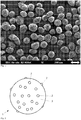
Figure 5 shows a Scanning Electron Micrograph (SEM) picture of bodies of carbon supported holmium oxide particles of the present invention at low magnification, produced according to the following example. -
Figure 6 shows schematically a body (1) according to the present invention comprising a porous amorphous carbon carrier particle (3) on which are present nanoparticles (2) of an oxide of lanthanide. - The invention will now be illustrated by the following example.
- 2 grams of hydrophilic MCC spheres (
Cellets™ 100 obtained from Synthapharm, particle size distribution of 100-200 µm) were loaded via wet impregnation. To this end the spheres were immersed in an aqueous solution of holmium nitrate pentahydrate (2 g Ho(NO3)3·5H2O, Sigma-Aldrich, 99.9% purity, in 20 ml H2O). The spheres were left for 24 h within the solution with occasional stirring. Next, the impregnated spheres were filtered using a Buchner funnel with glass filter, after which the isolated spheres were dried at 80 °C to constant weight at room temperature. Subsequently pyrolysis was performed at 800 °C under a stagnant nitrogen atmosphere for 3 h. Scanning- and transmission electron microscopy were employed to image the resulting holmium particles and the carbonaceous support. Conventional TEM, as well as electron diffraction patterns were recorded. - From the TEM-image of
figure 1 and the HR-TEM image offigure 2 it is deduced that particles of a very small crystallite size (below 5 nm) are formed supported within an amorphous carbon. The STEM-image with HAADF detector (figure 3 ) shows the same. Elemental analysis (figure 4 ) shows that oxygen is abundant in the sample which suggests that holmium is present in an oxidic state. Electron diffraction (not shown) substantiates that holmium is present as Ho2O3 in a cubic crystal structure.Figure 5 shows the bodies of the invention on a low magnification, indicating that the impregnated MCC particles have a homogeneous size distribution after pyrolysis.
Claims (12)
- Body comprising an amorphous carbon particle on which are supported nanoparticles of an oxide of lanthanide, and wherein said body has a diameter of 10 to 1000 µm.
- Body according to the previous claim wherein the oxide of lanthanide nanoparticles have a diameter of 10 nm or less, preferably 5 nm or less.
- Body according to any of the previous claims, wherein said oxide of lanthanide is holmium oxide, in particular Ho2O3.
- Body according to any of the previous claims, which is essentially spherical.
- Body according to any of the previous claims, having a diameter of from 15-500 µm, preferably 20-400 µm, and more preferably 25-250 µm.
- Body according to any of the previous claims, which further comprises on its surface one or more functionalized groups, in particular an antibody.
- Body according to any of the previous claims, which is a pharmaceutical for use in a method for treatment of the human or animal body by surgery or therapy and diagnostic methods practiced on the human or animal body.
- Body according to any of claims 1 to 6 or for use according to the previous claim, for use in radiotherapy, in particular radio-embolization.
- Body for use according to the previous claim for use in the treatment of liver disorders or kidney disorders, in particular tumors, more in particular metastases.
- Process for producing bodies comprising nanoparticles of an oxide of lanthanide supported on amorphous carbon particles, which process comprises the steps of impregnating a carbon source material by contacting it with a solution of a salt of said lanthanide; drying said impregnated carbon source material; and subjecting said dried impregnated material to pyrolysis under inert conditions.
- Process according to the previous claim, which is followed by a step wherein said carbon is removed, whereby said nanoparticles are obtained in pure form.
- Body comprising an amorphous carbon particle on which are supported nanoparticles of an oxide of lanthanide obtainable by the process according to claim 10.
Priority Applications (1)
| Application Number | Priority Date | Filing Date | Title |
|---|---|---|---|
| EP13724378.8A EP2830668B1 (en) | 2012-03-29 | 2013-03-27 | Amorphous carbon supported nanoparticles comprising oxides of lanthanides and method for preparing them |
Applications Claiming Priority (3)
| Application Number | Priority Date | Filing Date | Title |
|---|---|---|---|
| EP12162272 | 2012-03-29 | ||
| EP13724378.8A EP2830668B1 (en) | 2012-03-29 | 2013-03-27 | Amorphous carbon supported nanoparticles comprising oxides of lanthanides and method for preparing them |
| PCT/IB2013/052457 WO2013144879A1 (en) | 2012-03-29 | 2013-03-27 | Amorphous carbon supported nanoparticles comprising oxides of lanthanides and method for preparing them |
Publications (2)
| Publication Number | Publication Date |
|---|---|
| EP2830668A1 EP2830668A1 (en) | 2015-02-04 |
| EP2830668B1 true EP2830668B1 (en) | 2018-05-16 |
Family
ID=48471047
Family Applications (1)
| Application Number | Title | Priority Date | Filing Date |
|---|---|---|---|
| EP13724378.8A Active EP2830668B1 (en) | 2012-03-29 | 2013-03-27 | Amorphous carbon supported nanoparticles comprising oxides of lanthanides and method for preparing them |
Country Status (8)
| Country | Link |
|---|---|
| US (2) | US9750828B2 (en) |
| EP (1) | EP2830668B1 (en) |
| JP (1) | JP6238955B2 (en) |
| CN (1) | CN104379182B (en) |
| AR (1) | AR090586A1 (en) |
| ES (1) | ES2677914T3 (en) |
| TW (1) | TWI634903B (en) |
| WO (1) | WO2013144879A1 (en) |
Families Citing this family (3)
| Publication number | Priority date | Publication date | Assignee | Title |
|---|---|---|---|---|
| US20190368046A1 (en) * | 2016-12-23 | 2019-12-05 | Basf Corporation | Body comprising an oxide of lanthanide supported on a sulphur containing carbon based particle and a method of preparation thereof |
| EP3558397B1 (en) | 2016-12-23 | 2020-12-30 | QUIREM Medical B.V. | Use of a body comprising an oxide of lanthanide supported on a sulphur containing carbon based particle in therapeutic applications |
| WO2019244072A1 (en) * | 2018-06-20 | 2019-12-26 | Basf Corporation | Body comprising an oxide of yttrium supported on a sulfur-containing carbon-based particle and a method of preparation thereof |
Family Cites Families (15)
| Publication number | Priority date | Publication date | Assignee | Title |
|---|---|---|---|---|
| US5261956A (en) * | 1990-07-03 | 1993-11-16 | Ecc International Inc. | Method for improving the rheology of calcined kaolin clay products |
| CN1111139C (en) | 1999-01-04 | 2003-06-11 | 北京大学 | Prepn. method of surface doped and weakly agglomerated nanometer zirconium oxide powder |
| US6379648B1 (en) * | 1999-02-01 | 2002-04-30 | The Curators Of The University Of Missouri | Biodegradable glass compositions and methods for radiation therapy |
| CN1263466C (en) * | 2003-05-06 | 2006-07-12 | 陈小川 | Transfusing agent of active carbon and its prepn and application in preparing cancer-treating medicine |
| KR100713745B1 (en) * | 2006-02-27 | 2007-05-07 | 연세대학교 산학협력단 | Water-soluble magnetic or metal oxide nanoparticles coated with a phase transfer ligand and a method for preparing the same |
| DE102006022866A1 (en) | 2006-05-16 | 2007-11-22 | Glatt Systemtechnik Gmbh | Carbon granules, process for their preparation and their use |
| WO2008011496A2 (en) * | 2006-07-19 | 2008-01-24 | Smithkline Beecham Corporation | Method for radiolabeling formulations for gamma scintigraphy assesment |
| JP2010516313A (en) * | 2007-01-19 | 2010-05-20 | シンベンション アーゲー | Partially bioabsorbable implant |
| US20080292530A1 (en) | 2007-05-11 | 2008-11-27 | The Government Of Us, As Represented By The Secretary Of The Navy | Calcination of carbon nanotube compositions |
| TWI468185B (en) * | 2007-12-27 | 2015-01-11 | Avon Prod Inc | Gel technology suitable for use in cosmetic compositions |
| US20090258230A1 (en) * | 2008-04-11 | 2009-10-15 | Kobo Products, Inc. | Porous and/or hollow material containing uv attenuating nanoparticles, method of production and use |
| US20110014296A1 (en) * | 2009-07-17 | 2011-01-20 | National Chiao Tung University | Drug Delivery Nanodevice, its Preparation Method and Uses Thereof |
| JP4682368B2 (en) * | 2009-08-11 | 2011-05-11 | 独立行政法人産業技術総合研究所 | Spherical core-shell cerium oxide / polymer hybrid nanoparticle aggregate and method for producing the same |
| EP2383374A1 (en) * | 2010-04-29 | 2011-11-02 | BASF Corporation | Nano-particles containing carbon and a ferromagnetic metal or alloy |
| JP2011236146A (en) * | 2010-05-10 | 2011-11-24 | Mitsubishi Chemicals Corp | Method for producing diaryl carbonate and method for producing polycarbonate |
-
2013
- 2013-03-27 CN CN201380026617.4A patent/CN104379182B/en active Active
- 2013-03-27 WO PCT/IB2013/052457 patent/WO2013144879A1/en not_active Ceased
- 2013-03-27 EP EP13724378.8A patent/EP2830668B1/en active Active
- 2013-03-27 ES ES13724378.8T patent/ES2677914T3/en active Active
- 2013-03-27 JP JP2015502531A patent/JP6238955B2/en active Active
- 2013-03-27 US US14/387,893 patent/US9750828B2/en active Active
- 2013-03-29 TW TW102111351A patent/TWI634903B/en active
- 2013-04-03 AR ARP130101082A patent/AR090586A1/en not_active Application Discontinuation
-
2017
- 2017-08-01 US US15/665,844 patent/US10046069B2/en active Active
Non-Patent Citations (1)
| Title |
|---|
| None * |
Also Published As
| Publication number | Publication date |
|---|---|
| JP6238955B2 (en) | 2017-11-29 |
| ES2677914T3 (en) | 2018-08-07 |
| US9750828B2 (en) | 2017-09-05 |
| JP2015511631A (en) | 2015-04-20 |
| US10046069B2 (en) | 2018-08-14 |
| TW201404402A (en) | 2014-02-01 |
| WO2013144879A1 (en) | 2013-10-03 |
| US20150320894A1 (en) | 2015-11-12 |
| EP2830668A1 (en) | 2015-02-04 |
| AR090586A1 (en) | 2014-11-26 |
| US20170354749A1 (en) | 2017-12-14 |
| TWI634903B (en) | 2018-09-11 |
| CN104379182B (en) | 2017-12-05 |
| CN104379182A (en) | 2015-02-25 |
Similar Documents
| Publication | Publication Date | Title |
|---|---|---|
| An et al. | Synthesis of uniform hollow oxide nanoparticles through nanoscale acid etching | |
| Hou et al. | High-yield preparation of uniform cobalt hydroxide and oxide nanoplatelets and their characterization | |
| Huang et al. | Superparamagnetic hollow and paramagnetic porous Gd2O3 particles | |
| Wu et al. | Hematite hollow spheres with a mesoporous shell: controlled synthesis and applications in gas sensor and lithium ion batteries | |
| RU2567620C2 (en) | Nanoparticles, containing carbon and ferromagnetic metal or alloy | |
| Xiao et al. | Multi-functional Fe3O4@ mSiO2-AuNCs composite nanoparticles used as drug delivery system | |
| US10046069B2 (en) | Amorphous carbon supported nanoparticles comprising oxides of lanthanides and method for preparing them | |
| KR101363597B1 (en) | Magnetic inorganic composite, preparing method of the same, and uses the same | |
| CN106430327B (en) | A kind of porous sea urchin shape Fe3O4@C composites and preparation method thereof | |
| KR20140130361A (en) | Metal oxide nanoparticle-based magnetic resonance imaging contrast agent with a central cavity | |
| Dong et al. | Highly porous, water‐soluble, superparamagnetic, and biocompatible magnetite nanocrystal clusters for targeted drug delivery | |
| Chan et al. | Carbon‐encapsulated radioactive 99mtc nanoparticles | |
| Ranjbar Bahadori et al. | Synthesis of cobalt, palladium, and rhenium nanoparticles | |
| Beuvier et al. | Phase transformations in CaCO3/iron oxide composite induced by thermal treatment and laser irradiation | |
| Shah et al. | Field emission properties and ferromagnetic exchange interactions in γ-Fe2O3 and Fe3O4 nanoneedles—oleic acid-assisted growth | |
| Carta et al. | Cubic Mesoporous Silica (SBA‐16) Prepared Using Butanol as the Co‐Surfactant: A General Matrix for the Preparation of FeCo‐SiO2 Nanocomposites | |
| Goyal et al. | Fabrication of α-Fe2O3 nanopowder modified glassy carbon electrode for applications in electrochemical sensing | |
| Fang et al. | Monodisperse magnetic core/shell microspheres with Pd nanoparticles-incorporated-carbon shells | |
| Gunawan et al. | One-dimensional fossil-like γ-Fe2O3@ carbon nanostructure: preparation, structural characterization and application as adsorbent for fast and selective recovery of gold ions from aqueous solution | |
| Ghazanfari et al. | Size-controlled one-pot polyol synthesis and characterization of D-glucuronic acid-coated ultrasmall BiOI nanoparticles as potential x-ray contrast agent | |
| Min et al. | Synthesis of hollow microspheres of nickel using spheres of metallic zinc as templates under mild conditions | |
| Anushree et al. | Synthesis of silver capped Fe3O4 nanofluids using microwave assisted approach | |
| EP3628336A1 (en) | Pharmaceutical composition comprising an oxide of yttrium supported on a sulfur-containing carbon-based particle for use in therapeutic applications | |
| Li et al. | Research Article Synthesis and Characterization of Hollow Magnetic Alloy (GdNi | |
| JP2020507006A (en) | Body containing lanthanide oxide supported on sulfur-containing carbon-based particles and method of making same |
Legal Events
| Date | Code | Title | Description |
|---|---|---|---|
| PUAI | Public reference made under article 153(3) epc to a published international application that has entered the european phase |
Free format text: ORIGINAL CODE: 0009012 |
|
| 17P | Request for examination filed |
Effective date: 20141029 |
|
| AK | Designated contracting states |
Kind code of ref document: A1 Designated state(s): AL AT BE BG CH CY CZ DE DK EE ES FI FR GB GR HR HU IE IS IT LI LT LU LV MC MK MT NL NO PL PT RO RS SE SI SK SM TR |
|
| AX | Request for extension of the european patent |
Extension state: BA ME |
|
| DAX | Request for extension of the european patent (deleted) | ||
| GRAP | Despatch of communication of intention to grant a patent |
Free format text: ORIGINAL CODE: EPIDOSNIGR1 |
|
| STAA | Information on the status of an ep patent application or granted ep patent |
Free format text: STATUS: GRANT OF PATENT IS INTENDED |
|
| INTG | Intention to grant announced |
Effective date: 20171018 |
|
| GRAS | Grant fee paid |
Free format text: ORIGINAL CODE: EPIDOSNIGR3 |
|
| GRAA | (expected) grant |
Free format text: ORIGINAL CODE: 0009210 |
|
| STAA | Information on the status of an ep patent application or granted ep patent |
Free format text: STATUS: THE PATENT HAS BEEN GRANTED |
|
| AK | Designated contracting states |
Kind code of ref document: B1 Designated state(s): AL AT BE BG CH CY CZ DE DK EE ES FI FR GB GR HR HU IE IS IT LI LT LU LV MC MK MT NL NO PL PT RO RS SE SI SK SM TR |
|
| REG | Reference to a national code |
Ref country code: GB Ref legal event code: FG4D |
|
| REG | Reference to a national code |
Ref country code: CH Ref legal event code: EP |
|
| REG | Reference to a national code |
Ref country code: IE Ref legal event code: FG4D |
|
| REG | Reference to a national code |
Ref country code: AT Ref legal event code: REF Ref document number: 998948 Country of ref document: AT Kind code of ref document: T Effective date: 20180615 |
|
| REG | Reference to a national code |
Ref country code: DE Ref legal event code: R096 Ref document number: 602013037499 Country of ref document: DE |
|
| REG | Reference to a national code |
Ref country code: ES Ref legal event code: FG2A Ref document number: 2677914 Country of ref document: ES Kind code of ref document: T3 Effective date: 20180807 |
|
| REG | Reference to a national code |
Ref country code: NL Ref legal event code: FP |
|
| REG | Reference to a national code |
Ref country code: LT Ref legal event code: MG4D |
|
| PG25 | Lapsed in a contracting state [announced via postgrant information from national office to epo] |
Ref country code: SE Free format text: LAPSE BECAUSE OF FAILURE TO SUBMIT A TRANSLATION OF THE DESCRIPTION OR TO PAY THE FEE WITHIN THE PRESCRIBED TIME-LIMIT Effective date: 20180516 Ref country code: NO Free format text: LAPSE BECAUSE OF FAILURE TO SUBMIT A TRANSLATION OF THE DESCRIPTION OR TO PAY THE FEE WITHIN THE PRESCRIBED TIME-LIMIT Effective date: 20180816 Ref country code: BG Free format text: LAPSE BECAUSE OF FAILURE TO SUBMIT A TRANSLATION OF THE DESCRIPTION OR TO PAY THE FEE WITHIN THE PRESCRIBED TIME-LIMIT Effective date: 20180816 Ref country code: FI Free format text: LAPSE BECAUSE OF FAILURE TO SUBMIT A TRANSLATION OF THE DESCRIPTION OR TO PAY THE FEE WITHIN THE PRESCRIBED TIME-LIMIT Effective date: 20180516 Ref country code: LT Free format text: LAPSE BECAUSE OF FAILURE TO SUBMIT A TRANSLATION OF THE DESCRIPTION OR TO PAY THE FEE WITHIN THE PRESCRIBED TIME-LIMIT Effective date: 20180516 |
|
| PG25 | Lapsed in a contracting state [announced via postgrant information from national office to epo] |
Ref country code: RS Free format text: LAPSE BECAUSE OF FAILURE TO SUBMIT A TRANSLATION OF THE DESCRIPTION OR TO PAY THE FEE WITHIN THE PRESCRIBED TIME-LIMIT Effective date: 20180516 Ref country code: HR Free format text: LAPSE BECAUSE OF FAILURE TO SUBMIT A TRANSLATION OF THE DESCRIPTION OR TO PAY THE FEE WITHIN THE PRESCRIBED TIME-LIMIT Effective date: 20180516 Ref country code: GR Free format text: LAPSE BECAUSE OF FAILURE TO SUBMIT A TRANSLATION OF THE DESCRIPTION OR TO PAY THE FEE WITHIN THE PRESCRIBED TIME-LIMIT Effective date: 20180817 Ref country code: LV Free format text: LAPSE BECAUSE OF FAILURE TO SUBMIT A TRANSLATION OF THE DESCRIPTION OR TO PAY THE FEE WITHIN THE PRESCRIBED TIME-LIMIT Effective date: 20180516 |
|
| REG | Reference to a national code |
Ref country code: AT Ref legal event code: MK05 Ref document number: 998948 Country of ref document: AT Kind code of ref document: T Effective date: 20180516 |
|
| PG25 | Lapsed in a contracting state [announced via postgrant information from national office to epo] |
Ref country code: CZ Free format text: LAPSE BECAUSE OF FAILURE TO SUBMIT A TRANSLATION OF THE DESCRIPTION OR TO PAY THE FEE WITHIN THE PRESCRIBED TIME-LIMIT Effective date: 20180516 Ref country code: RO Free format text: LAPSE BECAUSE OF FAILURE TO SUBMIT A TRANSLATION OF THE DESCRIPTION OR TO PAY THE FEE WITHIN THE PRESCRIBED TIME-LIMIT Effective date: 20180516 Ref country code: SK Free format text: LAPSE BECAUSE OF FAILURE TO SUBMIT A TRANSLATION OF THE DESCRIPTION OR TO PAY THE FEE WITHIN THE PRESCRIBED TIME-LIMIT Effective date: 20180516 Ref country code: DK Free format text: LAPSE BECAUSE OF FAILURE TO SUBMIT A TRANSLATION OF THE DESCRIPTION OR TO PAY THE FEE WITHIN THE PRESCRIBED TIME-LIMIT Effective date: 20180516 Ref country code: PL Free format text: LAPSE BECAUSE OF FAILURE TO SUBMIT A TRANSLATION OF THE DESCRIPTION OR TO PAY THE FEE WITHIN THE PRESCRIBED TIME-LIMIT Effective date: 20180516 Ref country code: EE Free format text: LAPSE BECAUSE OF FAILURE TO SUBMIT A TRANSLATION OF THE DESCRIPTION OR TO PAY THE FEE WITHIN THE PRESCRIBED TIME-LIMIT Effective date: 20180516 Ref country code: AT Free format text: LAPSE BECAUSE OF FAILURE TO SUBMIT A TRANSLATION OF THE DESCRIPTION OR TO PAY THE FEE WITHIN THE PRESCRIBED TIME-LIMIT Effective date: 20180516 |
|
| REG | Reference to a national code |
Ref country code: DE Ref legal event code: R097 Ref document number: 602013037499 Country of ref document: DE |
|
| PG25 | Lapsed in a contracting state [announced via postgrant information from national office to epo] |
Ref country code: SM Free format text: LAPSE BECAUSE OF FAILURE TO SUBMIT A TRANSLATION OF THE DESCRIPTION OR TO PAY THE FEE WITHIN THE PRESCRIBED TIME-LIMIT Effective date: 20180516 |
|
| PLBE | No opposition filed within time limit |
Free format text: ORIGINAL CODE: 0009261 |
|
| STAA | Information on the status of an ep patent application or granted ep patent |
Free format text: STATUS: NO OPPOSITION FILED WITHIN TIME LIMIT |
|
| 26N | No opposition filed |
Effective date: 20190219 |
|
| PG25 | Lapsed in a contracting state [announced via postgrant information from national office to epo] |
Ref country code: SI Free format text: LAPSE BECAUSE OF FAILURE TO SUBMIT A TRANSLATION OF THE DESCRIPTION OR TO PAY THE FEE WITHIN THE PRESCRIBED TIME-LIMIT Effective date: 20180516 |
|
| PG25 | Lapsed in a contracting state [announced via postgrant information from national office to epo] |
Ref country code: MC Free format text: LAPSE BECAUSE OF FAILURE TO SUBMIT A TRANSLATION OF THE DESCRIPTION OR TO PAY THE FEE WITHIN THE PRESCRIBED TIME-LIMIT Effective date: 20180516 |
|
| REG | Reference to a national code |
Ref country code: CH Ref legal event code: PL |
|
| PG25 | Lapsed in a contracting state [announced via postgrant information from national office to epo] |
Ref country code: AL Free format text: LAPSE BECAUSE OF FAILURE TO SUBMIT A TRANSLATION OF THE DESCRIPTION OR TO PAY THE FEE WITHIN THE PRESCRIBED TIME-LIMIT Effective date: 20180516 Ref country code: LU Free format text: LAPSE BECAUSE OF NON-PAYMENT OF DUE FEES Effective date: 20190327 |
|
| REG | Reference to a national code |
Ref country code: BE Ref legal event code: MM Effective date: 20190331 |
|
| PG25 | Lapsed in a contracting state [announced via postgrant information from national office to epo] |
Ref country code: CH Free format text: LAPSE BECAUSE OF NON-PAYMENT OF DUE FEES Effective date: 20190331 Ref country code: LI Free format text: LAPSE BECAUSE OF NON-PAYMENT OF DUE FEES Effective date: 20190331 Ref country code: IE Free format text: LAPSE BECAUSE OF NON-PAYMENT OF DUE FEES Effective date: 20190327 |
|
| PG25 | Lapsed in a contracting state [announced via postgrant information from national office to epo] |
Ref country code: BE Free format text: LAPSE BECAUSE OF NON-PAYMENT OF DUE FEES Effective date: 20190331 |
|
| PG25 | Lapsed in a contracting state [announced via postgrant information from national office to epo] |
Ref country code: TR Free format text: LAPSE BECAUSE OF FAILURE TO SUBMIT A TRANSLATION OF THE DESCRIPTION OR TO PAY THE FEE WITHIN THE PRESCRIBED TIME-LIMIT Effective date: 20180516 |
|
| PG25 | Lapsed in a contracting state [announced via postgrant information from national office to epo] |
Ref country code: MT Free format text: LAPSE BECAUSE OF NON-PAYMENT OF DUE FEES Effective date: 20190327 Ref country code: PT Free format text: LAPSE BECAUSE OF FAILURE TO SUBMIT A TRANSLATION OF THE DESCRIPTION OR TO PAY THE FEE WITHIN THE PRESCRIBED TIME-LIMIT Effective date: 20180917 |
|
| PG25 | Lapsed in a contracting state [announced via postgrant information from national office to epo] |
Ref country code: CY Free format text: LAPSE BECAUSE OF FAILURE TO SUBMIT A TRANSLATION OF THE DESCRIPTION OR TO PAY THE FEE WITHIN THE PRESCRIBED TIME-LIMIT Effective date: 20180516 |
|
| PG25 | Lapsed in a contracting state [announced via postgrant information from national office to epo] |
Ref country code: IS Free format text: LAPSE BECAUSE OF FAILURE TO SUBMIT A TRANSLATION OF THE DESCRIPTION OR TO PAY THE FEE WITHIN THE PRESCRIBED TIME-LIMIT Effective date: 20180916 |
|
| PG25 | Lapsed in a contracting state [announced via postgrant information from national office to epo] |
Ref country code: HU Free format text: LAPSE BECAUSE OF FAILURE TO SUBMIT A TRANSLATION OF THE DESCRIPTION OR TO PAY THE FEE WITHIN THE PRESCRIBED TIME-LIMIT; INVALID AB INITIO Effective date: 20130327 |
|
| REG | Reference to a national code |
Ref country code: NL Ref legal event code: PD Owner name: QUIREM MEDICAL B.V.; NL Free format text: DETAILS ASSIGNMENT: CHANGE OF OWNER(S), ASSIGNMENT; FORMER OWNER NAME: BASF CORPORATION Effective date: 20220603 |
|
| REG | Reference to a national code |
Ref country code: ES Ref legal event code: PC2A Owner name: QUIREM MEDICAL B.V. Effective date: 20220610 |
|
| PG25 | Lapsed in a contracting state [announced via postgrant information from national office to epo] |
Ref country code: MK Free format text: LAPSE BECAUSE OF FAILURE TO SUBMIT A TRANSLATION OF THE DESCRIPTION OR TO PAY THE FEE WITHIN THE PRESCRIBED TIME-LIMIT Effective date: 20180516 |
|
| REG | Reference to a national code |
Ref country code: DE Ref legal event code: R081 Ref document number: 602013037499 Country of ref document: DE Owner name: QUIREM MEDICAL B.V., NL Free format text: FORMER OWNER: BASF CORPORATION, FLORHAM PARK, N.J., US |
|
| REG | Reference to a national code |
Ref country code: GB Ref legal event code: 732E Free format text: REGISTERED BETWEEN 20220707 AND 20220713 |
|
| P01 | Opt-out of the competence of the unified patent court (upc) registered |
Effective date: 20230508 |
|
| PGFP | Annual fee paid to national office [announced via postgrant information from national office to epo] |
Ref country code: ES Payment date: 20250429 Year of fee payment: 13 |
|
| PGFP | Annual fee paid to national office [announced via postgrant information from national office to epo] |
Ref country code: GB Payment date: 20260324 Year of fee payment: 14 |
|
| PGFP | Annual fee paid to national office [announced via postgrant information from national office to epo] |
Ref country code: DE Payment date: 20260319 Year of fee payment: 14 |
|
| PGFP | Annual fee paid to national office [announced via postgrant information from national office to epo] |
Ref country code: IT Payment date: 20260324 Year of fee payment: 14 |
|
| PGFP | Annual fee paid to national office [announced via postgrant information from national office to epo] |
Ref country code: NL Payment date: 20260319 Year of fee payment: 14 |
|
| PGFP | Annual fee paid to national office [announced via postgrant information from national office to epo] |
Ref country code: FR Payment date: 20260320 Year of fee payment: 14 |