EP2829122B1 - Devices using nearfield wireless communication to provision ap connection information - Google Patents
Devices using nearfield wireless communication to provision ap connection information Download PDFInfo
- Publication number
- EP2829122B1 EP2829122B1 EP13763833.4A EP13763833A EP2829122B1 EP 2829122 B1 EP2829122 B1 EP 2829122B1 EP 13763833 A EP13763833 A EP 13763833A EP 2829122 B1 EP2829122 B1 EP 2829122B1
- Authority
- EP
- European Patent Office
- Prior art keywords
- information
- mode
- mobile terminal
- terminal apparatus
- wireless communication
- Prior art date
- Legal status (The legal status is an assumption and is not a legal conclusion. Google has not performed a legal analysis and makes no representation as to the accuracy of the status listed.)
- Not-in-force
Links
Images

Classifications
-
- H—ELECTRICITY
- H04—ELECTRIC COMMUNICATION TECHNIQUE
- H04W—WIRELESS COMMUNICATION NETWORKS
- H04W48/00—Access restriction; Network selection; Access point selection
- H04W48/08—Access restriction or access information delivery, e.g. discovery data delivery
-
- H—ELECTRICITY
- H04—ELECTRIC COMMUNICATION TECHNIQUE
- H04W—WIRELESS COMMUNICATION NETWORKS
- H04W4/00—Services specially adapted for wireless communication networks; Facilities therefor
- H04W4/80—Services using short range communication, e.g. near-field communication [NFC], radio-frequency identification [RFID] or low energy communication
-
- G—PHYSICS
- G06—COMPUTING OR CALCULATING; COUNTING
- G06K—GRAPHICAL DATA READING; PRESENTATION OF DATA; RECORD CARRIERS; HANDLING RECORD CARRIERS
- G06K17/00—Methods or arrangements for effecting co-operative working between equipments covered by two or more of main groups G06K1/00 - G06K15/00, e.g. automatic card files incorporating conveying and reading operations
-
- H—ELECTRICITY
- H04—ELECTRIC COMMUNICATION TECHNIQUE
- H04L—TRANSMISSION OF DIGITAL INFORMATION, e.g. TELEGRAPHIC COMMUNICATION
- H04L41/00—Arrangements for maintenance, administration or management of data switching networks, e.g. of packet switching networks
- H04L41/08—Configuration management of networks or network elements
- H04L41/0803—Configuration setting
- H04L41/084—Configuration by using pre-existing information, e.g. using templates or copying from other elements
- H04L41/0846—Configuration by using pre-existing information, e.g. using templates or copying from other elements based on copy from other elements
-
- H—ELECTRICITY
- H04—ELECTRIC COMMUNICATION TECHNIQUE
- H04W—WIRELESS COMMUNICATION NETWORKS
- H04W12/00—Security arrangements; Authentication; Protecting privacy or anonymity
- H04W12/04—Key management, e.g. using generic bootstrapping architecture [GBA]
-
- H—ELECTRICITY
- H04—ELECTRIC COMMUNICATION TECHNIQUE
- H04W—WIRELESS COMMUNICATION NETWORKS
- H04W12/00—Security arrangements; Authentication; Protecting privacy or anonymity
- H04W12/50—Secure pairing of devices
-
- H—ELECTRICITY
- H04—ELECTRIC COMMUNICATION TECHNIQUE
- H04W—WIRELESS COMMUNICATION NETWORKS
- H04W48/00—Access restriction; Network selection; Access point selection
- H04W48/20—Selecting an access point
-
- H—ELECTRICITY
- H04—ELECTRIC COMMUNICATION TECHNIQUE
- H04W—WIRELESS COMMUNICATION NETWORKS
- H04W92/00—Interfaces specially adapted for wireless communication networks
- H04W92/16—Interfaces between hierarchically similar devices
- H04W92/18—Interfaces between hierarchically similar devices between terminal devices
-
- H—ELECTRICITY
- H04—ELECTRIC COMMUNICATION TECHNIQUE
- H04L—TRANSMISSION OF DIGITAL INFORMATION, e.g. TELEGRAPHIC COMMUNICATION
- H04L41/00—Arrangements for maintenance, administration or management of data switching networks, e.g. of packet switching networks
- H04L41/08—Configuration management of networks or network elements
- H04L41/0803—Configuration setting
- H04L41/0813—Configuration setting characterised by the conditions triggering a change of settings
- H04L41/082—Configuration setting characterised by the conditions triggering a change of settings the condition being updates or upgrades of network functionality
Definitions
- Apparatuses, device, and methods consistent with what is disclosed herein relate to a mobile terminal apparatus, a device, and a method for connecting to an Access Point (AP), and more specifically, to a mobile terminal apparatus having a nearfield wireless communication reader, a device having a nearfield wireless communication tag, and a method thereof for connecting to an AP.
- AP Access Point
- EP1793531 "Wireless communication system, communication apparatus, setting information providing method, setting information obtaining method, and computer program.” in the name of SONY Corp. relates to a wireless communication system including an access point, a master communication apparatus, and a slave communication apparatus where the master communication apparatus and the slave communication apparatus perform wireless communication through the access point.
- EP2285163 System, method and apparatus for wireless network connection using near field communication
- SAMSUNG ELECTRONICS CO LTD discusses establishing a wireless network connection between a mobile terminal and an electronic apparatus by using a near field communication network.
- US2010165879 A1 concerns a computing device for provisioning a wireless device for connection to a wireless network via a legacy access point.
- the wireless device supports a wireless protected setup protocol for obtaining the network profile of the network.
- a user requests the computing device discover wireless devices for provisioning.
- the computing device is configured as a soft access point and broadcasts a beacon signal indicating that the access point supports a wireless protected setup protocol, such as Wi-Fi Protected Setup.
- a request for provisioning is then received by the computing device from the wireless device.
- a network profile is transmitted from the computing device to the wireless device in accordance with the wireless protected setup protocol.
- the wireless device may use the profile to connect to the network via the legacy access point using the network profile.
- a method for a user to input AP information and to connect to an AP may not be easy.
- AP information such as Service Set IDentifier (SSID)or a network key should be inputted.
- SSID Service Set IDentifier
- home gateway or a set-top box does not have a display, providing UI in order to input AP information is impossible.
- apparatuses having a display such as the TV do not include proper means to input AP information, connecting to an AP becomes more difficult.
- a user in order to connect to an AP, a user should remember AP information. Thus, a user should write down AP information separately or remember AP information for use to connect to an AP.
- connecting to an AP may not be easy in conventional methods.
- the method may further include performing a home gateway function, if connected to the AP.
- the method may include SSID and key information of the device, and the AP information comprises SSID and key information to connect to the AP.
- a method of providing AP information by a mobile terminal apparatus is provided according to claim 4.
- the connecting information may include SSID and key information of the other device and the AP information comprises SSID and key information to connect to the AP.
- a mobile terminal apparatus is provided according to claim 6.
- the controller may control the communicator to disconnect communication from the other device and reconnect to the AP, if the AP information is transmitted to the other device.
- the connecting information may include SSID and key information of the other device and the AP information comprises SSID and key information to connect to the AP.
- a device is provided according to claim 7.
- the controller may perform a home gateway function, if connected to the AP.
- the device may further include an input which receives a user command to convert to a soft AP mode implementing the soft AP function or a Wi-Fi direct mode.
- the connecting information may include SSID and key information of the device and the AP information comprises SSID and key information to connect to the AP.
- a network system is provided according to claim 9.
- the invention is proposed to solve the problems as described above, and the objective is to provide a device which provides connecting information to a mobile terminal apparatus by utilizing a nearfield wireless communication tag, receives AP information from the mobile terminal apparatus connected thereto, and connects to an Access Point (AP) according to the received AP information, and a mobile terminal apparatus and methods thereof for providing the AP information.
- AP Access Point
- FIG. 1 is a view provided to explain nearfield wireless communication among a plurality of device according to an embodiment.
- a system of FIG. 1 may include a first device 100 and a second device 200.
- the first device 100 may include a nearfield wireless communication tag 110
- the second device 200 may include a nearfield wireless communication reader 210.
- the nearfield wireless communication reader 210 included in the second device 200 may read information of the nearfield wireless communication tag 110 included in the first device 100.
- the 'tagging' as used herein indicates that at least one of the first and second device 100, 200 may move toward each other and located within a distance range where nearfield wireless communication may operate. If one device comes to the other device within the range, the nearfield wireless communication reader 210 of the second device 200 may read information recorded on the nearfield wireless communication tag 110of the first device 100.
- Near Field Communication NFC is contactless nearfield wireless communication using frequency bandwidth of 13.56 MHz. If NFC is applied, data may be transmitted and received when a plurality of terminals approaches within a near field such as within about 10 cm.
- the nearfield wireless communication reader 210 of the second device 200 may read connecting information from the nearfield wireless communication tag 110 of the first device 100.
- the 'connecting information' as used herein indicates information to connect to the first device 100.
- connecting information may include Service Set IDentifier (SSID) and key of the first device 100 and so on.
- SSID indicates unique identifiers having 32 byte length added to each header of packets transmitted through wireless LAN.
- the second device 200 may release a connection to the AP if connecting information is provided from the first device 100. After disconnecting, the second device 200 may transmit connecting request to the first device 100 by using connecting information.
- the first device 100 may run soft AP function or Wi-Fi direct function, allow connecting request of the second device 200 like an AP, and establish a connection.
- the second device 200 may transmit AP information stored in the second device 200 to the first device 100.
- AP information to be transmitted may be SSID or key regarding the AP previously connected.
- one in a plurality of AP information prestored in the second device 200 may be transmitted to the first device 100 selectively.
- the first device 100 may use AP information transmitted from the second device 200, access an AP, and establish a connection. According to the above embodiment, even if a user does not input SSID or key in the first device 100 separately, AP connecting may be automatically implemented only with nearfield wireless communicating tagging.
- the nearfield wireless communication tag which costs lower relatively, may be included in the first device 100 and the first device 100 may operate like an AP.
- AP information can be provided from the second device 100 without installing the nearfield wireless communicating reader in the first device 100.
- AP connecting can be implemented more easily according to AP information provided from the second device 100.
- the second device 200 may use nearfield wireless communication methods, receive connecting information from the first device 100, connect to the first device 100 by using the connecting information, and provide AP information to the first device 100.
- the second device 200 may support so that AP connecting to the first device 100 can be implemented more easily.
- the first device 100 and the second device 200 may be implemented as various types of apparatuses, respectively. However, to make tagging more easily, at least one of the first device 100 and the second device 200 may be implemented as mobile terminal apparatuses which may move.
- the first device 100 may be a home gateway
- the second device 200 may be a mobile terminal apparatus such as a mobile phone.
- the first device 100 and the second device 200 may be stationery apparatus such as a TV, a PC, or a set-top box, or a mobile apparatus such as a PDA, a tablet PC, a mobile phone, or a laptop computer.
- FIG. 2 is a view provided to explain constitution of the first device used in the system of FIG. 1 .
- the first device 100 may include a nearfield wireless communication tag 110, a communicator 120, and a controller 130.
- the nearfield wireless communication tag 110 may include an integrated circuit (IC) and antenna coils. If the nearfield wireless communication tag 110 tags with the second device 200 having the nearfield wireless communication reader, the nearfield wireless communication tag 110 may operate by the electromagnetic waves emitted from the nearfield wireless communication reader, and transmit RF signals carrying connecting information.
- IC integrated circuit
- electric currents may be induced because of electromagnetic waves emitted from the nearfield wireless communication reader. Induced currents may be charged in a capacitor included in the nearfield wireless communication tag.
- the IC may be operated by the charged electric currents in the capacitor, and generate RF signals by coding prestored connecting information and modulating the coded information.
- the nearfield wireless communication tag 110 may generate RF signals according to a preset modulating technology and coding method among various types of modulating technologies and coding methods.
- the 'modulating' as used herein indicates technology of changing amplitudes, frequencies, phases, or others of RF carrier signals, and loading data to the RF carrier signals.
- For modulating Amplitude Shift Keying (ASK), Frequency Shift Keying (FSK), or Phase Shift Keying (PSK) may be used.
- the 'ASK' as used herein indicates a method of shifting a amplitude of a carrier signal according to whether an information signal in digital format is 0 or 1. For instance, if information signal is 0, a amplitude of a carrier signal may be minimized and transmitted.
- the "FSK” as used herein indicates a method of allocating 0 and 1 bit digital signals to 2 types of frequencies (low frequency, high frequency) and transmitting the same. For instance, if information signal is 0, a frequency lower than a carrier frequency may be generated and transmitted. If information signal is 1, a frequency higher than a carrier frequency may be generated and transmitted.
- the "PSK” as used herein indicates a method of shifting a phase of a carrier signal according to transmitted data. Degree of phase shift may be determined by data.
- a phase of a carrier frequency may be transited by 180 ° and information may be transmitted on a bit basis one by one. If transmitted data are 1, a phase of a carrier frequency may be transited by 90°and information may be transmitted on a bit basis one by one.
- the modified Miller coding method or Manchester coding method may be used.
- modulating technology and coding method which maybe used in the nearfield wireless communicating tag 110 may be properly determined by considering apparatus type and communicating speed. For instance, if the nearfield wireless communication tag 110 is a passive type which is driven by electric currents induced by electromagnetic waves emitted from the nearfield wireless communication reader without having a battery, the ASK technology and the Manchester coding method can be utilized. Meanwhile, if the nearfield wireless communication tag 110 is an active type where the tag 110 has a battery, the ASK technology and modified Miller coding method may be utilized at 106 kbps, or the ASK technology and Manchester coding method may be utilized at 212 kbps or at 424 kbps. This coding method is merely an example, and not necessarily need to be limited to this.
- the nearfield wireless communication tag 110 may provide connecting information to the second device 200, if nearfield wireless communication tagging is made with the second device 200 having the nearfield wireless communication reader.
- the connecting information may be provided from an in-built storage of the nearfield wireless communication tag 110 or an in-built storage of the first device 100.
- the controller 130 may run soft AP function or Wi-Fi direct function, and control the communicator 120 to run on soft AP mode that the second device 200 can connect.
- the soft AP mode indicates a mode of realizing function of the AP using software. Converting to the soft AP mode may be processed according to a user command, or processed automatically according to default setting condition in the process that the first device 100 turns on and initializes.
- the communicator 120 may receive AP information from the second device 200, if the second device 200 uses the connecting information and performs a pairing with the first device 100. If AP information is received through the communicator 120, the controller 130 may convert the soft AP mode to station mode, and control the communicator 120 to use the received AP information and to connect to an AP.
- the controller 130 may implement home gateway function when connecting to an AP.
- the controller 130 may play a role of a bridge by connecting external networks such as the internet and home networks.
- the controller 130 may control or manage electronic apparatuses connected to the home networks according to controlling signals inputted by the external networks.
- the first device 100 may additionally include an input unit (not illustrated) which may receive a user command to convert to the soft AP mode.
- the input unit may be implemented as a button, a touch pad, a voice recognizing module, or a motion recognizing module included in the first device 100.
- a user may select a button or a touch pad, pronounce trigger voices, or act trigger motions to convert to the soft AP mode.
- the controller 130 may inform the second device 200 about the completion of the connection.
- FIG. 3 is a block diagram of the second device 200 used in the system of FIG. 1 .
- the second device 200 may include a nearfield wireless communicating reader 210, a communicator 220, a controller 230, and a storage 240.
- the storage 240 may store AP information.
- the AP information includes SSID and key information. At least one of AP information may be stored.
- the nearfield wireless communication reader 210 may access the nearfield wireless communication tag included in the external device, that is, first device 100 and read connecting information, if nearfield wireless communication tagging with the external device 100 implements.
- the nearfield wireless communication reader 210 may include a wireless frequency module and antenna coils.
- the nearfield wireless communication reader 210 may emit electromagnetic waves through the antenna coils. Thus, electric currents may be induced in the nearfield wireless communication tag 110 according to electromagnetic induction method and IC may operate.
- the IC of the nearfield wireless communication tag 110 may transmit RF signals including connecting information as mentioned above.
- the wireless frequencymodule within the nearfield wireless communication reader 210 may receive RF signals through the antenna coils, perform demodulating and decoding of the received RF signals, and detect connecting information loaded in the RF signals. Demodulating and decoding may be implemented according to a method corresponding to modulating and coding used in the nearfield wireless communication tag 110, which will not be further described below for the sake of brevity.
- the controller 230 may disconnect from the AP that is currently connected, if connecting information is received through the nearfield wireless communication reader 210, and control the communicator 220 to connect to the first device 100.
- the communicator 220 may connect to the first device 100 using the connecting information read at the nearfield wireless communication reader 210 to establish a connection.
- Communication methods with the first device 100 may be any of various methods such as Bluetooth or ZigBee.
- the controller 230 may control the communicator 220 to transmit AP information stored in the storage 240 to the first device 100. After transmitting AP information completes successively, the controller 230 may control the communicator 220 to disconnect from the first device 100 and reconnect to an AP.
- a plurality of AP information may be stored in the storage 240.
- the controller 230 may provide an opportunity that a user can select AP information to be transmitted to the first device 100.
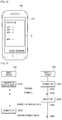
- FIG. 4 is a view provided to explain an exemplary screen of the second device 200 to select AP information.
- the second device 200 may further include a display 250.
- the controller 230 may control the display 250 to display a list 10 of AP information stored in the storage 240 after tagging completes. If a user selects at least one AP information on the list 10, the controller 230 may control the communicator 220 to transmit the selected AP information to the first device 100.
- AP information may be transmitted automatically without displaying a list of AP information.
- the AP information to be transmitted may indicate an AP that the second device 200 previously connects.
- the controller 230 may control the communicator 220 to automatically transmit AP information of the previous AP to the first device 100.
- the second device 200 may be implemented as a mobile terminal apparatus.
- the mobile terminal apparatus may connect to another device that does not have AP information (i.e., the first device 100) with convenient methods, and deliver AP information through connecting.
- another device can connect to an AP more conveniently, the mobile terminal apparatus supports AP connecting of another device.
- FIG. 5 is a timing view provided to explain a method of connecting to an AP according to an embodiment.
- mode may be converted to the soft AP mode at S510.
- the second device 200 which connects to an AP at S520, moves to the first device 100 and implements tagging at S530, information stored in the first device 100 may be provided to the second device 200.
- the second device 200 may use connecting information and perform communication at S540. Before performing communication, the second device 200 may disconnect to the AP that is currently connected.
- the second device 200 may provide a screen to select an AP so that a user can select an AP at S550. If a user selects one AP on the screen, AP information regarding the selected AP may be transmitted to the first device 100 at S560.
- the first device 100 may transmit a confirmation message informing that transmitting information to the second device 200 is completed. After transmitting, the first device 100 may end the soft AP mode, convert mode to the station mode, and connect to an AP using the AP information at S570. If connecting process completes, the first device 100 may inform connecting to an AP of the second device 200 at S580.
- the second device 200 may disconnect from the first device 100 and connect to the previous AP again.
- the first device 100 and the second device 200 may perform communication according to various methods such as Wi-Fi, Bluetooth, or ZigBee. Further, without providing a screen to select an AP, an embodiment of automatically transmitting AP information may be implemented.
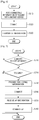
- FIG. 6 is a flowchart provided to explain a method of providing AP information in the above second device.
- the second device 200 may read connecting information from the nearfield wireless communication tag included in the first device 100 at S610. After reading, the second device 200 may use the read connecting information and implement pairing at S620, and transmit AP information to the first device 100 at S630.
- the above method may additionally include displaying a list of at least one AP information prestored in the second device 200.
- a user may select AP information on the list, and the selected AP information may be transmitted to the first device 100 at S630.
- AP information regarding the AP connected to the second device 200 may be automatically transmitted to the first device 100.
- the second device 200 may disconnect from the AP that is currently connected before pairing. After transmission of AP information to the first device 100 is successfully performed, the second device 200 may restore connecting to the AP.
- FIG. 7 is a flowchart provided to explain a method of connecting to an AP of the first device according to an embodiment.
- connecting information stored in the first device 100 may be provided to the second device 200 at S730.
- the first device 100 may receive AP information transmitted from the second device 200 at S750. If AP information is received, the first device 100 may inform the second device 200 about the reception of the AP information. The first device 100 may convert the soft AP mode to the station mode, and access and connect to an AP using the received AP information at S760. If connecting is implemented, the first device 100 may transmit a message to the second device 200, indicating that connecting process completes. Like in the above embodiment, if the first device 100 is implemented as a home gateway, operating home gateway function may be further included.
- wireless LAN apparatuses when wireless LAN apparatuses are installed in various places such as homes or offices, a user can simply connect to an AP using a mobile terminal apparatus without having to enter a setting page and connect to an AP.
- connecting information may be provided by nearfield wireless communication technology
- connecting information can be also provided by general RFID technology as well as nearfield wireless communication technology.
- the nearfield wireless communication tag may be simply manufactured such as a sticker format, and attached to home gateway.
- applications implementing soft AP function and the method of FIG. 7 can be installed or firmware may be upgraded to implement functions according to the above various embodiments.
- a non-transitory computer readable medium in which the non-transitory computer readable medium stores programs consecutively implementing steps of converting to the soft AP mode, operating communication in response to a paring request if pairing request of another device is received based on connecting information provided to another device by tagging, requesting and receiving AP information to another device if connected, and connecting to an AP using AP information.
- a non-transitory computer readable medium may be provided, in which the non-transitory computer readable medium storing programs consecutively implementing steps of connecting to another device by using connecting information if the connecting information is received after tagging with another device, and transmitting AP information to another device if connected.
- the non-transitory computer readable medium may be the medium which stores data semi-permanently and which can be read by apparatuses, and not the medium that temporarily stores data such as a register, a cache, or a memory.
- the above applications or programs may be stored and provided in the non-transitory computer readable medium such as a CD, a DVD, a hard disk, a Blu-ray disk, a USB, a memory card, or a ROM.
- each device may further include a memory for storing a message to be transmitted, and a processor such as a CPU or micro processor for implementing the above various steps.
Landscapes
- Engineering & Computer Science (AREA)
- Computer Networks & Wireless Communication (AREA)
- Signal Processing (AREA)
- Computer Security & Cryptography (AREA)
- Physics & Mathematics (AREA)
- General Physics & Mathematics (AREA)
- Theoretical Computer Science (AREA)
- Mobile Radio Communication Systems (AREA)
- Telephone Function (AREA)
Description
- Apparatuses, device, and methods consistent with what is disclosed herein relate to a mobile terminal apparatus, a device, and a method for connecting to an Access Point (AP), and more specifically, to a mobile terminal apparatus having a nearfield wireless communication reader, a device having a nearfield wireless communication tag, and a method thereof for connecting to an AP.
- Advancement of electronic technologies has enabled development of various types of electronic apparatuses. Further, as wireless LAN is actively used recently, apparatuses having wireless LAN functions are provided. These apparatuses connect to a network via an Access Point (AP). Thus, to connect to the network, setting processes to select an AP and to connect to the AP should be implemented.
-
EP1793531 "Wireless communication system, communication apparatus, setting information providing method, setting information obtaining method, and computer program." in the name of SONY Corp. relates to a wireless communication system including an access point, a master communication apparatus, and a slave communication apparatus where the master communication apparatus and the slave communication apparatus perform wireless communication through the access point. -
US2011275316 "Device to Device connection setup using near-field communication" in the name of SUUMAEKI JAN, et al discusses the use of near-field communication in out-of-band initialization methods for connection setup for device-to-device communication. -
EP2285163 "System, method and apparatus for wireless network connection using near field communication" in the name of SAMSUNG ELECTRONICS CO LTD discusses establishing a wireless network connection between a mobile terminal and an electronic apparatus by using a near field communication network. -
US2010165879 A1 concerns a computing device for provisioning a wireless device for connection to a wireless network via a legacy access point. The wireless device supports a wireless protected setup protocol for obtaining the network profile of the network. A user requests the computing device discover wireless devices for provisioning. In response to the user input, the computing device is configured as a soft access point and broadcasts a beacon signal indicating that the access point supports a wireless protected setup protocol, such as Wi-Fi Protected Setup. A request for provisioning is then received by the computing device from the wireless device. A network profile is transmitted from the computing device to the wireless device in accordance with the wireless protected setup protocol. The wireless device may use the profile to connect to the network via the legacy access point using the network profile. - However, a method for a user to input AP information and to connect to an AP may not be easy.
- To connect to an AP, AP information such as Service Set IDentifier (SSID)or a network key should be inputted. However, since home gateway or a set-top box does not have a display, providing UI in order to input AP information is impossible. Further, in case apparatuses having a display such as the TV do not include proper means to input AP information, connecting to an AP becomes more difficult.
- Further, in order to connect to an AP, a user should remember AP information. Thus, a user should write down AP information separately or remember AP information for use to connect to an AP.
- Therefore, connecting to an AP may not be easy in conventional methods.
- According to an embodiment for achievement of the objective, a method is provided according to claim 1.
- The method may further include performing a home gateway function, if connected to the AP.
- The method may include SSID and key information of the device, and the AP information comprises SSID and key information to connect to the AP.
- A method of providing AP information by a mobile terminal apparatus is provided according to claim 4.
- The connecting information may include SSID and key information of the other device and the AP information comprises SSID and key information to connect to the AP.
- A mobile terminal apparatus is provided according to claim 6.
- The controller may control the communicator to disconnect communication from the other device and reconnect to the AP, if the AP information is transmitted to the other device.
- The connecting information may include SSID and key information of the other device and the AP information comprises SSID and key information to connect to the AP.
- A device is provided according to claim 7.
- The controller may perform a home gateway function, if connected to the AP.
- The device may further include an input which receives a user command to convert to a soft AP mode implementing the soft AP function or a Wi-Fi direct mode.
- The connecting information may include SSID and key information of the device and the AP information comprises SSID and key information to connect to the AP.
- A network system is provided according to claim 9.
- The invention is proposed to solve the problems as described above, and the objective is to provide a device which provides connecting information to a mobile terminal apparatus by utilizing a nearfield wireless communication tag, receives AP information from the mobile terminal apparatus connected thereto, and connects to an Access Point (AP) according to the received AP information, and a mobile terminal apparatus and methods thereof for providing the AP information.
- The above and/or other aspects of the present invention will be more apparent by describing certain exemplary embodiments of the present invention with reference to the accompanying drawings, in which:
-
FIG. 1 is a block diagram of a device and a mobile terminal apparatus according to an embodiment; -
FIG. 2 is a block diagram of a device according to an embodiment; -
FIG. 3 is a block diagram of a mobile terminal apparatus according to an embodiment; -
FIG. 4 is an exemplary list of Access Point (AP) information displayed on a screen of a mobile terminal apparatus; -
FIG. 5 is a view provided to explain a process of connecting to an AP by using a device and a mobile terminal apparatus; -
FIG. 6 is a flowchart provided to explain a method of providing AP information of a mobile terminal apparatus according to an embodiment and -
FIG. 7 is a flowchart provided to explain a method of connecting to an AP of a device according to an embodiment. - Certain exemplary embodiments of the present invention will now be described in greater detail with reference to the accompanying drawings.
- In the following description, same drawing reference numerals are used for the same elements even in different drawings. The matters defined in the description, such as detailed construction and elements, are provided to assist in a comprehensive understanding of the present invention. Accordingly, it is apparent that the exemplary embodiments of the present invention can be carried out without those specifically defined matters. Also, well-known functions or constructions are not described in detail since they would obscure the invention with unnecessary detail.
-
FIG. 1 is a view provided to explain nearfield wireless communication among a plurality of device according to an embodiment. A system ofFIG. 1 may include afirst device 100 and asecond device 200. Thefirst device 100 may include a nearfieldwireless communication tag 110, and thesecond device 200 may include a nearfieldwireless communication reader 210. In the system ofFIG. 1 , if thesecond device 200 moves toward thefirst device 100 and tagging is happened, and the nearfieldwireless communication reader 210 included in thesecond device 200 may read information of the nearfieldwireless communication tag 110 included in thefirst device 100. - The 'tagging' as used herein indicates that at least one of the first and
second device wireless communication reader 210 of thesecond device 200 may read information recorded on the nearfield wireless communication tag 110of thefirst device 100. For instance of nearfield wireless communication, Near Field Communication (NFC) may be utilized. NFC is contactless nearfield wireless communication using frequency bandwidth of 13.56 MHz. If NFC is applied, data may be transmitted and received when a plurality of terminals approaches within a near field such as within about 10 cm. If tagging is accomplished, the nearfieldwireless communication reader 210 of thesecond device 200 may read connecting information from the nearfieldwireless communication tag 110 of thefirst device 100. The 'connecting information' as used herein indicates information to connect to thefirst device 100. Specifically, connecting information may include Service Set IDentifier (SSID) and key of thefirst device 100 and so on. SSID indicates unique identifiers having 32 byte length added to each header of packets transmitted through wireless LAN. - While connecting to an AP, the
second device 200 may release a connection to the AP if connecting information is provided from thefirst device 100. After disconnecting, thesecond device 200 may transmit connecting request to thefirst device 100 by using connecting information. - The
first device 100 may run soft AP function or Wi-Fi direct function, allow connecting request of thesecond device 200 like an AP, and establish a connection. - When a connection is established, the
second device 200 may transmit AP information stored in thesecond device 200 to thefirst device 100. AP information to be transmitted may be SSID or key regarding the AP previously connected. Besides, one in a plurality of AP information prestored in thesecond device 200 may be transmitted to thefirst device 100 selectively. - The
first device 100 may use AP information transmitted from thesecond device 200, access an AP, and establish a connection. According to the above embodiment, even if a user does not input SSID or key in thefirst device 100 separately, AP connecting may be automatically implemented only with nearfield wireless communicating tagging. - As stated above, the nearfield wireless communication tag, which costs lower relatively, may be included in the
first device 100 and thefirst device 100 may operate like an AP. Thus, AP information can be provided from thesecond device 100 without installing the nearfield wireless communicating reader in thefirst device 100. Further, even if a user does not input AP information directly to thefirst device 100, AP connecting can be implemented more easily according to AP information provided from thesecond device 100. - Further, the
second device 200 may use nearfield wireless communication methods, receive connecting information from thefirst device 100, connect to thefirst device 100 by using the connecting information, and provide AP information to thefirst device 100. Thus, thesecond device 200 may support so that AP connecting to thefirst device 100 can be implemented more easily. - In the above embodiments, the
first device 100 and thesecond device 200 may be implemented as various types of apparatuses, respectively. However, to make tagging more easily, at least one of thefirst device 100 and thesecond device 200 may be implemented as mobile terminal apparatuses which may move. For instance, thefirst device 100 may be a home gateway, and thesecond device 200 may be a mobile terminal apparatus such as a mobile phone. However, this is merely one of the embodiments, thefirst device 100 and thesecond device 200 may be stationery apparatus such as a TV, a PC, or a set-top box, or a mobile apparatus such as a PDA, a tablet PC, a mobile phone, or a laptop computer. -
FIG. 2 is a view provided to explain constitution of the first device used in the system ofFIG. 1 . Referring toFIG. 2 , thefirst device 100 may include a nearfieldwireless communication tag 110, acommunicator 120, and acontroller 130. - The nearfield
wireless communication tag 110 may include an integrated circuit (IC) and antenna coils. If the nearfieldwireless communication tag 110 tags with thesecond device 200 having the nearfield wireless communication reader, the nearfieldwireless communication tag 110 may operate by the electromagnetic waves emitted from the nearfield wireless communication reader, and transmit RF signals carrying connecting information. - In antenna coils within the nearfield
wireless communication tag 110, electric currents may be induced because of electromagnetic waves emitted from the nearfield wireless communication reader. Induced currents may be charged in a capacitor included in the nearfield wireless communication tag. The IC may be operated by the charged electric currents in the capacitor, and generate RF signals by coding prestored connecting information and modulating the coded information. - The nearfield
wireless communication tag 110 may generate RF signals according to a preset modulating technology and coding method among various types of modulating technologies and coding methods. The 'modulating' as used herein indicates technology of changing amplitudes, frequencies, phases, or others of RF carrier signals, and loading data to the RF carrier signals. For modulating, Amplitude Shift Keying (ASK), Frequency Shift Keying (FSK), or Phase Shift Keying (PSK) may be used. The 'ASK' as used herein indicates a method of shifting a amplitude of a carrier signal according to whether an information signal in digital format is 0 or 1. For instance, if information signal is 0, a amplitude of a carrier signal may be minimized and transmitted. If information signal is 1, a amplitude of a carrier signal is maximized and transmitted. If 2-step amplitudes are used, 1 bit may be transmitted. However, if 4-step different amplitudes are used, a plurality of bits may be transmitted simultaneously. The "FSK" as used herein indicates a method of allocating 0 and 1 bit digital signals to 2 types of frequencies (low frequency, high frequency) and transmitting the same. For instance, if information signal is 0, a frequency lower than a carrier frequency may be generated and transmitted. If information signal is 1, a frequency higher than a carrier frequency may be generated and transmitted. The "PSK" as used herein indicates a method of shifting a phase of a carrier signal according to transmitted data. Degree of phase shift may be determined by data. If transmitted data are 0, a phase of a carrier frequency may be transited by 180 ° and information may be transmitted on a bit basis one by one. If transmitted data are 1, a phase of a carrier frequency may be transited by 90°and information may be transmitted on a bit basis one by one. - Besides, for instance of coding methods, the modified Miller coding method or Manchester coding method may be used.
- According to an embodiment, modulating technology and coding method which maybe used in the nearfield
wireless communicating tag 110 may be properly determined by considering apparatus type and communicating speed. For instance, if the nearfieldwireless communication tag 110 is a passive type which is driven by electric currents induced by electromagnetic waves emitted from the nearfield wireless communication reader without having a battery, the ASK technology and the Manchester coding method can be utilized. Meanwhile, if the nearfieldwireless communication tag 110 is an active type where thetag 110 has a battery, the ASK technology and modified Miller coding method may be utilized at 106 kbps, or the ASK technology and Manchester coding method may be utilized at 212 kbps or at 424 kbps. This coding method is merely an example, and not necessarily need to be limited to this. - As described above, the nearfield
wireless communication tag 110 may provide connecting information to thesecond device 200, if nearfield wireless communication tagging is made with thesecond device 200 having the nearfield wireless communication reader. The connecting information may be provided from an in-built storage of the nearfieldwireless communication tag 110 or an in-built storage of thefirst device 100. - The
controller 130 may run soft AP function or Wi-Fi direct function, and control thecommunicator 120 to run on soft AP mode that thesecond device 200 can connect. The soft AP mode indicates a mode of realizing function of the AP using software. Converting to the soft AP mode may be processed according to a user command, or processed automatically according to default setting condition in the process that thefirst device 100 turns on and initializes. - The
communicator 120 may receive AP information from thesecond device 200, if thesecond device 200 uses the connecting information and performs a pairing with thefirst device 100. If AP information is received through thecommunicator 120, thecontroller 130 may convert the soft AP mode to station mode, and control thecommunicator 120 to use the received AP information and to connect to an AP. - If the
first device 100 is a home gateway, thecontroller 130 may implement home gateway function when connecting to an AP. In other words, thecontroller 130 may play a role of a bridge by connecting external networks such as the internet and home networks. Thecontroller 130 may control or manage electronic apparatuses connected to the home networks according to controlling signals inputted by the external networks. - Although not illustrated in
FIG. 2 , thefirst device 100 may additionally include an input unit (not illustrated) which may receive a user command to convert to the soft AP mode. The input unit may be implemented as a button, a touch pad, a voice recognizing module, or a motion recognizing module included in thefirst device 100. Thus, a user may select a button or a touch pad, pronounce trigger voices, or act trigger motions to convert to the soft AP mode. - Meanwhile, upon connecting to the AP, the
controller 130 may inform thesecond device 200 about the completion of the connection. -
FIG. 3 is a block diagram of thesecond device 200 used in the system ofFIG. 1 . Referring toFIG. 3 , thesecond device 200 may include a nearfieldwireless communicating reader 210, acommunicator 220, acontroller 230, and astorage 240. - The
storage 240 may store AP information. The AP information includes SSID and key information. At least one of AP information may be stored. - The nearfield
wireless communication reader 210 may access the nearfield wireless communication tag included in the external device, that is,first device 100 and read connecting information, if nearfield wireless communication tagging with theexternal device 100 implements. The nearfieldwireless communication reader 210 may include a wireless frequency module and antenna coils. The nearfieldwireless communication reader 210 may emit electromagnetic waves through the antenna coils. Thus, electric currents may be induced in the nearfieldwireless communication tag 110 according to electromagnetic induction method and IC may operate. The IC of the nearfieldwireless communication tag 110 may transmit RF signals including connecting information as mentioned above. The wireless frequencymodule within the nearfieldwireless communication reader 210 may receive RF signals through the antenna coils, perform demodulating and decoding of the received RF signals, and detect connecting information loaded in the RF signals. Demodulating and decoding may be implemented according to a method corresponding to modulating and coding used in the nearfieldwireless communication tag 110, which will not be further described below for the sake of brevity. - The
controller 230 may disconnect from the AP that is currently connected, if connecting information is received through the nearfieldwireless communication reader 210, and control thecommunicator 220 to connect to thefirst device 100. - The
communicator 220 may connect to thefirst device 100 using the connecting information read at the nearfieldwireless communication reader 210 to establish a connection. Communication methods with thefirst device 100 may be any of various methods such as Bluetooth or ZigBee. Upon connecting to thefirst device 100, thecontroller 230 may control thecommunicator 220 to transmit AP information stored in thestorage 240 to thefirst device 100. After transmitting AP information completes successively, thecontroller 230 may control thecommunicator 220 to disconnect from thefirst device 100 and reconnect to an AP. - Meanwhile, as described above, a plurality of AP information may be stored in the
storage 240. In this case, thecontroller 230 may provide an opportunity that a user can select AP information to be transmitted to thefirst device 100. -
FIG. 4 is a view provided to explain an exemplary screen of thesecond device 200 to select AP information. Referring toFIG. 4 , thesecond device 200 may further include adisplay 250. - The
controller 230 may control thedisplay 250 to display alist 10 of AP information stored in thestorage 240 after tagging completes. If a user selects at least one AP information on thelist 10, thecontroller 230 may control thecommunicator 220 to transmit the selected AP information to thefirst device 100. - Meanwhile, according to another embodiment, AP information may be transmitted automatically without displaying a list of AP information. In this case, the AP information to be transmitted may indicate an AP that the
second device 200 previously connects. In other words, when connecting (i.e., pairing) to thefirst device 100, thecontroller 230 may control thecommunicator 220 to automatically transmit AP information of the previous AP to thefirst device 100. - Referring to
FIG. 4 , thesecond device 200 may be implemented as a mobile terminal apparatus. - As described above, the mobile terminal apparatus according to an embodiment may connect to another device that does not have AP information (i.e., the first device 100) with convenient methods, and deliver AP information through connecting. Thus, because another device can connect to an AP more conveniently, the mobile terminal apparatus supports AP connecting of another device.
-
FIG. 5 is a timing view provided to explain a method of connecting to an AP according to an embodiment. Referring toFIG. 5 , if a user presses a button of thefirst device 100, mode may be converted to the soft AP mode at S510. On this condition, if thesecond device 200, which connects to an AP at S520, moves to thefirst device 100 and implements tagging at S530, information stored in thefirst device 100 may be provided to thesecond device 200. - The
second device 200 may use connecting information and perform communication at S540. Before performing communication, thesecond device 200 may disconnect to the AP that is currently connected. - If being connected, the
second device 200 may provide a screen to select an AP so that a user can select an AP at S550. If a user selects one AP on the screen, AP information regarding the selected AP may be transmitted to thefirst device 100 at S560. - If AP information is transmitted, the
first device 100 may transmit a confirmation message informing that transmitting information to thesecond device 200 is completed. After transmitting, thefirst device 100 may end the soft AP mode, convert mode to the station mode, and connect to an AP using the AP information at S570. If connecting process completes, thefirst device 100 may inform connecting to an AP of thesecond device 200 at S580. - If an AP connection is informed, the
second device 200 may disconnect from thefirst device 100 and connect to the previous AP again. - Referring to
FIG. 5 , thefirst device 100 and thesecond device 200 may perform communication according to various methods such as Wi-Fi, Bluetooth, or ZigBee. Further, without providing a screen to select an AP, an embodiment of automatically transmitting AP information may be implemented. -
FIG. 6 is a flowchart provided to explain a method of providing AP information in the above second device. Referring toFIG. 6 , thesecond device 200 may read connecting information from the nearfield wireless communication tag included in thefirst device 100 at S610. After reading, thesecond device 200 may use the read connecting information and implement pairing at S620, and transmit AP information to thefirst device 100 at S630. - Although not illustrated in
FIG. 6 , the above method may additionally include displaying a list of at least one AP information prestored in thesecond device 200. In this case, a user may select AP information on the list, and the selected AP information may be transmitted to thefirst device 100 at S630. - Additionally, AP information regarding the AP connected to the
second device 200 may be automatically transmitted to thefirst device 100. - Further, the
second device 200 may disconnect from the AP that is currently connected before pairing. After transmission of AP information to thefirst device 100 is successfully performed, thesecond device 200 may restore connecting to the AP. -
FIG. 7 is a flowchart provided to explain a method of connecting to an AP of the first device according to an embodiment. Referring toFIG. 7 , according to a user command, after converting to the soft AP mode at S710, if nearfield wireless communication tagging is implemented at S720, connecting information stored in thefirst device 100 may be provided to thesecond device 200 at S730. - Thus, if pairing with the
second device 200 is implemented at S740, thefirst device 100 may receive AP information transmitted from thesecond device 200 at S750. If AP information is received, thefirst device 100 may inform thesecond device 200 about the reception of the AP information. Thefirst device 100 may convert the soft AP mode to the station mode, and access and connect to an AP using the received AP information at S760. If connecting is implemented, thefirst device 100 may transmit a message to thesecond device 200, indicating that connecting process completes. Like in the above embodiment, if thefirst device 100 is implemented as a home gateway, operating home gateway function may be further included. - As a result, according to various embodiments, when wireless LAN apparatuses are installed in various places such as homes or offices, a user can simply connect to an AP using a mobile terminal apparatus without having to enter a setting page and connect to an AP.
- Even though the above embodiments describe that connecting information may be provided by nearfield wireless communication technology, connecting information can be also provided by general RFID technology as well as nearfield wireless communication technology.
- Meanwhile, methods of the above various embodiments may be implemented by simply upgrading software of conventional device and or mobile terminal apparatuses. For instance, in case of home gateway, the nearfield wireless communication tag may be simply manufactured such as a sticker format, and attached to home gateway. And applications implementing soft AP function and the method of
FIG. 7 can be installed or firmware may be upgraded to implement functions according to the above various embodiments. - Specifically, a non-transitory computer readable medium may be provided, in which the non-transitory computer readable medium stores programs consecutively implementing steps of converting to the soft AP mode, operating communication in response to a paring request if pairing request of another device is received based on connecting information provided to another device by tagging, requesting and receiving AP information to another device if connected, and connecting to an AP using AP information.
- Further, lots of current mobile terminal apparatuses such as mobile phones include the nearfield wireless communication reader such as NFC module. In this case, applications implementing algorithms of
FIG. 6 may be installed in the mobile terminal apparatuses, and functions according to the above various embodiments may be implemented. - Specifically, a non-transitory computer readable medium may be provided, in which the non-transitory computer readable medium storing programs consecutively implementing steps of connecting to another device by using connecting information if the connecting information is received after tagging with another device, and transmitting AP information to another device if connected.
- The non-transitory computer readable medium may be the medium which stores data semi-permanently and which can be read by apparatuses, and not the medium that temporarily stores data such as a register, a cache, or a memory. Specifically, the above applications or programs may be stored and provided in the non-transitory computer readable medium such as a CD, a DVD, a hard disk, a Blu-ray disk, a USB, a memory card, or a ROM.
- Further, although the above block diagrams of the first and second device do not illustrate bus; communication between components within the first and second device may be implemented through a bus. Further, each device may further include a memory for storing a message to be transmitted, and a processor such as a CPU or micro processor for implementing the above various steps.
- The foregoing exemplary embodiments and advantages are merely exemplary and are not to be construed as limiting the present invention. Also, the description of the exemplary embodiments of the present inventive concept is intended to be illustrative, and not to limit the scope of the claims.
Claims (9)
- A method of connecting to an access point (AP) by a device (100) having a nearfield wireless communication tag (110), the method comprising:in response to a mobile terminal apparatus (200) with a nearfield wireless communication reader (210) being approached within a range in which nearfield wireless communication with the device (100) is available, providing the mobile terminal apparatus (200) with connecting information to communicate with the device (100) in a first mode;controlling the device (100) to operate in the first mode, the first mode comprising soft AP mode or a Wi-Fi direct mode;allowing access of the mobile terminal apparatus (200) for connection to the device (100) using the connecting information;receiving AP information from the mobile terminal apparatus (200);in response to the AP information being received, changing the mode of the device (100) from the first mode to a second mode, the second mode comprising the station mode;connecting to an AP using the received AP information in the second mode; andin response to the connection with the AP, transmitting information that indicates the device (100) is connected with the AP to the mobile terminal apparatus (200).
- The method of claim 1, further comprising:
performing a home gateway function, if connected to the AP. - The method of claim 1, in which the connecting information comprises SSID and key information of the device (100), and the AP information comprises SSID and key information to connect to the AP.
- A method of providing AP information by a mobile terminal apparatus (200) having a nearfield wireless communication reader (210), the method comprising:in response to the mobile terminal apparatus (200) being approached within a range in which communication with a device (100) having a nearfield wireless communication tag (110) is available, receiving connecting information stored in the nearfield wireless communication tag (110) from the device (100), the mobile terminal apparatus (200) being configured to receive the connecting information so stored;in response to the connecting information being received, disconnecting from an AP and accessing the device (100) using the connecting information;displaying a list of at least one AP information stored in the mobile terminal apparatus (200);receiving a user input to select AP information among the displayed at least one AP information;transmitting the selected AP information to the device (100), for connecting the device (100) to the AP corresponding to the selected AP information; andreceiving information that indicates the device (100) is connected with the AP from the device (100), the mobile terminal apparatus (200) being configured to receive that information.
- The method of claim 4, wherein the connecting information comprises SSID and key information of the other device and the AP information comprises SSID and key information to connect to the AP.
- A mobile terminal apparatus (200), comprising:a storage adapted to store access point (AP) information;a display;a nearfield wireless communication reader configured to read connecting information recorded on a nearfield wireless communication tag, in response to the mobile terminal apparatus (200) being approached within a range where communication with a device (100) having the nearfield wireless communication tag is available;a communicator configured to disconnect from an AP and access the device (100) using the connecting information, in response to the connecting information being read; anda controller configured to control the display to display a list of the at least one AP information stored in the storage;wherein the controller controls to, in response to receiving a user input to select one of the displayed list of the at least one AP information, transmit the selected AP information to the device (100) for connecting the device (100) to the AP corresponding to the selected AP information, andwherein the controller controls to receive information that indicates the device (100) is connected with the AP from the device (100).
- A device (100), comprising:a nearfield wireless communication tag configured to provide a mobile terminal apparatus (200) with connecting information to connect to the device (100), in response to the mobile terminal apparatus (200) having a nearfield wireless communication reader (210) being approached within an range where nearfield wireless communication with the device is available;a communicator configured to, in response to the mobile terminal apparatus (200) requesting access using the connecting information, connect to the mobile terminal apparatus (200) by implementing a first mode, a first mode comprising a soft AP mode; anda controller configured to control to receive AP information from the mobile terminal apparatus (200),wherein the controller controls to change the mode of the device (100) from the first mode to a second mode in response to the AP information being received, the second mode comprising the station mode and to connect to AP corresponding to the AP information using the received AP information,wherein the controller controls the communicator to transmit information that indicates the device is connected with the AP to the mobile terminal apparatus.
- The device of claim 7, further comprising:
an input configured to receive a user command to convert to a soft AP mode implementing the soft AP function or a Wi-Fi direct mode. - A network system, comprising a mobile terminal apparatus (200) according to claim 6 and a device according to claim 7.
Applications Claiming Priority (2)
| Application Number | Priority Date | Filing Date | Title |
|---|---|---|---|
| KR1020120030187A KR101997577B1 (en) | 2012-03-23 | 2012-03-23 | Mobile terminal having nearfeild wireless communication reader, device having nearfeild wireless communication tag and method for connecting with ap thereof |
| PCT/KR2013/002408 WO2013141655A1 (en) | 2012-03-23 | 2013-03-22 | Mobile terminal apparatus having nearfield wireless communication reader, device having nearfield wireless communication tag and method thereof to connect to ap |
Publications (3)
| Publication Number | Publication Date |
|---|---|
| EP2829122A1 EP2829122A1 (en) | 2015-01-28 |
| EP2829122A4 EP2829122A4 (en) | 2015-12-30 |
| EP2829122B1 true EP2829122B1 (en) | 2020-05-27 |
Family
ID=49212266
Family Applications (1)
| Application Number | Title | Priority Date | Filing Date |
|---|---|---|---|
| EP13763833.4A Not-in-force EP2829122B1 (en) | 2012-03-23 | 2013-03-22 | Devices using nearfield wireless communication to provision ap connection information |
Country Status (4)
| Country | Link |
|---|---|
| US (2) | US9706339B2 (en) |
| EP (1) | EP2829122B1 (en) |
| KR (1) | KR101997577B1 (en) |
| WO (1) | WO2013141655A1 (en) |
Families Citing this family (20)
| Publication number | Priority date | Publication date | Assignee | Title |
|---|---|---|---|---|
| KR101997577B1 (en) * | 2012-03-23 | 2019-10-01 | 삼성전자주식회사 | Mobile terminal having nearfeild wireless communication reader, device having nearfeild wireless communication tag and method for connecting with ap thereof |
| US9307373B2 (en) * | 2012-12-19 | 2016-04-05 | Dell Products, Lp | System and method for transferring or rejoining a conference call from any device |
| KR101830940B1 (en) * | 2013-08-29 | 2018-02-22 | 애플 인크. | Porting wifi settings |
| RU2648289C2 (en) * | 2013-12-20 | 2018-03-23 | Хуавей Дивайс (Дунгуань) Ко., Лтд | Wireless access method and associated device and system |
| KR102150659B1 (en) * | 2014-01-23 | 2020-09-01 | 삼성전자 주식회사 | A method for discovering devices based on a location information and apparatus thereof |
| WO2015175436A1 (en) * | 2014-05-12 | 2015-11-19 | Flir Systems, Inc. | Proximity-based camera configuration |
| JP6318928B2 (en) * | 2014-07-09 | 2018-05-09 | アイシン・エィ・ダブリュ株式会社 | Wireless communication system, information terminal and communication device |
| KR101658630B1 (en) | 2014-10-31 | 2016-09-22 | 삼성전자주식회사 | User terminal apparatus, electronic apparatus, system and controlling method thereof |
| CN104540184B (en) * | 2014-12-15 | 2018-09-25 | 小米科技有限责任公司 | Equipment networking method and device |
| US10419286B2 (en) * | 2015-07-16 | 2019-09-17 | Arris Enterprises Llc | Wireless transmission of network parameters |
| CN108369762B (en) * | 2015-09-29 | 2022-01-28 | 可口可乐公司 | Distributor connection |
| JP6184580B1 (en) * | 2016-01-29 | 2017-08-23 | キヤノン株式会社 | Information processing apparatus, control method, and program |
| KR102470455B1 (en) * | 2016-02-01 | 2022-11-24 | 삼성전자 주식회사 | Electronic device, display apparatus and control method thereof |
| JP6619682B2 (en) | 2016-03-31 | 2019-12-11 | キヤノン株式会社 | Information processing apparatus, control method, and program |
| KR20180059207A (en) * | 2016-11-25 | 2018-06-04 | 에이치피프린팅코리아 주식회사 | Method for setting wireless connection of image forming apparatus using mobile terminal and image forming apparatus for performing the same |
| KR101723984B1 (en) | 2017-01-31 | 2017-04-06 | (주)그립 | Device and Method for Controlling Internet of Things Device |
| JP6808536B2 (en) | 2017-02-23 | 2021-01-06 | キヤノン株式会社 | Devices, device control methods and programs |
| RU2679882C1 (en) * | 2018-03-12 | 2019-02-14 | Хуавей Дивайс (Дунгуань) Ко., Лтд | Wireless access method and associated device and system |
| US10993110B2 (en) * | 2018-07-13 | 2021-04-27 | Nvidia Corp. | Connectionless fast method for configuring Wi-Fi on displayless Wi-Fi IoT device |
| KR102506609B1 (en) * | 2018-12-12 | 2023-03-06 | 삼성전자주식회사 | A mobile device, an electronic apparatus for wireless communication and the method therefor |
Citations (1)
| Publication number | Priority date | Publication date | Assignee | Title |
|---|---|---|---|---|
| US20100165879A1 (en) * | 2008-12-31 | 2010-07-01 | Microsoft Corporation | Wireless provisioning a device for a network using a soft access point |
Family Cites Families (26)
| Publication number | Priority date | Publication date | Assignee | Title |
|---|---|---|---|---|
| JP3717733B2 (en) * | 2000-01-11 | 2005-11-16 | シャープ株式会社 | Network system |
| US6892052B2 (en) * | 2002-03-26 | 2005-05-10 | Nokia Corporation | Radio frequency identification (RF-ID) based discovery for short range radio communication |
| JP4506658B2 (en) * | 2005-11-30 | 2010-07-21 | ソニー株式会社 | Wireless communication system, communication apparatus, setting information providing method, setting information obtaining method, and computer program |
| JP4983017B2 (en) * | 2005-12-21 | 2012-07-25 | 富士通株式会社 | Information access system and method for accessing information in a contactless information storage device |
| KR100824073B1 (en) | 2006-03-22 | 2008-04-21 | 호진형 | Vehicle linkage management service system and its operation method |
| US20070254614A1 (en) * | 2006-05-01 | 2007-11-01 | Infosys Technologies Ltd. | Secure wireless connections using ssid fields |
| TW200835186A (en) * | 2006-11-15 | 2008-08-16 | Nxp Bv | Near field communication (NFC) activation |
| US7940732B2 (en) | 2007-01-19 | 2011-05-10 | At&T Intellectual Property I, L.P. | Automatic wireless network device configuration |
| US20080220878A1 (en) * | 2007-02-23 | 2008-09-11 | Oliver Michaelis | Method and Apparatus to Create or Join Gaming Sessions Based on Proximity |
| US8930238B2 (en) * | 2008-02-21 | 2015-01-06 | International Business Machines Corporation | Pervasive symbiotic advertising system and methods therefor |
| JP4334602B1 (en) * | 2008-06-17 | 2009-09-30 | 任天堂株式会社 | Information processing apparatus, information processing system, and information processing program |
| US20100015955A1 (en) * | 2008-07-18 | 2010-01-21 | Sony Ericsson Mobile Communications Ab | Call management between communication devices |
| US20110244964A1 (en) * | 2008-08-08 | 2011-10-06 | Nxp B.V. | Mobile communication device and system |
| JP5278017B2 (en) * | 2009-02-10 | 2013-09-04 | セイコーエプソン株式会社 | Network connection control system and method |
| JP4941496B2 (en) * | 2009-04-03 | 2012-05-30 | カシオ計算機株式会社 | Wireless communication apparatus and program |
| JP2010283485A (en) * | 2009-06-03 | 2010-12-16 | Casio Computer Co Ltd | Wireless communication system |
| KR101586089B1 (en) | 2009-08-14 | 2016-01-15 | 삼성전자주식회사 | System and method for wireless network connection using short range communication and its apparatus |
| KR101605887B1 (en) | 2009-10-05 | 2016-03-23 | 에스케이텔레콤 주식회사 | System and method for controlling near filed communication using radio frequency identification technology |
| JP5440123B2 (en) * | 2009-11-24 | 2014-03-12 | ソニー株式会社 | Wireless communication apparatus, wireless communication system, wireless communication method, and program |
| EP2364004A1 (en) | 2010-02-26 | 2011-09-07 | Research In Motion Limited | Communications device responsive to near field communications (NFC) to enter locked or unlocked operating modes |
| US8224246B2 (en) * | 2010-05-10 | 2012-07-17 | Nokia Corporation | Device to device connection setup using near-field communication |
| EP2420854B1 (en) * | 2010-08-17 | 2014-04-09 | BlackBerry Limited | Tagging a location by pairing devices |
| JP5849484B2 (en) * | 2010-09-16 | 2016-01-27 | 株式会社リコー | Transmission terminal, display data transmission method, program, information providing apparatus, and transmission system |
| US9288228B2 (en) * | 2011-08-05 | 2016-03-15 | Nokia Technologies Oy | Method, apparatus, and computer program product for connection setup in device-to-device communication |
| KR101997577B1 (en) * | 2012-03-23 | 2019-10-01 | 삼성전자주식회사 | Mobile terminal having nearfeild wireless communication reader, device having nearfeild wireless communication tag and method for connecting with ap thereof |
| KR101888650B1 (en) * | 2012-09-07 | 2018-08-14 | 삼성전자주식회사 | Method for executing application and terminal thereof |
-
2012
- 2012-03-23 KR KR1020120030187A patent/KR101997577B1/en not_active Expired - Fee Related
-
2013
- 2013-03-22 WO PCT/KR2013/002408 patent/WO2013141655A1/en not_active Ceased
- 2013-03-22 EP EP13763833.4A patent/EP2829122B1/en not_active Not-in-force
- 2013-03-22 US US13/848,900 patent/US9706339B2/en active Active
-
2017
- 2017-06-21 US US15/628,951 patent/US10206085B2/en active Active
Patent Citations (1)
| Publication number | Priority date | Publication date | Assignee | Title |
|---|---|---|---|---|
| US20100165879A1 (en) * | 2008-12-31 | 2010-07-01 | Microsoft Corporation | Wireless provisioning a device for a network using a soft access point |
Also Published As
| Publication number | Publication date |
|---|---|
| WO2013141655A1 (en) | 2013-09-26 |
| EP2829122A4 (en) | 2015-12-30 |
| US10206085B2 (en) | 2019-02-12 |
| US9706339B2 (en) | 2017-07-11 |
| KR101997577B1 (en) | 2019-10-01 |
| US20130252547A1 (en) | 2013-09-26 |
| US20170289748A1 (en) | 2017-10-05 |
| EP2829122A1 (en) | 2015-01-28 |
| KR20130107968A (en) | 2013-10-02 |
Similar Documents
| Publication | Publication Date | Title |
|---|---|---|
| US10206085B2 (en) | Mobile terminal apparatus having nearfield wireless communication reader, device having nearfield wireless communication tag and method thereof to connect to AP | |
| US9826438B2 (en) | Electronic device and method for operating an electronic device | |
| US10638396B2 (en) | Information processing device, information processing method, and program | |
| JP5540115B2 (en) | Electronic device and method of operating electronic device | |
| EP2675192B1 (en) | Communication device, control method, and program | |
| US20120045989A1 (en) | Device discovery in near-field communication | |
| KR20150014317A (en) | Image forming apparatus and mobile device for performing wireless configuration using near field communication | |
| KR101658630B1 (en) | User terminal apparatus, electronic apparatus, system and controlling method thereof | |
| CN103503323B (en) | Radio frequency communication method, device, and terminal equipment for near field communication | |
| JP2016042693A (en) | Method for detecting manipulation by user of device provided with communication tag, corresponding computer program product, user terminal, device and system | |
| CN105825158A (en) | NFC (Near Field Communication) device, reader, system and configuration data transmission method | |
| KR20150119014A (en) | Power supply apparatus, electronic device, control method, program, and recording medium | |
| JP2008160856A (en) | COMMUNICATION SYSTEM, COMMUNICATION DEVICE, COMMUNICATION METHOD, AND PROGRAM | |
| CN116980867A (en) | Data transmission methods and electronic equipment | |
| JP6447625B2 (en) | COMMUNICATION CIRCUIT, COMMUNICATION DEVICE, COMMUNICATION METHOD, AND COMPUTER PROGRAM | |
| EP2945298B1 (en) | Communication method and apparatus for nfc device, and nfc device | |
| US9779036B2 (en) | Communication device, information processing method, and program | |
| US20230081239A1 (en) | Wireless charging method and apparatus, electronic device and storage medium | |
| McHugh et al. | What Is NFC? | |
| CN110099372B (en) | Audio device networking method and system | |
| CN104077617A (en) | Authentication method and authentication device | |
| HK1179775A1 (en) | Systems and methods for providing nfc secure application support in battery-off mode | |
| JP2011193510A (en) | Communication apparatus, communication method, and program |
Legal Events
| Date | Code | Title | Description |
|---|---|---|---|
| PUAI | Public reference made under article 153(3) epc to a published international application that has entered the european phase |
Free format text: ORIGINAL CODE: 0009012 |
|
| 17P | Request for examination filed |
Effective date: 20140725 |
|
| AK | Designated contracting states |
Kind code of ref document: A1 Designated state(s): AL AT BE BG CH CY CZ DE DK EE ES FI FR GB GR HR HU IE IS IT LI LT LU LV MC MK MT NL NO PL PT RO RS SE SI SK SM TR |
|
| AX | Request for extension of the european patent |
Extension state: BA ME |
|
| DAX | Request for extension of the european patent (deleted) | ||
| RA4 | Supplementary search report drawn up and despatched (corrected) |
Effective date: 20151202 |
|
| RIC1 | Information provided on ipc code assigned before grant |
Ipc: H04W 12/04 20090101ALI20151126BHEP Ipc: H04W 48/08 20090101AFI20151126BHEP Ipc: G06K 17/00 20060101ALI20151126BHEP Ipc: H04L 12/24 20060101ALI20151126BHEP Ipc: H04W 92/18 20090101ALI20151126BHEP Ipc: H04W 48/20 20090101ALI20151126BHEP |
|
| STAA | Information on the status of an ep patent application or granted ep patent |
Free format text: STATUS: EXAMINATION IS IN PROGRESS |
|
| 17Q | First examination report despatched |
Effective date: 20180118 |
|
| RIC1 | Information provided on ipc code assigned before grant |
Ipc: G06K 17/00 20060101ALI20190912BHEP Ipc: H04W 4/80 20180101ALI20190912BHEP Ipc: H04L 12/24 20060101ALI20190912BHEP Ipc: H04W 48/08 20090101AFI20190912BHEP Ipc: H04W 92/18 20090101ALI20190912BHEP Ipc: H04W 48/20 20090101ALI20190912BHEP Ipc: H04W 12/04 20090101ALI20190912BHEP |
|
| GRAP | Despatch of communication of intention to grant a patent |
Free format text: ORIGINAL CODE: EPIDOSNIGR1 |
|
| STAA | Information on the status of an ep patent application or granted ep patent |
Free format text: STATUS: GRANT OF PATENT IS INTENDED |
|
| INTG | Intention to grant announced |
Effective date: 20191104 |
|
| GRAJ | Information related to disapproval of communication of intention to grant by the applicant or resumption of examination proceedings by the epo deleted |
Free format text: ORIGINAL CODE: EPIDOSDIGR1 |
|
| STAA | Information on the status of an ep patent application or granted ep patent |
Free format text: STATUS: EXAMINATION IS IN PROGRESS |
|
| GRAR | Information related to intention to grant a patent recorded |
Free format text: ORIGINAL CODE: EPIDOSNIGR71 |
|
| GRAS | Grant fee paid |
Free format text: ORIGINAL CODE: EPIDOSNIGR3 |
|
| STAA | Information on the status of an ep patent application or granted ep patent |
Free format text: STATUS: GRANT OF PATENT IS INTENDED |
|
| GRAJ | Information related to disapproval of communication of intention to grant by the applicant or resumption of examination proceedings by the epo deleted |
Free format text: ORIGINAL CODE: EPIDOSDIGR1 |
|
| STAA | Information on the status of an ep patent application or granted ep patent |
Free format text: STATUS: EXAMINATION IS IN PROGRESS |
|
| INTC | Intention to grant announced (deleted) | ||
| GRAJ | Information related to disapproval of communication of intention to grant by the applicant or resumption of examination proceedings by the epo deleted |
Free format text: ORIGINAL CODE: EPIDOSDIGR1 |
|
| GRAP | Despatch of communication of intention to grant a patent |
Free format text: ORIGINAL CODE: EPIDOSNIGR1 |
|
| INTG | Intention to grant announced |
Effective date: 20200311 |
|
| GRAR | Information related to intention to grant a patent recorded |
Free format text: ORIGINAL CODE: EPIDOSNIGR71 |
|
| GRAS | Grant fee paid |
Free format text: ORIGINAL CODE: EPIDOSNIGR3 |
|
| STAA | Information on the status of an ep patent application or granted ep patent |
Free format text: STATUS: GRANT OF PATENT IS INTENDED |
|
| GRAA | (expected) grant |
Free format text: ORIGINAL CODE: 0009210 |
|
| STAA | Information on the status of an ep patent application or granted ep patent |
Free format text: STATUS: THE PATENT HAS BEEN GRANTED |
|
| INTC | Intention to grant announced (deleted) | ||
| AK | Designated contracting states |
Kind code of ref document: B1 Designated state(s): AL AT BE BG CH CY CZ DE DK EE ES FI FR GB GR HR HU IE IS IT LI LT LU LV MC MK MT NL NO PL PT RO RS SE SI SK SM TR |
|
| INTG | Intention to grant announced |
Effective date: 20200417 |
|
| REG | Reference to a national code |
Ref country code: GB Ref legal event code: FG4D |
|
| REG | Reference to a national code |
Ref country code: CH Ref legal event code: EP |
|
| REG | Reference to a national code |
Ref country code: AT Ref legal event code: REF Ref document number: 1275890 Country of ref document: AT Kind code of ref document: T Effective date: 20200615 |
|
| REG | Reference to a national code |
Ref country code: DE Ref legal event code: R096 Ref document number: 602013069422 Country of ref document: DE |
|
| REG | Reference to a national code |
Ref country code: LT Ref legal event code: MG4D |
|
| PG25 | Lapsed in a contracting state [announced via postgrant information from national office to epo] |
Ref country code: PT Free format text: LAPSE BECAUSE OF FAILURE TO SUBMIT A TRANSLATION OF THE DESCRIPTION OR TO PAY THE FEE WITHIN THE PRESCRIBED TIME-LIMIT Effective date: 20200928 Ref country code: IS Free format text: LAPSE BECAUSE OF FAILURE TO SUBMIT A TRANSLATION OF THE DESCRIPTION OR TO PAY THE FEE WITHIN THE PRESCRIBED TIME-LIMIT Effective date: 20200927 Ref country code: FI Free format text: LAPSE BECAUSE OF FAILURE TO SUBMIT A TRANSLATION OF THE DESCRIPTION OR TO PAY THE FEE WITHIN THE PRESCRIBED TIME-LIMIT Effective date: 20200527 Ref country code: SE Free format text: LAPSE BECAUSE OF FAILURE TO SUBMIT A TRANSLATION OF THE DESCRIPTION OR TO PAY THE FEE WITHIN THE PRESCRIBED TIME-LIMIT Effective date: 20200527 Ref country code: LT Free format text: LAPSE BECAUSE OF FAILURE TO SUBMIT A TRANSLATION OF THE DESCRIPTION OR TO PAY THE FEE WITHIN THE PRESCRIBED TIME-LIMIT Effective date: 20200527 Ref country code: NO Free format text: LAPSE BECAUSE OF FAILURE TO SUBMIT A TRANSLATION OF THE DESCRIPTION OR TO PAY THE FEE WITHIN THE PRESCRIBED TIME-LIMIT Effective date: 20200827 Ref country code: GR Free format text: LAPSE BECAUSE OF FAILURE TO SUBMIT A TRANSLATION OF THE DESCRIPTION OR TO PAY THE FEE WITHIN THE PRESCRIBED TIME-LIMIT Effective date: 20200828 |
|
| REG | Reference to a national code |
Ref country code: NL Ref legal event code: MP Effective date: 20200527 |
|
| PG25 | Lapsed in a contracting state [announced via postgrant information from national office to epo] |
Ref country code: BG Free format text: LAPSE BECAUSE OF FAILURE TO SUBMIT A TRANSLATION OF THE DESCRIPTION OR TO PAY THE FEE WITHIN THE PRESCRIBED TIME-LIMIT Effective date: 20200827 Ref country code: RS Free format text: LAPSE BECAUSE OF FAILURE TO SUBMIT A TRANSLATION OF THE DESCRIPTION OR TO PAY THE FEE WITHIN THE PRESCRIBED TIME-LIMIT Effective date: 20200527 Ref country code: HR Free format text: LAPSE BECAUSE OF FAILURE TO SUBMIT A TRANSLATION OF THE DESCRIPTION OR TO PAY THE FEE WITHIN THE PRESCRIBED TIME-LIMIT Effective date: 20200527 Ref country code: LV Free format text: LAPSE BECAUSE OF FAILURE TO SUBMIT A TRANSLATION OF THE DESCRIPTION OR TO PAY THE FEE WITHIN THE PRESCRIBED TIME-LIMIT Effective date: 20200527 |
|
| REG | Reference to a national code |
Ref country code: AT Ref legal event code: MK05 Ref document number: 1275890 Country of ref document: AT Kind code of ref document: T Effective date: 20200527 |
|
| PG25 | Lapsed in a contracting state [announced via postgrant information from national office to epo] |
Ref country code: AL Free format text: LAPSE BECAUSE OF FAILURE TO SUBMIT A TRANSLATION OF THE DESCRIPTION OR TO PAY THE FEE WITHIN THE PRESCRIBED TIME-LIMIT Effective date: 20200527 Ref country code: NL Free format text: LAPSE BECAUSE OF FAILURE TO SUBMIT A TRANSLATION OF THE DESCRIPTION OR TO PAY THE FEE WITHIN THE PRESCRIBED TIME-LIMIT Effective date: 20200527 |
|
| PG25 | Lapsed in a contracting state [announced via postgrant information from national office to epo] |
Ref country code: AT Free format text: LAPSE BECAUSE OF FAILURE TO SUBMIT A TRANSLATION OF THE DESCRIPTION OR TO PAY THE FEE WITHIN THE PRESCRIBED TIME-LIMIT Effective date: 20200527 Ref country code: DK Free format text: LAPSE BECAUSE OF FAILURE TO SUBMIT A TRANSLATION OF THE DESCRIPTION OR TO PAY THE FEE WITHIN THE PRESCRIBED TIME-LIMIT Effective date: 20200527 Ref country code: ES Free format text: LAPSE BECAUSE OF FAILURE TO SUBMIT A TRANSLATION OF THE DESCRIPTION OR TO PAY THE FEE WITHIN THE PRESCRIBED TIME-LIMIT Effective date: 20200527 Ref country code: EE Free format text: LAPSE BECAUSE OF FAILURE TO SUBMIT A TRANSLATION OF THE DESCRIPTION OR TO PAY THE FEE WITHIN THE PRESCRIBED TIME-LIMIT Effective date: 20200527 Ref country code: SM Free format text: LAPSE BECAUSE OF FAILURE TO SUBMIT A TRANSLATION OF THE DESCRIPTION OR TO PAY THE FEE WITHIN THE PRESCRIBED TIME-LIMIT Effective date: 20200527 Ref country code: CZ Free format text: LAPSE BECAUSE OF FAILURE TO SUBMIT A TRANSLATION OF THE DESCRIPTION OR TO PAY THE FEE WITHIN THE PRESCRIBED TIME-LIMIT Effective date: 20200527 Ref country code: RO Free format text: LAPSE BECAUSE OF FAILURE TO SUBMIT A TRANSLATION OF THE DESCRIPTION OR TO PAY THE FEE WITHIN THE PRESCRIBED TIME-LIMIT Effective date: 20200527 Ref country code: IT Free format text: LAPSE BECAUSE OF FAILURE TO SUBMIT A TRANSLATION OF THE DESCRIPTION OR TO PAY THE FEE WITHIN THE PRESCRIBED TIME-LIMIT Effective date: 20200527 |
|
| PG25 | Lapsed in a contracting state [announced via postgrant information from national office to epo] |
Ref country code: SK Free format text: LAPSE BECAUSE OF FAILURE TO SUBMIT A TRANSLATION OF THE DESCRIPTION OR TO PAY THE FEE WITHIN THE PRESCRIBED TIME-LIMIT Effective date: 20200527 Ref country code: PL Free format text: LAPSE BECAUSE OF FAILURE TO SUBMIT A TRANSLATION OF THE DESCRIPTION OR TO PAY THE FEE WITHIN THE PRESCRIBED TIME-LIMIT Effective date: 20200527 |
|
| REG | Reference to a national code |
Ref country code: DE Ref legal event code: R097 Ref document number: 602013069422 Country of ref document: DE |
|
| PLBE | No opposition filed within time limit |
Free format text: ORIGINAL CODE: 0009261 |
|
| STAA | Information on the status of an ep patent application or granted ep patent |
Free format text: STATUS: NO OPPOSITION FILED WITHIN TIME LIMIT |
|
| 26N | No opposition filed |
Effective date: 20210302 |
|
| PG25 | Lapsed in a contracting state [announced via postgrant information from national office to epo] |
Ref country code: SI Free format text: LAPSE BECAUSE OF FAILURE TO SUBMIT A TRANSLATION OF THE DESCRIPTION OR TO PAY THE FEE WITHIN THE PRESCRIBED TIME-LIMIT Effective date: 20200527 |
|
| PGFP | Annual fee paid to national office [announced via postgrant information from national office to epo] |
Ref country code: GB Payment date: 20210216 Year of fee payment: 9 |
|
| PG25 | Lapsed in a contracting state [announced via postgrant information from national office to epo] |
Ref country code: MC Free format text: LAPSE BECAUSE OF FAILURE TO SUBMIT A TRANSLATION OF THE DESCRIPTION OR TO PAY THE FEE WITHIN THE PRESCRIBED TIME-LIMIT Effective date: 20200527 |
|
| REG | Reference to a national code |
Ref country code: CH Ref legal event code: PL |
|
| REG | Reference to a national code |
Ref country code: BE Ref legal event code: MM Effective date: 20210331 |
|
| PG25 | Lapsed in a contracting state [announced via postgrant information from national office to epo] |
Ref country code: IE Free format text: LAPSE BECAUSE OF NON-PAYMENT OF DUE FEES Effective date: 20210322 Ref country code: CH Free format text: LAPSE BECAUSE OF NON-PAYMENT OF DUE FEES Effective date: 20210331 Ref country code: LU Free format text: LAPSE BECAUSE OF NON-PAYMENT OF DUE FEES Effective date: 20210322 Ref country code: LI Free format text: LAPSE BECAUSE OF NON-PAYMENT OF DUE FEES Effective date: 20210331 |
|
| PGFP | Annual fee paid to national office [announced via postgrant information from national office to epo] |
Ref country code: FR Payment date: 20220223 Year of fee payment: 10 |
|
| PG25 | Lapsed in a contracting state [announced via postgrant information from national office to epo] |
Ref country code: BE Free format text: LAPSE BECAUSE OF NON-PAYMENT OF DUE FEES Effective date: 20210331 |
|
| GBPC | Gb: european patent ceased through non-payment of renewal fee |
Effective date: 20220322 |
|
| PG25 | Lapsed in a contracting state [announced via postgrant information from national office to epo] |
Ref country code: GB Free format text: LAPSE BECAUSE OF NON-PAYMENT OF DUE FEES Effective date: 20220322 |
|
| PG25 | Lapsed in a contracting state [announced via postgrant information from national office to epo] |
Ref country code: HU Free format text: LAPSE BECAUSE OF FAILURE TO SUBMIT A TRANSLATION OF THE DESCRIPTION OR TO PAY THE FEE WITHIN THE PRESCRIBED TIME-LIMIT; INVALID AB INITIO Effective date: 20130322 |
|
| PG25 | Lapsed in a contracting state [announced via postgrant information from national office to epo] |
Ref country code: CY Free format text: LAPSE BECAUSE OF FAILURE TO SUBMIT A TRANSLATION OF THE DESCRIPTION OR TO PAY THE FEE WITHIN THE PRESCRIBED TIME-LIMIT Effective date: 20200527 |
|
| PG25 | Lapsed in a contracting state [announced via postgrant information from national office to epo] |
Ref country code: FR Free format text: LAPSE BECAUSE OF NON-PAYMENT OF DUE FEES Effective date: 20230331 |
|
| PG25 | Lapsed in a contracting state [announced via postgrant information from national office to epo] |
Ref country code: MK Free format text: LAPSE BECAUSE OF FAILURE TO SUBMIT A TRANSLATION OF THE DESCRIPTION OR TO PAY THE FEE WITHIN THE PRESCRIBED TIME-LIMIT Effective date: 20200527 |
|
| PGFP | Annual fee paid to national office [announced via postgrant information from national office to epo] |
Ref country code: DE Payment date: 20240220 Year of fee payment: 12 |
|
| PG25 | Lapsed in a contracting state [announced via postgrant information from national office to epo] |
Ref country code: MT Free format text: LAPSE BECAUSE OF FAILURE TO SUBMIT A TRANSLATION OF THE DESCRIPTION OR TO PAY THE FEE WITHIN THE PRESCRIBED TIME-LIMIT Effective date: 20200527 |
|
| REG | Reference to a national code |
Ref country code: DE Ref legal event code: R119 Ref document number: 602013069422 Country of ref document: DE |
|
| PG25 | Lapsed in a contracting state [announced via postgrant information from national office to epo] |
Ref country code: TR Free format text: LAPSE BECAUSE OF FAILURE TO SUBMIT A TRANSLATION OF THE DESCRIPTION OR TO PAY THE FEE WITHIN THE PRESCRIBED TIME-LIMIT Effective date: 20200527 |
|
| PG25 | Lapsed in a contracting state [announced via postgrant information from national office to epo] |
Ref country code: DE Free format text: LAPSE BECAUSE OF NON-PAYMENT OF DUE FEES Effective date: 20251001 |