EP2827655A1 - Mobile station - Google Patents
Mobile station Download PDFInfo
- Publication number
- EP2827655A1 EP2827655A1 EP13761409.5A EP13761409A EP2827655A1 EP 2827655 A1 EP2827655 A1 EP 2827655A1 EP 13761409 A EP13761409 A EP 13761409A EP 2827655 A1 EP2827655 A1 EP 2827655A1
- Authority
- EP
- European Patent Office
- Prior art keywords
- mobile station
- transmission
- multiple applications
- transmission unit
- connection request
- Prior art date
- Legal status (The legal status is an assumption and is not a legal conclusion. Google has not performed a legal analysis and makes no representation as to the accuracy of the status listed.)
- Withdrawn
Links
Images

Classifications
-
- H—ELECTRICITY
- H04—ELECTRIC COMMUNICATION TECHNIQUE
- H04W—WIRELESS COMMUNICATION NETWORKS
- H04W52/00—Power management, e.g. Transmission Power Control [TPC] or power classes
- H04W52/02—Power saving arrangements
- H04W52/0209—Power saving arrangements in terminal devices
- H04W52/0251—Power saving arrangements in terminal devices using monitoring of local events, e.g. events related to user activity
- H04W52/0254—Power saving arrangements in terminal devices using monitoring of local events, e.g. events related to user activity detecting a user operation or a tactile contact or a motion of the device
-
- H—ELECTRICITY
- H04—ELECTRIC COMMUNICATION TECHNIQUE
- H04W—WIRELESS COMMUNICATION NETWORKS
- H04W52/00—Power management, e.g. Transmission Power Control [TPC] or power classes
- H04W52/02—Power saving arrangements
- H04W52/0209—Power saving arrangements in terminal devices
- H04W52/0212—Power saving arrangements in terminal devices managed by the network, e.g. network or access point is leader and terminal is follower
- H04W52/0216—Power saving arrangements in terminal devices managed by the network, e.g. network or access point is leader and terminal is follower using a pre-established activity schedule, e.g. traffic indication frame
-
- H—ELECTRICITY
- H04—ELECTRIC COMMUNICATION TECHNIQUE
- H04W—WIRELESS COMMUNICATION NETWORKS
- H04W72/00—Local resource management
- H04W72/02—Selection of wireless resources by user or terminal
-
- H—ELECTRICITY
- H04—ELECTRIC COMMUNICATION TECHNIQUE
- H04W—WIRELESS COMMUNICATION NETWORKS
- H04W72/00—Local resource management
- H04W72/04—Wireless resource allocation
- H04W72/044—Wireless resource allocation based on the type of the allocated resource
- H04W72/0446—Resources in time domain, e.g. slots or frames
-
- H—ELECTRICITY
- H04—ELECTRIC COMMUNICATION TECHNIQUE
- H04W—WIRELESS COMMUNICATION NETWORKS
- H04W72/00—Local resource management
- H04W72/50—Allocation or scheduling criteria for wireless resources
- H04W72/51—Allocation or scheduling criteria for wireless resources based on terminal or device properties
-
- H—ELECTRICITY
- H04—ELECTRIC COMMUNICATION TECHNIQUE
- H04W—WIRELESS COMMUNICATION NETWORKS
- H04W76/00—Connection management
- H04W76/20—Manipulation of established connections
- H04W76/27—Transitions between radio resource control [RRC] states
-
- H—ELECTRICITY
- H04—ELECTRIC COMMUNICATION TECHNIQUE
- H04W—WIRELESS COMMUNICATION NETWORKS
- H04W76/00—Connection management
- H04W76/30—Connection release
- H04W76/38—Connection release triggered by timers
-
- Y—GENERAL TAGGING OF NEW TECHNOLOGICAL DEVELOPMENTS; GENERAL TAGGING OF CROSS-SECTIONAL TECHNOLOGIES SPANNING OVER SEVERAL SECTIONS OF THE IPC; TECHNICAL SUBJECTS COVERED BY FORMER USPC CROSS-REFERENCE ART COLLECTIONS [XRACs] AND DIGESTS
- Y02—TECHNOLOGIES OR APPLICATIONS FOR MITIGATION OR ADAPTATION AGAINST CLIMATE CHANGE
- Y02D—CLIMATE CHANGE MITIGATION TECHNOLOGIES IN INFORMATION AND COMMUNICATION TECHNOLOGIES [ICT], I.E. INFORMATION AND COMMUNICATION TECHNOLOGIES AIMING AT THE REDUCTION OF THEIR OWN ENERGY USE
- Y02D30/00—Reducing energy consumption in communication networks
- Y02D30/70—Reducing energy consumption in communication networks in wireless communication networks
Definitions
- the present invention relates to a mobile station.
- 3GPP defines a "Fast Dormancy function" for the purpose of saving the battery of a mobile station UE (see Non-patent Document 1).
- the mobile station UE is configured to, upon detection that there is no more data to be transmitted, transmit a "SIGNALLING CONNECTION RELEASE INDICATION" to a radio access network (a radio base station eNB) so that the mobile station UE can transition to a "Preservation state" immediately.
- a radio access network a radio base station eNB
- the radio access network (the radio base station eNB) can control intervals at which the mobile station UE retransmits the "SIGNALLING CONNECTION RELEASE INDICATION" by notifying the mobile station UE of a value of a timer T323.
- Non-patent document 1 3GPP TS25.331 8.1.14
- the existing "Fast Dormancy function" can be expected to produce effects of suppressing consumption of the battery and radio resources of the mobile station UE by allowing the mobile station UE to transition to the "Preservation state.”
- the mobile station UE frequently transitions to the "Preservation state” and returns to an "Active state” as in the case where the mobile station UE frequently transmits and receives small data quantities of data such as regular data in applications as shown in Fig. 5, there is a problem of an increase in signal quantity attributed to the repetition of transition and return.
- An objective of the present invention is to provide a mobile station capable of suppressing an increase in signal quantity attributed to repetition of transition to a "Preservation state” and return to an "Active state” when multiple applications are operated independently.
- a first feature of the present invention is summarized as a mobile station including: multiple application processing unit configured to perform processing for multiple applications, respectively; a management unit configured to manage a transmission timing for regular data not involving a user operation in each of the multiple applications; and a transmission unit configured to transmit a connection request signal to the radio access network when the mobile station transitions from a "Preservation state" to an "Active state.”
- the transmission unit is configured to adjust a transmission timing for the connection request signal based on the transmission timings for the regular data not involving the user operation in the multiple applications.
- a mobile communication system according to a first embodiment of the present invention will be described with reference to Fig. 1 and Fig. 2 .
- the mobile communication system of the embodiment may be an LTE (Long Term Evolution) mobile communication system, a WCDMA (Wideband CDMA) mobile communication system, or a mobile communication system of other radio access network architecture.
- LTE Long Term Evolution
- WCDMA Wideband CDMA
- the mobile communication system of the embodiment includes a radio base station eNB and a mobile station UE.
- the mobile station UE of the embodiment includes application processing units 11#1 to 11#N, a management unit 12, a transmission unit 13, and a reception unit 14.
- the application processing units 11#1 to 11#N are configured to perform processing for multiple applications #1 to #N, respectively.
- the application processing units 11#1 to 11#N are configured to perform the processing for the multiple applications #1 to #N respectively and independently.
- the management unit 12 is configured to manage a transmission timing for regular data not involving a user operation in each of the multiple applications #1 to #N.
- transmission and reception of the data not involving the user operation may be transmission and reception of regular data in an application such as a "Keep Alive signal, " for example.
- the management unit 12 may be configured to further manage a timing for activating each of the multiple applications #1 to #N, a timing when there becomes no more data to be transmitted in each of the multiple applications #1 to #N, and a timing when data involving a user operation occurs in each of the multiple applications #1 to #N.
- transmission and reception of the data involving the user operation may be of browsing data, for example.
- the reception unit 14 is configured to receive various signals from a radio access network, namely, the radio base station eNB.
- the transmission unit 13 is configured to transmit various signals to the radio access network, namely, the radio base station eNB.
- the transmission unit 13 is configured to transmit an "RRC CONNECTION REQUEST (a connection request signal)" to the radio access network (such as the radio base station eNB) when the mobile station UE transitions from a "Preservation state” to an “Active state.”
- RRC CONNECTION REQUEST a connection request signal
- the transmission unit 23 may basically be configured to transmit a "SIGNALLING CONNECTION RELEASE INDICATION" to the radio access network (the radio base station eNB) in the case of detection that there is no more data to be transmitted.
- the transmission unit 13 may be configured to adjust a transmission timing for the "RRC CONNECTION REQUEST" based on the transmission timings for the regular data not involving the user operation in the multiple applications #1 to #N.
- the transmission unit 13 may be configured to transmit one "RRC CONNECTION REQUEST" at a predetermined timing within a predetermined period instead of transmitting the "RRC CONNECTION REQUEST" at all the transmission timings for the regular data not involving the user operation in the multiple applications #1 to #N within the predetermined period.
- the radio access network may be configured to notify of the predetermined period and the predetermined timing by way of broadcast information, a NAS (Non-Access Stratum) signal, and the like.
- NAS Non-Access Stratum
- the transmission unit 13 may be configured to adjust the transmission timing for the "SIGNALLING CONNECTION RELEASE INDICATION" based on the timing of detection that there is no more data to be transmitted in the multiple applications #1 to #N.
- the transmission unit 13 may be configured to transmit one "SIGNALLING CONNECTION RELEASE INDICATION" at a predetermined timing within a predetermined period instead of transmitting the "SIGNALLING CONNECTION RELEASE INDICATION" at all the timings of detection in the multiple applications #1 to #N.
- the radio access network (such as the radio base station eNB) may be configured to notify of the predetermined period and the predetermined timing by way of the broadcast information, a paging signal, the NAS signal, and the like.
- a first feature of this embodiment is summarized as a mobile station UE including: multiple application processing units 11#1 to 11#N configured to perform processing for multiple applications #1 to #N, respectively; a management unit 12 configured to manage a transmission timing for regular data not involving a user operation in each of the multiple applications #1 to #N; and a transmission unit 13 configured to transmit an "RRC CONNECTION REQUEST (a connection request signal)" to the radio access network (for example, the radio base station eNB) when the mobile station UE transitions from a "Preservation state" to an "Active state.”
- the transmission unit 13 is configured to adjust a transmission timing for the "RRC CONNECTION REQUEST" based on the transmission timings for the regular data not involving the user operation in the multiple applications #1 to #N.
- the transmission unit 13 is configured to send the radio access network (for example, the radio base station eNB) a "SIGNALLING CONNECTION RELEASE INDICATION (a release indication signal)" commanding release of a signalling connection in a case of detection that there is no more data to be transmitted, and the transmission unit 13 is configured to adjust a transmission timing for the "SIGNALLING CONNECTION RELEASE INDICATION" based on timings of the detection in the multiple applications.
- the radio access network for example, the radio base station eNB
- a "SIGNALLING CONNECTION RELEASE INDICATION a release indication signal
- the foregoing operations of the mobile station UE and the radio base station eNB may be implemented by hardware, may be implemented by a software module executed by a processor, or may be implemented in combination of the two.
- the software module may be provided in a storage medium in any format, such as a RAM (Random Access Memory), a flash memory, a ROM (Read Only Memory), an EPROM (Erasable Programmable ROM), an EEPROM (Electronically Erasable and Programmable ROM), a register, a hard disk, a removable disk, or a CD-ROM.
- RAM Random Access Memory
- flash memory a ROM (Read Only Memory)
- EPROM Erasable Programmable ROM
- EEPROM Electrically Erasable and Programmable ROM
- register a hard disk, a removable disk, or a CD-ROM.
- the storage medium is connected to a processor so that the processor can read and write information from and to the storage medium.
- the storage medium may be integrated in a processor.
- the storage medium and the processor may be provided inside an ASIC. Such an ASIC may be provided in the mobile station UE and the radio base station eNB. Otherwise, the storage medium and the processor may be provided as discrete components inside the mobile station UE and the radio base station eNB.
- a mobile station capable of suppressing an increase in signal quantity attributed to repetition of transition to a "Preservation state” and return to an "Active state” when multiple applications are operated independently.
Landscapes
- Engineering & Computer Science (AREA)
- Computer Networks & Wireless Communication (AREA)
- Signal Processing (AREA)
- Mobile Radio Communication Systems (AREA)
Abstract
Description
- The present invention relates to a mobile station.
- 3GPP defines a "Fast Dormancy function" for the purpose of saving the battery of a mobile station UE (see Non-patent Document 1).
- According to the "Fast Dormancy function," the mobile station UE is configured to, upon detection that there is no more data to be transmitted, transmit a "SIGNALLING CONNECTION RELEASE INDICATION" to a radio access network (a radio base station eNB) so that the mobile station UE can transition to a "Preservation state" immediately.
- Here, the radio access network (the radio base station eNB) can control intervals at which the mobile station UE retransmits the "SIGNALLING CONNECTION RELEASE INDICATION" by notifying the mobile station UE of a value of a timer T323.
- Non-patent document 1: 3GPP TS25.331 8.1.14
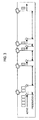
- The existing "Fast Dormancy function" can be expected to produce effects of suppressing consumption of the battery and radio resources of the mobile station UE by allowing the mobile station UE to transition to the "Preservation state." On the other hand, when the mobile station UE frequently transitions to the "Preservation state" and returns to an "Active state" as in the case where the mobile station UE frequently transmits and receives small data quantities of data such as regular data in applications as shown in Fig. 5, there is a problem of an increase in signal quantity attributed to the repetition of transition and return.
- When multiple applications are operated independently in the mobile station UE, in particular, an "RRC CONNECTION REQUEST" for returning to the "Active state" and the "SIGNALLING CONNECTION RELEASE INDICATION" for transitioning to the "Preservation state" are transmitted at various timings, so that there is a problem that the increase in signal quantity becomes more noticeable.
- The present invention has been made in view of the aforementioned problems. An objective of the present invention is to provide a mobile station capable of suppressing an increase in signal quantity attributed to repetition of transition to a "Preservation state" and return to an "Active state" when multiple applications are operated independently.
- A first feature of the present invention is summarized as a mobile station including: multiple application processing unit configured to perform processing for multiple applications, respectively; a management unit configured to manage a transmission timing for regular data not involving a user operation in each of the multiple applications; and a transmission unit configured to transmit a connection request signal to the radio access network when the mobile station transitions from a "Preservation state" to an "Active state." Here, the transmission unit is configured to adjust a transmission timing for the connection request signal based on the transmission timings for the regular data not involving the user operation in the multiple applications.
-
- [
Fig. 1] Fig. 1 is an overall configuration diagram of a mobile communication system according to a first embodiment of the present invention. - [
Fig. 2] Fig. 2 is a functional block diagram of a mobile station according to the first embodiment of the present invention. - [
Fig. 3] Fig. 3 is a view for explaining problems of a conventional mobile communication system. - A mobile communication system according to a first embodiment of the present invention will be described with reference to
Fig. 1 and Fig. 2 . - The mobile communication system of the embodiment may be an LTE (Long Term Evolution) mobile communication system, a WCDMA (Wideband CDMA) mobile communication system, or a mobile communication system of other radio access network architecture.
- While the following embodiment will describe an LTE mobile communication system as an example, the present invention is also applicable to other than the LTE mobile communication system. Here, as shown in
Fig. 1 , the mobile communication system of the embodiment includes a radio base station eNB and a mobile station UE. - As shown in
Fig. 2 , the mobile station UE of the embodiment includesapplication processing units 11#1 to 11#N, amanagement unit 12, atransmission unit 13, and areception unit 14. - The
application processing units 11#1 to 11#N are configured to perform processing formultiple applications # 1 to #N, respectively. - Here, the
application processing units 11#1 to 11#N are configured to perform the processing for themultiple applications # 1 to #N respectively and independently. - The
management unit 12 is configured to manage a transmission timing for regular data not involving a user operation in each of themultiple applications # 1 to #N. - Here, transmission and reception of the data not involving the user operation may be transmission and reception of regular data in an application such as a "Keep Alive signal, " for example.
- Meanwhile, in addition to the above-described occurrence timing, the
management unit 12 may be configured to further manage a timing for activating each of themultiple applications # 1 to #N, a timing when there becomes no more data to be transmitted in each of themultiple applications # 1 to #N, and a timing when data involving a user operation occurs in each of themultiple applications # 1 to #N. - Here, transmission and reception of the data involving the user operation may be of browsing data, for example.
- The
reception unit 14 is configured to receive various signals from a radio access network, namely, the radio base station eNB. Thetransmission unit 13 is configured to transmit various signals to the radio access network, namely, the radio base station eNB. - For example, the
transmission unit 13 is configured to transmit an "RRC CONNECTION REQUEST (a connection request signal)" to the radio access network (such as the radio base station eNB) when the mobile station UE transitions from a "Preservation state" to an "Active state." - Meanwhile, when a "Fast Dormancy function" is used by the mobile station UE, the transmission unit 23 may basically be configured to transmit a "SIGNALLING CONNECTION RELEASE INDICATION" to the radio access network (the radio base station eNB) in the case of detection that there is no more data to be transmitted.
- Here, the
transmission unit 13 may be configured to adjust a transmission timing for the "RRC CONNECTION REQUEST" based on the transmission timings for the regular data not involving the user operation in themultiple applications # 1 to #N. - For example, the
transmission unit 13 may be configured to transmit one "RRC CONNECTION REQUEST" at a predetermined timing within a predetermined period instead of transmitting the "RRC CONNECTION REQUEST" at all the transmission timings for the regular data not involving the user operation in themultiple applications # 1 to #N within the predetermined period. - The radio access network may be configured to notify of the predetermined period and the predetermined timing by way of broadcast information, a NAS (Non-Access Stratum) signal, and the like.
- Meanwhile, the
transmission unit 13 may be configured to adjust the transmission timing for the "SIGNALLING CONNECTION RELEASE INDICATION" based on the timing of detection that there is no more data to be transmitted in themultiple applications # 1 to #N. - For example, the
transmission unit 13 may be configured to transmit one "SIGNALLING CONNECTION RELEASE INDICATION" at a predetermined timing within a predetermined period instead of transmitting the "SIGNALLING CONNECTION RELEASE INDICATION" at all the timings of detection in themultiple applications # 1 to #N. - The radio access network (such as the radio base station eNB) may be configured to notify of the predetermined period and the predetermined timing by way of the broadcast information, a paging signal, the NAS signal, and the like.
- According to the invention of the embodiment, when the
multiple applications # 1 to #N are operated independently, it is possible to avoid a situation where the "RRC CONNECTION REQUEST" and the "SIGNALLING CONNECTION RELEASE INDICATION" are transmitted at transmission occasions of the "RRC CONNECTION REQUEST" and the "SIGNALLING CONNECTION RELEASE INDICATION" in themultiple applications # 1 to #N, and thus to suppress an increase in signal quantity attributed to repetition of the transition of the mobile station UE to the "Preservation state" and the return of the mobile station UE to the "Active state." - The features of the above-described embodiment may also be expressed as follows.
- A first feature of this embodiment is summarized as a mobile station UE including: multiple
application processing units 11#1 to 11#N configured to perform processing formultiple applications # 1 to #N, respectively; amanagement unit 12 configured to manage a transmission timing for regular data not involving a user operation in each of themultiple applications # 1 to #N; and atransmission unit 13 configured to transmit an "RRC CONNECTION REQUEST (a connection request signal)" to the radio access network (for example, the radio base station eNB) when the mobile station UE transitions from a "Preservation state" to an "Active state." Here, thetransmission unit 13 is configured to adjust a transmission timing for the "RRC CONNECTION REQUEST" based on the transmission timings for the regular data not involving the user operation in themultiple applications # 1 to #N. - In the first feature of this embodiment, the
transmission unit 13 is configured to send the radio access network (for example, the radio base station eNB) a "SIGNALLING CONNECTION RELEASE INDICATION (a release indication signal)" commanding release of a signalling connection in a case of detection that there is no more data to be transmitted, and thetransmission unit 13 is configured to adjust a transmission timing for the "SIGNALLING CONNECTION RELEASE INDICATION" based on timings of the detection in the multiple applications. - It should be noted that the foregoing operations of the mobile station UE and the radio base station eNB may be implemented by hardware, may be implemented by a software module executed by a processor, or may be implemented in combination of the two.
- The software module may be provided in a storage medium in any format, such as a RAM (Random Access Memory), a flash memory, a ROM (Read Only Memory), an EPROM (Erasable Programmable ROM), an EEPROM (Electronically Erasable and Programmable ROM), a register, a hard disk, a removable disk, or a CD-ROM.
- The storage medium is connected to a processor so that the processor can read and write information from and to the storage medium. Instead, the storage medium may be integrated in a processor. The storage medium and the processor may be provided inside an ASIC. Such an ASIC may be provided in the mobile station UE and the radio base station eNB. Otherwise, the storage medium and the processor may be provided as discrete components inside the mobile station UE and the radio base station eNB.
- Hereinabove, the present invention has been described in detail by use of the foregoing embodiments. However, it is apparent to those skilled in the art that the present invention should not be limited to the embodiments described in the specification. The present invention can be implemented as an altered or modified embodiment without departing from the spirit and scope of the present invention, which are determined by the description of the scope of claims. Therefore, the description of the specification is intended for illustrative explanation only and does not impose any limited interpretation on the present invention.
- Note that the entire content of Japanese Patent Application No.
2012-057393 (filed on March 14, 2012 - As described above, according to the present invention, it is possible to provide a mobile station capable of suppressing an increase in signal quantity attributed to repetition of transition to a "Preservation state" and return to an "Active state" when multiple applications are operated independently.
-
- UE
- mobile station
- eNB
- radio base station
- 11#1 to 11#N
- application processing unit
- 12
- management unit
- 13
- transmission unit
- 14
- reception unit
Claims (2)
- A mobile station comprising:a plurality of application processing unit configured to perform processing for a plurality of applications, respectively;a management unit configured to manage a transmission timing for regular data not involving a user operation in each of the plurality of applications; anda transmission unit configured to transmit a connection request signal to a radio access network when the mobile station transitions from a "Preservation state" to an "Active state," whereinthe transmission unit is configured to adjust a transmission timing for the connection request signal based on the transmission timings for the regular data not involving the user operation in the plurality of applications.
- The mobile station according to claim 1, wherein
the transmission unit is configured to send the radio access network a release indication signal commanding release of a signalling connection in a case of detection that there is no more data to be transmitted, and
the transmission unit is configured to adjust a transmission timing for the release indication signal based on timings of the detection in the plurality of applications.
Applications Claiming Priority (2)
| Application Number | Priority Date | Filing Date | Title |
|---|---|---|---|
| JP2012057393A JP5865740B2 (en) | 2012-03-14 | 2012-03-14 | Mobile station |
| PCT/JP2013/057069 WO2013137342A1 (en) | 2012-03-14 | 2013-03-13 | Mobile station |
Publications (2)
| Publication Number | Publication Date |
|---|---|
| EP2827655A1 true EP2827655A1 (en) | 2015-01-21 |
| EP2827655A4 EP2827655A4 (en) | 2015-10-28 |
Family
ID=49161247
Family Applications (1)
| Application Number | Title | Priority Date | Filing Date |
|---|---|---|---|
| EP13761409.5A Withdrawn EP2827655A4 (en) | 2012-03-14 | 2013-03-13 | MOBILE STATION |
Country Status (4)
| Country | Link |
|---|---|
| US (1) | US9462554B2 (en) |
| EP (1) | EP2827655A4 (en) |
| JP (1) | JP5865740B2 (en) |
| WO (1) | WO2013137342A1 (en) |
Families Citing this family (1)
| Publication number | Priority date | Publication date | Assignee | Title |
|---|---|---|---|---|
| JP6387717B2 (en) * | 2014-07-14 | 2018-09-12 | 富士通株式会社 | Terminal detection method, information processing apparatus, and information processing system |
Family Cites Families (11)
| Publication number | Priority date | Publication date | Assignee | Title |
|---|---|---|---|---|
| ES2558744T3 (en) | 2007-09-14 | 2016-02-08 | Blackberry Limited | System and method for the start time of discontinuous reception control |
| JP4493707B2 (en) * | 2008-08-07 | 2010-06-30 | 株式会社エヌ・ティ・ティ・ドコモ | Mobile communication method, mobile station and exchange |
| TWI383607B (en) | 2008-12-10 | 2013-01-21 | Inst Information Industry | Data scheduling module, method, and computer program product thereof for a wireless communication apparatus |
| US8060154B1 (en) * | 2009-03-26 | 2011-11-15 | Sprint Communications Company L.P. | Conserving power on a mobile device |
| MX2012005873A (en) * | 2009-11-23 | 2012-11-30 | Research In Motion Ltd | Method and apparatus for state/mode transitioning. |
| JP5053409B2 (en) * | 2010-04-15 | 2012-10-17 | 株式会社エヌ・ティ・ティ・ドコモ | Mobile communication system, control device, and control method |
| JP2011244280A (en) * | 2010-05-19 | 2011-12-01 | Fujitsu Toshiba Mobile Communications Ltd | Communication terminal |
| EP2659329A4 (en) * | 2010-12-27 | 2016-12-28 | Microsoft Technology Licensing Llc | Power management via coordination and selective operation of timer-related tasks |
| JP6008523B2 (en) * | 2012-03-14 | 2016-10-19 | 株式会社Nttドコモ | Mobile station and radio base station |
| JP6067978B2 (en) * | 2012-03-14 | 2017-01-25 | 株式会社Nttドコモ | Mobile station and radio base station |
| GB2514012B (en) * | 2012-10-09 | 2015-08-12 | Gos Networks Ltd | Method for the reduction of signalling traffic on mobile devices |
-
2012
- 2012-03-14 JP JP2012057393A patent/JP5865740B2/en not_active Expired - Fee Related
-
2013
- 2013-03-13 WO PCT/JP2013/057069 patent/WO2013137342A1/en not_active Ceased
- 2013-03-13 US US14/378,655 patent/US9462554B2/en not_active Expired - Fee Related
- 2013-03-13 EP EP13761409.5A patent/EP2827655A4/en not_active Withdrawn
Also Published As
| Publication number | Publication date |
|---|---|
| US20150024805A1 (en) | 2015-01-22 |
| WO2013137342A1 (en) | 2013-09-19 |
| US9462554B2 (en) | 2016-10-04 |
| EP2827655A4 (en) | 2015-10-28 |
| JP2013192075A (en) | 2013-09-26 |
| JP5865740B2 (en) | 2016-02-17 |
Similar Documents
| Publication | Publication Date | Title |
|---|---|---|
| US12075354B2 (en) | Wireless communication method and device | |
| US10952142B2 (en) | Energy-efficient paging in wireless networks | |
| EP3627905B1 (en) | Communication method, terminal device and network device | |
| US20140003312A1 (en) | Wake-up functionality for an lte enodeb | |
| EP3068178B1 (en) | System information acquisition method, device and system | |
| EP2723130A3 (en) | System and method for reducing paging in Utran/Geran/E-Utran networks when idle signaling reduction is active | |
| ES3029565T3 (en) | Information reporting method, receiving method, terminal device, and network device | |
| KR20160005726A (en) | Overload control and supervision for wireless devices | |
| EP2773155A1 (en) | Mobile communication method and radio base station | |
| US9332483B2 (en) | Mobile station and radio base station | |
| US9462554B2 (en) | Mobile station that adjusts transmission timing for signal | |
| US20150017974A1 (en) | Mobile station and radio base station | |
| KR20230113625A (en) | Reference signal configuration method, apparatus and terminal | |
| EP2838290B1 (en) | Mobile station |
Legal Events
| Date | Code | Title | Description |
|---|---|---|---|
| PUAI | Public reference made under article 153(3) epc to a published international application that has entered the european phase |
Free format text: ORIGINAL CODE: 0009012 |
|
| 17P | Request for examination filed |
Effective date: 20140917 |
|
| AK | Designated contracting states |
Kind code of ref document: A1 Designated state(s): AL AT BE BG CH CY CZ DE DK EE ES FI FR GB GR HR HU IE IS IT LI LT LU LV MC MK MT NL NO PL PT RO RS SE SI SK SM TR |
|
| AX | Request for extension of the european patent |
Extension state: BA ME |
|
| DAX | Request for extension of the european patent (deleted) | ||
| RA4 | Supplementary search report drawn up and despatched (corrected) |
Effective date: 20150924 |
|
| RIC1 | Information provided on ipc code assigned before grant |
Ipc: H04W 52/02 20090101AFI20150918BHEP Ipc: H04W 72/04 20090101ALI20150918BHEP Ipc: H04W 72/02 20090101ALI20150918BHEP Ipc: H04W 76/04 20090101ALN20150918BHEP |
|
| 17Q | First examination report despatched |
Effective date: 20170404 |
|
| STAA | Information on the status of an ep patent application or granted ep patent |
Free format text: STATUS: THE APPLICATION IS DEEMED TO BE WITHDRAWN |
|
| 18D | Application deemed to be withdrawn |
Effective date: 20190430 |