EP2824962A1 - Mobile communication method, wireless base station, and mobile station - Google Patents
Mobile communication method, wireless base station, and mobile station Download PDFInfo
- Publication number
- EP2824962A1 EP2824962A1 EP13743338.9A EP13743338A EP2824962A1 EP 2824962 A1 EP2824962 A1 EP 2824962A1 EP 13743338 A EP13743338 A EP 13743338A EP 2824962 A1 EP2824962 A1 EP 2824962A1
- Authority
- EP
- European Patent Office
- Prior art keywords
- measurement
- frequency
- inter
- mobile station
- cycle
- Prior art date
- Legal status (The legal status is an assumption and is not a legal conclusion. Google has not performed a legal analysis and makes no representation as to the accuracy of the status listed.)
- Withdrawn
Links
Images



Classifications
-
- H—ELECTRICITY
- H04—ELECTRIC COMMUNICATION TECHNIQUE
- H04W—WIRELESS COMMUNICATION NETWORKS
- H04W24/00—Supervisory, monitoring or testing arrangements
- H04W24/10—Scheduling measurement reports ; Arrangements for measurement reports
-
- H—ELECTRICITY
- H04—ELECTRIC COMMUNICATION TECHNIQUE
- H04W—WIRELESS COMMUNICATION NETWORKS
- H04W16/00—Network planning, e.g. coverage or traffic planning tools; Network deployment, e.g. resource partitioning or cells structures
- H04W16/24—Cell structures
- H04W16/32—Hierarchical cell structures
-
- H—ELECTRICITY
- H04—ELECTRIC COMMUNICATION TECHNIQUE
- H04W—WIRELESS COMMUNICATION NETWORKS
- H04W36/00—Hand-off or reselection arrangements
- H04W36/0005—Control or signalling for completing the hand-off
- H04W36/0083—Determination of parameters used for hand-off, e.g. generation or modification of neighbour cell lists
- H04W36/0085—Hand-off measurements
- H04W36/0088—Scheduling hand-off measurements
Definitions
- the present invention relates to a mobile communication method, a radio base station and a mobile station.
- LTE Long Term Evolution
- cells #11A and #11B which are each operated by a capacity band for improving the throughput in a hot spot, in a coverage area of a cell (e.g., a cell #11) operated by a coverage band supporting a wide area, as shown in Fig. 1 .
- a mobile station UE in "RRC_Connected state" in the cell #11 operated in a frequency f1 is expected to perform "Inter-Frequency Measurement" in the cells #11A and #11B disposed in the coverage area of the cell #11, in order to determine whether or not the cells #11A and #11B can be added as Scells in CA (Carrier Aggregation).
- the number of different frequencies that can be measured by a mobile station UE is specified as a maximum of three carriers (a maximum of four carriers in a TDD mode of LTE).
- macrocells When multiple cells (macrocells) are operated by coverage bands and also multiple cells (hot-spot cells) are operated by capacity bands, it is anticipated that continuous measurement of the hot-spot cells by the mobile station UE always takes place. In this case, macrocells are measured at long measurement intervals and the quality of handover between macrocells deteriorates.
- An objective of the present invention is to provide a mobile communication method, a radio base station and a mobile station, capable of setting different measurement cycles of a measurement process for respective measurement frequencies in current LTE.
- a first feature of the present invention is summarized as a mobile communication method including: a step A of a radio base station notifying a mobile station of a measurement cycle for inter-frequency measurement for each measurement frequency; and a step B of the mobile station performing a measurement process in a cell having a frequency different from that of a cell to which the mobile station is currently connected, based on the measurement frequency and the measurement cycle for inter-frequency measurement.
- a second feature of the present invention is summarized as a radio base station including: a transmitter unit configured to notify a mobile station of a measurement cycle for inter-frequency measurement for each measurement frequency.
- a third feature of the present invention is summarized as a mobile station including: a receiver unit configured to acquire a measurement cycle for inter-frequency measurement for each measurement frequency from a radio base station; and a measurement unit configured to perform a measurement process in a cell having a frequency different from that of a cell to which the mobile station is currently connected, based on the measurement frequency and the measurement cycle for inter-frequency measurement.
- the mobile communication system supports LTE-Advanced, and is configured to be able to perform "Inter-band CA" using a Pcell and Scells operated by carriers in different frequency bands.
- the mobile communication system may be configured to be able to perform "Inter-band CA" using a Pcell and Scells operated by carriers in the same frequency band.
- radio base stations eNB#1 to eNB#3 manages cells #11 to #33 and cells #11A to #33B.
- the cells #11 to #33 are cells (e.g., macrocells) operated by a coverage band supporting a wide area, for example, by a carrier of a frequency f1 (PCC: Primary Component Carrier).
- PCC Primary Component Carrier
- the cells #11A to #33B are cells (e.g., picocells or hot-spot cells) disposed within coverage areas of the cells #11 to #33 and operated by capacity bands for improving the throughput in hot spots, for example, by carriers of frequencies f2 and f3 (SCC: Secondary Component Carrier).
- SCC Secondary Component Carrier
- a mobile station UE when being in "RRC_Connected state" in the cell #11 operated in the frequency f1, a mobile station UE is configured to perform "Inter-Frequency Measurement" in the cells #11A and #11B disposed in the coverage area of the cell #11 according to an instruction from the radio base station eNB#1.
- the radio base station eNB includes a setting unit 11 and a transmitter unit 12.
- the setting unit 11 is configured to set a measurement cycle for "Inter-Frequency Measurement" to be notified to the mobile station UE.
- the setting unit 11 is configured to be able to set the measurement cycle for "Inter-Frequency Measurement" for each measurement frequency.
- the setting unit 11 may be configured to be able to set the measurement cycle for "Inter-Frequency Measurement” by setting "Gap Pattern Id” shown in Fig. 6 for “measGapConfig” in "MeasObjectEUTRA” in "Measurement Configuration”.
- the setting unit 11 may be configured to set the measurement cycle for "Inter-Frequency Measurement" for hot-spot cells for each (e.g., f2 or f3) of measurement frequencies operated in the hot-spot cells (e.g., the cells #11A and #11B) for the mobile station UE in a state where no Scell is set.
- the transmitter unit 12 is configured to transmit various signals to the mobile station UE.
- the transmitter unit 12 may be configured to transmit "RRC Reconfiguration" to the mobile station UE, "RRC Reconfiguration” including "Measurement Configuration” set by the setting unit 11.
- the transmitter unit 12 may be configured to notify the mobile station UE in the state where no Scell is set of the measurement cycle for "Inter-Frequency Measurement" for hot-spot cells for each (e.g., f2 or f3) of measurement frequencies operated in the hot-spot cells (e.g., the cells #11A and #11B).
- the transmitter unit 12 is configured to notify the mobile station UE of a common measurement cycle for "Inter-Frequency Measurement" as specified in existing LTE.
- the mobile station UE includes a receiver unit 21 and a measurement unit 22.
- the receiver unit 21 is configured to receive various signals transmitted by the radio base station eNB.
- the receiver unit 21 may be configured to receive "RRC Reconfiguration” including "Measurement Configuration” from the radio base station eNB.
- the receiver unit 21 may be configured to acquire the measurement cycle for "Inter-Frequency Measurement” from “measGapConfig" in "MeasObjectEUTRA” in "Measurement Configuration” received.
- the receiver unit 21 may be configured to acquire the measurement cycle for "Inter-Frequency Measurement" for hot-spot cells, from the radio base station eNB, for each (e.g., f2 or f3) of measurement frequencies operated in the hot-spot cells (e.g., the cells #11A and #11B).
- the receiver unit 21 may be configured to acquire a common measurement cycle for "Inter-Frequency Measurement" from the radio base station eNB as specified in existing LTE.
- the measurement unit 22 is configured to perform a measurement process based on the received "Measurement Configuration".
- the measurement unit 22 may be configured to perform a measurement process in the cells #11A and #11B having frequencies f2 and f3 different from that of the cell #11 to which the mobile station UE is currently connected, based on the measurement cycle for "Inter-Frequency Measurement" acquired by the receiver unit 21 for each measurement frequency specified by "MeasObjectEUTRA".
- the measurement unit 22 may be configured to perform a measurement process in the macrocell (e.g., the cell #11) to which the mobile station UE is currently connected, based on the common measurement cycle for "Inter-Frequency Measurement", and also to perform a measurement process in the hot-spot cell (e.g., the cell #11A or #11B) different from the macrocell (e.g., the cell #11) based on the measurement cycle for "Inter-Frequency Measurement" for the hot-spot cell.
- the macrocell e.g., the cell #11
- the cell #11A or #11B the cell #11A or #11B
- the measurement unit 22 may be configured to perform a measurement process in the hot-spot cell (e.g., the cell #11A or #11B) different from the macrocell (e.g., the cell #11) to which the mobile station UE is currently connected, based on the common measurement cycle for "Inter-Frequency Measurement".
- the hot-spot cell e.g., the cell #11A or #11B
- the macrocell e.g., the cell #11
- the invention according to this embodiment enables the measurement cycle for "Inter-Frequency Measurement” to be set for each measurement target, using "measGapConfig" in "MeasObjectEUTRA” in "Measurement Configuration”.
- an appropriate measurement cycle for "Inter-Frequency Measurement” can be acquired while avoiding waste of a battery of the mobile station UE by setting the measurement cycle for "Inter-Frequency Measurement” in the cells #11A and #11B to be longer than the measurement cycle of the measurement process in the cell #11 with which the mobile station UE is currently communicating.
- a mobile communication system according to Modified Example 1 of the present invention is described.
- the mobile communication system according to Modified Example 1 is described below by focusing on differences from the mobile communication system according to the first embodiment described above.
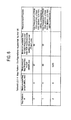
- a setting unit 11 in a radio base station eNB is configured to set a measurement cycle for "Inter-Frequency Measurement” for "measCycleScell-r10" set in "MeasObjectEUTRA” in "Measurement Configuration” as shown in Fig. 8 .
- the measurement cycle for "Inter-Frequency Measurement” in a cell set as Scell but not activated can be set for "measCycleScell-r10" described above.
- the mobile communication system according to this embodiment is extended to be able to set not only the measurement cycle for "Inter-Frequency Measurement” in the cell set as Scell but not activated for "measCycleScell-r10" described above but also the measurement cycle for "Inter-Frequency Measurement” in a cell not set as Scell.
- a receiver unit 21 in a mobile station UE is configured to acquire a measurement cycle (sf160/160 subframe to sf1280/1280 subframe) set for "measCycleScell-r10" set in "MeasObjectEUTRA” in "Measurement Configuration” as the measurement cycle for "Inter-Frequency Measurement”.
- the mobile communication system according to Modified Example 1 can achieve the same effects as those achieved by the mobile communication system according to the first embodiment described above without adding an information element to the format of "Measurement Configuration" specified in current LTE.
- a first feature of the embodiment is summarized as a mobile communication method including: a step A of a radio base station eNB notifying a mobile station UE of a measurement cycle for "Inter-Frequency Measurement" for each measurement frequency; and a step B of the mobile station UE performing a measurement process in the cells #11A and #11B having frequencies f2 and f3 different from that of the cell #11 to which the mobile station UE is currently connected, based on the measurement frequency and the measurement cycle for "Inter-Frequency Measurement".
- the radio base station eNB in the step A, notifies the mobile station UE in a state where no Scell is set of the measurement cycle for "Inter-Frequency Measurement" for each measurement frequency.
- the radio base station eNB may notify the mobile station eNB of the measurement cycle for "Inter-Frequency Measurement" for hot-spot cells.
- the mobile station UE may perform a measurement process in a macrocell to which the mobile station UE is currently connected, based on a common measurement cycle for "Inter-Frequency Measurement", and also perform a measurement process in each hot-spot cell different from the macrocell based on the measurement cycle for "Inter-Frequency Measurement" for hot-spot cells.
- the radio base station eNB may notify by setting the measurement cycle for "Inter-Frequency Measurement” in "measGapConfig" in "MeasObjectEUTRA (information element which specifies measurement target)" in "Measurement Configuration (measurement setting signal)".
- the mobile station UE may perform a measurement process in the cells #11A and #11B having frequencies f2 and f3 different from that of the cell #11 to which the mobile station UE is currently connected, using "measCycleScell-r10 (measurement cycle for secondary cell)" set in "MeasObjectEUTRA" in "Measurement Configuration”.
- a second feature of the embodiment is summarized as a radio base station eNB including: a transmitter unit 12 configured to notify a mobile station UE of a measurement cycle for "Inter-Frequency Measurement" for each measurement frequency.
- the transmitter unit 12 may be configured to notify the mobile station UE in a state where no Scell is set of the measurement cycle for "Inter-Frequency Measurement" for each measurement frequency.
- the transmitter unit 12 may be configured to notify the mobile station UE in a state where no Scell is set of the measurement cycle for "Inter-Frequency Measurement" for hot-spot cells, for each of measurement frequencies operated in the hot-spot cells.
- the transmitter unit 14 may be configured to notify the measurement cycle for "Inter-Frequency Measurement" for each measurement frequency by transmitting "Measurement Configuration” including "MeasOBjectEUTRA” including "measGapConfig" set the measurement cycle for "Inter-Frequency Measurement”.
- a third feature of the embodiment is summarized as a mobile station including: a receiver unit 21 configured to acquire a measurement cycle for "Inter-Frequency Measurement" for each measurement frequency from a radio base station eNB; and a measurement unit 22 configured to perform a measurement process in the cells #11A and #11B having frequencies f2 and f3 different from that of the cell #11 to which the mobile station UE is currently connected.
- the receiver unit 21 may be configured to acquire the measurement cycle for "Inter-Frequency Measurement" for each measurement frequency from the radio base station eNB.
- the receiver unit 21 may be configured to acquire the measurement cycle for "Inter-Frequency Measurement" for hot-spot cells, for each of measurement frequencies operated in the hot-spot cells from the radio base station eNB, and the measurement unit 22 may be configured to perform a measurement process in a macrocell to which the mobile station UE is currently connected, based on a common measurement cycle for "Inter-Frequency Measurement", and also perform a measurement process in a hot-spot cell different from the macrocell based on the measurement cycle for "Inter-Frequency Measurement" for hot-spot cells.
- the receiver unit 21 may be configured to acquire the measurement cycle for "Inter-Frequency Measurement” from "measGapConfig" in "MeasObjectEUTRA" in "Measurement Configuration”.
- the receiver unit 21 may be configured to acquire a measurement cycle set in "measCycleScell-r10" set in "MeasObjectEUTRA" in "Measurement Configration", as the measurement cycle for "Inter-Frequency Measurement”.
- the foregoing operations of the mobile station UE and the radio base station eNB may be implemented by hardware, may be implemented by a software module executed by a processor, or may be implemented in combination of the two.
- the software module may be provided in a storage medium in any format, such as a RAM (Random Access Memory), a flash memory, a ROM (Read Only Memory), an EPROM (Erasable Programmable ROM), an EEPROM (Electronically Erasable and Programmable ROM), a register, a hard disk, a removable disk, or CD-ROM.
- RAM Random Access Memory
- flash memory a ROM (Read Only Memory)
- EPROM Erasable Programmable ROM
- EEPROM Electrically Erasable and Programmable ROM
- register a hard disk, a removable disk, or CD-ROM.
- the storage medium is connected to a processor so that the processor can read and write information from and to the storage medium.
- the storage medium may be integrated in a processor.
- the storage medium and the processor may be provided inside an ASIC. Such an ASIC may be provided in the mobile station UE and the radio base station eNB. Otherwise, the storage medium and the processor may be provided as discrete components inside the mobile station UE and the radio base station eNB.
- the present invention can provide a mobile communication method, a radio base station and a mobile station which are capable of setting different measurement cycles of a measurement process for respective measurement frequencies in current LTE.
Landscapes
- Engineering & Computer Science (AREA)
- Computer Networks & Wireless Communication (AREA)
- Signal Processing (AREA)
- Mobile Radio Communication Systems (AREA)
Abstract
Description
- The present invention relates to a mobile communication method, a radio base station and a mobile station.
- In LTE (Long Term Evolution), it has been considered to dispose cells (e.g.,
cells # 11A and #11B), which are each operated by a capacity band for improving the throughput in a hot spot, in a coverage area of a cell (e.g., a cell #11) operated by a coverage band supporting a wide area, as shown inFig. 1 . - In such an environment, as shown in
Fig. 2 , a mobile station UE in "RRC_Connected state" in thecell # 11 operated in a frequency f1 is expected to perform "Inter-Frequency Measurement" in thecells # 11A and #11B disposed in the coverage area of thecell # 11, in order to determine whether or not thecells # 11A and #11B can be added as Scells in CA (Carrier Aggregation). -
- Non-patent document 1: 3GPP contributed article R2-115745
- Non-patent document 2: 3GPP TS36.133
- However, current LTE has a problem that a mobile station UE needs to perform "Inter-Frequency Measurement" in the
cells # 11A and #11B always while being located in the coverage area of thecell # 11, even though the coverage areas of thecells # 11A and #11B are generally much smaller than that of thecell # 11. - Also, the performance in "Inter-Frequency Measurement" of current LTE is specified such that a measurement cycle becomes longer proportional to the number of measurement frequencies.
- Furthermore, in a FDD mode of LTE, the number of different frequencies that can be measured by a mobile station UE is specified as a maximum of three carriers (a maximum of four carriers in a TDD mode of LTE).
- When multiple cells (macrocells) are operated by coverage bands and also multiple cells (hot-spot cells) are operated by capacity bands, it is anticipated that continuous measurement of the hot-spot cells by the mobile station UE always takes place. In this case, macrocells are measured at long measurement intervals and the quality of handover between macrocells deteriorates.
- Moreover, there is also a concern that the number of different frequencies that can be measured by a mobile station UE, which is specified as a maximum of three carriers in the FDD mode of LTE (a maximum of four carriers in the TDD mode of LTE) becomes insufficient in future operations.
- The present invention has been made in view of the above-mentioned problem. An objective of the present invention is to provide a mobile communication method, a radio base station and a mobile station, capable of setting different measurement cycles of a measurement process for respective measurement frequencies in current LTE.
- A first feature of the present invention is summarized as a mobile communication method including: a step A of a radio base station notifying a mobile station of a measurement cycle for inter-frequency measurement for each measurement frequency; and a step B of the mobile station performing a measurement process in a cell having a frequency different from that of a cell to which the mobile station is currently connected, based on the measurement frequency and the measurement cycle for inter-frequency measurement.
- A second feature of the present invention is summarized as a radio base station including: a transmitter unit configured to notify a mobile station of a measurement cycle for inter-frequency measurement for each measurement frequency.
- A third feature of the present invention is summarized as a mobile station including: a receiver unit configured to acquire a measurement cycle for inter-frequency measurement for each measurement frequency from a radio base station; and a measurement unit configured to perform a measurement process in a cell having a frequency different from that of a cell to which the mobile station is currently connected, based on the measurement frequency and the measurement cycle for inter-frequency measurement.
-
- [
Fig. 1] Fig. 1 is an overall configuration diagram of a mobile communication system according to a first embodiment of the present invention. - [
Fig. 2] Fig. 2 is a diagram for explaining measurement processing performed by a mobile station in the mobile communication system according to the first embodiment of the present invention. - [
Fig. 3] Fig. 3 is a functional block diagram of a radio base station according to the first embodiment of the present invention. - [
Fig. 4] Fig. 4 is a diagram showing an example of a format of "MeaaObjectEUTRA" transmitted by the radio base station according to the first embodiment of the present invention. - [
Fig. 5] Fig. 5 is a diagram showing an example of a format of "MeasGapConfig" included in "MeaaObjectEUTRA" transmitted by the radio base station according to the first embodiment of the present invention. - [
Fig. 6] Fig. 6 is a diagram showing an example of values that can be set as "MeasGapConfig" included in "MeaaObjectEUTRA" transmitted by the radio base station according to the first embodiment of the present invention. - [
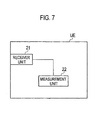
Fig. 7] Fig. 7 is a functional block diagram of a mobile station according to the first embodiment of the present invention. - [
Fig. 8] Fig. 8 is a diagram showing an example of "MeaaObjectEUTRA" transmitted by a radio base station according to Modified Example 1 of the present invention. - With reference to
Figs. 1 to 7 , a mobile communication system according to a first embodiment of the present invention is described. - As shown in
Fig. 1 , the mobile communication system according to this embodiment supports LTE-Advanced, and is configured to be able to perform "Inter-band CA" using a Pcell and Scells operated by carriers in different frequency bands. - Note that the mobile communication system according to this embodiment may be configured to be able to perform "Inter-band CA" using a Pcell and Scells operated by carriers in the same frequency band.
- As shown in
Fig. 1 , in the mobile communication system according to this embodiment, radio base stations eNB#1 to eNB#3 managescells # 11 to #33 andcells # 11A to #33B. - Here, the
cells # 11 to #33 are cells (e.g., macrocells) operated by a coverage band supporting a wide area, for example, by a carrier of a frequency f1 (PCC: Primary Component Carrier). - On the other hand, the
cells # 11A to #33B are cells (e.g., picocells or hot-spot cells) disposed within coverage areas of thecells # 11 to #33 and operated by capacity bands for improving the throughput in hot spots, for example, by carriers of frequencies f2 and f3 (SCC: Secondary Component Carrier). - For example, as shown in
Fig. 2 , when being in "RRC_Connected state" in thecell # 11 operated in the frequency f1, a mobile station UE is configured to perform "Inter-Frequency Measurement" in thecells # 11A and #11B disposed in the coverage area of thecell # 11 according to an instruction from the radio base station eNB#1. - As shown in
Fig. 3 , the radio base station eNB according to this embodiment includes asetting unit 11 and atransmitter unit 12. - The
setting unit 11 is configured to set a measurement cycle for "Inter-Frequency Measurement" to be notified to the mobile station UE. - Here, the
setting unit 11 is configured to be able to set the measurement cycle for "Inter-Frequency Measurement" for each measurement frequency. - For example, as shown in
Figs. 4 and5 , thesetting unit 11 may be configured to be able to set the measurement cycle for "Inter-Frequency Measurement" by setting "Gap Pattern Id" shown inFig. 6 for "measGapConfig" in "MeasObjectEUTRA" in "Measurement Configuration". - Also, the
setting unit 11 may be configured to set the measurement cycle for "Inter-Frequency Measurement" for hot-spot cells for each (e.g., f2 or f3) of measurement frequencies operated in the hot-spot cells (e.g., thecells # 11A and #11B) for the mobile station UE in a state where no Scell is set. - The
transmitter unit 12 is configured to transmit various signals to the mobile station UE. For example, thetransmitter unit 12 may be configured to transmit "RRC Reconfiguration" to the mobile station UE, "RRC Reconfiguration" including "Measurement Configuration" set by thesetting unit 11. - Also, the
transmitter unit 12 may be configured to notify the mobile station UE in the state where no Scell is set of the measurement cycle for "Inter-Frequency Measurement" for hot-spot cells for each (e.g., f2 or f3) of measurement frequencies operated in the hot-spot cells (e.g., thecells # 11A and #11B). - Note that the
transmitter unit 12 is configured to notify the mobile station UE of a common measurement cycle for "Inter-Frequency Measurement" as specified in existing LTE. - As shown in
Fig. 7 , the mobile station UE according to this embodiment includes areceiver unit 21 and ameasurement unit 22. - The
receiver unit 21 is configured to receive various signals transmitted by the radio base station eNB. - For example, the
receiver unit 21 may be configured to receive "RRC Reconfiguration" including "Measurement Configuration" from the radio base station eNB. - Here, the
receiver unit 21 may be configured to acquire the measurement cycle for "Inter-Frequency Measurement" from "measGapConfig" in "MeasObjectEUTRA" in "Measurement Configuration" received. - When no Scell is set for the mobile station UE, for example, the
receiver unit 21 may be configured to acquire the measurement cycle for "Inter-Frequency Measurement" for hot-spot cells, from the radio base station eNB, for each (e.g., f2 or f3) of measurement frequencies operated in the hot-spot cells (e.g., thecells # 11A and #11B). - Also, the
receiver unit 21 may be configured to acquire a common measurement cycle for "Inter-Frequency Measurement" from the radio base station eNB as specified in existing LTE. - The
measurement unit 22 is configured to perform a measurement process based on the received "Measurement Configuration". - For example, the
measurement unit 22 may be configured to perform a measurement process in thecells # 11A and #11B having frequencies f2 and f3 different from that of thecell # 11 to which the mobile station UE is currently connected, based on the measurement cycle for "Inter-Frequency Measurement" acquired by thereceiver unit 21 for each measurement frequency specified by "MeasObjectEUTRA". - Here, the
measurement unit 22 may be configured to perform a measurement process in the macrocell (e.g., the cell #11) to which the mobile station UE is currently connected, based on the common measurement cycle for "Inter-Frequency Measurement", and also to perform a measurement process in the hot-spot cell (e.g., thecell # 11A or #11B) different from the macrocell (e.g., the cell #11) based on the measurement cycle for "Inter-Frequency Measurement" for the hot-spot cell. - Note that, when the
receiver unit 21 acquires no measurement cycle for "Inter-Frequency Measurement" for hot-spot cells, themeasurement unit 22 may be configured to perform a measurement process in the hot-spot cell (e.g., thecell # 11A or #11B) different from the macrocell (e.g., the cell #11) to which the mobile station UE is currently connected, based on the common measurement cycle for "Inter-Frequency Measurement". - The invention according to this embodiment enables the measurement cycle for "Inter-Frequency Measurement" to be set for each measurement target, using "measGapConfig" in "MeasObjectEUTRA" in "Measurement Configuration". Thus, in an environment as shown in
Fig. 1 , an appropriate measurement cycle for "Inter-Frequency Measurement" can be acquired while avoiding waste of a battery of the mobile station UE by setting the measurement cycle for "Inter-Frequency Measurement" in thecells # 11A and #11B to be longer than the measurement cycle of the measurement process in thecell # 11 with which the mobile station UE is currently communicating. - With reference to
Fig. 8 , a mobile communication system according to Modified Example 1 of the present invention is described. The mobile communication system according to Modified Example 1 is described below by focusing on differences from the mobile communication system according to the first embodiment described above. - In the mobile communication system according to Modified Example 1, a
setting unit 11 in a radio base station eNB is configured to set a measurement cycle for "Inter-Frequency Measurement" for "measCycleScell-r10" set in "MeasObjectEUTRA" in "Measurement Configuration" as shown inFig. 8 . - Note that, in current LTE, the measurement cycle for "Inter-Frequency Measurement" in a cell set as Scell but not activated can be set for "measCycleScell-r10" described above.
- On the other hand, as shown in
Fig. 8 , the mobile communication system according to this embodiment is extended to be able to set not only the measurement cycle for "Inter-Frequency Measurement" in the cell set as Scell but not activated for "measCycleScell-r10" described above but also the measurement cycle for "Inter-Frequency Measurement" in a cell not set as Scell. - Meanwhile, in the mobile communication system according to Modified Example 1, a
receiver unit 21 in a mobile station UE is configured to acquire a measurement cycle (sf160/160 subframe to sf1280/1280 subframe) set for "measCycleScell-r10" set in "MeasObjectEUTRA" in "Measurement Configuration" as the measurement cycle for "Inter-Frequency Measurement". - The mobile communication system according to Modified Example 1 can achieve the same effects as those achieved by the mobile communication system according to the first embodiment described above without adding an information element to the format of "Measurement Configuration" specified in current LTE.
- The above-described features of the embodiment may also be expressed as follows.
- A first feature of the embodiment is summarized as a mobile communication method including: a step A of a radio base station eNB notifying a mobile station UE of a measurement cycle for "Inter-Frequency Measurement" for each measurement frequency; and a step B of the mobile station UE performing a measurement process in the
cells # 11A and #11B having frequencies f2 and f3 different from that of thecell # 11 to which the mobile station UE is currently connected, based on the measurement frequency and the measurement cycle for "Inter-Frequency Measurement". - In the first feature of the embodiment, in the step A, the radio base station eNB notifies the mobile station UE in a state where no Scell is set of the measurement cycle for "Inter-Frequency Measurement" for each measurement frequency.
- In the first feature of the embodiment, in the step A, when no Scell (secondary cell) is set for the mobile station UE, the radio base station eNB may notify the mobile station eNB of the measurement cycle for "Inter-Frequency Measurement" for hot-spot cells. And in the step B, the mobile station UE may perform a measurement process in a macrocell to which the mobile station UE is currently connected, based on a common measurement cycle for "Inter-Frequency Measurement", and also perform a measurement process in each hot-spot cell different from the macrocell based on the measurement cycle for "Inter-Frequency Measurement" for hot-spot cells.
- In the first feature of the embodiment, in the step A, the radio base station eNB may notify by setting the measurement cycle for "Inter-Frequency Measurement" in "measGapConfig" in "MeasObjectEUTRA (information element which specifies measurement target)" in "Measurement Configuration (measurement setting signal)".
- In the first feature of the embodiment, in the step B, the mobile station UE may perform a measurement process in the
cells # 11A and #11B having frequencies f2 and f3 different from that of thecell # 11 to which the mobile station UE is currently connected, using "measCycleScell-r10 (measurement cycle for secondary cell)" set in "MeasObjectEUTRA" in "Measurement Configuration". - A second feature of the embodiment is summarized as a radio base station eNB including: a
transmitter unit 12 configured to notify a mobile station UE of a measurement cycle for "Inter-Frequency Measurement" for each measurement frequency. - In the second feature of the embodiment, the
transmitter unit 12 may be configured to notify the mobile station UE in a state where no Scell is set of the measurement cycle for "Inter-Frequency Measurement" for each measurement frequency. - In the second feature of the embodiment, the
transmitter unit 12 may be configured to notify the mobile station UE in a state where no Scell is set of the measurement cycle for "Inter-Frequency Measurement" for hot-spot cells, for each of measurement frequencies operated in the hot-spot cells. - In the second feature of the embodiment, the transmitter unit 14 may be configured to notify the measurement cycle for "Inter-Frequency Measurement" for each measurement frequency by transmitting "Measurement Configuration" including "MeasOBjectEUTRA" including "measGapConfig" set the measurement cycle for "Inter-Frequency Measurement".
- A third feature of the embodiment is summarized as a mobile station including: a
receiver unit 21 configured to acquire a measurement cycle for "Inter-Frequency Measurement" for each measurement frequency from a radio base station eNB; and ameasurement unit 22 configured to perform a measurement process in thecells # 11A and #11B having frequencies f2 and f3 different from that of thecell # 11 to which the mobile station UE is currently connected. - In the third feature of the embodiment, when no Scell is set for the mobile station UE, the
receiver unit 21 may be configured to acquire the measurement cycle for "Inter-Frequency Measurement" for each measurement frequency from the radio base station eNB. - In the third feature of the embodiment, when no Scell is set for the mobile station UE, the
receiver unit 21 may be configured to acquire the measurement cycle for "Inter-Frequency Measurement" for hot-spot cells, for each of measurement frequencies operated in the hot-spot cells from the radio base station eNB, and themeasurement unit 22 may be configured to perform a measurement process in a macrocell to which the mobile station UE is currently connected, based on a common measurement cycle for "Inter-Frequency Measurement", and also perform a measurement process in a hot-spot cell different from the macrocell based on the measurement cycle for "Inter-Frequency Measurement" for hot-spot cells. - In the third feature of the embodiment, the
receiver unit 21 may be configured to acquire the measurement cycle for "Inter-Frequency Measurement" from "measGapConfig" in "MeasObjectEUTRA" in "Measurement Configuration". - In the third feature of the embodiment, the
receiver unit 21 may be configured to acquire a measurement cycle set in "measCycleScell-r10" set in "MeasObjectEUTRA" in "Measurement Configration", as the measurement cycle for "Inter-Frequency Measurement". - It should be noted that the foregoing operations of the mobile station UE and the radio base station eNB may be implemented by hardware, may be implemented by a software module executed by a processor, or may be implemented in combination of the two.
- The software module may be provided in a storage medium in any format, such as a RAM (Random Access Memory), a flash memory, a ROM (Read Only Memory), an EPROM (Erasable Programmable ROM), an EEPROM (Electronically Erasable and Programmable ROM), a register, a hard disk, a removable disk, or CD-ROM.
- The storage medium is connected to a processor so that the processor can read and write information from and to the storage medium. Instead, the storage medium may be integrated in a processor. The storage medium and the processor may be provided inside an ASIC. Such an ASIC may be provided in the mobile station UE and the radio base station eNB. Otherwise, the storage medium and the processor may be provided as discrete components inside the mobile station UE and the radio base station eNB.
- Hereinabove, the present invention has been described in detail by use of the foregoing embodiments. However, it is apparent to those skilled in the art that the present invention should not be limited to the embodiments described in the specification. The present invention can be implemented as an altered or modified embodiment without departing from the spirit and scope of the present invention, which are determined by the description of the scope of claims. Therefore, the description of the specification is intended for illustrative explanation only and does not impose any limited interpretation on the present invention.
- Note that the entire content of Japanese Patent Application No.
2012-017366 (filed on January 30, 2012 - As described above, the present invention can provide a mobile communication method, a radio base station and a mobile station which are capable of setting different measurement cycles of a measurement process for respective measurement frequencies in current LTE.
-
- UE
- mobile station
- eNB
- radio base station
- 11
- setting unit
- 12
- transmitter unit
- 21
- receiver unit
- 22
- measurement unit
Claims (14)
- A mobile communication method comprising:a step A of a radio base station notifying a mobile station of a measurement cycle for inter-frequency measurement for each measurement frequency; anda step B of the mobile station performing a measurement process in a cell having a frequency different from that of a cell to which the mobile station is currently connected, based on the measurement frequency and the measurement cycle for inter-frequency measurement.
- The mobile communication method according to claim 1, wherein
in the step A, the radio base station notifies the mobile station in a state where no secondary cell is set of the measurement cycle for inter-frequency measurement for each measurement frequency. - The mobile communication method according to claim 1, wherein
in the step A, the radio base station notifies the mobile station in a state where no secondary cell is set of the measurement cycle for inter-frequency measurement for hot-spot cells, for each of measurement frequencies operated in the hot-spot cells, and
in the step B, the mobile station performs a measurement process in a macrocell to which the mobile station is currently connected, based on a common measurement cycle for inter-frequency measurement, and also performs a measurement process in each hot-spot cell different from the macrocell based on the measurement cycle for inter-frequency measurement for hot-spot cells. - The mobile communication method according to claim 1, wherein
in the step A, the radio base station notifies by setting the measurement cycle for inter-frequency measurement in an information element which specifies a measurement target in a measurement setting signal. - The mobile communication method according to claim 1, wherein
in the step B, the mobile station performs the measurement process using a measurement cycle for a secondary cell set in an information element which specifies a measurement target in a measurement setting signal. - A radio base station comprising:a transmitter unit configured to notify a mobile station of a measurement cycle for inter-frequency measurement for each measurement frequency.
- The radio base station according to claim 6, wherein
the transmitter unit notifies the mobile station in a state where no secondary cell is set of the measurement cycle for inter-frequency measurement for each measurement frequency. - The radio base station according to claim 6, wherein
the transmitter unit notifies the mobile station in a state where no secondary cell is set of the measurement cycle for inter-frequency measurement for hot-spot cells, for each of measurement frequencies operated in the hot-spot cells. - The radio base station according to claim 6, wherein
the transmitter unit notifies the measurement cycle for inter-frequency measurement for each measurement frequency by transmitting a measurement setting signal in which the measurement cycle set for inter-frequency measurement is set in an information element specifying a measurement target. - A mobile station comprising:a receiver unit configured to acquire a measurement cycle for inter-frequency measurement for each measurement frequency from a radio base station; anda measurement unit configured to perform a measurement process in a cell having a frequency different from that of a cell to which the mobile station is currently connected, based on the measurement frequency and the measurement cycle for inter-frequency measurement.
- The mobile station according to claim 10, wherein
when no secondary cell is set for the mobile station, the receiver unit acquires the measurement cycle for inter-frequency measurement for each measurement frequency from the radio base station. - The mobile station according to claim 10, wherein
when no secondary cell is set for the mobile station, the receiver unit acquires the measurement cycle for inter-frequency measurement for hot-spot cells, for each of measurement frequencies operated in the hot-spot cells from the radio base station, and
the measurement unit performs a measurement process in a macrocell to which the mobile station is currently connected, based on a common measurement cycle for inter-frequency measurement, and also performs a measurement process in a hot-spot cell different from the macrocell based on the measurement cycle for inter-frequency measurement for hot-spot cells. - The mobile station according to claim 10, wherein
the receiver unit acquires the measurement cycle for inter-frequency measurement from an information element which specifies a measurement target in a measurement setting signal. - The mobile station according to claim 10, wherein
the receiver unit acquires a measurement cycle for a secondary cell set in an information element which specifies a measurement target in a measurement setting signal, as the measurement cycle for inter-frequency measurement.
Applications Claiming Priority (2)
| Application Number | Priority Date | Filing Date | Title |
|---|---|---|---|
| JP2012017366A JP6001865B2 (en) | 2012-01-30 | 2012-01-30 | Mobile communication method and mobile station |
| PCT/JP2013/052042 WO2013115249A1 (en) | 2012-01-30 | 2013-01-30 | Mobile communication method, wireless base station, and mobile station |
Publications (2)
| Publication Number | Publication Date |
|---|---|
| EP2824962A1 true EP2824962A1 (en) | 2015-01-14 |
| EP2824962A4 EP2824962A4 (en) | 2015-11-04 |
Family
ID=48905281
Family Applications (1)
| Application Number | Title | Priority Date | Filing Date |
|---|---|---|---|
| EP13743338.9A Withdrawn EP2824962A4 (en) | 2012-01-30 | 2013-01-30 | MOBILE COMMUNICATION METHOD, WIRELESS BASE STATION, AND MOBILE STATION |
Country Status (4)
| Country | Link |
|---|---|
| US (1) | US9445295B2 (en) |
| EP (1) | EP2824962A4 (en) |
| JP (1) | JP6001865B2 (en) |
| WO (1) | WO2013115249A1 (en) |
Families Citing this family (4)
| Publication number | Priority date | Publication date | Assignee | Title |
|---|---|---|---|---|
| US9445291B2 (en) * | 2013-08-16 | 2016-09-13 | Telefonaktiebolaget Lm Ericsson (Publ) | Method and apparatus for inter-frequency measurements in a communication network |
| US10581583B2 (en) * | 2013-12-23 | 2020-03-03 | Apple Inc. | VoLTE call establishment in TD and FDD LTE networks |
| CN109587741B (en) * | 2017-09-28 | 2020-08-28 | 中国移动通信有限公司研究院 | Indication method for measuring frequency point, frequency point measurement method, base station and terminal |
| WO2021056459A1 (en) * | 2019-09-27 | 2021-04-01 | Nec Corporation | Methods, devices, and medium for communication |
Family Cites Families (9)
| Publication number | Priority date | Publication date | Assignee | Title |
|---|---|---|---|---|
| JP3326036B2 (en) * | 1995-01-19 | 2002-09-17 | 株式会社エヌ・ティ・ティ・ドコモ | Method of measuring reception level in mobile communication system and mobile station |
| JP5205093B2 (en) * | 2008-03-21 | 2013-06-05 | 株式会社エヌ・ティ・ティ・ドコモ | User apparatus and base station apparatus |
| US8891445B2 (en) * | 2008-06-24 | 2014-11-18 | Ntt Docomo, Inc. | Base station apparatus and communication control method |
| CN101925087B (en) | 2009-06-11 | 2016-05-25 | 中兴通讯股份有限公司 | A kind of measurement report method of closed user group cell |
| JP4778091B2 (en) * | 2010-01-08 | 2011-09-21 | 株式会社エヌ・ティ・ティ・ドコモ | Mobile communication system |
| CN102835147A (en) | 2010-04-12 | 2012-12-19 | 京瓷株式会社 | Radio communication system, radio base station and method for reconfiguring communication parameters |
| EP2702796B1 (en) * | 2011-04-27 | 2018-12-12 | Nokia Solutions and Networks Oy | Small cell mobility enhancement |
| JP5474003B2 (en) * | 2011-07-28 | 2014-04-16 | 株式会社Nttドコモ | Mobile communication method, mobile station and radio base station |
| GB2498721B (en) * | 2012-01-24 | 2014-10-15 | Broadcom Corp | Apparatus,method and computer program for wireless communication |
-
2012
- 2012-01-30 JP JP2012017366A patent/JP6001865B2/en active Active
-
2013
- 2013-01-30 EP EP13743338.9A patent/EP2824962A4/en not_active Withdrawn
- 2013-01-30 US US14/375,338 patent/US9445295B2/en active Active
- 2013-01-30 WO PCT/JP2013/052042 patent/WO2013115249A1/en not_active Ceased
Also Published As
| Publication number | Publication date |
|---|---|
| WO2013115249A1 (en) | 2013-08-08 |
| JP6001865B2 (en) | 2016-10-05 |
| JP2013157825A (en) | 2013-08-15 |
| US20150029883A1 (en) | 2015-01-29 |
| EP2824962A4 (en) | 2015-11-04 |
| US9445295B2 (en) | 2016-09-13 |
Similar Documents
| Publication | Publication Date | Title |
|---|---|---|
| US9635590B2 (en) | Mobile station and mobile communication method | |
| EP2571322A1 (en) | Radio base station and mobile communication method | |
| US20200015136A1 (en) | User equipment autonomous serving cell selection in new radio | |
| EP3354085B1 (en) | Providing measurement reports | |
| JP4778091B2 (en) | Mobile communication system | |
| EP2830379A1 (en) | Wireless base station and mobile station | |
| JP6214957B2 (en) | Mobile station and radio base station | |
| US9445295B2 (en) | Mobile communication method, radio base station and mobile station | |
| EP2811800B1 (en) | Mobile communication method, wireless base station, and mobile station | |
| JP5860729B2 (en) | Wireless base station | |
| US9668174B2 (en) | Mobile communication method | |
| EP2849472A1 (en) | Mobile communication method, wireless base station, and mobile station | |
| CA2886799C (en) | Radio base station and mobile station | |
| KR20140136052A (en) | Methods, devices and computer program products for improvements in interference cancellation scenarios | |
| EP2822315A1 (en) | Mobile communication system | |
| US20150245301A1 (en) | User equipment, a network node and methods for device discovery in a device-to-device (d2d) communication in a wireless telecommunications network | |
| WO2013115263A1 (en) | Radio base station and mobile stations | |
| US9451520B2 (en) | Mobile communication system | |
| US20150257082A1 (en) | Mobile communication system, radio base station, mobility management node, and mobile station | |
| US20130023264A1 (en) | Mobile communication method, mobile station, and radio base station | |
| JP5816563B2 (en) | Mobile communication method and radio base station |
Legal Events
| Date | Code | Title | Description |
|---|---|---|---|
| PUAI | Public reference made under article 153(3) epc to a published international application that has entered the european phase |
Free format text: ORIGINAL CODE: 0009012 |
|
| 17P | Request for examination filed |
Effective date: 20140812 |
|
| AK | Designated contracting states |
Kind code of ref document: A1 Designated state(s): AL AT BE BG CH CY CZ DE DK EE ES FI FR GB GR HR HU IE IS IT LI LT LU LV MC MK MT NL NO PL PT RO RS SE SI SK SM TR |
|
| AX | Request for extension of the european patent |
Extension state: BA ME |
|
| DAX | Request for extension of the european patent (deleted) | ||
| RA4 | Supplementary search report drawn up and despatched (corrected) |
Effective date: 20151006 |
|
| RIC1 | Information provided on ipc code assigned before grant |
Ipc: H04W 24/10 20090101AFI20150930BHEP Ipc: H04W 72/04 20090101ALI20150930BHEP Ipc: H04W 16/32 20090101ALI20150930BHEP |
|
| 17Q | First examination report despatched |
Effective date: 20180712 |
|
| STAA | Information on the status of an ep patent application or granted ep patent |
Free format text: STATUS: THE APPLICATION HAS BEEN WITHDRAWN |
|
| 18W | Application withdrawn |
Effective date: 20181102 |