EP2824108B1 - Tetracyclic anthraquinone derivatives - Google Patents
Tetracyclic anthraquinone derivatives Download PDFInfo
- Publication number
- EP2824108B1 EP2824108B1 EP13847102.4A EP13847102A EP2824108B1 EP 2824108 B1 EP2824108 B1 EP 2824108B1 EP 13847102 A EP13847102 A EP 13847102A EP 2824108 B1 EP2824108 B1 EP 2824108B1
- Authority
- EP
- European Patent Office
- Prior art keywords
- ethoxy
- ethyl
- propyl
- oxo
- pyridin
- Prior art date
- Legal status (The legal status is an assumption and is not a legal conclusion. Google has not performed a legal analysis and makes no representation as to the accuracy of the status listed.)
- Not-in-force
Links
- 0 *C(C(*)OC(C1)O[C@@](C[C@@](Cc2c(c(C(c3c4c(*)ccc3)=O)c3C4=C=C)O)(C(COC(*C*C(*)=O)=O)=O)O)c2c3O)C1[n]1cccc1 Chemical compound *C(C(*)OC(C1)O[C@@](C[C@@](Cc2c(c(C(c3c4c(*)ccc3)=O)c3C4=C=C)O)(C(COC(*C*C(*)=O)=O)=O)O)c2c3O)C1[n]1cccc1 0.000 description 4
- KMQLUFMUJJSNJJ-UHFFFAOYSA-N CNc1ccc(CN(C)C)cc1 Chemical compound CNc1ccc(CN(C)C)cc1 KMQLUFMUJJSNJJ-UHFFFAOYSA-N 0.000 description 3
- GBEWIXXGYLARMX-UHFFFAOYSA-N CN(C)CCCN1CCN(C)CC1 Chemical compound CN(C)CCCN1CCN(C)CC1 GBEWIXXGYLARMX-UHFFFAOYSA-N 0.000 description 2
- QHTUMQYGZQYEOZ-UHFFFAOYSA-N CN1CCN(CCO)CC1 Chemical compound CN1CCN(CCO)CC1 QHTUMQYGZQYEOZ-UHFFFAOYSA-N 0.000 description 2
- HVOYZOQVDYHUPF-UHFFFAOYSA-N CNCCN(C)C Chemical compound CNCCN(C)C HVOYZOQVDYHUPF-UHFFFAOYSA-N 0.000 description 2
- OELUZVAXTQPFAY-UHFFFAOYSA-N CNc1ccc(CN2CCOCC2)cc1 Chemical compound CNc1ccc(CN2CCOCC2)cc1 OELUZVAXTQPFAY-UHFFFAOYSA-N 0.000 description 2
- QRVOQQSDQSTZLF-UHFFFAOYSA-N CC(CCOCCCO)NC Chemical compound CC(CCOCCCO)NC QRVOQQSDQSTZLF-UHFFFAOYSA-N 0.000 description 1
- TXIOGJHPPVXTOY-UHFFFAOYSA-N CCN1CCN(C)CC1 Chemical compound CCN1CCN(C)CC1 TXIOGJHPPVXTOY-UHFFFAOYSA-N 0.000 description 1
- HABRSPLQGZJULD-UHFFFAOYSA-N CN(CCN=C)CC[O]=C Chemical compound CN(CCN=C)CC[O]=C HABRSPLQGZJULD-UHFFFAOYSA-N 0.000 description 1
- PBKBNZLWSVHLAG-UHFFFAOYSA-N CNCCCN1CCCC1 Chemical compound CNCCCN1CCCC1 PBKBNZLWSVHLAG-UHFFFAOYSA-N 0.000 description 1
- HUGARFACUNSTSF-UHFFFAOYSA-N CNCCCN1CCN(C)CC1 Chemical compound CNCCCN1CCN(C)CC1 HUGARFACUNSTSF-UHFFFAOYSA-N 0.000 description 1
- UKYSWWLKULEJFA-UHFFFAOYSA-N CNCCCN1CCOCC1 Chemical compound CNCCCN1CCOCC1 UKYSWWLKULEJFA-UHFFFAOYSA-N 0.000 description 1
- IPKWSCDDLHLVMC-UHFFFAOYSA-N CNCCOCCO Chemical compound CNCCOCCO IPKWSCDDLHLVMC-UHFFFAOYSA-N 0.000 description 1
- WKRUEUNOCVALAM-UHFFFAOYSA-N CNCCc1cccnc1 Chemical compound CNCCc1cccnc1 WKRUEUNOCVALAM-UHFFFAOYSA-N 0.000 description 1
- QZBUGNURVLWJPK-UHFFFAOYSA-N CNCCc1ccncc1 Chemical compound CNCCc1ccncc1 QZBUGNURVLWJPK-UHFFFAOYSA-N 0.000 description 1
- OOTKJPZEEVPWCR-UHFFFAOYSA-N CNCc1ccccn1 Chemical compound CNCc1ccccn1 OOTKJPZEEVPWCR-UHFFFAOYSA-N 0.000 description 1
- MCSAQVGDZLPTBS-UHFFFAOYSA-N CNCc1cccnc1 Chemical compound CNCc1cccnc1 MCSAQVGDZLPTBS-UHFFFAOYSA-N 0.000 description 1
- DNBWGFKLIBQQSL-UHFFFAOYSA-N CNCc1ccncc1 Chemical compound CNCc1ccncc1 DNBWGFKLIBQQSL-UHFFFAOYSA-N 0.000 description 1
- CKOMXBHMKXXTNW-UHFFFAOYSA-N CNc1c2nc[nH]c2ncn1 Chemical compound CNc1c2nc[nH]c2ncn1 CKOMXBHMKXXTNW-UHFFFAOYSA-N 0.000 description 1
- VGKOARVVEXZTPU-UHFFFAOYSA-N CNc1cnccn1 Chemical compound CNc1cnccn1 VGKOARVVEXZTPU-UHFFFAOYSA-N 0.000 description 1
- BQNXHDSGGRTFNX-UHFFFAOYSA-N CNc1ncccn1 Chemical compound CNc1ncccn1 BQNXHDSGGRTFNX-UHFFFAOYSA-N 0.000 description 1
Images

Classifications
-
- C—CHEMISTRY; METALLURGY
- C07—ORGANIC CHEMISTRY
- C07H—SUGARS; DERIVATIVES THEREOF; NUCLEOSIDES; NUCLEOTIDES; NUCLEIC ACIDS
- C07H19/00—Compounds containing a hetero ring sharing one ring hetero atom with a saccharide radical; Nucleosides; Mononucleotides; Anhydro-derivatives thereof
- C07H19/02—Compounds containing a hetero ring sharing one ring hetero atom with a saccharide radical; Nucleosides; Mononucleotides; Anhydro-derivatives thereof sharing nitrogen
- C07H19/04—Heterocyclic radicals containing only nitrogen atoms as ring hetero atom
- C07H19/044—Pyrrole radicals
-
- A—HUMAN NECESSITIES
- A61—MEDICAL OR VETERINARY SCIENCE; HYGIENE
- A61P—SPECIFIC THERAPEUTIC ACTIVITY OF CHEMICAL COMPOUNDS OR MEDICINAL PREPARATIONS
- A61P35/00—Antineoplastic agents
-
- A—HUMAN NECESSITIES
- A61—MEDICAL OR VETERINARY SCIENCE; HYGIENE
- A61P—SPECIFIC THERAPEUTIC ACTIVITY OF CHEMICAL COMPOUNDS OR MEDICINAL PREPARATIONS
- A61P35/00—Antineoplastic agents
- A61P35/02—Antineoplastic agents specific for leukemia
-
- A—HUMAN NECESSITIES
- A61—MEDICAL OR VETERINARY SCIENCE; HYGIENE
- A61P—SPECIFIC THERAPEUTIC ACTIVITY OF CHEMICAL COMPOUNDS OR MEDICINAL PREPARATIONS
- A61P43/00—Drugs for specific purposes, not provided for in groups A61P1/00-A61P41/00
-
- C—CHEMISTRY; METALLURGY
- C07—ORGANIC CHEMISTRY
- C07H—SUGARS; DERIVATIVES THEREOF; NUCLEOSIDES; NUCLEOTIDES; NUCLEIC ACIDS
- C07H1/00—Processes for the preparation of sugar derivatives
Definitions
- the present application relates to the field of organic compounds and medicinal chemistry.
- the present application relates to tetracyclic anthraquinone derivatives, preparation processes and applications thereof.
- Tetracyclic anthraquinone antibiotics in particular doxorubicin and daunorubicin, are widely used anticancer drugs.
- Doxorubicin has significant curative effects on lots of solid tumors including liver cancer, gastric cancer, breast cancer, lung cancer, ovary cancer and various leukemias.
- Daunorubicin is one of the most effective drugs for treating leukemia.
- side effects such as severe myelosuppression, cardiac toxicity, adverse responses in digestive tracts and the like, their clinical applications are somewhat restricted.
- lots of derivatives of tetracyclic anthraquinones have already been separated from the nature or artificially synthesized.
- JORG B. ENGEL ET AL "Targeted Therapy of Breast and Gynecological Cancers with Cytotoxic Analogues of Peptide Hormones", MOLECULAR PHARMACEUTICS, vol. 4, no. 5, 1 October 2007 (2007-10-01 ), pages 652-658 , is a review describing various cytotoxic hybrid molecules consisting of a cytotoxic radical and a peptide hormone analogue as a carrier.
- CN 101 555 264 A describes various tetracyclic anthraquinone antibiotic derivatives.
- WO 2009/099741 describes antibody-drug conjugate compounds of the Formula: Ab-(L-D) p where one or more nemorubicin metabolite or analog drug moieties (D) are covalently attached by a linker (L) to an antibody (Ab) which binds to one or more tumor-associated antigens or cell-surface receptors.
- a drug moiety reagent having a structure: wherein Y is N-Z 6 or O; and one of z 1 , Z 2 , Z 3 , Z 4 , Z 5 or Z6 comprises a reactive functional group selected from maleimide, thiol, amino, alkyl bromide, alkyl iodide, alkyl thiol, alkyl hydroxyl, alkyl amino, hydroxyl, carboxyl, and NHS ester.
- One aspect of the present application relates to a compound represented by formula (I) and a pharmaceutically acceptable salt thereof, wherein R 1 , R 2 , R 3 , R 4 , R 5 , W and n are as defined in claim 1.
- Yet another aspect of the present application relates to a compound selected from the group consisting of: wherein W is O, R 1 is OCH 3 , R 4 is CH 3 , R 5 is OH, n and NR 2 R 3 are as shown in the following table: No.
- Still another aspect of the present application relates to a process for preparing a compound represented by formula (I), comprising: reacting a compound represented by formula (II) with a compound represented by formula (III) in the presence of a condensation agent to obtain the compound represented by formula (I), wherein:
- Yet another aspect of the present application relates to a pharmaceutical composition
- a pharmaceutical composition comprising a compound represented by formula (I) or a pharmaceutically acceptable salt thereof, and a pharmaceutically acceptable carrier.
- Still another aspect of the present application relates to a formulation comprising a compound represented by formula (I) or a pharmaceutically acceptable salt thereof, and a pharmaceutically acceptable carrier.
- Described herein is a method for treating and/or preventing tumor and/or cancer, comprising administering to a subject in need thereof a therapeutically effective amount of a compound represented by formula (I) or a pharmaceutically acceptable salt thereof, or administering a therapeutically effective amount of a pharmaceutical composition comprising a compound represented by formula (I) or a pharmaceutically acceptable salt and a pharmaceutically acceptable carrier, or administering a therapeutically effective amount of a formulation comprising a compound represented by formula (I) or a pharmaceutically acceptable salt and a pharmaceutically acceptable carrier.
- the compound and a salt thereof according to the present application possess good anticancer and/or antitumor activities, and good water solubility and stability, as well as good tolerance in animal bodies. Therefore, they are prone to being developed as clinical drugs.
- C 7 -C 12 alkyl describes an alkyl group, as defined below, having a total of 7 to 12 carbon atoms
- C 4 -C 12 cyclohydrocarbylalkyl describes a cyclohydrocarbylalkyl group, as defined below, having a total of 4 to 12 carbon atoms.
- the total number of carbon atoms in the shorthand notation does not include the carbons that may exist in the substituents of the groups described.
- alkyl refers to a straight or branched hydrocarbon chain group consisting solely of carbon and hydrogen, containing no unsaturated bond, having from one to twelve carbon atoms, preferably one to eight or one to six carbon atoms, and which is attached to the rest of the molecule by a single bond, e . g ., methyl, ethyl, n -propyl, 1-methylethyl ( iso -propyl), n -butyl, n -pentyl, 1,1-dimethylethyl ( tert -butyl), 3-methylhexyl, 2-methylhexyl, and the like.
- Alkyl group may have one to twelve carbon atoms (whenever it appears in the present application, a numerical range such as “one to twelve” refers to each integer in the given number range; e.g. "one to twelve carbon atoms” means that the alkyl group may consist of one carbon atom, two carbon atoms, three carbon atoms, etc. , up to and including twelve carbon atoms, although the present definition also covers the occurrence of term "alkyl” where no numerical range is designated).
- Alkyl group may also be a medium sized alkyl having one to ten carbon atoms.
- Alkyl group may also be a lower alkyl having one to five carbon atoms.
- Alkyl group of compounds of the present application may be designated as "C 1-4 alkyl” or similar designations.
- C 1-4 alkyl indicates that there are one to four carbon atoms in the alkyl chain, i.e. the alkyl chain is selected from the group consisting of methyl, ethyl, propyl, isopropyl, n -butyl, iso -butyl, sec -butyl, or t -butyl.
- Alkyl group may be optionally substituted, i.e. substituted or unsubstituted.
- the substituted group(s) is(are) individually and independently selected from the group consisting of cyclohydrocarbyl, aryl, heteroaryl, heteroalicyclyl, hydroxy, alkoxy, aryloxy, mercapto, allkylthio, arylthio, cyano, halo, carbonyl, thiocarbonyl, O-carbamyl, N-carbamyl, O-thiocarbamyl, N-thiocarbamyl, C-amido, N-amido, S-sulfinamido, N-sulfinamido, C-carboxyl, O-carboxyl, isocyanato, thiocyano, isothiocyanato, nitro, silyl, trihalomethanesulfonyl, -NR'R" or amino including mono- and bi-substi
- Typical hydrocarbyl groups include, but are not limited to, methyl, ethyl, propyl, isopropyl, butyl, isobutyl, t -butyl, pentyl, hexyl, ethenyl, propenyl, buenyl, cyclopropyl, cyclobutyl, cyclopentyl, cyclohexyl, and the like.
- substituent is described as being “optionally substituted"
- that substituent may be substituted with one of the above substituents.
- C 1-4 alkyl refers to an alkyl group as defined above containing one to four carbon atoms. C 1-4 alkyl group may be optionally substituted as defined for alkyl group.
- C 1-6 alkyl refers to an alkyl group as defined above containing one to six carbon atoms. C 1-6 alkyl group may be optionally substituted as defined for alkyl group.
- C 1-12 alkyl refers to an alkyl group as defined above containing one to twelve carbon atoms. C 1-12 alkyl group may be optionally substituted as defined for alkyl group.
- C 2-6 alkyl refers to an alkyl group as defined above containing two to six carbon atoms. C 2-6 alkyl group may be optionally substituted as defined for alkyl group.
- C 3-6 alkyl refers to an alkyl as defined above containing three to six carbon atoms. C 3-6 alkyl group may be optionally substituted as defined for alkyl group.
- C 3-12 alkyl refers to an alkyl as defined above containing three to twelve carbon atoms. C 3-12 alkyl group may be optionally substituted as defined for alkyl group.
- C 6-12 alkyl refers to an alkyl as defined above containing six to twelve carbon atoms. C 6-12 alkyl group may be optionally substituted as defined for alkyl group.
- C 7-12 alkyl refers to an alkyl as defined above containing seven to twelve carbon atoms. C 7-12 alkyl group may be optionally substituted as defined for alkyl group.
- the alkyl group is C 1-12 alkyl.
- the alkyl group is C 1-8 alkyl.
- the alkyl group is C 1-6 alkyl.
- the alkyl group is C 1-4 alkyl.
- Alkoxy refers to the formula -OR, wherein R is an alkyl group defined as above, e.g. methoxy, ethoxy, n -propoxy, 1-methyl ethoxy (isopropoxy), n -butoxy, isobutoxy, sec -butoxy, t -butoxy, amoxy, t -amoxy, and the like.
- the alkoxy group is C 1-12 alkoxy.
- the alkoxy group is C 1-8 alkoxy.
- the alkoxy group is C 1-6 alkoxy.
- the alkoxy group is C 1-4 alkoxy.
- Alkylene refers to a straight or branched divalent hydrocarbon chain group consisting solely of carbon and hydrogen and having from one to eight carbon atoms, which is linked with the other moiety of the molecule and a residual group, e.g. methylene, ethylene, propylene, n -butylene. Alkylene chain can be linked with the other moiety of the molecule and the residual group via one carbon atom in the chain or any two carbon atoms in the chain.
- the alkylene group is C 1-12 alkylene.
- the alkylene group is C 1-8 alkylene.
- the alkylene group is C 1-6 alkylene.
- the alkylene group is C 1-4 alkylene.
- Alkyleneoxy refers to the formula -OR, wherein R is an alkylene group defined as above, e.g. methyleneoxy, ethyleneoxy, n -propyleneoxy, isopropyleneoxy, n -butyleneoxy, isobutyleneoxy, sec -butyleneoxy, t -butyleneoxy, amyleneoxy, t -amyleneoxy, and the like.
- the alkyleneoxy group is O(C 1-12 )alkylene.
- the alkyleneoxy group is O(C 1-8 )alkylene.
- the alkyleneoxy group is O(C 1-6 )alkylene.
- the alkyleneoxy group is O(C 1-4 )alkylene.
- Aryl refers to a carbocycle (full carbon) or two or more fused rings (rings sharing with two adjacent carbon atoms), having completely delocalized ⁇ electron system.
- aryl group include, but are not limited to, fluorenyl, phenyl and naphthyl.
- the aryl group may have, for example, five to twelve carbon atoms.
- the aryl group of the present application may be substituted or unsubstituted.
- hydrogen atom(s) is(are) substituted with one or more substituents independently selected from the group consisting of alkyl, cyclohydrocarbyl, aryl, heteroaryl, heteroalicyclyl, hydroxy, protected hydroxy, alkoxy, aryloxy, mercapto, alkylthio, arylthio, cyano, halo, carbonyl, thiocarbonyl, O-carbamyl, N-carbamyl, O-thiocarbamyl, N-thiocarbamyl, C-amido, N-amido, S-sulfinamido, N-sulfinamido, C-carboxyl, protected C-carboxyl, O-carboxyl, isocyanato, thiocyano, isothiocyanato, nitro, silyl, trihalomethanesulfonyl, -NR'R" (R' and R" are alkyl groups defined herein
- the aryl group is C 6 -C 18 aryl.
- the aryl group is C 6 -C 12 aryl.
- the aryl group is C 6 -C 10 aryl.
- Heteroaryl aromatic heterocyclyl
- the heteroaryl may be monocyclic, bicyclic, tricyclic or tetracyclic ring system, which may comprise fused or bridged ring system.
- nitrogen, carbon or sulphur atom in the heteroaryl group may be optionally oxidized, and the nitrogen atom may be optionally quaternized.
- the examples include, but are not limited to, azepinyl, acridinyl, benzimidazolyl, benzothiazolyl, benzoindolyl, benzodioxolanyl, benzofuranyl, benzoxazolyl, benzothiazolyl, benzothiadiazolyl, benzo[ b ][1,4]dioxepanyl, 1,4-benzodioxanyl, benzonaphthofuranyl, benzodioxolanyl, benzodioxadienyl, benzopyranyl, benzopyronyl, benzofuranyl, benzofuranonyl, benzothienyl, benzotriazolyl, benzo[4,6]imidazo[1,2-a]pyridyl, carbazolyl, cinnolinyl, dibenzofuranyl, dibenzothienyl, furanyl, furanonyl, iso
- heteroaryl is meant to include the heteroaryl groups which may be optionally substituted with one or more substituents independently selected from the group consisting of alkyl, cyclohydrocarbyl, aryl, heteroaryl, heteroalicyclyl, hydroxy, protected hydroxy, alkoxy, aryloxy, mercapto, alkylthio, arylthio, cyano, halo, carbonyl, thiocarbonyl, O-carbamyl, N-carbamyl, O-thiocarbamyl, N-thiocarbamyl, C-amido, N-amido, S-sulfinamido, N-sulfinamido, C-carboxyl, protected C-carboxyl, O-carboxyl, isocyanato, thiocyano, isothiocyanato, nitro, silyl, trihalomethanesulfonyl, -
- the heteroaryl group is C 5-18 heteroaryl.
- the heteroaryl group is C 5-12 heteroaryl.
- the heteroaryl group is C 5-10 heteroaryl.
- heterocyclyl refers to a stable three- to twelve-membered non-aromatic ring group which consists of carbon atoms and from one to five heteroatoms selected from the group consisting of nitrogen, oxygen and sulphur.
- heteroyclyl groups include, but are not limited to, dioxolanyl, decahydroisoquinolyl, imidazolinyl, imidazolidinyl, isothiazolidinyl, isoxazolidinyl, morpholinyl, octahydroindolyl, octahydroisoindolyl, 2-oxopiperazinyl, 2-oxopiperidinyl, 2-oxopyrrolidinyl, oxazolidinyl, piperidyl, piperazinyl, 4-piperidonyl, pyrrolidinyl, pyrazolidinyl, thiazolidinyl, tetrahydrofuryl, trithianyl, tetrahydropyranyl, thiomorpholinyl, thiamorpholinyl, 1-oxo-thiomorpholinyl and 1,1-dioxo-thiomorpholinyl.
- heterocyclyl is meant to include the heterocyclyl groups as defined above, which may be optionally substituted with one or more substituents selected from the group consisting of cyclohydrocarbyl, aryl, heteroaryl, heteroalicyclyl, hydroxy, alkoxy, aryloxy, mercapto, alkylthio, arylthio, cyano, halo, carbonyl, thiocarbonyl, O-carbamyl, N-carbamyl, O-thiocarbamyl, N-thiocarbamyl, C-amido, N-amido, S-sulfinamido, N-sulfinamido, C-carboxyl, O-carboxyl, isocyanato, thiocyanato, isothiocyanato, nitro, silyl, trihalomethanesulfonyl, -NR'R" (R' and R"
- the heterocyclyl group is C 3-18 heterocyclyl.
- the heterocyclyl group is C 3-12 heterocyclyl.
- the heterocyclyl group is C 3-10 heterocyclyl.
- Optional or “optionally” means that the subsequently described circumstances may or may not occur, and that the specification includes instances where said event or circumstance occurs and instances in which it does not.
- optionally substituted aryl means that the aryl group may or may not be substituted and that the specification includes the substituted aryl group and the aryl group which is not substituted.
- “Pharmaceutically acceptable carriers” include without limitation to any adjuvant, carrier, excipient, glidant, sweetening agent, diluent, preservative, dye/colorant, flavor enhancer, surfactant, wetting agent, dispersing agent, suspending agent, stabilizer, isosmotic agent, solvent, or emulsifier, etc , which have been approved by the United States Food and Drug Administration as being acceptable for use in humans or animals and have no side effects for constituting a pharmaceutical composition.
- “Pharmaceutically acceptable salts” include both “pharmaceutically acceptable acid addition salts” and “pharmaceutically acceptable base addition salts”.
- “Pharmaceutically acceptable acid addition salt” refers to those salts which retain the biological effectiveness and properties of free bases, which are biologically or otherwise desirable, and which are formed with inorganic acids such as, but not limited to hydrochloric acid, hydrobromic acid, sulfuric acid, nitric acid, phosphoric acid and the like; and organic acids such as, but not limited to, acetic acid, 2,2-dichloroacetic acid, adipic acid, alginic acid, ascorbic acid, aspartic acid, benzenesulfonic acid, benzoic acid, 4-acetamidobenzoic acid, camphanic acid, camphor-10-sulfonic acid, capric acid, caproic acid, caprylic acid, carbonic acid, cinnamic acid, citric acid, cyclamic acid, dodecylsulfuric acid, ethane-1,2-disulfonic acid, ethanesulfonic acid, 2-hydroxyethanesulfonic acid, formic
- “Pharmaceutically acceptable base addition salt” refers to those salts which retain the biological effectiveness and properties of the free acids, which are biologically or otherwise desirable. These salts are prepared from addition of an inorganic base or an organic base into the free acid. Salts derived from inorganic bases include, but are not limited to, sodium, potassium, lithium, ammonium, calcium, magnesium, iron, zinc, copper, manganese, aluminum slats, and the like. Preferred inorganic salts are the ammonium, sodium, potassium, calcium, and magnesium salts.
- Salts derived from organic bases include, but are not limited to, slats of primary, secondary and tertiary amines, substituted amines including naturally occurring substituted amines, cyclic amines and basic ion exchange resins, such as ammonia, isopropylamine, trimethylamine, diethylamine, triethylamine, tripropylamine, diethanolamine, ethanolamine, deanol, 2-dimethylaminoethanol, 2-diethylaminethanol, dicyclohexylamine, lysine, arginine, histidine, caffeine, procaine, hydrabamine, choline, betaine, benzylamine, phenylethylenediamine, ethylenediamine, glucosamine, methylglucosamine, theobromine, triethanolamine, trometamol, purine, piperazine, piperidine, N -ethyl piperidine, polyamine resin and the like.
- “Pharmaceutical composition” refers to a formulation formed with a compound of the invention and a medium generally acceptable in the art for the delivery of the biologically active compound to a mammal e . g . humans.
- a medium includes all pharmaceutically acceptable carriers, diluents or excipients.
- “Therapeutically effective amount” refers to an amount of a compound of the invention which, when administered to a mammal, preferably a human, is sufficient to effect treatment (as defined below) of the tumor and/or cancer in the mammal, preferably a human.
- the amount of a compound of the invention which constitutes a “therapeutically effective amount” will vary depending on the compound, the condition and its severity, and the age of the mammal to be treated, but can be determined routinely by one of ordinary skill in the art having regard to his own knowledge and to this disclosure.
- Treating covers the treatment of relevant disease or condition in a mammal, preferably a human, having the relevant disease or disorder, and includes:
- the administration in vivo can be carried out by means of a single administration, a continuous administration or an intermittent administration (such as the administration is carried out by divided dose at appropriate intervals).
- the method for determining the most effective administration mode and dose would have been well-known for one of ordinary skill in the art, and vary depending on the formulation to be used in the treatment, the object of the treatment, the targeted cell to be treated and the subject to be treated.
- a single or a multiple administration can be carried out, and the level of dose and the mode can be selected by an attending doctor.
- the present application relates to a compound represented by formula (I) and a pharmaceutically acceptable salt thereof, wherein R 1 , R 2 , R 3 , R 4 , R 5 , W and n are as defined in claim 1.
- R 1 in the compound represented by formula (I) is selected from the group consisting of H and OCH 3 .
- R 4 in the compound represented by formula (I) is CH 3 .
- the present application relates to compounds selected from the group consisting of: wherein W is O, R 1 is OCH 3 , R 4 is CH 3 , R 5 is OH, n and NR 2 R 3 are as shown in the following table: No.
- the present application relates to a process for preparing a compound represented by formula (I), comprising: reacting a compound represented by formula (II) with a compound represented by formula (III) in the presence of a condensation agent to obtain the compound represented by formula (I), wherein:
- the process for preparing a compound represented by formula (I) further comprises adding an activator.
- activators that can be used in the process for preparing a compound represented by formula (I) according to the present application include, but are not limited to, N-hydroxysuccinimide (HOSu), 1-hydroxy-7-azobenzotriazole (HOAt), 1-hydroxybenzotriazole (HOBt), N-hydroxyphthalimide (NHPI), N-hydroxy-1,8-naphthalimide (NHNI), pentafluorophenol (PFPOH), 2-(7-azobenzotriazole)-N,N,N',N'-tetramethyluronium hexafluorophosphate (HATU), benzotriazole-N,N,N',N'-tetramethyluronium hexafluorophosphate (HBTU), 6-chlorobenzotriazole-1,1,3,3-tetramethyluronium hexafluorophosphate (HCTU), O-(7-azabenzotriazole-1-yl)-di(tetrahydropyr
- condensation agents that can be used in the process for preparing a compound represented by formula (I) according to the present application include, but are not limited to, dicyclohexylcarbodiimide (DCC), diisopropylcarbodiimide (DIC), 1-(3-dimethylaminopropyl)-3-ethylcarbodiimide (EDCI), 2-(7-azobenzotriazole)-N,N,N',N'-tetramethyluronium hexafluorophosphate (HATU), benzotriazol-N,N,N',N'-tetramethyluronium hexafluorophosphate (HBTU), 6-chlorobenzotriazol-1,1,3,3-tetramethyluronium hexafluorophosphate (HCTU), O-(7-azabenzotriazol-1-yl)-di(tetrahydropyrrolyl)carbenium hexafluophosphate (HAPy
- the process for preparing a compound represented by formula (I) further comprises adding a catalyst.
- Exemplary examples of catalysts that can be used in the process for preparing a compound represented by formula (I) according to the present application include, but are not limited to, 4-dimethylaminopyridine, 4-pyrrolidinylpyridine and a mixture thereof.
- nitrogen-protecting groups that can be used in the process for preparing a compound represented by formula (I) according to the present application include, but are not limited to, Fmoc (fluorenylmethoxycarbony), Boc ( t -butyloxycarboryl), CBZ (carbobenzoxy), Tr (trityl) or Alloc (allyloxycarbonyl), Teoc (trimethylsilylethoxycarbonyl), methoxycarbonyl, ethoxycarbonyl, Pht (phthaloyl), Tos (tosyl), Ns ( o / p -nitrobenzenesulfonyl), Tfa (trifluoroacetyl), pivaloyl, benzoyl, Trt (trityl), Dmb (2,4-dimethoxybenzyl), PMB ( p -methoxybenzyl), and Bn (benzyl).
- Fmoc fluorenylmethoxycarbony
- Boc t
- deprotection reactants that can be used in the process for preparing a compound represented by formula (I) according to the present application include, but are not limited to, hydrogen gas, NH 3 , aminoethanol, dimethylamine, diethylamine, piperidine, piperazine, DBU, hydrochloric acid, phosphoric acid, acetic acid, formic acid, trifluoroacetic acid, methanesulfonic acid, benzenesulfonic acid, p -toluenesulfonic acid and a mixture thereof.
- the compound represented by formula (III) in the process for preparing a compound represented by formula (I) is obtained by a reaction of a compound represented by formula (IV) with HNR 7 R 8 , wherein:
- the process for preparing a compound represented by formula (III) further comprises adding an alkaline compound.
- alkaline compounds that can be used in the process for preparing a compound represented by formula (III) according to the present application include, but are not limited to, triethylamine, pyridine, diisopropylethylamine, trimethylamine, N-methylpyrrolidine, N-methylpiperidine, N-methylmorpholine, N-ethylpyrrolidine, N-ethylpiperidine, N-ethylmorpholine and a mixture thereof.
- the present application relates to a pharmaceutical composition
- a pharmaceutical composition comprising a compound represented by formula (I) or a pharmaceutically acceptable salt thereof, and a pharmaceutically acceptable carrier.
- the present application relates to a formulation comprising a compound represented by formula (I) or a pharmaceutically acceptable salt thereof, and a pharmaceutically acceptable carrier.
- the formulation comprising a compound represented by formula (I) or a pharmaceutically acceptable salt thereof and a pharmaceutically acceptable carrier is a formulation for injection.
- Exemplary examples that can be used in the formulation according to the present application include, but are not limited to, a conventional powder injection, a freeze-dried powder injection, a hydro-injection, an emulsion, a solution and a suspension.
- Also described herein is a method for treating and/or preventing tumor and/or cancer, comprising administering to a subject in need thereof a therapeutically effective amount of a compound represented by formula (I) or a pharmaceutically acceptable salt thereof, or administering a therapeutically effective amount of a pharmaceutical composition comprising a compound represented by formula (I) or a pharmaceutically acceptable salt and a pharmaceutically acceptable carrier, or administering a therapeutically effective amount of a formulation comprising a compound represented by formula (I) or a pharmaceutically acceptable salt and a pharmaceutically acceptable carrier.
- Exemplary examples of tumors and/or cancers that can be treated and/or prevented by the method according to the present application include, but are not limited to, liver cancer, gastric cancer, breast cancer, lung cancer, intestine cancer, ovarian cancer, pancreatic cancer, head and neck cancer, cervical cancer, renal cancer, melanoma, prostatic cancer, brain glioma, various leukemia, lymphoma, and multiple bone marrow cancer.
- the compound and a salt thereof according to the present application possess good anticancer and/or antitumor activity, and good water solubility and stability, as well as good tolerance in animal bodies. Therefore, they are prone to being developed as clinical drugs.
- NCI-H446 human small cell lung cancer cell line; BxPC-3: human pancreatic cancer cell line; SK-OV-3: human ovarian cancer cell line; MDA-MB-453: human breast cancer cell line; 22Rv1: human prostate cancer cell line; A375: human cutaneous melanoma cell line; A431: human epidermal carcinoma cell line; MCF-7: human breast cancer cell line; NCI-446: human small cell lung cancer cell line; NCI-H460: human large cell lung cancer cell line; B16: mouse melanoma cell line; 786-O: human kidney clear cell adenocarcinoma cell line; DU-145: prostate cancer cell line; Hep3B: liver cancer cell line; SK-Br-3: human breast cancer cell line; MTT: nitroblue tetrazolium; McCoy's 5A: McCoy's 5A Medium; FBS: fetal calf serum; PBS: phosphate buffer, pH 7.4; EDTA: ethylened
- doxorubicin hydrochloride 3.076 g
- distilled water 300 mL
- 1,2-dichloroethane 300 mL
- 2,5-dimethoxytetrahydrofuran 30 mL
- glacial acetic acid 6 mL
- the reaction was cooled to the room temperature.
- the reaction solution was poured into ice water (200 mL), and then stood to separate.
- the organic phase was washed with saturated saline (200 mL) once, dried over anhydrous magnesium sulfate, filtered and rotary-evaporated to dryness.
- the filtrate was concentrated, and then dissolved in ethyl acetate (400 mL) and water (400 mL). The mixture was mixed and then stood to separate. The organic layer was discarded. The aqueous phase was washed with dichloromethane (100 mL ⁇ 3). The pH was adjusted with NaOH solids to 9. Lots of brown solids precipitated from the solution, The solids were filtered by suction. The filter cake was washed with distilled water (20 mL ⁇ 2) and then discarded. The pH of the filtrate was adjusted with sodium hydroxide (NaOH) to 13. The resultant solution was extracted with dichloromethane (100 mL ⁇ 2). The organic phase was directly concentrated to give the target compound.
- the pH of the aqueous phase was adjusted with HCl to 3.
- the solution was frozen to dry.
- the resultant solids were washed with absolute ethanol (50 mL) and filtered.
- the resultant filtrate was concentrated and redissolved in dichloromethane.
- the resultant solution was concentrated again to remove the residual absolute ethanol.
- the resultant product was directly dried under reduced pressure to give the target compound.
- N,N-dimethyl(4-nitrophenyl)methyamine (4.553 g).
- Anhydrous ethanol was added to dissolve N,N-dimethyl(4-nitrophenyl)methyamine.
- acetic acid 5.2 mL
- the mixture was mechanically stirred.
- To 1 N HCl (40 mL) was added iron powders (11.339g). The iron powders were immersed for 10 min and filtered by suction. The filter cake was washed with absolute ethanol and then added into the reaction flask. The mixture was warmed in an oil bath to reflux, and maintained under reflux until the reaction was completed (about 35 min). After the reaction was completed, the reaction solution was filtered by suction.
- the filter cake was washed with absolute ethanol.
- the filtrate was concentrated and then added into distilled water (100 mL).
- the pH of the mixture was adjusted with NaOH to 14. Lots of solids were precipitated. The solids were filtered by suction.
- the filtrate was extracted with dichloromethane (100 mL ⁇ 1), and the aqueous phase was discarded.
- To the organic phase was added distilled water (60 mL).
- the pH was adjusted with 2 N HCl to 2.
- the resultant product was mixed and stood to separate.
- the organic phase was discarded.
- the pH of the aqueous phase was adjusted with NaOH to 7.
- the mixture was extracted with dichloromethane (40 mL ⁇ 2) and the aqueous phase was discarded.
- the organic phase was washed with distilled water (40 mL ⁇ 1) once and the aqueous phase was discarded.
- the organic phase was directly concentrated to give the target compound.
- the filter cake was washed with tetrahydrofuran twice and then discarded.
- the filtrate was concentrated, then dissolved in ethyl acetate (150 mL) and distilled water (100 mL). The solution was mixed and then stood to separate. The aqueous phase was washed again with ethyl acetate (100 mL ⁇ 2) twice. All the organic phases were combined, dried over MgSO 4 , filtered and concentrated to give the target compound.
- the mixture was stirred for 2.5 hr. After the reaction was completed, the organic solvent was removed by concentration.
- the crude product was extracted with ethyl acetate (150 mL ⁇ 1) once.
- the pH of the aqueous phase was adjusted with NaOH to 9.
- the aqueous phase was extracted with ethyl acetate (100 mL ⁇ 1) once.
- the organic phases were combined, dried over MgSO 4 for 30 min, then filtered and concentrated to give the target compound.
- the pH of the reaction solution was adjusted with 20% NaOH aqueous solution to 13.
- the solution was stirred for 2 hr in an oil bath at 40°C.
- the reaction solution was concentrated.
- Dichloromethane (250mL) was added to dissolve the concentrated reaction solution.
- the resultant solution was washed with distilled water (100 mL) once.
- the organic phase was directly concentrated to give the crude target compound.
- the reaction solution was concentrated and washed with ethyl acetate (250 mL) once.
- the organic phase was re-extracted with distilled water (150 mL ⁇ 2) twice. All the aqueous phases were combined.
- the pH of the aqueous phase was adjusted with NaOH to 14.
- the resultant solution was extracted with dichloromethane (200 mL ⁇ 1, 150 mL ⁇ 6) seven times. The seven fractions of dichloromethane were combined, dried over anhydrous MgSO 4 for 30 min, filtered and concentrated.
- reaction solution was successively washed with 5% citric acid aqueous solution (500 mL ⁇ 4) four times and with NaCl aqueous solution (250 mL ⁇ 1) once, dried over anhydrous MgSO 4 for 30 min, filtered and concentrated to give the target compound.
- reaction solution was concentrated to remove tetrahydrofuran, and distilled water (50 mL) and dichloromethane (50 mL) were added. The resultant mixture was mixed homogeneously and stood to separate. The aqueous phase was directly concentrated to give the target compound.
- the target compounds in Preparation 24 to 104 were prepared according to the preparation process in Preparation 4.
- PREPARATION 53 4-((PYRIDIN-2-YL)METHYLAMINO)-4-OXOBUTANOIC ACID
- Example 6 The target compound (10 mg) obtained in Example 6 was dissolved in chloroform (10 mL) with stirring. To a reaction flask was added glacial acetic acid (1 mg) dissolved in chloroform (10 mL). The mixture was continuously stirred for 10 min, and rotary-evaporated to remove the solvent, thereby giving the target compound.
- the solubility of the compound in water was more than 9 mg/mL.
- Example 77-87 and 89 were prepared according to the preparation process in Example 76.
- the solubility of the compound in water was more than 10.6 mg/ml.
- the solubility of the compound in water was more than 22 mg/ml.
- the solubility of the compound in water was more than 5 mg/ml.
- the solubility of the compound in water was more than 11 mg/ml.
- the solubility of the compound in water was more than 7 mg/ml.
- the solubility of the compound in water was more than 6 mg/ml.
- the solubility of the compound in water was more than 1 mg/ml.
- the solubility of the compound in water was more than 12 mg/ml.
- the solubility of the compound in water was more than 11 mg/ml.
- the solubility of the compound in water was more than 3 mg/ml.
- the solubility of the compound in water was more than 16 mg/ml.
- the solubility of the compound in water was more than 26 mg/ml.
- Example 96 The compound in Example 96 was detected by HPLC after being sealed and stored for 9 months under refrigeration conditions. No obvious degraded product was observed, which indicates good stability of the compound.
- EXAMPLE 1 SK-OV-3 Cell Growth Inhibition Test (MTT Assay)
- SK-OV-3 human ovarian cancer cell strains
- MTT antitumor compounds
- DMSO DMSO
- Culture medium 90% McCoy's 5A + 10% FBS; Pancreatin (0.25% (w/v) solution was formulated with PBS, 0.53 mM of EDTA was added in the formulation); PBS; 96-well culture plate.
- BxPC-3 human pancreatic cancer cell strains
- MTT antitumor compounds
- DMSO DMSO
- Culture medium 90% RPMI-1640 + 10% FBS; Pancreatin (0.25% (w/v) solution was formulated with PBS, 0.53 mM of EDTA was added in the formulation); PBS; 96-well culture plate.
- NCI-H446 human small cell lung cancer cell strains
- MTT human small cell lung cancer cell strains
- antitumor compounds DMSO.
- Culture medium 90% RPMI-1640 + 10% FBS; Pancreatin (0.25% (w/v) solution was formulated with PBS, 0.53 mM of EDTA was added in the formulation); PBS; 96-well culture plate.
- EXAMPLE 4 MDA-MB-453 Cell Growth Inhibition Test (SRB Assay)
- MDA-MB-453 human breast cancer cell strains
- SRB 0.4% (w/v) working solution was formulated with 1% glacial acetic acid, reserved at 4°C; antitumor compounds; DMSO.
- Culture medium 90% L15 + 10% FBS; pancreatin (0.25% (w/v) solution was formulated with PBS, 0.53 mM of EDTA was added in the formulation); PBS; 96-well culture plate.
- Cell strains 22Rv1 (human prostate cancer cell strains); SRB: 0.4% (w/v) working solution was formulated with 1% glacial acetic acid, reserved at 4°C; antitumor compounds; DMSO.
- Culture medium 90% RPMI-1640 + 10% FBS; Pancreatin (0.25% (w/v) solution was formulated with PBS, 0.53 mM of EDTA was added in the formulation); PBS; 96-well culture plate.
- EXAMPLE 6 A375 Cell Growth Inhibition Test (MTT Assay)
- Cell strains A375 (human cutaneous melanoma cell strains); MTT: nitroblue tetrazolium; antitumor compounds; compound A: 3'-pyrrolyldoxorubicin-14-oxo-succinic acid monoester; DMSO.
- Culture medium 90% DMEM + 10% FBS (fetal calf serum); Pancreatin (0.25% (w/v) solution was formulated with PBS, 0.53 mM of EDTA was added in the formulation); PBS; 96-well culture plate.
- EXAMPLE 7 A431 Cell Growth Inhibition Test (MTT Assay)
- Cell strains A431 (human epidermal carcinoma cell strains); MTT: nitroblue tetrazolium; antitumor compounds; compound A: 3'-pyrrolyldoxorubicin-14-oxo-succinic acid monoester; DMSO.
- Culture medium 45% DMEM +45% F12 + 10% FBS (fetal calf serum); Pancreatin (0.25% (w/v) solution was formulated with PBS, 0.53 mM of EDTA was added in the formulation); PBS; 96-well culture plate.
- EXAMPLE 8 MCF-7 Cell Growth Inhibition Test (SRB Assay)
- MCF-7 human breast cancer cell strains
- SRB 0.4% (w/v) working solution was formulated with 1% glacial acetic acid, reserved at 4°C; antitumor compounds; compound A: 3'-pyrrolyldoxorubicin-14-oxo-succinic acid monoester; DMSO.
- Culture medium 90% EMEM + 10% FBS; Pancreatin (0.25% (w/v) solution was formulated with PBS, 0.53 mM of EDTA was added in the formulation); PBS; 96-well culture plate.
- NCI-446 human small cell lung cancer cell strains
- MTT nitroblue tetrazolium
- antitumor compounds compound A: 3'-pyrrolyldoxorubicin-14-oxo-succinic acid monoester; DMSO.
- Culture medium 90% RPMI1640 + 10% FBS (fetal calf serum); Pancreatin (0.25% (w/v) solution was formulated with PBS, 0.53 mM of EDTA was added in the formulation); PBS; 96-well culture plate.
- EXAMPLE 10 NCI-H460 Cell Growth Inhibition Test (MTT Assay)
- NCI-H460 human large cell lung cancer cell strains
- MTT nitroblue tetrazolium
- antitumor compounds compound A: 3'-pyrrolyldoxorubicin-14-oxo-succinic acid monoester
- DMSO 3'-pyrrolyldoxorubicin-14-oxo-succinic acid monoester
- Culture medium 90% RPMI1640 + 10% FBS (fetal calf serum); Pancreatin (0.25% (w/v) solution was formulated with PBS, 0.53 mM of EDTA was added in the formulation); PBS; 96-well culture plate.
- Cell strains B16 (mouse melanoma cell strains); MTT: nitroblue tetrazolium; antitumor compounds; compound A: 3'-pyrrolyldoxorubicin-14-oxo-succinic acid monoester; DMSO.
- Culture medium 90% RPMI1640 + 10% FBS (fetal calf serum); Pancreatin (0.25% (w/v) solution was formulated with PBS, 0.53 mM of EDTA was added in the formulation); PBS; 96-well culture plate.
- EXAMPLE 12 786-O Cell Growth Inhibition Test (MTT Assay)
- Cell strains 786-O (human clear cell adenocarcinoma cell strains); MTT: nitroblue tetrazolium; antitumor compounds; compound A: 3'-pyrrolyldoxorubicin-14-oxo-succinic acid monoester; DMSO.
- Culture medium 90% RPMI1640 + 10% FBS (fetal calf serum); Pancreatin (0.25% (w/v) solution was formulated with PBS, 0.53 mM of EDTA was added in the formulation); PBS; 96-well culture plate.
- EXAMPLE 13 DU-145 Cell Growth Inhibition Test (MTT Assay)
- Cell strains DU-145 (prostate cancer cell strains); MTT: nitroblue tetrazolium; antitumor compounds; compound A: 3'-pyrrolyldoxorubicin-14-oxo-succinic acid monoester; DMSO.
- Culture medium 90% EMEM + 10% FBS (fetal calf serum); Pancreatin (0.25% (w/v) solution was formulated with PBS, 0.53 mM of EDTA was added in the formulation); PBS; 96-well culture plate.
- Cell strains Hep3B (liver cancer cell strains); SRB: 0.4% (w/v) working solution was formulated with 1% glacial acetic acid, reserved at 4°C; antitumor compounds; compound A: 3'-pyrrolyldoxorubicin-14-oxo-succinic acid monoester; DMSO.
- Culture medium 90% RPMI-1640 + 10% FBS; Pancreatin (0.25% (w/v) solution was formulated with PBS, 0.53 mM of EDTA was added in the formulation); PBS; 96-well culture plate.
- EXAMPLE 15 SK-Br-3 Cell Growth Inhibition Test (SRB Assay)
- Cell strains SK-Br-3 (human breast cancer cell strains); SRB: 0.4% (w/v) working solution was formulated with 1% glacial acetic acid, reserved at 4°C; antitumor compounds; compound A: 3'-pyrrolyldoxorubicin-14-oxo-succinic acid monoester; DMSO.
- Culture medium 85% DMEM + 15% FBS; pancreatin (0.25% (w/v) solution was formulated with PBS, 0.53 mM of EDTA was added in the formulation); PBS; 96-well culture plate.
- mice of ICR strain with a weight of 18-22 g purchased from Beijing Vital River Laboratories Limited, License SCXK (jing) 2007-0001.
- each experimental animal was administered with corresponding dosage of tested substance once by injection of caudal vain every three days. Each dosage was initially designed as 5 times of administration. The specific time of administration depended on the conditions of the animals. It should be carefully observed the behavior conditions of the animals within 2 hours after administration. The animal's behavior was observed every 4 hours in the day of administration. The survival conditions and weight of animals were recorded every day and observed for whether abnormality occurred on the body surface thereof. The experimental animals were sacrificed on 14 day after administration and dissected for observation.
- Tested substance 1 3'-pyrrolyldoxorubicin
- Each group consisted of five male mice and five female mice.
- the experimental animals in the solvent control group exhibited normally increased weight without death. Death occurred in succession in the experimental animals after administration with 20 mg/kg or 25 mg/kg four times. Death occurred in succession in the experimental animals after administration with 30 mg/kg three times. The mortality rate is 100%.
- the MTD of the tested compound 1 is less than 20 mg/kg (0.0338 mmol/kg) according to the q4d ⁇ 5 administration regimen.
- Tested Compound 2 the compound of Example 96
- TYhere were five groups in total. Each group consisted of six male mice and six female mice.
- the mortality rate is 8.33%.
- the dead animal was dissected for observation of various organs. The organs did not exhibit obvious abnormality. However, there was several bite marks on the surface of the skin of the dead animal. This animal did not have significant weight loss. Therefore, it is presumed that the death is caused by cytotoxicity factor rather than drug.
- Two experimental animals died immediately after the fifth administration in the 50 mg/kg dosage group. The two dead animals did not have significant weight loss. It is presumed that the death is caused by cytotoxicity factor rather than drug.
- the MTD of the tested compound 2 is 50-55 mg/kg (0.0525-0.0578 mmol/kg) according to the q4d ⁇ 5 administration regimen.
- Tested substance 3 3'-pyrrolyldoxorubicin-14-oxo-succinic acid monoester
- Each group consisted of five male mice and five female mice.
- mice of ICR strain are 10%, 50%, 100%, 100% respectively, according to the administration regimens of 30 mg/kg, 40 mg/kg, 50 mg/kg, 60 mg/k of compounds.
- the MTD of the tested compound 3 is approximately 30 mg/kg (0.0433 mmol/kg) according to the q4d ⁇ 5 administration regimen.
Landscapes
- Chemical & Material Sciences (AREA)
- Organic Chemistry (AREA)
- Health & Medical Sciences (AREA)
- Life Sciences & Earth Sciences (AREA)
- General Health & Medical Sciences (AREA)
- Engineering & Computer Science (AREA)
- Biochemistry (AREA)
- Biotechnology (AREA)
- Genetics & Genomics (AREA)
- Molecular Biology (AREA)
- Chemical Kinetics & Catalysis (AREA)
- Animal Behavior & Ethology (AREA)
- Veterinary Medicine (AREA)
- General Chemical & Material Sciences (AREA)
- Medicinal Chemistry (AREA)
- Nuclear Medicine, Radiotherapy & Molecular Imaging (AREA)
- Pharmacology & Pharmacy (AREA)
- Public Health (AREA)
- Oncology (AREA)
- Hematology (AREA)
- Bioinformatics & Cheminformatics (AREA)
- Pharmaceuticals Containing Other Organic And Inorganic Compounds (AREA)
- Saccharide Compounds (AREA)
- Medicines That Contain Protein Lipid Enzymes And Other Medicines (AREA)
- Medicinal Preparation (AREA)
Description
- The present application relates to the field of organic compounds and medicinal chemistry. In particular, the present application relates to tetracyclic anthraquinone derivatives, preparation processes and applications thereof.
- Tetracyclic anthraquinone antibiotics, in particular doxorubicin and daunorubicin, are widely used anticancer drugs. Doxorubicin has significant curative effects on lots of solid tumors including liver cancer, gastric cancer, breast cancer, lung cancer, ovary cancer and various leukemias. Daunorubicin is one of the most effective drugs for treating leukemia. However, due to their side effects such as severe myelosuppression, cardiac toxicity, adverse responses in digestive tracts and the like, their clinical applications are somewhat restricted. Up to now, lots of derivatives of tetracyclic anthraquinones have already been separated from the nature or artificially synthesized.
- JORG B. ENGEL ET AL: "Targeted Therapy of Breast and Gynecological Cancers with Cytotoxic Analogues of Peptide Hormones", MOLECULAR PHARMACEUTICS, vol. 4, no. 5, 1 October 2007 (2007-10-01 ), pages 652-658, is a review describing various cytotoxic hybrid molecules consisting of a cytotoxic radical and a peptide hormone analogue as a carrier.
-
CN 101 555 264 A describes various tetracyclic anthraquinone antibiotic derivatives. -
WO 2009/099741 describes antibody-drug conjugate compounds of the Formula:
Ab-(L-D)p
where one or more nemorubicin metabolite or analog drug moieties (D) are covalently attached by a linker (L) to an antibody (Ab) which binds to one or
more tumor-associated antigens or cell-surface receptors. - In particular it describes a drug moiety reagent having a structure:

- One aspect of the present application relates to a compound represented by formula (I) and a pharmaceutically acceptable salt thereof,

claim 1. - Yet another aspect of the present application relates to a compound selected from the group consisting of:

No. n NR2R3 1 3 
2 2 
3 3 
4 2 
5 3 
6 2 
7 3 
8 2 
9 3 
10 2 
11 3 
12 2 
13 3 
14 2 
15 3 
16 2 
17 3 
18 2 
19 3 
20 2 
21 3 
22 2 
23 3 
24 2 
25 3 
26 2 
27 3 
28 2 
29 3 
30 2 
31 3 
32 2 
33 3 
34 2 
35 3 
36 2 
37 3 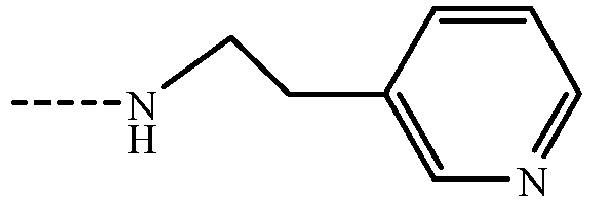
38 2 
39 3 
40 2 
41 3 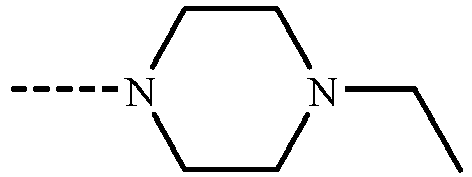
42 2 
43 3 
44 2 
45 3 
46 2 
47 3 
48 2 
49 3 
50 2 
51 3 
52 2 
53 3 
54 2 
55 3 
56 2 
57 3 
58 2 
59 3 
60 2 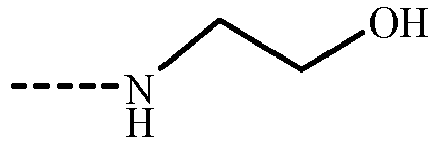
61 3 
62 2 
63 3 
64 2 
65 3 
66 2 NH2 67 3 NH2 68 2 NHCH3 69 3 NHCH3 70 2 N(CH3)2 71 3 N(CH3)2 72 2 
73 3 
74 2 
75 2 
88 2 
90 2 
91 2 
92 2 
93 2 
94 2 
95 2 
- 77) 10-((3'-(pyrrol-1-yl)-2',3',6'-trideoxy-alphal-L-lyxo-hexylpyranyl)oxy)-7,8,9,10-tetrahydr o-6,8,11-trihydroxy-13-oxo-14-(4-((4-(2-hydroxy)ethyl)piperazin-1-yl)-4-oxo-butyrato)-1-methoxy-5,12-naphthalenedione acetate;
- 78) 10-((3'-(pyrrol-1-yl)-2',3',6'-trideoxy-alphal-L-lyxo-hexylpyranyl)oxy)-7,8,9,10-tetrahydr o-6,8,11-trihydroxy-13-oxo-14-(4-((3-(morpholin-1-yl)propyl)amino)-4-oxo-butyrato)-1-m ethoxy-5,12-naphthalenedione acetate;
- 79) 10-((3'-(pyrrol-1-yl)-2',3',6'-trideoxy-alphal-L-lyxo-hexylpyranyl)oxy)-7,8,9,10-tetrahydr o-6,8,11-trihydroxy-13-oxo-14-(4-((4-methyl)piperazin-1-yl)amino)-4-oxo-butyrato)-1-me thoxy-5,12-naphthalenedione acetate;
- 80) 10-((3'-(pyrrol-1-yl)-2',3',6'-trideoxy-alphal-L-lyxo-hexylpyranyl)oxy)-7,8,9,10-tetrahydr o-6,8,11-trihydroxy-13-oxo-14-(4-(4-ethylpiperazin-1-yl)-4-oxo-butyrato)-1-methoxy-5,12 -naphthalenedione acetate;
- 81) 10-((3'-(pyrrol-1-yl)-2',3',6'-trideoxy-alphal-L-lyxo-hexylpyranyl)oxy)-7,8,9,10-tetrahydr o-6,8,11-trihydroxy-13-oxo-14-(4-((3-(4-methylpiperazin-1-yl)propyl)amino)-4-oxo-butyr ato)-1-methoxy-5,12-naphthalenedione acetate;
- 82) 10-((3'-(pyrrol-1-yl)-2',3',6'-trideoxy-alphal-L-lyxo-hexylpyranyl)oxy)-7,8,9,10-tetrahydr o-6,8,11-trihydroxy-13-oxo-14-(4-((pyridin-4-yl)methyl)amino)-4-oxo-butyrato)-1-methox y-5,12-naphthalenedione acetate;
- 83) 10-((3'-(pyrrol-1-yl)-2',3',6'-trideoxy-alphal-L-lyxo-hexylpyranyl)oxy)-7,8,9,10-tetrahydr o-6,8,11-trihydroxy-13-oxo-14-(4-((pyridin-3-yl)methyl)amino)-4-oxo-butyrato)-1-methox y-5,12-naphthalenedione acetate;
- 84) 10-((3'-(pyrrol-1-yl)-2',3',6'-trideoxy-alphal-L-lyxo-hexylpyranyl)oxy)-7,8,9,10-tetrahydr o-6,8,11-trihydroxy-13-oxo-14-(4-(2-(pyridin-2-yl)ethyl)amino)-4-oxo-butyrato)-1-methox y-5,12-naphthalenedione acetate;
- 85) 10-((3'-(pyrrol-1-yl)-2',3',6'-trideoxy-alphal-L-lyxo-hexylpyranyl)oxy)-7,8,9,10-tetrahydr o-6,8,11-trihydroxy-13-oxo-14-(4-(2-(pyridin-3-yl)ethyl)amino)-4-oxo-butyrato)-1-methox y-5,12-naphthalenedione acetate;
- 86) 10-((3'-(pyrrol-1-yl)-2',3',6'-trideoxy-alphal-L-lyxo-hexylpyranyl)oxy)-7,8,9,10-tetrahydr o-6,8,11-trihydroxy-13-oxo-14-(4-(2-(pyridin-4-yl)ethyl)amino)-4-oxo-butyrato)-1-methox y-5,12-naphthalenedione acetate;
- 87) 10-((3'-(pyrrol-1-yl)-2',3',6'-trideoxy-alphal-L-lyxo-hexylpyranyl)oxy)-7,8,9,10-tetrahydr o-6,8,11-trihydroxy-13-oxo-14-(4-(4-(3-(dimethylamino)propyl)piperazin-1-yl)-4-oxo-but yrato)-1-methoxy-5,12-naphthalenedione acetate;
- 89) 10-((3'-(pyrrol-1-yl)-2',3',6'-trideoxy-alphal-L-lyxo-hexylpyranyl)oxy)-7,8,9,10-tetrahydr o-6,8,11-trihydroxy-13-oxo-14-(4-((2-(morpholin-1-yl)ethyl)amino)-4-oxo-butyrato)-1-me thoxy-5,12-naphthalenedione acetate;
- 96) 10-((3'-(pyrrol-1-yl)-2',3',6'-trideoxy-alphal-L-lyxo-hexylpyranyl)oxy)-7,8,9,10-tetrahydr o-6,8,11-trihydroxy-13-oxo-14-(4-((2-(morpholin-1-yl)ethyl)amino)-4-oxo-butyrato)-1-me thoxy-5,12-naphthalenedione phosphate; and
- 99) 10-((3'-(pyrrol-1-yl)-2',3',6'-trideoxy-alphal-L-lyxo-hexylpyranyl)oxy)-7,8,9,10-tetrahydr o-6,8,11-trihydroxy-13-oxo-14-(4-((2-(morpholin-1-yl)ethyl)amino)-4-oxo-butyrato)-1-me thoxy-5,12-naphthalenedione hydrochloride.
- Still another aspect of the present application relates to a process for preparing a compound represented by formula (I), comprising:

wherein: - groups represented by R1, W, R4, R5 in the compound represented by formula (II) are the same as groups represented by R1, W, R4, R5 in the compound represented by formula (I);
- n in the compound represented by formula (III) has the same meanings as n in the compound represented by formula (I); groups represented by R7 and R8 in the compound represented by formula (III) are the same as groups represented by R2 and R3 in the compound represented by formula (I), provided that groups represented by R7 and R8 do not comprise NH or NH2; when groups represented by R7 and R8 comprise NH or NH2, the compound represented by formula (III) has an amino-protecting group at N-terminus, and is subject to a deprotection reaction to obtain the compound represented by formula (I).
- Yet another aspect of the present application relates to a pharmaceutical composition comprising a compound represented by formula (I) or a pharmaceutically acceptable salt thereof, and a pharmaceutically acceptable carrier.
- Still another aspect of the present application relates to a formulation comprising a compound represented by formula (I) or a pharmaceutically acceptable salt thereof, and a pharmaceutically acceptable carrier.
- Described herein is a method for treating and/or preventing tumor and/or cancer, comprising administering to a subject in need thereof a therapeutically effective amount of a compound represented by formula (I) or a pharmaceutically acceptable salt thereof, or administering a therapeutically effective amount of a pharmaceutical composition comprising a compound represented by formula (I) or a pharmaceutically acceptable salt and a pharmaceutically acceptable carrier, or administering a therapeutically effective amount of a formulation comprising a compound represented by formula (I) or a pharmaceutically acceptable salt and a pharmaceutically acceptable carrier.
- The compound and a salt thereof according to the present application possess good anticancer and/or antitumor activities, and good water solubility and stability, as well as good tolerance in animal bodies. Therefore, they are prone to being developed as clinical drugs.
-
-
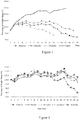
Fig. 1 shows effects of 3'-pyrrolyldoxorubicin on the body weight of experimental animals. -
Fig. 2 shows effects of the compound in Example 96 according to the present application on the body weight of experimental animals. -
Fig. 3 shows effects of 3'-pyrrolyldoxorubicin-14-oxo-succinic acid monoester on the body weight of experimental animals. - In the following description, certain specific details are included to provide a thorough understanding of various disclosed embodiments. One of ordinary skill in the relevant art, however, will recognize that the embodiments may be practiced without one or more of these specific details, or with other methods, components, materials etc.
- Unless the context required otherwise, throughout the specification and claims which follows, the term "comprise" and variations thereof, such as "comprises" and "comprising" are to be construed in an open, inclusive sense, which is as "include, but not limited to".
- Reference throughout this specification to "one embodiment", or "an embodiment", or "in another embodiment", or "in some embodiments" means that a particular referent feature, structure or characteristics described in connection with the embodiment is included in at least one embodiment. Therefore, the appearance of the phrases "in one embodiment" or "in the embodiment" or "in another embodiment" or "in some embodiments" in various places throughout this specification are not necessarily all referring to the same embodiment. Moreover, the particular features, structures or characteristics may be combined in any suitable manner in one or more embodiments.
- It should be noted that, as used in this specification and the appended claims, the singular forms "a", "an" and "the" include plural referents unless the context clearly stated otherwise. Therefore, for example, a reaction comprising "a catalyst" comprises one catalyst, two or more catalysts. It should be also noted that the use of "or" means "and/or" unless stated otherwise.
- Certain chemical groups named herein are preceded by a shorthand notation indicating the total number of carbon atoms that are to be found in the indicated chemical group. For example, C7-C12alkyl describes an alkyl group, as defined below, having a total of 7 to 12 carbon atoms, and C4-C12 cyclohydrocarbylalkyl describes a cyclohydrocarbylalkyl group, as defined below, having a total of 4 to 12 carbon atoms. The total number of carbon atoms in the shorthand notation does not include the carbons that may exist in the substituents of the groups described.
- Accordingly, as used in the specification and appended claims, unless specified to the contrary, the following terms have the meanings indicated:
- The term "alkyl", as used herein, refers to a straight or branched hydrocarbon chain group consisting solely of carbon and hydrogen, containing no unsaturated bond, having from one to twelve carbon atoms, preferably one to eight or one to six carbon atoms, and which is attached to the rest of the molecule by a single bond, e.g., methyl, ethyl, n-propyl, 1-methylethyl (iso-propyl), n-butyl, n-pentyl, 1,1-dimethylethyl (tert-butyl), 3-methylhexyl, 2-methylhexyl, and the like.
- Alkyl group may have one to twelve carbon atoms (whenever it appears in the present application, a numerical range such as "one to twelve" refers to each integer in the given number range; e.g. "one to twelve carbon atoms" means that the alkyl group may consist of one carbon atom, two carbon atoms, three carbon atoms, etc., up to and including twelve carbon atoms, although the present definition also covers the occurrence of term "alkyl" where no numerical range is designated). Alkyl group may also be a medium sized alkyl having one to ten carbon atoms. Alkyl group may also be a lower alkyl having one to five carbon atoms. Alkyl group of compounds of the present application may be designated as "C1-4 alkyl" or similar designations. By way of example only, "C1-4 alkyl" indicates that there are one to four carbon atoms in the alkyl chain, i.e. the alkyl chain is selected from the group consisting of methyl, ethyl, propyl, isopropyl, n-butyl, iso-butyl, sec-butyl, or t-butyl.
- Alkyl group may be optionally substituted, i.e. substituted or unsubstituted. When substituted, the substituted group(s) is(are) individually and independently selected from the group consisting of cyclohydrocarbyl, aryl, heteroaryl, heteroalicyclyl, hydroxy, alkoxy, aryloxy, mercapto, allkylthio, arylthio, cyano, halo, carbonyl, thiocarbonyl, O-carbamyl, N-carbamyl, O-thiocarbamyl, N-thiocarbamyl, C-amido, N-amido, S-sulfinamido, N-sulfinamido, C-carboxyl, O-carboxyl, isocyanato, thiocyano, isothiocyanato, nitro, silyl, trihalomethanesulfonyl, -NR'R" or amino including mono- and bi-substituted amino group, and the protected derivatives thereof. Typical hydrocarbyl groups include, but are not limited to, methyl, ethyl, propyl, isopropyl, butyl, isobutyl, t-butyl, pentyl, hexyl, ethenyl, propenyl, buenyl, cyclopropyl, cyclobutyl, cyclopentyl, cyclohexyl, and the like. Whenever a substituent is described as being "optionally substituted", that substituent may be substituted with one of the above substituents.
- "C1-4 alkyl" refers to an alkyl group as defined above containing one to four carbon atoms. C1-4alkyl group may be optionally substituted as defined for alkyl group.
- "C1-6 alkyl" refers to an alkyl group as defined above containing one to six carbon atoms. C1-6alkyl group may be optionally substituted as defined for alkyl group.
- "C1-12 alkyl" refers to an alkyl group as defined above containing one to twelve carbon atoms. C1-12 alkyl group may be optionally substituted as defined for alkyl group.
- "C2-6 alkyl" refers to an alkyl group as defined above containing two to six carbon atoms. C2-6 alkyl group may be optionally substituted as defined for alkyl group.
- "C3-6 alkyl" refers to an alkyl as defined above containing three to six carbon atoms. C3-6 alkyl group may be optionally substituted as defined for alkyl group.
- "C3-12 alkyl" refers to an alkyl as defined above containing three to twelve carbon atoms. C3-12 alkyl group may be optionally substituted as defined for alkyl group.
- "C6-12 alkyl" refers to an alkyl as defined above containing six to twelve carbon atoms. C6-12 alkyl group may be optionally substituted as defined for alkyl group.
- "C7-12 alkyl" refers to an alkyl as defined above containing seven to twelve carbon atoms. C7-12 alkyl group may be optionally substituted as defined for alkyl group.
- In some embodiments, the alkyl group is C1-12 alkyl.
- In some embodiments, the alkyl group is C1-8 alkyl.
- In some embodiments, the alkyl group is C1-6 alkyl.
- In some embodiments, the alkyl group is C1-4 alkyl.
- "Alkoxy", as used herein, refers to the formula -OR, wherein R is an alkyl group defined as above, e.g. methoxy, ethoxy, n-propoxy, 1-methyl ethoxy (isopropoxy), n-butoxy, isobutoxy, sec-butoxy, t-butoxy, amoxy, t-amoxy, and the like.
- In some embodiments, the alkoxy group is C1-12 alkoxy.
- In some embodiments, the alkoxy group is C1-8 alkoxy.
- In some embodiments, the alkoxy group is C1-6 alkoxy.
- In some embodiments, the alkoxy group is C1-4 alkoxy.
- "Alkylene", as used herein, refers to a straight or branched divalent hydrocarbon chain group consisting solely of carbon and hydrogen and having from one to eight carbon atoms, which is linked with the other moiety of the molecule and a residual group, e.g. methylene, ethylene, propylene, n-butylene. Alkylene chain can be linked with the other moiety of the molecule and the residual group via one carbon atom in the chain or any two carbon atoms in the chain.
- In some embodiments, the alkylene group is C1-12 alkylene.
- In some embodiments, the alkylene group is C1-8 alkylene.
- In some embodiments, the alkylene group is C1-6 alkylene.
- In some embodiments, the alkylene group is C1-4 alkylene.
- "Alkyleneoxy", as used herein, refers to the formula -OR, wherein R is an alkylene group defined as above, e.g. methyleneoxy, ethyleneoxy, n-propyleneoxy, isopropyleneoxy, n-butyleneoxy, isobutyleneoxy, sec-butyleneoxy, t-butyleneoxy, amyleneoxy, t-amyleneoxy, and the like.
- In some embodiments, the alkyleneoxy group is O(C1-12)alkylene.
- In some embodiments, the alkyleneoxy group is O(C1-8)alkylene.
- In some embodiments, the alkyleneoxy group is O(C1-6)alkylene.
- In some embodiments, the alkyleneoxy group is O(C1-4)alkylene.
- "Aryl", as used herein, refers to a carbocycle (full carbon) or two or more fused rings (rings sharing with two adjacent carbon atoms), having completely delocalized π electron system. Examples of aryl group include, but are not limited to, fluorenyl, phenyl and naphthyl. The aryl group may have, for example, five to twelve carbon atoms. The aryl group of the present application may be substituted or unsubstituted. Where substituted, hydrogen atom(s) is(are) substituted with one or more substituents independently selected from the group consisting of alkyl, cyclohydrocarbyl, aryl, heteroaryl, heteroalicyclyl, hydroxy, protected hydroxy, alkoxy, aryloxy, mercapto, alkylthio, arylthio, cyano, halo, carbonyl, thiocarbonyl, O-carbamyl, N-carbamyl, O-thiocarbamyl, N-thiocarbamyl, C-amido, N-amido, S-sulfinamido, N-sulfinamido, C-carboxyl, protected C-carboxyl, O-carboxyl, isocyanato, thiocyano, isothiocyanato, nitro, silyl, trihalomethanesulfonyl, -NR'R" (R' and R" are alkyl groups defined herein) and protected amino.
- In some embodiments, the aryl group is C6-C18 aryl.
- In some embodiments, the aryl group is C6-C12 aryl.
- In some embodiments, the aryl group is C6-C10 aryl.
- "Heteroaryl (aromatic heterocyclyl)" refers to a five- to eighteen-membered aromatic ring group, containing one to seventeen carbon atoms and one to ten heteroatoms selected from the group consisting of nitrogen, oxygen and sulphur. For the purpose of the present invention, the heteroaryl may be monocyclic, bicyclic, tricyclic or tetracyclic ring system, which may comprise fused or bridged ring system. Moreover, nitrogen, carbon or sulphur atom in the heteroaryl group may be optionally oxidized, and the nitrogen atom may be optionally quaternized. The examples include, but are not limited to, azepinyl, acridinyl, benzimidazolyl, benzothiazolyl, benzoindolyl, benzodioxolanyl, benzofuranyl, benzoxazolyl, benzothiazolyl, benzothiadiazolyl, benzo[b][1,4]dioxepanyl, 1,4-benzodioxanyl, benzonaphthofuranyl, benzodioxolanyl, benzodioxadienyl, benzopyranyl, benzopyronyl, benzofuranyl, benzofuranonyl, benzothienyl, benzotriazolyl, benzo[4,6]imidazo[1,2-a]pyridyl, carbazolyl, cinnolinyl, dibenzofuranyl, dibenzothienyl, furanyl, furanonyl, isothiazolyl, imidazolyl, indazolyl, indolyl, indazolyl, isoindolyl, indolinyl, isoindolinyl, isoquinolyl, indolizinyl, isoxazolyl, naphthyl, naphthyridinyl, oxadiazolyl, 2-oxoazepinyl, oxazolyl, oxiranyl, 1-phenyl-1H-pyrrolyl, phenazinyl, phenothiazinyl, phenoxazinyl, 2,3-naphthyridinyl, pteridinyl, purinyl, pyrrolyl, pyrazolyl, pyridinyl, pyrazinyl, pyrimidinyl, pyridazinyl, pyrrolyl, quinazolinyl, quinoxalinyl, quinolyl, quinuclidinyl, isoquinolyl, tetrahydroquinolyl, thiazolyl, thiadiazolyl, triazolyl, tetrazolyl, triazinyl and thiophenyl. Unless stated otherwise specifically in the specification, the term "heteroaryl" is meant to include the heteroaryl groups which may be optionally substituted with one or more substituents independently selected from the group consisting of alkyl, cyclohydrocarbyl, aryl, heteroaryl, heteroalicyclyl, hydroxy, protected hydroxy, alkoxy, aryloxy, mercapto, alkylthio, arylthio, cyano, halo, carbonyl, thiocarbonyl, O-carbamyl, N-carbamyl, O-thiocarbamyl, N-thiocarbamyl, C-amido, N-amido, S-sulfinamido, N-sulfinamido, C-carboxyl, protected C-carboxyl, O-carboxyl, isocyanato, thiocyano, isothiocyanato, nitro, silyl, trihalomethanesulfonyl, -NR'R" (R' and R" are alkyl groups defined herein) and protected amino.
- In some embodiments, the heteroaryl group is C5-18 heteroaryl.
- In some embodiments, the heteroaryl group is C5-12 heteroaryl.
- In some embodiments, the heteroaryl group is C5-10 heteroaryl.
- The term "heterocyclyl", as used herein, refers to a stable three- to twelve-membered non-aromatic ring group which consists of carbon atoms and from one to five heteroatoms selected from the group consisting of nitrogen, oxygen and sulphur. Examples of such heteroyclyl groups include, but are not limited to, dioxolanyl, decahydroisoquinolyl, imidazolinyl, imidazolidinyl, isothiazolidinyl, isoxazolidinyl, morpholinyl, octahydroindolyl, octahydroisoindolyl, 2-oxopiperazinyl, 2-oxopiperidinyl, 2-oxopyrrolidinyl, oxazolidinyl, piperidyl, piperazinyl, 4-piperidonyl, pyrrolidinyl, pyrazolidinyl, thiazolidinyl, tetrahydrofuryl, trithianyl, tetrahydropyranyl, thiomorpholinyl, thiamorpholinyl, 1-oxo-thiomorpholinyl and 1,1-dioxo-thiomorpholinyl. Unless stated otherwise specifically in the specification, the term "heterocyclyl" is meant to include the heterocyclyl groups as defined above, which may be optionally substituted with one or more substituents selected from the group consisting of cyclohydrocarbyl, aryl, heteroaryl, heteroalicyclyl, hydroxy, alkoxy, aryloxy, mercapto, alkylthio, arylthio, cyano, halo, carbonyl, thiocarbonyl, O-carbamyl, N-carbamyl, O-thiocarbamyl, N-thiocarbamyl, C-amido, N-amido, S-sulfinamido, N-sulfinamido, C-carboxyl, O-carboxyl, isocyanato, thiocyanato, isothiocyanato, nitro, silyl, trihalomethanesulfonyl, -NR'R" (R' and R" are alkyl groups as defined in the present application) or amino including mono- and di-substituted amino group, and the protected derivatives thereof.
- In some embodiments, the heterocyclyl group is C3-18 heterocyclyl.
- In some embodiments, the heterocyclyl group is C3-12 heterocyclyl.
- In some embodiments, the heterocyclyl group is C3-10 heterocyclyl.
- "Sulfonyl" refers to -S(=O)2R group, in which R may be alkyl, cyclohydrocarbyl, heterocyclyl, aryl, heteroaryl, etc, as defined above. The examples of sulfonyl groups include, but are not limited to, -S(=O)2CH3 (mesyl), -S(=O)2CF3, -S(=O)2CH2CH3 and 4-methylbenzenesulfonyl (tosyl).
- "Optional" or "optionally" means that the subsequently described circumstances may or may not occur, and that the specification includes instances where said event or circumstance occurs and instances in which it does not. For example, "optionally substituted aryl" means that the aryl group may or may not be substituted and that the specification includes the substituted aryl group and the aryl group which is not substituted.
- "Pharmaceutically acceptable carriers" include without limitation to any adjuvant, carrier, excipient, glidant, sweetening agent, diluent, preservative, dye/colorant, flavor enhancer, surfactant, wetting agent, dispersing agent, suspending agent, stabilizer, isosmotic agent, solvent, or emulsifier, etc, which have been approved by the United States Food and Drug Administration as being acceptable for use in humans or animals and have no side effects for constituting a pharmaceutical composition.
- "Pharmaceutically acceptable salts" include both "pharmaceutically acceptable acid addition salts" and "pharmaceutically acceptable base addition salts".
- "Pharmaceutically acceptable acid addition salt" refers to those salts which retain the biological effectiveness and properties of free bases, which are biologically or otherwise desirable, and which are formed with inorganic acids such as, but not limited to hydrochloric acid, hydrobromic acid, sulfuric acid, nitric acid, phosphoric acid and the like; and organic acids such as, but not limited to, acetic acid, 2,2-dichloroacetic acid, adipic acid, alginic acid, ascorbic acid, aspartic acid, benzenesulfonic acid, benzoic acid, 4-acetamidobenzoic acid, camphanic acid, camphor-10-sulfonic acid, capric acid, caproic acid, caprylic acid, carbonic acid, cinnamic acid, citric acid, cyclamic acid, dodecylsulfuric acid, ethane-1,2-disulfonic acid, ethanesulfonic acid, 2-hydroxyethanesulfonic acid, formic acid, fumaric acid, galactaric acid, gentisic acid, glucoheptonic acid, gluconic acid, glucuronic acid, glutamic acid, glutaric acid, 2-oxo-glutaric acid, glycerophosphoric acid, glycolic acid, hippuric acid, isobutyric acid, lactic acid, lactobionic acid, lauric acid, maleic acid, malic acid, malonic acid, mandelic acid, methanesulfonic acid, mucic acid, naphthalene-1,5-disulfonic acid, naphthalene-2-sulfonic acid, 1-hydroxy-2-naphthoic acid, nicotinic acid, oleinic acid, orotic acid, oxalic acid, palmitic acid, pamoic acid, propionic acid, pyroglutamic acid, pyruvic acid, salicylic acid, 4-aminosalicylic acid, sebacic acid, stearic acid, succinic acid, tartaric acid, thiocyanic acid, p-toluenesulfonic acid, trifluoroacetic acid, undecylenic acid and the like.
- "Pharmaceutically acceptable base addition salt" refers to those salts which retain the biological effectiveness and properties of the free acids, which are biologically or otherwise desirable. These salts are prepared from addition of an inorganic base or an organic base into the free acid. Salts derived from inorganic bases include, but are not limited to, sodium, potassium, lithium, ammonium, calcium, magnesium, iron, zinc, copper, manganese, aluminum slats, and the like. Preferred inorganic salts are the ammonium, sodium, potassium, calcium, and magnesium salts. Salts derived from organic bases include, but are not limited to, slats of primary, secondary and tertiary amines, substituted amines including naturally occurring substituted amines, cyclic amines and basic ion exchange resins, such as ammonia, isopropylamine, trimethylamine, diethylamine, triethylamine, tripropylamine, diethanolamine, ethanolamine, deanol, 2-dimethylaminoethanol, 2-diethylaminethanol, dicyclohexylamine, lysine, arginine, histidine, caffeine, procaine, hydrabamine, choline, betaine, benzylamine, phenylethylenediamine, ethylenediamine, glucosamine, methylglucosamine, theobromine, triethanolamine, trometamol, purine, piperazine, piperidine, N-ethyl piperidine, polyamine resin and the like. Particularly preferred organic bases are isopropylamine, diethylamine, ethanolamine, trimethylamine, dicyclohexylamine, choline and caffeine.
- "Pharmaceutical composition" refers to a formulation formed with a compound of the invention and a medium generally acceptable in the art for the delivery of the biologically active compound to a mammal e.g. humans. Such a medium includes all pharmaceutically acceptable carriers, diluents or excipients.
- "Therapeutically effective amount" refers to an amount of a compound of the invention which, when administered to a mammal, preferably a human, is sufficient to effect treatment (as defined below) of the tumor and/or cancer in the mammal, preferably a human. The amount of a compound of the invention which constitutes a "therapeutically effective amount" will vary depending on the compound, the condition and its severity, and the age of the mammal to be treated, but can be determined routinely by one of ordinary skill in the art having regard to his own knowledge and to this disclosure.
- "Treating" or "treatment", as used herein, covers the treatment of relevant disease or condition in a mammal, preferably a human, having the relevant disease or disorder, and includes:
- (i) preventing the disease or condition from occurring in a mammal, in particular, when such mammal is predisposed to the condition but has not yet been diagnosed as having it;
- (ii) inhibiting the disease or condition, i.e. arresting its development; or
- (iii) relieving the disease or condition, i.e. causing regression of the disease or condition.
- Throughout the treatment course, the administration in vivo can be carried out by means of a single administration, a continuous administration or an intermittent administration (such as the administration is carried out by divided dose at appropriate intervals). The method for determining the most effective administration mode and dose would have been well-known for one of ordinary skill in the art, and vary depending on the formulation to be used in the treatment, the object of the treatment, the targeted cell to be treated and the subject to be treated. A single or a multiple administration can be carried out, and the level of dose and the mode can be selected by an attending doctor.
- In one aspect, the present application relates to a compound represented by formula (I) and a pharmaceutically acceptable salt thereof,

claim 1. - In some embodiments, R1 in the compound represented by formula (I) is selected from the group consisting of H and OCH3.
- In some embodiments, R4 in the compound represented by formula (I) is CH3.
- In still another aspect, the present application relates to compounds selected from the group consisting of:

No. n NR2R3 1 3 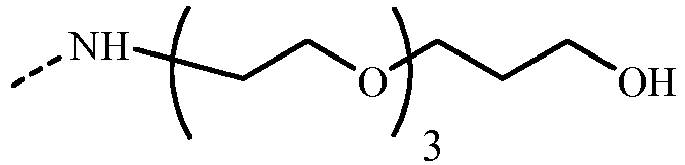
2 2 
3 3 
4 2 
5 3 
6 2 
7 3 
8 2 
9 3 
10 2 
11 3 
12 2 
13 3 
14 2 
15 3 
16 2 
17 3 
18 2 
19 3 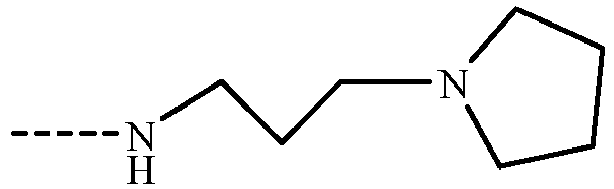
20 2 
21 3 
22 2 
23 3 
24 2 
25 3 
26 2 
27 3 
28 2 
29 3 
30 2 
31 3 
32 2 
33 3 
34 2 
35 3 
36 2 
37 3 
38 2 
39 3 
40 2 
41 3 
42 2 
43 3 
44 2 
45 3 
46 2 
47 3 
48 2 
49 3 
50 2 
51 3 
52 2 
53 3 
54 2 
55 3 
56 2 
57 3 
58 2 
59 3 
60 2 
61 3 
62 2 
63 3 
64 2 
65 3 
66 2 NH2 67 3 NH2 68 2 NHCH3 69 3 NHCH3 70 2 N(CH3)2 71 3 N(CH3)2 72 2 
73 3 
74 2 
75 2 
88 2 
90 2 
91 2 
92 2 
93 2 
94 2 
95 2 
- 77) 10-((3'-(pyrrol-1-yl)-2',3',6'-trideoxy-alphal-L-lyxo-hexylpyranyl)oxy)-7,8,9,10-tetrahydr o-6,8,11-trihydroxy-13-oxo-14-(4-((4-(2-hydroxy)ethyl)piperazin-1-yl)-4-oxo-butyrato)-1-methoxy-5,12-naphthalenedione acetate;
- 78) 10-((3'-(pyrrol-1-yl)-2',3',6'-trideoxy-alphal-L-lyxo-hexylpyranyl)oxy)-7,8,9,10-tetrahydr o-6,8,11-trihydroxy-13-oxo-14-(4-((3-(morpholin-1-yl)propyl)amino)-4-oxo-butyrato)-1-m ethoxy-5,12-naphthalenedione acetate;
- 79) 10-((3'-(pyrrol-1-yl)-2',3',6'-trideoxy-alphal-L-lyxo-hexylpyranyl)oxy)-7,8,9,10-tetrahydr o-6,8,11-trihydroxy-13-oxo-14-(4-((4-methyl)piperazin-1-yl)amino)-4-oxo-butyrato)-1-me thoxy-5,12-naphthalenedione acetate;
- 80) 10-((3'-(pyrrol-1-yl)-2',3',6'-trideoxy-alphal-L-lyxo-hexylpyranyl)oxy)-7,8,9,10-tetrahydr o-6,8,11-trihydroxy-13-oxo-14-(4-(4-ethylpiperazin-1-yl)-4-oxo-butyrato)-1-methoxy-5,12 -naphthalenedione acetate;
- 81) 10-((3'-(pyrrol-1-yl)-2',3',6'-trideoxy-alphal-L-lyxo-hexylpyranyl)oxy)-7,8,9,10-tetrahydr o-6,8,11-trihydroxy-13-oxo-14-(4-((3-(4-methylpiperazin-1-yl)propyl)amino)-4-oxo-butyr ato)-1-methoxy-5,12-naphthalenedione acetate;
- 82) 10-((3'-(pyrrol-1-yl)-2',3',6'-trideoxy-alphal-L-lyxo-hexylpyranyl)oxy)-7,8,9,10-tetrahydr o-6,8,11-trihydroxy-13-oxo-14-(4-((pyridin-4-yl)methyl)amino)-4-oxo-butyrato)-1-methox y-5,12-naphthalenedione acetate;
- 83) 10-((3'-(pyrrol-1-yl)-2',3',6'-trideoxy-alphal-L-lyxo-hexylpyranyl)oxy)-7,8,9,10-tetrahydr o-6,8,11-trihydroxy-13-oxo-14-(4-((pyridin-3-yl)methyl)amino)-4-oxo-butyrato)-1-methox y-5,12-naphthalenedione acetate;
- 84) 10-((3'-(pyrrol-1-yl)-2',3',6'-trideoxy-alphal-L-lyxo-hexylpyranyl)oxy)-7,8,9,10-tetrahydr o-6,8,11-trihydroxy-13-oxo-14-(4-(2-(pyridin-2-yl)ethyl)amino)-4-oxo-butyrato)-1-methox y-5,12-naphthalenedione acetate;
- 85) 10-((3'-(pyrrol-1-yl)-2',3',6'-trideoxy-alphal-L-lyxo-hexylpyranyl)oxy)-7,8,9,10-tetrahydr o-6,8,11-trihydroxy-13-oxo-14-(4-(2-(pyridin-3-yl)ethyl)amino)-4-oxo-butyrato)-1-methox y-5,12-naphthalenedione acetate;
- 86) 10-((3'-(pyrrol-1-yl)-2',3',6'-trideoxy-alphal-L-lyxo-hexylpyranyl)oxy)-7,8,9,10-tetrahydr o-6,8,11-trihydroxy-13-oxo-14-(4-(2-(pyridin-4-yl)ethyl)amino)-4-oxo-butyrato)-1-methox y-5,12-naphthalenedione acetate;
- 87) 10-((3'-(pyrrol-1-yl)-2',3',6'-trideoxy-alphal-L-lyxo-hexylpyranyl)oxy)-7,8,9,10-tetrahydr o-6,8,11-trihydroxy-13-oxo-14-(4-(4-(3-(dimethylamino)propyl)piperazin-1-yl)-4-oxo-but yrato)-1-methoxy-5,12-naphthalenedione acetate;
- 89) 10-((3'-(pyrrol-1-yl)-2',3',6'-trideoxy-alphal-L-lyxo-hexylpyranyl)oxy)-7,8,9,10-tetrahydr o-6,8,11-trihydroxy-13-oxo-14-(4-((2-(morpholin-1-yl)ethyl)amino)-4-oxo-butyrato)-1-me thoxy-5,12-naphthalenedione acetate;
- 96) 10-((3'-(pyrrol-1-yl)-2',3',6'-trideoxy-alphal-L-lyxo-hexylpyranyl)oxy)-7,8,9,10-tetrahydr o-6,8,11-trihydroxy-13-oxo-14-(4-((2-(morpholin-1-yl)ethyl)amino)-4-oxo-butyrato)-1-me thoxy-5,12-naphthalenedione phosphate; and
- 99) 10-((3'-(pyrrol-1-yl)-2',3',6'-trideoxy-alphal-L-lyxo-hexylpyranyl)oxy)-7,8,9,10-tetrahydr o-6,8,11-trihydroxy-13-oxo-14-(4-((2-(morpholin-1-yl)ethyl)amino)-4-oxo-butyrato)-1-me thoxy-5,12-naphthalenedione hydrochloride.
- In yet still another aspect, the present application relates to a process for preparing a compound represented by formula (I), comprising:

wherein: - groups represented by R1, W, R4, R5 in the compound represented by formula (II) are the same as groups represented by R1, W, R4, R5 in the compound represented by formula (I);
- n in the compound represented by formula (III) has the same meanings as n in the compound represented by formula (I); groups represented by R7 and R8 in the compound represented by formula (III) are the same as groups represented by R2 and R3 in the compound represented by formula (I), provided that groups represented by R7 and R8 do not comprise NH or NH2; when groups represented by R7 and R8 comprise NH or NH2, the compound represented by formula (III) has an amino-protecting group at N-terminus, and is subject to a deprotection reaction to obtain the compound represented by formula (I).
- In some embodiments, the process for preparing a compound represented by formula (I) further comprises adding an activator.
- Exemplary examples of activators that can be used in the process for preparing a compound represented by formula (I) according to the present application include, but are not limited to, N-hydroxysuccinimide (HOSu), 1-hydroxy-7-azobenzotriazole (HOAt), 1-hydroxybenzotriazole (HOBt), N-hydroxyphthalimide (NHPI), N-hydroxy-1,8-naphthalimide (NHNI), pentafluorophenol (PFPOH), 2-(7-azobenzotriazole)-N,N,N',N'-tetramethyluronium hexafluorophosphate (HATU), benzotriazole-N,N,N',N'-tetramethyluronium hexafluorophosphate (HBTU), 6-chlorobenzotriazole-1,1,3,3-tetramethyluronium hexafluorophosphate (HCTU), O-(7-azabenzotriazole-1-yl)-di(tetrahydropyrrolyl)carbenium hexafluophosphate (HAPyU), O-(benzotriazole-1-yl)-di(tetrahydropyrrolyl)carbenium hexafluophosphate (HBPyU), O-benzotriazole-N,N,N',N'-tetramethyluronium tetrafluoroborate (TBTU), 2-succinimido-1,1,3,3-tetramethyluronium tetrafluoroborate (TSTU), 2-(5-norbornen-2,3-dicarboximido)-1,1,3,3-tetramethyluronium tetrafluoroborate quaternary ammonium salt (TNTU), benzotriazole-1-yloxytri(dimethylamino)phosphonium hexafluorophosphate (BOP), benzotriazol-1-yl-oxytripyrrolidino-phosphonium hexafluorophosphate (PyBOP), (3H-1,2,3-triazolo[4,5-b]pyridin-3-oxy)tri-1-pyrrolidinylphosphonium hexafluorophosphate (PyAOP), diphenylphosphinyl chloride (DPP-Cl), diphenyl phosphoryl azide (DPPA), cyanodiethylphosphate (DECP), bis(2-oxo-3-oxazolidinyl)phosphinyl chloride (BOP-Cl) and a mixture thereof.
- Exemplary examples of condensation agents that can be used in the process for preparing a compound represented by formula (I) according to the present application include, but are not limited to, dicyclohexylcarbodiimide (DCC), diisopropylcarbodiimide (DIC), 1-(3-dimethylaminopropyl)-3-ethylcarbodiimide (EDCI), 2-(7-azobenzotriazole)-N,N,N',N'-tetramethyluronium hexafluorophosphate (HATU), benzotriazol-N,N,N',N'-tetramethyluronium hexafluorophosphate (HBTU), 6-chlorobenzotriazol-1,1,3,3-tetramethyluronium hexafluorophosphate (HCTU), O-(7-azabenzotriazol-1-yl)-di(tetrahydropyrrolyl)carbenium hexafluophosphate (HAPyU), O-(benzotriazol-1-yl)-di(tetrahydropyrrolyl)carbenium hexafluophosphate (HBPyU), O-benzotriazol-N,N,N',N'-tetramethyluronium tetrafluoroborate (TBTU), 2-succinimido-1,1,3,3-tetramethyluronium tetrafluoroborate (TSTU), 2-(5-norbornen-2,3-dicarboximido)-1,1,3,3-tetramethyluronium tetrafluoroborate quaternary ammonium salt (TNTU), benzotriazol-1-yloxytri(dimethylamino)phosphonium hexafluorophosphate (BOP), benzotriazol-1-yl-oxytripyrrolidino-phosphonium hexafluorophosphate (PyBOP), (3H-1,2,3-triazolo[4,5-b]pyridin-3-oxy)tri-1-pyrrolidinylphosphonium hexafluorophosphate (PyAOP), diphenylphosphinyl chloride (DPP-Cl), diphenyl phosphoryl azide (DPPA), cyanodiethylphosphate (DECP), bis(2-oxo-3-oxazolidinyl)phosphinyl chloride (BOP-Cl) and a mixture thereof.
- In some embodiments, the process for preparing a compound represented by formula (I) further comprises adding a catalyst.
- Exemplary examples of catalysts that can be used in the process for preparing a compound represented by formula (I) according to the present application include, but are not limited to, 4-dimethylaminopyridine, 4-pyrrolidinylpyridine and a mixture thereof.
- Exemplary examples of nitrogen-protecting groups that can be used in the process for preparing a compound represented by formula (I) according to the present application include, but are not limited to, Fmoc (fluorenylmethoxycarbony), Boc (t-butyloxycarboryl), CBZ (carbobenzoxy), Tr (trityl) or Alloc (allyloxycarbonyl), Teoc (trimethylsilylethoxycarbonyl), methoxycarbonyl, ethoxycarbonyl, Pht (phthaloyl), Tos (tosyl), Ns (o/p-nitrobenzenesulfonyl), Tfa (trifluoroacetyl), pivaloyl, benzoyl, Trt (trityl), Dmb (2,4-dimethoxybenzyl), PMB (p-methoxybenzyl), and Bn (benzyl).
- Exemplary examples of deprotection reactants that can be used in the process for preparing a compound represented by formula (I) according to the present application include, but are not limited to, hydrogen gas, NH3, aminoethanol, dimethylamine, diethylamine, piperidine, piperazine, DBU, hydrochloric acid, phosphoric acid, acetic acid, formic acid, trifluoroacetic acid, methanesulfonic acid, benzenesulfonic acid, p-toluenesulfonic acid and a mixture thereof.
- In some embodiments, the compound represented by formula (III) in the process for preparing a compound represented by formula (I) is obtained by a reaction of a compound represented by formula (IV) with HNR7R8,
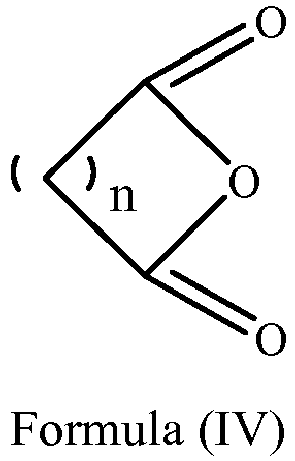
- n in the compound represented by formula (IV) has the same meanings as n in the compound represented by formula (I);
- groups represented by R2 and R3 in HNR7R8 are the same as groups represented by R2 and R3 in the compound represented by formula (I).
- In some embodiments, the process for preparing a compound represented by formula (III) further comprises adding an alkaline compound.
- Exemplary examples of alkaline compounds that can be used in the process for preparing a compound represented by formula (III) according to the present application include, but are not limited to, triethylamine, pyridine, diisopropylethylamine, trimethylamine, N-methylpyrrolidine, N-methylpiperidine, N-methylmorpholine, N-ethylpyrrolidine, N-ethylpiperidine, N-ethylmorpholine and a mixture thereof.
- In yet another aspect, the present application relates to a pharmaceutical composition comprising a compound represented by formula (I) or a pharmaceutically acceptable salt thereof, and a pharmaceutically acceptable carrier.
- In another aspect, the present application relates to a formulation comprising a compound represented by formula (I) or a pharmaceutically acceptable salt thereof, and a pharmaceutically acceptable carrier.
- In some embodiments, the formulation comprising a compound represented by formula (I) or a pharmaceutically acceptable salt thereof and a pharmaceutically acceptable carrier is a formulation for injection.
- Exemplary examples that can be used in the formulation according to the present application include, but are not limited to, a conventional powder injection, a freeze-dried powder injection, a hydro-injection, an emulsion, a solution and a suspension.
- Also described herein is a method for treating and/or preventing tumor and/or cancer, comprising administering to a subject in need thereof a therapeutically effective amount of a compound represented by formula (I) or a pharmaceutically acceptable salt thereof, or administering a therapeutically effective amount of a pharmaceutical composition comprising a compound represented by formula (I) or a pharmaceutically acceptable salt and a pharmaceutically acceptable carrier, or administering a therapeutically effective amount of a formulation comprising a compound represented by formula (I) or a pharmaceutically acceptable salt and a pharmaceutically acceptable carrier.
- Exemplary examples of tumors and/or cancers that can be treated and/or prevented by the method according to the present application include, but are not limited to, liver cancer, gastric cancer, breast cancer, lung cancer, intestine cancer, ovarian cancer, pancreatic cancer, head and neck cancer, cervical cancer, renal cancer, melanoma, prostatic cancer, brain glioma, various leukemia, lymphoma, and multiple bone marrow cancer.
- The compound and a salt thereof according to the present application possess good anticancer and/or antitumor activity, and good water solubility and stability, as well as good tolerance in animal bodies. Therefore, they are prone to being developed as clinical drugs.
- Although any one skilled in the art is capable of preparing the compounds of the present application according to the general techniques disclosed herein above, more specific details on synthetic techniques for the compound of the present application are provided elsewhere in this specification for conveniences. In addition, all reagents and reaction conditions employed in synthesis are known to those skilled in the art and are available from ordinary commercial sources.
- Su: succinimide; Bt: benzotrazol-1-yl; At: 7-azobenzotrazol-1-yl; Fmoc: fluorenylmethoxycarbonyl; Boc: t-butoxycarbonyl; CBZ: carbobenzoxy; Tr: trimethylphenyl; Alloc: allyloxycarbonyl; DBU: 1,8-diazacyclo[5,4,0]hendecene-7; DIEA: diisopropylethylamine; DMAP: 4-dimethylaminopyridine; EDC·HCl: 1-(3-dimethylaminopropyl)-3-ethylcarbodiimide hydrochloride; HOAt: N-hydroxy-7-azobenzotriazole; DCC: dicyclohexylcarbodiimide; DIC: N,N-diisopropylcarbodiimide. NCI-H446: human small cell lung cancer cell line; BxPC-3: human pancreatic cancer cell line; SK-OV-3: human ovarian cancer cell line; MDA-MB-453: human breast cancer cell line; 22Rv1: human prostate cancer cell line; A375: human cutaneous melanoma cell line; A431: human epidermal carcinoma cell line; MCF-7: human breast cancer cell line; NCI-446: human small cell lung cancer cell line; NCI-H460: human large cell lung cancer cell line; B16: mouse melanoma cell line; 786-O: human kidney clear cell adenocarcinoma cell line; DU-145: prostate cancer cell line; Hep3B: liver cancer cell line; SK-Br-3: human breast cancer cell line; MTT: nitroblue tetrazolium; McCoy's 5A: McCoy's 5A Medium; FBS: fetal calf serum; PBS: phosphate buffer, pH 7.4; EDTA: ethylenediamine tetraacetic acid ; DMSO: dimethyl sulfoxide; RPMI-1640: RPMI-1640 Medium; SRB: sulforhodamine; TCA: trichloroacetic acid; ddH2O: double distilled water; Tris: trihydroxymethylaminomethane; L15: Leibovitz's L-15 Medium; compound A: 3'-pyrrolyldoxorubicin-14-oxo-succinic acid monoester.
- The numberings of the substituents in the present application are indicated as follows.

- To a three-neck flask (1 L) were added doxorubicin hydrochloride (3.076 g), distilled water (300 mL) and 1,2-dichloroethane (300 mL), 2,5-dimethoxytetrahydrofuran (30 mL) and glacial acetic acid (6 mL). The mixture was heated and refluxed for 45 min under the protection of argon gas until the reaction was completed. The reaction was cooled to the room temperature. The reaction solution was poured into ice water (200 mL), and then stood to separate. The organic phase was washed with saturated saline (200 mL) once, dried over anhydrous magnesium sulfate, filtered and rotary-evaporated to dryness. To the aqueous phase was added 5% sodium bicarbonate aqueous solution (100 mL) while being stirred in an ice bath, and then extracted with chloroform (50 mL × 3). The chloroform layers were combined and washed with saturated saline (100 mL) once, filtered and rotary-evaporated to remove the solvent. The resultant crude was combined with the crude obtained above. The resultant mixture was purified with column chromatography, eluting with chloroform: methanol = 35:1, to give the product (2.91 g). MS: 592 (M-1)
- To a reaction flask was added p-nitrobenzyl bromide (72.084 g). Dichloromethane (470 mL, dried via molecular sieve) was added to dissolve p-nitrobenzyl bromide. Anhydrous potassium carbonate (91.909 g) was added. The mixture was cooled in an ice bath under the protection of argon gas. After 20 min, to the reaction flask was dropwise added morpholine (over about 30 min). After the addition was completed, the ice bath was removed. The resultant mixture was stirred overnight at the room temperature. After the reaction was completed, water (150 mL) was added. The pH of the mixture was adjusted with 5% citric acid aqueous solution to 4-5 under stirring. After standing to separate, the organic phase was washed with water (260 mL × 1), dried over anhydrous MgSO4 for half an hour, and then filtered. The filtrate was concentrated, and dried under reduced pressure by oil pump, to give the target compound (71.9 g, yield 97.16%).
- To a reaction flask were added 4-(4-nitrobenzyl)morpholine (37.4 g) and absolute ethanol (520 mL). The mixture was mechanically stirred, and then acetic acid (34 mL) was added. The resultant mixture was warmed in an oil bath. The solution became clear at 40°C. To 1 N hydrochloric acid (HCl) (84 mL) was added iron powders (48.002 g), and stirred for 10 min, filtered by suction. The filter cake was washed with absolute ethanol, and then added into the reaction flask. The mixture was warmed in an oil bath to reflux, and maintained under reflux until the reaction was completed (about 3 hr). After the reaction was completed, the reaction solution was filtered by suction. The filtrate was concentrated, and then dissolved in ethyl acetate (400 mL) and water (400 mL). The mixture was mixed and then stood to separate. The organic layer was discarded. The aqueous phase was washed with dichloromethane (100 mL × 3). The pH was adjusted with NaOH solids to 9. Lots of brown solids precipitated from the solution, The solids were filtered by suction. The filter cake was washed with distilled water (20 mL × 2) and then discarded. The pH of the filtrate was adjusted with sodium hydroxide (NaOH) to 13. The resultant solution was extracted with dichloromethane (100 mL × 2). The organic phase was directly concentrated to give the target compound.
- To a reaction flask was added 4-(morpholinylmethyl)aniline (960 mg). Dichloromethane (7.6 mL, dried via molecular sieve) was added to dissolve4-(morpholinylmethyl)aniline. The solution was stirred under the protection of argon gas. To the reaction flask were added glutaric anhydride (741 mg), DIEA (1.1 mL) and DMAP (62 mg). The mixture was stirred overnight at the room temperature. After the reaction was completed, dichloromethane (50 mL) and distilled water (30 mL) were added. The pH of the resultant mixture was adjusted with NaOH solids to 13. The resultant solution was mixed homogeneously again, and stood to separate. The pH of the aqueous phase was adjusted with HCl to 3. The solution was frozen to dry. The resultant solids were washed with absolute ethanol (50 mL) and filtered. The resultant filtrate was concentrated and redissolved in dichloromethane. The resultant solution was concentrated again to remove the residual absolute ethanol. The resultant product was directly dried under reduced pressure to give the target compound.
- To a reaction flask were added nitrobenzyl bromide (6.291 g) and dichloromethane (50 mL). Anhydrous potassium carbonate (12.423 g) and dimethylamine hydrochloride (4.891 g) were successively added to the reaction flask. The mixture was stirred overnight at the room temperature. After the reaction was completed, the reaction solution was filtered by suction. The filter cake was washed with dichloromethane (10 mL). The filtrate was washed three times with distilled water (50 mL × 1, 30 mL × 2). The organic phase was directly concentrated and dried under reduced pressure by oil pump to give an oil (4.553 g).
- To a reaction flask was added N,N-dimethyl(4-nitrophenyl)methyamine (4.553 g). Anhydrous ethanol was added to dissolve N,N-dimethyl(4-nitrophenyl)methyamine. After adding acetic acid (5.2 mL), the mixture was mechanically stirred. To 1 N HCl (40 mL) was added iron powders (11.339g). The iron powders were immersed for 10 min and filtered by suction. The filter cake was washed with absolute ethanol and then added into the reaction flask. The mixture was warmed in an oil bath to reflux, and maintained under reflux until the reaction was completed (about 35 min). After the reaction was completed, the reaction solution was filtered by suction. The filter cake was washed with absolute ethanol. The filtrate was concentrated and then added into distilled water (100 mL). The pH of the mixture was adjusted with NaOH to 14. Lots of solids were precipitated. The solids were filtered by suction. The filtrate was extracted with dichloromethane (100 mL × 1), and the aqueous phase was discarded. To the organic phase was added distilled water (60 mL). The pH was adjusted with 2 N HCl to 2. The resultant product was mixed and stood to separate. The organic phase was discarded. The pH of the aqueous phase was adjusted with NaOH to 7. The mixture was extracted with dichloromethane (40 mL × 2) and the aqueous phase was discarded. The organic phase was washed with distilled water (40 mL × 1) once and the aqueous phase was discarded. The organic phase was directly concentrated to give the target compound.
- To a single-neck flask was added 2-(2-aminoethoxy)ethanol (10.500 g). Tetrahydrofuran (25 mL) was added to dissolve2-(2-aminoethoxy)ethanol. Anhydrous sodium carbonate (5.300 g) was dissolved in distilled water (30 mL). The solution was added into the single-neck flask and cooled in an ice bath. Di-t-butyl dicarbonate (28.340 g) was dissolved in tetrahydrofuran (70 mL). The resultant solution was slowly dropwise added in the reaction system (for about 1 hr). After the addition, the mixture was stirred for 1.5 hr. After the reaction was completed, the reaction solution was filtered by suction. The filter cake was washed with tetrahydrofuran twice and then discarded. The filtrate was concentrated, then dissolved in ethyl acetate (150 mL) and distilled water (100 mL). The solution was mixed and then stood to separate. The aqueous phase was washed again with ethyl acetate (100 mL × 2) twice. All the organic phases were combined, dried over MgSO4, filtered and concentrated to give the target compound.
- To a single-neck flask (250 mL) were added t-butyl 2-(2-hydroxyethoxy)ethylcarbamate (20.5 g) and p-toluenesulfonyl chloride (28.575 g). Tetrahydrofuran (50 mL) was added to dissolve the mixture. The resultant solution was cooled in an ice bath. Sodium hydroxide (8.000 g) was dissolved in distilled water (32 g). The solution was dropwise added in the reaction flask. The mixture was stirred overnight. After the reaction was completed, the reaction solution was concentrated (to remove tetrahydrofuran). To the resultant product were added ethyl acetate (150 mL) and distilled water (100 mL). The solution was mixed homogeneously and stood to separate. The organic phase was washed with saturated NaCl once, dried over MgSO4 for 30 min, filtered and concentrated to give an oil. After standing overnight, solids were precipitated. The solids were filtered by suction. The filter cake was eluted with ethyl acetate twice to give the target compound.
- To a reaction flask was added dimethylamine hydrochloride (30.922 g). Distilled water (50 mL) was added to dissolve dimethylamine hydrochloride. The mixture was cooled in an ice bath. To the reaction flask was added 20% sodium hydroxide aqueous solution (76.885 g). After stirring for 20 min, 2-(2-t-butoxycarbonylamino)ethoxy)ethyl 4-methylbenzenesulfonate (13.621 g) was dissolved in absolute ethanol (50 mL) and tetrahydrofuran (30 mL). To the reaction flask was added the resultant solution. The mixture reacted overnight. The reaction flask was moved to an oil bath at 40°C. The mixture was stirred for 2.5 hr. After the reaction was completed, the organic solvent was removed by concentration. The crude product was extracted with ethyl acetate (150 mL × 1) once. The pH of the aqueous phase was adjusted with NaOH to 9. The aqueous phase was extracted with ethyl acetate (100 mL × 1) once. The organic phases were combined, dried over MgSO4 for 30 min, then filtered and concentrated to give the target compound.
- In a reaction flask t-butyl 2-(2-(dimethylamino)ethoxy)ethylcarbamate was dissolved in dichloromethane (70 mL). The mixture was cooled in an ice bath under the protection of argon gas. To the reaction flask was dropwise added trifluoroacetic acid (17 mL). The mixture reacted overnight. After the reaction was completed, the reaction solution was extracted with distilled water (100 mL) once. The organic phase was discarded. The pH of the aqueous phase was adjusted with NaOH to 13. The aqueous phase was extracted with dichloromethane (150 mL × 3) three times. The resultant organic phase was directly concentrated to give the target compound.
- To a reaction flask was added dihydroxyethylamine (31.5 g). Tetrahydrofuran (50 mL) and distilled water (50 mL) were added to dissolve dihydroxyethylamine. Di-t-butyl dicarbonate (85.0 g) was dissolved in tetrahydrofuran (80 mL). The resultant solution was dropwise added into the reaction flask in an ice bath (over 2 hr). After the addition was completed, the mixture was stirred until the reaction was completed (for about 1.5 hr). The reaction solution was concentrated, then dissolved in dichloromethane (200 mL) and distilled water (150 mL), mixed and stood to separate. The aqueous layer was extracted with dichloromethane (100 mL × 4) four times. All the organic phases were combined and concentrated to directly use in the subsequent reaction.
- To a reaction flask were added t-butyl-di(2-hydroxyethyl)carbamate (61.5 g) and p-toluenesulfonyl chloride (137.2 g). Tetrahydrofuran (200mL) was added to dissolve t-butyl-di(2-hydroxyethyl)carbamate and p-toluenesulfonyl chloride. The solution was cooled in an ice bath. 20% sodium hydroxide aqueous solution (216 g) was dropwise added into the reaction flask (over 70 min). The resultant mixture was stirred overnight in an ice bath. After the reaction was completed, the pH of the reaction solution was adjusted with 20% NaOH aqueous solution to 13. The solution was stirred for 2 hr in an oil bath at 40°C. The reaction solution was concentrated. Dichloromethane (250mL) was added to dissolve the concentrated reaction solution. The resultant solution was washed with distilled water (100 mL) once. The organic phase was directly concentrated to give the crude target compound.
- To a reaction flask was added dimethylamine hydrochloride (116.1 g). Distilled water (60 mL) was added to dissolve dimethylamine hydrochloride. The solution was cooled in an ice bath. 20% sodium hydroxide aqueous solution (284.8 g) was added into the reaction flask (over 70 min). After the addition was completed, the mixture was stirred for 20 min. T-butyl-di(2-p-toluenesulfonatoethyl)carbamate (73.2 g) was dissolved in tetrahydrofuran (200 mL). The resultant mixture was added to the reaction flask and stirred in an oil bath at 40°C until the reaction was completed. The reaction solution was concentrated and washed with ethyl acetate (250 mL) once. The organic phase was re-extracted with distilled water (150 mL × 2) twice. All the aqueous phases were combined. The pH of the aqueous phase was adjusted with NaOH to 14. The resultant solution was extracted with dichloromethane (200 mL × 1, 150 mL × 6) seven times. The seven fractions of dichloromethane were combined, dried over anhydrous MgSO4 for 30 min, filtered and concentrated. The resultant crude product was purified by column chromatography (developing solvent was CHCl3:CH3OH =15:1) to give the target compound.
- To a reaction flask were added t-butyl-di(2-(dimethylamino)ethyl)carbamate (3.000 g) and tetrahydrofuran (20 mL). The mixture was cooled in an ice bath. To the reaction flask was dropwise added concentrated hydrochloric acid (9.6 mL) (over 15 min). The mixture was stirred in an ice bath until the reaction was completed. After the reaction solution was concentrated to remove tetrahydrofuran, the resultant solution was washed with dichloromethane (50 mL) once. The organic phase was discarded. The pH of the aqueous phase was adjusted with K2CO3 to 10. The aqueous solution was extracted with dichloromethane (50 mL × 4) four times. The four fractions of dichloromethane were combined, dried over anhydrous MgSO4 for 30 min, filtered and concentrated to give the target compound.
- To a reaction flask which was pre-protected with argon gas were added tetraethylene glycol (191.2 mL) and DIEA (300 mL). Dichloromethane (80 mL, dried via molecular sieves) was added to the reaction flask. The mixture was dissolved with stirring at the room temperature, and then cooled in an ice bath. Triphenylchloromethane (205.9 g) was dissolved in dichloromethane (400 mL, dried via molecular sieves) (over 4 hr). The resultant mixture was added to the reaction flask and reacted overnight. After the reaction was completed, the reaction solution was successively washed with 5% citric acid aqueous solution (500 mL×4) four times and with NaCl aqueous solution (250 mL × 1) once, dried over anhydrous MgSO4 for 30 min, filtered and concentrated to give the target compound.
- To a reaction flask were added 2-(2-(2-(2-t-butoxyethoxy)ethoxy)ethoxy)ethanol (347.5 g) and p-toluenesulfonyl chloride (227.7 g). Tetrahydrofuran (200 mL) was added to dissolve2-(2-(2-(2-t-butoxyethoxy)ethoxy)ethoxy)ethanol and p-toluenesulfonyl chloride. To the reaction flask was added 20% sodium hydroxide aqueous solution (318.8 g) in an ice bath (over 2 hr). The mixture reacted overnight. After the reaction was completed, the reaction solution was concentrated to remove tetrahydrofuran. To the resultant crude product were added ethyl acetate (300 mL) and distilled water (50 mL). The solution was mixed homogeneously and stood to separate. The organic phase was washed with saturated NaCl aqueous solution (200 mL) once, dried over anhydrous MgSO4 for 30min, filtered and concentrated to give the target compound.
- To a reaction flask were added 2-(2-(2-(2-t-butoxyethoxy)ethoxy)ethoxy)ethyl 4-methylbenzenesulfonate (373.7 g) and potassium phthalimide (175.7 g). DMF (350 mL, dried over molecular sieves) was added to dissolve the mixture. The resultant solution was warmed and maintained at 65°C in an oil bath until the reaction was completed (for about 8 hr). After the reaction solution was concentrated, ethyl acetate (250 mL) and distilled water (200 mL) were added. The resultant solution was mixed homogeneously and stood to separate. The organic phase was washed with saturated NaCl aqueous solution (150 mL) once, dried over anhydrous MgSO4 for 30 min, filtered and concentrated to give a crude product. The crude product was re-crystallized from anhydrous ethanol to give the target compound.
- To a reaction flask was added 2-(2-(2-(2-(2-t-butoxyethoxy)ethoxy)ethoxy)ethyl)isoindol-1,3-dione (193.515 g). Tetrahydrofuran (350 mL) was added to dissolve 2-(2-(2-(2-(2-t-butoxyethoxy)ethoxy)ethoxy)ethyl)isoindol-1,3-dione. After 25% methylamine aqueous solution (127.410 g) was added, the resultant solution became clear by mechanically stirring at the room temperature. The mixture reacted overnight. After the reaction was stirred for 30 min in an oil bath at 40°C, the reaction solution was concentrated to give white solids. These solids were dissolved in ethyl acetate (300 mL) and distilled water (250 mL). The resultant was mixed homogeneously and stood to separate. The organic phase was washed with saturated NaCl aqueous solution (200 mL) once, dried over anhydrous MgSO4 for 30 min, filtered and concentrated to give the target compound.
- To a reaction flask was added concentrated hydrochloric acid (100.5 mL). The flask was cooled in an ice bath. 2-(2-(2-(2-t-butoxyethoxy)ethoxy)ethoxy)ethylamine (123.7 g) was dissolved in tetrahydrofuran (170 mL) (over about 2 hr). The resultant mixture was dropwise added to the reaction flask and reacted overnight. After the reaction was completed, the reaction solution was concentrated to remove tetrahydrofuran. The resultant crude product was dissolved in chloroform (150 mL) and distilled water (100 mL). The resultant solution was mixed homogeneously and stood to separate. The aqueous phase was directly concentrated to give the target compound.
- To a reaction flask was added 2-(2-(2-(-aminoethoxy)ethoxy)ethoxy)ethanol hydrochloride (41.6 g). Distilled water (80 mL) was added to dissolve 2-(2-(2-(-aminoethoxy)ethoxy)ethoxy)ethanol hydrochloride. The solution was cooled in an ice bath. Anhydrous sodium carbonate (38.414 g) was dissolved in distilled water (200 mL) (over 1 hr). The mixture was dropwise added to the reaction flask. Di-t-butyl dicarbonate (51.370 g) was dissolved in tetrahydrofuran (120 mL). The mixture was dropwise added (over 160 min) to the reaction flask. The resultant mixture reacted overnight. After the reaction was completed, the reaction solution was concentrated and then extracted with ethyl acetate (150 mL) once, extracted with dichloromethane (150 mL) once. Two organic phases were combined, dried over anhydrous MgSO4 for 30 min, filtered and concentrated to give the target compound.
- To a reaction flask was added t-butyl-2-(2-(2-(2-hydroxyethoxy)ethoxy)ethoxy)ethylcarbamate (14.650 g). Tetrahydrofuran (75 mL) was added to dissolve t-butyl-2-(2-(2-(2-hydroxyethoxy)ethoxy)ethoxy)ethylcarbamate. To the reaction flask was added p-toluenesulfonyl chloride (11.439g). The mixture was cooled in an ice bath. To the reaction flask was dropwise added 20% sodium hydroxide aqueous solution (18.684 g) (over 15 min). The ice bath was removed when the addition was completed. The resultant mixture was stirred at the room temperature until the reaction was completed (for about 5 hr). To the reaction flask was again added 20% sodium hydroxide aqueous solution (8.715 g). The mixture was stirred for 2 hr in an oil bath at 40°C. The resultant solution was directly used in the subsequent reaction.
- To a reaction flask was added dimethylamine hydrochloride (40.766 g). Distilled water (60 mL) was added to dissolve dimethylamine hydrochloride. The solution was cooled in an ice bath. To the reaction flask was added 20% sodium hydroxide aqueous solution (101.464 g). To the reaction flask was added the solution obtained in Preparation 22. The mixture was stirred in an oil bath at 40°C until the reaction was completed. After the reaction solution was concentrated to remove tetrahydrofuran, dichloromethane (200 mL) was added. The mixture was mixed homogeneously and stood to separate. The aqueous phase was discarded. The organic phase was added into distilled water (100 mL). The pH of the mixture was adjusted with 2 N HCl to 3. The solution was mixed homogeneously and stood to separate. The aqueous phase was directly concentrated to give the target compound.
- To a reaction flask was added t-butyl-2-(2-(2-(2-(dimethylamino)ethoxy)ethoxy)ethoxy)ethylcarbamate (8.629 g). Tetrahydrofuran was added to dissolve t-butyl-2-(2-(2-(2-(dimethylamino)ethoxy)ethoxy)ethoxy)ethylcarbamate. The resultant solution was cooled in an ice bath. To the reaction flask was added concentrated hydrochloric acid (20 mL) (over 20 min). After the reaction was completed, the reaction solution was concentrated to remove tetrahydrofuran, and distilled water (50 mL) and dichloromethane (50 mL) were added. The resultant mixture was mixed homogeneously and stood to separate. The aqueous phase was directly concentrated to give the target compound.
- The target compounds in Preparation 24 to 104 were prepared according to the preparation process in
Preparation 4. - To a reaction flask was added the compound (99 mg) obtained in
Preparation 1. Dichloromethane (5 mL, dried via molecular sieves) was added to dissolve the compound. To the resultant solution were added the compound (82 mg) obtained in Preparation 104 and DMAP (8 mg). The mixture was stirred under the protection of argon gas. EDC·HCl (50 mg) was added. The mixture reacted overnight at the room temperature. After the reaction was completed, the reaction solution was concentrated and then directly purified by thin layer chromatography (the developing solvent was chloroform (CHCl3): methanol (CH3OH) = 95: 5, 5 mL, adding one drop of glacial acetic acid), to give the target compound. MS: 867.1 (M-1) - The compounds listed in Table 1 were prepared according to the preparation process in Example 1, in which the dashed line in the substituents represented the linking bond.

Table 1 Examples n NR2 R3 Mass Spectra (MS) 2 2 
MS: 868.1(M+1) 3 3 
MS: 882.3(M+1) 4 2 
MS+825.9 5 3 
MS: 840.3(M+1) 6 2 
MS-806.2(M-1) MS+808.3(M+1)) 7 3 
MS+822.3(M+1) 8 2 
MS+806.1 (M+1) 9 3 
MS+820.1 (M+1) 10 2 
MS-: 775.8(M-1) 11 3 
MS+: 791.2(M+1) 12 2 
MS+: 820.4(M+1) MS-: 818.6(M-1) 13 3 
MS+: 834.8(M+1) 14 2 
MS-: 788.9(M-1) 15 3 
MS+: 805.8(M+1) 16 2 
MS+790.3(M+1) 17 3 
MS+804.4(M+1) 18 2 
MS+: 804.1(M+1) 19 3 
MS+: 817.2(M+1) 20 2 
MS-: 853.3(M-1) MS+: 855.4(M+1) 21 3 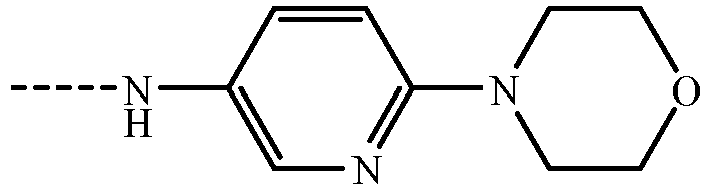
MS+: 869.3(M+1) 22 2 
MS+: 770.0(M+1) MS-: 767.7(M-1) 23 3 
MS+: 784.7(M+1) 24 2 
MS+: 770.1(M+1) 25 3 
MS+: 784.6(M+1) 26 2 
MS+: 784.0(M+1) 27 3 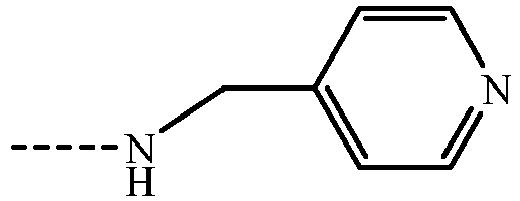
MS+: 798.2(M+1) 28 2 
MS+: 783.9(M+1) MS-: 781.8(M-1) 29 3 
MS+: 798.9(M+1) 30 2 
MS+: 784.1 (M+1) 31 3 
MS+: 798.1(M+1) 32 2 
MS+: 798.0(M+1) 33 3 
MS+: 812.1(M+1) 34 2 
MS+: 798.0(M+1) 35 3 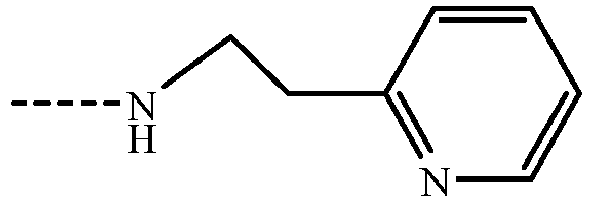
MS+: 812.3(M+1) 36 2 
MS+: 798.0(M+1) 37 3 
MS+: 812.1(M+1) 38 2 
MS-: 873.7(M-1) 39 3 
MS-:888.1(M-1) 40 2 
MS+: 790.1(M+1) 41 3 
MS+: 804.3(M+1) 42 2 
MS+: 811.0(M+1) MS-: 809.2(M-1) 43 3 
MS+: 825.4(M+1) 44 2 
MS+: 847.1(M+1) MS-: 845.0(M-1) 45 3 
MS+: 860.3(M+1) 46 2 
MS+: 833.1(M+1) 47 3 
MS+: 847.2(M+1) 48 2 
MS+: 764.1(M+1) 49 3 
MS+: 778.1 (M+1) 50 2 
MS+: 835.2(M+1) 51 3 
MS+: 849.2(M+1) 52 2 
MS+896.1(M+1) 53 3 
MS+909.8(M+1) 54 2 
MS+771.2(M+1) 55 3 
MS+784.1(M+1) 56 2 
MS+770.1(M+1) 57 3 
MS+784.1(M+1) 58 2 
MS+770.1(M+1) 59 3 
MS+784.1(M+1) 60 2 
MS-: 735.2(M-1) MS+: 759.3(M+Na+) 61 3 
MS-: 750.7(M-1) 62 2 
MS+: 803.3(M+Na+) 63 3 
MS-: 793.6(M-1) 64 2 
MS+: 803.2(M+Na+) MS-: 779.2(M-1) 65 3 
MS+: 795.2(M+1) 66 2 NH2 MS+: 693.1(M+1) 67 3 NH2 MS+: 707.2(M+1) 68 2 NHCH3 MS-: 705.6(M-1) 69 3 NHCH3 MS+: 721.1(M+1) 70 2 N(CH3)2 MS+: 721.1(M+1 ) 71 3 N(CH3)2 MS+: 735.6(M+1) 72 2 
MS+: 763.2(M+1) 73 3 
MS+: 777.1(M+1) 74 2 
MS+:761.3(M+1) 75 2 
MS+: 746.9(M+1) 88 2 
MS+: 806.2(M+1) 90 2 
91 2 
92 2 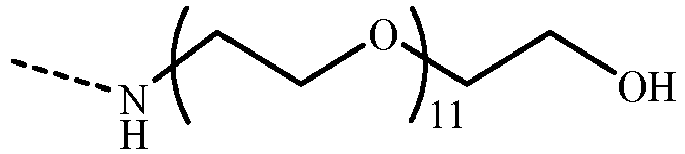
93 2 
94 2 
MS+:771(M+1) 95 2 
MS+: 833(M+1) 97 3 
98 2 
- The 1H-NMR spectra data of the compound in Example 28 were:
- δ = 1.145 ppm (d, 3H), δ = 1.664 ppm (m, 1H), δ = 2.110 ppm (m, 1H),
- δ = 2.336 ppm (d, 1H), δ = 2.415 ppm (m, 1H), δ = 2.505 ppm (m, 2H),
- δ = 2.675 ppm (t, 2H), δ = 2.917 ppm (d, 1H), δ = 3.008 ppm (d, 1H),
- δ = 3.546 ppm (s, 1H), δ = 3.943 ppm (s, 4H), δ = 4.303 ppm (m, 5H),
- δ = 4.982 ppm (s, 1H), δ = 5.189 ppm (d, 1H), δ = 5.253 ppm (d, 1H),
- δ = 5.349 ppm (s, 1H), δ = 5.920 ppm (s, 2H), δ = 6.780 ppm (s, 2H),
- δ = 7.346 ppm (m, 1H), δ = 7.609 ppm (d, 1H), δ = 7.640 ppm (d, 1H),
- δ = 7.856 ppm (m, 2H), δ = 8.471 ppm (m, 3H), δ = 13.219 ppm (s, 1H),
- δ 13.982 ppm (s, 1H)
- The 1H-NMR spectra data of the compound in Example 88 were:
- δ = 1.149 ppm (d, 3H), δ = 2.646 ppm (d, 2H), δ = 2.409 ppm (t, 2H),
- δ = 1.375-2.445 ppm (m, 2H), δ = 2.795-2.936 ppm (dd, 2H),
- δ = 2.702 ppm (s, 4H), δ = 4.294 ppm (m, 1H), δ=3.869 ppm (s, 3H),
- δ = 2.632 ppm (d, 2H), δ = 3.666 ppm (t, 4H),
- δ = 5.162-5.236 ppm (dd, 2H), δ = 4.282 ppm (m, 1H),
- δ = 4.897 ppm (s, 1H), δ = 3.533 ppm (s, 1H), δ = 5.314 ppm (s, 1H),
- δ = 5.899 ppm (t, 2H), δ = 7.729 ppm (d, 1H), δ = 6.755 ppm (t, 2H),
- δ = 7.492 ppm (d, 1H), δ = 7.772 ppm (t, 1H), δ = 8.070ppm (t, 1H),
- δ = 13.097 ppm (bs, 1H), δ = 13.871ppm (s, 1H)
- The target compound (10 mg) obtained in Example 6 was dissolved in chloroform (10 mL) with stirring. To a reaction flask was added glacial acetic acid (1 mg) dissolved in chloroform (10 mL). The mixture was continuously stirred for 10 min, and rotary-evaporated to remove the solvent, thereby giving the target compound.
- The solubility of the compound in water was more than 9 mg/mL.
- The target compounds in Examples 77-87 and 89 were prepared according to the preparation process in Example 76.
- The solubility of the compound in water was more than 10.6 mg/ml.
- The solubility of the compound in water was more than 22 mg/ml.
- The solubility of the compound in water was more than 5 mg/ml.
- The solubility of the compound in water was more than 11 mg/ml.
- The solubility of the compound in water was more than 7 mg/ml.
- The solubility of the compound in water was more than 6 mg/ml.
- The solubility of the compound in water was more than 1 mg/ml.
- The solubility of the compound in water was more than 12 mg/ml.
- The solubility of the compound in water was more than 11 mg/ml.
- The solubility of the compound in water was more than 3 mg/ml.
- The solubility of the compound in water was more than 16 mg/ml.
- The solubility of the compound in water was more than 26 mg/ml.
- The compound in Example 96 was detected by HPLC after being sealed and stored for 9 months under refrigeration conditions. No obvious degraded product was observed, which indicates good stability of the compound.
- Cell strains: SK-OV-3 (human ovarian cancer cell strains); MTT; antitumor compounds; DMSO.
- Culture medium: 90% McCoy's 5A + 10% FBS; Pancreatin (0.25% (w/v) solution was formulated with PBS, 0.53 mM of EDTA was added in the formulation); PBS; 96-well culture plate.
-
- 1. A plate (10 cm) of cells in logarithmic growth phase that were normally cultured was collected;
- 2. The culture solution was sucked out. The plate was washed with 5 mL of PBS once or twice;
- 3. PBS was sucked out. 1.5 mL of 0.25% pancreatin was added to infiltrate the cells;
- 4. The pancreatin was sucked out. The culture plate was placed in an incubator. Digestion was carried out for about 5 min at 37°C;
- 5. 4.5 mL of complete culture solution was added to the culture plate to stop the digestion. The cells were carefully scoured with micropipette (1 ml) to give a uniform cell suspension. The suspension was implanted into a 96-well cell culture disc by 4000 cells/100 µL per well. The culture plate was incubated overnight under 5% CO2 at 37°C. In
day 2, 100 µL of culture solution comprising a compound was added in each well.The plate was further incubated for 69 h under 5% CO2 at 37°C; - 6. The culture solution was sucked out;
- 7. 100 µL of serum-free culture solution containing 0.5 mg/mL MTT was added in each well. The plate was incubated for 3 h;
- 8. The culture solution was carefully sucked out;
- 9. 100 µL of DMSO was added in each well and vibrated to dissolve;
- 10. OD values were determined at 490 nM.
- The inhibition ratio of a compound on cell growth = (PC-n)/(PC-NC)×100%
wherein: - PC: OD values of cells after normal growth in control wells without a compound;
- n: OD values of cells after growth in test wells with a compound;
- NC: Background OD values of blank wells without a compound and cells.
- Cell strains: BxPC-3 (human pancreatic cancer cell strains); MTT; antitumor compounds; DMSO.
- Culture medium: 90% RPMI-1640 + 10% FBS; Pancreatin (0.25% (w/v) solution was formulated with PBS, 0.53 mM of EDTA was added in the formulation); PBS; 96-well culture plate.
-
- 1. A plate (10 cm) of cells in logarithmic growth phase that were normally cultured was collected;
- 2. The culture solution was sucked out. The plate was washed with 5 mL of PBS once or twice;
- 3. PBS was sucked out. 1.5 mL of 0.25% pancreatin was added to infiltrate the cells;
- 4. The culture plate was placed in an incubator. Digestion was carried out for about 8 min at 37°C;
- 5. 4.5 mL of complete culture solution was added to the culture plate to stop the digestion. The cells were carefully scoured with micropipette (1 ml) to give a uniform cell suspension. The suspension was implanted into a 96-well cell culture disc by 5000 cells/100 µL per well. The culture plate was incubated overnight under 5% CO2 at 37°C. In
day 2, 100 µL of culture solution comprising a compound was added in each well. The plate was further incubated for 70 h under 5% CO2 at 37°C; - 6. The culture solution was sucked out;
- 7. 100 µL of serum-free culture solution containing 0.5 mg/mL MTT was added in each well. The plate was incubated for 3 h;
- 8. The culture solution was carefully sucked out;
- 9. 100 µL of DMSO was added into each well and vibrated to dissolve;
- 10. OD values were determined at 490 nM.
- The inhibition ratio of a compound on cell growth = (PC-n)/(PC-NC)×100%
wherein: - PC: OD values of cells after normal growth in control wells without a compound;
- n: OD values of cells after growth in test wells with a compound;
- NC: Background OD values of blank wells without a compound and cells.
- Cell strains: NCI-H446 (human small cell lung cancer cell strains); MTT; antitumor compounds; DMSO.
- Culture medium: 90% RPMI-1640 + 10% FBS; Pancreatin (0.25% (w/v) solution was formulated with PBS, 0.53 mM of EDTA was added in the formulation); PBS; 96-well culture plate.
-
- 1. A plate (10 cm) of cells in logarithmic growth phase that were normally cultured was collected;
- 2. The culture solution was sucked out. The plate was washed with 5 mL of PBS once or twice;
- 3. PBS was sucked out. 1.5 mL of 0.25% pancreatin was added to infiltrate the cells;
- 4. The culture plate was placed in an incubator. Digestion was carried out for about 3min at 37°C;
- 5. 3 mL of complete culture solution was added to the culture plate to stop the digestion. The cells were carefully scoured with micropipette (1 ml) to give a uniform cell suspension. The suspension was implanted into a 96-well cell culture disc by 4000 cells/100 µL per well. The culture plate was incubated overnight under 5% CO2 at 37°C. In
day 2, 100 µL of culture solution comprising a compound was added in each well. The plate was further incubated for 70 h under 5% CO2 at 37°C; - 6. The culture solution was sucked out;
- 7. 100 µL of serum-free culture solution containing 0.5 mg/mL MTT was added in each well. The plate was incubated for 3 h;
- 8. The culture solution was carefully sucked out;
- 9. 100 µL of DMSO was added into each well and vibrated to dissolve;
- 10. OD values were determined at 490 nM.
- The inhibition ratio of a compound on cell growth = (PC-n)/(PC-NC)×100%
wherein: - PC: OD values of cells after normal growth in control wells without a compound;
- n: OD values of cells after growth in test wells with a compound;
- NC: Background OD values of blank wells without a compound and cells.
- Cell strains: MDA-MB-453 (human breast cancer cell strains); SRB: 0.4% (w/v) working solution was formulated with 1% glacial acetic acid, reserved at 4°C; antitumor compounds; DMSO.
- Culture medium: 90% L15 + 10% FBS; pancreatin (0.25% (w/v) solution was formulated with PBS, 0.53 mM of EDTA was added in the formulation); PBS; 96-well culture plate.
-
- 1. A plate (10 cm) of cells in logarithmic growth phase that were normally cultured was collected;
- 2. The culture solution was sucked out. The plate was washed with 5 mL of PBS once or twice;
- 3. 1.5 mL of 0.25% pancreatin was added to the plate to infiltrate the cells;
- 4. The pancreatin was sucked out. The culture plate was placed in an incubator. Digestion was carried out for about 3 min at 37°C;
- 5. 4 mL of complete culture solution was added to the culture plate to stop the digestion. The cells were carefully scoured with micropipette (1 ml) to give a uniform single cell suspension. The suspension was implanted into a 96-well cell culture plate by 7000 cells/100 µL per well. The culture plate was incubated overnight under 5% CO2 at 37°C. In
day 2, 100 µL of culture solution comprising a compound was added in each well. The plate was further incubated for 69.5 h under 5% CO2 at 37°C; - 6. The culture solution was sucked out. 100 uL of TCA fixed cells which were diluted to 10% were added to each well. The plate was kept in a refrigerator for 1 h at 4°C.
- 7. TCA stationary liquid was sucked out. Each well was washed with 150 µL of ddH2O five times;
- 8. After the stationary liquid was cleansed, the plate was dried in the air at the room temperature;
- 9. 60 µL of SRB staining solution was added in each well. The well was stained for 15 min at the room temperature;
- 10. The SRB staining solution was sucked out. Each well was washed with 150 µL of 1% glacial acetic acid five times;
- 11. After the SRB staining solution was cleansed, the plate was dried in the air at the room temperature;
- 12. 100 µL of 10 mM Tris was added in each well. The plate was vibrated to dissolve out SRB;
- 13. OD values were determined at 570 nM.
- The inhibition ratio of a compound on cell growth = (PC-n)/(PC-NC)×100%
wherein: - PC: OD values of cells after normal growth in control wells without a compound;
- n: OD values of cells after growth in test wells with a compound;
- NC: Background OD values of blank wells without a compound and cells.
- Cell strains: 22Rv1 (human prostate cancer cell strains); SRB: 0.4% (w/v) working solution was formulated with 1% glacial acetic acid, reserved at 4°C; antitumor compounds; DMSO.
- Culture medium: 90% RPMI-1640 + 10% FBS; Pancreatin (0.25% (w/v) solution was formulated with PBS, 0.53 mM of EDTA was added in the formulation); PBS; 96-well culture plate.
-
- 1. A plate (10 cm) of cells in logarithmic growth phase that were normally cultured was collected;
- 2. The culture solution was sucked out. The plate was washed with 5 mL of PBS once or twice;
- 3. 1.5 mL of 0.25% pancreatin was added to the plate to infiltrate the cells;
- 4. The pancreatin was sucked out. The culture plate was placed in an incubator. Digestion was carried out for about 3 min at 37°C;
- 5. 4 mL of complete culture solution was added to the culture plate to stop the digestion. The cells were carefully scoured with micropipette (1 ml) to give a uniform single cell suspension. The suspension was implanted into a 96-well cell culture plate by 7000 cells/100 µL per well. The culture plate was incubated overnight under 5% CO2 at 37°C. In
day 2, 100 µL of culture solution comprising a compound was added in each well. The plate was further incubated for 73 h under 5% CO2 at 37°C; - 6. The culture solution was sucked out. 100 uL of TCA fixed cells which were diluted to 10% were added to each well. The plate was kept in a refrigerator for 1 h at 4°C.
- 7. TCA stationary liquid was sucked out. Each well was washed with 150 µL of ddH2O five times;
- 8. After the stationary liquid was cleansed, the plate was dried in the air at the room temperature;
- 9. 60 µL of SRB staining solution was added in each well. The well was stained for 15 min at the room temperature;
- 10. The SRB staining solution was sucked out. Each well was washed with 150 µL of 1% glacial acetic acid five times;
- 11. After the SRB staining solution was cleansed, the plate was dried in the air at the room temperature;
- 12. 100 µL of 10 mM Tris was added in each well. The plate was vibrated to dissolve out SRB;
- 13. OD values were determined at 570 nM.
- The inhibition ratio of a compound on cell growth = (PC-n)/(PC-NC)×100%
wherein: - PC: OD values of cells after normal growth in control wells without a compound;
- n: OD values of cells after growth in test wells with a compound;
- NC: Background OD values of blank wells without a compound and cells.
- Cell strains: A375 (human cutaneous melanoma cell strains); MTT: nitroblue tetrazolium; antitumor compounds; compound A: 3'-pyrrolyldoxorubicin-14-oxo-succinic acid monoester; DMSO.
- Culture medium: 90% DMEM + 10% FBS (fetal calf serum); Pancreatin (0.25% (w/v) solution was formulated with PBS, 0.53 mM of EDTA was added in the formulation); PBS; 96-well culture plate.
-
- 1. A plate (10 cm) of cells in logarithmic growth phase that were normally cultured was collected;
- 2. The culture solution was sucked out. The plate was washed with 5 mL of PBS once or twice;
- 3. PBS was sucked out. 1.5 mL of 0.25% pancreatin was added to the plate to infiltrate the cells for 1 min;
- 4. The culture plate was placed in an incubator. Digestion was carried out for about 5 min at 37°C;
- 5. 3 mL of complete culture solution was added to the culture plate to stop the digestion. The cells were carefully scoured with micropipette (1 ml) to give a uniform cell suspension. The suspension was implanted into a 96-well cell culture disc by 3000 cells/100 µL per well. The culture plate was incubated overnight under 5% CO2 at 37°C. In
day 2, 100 µL of culture solution comprising a compound was added in each well. The plate was further incubated for 72 h under 5% CO2 at 37°C; - 6. The culture solution was sucked out;
- 7. 100 µL of serum-free culture solution containing 0.5 mg/mL MTT was added in each well. The plate was incubated for 3 h;
- 8. The culture solution was carefully sucked out;
- 9. 100 µL of DMSO was added in each well and vibrated to dissolve;
- 10. OD values were determined at 490 nM.
- The inhibition ratio of a compound on cell growth = (PC-n)/(PC-NC)×100%
wherein: - PC: OD values of cells after normal growth in control wells without a compound;
- n: OD values of cells after growth in test wells with a compound;
- NC: Background OD values of blank wells without a compound and cells.
- Cell strains: A431 (human epidermal carcinoma cell strains); MTT: nitroblue tetrazolium; antitumor compounds; compound A: 3'-pyrrolyldoxorubicin-14-oxo-succinic acid monoester; DMSO.
- Culture medium: 45% DMEM +45% F12 + 10% FBS (fetal calf serum); Pancreatin (0.25% (w/v) solution was formulated with PBS, 0.53 mM of EDTA was added in the formulation); PBS; 96-well culture plate.
-
- 1. A plate (10 cm) of cells in logarithmic growth phase that were normally cultured was collected;
- 2. The culture solution was sucked out. The plate was washed with 5 mL of PBS once or twice;
- 3. PBS was sucked out. 1.5 mL of 0.25% pancreatin was added to the plate to infiltrate the cells for 1 min;
- 4. The culture plate was placed in an incubator. Digestion was carried out for about 5 min at 37°C;
- 5. 3 mL of complete culture solution was added to the culture plate to stop the digestion. The cells were carefully scoured with micropipette (1 mL) to give a uniform cell suspension. The suspension was implanted into a 96-well cell culture disc by 2500 cells/100 µL per well. The culture plate was incubated overnight under 5% CO2 at 37°C. In
day 2, 100 µL of culture solution comprising a compound was added in each well. The plate was further incubated for 72 h under 5% CO2 at 37°C; - 6. The culture solution was sucked out;
- 7. 100 µL of serum-free culture solution containing 0.5 mg/mL MTT was added in each well. The plate was incubated for 3 h;
- 8. The culture solution was carefully sucked out;
- 9. 100 µL of DMSO was added in each well and vibrated to dissolve;
- 10. OD values were determined at 490 nM.
- The inhibition ratio of a compound on cell growth = (PC-n)/(PC-NC)×100%
wherein: - PC: OD values of cells after normal growth in control wells without a compound;
- n: OD values of cells after growth in test wells with a compound;
- NC: Background OD values of blank wells without a compound and cells.
- Cell strains: MCF-7 (human breast cancer cell strains); SRB: 0.4% (w/v) working solution was formulated with 1% glacial acetic acid, reserved at 4°C; antitumor compounds; compound A: 3'-pyrrolyldoxorubicin-14-oxo-succinic acid monoester; DMSO.
- Culture medium: 90% EMEM + 10% FBS; Pancreatin (0.25% (w/v) solution was formulated with PBS, 0.53 mM of EDTA was added in the formulation); PBS; 96-well culture plate.
-
- 1. A plate (10 cm) of cells in logarithmic growth phase that were normally cultured was collected;
- 2. The culture solution was sucked out. The plate was washed with 5 mL of PBS once or twice;
- 3. 1.5 mL of 0.25% pancreatin was added to the plate to infiltrate the cells;
- 4. The pancreatin was sucked out. The culture plate was placed in an incubator. Digestion was carried out for about 3 min at 37°C;
- 5. 4 mL of complete culture solution was added to the culture plate to stop the digestion. The cells were carefully scoured with micropipette (1 mL) to give a uniform single cell suspension. The suspension was implanted into a 96-well cell culture plate by 10000 cells/100 µL per well. The culture plate was incubated overnight under 5% CO2 at 37°C. In
day 2, 100 µL of culture solution comprising a compound was added in each well. The plate was further incubated for 73 h under 5% CO2 at 37°C; - 6. The culture solution was sucked out. 100 uL of TCA fixed cells which were diluted to 10% were added to each well. The plate was kept in a refrigerator for 1 h at 4°C.
- 7. TCA stationary liquid was sucked out. Each well was washed with 150 µL of ddH2O five times;
- 8. After the stationary liquid was cleansed, the plate was dried in the air at the room temperature;
- 9. 60 µL of SRB staining solution was added in each well. The well was stained for 15 min at the room temperature;
- 10. The SRB staining solution was sucked out. Each well was washed with 150 µL of 1% glacial acetic acid five times;
- 11. After the SRB staining solution was cleansed, the plate was dried in the air at the room temperature;
- 12. 100 µL of 10 mM Tris was added in each well. The plate was vibrated to dissolve out SRB;
- 13. OD values were determined at 570 nM.
- The inhibition ratio of a compound on cell growth = (PC-n)/(PC-NC)×100%
wherein: - PC: OD values of cells after normal growth in control wells without a compound;
- n: OD values of cells after growth in test wells with a compound;
- NC: Background OD values of blank wells without a compound and cells.
- Cell strains: NCI-446 (human small cell lung cancer cell strains); MTT: nitroblue tetrazolium; antitumor compounds; compound A: 3'-pyrrolyldoxorubicin-14-oxo-succinic acid monoester; DMSO.
- Culture medium: 90% RPMI1640 + 10% FBS (fetal calf serum); Pancreatin (0.25% (w/v) solution was formulated with PBS, 0.53 mM of EDTA was added in the formulation); PBS; 96-well culture plate.
-
- 1. A plate (10 cm) of cells in logarithmic growth phase that were normally cultured was collected;
- 2. The culture solution was sucked out. The plate was washed with 5 ml of PBS once or twice;
- 3. PBS was sucked out. 1.5 mL of 0.25% pancreatin was added to the plate to infiltrate the cells for 1 min;
- 4. The culture plate was placed in an incubator. Digestion was carried out for about 3 min at 37°C;
- 5. 3 mL of complete culture solution was added to the culture plate to stop the digestion. The cells were carefully scoured with micropipette (1 mL) to give a uniform cell suspension. The suspension was implanted into a 96-well cell culture disc by 4000 cells/100 µL per well. The culture plate was incubated overnight under 5% CO2 at 37°C. In
day 2, 100 µL of culture solution comprising a compound was added in each well. The plate was further incubated for 72 h under 5% CO2 at 37°C; - 6. The culture solution was sucked out;
- 7. 100 µL of serum-free culture solution containing 0.5 mg/mL MTT was added in each well. The plate was incubated for 3 h;
- 8. The culture solution was carefully sucked out;
- 9. 100 µL of DMSO was added in each well and vibrated to dissolve;
- 10. OD values were determined at 490 nM.
- The inhibition ratio of a compound on cell growth = (PC-n)/(PC-NC)×100%
wherein: - PC: OD values of cells after normal growth in control wells without a compound;
- n: OD values of cells after growth in test wells with a compound;
- NC: Background OD values of blank wells without a compound and cells.
- Cell strains: NCI-H460 (human large cell lung cancer cell strains); MTT: nitroblue tetrazolium; antitumor compounds; compound A: 3'-pyrrolyldoxorubicin-14-oxo-succinic acid monoester; DMSO.
- Culture medium: 90% RPMI1640 + 10% FBS (fetal calf serum); Pancreatin (0.25% (w/v) solution was formulated with PBS, 0.53 mM of EDTA was added in the formulation); PBS; 96-well culture plate.
-
- 1. A plate (10 cm) of cells in logarithmic growth phase that were normally cultured was collected;
- 2. The culture solution was sucked out. The plate was washed with 5 mL of PBS once or twice;
- 3. PBS was sucked out. 1.5 mL of 0.25% pancreatin was added to the plate to infiltrate the cells for 1 min;
- 4. The culture plate was placed in an incubator. Digestion was carried out for about 3min at 37°C;
- 5. 3 mL of complete culture solution was added to the culture plate to stop the digestion. The cells were carefully scoured with micropipette (1 mL) to give a uniform cell suspension. The suspension was implanted into a 96-well cell culture disc by 2000 cells/100 µL per well. The culture plate was incubated overnight under 5% CO2 at 37°C. In
day 2, 100 µL of culture solution comprising a compound was added in each well. The plate was further incubated for 72 h under 5% CO2 at 37°C; - 6. The culture solution was sucked out;
- 7. 100 µL of serum-free culture solution containing 0.5 mg/mL MTT was added in each well. The plate was incubated for 3 h;
- 8. The culture solution was carefully sucked out;
- 9. 100 µL of DMSO was added in each well and vibrated to dissolve;
- 10. OD values were determined at 490 nM.
- The inhibition ratio of a compound on cell growth = (PC-n)/(PC-NC)×100% wherein:
- PC: OD values of cells after normal growth in control wells without a compound;
- n: OD values of cells after growth in test wells with a compound;
- NC: Background OD values of blank wells without a compound and cells.
- Cell strains: B16 (mouse melanoma cell strains); MTT: nitroblue tetrazolium; antitumor compounds; compound A: 3'-pyrrolyldoxorubicin-14-oxo-succinic acid monoester; DMSO.
- Culture medium: 90% RPMI1640 + 10% FBS (fetal calf serum); Pancreatin (0.25% (w/v) solution was formulated with PBS, 0.53 mM of EDTA was added in the formulation); PBS; 96-well culture plate.
-
- 1. A plate (10 cm) of cells in logarithmic growth phase that were normally cultured was collected;
- 2. The culture solution was sucked out. The plate was washed with 5 mL of PBS once or twice;
- 3. PBS was sucked out. 1.5 mL of 0.25% pancreatin was added to the plate to infiltrate the cells for 1 min;
- 4. The culture plate was placed in an incubator. Digestion was carried out for about 1 min at 37°C;
- 5. 3 mL of complete culture solution was added to the culture plate to stop the digestion. The cells were carefully scoured with micropipette (1 mL) to give a uniform cell suspension. The suspension was implanted into a 96-well cell culture disc by 2500 cells/100 µL per well. The culture plate was incubated overnight under 5% CO2 at 37°C. In
day 2, 100 µL of culture solution comprising a compound was added in each well. The plate was further incubated for 72 h under 5% CO2 at 37°C; - 6. The culture solution was sucked out;
- 7. 100 µl of serum-free culture solution containing 0.5 mg/mL MTT was added in each well. The plate was incubated for 3 h;
- 8. The culture solution was carefully sucked out;
- 9. 100 µL of DMSO was added in each well and vibrated to dissolve;
- 10. OD values were determined at 490 nM.
- The inhibition ratio of a compound on cell growth = (PC-n)/(PC-NC)×100%
wherein: - PC: OD values of cells after normal growth in control wells without a compound;
- n: OD values of cells after growth in test wells with a compound;
- NC: Background OD values of blank wells without a compound and cells.
- Cell strains: 786-O (human clear cell adenocarcinoma cell strains); MTT: nitroblue tetrazolium; antitumor compounds; compound A: 3'-pyrrolyldoxorubicin-14-oxo-succinic acid monoester; DMSO.
- Culture medium: 90% RPMI1640 + 10% FBS (fetal calf serum); Pancreatin (0.25% (w/v) solution was formulated with PBS, 0.53 mM of EDTA was added in the formulation); PBS; 96-well culture plate.
-
- 1. A plate (10 cm) of cells in logarithmic growth phase that were normally cultured was collected;
- 2. The culture solution was sucked out. The plate was washed with 5 mL of PBS once or twice;
- 3. PBS was sucked out. 1.5 mL of 0.25% pancreatin was added to the plate to infiltrate the cells for 1 min;
- 4. The culture plate was placed in an incubator. Digestion was carried out for about 1 min at 37°C;
- 5. 3 mL of complete culture solution was added to the culture plate to stop the digestion. The cells were carefully scoured with micropipette (1 mL) to give a uniform cell suspension. The suspension was implanted into a 96-well cell culture disc by 2000 cells/100 µL per well. The culture plate was incubated overnight under 5% CO2 at 37°C. In
day 2, 100 µL of culture solution comprising a compound was added in each well. The plate was further incubated for 72 h under 5% CO2 at 37°C; - 6. The culture solution was sucked out;
- 7. 100 µL of serum-free culture solution containing 0.5 mg/mL MTT was added in each well. The plate was incubated for 3 h;
- 8. The culture solution was carefully sucked out;
- 9. 100 µL of DMSO was added in each well and vibrated to dissolve;
- 10. OD values were determined at 490 nM.
- The inhibition ratio of a compound on cell growth = (PC-n)/(PC-NC)×100%
wherein: - PC: OD values of cells after normal growth in control wells without a compound;
- n: OD values of cells after growth in test wells with a compound;
- NC: Background OD values of blank wells without a compound and cells.
- Cell strains: DU-145 (prostate cancer cell strains); MTT: nitroblue tetrazolium; antitumor compounds; compound A: 3'-pyrrolyldoxorubicin-14-oxo-succinic acid monoester; DMSO.
- Culture medium: 90% EMEM + 10% FBS (fetal calf serum); Pancreatin (0.25% (w/v) solution was formulated with PBS, 0.53 mM of EDTA was added in the formulation); PBS; 96-well culture plate.
-
- 1. A plate (10 cm) of cells in logarithmic growth phase that were normally cultured was collected;
- 2. The culture solution was sucked out. The plate was washed with 5 mL of PBS once or twice;
- 3. PBS was sucked out. 1.5 mL of 0.25% pancreatin was added to the plate to infiltrate the cells for 1 min;
- 4. The culture plate was placed in an incubator. Digestion was carried out for about 1 min at 37°C;
- 5. 3 mL of complete culture solution was added to the culture plate to stop the digestion. The cells were carefully scoured with micropipette (1 mL) to give a uniform cell suspension. The suspension was implanted into a 96-well cell culture disc by 4000 cells/100 µL per well. The culture plate was incubated overnight under 5% CO2 at 37°C. In
day 2, 100 µL of culture solution comprising a compound was added in each well. The plate was further incubated for 72 h under 5% CO2 at 37°C; - 6. The culture solution was sucked out;
- 7. 100 µL of serum-free culture solution containing 0.5 mg/mL MTT was added in each well. The plate was incubated for 3 h;
- 8. The culture solution was carefully sucked out;
- 9. 100 µL of DMSO was added in each well and vibrated to dissolve;
- 10. OD values were determined at 490 nM.
- The inhibition ratio of a compound on cell growth = (PC-n)/(PC-NC)×100%
wherein: - PC: OD values of cells after normal growth in control wells without a compound;
- n: OD values of cells after growth in test wells with a compound;
- NC: Background OD values of blank wells without a compound and cells.
- Cell strains: Hep3B (liver cancer cell strains); SRB: 0.4% (w/v) working solution was formulated with 1% glacial acetic acid, reserved at 4°C; antitumor compounds; compound A: 3'-pyrrolyldoxorubicin-14-oxo-succinic acid monoester; DMSO.
- Culture medium: 90% RPMI-1640 + 10% FBS; Pancreatin (0.25% (w/v) solution was formulated with PBS, 0.53 mM of EDTA was added in the formulation); PBS; 96-well culture plate.
-
- 1. A plate (10 cm) of cells in logarithmic growth phase that were normally cultured was collected;
- 2. The culture solution was sucked out. The plate was washed with 5 mL of PBS once or twice;
- 3. 1.5 mL of 0.25% pancreatin was added to the plate to infiltrate the cells;
- 4. The pancreatin was sucked out. The culture plate was placed in an incubator. Digestion was carried out for about 3 min at 37°C;
- 5. 4 mL of complete culture solution was added to the culture plate to stop the digestion. The cells were carefully scoured with micropipette (1 mL) to give a uniform single cell suspension. The suspension was implanted into a 96-well cell culture plate by 5000 cells/100 µL per well. The culture plate was incubated overnight under 5% CO2 at 37°C. In
day 2, 100 µL of culture solution comprising a compound was added in each well. The plate was further incubated for 72 h under 5% CO2 at 37°C; - 6. The culture solution was sucked out. 100 uL of TCA fixed cells which were diluted to 10% were added to each well. The plate was kept in a refrigerator for 1 h at 4°C.
- 7. TCA stationary liquid was sucked out. Eeach well was washed with 150 µL of ddH2O five times;
- 8. After the stationary liquid was cleansed, the plate was dried in the air at the room temperature;
- 9. 60 µL of SRB staining solution was added in each well. The well was stained for 15 min at the room temperature;
- 10. The SRB staining solution was sucked out. Each well was washed with 150 µL of 1% glacial acetic acid five times;
- 11. After the SRB staining solution was cleansed, the plate was dried in the air at the room temperature;
- 12. 100 µL of 10 mM Tris was added in each well. The plate was vibrated to dissolve out SRB;
- 13. OD values were determined at 570 nM.
- The inhibition ratio of the comound on cell growth =(PC-n)/(PC-NC)× 100%
wherein: - PC: OD values of cells after normal growth in control wells without a compound;
- n: OD values of cells after growth in test wells with a compound;
- NC: Background OD values of blank wells without a compound and cells.
- Cell strains: SK-Br-3 (human breast cancer cell strains); SRB: 0.4% (w/v) working solution was formulated with 1% glacial acetic acid, reserved at 4°C; antitumor compounds; compound A: 3'-pyrrolyldoxorubicin-14-oxo-succinic acid monoester; DMSO.
- Culture medium: 85% DMEM + 15% FBS; pancreatin (0.25% (w/v) solution was formulated with PBS, 0.53 mM of EDTA was added in the formulation); PBS; 96-well culture plate.
-
- 1. A plate (10 cm) of cells in logarithmic growth phase that were normally cultured was collected;
- 2. The culture solution was sucked out. The plate was washed with 5 mL of PBS once or twice;
- 3. 1.5 mL of 0.25% pancreatin was added to the plate to infiltrate the cells;
- 4. The pancreatin was sucked out. The culture plate was placed in an incubator. Digestion was carried out for about 2 min at 37°C;
- 5. 4 mL of complete culture solution was added to the culture plate to stop the digestion. The cells were carefully scoured with micropipette (1 mL) to give a uniform single cell suspension. The suspension was implanted into a 96-well cell culture plate by 10000 cells/100 µL per well. The culture plate was incubated overnight under 5% CO2 at 37°C. In
day 2, 100 µL of culture solution comprising a compound was added in each well. The plate was further incubated for 72 h under 5% CO2 at 37°C; - 6. The culture solution was sucked out. 100 uL of TCA fixed cells which were diluted to 10% were added to each well. The plate was kept in a refrigerator for 1 h at 4°C.
- 7. TCA stationary liquid was sucked out. Each well was washed with 150 µL of ddH2O five times;
- 8. After the stationary liquid was cleansed, the plate was dried in the air at the room temperature;
- 9. 60 µL of SRB staining solution was added in each well. The well was stained for 15 min at the room temperature;
- 10. The SRB staining solution was sucked out. Each well was washed with 150 µL of 1% glacial acetic acid five times;
- 11. After the SRB staining solution was cleansed, the plate was dried in the air at the room temperature;
- 12. 100 µL of 10 mM Tris was added in each well. The plate was vibrated to dissolve out SRB;
- 13. OD values were determined at 570 nM.
- The inhibition ratio of a compound on cell growth = (PC-n)/(PC-NC)×100%
wherein: - PC: OD values of cells after normal growth in control wells without a compound;
- n: OD values of cells after growth in test wells with a compound;
- NC: Background OD values of blank wells without a compound and cells.
- Assay animals: mice of ICR strain with a weight of 18-22 g, purchased from Beijing Vital River Laboratories Limited, License SCXK (jing) 2007-0001.
- Administration Regimen: each experimental animal was administered with corresponding dosage of tested substance once by injection of caudal vain every three days. Each dosage was initially designed as 5 times of administration. The specific time of administration depended on the conditions of the animals. It should be carefully observed the behavior conditions of the animals within 2 hours after administration. The animal's behavior was observed every 4 hours in the day of administration. The survival conditions and weight of animals were recorded every day and observed for whether abnormality occurred on the body surface thereof. The experimental animals were sacrificed on 14 day after administration and dissected for observation.
-
- I group: (20mg/kg) group;
- II group: (25mg/kg) group;
- III group: (30mg/kg) group;
- IV group: solvent control group;
- There were four groups in total. Each group consisted of five male mice and five female mice.
-
- (1) The effects on weights of experimental animals are shown in
Fig. 1 . - (2) The effects on survival ratio of experimental animals are shown in Table 17.
- The experimental animals in the solvent control group exhibited normally increased weight without death. Death occurred in succession in the experimental animals after administration with 20 mg/kg or 25 mg/kg four times. Death occurred in succession in the experimental animals after administration with 30 mg/kg three times. The mortality rate is 100%. The MTD of the tested
compound 1 is less than 20 mg/kg (0.0338 mmol/kg) according to the q4d × 5 administration regimen. -
- I group: (40mg/kg) group;
- II group: (45mg/kg) group;
- III group: (50mg/kg) group;
- IV group: (55mg/kg) group;
- V group: (60mg/kg) group;
- TYhere were five groups in total. Each group consisted of six male mice and six female mice.
-
- (1) The effects on weights of experimental animals are shown in
Fig. 2 . - (2) The effects on survival ratio of experimental animals are shown in Table 18.
- There was one dead animal in the 40 mg/kg dosage group. The mortality rate is 8.33%. The dead animal was dissected for observation of various organs. The organs did not exhibit obvious abnormality. However, there was several bite marks on the surface of the skin of the dead animal. This animal did not have significant weight loss. Therefore, it is presumed that the death is caused by cytotoxicity factor rather than drug. Two experimental animals died immediately after the fifth administration in the 50 mg/kg dosage group. The two dead animals did not have significant weight loss. It is presumed that the death is caused by cytotoxicity factor rather than drug. The MTD of the tested
compound 2 is 50-55 mg/kg (0.0525-0.0578 mmol/kg) according to the q4d × 5 administration regimen. -
- I group: (30mg/kg) group;
- II group: (40mg/kg) group;
- III group: (50mg/kg) group;
- IV group: (60mg/kg) group;
- There were four groups in total. Each group consisted of five male mice and five female mice.
-
(1) The effects on weights of experimental animals are shown inFig. 3 .
(2) The effects on survival ratio of experimental animals are shown in Table 19.Table 19 Dosage (mg/kg) Times of Administration Total Dosage (mg/kg) Number of Animals per Group ♂/♀ Number of Dead Animals ♂/♀ Mortality Rate (%) 30 5 150 5/5 0/1 10 40 5 200 5/5 3/2 50 50 5 250 5/5 5/5 100 60 5 300 5/5 5/5 100 Note: ♂ : male mouse; ♀: female mouse - The lethality rates of mice of ICR strain are 10%, 50%, 100%, 100% respectively, according to the administration regimens of 30 mg/kg, 40 mg/kg, 50 mg/kg, 60 mg/k of compounds. One experimental animal dried without significant weight loss in the animals of 30 mg/kg group, indicating that this dead animal in 30 mg/kg group does not exclude the cause of animal's individual difference. The MTD of the tested
compound 3 is approximately 30 mg/kg (0.0433 mmol/kg) according to the q4d × 5 administration regimen. - The above general description regarding the invention disclosed herein and the description of the specific embodiments thereof cannot be construed as the limitation to the technical solutions of the invention. One of ordinary skill in the art can add, delete or combine the technical features disclosed in the above general description and/or specific embodiments (including Examples) to form other technical solutions within the invention according to the disclosure herein without departing from the constitutive elements of the invention.
| Compounds | Inhibition Ratio (%) | Compounds | Inhibition Ratio (%) | Compounds | Inhibition Ratio (%) |
| Example 1 | 57.3 | Example 3 | 62.5 | Example 8 | 60 |
| Example 10 | 71.5 | Example 12 | 48.8 | Example 14 | 53.6 |
| Example 18 | 47.4 | Example 20 | 62.6 | Example 22 | 60.3 |
| Example 24 | 61.4 | Example 26 | 67.6 | Example 28 | 66.2 |
| Example 30 | 59.9 | Example 32 | 59.7 | Example 34 | 59.4 |
| Example 35 | 57.8 | Example 38 | 67.6 | Example 40 | 47.9 |
| Example 44 | 52.3 | Example 60 | 58.9 | Example 62 | 63.6 |
| Example 64 | 65.9 | Example 66 | 66.5 | Example 76 | 46.4 |
| Example 77 | 60.4 | Example 81 | 56.4 | Example 94 | 71.4 |
| Example 95 | 66.3 |
| Compounds | Inhibition Ratio (%) | Compounds | Inhibition Ratio (%) | Compounds | Inhibition Ratio (%) |
| Example 1 | 82.5 | Example 3 | 81.2 | Example 8 | 82.6 |
| Example 10 | 85 | Example 12 | 74.9 | Example 14 | 81.8 |
| Example 18 | 70.7 | Example 20 | 84.1 | Example 22 | 82 |
| Example 24 | 84.7 | Example 26 | 82.7 | Example 28 | 84.7 |
| Example 30 | 85.2 | Example 32 | 83.4 | Example 34 | 84 |
| Example 35 | 81.3 | Example 38 | 82.4 | Example 40 | 76.5 |
| Example 44 | 78.5 | Example 60 | 83.4 | Example 62 | 82.5 |
| Example 64 | 83.7 | Example 66 | 83.1 | Example 76 | 77.1 |
| Example 77 | 83.3 | Example 81 | 80.7 | Example 94 | 84.9 |
| Example 95 | 80.6 |
| Compounds | Inhibition Ratio (%) | Compounds | Inhibition Ratio (%) | Compounds | Inhibition Ratio (%) |
| Example 1 | 43.2 | Example 3 | 60.8 | Example 8 | 59.5 |
| Example 10 | 61.1 | Example 12 | 54.6 | Example 20 | 68 |
| Example 22 | 62.1 | Example 24 | 61.8 | Example 26 | 66.9 |
| Example 28 | 65.8 | Example 30 | 61 | Example 32 | 59.3 |
| Example 34 | 60.7 | Example 35 | 57.2 | Example 38 | 62.6 |
| Example 40 | 49 | Example 44 | 46.3 | Example 60 | 52.5 |
| Example 62 | 64.6 | Example 64 | 51.6 | Example 66 | 56.2 |
| Example 76 | 46 | Example 77 | 59.1 | Example 81 | 56.8 |
| Example 94 | 48.4 |
| Compounds | Inhibition Ratio (%) | Compounds | Inhibition Ratio (%) | Compounds | Inhibition Ratio (%) |
| Example 1 | 77.7 | Example 3 | 73.9 | Example 8 | 75.3 |
| Example 10 | 78.5 | Example 12 | 73.7 | Example 14 | 74.4 |
| Example 20 | 82.4 | Example 22 | 71.1 | Example 24 | 79.8 |
| Example 26 | 79.9 | Example 28 | 81.9 | Example 30 | 79.9 |
| Example 32 | 78.3 | Example 34 | 80.5 | Example 35 | 77.1 |
| Example 38 | 75.8 | Example 40 | 73 | Example 44 | 68.5 |
| Example 60 | 76.3 | Example 62 | 83.7 | Example 64 | 73.5 |
| Example 66 | 73.9 | Example 76 | 62.7 | Example 77 | 79.7 |
| Example 81 | 72 | Example 94 | 75.8 | Example 95 | 68.2 |
| Compounds | Inhibition Ratio (%) | Compounds | Inhibition Ratio (%) | Compounds | Inhibition Ratio (%) |
| Example 1 | 52.2 | Example 3 | 61.9 | Example 8 | 56.8 |
| Example 10 | 62.7 | Example 12 | 53.3 | Example 14 | 52.1 |
| Example 20 | 60.9 | Example 22 | 56.3 | Example 24 | 63.6 |
| Example 26 | 60.8 | Example 28 | 63.1 | Example 30 | 62.3 |
| Example 32 | 61.7 | Example 34 | 63.3 | Example 35 | 58.5 |
| Example 38 | 56.3 | Example 40 | 50.5 | Example 44 | 48.5 |
| Example 60 | 52.9 | Example 62 | 57 | Example 64 | 54.8 |
| Example 66 | 59 | Example 76 | 49.2 | Example 77 | 57.9 |
| Example 81 | 56.5 | Example 94 | 60.7 | Example 95 | 51.3 |
| Compounds | Inhibition Activity (IC50/nM) | Compounds | Inhibition Activity (IC50/nM) | Compounds | Inhibition Activity (IC50/nM) |
| Compound A | 207 | Example 6 | 67 | Example 89 | 48 |
| Example 81 | 67 | Example 97 | 28 | Example 99 | 35 |
| Compounds | Inhibition Activity (IC50/nM) | Compound | Inhibition Activity (IC50/nM) | Compound | Inhibition Activity (IC50/nM) |
| Compound A | 68 | Example 81 | 42 | Example 89 | 46 |
| Example 97 | 45 |
| Compound | Inhibition Activity (IC50/nM) | Compound | Inhibition Activity (IC50/nM) | Compound | Inhibition Activity (IC50/nM) |
| Compound A | 785 | Example 81 | 225 | Example 89 | 333 |
| Compound | Inhibition Activity (IC50/nM) | Compound | Inhibition Activity (IC50/nM) |
| Compound A | 234 | Example 89 | 140 |
| Compound | Inhibition Activity (IC50/nM) | Compound | Inhibition Activity (IC50/nM) |
| | 21 | Example 89 | 2.5 |
| Compound | Inhibition Activity (IC50/nM) | Compound | Inhibition Activity (IC50/nM) | Compound | Inhibition Activity (IC50/nM) |
| Compound A | 32 | Example 62 | 3 | Example 89 | 3 |
| Compound | Inhibition Activity (IC50/nM) | Compound | Inhibition Activity (IC50/nM) | Compound | Inhibition Activity (IC50/nM) |
| Compuond A | 180 | Example 62 | 110 | Example 90 | 90 |
| Compounds | Inhibition Activity (IC50/nM) | Compounds | Inhibition Activity (IC50/nM) | Compound | Inhibition Activity (IC50/nM) |
| Compound A | 99 | Example 62 | 34 | Example 89 | 56 |
| Compound 90 | 30 | Example 92 | 61 |
| Compound | Inhibition Activity (IC50/nM) | Compound | Inhibition Activity (IC50/nM) | Compound | Inhibition Activity (IC50/nM) |
| Compound A | 444 | Example 90 | 29 | Example 92 | 28 |
| Compound | Inhibition Activity (IC50/nM) | Compound | Inhibition Activity (IC50/nM) |
| Compound A | 93 | Example 98 | 15 |
| Dosage (mg/kg) | Times of Administration | Total Dosage (mg/kg) | Number of Animals per Group ♂/♀ | Number of Dead Animals ♂/♀ | Mortality Rate (%) |
| 20 | 4 | 80 | 5/5 | 5/5 | 100 |
| 25 | 4 | 100 | 5/5 | 5/5 | 100 |
| 30 | 3 | 90 | 5/5 | 5/5 | 100 |
| |
4 | 0 | 5/5 | 0/0 | 0 |
| Note: ♂ : male mouse; ♀: female mouse |
| Dosage (mg/kg) | Times of Administration | Total Dosage (mg/kg) | Number of Animals per Group ♂/♀ | Number of Dead Animals ♂/♀ | Mortality Rate (%) |
| 40 | 5 | 200 | 6/6 | 0/1 | 8.33 |
| 45 | 5 | 225 | 6/6 | 0/0(1/2a) | 0 |
| 50 | 5 | 250 | 6/6 | 0/0(1/1a) | 0 |
| 55 | 5 | 275 | 6/6 | 5/4(5/3a) | 25 |
| 60 | 5 | 300 | 6/6 | 3/4 | 53.85 |
| Note: ♂ : male mouse; ♀: female mouse a represents that the experimental animal died immediately after the injection of drug rather than death caused by cytotoxicity. The animal which died immediately after administration was not counted in the calculation of mortality rate (mortality rate = the number of experimental animals which did not die immediately after injection/(the number of animals in group - the number of experimental animals died immediately) × 100%). |
Claims (15)
- A compound represented by formula (I) and a pharmaceutically acceptable salt thereof,
 R1 is selected from the group consisting of H, C1-4 alkyl, C1-4 alkoxy;R2 is selected from the group consisting of H, methyl, ethyl, (morpholinylmethyl)phenyl, 4-((morpholin-1-yl)methyl)phenyl, (dimethylaminomethyl)phenyl, 4-((dimethylamino)methyl)phenyl, 2-(2-(dimethylamino)ethoxy)ethyl, morpholin-1-yl, piperidin-1-yl, tetrahydropyrrol-1-yl, 4-(2-hydroxyethyl)piperazin-1-yl, (4-methylpiperazin)-1-yl, (4-ethylpiperazin)-1-yl, 2-(tetrahydropyrrol-1-yl)ethyl, 3-(tetrahydropyrrol-1-yl)propyl, (2-(morpholin-1-yl)pyridin)-4-yl, (2-(morpholin-1-yl)pyridin)-5-yl, pyridin-2-yl, pyridin-3-yl, pyridin-4-yl, (pyridin-4-yl)methyl, (pyridin-3-yl)methyl, (pyridin-2-yl)methyl, 2-(pyridin-4-yl)ethyl, 2-(pyridin-3-yl)ethyl, 2-(pyridin-2-yl)ethyl, 2-(pyridin-4-yl)propyl, 2-(pyridin-3-yl)propyl, 2-(pyridin-2-yl)propyl, 2-((4-sulfamido)phenyl)ethyl, (3-(dimethylamino)propyl)piperazin-1-yl, 3-((4-sulfamido)phenyl)propyl, 3-((4-methyl)piperazin-1-yl)propyl, 3-((4-ethyl)piperazin-1-yl)propyl, 3-((4-propyl)piperazin-1-yl)propyl, 2-((4-methyl)piperazin-1-yl)ethyl, 2-((4-ethyl)piperazin-1-yl)ethyl, 2-((4-propyl)piperazin-1-yl)ethyl, 2-(dimethylamino)ethyl, 2-(diethylamino)ethyl, 2-(dipropylamino)ethyl, 2-(piperidin-1-yl)ethyl, 2-(morpholin-1-yl)ethyl, 2-(tetrahydropyrrol-1-yl)ethyl, 3-(dimethylamino)propyl, 3-(diethylamino)propyl, 3-(dipropylamino)propyl, 3-(piperidin-1-yl)propyl, 3-(morpholin-1-yl)propyl, 3-(tetrahydropyrrol-1-yl)propyl, 4-(dimethylamino)butyl, 4-(diethylamino)butyl, 4-(dipropylamino)butyl, 4-(piperidin-1-yl)butyl, 4-(morpholin-1-yl)butyl, 4-(tetrahydropyrrol-1-yl)butyl, 2-(2-(2-(2-(dimethylamino)ethoxy)ethoxy)ethoxy)ethyl, 2-(2-(2-(2-(diethylamino)ethoxy)ethoxy)ethoxy)ethyl, 2-(2-(2-(2-(dipropylamino)ethoxy)ethoxy)ethoxy)ethyl, 2-(2-(2-(2-(piperidin-1-yl)ethoxy)ethoxy)ethoxy)ethyl, 2-(2-(2-(2-(morpholin-1-yl)ethoxy)ethoxy)ethoxy)ethyl, 2-(2-(2-(2-(tetrahydropyrrol-1-yl)ethoxy)ethoxy)ethoxy)ethyl, 2-(2-(2-(dimethylamino)ethoxy)ethoxy)ethyl, 2-(2-(2-(diethylamino)ethoxy)ethoxy)ethyl, 2-(2-(2-(dipropylamino)ethoxy)ethoxy)ethyl, 2-(2-(2-(piperidin-1-yl)ethoxy)ethoxy)ethyl, 2-(2-(2-(morpholin-1-yl)ethoxy)ethoxy)ethyl, 2-(2-(2-(tetrahydropyrrol-1-yl)ethoxy)ethoxy)ethyl, 6-purinyl, mesyl, benzenesulfonyl, pyrazin-2-yl, pyrimidin-2-yl, 2-hydroxyethyl, 2-(2-hydroxyethoxy)ethyl, 2-(2-(2-(2-(2-(2-(2-(2-(2-(2-(2-(2-hydroxyethoxy)ethoxy)ethoxy)ethoxy)ethoxy)ethoxy)ethoxy)ethoxy)ethoxy)ethoxy)eth oxy)ethyl, 2-(2-(2-(2-(2-(2-(2-(2-(2-hydroxyethoxy)ethoxy)ethoxy)ethoxy)ethoxy)ethoxy)ethoxy)ethoxy)ethyl, 2-(2-(2-(2-(2-(2-(2-(2-hydroxyethoxy)ethoxy)ethoxy)ethoxy)ethoxy)ethoxy)ethoxy)ethyl, 2-(2-(2-(2-(2-(2-(2-(2-methoxy)ethoxy)ethoxy)ethoxy)ethoxy)ethoxy)ethoxy)ethoxy)ethoxy)ethyl, and 2-(2-(2-(2-hydroxyethoxy)ethoxy)ethoxy)ethyl;R3 is selected from the group consisting of H, methyl, ethyl, (morpholinylmethyl)phenyl, 4-((morpholin-1-yl)methyl)phenyl, (dimethylaminomethyl)phenyl, 4-((dimethylamino)methyl)phenyl, 2-(2-(dimethylamino)ethoxy)ethyl, morpholin-1-yl, piperidin-1-yl, tetrahydropyrrol-1-yl, 4-(2-hydroxyethyl)piperazin-1-yl, (4-methylpiperazin)-1-yl, (4-ethylpiperazin)-1-yl, 2-(tetrahydropyrrol-1-yl)ethyl, 3-(tetrahydropyrrol-1-yl)propyl, (2-(morpholin-1-yl)pyridin)-4-yl, (2-(morpholin-1-yl)pyridin)-5-yl, pyridin-2-yl, pyridin-3-yl, pyridin-4-yl, (pyridin-4-yl)methyl, (pyridin-3-yl)methyl, (pyridin-2-yl)methyl, 2-(pyridin-4-yl)ethyl, 2-(pyridin-3-yl)ethyl, 2-(pyridin-2-yl)ethyl, 2-(pyridin-4-yl)propyl, 2-(pyridin-3-yl)propyl, 2-(pyridin-2-yl)propyl, 2-((4-sulfamido)phenyl)ethyl, (3-(dimethylamino)propyl)piperazin-1-yl, 3-((4-sulfamido)phenyl)propyl, 3-((4-methyl)piperazin-1-yl)propyl, 3-((4-ethyl)piperazin-1-yl)propyl, 3-((4-propyl)piperazin-1-yl)propyl, 2-((4-methyl)piperazin-1-yl)ethyl, 2-((4-ethyl)piperazin-1-yl)ethyl, 2-((4-propyl)piperazin-1-yl)ethyl, 2-(dimethylamino)ethyl, 2-(diethylamino)ethyl, 2-(dipropylamino)ethyl, 2-(piperidin-1-yl)ethyl, 2-(morpholin-1-yl)ethyl, 2-(tetrahydropyrrol-1-yl)ethyl, 3-(dimethylamino)propyl, 3-(diethylamino)propyl, 3-(dipropylamino)propyl, 3-(piperidin-1-yl)propyl, 3-(morpholin-1-yl)propyl, 3-(tetrahydropyrrol-1-yl)propyl, 4-(dimethylamino)butyl, 4-(diethylamino)butyl, 4-(dipropylamino)butyl, 4-(piperidin-1-yl)butyl, 4-(morpholin-1-yl)butyl, 4-(tetrahydropyrrol-1-yl)butyl, 2-(2-(2-(2-(dimethylamino)ethoxy)ethoxy)ethoxy)ethyl, 2-(2-(2-(2-(diethylamino)ethoxy)ethoxy)ethoxy)ethyl, 2-(2-(2-(2-(dipropylamino)ethoxy)ethoxy)ethoxy)ethyl, 2-(2-(2-(2-(piperidin-1-yl)ethoxy)ethoxy)ethoxy)ethyl, 2-(2-(2-(2-(morpholin-1-yl)ethoxy)ethoxy)ethoxy)ethyl, 2-(2-(2-(2-(tetrahydropyrrol-1-yl)ethoxy)ethoxy)ethoxy)ethyl, 2-(2-(2-(dimethylamino)ethoxy)ethoxy)ethyl, 2-(2-(2-(diethylamino)ethoxy)ethoxy)ethyl, 2-(2-(2-(dipropylamino)ethoxy)ethoxy)ethyl, 2-(2-(2-(piperidin-1-yl)ethoxy)ethoxy)ethyl, 2-(2-(2-(morpholin-1-yl)ethoxy)ethoxy)ethyl, 2-(2-(2-(tetrahydropyrrol-1-yl)ethoxy)ethoxy)ethyl, 6-purinyl, mesyl, benzenesulfonyl, pyrazin-2-yl, pyrimidin-2-yl, 2-hydroxyethyl, 2-(2-hydroxyethoxy)ethyl, 2-(2-(2-(2-(2-(2-(2-(2-(2-(2-(2-(2-hydroxyethoxy)ethoxy)ethoxy)ethoxy)ethoxy)ethoxy)ethoxy)ethoxy)ethoxy)ethoxy)eth oxy)ethyl, 2-(2-(2-(2-(2-(2-(2-(2-(2-hydroxyethoxy)ethoxy)ethoxy)ethoxy)ethoxy)ethoxy)ethoxy)ethoxy)ethyl, 2-(2-(2-(2-(2-(2-(2-(2-hydroxyethoxy)ethoxy)ethoxy)ethoxy)ethoxy)ethoxy)ethoxy)ethyl, 2-(2-(2-(2-(2-(2-(2-(2-methoxy)ethoxy)ethoxy)ethoxy)ethoxy)ethoxy)ethoxy)ethoxy)ethoxy)ethyl, and 2-(2-(2-(2-hydroxyethoxy)ethoxy)ethoxy)ethyl;or NR2R3 is selected from the group consisting of piperidin-1-yl, morpholin-1-yl, tetrahydropyrrol-1-yl, (4-(2-hydroxyethyl))piperazin-1-yl, (4-methyl)piperazin-1-yl, (4-ethyl)piperazin-1-yl, (4-propyl)piperazin-1-yl, 4-(3-hydroxypropyl)piperazin-1-yl, adenin-1-yl, (4-(3-(dimethylamino)propyl)piperazin)-1-yl, (4-(2-(dimethylamino)ethyl)piperazin)-1-yl, (4-(3-(diethylamino)propyl)piperazin)-1-yl, (4-(2-(diethylamino)ethyl)piperazin)-1-yl, (4-(2-(piperidin-1-yl)ethyl)piperazin)-1-yl, (4-(3-(piperidin-1-yl)propyl)piperazin)-1-yl, (4-(2-(morpholin-1-yl)ethyl)piperazin)-1-yl, (4-(3-(morpholin-1-yl)propyl)piperazin)-1-yl, (4-(2-(tetrahydropyrrol-1-yl)ethyl)piperazin)-1-yl, and (4-(3-(tetrahydropyrrol-1-yl)propyl)piperazin)-1-yl;W is O;R4 is selected from the group consisting of H, F and C1-4 alkyl;R5 is OR6, wherein R6 is selected from the group consisting of H and tetrahydropyran-2-yl; andn is selected from the group consisting of 2 and 3.
 - The compound of claim 1, wherein R1 is OCH3;
and/or wherein R4 is CH3. - The compound of claim 1 or claim 2 selected from the group consisting of:

No. n NR2R3 1 3 
2 2 
3 3 
4 2 
5 3 
6 2 
7 3 
8 2 
9 3 
10 2 
11 3 
12 2 
13 3 
14 2 
15 3 
16 2 
17 3 
18 2 
19 3 
20 2 
21 3 
22 2 
23 3 
24 2 
25 3 
26 2 
27 3 
28 2 
29 3 
30 2 
31 3 
32 2 
33 3 
34 2 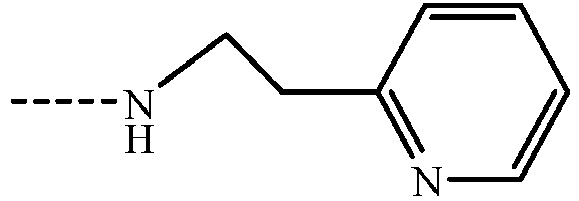
35 3 
36 2 
37 3 
38 2 
39 3 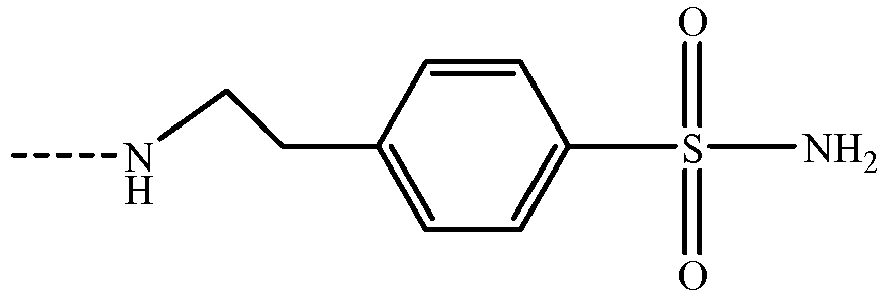
40 2 
41 3 
42 2 
43 3 
44 2 
45 3 
46 2 
47 3 
48 2 
49 3 
50 2 
51 3 
52 2 
53 3 
54 2 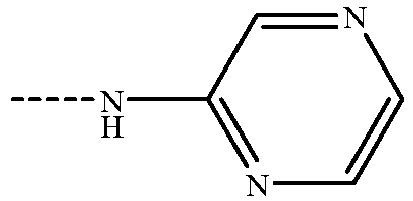
55 3 
56 2 
57 3 
58 2 
59 3 
60 2 
61 3 
62 2 
63 3 
64 2 
65 3 
66 2 NH2 67 3 NH2 68 2 NHCH3 69 3 NHCH3 70 2 N(CH3)2 71 3 N(CH3)2 72 2 
73 3 
74 2 
75 2 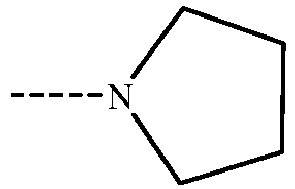
88 2 
90 2 
91 2 
92 2 
93 2 
94 2 
95 2  77) 10-((3'-(pyrrol-1-yl)-2',3',6'-trideoxy-alphal-L-lyxo-hexylpyranyl)oxy)-7,8,9,10-tetrahydro-6,8,11-trihydroxy-13-oxo-14-(4-((4-(2-hydroxy)ethyl)piperazin-1-yl)-4-oxo-butyrato)-1-methoxy-5,12-naphthalenedione acetate;78) 10-((3'-(pyrrol-1-yl)-2',3',6'-trideoxy-alphal-L-lyxo-hexylpyranyl)oxy)-7,8,9,10-tetrahydro-6,8,11-trihydroxy-13-oxo-14-(4-((3-(morpholin-1-yl)propyl)amino)-4-oxo-butyrato)-1-methoxy-5,12-naphthalenedione acetate;79) 10-((3'-(pyrrol-1-yl)-2',3',6'-trideoxy-alphal-L-lyxo-hexylpyranyl)oxy)-7,8,9,10-tetrahydro-6,8,11-trihydroxy-13-oxo-14-(4-((4-methyl)piperazin-1-yl)amino)-4-oxo-butyrato)-1-methoxy-5,12-naphthalenedione acetate;80) 10-((3'-(pyrrol-1-yl)-2',3',6'-trideoxy-alphal-L-lyxo-hexylpyranyl)oxy)-7,8,9,10-tetrahydro-6,8,11-trihydroxy-13-oxo-14-(4-(4-ethylpiperazin-1-yl)-4-oxo-butyrato)-1-methoxy-5,12-naphthalenedione acetate;81) 10-((3'-(pyrrol-1-yl)-2',3',6'-trideoxy-alphal-L-lyxo-hexylpyranyl)oxy)-7,8,9,10-tetrahydro-6,8,11-trihydroxy-13-oxo-14-(4-((3-(4-methylpiperazin-1-yl)propyl)amino)-4-oxo-butyrato)-1-methoxy-5,12-naphthalenedione acetate;82) 10-((3'-(pyrrol-1-yl)-2',3',6'-trideoxy-alphal-L-lyxo-hexylpyranyl)oxy)-7,8,9,10-tetrahydro-6,8,11-trihydroxy-13-oxo-14-(4-((pyridin-4-yl)methyl)amino)-4-oxo-butyrato)-1-methoxy-5,12-naphthalenedione acetate;83) 10-((3'-(pyrrol-1-yl)-2',3',6'-trideoxy-alphal-L-lyxo-hexylpyranyl)oxy)-7,8,9,10-tetrahydro-6,8,11-trihydroxy-13-oxo-14-(4-((pyridin-3-yl)methyl)amino)-4-oxo-butyrato)-1-methoxy-5,12-naphthalenedione acetate;84) 10-((3'-(pyrrol-1-yl)-2',3',6'-trideoxy-alphal-L-lyxo-hexylpyranyl)oxy)-7,8,9,10-tetrahydro-6,8,11-trihydroxy-13-oxo-14-(4-(2-(pyridin-2-yl)ethyl)amino)-4-oxo-butyrato)-1-methoxy-5,12-naphthalenedione acetate;85) 10-((3'-(pyrrol-1-yl)-2',3',6'-trideoxy-alphal-L-lyxo-hexylpyranyl)oxy)-7,8,9,10-tetrahydro-6,8,11-trihydroxy-13-oxo-14-(4-(2-(pyridin-3-yl)ethyl)amino)-4-oxo-butyrato)-1-methoxy-5,12-naphthalenedione acetate;86) 10-((3'-(pyrrol-1-yl)-2',3',6'-trideoxy-alphal-L-lyxo-hexylpyranyl)oxy)-7,8,9,10-tetrahydro-6,8,11-trihydroxy-13-oxo-14-(4-(2-(pyridin-4-yl)ethyl)amino)-4-oxo-butyrato)-1-methoxy-5,12-naphthalenedione acetate;87) 10-((3'-(pyrrol-1-yl)-2',3',6'-trideoxy-alphal-L-lyxo-hexylpyranyl)oxy)-7,8,9,10-tetrahydro-6,8,11-trihydroxy-13-oxo-14-(4-(4-(3-(dimethylamino)propyl)piperazin-1-yl)-4-oxo-butyrato)-1-methoxy-5,12-naphthalenedione acetate;89) 10-((3'-(pyrrol-1-yl)-2',3',6'-trideoxy-alphal-L-lyxo-hexylpyranyl)oxy)-7,8,9,10-tetrahydro-6,8,11-trihydroxy-13-oxo-14-(4-((2-(morpholin-1-yl)ethyl)amino)-4-oxo-butyrato)-1-methoxy-5,12-naphthalenedione acetate;96) 10-((3'-(pyrrol-1-yl)-2',3',6'-trideoxy-alphal-L-lyxo-hexylpyranyl)oxy)-7,8,9,10-tetrahydro-6,8,11-trihydroxy-13-oxo-14-(4-((2-(morpholin-1-yl)ethyl)amino)-4-oxo-butyrato)-1-methoxy-5,12-naphthalenedione phosphate; and99) 10-((3'-(pyrrol-1-yl)-2',3',6'-trideoxy-alphal-L-lyxo-hexylpyranyl)oxy)-7,8,9,10-tetrahydro-6,8,11-trihydroxy-13-oxo-14-(4-((2-(morpholin-1-yl)ethyl)amino)-4-oxo-butyrato)-1-methoxy-5,12-naphthalenedione hydrochloride.
 - A process for preparing a compound represented by formula (I) of any one of claims 1 to 3, comprising
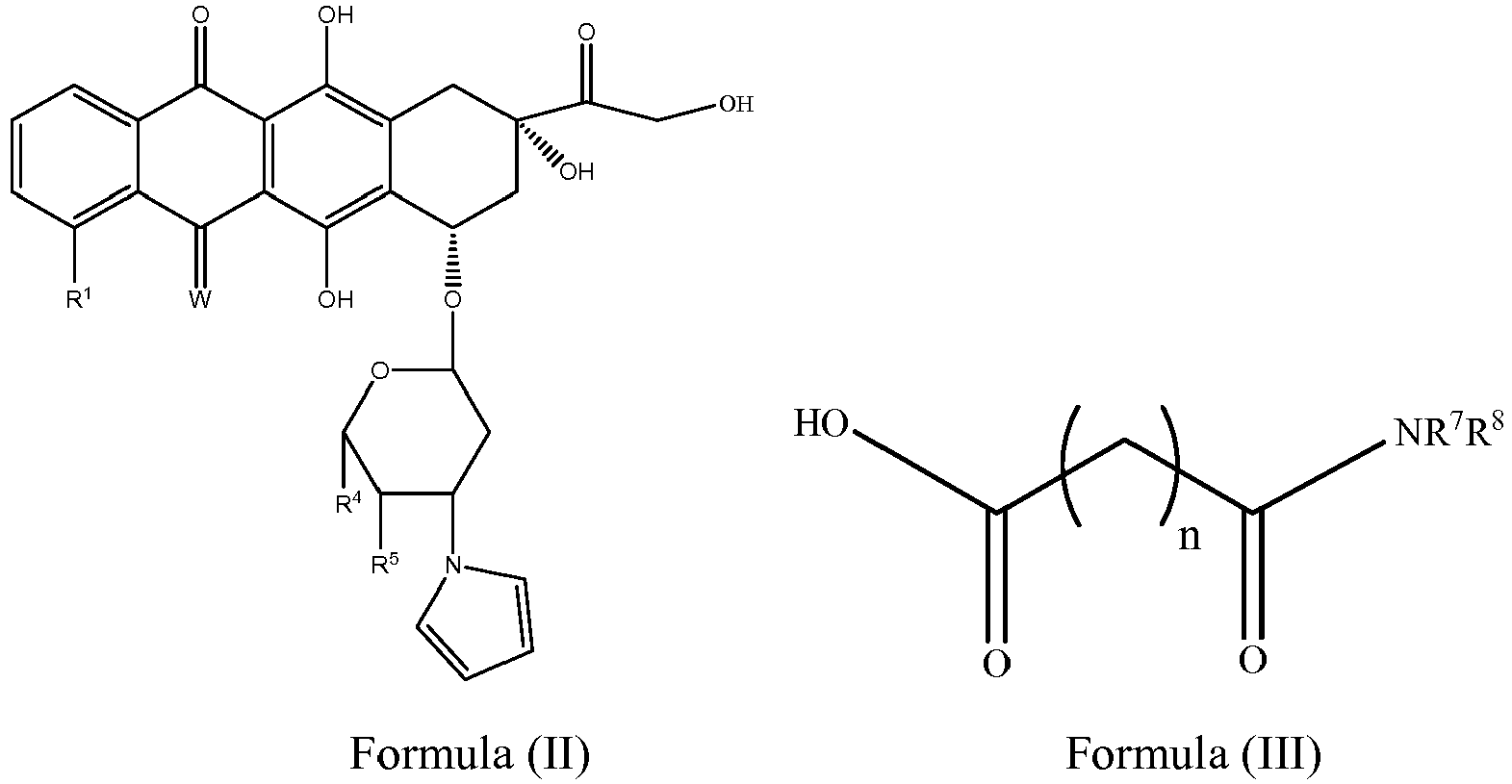
wherein:groups represented by R1, W, R4, R5 in the compound represented by formula (II) are the same as groups represented by R1, W, R4, R5 in the compound represented by formula (I);n in the compound represented by formula (III) has the same meanings as n in the compound represented by formula (I);groups represented by R7 and R8 in the compound represented by formula (III) are the same as the groups represented by R2 and R3 in the compound represented by formula (I), when groups represented by R7 and R8 comprise NH or NH2, the compound represented by formula (III) has an amino-protecting group at N-terminus, and is subject to a deprotection reaction to obtain the compound represented by formula (I). - The process of claim 4, further comprising adding an activator;
and/or further comprising adding a catalyst;
and/or wherein the amino-protection group is selected from the group consisting of Fmoc (fluorenylmethoxycarbony), Boc (t-butyloxycarboryl), CBZ (carbobenzoxy), Tr (trityl), Alloc (allyloxycarbonyl), Teoc (trimethylsilylethoxycarbonyl), methoxycarbonyl, ethoxycarbonyl, Pht (phthaloyl), Tos (tosyl), Ns (o/p-nitrobenzenesulfonyl), Tfa (trifluoroacetyl), pivaloyl, benzoyl, Dmb (2,4-dimethoxybenzyl), PMB (p-methoxybenzyl), and Bn (benzyl);
and/or wherein the condensation agent is selected from the group consisting of dicyclohexylcarbodiimide (DCC), diisopropylcarbodiimide (DIC), 1-(3-dimethylaminopropyl)-3-ethylcarbodiimide (EDCI), 2-(7-azobenzotriazole)-N,N,N',N'-tetramethyluronium hexafluorophosphate (HATU), benzotriazol-N,N,N',N'-tetramethyluronium hexafluorophosphate (HBTU), 6-chlorobenzotriazol-1,1,3,3-tetramethyluronium hexafluorophosphate (HCTU), O-(7-azabenzotriazol-1-yl)-di(tetrahydropyrrolyl)carbenium hexafluophosphate (HAPyU), O-(benzotriazol-1-yl)-di(tetrahydropyrrolyl)carbenium hexafluophosphate (HBPyU), O-benzotriazol-N,N,N',N'-tetramethyluronium tetrafluoroborate (TBTU), 2-succinimido-1,1,3,3-tetramethyluronium tetrafluoroborate (TSTU), 2-(5-norbornen-2,3-dicarboximido)-1,1,3,3-tetramethyluronium tetrafluoroborate quaternary ammonium salt (TNTU), benzotriazol-1-yloxytri(dimethylamino)phosphonium hexafluorophosphate (BOP), benzotriazol-1-yl-oxytripyrrolidino-phosphonium hexafluorophosphate (PyBOP), (3H-1,2,3-triazolo[4,5-b]pyridin-3-oxy)tri-1-pyrrolidinylphosphonium hexafluorophosphate (PyAOP), diphenylphosphinyl chloride (DPP-C1), diphenyl phosphoryl azide (DPPA), cyanodiethylphosphate (DECP), bis(2-oxo-3-oxazolidinyl)phosphinyl chloride (BOP-Cl) and a mixture thereof;
and/or wherein a deprotection reactant used in the deprotection reaction is selected from the group consisting of hydrogen gas, NH3, aminoethanol, dimethylamine, diethylamine, piperidine, piperazine, 1,8-diazacyclo[5,4,0]hendecene-7 (DBU), hydrochloric acid, phosphoric acid, acetic acid, formic acid, trifluoroacetic acid, methanesulfonic acid, benzenesulfonic acid, p-toluenesulfonic acid and a mixture thereof. - The process of claim 5, wherein the activator is selected from the group consisting of N-hydroxysuccinimide (HOSu), 1-hydroxy-7-azobenzotriazole (HOAt), 1-hydroxybenzotriazole (HOBt), N-hydroxyphthalimide (NHPI), N-hydroxy-1,8-naphthalimide (NHNI), pentafluorophenol (PFPOH), 2-(7-azobenzotriazole)-N,N,N',N'-tetramethyluronium hexafluorophosphate (HATU), benzotriazole-N,N,N',N'-tetramethyluronium hexafluorophosphate (HBTU), 6-chlorobenzotriazole-1,1,3,3-tetramethyluronium hexafluorophosphate (HCTU), O-(7-azabenzotriazole-l-yl)-di(tetrahydropyrrolyl)carbenium hexafluophosphate (HAPyU), O-(benzotriazole-1-yl)-di(tetrahydropyrrolyl)carbenium hexafluophosphate (HBPyU), O-benzotriazole-N,N,N',N'-tetramethyluronium tetrafluoroborate (TBTU), 2-succinimido-1,1,3,3-tetramethyluronium tetrafluoroborate (TSTU), 2-(5-norbornen-2,3-dicarboximido)-1,1,3,3-tetramethyluronium tetrafluoroborate quaternary ammonium salt (TNTU), benzotriazole-1-yloxytri(dimethylamino)phosphonium hexafluorophosphate (BOP), benzotriazol-1-yl-oxytripyrrolidino-phosphonium hexafluorophosphate (PyBOP), (3H-1,2,3-triazolo[4,5-b]pyridin-3-oxy)tri-1-pyrrolidinylphosphonium hexafluorophosphate (PyAOP), diphenylphosphinyl chloride (DPP-Cl), diphenyl phosphoryl azide (DPPA), cyanodiethylphosphate (DECP), bis(2-oxo-3-oxazolidinyl)phosphinyl chloride (BOP-Cl) and a mixture thereof;
and/or the catalyst is selected from 4-dimethylaminopyridine, 4-pyrrolidinylpyridine and mixture thereof. - The process of any one of claims 4 to 6, wherein the compound represented by formula (III) is obtained by a reaction of a compound represented by formula (IV) with HNR7R8,
 n in the compound represented by formula (IV) has the same meanings as n in the compound represented by formula (I); andgroups represented by R2 and R3 in HNR7R8 are the same as groups represented by R2 and R3 in the compound represented by formula (I).
 - The process of claim 7, further comprising adding an alkaline compound.
- The process of claim 8, the alkaline compound is selected from the group consisting of triethylamine, pyridine, diisopropylethylamine, trimethylamine, N-methylpyrrolidine, N-methylpiperidine, N-methylmorpholine, N-ethylpyrrolidine, N-ethylpiperidine, N-ethylmorpholine and a mixture thereof.
- A pharmaceutical composition or a formulation, comprising a compound represented by formula (I) of any one of claims 1 to 3 or a pharmaceutically acceptable salt thereof, and a pharmaceutically acceptable carrier.
- The pharmaceutical composition or formulation of claim 10, which is a formulation for injection.
- The pharmaceutical composition or formulation of claim 11, wherein the formulation for injection is a conventional powder injection, a freeze-dried powder injection, a hydro-injection, an emulsion, a solution or a suspension.
- A compound represented by formula (I) of any one of claims 1 to 3 or a pharmaceutically acceptable salt thereof; or a composition or formulation of any one of claims 10 to 12; for use in a method of treatment of the human or animal body by therapy.
- A compound represented by formula (I) of any one of claims 1 to 3 or a pharmaceutically acceptable salt thereof; or a composition or formulation of any one of claims 10 to 12; for use in a method for treating and/or preventing tumor and/or cancer.
- A compound for use according to claim 14, wherein the tumor and/or cancer is selected from the group consisting of liver cancer, gastric cancer, breast cancer, lung cancer, intestine cancer, ovarian cancer, pancreatic cancer, head and neck cancer, cervical cancer, renal cancer, melanoma, prostatic cancer, brain glioma, leukemia, lymphoma, and multiple bone marrow cancer.
Applications Claiming Priority (2)
| Application Number | Priority Date | Filing Date | Title |
|---|---|---|---|
| CN201210055298 | 2012-03-06 | ||
| PCT/CN2013/000233 WO2014059740A1 (en) | 2012-03-06 | 2013-03-06 | Tetracyclic anthraquinone derivatives |
Publications (4)
| Publication Number | Publication Date |
|---|---|
| EP2824108A1 EP2824108A1 (en) | 2015-01-14 |
| EP2824108A4 EP2824108A4 (en) | 2015-08-26 |
| EP2824108B1 true EP2824108B1 (en) | 2017-04-19 |
| EP2824108B8 EP2824108B8 (en) | 2017-07-12 |
Family
ID=50487501
Family Applications (1)
| Application Number | Title | Priority Date | Filing Date |
|---|---|---|---|
| EP13847102.4A Not-in-force EP2824108B8 (en) | 2012-03-06 | 2013-03-06 | Tetracyclic anthraquinone derivatives |
Country Status (6)
| Country | Link |
|---|---|
| US (2) | US9670242B2 (en) |
| EP (1) | EP2824108B8 (en) |
| JP (2) | JP6104287B2 (en) |
| CN (1) | CN104125962B (en) |
| ES (1) | ES2633359T3 (en) |
| WO (1) | WO2014059740A1 (en) |
Families Citing this family (6)
| Publication number | Priority date | Publication date | Assignee | Title |
|---|---|---|---|---|
| US9670242B2 (en) | 2012-03-06 | 2017-06-06 | Tianjin Hemay Oncology Pharmaceutical Co., Ltd. | Tetracyclic anthraquinone derivatives |
| CN104628602B (en) * | 2015-02-05 | 2016-08-17 | 宋和璇 | Tetramethyl diethylenetriamine base formiate compound and its preparation method and application |
| WO2019140417A1 (en) * | 2018-01-15 | 2019-07-18 | Daly Thomas P | Aminopyridine based buffers with wide buffering ranges antibiotics and myelin disease therapy |
| WO2020169477A1 (en) * | 2019-02-18 | 2020-08-27 | Basf Se | Process for removal of acid gases from a fluid stream with a liquid absorbent comprising a piperazine ring |
| CN113372245B (en) * | 2021-06-17 | 2023-01-13 | 仪征市海帆化工有限公司 | Synthetic method of N-benzoyl-O, O-p-toluenesulfonyl-diethanolamine |
| CN115746069B (en) * | 2021-09-03 | 2024-06-18 | 中科帅天医药(深圳)有限公司 | A compound that releases drug molecules in response to X-ray activation and a method for synthesizing the same |
Family Cites Families (16)
| Publication number | Priority date | Publication date | Assignee | Title |
|---|---|---|---|---|
| YU33730B (en) * | 1967-04-18 | 1978-02-28 | Farmaceutici Italia | Process for preparing a novel antibiotic substance and salts thereof |
| NL145536B (en) * | 1968-04-12 | 1975-04-15 | Farmaceutici Italia | METHOD OF PREPARING A NEW ANTIBIOTIC OR ITS AGLYCON. |
| US4012448A (en) * | 1976-01-15 | 1977-03-15 | Stanford Research Institute | Synthesis of adriamycin and 7,9-epiadriamycin |
| US5304687A (en) * | 1989-12-19 | 1994-04-19 | Farmitalia Carlo Erba S.R.L. | Morpholinyl derivatives of doxorubicin and process for their preparation |
| JPH06172312A (en) * | 1992-03-04 | 1994-06-21 | Wako Pure Chem Ind Ltd | Method for labeling compound having primary amino group with fluorescence |
| JPH0782291A (en) * | 1993-09-13 | 1995-03-28 | Microbial Chem Res Found | Water-soluble anthracycline derivative |
| GB2296495B (en) * | 1994-12-23 | 1998-04-15 | Erba Carlo Spa | Anthracycline derivatives |
| ES2384235T3 (en) * | 2001-10-22 | 2012-07-02 | The Scripps Research Institute | Integrin-directed compounds |
| US7737123B2 (en) * | 2005-05-12 | 2010-06-15 | The Ohio State University Research Foundation | Multidrug resistant anticancer anthracyclines |
| US20120308646A1 (en) * | 2007-01-18 | 2012-12-06 | Hesheng Zhang | Tetracyclic anthraquinones possessing anti-cancer properties |
| CN101225094A (en) * | 2007-01-18 | 2008-07-23 | 天津和美生物技术有限公司 | Anthraquinones tetracyclic compound having anticancer activity |
| US8742076B2 (en) * | 2008-02-01 | 2014-06-03 | Genentech, Inc. | Nemorubicin metabolite and analog reagents, antibody-drug conjugates and methods |
| AU2009235897B2 (en) * | 2008-04-11 | 2012-04-12 | Tianjin Hemay Oncology Pharmaceutical Co., Ltd | Anthracycline antibiotic derivatives with high activity, preparation methods and uses thereof |
| KR101328315B1 (en) * | 2008-04-11 | 2013-11-11 | 티안진 헤메이 바이오-텍 컴퍼니 리미티드 | Anthracycline antibiotic derivatives with high activity, preparation methods and uses thereof |
| CN102050856B (en) * | 2009-11-03 | 2014-04-30 | 天津和美生物技术有限公司 | High-activity epirubicin derivative, preparation method thereof and application thereof |
| US9670242B2 (en) * | 2012-03-06 | 2017-06-06 | Tianjin Hemay Oncology Pharmaceutical Co., Ltd. | Tetracyclic anthraquinone derivatives |
-
2013
- 2013-03-06 US US14/383,523 patent/US9670242B2/en not_active Expired - Fee Related
- 2013-03-06 EP EP13847102.4A patent/EP2824108B8/en not_active Not-in-force
- 2013-03-06 JP JP2014560225A patent/JP6104287B2/en not_active Expired - Fee Related
- 2013-03-06 WO PCT/CN2013/000233 patent/WO2014059740A1/en not_active Ceased
- 2013-03-06 ES ES13847102.4T patent/ES2633359T3/en active Active
- 2013-03-06 CN CN201380008116.3A patent/CN104125962B/en active Active
-
2016
- 2016-12-16 JP JP2016243879A patent/JP2017078081A/en active Pending
-
2017
- 2017-05-05 US US15/587,884 patent/US10294260B2/en active Active
Also Published As
| Publication number | Publication date |
|---|---|
| CN104125962A (en) | 2014-10-29 |
| JP2015509511A (en) | 2015-03-30 |
| US9670242B2 (en) | 2017-06-06 |
| EP2824108A4 (en) | 2015-08-26 |
| US10294260B2 (en) | 2019-05-21 |
| EP2824108A1 (en) | 2015-01-14 |
| JP2017078081A (en) | 2017-04-27 |
| EP2824108B8 (en) | 2017-07-12 |
| US20150166595A1 (en) | 2015-06-18 |
| ES2633359T3 (en) | 2017-09-20 |
| WO2014059740A1 (en) | 2014-04-24 |
| JP6104287B2 (en) | 2017-03-29 |
| CN104125962B (en) | 2016-06-22 |
| US20170247403A1 (en) | 2017-08-31 |
Similar Documents
| Publication | Publication Date | Title |
|---|---|---|
| US10294260B2 (en) | Tetracyclic anthraquinone derivatives | |
| EP3152223B1 (en) | Mitomycin conjugate | |
| US6271342B1 (en) | Sugar-modified cytostatics | |
| CN103570792B (en) | Toadpoison Medicine derivant, its preparation method, pharmaceutical composition and purposes | |
| EP2581372B1 (en) | Cyanoquinoline derivatives | |
| CA3025931A1 (en) | Antibody drug conjugates having derivatives of amatoxin as the drug | |
| EP3210992B1 (en) | New type of cytidine derivative and application thereof | |
| SK15012000A3 (en) | Semi-synthetic ecteinascidins | |
| EP2861610A1 (en) | N-substituted second generation derivatives of antifungal antibiotic amphotericin b and methods of their preparation and application | |
| CN106572991A (en) | Dexaporphyrin‑PT(IV) conjugates and compositions for overcoming platinum resistance | |
| WO2009124468A1 (en) | Anthracycline antibiotic derivatives with high activity, preparation methods and uses thereof | |
| US20130005696A1 (en) | Bufadienolide derivatives, preparing process thereof, composition comprising the same and the use thereof | |
| EP2123283A1 (en) | The tetracyclic anthraquinones possessing anti-cancer effect | |
| EP1925309A1 (en) | Novel anticancer concomitant drug | |
| EP4201429A1 (en) | Antibody-drug conjugate intermediate comprising sn38 and preparation method therefor | |
| CN114478561B (en) | Epalrestat lycorine conjugate and preparation method and application thereof | |
| CN117843713A (en) | Kinase inhibitor based on tumor microenvironment activation, composition and application | |
| EP1938823A1 (en) | Agent for preventing or treating pancreas cancer, ovary cancer or liver cancer containing novel water-soluble prodrug | |
| US8877720B2 (en) | Epirubicin derivatives | |
| WO2013115157A1 (en) | Amino sugar-bound anti-cancerous noble metal complex | |
| CN113651867B (en) | Sulfonamide 18 beta-glycyrrhetinic acid derivative and preparation method and application thereof | |
| US11464864B2 (en) | Drug-bound compound and use thereof | |
| KR19980035178A (en) | New Sulfonylimidazolone Derivatives | |
| IL119334A (en) | Carbohydrate modified cytostatics and medicaments containing them | |
| CN105503836A (en) | Novel quinazoline derivative LU1502 as well as preparation method and application thereof |
Legal Events
| Date | Code | Title | Description |
|---|---|---|---|
| PUAI | Public reference made under article 153(3) epc to a published international application that has entered the european phase |
Free format text: ORIGINAL CODE: 0009012 |
|
| 17P | Request for examination filed |
Effective date: 20141006 |
|
| AK | Designated contracting states |
Kind code of ref document: A1 Designated state(s): AL AT BE BG CH CY CZ DE DK EE ES FI FR GB GR HR HU IE IS IT LI LT LU LV MC MK MT NL NO PL PT RO RS SE SI SK SM TR |
|
| AX | Request for extension of the european patent |
Extension state: BA ME |
|
| DAX | Request for extension of the european patent (deleted) | ||
| RA4 | Supplementary search report drawn up and despatched (corrected) |
Effective date: 20150727 |
|
| RIC1 | Information provided on ipc code assigned before grant |
Ipc: C07H 15/252 20060101AFI20150721BHEP Ipc: C07H 19/044 20060101ALI20150721BHEP Ipc: A61P 35/00 20060101ALI20150721BHEP Ipc: A61K 31/7056 20060101ALI20150721BHEP |
|
| 17Q | First examination report despatched |
Effective date: 20160527 |
|
| GRAP | Despatch of communication of intention to grant a patent |
Free format text: ORIGINAL CODE: EPIDOSNIGR1 |
|
| INTG | Intention to grant announced |
Effective date: 20161014 |
|
| GRAS | Grant fee paid |
Free format text: ORIGINAL CODE: EPIDOSNIGR3 |
|
| GRAA | (expected) grant |
Free format text: ORIGINAL CODE: 0009210 |
|
| AK | Designated contracting states |
Kind code of ref document: B1 Designated state(s): AL AT BE BG CH CY CZ DE DK EE ES FI FR GB GR HR HU IE IS IT LI LT LU LV MC MK MT NL NO PL PT RO RS SE SI SK SM TR |
|
| REG | Reference to a national code |
Ref country code: GB Ref legal event code: FG4D |
|
| REG | Reference to a national code |
Ref country code: CH Ref legal event code: EP |
|
| REG | Reference to a national code |
Ref country code: AT Ref legal event code: REF Ref document number: 885848 Country of ref document: AT Kind code of ref document: T Effective date: 20170515 |
|
| REG | Reference to a national code |
Ref country code: IE Ref legal event code: FG4D |
|
| RAP2 | Party data changed (patent owner data changed or rights of a patent transferred) |
Owner name: TIANJIN HEMAY ONCOLOGY PHARMACEUTICAL CO., LTD. |
|
| REG | Reference to a national code |
Ref country code: DE Ref legal event code: R096 Ref document number: 602013020160 Country of ref document: DE |
|
| REG | Reference to a national code |
Ref country code: DE Ref legal event code: R081 Ref document number: 602013020160 Country of ref document: DE Owner name: TIANJIN HEMAY ONCOLOGY PHARMACEUTICAL CO., LTD, CN Free format text: FORMER OWNER: TIANJIN HEMAY BIO-TECH CO., LTD., TIANJIN, CN |
|
| REG | Reference to a national code |
Ref country code: NL Ref legal event code: MP Effective date: 20170419 |
|
| REG | Reference to a national code |
Ref country code: LT Ref legal event code: MG4D |
|
| REG | Reference to a national code |
Ref country code: AT Ref legal event code: MK05 Ref document number: 885848 Country of ref document: AT Kind code of ref document: T Effective date: 20170419 |
|
| REG | Reference to a national code |
Ref country code: ES Ref legal event code: FG2A Ref document number: 2633359 Country of ref document: ES Kind code of ref document: T3 Effective date: 20170920 |
|
| PG25 | Lapsed in a contracting state [announced via postgrant information from national office to epo] |
Ref country code: NL Free format text: LAPSE BECAUSE OF FAILURE TO SUBMIT A TRANSLATION OF THE DESCRIPTION OR TO PAY THE FEE WITHIN THE PRESCRIBED TIME-LIMIT Effective date: 20170419 |
|
| PG25 | Lapsed in a contracting state [announced via postgrant information from national office to epo] |
Ref country code: LT Free format text: LAPSE BECAUSE OF FAILURE TO SUBMIT A TRANSLATION OF THE DESCRIPTION OR TO PAY THE FEE WITHIN THE PRESCRIBED TIME-LIMIT Effective date: 20170419 Ref country code: AT Free format text: LAPSE BECAUSE OF FAILURE TO SUBMIT A TRANSLATION OF THE DESCRIPTION OR TO PAY THE FEE WITHIN THE PRESCRIBED TIME-LIMIT Effective date: 20170419 Ref country code: FI Free format text: LAPSE BECAUSE OF FAILURE TO SUBMIT A TRANSLATION OF THE DESCRIPTION OR TO PAY THE FEE WITHIN THE PRESCRIBED TIME-LIMIT Effective date: 20170419 Ref country code: NO Free format text: LAPSE BECAUSE OF FAILURE TO SUBMIT A TRANSLATION OF THE DESCRIPTION OR TO PAY THE FEE WITHIN THE PRESCRIBED TIME-LIMIT Effective date: 20170719 Ref country code: HR Free format text: LAPSE BECAUSE OF FAILURE TO SUBMIT A TRANSLATION OF THE DESCRIPTION OR TO PAY THE FEE WITHIN THE PRESCRIBED TIME-LIMIT Effective date: 20170419 Ref country code: GR Free format text: LAPSE BECAUSE OF FAILURE TO SUBMIT A TRANSLATION OF THE DESCRIPTION OR TO PAY THE FEE WITHIN THE PRESCRIBED TIME-LIMIT Effective date: 20170720 |
|
| PG25 | Lapsed in a contracting state [announced via postgrant information from national office to epo] |
Ref country code: LV Free format text: LAPSE BECAUSE OF FAILURE TO SUBMIT A TRANSLATION OF THE DESCRIPTION OR TO PAY THE FEE WITHIN THE PRESCRIBED TIME-LIMIT Effective date: 20170419 Ref country code: IS Free format text: LAPSE BECAUSE OF FAILURE TO SUBMIT A TRANSLATION OF THE DESCRIPTION OR TO PAY THE FEE WITHIN THE PRESCRIBED TIME-LIMIT Effective date: 20170819 Ref country code: SE Free format text: LAPSE BECAUSE OF FAILURE TO SUBMIT A TRANSLATION OF THE DESCRIPTION OR TO PAY THE FEE WITHIN THE PRESCRIBED TIME-LIMIT Effective date: 20170419 Ref country code: RS Free format text: LAPSE BECAUSE OF FAILURE TO SUBMIT A TRANSLATION OF THE DESCRIPTION OR TO PAY THE FEE WITHIN THE PRESCRIBED TIME-LIMIT Effective date: 20170419 Ref country code: BG Free format text: LAPSE BECAUSE OF FAILURE TO SUBMIT A TRANSLATION OF THE DESCRIPTION OR TO PAY THE FEE WITHIN THE PRESCRIBED TIME-LIMIT Effective date: 20170719 Ref country code: PL Free format text: LAPSE BECAUSE OF FAILURE TO SUBMIT A TRANSLATION OF THE DESCRIPTION OR TO PAY THE FEE WITHIN THE PRESCRIBED TIME-LIMIT Effective date: 20170419 |
|
| REG | Reference to a national code |
Ref country code: DE Ref legal event code: R097 Ref document number: 602013020160 Country of ref document: DE |
|
| PG25 | Lapsed in a contracting state [announced via postgrant information from national office to epo] |
Ref country code: DK Free format text: LAPSE BECAUSE OF FAILURE TO SUBMIT A TRANSLATION OF THE DESCRIPTION OR TO PAY THE FEE WITHIN THE PRESCRIBED TIME-LIMIT Effective date: 20170419 Ref country code: RO Free format text: LAPSE BECAUSE OF FAILURE TO SUBMIT A TRANSLATION OF THE DESCRIPTION OR TO PAY THE FEE WITHIN THE PRESCRIBED TIME-LIMIT Effective date: 20170419 Ref country code: CZ Free format text: LAPSE BECAUSE OF FAILURE TO SUBMIT A TRANSLATION OF THE DESCRIPTION OR TO PAY THE FEE WITHIN THE PRESCRIBED TIME-LIMIT Effective date: 20170419 Ref country code: SK Free format text: LAPSE BECAUSE OF FAILURE TO SUBMIT A TRANSLATION OF THE DESCRIPTION OR TO PAY THE FEE WITHIN THE PRESCRIBED TIME-LIMIT Effective date: 20170419 Ref country code: EE Free format text: LAPSE BECAUSE OF FAILURE TO SUBMIT A TRANSLATION OF THE DESCRIPTION OR TO PAY THE FEE WITHIN THE PRESCRIBED TIME-LIMIT Effective date: 20170419 |
|
| PLBE | No opposition filed within time limit |
Free format text: ORIGINAL CODE: 0009261 |
|
| REG | Reference to a national code |
Ref country code: FR Ref legal event code: PLFP Year of fee payment: 6 |
|
| STAA | Information on the status of an ep patent application or granted ep patent |
Free format text: STATUS: NO OPPOSITION FILED WITHIN TIME LIMIT |
|
| PG25 | Lapsed in a contracting state [announced via postgrant information from national office to epo] |
Ref country code: SM Free format text: LAPSE BECAUSE OF FAILURE TO SUBMIT A TRANSLATION OF THE DESCRIPTION OR TO PAY THE FEE WITHIN THE PRESCRIBED TIME-LIMIT Effective date: 20170419 |
|
| 26N | No opposition filed |
Effective date: 20180122 |
|
| PG25 | Lapsed in a contracting state [announced via postgrant information from national office to epo] |
Ref country code: SI Free format text: LAPSE BECAUSE OF FAILURE TO SUBMIT A TRANSLATION OF THE DESCRIPTION OR TO PAY THE FEE WITHIN THE PRESCRIBED TIME-LIMIT Effective date: 20170419 |
|
| REG | Reference to a national code |
Ref country code: CH Ref legal event code: PL |
|
| PG25 | Lapsed in a contracting state [announced via postgrant information from national office to epo] |
Ref country code: MC Free format text: LAPSE BECAUSE OF FAILURE TO SUBMIT A TRANSLATION OF THE DESCRIPTION OR TO PAY THE FEE WITHIN THE PRESCRIBED TIME-LIMIT Effective date: 20170419 |
|
| REG | Reference to a national code |
Ref country code: BE Ref legal event code: MM Effective date: 20180331 |
|
| REG | Reference to a national code |
Ref country code: IE Ref legal event code: MM4A |
|
| PG25 | Lapsed in a contracting state [announced via postgrant information from national office to epo] |
Ref country code: LU Free format text: LAPSE BECAUSE OF NON-PAYMENT OF DUE FEES Effective date: 20180306 |
|
| PG25 | Lapsed in a contracting state [announced via postgrant information from national office to epo] |
Ref country code: IE Free format text: LAPSE BECAUSE OF NON-PAYMENT OF DUE FEES Effective date: 20180306 |
|
| PG25 | Lapsed in a contracting state [announced via postgrant information from national office to epo] |
Ref country code: BE Free format text: LAPSE BECAUSE OF NON-PAYMENT OF DUE FEES Effective date: 20180331 Ref country code: CH Free format text: LAPSE BECAUSE OF NON-PAYMENT OF DUE FEES Effective date: 20180331 Ref country code: LI Free format text: LAPSE BECAUSE OF NON-PAYMENT OF DUE FEES Effective date: 20180331 |
|
| PG25 | Lapsed in a contracting state [announced via postgrant information from national office to epo] |
Ref country code: MT Free format text: LAPSE BECAUSE OF NON-PAYMENT OF DUE FEES Effective date: 20180306 |
|
| PG25 | Lapsed in a contracting state [announced via postgrant information from national office to epo] |
Ref country code: TR Free format text: LAPSE BECAUSE OF FAILURE TO SUBMIT A TRANSLATION OF THE DESCRIPTION OR TO PAY THE FEE WITHIN THE PRESCRIBED TIME-LIMIT Effective date: 20170419 |
|
| PG25 | Lapsed in a contracting state [announced via postgrant information from national office to epo] |
Ref country code: PT Free format text: LAPSE BECAUSE OF FAILURE TO SUBMIT A TRANSLATION OF THE DESCRIPTION OR TO PAY THE FEE WITHIN THE PRESCRIBED TIME-LIMIT Effective date: 20170419 Ref country code: HU Free format text: LAPSE BECAUSE OF FAILURE TO SUBMIT A TRANSLATION OF THE DESCRIPTION OR TO PAY THE FEE WITHIN THE PRESCRIBED TIME-LIMIT; INVALID AB INITIO Effective date: 20130306 |
|
| PG25 | Lapsed in a contracting state [announced via postgrant information from national office to epo] |
Ref country code: CY Free format text: LAPSE BECAUSE OF FAILURE TO SUBMIT A TRANSLATION OF THE DESCRIPTION OR TO PAY THE FEE WITHIN THE PRESCRIBED TIME-LIMIT Effective date: 20170419 Ref country code: MK Free format text: LAPSE BECAUSE OF NON-PAYMENT OF DUE FEES Effective date: 20170419 |
|
| PG25 | Lapsed in a contracting state [announced via postgrant information from national office to epo] |
Ref country code: AL Free format text: LAPSE BECAUSE OF FAILURE TO SUBMIT A TRANSLATION OF THE DESCRIPTION OR TO PAY THE FEE WITHIN THE PRESCRIBED TIME-LIMIT Effective date: 20170419 |
|
| PGFP | Annual fee paid to national office [announced via postgrant information from national office to epo] |
Ref country code: FR Payment date: 20230110 Year of fee payment: 11 |
|
| PGFP | Annual fee paid to national office [announced via postgrant information from national office to epo] |
Ref country code: IT Payment date: 20230213 Year of fee payment: 11 Ref country code: GB Payment date: 20230112 Year of fee payment: 11 Ref country code: DE Payment date: 20230110 Year of fee payment: 11 |
|
| PGFP | Annual fee paid to national office [announced via postgrant information from national office to epo] |
Ref country code: ES Payment date: 20230405 Year of fee payment: 11 |
|
| REG | Reference to a national code |
Ref country code: DE Ref legal event code: R119 Ref document number: 602013020160 Country of ref document: DE |
|
| GBPC | Gb: european patent ceased through non-payment of renewal fee |
Effective date: 20240306 |
|
| PG25 | Lapsed in a contracting state [announced via postgrant information from national office to epo] |
Ref country code: DE Free format text: LAPSE BECAUSE OF NON-PAYMENT OF DUE FEES Effective date: 20241001 |
|
| PG25 | Lapsed in a contracting state [announced via postgrant information from national office to epo] |
Ref country code: GB Free format text: LAPSE BECAUSE OF NON-PAYMENT OF DUE FEES Effective date: 20240306 |
|
| PG25 | Lapsed in a contracting state [announced via postgrant information from national office to epo] |
Ref country code: FR Free format text: LAPSE BECAUSE OF NON-PAYMENT OF DUE FEES Effective date: 20240331 |
|
| PG25 | Lapsed in a contracting state [announced via postgrant information from national office to epo] |
Ref country code: GB Free format text: LAPSE BECAUSE OF NON-PAYMENT OF DUE FEES Effective date: 20240306 Ref country code: FR Free format text: LAPSE BECAUSE OF NON-PAYMENT OF DUE FEES Effective date: 20240331 Ref country code: DE Free format text: LAPSE BECAUSE OF NON-PAYMENT OF DUE FEES Effective date: 20241001 |
|
| REG | Reference to a national code |
Ref country code: ES Ref legal event code: FD2A Effective date: 20250425 |
|
| PG25 | Lapsed in a contracting state [announced via postgrant information from national office to epo] |
Ref country code: IT Free format text: LAPSE BECAUSE OF NON-PAYMENT OF DUE FEES Effective date: 20240306 |
|
| PG25 | Lapsed in a contracting state [announced via postgrant information from national office to epo] |
Ref country code: ES Free format text: LAPSE BECAUSE OF NON-PAYMENT OF DUE FEES Effective date: 20240307 |