EP2822942B1 - Benzodioxanes for inhibiting leukotriene production - Google Patents
Benzodioxanes for inhibiting leukotriene production Download PDFInfo
- Publication number
- EP2822942B1 EP2822942B1 EP13712002.8A EP13712002A EP2822942B1 EP 2822942 B1 EP2822942 B1 EP 2822942B1 EP 13712002 A EP13712002 A EP 13712002A EP 2822942 B1 EP2822942 B1 EP 2822942B1
- Authority
- EP
- European Patent Office
- Prior art keywords
- dihydro
- dioxino
- pyridin
- benzyl
- carboxylic acid
- Prior art date
- Legal status (The legal status is an assumption and is not a legal conclusion. Google has not performed a legal analysis and makes no representation as to the accuracy of the status listed.)
- Active
Links
- 0 C(*1C2CCCC1CC2)c1ccc(C(CO2)OC3C2=CC=C*3)cc1 Chemical compound C(*1C2CCCC1CC2)c1ccc(C(CO2)OC3C2=CC=C*3)cc1 0.000 description 3
- KOWASKWZNABFPX-CYBMUJFWSA-N O=Cc1ccc([C@@H]2Oc3ncccc3OC2)cc1 Chemical compound O=Cc1ccc([C@@H]2Oc3ncccc3OC2)cc1 KOWASKWZNABFPX-CYBMUJFWSA-N 0.000 description 3
- OFZNGSXTOWQPMM-XYJFISCASA-N C(c1ccc([C@@H]2Oc(nccc3)c3OC2)cc1)N1[C@@H](C2)CN[C@@H]2C1 Chemical compound C(c1ccc([C@@H]2Oc(nccc3)c3OC2)cc1)N1[C@@H](C2)CN[C@@H]2C1 OFZNGSXTOWQPMM-XYJFISCASA-N 0.000 description 1
- GGJOEQFNRWENHV-QGZVFWFLSA-N C(c1ccc([C@@H]2Oc3ncccc3OC2)cc1)N1CCNCC1 Chemical compound C(c1ccc([C@@H]2Oc3ncccc3OC2)cc1)N1CCNCC1 GGJOEQFNRWENHV-QGZVFWFLSA-N 0.000 description 1
- YDXLBTCLYXMWIP-JGKWMGOWSA-N CC(C)(C(NCC1CCN(CC2=CCC(C)([C@@H]3Oc4ncccc4OC3)C=C2)CC1)=O)O Chemical compound CC(C)(C(NCC1CCN(CC2=CCC(C)([C@@H]3Oc4ncccc4OC3)C=C2)CC1)=O)O YDXLBTCLYXMWIP-JGKWMGOWSA-N 0.000 description 1
- SVXNBBYTGIJEAU-UHFFFAOYSA-N CC(C)(C)OC(N1CCN(Cc2ccc(C3Oc4ccccc4OC3)cc2)CC1)=O Chemical compound CC(C)(C)OC(N1CCN(Cc2ccc(C3Oc4ccccc4OC3)cc2)CC1)=O SVXNBBYTGIJEAU-UHFFFAOYSA-N 0.000 description 1
- JIGWBBRHAVPAOA-BWPNAZKDSA-N CC(N[C@@H]1[C@@H]2[C@H]1CN(Cc1ccc([C@@H]3Oc4ncccc4OC3)cc1)C2)=O Chemical compound CC(N[C@@H]1[C@@H]2[C@H]1CN(Cc1ccc([C@@H]3Oc4ncccc4OC3)cc1)C2)=O JIGWBBRHAVPAOA-BWPNAZKDSA-N 0.000 description 1
- CUDZUFGSVINTQQ-ZMONIFLSSA-N CC(N[C@@H]1[C@@H]2[C@H]1CNC2)=O Chemical compound CC(N[C@@H]1[C@@H]2[C@H]1CNC2)=O CUDZUFGSVINTQQ-ZMONIFLSSA-N 0.000 description 1
- QGORSHDUWOSYIX-YQYDADCPSA-N CC1C([C@@H]2Oc3ncccc3OC2)=CC=C(CN2CCC(CN)CC2)C1 Chemical compound CC1C([C@@H]2Oc3ncccc3OC2)=CC=C(CN2CCC(CN)CC2)C1 QGORSHDUWOSYIX-YQYDADCPSA-N 0.000 description 1
- LTINTLJABVYOMC-UHFFFAOYSA-N CCOC(c1nnc2[n]1CCNC2)=O Chemical compound CCOC(c1nnc2[n]1CCNC2)=O LTINTLJABVYOMC-UHFFFAOYSA-N 0.000 description 1
- NGSSTNSCOOSCKB-UHFFFAOYSA-N CN1CCC(Cc(cc2)ccc2C(O)=O)CC1 Chemical compound CN1CCC(Cc(cc2)ccc2C(O)=O)CC1 NGSSTNSCOOSCKB-UHFFFAOYSA-N 0.000 description 1
- QYDSAROCCUNRBS-HSZRJFAPSA-N COCC(NC1CCN(Cc2ccc([C@@H]3Oc4nc(C[O](C)CC(Cl)=O)ccc4OC3)cc2)CC1)=O Chemical compound COCC(NC1CCN(Cc2ccc([C@@H]3Oc4nc(C[O](C)CC(Cl)=O)ccc4OC3)cc2)CC1)=O QYDSAROCCUNRBS-HSZRJFAPSA-N 0.000 description 1
- WBWMNHCLCKMTQT-CMKODMSKSA-N CS(CC(N1[C@@H](C2)CN(Cc3ccc([C@@H]4Oc5ncccc5OC4)cc3)[C@@H]2C1)=O)(=O)=O Chemical compound CS(CC(N1[C@@H](C2)CN(Cc3ccc([C@@H]4Oc5ncccc5OC4)cc3)[C@@H]2C1)=O)(=O)=O WBWMNHCLCKMTQT-CMKODMSKSA-N 0.000 description 1
- MSDDPTBJKVNZGD-IIBYNOLFSA-N C[C@H](C(NC1CCN(Cc2ccc([C@@H]3Oc4ncccc4OC3)cc2)CC1)=O)NC Chemical compound C[C@H](C(NC1CCN(Cc2ccc([C@@H]3Oc4ncccc4OC3)cc2)CC1)=O)NC MSDDPTBJKVNZGD-IIBYNOLFSA-N 0.000 description 1
- KCJBHTHTPQXDDV-JOCHJYFZSA-N Cc1ccc2OC[C@H](c3ccc(CN(CC4)CCC4C(N(C4)CC4O)=O)cc3)Oc2n1 Chemical compound Cc1ccc2OC[C@H](c3ccc(CN(CC4)CCC4C(N(C4)CC4O)=O)cc3)Oc2n1 KCJBHTHTPQXDDV-JOCHJYFZSA-N 0.000 description 1
- VHWVLRQHMQDNGH-UHFFFAOYSA-N N#CCN1CCN(CC2=CCC(C3Oc4ncccc4OC3)C=C2)CC1 Chemical compound N#CCN1CCN(CC2=CCC(C3Oc4ncccc4OC3)C=C2)CC1 VHWVLRQHMQDNGH-UHFFFAOYSA-N 0.000 description 1
- UJZWBKMWQIXKLB-LJQANCHMSA-N N#Cc1cnc2[n]1CCN(Cc1ccc([C@@H]3Oc(nccc4)c4OC3)cc1)C2 Chemical compound N#Cc1cnc2[n]1CCN(Cc1ccc([C@@H]3Oc(nccc4)c4OC3)cc1)C2 UJZWBKMWQIXKLB-LJQANCHMSA-N 0.000 description 1
- UZQMLYLLVGFIJW-FAFZWHIHSA-N NC(N1CC(CN(Cc2ccc([C@@H]3Oc4ncccc4OC3)cc2)C2)C2C1)=O Chemical compound NC(N1CC(CN(Cc2ccc([C@@H]3Oc4ncccc4OC3)cc2)C2)C2C1)=O UZQMLYLLVGFIJW-FAFZWHIHSA-N 0.000 description 1
- LXPPVZBALARPCP-YRCPPYQGSA-N NC([N]#CC(C1)CC2=CC[C@@H]1N2Cc1ccc([C@@H]2Oc3ncccc3OC2)cc1)=O Chemical compound NC([N]#CC(C1)CC2=CC[C@@H]1N2Cc1ccc([C@@H]2Oc3ncccc3OC2)cc1)=O LXPPVZBALARPCP-YRCPPYQGSA-N 0.000 description 1
- VRSIRTPCSWRLHZ-MRXNPFEDSA-N NC(c1nnc2[n]1CCN(Cc1ccc([C@@H]3Oc4ncccc4OC3)cc1)C2)=O Chemical compound NC(c1nnc2[n]1CCN(Cc1ccc([C@@H]3Oc4ncccc4OC3)cc1)C2)=O VRSIRTPCSWRLHZ-MRXNPFEDSA-N 0.000 description 1
- YFLIVPLAEITJMX-GOSISDBHSA-N NC1CCN(Cc2ccc([C@@H]3Oc(nccc4)c4OC3)cc2)CC1 Chemical compound NC1CCN(Cc2ccc([C@@H]3Oc(nccc4)c4OC3)cc2)CC1 YFLIVPLAEITJMX-GOSISDBHSA-N 0.000 description 1
- LFLQIIOYKAFVAH-GFCCVEGCSA-N O=C(c1ccc([C@@H]2Oc(nccc3)c3OC2)cc1)F Chemical compound O=C(c1ccc([C@@H]2Oc(nccc3)c3OC2)cc1)F LFLQIIOYKAFVAH-GFCCVEGCSA-N 0.000 description 1
- MBFGANDLWRSQTC-LJQANCHMSA-N O=C1NCCC11CCN(Cc2ccc([C@@H]3Oc4ncccc4OC3)cc2)CC1 Chemical compound O=C1NCCC11CCN(Cc2ccc([C@@H]3Oc4ncccc4OC3)cc2)CC1 MBFGANDLWRSQTC-LJQANCHMSA-N 0.000 description 1
- HHIOFHJYOIVJJK-UHFFFAOYSA-N O=C1NCCC11CCNCC1 Chemical compound O=C1NCCC11CCNCC1 HHIOFHJYOIVJJK-UHFFFAOYSA-N 0.000 description 1
- QSIHJHOYBKRZOI-OAQYLSRUSA-N O=C1OCCCN1C1CCN(Cc2ccc([C@@H]3Oc4ncccc4OC3)cc2)CC1 Chemical compound O=C1OCCCN1C1CCN(Cc2ccc([C@@H]3Oc4ncccc4OC3)cc2)CC1 QSIHJHOYBKRZOI-OAQYLSRUSA-N 0.000 description 1
- VUBYDPWGNIYJRX-FUHWJXTLSA-N O=C1OC[C@H]2N1CCN(Cc1ccc([C@@H]3Oc4ncccc4OC3)cc1)C2 Chemical compound O=C1OC[C@H]2N1CCN(Cc1ccc([C@@H]3Oc4ncccc4OC3)cc1)C2 VUBYDPWGNIYJRX-FUHWJXTLSA-N 0.000 description 1
- OUWKXUOFCNMCBR-IAGOWNOFSA-N O=C1O[IH][C@@H]2N1CCN(Cc1ccc([C@@H]3Oc4ncccc4OC3)cc1)C2 Chemical compound O=C1O[IH][C@@H]2N1CCN(Cc1ccc([C@@H]3Oc4ncccc4OC3)cc1)C2 OUWKXUOFCNMCBR-IAGOWNOFSA-N 0.000 description 1
- ZLTGUVXUZAHLER-UHFFFAOYSA-N O=Cc1ccc(C2Oc3ccccc3OC2)cc1 Chemical compound O=Cc1ccc(C2Oc3ccccc3OC2)cc1 ZLTGUVXUZAHLER-UHFFFAOYSA-N 0.000 description 1
- MOCNGUIQBKJBPS-QGZVFWFLSA-N O=S1CCN(Cc2ccc([C@@H]3Oc(nccc4)c4OC3)cc2)CC1 Chemical compound O=S1CCN(Cc2ccc([C@@H]3Oc(nccc4)c4OC3)cc2)CC1 MOCNGUIQBKJBPS-QGZVFWFLSA-N 0.000 description 1
- ITBOMVWBEIYVLY-GOSISDBHSA-N OC(C1CCN(Cc2ccc([C@@H]3Oc4ncccc4OC3)cc2)CC1)=O Chemical compound OC(C1CCN(Cc2ccc([C@@H]3Oc4ncccc4OC3)cc2)CC1)=O ITBOMVWBEIYVLY-GOSISDBHSA-N 0.000 description 1
- UVMJYVNJUCRSAK-UHFFFAOYSA-N OC1(CCN(Cc2ccc(C3Oc4ncccc4OC3)cc2)CC1)c1ccccc1 Chemical compound OC1(CCN(Cc2ccc(C3Oc4ncccc4OC3)cc2)CC1)c1ccccc1 UVMJYVNJUCRSAK-UHFFFAOYSA-N 0.000 description 1
- QVKSDOXESFLWPP-GOSISDBHSA-N OCC(N1CCN(Cc2ccc([C@@H]3Oc4ncccc4OC3)cc2)CC1)=O Chemical compound OCC(N1CCN(Cc2ccc([C@@H]3Oc4ncccc4OC3)cc2)CC1)=O QVKSDOXESFLWPP-GOSISDBHSA-N 0.000 description 1
- KOVXXTVRXJEGAR-JENIJYKNSA-N OCC(N1[C@@H](C2)CN(Cc3ccc([C@@H]4Oc5ncccc5OC4)cc3)[C@@H]2C1)=O Chemical compound OCC(N1[C@@H](C2)CN(Cc3ccc([C@@H]4Oc5ncccc5OC4)cc3)[C@@H]2C1)=O KOVXXTVRXJEGAR-JENIJYKNSA-N 0.000 description 1
Classifications
-
- C—CHEMISTRY; METALLURGY
- C07—ORGANIC CHEMISTRY
- C07D—HETEROCYCLIC COMPOUNDS
- C07D491/00—Heterocyclic compounds containing in the condensed ring system both one or more rings having oxygen atoms as the only ring hetero atoms and one or more rings having nitrogen atoms as the only ring hetero atoms, not provided for by groups C07D451/00 - C07D459/00, C07D463/00, C07D477/00 or C07D489/00
- C07D491/02—Heterocyclic compounds containing in the condensed ring system both one or more rings having oxygen atoms as the only ring hetero atoms and one or more rings having nitrogen atoms as the only ring hetero atoms, not provided for by groups C07D451/00 - C07D459/00, C07D463/00, C07D477/00 or C07D489/00 in which the condensed system contains two hetero rings
- C07D491/04—Ortho-condensed systems
- C07D491/044—Ortho-condensed systems with only one oxygen atom as ring hetero atom in the oxygen-containing ring
- C07D491/052—Ortho-condensed systems with only one oxygen atom as ring hetero atom in the oxygen-containing ring the oxygen-containing ring being six-membered
-
- A—HUMAN NECESSITIES
- A61—MEDICAL OR VETERINARY SCIENCE; HYGIENE
- A61K—PREPARATIONS FOR MEDICAL, DENTAL OR TOILETRY PURPOSES
- A61K31/00—Medicinal preparations containing organic active ingredients
- A61K31/33—Heterocyclic compounds
- A61K31/335—Heterocyclic compounds having oxygen as the only ring hetero atom, e.g. fungichromin
- A61K31/357—Heterocyclic compounds having oxygen as the only ring hetero atom, e.g. fungichromin having two or more oxygen atoms in the same ring, e.g. crown ethers, guanadrel
-
- A—HUMAN NECESSITIES
- A61—MEDICAL OR VETERINARY SCIENCE; HYGIENE
- A61P—SPECIFIC THERAPEUTIC ACTIVITY OF CHEMICAL COMPOUNDS OR MEDICINAL PREPARATIONS
- A61P43/00—Drugs for specific purposes, not provided for in groups A61P1/00-A61P41/00
-
- A—HUMAN NECESSITIES
- A61—MEDICAL OR VETERINARY SCIENCE; HYGIENE
- A61P—SPECIFIC THERAPEUTIC ACTIVITY OF CHEMICAL COMPOUNDS OR MEDICINAL PREPARATIONS
- A61P9/00—Drugs for disorders of the cardiovascular system
-
- A—HUMAN NECESSITIES
- A61—MEDICAL OR VETERINARY SCIENCE; HYGIENE
- A61P—SPECIFIC THERAPEUTIC ACTIVITY OF CHEMICAL COMPOUNDS OR MEDICINAL PREPARATIONS
- A61P9/00—Drugs for disorders of the cardiovascular system
- A61P9/10—Drugs for disorders of the cardiovascular system for treating ischaemic or atherosclerotic diseases, e.g. antianginal drugs, coronary vasodilators, drugs for myocardial infarction, retinopathy, cerebrovascula insufficiency, renal arteriosclerosis
-
- C—CHEMISTRY; METALLURGY
- C07—ORGANIC CHEMISTRY
- C07D—HETEROCYCLIC COMPOUNDS
- C07D295/00—Heterocyclic compounds containing polymethylene-imine rings with at least five ring members, 3-azabicyclo [3.2.2] nonane, piperazine, morpholine or thiomorpholine rings, having only hydrogen atoms directly attached to the ring carbon atoms
- C07D295/04—Heterocyclic compounds containing polymethylene-imine rings with at least five ring members, 3-azabicyclo [3.2.2] nonane, piperazine, morpholine or thiomorpholine rings, having only hydrogen atoms directly attached to the ring carbon atoms with substituted hydrocarbon radicals attached to ring nitrogen atoms
- C07D295/08—Heterocyclic compounds containing polymethylene-imine rings with at least five ring members, 3-azabicyclo [3.2.2] nonane, piperazine, morpholine or thiomorpholine rings, having only hydrogen atoms directly attached to the ring carbon atoms with substituted hydrocarbon radicals attached to ring nitrogen atoms substituted by singly bound oxygen or sulfur atoms
- C07D295/096—Heterocyclic compounds containing polymethylene-imine rings with at least five ring members, 3-azabicyclo [3.2.2] nonane, piperazine, morpholine or thiomorpholine rings, having only hydrogen atoms directly attached to the ring carbon atoms with substituted hydrocarbon radicals attached to ring nitrogen atoms substituted by singly bound oxygen or sulfur atoms with the ring nitrogen atoms and the oxygen or sulfur atoms separated by carbocyclic rings or by carbon chains interrupted by carbocyclic rings
-
- C—CHEMISTRY; METALLURGY
- C07—ORGANIC CHEMISTRY
- C07D—HETEROCYCLIC COMPOUNDS
- C07D295/00—Heterocyclic compounds containing polymethylene-imine rings with at least five ring members, 3-azabicyclo [3.2.2] nonane, piperazine, morpholine or thiomorpholine rings, having only hydrogen atoms directly attached to the ring carbon atoms
- C07D295/04—Heterocyclic compounds containing polymethylene-imine rings with at least five ring members, 3-azabicyclo [3.2.2] nonane, piperazine, morpholine or thiomorpholine rings, having only hydrogen atoms directly attached to the ring carbon atoms with substituted hydrocarbon radicals attached to ring nitrogen atoms
- C07D295/14—Heterocyclic compounds containing polymethylene-imine rings with at least five ring members, 3-azabicyclo [3.2.2] nonane, piperazine, morpholine or thiomorpholine rings, having only hydrogen atoms directly attached to the ring carbon atoms with substituted hydrocarbon radicals attached to ring nitrogen atoms substituted by carbon atoms having three bonds to hetero atoms with at the most one bond to halogen, e.g. ester or nitrile radicals
- C07D295/155—Heterocyclic compounds containing polymethylene-imine rings with at least five ring members, 3-azabicyclo [3.2.2] nonane, piperazine, morpholine or thiomorpholine rings, having only hydrogen atoms directly attached to the ring carbon atoms with substituted hydrocarbon radicals attached to ring nitrogen atoms substituted by carbon atoms having three bonds to hetero atoms with at the most one bond to halogen, e.g. ester or nitrile radicals with the ring nitrogen atoms and the carbon atoms with three bonds to hetero atoms separated by carbocyclic rings or by carbon chains interrupted by carbocyclic rings
-
- C—CHEMISTRY; METALLURGY
- C07—ORGANIC CHEMISTRY
- C07D—HETEROCYCLIC COMPOUNDS
- C07D319/00—Heterocyclic compounds containing six-membered rings having two oxygen atoms as the only ring hetero atoms
- C07D319/10—1,4-Dioxanes; Hydrogenated 1,4-dioxanes
- C07D319/14—1,4-Dioxanes; Hydrogenated 1,4-dioxanes condensed with carbocyclic rings or ring systems
- C07D319/16—1,4-Dioxanes; Hydrogenated 1,4-dioxanes condensed with carbocyclic rings or ring systems condensed with one six-membered ring
- C07D319/20—1,4-Dioxanes; Hydrogenated 1,4-dioxanes condensed with carbocyclic rings or ring systems condensed with one six-membered ring with substituents attached to the hetero ring
-
- C—CHEMISTRY; METALLURGY
- C07—ORGANIC CHEMISTRY
- C07D—HETEROCYCLIC COMPOUNDS
- C07D405/00—Heterocyclic compounds containing both one or more hetero rings having oxygen atoms as the only ring hetero atoms, and one or more rings having nitrogen as the only ring hetero atom
- C07D405/02—Heterocyclic compounds containing both one or more hetero rings having oxygen atoms as the only ring hetero atoms, and one or more rings having nitrogen as the only ring hetero atom containing two hetero rings
- C07D405/10—Heterocyclic compounds containing both one or more hetero rings having oxygen atoms as the only ring hetero atoms, and one or more rings having nitrogen as the only ring hetero atom containing two hetero rings linked by a carbon chain containing aromatic rings
-
- C—CHEMISTRY; METALLURGY
- C07—ORGANIC CHEMISTRY
- C07D—HETEROCYCLIC COMPOUNDS
- C07D405/00—Heterocyclic compounds containing both one or more hetero rings having oxygen atoms as the only ring hetero atoms, and one or more rings having nitrogen as the only ring hetero atom
- C07D405/02—Heterocyclic compounds containing both one or more hetero rings having oxygen atoms as the only ring hetero atoms, and one or more rings having nitrogen as the only ring hetero atom containing two hetero rings
- C07D405/12—Heterocyclic compounds containing both one or more hetero rings having oxygen atoms as the only ring hetero atoms, and one or more rings having nitrogen as the only ring hetero atom containing two hetero rings linked by a chain containing hetero atoms as chain links
-
- C—CHEMISTRY; METALLURGY
- C07—ORGANIC CHEMISTRY
- C07D—HETEROCYCLIC COMPOUNDS
- C07D405/00—Heterocyclic compounds containing both one or more hetero rings having oxygen atoms as the only ring hetero atoms, and one or more rings having nitrogen as the only ring hetero atom
- C07D405/14—Heterocyclic compounds containing both one or more hetero rings having oxygen atoms as the only ring hetero atoms, and one or more rings having nitrogen as the only ring hetero atom containing three or more hetero rings
-
- C—CHEMISTRY; METALLURGY
- C07—ORGANIC CHEMISTRY
- C07D—HETEROCYCLIC COMPOUNDS
- C07D413/00—Heterocyclic compounds containing two or more hetero rings, at least one ring having nitrogen and oxygen atoms as the only ring hetero atoms
- C07D413/02—Heterocyclic compounds containing two or more hetero rings, at least one ring having nitrogen and oxygen atoms as the only ring hetero atoms containing two hetero rings
- C07D413/10—Heterocyclic compounds containing two or more hetero rings, at least one ring having nitrogen and oxygen atoms as the only ring hetero atoms containing two hetero rings linked by a carbon chain containing aromatic rings
-
- C—CHEMISTRY; METALLURGY
- C07—ORGANIC CHEMISTRY
- C07D—HETEROCYCLIC COMPOUNDS
- C07D417/00—Heterocyclic compounds containing two or more hetero rings, at least one ring having nitrogen and sulfur atoms as the only ring hetero atoms, not provided for by group C07D415/00
- C07D417/02—Heterocyclic compounds containing two or more hetero rings, at least one ring having nitrogen and sulfur atoms as the only ring hetero atoms, not provided for by group C07D415/00 containing two hetero rings
- C07D417/10—Heterocyclic compounds containing two or more hetero rings, at least one ring having nitrogen and sulfur atoms as the only ring hetero atoms, not provided for by group C07D415/00 containing two hetero rings linked by a carbon chain containing aromatic rings
-
- C—CHEMISTRY; METALLURGY
- C07—ORGANIC CHEMISTRY
- C07D—HETEROCYCLIC COMPOUNDS
- C07D417/00—Heterocyclic compounds containing two or more hetero rings, at least one ring having nitrogen and sulfur atoms as the only ring hetero atoms, not provided for by group C07D415/00
- C07D417/14—Heterocyclic compounds containing two or more hetero rings, at least one ring having nitrogen and sulfur atoms as the only ring hetero atoms, not provided for by group C07D415/00 containing three or more hetero rings
-
- C—CHEMISTRY; METALLURGY
- C07—ORGANIC CHEMISTRY
- C07D—HETEROCYCLIC COMPOUNDS
- C07D471/00—Heterocyclic compounds containing nitrogen atoms as the only ring hetero atoms in the condensed system, at least one ring being a six-membered ring with one nitrogen atom, not provided for by groups C07D451/00 - C07D463/00
- C07D471/02—Heterocyclic compounds containing nitrogen atoms as the only ring hetero atoms in the condensed system, at least one ring being a six-membered ring with one nitrogen atom, not provided for by groups C07D451/00 - C07D463/00 in which the condensed system contains two hetero rings
- C07D471/10—Spiro-condensed systems
-
- C—CHEMISTRY; METALLURGY
- C07—ORGANIC CHEMISTRY
- C07D—HETEROCYCLIC COMPOUNDS
- C07D487/00—Heterocyclic compounds containing nitrogen atoms as the only ring hetero atoms in the condensed system, not provided for by groups C07D451/00 - C07D477/00
- C07D487/02—Heterocyclic compounds containing nitrogen atoms as the only ring hetero atoms in the condensed system, not provided for by groups C07D451/00 - C07D477/00 in which the condensed system contains two hetero rings
- C07D487/04—Ortho-condensed systems
-
- C—CHEMISTRY; METALLURGY
- C07—ORGANIC CHEMISTRY
- C07D—HETEROCYCLIC COMPOUNDS
- C07D487/00—Heterocyclic compounds containing nitrogen atoms as the only ring hetero atoms in the condensed system, not provided for by groups C07D451/00 - C07D477/00
- C07D487/02—Heterocyclic compounds containing nitrogen atoms as the only ring hetero atoms in the condensed system, not provided for by groups C07D451/00 - C07D477/00 in which the condensed system contains two hetero rings
- C07D487/08—Bridged systems
-
- C—CHEMISTRY; METALLURGY
- C07—ORGANIC CHEMISTRY
- C07D—HETEROCYCLIC COMPOUNDS
- C07D487/00—Heterocyclic compounds containing nitrogen atoms as the only ring hetero atoms in the condensed system, not provided for by groups C07D451/00 - C07D477/00
- C07D487/02—Heterocyclic compounds containing nitrogen atoms as the only ring hetero atoms in the condensed system, not provided for by groups C07D451/00 - C07D477/00 in which the condensed system contains two hetero rings
- C07D487/10—Spiro-condensed systems
-
- C—CHEMISTRY; METALLURGY
- C07—ORGANIC CHEMISTRY
- C07D—HETEROCYCLIC COMPOUNDS
- C07D491/00—Heterocyclic compounds containing in the condensed ring system both one or more rings having oxygen atoms as the only ring hetero atoms and one or more rings having nitrogen atoms as the only ring hetero atoms, not provided for by groups C07D451/00 - C07D459/00, C07D463/00, C07D477/00 or C07D489/00
- C07D491/02—Heterocyclic compounds containing in the condensed ring system both one or more rings having oxygen atoms as the only ring hetero atoms and one or more rings having nitrogen atoms as the only ring hetero atoms, not provided for by groups C07D451/00 - C07D459/00, C07D463/00, C07D477/00 or C07D489/00 in which the condensed system contains two hetero rings
- C07D491/04—Ortho-condensed systems
-
- C—CHEMISTRY; METALLURGY
- C07—ORGANIC CHEMISTRY
- C07D—HETEROCYCLIC COMPOUNDS
- C07D513/00—Heterocyclic compounds containing in the condensed system at least one hetero ring having nitrogen and sulfur atoms as the only ring hetero atoms, not provided for in groups C07D463/00, C07D477/00 or C07D499/00 - C07D507/00
- C07D513/02—Heterocyclic compounds containing in the condensed system at least one hetero ring having nitrogen and sulfur atoms as the only ring hetero atoms, not provided for in groups C07D463/00, C07D477/00 or C07D499/00 - C07D507/00 in which the condensed system contains two hetero rings
- C07D513/04—Ortho-condensed systems
-
- C—CHEMISTRY; METALLURGY
- C07—ORGANIC CHEMISTRY
- C07D—HETEROCYCLIC COMPOUNDS
- C07D519/00—Heterocyclic compounds containing more than one system of two or more relevant hetero rings condensed among themselves or condensed with a common carbocyclic ring system not provided for in groups C07D453/00 or C07D455/00
Definitions
- This invention relates to benzodioxanes that are useful as inhibitors of leukotriene A 4 hydrolase (LTA 4 H) and are thus useful for treating a variety of diseases and disorders that are mediated or sustained through the activity of leukotrienes including asthma, allergy and cardiovascular diseases including atherosclerosis, myocardial infarction and stroke.
- This invention also relates to pharmaceutical compositions comprising these compounds and to said compounds for use in methods for the treatment of various diseases and disorders.
- Leukotrienes are oxidized lipids that are produced by several cell types including neutrophils, mast cells, eosinophils, basophils, monocytes and macrophages.
- the first committed step in the intracellular synthesis of LTs involves oxidation of arachidonic acid by 5-lipoxygenase (5-LO) to leukotriene A 4 (LTA 4 ), a process requiring the 5-lipoxygenase-activating protein (FLAP).
- Leukotriene A 4 hydrolase (LTA 4 H) catalyzes the hydrolysis of LTA 4 to produce leukotriene B 4 (LTB 4 ).
- LTB 4 Through the engagement of the LTB 4 receptors (BLT1, BLT2), LTB 4 stimulates an array of pro-inflammatory responses (leukocyte chemotaxis, cytokine release, etc.).
- the leukotriene pathway has been implicated in diseases in which inflammation is a critical component of the pathology; these include cancer, asthma, atherosclerosis, colitis, glomerularnephritis, and pain (for a review, see M. Peters-Golden and W.R. Henderson, Jr., M.D., N. Engl. J. Med., 2007, 357, 1841-1854 ).
- the present invention provides novel compounds which inhibit leukotriene A 4 hydrolase (LTA 4 H) and are thus useful for treating a variety of diseases and disorders that are mediated or sustained through the activity of leukotrienes, including allergic, pulmonary, fibrotic, inflammatory and cardiovascular diseases and cancer.
- LTA 4 H leukotriene A 4 hydrolase
- the invention relates to compounds of formula (I), which are the compounds selected from the group consisting of:
- This invention also relates to pharmaceutical compositions comprising the compounds of formula (I) and to their use in methods of treating various diseases and disorders.
- the invention relates to any of the compounds 240-296 depicted in Table 1, and pharmaceutically acceptable salts thereof.
- the invention relates to a compound selected from the group consisting of:
- the invention relates to a compound selected from the group consisting of:
- the invention relates to a compound selected from the group consisting of:
- the invention in another embodiment, relates to a pharmaceutical composition
- a pharmaceutical composition comprising one or more compounds of the invention as defined in any of the embodiments above, or a pharmaceutically acceptable salt thereof, and a pharmaceutically acceptable carrier or excipient.
- the invention in another embodiment, relates to a pharmaceutical composition
- a pharmaceutical composition comprising one or more compounds of the invention as defined in any of the embodiments above, or a pharmaceutically acceptable salt thereof, a pharmaceutically acceptable carrier or excipient, and at least one additional pharmacologically active substance.
- the invention also relates to pharmaceutical preparations, containing as active substance one or more compounds of the invention, or the pharmaceutically acceptable derivatives thereof, optionally combined with conventional excipients and/or carriers.
- Compounds of the invention also include their isotopically-labelled forms.
- An isotopically-labelled form of an active agent of a combination of the present invention is identical to said active agent but for the fact that one or more atoms of said active agent have been replaced by an atom or atoms having an atomic mass or mass number different from the atomic mass or mass number of said atom which is usually found in nature.
- isotopes which are readily available commercially and which can be incorporated into an active agent of a combination of the present invention in accordance with well established procedures, include isotopes of hydrogen, carbon, nitrogen, oxygen, phosphorous, fluorine and chlorine, e.g., 2 H , 3 H, 13 C, 14 C, 15 N, 18 O, 17 O, 31 P, 32 P, 35 S, 18 F, and 36 Cl, respectively.
- An active agent of a combination of the present invention, or a pharmaceutically acceptable salt of either which contains one or more of the above-mentioned isotopes and/or other isotopes of other atoms is contemplated to be within the scope of the present invention.
- the invention includes the use of any compounds of described above containing one or more asymmetric carbon atoms may occur as racemates and racemic mixtures, single enantiomers, diastereomeric mixtures and individual diastereomers. Isomers shall be defined as being enantiomers and diastereomers. All such isomeric forms of these compounds are expressly included in the present invention.
- Each stereogenic carbon may be in the R or S configuration, or a combination of configurations.
- Some of the compounds of the invention can exist in more than one tautomeric form.
- the invention includes methods using all such tautomers.
- Pharmaceutically acceptable salts include those derived from pharmaceutically acceptable inorganic and organic acids and bases.
- suitable acids include hydrochloric, hydrobromic, sulfuric, nitric, perchloric, fumaric, maleic, phosphoric, glycolic, lactic, salicylic, succinic, toluene-p-sulfuric, tartaric, acetic, citric, methanesulfonic, formic, benzoic, malonic, naphthalene-2-sulfuric and benzenesulfonic acids.
- Other acids such as oxalic acid, while not themselves pharmaceutically acceptable, may be employed in the preparation of salts useful as intermediates in obtaining the compounds and their pharmaceutically acceptable acid addition salts.
- Salts derived from appropriate bases include alkali metal (e.g., sodium), alkaline earth metal (e.g., magnesium), ammonium and N-(C 1 -C 4 alkyl) 4+ salts.
- the compounds of the invention may be prepared by the general methods, examples presented below, and methods known to those of ordinary skill in the art and reported in the chemical literature.
- the groups R 1 to R 3 and A are as defined above for the compound of formula (I), unless noted otherwise.
- Optimum reaction conditions and reaction times may vary depending on the particular reactants used. Unless otherwise specified, solvents, temperatures, pressures and other reaction conditions may be readily selected by one of ordinary skill in the art. Specific procedures are provided in the Synthetic Examples section.
- Groups R 1 , R 2 and R 3 that are depicted in Schemes 1-3 are each H, A is defined as required for the compounds according to the invention, and the carbon atom designated with the asterisk "*" can be either the ( R ) or the ( S ) stereoisomer, or a mixture of the ( R ) and the ( S ) stereoisomers.
- the present disclosure relates to a method of making the compound of formula (I) as depicted in Scheme 1, 2 or 3 above.
- the intermediates that are useful for making the compounds of the invention can be made according to a method of making the compound of formula (INT-1): the process comprising allowing a compound of formula to react with a compound of formula to provide the compound of formula (INT-1), wherein R 1 is H and n is 1.
- Intermediate compounds of formula (INT-2 can be made by a method comprising reducing the carbonyl group of the compound of formula INT-1 to provide the compound of formula INT-2, wherein R 1 is H and n is 1; and the carbon atom designated with the asterisk "*" can be either the ( R ) or the ( S ) stereoisomer, or a mixture of the (R) and the ( S ) stereoisomers.
- Intermediate compounds of formula (INT-3) can be made by a method comprising reducing the carbonyl group of the compound of formula INT-1 in the presence of a chiral transition metal catalyst and formic acid to provide the compound of formula INT-4, and allowing the compound of formula INT-4 to react in the presence of a transition metal salt and 1,10-phenanthroline to provide the compound of formula INT-3.
- reaction progress is monitored by thin layer chromatography (TLC) or HPLC-MS.
- TLC thin layer chromatography
- HPLC-MS HPLC-MS
- reaction mixture is stirred under argon at 0°C for 2 hours, diluted with EtOAc (600mL), and washed with half-saturated sodium bicarbonate solution, saturated sodium bicarbonate, and brine.
- the organic layer is dried over Na 2 SO 4 and concentrated.
- the residue is purified through a pad of silica gel (400mL), eluting with EtOAc/heptane (1:1, 3 L) to give A-3 as a solid.
- a solution of A-6 (11.1 g, 46.7 mmol) in THF (anhydrous, 400 mL) at 0°C is treated dropwise with DIBAL-H (25 wt% in toluene, 77.8 mL, 117 mmol).
- DIBAL-H 25 wt% in toluene, 77.8 mL, 117 mmol.
- the reaction is stirred at 0°C for 30 min, warmed to room temperature and stirred for 2 hours.
- the reaction is cooled down to 0°C and quenched with EtOAc (250 mL) followed by saturated potassium sodium tartrate solution (400mL).
- EtOAc 250 mL
- 400mL saturated potassium sodium tartrate solution
- the mixture is diluted with EtOAc (300 mL) and water (300 mL) and stirred for 30 min.
- A-7 (20.0g, 54.3 mmol), (1R,2R)-(-)-N-(4-toluenesulfonyl)-1,2-diphenylethylenediamine (142mg, 0.380 mmol), pentamethylcyclopentadienylrhodium(III)dichloride dimer (101 mg, 0.163 mmol), acetonitrile (100 mL) and triethylamine (18.2 mL, 130.6 mmol) are charged to a reactor, stirred at about 20°C for about 1 hour, and cooled to about 0°C.
- A-8 (20.0g, 51.7 mmol), CuI (0.985g, 5.17 mmol), 1,10-phenanthroline (1.86g, 10.34 mmol) and 1,4-dioxane (200 mL) are charged to a reactor under nitrogen atmosphere, heated at reflux for about 15 to 24 hours, and cooled to about 20°C.
- the reactor contents are neutralized to about pH5-6 with 6N HCl and filtered.
- the resultant filtrate is treated with activated charcoal, filtered, concentrated, and crystallized in isopropanol to provide A-6. Yield: 9.9g, 79.5%. Purity: 99.7 wt%.
- A-6 (8 g, 33.7 mmol) and toluene (40 ml) are charged to a reactor under nitrogen atmosphere, and the resultant solution is cooled about -5 to -10°C.
- the reactor contents are treated with di-isobutlyaluminum hydride in toluene (1.5M, 24.7 mL). During the addition the temperature of the reactor contents increases to about 5° to 10°C.
- the reactor contents are then cooled to about 0°C and stirred for about 2 hours.
- the contents of the reactor are quenched with 2N HCl (80 mL), stirred for about 2 hours, and filtered through diatomaceous earth. The resulting organic layer is collected and concentrated under reduced pressure to provide A. Yield: 91%.
- Compound D-1 is synthesized from C-1 according to the procedure described for the synthesis of B-1.
- the title compound is synthesized from D-1 according to the procedure described for the synthesis of C from C-2.
- the aqueous layer is lypholized to dryness then purified by silica gel chromatography eluting with 20% (2M NH 3 in MeOH)/DCM.
- the pooled fractions are concentrated and dried to provide the title compound (K) as a foamed solid.
- Intermediate M is prepared from Intermediate C and Piperidin-4-yl-carbamic acid tert-butyl ester according to Example 217.
- the reaction is poured into water (600 mL) and basified with 2M aqueous Na 2 CO 3 .
- the product is extracted with DCM, and the combined extracts washed with brine and dried over Na 2 SO 4 to afford the title compound (S) as an oil that partially crystallizes.
- the intermediate X can be synthesized according to the procedure described in Kim, D.; Kowalchick, J. E.; Edmondson, S. D.; Mastracchio, A.; Xu, J.; Eiermann, G. J.; Leiting, B.; Wu, J. K.; Pryor, K. D.; Patel, R. A.; He, H.; Lyons, K. A.; Thornberry, N. A.; Weber, A. E. Bioorg. Med. Chem. Lett. 17, 2007, 3373 .
- the intermediate Y-1 is synthesized starting from [1,4]diazepan-5-one according to the procedure described for the synthesis of intermediate W-5.
- the suspension is filtered through a pad of Diatomaceous earth, which is washed with water (100 mL) and CHCl 3 (3 x 100 mL). The phases are separated, and the aqueous layer extracted with CHCl 3 (100 mL). The combined organic extracts are dried over MgSO 4 , filtered and concentrated. The residue is crystallized from EtOH (100 mL) to give Z-3.
- Intermediate AA-1 can be synthesized according to the procedure described in WO2010/116328 .
- Intermediate BB-1 can be synthesized according to the procedure described in WO2010/116328 .
- the title product BB is prepared from BB-1 according to the procedure described for intermediate AA.
- Intermediate CC-1 can be synthesized according to the procedure described in Brighty, K. E., Castaldi, M. J., Synlett, 1996, 1097 .
- CC-1 (665 mg, 2.00 mmol) in MeOH (8 mL) is added 4M HCl in 1,4-dioxane (2.5 mL, 10 mmol) and the reaction stirred overnight. The mixture is concentrated and the residue suspended in Et 2 O. The resulting mixture is isolated to afford CC-2.
- the title product EE is prepared from compound EE-1 (prepared from Intermediate C and (1S,4S)-2,5-diaza-bicyclo[2.2.1]heptane-2-carboxylic acid tert-butyl ester according to General Method N) according to the procedure described for the synthesis of Intermediate Q.
- the title product FF is prepared from compound FF-1 (prepared from Intermediate C and [1,4]diazepane-1-carboxylic acid tert-butyl ester according to General Method N) according to the procedure described for the synthesis of Intermediate S.
- the title product GG is prepared from compound GG-1 (prepared from Intermediate C and piperidin-4-yl-acetic acid methyl ester according to General Method F) according to the procedure used to synthesize Intermediate K.
- the title product HH is prepared from compound HH-1 (prepared from Intermediate C and piperidin-4-ylmethyl-carbamic acid tert-butyl ester according to General Method I) according to the procedure used to synthesize Intermediate Q.
- the title product II is prepared from compound II-1 (prepared from Intermediate C and [(1 ⁇ ,5 ⁇ ,6 ⁇ )-1-(3-azabicyclo[3.1.0]hex-6-yl)methyl]-carbamic acid tert-butyl ester according to General Method I) according to the procedure used to synthesize Intermediate Q.
- the title product JJ is prepared from compound JJ-1 (prepared from Intermediate C and (1S,4S)-2,5-diaza-bicyclo[2.2.2]octane-2-carboxylic acid tert-butyl ester according to General Method J) according to the procedure used to synthesize Intermediate S.
- the title product KK is prepared from hexahydro-pyrrolo[3,4-c]pyrrole-2-carboxylic acid tert-butyl ester according to the procedure described for the synthesis of Intermediate O.
- the title product LL is prepared from hexahydro-pyrrolo[3,4-c]pyrrole-2-carboxylic acid tert-butyl ester according to the procedure described for the synthesis of Intermediate P.
- the title product MM is prepared from [(exo)-3-Amino-8-aza-bicyclo[3.2.1]octane]-8-carboxylic acid tert-butyl ester according to the procedure described for the synthesis of Intermediate P.
- NN is prepared from NN-1 (prepared from Intermediate C and (1S,4S)-2,5-Diaza-bicyclo[2.2.1]-heptane-2-carboxylic acid tert-butyl ester according to General Method N) according to the procedure for synthesis of Intermediate S.
- Compound OO is prepared from OO-1 (prepared from Intermediate C and spiro-(3,4'-piperidine-3H-indole) according to General Method D) from the procedure used to prepare Intermediate S.
- TEA (0.12mL, 0.83 mmol) is added to a mixture of C (100 mg, 0.42 mmol) and 2,8-Diaza-spiro[4.5]decan-1-one; hydrochloride (158 mg, 0.83 mmol) in 2 mL of DCM.
- One drop of acetic acid is added, and the mixture is stirred for 10 min, sodiumacetoxyborohydride (132mg, 0.83 mmol) is added, and the resulting mixture is stirred for 24 h.
- the solvent is evaporated and the crude mixture is dissolved in 2 ml of MeCN/H 2 O (1:1).
- the mixture is purified on a reverse phase C18 semi-preparative HPLC column eluting with a gradient of 0-95% MeCN/H 2 O to give the title product.
- the residue is purified on a reversed phase C18 semi-preparative HPLC column eluting with a gradient of 5-85% MeCN+0.1%TFA /H 2 O+0.1%TFA).
- the combined fractions are concentrated and basified by saturated aqueous sodium bicarbonate (5 mL) and extracted with EtOAc (5 mL x 3).
- the combined organic phases is washed by brine, dried over Na 2 SO 4 , filtered, and concentrated to give the title product.
- a solution of A (100 mg, 0.42 mmol), 4-piperidin-4-ylmethyl-benzoic acid methyl ester hydrochloride (146 mg, 0.54 mmol), sodium cyanoborohydride (52 mg, 0.83 mmol), and TEA (0.08 mL, 0.54 mmol) in THF (5 mL) is treated with 2 drops of acetic acid, and stirred at room temperature for 16 h.
- the mixture is concentrated, and the residue is purified by flash chromatography eluting with a gradient of 0-10% MeOH in DCM to give the title compound.
- Example 240 Preparation of 7-[(S)-4-(2,3-dihydro-[1,4]dioxino[2,3-b]pyridin-3-yl)-benzyl]-5,6,7,8-tetrahydro-[1,2,4]triazolo[4,3-a]pyrazine-3-carboxylic acid ethyl ester (240)
- Example 241 Preparation of 7-[(S)-4-(2,3-Dihydro-[1,4]dioxino[2,3-b]pyridin-3-yl)-benzyl]-5,6,7,8-tetrahydro-[1,2,4]triazolo[4,3-a]pyrazine-3-carboxylic acid amide (241)
- Example 242 Preparation of 7-[(S)-4-(2,3-dihydro-[1,4]dioxino[2,3-b]pyridin-3-yl)-benzyl]-5,6,7,8-tetrahydro-[1,2,4]triazolo[4,3-a]pyrazine-3-carboxylic acid methylamide (242)
- Compound 243-1 is synthesized from Intermediates C (200 mg, 0.829 mmol) and Z (324 mg, 1.66 mmol) according to the procedure described for the synthesis of compound 240.
- Compound 245-1 is synthesized from Intermediates C (360 mg, 1.49 mmol) and Y (519 mg, 1.60 mmol) according to General Method A.
- Example 246 Preparation of 6-[(S)-4-(2,3-Dihydro-[1,4]dioxino[2,3-b]pyridin-3-yl)-benzyl]-5,6,7,8-tetrahydro-4H-1,2,3a,6-tetraaza-azulene-3-carboxylic acid methylamide (246)
- Example 247 Preparation of [(1 ⁇ ,5 ⁇ ,6 ⁇ )-3-[(S)-4-(2,3-dihydro-[1,4]dioxino[2,3-b]pyridin-3-yl)-benzyl]-3-aza-bicyclo[3.1.0]hexane]-6-carboxylic acid ((S)-2-hydroxy-propyl)-amide (247)
- Compound 247-1 is synthesized from Intermediates C (400 mg, 1.66 mmol) and AA (796 mg, 5.13 mmol) according to the procedure described for the synthesis of compound 240.
- Example 248 Preparation of [(1 ⁇ ,5 ⁇ ,6 ⁇ )-3-[(S)-4-(2,3-Dihydro-[1,4]dioxino[2,3-b]pyridin-3-yl)-benzyl]-3-aza-bicyclo[3.1.0]hexane]-6-carboxylic acid ((S)-2-hydroxy-1-methyl-ethyl)-amide (248)
- Compound 249-1 is synthesized from Intermediates C (200 mg, 0.829 mmol) and DD (518 mg, 1.64 mmol) according to General Method A.
- Example 251 Preparation of [(1 ⁇ ,5 ⁇ ,6 ⁇ )-3-[(S)-4-(2,3-Dihydro-[1,4]dioxino[2,3-b]pyridin-3-yl)-benzyl]-3-aza-bicyclo[3.1.0]hexane-6-carboxylic acid (2-hydroxy-2-methyl-propyl)]-amide (251)
- the residue is purified by silica gel chromatography eluting with 3:1 ⁇ 1:1 heptane/EtOAc. Fractions containing the product are pooled and concentrated to approx 300 mL. The solid product is filtered, and washed with hexanes to give a crop of 251-1. The impure filtrate is re-purified by silica gel chromatography (3:1 ⁇ 1:1 heptane/EtOAc). Fractions are concentrated, filtered and washed with hexanes to yield another crop of 251-1.
- the filtrate is concentrated and the resulting solid is dried under vacuum in a desiccator over P 2 O 5 .
- the solid is re-suspended in a hot mixture of MeOH and DCM (500 mL, 1:1). Acetone (500 mL) is added, the mixture is filtered, and the solid is washed with MeOH and acetone. The filtrate is concentrated and the resulting solid is dried under vacuum in a desiccator over P 2 O 5 to provide 251-2.
- Example 256 Preparation of 1- ⁇ (1S,4S)-5-[(S)-4-(2,3-Dihydro-[1,4]dioxino[2,3-b]pyridin-3-yl)-benzyl]-2,5-diaza-bicyclo[2.2.1]hept-2-yl ⁇ -2-methanesulfonyl-ethanone (256)
- Example 263 Preparation of N- ⁇ (1 ⁇ ,5 ⁇ ,6 ⁇ )-3-[(S)-4-(2,3-Dihydro-[1,4]dioxino[2,3-b]pyridin-3-yl)-benzyl]-3-aza-bicyclo[3.1.0]hex-6-ylmethyl ⁇ -methanesulfonamide (263)
- Example 273 Preparation of ⁇ (exo)-8-[(S)-4-(2,3-Dihydro-[1,4]dioxino[2,3-b]pyridin-3-yl)-benzyl]-8-aza-bicyclo[3.2.1]oct-3-yl ⁇ -urea (273)
- Example 280 Preparation of [(S)-4-(2,3-Dihydro-[1,4]dioxino[2,3-b]pyridin-3-yl)-benzyl]-(1,1-dioxo-tetrahydro-1lambda-6-thiophen-3-yl)-methyl-amine (280)
- Example 281 Preparation of 1- ⁇ (1S,4S)-5-[(S)-4-(2,3-Dihydro-[1,4]dioxino[2,3-b]pyridin-3-yl)-benzyl]-2,5-diaza-bicyclo[2.2.2]oct-2-yl ⁇ -2-hydroxy-ethanone (281)
- Example 282 Preparation of ⁇ 1-[(S)-4-(2,3-dihydro-[1,4]dioxino-[2,3-b]pyridin-3-yl)-benzyl]- spiro-[3H-indole-3,4'-piperidine]-1(2H)-urea (282)
- Example 283 Preparation of ⁇ 1-[(S)-4-(2,3-Dihydro-[1,4]dioxino[2,3-b]pyridin-3-yl)-benzyl]-piperidin-4-ylmethyl ⁇ -urea (283)
- Example 284 Preparation of ⁇ 4-[(S)-4-(2,3-Dihydro-[1,4]dioxino[2,3-b]pyridin-3-yl)-benzyl]-piperazin-1-yl ⁇ -acetonitrile (284)
- Example 286 Preparation of ⁇ 1-[(S)-4-(2,3-Dihydro-[1,4]dioxino[2,3-b]pyridin-3-yl)-benzyl]-piperidin-4-yl ⁇ -(3-hydroxy-azetidin-1-yl)-methanone (286)
- the compounds of the invention are assessed for the ability to interact with human LTA 4 hydrolase in an enzymatic assay that measures the ability of the enzyme to cleave the peptide bond of arginyl-aminomethylcoumarin (Arg-AMC).
- LTA 4 H Enzyme (1nM final), Arg-AMC substrate (50 ⁇ M final), and compound are combined in a reaction buffer (50 mM Tris-HCl (pH 7.5), 100 mM KCl, 0.5% bovine serum albumin) at room temperature for 1h.
- the formation of product is assessed by measuring the fluorescence of aminomethylcoumarin product (excitation wavelength 380nm/emission wavelength 460nm).
- the preferred potency range (IC 50 ) of compounds in the LTA 4 H Enzyme assay is between 0.1 nM to 10 ⁇ M, the more preferred potency range is 0.1 nM to 0.1 ⁇ M, and the most preferred potency range is 0.1 nM to 10 nM.
- Example IC 50 (nM) Example IC 50 (nM) Example IC 50 (nM) Example IC 50 (nM) Example IC 50 (nM) Example IC 50 (nM) 240 0.56 241 0.50 242 0.60 243 0.42 244 0.26 245 0.32 246 0.29 247 0.17 248 0.17 249 0.25 250 0.56 251 0.16 252 0.15 253 0.70 254 0.24 255 0.17 256 0.49 257 0.48 258 0.37 259 0.30 260 0.57 261 2.50 262 0.51 263 0.49 264 0.09 265 0.16 266 0.22 267 0.30 268 0.11 269 0.20 270 0.14 271 0.65 272 0.09 273 0.16 274 0.15 275 0.70 276 1.20 277 0.30 278 0.26 279 0.34 280 2.40 281 0.17 282 0.17 283 0.36 284 3.90 285 1.00 286 0.35 287 0.19 288 0.88 289 0.40 290 0.20 291 0.
- the compounds of the invention are additionally tested in a human whole blood (HWB) assay to determine their ability to inhibit the synthesis of LTB 4 in a cellular system.
- HWB human whole blood
- Compounds are combined with heparinized human whole blood and incubated for 15 minutes at 37°C.
- Calcimycin (20 ⁇ M final, prepared in phosphate-buffered saline, pH 7.4) is then added and the mixture is incubated for another 30 minutes at 37°C.
- the samples are centrifuged for 5 min at low speed (1500 x g) and the plasma layer is removed. Plasma LTB 4 concentrations are then measured using an antibody-based homogenous time-resolved fluorescence method (CisBio, Bedford, MA).
- the preferred potency range (IC 50 ) of compounds in the HWB assay is between 10 nM to 10 ⁇ M, the more preferred potency range is 10 nM to 1 ⁇ M, and the most preferred potency range is 10 nM to 100 nM.
- the potencies of representative compounds of the invention in the HWB assays are shown in Table 10. Table 10. IC 50 values of LTB 4 production inhibition assay in human whole blood.
- Example IC 50 (nM) Example IC 50 (nM)
- Example IC 50 (nM) Example IC 50 (nM)
- Example IC 50 (nM) 241 110 242 170 243 99 244 120 245 130 246 91 247 68 248 58 249 58 250 84 251 63 252 42 253 110 254 84 255 76 256 110 257 270 258 210 259 790 260 100 261 260 262 170 263 130 264 17 265 150 266 98 267 73 268 66 269 36 270 35 271 110 272 71 273 110 274 100 275 170 276 240 277 65 278 73 279 93 280 230 281 37 282 61 283 540 284 290 285 200 286 190 287 55 288 150 289 170 290 48 291 56 292 24 293 52 294 1300 295 120 296 90 240 140
- the compounds of the invention are effective inhibitors of leukotriene A 4 hydrolase (LTA 4 H) and thus inhibit leukotriene production. Therefore, in one embodiment of the invention, there is provided the compounds of the invention for use in methods of treating cardiovascular diseases.
- the invention relates to the use of a compound of the invention for the preparation of a medicament for treating cardiovascular, diseases.
- the invention relates to a compound of the invention for use as a medicament for treating cardiovascular diseases.
- the compounds of the invention block the production of LTB 4 resulting from the oxidation of arachidonic acid by 5-LO and subsequent metabolism.
- the inhibition of LTA 4 H activity is an attractive means for preventing and treating a variety of diseases mediated by LTB 4 . These include:
- a therapeutically effective dose will generally be in the range from about 0.01 mg to about 100 mg/kg of body weight per dosage of a compound of the invention; preferably, from about 0.1 mg to about 20 mg/kg of body weight per dosage.
- the dosage range would be from about 0.7 mg to about 7000 mg per dosage of a compound of the invention, preferably from about 7.0 mg to about 1400 mg per dosage.
- Some degree of routine dose optimization may be required to determine an optimal dosing level and pattern.
- the active ingredient may be administered from 1 to 6 times a day.
- the compounds of the invention are typically administered in the form of a pharmaceutical composition.
- Such compositions can be prepared using procedures well known in the pharmaceutical art and comprise at least one compound of the invention.
- the compounds of the invention may also be administered alone or in combination with adjuvants that enhance stability of the compounds of the invention, facilitate administration of pharmaceutical compositions containing them in certain embodiments, provide increased dissolution or dispersion, increased antagonist activity, provide adjunct therapy, and the like.
- the compounds according to the invention may be used on their own or in conjunction with other active substances according to the invention, optionally also in conjunction with other pharmacologically active substances.
- the compounds of this invention are administered in a therapeutically or pharmaceutically effective amount, but may be administered in lower amounts for diagnostic or other purposes. Examples of other pharmacologically active substances include those described below for Combination Therapy.
- Administration of the compounds of the invention, in pure form or in an appropriate pharmaceutical composition can be carried out using any of the accepted modes of administration of pharmaceutical compositions.
- administration can be, for example, orally, buccally (e.g., sublingually), nasally, parenterally, topically, transdermally, vaginally, or rectally, in the form of solid, semi-solid, lyophilized powder, or liquid dosage forms, such as, for example, tablets, suppositories, pills, soft elastic and hard gelatin capsules, powders, solutions, suspensions, or aerosols, or the like, preferably in unit dosage forms suitable for simple administration of precise dosages.
- the pharmaceutical compositions will generally include a conventional pharmaceutical carrier or excipient and a compound of the invention as the/an active agent, and, in addition, may include other medicinal agents, pharmaceutical agents, carriers, adjuvants, diluents, vehicles, or combinations thereof.
- Such pharmaceutically acceptable excipients, carriers, or additives as well as methods of making pharmaceutical compositions for various modes or administration are well-known to those of skill in the art. The state of the art is evidenced, e.g., by Remington: The Science and Practice of Pharmacy, 20th Edition, A.
- the compounds of the invention may be administered alone or in combination with at least one additional active agent.
- the invention relates to a pharmaceutical composition comprising one or more compounds of the invention in combination with at least one additional agent.
- the invention relates a method of treating diseases mediated by LTB 4 , the method comprising administering a therapeutically effective amount of one or more compounds of the invention in combination with a pharmaceutically effective amount of at least one additional agent.
- statins or HMG-CoA reductase inhibitors
- CETP cholesterol ester transfer protein
- fibrates niacin derivatives
- Lp-PLA2-inhibitors e.g., darapladib, varespladib
- antiplatelets e.g., antiplatelets, anticoagulants.
- the additional active agent is a statin.
- the additional active agent is a statin selected from the group consisting of atorvastatin, fluvastatin, lovastatin, pitavastatin, pravastatin, rosuvastatin, and simvastatin.
- the additional active agent is a CETP inhibitor.
- the additional active agent is a CETP inhibitor selected from the group consisting of anacetrapib, dalcetrapib, evacetrapib, TA-8995 (Mitsubishi Tanabe Pharma), ATH-03 (Affris), DRL-17822 (Dr. Reddy's).
- the additional active is selected from dalcetrapib and anacetrapib.
- the forms of the compounds of the invention utilized in a particular pharmaceutical formulation will be selected (e.g., salts) that possess suitable physical characteristics (e.g., water solubility) that are required for the formulation to be efficacious.
Landscapes
- Chemical & Material Sciences (AREA)
- Organic Chemistry (AREA)
- Health & Medical Sciences (AREA)
- Life Sciences & Earth Sciences (AREA)
- Veterinary Medicine (AREA)
- Public Health (AREA)
- General Health & Medical Sciences (AREA)
- Medicinal Chemistry (AREA)
- Animal Behavior & Ethology (AREA)
- Pharmacology & Pharmacy (AREA)
- Engineering & Computer Science (AREA)
- Bioinformatics & Cheminformatics (AREA)
- Chemical Kinetics & Catalysis (AREA)
- Nuclear Medicine, Radiotherapy & Molecular Imaging (AREA)
- General Chemical & Material Sciences (AREA)
- Epidemiology (AREA)
- Cardiology (AREA)
- Heart & Thoracic Surgery (AREA)
- Urology & Nephrology (AREA)
- Vascular Medicine (AREA)
- Pharmaceuticals Containing Other Organic And Inorganic Compounds (AREA)
- Nitrogen Condensed Heterocyclic Rings (AREA)
- Nitrogen And Oxygen Or Sulfur-Condensed Heterocyclic Ring Systems (AREA)
- Medicines That Contain Protein Lipid Enzymes And Other Medicines (AREA)
- Heterocyclic Compounds That Contain Two Or More Ring Oxygen Atoms (AREA)
- Plural Heterocyclic Compounds (AREA)
- Heterocyclic Carbon Compounds Containing A Hetero Ring Having Nitrogen And Oxygen As The Only Ring Hetero Atoms (AREA)
Description
- This invention relates to benzodioxanes that are useful as inhibitors of leukotriene A4 hydrolase (LTA4H) and are thus useful for treating a variety of diseases and disorders that are mediated or sustained through the activity of leukotrienes including asthma, allergy and cardiovascular diseases including atherosclerosis, myocardial infarction and stroke. This invention also relates to pharmaceutical compositions comprising these compounds and to said compounds for use in methods for the treatment of various diseases and disorders.
- Leukotrienes (LT) are oxidized lipids that are produced by several cell types including neutrophils, mast cells, eosinophils, basophils, monocytes and macrophages. The first committed step in the intracellular synthesis of LTs involves oxidation of arachidonic acid by 5-lipoxygenase (5-LO) to leukotriene A4 (LTA4), a process requiring the 5-lipoxygenase-activating protein (FLAP). Leukotriene A4 hydrolase (LTA4H) catalyzes the hydrolysis of LTA4 to produce leukotriene B4 (LTB4). Through the engagement of the LTB4 receptors (BLT1, BLT2), LTB4 stimulates an array of pro-inflammatory responses (leukocyte chemotaxis, cytokine release, etc.). The leukotriene pathway has been implicated in diseases in which inflammation is a critical component of the pathology; these include cancer, asthma, atherosclerosis, colitis, glomerularnephritis, and pain (for a review, see M. Peters-Golden and W.R. Henderson, Jr., M.D., N. Engl. J. Med., 2007, 357, 1841-1854).
- The present invention provides novel compounds which inhibit leukotriene A4 hydrolase (LTA4H) and are thus useful for treating a variety of diseases and disorders that are mediated or sustained through the activity of leukotrienes, including allergic, pulmonary, fibrotic, inflammatory and cardiovascular diseases and cancer.
- In one embodiment, the invention relates to compounds of formula (I), which are the compounds selected from the group consisting of:
- 7-[(S)-4-(2,3-dihydro-[1,4]dioxino[2,3-b]pyridin-3-yl)-benzyl]-5,6,7,8-tetrahydro-[1,2,4]triazolo[4,3-a]pyrazine-3-carboxylic acid ethyl ester,
- 7-[(S)-4-(2,3-Dihydro-[1,4]dioxino[2,3-b]pyridin-3-yl)-benzyl]-5,6,7,8-tetrahydro-[1,2,4]triazolo[4,3-a]pyrazine-3-carboxylic acid amide,
- 7-[(S)-4-(2,3-dihydro-[1,4]dioxino[2,3-b]pyridin-3-yl)-benzyl]-5,6,7,8-tetrahydro-[1,2,4]triazolo[4,3-a]pyrazine-3-carboxylic acid methylamide,
- 7-[(S)-4-(2,3-dihydro-[1,4]dioxino[2,3-b]pyridin-3-yl)-benzyl]-5,6,7,8-tetrahydro-imidazo[1,2-a]pyrazine-2-carboxylic acid amide,
- 7-[(S)-4-(2,3-dihydro-[1,4]dioxino[2,3-b]pyridin-3-yl)-benzyl]-5,6,7,8-tetrahydro-imidazo[1,2-a]pyrazine-2-carboxylic acid methylamide,
- 6-[(S)-4-(2,3-dihydro-[1,4]dioxino[2,3-b]pyridin-3-yl)-benzyl]-5,6,7,8-tetrahydro-4H-1,2,3a,6-tetraaza-azulene-3-carboxylic acid amide,
- 6-[(S)-4-(2,3-Dihydro-[1,4]dioxino[2,3-b]pyridin-3-yl)-benzyl]-5,6,7,8-tetrahydro-4H-1,2,3a,6-tetraaza-azulene-3-carboxylic acid methylamide,
- [(1a,5a,6a)-3-[(S)-4-(2,3-dihydro-[1,4]dioxino[2,3-b]pyridin-3-yl)-benzyl]-3-aza-bicyclo[3.1.0]hexane]-6-carboxylic acid ((S)-2-hydroxy-propyl)-amide,
- [(1a,5a,6a)-3-[(S)-4-(2,3-Dihydro-[1,4]dioxino[2,3-b]pyridin-3-yl)-benzyl]-3-aza-bicyclo[3.1.0]hexane]-6-carboxylic acid ((S)-2-hydroxy-1-methyl-ethyl)-amide,
- 7-[(S)-4-(2,3-Dihydro-[1,4]dioxino[2,3-b]pyridin-3-yl)-benzyl]-5,6,7,8-tetrahydro-imidazo[1,2-a]pyrazine-3-carbonitrile,
- N-{(1α,5α,6α)-3-[(S)-4-(2,3-Dihydro-[1,4]dioxino[2,3-b]pyridin-3-yl)-benzyl]-3-aza-bicyclo[3.1.0]hex-6-yl}-acetamide,
- [(1α,5α,6α)-3-[(S)-4-(2,3-Dihydro-[1,4]dioxino[2,3-b]pyridin-3-yl)-benzyl]-3-aza-bicyclo[3.1.0]hexane-6-carboxylic acid (2-hydroxy-2-methyl-propyl)]-amide,
- N-{1-[(S)-4-(2,3-Dihydro-[1,4]dioxino[2,3-b]pyridin-3-yl)-benzyl]-piperidin-4-yl}-2-methoxy-acetamide,
- 1-{4-[(S)-4-(2,3-Dihydro-[1,4]dioxino[2,3-b]pyridin-3-yl)-benzyl]-piperazin-1-yl}-2-hydroxy-ethanone,
- 4-{1-[(S)-4-(2,3-Dihydro-benzo[1,4]dioxin-2-yl)-benzyl]-azetidin-3-yl}-benzoic acid,
- 1-[(S)-4-(2,3-Dihydro-[1,4]dioxino[2,3-b]pyridin-3-yl)-benzyl]-piperidine-4-carboxylic acid (2-hydroxy-2-methyl-propyl)-amide,
- 1-{(1S,4S)-5-[(S)-4-(2,3-Dihydro-[1,4]dioxino[2,3-b]pyridin-3-yl)-benzyl]-2,5-diaza-bicyclo[2.2.1]hept-2-yl}-2-methanesulfonyl-ethanone,
- 1-{4-[(S)-4-(2,3-Dihydro-[1,4]dioxino[2,3-b]pyridin-3-yl)-benzyl]-[1,4]diazepan-1-yl}-2-methoxy-ethanone,
- 5-[(S)-4-(2,3-Dihydro-[1,4]dioxino[2,3-b]pyridin-3-yl)-benzyl]-4,5,6,7-tetrahydro-thiazolo[5,4-c]pyridin-2-ylamine,
- {(endo)-8-[(S)-4-(2,3-Dihydro-[1,4]dioxino[2,3-b]pyridin-3-yl)-benzyl]-8-aza-bicyclo[3.2.1]oct-3-yl}-urea,
- 2-{1-[(S)-4-(2,3-Dihydro-[1,4]dioxino[2,3-b]pyridin-3-yl)-benzyl]-piperidin-4-yl}-N-methoxy-acetamide,
- (R)-N-{1-[(S)-4-(2,3-Dihydro-[1,4]dioxino[2,3-b]pyridin-3-yl)-benzyl]-piperidin-4-yl}-2-methylamino-propionamide,
- N-{1-[(S)-4-(2,3-Dihydro-[1,4]dioxino[2,3-b]pyridin-3-yl)-benzyl]-piperidin-4-ylmethyl}-2-hydroxy-2-methyl-propionamide,
- N-{(1α,5α,6α)-3-[(S)-4-(2,3-Dihydro-[1,4]dioxino[2,3-b]pyridin-3-yl)-benzyl]-3-aza-bicyclo[3.1.0]hex-6-ylmethyl}-methanesulfonamide,
- 1-{(1S,4S)-5-[(S)-4-(2,3-Dihydro-[1,4]dioxino[2,3-b]pyridin-3-yl)-benzyl]-2,5-diaza-bicyclo[2.2.2]oct-2-yl}-ethanone,
- 4-{1-[(S)-4-(2,3-Dihydro-[1,4]dioxino[2,3-b]pyridin-3-yl)-benzyl]-piperidin-4-yl}-cyclohexanecarboxylic acid,
- 1-[(S)-4-(2,3-Dihydro-benzo[1,4]dioxin-2-yl)-benzyl]-azepane-4-carboxylic acid,
- [(1α,5α,6α)-3-[(S)-4-(2,3-Dihydro-benzo[1,4]dioxin-2-yl)-benzyl]-3-aza-bicyclo[3.1.0]hexane]-6-carboxylic acid,
- (1S,4S)-5-[(S)-4-(2,3-Dihydro-[1,4]dioxino[2,3-b]pyridin-3-yl)-benzyl]-2,5-diaza-bicyclo[2.2.1]heptane-2-carboxylic acid amide,
- 1-[(S)-4-(2,3-Dihydro-[1,4]dioxino[2,3-b]pyridin-3-yl)-benzyl]-4-phenyl-piperidin-4-ol,
- 1-{5-[(S)-4-(2,3-Dihydro-[1,4]dioxino[2,3-b]pyridin-3-yl)-benzyl]-hexahydro-pyrrolo[3,4-c]pyrrol-2-yl}-ethanone,
- 1-{8-[(S)-4-(2,3-Dihydro-[1,4]dioxino[2,3-b]pyridin-3-yl)-benzyl]-3,8-diaza-bicyclo[3.2.1]oct-3-yl}-ethanone,
- 5-[(S)-4-(2,3-Dihydro-[1,4]dioxino[2,3-b]pyridin-3-yl)-benzyl]-hexahydro-pyrrolo[3,4-c]pyrrole-2-carboxylic acid amide,
- {(exo)-8-[(S)-4-(2,3-Dihydro-[1,4]dioxino[2,3-b]pyridin-3-yl)-benzyl]-8-aza-bicyclo[3.2.1]oct-3-yl}-urea,
- 2-{1-[(S)-4-(2,3-Dihydro-[1,4]dioxino[2,3-b]pyridin-3-yl)-benzyl]-piperidin-4-yloxy}-acetamide,
- (S)-3-[4-(1,1-Dioxo-1lambda6-[1,4]thiazepan-4-ylmethyl)-phenyl]-2,3-dihydro-[1,4]dioxino[2,3-b]pyridine,
- 1-[(S)-4-(2,3-Dihydro-[1,4]dioxino[2,3-b]pyridin-3-yl)-benzyl]-4-methyl-piperidin-4-ol,
- 1-{(1S,4S)-5-[(S)-4-(2,3-Dihydro-[1,4]dioxino[2,3-b]pyridin-3-yl)-benzyl]-2,5-diaza-bicyclo[2.2.1]hept-2-yl}-2-hydroxy-ethanone,
- N-{(endo)-8-[(S)-4-(2,3-Dihydro-[1,4]dioxino[2,3-b]pyridin-3-yl)-benzyl]-8-aza-bicyclo[3.2.1]oct-3-yl}-acetamide,
- N-{1-[(S)-4-(2,3-Dihydro-[1,4]dioxino[2,3-b]pyridin-3-yl)-benzyl]-piperidin-4-ylmethyl}-acetamide,
- [(S)-4-(2,3-Dihydro-[1,4]dioxino[2,3-b]pyridin-3-yl)-benzyl]-(1,1-dioxo-tetrahydro-1lambda-6-thiophen-3-yl)-methyl-amine,
- 1-{(1S,4S)-5-[(S)-4-(2,3-Dihydro-[1,4]dioxino[2,3-b]pyridin-3-yl)-benzyl]-2,5-diaza-bicyclo[2.2.2]oct-2-yl}-2-hydroxy-ethanone,
- {1-[(S)-4-(2,3-dihydro-[1,4]dioxino-[2,3-b]pyridin-3-yl)-benzyl]- spiro-[3H-indole-3,4'-piperidine]-1 (2H)-urea,
- {1-[(S)-4-(2,3-Dihydro-[1,4]dioxino[2,3-b]pyridin-3-yl)-benzyl]-piperidin-4-ylmethyl}-urea,
- {4-[(S)-4-(2,3-Dihydro-[1,4]dioxino[2,3-b]pyridin-3-yl)-benzyl]-piperazin-1-yl}-acetonitrile,
- (R)-7-[(S)-4-(2,3-Dihydro-[1,4]dioxino[2,3-b]pyridin-3-yl)-benzyl]-hexahydro-oxazolo[3,4-a]pyrazin-3-one,
- {1-[(S)-4-(2,3-Dihydro-[1,4]dioxino[2,3-b]pyridin-3-yl)-benzyl]-piperidin-4-yl}-(3-hydroxy-azetidin-1-yl)-methanone,
- 1-[(S)-4-(2,3-Dihydro-[1,4]dioxino[2,3-b]pyridin-3-yl)-benzyl)-piperidine-4-carboxylic acid [(S)-1-(tetrahydro-furan-2-yl)methyl]-amide,
- N-[3-[4-[[4-[(3S)-2,3-dihydro-[1,4]dioxino[2,3-b]pyridin-3-yl]phenyl]methyl]piperazin-1-yl]-3-oxo-propyl] acetamide,
- N-[1-[[4-[(3S)-2,3-dihydro-[1,4]dioxino[2,3-b]pyridin-3-yl]phenyl]methyl]-4-piperidyl]-2-(2-oxopyrrolidin-1-yl)acetamide,
- N-[1-[[4-[(3S)-2,3-dihydro-[1,4]dioxino[2,3-b]pyridin-3-yl]phenyl]methyl]-4-piperidyl]tetrahydropyran-4-carboxamide,
- 3-{1-[(S)-4-(2,3-Dihydro-[1,4]dioxino[2,3-b]pyridin-3-yl)-benzyl]-piperidin-4-yl}-[1,3]oxazinan-2-one,
- 1-{(1S,4S)-5-[(S)-4-(2,3-Dihydro-[1,4]dioxino[2,3-b]pyridin-3-yl)-benzyl]-2,5-diaza-bicyclo[2.2.1]hept-2-yl}-ethanone,
- (S)-3-{4-[4-(Pyridin-3-yloxy)-piperidin-1-ylmethyl]-phenyl}-2,3-dihydro-[1,4]dioxino[2,3-b]pyridine,
- 1-[(S)-4-(2,3-Dihydro-[1,4]dioxino[2,3-b]pyridin-3-yl)-benzyl]-4-phenyl-piperidine-4-carboxylic acid,
- (S)-3-[4-(1-Oxo-1lambda4-thiomorpholin-4-ylmethyl)-phenyl]-2,3-dihydro-[1,4]dioxino[2,3-b]pyridine, and
- (S)-7-[(S)-4-(2,3-Dihydro-[1,4]dioxino[2,3-b]pyridin-3-yl)-benzyl)-hexahydro-oxazolo[3,4-a]pyrazin-3-one,
- This invention also relates to pharmaceutical compositions comprising the compounds of formula (I) and to their use in methods of treating various diseases and disorders.
- Definitions:
- DCE
- = dichloroethane
- DCM
- = dichloromethane
- DEA
- = diethylamine
- DIBAL-H
- = diisobutylaluminum hydride
- DIPEA
- = diisopropylethylamine
- DMA
- = dimethylacetamide
- DMAP
- = 4-dimethylaminopyridine
- DME
- = dimethyl ether
- DMF
- = dimethylformamide
- DMSO
- = dimethylsulfoxide
- Et2O
- = ethylether
- EtOAc
- = ethyl acetate
- EtOH
- = ethanol
- HATU
- = O-(7-azabenzotriazol-1-yl)-N,N,N',N'-tetramethyluronium hexafluorophosphate
- IPA
- = isopropyl alcohol
- KHMDS
- = potassium bis(trimethylsilyl)amide
- MeCN
- = acetonitrile
- MeOH
- = methanol
- TBTU
- = 2-(1H-benzotriazole-1-yl)-1,1,3,3-tetramethyluronium tetrafluoroborate
- TEA
- = triethylamine
- TFA
- = trifluoroacetic acid
- THF
- = tetrahydrofuran
- TMSCF3
- = (trifluoromethyl)trimethylsilane
- The following are the compounds of the invention which can be made by the general synthetic schemes, the examples, and known methods in the art.
Table 1. Compounds of the invention. Cpd No. Structure Name 240 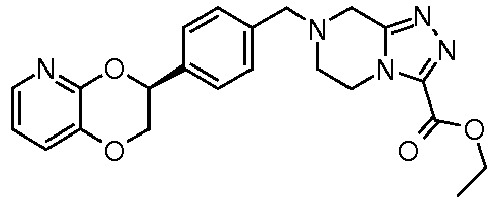
7-[(S)-4-(2,3-Dihydro-[1,4]dioxino[2,3-b]pyridin-3-yl)-benzyl]-5,6,7,8-tetrahydro-[1,2,4]triazolo[4,3-a]pyrazine-3-carboxylic acid ethyl ester 241 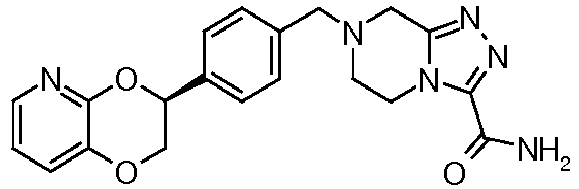
7-[(S)-4-(2,3-Dihydro-[1,4]dioxino[2,3-b]pyridin-3-yl)-benzyl]-5,6,7,8-tetrahydro-[1,2,4]triazolo[4,3-a]pyrazine-3-carboxylic acid amide 242 
7-[(S)-4-(2,3-Dihydro-[1,4]dioxino[2,3-b]pyridin-3-yl)-benzyl]-5,6,7,8-tetrahydro-[1,2,4]triazolo[4,3-a]pyrazine-3-carboxylic acid methylamide 243 
7-[(S)-4-(2,3-Dihydro-[1,4]dioxino[2,3-b]pyridin-3-yl)-benzyl]-5,6,7,8-tetrahydro-imidazo[1,2-a]pyrazine-2-carboxylic acid amide 244 
7-[(S)-4-(2,3-Dihydro-[1,4]dioxino[2,3-b]pyridin-3-yl)-benzyl]-5,6,7,8-tetrahydro-imidazo[1,2-a]pyrazine-2-carboxylic acid methylamide 245 
6-[(S)-4-(2,3-Dihydro-[1,4]dioxino[2,3-b]pyridin-3-yl)-benzyl]-5,6,7,8-tetrahydro-4H-1,2,3a,6-tetraaza-azulene-3-carboxylic acid amide 246 
6-[(S)-4-(2,3-Dihydro-[1,4]dioxino[2,3-b]pyridin-3-yl)-benzyl]-5,6,7,8-tetrahydro-4H-1,2,3a,6-tetraaza-azulene-3-carboxylic acid methylamide 247 
[(1α,5α,6α)-3-[(S)-4-(2,3-Dihydro-[1,4]dioxino[2,3-b]pyridin-3-yl)-benzyl]-3-aza-bicyclo[3.1.0]hexane]-6-carboxylic acid ((S)-2-hydroxy-propyl)-amide 248 
[(1α,5α,6α)-3-[(S)-4-(2,3-Dihydro-[1,4]dioxino[2,3-b]pyridin-3-yl)-benzyl]-3-aza-bicyclo[3.1.0]hexane]-6-carboxylic acid ((S)-2-hydroxy-1-methyl-ethyl)-amide 249 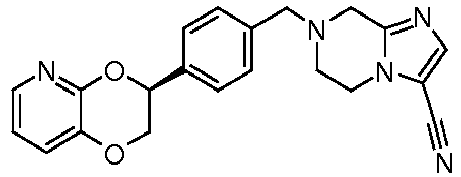
7-[(S)-4-(2,3-Dihydro-[1,4]dioxino[2,3-b]pyridin-3-yl)-benzyl]-5,6,7,8-tetrahydro-imidazo[1,2-a]pyrazine-3-carbonitrile 250 
N-{(1α,5α,6α)-3-[(S)-4-(2,3-Dihydro-[1,4]dioxino[2,3-b]pyridin-3-yl)-benzyl]-3-aza-bicyclo[3.1.0]hex-6-yl}-acetamide 251 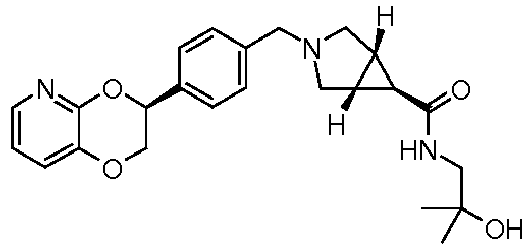
[(1α,5α,6α)-3-[(S)-4-(2,3-Dihydro-[1,4]dioxino[2,3-b]pyridin-3-yl)-benzyl]-3-aza-bicyclo[3.1.0]hexane-6-carboxylic acid (2-hydroxy-2-methylpropyl)]-amide 252 
N-{1-[(S)-4-(2,3-Dihydro-[1,4]dioxino[2,3-b]pyridin-3-yl)-benzyl] -piperidin-4-yl}-2-methoxy-acetamide 253 
1-{4-[(S)-4-(2,3-Dihydro-[1,4]dioxino[2,3-b]pyridin-3-yl)-benzyl]-piperazin-1-yl}-2-hydroxy-ethanone 254 
4-{1-[(S)-4-(2,3-Dihydro-benzo[1,4]dioxin-2-yl)-benzyl]-azetidin-3-yl}-benzoic acid 255 
1-[(S)-4-(2,3-Dihydro-[1,4]dioxino[2,3-b]pyridin-3-yl)-benzyl]-piperidine-4-carboxylic acid (2-hydroxy-2-methyl-propyl)-amide 256 
1-{(1S,4S)-5-[(S)-4-(2,3-Dihydro-[1,4]dioxino[2,3-b]pyridin-3-yl)-benzyl]-2,5-diaza-bicyclo[2.2.1]hept-2-yl}-2-methanesulfonyl-ethanone 257 
1-{4-[(S)-4-(2,3-Dihydro-[1,4]dioxino[2,3-b]pyridin-3-yl)-benzyl]-[1,4]diazepan-1-yl}-2-methoxy-ethanone 258 
5-[(S)-4-(2,3-Dihydro-[1,4]dioxino[2,3-b]pyridin-3-yl)-benzyl]-4,5,6,7-tetrahydro-thiazolo[5,4-c]pyridin-2-ylamine 259 
{(endo)-8-[(S)-4-(2,3-Dihydro-[1,4]dioxino[2,3-b]pyridin-3-yl)-benzyl]-8-aza-bicyclo[3.2.1]oct-3-yl}-urea 260 
2-{1-[(S)-4-(2,3-Dihydro-[1,4]dioxino[2,3-b]pyridin-3-yl)-benzyl]-piperidin-4-yl -N-methoxy-acetamide 261 
(R)-N-{1-[(S)-4-(2,3-Dihydro-[1,4]dioxino[2,3-b]pyridin-3-yl)-benzyl]-piperidin-4-yl-2-methylamino-propionamide 262 
N-{1-[(S)-4-(2,3-Dihydro-[1,4]dioxino[2,3-b]pyridin-3-yl)-benzyl] -piperidin-4-ylmethyl}-2-hydroxy-2-methyl-propionamide 263 
N-{(1α,5α,6α)-3-[(S)-4-(2,3-Dihydro-[1,4]dioxino[2,3-b]pyridin-3-yl)-benzyl]-3-aza-bicyclo[3.1.0]hex-6-ylmethyl}-methanesulfonamide 264 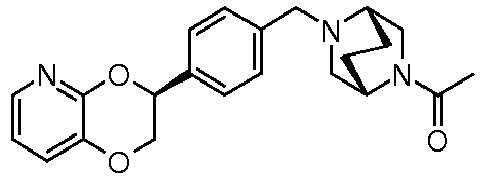
1-{(1S,4S)-5-[(S)-4-(2,3-Dihydro-[1,4]dioxino[2,3-b]pyridin-3-yl)-benzyl]-2,5-diaza-bicyclo[2.2.2]oct-2-yl}-ethanone 265 
4-{1-[(S)-4-(2,3-Dihydro-[1,4]dioxino[2,3-b]pyridin-3-yl)-benzyl]-piperidin-4-yl}-cyclohexanecarboxylic acid 266 
1-[(S)-4-(2,3-Dihydro-benzo[1,4]dioxin-2-yl)-benzyl]-azepane-4-carboxylic acid 267 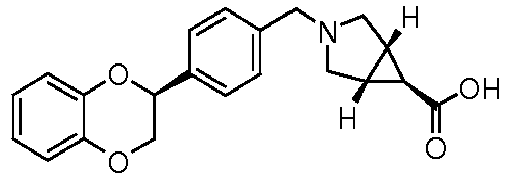
[(1α,5α,6α)-3-[(S)-4-(2,3-Dihydro-benzo[1,4]dioxin-2-yl)-benzyl]-3-aza-bicyclo[3.1.0]hexane]-6-carboxylic acid 268 
(1S,4S)-5-[(S)-4-(2,3-Dihydro-[1,4]dioxino[2,3-b]pyridin-3-yl)-benzyl]-2,5-diaza-bicyclo[2.2.1]heptane-2-carboxylic acid amide 269 
1-[(S)-4-(2,3-Dihydro-[1,4]dioxino[2,3-b]pyridin-3-yl)-benzyl]-4-phenyl-piperidin-4-ol 270 
1-{5-[(S)-4-(2,3-Dihydro-[1,4]dioxino[2,3-b]pyridin-3-yl)-benzyl]-hexahydro-pyrrolo[3,4-c]pyrrol-2-yl}-ethanone 271 
1-{8-[(S)-4-(2,3-Dihydro-[1,4]dioxino[2,3-b]pyridin-3-yl)-benzyl]-3,8-diaza-bicyclo[3.2.1]oct-3-yl}-ethanone 272 
5-[(S)-4-(2,3-Dihydro-[1,4]dioxino[2,3-b]pyridin-3-yl)-benzyl]-hexahydro-pyrrolo[3,4-c]pyrrole-2-carboxylic acid amide 273 
{(exo)-8-[(S)-4-(2,3-Dihydro-[1,4]dioxino[2,3-b]pyridin-3-yl)-benzyl]-8-aza-bicyclo[3.2.1]oct-3-yl}-urea 274 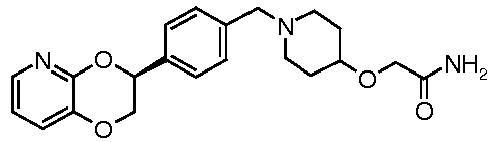
2-{1-[(S)-4-(2,3-Dihydro-[1,4]dioxino[2,3-b]pyridin-3-yl)-benzyl]-piperidin-4-yloxy}-acetamide 275 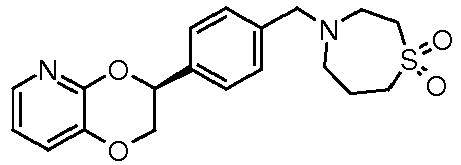
(S)-3-[4-(1,1-Dioxo-1lambda6-[1,4]thiazepan-4-ylmethyl)-phenyl]-2,3-dihydro-[1,4]dioxino[2,3-b]pyridine 276 
1-[(S)-4-(2,3-Dihydro-[1,4]dioxino[2,3-b]pyridin-3-yl)-benzyl]-4-methyl-piperidin-4-ol 277 
1-{(1S,4S)-5-[(S)-4-(2,3-Dihydro-[1,4]dioxino[2,3-b]pyridin-3-yl)-benzyl]-2,5-diaza-bicyclo[2.2.1]hept-2-yl}-2-hydroxy-ethanone 278 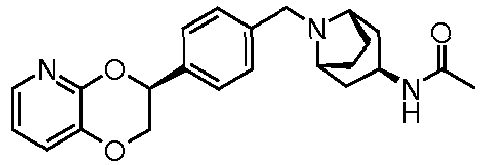
N-{(endo)-8-[(S)-4-(2,3-Dihydro-[1,4]dioxino[2,3-b]pyridin-3-yl)-benzyl]-8-aza-bicyclo[3.2.1]oct-3-yl}-acetamide 279 
N-{1-[(S)-4-(2,3-Dihydro-[1,4]dioxino[2,3-b]pyridin-3-yl)-benzyl]-piperidin-4-ylmethyl}-acetamide 280 
[(S)-4-(2,3-Dihydro-[1,4]dioxino[2,3-b]pyridin-3-yl)-benzyl]-(1,1-dioxo-tetrahydro-1lambda-6-thiophen-3-yl)-methylamine 281 
1-{(1S,4S)-5-[(S)-4-(2,3-Dihydro-[1,4]dioxino[2,3-b]pyridin-3-yl)-benzyl]-2,5-diaza-bicyclo[2.2.2]oct-2-yl}-2-hydroxy-ethanone 282 
{1-[(S)-4-(2,3-Dihydro-[1,4]dioxino-[2,3-b]pyridin-3-yl)-benzyl]- spiro-[3H-indole-3,4'-piperidine] -1(2H)-urea 283 
{1-[(S)-4-(2,3-Dihydro-[1,4]dioxino[2,3-b]pyridin-3-yl)-benzyl]-piperidin-4-ylmethyl}-urea 284 
{4-[(S)-4-(2,3-Dihydro-[1,4]dioxino[2,3-b]pyridin-3-yl)-benzyl]-piperazin-1-yl}-acetonitrile 285 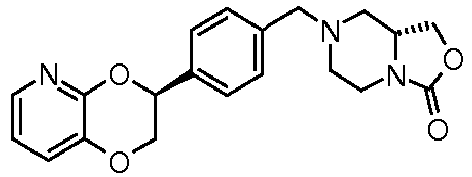
(R)-7-[(S)-4-(2,3-Dihydro-[1,4]dioxino[2,3-b]pyridin-3-yl)-benzyl]-hexahydro-oxazolo[3,4-a]pyrazin-3-one 286 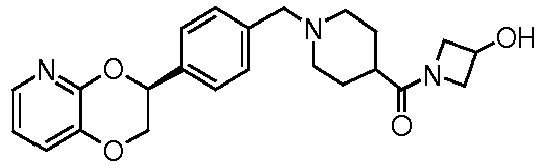
{1-[(S)-4-(2,3-Dihydro-[1,4]dioxino[2,3-b]pyridin-3-yl)-benzyl]-piperidin-4-yl}-(3-hydroxy-azetidin-1-yl)-methanone 287 
1-[(S)-4-(2,3-Dihydro-[1,4]dioxino[2,3-b]pyridin-3-yl)-benzyl]-piperidine-4-carboxylic acid [(S)-1-(tetrahydro-furan-2-yl)methyl]-amide 288 
N-[3-[4-[[4-[(3S)-2,3-Dihydro-[1,4]dioxino[2,3-b]pyridin-3-yl]phenyl]methyl]piperazin-1-yl]-3-oxo-propyl]acetamide 289 
N-[1-[[4-[(3S)-2,3-Dihydro-[1,4]dioxino[2,3-b]pyridin-3-yl]phenyl]methyl]-4-piperidyl]-2-(2-oxopyrrolidin-1-yl)acetamide 290 
N-[1-[[4-[(3S)-2,3-Dihydro-[1,4]dioxino[2,3-b]pyridin-3-yl]phenyl]methyl]-4-piperidyl] tetrahydropyran-4-carboxamide 291 
3-{1-[(S)-4-(2,3-Dihydro-[1,4]dioxino[2,3-b]pyridin-3-yl)-benzyl]-piperidin-4-yl}-[1,3]oxazinan-2-one 292 
1-{(1S,4S)-5-[(S)-4-(2,3-Dihydro-[1,4]dioxino[2,3-b]pyridin-3-yl)-benzyl]-2,5-diaza-bicycio[2.2.1]hept-2-yl}-ethanone 293 
(S)-3-{4-[4-(Pyridin-3-yloxy)-piperidin-1-ylmethyl]-phenyl}-2,3-dihydro-[1,4]dioxino[2,3-b]pyridine 294 
1-[(S)-4-(2,3-Dihydro-[1,4]dioxino[2,3-b]pyridin-3-yl)-benzyl]-4-phenyl-piperidine-4-carboxylic acid 295 
(S)-3-[4-(1-Oxo-1lambda4-thiomorpholin-4-ylmethyl)-phenyl]-2,3-dihydro-[1,4]dioxino[2,3-b]pyridine 296 
(S)-7-[(S)-4-(2,3-Dihydro-[1,4]dioxino[2,3-b]pyridin-3-yl)-benzyl]-hexahydro-oxazolo[3,4-a]pyrazin-3-one - In one embodiment, the invention relates to any of the compounds 240-296 depicted in Table 1, and pharmaceutically acceptable salts thereof.
- In another embodiment, the invention relates to a compound selected from the group consisting of:
- 7-[(S)-4-(2,3-Dihydro-[1,4]dioxino[2,3-b]pyridin-3-yl)-benzyl]-5,6,7,8-tetrahydro-[1,2,4]triazolo[4,3-a]pyrazine-3-carboxylic acid ethyl ester,
- 7-[(S)-4-(2,3-Dihydro-[1,4]dioxino[2,3-b]pyridin-3-yl)-benzyl]-5,6,7,8-tetrahydro-[1,2,4]triazolo[4,3-a]pyrazine-3-carboxylic acid amide,
- 7-[(S)-4-(2,3-Dihydro-[1,4]dioxino[2,3-b]pyridin-3-yl)-benzyl]-5,6,7,8-tetrahydro-[1,2,4]triazolo[4,3-a]pyrazine-3-carboxylic acid methylamide,
- 7-[(S)-4-(2,3-Dihydro-[1,4]dioxino[2,3-b]pyridin-3-yl)-benzyl]-5,6,7,8-tetrahydro-imidazo[1,2-a]pyrazine-2-carboxylic acid amide,
- 7-[(S)-4-(2,3-Dihydro-[1,4]dioxino[2,3-b]pyridin-3-yl)-benzyl]-5,6,7,8-tetrahydro-imidazo[1,2-a]pyrazine-2-carboxylic acid methylamide,
- 6-[(S)-4-(2,3-Dihydro-[1,4]dioxino[2,3-b]pyridin-3-yl)-benzyl]-5,6,7,8-tetrahydro-4H-1,2,3a,6-tetraaza-azulene-3-carboxylic acid amide,
- 6-[(S)-4-(2,3-Dihydro-[1,4]dioxino[2,3-b]pyridin-3-yl)-benzyl]-5,6,7,8-tetrahydro-4H-1,2,3a,6-tetraaza-azulene-3-carboxylic acid methylamide,
- [(1α,5α,6α)-3-[(S)-4-(2,3-Dihydro-[1,4]dioxino[2,3-b]pyridin-3-yl)-benzyl]-3-aza-bicyclo[3.1.0]hexane]-6-carboxylic acid ((S)-2-hydroxy-propyl)-amide,
- [(1α,5α,6α)-3-[(S)-4-(2,3-Dihydro-[1,4]dioxino[2,3-b]pyridin-3-yl)-benzyl]-3-aza-bicyclo[3.1.0]hexane]-6-carboxylic acid ((S)-2-hydroxy-1-methyl-ethyl)-amide,
- 7-[(S)-4-(2,3-Dihydro-[1,4]dioxino[2,3-b]pyridin-3-yl)-benzyl]-5,6,7,8-tetrahydro-imidazo[1,2-a]pyrazine-3-carbonitrile,
- N-{(1α,5α,6α)-3-[(S)-4-(2,3-Dihydro-[1,4]dioxino[2,3-b]pyridin-3-yl)-benzyl]-3-aza-bicyclo[3.1.0]hex-6-yl}-acetamide, and
- [(1α,5α,6α)-3-[(S)-4-(2,3-Dihydro-[1,4]dioxino[2,3-b]pyridin-3-yl)-benzyl]-3-aza-bicyclo[3.1.0]hexane-6-carboxylic acid (2-hydroxy-2-methyl-propyl)]-amide,
- In another embodiment, the invention relates to a compound selected from the group consisting of:
- N-{1-[(S)-4-(2,3-Dihydro-[1,4]dioxino[2,3-b]pyridin-3-yl)-benzyl]-piperidin-4-yl}-2-methoxy-acetamide,
- 1-{4-[(S)-4-(2,3-Dihydro-[1,4]dioxino[2,3-b]pyridin-3-yl)-benzyl]-piperazin-1-yl}-2-hydroxy-ethanone,
- 4-{1-[(S)-4-(2,3-Dihydro-benzo[1,4]dioxin-2-yl)-benzyl]-azetidin-3-yl}-benzoic acid,
- 1-[(S)-4-(2,3-Dihydro-[1,4)dioxino[2,3-b]pyridin-3-yl)-benzyl]-piperidine-4-carboxylic acid (2-hydroxy-2-methyl-propyl)-amide,
- 1-{(1S,4S)-5-[(S)-4-(2,3-Dihydro-[1,4]dioxino[2,3-b]pyridin-3-yl)-benzyl]-2,5-diaza-bicyclo[2.2.1]hept-2-yl}-2-methanesulfonyl-ethanone,
- 1-{4-[(S)-4-(2,3-Dihydro-[1,4]dioxino[2,3-b]pyridin-3-yl)-benzyl]-[1,4]diazepan-1-yl}-2-methoxy-ethanone,
- 5-[(S)-4-(2,3-Dihydro-[1,4]dioxino[2,3-b]pyridin-3-yl)-benzyl)-4,5,6,7-tetrahydro-thiazolo[5,4-c]pyridin-2-ylamine,
- {(endo)-8-[(S)-4-(2,3-Dihydro-[1,4]dioxino[2,3-b]pyridin-3-yl)-benzyl]-8-aza-bicyclo[3.2.1]oct-3-yl}-urea,
- 2-{1-[(S)-4-(2,3-Dihydro-[1,4]dioxino[2,3-b]pyridin-3-yl)-benzyl]-piperidin-4-yl}-N-methoxy-acetamide,
- (R)-N-{1-[(S)-4-(2,3-Dihydro-[1,4]dioxino[2,3-b]pyridin-3-yl)-benzyl]-piperidin-4-yl}-2-methylamino-propionamide,
- N-{1-[(S)-4-(2,3-Dihydro-[1,4]dioxino[2,3-b]pyridin-3-yl)-benzyl]-piperidin-4-ylmethyl}-2-hydroxy-2-methyl-propionamide,
- N-{(1α,5α,6α)-3-[(S)-4-(2,3-Dihydro-[1,4]dioxino[2,3-b]pyridin-3-yl)-benzyl]-3-aza-bicyclo[3.1,0]hex-6-ylmethyl} -methanesulfonamide,
- 1-{(1S,4S)-5-[(S)-4-(2,3-Dihydro-[1,4]dioxino[2,3-b]pyridin-3-yl)-benzyl]-2,5-diaza-bicyclo[2.2.2]oct-2-yl}-ethanone,
- 4-{1-[(S)-4-(2,3-Dihydro-[1,4]dioxino[2,3-b]pyridin-3-yl)-benzyl]-piperidin-4-yl}-cyclohexanecarboxylic acid,
- 1-[(S)-4-(2,3-Dihydro-benzo[1,4]dioxin-2-yl)-benzyl]-azepane-4-carboxylic acid,
- [(1α,5α,6α)-3-[(S)-4-(2,3-Dihydro-benzo[1,4]dioxin-2-yl)-benzyl]-3-aza-bicyclo[3.1.0]hexane]-6-carboxylic acid,
- (1S,4S)-5-[(S)-4-(2,3-Dihydro-[1,4]dioxino[2,3-b]pyridin-3-yl)-benzyl]-2,5-diaza-bicyclo[2.2.1]heptane-2-carboxylic acid amide,
- 1-[(S)-4-(2,3-Dihydro-[1,4]dioxino[2,3-b]pyridin-3-yl)-benzyl]-4-phenyl-piperidin-4-ol,
- 1-{5-[(S)-4-(2,3-Dihydro-[1,4]dioxino[2,3-b)pyridin-3-yl)-benzyl)-hexahydro-pyrrolo[3,4-c]pyrrol-2-yl}-ethanone,
- 1-{8-[(S)-4-(2,3-Dihydro-[1,4]dioxino[2,3-b]pyridin-3-yl)-benzyl]-3,8-diaza-bicyclo[3.2.1]oct-3-yl}-ethanone,
- 5-[(S)-4-(2,3-Dihydro-[1,4]dioxino[2,3-b]pyridin-3-yl)-benzyl]-hexahydro-pyrrolo[3,4-c]pyrrole-2-carboxylic acid amide,
- {(exo)-8-[(S)-4-(2,3-Dihydro-[1,4]dioxino[2,3-b]pyridin-3-yl)-benzyl)-8-aza-bicyclo[3.2.1]oct-3-yl}-urea, and
- 2-{1-[(S)-4-(2,3-Dihydro-[1,4]dioxino[2,3-b]pyridin-3-yl)-benzyl)-piperidin-4-yloxy}-acetamide,
- In another embodiment, the invention relates to a compound selected from the group consisting of:
- (S)-3-[4-(1,1-Dioxo-1lambda6-[1,4]thiazepan-4-ylmethyl)-phenyl]-2,3-dihydro-[1,4]dioxino[2,3-b]pyridine,
- 1-[(S)-4-(2,3-Dihydro-[1,4]dioxino[2,3-b]pyridin-3-yl)-benzyl]-4-methyl-piperidin-4-ol,
- 1-{(1S,4S)-5-[(S)-4-(2,3-Dihydro-[1,4]dioxino[2,3-b]pyridin-3-yl)-benzyl]-2,5-diaza-bicyclo[2.2.1]hept-2-yl}-2-hydroxy-ethanone,
- N-{(endo)-8-[(S)-4-(2,3-Dihydro-[1,4]dioxino[2,3-b]pyridin-3-yl)-benzyl]-8-aza-bicyclo[3.2.1]oct-3-yl}-acetamide,
- N-{1-[(S)-4-(2,3-Dihydro-[1,4]dioxino[2,3-b]pyridin-3-yl)-benzyl]-piperidin-4-ylmethyl}-acetamide,
- [(S)-4-(2,3-Dihydro-[1,4]dioxino[2,3-b]pyridin-3-yl)-benzyl]-(1,1-dioxo-tetrahydro-1lambda-6-thiophen-3-yl)-methyl-amine,
- 1-{(1S,4S)-5-[(S)-4-(2,3-Dihydro-[1,4]dioxino[2,3-b]pyridin-3-yl)-benzyl]-2,5-diaza-bicyclo[2.2.2]oct-2-yl}-2-hydroxy-ethanone,
- {1-[(S)-4-(2,3-Dihydro-[1,4]dioxino-[2,3-b]pyridin-3-yl)-benzyl]- spiro-[3H-indole-3,4'-piperidine]-1(2H)-urea,
- {1-[(S)-4-(2,3-Dihydro-[1,4]dioxino[2,3-b]pyridin-3-yl)-benzyl]-piperidin-4-ylmethyl}-urea,
- {4-[(S)-4-(2,3-Dihydro-[1,4]dioxino[2,3-b]pyridin-3-yl)-benzyl]-piperazin-1-yl}-acetonitrile,
- (R)-7-[(S)-4-(2,3-Dihydro-[1,4]dioxino[2,3-b]pyridin-3-yl)-benzyl]-hexahydro-oxazolo[3,4-a]pyrazin-3-one,
- {1-[(S)-4-(2,3-Dihydro-[1,4]dioxino[2,3-b]pyridin-3-yl)-benzyl]-piperidin-4-yl}-(3-hydroxy-azetidin-1-yl)-methanone,
- 1-[(S)-4-(2,3-Dihydro-[1,4]dioxino[2,3-b]pyridin-3-yl)-benzyl]-piperidine-4-carboxylic acid [(S)-1-(tetrahydro-furan-2-yl)methyl]-amide,
- N-[3-[4-[[4-[(3S)-2,3-Dihydro-[1,4]dioxino[2,3-b]pyridin-3-yl]phenyl]methyl]piperazin-1-yl]-3-oxo-propyl] acetamide,
- N-[1-[[4-[(3S)-2,3-Dihydro-[1,4]dioxino[2,3-b]pyridin-3-yl]phenyl]methyl]-4-piperidyl]-2-(2-oxopyrrolidin-1-yl)acetamide,
- N-[1-[[4-[(3S)-2,3-Dihydro-[1,4]dioxino[2,3-b]pyridin-3-yl]phenyl]methyl]-4-piperidyl]tetrahydropyran-4-carboxamide,
- 3-{1-[(S)-4-(2,3-Dihydro-[1,4]dioxino[2,3-b]pyridin-3-yl)-benzyl]-piperidin-4-yl}-[1,3]oxazinan-2-one,
- 1-{(1S,4S)-5-[(S)-4-(2,3-Dihydro-[1,4]dioxino[2,3-b]pyridin-3-yl)-benzyl]-2,5-diaza-bicyclo[2.2.1]hept-2-yl}-ethanone,
- (S)-3-{4-[4-(Pyridin-3-yloxy)-piperidin-1-ylmethyl]-phenyl}-2,3-dihydro-[1,4]dioxino[2,3-b]pyridine,
- 1-[(S)-4-(2,3-Dihydro-[1,4]dioxino[2,3-b]pyridin-3-yl)-benzyl]-4-phenyl-piperidine-4-carboxylic acid,
- (S)-3-[4-(1-Oxo-1lambda4-thiomorpholin-4-ylmethyl)-phenyl)-2,3-dihydro-[1,4]dioxino[2,3-b]pyridine, and
- (S)-7-[(S)-4-(2,3-Dihydro-[1,4]dioxino[2,3-b]pyridin-3-yl)-benzyl)-hexahydro-oxazolo[3,4-a]pyrazin-3-one,
- In another embodiment, the invention relates to a pharmaceutical composition comprising one or more compounds of the invention as defined in any of the embodiments above, or a pharmaceutically acceptable salt thereof, and a pharmaceutically acceptable carrier or excipient.
- In another embodiment, the invention relates to a pharmaceutical composition comprising one or more compounds of the invention as defined in any of the embodiments above, or a pharmaceutically acceptable salt thereof, a pharmaceutically acceptable carrier or excipient, and at least one additional pharmacologically active substance.
- All terms as used herein in this specification, unless otherwise stated, shall be understood in their ordinary meaning as known in the art. Other more specific definitions are as follows:
- For all compounds disclosed in this application, in the event the nomenclature is in conflict with the structure, it shall be understood that the compound is defined by the structure.
- The invention also relates to pharmaceutical preparations, containing as active substance one or more compounds of the invention, or the pharmaceutically acceptable derivatives thereof, optionally combined with conventional excipients and/or carriers.
- Compounds of the invention also include their isotopically-labelled forms. An isotopically-labelled form of an active agent of a combination of the present invention is identical to said active agent but for the fact that one or more atoms of said active agent have been replaced by an atom or atoms having an atomic mass or mass number different from the atomic mass or mass number of said atom which is usually found in nature. Examples of isotopes which are readily available commercially and which can be incorporated into an active agent of a combination of the present invention in accordance with well established procedures, include isotopes of hydrogen, carbon, nitrogen, oxygen, phosphorous, fluorine and chlorine, e.g., 2H, 3H, 13C, 14C, 15N, 18O, 17O, 31P, 32P, 35S, 18F, and 36Cl, respectively. An active agent of a combination of the present invention, or a pharmaceutically acceptable salt of either which contains one or more of the above-mentioned isotopes and/or other isotopes of other atoms is contemplated to be within the scope of the present invention.
- The invention includes the use of any compounds of described above containing one or more asymmetric carbon atoms may occur as racemates and racemic mixtures, single enantiomers, diastereomeric mixtures and individual diastereomers. Isomers shall be defined as being enantiomers and diastereomers. All such isomeric forms of these compounds are expressly included in the present invention. Each stereogenic carbon may be in the R or S configuration, or a combination of configurations.
- Some of the compounds of the invention can exist in more than one tautomeric form. The invention includes methods using all such tautomers.
- Pharmaceutically acceptable salts include those derived from pharmaceutically acceptable inorganic and organic acids and bases. Examples of suitable acids include hydrochloric, hydrobromic, sulfuric, nitric, perchloric, fumaric, maleic, phosphoric, glycolic, lactic, salicylic, succinic, toluene-p-sulfuric, tartaric, acetic, citric, methanesulfonic, formic, benzoic, malonic, naphthalene-2-sulfuric and benzenesulfonic acids. Other acids, such as oxalic acid, while not themselves pharmaceutically acceptable, may be employed in the preparation of salts useful as intermediates in obtaining the compounds and their pharmaceutically acceptable acid addition salts. Salts derived from appropriate bases include alkali metal (e.g., sodium), alkaline earth metal (e.g., magnesium), ammonium and N-(C1-C4 alkyl)4+ salts.
- The compounds of the invention may be prepared by the general methods, examples presented below, and methods known to those of ordinary skill in the art and reported in the chemical literature. In each of the schemes below, the groups R1 to R3 and A are as defined above for the compound of formula (I), unless noted otherwise. Optimum reaction conditions and reaction times may vary depending on the particular reactants used. Unless otherwise specified, solvents, temperatures, pressures and other reaction conditions may be readily selected by one of ordinary skill in the art. Specific procedures are provided in the Synthetic Examples section.
- Schemes 1 and 2 below depict the general synthetic procedure for making the compounds of formula (I) wherein X is CH ("the benzodioxane LTAH4 inhibitors").
-

-

- Scheme 3 below depicts the general synthetic procedure for making the compounds of formula (I) wherein X is N ("the 8-azabenzodioxane LTAH4 inhibitors").
-

- Groups R1, R2 and R3 that are depicted in Schemes 1-3 are each H, A is defined as required for the compounds according to the invention, and the carbon atom designated with the asterisk "*" can be either the (R) or the (S) stereoisomer, or a mixture of the (R) and the (S) stereoisomers. The present disclosure relates to a method of making the compound of formula (I) as depicted in Scheme 1, 2 or 3 above.
- The intermediates that are useful for making the compounds of the invention can be made according to a method of making the compound of formula (INT-1):


- Intermediate compounds of formula (INT-2:

- Intermediate compounds of formula (INT-3)


- Starting materials and reagents used in Schemes 1-3 are commercially available or may be prepared from commercially available starting materials by one of ordinary skill in the art using methods described in the chemical literature and in the Synthetic Examples section below.
- The examples which follow are illustrative and, as recognized by one skilled in the art, particular reagents or conditions could be modified as needed for individual compounds without undue experimentation.
- General Methods: Unless noted otherwise, all reactions are run at room temperature (about 25°C), under inert atmosphere (e.g., Argon, N2), and under anhydrous conditions. All compounds are characterized by at least one of the following methods: 1H NMR, HPLC, HPLC-MS, and melting point.
- Typically, reaction progress is monitored by thin layer chromatography (TLC) or HPLC-MS. Intermediates and products are purified using at least one of the following methods:
- Flash chromatography on silica gel,
- Recrystallization,
- Chiral HPLC using a 20 x 500 mm Chiralpak AD-H column, or 20 x 500 mm Chiralpak OD-H column, and eluting with an isocratic mixture of isopropanol in heptanes with 0.1% diethylamine (DEA) at 7.5 mL/min,
- 20 x 250 mm Chiralcel OD-H column, and eluting with an isocratic mixture of isopropanol in heptanes at 7.5 mL/min,
- Super Critical Fluid (SCF) Chiral HPLC using a 3.0 x 25.0 cm RegisPack column, eluting with an isocratic mixture of MeOH, isopropylamine (IPA), and super critical carbon dioxide at 125 bar; 80 mL/min, and/or
- Reversed phase HPLC using a C18 semi-preparative column eluting with a gradient of MeCN+0.1% TFA /H2O+0.1% TFA, or MeCN+0.1% formic acid /H2O+0.1% formic acid.
- The reported MS data is for observed [M+H]+. For bromine containing compounds, the [M+H]+ is either reported for one or both of the bromine isotopes (i.e., 79Br and 81Br).
- LC/MS methods used in to characterize and isolate the compounds of the invention are described in Tables 2a, 2b, and 2c below.
Table 2a. LC/MS Methods and retention times (RT). LC/MS Method Time (min) Mobile Phase Flow (mL/min) Column H2O (0.1%FA) CH3CN (0.1%FA) 1 0 95 5 2.5 Agilent Zorbax C18 SB 3.5um 4.6x30mm cartridge 1.7 5 95 2.5 2 5 95 2.5 2.1 95 5 2.5 2.3 95 5 2.5 2 0 70 30 2.5 Agilent Zorbax C18 SB 3.5um 4.6x30mm cartridge 1.7 5 95 2.5 2 5 95 2.5 2.1 70 30 2.5 2.3 70 30 2.5 3 0 99 1 2.5 Agilent Zorbax C18 SB 3.5um 4.6x30mm cartridge 1.7 50 50 2.5 2 5 95 2.5 2.1 5 95 2.5 2.3 99 1 2.5 4 0 95 5 1.5 Agilent Zorbax Eclipse XDB-C8 5um 4.6x150mm 7 5 95 1.5 9 5 95 1.5 9.3 95 5 1.5 10 95 5 1.5 5 0 99 1 2.5 Agilent Zorbax C18 SB 3.5um 4.6x30mm cartridge 1.6 80 20 2.5 1.7 5 95 2.5 2 5 95 2.5 2.1 99 1 2.5 2.3 99 1 2.5 6 0 99 1 1.5 Agilent Zorbax Eclipse XDB-C8 5um 4.6x150mm column 2 80 20 1.5 7 5 95 1.5 9 5 95 1.5 9.3 99 1 1.5 10 99 1 1.5 7 0 88 12 1.5 Agilent SB-C18 1.8um 3x50mm column 0.25 70 30 1.5 0.3 60 40 1.5 1.19 5 95 1.5 1.75 0 100 1.5 8 0 60 40 1.5 Agilent Eclipse C8 1.8um 3x50mm column 1.19 15 85 1.5 1.75 0 100 1.5 9 0 95 5 1.5 Agilent SB-AQ 1.8um 3x50mm column 0.25 50 50 1.5 0.3 70 30 1.5 1.3 10 90 1.5 1.7 0 100 1.5 10 0 95 5 1.5 Agilent SB-C18 1.8um 3x50mm column 3.8 10 90 1.5 4.5 0 100 1.5 Table 2b. LC/MS Methods and retention times (RT). LC/MS Method Time (min) Mobile Phase Flow (mL/min) Column 95% H2O 2+ 5% CH3CN (0.05 % Formic Acid) CH3CN (0.05% Formic Acid) 11 0 90 10 0.8 BEH 2.1x50mm C18, 1.7um particle diameter 1.19 5 95 0.8 1.7 5 95 0.8 12 0 90 10 0.8 BEH 2.1x50mm C18, 1.7um particle diameter 1.19 0 100 0.8 1.7 0 100 0.8 13 0 95 5 0.6 Waters HSS T3 2.1X100mm 18 um column 4.45 0 100 0.6 5 0 100 0.6 14 0 100 0 0.6 Waters HSS T3 2.1X100mm 18 um column 1 100 0 0.6 4.45 0 100 0.6 5 0 100 15 0 90 10 0.6 BEH 2.1x50mm C18, 1.7um particle diameter 4.45 0 100 0.6 4.58 0 100 0.6 Table 2c. LC/MS Methods and retention times (RT). LC/MS Method Time (min) Mobile Phase Flow (mL/min) Column H2O (0.1%FA) CH3CN (0.1%FA) 16 0 90 10 0.5 Thermo Scientific Aquasil C18 2.1x50 mm 5um 35°C 0.5 90 10 0.5 1.5 1 99 0.5 2.5 1 99 0.5 3.3 90 10 0.5 4.0 90 10 0.5 -

- To a stirred solution of pyrocatechol (23.8 g, 216 mmol) in acetone (300mL) is added cesium carbonate (84.4 g, 259 mmol) and 2-Bromo-1-(4-bromo-phenyl)-ethanone (60 g, 216 mmol) at room temperature. The reaction is stirred at room temperature for 1 hour then water (200 mL) is added. The precipitate is filtered and triturated with EtOAc (150 mL) to give A-1 as a solid.
- To a solution of A-1 (50.0 g, 163 mmol) in anhydrous THF (375 mL) is added acetic anhydride (23.0 mL, 244 mmol), TEA (34.0 mL, 244 mmol), and DMAP (199 mg, 1.63 mmol). The reaction mixture is stirred at 40°C for 45 min, cooled to room temperature and diluted with EtOAc (250 mL). The organic solution is washed with water (2 x 100mL), 0.25N HCl (100mL), saturated sodium bicarbonate solution (100mL), and brine (100mL), and dried over Na2SO4. After removal of volatile solvent, the residue is triturated with 5% EtOAc in heptane (1500 mL). The solid is filtered and air dried to give A-2.
- To degassed DMF (500 mL) is added A-2 (41.0 g, 117 mmol), (1S,2S)-(+)-N-(4-Toluenesulfonyl)-1,2-diphenylethylenediamine (756 mg, 2.10 mmol) and Pentamethylcyclopentadienylrhodium(III)dichloride (Cp*RhCl2) dimer (319 mg, 0.520 mmol). The resulting mixture is stirred at 0°C for 20 minutes under argon sparging and treated dropwise with formic acid/triethylamine complex (5:2, 31 mL, 72 mmol). The reaction mixture is stirred under argon at 0°C for 2 hours, diluted with EtOAc (600mL), and washed with half-saturated sodium bicarbonate solution, saturated sodium bicarbonate, and brine. The organic layer is dried over Na2SO4 and concentrated. The residue is purified through a pad of silica gel (400mL), eluting with EtOAc/heptane (1:1, 3 L) to give A-3 as a solid.
- To a MeOH solution (125 mL) of A-3 (24.6 g, 69.0 mmol) is added a solution of LiOH•H2O (5.8 g, 137 mmol) in water (125 mL). The mixture is stirred at 60°C for 30 min, cooled to room temperature and concentrated. The residue is diluted with water and neutralized with 1N aqueous HCl to a pH of 6. The resulting mixture is extracted with EtOAc (3 x 150 mL). The combined organic extracts are washed by saturated sodium bicarbonate solution, brine, dried over Na2SO4, filtered and concentrated to give A-4 as an oil.
- To a 0°C solution of triphenylphosphine (32.7 g, 125 mmol) and diisopropyl azodicarboxylate (24.7mL, 125 mmol) in THF (anhydrous, 400 mL) is added a solution of A-4 (35 g, 113 mmol) in THF (anhydrous, 200 mL) over 30 min. The resulting solution is warmed to room temperature, stirred for 1 hour, and concentrated. The residue is vigorously stirred in heptane (1.8 L) for 2 hours. The precipitate is filtered, and rinsed with heptane. The filtrate is concentrated and purified by flash column chromatography on silica gel (0-10% EtOAc in heptane) to give A-5 as a solid.
- To an argon-degassed solution of A-5 (30.7 g, 105 mmol) in DMF (anhydrous, 400 mL) is added Zn(CN)2 (12.4 g, 105 mmol), tris(dibenzylideneacetone)dipalladium(0) (Pd2(dba)3) (2.9 g, 3.2 mmol), and 1,1'-bis(diphenylphosphino)ferrocene (dppf) (3.5 g, 6.3 mmol). The resulting mixture is sparged with argon and stirred at 80°C overnight. The reaction is cooled to room temperature and filtered through a pad of Diatomaceous earth, and rinsed with EtOAc. The filtrate is diluted with water (400mL) and extracted with EtOAc (2 x 400mL). The combined organic extracts are washed with brine and stirred with activated carbon (80 g). After 30 min, the mixture is filtered through a pad of Diatomaceous earth and concentrated. The residue is triturated with 2% EtOAc in heptane (1L), and filtered to give A-6 as a solid.
- A solution of A-6 (11.1 g, 46.7 mmol) in THF (anhydrous, 400 mL) at 0°C is treated dropwise with DIBAL-H (25 wt% in toluene, 77.8 mL, 117 mmol). The reaction is stirred at 0°C for 30 min, warmed to room temperature and stirred for 2 hours. The reaction is cooled down to 0°C and quenched with EtOAc (250 mL) followed by saturated potassium sodium tartrate solution (400mL). The mixture is diluted with EtOAc (300 mL) and water (300 mL) and stirred for 30 min. The organic layer is separated and washed with water, 1N HCl solution, and brine, and dried over Na2SO4. After filtering through a pad of Diatomaceous earth, the filtrate is concentrated and purified by flash column chromatography on silica gel (0-30% EtOAc in heptane) to give the title product as a solid.
-

- 2-Iodophenol (110 g, 0.50 mol), potassium carbonate (76.0 g, 0.55 mol) and acetonitrile (165 mL) are charged to a reactor under nitrogen atmosphere and stirred at about 20°C for about 45 minutes. The reactor contents are treated with a solution of 4-(2-bromoacetyl)-benzonitrile (123.2 g, 0.55 mol) in acetonitrile (330 mL). The mixture is stirred at about 20 - 25°C for 50 min. The mixture is cooled to about15°C and treated with 2N HCl solution (280 mL). The resultant solids are collected by filtration and dried under reduced pressure at about 45°C to provide A-7: Yield: 172.2 g (98.6 wt%). MS: 386.0 [M+Na]+
- A-7 (20.0g, 54.3 mmol), (1R,2R)-(-)-N-(4-toluenesulfonyl)-1,2-diphenylethylenediamine (142mg, 0.380 mmol), pentamethylcyclopentadienylrhodium(III)dichloride dimer (101 mg, 0.163 mmol), acetonitrile (100 mL) and triethylamine (18.2 mL, 130.6 mmol) are charged to a reactor, stirred at about 20°C for about 1 hour, and cooled to about 0°C. Formic acid (96%, 8.75 mL, 190 mmol) is added at a rate such that the internal temperature does not exceed 15°C. The mixture is stirred at about 5-10°C for about 30 min followed by treatment with water with vigorous stirring. The solids are collected by filtration and dried under reduced pressure at about 45°C to provide A-8. Yield: 18.3g; 90%. Purity: 99.7A%, >99% ee MS: 388.0 [M+Na]+ (see Table 2d below).
Table 2d. LC/MS Methods and retention times (RT). LC/MS Method Time (min) Mobile Phase Flow (mL/min) Column H2O (0.1% Formic Acid) CH3CN (0.1% Formic Acid) 0 95 5 0.5 ZoraxEclipsexDB-C8 2.1x50mm; p/n 971700-906; 35°C 7 5 95 0.5 9 5 95 0.5 10 95 5 0.5 Post time 2 min - A-8 (20.0g, 51.7 mmol), CuI (0.985g, 5.17 mmol), 1,10-phenanthroline (1.86g, 10.34 mmol) and 1,4-dioxane (200 mL) are charged to a reactor under nitrogen atmosphere, heated at reflux for about 15 to 24 hours, and cooled to about 20°C. The reactor contents are neutralized to about pH5-6 with 6N HCl and filtered. The resultant filtrate is treated with activated charcoal, filtered, concentrated, and crystallized in isopropanol to provide A-6. Yield: 9.9g, 79.5%. Purity: 99.7 wt%. MS 238.1 [M+H]+
- A-6 (8 g, 33.7 mmol) and toluene (40 ml) are charged to a reactor under nitrogen atmosphere, and the resultant solution is cooled about -5 to -10°C. The reactor contents are treated with di-isobutlyaluminum hydride in toluene (1.5M, 24.7 mL). During the addition the temperature of the reactor contents increases to about 5° to 10°C. The reactor contents are then cooled to about 0°C and stirred for about 2 hours. The contents of the reactor are quenched with 2N HCl (80 mL), stirred for about 2 hours, and filtered through diatomaceous earth. The resulting organic layer is collected and concentrated under reduced pressure to provide A. Yield: 91%. MS: 241.2 (M + H)+.
-

- To a stirred solution of A-1 (1.2 g, 3.9 mmol) in EtOH (40 mL) is added sodium borohydride (295 mg, 7.80 mmol). The reaction is stirred for 14 h, quenched with 1N HCl (10 mL) and concentrated to remove the EtOH. The solid residue is filtered, washed with water and dried in vacuo to give B-1 as a solid.
- The title product is synthesized from B-1 according to the procedure described for the synthesis of A from A-4. If desired, compound B can be resolved using standard chiral resolution methods that are known to a person of ordinary skill in the art (e.g., chiral chromatography) and are described herein.
-

- To a solution of 2-chloro-3-hydroxy-pyridine (25.0 g, 193 mmol) and 2,4'-dibromo-acetophenone (53.6 g, 193 mmol) in acetone (400 mL) is added Cs2CO3 (75.4 g, 232 mmol), and the suspension is stirred at room temperature for 1 h. The reaction is poured into 1L of water with stirring. Filtration of the mixture gives C-1 as a solid.
- A solution of C-1 (30.0 g, 91.9 mmol), Cp*RhCl2 dimer (0.57 g, 0.92 mmol) and N-((1R,2R)-2-Amino-1,2-diphenyl-ethyl)-4-methyl-benzenesulfonamide (1.0 g, 2.8 mmol) in anhydrous DMF (400 mL) is cooled to 0 °C and sparged with argon for 20 minutes before the dropwise addition of formic acid: TEA mixture (5:2 mixture; 28.2 mL). The reaction is stirred at 0 °C with Argon sparging for 1 hr. The reaction mixture is slowly added to 1.5L of vigorously stirred water. Filtration gives C-2 as a solid.
- A solution of C-2 (10.0 g, 30.4 mmol) in DME (350 mL) is heated to 60°C, KHMDS (61.5 mL, 0.5M in toluene) is added slowly and the resulting solution is stirred for 30 minutes. The reaction is cooled to room temperature, quenched with water, concentrated in vacuo and extracted with EtOAc. The combined organics are washed with brine, dried over Na2SO4, filtered and concentrated. The residue is purified by flash column chromatography (0-40% EtOAc in heptanes) to give C-3 as a solid.
- To a degassed solution of C-3 (5.50 g, 18.8 mmol) in anhydrous DMF (100 mL) is added Zn(CN)2 (2.2 g, 18.8 mmol) and dppf (1.0 g, 1.9 mmol) followed by Pd2(dba)3 (0.86 g, 0.90 mmol), and the reaction is warmed to 80°C overnight. The reaction is then cooled to room temperature and stirred for 48h. The mixture is filtered through a bed of Diatomaceous earth, and the filtrate slowly poured into 1 L of vigorously stirred water. The resulting solid is isolated by filtration and purified by flash chromatography on silica gel (0-40% EtOAc in heptanes) to give C-4 as a solid.
- A solution of C-4 (3.5 g, 14.7 mmol) in 125 mL of THF is cooled down to 0°C in a ice bath. 25 mL of 1.5M DIBAL-H (36.7 mmol, 2.5 eq) solution in toluene is added dropwise via addition funnel (over 15 min). The reaction is stirred at 0°C for 30 min and then allowed to warm to room temperature. The reaction mixture is stirred for 2h at room temperature. The reaction is cooled to 0 °C and carefully quenched with EtOAc (200 mL total), followed by 100 mL of water and 400 mL of saturated aqueous Rochelle's salt solution, and the mixture is stirred for 5 minutes. The entire mixture is transferred to a separatory funnel and the layers are separated. The aqueous layer is extracted with 100 mL of EtOA twice, and the extracts are combined and washed with 0.5 N HCl (100mL). Some product is observed in the acid layer. Acid layer is cooled to 0°C, neutralized with saturated NaHCO3, and extracted with EtOAc twice. The organic layers are combined, washed with brine, and dried over anhydrous Na2SO4, and evaporated. The resulting residue is purified by flash chromatography eluting with 0-80 % EtOAc/Heptane to give the title compound as a solid.
-

- Compound D-1 is synthesized from C-1 according to the procedure described for the synthesis of B-1.
- The title compound is synthesized from D-1 according to the procedure described for the synthesis of C from C-2.
-

- A solution of E-1 (500 mg, 2.00 mmol) and trimethyl(trifluoromethyl)silane (TMSCF3) (863 mg, 6.00 mmol) in dry DMF (2 mL) is cooled to -25°C and treated with 1,3-bis(1-adamantyl)imidazol-2-ylidene (3.4 mg, 0.010 mmol). The mixture is warmed to room temperature, stirred for 1h, and treated with 2N HCl (2 mL). Upon completion, the mixture is neutralized with NaOH (5M, 0.7 mL), concentrated, and purified by reversed phase HPLC (10-90% MeCN/H2O gradient) to provide E-2 (LC/MS Method 1; RT = 0.88 min; ES+ m/z [M+H]+ 318.2).
- A mixture of E-2 (524 mg, 1.65 mmol) and 10% palladium on carbon (200 mg) in MeOH (16 mL) is stirred under an atmosphere of H2 at room temperature for 15h. The mixture is filtered through Diatomaceous earth, and the filter pad is washed with MeOH. The filtrate is concentrated to provide the title product.
-
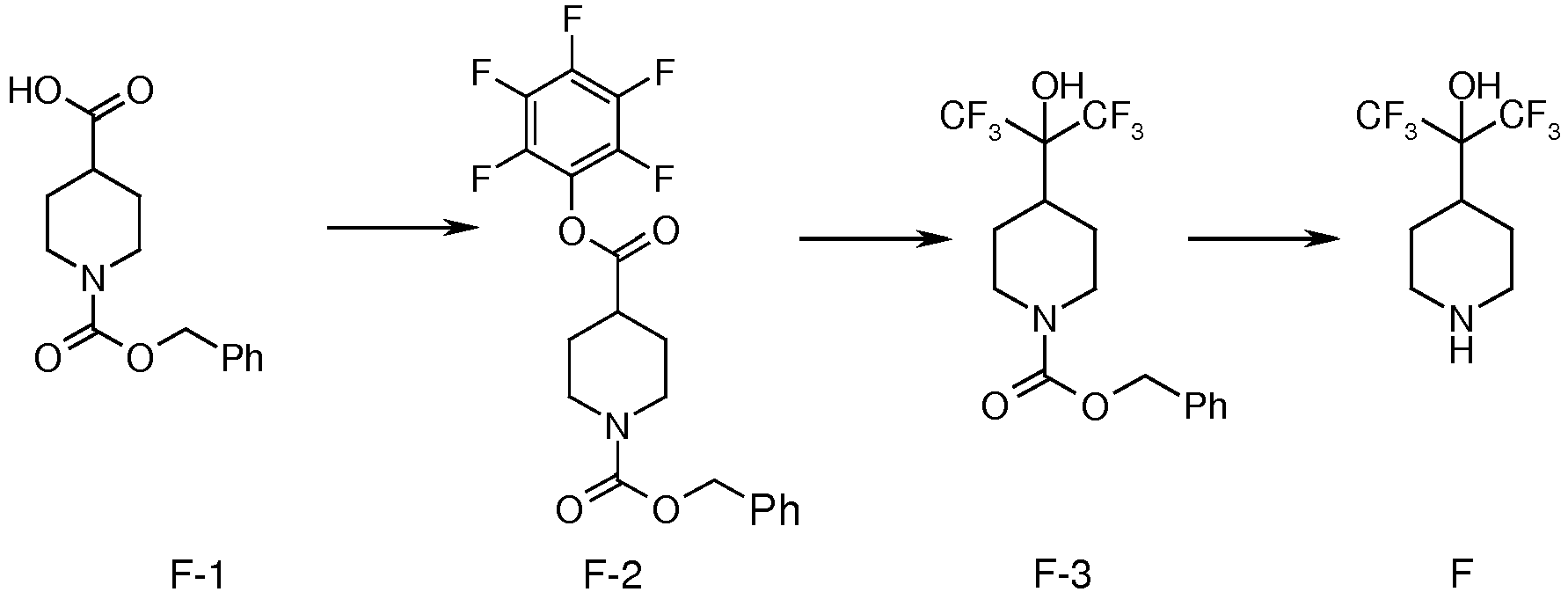
- A solution of piperidine-1,4-dicarboxylic acid monobenzyl ester (1.0 g, 3.80 mmol), 2,3,4,5,6-pentafluoro-phenol (0.77 g, 4.18 mmol) and dicyclohexyl-carbodiimide (0.86 g, 4.18 mmol) in dioxane (12 mL) is stirred at room temperature for 16 h. The mixture is filtered and concentrated in vacuo. The residue is purified by flash chromatography (EtOAc/heptane) to give F-2.
- To a solution of F-2 (200 mg, 0.47 mmol) in DME (1.0 mL) is added TMSCF3 (139 mg, 0.98 mol) and tetramethylammonium fluoride (43 mg, 0.47 mmol) at -50°C. The resulting mixture is allowed to warm to room temperature and stirred for 16h. The mixture is concentrated in vacuo and the residue is purified by reverse HPLC (30-95%, MeCN/Water) to give F-3.
- A mixture of F-3 (670 mg, 1.74 mmol) and 10% palladium on carbon (210 mg) in MeOH (17 mL) is stirred under an atmosphere of H2 at room temperature for 15h. The mixture is filtered through Diatomaceous earth and the filter pad is washed with MeOH. The filtrate is concentrated to provide the title product (F).
-

- To a stirred solution of 4-methyl-piperidine-1,4-dicarboxylic acid mono-tert-butyl ester (1.00 g, 4.10 mmol) in MeOH (2 mL) is added HCl (5 ml, 4 M in dioxane). After 18h, the mixture is evaporated to dryness, the residue is dissolved in MeOH (3mL), and the stirred solution is treated with Et2O (45 ml). The resulting solid is filtered and dried to give the title compound.
- The following intermediates are also prepared according to the procedure described for the synthesis of I-1:
Intermediate Structure # I-2 
I-3 
I-4 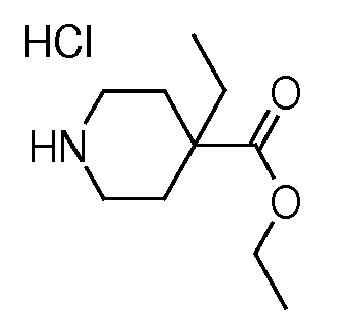
I-5 
I-6 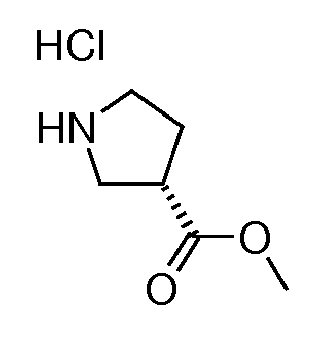
-

- To a solution of 1-[(S)-4-(2,3-dihydro-[1,4]dioxino[2,3-b]pyridin-3-yl)-benzyl]-piperidine-4-carboxylic acid ethyl ester (prepared from Intermediate C and piperidine-4-carboxylic acid ethyl ester according to General Method F) (3.00 g, 7.90 mmol) in 4:1 EtOH/water (80 mL) is added LiOH monohydrate (0.994 g, 23.7 mmol) and the reaction stirred overnight at about 25°C. The reaction is concentrated, diluted with water and washed with Et2O (2x). The aqueous layer is lypholized to dryness then purified by silica gel chromatography eluting with 20% (2M NH3 in MeOH)/DCM. The pooled fractions are concentrated and dried to provide the title compound (K) as a foamed solid.
-

- To a solution of thiomorpholine (500 mg, 4.85 mmol) in DCM (50 mL) is added a solution of mCPBA (1.14, g 5.09 mmol) in DCM (25 mL) dropwise over 10 min at 0°C. The reaction is stirred for 24h at about 25°C and concentrated. The residue is dissolved in DCM (10 mL) and MP-carbonate resin added (3.16 g, 9.72 mmol), and the suspension stirred for 1h. Filtration and concentration affords the title compound (L).
-

- Intermediate M is prepared from Intermediate C and Piperidin-4-yl-carbamic acid tert-butyl ester according to Example 217.
-

- To a solution of 4,5,6,7-tetrahydro-thiazolo[5,4-c]pyridin-2-ylamine dihydrochloride (1.79 g, 7.83 mmol) and DIPEA (4.43 mL, 24.0 mmol) in DCM (20 mL) at 0°C is added trifluoroacetic anhydride (2.24 mL, 16.0 mmol) in a dropwise fashion. The mixture is stirred for 1h, diluted with DCM (200 mL) and quenched with sat. NH4Cl (200 mL). The layers are separated and the organic layer washed with water (2x200 mL), brine (200 mL), dried (MgSO4), and concentrated. The residue is purified by silica gel chromatography eluting with 0-10% MeOH/DCM to give 1:1 bistrifluoroacetamide /monotrifluoroacetamide. The mixture is dissolved in EtOH (5 mL) and 4M HCl in 1,4-dioxane (4 mL) is added, and the reaction heated at 60°C over 2h. The mixture is concentrated to afford Intermediate (N-1).
- To a solution of 1-(2-amino-6,7-dihydro-4H-thiazolo[5,4-c]pyridin-5-yl)-2,2,2-trifluoro-ethanone (3.00 g, 11.9 mmol) and di-tert-butyl dicarbonate (11.8 g, 52.2mmol) in THF (100 mL) is added catalytic dimethyl-pyridin-4-yl-amine (50 mg, 0.41 mmol) and the reaction stirred at 25°C for 24 hours. Concentrate the reaction and purify by silica gel chromatography eluting with 0-20% EtOAc/hexane to afford [5-(2,2,2-trifluoro-acetyl)-4,5,6,7-tetrahydro-thiazolo[5,4-c]pyridin-2-yl]-carbamic acid bis(tert-butyl ester) (5.00 g; 11.1 mmol). To a solution of this in THF (20 mL) is added morpholine (3.24 ml; 36.6 mmol) and the reaction stirred at about 25°C for 24 hours. The reaction is concentrated at 45°C to give a semi-solid residue. This is suspended in EtOAc (300 mL), washed with water (300 mL) and brine (100 mL), and dried (Na2SO4). Concentration and trituration in MeOH (50 mL) affords Intermediate (N-2) as a white solid.
- To a suspension of [5-(2,2,2-trifluoro-acetyl)-4,5,6,7-tetrahydro-thiazolo[5,4-c]pyridin-2-yl]-carbamic acid tert-butyl ester (3.50 g, 9.86 mmol) in MeOH (75 mL) is added a solution of potassium carbonate (13.8 g; 98.6 mmol) in water (125 mL) and the reaction stirred at about 25°C for 24 hours. The suspension is concentrated and the residue suspended in EtOAc (300 mL). This is washed with sat. NH4Cl (300 mL) then brine (100 mL). Solid product forms in the EtOAc layer. This is filtered off as crop 1. The aqueous layer is extracted with more EtOAc (3 x 300 mL) and the combined extracts washed with brine and dried (Na2SO4). Concentrate to a white solid and combine with the above precipitate. Triturate this in EtOAc (50 mL) and filter to give the title compound (N).
-

- To a solution of (1S,4S)-2,5-diaza-bicyclo[2.2.1]heptane-2-carboxylic acid tert-butyl ester (1.00 g, 5.04 mmol) in DCM (15 mL) is added acetic anhydride (0.52 mL, 5.55 mmol) and the reaction stirred at about 25°C for 72 hours. The reaction is concentrated, and the residue dissolved in DCM (15 mL) and treated with 4M HCl in 1,4-dioxane (5.04 mL, 20.2 mmol). The reaction is stirred overnight, and the solid filtered to afford the title compound (O).
-

- To a solution of (1S,4S)-2,5-diaza-bicyclo[2.2.1]heptane-2-carboxylic acid tert-butyl ester (1.00 g, 5.04 mmol) in DCM (15 mL) is added TMS-isocyanate (2.68 mL, 20.2 mmol) and the reaction stirred at about 25°C for 72 hours. The reaction is concentrated, and the residue dissolved in DCM (15 mL) and treated with 4M HCl in 1,4-dioxane (5.04 mL, 20.2 mmol). The reaction is stirred overnight, and the solid filtered to afford the title compound (P).
-

- To a solution of {(endo)-8-[(S)-4-(2,3-dihydro-[1,4]dioxino[2,3-b]pyridin-3-yl)-benzyl]-8-aza-bicyclo[3.2.1]oct-3-yl}-carbamic acid tert-butyl ester (prepared from Intermediate C and (endo)-(8-aza-bicyclo[3.2.1]oct-3-yl)-carbamic acid tert-butyl ester according to General Method I) (285 mg, 0.568 mmol) in DCM (15 mL) was added 4M HCl in 1,4-dioxane (6.0 mL; 24.0 mmol) and the reaction stirred at about 25°C for 24 hours. The reaction was concentrated and the solid suspended in DCM and heptane. Filter the solid to afford the title compound (Q).
-

- To a solution of 4-oxo-piperidine-1-carboxylic acid tert-butyl ester (1.00 g, 4.92 mmol) in dry THF (50 mL) at -78°C is added 3.0M methyl magnesium chloride in THF (3.00 mL, 9.00 mmol) dropwise over 1 min. The reaction is warmed to 0°C over 1h. The reaction is cooled to -20°C and quenched by addition of cold sat. NH4Cl (100 mL) with vigorous stirring. To the suspension is added EtOAc (200 mL) and the biphase partitioned. The aqueous layer is re-extracted with EtOAc (200 mL) and the combined organics washed with brine (100 mL) and dried (Na2SO4). The solvent is removed in vacuo to give R-1 as a gum.
- To a solution of 4-hydroxy-4-methyl-piperidine-1-carboxylic acid tert-butyl ester (1.08 g, 4.87 mmol) in DCM (25 mL) is added 4M HCl in 1,4-dioxane (20 mL, 80 mmol) and the reaction stirred at about 25°C for 18 hours. The reaction is concentrated, suspended in Et2O and heptane, and filtered to afford the title compound (R) as a white powder.
-

- To a solution of 4-[(S)-4-(2,3-dihydro-[1,4]dioxino[2,3-b]pyridin-3-yl)-benzyl]-piperazine-1-carboxylic acid tert-butyl ester (prepared from Intermediate C and Piperazine-1-carboxylic acid tert-butyl ester according to General Method N) (7.32 g, 17.8 mmol) in 1,4-dioxane (200 mL) is added 4M HCl in 1,4-dioxane (22.2 mL, 88.9 mmol). The resulting slurry is stirred overnight. The reaction is poured into water (600 mL) and basified with 2M aqueous Na2CO3. The product is extracted with DCM, and the combined extracts washed with brine and dried over Na2SO4 to afford the title compound (S) as an oil that partially crystallizes.
-

- Intermediate T is Prepared according to the procedure described in
WO2009/126806A2 . -

- To a solution of 3,8-diaza-bicyclo[3.2.1]octane-8-carboxylic acid tert-butyl ester (1.00 g, 4.71 mmol) and triethylamine (1.41 mL, 10.0 mmol) in DCM (20 mL) cooled to -20°C is added acetyl chloride (0.36 mL, 5.0 mmol) and the reaction stirred at about 25°C for 24 hours. The reaction is concentrated, suspended in EtOAc (125 mL) then washed with 0.1M HCl (100 mL), sat. NaHCO3 (100 mL) and brine (50 mL). The organic layer is dried (Na2SO4) and concentrated to give (U-1) as an oil.
- To a solution of 3-acetyl-3,8-diaza-bicyclo[3.2.1]octane-8-carboxylic acid tert-butyl ester (1.20 g, 4.49 mmol) in DCM (25 mL) is added 4M HCl in 1,4-dioxane (20.0 mL, 80.0 mmol) and the reaction stirred at about 25°C for 18 hours. The reaction is concentrated, suspended in Et2O, and filtered to afford the title compound (U) as a hydroscopic solid.
-

- To a solution of V-1 (85.0 g; 0.582 mol) in EtOH is added H4N2•H2O (36.4 g, 0.582 mol) at -15 ∼ -25°C. The precipitate is removed by filtration and the filtrate is concentrated to give the title product (V).
-

- To a stirred solution of W-1 (20.0 g, 0.200 mol) in DCM, is added Boc anhydride (43.6 g, 0.200 mol), and TEA (40.4 g, 0.400 mol). The mixture is stirred at about 25°C for about 18 hours. The mixture is concentrated and the residue dissolved in EtOAc then extracted with water. The organic layer is concentrated and the residue is purified by silica gel chromatography to give W-2.
- To a stirred solution of W-2 (20.0 g, 0.100 mol) in THF, is added P2S5 (6.70 g, 0.03 mol). The reaction is stirred at 60°C for 12 h. The precipitate is filtered, and the filtrate is evaporated to give crude W-3.
- To a stirred solution of crude W-3 (20.0 g, 0.092 mol) in DCM, is added CH3I (150 g, 1.06 mol). The reaction is stirred at about 25°C for 12 h then concentrated to give crude W-4.
- To a stirred solution of crude W-4 (20.0 g, 0.087 mol) in EtOH is added intermediate V (11.5 g, 0.087 mol), and the reaction mixture is stirred at reflux for 12 h. The mixture is concentrated and the residue is purified by silica gel chromatography to give W-5.
- To a solution of HCl-MeOH (200 mL) is added W-5 (8.50 g, 28.7 mmol), and the solution is stirred at rt. After 4 h, the solution is concentrated to afford the title compound (W).
-

- The intermediate X can be synthesized according to the procedure described in Kim, D.; Kowalchick, J. E.; Edmondson, S. D.; Mastracchio, A.; Xu, J.; Eiermann, G. J.; Leiting, B.; Wu, J. K.; Pryor, K. D.; Patel, R. A.; He, H.; Lyons, K. A.; Thornberry, N. A.; Weber, A. E. Bioorg. Med. Chem. Lett. 17, 2007, 3373.
-

- The intermediate Y-1 is synthesized starting from [1,4]diazepan-5-one according to the procedure described for the synthesis of intermediate W-5.
- A solution of Y-1 (500 mg, 1.61 mmol) in DCM (5 mL) is treated dropwise with TFA (1.00 mL, 13.0 mmol), and the reaction is stirred over night. The reaction is concentrated to afford the crude title product Y.
-

- A solution of Z-1 (10.0 g, 105 mmol) in DME (100 mL) is treated dropwise with the Z-2 (16.3 mL, 129 mmol) over 1h at rt. After 3h, the mixture is cooled to 0°C and filtered. The solid is washed with ether (50 mL) and dried under vacuum. The solid is heated in refluxing EtOH (100 mL) for 3h. The mixture is concentrated, the residue is dissolved in CHCl3 (100 mL), and basified to pH 9 with sat. NaHCO3 (100 mL). The suspension is filtered through a pad of Diatomaceous earth, which is washed with water (100 mL) and CHCl3 (3 x 100 mL). The phases are separated, and the aqueous layer extracted with CHCl3 (100 mL). The combined organic extracts are dried over MgSO4, filtered and concentrated. The residue is crystallized from EtOH (100 mL) to give Z-3.
- To a stirred solution of Z-3 (1.00 g, 5.23 mmol) in EtOH (50 mL) is added 5% Pd on carbon (300 mg), and the mixture stirred under a H2 atmosphere. After 72h, the mixture is filtered through a pad of Diatomaceous earth, and concentrated to give the title product (Z).
-

- Intermediate AA-1 can be synthesized according to the procedure described in
WO2010/116328 . - To a solution of AA-1 (700 mg, 2.42 mmol) in MeOH (5 mL) is added 5% Pd/C (52 mg) and the mixture stirred under H2 at room temperature. After 18 h, the mixture is evacuated and purged with Argon, filtered through a pad of Diatomaceous earth filter aid, and concentrated to give the title product (AA).
-

- Intermediate BB-1 can be synthesized according to the procedure described in
WO2010/116328 . - The title product BB is prepared from BB-1 according to the procedure described for intermediate AA.
-

- Intermediate CC-1 can be synthesized according to the procedure described in Brighty, K. E., Castaldi, M. J., Synlett, 1996, 1097.
- To a solution of CC-1 (665 mg, 2.00 mmol) in MeOH (8 mL) is added 4M HCl in 1,4-dioxane (2.5 mL, 10 mmol) and the reaction stirred overnight. The mixture is concentrated and the residue suspended in Et2O. The resulting mixture is isolated to afford CC-2.
- To a solution of CC-2 (200 mg, 0.744 mmol) in DCM (3 mL) is added acetic anhydride (0.105 mL, 1.12 mmol) followed by DIPEA (0.26 mL, 1.49 mmol). After stirring overnight, the reaction is diluted with EtOAc (50 mL) and washed with sat. NH4Cl (25 mL), sat. NaHCO3 (25 mL) and brine (25 mL). The organic layer is dried over MgSO4, filtered, and concentrated to give the crude CC-3.
- To a solution of CC-3 (189 mg, 0.689 mmol) in MeOH (5 mL) is added 5% Pd/C (100 mg), and the mixture stirred under H2 at rt. After 18 h, the mixture is filtered through a pad of Diatomaceous earth filter aid, and concentrated to give the title product (CC).
-

- The title product is prepared from DD-1 according to the procedure described for intermediate Y.
-

- The title product EE is prepared from compound EE-1 (prepared from Intermediate C and (1S,4S)-2,5-diaza-bicyclo[2.2.1]heptane-2-carboxylic acid tert-butyl ester according to General Method N) according to the procedure described for the synthesis of Intermediate Q.
-

- The title product FF is prepared from compound FF-1 (prepared from Intermediate C and [1,4]diazepane-1-carboxylic acid tert-butyl ester according to General Method N) according to the procedure described for the synthesis of Intermediate S.
-

- The title product GG is prepared from compound GG-1 (prepared from Intermediate C and piperidin-4-yl-acetic acid methyl ester according to General Method F) according to the procedure used to synthesize Intermediate K.
-

- The title product HH is prepared from compound HH-1 (prepared from Intermediate C and piperidin-4-ylmethyl-carbamic acid tert-butyl ester according to General Method I) according to the procedure used to synthesize Intermediate Q.
-

- The title product II is prepared from compound II-1 (prepared from Intermediate C and [(1α,5α,6α)-1-(3-azabicyclo[3.1.0]hex-6-yl)methyl]-carbamic acid tert-butyl ester according to General Method I) according to the procedure used to synthesize Intermediate Q.
-

- The title product JJ is prepared from compound JJ-1 (prepared from Intermediate C and (1S,4S)-2,5-diaza-bicyclo[2.2.2]octane-2-carboxylic acid tert-butyl ester according to General Method J) according to the procedure used to synthesize Intermediate S.
-

- The title product KK is prepared from hexahydro-pyrrolo[3,4-c]pyrrole-2-carboxylic acid tert-butyl ester according to the procedure described for the synthesis of Intermediate O.
-

- The title product LL is prepared from hexahydro-pyrrolo[3,4-c]pyrrole-2-carboxylic acid tert-butyl ester according to the procedure described for the synthesis of Intermediate P.
-
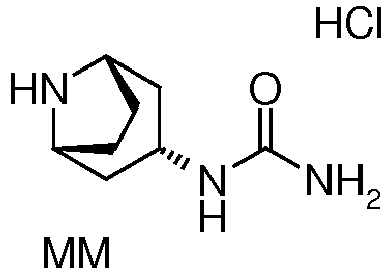
- The title product MM is prepared from [(exo)-3-Amino-8-aza-bicyclo[3.2.1]octane]-8-carboxylic acid tert-butyl ester according to the procedure described for the synthesis of Intermediate P.
-

- The title product NN is prepared from NN-1 (prepared from Intermediate C and (1S,4S)-2,5-Diaza-bicyclo[2.2.1]-heptane-2-carboxylic acid tert-butyl ester according to General Method N) according to the procedure for synthesis of Intermediate S.
-

- Compound OO is prepared from OO-1 (prepared from Intermediate C and spiro-(3,4'-piperidine-3H-indole) according to General Method D) from the procedure used to prepare Intermediate S.
-

- TEA (0.12mL, 0.83 mmol) is added to a mixture of C (100 mg, 0.42 mmol) and 2,8-Diaza-spiro[4.5]decan-1-one; hydrochloride (158 mg, 0.83 mmol) in 2 mL of DCM. One drop of acetic acid is added, and the mixture is stirred for 10 min, sodiumacetoxyborohydride (132mg, 0.83 mmol) is added, and the resulting mixture is stirred for 24 h. The solvent is evaporated and the crude mixture is dissolved in 2 ml of MeCN/H2O (1:1). The mixture is purified on a reverse phase C18 semi-preparative HPLC column eluting with a gradient of 0-95% MeCN/H2O to give the title product.
-

- To a solution of B (100 mg, 0.420 mmol), and piperazine-1-carboxylic acid tert-butyl ester (93 mg, 0.50 mmol) in DCE (4 mL) is added acetic acid (50 mg, 0.83mmol). The mixture is stirred at room temperature for 10 min, treated with sodium triacetoxyborohydride (141 mg, 0.67 mmol), and stirred at room temperature for 16 hours. The reaction is diluted with saturated aqueous sodium bicarbonate (5 mL) and extracted with EtOAc (5 mL x 3). The combined organic layers is washed with brine, dried over Na2SO4, filtered and concentrated. The residue is purified on a reversed phase C18 semi-preparative HPLC column eluting with a gradient of 5-85% MeCN+0.1%TFA /H2O+0.1%TFA). The combined fractions are concentrated and basified by saturated aqueous sodium bicarbonate (5 mL) and extracted with EtOAc (5 mL x 3). The combined organic phases is washed by brine, dried over Na2SO4, filtered, and concentrated to give the title product.
-

- A solution of A (100 mg, 0.42 mmol), 4-piperidin-4-ylmethyl-benzoic acid methyl ester hydrochloride (146 mg, 0.54 mmol), sodium cyanoborohydride (52 mg, 0.83 mmol), and TEA (0.08 mL, 0.54 mmol) in THF (5 mL) is treated with 2 drops of acetic acid, and stirred at room temperature for 16 h. The mixture is concentrated, and the residue is purified by flash chromatography eluting with a gradient of 0-10% MeOH in DCM to give the title compound.
-

- A solution of B (40mg, 0.17mmol) and piperidine-4-carboxylic acid methylamide (47.2mg, 0.332mmol) is treated with acetic acid (0.01mL). After shaking for 1 hour, a solution of sodium triacetoxyborohydride (70.6mg, 0.33mmol) in DMA (0.5mL) is added and the resulting mixture is shaken overnight. The mixture is concentrated, diluted with DMSO (0.8 mL), filtered and purified on a C18 semi-preparative HPLC column eluting with a gradient of 5-85% MeCN+0.1%TFA /H2O+0.1%TFA) to provide the title compound.
-

- A solution of A (310 mg), methyl 4-(aminomethyl)benzoate hydrochloride (338 mg), sodium cyanoborohydride (162 mg), and DIPEA (0.3 mL) in MeOH (5 mL) is treated with 2 drops of acetic acid, and the resulting mixture is stirred at room temperature for 16h. The mixture is concentrated, and the residue is purified by flash chromatography eluting with a gradient of 0-10% MeOH in DCM to give the title compound.
-

- A solution of Intermediate C (367 mg, 1.99 mmol) and 3-piperidin-4-yl-[1,3]oxazinan-2-one (400 mg, 1.66 mmol) is stirred in THF (3 mL) for 10 min. To this add sodium triacetoxyborohydride (422 mg, 1.99 mmol) and stir the reaction 24h. The reaction is quenched with sat. NaHCO3 and extracted with EtOAc. The combined organics are dried with Na2SO4 and concentrated. The residue is purified by reversed phase HPLC eluting with 10-90% MeCN in water (+0.1% TFA), and the concentrated pooled fractions diluted with MeOH and passed through a carbonate resin cartridge to provide the title compound 291 as a free base. (LC/MS method 16: ES+ m/z 410.3 [M+H]+, Rt = 2.45 min).
-

- A solution of Intermediate A (300 mg, 1.25 mmoL), 4-azetidin-3-yl-benzoic acid methyl ester hydrochloride (313 mg, 1.37 mmol), and DIPEA (0.261 mL, 1.50 mmol) in DMA (5 mL) is stirred at about 25°C for 15 minutes. This mixture is treated with sodium triacetoxyborohydride (318 mg, 1.5 mmol) and stirred at about 25°C for 16 hours. The mixture is quenched with sat. NaHCO3 solution and the extracted with ethyl acetate. The organic layer is washed with brine, dried over sodium sulfate and concentrated. The residue is purified by silica gel chromatography to give the title compound as a colorless oil.
-

- To a solution of Intermediate C (60 mg, 0.25 mmol) and thiomorpholine 1-oxide (Intermediate L) (60 mg, 0.50 mmol) in DCM (4 mL) is added TEA (0.10 mL, 0.72 mmol) and the reaction stirred 10 min. Sodium triacetoxyborohydride (91 mg, 0.41 mmol) is added and the reaction stirred 24 h. The reaction is quenched with MeOH, concentrated and purified by reversed phase HPLC eluting with 0-50 % MeCN in water (0.1% TFA). The concentrated fractions are re-purified by silica gel chromatography eluting with 0-15% MeOH/DCM. The concentrated residue is dissolved in DCM, and washed with sat. NaHCO3. The organic layer is concentrated and the residue lyophilized from MeCN/water to give the title compound 295 as a solid. (LC/MS method 16: ES+ m/z 345.4 [M+H]+, Rt = 0.35 min).
-

- A solution of Intermediate C (4.10 g, 16.5 mmol) and Intermediate AA (4.79 g, 29.9 mmol) in DCM (50 mL) is treated with TEA (3.50 mL, 24.9 mmol) and DMF (10 mL), and the solution is stirred at room temperature for 45 min. To this is added sodium triacetoxyborohydride (6.49 g, 30.0 mmol) and the mixture is stirred for 24h. The reaction is concentrated and the residue is purified by silica gel chromatography eluting with 0-50% EtOAc in heptane to afford the title compound as an oil which crystallizes.
-

- To a solution of Intermediate C (100 mg, 0.415 mmol) and Intermediate O (73 mg, 0.42) and TEA (0.086 mL, 0.62 mmol) in 1,4-dioxane (2 mL) is added sodium triacetoxyborohydride (177 mg, 0.833 mmol) and the reaction stirred 72h. The reaction is quenched with 1M HCl and purified by reverse phase HPLC 0-70% MeCN in water (0.1% formic acid). The pooled and concentrated fractions are dissolved in MeOH and eluted through a carbonate resin plug to give the title compound 292 as a solid after lyopholization. (LC/MS method 16: ES+ m/z 366.3 [M+H]+, Rt = 0.28 min).
-

- A solution of Intermediate C (100 mg; 0.410 mmol) and 3-(piperidin-4-yloxy)-pyridine (122 mg, 0.657 mmol) in DCM (2 mL) and MeOH (0.5 mL) is treated with TEA (0.100 mL, 0.710 mmol) and the suspension is microwaved at 100°C for 20 min. To this add sodium triacetoxyborohydride (200 mg, 0.925 mmol), acetic acid (0.100 mL, 1.69 mmol), and MeOH (1.5 mL). The reaction is sealed and stirred over 24h. The reaction is concentrated then purified by reverse-phase HPLC eluting with 10-60% MeCN in water (0.1% TFA). The pooled and concentrated fractions are dried in vacuo to give the title compound 293 as a TFA salt. (LC/MS method 16: ES+ m/z 404.5 [M+H]+, Rt = 2.47 min).
-

- A solution of Intermediate C (100 mg, 0.42 mmol) and 4-Phenyl-piperidine-4-carboxylic acid (85 mg, 0.42 mmol) in DMF (5 mL) is stirred for 30 min at rt. To this add sodium triacetoxyborohydride (88 mg, 0.42 mmol) and stir the reaction for 2h at rt. The reaction is concentrated and purified by reverse-phase HPLC eluting with 10-90% MeCN in water (0.1% TFA). The pooled and concentrated fractions are dried in vacuo to give the title compound 294. (LC/MS method 16: ES+ m/z 431.5 [M+H]+, Rt = 2.70 min).
-

- To a solution of Intermediate C (200 mg, 0.829 mmol) and (S)-Hexahydro-oxazolo[3,4-a]pyrazin-3-one hydrochloride (178 mg, 0.995 mmol) in DMF (2 mL) is added sodium cyanoborohydride (156 mg, 2.49 mmol) followed by one drop of acetic acid. The reaction is allowed to stir at about 25°C for 24 hours. The reaction is concentrated and purified by silica gel chromatography eluting with 75-100% EtOAc/Heptanes. The product fractions are concentrated to provide the title compound 296. (LC/MS method 16: ES+ m/z 368.4 [M+H]+, Rt = 2.53 min).
-

- To a solution of Intermediate C (5.00 g, 20.7 mmol) and Piperazine-1-carboxylic acid tert-butyl ester (7.72 g, 41.5 mmol) in DCM (250 mL) is added sodium triacetoxyborohydride (8.79 g, 41.5 mmol) and the reaction sealed and stirred overnight. The reaction is quenched with MeOH (25 mL) and poured into vigorously stirring water (500 mL). The solution is basified with 2M aqueous Na2CO3. The layers are separated and the aqueous layer extracted with DCM. The combined extracts are dried over Na2SO4 and concentrated. The residue is suspended in heptane and the solid isolated by filtration to give the title compound.
-

- A solution of intermediate A (300 mg, 1.25 mmol) and piperidin-4-yl-carbamic acid tert-butyl ester (300 mg, 1.5 mmol, 1.2 equiv.) is stirred in dry THF (3 mL) for 10 minutes. Sodium triacetoxyborohydride (316 mg, 1.49 mmol) is added, and the reaction is stirred for 18h. The reaction is concentrated and partitioned between EtOAc and saturated aqueous NaHCO3. The organic layer is dried over Na2SO4, filtered, and concentrated. The residue is purified by flash chromatography eluting with a gradient of 0-5% MeOH in DCM. The residue is dissolved in MeOH (1 mL), treated with HCl (10 mL, 4M in dioxane), and stirred for 18h. The reaction is diluted with Et2O (40 mL) and filtered to provide the title compound as the HCl salt (LC/MS method 1: ES+ m/z 325.2 [M+H]+, Rt = 0.35 min).
-

- A mixture of 4-{1-[(S)-4-(2,3-dihydro-benzo[1,4]dioxin-2-yl)-benzyl]-piperidin-4-ylmethyl}-benzoic acid methyl ester (prepared according to General Method C) (80 mg, 0.17 mmol), LiOH•H2O (15 mg, 0.36 mmol), MeOH (3 mL) and water (0.5 mL) is stirred at room temperature for 16h. The reaction mixture is neutralized with acetic acid and concentrated. The residue is triturated with water to give the title compound.

Table 7. Preparation of reference compound 231 Ex # X ---A MS Method [M+H]+ Rt (min) 231 CH 
4 444.30 1.42 -

-

- A solution of compound 240 (6.98 g, 16.6 mmol) in a solution of ammonia in methanol (102 mL, 7 mmol) is stirred at 90 °C in a pressure tube for 22h. The mixture is gradually cooled to rt. The mixture is filtered, and the solids are washed with chilled methanol then air dried to give the title product 241. (LC/MS method 16: ES+ m/z 393.3 [M+H]+, Rt = 2.60 min).
-

- The solution of compound 240 (75 mg, 0.18 mmol) in a solution of 33% methylamine in ethanol (1.0 mL) is stirred at 90 °C in a pressure tube. After 18 hours, the mixture is gradually cooled to rt. The mixture is filtered, and the solids are washed with chilled ethanol and chilled methanol then air dried to give the title product. (LC/MS method 16: ES+ m/z 407.3 [M+H]+, Rt = 2.73 min).
-

- Compound 243-1 is synthesized from Intermediates C (200 mg, 0.829 mmol) and Z (324 mg, 1.66 mmol) according to the procedure described for the synthesis of compound 240.
- The title compound 243 is synthesized from compound 243-1 (70 mg, 0.17 mmol) according to the procedure described for the synthesis of compound 241. (LC/MS method 16: ES+ m/z 392.4 [M+H]+, Rt = 2.58 min).
-

- The title compound 244 is synthesized from compound 243-1 (75 mg, 0.18 mmol) according to the procedure described for the synthesis of compound 242. (LC/MS method 16: ES+ m/z 406.3 [M+H]+, Rt = 2.52 min).
-

- Compound 245-1 is synthesized from Intermediates C (360 mg, 1.49 mmol) and Y (519 mg, 1.60 mmol) according to General Method A.
- The title compound 245 is synthesized from compound 245-1 (275 mg, 0.631 mmol) according to the procedure described for the synthesis of compound 241. (LC/MS method 16: ES+ m/z 407.5 [M+H]+, Rt = 0.35 min).
-

- The title compound 246 is synthesized from compound 245-1 (80 mg, 0.18 mmol) according to the procedure described for the synthesis of compound 242. (LC/MS method 16: ES+ m/z 421.4 [M+H]+, Rt = 2.61 min).
-

- Compound 247-1 is synthesized from Intermediates C (400 mg, 1.66 mmol) and AA (796 mg, 5.13 mmol) according to the procedure described for the synthesis of compound 240.
- A solution of compound 247-1 (631 mg, 1.66 mmol) in a mixture of THF, MeOH, and H2O (3:1:1) is treated with LiOH•H2O (278 mg, 6.63 mmol). The resulting mixture is stirred at rt. Upon completion, the reaction mixture is acidified with TFA and concentrated. The mixture is dissolved in DCM and concentrated (3 times) to give crude compound 247-2.
- To a solution of 247-2 (200 mg), and DIPEA (0.129 mL, 2.54 mmol) in DMF (2.0 mL) is added TBTU (407 mg, 1.26 mmol). The mixture is stirred at rt for 15 min and treated with the (S)-1-amino-propan-2-ol (0.200 mL, 2.54 mmol). After 18 hours, the mixture is quenched with MeOH and the crude is purified by reverse phase HPLC eluting with 5-95% MeCN in water (+0.1% TFA). Product fractions are pooled and lyophilized. The solid is dissolved in MeOH, passed through a carbonate resin cartridge, and concentrated. The residue is purified by silica gel chromatography (0-100% EtOAC in heptanes, followed by 0-10% MeOH in DCM) to give the title product 247. (LC/MS method 16: ES+ m/z 410.4 [M+H]+, Rt = 1.46 min).
-

- The title compound 248 is synthesized from compound 247-2 (200 mg) according to the procedure described for the synthesis of compound 247. (LC/MS method 16: ES+ m/z 410.4 [M+H]+, Rt = 1.45 min).
-

- Compound 249-1 is synthesized from Intermediates C (200 mg, 0.829 mmol) and DD (518 mg, 1.64 mmol) according to General Method A.
- A stirred mixture of 249-1 (80 mg, 0.19 mmol), dppf (10 mg, 0.019 mmol), Zn(CN)2 (22 mg, 0.19 mmol), and Pd2(dba)3 (9 mg, 0.009 in degassed DMF (1 mL) is evacuated and purged with Ar, and stirred at 90 °C under an Ar atmosphere. After 18 hours, the mixture is filtered through a pad of Diatomaceous earth filter aid and rinsed with EtOAc (2 x 10 mL). The filtrate is diluted with EtOAc (10 mL) and extracted with sat. NaHCO3 (20 mL).
- The phases are separated and the aqueous layer is extracted with EtOAc (3 x 10 mL). The combined organic layers are extracted with brine (20 mL), dried over MgSO4, filtered and concentrated. The residue is purified by silica gel chromatography eluting with 0-100% EtOAc in heptane. The residue is further purified reverse phase HPLC eluting with 5-95% MeCN in water (+0.1% TFA). All fractions containing the desired product are pooled and lyophilized. The solid is dissolved in MeOH, passed through a carbonate resin cartridge, and concentrated to give the title product 249. (LC/MS method 16: ES+ m/z 374.4 [M+H]+, Rt = 2.75 min).
-

- The title compound 250 is synthesized from Intermediates C (100 mg, 0.415 mmol) and CC (88 mg, 0.63 mmol) according to the method described for the synthesis of compound 240. (LC/MS method 16: ES+ m/z 366.5 [M+H]+, Rt = 0.33 min).
-
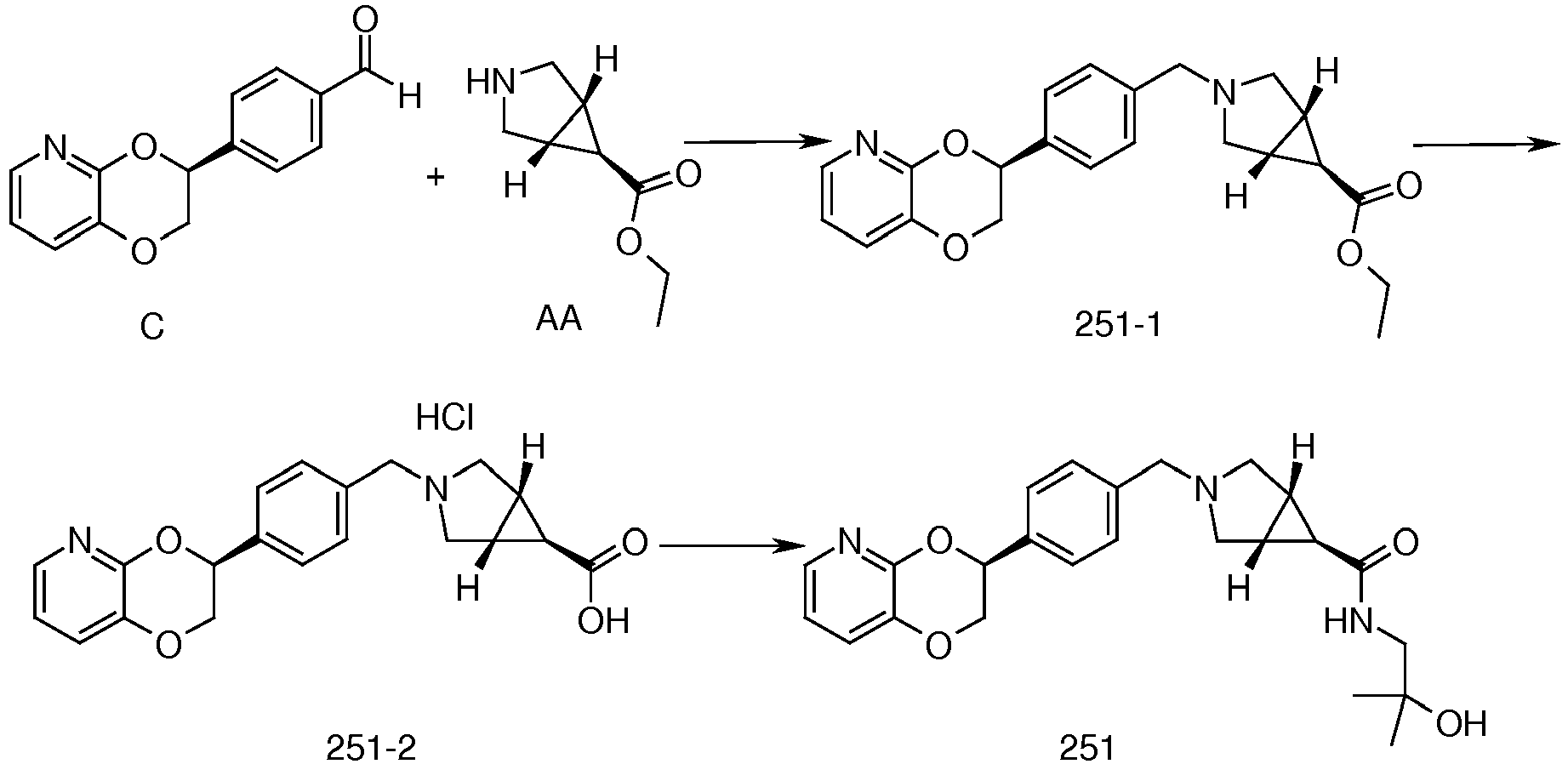
- A mixture of Intermediate C (34.0 g, 136 mmol) and the HCl salt of Intermediate AA (40.0 g, 202 mmol) in DCM (800 mL) is treated with TEA (50.0 ml, 355 mmol) and DMF (200 mL). After stirring at room temperature for 90 min, sodium triacetoxyborohydride (59.0 g, 272 mmol) is added and the reaction is stirred for 72 hours. The mixture is concentrated, quenched with a mixture of water and sat. NaHCO3 (1000 mL, 1:1), and extracted with EtOAc (2 x 1000 mL). The combined organic layers are washed with brine (200 mL), dried over Na2SO4, filtered and concentrated. The residue is purified by silica gel chromatography eluting with 3:1 → 1:1 heptane/EtOAc. Fractions containing the product are pooled and concentrated to approx 300 mL. The solid product is filtered, and washed with hexanes to give a crop of 251-1. The impure filtrate is re-purified by silica gel chromatography (3:1 → 1:1 heptane/EtOAc). Fractions are concentrated, filtered and washed with hexanes to yield another crop of 251-1.
- To a suspension of 251-1 (49.5 g, 128 mmol) in EtOH (800 mL) is added water (400 mL) and sodium hydroxide (16.0 g, 388 mmol). After stirring for 18 hours at rt, the reaction mixture is concentrated. The resultant residue is dissolved in water (500 mL), cooled to - 10 °C, and slowly neutralized with HCl (460 mL, 1M) over 15 min to achieve a final pH of 4. The mixture is concentrated to dryness, and the residue is stirred in a hot mixture of MeOH and DCM (1000 mL, 1:1). The mixture is filtered, and the solid is washed with a 1:1 mixture of MeOH and DCM. The filtrate is concentrated and the resulting solid is dried under vacuum in a desiccator over P2O5. The solid is re-suspended in a hot mixture of MeOH and DCM (500 mL, 1:1). Acetone (500 mL) is added, the mixture is filtered, and the solid is washed with MeOH and acetone. The filtrate is concentrated and the resulting solid is dried under vacuum in a desiccator over P2O5 to provide 251-2.
- To a solution of 251-2 (51.7 g, 128 mmol) in DMF (1000 mL) is added HATU (70.0 g, 183 mmol) and DIPEA (100 mL, 560 mmol), and the reaction mixture is stirred at rt. After 60 min, 1-amino-2-methyl-propan-2-ol (24.0 g, 261 mmol) is added and the reaction is stirred at rt for 96 hours. The reaction mixture is concentrated and the residue is dissolved in EtOAc (1000 mL). The aqueous layer is extracted with EtOAc (2 x 1000 mL). The organic layers are washed with a mixture of water and sat. NaHCO3 (1000 mL, 1:1), brine (200 mL), dried over Na2SO4 and filtered. The filtrate is stored for 1 hour, and the resultant solids are filtered, washed with EtOAc (3 x 100 mL) and dried. The solid is stirred in EtOAc at 45 °C for 30 min, filtered, washed with EtOAc (2 x 50 mL), and dried under vacuum in a desiccator over P2O5 to give the title product 251. (LC/MS method 16: ES+ m/z 424.4 [M+H]+, Rt = 1.47 min).
-

- To Intermediate M (75 mg, 0.23 mmol) in THF (1 mL) & TEA (0.128 mL, 0.92 mmol) was added Methoxy-acetyl chloride (0.042 mL, 0.46 mmol). The reaction was stirred for 10 min then quenched with MeOH and purified by reversed phase HPLC eluting with 0-60% MeCN in water (+0.1% TFA) to provide the title compound 252. (LC/MS method 16: ES+ m/z 398.4 [M+H]+, Rt = 0.31 min).
-

- To a solution of Intermediate S (5.80 g, 17.7 mmol) in DCM (200 mL) at 0°C is added acetic acid chlorocarbonylmethyl ester (2.16 mL, 19.5 mmol) followed by DIPEA (7.50 mL, 35.4 mmol) and the mixture stirred at rt for 1 h. The reaction was concentrated and the residue dissolved in 4:1 MeOH/water (100 mL) then treated with LiOH monohydrate (2.23 g, 53.1 mmol). After 72h, the reaction is poured into ice water and the resulting solid isolated by filtration. The solid is suspended in refluxing tert-butylmethyl ether (400 mL) for 20 min and the remaining undissolved material separated out by filtration. The cooled filtrate produces a solid that is then isolated by filtration in several crops. The undissolved material from the first filtration is dissolved in refluxing 1,4-dioxane and cooled to give an additional crop of solid. The crops are combined to give the title product 253. (LC/MS method 16: ES+ m/z 370.3 [M+H]+, Rt = 0.35 min).
-

- A solution of 4-{1-[(S)-4-(2,3-Dihydro-benzo[1,4]dioxin-2-yl)-benzyl]-azetidin-3-yl}-benzoic acid methyl ester (prepared from Intermediate A and 4-Azetidin-3-yl-benzoic acid methyl ester according to General Method G) (504 mg, 1.21 mmol) and lithium hydroxide monohydrate (210 mg, 5.0 mmol) in 1,4-dioxane (10 mL) and water (1.0 mL) is stirred at 50°C for 16h. The mixture is neutralized with 1M HCl and concentrated. The residue is triturated with water to give the title compound 254 as a solid. (LC/MS method 16: ES+ m/z 402.5 [M+H]+, Rt = 2.70 min).
-

- To a solution of Intermediate K (50 mg, 0.14 mmol) in DMA (1 mL) is added HATU (59 mg, 0.16 mmol) followed by 1-amino-2-methyl-propan-2-ol (14 mg, 0.16 mmol) as a solution in DMA (1 mL) and DIEA (0.10 mL, 0.56 mmol) and the mixture stirred at rt overnight. Add water (0.1 mL) and purify by reversed phase HPLC eluting with 10-90% MeCN in water (+0.1% TFA). The concentrated pooled fractions are dissolved in 1:1 1 methanol/DCE and passed through a carbonate resin cartridge to provide the title compound 255 as a free base. (LC/MS method 16: ES+ m/z 426.5 [M+H]+, Rt = 1.48 min).
-

- To a solution of methanesulfonyl-acetic acid (42 mg, 0.30 mmol) in THF (2 mL) is added TBTU (97 mg, 0.30 mmol) and the solution stirred 30 min. To this add Intermediate EE (100 mg, 0.202 mmol) followed by DIPEA (0.129 mL, 0.737 mmol) and stir at rt overnight. The reaction was purified twice by reverse phase HPLC eluting with 0-70% MeCN in water (0.1% formic acid). The pooled and concentrated fractions are dissolved in MeOH and treated with a carbonate resin to give the title compound 256 as the solid free base. (LC/MS method 16: ES+ m/z 444.4 [M+H]+, Rt = 0.34 min).
-

- To a solution of FF (40 mg, 0.12 mmol) and TEA (0.034 mL, 0.25 mmol) in THF (1.0 mL) is added Methoxy-acetyl chloride (13 mg, 0.12 mmol). The reaction is stirred for 1h then quenched with MeOH and purified by reverse phase HPLC eluting with 0-60% MeCN in water (0.1% TFA) to afford the title compound 257. (LC/MS method 16: ES+ m/z 398.4 [M+H]+, Rt = 2.50 min).
-

- To a solution of {5-[(S)-4-(2,3-Dihydro-[1,4]dioxino[2,3-b]pyridin-3-yl)-benzyl]-4,5,6,7-tetrahydro-thiazolo[5,4-c]pyridin-2-yl}-carbamic acid tert-butyl ester (prepared from Intermediate N according to General Method K) (50 mg, 0.10 mmol) in DCM (2 mL) with several drops MeOH is added 4M HCl in 1,4-dioxane (1.0 mL, 4.0 mmol) and the reaction stirred at rt for 16h. The reaction is concentrated, suspended in Et2O and filtered to give the title compound 258. (LC/MS method 16: ES+ m/z 381.4 [M+H]+, Rt = 0.36 min).
-

- To a solution of Intermediate Q (100 mg, 0.212 mmol) in DCM (2 mL) and TEA (0.100 mL, 0.710 mmol) is added TMS-isocyanate (0.075 mL, 0.47 mmol) and the reaction stirred at rt for 24h. The reaction is concentrated and the residue purified by reverse phase HPLC eluting with 10-55% MeCN in water (0.1% TFA). The pooled and concentrated fractions are dissolved in MeOH and eluted through a carbonate resin plug and concentrated to afford the title product 259. (LC/MS method 16: ES+ m/z 395.5 [M+H]+, Rt = 2.47 min).
-

- A solution of Intermediate GG (96 mg, 0.26 mmol), O-methyl-hydroxylamine hydrochloride (26 mg, 0.31 mmol), TEA (0.11 mL, 0.78 mmol), and TBTU (101 mg, 0.313 mmol) in DMF (2 mL) is heated at 60°C overnight. The reaction is concentrated and the residue purified by reverse phase HPLC eluting with 10-26% MeCN in water (0.1% formic acid). The pooled and concentrated fractions are dissolved in MeOH and eluted through a carbonate resin plug then concentrated to afford the title product 260. (LC/MS method 16: ES+ m/z 398.4 [M+H]+, Rt = 0.35 min).
-

- A solution of Intermediate M (100 mg, 0.276 mmol), (R)-2-(tert-butoxycarbonyl-methyl-amino)-propionic acid (67 mg, 0.33 mmol), TEA (0.115 mL, 0.828 mmol), and TBTU (106 mg, 0.331 mmol) in DMF (2 mL) is heated at 60°C overnight. The reaction is diluted with EtOAc, rinsed with sat. NaHCO3, and the organics dried and concentrated. The residue is purified by silica gel chromatography eluting with 0-10% MeOH/DCM. The pooled and concentrated product fractions are treated with 4M HCl in 1,4-dioxane (5 mL) and stirred overnight. The reaction is concentrated and purified by reverse phase HPLC eluting with 10-90% MeCN in water (0.1% TFA). The concentrated product fractions are dissolved in MeOH and eluted through a carbonate resin cartridge to afford the title compound 261. (LC/MS method 16: ES+ m/z 411.4 [M+H]+, Rt = 0.33 min).
-

- To a solution of 2-Hydroxy-2-methyl-propionic acid (67 mg, 0.64 mmol) in DMF (2 mL) is added HATU (249 mg, 0.636 mmol) followed by DIPEA (0.200 mL, 1.13 mmol) and the reaction stirred at rt 10 min. This is added to Intermediate HH (125 mg, 0.212 mmol) and the reaction stirred at rt for 72h. The reaction is concentrated and purified by reverse-phase HPLC eluting with 10-65% MeCN in water (0.1% TFA). Concentrated product fractions are further purified by silica gel chromatography eluting with 10% (2M NH3 in MeOH)/DCM to afford the title compound 262. (LC/MS method 16: ES+ m/z 426.4 [M+H]+, Rt = 2.69 min).
-

- To a solution of II (120 mg; 0.244 mmol) in pyridine (2 mL) at 0°C is added Methanesulfonyl chloride (0.096 mL, 1.22 mmol) and the reaction stirred at rt 18h. The reaction is concentrated and purified by reverse phase prep-HPLC eluting with 10-60% MeCN in water (0.1% TFA). Concentrated product fractions are further purified by silica gel chromatography eluting with 10% (2M NH3 in MeOH)/DCM to afford the title compound 263 as an oil which crystallizes. (LC/MS method 16: ES+ m/z 416.4 [M+H]+, Rt = 2.57 min).
-

- To a solution of Intermediate JJ (42 mg, 0.12 mmol) in 1,4-dioxane (2 mL) is added acetic anhydride (0.018 mL, 0.19 mmol) followed by TEA (0.026 mL, 0.19 mmol) and the reaction stirred at rt for 72h. The suspension is dissolved by the addition of 1M aqueous HCl and purified by reverse phase HPLC eluting with 0-70% MeCN in water (0.1% formic acid) to afford a solid. The material is dissolved in MeOH and eluted through a carbonate resin cartridge, concentrated and lyophilized to afford the title compound 264. (LC/MS method 16: ES+ m/z 380.4 [M+H]+, Rt = 2.51 min).
-

- Compound 265 is prepared from Intermediate C and 4-piperidin-4-yl-cyclohexane-carboxylic acid according to General Method H. (LC/MS method 16: ES+ m/z 437.4 [M+H]+, Rt = 2.58 min).
-

- Compound 266 is synthesized from Intermediate A and azepane-4-carboxylic acid according to General Method B. (LC/MS method 16: ES+ m/z 368.3 [M+H]+, Rt = 2.76 min).
-
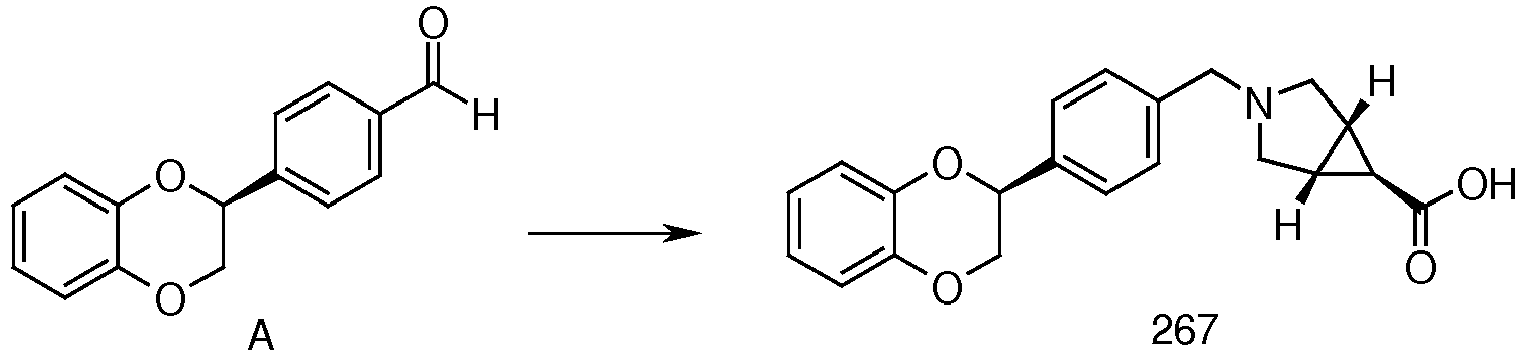
- Compound 267 is synthesized from Intermediate A and Intermediate AA according to General Method D, and the procedure described for the synthesis of Example 231. (LC/MS method 16: ES+ m/z 352.3 [M+H]+, Rt = 2.61 min).
-

- Compound 268 is synthesized from Intermediate C and Intermediate P according to General Method J. (LC/MS method 16: ES+ m/z 367.3 [M+H]+, Rt = 0.27 min).
-

- Compound 269 is synthesized from Intermediate C and 4-phenyl-piperidin-4-ol according to General Method K. (LC/MS method 16: ES+ m/z 403.4 [M+H]+, Rt = 2.68 min).
-

- Compound 270 is synthesized from Intermediate C and Intermediate KK according to General Method J. (LC/MS method 16: ES+ m/z 380.4 [M+H]+, Rt = 2.49 min).
-

- Compound 271 is synthesized from Intermediate C and Intermediate U according to General Method H. (LC/MS method 16: ES+ m/z 380.5 [M+H]+, Rt = 2.52 min).
-

- Compound 272 is synthesized from Intermediate C and Intermediate LL according to General Method J. (LC/MS method 16: ES+ m/z 381.3 [M+H]+, Rt = 0.28 min).
-

- Compound 273 is prepared from Intermediate C and Intermediate MM according to General Method I. (LC/MS method 16: ES+ m/z 395.2 [M+H]+, Rt = 0.30 min).
-

- Compound 274 is synthesized from Intermediate C and 2-(piperidin-4-yloxy)acetamide according to General Method K. (LC/MS method 16: ES+ m/z 384.3 [M+H]+, Rt = 0.32 min).
-

- Compound 275 is synthesized from Intermediate C and [1,4]thiazepane 1,1-dioxide according to General Method H. (LC/MS method 16: ES+ m/z 375.4 [M+H]+, Rt = 2.51 min).
-

- Compound 276 is synthesized from Intermediate C and Intermediate R according to General Method K. (LC/MS method 16: ES+ m/z 341.2 [M+H]+, Rt = 2.50 min).
-

- Compound 277 is synthesized from Intermediate NN and acetic acid chlorocarbonylmethyl ester according to the procedure used to synthesize Example 253. (LC/MS method 16: ES+ m/z 382.4 [M+H]+, Rt = 0.34 min).
-

- Compound 278 is synthesized from Intermediate C and Intermediate T according to General Method I. (LC/MS method 16: ES+ m/z 394.4 [M+H]+, Rt = 0.34 min).
-

- Compound 279 is synthesized from Intermediate C and N-piperidin-4-ylmethyl-acetamide according to General Method H. (LC/MS method 16: ES+ m/z 382.4 [M+H]+, Rt = 2.50 min).
-

- Compound 280 is synthesized from Intermediate C and (1,1-dioxo-tetrahydro-1lambda-6-thiophen-3-yl)-methyl-amine according to General Method N. (LC/MS method 16: ES+ m/z 375.4 [M+H]+, Rt = 2.66 min).
-

- Compound 281 is synthesized from Intermediate JJ and acetic acid chlorocarbonylmethyl ester according to the procedure used to synthesize Example 253. (LC/MS method 16: ES+ m/z 396.5 [M+H]+, Rt = 2.41 min).
-

- Compound 282 is synthesized from Intermediate OO and TMS-isocyanate according to the procedure used to synthesize Example 259. (LC/MS method 16: ES+ m/z 457.3 [M+H]+, Rt = 2.58 min).
-

- Compound 283 is synthesized from Intermediate C and Intermediate HH according to the procedure used to synthesize Example 253. (LC/MS method 16: ES+ m/z 383.4 [M+H]+, Rt = 2.45 min).
-

- Compound 284 is synthesized from Intermediate C and piperazin-1-yl-acetonitrile (prepared from 4-Cyanomethyl-piperazine-1-carboxylic acid tert-butyl ester according to the procedure used to synthesize Intermediate U from U-1) according to General Method F. (LC/MS method 16: ES+ m/z 351.3 [M+H]+, Rt = 2.68 min).
-
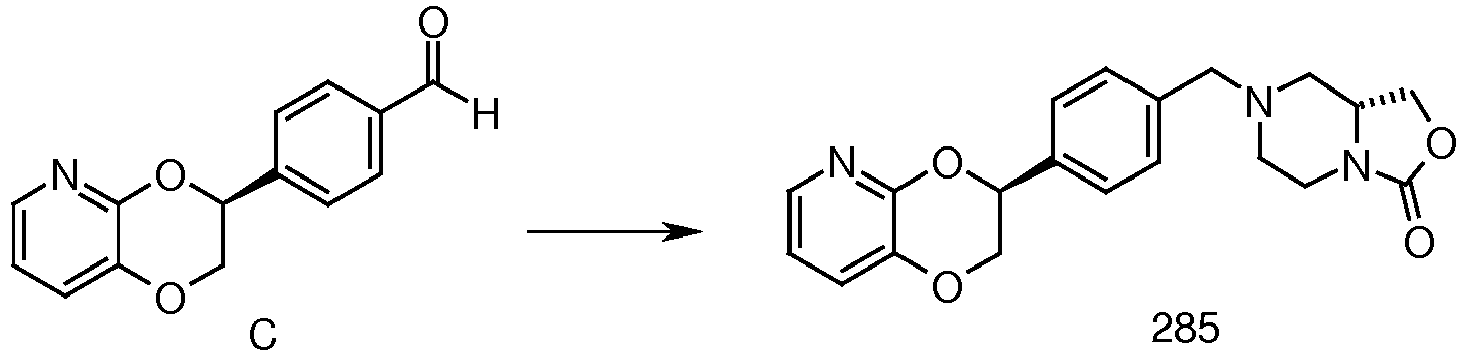
- Compound 285 is synthesized from Intermediate C and (R)-hexahydro-oxazolo[3,4-a]pyrazin-3-one according to General Method M. (LC/MS method 16: ES+ m/z 368.4 [M+H]+, Rt = 2.52 min).
-

- Compound 286 is synthesized from Intermediate K and azetidin-3-ol according to the procedure used to synthesize Example 255. (LC/MS method 16: ES+ m/z 410.4 [M+H]+, Rt = 0.35 min).
-

- Compound 287 is synthesized from Intermediate K and C-[(S)-1-(tetrahydro-furan-2-yl)]-methylamine according to the procedure used to synthesize Example 255. (LC/MS method 16: ES+ m/z 438.4 [M+H]+, Rt = 2.56 min).
-

- Compound 288 is synthesized from Intermediate S and 3-acetylamino-propionic acid according to the procedure used to synthesize Example 262. (LC/MS method 16: ES+ m/z 425.4 [M+H]+, Rt = 1.47 min).
-

- Compound 289 is synthesized from Intermediate M and (2-Oxo-pyrrolidin-1-yl)-acetic acid according to the procedure used to synthesize Example 261. (LC/MS method 16: ES+ m/z 451.4 [M+H]+, Rt = 2.51 min).
-

- Compound 290 is synthesized from Intermediate M and Tetrahydro-pyran-4-carboxylic acid according to the procedure used to synthesize Example 261. (LC/MS method 16: ES+ m/z 438.4 [M+H]+, Rt = 1.44 min).
- The compounds of the invention are assessed for the ability to interact with human LTA4 hydrolase in an enzymatic assay that measures the ability of the enzyme to cleave the peptide bond of arginyl-aminomethylcoumarin (Arg-AMC). LTA4H Enzyme (1nM final), Arg-AMC substrate (50 µM final), and compound are combined in a reaction buffer (50 mM Tris-HCl (pH 7.5), 100 mM KCl, 0.5% bovine serum albumin) at room temperature for 1h. The formation of product is assessed by measuring the fluorescence of aminomethylcoumarin product (excitation wavelength 380nm/emission wavelength 460nm). In general, the preferred potency range (IC50) of compounds in the LTA4H Enzyme assay is between 0.1 nM to 10 µM, the more preferred potency range is 0.1 nM to 0.1 µM, and the most preferred potency range is 0.1 nM to 10 nM.
Table 9. IC50 values of LTA4H Enzyme assay. Example IC50 (nM) Example IC50 (nM) Example IC50 (nM) Example IC50 (nM) 240 0.56 241 0.50 242 0.60 243 0.42 244 0.26 245 0.32 246 0.29 247 0.17 248 0.17 249 0.25 250 0.56 251 0.16 252 0.15 253 0.70 254 0.24 255 0.17 256 0.49 257 0.48 258 0.37 259 0.30 260 0.57 261 2.50 262 0.51 263 0.49 264 0.09 265 0.16 266 0.22 267 0.30 268 0.11 269 0.20 270 0.14 271 0.65 272 0.09 273 0.16 274 0.15 275 0.70 276 1.20 277 0.30 278 0.26 279 0.34 280 2.40 281 0.17 282 0.17 283 0.36 284 3.90 285 1.00 286 0.35 287 0.19 288 0.88 289 0.40 290 0.20 291 0.19 292 0.16 293 0.24 294 5.80 295 0.79 296 0.32 - The compounds of the invention are additionally tested in a human whole blood (HWB) assay to determine their ability to inhibit the synthesis of LTB4 in a cellular system. Compounds are combined with heparinized human whole blood and incubated for 15 minutes at 37°C. Calcimycin (20µM final, prepared in phosphate-buffered saline, pH 7.4) is then added and the mixture is incubated for another 30 minutes at 37°C. The samples are centrifuged for 5 min at low speed (1500 x g) and the plasma layer is removed. Plasma LTB4 concentrations are then measured using an antibody-based homogenous time-resolved fluorescence method (CisBio, Bedford, MA). In general, the preferred potency range (IC50) of compounds in the HWB assay is between 10 nM to 10 µM, the more preferred potency range is 10 nM to 1 µM, and the most preferred potency range is 10 nM to 100 nM. The potencies of representative compounds of the invention in the HWB assays are shown in Table 10.
Table 10. IC50 values of LTB4 production inhibition assay in human whole blood. Example IC50 (nM) Example IC50 (nM) Example IC50 (nM) Example IC50 (nM) 241 110 242 170 243 99 244 120 245 130 246 91 247 68 248 58 249 58 250 84 251 63 252 42 253 110 254 84 255 76 256 110 257 270 258 210 259 790 260 100 261 260 262 170 263 130 264 17 265 150 266 98 267 73 268 66 269 36 270 35 271 110 272 71 273 110 274 100 275 170 276 240 277 65 278 73 279 93 280 230 281 37 282 61 283 540 284 290 285 200 286 190 287 55 288 150 289 170 290 48 291 56 292 24 293 52 294 1300 295 120 296 90 240 140 - The compounds of the invention are effective inhibitors of leukotriene A4 hydrolase (LTA4H) and thus inhibit leukotriene production. Therefore, in one embodiment of the invention, there is provided the compounds of the invention for use in methods of treating cardiovascular diseases.
- In one embodiment, the invention relates to the use of a compound of the invention for the preparation of a medicament for treating cardiovascular, diseases.
- In one embodiment, the invention relates to a compound of the invention for use as a medicament for treating cardiovascular diseases.
- Without wishing to be bound by theory, by inhibiting the activity of LTA4H, the compounds of the invention block the production of LTB4 resulting from the oxidation of arachidonic acid by 5-LO and subsequent metabolism. Thus, the inhibition of LTA4H activity is an attractive means for preventing and treating a variety of diseases mediated by LTB4. These include:
- Cardiovascular diseases including atherosclerosis, myocardial infarction, stroke, aortic aneurysm, sickle cell crisis, ischemia-reperfusion injury, pulmonary arterial hypertension and sepsis;
- For treatment of the above-described diseases and conditions, a therapeutically effective dose will generally be in the range from about 0.01 mg to about 100 mg/kg of body weight per dosage of a compound of the invention; preferably, from about 0.1 mg to about 20 mg/kg of body weight per dosage. For example, for administration to a 70 kg person, the dosage range would be from about 0.7 mg to about 7000 mg per dosage of a compound of the invention, preferably from about 7.0 mg to about 1400 mg per dosage. Some degree of routine dose optimization may be required to determine an optimal dosing level and pattern. The active ingredient may be administered from 1 to 6 times a day.
- When used as pharmaceuticals, the compounds of the invention are typically administered in the form of a pharmaceutical composition. Such compositions can be prepared using procedures well known in the pharmaceutical art and comprise at least one compound of the invention. The compounds of the invention may also be administered alone or in combination with adjuvants that enhance stability of the compounds of the invention, facilitate administration of pharmaceutical compositions containing them in certain embodiments, provide increased dissolution or dispersion, increased antagonist activity, provide adjunct therapy, and the like. The compounds according to the invention may be used on their own or in conjunction with other active substances according to the invention, optionally also in conjunction with other pharmacologically active substances. In general, the compounds of this invention are administered in a therapeutically or pharmaceutically effective amount, but may be administered in lower amounts for diagnostic or other purposes. Examples of other pharmacologically active substances include those described below for Combination Therapy.
- Administration of the compounds of the invention, in pure form or in an appropriate pharmaceutical composition, can be carried out using any of the accepted modes of administration of pharmaceutical compositions. Thus, administration can be, for example, orally, buccally (e.g., sublingually), nasally, parenterally, topically, transdermally, vaginally, or rectally, in the form of solid, semi-solid, lyophilized powder, or liquid dosage forms, such as, for example, tablets, suppositories, pills, soft elastic and hard gelatin capsules, powders, solutions, suspensions, or aerosols, or the like, preferably in unit dosage forms suitable for simple administration of precise dosages. The pharmaceutical compositions will generally include a conventional pharmaceutical carrier or excipient and a compound of the invention as the/an active agent, and, in addition, may include other medicinal agents, pharmaceutical agents, carriers, adjuvants, diluents, vehicles, or combinations thereof. Such pharmaceutically acceptable excipients, carriers, or additives as well as methods of making pharmaceutical compositions for various modes or administration are well-known to those of skill in the art. The state of the art is evidenced, e.g., by Remington: The Science and Practice of Pharmacy, 20th Edition, A. Gennaro (ed.), Lippincott Williams & Wilkins, 2000; Handbook of Pharmaceutical Additives, Michael & Irene Ash (eds.), Gower, 1995; Handbook of Pharmaceutical Excipients, A.H. Kibbe (ed.), American Pharmaceutical Ass'n, 2000; H.C. Ansel and N.G. Popovish, Pharmaceutical Dosage Forms and Drug Delivery Systems, 5th ed., Lea and Febiger, 1990.
- The compounds of the invention may be administered alone or in combination with at least one additional active agent. Thus, in one embodiment, the invention relates to a pharmaceutical composition comprising one or more compounds of the invention in combination with at least one additional agent. In another embodiment, the invention relates a method of treating diseases mediated by LTB4, the method comprising administering a therapeutically effective amount of one or more compounds of the invention in combination with a pharmaceutically effective amount of at least one additional agent. Examples of additional active agents include statins (or HMG-CoA reductase inhibitors); cholesterol ester transfer protein (CETP) inhibitors (or antagonists); fibrates, niacin derivatives, Lp-PLA2-inhibitors (e.g., darapladib, varespladib), antiplatelets and anticoagulants.
- In one embodiment, the additional active agent is a statin. In another embodiment, the additional active agent is a statin selected from the group consisting of atorvastatin, fluvastatin, lovastatin, pitavastatin, pravastatin, rosuvastatin, and simvastatin.
- In one embodiment, the additional active agent is a CETP inhibitor. In another embodiment, the additional active agent is a CETP inhibitor selected from the group consisting of anacetrapib, dalcetrapib, evacetrapib, TA-8995 (Mitsubishi Tanabe Pharma), ATH-03 (Affris), DRL-17822 (Dr. Reddy's). In yet another embodiment, the additional active is selected from dalcetrapib and anacetrapib.
- As one of skill in the art would expect, the forms of the compounds of the invention utilized in a particular pharmaceutical formulation will be selected (e.g., salts) that possess suitable physical characteristics (e.g., water solubility) that are required for the formulation to be efficacious.
Claims (11)
- A compound selected from the group consisting of:7-[(S)-4-(2,3-Dihydro-[1,4]dioxino[2,3-b]pyridin-3-yl)-benzyl]-5,6,7,8-tetrahydro-[1,2,4]triazolo[4,3-a]pyrazine-3-carboxylic acid ethyl ester,7-[(S)-4-(2,3-Dihydro-[1,4]dioxino[2,3-b]pyridin-3-yl)-benzyl]-5,6,7,8-tetrahydro-[1,2,4]triazolo[4,3-a]pyrazine-3-carboxylic acid amide,7-[(S)-4-(2,3-Dihydro-[1,4]dioxino[2,3-b]pyridin-3-yl)-benzyl]-5,6,7,8-tetrahydro-[1,2,4]triazolo[4,3-a]pyrazine-3-carboxylic acid methylamide,7-[(S)-4-(2,3-Dihydro-[1,4]dioxino[2,3-b]pyridin-3-yl)-benzyl]-5,6,7,8-tetrahydro-imidazo[1,2-a]pyrazine-2-carboxylic acid amide,7-[(S)-4-(2,3-Dihydro-[1,4]dioxino[2,3-b]pyridin-3-yl)-benzyl]-5,6,7,8-tetrahydro-imidazo[1,2-a]pyrazine-2-carboxylic acid methylamide,6-[(S)-4-(2,3-Dihydro-[1,4]dioxino[2,3-b]pyridin-3-yl)-benzyl]-5,6,7,8-tetrahydro-4H-1,2,3a,6-tetraaza-azulene-3-carboxylic acid amide,6-[(S)-4-(2,3-Dihydro-[1,4]dioxino[2,3-b]pyridin-3-yl)-benzyl]-5,6,7,8-tetrahydro-4H-1,2,3a,6-tetraaza-azulene-3-carboxylic acid methylamide,[(1α,5α,6α)-3-[(S)-4-(2,3-Dihydro-[1,4]dioxino[2,3-b]pyridin-3-yl)-benzyl]-3-aza-bicyclo[3.1.0]hexane]-6-carboxylic acid ((S)-2-hydroxy-propyl)-amide,[(1α,5α,6α)-3-[(S)-4-(2,3-Dihydro-[1,4]dioxino[2,3-b]pyridin-3-yl)-benzyl]-3-aza-bicyclo[3.1.0]hexane]-6-carboxylic acid ((S)-2-hydroxy-1-methyl-ethyl)-amide,7-[(S)-4-(2,3-Dihydro-[1,4]dioxino[2,3-b]pyridin-3-yl)-benzyl]-5,6,7,8-tetrahydro-imidazo[1,2-a]pyrazine-3-carbonitrile,N-{(1α,5α,6α)-3-[(S)-4-(2,3-Dihydro-[1,4]dioxino[2,3-b]pyridin-3-yl)-benzyl]-3-aza-bicyclo[3.1.0]hex-6-yl}-acetamide,[(1α,5α,6α)-3-[(S)-4-(2,3-Dihydro-[1,4]dioxino[2,3-b]pyridin-3-yl)-benzyl]-3-aza-bicyclo[3.1.0]hexane-6-carboxylic acid (2-hydroxy-2-methyl-propyl)]-amide,N-{1-[(S)-4-(2,3-Dihydro-[1,4]dioxino[2,3-b]pyridin-3-yl)-benzyl]-piperidin-4-yl}-2-methoxy-acetamide,1-{4-[(S)-4-(2,3-Dihydro-[1,4]dioxino[2,3-b]pyridin-3-yl)-benzyl]-piperazin-1-yl}-2-hydroxy-ethanone,4-{1-[(S)-4-(2,3-Dihydro-benzo[1,4]dioxin-2-yl)-benzyl]-azetidin-3-yl}-benzoic acid,1-[(S)-4-(2,3-Dihydro-[1,4]dioxino[2,3-b]pyridin-3-yl)-benzyl]-piperidine-4-carboxylic acid (2-hydroxy-2-methyl-propyl)-amide,1-{(1S,4S)-5-[(S)-4-(2,3-Dihydro-[1,4]dioxino[2,3-b]pyridin-3-yl)-benzyl]-2,5-diaza-bicyclo[2.2.1]hept-2-yl}-2-methanesulfonyl-ethanone,1-{4-[(S)-4-(2,3-Dihydro-[1,4]dioxino[2,3-b]pyridin-3-yl)-benzyl]-[1,4]diazepan-1-yl}-2-methoxy-ethanone,5-[(S)-4-(2,3-Dihydro-[1,4]dioxino[2,3-b]pyridin-3-yl)-benzyl]-4,5,6,7-tetrahydro-thiazolo[5,4-c]pyridin-2-ylamine,{(endo)-8-[(S)-4-(2,3-Dihydro-[1,4]dioxino[2,3-b]pyridin-3-yl)-benzyl]-8-aza-bicyclo[3.2.1]oct-3-yl}-urea,2-{1-[(S)-4-(2,3-Dihydro-[1,4]dioxino[2,3-b]pyridin-3-yl)-benzyl]-piperidin-4-yl}-N-methoxy-acetamide,(R)-N-{1-[(S)-4-(2,3-Dihydro-[1,4]dioxino[2,3-b]pyridin-3-yl)-benzyl]-piperidin-4-yl}-2-methylamino-propionamide,N-{1-[(S)-4-(2,3-Dihydro-[1,4]dioxino[2,3-b]pyridin-3-yl)-benzyl]-piperidin-4-ylmethyl}-2-hydroxy-2-methyl-propionamide,N-{(1α,5α,6α)-3-[(S)-4-(2,3-Dihydro-[1,4]dioxino[2,3-b]pyridin-3-yl)-benzyl]-3-aza-bicyclo[3.1.0]hex-6-ylmethyl}-methanesulfonamide,1-{(1S,4S)-5-[(S)-4-(2,3-Dihydro-[1,4]dioxino[2,3-b]pyridin-3-yl)-benzyl]-2,5-diaza-bicyclo[2.2.2]oct-2-yl}-ethanone,4-{1-[(S)-4-(2,3-Dihydro-[1,4]dioxino[2,3-b]pyridin-3-yl)-benzyl]-piperidin-4-yl}-cyclohexanecarboxylic acid,1-[(S)-4-(2,3-Dihydro-benzo[1,4]dioxin-2-yl)-benzyl]-azepane-4-carboxylic acid,[(1α,5α,6α)-3-[(S)-4-(2,3-Dihydro-benzo[1,4]dioxin-2-yl)-benzyl]-3-aza-bicyclo[3.1.0]hexane]-6-carboxylic acid,(1S,4S)-5-[(S)-4-(2,3-Dihydro-[1,4]dioxino[2,3-b]pyridin-3-yl)-benzyl]-2,5-diaza-bicyclo[2.2.1]heptane-2-carboxylic acid amide,1-[(S)-4-(2,3-Dihydro-[1,4]dioxino[2,3-b]pyridin-3-yl)-benzyl]-4-phenyl-piperidin-4-ol,1-{5-[(S)-4-(2,3-Dihydro-[1,4]dioxino[2,3-b]pyridin-3-yl)-benzyl]-hexahydro-pyrrolo[3,4-c]pyrrol-2-yl}-ethanone,1-{8-[(S)-4-(2,3-Dihydro-[1,4]dioxino[2,3-b]pyridin-3-yl)-benzyl]-3,8-diaza-bicyclo[3.2.1]oct-3-yl}-ethanone,5-[(S)-4-(2,3-Dihydro-[1,4]dioxino[2,3-b]pyridin-3-yl)-benzyl]-hexahydro-pyrrolo[3,4-c]pyrrole-2-carboxylic acid amide,{(exo)-8-[(S)-4-(2,3-Dihydro-[1,4]dioxino[2,3-b]pyridin-3-yl)-benzyl]-8-aza-bicyclo[3.2.1]oct-3-yl}-urea,2-{1-[(S)-4-(2,3-Dihydro-[1,4]dioxino[2,3-b]pyridin-3-yl)-benzyl]-piperidin-4-yloxy}-acetamide,(S)-3-[4-(1,1-Dioxo-1lambda6-[1,4]thiazepan-4-ylmethyl)-phenyl]-2,3-dihydro-[1,4]dioxino[2,3-b]pyridine,1-[(S)-4-(2,3-Dihydro-[1,4]dioxino[2,3-b]pyridin-3-yl)-benzyl]-4-methyl-piperidin-4-ol,1-{(1S,4S)-5-[(S)-4-(2,3-Dihydro-[1,4]dioxino[2,3-b]pyridin-3-yl)-benzyl]-2,5-diaza-bicyclo[2.2.1]hept-2-yl}-2-hydroxy-ethanone,N-{(endo)-8-[(S)-4-(2,3-Dihydro-[1,4]dioxino[2,3-b]pyridin-3-yl)-benzyl]-8-aza-bicyclo[3.2.1]oct-3-yl}-acetamide,N-{1-[(S)-4-(2,3-Dihydro-[1,4]dioxino[2,3-b]pyridin-3-yl)-benzyl]-piperidin-4-ylmethyl}-acetamide,[(S)-4-(2,3-Dihydro-[1,4]dioxino[2,3-b]pyridin-3-yl)-benzyl]-(1,1-dioxo-tetrahydro-1lambda-6-thiophen-3-yl)-methyl-amine,1-{(1S,4S)-5-[(S)-4-(2,3-Dihydro-[1,4]dioxino[2,3-b]pyridin-3-yl)-benzyl]-2,5-diaza-bicyclo[2.2.2]oct-2-yl}-2-hydroxy-ethanone,{1-[(S)-4-(2,3-Dihydro-[1,4]dioxino-[2,3-b]pyridin-3-yl)-benzyl]-spiro-[3H-indole-3,4'-piperidine]-1 (2H)-urea,{1-[(S)-4-(2,3-Dihydro-[1,4]dioxino[2,3-b]pyridin-3-yl)-benzyl]-piperidin-4-ylmethyl}-urea,{4-[(S)-4-(2,3-Dihydro-[1,4]dioxino[2,3-b]pyridin-3-yl)-benzyl]-piperazin-1-yl}-acetonitrile,(R)-7-[(S)-4-(2,3-Dihydro-[1,4]dioxino[2,3-b]pyridin-3-yl)-benzyl]-hexahydro-oxazolo[3,4-a]pyrazin-3-one,{1-[(S)-4-(2,3-Dihydro-[1,4]dioxino[2,3-b]pyridin-3-yl)-benzyl]-piperidin-4-yl}-(3-hydroxy-azetidin-1-yl)-methanone,1-[(S)-4-(2,3-Dihydro-[1,4]dioxino[2,3-b]pyridin-3-yl)-benzyl]-piperidine-4-carboxylic acid [(S)-1-(tetrahydro-furan-2-yl)methyl]-amide,N-[3-[4-[[4-[(3S)-2,3-Dihydro-[1,4]dioxino[2,3-b]pyridin-3-yl]phenyl]methyl]piperazin-1-yl]-3-oxo-propyl]acetamide,N-[1-[[4-[(3S)-2,3-Dihydro-[1,4]dioxino[2,3-b]pyridin-3-yl]phenyl]methyl]-4-piperidyl]-2-(2-oxopyrrolidin-1-yl)acetamide,N-[1-[[4-[(3S)-2,3-Dihydro-[1,4]dioxino[2,3-b]pyridin-3-yl]phenyl]methyl]-4-piperidyl]tetrahydropyran-4-carboxamide,3-{1-[(S)-4-(2,3-Dihydro-[1,4]dioxino[2,3-b]pyridin-3-yl)-benzyl]-piperidin-4-yl}-[1,3]oxazinan-2-one,1-{(1S,4S)-5-[(S)-4-(2,3-Dihydro-[1,4]dioxino[2,3-b]pyridin-3-yl)-benzyl]-2,5-diaza-bicyclo[2.2.1]hept-2-yl}-ethanone,(S)-3-{4-[4-(Pyridin-3-yloxy)-piperidin-1-ylmethyl]-phenyl}-2,3-dihydro-[1,4]dioxino[2,3-b]pyridine,1-[(S)-4-(2,3-Dihydro-[1,4]dioxino[2,3-b]pyridin-3-yl)-benzyl]-4-phenyl-piperidine-4-carboxylic acid,(S)-3-[4-(1-Oxo-1lambda4-thiomorpholin-4-ylmethyl)-phenyl]-2,3-dihydro-[1,4]dioxino[2,3-b]pyridine, and(S)-7-[(S)-4-(2,3-Dihydro-[1,4]dioxino[2,3-b]pyridin-3-yl)-benzyl]-hexahydro-oxazolo[3,4-a]pyrazin-3-one,or a pharmaceutically acceptable salt thereof.
- The compound of claim 1 selected from the group consisting of:7-[(S)-4-(2,3-Dihydro-[1,4]dioxino[2,3-b]pyridin-3-yl)-benzyl]-5,6,7,8-tetrahydro-[1,2,4]triazolo[4,3-a]pyrazine-3-carboxylic acid ethyl ester,7-[(S)-4-(2,3-Dihydro-[1,4]dioxino[2,3-b]pyridin-3-yl)-benzyl]-5,6,7,8-tetrahydro-[1,2,4]triazolo[4,3-a]pyrazine-3-carboxylic acid amide,7-[(S)-4-(2,3-Dihydro-[1,4]dioxino[2,3-b]pyridin-3-yl)-benzyl]-5,6,7,8-tetrahydro-[1,2,4]triazolo[4,3-a]pyrazine-3-carboxylic acid methylamide,7-[(S)-4-(2,3-Dihydro-[1,4]dioxino[2,3-b]pyridin-3-yl)-benzyl]-5,6,7,8-tetrahydro-imidazo[1,2-a]pyrazine-2-carboxylic acid amide,7-[(S)-4-(2,3-Dihydro-[1,4]dioxino[2,3-b]pyridin-3-yl)-benzyl]-5,6,7,8-tetrahydro-imidazo[1,2-a]pyrazine-2-carboxylic acid methylamide,6-[(S)-4-(2,3-Dihydro-[1,4]dioxino[2,3-b]pyridin-3-yl)-benzyl]-5,6,7,8-tetrahydro-4H-1,2,3a,6-tetraaza-azulene-3-carboxylic acid amide,6-[(S)-4-(2,3-Dihydro-[1,4]dioxino[2,3-b]pyridin-3-yl)-benzyl]-5,6,7,8-tetrahydro-4H-1,2,3a,6-tetraaza-azulene-3-carboxylic acid methylamide,[(1α,5α,6α)-3-[(S)-4-(2,3-Dihydro-[1,4]dioxino[2,3-b]pyridin-3-yl)-benzyl]-3-aza-bicyclo[3.1.0]hexane]-6-carboxylic acid ((S)-2-hydroxy-propyl)-amide,[(1α,5α,6α)-3-[(S)-4-(2,3-Dihydro-[1,4]dioxino[2,3-b]pyridin-3-yl)-benzyl]-3-aza-bicyclo[3.1.0]hexane]-6-carboxylic acid ((S)-2-hydroxy-1-methyl-ethyl)-amide,7-[(S)-4-(2,3-Dihydro-[1,4]dioxino[2,3-b]pyridin-3-yl)-benzyl]-5,6,7,8-tetrahydro-imidazo[1,2-a]pyrazine-3-carbonitrile,N-{(1α,5α,6α)-3-[(S)-4-(2,3-Dihydro-[1,4]dioxino[2,3-b]pyridin-3-yl)-benzyl]-3-aza-bicyclo[3.1.0]hex-6-yl}-acetamide, and[(1α,5α,6α)-3-[(S)-4-(2,3-Dihydro-[1,4]dioxino[2,3-b]pyridin-3-yl)-benzyl]-3-aza-bicyclo[3.1.0]hexane-6-carboxylic acid (2-hydroxy-2-methyl-propyl)]-amide,or a pharmaceutically acceptable salt thereof.
- The compound of claim 1 selected from the group consisting of:N-{1-[(S)-4-(2,3-Dihydro-[1,4]dioxino[2,3-b]pyridin-3-yl)-benzyl]-piperidin-4-yl}-2-methoxy-acetamide,1-{4-[(S)-4-(2,3-Dihydro-[1,4]dioxino[2,3-b]pyridin-3-yl)-benzyl]-piperazin-1-yl}-2-hydroxy-ethanone,4-{1-[(S)-4-(2,3-Dihydro-benzo[1,4]dioxin-2-yl)-benzyl]-azetidin-3-yl}-benzoic acid,1-[(S)-4-(2,3-Dihydro-[1,4]dioxino[2,3-b]pyridin-3-yl)-benzyl]-piperidine-4-carboxylic acid (2-hydroxy-2-methyl-propyl)-amide,1-{(1S,4S)-5-[(S)-4-(2,3-Dihydro-[1,4]dioxino[2,3-b]pyridin-3-yl)-benzyl]-2,5-diaza-bicyclo[2.2.1]hept-2-yl}-2-methanesulfonyl-ethanone,1-{4-[(S)-4-(2,3-Dihydro-[1,4]dioxino[2,3-b]pyridin-3-yl)-benzyl]-[1,4]diazepan-1-yl}-2-methoxy-ethanone,5-[(S)-4-(2,3-Dihydro-[1,4]dioxino[2,3-b]pyridin-3-yl)-benzyl]-4,5,6,7-tetrahydro-thiazolo[5,4-c]pyridin-2-ylamine,{(endo)-8-[(S)-4-(2,3-Dihydro-[1,4]dioxino[2,3-b]pyridin-3-yl)-benzyl]-8-aza-bicyclo[3.2.1]oct-3-yl}-urea,2-{1-[(S)-4-(2,3-Dihydro-[1,4]dioxino[2,3-b]pyridin-3-yl)-benzyl]-piperidin-4-yl}-N-methoxy-acetamide,(R)-N-{1-[(S)-4-(2,3-Dihydro-[1,4]dioxino[2,3-b]pyridin-3-yl)-benzyl]-piperidin-4-yl}-2-methylamino-propionamide,N-{1-[(S)-4-(2,3-Dihydro-[1,4]dioxino[2,3-b]pyridin-3-yl)-benzyl]-piperidin-4-ylmethyl}-2-hydroxy-2-methyl-propionamide,N-{(1α,5α,6α)-3-[(S)-4-(2,3-Dihydro-[1,4]dioxino[2,3-b]pyridin-3-yl)-benzyl]-3-aza-bicyclo[3.1.0]hex-6-ylmethyl}-methanesulfonamide,1-{(1S,4S)-5-[(S)-4-(2,3-Dihydro-[1,4]dioxino[2,3-b]pyridin-3-yl)-benzyl]-2,5-diaza-bicyclo[2.2.2]oct-2-yl}-ethanone,4-{1-[(S)-4-(2,3-Dihydro-[1,4]dioxino[2,3-b]pyridin-3-yl)-benzyl]-piperidin-4-yl}-cyclohexanecarboxylic acid,1-[(S)-4-(2,3-Dihydro-benzo[1,4]dioxin-2-yl)-benzyl]-azepane-4-carboxylic acid,[(1α,5α,6α)-3-[(S)-4-(2,3-Dihydro-benzo[1,4]dioxin-2-yl)-benzyl]-3-aza-bicyclo[3.1.0]hexane]-6-carboxylic acid,(1S,4S)-5-[(S)-4-(2,3-Dihydro-[1,4]dioxino[2,3-b]pyridin-3-yl)-benzyl]-2,5-diaza-bicyclo[2.2.1]heptane-2-carboxylic acid amide,1-[(S)-4-(2,3-Dihydro-[1,4]dioxino[2,3-b]pyridin-3-yl)-benzyl]-4-phenyl-piperidin-4-ol,1-{5-[(S)-4-(2,3-Dihydro-[1,4]dioxino[2,3-b]pyridin-3-yl)-benzyl]-hexahydro-pyrrolo[3,4-c]pyrrol-2-yl} -ethanone,1-{8-[(S)-4-(2,3-Dihydro-[1,4]dioxino[2,3-b]pyridin-3-yl)-benzyl]-3,8-diaza-bicyclo[3.2.1]oct-3-yl}-ethanone,5-[(S)-4-(2,3-Dihydro-[1,4]dioxino[2,3-b]pyridin-3-yl)-benzyl]-hexahydro-pyrrolo[3,4-c]pyrrole-2-carboxylic acid amide,{(exo)-8-[(S)-4-(2,3-Dihydro-[1,4]dioxino[2,3-b]pyridin-3-yl)-benzyl]-8-aza-bicyclo[3.2.1]oct-3-yl}-urea, and2-{1-[(S)-4-(2,3-Dihydro-[1,4]dioxino[2,3-b]pyridin-3-yl)-benzyl]-piperidin-4-yloxy}-acetamide,or a pharmaceutically acceptable salt thereof.
- The compound of claim 1 selected from the group consisting of:(S)-3-[4-(1,1-Dioxo-1lambda6-[1,4]thiazepan-4-ylmethyl)-phenyl]-2,3-dihydro-[1,4]dioxino[2,3-b]pyridine,1-[(S)-4-(2,3-Dihydro-[1,4]dioxino[2,3-b]pyridin-3-yl)-benzyl]-4-methyl-piperidin-4-ol,1-{(1S,4S)-5-[(S)-4-(2,3-Dihydro-[1,4]dioxino[2,3-b]pyridin-3-yl)-benzyl]-2,5-diaza-bicyclo[2.2.1]hept-2-yl}-2-hydroxy-ethanone,N-{(endo)-8-[(S)-4-(2,3-Dihydro-[1,4]dioxino[2,3-b]pyridin-3-yl)-benzyl]-8-aza-bicyclo[3.2.1]oct-3-yl}-acetamide,N-{1-[(S)-4-(2,3-Dihydro-[1,4]dioxino[2,3-b]pyridin-3-yl)-benzyl]-piperidin-4-ylmethyl}-acetamide,[(S)-4-(2,3-Dihydro-[1,4]dioxino[2,3-b]pyridin-3-yl)-benzyl]-(1,1-dioxo-tetrahydro-1lambda-6-thiophen-3-yl)-methyl-amine,1-{(1S,4S)-5-[(S)-4-(2,3-Dihydro-[1,4]dioxino[2,3-b]pyridin-3-yl)-benzyl]-2,5-diaza-bicyclo[2.2.2]oct-2-yl}-2-hydroxy-ethanone,{1-[(S)-4-(2,3-Dihydro-[1,4]dioxino-[2,3-b]pyridin-3-yl)-benzyl]-spiro-[3H-indole-3,4'-piperidine]-1 (2H)-urea,{1-[(S)-4-(2,3-Dihydro-[1,4]dioxino[2,3-b]pyridin-3-yl)-benzyl]-piperidin-4-ylmethyl}-urea,{4-[(S)-4-(2,3-Dihydro-[1,4]dioxino[2,3-b]pyridin-3-yl)-benzyl]-piperazin-1-yl}-acetonitrile,(R)-7-[(S)-4-(2,3-Dihydro-[1,4]dioxino[2,3-b]pyridin-3-yl)-benzyl]-hexahydro-oxazolo[3,4-a]pyrazin-3-one,{1-[(S)-4-(2,3-Dihydro-[1,4]dioxino[2,3-b]pyridin-3-yl)-benzyl]-piperidin-4-yl}-(3-hydroxy-azetidin-1-yl)-methanone,1-[(S)-4-(2,3-Dihydro-[1,4]dioxino[2,3-b]pyridin-3-yl)-benzyl]-piperidine-4-carboxylic acid [(S)-1-(tetrahydro-furan-2-yl)methyl]-amide,N-[3-[4-[[4-[(3S)-2,3-Dihydro-[1,4]dioxino[2,3-b]pyridin-3-yl]phenyl]methyl]piperazin-1-yl]-3-oxo-propyl]acetamide,N-[1-[[4-[(3S)-2,3-Dihydro-[1,4]dioxino[2,3-b]pyridin-3-yl]phenyl]methyl]-4-piperidyl]-2-(2-oxopyrrolidin-1-yl)acetamide,N-[1-[[4-[(3S)-2,3-Dihydro-[1,4]dioxino[2,3-b]pyridin-3-yl]phenyl]methyl]-4-piperidyl]tetrahydropyran-4-carboxamide,3-{1-[(S)-4-(2,3-Dihydro-[1,4]dioxino[2,3-b]pyridin-3-yl)-benzyl]-piperidin-4-yl}-[1,3]oxazinan-2-one,1-{(1S,4S)-5-[(S)-4-(2,3-Dihydro-[1,4]dioxino[2,3-b]pyridin-3-yl)-benzyl]-2,5-diaza-bicyclo[2.2.1]hept-2-yl}-ethanone,(S)-3-{4-[4-(Pyridin-3-yloxy)-piperidin-1-ylmethyl]-phenyl}-2,3-dihydro-[1,4]dioxino[2,3-b]pyridine,1-[(S)-4-(2,3-Dihydro-[1,4]dioxino[2,3-b]pyridin-3-yl)-benzyl]-4-phenyl-piperidine-4-carboxylic acid,(S)-3-[4-(1-Oxo-1lambda4-thiomorpholin-4-ylmethyl)-phenyl]-2,3-dihydro-[1,4]dioxino[2,3-b]pyridine, and(S)-7-[(S)-4-(2,3-Dihydro-[1,4]dioxino[2,3-b]pyridin-3-yl)-benzyl]-hexahydro-oxazolo[3,4-a]pyrazin-3-one,or a pharmaceutically acceptable salt thereof.
- A pharmaceutical composition comprising one or more compounds of claim 1, or a pharmaceutically acceptable salt thereof, and a pharmaceutically acceptable carrier or excipient.
- A pharmaceutical composition comprising one or more compounds of claim 2, or a pharmaceutically acceptable salt thereof, and a pharmaceutically acceptable carrier or excipient.
- A pharmaceutical composition comprising one or more compounds of claim 3, or a pharmaceutically acceptable salt thereof, and a pharmaceutically acceptable carrier or excipient.
- A pharmaceutical composition comprising one or more compounds of claim 4, or a pharmaceutically acceptable salt thereof, and a pharmaceutically acceptable carrier or excipient.
- The pharmaceutical composition of any one of claims 5 to 8, further comprising at least one additional pharmacologically active substance.
- A compound of any one of claims 1 to 4 for use as a medicament.
- A compound of any one of claims 1 to 4 for use in a method of treating a cardiovascular disease.
Applications Claiming Priority (2)
| Application Number | Priority Date | Filing Date | Title |
|---|---|---|---|
| US201261607136P | 2012-03-06 | 2012-03-06 | |
| PCT/US2013/029054 WO2013134226A1 (en) | 2012-03-06 | 2013-03-05 | Benzodioxanes for inhibiting leukotriene production |
Publications (2)
| Publication Number | Publication Date |
|---|---|
| EP2822942A1 EP2822942A1 (en) | 2015-01-14 |
| EP2822942B1 true EP2822942B1 (en) | 2017-05-10 |
Family
ID=47997798
Family Applications (1)
| Application Number | Title | Priority Date | Filing Date |
|---|---|---|---|
| EP13712002.8A Active EP2822942B1 (en) | 2012-03-06 | 2013-03-05 | Benzodioxanes for inhibiting leukotriene production |
Country Status (7)
| Country | Link |
|---|---|
| US (1) | US8946203B2 (en) |
| EP (1) | EP2822942B1 (en) |
| JP (1) | JP6080227B2 (en) |
| AR (1) | AR091315A1 (en) |
| TW (1) | TW201350474A (en) |
| UY (1) | UY34660A (en) |
| WO (1) | WO2013134226A1 (en) |
Families Citing this family (14)
| Publication number | Priority date | Publication date | Assignee | Title |
|---|---|---|---|---|
| AP3339A (en) | 2011-03-14 | 2015-07-31 | Boehringer Ingelheim Int | Benzodioxane inhibitors of leukotriene production |
| US9139567B2 (en) | 2011-07-19 | 2015-09-22 | Boehringer Ingelheim International Gmbh | Arylpyrazole ethers as inhibitors of leukotriene A4 hydrolase |
| AR091315A1 (en) | 2012-03-06 | 2015-01-28 | Boehringer Ingelheim Int | BENZODIOXAN INHIBITORS OF LEUCOTRENE PRODUCTION |
| JP6080226B2 (en) | 2012-03-06 | 2017-02-15 | ベーリンガー インゲルハイム インターナショナル ゲゼルシャフト ミット ベシュレンクテル ハフツング | Benzodioxane for inhibiting leukotriene production in combination with other active substances |
| WO2014014874A1 (en) | 2012-07-17 | 2014-01-23 | Boehringer Ingelheim International Gmbh | Pyrazole derivatives which inhibit leukotriene production |
| JP2016523982A (en) | 2013-07-15 | 2016-08-12 | ベーリンガー インゲルハイム インターナショナル ゲゼルシャフト ミット ベシュレンクテル ハフツング | Inhibitors of leukotriene production |
| WO2015009609A1 (en) | 2013-07-15 | 2015-01-22 | Boehringer Ingelheim International Gmbh | Inhibitors of leukotriene production |
| CN104974106B (en) * | 2014-04-04 | 2019-02-22 | 浙江普洛康裕制药有限公司 | Synthetic method of 5-alkyl-[1,3,4]-oxadiazole-2-carboxylic acid alkyl ester |
| CN105440041A (en) * | 2015-12-30 | 2016-03-30 | 上海药明康德新药开发有限公司 | Synthetic method of 7-tert-butyl-2-ethyl-8-methyl-5,6-glyoxalidine[1,2-a] pyrazine-2,7(8H)-dicarboxylic acid |
| CN109111447A (en) | 2017-06-23 | 2019-01-01 | 中国科学院上海药物研究所 | 7- substituted azole triazin compounds or its pharmaceutically available salt, and its preparation method and application |
| TWI841671B (en) | 2019-01-24 | 2024-05-11 | 日商第一三共股份有限公司 | Urea compounds having substituents |
| UY39377A (en) | 2020-08-14 | 2022-03-31 | Novartis Ag | HETEROARYL SUBSTITUTED SPIROPIPERIDINIL DERIVATIVES AND PHARMACEUTICAL USES THEREOF |
| US11932630B2 (en) | 2021-04-16 | 2024-03-19 | Novartis Ag | Heteroaryl aminopropanol derivatives |
| CA3221177A1 (en) | 2021-11-01 | 2023-05-04 | Meghan Kerrisk Campbell | Benzodioxane modulators of leukotriene a4 hydrolase (lta4h) for prevention and treatment of aging-associated diseases |
Family Cites Families (16)
| Publication number | Priority date | Publication date | Assignee | Title |
|---|---|---|---|---|
| US4918092A (en) * | 1983-12-21 | 1990-04-17 | Merck Frosst Canada, Inc. | Leukotriene antagonists |
| US5120758A (en) | 1991-02-08 | 1992-06-09 | Ciba-Geigy Corporation | Certain benzodioxole, benzodioxane and benzodioxepin derivatives useful as 5-lipoxygenase inhibitors |
| DE19821003A1 (en) | 1998-05-11 | 1999-11-18 | Dresden Arzneimittel | New dihydro-indazolone derivatives useful as antiasthmatic, antiallergic and neuroprotective agents and for treatment of inflammation and immune disorders |
| AP2001002319A0 (en) | 2000-10-26 | 2001-12-31 | Pfizer Prod Inc | Pyrimidine-2,4,6-trione metalloproteinase inhibitors. |
| US7098222B2 (en) | 2004-05-12 | 2006-08-29 | Abbott Laboratories | Bicyclic-substituted amines having cyclic-substituted monocyclic substituents |
| WO2006072828A2 (en) | 2005-01-07 | 2006-07-13 | Pfizer Products Inc. | Heteroaromatic quinoline compounds and their use as pde10 inhibitors |
| WO2006105304A2 (en) | 2005-03-31 | 2006-10-05 | Janssen Pharmaceutica N.V. | Phenyl and pyridyl lta4h modulators |
| BRPI0616187A2 (en) | 2005-09-21 | 2011-06-14 | Decode Genetics Ehf | compound, pharmaceutical composition, and use of a therapeutically effective amount of a compound |
| WO2007073405A1 (en) | 2005-12-21 | 2007-06-28 | Decode Genetics Ehf | N-linked aryl heteroaryl inhibitors of lta4h for treating inflammation |
| PT2268646E (en) * | 2008-04-11 | 2013-12-10 | Janssen Pharmaceutica Nv | Thiazolopyridin-2-yloxy-phenyl and thiazolopyrazin-2-yloxy-phenyl amines as modulators of leukotriene a4 hydrolase |
| WO2011114220A1 (en) | 2010-03-18 | 2011-09-22 | Biotechnology Research Corporation Limited | Neuro-protective effects of adelostemma gracillimum and its isolated compounds |
| AP3339A (en) * | 2011-03-14 | 2015-07-31 | Boehringer Ingelheim Int | Benzodioxane inhibitors of leukotriene production |
| US9139567B2 (en) | 2011-07-19 | 2015-09-22 | Boehringer Ingelheim International Gmbh | Arylpyrazole ethers as inhibitors of leukotriene A4 hydrolase |
| JP6080226B2 (en) | 2012-03-06 | 2017-02-15 | ベーリンガー インゲルハイム インターナショナル ゲゼルシャフト ミット ベシュレンクテル ハフツング | Benzodioxane for inhibiting leukotriene production in combination with other active substances |
| AR091315A1 (en) | 2012-03-06 | 2015-01-28 | Boehringer Ingelheim Int | BENZODIOXAN INHIBITORS OF LEUCOTRENE PRODUCTION |
| WO2014014874A1 (en) | 2012-07-17 | 2014-01-23 | Boehringer Ingelheim International Gmbh | Pyrazole derivatives which inhibit leukotriene production |
-
2013
- 2013-03-05 AR ARP130100728 patent/AR091315A1/en unknown
- 2013-03-05 US US13/785,034 patent/US8946203B2/en active Active
- 2013-03-05 EP EP13712002.8A patent/EP2822942B1/en active Active
- 2013-03-05 TW TW102107704A patent/TW201350474A/en unknown
- 2013-03-05 WO PCT/US2013/029054 patent/WO2013134226A1/en not_active Ceased
- 2013-03-05 JP JP2014561023A patent/JP6080227B2/en active Active
- 2013-03-06 UY UY0001034660A patent/UY34660A/en unknown
Non-Patent Citations (1)
| Title |
|---|
| None * |
Also Published As
| Publication number | Publication date |
|---|---|
| EP2822942A1 (en) | 2015-01-14 |
| UY34660A (en) | 2013-09-30 |
| AR091315A1 (en) | 2015-01-28 |
| JP2015512888A (en) | 2015-04-30 |
| JP6080227B2 (en) | 2017-02-15 |
| US20130244996A1 (en) | 2013-09-19 |
| US8946203B2 (en) | 2015-02-03 |
| WO2013134226A1 (en) | 2013-09-12 |
| TW201350474A (en) | 2013-12-16 |
Similar Documents
| Publication | Publication Date | Title |
|---|---|---|
| EP2822941B1 (en) | Benzodioxanes in combination with statins for inhibiting leukotriene production | |
| US8946203B2 (en) | Benzodioxane inhibitors of leukotriene production | |
| EP2686310B1 (en) | Benzodioxane inhibitors of leukotriene production | |
| EP2773351B1 (en) | Inhibitors of the renal outer medullary potassium channel | |
| US9139585B2 (en) | Inhibitors of the Renal Outer Medullary Potassium channel | |
| JP2010511018A (en) | Triazolopyridine compounds useful for the treatment of degenerative and inflammatory diseases | |
| KR20070090206A (en) | Bicyclic pyrrole derivatives | |
| US9745282B2 (en) | Indoline compounds as aldosterone synthase inhibitors | |
| WO2007049771A1 (en) | Compound containing basic group and use thereof | |
| WO2021060453A1 (en) | Crosslinked optically active secondary amine derivative | |
| JPWO2006137350A1 (en) | Novel furopyridine derivatives, pharmaceutical compositions containing them and their use | |
| EP3022193B1 (en) | Inhibitors of leukotriene production | |
| EP3022194B1 (en) | Inhibitors of leukotriene production | |
| JPWO2006112331A1 (en) | New condensed pyrrole derivatives | |
| JP7713953B2 (en) | Compounds active against nuclear receptors | |
| US9522141B2 (en) | Indazole compounds as aldosterone synthase inhibitors | |
| HK40036033B (en) | Inhibiting ubiquitin specific peptidase 30 | |
| HK40036033A (en) | Inhibiting ubiquitin specific peptidase 30 |
Legal Events
| Date | Code | Title | Description |
|---|---|---|---|
| PUAI | Public reference made under article 153(3) epc to a published international application that has entered the european phase |
Free format text: ORIGINAL CODE: 0009012 |
|
| 17P | Request for examination filed |
Effective date: 20141006 |
|
| AK | Designated contracting states |
Kind code of ref document: A1 Designated state(s): AL AT BE BG CH CY CZ DE DK EE ES FI FR GB GR HR HU IE IS IT LI LT LU LV MC MK MT NL NO PL PT RO RS SE SI SK SM TR |
|
| AX | Request for extension of the european patent |
Extension state: BA ME |
|
| RIN1 | Information on inventor provided before grant (corrected) |
Inventor name: SAHA, ANJAN Inventor name: RAZAVI, HOSSEIN Inventor name: NETHERTON, MATTHEW, RUSSELL Inventor name: RODRIGUEZ, SONIA Inventor name: ZHANG, QIANG Inventor name: BRUNETTE, STEVEN, RICHARD Inventor name: ZHANG, QING Inventor name: ABEYWARDANE, ASITHA Inventor name: SMITH KEENAN, LANA, LOUISE Inventor name: KAPADIA, SURESH, R. Inventor name: BURKE, MICHAEL, J. Inventor name: SIBLAY, ROBERT Inventor name: WU, JIANG-PING Inventor name: TAKAHASHI, HIDENORI Inventor name: YOUNG, ERICK, RICHARD, ROUSH Inventor name: ZINDELL, RENEE, M. Inventor name: TURNER, MICHAEL, ROBERT Inventor name: KIRRANE, THOMAS, MARTIN, JR. |
|
| DAX | Request for extension of the european patent (deleted) | ||
| 17Q | First examination report despatched |
Effective date: 20150925 |
|
| GRAP | Despatch of communication of intention to grant a patent |
Free format text: ORIGINAL CODE: EPIDOSNIGR1 |
|
| INTG | Intention to grant announced |
Effective date: 20161121 |
|
| GRAJ | Information related to disapproval of communication of intention to grant by the applicant or resumption of examination proceedings by the epo deleted |
Free format text: ORIGINAL CODE: EPIDOSDIGR1 |
|
| INTC | Intention to grant announced (deleted) | ||
| GRAR | Information related to intention to grant a patent recorded |
Free format text: ORIGINAL CODE: EPIDOSNIGR71 |
|
| GRAS | Grant fee paid |
Free format text: ORIGINAL CODE: EPIDOSNIGR3 |
|
| GRAA | (expected) grant |
Free format text: ORIGINAL CODE: 0009210 |
|
| AK | Designated contracting states |
Kind code of ref document: B1 Designated state(s): AL AT BE BG CH CY CZ DE DK EE ES FI FR GB GR HR HU IE IS IT LI LT LU LV MC MK MT NL NO PL PT RO RS SE SI SK SM TR |
|
| INTG | Intention to grant announced |
Effective date: 20170404 |
|
| REG | Reference to a national code |
Ref country code: GB Ref legal event code: FG4D |
|
| RIN1 | Information on inventor provided before grant (corrected) |
Inventor name: ZHANG, QIANG Inventor name: SIBLEY, ROBERT Inventor name: TAKAHASHI, HIDENORI Inventor name: RODRIGUEZ, SONIA Inventor name: SMITH KEENAN, LANA, LOUISE Inventor name: NETHERTON, MATTHEW, RUSSELL Inventor name: KAPADIA, SURESH, R. Inventor name: ZINDELL, RENEE, M. Inventor name: SAHA, ANJAN Inventor name: WU, JIANG-PING Inventor name: KIRRANE, THOMAS, MARTIN, JR. Inventor name: ABEYWARDANE, ASITHA Inventor name: YOUNG, ERICK, RICHARD, ROUSH Inventor name: BURKE, MICHAEL, J. Inventor name: RAZAVI, HOSSEIN Inventor name: TURNER, MICHAEL, ROBERT Inventor name: ZHANG, QING Inventor name: BRUNETTE, STEVEN, RICHARD |
|
| REG | Reference to a national code |
Ref country code: AT Ref legal event code: REF Ref document number: 892189 Country of ref document: AT Kind code of ref document: T Effective date: 20170515 Ref country code: CH Ref legal event code: EP |
|
| REG | Reference to a national code |
Ref country code: IE Ref legal event code: FG4D |
|
| REG | Reference to a national code |
Ref country code: DE Ref legal event code: R096 Ref document number: 602013020917 Country of ref document: DE |
|
| REG | Reference to a national code |
Ref country code: NL Ref legal event code: MP Effective date: 20170510 |
|
| REG | Reference to a national code |
Ref country code: LT Ref legal event code: MG4D |
|
| REG | Reference to a national code |
Ref country code: AT Ref legal event code: MK05 Ref document number: 892189 Country of ref document: AT Kind code of ref document: T Effective date: 20170510 |
|
| PG25 | Lapsed in a contracting state [announced via postgrant information from national office to epo] |
Ref country code: HR Free format text: LAPSE BECAUSE OF FAILURE TO SUBMIT A TRANSLATION OF THE DESCRIPTION OR TO PAY THE FEE WITHIN THE PRESCRIBED TIME-LIMIT Effective date: 20170510 Ref country code: ES Free format text: LAPSE BECAUSE OF FAILURE TO SUBMIT A TRANSLATION OF THE DESCRIPTION OR TO PAY THE FEE WITHIN THE PRESCRIBED TIME-LIMIT Effective date: 20170510 Ref country code: AT Free format text: LAPSE BECAUSE OF FAILURE TO SUBMIT A TRANSLATION OF THE DESCRIPTION OR TO PAY THE FEE WITHIN THE PRESCRIBED TIME-LIMIT Effective date: 20170510 Ref country code: FI Free format text: LAPSE BECAUSE OF FAILURE TO SUBMIT A TRANSLATION OF THE DESCRIPTION OR TO PAY THE FEE WITHIN THE PRESCRIBED TIME-LIMIT Effective date: 20170510 Ref country code: GR Free format text: LAPSE BECAUSE OF FAILURE TO SUBMIT A TRANSLATION OF THE DESCRIPTION OR TO PAY THE FEE WITHIN THE PRESCRIBED TIME-LIMIT Effective date: 20170811 Ref country code: NO Free format text: LAPSE BECAUSE OF FAILURE TO SUBMIT A TRANSLATION OF THE DESCRIPTION OR TO PAY THE FEE WITHIN THE PRESCRIBED TIME-LIMIT Effective date: 20170810 Ref country code: LT Free format text: LAPSE BECAUSE OF FAILURE TO SUBMIT A TRANSLATION OF THE DESCRIPTION OR TO PAY THE FEE WITHIN THE PRESCRIBED TIME-LIMIT Effective date: 20170510 |
|
| PG25 | Lapsed in a contracting state [announced via postgrant information from national office to epo] |
Ref country code: PL Free format text: LAPSE BECAUSE OF FAILURE TO SUBMIT A TRANSLATION OF THE DESCRIPTION OR TO PAY THE FEE WITHIN THE PRESCRIBED TIME-LIMIT Effective date: 20170510 Ref country code: LV Free format text: LAPSE BECAUSE OF FAILURE TO SUBMIT A TRANSLATION OF THE DESCRIPTION OR TO PAY THE FEE WITHIN THE PRESCRIBED TIME-LIMIT Effective date: 20170510 Ref country code: RS Free format text: LAPSE BECAUSE OF FAILURE TO SUBMIT A TRANSLATION OF THE DESCRIPTION OR TO PAY THE FEE WITHIN THE PRESCRIBED TIME-LIMIT Effective date: 20170510 Ref country code: IS Free format text: LAPSE BECAUSE OF FAILURE TO SUBMIT A TRANSLATION OF THE DESCRIPTION OR TO PAY THE FEE WITHIN THE PRESCRIBED TIME-LIMIT Effective date: 20170910 Ref country code: NL Free format text: LAPSE BECAUSE OF FAILURE TO SUBMIT A TRANSLATION OF THE DESCRIPTION OR TO PAY THE FEE WITHIN THE PRESCRIBED TIME-LIMIT Effective date: 20170510 Ref country code: BG Free format text: LAPSE BECAUSE OF FAILURE TO SUBMIT A TRANSLATION OF THE DESCRIPTION OR TO PAY THE FEE WITHIN THE PRESCRIBED TIME-LIMIT Effective date: 20170810 Ref country code: SE Free format text: LAPSE BECAUSE OF FAILURE TO SUBMIT A TRANSLATION OF THE DESCRIPTION OR TO PAY THE FEE WITHIN THE PRESCRIBED TIME-LIMIT Effective date: 20170510 |
|
| PG25 | Lapsed in a contracting state [announced via postgrant information from national office to epo] |
Ref country code: DK Free format text: LAPSE BECAUSE OF FAILURE TO SUBMIT A TRANSLATION OF THE DESCRIPTION OR TO PAY THE FEE WITHIN THE PRESCRIBED TIME-LIMIT Effective date: 20170510 Ref country code: CZ Free format text: LAPSE BECAUSE OF FAILURE TO SUBMIT A TRANSLATION OF THE DESCRIPTION OR TO PAY THE FEE WITHIN THE PRESCRIBED TIME-LIMIT Effective date: 20170510 Ref country code: EE Free format text: LAPSE BECAUSE OF FAILURE TO SUBMIT A TRANSLATION OF THE DESCRIPTION OR TO PAY THE FEE WITHIN THE PRESCRIBED TIME-LIMIT Effective date: 20170510 Ref country code: RO Free format text: LAPSE BECAUSE OF FAILURE TO SUBMIT A TRANSLATION OF THE DESCRIPTION OR TO PAY THE FEE WITHIN THE PRESCRIBED TIME-LIMIT Effective date: 20170510 Ref country code: SK Free format text: LAPSE BECAUSE OF FAILURE TO SUBMIT A TRANSLATION OF THE DESCRIPTION OR TO PAY THE FEE WITHIN THE PRESCRIBED TIME-LIMIT Effective date: 20170510 |
|
| REG | Reference to a national code |
Ref country code: DE Ref legal event code: R097 Ref document number: 602013020917 Country of ref document: DE |
|
| PG25 | Lapsed in a contracting state [announced via postgrant information from national office to epo] |
Ref country code: IT Free format text: LAPSE BECAUSE OF FAILURE TO SUBMIT A TRANSLATION OF THE DESCRIPTION OR TO PAY THE FEE WITHIN THE PRESCRIBED TIME-LIMIT Effective date: 20170510 Ref country code: SM Free format text: LAPSE BECAUSE OF FAILURE TO SUBMIT A TRANSLATION OF THE DESCRIPTION OR TO PAY THE FEE WITHIN THE PRESCRIBED TIME-LIMIT Effective date: 20170510 |
|
| PLBE | No opposition filed within time limit |
Free format text: ORIGINAL CODE: 0009261 |
|
| STAA | Information on the status of an ep patent application or granted ep patent |
Free format text: STATUS: NO OPPOSITION FILED WITHIN TIME LIMIT |
|
| REG | Reference to a national code |
Ref country code: FR Ref legal event code: PLFP Year of fee payment: 6 |
|
| 26N | No opposition filed |
Effective date: 20180213 |
|
| PG25 | Lapsed in a contracting state [announced via postgrant information from national office to epo] |
Ref country code: SI Free format text: LAPSE BECAUSE OF FAILURE TO SUBMIT A TRANSLATION OF THE DESCRIPTION OR TO PAY THE FEE WITHIN THE PRESCRIBED TIME-LIMIT Effective date: 20170510 |
|
| REG | Reference to a national code |
Ref country code: CH Ref legal event code: PL |
|
| PG25 | Lapsed in a contracting state [announced via postgrant information from national office to epo] |
Ref country code: MC Free format text: LAPSE BECAUSE OF FAILURE TO SUBMIT A TRANSLATION OF THE DESCRIPTION OR TO PAY THE FEE WITHIN THE PRESCRIBED TIME-LIMIT Effective date: 20170510 |
|
| REG | Reference to a national code |
Ref country code: BE Ref legal event code: MM Effective date: 20180331 |
|
| REG | Reference to a national code |
Ref country code: IE Ref legal event code: MM4A |
|
| PG25 | Lapsed in a contracting state [announced via postgrant information from national office to epo] |
Ref country code: LU Free format text: LAPSE BECAUSE OF NON-PAYMENT OF DUE FEES Effective date: 20180305 |
|
| PG25 | Lapsed in a contracting state [announced via postgrant information from national office to epo] |
Ref country code: IE Free format text: LAPSE BECAUSE OF NON-PAYMENT OF DUE FEES Effective date: 20180305 |
|
| PG25 | Lapsed in a contracting state [announced via postgrant information from national office to epo] |
Ref country code: BE Free format text: LAPSE BECAUSE OF NON-PAYMENT OF DUE FEES Effective date: 20180331 Ref country code: CH Free format text: LAPSE BECAUSE OF NON-PAYMENT OF DUE FEES Effective date: 20180331 Ref country code: LI Free format text: LAPSE BECAUSE OF NON-PAYMENT OF DUE FEES Effective date: 20180331 |
|
| PG25 | Lapsed in a contracting state [announced via postgrant information from national office to epo] |
Ref country code: MT Free format text: LAPSE BECAUSE OF NON-PAYMENT OF DUE FEES Effective date: 20180305 |
|
| PG25 | Lapsed in a contracting state [announced via postgrant information from national office to epo] |
Ref country code: TR Free format text: LAPSE BECAUSE OF FAILURE TO SUBMIT A TRANSLATION OF THE DESCRIPTION OR TO PAY THE FEE WITHIN THE PRESCRIBED TIME-LIMIT Effective date: 20170510 |
|
| PG25 | Lapsed in a contracting state [announced via postgrant information from national office to epo] |
Ref country code: HU Free format text: LAPSE BECAUSE OF FAILURE TO SUBMIT A TRANSLATION OF THE DESCRIPTION OR TO PAY THE FEE WITHIN THE PRESCRIBED TIME-LIMIT; INVALID AB INITIO Effective date: 20130305 Ref country code: PT Free format text: LAPSE BECAUSE OF FAILURE TO SUBMIT A TRANSLATION OF THE DESCRIPTION OR TO PAY THE FEE WITHIN THE PRESCRIBED TIME-LIMIT Effective date: 20170510 |
|
| PG25 | Lapsed in a contracting state [announced via postgrant information from national office to epo] |
Ref country code: MK Free format text: LAPSE BECAUSE OF NON-PAYMENT OF DUE FEES Effective date: 20170510 Ref country code: CY Free format text: LAPSE BECAUSE OF FAILURE TO SUBMIT A TRANSLATION OF THE DESCRIPTION OR TO PAY THE FEE WITHIN THE PRESCRIBED TIME-LIMIT Effective date: 20170510 |
|
| PG25 | Lapsed in a contracting state [announced via postgrant information from national office to epo] |
Ref country code: AL Free format text: LAPSE BECAUSE OF FAILURE TO SUBMIT A TRANSLATION OF THE DESCRIPTION OR TO PAY THE FEE WITHIN THE PRESCRIBED TIME-LIMIT Effective date: 20170510 |
|
| PGFP | Annual fee paid to national office [announced via postgrant information from national office to epo] |
Ref country code: GB Payment date: 20260324 Year of fee payment: 14 |
|
| PGFP | Annual fee paid to national office [announced via postgrant information from national office to epo] |
Ref country code: DE Payment date: 20260319 Year of fee payment: 14 |
|
| PGFP | Annual fee paid to national office [announced via postgrant information from national office to epo] |
Ref country code: FR Payment date: 20260320 Year of fee payment: 14 |