EP2822938B1 - Rodenticidal norbormide analogues - Google Patents
Rodenticidal norbormide analogues Download PDFInfo
- Publication number
- EP2822938B1 EP2822938B1 EP13758300.1A EP13758300A EP2822938B1 EP 2822938 B1 EP2822938 B1 EP 2822938B1 EP 13758300 A EP13758300 A EP 13758300A EP 2822938 B1 EP2822938 B1 EP 2822938B1
- Authority
- EP
- European Patent Office
- Prior art keywords
- alkyl
- alkylene
- group
- optionally substituted
- mmol
- Prior art date
- Legal status (The legal status is an assumption and is not a legal conclusion. Google has not performed a legal analysis and makes no representation as to the accuracy of the status listed.)
- Active
Links
- MSERBEHTDRWJLU-ONEGZZNKSA-N C/C=C/c(cc1)ccc1NC(C)=O Chemical compound C/C=C/c(cc1)ccc1NC(C)=O MSERBEHTDRWJLU-ONEGZZNKSA-N 0.000 description 1
- UYBJRUDEFDOPAJ-NSCUHMNNSA-N C/C=C/c(cc1)ccc1OC(F)(F)F Chemical compound C/C=C/c(cc1)ccc1OC(F)(F)F UYBJRUDEFDOPAJ-NSCUHMNNSA-N 0.000 description 1
- RRXOQHQFJOQLQR-AATRIKPKSA-N C/C=C/c(cc1OC)cc(OC)c1OC Chemical compound C/C=C/c(cc1OC)cc(OC)c1OC RRXOQHQFJOQLQR-AATRIKPKSA-N 0.000 description 1
Classifications
-
- A—HUMAN NECESSITIES
- A01—AGRICULTURE; FORESTRY; ANIMAL HUSBANDRY; HUNTING; TRAPPING; FISHING
- A01N—PRESERVATION OF BODIES OF HUMANS OR ANIMALS OR PLANTS OR PARTS THEREOF; BIOCIDES, e.g. AS DISINFECTANTS, AS PESTICIDES OR AS HERBICIDES; PEST REPELLANTS OR ATTRACTANTS; PLANT GROWTH REGULATORS
- A01N43/00—Biocides, pest repellants or attractants, or plant growth regulators containing heterocyclic compounds
- A01N43/34—Biocides, pest repellants or attractants, or plant growth regulators containing heterocyclic compounds having rings with one nitrogen atom as the only ring hetero atom
- A01N43/40—Biocides, pest repellants or attractants, or plant growth regulators containing heterocyclic compounds having rings with one nitrogen atom as the only ring hetero atom six-membered rings
-
- C—CHEMISTRY; METALLURGY
- C07—ORGANIC CHEMISTRY
- C07D—HETEROCYCLIC COMPOUNDS
- C07D401/00—Heterocyclic compounds containing two or more hetero rings, having nitrogen atoms as the only ring hetero atoms, at least one ring being a six-membered ring with only one nitrogen atom
- C07D401/14—Heterocyclic compounds containing two or more hetero rings, having nitrogen atoms as the only ring hetero atoms, at least one ring being a six-membered ring with only one nitrogen atom containing three or more hetero rings
Definitions
- the present invention relates to rodenticidal compounds; rodenticidal compositions comprising the compounds; uses of the compounds; and methods for controlling rodent populations using the compositions.
- the World Health Organization estimates that 20% of all human food is destroyed or contaminated by rodents each year ( Chow, C. Y. The Biology and Control of the Norway Rat, Roof Rat and House Mouse, World Health Organization, 1971 ).
- rats are responsible for a number of health problems. By acting as vectors for both viral and bacterial diseases, rats transmit more than 35 types of disease to humans including leptospirosis, cholera, salmonella and the bubonic plague. Furthermore, rats are known to be one of the most invasive species responsible for a loss of biodiversity and native habitats, second only to humans. Rats threaten both plant and animal species by predation and habitat destruction.
- rodent control has been achieved through the use of sub-chronic poisons (e . g ., cholecalciferol, bromethalin), acute poisons (e . g ., zinc phosphide), first-generation anticoagulants (e . g ., warfarin, coumatetralyl, diphacinone, chlorophacinone), and second-generation anticoagulants ( e .
- sub-chronic poisons e . g ., cholecalciferol, bromethalin
- acute poisons e . g ., zinc phosphide
- first-generation anticoagulants e . g ., warfarin, coumatetralyl, diphacinone, chlorophacinone
- second-generation anticoagulants e .
- NRB Norbormide
- Shoxin® and Raticate® are vasoactive also known under the trade names Shoxin® and Raticate® that was first introduced to the market as a rodenticide over thirty years ago. NRB was discovered in the 1960s and was found to be uniquely toxic to rats, but relatively harmless to other rodents and mammals ( Roszkowski, A. P. et al. Science 1964, 144, 412-413 ). NRB displays unique species-specific constrictor activity that is restricted to the peripheral arteries of the rat. In arteries from all other species tested, as well as in rat aorta and extravascular smooth muscle tissue, NRB exhibits vasorelaxant properties at concentrations that induce vasoconstriction in the rat peripheral arteries ( Bova, S. et al. Cardiovasc. Drug Rev. 2001, 19, 226-233 ).
- vasoconstrictor effect may be mediated by the stimulation of a number of signal transduction pathways that lead to modulation of calcium influx, which is presumably mediated by phospholipase C (PLC)-coupled receptors expressed in rat peripheral artery myocytes ( Bova, S. et al. J. Pharm. Exp. Ther. 2001, 296, 458-463 ).
- PLC phospholipase C
- the relaxant effect may be the result of a reduction of Ca 2+ entry through L-type Ca 2+ channels ( Fusi, F. et al. Br. J. Pharmacol. 2002, 137, 323-328 ).
- NRB is also known to be relatively unpalatable to rats ( Greaves, J. H. J. Hygiene, 1966, 64, 275-285 ; Ogushi, K. and Iwao, T. Eisei Dobutsu (in Japanese), 1970, 21, 181-185 ; Rennison, B. D. et al. J. Hygiene, 1968, 66, 147-158 ).
- US 3,471,619 discloses rodenticidal compositions containing certain 5-(R-R 1 -R 2 methyl)-7-(R 3 -R 4 -methylene)-(R 6 )-5-norbornene,2,3,-dicarboximides.
- the present invention provides a compound of the formula (I): wherein:
- the present invention provides a compound of the formula (I): wherein:
- the present invention provides a use of a compound of the present invention as a rodenticide.
- the present invention provides a rodenticidal composition
- a rodenticidal composition comprising an effective amount of a compound of the invention; and one or more edible diluent or carrier materials.
- the present invention provides a use of a compound of the invention in the manufacture of a rodenticidal composition.
- the present invention provides a method of controlling rodents comprising making a rodenticidal composition of the invention available for consumption by the rodents.
- This invention may also be said broadly to consist in the parts, elements and features referred to or indicated in the specification of the application, individually or collectively, and any or all combinations of any two or more said parts, elements or features, and where specific integers are mentioned herein which have known equivalents in the art to which this invention relates, such known equivalents are deemed to be incorporated herein as if individually set forth.
- the present invention relates to compounds with rodenticidal activity and rodenticidal compositions comprising the compounds.
- the present invention also relates to methods for reducing rodent populations that comprise using these compositions.
- alkyl employed alone or in combination with other terms means, unless otherwise stated, a saturated or unsaturated monovalent straight chain or branched chain hydrocarbon group.
- saturated hydrocarbon groups include methyl, ethyl, n -propyl, isopropyl, n- butyl, t -butyl, isobutyl, sec -butyl, and the like.
- Unsaturated alkyl groups have one or more carbon-carbon double bonds or triple bonds.
- alkyl groups examples include vinyl, prop-2-enyl, crotyl, isopent-2-enyl, 2-butadienyl, penta-2,4-dienyl, penta-1,4-dienyl, ethynyl, prop-3-ynyl, but-3-ynyl, and the like.
- alkyl is C 1-18 alkyl, C 3-18 alkyl, C 1-12 alkyl, C 3-12 alkyl, C 1-6 alkyl, C 1-4 alkyl, C 2-6 alkyl, or C 2-4 alkyl. In other embodiments alkyl is C 1-6 alkyl. In certain embodiments alkyl is saturated or alkenyl.
- cycloalkyl employed alone or in combination with other terms means, unless otherwise stated, a saturated or unsaturated monovalent cyclic hydrocarbon group.
- cycloalkyl groups include cyclopentyl, cyclohexyl, cyclohex-1-enyl, cyclohex-3-enyl, cycloheptyl, and the like.
- cycloalkyl is C 3-8 cycloalkyl or C 3-6 cycloalkyl.
- the cycloalkyl is C 3-6 cycloalkyl.
- aryl employed alone or in combination with other terms means, unless otherwise stated, a phenyl ring or a monovalent bicyclic or tricyclic aromatic ring system comprising only carbon and hydrogen atoms.
- Monovalent bicyclic aromatic ring systems include naphthyl groups and phenyl rings fused to cycloalkyl rings.
- Monovalent bicyclic aromatic ring systems are attached to the parent molecular moiety through any available carbon atom within a phenyl ring. Examples of monovalent bicyclic aromatic ring systems include, but are not limited to, dihydroindenyl, indenyl, naphthyl, dihydronaphthalenyl, and tetrahydronaphthalenyl.
- Monovalent tricyclic aromatic ring systems include anthracenyl groups, phenanthrenyl groups, and monovalent bicyclic aromatic rings system fused to cycloalkyl or phenyl rings. Monovalent tricyclic aromatic ring systems are attached to the parent molecular moiety through any available carbon atom within a phenyl ring. Examples of monovalent tricyclic aromatic ring systems include, but are not limited to, azulenyl, dihydroanthracenyl, fluorenyl, and tetrahydrophenanthrenyl. In some embodiments aryl is monocyclic or bicyclic. In other embodiments aryl is phenyl or naphyl. In certain embodiments aryl is phenyl.
- heteroaryl employed alone or in combination with other terms means, unless otherwise stated, a monocyclic heteroaryl group or bicyclic heteroaryl group.
- Monocyclic heteroaryl groups include monovalent 5- or 6-membered aromatic rings containing at least one heteroatom independently selected from the group consisting of nitrogen, oxygen, and sulfur in the ring.
- Monocyclic heteroaryl groups are connected to the parent molecular moiety through any available carbon atom or nitrogen atom within the ring.
- Examples of 5- and 6-membered heteroaryl rings include, but are not limited to, furyl, imidazolyl, isoxazolyl, isothiazolyl, oxazolyl, pyrazinyl, pyrazolyl, pyridazinyl, pyridinyl, pyrimidinyl, pyrrolyl, tetrazolyl, thiadiazolyl, thiadiazolonyl, thiadiazinonyl, oxadiazolyl, oxadiazolonyl, oxadiazinonyl, thiazolyl, thienyl, triazinyl, triazolyl, triazolyl, triazolyl, pyridazinonyl, pyridinyl, and pyrimidinonyl.
- Bicyclic heteroaryl groups inlcude monovalent 8-, 9-, 10-, 11-, or 12-membered bicyclic aromatic rings containing one or more heteroatoms independently selected from the group consisting of oxygen, sulfur, and nitrogen in the ring.
- Bicyclic heteroaryl groups are attached to the parent molecular moiety through any available carbon atom or nitrogen atom within the rings.
- bicyclic heteroaryl rings include, but are not limited to, indolyl, benzothienyl, benzofuranyl, indazolyl, benzimidazolyl, benzothiazolyl, benzoxazolyl, benzoisothiazolyl, benzoisoxazolyl, quinolinyl, isoquinolinyl, quinazolinyl, quinoxalinyl, phthalazinyl, pteridinyl, purinyl, naphthyridinyl, and pyrrolopyrimidinyl.
- the heteroaryl is monocyclic.
- heterocyclyl employed alone or in combination with other terms means, unless otherwise stated, a saturated or unsaturated non-aromatic monocyclic heterocyclyl ring or a bicyclic heterocyclyl ring.
- Monocyclic heterocyclyl rings include monovalent 3-, 4-, 5-, 6-, or 7-membered rings containing one or more heteroatoms independently selected from the group consisting of oxygen, nitrogen, and sulfur in the ring.
- Monocyclic heterocyclyl groups are connected to the parent molecular moiety through any available carbon atom or nitrogen atom within the ring.
- Examples of monocyclic heterocyclyl groups include, but are not limited to, azetidinyl, azepanyl, aziridinyl, diazepanyl, 1,3-dioxanyl, 1,3-dioxolanyl, 1,3-dithiolanyl, 1,3-dithianyl, imidazolinyl, imidazolidinyl, isothiazolinyl, isothiazolidinyl, isoxazolinyl, isoxazolidinyl, morpholinyl, oxadiazolinyl, oxadiazolidinyl, oxazolinyl, oxazolidinyl, piperazinyl, piperidinyl, pyranyl, pyrazolinyl, pyrazolidinyl, pyrrolinyl, pyrrolidinyl, tetrahydrofuranyl, tetrahydrothienyl,
- Bicyclic heterocyclyl rings include monovalent monocyclic heterocyclyl rings fused to phenyl rings, cycloalkyl rings, or other monocyclic heterocyclyl rings. Bicyclic heterocyclyl groups are connected to the parent molecular moiety through any available carbon atom or nitrogen atom within the rings.
- bicyclic heterocyclyl groups include, but are not limited to, 1,3-benzodioxolyl, 1,3-benzodithiolyl, 2,3-dihydro-1,4-benzodioxinyl, 2,3-dihydro-1-benzofuranyl, 2,3-dihydro-1-benzothienyl, 2,3-dihydro-1H-indolyl, and 1,2,3,4-tetrahydroquinolinyl.
- the heterocyclyl is monocyclic.
- acyl employed alone or in combination with other terms means, unless otherwise stated, a -C(O)R group, wherein R is hydrogen, alkyl or aryl.
- alkyl is C 1-6 alkyl.
- aryl is phenyl.
- alkyl is C 1-6 alkyl and aryl is phenyl.
- amino employed alone or in combination with other terms means, unless otherwise stated, a -NR 1 R 2 group wherein R 1 and R 2 are each independently selected from the group consisting of hydrogen, alkyl, and aryl.
- alkyl is C 1-6 alkyl.
- aryl is phenyl.
- alkyl is C 1-6 alkyl and aryl is phenyl.
- alkyl is C 1-6 alkyl.
- aryl is phenyl.
- alkyl is C 1-6 alkyl and aryl is phenyl.
- acylamino employed alone or in combination with other terms means, unless otherwise stated, an acyl-NR- group, wherein R is independently selected from the group consisting of hydrogen, alkyl, and aryl.
- alkyl is C 1-6 alkyl.
- aryl is phenyl.
- alkyl is C 1-6 alkyl and aryl is phenyl.
- carboxylate employed alone or in combination with other terms means, unless otherwise stated, an amino-C(O)O- or a R 1 OC(O)NR 2 -, wherein R 1 and R 2 are each independently selected from the group consisting of hydrogen, alkyl, and aryl.
- alkyl is C 1-6 alkyl.
- aryl is phenyl.
- alkyl is C 1-6 alkyl and aryl is phenyl.
- carbonate employed alone or in combination with other terms means, unless otherwise stated, a R 1 OC(O)O- group, wherein R 1 is selected from the group consisting of hydrogen, alkyl, and aryl.
- alkyl is C 1-6 alkyl.
- aryl is phenyl.
- alkyl is C 1-6 alkyl and aryl is phenyl.
- alkyl is C 1-6 alkyl.
- aryl is phenyl.
- alkyl is C 1-6 alkyl and aryl is phenyl.
- alkyl is C 1-6 alkyl.
- aryl is phenyl.
- alkyl is C 1-6 alkyl and aryl is phenyl.
- urea employed alone or in combination with other terms means, unless otherwise stated, an amino-C(O)NR- group, wherein R is independently selected from the group consisting of hydrogen, alkyl, and aryl.
- alkyl is C 1-6 alkyl.
- aryl is phenyl.
- alkyl is C 1-6 alkyl and aryl is phenyl.
- phosphate employed alone or in combination with other terms means, unless otherwise stated, a -OP(O)(OR 1 )(OR 2 ) group, wherein R 1 and R 2 are each independently selected from the group consisting of hydrogen, alkyl, aryl, and a metal cation.
- alkyl is C 1-6 alkyl.
- aryl is phenyl.
- alkyl is C 1-6 alkyl and aryl is phenyl.
- phosphinate employed alone or in combination with other terms means, unless otherwise stated, an -OP(O)R 1 R 2 or -P(O)(OR 3 )R 4 group, wherein R 1 , R 2 , and R 3 are each independently selected from the group consisting of hydrogen, alkyl, aryl, and a metal cation and R 4 is independently selected from the group consisting of hydrogen, alkyl, and aryl.
- alkyl is C 1-6 alkyl.
- aryl is phenyl.
- alkyl is C 1-6 alkyl and aryl is phenyl.
- phosphine employed alone or in combination with other terms means, unless otherwise stated, a -PR 1 R 2 group, wherein R 1 and R 2 are each independently selected from the group consisting of hydrogen, alkyl, and aryl.
- alkyl is C 1-6 alkyl.
- aryl is phenyl.
- alkyl is C 1-6 alkyl and aryl is phenyl.
- phosphite employed alone or in combination with other terms means, unless otherwise stated, a -OP(OR 1 )(OR 2 ) group, wherein R 1 and R 2 are each independently selected from the group consisting of hydrogen, alkyl, aryl, and a metal cation.
- alkyl is C 1-6 alkyl.
- aryl is phenyl.
- alkyl is C 1-6 alkyl and aryl is phenyl.
- phosphonate employed alone or in combination with other terms means, unless otherwise stated, a -P(O)(OR 1 )(OR 2 ) or -OP(O)(OR 3 )R 4 group, wherein R 1 , R 2 , and R 3 are each independently selected from the group consisting of hydrogen, alkyl, aryl, and a metal cation and R 4 is independently selected from the group consisting of hydrogen, alkyl, and aryl.
- alkyl is C 1-6 alkyl.
- aryl is phenyl.
- alkyl is C 1-6 alkyl and aryl is phenyl.
- phosphine oxide employed alone or in combination with other terms means, unless otherwise stated, a -P(O)R 1 R 2 group, wherein R 1 and R 2 are each independently selected from the group consisting of hydrogen, alkyl, and aryl.
- alkyl is C 1-6 alkyl.
- aryl is phenyl.
- alkyl is C 1-6 alkyl and aryl is phenyl.
- alkyl is C 1-6 alkyl.
- aryl is phenyl.
- alkyl is C 1-6 alkyl and aryl is phenyl.
- alkyl is C 1-6 alkyl.
- aryl is phenyl.
- alkyl is C 1-6 alkyl and aryl is phenyl.
- alkyl is C 1-6 alkyl.
- aryl is phenyl.
- alkyl is C 1-6 alkyl and aryl is phenyl.
- sulfonamide employed alone or in combination with other terms means, unless otherwise stated, an amino-S(O) 2 - or sulfonyl-NR- group, wherein R is independently selected from the group consisting of hydrogen, alkyl, and aryl.
- alkyl is C 1-6 alkyl.
- aryl is phenyl.
- alkyl is C 1-6 alkyl and aryl is phenyl.
- alkyl is C 1-6 alkyl.
- aryl is phenyl.
- alkyl is C 1-6 alkyl and aryl is phenyl.
- sulfoxide employed alone or in combination with other terms means, unless otherwise stated, a -S(O)R group, wherein R is alkyl or aryl.
- alkyl is C 1-6 alkyl.
- aryl is phenyl.
- alkyl is C 1-6 alkyl and aryl is phenyl.
- substituted is intended to mean that one or more hydrogen atoms in the group indicated is replaced with one or more independently selected suitable substituents, provided that the normal valency of each atom to which the substituent/s are attached is not exceeded, and that the substitution results in a stable compound.
- Asymmetric centers exist in the compounds of the invention.
- the asymmetric centers may be designated by the symbols " R “ or " S ", depending on the configuration of substituents in three dimensional space at the chiral carbon atom.
- All stereochemical isomeric forms of the compounds of the present invention including diastereomeric, enantiomeric, and epimeric forms, as well as d -isomers and l -isomers, erythro and threo isomers, syn and anti isomers, and endo and exo isomers, and mixtures thereof are within the scope of the present invention.
- a particularly preferred stereochemical conformation of the compounds of the invention at the bridgehead of the dicarboximide ring is endo.
- Individual enantiomers of the compounds may be prepared synthetically from commercially available enantiopure starting materials or by preparing enantiomeric mixtures of the compounds and resolving the mixture into individual enantiomers.
- Resolution methods include conversion of the enantiomeric mixture into a mixture of diastereomers and separation of the diastereomers by, for example, recrystallization or chromatography; direct separation of the enantiomers on chiral chromatographic columns; and any other appropriate method known in the art.
- Starting materials of defined stereochemistry may be commercially available or made and resolved by techniques well known in the art.
- the compounds of the invention may exist as geometric isomers. All cis , trans , syn , anti ,
- Z ) isomers, as well as mixtures thereof of the compounds of the invention are within the scope of the present invention.
- the compounds of the invention may also exist as tautomeric isomers, such as, keto/enol, imine/enamine, amide/imino alcohol, nitroso/oxime, thioketone/enethiol, and nitro/aci-nitro tautomers. All tautomeric isomers of the compounds of the invention are within the scope of the present invention.
- Salts of the compounds of the invention are also within the scope of the present invention.
- the salts include, for example, acid addition salts, base addition salts, and quaternary salts of basic nitrogen-containing groups.
- Acid addition salts can be prepared by reacting compounds, in free base form, with inorganic or organic acids.
- acid addition salts include: sulfates; methanesulfonates; acetates; hydrochlorides; hydrobromides; phosphates; toluenesulfonates; citrates; maleates; succinates; tartrates; lactates; and fumarates.
- Base addition salts can be prepared by reacting compounds, in free acid form, with inorganic or organic bases.
- base addition salts include: ammonium salts; alkali metal salts such as sodium salts and potassium salts; and alkaline earth metal salts such as calcium salts and magnesium salts. Other salts will be apparent to those skilled in the art.
- Quaternary salts of basic nitrogen-containing groups can be prepared by reacting compounds containing basic nitrogen-containing groups with, for example, alkyl halides such as methyl, ethyl, propyl, and butyl chlorides, bromides, and iodides; dialkyl sulfates such as dimethyl, diethyl, dibutyl, and diamyl sulfates; arylalkyl halides such as benzyl and phenylethyl bromides; and the like.
- alkyl halides such as methyl, ethyl, propyl, and butyl chlorides, bromides, and iodides
- dialkyl sulfates such as dimethyl, diethyl, dibutyl, and diamyl sulfates
- arylalkyl halides such as benzyl and phenylethyl bromides
- N-Oxides of the compounds of the invention are also within the scope of the present invention.
- the compounds of the invention may form or exist as solvates with various solvents. If the solvent is water, the solvate may be referred to as a hydrate, for example, a mono-hydrate, a dihydrate, or a tri-hydrate. All solvated forms and unsolvated forms of the compounds of the invention are within the scope of the present invention.
- Isotopologues and isotopomers of the compounds of the invention wherein one or more atoms in the compounds are replaced with different isotopes are also wihtin the scope of the present invention.
- Suitable isotopes include, for example, 1 H, 2 H (D), 3 H (T), 12 C, 13 C, 14 C, 16 O, and 18 O.
- the present invention provides a compound of the formula (I): wherein:
- the present invention provides a compound of the formula (I), wherein Ar 1 , Ar 2 , Het 1 , Het 2 , each dashed line and solid line together, Y 1 , R, and n are as defined in the aspect above.
- the present invention provides a compound of the formula (I): wherein:
- Ar 1 and Ar 2 are each independently a phenyl ring optionally substituted with one or more R 8 .
- Het 1 and Het 2 are each independently a 5 or 6 membered monocyclic heteroaryl ring comprising 1 to 3 ring nitrogen atoms, wherein the ring is optionally substituted with one or more R 8 .
- Het 1 and Het 2 are each independently a 6 membered monocyclic heteroaryl ring comprising 1 to 3 ring nitrogen atoms, wherein the ring is optionally substituted with one or more R 8 .
- Het 1 and Het 2 are each independently pyridyl optionally substituted with one or more R 8 .
- each dashed line and solid line together represent a double bond.
- n is 0 or 1. Preferably, n is 0.
- R 11 is selected from the group consisting of hydrogen and C 1-6 alkyl: Preferably, R 11 is selected from the group consisting of hydrogen and methyl. More preferably, R 11 is hydrogen.
- R 7 at each instance is independently selected from the group consisting of hydroxyl, thiol, amino, amido, acylamino, cyano, nitro, nitroso, azide, halo, cyanate, thiocyanate, isocyanate, isothiocyanate, oxo, imino, acyl, C 1-6 alkyl, C 1-6 haloalkyl, C 3-6 cycloalkyl, aryl, heterocyclyl, heteroaryl, C 1-6 alkoxy, C 1-6 haloalkoxy, C 3-6 cycloalkoxy, aryloxy, heterocyclyloxy, heteroaryloxy, C 1-6 alkylcarbonyloxy, C 3-6 cycloalkylcarbonyloxy, arylcarbonyloxy, heterocyclylcarbonyloxy, heteroarylcarbonyloxy, C 1-6 alkyloxycarbonyl, C 3-6 cycloalkylcarbonyloxy, arylcarbonyloxy,
- R 7 at each instance is independently selected from the group consisting of hydroxyl, thiol, amino, cyano, nitro, nitroso, azide, halo, cyanate, thiocyanate, isocyanate, isothiocyanate, oxo, C 1-6 alkyl, C 1-6 haloalkyl, C 3-6 cycloalkyl, aryl, heterocyclyl, heteroaryl, C 1-6 alkoxy, C 1-6 haloalkoxy, C 3-6 cycloalkoxy, aryloxy, heterocyclyloxy, and heteroaryloxy.
- R 7 at each instance is independently selected from the group consisting of hydroxyl, thiol, amino, cyano, nitro, halo, oxo, C 1-6 alkyl, C 1-6 haloalkyl, aryl, C 1-6 alkoxy, C 1-6 haloalkoxy, and aryloxy.
- R 7 at each instance is independently selected from the group consisting of hydroxyl, thiol, amino, amido, acylamino, cyano, nitro, nitroso, azide, halo, cyanate, thiocyanate, isocyanate, isothiocyanate, oxo, acyl, C 1-6 alkyl, C 1-6 haloalkyl, aryl, C 1-6 alkoxy, C 1-6 haloalkoxy, aryloxy, C 1-6 alkylcarbonyloxy, arylcarbonyloxy, C 1-6 alkyloxycarbonyl, aryloxycarbonyl,sulfenyl, sulfonyl, sulfoxide, sulfate, sulfonate, sulfonamide, phosphate, phosphonate, carbonate, carbamate, and urea.
- R 7 at each instance is independently selected from the group consisting of hydroxyl, thiol, amino, amido, acylamino, cyano, nitro, nitroso, azide, halo, cyanate, thiocyanate, isocyanate, isothiocyanate, oxo, acyl, C 1-6 alkyl, C 1-6 haloalkyl, aryl, C 1-6 alkoxy, C 1-6 haloalkoxy, aryloxy, C 1-6 alkylcarbonyloxy, arylcarbonyloxy, C 1-6 alkyloxycarbonyl, aryloxycarbonyl, sulfenyl, sulfonyl, sulfoxide, sulfate, sulfonate, sulfonamide, phosphate, and phosphonate.
- R 7 at each instance is independently selected from the group consisting of hydroxyl, thiol, amino, amido, acylamino, cyano, nitro, halo, oxo, acyl, C 1-6 alkyl, C 1-6 haloalkyl, aryl, C 1-6 alkoxy, C 1-6 haloalkoxy, aryloxy, C 1-6 alkylcarbonyloxy, arylcarbonyloxy, C 1-6 alkyloxycarbonyl, aryloxycarbonyl, sulfenyl, sulfonyl, sulfoxide, sulfate, sulfonate, sulfonamide, and phosphate.
- R 5 at each instance is independently selected from the group consisting of hydrogen, C 1-6 alkyl, and aryl. In one embodiment, R 5 at each instance is independently selected from the group consisting of hydrogen and C 1-6 alkyl. In another embodiment, R 5 at each instance is hydrogen.
- Ar 1 and Ar 2 are each independently a phenyl ring optionally substituted with one or more R 8 ; Het 1 and Het 2 are each independently pyridyl optionally substituted with one or more R 8 ; and each dashed line and solid line together represent a double bond; and n is 0.
- the stereochemical configuration at the bridgehead of the dicarboximide ring is endo.
- the compound of formula (I) is a compound of formula (II): wherein Y 1 , L 1 , X 1 , X 2 , X 3 , and R 1 are as defined in any of the embodiments relating to the compound of formula (I).
- the following embodiments relate to the compound of formula (I) and the compound of formula (II).
- L 1 is selected from the group consisting of C 1-6 alkylene, C 3-6 cycloalkylene, arylene, heteroarylene, heterocyclylene, C 1-6 alkylC 3-6 cycloalkylene, C 1-6 alkylarylene, C 1-6 alkylheteroarylene, C 1-6 alkylheterocyclylene, C 3-6 CycloalkylC 1-6 alkylene, arylC 1-6 alkylene, heteroarylC 1-6 alkylene, heterocyclylC 1-6 alkylene, C 1-6 alkoxyC 1-6 alkylene, C 3-6 cycloalkyloxyC 1-6 alkylene, aryloxyC 1-6 alkylene, heteroaryloxyC 1-6 alkylene, heterocyclyloxyC 1-6 alkylene, C 1 - 6 alkylthioC 1 - 6 alkylene, C 3 - 6 cycloalkylthioC 1 - 6 alkylene, arylthioC 1 - 6 alkylene
- L 1 is selected from the group consisting of C 1-6 alkylene, C 3-6 cycloalkylene, arylene, heteroarylene, heterocyclylene, C 1-6 alkylC 3-6 cycloalkylene, C 1-6 alkylarylene, C 1-6 alkylheteroarylene, C 1-6 alkylheterocyclylene, C 3-6 cycloalkylC 1-6 alkylene, arylC 1-6 alkylene, heteroarylC 1-6 alkylene, heterocyclylC 1-6 alkylene, C 1-6 alkoxyC 1-6 alkylene, C 3-6 cycloalkyloxyC 1-6 alkylene, aryloxyC 1-6 alkylene, heteroaryloxyC 1-6 alkylene, and heterocyclyloxyC 1-6 alkylene, each of which is optionally substituted with one or more R 6 .
- L 1 is selected from the group consisting of C 1-6 alkylene, C 1-6 alkylC 3-6 cycloalkylene, C 1-6 alkylarylene, C 3-6 cycloalkylC 1-6 alkylene, arylC 1-6 alkylene, C 1-6 alkoxyC 1-6 alkylene, each of which is optionally substituted with one or more R 6 .
- L 1 is selected from the group consisting of C 1-6 alkylene, C 1-6 alkylC 3-6 cycloalkylene, C 1-6 alkylarylene, C 3-6 cycloalkylC 1-6 alkylene, arylC 1-6 alkylene, C 1-6 alkoxyC 1 alkylene, each of which is optionally substituted with one or more R 6 .
- L 1 is selected from the group consisting of C 1-6 alkylene and C 1-6 alkyloxyC 1 alkylene, each of which is optionally substituted with one or more R 6 .
- L 1 is C 1-6 alkylene optionally substituted with one or more R 6 .
- L 1 is selected from the group consisting of C 1-4 alkylene and C 1-4 alkoxyC 1 alkylene, each of which is optionally substituted with one or more R 6 .
- L 1 is C 1-4 alkylene optionally substituted with one or more R 6 .
- L 1 is saturated C 1-4 alkylene.
- X 1 and X 3 are each independently selected from the group consisting of O, NR 5 , and a bond. In one embodiment, one of X 1 and X 3 is a bond.
- X 1 is selected from the group consisting of O and NR 5 and X 3 is selected from the group consisting of O, NR 5 , and a bond. In another embodiment, X 1 is selected from the group consisting of O, NR 5 , and a bond and X 3 is selected from the group consisting of O and NR 5 .
- X 1 is O and X 3 is selected from the group consisting of O, NR 5 , and a bond. In another embodiment, X 1 is selected from the group consisting of O, NR 5 , and a bond and X 3 is O. In another embodiment, X 1 is NR 5 and X 3 is selected from the group consisting of O, NR 5 , and a bond.
- X 1 is O and X 3 is selected from the group consisting of O and a bond.
- X 1 is O and X 3 is a bond. In another specific embodiment, X 1 is a bond and X 3 is O. In another specific embodiment, X 1 is NR 5 and X 3 is a bond.
- X 2 is O or NR 5 .
- X 2 is O.
- X 1 is selected from the group consisting of O and NR 5 , X 2 is O, and X 3 is a bond; or X 1 is a bond, X 2 is O, and X 3 is selected from the group consisting of O and NR 5 .
- X 1 and X 2 are each O and X 3 is a bond; X 1 is NR 5 , X 2 is O, and X 3 is a bond; or X 1 is a bond, X 2 is O, and X 3 is O.
- X 1 and X 2 are each O and X 3 is a bond; or X 1 is a bond , X 2 is O, and X 3 is O.
- X 1 and X 2 are each O and X 3 is a bond.
- X 1 and X 2 are each O and X 3 is a bond.
- X 1 is NR 5
- X 2 is O
- X 3 is a bond.
- X 1 is a bond
- X 2 is O
- X 3 is O.
- R 1 is selected from the group consisting of C 3-18 alkyl, C 3-8 cycloalkyl, aryl, heterocyclyl, heteroaryl, C 3-8 cycloalkylC 1-6 alkyl, arylC 1-6 alkyl, heterocyclylC 1-6 alkyl, heteroarylC 1-6 alkyl, C 3-18 alkyloxyC 1-6 alkyl, C 3-8 cycloalkyloxyC 1-6 alkyl, aryloxyC 1-6 alkyl, heterocyclyloxyC 1-6 alkyl, heteroaryloxyC 1-6 alkyl, C 3-18 alkylcarbonyloxyC 1-6 alkyl, C 3-8 cycloalkylcarbonyloxyC 1-6 alkyl, arylcarbonyloxyC 1-6 alkyl, heterocyclylcarbonyloxyC 1-6 alkyl, heteroarylcarbonyloxyC 1-6 alkyl, C 3-18 alkyloxycarbonylC 1-6 alkyl, C 3-8 cycl
- R 1 is selected from the group consisting of C 3-18 alkyl, C 3-8 cycloalkyl, aryl, C 3-8 cycloalkylC 1-6 alkyl, arylC 1-6 alkyl, C 3-8 cycloalkyloxyC 1-6 alkyl, aryloxyC 1-6 alkyl, C 3-8 cycloalkylcarbonyloxyC 1-6 alkyl, arylcarbonyloxyC 1-6 alkyl, C 3-8 cycloalkyloxycarbonylC 1-6 alkyl, aryloxycarbonylC 1-6 alkyl, each of which is optionally substituted with one or more R 7 .
- R 1 is selected from the group consisting of C 3-18 alkyl, aryl, arylC 1-6 alkyl, aryloxyC 1-6 alkyl, arylcarbonyloxyC 1-6 alkyl, and aryloxycarbonylC 1-6 alkyl, each of which is optionally substituted with one or more R 7 .
- R 1 is selected from the group consisting of C 3-12 alkyl, aryl, arylC 1-6 alkyl, arylcarbonyloxyC 1-6 alkyl, and aryloxycarbonylC 1-6 alkyl, each of which is optionally substituted with one or more R 7 .
- R 1 is selected from the group consisting of C 3-18 alkyl, C 3-8 cycloalkyl, aryl, C 3-8 cycloalkylC 1-6 alkyl, arylC 1-6 alkyl, C 3-8 cycloalkyloxyC 1-6 alkyl, aryloxyC 1-6 alkyl, C 3-8 cycloalkylcarbonyloxyC 1-6 alkyl, arylcarbonyloxyC 1-6 alkyl, C 3-8 cycloalkyloxycarbonylC 1-6 alkyl, aryloxycarbonylC 1-6 alkyl, each of which is optionally substituted with one or more R 7 .
- R 1 is selected from the group consisting of C 1-6 alkylC 3-8 cycloalkyl, C 1-6 alkylaryl, C 1-6 alkylC 3-8 cycloalkylC 1-6 alkyl, and C 1-8 alkylcarbonyloxyC 1-6 alkyl, C 1-18 alkyloxycarbonylC 1-6 alkyl, each of which is optionally substituted with one or more R 7 ; or R 1 is C 1-6 alkylarylC 1-6 alkyl substituted with one or more R 7 .
- R 1 is selected from the group consisting of C 3-18 alkyl, aryl, arylC 1-6 alkyl, aryloxyC 1-6 alkyl, arylcarbonyloxyC 1-6 alkyl, and aryloxycarbonylC 1-6 alkyl, each of which is optionally substituted with one or more R 7 .
- R 1 is selected from the group consisting of C 1-6 alkylaryl, C 1-18 alkylcarbonyloxyC 1-6 alkyl, and C 1-18 alkyloxycarbonylC 1-6 alkyl, each of which is optionally substituted with one or more R 7 ; or R 1 is C 1-6 alkylarylC 1-6 alkyl substituted with one or more R 7 .
- R 1 is selected from the group consisting of C 3-12 alkyl, aryl, arylC 1-6 alkyl, arylcarbonyloxyC 1-6 alkyl, and aryloxycarbonylC 1-6 alkyl, each of which is optionally substituted with one or more R 7 .
- R 1 is selected from the group consisting of C 1-6 alkylaryl, C 1-12 alkylcarbonyloxyC 1-6 alkyl, and C 1-12 alkyloxycarbonylC 1-6 alkyl, each of which is optionally substituted with one or more R 7 ; or R 1 is C 1-6 alkylarylC 1-6 alkyl substituted with one or more R 7 .
- R 1 is selected from the group consisting of C 1-6 alkylaryl, C 1-6 alkylcarbonyloxyC 1-6 alkyl, and C 1-6 alkyloxycarbonylC 1-6 alkyl, each of which is optionally substituted with one or more R 7 ; or R 1 is C 1-6 alkylarylC 1-6 alkyl substituted with one or more R 7 .
- R 1 is selected from the group consisting of C 3-12 alkyl, aryl, arylC 1-6 alkyl, each of which is optionally substituted with one or more R 7 . In one embodiment R 1 is selected from the group consisting of C 3-12 alkyl, aryl, arylC 1-6 saturated alkyl, arylC 1-6 alkenyl, each of which is optionally substituted with one or more R 7 .
- R 1 is selected from the group consisting of C 1-6 alkylaryl optionally substituted with one or more R 7 and C 1-6 alkylarylC 1-6 alkyl substituted with one or more R 7 .
- R 1 is selected from the group consisting of C 1-6 alkylaryl optionally substituted with one or more R 7 , C 1-6 alkylarylC 1-6 saturated alkyl substituted with one or more R 7 , C 1-6 alkylarylC 1-6 alkenyl substituted with one or more R 7 .
- R 1 is selected from the group consisting of aryl and arylC 1-6 alkyl, each of which is optionally substituted with one or more R 7 .
- R 1 is selected from the group consisting of aryl, arylC 1-6 saturated alkyl, and arylC 1-6 alkenyl, each of which is optionally substituted with one or more R 7
- R 1 is selected from the group consisting of arylC 1-6 alkyl optionally substituted with one or more R 7 . In one embodiment R 1 is selected from the group consisting of arylC 1-6 alkenyl optionally substituted with one or more R 7 . In one embodiment R 1 is selected from the group consisting of phenylC 1-4 alkenyl, wherein the phenyl is optionally substituted with one or more R 7 .
- L 1 is selected from the group consisting of C 1-6 alkylene, C 1-6 alkylC 3-6 cycloalkylene, C 1-6 alkylarylene, C 3-6 cycloalkylC 1-6 alkylene, arylC 1-6 alkylene, and C 1-6 alkoxyC 1-6 alkylene, each of which is optionally substituted with one or more R 6 ;
- X 1 and X 3 are each independently selected from the group consisting of O, NR 5 , and a bond;
- X 2 is O or NR 5 ; and
- R 1 is selected from the group consisting of C 3-18 alkyl, C 3-8 cycloalkyl, aryl, C 3-8 cycloalkylC 1-6 alkyl, arylC 1-6 alkyl, C 3-8 cycloalkyloxyC 1-6 alkyl, aryloxyC 1-6 alkyl, C 3-8 cycloalkylcarbonyloxyC 1-6 alkyl, arylcarbon
- L 1 is selected from the group consisting of C 1-6 alkylene, C 1-6 alkylC 3-6 cycloalkylene, C 1-6 alkylarylene, C 3-6 cycloalkylC 1-6 alkylene, arylC 1-6 alkylene, and C 1-6 alkoxyC 1 alkylene, each of which is optionally substituted with one or more R 6 ;
- X 1 and X 3 are each independently selected from the group consisting of O, NR 5 , and a bond;
- X 2 is O or NR 5 ;
- R 1 is selected from the group consisting of C 3-18 alkyl, C 3-8 cycloalkyl, aryl, C 3-8 CycloalkylC 1-6 alkyl, arylC 1-6 alkyl, C 3-8 cycloalkyloxyC 1-6 alkyl, aryloxyC 1-6 alkyl, C 3 - 8 cycloalkylcarbonyloxyC 1-6 alkyl, arylcarbony
- L 1 is selected from the group consisting of C 1-6 alkylene and C 1-6 alkyloxyC 1 alkylene, each of which is optionally substituted with one or more R 6 ;
- X 1 is selected from the group consisting of O and NR 5 ;
- X 3 is selected from the group consisting of O, NR 5 , and a bond;
- X 2 is O or NR 5 ;
- R 1 is selected from the group consisting of C 3-8 alkyl, aryl, arylC 1-6 alkyl, aryloxyC 1-6 alkyl, arylcarbonyloxyC 1-6 alkyl, and aryloxycarbonylC 1-6 alkyl, each of which is optionally substituted with one or more R 7 .
- L 1 is selected from the group consisting of C 1-6 alkylene and C 1-6 alkyloxyC 1 alkylene, each of which is optionally substituted with one or more R 6 ;
- X 1 is O;
- X 3 is selected from the group consisting of O, NR 5 , and a bond;
- X 2 is O or NR 5 ;
- R 1 is selected from the group consisting of C 3-18 alkyl, aryl, arylC 1-6 alkyl, aryloxyC 1-6 alkyl, arylcarbonyloxyC 1-6 alkyl, and aryloxycarbonylC 1-6 alkyl, each of which is optionally substituted with one or more R 7 .
- L 1 is selected from the group consisting of C 1-6 alkylene and C 1-6 alkyloxyC 1 alkylene, each of which is optionally substituted with one or more R 6 ;
- X 1 is O;
- X 3 is selected from the group consisting of O, NR 5 , and a bond;
- X 2 is O; and
- R 1 is selected from the group consisting of C 3-12 alkyl, aryl, arylC 1-6 alkyl, arylcarbonyloxyC 1-6 alkyl, and aryloxycarbonylC 1-6 alkyl, each of which is optionally substituted with one or more R 7 .
- L 1 is selected from the group consisting of C 1-6 alkylene and C 1-6 alkoxyC 1 alkylene, each of which is optionally substituted with one or more R 6 ;
- X 1 is O;
- X 3 is a bond;
- X 2 is O; and
- R 1 is selected from the group consisting of C 3-12 alkyl, aryl, arylC 1-6 alkyl, arylcarbonyloxyC 1-6 alkyl, and aryloxycarbonylC 1-6 alkyl, each of which is optionally substituted with one or more R 7 .
- L 1 is selected from the group consisting of C 1-4 alkylene and C 1-4 alkoxyC 1 alkylene, each of which is optionally substituted with one or more R 6 ;
- X 1 is O;
- X 3 is a bond;
- X 2 is O; and
- R 1 is selected from the group consisting of C 3-12 alkyl, aryl, arylC 1-6 alkyl, arylcarbonyloxyC 1-6 alkyl, and aryloxycarbonylC 1-6 alkyl, each of which is optionally substituted with one or more R 7 .
- L 1 is C 1-4 alkylene optionally substituted with one or more R 6 ;
- X 1 is O;
- X 3 is a bond;
- X 2 is O; and
- R 1 is selected from the group consisting of C 3-12 alkyl, aryl, and arylC 1-6 alkyl, each of which is optionally substituted with one or more R 7 .
- L 1 is C 1-4 alkylene optionally substituted with one or more R 6 ;
- X 1 is O;
- X 3 is a bond;
- X 2 is O; and
- R 1 is selected from the group consisting of C 3-12 alkyl optionally substituted with one or more R 7 .
- R 1 is C 4-12 alkyl optionally substituted with one or more R 7 .
- L 1 is C 1-4 alkylene optionally substituted with one or more R 6 ;
- X 1 is O;
- X 3 is a bond;
- X 2 is O; and
- R 1 is selected from the group consisting of aryl optionally substituted with one or more R 7 .
- R 1 is phenyl or naphthyl optionally substituted with one or more R 7 .
- L 1 is C 1-4 alkylene optionally substituted with one or more R 6 ; X 1 is O; X 3 is a bond; X 2 is O; and R 1 is selected from the group consisting of arylC 1-6 alkyl optionally substituted with one or more R 7 .
- L 1 is C 1-4 alkylene optionally substituted with one or more R 6 ; X 1 is O; X 3 is a bond; X 2 is O; and R 1 is arylC 2-6 alkenyl optionally substituted with one or more R 7 .
- L 1 is saturated C 1-4 alkylene; X 1 is O; X 3 is a bond; X 2 is O; and R 1 is selected from the group consisting of phenylC 2 alkenyl, phenylC 2 alkynyl, and 2-naphthyl, wherein each phenyl C 2 alkenyl is optionally substituted with one or more halo or methoxy.
- L 1 is C 1-4 alkylene optionally substituted with one or more R 6 ;
- X 1 is O;
- X 3 is a bond;
- X 2 is O; and
- R 1 is selected from the group consisting of C 3-12 alkyl optionally substituted with one or more R 7 .
- R 1 is C 4-12 alkyl optionally substituted with one or more R 7 .
- L 1 is C 1-4 alkylene optionally substituted with one or more R 6 ;
- X 1 is O;
- X 3 is a bond;
- X 2 is O; and
- R 1 is selected from the group consisting of aryl optionally substituted with one or more R 7 .
- R 1 is phenyl or naphthyl optionally substituted with one or more R 7 .
- L 1 is C 1-4 alkylene optionally substituted with one or more R 6 ; X 1 is O; X 3 is a bond; X 2 is O; and R 1 is selected from the group consisting of arylC 1-6 alkyl optionally substituted with one or more R 7 .
- L 1 is C 1-4 alkylene optionally substituted with one or more R 6 ; X 1 is O; X 3 is a bond; X 2 is O; and R 1 is arylC 2-6 alkenyl optionally substituted with one or more R 7 .
- L 1 is saturated C 1-4 alkylene; X 1 is O; X 3 is a bond; X 2 is O; and R 1 is selected from the group consisting of phenylC 2 alkenyl, phenylC 2 alkynyl, and 2-naphthyl, wherein each phenyl C 2 alkenyl is optionally substituted with one or more halo or methoxy.
- L 1 is selected from the group consisting of C 1-6 alkylene, C 1-6 alkylC 3-6 cycloalkylene, C 1-6 alkylarylene, C 3-6 cycloalkylC 1-6 alkylene, arylC 1-6 alkylene, and C 1-6 alkoxyC 1-6 alkylene, each of which is optionally substituted with one or more R 6 ;
- X 1 and X 3 are each independently selected from the group consisting of O, NR 5 , and a bond;
- X 2 is O or NR 5 ;
- R 1 is selected from the group consisting of C 3-18 alkyl, C 3-8 cycloalkyl, aryl, C 3-8 cycloalkylC 1-6 alkyl, arylC 1-6 alkyl, C 3-18 alkoxyC 1-6 alkyl, C 3-8 cycloalkyloxyC 1-6 alkyl, aryloxyC 1-6 alkyl, C 3-18 alkylcarbonyloxyC
- L 1 is selected from the group consisting of C 1-6 alkylene, C 1-6 alkylC 3-6 cycloalkylene, C 1-6 alkylarylene, C 3-6 cycloalkylC 1-6 alkylene, arylC 1-6 alkylene, and C 1-6 alkoxyC 1-6 alkylene, each of which is optionally substituted with one or more R 6 ;
- X 1 and X 3 are each independently selected from the group consisting of O, NR 5 , and a bond;
- X 2 is O or NR 5 ;
- R 1 is selected from the group consisting of C 1-6 alkylC 3-8 cycloalkyl, C 1-6 alkylaryl, C 1-6 alkylheterocyclyl, C 1-6 alkylheteroaryl, C 1-6 alkylC 3-8 cycloalkylC 1-6 alkyl, C 1-6 alkylheterocyclylC 1-6 alkyl, C 1-6 alkylheteroary
- L 1 is selected from the group consisting of C 1-6 alkylene, C 1-6 alkylC 3-6 cycloalkylene, C 1-6 alkylarylene, C 3-6 cycloalkylC 1-6 alkylene, arylC 1-6 alkylene, and C 1-6 alkoxyC 1-6 alkylene, each of which is optionally substituted with one or more R 6 ;
- X 1 and X 3 are each independently selected from the group consisting of O, NR 5 , and a bond;
- X 2 is O or NR 5 ;
- R 1 is selected from the group consisting of C 3-18 alkyl, C 3-8 cycloalkyl, aryl, C 3-8 cycloalkylC 1-6 alkyl, arylC 1-6 alkyl, C 3-18 alkoxyC 1-6 alkyl, C 3-8 cycloalkyloxyC 1-6 alkyl, aryloxyC 1-6 alkyl, C 3-18 alkylcarbonyloxyC
- L 1 is selected from the group consisting of C 1-6 alkylene and C 1-6 alkyloxyC 1-6 alkylene, each of which is optionally substituted with one or more R 6 ;
- X 1 is selected from the group consisting of O and NR 5 , X 2 is O, and X 3 is a bond; or X 1 is a bond, X 2 is O, and X 3 is selected from the group consisting of O and NR 5 ;
- R 1 is selected from the group consisting of C 3-18 alkyl, aryl, arylC 1-6 alkyl, aryloxyC 1-6 alkyl, C 3-18 alkylcarbonyloxyC 1-6 alkyl, arylcarbonyloxyC 1-6 alkyl, C 3-18 alkyloxycarbonylC 1-6 alkyl, and aryloxycarbonylC 1-6 alkyl, each of which is optionally substituted with one or more R 7 .
- L 1 is selected from the group consisting of C 1-6 alkylene and C 1-6 alkyloxyC 1-6 alkylene, each of which is optionally substituted with one or more R 6 ;
- X 1 is selected from the group consisting of O and NR 5 , X 2 is O, and X 3 is a bond; or X 1 is a bond, X 2 is O, and X 3 is selected from the group consisting of O and NR 5 ;
- R 1 is selected from the group consisting of C 1-6 alkylaryl, C 1-18 alkylcarbonyloxyC 1-6 alkyl, and C 1-18 salkyloxycarbonylC 1-6 alkyl, each of which is optionally substituted with one or more R 7 ; or R 1 is C 1-6 alkylarylC 1-6 alkyl substituted with one or more R 7 .
- L 1 is C 1-6 alkylene optionally substituted with one or more R 6 ;
- X 1 and X 2 are each O, and X 3 is a bond; or
- X 1 is a bond, and
- X 2 and X 3 are each O; and
- R 1 is selected from the group consisting of C 3-12 alkyl, aryl, arylC 1-6 alkyl, C 3-12 alkylcarbonyloxyC 1-6 alkyl, arylcarbonyloxyC 1-6 alkyl, C 3-12 alkyloxycarbonylC 1-6 alkyl, and aryloxycarbonylC 1-6 alkyl, each of which is optionally substituted with one or more R 7 .
- L 1 is C 1-6 alkylene optionally substituted with one or more R 6 ;
- X 1 and X 2 are each O, and X 3 is a bond; or
- X 1 is a bond, and X 2 and X 3 are each O;
- R 1 is selected from the group consisting of C 1-6 alkylaryl, C 1-12 alkylcarbonyloxyC 1-6 alkyl, and C 1-12 alkyloxycarbonylC 1-6 alkyl, each of which is optionally substituted with one or more R 7 ; or
- R 1 is C 1-6 alkylarylC 1-6 alkyl substituted with one or more R 7 .
- L 1 is C 1-6 alkylene optionally substituted with one or more R 6 ;
- X 1 and X 2 are each O, and X 3 is a bond; and
- R 1 is selected from the group consisting of aryl, arylC 1-6 alkyl, each of which is optionally substituted with one or more R 7 .
- L 1 is C 1-6 alkylene optionally substituted with one or more R 6 ;
- X 1 and X 2 are each O, and X 3 is a bond; and
- R 1 is selected from the group consisting of C 1-6 alkylaryl optionally substituted with one or more R 7 , or R 1 is C 1-6 alkylarylC 1-6 alkyl substituted with one or more R 7 .
- L 1 is C 1-6 alkylene optionally substituted with one or more R 6 ;
- X 1 and X 2 are each O, and X 3 is a bond; and
- R 1 is selected from the group consisting of aryl and arylC 1-6 alkyl, each of which is optionally substituted with one or more R 7 .
- L 1 is C 1-6 alkylene optionally substituted with one or more R 6 ;
- X 1 and X 2 are each O, and X 3 is a bond; and
- R 1 is selected from the group consisting of arylC 1-6 alkyl optionally substituted with one or more R 7 .
- the compound of formula (II) is a compound of the formula (IIA), (IIB), (IIC), or (IID): wherein L 1 , R 1 , and R 5 are as defined in any of the embodiments relating to the compound of formula (I) or the compound of formula (II).
- the compound of formula (II) is a compound of the formula (IIA), (IIB), or (IIC). In another embodiment, the compound of formula (II) is a compound of the formula (IIA) or (IIB). In another embodiment, compound of formula (II) is a compound of the formula (IIA).
- the stereochemical configuration at the bridgehead of the dicarboximide ring is endo.
- the compounds of formula (I) and (II) are capable of acting like prodrugs that can be hydrolysed in vivo to release either NRB or an analogue thereof.
- the compound of formula (II) wherein L 1 is CH 2 , X 1 and X 2 are O, X 3 is a bond, and R 1 is CH CHPh upon hydrolysis releases NRB (and formaldehyde), while the compound of formula (II) wherein L 1 is CH 2 CH 2 , X 1 and X 2 are O, X 3 is a bond, and R 1 is 2-naphthyl upon hydrolysis releases an N -(hydroxyethyl) analogue of NRB.
- certain of these compounds may mask and/or delay the onset of toxic effects in vivo, relative to NRB, increasing the probability of a rodent ingesting a lethal dose.
- the compound of formula (II) exhibits a delay in the onset of toxic effects, relative to NRB, of at least about 5, at least about 10, at least about 15, at least about 20, at least about 25, or about 30 minutes.
- the compound of formula (II) exhibits a delay in the onset of toxic effects, relative to NRB, of at least about 5 minutes; preferably, about 8 minutes; more preferably, about 15 minutes; more preferably, about 30 minutes.
- the compound of formula (II) exhibits a delay in the onset of toxic effects, relative to NRB, of from about 5 minutes to about 5 hours; from about 10 minutes to about 5 hours; from about 15 minutes to about 5 hours; from about 20 minutes to about 5 hours; from about 30 minutes to about 5 hours; 5 minutes to about 4 hours; from about 10 minutes to about 4 hours; from about 15 minutes to about 4 hours; from about 20 minutes to about 4 hours; from about 30 minutes to about 4 hours; 5 minutes to about 3 hours; from about 10 minutes to about 3 hours; from about 15 minutes to about 3 hours; from about 20 minutes to about 3 hours; from about 30 minutes to about 3 hours; 5 minutes to about 2 hours; from about 10 minutes to about 2 hours; from about 15 minutes to about 2 hours; from about 20 minutes to about 2 hours; from about 30 minutes to about 2 hours; 5 minutes to about 1.5 hours; from about 10 minutes to about 1.5 hours; from about 15 minutes to about 1.5 hours; from about 20 minutes to about 1.5 hours; or from about 30 minutes to about 1.5 hours.
- the compound of formula (II) exhibits a delay in the onset of toxic effects, relative to NRB, of from about 5 minutes to about 2 hours; preferably about 8 minutes to about 1 hour; more preferably, from 15 minutes to 1 hour; more preferably, from 30 minutes to 1 hour.
- the compound of formula (I) is a compound of the formula (IIA), (IIB), (IIC), or (IID), wherein L 1 is C 1-6 alkylene optionally substituted with one or more R 6 ; and R 1 is selected from the group consisting of C 3-12 alkyl, aryl, C 1-6 alkylaryl, arylC 1-6 alkyl, C 1-6 alkylarylC 1-6 alkyl, C 1-6 alkylcarbonyloxyC 1-6 alkyl, arylcarbonyloxyC 1-6 alkyl, C 1-6 alkyloxycarbonylC 1-6 alkyl, and aryloxycarbonylC 1-6 alkyl, each of which is optionally substituted with one or more R 7 , wherein the compound exhibits a delay in the onset of toxic effects, relative to NRB, of at least about 5 minutes.
- Ar 1 , Ar 2 , Ar 3 , and Ar 4 are each independently a phenyl ring optionally substituted with one or more R 8 .
- Het 1 , Het 2 , Het 3 , and Het 4 are each independently a 5 or 6 membered monocyclic heteroaryl ring comprising 1 to 3 ring nitrogen atoms, wherein the ring is optionally substituted with one or more R 8 .
- Het 1 , Het 2 , Het 3 , and Het 4 are each independently a 6 membered monocyclic heteroaryl ring comprising 1 to 3 ring nitrogen atoms, wherein the ring is optionally substituted with one or more R 8 .
- Het 1 , Het 2 , Het 3 , and Het 4 are each independently pyridyl optionally substituted with one or more R 8 .
- each dashed line and solid line together represent a double bond.
- n and n are each an integer independently selected from 0 to 1. Preferably, m and n are both 0.
- R 11 and R 22 are each independently selected from the group consisting of hydrogen and C 1-6 alkyl.
- R 11 and R 22 are each independently selected from the group consisting of hydrogen and methyl. More preferably, R 11 and R 22 are each hydrogen.
- R 7 at each instance is independently selected from the group consisting of hydroxyl, thiol, amino, amido, acylamino, cyano, nitro, nitroso, azide, halo, cyanate, thiocyanate, isocyanate, isothiocyanate, oxo, imino, acyl, C 1-6 alkyl, C 1-6 haloalkyl, C 3-6 cycloalkyl, aryl, heterocyclyl, heteroaryl, C 1-6 alkoxy, C 1-6 haloalkoxy, C 3-6 cycloalkoxy, aryloxy, heterocyclyloxy, heteroaryloxy, C 1-6 alkylcarbonyloxy, C 3-6 cycloalkylcarbonyloxy, arylcarbonyloxy, heterocyclylcarbonyloxy, heteroarylcarbonyloxy, C 1-6 alkyloxycarbonyl, C 3-6 cycloalkylcarbonyloxy, arylcarbonyloxy,
- R 7 at each instance is independently selected from the group consisting of hydroxyl, thiol, amino, cyano, nitro, nitroso, azide, halo, cyanate, thiocyanate, isocyanate, isothiocyanate, oxo, C 1-6 alkyl, C 1-6 haloalkyl, C 3-6 cycloalkyl, aryl, heterocyclyl, heteroaryl, C 1-6 alkoxy, C 1-6 haloalkoxy, C 3-6 cycloalkoxy, aryloxy, heterocyclyloxy, and heteroaryloxy.
- R 7 at each instance is independently selected from the group consisting of hydroxyl, thiol, amino, cyano, nitro, halo, oxo, C 1-6 alkyl, C 1-6 haloalkyl, aryl, C 1-6 alkoxy, C 1-6 haloalkoxy, and aryloxy.
- R 7 at each instance is independently selected from the group consisting of hydroxyl, thiol, amino, amido, acylamino, cyano, nitro, nitroso, azide, halo, cyanate, thiocyanate, isocyanate, isothiocyanate, oxo, acyl, C 1-6 alkyl, C 1-6 haloalkyl, aryl, C 1-6 alkoxy, C 1-6 haloalkoxy, aryloxy, C 1-6 alkylcarbonyloxy, arylcarbonyloxy, C 1-6 alkyloxycarbonyl, aryloxycarbonyl,sulfenyl, sulfonyl, sulfoxide, sulfate, sulfonate, sulfonamide, phosphate, phosphonate, carbonate, carbamate, and urea.
- R 7 at each instance is independently selected from the group consisting of hydroxyl, thiol, amino, amido, acylamino, cyano, nitro, nitroso, azide, halo, cyanate, thiocyanate, isocyanate, isothiocyanate, oxo, acyl, C 1-6 alkyl, C 1-6 haloalkyl, aryl, C 1-6 alkoxy, C 1-6 haloalkoxy, aryloxy, C 1-6 alkylcarbonyloxy, arylcarbonyloxy, C 1-6 alkyloxycarbonyl, aryloxycarbonyl, sulfenyl, sulfonyl, sulfoxide, sulfate, sulfonate, sulfonamide, phosphate, and phosphonate.
- R 7 at each instance is independently selected from the group consisting of hydroxyl, thiol, amino, amido, acylamino, cyano, nitro, halo, oxo, acyl, C 1-6 alkyl, C 1-6 haloalkyl, aryl, C 1-6 alkoxy, C 1-6 haloalkoxy, aryloxy, C 1-6 alkylcarbonyloxy, arylcarbonyloxy, C 1-6 alkyloxycarbonyl, aryloxycarbonyl, sulfenyl, sulfonyl, sulfoxide, sulfate, sulfonate, sulfonamide, and phosphate.
- R 5 at each instance is independently selected from the group consisting of hydrogen, C 1-6 alkyl, and aryl. In another embodiment, R 5 at each instance is independently selected from the group consisting of hydrogen and C 1-6 alkyl. In another embodiment, R 5 at each instance is hydrogen.
- Ar 1 , Ar 2 , Ar 3 , and Ar 4 are each independently a phenyl ring optionally substituted with one or more R 8 ; Het 1 , Het 2 , Het 3 , and Het 4 are each independently pyridyl optionally substituted with one or more R 8 ; and each dashed line and solid line together represent a double bond; and n is 0.
- stereochemical configuration at the bridgehead of each dicarboximide ring is endo.
- the present application further describes a compound of the formula (IV): wherein Y 2 , L 1 , X 1 , X 2 , X 3 , R 1 , X 4 , X 5 , X 6 , and L 2 are as defined in any of the embodiments relating to the compound of formula (III).
- L 1 is selected from the group consisting of C 1-6 alkylene, C 3-6 cycloalkylene, arylene, heteroarylene, heterocyclylene, C 1-6 alkylC 3-6 cycloalkylene, C 1-6 alkylarylene, C 1-6 alkylheteroarylene, C 1-6 alkylheterocyclylene, C 3-6 cycloalkylC 1-6 alkylene, arylC 1-6 alkylene, heteroarylC 1-6 alkylene, heterocyclylC 1-6 alkylene, C 1-6 alkoxyC 1-6 alkylene, C 3-6 cycloalkyloxyC 1-6 alkylene, aryloxyC 1-6 alkylene, heteroaryloxyC 1-6 alkylene, heterocyclyloxyC 1-6 alkylene, C 1 - 6 alkylthioC 1 - 6 alkylene, C 3 - 6 cycloalkylthioC 1 - 6 alkylene, arylthioC 1 - 6 alky
- L 1 is selected from the group consisting of C 1-6 alkylene, C 3-6 cycloalkylene, arylene, heteroarylene, heterocyclylene, C 1-6 alkylC 3-6 cycloalkylene, C 1-6 alkylarylene, C 1-6 alkylheteroarylene, C 1-6 alkylheterocyclylene, C 3-6 cycloalkylC 1-6 alkylene, arylC 1-6 alkylene, heteroarylC 1-6 alkylene, heterocyclylC 1-6 alkylene, C 1-6 alkoxyC 1-6 alkylene, C 3-6 cycloalkyloxyC 1-6 alkylene, aryloxyC 1-6 alkylene, heteroaryloxyC 1-6 alkylene, and heterocyclyloxyC 1-6 alkylene, each of which is optionally substituted with one or more R 6 ; and L 2 is selected from the group consisting of C 1-6 alkylene, C 3-6 cycloalkylene, arylene, heteroarylene,
- L 1 and L 2 are each independently selected from the group consisting of C 1-6 alkylene, C 1-6 alkylC 3-6 cycloalkylene, C 1-6 alkylarylene, C 3-6 cycloalkylC 1-6 alkylene, arylC 1-6 alkylene, C 1-6 alkoxyC 1-6 alkylene, each of which is optionally substituted with one or more R 6 .
- L 1 is selected from the group consisting of C 1-6 alkylene, C 1-6 alkylC 3-6 cycloalkylene, C 1-6 alkylarylene, C 3-6 cycloalkylC 1-6 alkylene, arylC 1-6 alkylene, C 1-6 alkoxyC 1-6 alkylene, each of which is optionally substituted with one or more R 6 ; and L 2 is selected from the group consisting of C 1-6 alkylene, C 1-6 alkylC 3-6 cycloalkylene, C 1-6 alkylarylene, C 3-6 cycloalkylC 1-6 alkylene, arylC 1-6 alkylene, C 1-6 alkoxyC 1-6 alkylene, each of which is optionally substituted with one or more R 6 .
- L 1 is selected from the group consisting of C 1-6 alkylene and C 1-6 alkyloxyC 1-6 alkylene, each of which is optionally substituted with one or more R 6 ; and L 2 is selected from the group consisting of C 1-6 alkylene and C 1-6 alkyloxyC 1-6 alkylene, each of which is optionally substituted with one or more R 6 .
- L 1 is selected from the group consisting of C 1-6 alkylene, C 1-6 alkylC 3-6 cycloalkylene, C 1-6 alkylarylene, C 3-6 cycloalkylC 1-6 alkylene, arylC 1-6 alkylene, C 1-6 alkoxyC 1 alkylene, each of which is optionally substituted with one or more R 6 ; and L 2 is selected from the group consisting of C 1-6 alkylene, C 1-6 alkylC 3-6 cycloalkylene, C 1-6 alkylarylene, C 3-6 cycloalkylC 1-6 alkylene, arylC 1-6 alkylene, C 1 alkoxyC 1-6 alkylene, each of which is optionally substituted with one or more R 6 .
- L 1 is selected from the group consisting of C 1-6 alkylene and C 1-6 alkyloxyC 1 alkylene, each of which is optionally substituted with one or more R 6 ; and L 2 is selected from the group consisting of C 1-6 alkylene and C 1 alkyloxyC 1-6 alkylene, each of which is optionally substituted with one or more R 6 .
- L 1 and L 2 are each independently C 1-6 alkylene optionally substituted with one or more R 6 . More preferably, L 1 and L 2 are each independently C 1-4 alkylene optionally substituted with one or more R 6 . In another embodiment L 1 and L 2 are each independently saturated C 1-4 alkylene.
- X 1 , X 3 , X 4 , and X 6 are each independently is selected from the group consisting of O, NR 5 , and a bond.
- X 1 and X 6 are each independently selected from the group consisting of O and NR 5 and X 3 and X 4 are each independently selected from the group consisting of O, NR 5 , and a bond.
- X 1 and X 6 are each O and X 3 and X 4 are each independently selected from the group consisting of O, NR 5 , and a bond.
- X 1 and X 6 are each O and X 3 and X 4 are each a bond.
- X 2 and X 5 are each independently selected from the group consisting of O and NR 5 .
- X 2 and X 5 are each O.
- X 1 and X 2 are each O and X 3 is a bond; X 1 and X 2 are each NR 5 and X 3 is a bond; X 1 is a bond and X 2 and X 3 are each O; or X 1 is a bond and X 2 and X 3 are each NR 5 ; and X 4 and X 5 are each O and X 6 is a bond; X 4 and X 5 are each NR 5 and X 6 is a bond; X 4 is a bond and X 5 and X 6 are each O; or X 4 is a bond and X 5 and X 6 are each NR 5 .
- X 1 and X 2 are each O and X 3 is a bond; or X 1 is a bond and X 2 and X 3 are each O; and X 4 and X 5 are each O and X 6 is a bond; or X 4 is a bond and X 5 and X 6 are each O.
- X 1 , X 2 , X 5 , and X 6 are each O and X 3 and X 4 are each a bond.
- R 2 at each instance and R 3 are independently selected from the group consisting of C 2-12 alkylene, C 3-8 cycloalkylene, and arylene, each of which is optionally substituted with one or more R 7 .
- R 2 at each instance and R 3 are independently selected from the group consisting of C 2-12 alkylene and arylene, each of which is optionally substituted with one or more R 7 .
- R 2 at each instance and R 3 are independently selected from the group consisting of C 2-8 alkylene and arylene, each of which is optionally substituted with one or more R 7 .
- R 2 at each instance is independently C 2-6 alkylene optionally substituted with one or more R 7 ; and R 3 is independently selected from the group consisting of C 2-8 alkylene and arylene, each of which is optionally substituted with one or more R 7 .
- X 7 , X 9 , and X 10 at each instance are independently selected from the group consisting of O, NR 5 , and a bond.
- X 7 , X 9 , and X 10 at each instance are independently selected from the group consisting of O and a bond.
- X 8 at each instance is independently selected from the group consisting of O and NR 5 .
- X 8 at each instance is O.
- X 7 , X 9 , and X 10 at each instance are independently selected from the group consisting of O and a bond and X 8 at each instance is O.
- q is an integer from 0 to 5.
- q is an integer from 0 to 3. More preferably, q is an integer from 0 to 2.
- L 1 and L 2 are each independently selected from the group consisting of C 1-6 alkylene, C 1-6 alkylC 3-6 cycloalkylene, C 1-6 alkylarylene, C 3-6 cycloalkylC 1-6 alkylene, arylC 1-6 alkylene, C 1-6 alkoxyC 1-6 alkylene, each of which is optionally substituted with one or more R 6 ;
- X 1 , X 3 , X 4 , and X 6 are each independently is selected from the group consisting of O, NR 5 , and a bond;
- X 2 and X 5 are each independently selected from the group consisting of O and NR 5 ;
- R 2 at each instance and R 3 are independently selected from the group consisting of C 2-12 alkylene, C 3-8 cycloalkylene, and arylene, each of which is optionally substituted with one or more R 7 ;
- X 7 , X 9 , and X 10 at each instance are independently selected from the group
- L 1 is selected from the group consisting of C 1-6 alkylene, C 1-6 alkylC 3-6 cycloalkylene, C 1-6 alkylarylene, C 3-6 cycloalkylC 1-6 alkylene, arylC 1-6 alkylene, and C 1-6 alkoxyC 1 alkylene, each of which is optionally substituted with one or more R 6 ;
- L 2 is selected from the group consisting of C 1-6 alkylene, C 1-6 alkylC 3-6 cycloalkylene, C 1-6 alkylarylene, C 3-6 cycloalkylC 1-6 alkylene, arylC 1-6 alkylene, and C 1 alkoxyC 1-6 alkylene, each of which is optionally substituted with one or more R 6 ;
- X 1 , X 3 , X 4 , and X 6 are each independently is selected from the group consisting of O, NR 5 , and a bond;
- X 2 and X 5 are each independently selected from
- L 1 and L 2 are each independently C 1-6 alkylene optionally substituted with one or more R 6 ;
- X 1 and X 6 are each independently selected from the group consisting of O and NR 5 and X 3 and X 4 are each independently selected from the group consisting of O, NR 5 , and a bond;
- X 2 and X 5 are each independently selected from the group consisting of O and NR 5 ;
- R 2 at each instance and R 3 are independently selected from the group consisting of C 2-12 alkylene and arylene, each of which is optionally substituted with one or more R 7 ;
- X 7 , X 9 , and X 10 at each instance are independently selected from the group consisting of O, NR 5 , and a bond;
- X 8 at each instance is independently selected from the group consisting of O and NR 5 ; and
- q is an integer from 0 to 5.
- L 1 and L 2 are each independently C 1-6 alkylene optionally substituted with one or more R 6 ;
- X 1 , X 3 , X 4 , and X 6 are each independently is selected from the group consisting of O, NR 5 , and a bond;
- X 2 and X 5 are each independently selected from the group consisting of O and NR 5 ;
- X 1 and X 6 are each independently selected from the group consisting of O and NR 5 and X 3 and X 4 are each independently selected from the group consisting of O, NR 5 , and a bond;
- X 2 and X 5 are each independently selected from the group consisting of O and NR 5 ;
- R 2 at each instance and R 3 are independently selected from the group consisting of C 2-8 alkylene and arylene, each of which is optionally substituted with one or more R 7 ;
- X 7 , X 9 , and X 10 at each instance are independently selected from the group consisting of O, NR
- L 1 and L 2 are each independently C 1-6 alkylene optionally substituted with one or more R 6 ;
- X 1 and X 6 are each O and X 3 and X 4 are each independently selected from the group consisting of O, NR 5 , and a bond;
- X 2 and X 5 are each independently selected from the group consisting of O and NR 5 ;
- R 2 at each instance and R 3 are independently selected from the group consisting of C 2-12 alkylene and arylene, each of which is optionally substituted with one or more R 7 ;
- X 7 , X 9 , and X 10 at each instance are independently selected from the group consisting of O, NR 5 , and a bond;
- X 8 at each instance is independently selected from the group consisting of O and NR 5 ; and
- q is an integer from 0 to 5.
- L 1 and L 2 are each independently C 1-6 alkylene optionally substituted with one or more R 6 ;
- X 1 and X 6 are each O and X 3 and X 4 are each a bond;
- X 2 and X 5 are each O;
- R 2 at each instance and R 3 are independently selected from the group consisting of C 2-12 alkylene and arylene, each of which is optionally substituted with one or more R 7 ;
- X 7 , X 9 , and X 10 at each instance are independently selected from the group consisting of O and a bond and X 8 at each instance is O; and
- q is an integer from 0 to 3.
- L 1 and L 2 are each independently C 1-4 alkylene optionally substituted with one or more R 6 ;
- X 1 and X 6 are each O and X 3 and X 4 are each a bond;
- X 2 and X 5 are each O;
- R 2 at each instance and R 3 are independently selected from the group consisting of C 2-12 alkylene and arylene, each of which is optionally substituted with one or more R 7 ;
- X 7 , X 9 , and X 10 at each instance are independently selected from the group consisting of O and a bond and X 8 at each instance is O; and
- q is an integer from 0 to 3.
- L 1 and L 2 are each independently C 1-4 alkylene optionally substituted with one or more R 6 ;
- X 1 and X 6 are each O and X 3 and X 4 are each a bond;
- X 2 and X 5 are each O;
- R 2 at each instance and R 3 are independently selected from the group consisting of C 2-8 alkylene and arylene, each of which is optionally substituted with one or more R 7 ;
- X 7 , X 9 , and X 10 at each instance are independently selected from the group consisting of O and a bond and X 8 at each instance is O; and
- q is an integer from 0 to 3.
- L 1 and L 2 are each independently selected from the group consisting of C 1-4 alkylene optionally substituted with one or more R 6 ;
- X 1 and X 6 are each O and X 3 and X 4 are each a bond;
- X 2 and X 5 are each O;
- R 2 at each instance and R 3 are independently selected from the group consisting of C 2-8 alkylene and arylene, each of which is optionally substituted with one or more R 7 ;
- X 7 , X 9 , and X 10 at each instance are independently selected from the group consisting of O and a bond and X 8 at each instance is O; and
- q is an integer from 0 to 2.
- L 1 and L 2 are each independently selected from the group consisting of C 1-4 alkylene optionally substituted with one or more R 6 ;
- X 1 and X 6 are each O and X 3 and X 4 are each a bond;
- X 2 and X 5 are each O;
- q is 0; and
- R 3 is selected from the group consisting of C 2-8 alkylene and arylene, each of which is optionally substituted with one or more R 7 .
- L 1 and L 2 are each independently selected from the group consisting of C 1-4 alkylene optionally substituted with one or more R 6 ;
- X 1 and X 6 are each O and X 3 and X 4 are each a bond;
- X 2 and X 5 are each O;
- q is 2;
- R 2 at each instance and R 3 are independently selected from the group consisting of C 2-8 alkylene, each of which is optionally substituted with one or more R 7 ;
- X 7 and X 9 at each instance are independently selected from the group consisting of O and a bond and X 8 at each instance is O.
- the present application further describes a compound of formula (IVA): wherein L 1 , L 2 , and R 1 are as defined in any of the embodiments relating to the compound of formula (III) or the compound of formula (IV).
- the compound of formula (IV) is selected from the group consisting of: Cmpd L 1 /L 2 X 1 /X 6 X 2 /X 5 X 3 /X 4 R 1 21 CH 2 O O - (CH 2 ) 2 22 CH 2 O O - (CH 2 ) 4 23 CH 2 O O - (CH 2 ) 6 24 CH 2 O O - (CH 2 ) 8 25 CH 2 O O - (CH 2 ) 10 26 CH 2 O O - p -C 6 H 4 27 CH 2 O O - (CH 2 ) 2 C(O)O(CH 2 ) 2 OC(O)(CH 2 ) 2 138 CH 2 CH 2 O O - (CH 2 ) 2 139 CH 2 CH 2 O O - (CH 2 ) 4 140 CH 2 CH 2 O O - (CH 2 ) 6 141 CH 2 CH 2 O O - (CH 2 ) 8 142 CH 2 CH 2 O O - (CH 2 ) 10 143 CH 2 CH 2 O O -
- stereochemical configuration at the bridgehead of each dicarboximide ring is endo.
- the compound of formula (III) exhibits a delay in the onset of toxic effects, relative to NRB, of at least about 5, at least about 8, at least about 10, at least about 15, at least about 20, at least about 25, or about 30 minutes.
- the compound of formula (III) exhibits a delay in the onset of toxic effects, relative to NRB, of from about 5 minutes to about 5 hours; from about 8 minutes to about 5 hours; from about 10 minutes to about 5 hours; from about 15 minutes to about 5 hours; from about 20 minutes to about 5 hours; from about 30 minutes to about 5 hours; 5 minutes to about 4 hours; from about 8 minutes to about 4 hours; from about 10 minutes to about 4 hours; from about 15 minutes to about 4 hours; from about 20 minutes to about 4 hours; from about 30 minutes to about 4 hours; 5 minutes to about 3 hours; from about 8 minutes to about 3 hours; from about 10 minutes to about 3 hours; from about 15 minutes to about 3 hours; from about 20 minutes to about 3 hours; from about 30 minutes to about 3 hours; 5 minutes to about 2 hours; from about 8 minutes to about 2 hours; from about 10 minutes to about 2 hours; from about 15 minutes to about 2 hours; from about 20 minutes to about 2 hours; from about 30 minutes to about 2 hours; 5 minutes to about 1.5 hours; from about 8 minutes to about 1.5 hours;;
- the present invention provides a compound of formula (V), wherein Ar 1 , Ar 2 , Het 1 , Het 2 , each dashed line and solid line together, Y 3 , R 11 , R, and n are as defined in the aspect above.
- Ar 1 and Ar 2 are each independently a phenyl ring optionally substituted with one or more R 8 .
- Het 1 and Het 2 are each independently a 5 or 6 membered monocyclic heteroaryl ring comprising 1 to 3 ring nitrogen atoms, wherein the ring is optionally substituted with one or more R 8 .
- Het 1 and Het 2 are each independently a 6 membered monocyclic heteroaryl ring comprising 1 to 3 ring nitrogen atoms, wherein the ring is optionally substituted with one or more R 8 .
- Het 1 and Het 2 are each independently pyridyl optionally substituted with one or more R 8 .
- each dashed line and solid line together represent a double bond.
- n is 0 or 1. Preferably, n is 0.
- R 11 is selected from the group consisting of hydrogen and C 1-6 alkyl.
- R 11 is selected from the group consisting of hydrogen and methyl. More preferably, R 11 is hydrogen.
- R 5 at each instance is independently selected from the group consisting of hydrogen, C 1-6 alkyl, and aryl. In another embodiment, R 5 at each instance is independently selected from the group consisting of hydrogen and C 1-6 alkyl. In another embodiment, R 5 at each instance is hydrogen.
- Ar 1 and Ar 2 are each independently a phenyl ring optionally substituted with one or more R 8 ; Het 1 and Het 2 are each independently pyridyl optionally substituted with one or more R 8 ; and each dashed line and solid line together represent a double bond; and n is 0.
- the stereochemical configuration at the bridgehead of the dicarboximide ring is endo.
- the present application further describes a compound of formula (VI): wherein Y 3 , L 1 , X 1 , and X 2 are as defined in any of the embodiments relating to the compound of formula (V).
- L 1 is selected from the group consisting of C 1-6 alkylene, C 1-6 alkylarylene, arylC 1-6 alkylene, each of which is optionally substituted with one or more R 6 .
- L 1 is C 1-6 alkylene optionally substituted with one or more R 6 .
- L 1 is C 1-4 alkylene optionally substituted with one or more R 6 .
- L 1 is saturated C 1-4 alkylene.
- X 2 is selected from the group consisting of OH and NHR 5 .
- X 2 is OH or NH 2 . More preferably, X 2 is OH.
- L 1 is selected from the group consisting of C 1-6 alkylene, C 1-6 alkylarylene, arylC 1-6 alkylene, each of which is optionally substituted with one or more R 6 ;
- X 2 is selected from the group consisting of OH and NHR 5 .
- L 1 is selected from the group consisting of C 1-6 alkylene, C 1-6 alkylarylene, arylC 1-6 alkylene, each of which is optionally substituted with one or more R 6 ;
- X 2 is selected from the group consisting of OH and NHR 5 .
- L 1 is selected from the group consisting of C 1-6 alkylene, C 1-6 alkylarylene, arylC 1-6 alkylene, each of which is optionally substituted with one or more R 6 ;
- X 2 is selected from the group consisting of OH and NH 2 .
- L 1 is selected from the group consisting of C 1-6 alkylene, C 1-6 alkylarylene, arylC 1-6 alkylene, each of which is optionally substituted with one or more R 6 ;
- X 1 is a bond; and
- X 2 is selected from the group consisting of OH and NH 2 .
- L 1 is C 1-6 alkylene optionally substituted with one or more R 6 ;
- X 2 is selected from the group consisting of OH and NHR 5 .
- L 1 is C 1-6 alkylene optionally substituted with one or more R 6 ;
- X 2 is selected from the group consisting of OH and NH 2 .
- L 1 is C 1-4 alkylene optionally substituted with one or more R 6 ;
- X 1 is a bond; and
- X 2 is selected from the group consisting of OH.
- L 1 is C 1-4 alkylene optionally substituted with one or more R 6 ;
- X 1 is a bond; and
- X 2 is selected from the group consisting of NH 2 .
- the stereochemical configuration at the bridgehead of the dicarboximide ring is endo.
- the compounds of formula (V) and (VI) have rodenticidal activity and may be used as rodenticides.
- the compound of formula (VI) exhibits toxic effects at a dosage and rate comparable to that of NRB.
- the compound of formulae (VI) causes death in a rodent at a dosage and rate comparable to that of NRB.
- the compound of formulae (VI) causes death in less than 4 hours; more preferably, less than 2 hours.
- the compounds of formula (V) and (VI) may be converted into compounds of formulae (I) to (IV) for use as rodenticides. Without wishing to be bound by theory, the applicant believes that these compounds are capable of being hydrolysed in vivo to release compounds of formulae (V) and (VI).
- the compounds of the invention may be prepared using methods known in the art, as outlined in the Examples below.
- the norbornene dicarboximide core present in the compounds of the invention may be prepared, as described in US 3,378,566 and US 3,471,619 , by the condensation of a fulvene of formula (XI) with a maleimide of formula (XII) under Diels Alder conditions (Scheme 1).
- the reaction is typically carried out by heating the fulvene and maleimide in a suitable solvent.
- a suitable solvent for example, in the preparation of NRB as described in the Examples below fulvenemethanol and maleimide were heated in toluene at 80 °C for 16 hours.
- the compound of formula (XIII) may be isolated from the reaction mixture and optionally purified by standard methods known in the art, such as filtration, recrytallisation, etc.
- the fulvene of formula (XI) and the maleimide of formula (XII) may be commercially available or prepared using conventional synthetic organic chemistry methods. US 3,378,566 and US 3,471,619 describe several methods for obtaining compounds of formula (XI) and (XII).
- the carbon-carbon double bonds in the norbornene dicarboxamide core of formula (XIII) may be saturated by, for example, hydrogenating the compound under an atmosphere of hydrogen in the presence of a suitable catalyst, such as palladium on carbon or platinum oxide, to provide the corresponding saturated or partially saturated compound of formula (XIII-A), (XIII-B), or (XIII-C) ( Figure 1).
- a suitable catalyst such as palladium on carbon or platinum oxide
- the reaction may be carried out in a suitable solvent.
- Saturation of one or both of the carbon-carbon double bonds in the norbornene dicarboximide core may be carried out after functionalisation of the dicarboximide nitrogen - i.e. on a corresponding unsaturated compound of the formula (I) or precursor thereof.
- Other functional groups present in the compound to be saturated or partially saturated must be compatible with the reaction conditions used.
- Endo -stereoisomers of the compounds of the invention may be isolated by, for example, recrystallising a stereoisomeric mixture of a compound of the invention or a suitable precursor thereof in an appropriate solvent. Several successive recrystallisations may be required to obtain the desired stereoisomeric purity or enrichment. Other suitable methods for purifying stereoisomers of the compounds of the invention will be apparent to those skilled in the art.
- the optionally hydrogenated norbornene dicarboximide of formula (XIV) can be converted into the compounds of the invention of formula (I)-(VI) using synthetic chemistry techniques well known in the art.
- Compounds of formula (I) wherein X 1 is O, NR 5 , or S may be prepared by reacting a compound of formula (XIV) with an amino alcohol, diamine, or amino thiol of formula (XV) to provide a compound of formula (XVI) (Scheme 2).
- the reaction may be carried out by heating the compounds of formula (XIV) and (XV) in a suitable solvent.
- Compounds of formula (XVI) wherein X 1 is O, NR 5 , or S may also be prepared by reacting a compound of formula (XIV) with a compound of formula (XV-A), wherein X is a suitable leaving group and P is a suitable protecting group, to form a compound of the formula (XVI-A) and then removing the protecting group (Scheme 2).
- suitable leaving groups include sulfonates, such as methanesulfonate and toluenesulfonate.
- reaction may be carried out in solvent using a suitable base.
- the conditions for removal of the protecting group in a compound of formula (XVI-A) depend on the nature of the protecting group.
- the tert -butyloxycarbonyl protecting group used in preparing compound 106 was removed using trifluoroacetic acid in dichloromethane.
- Protecting groups are well known in the art (see, for example, Protective Groups in Organic Synthesis, T. Green and P. Wuts, Wiley, 1991 ). Suitable protecting groups and conditions for their introduction and removal will be apparent to those skilled in the art.
- Compounds of formula (I), wherein X 1 is O, NR 5 , or S, can be prepared by reacting a compound of formula (XVI) with a compound of formula (XVII), wherein X is a suitable leaving group (Scheme 3).
- Suitable leaving groups include, for example, halogens, OH, carboxyates, etc.
- X 2 and X 3 in the compound of formula (I) may be introduced from a compound of formula (XVII).
- compounds of formula (I) wherein X 2 is O and X 3 is a bond may be prepared by reacting a compound of formula (XVII) wherein X 2 is O and X 3 is a bond with a compound of formula (XVI).
- the Examples demonstrate the preparation of various compounds of formula (I), such as compounds of formula (I) wherein X 2 is O and X 3 is a bond by this method.
- Compounds of formula (XVII) may be commercially available or accessible from commercially available precursors.
- compounds of formula (XVII) wherein X is chloro may be prepared from the corresponding carboxylic acid by reaction with e . g . thionyl chloride or oxalyl chloride.
- the compound of formula (XVII) is an acid chloride. In another embodiment, the compound of formula (XVII) is an anhydride. In another embodiment, the compound of formula (XVII) is a carboxylic acid. Other suitably functionalised compounds of formula (XVII) will be apparent to those skilled in the art.
- reaction between the compound of formula (XVII) and the compound of formula (XVI) may be carried out in the presence of acid or base, as appropriate.
- suitable bases include but are not limited to triethylamine, pyridine, and the like.
- the reaction may also be carried in the presence of activating agents, if necessary, such as, 1-ethyl-3-(3-dimethylaminopropyl)carbodiimide (EDC), dicyclohexylcarbodiimide (DCC), 1-hydroxybenzotriazole (HOBT), and 4-dimethylaminopyridine (DMAP).
- activating agents such as, 1-ethyl-3-(3-dimethylaminopropyl)carbodiimide (EDC), dicyclohexylcarbodiimide (DCC), 1-hydroxybenzotriazole (HOBT), and 4-dimethylaminopyridine (DMAP).
- EDC 1-ethyl-3-(3-dimethylaminopropyl)carbodiimide
- DCC dicyclohexylcarbodiimide
- HOBT 1-hydroxybenzotriazole
- DMAP 4-dimethylaminopyridine
- compound 102 (a compound of formula (XVI) wherein X 1 is O) was reacted with with 4-methoxycinnamoyl chloride in dimethylformamide, in the presence of triethylamine and dimethylaminopyridine.
- Compound 335 was prepared by a similar procedure using 4-ethylcinnamoyl chloride.
- Compounds of formula (I) may also be prepared by reacting the compound of formula (XIV) with a compound of formula (XVIII), wherein X is a suitable leaving group (Scheme 4).
- Suitable leaving groups include, for example, halogens, sulfonates, etc.
- the reaction is typically carried out in the presence of base in a suitable solvent.
- the base used depends on the nature of X.
- suitable bases include but are not limited to potassium carbonate, caesium carbonate, sodium hydride, and the like.
- the reaction may also be carried out in the presence of one or more reagents that improve the reactivity of the compound of formula (XVIII).
- the reactivity of the compound of formula (XVIII) wherein X is a chlorine atom may be improved by conversion to the corresponding iodide in situ using sodium iodide.
- compound 19 (X 1 and X 2 are each O and X 3 is a bond) was prepared by reacting NRB with sodium hydride, followed by iodomethly cinnamate in dimethylformamide, as described in the Examples.
- Compound 19 was also prepared by reacting NRB with chloromethly cinnamate in the presence of potassium carbonate.
- Compound 324 was also prepared from NRB by a similar procedure, using chloromethyl p -methylphenylacetate as the compound of formula (XVIII) and cesium carbonate as base.
- Compounds of formula (XVIII) may be commercially available or prepared from commercially available compounds.
- compounds of formula (XVIII), wherein X is halo may be halogenations of the corresponding L 1 group.
- the method involves reacting a compound of formula (XIV-B), wherein L 11 is the first protion of L 1 and X 11 and H together represent hydroxyl, amine, or thiol, with a compound of the formula (XVIII-A) wherein L 22 is the second portion of L 1 and X is a suitable leaving group.
- the reaction is typically carried out in the presence of a suitable base, such as sodium hydride.
- a suitable base such as sodium hydride.
- Displacement of X in the compound of formula (XVIII-A) by the hydroxyl, thiol, or amine group in the compound of formula (XIV-B) forms L 1 in the compound of formula (I).
- Compounds of formula (III) include two norbornene dicarboxamide units.
- Compounds of formula (III) wherein the two norbornene dicarboximide units are the same may be prepared by reacting two equivalents of a compound of formula (XIV) or (XIV-B)) with one equivalent of a a compound of formula (XVIII-B) or (XVIII-C), respectively, wherein X is a suitable leaving group (Scheme 6).
- Suitable leaving groups include, for example, halogens.
- Compounds of formula (III) wherein the two norbornene dicarboximide units are different in structure may be prepared by, for example, selectively protecting one of the terminal reactive sites and coupling the first norbornene dicarboxamide unit, then removing the protecting group and coupling the second norbornene dicarboxamide unit.
- a person skilled in the art will be able to select an appropriate a protecting group strategy without undue experimentation.
- Compounds of formula (V) wherein X 1 is not a bond may be prepared by reacting a compound of the formula (IV) with a compound of the formula (XX), wherein X is a suitable leaving group and P is a suitable protecting group, and then removing the protecting group (Scheme 7).
- Suitable leaving groups include, for example, halogens, sulfonates, etc.
- reaction of a compound of formula (XIV) with a compound of formula (XX) may be carried out in a manner similar to that described above for the preparation of compounds of formula (I) in Scheme 4.
- the reaction is typically carried out in solvent in the presence of a suitable base, such as potassium carbonate.
- a suitable base such as potassium carbonate.
- the leaving group X may be activated to increase its reactivity with the compound of formula (XIV), as described above for the compound of formula (XVIII).
- NRB was reacted first with ethyl bromoacetate (a compound of the formula (XX), wherein X 1 is O) in the presence of potassium carbonate, and then treated with concentrated hydrochloric acid to remove the ester protecting group.
- ethyl bromoacetate a compound of the formula (XX), wherein X 1 is O
- the compounds of the invention have rodenticidal activity. Accordingly, in one aspect the present invention provides a use of a compound of the present invention as a rodenticide.
- the present invention provides a rodenticidal composition
- a rodenticidal composition comprising an effective amount of a compound of the invention; and one or more edible diluent or carrier materials.
- the present invention provides a use of a compound of the invention in the manufacture of a rodenticidal composition.
- the compound of the invention is a compound of formula (I) or (III); more preferably, a compound of formula (II) or (IV); more preferably, a compound of formula (II).
- the compound of formula (II) is a compound of formula (IIA).
- the amount of a compound of the present invention that is effective against the target rodent can be easily determined in vivo by simply feeding various amounts of the substance to the rodent, and determining if a poisonous effect (e . g ., death or debilitation) is exhibited after a suitable predetermined period of time.
- a poisonous effect e . g ., death or debilitation
- the compound of the invention comprises 0. 0001 to 5% by weight of the composition.
- the compound of the invention comprises 0.001 to 2.5% by weight of the composition; more preferably, 0.1 to 1.5% by weight of the composition; more preferably, 0.5% by weight of the composition.
- composition comprises more than one compound of the invention.
- the composition comprises an edible solid, liquid, or semi-solid material.
- the edible solid, liquid, or semi-solid material is attractive to rodents.
- suitable solids include cracked corn, corn meal, mixtures of various grains ( e . g ., mixtures of corn, oats, and wheat), ground meat, and mixtures of meat and grain.
- suitable liquids include water, milk, syrup, carbonated flavoured liquids, lower alcohols and other organic solvents, mixtures of organic and aqueous solvents, and sweetened beverages.
- suitable semi-solids include animal fats and carbohydrate gums.
- the edible solid, liquid, or semi-solid material is a solid food.
- the composition may also comprise other ingredients commonly used in the formulation of rodenticides, for example, attractant chemicals, fertility reducing actives, insecticides, binders, antioxidants, sweeteners, flavourants, plastics, fillers, dyes, and encapsulants.
- the composition may also comprise bittering agents, such as Bitrex® (denatonium benzoate), as a means of lowering palatability to non-target interference.
- bittering agents such as Bitrex® (denatonium benzoate)
- the composition may also include ingredients that prevent or inhibit bait degradation, for example, preservatives, such as fungicides. Other suitable ingredients will be apparent to those skilled in the art.
- the composition comprises another rodenticidal agent, in addition to one or more compounds of the invention.
- rodenticides include, for example, those listed in Krieger, R. I. (Ed.), Handbook of Pesticide Toxicology: Principles (Second Edition), Academic Press: London, 2001 .
- composition may be formulated in any form known in the art as suitable for the delivery of rodenticides.
- suitable formulations include baits in the form of granules, pellets, pastes, gels, or liquids and gnawing articles, such as briquettes, tablets, or blocks.
- composition is prepared by dissolving a compound of the invention in a solvent and then adding the solution to a composition comprising edible material. The solvent may be subsequently removed.
- composition is prepared by supplementing a composition comprising edible material with unsolvated compound.
- suitable methods will be apparent to those skilled in the art.
- the present invention provides a method of controlling rodents comprising making a rodenticidal composition of the invention available for consumption by the rodents.
- the method is for controlling a population of rodents.
- the rodent population is controlled such that the number of rats in the population of rodents does not significantly increase.
- the rodent population is controlled such that the number of rats in the population is reduced. More preferably, the rodent population is eliminated.
- rodent as used herein means a vertebrate which is a member of the classes of the phylum Chordata and a member of the order Rodentia , class Mammalia.
- the rodent is a member of the genus Rattus. More preferably, the rodent is a member of a species selected from the group consisting of Rattus rattus , Rattus alexandrinus , Rattus norvegicus , Rattus hawaiiensis , Rattus argentiventer , and Rattus exulans .
- the rodenticidal composition may be made available for consumption by rodents by any suitable method known in the art.
- the rodenticidal composition is provided at a site frequented by the rodents.
- the amount of the composition provided at the site is sufficient to kill all of the rodents that frequent the site. However, it can be difficult to ascertain the number of rodents that frequent a site.
- the amount of the composition made available at the site is sufficient to kill at least one rodent. In another embodiment the amount is sufficient to kill at leats five rodents, at least 10 rodents, at least 20 rodents, or at least 50 rodents.
- Suitable bait formulations include cereal-based pellets or waxed blocks, pastes or gels.
- the bait formulation may be delivered by any suitable method known in the art where rodent control or eradication is desired. Suitable methods include deployment in bait stations, broadcast application by hand or from the air, or placement of bait within rodent burrows or other enclosed spaces.
- Compound 43 was prepared by a procedure similar to that of Harada and co-workers ( Harada, N. et al. Synth. Commun. 1995, 25, 767-772 ). To a vigorously stirring solution of octanoic acid (4.50 g, 31.2 mmol), sodium hydrogen carbonate (10.48 g, 124.8 mmol) and tetra- n- butylammonium hydrogen sulfate (1.06 g, 3.12 mmol) in water-dichloromethane (125 mL, 1:1 v/v) at 0 °C was added chloromethylchlorosulfate (5.15 g, 31.2 mmol) in dichloromethane (15 mL), and the reaction stirred at room temperature for a further 18 h.
- octanoic acid 4.50 g, 31.2 mmol
- sodium hydrogen carbonate 10.48 g, 124.8 mmol
- Compound 50 was prepared by a procedure similar to that of Lu and co-workers ( Lu, M. C. et al. J. Med. Chem. 1987, 30, 273-278 ), and Iyer and co-workers ( Iyer, R. P. et al. Synth. Commun. 1995, 25, 2739 - 2749 ).
- a solution of diphenylacetic acid (5.0 g, 23.6 mmol) in thionyl chloride (15 mL) was heated under reflux for 1 h. The excess thionyl chloride was removed in vacuo and the crude diphenylacetyl chloride was taken through to the next step without further purification.
- Compound 200 was prepared by a procedure similar to that of Poos and co-workers ( Mohrbacher, R. J.; Paragamian, V.; Carson, E. L.; Puma, B. M.; Rasmussen, C. R.; Meschino, J. A.; Poos, G. I. J. Org. Chem. 1966, 31, 2149-2159 ).
- NRB was prepared by a procedure similar to that of Poos and co-workers ( Mohrbacher, R. J.; Almond, H. R., Jr.; Carson, E. L.; Rosenau, J. D.; Poos, G. I. J. Org. Chem. 1966, 31, 2141-2148 ).
- a solution of fulvenylmethanol 200 (18.2 g, 44.0 mmol) and maleimide (4.3 g, 44.0 mmol) in toluene (180 mL) was stirred at 80 °C for 16 h. The reaction mixture was cooled in an ice bath and the resulting precipitate collected by filtration to afford NRB as a cream solid (22.2 g).
- Compound 102 was prepared by a procedure similar to that of Gasanov and co-workers ( Gasanov, R. A. et al. Russ. J. Appl. Chem. 2004, 77, 2034-2035 ).
- a solution of NRB (25.0 g, 48.75 mmol) and ethanolamine (50 mL, 838 mmol) in dimethylformamide (125 mL) was heated at 70 °C for 16 h. The mixture was then allowed to cool, diluted with ethyl acetate (400 mL) and washed with water (400 mL).
- Compound 106 was prepared over two steps by a procedure similar to that of van Vliet and co-workers ( van Vliet, L. D. et al. J. Med. Chem. 2007, 50, 2326-2340 ).
- the solvent was removed in vacuo and the resultant oil triturated with diethyl ether, and the resulting solid then collected by filtration and dried in vacuo to afford 106 as a trifluoroacetate salt.
- the trifluoroacetate salt was then taken up in ethyl acetate (200 mL), washed with a saturated solution sodium hydrogen carbonate (20 mL), then water (20 mL), dried over magnesium sulfate, filtered and the solvent removed in vacuo to afford 106 as a white solid (3.0 g, 5.41 mmol, 88%), which was used without further purification.
- Compound 207 was prepared by a procedure similar to that of Hursthouse and co-workers ( Hursthouse, M. B.; Khan, A.; Marson, C. M.; Porter, R. A. Tetrahedron Lett. 1995, 36, 33, 5979-5982 ). To a solution of NRB (1.0 g, 1.95 mmol) and potassium carbonate (270 mg, 1.95 mmol) in dimethylformamide (4 mL) was added ethyl bromoacetate (0.22 mL, 1.95 mmol) in dimethylformamide (2.5 mL).
- Compound 107 was prepared over two steps using procedures similar to those of Hursthouse and co-workers and Nitsche and co-workers, respectively ( Hursthouse, M. B. et al. Tetrahedron Lett. 1995, 36, 33, 5979-5982 and Nitsche, B. et al. J. Labelled Compd. Radiopharm. 1987, 24, 6, 623-630 ).
- Compound 9 was prepared by a procedure similar to that of Hursthouse and co-workers ( Hursthouse, M. B. et al. Tetrahedron Lett. 1995, 36, 5979-5982 ), and Binderup and co-workers ( Binderup, E. et al. Synth. Commun. 1984, 14, 857-864 ).
- Compound 18 was prepared by a procedure similar to that of Hursthouse and co-workers ( Hursthouse, M. B. et al. Tetrahedron Lett. 1995, 36, 5979-5982 ), and Bodor and co-workers ( Bodor, N. et al. J. Org. Chem. 1983, 48, 5280-5284 ).
- Hursthouse, M. B. et al. Tetrahedron Lett. 1995, 36, 5979-5982 a procedure similar to that of Hursthouse and co-workers ( Hursthouse, M. B. et al. Tetrahedron Lett. 1995, 36, 5979-5982 ), and Bodor and co-workers ( Bodor, N. et al. J. Org. Chem. 1983, 48, 5280-5284 ).
- sodium iodide 117 mg, 0.78 mmol
- Compound 110 was prepared by a procedure similar to that of Bartalucci and co-workers ( Bartalucci, G.; Bianchini, R.; Catelani, G.; D'Andrea, F.; Guazzelli, L. Eur. J. Org. Chem. 2007, 588-595 ). To a solution of 102 (250 mg, 0.48 mmol) in dimethylformamide (1.5 mL) was added butyric acid (50 mg, 0.57 mmol), EDC (112 mg, 0.57 mmol) and 4-dimethylaminopyridine (cat.), and the mixture stirred at room temperature for 1 h.
- Compound 347 was prepared by a procedure similar to that of Schwartz and co-workers ( Schwartz, E. et al. Macromolecules 2011, 44, 4735-4741 ). To a solution of 102 (1.0 g, 1.80 mmol), 4-isopropylcinnamic acid (0.22 g, 1.13 mmol), triethylamine (0.47 mL, 3.40 mmol) and dimethylaminopyridine (12 mg, 0.10 mmol) in dichloromethane (15 mL) was added 1-ethyl-3-(3-dimethylaminopropyl) carbodiimide (0.24 g, 1.24 mmol), and the mixture stirred at room temperature for 24 h.
- reaction mixture was then diluted with dichloromethane (75 mL) and washed with brine (2 ⁇ 100 mL).
- the aqueous phase was adjusted to pH 7 with a 10 % aqueous solution of citric acid, and the organic phase further washed with brine (2 ⁇ 100 mL).
- the aqueous phase was then extracted with dichloromethane (2 ⁇ 100 mL) and the combined organic extracts dried over anhydrous sodium sulfate and the solvent removed in vacuo. Purification by flash chromatography (hexane/ethyl acetate 1:3) afforded 347 as an off-white solid (0.55 g, 0.75 mmol, 73%).
- Compound 131 was prepared by a procedure similar to that of Kalgutkar and co-workers ( Kalgutkar, A. S. et al. J. Med. Chem. 2000, 43, 2860-2870 ). To a mixture of 4-(dimethylamino)cinnamic acid (76 mg, 0.40 mmol), dicyclohexylcarbodiimide (88 mg, 0.43 mmol) and 4-dimethylaminopyridine (5 mg) in dry dichloromethane (9 mL) was added 102 (247 mg, 0.4 mmol) in dichloromethane (10 mL), and the mixture heated under reflux for 16 h.
- Compound 201 was prepared by a procedure similar to that of Miki and co-workers ( Miki, T. et al. J. Med. Chem. 2002, 45, 4571-4580 ). To a solution of 102 (100 mg, 0.18 mmol) in dimethylformamide (1.2 mL) was added 164 (61 mg, 0.23 mmol) in dimethylformamide (0.5 mL) followed by sodium hydride (9.2 mg, 0.23 mmol). The mixture was stirred at room temperature for 4 h with a further addition of sodium hydride (9.2 mg, 0.23 mmol) after 2 h.
- Compound 144 was prepared by a procedure similar to that of Bartalucci and co-workers ( Bartalucci, G. et al. Eur. J. Org. Chem. 2007, 588-595 ). To a solution of 102 (200 mg, 0.36 mmol) in dimethylformamide (1.2 mL) was added ethylene bis(hydrogensuccinate) (47 mg, 0.18 mmol), EDC (69 mg, 0.36 mmol) and 4-dimethylaminopyridine (11 mg, 0.1 mmol), and the mixture stirred at room temperature for 48 h.
- Male Wistar rats (150-250 g) were obtained from Charles River Italia (Milano, Italy) and killed by decapitation. Ventral caudal artery was isolated, placed in Tyrode solution at room temperature and cleaned of extraneous fatty and connective tissue under a dissection microscope.
- All vessels were cut into rings 2 mm long, mounted on a custom-built plexiglass support by means of two intraluminal tungsten wires and placed in 20 mL double-jacketed organ baths filled with Tyrode solution of the following composition (mM): NaCl 125, KCl 5, CaCl 2 2.7, MgSO 4 1, KH 2 PO 4 1.2, NaHCO 3 25 and glucose 11, maintained at 37 °C, pH 7.35, bubbled with 95% O 2 and CO 2 .
- the endothelium was removed by gently rubbing the lumen of the rings with a very thin rough-surfaced tungsten wire (caudal artery).
- the mechanical activity of the rings was detected by means of an isometric force transducer (Ugo Basile, Comerio, Italy) coupled to a pen recorder (Ugo Basile, Comerio, Italy). Rings were passively stretched to impose a resting tension (2 g) and were allowed to equilibrate for 60 min. After equilibration, each ring was repeatedly simulated with both KCl (90 mM) and phenylephrine (10 ⁇ M) until reproducible responses were obtained. To verify the absence of the endothelium, rings contracted with 1 ⁇ M phenylephrine were exposed to 2 ⁇ m carbamylcholine.
- Reactions were quenched by transferring 150 ⁇ L of the incubation mixture to 450 ⁇ L of ice-cold acetonitrile, affording a final compound/NRB or NRB analogue concentration of 50 ⁇ M.
- Samples were centrifuged at 14,500 x g for 15 min using an Eppendorf Mini Spin Plus centrifuge, at ambient temperature. 400 ⁇ L of the supernatant was removed and transferred to clean tubes. Analysis was by RP-LCMS at an injection volume of 20 ⁇ L.
- Each compound and corresponding NRB or NRB analogue were subjected to external calibration curves at 50 ⁇ M, 100 ⁇ M and 200 ⁇ M to allow conversion of absorbance unit area into nmol, from which the percentage of NRB or NRB analogue released from each compound was calculated.
- Sprague Dawleyrats (150-200 g) were used to appraise the rodenticidal activity of the compounds put forward for in vivo evaluation. Briefly, prior to administration the compounds were dissolved in 0.2 M hydrochloric acid (5% DMSO overall), to the desired dose, and without delay either injected intravenously, via the tail, or orally gavaged. All treated animals were housed in a quiet room and monitored every minute ( i.v ) or every 15 min ( oral ) to verify early signs of toxicity.
- Pre-cleavage vasoconstrictory activity in vitro hydrolytic stability (low pH, rat blood and liver enzymes) and in vivo lethality of NRB and selected compounds of formula (V) in rats.
- the present invention relates to compounds that have rodenticidal activity and can be used to control destructive rodents, such as rats.
Landscapes
- Life Sciences & Earth Sciences (AREA)
- Organic Chemistry (AREA)
- Chemical & Material Sciences (AREA)
- Health & Medical Sciences (AREA)
- Plant Pathology (AREA)
- Engineering & Computer Science (AREA)
- Dentistry (AREA)
- General Health & Medical Sciences (AREA)
- Wood Science & Technology (AREA)
- Zoology (AREA)
- Environmental Sciences (AREA)
- Pest Control & Pesticides (AREA)
- Agronomy & Crop Science (AREA)
- Pharmaceuticals Containing Other Organic And Inorganic Compounds (AREA)
- Plural Heterocyclic Compounds (AREA)
- Nitrogen Condensed Heterocyclic Rings (AREA)
Description
- The present invention relates to rodenticidal compounds; rodenticidal compositions comprising the compounds; uses of the compounds; and methods for controlling rodent populations using the compositions.
- Rats cause substantial damage each year to agricultural interests worldwide. The World Health Organization estimates that 20% of all human food is destroyed or contaminated by rodents each year (Chow, C. Y. The Biology and Control of the Norway Rat, Roof Rat and House Mouse, World Health Organization, 1971). A recent US government report claims that each rat damages up to $10 worth of food and stored grains annually and contaminates five to 10 times that amount (Commitee on Urban Pest Management, Urban Pest Management, National Academy Press: Washington D.C., 1980). With an estimated birth rate of 3.5 million per day globally, the estimated damage is valued at hundreds of millions of dollars per annum (Danoff, J. R. B. Introduced species summary reports, Centre of Research and Conservation, Columbia University, 2002).
- In addition to this vast economic loss, rats are responsible for a number of health problems. By acting as vectors for both viral and bacterial diseases, rats transmit more than 35 types of disease to humans including leptospirosis, cholera, salmonella and the bubonic plague. Furthermore, rats are known to be one of the most invasive species responsible for a loss of biodiversity and native habitats, second only to humans. Rats threaten both plant and animal species by predation and habitat destruction.
- Currently, a number of available toxicants are effective in controlling rats. Almost all are nonspecific broad-spectrum rodenticides. To date, rodent control has been achieved through the use of sub-chronic poisons (e.g., cholecalciferol, bromethalin), acute poisons (e.g., zinc phosphide), first-generation anticoagulants (e.g., warfarin, coumatetralyl, diphacinone, chlorophacinone), and second-generation anticoagulants (e.g., brodifacoum, bromadiolone, bromethalin, difethialone, difenacoum), with varying degrees of success (Pelfrene, A. F. et al. Handbook of Pesticide Toxicology (Second Edition); Academic Press: San Diego, 2001, p 1793-1836). Annually, more than $500 million is spent on rodent control products. Second-generation anticoagulants are the most preferred products. However, most of these share a common disadvantage in that they associated with secondary non-target poisoning risks and are dangerous not only to children, but also to domestic pets, wildlife, and livestock.
- Rodenticides rank second in the number of pesticide related poisonings recorded each year. A recent study revealed that just under 15,000 people were exposed to rodenticides in the US in 2008 alone, 86% being children under the age of six (Bronstein, A. C. et al. Clin. Toxicol. 2008, 46, 927-1057). In addition, rodenticides pose increasing risks to the environment and through the accumulation of residues in food chains. These poisons also suffer from a general lack of humaneness.
- Norbormide (NRB) is a vasoactive also known under the trade names Shoxin® and Raticate® that was first introduced to the market as a rodenticide over thirty years ago. NRB was discovered in the 1960s and was found to be uniquely toxic to rats, but relatively harmless to other rodents and mammals (Roszkowski, A. P. et al. Science 1964, 144, 412-413). NRB displays unique species-specific constrictor activity that is restricted to the peripheral arteries of the rat. In arteries from all other species tested, as well as in rat aorta and extravascular smooth muscle tissue, NRB exhibits vasorelaxant properties at concentrations that induce vasoconstriction in the rat peripheral arteries (Bova, S. et al. Cardiovasc. Drug Rev. 2001, 19, 226-233).
- Detailed studies conducted on the individual stereoisomers of NRB, isolated from the endo rich stereoisomeric mixture, found the parent compound's physiological effects to be strongly stereospecific. In rat peripheral arteries only the endo isomers of NRB retained the contractile activity elicited by the stereoisomeric mixture. Both the endo and exo isomers exhibit vasodilatory activity in rat aorta (Brimble, M. A. et al. Arkivoc 2004, 1-11). In vivo evaluation established that only the endo isomers of NRB were toxic in rats (Poos, G. I. et al. J. Med. Chem. 1966, 9, 537-540).
- The mechanisms involved in the physiological divergent effects of NRB have not yet been clarified. Available evidence suggests that the vasoconstrictor effect may be mediated by the stimulation of a number of signal transduction pathways that lead to modulation of calcium influx, which is presumably mediated by phospholipase C (PLC)-coupled receptors expressed in rat peripheral artery myocytes (Bova, S. et al. J. Pharm. Exp. Ther. 2001, 296, 458-463). The relaxant effect may be the result of a reduction of Ca2+ entry through L-type Ca2+ channels (Fusi, F. et al. Br. J. Pharmacol. 2002, 137, 323-328).
- To date, efforts to establish NRB as a commercially viable rodenticide have been largely unsuccessful. Over time, rats as a species have developed an evolutionary trait relating to how they sample food, particularly novel food, which reduces the risk of ingesting a potentially toxic dose. This survival strategy is most likely a consequence of their lack of an emetic centre and, therefore, their incapacity to vomit. As an acute poison, NRB has a rapid onset of action. Toxic symptoms appear almost immediately. Rats appear to develop a learnt aversion to this poison following the consumption of sub-lethal doses during sampling, a phenomenon referred to as bait-shyness (Kusano, T. J. Fac. Agri. Tottori Univ. 1975, 5, 15-26). In addition, NRB is also known to be relatively unpalatable to rats (Greaves, J. H. J. Hygiene, 1966, 64, 275-285; Ogushi, K. and Iwao, T. Eisei Dobutsu (in Japanese), 1970, 21, 181-185; Rennison, B. D. et al. J. Hygiene, 1968, 66, 147-158).
- While a pre-requisite for lethality in rats, this intrinsic vasoconstrictory activity is believed to be the most significant shortcoming of NRB as a rodenticide. The sub-lethal dosing due to the unpleasant 'taste' of NRB is believed to be a consequence of NRB-induced vasoconstriction of the blood vessels of the buccal cavity, a primary culprit leading to bait-shyness. Efforts to address this palatability problem using microencapsulation technologies have been made, but the rapid release of the toxicant in vivo led to bait shyness (Greaves, J. H. et al. Nature 1968, 219, 402-403; Nadian, A. and Lindblom, L. Int. J. Pharm. 2002, 242, 63-68).
- There remains a need for rodenticides that avoid one or more of the aforementioned disadvantages.
- It is an object of the present invention to go some way towards meeting this need; and/or to at least provide the public with a useful choice.
- Other objects of the invention may become apparent from the following description which is given by way of example only.
- Any discussion of documents, acts, materials, devices, articles or the like which has been included in the present specification is solely for the purpose of providing a context for the present invention. It is not to be taken as an admission that any or all of these matters form part of the prior art base or were common general knowledge in the field relevant to the present invention as it existed before the priority date.
-
US 3,471,619 discloses rodenticidal compositions containing certain 5-(R-R1-R2 methyl)-7-(R3-R4-methylene)-(R6)-5-norbornene,2,3,-dicarboximides. - In one aspect the present invention provides a compound of the formula (I):

- Ar1 and Ar2 are each independently a 6 to 10 membered monocyclic or bicyclic aryl ring, wherein the ring is optionally substituted with one or more R8;
- Het1 and Het2 are each independently a 5 to 10 membered monocyclic or bicyclic heteroaryl ring comprising 1 to 4 ring nitrogen atoms, wherein the ring is optionally substituted with one or more R8;
- each dashed line and solid line together represent a double bond or a single bond;
- Y1 is

- X1 and X3 are each independently selected from the group consisting of O, S, NR5, and a bond, provided that X1 and X3 do not both represent a bond;
- X2 is selected from the group consisting of O, S, and NR5;
- L1 is selected from the group consisting of C1-6alkylene, C3-6cycloalkylene, arylene, heteroarylene, heterocyclylene, C1-6alkylC3-6cycloalkylene, C1-6alkylarylene, C1-6alkylheteroarylene, C1-6alkylheterocyclylene, C3-6cycloalkylC1-6alkylene, arylC1-6alkylene, heteroarylC1-6alkylene, heterocyclylC1-6alkylene, C1-6alkoxyC1-6alkylene, C3-6cycloalkyloxyC1-6alkylene, aryloxyC1-6alkylene, heteroaryloxyC1-6alkylene, heterocyclyloxyC1-6alkylene, C1-6alkoxyC3-6cycloalkylene, C1-6alkoxyarylene, C1-6alkoxyheteroalkylene, C1-6alkoxyheterocyclylalkylene, C1-6alkylthioC1-6alkylene, C3-6cycloalkylthioC1-6alkylene, arylthioC1-6alkylene, heteroarylthioC1-6alkylene, heterocyclylthioC1-6alkylene, C1-6alkylthioC3-6cycloalkylene, C1-6alkylthioarylene, C1-6alkylthioheteroalkylene, C1-6alkylthioheterocyclylalkylene, C1-6alkylaminoC1-6alkylene, C3-6cycloalkylaminoC1-6alkylene, arylaminoC1-6alkylene, heteroarylaminoC1-6alkylene, heterocyclylaminoC1-6alkylene, C1-6alkylaminoC3-6cycloalkylene, C1-6alkylaminoarylene, C1-6alkylaminoheteroalkylene, and C1-6alkylaminoheterocyclylalkylene each of which is optionally substituted with one or more R6;
- R1 is selected from the group consisting of C3-18alkyl, C3-8cycloalkyl, aryl, heterocyclyl, heteroaryl, C3-8cycloalkylC1-6alkyl, arylC1-6alkyl, heterocyclylC1-6alkyl, heteroarylC1-6alkyl, C3-18alkyloxyC1-6alkyl, C3-8cycloalkyloxyC1-6alkyl, aryioxyC1-6alkyl, heterocyclyloxyC1-6alkyl, heteroaryloxyC1-6alkyl, C3-18alkylcarbonyloxyC1-6alkyl, C3-8cycloalkylcarbonyloxyC1-6alkyl, arylcarbonyloxyC1-6alkyl, heterocyclylcarbonyloxyC1-6alkyl, heteroarylcarbonyloxyC1-6alkyl, C3-18alkyloxycarbonylC1-6alkyl, C3-8cycloalkyloxycarbonylC1-6alkyl, aryloxycarbonylC1-6alkyl, heterocyclyloxycarbonylC1-6alkyl, heteroaryloxycarbonylC1-6alkyl, each of which is optionally substituted with one or more R7;
- R5 at each instance is independently selected from the group consisting of hydrogen, C1-6alkyl, C3-6cycloalkyl, aryl, heterocyclyl, and heteroaryl;
- R6 at each instance is independently selected from the group consisting of hydroxyl, thiol, amino, cyano, nitro, halo, C1-6alkyl, C1-6haloalkyl, C1-6alkoxy, and C1-6haloalkoxy;
- R7 at each instance is independently selected from the group consisting of hydroxyl, thiol, amino, amido, acylamino, cyano, nitro, nitroso, azide, halo, cyanate, thiocyanate, isocyanate, isothiocyanate, oxo, imino, acyl, C1-6alkyl, C1-6haloalkyl, C3-6cycloalkyl, aryl, heterocyclyl, heteroaryl, C1-6alkoxy, C1-6haloalkoxy, C3-6cycloalkoxy, aryloxy, heterocyclyloxy, heteroaryloxy, C1-6alkylcarbonyloxy, C3-6cycloalkylcarbonyloxy, arylcarbonyloxy, heterocyclylcarbonyloxy, heteroarylcarbonyloxy, C1-6alkyloxycarbonyl, C3-6cycloalkyloxycarbonyl, aryloxycarbonyl, heterocyclyloxycarbonyl, heteroaryloxycarbonyl, sulfenyl, sulfonyl, sulfoxide, sulfate, sulfonate, sulfonamide, phosphate, phosphonate, phosphinate, phosphine, phosphite, carbonate, carbamate, and urea;
- R8 at each instance is selected from the group consisting of hydroxyl, thiol, amino, cyano, nitro, halo, C1-6alkyl, C1-6haloalkyl, C1-6alkoxyl, and C1-6haloalkoxy;
- R11 is selected from the group consisting of hydrogen, C1-6alkyl, and C1-6haloalkyl;
- R at each instance is selected from the group consisting of halo, C1-6alkyl, carboxyl, carboxylC1-6alkyl, amidoC1-6alkyl, acyloxy, sulfenyl, sulfoxide, sulfonyl, and aryl, wherein each C1-6alkyl and aryl is optionally substituted with one or more R8; and
- n is an integer selected from 0 to 3; or
- a salt or solvate thereof.
- In another aspect the present invention provides a compound of the formula (I):

- Ar1 and Ar2 are each independently a 6 to 10 membered monocyclic or bicyclic aryl ring, wherein the ring is optionally substituted with one or more R8;
- Het1 and Het2 are each independently a 5 to 10 membered monocyclic or bicyclic heteroaryl ring comprising 1 to 4 ring nitrogen atoms, wherein the ring is optionally substituted with one or more R8;
- each dashed line and solid line together represent a double bond or a single bond;
- Y1 is

- X1 and X3 are each independently selected from the group consisting of O, S, NR5, and a bond, provided that X1 and X3 do not both represent a bond;
- X2 is selected from the group consisting of O, S, and NR5;
- L1 is selected from the group consisting of C1-6alkylene, C3-6cycloalkylene, arylene, heteroarylene, heterocyclylene, C1-6alkylC3-6cycloalkylene, C1-6alkylarylene, C1-6alkylheteroarylene, C1-6alkylheterocyclylene, C3-6cycloalkylC1-6alkylene, arylC1-6alkylene, heteroarylC1-6alkylene, heterocyclylC1-6alkylene, C1-6alkoxyC1-6alkylene, C3-6cycloalkyloxyC1-6alkylene, aryloxyC1-6alkylene, heteroaryloxyC1-6alkylene, heterocyclyloxyC1-6alkylene, C1-6alkoxyC3-6cycloalkylene, C1-6alkoxyarylene, C1-6alkoxyheteroalkylene, C1-6alkoxyheterocyclylalkylene, C1-6alkylthioC1-6alkylene, C3-6cycloalkylthioC1-6alkylene, arylthioC1-6alkylene, heteroarylthioC1-6alkylene, heterocyclylthioC1-6alkylene, C1-6alkylthioC3-6cycloalkylene, C1-6alkylthioarylene, C1-6alkylthioheteroalkylene, C1-6alkylthioheterocyclylalkylene, C1-6alkylaminoC1-6alkylene, C3-6cycloalkylaminoC1-6alkylene, arylaminoC1-6alkylene, heteroarylaminoC1-6alkylene, heterocyclylaminoC1-6alkylene, C1-6alkylaminoC3-6cycloalkylene, C1-6alkylaminoarylene, C1-6alkylaminoheteroalkylene, and C1-6alkylaminoheterocyclylalkylene each of which is optionally substituted with one or more R6;
- R1 is selected from the group consisting of C1-6alkylC3-8cycloalkyl, C1-6alkylaryl, C1-6alkylheterocyclyl, C1-6alkylheteroaryl, C1-6alkylC3-8cycloalkylC1-6alkyl, C1-6alkylheterocyclylC1-6alkyl, C1-6alkylheteroarylC1-6alkyl, C1-18alkylcarbonyloxyC1-6alkyl, C1-18alkyloxycarbonylC1-6alkyl, each of which is optionally substituted with one or more R7; or R1 is C1-6alkylarylC1-6alkyl substituted with one or more R7;
- R5 at each instance is independently selected from the group consisting of hydrogen, C1-6alkyl, C3-6cycloalkyl, aryl, heterocyclyl, and heteroaryl;
- R6 at each instance is independently selected from the group consisting of hydroxyl, thiol, amino, cyano, nitro, halo, C1-6alkyl, C1-6haloalkyl, C1-6alkoxy, and C1-6haloalkoxy;
- R7 at each instance is independently selected from the group consisting of hydroxyl, thiol, amino, amido, acylamino, cyano, nitro, nitroso, azide, halo, cyanate, thiocyanate, isocyanate, isothiocyanate, oxo, imino, acyl, C1-6alkyl, C1-6haloalkyl, C3-6cycloalkyl, aryl, heterocyclyl, heteroaryl, C1-6alkoxy, C1-6haloalkoxy, C3-6cycloalkoxy, aryloxy, heterocyclyloxy, heteroaryloxy, C1-6alkylcarbonyloxy, C3-6cycloalkylcarbonyloxy, arylcarbonyloxy, heterocyclylcarbonyloxy, heteroarylcarbonyloxy, C1-6alkyloxycarbonyl, C3-6cycloalkyloxycarbonyl, aryloxycarbonyl, heterocyclyloxycarbonyl, heteroaryloxycarbonyl, sulfenyl, sulfonyl, sulfoxide, sulfate, sulfonate, sulfonamide, phosphate, phosphonate, phosphinate, phosphine, phosphite, carbonate, carbamate, and urea;
- R8 at each instance is selected from the group consisting of hydroxyl, thiol, amino, cyano, nitro, halo, C1-6alkyl, C1-6haloalkyl, C1-6alkoxyl, and C1-6haloalkoxy;
- R11 is selected from the group consisting of hydrogen, C1-6alkyl, and C1-6haloalkyl;
- R at each instance is selected from the group consisting of halo, C1-6alkyl, carboxyl, carboxylC1-6alkyl, amidoC1-6alkyl, acyloxy, sulfenyl, sulfoxide, sulfonyl, and aryl, wherein each C1-6alkyl and aryl is optionally substituted with one or more R8; and
- n is an integer selected from 0 to 3; or
- a salt or solvate thereof.
- The present application further describes a compound of formula (III):

- Ar1, Ar2, Ar3, and Ar4 at each instance are independently a 6 to 10 membered monocyclic or bicyclic aryl ring, wherein the ring is optionally substituted with one or more R8;
- Het1, Het2, Het3, and Het4 at each instance are independently a 5 to 10 membered monocyclic or bicyclic heteroaryl ring comprising 1 to 4 ring nitrogen atoms, wherein the ring is optionally substituted with one or more R8;
- each dashed line and solid line together represent a double bond or a single bond;
- Y2 is

- L1 and L2 are each independently selected from the group consisting of C1-6alkylene, C3-6cycloalkylene, arylene, heteroarylene, heterocyclylene, C1-6alkylC3-6cycloalkylene, C1-6alkylarylene, C1-6alkylheteroarylene, C1-6alkylheterocyclylene, C3-6cycloalkylC1-6alkylene, arylC1-6alkylene, heteroarylC1-6alkylene, heterocyclylC1-6alkylene, C1-6alkoxyC1-6alkylene, C3-6cycloalkyloxyC1-6alkylene, aryloxyC1-6alkylene, heteroaryloxyC1-6alkylene, heterocyclyloxyC1-6alkylene, C1-6alkoxyC3-6cycloalkylene, C1-6alkoxyarylene, C1-6alkoxyheteroalkylene, C1-6alkoxyheterocyclylalkylene, C1-6alkylthioC1-6alkylene, C3-6cycloalkylthioC1-6alkylene, arylthioC1-6alkylene, heteroarylthioC1-6alkylene, heterocyclylthioC1-6alkylene, C1-6alkylthioC3-6cycloalkylene, C1-6alkylthioarylene, C1-6alkylthioheteroalkylene, C1-6alkylthioheterocyclylalkylene, C1-6alkylaminoC1-6alkylene, C3-6cycloalkylaminoC1-6alkylene, arylaminoC1-6alkylene, heteroarylaminoC1-6alkylene, heterocyclylaminoC1-6alkylene, C1-6alkylaminoC3-6cycloalkylene, C1-6alkylaminoarylene, C1-6alkylaminoheteroalkylene, and C1-6alkylaminoheterocyclylalkylene each of which is optionally substituted with one or more R6;
- R1 is -(R2-Z)q-R3-;
- R2 at each instance and R3 are independently selected from the group consisting of C2-12alkylene, C3-8cycloalkylene, arylene, heterocyclylene, and heteroarylene, each of which is optionally substituted with one or more R7;
- Z at each instance is independently selected from the group consisting of X7-C(=X8)-X9 and X10;
- X1, X3, X4, and X6 and X7, X9, and X10 at each instance are independently selected from the group consisting of O, S, NR5, and a bond, provided that X1 and X3 do not both represent a bond, X4 and X6 do not both represent a bond, and X7 and X9 do not both represent a bond;
- X2, X5, and X8 at each instance are independently selected from the group consisting of O, S, and NR5;
- q is an integer selected from 0 to 10;
- R5 at each instance is independently selected from the group consisting of hydrogen, C1-6alkyl, C3-6cycloalkyl, aryl, heterocyclyl, and heteroaryl;
- R6 at each instance is independently selected from the group consisting of hydroxyl, thiol, amino, cyano, nitro, halo, C1-6alkyl, C1-6haloalkyl, C1-6alkoxy, and C1-6haloalkoxy;
- R7 at each instance is independently selected from the group consisting of hydroxyl, thiol, amino, amido, acylamino, cyano, nitro, nitroso, azide, halo, cyanate, thiocyanate, isocyanate, isothiocyanate, oxo, imino, acyl, C1-6alkyl, C1-6haloalkyl, C3-6cycloalkyl, aryl, heterocyclyl, heteroaryl, C1-6alkoxy, C1-6haloalkoxy, C3-6cycloalkoxy, aryloxy, heterocyclyloxy, heteroaryloxy, C1-6alkylcarbonyloxy, C3-6cycloalkylcarbonyloxy, arylcarbonyloxy, heterocyclylcarbonyloxy, heteroarylcarbonyloxy, C1-6alkyloxycarbonyl, C3-6cycloalkyloxycarbonyl, aryloxycarbonyl, heterocyclyloxycarbonyl, heteroaryloxycarbonyl, sulfenyl, sulfonyl, sulfoxide, sulfate, sulfonate, sulfonamide, phosphate, phosphonate, phosphinate, phosphine, phosphite, carbonate, carbamate, and urea;
- R8 at each instance is selected from the group consisting of hydroxyl, thiol, amino, cyano, nitro, halo, C1-6alkyl, C1-6haloalkyl, C1-6alkoxy, and C1-6haloalkoxy;
- R11 and R22 are each independently selected from the group consisting of hydrogen, C1-6alkyl, and C1-6haloalkyl;
- Ra and Rb at each instance are each independently selected from the group consisting of halo, C1-6alkyl, carboxyl, carboxylC1-6alkyl, amidoC1-6alkyl, acyloxy, sulfenyl, sulfoxide, sulfonyl, and aryl, wherein each C1-6alkyl and aryl is optionally substituted with one or more R8; and m and n are each an integer independently selected from 0 to 3; or
- a salt or solvate thereof.
- The present application further describes a compound of formula (V):

- Ar1 and Ar2 at each instance are independently a 6 to 10 membered monocyclic or bicyclic aryl ring, wherein the ring is optionally substituted with one or more R8;
- Het1 and Het2 at each instance are each independently a 5 to 10 membered monocyclic or bicyclic heteroaryl ring comprising 1 to 4 ring nitrogen atoms, wherein the ring is optionally substituted with one or more R8;
- each dashed line and solid line together represent a double bond or a single bond;
- Y3 is

- L1 is selected from the group consisting of C1-6alkylene, C3-6cycloalkylene, arylene, heteroarylene, heterocyclylene, C1-6alkylC3-6cycloalkylene, C1-6alkylarylene, C1-6alkylheteroarylene, C1-6alkylheterocyclylene, C3-6cycloalkylC1-6alkylene, arylC1-6alkylene, heteroarylC1-6alkylene, and heterocyclylC1-6alkylene, each of which is optionally substituted with one or more R6;
- X1 is selected from the group consisting of C(=O), C(=S), C(=NR5), and a bond;
- X2 is selected from the group consisting of OH, SH, and NHR5;
- R5 at each instance is independently selected from the group consisting of hydrogen, C1-6alkyl, C3-6cycloalkyl, aryl, heterocyclyl, and heteroaryl;
- R6 at each instance is independently selected from the group consisting of hydroxyl, thiol, amino, cyano, nitro, halo, C1-6alkyl, C1-6haloalkyl, C1-6alkoxy, and C1-6haloalkoxy;
- R8 at each instance is selected from the group consisting of hydroxyl, thiol, amino, cyano, nitro, halo, C1-6alkyl, C1-6haloalkyl, C1-6alkoxy, and C1-6haloalkoxy;
- R11 is selected from the group consisting of hydrogen, C1-6alkyl, and C1-6haloalkyl;
- R at each instance is selected from the group consisting of halo, C1-6alkyl, carboxyl, carboxylC1-6alkyl, amidoC1-6alkyl, acyloxy, sulfenyl, sulfoxide, sulfonyl, and aryl, wherein each C1-6alkyl and aryl is optionally substituted with one or more R8; and
- n is an integer selected from 0 to 3; or
- a salt or solvate thereof.
- In one aspect the present invention provides a use of a compound of the present invention as a rodenticide.
- In another aspect the present invention provides a rodenticidal composition comprising an effective amount of a compound of the invention; and one or more edible diluent or carrier materials.
- In another aspect the present invention provides a use of a compound of the invention in the manufacture of a rodenticidal composition.
- In another aspect the present invention provides a method of controlling rodents comprising making a rodenticidal composition of the invention available for consumption by the rodents.
- This invention may also be said broadly to consist in the parts, elements and features referred to or indicated in the specification of the application, individually or collectively, and any or all combinations of any two or more said parts, elements or features, and where specific integers are mentioned herein which have known equivalents in the art to which this invention relates, such known equivalents are deemed to be incorporated herein as if individually set forth.
- Although the present invention is broadly as defined above, those persons skilled in the art will appreciate that the invention is not limited thereto and that the invention also includes embodiments of which the following description gives examples.
- The present invention relates to compounds with rodenticidal activity and rodenticidal compositions comprising the compounds. The present invention also relates to methods for reducing rodent populations that comprise using these compositions.
- The term "alkyl" employed alone or in combination with other terms means, unless otherwise stated, a saturated or unsaturated monovalent straight chain or branched chain hydrocarbon group. Examples of saturated hydrocarbon groups include methyl, ethyl, n-propyl, isopropyl, n-butyl, t-butyl, isobutyl, sec-butyl, and the like. Unsaturated alkyl groups have one or more carbon-carbon double bonds or triple bonds. Examples of unsaturated alkyl groups include vinyl, prop-2-enyl, crotyl, isopent-2-enyl, 2-butadienyl, penta-2,4-dienyl, penta-1,4-dienyl, ethynyl, prop-3-ynyl, but-3-ynyl, and the like. In some embodiments alkyl is C1-18alkyl, C3-18alkyl, C1-12alkyl, C3-12alkyl, C1-6alkyl, C1-4alkyl, C2-6alkyl, or C2-4alkyl. In other embodiments alkyl is C1-6alkyl. In certain embodiments alkyl is saturated or alkenyl.
- The term "cycloalkyl" employed alone or in combination with other terms means, unless otherwise stated, a saturated or unsaturated monovalent cyclic hydrocarbon group. Examples of cycloalkyl groups include cyclopentyl, cyclohexyl, cyclohex-1-enyl, cyclohex-3-enyl, cycloheptyl, and the like. In some embodiments cycloalkyl is C3-8cycloalkyl or C3-6cycloalkyl. In other embodiments the cycloalkyl is C3-6cycloalkyl.
- The term "aryl" employed alone or in combination with other terms means, unless otherwise stated, a phenyl ring or a monovalent bicyclic or tricyclic aromatic ring system comprising only carbon and hydrogen atoms. Monovalent bicyclic aromatic ring systems include naphthyl groups and phenyl rings fused to cycloalkyl rings. Monovalent bicyclic aromatic ring systems are attached to the parent molecular moiety through any available carbon atom within a phenyl ring. Examples of monovalent bicyclic aromatic ring systems include, but are not limited to, dihydroindenyl, indenyl, naphthyl, dihydronaphthalenyl, and tetrahydronaphthalenyl. Monovalent tricyclic aromatic ring systems include anthracenyl groups, phenanthrenyl groups, and monovalent bicyclic aromatic rings system fused to cycloalkyl or phenyl rings. Monovalent tricyclic aromatic ring systems are attached to the parent molecular moiety through any available carbon atom within a phenyl ring. Examples of monovalent tricyclic aromatic ring systems include, but are not limited to, azulenyl, dihydroanthracenyl, fluorenyl, and tetrahydrophenanthrenyl. In some embodiments aryl is monocyclic or bicyclic. In other embodiments aryl is phenyl or naphyl. In certain embodiments aryl is phenyl.
- The term "heteroaryl" employed alone or in combination with other terms means, unless otherwise stated, a monocyclic heteroaryl group or bicyclic heteroaryl group. Monocyclic heteroaryl groups include monovalent 5- or 6-membered aromatic rings containing at least one heteroatom independently selected from the group consisting of nitrogen, oxygen, and sulfur in the ring. Monocyclic heteroaryl groups are connected to the parent molecular moiety through any available carbon atom or nitrogen atom within the ring. Examples of 5- and 6-membered heteroaryl rings include, but are not limited to, furyl, imidazolyl, isoxazolyl, isothiazolyl, oxazolyl, pyrazinyl, pyrazolyl, pyridazinyl, pyridinyl, pyrimidinyl, pyrrolyl, tetrazolyl, thiadiazolyl, thiadiazolonyl, thiadiazinonyl, oxadiazolyl, oxadiazolonyl, oxadiazinonyl, thiazolyl, thienyl, triazinyl, triazolyl, triazolyl, pyridazinonyl, pyridinyl, and pyrimidinonyl. Bicyclic heteroaryl groups inlcude monovalent 8-, 9-, 10-, 11-, or 12-membered bicyclic aromatic rings containing one or more heteroatoms independently selected from the group consisting of oxygen, sulfur, and nitrogen in the ring. Bicyclic heteroaryl groups are attached to the parent molecular moiety through any available carbon atom or nitrogen atom within the rings. Examples of bicyclic heteroaryl rings include, but are not limited to, indolyl, benzothienyl, benzofuranyl, indazolyl, benzimidazolyl, benzothiazolyl, benzoxazolyl, benzoisothiazolyl, benzoisoxazolyl, quinolinyl, isoquinolinyl, quinazolinyl, quinoxalinyl, phthalazinyl, pteridinyl, purinyl, naphthyridinyl, and pyrrolopyrimidinyl. In some embodiments the heteroaryl is monocyclic.
- The term "heterocyclyl" employed alone or in combination with other terms means, unless otherwise stated, a saturated or unsaturated non-aromatic monocyclic heterocyclyl ring or a bicyclic heterocyclyl ring. Monocyclic heterocyclyl rings include monovalent 3-, 4-, 5-, 6-, or 7-membered rings containing one or more heteroatoms independently selected from the group consisting of oxygen, nitrogen, and sulfur in the ring. Monocyclic heterocyclyl groups are connected to the parent molecular moiety through any available carbon atom or nitrogen atom within the ring. Examples of monocyclic heterocyclyl groups include, but are not limited to, azetidinyl, azepanyl, aziridinyl, diazepanyl, 1,3-dioxanyl, 1,3-dioxolanyl, 1,3-dithiolanyl, 1,3-dithianyl, imidazolinyl, imidazolidinyl, isothiazolinyl, isothiazolidinyl, isoxazolinyl, isoxazolidinyl, morpholinyl, oxadiazolinyl, oxadiazolidinyl, oxazolinyl, oxazolidinyl, piperazinyl, piperidinyl, pyranyl, pyrazolinyl, pyrazolidinyl, pyrrolinyl, pyrrolidinyl, tetrahydrofuranyl, tetrahydrothienyl, thiadiazolinyl, thiadiazolidinyl, thiazolinyl, thiazolidinyl, thiopyranyl, and trithianyl. Bicyclic heterocyclyl rings include monovalent monocyclic heterocyclyl rings fused to phenyl rings, cycloalkyl rings, or other monocyclic heterocyclyl rings. Bicyclic heterocyclyl groups are connected to the parent molecular moiety through any available carbon atom or nitrogen atom within the rings. Examples of bicyclic heterocyclyl groups include, but are not limited to, 1,3-benzodioxolyl, 1,3-benzodithiolyl, 2,3-dihydro-1,4-benzodioxinyl, 2,3-dihydro-1-benzofuranyl, 2,3-dihydro-1-benzothienyl, 2,3-dihydro-1H-indolyl, and 1,2,3,4-tetrahydroquinolinyl. In some embodiments the heterocyclyl is monocyclic.
- The term "acyl" employed alone or in combination with other terms means, unless otherwise stated, a -C(O)R group, wherein R is hydrogen, alkyl or aryl. In some embodiments, alkyl is C1-6alkyl. In other embodiments, aryl is phenyl. In ceratin embodiments, alkyl is C1-6alkyl and aryl is phenyl.
- The term "amino" employed alone or in combination with other terms means, unless otherwise stated, a -NR1R2 group wherein R1 and R2 are each independently selected from the group consisting of hydrogen, alkyl, and aryl. In some embodiments, alkyl is C1-6alkyl. In other embodiments, aryl is phenyl. In ceratin embodiments, alkyl is C1-6alkyl and aryl is phenyl.
- The term "amido" employed alone or in combination with other terms means, unless otherwise stated, an amino-C(O)- group. In some embodiments, alkyl is C1-6alkyl. In other embodiments, aryl is phenyl. In ceratin embodiments, alkyl is C1-6alkyl and aryl is phenyl.
- The term "acylamino" employed alone or in combination with other terms means, unless otherwise stated, an acyl-NR- group, wherein R is independently selected from the group consisting of hydrogen, alkyl, and aryl. In some embodiments, alkyl is C1-6alkyl. In other embodiments, aryl is phenyl. In ceratin embodiments, alkyl is C1-6alkyl and aryl is phenyl.
- The term "carbamate" employed alone or in combination with other terms means, unless otherwise stated, an amino-C(O)O- or a R1OC(O)NR2-, wherein R1 and R2 are each independently selected from the group consisting of hydrogen, alkyl, and aryl. In some embodiments, alkyl is C1-6alkyl. In other embodiments, aryl is phenyl. In ceratin embodiments, alkyl is C1-6alkyl and aryl is phenyl.
- The term "carbonate" employed alone or in combination with other terms means, unless otherwise stated, a R1OC(O)O- group, wherein R1 is selected from the group consisting of hydrogen, alkyl, and aryl. In some embodiments, alkyl is C1-6alkyl. In other embodiments, aryl is phenyl. In ceratin embodiments, alkyl is C1-6alkyl and aryl is phenyl.
- The term "carboxyl" employed alone or in combination with other terms means, unless otherwise stated, a RO(O)C- group, wherein R is selected from the group consisting of hydrogen, alkyl, aryl, and a metal cation. In some embodiments, alkyl is C1-6alkyl. In other embodiments, aryl is phenyl. In ceratin embodiments, alkyl is C1-6alkyl and aryl is phenyl.
- The term "imino" employed alone or in combination with other terms means, unless otherwise stated, a =NR group, wherein R is selected from the group consisting of hydrogen, alkyl, and aryl. In some embodiments, alkyl is C1-6alkyl. In other embodiments, aryl is phenyl. In ceratin embodiments, alkyl is C1-6alkyl and aryl is phenyl.
- The term "oxo" employed alone or in combination with other terms means, unless otherwise stated, a =O group.
- The term "urea" employed alone or in combination with other terms means, unless otherwise stated, an amino-C(O)NR- group, wherein R is independently selected from the group consisting of hydrogen, alkyl, and aryl. In some embodiments, alkyl is C1-6alkyl. In other embodiments, aryl is phenyl. In ceratin embodiments, alkyl is C1-6alkyl and aryl is phenyl.
- The term "phosphate" employed alone or in combination with other terms means, unless otherwise stated, a -OP(O)(OR1)(OR2) group, wherein R1 and R2 are each independently selected from the group consisting of hydrogen, alkyl, aryl, and a metal cation. In some embodiments, alkyl is C1-6alkyl. In other embodiments, aryl is phenyl. In ceratin embodiments, alkyl is C1-6alkyl and aryl is phenyl.
- The term "phosphinate" employed alone or in combination with other terms means, unless otherwise stated, an -OP(O)R1R2 or -P(O)(OR3)R4 group, wherein R1, R2, and R3 are each independently selected from the group consisting of hydrogen, alkyl, aryl, and a metal cation and R4 is independently selected from the group consisting of hydrogen, alkyl, and aryl. In some embodiments, alkyl is C1-6alkyl. In other embodiments, aryl is phenyl. In ceratin embodiments, alkyl is C1-6alkyl and aryl is phenyl.
- The term "phosphine" employed alone or in combination with other terms means, unless otherwise stated, a -PR1R2 group, wherein R1 and R2 are each independently selected from the group consisting of hydrogen, alkyl, and aryl. In some embodiments, alkyl is C1-6alkyl. In other embodiments, aryl is phenyl. In ceratin embodiments, alkyl is C1-6alkyl and aryl is phenyl.
- The term "phosphite" employed alone or in combination with other terms means, unless otherwise stated, a -OP(OR1)(OR2) group, wherein R1 and R2 are each independently selected from the group consisting of hydrogen, alkyl, aryl, and a metal cation. In some embodiments, alkyl is C1-6alkyl. In other embodiments, aryl is phenyl. In ceratin embodiments, alkyl is C1-6alkyl and aryl is phenyl.
- The term "phosphonate" employed alone or in combination with other terms means, unless otherwise stated, a -P(O)(OR1)(OR2) or -OP(O)(OR3)R4 group, wherein R1, R2, and R3 are each independently selected from the group consisting of hydrogen, alkyl, aryl, and a metal cation and R4 is independently selected from the group consisting of hydrogen, alkyl, and aryl. In some embodiments, alkyl is C1-6alkyl. In other embodiments, aryl is phenyl. In ceratin embodiments, alkyl is C1-6alkyl and aryl is phenyl.
- The term "phosphine oxide" employed alone or in combination with other terms means, unless otherwise stated, a -P(O)R1R2 group, wherein R1 and R2 are each independently selected from the group consisting of hydrogen, alkyl, and aryl. In some embodiments, alkyl is C1-6alkyl. In other embodiments, aryl is phenyl. In ceratin embodiments, alkyl is C1-6alkyl and aryl is phenyl.
- The term "sulfate" employed alone or in combination with other terms means, unless otherwise stated, a -OS(O)2OR group, wherein R is selected from the group consisting of hydrogen, alkyl, aryl, and a metal cation. In some embodiments, alkyl is C1-6alkyl. In other embodiments, aryl is phenyl. In ceratin embodiments, alkyl is C1-6alkyl and aryl is phenyl.
- The term "sulfenyl" employed alone or in combination with other terms means, unless otherwise stated, a -SR group, wherein R is alkyl or aryl. In some embodiments, alkyl is C1-6alkyl. In other embodiments, aryl is phenyl. In ceratin embodiments, alkyl is C1-6alkyl and aryl is phenyl.
- The term "sulfonyl" employed alone or in combination with other terms means, unless otherwise stated, a -S(O)2R group, wherein R is alkyl or aryl. In some embodiments, alkyl is C1-6alkyl. In other embodiments, aryl is phenyl. In ceratin embodiments, alkyl is C1-6alkyl and aryl is phenyl.
- The term "sulfonamide" employed alone or in combination with other terms means, unless otherwise stated, an amino-S(O)2- or sulfonyl-NR- group, wherein R is independently selected from the group consisting of hydrogen, alkyl, and aryl. In some embodiments, alkyl is C1-6alkyl. In other embodiments, aryl is phenyl. In ceratin embodiments, alkyl is C1-6alkyl and aryl is phenyl.
- The term "sulfonate" employed alone or in combination with other terms means, unless otherwise stated, a -S(O)2OR group, wherein R is selected from the group consisting of hydrogen, alkyl, aryl, and a metal cation. In some embodiments, alkyl is C1-6alkyl. In other embodiments, aryl is phenyl. In ceratin embodiments, alkyl is C1-6alkyl and aryl is phenyl.
- The term "sulfoxide" employed alone or in combination with other terms means, unless otherwise stated, a -S(O)R group, wherein R is alkyl or aryl. In some embodiments, alkyl is C1-6alkyl. In other embodiments, aryl is phenyl. In ceratin embodiments, alkyl is C1-6alkyl and aryl is phenyl.
- As used herein, the term "substituted" is intended to mean that one or more hydrogen atoms in the group indicated is replaced with one or more independently selected suitable substituents, provided that the normal valency of each atom to which the substituent/s are attached is not exceeded, and that the substitution results in a stable compound.
- The suffix "-ene" as used herein, in combination with other terms, designates a divalent group.
- The other general chemical terms used in the formulae herein have their usual meanings.
- Asymmetric centers exist in the compounds of the invention. The asymmetric centers may be designated by the symbols "R" or "S", depending on the configuration of substituents in three dimensional space at the chiral carbon atom. All stereochemical isomeric forms of the compounds of the present invention, including diastereomeric, enantiomeric, and epimeric forms, as well as d-isomers and l-isomers, erythro and threo isomers, syn and anti isomers, and endo and exo isomers, and mixtures thereof are within the scope of the present invention.
- A particularly preferred stereochemical conformation of the compounds of the invention at the bridgehead of the dicarboximide ring is endo.
- Individual enantiomers of the compounds may be prepared synthetically from commercially available enantiopure starting materials or by preparing enantiomeric mixtures of the compounds and resolving the mixture into individual enantiomers. Resolution methods include conversion of the enantiomeric mixture into a mixture of diastereomers and separation of the diastereomers by, for example, recrystallization or chromatography; direct separation of the enantiomers on chiral chromatographic columns; and any other appropriate method known in the art. Starting materials of defined stereochemistry may be commercially available or made and resolved by techniques well known in the art.
- The compounds of the invention may exist as geometric isomers. All cis, trans, syn, anti, entgegen (E), and zusammen (Z) isomers, as well as mixtures thereof of the compounds of the invention are within the scope of the present invention.
- The compounds of the invention may also exist as tautomeric isomers, such as, keto/enol, imine/enamine, amide/imino alcohol, nitroso/oxime, thioketone/enethiol, and nitro/aci-nitro tautomers. All tautomeric isomers of the compounds of the invention are within the scope of the present invention.
- Salts of the compounds of the invention are also within the scope of the present invention. The salts include, for example, acid addition salts, base addition salts, and quaternary salts of basic nitrogen-containing groups.
- Acid addition salts can be prepared by reacting compounds, in free base form, with inorganic or organic acids. Examples of acid addition salts include: sulfates; methanesulfonates; acetates; hydrochlorides; hydrobromides; phosphates; toluenesulfonates; citrates; maleates; succinates; tartrates; lactates; and fumarates. Base addition salts can be prepared by reacting compounds, in free acid form, with inorganic or organic bases. Examples of base addition salts include: ammonium salts; alkali metal salts such as sodium salts and potassium salts; and alkaline earth metal salts such as calcium salts and magnesium salts. Other salts will be apparent to those skilled in the art.
- Quaternary salts of basic nitrogen-containing groups can be prepared by reacting compounds containing basic nitrogen-containing groups with, for example, alkyl halides such as methyl, ethyl, propyl, and butyl chlorides, bromides, and iodides; dialkyl sulfates such as dimethyl, diethyl, dibutyl, and diamyl sulfates; arylalkyl halides such as benzyl and phenylethyl bromides; and the like. Other reagents suitable for preparing quaternary salts of basic nitrogen-containing groups will be apparent to those skilled in the art.
- N-Oxides of the compounds of the invention are also within the scope of the present invention.
- The compounds of the invention may form or exist as solvates with various solvents. If the solvent is water, the solvate may be referred to as a hydrate, for example, a mono-hydrate, a dihydrate, or a tri-hydrate. All solvated forms and unsolvated forms of the compounds of the invention are within the scope of the present invention.
- Isotopologues and isotopomers of the compounds of the invention, wherein one or more atoms in the compounds are replaced with different isotopes are also wihtin the scope of the present invention. Suitable isotopes include, for example, 1H, 2H (D), 3H (T), 12C, 13C, 14C, 16O, and 18O.
- The term "comprising" as used in this specification means "consisting at least in part of". When interpreting each statement in this specification that includes the term "comprising", features other than that or those prefaced by the term may also be present. Related terms such as "comprise" and "comprises" are to be interpreted in the same manner.
- It is intended that reference to a range of numbers disclosed herein (for example, 1 to 10) also incorporates reference to all rational numbers within that range (for example, 1, 1.1, 2, 3, 3.9, 4, 5, 6, 6.5, 7, 8, 9 and 10) and also any range of rational numbers within that range (for example, 2 to 8, 1.5 to 5.5 and 3.1 to 4.7) and, therefore, all sub-ranges of all ranges expressly disclosed herein are hereby expressly disclosed. These are only examples of what is specifically intended and all possible combinations of numerical values between the lowest value and the highest value enumerated are to be considered to be expressly stated in this application in a similar manner.
- In one aspect the present invention provides a compound of the formula (I):

- Ar1 and Ar2 are each independently a 6 to 10 membered monocyclic or bicyclic aryl ring, wherein the ring is optionally substituted with one or more R8;
- Het1 and Het2 are each independently a 5 to 10 membered monocyclic or bicyclic heteroaryl ring comprising 1 to 4 ring nitrogen atoms, wherein the ring is optionally substituted with one or more R8;
- each dashed line and solid line together represent a double bond or a single bond;
- Y1 is

- X1 and X3 are each independently selected from the group consisting of O, S, NR5, and a bond, provided that X1 and X3 do not both represent a bond;
- X2 is selected from the group consisting of O, S, and NR5;
- L1 is selected from the group consisting of C1-6alkylene, C3-6cycloalkylene, arylene, heteroarylene, heterocyclylene, C1-6alkylC3-6cycloalkylene, C1-6alkylarylene, C1-6alkylheteroarylene, C1-6alkylheterocyclylene, C3-6cycloalkylC1-6alkylene, arylC1-6alkylene, heteroarylC1-6alkylene, heterocyclylC1-6alkylene, C1-6alkoxyC1-6alkylene, C3-6cycloalkyloxyC1-6alkylene, aryloxyC1-6alkylene, heteroaryloxyC1-6alkylene, heterocyclyloxyC1-6alkylene, C1-6alkoxyC3-6cycloalkylene, C1-6alkoxyarylene, C1-6alkoxyheteroalkylene, C1-6alkoxyheterocyclylalkylene, C1-6alkylthioC1-6alkylene, C3-6cycloalkylthioC1-6alkylene, arylthioC1-6alkylene, heteroarylthioC1-6alkylene, heterocyclylthioC1-6alkylene, C1-6alkylthioC3-6cycloalkylene, C1-6alkylthioarylene, C1-6alkylthioheteroalkylene, C1-6alkylthioheterocyclylalkylene, C1-6alkylaminoC1-6alkylene, C3-6cycloalkylaminoC1-6alkylene, arylaminoC1-6alkylene, heteroarylaminoC1-6alkylene, heterocyclylaminoC1-6alkylene, C1-6alkylaminoC3-6cycloalkylene, C1-6alkylaminoarylene, C1-6alkylaminoheteroalkylene, and C1-6alkylaminoheterocyclylalkylene each of which is optionally substituted with one or more R6;
- R1 is selected from the group consisting of C3-18alkyl, C3-8cycloalkyl, aryl, heterocyclyl, heteroaryl, C3-8cycloalkylC1-6alkyl, arylC1-6alkyl, heterocyclylC1-6alkyl, heteroarylC1-6alkyl, C3-18alkyloxyC1-6alkyl, C3-8cycloalkyloxyC1-6alkyl, aryloxyC1-6alkyl, heterocyclyloxyC1-6alkyl, heteroaryloxyC1-6alkyl, C3-18alkylcarbonyloxyC1-6alkyl, C3-8cycloalkylcarbonyloxyC1-6alkyl, arylcarbonyloxyC1-6alkyl, heterocyclylcarbonyloxyC1-6alkyl, heteroarylearbonyloxyC1-6alkyl, C3-18alkyloxycarbonylC1-6alkyl, C3-8cycloalkyloxycarbonylC1-6alkyl, aryloxycarbonylC1-6alkyl, heterocyclyloxycarbonylC1-6alkyl, heteroaryloxycarbonylC1-6alkyl, each of which is optionally substituted with one or more R7;
- R5 at each instance is independently selected from the group consisting of hydrogen, C1-6alkyl, C3-6cycloalkyl, aryl, heterocyclyl, and heteroaryl;
- R6 at each instance is independently selected from the group consisting of hydroxyl, thiol, amino, cyano, nitro, halo, C1-6alkyl, C1-6haloalkyl, C1-6alkoxy, and C1-6haloalkoxy;
- R7 at each instance is independently selected from the group consisting of hydroxyl, thiol, amino, amido, acylamino, cyano, nitro, nitroso, azide, halo, cyanate, thiocyanate, isocyanate, isothiocyanate, oxo, imino, acyl, C1-6alkyl, C1-6haloalkyl, C3-6cycloalkyl, aryl, heterocyclyl, heteroaryl, C1-6alkoxy, C1-6haloalkoxy, C3-6cycloalkoxy, aryloxy, heterocyclyloxy, heteroaryloxy, C1-6alkylcarbonyloxy, C3-6cycloalkylcarbonyloxy, arylcarbonyloxy, heterocyclylcarbonyloxy, heteroarylcarbonyloxy, C1-6alkyloxycarbonyl, C3-6cycloalkyloxycarbonyl, aryloxycarbonyl, heterocyclyloxycarbonyl, heteroaryloxycarbonyl, sulfenyl, sulfonyl, sulfoxide, sulfate, sulfonate, sulfonamide, phosphate, phosphonate, phosphinate, phosphine, phosphite, carbonate, carbamate, and urea;
- R8 at each instance is selected from the group consisting of hydroxyl, thiol, amino, cyano, nitro, halo, C1-6alkyl, C1-6haloalkyl, C1-6alkoxyl, and C1-6haloalkoxy;
- R11 is selected from the group consisting of hydrogen, C1-6alkyl, and C1-6haloalkyl;
- R at each instance is selected from the group consisting of halo, C1-6alkyl, carboxyl, carboxylC1-6alkyl, amidoC1-6alkyl, acyloxy, sulfenyl, sulfoxide, sulfonyl, and aryl, wherein each C1-6alkyl and aryl is optionally substituted with one or more R8; and
- n is an integer selected from 0 to 3; or
- a salt or solvate thereof.
- In another aspect the present invention provides a compound of the formula (I), wherein Ar1, Ar2, Het1, Het2, each dashed line and solid line together, Y1, R, and n are as defined in the aspect above.
- In another aspect the present invention provides a compound of the formula (I):

- Ar1 and Ar2 are each independently a 6 to 10 membered monocyclic or bicyclic aryl ring, wherein the ring is optionally substituted with one or more R8;
- Het1 and Het2 are each independently a 5 to 10 membered monocyclic or bicyclic heteroaryl ring comprising 1 to 4 ring nitrogen atoms, wherein the ring is optionally substituted with one or more R8;
- each dashed line and solid line together represent a double bond or a single bond;
- Y1 is

- X1 and X3 are each independently selected from the group consisting of O, S, NR5, and a bond, provided that X1 and X3 do not both represent a bond;
- X2 is selected from the group consisting of O, S, and NR5;
- L1 is selected from the group consisting of C1-6alkylene, C3-6cycloalkylene, arylene, heteroarylene, heterocyclylene, C1-6alkylC3-6cycloalkylene, C1-6alkylarylene, C1-6alkylheteroarylene, C1-6alkylheterocyclylene, C3-6cycloalkylC1-6alkylene, arylC1-6alkylene, heteroarylC1-6alkylene, heterocyclylC1-6alkylene, C1-6alkoxyC1-6alkylene, C3-6cycloalkyloxyC1-6alkylene, aryloxyC1-6alkylene, heteroaryloxyC1-6alkylene, heterocyclyloxyC1-6alkylene, C1-6alkoxyC3-6cycloalkylene, C1-6alkoxyarylene, C1-6alkoxyheteroalkylene, C1-6alkoxyheterocyclylalkylene, C1-6alkylthioC1-6alkylene, C3-6cycloalkylthioC1-6alkylene, arylthioC1-6alkylene, heteroarylthioC1-6alkylene, heterocyclylthioC1-6alkylene, C1-6alkylthioC3-6cycloalkylene, C1-6alkylthioarylene, C1-6alkylthioheteroalkylene, C1-6alkylthioheterocyclylalkylene, C1-6alkylaminoC1-6alkylene, C3-6cycloalkylaminoC1-6alkylene, arylaminoC1-6alkylene, heteroarylaminoC1-6alkylene, heterocyclylaminoC1-6alkylene, C1-6alkylaminoC3-6cycloalkylene, C1-6alkylaminoarylene, C1-6alkylaminoheteroalkylene, and C1-6alkylaminoheterocyclylalkylene each of which is optionally substituted with one or more R6;
- R1 is selected from the group consisting of C1-6alkylC3-8cycloalkyl, C1-6alkylaryl, C1-6alkylheterocyclyl, C1-6alkylheteroaryl, C1-6alkylC3-8cycloalkylC1-6alkyl, C1-6alkylheterocyclylC1-6alkyl, C1-6alkylheteroarylC1-6alkyl, C1-18alkylcarbonyloxyC1-6alkyl, and C1-18alkyloxycarbonylC1-6alkyl, each of which is optionally substituted with one or more R7; or R1 is C1-6alkylarylC1-6alkyl substituted with one or more R7;
- R5 at each instance is independently selected from the group consisting of hydrogen, C1-6alkyl, C3-6cycloalkyl, aryl, heterocyclyl, and heteroaryl;
- R6 at each instance is independently selected from the group consisting of hydroxyl, thiol, amino, cyano, nitro, halo, C1-6alkyl, C1-6haloalkyl, C1-6alkoxy, and C1-6haloalkoxy;
- R7 at each instance is independently selected from the group consisting of hydroxyl, thiol, amino, amido, acylamino, cyano, nitro, nitroso, azide, halo, cyanate, thiocyanate, isocyanate, isothiocyanate, oxo, imino, acyl, C1-6alkyl, C1-6haloalkyl, C3-6cycloalkyl, aryl, heterocyclyl, heteroaryl, C1-6alkoxy, C1-6haloalkoxy, C3-6cycloalkoxy, aryloxy, heterocyclyloxy, heteroaryloxy, C1-6alkylcarbonyloxy, C3-6cycloalkylcarbonyloxy, arylcarbonyloxy, heterocyclylcarbonyloxy, heteroarylcarbonyloxy, C1-6alkyloxycarbonyl, C3-6cycloalkyloxycarbonyl, aryloxycarbonyl, heterocyclyloxycarbonyl, heteroaryloxycarbonyl, sulfenyl, sulfonyl, sulfoxide, sulfate, sulfonate, sulfonamide, phosphate, phosphonate, phosphinate, phosphine, phosphite, carbonate, carbamate, and urea;
- R8 at each instance is selected from the group consisting of hydroxyl, thiol, amino, cyano, nitro, halo, C1-6alkyl, C1-6haloalkyl, C1-6alkoxyl, and C1-6haloalkoxy;
- R11 is selected from the group consisting of hydrogen, C1-6alkyl, and C1-6haloalkyl;
- R at each instance is selected from the group consisting of halo, C1-6alkyl, carboxyl, carboxylC1-6alkyl, amidoC1-6alkyl, acyloxy, sulfenyl, sulfoxide, sulfonyl, and aryl, wherein each C1-6alkyl and aryl is optionally substituted with one or more R8; and
- n is an integer selected from 0 to 3; or
- a salt or solvate thereof.
- The following embodiments relate to the compound of formula (I).
- In one embodiment Ar1 and Ar2 are each independently a phenyl ring optionally substituted with one or more R8.
- In one embodiment Het1 and Het2 are each independently a 5 or 6 membered monocyclic heteroaryl ring comprising 1 to 3 ring nitrogen atoms, wherein the ring is optionally substituted with one or more R8. Preferably, Het1 and Het2 are each independently a 6 membered monocyclic heteroaryl ring comprising 1 to 3 ring nitrogen atoms, wherein the ring is optionally substituted with one or more R8. More preferably, Het1 and Het2 are each independently pyridyl optionally substituted with one or more R8.
- In one embodiment each dashed line and solid line together represent a double bond.
- In one embodiment n is 0 or 1. Preferably, n is 0.
- In one embodiment R11 is selected from the group consisting of hydrogen and C1-6alkyl: Preferably, R11 is selected from the group consisting of hydrogen and methyl. More preferably, R11 is hydrogen.
- In one embodiment, R7 at each instance is independently selected from the group consisting of hydroxyl, thiol, amino, amido, acylamino, cyano, nitro, nitroso, azide, halo, cyanate, thiocyanate, isocyanate, isothiocyanate, oxo, imino, acyl, C1-6alkyl, C1-6haloalkyl, C3-6cycloalkyl, aryl, heterocyclyl, heteroaryl, C1-6alkoxy, C1-6haloalkoxy, C3-6cycloalkoxy, aryloxy, heterocyclyloxy, heteroaryloxy, C1-6alkylcarbonyloxy, C3-6cycloalkylcarbonyloxy, arylcarbonyloxy, heterocyclylcarbonyloxy, heteroarylcarbonyloxy, C1-6alkyloxycarbonyl, C3-6cycloalkyloxycarbonyl, aryloxycarbonyl, heterocyclyloxycarbonyl, heteroaryloxycarbonyl, sulfenyl, sulfonyl, sulfoxide, sulfate, sulfonate, sulfonamide, phosphate, phosphonate, phosphinate, phosphine, phosphite, carbonate, carbamate, and urea.
- In another embodiment R7 at each instance is independently selected from the group consisting of hydroxyl, thiol, amino, cyano, nitro, nitroso, azide, halo, cyanate, thiocyanate, isocyanate, isothiocyanate, oxo, C1-6alkyl, C1-6haloalkyl, C3-6cycloalkyl, aryl, heterocyclyl, heteroaryl, C1-6alkoxy, C1-6haloalkoxy, C3-6cycloalkoxy, aryloxy, heterocyclyloxy, and heteroaryloxy. In another embodiment R7 at each instance is independently selected from the group consisting of hydroxyl, thiol, amino, cyano, nitro, halo, oxo, C1-6alkyl, C1-6haloalkyl, aryl, C1-6alkoxy, C1-6haloalkoxy, and aryloxy.
- In another embodiment R7 at each instance is independently selected from the group consisting of hydroxyl, thiol, amino, amido, acylamino, cyano, nitro, nitroso, azide, halo, cyanate, thiocyanate, isocyanate, isothiocyanate, oxo, acyl, C1-6alkyl, C1-6haloalkyl, aryl, C1-6alkoxy, C1-6haloalkoxy, aryloxy, C1-6alkylcarbonyloxy, arylcarbonyloxy, C1-6alkyloxycarbonyl, aryloxycarbonyl,sulfenyl, sulfonyl, sulfoxide, sulfate, sulfonate, sulfonamide, phosphate, phosphonate, carbonate, carbamate, and urea.
- In yet another embodiment R7 at each instance is independently selected from the group consisting of hydroxyl, thiol, amino, amido, acylamino, cyano, nitro, nitroso, azide, halo, cyanate, thiocyanate, isocyanate, isothiocyanate, oxo, acyl, C1-6alkyl, C1-6haloalkyl, aryl, C1-6alkoxy, C1-6haloalkoxy, aryloxy, C1-6alkylcarbonyloxy, arylcarbonyloxy, C1-6alkyloxycarbonyl, aryloxycarbonyl, sulfenyl, sulfonyl, sulfoxide, sulfate, sulfonate, sulfonamide, phosphate, and phosphonate.
- In yet another embodiment, R7 at each instance is independently selected from the group consisting of hydroxyl, thiol, amino, amido, acylamino, cyano, nitro, halo, oxo, acyl, C1-6alkyl, C1-6haloalkyl, aryl, C1-6alkoxy, C1-6haloalkoxy, aryloxy, C1-6alkylcarbonyloxy, arylcarbonyloxy, C1-6alkyloxycarbonyl, aryloxycarbonyl, sulfenyl, sulfonyl, sulfoxide, sulfate, sulfonate, sulfonamide, and phosphate.
- In one embodiment R5 at each instance is independently selected from the group consisting of hydrogen, C1-6alkyl, and aryl. In one embodiment, R5 at each instance is independently selected from the group consisting of hydrogen and C1-6alkyl. In another embodiment, R5 at each instance is hydrogen.
- In one embodiment Ar1 and Ar2 are each independently a phenyl ring optionally substituted with one or more R8; Het1 and Het2 are each independently pyridyl optionally substituted with one or more R8; and each dashed line and solid line together represent a double bond; and n is 0.
- In one embodiment the stereochemical configuration at the bridgehead of the dicarboximide ring is endo.
- In one embodiment the compound of formula (I) is a compound of formula (II):

- In one embodiment L1 is selected from the group consisting of C1-6alkylene, C3-6cycloalkylene, arylene, heteroarylene, heterocyclylene, C1-6alkylC3-6cycloalkylene, C1-6alkylarylene, C1-6alkylheteroarylene, C1-6alkylheterocyclylene, C3-6CycloalkylC1-6alkylene, arylC1-6alkylene, heteroarylC1-6alkylene, heterocyclylC1-6alkylene, C1-6alkoxyC1-6alkylene, C3-6cycloalkyloxyC1-6alkylene, aryloxyC1-6alkylene, heteroaryloxyC1-6alkylene, heterocyclyloxyC1-6alkylene, C1-6alkylthioC1-6alkylene, C3-6cycloalkylthioC1-6alkylene, arylthioC1-6alkylene, heteroarylthioC1-6alkylene, heterocyclylthioC1-6alkylene, C1-6alkylaminoC1-6alkylene, C3-6cycloalkylaminoC1-6alkylene, arylaminoC1-6alkylene, heteroarylaminoC1-6alkylene, and heterocyclylaminoC1-6alkylene, each of which is optionally substituted with one or more R6.
- In one embodiment L1 is selected from the group consisting of C1-6alkylene, C3-6cycloalkylene, arylene, heteroarylene, heterocyclylene, C1-6alkylC3-6cycloalkylene, C1-6alkylarylene, C1-6alkylheteroarylene, C1-6alkylheterocyclylene, C3-6cycloalkylC1-6alkylene, arylC1-6alkylene, heteroarylC1-6alkylene, heterocyclylC1-6alkylene, C1-6alkoxyC1-6alkylene, C3-6cycloalkyloxyC1-6alkylene, aryloxyC1-6alkylene, heteroaryloxyC1-6alkylene, and heterocyclyloxyC1-6alkylene, each of which is optionally substituted with one or more R6.
- In one embodiment L1 is selected from the group consisting of C1-6alkylene, C1-6alkylC3-6cycloalkylene, C1-6alkylarylene, C3-6cycloalkylC1-6alkylene, arylC1-6alkylene, C1-6alkoxyC1-6alkylene, each of which is optionally substituted with one or more R6.
- In another embodiment L1 is selected from the group consisting of C1-6alkylene, C1-6alkylC3-6cycloalkylene, C1-6alkylarylene, C3-6cycloalkylC1-6alkylene, arylC1-6alkylene, C1-6alkoxyC1alkylene, each of which is optionally substituted with one or more R6.
- Preferably, L1 is selected from the group consisting of C1-6alkylene and C1-6alkyloxyC1alkylene, each of which is optionally substituted with one or more R6. In one embodiment L1 is C1-6alkylene optionally substituted with one or more R6.
- In another embodiment, L1 is selected from the group consisting of C1-4alkylene and C1-4alkoxyC1alkylene, each of which is optionally substituted with one or more R6. In one embodiment L1 is C1-4alkylene optionally substituted with one or more R6. In another embodiment L1 is saturated C1-4alkylene.
- In one embodiment X1 and X3 are each independently selected from the group consisting of O, NR5, and a bond. In one embodiment, one of X1 and X3 is a bond.
- In one embodiment, X1 is selected from the group consisting of O and NR5 and X3 is selected from the group consisting of O, NR5, and a bond. In another embodiment, X1 is selected from the group consisting of O, NR5, and a bond and X3 is selected from the group consisting of O and NR5.
- In another embodiment, X1 is O and X3 is selected from the group consisting of O, NR5, and a bond. In another embodiment, X1 is selected from the group consisting of O, NR5, and a bond and X3 is O. In another embodiment, X1 is NR5 and X3 is selected from the group consisting of O, NR5, and a bond.
- In another embodiment, X1 is O and X3 is selected from the group consisting of O and a bond.
- In one specific embodiment, X1 is O and X3 is a bond. In another specific embodiment, X1 is a bond and X3 is O. In another specific embodiment, X1 is NR5 and X3 is a bond.
- In one embodiment X2 is O or NR5. Preferably, X2 is O.
- In one embodiment X1 is selected from the group consisting of O and NR5, X2 is O, and X3 is a bond; or X1 is a bond, X2 is O, and X3 is selected from the group consisting of O and NR5.
- In one embodiment, X1 and X2 are each O and X3 is a bond; X1 is NR5, X2 is O, and X3 is a bond; or X1 is a bond, X2 is O, and X3 is O. In another embodiment, X1 and X2 are each O and X3 is a bond; or X1 is a bond , X2 is O, and X3 is O. In another embodiment, X1 and X2 are each O and X3 is a bond.
- In one embodiment X1 and X2 are each O and X3 is a bond. In another embodiment, X1 is NR5, X2 is O, and X3 is a bond. In another embodiment, X1 is a bond, X2 is O, and X3 is O.
- In one embodiment, R1 is selected from the group consisting of C3-18alkyl, C3-8cycloalkyl, aryl, heterocyclyl, heteroaryl, C3-8cycloalkylC1-6alkyl, arylC1-6alkyl, heterocyclylC1-6alkyl, heteroarylC1-6alkyl, C3-18alkyloxyC1-6alkyl, C3-8cycloalkyloxyC1-6alkyl, aryloxyC1-6alkyl, heterocyclyloxyC1-6alkyl, heteroaryloxyC1-6alkyl, C3-18alkylcarbonyloxyC1-6alkyl, C3-8cycloalkylcarbonyloxyC1-6alkyl, arylcarbonyloxyC1-6alkyl, heterocyclylcarbonyloxyC1-6alkyl, heteroarylcarbonyloxyC1-6alkyl, C3-18alkyloxycarbonylC1-6alkyl, C3-8cycloalkyloxycarbonylC1-6alkyl, aryloxycarbonylC1-6alkyl, heterocyclyloxycarbonylC1-6alkyl, heteroaryloxycarbonylC1-6alkyl, each of which is optionally substituted with one or more R7.
- In one embodiment R1 is selected from the group consisting of C3-18alkyl, C3-8cycloalkyl, aryl, C3-8cycloalkylC1-6alkyl, arylC1-6alkyl, C3-8cycloalkyloxyC1-6alkyl, aryloxyC1-6alkyl, C3-8cycloalkylcarbonyloxyC1-6alkyl, arylcarbonyloxyC1-6alkyl, C3-8cycloalkyloxycarbonylC1-6alkyl, aryloxycarbonylC1-6alkyl, each of which is optionally substituted with one or more R7.
- Preferably, R1 is selected from the group consisting of C3-18alkyl, aryl, arylC1-6alkyl, aryloxyC1-6alkyl, arylcarbonyloxyC1-6alkyl, and aryloxycarbonylC1-6alkyl, each of which is optionally substituted with one or more R7. Preferably, R1 is selected from the group consisting of C3-12alkyl, aryl, arylC1-6alkyl, arylcarbonyloxyC1-6alkyl, and aryloxycarbonylC1-6alkyl, each of which is optionally substituted with one or more R7.
- In one embodiment R1 is selected from the group consisting of C3-18alkyl, C3-8cycloalkyl, aryl, C3-8cycloalkylC1-6alkyl, arylC1-6alkyl, C3-8cycloalkyloxyC1-6alkyl, aryloxyC1-6alkyl, C3-8cycloalkylcarbonyloxyC1-6alkyl, arylcarbonyloxyC1-6alkyl, C3-8cycloalkyloxycarbonylC1-6alkyl, aryloxycarbonylC1-6alkyl, each of which is optionally substituted with one or more R7.
- In another embodiment, R1 is selected from the group consisting of C1-6alkylC3-8cycloalkyl, C1-6alkylaryl, C1-6alkylC3-8cycloalkylC1-6alkyl, and C1-8alkylcarbonyloxyC1-6alkyl, C1-18alkyloxycarbonylC1-6alkyl, each of which is optionally substituted with one or more R7; or R1 is C1-6alkylarylC1-6alkyl substituted with one or more R7.
- In one embodiment, R1 is selected from the group consisting of C3-18alkyl, aryl, arylC1-6alkyl, aryloxyC1-6alkyl, arylcarbonyloxyC1-6alkyl, and aryloxycarbonylC1-6alkyl, each of which is optionally substituted with one or more R7.
- In another embodiment, R1 is selected from the group consisting of C1-6alkylaryl, C1-18alkylcarbonyloxyC1-6alkyl, and C1-18alkyloxycarbonylC1-6alkyl, each of which is optionally substituted with one or more R7; or R1 is C1-6alkylarylC1-6alkyl substituted with one or more R7.
- In one embodiment R1 is selected from the group consisting of C3-12alkyl, aryl, arylC1-6alkyl, arylcarbonyloxyC1-6alkyl, and aryloxycarbonylC1-6alkyl, each of which is optionally substituted with one or more R7.
- In another embodiment, R1 is selected from the group consisting of C1-6alkylaryl, C1-12alkylcarbonyloxyC1-6alkyl, and C1-12alkyloxycarbonylC1-6alkyl, each of which is optionally substituted with one or more R7; or R1 is C1-6alkylarylC1-6alkyl substituted with one or more R7.
- In another embodiment, R1 is selected from the group consisting of C1-6alkylaryl, C1-6alkylcarbonyloxyC1-6alkyl, and C1-6alkyloxycarbonylC1-6alkyl, each of which is optionally substituted with one or more R7; or R1 is C1-6alkylarylC1-6alkyl substituted with one or more R7.
- In one embodiment R1 is selected from the group consisting of C3-12alkyl, aryl, arylC1-6alkyl, each of which is optionally substituted with one or more R7. In one embodiment R1 is selected from the group consisting of C3-12alkyl, aryl, arylC1-6saturated alkyl, arylC1-6alkenyl, each of which is optionally substituted with one or more R7.
- In one embodiment R1 is selected from the group consisting of C1-6alkylaryl optionally substituted with one or more R7 and C1-6alkylarylC1-6alkyl substituted with one or more R7. In another embodiment, R1 is selected from the group consisting of C1-6alkylaryl optionally substituted with one or more R7, C1-6alkylarylC1-6saturated alkyl substituted with one or more R7, C1-6alkylarylC1-6alkenyl substituted with one or more R7.
- In one embodiment R1 is selected from the group consisting of aryl and arylC1-6alkyl, each of which is optionally substituted with one or more R7. In another embodiment R1 is selected from the group consisting of aryl, arylC1-6saturated alkyl, and arylC1-6alkenyl, each of which is optionally substituted with one or more R7
- In one embodiment R1 is selected from the group consisting of arylC1-6alkyl optionally substituted with one or more R7. In one embodiment R1 is selected from the group consisting of arylC1-6alkenyl optionally substituted with one or more R7. In one embodiment R1 is selected from the group consisting of phenylC1-4alkenyl, wherein the phenyl is optionally substituted with one or more R7.
- In one embodiment, L1 is selected from the group consisting of C1-6alkylene, C1-6alkylC3-6cycloalkylene, C1-6alkylarylene, C3-6cycloalkylC1-6alkylene, arylC1-6alkylene, and C1-6alkoxyC1-6alkylene, each of which is optionally substituted with one or more R6; X1 and X3 are each independently selected from the group consisting of O, NR5, and a bond; X2 is O or NR5; and R1 is selected from the group consisting of C3-18alkyl, C3-8cycloalkyl, aryl, C3-8cycloalkylC1-6alkyl, arylC1-6alkyl, C3-8cycloalkyloxyC1-6alkyl, aryloxyC1-6alkyl, C3-8cycloalkylcarbonyloxyC1-6alkyl, arylcarbonyloxyC1-6alkyl, C3-8cycloalkyloxycarbonylC1-6alkyl, aryloxycarbonylC1-6alkyl, each of which is optionally substituted with one or more R7.
- In another embodiment L1 is selected from the group consisting of C1-6alkylene, C1-6alkylC3-6cycloalkylene, C1-6alkylarylene, C3-6cycloalkylC1-6alkylene, arylC1-6alkylene, and C1-6alkoxyC1alkylene, each of which is optionally substituted with one or more R6; X1 and X3 are each independently selected from the group consisting of O, NR5, and a bond; X2 is O or NR5; and R1 is selected from the group consisting of C3-18alkyl, C3-8cycloalkyl, aryl, C3-8CycloalkylC1-6alkyl, arylC1-6alkyl, C3-8cycloalkyloxyC1-6alkyl, aryloxyC1-6alkyl, C3-8cycloalkylcarbonyloxyC1-6alkyl, arylcarbonyloxyC1-6alkyl, C3-8cycloalkyloxycarbonylC1-6alkyl, aryloxycarbonylC1-6alkyl, each of which is optionally substituted with one or more R7.
- In another embodiment L1 is selected from the group consisting of C1-6alkylene and C1-6alkyloxyC1alkylene, each of which is optionally substituted with one or more R6; X1 is selected from the group consisting of O and NR5; X3 is selected from the group consisting of O, NR5, and a bond; X2 is O or NR5; and R1 is selected from the group consisting of C3-8alkyl, aryl, arylC1-6alkyl, aryloxyC1-6alkyl, arylcarbonyloxyC1-6alkyl, and aryloxycarbonylC1-6alkyl, each of which is optionally substituted with one or more R7.
- In another embodiment L1 is selected from the group consisting of C1-6alkylene and C1-6alkyloxyC1alkylene, each of which is optionally substituted with one or more R6; X1 is O; X3 is selected from the group consisting of O, NR5, and a bond; X2 is O or NR5; and R1 is selected from the group consisting of C3-18alkyl, aryl, arylC1-6alkyl, aryloxyC1-6alkyl, arylcarbonyloxyC1-6alkyl, and aryloxycarbonylC1-6alkyl, each of which is optionally substituted with one or more R7.
- In another embodiment L1 is selected from the group consisting of C1-6alkylene and C1-6alkyloxyC1alkylene, each of which is optionally substituted with one or more R6; X1 is O; X3 is selected from the group consisting of O, NR5, and a bond; X2 is O; and R1 is selected from the group consisting of C3-12alkyl, aryl, arylC1-6alkyl, arylcarbonyloxyC1-6alkyl, and aryloxycarbonylC1-6alkyl, each of which is optionally substituted with one or more R7.
- In another embodiment L1 is selected from the group consisting of C1-6alkylene and C1-6alkoxyC1alkylene, each of which is optionally substituted with one or more R6; X1 is O; X3 is a bond; X2 is O; and R1 is selected from the group consisting of C3-12alkyl, aryl, arylC1-6alkyl, arylcarbonyloxyC1-6alkyl, and aryloxycarbonylC1-6alkyl, each of which is optionally substituted with one or more R7.
- In another embodiment L1 is selected from the group consisting of C1-4alkylene and C1-4alkoxyC1alkylene, each of which is optionally substituted with one or more R6; X1 is O; X3 is a bond; X2 is O; and R1 is selected from the group consisting of C3-12alkyl, aryl, arylC1-6alkyl, arylcarbonyloxyC1-6alkyl, and aryloxycarbonylC1-6alkyl, each of which is optionally substituted with one or more R7.
- In another embodiment L1 is C1-4alkylene optionally substituted with one or more R6; X1 is O; X3 is a bond; X2 is O; and R1 is selected from the group consisting of C3-12alkyl, aryl, and arylC1-6alkyl, each of which is optionally substituted with one or more R7.
- In another embodiment L1 is C1-4alkylene optionally substituted with one or more R6; X1 is O; X3 is a bond; X2 is O; and R1 is selected from the group consisting of C3-12alkyl optionally substituted with one or more R7. Preferably, R1 is C4-12alkyl optionally substituted with one or more R7.
- In another embodiment L1 is C1-4alkylene optionally substituted with one or more R6; X1 is O; X3 is a bond; X2 is O; and R1 is selected from the group consisting of aryl optionally substituted with one or more R7. Preferably, R1 is phenyl or naphthyl optionally substituted with one or more R7.
- In another embodiment L1 is C1-4alkylene optionally substituted with one or more R6; X1 is O; X3 is a bond; X2 is O; and R1 is selected from the group consisting of arylC1-6alkyl optionally substituted with one or more R7. In a preferred embodiment L1 is C1-4alkylene optionally substituted with one or more R6; X1 is O; X3 is a bond; X2 is O; and R1 is arylC2-6alkenyl optionally substituted with one or more R7.
- In one embodiment L1 is saturated C1-4alkylene; X1 is O; X3 is a bond; X2 is O; and R1 is selected from the group consisting of phenylC2alkenyl, phenylC2alkynyl, and 2-naphthyl, wherein each phenyl C2alkenyl is optionally substituted with one or more halo or methoxy.
- In another embodiment L1 is C1-4alkylene optionally substituted with one or more R6; X1 is O; X3 is a bond; X2 is O; and R1 is selected from the group consisting of C3-12alkyl optionally substituted with one or more R7. Preferably, R1 is C4-12alkyl optionally substituted with one or more R7.
- In another embodiment L1 is C1-4alkylene optionally substituted with one or more R6; X1 is O; X3 is a bond; X2 is O; and R1 is selected from the group consisting of aryl optionally substituted with one or more R7. Preferably, R1 is phenyl or naphthyl optionally substituted with one or more R7.
- In another embodiment L1 is C1-4alkylene optionally substituted with one or more R6; X1 is O; X3 is a bond; X2 is O; and R1 is selected from the group consisting of arylC1-6alkyl optionally substituted with one or more R7. In a preferred embodiment L1 is C1-4alkylene optionally substituted with one or more R6; X1 is O; X3 is a bond; X2 is O; and R1 is arylC2-6alkenyl optionally substituted with one or more R7.
- In one embodiment L1 is saturated C1-4alkylene; X1 is O; X3 is a bond; X2 is O; and R1 is selected from the group consisting of phenylC2alkenyl, phenylC2alkynyl, and 2-naphthyl, wherein each phenyl C2alkenyl is optionally substituted with one or more halo or methoxy.
- In one embodiment L1 is selected from the group consisting of C1-6alkylene, C1-6alkylC3-6cycloalkylene, C1-6alkylarylene, C3-6cycloalkylC1-6alkylene, arylC1-6alkylene, and C1-6alkoxyC1-6alkylene, each of which is optionally substituted with one or more R6; X1 and X3 are each independently selected from the group consisting of O, NR5, and a bond; X2 is O or NR5; and R1 is selected from the group consisting of C3-18alkyl, C3-8cycloalkyl, aryl, C3-8cycloalkylC1-6alkyl, arylC1-6alkyl, C3-18alkoxyC1-6alkyl, C3-8cycloalkyloxyC1-6alkyl, aryloxyC1-6alkyl, C3-18alkylcarbonyloxyC1-6alkyl, C3-8cycloalkylcarbonyloxyC1-6alkyl, arylcarbonyloxyC1-6alkyl, C3-18alkyloxycarbonylC1-6alkyl, C3-8cycloalkyloxycarbonylC1-6alkyl, aryloxycarbonylC1-6alkyl, each of which is optionally substituted with one or more R7.
- In one embodiment L1 is selected from the group consisting of C1-6alkylene, C1-6alkylC3-6cycloalkylene, C1-6alkylarylene, C3-6cycloalkylC1-6alkylene, arylC1-6alkylene, and C1-6alkoxyC1-6alkylene, each of which is optionally substituted with one or more R6; X1 and X3 are each independently selected from the group consisting of O, NR5, and a bond; X2 is O or NR5; R1 is selected from the group consisting of C1-6alkylC3-8cycloalkyl, C1-6alkylaryl, C1-6alkylheterocyclyl, C1-6alkylheteroaryl, C1-6alkylC3-8cycloalkylC1-6alkyl, C1-6alkylheterocyclylC1-6alkyl, C1-6alkylheteroarylC1-6alkyl, C1-18alkylcarbonyloxyC1-6alkyl, and C1-18alkyloxycarbonylC1-6alkyl, each of which is optionally substituted with one or more R7; or R1 is C1-6alkylarylC1-6alkyl substituted with one or more R7.
- In one embodiment L1 is selected from the group consisting of C1-6alkylene, C1-6alkylC3-6cycloalkylene, C1-6alkylarylene, C3-6cycloalkylC1-6alkylene, arylC1-6alkylene, and C1-6alkoxyC1-6alkylene, each of which is optionally substituted with one or more R6; X1 and X3 are each independently selected from the group consisting of O, NR5, and a bond; X2 is O or NR5; and R1 is selected from the group consisting of C3-18alkyl, C3-8cycloalkyl, aryl, C3-8cycloalkylC1-6alkyl, arylC1-6alkyl, C3-18alkoxyC1-6alkyl, C3-8cycloalkyloxyC1-6alkyl, aryloxyC1-6alkyl, C3-18alkylcarbonyloxyC1-6alkyl, C3-8cycloalkylcarbonyloxyC1-6alkyl, arylcarbonyloxyC1-6alkyl, C3-18alkyloxycarbonylC1-6alkyl, C3-8cycloalkyloxycarbonylC1-6alkyl, aryloxycarbonylC1-6alkyl, each of which is optionally substituted with one or more R7.
- In another embodiment L1 is selected from the group consisting of C1-6alkylene and C1-6alkyloxyC1-6alkylene, each of which is optionally substituted with one or more R6; X1 is selected from the group consisting of O and NR5, X2 is O, and X3 is a bond; or X1 is a bond, X2 is O, and X3 is selected from the group consisting of O and NR5; and R1 is selected from the group consisting of C3-18alkyl, aryl, arylC1-6alkyl, aryloxyC1-6alkyl, C3-18alkylcarbonyloxyC1-6alkyl, arylcarbonyloxyC1-6alkyl, C3-18alkyloxycarbonylC1-6alkyl, and aryloxycarbonylC1-6alkyl, each of which is optionally substituted with one or more R7.
- In another embodiment L1 is selected from the group consisting of C1-6alkylene and C1-6alkyloxyC1-6alkylene, each of which is optionally substituted with one or more R6; X1 is selected from the group consisting of O and NR5, X2 is O, and X3 is a bond; or X1 is a bond, X2 is O, and X3 is selected from the group consisting of O and NR5; and R1 is selected from the group consisting of C1-6alkylaryl, C1-18alkylcarbonyloxyC1-6alkyl, and C1-18salkyloxycarbonylC1-6alkyl, each of which is optionally substituted with one or more R7; or R1 is C1-6alkylarylC1-6alkyl substituted with one or more R7.
- In one embodiment L1 is C1-6alkylene optionally substituted with one or more R6; X1 and X2 are each O, and X3 is a bond; or X1 is a bond, and X2 and X3 are each O; and R1 is selected from the group consisting of C3-12alkyl, aryl, arylC1-6alkyl, C3-12alkylcarbonyloxyC1-6alkyl, arylcarbonyloxyC1-6alkyl, C3-12alkyloxycarbonylC1-6alkyl, and aryloxycarbonylC1-6alkyl, each of which is optionally substituted with one or more R7.
- In one embodiment L1 is C1-6alkylene optionally substituted with one or more R6; X1 and X2 are each O, and X3 is a bond; or X1 is a bond, and X2 and X3 are each O; and R1 is selected from the group consisting of C1-6alkylaryl, C1-12alkylcarbonyloxyC1-6alkyl, and C1-12alkyloxycarbonylC1-6alkyl, each of which is optionally substituted with one or more R7; or R1 is C1-6alkylarylC1-6alkyl substituted with one or more R7.
- In one embodiment L1 is C1-6alkylene optionally substituted with one or more R6; X1 and X2 are each O, and X3 is a bond; and R1 is selected from the group consisting of aryl, arylC1-6alkyl, each of which is optionally substituted with one or more R7.
- In one embodiment L1 is C1-6alkylene optionally substituted with one or more R6; X1 and X2 are each O, and X3 is a bond; and R1 is selected from the group consisting of C1-6alkylaryl optionally substituted with one or more R7, or R1 is C1-6alkylarylC1-6alkyl substituted with one or more R7.
- In one embodiment L1 is C1-6alkylene optionally substituted with one or more R6; X1 and X2 are each O, and X3 is a bond; and R1 is selected from the group consisting of aryl and arylC1-6alkyl, each of which is optionally substituted with one or more R7.
- In one embodiment L1 is C1-6alkylene optionally substituted with one or more R6; X1 and X2 are each O, and X3 is a bond; and R1 is selected from the group consisting of arylC1-6alkyl optionally substituted with one or more R7.
- In one embodiment, the compound of formula (II) is a compound of the formula (IIA), (IIB), (IIC), or (IID):


- In one embodiment, the compound of formula (II) is a compound of the formula (IIA), (IIB), or (IIC). In another embodiment, the compound of formula (II) is a compound of the formula (IIA) or (IIB). In another embodiment, compound of formula (II) is a compound of the formula (IIA).
- In one embodiment the compound of formula (II) is selected from the group consisting of:
Cmpd L1 X1 X2 X3 R1 8 CH2 O O - tBu 9 CH2 O O - (CH2)2CH3 10 CH2 O O - (CH2)6CH3 11 CH2 O O - (CH2)10CH3 12 CH2 O O - Ph 13 CH2 O O - C6H4 o-OMe 14 CH2 O O - C6H4 m-OMe 15 CH2 O O - C6H4 p-OMe 16 CH2 O O - CH2Ph 324 CH2 O O - CH2C6H4 p-Me 17 CH2 O O - CHPh2 18 CH2 O O - CH2CH2Ph 19 CH2 O O - CH=CHPh 20 CH2 O O - 2-naphthyl 109 CH2CH2 O O - tBu 110 CH2CH2 O O - (CH2)2CH3 111 CH2CH2 O O - (CH2)6CH3 112 CH2CH2 O O - (CH2)10CH3 113 CH2CH2 O O - Ph 114 CH2CH2 O O - C6H4 o-OMe 115 CH2CH2 O O - C6H4 m-OMe 116 CH2CH2 O O - C6H4 p-OMe 117 CH2CH2 O O - CH2Ph 118 CH2CH2 O O - CHPh2 119 CH2CH2 O O - CH2CH2Ph 120 CH2CH2 O O - CH=CHPh 121 CH2CH2 O O - 
122 CH2CH2 O O - 2-naphthyl 123 CH2CH2 O O - C≡CPh 124 CH2CH2 O O - 
125 CH2CH2 O O - 
126 CH2CH2 O O - 
127 CH2CH2 O O - 
128 CH2CH2 O O - 
335 CH2CH2 O O - 
347 CH2CH2 O O - 
129 CH2CH2 O O - 
130 CH2CH2 O O - 
131 CH2CH2 O O - 
337 CH2CH2 O O - 
329 CH2CH2 O O - 
132 CH2CH2 O O - 
133 CH2CH2 O O - 
134 CH2CH2 ... O O - 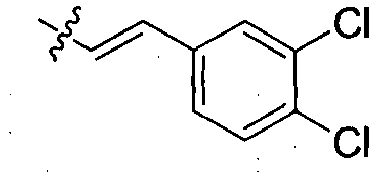
135 CH2CHMe O O - CH=CHPh 136 CH2CH2CH2 O O - CH=CHPh 137 CH2(CH2)2CH2 O O - CH=CHPh 187 CH2CH2 O O - 
188 CH2CH2 O O - 
201 CH2CH2OCH2 O O - CHPh2 204 CH2CH2 O O - CH2CH2C(O)OPh 342 CH2CH2 O O - 
343 CH2CH2 O O - 
364 CH2CH2 NR5 O - (CH2)6CH3 339 CH2CH2 NR5 O - (CH2)10CH3 365 CH2CH2 NR5 O - CH=CHPh 361 CH2CH2 NR5 O - 
345 CH2CH2 NR5 O - 
369 CH2 - O O (CH2)7CH3 371 CH2 - O O CH2CH=CHPh - In another embodiment the compound of formula (II) is selected from the group consisting of:
Cmpd L1 X1 X2 X3 R1 9 CH2 O O - (CH2)2CH3 10 CH2 O O - (CH2)6CH3 11 CH2 O O - (CH2)10CH3 13 CH2 O O - C6H4 o-OMe 14 CH2 O O - C6H4 m-OMe 15 CH2 O O - C6H4 p-OMe 16 CH2 O O - CH2Ph 324 CH2 O O - CH2C6H4 p-Me 17 CH2 O O - CHPh2 18 CH2 O O - CH2CH2Ph 19 CH2 O O - CH=CHPh 20 CH2 O O - 2-naphthyl 111 CH2CH2 O O - (CH2)6CH3 112 CH2CH2 O O - (CH2)10CH3 115 CH2CH2 O O - C6H4 m-OMe 118 CH2CH2 O O - CHPh2 120 CH2CH2 O O - CH=CHPh 121 CH2CH2 O O - 
122 CH2CH2 O O - 2-naphthyl 123 CH2CH2 O O - C≡CPh 124 CH2CH2 O O - 
125 CH2CH2 O O - 
126 CH2CH2 O O - 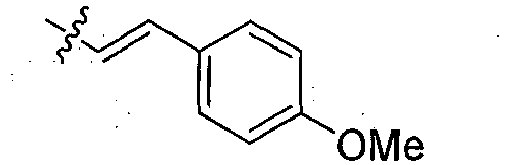
127 CH2CH2 O O - 
128 CH2CH2 O O - 
335 CH2CH2 O O - 
347 CH2CH2 O O - 
129 CH2CH2 O O - 
130 CH2CH2 O O - 
131 CH2CH2 O O - 
337 CH2CH2 O O - 
329 CH2CH2 O O - 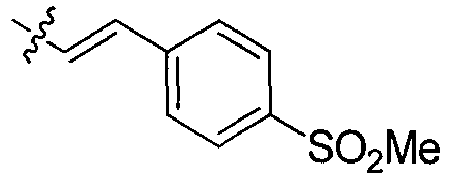
132 CH2CH2 O O - 
133 CH2CH2 O O - 
134 CH2CH2 O O - 
135 CH2CHMe O O - CH=CHPh 136 CH2CH2CH2 O O - CH=CHPh 137 CH2(CH2)2CH2 O O - CH=CHPh 187 CH2CH2 O O - 
188 CH2CH2 O O - 
204 CH2CH2 O O - CH2CH2C(O)OPh 342 CH2CH2 O O - 
343 CH2CH2 O O - 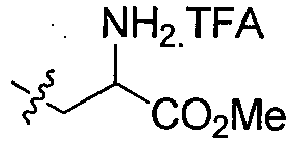
364 CH2CH2 NR5 O - (CH2)6CH3 339 CH2CH2 NR5 O - (CH2)10CH3 365 CH2CH2 NR5 O - CH=CHPh 361 CH2CH2 NR5 O - 
345 CH2CH2 NR5 O - 
369 CH2 - O O (CH2)7CH3 371 CH2 - O O CH2CH=CHPh - In another embodiment the compound of formula (II) is selected from the group consisting of:
Cmpd L1 X1 X2 X3 R1 10 CH2 O O - (CH2)6CH3 11 CH2 O O - (CH2)10CH3 14 CH2 O O - C6H4 m-OMe 15 CH2 O O - C6H4 p-OMe 16 CH2 O O - CH2Ph 324 CH2 O O - CH2C6H4 p-Me 17 CH2 O O - CHPh2 18 CH2 O O - CH2CH2Ph 19 CH2 O O - CH=CHPh 20 CH2 O O - 2-naphthyl 111 CH2CH2 O O - (CH2)6CH3 112 CH2CH2 O O - (CH2)10CH3 118 CH2CH2 O O - CHPh2 121 CH2CH2 O O - 
122 CH2CH2 O O - 2-naphthyl 123 CH2CH2 O O - C≡CPh 124 CH2CH2 O O - 
126 CH2CH2 O O - 
127 CH2CH2 O O - 
335 CH2CH2 O O - 
347 CH2CH2 O O - 
129 CH2CH2 O O - 
130 CH2CH2 O O - 
337 CH2CH2 O O - 
329 CH2CH2 O O - 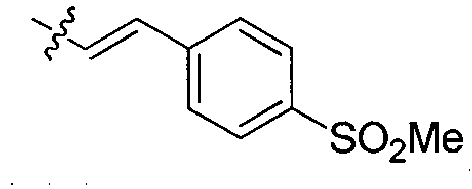
134 CH2CH2 O O - 
135 CH2CHMe O O - CH=CHPh 136 CH2CH2CH2 O O - CH=CHPh 137 CH2(CH2)2CH2 O O - CH=CHPh 187 CH2CH2 O O - 
188 CH2CH2 O O - 
204 CH2CH2 O O - CH2CH2C(O)OPh 342 CH2CH2 O O - 
343 CH2CH2 O O - 
364 CH2CH2 NR5 O - (CH2)6CH3 339 CH2CH2 NR5 O - (CH2)10CH3 361 CH2CH2 NR5 O - 
345 CH2CH2 NR5 O - 
369 CH2 - O O (CH2)7CH3 371 CH2 - O O CH2CH=CHPh - In another embodiment the compound of formula (II) is selected from the group consisting of:
Cmpd L1 X1 X2 X3 R1 16 CH2 O O - CH2Ph 324 CH2 O O - CH2C6H4 p-Me 19 CH2 O O - CH=CHPh 20 CH2 O O - 2-naphthyl 111 CH2CH2 O O - (CH2)6CH3 118 CH2CH2 O O - CHPh2 121 CH2CH2 O O - 
122 CH2CH2 O O - 2-naphthyl 123 CH2CH2 O O - C≡CPh 126 CH2CH2 O O - 
335 CH2CH2 O O - 
347 CH2CH2 O O - 
129 CH2CH2 O O - 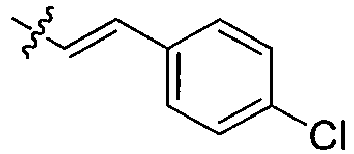
337 CH2CH2 O O - 
329 CH2CH2 O O - 
136 CH2CH2CH2 O O - CH=CHPh 342 CH2CH2 O O - 
343 CH2CH2 O O - 
364 CH2CH2 NR5 O - (CH2)6CH3 339 CH2CH2 NR5 O - (CH2))10CH3 361 CH2CH2 NR5 O - 
345 CH2CH2 NR5 O - 
- In one embodiment the stereochemical configuration at the bridgehead of the dicarboximide ring is endo.
- Without wishing to be bound by theory, the applicant believes that the compounds of formula (I) and (II) are capable of acting like prodrugs that can be hydrolysed in vivo to release either NRB or an analogue thereof. For example, the compound of formula (II) wherein L1 is CH2, X1 and X2 are O, X3 is a bond, and R1 is CH=CHPh upon hydrolysis releases NRB (and formaldehyde), while the compound of formula (II) wherein L1 is CH2CH2, X1 and X2 are O, X3 is a bond, and R1 is 2-naphthyl upon hydrolysis releases an N-(hydroxyethyl) analogue of NRB.
- Advantageously, certain of these compounds may mask and/or delay the onset of toxic effects in vivo, relative to NRB, increasing the probability of a rodent ingesting a lethal dose.
- In one embodiment the compound of formula (II) exhibits a delay in the onset of toxic effects, relative to NRB, of at least about 5, at least about 10, at least about 15, at least about 20, at least about 25, or about 30 minutes.
- In another embodiment the compound of formula (II) exhibits a delay in the onset of toxic effects, relative to NRB, of at least about 5 minutes; preferably, about 8 minutes; more preferably, about 15 minutes; more preferably, about 30 minutes.
- In one embodiment the compound of formula (II) exhibits a delay in the onset of toxic effects, relative to NRB, of from about 5 minutes to about 5 hours; from about 10 minutes to about 5 hours; from about 15 minutes to about 5 hours; from about 20 minutes to about 5 hours; from about 30 minutes to about 5 hours; 5 minutes to about 4 hours; from about 10 minutes to about 4 hours; from about 15 minutes to about 4 hours; from about 20 minutes to about 4 hours; from about 30 minutes to about 4 hours; 5 minutes to about 3 hours; from about 10 minutes to about 3 hours; from about 15 minutes to about 3 hours; from about 20 minutes to about 3 hours; from about 30 minutes to about 3 hours; 5 minutes to about 2 hours; from about 10 minutes to about 2 hours; from about 15 minutes to about 2 hours; from about 20 minutes to about 2 hours; from about 30 minutes to about 2 hours; 5 minutes to about 1.5 hours; from about 10 minutes to about 1.5 hours; from about 15 minutes to about 1.5 hours; from about 20 minutes to about 1.5 hours; or from about 30 minutes to about 1.5 hours.
- In another embodiment the compound of formula (II) exhibits a delay in the onset of toxic effects, relative to NRB, of from about 5 minutes to about 2 hours; preferably about 8 minutes to about 1 hour; more preferably, from 15 minutes to 1 hour; more preferably, from 30 minutes to 1 hour.
- In one embodiment, the compound of formula (I) is a compound of the formula (IIA), (IIB), (IIC), or (IID), wherein L1 is C1-6alkylene optionally substituted with one or more R6; and R1 is selected from the group consisting of C3-12alkyl, aryl, C1-6alkylaryl, arylC1-6alkyl, C1-6alkylarylC1-6alkyl, C1-6alkylcarbonyloxyC1-6alkyl, arylcarbonyloxyC1-6alkyl, C1-6alkyloxycarbonylC1-6alkyl, and aryloxycarbonylC1-6alkyl, each of which is optionally substituted with one or more R7, wherein the compound exhibits a delay in the onset of toxic effects, relative to NRB, of at least about 5 minutes.
- The present application further describes a compound of formula (III):

- Ar1, Ar2, Ar3, and Ar4 at each instance are independently a 6 to 10 membered monocyclic or bicyclic aryl ring, wherein the ring is optionally substituted with one or more R8;
- Het1, Het2, Het3, and Het4 at each instance are independently a 5 to 10 membered monocyclic or bicyclic heteroaryl ring comprising 1 to 4 ring nitrogen atoms, wherein the ring is optionally substituted with one or more R8;
- each dashed line and solid line together represent a double bond or a single bond;
- Y2 is

- L1 and L2 are each independently selected from the group consisting of C1-6alkylene, C3-6cycloalkylene, arylene, heteroarylene, heterocyclylene, C1-6alkyC3-6cycloalkylene, C1-6alkylarylene, C1-6alkylheteroarylene, C1-6alkylheterocyclylene, C3-6cycloalkylC1-6alkylene, arylC1-6alkylene, heteroaryl C1-6alkylene, heterocyclylC1-6alkylene, C1-6alkoxyC1-6alkylene, C3-6cycloalkyloxyC1-6alkylene, aryloxyC1-6alkylene, heteroaryloxyC1-6alkylene, heterocyclyloxyC1-6alkylene, C1-6alkoxyC3-6cyc)oalkylene, C1-6alkoxyarylene, C1-6alkoxyheteroalkylene, C1-6alkoxyheterocyclylalkylene, C1-6alkylthiOC1-6alkylene, C3-6cycloalkylthioC1-6alkylene, arylthioC1-6alkylene, heteroarylthioC1-6alkylene, heterocyclylthioC1-6alkylene, C1-6alkylthioC3-6cycloalkylene, C1-6alkylthioarylene, C1-6alkylthioheteroalkylene, C1-6alkylthioheterocyclylalkylene, C1-6alkylaminoC1-6alkylene, C3-6cycloalkylaminoC1-6alkylene, arylaminoC1-6alkylene, heteroarylaminoC1-6alkylene, heterocyclylaminoC1-6alkylene, C1-6alkylaminoC3-6cycloalkylene, C1-6alkylaminoarylene, C1-6alkylaminoheteroalkylene, and C1-6alkylaminoheterocyclylalkylene each of which is optionally substituted with one or more R6;
- R1 is -(R2-Z)q-R3-;
- R2 at each instance and R3 are independently selected from the group consisting of C2-12alkylene, C3-8cycloalkylene, arylene, heterocyclylene, and heteroarylene, each of which is optionally substituted with one or more R7;
- Z at each instance is independently selected from the group consisting of X7-C(=X8)-X9 and X10;
- X1, X3, X4, and X6 and X7, X9, and X10 at each instance are independently selected from the group consisting of O, S, NR5, and a bond, provided that X1 and X3 do not both represent a bond, X4 and X6 do not both represent a bond, and X7 and X9 do not both represent a bond;
- X2, X5, and X8 at each instance are independently selected from the group consisting of O, S, and NR5;
- q is an integer selected from 0 to 10;
- R5 at each instance is independently selected from the group consisting of hydrogen, C1-6alkyl, C3-6cycloalkyl, aryl, heterocyclyl, and heteroaryl;
- R6 at each instance is independently selected from the group consisting of hydroxyl, thiol, amino, cyano, nitro, halo, C1-6alkyl, C1-6haloalkyl, C1-6alkoxy, and C1-6haloalkoxy;
- R7 at each instance is independently selected from the group consisting of hydroxyl, thiol, amino, amido, acylamino, cyano, nitro, nitroso, azide, halo, cyanate, thiocyanate, isocyanate, isothiocyanate, oxo, imino, acyl, C1-6alkyl, C1-6haloalkyl, C3-6cycloalkyl, aryl, heterocyclyl, heteroaryl, C1-6alkoxy, C1-6haloalkoxy, C3-6cycloalkoxy, aryloxy, heterocyclyloxy, heteroaryloxy, C1-6alkylcarbonyloxy, C3-6cycloalkylcarbonyloxy, arylcarbonyloxy, heterocyclylcarbonyloxy, heteroarylcarbonyloxy, C1-6alkyloxycarbonyl, C3-6cycloalkyloxycarbonyl, aryloxycarbonyl, heterocyclyloxycarbonyl, heteroaryloxycarbonyl, sulfenyl, sulfonyl, sulfoxide, sulfate, sulfonate, sulfonamide, phosphate, phosphonate, phosphinate, phosphine, phosphite, carbonate, carbamate, and urea;
- R8 at each instance is selected from the group consisting of hydroxyl, thiol, amino, cyano, nitro, halo, C1-6alkyl, C1-6haloalkyl, C1-6alkoxy, and C1-6haloalkoxy;
- R11 and R22 are each independently selected from the group consisting of hydrogen, C1-6alkyl, and C1-6haloalkyl;
- Ra and Rb at each instance are each independently selected from the group consisting of halo, C1-6alkyl, carboxyl, carboxylC1-6alkyl, amidoC1-6alkyl, acyloxy, sulfenyl, sulfoxide, sulfonyl, and aryl, wherein each C1-6alkyl and aryl is optionally substituted with one or more R8; and
- m and n are each an integer independently selected from 0 to 3; or
- a salt or solvate thereof.
- In another aspect, the present invention provides a compound of formula (III), wherein Ar1, Ar2, Ar3, Ar4, Het1, Het2, Het3, Het4, each dashed line and solid line together, Y2, R11, R22, Ra, Rb, m and n are as defined in the aspect above.
- The following embodiments relate to the compound of formula (III).
- In one embodiment Ar1, Ar2, Ar3, and Ar4 are each independently a phenyl ring optionally substituted with one or more R8.
- In one embodiment Het1, Het2, Het3, and Het4 are each independently a 5 or 6 membered monocyclic heteroaryl ring comprising 1 to 3 ring nitrogen atoms, wherein the ring is optionally substituted with one or more R8. Preferably, Het1, Het2, Het3, and Het4 are each independently a 6 membered monocyclic heteroaryl ring comprising 1 to 3 ring nitrogen atoms, wherein the ring is optionally substituted with one or more R8. More preferably, Het1, Het2, Het3, and Het4 are each independently pyridyl optionally substituted with one or more R8.
- In one embodiment each dashed line and solid line together represent a double bond.
- In one embodiment m and n are each an integer independently selected from 0 to 1. Preferably, m and n are both 0.
- In one embodiment R11 and R22 are each independently selected from the group consisting of hydrogen and C1-6alkyl. Preferably, R11 and R22 are each independently selected from the group consisting of hydrogen and methyl. More preferably, R11 and R22 are each hydrogen.
- In one embodiment, R7 at each instance is independently selected from the group consisting of hydroxyl, thiol, amino, amido, acylamino, cyano, nitro, nitroso, azide, halo, cyanate, thiocyanate, isocyanate, isothiocyanate, oxo, imino, acyl, C1-6alkyl, C1-6haloalkyl, C3-6cycloalkyl, aryl, heterocyclyl, heteroaryl, C1-6alkoxy, C1-6haloalkoxy, C3-6cycloalkoxy, aryloxy, heterocyclyloxy, heteroaryloxy, C1-6alkylcarbonyloxy, C3-6cycloalkylcarbonyloxy, arylcarbonyloxy, heterocyclylcarbonyloxy, heteroarylcarbonyloxy, C1-6alkyloxycarbonyl, C3-6cycloalkyloxycarbonyl, aryloxycarbonyl, heterocyclyloxycarbonyl, heteroaryloxycarbonyl, sulfenyl, sulfonyl, sulfoxide, sulfate, sulfonate, sulfonamide, phosphate, phosphonate, phosphinate, phosphine, phosphite, carbonate, carbamate, and urea.
- In another embodiment R7 at each instance is independently selected from the group consisting of hydroxyl, thiol, amino, cyano, nitro, nitroso, azide, halo, cyanate, thiocyanate, isocyanate, isothiocyanate, oxo, C1-6alkyl, C1-6haloalkyl, C3-6cycloalkyl, aryl, heterocyclyl, heteroaryl, C1-6alkoxy, C1-6haloalkoxy, C3-6cycloalkoxy, aryloxy, heterocyclyloxy, and heteroaryloxy. In another embodiment R7 at each instance is independently selected from the group consisting of hydroxyl, thiol, amino, cyano, nitro, halo, oxo, C1-6alkyl, C1-6haloalkyl, aryl, C1-6alkoxy, C1-6haloalkoxy, and aryloxy.
- In another embodiment R7 at each instance is independently selected from the group consisting of hydroxyl, thiol, amino, amido, acylamino, cyano, nitro, nitroso, azide, halo, cyanate, thiocyanate, isocyanate, isothiocyanate, oxo, acyl, C1-6alkyl, C1-6haloalkyl, aryl, C1-6alkoxy, C1-6haloalkoxy, aryloxy, C1-6alkylcarbonyloxy, arylcarbonyloxy, C1-6alkyloxycarbonyl, aryloxycarbonyl,sulfenyl, sulfonyl, sulfoxide, sulfate, sulfonate, sulfonamide, phosphate, phosphonate, carbonate, carbamate, and urea.
- In yet another embodiment R7 at each instance is independently selected from the group consisting of hydroxyl, thiol, amino, amido, acylamino, cyano, nitro, nitroso, azide, halo, cyanate, thiocyanate, isocyanate, isothiocyanate, oxo, acyl, C1-6alkyl, C1-6haloalkyl, aryl, C1-6alkoxy, C1-6haloalkoxy, aryloxy, C1-6alkylcarbonyloxy, arylcarbonyloxy, C1-6alkyloxycarbonyl, aryloxycarbonyl, sulfenyl, sulfonyl, sulfoxide, sulfate, sulfonate, sulfonamide, phosphate, and phosphonate.
- In yet another embodiment, R7 at each instance is independently selected from the group consisting of hydroxyl, thiol, amino, amido, acylamino, cyano, nitro, halo, oxo, acyl, C1-6alkyl, C1-6haloalkyl, aryl, C1-6alkoxy, C1-6haloalkoxy, aryloxy, C1-6alkylcarbonyloxy, arylcarbonyloxy, C1-6alkyloxycarbonyl, aryloxycarbonyl, sulfenyl, sulfonyl, sulfoxide, sulfate, sulfonate, sulfonamide, and phosphate.
- In one embodiment R5 at each instance is independently selected from the group consisting of hydrogen, C1-6alkyl, and aryl. In another embodiment, R5 at each instance is independently selected from the group consisting of hydrogen and C1-6alkyl. In another embodiment, R5 at each instance is hydrogen.
- In one embodiment Ar1, Ar2, Ar3, and Ar4 are each independently a phenyl ring optionally substituted with one or more R8; Het1, Het2, Het3, and Het4 are each independently pyridyl optionally substituted with one or more R8; and each dashed line and solid line together represent a double bond; and n is 0.
- In one embodiment the stereochemical configuration at the bridgehead of each dicarboximide ring is endo.
- The present application further describes a compound of the formula (IV):

- The following embodiments relate to the compound of formula (III) and the compound of formula (IV).
- In one embodiment L1 is selected from the group consisting of C1-6alkylene, C3-6cycloalkylene, arylene, heteroarylene, heterocyclylene, C1-6alkylC3-6cycloalkylene, C1-6alkylarylene, C1-6alkylheteroarylene, C1-6alkylheterocyclylene, C3-6cycloalkylC1-6alkylene, arylC1-6alkylene, heteroarylC1-6alkylene, heterocyclylC1-6alkylene, C1-6alkoxyC1-6alkylene, C3-6cycloalkyloxyC1-6alkylene, aryloxyC1-6alkylene, heteroaryloxyC1-6alkylene, heterocyclyloxyC1-6alkylene, C1-6alkylthioC1-6alkylene, C3-6cycloalkylthioC1-6alkylene, arylthioC1-6alkylene, heteroarylthioC1-6alkylene, heterocyclylthioC1-6alkylene, C1-6alkylaminoC1-6alkylene, C3-6cycloalkylaminoC1-6alkylene, arylaminoC1-6alkylene, heteroarylaminoC1-6alkylene, and heterocyclylaminoC1-6alkylene, each of which is optionally substituted with one or more R6; and L2 is selected from the group consisting of C1-6alkylene, C3-6cycloalkylene, arylene, heteroarylene, heterocyclylene, C3-6cycloalkylC1-6alkylene, arylC1-6alkylene, heteroarylC1-6alkylene, heterocyclylC1-6alkylene, C1-6alkoxyC1-6alkylene, C1-6alkoxyC3-6cycloalkylene, C1-6alkoxyarylene, C1-6alkoxyheteroalkylene, C1-6alkoxyheterocyclylalkylene, C1-6alkylthioC1-6alkylene, C1-6alkylthioC3-6cycloalkylene, C1-6alkylthioarylene, C1-6alkylthioheteroalkylene, C1-6alkylthioheterocyclylalkylene, C1-6alkylaminoC1-6alkylene, C1-6alkylaminoC3-6cycloalkylene, C1-6alkylaminoarylene, C1-6alkylaminoheteroalkylene, and C1-6alkylaminoheterocyclylalkylene, each of which is optionally substituted with one or more R6.
- In one embodiment L1 is selected from the group consisting of C1-6alkylene, C3-6cycloalkylene, arylene, heteroarylene, heterocyclylene, C1-6alkylC3-6cycloalkylene, C1-6alkylarylene, C1-6alkylheteroarylene, C1-6alkylheterocyclylene, C3-6cycloalkylC1-6alkylene, arylC1-6alkylene, heteroarylC1-6alkylene, heterocyclylC1-6alkylene, C1-6alkoxyC1-6alkylene, C3-6cycloalkyloxyC1-6alkylene, aryloxyC1-6alkylene, heteroaryloxyC1-6alkylene, and heterocyclyloxyC1-6alkylene, each of which is optionally substituted with one or more R6; and L2 is selected from the group consisting of C1-6alkylene, C3-6cycloalkylene, arylene, heteroarylene, heterocyclylene, C1-6alkylC3-6cycloalkylene, C1-6alkylarylene, C1-6alkylheteroarylene, C1-6alkylheterocyclylene, C3-6cycloalkylC1-6alkylene, arylC1-6alkylene, heteroarylC1-6alkylene, heterocyclylC1-6alkylene, C1-6alkoxyC1-6alkylene, C1-6alkoxyC3-6cycloalkylene, C1-6alkoxyarylene, C1-6alkoxyheteroalkylene, and C1-6alkoxyheterocyclylalkylene, each of which is optionally substituted with one or more R6.
- In one embodiment L1 and L2 are each independently selected from the group consisting of C1-6alkylene, C1-6alkylC3-6cycloalkylene, C1-6alkylarylene, C3-6cycloalkylC1-6alkylene, arylC1-6alkylene, C1-6alkoxyC1-6alkylene, each of which is optionally substituted with one or more R6.
- In another embodiment L1 is selected from the group consisting of C1-6alkylene, C1-6alkylC3-6cycloalkylene, C1-6alkylarylene, C3-6cycloalkylC1-6alkylene, arylC1-6alkylene, C1-6alkoxyC1-6alkylene, each of which is optionally substituted with one or more R6; and L2 is selected from the group consisting of C1-6alkylene, C1-6alkylC3-6cycloalkylene, C1-6alkylarylene, C3-6cycloalkylC1-6alkylene, arylC1-6alkylene, C1-6alkoxyC1-6alkylene, each of which is optionally substituted with one or more R6. Preferably, L1 is selected from the group consisting of C1-6alkylene and C1-6alkyloxyC1-6alkylene, each of which is optionally substituted with one or more R6; and L2 is selected from the group consisting of C1-6alkylene and C1-6alkyloxyC1-6alkylene, each of which is optionally substituted with one or more R6.
- In another embodiment L1 is selected from the group consisting of C1-6alkylene, C1-6alkylC3-6cycloalkylene, C1-6alkylarylene, C3-6cycloalkylC1-6alkylene, arylC1-6alkylene, C1-6alkoxyC1alkylene, each of which is optionally substituted with one or more R6; and L2 is selected from the group consisting of C1-6alkylene, C1-6alkylC3-6cycloalkylene, C1-6alkylarylene, C3-6cycloalkylC1-6alkylene, arylC1-6alkylene, C1alkoxyC1-6alkylene, each of which is optionally substituted with one or more R6. Preferably, L1 is selected from the group consisting of C1-6alkylene and C1-6alkyloxyC1alkylene, each of which is optionally substituted with one or more R6; and L2 is selected from the group consisting of C1-6alkylene and C1alkyloxyC1-6alkylene, each of which is optionally substituted with one or more R6.
- In one embodiment L1 and L2 are each independently C1-6alkylene optionally substituted with one or more R6. More preferably, L1 and L2 are each independently C1-4alkylene optionally substituted with one or more R6. In another embodiment L1 and L2 are each independently saturated C1-4alkylene.
- In one embodiment X1, X3, X4, and X6 are each independently is selected from the group consisting of O, NR5, and a bond. Preferably, X1 and X6 are each independently selected from the group consisting of O and NR5 and X3 and X4 are each independently selected from the group consisting of O, NR5, and a bond. More preferably, X1 and X6 are each O and X3 and X4 are each independently selected from the group consisting of O, NR5, and a bond. More preferably, X1 and X6 are each O and X3 and X4 are each a bond.
- In one embodiment X2 and X5 are each independently selected from the group consisting of O and NR5. Preferably, X2 and X5 are each O.
- In one embodiment X1 and X2 are each O and X3 is a bond; X1 and X2 are each NR5 and X3 is a bond; X1 is a bond and X2 and X3 are each O; or X1 is a bond and X2 and X3 are each NR5; and X4 and X5 are each O and X6 is a bond; X4 and X5 are each NR5 and X6 is a bond; X4 is a bond and X5 and X6 are each O; or X4 is a bond and X5 and X6 are each NR5. In another embodiment X1 and X2 are each O and X3 is a bond; or X1 is a bond and X2 and X3 are each O; and X4 and X5 are each O and X6 is a bond; or X4 is a bond and X5 and X6 are each O.
- In one embodiment X1, X2, X5, and X6 are each O and X3 and X4 are each a bond.
- In one embodiment R2 at each instance and R3 are independently selected from the group consisting of C2-12alkylene, C3-8cycloalkylene, and arylene, each of which is optionally substituted with one or more R7. Preferably, R2 at each instance and R3 are independently selected from the group consisting of C2-12alkylene and arylene, each of which is optionally substituted with one or more R7. More preferably, R2 at each instance and R3 are independently selected from the group consisting of C2-8alkylene and arylene, each of which is optionally substituted with one or more R7.
- In one embodiment, R2 at each instance is independently C2-6alkylene optionally substituted with one or more R7; and R3 is independently selected from the group consisting of C2-8alkylene and arylene, each of which is optionally substituted with one or more R7.
- In one embodiment X7, X9, and X10 at each instance are independently selected from the group consisting of O, NR5, and a bond. Preferably, X7, X9, and X10 at each instance are independently selected from the group consisting of O and a bond.
- In one embodiment X8 at each instance is independently selected from the group consisting of O and NR5. Preferably, X8 at each instance is O.
- In one embodiment X7, X9, and X10 at each instance are independently selected from the group consisting of O and a bond and X8 at each instance is O.
- In one embodiment Z at each instance is independently selected from O-C(=O), C(=O)-O, NR5-C(=O), C(=O)-NR5, O, and NR5. In another embodiment Z at each instance is independently selected from O-C(=O), C(=O)-O, and O. In another embodiment Z at each instance is independently selected from O-C(=O) and C(=O)-O.
- In one embodiment q is an integer from 0 to 5. Preferably, q is an integer from 0 to 3. More preferably, q is an integer from 0 to 2.
- In one embodiment L1 and L2 are each independently selected from the group consisting of C1-6alkylene, C1-6alkylC3-6cycloalkylene, C1-6alkylarylene, C3-6cycloalkylC1-6alkylene, arylC1-6alkylene, C1-6alkoxyC1-6alkylene, each of which is optionally substituted with one or more R6; X1, X3, X4, and X6 are each independently is selected from the group consisting of O, NR5, and a bond; X2 and X5 are each independently selected from the group consisting of O and NR5; R2 at each instance and R3 are independently selected from the group consisting of C2-12alkylene, C3-8cycloalkylene, and arylene, each of which is optionally substituted with one or more R7; X7, X9, and X10 at each instance are independently selected from the group consisting of O, NR5, and a bond; X8 at each instance is independently selected from the group consisting of O and NR5; and q is an integer from 0 to 5.
- In another embodiment L1 is selected from the group consisting of C1-6alkylene, C1-6alkylC3-6cycloalkylene, C1-6alkylarylene, C3-6cycloalkylC1-6alkylene, arylC1-6alkylene, and C1-6alkoxyC1alkylene, each of which is optionally substituted with one or more R6; L2 is selected from the group consisting of C1-6alkylene, C1-6alkylC3-6cycloalkylene, C1-6alkylarylene, C3-6cycloalkylC1-6alkylene, arylC1-6alkylene, and C1alkoxyC1-6alkylene, each of which is optionally substituted with one or more R6; X1, X3, X4, and X6 are each independently is selected from the group consisting of O, NR5, and a bond; X2 and X5 are each independently selected from the group consisting of O and NR5; R2 at each instance and R3 are independently selected from the group consisting of C2-12alkylene, C3-8cycloalkylene, and arylene, each of which is optionally substituted with one or more R7; X7, X9, and X10 at each instance are independently selected from the group consisting of O, NR5, and a bond; X8 at each instance is independently selected from the group consisting of O and NR5; and q is an integer from 0 to 5.
- In another embodiment L1 and L2 are each independently C1-6alkylene optionally substituted with one or more R6; X1 and X6 are each independently selected from the group consisting of O and NR5 and X3 and X4 are each independently selected from the group consisting of O, NR5, and a bond; X2 and X5 are each independently selected from the group consisting of O and NR5; R2 at each instance and R3 are independently selected from the group consisting of C2-12alkylene and arylene, each of which is optionally substituted with one or more R7; X7, X9, and X10 at each instance are independently selected from the group consisting of O, NR5, and a bond; X8 at each instance is independently selected from the group consisting of O and NR5; and q is an integer from 0 to 5.
- In another embodiment L1 and L2 are each independently C1-6alkylene optionally substituted with one or more R6; X1, X3, X4, and X6 are each independently is selected from the group consisting of O, NR5, and a bond; X2 and X5 are each independently selected from the group consisting of O and NR5; X1 and X6 are each independently selected from the group consisting of O and NR5 and X3 and X4 are each independently selected from the group consisting of O, NR5, and a bond; X2 and X5 are each independently selected from the group consisting of O and NR5; R2 at each instance and R3 are independently selected from the group consisting of C2-8alkylene and arylene, each of which is optionally substituted with one or more R7; X7, X9, and X10 at each instance are independently selected from the group consisting of O, NR5, and a bond; X8 at each instance is independently selected from the group consisting of O and NR5; and q is an integer from 0 to 2.
- In another embodiment L1 and L2 are each independently C1-6alkylene optionally substituted with one or more R6; X1 and X6 are each O and X3 and X4 are each independently selected from the group consisting of O, NR5, and a bond; X2 and X5 are each independently selected from the group consisting of O and NR5; R2 at each instance and R3 are independently selected from the group consisting of C2-12alkylene and arylene, each of which is optionally substituted with one or more R7; X7, X9, and X10 at each instance are independently selected from the group consisting of O, NR5, and a bond; X8 at each instance is independently selected from the group consisting of O and NR5; and q is an integer from 0 to 5.
- In another embodiment L1 and L2 are each independently C1-6alkylene optionally substituted with one or more R6; X1 and X6 are each O and X3 and X4 are each a bond; X2 and X5 are each O; R2 at each instance and R3 are independently selected from the group consisting of C2-12alkylene and arylene, each of which is optionally substituted with one or more R7; X7, X9, and X10 at each instance are independently selected from the group consisting of O and a bond and X8 at each instance is O; and q is an integer from 0 to 3.
- In another embodiment L1 and L2 are each independently C1-4alkylene optionally substituted with one or more R6; X1 and X6 are each O and X3 and X4 are each a bond; X2 and X5 are each O; R2 at each instance and R3 are independently selected from the group consisting of C2-12alkylene and arylene, each of which is optionally substituted with one or more R7; X7, X9, and X10 at each instance are independently selected from the group consisting of O and a bond and X8 at each instance is O; and q is an integer from 0 to 3.
- In another embodiment L1 and L2 are each independently C1-4alkylene optionally substituted with one or more R6; X1 and X6 are each O and X3 and X4 are each a bond; X2 and X5 are each O; R2 at each instance and R3 are independently selected from the group consisting of C2-8alkylene and arylene, each of which is optionally substituted with one or more R7; X7, X9, and X10 at each instance are independently selected from the group consisting of O and a bond and X8 at each instance is O; and q is an integer from 0 to 3.
- In another embodiment L1 and L2 are each independently selected from the group consisting of C1-4alkylene optionally substituted with one or more R6; X1 and X6 are each O and X3 and X4 are each a bond; X2 and X5 are each O; R2 at each instance and R3 are independently selected from the group consisting of C2-8alkylene and arylene, each of which is optionally substituted with one or more R7; X7, X9, and X10 at each instance are independently selected from the group consisting of O and a bond and X8 at each instance is O; and q is an integer from 0 to 2.
- In another embodiment L1 and L2 are each independently selected from the group consisting of C1-4alkylene optionally substituted with one or more R6; X1 and X6 are each O and X3 and X4 are each a bond; X2 and X5 are each O; q is 0; and R3 is selected from the group consisting of C2-8alkylene and arylene, each of which is optionally substituted with one or more R7.
- In another embodiment L1 and L2 are each independently selected from the group consisting of C1-4alkylene optionally substituted with one or more R6; X1 and X6 are each O and X3 and X4 are each a bond; X2 and X5 are each O; q is 2; R2 at each instance and R3 are independently selected from the group consisting of C2-8alkylene, each of which is optionally substituted with one or more R7; Z is X7-C(=X8)-X9; and X7 and X9 at each instance are independently selected from the group consisting of O and a bond and X8 at each instance is O.
- The present application further describes a compound of formula (IVA):

- In one embodiment the compound of formula (IV) is selected from the group consisting of:
Cmpd L1/L2 X1/X6 X2/X5 X3/X4 R1 21 CH2 O O - (CH2)2 22 CH2 O O - (CH2)4 23 CH2 O O - (CH2)6 24 CH2 O O - (CH2)8 25 CH2 O O - (CH2)10 26 CH2 O O - p-C6H4 27 CH2 O O - (CH2)2C(O)O(CH2)2OC(O)(CH2)2 138 CH2CH2 O O - (CH2)2 139 CH2CH2 O O - (CH2)4 140 CH2CH2 O O - (CH2)6 141 CH2CH2 O O - (CH2)8 142 CH2CH2 O O - (CH2)10 143 CH2CH2 O O - p-C6H4 144 CH2CH2 O O - (CH2)2C(O)O(CH2)2OC(O)(CH2)2 - In one embodiment the stereochemical configuration at the bridgehead of each dicarboximide ring is endo.
- Without wishing to be bound by theory, the applicant believes that the compounds of formula (III) and (IV), like the compounds of formula (I) and (II), are also capable of acting like prodrugs that upon hydrolysis in vivo release NRB or an analogue thereof.
- In one embodiment the compound of formula (III) exhibits a delay in the onset of toxic effects, relative to NRB, of at least about 5, at least about 8, at least about 10, at least about 15, at least about 20, at least about 25, or about 30 minutes.
- In another embodiment the compound of formula (III) exhibits a delay in the onset of toxic effects, relative to NRB, of from about 5 minutes to about 5 hours; from about 8 minutes to about 5 hours; from about 10 minutes to about 5 hours; from about 15 minutes to about 5 hours; from about 20 minutes to about 5 hours; from about 30 minutes to about 5 hours; 5 minutes to about 4 hours; from about 8 minutes to about 4 hours; from about 10 minutes to about 4 hours; from about 15 minutes to about 4 hours; from about 20 minutes to about 4 hours; from about 30 minutes to about 4 hours; 5 minutes to about 3 hours; from about 8 minutes to about 3 hours; from about 10 minutes to about 3 hours; from about 15 minutes to about 3 hours; from about 20 minutes to about 3 hours; from about 30 minutes to about 3 hours; 5 minutes to about 2 hours; from about 8 minutes to about 2 hours; from about 10 minutes to about 2 hours; from about 15 minutes to about 2 hours; from about 20 minutes to about 2 hours; from about 30 minutes to about 2 hours; 5 minutes to about 1.5 hours; from about 8 minutes to about 1.5 hours; from about 10 minutes to about 1.5 hours; from about 15 minutes to about 1.5 hours; from about 20 minutes to about 1.5 hours; or from about 30 minutes to about 1.5 hours.
- The present application further describes a compound of formula (V):

- Ar1 and Ar2 at each instance are independently a 6 to 10 membered monocyclic or bicyclic aryl ring, wherein the ring is optionally substituted with one or more R8;
- Het1 and Het2 at each instance are each independently a 5 to 10 membered monocyclic or bicyclic heteroaryl ring comprising 1 to 4 ring nitrogen atoms, wherein the ring is optionally substituted with one or more R8;
- each dashed line and solid line together represent a double bond or a single bond;
- Y3 is

- L1 is selected from the group consisting of C1-6alkylene, C3-6cycloalkylene, arylene, heteroarylene, heterocyclylene, C1-6alkylC3-6cycloalkylene, C1-6alkylarylene, C1-6alkylheteroarylene, C1-6alkylheterocyclylene, C3-6cycloalkylC1-6alkylene, arylC1-6alkylene, heteroarylC1-6alkylene, and heterocyclylC1-6alkylene, each of which is optionally substituted with one or more R6;
- X1 is selected from the group consisting of C(=O), C(=S), C(=NR5), and a bond;
- X2 is selected from the group consisting of OH, SH, and NHR5;
- R5 at each instance is independently selected from the group consisting of hydrogen, C1-6alkyl, C3-6cycloalkyl, aryl, heterocyclyl, and heteroaryl;
- R6 at each instance is independently selected from the group consisting of hydroxyl, thiol, amino, cyano, nitro, halo, C1-6alkyl, C1-6haloalkyl, C1-6alkoxy, and C1-6haloalkoxy;
- R8 at each instance is selected from the group consisting of hydroxyl, thiol, amino, cyano, nitro, halo, C1-6alkyl, C1-6haloalkyl, C1-6alkoxy, and C1-6haloalkoxy;
- R11 is selected from the group consisting of hydrogen, C1-6alkyl, and C1-6haloalkyl;
- R at each instance is selected from the group consisting of halo, C1-6alkyl, carboxyl, carboxylC1-6alkyl, amidoC1-6alkyl, acyloxy, sulfenyl, sulfoxide, sulfonyl, and aryl, wherein each C1-6alkyl and aryl is optionally substituted with one or more R8; and
- n is an integer selected from 0 to 3; or
- a salt or solvate thereof.
- In another aspect, the present invention provides a compound of formula (V), wherein Ar1, Ar2, Het1, Het2, each dashed line and solid line together, Y3, R11, R, and n are as defined in the aspect above.
- The following embodiments relate to the compound of formula (V).
- In one embodiment Ar1 and Ar2 are each independently a phenyl ring optionally substituted with one or more R8.
- In one embodiment Het1 and Het2 are each independently a 5 or 6 membered monocyclic heteroaryl ring comprising 1 to 3 ring nitrogen atoms, wherein the ring is optionally substituted with one or more R8. Preferably, Het1 and Het2 are each independently a 6 membered monocyclic heteroaryl ring comprising 1 to 3 ring nitrogen atoms, wherein the ring is optionally substituted with one or more R8. More preferably, Het1 and Het2 are each independently pyridyl optionally substituted with one or more R8.
- In one embodiment each dashed line and solid line together represent a double bond.
- In one embodiment n is 0 or 1. Preferably, n is 0.
- In one embodiment R11 is selected from the group consisting of hydrogen and C1-6alkyl.
- Preferably, R11 is selected from the group consisting of hydrogen and methyl. More preferably, R11 is hydrogen.
- In one embodiment R5 at each instance is independently selected from the group consisting of hydrogen, C1-6alkyl, and aryl. In another embodiment, R5 at each instance is independently selected from the group consisting of hydrogen and C1-6alkyl. In another embodiment, R5 at each instance is hydrogen.
- In one embodiment Ar1 and Ar2 are each independently a phenyl ring optionally substituted with one or more R8; Het1 and Het2 are each independently pyridyl optionally substituted with one or more R8; and each dashed line and solid line together represent a double bond; and n is 0.
- In one embodiment the stereochemical configuration at the bridgehead of the dicarboximide ring is endo.
- The present application further describes a compound of formula (VI):

- The following embodiments relate to the compound of formula (V) and the compound of formula (VI).
- In one embodiment L1 is selected from the group consisting of C1-6alkylene, C1-6alkylarylene, arylC1-6alkylene, each of which is optionally substituted with one or more R6. Preferably, L1 is C1-6alkylene optionally substituted with one or more R6. More preferably, L1 is C1-4alkylene optionally substituted with one or more R6. In one embodiment L1 is saturated C1-4alkylene.
- In one embodiment X1 is selected from the group consisting of C(=O), C(=NR5), and a bond. Preferably, X1 is selected from the group consisting of C(=O) and a bond. More preferably, X1 is a bond.
- In one embodiment X2 is selected from the group consisting of OH and NHR5. Preferably, X2 is OH or NH2. More preferably, X2 is OH.
- In one embodiment L1 is selected from the group consisting of C1-6alkylene, C1-6alkylarylene, arylC1-6alkylene, each of which is optionally substituted with one or more R6; X1 is selected from the group consisting of C(=O), C(=NR5), and a bond; and X2 is selected from the group consisting of OH and NHR5.
- In one embodiment L1 is selected from the group consisting of C1-6alkylene, C1-6alkylarylene, arylC1-6alkylene, each of which is optionally substituted with one or more R6; X1 is selected from the group consisting of C(=O) and a bond; and X2 is selected from the group consisting of OH and NHR5.
- In one embodiment L1 is selected from the group consisting of C1-6alkylene, C1-6alkylarylene, arylC1-6alkylene, each of which is optionally substituted with one or more R6; X1 is selected from the group consisting of C(=O) and a bond; and X2 is selected from the group consisting of OH and NH2.
- In one embodiment L1 is selected from the group consisting of C1-6alkylene, C1-6alkylarylene, arylC1-6alkylene, each of which is optionally substituted with one or more R6; X1 is a bond; and X2 is selected from the group consisting of OH and NH2.
- In another embodiment L1 is C1-6alkylene optionally substituted with one or more R6; X1 is selected from the group consisting of C(=O) and a bond; and X2 is selected from the group consisting of OH and NHR5.
- In another embodiment L1 is C1-6alkylene optionally substituted with one or more R6; X1 is selected from the group consisting of C(=O) and a bond; and X2 is selected from the group consisting of OH and NH2.
- In another embodiment L1 is C1-6alkylene optionally substituted with one or more R6; and X1 is C=O and X2 is OH; or X1 is a bond and X2 is selected from the group consisting of OH and NH2.
- In another embodiment L1 is saturated C1-4alkylene; and X1 is C=O and X2 is OH; or X1 is a bond and X2 is selected from the group consisting of OH and NH2.
- In another embodiment L1 is C1-4alkylene optionally substituted with one or more R6; X1 is a bond; and X2 is selected from the group consisting of OH.
- In another embodiment L1 is C1-4alkylene optionally substituted with one or more R6; X1 is a bond; and X2 is selected from the group consisting of NH2.
- In one embodiment the compound of formula (VI) is selected from the group consisting of:
Cmpd L1 X1 X2 102 CH2CH2 - OH 103 CH2CHMe - OH 104 CH2CH2CH2 - OH 105 CH2(CH2)2CH2 - OH 106 CH2CH2 - NH2 107 CH2 C(=O) OH - In one embodiment the stereochemical configuration at the bridgehead of the dicarboximide ring is endo.
- The compounds of formula (V) and (VI) have rodenticidal activity and may be used as rodenticides.
- In one embodiment the compound of formula (VI) exhibits toxic effects at a dosage and rate comparable to that of NRB.
- In another embodiment the compound of formulae (VI) causes death in a rodent at a dosage and rate comparable to that of NRB. Preferably, the compound of formulae (VI) causes death in less than 4 hours; more preferably, less than 2 hours.
- The compounds of formula (V) and (VI) may be converted into compounds of formulae (I) to (IV) for use as rodenticides. Without wishing to be bound by theory, the applicant believes that these compounds are capable of being hydrolysed in vivo to release compounds of formulae (V) and (VI).
- The compounds of the invention may be prepared using methods known in the art, as outlined in the Examples below.
- The norbornene dicarboximide core present in the compounds of the invention may be prepared, as described in
US 3,378,566 andUS 3,471,619 , by the condensation of a fulvene of formula (XI) with a maleimide of formula (XII) under Diels Alder conditions (Scheme 1).
- The reaction is typically carried out by heating the fulvene and maleimide in a suitable solvent. For example, in the preparation of NRB as described in the Examples below fulvenemethanol and maleimide were heated in toluene at 80 °C for 16 hours. The compound of formula (XIII) may be isolated from the reaction mixture and optionally purified by standard methods known in the art, such as filtration, recrytallisation, etc.
- The fulvene of formula (XI) and the maleimide of formula (XII) may be commercially available or prepared using conventional synthetic organic chemistry methods.
US 3,378,566 andUS 3,471,619 describe several methods for obtaining compounds of formula (XI) and (XII). - The carbon-carbon double bonds in the norbornene dicarboxamide core of formula (XIII) may be saturated by, for example, hydrogenating the compound under an atmosphere of hydrogen in the presence of a suitable catalyst, such as palladium on carbon or platinum oxide, to provide the corresponding saturated or partially saturated compound of formula (XIII-A), (XIII-B), or (XIII-C) (Figure 1). The reaction may be carried out in a suitable solvent.
- Saturation of one or both of the carbon-carbon double bonds in the norbornene dicarboximide core may be carried out after functionalisation of the dicarboximide nitrogen - i.e. on a corresponding unsaturated compound of the formula (I) or precursor thereof. Other functional groups present in the compound to be saturated or partially saturated must be compatible with the reaction conditions used.

- Endo-stereoisomers of the compounds of the invention may be isolated by, for example, recrystallising a stereoisomeric mixture of a compound of the invention or a suitable precursor thereof in an appropriate solvent. Several successive recrystallisations may be required to obtain the desired stereoisomeric purity or enrichment. Other suitable methods for purifying stereoisomers of the compounds of the invention will be apparent to those skilled in the art.
- The optionally hydrogenated norbornene dicarboximide of formula (XIV) can be converted into the compounds of the invention of formula (I)-(VI) using synthetic chemistry techniques well known in the art.
- Compounds of formula (I) wherein X1 is O, NR5, or S may be prepared by reacting a compound of formula (XIV) with an amino alcohol, diamine, or amino thiol of formula (XV) to provide a compound of formula (XVI) (Scheme 2).
- The reaction may be carried out by heating the compounds of formula (XIV) and (XV) in a suitable solvent. For example, in the preparation of compound 102 (X1 = O) as described in the Examples below, NRB and ethanolamine were heated in dimethylformamide at 70 °C for 16 hours. Compound 106 (X1 = NH) was prepared by a similar procedure using ethylenediamine.
- Compounds of formula (XV) are available commercially or accessible from commercially available precursors.
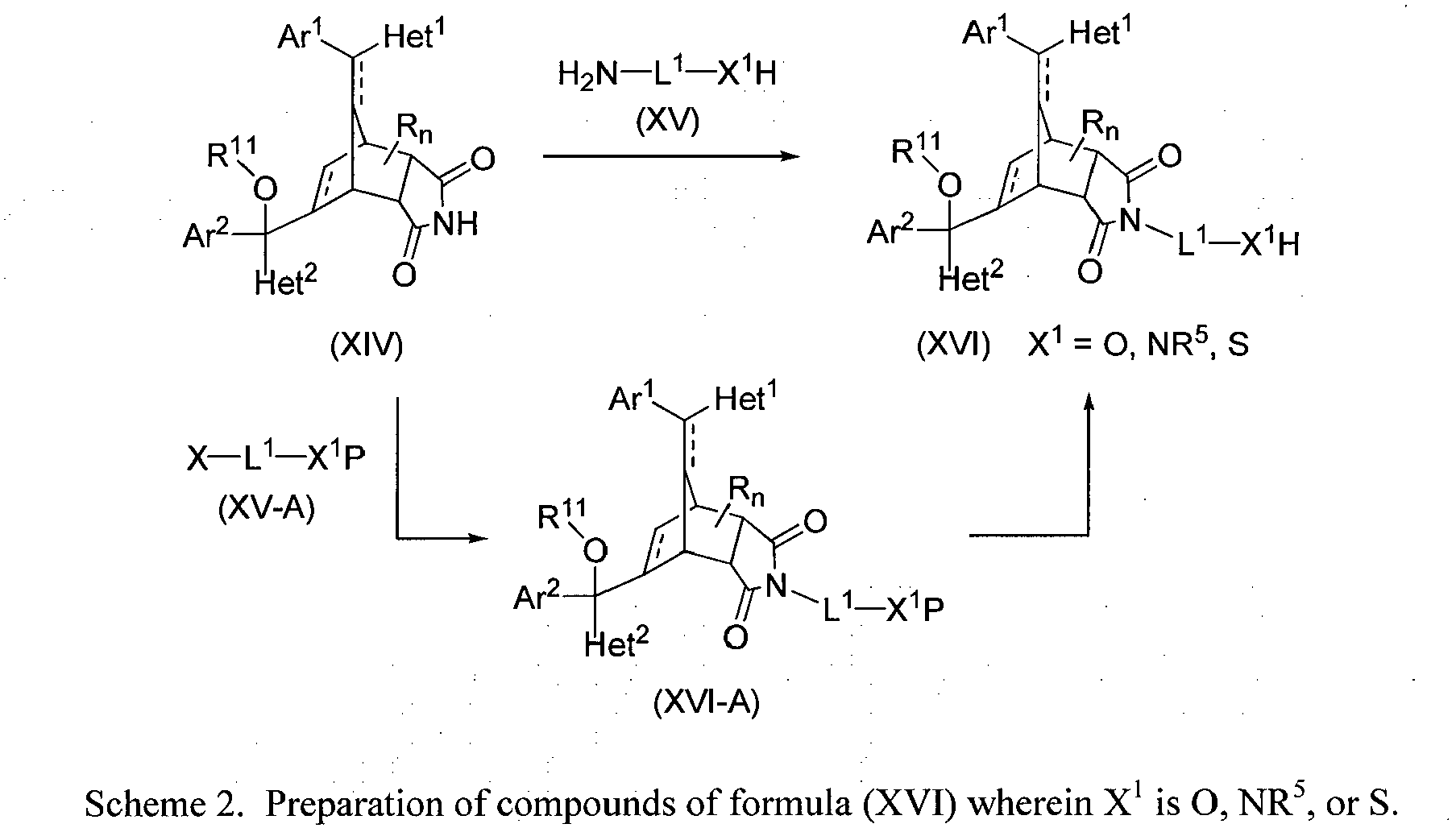
- Compounds of formula (XVI) wherein X1 is O, NR5, or S may also be prepared by reacting a compound of formula (XIV) with a compound of formula (XV-A), wherein X is a suitable leaving group and P is a suitable protecting group, to form a compound of the formula (XVI-A) and then removing the protecting group (Scheme 2). Examples of suitable leaving groups include sulfonates, such as methanesulfonate and toluenesulfonate.
- The reaction may be carried out in solvent using a suitable base. For example, as described in the Examples below, compound 106 (X1 = NH) was prepared by treating NRB in dimethylformamide with sodium hydride, followed by 2-((tert-butoxycarbonyl)amino)ethyl methanesulfonate.
- The conditions for removal of the protecting group in a compound of formula (XVI-A) depend on the nature of the protecting group. For example, the tert-butyloxycarbonyl protecting group used in preparing compound 106 was removed using trifluoroacetic acid in dichloromethane.
- Protecting groups are well known in the art (see, for example, Protective Groups in Organic Synthesis, T. Green and P. Wuts, Wiley, 1991). Suitable protecting groups and conditions for their introduction and removal will be apparent to those skilled in the art.
- It may be necessary to protect other reactive functional groups in the preparation of the compounds of the inventions. A person skilled in the art will be to select an appropriate protecting group strategy without undue experimentation.
- Compounds of formula (XV-A) are also available commercially or from commercially available precursors.
- Compounds of formula (I), wherein X1 is O, NR5, or S, can be prepared by reacting a compound of formula (XVI) with a compound of formula (XVII), wherein X is a suitable leaving group (Scheme 3). Suitable leaving groups include, for example, halogens, OH, carboxyates, etc.

- As depicted above in Scheme 3, X2 and X3 in the compound of formula (I) may be introduced from a compound of formula (XVII).
- Accordingly, compounds of formula (I) wherein X2 is O and X3 is a bond may be prepared by reacting a compound of formula (XVII) wherein X2 is O and X3 is a bond with a compound of formula (XVI). The Examples demonstrate the preparation of various compounds of formula (I), such as compounds of formula (I) wherein X2 is O and X3 is a bond by this method.
- Compounds of formula (XVII) may be commercially available or accessible from commercially available precursors. For example, compounds of formula (XVII) wherein X is chloro may be prepared from the corresponding carboxylic acid by reaction with e.g. thionyl chloride or oxalyl chloride.
- In one embodiment, the compound of formula (XVII) is an acid chloride. In another embodiment, the compound of formula (XVII) is an anhydride. In another embodiment, the compound of formula (XVII) is a carboxylic acid. Other suitably functionalised compounds of formula (XVII) will be apparent to those skilled in the art.
- The reaction between the compound of formula (XVII) and the compound of formula (XVI) may be carried out in the presence of acid or base, as appropriate. Examples of suitable bases include but are not limited to triethylamine, pyridine, and the like.
- The reaction may also be carried in the presence of activating agents, if necessary, such as, 1-ethyl-3-(3-dimethylaminopropyl)carbodiimide (EDC), dicyclohexylcarbodiimide (DCC), 1-hydroxybenzotriazole (HOBT), and 4-dimethylaminopyridine (DMAP). A person skilled in the art will be able to determine suitable conditions for the reaction, such as temperatures, times, and solvents, and additional agents, if necessary, without undue experimentation.
- For example, in the preparation of compound 126 as described in the Examples, compound 102 (a compound of formula (XVI) wherein X1 is O) was reacted with with 4-methoxycinnamoyl chloride in dimethylformamide, in the presence of triethylamine and dimethylaminopyridine. Compound 335 was prepared by a similar procedure using 4-ethylcinnamoyl chloride.
- Compounds of formula (I) may also be prepared by reacting the compound of formula (XIV) with a compound of formula (XVIII), wherein X is a suitable leaving group (Scheme 4). Suitable leaving groups include, for example, halogens, sulfonates, etc.

- The reaction is typically carried out in the presence of base in a suitable solvent. The base used depends on the nature of X. Examples of suitable bases include but are not limited to potassium carbonate, caesium carbonate, sodium hydride, and the like.
- The reaction may also be carried out in the presence of one or more reagents that improve the reactivity of the compound of formula (XVIII). For example, the reactivity of the compound of formula (XVIII) wherein X is a chlorine atom may be improved by conversion to the corresponding iodide in situ using sodium iodide.
- A person skilled in the art will be able to select appropriate conditions for the reaction, such as temperatures, times, and solvents, etc. without undue experimentation.
- The Examples demonstrate the preparation of various compounds of formula (I) by this method, such as compound of formula (I) wherein X1 and X2 are each O and X3 is a bond and compounds of formula (I) wherein X1 is a bond and X2 and X3 are each O.
- For example, compound 19 (X1 and X2 are each O and X3 is a bond) was prepared by reacting NRB with sodium hydride, followed by iodomethly cinnamate in dimethylformamide, as described in the Examples. Compound 19 was also prepared by reacting NRB with chloromethly cinnamate in the presence of potassium carbonate. Compound 324 was also prepared from NRB by a similar procedure, using chloromethyl p-methylphenylacetate as the compound of formula (XVIII) and cesium carbonate as base.
- Compound 369 (X1 is a bond and X2 and X3 are each O) was also prepared from NRB by a similar procedure, using octyl chloroacetate as the compound of formula (XVIII) and potassium carbonate as base.
- Compounds of formula (XVIII) may be commercially available or prepared from commercially available compounds. For example, compounds of formula (XVIII), wherein X is halo may be halogenations of the corresponding L1 group.
- Compounds of formula (I), wherein L1 is an ether, thioether, or amine (e.g. C1-6alkoxyC1-6alkyl) may be prepared by the method below in Scheme 5.

- The method involves reacting a compound of formula (XIV-B), wherein L11 is the first protion of L1 and X11 and H together represent hydroxyl, amine, or thiol, with a compound of the formula (XVIII-A) wherein L22 is the second portion of L1 and X is a suitable leaving group.
- The reaction is typically carried out in the presence of a suitable base, such as sodium hydride. Displacement of X in the compound of formula (XVIII-A) by the hydroxyl, thiol, or amine group in the compound of formula (XIV-B) forms L1 in the compound of formula (I).
- Compounds of formula (III) contain similar functionality to the compounds of formula (I). The methods for preparing the compounds of formula (I) described above may also be used to prepare compounds of formula (III).
- Compounds of formula (III) include two norbornene dicarboxamide units. Compounds of formula (III) wherein the two norbornene dicarboximide units are the same may be prepared by reacting two equivalents of a compound of formula (XIV) or (XIV-B)) with one equivalent of a a compound of formula (XVIII-B) or (XVIII-C), respectively, wherein X is a suitable leaving group (Scheme 6). Suitable leaving groups include, for example, halogens.

- The reactions are typically carried out in the presence of a suitable base. The Examples demonstrate the prearation of various compounds by these methods. Compounds of formula (XVIII-B) or (XVIII-C) may be commercially available or prepared from commercially available precursors, as described in the examples, for example.
- Compounds of formula (III) wherein the two norbornene dicarboximide units are different in structure may be prepared by, for example, selectively protecting one of the terminal reactive sites and coupling the first norbornene dicarboxamide unit, then removing the protecting group and coupling the second norbornene dicarboxamide unit. A person skilled in the art will be able to select an appropriate a protecting group strategy without undue experimentation.
- Compounds of formula (V) may also be made by the methods for preparing the compounds of formula (I) described above. For example, compounds of formula (V) wherein X1 is a bond may be prepared by the method described above for the compound of formula (XVI) (cf. Scheme 2).
- Compounds of formula (V) wherein X1 is not a bond may be prepared by reacting a compound of the formula (IV) with a compound of the formula (XX), wherein X is a suitable leaving group and P is a suitable protecting group, and then removing the protecting group (Scheme 7). Suitable leaving groups include, for example, halogens, sulfonates, etc.

- The reaction of a compound of formula (XIV) with a compound of formula (XX) may be carried out in a manner similar to that described above for the preparation of compounds of formula (I) in Scheme 4.
- The reaction is typically carried out in solvent in the presence of a suitable base, such as potassium carbonate. The leaving group X may be activated to increase its reactivity with the compound of formula (XIV), as described above for the compound of formula (XVIII).
- A person skilled in the art will be able to select appropriate protecting groups, and conditions for their introduction and removal.
- For example, in the preparation of compound 107 as described in the Examples, NRB was reacted first with ethyl bromoacetate (a compound of the formula (XX), wherein X1 is O) in the presence of potassium carbonate, and then treated with concentrated hydrochloric acid to remove the ester protecting group.
- The compounds of the invention have rodenticidal activity. Accordingly, in one aspect the present invention provides a use of a compound of the present invention as a rodenticide.
- In another aspect the present invention provides a rodenticidal composition comprising an effective amount of a compound of the invention; and one or more edible diluent or carrier materials.
- In another aspect the present invention provides a use of a compound of the invention in the manufacture of a rodenticidal composition.
- Preferably, the compound of the invention is a compound of formula (I) or (III); more preferably, a compound of formula (II) or (IV); more preferably, a compound of formula (II). In one embodiment the compound of formula (II) is a compound of formula (IIA).
- The amount of a compound of the present invention that is effective against the target rodent, can be easily determined in vivo by simply feeding various amounts of the substance to the rodent, and determining if a poisonous effect (e.g., death or debilitation) is exhibited after a suitable predetermined period of time.
- In one embodiment the compound of the invention comprises 0. 0001 to 5% by weight of the composition. Preferably, the compound of the invention comprises 0.001 to 2.5% by weight of the composition; more preferably, 0.1 to 1.5% by weight of the composition; more preferably, 0.5% by weight of the composition.
- In one embodiment the composition comprises more than one compound of the invention.
- In one embodiment the composition comprises an edible solid, liquid, or semi-solid material. Preferably, the edible solid, liquid, or semi-solid material is attractive to rodents. Examples of suitable solids include cracked corn, corn meal, mixtures of various grains (e.g., mixtures of corn, oats, and wheat), ground meat, and mixtures of meat and grain. Examples of suitable liquids include water, milk, syrup, carbonated flavoured liquids, lower alcohols and other organic solvents, mixtures of organic and aqueous solvents, and sweetened beverages. Examples of suitable semi-solids include animal fats and carbohydrate gums. Preferably, the edible solid, liquid, or semi-solid material is a solid food.
- The composition may also comprise other ingredients commonly used in the formulation of rodenticides, for example, attractant chemicals, fertility reducing actives, insecticides, binders, antioxidants, sweeteners, flavourants, plastics, fillers, dyes, and encapsulants. The composition may also comprise bittering agents, such as Bitrex® (denatonium benzoate), as a means of lowering palatability to non-target interference. The composition may also include ingredients that prevent or inhibit bait degradation, for example, preservatives, such as fungicides. Other suitable ingredients will be apparent to those skilled in the art.
- In one embodiment, the composition comprises another rodenticidal agent, in addition to one or more compounds of the invention. Suitable rodenticides include, for example, those listed in Krieger, R. I. (Ed.), Handbook of Pesticide Toxicology: Principles (Second Edition), Academic Press: London, 2001 .
- The composition may be formulated in any form known in the art as suitable for the delivery of rodenticides. Examples of suitable formulations include baits in the form of granules, pellets, pastes, gels, or liquids and gnawing articles, such as briquettes, tablets, or blocks.
- Any suitable method known in the art can be used to prepare the composition. In one embodiment the composition is prepared by dissolving a compound of the invention in a solvent and then adding the solution to a composition comprising edible material. The solvent may be subsequently removed. In another embodiment the composition is prepared by supplementing a composition comprising edible material with unsolvated compound. Other suitable methods will be apparent to those skilled in the art.
- In another aspect the present invention provides a method of controlling rodents comprising making a rodenticidal composition of the invention available for consumption by the rodents.
- In one embodiment, the method is for controlling a population of rodents. In one embodiment, the rodent population is controlled such that the number of rats in the population of rodents does not significantly increase. Preferably, the rodent population is controlled such that the number of rats in the population is reduced. More preferably, the rodent population is eliminated.
- The term "rodent" as used herein means a vertebrate which is a member of the classes of the phylum Chordata and a member of the order Rodentia, class Mammalia. Preferably, the rodent is a member of the genus Rattus. More preferably, the rodent is a member of a species selected from the group consisting of Rattus rattus, Rattus alexandrinus, Rattus norvegicus, Rattus hawaiiensis, Rattus argentiventer, and Rattus exulans.
- The rodenticidal composition may be made available for consumption by rodents by any suitable method known in the art.
- In one embodiment the rodenticidal composition is provided at a site frequented by the rodents. Ideally, the amount of the composition provided at the site is sufficient to kill all of the rodents that frequent the site. However, it can be difficult to ascertain the number of rodents that frequent a site. In one embodiment the amount of the composition made available at the site is sufficient to kill at least one rodent. In another embodiment the amount is sufficient to kill at leats five rodents, at least 10 rodents, at least 20 rodents, or at least 50 rodents.
- In one embodiment the method is used for field control of rodents. Suitable bait formulations include cereal-based pellets or waxed blocks, pastes or gels. The bait formulation may be delivered by any suitable method known in the art where rodent control or eradication is desired. Suitable methods include deployment in bait stations, broadcast application by hand or from the air, or placement of bait within rodent burrows or other enclosed spaces.
- The following non-limiting examples are provided to illustrate the present invention and in no way limit the scope thereof.
- All reagents were used as supplied unless otherwise stated. Solvents were purified by standard methods(Perrin, D. D. et al. Purification of Laboratory Chemicals; Pergamon Press: Oxford, 1980). Analytical thin layer chromatography (TLC) was carried out on pre-coated silica gel plates (Merck/UV254) and products were visualized by UV fluorescence and/or staining. Potassium permanganate solution was the stain of choice. Flash chromatography was performed using silica gel (Riedel-de Haën, particle size 0.032-0.063 mm). Distillation was carried out using a Büchi GKR-51 Kugelrohr apparatus. Melting points in degrees Celsius (°C) were measured on an Electrothermal® melting point apparatus and are uncorrected. Nuclear Magnetic Resonance (NMR) spectra were recorded on a Bruker AVANCE DRX400 (1H, 400 MHz; 13C, 100 MHz) or a Bruker AVANCE 300 (1H, 300 MHz; 13C, 75 MHz) spectrometer at 298 K. For 1H NMR data, chemical shifts are described in parts per million (ppm) relative to tetramethylsilane (δ 0.00) and are reported consecutively as position (δ H), relative integral, multiplicity (s = singlet, bs = broad singlet, d = doublet, bd = broad doublet, t = triplet, q = quartet, dd = doublet of doublets, dt = doublet of triplets, qd = quartet of doublets, m = multiplet, bm = broad multiplet), coupling constant (J/Hz) and assignment. For 13C NMR data, chemical shifts (ppm) are referenced internally to CDCl3 (δ 77.0) and are reported consecutively as position (δ C) and degree of hybridization. Assignments were aided by DEPT135 and HSQC experiments. Infrared spectra were recorded on a Perkin-Elmer Spectrum One Fourier Transform Absorption peaks are reported in wavenumbers (ν, cm-1), with the major peaks assigned to the appropriate functional groups. Mass spectra were recorded on a VG-70SE mass spectrometer (EI, CI and FAB). High-resolution mass spectra were recorded at a nominal resolution of 5000. The purity of all target compounds was assigned using reverse-phase HPLC [Dionex P680 system using a Phenomenex Gemini C18-Si column (50 mm x 2 mm, 5 µm)] - eluted using a gradient of 100:0% A/B to 5:95% A/B over 15 min at 0.2 mL/min; where solvent A was water (0.1% formic acid) and solvent B was CH3CN (0.1% formic acid); with detection at 254 and 280 nm.
- Compounds of the invention were prepared using the procedures described below.
- Compound 41 was prepared by a procedure similar to that of Iyer and co-workers (Iyer, R. P. et al. Synth. Commun. 1995, 25, 2739 - 2749). A mixture of pivaloyl chloride (8.56 g, 71 mmol), paraformaldehyde (2.13 g, 71 mmol) and zinc chloride (75 mg, 0.55 mmol) was stirred at 80 °C for 2 h. Purification by vacuum distillation afforded chloromethyl pivalate (41) as a colourless oil (6.29 g, 44.7 mmol, 59%). bp 80 °C/15 mmHg [lit. bp 80-81 °C/15 mmHg (Iyer, R. P.; Yu, D.; Ho, N.; Agrawal, S. Synth. Commun. 1995, 25, 2739 - 2749)]; 1H NMR (400 MHz, CDCl3) δ 1.24 (9H, s, tBu), 5.72 (2H, s, CH2).
- Compound 43 was prepared by a procedure similar to that of Harada and co-workers (Harada, N. et al. Synth. Commun. 1995, 25, 767-772). To a vigorously stirring solution of octanoic acid (4.50 g, 31.2 mmol), sodium hydrogen carbonate (10.48 g, 124.8 mmol) and tetra-n-butylammonium hydrogen sulfate (1.06 g, 3.12 mmol) in water-dichloromethane (125 mL, 1:1 v/v) at 0 °C was added chloromethylchlorosulfate (5.15 g, 31.2 mmol) in dichloromethane (15 mL), and the reaction stirred at room temperature for a further 18 h. The mixture was diluted with dichloromethane (150 mL) and washed with brine (150 mL), dried over anhydrous magnesium sulfate and the solvent removed in vacuo. Purification by flash chromatography (hexane/ethyl acetate 9:1) afforded 43 as a yellow oil (5.28 g, 27.3 mmol, 88%). 1H NMR (400 MHz, CDCl3) δ 0.86-0.90 (3H, m, Me), 1.24-1.37 (8H, m, CH3(CH 2)4), 1.60-1.71 (2H, m, CH 2CH2COO), 2.36-2.40 (2H, m, CH2CH 2COO), 5.71 (2H, s, CH2Cl).
- Alternatively, a similar procedure (Lu, M. C. et al. J. Med. Chem. 1987, 30, 273-278 and Iyer,R. P. et al. Synth. Commun. 1995, 25, 2739 - 2749) to that described for the preparation of 50 was followed using octanoic acid (3.0 g, 20.8 mmol) and thionyl chloride (1.5 mL), under reflux for 1 h. A mixture of crude octanoyl chloride, paraformaldehyde (624 mg, 20.8 mmol) and zinc chloride (21 mg, 0.16 mmol) was then stirred at 80 °C for 16 h. Purification by flash chromatography (hexane/ethyl acetate 19:1) afforded chloromethyl octanoate (43) as a colourless oil (1.7 g, 8.87 mmol, 43%).
- A similar procedure (Lu, M. C. et al. J. Med. Chem. 1987, 30, 273-278 and Iyer, R. P. et al. Synth. Commun. 1995, 25, 2739 - 2749) to that described for the preparation of 50 was followed using dodecanoic acid (5.7 g, 28.4 mmol) and thionyl chloride (3.5 mL), under reflux for 1 h. A mixture of crude dodecanoyl chloride, paraformaldehyde (852 mg, 28.4 mmol) and zinc chloride (29 mg, 0.22 mmol) was then stirred at 80 °C for 16 h. Purification by flash chromatography (hexane/ethyl acetate 19:1) afforded chloromethyl dodecanoate (44) as a colourless oil (0.97 g, 3.91 mmol, 14%). 1H NMR (400 MHz, CDCl3) δ 0.86-0.90 (3H, m, Me), 1.26-1.30 (16H, m, Me(CH 2)8), 1.63-1.67 (2H, m, CH 2CH2COO), 2.36-2.40 (2H, m, CH2CH 2COO), 5.70 (2H, s, CH2Cl).
- A similar procedure (Iyer, R. P. et al. Synth. Commun. 1995, 25, 2739 - 2749) to that described for the preparation of 41 was followed using benzoyl chloride (10.0 g, 71 mmol), paraformaldehyde (2.13 g, 71 mmol) and zinc chloride (75 mg, 0.55 mmol), at 80 °C for 2 h. Purification by vacuum distillation afforded chloromethyl benzoate (45) as a colourless oil (5.93 g, 35.1 mmol, 49%). bp 100 °C/0.5 mmHg [lit. bp 75-78 °C/1.5 mmHg (Iyer, R. P. et al. Synth. Commun. 1995, 25, 2739 - 2749)]; 1H NMR (400 MHz, CDCl3) δ 5.95 (2H, s, CH2), 7.44-7.53 (2H, m, Ar), 7.58-7.64 (1H, m, Ar), 8.06-8.13 (2H, m, Ar).
- A similar procedure (Iyer, R. P. et al. Synth. Commun. 1995, 25, 2739 - 2749) to that described for the preparation of 41 was followed using o-anisoyl chloride (5.0 g, 29 mmol), paraformaldehyde (883 mg, 29 mmol) and zinc chloride (31 mg, 0.2 mmol), at 80 °C for 2 h.
- Purification by flash chromatography (hexane/ethyl acetate 4:1) afforded chloromethyl o-methoxybenzoate (46) as a yellow oil (2.5 g, 12.5 mmol, 42%). 1H NMR (300 MHz, CDCl3) δ 3.92 (3H, s, OMe), 5.93 (2H, s, CH2), 6.97-7.03 (2H, m, Ar), 7.50-7.56 (1H, m, Ar), 7.87-7.90 (1H, m, Ar).
- A similar procedure (Lu, M. C. et al. J. Med. Chem. 1987, 30, 273-278 and Iyer, R. P. et al. Synth. Commun. 1995, 25, 2739 - 2749) to that described for the preparation of 50 was followed using m-anisic acid (4.1 g, 26.9 mmol) and thionyl chloride (4 mL), under reflux for 1 h. A mixture of crude m-anisoyl chloride, paraformaldehyde (808 mg, 26.9 mmol) and zinc chloride (28 mg, 0.21 mmol) was then stirred at 80 °C for 16 h. Purification by flash chromatography (hexane/ethyl acetate 19:1) afforded chloromethyl m-methoxybenzoate (47) as a pale green oil (1.4 g, 6.86 mmol, 26%). 1H NMR 3.86 (3H, s, OMe), 5.95 (2H, s, CH2), 7.14-7.17 (1H, m, Ar), 7.36-7.40 (1H, m, Ar), 7.58-7.59 (1H, m, Ar), 7.66-7.69 (1H, m, Ar).
- A similar procedure (Iyer, R. P. et al. Synth. Commun. 1995, 25, 2739 - 2749) to that described for the preparation of 41 was followed using p-anisoyl chloride (5.0 g, 29.4 mmol), paraformaldehyde (883 mg, 29.4 mmol) and zinc chloride (31 mg, 0.22 mmol), at 80 °C for 16 h. Purification by flash chromatography (hexane/ethyl acetate 4:1) afforded chloromethyl p-methoxybenzoate (48) as a yellow oil (0.74 g, 3.69 mmol, 12%). 1H NMR (300 MHz, CDCl3) δ 3.87 (3H, s, OMe), 5.94 (2H, s, CH2), 6.92-6.96 (2H, m, Ar), 8.01-8.06 (2H, m, Ar).
- A similar procedure (Harada, N. et al. Synth. Commun. 1995, 25, 767-772) to that described for the preparation of 43 was followed using phenylacetic acid (4.50 g, 31.2 mmol), sodium hydrogen carbonate (10.48 g, 124.8 mmol) and tetra-n-butylammonium hydrogen sulfate (1.06 g, 3.12 mmol) in water-dichloromethane (125 mL, 1:1 v/v) and chloromethylchlorosulfate (5.15 g, 31.2 mmol) in dichloromethane (15 mL), at room temperature for 18 h. Purification by flash chromatography (hexane/ethyl acetate 9:1) afforded 49 as a yellow oil (1.81 g, 9.82 mmol, 31%).
- Alternatively, a similar procedure (Lu, M. C. et al. J. Med. Chem. 1987, 30, 273-278 and Iyer, R. P. et al. Synth. Commun. 1995, 25, 2739 - 2749) to that described for the preparation of 50 was followed using phenylacetic acid (1.0 g, 7.34 mmol) and oxalyl chloride (2 mL), under reflux for 1 h. A mixture of crude phenylacetyl chloride, paraformaldehyde (220 mg, 7.34 mmol) and zinc chloride (7 mg, 0.05 mmol) was then stirred at 80 °C for 2 h. Purification by flash chromatography (hexane/ethyl acetate 4:1) afforded chloromethyl phenylacetate (49) as a colourless oil (0.47 g, 2.56 mmol, 35%).
- A similar procedure (Harada, N. et al. Synth. Commun. 1995, 25, 767-772) to that described for the preparation of 43 was followed using 4-methylphenylacetic acid (2.27 g, 15.15 mmol), sodium hydrogen carbonate (5.09 g, 60.6 mmol) and tetra-n-butylammonium hydrogen sulfate (0.51 g, 1.52 mmol) in water-dichloromethane (62.5 mL, 1:1 v/v) and chloromethylchlorosulfate (2.50 g, 15.15 mmol) in dichloromethane (7.5 mL), at room temperature for 18 h. Purification by flash chromatography (hexane/ethyl acetate 9:1) afforded 322 as a colourless oil (2.42 g, 12.18 mmol, 80%).
- Compound 50 was prepared by a procedure similar to that of Lu and co-workers (Lu, M. C. et al. J. Med. Chem. 1987, 30, 273-278), and Iyer and co-workers (Iyer, R. P. et al. Synth. Commun. 1995, 25, 2739 - 2749). A solution of diphenylacetic acid (5.0 g, 23.6 mmol) in thionyl chloride (15 mL) was heated under reflux for 1 h. The excess thionyl chloride was removed in vacuo and the crude diphenylacetyl chloride was taken through to the next step without further purification. A mixture of crude diphenylacetyl chloride, paraformaldehyde (529 mg, 17.6 mmol) and zinc chloride (19 mg, 0.14 mmol) was then stirred at 80 °C for 2 h. Purification by flash chromatography (hexane/ethyl acetate 19:1) afforded chloromethyl diphenylacetate (50) as a colourless oil (1.71 g, 6.56 mmol, 37%). 1H NMR (300 MHz, CDCl3) δ 5.07 (1H, s, CH), 5.73 (2H, s, CH2), 7.23-7.36 (10H, m, Ar).
- A similar procedure (Lu, M. C. et al. J. Med. Chem. 1987, 30, 273-278 and Iyer, R. P. et al. Synth. Commun. 1995, 25, 2739 - 2749) to that described for the preparation of 50 was followed using dihydrocinnamic acid (150 mg, 0.36 mmol) and oxalyl chloride (0.5 mL), under reflux for 1 h. A mixture of crude dihydrocinnamoyl chloride, paraformaldehyde (242 mg, 8.06 mmol) and zinc chloride (8 mg, 0.06 mmol) was then stirred at 80 °C for 2 h. Purification by flash chromatography (hexane/ethyl acetate 10:1) afforded chloromethyl dihydrocinnamate (51) as a yellow oil (0.67 g, 3.4 mmol, 42%). 1H NMR (300 MHz, CDCl3) δ 2.70 (2H, t, J = 7.8 Hz, CH2CO), 2.96 (2H, t, J = 7.8 Hz, CH 2Ph), 5.70 (2H, s, CH2Cl), 7.19-7.32 (5H, m, Ar).
- A similar procedure (Lu, M. C. et al. J. Med. Chem. 1987, 30, 273-278 and Iyer, R. P. et al. Synth. Commun. 1995, 25, 2739 - 2749) to that described for the preparation of 50 was followed using cinnamic acid (1.0 g, 6.75 mmol) and oxalyl chloride (2 mL), under reflux for 1 h. A mixture of crude cinnamoyl chloride, paraformaldehyde (202 mg, 6.75 mmol) and zinc chloride (7 mg, 0.05 mmol) was then stirred at 80 °C for 2 h. Purification by flash chromatography (hexane/ethyl acetate 4:1) afforded chloromethyl cinnamate (52) as a colourless oil (68 mg, 0.34 mmol, 5%); 1H NMR (400 MHz, CDCl3) δ 5.85 (2H, s, CH2), 6.43 (1H, d, J = 16.1 Hz, CHCO), 7.39-7.43 (3H, m, Ar), 7.52-7.56 (2H, m, Ar), 7.78 (1H, d, J = 16.1 Hz, CHPh).
- A similar procedure (Lu, M. C. et al. J. Med. Chem. 1987, 30, 273-278 and Iyer, R. P. et al. Synth. Commun. 1995, 25, 2739-2749) to that described for the preparation of 50 was followed using 2-naphthoic acid (1.0 g, 5.8 mmol) and oxalyl chloride (2 mL), under reflux for 2 h. A mixture of crude 2-naphthoyl chloride, paraformaldehyde (174 mg, 5.8 mmol) and zinc chloride (6 mg, 0.04 mmol) was then stirred at 80 °C for 2 h. Purification by flash chromatography (hexane/ethyl acetate 4:1) afforded chloromethyl 2-naphthoate (53) as a colourless oil (80 mg, 0.36 mmol, 6%); 1H NMR (400 MHz, CDCl3) δ 5.98 (2H, s, CH2), 7.53-7.64 (2H, m, Ar), 7.87-7.96 (3H, m, Ar), 8.05-8.10 (1H, m, Ar), 8.65 (1H, s, Ar).
- A similar procedure (Iyer, R. P. et al. Synth. Commun. 1995, 25, 2739 - 2749) to that described for the preparation of 41 was followed using succinoyl chloride (2.0 mL, 18.2 mmol), paraformaldehyde (1.1 g, 36 mmol) and zinc chloride (38 mg, 0.28 mmol), at 80 °C for 2 h. Purification by flash chromatography (hexane/ethyl acetate 10:1) afforded dichloromethyl succinate (60) as a colourless oil (1.0 g, 4.67 mmol, 26%); 1H NMR (400 MHz, CDCl3) δ 2.76 (4H, s, 2x COCH2), 5.72 (4H, s, 2x ClCH2); 13C NMR (100 MHz, CDCl3) δ 28.5 (CH2, OCOCH2), 68.8 (CH2, ClCH2), 170.0 (C, C=O).
- A similar procedure (Iyer, R. P. et al. Synth. Commun. 1995, 25, 2739 - 2749) to that described for the preparation of 41 was followed using adipoyl chloride (2.0 mL, 13.7 mmol), paraformaldehyde (822 mg, 27 mmol) and zinc chloride (29 mg, 0.21 mmol), at 80 °C for 2 h. Purification by vacuum distillation afforded dichloromethyl adipate (61) as a colourless oil (0.52 g, 2.12 mmol, 15%). bp 175 °C/0.65 mmHg [lit. bp 123 °C/1mm Hg (Rosnati, V. and Bovet, D. Rend. ist. super sanita (Rome) 1951, 15, 473-495.)]; 1H NMR (400 MHz, CDCl3) δ 1.70-1.76 (4H, m, 2x OCOCH2CH 2), 2.42-2.46 (4H, m, 2x OCOCH2), 5.72 (4H, s, 2x ClCH2); 13C NMR (100 MHz, CDCl3) δ 22.9-23.9 (CH2, OCOCH2CH2), 33.0 (CH2, OCOCH2), 68.4 (CH2, ClCH2), 170.9 (C, C=O).
- A similar procedure (Iyer, R. P. et al. Synth. Commun. 1995, 25, 2739 - 2749) to that described for the preparation of 41 was followed using suberoyl chloride (170 µL, 0.95 mmol), paraformaldehyde (56.9 mg, 1.89 mmol) and zinc chloride (2 mg, 15 µmol), at 80 °C for 16 h. Purification by flash chromatography (hexane/ethyl acetate 9:1) afforded dichloromethyl suberate (62) as a colourless oil (43 mg, 0.16 mmol, 17%); 1H NMR (400 MHz, CDCl3) δ 1.35-1.40 (4H, m, 2x OCOCH2CH2CH 2), 1.63-1.70 (4H, m, 2x OCOCH2CH 2), 2.37 (4H, t, J = 7.4 Hz, 2x OCOCH2), 5.70 (4H, s, 2x ClCH2); 13C NMR (100 MHz, CDCl3) δ 24.2 (CH2, OCOCH2CH2 CH2), 28.4 (CH2, OCOCH2 CH2), 33.8 (CH2, OCOCH2), 68.5 (CH2, ClCH2), 171.5 (C, C=O); νmax/cm-1 1029 and 1133 (C-O ester), 1750 (C=O ester), 2849 and 2936 (CH2); m/z (CI+) 288 (MNH4 +, 10%), 156 (100); (Found: MNH4 + 288.0761, C10H20 35Cl2O4N requires 288.0769).
- A similar procedure (Iyer, R. P. et al. Synth. Commun. 1995, 25, 2739 - 2749) to that described for the preparation of 41 was followed using sebacoyl chloride (5.0 mL, 23.4 mmol), paraformaldehyde (1.4 g, 46.6 mmol) and zinc chloride (50 mg, 0.36 mmol), at 80 °C for 2 h. Purification by flash chromatography (hexane/ethyl acetate 3:1) afforded dichloromethyl sebacate (63) as a colourless solid (2.8 g, 9.36 mmol, 40%). mp 34-38 °C; 1H NMR (300 MHz, CDCl3) δ 1.32 (8H, bm, 2x OCO(CH2)2(CH 2)2), 1.63-1.67 (4H, m, 2x OCOCH2CH 2), 2.35 (4H, t, J = 7.4 Hz, 2x OCOCH2), 5.70 (4H, s, 2x ClCH2); 13C NMR (75 MHz, CDCl3) δ 24.3 (CH2, OCO(CH2)3 CH2), 28.7-28.8 (CH2, OCOCH2(CH2)2), 33.8 (CH2, OCOCH2), 68.4 (CH2, ClCH2), 171.6 (C, C=O).
- A similar procedure (Lu, M. C. et al. J. Med. Chem. 1987, 30, 273-278 and Iyer, R. P. et al. Synth. Commun. 1995, 25, 2739 - 2749) to that described for the preparation of 50 was followed using dodecanedioic acid (1.0 g, 4.34 mmol) and oxalyl chloride (1.5 mL), under reflux for 1 h. A mixture of crude dodecanedioyl dichloride, paraformaldehyde (261 mg, 8.68 mmol) and zinc chloride (9 mg, 0.07 mmol) was then stirred at 80 °C for 16 h. Purification by flash chromatography (hexane/ethyl acetate 9:1) afforded dichloromethyl dodecanedioate (64) as a colourless solid (300 mg, 0.92 mmol, 21%). mp 40-42 °C; 1H NMR (400 MHz, CDCl3) δ 1.25-1.32 (12H, m, 2x OCO(CH2)2(CH 2)3), 1.61-1.68 (4H, m, 2x OCOCH2CH 2), 2.36-2.40 (4H, m, 2x OCOCH 2), 5.70 (4H, s, 2x ClCH2); 13C NMR (100 MHz, CDCl3) δ 24.3-24.5 (CH2, OCOCH2 CH2), 28.7-29.1 (CH2, OCO(CH2)2(CH2)3), 33.7-33.8 (CH2, OCOCH2), 68.4 (CH2, ClCH2), 171.5 (C, C=O); vmax(NaCl)/cm-1 1132 and 1200 (C-O ester), 1750 (C=O ester); m/z (CI+) 344 (MNH4 +, 56%), 212 (100); (Found: MNH4 + 344.1398, C14H28 35Cl2O4N requires 344.1395).
- To a solution of succinic anhydride (2.0 g, 20 mmol) in pyridine (1.6 mL, 20 mmol) was added dropwise ethylene glycol (0.5 mL, 10 mmol) and the mixture refluxed for 16 h. The solvent was removed in vacuo to afford ethylene bis(hydrogen succinate) (67) as a colourless solid (2.50 g), which was used without further purification; 1H NMR (400 MHz, CDCl3) δ 2.65-2.69 (8H, m, 2x HOOC(CH 2)2), 4.32 (4H, s, COO(CH 2)2); 13C NMR (400 MHz, CDCl3) δ 28.9 (CH2, HOOC(CH2)2), 62.4 (CH2, COO(CH2)2), 171.9 (C, C=O), 177.9 (C, COOH).
- A similar procedure (Lu, M. C. et al. J. Med. Chem. 1987, 30, 273-278 and Iyer, R. P. et al. Synth. Commun. 1995, 25, 2739 - 2749) to that described for the preparation of 50 was followed using 67 (1.0 g, 3.81 mmol) and thionyl chloride (2 mL), under reflux for 3 h. A mixture of crude ethylene bis(hydrogensuccinul) dichloride, paraformaldehyde (225 mg, 7.51 mmol) and zinc chloride (8 mg, 0.06 mmol) was then stirred at 80 °C for 2 h. Purification by flash chromatography (hexane/ethyl acetate 7:3) afforded dichloromethyl ethylene bis(hydrogen succinate) (68) as a colourless oil (126 mg, 0.35 mmol, 9%); 1H NMR (400 MHz, CDCl3) δ 2.68-2.75 (8H, m, 2x ClCH2OCO(CH 2)2), 4.32 (4H, s, COO(CH 2)2OCO), 5.72 (4H, s, 2x ClCH2); 13C NMR (100 MHz, CDCl3) δ 28.3-28.4 (ClCH2OCOCH2), 28.6-28.7 (CH2, ClCH2OCOCH2 CH2), 62.3 (CH2, COO(CH2)2OCO), 68.7 (CH2, ClCH2), 170.3 (C, C=O), 171.6 (C, C=O); νmax(NaCl)/cm-1 1736 and 1761 (C=O); m/z (CI+) 376 (MNH4 +, 7%), 193 (100); (Found: MNH4 + 376.0565, C12H20 35Cl2NO8 requires 376.0566).
- Compound 200 was prepared by a procedure similar to that of Poos and co-workers (Mohrbacher, R. J.; Paragamian, V.; Carson, E. L.; Puma, B. M.; Rasmussen, C. R.; Meschino, J. A.; Poos, G. I. J. Org. Chem. 1966, 31, 2149-2159). To a solution of sodium ethoxide (15.6 g, 0.23 mol) and 2-benzoylpyridine (85.0 g, 0.46 mol) in absolute ethanol (220 mL) under nitrogen at 5 °C was added dropwise over 30 min. freshly distilled cyclopentadiene (15.4 mL, 0.23 mol). The mixture was stirred at 5 °C for a further 1.5 h, warmed to room temperature and left standing for 16 h. The resulting red-orange solid was collected by filtration, washed with cold ethanol (3 x 50 mL) and dried in vacuo to afford 200 as an orange solid (73.5 g), which was used without further purification. mp 164-168 °C [lit. mp 160-175 °C (Mohrbacher, R. J. et al. J. Org. Chem. 1966, 31, 2149-2159]; 1H NMR (300 MHz, CDCl3) δ 5.97 (0.5H, t, J = 3.9 and 1.9 Hz, trans H-1), 6.02 (0.5H, t, J = 3.9 and 1.9 Hz, cis H-1), 6.13 (1H, s, OH), 6.33 (0.5H, dd, J = 5.4 and 2.0 Hz, cis H-4), 6.38 (0.5H, dd, J = 5.4 and 2.0 Hz, trans H-4), 6.54-6.58 (1H, m, H-3), 7.18-7.71 (16H, m, Ar), 8.54 (1H, dq, J = 4.8, 1.7 and 1.0 Hz, αPyr), 8.60 (0.5H, dq, J = 4.8, 1.7 and 1.0 Hz, cis αPyr), 8.69 (0.5H, dq, J = 4.8, 1.7 and 1.0 Hz, trans αPyr).
- NRB was prepared by a procedure similar to that of Poos and co-workers (Mohrbacher, R. J.; Almond, H. R., Jr.; Carson, E. L.; Rosenau, J. D.; Poos, G. I. J. Org. Chem. 1966, 31, 2141-2148). A solution of fulvenylmethanol 200 (18.2 g, 44.0 mmol) and maleimide (4.3 g, 44.0 mmol) in toluene (180 mL) was stirred at 80 °C for 16 h. The reaction mixture was cooled in an ice bath and the resulting precipitate collected by filtration to afford NRB as a cream solid (22.2 g). mp 208-210 °C [lit. 190-198 °C (Mohrbacher, R. J. et al. J. Org. Chem. 1966, 31, 2141-2148)]. Recrystallisation from ethyl acetate afforded NRB as a mixture of predominately endo isomers (colourless crystals, 10.3 g, 20.1 mmol, 46%). mp 204-215 °C; 1H NMR (300 MHz, CDCl3) δ 3.36-3.82 (2.2H, m, H-2, H-3, W/H-4), 3.84-3.87 (0.4H, m, 0.1H U/H-1 and 0.3H V/H-1), 3.95 (0.4H, m, Y/H-4), 4.11 (0.1H, m, U/H-4), 4.31 (0.3H, m, V/H-4), 4.44-4.47 (0.6H, m, W/H-1, Y/H-1), 5.63-5.67 (0.7H, m, V/H-6, Y/H-6), 5.83 (OH), 5.88 (OH), 6.06 (0.1H, m, U/H-6), 6.08 (0.2H, m, W/H-6), 6.80-7.58 (16H, m, Ar), 8.42-8.63 (2H, m, αPyr).
- Compound 102 was prepared by a procedure similar to that of Gasanov and co-workers (Gasanov, R. A. et al. Russ. J. Appl. Chem. 2004, 77, 2034-2035). A solution of NRB (25.0 g, 48.75 mmol) and ethanolamine (50 mL, 838 mmol) in dimethylformamide (125 mL) was heated at 70 °C for 16 h. The mixture was then allowed to cool, diluted with ethyl acetate (400 mL) and washed with water (400 mL). The separated aqueous phase was further extracted with ethyl acetate (2 x 200 mL) and the combined organic phases washed with brine (4 x 100 mL), dried over anhydrous magnesium sulfate, filtered and the solvent removed in vacuo. Purification by flash chromatography (hexane/ethyl acetate 1:4) afforded 102 as a white solid (21.0 g, 37.75 mmol, 77%). mp 160-167 °C; 1H NMR (400 MHz, CDCl3) δ 3.32-3.90 (5H, m, CH 2CH 2OH, H-2, H-3, U/H-1, V/H-1, Y/H-4, W/H-4), 4.11 (0.14H, m, U/H-4), 4.32 (0.31H, m, V/H-4), 4.47 (0.37H, m, Y/H-1), 4.52 (0.18H, m, W/H-1), 5.10 (0.31H, s, OH), 5.12 (0.37H, s, OH), 5.57 (0.31H, dd, J = 3.3 and 1.2 Hz, V/H-6), 5.61 (0.37H, dd, J = 3.3 and 1.2 Hz, Y/H-6), 6.20 (0.14H, m, U/H-6), 6.25 (0.18H, dd, J = 3.3 and 1.2 Hz, W/H-6), 6.28 (0.18H, s, OH), 6.30 (0.14H, s, OH), 6.81-7.62 (16H, m, Ar), 8.39-8.64 (2H, m, αPyr); νmax(NaCl)/cm-1 1697 (C=O amide), 3449 (OH); m/z (FAB+) 556 (MH+, 94%), 538 (MH+-H2O, 100); (Found: MH+ 556.2234, C35H30N3O4 requires 556.2236).
- A similar procedure (Gasanov, R. A. et al. Russ. J. Appl. Chem. 2004, 77, 2034-2035) to that described for the preparation of 102 was followed using NRB (400 mg, 0.8 mmol) and 1-amino-2-propanol (4.6 mL, 54.8 mmol) in dimethylformamide (4 mL), at 70 °C for 16 h. Purification by flash chromatography (hexane/ethyl acetate 1:2) afforded 103 as a colourless solid (290 mg, 0.51 mmol, 64%). mp 213-216 °C; 1H NMR (300 MHz, CDCl3) δ 1.09-1.35 (3H, m, Me), 3.31-3.39 (0.1H, m, W/H-3), 3.40-3.72 (4H, m, 2H NCH2, 0.8H V/H-2 and V/H-3, 0.2H W/H-2 and W/H-4, 1H Y/H-2 and Y/H-3), 3.82-3.94 (0.9H, m, 0.4H V/H-1 and 0.5H Y/H-4), 3.96-4.20 (1H, m, CHMe), 4.28-4.34 (0.4H, m, V/H-4), 4.44-4.54 (0.6H, m, 0.1H W/H-1 and 0.5H Y/H-1), 5.19-5.23 (1.2H, m, OH), 5.51-5.61 and 5.66-5.72 (0.8H, m, 0.4H V/H-6 and 0.5 Y/H-6), 6.14-6.17, 6.21-6.22 and 6.24-6.26 (0.9H, m, 0.1H W/H-6 and 0.8H OH), 6.76-7.61 (16H, m, Ar), 8.37-8.53 (1.4H, m, 0.8H 2V/αPyr, 0.1H W/αPyr and 0.5H Y/αPyr), 8.61-8.65 (0.6H, m, 0.1H W/αPyr and 0.5H Y/αPyr); νmax/cm-1 1134 and 1185 (C-O ester), 1586 (C=O imide), 1693 (C=O ester); m/z (EI+) 569 (M+, 4%), 396 (100); (Found: M+ 569.2316, C36H31N3O4 requires 569.2315).
- A similar procedure (Gasanov, R. A. et al. Russ. J. Appl. Chem. 2004, 77, 2034-2035) to that described for the preparation of 102 was followed using NRB (400 mg, 0.8 mmol) and 3-amino-1-propanol (4.2 mL, 54.8 mmol) in dimethylformamide (4 mL), at 70 °C for 16 h. Purification by flash chromatography (hexane/ethyl acetate 1:2) afforded 104 as a colourless solid (175 mg, 0.31 mmol, 38%). mp 103-110 °C; 1H NMR (400 MHz, CDCl3) δ 1.63-1.83 (2H, m, NCH2CH 2CH2OH), 2.77-2.95 (1H, bs, NCH2CH2CH2OH), 3.20-3.71 (6.1H, m, NCH 2CH2CH 2OH, H-2, H-3, W/H-4), 3.89 (0.2H, m, V/H-1), 3.94 (0.7H, m, Y/H-4), 4.30 (0.2H, m, V/H-4), 4.47-4.50 (0.8H, m, W/H-1,Y/H-1), 5.61 (0.2H, m, V/H-6), 5.63 (0.7H, dd, J = 3.2 and 1.1 Hz, Y/H-6), 5.66 (0.1H, s, OH), 5.72 (0.7H, s, OH), 5.76 (0.2H, s, OH), 6.11 (0.1H, m, W/H-6), 6.75-7.60 (16H, m, Ar), 8.44-8.64 (2H, m, αPyr); νmax(NaCl)/cm-1 1043 and 1169 (C-O ester), 1586 (C=O imide), 1695 (C=O ester); m/z (EI+) 569 (M+, 2%), 231 (100); (Found: M+ 569.2309, C36H31N3O4 requires 569.2315).
- A similar procedure (Gasanov, R. A. et al. Russ. J. Appl. Chem. 2004, 77, 2034-2035) to that described for the preparation of 102 was followed using NRB (400 mg, 0.8 mmol) and 4-amino-1-butanol (1.0 g, 11 mmol) in dimethylformamide (4 mL), at 70 °C for 16 h. Purification by flash chromatography (hexane/ethyl acetate 1:2) afforded 105 as a colourless solid (132 mg, 0.2 mmol, 28%). mp 98-110 °C; 1H NMR (300 MHz, CDCl3) δ 1.47-1.99 (4H, m, NCH2(CH 2)2), 3.29-3.74 (6.1H, m, 4H NCH 2(CH2)2CH 2OH, 0.2H U/H-2 and U/H-3, 0.6H V/H-2 and V/H-3, 0.3H W/H-2, W/H-3 and W/H-4, 1H Y/H-2 and Y/H-3, CH2OH), 3.88-3.99 (0.9H, m, 0.1H U/H-1, 0.3H V/H-1 and 0.5H Y/H-4), 4.08-4.14 (0.1H, m, U/H-4), 4.24-4.31 (0.3H, m, V/H-4), 4.42-4.50 (0.6H, m, 0.1H W/H-1 and 0.5H Y/H-1), 5.55-5.69 (1.8H, m, 0.3H V/H-6, 0.5H Y/H-6 and 1H OH), 6.02-6.10 (0.2H, m, 0.1H U/H-6 and 0.1H W/H-6), 6.74-7.60 (16H, m, Ar), 8.40-8.49 (1.4H, m, 0.2H 2U/αPyr, 0.6H 2V/αPyr, 0.1H W/αPyr and 0.5H Y/αPyr), 8.62-8.64 (0.6H, m, 0.1H W/αPyr and 0.5H Y/αPyr); νmax(NaCl)/cm-1 1042 and 1166 (C-O ester), 1586 (C=O imide), 1697 (C=O ester); m/z (FAB+) 584 (MH+, 88%), 566 (100); (Found: MH+ 584.2536, C37H34N3O4 requires 584.2549).
- Compound 106 was prepared over two steps by a procedure similar to that of van Vliet and co-workers (van Vliet, L. D. et al. J. Med. Chem. 2007, 50, 2326-2340).
- To a solution of NRB (10.0 g, 19.57 mmol) in anhydrous DMF (60 mL) was added sodium hydride (1.57 g, 23.48 mmol, 60% w/w oil), and the mixture stirred at room temperature for 15 minutes, then at 80 °C for a further 15 minutes. To the mixture was then added 2-((tert-butoxycarbonyl)amino)ethyl methanesulfonate (5.15 g, 21.53 mmol) in dry DMF (7 mL), and the mixture stirred at 100 °C for 5 h. The reaction mixture was allowed to cool, poured onto ice/water and the resulting precipitate collected by filtration, washed with water (50 mL) and dried in vacuo. Purification by flash chromatography (hexane/ethyl acetate 1:1) afforded 5-(α-hydroxy-α-2-pyridylbenzyl)-7-(α-2-pyridylbenzylidene)-N-[(tert-butyloxy)carbonyl]-2'-aminoethyl-5-norbornene-2,3-dicarboximide as a pale brown solid (8.17 g, 12.48 mmol, 64%). 1H NMR (400 MHz, CDCl3) δ 1.38-1.45 (9H, m, NHBoc), 3.15-3.89 (6.2H, m NCH 2CH 2NHBoc, H-2, H-3, W/H-4), 3.85-3.89 (0.4H, m, U/H-1, V/H-1), 3.91 (0.4H, Y/H-4), 4.11 (0.1H, m, U/H-4), 4.31 (0.3H, m, V/H-4), 4.46-4.51 (0.6H, m, W/H-1, Y/H-1), 5.36-6.19 (3H, H-6, OH, NHBoc), 6.75-7.65 (16H, m, Ar), 8.40-8.65 (2H, m, αPyr); m/z (ESI, 70 eV) 677 (MNa+, 100%).
- To a solution of 5-(α-hydroxy-α-2-pyridylbenzyl)-7-(α-2-pyridylbenzylidene)-N-[(tert-butyloxy)carbonyl]-2'-aminoethyl-5-norbornene-2,3-dicarboximide (4.0 g, 6.11 mmol) in dichloromethane (80 mL) was added trifluoroacetic acid (20 mL), and the mixture stirred at room temperature for 3 h. The solvent was removed in vacuo and the resultant oil triturated with diethyl ether, and the resulting solid then collected by filtration and dried in vacuo to afford 106 as a trifluoroacetate salt. The trifluoroacetate salt was then taken up in ethyl acetate (200 mL), washed with a saturated solution sodium hydrogen carbonate (20 mL), then water (20 mL), dried over magnesium sulfate, filtered and the solvent removed in vacuo to afford 106 as a white solid (3.0 g, 5.41 mmol, 88%), which was used without further purification. mp 100-105 °C; 1H NMR (400 MHz, CDCl3) δ 2.75-2.95 (2H, m, NCH2CH 2NH2), 3.30-3.65 (4.18, NCH 2CH2NH2, H-2, H-3, W/H-4), 3.88-3.91 (0.82H, Y/H-4, V/H-1, U/H1), 4.10 (0.12H, m, U/H-4), 4.25 (0.31H, m, V/H-4), 4.39-4.46 (0.57H, m, W/H-1, Y/H-1), 5.69 (0.31H, m, V/H-6), 5.76 (0.39H, m, Y/H-6), 6.10 (0.12H, m, U/H-6), 6.15 (0.18H, m, W/H-6), 6.73-7.55 (16H, m, Ar), 8.31-8.62 (2H, m, αPyr); νmax/cm-1 1153 and 1218 (C-O ester), 1585 (C=O imide), 1695 (C=O ester), 3300 (NH2); m/z (ESI, 70 eV) 555 (MH+, 100%); (Found: M+ 554.2313, C35H30N4O3 requires 554.2318).
- Alternatively, a similar procedure (Gasanov, R. A. et al. Russ. J. Appl. Chem. 2004, 77, 2034-2035) to that described for the preparation of 102 was followed using NRB (600 mg, 1.2 mmol) and ethylenediamine (5.3 mL, 79.8 mmol) in dimethylformamide (6 mL), at 70 °C for 16 h. Purification by flash chromatography (dichloromethane/methanol 10:1) afforded 106 as a colourless solid (274 mg, 0.49 mmol, 42%).
- Compound 207 was prepared by a procedure similar to that of Hursthouse and co-workers (Hursthouse, M. B.; Khan, A.; Marson, C. M.; Porter, R. A. Tetrahedron Lett. 1995, 36, 33, 5979-5982). To a solution of NRB (1.0 g, 1.95 mmol) and potassium carbonate (270 mg, 1.95 mmol) in dimethylformamide (4 mL) was added ethyl bromoacetate (0.22 mL, 1.95 mmol) in dimethylformamide (2.5 mL). The mixture was stirred at room temperature for 2 h, taken up in chloroform (20 mL), washed with water (2 x 10 mL) and dried over anhydrous magnesium sulfate. The solvent was removed in vacuo with purification by flash chromatography (hexane/ethyl acetate 1:1) affording 207 as a colourless solid (900 mg, 1.5 mmol, 77%). mp 71-89 °C; 1H NMR (400 MHz, CDCl3) δ 1.24-1.28 (3H, m, Me), 3.40 (0.1H, dd, J = 8.0 and 4.4 Hz, W/H-3), 3.47 (0.3H, dd, J = 7.8 and 4.6 Hz, Y/H-3), 3.57-3.60 (0.5H, m, V/H-2), 3.65-3.66 (0.1H, m, W/H-4), 3.69-3.77 (1.1H, m, 0.2H U/H-2 and U/H-3, 0.5H V/H-3, 0.1H W/H-2 and 0.3H Y/H-2), 3.87-3.91 (0.6H, m, 0.1H U/H-1 and 0.5H V/H-1), 3.95-3.97 (0.3H, m, Y/H-4), 3.99-4.00 (0.2H, m, CH 2N), 4.03-4.04 (0.3H, m, CH 2N), 4.11-4.22 (2.3H, m, 2H CH 2O, 0.1H U/H-4 and 0.2H CH 2N), 4.24 (0.2H, bs, CH 2N), 4.28 (0.7H, bs, CH 2N), 4.32-4.35 (0.7H, m, 0.2H CH 2N and 0.5H V/H-4), 4.37-4.38 (0.2H, m, CH 2N), 4.49-4.52 (0.4H, m, 0.1H W/H-1 and 0.3H Y/H-1), 5.48 (0.7H, s, OH), 5.52-5.55 (1.1H, m, 0.5H V/H-6, 0.3H Y/H-6 and 0.3H OH), 6.02-6.05 (0.2H, m, 0.1H U/H-6 and 0.1H W/H-6), 6.74-7.58 (16H, m, Ar), 8.38-8.39 (0.1H, m, U/αPyr), 8.42-8.51 (1.5H, m, 0.1H U/αPyr, 1H 2V/αPyr, 0.1H W/αPyr and 0.3H Y/αPyr), 8.61-8.62 (0.4H, m, 0.1H W/αPyr and 0.3H Y/αPyr); νmax/cm-1 1174 and 1211 (C-O ester), 1585 (C=O imide), 1711 (C=O ester); m/z (EI+) 597 (M+, 6), 231 (100); (Found: M+ 597.2263, C37H31N3O5 requires 597.2264).
- Compound 107 was prepared over two steps using procedures similar to those of Hursthouse and co-workers and Nitsche and co-workers, respectively (Hursthouse, M. B. et al. Tetrahedron Lett. 1995, 36, 33, 5979-5982 and Nitsche, B. et al. J. Labelled Compd. Radiopharm. 1987, 24, 6, 623-630).
- To a solution of NRB (1.0 g, 1.95 mmol) and potassium carbonate (270 mg, 1.95 mmol) in dimethylformamide (4 mL) was added ethyl bromoacetate (0.22 mL, 1.95 mmol) in dimethylformamide (2.5 mL), and the mixture stirred at room temperature for 2 h. The mixture was then diluted with chloroform (20 mL), washed with water (2 x 10 mL), dried over anhydrous magnesium sulfate, filtered and the solvent removed in vacuo. Purification by flash chromatography (hexane/ethyl acetate 1:1) afforded N-ethoxycarbonylmethyl-5-(α-hydroxy-α-2-pyridylbenzyl)-7-(α-2-pyridylbenzylidene)-5-norbornene-2,3-dicarboximide as a white solid (900 mg, 1.5 mmol, 77%). 1HNMR (400 MHz, CDCl3) δ 1.24-1.28 (3H, m, OCH2CH 3), 3.40-4.50 (8H, m, OCH 2CH3, NCH2, H-1, H-2, H-3, H-4), 5.48 (0.4H, s, OH), 5.52 (0.5H, m, V/H-6), 5.53 (0.6H, s, OH), 5.55 (0.2H, m, Y/H-6), 6.02 (0.2H, m, U/H-6), 6.05 (0.1H, m, W/H-6), 6.74-7.58 (16H, m, Ar), 8.38-8.65 (2H, m, αPyr); m/z (EI+) 597 (M+, 6), 231 (100).
- A mixture of N-ethoxycarbonyimethyl-5-(α-hydroxy-α-2-pyridylbenzyl)-7-(α-2-pyridylbenzylidene)-5-norbornene-2,3-dicarboximide (100 mg, 0.17 mmol) and concentrated hydrochloric acid (1.5 mL) was stirred at 70 °C for 3 h. The solvent was removed in vacuo with purification by flash chromatography (chloroform/methanol 10:1) affording 107 as a white solid (38 mg, 0.07 mmol, 40%). mp >300 °C; 1H NMR (400 MHz, d6-DMSO, HCl salt) δ 3.20-4.30 (6H, m, NCH2, H-1, H-2, H-3, H-4), 5.57-5.67 (2H, m, H-6, OH), 6.80-7.78 (16H, m, Ar), 8.48-8.60 (2H, m, αPyr); νmax(NaCl)/cm-1 1176 and 1236 (C-O ester), 1586 (C=O imide), 1706 (C=O acid), 3394 (OH acid); m/z (FAB+) 570 (MH+, 70), 552 (MH+ - H2O, 100); (Found: MH+ 570.2027, C35H28N3O5 requires 570.2029).
- A similar procedure (Hursthouse, M. B.; Khan, A.; Marson, C. M.; Porter, R. A. Tetrahedron Lett. 1995, 36, 33, 5979-5982) to that described for the preparation of 207 was followed using NRB (200 mg, 0.39 mmol) in dimethylformamide (2 mL), chloromethyl pivalate (41) (59 mg, 0.39 mmol) in dimethylformamide (0.5 mL), and potassium carbonate (54 mg, 0.39 mmol). Purification by flash chromatography (hexane/ethyl acetate 1:1) afforded 8 as a colourless solid (118 mg, 0.19 mmol, 48%). mp 95-98 °C; 1H NMR (400 MHz, CDCl3) δ1.18-1.19 (8.4H, m, tBu), 1.25-1.26 (0.6H, m, tBu), 3.38 (0.2H, dd, J = 7.9 and 4.5 Hz, W/H-3), 3.45 (0.5H, dd, J = 7.9 and 4.5 Hz, Y/H-3), 3.51-3.59 (0.4H, m, 0.2H U/H-2 and U/H-3, 0.2H V/H-2), 3.63-3.64 (0.2H, m, W/H-4), 3.67-3.76 (0.9H, m, 0.2H V/H-3, 0.2H W/H-2 and 0.5H Y/H-2), 3.88-3.92 (0.3H, m, 0.1H U/H-1 and 0.2H V/H-1), 4.00-4.01 (0.5H, dt, J= 4.5 and 1.3 Hz, Y/H-4), 4.20-4.21 (0.1H, m, U/H-4), 4.35-4.36 (0.2H, dt, J = 4.5 and 1.3 Hz, V/H-4), 4.49-4.52 (0.7H, m, 0.2H W/H-1 and 0.5H Y/H-1), 5.26-5.29 (0.7H, m, CH2), 5.31-5.62 (3H, m, 1.3H CH2, 0.2H V/H-6, 0.5H Y/H-6 and 1H OH), 6.04-6.06 (0.3H, m, 0.1H U/H-6 and 0.2H W/H-6), 6.71-7.57 (16H, m, Ar), 8.42-8.50 (0.6H, m, 0.2H 2U/αPyr and 0.4H 2V/αPyr), 8.54-8.55 (0.7H, m, 0.2H W/αPyr and 0.5H Y/αPyr), 8.61-8.63 (0.7H, m, 0.2H W/αPyr and 0.5H Y/αPyr); νmax(nujol)/cm-1 1140 and 1212 (C-O ester), 1586 (C=O imide), 1715 (C=O ester); m/z (FAB+) 626 (MH+, 67%), 120 (100); (Found: MH+ 626.2644, C39H36N3O5 requires 626.2655).
- Compound 9 was prepared by a procedure similar to that of Hursthouse and co-workers (Hursthouse, M. B. et al. Tetrahedron Lett. 1995, 36, 5979-5982), and Binderup and co-workers (Binderup, E. et al. Synth. Commun. 1984, 14, 857-864). To a mixture of butyric acid (426 uL, 4.6 mmol), water (5 mL), dichloromethane (5 mL), sodium hydrogen carbonate (1.46 g, 17.5 mmol) and tetrabutylammonium bromide (148 mg, 0.46 mmol) was added dropwise chloromethyl chlorosulfate (0.53 mL, 5.28 mmol) in dichloromethane (1.5 mL). The reaction was stirred at room temperature for 16 h and the organic layer separated, dried over anhydrous sodium sulfate and the solvent removed in vacuo. The crude chloromethyl butanoate was taken up in dimethylformamide (1 mL) and added to a solution of NRB (500 mg, 0.98 mmol) in dimethylformamide (2 mL), followed by potassium carbonate (135 mg, 0.98 mmol). The mixture was stirred at room temperature for 16 h, taken up in dichloromethane/water (1:1) (30 mL), washed with water (2 x 20 mL), dried over anhydrous magnesium sulfate and the solvent removed in vacuo. Purification by flash chromatography (hexane/ethyl acetate 1:1) afforded 9 as a colourless solid (375 mg, 0.61 mmol, 62%). mp 68-79 °C; 1H NMR (300 MHz, CDCl3) δ 0.89-0.96 (3H, m, Me), 1.55-1.71 (2H, m, OCOCH2CH 2), 2.25-2.35 (2H, m, OCOCH 2CH2), 3.37-3.74 (2.2H, m, 0.2H U/H-2 and U/H-3, 0.6H V/H-2 and V/H-3, 0.6H W/H-2, W/H-3 and W/H-4, 0.8H Y/H-2 and Y/H-3), 3.86-3.93 (0.4H, m, 0.1H U/H-1 and 0.3H V/H-1), 3.96-4.02 (0.4H, m, Y/H-4), 4.19-4.24 (0.1H, m, U/H-1), 4.37-4.43 (0.3H, m, V/H-4), 4.50-4.59 (0.6H, m, 0.2H W/H-1 and 0.4H Y/H-1), 5.30-5.35 (0.7H, m, 0.3H V/H-6 and 0.4H Y/H-6), 5.44-5.64 (3H, m, 2H NCH2O and 1H OH), 6.03-6.08 (0.3H, m, 0.1H U/H-6 and 0.2H W/H-6), 6.75-7.58 (16H, m, Ar), 8.37-8.44 (0.8H, m, 0.2H 2U/αPyr and 0.6H 2V/αPyr), 8.49-8.51 (0.6H, m, 0.2H W/αPyr and 0.4H Y/αPyr), 8.58-8.63 (0.6H, m, 0.2H W/αPyr and 0.4H Y/αPyr); νmax/cm-1 1041 and 1208 (C-O ester), 1585 (C=O imide), 1713 (C=O ester); m/z (ESI) 612 (MH+, 100%); (Found: MH+ 612.2489, C38H34N3O5 requires 612.2493).
- A similar procedure (Hursthouse, M. B. et al. Tetrahedron Lett. 1995, 36, 5979-5982) to that described for the preparation of 8 was followed using NRB (5.88 g, 11.46 mmol) in dimethylformamide (100 mL), chloromethyl octanoate (43) (5.90 g, 20.5 mmol) in dimethylformamide (25 mL), cesium carbonate (4.48 g, 13.75 mmol) and tetra-n-butylammonium iodide (0.42 g, 1.15 mmol), at room temperature for 16 h. Purification by flash chromatography (hexane/ethyl acetate 2:1) afforded 10 as a pale yellow solid (7.0 g, 10.48 mmol, 91%). 1H NMR (300 MHz, CDCl3) δ 0.85-0.89 (3H, m, (CH2)6CH 3), 1.21-1.28 (8H, m, (CH 2)4CH3), 1.55-1.69 (2H, m, CH2CH 2(CH2)4CH3), 2.29-2.37 (2H, m, CH 2(CH2)5CH3), 3.36-3.74 (2.2H, m, H-2, H-3, W/H-4), 3.86-3.91 (0.4H, m, U/H-1, V/H-1), 3.97-4.00 (0.4H, m, Y/H-4), 4.20-4.22 (0.1H, m, U/H-4), 4.36-4.39 (0.3H, m, V/H-4), 4.50-4.54 (0.6H, m, W/H-1, Y/H-1), 5.28-5.60 (2.7H, m, NCH2O, V/H-6, Y/H-6), 6.03 (0.2H, m, W/H-6), 6.07 (0.1H, m, U/H-6), 6.74-7.58 (16H, m, Ar), 8.40-8.63 (2H, m, αPyr), νmax/cm-1 1040 and 1214 (C-O ester), 1585 (C=O imide), 1712 (C=O ester); m/z (ESI) 668 (MH+, 1%), 650 (MH+-H2O, 100); (Found: MH+ 668.3123, C42H42N3O5 requires 668.3119).
- Alternatively, a similar procedure (Hursthouse, M. B. et al. Tetrahedron Lett. 1995, 36, 5979-5982) to that described for the preparation of 8 was followed using NRB (500 mg, 0.98 mmol) in dimethylformamide (2 mL), chloromethyl octanoate (43) (377 mg, 1.96 mmol) in dimethylformamide (0.5 mL) and potassium carbonate (135 mg, 0.98 mmol), at room temperature for 16 h. Purification by flash chromatography (hexane/ethyl acetate 2:1) afforded 10 as an oily residue (367 mg, 0.55 mmol, 56%).
- A similar procedure (Hursthouse, M. B. et al. Tetrahedron Lett. 1995, 36, 5979-5982) to that described for the preparation of 8 was followed using NRB (500 mg, 0.98 mmol) in dimethylformamide (2 mL), chloromethyl dodecanoate (44) (488 mg, 1.96 mmol) in dimethylformamide (0.5 mL) and potassium carbonate (135 mg, 0.98 mmol), at room temperature for 16 h. Purification by flash chromatography (hexane/ethyl acetate 2:1) afforded 11 as a colourless oil (231 mg, 0.32 mmol, 32%). 1H NMR (300 MHz, CDCl3) δ 0.85-0.89 (3H, m, Me), 1.20-1.36 (16H, m, OCO(CH2)2(CH 2)8), 1.55-1.68 (2H, m, OCOCH2CH 2), 2.29-2.36 (2H, m, OCOCH 2), 3.36 (0.2H, dd, J = 9.0 and 3.0 Hz, W/H-3), 3.42 (0.4H, dd, J = 9.0 and 3.0 Hz, Y/H-3), 3.48-3.74 (1.6H, m, 0.2H U/H-2 and U/H-3, 0.6H V/H-2 and V/H-3, 0.4H W/H-2 and W/H-4, 0.4H Y/H-2), 3.86-3.92 (0.4H, m, 0.1H U/H-1 and 0.3H V/H-1), 3.98-3.99 (0.4H, m, Y/H-4), 4.20-4.21 (0.1H, m, U/H-4), 4.37-4.38 (0.3H, m, V/H-4), 4.51-4.54 (0.6H, m, 0.2H W/H-1 and 0.4H Y/H-1), 5.29-5.33 (0.7H, m, NCH2O), 5.43-5.60 (3H, m, 1.3H NCH2O, 0.3H V/H-6, 0.4H Y/H-6 and 1H OH), 6.03-6.07 (0.3H, m, 0.1H U/H-6 and 0.2H W/H-6), 6.75-7.58 (16H, m, Ar), 8.39-8.46 (0.7H, m, 0.1H U/αPyr and 0.6H 2V/αPyr), 8.51-8.52 (0.7H, m, 0.1H U/αPyr, 0.2H W/αPyr and 0.4H Y/αPyr), 8.60-8.61 (0.6H, m, 0.2H W/αPyr and 0.4H Y/αPyr); νmax/cm-1 1041 and 1209 (C-O ester), 1585 (C=O imide), 1715 (C=O ester); m/z (ESI) 724 (MH+, 1%), 706 (MH+-H2O, 100); (Found: MH+ 724.3747, C46H50N3O5 requires 724.3745).
- A similar procedure (Hursthouse, M. B. et al. Tetrahedron Lett. 1995, 36, 5979-5982) to that described for the preparation of 8 was followed using NRB (200 mg, 0.39 mmol) in dimethylformamide (2 mL), chloromethyl benzoate (45) (66 mg, 0.39 mmol) in dimethylformamide (0.5 mL) and potassium carbonate (54 mg, 0.39 mmol), at room temperature for 16 h. Purification by flash chromatography (hexane/ethyl acetate 1:1) afforded 12 as a colourless solid (180 mg, 0.28 mmol, 71%). mp 94-96, 105-108 °C; 1H NMR (400 MHz, CDCl3) δ 3.41-3.44 (0.2H, dd, J = 8.0 and 4.4 Hz, W/H-3), 3.48-3.52 (0.4H, dd, J = 7.9 and 4.6 Hz, Y/H-3), 3.54-3.63 (0.5H, m, 0.2H U/H-2 and U/H-3 and 0.3H V/H-2), 3.65-3.67 (0.2H, m, W/H-2), 3.70-3.79 (0.9H, m, 0.3H V/H-3, 0.3H W/H-2 and 0.4H Y/H-2), 3.91-3.95 (0.4H, m, 0.1H U/H-1 and 0.3H V/H-1), 4.02-4.03 (0.4H, m, Y/H-4), 4.23-4.24 (0.1H, m, U/H-4), 4.39-4.40 (0.3H, m, V/H-4), 4.54-4.56 (0.6H, m, 0.2H W/H-1 and 0.4H Y/H-1), 5.53-5.58 (1.9H, m, 0.3H V/H-6, 0.4H Y/H-6 and 1.2H CH2), 5.64 (0.3H, s, OH), 5.65 (0.2H, s, OH), 5.68-5.75 (0.6H, m, CH2 and OH), 5.82-5.86 (0.7H, m, CH2 and OH), 6.11-6.12 (0.3H, m, 0.1H U/H-6 and 0.2H W/H-6), 6.74-7.59 (19.2H, m, Ar), 8.01-8.03 (1.8H, m, OCOPh), 8.40-8.50 (1.4H, m, 0.2H 2U/αPyr, 0.6H 2V/αPyr, 0.2H W/αPyr and 0.4H Y/αPyr), 8.61-8.62 (0.6H, m, 0.2H W/αPyr and 0.4H Y/αPyr); νmax(NaCl)/cm-1 1092 and 1265 (C-O ester), 1585 (C=O imide), 1720 (C=O ester); m/z (FAB+) 646 (MH+, 8%), 120 (100); (Found: MH+ 646.2349, C41H32N3O5 requires 646.2342).
- A similar procedure (Hursthouse, M. B. et al. Tetrahedron Lett. 1995, 36, 5979-5982) to that described for the preparation of 8 was followed using NRB (500 mg, 0.98 mmol) in dimethylformamide (2 mL), chloromethyl o-methoxybenzoate (46) (393 mg, 1.96 mmol) in dimethylformamide (1 mL) and potassium carbonate (135 mg, 0.98 mmol), at room temperature for 16 h. Purification by flash chromatography (hexane/ethyl acetate 1:1) afforded 13 as a colourless solid (432 mg, 0.64 mmol, 65%). mp 83-88 °C; 1H NMR (300 MHz, CDCl3) δ 3.39-3.43 (0.2H, m, W/H-3), 3.45-3.49 (0.5H, m, Y/H-3), 3.53 (0.3H, dd, J = 9.0 and 6.0 Hz, V/H-2), 3.64-3.77 (1H, m, 0.3H V/H-3, 0.2H W/H-2 and 0.5H Y/H-2), 3.80 and 3.83 (3H, s, OMe), 3.90-3.94 (0.3H, m, V/H-1), 4.00-4.05 (0.5H, m, Y/H-4), 4.37-4.42 (0.3H, m, V/H-4), 4.50-4.57 (0.7H, m, 0.2H W/H-1 and 0.5H Y/H-1), 5.49-5.57 (2.3H, m, 2H CH2, 0.3H V/H-6 or OH), 5.65-5.68, 5.79-5.84 (1.5H, m, 0.3H V/H-6 or OH, 0.5H Y/H-6 and 0.7H OH), 6.08-6.09 (0.2H, m, W/H-6), 6.72-7.78 (20H, m, Ar), 8.37-8.43 (1.3H, m, 0.6H 2V/αPyr, 0.2H W/αPyr and 0.5H Y/αPyr), 8.58-8.60 (0.7H, m, 0.2H W/αPyr and 0.5H Y/αPyr); νmax/cm-1 1124 and 1235 (C-O ester), 1584 (C=O imide), 1713 (C=O ester); m/z (ESI) 676 (MH+, 10%), 658 (MH+-H2O, 100); (Found: MH+ 676.2448, C42H34N3O6 requires 676.2442).
- A similar procedure (Hursthouse, M. B. et al. Tetrahedron Lett. 1995, 36, 5979-5982) to that described for the preparation of 8 was followed using NRB (500 mg, 0.98 mmol) in dimethylformamide (2 mL), chloromethyl m-methoxybenzoate (47) (393 mg, 1.96 mmol) in dimethylformamide (1 mL) and potassium carbonate (135 mg, 0.98 mmol, at room temperature for 16 h. Purification by flash chromatography (hexane/ethyl acetate 1:1) afforded 14 as a colourless solid (224 mg, 0.33 mmol, 34%). mp 171-180 °C; 1H NMR (300 MHz, CDCl3) δ3.40 (0.2H, dd, J = 7.5 and 4.5 Hz, W/H-3), 3.47 (0.5H, dd, J = 9.0 and 6.0 Hz, Y/H-3), 3.56 (0.3H, dd, J = 7.5 and 4.5 Hz, V/H-2), 3.65-3.66 (0.2H, m, W/H-4), 3.70-3.79 (4H, m, 3H OMe, 0.3H V/H-3, 0.2H W/H-2 and 0.5H Y/H-2), 3.91-3.94 (0.3H, m, V/H-1), 4.00-4.03 (0.5H, m, Y/H-4), 4.41-4.42 (0.3H, m, V/H-4), 4.54-4.56 (0.7H, m, 0.2H W/H-1 and 0.5H Y/H-1), 5.54-5.76 and 5.82-5.87 (3.8H, m, 2H CH2, 0.3H V/H-6, 0.5H Y/H-6 and 1H OH), 6.11-6.13 (0.2H, m, W/H-6), 6.75-7.62 (20H, m, Ar), 8.41-8.48 (1.3H, m, 0.6H 2V/αPyr, 0.2H W/αPyr and 0.5H Y/αPyr), 8.59-8.61 (0.7H, m, 0.2H W/αPyr and 0.5H Y/αPyr); νmax/cm-1 1040 and 1218 (C-O ester), 1586 (C=O imide), 1712 (C=O ester); m/z (ESI) 676 (MH+, 3%), 658 (MH+-H2O, 100); (Found: MH+ 676.2452, C42H34N3O6 requires 676.2442).
- A similar procedure (Hursthouse, M. B. et al. Tetrahedron Lett. 1995, 36, 5979-5982) to that described for the preparation of 8 was followed using NRB (200 mg, 0.39 mmol) in dimethylformamide (1 mL), chloromethylp-methoxybenzoate (48) (157 mg, 0.78 mmol) in dimethylformamide (0.5 mL) and potassium carbonate (54 mg, 0.39 mmol), at room temperature for 16 h. Purification by flash chromatography (hexane/ethyl acetate 1:1) afforded 15 as a colourless solid (172 mg, 0.25 mmol, 65%). mp 94-112 °C; 1H NMR (400 MHz, CDCl3) δ 3.40 (0.2H, dd, J = 8.0 and 4.4 Hz, W/H-3), 3.47 (0.4H, dd, J = 8.0 and 4.8 Hz, Y/H-3), 3.53-3.62 (0.5H, m, 0.2H U/H-2 and U/H-3, 0.3H V/H-2), 3.65-3.67 (0.2H, m, W/H-4), 3.68-3.78 (0.9H, m, 0.3H V/H-3, 0.2H W/H-2 and 0.4H Y/H-2), 3.84 and 3.85 (3H, s, OMe), 3.91-3.95 (0.4H, m, 0.1H U/H-1 and 0.3H V/H-1), 4.00-4.04 (0.4H, m, Y/H-4), 4.22-4.24 (0.1H, m, U/H-4), 4.34-4.40 (0.3H, m, V/H-4), 4.51-4.56 (0.6H, m, 0.2H W/H-1 and 0.4H Y/H-1), 5.51-5.54, 5.59-5.60, 5.64-5.70 and 5.78-5.81 (3.7H, m, 2H CH2, 0.3H V/H-6, 0.4H Y/H-6 and 1 OH), 6.10-6.12 (0.3H, m, 0.1H U/H-6 and 0.2H W/H-6), 6.71-7.61 and 7.95-8.02 (20H, m, Ar), 8.41-8.54 (1.4H, m, 0.2H 2U/αPyr, 0.6H 2V/αPyr, 0.2H W/αPyr and 0.4H Y/αPyr), 8.61-8.65 (0.6H, m, 0.2H W/αPyr and 0.4H Y/αPyr); νmax/cm-1 1079 and 1251 (C-O ester), 1584 (C=O imide), 1712 (C=O ester); m/z (ESI) 676 (MH+, 1%), 658 (MH+-H2O, 100); (Found: MH+ 676.2434, C42H34N3O6 requires 676.2442).
- A similar procedure (Hursthouse, M. B. et al. Tetrahedron Lett. 1995, 36, 5979-5982) to that described for the preparation of 8 was followed using NRB (2.78 g, 5.43 mmol) in dimethylformamide (20 mL), chloromethyl phenylacetate (49) (1.20 g, 6.52 mmol) in dimethylformamide (7.5 mL) and cesium carbonate (2.12 g, 6.52 mmol), at room temperature for 16 h. Purification by flash chromatography (hexane/ethyl acetate 2:1) afforded 16 as a pale yellow solid (2.10 g, 3.18 mmol, 59%). mp 71-78 °C; 1H NMR (300 MHz, CDCl3) δ 3.35-3.71 (4.2H, m, CH2Ph, H-2, H-3, W/H-4), 3.87-3.94 (0.4H, m, U/H-1, V/H-1), 4.00 (0.4H, m, Y/H-4), 4.11 (0.1H, m, U/H-4), 4.28 (0.3H, m, V/H-4), 4.43-4.46 (0.6H, m, W/H-1, Y/H-1), 5.30-5.62 (3.7H, m, NCH2O, V/H-6, Y/H-6, OH), 6.04 (0.1H, m, U/H-6), 6.07 (0.2H, m, W/H-6), 6.74-7.59 (21H, m, Ar), 8.46-8.65 (2H, m, αPyr); νmax/cm-1 1138 and 1211 (C-O ester), 1585 (C=O imide), 1714 (C=O ester); m/z (FAB+) 660 (100%); (Found: MH+ 660.2501, C42H34N3O5 requires 660.2498).
- Alternatively, a similar procedure (Hursthouse, M. B. et al. Tetrahedron Lett. 1995, 36, 5979-5982) to that described for the preparation of 8 was followed using NRB (200 mg, 0.39 mmol) in dimethylformamide (2 mL), chloromethyl phenylacetate (49) (144 mg, 0.78 mmol) in dimethylformamide (0.4 mL) and potassium carbonate (54 mg, 0.39 mmol), at room temperature for 16 h. Purification by flash chromatography (hexane/ethyl acetate 1:2) afforded 16 as a colourless solid (50 mg, 0.08 mmol, 19%).
- A similar procedure (Hursthouse, M. B. et al. Tetrahedron Lett. 1995, 36, 5979-5982) to that described for the preparation of 8 was followed using NRB (2.29 g, 4.48 mmol) in dimethylformamide (20 mL), chloromethyl p-methylphenylacetate (322) (1.0 g, 5.38 mmol) in dimethylformamide (7.5 mL) and cesium carbonate (1.75 g, 6.52 mmol), at room temperature for 16 h. Purification by flash chromatography (hexane/ethyl acetate 4:1) afforded 324 as a white solid (2.01 g, 2.98 mmol, 67%). mp 80-85 °C; 1H NMR (300 MHz, CDCl3) δ 3.35-3.73 (7.2H, m, CH 2Ph, Me, H-2, H-3, W/H-4), 3.88-3.91 (0.4H, m, U/H-1, V/H-1), 3.99 (0.4H, m, Y/H-4), 4.19 (0.1H, m, U/H-4), 4.35 (0.3H, m, V/H-4), 4.49-4.53 (0.6H, m, W/H-1, Y/H-1), 5.30-5.61 (3.7H, m, NCH2O, V/H-6, Y/H-6, OH), 6.04 (0.1H, m, U/H-6), 6.07 (0.2H, m, W/H-6), 6.74-7.58 (20H, m, Ar), 8.42-8.64 (2H, m, αPyr); νmax (NaCl)/cm-1 1127, 1214 (C-O ester), 1585 (C=O imide), 1714 (C=O ester); m/z (ESI, 70 eV) 696 (MNa+, 100%); (Found MNa+ 696.2469), C43H35N3NaO5 requires 696.2472.
- A similar procedure (Hursthouse, M. B. et al. Tetrahedron Lett. 1995, 36, 5979-5982) to that described for the preparation of 8 was followed using NRB (200 mg, 0.39 mmol) in dimethylformamide (2 mL), chloromethyl diphenylacetate (50) (102 mg, 0.39 mmol) in dimethylformamide (0.5 mL) and potassium carbonate (54 mg, 0.39 mmol), at room temperature for 16 h. Purification by flash chromatography (hexane/ethyl acetate 2:1) afforded 17 as a colourless solid (42 mg, 0.06 mmol, 15%). mp 113-115 °C; 1H NMR (400 MHz, CDCl3) δ 3.35 (0.7H, dd, J = 7.9 and 4.6 Hz, Y/H-3), 3.41 (0.3H, dd, J = 7.9 and 4.9 Hz, V/H-2), 3.58-3.67 (1H, m, V/H-3 and Y/H-2), 3.86-3.89 (0.3H, m, V/H-1), 3.96 (0.7H, dt, J = 4.6 and 1.4 Hz, Y/H-4), 4.29 (0.3H, dt, J = 4.5 and 1.5 Hz, V/H-4), 4.45-4.48 (0.7H, m, Y/H-1), 5.05 (0.7H, s, Y/CHPh2), 5.06 (0.3H, s, V/CHPh2), 5.36 (0.5H, s, Ha/CH2), 5.39 (0.5H, s, Hb/CH2), 5.46-5.49 (2H, m, 0.6H V/H-6 and V/OH, 1.4H Y/H-6 and Y/OH), 5.64-5.66 (1H, m, CH2), 6.70-7.58 (26H, m, Ar), 8.47-8.50 (1.3H, m, 0.6H 2V/αPyr and 0.7H Y/αPyr), 8.62-8.63 (0.7H, m, Y/αPyr); νmax(NaCl)/cm-1 1139 and 1215 (C-O ester), 1585 (C=O imide), 1715 (C=O ester); m/z (ESI+) 736 (MH+, 27%), 120 (100); (Found: MH+ 736.2814, C48H38N3O5 requires 736.2811).
- Compound 18 was prepared by a procedure similar to that of Hursthouse and co-workers (Hursthouse, M. B. et al. Tetrahedron Lett. 1995, 36, 5979-5982), and Bodor and co-workers (Bodor, N. et al. J. Org. Chem. 1983, 48, 5280-5284). To a solution of chloromethyl dihydrocinnamate (51) (155 mg, 0.78 mmol) in acetone (1.5 mL) was added sodium iodide (117 mg, 0.78 mmol), and the mixture stirred at room temperature for 3 h. The solvent was removed in vacuo and the crude iodomethyl dihydrocinnamate was taken through to the next step without further purification. A solution of NRB (200 mg, 0.39 mmol), iodomethyl dihydrocinnamate and potassium carbonate (54 mg, 0.39 mmol) in dimethylformamide (1.5 mL) was stirred at room temperature for 16 h. The mixture was then taken up in chloroform (15 mL), washed with water (2 x 10 mL), dried over anhydrous magnesium sulfate and the solvent removed in vacuo. Purification by flash chromatography (hexane/ethyl acetate 1:2) afforded 18 as a colourless solid (15 mg, 0.02 mmol, 6%). mp 89-94 °C; 1H NMR (300 MHz, CDCl3) δ 2.66-2.71 (2H, m, OCOCH2), 2.94-2.99 (2H, m, CH 2Ph), 3.36-3.40 (0.2H, m, W/H-3), 3.42-3.47 (0.3H, m, Y/H-3), 3.52-3.56 (0.7H, m, 0.4H U/H-2 and U/H-3, 0.3H V/H-2), 3.62-3.74 (1H, m, 0.3H V/H-3, 0.4H W/H-2 and W/H-4, 0.3H Y/H-2), 3.85-3.94 (0.5H, m, 0.2H U/H-1 and 0.3H V/H-1), 3.98-4.00 (0.3H, m, Y/H-4), 4.18-4.24 (0.2H, m, U/H-4), 4.35-4.40 (0.3H, m, V/H-4), 4.48-4.49 (0.5H, m, 0.2H W/H-1 and 0.3H Y/H-1), 5.29-5.33 (0.6H, m, 0.3H V/H-6 and 0.3H Y/H-6), 5.43-5.60 (3H, m, 2H NCH2O and 1H OH), 6.03-6.07 (0.4H, m, 0.2H U/H-6 and 0.2H W/H-6), 6.74-7.63 (21H, m, Ar), 8.42-8.52 (1.5H, m, 0.4H 2U/αPyr, 0.4H 2V/αPyr, 0.2H W/αPyr and 0.3H Y/αPyr), 8.63-8.65 (0.5H, m, 0.2H W/αPyr and 0.3H Y/αPyr); νmax(NaCl)/cm-1 1141 and 1214 (C-O ester), 1582 (C=O imide), 1717 (C=O ester); m/z (ESI+) 674 (MH+, 100%), 656 (MH+-H2O, 15); (Found: MH+ 674.2649, C43H36N3O5 requires 674.2665).
- Compound 19 was prepared by a procedure similar to that of Hursthouse and co-workers (Hursthouse, M. B. et al. Tetrahedron Lett. 1995, 36, 5979-5982), and Bodor and co-workers (Bodor, N. et al. J. Org. Chem. 1983, 48, 5280-5284). To a solution of NRB (9.5 g, 18.6 mmol) in dimethylformamide (75 mL) under nitrogen at 0 °C was cautiously added, batchwise, sodium hydride (0.82 g, 20.5 mmol, 60% w/w in mineral oil), and the mixture stirred at 0 °C for a further 0.5 h. A solution of iodomethyl cinnamate (5.9 g, 20.5 mmol) in dimethylformamide (25 mL) was then added slowly, and the mixture left to stir at room temperature overnight. The reaction was then diluted with ethyl acetate and washed with brine. The aqueous phase was further extracted with ethyl acetate and the combined organic phases washed with brine, dried over anhydrous magnesium sulfate and the solvent removed in vacuo. Purification by column chromatography (hexane/ethyl acetate 4:1) afforded 19 as a white solid (10.0 g, 14.9 mmol, 80%). mp 108-113 °C; 1H NMR (400 MHz, CDCl3) δ 3.35-3.75 (2.2H, m, H-2, H-3, W/H-4), 3.90-3.94 (0.4H, m, U/H-1, V/H-1), 4.00 (0.4H, m, Y/H-4), 4.22 (0.1H, m, U/H-4), 4.37 (0.3H, m, V/H-4), 4.51-4.57 (0.6H, m, W/H-1, Y/H-1), 5.42-5.73 (2.7H, m, NCH2O, V/H-6, Y/H-6), 6.07 (0.2H, m, W/H-6), 6.11 (0.1H, m, U/H-6), 6.40-6.50 (1H, m, OCOCH), 6.75-7.59 (21H, m, Ar), 7.70-7.75 (1H, m, CHPh), 8.48-8.64 (2H, m, αPyr); νmax/cm-1 1144 and 1202 (C-O ester), 1584 (C=O imide), 1712 (C=O ester); m/z (FAB+) 672 (MH+, 100%); (Found: MH+ 672.2486, C43H34N3O5 requires 672.2498).
- Alternatively, a similar procedure (Hursthouse, M. B. et al. Tetrahedron Lett. 1995, 36, 5979-5982) to that described for the preparation of 8 was followed using NRB (174 mg, 0.34 mmol) in dimethylformamide (1.5 mL), chloromethyl cinnamate (52) (68 mg, 0.34 mmol) in dimethylformamide (0.5 mL) and potassium carbonate (47 mg, 0.34 mmol), at room temperature for 16 h. Purification by flash chromatography (hexane/ethyl acetate 4:1, then 1:1) afforded 19 as a colourless solid (28 mg, 0.04 mmol, 12%).
- A similar procedure (Hursthouse, M. B. et al. Tetrahedron Lett. 1995, 36, 5979-5982) to that described for the preparation of 8 was followed using NRB (184 mg, 0.36 mmol) in dimethylformamide (1.5 mL), chloromethyl 2-naphthoate (53) (80 mg, 0.36 mmol) in dimethylformamide (0.5 mL) and potassium carbonate (47 mg, 0.34 mmol), at room temperature for 16 h. Purification by flash chromatography (hexane/ethyl acetate 4:1, then 1:1) afforded 20 as a colourless solid (80 mg, 0.11 mmol, 32%). mp 108-112 °C; 1H NMR (400 MHz, CDCl3) δ 3.51 (0.8H, dd, J = 7.9 and 4.5 Hz, Y/H-3), 3.60 (0.2H, dd, J = 7.9 and 5.0 Hz, V/H-2), 3.74-3.81 (1H, m, 0.2H V/H-3 and 0.8H Y/H-2), 3.94-3.96 (0.2H, m, V/H-1), 4.03-4.04 (0.8H, m, Y/H-4), 4.39-4.40 (0.2H, m, V/H-4), 4.54-4.57 (0.8H, m, Y/H-1), 5.55-5.57 (1.8H, m, 0.2H V/H-6, 0.8H Y/H-6 and 0.8H OH), 5.61-5.63 (1.2H, m, CH2 and OH), 5.87 (0.1H, s, Ha/CH2), 5.88 (0.4H, s, Ha/CH2), 5.89 (0.1H, s, Hb/CH2), 5.90 (0.4H, s, Hb/CH2), 6.73-7.61 (18H, m, Ar), 7.86-7.95 (3H, m, Ar), 8.02-8.05 (1H, m, Ar), 8.48-8.52 (1.2H, m, 0.4H 2V/αPyr and 0.8H Y/αPyr), 8.59-8.64 (1.8H, m, 0.8H Y/αPyr and 1H Ar); νmax/cm-1 1079 and 1263 (C-O ester), 1585 (C=O imide), 1712 (C=O ester); m/z (FAB+) 696 (MH+, 9%), 120 (100); (Found: MH+ 696.2504, C45H34N3O5 requires 696.2498).
- Compound 9 was prepared by a procedure similar to that of Nagao and co-workers (Nagao, Y. et al. Tetrahedron Lett. 1988, 29, 6133-6136). A solution of 102 (78 mg, 0.14 mmol) and pivaloyl chloride (34 µL, 0.28 mmol) in pyridine (0.6 mL) was stirred at room temperature for 30 min. The solvent was removed in vacuo with purification by flash chromatography (chloroform/methanol 200:1) affording 109 as a colourless oil (66 mg, 0.1 mmol, 74%); 1H NMR (300 MHz, CDCl3) δ 1.13 and 1.18 (9H, bs, tBu), 3.33-3.43 (0.6H, m, 0.2H W/H-3 and 0.4H Y/H-3), 3.45-3.54 (0.5H, m, 0.2H U/H-2 and U/H-3 and 0.3H V/H-2), 3.56-3.90 (3.5H, m, 2H NCH2, 0.1H U/H-1, 0.6H V/H-1 and V/H-3, 0.4H W/H-1 and W/H-2, 0.4H Y/H-2), 3.94-3.96 (0.4H, m, Y/H-4), 4.13-4.31 (2.4H, m, 2H CH2O, 0.1H U/H-4 and 0.3H V/H-4), 4.46-4.49 (0.6H, m, 0.2H W/H-1 and 0.4H Y/H-1), 5.50-5.57 (1.4H, m, 0.3H V/H-6, 0.4H Y/H-6 and 0.7H OH), 5.62 (0.3H, s, OH), 6.00-6.04 (0.3H, m, 0.1H U/H-6 and 0.2H W/H-6), 6.73-7.61 (16H, m, Ar), 8.40-8.50 (1.4H, m, 0.2H 2U/αPyr, 0.6H 2V/αPyr, 0.2H W/αPyr and 0.4H Y/αPyr), 8.62-8.63 (0.6H, m, 0.2H W/αPyr and 0.4H Y/αPyr); νmax(NaCl)/cm-1 1151 and 1183 (C-O ester), 1585 (C=O imide), 1704 (C=O ester); m/z (EI+) 639 (M+, 2%), 57 (100); (Found: 639.2729, C40H37N3O5 requires 639.2733).
- Compound 110 was prepared by a procedure similar to that of Bartalucci and co-workers (Bartalucci, G.; Bianchini, R.; Catelani, G.; D'Andrea, F.; Guazzelli, L. Eur. J. Org. Chem. 2007, 588-595). To a solution of 102 (250 mg, 0.48 mmol) in dimethylformamide (1.5 mL) was added butyric acid (50 mg, 0.57 mmol), EDC (112 mg, 0.57 mmol) and 4-dimethylaminopyridine (cat.), and the mixture stirred at room temperature for 1 h. The solvent was removed in vacuo and the residue taken up in ethyl acetate (10 mL), washed with an aqueous solution of sodium hydrogen carbonate (5 mL), then brine (5 mL), dried over anhydrous sodium sulphate and the solvent removed in vacuo. Purification by flash chromatography (hexane/ethyl acetate 1:2) afforded 110 as a colourless solid (142 mg, 0.21 mmol, 47%). mp 125-130 °C; 1H NMR (300 MHz, CDCl3) δ 0.87-0.94 (3H, m, Me), 1.53-1.67 (2H, m, CH2Me), 2.11-2.25 (2H, m, CH 2CH2Me), 3.33-3.43 (0.85H, m, 0.15H W/H-3 and 0.7H Y/H-3), 3.46-3.50 (0.15H, m, V/H-2), 3.55-3.89 (3.3H, m, 2H NCH2, 0.3H V/H-1 and V/H-3, 0.3H W/H-2 and W/H-4, 0.7H Y/H-2), 3.93-3.95 (0.7H, m, Y/H-4), 4.16-4.35 (2.15H m, 2H CH2O and 0.15H V/H-4), 4.46-4.49 (0.85H, m, 0.15H W/H-1 and 0.7H Y/H-1), 5.51-5.58 (1.7H, m, 0.3H V/H-6, 1.4HY/H-6 and 0.85H OH), 5.65 (0.15H, s, OH), 6.04-6.05 (0.15H, m, W/H-6), 6.84-7.57 (16H, m, Ar), 8.47-8.48 (1.15H, m, 0.3H 2V/αPyr, 0.15H W/αPyr and 0.7H Y/αPyr), 8.61-8.62 (0.85, m, 0.15H W/αPyr and 0.7H Y/αPyr); νmax(NaCl)/cm-1 1167 and 1280 (C-O ester), 1584 (C=O imide), 1705 (C=O ester); m/z (EI+) 626 (MH+, 26%), 538 (100); (Found: MH+ 626.2647, C39H36N3O5 requires 626.2649).
- A similar procedure (Lu, M. C. et al. J. Med. Chem. 1987, 30, 273-278 and Nagao, Y. et al. Tetrahedron Lett. 1988, 29, 6133-6136) to that described for the preparation of 117 was followed using octanoic acid (4.43 g, 30.74 mmol) and thionyl chloride (20 mL), under reflux for 2 h. A solution of 102 (12.0 g, 21.55 mmol), triethylamine (4.6 mL, 33.3 mmol), dimethylaminopyridine (0.26 g, 2.16 mmol) and crude octanoyl chloride in dimethylformamide (150 mL) was then stirred at room temperature for 16 h. Purification by flash chromatography (hexane/ethyl acetate 2:1) afforded 111 as an off-white solid (9.92 g, 14.66 mmol, 68%). mp 60-65 °C; 1H NMR (300 MHz, CDCl3) δ 0.84-0.88 (3H, m, (CH2)6CH 3), 1.24-1.29 (8H, m, (CH 2)4CH3), 1.55-1.60 (2H, m, CH2CH 2(CH2)4CH3), 2.12-2.26 (2H, m, CH 2(CH2)5CH3), 3.33-3.85 (4.15H, NCH 2CH2O, H-2, H-3, W/H-4), 3.86-3.89 (0.47H, m, U/H-1, V/H-1), 3.94 (0.38H, m, Y/H-4), 4.14 (0.13H, m, U/H-4), 4.21-4.32 (2.34H, m, NCH2CH 2O, V/H-4), 4.43-4.53 (0.53H, m, W/H-1, Y/H-1), 5.50 (0.34H, m, V/H-6), 5.53 (0.38H, m, Y/H-6), 5.55 (0.13, s, U/OH), 5.56 (0.15, s, W/OH), 5.57 (0.38, s, Y/OH), 5.63 (0.34H, s, V/OH), 6.01 (0.13H, m, U/H-6), 6.05 (0.15H, m, W/H-6), 6.75-7.56 (16H, m, Ar), 8.42-8.62 (2H, m, αPyr); νmax(NaCl)/cm-1 1185 and 1251 (C-O ester), 1583 (C=O imide), 1706 (C=O ester); m/z (ESI, 70 eV) 704 (MNa+, 100%); (Found: MH+ 682.3267, C43H44N3O5 requires 682.3275).
- Alternatively, a similar procedure (Bartalucci, G.; Bianchini, R.; Catelani, G.; D'Andrea, F.; Guazzelli, L. Eur. J. Org. Chem. 2007, 588-595) to that described for the preparation of 110 was followed using 102 (250 mg, 0.48 mmol), octanoic acid (82 mg, 0.57 mmol), EDC (112 mg, 0.57 mmol) and 4-dimethylaminopyridine (cat.) in dimethylformamide (1.5 mL), at room temperature for 1 h. Purification by flash chromatography (hexane/ethyl acetate 2:1) afforded 111 as a colourless oil (230 mg, 0.34 mmol, 70%).
- A similar procedure (Lu, M. C. et al. J. Med. Chem. 1987, 30, 273-278 and Nagao, Y. et al. Tetrahedron Lett. 1988, 29, 6133-6136) to that described for the preparation of 117 was followed using dodecanoic acid (144 mg, 0.72 mmol) and thionyl chloride (0.6 mL), under reflux for 2 h. A solution of 102 (200 mg, 0.36 mmol) and crude dodecanoyl chloride in pyridine (2 mL) was then stirred at room temperature for 16 h. Purification by flash chromatography (hexane/ethyl acetate 2:1) afforded 112 as a colourless oily residue (124 mg, 0.17 mmol, 47%). 1H NMR (400 MHz, CDCl3) δ 0.83-0.91 (3H, t, J = 6.6 Hz, Me), 1.19-1.34 (16H, m, OCO(CH2)2(CH 2)8), 1.52-1.64 (2H, m, OCOCH2CH 2), 2.20-2.28 (2H, m, OCOCH2), 3.33 (0.1H, dd, J = 8.0 and 4.6 Hz, W/H-3), 3.39 (0.4H, dd, J = 8.0 and 4.6 Hz, Y/H-3), 3.47 (0.5H, dd, J = 7.8 and 5.0 Hz, V/H-2), 3.57-3.67 (2.1H, m, 1H 0.5H V/H-3, 0.2H W/H-2 and W/H-4, 0.4H Y/H-2), 3.76-3.84 (1H, m, NCH2), 3.87-3.89 (0.5H, m, V/H-1), 3.93-3.94 (0.4H, m, Y/H-4), 4.13-4.26 (2H, m, CH2O), 4.30-4.32 (0.5H, m, V/H-4), 4.47-4.50 (0.5H, m, 0.1H W/H-1 and 0.4H Y/H-1), 5.51 (0.5H, dd, J = 3.3 and 1.2 Hz, V/H-6), 5.54 (0.4H, dd, J = 3.4 and 1.2 Hz, Y/H-6), 5.59 (0.5H, s, OH), 5.65 (0.5H, s, OH), 6.04-6.06 (0.1H, m, W/H-6), 6.75-7.58 (16H, m, Ar), 8.43-8.49 (1.5H, m, 1H 2V/αPyr, 0.1H W/αPyr, 0.4H V/αPyr), 8.61-8.64 (0.5H, m, 0.1H W/αPyr and 0.4H Y/αPyr); νmax(NaCl)/cm-1 1119 and 1188 (C-O ester), 1585 (C=O imide), 1705 (C=O ester); m/z (FAB+) 738 (MH+, 100%); (Found: MH+ 738.3909, C47H52N3O5 requires 738.3907).
- A similar procedure (Nagao, Y. et al. Tetrahedron Lett. 1988, 29, 6133-6136) to that described for the preparation of 109 was followed using 102 (100 mg, 0.18 mmol) and benzoyl chloride (42 µL, 0.36 mmol) in pyridine (0.78 mL), at room temperature for 1 h. Purification by flash chromatography (hexane/ethyl acetate 1:2) afforded 113 as a colourless solid (89 mg, 0.13 mmol, 75%). mp 74-78, 97-95 °C; 1H NMR (400 MHz, CDCl3) δ 3.35 (0.1H, dd, J = 7.9 and 4.5 Hz, W/H-3), 3.41 (0.4H, dd, J= 7.9 and 4.5 Hz, Y/H-3), 3.49-3.69 (1.6H, m, 0.2H U/H-2 and U/H-3, 0.8H V/H-2 and V/H-3, 0.2H W/H-1 and W/H-4, 0.4H Y/H-2), 3.72-3.86 (1H, m, 0.5H CH2O, 0.1H U/H-1 and 0.4H V/H-1), 3.89-4.01 (1.9H, m, 1.5H CH2O and 0.4H Y/H-4), 4.13-4.14 (0.1H, m, U/H-4), 4.31-4.32 (0.4H, m, V/H-4), 4.37-4.57 (2.5H, m, 2H 0.1H W/H-1 and 0.4H Y/H-1), 5.55-5.59 (0.8H, m, 0.4H V/H-6 and 0.4H Y/H-6), 5.65 and 5.70 (1H, s, OH), 6.03-6.08 (0.2H, m, 0.1H U/H-6 and 0.1H W/H-6), 6.74-7.60 (19H, m, Ar), 7.90-8.03 (2H, m, OCOAr), 8.41-8.50 (1.5H, m, 0.8H 2V/αPyr, 0.2H 2U/αPyr, 0.1H W/αPyr and 0.4H Y/αPyr), 8.63-8.65 (0.5H, m, 0.1H W/αPyr and 0.4H Y/αPyr); νmax(NaCl)/cm-1 1122 and 1273 (C-O ester), 1585 (C=O imide), 1701 (C=O ester); m/z (FAB+) 660 (MH+, 92%), 642 (100); (Found: MH+ 660.2501, C42H34N3O5 requires 660.2498).
- A similar procedure (Nagao, Y. et al. Tetrahedron Lett. 1988, 29, 6133-6136) to that described for the preparation of 109 was followed using 102 (300 mg, 0.57 mmol) and o-anisoyl chloride (195 mg, 1.14 mmol) in pyridine (2 mL), at room temperature for 2 h. Purification by flash chromatography (hexane/ethyl acetate 1:2) afforded 114 as a colourless oil (314 mg, 0.46 mmol, 80%). 1H NMR (300 MHz, CDCl3) δ 3.35 (0.15H, dd, J = 7.9 and 4.5 Hz, W/H-3), 3.41 (0.6H, dd, J = 7.9 and 4.5 Hz, Y/H-3), 3.45-3.56 (0.3H, m, 0.1H U/H-2 and U/H-3, 0.2H V/H-2), 3.59-3.80 (1.35H, m, 0.05H U/H-1, 0.4H V/H-1 and V/H-3, 0.3H W/H-2 and W/H-4, 0.6H Y/H-2), 3.83-4.00 (2.6H, m, 2H NCH2 and 0.6H Y/H-4), 4.07 (3H, s, OMe), 4.10-4.16 (0.05H, m, U/H-4), 4.27-4.28 (0.2H, m, V/H-4), 4.33-4.54 (2.65H, m, 2H CH2O, 0.05H W/H-1 and 0.6H Y/H-1), 5.52-5.65 (1.8H, m, 0.2H V/H-6, 0.6H Y/H-6 and 1H OH), 5.99-6.04 (0.2H, m, 0.05H U/H-6 and 0.15H W/H-6), 6.72-7.77 (19H, m, Ar), 8.17-8.20 (1H, m, Ar), 8.41-8.53 (1.25H, m, 0.1H 2U/αPyr, 0.4H 2V/αPyr, 0.15H W/αPyr and 0.6H Y/αPyr), 8.62-8.65 (0.75, m, 0.15H W/αPyr and 0.6H Y/αPyr); νmax(NaCl)/cm-1 1164 and 1239 (C-O ester), 1584 (C=O imide), 1700 (C=O ester); m/z (EI+) 690 (MH+, 22%), 135 (100); (Found: MH+ 690.2592, C43H36N3O6 requires 690.2599).
- A similar procedure (Bartalucci, G.; Bianchini, R.; Catelani, G.; D'Andrea, F.; Guazzelli, L. Eur. J. Org. Chem. 2007, 588-595) to that described for the preparation of 110 was followed using 102 (300 mg, 0.57 mmol), m-anisic acid (105 mg, 0.68 mmol), EDC (133 mg, 0.68 mmol) and 4-dimethylaminopyridine (cat.) in dimethylformamide (2 mL), at room temperature for 16 h. Purification by flash chromatography (hexane/ethyl acetate 1:2) afforded 14 as a colourless solid (235 mg, 0.34 mmol, 60%). mp 151-161 °C; 1H NMR (300 MHz, CDCl3) δ 3.34 (0.15H, dd, J = 8.1 and 4.5 Hz, W/H-3), 3.40 (0.6H, dd, J = 7.8 and 4.8 Hz, Y/H-3), 3.47-3.57 (0.3H, m, 0.1H U/H-2 and U/H-3, 0.2H V/H-2), 3.60-3.68 (1.15H, m, 0.05H U/H-1, 0.2H V/H-3, 0.3H W/H-2 and W/H-4, 0.6H Y/H-2), 3.71-4.00 (5.8H, m, 3H OMe, 2H NCH2, 0.2H V/H-1 and 0.6H Y/H-4), 4.13-4.16 (0.05H, m, U/H-4), 4.30-4.54 (2.95, m, 2H CH2O, 0.2H V/H-4, 0.15H W/H-1 and 0.6H Y/H-1), 5.56-5.78 (1.8H, m, 0.2H V/H-6, 0.6H Y/H-6 and 1H OH), 6.03-6.04 (0.05H, m, U/H-6), 6.07-6.08 (0.15H, m, W/H-6), 6.75-7.62 (20H, m, Ar), 8.37-8.47 (1.25H, m, 0.1H 2U/αPyr, 0.4H 2V/αPyr, 0.15H W/αPyr and 0.6H Y/αPyr), 8.62-8.63 (0.75, m, 0.15H W/αPyr and 0.6H Y/αPyr); νmax(NaCl)/cm-1 1115 and 1255 (C-O ester), 1584 (C=O imide), 1705 (C=O ester); m/z (EI+) 690 (MH+, 17%), 135 (100); (Found: MH+ 690.2572, C43H36N3O6 requires 690.2599).
- A similar procedure (Nagao, Y. et al. Tetrahedron Lett. 1988, 29, 6133-6136) to that described for the preparation of 109 was followed using 102 (300 mg, 0.57 mmol) and p-anisoyl chloride (195 mg, 1.14 mmol) in pyridine (2 mL), at room temperature for 2 h. Purification by flash chromatography (hexane/ethyl acetate 1:2) afforded 15 as a colourless solid (223 mg, 0.32 mmol, 57%). mp 87-97 °C; 1H NMR (300 MHz, CDCl3) δ 3.34 (0.15H, dd, J = 7.9 and 4.5 Hz, W/H-3), 3.40 (0.6H, dd, J = 7.9 and 4.5 Hz, Y/H-3), 3.46-3.53 (0.3H, m, 0.1H U/H-2 and U/H-3, 0.2H V/H-2), 3.58-3.78 (1.35H, m, 0.05H U/H-1, 0.4H V/H-1 and V/H-3, 0.3H W/H-2 and W/H-4, 0.6H Y/H-2), 3.82 (3H, s, OMe), 3.86-3.99 (2.6H, m, 2H NCH2 and 0.6H Y/H-4), 4.13-4.16 (0.05H, m, U/H-4), 4.30-4.55 (2.95, m, 2H CH2O, 0.2H V/H-4, 0.15H W/H-1 and 0.6H Y/H-1), 5.54-5.55 (0.2H, m, V/H-6), 5.58-5.59 (0.6H, m, Y/H-6), 5.62, 5.64, 5.70 (1H, s, OH), 6.03-6.06 (0.2H, m, 0.05H U/H-6 and 0.15H W/H-6), 6.74-7.57, 7.84-7.93 (20H, m, Ar), 8.40-8.49 (1.25H, m, 0.1H 2U/αPyr, 0.4H 2V/αPyr, 0.15H W/αPyr and 0.6H Y/αPyr), 8.62-8.65 (0.75, m, 0.15H W/αPyr and 0.6H Y/αPyr); νmax(NaCl)/cm-1 1168 and 1255 (C-O ester), 1584 (C=O imide), 1701 (C=O ester); m/z (EI+) 690 (MH+, 18%), 135 (100); (Found: MH+ 690.2568, C43H36N3O6 requires 690.2599).
- Compound 117 was prepared by a procedure similar to that of Lu and co-workers (Lu, M. C. et al. J. Med. Chem. 1987, 30, 273-278) and Nagao and co-workers (Nagao, Y. et al. Tetrahedron Lett. 1988, 29, 6133-6136). A solution of phenylacetic acid (49 mg, 0.35 mmol) in oxalyl chloride (1 mL) was heated under reflux for 3 h. The excess oxalyl chloride was removed in vacuo and the crude phenylacetyl chloride was taken through to the next step without further purification. A solution of 102 (200 mg, 0.36 mmol) and crude phenylacetyl chloride in pyridine (2 mL) was then stirred at room temperature for 16 h. The solvent was removed in vacuo with purification by flash chromatography (hexane/ethyl acetate 1:2) affording 117 as a colourless solid (8 mg, 0.01 mmol, 3%). mp 76-79, 82-88 °C; 1H NMR (300 MHz, CDCl3) δ 3.34 (0.5H, dd, J = 7.8 and 4.5 Hz, Y/H-3), 3.41 (0.5H, dd, J = 8.0 and 5.0 Hz, V/H-2), 3.49-3.52 and 3.58-3.65 (4H, m, 2H CH 2Ph, 1H NCH2, 0.5H V/H-3 and 0.5H Y/H-2), 3.77-3.88 (1.5H, m, 1H NCH2 and 0.5H V/H-1), 3.92-3.94 (0.5H, m, Y/H-4), 4.21-4.25 (2H, t, J = 5.4Hz, CH2O), 4.30-4.31 (0.5H, m, V/H-4), 4.45-4.48 (0.5H, m, Y/H-1), 5.48-5.49 (0.5H, m, V/H-6), 5.51 (0.5H, dd, J = 3.3 and 1.2 Hz, Y/H-6), 5.57 (0.5H, s, OH), 5.62 (0.5H, s, OH), 6.73-7.60 (21H, m, Ar), 8.45-8.49 (1.5H, m, 1H 2V/αPyr and 0.5H Y/αPyr), 8.63-8.65 (0.5H, m, Y/αPyr); νmax/cm-1 1152 and 1190 (C-O ester), 1585 (C=O imide), 1704 (C=O ester); m/z (FAB+) 674 (MH+, 33%), 120 (100); (Found: MH+ 674.2654, C43H36N3O5 requires 674.2655).
- A similar procedure (Lu, M. C. et al. J. Med. Chem. 1987, 30, 273-278 and Nagao, Y. et al. Tetrahedron Lett. 1988, 29, 6133-6136) to that described for the preparation of 117 was followed using using diphenylacetic acid (98 mg, 0.46 mmol) and oxalyl chloride (1 mL), under reflux for 3 h. A solution of 102 (128 mg, 0.23 mmol) and crude diphenylacetyl chloride in pyridine (2 mL) was then stirred at room temperature for 16 h. Purification by flash chromatography (hexane/ethyl acetate 1:2) afforded 118 as an oily residue (122 mg, 0.16 mmol, 71%); 1H NMR (400 MHz, CDCl3) δ 3.19 (0.2H, dd, J = 7.9 and 4.5 Hz, W/H-3), 3.25-3.31 (0.8H, m, 0.1H U/H-2 or U/H-3, 0.2H V/H-2 and 0.5H Y/H-3), 3.40 (0.1H, dd, J = 7.9 and 4.5 Hz, U/H-2 or U/H-3), 3.44 (0.2H, dd, J = 7.9 and 4.7 Hz, V/H-3), 3.50 (0.7H, dd, J = 7.9 and 4.9 Hz, 0.2H W/H-2 and 0.5H Y/H-2), 3.61-3.92 (2.5H, m, 2H NCH2, 0.1H U/H-1, 0.2H V/H-1 and 0.2H W/H-4), 3.96 (0.5H, dt, J = 4.6 and 1.5 Hz, Y/H-4), 4.10-4.11 (0.1H, m, U/H-4), 4.24 (0.2H, dt, J = 4.5 and 1.4 Hz, V/H-4), 4.28-4.44 (2.7H, m, 2H CH2O, 0.2H W/H-1 and 0.5H Y/H-1), 5.02 and 5.04 (1.1H, s, 1H CHPh2 and 0.1H OH), 5.49 (0.2H, dd, J = 3.2 and 1.2 Hz, V/H-6), 5.54 (0.5H, dd, J = 3.3 and 1.3 Hz, Y/H-6), 5.60 and 5.63 (0.9H, s, OH), 5.96 (0.1H, dd, J = 3.3 and 1.2 Hz, U/H-6), 6.00 (0.2H, dd, J = 3.3 and 1.2 Hz, W/H-6), 6.78-7.65 (26H, m, Ar), 8.43-8.45 (0.7H, m, 0.2H W/αPyr and 0.5H Y/αPyr), 8.48-8.55 (0.6H, m, 0.2H 2U/αPyr and 0.4H 2V/αPyr), 8.69-8.70 (0.7H, m, 0.2H W/αPyr and 0.5H Y/αPyr); νmax(NaCl)/cm-1 1149 and 1187 (C-O ester), 1585 (C=O imide), 1704 (C=O ester); m/z (FAB+) 750 (MH+, 25%), 120 (100); (Found: MH+ 750.2962, C49H40N3O5 requires 750.2968).
- A similar procedure (Lu, M. C. et al. J. Med. Chem. 1987, 30, 273-278 and Nagao, Y. et al. Tetrahedron Lett. 1988, 29, 6133-6136) to that described for the preparation of 117 was followed using dihydrocinnamic acid (54 mg, 0.36 mmol) and oxalyl chloride (1 mL), under reflux for 3 h. A solution of 102 (100 mg, 0.18 mmol) and crude dihydrocinnamyl chloride in pyridine (2 mL) was then stirred at room temperature for 16 h. Purification by flash chromatography (hexane/ethyl acetate 1:1, then chloroform/methanol 100:1) afforded 119 as a colourless oil (11 mg, 0.02 mmol, 9%); 1H NMR (400 MHz, CDCl3) δ 2.52-2.62 (2H, m, CH 2CH2Ph), 2.85-2.98 (2H, t, J = 7.9 Hz, CH2CH 2Ph), 3.29 (0.1H, dd, J = 7.9 and 4.4 Hz, W/H-3), 3.34 (0.4H, dd, J = 7.8 and 4.5 Hz, Y/H-3), 3.42 (0.5H, dd, J = 7.9 and 4.9 Hz, V/H-2), 3.55-3.66 (2.1H, m, 1H NCH2, 0.5H V/H-3, 0.4H Y/H-2, 0.2H W/H-1 and W/H-4), 3.75-3.84 (1H, m, NCH2), 3.86-3.88 (0.5H, m, V/H-1), 3.91 (0.4H, dt, J = 4.5 and 1.2 Hz, Y/H-4), 4.18-4.27 (2H, m, CH2O), 4.29-4.31 (0.5H, m, V/H-4), 4.44-4.48 (0.5H, m, 0.1H W/H-1 and 0.4H Y/H-1), 5.50 (0.5H, dd, J = 3.4 and 1.2 Hz, V/H-6), 5.53 (0.4H, dd, J = 3.3 and 1.2 Hz, Y/H-6), 5.58 (0.5H, s, OH), 5.64 (0.5H, s, OH), 6.03-6.05 (0.1H, m, W/H-6), 6.74-7.60 (21H, m, Ar), 8.45-8.48 (1.5H, m, 1H 2V/αPyr, 0.1H W/αPyr and 0.4H Y/αPyr), 8.62-8.64 (0.5H, m, 0.1H W/αPyr and 0.4H Y/αPyr); νmax(NaCl)/cm-1 1160 and 1180 (C-O ester), 1585 (C=O imide), 1703 (C=O ester); m/z (FAB+) 688 (MH+, 4%), 120 (100); (Found: MH+ 688.2807, C44H38N3O5 requires 688.2812).
- A similar procedure (Lu, M. C. et al. J. Med. Chem. 1987, 30, 273-278 and Nagao, Y. et al. Tetrahedron Lett. 1988, 29, 6133-6136) to that described for the preparation of 117 was followed using cinnamic acid (54 mg, 0.40 mmol) and oxalyl chloride (1 mL), under reflux for 3 h. A solution of 102 (100 mg, 0.18 mmol) and crude cinnamoyl chloride in pyridine (1.5 mL) was then stirred at room temperature for 16 h. Purification by flash chromatography (hexane/ethyl acetate 1:1, then chloroform/methanol 50:1) afford 120 as a colourless oil (60 mg, 0.09 mmol, 49%); 1H NMR (300 MHz, CDCl3) δ 3.34 (0.1H, dd, J = 7.9 and 4.6 Hz, W/H-3), 3.41 (0.5H, dd, J = 7.9 and 4.6 Hz, Y/H-3), 3.48 (0.4H, dd, J = 8.0 and 4.9 Hz, V/H-2), 3.60-3.79 (2.1H, m, 1H NCH2, 0.4H V/H-3, 0.2H W/H-2 and W/H-4, 0.5H Y/H-2), 3.84-3.96 (1.9H, m, 1H NCH2, 0.4H V/H-1 and 0.5H Y/H-4), 4.28-4.42 (2.4H, m, 2H CH2O and 0.4H V/H-4), 4.44-4.50 (0.6H, m, 0.1H W/H-1 and 0.5H Y/H-1), 5.53 (0.4H, dd, J = 3.3 and 1.3 Hz, V/H-6), 5.56 (0.5H, dd, J = 3.2 and 1.2 Hz, Y/H-6), 5.60 (0.1H, s, W/OH), 5.62 (0.5H, s, Y/OH), 5.68 (0.4H, s, V/OH), 6.06 (0.1H, dd, J = 3.3 and 1.2 Hz, W/H-6), 6.24 (0.1H, d, J = 16.0 Hz, OCOCH), 6.33 (0.9H, d, J = 16.0 Hz, OCOCH), 6.74-7.68 (22H, m, 1H CHPh and 20H Ar), 8.45-8.48 (0.4H, m, V/αPyr), 8.50-8.53 (1H, m, 0.4H V/αPyr, 0.1H W/αPyr and 0.5H Y/αPyr), 8.61-8.63 (0.6H, m, 0.1H W/αPyr and 0.5H Y/αPyr); νmax(NaCl)/cm-1 1168 and 1202 (C-O ester), 1585 (C=O imide), 1713 (C=O ester); m/z (FAB+) 686 (MH+, 63%), 131 (100); (Found: MH+ 686.2651, C44H36N3O5 requires 686.2655).
- A similar procedure (Lu, M. C. et al. J. Med. Chem. 1987, 30, 273-278 and Nagao, Y. et al. Tetrahedron Lett. 1988, 29, 6133-6136) to that described for the preparation of 117 was followed using α-methylcinnamic acid (1.23 g, 7.61 mmol) and oxalyl chloride (5 mL), under reflux for 3 h. A solution of 102 (2.11 g, 3.79 mmol), triethylamine (1.2 mL, 8.75 mmol), dimethylaminopyridine (46 mg, 0.38 mmol) and crude α-methylcinnamoyl chloride in dimethylformamide (20 mL) was then stirred at room temperature for 16 h. Purification by flash chromatography (hexane/ethyl acetate 2:1) afforded 121 as a white solid (2.24 g, 3.2 mmol, 84%). mp 75-80 °C; 1H NMR (300 MHz, CDCl3) δ 2.03-2.08 (3H, m, Me), 3.40-3.96 (5H, m, NCH 2CH2O, H-2, H-3, U/H-1, V/H-1, Y/H-4, W/H-4), 4.15 (0.13H, m, U/H-4), 4.27-4.42 (2.31H, m, NCH2CH 2O, V/H-4), 4.47-4.51 (0.56H, m, Y/H-1, W/H-1), 5.53 (0.31H, m, V/H-6), 5.57 (0.38H, m, Y/H-6), 5.59 (0.13H, m, U/OH), 5.61 (0.18H, m, W/OH), 5.63 (0.38H, m, Y/OH), 5.68 (0.31H, m, V/OH), 6.03 (0.13H, m, U/H-6), 6.06 (0.18H, m, W/H-6), 6.72-7.63 (22H, m, COC(Me)=CH, Ar), 8.41-8.65 (2H, m, αPyr); νmax(NaCl)/cm-1 1113 and 1247 (C-O ester), 1585 (C=O imide), 1701 (C=O ester); m/z (ESI, 70 eV) 722 (MNa+, 100%); (Found: MH+ 700.2812, C45H37N3O5 requires 700.2820).
- Alternatively, a similar procedure (Lu, M. C. et al. J. Med. Chem. 1987, 30, 273-278 and Nagao, Y. et al. Tetrahedron Lett. 1988, 29, 6133-6136) to that described for the preparation of 117 was followed using α-methylcinnamic acid (117 mg, 0.72 mmol) and oxalyl chloride (1 mL), under reflux for 16 h. A solution of 102 (200 mg, 0.36 mmol) and crude α-methylcinnamoyl chloride in pyridine (2 mL) was then stirred at 70 °C for 16 h. Purification by flash chromatography (hexane/ethyl acetate 1:2) afforded 121 as a colourless solid (16 mg, 0.02 mmol, 3%).
- A similar procedure (Lu, M. C. et al. J. Med. Chem. 1987, 30, 273-278 and Nagao, Y. et al. Tetrahedron Lett. 1988, 29, 6133-6136) to that described for the preparation of 117 was followed using 2-naphthoic acid (124 mg, 0.72 mmol) and oxalyl chloride (1 mL), under reflux for 3 h. A solution of 102 (100 mg, 0.18 mmol) and crude 2-naphthoyl chloride in pyridine (2 mL) was then stirred at room temperature for 16 h. Purification by flash chromatography (hexane/ethyl acetate 2:1) gave 122 (ca. 90% pure). Further purification by RP-HPLC afforded 122 as a colourless solid (26 mg, 0.04 mmol, 10%). mp 112-116 °C; 1H NMR (300 MHz, CDCl3) δ 3.35 (0.2H, dd, J = 7.8 and 4.4 Hz, W/H-3), 3.42 (0.4H, dd, J = 8.1 and 4.6 Hz, Y/H-3), 3.49 (0.4H, dd, J = 8.1 and 4.8 Hz, V/H-2), 3.60-3.70 (1.2H, m, 0.4H V/H-3, 0.4H W/H-2 and W/H-4, 0.4H Y/H-2), 3.76-3.85 (1H, m, NCH2), 3.89-3.92 (0.4H, m, V/H-1), 3.94-4.06 (1.4H, m, 1H CH 2N and 0.4H Y/H-4), 4.30-4.32 (0.4H, m, V/H-4), 4.42-4.58 (2.6H, m, 2H CH 2O, 0.2H W/H-1 and 0.4H Y/H-1), 5.56 (0.4H, dd, J = 3.3 and 1.2 Hz, V/H-6), 5.60 (0.4H, dd, J = 3.3 and 1.2 Hz, Y/H-6), 5.64 (0.2H, s, OH), 5.68 (0.4H, s, OH), 5.74 (0.4H, s, OH), 6.08-6.10 (0.2H, m, W/H-6), 6.73-7.61 and 7.80-7.99 (22H, m, Ar), 8.44-8.54 (2.4H, m, 1H Ar, 0.8H 2V/αPyr, 0.2H W/HaPyr and 0.4H Y/αPyr), 8.61-8.64 (0.6H, m, 0.2H W/αPyr and 0.4H Y/αPyr); νmax(NaCl)/cm-1 1196 and 1283 (C-O ester), 1585 (C=O imide), 1705 (C=O ester); m/z (FAB+) 710 (MH+, 75%), 120 (100); (Found: MH+ 710.2665, C46H36N3O5 requires 710.2655).
- A similar procedure (Lu, M. C. et al. J. Med. Chem. 1987, 30, 273-278 and Nagao, Y. et al. Tetrahedron Lett. 1988, 29, 6133-6136) to that described for the preparation of 117 was followed using phenylpropiolic acid (105 mg, 0.72 mmol) and oxalyl chloride (1 mL), under reflux for 2 h. A solution of 102 (200 mg, 0.36 mmol) and crude phenylpropioyl chloride in pyridine (1.5 mL) was then stirred at 70 °C for 16 h. Purification by flash chromatography (hexane/ethyl acetate 1:2) afforded 123 as a colourless solid (18 mg, 0.03 mmol, 7%). mp 97-103 °C; 1H NMR (400 MHz, CDCl3) δ 3.38-3.41 (0.1H, m, W/H-3), 3.44 (0.6H, dd, J = 7.8 and 4.6 Hz, Y/H-3), 3.53 (0.3H, dd, J = 8.0 and 4.8 Hz, V/H-2), 3.63-3.75 (2.1H, m, 1H NCH2, 0.3H V/H-3, 0.2H W/H-2 and W/H-4, 0.6H Y/H-2), 3.85-3.96 (1.9H, m, 1H NCH2, 0.3H V/H-1 and 0.6H Y/H-4), 4.21-4.22 (0.3H, m, V/H-4), 4.30-4.42 (2.7H, m, 2H CH2O, 0.1H W/H-1 and 0.6H Y/H-1), 5.54-5.61 (1.6H, m, 0.3H V/H-6, 0.6H Y/H-6 and 0.6H OH), 6.08-6.10 (0.1H, m, W/H-6), 6.24 (0.1H, s, OH), 6.48 and 6.49 (0.3H, s, OH), 6.77-7.71 (21H, m, Ar), 8.43-8.54 (1.3H, m, 2H V/αPyr, 0.1H W/αPyr and 0.6H Y/αPyr), 8.69-8.70 (0.7H, m, 0.1H W/αPyr and 0.6H Y/αPyr); νmax/cm-1 1080 and 1241 (C-O ester), 1585 (C=O imide), 1711 (C=O ester); m/z (FAB+) 684 (MH+, 54%), 120 (100); (Found: MH+ 684.2503, C44H34N3O5 requires 684.2498).
- A similar procedure (Lu, M. C. et al. J. Med. Chem. 1987, 30, 273-278 and Nagao, Y. et al. Tetrahedron Lett. 1988, 29, 6133-6136) to that described for the preparation of 117 was followed using 2-methoxycinnamic acid (128 mg, 0.72 mmol) and thionyl chloride (1 mL), under reflux for 2 h. A solution of 102 (200 mg, 0.36 mmol) and crude 2-methoxycinnamoyl chloride in pyridine (2 mL) was then stirred at room temperature for 2 h. Purification by flash chromatography (hexane/ethyl acetate 1:1) afforded 124 as a colourless solid (112 mg, 0.16 mmol, 44%). mp 101-108 °C; 1H NMR (400 MHz, CDCl3) δ 3.35-3.38 (0.1H, m, W/H-3), 3.41 (0.6H, dd, J = 8.0 and 4.8 Hz, Y/H-3), 3.48 (0.3H, dd, J = 8.0 and 4.8 Hz, V/H-2), 3.61-3.82 (2.1H, m, 1H NCH2, 0.3H V/H-3, 0.2H W/H-2 and W/H-4, 0.6H Y/H-2), 3.85-3.92 (4.3H, m, 3H OMe, 1H NCH2 and 0.3H V/H-3), 3.94-3.96 (0.6H, m, Y/H-4), 4.27-4.45 (2.3H, m, 2H CH2O and 0.3H V/H-4), 4.47-4.49 (0.7H, m, 0.1H W/H-1 and 0.6H Y/H-1), 5.53-5.60 (1H, m, 0.3H V/H-6, 0.6H Y/H-6 and 0.1H OH), 5.64 (0.7H, s, OH), 5.70 (0.2H, s, OH), 6.08 (0.1H, dd, J = 3.2 and 1.2 Hz, W/H-6), 6.36 (0.1H, d, J = 16.1 Hz, OCOCH), 6.42 (0.9H, d, J = 16.1Hz, OCOCH), 6.74-7.56 (20H, m, Ar), 7.91 (0.1H, d, J = 16.1 Hz, CHAr), 7.92 (0.9H, d, J = 16.1 Hz, CHAr), 8.44-8.52 (1.3H, m, 0.6H 2V/αPyr, 0.1H W/αPyr and 0.6H Y/αPyr), 8.60-8.62 (0.7H, m, 0.1H W/αPyr and 0.6H Y/αPyr); νmax/cm-1 1160 and 1246 (C-O ester), 1584 (C=O imide), 1698 (C=O ester); m/z (FAB+) 716 (MH+, 9%), 120 (100); (Found: MH+ 716.2760, C45H38N3O6 requires 716.2761).
- A similar procedure (Lu, M. C. et al. J. Med. Chem. 1987, 30, 273-278 and Nagao, Y. et al. Tetrahedron Lett. 1988, 29, 6133-6136) to that described for the preparation of 117 was followed using 3-methoxycinnamic acid (128 mg, 0.72 mmol) and thionyl chloride (1 mL), under reflux for 2 h. A solution of 102 (200 mg, 0.36 mmol) and crude 3-methoxycinnamoyl chloride in pyridine (2 mL) was then stirred at room temperature for 16 h. Purification by flash chromatography (hexane/ethyl acetate 1:1) afforded 125 as a colourless solid (120 mg, 0.17 mmol, 47%). mp 100-104 °C; 1H NMR (300 MHz, CDCl3) δ 3.41 (0.2H, dd, J = 8.0 and 4.8 Hz, Y/H-3), 3.48 (0.8H, dd, J = 8.0 and 4.8 Hz, V/H-2), 3.64-3.96 (7H, m, 3H OMe, 2H NCH2, 1.6H V/H-1 and V/H-3, 0.4H Y/H-2 and Y/H-4), 4.30-4.36 (2.8H, m, 2H CH2O and 0.8H V/H-4), 4.46-4.48 (0.2H, m, Y/H-1), 5.63-5.69 (2H, m, 0.8H V/H-6, 0.2H Y/H-6 and 1H OH), 6.31 (1H, d, J = 15.9 Hz, OCOCH), 6.71-7.70 (21H, m, 1H CHAr OCOCH and 20H Ar), 8.46-8.53 (1.8H, m, 1.6H 2V/αPyr and 0.2H Y/αPyr), 8.62-8.63 (0.2H, m, Y/αPyr); νmax/cm-1 1160 and 1246 (C-O ester), 1584 (C=O imide), 1698 (C=O ester); m/z (FAB+) 716 (MH+, 9%), 120 (100); (Found: MH+ 716.2760, C45H38N3O6 requires 716.2761).
- A similar procedure (Lu, M. C. et al. J. Med. Chem. 1987, 30, 273-278 and Nagao, Y. et al. Tetrahedron Lett. 1988, 29, 6133-6136) to that described for the preparation of 117 was followed using 4-methoxycinnamic acid (9.63 g, 54.1 mmol) and thionyl chloride (40 mL), under reflux for 3 h. A solution of 102 (15.05 g, 27.0 mmol), triethylamine (8.6 mL, 62.1 mmol), dimethylaminopyridine (330 mg, 2.7 mmol) and crude 4-methoxycinnamoyl chloride in dimethylformamide (150 mL) was then stirred at room temperature for 5 h. Purification by flash chromatography (hexane/ethyl acetate 2:1) afforded 126 as a white solid (18.03 g, 25.24 mmol, 93%). mp 125-130 °C; 1H NMR (300 MHz, CDCl3) δ 3.35-3.91 (4.63H, m, NCH 2CH 2O, H-2, H-3, U/H-1, V/H-1, W/H-4), 3.83-3.85 (3H, m, OMe), 3.95 (0.37H, m, Y/H-4), 4.15 (0.15H, m, U/H-4), 4.28-4.44 (2.3H, m, NCH2CH 2O, V/H-4), 4.47-4.50 (0.55H, m, W/H-1, Y/H-1), 5.53 (0.30H, dd, J= 3.4 and 1.2 Hz, V/H-6), 5.56 (0.37H, dd, J = 3.4 and 1.2 Hz, Y/H-6), 5.57 (0.33H, s, W/OH, U/OH), 5.61 (0.37H, s, Y/OH), 5.67 (0.30H, s, V/OH), 6.03 (0.15H, dd, J = 3.4 and 1.2 Hz, U/H-6), 6.06 (0.18H, dd, J = 3.4 and 1.2 Hz, W/H-6), 6.14 (0.33H, d, J = 15.8 Hz, COCH=CH), 6.22 (0.67H, d, J = 15.8 Hz, COCH=CH), 6.70-7.65 (21H, m, Ar and COCH=CH), 8.40-8.62 (2H, m, αPyr); νmax/cm-1 1163 and 1251 (C-O ester), 1633 (C=O imide), 1705 (C=O ester); m/z (FAB+) 716 (MH+, 60%), 116 (100); (Found: MH+ 716.2765, C45H38N3O6 requires 716.2761).
- Alternatively, a similar procedure (Lu, M. C. et al. J. Med. Chem. 1987, 30, 273-278 and Nagao, Y. et al. Tetrahedron Lett. 1988, 29, 6133-6136) to that described for the preparation of 117 was followed using 4-methoxycinnamic acid (131 mg, 0.72 mmol) and thionyl chloride (0.5 mL), under reflux for 1.5 h. A solution of 102 (200 mg, 0.36 mmol) and crude 4-methoxycinnamoyl chloride in pyridine (2 mL) was then stirred at 70 °C for 30 min. Purification by flash chromatography (dichloromethane/methanol 20:1 then 50:1) afforded 126 as a colourless solid (167 mg, 0.23 mmol, 63%).
- A similar procedure (Lu, M. C. et al. J. Med. Chem. 1987, 30, 273-278 and Nagao, Y. et al. Tetrahedron Lett. 1988, 29, 6133-6136) to that described for the preparation of 117 was followed using 4-trifluoromethoxycinnamic acid (167 mg, 0.72 mmol) and thionyl chloride (1 mL), under reflux for 2 h. A solution of 102 (200 mg, 0.36 mmol) and crude 4-trifluoromethoxycinnamoyl chloride in pyridine (2 mL) was then stirred at room temperature for 16 h. Purification by flash chromatography (hexane/ethyl acetate 2:1) afforded 127 as a colourless solid (120 mg, 0.16 mmol, 43%). mp 100-105 °C; 1H NMR (300 MHz, CDCl3) δ 3.35 (0.1H, dd, J = 7.8 and 4.5 Hz, W/H-3), 3.41 (0.8H, dd, J = 7.8 and 4.5 Hz, Y/H-3), 3.49 (0.1H, dd, J = 8.0 and 5.0 Hz, V/H-2), 3.61-3.79 (2.1H, m, 1H NCH2, 0.1H V/H-3, 0.2H W/H-2 and W/H-4, 0.8H Y/H-2), 3.86-3.96 (1.9H, m, 1H NCH2, 0.1H V/H-1 and 0.8H Y/H-4), 4.29-4.45 (2.1H, m, 2H CH2O, 0.1H V/H-4), 4.48-4.51 (0.9H, m, 0.1H W/H-1 and 0.8H Y/H-1), 5.52-5.57 (0.9H, m, 0.1H V/H-6 and 0.8H Y/H-6), 5.64 (0.9H, s, OH), 5.70 (0.1H, s, OH), 6.07 (0.1H, dd, J = 3.4 and 1.0 Hz, W/H-6), 6.20 (0.1H, d, J = 16.0 Hz, OCOCH), 6.31 (0.9H, d, J = 16.0 Hz, OCOCH), 6.75-7.66 (21H, m, 1H CHAr and 20H Ar), 8.44-8.51 (1.1H, m, 0.2H 2V/αPyr, 0.1H W/αPyr and 0.8H Y/αPyr), 8.61-8.63 (0.9H, m, 0.1H W/αPyr and 0.8H Y/αPyr); νmax/cm-1 1164 and 1205 (C-O ester), 1586 (C=O imide), 1697 (C=O ester); m/z (FAB+) 770 (MH+, 79%), 752 (MH+-H2O, 100); (Found: MH+ 770.2472, C45H35F3N3O6 requires 770.2478).
- A similar procedure (Lu, M. C. et al. J. Med. Chem. 1987, 30, 273-278 and Nagao, Y. et al. Tetrahedron Lett. 1988, 29, 6133-6136) to that described for the preparation of 117 was followed using 4-methylcinnamic acid (117 mg, 0.72 mmol) and thionyl chloride (1 mL), under reflux for 2 h. A solution of 102 (200 mg, 0.36 mmol) and crude 4-methylcinnamoyl chloride in pyridine (2 mL) was then stirred at room temperature for 2 h. Purification by flash chromatography (hexane/ethyl acetate 1:2) afforded 128 as a colourless solid (160 mg, 0.23 mmol, 64%). mp 100-104, 106-110 °C; 1H NMR (300 MHz, CDCl3) δ 2.35 (3H, s, Me), 3.35 (0.1H, dd, J = 8.1 and 4.5 Hz, W/H-3), 3.41 (0.6H, dd, J = 8.0 and 4.6 Hz, Y/H-3), 3.48 (0.3H, dd, J = 7.8 and 4.8 Hz, V/H-2), 3.60-3.78 (2.1H, m, 1H NCH2, 0.3H V/H-3, 0.2H W/H-2 and W/H-4, 0.6H Y/H-2), 3.84-3.96 (1.9H, m, 1H NCH2, 0.3H V/H-1 and 0.6H Y/H-4), 4.26-4.43 (2.3H, m, 2H CH2O and 0.3H V/H-4), 4.45-4.49 (0.7H, m, 0.1H W/H-1 and 0.6H Y/H-1), 5.54-5.68 (1.9H, m, 0.3H V/H-6, 0.6H Y/H-6 and 1H OH), 6.06 (0.1H, dd, J = 3.3 and 1.4Hz, W/H-6), 6.20 (0.3H, d, J = 16.0 Hz, OCOCH), 6.28 (0.7H, d, J = 16.0 Hz, OCOCH), 6.74-7.65 (21H, m, 1H CHAr and 20H Ar), 8.43-8.52 (1.3H, m, 0.6H 2V/αPyr, 0.1H W/αPyr and 0.6H Y/αPyr), 8.61-8.63 (0.7H, m, 0.1H W/αPyr and 0.6H Y/αPyr); νmax/cm-1 1117 and 1162 (C-O ester), 1584 (C=O imide), 1700 (C=O ester); m/z (FAB+) 700 (MH+, 64%), 145 (100); (Found: MH+ 700.2812, C45H38N3O5 requires 700.2812).
- A similar procedure (Lu, M. C. et al. J. Med. Chem. 1987, 30, 273-278 and Nagao, Y. et al. Tetrahedron Lett. 1988, 29, 6133-6136) to that described for the preparation of 117 was followed using 4-ethylcinnamic acid (1.36 g, 7.71 mmol) and thionyl chloride (15 mL), under reflux for 3 h. A solution of 102 (2.14 g, 3.85 mmol), triethylamine (1.23 mL, 8.86 mmol), dimethylaminopyridine (47 mg, 0.39 mmol) and crude 4-ethylcinnamoyl chloride in dimethylformamide (20 mL) was then stirred at room temperature for 5 h. Purification by flash chromatography (hexane/ethyl acetate 1:1) afforded 335 as a white solid (1.15 g, 1.62 mmol, 42%). mp 90-95 °C; 1H NMR (300 MHz, CDCl3) δ 1.22-1.28 (3H, m, CH2CH 3), 2.62-2.70 (2H, m, CH 2CH3), 3.35-3.90 (4.61H, m, NCH2CH 2O, H-2, H-3, U/H-1, V/H-1, W/H-4), 3.94 (0.39H, m, Y/H-4), 4.14 (0.11H, m, U/H-4), 4.28-4.35 (2.33H, m, NCH2CH 2O, V/H-4), 4.47-4.50 (0.56H, m, W/H-1, Y/H-1), 5.52 (0.33H, dd, J = 3.4 and 1.2 Hz, V/H-6), 5.56 (0.39H, dd, J = 3.4 and 1.2 Hz, Y/H-6), 5.62 (0.72H, s), 5.67 (0.28H, s), 6.06 (0.11H, dd, J = 3.4 and 1.2 Hz, U/H-6), 6.08 (0.17H, dd, J = 3.4 and 1.2 Hz, W/H-6), 6.23 (0.28H, d, J = 15.8 Hz, COCH=CH), 6.31 (0.72H, d, J = 15.8 Hz, COCH=CH), 6.74-7.66 (21H, m, Ar and COCH=CH), 8.46-8.64 (2H, m, αPyr); νmax(NaCl)/cm-1 1162, 1248 (C-O ester), 1585 (C=O imide), 1702 (C=O ester); m/z (ESI, 70 eV) 736 (MNa+, 100%); (Found MNa+ 736.2774, C46H39N3NaO5 requires 736.2782).
- Compound 347 was prepared by a procedure similar to that of Schwartz and co-workers (Schwartz, E. et al. Macromolecules 2011, 44, 4735-4741). To a solution of 102 (1.0 g, 1.80 mmol), 4-isopropylcinnamic acid (0.22 g, 1.13 mmol), triethylamine (0.47 mL, 3.40 mmol) and dimethylaminopyridine (12 mg, 0.10 mmol) in dichloromethane (15 mL) was added 1-ethyl-3-(3-dimethylaminopropyl) carbodiimide (0.24 g, 1.24 mmol), and the mixture stirred at room temperature for 24 h. The reaction mixture was then diluted with dichloromethane (75 mL) and washed with brine (2×100 mL). The aqueous phase was adjusted to pH 7 with a 10 % aqueous solution of citric acid, and the organic phase further washed with brine (2×100 mL). The aqueous phase was then extracted with dichloromethane (2×100 mL) and the combined organic extracts dried over anhydrous sodium sulfate and the solvent removed in vacuo. Purification by flash chromatography (hexane/ethyl acetate 1:3) afforded 347 as an off-white solid (0.55 g, 0.75 mmol, 73%). 1H NMR (300 MHz, CDCl3) δ 1.24-1.26 (6H, m, CH(CH 3)2), 2.87-2.96 (1H, m, CH(CH3)2), 3.33-3.90 (4.67H, m, NCH 2CH2O, H-2, H-3, U/H-1, V/H-1, W/H-4), 3.94 (0.33H, m, Y/H-4), 4.13 (0.13H, m, U/H-4), 4.28-4.35 (2.36H, m, NCH2CH 2O, V/H-4), 4.6-4.49 (0.51H, m, W/H-1, Y/H-1), 5.53 (0.36H, dd, J = 3.4 and 1.2 Hz, V/H-6), 5.56 (0.33H, dd, J = 3.4 and 1.2 Hz, Y/H-6), 5.62 (0.69H, s), 5.68 (0.318H, s), 6.03 (0.13H, dd, J = 3.4 and 1.2 Hz, U/H-6), 6.05 (0.18H, dd, J = 3.4 and 1.2 Hz, W/H-6), 6.23 (0.31H, d, J = 15.8 Hz, COCH=CH), 6.31 (0.69H, d, J = 15.8 Hz, COCH=CH), 6.70-7.66 (21H, m, Ar and COCH=CH), 8.41-8.63 (2H, m, αPyr); mp 95-100 °C; νmax (NaCl)/cm-1 1174, 1250 (C-O ester), 1585 (C=O imide), 1696 (C=O ester); m/z (ESI, 70 eV) 750 (MNa+, 100%); (Found MNa+ 750.2939), C47H41N3NaO5 requires 750.2938.
- A similar procedure (Lu, M. C. et al. J. Med. Chem. 1987, 30, 273-278 and Nagao, Y. et al. Tetrahedron Lett. 1988, 29, 6133-6136) to that described for the preparation of 117 was followed using 4-chlorocinnamic acid (131 mg, 0.72 mmol) and thionyl chloride (1 mL), under reflux for 2 h. A solution of 102 (200 mg, 0.36 mmol) and crude 4-chlorocinnamoyl chloride in pyridine (2 mL) was then stirred at room temperature for 16 h. Purification by flash chromatography (hexane/ethyl acetate 1:1) afforded 129 as a colourless solid (90 mg, 0.12 mmol, 17%). mp 100-111 °C; 1H NMR (300 MHz, CDCl3) δ 3.34 (0.1H, dd, J = 7.8 and 4.5 Hz, W/H-3), 3.40 (0.7H, dd, J = 7.8 and 4.5 Hz, Y/H-3), 3.48 (0.2H, dd, J = 8.0 and 5.0 Hz, V/H-2), 3.60-3.76 (2.1H, m, 1H NCH2, 0.2H V/H-3, 0.2H W/H-2 and W/H-4, 0.7H Y/H-2), 3.84-3.96 (1.9H, m, 1H NCH2, 0.2H V/H-1 and 0.7H Y/H-4), 4.27-4.42 (2.2H, m, 2H CH2O and 0.2H V/H-4), 4.46-4.50 (0.8H, m, 0.1H W/H-1 and 0.7H Y/H-1), 5.52-5.62 (1.9H, m, 0.2H V/H-6, 0.7H Y/H-6 and 1H OH), 6.06-6.07 (0.1H, m, W/H-6), 6.19 (0.1H, d, J = 16.0 Hz, OCOCH), 6.30 (0.9H, d, J = 16.0 Hz, OCOCH), 6.74-7.63 (21H, m, 1H CHAr and 20H Ar), 8.45-8.52 (1.2H, m, 0.4H 2V/αPyr, 0.1H W/αPyr and 0.7H Y/αPyr), 8.61-8.64 (0.8H, m, 0.1H W/αPyr and 0.7H Y/αPyr); νmax/cm-1 1088 and 1165 (C-O ester), 1585 (C=O imide), 1699 (C=O ester); m/z (FAB+) 720 (MH+, 17%), 120 (100); (Found: MH+ 720.2276, C44H35 35ClN3O5 requires 720.2265).
- A similar procedure (Lu, M. C. et al. J. Med. Chem. 1987, 30, 273-278 and Nagao, Y. et al. Tetrahedron Lett. 1988, 29, 6133-6136) to that described for the preparation of 117 was followed using 4-nitrocinnamic acid (32 mg, 0.16 mmol) and thionyl chloride (0.5 mL), under reflux for 1 h. A solution of 102 (92 mg, 0.16 mmol) and crude 4-nitrocinnamoyl chloride in pyridine (1 mL) was then stirred at room temperature for 16 h. Purification by flash chromatography (hexane/ethyl acetate 1:1) afforded 130 as a colourless solid (11 mg, 0.02 mmol, 9%). mp 105-110 °C; 1H NMR (400 MHz, CDCl3) δ 3.37-3.44 (0.8H, m, 0.3H W/H-3 and 0.5H Y/H-3), 3.46-3.53 (0.2H, m, V/H-2), 3.59-3.74 (2.3H, m, 1H NCH2, 0.2H V/H-3, 0.6H W/H-2 and W/H-4, 0.5H Y/H-2), 3.81-3.95 (1.7H, m, 1H NCH2, 0.2H V/H-1 and 0.5H Y/H-4), 4.26-4.31 and 4.36-4.39 (2.2H, m, 2H CH2O and 0.2 V/H-4), 4.48-4.50 (0.8H, m, 0.3H W/H-1 and 0.5H Y/H-1), 5.52-5.63 (1.7H, m, 0.2H V/H-6, 0.5H Y/H-6 and 1H OH), 6.03-6.08 (0.6H, m, 0.3H OCOCH and 0.3H W/H-6), 6.31 (0.1H, d, J= 16.0 Hz, OCOCH), 6.46 (0.6H, d, J = 16.0 Hz, OCOCH), 6.76-7.72 (21H, m, 1H CHAr and 20H Ar), 8.19-8.25 (2H, m, Ar), 8.45-8.51 (1.2H, m, 0.4H 2V/αPyr, 0.3H W/αPyr and 0.5H Y/αPyr), 8.63-8.64 (0.8H, m, 0.3H W/αPyr and 0.5H Y/αPyr); νmax/cm-1 1169 and 1344 (C-O ester), 1586 (C=O imide), 1702 (C=O ester); m/z (FAB+) 731 (MH+, 17%), 120 (100); (Found: MH+ 731.2506, C44H35N4O7 requires 731.2506).
- Compound 131 was prepared by a procedure similar to that of Kalgutkar and co-workers (Kalgutkar, A. S. et al. J. Med. Chem. 2000, 43, 2860-2870). To a mixture of 4-(dimethylamino)cinnamic acid (76 mg, 0.40 mmol), dicyclohexylcarbodiimide (88 mg, 0.43 mmol) and 4-dimethylaminopyridine (5 mg) in dry dichloromethane (9 mL) was added 102 (247 mg, 0.4 mmol) in dichloromethane (10 mL), and the mixture heated under reflux for 16 h. The mixture was taken up in water (30 mL), extracted with ethyl acetate (2 x 30 mL), dried over anhydrous magnesium sulfate and the solvent removed in vacuo. Purification by flash chromatography (hexane/ethyl acetate 1:1) afforded 131 as a yellow solid (58 mg, 0.08 mmol, 18%). mp 121-126 °C; 1H NMR (300 MHz, CDCl3) δ 2.97-3.06 (6H, m, NMe2), 3.34-3.38 (0.1H, m, W/H-3), 3.40 (0.4H, dd, J = 8.2 and 3.4 Hz, Y/H-3), 3.47-3.52 (0.5H, m, V/H-2), 3.57-3.72 (2.1H, m, 1H NCH2, 0.5H V/H-3, 0.2H W/H-2 and W/H-4, 0.4H Y/H-2), 3.82-3.92 (1.5H, m, 1H NCH2 and 0.5H V/H-1), 3.94-3.96 (0.4H, m, Y/H-4), 4.24-4.38 (2.5H, m, 2H CH2O and 0.5H V/H-4), 4.45-4.48 (0.5H, m, 0.1H W/H-1 and 0.4H Y/H-1), 5.53-5.66 (1.9H, m, 0.5H V/H-6, 0.4H Y/H-6 and 1H OH), 6.05-6.06 (0.1H, m, W/H-6), 6.10-6.15 (1H, m,OCOCH ), 6.64-7.60 (21H, m, 1H CHAr and 20H Ar), 8.46-8.53 (1.5H, m, 1H 2V/αPyr, 0.1H W/αPyr and 0.4H Y/αPyr), 8.62-8.63 (0.5H, m, 0.1H W/αPyr and 0.4H Y/αPyr); νmax/cm-1 1154 and 1256 (C-O ester), 1599 (C=O imide), 1702 (C=O ester); m/z (FAB+) 729 (MH+, 4%), 120 (100); (Found: MH+ 729.3080, C46H41N4O5 requires 729.3077).
- A similar procedure (Schwartz, E. et al. Macromolecules 2011, 44, 4735-4741) to that previously described for the preparation of 347 was followed using 2 (1.50 g, 2.70 mmol), 4-acetamidocinnamic acid (0.50 g, 2.46 mmol), 1-ethyl-3-(3-dimethylaminopropyl) carbodiimide (1.04 g, 5.60 mmol), triethylamine (1.24 mL, 8.91 mmol) and dimethylaminopyridine (60 mg, 0.49 mmol) in dichloromethane (25 mL), at room temperature for 72 h. Purification by flash chromatography (hexane/ethyl acetate 1:4) afforded 337 as a white solid (2.0 g, 2.69 mmol, 99%). mp 125-130 °C; 1H NMR (300 MHz, CDCl3) δ 2.17 (3H, s, NHAc), 3.35-3.90 (4.16H, m, NCH 2CH2O, H-2, H-3, W/H-4), 3.83-3.95 (0.84H, m, U/H-1, V/H-1, Y/H-4), 4.14 (0.14H, m, U/H-4), 4.28-4.38 (2.32H, m, NCH2CH 2O, V/H-4), 4.43-4.47 (0.54H, m, W/H-1, Y/H-1), 5.53 (0.32H, dd, J = 3.4 and 1.2 Hz, V/H-6), 5.55 (0.38H, dd, J = 3.4 and 1.2 Hz, Y/H-6), 5.59 (s, OH), 5.60 (s, OH), 5.63 (s, OH), 5.69 (s, OH), 6.06 (0.14H, dd, J = 3.4 and 1.2 Hz, U/H-6), 6.06 (0.16H, dd, J = 3.4 and 1.2 Hz, W/H-6), 6.17 (0.30H, d, J = 15.8 Hz, COCH=CH), 6.26 (0.70H, d, J = 15.8 Hz, COCH=CH), 6.74-7.61 (21H, m, Ar and COCH=CH), 8.40-8.63 (2H, m, αPyr); m/z (ESI, 70 eV) 765 (MNa+, 100%); (Found MNa+ 765.2684, C46H38N4NaO6 requires 765.2687).
- A similar procedure (Lu, M. C. et al. J. Med. Chem. 1987, 30, 273-278 and Nagao, Y. et al. Tetrahedron Lett. 1988, 29, 6133-6136) to that described for the preparation of 117 was followed using 4-methylsulfonylcinnamic acid (1.32 g, 5.83 mmol) and thionyl chloride (15 mL), under reflux for 3 h. A solution of 2 (1.63 g, 2.92 mmol), triethylamine (0.9 mL, 6.71 mmol), dimethylaminopyridine (36 mg, 0.29 mmol) and crude 4-methylsulfonylcinnamoyl chloride in dimethylformamide (5 mL) was then stirred at room temperature for 18 h, with purification by flash chromatography (hexane/ethyl acetate 1:2) affording 329 as a white solid (1.21 g, 1.58 mmol, 54%). mp 105-110 °C; 1H NMR (400 MHz, CDCl3) 3.07 (3H, s, SO2Me), δ 3.35-3.97(5H, m, NCH 2CH2O, H-2, H-3, U/H-1, V/H-1, W/H-4, Y/H-4), 4.14 (0.12H, m, U/H-4), 4.31 (0.33H, m, V/H-4), 4.33-4.38 (2H, m, NCH2CH 2O), 4.47-4.50 (0.55H, m, W/H-1, Y/H-1), 5.53 (0.33H, dd, J = 3.4 and 1.2 Hz, V/H-6), 5.55 (0.39H, dd, J = 3.4 and 1.2 Hz, Y/H-6), 5.62 (0.39H, s, Y/OH), 5.64 (0.12H, s, U/OH), 5.66 (0.16H, s, W/OH), 5.68 (0.33H, s, V/OH), 6.04 (0.15H, dd, J = 3.4 and 1.2 Hz, U/H-6), 6.07 (0.16H, dd, J = 3.4 and 1.2 Hz, W/H-6), 6.31-6.36 (0.28H, m, COCH=CH), 6.45-6.50 (0.72H, m, COCH=CH), 6.70-7.70 (21H, m, Ar and COCH=CH), 7.93-7.96 (2H, m, H-3", H-5"), 8.41-8.63 (2H, m, αPyr); νmax (NaCl)/cm-1 1147, 1246 (C-O ester), 1585 (C=O imide), 1700 (C=O ester); m/z (ESI, 70 eV) 786 (MNa+, 100%); (Found MNa+ 786.2221, C45H37N3NaO7S requires 786.2244).
- A similar procedure (Lu, M. C. et al. J. Med. Chem. 1987, 30, 273-278 and Nagao, Y. et al. Tetrahedron Lett. 1988, 29, 6133-6136) to that described for the preparation of 117 was followed using 3,4-dimethoxycinnamic acid (140 mg, 0.67 mmol) and thionyl chloride (0.5 mL), under reflux for 1 h. A solution of 102 (184 mg, 0.34 mmol) and crude 3,4-dimethoxycinnamoyl chloride in pyridine (4 mL) was then stirred at 70 °C for 16 h. Purification by flash chromatography (dichloromethane/methanol 20:1) afforded 132 as a colourless solid (84 mg, 0.1 mmol, 33%). mp 85-95 °C; 1H NMR (300 MHz, CDCl3) δ 3.35 (0.1H, dd, J = 7.8 and 4.5 Hz, W/H-3), 3.41 (0.4H, dd, J = 7.8 and 4.8 Hz, Y/H-3), 3.48 (0.4H, dd, J = 8.0 and 5.0 Hz, V/H-2), 3.54-3.79 (2.2H, m, 1H NCH2, 0.2H U/H-2 and U/H-3, 0.4H V/H-3, 0.2H W/H-2 and W/H-4, 0.4H Y/H-2), 3.86-4.00 (7.9H, m, 6H OMe, 1H NCH2, 0.1H U/H-1, 0.4H V/H-1 and 0.4H Y/H-4), 4.14-4.15 (0.1H, m, U/H-4), 4.32-4.41 (2.4H, m, 2H CH2O and 0.4H V/H-4), 4.46-4.49 (0.5H, m, 0.1H W/H-1 and 0.4H Y/H-1), 5.52-5.61 (1.4H, m, 0.4H V/H-6, 0.4H Y/H-6 and 0.6H OH), 5.68 (0.4H, s, OH), 6.03-6.06 (0.2H, m, 0.1H U/H-6 and 0.1H W/H-6), 6.15 (0.1H, d, J = 15.9 Hz, OCOCH), 6.22 (0.9H, d, J = 15.9 Hz, OCOCH), 6.75-7.63 (20H, m, 1H CHArand 19H Ar), 8.40-8.52 (1.5H, m, 0.2H 2U/αPyr, 0.8H 2V/αPyr, 0.1H W/αPyr and 0.4H Y/αPyr), 8.60-8.62 (0.5H, m, 0.1H W/αPyr and 0.4H Y/αPyr); νmax/cm-1 1158 and 1259 (C-O ester), 1584 (C=O imide), 1705 (C=O ester); m/z (FAB+) 746 (MH+, 57%), 191 (100); (Found: MH+ 746.2855, C46H40N3O7 requires 746.2866).
- A similar procedure (Lu, M. C. et al. J. Med. Chem. 1987, 30, 273-278 and Nagao, Y. et al. Tetrahedron Lett. 1988, 29, 6133-6136) to that described for the preparation of 117 was followed using 3,4,5-trimethoxycinnamic acid (224 mg, 0.9 mmol) and thionyl chloride (0.5 mL), under reflux for 2 h. A solution of 102 (243 mg, 0.4 mmol) and crude 3,4,5-trimethoxycinnamoyl chloride in pyridine (2 mL) was then stirred at 70 °C for 3 h. Purification by flash chromatography (hexane/ethyl acetate 1:1) afforded 133 as a colourless solid (90 mg, 0.1 mmol, 29%). mp 109-113 °C; 1H NMR (300 MHz, CDCl3) δ 3.34 (0.1H, dd, J = 8.0 and 4.4 Hz, W/H-3), 3.41-3.47 (0.3H, m, Y/H-3), 3.49-3.53 (0.5H, m, V/H-2), 3.60-3.75 and 3.78-3.95 (13.1 H, m, 9H OMe, 2H NCH2, 0.3H U/H-1, U/H-2 and U/H-3, 1H V/H-3 and V/H-4, 0.2H W/H-2 and W/H-4, 0.6H Y/H-2 and Y/H-4), 4.15-4.16 (0.1H, m, U/H-4), 4.32-4.43 (2.5H, m, 2H CH2O and 0.5H V/H-4), 4.46-4.50 (0.4H, m, 0.1H W/H-1 and 0.3H Y/H-1), 5.52-5.67 (1.8H, m, 0.5H V/H-6, 0.3H Y/H-6 and 1H OH), 6.02-6.07 (0.2H, m, 0.1H U/H-6 and 0.1H W/H-6), 6.19-6.33 (1H, m, OCOCH), 6.72-7.62 and 7.97-8.04 (19H, m, 18H Ar and 1H CHAr), 8.40-8.52 (1.6H, m, 0.2H 2U/αPyr, 1H 2V/αPyr, 0.1H W/αPyr and 0.3H Y/αPyr), 8.61-8.62 (0.4H, m, 0.1H W/αPyr and 0.3H Y/αPyr); νmax/cm-1 1127 and 1275 (C-O ester), 1584 (C=O imide), 1706 (C=O ester); m/z (FAB+) 776 (MH+, 6%), 95 (100); (Found: MH+ 776.2970, C47H42N3O8 requires 776.2972).
- A similar procedure (Lu, M. C. et al. J. Med. Chem. 1987, 30, 273-278 and Nagao, Y. et al. Tetrahedron Lett. 1988, 29, 6133-6136) to that described for the preparation of 117 was followed using 3,4-dichlorocinnamic acid (131 mg, 0.72 mmol) and thionyl chloride (1 mL), under reflux for 2 h. A solution of 102 (200 mg, 0.36 mmol) and crude 3,4-dichlorocinnamoyl chloride in pyridine (2 mL) was then stirred at room temperature for 2 h. Purification by flash chromatography (hexane/ethyl acetate 2:1) afforded 134 as a colourless solid (68 mg, 0.09 mmol, 25%). mp 99-104 °C; 1H NMR (300 MHz, CDCl3) δ 3.40 (0.8H, dd, J = 8.0 and 4.6 Hz, Y/H-3), 3.48 (0.2H, dd, J = 8.0 and 5.0 Hz, V/H-2), 3.61-3.73 (2H, m, 1H NCH2, 0.2H V/H-3 and 0.8H Y/H-2), 3.85-3.96 (2H, m, 1H NCH2, 0.2H V/H-1 and 0.8H Y/H-4), 4.28-4.37 (2.2H, m, 2H CH2O, 0.2H V/H-4), 4.48-4.51 (0.8H, m, Y/H-1), 5.52-5.53 (0.2H, m, V/H-6), 5.54 (0.8H, dd, J = 3.2 and 1.4 Hz, Y/H-6), 5.62 (1H, s, OH), 6.31 (1H, d, J = 15.9 Hz, OCOCH), 6.75-7.61 (20H, m, 1H CHAr and 19H Ar), 8.47-8.51 (1.2H, m, 0.4H 2V/αPyr and 0.8H Y/αPyr), 8.61-8.64 (0.8H Y/αPyr); νmax/cm 1169 (C-O ester), 1584 (C=O imide), 1700 (C=O ester); m/z (FAB+) 754 (MH+, 17%), 736 (MH+-H2O, 12), 120 (100); (Found: MH+ 754.1861, C44H34 35Cl2N3O5 requires 754.1876).
- A similar procedure (Lu, M. C. et al. J. Med. Chem. 1987, 30, 273-278 and Nagao, Y. et al. Tetrahedron Lett. 1988, 29, 6133-6136) to that described for the preparation of 117 was followed using cinnamic acid (53 mg, 0.36 mmol) and oxalyl chloride (0.5 mL), under reflux for 3 h. A solution of 103 (100 mg, 0.04 mmol) and crude cinnamoyl chloride in pyridine (1 mL) was then stirred at 70 °C for 16 h. Purification by flash chromatography (hexane/ethyl acetate 1:1) afforded 135 as a colourless solid (25 mg, 0.08 mmol, 20%). mp 97-103 °C; 1H NMR (400 MHz, CDCl3) δ 1.19-1.48 (3H, m Me), 3.36-3.95 (6H, m, 2H NCH2, 1H CHMe, 1.2H V/H-1, V/H-2 and V/H-3, 0.3H W/H-2, W/H-3 and W/H-4, 1.5H Y/H-2, Y/H-3 and Y/H-4), 4.26-4.28 (0.4H, m, V/H-4), 4.42-4.44 (0.6H, m, 0.1H W/H-1 and 0.5H Y/H-1), 5.21-5.33 and 5.50-5.57 (1.9H, m, 0.4H V/H-6, 0.5H Y/H-6 and 1H OH), 5.99-6.01 (0.1H, m, W/H-6), 6.34-6.47 (1.1H, m, 1H OCOCH and 0.1H Ar), 6.70-7.76 (21.9H, m, 1H CHPh and 20.9H Ar), 8.45-8.53 (1.4H, m, 0.8H 2V/αPyr, 0.1H W/αPyr and 0.5H Y/αPyr), 8.60-8.63 (0.6H, m, 0.1H W/αPyr and 0.5H Y/αPyr); νmax/cm-1 1082 and 1242 (C-O ester), 1585 (C=O imide), 1710 (C=O ester); m/z (FAB+) 700 (MH+, 70%), 120 (100); (Found: MH+ 700.2805, C45H38N3O5 requires 700.2812).
- A similar procedure (Lu, M. C. et al. J. Med. Chem. 1987, 30, 273-278 and Nagao, Y. et al. Tetrahedron Lett. 1988, 29, 6133-6136) to that described for the preparation of 117 was followed using cinnamic acid (53 mg, 0.36 mmol) and oxalyl chloride (0.5 mL), under reflux for 3 h. A solution of 104 (102 mg, 0.18 mmol) and crude cinnamoyl chloride in pyridine (1 mL) was then stirred at 70 °C for 16 h. Purification by flash chromatography (hexane/ethyl acetate 1:2) gave 136 (ca. 75% pure). Further purification by RP-HPLC afforded 136 as a colourless solid (19 mg, 0.03 mmol, 15%). mp 79-83 °C; 1H NMR (400 MHz, CDCl3) δ 1.88-2.06 (2H, m, NCH2CH 2CH2O) 3.34-4.22 (4.2H, m, H-2, H-3, W/H-4, NCH 2CH2CH2O), 3.89-3.91 (0.4H, m, U/H-1, V/H-1), 3.95 (0.4H, m, Y/H-4), 4.13-4.22 (2.1H, m, NCH2CH2CH 2O, U/H-4), 4.30 (0.3H, m, V/H-4), 4.44-4.48 (0.6H, m, Y/H-1, W/H-1), 5.59 (0.3H, m, V/H-6), 5.63 (0.4H, m, Y/H-6), 5.67 (1H, s, OH), 6.06 (0.1H, m, U/H-6), 6.09 (0.2H, m, W/H-6), 6.46 (1H, d, J = 15.6 Hz, COCH=CH), 6.73-7.74 (22H, m, COCH=CH, Ar), 8.42-8.65 (2H, m, αPyr); νmax/cm-1 1042 and 1168 (C-O ester), 1584 (C=O imide), 1697 (C=O ester); m/z (FAB+) 700 (MH+, 25%), 120 (100); (Found: MH+ 700.2812, C45H38N3O5 requires 700.2812).
- Alternatively, a similar procedure (Lu, M. C. et al. J. Med. Chem. 1987, 30, 273-278 and Nagao, Y. et al. Tetrahedron Lett. 1988, 29, 6133-6136) to that described for the preparation of 117 was followed using cinnamic acid (53 mg, 0.36 mmol) and oxalyl chloride (0.5 mL), under reflux for 3 h. A solution of 104 (102 mg, 0.18 mmol) and crude cinnamoyl chloride in pyridine (1 mL) was then stirred at 70 °C for 16 h. Purification by flash chromatography (hexane/ethyl acetate 1:2) gave 136 (ca. 75% pure). Further purification by RP-HPLC afforded 136 as a colourless solid (19 mg, 0.03 mmol, 15%).
- A similar procedure (Lu, M. C. et al. J. Med. Chem. 1987, 30, 273-278 and Nagao, Y. et al. Tetrahedron Lett. 1988, 29, 6133-6136) to that described for the preparation of 117 was followed using cinnamic acid (53 mg, 0.36 mmol) and oxalyl chloride (0.5 mL), under reflux for 3 h. A solution of 105 (105 mg, 0.18 mmol) and crude cinnamoyl chloride in pyridine (1 mL) was then stirred at 70 °C for 16 h. Purification by flash chromatography (hexane/ethyl acetate 1:2) gave 137 (ca. 80% pure). Further purification by RP-HPLC afforded 137 as a colourless solid (44 mg, 0.06 mmol, 34%). mp 82-87 °C; 1H NMR (400 MHz, CDCl3) δ 1.54-1.77 (4H, m, NCH2(CH 2)2), 3.34-3.64 (4.2H, m, 2H NCH2, 0.6H V/H-2 and V/H-3, 0.6H W/H-2, W/H-3 and W/H-4, 1HY/H-2 and Y/H-3), 3.89-3.91 (0.3H, m, V/H-1), 3.93-3.95 (0.5H, m, Y/H-4), 4.20-4.23 (2H, m, CH2O), 4.27-4.28 (0.3H, m, V/H-4), 4.42-4.46 (0.7H, m, 0.2H W/H-1 and 0.5H Y/H-1), 5.58-5.71 (1.8H, m, 0.3H V/H-6, 0.5H Y/H-6 and 1H OH), 6.06-6.07 (0.2H, m, W/H-6), 6.43 (1H, d, J = 16.0 Hz, OCOCH), 6.74-7.63 (21H, m, Ar), 7.68 (1H, d, J = 16.0 Hz, CHPh), 8.43-8.48 (1.3H, m, 0.6H 2V/αPyr, 0.2H W/αPyr and 0.5H Y/αPyr), 8.63-8.64 (0.7H, m, 0.2H W/αPyr and 0.5H Y/αPyr); νmax/cm-1 1028 and 1168 (C-O ester), 1584 (C=O imide), 1695 (C=O ester); m/z (FAB+) 714 (MH+, 14%), 149 (100); (Found: MH+ 714.2971, C46H40N3O5 requires 714.2968).
- A similar procedure (Lu, M. C. et a. J. Med. Chem. 1987, 30, 273-278 and Nagao, Y. et al. Tetrahedron Lett. 1988, 29, 6133-6136) to that described for the preparation of 117 was followed using 5-phenyl-2E,4E-pentadienoic acid (125 mg, 0.72 mmol) and thionyl chloride (1 mL), under reflux for 2 h. A solution of 102 (200 mg, 0.36 mmol) and crude 5-phenyl-2E,4E-pentadienoyl chloride in pyridine (2 mL) was then stirred at 70 °C for 16 h. Purification by flash chromatography (hexane/ethyl acetate 1:1) afforded 187 as a colourless solid (8 mg, 0.004mmol, 3%). mp 99-104 °C; 1H NMR (300 MHz, CDCl3) δ 3.34-3.45 (0.7H, m, 0.3H W/H-3 and 0.4H Y/H-4), 3.49-3.53 (0.3H, m, V/H-2), 3.58-3.73 (2.3H, m, 1H NCH2, 0.3H V/H-3, 0.6H W/H-2 and W/H-4, 0.4H Y/H-2), 3.82-3.96 (1.7H, m, 1H NCH2, 0.3H V/H-1 and 0.4H Y/H-4), 4.26-4.44 (3H, m, 2H CH2O, 0.3H V/H-4, 0.3H W/H-1 and 0.4H Y/H-1), 5.51-5.66 (1.7H, m, 0.3H V/H-6, 0.4H Y/H-6 and 1H OH), 5.82-6.06 (0.9H, m, 0.6H =CH and 0.3H W/H-6), 6.32 (0.4H, d, J = 15.9 Hz, =CH), 6.73-7.67 (24H, m, 3H =CH and 21H Ar), 8.48-8.51 (1.3H, m, 0.6H 2V/αPyr, 0.3H W/αPyr and 0.4H Y/αPyr), 8.65-8.67 (0.7H, m, 0.3H W/αPyr and 0.4H Y/αPyr); νmax/cm (C-0 ester), (C=O imide), (C=O ester); m/z (FAB+) (Found: MH+, C45H38N3O6 requires). m/z (FAB+) 712 (MH+, 9%), 120 (100); (Found: MH+ 712.2811, C46H38N3O5 requires 712.2812).
- A similar procedure (Lu, M. C. et a. J. Med. Chem. 1987, 30, 273-278 and Nagao, Y. et al. Tetrahedron Lett. 1988, 29, 6133-6136) to that described for the preparation of 117 was followed using 3-(2-naphthyl)-acrylic acid (143 mg, 0.72 mmol) and thionyl chloride (1 mL), under reflux for 2 h. A solution of 102 (200 mg, 0.36 mmol) and crude 3-(2-naphthyl)-acryloyl chloride in pyridine (2 mL) was then stirred at 70 °C for 16 h. Purification by flash chromatography (hexane/ethyl acetate 1:1) afforded 188 as a colourless residue (5 mg, 0.007 mmol, 2%); 1H NMR (300 MHz, CDCl3) δ 3.42 (0.6H, dd, J = 7.8 and 4.5 Hz, Y/H-3), 3.50 (0.4H, dd, J= 7.8 and 4.8 Hz, V/H-2), 3.62-3.96 (4H, m, 2H NCH2, 0.8H V/H-3 and V/H-1, 1.2H Y/H-2 and Y/H-4), 4.24-4.41 (2.4H, m, 2H CH2O and 0.4H V/H-4), 4.48-4.51 (0.6H, m, Y/H-1), 5.53-5.64 (1.7H, m, 0.4H V/H-6, 0.6H Y/H-6, 0.7H OH), 5.69 (0.3H s, OH), 6.44 (1H, d, J = 16.2 Hz, OCOCH), 6.74-7.93 (24H, m, 1H CHAr and 23H Ar), 8.42-8.54 (1.4H, m, 0.8H 2V/αPyr and 0.6H Y/αPyr), 8.61-8.63 (0.6H, m, Y/αPyr); νmax/cm (C-0 ester), (C=O imide), (C=O ester); m/z (FAB+) 736 (MH+, 27%), 120 (100); (Found: MH+ 736.2808, C48H38N3O5 requires 736.2812).
- Compound 201 was prepared by a procedure similar to that of Miki and co-workers (Miki, T. et al. J. Med. Chem. 2002, 45, 4571-4580). To a solution of 102 (100 mg, 0.18 mmol) in dimethylformamide (1.2 mL) was added 164 (61 mg, 0.23 mmol) in dimethylformamide (0.5 mL) followed by sodium hydride (9.2 mg, 0.23 mmol). The mixture was stirred at room temperature for 4 h with a further addition of sodium hydride (9.2 mg, 0.23 mmol) after 2 h. The mixture was taken up in ethyl acetate (10 mL) and washed with water (10 mL), saturated sodium hydrogen carbonate (10 mL), and brine (10 mL). The organic extract was dried over anhydrous sodium sulfate and the solvent removed in vacuo, with purification by flash chromatography (hexane/ethyl acetate 1:1) affording 201 (ca. 75% pure). Further purification by RP-HPLC afforded 201 as a colourless residue (8 mg, 0.01 mmol, 6%); 1H NMR (300 MHz, CDCl3) δ 3.22 (0.4H, dd, J = 7.8 and 4.5 Hz, W/H-3), 3.28 (0.5H, dd, J = 7.8 and 4.5 Hz, Y/H-3), 3.33 (0.1H, dd, J = 8.1 and 4.8 Hz, V/H-2), 3.46-3.74 (3.4H, m, 1H CHPh2, 1H NCH2, 0.1H V/H-3, 0.8H W/H-2 and W/H-4, 0.5H Y/H-2), 3.79-3.92 (1.6H, m, 1H NCH2, 0.1H V/H-1 and 0.5H Y/H-4), 4.29-4.46 (5H, m, 2H OCH2O, 2H CH2CH 2O, 0.1H V/H-4, 0.4H W/H-1 and 0.5H Y/H-1), 5.46-5.57 (1.6H, m, 0.1H V/H-6, 0.5H Y/H-6 and 1H OH), 6.01 (0.4H, dd, J = 3.3 and 1.2 Hz, W/H-6), 6.73-7.62 (26H, m, Ar), 8.38-8.40 and 8.45-8.49 (1.1H, m, 0.2H 2V/αPyr, 0.4H W/αPyr and 0.5H Y/αPyr), 8.64-8.65 (0.9H, m, 0.4H W/αPyr and 0.5H Y/αPyr); νmax/cm-1 1186 and 1219 (C-O ester), 1586 (C=O imide), 1703 (C=O ester); m/z (FAB+) 780 (MH+, 25%), 120 (100); (Found: MH+ 780.3090, C50H42N3O6 requires 780.3074).
- To a stirred suspension of sodium hydride (212 mg, 5.3 mmol) in anhydrous tetrahydrofuran (1 mL) was added a solution of phenol (500 mg, 5.3 mmol) in anhydrous tetrahydrofuran (1 mL) and the mixture stirred at room temperature for 1 h. A solution of succinic anhydride (530 mg, 5.3 mmol) in anhydrous tetrahydrofuran (2 mL) was added and the mixture stirred at room temperature for a further 10 min. The reaction mixture was quenched with water (10 mL), acidified with an aqueous solution of hydrochloric acid (2M), extracted with dichloromethane (3 x 10 mL) and dried over anhydrous magnesium sulfate. The solvent was removed in vacuo with purification by flash chromatography (hexane/ethyl acetate 7:3) affording 205 as a colourless solid (60 mg, 0.3 mmol, 6%); 1HNMR (400 MHz, CDCl3) δ 2.78-2.92 (4H, m, 2x CH2), 7.07-7.09 (2H, m, Ar), 7.19-7.27 (1H, m, Ar), 7.34-7.39 (2H, m, Ar).
- A similar procedure (Lu, M. C. et a. J. Med. Chem. 1987, 30, 273-278 and Nagao, Y. et al. Tetrahedron Lett. 1988, 29, 6133-6136) to that previously described for the preparation of 117 was followed using 205 (140 mg, 0.72 mmol) and oxalyl chloride (1 mL), under reflux for 1 h. A solution of 102 (200 mg, 0.36 mmol) and crude 4-oxo-4-phenoxybutanoyl chloride in pyridine (2 mL) was then stirred at 0 °C, warming to room temperature over 16 h. Purification by flash chromatography (hexane/ethyl acetate 1:2) afforded 204 as a colourless solid (28.9 mg, 0.04 mmol, 11%). mp 74-78 °C; 1H NMR (400 MHz, CDCl3) δ 2.56-2.76 (2H, m, CH 2COOPh), 2.79-2.95 (2H, m, CH2OCOCH 2), 3.29-3.32 (0.2H, m, W/H-3), 3.34-3.70 (3H, m, 1H NCH2, 0.4H V/H-2 and V/H-3, 0.4H W/H-2 and W/H-4, 1.2H Y/H-2 and Y/H-3), 3.76-3.87 (1.2H, m, 1H NCH2 and 0.2H V/H-1), 3.91-3.92 (0.6H, m, Y/H-4), 4.18-4.50 (3H, m, 2H CH2O and 0.2H V/H-4, 0.2H W/H-1 and 0.6H Y/H-1), 5.49-5.68 (1.8H, m, 0.2H V/H-6, 0.6H Y/H-6 and 1H OH), 6.05-6.06 (0.2H, m, W/H-6), 6.73-7.58 (21H, m, Ar), 8.41-8.48 (1.2H, m, 0.4H 2V/αPyr, 0.2 H W/αPyr and 0.6H Y/αPyr), 8.60-8.64 (0.8H, m, 0.2H W/αPyr and 0.6H Y/αPyr); νmax/cm-1 1136 and 1192 (C-O ester), 1585 (C=O imide), 1701 (C=O ester); m/z (FAB+) 732 (MH+, 25%), 120 (100); (Found: MH+ 732.2710, C45H38N3O7 requires 732.2710).
- A similar procedure (Schwartz, E. et al. Macromolecules 2011, 44, 4735-4741) to that previously described for the preparation of 347 was followed using 2 (1.0 g, 1.80 mmol), N-(t-butyloxycarbonyl)-4-aminomethylbenzoic acid (0.50 g, 1.98 mmol), 1-ethyl-3-(3-dimethylaminopropyl) carbodiimide (0.41 g, 2.16 mmol), triethylamine (0.82 mL, 5.93 mmol) and dimethylaminopyridine (44 mg, 0.36 mmol) in dichloromethane (25 mL), at room temperature for 18 h. Purification by flash chromatography (hexane/ethyl acetate 1:1) afforded N-[2'-(t-butyloxycarbonyl-4-aminomethylbenzoyloxy)ethyl]-5-(α-hydroxy-α-2-pyridylbenzyl)-7-(α-2-pyridylbenzylidene)-5-norbornene-2,3-dicarboximide as a white solid (0.62 g, 0.79 mmol, 44%). mp 110-115 °C; 1H NMR (400 MHz, CDCl3) δ 1.47 (9H, br s, NHBoc), 3.30-4.50 (10H, m, NCH 2CH 2O, CH 2NHBoc, H-1, H-2, H-3, H-4), 4.90 (1H, br s, NHBoc), 5.53 (0.3H, m, V/H-6), 5.57 (0.4H, m, Y/H-6), 5.61 (OH), 5.63 (OH), 5.64 (OH), 5.70 (OH), 6.03 (0.1H, m, U/H-6), 6.06 (0.2H, m, W/H-6), 6.75-7.60 (18H, m, Ar), 7.84-7.93 (2H, m, Ar), 8.42-8.63 (2H, m, αPyr); νmax(NaCl)/cm-1 1153, 1214 (C-O ester), 1586 (C=O imide), 1707 (C=O ester); m/z (ESI, 70 eV) 811 (MNa+, 100%); (Found MNa+ 811.3104), C48H44N4NaO7 requires 811.3102. To a solution of N-[2'-(t-butyloxycarbonyl-4-aminoethylbenzoyloxy)ethyl]-5-(α-hydroxy-α-2-pyridylbenzyl)-7-(α-2-pyridylbenzylidene)-5-norbornene-2,3-dicarboximide (0.55 g, 0.70 mmol) in dichloromethane (7 mL) was added trifluoroacetic acid (3 mL), and the mixture stirred at room temperature for 5 h. The solvent was removed in vacuo and the resultant oil triturated with diethyl ether, and the resulting solid then collected by filtration and dried in vacuo to afford 342 as a trifluoroacetate salt (white solid; 0.53 g, 0.66 mmol, 95%). 1H NMR (400 MHz, d6-DMSO) δ 3.50-4.50 (10H, m, NCH 2CH 2O, CH 2NH2.TFA, H-1, H-2, H-3, H-4), 5.67 (0.3H, m, V/H-6), 5.70 (0.4H, m, Y/H-6), 5.91 (0.1H, m, U/H-6), 5.97 (0.2H, m, W/H-6), 7.00-8.00 (20H, m, Ar), 8.45-8.70 (2H, m, αPyr); νmax(NaCl)/cm-1 1125, 1180 (C-O ester), 1611 (C=O imide), 1674 (C=O ester); m/z (ESI, 70 eV) 689 (MH+, 100%); (Found MH+ 689.2758), C43H37N4O5 requires 689.2759.
- A similar procedure (Schwartz, E. et al. Macromolecules 2011, 44, 4735-4741) to that previously described for the preparation of 347 was followed using 2 (1.00 g, 1.80 mmol), N-(tert-butyloxy)carbonyl-α-methylaspartic acid (0.67 g, 2.69 mmol), 1-ethyl-3-(3-dimethylaminopropyl) carbodiimide (0.41 g, 2.16 mmol), triethylamine (0.82 mL, 5.93 mmol) and dimethylaminopyridine (44 mg, 0.36 mmol) in dichloromethane (25 mL), at room temperature for 18 h. Purification by flash chromatography (hexane/ethyl acetate 1:1) afforded N-[2'-(t-butyloxycarbonyl-α-methylaspartoyloxy)ethyl]-5-(α-hydroxy-α-2-pyridylbenzyl)-7-(α-2-pyridylbenzylidene)-5-norbornene-2,3-dicarboximide as a white solid (0.55 g, 0.70 mmol, 39%). mp 87-92 °C; 1H NMR (400 MHz, CDCl3) δ 1.48 (9H, br s, NHBoc), 2.55-2.95 (2H, m, CH 2CHNHBoc), 3.30-4.50 (12H, m, NCH 2CH 2O, CHNHBoc, Me, H-1, H-2, H-3, H-4), 5.51 (0.3H, m, V/H-6), 5.55 (0.4H, m, Y/H-6), 6.03 (0.1H, m, U/H-6), 6.05 (0.2H, m, W/H-6), 6.70-7.65 (16H, m, Ar), 8.41-8.63 (2H, m, αPyr); νmax (NaCl)/cm-1 1147, 1217 (C-O ester), 1586 (C=O imide), 1706 (C=O ester); m/z (ESI, 70 eV) 807 (MNa+, 100%); (Found MNa+ 807.3001), C45H44N4NaO9 requires 809.2998. To a solution of N-[2'-(t-butyloxycarbonyl-α-methylaspartoyloxy)ethyl]-5-(α-hydroxy-α-2-pyridylbenzyl)-7-(α-2-pyridylbenzylidene)-5-norbornene-2,3-dicarboximide (0.55 g, 0.70 mmol) in dichloromethane (7 mL) was added trifluoroacetic acid (3 mL), and the mixture stirred at room temperature for 5 h. The solvent was removed in vacuo and the resultant oil triturated with diethyl ether, and the resulting solid then collected by filtration and dried in vacuo to afford 343 as a trifluoroacetate salt (white solid; 0.52 g, 0.65 mmol, 93%). 1H NMR (400 MHz, d6-DMSO) δ 2.85-2.90 (2H, m, CH 2CHNH2.TFA), 3.30-4.50 (12H, m, NCH 2CH 2O, CHNH2.TFA, Me, H-1, H-2, H-3, H-4), 5.62 (0.3H, m, V/H-6), 5.65 (0.4H, m, Y/H-6), 5.90 (0.1H, m, U/H-6), 5.95 (0.2H, m, W/H-6), 7.00-7.7.90 (16H, m, Ar), 8.45-8.70 (2H, m, αPyr); νmax (NaCl)/cm-1 1127, 1178 (C-O ester), 1614 (C=O imide), 1679 (C=O ester); m/z (ESI, 70 eV) 685 (MH+, 100%); (Found MH+ 685.2675), C40H37N4O7 requires 685.2657.
- A similar procedure (Hursthouse, M. B. et al. Tetrahedron Lett. 1995, 36, 5979-5982) to that described for the preparation of 8 was followed using NRB (200 mg, 0.39 mmol) in dimethylformamide (2 mL), dichloromethyl succinate (60) (42 mg, 0.20 mmol) in dimethylformamide (0.5 mL) and potassium carbonate (54 mg, 0.40 mmol), at room temperature for 16 h. Purification by flash chromatography (chloroform/methanol 100:1) afforded 21 as a colourless solid (40 mg, 0.03 mmol, 17%). mp 129-148 °C; 1H NMR (300 MHz, CDCl3) δ 2.65-2.71 (4H, m, 2x OCOCH2), 3.38-3.76 (4.3H, m, H-1, H-2, H-3 and H-4), 3.87-3.93 (0.4H, m, H-1, H-2, H-3 and H-4), 3.98-3.99 (1.1H, m, H-1, H-2, H-3 and H-4), 4.17-4.19 (0.4H, m, H-1, H-2, H-3 and H-4), 4.34-4.35 (0.4H, m, H-1, H-2, H-3 and H-4), 4.49-4.51 (1.4H, m, H-1, H-2, H-3 and H-4), 5.30-5.34 (1.5H, m, NCH2O and OH), 5.48-5.64 (5.1H, m, NCH2O, H-6 and OH), 5.79-5.80 (0.6H, m, NCH2O, H-6 and OH), 6.04-6.07 (0.8H, m, H-6 and OH), 6.74-7.61 (32H, m, Ar), 8.42-8.47 (1.2H, m, αPyr), 8.55-8.56 (1.3H, m, αPyr), 8.61-8.62 (1.5H, m, αPyr); νmax(NaCl)/cm-1 1144 and 1265 (C-O ester), 1585 (C=O imide), 1716 (C=O ester); m/z (FAB+) 1165 (MH+, 14%), 397 (100); (Found: MH+ 1165.4106, C72H57N6O10 requires 1165.4136).
- A similar procedure (Hursthouse, M. B. et al. Tetrahedron Lett. 1995, 36, 5979-5982) to that described for the preparation of 8 was followed using NRB (100 mg, 0.20 mmol) in dimethylformamide (1 mL), dichloromethyl adipate (61) (24 mg, 0.10 mmol) in dimethylformamide (0.5 mL) and potassium carbonate (27 mg, 0.20 mmol), at room temperature for 16 h. Purification by flash chromatography (chloroform/methanol 100:1) afforded 22 as a colourless solid (40 mg, 0.03 mmol, 16%). mp 117-124 °C; 1H NMR (300 MHz, CDCl3) δ 1.56-1.80 (4H, m, 2x OCOCH2CH 2), 2.26-2.48 (4H, m, 2x OCOCH2), 3.37-3.78 (4.5H, m, H-1, H-2, H-3 and H-4), 3.84-3.92 (0.7H, m, H-1, H-2, H-3 and H-4), 3.97-3.99 (0.9H, bm, H-1, H-2, H-3 and H-4), 4.16-1.21 (0.2H, bm, H-1, H-2, H-3 and H-4), 4.32-4.39 (0.5H, bm, H-1, H-2, H-3 and H-4), 4.45-4.55 (1.2H, bm, H-1, H-2, H-3 and H-4), 5.28-5.36 (1.4H, m, NCH2O and OH), 5.42-5.61 (5.4H, m, NCH2O, H-6 and OH), 5.74, 5.75 (0.5H, bs, OH), 5.82 (0.1H, bs, OH), 6.03-6.06 (0.6H, m, H-6 and OH), 6.74-7.58 (32H, m, Ar), 8.43-8.54 (2.8H, m, αPyr), 8.61-8.62 (1.2H, m, αPyr); νmax(NaCl)/cm-1 1139 and 1216 (C-0 ester), 1585 (C=O imide), 1717 (C=O ester); m/z (FAB+) 1193 (MH+ 33%), 397 (100); (Found: MH+ 1193.4463, C74H61N6O10 requires 1193.4449).
- A similar procedure (Hursthouse, M. B. et al. Tetrahedron Lett. 1995, 36, 5979-5982 and Bodor, N. et al. J. Org. Chem. 1983, 48, 5280-5284) to that described for the preparation of 18 was followed using dichloromethyl suberate (62) (44 mg, 0.16 mmol) and sodium iodide (49 mg, 0.32 mmol) in acetone (0.5 mL), at room temperature for 3 h.. A solution of NRB (164 mg, 0.32 mmol), crude diiodomethyl suberoate and potassium carbonate (50 mg, 0.36 mmol) in dimethylformamide (1.5 mL) was then stirred at room temperature for 48 hours.. Purification by flash chromatography (hexane/ethyl acetate 1:2) afforded 23 as a colourless solid (15 mg, 0.01 mmol, 6%). mp 112-116 °C; 1H NMR (300 MHz, CDCl3) δ 1.20-1.41 (4H, m, 2x OCOCH2CH2CH 2), 1.49-1.76 (4H, m, 2x OCOCH2CH 2), 2.21-2.44 (4H, m, 2x OCOCH2), 3.36 (0.6H, dd, J = 8.1 and 4.5 Hz, W/H-3), 3.43 (0.8H, dd, J = 7.8 and 4.5 Hz, Y/H-3), 3.52-3.74 (3.2H, m, 1.2H V/H-2 and V/H-3, 1.2H W/H-2 and W/H-4 and 0.8H Y/H-2), 3.86-3.92 (0.6H, m, V/H-1), 3.95-4.03 (0.8H, m, Y/H-4), 4.34-4.39 (0.6H, m, V/H-4), 4.48-4.59 (1.4H, m, 0.6H W/H-1 and 0.8H Y/H-1), 5.27 (0.85H, s, Ha/NCH2O), 5.30 (0.85H, s, Hb/NCH2O), 5.45-5.58 (5.3H, m, 2.3H NCH2O, 0.6H V/H-6, 0.8H Y/H-6 and 1.6H OH), 5.74 (0.4H, s, OH), 6.05-6.06 (0.6H, m, W/H-6), 6.73-7.60 (32H, m, Ar), 8.48-8.54 (2.6H, m, 1.2H 2V/αPyr, 0.6H W/αPyr, 0.8H Y/αPyr), 8.62-8.64 (1.4H, m, 0.6H W/αPyr and 0.8H Y/αPyr); νmax/cm-1 1118 and 1211 (C-O ester), 1584 (C=O imide), 1715 (C=O ester); m/z (FAB+) 1221 (MH+, 28%), 397 (100); (Found: MH+ 1221.4771, C76H65N6O10 requires 1221.4762).
- A similar procedure (Hursthouse, M. B. et al. Tetrahedron Lett. 1995, 36, 5979-5982) to that described for the preparation of 8 was followed using NRB (100 mg, 0.20 mmol) in dimethylformamide (1 mL), dichloromethyl sebacate (63) (29 mg, 0.10 mmol) in dimethylformamide (0.2 mL) and potassium carbonate (27 mg, 0.20 mmol), at room temperature for 48 h. Purification by flash chromatography (chloroform/methanol 100:1) afforded 24 as a colourless solid (101 mg, 0.08 mmol, 81%). mp 113-121 °C; 1H NMR (400 MHz, CDCl3) δ 1.23-1.37 (8H, bm, 2x OCO(CH2)2(CH 2)2), 1.55-1.67 (4H, bm, 2x OCOCH2CH 2), 2.26-2.38 (4H, m, 2x OCOCH2), 3.37 (0.4H, dd, J = 7.9 and 4.5 Hz, W/H-3), 3.43 (0.9H, dd, J = 7.9 and 4.5 Hz, Y/H-3), 3.50-3.59 (0.9H, m, 0.4H U/H-2 and U/H-3 and 0.5H V/H-2), 3.62-3.74 (2.2H, m, 0.5H V/H-3, 0.8H W/H-2 and W/H-4 and 0.9H Y/H-2), 3.88-3.92 (0.7H, m, 0.2H U/H-1 and 0.5H V/H-1), 3.98 (0.9H, dt, J = 4.4 and 1.3 Hz, Y/H-4), 4.19-4.20 (0.2H, m, U/H-4), 4.36-4.37 (0.5H, m, V/H-4), 4.50-4.53 (1.3H, m, 0.4H W/H-1 and 0.9H Y/H-1), 5.28-5.31 (1.4H, m, NCH2O), 5.42-5.60 (4H, m, 2.6H NCH2O, 0.5H V/H-6, 0.9H Y/H-6), 5.74 (2H, s, OH), 6.03 (0.2H, dd, J = 3.3 and 1.1 Hz, U/H-6), 6.05 (0.4H, dd, J = 3.3 and 1.1 Hz, W/H-6), 6.74-7.59 (32H, m, Ar), 8.41-8.48 (1.4H, m, 0.4H 2U/αPyr and 1H 2V/αPyr), 8.52-8.53 (1.3H, m, 0.4H W/αPyr and 0.9H Y/αPyr) 8.61-8.63 (1.3H, m, 0.4H W/αPyr and 0.9H Y/αPyr); νmax(NaCl)/cm-1 1152 and 1211 (C-0 ester), 1585 (C=O imide), 1718 (C=O ester); m/z (FAB+) 1249 (MH+, 19%), 397 (100); (Found: MH+ 1249.5065, C78H69N6O10 requires 1249.5075).
- A similar procedure (Hursthouse, M. B. et al. Tetrahedron Lett. 1995, 36, 5979-5982) to that described for the preparation of 8 was followed using NRB (200 mg, 0.39 mmol) in dimethylformamide (1 mL), dichloromethyl dodecanedioate (64) (66 mg, 0.20 mmol) in dimethylformamide (0.2 mL) and potassium carbonate (54 mg, 0.39 mmol), at room temperature for 48 h. Purification by flash chromatography (hexane/ethyl acetate 1:2) afforded 25 as a colourless solid (60 mg, 0.05 mmol, 12%). mp 105-110 °C; 1H NMR (300 MHz, CDCl3) δ 1.20-1.39 (12H, bm, 2x OCO(CH2)2(CH 2)3), 1.54-1.73 (4H, m, 2x OCOCH2CH 2), 2.28-2.40 (4H, m, 2x OCOCH 2), 3.43 (1.5H, dd, J = 7.8 and 4.5 Hz, Y/H-3), 3.52 (0.5H, dd, J = 8.1 and 5.0 Hz, V/H-2), 3.66-3.74 (2H, m, 0.5H V/H-3, 1.5H Y/H-2), 3.88-3.92 (0.5H, m, V/H-1), 3.98-4.00 (1.5H, m, Y/H-4), 4.35-4.37 (0.5H, m, V/H-4), 4.50-4.53 (1.5H, m, Y/H-1), 5.28-5.32 (2H, m, NCH2O), 5.46-5.59 (5.5H, m, 2H NCH2O, 0.5H V/H-6, 1.5H Y/H-6 and 1.6H OH), 5.74 (0.4H, s, OH), 6.74-7.59 (32H, m, Ar), 8.48-8.54 (2.5H, m, 1H 2V/αPyr and 1.5H Y/αPyr), 8.62-8.64 (1.5H, m, 1.5H Y/αPyr); νmax/cm-1 1149 and 1209 (C-O ester), 1585 (C=O imide), 1713 (C=O ester); m/z (ESI+) 1277 (MH+, 28%), 627 (100); (Found: MH+ 1277.5441, C76H65N6O10 requires 1277.5383).
- A similar procedure (Hursthouse, M. B. et al. Tetrahedron Lett. 1995, 36, 5979-5982) to that described for the preparation of 8 was followed using NRB (200 mg, 0.39 mmol) in dimethylformamide (1 mL), dichloromethyl terephthalate (65) (53 mg, 0.20 mmol) in dimethylformamide (0.2 mL) and potassium carbonate (54 mg, 0.39 mmol), at room temperature for 48 h. Purification by flash chromatography (hexane/ethyl acetate 1:2) afforded 26 as a colourless solid (49 mg, 0.04 mmol, 21%). mp 150-157 °C; 1H NMR (400 MHz, CDCl3) δ 3.42 (0.5H, dd, J = 8.0 and 4.4 Hz, W/H-3), 3.49 (0.8H, dd, J = 8.0 and 4.4 Hz, Y/H-3), 3.55-3.65 and 3.70-3.80 (3.2H, 0.4H U/H-2 and U/H-3, 1H V/H-2 and V/H-3, 1H W/H-1 and W/H-2, 0.8H Y/H-2), 3.90-3.95 (0.7H, m, 0.2H U/H-1 and 0.5H V/H-1), 3.99-4.05 (0.8H, m, Y/H-4), 4.19-4.23 (0.2H, m, U/H-4), 4.35-4.40 (0.5H, m, V/H-4), 4.48-4.56 (1.3H, bm, 0.5H W/H-1 and 0.8H Y/H-1), 5.53-5.57 (3.4H, m, NCH2O and OH), 5.64-5.74 (2.3H, m, 1H NCH2O and OH, 0.5H V/H-6, 0.8H Y/H-6), 5.82-5.86 (1.3H, m, NCH2O and OH), 6.09-6.16 (0.7H, m, 0.2H U/H-6 and 0.5H W/H-6), 6.26 (0.3H, s, OH), 6.74-7.60 (32H, m, Ar), 8.04-8.16 (4H, m, Ar), 8.41-8.50 (2.7H, m, 0.4H 2U/αPyr, 1H 2U/αPyr, 0.5H W/αPyr and 0.8H Y/αPyr), 8.62-8.63 (1.3H, m, 0.5H W/αPyr and 0.8H/αPyr); νmax/cm-1 1079 and 1241 (C-O ester), 1585 (C=O imide), 1713 (C=O ester); m/z (FAB+) 1213 (MH+, 4%), 120 (100); (Found: MH+ 1213.4124, C76H57N6O10 requires 1213.4136).
- A similar procedure (Hursthouse, M. B. et al. Tetrahedron Lett. 1995, 36, 5979-5982 and Bodor, N. et al. J. Org. Chem. 1983, 48, 5280-5284) to that described for the preparation of 18 was followed using dichloromethyl ethylene bis(hydrogen succinate) (68) (56 mg, 0.2 mmol) and sodium iodide (30 mg, 0.2 mmol) in acetone (1.5 mL), at room temperature for 3 h.. A solution of NRB (200 mg, 0.39 mmol), crude diiodomethyl ethylene bis(hydrogen succinate) and potassium carbonate (54.0 mg, 0.40 mmol) in dimethylformamide (2 mL) was then stirred at room temperature for 16 h.. Purification by flash chromatography (chloroform/methanol 100:1, then hexane/ethyl acetate 4:1 to 3:2) afforded 27 as an oily colourless solid (68 mg, 0.05 mmol, 26%). mp 49 °C; 1HNMR (400 MHz, CDCl3) δ 2.61-2.73 (8H, m, 2x NCH2OCO(CH 2)2), 3.37 (0.6H, dd, J = 7.9 and 4.4 Hz, W/H-3), 3.44 (1H, dd, J = 7.9 and 4.6 Hz, Y/H-3), 3.50-3.74 (3H, m, 0.4H U/H-2 and U/H-3, 0.4H V/H-2 and V/H-3, 1.2H W/H-2 and W/H-4 and 1H Y/H-2), 3.87-3.91 (0.4H, m, 0.2H U/H-1 and 0.2H V/H-1), 3.97 (1H, dt, J = 4.4 and 1.2 Hz, Y/H-4), 4.18-4.19 (0.2H, m, U/H-4), 4.26-4.36 (4.2H, m, 0.2H V/H-4, 4H COO(CH 2)2OCO), 4.50-4.51 (1.6H, m, 0.6H W/H-1 and 1H Y/H-1), 5.30-5.34 (1.3H, m, NCH2O and OH), 5.47-5.60 (5.9H, m, 4.7H NCH2O and OH, 0.2H V/H-6, 1H Y/H-6), 6.04 (0.2H, dd, J = 3.3 and 1.2 Hz, U/H-6), 6.06 (0.6H, dd, J = 3.2 and 1.0 Hz, W/H-6), 6.75-7.59 (32H, m, Ar), 8.42-8.54 (2.4H, m, 0.4H 2U/αPyr, 0.4H 2V/αPyr, 0.6H W/αPyr and 1H Y/αPyr), 8.62-8.63 (1.6H, m, 0.6H W/αPyr and 1H Y/αPyr); νmax(NaCl)/cm-1 1147 and 1214 (C-O ester), 1586 (C=O imide), 1714 (C=O ester); m/z (FAB+) 1309 (MH+, 8%), 120 (100); (Found: MH+ 1309.4546, C78H65N6O14 requires 1309.4559).
- A similar procedure (Nagao, Y. et al. Tetrahedron Lett. 1988, 29, 6133-6136) to that described for the preparation of 109 was followed using 102 (200 mg, 0.36 mmol) and succinyl chloride (21 µL, 0.18 mmol) in pyridine (2 mL), at 70 °C for 16 h. Purification by flash chromatography (dichloromethane/methanol 20:1) afforded 138 as a colourless solid (10 mg, 0.008 mmol, 2%). mp 120-128 °C; 1H NMR (300 MHz, CDCl3) δ 2.41-2.60 (4H, m, OCO(CH)2COO), 3.33 (0.1H, dd, J = 8.0 and 4.8 Hz, W/H-3), 3.93 (0.9H, dd, J = 7.8 and 4.6 Hz, Y/H-3), 3.47-3.52 (1H, m, V/H-2), 3.55-3.67 (4.1H, m, 2H NCH2, 1H V/H-3, 0.2H W/H-2 and W/H-4, 0.9H Y/H-2), 3.73-3.84 (2H, m, NCH2), 3.85-3.89 (1H, m, V/H-1), 3.92-3.94 (0.9H, m, Y/H-4), 4.13-4.31 (5H, m, 4H 2x CH2O, 1H V/H-4), 4.46-4.49 (1H, m, 0.1H W/H-1 and 0.9H Y/H-1), 5.51-5.72 (3.9H, m, 1H V/H-6, 0.9H Y/H-6 and 2H OH), 6.01-6.05 (0.1H, m, W/H-6), 6.74-7.61 (32H, m, Ar), 8.38-8.50 (3H, m, 2H V/αPyr, 0.1H W/αPyr and 0.9H Y/αPyr), 8.62-8.64 (1H, m, 0.1H W/αPyr and 0.9H Y/αPyr); νmax/cm-1 1041 and 1153 (C-O ester), 1584 (C=O imide), 1700 (C=O ester); m/z (FAB+) 1193 (MH+, 4%), 149 (100); (Found: MH+ 1193.4454, C74H61N6O10 requires 1193.4449).
- A similar procedure (Nagao, Y. et al. Tetrahedron Lett. 1988, 29, 6133-6136) to that described for the preparation of 109 was followed using 102 (200 mg, 0.36 mmol) and adipoyl chloride (26 µL, 0.18 mmol) in pyridine (2 mL), at 70 °C for 16 h. Purification by flash chromatography (dichloromethane/methanol 20:1) afforded 139 as a colourless solid (33 mg, 0.03 mmol, 8%). mp 110-116 °C; 1HNMR (300 MHz, CDCl3) δ 1.51-1.76 (4H, bm, 2x OCOCH2CH 2), 2.12-2.47 (4H, m, 2x OCOCH 2), 3.40 (0.1H, dd, J = 8.0 and 4.4 Hz, W/H-3), 3.46 (0.8H, dd, J = 8.0 and 4.4 Hz, Y/H-3), 3.52-3.60, 3.62-3.73 and 3.82-3.90 (7.2H, m, 4H 2x NCH2, 0.2H U/H-2 and U/H-3, 2H V/H-2 and V/H-3, 0.2H W/H-2 and W/H-4, 0.8H Y/H-2), 3.94-3.98 (1.1H, m, 0.1H U/H-1 and 1H V/H-1), 4.00-4.02 (0.8H, m, Y/H-4), 4.09-4.10, 4.18-4.33 and 4.36-4.40 (5.1H, m, 4H 2x CH2OCO, 0.1H U/H-4 and 1H V/H-4), 4.53-4.55 (0.9H, m, 0.1H W/H-1 and 0.8H Y/H-1), 5.60-5.76 (3.8H, m, 1H V/H-6, 0.8H Y/H-6 and 2H OH), 6.11-6.16 (0.2H, m, 0.1H U/H-6 and 0.1H W/H-6), 6.88-7.80 (32H, m, Ar), 8.56-8.65 (3.1H, m, 0.2H 2U/αPyr, 2H 2V/αPyr, 0.1H W/αPyr and 0.8H Y/αPyr), 8.79-8.80 (0.9H, m, 0.1H W/αPyr and 0.8H Y/αPyr); νmax/cm-1 1042 and 1186 (C-O ester), 1585 (C=O imide), 1698 (C=O ester); m/z (FAB+) 1221 (MH+, 60%), 397 (100); (Found: MH+ 1221.4751, C76H65N6O10 requires 1221.4762).
- A similar procedure (Nagao, Y. et al. Tetrahedron Lett. 1988, 29, 6133-6136) to that described for the preparation of 109 was followed using 102 (200 mg, 0.36 mmol) and suberoyl chloride (32 µL, 0.18 mmol) in pyridine (2 mL), at 70 °C for 16 h. Purification by flash chromatography (hexane/ethyl acetate 1:1) afforded 140 as a colourless solid (6 mg, 0.005 mmol, 2%). mp 104-112 °C; 1H NMR (300 MHz, CDCl3) δ 1.22-1.39 (4H, m, 2x OCO(CH2)2CH 2), 1.47-1.84 (4H, m, 2x OCOCH2CH 2), 2.18-2.29 (4H, m, J = 7.5 Hz, 2x OCOCH 2), 3.32 (0.2H, dd, J = 8.0 and 4.6 Hz, W/H-3), 3.38 (0.6H, dd, J = 7.8 and 4.5 Hz, Y/H-3), 3.46 (1.2H, dd, J = 7.8 and 4.8 Hz, V/H-2), 3.55-3.67 (4.2H, m, 2HNCH2, 1.2H V/H-3, 0.4H W/H-2 and W/H-4, 0.6H Y/H-2), 3.75-3.84 (2H, m, NCH2), 3.86-3.89 (1.2H, m, V/H-1), 3.92 (0.6H, dt, J = 4.5 and 1.5 Hz, Y/H-4), 4.15-4.26 (4H, m, 2x CH2OCO), 4.29 (1.2H, dt, J = 4.6 and 1.4 Hz, V/H-4), 4.45-4.49 (0.8H, m, 0.2H W/H-1 and 0.6H Y/H-1); 5.50-5.62 (3.8H, m, 1.2H V/H-6, 0.6H Y/H-6 and 2H OH), 6.03-6.05 (0.2H, m, W/H-6), 6.74-7.61 (32H, m, Ar), 8.46-8.50 (3.2H, m, 2.4H 2V/αPyr, 0.2H W/αPyr and 0.6H Y/αPyr), 8.62-8.64 (0.8H, m, 0.2H W/αPyr and 0.6H Y/αPyr); νmax/cm-1 1127 and 1186 (C-O ester), 1585 (C=O imide), 1701 (C=O ester); m/z (FAB+) 1249 (MH+, 11%), 391 (100); (Found: MH+ 1249.5078, C78H69N6O10 requires 1249.5075).
- A similar procedure (Nagao, Y. et al. Tetrahedron Lett. 1988, 29, 6133-6136) to that described for the preparation of 109 was followed using 102 (200 mg, 0.36 mmol) and sebacoyl chloride (43 mg, 0.18 mmol) in pyridine (2 mL), at 70 °C for 16 h. Purification by flash chromatography (dichloromethane/methanol 50:1) afforded 141 as a colourless solid (61 mg, 0.05 mmol, 27%). mp 97-107 °C; 1H NMR (400 MHz, CDCl3) δ 1.19-1.35 (8H, m, CO(CH2)2(CH 2)4(CH2)2CO), 1.48-1.64 (4H, m, COCH2CH 2(CH2)4CH 2CH2CO), 2.10-2.29 (4H, m, COCH 2(CH2)6CH 2CO), 3.33-3.83 (8.2, m, NCH 2CH2O, H-2, H-3, W/H-4), 3.87-3.89 (1H, m, U/H-1, V/H-1), 3.93-3.94 (0.8H, m, Y/H-4), 4.12-4.13 (0.2H, m, U/H-4), 4.18-4.25 (4H, m, NCH2CH 2O), 4.33 (0.8H, m, V/H-4), 4.45-4.48 (1H, m, W/H-1, Y/H-1), 5.51-5.59 (2.6H, m, V/H-6, Y/H-6, OH), 5.65 (1H, s, OH), 6.01-6.05 (0.4H, m, U/H-6, W/H-6), 6.74-7.59 (32H, m, Ar), 8.40-8.63 (4H, m, αPyr); νmax/cm-1 1122 and 1166 (C-O ester), 1585 (C=O imide), 1700 (C=O ester); m/z (FAB+) 1277 (MH+, 8%), 120 (100); (Found: MH+ 1277.5386, C80H73N6O10 requires 1277.5388).
- A similar procedure (Lu, M. C. et a. J. Med. Chem. 1987, 30, 273-278 and Nagao, Y. et al. Tetrahedron Lett. 1988, 29, 6133-6136) to that previously described for the preparation of 117 was followed using using dodecanedioic acid (46 mg, 0.18 mmol) and oxalyl chloride (0.5 mL), under reflux for 16 h. A solution of 102 (200 mg, 0.36 mmol) and crude dodecanedioyl chloride in pyridine (2 mL) was then stirred at 70 °C for 16 h. Purification by flash chromatography (hexane/ethyl acetate 2:1) afforded 142 as a colourless solid (5 mg, 0.004 mmol, 1%). mp 70-77 °C; 1HNMR (300 MHz, CDCl3) δ 1.16-1.35 (12H, m, 2x OCO(CH2)2(CH 2)3), 1.45-1.69 (4H, m, 2x OCOCH2CH 2), 2.11-2.29 (4H, m, 2x OCOCH 2), 3.32 (0.1H, dd, J = 8.0 and 4.4 Hz, W/H-3), 3.38 (0.9H, dd, J = 8.0 and 4.7 Hz, Y/H-3), 3.46-3.50 and 3.55-3.66 (5.1H, m, 2H NCH2, 0.2H U/H-2 and U/H-3, 1.8H V/H-2 and V/H-3, 0.2H W/H-2 and W/H-4, 0.9H Y/H-2), 3.75-3.84 (2H, m, NCH2), 3.85-3.89 (1H, m, 0.1H U/H-1 and 0.9H V/H-1), 3.92 (0.9H, dt, J = 5.0 and 1.6 Hz, Y/H-4), 4.16-4.25 and 4.29-4.31 (5H, m, 4H 2x CH2OCO, 0.1H U/H-4 and 0.9H V/H-4), 4.45-4.48 (1H, m, 0.1H W/H-1 and 0.9H Y/H-1), 5.50 (1H, bdd, J = 3.4 and 1.4 Hz, 0.9H V/H-6 and 0.1H OH), 5.53 (1H, bdd, J= 3.3 and 1.4 Hz, 0.9H Y/H-6 and 0.1H OH), 5.57 (0.9H, s, OH), 5.63 (0.9H, s, OH), 6.01-6.02 (0.1H, m, U/H-6), 6.03-6.04 (0.1H, m, W/H-6), 6.73-7.61 (32H, m, Ar), 8.45-8.51 (3H, m, 0.2H 2U/αPyr, 1.8H 2V/αPyr, 0.1H W/αPyr and 0.9H Y/αPyr), 8.61-8.64 (1H, m, 0.1H W/αPyr and 0.9H Y/αPyr); νmax/cm-1 1041 and 1166 (CO ester), 1585 (C=O imide), 1699 (C=O ester); m/z (FAB+) 1305 (MH+, 18%), 120 (100); (Found: MH+ 1305.5711, C82H77N6O10 requires 1305.5701).
- A similar procedure (Bartalucci, G. et al. Eur. J. Org. Chem. 2007, 588-595) to that described for the preparation of 110 was followed using 102 (181 mg, 0.33 mmol), terephthalic acid (28 mg, 0.17 mmol), DCC (67 mg, 0.33 mmol) and 4-dimethylaminopyridine (11 mg, 0.09 mmol) in dimethylformamide (1.1 mL), at room temperature for 48 h. Purification by flash chromatography (hexane/ethyl acetate 3:7) afforded 143 as a colourless solid (19 mg, 0.02 mmol, 5%). mp 133-139 °C; 1H NMR (300 MHz, CDCl3) δ 3.33-3.37 (0.3H, m, W/H-3), 3.40-3.44, 3.47-3.59 and 3.63-3.68 (4H, m, 2H V/H-2 and V/H-3, 0.6H W/H-2 and W/H-4, 1.4H Y/H-2 and Y/H-3), 3.74-3.79 (2H, m, NCH2), 3.86-3.90 (1H, m, V/H-1), 3.93-4.02 (2.7H, m, 2H NCH2 and 0.7H Y/H-4), 4.31-4.32 (1H, m, V/H-4), 4.38-4.56 (5H, m, 4H 2x CH2O, 0.3H W/H-1 and 0.7H Y/H-1), 5.53-5.58 (2.2H, m, 1H V/H-6, 0.7H Y/H-6 and 0.5H OH), 5.65 (1.5H, s, OH), 6.06-6.07 (0.3H m, W/H-6), 6.75-7.61 (32.7H, m, Ar), 7.88-7.90 (0.3H, m, Ar), 7.98 (3H, dd, J= 8.2 and 1.6 Hz, Ar), 8.46-8.49 (3H, m, 2H 2V/αPyr, 0.3H W/αPyr and 0.7H Y/αPyr), 8.62-8.64 (1H, m, 0.3H W/αPyr and 0.7H Y/αPyr); νmax/cm-1 1122 and 1270 (C-O ester), 1644 (C=O imide), 1699 (C=O ester).
- Compound 144 was prepared by a procedure similar to that of Bartalucci and co-workers (Bartalucci, G. et al. Eur. J. Org. Chem. 2007, 588-595). To a solution of 102 (200 mg, 0.36 mmol) in dimethylformamide (1.2 mL) was added ethylene bis(hydrogensuccinate) (47 mg, 0.18 mmol), EDC (69 mg, 0.36 mmol) and 4-dimethylaminopyridine (11 mg, 0.1 mmol), and the mixture stirred at room temperature for 48 h. The solvent was removed in vacuo and the residue taken up in ethyl acetate (10 mL), washed with an aqueous solution of sodium hydrogen carbonate (5 mL), then brine (5 mL), dried over anhydrous sodium sulfate and the solvent removed in vacuo. Purification by flash chromatography (hexane/ethyl acetate 1:2) afforded 144 as a colourless solid (7 mg, 0.005 mmol, 1%). mp 104-112 °C; 1H NMR (300 MHz, CDCl3) δ 2.53-2.66 (8H, m), 3.33-3.93 (10H, m, NCH 2CH 2O, H-2, H-3, V/H-1, W/H-4, Y/H-4), 4.19-4.35 (9H, m, NCH2CH 2O, OCH2CH 2O, V/H-4), 4.44-4.47 (1H, m, W/H-1, Y/H-1), 5.50-5.54 (3.8H, m, V/H-6, Y/H-6, OH), 6.04-6.05 (0.2H, m, W/H-6), 6.74-7.59 (32H, m, Ar), 8.46-8.64 (4H, m, αPyr); νmax/cm-1 1041 and 1149 (C-0 ester), 1585 (C=O imide), 1699 (C=O ester); m/z (FAB+) 1338 (MH+, 5%), 120 (100); (Found: MH+ 1337.4861, C80H69N6O14 requires 1337.4872).
- A similar procedure (Schwartz, E. et al. Macromolecules 2011, 44, 4735-4741) to that previously described for the preparation of 347 was followed using 106 (0.8 g, 0.7 mmol), octanoic acid (0.1 g, 0.8 mmol), 1-ethyl-3-(3-dimethylaminopropyl) carbodiimide (0.16 g, 0.8 mmol), triethylamine (0.1 mL, 0.8 mmol) and dimethylaminopyridine (9 mg, 0.07 mmol) in dichloromethane (10 mL), at room temperature for 24 h. Purification by flash chromatography (hexane/ethyl acetate 1:5) afforded 364 as a white solid (0.28 g, 0.4 mmol, 57%). 1H NMR (300 MHz, CDCl3) δ 0.83-0.89 (3H, m, (CH2)6CH 3), 1.24-1.28 (8H, m, (CH 2)4CH3), 1.56-1.61 (2H, m, CH2CH 2(CH2)4CH3), 2.03-2.12 (2H, m, CH 2(CH2)5CH3), 3.35-3.80 (6.2H, NCH 2CH 2NHCO, H-2, H-3, W/H-4), 3.85-3.88 (0.5H, m, U/H-1, V/H-1), 3.91 (0.3H,m, Y/H-4), 4.09 (0.1H, m, U/H-4), 4.34 (0.4H, m, V/H-4), 4.49-4.54 (0.5H, m, W/H-1, Y/H-1), 5.46 (1H, s, OH), 5.56 (0.4H, m, V/H-6), 5.59 (0.3H, m, Y/H-6), 6.18 (0.1H, m, U/H-6), 6.24 (0.2H, m, W/H-6), 6.30-7.60 (16H, m, Ar), 8.40-8.65 (2H, m, αPyr).
- A similar procedure (Schwartz, E. et al. Macromolecules 2011, 44, 4735-4741) to that previously described for the preparation of 347 was followed using 106 (1.20 g, 2.16 mmol), dodecanoic acid (0.48 g, 2.38 mmol), 1-ethyl-3-(3-dimethylaminopropyl) carbodiimide (0.46 g, 2.38 mmol), triethylamine (1.0 mL, 7.14 mmol) and dimethylaminopyridine (26 mg, 0.22 mmol) in dichloromethane (25 mL), at room temperature for 24 h. Purification by flash chromatography (hexane/ethyl acetate 1:3) afforded 339 as a white solid (1.24 g, 1.68 mmol, 78%). mp 66-70 °C; 1H NMR (300 MHz, CDCl3) δ 0.85-0.90 (3H, m, (CH2)10CH 3), 1.22-1.32 (16H, m, (CH 2)8CH3), 1.52-1.61 (2H, m, CH2CH 2(CH2)8CH3), 2.05-2.13 (2H, m, CH 2(CH2)9CH3), 3.30-3.78 (6.18H, NCH 2CH 2NHCO, H-2, H-3, W/H-4), 3.85-3.91 (0.82H, m, U/H-1, V/H-1, Y/H-4), 4.09 (0.12H, m, U/H-4), 4.34 (0.34H, m, V/H-4), 4.49-4.53 (0.54H, m, W/H-1, Y/H-1), 5.46 (s, OH), 5.56 (0.34H, m, V/H-6), 5.59 (0.36H, m, Y/H-6), 6.18 (0.12H, m, U/H-6), 6.21 (s, OH), 6.22 (s, OH), 6.25 (0.18H, m, W/H-6), 6.39 (m, NH), 6.51 (m, NH), 6.69 (m, NH), 6.780-7.59 (16H, m, Ar), 8.39-8.65 (2H, m, αPyr); m/z (ESI, 70 eV) 759 (MNa+, 100%); (Found MNa+ 759.3881, C47H52N4NaO4 requires 759.3894).
- A similar procedure (Schwartz, E. et al. Macromolecules 2011, 44, 4735-4741) to that previously described for the preparation of 347 was followed using 106 (0.8 g, 0.7 mmol), cinnamic acid (0.1 g, 0.8 mmol), 1-ethyl-3-(3-dimethylaminopropyl) carbodiimide (0.16 g, 0.8 mmol), triethylamine (0.1 mL, 0.8 mmol) and dimethylaminopyridine (9 mg, 0.07 mmol) in dichloromethane (10 mL), at room temperature for 24 h. Purification by flash chromatography (hexane/ethyl acetate 1:5) afforded 365 as a white solid (0.5 g, 0.7 mmol, 99%). 1H NMR (300 MHz, CDCl3) δ 3.32-3.95 (7H, m, NCH 2CH 2NHCO, H-2, H-3, U/H-1, V/H-1, W/H-4, Y/H-4), 4.08 (0.1H, m, U/H-4), 4.36 (0.3H, m, V/H-4), 4.50-4.53 (0.6H, m, W/H-1, Y/H-1), 5.41 (0.3H, s, OH), 5.43 (0.4H, s, OH), 5.59 (0.3H, dd, m, V/H-6), 5.62 (0.4H, m, Y/H-6), 5.84 (0.1H, s, U/OH), 5.88 (0.2H, s, W/OH), 6.25 (0.1H, m, U/H-6), 6.30 (0.2H, m, W/H-6), 6.33-6.39 (1H, m, COCH=CH), 6.79-7.61 (22H, m, Ar and COCH=CH), 8.40-8.60 (2H, m, αPyr).
- A similar procedure (Schwartz, E. et al. Macromolecules 2011, 44, 4735-4741) to that previously described for the preparation of 347 was followed using 106 (0.8 g, 0.7 mmol), 4-methoxycinnamic acid (0.1 g, 0.8 mmol), 1-ethyl-3-(3-dimethylaminopropyl) carbodiimide (0.16 g, 0.8 mmol), triethylamine (0.1 mL, 0.8 mmol) and dimethylaminopyridine (9 mg, 0.07 mmol) in dichloromethane (10 mL), at room temperature for 24 h. Purification by flash chromatography (hexane/ethyl acetate 1:5) afforded 361 as a white solid (0.4 g, 0.6 mmol, 85%). 1H NMR (300 MHz, CDCl3) δ 3.35-3.91 (6.6H, m, NCH 2CH 2NHCO, H-2, H-3, U/H-1, V/H-1, W/H-4), 3.83-3.85 (3H, m, OMe), 3.95 (0.4H, m, Y/H-4), 4.15 (0.1H, m, U/H-4), 4.33 (0.3H, m, V/H-4), 4.47-4.50 (0.6H, m, W/H-1, Y/H-1), 5.46 (0.6H, s, OH), 5.53 (0.3H, dd, m, V/H-6), 5.56 (0.4H, m, Y/H-6), 5.77 (0.4, s, OH), 6.20-6.40 (1.3H, m, COCH=CH, W/H-6, U/H-6), 6.70-7.65 (21H, m, Ar and COCH=CH), 8.40-8.62 (2H, m, αPyr).
- A similar procedure (Schwartz, E. et al. Macromolecules 2011, 44, 4735-4741) to that previously described for the preparation of 345 was followed using 106 (0.57 g, 1.03 mmol), 4-ethoxycinnamic acid (0.41 g, 2.16 mmol), 1-ethyl-3-(3-dimethylaminopropyl) carbodiimide (0.45 g, 2.35 mmol), triethylamine (0.82 mL, 5.93 mmol) and dimethylaminopyridine (44 mg, 0.36 mmol) in dichloromethane (20 mL), at room temperature for 24 h. Purification by flash chromatography (hexane/ethyl acetate 1:1) afforded 345 as a white solid (0.77 g, 1.06 mmol, 59%). mp 110-115 °C; 1HNMR (300 MHz, CDCl3) δ 1.40-1.45 (6.6H, m, 3H, m, OCH 2 CH 3), 3.30-3.80 (6.16H, NCH 2CH 2NHCO, H-2, H-3, W/H-4), 3.85-3.90 (0.84H, m, U/H-1, V/H-1, Y/H-4), 4.02-4.10 (2.15H, m, OCH2 CH3, U/H-4), 4.35 (0.31H, m, V/H-4), 4.49-4.52 (0.54H, m, W/H-1, Y/H-1), 5.47 (s, OH), 5.48 (s, OH), 5.59 (0.31H, m, V/H-6), 5.62 (0.38H, m, Y/H-6), 5.72 (s, OH), 5.76 (s, OH), 6.19-6.40 (1.31H, m, COCH=CH, W/H-6, U/H-6), 6.75-7.60 (21H, m, Ar and COCH=CH), 8.40-8.63 (2H, m, αPyr); νmax (NaCl)/cm-1 1174, 1222 (C-O ester), 1586 (C=O imide), 1696 (C=O ester), 3325 (N-H amide); m/z (ESI, 70 eV) 751 (MNa+, 100%); (Found MNa+ 751.2903), C46H40N4NaO5 requires 751.2891.
- A similar procedure (Hursthouse, M. B.; Khan, A.; Marson, C. M.; Porter, R. A. Tetrahedron Lett. 1995, 36, 33, 5979-5982) to that described for the preparation of 207 was followed using NRB (0.37 g, 0.7 mmol) and potassium carbonate (0.25 g, 1.8 mmol) in dimethylformamide (5 mL), and octyl chloroacetate (0.32 g, 1.5 mmol) in dimethylformamide (2 mL), and the mixture stirred at room temperature for 2 h. Purification by flash chromatography (hexane/ethyl acetate 2:1) afforded 369 as a white solid (0.34 g, 0.5 mmol, 71%). 1H NMR (400 MHz, CDCl3) δ 0.87-0.90 (3H, m, O(CH2)7CH3), 1.26-1.30 (10H, m, OCH2CH2(CH 2)5CH3), 1.61-1.63 (2H, m, OCH2CH 2(CH2)5CH3), 3.40-4.56 (8H, m, OCH 2(CH2)6CH3, NCH2, H-1, H-2, H-3, H-4), 5.48 (0.5H, s, OH), 5.52 (0.3H, m, V/H-6), 5.53 (0.5H, s, OH), 5.55 (0.4H, m, Y/H-6), 6.02 (0.1H, m, U/H-6), 6.04 (0.2H, m, W/H-6), 6.70-7.60 (16H, m, Ar), 8.40-8.60 (2H, m, αPyr).
- A similar procedure (Hursthouse, M. B.; Khan, A.; Marson, C. M.; Porter, R. A. Tetrahedron Lett. 1995, 36, 33, 5979-5982) to that described for the preparation of 207 was followed using NRB (0.49 g, 1.0 mmol) and potassium carbonate (0.33 g, 2.4 mmol) in dimethylformamide (5 mL), and cinnamyl chloroacetate (0.3 g, 1.4 mmol) in dimethylformamide (2 mL), and the mixture stirred at room temperature for 2 h. Purification by flash chromatography (hexane/ethyl acetate 3:2) afforded 371 as a white solid (0.63 g, 0.9 mmol, 90%). 1H NMR (400 MHz, CDCl3) δ 3.40-4.55 (8H, m, CH 2CH=CH, NCH2, H-1, H-2, H-3, H-4), 5.48 (0.5H, s, OH), 5.52 (0.3H, m, V/H-6), 5.53 (0.5H, s, OH), 5.55 (0.4H, m, Y/H-6), 6.03 (0.1H, m, U/H-6), 6.05 (0.2H, m, W/H-6), 6.21-6.29 (1H, m, CH2CH=CH), 6.60-7.60 (22H, m, CH2CH=CH, Ar), 8.40-8.60 (2H, m, αPyr).
- Male Wistar rats (150-250 g) were obtained from Charles River Italia (Milano, Italy) and killed by decapitation. Ventral caudal artery was isolated, placed in Tyrode solution at room temperature and cleaned of extraneous fatty and connective tissue under a dissection microscope. All vessels were cut into rings 2 mm long, mounted on a custom-built plexiglass support by means of two intraluminal tungsten wires and placed in 20 mL double-jacketed organ baths filled with Tyrode solution of the following composition (mM): NaCl 125, KCl 5, CaCl2 2.7, MgSO4 1, KH2PO4 1.2, NaHCO3 25 and glucose 11, maintained at 37 °C, pH 7.35, bubbled with 95% O2 and CO2. The endothelium was removed by gently rubbing the lumen of the rings with a very thin rough-surfaced tungsten wire (caudal artery). The mechanical activity of the rings was detected by means of an isometric force transducer (Ugo Basile, Comerio, Italy) coupled to a pen recorder (Ugo Basile, Comerio, Italy). Rings were passively stretched to impose a resting tension (2 g) and were allowed to equilibrate for 60 min. After equilibration, each ring was repeatedly simulated with both KCl (90 mM) and phenylephrine (10 µM) until reproducible responses were obtained. To verify the absence of the endothelium, rings contracted with 1 µM phenylephrine were exposed to 2 µm carbamylcholine. The absence of the endothelium was revealed by the lack of carbamylcholine-induced relaxation. Each compound was tested for the vasoconstrictor activity at a concentration of 50 µM, which has been previously reported to be the one evoking the maximal response to norbormide. The contractile responses to the compounds were expressed as percent of the 90 mM KCl response.
- Compounds of the invention were subjected to a 1 h hydrolytic stability appraisal [200 µL total volume, at a final compound concentration of 200 µM, 2.5% DMSO overall, 37 °C, n = 3] using Tyrode solution for those candidates which displayed vasoconstrictory activity in the rat caudal artery contractile experiment, and phosphate buffer (0.1 M, pH 7.4) for those revealed to be non-vasoconstricting pre-cleavage. Analysis was by RP-LCMS at an injection volume of 5 µL.
- The hydrolytic stability of compounds of the invention in rat blood was evaluated using in vitro rat serum obtained from Sigma-Aldrich and stored at -78 °C. Similar assay conditions to those reported by Li Di and co-workers (Int. J. Pharm. 2005, 297, 110-119) were followed [200 µL total volume, 80% rat serum (diluting with phosphate buffer (0.1 M, pH 7.4)), at a final compound concentration of 200 µM, 2.5% DMSO overall, 37 °C, 3 h, n = 3] using an Eppendorf Thermomixer Compact. Reactions were quenched by transferring 150 µL of the incubation mixture to 450 µL of ice-cold acetonitrile, affording a final compound/NRB or NRB analogue concentration of 50 µM. Samples were centrifuged at 14,500 x g for 15 min using an Eppendorf Mini Spin Plus centrifuge, at ambient temperature. 400 µL of the supernatant was removed and transferred to clean tubes. Analysis was by RP-LCMS at an injection volume of 20 µL. Each compound and corresponding NRB or NRB analogue were subjected to external calibration curves at 50 µM, 100 µM and 200 µM to allow conversion of absorbance unit area into nmol, from which the percentage of NRB or NRB analogue released from each compound was calculated.
- The hydrolytic stability of compounds of the invention was also evaluated in vitro using rat liver S9 fraction (20 mg/mL), pooled from male rat (Sprague-Dawley), obtained from Sigma-Aldrich, diluted to 1 mg/mL with phosphate buffer (0.1 M, pH 7.4) and stored at -78 °C. Similar assay conditions to those reported by Li Di and co-workers (Int. J. Pharm. 2005, 297, 110-119) were followed [200 µL total volume, 1 mg/mL rat liver S9 fraction (diluting with phosphate buffer (0.1 M, pH 7.4)), at a final compound concentration of 200 µM, 2.5% DMSO overall, 37 °C, 6 h, n = 3]. The assay protocol followed is as that described above for the rat serum assay, with an adjusted end-point of 6 h.
- All in vivo candidates were subjected to a 1 h hydrolytic stability appraisal in the presence of SGF, without pepsin (United States Pharmacopoeia 24) [200 µL total volume, sodium chloride solution (0.03 M) acidified to pH 1.2 with concentrated hydrochloric acid, at a final compound concentration of 200 µM, 2.5% DMSO overall, 37 °C, n = 3], to investigate any potential chemical instabilities that may occur in the acidic environment of the stomach prior to uptake. Analysis was by RP-LCMS at an injection volume of 5 µL.
- Sprague Dawleyrats (150-200 g) were used to appraise the rodenticidal activity of the compounds put forward for in vivo evaluation. Briefly, prior to administration the compounds were dissolved in 0.2 M hydrochloric acid (5% DMSO overall), to the desired dose, and without delay either injected intravenously, via the tail, or orally gavaged. All treated animals were housed in a quiet room and monitored every minute (i.v) or every 15 min (oral) to verify early signs of toxicity.
- In the palatability trials, Sprague Dawley rats (ca. 250 g) were presented with 1% w/w compound (n = 6) or 0.5% w/w compound (n = 5) in a peanut butter bait, following 3 days 'pre-baiting' with a peanut butter formulation free of toxicant.
-
Table 1. In vitro evaluation for vasoconstrictory activity of selected compounds of formula (I). 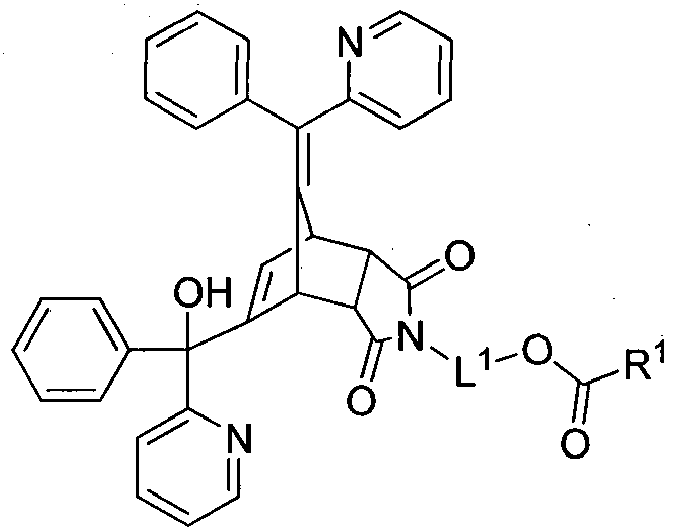
Cmpd L1 R1 Yield (%) Vasoconstrictiona 8 CH2 t-Bu 48 ≥132 9 CH2 (CH2)2CH3 62 86 10 CH2 (CH2)6CH3 91 0 11 CH2 (CH2)10CH3 32 0 12 CH2 Ph 71 ≥132 13 CH2 C6H4 o-OMe 65 90 14 CH2 C6H4 m-OMe 34 0 15 CH2 C6H4 p-OMe 65 0 16 CH2 CH2Ph 59 15 324 CH2 CH2C6H4 p-Me 67 17 17 CH2 CHPh2 15 0 18 CH2 CH2CH2Ph 6 13 19 CH2 CH=CHPh 80 0 20 CH2 2-Naph 32 0 109 CH2CH2 t-Bu 74 ≥132 110 CH2CH2 (CH2)2CH3 40 ≥132 111 CH2CH2 (CH2)6CH3 65 0 112 CH2CH2 (CH2)10CH3 47 0 113 CH2CH2 Ph 75 ≥132 114 CH2CH2 o-OMePh 80 ≥132 115 CH2CH2 m-OMePh 58 52 116 CH2CH2 p-OMePh 41 ≥132 117 CH2CH2 CH2Ph 3 ≥132 118 CH2CH2 CHPh2 71 0 119 CH2CH2 CH2CH2Ph 9 ≥132 120 CH2CH2 CH=CHPh 49 66 121 CH2CH2 CMe=CHPh 3 0 122 CH2CH2 2-Naph 10 0 123 CH2CH2 C≡CPh 7 0 124 CH2CH2 
44 23 125 CH2CH2 
47 80 126 CH2CH2 
63 0 127 CH2CH2 
43 0 128 CH2CH2 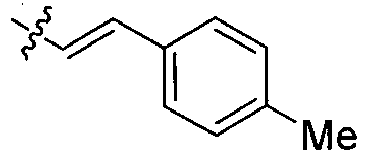
64 42 335 CH2CH2 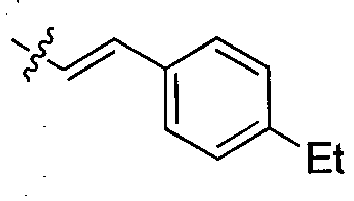
42 19 347 CH2CH2 
73 0 129 CH2CH2 
17 0 130 CH2CH2 
9 20 131 CH2CH2 
18 30 337 CH2CH2 
99 97 329 CH2CH2 
54 88 132 CH2CH2 
33 120 133 CH2CH2 
29 30 134 CH2CH2 
25 0 135 CH2CHMe CH=CHPh 20 0 136 CH2CH2CH2 CH=CHPh 15 0 137 CH2(CH2)2CH2 CH=CHPh 34 0 187 CH2CH2 
3 0 188 CH2CH2 
2 0 201 CH2CH2OCH2 CHPh2 6 ≥132 204 CH2CH2 CH2CH2C(O)OPh 11 0 342 CH2CH2 
42b 136 343 CH2CH2 
36b 140 aMaximum contractile effect as a % of 90 mM KCl contraction (rat caudal artery);
stereoisomeric mixture of NRB = 132%; b over two steps.Table 2. In vitro evaluation for vasoconstrictory activity of selected compounds of formula (I). 
Cmpd L1 R1 Yield (%) Vasoconstrictiona 364 CH2CH2 (CH2)6CH3 57 21 339 CH2CH2 (CH2)10CH3 78 0 365 CH2CH2 CH=CHPh 99 43 361 CH2CH2 
85 21 345 CH2CH2 
59 0 aMaximum contractile effect as a % of 90 mM KCl contraction (rat caudal artery);
stereoisomeric mixture of NRB = 132%.Table 3. In vitro evaluation for vasoconstrictory activity of selected compounds of formula (I). 
Cmpd L1 R1 Yield (%) Vasoconstrictiona 369 CH2 (CH2)7CH3 71 0 371 CH2 CH2CH=CHPh 90 0 aMaximum contractile effect as a % of 90 mM KCl contraction (rat caudal artery);
stereoisomeric mixture of NRB = 132%.Table 4. Pre-cleavage vasoconstrictory activity, in vitro hydrolytic stability (low pH, rat blood and liver enzymes) and in vivo lethality of NRB and selected compounds of formula (I) in rats. Cmpd Vasoconstrictiona % NRB released In vivo lethality (i.v.) In vivo lethality (oral) Hydrolytic Stability Rat Serumd Rat Liver S9e endo-NRB 132 - - - yesf,g yesh,i 8 ≥132 0b - - - - 9 86 0b - - - - 10 0 20c 89.1±1.2 73.0±5.2 yesf yesh 11 0 20c 83.2±1.8 - - - 12 ≥132 0b - - - - 13 90 0b - - - - 14 0 0c 64.2±3.0 53.1±3.3 - - 15 0 0c 67.7±3.1 - - - 16 15 0b, <5c 100.0±0.1 86.0±2.8 yesf yesh,i 324 17 - - - - yesh,i 17 0 0c 29.1±1.0 12.4±0.3 ntj noh 18 13 0b - - - - 19 0 0c 76.9±0.5 55.4±2.4 yesf yesh,i 20 0 0c 31.3±2.7 20.2±0.8 yesf noh 111 0 20c 87.9±0.7 48.5±8.5 - - 112 0 0c 19.3±1.3 - - - 118 0 0c <5 9.0±0.7 yesf noh 120 66 0c 14.1±0.4 - - - 121 0 0c 19.1±1.3 - - - 122 0 0c 14.4±3.0 14.1±0.5 yesf yesh,i 123 0 0c 84.5±2.0 55.6±4.1 yesf yesh,i 126 0 0c 24.2±0.4 5.0±0.3 yesf yesh,i 127 0 0c 17.0±2.2 - - - 335 19 - - - - yesh 347 0 - - - - yesh 129 0 0c 18.9±1.3 8.0±2.4 yesf yesh,i 337 97 - - - - yesh 329 88 - - - - yesh 134 0 0c 19.6±2.8 - - - 135 0 0c 33.8±6.1 - - - 136 0 0c 76.5±5.7 18.2±2.7 yesf yesh 137 0 0c 81.0±0.8 - - - 342 136 - - - - yesh 343 149 - - - - yesh,i 364 21 - - - - yesh,i 339 0 - - - - yesh 361 21 - - - - yesh,i 345 0 - - - - yesh,i 369 0 - - - - noh 371 0 - - - - noh aMaximum contractile effect as a % of 90 mM KCl contraction (rat caudal artery, n = 3), stereoisomeric mixture of NRB = 132%; b for compounds exhibiting vasoconstriction, Tyrode solution (37 °C, 1 h, n = 3); c for compounds not exhibiting vasoconstriction, simulated gastric fluid without pepsin (pH 1.2, 37 °C, 1 h, n = 3); d 80% rat serum (37 °C, 3 h, n = 3); e 1 mg/mL rat liver S9 fraction (37 °C, 6 h, n = 3); f20 mg/Kg (rat, i.v., n = 2); g 10 mg/Kg (rat, i.v., n = 2); h 40 mg/Kg (rat, oral, n = 2); i 20 mg/Kg (rat, oral, n = 2); j solubility problems encountered preventing injection by i.v. nt = not tested. Table 5. In vitro evaluation for vasoconstrictory activity of selected compounds of formula (III) (not according to the invention). 
Cmpd L1/L2 R1 Yield (%) Vasoconstrictiona 21 CH2 (CH2)2 17 0 22 CH2 (CH2)4 16 0 23 CH2 (CH2)6 6 0 24 CH2 (CH2)8 81 0 25 CH2 (CH2)10 12 0 26 CH2 p(C6H4) 21 0 27 CH2 (CH2)2C(O)O(CH2)2OC(O)(CH2)2 26 0 138 CH2CH2 (CH2)2 1 0 139 CH2CH2 (CH2)4 3 20 140 CH2CH2 (CH2)6 5 0 141 CH2CH2 (CH2)8 27 0 142 CH2CH2 (CH2)10 1 0 143 CH2CH2 p(C6H4) 5 0 144 CH2CH2 (CH2)2C(O)O(CH2)2OC(O)(CH2)2 1 0 a Maximum contractile effect as a % of 90 mM KCl contraction (rat caudal artery);
stereoisomeric mixture of NRB = 132%.Table 6.Pre-cleavage vasoconstrictory activity, in vitro hydrolytic stability (low pH, rat blood and liver enzymes) and in vivo lethality of NRB and selected compounds of formula (III) in rats. Cmpd Vasoconstrictiona % NRB released In vivo lethality (i.v.) In vivo lethality (oral) Hydrolytic Stabilityb Rat Serumc Rat Liver S9d endo-NRB 132 - - - yese,f yesg,h 21 0 0 29.6±5.4 - - - 22 0 0 13.4±0.2 - - - 23 0 0 14.9±5.0 - - - 24 0 0 8.6±0.5 6.2±0.2 noe - 25 0 0 <5 - - - 26 0 0 <5 - - - 27 0 0 20.8±0.7 - - - 138 0 0 7.7±0.2 - - - 139 20 0 11.7±1.6 - - - 140 0 0 9.9±1.3 - - - 141 0 0 <5 <5 nof - 142 0 0 <5 - - - 143 0 0 27.5±1.4 - - - 144 0 0 14.5±0.8 <5 nof - a Maximum contractile effect as a % of 90 mM KCl contraction (rat caudal artery, n = 3), stereoisomeric mixture of NRB = 132%; b simulated gastric fluid without pepsin (pH 1.2, 37 °C, 1 h, n = 3); c 80% rat serum (37 °C, 3 h, n = 3); d 1 mg/mL rat liver S9 fraction (37 °C, 6 h, n = 3); e 20 mg/Kg (rat, i.v., n = 2); f 10 mg/Kg (rat, i.v., n = 2); g 40 mg/Kg (rat, oral, n = 2); h 20 mg/Kg (rat, oral, n = 2). Table 7. In vitro evaluation for vasoconstrictory activity of selected compounds of formula (V) (not according to the invention).. 
Cmpd Y3 Yield (%) Vasoconstrictiona 102 CH2CH2OH 77 ≥132 103 CH2CHMeOH 64 67 104 CH2CH2CH2OH 38 ≥132 105 CH2CH2CH2CH2OH 28 100 106 CH2CH2NH2 56 (2 steps) ≥132 107 CH2CO2H 40 (2 steps) ≥ 132 a Maximum contractile effect as a % of 90 mM KCl contraction (rat caudal artery);
stereoisomeric mixture of NRB = 132%.Table 8. Pre-cleavage vasoconstrictory activity, in vitro hydrolytic stability (low pH, rat blood and liver enzymes) and in vivo lethality of NRB and selected compounds of formula (V) in rats. Cmpd Vasoconstrictiona In vivo lethality (i.v.) In vivo lethality (oral) endo-NRB 132 yesb yesc,d 102 ≥132 yesb yesc,d 103 67 - - 104 ≥132 yesb yesc 105 100 - - 106 ≥132 yesb - 107 ≥132 yesb - aMaximum contractile effect as a % of 90 mM KCl contraction (rat caudal artery, n = 3), stereoisomeric mixture of NRB = 132%; b20 mg/Kg (rat, i.v., n = 3), c 40 mg/Kg (rat, oral, n = 3), d 20 mg/Kg (rat, oral, n = 3). Table 9. In vivo lethality for NRB and selected compounds of formula (I) in rats. Cmpd In vivo lethalitya Onset of Symptomsb,c,d (min) Time to Death (min)c endo-NRB 5 35d 10 15 not lethal 16 15 90d 324 15 60d 19 20 90d 111 15 >120e 121 20 not lethal 123 15 35d 126 25 50d 335 15 90e 347 20 not lethal 136 20 not lethal 339 200 300e 345 15 65d a 20 mg/Kg (rat, oral); b visual signs of distress (laboured/irregular breathing, lethargy, tail twitching), consistent with NRB-like symptoms; c mean time; d n = 2; e n = 1. Table 10. Palatability (no-choice) trial observations for NRB and selected compounds of formula (I) in rats. Cmpd Palatability Triala Bait consumed (g) (of 5 g) Ave. bait consumed (as % of body mass) Maximum toxicant consumed (mg/kg) N° of deaths endo-NRB 1.9±0.5 - - 3/6 19 4.3±0.2 - - 5/5b 126 4.0±0.4 - - 5/6 PB 5.0±0.2 - - 0/6 a rats presented with 1% w/w toxicant (n = 6, male rats only) in a peanut butter bait following 3days 'pre-feeding' with a peanut butter formulation free of toxicant; b one rat removed from the trial due to irregular pre-feeding habits. PB = Peanut butter only. Table 11. Palatability (no-choice) trial observations for NRB and selected compounds of formula (I) in rats. Cmpd Palatability Triala Bait consumed (g) (of 3 g) Ave. bait consumed (% of body mass) Maximum toxicant consumed (mg/kg) N° of deaths endo-NRB 1.30 0.65 66 4/6 10 1.65 0.84 64 6/6 16 1.15 0.53 42 5/6 324 2.00 1.01 80 6/6 111 1.00 0.48 40 6/6 121 2.10 1.03 85 6/6 335 2.23 1.08 87 6/6 342 1.37 0.61 46 4/6 PB 3.12 1.61 - 0/6 a rats presented with 1% w/w toxicant (n = 6, 3 male and 3 female rats) in a peanut butter bait following 3 days 'pre-feeding' with a peanut butter formulation free of toxicant. PB = Peanut butter only. Table 12. Palatability (no-choice) trial observations for NRB and selected compounds of formula (I) in rats. Cmpd Palatability Triala Bait consumed (g) (of 3 g) Ave. bait consumed (as % of body mass) Maximum toxicant consumed (mg/kg) N° of deaths endo-NRB 0.37 0.26 26 3/6 347 1.3 0.58 44 3/6 339 1.97 0.89 67 3/6 339b 0.7 0.34 50 5/6 345 1.55 0.54 41 2/6 PB 3.17 1.51 - 0/6 a rats presented with 1% w/w toxicant (n = 6, 3 male and 3 female rats) in a peanut butter bait following 3 days 'pre-feeding' with a peanut butter formulation free of toxicant; b 2% w/w toxicant. PB = Peanut butter only. Table 13. Palatability (choice) trial observations for NRB and selected compounds of formula (I) in rats. Cmpd Palatability Triala Ave. Toxic bait consumed (g) Ave. toxic bait consumed (% of body mass) Maximum toxicant consumed (mg/kg) N° of deaths NRB 1.05 0.30 31 5/12 19 1.81 0.54 40 2/12 126 1.98 0.60 47 10/12 a rats presented with a choice of standard lab pellets (20 g) and a bait containing 1% w/w toxicant (20 g) for 2 days following 3 days 'pre-feeding' with a choice of standard lab pellets and a bait formulation free of toxicant (n = 12); 20 g of fresh bait presented each day. Table 14. Palatability (choice) trial observations for NRB and selected compounds of formula (I) in rats. Cmpd Palatability Triala Ave. Toxic bait consumed (g) Ave. toxic bait consumed (% of body mass) Maximum toxicant consumed (mg/kg) N° of deaths NRB 1.07 0.34 33 2/12 19 1.16 0.33 24 1/12 126 1.62 0.45 38 8/11b a rats presented with a choice of EPA diet (20 g) and a bait containing 1% w/w toxicant (20 g) for 2 days following 3 days 'pre-feeding' with a choice of EPA diet and a bait formulation free of toxicant (n = 12); 20 g of fresh bait presented each day; b one rat was excluded because it was found to be pregnant. Table 15. Palatability (choice) trial observations for NRB and selected compounds of formula (I) in rats. Palatability Triala Cmpd Ave. Toxic bait consumed (g) Ave. toxic bait consumed (% of body mass) Maximum toxicant consumed (mg/kg) N° of deaths NRB 2.81 0.64 64 5/12 324 2.92 0.90 68 5/12 121 2.70 0.82 69 3/12 335 3.32 0.94 80 7/12 339 3.71 1.23 92 3/12 a rats presented with a choice of EPA diet (20 g) and a bait containing 1% w/w toxicant (20 g) for 2 days following 3 days 'pre-feeding' with a choice of EPA diet and a bait formulation free of toxicant (n = 12); 20 g of fresh bait presented each day. - The present invention relates to compounds that have rodenticidal activity and can be used to control destructive rodents, such as rats.
Claims (16)
- A compound of the formula (I):
 Ar1 and Ar2 are each independently a 6 to 10 membered monocyclic or bicyclic aryl ring, wherein the ring is optionally substituted with one or more R8;Het1 and Het2 are each independently a 5 to 10 membered monocyclic or bicyclic heteroaryl ring comprising 1 to 4 ring nitrogen atoms, wherein the ring is optionally substituted with one or more R8;each dashed line and solid line together represent a double bond or a single bond;Y1 is
 X1 and X3 are each independently selected from the group consisting of O, S, NR5, and a bond, provided that X1 and X3 do not both represent a bond;X2 is selected from the group consisting of O, S, and NR5;L1 is selected from the group consisting of C1-6alkylene, C3-6cycloalkylene, arylene, heteroarylene, heterocyclylene, C1-6alkylC3-6cycloalkylene, C1-6alkylarylene, C1-6alkylheteroarylene, C1-6alkylheterocyclylene, C3-6cycloalkylC1-6alkylene, arylC1-6alkylene, heteroarylC1-6alkylene, heterocyclylC1-6alkylene, C1-6alkoxyC1-6alkylene, C3-6cycloalkyloxyC1-6alkylene, aryloxyC1-6alkylene, heteroaryloxyC1-6alkylene, heterocyclyloxyC1-6alkylene, C1-6alkoxyC3-6Cycloalkylene, C1-6alkoxyarylene, C1-6alkoxyheteroalkylene, C1-6alkoxyheterocyclylalkylene, C1-6alkylthioC1-6alkylene, C3-6cycloalkylthioC1-6alkylene, arylthioC1-6alkylene, heteroarylthioC1-6alkylene, heterocyclylthioC1-6alkylene, C1-6alkylthioC3-6cycloalkylene, C1-6alkylthioarylene, C1-6alkylthioheteroalkylene, C1-6alkylthioheterocyclylalkylene, C1-6alkylaminoC1-6alkylene, C3-6cycloalkylaminoC1-6alkylene, arylaminoC1-6alkylene, heteroarylaminoC1-6alkylene, heterocyclylaminoC1-6alkylene, C1-6alkylaminoC3-6cycloalkylene, C1-6alkylaminoarylene, C1-6alkylaminoheteroalkylene, and C1-6alkylaminoheterocyclylalkylene each of which is optionally substituted with one or more R6;R1 is selected from the group consisting of C3-18alkyl, C3-8cycloalkyl, aryl, heterocyclyl, heteroaryl, C3-8cycloalkylC1-6alkyl, arylC1-6alkyl, heterocyclylC1-6alkyl, heteroarylC1-6alkyl, C3-18alkyloxyC1-6alkyl, C3-8cycloalkyloxyC1-6alkyl, aryloxyC1-6alkyl, heterocyclyloxyC1-6alkyl, heteroaryloxyC1-6alkyl, C3-18alkylcarbonyloxyC1-6alkyl, C3-8cycloalkylcarbonyloxyC1-6alkyl, arylcarbonyloxyC1-6alkyl, heterocyclylcarbonyloxyC1-6alkyl, heteroarylcarbonyloxyC1-6alkyl, C3-18alkyloxycarbonylC1-6alkyl, C3-8cycloalkyloxycarbonylC1-6alkyl, aryloxycarbonylC1-6alkyl, heterocyclyloxycarbonylC1-6alkyl, heteroaryloxycarbonylC1-6alkyl, each of which is optionally substituted with one or more R7;R5 at each instance is independently selected from the group consisting of hydrogen, C1-6alkyl, C3-6cycloalkyl, aryl, heterocyclyl, and heteroaryl;R6 at each instance is independently selected from the group consisting of hydroxyl, thiol, amino, cyano, nitro, halo, C1-6alkyl, C1-6haloalkyl, C1-6alkoxy, and C1-6haloalkoxy;R7 at each instance is independently selected from the group consisting of hydroxyl, thiol, amino, amido, acylamino, cyano, nitro, nitroso, azide, halo, cyanate, thiocyanate, isocyanate, isothiocyanate, oxo, imino, acyl, C1-6alkyl, C1-6haloalkyl, C3-6cycloalkyl, aryl, heterocyclyl, heteroaryl, C1-6alkoxy, C1-6haloalkoxy, C3-6cycloalkoxy, aryloxy, heterocyclyloxy, heteroaryloxy, C1-6alkylcarbonyloxy, C3-6cycloalkylcarbonyloxy, arylcarbonyloxy, heterocyclylcarbonyloxy, heteroarylcarbonyloxy, C1-6alkyloxycarbonyl, C3-6cycloalkyloxycarbonyl, aryloxycarbonyl, heterocyclyloxycarbonyl, heteroaryloxycarbonyl, sulfenyl, sulfonyl, sulfoxide, sulfate, sulfonate, sulfonamide, phosphate, phosphonate, phosphinate, phosphine, phosphite, carbonate, carbamate, and urea;R8 at each instance is selected from the group consisting of hydroxyl, thiol, amino, cyano, nitro, halo, C1-6alkyl, C1-6haloalkyl, C1-6alkoxyl, and C1-6haloalkoxy;R11 is selected from the group consisting of hydrogen, C1-6alkyl, and C1-6haloalkyl;R at each instance is selected from the group consisting of halo, C1-6alkyl, carboxyl, carboxylC1-6alkyl, amidoC1-6alkyl, acyloxy, sulfenyl, sulfoxide, sulfonyl, and aryl, wherein each C1-6alkyl and aryl is optionally substituted with one or more R8; andn is an integer selected from 0 to 3; ora salt or solvate thereof.
 - A compound of the formula (I):
 Ar1 and Ar2 are each independently a 6 to 10 membered monocyclic or bicyclic aryl ring, wherein the ring is optionally substituted with one or more R8;Het1 and Het2 are each independently a 5 to 10 membered monocyclic or bicyclic heteroaryl ring comprising 1 to 4 ring nitrogen atoms, wherein the ring is optionally substituted with one or more R8;each dashed line and solid line together represent a double bond or a single bond;Y1 is
 X1 and X3 are each independently selected from the group consisting of O, S, NR5, and a bond, provided that X1 and X3 do not both represent a bond;X2 is selected from the group consisting of O, S, and NR5;L1 is selected from the group consisting of C1-6alkylene, C3-6cycloalkylene, arylene, heteroarylene, heterocyclylene, C1-6alkylC3-6cycloalkylene, C1-6alkylarylene, C1-6alkylheteroarylene, C1-6alkylheterocyclylene, C3-6cycloalkylC1-6alkylene, arylC1-6alkylene, heteroarylC1-6alkylene, heterocyclylC1-6alkylene, C1-6alkoxyC1-6alkylene, C3-6cycloalkyloxyC1-6alkylene, aryloxyC1-6alkylene, heteroaryloxyC1-6alkylene, heterocyclyloxyC1-6alkylene, C1-6alkoxyC3-6cycloalkylene, C1-6alkoxyarylene, C1-6alkoxyheteroalkylene, C1-6alkoxyheterocyclylalkylene, C1-6alkylthioC1-6alkylene, C3-6cycloalkylthioC1-6alkylene, arylthioC1-6alkylene, heteroarylthioC1-6alkylene, heterocyclylthioC1-6alkylene, C1-6alkylthioC3-6cycloalkylene, C1-6alkylthioarylene, C1-6alkylthioheteroalkylene, C1-6alkylthioheterocyclylalkylene, C1-6alkylaminoC1-6alkylene, C3-6cycloalkylaminoC1-6alkylene, arylaminoC1-6alkylene, heteroarylaminoC1-6alkylene, heterocyclylaminoC1-6alkylene, C1-6alkylaminoC3-6cycloalkylene, C1-6alkylaminoarylene, C1-6alkylaminoheteroalkylene, and C1-6alkylaminoheterocyclylalkylene each of which is optionally substituted with one or more R6;R1 is selected from the group consisting of C1-6alkylC3-8cycloalkyl, C1-6alkylaryl, C1-6alkylheterocyclyl, C1-6alkylheteroaryl, C1-6alkylC3-8cycloalkylC1-6alkyl, C1-6alkylheterocyclylC1-6alkyl, C1-6alkylheteroarylC1-6alkyl, C1-18alkylcarbonyloxyC1-6alkyl, C1-18alkyloxycarbonylC1-6alkyl, each of which is optionally substituted with one or more R7; or R1 is C1-6alkylarylC1-6alkyl substituted with one or more R7;R5 at each instance is independently selected from the group consisting of hydrogen, C1-6alkyl, C3-6cycloalkyl, aryl, heterocyclyl, and heteroaryl;R6 at each instance is independently selected from the group consisting of hydroxyl, thiol, amino, cyano, nitro, halo, C1-6alkyl, C1-6haloalkyl, C1-6alkoxy, and C1-6haloalkoxy;R7 at each instance is independently selected from the group consisting of hydroxyl, thiol, amino, amido, acylamino, cyano, nitro, nitroso, azide, halo, cyanate, thiocyanate, isocyanate, isothiocyanate, oxo, imino, acyl, C1-6alkyl, C1-6haloalkyl, C3-6cycloalkyl, aryl, heterocyclyl, heteroaryl, C1-6alkoxy, C1-6haloalkoxy, C3-6cycloalkoxy, aryloxy, heterocyclyloxy, heteroaryloxy, C1-6alkylcarbonyloxy, C3-6cycloalkylcarbonyloxy, arylcarbonyloxy, heterocyclylcarbonyloxy, heteroarylcarbonyloxy, C1-6alkyloxycarbonyl, C3-6cycloalkyloxycarbonyl, aryloxycarbonyl, heterocyclyloxycarbonyl, heteroaryloxycarbonyl, sulfenyl, sulfonyl, sulfoxide, sulfate, sulfonate, sulfonamide, phosphate, phosphonate, phosphinate, phosphine, phosphite, carbonate, carbamate, and urea;R8 at each instance is selected from the group consisting of hydroxyl, thiol, amino, cyano, nitro, halo, C1-6alkyl, C1-6haloalkyl, C1-6alkoxyl, and C1-6haloalkoxy;R11 is selected from the group consisting of hydrogen, C1-6alkyl, and C1-6haloalkyl;R at each instance is selected from the group consisting of halo, C1-6alkyl, carboxyl, carboxylC1-6alkyl, amidoC1-6alkyl, acyloxy, sulfenyl, sulfoxide, sulfonyl, and aryl, wherein each C1-6alkyl and aryl is optionally substituted with one or more R8; andn is an integer selected from 0 to 3; ora salt or solvate thereof.
 - The compound of claim 1 or 2, wherein Ar1 and Ar2 are each independently a phenyl ring optionally substituted with one or more R8.
- The compound of any one of claims 1 to 3, wherein Het1 and Het2 are each independently pyridyl optionally substituted with one or more R8.
- The compound of any one of claims 1 to 4, wherein the compound is a compound of formula (II):

- The compound of any one of claims 1 to 5, wherein L1 is selected from the group consisting of C1-6alkylene, C1-6alkylC3-6cycloalkylene, C1-6alkylarylene, C3-6cycloalkylC1-6alkylene, arylC1-6alkylene, C1-6alkoxyC1-6alkylene, each of which is optionally substituted with one or more R6.
- The compound of any one of claims 1 to 6, wherein X1 is selected from the group consisting of O and NR5, X2 is O, and X3 is a bond; or X1 is a bond, X2 is O, and X3 is selected from the group consisting of O and NR5.
- The compound of any one of claims 1 to 7, wherein X1 and X2 are each O and X3 is a bond.
- The compound of any one of claims 1 to 8, wherein R1 is selected from the group consisting of C3-18alkyl, aryl, arylC1-6alkyl, aryloxyC1-6alkyl, arylcarbonyloxyC1-6alkyl, and aryloxycarbonylC1-6alkyl, each of which is optionally substituted with one or more R7.
- The compound of claim 9, wherein R1 is selected from the group consisting of C3-12alkyl, aryl, arylC1-6saturated alkyl, arylC1-6alkenyl, each of which is optionally substituted with one or more R7.
- The compound of any one of claims 1 to 10, wherein L1 is C1-6alkylene optionally substituted with one or more R6.
- The compound of any one of claims 1 to 11, wherein the stereochemical configuration at the bridgehead of the dicarboximide ring is endo.
- The compound of claim 5, wherein X1 and X2 are each O; X3 is a bond; L1 is CH2 or CH2CH2; and R1 is (CH2)10CH3.
- The compound of claim 5, wherein X1 and X2 are each O; X3 is a bond; L1 is CH2CH2; and R1 is

- A rodenticidal composition comprising an effective amount of a compound of any one of claims 1 to 14; and one or more edible diluent or carrier materials.
- A method of controlling rodents comprising making a rodenticidal composition of claim 15 available for consumption by the rodents.
Priority Applications (1)
| Application Number | Priority Date | Filing Date | Title |
|---|---|---|---|
| PL13758300T PL2822938T3 (en) | 2012-03-09 | 2013-03-11 | Rodenticidal norbormide analogues |
Applications Claiming Priority (2)
| Application Number | Priority Date | Filing Date | Title |
|---|---|---|---|
| NZ59869812 | 2012-03-09 | ||
| PCT/NZ2013/000034 WO2013133726A1 (en) | 2012-03-09 | 2013-03-11 | Rodenticidal norbormide analogues |
Publications (3)
| Publication Number | Publication Date |
|---|---|
| EP2822938A1 EP2822938A1 (en) | 2015-01-14 |
| EP2822938A4 EP2822938A4 (en) | 2015-10-07 |
| EP2822938B1 true EP2822938B1 (en) | 2019-07-03 |
Family
ID=49117098
Family Applications (1)
| Application Number | Title | Priority Date | Filing Date |
|---|---|---|---|
| EP13758300.1A Active EP2822938B1 (en) | 2012-03-09 | 2013-03-11 | Rodenticidal norbormide analogues |
Country Status (6)
| Country | Link |
|---|---|
| US (1) | US9198420B2 (en) |
| EP (1) | EP2822938B1 (en) |
| AU (1) | AU2013228120B2 (en) |
| DK (1) | DK2822938T3 (en) |
| PL (1) | PL2822938T3 (en) |
| WO (1) | WO2013133726A1 (en) |
Families Citing this family (1)
| Publication number | Priority date | Publication date | Assignee | Title |
|---|---|---|---|---|
| US11596612B1 (en) | 2022-03-08 | 2023-03-07 | PTC Innovations, LLC | Topical anesthetics |
Family Cites Families (11)
| Publication number | Priority date | Publication date | Assignee | Title |
|---|---|---|---|---|
| GB1059405A (en) | 1963-02-27 | 1967-02-22 | Mcneilab Inc | 5,7-substituted-5-norbornene-2,3-dicarboximides and related compounds |
| DK128164B (en) | 1964-03-09 | 1974-03-11 | Mcneilab Inc | Norbornene derivative for use in rodenticides. |
| US3471619A (en) | 1964-03-09 | 1969-10-07 | Mcneilab Inc | Rodenticidal compositions containing certain 5 - (r-r1-r2 - methyl) - 7-(r3-r4-methylene) - (r6) - 5 - norbornene-2,3- dicarboximides |
| US3297706A (en) | 1964-07-06 | 1967-01-10 | Gulf Oil Corp | Method of producing substantially colorless and odorless 5 (alpha-hydroxy-alpha-2-pyridylbenzyl)-7-(alpha-2-pyridyl-benzylidene)-5-norbornylene-2, 3-discarboximide |
| GB1164124A (en) | 1965-10-12 | 1969-09-17 | Rentokil Lab Ltd | Substituted Norbornene-2-3-Dicarboximides and their use as Raticides |
| CH503462A (en) * | 1966-01-20 | 1971-02-28 | Chinoin Gyogyszer Es Vegyeszet | Rodenticidal preparations |
| NO137341C (en) | 1972-10-02 | 1978-02-15 | Tavolek Laboratories | RODENTICID PREPARATION INCLUDING COATED PARTICLES OF SUBSTITUTED NORBORNEN DIKAR BOXIMIDES |
| DE3401949A1 (en) | 1984-01-20 | 1985-08-01 | Bayer Ag, 5090 Leverkusen | NORBORNANE AND NORBORNINE CARBONIC ACID AMIDES, METHOD FOR THE PRODUCTION THEREOF AND THE USE OF NORBORNANE AND NORBORNIC CARBONIC ACID AMIDES AS MEDICINAL PRODUCTS |
| US4927934A (en) | 1987-11-12 | 1990-05-22 | American Home Products Corporation | Polycyclicamine with psychotropic activity |
| US4937347A (en) | 1987-11-12 | 1990-06-26 | American Home Products Corporation | Polycyclicamine with psychotropic activity |
| EP0613886A1 (en) | 1993-03-01 | 1994-09-07 | Shell Internationale Researchmaatschappij B.V. | Cyclopentadiene derivatives as dispersants for lubricating vils and for fuels |
-
2013
- 2013-03-11 US US14/383,718 patent/US9198420B2/en active Active
- 2013-03-11 AU AU2013228120A patent/AU2013228120B2/en active Active
- 2013-03-11 EP EP13758300.1A patent/EP2822938B1/en active Active
- 2013-03-11 PL PL13758300T patent/PL2822938T3/en unknown
- 2013-03-11 DK DK13758300.1T patent/DK2822938T3/en active
- 2013-03-11 WO PCT/NZ2013/000034 patent/WO2013133726A1/en not_active Ceased
Non-Patent Citations (1)
| Title |
|---|
| None * |
Also Published As
| Publication number | Publication date |
|---|---|
| DK2822938T3 (en) | 2019-10-07 |
| AU2013228120A1 (en) | 2014-10-16 |
| AU2013228120B2 (en) | 2016-09-08 |
| US20150025113A1 (en) | 2015-01-22 |
| EP2822938A1 (en) | 2015-01-14 |
| PL2822938T3 (en) | 2020-03-31 |
| EP2822938A4 (en) | 2015-10-07 |
| WO2013133726A1 (en) | 2013-09-12 |
| US9198420B2 (en) | 2015-12-01 |
Similar Documents
| Publication | Publication Date | Title |
|---|---|---|
| AU2016209321B2 (en) | Anthelmintic compounds, compositions and method of using thereof | |
| ES2893777T3 (en) | Anthelmintic compounds and compositions and method of using them | |
| DE3881443T2 (en) | Imidazole compound and biocidal compositions containing it. | |
| DK167877B1 (en) | 4-4-4-4-4-4-4-4-4-4-4-4 | |
| RU2109730C1 (en) | Phenylhydrazine derivatives, method of controlling pests and insectoacaricidonematocidal composition | |
| AU2015264336B2 (en) | Anthelmintic compounds | |
| EA023711B1 (en) | Parasiticidal compounds, methods and formulations | |
| EA019126B1 (en) | Dimeric avermectin and milbemycin derivatives | |
| Potkin et al. | Synthesis of novel vanillin derivatives containing isothiazole moieties and its synergistic effect in mixtures with insecticides | |
| Svirčev et al. | Design, synthesis, and biological evaluation of thiazole bioisosteres of goniofufurone through in vitro antiproliferative activity and in vivo toxicity | |
| US9198420B2 (en) | Rodenticidal norbormide analogues | |
| KR0168848B1 (en) | Milbemycin ether derivatives, their preparation and their therapeutic and agrochemical use | |
| ES2386038T3 (en) | Spiroacetals | |
| EP2917204A1 (en) | 1 h-indole-3-carboxamide derivatives and use thereof as p2y12 antagonists | |
| NZ607967A (en) | Rodenticidal compounds | |
| NZ607967B2 (en) | Rodenticidal compounds | |
| RU2793284C1 (en) | Use of cinnamiltio-1,2,4-triazole derivative as an anthelmintic and larvicidal agent | |
| US4093731A (en) | Methyl-6-n-propoxybenzothiazole-2-carbamate and anthelmintic pharmaceutical compositions thereof | |
| US5643886A (en) | Avermectins and milbemycins to treat parasitic infestations in dogs | |
| US4006242A (en) | Certain benzothiazoles used in the treatment of helminthiasis | |
| GB1572505A (en) | 2-acylamino or-2-furfurylideneamino-benz-imidazoles | |
| CN108148049B (en) | A kind of preparation method and application of 5-pyrazole amide compound with triazinone structure | |
| JPWO2001017978A1 (en) | Tetrahydrobenzotriazine derivatives | |
| JPS60142991A (en) | 5-didehydromilbemycin 5-oxime derivative | |
| JPS6321679B2 (en) |
Legal Events
| Date | Code | Title | Description |
|---|---|---|---|
| PUAI | Public reference made under article 153(3) epc to a published international application that has entered the european phase |
Free format text: ORIGINAL CODE: 0009012 |
|
| 17P | Request for examination filed |
Effective date: 20141003 |
|
| AK | Designated contracting states |
Kind code of ref document: A1 Designated state(s): AL AT BE BG CH CY CZ DE DK EE ES FI FR GB GR HR HU IE IS IT LI LT LU LV MC MK MT NL NO PL PT RO RS SE SI SK SM TR |
|
| AX | Request for extension of the european patent |
Extension state: BA ME |
|
| TPAC | Observations filed by third parties |
Free format text: ORIGINAL CODE: EPIDOSNTIPA |
|
| DAX | Request for extension of the european patent (deleted) | ||
| RA4 | Supplementary search report drawn up and despatched (corrected) |
Effective date: 20150903 |
|
| RIC1 | Information provided on ipc code assigned before grant |
Ipc: A01P 11/00 20060101ALI20150828BHEP Ipc: C07D 401/14 20060101AFI20150828BHEP Ipc: A01N 43/40 20060101ALI20150828BHEP |
|
| STAA | Information on the status of an ep patent application or granted ep patent |
Free format text: STATUS: EXAMINATION IS IN PROGRESS |
|
| 17Q | First examination report despatched |
Effective date: 20170329 |
|
| GRAP | Despatch of communication of intention to grant a patent |
Free format text: ORIGINAL CODE: EPIDOSNIGR1 |
|
| STAA | Information on the status of an ep patent application or granted ep patent |
Free format text: STATUS: GRANT OF PATENT IS INTENDED |
|
| INTG | Intention to grant announced |
Effective date: 20190228 |
|
| GRAS | Grant fee paid |
Free format text: ORIGINAL CODE: EPIDOSNIGR3 |
|
| GRAA | (expected) grant |
Free format text: ORIGINAL CODE: 0009210 |
|
| STAA | Information on the status of an ep patent application or granted ep patent |
Free format text: STATUS: THE PATENT HAS BEEN GRANTED |
|
| AK | Designated contracting states |
Kind code of ref document: B1 Designated state(s): AL AT BE BG CH CY CZ DE DK EE ES FI FR GB GR HR HU IE IS IT LI LT LU LV MC MK MT NL NO PL PT RO RS SE SI SK SM TR |
|
| REG | Reference to a national code |
Ref country code: GB Ref legal event code: FG4D |
|
| REG | Reference to a national code |
Ref country code: CH Ref legal event code: EP Ref country code: AT Ref legal event code: REF Ref document number: 1150846 Country of ref document: AT Kind code of ref document: T Effective date: 20190715 |
|
| REG | Reference to a national code |
Ref country code: IE Ref legal event code: FG4D |
|
| REG | Reference to a national code |
Ref country code: DE Ref legal event code: R096 Ref document number: 602013057405 Country of ref document: DE |
|
| REG | Reference to a national code |
Ref country code: CH Ref legal event code: NV Representative=s name: RENTSCH PARTNER AG, CH |
|
| REG | Reference to a national code |
Ref country code: DK Ref legal event code: T3 Effective date: 20191003 |
|
| REG | Reference to a national code |
Ref country code: SE Ref legal event code: TRGR |
|
| REG | Reference to a national code |
Ref country code: NL Ref legal event code: FP |
|
| REG | Reference to a national code |
Ref country code: NO Ref legal event code: T2 Effective date: 20190703 |
|
| REG | Reference to a national code |
Ref country code: LT Ref legal event code: MG4D |
|
| REG | Reference to a national code |
Ref country code: AT Ref legal event code: MK05 Ref document number: 1150846 Country of ref document: AT Kind code of ref document: T Effective date: 20190703 |
|
| PG25 | Lapsed in a contracting state [announced via postgrant information from national office to epo] |
Ref country code: CZ Free format text: LAPSE BECAUSE OF FAILURE TO SUBMIT A TRANSLATION OF THE DESCRIPTION OR TO PAY THE FEE WITHIN THE PRESCRIBED TIME-LIMIT Effective date: 20190703 Ref country code: LT Free format text: LAPSE BECAUSE OF FAILURE TO SUBMIT A TRANSLATION OF THE DESCRIPTION OR TO PAY THE FEE WITHIN THE PRESCRIBED TIME-LIMIT Effective date: 20190703 Ref country code: PT Free format text: LAPSE BECAUSE OF FAILURE TO SUBMIT A TRANSLATION OF THE DESCRIPTION OR TO PAY THE FEE WITHIN THE PRESCRIBED TIME-LIMIT Effective date: 20191104 Ref country code: AT Free format text: LAPSE BECAUSE OF FAILURE TO SUBMIT A TRANSLATION OF THE DESCRIPTION OR TO PAY THE FEE WITHIN THE PRESCRIBED TIME-LIMIT Effective date: 20190703 Ref country code: BG Free format text: LAPSE BECAUSE OF FAILURE TO SUBMIT A TRANSLATION OF THE DESCRIPTION OR TO PAY THE FEE WITHIN THE PRESCRIBED TIME-LIMIT Effective date: 20191003 Ref country code: HR Free format text: LAPSE BECAUSE OF FAILURE TO SUBMIT A TRANSLATION OF THE DESCRIPTION OR TO PAY THE FEE WITHIN THE PRESCRIBED TIME-LIMIT Effective date: 20190703 |
|
| PG25 | Lapsed in a contracting state [announced via postgrant information from national office to epo] |
Ref country code: RS Free format text: LAPSE BECAUSE OF FAILURE TO SUBMIT A TRANSLATION OF THE DESCRIPTION OR TO PAY THE FEE WITHIN THE PRESCRIBED TIME-LIMIT Effective date: 20190703 Ref country code: IS Free format text: LAPSE BECAUSE OF FAILURE TO SUBMIT A TRANSLATION OF THE DESCRIPTION OR TO PAY THE FEE WITHIN THE PRESCRIBED TIME-LIMIT Effective date: 20191103 Ref country code: GR Free format text: LAPSE BECAUSE OF FAILURE TO SUBMIT A TRANSLATION OF THE DESCRIPTION OR TO PAY THE FEE WITHIN THE PRESCRIBED TIME-LIMIT Effective date: 20191004 Ref country code: ES Free format text: LAPSE BECAUSE OF FAILURE TO SUBMIT A TRANSLATION OF THE DESCRIPTION OR TO PAY THE FEE WITHIN THE PRESCRIBED TIME-LIMIT Effective date: 20190703 Ref country code: AL Free format text: LAPSE BECAUSE OF FAILURE TO SUBMIT A TRANSLATION OF THE DESCRIPTION OR TO PAY THE FEE WITHIN THE PRESCRIBED TIME-LIMIT Effective date: 20190703 Ref country code: LV Free format text: LAPSE BECAUSE OF FAILURE TO SUBMIT A TRANSLATION OF THE DESCRIPTION OR TO PAY THE FEE WITHIN THE PRESCRIBED TIME-LIMIT Effective date: 20190703 |
|
| PG25 | Lapsed in a contracting state [announced via postgrant information from national office to epo] |
Ref country code: TR Free format text: LAPSE BECAUSE OF FAILURE TO SUBMIT A TRANSLATION OF THE DESCRIPTION OR TO PAY THE FEE WITHIN THE PRESCRIBED TIME-LIMIT Effective date: 20190703 |
|
| PG25 | Lapsed in a contracting state [announced via postgrant information from national office to epo] |
Ref country code: EE Free format text: LAPSE BECAUSE OF FAILURE TO SUBMIT A TRANSLATION OF THE DESCRIPTION OR TO PAY THE FEE WITHIN THE PRESCRIBED TIME-LIMIT Effective date: 20190703 Ref country code: RO Free format text: LAPSE BECAUSE OF FAILURE TO SUBMIT A TRANSLATION OF THE DESCRIPTION OR TO PAY THE FEE WITHIN THE PRESCRIBED TIME-LIMIT Effective date: 20190703 |
|
| PG25 | Lapsed in a contracting state [announced via postgrant information from national office to epo] |
Ref country code: SK Free format text: LAPSE BECAUSE OF FAILURE TO SUBMIT A TRANSLATION OF THE DESCRIPTION OR TO PAY THE FEE WITHIN THE PRESCRIBED TIME-LIMIT Effective date: 20190703 Ref country code: IS Free format text: LAPSE BECAUSE OF FAILURE TO SUBMIT A TRANSLATION OF THE DESCRIPTION OR TO PAY THE FEE WITHIN THE PRESCRIBED TIME-LIMIT Effective date: 20200224 Ref country code: SM Free format text: LAPSE BECAUSE OF FAILURE TO SUBMIT A TRANSLATION OF THE DESCRIPTION OR TO PAY THE FEE WITHIN THE PRESCRIBED TIME-LIMIT Effective date: 20190703 |
|
| REG | Reference to a national code |
Ref country code: DE Ref legal event code: R097 Ref document number: 602013057405 Country of ref document: DE |
|
| PLBE | No opposition filed within time limit |
Free format text: ORIGINAL CODE: 0009261 |
|
| STAA | Information on the status of an ep patent application or granted ep patent |
Free format text: STATUS: NO OPPOSITION FILED WITHIN TIME LIMIT |
|
| PG2D | Information on lapse in contracting state deleted |
Ref country code: IS |
|
| 26N | No opposition filed |
Effective date: 20200603 |
|
| PG25 | Lapsed in a contracting state [announced via postgrant information from national office to epo] |
Ref country code: SI Free format text: LAPSE BECAUSE OF FAILURE TO SUBMIT A TRANSLATION OF THE DESCRIPTION OR TO PAY THE FEE WITHIN THE PRESCRIBED TIME-LIMIT Effective date: 20190703 |
|
| PG25 | Lapsed in a contracting state [announced via postgrant information from national office to epo] |
Ref country code: MC Free format text: LAPSE BECAUSE OF FAILURE TO SUBMIT A TRANSLATION OF THE DESCRIPTION OR TO PAY THE FEE WITHIN THE PRESCRIBED TIME-LIMIT Effective date: 20190703 |
|
| PG25 | Lapsed in a contracting state [announced via postgrant information from national office to epo] |
Ref country code: LU Free format text: LAPSE BECAUSE OF NON-PAYMENT OF DUE FEES Effective date: 20200311 |
|
| PG25 | Lapsed in a contracting state [announced via postgrant information from national office to epo] |
Ref country code: MT Free format text: LAPSE BECAUSE OF FAILURE TO SUBMIT A TRANSLATION OF THE DESCRIPTION OR TO PAY THE FEE WITHIN THE PRESCRIBED TIME-LIMIT Effective date: 20190703 Ref country code: CY Free format text: LAPSE BECAUSE OF FAILURE TO SUBMIT A TRANSLATION OF THE DESCRIPTION OR TO PAY THE FEE WITHIN THE PRESCRIBED TIME-LIMIT Effective date: 20190703 |
|
| PG25 | Lapsed in a contracting state [announced via postgrant information from national office to epo] |
Ref country code: MK Free format text: LAPSE BECAUSE OF FAILURE TO SUBMIT A TRANSLATION OF THE DESCRIPTION OR TO PAY THE FEE WITHIN THE PRESCRIBED TIME-LIMIT Effective date: 20190703 |
|
| P01 | Opt-out of the competence of the unified patent court (upc) registered |
Effective date: 20230613 |
|
| REG | Reference to a national code |
Ref country code: DE Ref legal event code: R081 Ref document number: 602013057405 Country of ref document: DE Owner name: ANIMAL CONTROL PRODUCTS LTD., NZ Free format text: FORMER OWNER: LANDCARE RESEARCH NEW ZEALAND LIMITED, LINCOLN, NZ |
|
| REG | Reference to a national code |
Ref country code: GB Ref legal event code: 732E Free format text: REGISTERED BETWEEN 20240321 AND 20240327 |
|
| REG | Reference to a national code |
Ref country code: FI Ref legal event code: PCE Owner name: ANIMAL CONTROL PRODUCTS LIMITED |
|
| REG | Reference to a national code |
Ref country code: NL Ref legal event code: PD Owner name: ANIMAL CONTROL PRODUCTS LIMITED; NZ Free format text: DETAILS ASSIGNMENT: CHANGE OF OWNER(S), ASSIGNMENT; FORMER OWNER NAME: LANDCARE RESEARCH NEW ZEALAND LIMITED Effective date: 20250417 |
|
| REG | Reference to a national code |
Ref country code: BE Ref legal event code: PD Owner name: ANIMAL CONTROL PRODUCTS LIMITED; NZ Free format text: DETAILS ASSIGNMENT: CHANGE OF OWNER(S), ASSIGNMENT; FORMER OWNER NAME: LANDCARE RESEARCH NEW ZEALAND LIMITED Effective date: 20250414 |
|
| PGFP | Annual fee paid to national office [announced via postgrant information from national office to epo] |
Ref country code: CH Payment date: 20250401 Year of fee payment: 13 |
|
| REG | Reference to a national code |
Ref country code: CH Ref legal event code: U11 Free format text: ST27 STATUS EVENT CODE: U-0-0-U10-U11 (AS PROVIDED BY THE NATIONAL OFFICE) Effective date: 20260401 |
|
| PGFP | Annual fee paid to national office [announced via postgrant information from national office to epo] |
Ref country code: SE Payment date: 20260319 Year of fee payment: 14 |
|
| PGFP | Annual fee paid to national office [announced via postgrant information from national office to epo] |
Ref country code: GB Payment date: 20260303 Year of fee payment: 14 |
|
| PGFP | Annual fee paid to national office [announced via postgrant information from national office to epo] |
Ref country code: NO Payment date: 20260323 Year of fee payment: 14 Ref country code: DK Payment date: 20260324 Year of fee payment: 14 Ref country code: IE Payment date: 20260303 Year of fee payment: 14 Ref country code: DE Payment date: 20260319 Year of fee payment: 14 |
|
| PGFP | Annual fee paid to national office [announced via postgrant information from national office to epo] |
Ref country code: FI Payment date: 20260323 Year of fee payment: 14 Ref country code: BE Payment date: 20260319 Year of fee payment: 14 Ref country code: IT Payment date: 20260320 Year of fee payment: 14 |
|
| PGFP | Annual fee paid to national office [announced via postgrant information from national office to epo] |
Ref country code: NL Payment date: 20260319 Year of fee payment: 14 |
|
| PGFP | Annual fee paid to national office [announced via postgrant information from national office to epo] |
Ref country code: FR Payment date: 20260320 Year of fee payment: 14 |
|
| PGFP | Annual fee paid to national office [announced via postgrant information from national office to epo] |
Ref country code: PL Payment date: 20260218 Year of fee payment: 14 |