EP2821445A1 - Method of tracing engineered nanoparticles - Google Patents
Method of tracing engineered nanoparticles Download PDFInfo
- Publication number
- EP2821445A1 EP2821445A1 EP13175431.9A EP13175431A EP2821445A1 EP 2821445 A1 EP2821445 A1 EP 2821445A1 EP 13175431 A EP13175431 A EP 13175431A EP 2821445 A1 EP2821445 A1 EP 2821445A1
- Authority
- EP
- European Patent Office
- Prior art keywords
- population
- particles
- subpopulation
- nanoparticles
- polymer
- Prior art date
- Legal status (The legal status is an assumption and is not a legal conclusion. Google has not performed a legal analysis and makes no representation as to the accuracy of the status listed.)
- Withdrawn
Links
- 239000002105 nanoparticle Substances 0.000 title claims abstract description 78
- 238000000034 method Methods 0.000 title claims abstract description 14
- 239000002245 particle Substances 0.000 claims abstract description 90
- 229920000642 polymer Polymers 0.000 claims abstract description 57
- XLYOFNOQVPJJNP-UHFFFAOYSA-N water Substances O XLYOFNOQVPJJNP-UHFFFAOYSA-N 0.000 claims abstract description 25
- 239000000700 radioactive tracer Substances 0.000 claims abstract description 24
- 238000005067 remediation Methods 0.000 claims abstract description 20
- 239000000203 mixture Substances 0.000 claims abstract description 16
- 238000011065 in-situ storage Methods 0.000 claims abstract description 11
- 239000003673 groundwater Substances 0.000 claims abstract description 10
- PCHJSUWPFVWCPO-UHFFFAOYSA-N gold Chemical compound [Au] PCHJSUWPFVWCPO-UHFFFAOYSA-N 0.000 claims description 13
- 229910052737 gold Inorganic materials 0.000 claims description 12
- 239000010931 gold Substances 0.000 claims description 12
- 239000000084 colloidal system Substances 0.000 claims description 11
- 239000000463 material Substances 0.000 claims description 10
- XEEYBQQBJWHFJM-UHFFFAOYSA-N Iron Chemical compound [Fe] XEEYBQQBJWHFJM-UHFFFAOYSA-N 0.000 claims description 8
- 229920001477 hydrophilic polymer Polymers 0.000 claims description 5
- 230000003287 optical effect Effects 0.000 claims description 5
- 230000001066 destructive effect Effects 0.000 claims description 4
- 125000003178 carboxy group Chemical group [H]OC(*)=O 0.000 description 29
- 230000037230 mobility Effects 0.000 description 19
- FYUWIEKAVLOHSE-UHFFFAOYSA-N ethenyl acetate;1-ethenylpyrrolidin-2-one Chemical compound CC(=O)OC=C.C=CN1CCCC1=O FYUWIEKAVLOHSE-UHFFFAOYSA-N 0.000 description 11
- 238000000576 coating method Methods 0.000 description 10
- 239000000725 suspension Substances 0.000 description 10
- HEMHJVSKTPXQMS-UHFFFAOYSA-M Sodium hydroxide Chemical compound [OH-].[Na+] HEMHJVSKTPXQMS-UHFFFAOYSA-M 0.000 description 9
- 239000000356 contaminant Substances 0.000 description 9
- 239000000243 solution Substances 0.000 description 9
- 230000000694 effects Effects 0.000 description 8
- 238000011084 recovery Methods 0.000 description 8
- 238000003917 TEM image Methods 0.000 description 7
- 239000003139 biocide Substances 0.000 description 7
- 239000003960 organic solvent Substances 0.000 description 7
- 239000011248 coating agent Substances 0.000 description 6
- 229920001577 copolymer Polymers 0.000 description 6
- 238000009826 distribution Methods 0.000 description 6
- 238000002474 experimental method Methods 0.000 description 6
- 230000009467 reduction Effects 0.000 description 6
- 238000001514 detection method Methods 0.000 description 5
- 238000002360 preparation method Methods 0.000 description 5
- 238000000638 solvent extraction Methods 0.000 description 5
- GWEVSGVZZGPLCZ-UHFFFAOYSA-N Titan oxide Chemical compound O=[Ti]=O GWEVSGVZZGPLCZ-UHFFFAOYSA-N 0.000 description 4
- 238000002835 absorbance Methods 0.000 description 4
- 230000003115 biocidal effect Effects 0.000 description 4
- 230000015572 biosynthetic process Effects 0.000 description 4
- 229910052751 metal Inorganic materials 0.000 description 4
- 239000002184 metal Substances 0.000 description 4
- 230000003647 oxidation Effects 0.000 description 4
- 238000007254 oxidation reaction Methods 0.000 description 4
- 239000002096 quantum dot Substances 0.000 description 4
- 229910052761 rare earth metal Inorganic materials 0.000 description 4
- 150000002910 rare earth metals Chemical class 0.000 description 4
- 230000009257 reactivity Effects 0.000 description 4
- 239000004576 sand Substances 0.000 description 4
- 241000894007 species Species 0.000 description 4
- 238000002371 ultraviolet--visible spectrum Methods 0.000 description 4
- 241000894006 Bacteria Species 0.000 description 3
- UHOVQNZJYSORNB-UHFFFAOYSA-N Benzene Chemical compound C1=CC=CC=C1 UHOVQNZJYSORNB-UHFFFAOYSA-N 0.000 description 3
- KRKNYBCHXYNGOX-UHFFFAOYSA-K Citrate Chemical compound [O-]C(=O)CC(O)(CC([O-])=O)C([O-])=O KRKNYBCHXYNGOX-UHFFFAOYSA-K 0.000 description 3
- LFQSCWFLJHTTHZ-UHFFFAOYSA-N Ethanol Chemical compound CCO LFQSCWFLJHTTHZ-UHFFFAOYSA-N 0.000 description 3
- YXFVVABEGXRONW-UHFFFAOYSA-N Toluene Chemical compound CC1=CC=CC=C1 YXFVVABEGXRONW-UHFFFAOYSA-N 0.000 description 3
- 241000700605 Viruses Species 0.000 description 3
- 238000010521 absorption reaction Methods 0.000 description 3
- 230000002776 aggregation Effects 0.000 description 3
- 238000004220 aggregation Methods 0.000 description 3
- 229920001400 block copolymer Polymers 0.000 description 3
- 230000036541 health Effects 0.000 description 3
- 239000003446 ligand Substances 0.000 description 3
- 230000005012 migration Effects 0.000 description 3
- 238000013508 migration Methods 0.000 description 3
- 239000000178 monomer Substances 0.000 description 3
- 239000012279 sodium borohydride Substances 0.000 description 3
- 229910000033 sodium borohydride Inorganic materials 0.000 description 3
- 239000002904 solvent Substances 0.000 description 3
- 238000003786 synthesis reaction Methods 0.000 description 3
- 238000012360 testing method Methods 0.000 description 3
- 238000004627 transmission electron microscopy Methods 0.000 description 3
- VEXZGXHMUGYJMC-UHFFFAOYSA-M Chloride anion Chemical compound [Cl-] VEXZGXHMUGYJMC-UHFFFAOYSA-M 0.000 description 2
- YNQLUTRBYVCPMQ-UHFFFAOYSA-N Ethylbenzene Chemical compound CCC1=CC=CC=C1 YNQLUTRBYVCPMQ-UHFFFAOYSA-N 0.000 description 2
- 239000012692 Fe precursor Substances 0.000 description 2
- 241000282412 Homo Species 0.000 description 2
- 229910021578 Iron(III) chloride Inorganic materials 0.000 description 2
- WHNWPMSKXPGLAX-UHFFFAOYSA-N N-Vinyl-2-pyrrolidone Chemical compound C=CN1CCCC1=O WHNWPMSKXPGLAX-UHFFFAOYSA-N 0.000 description 2
- FOIXSVOLVBLSDH-UHFFFAOYSA-N Silver ion Chemical compound [Ag+] FOIXSVOLVBLSDH-UHFFFAOYSA-N 0.000 description 2
- -1 ZVI metals Chemical class 0.000 description 2
- 239000000956 alloy Substances 0.000 description 2
- 229910045601 alloy Inorganic materials 0.000 description 2
- 239000007900 aqueous suspension Substances 0.000 description 2
- QVGXLLKOCUKJST-UHFFFAOYSA-N atomic oxygen Chemical compound [O] QVGXLLKOCUKJST-UHFFFAOYSA-N 0.000 description 2
- 239000007844 bleaching agent Substances 0.000 description 2
- 238000009835 boiling Methods 0.000 description 2
- UHYPYGJEEGLRJD-UHFFFAOYSA-N cadmium(2+);selenium(2-) Chemical compound [Se-2].[Cd+2] UHYPYGJEEGLRJD-UHFFFAOYSA-N 0.000 description 2
- 230000015556 catabolic process Effects 0.000 description 2
- 238000006731 degradation reaction Methods 0.000 description 2
- 238000010790 dilution Methods 0.000 description 2
- 239000012895 dilution Substances 0.000 description 2
- 230000007613 environmental effect Effects 0.000 description 2
- 229920001519 homopolymer Polymers 0.000 description 2
- 230000001965 increasing effect Effects 0.000 description 2
- RBTARNINKXHZNM-UHFFFAOYSA-K iron trichloride Chemical compound Cl[Fe](Cl)Cl RBTARNINKXHZNM-UHFFFAOYSA-K 0.000 description 2
- 239000007788 liquid Substances 0.000 description 2
- 238000002156 mixing Methods 0.000 description 2
- 238000012544 monitoring process Methods 0.000 description 2
- 229920005615 natural polymer Polymers 0.000 description 2
- 231100000252 nontoxic Toxicity 0.000 description 2
- 230000003000 nontoxic effect Effects 0.000 description 2
- 229910052760 oxygen Inorganic materials 0.000 description 2
- 239000001301 oxygen Substances 0.000 description 2
- 125000005575 polycyclic aromatic hydrocarbon group Chemical group 0.000 description 2
- 239000004065 semiconductor Substances 0.000 description 2
- 238000001179 sorption measurement Methods 0.000 description 2
- 238000004611 spectroscopical analysis Methods 0.000 description 2
- 238000001228 spectrum Methods 0.000 description 2
- 230000007480 spreading Effects 0.000 description 2
- 238000003892 spreading Methods 0.000 description 2
- 238000003756 stirring Methods 0.000 description 2
- 229920001059 synthetic polymer Polymers 0.000 description 2
- 239000004408 titanium dioxide Substances 0.000 description 2
- 231100000419 toxicity Toxicity 0.000 description 2
- 230000001988 toxicity Effects 0.000 description 2
- KIUKXJAPPMFGSW-DNGZLQJQSA-N (2S,3S,4S,5R,6R)-6-[(2S,3R,4R,5S,6R)-3-Acetamido-2-[(2S,3S,4R,5R,6R)-6-[(2R,3R,4R,5S,6R)-3-acetamido-2,5-dihydroxy-6-(hydroxymethyl)oxan-4-yl]oxy-2-carboxy-4,5-dihydroxyoxan-3-yl]oxy-5-hydroxy-6-(hydroxymethyl)oxan-4-yl]oxy-3,4,5-trihydroxyoxane-2-carboxylic acid Chemical compound CC(=O)N[C@H]1[C@H](O)O[C@H](CO)[C@@H](O)[C@@H]1O[C@H]1[C@H](O)[C@@H](O)[C@H](O[C@H]2[C@@H]([C@@H](O[C@H]3[C@@H]([C@@H](O)[C@H](O)[C@H](O3)C(O)=O)O)[C@H](O)[C@@H](CO)O2)NC(C)=O)[C@@H](C(O)=O)O1 KIUKXJAPPMFGSW-DNGZLQJQSA-N 0.000 description 1
- WUPHOULIZUERAE-UHFFFAOYSA-N 3-(oxolan-2-yl)propanoic acid Chemical compound OC(=O)CCC1CCCO1 WUPHOULIZUERAE-UHFFFAOYSA-N 0.000 description 1
- FHVDTGUDJYJELY-UHFFFAOYSA-N 6-{[2-carboxy-4,5-dihydroxy-6-(phosphanyloxy)oxan-3-yl]oxy}-4,5-dihydroxy-3-phosphanyloxane-2-carboxylic acid Chemical compound O1C(C(O)=O)C(P)C(O)C(O)C1OC1C(C(O)=O)OC(OP)C(O)C1O FHVDTGUDJYJELY-UHFFFAOYSA-N 0.000 description 1
- 229920002134 Carboxymethyl cellulose Polymers 0.000 description 1
- 229910000673 Indium arsenide Inorganic materials 0.000 description 1
- GPXJNWSHGFTCBW-UHFFFAOYSA-N Indium phosphide Chemical compound [In]#P GPXJNWSHGFTCBW-UHFFFAOYSA-N 0.000 description 1
- FYYHWMGAXLPEAU-UHFFFAOYSA-N Magnesium Chemical compound [Mg] FYYHWMGAXLPEAU-UHFFFAOYSA-N 0.000 description 1
- OAICVXFJPJFONN-UHFFFAOYSA-N Phosphorus Chemical compound [P] OAICVXFJPJFONN-UHFFFAOYSA-N 0.000 description 1
- 229920002873 Polyethylenimine Polymers 0.000 description 1
- 239000002253 acid Substances 0.000 description 1
- 230000032683 aging Effects 0.000 description 1
- 229940072056 alginate Drugs 0.000 description 1
- 229920000615 alginic acid Polymers 0.000 description 1
- 235000010443 alginic acid Nutrition 0.000 description 1
- 239000003513 alkali Substances 0.000 description 1
- 229920005603 alternating copolymer Polymers 0.000 description 1
- 229910052782 aluminium Inorganic materials 0.000 description 1
- XAGFODPZIPBFFR-UHFFFAOYSA-N aluminium Chemical compound [Al] XAGFODPZIPBFFR-UHFFFAOYSA-N 0.000 description 1
- 229920000469 amphiphilic block copolymer Polymers 0.000 description 1
- 230000000844 anti-bacterial effect Effects 0.000 description 1
- 239000008346 aqueous phase Substances 0.000 description 1
- 239000007864 aqueous solution Substances 0.000 description 1
- 230000008901 benefit Effects 0.000 description 1
- 229910002056 binary alloy Inorganic materials 0.000 description 1
- 230000008033 biological extinction Effects 0.000 description 1
- 238000000339 bright-field microscopy Methods 0.000 description 1
- 239000013590 bulk material Substances 0.000 description 1
- 229910052980 cadmium sulfide Inorganic materials 0.000 description 1
- JLATXDOZXBEBJX-UHFFFAOYSA-N cadmium(2+);selenium(2-);sulfide Chemical compound [S-2].[Se-2].[Cd+2].[Cd+2] JLATXDOZXBEBJX-UHFFFAOYSA-N 0.000 description 1
- 239000001768 carboxy methyl cellulose Substances 0.000 description 1
- 235000010948 carboxy methyl cellulose Nutrition 0.000 description 1
- 239000008112 carboxymethyl-cellulose Substances 0.000 description 1
- 239000003054 catalyst Substances 0.000 description 1
- 239000001913 cellulose Substances 0.000 description 1
- 229920002678 cellulose Polymers 0.000 description 1
- 238000006243 chemical reaction Methods 0.000 description 1
- 239000003153 chemical reaction reagent Substances 0.000 description 1
- 230000001143 conditioned effect Effects 0.000 description 1
- 230000003750 conditioning effect Effects 0.000 description 1
- 239000011258 core-shell material Substances 0.000 description 1
- 239000006184 cosolvent Substances 0.000 description 1
- 231100000135 cytotoxicity Toxicity 0.000 description 1
- 230000003013 cytotoxicity Effects 0.000 description 1
- 229920000359 diblock copolymer Polymers 0.000 description 1
- 238000002296 dynamic light scattering Methods 0.000 description 1
- 230000002708 enhancing effect Effects 0.000 description 1
- 230000005284 excitation Effects 0.000 description 1
- 238000000799 fluorescence microscopy Methods 0.000 description 1
- 238000001506 fluorescence spectroscopy Methods 0.000 description 1
- 239000007789 gas Substances 0.000 description 1
- 150000004676 glycans Chemical class 0.000 description 1
- 229910001385 heavy metal Inorganic materials 0.000 description 1
- 229920002674 hyaluronan Polymers 0.000 description 1
- 229960003160 hyaluronic acid Drugs 0.000 description 1
- 229930195733 hydrocarbon Natural products 0.000 description 1
- 150000002430 hydrocarbons Chemical class 0.000 description 1
- UCNNJGDEJXIUCC-UHFFFAOYSA-L hydroxy(oxo)iron;iron Chemical compound [Fe].O[Fe]=O.O[Fe]=O UCNNJGDEJXIUCC-UHFFFAOYSA-L 0.000 description 1
- RPQDHPTXJYYUPQ-UHFFFAOYSA-N indium arsenide Chemical compound [In]#[As] RPQDHPTXJYYUPQ-UHFFFAOYSA-N 0.000 description 1
- 230000003993 interaction Effects 0.000 description 1
- FBAFATDZDUQKNH-UHFFFAOYSA-M iron chloride Chemical compound [Cl-].[Fe] FBAFATDZDUQKNH-UHFFFAOYSA-M 0.000 description 1
- SGGMZBKLQLBBLK-UHFFFAOYSA-N iron(4+) Chemical compound [Fe+4] SGGMZBKLQLBBLK-UHFFFAOYSA-N 0.000 description 1
- 229910052749 magnesium Inorganic materials 0.000 description 1
- 239000011777 magnesium Substances 0.000 description 1
- 238000004519 manufacturing process Methods 0.000 description 1
- 239000011159 matrix material Substances 0.000 description 1
- 238000005259 measurement Methods 0.000 description 1
- 239000002082 metal nanoparticle Substances 0.000 description 1
- 150000002739 metals Chemical class 0.000 description 1
- 230000000813 microbial effect Effects 0.000 description 1
- 230000004048 modification Effects 0.000 description 1
- 238000012986 modification Methods 0.000 description 1
- VIKNJXKGJWUCNN-XGXHKTLJSA-N norethisterone Chemical compound O=C1CC[C@@H]2[C@H]3CC[C@](C)([C@](CC4)(O)C#C)[C@@H]4[C@@H]3CCC2=C1 VIKNJXKGJWUCNN-XGXHKTLJSA-N 0.000 description 1
- 230000006911 nucleation Effects 0.000 description 1
- 238000010899 nucleation Methods 0.000 description 1
- 239000012074 organic phase Substances 0.000 description 1
- 239000007800 oxidant agent Substances 0.000 description 1
- 230000001590 oxidative effect Effects 0.000 description 1
- 239000003973 paint Substances 0.000 description 1
- 230000000737 periodic effect Effects 0.000 description 1
- 238000000628 photoluminescence spectroscopy Methods 0.000 description 1
- 230000035479 physiological effects, processes and functions Effects 0.000 description 1
- 239000003495 polar organic solvent Substances 0.000 description 1
- 229920000191 poly(N-vinyl pyrrolidone) Polymers 0.000 description 1
- 229920001223 polyethylene glycol Polymers 0.000 description 1
- 229920001282 polysaccharide Polymers 0.000 description 1
- 239000005017 polysaccharide Substances 0.000 description 1
- 230000008569 process Effects 0.000 description 1
- 229920005604 random copolymer Polymers 0.000 description 1
- 238000011160 research Methods 0.000 description 1
- 230000004044 response Effects 0.000 description 1
- 238000011896 sensitive detection Methods 0.000 description 1
- 238000013207 serial dilution Methods 0.000 description 1
- 229910052709 silver Inorganic materials 0.000 description 1
- 239000004332 silver Substances 0.000 description 1
- 239000001509 sodium citrate Substances 0.000 description 1
- NLJMYIDDQXHKNR-UHFFFAOYSA-K sodium citrate Chemical compound O.O.[Na+].[Na+].[Na+].[O-]C(=O)CC(O)(CC([O-])=O)C([O-])=O NLJMYIDDQXHKNR-UHFFFAOYSA-K 0.000 description 1
- 230000000087 stabilizing effect Effects 0.000 description 1
- 229920006301 statistical copolymer Polymers 0.000 description 1
- 238000002198 surface plasmon resonance spectroscopy Methods 0.000 description 1
- 230000002194 synthesizing effect Effects 0.000 description 1
- 239000008399 tap water Substances 0.000 description 1
- 235000020679 tap water Nutrition 0.000 description 1
- 229910002058 ternary alloy Inorganic materials 0.000 description 1
- 238000000204 total internal reflection microscopy Methods 0.000 description 1
- 229920000428 triblock copolymer Polymers 0.000 description 1
- 230000000007 visual effect Effects 0.000 description 1
- 239000008096 xylene Substances 0.000 description 1
- 150000003738 xylenes Chemical class 0.000 description 1
- 239000010457 zeolite Substances 0.000 description 1
- 238000000733 zeta-potential measurement Methods 0.000 description 1
Images


Classifications
-
- C—CHEMISTRY; METALLURGY
- C02—TREATMENT OF WATER, WASTE WATER, SEWAGE, OR SLUDGE
- C02F—TREATMENT OF WATER, WASTE WATER, SEWAGE, OR SLUDGE
- C02F1/00—Treatment of water, waste water, or sewage
- C02F1/70—Treatment of water, waste water, or sewage by reduction
- C02F1/705—Reduction by metals
-
- C—CHEMISTRY; METALLURGY
- C01—INORGANIC CHEMISTRY
- C01P—INDEXING SCHEME RELATING TO STRUCTURAL AND PHYSICAL ASPECTS OF SOLID INORGANIC COMPOUNDS
- C01P2004/00—Particle morphology
- C01P2004/60—Particles characterised by their size
- C01P2004/64—Nanometer sized, i.e. from 1-100 nanometer
-
- C—CHEMISTRY; METALLURGY
- C01—INORGANIC CHEMISTRY
- C01P—INDEXING SCHEME RELATING TO STRUCTURAL AND PHYSICAL ASPECTS OF SOLID INORGANIC COMPOUNDS
- C01P2006/00—Physical properties of inorganic compounds
- C01P2006/60—Optical properties, e.g. expressed in CIELAB-values
-
- C—CHEMISTRY; METALLURGY
- C02—TREATMENT OF WATER, WASTE WATER, SEWAGE, OR SLUDGE
- C02F—TREATMENT OF WATER, WASTE WATER, SEWAGE, OR SLUDGE
- C02F2103/00—Nature of the water, waste water, sewage or sludge to be treated
- C02F2103/06—Contaminated groundwater or leachate
-
- C—CHEMISTRY; METALLURGY
- C02—TREATMENT OF WATER, WASTE WATER, SEWAGE, OR SLUDGE
- C02F—TREATMENT OF WATER, WASTE WATER, SEWAGE, OR SLUDGE
- C02F2305/00—Use of specific compounds during water treatment
- C02F2305/08—Nanoparticles or nanotubes
-
- C—CHEMISTRY; METALLURGY
- C09—DYES; PAINTS; POLISHES; NATURAL RESINS; ADHESIVES; COMPOSITIONS NOT OTHERWISE PROVIDED FOR; APPLICATIONS OF MATERIALS NOT OTHERWISE PROVIDED FOR
- C09C—TREATMENT OF INORGANIC MATERIALS, OTHER THAN FIBROUS FILLERS, TO ENHANCE THEIR PIGMENTING OR FILLING PROPERTIES ; PREPARATION OF CARBON BLACK ; PREPARATION OF INORGANIC MATERIALS WHICH ARE NO SINGLE CHEMICAL COMPOUNDS AND WHICH ARE MAINLY USED AS PIGMENTS OR FILLERS
- C09C1/00—Treatment of specific inorganic materials other than fibrous fillers; Preparation of carbon black
- C09C1/62—Metallic pigments or fillers
-
- C—CHEMISTRY; METALLURGY
- C09—DYES; PAINTS; POLISHES; NATURAL RESINS; ADHESIVES; COMPOSITIONS NOT OTHERWISE PROVIDED FOR; APPLICATIONS OF MATERIALS NOT OTHERWISE PROVIDED FOR
- C09C—TREATMENT OF INORGANIC MATERIALS, OTHER THAN FIBROUS FILLERS, TO ENHANCE THEIR PIGMENTING OR FILLING PROPERTIES ; PREPARATION OF CARBON BLACK ; PREPARATION OF INORGANIC MATERIALS WHICH ARE NO SINGLE CHEMICAL COMPOUNDS AND WHICH ARE MAINLY USED AS PIGMENTS OR FILLERS
- C09C3/00—Treatment in general of inorganic materials, other than fibrous fillers, to enhance their pigmenting or filling properties
- C09C3/10—Treatment with macromolecular organic compounds
Definitions
- the present invention relates to the field of tracing of the spreading of engineered nanoparticles in the environment.
- the invention relates to a population of nanoparticles non-aggregated polymer-coated nanoparticles comprising a subpopulation of (re)active particles, and a subpopulation of non-(re)active tracer particles, and to the use of such populations for the tracing of nanoparticles e.g. in connection with remediation, in particular in-situ remediation, of contaminated ground water.
- Nanoparticles may bring significant innovation and advances to society and benefits for human health and the environment. At the same time, it will be necessary to ensure their safety for humans and the environment and to avoid negative impacts on society. Nanoparticles are manufactured for their specific properties providing possibilities for new uses and products. These specific properties may lead to different interactions with the physiology in humans and the environment and to effects that significantly differ from those known of materials without such properties. Both the small size and engineered structure of nanoparticles create special properties e.g. due to increased surface area which distinguish them from the materials with the same materials with a different particle size and structure. Thus, engineered nanoparticles behave differently when they are dispersed as single particles compared to their agglomerated counterparts or the same bulk material.
- nanoparticles are already in use. Examples are paints, antibacterial coatings, and skin care products. It is important to note that as long as the nanoparticles are embedded in a matrix of larger sized structures, they will not exert the specific characteristics of the individual nanoparticles in the free form.
- Engineered nanoparticles are entering onto use in environmental applications, e.g. removal of organic and inorganic contaminants in water, acting as biocides to remove bacteria and viruses, and for in-situ remediation of sub-surface contaminated land zones.
- Engineered nanoparticles for such applications includes nanoscale zero valent iron (nZVI) for the treatment of water polluted by a large spectrum of contaminants by reduction, nZVI for in-situ remediation of sub-surface source zones contaminated with solvent dense non aqueous phase liquids (DNAPL), photo-reactive titanium dioxide nanoparticles for removal or organic contaminants by oxidation and as a biocide by releasing strongly active oxygen species, and silver nanoparticles acting as biocides.
- nZVI nanoscale zero valent iron
- DNAPL solvent dense non aqueous phase liquids
- photo-reactive titanium dioxide nanoparticles for removal or organic contaminants by oxidation and as a biocide by releasing strongly active oxygen species
- silver nanoparticles acting as biocides are examples of silver nanoparticles acting as biocides.
- Coatings are used to enhance the colloid stability in high concentrations and also for sub-surface remediation, enhancing their mobility in ground water.
- Such coatings include a large variety of natural and synthetic polymers, but increasing the stability and mobility of such particles may lead to unintended effects on the environment and human health. The principle concerns to mobility (the capacity for nanoparticle release and spread) and toxicity (the capacity of released nanoparticles to cause harm).
- the objective of this invention is to render the population of (re)active nanoparticles traceable. This is achieved by introducing non-(re)active tracer nanoparticles which are coated to have the same mobility as the (re)active nanoparticles. Tracer nanoparticles of this invention can be added in very low amounts to the population of (re)active particles to study the mobility of these particles both in the laboratory environment, in field tests as well as in the final field applications.
- Suitable, tracer nanoparticles of the invention differ in composition and properties to be easily distinguished from what is normally found in the natural environment and from the reactive nanoparticles. Furthermore, tracer nanoparticles have distinct optical properties, which offer the potential of detecting down to single particles using non-destructive optical techniques.
- the present invention relates to a population of nanoparticles, cf. claim 1.
- the present invention relates to a composition of the population of nanoparticles, cf. claim 11.
- the present invention relates to the use of the population of nanoparticles, e.g. for for remediation, including in-situ remediation, of contaminated ground water, and for water treatment, cf. claims 13 and 14.
- the present invention provides a population of nanoparticles. More specifically, the first aspect of the invention relates to a population of non-aggregated polymer-coated nanoparticles having a mean particle size in the range of 1-100 nm, said population comprising (i) a first subpopulation of (re)active particles coated with a first polymer, and (ii) a second subpopulation of non-(re)active tracer particles coated with a second polymer, wherein the weight ratio between said first subpopulation and said second subpopulation is from 85:15 to 99.99:0.01.
- nanoparticle refers to particles having sizes (diameters) in the sub-micrometer range, i.e. such that at least 50 % of the particles in the number size distribution have a diameter in the size range of 1-100 nm.
- At least 90 % of the particles (D90) in have a diameter of at the most 200 nm, preferably at the most 100 nm.
- the most 10 % of the particles (D10) have a diameter of 1 nm or less, preferably a diameter of 5 nm or less.
- size is intended to mean the diameter of the (re)active or the non-(re)active tracer particle without the polymer coating. Such a diameter can be found by using standard equipment like transmission electron microscopy (TEM).
- TEM transmission electron microscopy
- mean particle size is intended to mean the average diameter determined by TEM measurements.
- populations of particles wherein at least 80 % of the particle, such as at least 90 % of the particles, in the number size distribution have an average diameter in the size range of 1-200 nm, or 10-200 nm, or 1-100 nm, or 1-50 nm, or 10-100 nm, or 10-50 nm.
- the weight ratio between said first subpopulation and said second subpopulation is from 85:15 to 99.99:0.01, such as from 90: 10 to 99.95:0.05, or from 90: 10 to 99: 1, or from 92:8 to 99.9:0.1, or from 94:6 to 99.8:0.2, or from 95:5 to 99.5:0.5.
- the population is substantially non-aggregated, i.e. the polymer coating are used to enhance the colloid stability and mobility in water and to keep their properties as single particles intact.
- the population has interesting properties which can be utilised in procedures for tracing the spreading of nanoparticles corresponding to those of the first subpopulation in the environment, in particular in aqueous environments, by means of the tracer particles of the second subpopulation, because these tracer particles can more easily and/or reliably be detected.
- the first subpopulation consists of (re)active particles coated with a first polymer.
- (re)active is intended to mean they are able to remove organic and inorganic contaminants in water, acting as a biocide to remove bacteria and viruses in water, and for in-situ remediation of sub-surface contaminated land zones.
- the particles of the first subpopulation are catalytically active particle.
- catalytically active particles are nZVI for the treatment of water polluted by a large spectrum of contaminants, nZVI for in-situ remediation of sub-surface source zones contaminated with DNAPL, photo-reactive titanium dioxide nanoparticles for removal of organic contaminants by oxidation and as biocide by releasing strongly active oxygen species, and silver nanoparticles acting as biocides.
- the first subpopulation of (re)active particles is typically selected from zero valent iron particles (ZVI), carbo-iron composites (for abiotic reduction, sorption enhanced), colloidal Fe-zeolites (oxidation catalysts, sorption enhanced), iron(II/III) particles (bioengineered and commercial for enhancement of microbial degradation), iron (IV) particles (ferrates, as oxidizing agents), and non-ZVI metals and alloys (e.g. aluminum and magnesium for abiotic reduction).
- ZVI zero valent iron particles
- carbo-iron composites for abiotic reduction, sorption enhanced
- colloidal Fe-zeolites oxidation catalysts, sorption enhanced
- iron(II/III) particles bioengineered and commercial for enhancement of microbial degradation
- iron (IV) particles ferrates, as oxidizing agents
- non-ZVI metals and alloys e.g. aluminum and magnesium for abiotic reduction.
- ZVI zero valent iron particles
- carbo-iron composites for abiotic reduction, sorption enhanced
- Abiotic reduction refers to degradation of chlorinated solvents and other halogenated contaminants
- oxidation/oxidizing refers to other contaminants such as BTEX (i.e. monoaromatic hydrocarbons like benzene, toluene, ethylbenzene, and xylenes) and PAH (polyaromatic hydrocarbons).
- BTEX i.e. monoaromatic hydrocarbons like benzene, toluene, ethylbenzene, and xylenes
- PAH polyaromatic hydrocarbons
- the particles of the first subpopulation are coated with a first natural or synthetic polymer, in particular a polymer selected from hydrophilic (water loving, having a high affinity/solubility in water) polymers which strongly enhances the colloid stability of the nanoparticles in water and amphiphilic (having a high affinity / solubility in both water and a-polar organic solvents) polymers which enhances the colloid stability of the nanoparticles in both water and in organic solvents.
- a first natural or synthetic polymer in particular a polymer selected from hydrophilic (water loving, having a high affinity/solubility in water) polymers which strongly enhances the colloid stability of the nanoparticles in water and amphiphilic (having a high affinity / solubility in both water and a-polar organic solvents) polymers which enhances the colloid stability of the nanoparticles in both water and in organic solvents.
- hydrophilic polymers are carboxymethyl cellulose, nanofibrillated cellulose, polyethylene imine, hyaluronic acid, polysaccharides, alginate, and chiosan.
- amphiphilic polymers are polyethylene glycols which can be obtained from many vendors in various molecular weight ranges, Poly (vinylpyrrolidone-co-vinlyacetate), (PVP/VA) e.g. Luviskol® VA64W from BASF, kuray K-Polymer KL-318 (PVA-COOH, molecular weight estimated 150 000 g/mol +- 25 000), and in general copolymers e.g. alternating copolymers with regular alternating A and B units (2), periodic copolymers with A and B units arranged in a repeating sequence (e.g.
- statistical copolymers are copolymers in which the sequence of monomer residues follows a statistical rule. If the probability of finding a given type monomer residue at a particular point in the chain is equal to the mole fraction of that monomer residue in the chain, then the polymer may be referred to as a truly random copolymer, block copolymers comprise two or more homopolymer subunits linked by covalent bonds. The union of the homopolymer subunits may require an intermediate non-repeating subunit, known as a junction block. Block copolymers with two or three distinct blocks are called diblock copolymers and triblock copolymers, respectively.
- the particles of the first subpopulation are preferably coated in a ratio of nanoparticle to polymer (weight:weight) from 1:0.1 to 1:20, such as 1:0.2, 1:0.25, 1:0.5, 1:1, 1:5, 1:10, 1:20 so as to balance the colloid stability and mobility to the desired reactivity.
- the second subpopulation consists of non-(re)active particles coated with a second polymer.
- non-(re)active is (in contrast to “(re)active”) intended to mean that the particles in question do not have any significant reactivity corresponding to that of the (re)active particles, e.g., being able to remove organic and inorganic contaminants in water, acting as a biocide to remove bacteria and viruses in water, and for in-situ remediation of sub-surface contaminated land zones.
- the particles are preferably also non-toxic e.g. will not in them selves pose any unintended effects on the environment and human health in the amounts used.
- the material of the tracer particles is preferably capable of being detected by a non-destructive optical method at an at least a 100-fold, preferable at an at least a 1000-fold, lower concentration than the material of the (re)active particles.
- the non-destructive method may, e.g., be bright field microscopy, dark filed scattering and total internal reflection microscopy, fluorescence microscopy, absorption - extinction and interference spectroscopy, fluorescence spectroscopy, pump-prope detection techniques and photoluminescence spectroscopy.
- Tracer nanoparticles include metallic nanoparticles which exhibits strong plasmonic modes localized on the interface between the metal and a dielectric.
- Good metals include gold, silver, and their alloys.
- the optical response of particles of a size much smaller than the wavelength of the light, can be tuned by controlling the size, shape and composition. Furthermore, single particle detection has been demonstrated offering extremely low detection limits. Metal nanoparticles do not bleach, and they also have very low cytotoxicity.
- Tracer nanoparticles include semiconductor nanoparticles also called quantum dots.
- Typical dots are made of binary alloys such as cadmium selenide, cadmium sulfide, indium arsenide, and indium phosphide. Dots may also be made from ternary alloys such as cadmium selenide sulfide.
- These quantum dots can contain as few as 100 to 100,000 atoms within the quantum dot volume, with a diameter of 10 to 50 atoms. This corresponds to about 2 to 10 nanometers, and at 10 nm in diameter. Due to the toxicity of the heavy metals used in the fabrication, environmental concerns may limit the use of this type of tracer particles outside the laboratory environment.
- Tracer nanoparticles include a newer type of quantum dots which can be made from rare earth doped oxide colloidal phosphor nanoparticles. Unlike semiconductor nanoparticles, excitation was due to UV absorption of host material, which is same for different rare earth doped materials using same host. Multiplexing applications can be thus realized. The emission depends on the type of rare earth, which enables very large stokes shift and is narrower than cadmium selenide quantum dots. The synthesis is aqueous based and the oxide surface might be easier more chemically stable in various environments. As for metallic nanoparticles rare earth doped nanoparticles do not bleach, and offers sensitive multiplex detection using a single UV light source.
- Illustrative examples of preferred materials for the tracer particles of the second subpopulation are in particular selected from gold particles and lanthanide-doped particles.
- the particles of the second subpopulation are coated with a second polymer, in particular a polymer selected from hydrophilic polymers and amphiphilic polymers.
- a polymer selected from hydrophilic polymers and amphiphilic polymers are those described above for the first polymer.
- first polymer and the second polymer may be the same or may be different.
- the choice of polymer and nanoparticle to polymer ratio must be optimized for the tracer particle to match the colloid stability and mobility of the (re)active particle.
- the second polymer is substantially identical to the first polymer.
- the population of nanoparticles may in addition to the first subpopulation and the second subpopulation include other subpopulations of nanoparticles, e.g. a second population of tracer nanoparticles allowing for multiplexing of detection and/or a second population of (re)active nanoparticles to enhance the reactivity.
- the combined amount of the first subpopulation and the second subpopulation constitutes at least 90 % by weight of the total population of nanoparticles, in particular the first subpopulation and the second subpopulation essentially constitutes the entire population.
- the present invention also relates to a composition comprising the population of nanoparticles as defined hereinabove.
- the composition is a stable colloid solution of nZVI nanoparticles containing tracer nanoparticles, the weight ratio between said first subpopulation and said second subpopulation is from 85:15 to 99.99:0.01, such as from 90:10 to 99.95:0.05, or from 90: 10 to 99: 1, or from 92:8 to 99.9:0.1, or from 94:6 to 99.8:0.2, or from 95:5 to 99.5:0.5.
- the present invention also relates to the use of the population of nanoparticles defined hereinabove for remediation, including in-situ remediation, of contaminated ground water by injecting the population of nanoparticles into the ground water.
- suitable techniques see, e.g., Christiansen et al. in Ground Water Monitoring & Remediation 30, no. 4/ Fall 2010/pages 107-122 ; Damgaard et al. in Groundwater Monitoring & Remediation 33, no. 1/ Winter 2013/pages 48-61 ; Scheutz et al. in Environ. Sci. Technol. 2008, 42, 9302-9309 ; and Scheutz et al. in Environ. Sci. Technol. 2010, 44, 5134-5141 .
- the present invention also relates to the use of the population of nanoparticles defined hereinabove for remediation, including in-situ remediation, of contaminated land zones of by injecting the population of nanoparticles into the sub-surface.
- the present invention further relates to the use of the population of nanoparticles defined hereinabove for water treatment by passing contaminated water through a filter unit containing the population of nanoparticles.
- nZVI particle suspension (C Fe 0 ⁇ 1 g/L) was prepared by mixing equal volumes of 0.03 M FeCl 3 and 0.15 M NaBH 4 ( Sun et al. 2007, Colloids and Surfaces A: Physiochem. Eng. Aspects 308, 60-66 ).
- the borohydride solution was added to the iron chloride with vigorous stirring (300 rpm) at a flow rate of 5 mL/min. After the addition of borohydride solution 30 min of aging time was given.
- nZVI particle surfaces are modified by using amphiphilic block co-polymers such as PVA-COOH and PVP-VA.
- This surface conditioning was achieved by reducing the iron precursor in the presence of stabilizing polymers (pre-grafting technique).
- stabilizing polymers pre-grafting technique.
- appropriate quantities of FeCl 3 and polymer solutions are mixed first and then solution of NaBH 4 having approximately five time higher molar concentration than the iron precursor is added into it at a flow rate of 5 mL/min.
- Absolute alcohol is added to the mixture prior to the addition of NaBH 4 as co-solvent for the polymers and finally well dispersed nZVI is obtained in 25% alcohol suspension.
- Aqueous suspensions of gold nanoparticles (0.5 mg/mL) with low size-distribution were synthesized by the citrate reduction method in the presence of sodium hydroxide (NaOH) described by Li, C., et al., Facile synthesis of concentrated gold nanoparticles with low size-distribution in water: temperature and pH controls. Nanoscale Research Letters, 2011. 6(1): p. 1-10 .
- 30 mL of 5 mM chloroauric acid, 15 mL of 25 mM NaOH and 6 mL of Milli Q® water were taken in a 100 mL round bottom flask fitted with water condenser and kept in an oil bath at 110°C until boiling. While boiling, 9 mL of slightly warmed 1% (w/v) sodium citrate solution was added rapidly under vigorous stirring. On the appearance of dark wine red colour, the solution heated for 15 more minutes and then cooled down to room temperature.
- nAu were coated with the co-polymers by shaking with water solutions of PVA-COOH and PVP-VA at room temperature for 6 hours.
- the ratio between nAu and polymers were kept as 1:1 and 1:10 by w/w.
- the as-synthesized nAu is a deep wine red coloured stable suspension in water with citrate ligands around.
- Mere shaking with aqueous solutions of amphiphilic co-polymers PVP-VA and PVA-COOH led to simple ligand exchange reaction is used to enhance its affinity towards organic solvents also.
- Such polymer coated nAu are proved to be soluble in a number of organic solvents (data not shown) with different polarity.
- nZVI and nAu stabilized by PVA-COOH are mixed in the ratio of 1:0.1 (w/w) and a scan was performed between 300-800 nm by UV-Visible spectroscopy for the mixture and the individual particle suspensions.
- the specta is given in Figure 6 . It is clear that the plasmonic peak of nAu is not quenched by the non-plasmonic nZVI (having 10 times higher concentration in the mixture), even though there is a very small red shift. This indicates the possibility of applying nAu as tracer particles in co-injuction with nZVI to monitor them. A more sensitive detection system can improve the situation very much.
- nAu aqueous layer at 520 nm was measured at time 0, 3, 5, 8 and 48 hrs of shaking.
- the column experiments are used to simulate a groundwater aquifer in the best possible way.
- the columns were filled with tamped sand with a small grain size (DanSand00 0.32mm-0.71mm), flushed through with CO 2 (gas) to prevent air in the columns, and flushed through with tap water.
- the experiments were conducted with a fast flow velocity of 1.00 mL/min for uncoated nAu and nAu coated with two different polymers: PVA-COOH and PVP-VA.
- PVA-COOH was tested with a particle to polymer-ratio of 1:1 and 1: 10, while PVP-VA was only tested with 1:1. All nAu solutions had a gold concentration of 0.5 mg/mL, except PVA-COOH 1:10 which had a concentration of 0.25 mg/mL.
- Coated nAu is mobile in a sand column at a fast flow velocity with a retardation factor of 1.1 compared to the waterfront.
- Different coatings show an effect in the normalized effluent concentration (C/C 0 ), where nAu (PVP-VA 1:1) show a C/C 0 of 0.73, whereas PVA-COOH 1:1 gives a value of 0.58. Due to ligand exchange and aggregation of coated nAu, no recoveries are 100 %.
Landscapes
- Life Sciences & Earth Sciences (AREA)
- Hydrology & Water Resources (AREA)
- Engineering & Computer Science (AREA)
- Environmental & Geological Engineering (AREA)
- Water Supply & Treatment (AREA)
- Chemical & Material Sciences (AREA)
- Organic Chemistry (AREA)
- Medicinal Preparation (AREA)
Abstract
The present application discloses a population of non-aggregated polymer-coated nanoparticles having a mean particle size (diameter) in the range of 1-100 nm, said population comprising (i) a first subpopulation of (re)active particles coated with a first polymer, and (ii) a second subpopulation of non-(re)active tracer particles coated with a second polymer, wherein the weight ratio between said first subpopulation and said second subpopulation is from between 85:15 to 99.99:0.01, as well as a composition comprising such a population. The population of particles is particularly useful for tracking of particles in methods for remediation, including in-situ remediation, of contaminated ground water and for water treatment.
Description
- The present invention relates to the field of tracing of the spreading of engineered nanoparticles in the environment. In particular, the invention relates to a population of nanoparticles non-aggregated polymer-coated nanoparticles comprising a subpopulation of (re)active particles, and a subpopulation of non-(re)active tracer particles, and to the use of such populations for the tracing of nanoparticles e.g. in connection with remediation, in particular in-situ remediation, of contaminated ground water.
- The use of engineered nanoparticles may bring significant innovation and advances to society and benefits for human health and the environment. At the same time, it will be necessary to ensure their safety for humans and the environment and to avoid negative impacts on society. Nanoparticles are manufactured for their specific properties providing possibilities for new uses and products. These specific properties may lead to different interactions with the physiology in humans and the environment and to effects that significantly differ from those known of materials without such properties. Both the small size and engineered structure of nanoparticles create special properties e.g. due to increased surface area which distinguish them from the materials with the same materials with a different particle size and structure. Thus, engineered nanoparticles behave differently when they are dispersed as single particles compared to their agglomerated counterparts or the same bulk material.
- Hundreds of products containing nanoparticles are already in use. Examples are paints, antibacterial coatings, and skin care products. It is important to note that as long as the nanoparticles are embedded in a matrix of larger sized structures, they will not exert the specific characteristics of the individual nanoparticles in the free form.
- Engineered nanoparticles are entering onto use in environmental applications, e.g. removal of organic and inorganic contaminants in water, acting as biocides to remove bacteria and viruses, and for in-situ remediation of sub-surface contaminated land zones.
- Engineered nanoparticles for such applications includes nanoscale zero valent iron (nZVI) for the treatment of water polluted by a large spectrum of contaminants by reduction, nZVI for in-situ remediation of sub-surface source zones contaminated with solvent dense non aqueous phase liquids (DNAPL), photo-reactive titanium dioxide nanoparticles for removal or organic contaminants by oxidation and as a biocide by releasing strongly active oxygen species, and silver nanoparticles acting as biocides.
- Suspensions of such reactive nanoparticles are not very stable as they tend to aggregate, thereby losing their properties as single particles. Coatings are used to enhance the colloid stability in high concentrations and also for sub-surface remediation, enhancing their mobility in ground water. Such coatings include a large variety of natural and synthetic polymers, but increasing the stability and mobility of such particles may lead to unintended effects on the environment and human health. The principle concerns to mobility (the capacity for nanoparticle release and spread) and toxicity (the capacity of released nanoparticles to cause harm).
- The objective of this invention is to render the population of (re)active nanoparticles traceable. This is achieved by introducing non-(re)active tracer nanoparticles which are coated to have the same mobility as the (re)active nanoparticles. Tracer nanoparticles of this invention can be added in very low amounts to the population of (re)active particles to study the mobility of these particles both in the laboratory environment, in field tests as well as in the final field applications.
- Suitable, tracer nanoparticles of the invention differ in composition and properties to be easily distinguished from what is normally found in the natural environment and from the reactive nanoparticles. Furthermore, tracer nanoparticles have distinct optical properties, which offer the potential of detecting down to single particles using non-destructive optical techniques.
- In a first aspect the present invention relates to a population of nanoparticles, cf.
claim 1. - In a second aspect, the present invention relates to a composition of the population of nanoparticles, cf. claim 11.
- In further aspects, the present invention relates to the use of the population of nanoparticles, e.g. for for remediation, including in-situ remediation, of contaminated ground water, and for water treatment, cf. claims 13 and 14.
-
-
Figure 1 . TEM image of bare nZVI. -
Figure 2 . TEM image of nZVI:PVA-COOH. -
Figure 3 . Colloidal stability of nZVI:PVA-COOH and dependence of polymer concentration on colloidal stability. Absorption of 0.1 g/L nZVI:PVA-COOH was measured at 508 nm for 60 min at an interval of 0.5 min. -
Figure 4 . TEM images of gold nanoparticles (nAu). -
Figure 5 . UV-Visible spectra of ∼20nm size nAu. Scans between 400 to 600 nm are plotted for a two-fold dilution series to show the consistency of the plasmonic peak at ∼520 nm with respect to dilution. The concentrations are in mg/mL. -
Figure 6 . UV-Visible spectra (scan from 300 to 800 nm)of suspensions of nZVI: PVA-COOH, nAU:PVA-COOH and a mixture of nZVI:PVA-COOH and nAU: PVA-COOH. The concentrations in the mixture are in the ratio of 1:0.1. Purple line obtained by mathematical calculations. -
Figure 7 . Experimental setup for testing partitioning of coated nAu between aqueous suspension and organic solvents at time t=0 hr. -
Figure 8 . Migration of coated nAu towards the organic solvents after 8 hrs of shaking. -
Figure 9 . A plot of absorbances of aqueous layers of nAu suspensions mixed with organic solvents measured with respect to time of shaking. -
Figure 10 . The experimental setup for testing the mobility of nAu. -
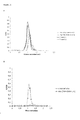
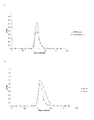
Figure 11. A ) Mobility of nAu:PVA-COOH (1:1) and chloride as tracer for determining the retardation factor of coated nAu; B) Comparison of mobilities of uncoated and coated nAu; C) Effect of coating on the mobility of nAu through a sand column; D) Effect of coating concentration on the mobility of nAu through a sand column. - As mentioned above, the present invention provides a population of nanoparticles. More specifically, the first aspect of the invention relates to a population of non-aggregated polymer-coated nanoparticles having a mean particle size in the range of 1-100 nm, said population comprising (i) a first subpopulation of (re)active particles coated with a first polymer, and (ii) a second subpopulation of non-(re)active tracer particles coated with a second polymer, wherein the weight ratio between said first subpopulation and said second subpopulation is from 85:15 to 99.99:0.01.
- When used herein, the terms "nanoparticle", "nanoscale particle", "nanosized particle" an the like refers to particles having sizes (diameters) in the sub-micrometer range, i.e. such that at least 50 % of the particles in the number size distribution have a diameter in the size range of 1-100 nm.
- In some embodiments, at least 90 % of the particles (D90) in have a diameter of at the most 200 nm, preferably at the most 100 nm.
- In some variants, the most 10 % of the particles (D10) have a diameter of 1 nm or less, preferably a diameter of 5 nm or less.
- When used herein in connection with "particles", the term "size" is intended to mean the diameter of the (re)active or the non-(re)active tracer particle without the polymer coating. Such a diameter can be found by using standard equipment like transmission electron microscopy (TEM).
- The term "mean particle size" is intended to mean the average diameter determined by TEM measurements.
- Particularly interesting are those populations of particles wherein at least 80 % of the particle, such as at least 90 % of the particles, in the number size distribution have an average diameter in the size range of 1-200 nm, or 10-200 nm, or 1-100 nm, or 1-50 nm, or 10-100 nm, or 10-50 nm.
- Typically, the weight ratio between said first subpopulation and said second subpopulation is from 85:15 to 99.99:0.01, such as from 90: 10 to 99.95:0.05, or from 90: 10 to 99: 1, or from 92:8 to 99.9:0.1, or from 94:6 to 99.8:0.2, or from 95:5 to 99.5:0.5.
- It should be understood that the population is substantially non-aggregated, i.e. the polymer coating are used to enhance the colloid stability and mobility in water and to keep their properties as single particles intact.
- The population has interesting properties which can be utilised in procedures for tracing the spreading of nanoparticles corresponding to those of the first subpopulation in the environment, in particular in aqueous environments, by means of the tracer particles of the second subpopulation, because these tracer particles can more easily and/or reliably be detected.
- The first subpopulation consists of (re)active particles coated with a first polymer.
- When used herein, the term "(re)active" is intended to mean they are able to remove organic and inorganic contaminants in water, acting as a biocide to remove bacteria and viruses in water, and for in-situ remediation of sub-surface contaminated land zones.
- In one embodiment hereof, the particles of the first subpopulation are catalytically active particle. Examples of catalytically active particles are nZVI for the treatment of water polluted by a large spectrum of contaminants, nZVI for in-situ remediation of sub-surface source zones contaminated with DNAPL, photo-reactive titanium dioxide nanoparticles for removal of organic contaminants by oxidation and as biocide by releasing strongly active oxygen species, and silver nanoparticles acting as biocides.
- More generally, the first subpopulation of (re)active particles, including catalytically active particles, is typically selected from zero valent iron particles (ZVI), carbo-iron composites (for abiotic reduction, sorption enhanced), colloidal Fe-zeolites (oxidation catalysts, sorption enhanced), iron(II/III) particles (bioengineered and commercial for enhancement of microbial degradation), iron (IV) particles (ferrates, as oxidizing agents), and non-ZVI metals and alloys (e.g. aluminum and magnesium for abiotic reduction). One particularly interesting example is zero valent iron particles.
- "Abiotic reduction" refers to degradation of chlorinated solvents and other halogenated contaminants, whereas "oxidation/oxidizing" refers to other contaminants such as BTEX (i.e. monoaromatic hydrocarbons like benzene, toluene, ethylbenzene, and xylenes) and PAH (polyaromatic hydrocarbons).
- The particles of the first subpopulation are coated with a first natural or synthetic polymer, in particular a polymer selected from hydrophilic (water loving, having a high affinity/solubility in water) polymers which strongly enhances the colloid stability of the nanoparticles in water and amphiphilic (having a high affinity / solubility in both water and a-polar organic solvents) polymers which enhances the colloid stability of the nanoparticles in both water and in organic solvents.
- Illustrative examples of hydrophilic polymers are carboxymethyl cellulose, nanofibrillated cellulose, polyethylene imine, hyaluronic acid, polysaccharides, alginate, and chiosan.
- Illustrative examples of amphiphilic polymers are polyethylene glycols which can be obtained from many vendors in various molecular weight ranges, Poly (vinylpyrrolidone-co-vinlyacetate), (PVP/VA) e.g. Luviskol® VA64W from BASF, kuray K-Polymer KL-318 (PVA-COOH, molecular weight estimated 150 000 g/mol +- 25 000), and in general copolymers e.g. alternating copolymers with regular alternating A and B units (2), periodic copolymers with A and B units arranged in a repeating sequence (e.g. (A-B-A-B-B-A-A-A-A-B-B-B)n), statistical copolymers are copolymers in which the sequence of monomer residues follows a statistical rule. If the probability of finding a given type monomer residue at a particular point in the chain is equal to the mole fraction of that monomer residue in the chain, then the polymer may be referred to as a truly random copolymer, block copolymers comprise two or more homopolymer subunits linked by covalent bonds. The union of the homopolymer subunits may require an intermediate non-repeating subunit, known as a junction block. Block copolymers with two or three distinct blocks are called diblock copolymers and triblock copolymers, respectively.
- In order for the particles of the first subpopulation to exhibit their (re)activity, the particles are preferably coated in a ratio of nanoparticle to polymer (weight:weight) from 1:0.1 to 1:20, such as 1:0.2, 1:0.25, 1:0.5, 1:1, 1:5, 1:10, 1:20 so as to balance the colloid stability and mobility to the desired reactivity.
- In order for each (re)active nanoparticle to obtain the desired colloid stability, mobility and reactivity the choice polymer and nanoparticle to polymer ratio is preferably optimized individually.
- The second subpopulation consists of non-(re)active particles coated with a second polymer.
- When used herein, the term "non-(re)active" is (in contrast to "(re)active") intended to mean that the particles in question do not have any significant reactivity corresponding to that of the (re)active particles, e.g., being able to remove organic and inorganic contaminants in water, acting as a biocide to remove bacteria and viruses in water, and for in-situ remediation of sub-surface contaminated land zones.
- Besides being non-(re)active, the particles are preferably also non-toxic e.g. will not in them selves pose any unintended effects on the environment and human health in the amounts used.
- Also very importantly, the material of the tracer particles is preferably capable of being detected by a non-destructive optical method at an at least a 100-fold, preferable at an at least a 1000-fold, lower concentration than the material of the (re)active particles. The non-destructive method may, e.g., be bright field microscopy, dark filed scattering and total internal reflection microscopy, fluorescence microscopy, absorption - extinction and interference spectroscopy, fluorescence spectroscopy, pump-prope detection techniques and photoluminescence spectroscopy.
- Tracer nanoparticles include metallic nanoparticles which exhibits strong plasmonic modes localized on the interface between the metal and a dielectric. Good metals include gold, silver, and their alloys. The optical response of particles of a size much smaller than the wavelength of the light, can be tuned by controlling the size, shape and composition. Furthermore, single particle detection has been demonstrated offering extremely low detection limits. Metal nanoparticles do not bleach, and they also have very low cytotoxicity.
- Tracer nanoparticles include semiconductor nanoparticles also called quantum dots. Typical dots are made of binary alloys such as cadmium selenide, cadmium sulfide, indium arsenide, and indium phosphide. Dots may also be made from ternary alloys such as cadmium selenide sulfide. These quantum dots can contain as few as 100 to 100,000 atoms within the quantum dot volume, with a diameter of 10 to 50 atoms. This corresponds to about 2 to 10 nanometers, and at 10 nm in diameter. Due to the toxicity of the heavy metals used in the fabrication, environmental concerns may limit the use of this type of tracer particles outside the laboratory environment.
- Tracer nanoparticles include a newer type of quantum dots which can be made from rare earth doped oxide colloidal phosphor nanoparticles. Unlike semiconductor nanoparticles, excitation was due to UV absorption of host material, which is same for different rare earth doped materials using same host. Multiplexing applications can be thus realized. The emission depends on the type of rare earth, which enables very large stokes shift and is narrower than cadmium selenide quantum dots. The synthesis is aqueous based and the oxide surface might be easier more chemically stable in various environments. As for metallic nanoparticles rare earth doped nanoparticles do not bleach, and offers sensitive multiplex detection using a single UV light source.
- Illustrative examples of preferred materials for the tracer particles of the second subpopulation are in particular selected from gold particles and lanthanide-doped particles.
- The particles of the second subpopulation are coated with a second polymer, in particular a polymer selected from hydrophilic polymers and amphiphilic polymers. Illustrative examples of hydrophilic polymers and amphiphilic polymers are those described above for the first polymer.
- It should be understood that the first polymer and the second polymer may be the same or may be different. The choice of polymer and nanoparticle to polymer ratio must be optimized for the tracer particle to match the colloid stability and mobility of the (re)active particle.
- In one embodiment, the second polymer is substantially identical to the first polymer.
- The population of nanoparticles, may in addition to the first subpopulation and the second subpopulation include other subpopulations of nanoparticles, e.g. a second population of tracer nanoparticles allowing for multiplexing of detection and/or a second population of (re)active nanoparticles to enhance the reactivity.
- In some embodiments, however, the combined amount of the first subpopulation and the second subpopulation constitutes at least 90 % by weight of the total population of nanoparticles, in particular the first subpopulation and the second subpopulation essentially constitutes the entire population.
- The present invention also relates to a composition comprising the population of nanoparticles as defined hereinabove.
- In one embodiment, the composition is a stable colloid solution of nZVI nanoparticles containing tracer nanoparticles, the weight ratio between said first subpopulation and said second subpopulation is from 85:15 to 99.99:0.01, such as from 90:10 to 99.95:0.05, or from 90: 10 to 99: 1, or from 92:8 to 99.9:0.1, or from 94:6 to 99.8:0.2, or from 95:5 to 99.5:0.5.
- The present invention also relates to the use of the population of nanoparticles defined hereinabove for remediation, including in-situ remediation, of contaminated ground water by injecting the population of nanoparticles into the ground water. For suitable techniques see, e.g., Christiansen et al. in Ground Water Monitoring & ; Damgaard et al. in Groundwater Monitoring & Remediation 33, no. 1/ Winter 2013/pages 48-61; Scheutz et al. in Environ. Sci. Technol. 2008, 42, 9302-9309; and Scheutz et al. in Environ. Sci. Technol. 2010, 44, 5134-5141.
- The present invention also relates to the use of the population of nanoparticles defined hereinabove for remediation, including in-situ remediation, of contaminated land zones of by injecting the population of nanoparticles into the sub-surface.
- The present invention further relates to the use of the population of nanoparticles defined hereinabove for water treatment by passing contaminated water through a filter unit containing the population of nanoparticles.
- nZVI particle suspension (CFe 0 ∼ 1 g/L) was prepared by mixing equal volumes of 0.03 M FeCl3 and 0.15 M NaBH4 (Sun et al. 2007, Colloids and Surfaces A: Physiochem. Eng. Aspects 308, 60-66). The borohydride solution was added to the iron chloride with vigorous stirring (300 rpm) at a flow rate of 5 mL/min. After the addition of
borohydride solution 30 min of aging time was given. - TEM image of these bare nZVI particles is given in
Figure 1 . They appeared to be clusters of 100 nm size particles and showed poor colloidal stability.This aggregation makes it not mobile in the subsurface along with water bed. - To reduce aggregation and thereby increase colloidal stability and mobility in the subsurface, nZVI particle surfaces are modified by using amphiphilic block co-polymers such as PVA-COOH and PVP-VA. This surface conditioning was achieved by reducing the iron precursor in the presence of stabilizing polymers (pre-grafting technique). Depending on the final concentration of FeO required, appropriate quantities of FeCl3 and polymer solutions are mixed first and then solution of NaBH4 having approximately five time higher molar concentration than the iron precursor is added into it at a flow rate of 5 mL/min. Absolute alcohol is added to the mixture prior to the addition of NaBH4 as co-solvent for the polymers and finally well dispersed nZVI is obtained in 25% alcohol suspension.
- TEM image of nZVI stabilized by PVA-COOH is given in
Figure 2 . From the figure, it is clear that 15 nm size clusters of smaller particles are well covered by the polymer coating. The colloidal stability of such particles and the dependence of polymer concentration on the colloidal stability are shown inFigure 3 . - Aqueous suspensions of gold nanoparticles (0.5 mg/mL) with low size-distribution were synthesized by the citrate reduction method in the presence of sodium hydroxide (NaOH) described by Li, C., et al., Facile synthesis of concentrated gold nanoparticles with low size-distribution in water: temperature and pH controls. Nanoscale Research Letters, 2011. 6(1): p. 1-10. In detail, 30 mL of 5 mM chloroauric acid, 15 mL of 25 mM NaOH and 6 mL of Milli Q® water were taken in a 100 mL round bottom flask fitted with water condenser and kept in an oil bath at 110°C until boiling. While boiling, 9 mL of slightly warmed 1% (w/v) sodium citrate solution was added rapidly under vigorous stirring. On the appearance of dark wine red colour, the solution heated for 15 more minutes and then cooled down to room temperature.
- TEM image of nAu and UV-Visible spectra of 2 fold serial dilutions of nAu suspension are shown in
Figure 4 . Average diameter of nAu from TEM image is found to be 15.9 ± 2.7 nm after measuring 100 particles. The position of surface Plasmon resonance peaks appeared at 520 nm as expected [Haiss, W., et al., Determination of Size and Concentration of Gold Nanoparticles from UV-Vis Spectra. Analytical Chemistry, 2007. 79(11): p. 4215-4221] (Figure 5 ). - The classical citrate reduction route which is simple, inexpensive and non-toxic water-based
- method described by Turkevich in 1951 with a slight modification was adopted to synthesize gold nanoparticles [Turkevich, J., P.C. Stevenson, and J. Hillier, A study of the nucleation and growth processes in the synthesis of colloidal gold. Discussions of the Faraday Society, 1951. 11(0): p. 55-75]. The classical method is limited for synthesizing nAu colloids of high gold concentrations. A tenfold increase in nanogold concentration with minimum polydispersity and great colloidal stability is achieved by the modified route reported by Li et al.. Addition of alkali, in this case, helps to establish the optimum conditions including pH and ionic strength for the formation of stable nAu with minimum size distribution. The stability and size distribution would have been disturbed on mere increase of reagent concentrations to ten times.
- The above synthesized nAu were coated with the co-polymers by shaking with water solutions of PVA-COOH and PVP-VA at room temperature for 6 hours. The ratio between nAu and polymers were kept as 1:1 and 1:10 by w/w.
- The as-synthesized nAu is a deep wine red coloured stable suspension in water with citrate ligands around. Mere shaking with aqueous solutions of amphiphilic co-polymers PVP-VA and PVA-COOH led to simple ligand exchange reaction is used to enhance its affinity towards organic solvents also. Such polymer coated nAu are proved to be soluble in a number of organic solvents (data not shown) with different polarity.
- The hydrodynamic diameters (Dh ) and zeta potentials (measured by dynamic light scattering technique) of uncoated nAu, nAu - PVP-VA and nAu - PVA-COOH are shown in Table 1.
Table 1 The hydrodynamic diameters (Dh ) and zeta potentials of uncoated nAu, nAu - PVP-VA and nAu - PVA-COOH Species Hydrodynamic diameter (nm) Zeta potential (mV) Uncoated nAu 28 ± 2.6 -51.4 ± 2.3 nAu - PVP-VA 29 ± 2.4 -17.7 ± 1.3 nAu - PVA-COOH 66 ± 6.7 -5.1 ± 0.6 - The difference between actual particle size (size of inorganic core) measured by TEM and the hydrodynamic diameter proves the presence of the solvent layer when the particles are dispersed in a liquid medium (core-shell structure). It is evident from the results that coating also has an influence on Dh . Compared to PVA-COOH, PVP-VA is a very low molecular weight block co-polymer. The zeta potential measurements indicate that the co-polymers replace citrate ions and stabilize the particles mostly via steric factors.
- The above synthesised nZVI and nAu (stabilized by PVA-COOH) are mixed in the ratio of 1:0.1 (w/w) and a scan was performed between 300-800 nm by UV-Visible spectroscopy for the mixture and the individual particle suspensions. The specta is given in
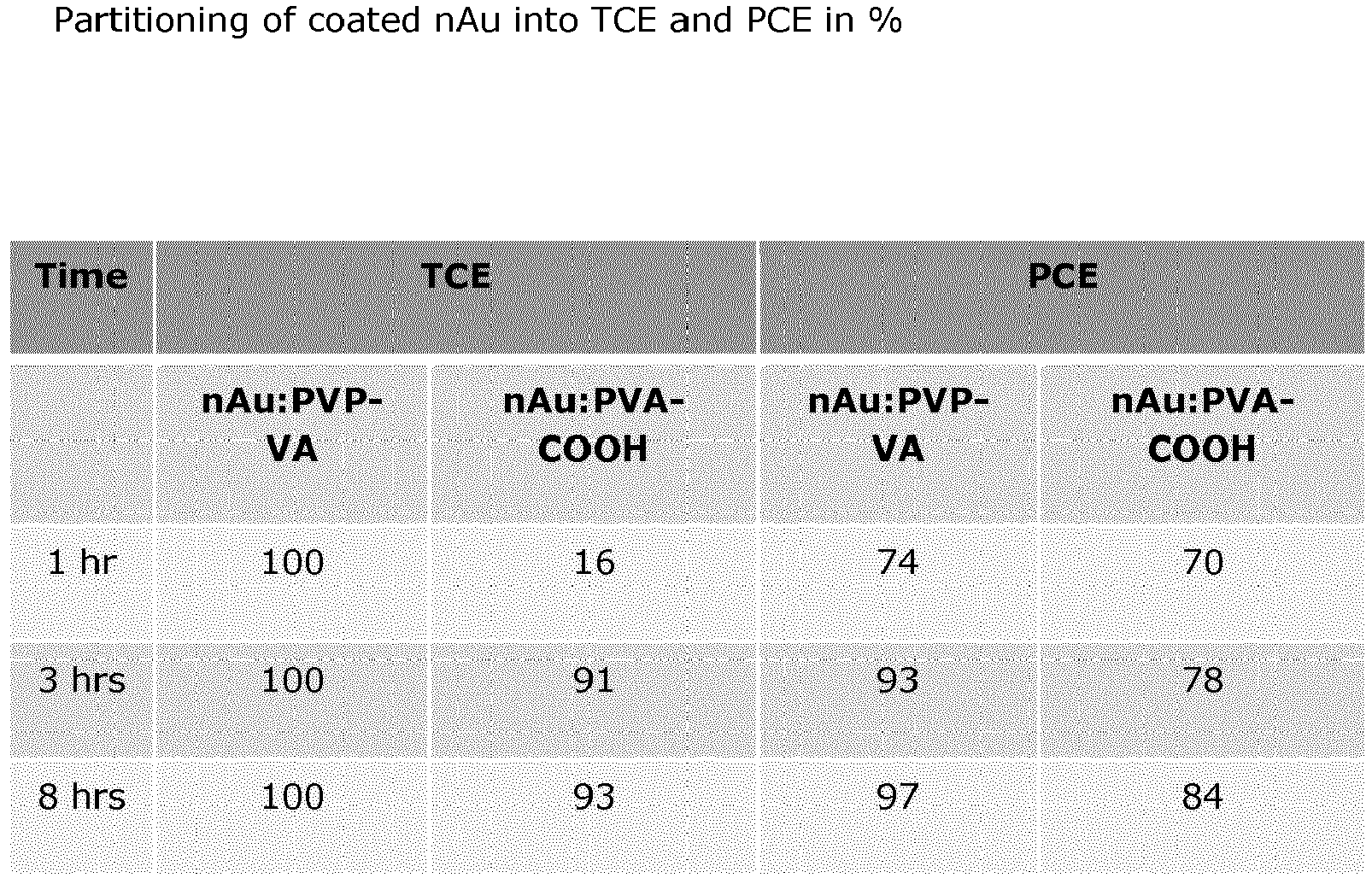
Figure 6 . It is clear that the plasmonic peak of nAu is not quenched by the non-plasmonic nZVI (having 10 times higher concentration in the mixture), even though there is a very small red shift. This indicates the possibility of applying nAu as tracer particles in co-injuction with nZVI to monitor them. A more sensitive detection system can improve the situation very much. - In order to understand affinity of polymer coated nanoparticles towards chlorinated organic solvents, partitioning experiments were conducted. Synthesised nAu was conditioned with PVA-COOH and PVP-VA. In both cases, the metal to polymer ratio was kept as 1:10. Concentration of nAu in each suspension was set to 0.01 mg/mL. These suspensions were then mixed with equal volumes of PCE and TCE along with uncoated nAu as a bench mark in screw cap bottles as shown in
Figure 7 . The bottles were shaken at room temperature. Absorbance of the aqueous layer (nAu) at 520 nm was measured attime Figure 8 andFigure 9 respectively. The decrease in absorbance indicates the migration of coated nAu into the organic phase. This migration in percentage is compared in Table 2. It is clear from the results that PVP-VA has higher partitioning tendency to TCE and PCE than PVA-COOH. Both polymers show higher affinity towards TCE. Significant partitioning of coated nAu happened within a few hours of mixing.
- The column experiments are used to simulate a groundwater aquifer in the best possible way. For the columns, it was decided to use transparent PVC pipes and 3-way stopcocks for the inlets and outlets (
Figure 10 ). The columns were filled with tamped sand with a small grain size (DanSand00 0.32mm-0.71mm), flushed through with CO2 (gas) to prevent air in the columns, and flushed through with tap water. The experiments were conducted with a fast flow velocity of 1.00 mL/min for uncoated nAu and nAu coated with two different polymers: PVA-COOH and PVP-VA. PVA-COOH was tested with a particle to polymer-ratio of 1:1 and 1: 10, while PVP-VA was only tested with 1:1. All nAu solutions had a gold concentration of 0.5 mg/mL, except PVA-COOH 1:10 which had a concentration of 0.25 mg/mL. - The results of mobility experiments are given in
Figure 11 . The recovery of various species is calculated in % from the total volume of the species extracted at the outlet of each run during the mobility experiments and shown in Table 3.Table 3 Recovery of various species at the column outlet during the mobility experiments Inlet (mL) Total volume Recovery (%) extracted At the outlet (mL) Chloride 12 10.2 85 Uncoated nAu 12 0.755 6 nAu:PVP-VA (1:1) 12 8.92 74 nAu:PVA-COOH (1:1) 12 6.49 52 nAu:PVA-COOH (1:10) 12 11.3 94 - It was found that uncoated nAu is not mobile - even after twice the time frame that coated nAu needed before it was found with the highest concentration in the outlet it was not detected. Coated nAu, on the other hand, is mobile in a sand column at a fast flow velocity with a retardation factor of 1.1 compared to the waterfront. Different coatings show an effect in the normalized effluent concentration (C/C0), where nAu (PVP-VA 1:1) show a C/C0 of 0.73, whereas PVA-COOH 1:1 gives a value of 0.58. Due to ligand exchange and aggregation of coated nAu, no recoveries are 100 %. The recovery of PVP-VA 1:1 is 74 %, while PVA-COOH 1:1 gives a recovery of 51 %. Effects of particle to polymer-ratio are seen in big differences in the recoveries. The highest polymer ratio (1:10) gives the absolute highest degree of recovery of 94 %, which is 1.2 times higher than for the 1:1 ratio. Moreover C/C0 of nAu (PVA-COOH 1:10) was 0.68, which is 1.2 times bigger than for PVA-COOH 1:1.
Claims (14)
- A population of non-aggregated polymer-coated nanoparticles having a mean particle size in the range of 1-100 nm, said population comprising (i) a first subpopulation of (re)active particles coated with a first polymer, and (ii) a second subpopulation of non-(re)active tracer particles coated with a second polymer, wherein the weight ratio between said first subpopulation and said second subpopulation is from 85:15 to 99.99:0.01.
- The population according to any one of the preceding claims, wherein the first subpopulation of (re)active particles are catalytically active particles.
- The population according to any one of the preceding claims, wherein the first subpopulation of (re)active particles is selected from zero valent iron particles.
- The population according to any one of the preceding claims, wherein the first polymer is selected from hydrophilic polymers and amphiphilic polymers.
- The population according to any one of the preceding claims, wherein the first subpopulation of (re)active particles is only partly coated.
- The population according to any one of the preceding claims, wherein the material of the tracer particles is capable of being detected by a non-destructive optical method at an at least a 100-fold lower concentration than the material of the (re)active particles.
- The population according to any one of the preceding claims, wherein the second subpopulation of non-(re)active tracer particles is selected from gold particles and lanthanide-doped particles.
- The population according to any one of the preceding claims, wherein the second polymer is selected from hydrophilic polymers and amphiphilic polymers.
- The population according to any one of the preceding claims, wherein the second polymer is substantially identical to the first polymer.
- The population according to any one of the preceding claims, wherein the combined amount of the first subpopulation and the second subpopulation constitutes at least 90 % by weight of the total population, in particular essentially constitutes the entire population.
- A composition comprising the population of nanoparticles according to any one of claims 1-10.
- The composition according to claim 11 which is a stable colloid solution of the nanoparticles.
- Use of the population of nanoparticles according to any one of the claims 1-10 or a composition according to any one of the claims 11-12 for remediation, including in-situ remediation, of contaminated ground water.
- Use of the population of nanoparticles according to any one of the claims 1-10 or a composition according to any one of the claims 11-12 for water treatment.
Priority Applications (1)
| Application Number | Priority Date | Filing Date | Title |
|---|---|---|---|
| EP13175431.9A EP2821445A1 (en) | 2013-07-05 | 2013-07-05 | Method of tracing engineered nanoparticles |
Applications Claiming Priority (1)
| Application Number | Priority Date | Filing Date | Title |
|---|---|---|---|
| EP13175431.9A EP2821445A1 (en) | 2013-07-05 | 2013-07-05 | Method of tracing engineered nanoparticles |
Publications (1)
| Publication Number | Publication Date |
|---|---|
| EP2821445A1 true EP2821445A1 (en) | 2015-01-07 |
Family
ID=48745824
Family Applications (1)
| Application Number | Title | Priority Date | Filing Date |
|---|---|---|---|
| EP13175431.9A Withdrawn EP2821445A1 (en) | 2013-07-05 | 2013-07-05 | Method of tracing engineered nanoparticles |
Country Status (1)
| Country | Link |
|---|---|
| EP (1) | EP2821445A1 (en) |
Citations (1)
| Publication number | Priority date | Publication date | Assignee | Title |
|---|---|---|---|---|
| WO2012175665A1 (en) * | 2011-06-22 | 2012-12-27 | Total Sa | Nanotracers for labeling the injection water in oil fields |
-
2013
- 2013-07-05 EP EP13175431.9A patent/EP2821445A1/en not_active Withdrawn
Patent Citations (1)
| Publication number | Priority date | Publication date | Assignee | Title |
|---|---|---|---|---|
| WO2012175665A1 (en) * | 2011-06-22 | 2012-12-27 | Total Sa | Nanotracers for labeling the injection water in oil fields |
Non-Patent Citations (11)
| Title |
|---|
| CHRISTIANSEN; FALL ET AL., GROUND WATER MONITORING & REMEDIATION, vol. 30, no. 4, 2010, pages 107 - 122 |
| DAMGAARD; WINTER ET AL., GROUNDWATER MONITORING & REMEDIATION, vol. 33, no. 1, 2013, pages 48 - 61 |
| EMILY KEANE: "Fate, transport, and toxicity of nanoscale zero-valent iron (nZVI9 used during superfund remediation", 1 September 2009 (2009-09-01), XP002718454, Retrieved from the Internet <URL:http://www.clu-in.org/download/studentpapers/Zero-Valen-Iron-Keane.pdf> [retrieved on 20140107] * |
| HAISS, W. ET AL.: "Determination of Size and Concentration of Gold Nanoparticles from UV-Vis Spectra", ANALYTICAL CHEMISTRY, vol. 79, no. 11, 2007, pages 4215 - 4221 |
| LI, C. ET AL.: "Facile synthesis of concentrated gold nanoparticles with low size- distribution in water: temperature and pH controls", NANOSCALE RESEARCH LETTERS, vol. 6, no. 1, 2011, pages 1 - 10 |
| N. SALEH. ET AL.: "Surface modification enhance nanoiron transport and NAPL targeting in saturated porous media", ENVIRONMENTAL ENGINEERING SCIENCE, vol. 24, no. 1, 2007, pages 45 - 57, XP002718455 * |
| SCHEUTZ ET AL., ENVIRON. SCI. TECHNOL., vol. 42, 2008, pages 9302 - 9309 |
| SCHEUTZ ET AL., ENVIRON. SCI. TECHNOL., vol. 44, 2010, pages 5134 - 5141 |
| SUN ET AL: "A method for the preparation of stable dispersion of zero-valent iron nanoparticles", COLLOIDS AND SURFACES. A, PHYSICACHEMICAL AND ENGINEERING ASPECTS, ELSEVIER, AMSTERDAM, NL, vol. 308, no. 1-3, 23 August 2007 (2007-08-23), pages 60 - 66, XP022209007, ISSN: 0927-7757, DOI: 10.1016/J.COLSURFA.2007.05.029 * |
| SUN; 2007 ET AL., COLLOIDS AND SURFACES A: PHYSIOCHEM. ENG. ASPECTS, vol. 308, pages 60 - 66 |
| TURKEVICH, J.; P.C. STEVENSON; J. HILLIER: "A study of the nucleation and growth processes in the synthesis of colloidal gold", DISCUSSIONS OF THE FARADAY SOCIETY, vol. 11, no. 0, 1951, pages 55 - 75 |
Similar Documents
| Publication | Publication Date | Title |
|---|---|---|
| Chekli et al. | Assessing the aggregation behaviour of iron oxide nanoparticles under relevant environmental conditions using a multi-method approach | |
| Gicheva et al. | Removal of citrate-coated silver nanoparticles from aqueous dispersions by using activated carbon | |
| Alsaggaf et al. | Anticancer and antibacterial activity of cadmium sulfide nanoparticles by Aspergillus niger | |
| Gui et al. | Dispersion and transport of microplastics in three water-saturated coastal soils | |
| Stankus et al. | Interactions between natural organic matter and gold nanoparticles stabilized with different organic capping agents | |
| Wang et al. | Effects of temperature on aggregation kinetics of graphene oxide in aqueous solutions | |
| Misra et al. | The complexity of nanoparticle dissolution and its importance in nanotoxicological studies | |
| Qasim et al. | Silver nanoparticles embedded mesoporous SiO2 nanosphere: An effective anticandidal agent against Candida albicans 077 | |
| Mahvi et al. | Kinetic and equilibrium studies on the adsorption of Direct Red 23 dye from aqueous solution using montmorillonite nanoclay | |
| Brigante et al. | Synthesis, characterization of mesoporous silica powders and application to antibiotic remotion from aqueous solution. Effect of supported Fe-oxide on the SiO2 adsorption properties | |
| Xu et al. | Aggregation kinetics of inorganic colloids in eutrophic shallow lakes: Influence of cyanobacterial extracellular polymeric substances and electrolyte cations | |
| Wang et al. | Enhanced separation of nanoscale zero-valent iron (nZVI) using polyacrylamide: performance, characterization and implication | |
| Otero-González et al. | Fate of fluorescent core-shell silica nanoparticles during simulated secondary wastewater treatment | |
| Chen et al. | Transport and retention of fullerene (nC60) nanoparticles in unsaturated porous media: Effects of solution chemistry and solid phase coating | |
| Das et al. | Bioinspired metal nanoparticle: synthesis, properties and application | |
| Long et al. | Encapsulation of nZVI particles using a Gum Arabic stabilized oil-in-water emulsion | |
| Ma et al. | Silica coating of luminescent quantum dots prepared in aqueous media for cellular labeling | |
| Hansda et al. | Photophysical study of the interaction between ZnO nanoparticles and globular protein bovine serum albumin in solution and in a layer-by-layer self-assembled film | |
| Akhil et al. | Retracted: Influence of humic acid on the stability and bacterial toxicity of zinc oxide nanoparticles in water | |
| Rastghalam et al. | The role of Fe oxyhydroxide coating, illite clay, and peat moss in nanoscale titanium dioxide (nTiO2) retention and transport in geochemically heterogeneous media | |
| Ullah et al. | Photocatalytic removal of alizarin red and photoinhibition of microbes in the presence of surfactant and Bio-template mediated Ag/SnO2/Nb2O5-SiO2 nanocomposite | |
| Li et al. | Formation of naturally-occurring gold nanoparticles by photosensitive surfactant Tween 80/85 under light irradiation: A new origin in aquatic environment | |
| Pensini et al. | Shear rheological properties of composite fluids and stability of particle suspensions: Potential implications for fracturing and environmental fluids | |
| Huangfu et al. | Effects of humic acid and surfactants on the aggregation kinetics of manganese dioxide colloids | |
| Wiśniewska et al. | Comparison of adsorption affinity of anionic polyacrylamide for nanostructured silica-titania mixed oxides |
Legal Events
| Date | Code | Title | Description |
|---|---|---|---|
| PUAI | Public reference made under article 153(3) epc to a published international application that has entered the european phase |
Free format text: ORIGINAL CODE: 0009012 |
|
| 17P | Request for examination filed |
Effective date: 20130705 |
|
| AK | Designated contracting states |
Kind code of ref document: A1 Designated state(s): AL AT BE BG CH CY CZ DE DK EE ES FI FR GB GR HR HU IE IS IT LI LT LU LV MC MK MT NL NO PL PT RO RS SE SI SK SM TR |
|
| AX | Request for extension of the european patent |
Extension state: BA ME |
|
| RAP1 | Party data changed (applicant data changed or rights of an application transferred) |
Owner name: DANMARKS TEKNISKE UNIVERSITET |
|
| STAA | Information on the status of an ep patent application or granted ep patent |
Free format text: STATUS: THE APPLICATION IS DEEMED TO BE WITHDRAWN |
|
| 18D | Application deemed to be withdrawn |
Effective date: 20150708 |