EP2820422B1 - Abcg2 transporter assay - Google Patents
Abcg2 transporter assay Download PDFInfo
- Publication number
- EP2820422B1 EP2820422B1 EP13712598.5A EP13712598A EP2820422B1 EP 2820422 B1 EP2820422 B1 EP 2820422B1 EP 13712598 A EP13712598 A EP 13712598A EP 2820422 B1 EP2820422 B1 EP 2820422B1
- Authority
- EP
- European Patent Office
- Prior art keywords
- abcg2
- protein
- membrane
- preparation
- activity
- Prior art date
- Legal status (The legal status is an assumption and is not a legal conclusion. Google has not performed a legal analysis and makes no representation as to the accuracy of the status listed.)
- Not-in-force
Links
- 102000013013 Member 2 Subfamily G ATP Binding Cassette Transporter Human genes 0.000 title claims description 145
- 108010090306 Member 2 Subfamily G ATP Binding Cassette Transporter Proteins 0.000 title claims description 145
- 238000003569 transporter assay Methods 0.000 title description 3
- 238000002360 preparation method Methods 0.000 claims description 178
- 239000012528 membrane Substances 0.000 claims description 162
- 230000000694 effects Effects 0.000 claims description 149
- HVYWMOMLDIMFJA-DPAQBDIFSA-N cholesterol Chemical compound C1C=C2C[C@@H](O)CC[C@]2(C)[C@@H]2[C@@H]1[C@@H]1CC[C@H]([C@H](C)CCCC(C)C)[C@@]1(C)CC2 HVYWMOMLDIMFJA-DPAQBDIFSA-N 0.000 claims description 84
- 108090000623 proteins and genes Proteins 0.000 claims description 75
- 108091006112 ATPases Proteins 0.000 claims description 74
- 102000057290 Adenosine Triphosphatases Human genes 0.000 claims description 74
- 102000004169 proteins and genes Human genes 0.000 claims description 73
- 150000002632 lipids Chemical class 0.000 claims description 67
- 238000003556 assay Methods 0.000 claims description 65
- 239000003613 bile acid Substances 0.000 claims description 63
- 238000000034 method Methods 0.000 claims description 63
- 239000002502 liposome Substances 0.000 claims description 55
- HSINOMROUCMIEA-FGVHQWLLSA-N (2s,4r)-4-[(3r,5s,6r,7r,8s,9s,10s,13r,14s,17r)-6-ethyl-3,7-dihydroxy-10,13-dimethyl-2,3,4,5,6,7,8,9,11,12,14,15,16,17-tetradecahydro-1h-cyclopenta[a]phenanthren-17-yl]-2-methylpentanoic acid Chemical class C([C@@]12C)C[C@@H](O)C[C@H]1[C@@H](CC)[C@@H](O)[C@@H]1[C@@H]2CC[C@]2(C)[C@@H]([C@H](C)C[C@H](C)C(O)=O)CC[C@H]21 HSINOMROUCMIEA-FGVHQWLLSA-N 0.000 claims description 54
- 210000004027 cell Anatomy 0.000 claims description 50
- -1 bile acid compound Chemical class 0.000 claims description 44
- 235000012000 cholesterol Nutrition 0.000 claims description 43
- 239000000758 substrate Substances 0.000 claims description 43
- 210000000170 cell membrane Anatomy 0.000 claims description 42
- 239000000284 extract Substances 0.000 claims description 37
- 108010052285 Membrane Proteins Proteins 0.000 claims description 31
- 239000003795 chemical substances by application Substances 0.000 claims description 31
- 102000018697 Membrane Proteins Human genes 0.000 claims description 29
- 108090000765 processed proteins & peptides Proteins 0.000 claims description 26
- 238000000746 purification Methods 0.000 claims description 26
- 150000001875 compounds Chemical class 0.000 claims description 25
- 239000003599 detergent Substances 0.000 claims description 23
- 239000000203 mixture Substances 0.000 claims description 23
- 230000004952 protein activity Effects 0.000 claims description 21
- 150000007523 nucleic acids Chemical class 0.000 claims description 18
- 230000035945 sensitivity Effects 0.000 claims description 18
- 239000013522 chelant Substances 0.000 claims description 17
- 150000003839 salts Chemical group 0.000 claims description 16
- KXGVEGMKQFWNSR-UHFFFAOYSA-N deoxycholic acid Natural products C1CC2CC(O)CCC2(C)C2C1C1CCC(C(CCC(O)=O)C)C1(C)C(O)C2 KXGVEGMKQFWNSR-UHFFFAOYSA-N 0.000 claims description 15
- 229910052751 metal Inorganic materials 0.000 claims description 15
- 239000002184 metal Substances 0.000 claims description 15
- 239000002773 nucleotide Substances 0.000 claims description 15
- 125000003729 nucleotide group Chemical group 0.000 claims description 15
- BHQCQFFYRZLCQQ-UHFFFAOYSA-N (3alpha,5alpha,7alpha,12alpha)-3,7,12-trihydroxy-cholan-24-oic acid Natural products OC1CC2CC(O)CCC2(C)C2C1C1CCC(C(CCC(O)=O)C)C1(C)C(O)C2 BHQCQFFYRZLCQQ-UHFFFAOYSA-N 0.000 claims description 12
- 239000004380 Cholic acid Substances 0.000 claims description 12
- 241000238631 Hexapoda Species 0.000 claims description 12
- BHQCQFFYRZLCQQ-OELDTZBJSA-N cholic acid Chemical compound C([C@H]1C[C@H]2O)[C@H](O)CC[C@]1(C)[C@@H]1[C@@H]2[C@@H]2CC[C@H]([C@@H](CCC(O)=O)C)[C@@]2(C)[C@@H](O)C1 BHQCQFFYRZLCQQ-OELDTZBJSA-N 0.000 claims description 12
- 229960002471 cholic acid Drugs 0.000 claims description 12
- 235000019416 cholic acid Nutrition 0.000 claims description 12
- 108020004707 nucleic acids Proteins 0.000 claims description 12
- 102000039446 nucleic acids Human genes 0.000 claims description 12
- 238000001042 affinity chromatography Methods 0.000 claims description 11
- 230000002829 reductive effect Effects 0.000 claims description 11
- 241000588724 Escherichia coli Species 0.000 claims description 10
- 238000000265 homogenisation Methods 0.000 claims description 10
- 239000008188 pellet Substances 0.000 claims description 10
- 239000006228 supernatant Substances 0.000 claims description 10
- 238000005406 washing Methods 0.000 claims description 10
- 238000004587 chromatography analysis Methods 0.000 claims description 9
- 238000005119 centrifugation Methods 0.000 claims description 8
- 210000004556 brain Anatomy 0.000 claims description 7
- 239000000872 buffer Substances 0.000 claims description 7
- OIGNJSKKLXVSLS-VWUMJDOOSA-N prednisolone Chemical group O=C1C=C[C@]2(C)[C@H]3[C@@H](O)C[C@](C)([C@@](CC4)(O)C(=O)CO)[C@@H]4[C@@H]3CCC2=C1 OIGNJSKKLXVSLS-VWUMJDOOSA-N 0.000 claims description 7
- 238000001742 protein purification Methods 0.000 claims description 7
- 108010007979 Glycocholic Acid Proteins 0.000 claims description 6
- 108091028043 Nucleic acid sequence Proteins 0.000 claims description 6
- 230000001413 cellular effect Effects 0.000 claims description 6
- KXGVEGMKQFWNSR-LLQZFEROSA-N deoxycholic acid Chemical compound C([C@H]1CC2)[C@H](O)CC[C@]1(C)[C@@H]1[C@@H]2[C@@H]2CC[C@H]([C@@H](CCC(O)=O)C)[C@@]2(C)[C@@H](O)C1 KXGVEGMKQFWNSR-LLQZFEROSA-N 0.000 claims description 6
- 239000013604 expression vector Substances 0.000 claims description 6
- RFDAIACWWDREDC-FRVQLJSFSA-N glycocholic acid Chemical compound C([C@H]1C[C@H]2O)[C@H](O)CC[C@]1(C)[C@@H]1[C@@H]2[C@@H]2CC[C@H]([C@@H](CCC(=O)NCC(O)=O)C)[C@@]2(C)[C@@H](O)C1 RFDAIACWWDREDC-FRVQLJSFSA-N 0.000 claims description 6
- 241000251539 Vertebrata <Metazoa> Species 0.000 claims description 5
- 230000000536 complexating effect Effects 0.000 claims description 5
- 229910021645 metal ion Inorganic materials 0.000 claims description 5
- 239000011537 solubilization buffer Substances 0.000 claims description 5
- 230000003381 solubilizing effect Effects 0.000 claims description 5
- 150000001408 amides Chemical class 0.000 claims description 4
- 230000001580 bacterial effect Effects 0.000 claims description 4
- 125000003178 carboxy group Chemical group [H]OC(*)=O 0.000 claims description 4
- 150000002148 esters Chemical class 0.000 claims description 4
- 238000000464 low-speed centrifugation Methods 0.000 claims description 4
- 239000000693 micelle Substances 0.000 claims description 4
- 102000040811 transporter activity Human genes 0.000 claims description 4
- 108091092194 transporter activity Proteins 0.000 claims description 4
- RUDATBOHQWOJDD-UHFFFAOYSA-N (3beta,5beta,7alpha)-3,7-Dihydroxycholan-24-oic acid Natural products OC1CC2CC(O)CCC2(C)C2C1C1CCC(C(CCC(O)=O)C)C1(C)CC2 RUDATBOHQWOJDD-UHFFFAOYSA-N 0.000 claims description 3
- SMEROWZSTRWXGI-UHFFFAOYSA-N Lithocholsaeure Natural products C1CC2CC(O)CCC2(C)C2C1C1CCC(C(CCC(O)=O)C)C1(C)CC2 SMEROWZSTRWXGI-UHFFFAOYSA-N 0.000 claims description 3
- RFDAIACWWDREDC-UHFFFAOYSA-N Na salt-Glycocholic acid Natural products OC1CC2CC(O)CCC2(C)C2C1C1CCC(C(CCC(=O)NCC(O)=O)C)C1(C)C(O)C2 RFDAIACWWDREDC-UHFFFAOYSA-N 0.000 claims description 3
- WBWWGRHZICKQGZ-UHFFFAOYSA-N Taurocholic acid Natural products OC1CC2CC(O)CCC2(C)C2C1C1CCC(C(CCC(=O)NCCS(O)(=O)=O)C)C1(C)C(O)C2 WBWWGRHZICKQGZ-UHFFFAOYSA-N 0.000 claims description 3
- RUDATBOHQWOJDD-BSWAIDMHSA-N chenodeoxycholic acid Chemical compound C([C@H]1C[C@H]2O)[C@H](O)CC[C@]1(C)[C@@H]1[C@@H]2[C@@H]2CC[C@H]([C@@H](CCC(O)=O)C)[C@@]2(C)CC1 RUDATBOHQWOJDD-BSWAIDMHSA-N 0.000 claims description 3
- 229960001091 chenodeoxycholic acid Drugs 0.000 claims description 3
- 229960003964 deoxycholic acid Drugs 0.000 claims description 3
- 229940099347 glycocholic acid Drugs 0.000 claims description 3
- SMEROWZSTRWXGI-HVATVPOCSA-N lithocholic acid Chemical compound C([C@H]1CC2)[C@H](O)CC[C@]1(C)[C@@H]1[C@@H]2[C@@H]2CC[C@H]([C@@H](CCC(O)=O)C)[C@@]2(C)CC1 SMEROWZSTRWXGI-HVATVPOCSA-N 0.000 claims description 3
- WBWWGRHZICKQGZ-GIHLXUJPSA-N taurocholic acid Chemical compound C([C@@H]1C[C@H]2O)[C@@H](O)CC[C@]1(C)[C@@H]1[C@@H]2[C@@H]2CC[C@@H]([C@@H](CCC(=O)NCCS(O)(=O)=O)C)[C@@]2(C)[C@H](O)C1 WBWWGRHZICKQGZ-GIHLXUJPSA-N 0.000 claims 1
- 229940079593 drug Drugs 0.000 description 44
- 239000003814 drug Substances 0.000 description 44
- REFJWTPEDVJJIY-UHFFFAOYSA-N Quercetin Chemical compound C=1C(O)=CC(O)=C(C(C=2O)=O)C=1OC=2C1=CC=C(O)C(O)=C1 REFJWTPEDVJJIY-UHFFFAOYSA-N 0.000 description 30
- 230000032258 transport Effects 0.000 description 28
- UMCMPZBLKLEWAF-BCTGSCMUSA-N 3-[(3-cholamidopropyl)dimethylammonio]propane-1-sulfonate Chemical compound C([C@H]1C[C@H]2O)[C@H](O)CC[C@]1(C)[C@@H]1[C@@H]2[C@@H]2CC[C@H]([C@@H](CCC(=O)NCCC[N+](C)(C)CCCS([O-])(=O)=O)C)[C@@]2(C)[C@@H](O)C1 UMCMPZBLKLEWAF-BCTGSCMUSA-N 0.000 description 24
- 108010078791 Carrier Proteins Proteins 0.000 description 20
- 230000000638 stimulation Effects 0.000 description 20
- ZVOLCUVKHLEPEV-UHFFFAOYSA-N Quercetagetin Natural products C1=C(O)C(O)=CC=C1C1=C(O)C(=O)C2=C(O)C(O)=C(O)C=C2O1 ZVOLCUVKHLEPEV-UHFFFAOYSA-N 0.000 description 15
- HWTZYBCRDDUBJY-UHFFFAOYSA-N Rhynchosin Natural products C1=C(O)C(O)=CC=C1C1=C(O)C(=O)C2=CC(O)=C(O)C=C2O1 HWTZYBCRDDUBJY-UHFFFAOYSA-N 0.000 description 15
- MWDZOUNAPSSOEL-UHFFFAOYSA-N kaempferol Natural products OC1=C(C(=O)c2cc(O)cc(O)c2O1)c3ccc(O)cc3 MWDZOUNAPSSOEL-UHFFFAOYSA-N 0.000 description 15
- 229960001285 quercetin Drugs 0.000 description 15
- 235000005875 quercetin Nutrition 0.000 description 15
- 230000006870 function Effects 0.000 description 11
- 206010013710 Drug interaction Diseases 0.000 description 10
- FAPWRFPIFSIZLT-UHFFFAOYSA-M Sodium chloride Chemical compound [Na+].[Cl-] FAPWRFPIFSIZLT-UHFFFAOYSA-M 0.000 description 8
- 239000003463 adsorbent Substances 0.000 description 8
- 230000005764 inhibitory process Effects 0.000 description 8
- 238000005259 measurement Methods 0.000 description 8
- 102000005416 ATP-Binding Cassette Transporters Human genes 0.000 description 7
- 108010006533 ATP-Binding Cassette Transporters Proteins 0.000 description 7
- 102000003939 Membrane transport proteins Human genes 0.000 description 7
- 108090000301 Membrane transport proteins Proteins 0.000 description 7
- 230000008859 change Effects 0.000 description 7
- 239000003112 inhibitor Substances 0.000 description 7
- PEDCQBHIVMGVHV-UHFFFAOYSA-N Glycerine Chemical compound OCC(O)CO PEDCQBHIVMGVHV-UHFFFAOYSA-N 0.000 description 6
- 101000823298 Homo sapiens Broad substrate specificity ATP-binding cassette transporter ABCG2 Proteins 0.000 description 6
- 239000005536 L01XE08 - Nilotinib Substances 0.000 description 6
- 229960001346 nilotinib Drugs 0.000 description 6
- HHZIURLSWUIHRB-UHFFFAOYSA-N nilotinib Chemical compound C1=NC(C)=CN1C1=CC(NC(=O)C=2C=C(NC=3N=C(C=CN=3)C=3C=NC=CC=3)C(C)=CC=2)=CC(C(F)(F)F)=C1 HHZIURLSWUIHRB-UHFFFAOYSA-N 0.000 description 6
- 238000003776 cleavage reaction Methods 0.000 description 5
- 102000056858 human ABCG2 Human genes 0.000 description 5
- 238000011068 loading method Methods 0.000 description 5
- 239000002609 medium Substances 0.000 description 5
- 238000003168 reconstitution method Methods 0.000 description 5
- 230000007017 scission Effects 0.000 description 5
- WBWWGRHZICKQGZ-HZAMXZRMSA-N taurocholic acid Chemical compound C([C@H]1C[C@H]2O)[C@H](O)CC[C@]1(C)[C@@H]1[C@@H]2[C@@H]2CC[C@H]([C@@H](CCC(=O)NCCS(O)(=O)=O)C)[C@@]2(C)[C@@H](O)C1 WBWWGRHZICKQGZ-HZAMXZRMSA-N 0.000 description 5
- 241000701447 unidentified baculovirus Species 0.000 description 5
- 102100033350 ATP-dependent translocase ABCB1 Human genes 0.000 description 4
- 101100237347 Escherichia coli (strain K12) metN gene Proteins 0.000 description 4
- 101100444360 Mycoplasma mycoides subsp. mycoides SC (strain PG1) ecfA1 gene Proteins 0.000 description 4
- 101100464186 Oryzias latipes pkd1l1 gene Proteins 0.000 description 4
- 239000007983 Tris buffer Substances 0.000 description 4
- 241000700605 Viruses Species 0.000 description 4
- 238000012258 culturing Methods 0.000 description 4
- 230000007423 decrease Effects 0.000 description 4
- 229940009976 deoxycholate Drugs 0.000 description 4
- 239000000463 material Substances 0.000 description 4
- IENZQIKPVFGBNW-UHFFFAOYSA-N prazosin Chemical compound N=1C(N)=C2C=C(OC)C(OC)=CC2=NC=1N(CC1)CCN1C(=O)C1=CC=CO1 IENZQIKPVFGBNW-UHFFFAOYSA-N 0.000 description 4
- 229960001289 prazosin Drugs 0.000 description 4
- 239000003725 proteoliposome Substances 0.000 description 4
- 239000000523 sample Substances 0.000 description 4
- 239000011780 sodium chloride Substances 0.000 description 4
- 239000000243 solution Substances 0.000 description 4
- 239000011534 wash buffer Substances 0.000 description 4
- RAXXELZNTBOGNW-UHFFFAOYSA-N 1H-imidazole Chemical compound C1=CNC=N1 RAXXELZNTBOGNW-UHFFFAOYSA-N 0.000 description 3
- GUQQBLRVXOUDTN-XOHPMCGNSA-N 3-[dimethyl-[3-[[(4r)-4-[(3r,5s,7r,8r,9s,10s,12s,13r,14s,17r)-3,7,12-trihydroxy-10,13-dimethyl-2,3,4,5,6,7,8,9,11,12,14,15,16,17-tetradecahydro-1h-cyclopenta[a]phenanthren-17-yl]pentanoyl]amino]propyl]azaniumyl]-2-hydroxypropane-1-sulfonate Chemical compound C([C@H]1C[C@H]2O)[C@H](O)CC[C@]1(C)[C@@H]1[C@@H]2[C@@H]2CC[C@H]([C@@H](CCC(=O)NCCC[N+](C)(C)CC(O)CS([O-])(=O)=O)C)[C@@]2(C)[C@@H](O)C1 GUQQBLRVXOUDTN-XOHPMCGNSA-N 0.000 description 3
- QTBSBXVTEAMEQO-UHFFFAOYSA-N Acetic acid Chemical compound CC(O)=O QTBSBXVTEAMEQO-UHFFFAOYSA-N 0.000 description 3
- 241000283690 Bos taurus Species 0.000 description 3
- IAZDPXIOMUYVGZ-UHFFFAOYSA-N Dimethylsulphoxide Chemical compound CS(C)=O IAZDPXIOMUYVGZ-UHFFFAOYSA-N 0.000 description 3
- 108010047230 Member 1 Subfamily B ATP Binding Cassette Transporter Proteins 0.000 description 3
- 206010028980 Neoplasm Diseases 0.000 description 3
- 108090000190 Thrombin Proteins 0.000 description 3
- 201000011510 cancer Diseases 0.000 description 3
- 238000006243 chemical reaction Methods 0.000 description 3
- 239000003153 chemical reaction reagent Substances 0.000 description 3
- 150000001841 cholesterols Chemical class 0.000 description 3
- 238000010828 elution Methods 0.000 description 3
- 208000015181 infectious disease Diseases 0.000 description 3
- 230000002401 inhibitory effect Effects 0.000 description 3
- 230000003993 interaction Effects 0.000 description 3
- 210000004962 mammalian cell Anatomy 0.000 description 3
- 230000036457 multidrug resistance Effects 0.000 description 3
- 239000011541 reaction mixture Substances 0.000 description 3
- 239000000126 substance Substances 0.000 description 3
- AWDRATDZQPNJFN-VAYUFCLWSA-N taurodeoxycholic acid Chemical compound C([C@H]1CC2)[C@H](O)CC[C@]1(C)[C@@H]1[C@@H]2[C@@H]2CC[C@H]([C@@H](CCC(=O)NCCS(O)(=O)=O)C)[C@@]2(C)[C@@H](O)C1 AWDRATDZQPNJFN-VAYUFCLWSA-N 0.000 description 3
- 238000012360 testing method Methods 0.000 description 3
- 229960004072 thrombin Drugs 0.000 description 3
- 108010093851 vanadate-sensitive ATPase Proteins 0.000 description 3
- 239000002676 xenobiotic agent Substances 0.000 description 3
- DGVVWUTYPXICAM-UHFFFAOYSA-N β‐Mercaptoethanol Chemical compound OCCS DGVVWUTYPXICAM-UHFFFAOYSA-N 0.000 description 3
- ZWEVPYNPHSPIFU-UHFFFAOYSA-N 2,3,4,5,6-pentahydroxy-n-[3-[3-(2,3,4,5,6-pentahydroxyhexanoylamino)propyl-[4-(3,7,12-trihydroxy-10,13-dimethyl-2,3,4,5,6,7,8,9,11,12,14,15,16,17-tetradecahydro-1h-cyclopenta[a]phenanthren-17-yl)pentanoyl]amino]propyl]hexanamide Chemical compound OC1CC2CC(O)CCC2(C)C2C1C1CCC(C(CCC(=O)N(CCCNC(=O)C(O)C(O)C(O)C(O)CO)CCCNC(=O)C(O)C(O)C(O)C(O)CO)C)C1(C)C(O)C2 ZWEVPYNPHSPIFU-UHFFFAOYSA-N 0.000 description 2
- FWMNVWWHGCHHJJ-SKKKGAJSSA-N 4-amino-1-[(2r)-6-amino-2-[[(2r)-2-[[(2r)-2-[[(2r)-2-amino-3-phenylpropanoyl]amino]-3-phenylpropanoyl]amino]-4-methylpentanoyl]amino]hexanoyl]piperidine-4-carboxylic acid Chemical compound C([C@H](C(=O)N[C@H](CC(C)C)C(=O)N[C@H](CCCCN)C(=O)N1CCC(N)(CC1)C(O)=O)NC(=O)[C@H](N)CC=1C=CC=CC=1)C1=CC=CC=C1 FWMNVWWHGCHHJJ-SKKKGAJSSA-N 0.000 description 2
- 101150069931 Abcg2 gene Proteins 0.000 description 2
- CIWBSHSKHKDKBQ-JLAZNSOCSA-N Ascorbic acid Chemical compound OC[C@H](O)[C@H]1OC(=O)C(O)=C1O CIWBSHSKHKDKBQ-JLAZNSOCSA-N 0.000 description 2
- 102100022595 Broad substrate specificity ATP-binding cassette transporter ABCG2 Human genes 0.000 description 2
- HEDRZPFGACZZDS-UHFFFAOYSA-N Chloroform Chemical compound ClC(Cl)Cl HEDRZPFGACZZDS-UHFFFAOYSA-N 0.000 description 2
- 108091026890 Coding region Proteins 0.000 description 2
- 239000000232 Lipid Bilayer Substances 0.000 description 2
- 239000004809 Teflon Substances 0.000 description 2
- 229920006362 Teflon® Polymers 0.000 description 2
- 239000003513 alkali Substances 0.000 description 2
- 239000007864 aqueous solution Substances 0.000 description 2
- 230000004888 barrier function Effects 0.000 description 2
- 238000012512 characterization method Methods 0.000 description 2
- 239000012501 chromatography medium Substances 0.000 description 2
- 239000002299 complementary DNA Substances 0.000 description 2
- 230000029087 digestion Effects 0.000 description 2
- 239000000539 dimer Substances 0.000 description 2
- 229940042399 direct acting antivirals protease inhibitors Drugs 0.000 description 2
- 229940000406 drug candidate Drugs 0.000 description 2
- DEFVIWRASFVYLL-UHFFFAOYSA-N ethylene glycol bis(2-aminoethyl)tetraacetic acid Chemical compound OC(=O)CN(CC(O)=O)CCOCCOCCN(CC(O)=O)CC(O)=O DEFVIWRASFVYLL-UHFFFAOYSA-N 0.000 description 2
- 238000002474 experimental method Methods 0.000 description 2
- 238000002825 functional assay Methods 0.000 description 2
- HNDVDQJCIGZPNO-UHFFFAOYSA-N histidine Natural products OC(=O)C(N)CC1=CN=CN1 HNDVDQJCIGZPNO-UHFFFAOYSA-N 0.000 description 2
- 230000002209 hydrophobic effect Effects 0.000 description 2
- 125000002887 hydroxy group Chemical group [H]O* 0.000 description 2
- 238000004519 manufacturing process Methods 0.000 description 2
- 230000004048 modification Effects 0.000 description 2
- 238000012986 modification Methods 0.000 description 2
- 229920002113 octoxynol Polymers 0.000 description 2
- 239000000137 peptide hydrolase inhibitor Substances 0.000 description 2
- YBYRMVIVWMBXKQ-UHFFFAOYSA-N phenylmethanesulfonyl fluoride Chemical compound FS(=O)(=O)CC1=CC=CC=C1 YBYRMVIVWMBXKQ-UHFFFAOYSA-N 0.000 description 2
- 230000026731 phosphorylation Effects 0.000 description 2
- 238000006366 phosphorylation reaction Methods 0.000 description 2
- 229920002704 polyhistidine Polymers 0.000 description 2
- 238000012216 screening Methods 0.000 description 2
- 238000000527 sonication Methods 0.000 description 2
- 238000010186 staining Methods 0.000 description 2
- 230000004936 stimulating effect Effects 0.000 description 2
- 238000004114 suspension culture Methods 0.000 description 2
- YNJBWRMUSHSURL-UHFFFAOYSA-N trichloroacetic acid Chemical compound OC(=O)C(Cl)(Cl)Cl YNJBWRMUSHSURL-UHFFFAOYSA-N 0.000 description 2
- 230000007306 turnover Effects 0.000 description 2
- LSGOVYNHVSXFFJ-UHFFFAOYSA-N vanadate(3-) Chemical compound [O-][V]([O-])([O-])=O LSGOVYNHVSXFFJ-UHFFFAOYSA-N 0.000 description 2
- 230000028973 vesicle-mediated transport Effects 0.000 description 2
- 238000001262 western blot Methods 0.000 description 2
- ZWEVPYNPHSPIFU-AUGHYPCGSA-N (2r,3s,4r,5r)-2,3,4,5,6-pentahydroxy-n-[3-[3-[[(2r,3s,4r,5r)-2,3,4,5,6-pentahydroxyhexanoyl]amino]propyl-[(4r)-4-[(3r,5s,7r,8r,9s,10s,12s,13r,14s,17r)-3,7,12-trihydroxy-10,13-dimethyl-2,3,4,5,6,7,8,9,11,12,14,15,16,17-tetradecahydro-1h-cyclopenta[a]phenan Chemical compound C([C@H]1C[C@H]2O)[C@H](O)CC[C@]1(C)[C@@H]1[C@@H]2[C@@H]2CC[C@H]([C@@H](CCC(=O)N(CCCNC(=O)[C@H](O)[C@@H](O)[C@H](O)[C@H](O)CO)CCCNC(=O)[C@H](O)[C@@H](O)[C@H](O)[C@H](O)CO)C)[C@@]2(C)[C@@H](O)C1 ZWEVPYNPHSPIFU-AUGHYPCGSA-N 0.000 description 1
- JKMHFZQWWAIEOD-UHFFFAOYSA-N 2-[4-(2-hydroxyethyl)piperazin-1-yl]ethanesulfonic acid Chemical compound OCC[NH+]1CCN(CCS([O-])(=O)=O)CC1 JKMHFZQWWAIEOD-UHFFFAOYSA-N 0.000 description 1
- 230000035495 ADMET Effects 0.000 description 1
- 238000006064 ATPase reaction Methods 0.000 description 1
- LPMXVESGRSUGHW-UHFFFAOYSA-N Acolongiflorosid K Natural products OC1C(O)C(O)C(C)OC1OC1CC2(O)CCC3C4(O)CCC(C=5COC(=O)C=5)C4(C)CC(O)C3C2(CO)C(O)C1 LPMXVESGRSUGHW-UHFFFAOYSA-N 0.000 description 1
- 241000251468 Actinopterygii Species 0.000 description 1
- 108010039627 Aprotinin Proteins 0.000 description 1
- 241000894006 Bacteria Species 0.000 description 1
- 108091003079 Bovine Serum Albumin Proteins 0.000 description 1
- 101710176164 Broad substrate specificity ATP-binding cassette transporter ABCG2 Proteins 0.000 description 1
- 229920000858 Cyclodextrin Polymers 0.000 description 1
- FBPFZTCFMRRESA-KVTDHHQDSA-N D-Mannitol Chemical compound OC[C@@H](O)[C@@H](O)[C@H](O)[C@H](O)CO FBPFZTCFMRRESA-KVTDHHQDSA-N 0.000 description 1
- 108020004414 DNA Proteins 0.000 description 1
- KCXVZYZYPLLWCC-UHFFFAOYSA-N EDTA Chemical compound OC(=O)CN(CC(O)=O)CCN(CC(O)=O)CC(O)=O KCXVZYZYPLLWCC-UHFFFAOYSA-N 0.000 description 1
- 241000206602 Eukaryota Species 0.000 description 1
- 244000068988 Glycine max Species 0.000 description 1
- 235000010469 Glycine max Nutrition 0.000 description 1
- 239000007995 HEPES buffer Substances 0.000 description 1
- UETNIIAIRMUTSM-UHFFFAOYSA-N Jacareubin Natural products CC1(C)OC2=CC3Oc4c(O)c(O)ccc4C(=O)C3C(=C2C=C1)O UETNIIAIRMUTSM-UHFFFAOYSA-N 0.000 description 1
- 241000270322 Lepidosauria Species 0.000 description 1
- GDBQQVLCIARPGH-UHFFFAOYSA-N Leupeptin Natural products CC(C)CC(NC(C)=O)C(=O)NC(CC(C)C)C(=O)NC(C=O)CCCN=C(N)N GDBQQVLCIARPGH-UHFFFAOYSA-N 0.000 description 1
- 239000007993 MOPS buffer Substances 0.000 description 1
- 241000124008 Mammalia Species 0.000 description 1
- 229930195725 Mannitol Natural products 0.000 description 1
- 241001465754 Metazoa Species 0.000 description 1
- LPMXVESGRSUGHW-GHYGWZAOSA-N Ouabain Natural products O([C@@H]1[C@@H](O)[C@@H](O)[C@@H](O)[C@H](C)O1)[C@H]1C[C@@H](O)[C@@]2(CO)[C@@](O)(C1)CC[C@H]1[C@]3(O)[C@@](C)([C@H](C4=CC(=O)OC4)CC3)C[C@@H](O)[C@H]21 LPMXVESGRSUGHW-GHYGWZAOSA-N 0.000 description 1
- 241000288906 Primates Species 0.000 description 1
- 102000007056 Recombinant Fusion Proteins Human genes 0.000 description 1
- 108010008281 Recombinant Fusion Proteins Proteins 0.000 description 1
- 244000166550 Strophanthus gratus Species 0.000 description 1
- QAOWNCQODCNURD-UHFFFAOYSA-N Sulfuric acid Chemical compound OS(O)(=O)=O QAOWNCQODCNURD-UHFFFAOYSA-N 0.000 description 1
- 208000036142 Viral infection Diseases 0.000 description 1
- 238000002835 absorbance Methods 0.000 description 1
- 238000010521 absorption reaction Methods 0.000 description 1
- 230000004913 activation Effects 0.000 description 1
- 239000000654 additive Substances 0.000 description 1
- 229910052784 alkaline earth metal Inorganic materials 0.000 description 1
- 229950010817 alvocidib Drugs 0.000 description 1
- BIIVYFLTOXDAOV-YVEFUNNKSA-N alvocidib Chemical compound O[C@@H]1CN(C)CC[C@@H]1C1=C(O)C=C(O)C2=C1OC(C=1C(=CC=CC=1)Cl)=CC2=O BIIVYFLTOXDAOV-YVEFUNNKSA-N 0.000 description 1
- 150000001413 amino acids Chemical group 0.000 description 1
- APUPEJJSWDHEBO-UHFFFAOYSA-P ammonium molybdate Chemical compound [NH4+].[NH4+].[O-][Mo]([O-])(=O)=O APUPEJJSWDHEBO-UHFFFAOYSA-P 0.000 description 1
- 235000018660 ammonium molybdate Nutrition 0.000 description 1
- 239000011609 ammonium molybdate Substances 0.000 description 1
- 229940010552 ammonium molybdate Drugs 0.000 description 1
- 230000003321 amplification Effects 0.000 description 1
- 238000004458 analytical method Methods 0.000 description 1
- 229960004405 aprotinin Drugs 0.000 description 1
- 239000012736 aqueous medium Substances 0.000 description 1
- 239000000823 artificial membrane Substances 0.000 description 1
- 229960005070 ascorbic acid Drugs 0.000 description 1
- 235000010323 ascorbic acid Nutrition 0.000 description 1
- 239000011668 ascorbic acid Substances 0.000 description 1
- 239000012131 assay buffer Substances 0.000 description 1
- 238000003149 assay kit Methods 0.000 description 1
- 239000011324 bead Substances 0.000 description 1
- 210000000941 bile Anatomy 0.000 description 1
- 238000002306 biochemical method Methods 0.000 description 1
- 230000004071 biological effect Effects 0.000 description 1
- 239000012620 biological material Substances 0.000 description 1
- 238000010170 biological method Methods 0.000 description 1
- 239000012472 biological sample Substances 0.000 description 1
- 230000015572 biosynthetic process Effects 0.000 description 1
- 230000002051 biphasic effect Effects 0.000 description 1
- 230000015556 catabolic process Effects 0.000 description 1
- 238000004113 cell culture Methods 0.000 description 1
- 239000006143 cell culture medium Substances 0.000 description 1
- 230000004656 cell transport Effects 0.000 description 1
- 239000007795 chemical reaction product Substances 0.000 description 1
- 238000011210 chromatographic step Methods 0.000 description 1
- 238000007398 colorimetric assay Methods 0.000 description 1
- 239000000470 constituent Substances 0.000 description 1
- 230000003247 decreasing effect Effects 0.000 description 1
- OJSUWTDDXLCUFR-YVKIRAPASA-N deoxy-bigchap Chemical compound C([C@@H]1CC2)[C@@H](O)CC[C@]1(C)[C@@H]1[C@@H]2[C@@H]2CC[C@@H]([C@@H](CCC(=O)N(CCCNC(=O)[C@@H](O)[C@@H](O)[C@H](O)[C@H](O)CO)CCCNC(=O)[C@@H](O)[C@@H](O)[C@H](O)[C@H](O)CO)C)[C@@]2(C)[C@H](O)C1 OJSUWTDDXLCUFR-YVKIRAPASA-N 0.000 description 1
- 230000001419 dependent effect Effects 0.000 description 1
- 230000001236 detergent effect Effects 0.000 description 1
- 238000000502 dialysis Methods 0.000 description 1
- 239000010432 diamond Substances 0.000 description 1
- 235000014113 dietary fatty acids Nutrition 0.000 description 1
- 238000001085 differential centrifugation Methods 0.000 description 1
- ZPWVASYFFYYZEW-UHFFFAOYSA-L dipotassium hydrogen phosphate Chemical compound [K+].[K+].OP([O-])([O-])=O ZPWVASYFFYYZEW-UHFFFAOYSA-L 0.000 description 1
- 229910000396 dipotassium phosphate Inorganic materials 0.000 description 1
- 239000012153 distilled water Substances 0.000 description 1
- 230000036267 drug metabolism Effects 0.000 description 1
- 229950005476 elacridar Drugs 0.000 description 1
- 239000003995 emulsifying agent Substances 0.000 description 1
- 229930195729 fatty acid Natural products 0.000 description 1
- 239000000194 fatty acid Substances 0.000 description 1
- 150000004665 fatty acids Chemical class 0.000 description 1
- 239000012091 fetal bovine serum Substances 0.000 description 1
- 239000012634 fragment Substances 0.000 description 1
- 108020001507 fusion proteins Proteins 0.000 description 1
- 102000037865 fusion proteins Human genes 0.000 description 1
- 238000001502 gel electrophoresis Methods 0.000 description 1
- 238000005227 gel permeation chromatography Methods 0.000 description 1
- 230000001771 impaired effect Effects 0.000 description 1
- 238000001727 in vivo Methods 0.000 description 1
- ZPNFWUPYTFPOJU-LPYSRVMUSA-N iniprol Chemical compound C([C@H]1C(=O)NCC(=O)NCC(=O)N[C@H]2CSSC[C@H]3C(=O)N[C@@H](CCCCN)C(=O)N[C@@H](C)C(=O)N[C@@H](CCCNC(N)=N)C(=O)N[C@H](C(N[C@H](C(=O)N[C@@H](CCCNC(N)=N)C(=O)N[C@@H](CC=4C=CC(O)=CC=4)C(=O)N[C@@H](CC=4C=CC=CC=4)C(=O)N[C@@H](CC=4C=CC(O)=CC=4)C(=O)N[C@@H](CC(N)=O)C(=O)N[C@@H](C)C(=O)N[C@@H](CCCCN)C(=O)N[C@@H](C)C(=O)NCC(=O)N[C@@H](CC(C)C)C(=O)N[C@@H](CSSC[C@H](NC(=O)[C@H](CC(O)=O)NC(=O)[C@H](CCC(O)=O)NC(=O)[C@H](C)NC(=O)[C@H](CO)NC(=O)[C@H](CCCCN)NC(=O)[C@H](CC=4C=CC=CC=4)NC(=O)[C@H](CC(N)=O)NC(=O)[C@H](CC(N)=O)NC(=O)[C@H](CCCNC(N)=N)NC(=O)[C@H](CCCCN)NC(=O)[C@H](C)NC(=O)[C@H](CCCNC(N)=N)NC2=O)C(=O)N[C@@H](CCSC)C(=O)N[C@@H](CCCNC(N)=N)C(=O)N[C@@H]([C@@H](C)O)C(=O)N[C@@H](CSSC[C@H](NC(=O)[C@H](CC=2C=CC=CC=2)NC(=O)[C@H](CC(O)=O)NC(=O)[C@H]2N(CCC2)C(=O)[C@@H](N)CCCNC(N)=N)C(=O)N[C@@H](CC(C)C)C(=O)N[C@@H](CCC(O)=O)C(=O)N2[C@@H](CCC2)C(=O)N2[C@@H](CCC2)C(=O)N[C@@H](CC=2C=CC(O)=CC=2)C(=O)N[C@@H]([C@@H](C)O)C(=O)NCC(=O)N2[C@@H](CCC2)C(=O)N3)C(=O)NCC(=O)NCC(=O)N[C@@H](C)C(O)=O)C(=O)N[C@@H](CCC(N)=O)C(=O)N[C@H](C(=O)N[C@@H](CC=2C=CC=CC=2)C(=O)N[C@H](C(=O)N1)C(C)C)[C@@H](C)O)[C@@H](C)CC)=O)[C@@H](C)CC)C1=CC=C(O)C=C1 ZPNFWUPYTFPOJU-LPYSRVMUSA-N 0.000 description 1
- 229910052816 inorganic phosphate Inorganic materials 0.000 description 1
- 210000000936 intestine Anatomy 0.000 description 1
- 238000004255 ion exchange chromatography Methods 0.000 description 1
- 238000002955 isolation Methods 0.000 description 1
- 238000005304 joining Methods 0.000 description 1
- GDBQQVLCIARPGH-ULQDDVLXSA-N leupeptin Chemical compound CC(C)C[C@H](NC(C)=O)C(=O)N[C@@H](CC(C)C)C(=O)N[C@H](C=O)CCCN=C(N)N GDBQQVLCIARPGH-ULQDDVLXSA-N 0.000 description 1
- 108010052968 leupeptin Proteins 0.000 description 1
- 239000003446 ligand Substances 0.000 description 1
- 210000004185 liver Anatomy 0.000 description 1
- 230000004807 localization Effects 0.000 description 1
- 210000005171 mammalian brain Anatomy 0.000 description 1
- 239000000594 mannitol Substances 0.000 description 1
- 235000010355 mannitol Nutrition 0.000 description 1
- 230000007927 membrane protein solubilization Effects 0.000 description 1
- 239000003607 modifier Substances 0.000 description 1
- 230000000897 modulatory effect Effects 0.000 description 1
- 150000002759 monoacylglycerols Chemical class 0.000 description 1
- 239000000178 monomer Substances 0.000 description 1
- 230000035772 mutation Effects 0.000 description 1
- OSFCMRGOZNQUSW-UHFFFAOYSA-N n-[4-[2-(6,7-dimethoxy-3,4-dihydro-1h-isoquinolin-2-yl)ethyl]phenyl]-5-methoxy-9-oxo-10h-acridine-4-carboxamide Chemical compound N1C2=C(OC)C=CC=C2C(=O)C2=C1C(C(=O)NC1=CC=C(C=C1)CCN1CCC=3C=C(C(=CC=3C1)OC)OC)=CC=C2 OSFCMRGOZNQUSW-UHFFFAOYSA-N 0.000 description 1
- 238000003199 nucleic acid amplification method Methods 0.000 description 1
- LPMXVESGRSUGHW-HBYQJFLCSA-N ouabain Chemical compound O[C@@H]1[C@H](O)[C@@H](O)[C@H](C)O[C@H]1O[C@@H]1C[C@@]2(O)CC[C@H]3[C@@]4(O)CC[C@H](C=5COC(=O)C=5)[C@@]4(C)C[C@@H](O)[C@@H]3[C@@]2(CO)[C@H](O)C1 LPMXVESGRSUGHW-HBYQJFLCSA-N 0.000 description 1
- 229960003343 ouabain Drugs 0.000 description 1
- 150000003904 phospholipids Chemical class 0.000 description 1
- 238000002264 polyacrylamide gel electrophoresis Methods 0.000 description 1
- IIQJBVZYLIIMND-UHFFFAOYSA-J potassium;antimony(3+);2,3-dihydroxybutanedioate Chemical compound [K+].[Sb+3].[O-]C(=O)C(O)C(O)C([O-])=O.[O-]C(=O)C(O)C(O)C([O-])=O IIQJBVZYLIIMND-UHFFFAOYSA-J 0.000 description 1
- 238000011533 pre-incubation Methods 0.000 description 1
- 239000002244 precipitate Substances 0.000 description 1
- 238000001556 precipitation Methods 0.000 description 1
- 239000000047 product Substances 0.000 description 1
- 239000013636 protein dimer Substances 0.000 description 1
- 238000001525 receptor binding assay Methods 0.000 description 1
- 230000000717 retained effect Effects 0.000 description 1
- 238000005096 rolling process Methods 0.000 description 1
- 230000007281 self degradation Effects 0.000 description 1
- 238000000926 separation method Methods 0.000 description 1
- 238000001542 size-exclusion chromatography Methods 0.000 description 1
- 238000002415 sodium dodecyl sulfate polyacrylamide gel electrophoresis Methods 0.000 description 1
- 238000005063 solubilization Methods 0.000 description 1
- 230000007928 solubilization Effects 0.000 description 1
- 238000001179 sorption measurement Methods 0.000 description 1
- 238000003860 storage Methods 0.000 description 1
- 125000001424 substituent group Chemical group 0.000 description 1
- NCEXYHBECQHGNR-QZQOTICOSA-N sulfasalazine Chemical compound C1=C(O)C(C(=O)O)=CC(\N=N\C=2C=CC(=CC=2)S(=O)(=O)NC=2N=CC=CC=2)=C1 NCEXYHBECQHGNR-QZQOTICOSA-N 0.000 description 1
- 229960001940 sulfasalazine Drugs 0.000 description 1
- NCEXYHBECQHGNR-UHFFFAOYSA-N sulfasalazine Natural products C1=C(O)C(C(=O)O)=CC(N=NC=2C=CC(=CC=2)S(=O)(=O)NC=2N=CC=CC=2)=C1 NCEXYHBECQHGNR-UHFFFAOYSA-N 0.000 description 1
- 238000003239 susceptibility assay Methods 0.000 description 1
- UCFGDBYHRUNTLO-QHCPKHFHSA-N topotecan Chemical compound C1=C(O)C(CN(C)C)=C2C=C(CN3C4=CC5=C(C3=O)COC(=O)[C@]5(O)CC)C4=NC2=C1 UCFGDBYHRUNTLO-QHCPKHFHSA-N 0.000 description 1
- 229960000303 topotecan Drugs 0.000 description 1
- 231100000331 toxic Toxicity 0.000 description 1
- 230000002588 toxic effect Effects 0.000 description 1
- 238000001890 transfection Methods 0.000 description 1
- 238000012546 transfer Methods 0.000 description 1
- 230000014616 translation Effects 0.000 description 1
- 229940121358 tyrosine kinase inhibitor Drugs 0.000 description 1
- 238000005199 ultracentrifugation Methods 0.000 description 1
- 239000013598 vector Substances 0.000 description 1
- 230000009385 viral infection Effects 0.000 description 1
- XLYOFNOQVPJJNP-UHFFFAOYSA-N water Chemical compound O XLYOFNOQVPJJNP-UHFFFAOYSA-N 0.000 description 1
Images



Classifications
-
- C—CHEMISTRY; METALLURGY
- C12—BIOCHEMISTRY; BEER; SPIRITS; WINE; VINEGAR; MICROBIOLOGY; ENZYMOLOGY; MUTATION OR GENETIC ENGINEERING
- C12Q—MEASURING OR TESTING PROCESSES INVOLVING ENZYMES, NUCLEIC ACIDS OR MICROORGANISMS; COMPOSITIONS OR TEST PAPERS THEREFOR; PROCESSES OF PREPARING SUCH COMPOSITIONS; CONDITION-RESPONSIVE CONTROL IN MICROBIOLOGICAL OR ENZYMOLOGICAL PROCESSES
- C12Q1/00—Measuring or testing processes involving enzymes, nucleic acids or microorganisms; Compositions therefor; Processes of preparing such compositions
- C12Q1/34—Measuring or testing processes involving enzymes, nucleic acids or microorganisms; Compositions therefor; Processes of preparing such compositions involving hydrolase
-
- G—PHYSICS
- G01—MEASURING; TESTING
- G01N—INVESTIGATING OR ANALYSING MATERIALS BY DETERMINING THEIR CHEMICAL OR PHYSICAL PROPERTIES
- G01N33/00—Investigating or analysing materials by specific methods not covered by groups G01N1/00 - G01N31/00
- G01N33/48—Biological material, e.g. blood, urine; Haemocytometers
- G01N33/50—Chemical analysis of biological material, e.g. blood, urine; Testing involving biospecific ligand binding methods; Immunological testing
- G01N33/53—Immunoassay; Biospecific binding assay; Materials therefor
- G01N33/566—Immunoassay; Biospecific binding assay; Materials therefor using specific carrier or receptor proteins as ligand binding reagents where possible specific carrier or receptor proteins are classified with their target compounds
Definitions
- the invention relates to a membrane preparation for use in an increased sensitivity ABCG2 protein activity assay, said preparation comprising ABCG2 protein in lipid membranes and one or more bile acid compounds.
- Said preparation can be a cell membrane preparation or a reconstituted membrane protein preparation.
- the invention also relates to methods for obtaining said preparations, either cell membrane preparations or, preferably, membrane protein preparations comprising a reconstituted, recombinant ABCG2 protein.
- kits comprising said preparations as well as uses said kits, membrane preparations or bile acid compounds in high sensitivity ABCG2 protein activity assays.
- ABC transporters have important role in general drug metabolism. These multidrug resistance ABC (MDR-ABC) transporters actively extrude various hydrophobic or amphipathic, but otherwise chemically unrelated compounds from the cells. Due to their localization at important tissue barriers ABC-MDR transporters protect the body against toxic materials, and profoundly alter pharmacokinetics of several drugs. Therefore it has a great importance to examine the interaction of xenobiotics, drugs, and drug candidates with the MDR-ABC transporters.
- MDR-ABC multidrug resistance ABC
- MDR-ABCB1 multidrug ABC transporters
- MRP/ABCC multidrug transporters
- BCRP/ABCG2 multidrug transporters
- MDR-ABC transporters can lower drug concentrations inside the cancer cells below effective levels due to outward drug transport based on ATP cleavage.
- MDR-ABC transporters also have an important role at cellular and tissue barriers by protecting the body and its cells against xenobiotics and drugs. Due to their role in cancer multidrug resistance and modifying the ADME-tox features of several drugs it is of particular importance to characterize the interactions of these MDR-ABC transporters with xenobiotics, drugs, and drug candidates.
- MDR-ABC transporters overexpressed in eukaryote cells provide a possibility to test such interactions, by measuring drug-stimulated ATPase activity or direct drug transport in isolated membrane preparations.
- the ATPase activity of the MDR-ABC transporters is measured as a vanadate sensitive ATPase activity in the presence of inhibitors of other ATPases in the insect cell membrane preparation.
- MDR-ABC transporters show a characteristic ligand-independent basal ATPase activity, which can be either stimulated or inhibited by transporter-interacting drugs.
- the molecular background of this basal activity is not known. It may be either an uncoupled (transport independent) ATPase activity, or may be caused by the presence of unknown substrate(s), in the membrane compartment.
- the relatively high basal ATPase activity especially in the case of ABCG2, decreases the sensitivity of the ATPase assays because the effects of the stimulatory drugs, relative to this basal activity, is relatively low.
- Jacobs, A et al. (2011) have devised a methodology to recombinant synthesis of human ABCG2 expressed in the yeast Saccharomyces. They were able to show substrate stimulation, but in this work authors used yeast strain for expression of a mutant variant of ABCG2. For the solubilisation of the membrane protein a detergent was used but no lipid was utilized. McDevitt, C. A. et al (2006) have obtained an inactivated preparation due to the use of an inactivating detergent. Pozza A et al. (2009) who expressed ABCG2 in insect cells have not applied either a lipid or a detergent upon solubilization and have obtained a very low activity preparation (0.357 umol ATP/min/mg) and Dezi et al. reached an even lower activity (0.006 umol ATP/min/mg).
- Velamakanni S. et al. ["A functional steroid-binding element in an ATP-binding cassette multidrug transporter" Molecular Pharmacology 73 12-17 (2008 )] identified a steroid binding element in the membrane domain of ABCG2 and suggested that further studies are required to compare steroid interactions and their effect on oligomerization of ABCG2. The authors speculate upon whether cholesterol acts as a competitive substrate or might enhance the basal ATPase activity of ABCG2 R482G variant.
- the present Inventors have developed a new methodology to prepare and reconstitute isolated MDR-ABC transporter proteins with full activity and refined the ATPase assay to provide a high-sensitivity screening system.
- membrane protein preparations comprising active and reconstituted ABCG2 can be prepared and utilized in order to further increase the value of such assays.
- said membrane preparation is a cell membrane preparation obtainable from cells expressing said recombinant ABCG2, said preparation comprising a dimeric ABCG2 having a substrate transport activity.
- said membrane preparation is a membrane protein preparation comprising a reconstituted ABCG2 protein. More preferably, said membrane protein preparation is obtainable by a method comprising the following steps:
- the invention also relates to a use of a membrane preparation in an increased sensitivity ABCG2 protein activity assay, said preparation comprising
- the basal ATPase activity of the membrane preparation is lower than the basal ATPase activity of a control preparation lacking said one or more added bile acid compounds or comprising a lower level thereof.
- the invention relates to an ABCG2 protein activity assay method comprising the steps of
- the invention also relates to a use of a bile acid compound for reducing basal ATPase activity of a membrane preparation comprising a recombinant ABCG2 transporter protein, capable of transporting an ABCG2 substrate compound across the membrane, wherein said membrane preparation is a cell membrane preparation or a membrane protein preparation reconstituted in liposomes.
- the invention also relates to a use of a membrane preparation as defined herein in an ABCG2 protein activity assay wherein the basal ATPase activity of the ABCG2 protein is reduced in said assay in comparison with a control not comprising said one or more bile acid compounds wherein the one or more bile acid compound are selected from cholic acid, chenodeoxycholic acid, glycocholic acid, taurocholic acid, deoxycholic acid, lithocholic acid or a derivative thereof which is an amide or an ester of the carboxyl group on the side chain connected to the 17 position of the sterane core or a salt thereof.
- any of the uses of the invention comprises the use of an agent for increasing transport activity, preferably cholesterol.
- said membrane preparation as defined herein further comprises an agent for increasing transport activity, preferably cholesterol.
- kit according to the invention further comprises an agent for increasing transport activity, preferably cholesterol.
- the invention also relates to a method for obtaining an isolated membrane protein preparation for use in an ABCG2 assay according to the invention, said method comprising
- the peptide tag is a His-tag.
- the preformed liposomes in the reconstitution agent are destabilized and the reconstitution agent is incubated with purified ABCG2 protein, wherein preferably the reconstitution lipid extract is supplemented with cholesterol.
- the expressed tagged protein in a solubilized form comprises
- said membrane preparation is a cell membrane preparation obtainable from cells expressing said recombinant ABCG2 by a method according to any of above methods, said preparation comprising a dimeric ABCG2 having a substrate transport activity.
- a “bile acid compound” is an amphipatic steroid compound having the sterane core carrying a 3 ⁇ hydroxyl group, preferably the sterane core of any bile acid, and a side chain at the 17 position (all IUPAC numbering) carrying or terminated in a carboxyl group or an amide or ester thereof.
- a bile acid compound is capable to be incorporated into micelles or liposomes.
- a bile acid compound can be natural or artificial.
- a bile acid compound is a bile acid, a bile acid derivative or a salt thereof.
- a bile acid compound is a compound according to formula I below. Nevertheless, it should be understood that substituents identical with Q1 and/or Q2 may be present at other positions of the sterane core as well, provided that the function of the bile acid compound is maintained, e.g. in particular at position 16, preferably at the 16 alpha position.
- a “bile acid” is understood herein as an end-product of cholesterol catabolism in animals, the main functions of which are to act as detergents or emulsifying agents in the intestines to aid the digestion and absorption of fatty acids, monoacylglycerols and other fatty products and to prevent the precipitation of cholesterol in bile, and having a 3 ⁇ hydroxyl group and maintaining a side chain connected to the 17 position (17 position side chain), preferably at least a C3, preferably a C5 side chain of the cholesterol.
- the bile acid is bile acid of vertebrate origin, preferably of fish, amphibian, reptile, bird, mammalian, primate or human origin, preferably a bile acid synthesized in the liver (primary bile acid) or a naturally modified variant thereof (secondary bile acid), e.g. by bacteria.
- Bile acids are for example cholic acid, chenodeoxycholic acid, glycocholic acid, taurocholic acid, deoxycholic acid, lithocholic acid.
- a “bile acid derivative” is a bile acid or a chemically modified bile acid which may be modified at the 17 position side chain by adding a moiety thereto, preferably to the C3 or C5 side chain of the cholesterol.
- a bile acid derivative is an amide or an ester of the carboxyl group on the side chain connected to the 17 position of the sterane core.
- a bile acid derivative may be modified, e.g. substituted at the sterane core provided that it function as a bile acid is maintained.
- the bile acid derivative also can be the conjugate of a bile acid or a bile acid compound.
- the bile acid derivative is a bile acid derivative detergent, preferably , e.g. CHAPS (3-[(3-Cholamidopropyl)dimethylammonio]-1-propanesulfonate), CHAPSO (3-[(3-Cholamidopropyl)dimethylammonio]-2-hydroxy-1-propanesulfonate) or big CHAP (CAS Number: 86303-22-2) or a variant thereof, e.g a deoxy big CHAP.
- CHAPS 3-[(3-Cholamidopropyl)dimethylammonio]-1-propanesulfonate
- CHAPSO 3-[(3-Cholamidopropyl)dimethylammonio]-2-hydroxy-1-propanesulfonate
- big CHAP CAS Number: 86303-22-2
- a variant thereof e.g a deoxy big CHAP.
- a “conjugate” is understood herein as a chemical compound that has been formed by joining two or more compounds and thus comprises two or more moieties.
- features and/or functions of each moieties can be distinguished within the conjugate.
- one of the moieties is a bile acid derivative and the other moiety is a reporting group, e.g. a fluorescent group.
- ABC2 protein which may be a monomer or a dimer, or an "ABCG2 transporter” which is a dimer, is ATP-binding cassette sub-family G member 2 that is encoded by the ABCG2 gene.
- the ABCG2 gene is a gene of a vertebrate, preferably a mammal, highly preferably human gene or a variant thereof encoding ABCG2 protein the amino acid sequence of which is identical to any wild type ABCG2 protein in at least 70%, preferably at least 80% or 85%, more preferably at least 90%, 95%, 96%, 97%, 98% or 99%.
- the "ABCG2 protein” or the "ABCG2 transporter” is functional.
- the ABCG2 protein can be a mutant or a variant, preferably which shows the effect of the invention. If a mutant is specified herein it does not exclude that other mutations may be present.
- a "functional" ABCG2 transporter is an ABCG2 protein dimer capable of drug stimulated ATPase activity and ATPase coupled drug transport.
- ATPase coupled drug transport is a drug transport across a membrane, preferably a lipid membrane, e.g. the membrane compartment or a cell membrane.
- a cell membrane or a membrane compartment wherein the ABCG2 protein is in a normal arrangement the drug is transported from inside to outside, i.e. the drug is extruded from the membrane compartment or the cell.
- an "inside-out" membrane compartment wherein the ABCG2 protein is in an inverse arrangement the drug is transported from outside to inside of the membrane compartment.
- “Functionality” refers to the presence or level of function of an ABCG2 transporter.
- the functionality of said ABCG2 transporter can be assessed by physical, chemical, biochemical and/or biological method.
- An ABC transporter protein has "substrate transport activity" when, under appropriate conditions, it is capable of transporting a substrate of said transporter through the biological membrane in which said transporter is present.
- substrate transport activity is an inherent biological property of the ABC transporter protein which is independent from the fact whether it is possible to measure or detect said activity.
- Substrate transport activity of an ABC transporter protein typically may be detected or assessed by one or more of the following assays: cellular or vesicular transport assay, wherein it is usually possible to directly show the transport of the substrate, or substrate stimulated ATPase assay which is typically, if assay conditions are appropriately set, indicative of substrate transport. Most often vanadate sensitive or inhibitor sensitive ATPase assays are used.
- Substrate sensitivity specifically relates to activity as measured by a substrate stimulated ATPase assay.
- a “membrane compartment” is microscopic formation wherein a lipid membrane, preferably a lipid bilayer, encloses an inner space, a lumen, and thereby separates it from the environment.
- a “liposome” is a membrane compartment, preferably a microscopic and artificial membrane compartment having an aqueous lumen enclosed by one or more lipid bilayer, preferably phospholipid bilayer.
- a “preparation” is a composition of matter artificially prepared or deliberately prepared by Man preferably according to a pre-defined and/or reproducible method or a protocol. Preferably the preparation has multiple components.
- a “membrane preparation” is a preparation comprising lipid membranes, preferably a colloidal preparation wherein membrane compartments are dispersed in an aqueous medium. Said membrane compartments may comprise one or more substance integrated or inserted into the membrane thereof, e.g. one or more membrane protein.
- a “cell membrane preparation” is a preparation from tissue or cells, in which the membranous elements, preferably those formed from the cell membrane, are enriched in relation to other cellular constituents.
- cell membrane preparations are obtained by disruption of the cells and an isolation method, e.g. differential centrifugation or other technique to isolate a fraction enriched in membranes.
- the lipid membrane compartment contains integral membrane proteins of the cell.
- Cell membrane preparations are the standard biological material for receptor binding assays or transporter assays.
- a “membrane protein preparation” is a membrane preparation comprising at least one specific protein or protein of interest integrated into the membrane compartments, preferably into the arteficial liposomes.
- the protein is a recombinant protein.
- the protein is purified and reconstituted.
- a "control preparation” is a preparation useful for assessing the effect of a set of feature of a given preparation (or preparation of interest).
- the control preparation differs from the given preparation in a definite set of features wherein the effect of said set of features is to be studied or compared.
- the set of features can be one feature or multiple features.
- a feature is definite if it can be detected, measured and/or if it is experimentally added to or achieved or elicited in the preparation.
- the control preparation can be a control membrane preparation.
- a control membrane preparation useful for assessing the effect of one or more bile acid compound in a membrane preparation having the same composition except that the control membrane preparation lacks bile acid compounds or comprises a detectably lower level of bile acid compounds.
- any one or each of the above preparations used herein or any one or each of the components thereof is "isolated", i.e. its original environment has been artificially changed or changed by Man, preferably replaced by another artificial environment or medium.
- said preparation or component is separated from its original environment.
- said preparation or component is purified. Purified is to be understood herein as comprising a reduced concentration or activity of membrane transporter proteins or activities other that ABCG2 protein or activity detected by an analytical or functional (assay) method.
- percentage of purity is the ratio of the concentration and of the all proteins, membrane proteins or membrane transport proteins as detected by the given analytical method, multiplied by 100; or the ratio of activities of the ABCG2 protein and of all membrane transport proteins or ATPases or ABC proteins or any other relevant activities as measured by the given functional (assay) method, multiplied by 100.
- 100% purity is a purity when by the said analytical or functional (assay) method no other membrane transporter protein or no other membrane transporter protein activity can be detected.
- the "original level" of a bile acid compound in a preparation is the level before adding said bile acid compound to said preparation.
- the original level of a bile acid compound is the level of said bile acid compound measured in a cell membrane preparation or in a membrane protein preparation prepared without the addition of any bile acid compound.
- physiological content or level of a compound or a compound family or class e.g. a bile acid compound in a membrane is the level of said bile acid compound measurable in a membrane of biological origin without any addition of the compound or depletion thereof.
- physiological level includes levels in membranes in vivo, typically physiological levels are measured in biological samples, e.g. in membrane preparation obtained without any artificial or deliberate modification of the level of said compound, e.g. without any addition of a bile acid compound or depletion thereof.
- the physiological content or level is that develops in membrane preparations derived from such cells, with no artificially induced cholesterol loading or depletion, for example during cell culture.
- the present inventors have developed a high-sensitivity functional assay that can be used both in isolated ABCG2 protein preparations and in isolated membranes overexpressing ABCG2.
- the key novelty of the modified ATPase assay is that the ligand-sensitivity of the ABCG2-ATPase activity can be greatly enhanced by lowering the drug-independent "baseline” ATPase activity. This is achieved by the addition of "modifying" compounds which are bile acid derivatives. Under these conditions the maximum level of the drug-stimulated ABCG2-ATPase activity is unchanged, whereas the relative drug-stimulated ATPase, thus the sensitivity of the assay is significantly increased.
- the purified protein reconstituted in an appropriate lipid environment shows high-level drug-stimulated ATPase activity and active drug transport properties.
- the purified and reconstituted ABCG2 protein allows to perform both functional and structural studies, exploring ABCG2-drug interactions at the molecular level.
- the invention relates to the use of a kit in an increased sensitivity ABCG2 protein activity assay as defined in the appended claims.
- said bile acid compound in the kit is a bile acid or a bile acid derivative or a salt thereof.
- the bile acid derivative is a bile acid derivative detergent, preferably a zwitterionic or a non-ionic detergent, e.g. a derivative of the cholic acid.
- the bile acid compound is CHAPS, CHAPSO big CHAP or a variant of any of them.
- membrane preparations for use in an increased sensitivity ABCG2 protein activity assay comprising
- the basal ATPase activity of the membrane preparation is lower than the basal ATPase activity of a control preparations lacking said one or more added bile acid compounds or comprising a lower level thereof.
- the membrane preparation is a cell membrane preparation obtainable from cells expressing said recombinant ABCG2.
- the cell membrane preparation is obtainable by a method disclosed herein, e.g. a method comprising the following steps:
- the membrane protein preparation is a membrane protein preparation comprising a reconstituted ABCG2 protein.
- said membrane protein preparation reconstituted in liposome is obtainable by a method as disclosed herein, e.g. a method comprising the following steps:
- the isolated membrane protein preparation for use in an ABCG2 assay can be obtained by a method comprising
- This method can be a preferred embodiment of the method for obtaining a membrane preparation as disclosed above.
- the tagged protein can be considered as a fusion protein.
- the preparation of membranes comprises the steps of
- the purification of the ABCG2 protein prior to affinity chromatography comprises the steps of
- the affinity chromatography purification of the ABCG2 protein comprises the steps of
- the chromatography medium is a His-binding metal chelate medium.
- elution is carried out by an elevated level of imidazol or by setting the pH level.
- the purification of the ABCG2 protein after the affinity chromatography comprises the step of reconstitution with a reconstitution agent obtaining liposomes, said liposomes comprising the ABCG2 protein.
- the reconstitution agent is the preformed liposome used for reconstitution made of a lipid extract, preferably a bacterial lipid extract, more preferably an E. coli lipid extract and/or a eukaryotic lipid extract, preferably a vertebrate lipid extract, more preferably a mammalian lipid extract, even more preferably a brain lipid extract.
- a lipid extract preferably a bacterial lipid extract, more preferably an E. coli lipid extract and/or a eukaryotic lipid extract, preferably a vertebrate lipid extract, more preferably a mammalian lipid extract, even more preferably a brain lipid extract.
- the reconstitution lipid extract is supplemented with cholesterol.
- Reconstitution of a fully active ABCG2 is optionally achieved when detergent is removed.
- liposomes are formed and purified ABCG2 is added to the liposomes.
- liposomes in the reconstitution agent are destabilized and the reconstitution agent is incubated with purified ABCG2 protein.
- the liposomes can be destabilized e.g. by detergent, e.g. by 0.01 % to 5%, preferably 0.1% to 1%, preferably 0.2% to 0.5% detergent, e.g. by Triton-X detergent.
- the reconstitution agent is formed from dried lipids in aqueous solution e.g. by sonication.
- the excess detergent is removed. More preferably, reconstitution of a fully active ABCG2 is achieved when detergent is removed.
- Detergent can be removed e.g.
- Adsorbent materials like BioBead® adsorbent (BioRad) or CALBIOSORBTM adsorbent (EMD4Biosciences), are available in the art.
- the excess detergent is removed e.g. by an adsorbent, e.g. by adsorbent beads.
- the dimeric form of ABCG2 should be maintained. This fact can be detected by any method suitable to assess the size of the native proteins, e.g. native gel electrophoresis, size exclusion chromatography, ultracentrifugation or by detecting activity of the protein.
- the affinity chromatograpy is metal chelate chromatograpy and the peptide tag is capable of complexing the metal ion of the metal chelate chromatography.
- the metal chelate chromatograpy is a Ni-chelate chromatography, a Co-chelate chromatography, a Zn-chelate chromatography or a Cu-chelate chromatography.
- the peptide tag is a His-tag, preferably a cleavable 6 histidine tag (His6-tag).
- any peptide tag is engineered to the N-terminus of the ABCG2 protein for allowing purification.
- the eluted fractions are concentrated in detergent and optionally the concentrated fractions are stored.
- the purified and reconstituted ABCG2 liposomes are stored. Storage is preferably done below -20°C, more preferably below -60°C or below -70°C or about at -80°C.
- the present inventor have surprisingly found that the turnover numbers of the ABCG2 preparations obtained by the method according to the invention are approximately an order of magnitude higher than those obtained previously in purified and reconstituted ABCG2 preparations.
- a membrane preparation which is a cell membrane preparation for use in an ABCG2 assay preferably with a reduced basal ATPase activity can be obtained by a method comprising
- the protein is overexpressed in an insect cell, preferably in a baculovirus-Sf9 insect cell system.
- the bile acid compound level is increased as compared to the original or physiological level of said bile acid compound in the same type of membrane.
- the ABCG2 protein is purified and reconstituted according to a method disclosed herein.
- the invention relates to an ABCG2 protein activity assay method comprising the steps of
- the ABCG2 protein activity assay method wherein the step of providing a membrane preparation as defined herein comprises the step of providing a membrane preparation as defined above and adding said bile acid compound thereto.
- the bile acid compound is added to the membrane preparation during the assay.
- the bile acid compound is added to the membrane preparation prior to the assay.
- the invention also relates to a use of a bile acid compound as defined herein, or a conjugate of said bile acid derivative, or a salt thereof, in an ABCG2 protein activity assay in a membrane preparation for reducing the basal ATPase activity of said preparation.
- the invention also relates to a use of a membrane preparation as defined herein in an ABCG2 protein activity assay.
- the invention also relates to a use of an ABCG2 assay kit as defined herein in an ABCG2 protein activity assay.
- the membrane preparation or the kit according to the invention is used for studying transporter - drug interactions.
- the assay is a high sensitivity ABCG2 ATPase assay or a substrate transport assay.
- the ABCG2 protein activity assay is a high sensitivity assay for functional characterization of the ABCG2 transporter.
- a bile acid compound as defined herein is used to reduce the basal ATPase activity.
- the modifying agents do not change the effects of substrates or inhibitors on the activity of the ABC protein.
- the invention also relates to the purified and reconstituted ABCG2 containing liposomes, lipid compartments or vesicles disclosed herein or being obtainable by the purification and reconstitution method according to the invention.
- the ATPase activity of the membrane preparations is measurable ATPase activity can be stimulated or inhibited by ABCG2 substrates and inhibitors.
- substrate stimulated activity e.g. ATPase activity or transport activity is measured.
- relative substrate stimulated activity is increased by adding the bile acid compound(s) by a factor of at least 1.3, at least 1.5, at least 1.7 at least 1.9 or at least 2.
- the activity of ABCG2 measured in the membrane preparation of the invention by a substrate in the presence of the bile acid compound(s) is increased by a factor of at least 1.5, at least 2 or at least 3 or at least 4 or at least 5.
- the membrane preparations of the invention further comprise an agent for increasing transport activity, e.g. cholesterol, preferably added cholesterol or a cholesterol analogue or derivative.
- an agent for increasing transport activity e.g. cholesterol, preferably added cholesterol or a cholesterol analogue or derivative.
- pAcUW21-L/ABCG2 was constructed by removing the full-length human ABCG2 cDNA (G482 variant) from pcDNA3.1/ABCG2 with SacI digestion, and ligating the resulting fragment to the SacI site of the modified baculovirus transfer vector, pAcUW21-L (see ⁇ zvegy et al., 2001 and Ozvegy et al. 2002).
- the N-terminal sequence (SEQ ID NO: 1) of the His6 tagged ABCG2 as well as its coding nucleotide sequence (SEQ ID NO: 2) is shown on Figure 8 .
- the His6 tag and the recognition sequence of the Thrombin cleavage site are underlined and cleavage site is indicated by an arrow.
- Culturing conditions are optimized for obtaining high expression level of ABCG2.
- Sf9 cells are grown in spinner flasks in suspension culture, while baculovirus infection is carried out in cells placed in a roller flask for increasing protein production capacity.
- Sf9 in spinner flask culturing starts at 5x10 5 cells/ml and the cells are grown for 3 days to a density of about 15x10 5 cells/ml.
- the amplified virus stock is produced for 7 days with 10 7 Sf9 cell number/25 ml in a culture flask, without medium change. Polyhedra numbers are checked and virus batch is stored. The cells should contain numerous virus polyhedra, the supernatant is collected and stored at 4° C for continuous use or at -80°C as a stock.
- 2.5-3x10 8 cells/20 ml media is mixed with 20 ml of amplified virus stock and allowed to settle down for 3-5 hours in a roller flask, rolling at low speed (5-8 turn/min). Then the 60 ml of media is added, cells are cultured at 27°C and harvested after 72 hours (at the 4 th day).
- Cells are disrupted by mechanical homogenization in a glass-teflon homogenizer in a hypo-osmotic buffer (50mM TRIS, 50 mM mannitol, 2 mM EGTA pH 7.0, protease inhibitors: 8 ug/ml aprotinin, 10 ug/ml leupeptin, 0.5 ug/ml PMSF, 2 mM DTT).
- Homogenate is centrifuged at low speed and in a second round its supernatant is centrifuged at 50 000 x g, for 60 min. All procedure is carried out on at 4°C.
- the membrane pellet is homogenized in the buffer and stored at -80°C.
- Pellet is resuspended in a glass-teflon homogenizer in 10 ml solubilization buffer without lipid and detergent than sonicated lipid mixture is added.
- Solubilization buffer is composed of 20 mM TRIS pH 8.0, 500 mM NaCl, 10 % glycerol, 4 mM imidazol, 1mM b-mercaptoethanol, protease inhibitors and solubilized lipid mix of 0.4% E.coli lipid, 1% DDM (final concentrations).
- Membrane protein solubilization is carried out at 4°C, the sample is rotated for 1 hour and centrifuged at 100 000 x g for 45 min to obtain solubilized protein in the supernatant.
- NiNTA affinity chromatography (Sigma His select HF Ni- affinity gel H 0537 ) is made at 4°C as batch purification allowing binding the protein overnight in a rotating bottle.
- Washings are made in several steps by TRIS buffers (20 mM pH8.0, 1 mM b-mercaptoethanol, 10% glycerol, 0.01% DDM) containing first 500 mM, later 30 mM NaCl. Elution of His6-ABCG2 protein is carried by 200 mM imidazol concentration at 30 mM NaCl containing buffer (other compounds as given above) in 5 rounds. Eluted ABCG2 containing samples can be concentrated and desalted by using 100 kDa Amicon filters.
- Reconstitution can be made in higher amount where the intact liposomes (24 mg/ml) are destabilized by detergent (0.3% Triton-X), incubated with purified, concentrated ABCG2 protein for at least 30 minutes at room temperature and the excess detergent is removed in several steps (RT, 4°C) by BioBead adsorbent.
- the final ABCG2-liposomes in 10mM HEPES, pH 7.5, 50mM KCl) are stored at -80°C. This reconstitution method needs a lot of proteins (several mgs) and takes longer time (days).
- ABCG2-liposome preparation can be applied in ATPase or transport measurements as well.
- a more simple way of reconstitution can be used for ATPase measurements.
- the liposomes are made in the assay mixture in the desired concentration at the day of the measurement.
- Purified ABCG2 is added directly to ATPase reaction mixture containing also the liposomes, and after a brief preincubation (20 minutes) the ATPase assay can be carried out in the usual way.
- Protein quantitation in the membrane preparations was carried out by the method of Lowry. For quantitation of proteins all proteins are precipitated by 0,4% DOC (deoxycholate)-25% TCA (trichloroacetic acid). The precipitate is centrifuged and resolved in reagent mixture. Proteins are detected based on a quantitative colorimetric reaction (Folin-Ciocalteau reagent).
- ABCG2-Sf9 membrane vesicles (10 ug total protein) or isolated ABCG2 (0.2 ug) and separately added liposomes or reconstituted ABCG2-proteoliposome (0.2 ug) was added to assay mixture (final volume 150 ul) and preincubated for 5 or 20 minutes at 37°C when isolated ABCG2 and liposomes are used.
- Reaction is started by adding Mg-ATP pH 7.0 to the reaction mixture at 3 mM and stopped after 20 or 30 minutes (for purified ABCG2) by 5% SDS.
- Assay mixture was adapted for different setup with different type of ABCG2 samples.
- Assay buffer was 40 mM TRIS-MOPS pH 7.0 with 0.5 mM EGTA, 50 mM KCl 2 and 2 mM DTT.
- the bile acids or bile acid derivatives are solved in distilled water or DMSO (for hidrophobic agents like cholic acid) in a 100-150x of the desired concentration and added to the ice-cold reaction mixture before starting the reaction.
- DMSO for hidrophobic agents like cholic acid
- a concentration set of K 2 HPO 4 (10-50 ug/sample) is used as standard.
- 150 ul of sample is mixed with 300 ul of Reagent A (2.5 M H 2 SO 4 , 1% ammonium molybdate, 0.014% antimony-potassium-tartarate), 700 ul of 20% acetic acid and 150 ul of 1% ascorbic acid (freshly prepared) and vortexed immediately. Absorbance of samples is measured at 800 nm at exactly after 30 minutes (see Sarkadi et al., 1992).
- Reagent A 2.5 M H 2 SO 4 , 1% ammonium molybdate, 0.014% antimony-potassium-tartarate
- the purified, reconstituted ABCG2 has a relatively high drug-independent basal ATPase activity, similarly to that reported for the ABCG2 protein overexpressed in Sf9 membrane vesicles (Ozvegy et al., 2001).
- the basal ABCG2-ATPase activity can be stimulated or inhibited by drugs, which represent various types of drug interactions with the transporter.
- the isolated and reconstituted human ABCG2 shows a maximum ATPase activity of up to 20 moles Pi liberated / moles of ABCG2 / second, thus has a turnover rate of greatly exceeding that reported for ABCG2 in the literature (McDevitt et al., 2006; Pozza et al., 2006), and is similar to that obtained by isolated and reconstituted ABCB1 (MDR1/Pgp), recognized as fully functional preparations (Ambudkar et al., 1992; Doige et al., 1992; Shapiro and Ling, 1994; Sharom et al., 1993).
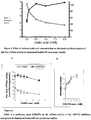
- a key step of the present invention is to apply modifier agents which significantly decrease the basal ABCG2-ATPase activity, without altering the drug stimulation or the drug inhibition of the transporter. This modification greatly increases the sensitivity of the assay for characterizing ABCG2 and drug interactions.
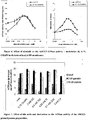
- the "modulatory agents” e.g. bile acids or related compounds, e.g. CHAPS, significantly decrease the basal level of the ABCG2-ATPase activity, while do not change the drug-stimulation of this ATPase activity.
- the compound nilotinib has a biphasic effect on the ABCG2-ATPase activity in isolated Sf9 cell membrane preparations, showing first an activation, then an inhibition of this activity (Hegedus et al., 2009).
- CHAPS modifying agent
- the maximum stimulation and the relative inhibition of the ABCG2-ATPase were unchanged.
- the relative stimulation was greatly increased in the presence of 0.1% CHAPS, as modulatory agent. Table 1.
- Table 1 shows a summary of the modulating agent CHAPS on various drug interactions with the ABCG2 multidrug transporter, measuring the ABCG2-ATPase activity. As documented, in most cases drug stimulation is greatly increased, while the drug concentrations providing maximum stimulation are unchanged. In the case of various inhibitory compounds, the inhibitory potential is unchanged in the presence of the modulatory agent.
- bile acids e.g. cholic acid (data not shown).
- the ABCG2 protein has a high level basal vanadate-sensitive ATPase activity, which can be further stimulated by transported substrates, e.g. quercetin, prazosin or various TKI inhibitors, and fully inhibited by Ko143 or FTC (Ozvegy et al., 2002).
- Table 1 also indicates that the inhibitory effect of these inhibitors is independent of the presence of bile acid compounds, i.e. the percent inhibition is about the same in the presence and in the absence of bile acid compounds.
- the isolated and reconstituted ABCG2 protein especially in the presence of high cholesterol (allowing full transport activity) has a relatively high basal ATPase activity, which is only slightly stimulated by the addition of substrates (e.g. quercetin or prazosin). In the presence of various modifying agents this basal activity is greatly reduced, while the maximum level of drug stimulation is practically unchanged. Therefore the sensitivity of the assay to study drug interactions is greatly increased.
- substrates e.g. quercetin or prazosin
- the present invention allows a high-sensitivity screening of drug interactions with the ABCG2 multidrug transporter and potentially with the related MDR-ABC transporters.
- the invention includes the purification and reconstitution of the ABCG2 protein in a fully active form and provides methods to perform the measurement of the drug-dependent ABCG2-ATPase activity with a high sensitivity.
Landscapes
- Life Sciences & Earth Sciences (AREA)
- Health & Medical Sciences (AREA)
- Chemical & Material Sciences (AREA)
- Engineering & Computer Science (AREA)
- Immunology (AREA)
- Organic Chemistry (AREA)
- Molecular Biology (AREA)
- Urology & Nephrology (AREA)
- Biotechnology (AREA)
- Proteomics, Peptides & Aminoacids (AREA)
- Microbiology (AREA)
- Biomedical Technology (AREA)
- Analytical Chemistry (AREA)
- Wood Science & Technology (AREA)
- Zoology (AREA)
- Biochemistry (AREA)
- Physics & Mathematics (AREA)
- Hematology (AREA)
- General Health & Medical Sciences (AREA)
- Bioinformatics & Cheminformatics (AREA)
- Genetics & Genomics (AREA)
- Cell Biology (AREA)
- General Engineering & Computer Science (AREA)
- Biophysics (AREA)
- Food Science & Technology (AREA)
- Medicinal Chemistry (AREA)
- General Physics & Mathematics (AREA)
- Pathology (AREA)
- Medicinal Preparation (AREA)
- Measuring Or Testing Involving Enzymes Or Micro-Organisms (AREA)
- Peptides Or Proteins (AREA)
- Medicines That Contain Protein Lipid Enzymes And Other Medicines (AREA)
Description
- The invention relates to a membrane preparation for use in an increased sensitivity ABCG2 protein activity assay, said preparation comprising ABCG2 protein in lipid membranes and one or more bile acid compounds. Said preparation can be a cell membrane preparation or a reconstituted membrane protein preparation. The invention also relates to methods for obtaining said preparations, either cell membrane preparations or, preferably, membrane protein preparations comprising a reconstituted, recombinant ABCG2 protein. The invention also relates to kits comprising said preparations as well as uses said kits, membrane preparations or bile acid compounds in high sensitivity ABCG2 protein activity assays.
- Several ABC transporters have important role in general drug metabolism. These multidrug resistance ABC (MDR-ABC) transporters actively extrude various hydrophobic or amphipathic, but otherwise chemically unrelated compounds from the cells. Due to their localization at important tissue barriers ABC-MDR transporters protect the body against toxic materials, and profoundly alter pharmacokinetics of several drugs. Therefore it has a great importance to examine the interaction of xenobiotics, drugs, and drug candidates with the MDR-ABC transporters.
- For example, a group of ABC transporters (P-gp/ABCB1, several MRP/ABCC, BCRP/ABCG2) plays a significant role in the multidrug resistance observed in cancer cells. These multidrug (MDR) ABC transporters can lower drug concentrations inside the cancer cells below effective levels due to outward drug transport based on ATP cleavage. MDR-ABC transporters also have an important role at cellular and tissue barriers by protecting the body and its cells against xenobiotics and drugs. Due to their role in cancer multidrug resistance and modifying the ADME-tox features of several drugs it is of particular importance to characterize the interactions of these MDR-ABC transporters with xenobiotics, drugs, and drug candidates.
- MDR-ABC transporters overexpressed in eukaryote cells provide a possibility to test such interactions, by measuring drug-stimulated ATPase activity or direct drug transport in isolated membrane preparations. The ATPase activity of the MDR-ABC transporters is measured as a vanadate sensitive ATPase activity in the presence of inhibitors of other ATPases in the insect cell membrane preparation.
- In this test system MDR-ABC transporters show a characteristic ligand-independent basal ATPase activity, which can be either stimulated or inhibited by transporter-interacting drugs. The molecular background of this basal activity is not known. It may be either an uncoupled (transport independent) ATPase activity, or may be caused by the presence of unknown substrate(s), in the membrane compartment. The relatively high basal ATPase activity, especially in the case of ABCG2, decreases the sensitivity of the ATPase assays because the effects of the stimulatory drugs, relative to this basal activity, is relatively low.
- Attempts have been made in the art to prepare pure ABCG2 membrane preparations useful among others in ABCG2 functional or activity assays. In several cases the preparation, though being pure, proved to be of impaired activity. Published trials to purify recombinant ABCG2 protein from insect cell in a few cases used metal chelate cromatography but due to the harsh conditions they applied the resulted protein preparation had only a very faint activity not suitable to carry out functional assays for testing drug interactions. Moreover, it has also not been suggested that in the particular method after the chromatography step the protein is to be reconstituted directly in the environment of the assay by using a bacterial or mammalian lipid extract.
- Jacobs, A et al. (2011) have devised a methodology to recombinant synthesis of human ABCG2 expressed in the yeast Saccharomyces. They were able to show substrate stimulation, but in this work authors used yeast strain for expression of a mutant variant of ABCG2. For the solubilisation of the membrane protein a detergent was used but no lipid was utilized. McDevitt, C. A. et al (2006) have obtained an inactivated preparation due to the use of an inactivating detergent. Pozza A et al. (2009) who expressed ABCG2 in insect cells have not applied either a lipid or a detergent upon solubilization and have obtained a very low activity preparation (0.357 umol ATP/min/mg) and Dezi et al. reached an even lower activity (0.006 umol ATP/min/mg).
- Velamakanni S. et al. ["A functional steroid-binding element in an ATP-binding cassette multidrug transporter" Molecular Pharmacology 73 12-17 (2008)] identified a steroid binding element in the membrane domain of ABCG2 and suggested that further studies are required to compare steroid interactions and their effect on oligomerization of ABCG2. The authors speculate upon whether cholesterol acts as a competitive substrate or might enhance the basal ATPase activity of ABCG2 R482G variant.
- Imai Y et al. ["Breast Cancer Resistance Protein Exports Sulfated Estrogens but Not Free Extrogens" Molecular Pharmacology 64, 610-618 (2003)] teach that sulphated steroids (estrogens) inhibit ABCG2 mediated drug transport and probably drug-stimulated ATPase activity of ABCG2.
- Pavek P et al. ["Human Cancer Resistance Protein: Interactions with Steroid Drugs, Hormones, the Dietary Carcinogen 2-Amino-1-methyl-6-phenylimidazo(4,5-b)pyridine, and Transport of Cimetidine" 312, 144-152 (2005)] teach that 17-beta-estradiol is a potent inhibitor of ABCG2.
- Vaidya S et al. (2006) in their work disclose elements of a kit for assessing ABCG2 together with bile acids taurodeoxycholate (TUDC), this kit is used in a different context, namely to ability of ABCG2 to transport TUDC across a membrane. However, the authors have found no interaction between ABCG2 and TUDC. Moreover, the authors state that TUDC does not affect ABCG2-mediated transport of estradiol-glucoronid.
- It was also described, somewhat contrary to the results of Velamakanni et al, that the drug-stimulated ABCG2-ATPase and the related drug transport activity are greatly increased in the presence of increasing membrane cholesterol content (
WO2007/132279 ). The Sf9 insect cell membrane has a relatively low cholesterol content, thus cholesterol loading increased the sensitivity of the ATPase and transport assay for characterizing drug interactions. Cholesterol loading of the Sf9 cell membranes thus mimicks the mammalian cell membrane, and the activity of the ABCG2 protein requires this cholesterol composition. - Though an increase in substrate transport activity has been achieved by loading the membranes with cholesterol, the problem of high basal ATPase activity has not been solved in the art so far.
- None the above publications suggest any method or solution to improve sensitivity of ABCG2 substrate transport assays.
- While the prior art suggested that certain steroid compounds may increase basal ATPase activity of ABCG2 (c.f. Velamakanni S. et al. 2008) The present inventors have unexpectedly found that a group of compounds including bile acids and related compounds are useful in lowering the basal ATPase activity in membranes comprising ABCG2, e.g. in isolated ABCG2 protein preparations and in isolated membranes overexpressing ABCG2.
- Moreover, the present Inventors have developed a new methodology to prepare and reconstitute isolated MDR-ABC transporter proteins with full activity and refined the ATPase assay to provide a high-sensitivity screening system. Thereby membrane protein preparations comprising active and reconstituted ABCG2 can be prepared and utilized in order to further increase the value of such assays.
- The invention relates to the following embodiments:
- Use of a kit in an increased sensitivity ABCG2 protein activity assay, said kit comprising
- a membrane preparation or liposomes, said membranes or liposomes comprising a recombinant ABCG2 transporter protein capable of transporting an ABCG2 substrate compound across the membrane and showing substrate-stimulated ATPase activity,
- one or more bile acid compounds,
- Preferably, said membrane preparation is a cell membrane preparation obtainable from cells expressing said recombinant ABCG2,
said preparation comprising a dimeric ABCG2 having a substrate transport activity. - Preferably, said membrane preparation is a membrane protein preparation comprising a reconstituted ABCG2 protein. More preferably, said membrane protein preparation is obtainable by a method comprising the following steps:
- providing or preparing an expression vector suitable for expressing a nucleic acid in a host, said nucleic acid comprising a nucleotide sequence encoding an ABCG2 protein and, operably linked thereto a nucleotide sequence encoding a peptide tag for protein purification.
- overexpressing said nucleic acid sequence in a host to obtain a tagged protein comprising the ABCG2 protein and the peptide tag, wherein said ABCG2 protein is functional,
- obtaining the expressed tagged protein in a solubilized form,
- the solubilized tagged protein is subjected to purification comprising affinity chromatography step specific for the peptide tag to obtain a purified protein,
- the purified protein is reconstituted into an appropriate lipid environment for regaining function, preferably into liposomes,
- The invention also relates to a use of a membrane preparation in an increased sensitivity ABCG2 protein activity assay, said preparation comprising
- liposomes, said liposomes comprising a recombinant ABCG2 transporter protein capable of transporting an ABCG2 substrate compound across the membrane of said liposomes and showing substrate-stimulated ATPase activity,
- one or more bile acid compounds,
- Preferably, the basal ATPase activity of the membrane preparation is lower than the basal ATPase activity of a control preparation lacking said one or more added bile acid compounds or comprising a lower level thereof.
- In a further aspect, the invention relates to an ABCG2 protein activity assay method comprising the steps of
- providing a membrane preparation as defined in any of claims 6) to 7), said membrane preparation comprising one or more bile acid compounds
- assessing the activity of the ABCG2 protein present in the membrane preparation, wherein
the basal ATPase activity of the ABCG2 protein is reduced in comparison with a control not comprising said one or more bile acid compounds. - In a further aspect the invention also relates to a use of a bile acid compound for reducing basal ATPase activity of a membrane preparation comprising a recombinant ABCG2 transporter protein, capable of transporting an ABCG2 substrate compound across the membrane,
wherein said membrane preparation is a cell membrane preparation or a membrane protein preparation reconstituted in liposomes. - In a further aspect the invention also relates to a use of a membrane preparation as defined herein in an ABCG2 protein activity assay wherein the basal ATPase activity of the ABCG2 protein is reduced in said assay in comparison with a control not comprising said one or more bile acid compounds wherein
the one or more bile acid compound are selected from cholic acid, chenodeoxycholic acid, glycocholic acid, taurocholic acid, deoxycholic acid, lithocholic acid or a derivative thereof which is an amide or an ester of the carboxyl group on the side chain connected to the 17 position of the sterane core or a salt thereof. - In a preferred embodiment any of the uses of the invention comprises the use of an agent for increasing transport activity, preferably cholesterol.
- In a preferred embodiment said membrane preparation as defined herein further comprises an agent for increasing transport activity, preferably cholesterol.
- In a preferred embodiment said kit according to the invention further comprises an agent for increasing transport activity, preferably cholesterol.
- In a further aspect the invention also relates to a method for obtaining an isolated membrane protein preparation for use in an ABCG2 assay according to the invention, said method comprising
- providing or preparing an expression vector suitable for expressing a nucleic acid in a host, said nucleic acid comprising a nucleotide sequence encoding an ABCG2 protein and, operably linked thereto a nucleotide sequence encoding a peptide tag for protein purification.
- overexpressing said nucleic acid sequence in a host to obtain a tagged protein comprising the ABCG2 protein and the peptide tag, wherein said ABCG2 protein is functional,
- obtaining the expressed tagged protein in a solubilized form by
- preparing cell membrane fraction from the cells of the host, said membranes comprising the tagged protein,
- solubilizing the tagged protein from the cell membrane fraction by a detergent-lipid mixture whereas the functionality of the ABCG2 transporter is maintained, in a solubilisation buffer by DDM detergent and E.coli lipid mixture and
- the solution fraction is separated to obtain solubilised ABCG2 protein in the supernatant,
- the solubilized tagged protein is subjected to purification comprising affinity chromatography step specific for the peptide tag to obtain a purified protein,
- the purified protein is reconstituted into an appropriate lipid environment for regaining function with preformed liposomes made of a lipid extract, said lipid extract being selected from the group of
- a bacterial lipid extract and/or
- a eukaryotic lipid extract selected from a vertebrate lipid extract, a mammalian lipid extract and a brain lipid extract,
- wherein preferably the reconstitution lipid extract is supplemented with cholesterol, and
- wherein the dimeric form of ABCG2 is maintained and this fact is detected by a method assessing the size of the native proteins, and
- Preferably, the peptide tag is a His-tag.
- Preferably, the preformed liposomes in the reconstitution agent are destabilized and the reconstitution agent is incubated with purified ABCG2 protein, wherein preferably the reconstitution lipid extract is supplemented with cholesterol.
- Preferably, the expressed tagged protein in a solubilized form comprises
- preparing cell membrane fraction from the cells of the host by
- disruption of the cells by mechanical homogenization in a hypo-osmotic buffer,
- removal of cellular debris by low speed centrifugation at 200 to 400 g
- centrifugation of the supernatant to obtain a membrane pellet at 30 000 to 70 000 g for 30 min to 90 min,
- homogenization of the membrane pellet,
- solubilizing the tagged protein from the cell membrane fraction by a detergent-lipid mixture whereas the functionality of the ABCG2 transporter is maintained,
- assessing the amount of protein and/or transporter activity in the membrane preparation, and optionally
- washing the pelleted membranes,
- repeatedly pelleting, washing and resuspending the membranes.
- Preferably, said membrane preparation is a cell membrane preparation obtainable from cells expressing said recombinant ABCG2 by a method according to any of above methods,
said preparation comprising a dimeric ABCG2 having a substrate transport activity. - A "bile acid compound" is an amphipatic steroid compound having the sterane core carrying a 3α hydroxyl group, preferably the sterane core of any bile acid, and a side chain at the 17 position (all IUPAC numbering) carrying or terminated in a carboxyl group or an amide or ester thereof. A bile acid compound is capable to be incorporated into micelles or liposomes. A bile acid compound can be natural or artificial. Preferably a bile acid compound is a bile acid, a bile acid derivative or a salt thereof.
- Preferably a bile acid compound is a compound according to formula I below. Nevertheless, it should be understood that substituents identical with Q1 and/or Q2 may be present at other positions of the sterane core as well, provided that the function of the bile acid compound is maintained, e.g. in particular at position 16, preferably at the 16 alpha position.
- A "bile acid" is understood herein as an end-product of cholesterol catabolism in animals, the main functions of which are to act as detergents or emulsifying agents in the intestines to aid the digestion and absorption of fatty acids, monoacylglycerols and other fatty products and to prevent the precipitation of cholesterol in bile, and having a 3α hydroxyl group and maintaining a side chain connected to the 17 position (17 position side chain), preferably at least a C3, preferably a C5 side chain of the cholesterol. Preferably, the bile acid is bile acid of vertebrate origin, preferably of fish, amphibian, reptile, bird, mammalian, primate or human origin, preferably a bile acid synthesized in the liver (primary bile acid) or a naturally modified variant thereof (secondary bile acid), e.g. by bacteria.
- Bile acids are for example cholic acid, chenodeoxycholic acid, glycocholic acid, taurocholic acid, deoxycholic acid, lithocholic acid.
- A "bile acid derivative" is a bile acid or a chemically modified bile acid which may be modified at the 17 position side chain by adding a moiety thereto, preferably to the C3 or C5 side chain of the cholesterol. Preferably, a bile acid derivative is an amide or an ester of the carboxyl group on the side chain connected to the 17 position of the sterane core. A bile acid derivative may be modified, e.g. substituted at the sterane core provided that it function as a bile acid is maintained. The bile acid derivative also can be the conjugate of a bile acid or a bile acid compound. In a preferred embodiment the bile acid derivative is a bile acid derivative detergent, preferably , e.g. CHAPS (3-[(3-Cholamidopropyl)dimethylammonio]-1-propanesulfonate), CHAPSO (3-[(3-Cholamidopropyl)dimethylammonio]-2-hydroxy-1-propanesulfonate) or big CHAP (CAS Number: 86303-22-2) or a variant thereof, e.g a deoxy big CHAP.
- A "conjugate" is understood herein as a chemical compound that has been formed by joining two or more compounds and thus comprises two or more moieties. Preferably, features and/or functions of each moieties can be distinguished within the conjugate. Typically, in the present invention, one of the moieties is a bile acid derivative and the other moiety is a reporting group, e.g. a fluorescent group.
- "ABCG2 protein", which may be a monomer or a dimer, or an "ABCG2 transporter" which is a dimer, is ATP-binding cassette
sub-family G member 2 that is encoded by the ABCG2 gene. Preferably the ABCG2 gene is a gene of a vertebrate, preferably a mammal, highly preferably human gene or a variant thereof encoding ABCG2 protein the amino acid sequence of which is identical to any wild type ABCG2 protein in at least 70%, preferably at least 80% or 85%, more preferably at least 90%, 95%, 96%, 97%, 98% or 99%. Preferably the "ABCG2 protein" or the "ABCG2 transporter" is functional. The ABCG2 protein can be a mutant or a variant, preferably which shows the effect of the invention. If a mutant is specified herein it does not exclude that other mutations may be present. - A "functional" ABCG2 transporter is an ABCG2 protein dimer capable of drug stimulated ATPase activity and ATPase coupled drug transport. ATPase coupled drug transport is a drug transport across a membrane, preferably a lipid membrane, e.g. the membrane compartment or a cell membrane. In case of a cell membrane or a membrane compartment wherein the ABCG2 protein is in a normal arrangement the drug is transported from inside to outside, i.e. the drug is extruded from the membrane compartment or the cell. In case of an "inside-out" membrane compartment wherein the ABCG2 protein is in an inverse arrangement the drug is transported from outside to inside of the membrane compartment.
- "Functionality" refers to the presence or level of function of an ABCG2 transporter. The functionality of said ABCG2 transporter can be assessed by physical, chemical, biochemical and/or biological method.
- An ABC transporter protein has "substrate transport activity" when, under appropriate conditions, it is capable of transporting a substrate of said transporter through the biological membrane in which said transporter is present. Thus, substrate transport activity is an inherent biological property of the ABC transporter protein which is independent from the fact whether it is possible to measure or detect said activity. Substrate transport activity of an ABC transporter protein typically may be detected or assessed by one or more of the following assays: cellular or vesicular transport assay, wherein it is usually possible to directly show the transport of the substrate, or substrate stimulated ATPase assay which is typically, if assay conditions are appropriately set, indicative of substrate transport. Most often vanadate sensitive or inhibitor sensitive ATPase assays are used. Substrate sensitivity specifically relates to activity as measured by a substrate stimulated ATPase assay.
- A "membrane compartment" is microscopic formation wherein a lipid membrane, preferably a lipid bilayer, encloses an inner space, a lumen, and thereby separates it from the environment.
- A "liposome" is a membrane compartment, preferably a microscopic and artificial membrane compartment having an aqueous lumen enclosed by one or more lipid bilayer, preferably phospholipid bilayer.
- A "preparation" is a composition of matter artificially prepared or deliberately prepared by Man preferably according to a pre-defined and/or reproducible method or a protocol. Preferably the preparation has multiple components.
- A "membrane preparation" is a preparation comprising lipid membranes, preferably a colloidal preparation wherein membrane compartments are dispersed in an aqueous medium. Said membrane compartments may comprise one or more substance integrated or inserted into the membrane thereof, e.g. one or more membrane protein.
- A "cell membrane preparation" is a preparation from tissue or cells, in which the membranous elements, preferably those formed from the cell membrane, are enriched in relation to other cellular constituents. Typically, cell membrane preparations are obtained by disruption of the cells and an isolation method, e.g. differential centrifugation or other technique to isolate a fraction enriched in membranes. Typically, the lipid membrane compartment contains integral membrane proteins of the cell. Cell membrane preparations are the standard biological material for receptor binding assays or transporter assays.
- A "membrane protein preparation" is a membrane preparation comprising at least one specific protein or protein of interest integrated into the membrane compartments, preferably into the arteficial liposomes. In a preferred embodiment the protein is a recombinant protein. In a preferred embodiment the protein is purified and reconstituted.
- A "control preparation" is a preparation useful for assessing the effect of a set of feature of a given preparation (or preparation of interest). The control preparation differs from the given preparation in a definite set of features wherein the effect of said set of features is to be studied or compared. The set of features can be one feature or multiple features. A feature is definite if it can be detected, measured and/or if it is experimentally added to or achieved or elicited in the preparation. The control preparation can be a control membrane preparation. For example, a control membrane preparation useful for assessing the effect of one or more bile acid compound in a membrane preparation having the same composition except that the control membrane preparation lacks bile acid compounds or comprises a detectably lower level of bile acid compounds.
- In a preferred embodiment any one or each of the above preparations used herein or any one or each of the components thereof is "isolated", i.e. its original environment has been artificially changed or changed by Man, preferably replaced by another artificial environment or medium. Preferably said preparation or component is separated from its original environment. Preferably said preparation or component is purified. Purified is to be understood herein as comprising a reduced concentration or activity of membrane transporter proteins or activities other that ABCG2 protein or activity detected by an analytical or functional (assay) method. As used herein percentage of purity is the ratio of the concentration and of the all proteins, membrane proteins or membrane transport proteins as detected by the given analytical method, multiplied by 100; or the ratio of activities of the ABCG2 protein and of all membrane transport proteins or ATPases or ABC proteins or any other relevant activities as measured by the given functional (assay) method, multiplied by 100. Thus, 100% purity is a purity when by the said analytical or functional (assay) method no other membrane transporter protein or no other membrane transporter protein activity can be detected.
- The "original level" of a bile acid compound in a preparation is the level before adding said bile acid compound to said preparation. Typically, the original level of a bile acid compound is the level of said bile acid compound measured in a cell membrane preparation or in a membrane protein preparation prepared without the addition of any bile acid compound.
- The "physiological" content or level of a compound or a compound family or class, e.g. a bile acid compound in a membrane is the level of said bile acid compound measurable in a membrane of biological origin without any addition of the compound or depletion thereof. While the term physiological level includes levels in membranes in vivo, typically physiological levels are measured in biological samples, e.g. in membrane preparation obtained without any artificial or deliberate modification of the level of said compound, e.g. without any addition of a bile acid compound or depletion thereof. Preferably, the physiological content or level is that develops in membrane preparations derived from such cells, with no artificially induced cholesterol loading or depletion, for example during cell culture.
- The term "comprises" or "comprising" or "including" are to be construed here as having a non-exhaustive meaning and allow the addition or involvement of further features or method steps or components to anything which comprises the listed features or method steps or components. The expression "consisting essentially of" or "comprising substantially" is to be understood as consisting of mandatory features or method steps or components listed in a list e.g. in a claim whereas allowing to contain additionally other features or method steps or components which do not materially affect the essential characteristics of the use, method, composition or other subject matter. It is to be understood that "comprises" or "comprising" or "including" can be replaced herein by "consisting essentially of" or "comprising substantially" if so required without addition of new matter.
-
-
Figure 1 . Purification of the human ABCG2 protein
His6-ABCG2 protein was solubilized from Sf9 membrane by a detergent-lipid mixture and purified by His-tag affinity chromatography (Ni-NTA). Panel A shows original membrane fraction and the eluated fractions of Ni-NTA cromatography, containing the pure ABCG2 protein (Coomassie staining). Panel B shows the identification of the purified ABCG2 protein by BXP-21 antibody on Western blot. -
Figure 2 . Activity of the isolated, reconstituted ABCG2 in liposomes with different lipid compositions
ATPase activity is provided in mol Pi/sec/mol ABCG2. Basal (light grey bars) and drug-stimulated (dark grey bars) activity was measured in the presence of 5 uM quercetin, as transported substrate. Lipid composition of liposomes A: E. coli lipid extract, B: E.coli lipid extract + 30% cholesterol, C: bovine brain lipid extract, D: soybean phosphatidycholine + 30% cholesterol (D). For further details see the Methods. -
Figure 3 . Effect of various cholic acid concentrations on the basal and drug stimulated ABCG2-ATPase activity in cholesterol loaded Sf9 membrane vesicles
The left ordinate (grey squares) indicates the relative change in the basal ABCG2-ATPase activity. The right ordinate (black circles) shows the relative change in the stimulation of ABCG2-ATPase activity (stimulation was achieved by 5 uM quercetin). Cholic acid concentration is given in millimoles (mM). -
Figure 4a . Effect of modifying agent (CHAPS) on the ATPase activity of the ABCG2 multidrug transporter in cholesterol-loaded Sf9 cell membrane vesicles
Panel A: Modulation of basal (grey diamonds) and substrate-stimulated (black squares) ABCG2-ATPase activity, depending on the concentration of CHAPS. ABCG2-ATPase activity was stimulated by 5 uM quercetin as a substrate. Panel B: Modulation of the relative drug stimulation of the ABCG2-ATPase activity, depending on CHAPS concentration. Drug (5 uM quercetin) stimulatory effect is calculated as the ratio of drug-stimulated and basal activity. -
Figure 4b . Effect of various CHAPS concentrations on the basal and drug stimulated ABCG2-ATPase activity in cholesterol loaded Sf9 membrane vesicles
The left ordinate (grey squares) indicates the relative change in the basal ABCG2-ATPase activity. The right ordinate (black circles) shows the relative change in the stimulation of ABCG2-ATPase activity (stimulation was achieved by 5 uM quercetin). CHAPS concentration is given in millimoles. -
Figure 5 . Effect of an ABCG2 substrate (quercetin) on the ABCG2-ATPase - modulation of activity by a modulatory agents (0.1% CHAPS) in cholesterol loaded Sf9 membranes. Panel A: Stimulation of the ABCG2-ATPase activity by quercetin in the absence (grey squares) and in the presence (light grey circles) of 0.1 % CHAPS, Panel B: Relative stimulation of the ABCG2-ATPase activity by quercetin in the absence (black squares) and in the presence (dark grey circles) of 0,1% CHAPS. -
Figure 6 . Effect of nilotinib on the ABCG2-ATPase activity - modulation by 0.1% CHAPS in cholesterol loaded Sf9 membranes. Panel A: Effect of nilotinib on the ABCG2-ATPase in the absence and in the presence of 0.1% CHAPS, Panel B: Relative changes in the ABCG2-ATPase activity by nilotinib. -
Figure 7 . Effect of bile acids and derivatives on the ATPase activity of the ABCG2-proteoliposome preparation. Modulatory effects of several bile acids on the basal and substrate stimulated (5 uM quercetin and 50 uM prazosin) ABCG2-ATPase activity was measured at a selected modifying agent concentrations. These were 0.1% CHAPS, 2 mM glycocholate (GC), 0.5 mM taurodeoxycholate (TDC), 0.25 mM taurocholate (TC), 0.1 mM deoxycholate (DOC), and 2 mM cholic acid (CA). The proteoliposome used for purified ABCG2 reconstitution was composed of bovine brain lipid extract + 40% cholesterol. -
Figure 8 . The N-terminal sequence (SEQ ID NO: 1) of the His6 tagged ABCG2 and its coding nucleotide sequence (SEQ ID NO: 2). The polyhistidine tag, a phosphorylation site and the thrombin cleavage site are underlined. - The present inventors have developed a high-sensitivity functional assay that can be used both in isolated ABCG2 protein preparations and in isolated membranes overexpressing ABCG2. The key novelty of the modified ATPase assay is that the ligand-sensitivity of the ABCG2-ATPase activity can be greatly enhanced by lowering the drug-independent "baseline" ATPase activity. This is achieved by the addition of "modifying" compounds which are bile acid derivatives. Under these conditions the maximum level of the drug-stimulated ABCG2-ATPase activity is unchanged, whereas the relative drug-stimulated ATPase, thus the sensitivity of the assay is significantly increased.
- So as to facilitate and validate the study of ABCG2 as an active transporter, the present inventors have also developed a purification and reconstitution method, which maintains the functionality of the ABCG2 protein. The purified protein, reconstituted in an appropriate lipid environment shows high-level drug-stimulated ATPase activity and active drug transport properties. The purified and reconstituted ABCG2 protein allows to perform both functional and structural studies, exploring ABCG2-drug interactions at the molecular level.
- The invention relates to the use of a kit in an increased sensitivity ABCG2 protein activity assay as defined in the appended claims.
- Preferably, said bile acid compound in the kit is a bile acid or a bile acid derivative or a salt thereof.
- In a preferred embodiment the bile acid derivative is a bile acid derivative detergent, preferably a zwitterionic or a non-ionic detergent, e.g. a derivative of the cholic acid. In a preferred embodiment, the bile acid compound is CHAPS, CHAPSO big CHAP or a variant of any of them.
- Also disclosed are membrane preparations for use in an increased sensitivity ABCG2 protein activity assay, said preparations comprising
- cell membrane vesicles or liposomes comprising a recombinant ABCG2 transporter protein capable of transporting an ABCG2 substrate compound across the membrane and showing substrate-stimulated ATPase activity,
- a bile acid compound,
- Preferably, in the membrane preparation of the invention the basal ATPase activity of the membrane preparation is lower than the basal ATPase activity of a control preparations lacking said one or more added bile acid compounds or comprising a lower level thereof.
- In an embodiment of the invention the membrane preparation is a cell membrane preparation obtainable from cells expressing said recombinant ABCG2.
- Preferably, the cell membrane preparation is obtainable by a method disclosed herein, e.g. a method comprising the following steps:
- providing an expression system comprising cells suitable for expressing a recombinant ABCG2 transporter protein,
- expressing said recombinant ABCG2 transporter protein in said cells,
- preparing a membrane preparation comprising said recombinant ABCG2 protein integrated in the membranes of said membrane preparation and
- adding a bile acid compound as defined herein.
- In an embodiment of the invention the membrane protein preparation is a membrane protein preparation comprising a reconstituted ABCG2 protein.
- Preferably, said membrane protein preparation reconstituted in liposome is obtainable by a method as disclosed herein, e.g. a method comprising the following steps:
- providing an expression system comprising cells suitable for expressing a recombinant ABCG2 transporter protein,
- expressing said recombinant ABCG2 transporter protein in said cells,
- obtaining the expressed ABCG2 transporter protein in a solubilized form,
- the solubilized ABCG2 transporter protein is subjected to purification,
- reconstituting the purified protein into an appropriate lipid environment for regaining function, preferably into liposomes,
- adding a bile acid compound as defined herein.
- The isolated membrane protein preparation for use in an ABCG2 assay can be obtained by a method comprising
- providing or preparing an expression vector suitable for expressing a nucleic acid in a host, said nucleic acid comprising a nucleotide sequence encoding an ABCG2 protein and, operably linked thereto (preferably to the 5' end of the ABCG2 coding sequence), a nucleotide sequence encoding a peptide tag for protein purification, preferably a tag allowing or facilitating purification.
- overexpressing said nucleic acid sequence in a host to obtain a tagged protein comprising the ABCG2 protein and the peptide tag, wherein said ABCG2 protein is functional,
- obtaining the expressed tagged protein in a solubilized form,
- the solubilized tagged protein is subjected to purification comprising affinity chromatography step specific for the peptide tag to obtain a purified protein,
- the purified protein is reconstituted into an appropriate lipid environment for regaining function, preferably into liposomes.
- This method can be a preferred embodiment of the method for obtaining a membrane preparation as disclosed above.
- The tagged protein can be considered as a fusion protein.
- In an embodiment of this method obtaining the expressed tagged protein in a solubilized form comprises
- preparing cell membrane fraction from the cells of the host, said membranes comprising the tagged protein,
- solubilizing the tagged protein from the cell membrane fraction by a detergent-lipid mixture whereas the functionality of the ABCG2 transporter is maintained. The skilled person will realize that a detergent which inactivates to protein (like Fc-16) is to be avoided.
- Preferably, the preparation of membranes comprises the steps of
- disruption of the cells by mechanical homogenization, preferably in a hypo-osmotic buffer,
- removal of cellular debris by centrifugation, preferably by low speed centrifugation, (g=2-400)
- centrifugation of the supernatant to obtain a membrane pellet (30 000 to 70 000 g, preferably 40 000 to 60 000 g, more preferably 45 000 to 50 000 g for 30 min to 90 min, preferably from 50 min to 70 min, more preferably from 55 min to 66 min),
- homogenization of the membrane pellet,
- optionally washing the pelleted membranes, preferably in a high salt wash buffer (preferably said wash buffer comprising 300 to 700 mM salt, preferably 400 to 600 mM salt, wherein the salt is preferably a metal halogenide, preferably an alkali earth metal halogenide or an alkali halogenide),
- optionally repeatedly pelleting, washing and resuspending the membranes,
- optionally assessing the amount of protein and/or transporter activity in the membrane preparation.
- In an embodiment the purification of the ABCG2 protein prior to affinity chromatography comprises the steps of
- solubilisation of the membrane protein in a solubilisation buffer by DDM detergent (1%) and E.coli lipid mixture (0.4%), and
- separation of a solution fraction, preferably centrifugation, to obtain solubilised ABCG2 protein in the supernatant.
- In a further embodiment of this method the affinity chromatography purification of the ABCG2 protein comprises the steps of
- application of the solubilised ABCG2 protein to the affinity chromatography medium,
- washing the medium,
- elution of the ABCG2 protein.
- Preferably the chromatography medium is a His-binding metal chelate medium. Preferably, elution is carried out by an elevated level of imidazol or by setting the pH level.
- In a further embodiment of this method the purification of the ABCG2 protein after the affinity chromatography comprises the step of reconstitution with a reconstitution agent obtaining liposomes, said liposomes comprising the ABCG2 protein.
- Preferably, the reconstitution agent is the preformed liposome used for reconstitution made of a lipid extract, preferably a bacterial lipid extract, more preferably an E. coli lipid extract and/or a eukaryotic lipid extract, preferably a vertebrate lipid extract, more preferably a mammalian lipid extract, even more preferably a brain lipid extract.
- In a preferred embodiment, the reconstitution lipid extract is supplemented with cholesterol. Reconstitution of a fully active ABCG2 is optionally achieved when detergent is removed.
- In a variant of this reconstitution method liposomes are formed and purified ABCG2 is added to the liposomes.
- In a further variant of this method liposomes in the reconstitution agent are destabilized and the reconstitution agent is incubated with purified ABCG2 protein. The liposomes can be destabilized e.g. by detergent, e.g. by 0.01 % to 5%, preferably 0.1% to 1%, preferably 0.2% to 0.5% detergent, e.g. by Triton-X detergent. Preferably, the reconstitution agent is formed from dried lipids in aqueous solution e.g. by sonication. Preferably, the excess detergent is removed. More preferably, reconstitution of a fully active ABCG2 is achieved when detergent is removed. Detergent can be removed e.g. by hydrophobic adsorption, gel chromatography, dialysis, ion-exchange chromatography or by other adsorbent material. Adsorbent materials, like BioBead® adsorbent (BioRad) or CALBIOSORB™ adsorbent (EMD4Biosciences), are available in the art. In a preferred method the excess detergent is removed e.g. by an adsorbent, e.g. by adsorbent beads.
- In the method of the invention the dimeric form of ABCG2 should be maintained. This fact can be detected by any method suitable to assess the size of the native proteins, e.g. native gel electrophoresis, size exclusion chromatography, ultracentrifugation or by detecting activity of the protein.
- In a further embodiment of the method for obtaining an isolated membrane protein preparation the affinity chromatograpy is metal chelate chromatograpy and the peptide tag is capable of complexing the metal ion of the metal chelate chromatography. Preferably, the metal chelate chromatograpy is a Ni-chelate chromatography, a Co-chelate chromatography, a Zn-chelate chromatography or a Cu-chelate chromatography.
- Preferably, the peptide tag is a His-tag, preferably a
cleavable 6 histidine tag (His6-tag). - In a preferred embodiment any peptide tag is engineered to the N-terminus of the ABCG2 protein for allowing purification.
- In a preferred embodiment of the purification method the eluted fractions are concentrated in detergent and optionally the concentrated fractions are stored. In a preferred embodiment the purified and reconstituted ABCG2 liposomes are stored. Storage is preferably done below -20°C, more preferably below -60°C or below -70°C or about at -80°C.
- The present inventor have surprisingly found that the turnover numbers of the ABCG2 preparations obtained by the method according to the invention are approximately an order of magnitude higher than those obtained previously in purified and reconstituted ABCG2 preparations.
- A membrane preparation which is a cell membrane preparation for use in an ABCG2 assay preferably with a reduced basal ATPase activity can be obtained by a method comprising
- providing or preparing an expression vector suitable for expressing a nucleic acid in a host, said nucleic acid comprising a nucleotide sequence encoding an ABCG2 protein and, operably linked thereto (preferably to the 5' end of the ABCG2 coding sequence), a nucleotide sequence encoding a peptide tag for protein purification, preferably for allowing, facilitating protein purification,
- overexpressing said nucleic acid sequence in a host to obtain a tagged protein comprising the ABCG2 protein and the peptide tag, wherein said ABCG2 protein is functional,
- preparing a cell membrane preparation from the cells of the host.
- In a preferred embodiment of this method the preparation of membranes comprises the steps of
- disruption of the cells by mechanical homogenization, preferably in a hypo-osmotic buffer,
- removal of cellular debris by centrifugation (low speed centrifugation, g=2-400)
- centrifugation of the supernatant to obtain a membrane pellet (30 000 to 70 000 g, preferably 40 000 to 60 000 g, more preferably 45 000 to 50 000 g for 30 min to 90 min, preferably from 50 min to 70 min, more preferably from 55 min to 66 min),
- homogenization of the membrane pellet,
- optionally washing the pelleted membranes, preferably in a high salt wash buffer (preferably comprising 300 to 700 mM salt, preferably 400 to 600 mM salt, wherein the salt is preferably a metal halogenide, preferably an alkali halogenide),
- optionally repeatedly pelleting, washing and resuspending the membranes
- optionally quantitation of the amount of protein and/or transporter activity (def) in the membrane preparation.
- In a preferred embodiment of protein expression, the protein is overexpressed in an insect cell, preferably in a baculovirus-Sf9 insect cell system.
- Also disclosed is a method for reducing basal ATPase activity of a membrane preparation preferably a membrane protein preparation for use in an ABCG2 protein activity assay, said method comprising
- providing a preparation comprising membrane vesicles or liposomes, said membrane vesicles or liposomes comprising recombinant ABCG2 transporter protein capable of transporting an ABCG2 substrate compound across the membrane (of said liposomes) and showing substrate-stimulated ATPase activity,
- adding a bile acid compound as defined herein to the preparation,
- Thus, the bile acid compound level is increased as compared to the original or physiological level of said bile acid compound in the same type of membrane.
- Preferably, the ABCG2 protein is purified and reconstituted according to a method disclosed herein.
- The invention relates to an ABCG2 protein activity assay method comprising the steps of
- providing a membrane preparation as defined herein
- assessing the activity of the ABCG2 protein present in the membrane preparation.
- The ABCG2 protein activity assay method, wherein the step of providing a membrane preparation as defined herein comprises the step of providing a membrane preparation as defined above and adding said bile acid compound thereto.
- In a preferred embodiment the bile acid compound is added to the membrane preparation during the assay.
- In a further embodiment the bile acid compound is added to the membrane preparation prior to the assay.
- The invention also relates to a use of a bile acid compound as defined herein,
or a conjugate of said bile acid derivative,
or a salt thereof,
in an ABCG2 protein activity assay in a membrane preparation for reducing the basal ATPase activity of said preparation. - The invention also relates to a use of a membrane preparation as defined herein in an ABCG2 protein activity assay.
- The invention also relates to a use of an ABCG2 assay kit as defined herein in an ABCG2 protein activity assay.
- Preferably the membrane preparation or the kit according to the invention is used for studying transporter - drug interactions.
- Preferably, the assay is a high sensitivity ABCG2 ATPase assay or a substrate transport assay.
- Preferably, the ABCG2 protein activity assay is a high sensitivity assay for functional characterization of the ABCG2 transporter.
- Preferably, in said assay a bile acid compound as defined herein is used to reduce the basal ATPase activity.
- Preferably, the modifying agents do not change the effects of substrates or inhibitors on the activity of the ABC protein.
- The invention also relates to the purified and reconstituted ABCG2 containing liposomes, lipid compartments or vesicles disclosed herein or being obtainable by the purification and reconstitution method according to the invention.
- According to the invention the ATPase activity of the membrane preparations is measurable ATPase activity can be stimulated or inhibited by ABCG2 substrates and inhibitors.
- In a preferred embodiment substrate stimulated activity, e.g. ATPase activity or transport activity is measured. In a preferred embodiment relative substrate stimulated activity is increased by adding the bile acid compound(s) by a factor of at least 1.3, at least 1.5, at least 1.7 at least 1.9 or at least 2. In a further preferred embodiment the activity of ABCG2 measured in the membrane preparation of the invention by a substrate in the presence of the bile acid compound(s) is increased by a factor of at least 1.5, at least 2 or at least 3 or at least 4 or at least 5.
- In a preferred embodiment the membrane preparations of the invention further comprise an agent for increasing transport activity, e.g. cholesterol, preferably added cholesterol or a cholesterol analogue or derivative.
- Below the invention is further described by illustrative examples.
- Generation of Recombinant Baculoviruses-Recombinant baculovirus carrying the human wt (wild type) ABCG2 or cleavable His6 tagged ABCG2 cDNA, were generated with the BaculoGold Transfection Kit (Pharmingen) according to the manufacturer's instructions (Ozvegy-Laczka et al., 2008).
- In short, pAcUW21-L/ABCG2 was constructed by removing the full-length human ABCG2 cDNA (G482 variant) from pcDNA3.1/ABCG2 with SacI digestion, and ligating the resulting fragment to the SacI site of the modified baculovirus transfer vector, pAcUW21-L (see Özvegy et al., 2001 and Ozvegy et al. 2002).
- The N-terminal sequence (SEQ ID NO: 1) of the His6 tagged ABCG2 as well as its coding nucleotide sequence (SEQ ID NO: 2) is shown on
Figure 8 . The His6 tag and the recognition sequence of the Thrombin cleavage site are underlined and cleavage site is indicated by an arrow. - Several His6-tagged versions of the ABCG2 protein have been prepared and expressed them in Sf9 cells. It has been found that the C-terminally tagged ABCG2 was completely inactive, while the N-terminally tagged version retained full activity.
- Culturing conditions are optimized for obtaining high expression level of ABCG2. Sf9 cells are grown in spinner flasks in suspension culture, while baculovirus infection is carried out in cells placed in a roller flask for increasing protein production capacity.
- Medium for insect cell culturing: Sigma TNM-FH (T1032) insect cell culture medium supplemented with 10% fetal bovine serum (Sigma F0643).
- Sf9 in spinner flask: culturing starts at 5x10⁵ cells/ml and the cells are grown for 3 days to a density of about 15x105 cells/ml.
- The amplified virus stock is produced for 7 days with 107 Sf9 cell number/25 ml in a culture flask, without medium change. Polyhedra numbers are checked and virus batch is stored. The cells should contain numerous virus polyhedra, the supernatant is collected and stored at 4° C for continuous use or at -80°C as a stock.
- 2.5-3x10⁸ cells/20 ml media is mixed with 20 ml of amplified virus stock and allowed to settle down for 3-5 hours in a roller flask, rolling at low speed (5-8 turn/min). Then the 60 ml of media is added, cells are cultured at 27°C and harvested after 72 hours (at the 4th day).
- Infection in suspension culture is also possible. It is advantageous for production of large quantities, but results in a relatively lower the expression level.
- It was found that the expression level in the Sf9/baculovirus system greatly exceeded that of the mammalian cell lines thus providing sufficient quantity for purification procedures. Membranes were prepared as described in (Sarkadi et al., 1992), or (Ozvegy et al., 2002) or by the method described below resulting in the production of highly active ABCG2 protein in Sf9 membrane vesicles. This preparation contains about 2-4% ABCG2 protein of the total membrane proteins, and is suitable for ABCG2-ATPase assays as well as for vesicular transport assays. It has been found that the His6-tagged ABCG2 protein shows similar expression level and ATPase or transport activity as the untagged, wild type ABCG2 protein.
- Cells are disrupted by mechanical homogenization in a glass-teflon homogenizer in a hypo-osmotic buffer (50mM TRIS, 50 mM mannitol, 2 mM EGTA pH 7.0, protease inhibitors: 8 ug/ml aprotinin, 10 ug/ml leupeptin, 0.5 ug/ml PMSF, 2 mM DTT). Homogenate is centrifuged at low speed and in a second round its supernatant is centrifuged at 50 000 x g, for 60 min. All procedure is carried out on at 4°C. The membrane pellet is homogenized in the buffer and stored at -80°C.
- As shown earlier by (Telbisz et al., 2007), the activity of ABCG2 is greatly stimulated by cholesterol loading of the isolated membranes. It has been found by the Inventors that the same is true for the His6-tagged ABCG2 (unpublished). Thus, for direct measurements with ABCG2 in Sf9 membrane vesicles the membrane is loaded with cholesterol. After homogenization the sample is incubated with 2.5 mg/ml cholesterol-cyclodextrin complex (Cyclolab, Budapest) for 20 minutes at +4°C then followed by centrifugation steps.
- Crude membranes (stored at -80°C) are pooled and washed at 4°C in high salt wash buffer (20 mM TRIS, 0.5 mM EDTA, 500 mM NaCl, 1 mM b-mercaptoethanol, pH 8.0). The membranes were centrifuged at 50000 x g for 45min.
- Pellet is resuspended in a glass-teflon homogenizer in 10 ml solubilization buffer without lipid and detergent than sonicated lipid mixture is added. Solubilization buffer is composed of 20 mM TRIS pH 8.0, 500 mM NaCl, 10 % glycerol, 4 mM imidazol, 1mM b-mercaptoethanol, protease inhibitors and solubilized lipid mix of 0.4% E.coli lipid, 1% DDM (final concentrations). Membrane protein solubilization is carried out at 4°C, the sample is rotated for 1 hour and centrifuged at 100 000 x g for 45 min to obtain solubilized protein in the supernatant.
- His-binding (NiNTA) affinity chromatography (Sigma His select HF Ni- affinity gel H 0537) is made at 4°C as batch purification allowing binding the protein overnight in a rotating bottle.
- Washings are made in several steps by TRIS buffers (20 mM pH8.0, 1 mM b-mercaptoethanol, 10% glycerol, 0.01% DDM) containing first 500 mM, later 30 mM NaCl. Elution of His6-ABCG2 protein is carried by 200 mM imidazol concentration at 30 mM NaCl containing buffer (other compounds as given above) in 5 rounds. Eluted ABCG2 containing samples can be concentrated and desalted by using 100 kDa Amicon filters.
- Functionality highly depends on the applied lipids. In our assays the reconstitution is performed in E.coli lipid extract supplemented with cholesterol or (bovine) brain lipid extract (Avanti). Lipids are dried from chloroform solutions under N2 and liposomes are formed in the aqueous solution by sonication.
- Reconstitution can be made in higher amount where the intact liposomes (24 mg/ml) are destabilized by detergent (0.3% Triton-X), incubated with purified, concentrated ABCG2 protein for at least 30 minutes at room temperature and the excess detergent is removed in several steps (RT, 4°C) by BioBead adsorbent. The final ABCG2-liposomes (in 10mM HEPES, pH 7.5, 50mM KCl) are stored at -80°C. This reconstitution method needs a lot of proteins (several mgs) and takes longer time (days).
- This type of ABCG2-liposome preparation can be applied in ATPase or transport measurements as well.
- If only a smaller amount of protein is available, the method below can be applied.
- A more simple way of reconstitution can be used for ATPase measurements. In this case the liposomes are made in the assay mixture in the desired concentration at the day of the measurement. Purified ABCG2 is added directly to ATPase reaction mixture containing also the liposomes, and after a brief preincubation (20 minutes) the ATPase assay can be carried out in the usual way.
- Protein quantitation in the membrane preparations was carried out by the method of Lowry. For quantitation of proteins all proteins are precipitated by 0,4% DOC (deoxycholate)-25% TCA (trichloroacetic acid). The precipitate is centrifuged and resolved in reagent mixture. Proteins are detected based on a quantitative colorimetric reaction (Folin-Ciocalteau reagent).
- Samples were analysed on 7.5% SDS-Page ELFO by coomassie staining. After blotting samples ABCG2 was specifically detected by BXP-21 antibody (mouse, 1:2000) and HRP labelled anti-mouse antibody (1:20000) and developed by enchanced chemiluminescense kit (Amersham)
- ABCG2-Sf9 membrane vesicles (10 ug total protein) or isolated ABCG2 (0.2 ug) and separately added liposomes or reconstituted ABCG2-proteoliposome (0.2 ug) was added to assay mixture (
final volume 150 ul) and preincubated for 5 or 20 minutes at 37°C when isolated ABCG2 and liposomes are used. - Reaction is started by adding Mg-ATP pH 7.0 to the reaction mixture at 3 mM and stopped after 20 or 30 minutes (for purified ABCG2) by 5% SDS.
- Self-degradation of ATP is checked in each measurement by ABCG2 free samples.
- Assay mixture was adapted for different setup with different type of ABCG2 samples. Assay buffer was 40 mM TRIS-MOPS pH 7.0 with 0.5 mM EGTA, 50 mM KCl2 and 2 mM DTT.
- For 'ABCG2 in Sf9 membrane vesicle'
setup 5 mM Na-azide, 1 mM ouabain, were given to inhibit Sf9 intrinsic ATPases. ABC specific ATPase was measured as vanadate sensitive ATPase after determining the vanadate (1.3 mM) insensitive background. - For simplified version directly using the purified non-reconstituted ABCG2 samples liposomes of desired combination and concentrations of lipids were made in assay mixture.
- For ABCG2-liposome samples there was no further additives.
- The bile acids or bile acid derivatives are solved in distilled water or DMSO (for hidrophobic agents like cholic acid) in a 100-150x of the desired concentration and added to the ice-cold reaction mixture before starting the reaction.
- A concentration set of K2HPO4 (10-50 ug/sample) is used as standard.
- 150 ul of sample is mixed with 300 ul of Reagent A (2.5 M H2SO4, 1% ammonium molybdate, 0.014% antimony-potassium-tartarate), 700 ul of 20% acetic acid and 150 ul of 1% ascorbic acid (freshly prepared) and vortexed immediately. Absorbance of samples is measured at 800 nm at exactly after 30 minutes (see Sarkadi et al., 1992).
- Detailed biochemical and functional characterization of the membrane transporter proteins requires isolated preparations. In a preferred embodiment, the preparations are purified and reconstituted. Purification of human membrane transporters in an active form and their proper reconstitution are major problems and require a significant amount of experimentation the success of which is uncertain. As described below, we have developed a method for obtaining pure, functional ABCG2 protein from human ABCG2 expressing Sf9 insect cells. Since the appropriate lipid environment is essential for proper function of membrane proteins, the present inventors also provided a reconstitution method for obtaining purified ABCG2 protein, whereas its function is preserved in liposomes.
-
- 1. A cleavable 6 histidine tag (His6-tag) is engineered to the N-terminus of the ABCG2 protein for allowing purification. The protein is overexpressed in a baculovirus-Sf9 insect cell system. In preliminary studies the present inventors have documented the unchanged functionality of the His6-tag modified ABCG2
- 2. Isolated membranes are prepared from the His6-ABCG2 overexpressing Sf9 cells. The membrane preparation can be stored at -80°C and pooled.
- 4. The His6-ABCG2 protein is solubilized from the membrane by a detergent-lipid mixture. Solubilization was carefully optimized for allowing ABCG2 functionality.
- 5. The ABCG2 protein was purified by His-binding Ni-NTA affinity cromatography. The eluted fractions containing His6-ABCG2 in detergent are concentrated and can be stored at -80°C (see
Fig. 1 ). - 6. The purified ABCG2 protein is reconstituted into appropriate lipid environment by using commercially available lipid and cholesterol preparations. Reconstitution into liposomes can be successfully performed by using E.coli lipid extract supplemented with cholesterol, or a brain lipid extract. Reconstitution of a fully active ABCG2 is achieved when detergent is removed by BioBead adsorbent. The purified and reconstituted ABCG2 liposomes can be stored at -80°C. The ABCG2 proteoliposome preparation can be applied both in specific ATPase and drug transport measurements.
- The purified, reconstituted ABCG2 has a relatively high drug-independent basal ATPase activity, similarly to that reported for the ABCG2 protein overexpressed in Sf9 membrane vesicles (Ozvegy et al., 2001). The basal ABCG2-ATPase activity can be stimulated or inhibited by drugs, which represent various types of drug interactions with the transporter.
- We found that, similarly to the isolated Sf9 cell membrane preparations (Telbisz et al., 2007), cholesterol significantly increases the drug-stimulated ATPase activity of the isolated ABCG2 protein (
Figure 2 ). This cholesterol effect can be observed when the ABCG2 protein is reconstituted in E. coli lipid extract, while in mammalian brain lipid extracts the presence of cholesterol provides full activity. - As documented in
Fig 2 , the isolated and reconstituted human ABCG2 shows a maximum ATPase activity of up to 20 moles Pi liberated / moles of ABCG2 / second, thus has a turnover rate of greatly exceeding that reported for ABCG2 in the literature (McDevitt et al., 2006; Pozza et al., 2006), and is similar to that obtained by isolated and reconstituted ABCB1 (MDR1/Pgp), recognized as fully functional preparations (Ambudkar et al., 1992; Doige et al., 1992; Shapiro and Ling, 1994; Sharom et al., 1993). - A key step of the present invention is to apply modifier agents which significantly decrease the basal ABCG2-ATPase activity, without altering the drug stimulation or the drug inhibition of the transporter. This modification greatly increases the sensitivity of the assay for characterizing ABCG2 and drug interactions.
- In our studies we found that such an effect can be achieved by the application of various bile acids, as an example shown in
Figure 3 , by cholic acid. Similar effects were obtained, although with variable efficiency and concentration dependence by taurocholate, glycocholate or taurodeoxycholate. - In similar experiments we also observed that a similar effect to those by bile acids could be obtained when the detergent, CHAPS was added to the membrane preparations.
- As shown in
Fig. 4 , CHAPS in concentrations well below the CMC, thus the detergent effects, sigificantly decreased the basal ABCG2-ATPase activity, while greatly increase the relative value of drug (e.g. quercetin) stimulation of the ATPase activity. - As a summary, the "modulatory agents", e.g. bile acids or related compounds, e.g. CHAPS, significantly decrease the basal level of the ABCG2-ATPase activity, while do not change the drug-stimulation of this ATPase activity.
- In the following experiments we have studied various drug interactions with the ABCG2 multidrug transporter and the effects of modulatory agents. In most cases we present data obtained with CHAPs, a well defined and pure chemical.
- As documented in
Figure 5 , when quercetin, an ABCG2 substrate was used to stimulate the ABCG2-ATPase in isolated Sf9 cell membrane preparations, the maximum level of stimulation was unchanged (Panel A), while the relative stimulation was greatly increased in the presence of 0.1% CHAPS, as modulatory agent. - As shown in
Fig. 6 , the compound nilotinib has a biphasic effect on the ABCG2-ATPase activity in isolated Sf9 cell membrane preparations, showing first an activation, then an inhibition of this activity (Hegedus et al., 2009). When the nilotinib effect was measured in the presence of the modifying agent CHAPS, the maximum stimulation and the relative inhibition of the ABCG2-ATPase were unchanged. However, due to the much lower basal ATPase activity, the relative stimulation was greatly increased in the presence of 0.1% CHAPS, as modulatory agent.Table 1. Effect of a modulatory agent, CHAPS, on the stimulation or inhibition of the ABCG2-ATPase in cholesterol loaded, isolated Sf9 membranes by various ABCG2 interacting compounds. Stimulation is provided as the ratio of the drug-stimulated and the basal ATPase activity in the presence of maximally effective drug concentrations. Inhibition was characterized in the presence of 1 uM quercetin (providing full ATPase activity in the presence of maximally effective concentration of the inhibitors. Compound Concentration in uM Fold stimulation Fold stimulation Control + modifying agent (0.1% CHAPS) Quercetin 5 2.0 5.5 ZD1839 1 1.7 3.5 Nilotinib 0.1 1.6 3.0 Topotecan 100 1.1 1.3 Flavopiridol 50 none 1.8 Sulfasalazine 5 2.0 4.0 Prazosin 50 1.8 3.5 Inhibition Inhibition FTC 10 70% 70 % Ko143 1 90% 90 % Elacridar 5 70% 70% - Table 1. shows a summary of the modulating agent CHAPS on various drug interactions with the ABCG2 multidrug transporter, measuring the ABCG2-ATPase activity. As documented, in most cases drug stimulation is greatly increased, while the drug concentrations providing maximum stimulation are unchanged. In the case of various inhibitory compounds, the inhibitory potential is unchanged in the presence of the modulatory agent. We have obtained similar data with bile acids, e.g. cholic acid (data not shown).
- The ABCG2 protein has a high level basal vanadate-sensitive ATPase activity, which can be further stimulated by transported substrates, e.g. quercetin, prazosin or various TKI inhibitors, and fully inhibited by Ko143 or FTC (Ozvegy et al., 2002). Table 1 also indicates that the inhibitory effect of these inhibitors is independent of the presence of bile acid compounds, i.e. the percent inhibition is about the same in the presence and in the absence of bile acid compounds.
- In the previous results we have shown data obtained with isolated membrane preparations of Sf9 cells, overexpressing the human ABCG2 protein, and loaded with cholesterol to mimick mammalian cell membranes. When using the isolated ABCG2 protein, reconstituted in cholesterol containing liposomes, we observed similar effects of the modifying agents, e.g. cholic acid or CHAPS on the ABCG2-ATPase activity.
- As shown in
Figure 7 , the isolated and reconstituted ABCG2 protein, especially in the presence of high cholesterol (allowing full transport activity) has a relatively high basal ATPase activity, which is only slightly stimulated by the addition of substrates (e.g. quercetin or prazosin). In the presence of various modifying agents this basal activity is greatly reduced, while the maximum level of drug stimulation is practically unchanged. Therefore the sensitivity of the assay to study drug interactions is greatly increased. - The present invention allows a high-sensitivity screening of drug interactions with the ABCG2 multidrug transporter and potentially with the related MDR-ABC transporters. The invention includes the purification and reconstitution of the ABCG2 protein in a fully active form and provides methods to perform the measurement of the drug-dependent ABCG2-ATPase activity with a high sensitivity.
-
- Ambudkar, S.V., Lelong, I.H., Zhang, J., Cardarelli, C.O., Gottesman, M.M., Pastan, I., 1992. Partial purification and reconstitution of the human multidrug-resistance pump: characterization of the drug-stimulatable ATP hydrolysis. Proc Natl Acad Sci U S A 89, 8472-8476.
- Dezi et al. The multidrug resistance half-transporter ABCG2 is purified as a tetramer upon selective extraction from membrane. Biochimica et Biophysica Acta (BBA) - Biomembranes, Elsevier, Amsterdam, 1798(11) 2010 2096-2101
- Doige, C.A., Yu, X., Sharom, F.J., 1992. ATPase activity of partially purified P-glycoprotein from multidrug-resistant Chinese hamster ovary cells. Biochim Biophys Acta 1109, 149-160.
- Hegedus, C., Ozvegy-Laczka, C., Apati, A., Magocsi, M., Nemet, K., Orfi, L., Keri, G., Katona, M., Takats, Z., Varadi, A., Szakacs, G., Sarkadi, B., 2009. Interaction of nilotinib, dasatinib and bosutinib with ABCB1 and ABCG2: implications for altered anti-cancer effects and pharmacological properties. Br J Pharmacol 158, 1153-1164.
- Imai Y et al. 2003 Breast Cancer Resistance Protein Exports Sulfated Estrogens but Not Free Extrogens" Molecular Pharmacology 64, 610-618
- Jacobs, A., Emmert, D., Wieschrath, S., Hrycyna, C. A. and Wiese, M. 2011 Recombinant synthesis of human ABCG2 expressed in the yeast Saccharomyces cerevisiae: an experimental methodological study. Protein J. 30, 201-211
- McDevitt, C.A., Collins, R.F., Conway, M., Modok, S., Storm, J., Kerr, I.D., Ford, R.C., Callaghan, R., 2006. Purification and 3D structural analysis of oligomeric human multidrug transporter ABCG2. Structure 14, 1623-1632.
- Ozvegy-Laczka, C., Laczko, R., Hegedus, C., Litman, T., Varady, G., Goda, K., Hegedus, T., Dokholyan, N.V., Sorrentino, B.P., Varadi, A., Sarkadi, B., 2008. Interaction with the 5D3 monoclonal antibody is regulated by intramolecular rearrangements but not by covalent dimer formation of the human ABCG2 multidrug transporter. J Biol Chem 283, 26059-26070.
- Ozvegy, C., Litman, T., Szakacs, G., Nagy, Z., Bates, S., Varadi, A., Sarkadi, B., 2001. Functional characterization of the human multidrug transporter, ABCG2, expressed in insect cells. Biochem Biophys Res Commun 285, 111-117.
- Ozvegy, C., Varadi, A., Sarkadi, B., 2002. Characterization of drug transport, ATP hydrolysis, and nucleotide trapping by the human ABCG2 multidrug transporter. Modulation of substrate specificity by a point mutation. J Biol Chem 277, 47980-47990.
- Pavek P et al. 2005 Human Cancer Resistance Protein: Interactions with Steroid Drugs, Hormones, the Dietary Carcinogen 2-Amino-1-methyl-6-phenylimidazo(4,5-b)pyridine and Transport ofCimetidine 312, 144-152
- Pozza, A., Perez-Victoria, J.M., Sardo, A., Ahmed-Belkacem, A., Di Pietro, A., 2006. Purification of breast cancer resistance protein ABCG2 and role of arginine-482. Cell Mol Life Sci 63, 1912-1922.
- Sarkadi, B., Price, E.M., Boucher, R.C., Germann, U.A., Scarborough, G.A., 1992. Expression of the human multidrug resistance cDNA in insect cells generates a high activity drug-stimulated membrane ATPase. J Biol Chem 267, 4854-4858.
- Shapiro, A.B., Ling, V., 1994. ATPase activity of purified and reconstituted P-glycoprotein from Chinese hamster ovary cells. J Biol Chem 269, 3745-3754.
- Sharom, F.J., Yu, X., Doige, C.A., 1993. Functional reconstitution of drug transport and ATPase activity in proteoliposomes containing partially purified P-glycoprotein. J Biol Chem 268, 24197-24202.
- Telbisz, A., Muller, M., Ozvegy-Laczka, C., Homolya, L., Szente, L., Varadi, A., Sarkadi, B., 2007. Membrane cholesterol selectively modulates the activity of the human ABCG2 multidrug transporter. Biochim Biophys Acta 1768,2698-2713.
- Vaidya S et al. Lack of interaction between tauroursodeoxycholate and ATP-binding cassette transporter isoform G2 (ABCG2). Molecular Pharmaceutics, 3(3) 2006 303-306]
- Velamakanni S. et al. 2008. A functional steroid-binding element in an ATP-binding cassette multidrug transporter" Molecular Pharmacology 73 12-17
-
- <110> Sarkadi, Balazs
Telbisz, Agnes - <120> ABC TRANSPORTER ASSAY
- <130> 110348
- <160> 2
- <170> PatentIn version 3.5
- <210> 1
<211> 90
<212> DNA
<213> Artificial Sequence - <220>
<223> Nucleotide sequence encoding the N-terminal sequence of the His6 tagged ABCG2 - <400> 1

- <210> 2
<211> 30
<212> PRT
<213> Artificial Sequence - <220>
<223> The N-terminal sequence of the His6 tagged ABCG2 - <220>
<221> MISC_FEATURE
<222> (1)..(6)
<223> Polyhistidine tag - <220>
<221> MISC_FEATURE
<222> (9)..(14)
<223> Phosphorylation site - <220>
<221> MISC_FEATURE
<222> (18)..(23)
<223> Thrombin cleavage site - <400> 2

the affinity chromatograpy is metal chelate chromatograpy and
the peptide tag is capable of complexing the metal ion of the metal chelate chromatography and is engineered to the N-terminus of the ABCG2 protein for allowing purification.
wherein said membrane preparation is a cell membrane preparation or a membrane protein preparation, and wherein the basal ATPase activity of the ABCG2 protein is reduced in said assay in comparison with a control not comprising said one or more bile acid compounds.
said host is an insect cell,
the affinity chromatograpy is metal chelate chromatograpy and
the peptide tag is capable of complexing the metal ion of the metal chelate chromatography and is engineered to the N-terminus of the ABCG2 protein for allowing purification.
wherein said membrane preparation is a cell membrane preparation or a membrane protein preparation. Said bile acid compound is preferably a bile acid or a bile acid derivative and/or a conjugate and/or a salt thereof. Even more preferably, the bile acid compound is a bile acid compound having the general formula I as defined above.
or a salt thereof.
Claims (14)
- Use of a kit in an increased sensitivity ABCG2 protein activity assay, said kit comprising- a membrane preparation or liposomes, said membranes or liposomes comprising a recombinant ABCG2 transporter protein capable of transporting an ABCG2 substrate compound across the membrane and showing substrate-stimulated ATPase activity,- one or more bile acid compounds,wherein said membrane preparation is a cell membrane preparation or a membrane protein preparation reconstituted in liposomes, wherein the basal ATPase activity of the ABCG2 protein is reduced in said assay in comparison with a control not comprising said one or more bile acid compounds.
- The use of a kit of any of the previous claims wherein said membrane preparation is a cell membrane preparation obtainable from cells expressing said recombinant ABCG2 preferably by a method according to any of claims 12 to 15,
said preparation comprising a dimeric ABCG2 having a substrate transport activity. - The use of a kit of any of claims 1 to 2 wherein said membrane preparation is a membrane protein preparation comprising a reconstituted ABCG2 protein.
- The use of a kit of claim 3 wherein said membrane protein preparation is obtainable by a method comprising the following steps:- providing or preparing an expression vector suitable for expressing a nucleic acid in a host, said nucleic acid comprising a nucleotide sequence encoding an ABCG2 protein and, operably linked thereto a nucleotide sequence encoding a peptide tag for protein purification.- overexpressing said nucleic acid sequence in a host to obtain a tagged protein comprising the ABCG2 protein and the peptide tag, wherein said ABCG2 protein is functional,- obtaining the expressed tagged protein in a solubilized form,- the solubilized tagged protein is subjected to purification comprising affinity chromatography step specific for the peptide tag to obtain a purified protein,- the purified protein is reconstituted into an appropriate lipid environment for regaining function, preferably into liposomes,wherein
the affinity chromatograpy is metal chelate chromatograpy and
the peptide tag is capable of complexing the metal ion of the metal chelate chromatography and is engineered to the N-terminus of the ABCG2 protein for allowing purification. - Use of a membrane preparation in an increased sensitivity ABCG2 protein activity assay, said preparation comprising- liposomes, said liposomes comprising a recombinant ABCG2 transporter protein capable of transporting an ABCG2 substrate compound across the membrane of said liposomes and showing substrate-stimulated ATPase activity,- one or more bile acid compounds,wherein the level of said bile acid derivative in said preparation is below the critical micelle forming concentration (CMC) and
wherein said membrane preparation is a cell membrane preparation or a membrane protein preparation, and
wherein the basal ATPase activity of the ABCG2 protein is reduced in said assay in comparison with a control not comprising said one or more bile acid compounds. - Use of a membrane preparation of claim 5 wherein the basal ATPase activity of the membrane preparation is lower than the basal ATPase activity of a control preparation lacking said one or more added bile acid compounds or comprising a lower level thereof.
- An ABCG2 protein activity assay method comprising the steps of- providing a membrane preparation as defined in any of claims 5 to 6, said membrane preparation comprising one or more bile acid compounds- assessing the activity of the ABCG2 protein present in the membrane preparation, whereinthe basal ATPase activity of the ABCG2 protein is reduced in comparison with a control not comprising said one or more bile acid compounds.
- Use of a bile acid compound as defined in any of claims 1 to 5 for reducing basal ATPase activity of a membrane preparation comprising a recombinant ABCG2 transporter protein, capable of transporting an ABCG2 substrate compound across the membrane,
wherein said membrane preparation is a cell membrane preparation or a membrane protein preparation reconstituted in liposomes. - Use of a membrane preparation as defined in any of claims 5 to 6 in an ABCG2 protein activity assay wherein the basal ATPase activity of the ABCG2 protein is reduced in said assay in comparison with a control not comprising said one or more bile acid compounds wherein
the one or more bile acid compound are selected from cholic acid, chenodeoxycholic acid, glycocholic acid, taurocholic acid, deoxycholic acid, lithocholic acid or a derivative thereof which is an amide or an ester of the carboxyl group on the side chain connected to the 17 position of the sterane core or a salt thereof. - The use according to any of claims 1 to 9, said kit as defined in any of claims 1 to 4 or said membrane preparation as defined in any of claims 5 to 6 further comprising an agent for increasing transport activity, preferably cholesterol.
- A method for obtaining an isolated membrane protein preparation for use in an ABCG2 assay according to claim 7, said method comprising- providing or preparing an expression vector suitable for expressing a nucleic acid in a host, said nucleic acid comprising a nucleotide sequence encoding an ABCG2 protein and, operably linked thereto a nucleotide sequence encoding a peptide tag for protein purification.- overexpressing said nucleic acid sequence in a host to obtain a tagged protein comprising the ABCG2 protein and the peptide tag, wherein said ABCG2 protein is functional,- obtaining the expressed tagged protein in a solubilized form by- preparing cell membrane fraction from the cells of the host, said membranes comprising the tagged protein,- solubilizing the tagged protein from the cell membrane fraction by a detergent-lipid mixture whereas the functionality of the ABCG2 transporter is maintained, in a solubilisation buffer by DDM detergent and E.coli lipid mixture and- the solution fraction is separated to obtain solubilised ABCG2 protein in the supernatant,- the solubilized tagged protein is subjected to purification comprising affinity chromatography step specific for the peptide tag to obtain a purified protein,- the purified protein is reconstituted into an appropriate lipid environment for regaining function with preformed liposomes made of a lipid extract, said lipid extract being selected from the group ofa bacterial lipid extract and/ora eukaryotic lipid extract selected from a vertebrate lipid extract, a mammalian lipid extract and a brain lipid extract,wherein preferably the reconstitution lipid extract is supplemented with cholesterol, and- wherein the dimeric form of ABCG2 is maintained and this fact is detected by a method assessing the size of the native proteins, andwhereinsaid host is an insect cell,the affinity chromatograpy is metal chelate chromatograpy andthe peptide tag is capable of complexing the metal ion of the metal chelate chromatography and is engineered to the N-terminus of the ABCG2 protein for allowing purification.
- The method according to claim 11 wherein the peptide tag is a His-tag.
- The method according to claim 11 wherein the preformed liposomes in the reconstitution agent are destabilized and the reconstitution agent is incubated with purified ABCG2 protein, wherein preferably the reconstitution lipid extract is supplemented with cholesterol.
- The method according to claim 11 wherein the step of obtaining the expressed tagged protein in a solubilized form comprises- preparing cell membrane fraction from the cells of the host bysaid membranes comprising the tagged protein,- disruption of the cells by mechanical homogenization in a hypo-osmotic buffer,- removal of cellular debris by low speed centrifugation at 200 to 400 g- centrifugation of the supernatant to obtain a membrane pellet at 30 000 to 70 000 g for 30 min to 90 min,- homogenization of the membrane pellet,- solubilizing the tagged protein from the cell membrane fraction by a detergent-lipid mixture whereas the functionality of the ABCG2 transporter is maintained,- assessing the amount of protein and/or transporter activity in the membrane preparation, and optionally- washing the pelleted membranes,- repeatedly pelleting, washing and resuspending the membranes.
Applications Claiming Priority (3)
| Application Number | Priority Date | Filing Date | Title |
|---|---|---|---|
| US201261603981P | 2012-02-28 | 2012-02-28 | |
| HU1200131A HU230461B1 (en) | 2012-02-28 | 2012-02-28 | Abc transporter assay |
| PCT/HU2013/000021 WO2013128217A1 (en) | 2012-02-28 | 2013-02-28 | Abcg2 transporter assay |
Publications (2)
| Publication Number | Publication Date |
|---|---|
| EP2820422A1 EP2820422A1 (en) | 2015-01-07 |
| EP2820422B1 true EP2820422B1 (en) | 2017-02-22 |
Family
ID=89990628
Family Applications (1)
| Application Number | Title | Priority Date | Filing Date |
|---|---|---|---|
| EP13712598.5A Not-in-force EP2820422B1 (en) | 2012-02-28 | 2013-02-28 | Abcg2 transporter assay |
Country Status (3)
| Country | Link |
|---|---|
| EP (1) | EP2820422B1 (en) |
| HU (1) | HU230461B1 (en) |
| WO (1) | WO2013128217A1 (en) |
Families Citing this family (3)
| Publication number | Priority date | Publication date | Assignee | Title |
|---|---|---|---|---|
| PL407453A1 (en) * | 2014-03-10 | 2015-09-14 | Uniwersytet Łódzki | Method for testing the ABCG2 protein activity and the application of 2-aminoethyl-diphenylborinate |
| CN116785283B (en) * | 2023-06-01 | 2026-02-13 | 南京师范大学 | Nanoparticles, nanoformulations, their preparation methods and applications |
| WO2025240521A2 (en) * | 2024-05-14 | 2025-11-20 | Bluenalu, Inc. | Genetic features of suspension bluefin tuna cells |
Family Cites Families (1)
| Publication number | Priority date | Publication date | Assignee | Title |
|---|---|---|---|---|
| AU2007251275A1 (en) | 2006-05-12 | 2007-11-22 | Solvo Biotechnology | Cholesterol loaded insect cell membranes as test systems for ABC transporter proteins |
-
2012
- 2012-02-28 HU HU1200131A patent/HU230461B1/en not_active IP Right Cessation
-
2013
- 2013-02-28 EP EP13712598.5A patent/EP2820422B1/en not_active Not-in-force
- 2013-02-28 WO PCT/HU2013/000021 patent/WO2013128217A1/en not_active Ceased
Also Published As
| Publication number | Publication date |
|---|---|
| HU230461B1 (en) | 2016-07-28 |
| HUP1200131A2 (en) | 2013-08-28 |
| EP2820422A1 (en) | 2015-01-07 |
| WO2013128217A1 (en) | 2013-09-06 |
Similar Documents
| Publication | Publication Date | Title |
|---|---|---|
| Krylova et al. | Structural analyses reveal phosphatidyl inositols as ligands for the NR5 orphan receptors SF-1 and LRH-1 | |
| McKenzie et al. | Mitochondrial respiratory chain supercomplexes are destabilized in Barth Syndrome patients | |
| Telbisz et al. | Effects of the lipid environment, cholesterol and bile acids on the function of the purified and reconstituted human ABCG2 protein | |
| Okamoto et al. | Palmitoylation of human endothelinB: its critical role in G protein coupling and a differential requirement for the cytoplasmic tail by G protein subtypes | |
| Siafakas et al. | Cell wall-linked cryptococcal phospholipase B1 is a source of secreted enzyme and a determinant of cell wall integrity | |
| David et al. | Expression and purification of the Saccharomyces cerevisiae α-factor receptor (Ste2p), a 7-transmembrane-segment G protein-coupled receptor | |
| Pozza et al. | Purification of breast cancer resistance protein ABCG2 and role of arginine-482 | |
| Zhang et al. | The Nrf3 transcription factor is a membrane-bound glycoprotein targeted to the endoplasmic reticulum through its N-terminal homology box 1 sequence | |
| AU780658B2 (en) | Method of affecting cholesterol catabolism using nuclear bile acid receptor | |
| Lebredonchel et al. | Dissection of TMEM165 function in Golgi glycosylation and its Mn2+ sensitivity | |
| Monniot et al. | Rbt1 protein domains analysis in Candida albicans brings insights into hyphal surface modifications and Rbt1 potential role during adhesion and biofilm formation | |
| Sharom | Characterization and functional reconstitution of the multidrug transporter | |
| Mittra et al. | Location of contact residues in pharmacologically distinct drug binding sites on P-glycoprotein | |
| WO2013128217A1 (en) | Abcg2 transporter assay | |
| Centeno et al. | Expression of the sarcoplasmic reticulum Ca2+‐ATPase in yeast | |
| Baillie et al. | A synthetic low density lipoprotein particle capable of supporting U937 proliferation in vitro | |
| Elliott et al. | Maleimide-functionalized lipids that anchor polypeptides to lipid bilayers and membranes | |
| Gatti et al. | O-linked oligosaccharides in yeast glycosyl phosphatidylinositol-anchored protein gp115 are clustered in a serine-rich region not essential for its function. | |
| De Schutter et al. | Tissue levels and purification by affinity chromatography of the calmodulin-stimulated Ca2+-transport ATPase in pig antrum smooth muscle | |
| Davies et al. | Expression of the glycosylphosphatidylinositol-linked complement-inhibiting protein CD59 antigen in insect cells using a baculovirus vector | |
| Marek et al. | The yeast plasma membrane ATP binding cassette (ABC) transporter Aus1: purification, characterization, and the effect of lipids on its activity | |
| Pang et al. | The characterization of plasma membrane Ca2+-ATPase in rich sphingomyelin–cholesterol domains | |
| PIETRAS et al. | Surface modifications evoked by estradiol and diethylstilbestrol in isolated endometrial cells: evidence from lectin probes and extracellular release of lysosomal protease | |
| Ballesteros et al. | Autophagy protein LC3C binding to phospholipid and interaction with lipid membranes | |
| Biswas et al. | Receptor for myo-inositol trisphosphate from the microsomal fraction of Vigna radiata |
Legal Events
| Date | Code | Title | Description |
|---|---|---|---|
| PUAI | Public reference made under article 153(3) epc to a published international application that has entered the european phase |
Free format text: ORIGINAL CODE: 0009012 |
|
| 17P | Request for examination filed |
Effective date: 20140929 |
|
| AK | Designated contracting states |
Kind code of ref document: A1 Designated state(s): AL AT BE BG CH CY CZ DE DK EE ES FI FR GB GR HR HU IE IS IT LI LT LU LV MC MK MT NL NO PL PT RO RS SE SI SK SM TR |
|
| AX | Request for extension of the european patent |
Extension state: BA ME |
|
| DAX | Request for extension of the european patent (deleted) | ||
| 17Q | First examination report despatched |
Effective date: 20160118 |
|
| GRAP | Despatch of communication of intention to grant a patent |
Free format text: ORIGINAL CODE: EPIDOSNIGR1 |
|
| INTG | Intention to grant announced |
Effective date: 20160906 |
|
| GRAS | Grant fee paid |
Free format text: ORIGINAL CODE: EPIDOSNIGR3 |
|
| GRAA | (expected) grant |
Free format text: ORIGINAL CODE: 0009210 |
|
| AK | Designated contracting states |
Kind code of ref document: B1 Designated state(s): AL AT BE BG CH CY CZ DE DK EE ES FI FR GB GR HR HU IE IS IT LI LT LU LV MC MK MT NL NO PL PT RO RS SE SI SK SM TR |
|
| REG | Reference to a national code |
Ref country code: GB Ref legal event code: FG4D |
|
| REG | Reference to a national code |
Ref country code: FR Ref legal event code: PLFP Year of fee payment: 5 |
|
| REG | Reference to a national code |
Ref country code: CH Ref legal event code: EP |
|
| REG | Reference to a national code |
Ref country code: AT Ref legal event code: REF Ref document number: 869665 Country of ref document: AT Kind code of ref document: T Effective date: 20170315 |
|
| REG | Reference to a national code |
Ref country code: IE Ref legal event code: FG4D |
|
| REG | Reference to a national code |
Ref country code: DE Ref legal event code: R096 Ref document number: 602013017644 Country of ref document: DE |
|
| PGFP | Annual fee paid to national office [announced via postgrant information from national office to epo] |
Ref country code: FR Payment date: 20170227 Year of fee payment: 5 Ref country code: DE Payment date: 20170227 Year of fee payment: 5 |
|
| PGFP | Annual fee paid to national office [announced via postgrant information from national office to epo] |
Ref country code: GB Payment date: 20170322 Year of fee payment: 5 |
|
| REG | Reference to a national code |
Ref country code: LT Ref legal event code: MG4D |
|
| REG | Reference to a national code |
Ref country code: NL Ref legal event code: MP Effective date: 20170222 |
|
| REG | Reference to a national code |
Ref country code: AT Ref legal event code: MK05 Ref document number: 869665 Country of ref document: AT Kind code of ref document: T Effective date: 20170222 |
|
| PG25 | Lapsed in a contracting state [announced via postgrant information from national office to epo] |
Ref country code: NO Free format text: LAPSE BECAUSE OF FAILURE TO SUBMIT A TRANSLATION OF THE DESCRIPTION OR TO PAY THE FEE WITHIN THE PRESCRIBED TIME-LIMIT Effective date: 20170522 Ref country code: LT Free format text: LAPSE BECAUSE OF FAILURE TO SUBMIT A TRANSLATION OF THE DESCRIPTION OR TO PAY THE FEE WITHIN THE PRESCRIBED TIME-LIMIT Effective date: 20170222 Ref country code: FI Free format text: LAPSE BECAUSE OF FAILURE TO SUBMIT A TRANSLATION OF THE DESCRIPTION OR TO PAY THE FEE WITHIN THE PRESCRIBED TIME-LIMIT Effective date: 20170222 Ref country code: HR Free format text: LAPSE BECAUSE OF FAILURE TO SUBMIT A TRANSLATION OF THE DESCRIPTION OR TO PAY THE FEE WITHIN THE PRESCRIBED TIME-LIMIT Effective date: 20170222 Ref country code: GR Free format text: LAPSE BECAUSE OF FAILURE TO SUBMIT A TRANSLATION OF THE DESCRIPTION OR TO PAY THE FEE WITHIN THE PRESCRIBED TIME-LIMIT Effective date: 20170523 |
|
| PG25 | Lapsed in a contracting state [announced via postgrant information from national office to epo] |
Ref country code: ES Free format text: LAPSE BECAUSE OF FAILURE TO SUBMIT A TRANSLATION OF THE DESCRIPTION OR TO PAY THE FEE WITHIN THE PRESCRIBED TIME-LIMIT Effective date: 20170222 Ref country code: NL Free format text: LAPSE BECAUSE OF FAILURE TO SUBMIT A TRANSLATION OF THE DESCRIPTION OR TO PAY THE FEE WITHIN THE PRESCRIBED TIME-LIMIT Effective date: 20170222 Ref country code: SE Free format text: LAPSE BECAUSE OF FAILURE TO SUBMIT A TRANSLATION OF THE DESCRIPTION OR TO PAY THE FEE WITHIN THE PRESCRIBED TIME-LIMIT Effective date: 20170222 Ref country code: AT Free format text: LAPSE BECAUSE OF FAILURE TO SUBMIT A TRANSLATION OF THE DESCRIPTION OR TO PAY THE FEE WITHIN THE PRESCRIBED TIME-LIMIT Effective date: 20170222 Ref country code: BG Free format text: LAPSE BECAUSE OF FAILURE TO SUBMIT A TRANSLATION OF THE DESCRIPTION OR TO PAY THE FEE WITHIN THE PRESCRIBED TIME-LIMIT Effective date: 20170522 Ref country code: RS Free format text: LAPSE BECAUSE OF FAILURE TO SUBMIT A TRANSLATION OF THE DESCRIPTION OR TO PAY THE FEE WITHIN THE PRESCRIBED TIME-LIMIT Effective date: 20170222 Ref country code: PT Free format text: LAPSE BECAUSE OF FAILURE TO SUBMIT A TRANSLATION OF THE DESCRIPTION OR TO PAY THE FEE WITHIN THE PRESCRIBED TIME-LIMIT Effective date: 20170622 Ref country code: LV Free format text: LAPSE BECAUSE OF FAILURE TO SUBMIT A TRANSLATION OF THE DESCRIPTION OR TO PAY THE FEE WITHIN THE PRESCRIBED TIME-LIMIT Effective date: 20170222 |
|
| REG | Reference to a national code |
Ref country code: CH Ref legal event code: PL |
|
| PG25 | Lapsed in a contracting state [announced via postgrant information from national office to epo] |
Ref country code: CH Free format text: LAPSE BECAUSE OF NON-PAYMENT OF DUE FEES Effective date: 20170228 Ref country code: SK Free format text: LAPSE BECAUSE OF FAILURE TO SUBMIT A TRANSLATION OF THE DESCRIPTION OR TO PAY THE FEE WITHIN THE PRESCRIBED TIME-LIMIT Effective date: 20170222 Ref country code: LI Free format text: LAPSE BECAUSE OF NON-PAYMENT OF DUE FEES Effective date: 20170228 Ref country code: EE Free format text: LAPSE BECAUSE OF FAILURE TO SUBMIT A TRANSLATION OF THE DESCRIPTION OR TO PAY THE FEE WITHIN THE PRESCRIBED TIME-LIMIT Effective date: 20170222 Ref country code: IT Free format text: LAPSE BECAUSE OF FAILURE TO SUBMIT A TRANSLATION OF THE DESCRIPTION OR TO PAY THE FEE WITHIN THE PRESCRIBED TIME-LIMIT Effective date: 20170222 Ref country code: CZ Free format text: LAPSE BECAUSE OF FAILURE TO SUBMIT A TRANSLATION OF THE DESCRIPTION OR TO PAY THE FEE WITHIN THE PRESCRIBED TIME-LIMIT Effective date: 20170222 Ref country code: RO Free format text: LAPSE BECAUSE OF FAILURE TO SUBMIT A TRANSLATION OF THE DESCRIPTION OR TO PAY THE FEE WITHIN THE PRESCRIBED TIME-LIMIT Effective date: 20170222 |
|
| REG | Reference to a national code |
Ref country code: DE Ref legal event code: R097 Ref document number: 602013017644 Country of ref document: DE |
|
| REG | Reference to a national code |
Ref country code: IE Ref legal event code: MM4A |
|
| PG25 | Lapsed in a contracting state [announced via postgrant information from national office to epo] |
Ref country code: DK Free format text: LAPSE BECAUSE OF FAILURE TO SUBMIT A TRANSLATION OF THE DESCRIPTION OR TO PAY THE FEE WITHIN THE PRESCRIBED TIME-LIMIT Effective date: 20170222 Ref country code: MC Free format text: LAPSE BECAUSE OF FAILURE TO SUBMIT A TRANSLATION OF THE DESCRIPTION OR TO PAY THE FEE WITHIN THE PRESCRIBED TIME-LIMIT Effective date: 20170222 Ref country code: SM Free format text: LAPSE BECAUSE OF FAILURE TO SUBMIT A TRANSLATION OF THE DESCRIPTION OR TO PAY THE FEE WITHIN THE PRESCRIBED TIME-LIMIT Effective date: 20170222 Ref country code: PL Free format text: LAPSE BECAUSE OF FAILURE TO SUBMIT A TRANSLATION OF THE DESCRIPTION OR TO PAY THE FEE WITHIN THE PRESCRIBED TIME-LIMIT Effective date: 20170222 |
|
| PG25 | Lapsed in a contracting state [announced via postgrant information from national office to epo] |
Ref country code: LU Free format text: LAPSE BECAUSE OF NON-PAYMENT OF DUE FEES Effective date: 20170228 |
|
| PLBE | No opposition filed within time limit |
Free format text: ORIGINAL CODE: 0009261 |
|
| STAA | Information on the status of an ep patent application or granted ep patent |
Free format text: STATUS: NO OPPOSITION FILED WITHIN TIME LIMIT |
|
| 26N | No opposition filed |
Effective date: 20171123 |
|
| REG | Reference to a national code |
Ref country code: BE Ref legal event code: MM Effective date: 20170228 |
|
| PG25 | Lapsed in a contracting state [announced via postgrant information from national office to epo] |
Ref country code: IE Free format text: LAPSE BECAUSE OF NON-PAYMENT OF DUE FEES Effective date: 20170228 Ref country code: SI Free format text: LAPSE BECAUSE OF FAILURE TO SUBMIT A TRANSLATION OF THE DESCRIPTION OR TO PAY THE FEE WITHIN THE PRESCRIBED TIME-LIMIT Effective date: 20170222 |
|
| PG25 | Lapsed in a contracting state [announced via postgrant information from national office to epo] |
Ref country code: BE Free format text: LAPSE BECAUSE OF NON-PAYMENT OF DUE FEES Effective date: 20170228 |
|
| REG | Reference to a national code |
Ref country code: DE Ref legal event code: R119 Ref document number: 602013017644 Country of ref document: DE |
|
| PG25 | Lapsed in a contracting state [announced via postgrant information from national office to epo] |
Ref country code: MT Free format text: LAPSE BECAUSE OF NON-PAYMENT OF DUE FEES Effective date: 20170228 |
|
| GBPC | Gb: european patent ceased through non-payment of renewal fee |
Effective date: 20180228 |
|
| REG | Reference to a national code |
Ref country code: FR Ref legal event code: ST Effective date: 20181031 |
|
| PG25 | Lapsed in a contracting state [announced via postgrant information from national office to epo] |
Ref country code: DE Free format text: LAPSE BECAUSE OF NON-PAYMENT OF DUE FEES Effective date: 20180901 |
|
| PG25 | Lapsed in a contracting state [announced via postgrant information from national office to epo] |
Ref country code: GB Free format text: LAPSE BECAUSE OF NON-PAYMENT OF DUE FEES Effective date: 20180228 Ref country code: FR Free format text: LAPSE BECAUSE OF NON-PAYMENT OF DUE FEES Effective date: 20180228 |
|
| PG25 | Lapsed in a contracting state [announced via postgrant information from national office to epo] |
Ref country code: HU Free format text: LAPSE BECAUSE OF FAILURE TO SUBMIT A TRANSLATION OF THE DESCRIPTION OR TO PAY THE FEE WITHIN THE PRESCRIBED TIME-LIMIT; INVALID AB INITIO Effective date: 20130228 |
|
| PG25 | Lapsed in a contracting state [announced via postgrant information from national office to epo] |
Ref country code: CY Free format text: LAPSE BECAUSE OF FAILURE TO SUBMIT A TRANSLATION OF THE DESCRIPTION OR TO PAY THE FEE WITHIN THE PRESCRIBED TIME-LIMIT Effective date: 20170222 |
|
| PG25 | Lapsed in a contracting state [announced via postgrant information from national office to epo] |
Ref country code: MK Free format text: LAPSE BECAUSE OF FAILURE TO SUBMIT A TRANSLATION OF THE DESCRIPTION OR TO PAY THE FEE WITHIN THE PRESCRIBED TIME-LIMIT Effective date: 20170222 |
|
| PG25 | Lapsed in a contracting state [announced via postgrant information from national office to epo] |
Ref country code: TR Free format text: LAPSE BECAUSE OF FAILURE TO SUBMIT A TRANSLATION OF THE DESCRIPTION OR TO PAY THE FEE WITHIN THE PRESCRIBED TIME-LIMIT Effective date: 20170222 |
|
| PG25 | Lapsed in a contracting state [announced via postgrant information from national office to epo] |
Ref country code: AL Free format text: LAPSE BECAUSE OF FAILURE TO SUBMIT A TRANSLATION OF THE DESCRIPTION OR TO PAY THE FEE WITHIN THE PRESCRIBED TIME-LIMIT Effective date: 20170222 Ref country code: IS Free format text: LAPSE BECAUSE OF FAILURE TO SUBMIT A TRANSLATION OF THE DESCRIPTION OR TO PAY THE FEE WITHIN THE PRESCRIBED TIME-LIMIT Effective date: 20170622 |