EP2820076B1 - Polymer compositions having improved emi retention background - Google Patents
Polymer compositions having improved emi retention background Download PDFInfo
- Publication number
- EP2820076B1 EP2820076B1 EP12806163.7A EP12806163A EP2820076B1 EP 2820076 B1 EP2820076 B1 EP 2820076B1 EP 12806163 A EP12806163 A EP 12806163A EP 2820076 B1 EP2820076 B1 EP 2820076B1
- Authority
- EP
- European Patent Office
- Prior art keywords
- polymer
- polymer composition
- emi
- annealing
- thermoplastic
- Prior art date
- Legal status (The legal status is an assumption and is not a legal conclusion. Google has not performed a legal analysis and makes no representation as to the accuracy of the status listed.)
- Active
Links
Images

Classifications
-
- C—CHEMISTRY; METALLURGY
- C08—ORGANIC MACROMOLECULAR COMPOUNDS; THEIR PREPARATION OR CHEMICAL WORKING-UP; COMPOSITIONS BASED THEREON
- C08K—Use of inorganic or non-macromolecular organic substances as compounding ingredients
- C08K3/00—Use of inorganic substances as compounding ingredients
- C08K3/02—Elements
- C08K3/04—Carbon
-
- B—PERFORMING OPERATIONS; TRANSPORTING
- B60—VEHICLES IN GENERAL
- B60B—VEHICLE WHEELS; CASTORS; AXLES FOR WHEELS OR CASTORS; INCREASING WHEEL ADHESION
- B60B39/00—Increasing wheel adhesion
- B60B39/02—Vehicle fittings for scattering or dispensing material in front of its wheels
- B60B39/021—Details of the dispensing device
-
- B—PERFORMING OPERATIONS; TRANSPORTING
- B60—VEHICLES IN GENERAL
- B60B—VEHICLE WHEELS; CASTORS; AXLES FOR WHEELS OR CASTORS; INCREASING WHEEL ADHESION
- B60B39/00—Increasing wheel adhesion
- B60B39/02—Vehicle fittings for scattering or dispensing material in front of its wheels
- B60B39/04—Vehicle fittings for scattering or dispensing material in front of its wheels the material being granular, e.g. sand
-
- C—CHEMISTRY; METALLURGY
- C08—ORGANIC MACROMOLECULAR COMPOUNDS; THEIR PREPARATION OR CHEMICAL WORKING-UP; COMPOSITIONS BASED THEREON
- C08J—WORKING-UP; GENERAL PROCESSES OF COMPOUNDING; AFTER-TREATMENT NOT COVERED BY SUBCLASSES C08B, C08C, C08F, C08G or C08H
- C08J5/00—Manufacture of articles or shaped materials containing macromolecular substances
- C08J5/04—Reinforcing macromolecular compounds with loose or coherent fibrous material
- C08J5/0405—Reinforcing macromolecular compounds with loose or coherent fibrous material with inorganic fibres
- C08J5/041—Reinforcing macromolecular compounds with loose or coherent fibrous material with inorganic fibres with metal fibres
-
- C—CHEMISTRY; METALLURGY
- C08—ORGANIC MACROMOLECULAR COMPOUNDS; THEIR PREPARATION OR CHEMICAL WORKING-UP; COMPOSITIONS BASED THEREON
- C08J—WORKING-UP; GENERAL PROCESSES OF COMPOUNDING; AFTER-TREATMENT NOT COVERED BY SUBCLASSES C08B, C08C, C08F, C08G or C08H
- C08J5/00—Manufacture of articles or shaped materials containing macromolecular substances
- C08J5/04—Reinforcing macromolecular compounds with loose or coherent fibrous material
- C08J5/047—Reinforcing macromolecular compounds with loose or coherent fibrous material with mixed fibrous material
-
- C—CHEMISTRY; METALLURGY
- C08—ORGANIC MACROMOLECULAR COMPOUNDS; THEIR PREPARATION OR CHEMICAL WORKING-UP; COMPOSITIONS BASED THEREON
- C08K—Use of inorganic or non-macromolecular organic substances as compounding ingredients
- C08K7/00—Use of ingredients characterised by shape
- C08K7/02—Fibres or whiskers
- C08K7/04—Fibres or whiskers inorganic
- C08K7/06—Elements
-
- C—CHEMISTRY; METALLURGY
- C08—ORGANIC MACROMOLECULAR COMPOUNDS; THEIR PREPARATION OR CHEMICAL WORKING-UP; COMPOSITIONS BASED THEREON
- C08K—Use of inorganic or non-macromolecular organic substances as compounding ingredients
- C08K7/00—Use of ingredients characterised by shape
- C08K7/02—Fibres or whiskers
- C08K7/04—Fibres or whiskers inorganic
- C08K7/14—Glass
-
- C—CHEMISTRY; METALLURGY
- C08—ORGANIC MACROMOLECULAR COMPOUNDS; THEIR PREPARATION OR CHEMICAL WORKING-UP; COMPOSITIONS BASED THEREON
- C08L—COMPOSITIONS OF MACROMOLECULAR COMPOUNDS
- C08L101/00—Compositions of unspecified macromolecular compounds
-
- C—CHEMISTRY; METALLURGY
- C08—ORGANIC MACROMOLECULAR COMPOUNDS; THEIR PREPARATION OR CHEMICAL WORKING-UP; COMPOSITIONS BASED THEREON
- C08L—COMPOSITIONS OF MACROMOLECULAR COMPOUNDS
- C08L67/00—Compositions of polyesters obtained by reactions forming a carboxylic ester link in the main chain; Compositions of derivatives of such polymers
- C08L67/02—Polyesters derived from dicarboxylic acids and dihydroxy compounds
-
- C—CHEMISTRY; METALLURGY
- C08—ORGANIC MACROMOLECULAR COMPOUNDS; THEIR PREPARATION OR CHEMICAL WORKING-UP; COMPOSITIONS BASED THEREON
- C08L—COMPOSITIONS OF MACROMOLECULAR COMPOUNDS
- C08L77/00—Compositions of polyamides obtained by reactions forming a carboxylic amide link in the main chain; Compositions of derivatives of such polymers
-
- C—CHEMISTRY; METALLURGY
- C08—ORGANIC MACROMOLECULAR COMPOUNDS; THEIR PREPARATION OR CHEMICAL WORKING-UP; COMPOSITIONS BASED THEREON
- C08L—COMPOSITIONS OF MACROMOLECULAR COMPOUNDS
- C08L77/00—Compositions of polyamides obtained by reactions forming a carboxylic amide link in the main chain; Compositions of derivatives of such polymers
- C08L77/06—Polyamides derived from polyamines and polycarboxylic acids
-
- B—PERFORMING OPERATIONS; TRANSPORTING
- B60—VEHICLES IN GENERAL
- B60B—VEHICLE WHEELS; CASTORS; AXLES FOR WHEELS OR CASTORS; INCREASING WHEEL ADHESION
- B60B2900/00—Purpose of invention
- B60B2900/70—Adaptation for
- B60B2900/721—Use under adverse external conditions
-
- C—CHEMISTRY; METALLURGY
- C08—ORGANIC MACROMOLECULAR COMPOUNDS; THEIR PREPARATION OR CHEMICAL WORKING-UP; COMPOSITIONS BASED THEREON
- C08J—WORKING-UP; GENERAL PROCESSES OF COMPOUNDING; AFTER-TREATMENT NOT COVERED BY SUBCLASSES C08B, C08C, C08F, C08G or C08H
- C08J2300/00—Characterised by the use of unspecified polymers
- C08J2300/22—Thermoplastic resins
-
- H—ELECTRICITY
- H01—ELECTRIC ELEMENTS
- H01B—CABLES; CONDUCTORS; INSULATORS; SELECTION OF MATERIALS FOR THEIR CONDUCTIVE, INSULATING OR DIELECTRIC PROPERTIES
- H01B1/00—Conductors or conductive bodies characterised by the conductive materials; Selection of materials as conductors
- H01B1/20—Conductive material dispersed in non-conductive organic material
- H01B1/22—Conductive material dispersed in non-conductive organic material the conductive material comprising metals or alloys
Definitions
- the present disclosure relates to polymer compositions having improved electromagnetic shielding properties.
- Thermoplastics such as, for example, polybutylene terephthalate (PBT) are frequently used as insulators in electrical applications.
- PBT polybutylene terephthalate
- glass fiber is typically added to semi-crystalline materials, such as, for example, PBT materials, to maintain or improve dimensional stability under high temperatures.
- the addition of glass fiber also results in diminished electromagnetic shielding performance.
- US 4,891,399 relates to thermoplastic polymeric molding compositions compounded from 2 to 70 parts by weight of a thermoplastic polymer such as polyamide, and from 98 to 30 parts by weight of a metallic filler such as zinc powder and zinc oxide powder having a surface coated with water repellent agent.
- a thermoplastic polymer such as polyamide
- a metallic filler such as zinc powder and zinc oxide powder having a surface coated with water repellent agent.
- US 4,636,536 relates to ABS resin composition exhibiting electromagnetic interference-shielding performance which comprises a blend of a flame-retardant ABS resin with 5 to 20% stainless steel fibers and 4 to 30% by weight of glass fibers.
- US 2003/0173550 A1 is concerned with electrically conductive thermoplastic compositions comprising a thermoplastic polymer, an impact modifier and a combination of metal fibers and metal-coated fibers.
- US 2007/0105994 A1 relates to a flame retardant thermoplastic composition that includes 20 to 90 wt% polycarbonate resin, 1 to 35 wt% polysiloxane-polycarbonate copolymer, 0.5 to 20% of a phosphorus-containing flame retardant, and 3 to 30 wt% of metal fiber.
- US 4,596,670 is concerned with conductive thermoplastic compositions having improved surface conductivity and EMI/radiofrequency interference, obtained by conductive thermoplastic compositions comprising a thermoplastic polymer having incorporated therein a combination of 25 to 50 wt% metal flake and 2 to 12 wt% of one or more conductive fibers, preferably metal or metal coated fibers.
- thermoplastic materials that can provide improved electromagnetic shielding properties under high temperatures while maintaining heat resistance and other mechanical properties.
- this disclosure in one aspect, relates to polymer compositions having improved electromagnetic shielding properties.
- the present disclosure provides a polymer composition according to present claim 1.
- Ranges can be expressed herein as from “about” one particular value, and/or to "about” another particular value. When such a range is expressed, another aspect includes from the one particular value and/or to the other particular value. Similarly, when values are expressed as approximations, by use of the antecedent "about,” it will be understood that the particular value forms another aspect. It will be further understood that the endpoints of each of the ranges are significant both in relation to the other endpoint, and independently of the other endpoint. It is also understood that there are a number of values disclosed herein, and that each value is also herein disclosed as "about” that particular value in addition to the value itself. For example, if the value “10” is disclosed, then “about 10" is also disclosed. It is also understood that each unit between two particular units are also disclosed. For example, if 10 and 15 are disclosed, then 11, 12, 13, and 14 are also disclosed.
- the terms “optional” or “optionally” means that the subsequently described event or circumstance can or cannot occur, and that the description includes instances where said event or circumstance occurs and instances where it does not.
- the phrase “optionally substituted alkyl” means that the alkyl group can or cannot be substituted and that the description includes both substituted and unsubstituted alkyl groups.
- compositions of the invention Disclosed are the components to be used to prepare the compositions of the invention as well as the compositions themselves to be used within the methods disclosed herein.
- these and other materials are disclosed herein, and it is understood that when combinations, subsets, interactions, groups, etc. of these materials are disclosed that while specific reference of each various individual and collective combinations and permutation of these compounds cannot be explicitly disclosed, each is specifically contemplated and described herein. For example, if a particular compound is disclosed and discussed and a number of modifications that can be made to a number of molecules including the compounds are discussed, specifically contemplated is each and every combination and permutation of the compound and the modifications that are possible unless specifically indicated to the contrary.
- X and Y are present at a weight ratio of 2:5, and are present in such ratio regardless of whether additional components are contained in the compound.
- a weight percent (wt%) of a component is based on the total weight of the formulation or composition in which the component is included.
- a residue of a chemical species refers to the moiety that is the resulting product of the chemical species in a particular reaction scheme or subsequent formulation or chemical product, regardless of whether the moiety is actually obtained from the chemical species.
- an ethylene glycol residue in a polyester refers to one or more -OCH 2 CH 2 O- units in the polyester, regardless of whether ethylene glycol was used to prepare the polyester.
- a sebacic acid residue in a polyester refers to one or more -CO(CH 2 ) 8 CO- moieties in the polyester, regardless of whether the residue is obtained by reacting sebacic acid or an ester thereof to obtain the polyester.
- alkyl group as used herein is a branched or unbranched saturated hydrocarbon group of 1 to 24 carbon atoms, such as methyl, ethyl, n-propyl, isopropyl, n-butyl, isobutyl, t-butyl, pentyl, hexyl, heptyl, octyl, decyl, tetradecyl, hexadecyl, eicosyl, tetracosyl and the like.
- a "lower alkyl” group is an alkyl group containing from one to six carbon atoms.
- alkoxy as used herein is an alkyl group bound through a single, terminal ether linkage; that is, an "alkoxy” group can be defined as -OR where R is alkyl as defined above.
- a "lower alkoxy” group is an alkoxy group containing from one to six carbon atoms.
- alkenyl group as used herein is a hydrocarbon group of from 2 to 24 carbon atoms and structural formula containing at least one carbon-carbon double bond.
- alkynyl group as used herein is a hydrocarbon group of 2 to 24 carbon atoms and a structural formula containing at least one carbon-carbon triple bond.
- aryl group as used herein is any carbon-based aromatic group including, but not limited to, benzene, naphthalene, etc.
- aromatic also includes “heteroaryl group,” which is defined as an aromatic group that has at least one heteroatom incorporated within the ring of the aromatic group. Examples of heteroatoms include, but are not limited to, nitrogen, oxygen, sulfur, and phosphorus.
- the aryl group can be substituted or unsubstituted.
- the aryl group can be substituted with one or more groups including, but not limited to, alkyl, alkynyl, alkenyl, aryl, halide, nitro, amino, ester, ketone, aldehyde, hydroxy, carboxylic acid, or alkoxy.
- cycloalkyl group is a non-aromatic carbon-based ring composed of at least three carbon atoms.
- examples of cycloalkyl groups include, but are not limited to, cyclopropyl, cyclobutyl, cyclopentyl, cyclohexyl, etc.
- heterocycloalkyl group is a cycloalkyl group as defined above where at least one of the carbon atoms of the ring is substituted with a heteroatom such as, but not limited to, nitrogen, oxygen, sulphur, or phosphorus.
- aralkyl as used herein is an aryl group having an alkyl, alkynyl, or alkenyl group as defined above attached to the aromatic group.
- An example of an aralkyl group is a benzyl group.
- hydroxyalkyl group as used herein is an alkyl, alkenyl, alkynyl, aryl, aralkyl, cycloalkyl, halogenated alkyl, or heterocycloalkyl group described above that has at least one hydrogen atom substituted with a hydroxyl group.
- alkoxyalkyl group is defined as an alkyl, alkenyl, alkynyl, aryl, aralkyl, cycloalkyl, halogenated alkyl, or heterocycloalkyl group described above that has at least one hydrogen atom substituted with an alkoxy group described above.
- esters as used herein is represented by the formula -C(O)OA, where A can be an alkyl, halogenated alkyl, alkenyl, alkynyl, aryl, heteroaryl, cycloalkyl, cycloalkenyl, heterocycloalkyl, or heterocycloalkenyl group described above.
- carbonate group as used herein is represented by the formula - OC(O)OR, where R can be hydrogen, an alkyl, alkenyl, alkynyl, aryl, aralkyl, cycloalkyl, halogenated alkyl, or heterocycloalkyl group described above.
- carboxylic acid as used herein is represented by the formula - C(O)OH.
- aldehyde as used herein is represented by the formula -C(O)H.
- keto group as used herein is represented by the formula -C(O)R, where R is an alkyl, alkenyl, alkynyl, aryl, aralkyl, cycloalkyl, halogenated alkyl, or heterocycloalkyl group described above.
- ether as used herein is represented by the formula AOA 1 , where A and A 1 can be, independently, an alkyl, halogenated alkyl, alkenyl, alkynyl, aryl, heteroaryl, cycloalkyl, cycloalkenyl, heterocycloalkyl, or heterocycloalkenyl group described above.
- sulfo-oxo group as used herein is represented by the formulas - S(O) 2 R, -OS(O) 2 R, or , -OS(O) 2 OR, where R can be hydrogen, an alkyl, alkenyl, alkynyl, aryl, aralkyl, cycloalkyl, halogenated alkyl, or heterocycloalkyl group described above.
- the present disclosure provides polymer materials, such as, for example, thermoplastic polymer materials, that have improved electromagnetic shielding properties.
- thermoplastic polymer materials that have improved electromagnetic shielding properties.
- EMI electromagnetic interference
- thermoplastic materials are frequently mixed with glass fiber to impart dimensional stability under high temperatures, but the addition of glass fiber typically reduces the electromagnetic shielding properties of the material.
- the present invention comprises a polymer composition according to any one of claims 1-13 comprising a thermoplastic polymer, a coated stainless steel fiber, and optionally one or more of glass fiber, a conductive filler, a second polymer, and other additives.
- the inventive polymer composition exhibits improved EMI retention under high temperatures and while maintaining one or more desirable physical properties.
- the inventive polymer composition is suitable for use in automotive applications.
- the second polymer is a crystalline or semicrystalline polymer.
- semi-crystalline polymers can provide good surface properties, flow ability, and high stiffness, as compared to amorphous polymer materials, such as polycarbonate; however, such semi-crystalline polymer materials typically exhibit drops in EMI performance after annealing and/or aging due to changes in the crystalline structure of the material.
- the present invention provides improved methods and compositions to minimize and/or eliminate EMI drop in semi-crystalline polymer materials.
- the polymer composition comprises a thermoplastic polymer.
- the thermoplastic polymer can comprise any thermoplastic polymer or mixture of polymers suitable for use in the polymer composition or in an intended application.
- the thermoplastic polymer comprises a crystalline or semi-crystalline polymer.
- the thermoplastic polymer can comprise a polybutylene therephthalate, a polyphthalamide, nylon, or a combination thereof.
- the thermoplastic polymer comprises a polyester.
- the thermoplastic comprises polybutylene terephthalate (PBT) and/or a derivative thereof, such as, for example, a Valox® polybutylene terephthalate (PBT), available from SABIC Innovative Plastics.
- thermoplastic polymer comprises from about 20 wt% to about 50 wt% of the inventive polymer composition, for example, about 20, 22, 24, 26, 28, 30, 32, 34, 36, 38, 40, 42, 44, 46, 48, or 50 wt.%.
- thermoplastic polymer comprises two or more individual thermoplastic materials having different intrinsic viscosities ranging from about 0.5 to about 1.5.
- the thermoplastic composition and/or the polymer composition comprising the thermoplastic polymer can be heat resistant and/or flame retardant.
- the inventive polymer composition comprises a coated stainless steel fiber.
- the coated stainless steel fiber comprises from about 5 wt% to about 30 wt% of the inventive polymer composition, for example, about 5, 6, 7, 8, 9, 10, 11, 12, 13, 14, 15, 16, 17, 18, 19, 20, 21, 22, 23, 24, 25, 26, 27, 28, 29, or 30 wt% of the composition.
- the stainless steel fiber comprises one or more stainless steel alloys and/or alloys thereof, such as, for example, AISI 302, AISI 304, AISI 310, AISI 316L, AISI 330, AISI 406, AISI 430, AISI 446, AISI 601, AISI 630, AISI 904L, or a combination thereof.
- the stainless steel fiber comprises a coating which is a combination of a polysulfone coating and a polyester material coating.
- the stainless steel fiber comprises 75 wt% of a fiber, 9.25 wt% of a polyester material coating, and 15.75 wt% of a polysulfone coating.
- the stainless steel fiber comprises a Huitong HT-CH75-T20 stainless steel fiber.
- the morphology of a stainless steel fiber for example, diameter, length, shape, and aspect ratio, of the stainless steel fiber can vary, and the present invention is not intended to be limited to any particular morphology.
- the stainless steel fiber can have a diameter of from about 0.5 micrometer ( ⁇ m) to about 12 ⁇ m, for example, about 0.5, 0.6, 0.7, 0.8, 0.9, 1.0, 1.1, or 1.2 ⁇ m.
- the stainless steel fiber can have a diameter of from about 0.5 ⁇ m to about 12 ⁇ m, for example, about 0.5, 1, 2, 3, 4, 5, 6, 7, 8, 9, 10, 11, or 12 ⁇ m.
- the stainless steel fiber can have a length of from about 0.1 millimeter (mm) to about 12 mm, prior to processing, for example, about 0.1, 0.2, 0.3, 0.4, 0.6, 0.8, 1, 1.5, 2, 2.5, 3, 3.5, 4, 5, 6, 7, 8, 9, 10, 11, or 12 mm.
- the stainless steel fiber can have a length about 0.1, 0.2, 0.3, 0.4, 0.5, 0.6, 0.7, 0.8, 0.9, 1, 2, 3, 4, 5, 6, 7, 8, 9, 10, 11, or 12 mm, prior to processing.
- the stainless steel fiber can have a length of from about 0.1 mm to about 3 mm, for example, about 0.1, 0.2, 0.3, 0.4, 0.5, 0.6, 0.7, 0.8, 0.9, 1, 1.2, 1.4, 1.6, 1.8, 2, 2.2, 2.4, 2.6, 2.8, or 3 mm, after undergoing processing in an extruder.
- the stainless steel fiber comprises an aspect ratio of from about 100 to about 1,000, for example, about 100, 150, 200, 250, 300, 400, 500, 600, 700, 800, 900, or 1,000.
- the length, diameter, and/or aspect ratio can be less than or greater than any value specifically recited herein, and the present invention is not intended to be limited to any particular length, diameter, and/or aspect ratio values.
- the invention polymer composition can optionally comprise a portion of glass fiber.
- the inventive polymer composition does not comprise a portion of glass fiber.
- the inventive polymer composition comprises a portion of glass fiber ranging, for example, up to about 30 wt% of the polymer composition.
- the polymer composition comprises about 1, 2, 3, 4, 5, 6, 7, 8, 9, 10, 11, 12, 13, 14, 15, 16, 17, 18, 19, 20, 21, 22, 23, 24, 25, 26, 27, 28, 29, or 30 wt% of glass fiber.
- the diameter of the fiber may range from 5 to 35 ⁇ m. In another aspect, the diameter of the glass fibers may range from 10 to 20 ⁇ m.
- the polymer composition comprises a glass fiber that is a bonding glass fiber of about 13 ⁇ m, suitable for use in PBT applications. In this area where a thermoplastic resin is reinforced with glass fibers in a composite form, fibers having a length of 0.4 mm are generally referred to long fibers, and shorter ones are referred to short fibers. In one aspect, the glass fibers have a length of about 0.4 mm or shorter.
- the glass fibers have a length of about 0.5 mm or longer. In another aspect, the glass fibers have a length of 1 mm or longer. In a further aspect, the fibers have a length of 2 mm or longer.
- the inventive polymer composition comprises a portion of glass fiber, glass flake, glass beads or a combination thereof. In another aspect, the glass fiber used in the invention may be selected from E-glass, S-glass, AR-glass, T-glass, D-glass, R-glass, or a combination thereof.
- the inventive polymer composition can optionally comprise a conductive filler.
- the inventive polymer composition does not comprise a conductive filler.
- the inventive polymer composition comprises a conductive filler, ranging up to about 15 wt.% of the composition.
- the polymer composition comprises about 1, 2, 3, 4, 5, 6, 7, 8, 9, 10, 11, 12, 13, 14, or 15 wt% of a conductive filler.
- the polymer composition comprises a conductive filler, such as, for example, a carbon black.
- the conductive filler can comprise a particulate carbonaceous material, such as, for example, a furnace carbon black, a thermal black, a surface modified carbon black, a heat treated carbon black, an activated carbon, a graphite, carbon fibers, carbon nanotubes or a combination thereof.
- the conductive filler comprises a metal or metal-clad filler, such as, for example, silver-plated aluminium, nickel-coated graphite, silver-plated copper, silver, silver-coated glass, or a combination thereof.
- the conductive filler can comprise a low or high surface area conductive carbon black.
- the conductive filler comprises a carbon black exhibiting a BET surface area from about at least 50 meters squared per gram (m 2 /g).
- the conductive filler comprises a carbon black exhibiting an oil absorption from about at least 100 milliliters (ml)/100 gram (g).
- the conductive filler comprises an ENSACO® 250 carbon powder, available from Earache Europe.
- the conductive filler can comprise one or more conductive particulate materials not specifically recited herein.
- the inventive polymer composition can optionally comprise a second polymer in addition to the thermoplastic polymer described above.
- the inventive polymer composition does not comprise a second polymer.
- a second polymer is present and all or a portion thereof is crystalline or at least semi-crystalline.
- the inventive polymer composition comprises a second polymer, ranging up to about 15 wt% of the composition.
- the polymer composition comprises about 1, 2, 3, 4, 5, 6, 7, 8, 9, 10, 11, 12, 13, 14, or 15 wt% of a second polymer.
- the inventive polymer composition comprises a second polymer, such as, for example, a polyester having a different intrinsic viscosity than the thermoplastic polymer.
- the second polymer if present, should be chemically compatible with the thermoplastic polymer, coated stainless steel fiber, and any optional components that can be present.
- the second polymer comprises a PBT having a different intrinsic viscosity than the thermoplastic, a polyethylene terephthalate (PET), a polytrimethylene terephthalate (PTT), polyethylene naphthalate (PEN), poly 1,4-cyclohexylene dimethylene terephthalate (PCT) or a combination thereof.
- the second polymer comprises an aromatic polyester.
- the second polymer comprises polyethylene terephthalate (PET), polybutylene terephthalate (PBT), polytrimethylene terephthalate (PTT), polyethylene naphthalate (PEN), poly 1,4-cyclohexylene dimethylene terephthalate (PCT), or a combination thereof.
- the second polymer can comprise a compound having a ring structure similar to PBT, such as, for example, PET, PTT, PEN, PCT, or a combination thereof.
- the second polymer can comprise one or more additional compounds not specifically recited herein, and the present invention is not intended to be limited to any particular second polymer composition.
- inventive polymer composition can also optionally comprise one or more additives, such as, for example, impact modifiers, flame retardants, colorants, and primary and/or secondary antioxidants.
- one or more such additives if present, can comprise up to about 15 wt.% of the composition, for example, about 1, 2, 3, 4, 5, 6, 7, 8, 9, 10, 11, 12, 13, 14, or 15 wt%.
- the inventive polymer composition can have improved EMI retention and exhibit a higher heat deflection temperature and improved mechanical properties after annealing as compared to a control sample not comprising the inventive polymer composition.
- a polymer composition comprising a PBT thermoplastic and 3 wt.% PET exhibited only a 5.11% EMI drop after annealing at 150 °C for 168 hours.
- the inventive polymer composition can retain at least about 80%, 85%, 90%, 95%, or more of the initial EMI after annealing at 150°C for about 120 hours. In various aspects, the inventive polymer composition can retain at least about 80%, 85%, 90%, 95%, or more of the initial EMI after annealing at 150°C for about 168 hours. In one aspect, the inventive polymer composition retains at least about 80% of the initial EMI (i.e., before annealing), for example, about 80, 82, 84, 86, 88, 90, 92, 94, 96, 98%, or more, after annealing at 150°C for at least about 120 hours.
- the initial EMI i.e., before annealing
- the inventive polymer composition retains at least about 85% of the initial EMI (i.e., before annealing), for example, at least about 85, 87, 89, 91, 93, 95, 97, 99%, or more after annealing at 150 °C for at least about 120 hours.
- the inventive polymer composition retains at least about 90% of the initial EMI (i.e., before annealing), for example, at least about 90, 91, 92, 93, 94, 95, 96, 97, 98%, or more after annealing at 150°C for at least about 120 hours.
- the inventive polymer composition retains at least about 95% of the initial EMI (i.e., before annealing), for example, at least about 95, 96, 97, 98, 99%, or more after annealing at 150°C for at least about 120 hours.
- the compositions of the present invention can exhibit no or little EMI drop with a change, for example, increase, in thickness of the composition.
- the thickness of a thermoplastic composition or article formed therefrom can be increased while maintaining at least about 85%, at least about 90%, at least about 95%, at least about 97%, at least about 98%, at least about 99%, or more of EMI performance, as compared to a thinner composition or article.
- the EMI drop is illustrated after annealing. While the control sample exhibited a notable EMI drop, the reference samples exhibited a significantly smaller drop, indicating improved EMI retention. Specifically, the sample comprising 3 % PET exhibited the best EMI retention.
- Table 2 Test Properties of Control and Reference Samples Properties Standard Unit Value Control 2% CCB 3% PET 3% PTT Specific Gravity ISO 1183 g/cm 3 1.67 1.67 1.68 1.68 Izod Impact, notched 23 °C ISO 180 J/m 8.52 8.48 8.62 8.15 Melt Volume Rate, MVR at 270 °C/10kg ISO 1133 cm 3 /10min 5.22 5.08 1.54 7.88 Flexural Modulus ISO 178 MPa 6099.20 6145.20 6145.20 6290.80 Flexural Strength ISO 178 MPa 130.98 131.80 133.92 134.38 Flexural Strain at Break ISO 178 % 3.06 3.30 3.26 2.98 Tensile Modulus ISO 527 MPa 6030.60 6018.60 6077.60 6231.40 Tensile Stress at Break ISO 527 MPa 74.70 76.90 75.90 77.40 Elongation at Break ISO 527 % 2.10 2.
- control samples were prepared and subjected to EMI testing before and after annealing at 150°C for various periods of time.
- Table 3 details the results of this analysis.
- a control sample a sample with 2% conductive carbon black (CCB), 3 % polyethylene terephthalate (PET), and 3 % polytrimethylene terephthalate (PTT) were prepared and evaluated.
- CB conductive carbon black
- PET polyethylene terephthalate
- PTT polytrimethylene terephthalate
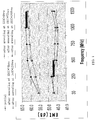
- FIG. 1 illustrates the EMI profiles of a control sample before and after the annealing process.
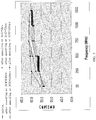
- FIG. 2 illustrates the EMI profiles of reference sample with addition of 2% conductive carbon black filler before and after the annealing process.
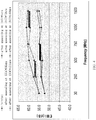
- FIG. 3 illustrates the EMI profiles of reference sample with addition of 3% polyethylene terephthalate (PET) before and after the annealing process.
- FIG. 4 illustrates the EMI profiles of reference sample with addition of 3% polytrimethylene terephthalate (PTT) before and after the annealing process.
- PET polyethylene terephthalate
- PTT polytrimethylene terephthalate
- the polymer composition comprises from 20 wt% to 50 wt% of a thermoplastic polymer; from 5 wt% to 30 wt% of a coated stainless steel fiber; from 0 wt% to 15 wt% of a conductive filler; from 0 wt% to 30 wt% glass fiber; from 0 to 15 wt% of a second polymer; and from 0 wt% to 15 wt% of one or more additives, wherein the coated stainless steel fiber comprises 75 wt% of stainless steel fiber, 9.25 wt% of a polyester material coating and 15.75 wt% of a polysulfone coating.
- the polymer composition comprises from 20 wt% to 50 wt% of a thermoplastic polymer, wherein the thermoplastic polymer comprises polybutylene terephthalate, polyphthalamide, nylon, or a combination thereof; from 5 wt% to 30 wt% of a coated stainless steel fiber, from 0 wt% to 15 wt% of a conductive filler; from 0 wt% to 30 wt% glass fiber; from 0 to 15 wt% of a second polymer; and from 0 wt% to 15 wt% of one or more additives, wherein the coated stainless steel fiber comprises 75 wt% of stainless steel fiber, 9.25 wt% of a polyester material coating and 15.75 wt% of a polysulfone coating.
- the thermoplastic polymer is polybutylene terephthalate.
- the polymer composition comprises from 20 wt% to 50 wt% of a thermoplastic polymer, wherein the thermoplastic polymer comprises two or more individual thermoplastic materials, wherein at least two of the thermoplastic materials have a different intrinsic viscosity; from 5 wt% to 30 wt% of a coated stainless steel fiber; from 0 wt% to 15 wt% of a conductive filler; from 0 wt% to 30 wt% glass fiber; from 0 to 15 wt% of a second polymer; and from 0 wt% to 15 wt% of one or more additives, wherein the coated stainless steel fiber comprises 75 wt% of stainless steel fiber, 9.25 wt% of a polyester material coating and 15.75 wt% of a polysulfone coating.
- the polymer composition comprises from 20 wt% to 50 wt% of a thermoplastic polymer; from 5 wt% to 30 wt.% of a coated stainless steel fiber; from 0 wt% to 15 wt% of a conductive filler, wherein the conductive filler is carbon black; from 0 wt% to 30 wt% glass fiber; from 0 to 15 wt% of a second polymer; and from 0 wt% to 15 wt% of one or more additives, wherein the coated stainless steel fiber comprises 75 wt% of stainless steel fiber, 9.25 wt% of a polyester material coating and 15.75 wt% of a polysulfone coating.
- the conductive filler comprises ENSACO® 250 carbon black powder.
- the polymer composition comprises from 20 wt% to 50 wt% of a thermoplastic polymer; from 5 wt% to 30 wt% of a coated stainless steel fiber; from 0 wt% to 15 wt% of a conductive filler; from 0 wt% to 30 wt% glass fiber; from 0 to 15 wt% of a second polymer, wherein the second polymer is at least partially crystalline; and from 0 wt% to 15 wt% of one or more additives, wherein the coated stainless steel fiber comprises 75 wt% of stainless steel fiber, 9.25 wt% of a polyester material coating and 15.75 wt% of a polysulfone coating.
- the second polymer comprises a polyester. In one embodiment, the second polymer comprises polybutylene terephthalate, polyethylene terephthalate, polytrimethylene terephthalate, polyethylene naphthalate, poly 1,4-cyclohexylene dimethylene terephthalate, or a combination thereof.
- the polymer composition comprises from 20 wt% to 50 wt% of a thermoplastic polymer; from 5 wt% to 30 wt% of a coated stainless steel fiber, wherein the stainless steel fiber comprises Huitong HT-CH75-T20; from 0 wt% to 15 wt% of a conductive filler; from 0 wt% to 30 wt% glass fiber; from 0 to 15 wt.% of a second polymer; and from 0 wt% to 15 wt% of one or more additives.
- the polymer composition comprises from 20 wt% to 50 wt% of a thermoplastic polymer; from 5 wt% to 30 wt% of a coated stainless steel fiber; from 0 wt% to 15 wt.% of a conductive filler; from 0 wt% to 30 wt% glass fiber; from 0 to 15 wt% of a second polymer; and from 0 wt% to 15 wt% of one or more additives, wherein the coated stainless steel fiber comprises 75 wt% of stainless steel fiber, 9.25 wt% of a polyester material coating and 15.75 wt% of a polysulfone coating, and wherein the polymer composition is capable of retaining at least 80% of EMI after annealing at about 150°C for at least about 120 hours. In one embodiment, the polymer composition is capable of retaining at least 85%, 90% or 95% of EMI after annealing at about 150°C for at least about 120 hours.
Landscapes
- Chemical & Material Sciences (AREA)
- Health & Medical Sciences (AREA)
- Chemical Kinetics & Catalysis (AREA)
- Medicinal Chemistry (AREA)
- Polymers & Plastics (AREA)
- Organic Chemistry (AREA)
- Engineering & Computer Science (AREA)
- Manufacturing & Machinery (AREA)
- Materials Engineering (AREA)
- Mechanical Engineering (AREA)
- Inorganic Chemistry (AREA)
- Compositions Of Macromolecular Compounds (AREA)
- Tires In General (AREA)
Description
- The present disclosure relates to polymer compositions having improved electromagnetic shielding properties.
- Thermoplastics, such as, for example, polybutylene terephthalate (PBT), are frequently used as insulators in electrical applications. In such applications, glass fiber is typically added to semi-crystalline materials, such as, for example, PBT materials, to maintain or improve dimensional stability under high temperatures. Unfortunately, the addition of glass fiber also results in diminished electromagnetic shielding performance.
-
US 4,891,399 relates to thermoplastic polymeric molding compositions compounded from 2 to 70 parts by weight of a thermoplastic polymer such as polyamide, and from 98 to 30 parts by weight of a metallic filler such as zinc powder and zinc oxide powder having a surface coated with water repellent agent. -
US 4,636,536 relates to ABS resin composition exhibiting electromagnetic interference-shielding performance which comprises a blend of a flame-retardant ABS resin with 5 to 20% stainless steel fibers and 4 to 30% by weight of glass fibers. -
US 2003/0173550 A1 is concerned with electrically conductive thermoplastic compositions comprising a thermoplastic polymer, an impact modifier and a combination of metal fibers and metal-coated fibers. -
US 2007/0105994 A1 relates to a flame retardant thermoplastic composition that includes 20 to 90 wt% polycarbonate resin, 1 to 35 wt% polysiloxane-polycarbonate copolymer, 0.5 to 20% of a phosphorus-containing flame retardant, and 3 to 30 wt% of metal fiber. -
US 4,596,670 is concerned with conductive thermoplastic compositions having improved surface conductivity and EMI/radiofrequency interference, obtained by conductive thermoplastic compositions comprising a thermoplastic polymer having incorporated therein a combination of 25 to 50 wt% metal flake and 2 to 12 wt% of one or more conductive fibers, preferably metal or metal coated fibers. - Accordingly, there remains a need for thermoplastic materials that can provide improved electromagnetic shielding properties under high temperatures while maintaining heat resistance and other mechanical properties. These needs and other needs are satisfied by the compositions and methods of the present disclosure.
- In accordance with the purpose(s) of the invention, as embodied and broadly described herein, this disclosure, in one aspect, relates to polymer compositions having improved electromagnetic shielding properties.
- In one aspect, the present disclosure provides a polymer composition according to present claim 1.
- Additional aspects of the invention will be set forth in part in the description which follows, and in part will be obvious from the description, or can be learned by practice of the invention. The advantages of the invention will be realized and attained by means of the elements and combinations particularly pointed out in the appended claims. It is to be understood that both the foregoing general description and the following detailed description are exemplary and explanatory only and are not restrictive of the invention, as claimed.
- The accompanying figures, which are incorporated in and constitute a part of this specification, illustrate several aspects and together with the description serve to explain the principles of the invention.
-
FIG. 1 illustrates the EMI profiles of control sample before and after the annealing process. -
FIG. 2 illustrates the EMI profiles of reference sample with addition of 2% conductive carbon black filler before and after the annealing process. -
FIG. 3 illustrates the EMI profiles of reference sample with addition of 3% polyethylene terephthalate (PET) before and after the annealing process. -
FIG. 4 illustrates the EMI profiles of reference sample with addition of 3% polytrimethylene terephthalate (PTT) before and after the annealing process. - The present invention can be understood more readily by reference to the following detailed description of the invention and the Examples included therein.
- Unless defined otherwise, all technical and scientific terms used herein have the same meaning as commonly understood by one of ordinary skill in the art to which this invention belongs. Although any methods and materials similar or equivalent to those described herein can be used in the practice or testing of the present invention, example methods and materials are now described.
- As used in the specification and the appended claims, the singular forms "a," "an" and "the" include plural referents unless the context clearly dictates otherwise. Thus, for example, reference to "a ketone" includes mixtures of two or more ketones.
- Ranges can be expressed herein as from "about" one particular value, and/or to "about" another particular value. When such a range is expressed, another aspect includes from the one particular value and/or to the other particular value. Similarly, when values are expressed as approximations, by use of the antecedent "about," it will be understood that the particular value forms another aspect. It will be further understood that the endpoints of each of the ranges are significant both in relation to the other endpoint, and independently of the other endpoint. It is also understood that there are a number of values disclosed herein, and that each value is also herein disclosed as "about" that particular value in addition to the value itself. For example, if the value "10" is disclosed, then "about 10" is also disclosed. It is also understood that each unit between two particular units are also disclosed. For example, if 10 and 15 are disclosed, then 11, 12, 13, and 14 are also disclosed.
- As used herein, the terms "optional" or "optionally" means that the subsequently described event or circumstance can or cannot occur, and that the description includes instances where said event or circumstance occurs and instances where it does not. For example, the phrase "optionally substituted alkyl" means that the alkyl group can or cannot be substituted and that the description includes both substituted and unsubstituted alkyl groups.
- Disclosed are the components to be used to prepare the compositions of the invention as well as the compositions themselves to be used within the methods disclosed herein. These and other materials are disclosed herein, and it is understood that when combinations, subsets, interactions, groups, etc. of these materials are disclosed that while specific reference of each various individual and collective combinations and permutation of these compounds cannot be explicitly disclosed, each is specifically contemplated and described herein. For example, if a particular compound is disclosed and discussed and a number of modifications that can be made to a number of molecules including the compounds are discussed, specifically contemplated is each and every combination and permutation of the compound and the modifications that are possible unless specifically indicated to the contrary. Thus, if a class of molecules A, B, and C are disclosed as well as a class of molecules D, E, and F and an example of a combination molecule, A-D is disclosed, then even if each is not individually recited each is individually and collectively contemplated meaning combinations, A-E, A-F, B-D, B-E, B-F, C-D, C-E, and C-F are considered disclosed. Likewise, any subset or combination of these is also disclosed. Thus, for example, the sub-group of A-E, B-F, and C- E would be considered disclosed. This concept applies to all aspects of this application including, but not limited to, steps in methods of making and using the compositions of the invention. Thus, if there are a variety of additional steps that can be performed it is understood that each of these additional steps can be performed with any specific aspect or combination of aspects of the methods of the invention.
- References in the specification and concluding claims to parts by weight, of a particular element or component in a composition or article, denote the weight relationship between the element or component and any other elements or components in the composition or article for which a part by weight is expressed. Thus, in a compound containing 2 parts by weight of component X and 5 parts by weight component Y, X and Y are present at a weight ratio of 2:5, and are present in such ratio regardless of whether additional components are contained in the compound.
- A weight percent (wt%) of a component, unless specifically stated to the contrary, is based on the total weight of the formulation or composition in which the component is included.
- A residue of a chemical species, as used in the specification and concluding claims, refers to the moiety that is the resulting product of the chemical species in a particular reaction scheme or subsequent formulation or chemical product, regardless of whether the moiety is actually obtained from the chemical species. Thus, an ethylene glycol residue in a polyester refers to one or more -OCH2CH2O- units in the polyester, regardless of whether ethylene glycol was used to prepare the polyester. Similarly, a sebacic acid residue in a polyester refers to one or more -CO(CH2)8CO- moieties in the polyester, regardless of whether the residue is obtained by reacting sebacic acid or an ester thereof to obtain the polyester.
- The term "alkyl group" as used herein is a branched or unbranched saturated hydrocarbon group of 1 to 24 carbon atoms, such as methyl, ethyl, n-propyl, isopropyl, n-butyl, isobutyl, t-butyl, pentyl, hexyl, heptyl, octyl, decyl, tetradecyl, hexadecyl, eicosyl, tetracosyl and the like. A "lower alkyl" group is an alkyl group containing from one to six carbon atoms.
- The term "alkoxy" as used herein is an alkyl group bound through a single, terminal ether linkage; that is, an "alkoxy" group can be defined as -OR where R is alkyl as defined above. A "lower alkoxy" group is an alkoxy group containing from one to six carbon atoms.
- The term "alkenyl group" as used herein is a hydrocarbon group of from 2 to 24 carbon atoms and structural formula containing at least one carbon-carbon double bond. Asymmetric structures such as (AB)C=C(CD) are intended to include both the E and Z isomers. This can be presumed in structural formulae herein wherein an asymmetric alkene is present, or it can be explicitly indicated by the bond symbol C.
- The term "alkynyl group" as used herein is a hydrocarbon group of 2 to 24 carbon atoms and a structural formula containing at least one carbon-carbon triple bond.
- The term "aryl group" as used herein is any carbon-based aromatic group including, but not limited to, benzene, naphthalene, etc. The term "aromatic" also includes "heteroaryl group," which is defined as an aromatic group that has at least one heteroatom incorporated within the ring of the aromatic group. Examples of heteroatoms include, but are not limited to, nitrogen, oxygen, sulfur, and phosphorus. The aryl group can be substituted or unsubstituted. The aryl group can be substituted with one or more groups including, but not limited to, alkyl, alkynyl, alkenyl, aryl, halide, nitro, amino, ester, ketone, aldehyde, hydroxy, carboxylic acid, or alkoxy.
- The term "cycloalkyl group" as used herein is a non-aromatic carbon-based ring composed of at least three carbon atoms. Examples of cycloalkyl groups include, but are not limited to, cyclopropyl, cyclobutyl, cyclopentyl, cyclohexyl, etc. The term "heterocycloalkyl group" is a cycloalkyl group as defined above where at least one of the carbon atoms of the ring is substituted with a heteroatom such as, but not limited to, nitrogen, oxygen, sulphur, or phosphorus.
- The term "aralkyl" as used herein is an aryl group having an alkyl, alkynyl, or alkenyl group as defined above attached to the aromatic group. An example of an aralkyl group is a benzyl group.
- The term "hydroxyalkyl group" as used herein is an alkyl, alkenyl, alkynyl, aryl, aralkyl, cycloalkyl, halogenated alkyl, or heterocycloalkyl group described above that has at least one hydrogen atom substituted with a hydroxyl group.
- The term "alkoxyalkyl group" is defined as an alkyl, alkenyl, alkynyl, aryl, aralkyl, cycloalkyl, halogenated alkyl, or heterocycloalkyl group described above that has at least one hydrogen atom substituted with an alkoxy group described above.
- The term "ester" as used herein is represented by the formula -C(O)OA, where A can be an alkyl, halogenated alkyl, alkenyl, alkynyl, aryl, heteroaryl, cycloalkyl, cycloalkenyl, heterocycloalkyl, or heterocycloalkenyl group described above.
- The term "carbonate group" as used herein is represented by the formula - OC(O)OR, where R can be hydrogen, an alkyl, alkenyl, alkynyl, aryl, aralkyl, cycloalkyl, halogenated alkyl, or heterocycloalkyl group described above.
- The term "carboxylic acid" as used herein is represented by the formula - C(O)OH.
- The term "aldehyde" as used herein is represented by the formula -C(O)H.
- The term "keto group" as used herein is represented by the formula -C(O)R, where R is an alkyl, alkenyl, alkynyl, aryl, aralkyl, cycloalkyl, halogenated alkyl, or heterocycloalkyl group described above.
- The term "carbonyl group" as used herein is represented by the formula C=O.
- The term "ether" as used herein is represented by the formula AOA1, where A and A1 can be, independently, an alkyl, halogenated alkyl, alkenyl, alkynyl, aryl, heteroaryl, cycloalkyl, cycloalkenyl, heterocycloalkyl, or heterocycloalkenyl group described above.
- The term "sulfo-oxo group" as used herein is represented by the formulas - S(O)2R, -OS(O)2R, or , -OS(O)2OR, where R can be hydrogen, an alkyl, alkenyl, alkynyl, aryl, aralkyl, cycloalkyl, halogenated alkyl, or heterocycloalkyl group described above.
- Each of the materials disclosed herein are either commercially available and/or the methods for the production thereof are known to those of skill in the art.
- As briefly described above, the present disclosure provides polymer materials, such as, for example, thermoplastic polymer materials, that have improved electromagnetic shielding properties. Current market demand exists for thermoplastic materials having improved retention of electromagnetic interference (EMI) properties under high temperatures.
- Conventional thermoplastic materials are frequently mixed with glass fiber to impart dimensional stability under high temperatures, but the addition of glass fiber typically reduces the electromagnetic shielding properties of the material.
- The present invention comprises a polymer composition according to any one of claims 1-13 comprising a thermoplastic polymer, a coated stainless steel fiber, and optionally one or more of glass fiber, a conductive filler, a second polymer, and other additives. In one aspect, the inventive polymer composition exhibits improved EMI retention under high temperatures and while maintaining one or more desirable physical properties. In another aspect, the inventive polymer composition is suitable for use in automotive applications. In another aspect, the second polymer is a crystalline or semicrystalline polymer. In various aspects, semi-crystalline polymers can provide good surface properties, flow ability, and high stiffness, as compared to amorphous polymer materials, such as polycarbonate; however, such semi-crystalline polymer materials typically exhibit drops in EMI performance after annealing and/or aging due to changes in the crystalline structure of the material. Thus, the present invention provides improved methods and compositions to minimize and/or eliminate EMI drop in semi-crystalline polymer materials.
- The polymer composition comprises a thermoplastic polymer. In one aspect, the thermoplastic polymer can comprise any thermoplastic polymer or mixture of polymers suitable for use in the polymer composition or in an intended application. In one aspect, the thermoplastic polymer comprises a crystalline or semi-crystalline polymer. In another aspect, the thermoplastic polymer can comprise a polybutylene therephthalate, a polyphthalamide, nylon, or a combination thereof. In another aspect, the thermoplastic polymer comprises a polyester. In a specific aspect, the thermoplastic comprises polybutylene terephthalate (PBT) and/or a derivative thereof, such as, for example, a Valox® polybutylene terephthalate (PBT), available from SABIC Innovative Plastics.
- In one aspect, the thermoplastic polymer comprises from about 20 wt% to about 50 wt% of the inventive polymer composition, for example, about 20, 22, 24, 26, 28, 30, 32, 34, 36, 38, 40, 42, 44, 46, 48, or 50 wt.%.
- In another aspect, the thermoplastic polymer comprises two or more individual thermoplastic materials having different intrinsic viscosities ranging from about 0.5 to about 1.5. In still other aspects, the thermoplastic composition and/or the polymer composition comprising the thermoplastic polymer can be heat resistant and/or flame retardant.
- The inventive polymer composition comprises a coated stainless steel fiber.
- In one aspect, the coated stainless steel fiber comprises from about 5 wt% to about 30 wt% of the inventive polymer composition, for example, about 5, 6, 7, 8, 9, 10, 11, 12, 13, 14, 15, 16, 17, 18, 19, 20, 21, 22, 23, 24, 25, 26, 27, 28, 29, or 30 wt% of the composition.
- In one aspect, the stainless steel fiber comprises one or more stainless steel alloys and/or alloys thereof, such as, for example, AISI 302, AISI 304, AISI 310, AISI 316L, AISI 330, AISI 406, AISI 430, AISI 446, AISI 601, AISI 630, AISI 904L, or a combination thereof. The stainless steel fiber comprises a coating which is a combination of a polysulfone coating and a polyester material coating. The stainless steel fiber comprises 75 wt% of a fiber, 9.25 wt% of a polyester material coating, and 15.75 wt% of a polysulfone coating. In a specific aspect, the stainless steel fiber comprises a Huitong HT-CH75-T20 stainless steel fiber.
- The morphology of a stainless steel fiber, for example, diameter, length, shape, and aspect ratio, of the stainless steel fiber can vary, and the present invention is not intended to be limited to any particular morphology. In one aspect, the stainless steel fiber can have a diameter of from about 0.5 micrometer (µm) to about 12 µm, for example, about 0.5, 0.6, 0.7, 0.8, 0.9, 1.0, 1.1, or 1.2 µm. In another aspect, the stainless steel fiber can have a diameter of from about 0.5 µm to about 12 µm, for example, about 0.5, 1, 2, 3, 4, 5, 6, 7, 8, 9, 10, 11, or 12 µm. In one aspect, the stainless steel fiber can have a length of from about 0.1 millimeter (mm) to about 12 mm, prior to processing, for example, about 0.1, 0.2, 0.3, 0.4, 0.6, 0.8, 1, 1.5, 2, 2.5, 3, 3.5, 4, 5, 6, 7, 8, 9, 10, 11, or 12 mm. In another aspect, the stainless steel fiber can have a length about 0.1, 0.2, 0.3, 0.4, 0.5, 0.6, 0.7, 0.8, 0.9, 1, 2, 3, 4, 5, 6, 7, 8, 9, 10, 11, or 12 mm, prior to processing. In another aspect, the stainless steel fiber can have a length of from about 0.1 mm to about 3 mm, for example, about 0.1, 0.2, 0.3, 0.4, 0.5, 0.6, 0.7, 0.8, 0.9, 1, 1.2, 1.4, 1.6, 1.8, 2, 2.2, 2.4, 2.6, 2.8, or 3 mm, after undergoing processing in an extruder. In one aspect, the stainless steel fiber comprises an aspect ratio of from about 100 to about 1,000, for example, about 100, 150, 200, 250, 300, 400, 500, 600, 700, 800, 900, or 1,000. In other aspects, the length, diameter, and/or aspect ratio can be less than or greater than any value specifically recited herein, and the present invention is not intended to be limited to any particular length, diameter, and/or aspect ratio values.
- The invention polymer composition can optionally comprise a portion of glass fiber. In one aspect, the inventive polymer composition does not comprise a portion of glass fiber. In another aspect, the inventive polymer composition comprises a portion of glass fiber ranging, for example, up to about 30 wt% of the polymer composition. In another aspect, the polymer composition comprises about 1, 2, 3, 4, 5, 6, 7, 8, 9, 10, 11, 12, 13, 14, 15, 16, 17, 18, 19, 20, 21, 22, 23, 24, 25, 26, 27, 28, 29, or 30 wt% of glass fiber.
- The specific chemical composition, size, and morphology or a glass fiber, if present, can vary, and the present invention is not intended to be limited to any particular glass fiber. In one aspect, the diameter of the fiber may range from 5 to 35 µm. In another aspect, the diameter of the glass fibers may range from 10 to 20 µm. In one aspect, the polymer composition comprises a glass fiber that is a bonding glass fiber of about 13 µm, suitable for use in PBT applications. In this area where a thermoplastic resin is reinforced with glass fibers in a composite form, fibers having a length of 0.4 mm are generally referred to long fibers, and shorter ones are referred to short fibers. In one aspect, the glass fibers have a length of about 0.4 mm or shorter. In another aspect, the glass fibers have a length of about 0.5 mm or longer. In another aspect, the glass fibers have a length of 1 mm or longer. In a further aspect, the fibers have a length of 2 mm or longer. In another aspect, the inventive polymer composition comprises a portion of glass fiber, glass flake, glass beads or a combination thereof. In another aspect, the glass fiber used in the invention may be selected from E-glass, S-glass, AR-glass, T-glass, D-glass, R-glass, or a combination thereof.
- The inventive polymer composition can optionally comprise a conductive filler. In one aspect, the inventive polymer composition does not comprise a conductive filler. In another aspect, the inventive polymer composition comprises a conductive filler, ranging up to about 15 wt.% of the composition. In another aspect, the polymer composition comprises about 1, 2, 3, 4, 5, 6, 7, 8, 9, 10, 11, 12, 13, 14, or 15 wt% of a conductive filler.
- The specific chemical composition, size, and morphology or a conductive filler, if present, can vary, and the present invention is not intended to be limited to any particular conductive filler. In one aspect, the polymer composition comprises a conductive filler, such as, for example, a carbon black. In another aspect, the conductive filler can comprise a particulate carbonaceous material, such as, for example, a furnace carbon black, a thermal black, a surface modified carbon black, a heat treated carbon black, an activated carbon, a graphite, carbon fibers, carbon nanotubes or a combination thereof. In another aspect the conductive filler comprises a metal or metal-clad filler, such as, for example, silver-plated aluminium, nickel-coated graphite, silver-plated copper, silver, silver-coated glass, or a combination thereof. In another aspect, the conductive filler can comprise a low or high surface area conductive carbon black. In another aspect, the conductive filler comprises a carbon black exhibiting a BET surface area from about at least 50 meters squared per gram (m2/g). In another aspect, the conductive filler comprises a carbon black exhibiting an oil absorption from about at least 100 milliliters (ml)/100 gram (g). In a specific aspect, the conductive filler comprises an
ENSACO® 250 carbon powder, available from Earache Europe. In other aspects, the conductive filler can comprise one or more conductive particulate materials not specifically recited herein. - The inventive polymer composition can optionally comprise a second polymer in addition to the thermoplastic polymer described above. In one aspect, the inventive polymer composition does not comprise a second polymer. In another aspect, a second polymer is present and all or a portion thereof is crystalline or at least semi-crystalline. In another aspect, the inventive polymer composition comprises a second polymer, ranging up to about 15 wt% of the composition. In another aspect, the polymer composition comprises about 1, 2, 3, 4, 5, 6, 7, 8, 9, 10, 11, 12, 13, 14, or 15 wt% of a second polymer.
- The specific chemical composition of a second polymer, if present, can vary and the present invention is not intended to be limited to any particular second polymer. In one aspect, the inventive polymer composition comprises a second polymer, such as, for example, a polyester having a different intrinsic viscosity than the thermoplastic polymer. In yet another aspect, the second polymer, if present, should be chemically compatible with the thermoplastic polymer, coated stainless steel fiber, and any optional components that can be present.
- In one aspect, the second polymer comprises a PBT having a different intrinsic viscosity than the thermoplastic, a polyethylene terephthalate (PET), a polytrimethylene terephthalate (PTT), polyethylene naphthalate (PEN), poly 1,4-cyclohexylene dimethylene terephthalate (PCT) or a combination thereof. In another aspect, the second polymer comprises an aromatic polyester. In another aspect, the second polymer comprises polyethylene terephthalate (PET), polybutylene terephthalate (PBT), polytrimethylene terephthalate (PTT), polyethylene naphthalate (PEN), poly 1,4-cyclohexylene dimethylene terephthalate (PCT), or a combination thereof. In yet another aspect, the second polymer can comprise a compound having a ring structure similar to PBT, such as, for example, PET, PTT, PEN, PCT, or a combination thereof. In yet another aspect, the second polymer can comprise one or more additional compounds not specifically recited herein, and the present invention is not intended to be limited to any particular second polymer composition.
- The inventive polymer composition can also optionally comprise one or more additives, such as, for example, impact modifiers, flame retardants, colorants, and primary and/or secondary antioxidants. In one aspect, one or more such additives, if present, can comprise up to about 15 wt.% of the composition, for example, about 1, 2, 3, 4, 5, 6, 7, 8, 9, 10, 11, 12, 13, 14, or 15 wt%.
- In various aspects, the inventive polymer composition can have improved EMI retention and exhibit a higher heat deflection temperature and improved mechanical properties after annealing as compared to a control sample not comprising the inventive polymer composition. In a specific example, a polymer composition comprising a PBT thermoplastic and 3 wt.% PET exhibited only a 5.11% EMI drop after annealing at 150 °C for 168 hours.
- In various aspects, the inventive polymer composition can retain at least about 80%, 85%, 90%, 95%, or more of the initial EMI after annealing at 150°C for about 120 hours. In various aspects, the inventive polymer composition can retain at least about 80%, 85%, 90%, 95%, or more of the initial EMI after annealing at 150°C for about 168 hours. In one aspect, the inventive polymer composition retains at least about 80% of the initial EMI (i.e., before annealing), for example, about 80, 82, 84, 86, 88, 90, 92, 94, 96, 98%, or more, after annealing at 150°C for at least about 120 hours. In another aspect, the inventive polymer composition retains at least about 85% of the initial EMI (i.e., before annealing), for example, at least about 85, 87, 89, 91, 93, 95, 97, 99%, or more after annealing at 150 °C for at least about 120 hours. In another aspect, the inventive polymer composition retains at least about 90% of the initial EMI (i.e., before annealing), for example, at least about 90, 91, 92, 93, 94, 95, 96, 97, 98%, or more after annealing at 150°C for at least about 120 hours. In another aspect, the inventive polymer composition retains at least about 95% of the initial EMI (i.e., before annealing), for example, at least about 95, 96, 97, 98, 99%, or more after annealing at 150°C for at least about 120 hours.
- In other aspects, the compositions of the present invention can exhibit no or little EMI drop with a change, for example, increase, in thickness of the composition. For example, the thickness of a thermoplastic composition or article formed therefrom can be increased while maintaining at least about 85%, at least about 90%, at least about 95%, at least about 97%, at least about 98%, at least about 99%, or more of EMI performance, as compared to a thinner composition or article.
- For each of the following examples which are reference examples, samples were prepared by melt extrusion on a Toshiba twin screw extruder using nominal melt temperatures of about 260°C and 140 rotations per minute (rpm). In addition, tests were conducted in accordance with ISO standards, as described in the tests below:
Test Method Izod Impact, unnotched 80 x 10 x 4 mm, +23°C ISO 180/1U Izod Impact, notched 80 x 10 x 4 mm, +23°C ISO 180/1A Heat Deflection Temperature/Af, 1.8 MPa Flatwise ISO 75/Af 80 x 10 x 4 mm, sp=64 mm Density ISO 1183 Spiral flow analysis SABIC Method Melt Volume-flow rate ISO 1133 Flexural test - 3 point ISO 178 Tensile test - uniaxial tensile ISO 527 EMI shielding testing ASTM D4935 Pftp, V0 at 1.6 mm UL94 V-0 - In a first example, samples containing a conductive filler and a second crystalline polymer were test for EMI retention after annealing, as detailed in Table 1, below.
Table 1 - EMI RETENTION Control 2% Carbon Black 3 % PET 3 % PTT Initial EMI (dB) 61.55 60.95 60.65 59.7 After annealing at 150 °C for 8 hours 59.25 59 59.7 58.2 After annealing at 150 °C for 24 hours 57.75 57.15 59.2 57.1 After annealing at 150 °C for 72 hours 57.25 56.3 58.45 56.9 After annealing at 150 °C for 120 hours 46.45 53.85 58.2 54.35 After annealing at 150 °C for 168 hours 45.55 53.9 57.55 53.9 - In Table 1, the EMI drop is illustrated after annealing. While the control sample exhibited a notable EMI drop, the reference samples exhibited a significantly smaller drop, indicating improved EMI retention. Specifically, the sample comprising 3 % PET exhibited the best EMI retention.
- Additional data showed that with the addition of 2 % conductive carbon black (CCB), 3 % polyethylene terephthalate (PET), or 3% polytrimethylene terephthalate (PTT), the reference samples exhibited higher heat deflect temperatures and improved mechanical properties as compared to a control sample. For example, the sample comprising 3% PET exhibited only a 5.11% EMI drop after annealing at 150°C for 168 hours.
- The tested properties of each of the samples are detailed in Table 2, below.
Table 2 - Test Properties of Control and Reference Samples Properties Standard Unit Value Control 2% CCB 3% PET 3% PTT Specific Gravity ISO 1183 g/cm3 1.67 1.67 1.68 1.68 Izod Impact, notched 23 °C ISO 180 J/m 8.52 8.48 8.62 8.15 Melt Volume Rate, MVR at 270 °C/10kg ISO 1133 cm3/10min 5.22 5.08 1.54 7.88 Flexural Modulus ISO 178 MPa 6099.20 6145.20 6145.20 6290.80 Flexural Strength ISO 178 MPa 130.98 131.80 133.92 134.38 Flexural Strain at Break ISO 178 % 3.06 3.30 3.26 2.98 Tensile Modulus ISO 527 MPa 6030.60 6018.60 6077.60 6231.40 Tensile Stress at Break ISO 527 MPa 74.70 76.90 75.90 77.40 Elongation at Break ISO 527 % 2.10 2.30 2.10 2.10 HDT, 1.8 MPa, 6.4mm °C, ISO 75 °C 157.17 173.73 167.67 160.63 unannealed Shielding Effectiveness @ 1.2 mm ASTM D4935 dB 46.45 43.60 42.60 45.76 Shielding Effectiveness @ 1.5 mm ASTM D4935 dB 52.70 49.60 52.60 51.05 Shielding Effectiveness @ 3 mm ASTM D4935 dB 61.55 60.95 60.65 59.70 Shielding Effectiveness @ 3 mm, after annealing at 150 °C x 8 hrs ASTM D4935 dB 59.25 59.00 59.70 58.20 drop rate, % 3.74 3.20 1.57 2.51 Shielding Effectiveness @ 3 mm, after annealing at 150 °C x 24 hrs ASTM D4935 dB 57.75 57.15 59.20 57.10 drop rate, % 6.17 6.23 2.39 4.36 Shielding Effectiveness @ 3 mm, after annealing at 150 °C x 72 hrs ASTM D4935 dB 57.25 56.30 58.45 56.90 drop rate, % 6.99 7.63 3.63 4.69 Shielding Effectiveness @ 3 mm, after annealing at 150 °C x 120 hrs ASTM D4935 dB 46.45 53.85 58.20 54.35 drop rate, % 24.53 11.65 4.04 8.96 Shielding Effectiveness @ 3 mm, after annealing at 150 °C x 168 hrs ASTM D4935 dB 45.55 53.90 57.55 53.90 drop rate, % 26.00 11.57 5.11 9.72 - As detailed in Table 2, above, blends of polybutylene terephthalate (PBT) with different intrinsic viscosity as base resin, incorporated flat glass fiber, conductive filler, and a second crystalline polymer with stainless steel fiber, we can get composites with better EMI retention after annealing at high temperature while maintaining one or more mechanical, flow, and/or thermal properties.
- In a second example, reference samples were prepared and subjected to EMI testing before and after annealing at 150°C for various periods of time. Table 3 details the results of this analysis. Each of a control sample, a sample with 2% conductive carbon black (CCB), 3 % polyethylene terephthalate (PET), and 3 % polytrimethylene terephthalate (PTT) were prepared and evaluated.
Table 3 Frequency (MHz) 30 250 500 750 1,000 1,500 Control Initial 55.6 60.0 61.8 62.0 62.4 61.4 After annealing at 150°C for 8 hrs 55.2 57.0 59.0 60.4 60.6 61.0 After annealing at 150°C for 24 hrs 51.6 55.8 57.4 59.0 58.8 59.6 After annealing at 150°C for 72 hrs 53.2 55.4 56.8 58.6 58.2 59.6 After annealing at 150°C for 120 hrs 47.4 47.6 46.4 46.2 45.6 47.4 After annealing at 150°C for 168 hrs 46.8 48.2 45.2 44.4 44.4 46.2 2% CCB Initial 54.2 60.2 61.2 61.0 61.4 61.6 After annealing at 150°C for 8 hrs 53.6 56.4 58.4 60.6 60.6 61.0 After annealing at 150°C for 24 hrs 52.8 55.2 56.2 58.6 58.6 59.8 After annealing at 150°C for 72 hrs 51.4 54.6 56.0 57.2 57.4 59.2 After annealing at 150 °C for 120 hrs 51.2 52.8 53.2 54.6 54.8 56.8 After annealing at 150 °C for 168 hrs 51.2 52.4 53.4 55.2 54.6 56 3% PET Initial 55.6 60.0 60.6 61.0 61.0 60.4 After annealing at 150°C for 8 hrs 54.0 57.8 59.2 61.0 60.8 60.4 After annealing at 150 °C for 24 hrs 55.4 57.0 58.6 60.8 60.4 60.8 After annealing at 150°C for 72 hrs 54.2 56.6 58.0 59.4 59.8 60.6 After annealing at 150°C for 120 hrs 53.6 56.6 57.8 59.4 59 59.8 After annealing at 150°C for 168 hrs 54.2 56 57 58.6 58.6 59.6 3% PTT Initial 54.8 57.6 59.8 60.4 61.0 60.4 After annealing at 150°C for 8 hrs 55.0 56.4 57.2 60.0 59.2 60.2 After annealing at 150°C for 24 hrs 52.4 54.8 56.8 58.6 58.2 58.8 After annealing at 150°C for 72 hrs 53.2 56.0 56.2 58.0 57.4 58.8 After annealing at 150°C for 120 hrs 52.2 54 54 54.8 54.6 55.8 After annealing at 150°C for 168 hrs 52.2 53.8 53.2 54.8 53.8 54.8 -
FIG. 1 illustrates the EMI profiles of a control sample before and after the annealing process.FIG. 2 illustrates the EMI profiles of reference sample with addition of 2% conductive carbon black filler before and after the annealing process.FIG. 3 illustrates the EMI profiles of reference sample with addition of 3% polyethylene terephthalate (PET) before and after the annealing process.FIG. 4 illustrates the EMI profiles of reference sample with addition of 3% polytrimethylene terephthalate (PTT) before and after the annealing process. - In various embodiments, the polymer composition comprises from 20 wt% to 50 wt% of a thermoplastic polymer; from 5 wt% to 30 wt% of a coated stainless steel fiber; from 0 wt% to 15 wt% of a conductive filler; from 0 wt% to 30 wt% glass fiber; from 0 to 15 wt% of a second polymer; and from 0 wt% to 15 wt% of one or more additives, wherein the coated stainless steel fiber comprises 75 wt% of stainless steel fiber, 9.25 wt% of a polyester material coating and 15.75 wt% of a polysulfone coating.
- In some embodiments, the polymer composition comprises from 20 wt% to 50 wt% of a thermoplastic polymer, wherein the thermoplastic polymer comprises polybutylene terephthalate, polyphthalamide, nylon, or a combination thereof; from 5 wt% to 30 wt% of a coated stainless steel fiber, from 0 wt% to 15 wt% of a conductive filler; from 0 wt% to 30 wt% glass fiber; from 0 to 15 wt% of a second polymer; and from 0 wt% to 15 wt% of one or more additives, wherein the coated stainless steel fiber comprises 75 wt% of stainless steel fiber, 9.25 wt% of a polyester material coating and 15.75 wt% of a polysulfone coating. In one embodiment, the thermoplastic polymer is polybutylene terephthalate.
- In other embodiments, the polymer composition comprises from 20 wt% to 50 wt% of a thermoplastic polymer, wherein the thermoplastic polymer comprises two or more individual thermoplastic materials, wherein at least two of the thermoplastic materials have a different intrinsic viscosity; from 5 wt% to 30 wt% of a coated stainless steel fiber; from 0 wt% to 15 wt% of a conductive filler; from 0 wt% to 30 wt% glass fiber; from 0 to 15 wt% of a second polymer; and from 0 wt% to 15 wt% of one or more additives, wherein the coated stainless steel fiber comprises 75 wt% of stainless steel fiber, 9.25 wt% of a polyester material coating and 15.75 wt% of a polysulfone coating.
- In some embodiments, the polymer composition comprises from 20 wt% to 50 wt% of a thermoplastic polymer; from 5 wt% to 30 wt.% of a coated stainless steel fiber; from 0 wt% to 15 wt% of a conductive filler, wherein the conductive filler is carbon black; from 0 wt% to 30 wt% glass fiber; from 0 to 15 wt% of a second polymer; and from 0 wt% to 15 wt% of one or more additives, wherein the coated stainless steel fiber comprises 75 wt% of stainless steel fiber, 9.25 wt% of a polyester material coating and 15.75 wt% of a polysulfone coating. In one embodiment, the conductive filler comprises
ENSACO® 250 carbon black powder. - In various embodiments, the polymer composition comprises from 20 wt% to 50 wt% of a thermoplastic polymer; from 5 wt% to 30 wt% of a coated stainless steel fiber; from 0 wt% to 15 wt% of a conductive filler; from 0 wt% to 30 wt% glass fiber; from 0 to 15 wt% of a second polymer, wherein the second polymer is at least partially crystalline; and from 0 wt% to 15 wt% of one or more additives, wherein the coated stainless steel fiber comprises 75 wt% of stainless steel fiber, 9.25 wt% of a polyester material coating and 15.75 wt% of a polysulfone coating. In some embodiments, the second polymer comprises a polyester. In one embodiment, the second polymer comprises polybutylene terephthalate, polyethylene terephthalate, polytrimethylene terephthalate, polyethylene naphthalate, poly 1,4-cyclohexylene dimethylene terephthalate, or a combination thereof.
- In one embodiment, the polymer composition comprises from 20 wt% to 50 wt% of a thermoplastic polymer; from 5 wt% to 30 wt% of a coated stainless steel fiber, wherein the stainless steel fiber comprises Huitong HT-CH75-T20; from 0 wt% to 15 wt% of a conductive filler; from 0 wt% to 30 wt% glass fiber; from 0 to 15 wt.% of a second polymer; and from 0 wt% to 15 wt% of one or more additives.
- In some embodiments, the polymer composition comprises from 20 wt% to 50 wt% of a thermoplastic polymer; from 5 wt% to 30 wt% of a coated stainless steel fiber; from 0 wt% to 15 wt.% of a conductive filler; from 0 wt% to 30 wt% glass fiber; from 0 to 15 wt% of a second polymer; and from 0 wt% to 15 wt% of one or more additives, wherein the coated stainless steel fiber comprises 75 wt% of stainless steel fiber, 9.25 wt% of a polyester material coating and 15.75 wt% of a polysulfone coating, and wherein the polymer composition is capable of retaining at least 80% of EMI after annealing at about 150°C for at least about 120 hours. In one embodiment, the polymer composition is capable of retaining at least 85%, 90% or 95% of EMI after annealing at about 150°C for at least about 120 hours.
Claims (13)
- A polymer composition comprising:a. from 20 wt.% to 50 wt% of a thermoplastic polymer;b. from 5 wt.% to 30 wt% of a coated stainless steel fiber;c. from 0 wt.% to 15 wt% of a conductive filler;d. from 0 wt.% to 30 wt% of glass fiber;e. from 0 wt.% to 15 wt% of a second polymer; andf. from 0 wt.% to 15 wt% of one or more additives,wherein the coated stainless steel fiber comprises 75 wt% of stainless steel fiber, 9.25 wt% of a polyester material coating and 15.75 wt% of a polysulfone coating.
- The polymer composition of claim 1, wherein the thermoplastic polymer is semi-crystalline.
- The polymer composition of claim 1 or claim 2, wherein the thermoplastic polymer comprises polybutylene terephthalate, polyphthalamide, nylon, or a combination thereof.
- The polymer composition of any one of claims 1-3, wherein the thermoplastic polymer comprises polybutylene terephthalate.
- The polymer composition of any one of claims 1-4, wherein the thermoplastic polymer comprises two or more individual thermoplastic materials, wherein at least two of the thermoplastic materials have a different intrinsic viscosity.
- The polymer composition of any one of claims 1-5, wherein the conductive filler comprises a carbon black.
- The polymer composition of any one of claims 1-6, wherein the second polymer is present and all or portion of thereof is crystalline.
- The polymer composition of any one of claims 1-7, wherein the second polymer is present and comprises a polyester.
- The polymer composition of any one of claims 1-8, wherein the second polymer comprises polybutylene terephthalate, polyethylene terephthalate, polytrimethylene terephthalate, polyethylene naphthalate, poly 1,4-cyclohexylene dimethylene terephthalate, or a combination thereof.
- The polymer composition of any one of claims 1-9, capable of retaining at least 80% of electromagnetic interference (EMI) after annealing at 150°C for at least 120 hours, wherein the EMI was determined according to the description.
- The polymer composition of any one of claims 1-10, capable of retaining at least 85% of EMI after annealing at 150 °C for at least 120 hours, wherein the EMI was determined according to the description.
- The polymer composition of any one of claims 1-11, capable of retaining at least 90% of EMI after annealing at 150°C for at least 120 hours, wherein the EMI was determined according to the description.
- The polymer composition of any one of claims 1-12, capable of retaining at least 95% of EMI after annealing at 150°C for at least 120 hours, wherein the EMI was determined according to the description.
Applications Claiming Priority (2)
| Application Number | Priority Date | Filing Date | Title |
|---|---|---|---|
| US13/405,774 US10583691B2 (en) | 2012-02-27 | 2012-02-27 | Polymer compositions having improved EMI retention |
| PCT/IB2012/056883 WO2013128250A1 (en) | 2012-02-27 | 2012-11-30 | Polymer compositions having improved emi retention background |
Publications (2)
| Publication Number | Publication Date |
|---|---|
| EP2820076A1 EP2820076A1 (en) | 2015-01-07 |
| EP2820076B1 true EP2820076B1 (en) | 2020-10-28 |
Family
ID=47429994
Family Applications (1)
| Application Number | Title | Priority Date | Filing Date |
|---|---|---|---|
| EP12806163.7A Active EP2820076B1 (en) | 2012-02-27 | 2012-11-30 | Polymer compositions having improved emi retention background |
Country Status (5)
| Country | Link |
|---|---|
| US (2) | US10583691B2 (en) |
| EP (1) | EP2820076B1 (en) |
| KR (1) | KR101885791B1 (en) |
| CN (1) | CN104093777B (en) |
| WO (1) | WO2013128250A1 (en) |
Families Citing this family (5)
| Publication number | Priority date | Publication date | Assignee | Title |
|---|---|---|---|---|
| CN105199375A (en) * | 2015-10-12 | 2015-12-30 | 苏州宽温电子科技有限公司 | Electrically and magnetically conductive composite material and preparation method thereof |
| IT201700038877A1 (en) * | 2017-04-07 | 2018-10-07 | Eltek Spa | MATERIAL COMPOSITE WITH PTC EFFECT, ITS PROCEDURE OF OBTAINING AND DEVICE HEATING INCLUDING SUCH MATERIAL |
| CN107266878A (en) * | 2017-07-21 | 2017-10-20 | 安徽江淮汽车集团股份有限公司 | A kind of flame-retardant conductive PBT composite and preparation method thereof |
| CN109370205A (en) * | 2018-10-15 | 2019-02-22 | 中广核高新核材科技(苏州)有限公司 | Electromagnetic shielding composite material containing stainless steel fibre |
| EP3943535A1 (en) * | 2020-07-20 | 2022-01-26 | SHPP Global Technologies B.V. | Composites having improved microwave shielding properties |
Family Cites Families (21)
| Publication number | Priority date | Publication date | Assignee | Title |
|---|---|---|---|---|
| US2465319A (en) * | 1941-07-29 | 1949-03-22 | Du Pont | Polymeric linear terephthalic esters |
| US4272429A (en) * | 1979-05-01 | 1981-06-09 | E. I. Du Pont De Nemours And Company | Thermally stable, flame-retardant polymers and selected oligomers useful therein |
| US4260693A (en) * | 1979-08-27 | 1981-04-07 | General Electric Company | Polycarbonate compositions |
| NL8204288A (en) | 1982-11-05 | 1984-06-01 | Gen Electric | POLYMER MIX, METHOD FOR PREPARING THE POLYMER MIX, ARTICLES FORMED FROM THE POLYMER MIX. |
| US4596670A (en) * | 1983-10-25 | 1986-06-24 | General Electric Company | EMI shielding effectiveness of thermoplastics |
| JPS6173759A (en) * | 1984-09-20 | 1986-04-15 | Mitsubishi Rayon Co Ltd | Electromagnetic wave shielding flame retardant ABS resin composition |
| US4891399A (en) | 1986-10-28 | 1990-01-02 | Calp Corporation | Thermoplastic resin-based molding composition |
| US4826913A (en) * | 1987-12-22 | 1989-05-02 | General Electric Company | Composition |
| US5034157A (en) * | 1990-03-16 | 1991-07-23 | Itt Corporation | Injection moldable composite |
| WO1994001495A1 (en) * | 1992-07-08 | 1994-01-20 | Kawasaki Chemical Holding Co. | Elastomer toughened, wear resistant compositions |
| US20020108699A1 (en) * | 1996-08-12 | 2002-08-15 | Cofer Cameron G. | Method for forming electrically conductive impregnated fibers and fiber pellets |
| DE19742884A1 (en) * | 1997-09-29 | 1999-04-01 | Ticona Polymerwerke Gmbh | Thermoplastic molding compound |
| US6046300A (en) * | 1997-12-26 | 2000-04-04 | Toray Industries, Inc. | Liquid-crystalline resin and thermoplastic resin composition |
| CN1206278C (en) * | 2001-07-23 | 2005-06-15 | 帝人化成株式会社 | Thermoplastic resin composition, molded article, and process for producing the same |
| US6896828B2 (en) | 2001-11-13 | 2005-05-24 | Dow Global Technologies Inc. | Electrically conductive thermoplastic polymer composition |
| US8399546B2 (en) | 2004-08-05 | 2013-03-19 | Sabic Innovative Plastics Ip B.V. | Flame retardant thermoplastic compositions having EMI shielding |
| US7771805B1 (en) * | 2005-06-01 | 2010-08-10 | Ovation Polymer Technology And Engineered Materials, Inc. | Low organic vapor permeation resin composition |
| US20090226696A1 (en) * | 2008-02-06 | 2009-09-10 | World Properties, Inc. | Conductive Polymer Foams, Method of Manufacture, And Uses Thereof |
| US8679371B2 (en) * | 2007-04-11 | 2014-03-25 | Sabic Innovative Plastics Ip B.V. | Electrically conducting polymeric compositions, methods of manufacture thereof and articles comprising the same |
| US8003016B2 (en) * | 2007-09-28 | 2011-08-23 | Sabic Innovative Plastics Ip B.V. | Thermoplastic composition with improved positive temperature coefficient behavior and method for making thereof |
| KR20110048052A (en) * | 2008-08-18 | 2011-05-09 | 프로덕티브 리서치 엘엘씨 | Moldable lightweight composite |
-
2012
- 2012-02-27 US US13/405,774 patent/US10583691B2/en active Active
- 2012-11-30 CN CN201280068252.7A patent/CN104093777B/en active Active
- 2012-11-30 EP EP12806163.7A patent/EP2820076B1/en active Active
- 2012-11-30 WO PCT/IB2012/056883 patent/WO2013128250A1/en not_active Ceased
- 2012-11-30 KR KR1020147024475A patent/KR101885791B1/en active Active
-
2016
- 2016-03-08 US US15/064,455 patent/US20160325587A1/en not_active Abandoned
Non-Patent Citations (1)
| Title |
|---|
| None * |
Also Published As
| Publication number | Publication date |
|---|---|
| KR20140138148A (en) | 2014-12-03 |
| US20160325587A1 (en) | 2016-11-10 |
| EP2820076A1 (en) | 2015-01-07 |
| US20130221282A1 (en) | 2013-08-29 |
| KR101885791B1 (en) | 2018-08-06 |
| CN104093777B (en) | 2016-02-03 |
| WO2013128250A1 (en) | 2013-09-06 |
| US10583691B2 (en) | 2020-03-10 |
| CN104093777A (en) | 2014-10-08 |
Similar Documents
| Publication | Publication Date | Title |
|---|---|---|
| EP1367097B1 (en) | Carbon fiber reinforced resin composition, molding material and molded article therefrom | |
| EP2350193B1 (en) | Thermoplastic composition including thermally conductive filler and hyperbranched polyesteramide | |
| KR101267272B1 (en) | Resin composition | |
| US7939167B2 (en) | Resin composition | |
| KR101288565B1 (en) | Multi-functional resin composite and molded product using the same | |
| EP3845587A1 (en) | Microwave absorbing materials and molded articles for automotive radar sensor applications | |
| EP2102284B1 (en) | Electromagnetic wave shielding thermoplastic resin composition and plastic article | |
| KR20180038013A (en) | Alkylphosphinate salts as impact modifiers for laser-platable materials and their methods | |
| US10583691B2 (en) | Polymer compositions having improved EMI retention | |
| KR20160053969A (en) | Improved plating performance using combination metal oxide and metal powder as additives | |
| WO2007037450A9 (en) | Flame-retardant polybutylene terephthalate resin composition | |
| KR20160129974A (en) | Polycarbonate resin composition and molded article using thereof | |
| JP5310296B2 (en) | Pellet made of polyamide resin composition and flame-retardant resin molded product | |
| US20240093004A1 (en) | PBT-Carbon Fiber Composites for Microwave Shielding | |
| EP4267668B1 (en) | Polybutylene terephthalate composition and article | |
| KR20160026764A (en) | Conductive thermoplastic composition | |
| JP2001081318A (en) | Flame retardant polyamide resin composition and molded article thereof | |
| EP2744861B1 (en) | Poly(arylene ether) composition, method, and article | |
| EP4036169B1 (en) | Thermoplastic resin composition and molded product manufactured from same | |
| EP2917280B1 (en) | Poly(phenylene ether) composition and article | |
| KR101795133B1 (en) | Polycarbonate resin composition and molded part using the same | |
| KR20090051876A (en) | Inorganic fillers with reduced gas generation and resin compositions using them | |
| CN114599737B (en) | Resin composition for laser direct structuring, molded article, and method for manufacturing coated molded article | |
| JP2002220786A (en) | Carbon fiber bundle, resin composition, molding material and molded article using the same | |
| KR102356637B1 (en) | Poly butylene telephthalate resin composition for emi shielding, and molded artice manufactured therefrom |
Legal Events
| Date | Code | Title | Description |
|---|---|---|---|
| PUAI | Public reference made under article 153(3) epc to a published international application that has entered the european phase |
Free format text: ORIGINAL CODE: 0009012 |
|
| 17P | Request for examination filed |
Effective date: 20140619 |
|
| AK | Designated contracting states |
Kind code of ref document: A1 Designated state(s): AL AT BE BG CH CY CZ DE DK EE ES FI FR GB GR HR HU IE IS IT LI LT LU LV MC MK MT NL NO PL PT RO RS SE SI SK SM TR |
|
| AX | Request for extension of the european patent |
Extension state: BA ME |
|
| DAX | Request for extension of the european patent (deleted) | ||
| RAP1 | Party data changed (applicant data changed or rights of an application transferred) |
Owner name: SABIC GLOBAL TECHNOLOGIES B.V. |
|
| RAP3 | Party data changed (applicant data changed or rights of an application transferred) |
Owner name: SABIC GLOBAL TECHNOLOGIES B.V. |
|
| STAA | Information on the status of an ep patent application or granted ep patent |
Free format text: STATUS: EXAMINATION IS IN PROGRESS |
|
| 17Q | First examination report despatched |
Effective date: 20180605 |
|
| GRAP | Despatch of communication of intention to grant a patent |
Free format text: ORIGINAL CODE: EPIDOSNIGR1 |
|
| STAA | Information on the status of an ep patent application or granted ep patent |
Free format text: STATUS: GRANT OF PATENT IS INTENDED |
|
| RIC1 | Information provided on ipc code assigned before grant |
Ipc: C08L 77/12 20060101ALI20200430BHEP Ipc: C08L 67/02 20060101ALI20200430BHEP Ipc: C08L 77/02 20060101ALI20200430BHEP Ipc: C08L 77/06 20060101ALI20200430BHEP Ipc: C08K 7/14 20060101ALI20200430BHEP Ipc: C08J 5/04 20060101ALI20200430BHEP Ipc: C08L 77/00 20060101ALI20200430BHEP Ipc: C08L 101/00 20060101ALI20200430BHEP Ipc: C08K 3/04 20060101AFI20200430BHEP Ipc: C08K 7/06 20060101ALI20200430BHEP |
|
| INTG | Intention to grant announced |
Effective date: 20200528 |
|
| GRAS | Grant fee paid |
Free format text: ORIGINAL CODE: EPIDOSNIGR3 |
|
| GRAA | (expected) grant |
Free format text: ORIGINAL CODE: 0009210 |
|
| STAA | Information on the status of an ep patent application or granted ep patent |
Free format text: STATUS: THE PATENT HAS BEEN GRANTED |
|
| AK | Designated contracting states |
Kind code of ref document: B1 Designated state(s): AL AT BE BG CH CY CZ DE DK EE ES FI FR GB GR HR HU IE IS IT LI LT LU LV MC MK MT NL NO PL PT RO RS SE SI SK SM TR |
|
| REG | Reference to a national code |
Ref country code: GB Ref legal event code: FG4D |
|
| REG | Reference to a national code |
Ref country code: CH Ref legal event code: EP |
|
| REG | Reference to a national code |
Ref country code: DE Ref legal event code: R096 Ref document number: 602012073000 Country of ref document: DE |
|
| REG | Reference to a national code |
Ref country code: AT Ref legal event code: REF Ref document number: 1328175 Country of ref document: AT Kind code of ref document: T Effective date: 20201115 |
|
| REG | Reference to a national code |
Ref country code: IE Ref legal event code: FG4D |
|
| REG | Reference to a national code |
Ref country code: AT Ref legal event code: MK05 Ref document number: 1328175 Country of ref document: AT Kind code of ref document: T Effective date: 20201028 |
|
| REG | Reference to a national code |
Ref country code: NL Ref legal event code: MP Effective date: 20201028 |
|
| PG25 | Lapsed in a contracting state [announced via postgrant information from national office to epo] |
Ref country code: GR Free format text: LAPSE BECAUSE OF FAILURE TO SUBMIT A TRANSLATION OF THE DESCRIPTION OR TO PAY THE FEE WITHIN THE PRESCRIBED TIME-LIMIT Effective date: 20210129 Ref country code: PT Free format text: LAPSE BECAUSE OF FAILURE TO SUBMIT A TRANSLATION OF THE DESCRIPTION OR TO PAY THE FEE WITHIN THE PRESCRIBED TIME-LIMIT Effective date: 20210301 Ref country code: NO Free format text: LAPSE BECAUSE OF FAILURE TO SUBMIT A TRANSLATION OF THE DESCRIPTION OR TO PAY THE FEE WITHIN THE PRESCRIBED TIME-LIMIT Effective date: 20210128 Ref country code: NL Free format text: LAPSE BECAUSE OF FAILURE TO SUBMIT A TRANSLATION OF THE DESCRIPTION OR TO PAY THE FEE WITHIN THE PRESCRIBED TIME-LIMIT Effective date: 20201028 Ref country code: FI Free format text: LAPSE BECAUSE OF FAILURE TO SUBMIT A TRANSLATION OF THE DESCRIPTION OR TO PAY THE FEE WITHIN THE PRESCRIBED TIME-LIMIT Effective date: 20201028 Ref country code: RS Free format text: LAPSE BECAUSE OF FAILURE TO SUBMIT A TRANSLATION OF THE DESCRIPTION OR TO PAY THE FEE WITHIN THE PRESCRIBED TIME-LIMIT Effective date: 20201028 |
|
| REG | Reference to a national code |
Ref country code: DE Ref legal event code: R082 Ref document number: 602012073000 Country of ref document: DE Representative=s name: PRINZ & PARTNER MBB PATENTANWAELTE RECHTSANWAE, DE Ref country code: DE Ref legal event code: R081 Ref document number: 602012073000 Country of ref document: DE Owner name: SHPP GLOBAL TECHNOLOGIES B.V., NL Free format text: FORMER OWNER: SABIC GLOBAL TECHNOLOGIES B.V., BERGEN OP ZOOM, NL |
|
| REG | Reference to a national code |
Ref country code: LT Ref legal event code: MG4D |
|
| PG25 | Lapsed in a contracting state [announced via postgrant information from national office to epo] |
Ref country code: IS Free format text: LAPSE BECAUSE OF FAILURE TO SUBMIT A TRANSLATION OF THE DESCRIPTION OR TO PAY THE FEE WITHIN THE PRESCRIBED TIME-LIMIT Effective date: 20210228 Ref country code: SE Free format text: LAPSE BECAUSE OF FAILURE TO SUBMIT A TRANSLATION OF THE DESCRIPTION OR TO PAY THE FEE WITHIN THE PRESCRIBED TIME-LIMIT Effective date: 20201028 Ref country code: LV Free format text: LAPSE BECAUSE OF FAILURE TO SUBMIT A TRANSLATION OF THE DESCRIPTION OR TO PAY THE FEE WITHIN THE PRESCRIBED TIME-LIMIT Effective date: 20201028 Ref country code: PL Free format text: LAPSE BECAUSE OF FAILURE TO SUBMIT A TRANSLATION OF THE DESCRIPTION OR TO PAY THE FEE WITHIN THE PRESCRIBED TIME-LIMIT Effective date: 20201028 Ref country code: ES Free format text: LAPSE BECAUSE OF FAILURE TO SUBMIT A TRANSLATION OF THE DESCRIPTION OR TO PAY THE FEE WITHIN THE PRESCRIBED TIME-LIMIT Effective date: 20201028 Ref country code: AT Free format text: LAPSE BECAUSE OF FAILURE TO SUBMIT A TRANSLATION OF THE DESCRIPTION OR TO PAY THE FEE WITHIN THE PRESCRIBED TIME-LIMIT Effective date: 20201028 Ref country code: BG Free format text: LAPSE BECAUSE OF FAILURE TO SUBMIT A TRANSLATION OF THE DESCRIPTION OR TO PAY THE FEE WITHIN THE PRESCRIBED TIME-LIMIT Effective date: 20210128 |
|
| PG25 | Lapsed in a contracting state [announced via postgrant information from national office to epo] |
Ref country code: HR Free format text: LAPSE BECAUSE OF FAILURE TO SUBMIT A TRANSLATION OF THE DESCRIPTION OR TO PAY THE FEE WITHIN THE PRESCRIBED TIME-LIMIT Effective date: 20201028 |
|
| REG | Reference to a national code |
Ref country code: CH Ref legal event code: PL |
|
| REG | Reference to a national code |
Ref country code: DE Ref legal event code: R097 Ref document number: 602012073000 Country of ref document: DE |
|
| PG25 | Lapsed in a contracting state [announced via postgrant information from national office to epo] |
Ref country code: SM Free format text: LAPSE BECAUSE OF FAILURE TO SUBMIT A TRANSLATION OF THE DESCRIPTION OR TO PAY THE FEE WITHIN THE PRESCRIBED TIME-LIMIT Effective date: 20201028 Ref country code: EE Free format text: LAPSE BECAUSE OF FAILURE TO SUBMIT A TRANSLATION OF THE DESCRIPTION OR TO PAY THE FEE WITHIN THE PRESCRIBED TIME-LIMIT Effective date: 20201028 Ref country code: CZ Free format text: LAPSE BECAUSE OF FAILURE TO SUBMIT A TRANSLATION OF THE DESCRIPTION OR TO PAY THE FEE WITHIN THE PRESCRIBED TIME-LIMIT Effective date: 20201028 Ref country code: SK Free format text: LAPSE BECAUSE OF FAILURE TO SUBMIT A TRANSLATION OF THE DESCRIPTION OR TO PAY THE FEE WITHIN THE PRESCRIBED TIME-LIMIT Effective date: 20201028 Ref country code: RO Free format text: LAPSE BECAUSE OF FAILURE TO SUBMIT A TRANSLATION OF THE DESCRIPTION OR TO PAY THE FEE WITHIN THE PRESCRIBED TIME-LIMIT Effective date: 20201028 Ref country code: LT Free format text: LAPSE BECAUSE OF FAILURE TO SUBMIT A TRANSLATION OF THE DESCRIPTION OR TO PAY THE FEE WITHIN THE PRESCRIBED TIME-LIMIT Effective date: 20201028 Ref country code: LU Free format text: LAPSE BECAUSE OF NON-PAYMENT OF DUE FEES Effective date: 20201130 Ref country code: MC Free format text: LAPSE BECAUSE OF FAILURE TO SUBMIT A TRANSLATION OF THE DESCRIPTION OR TO PAY THE FEE WITHIN THE PRESCRIBED TIME-LIMIT Effective date: 20201028 |
|
| REG | Reference to a national code |
Ref country code: BE Ref legal event code: MM Effective date: 20201130 |
|
| PG25 | Lapsed in a contracting state [announced via postgrant information from national office to epo] |
Ref country code: CH Free format text: LAPSE BECAUSE OF NON-PAYMENT OF DUE FEES Effective date: 20201130 Ref country code: DK Free format text: LAPSE BECAUSE OF FAILURE TO SUBMIT A TRANSLATION OF THE DESCRIPTION OR TO PAY THE FEE WITHIN THE PRESCRIBED TIME-LIMIT Effective date: 20201028 Ref country code: LI Free format text: LAPSE BECAUSE OF NON-PAYMENT OF DUE FEES Effective date: 20201130 |
|
| REG | Reference to a national code |
Ref country code: IE Ref legal event code: MM4A |
|
| PLBE | No opposition filed within time limit |
Free format text: ORIGINAL CODE: 0009261 |
|
| STAA | Information on the status of an ep patent application or granted ep patent |
Free format text: STATUS: NO OPPOSITION FILED WITHIN TIME LIMIT |
|
| GBPC | Gb: european patent ceased through non-payment of renewal fee |
Effective date: 20210128 |
|
| 26N | No opposition filed |
Effective date: 20210729 |
|
| PG25 | Lapsed in a contracting state [announced via postgrant information from national office to epo] |
Ref country code: IE Free format text: LAPSE BECAUSE OF NON-PAYMENT OF DUE FEES Effective date: 20201130 Ref country code: IT Free format text: LAPSE BECAUSE OF FAILURE TO SUBMIT A TRANSLATION OF THE DESCRIPTION OR TO PAY THE FEE WITHIN THE PRESCRIBED TIME-LIMIT Effective date: 20201028 Ref country code: AL Free format text: LAPSE BECAUSE OF FAILURE TO SUBMIT A TRANSLATION OF THE DESCRIPTION OR TO PAY THE FEE WITHIN THE PRESCRIBED TIME-LIMIT Effective date: 20201028 |
|
| PG25 | Lapsed in a contracting state [announced via postgrant information from national office to epo] |
Ref country code: GB Free format text: LAPSE BECAUSE OF NON-PAYMENT OF DUE FEES Effective date: 20210128 Ref country code: SI Free format text: LAPSE BECAUSE OF FAILURE TO SUBMIT A TRANSLATION OF THE DESCRIPTION OR TO PAY THE FEE WITHIN THE PRESCRIBED TIME-LIMIT Effective date: 20201028 |
|
| PG25 | Lapsed in a contracting state [announced via postgrant information from national office to epo] |
Ref country code: IS Free format text: LAPSE BECAUSE OF FAILURE TO SUBMIT A TRANSLATION OF THE DESCRIPTION OR TO PAY THE FEE WITHIN THE PRESCRIBED TIME-LIMIT Effective date: 20210228 Ref country code: TR Free format text: LAPSE BECAUSE OF FAILURE TO SUBMIT A TRANSLATION OF THE DESCRIPTION OR TO PAY THE FEE WITHIN THE PRESCRIBED TIME-LIMIT Effective date: 20201028 Ref country code: MT Free format text: LAPSE BECAUSE OF FAILURE TO SUBMIT A TRANSLATION OF THE DESCRIPTION OR TO PAY THE FEE WITHIN THE PRESCRIBED TIME-LIMIT Effective date: 20201028 Ref country code: CY Free format text: LAPSE BECAUSE OF FAILURE TO SUBMIT A TRANSLATION OF THE DESCRIPTION OR TO PAY THE FEE WITHIN THE PRESCRIBED TIME-LIMIT Effective date: 20201028 |
|
| PG25 | Lapsed in a contracting state [announced via postgrant information from national office to epo] |
Ref country code: MK Free format text: LAPSE BECAUSE OF FAILURE TO SUBMIT A TRANSLATION OF THE DESCRIPTION OR TO PAY THE FEE WITHIN THE PRESCRIBED TIME-LIMIT Effective date: 20201028 |
|
| PG25 | Lapsed in a contracting state [announced via postgrant information from national office to epo] |
Ref country code: BE Free format text: LAPSE BECAUSE OF NON-PAYMENT OF DUE FEES Effective date: 20201130 |
|
| P01 | Opt-out of the competence of the unified patent court (upc) registered |
Effective date: 20230530 |
|
| PGFP | Annual fee paid to national office [announced via postgrant information from national office to epo] |
Ref country code: FR Payment date: 20241111 Year of fee payment: 13 |
|
| PGFP | Annual fee paid to national office [announced via postgrant information from national office to epo] |
Ref country code: DE Payment date: 20251128 Year of fee payment: 14 |