EP2818473A1 - Heterocyclic compound - Google Patents
Heterocyclic compound Download PDFInfo
- Publication number
- EP2818473A1 EP2818473A1 EP13751296.8A EP13751296A EP2818473A1 EP 2818473 A1 EP2818473 A1 EP 2818473A1 EP 13751296 A EP13751296 A EP 13751296A EP 2818473 A1 EP2818473 A1 EP 2818473A1
- Authority
- EP
- European Patent Office
- Prior art keywords
- group
- compound
- optionally substituted
- mol
- alkyl
- Prior art date
- Legal status (The legal status is an assumption and is not a legal conclusion. Google has not performed a legal analysis and makes no representation as to the accuracy of the status listed.)
- Withdrawn
Links
- 150000002391 heterocyclic compounds Chemical class 0.000 title description 2
- 150000001875 compounds Chemical class 0.000 claims abstract description 407
- 150000003839 salts Chemical class 0.000 claims abstract description 87
- 208000023275 Autoimmune disease Diseases 0.000 claims abstract description 22
- 201000004681 Psoriasis Diseases 0.000 claims abstract description 14
- 208000009137 Behcet syndrome Diseases 0.000 claims abstract description 13
- 208000022559 Inflammatory bowel disease Diseases 0.000 claims abstract description 13
- 208000021386 Sjogren Syndrome Diseases 0.000 claims abstract description 13
- 201000006417 multiple sclerosis Diseases 0.000 claims abstract description 13
- 206010039073 rheumatoid arthritis Diseases 0.000 claims abstract description 13
- 201000000596 systemic lupus erythematosus Diseases 0.000 claims abstract description 13
- 238000011282 treatment Methods 0.000 claims abstract description 13
- 238000011321 prophylaxis Methods 0.000 claims abstract description 12
- 230000002401 inhibitory effect Effects 0.000 claims abstract description 7
- 125000001424 substituent group Chemical group 0.000 claims description 196
- 125000004169 (C1-C6) alkyl group Chemical group 0.000 claims description 148
- 125000006615 aromatic heterocyclic group Chemical group 0.000 claims description 142
- 125000002950 monocyclic group Chemical group 0.000 claims description 140
- 238000000034 method Methods 0.000 claims description 136
- 125000005843 halogen group Chemical group 0.000 claims description 122
- 125000003118 aryl group Chemical group 0.000 claims description 71
- 125000002887 hydroxy group Chemical group [H]O* 0.000 claims description 71
- 125000004191 (C1-C6) alkoxy group Chemical group 0.000 claims description 69
- 125000004093 cyano group Chemical group *C#N 0.000 claims description 53
- 125000003277 amino group Chemical group 0.000 claims description 50
- 125000004916 (C1-C6) alkylcarbonyl group Chemical group 0.000 claims description 48
- 239000003795 chemical substances by application Substances 0.000 claims description 40
- 125000005915 C6-C14 aryl group Chemical group 0.000 claims description 31
- 125000003917 carbamoyl group Chemical group [H]N([H])C(*)=O 0.000 claims description 30
- 125000004435 hydrogen atom Chemical group [H]* 0.000 claims description 30
- 125000006517 heterocyclyl carbonyl group Chemical group 0.000 claims description 25
- 125000006376 (C3-C10) cycloalkyl group Chemical group 0.000 claims description 19
- 125000002485 formyl group Chemical group [H]C(*)=O 0.000 claims description 19
- 125000004043 oxo group Chemical group O=* 0.000 claims description 18
- 125000004454 (C1-C6) alkoxycarbonyl group Chemical group 0.000 claims description 14
- 238000004519 manufacturing process Methods 0.000 claims description 13
- 125000004739 (C1-C6) alkylsulfonyl group Chemical group 0.000 claims description 12
- 125000006552 (C3-C8) cycloalkyl group Chemical group 0.000 claims description 11
- 125000005844 heterocyclyloxy group Chemical group 0.000 claims description 10
- 125000006625 (C3-C8) cycloalkyloxy group Chemical group 0.000 claims description 9
- 239000003814 drug Substances 0.000 claims description 9
- 241000124008 Mammalia Species 0.000 claims description 6
- 125000005750 substituted cyclic group Chemical group 0.000 claims description 5
- 108010010057 TYK2 Kinase Proteins 0.000 claims description 4
- BJEPCLBTEFCDBO-UHFFFAOYSA-N 3-amino-5-(1-cyclopropylethyl)-7-(1-methylpyrazol-3-yl)-1h-pyrazolo[4,3-c]pyridin-4-one Chemical compound C1=C(C2=NN(C)C=C2)C=2NN=C(N)C=2C(=O)N1C(C)C1CC1 BJEPCLBTEFCDBO-UHFFFAOYSA-N 0.000 claims description 3
- VUHYLOSWYJPJQN-UHFFFAOYSA-N 3-amino-5-(2,6-difluorophenyl)-7-(1-methylpyrazol-3-yl)-1h-pyrazolo[4,3-c]pyridin-4-one Chemical compound CN1C=CC(C=2C=3NN=C(N)C=3C(=O)N(C=3C(=CC=CC=3F)F)C=2)=N1 VUHYLOSWYJPJQN-UHFFFAOYSA-N 0.000 claims description 3
- ZKYVKTSPWYJVMK-UHFFFAOYSA-N Cn1ccc(n1)-c1cn(-c2c(F)cccc2C#N)c(=O)c2c(N)n[nH]c12 Chemical compound Cn1ccc(n1)-c1cn(-c2c(F)cccc2C#N)c(=O)c2c(N)n[nH]c12 ZKYVKTSPWYJVMK-UHFFFAOYSA-N 0.000 claims description 3
- 229940123371 Tyrosine kinase 2 inhibitor Drugs 0.000 claims description 3
- 102000015774 TYK2 Kinase Human genes 0.000 claims 1
- -1 IL-28 Proteins 0.000 description 490
- 238000006243 chemical reaction Methods 0.000 description 167
- ZMXDDKWLCZADIW-UHFFFAOYSA-N N,N-Dimethylformamide Chemical compound CN(C)C=O ZMXDDKWLCZADIW-UHFFFAOYSA-N 0.000 description 126
- WEVYAHXRMPXWCK-UHFFFAOYSA-N Acetonitrile Chemical compound CC#N WEVYAHXRMPXWCK-UHFFFAOYSA-N 0.000 description 120
- UHOVQNZJYSORNB-UHFFFAOYSA-N Benzene Chemical compound C1=CC=CC=C1 UHOVQNZJYSORNB-UHFFFAOYSA-N 0.000 description 120
- YMWUJEATGCHHMB-UHFFFAOYSA-N Dichloromethane Chemical compound ClCCl YMWUJEATGCHHMB-UHFFFAOYSA-N 0.000 description 117
- RTZKZFJDLAIYFH-UHFFFAOYSA-N Diethyl ether Chemical compound CCOCC RTZKZFJDLAIYFH-UHFFFAOYSA-N 0.000 description 117
- YXFVVABEGXRONW-UHFFFAOYSA-N Toluene Chemical compound CC1=CC=CC=C1 YXFVVABEGXRONW-UHFFFAOYSA-N 0.000 description 117
- VLKZOEOYAKHREP-UHFFFAOYSA-N n-Hexane Chemical compound CCCCCC VLKZOEOYAKHREP-UHFFFAOYSA-N 0.000 description 117
- LFQSCWFLJHTTHZ-UHFFFAOYSA-N Ethanol Chemical compound CCO LFQSCWFLJHTTHZ-UHFFFAOYSA-N 0.000 description 91
- OKKJLVBELUTLKV-UHFFFAOYSA-N Methanol Chemical compound OC OKKJLVBELUTLKV-UHFFFAOYSA-N 0.000 description 90
- KFZMGEQAYNKOFK-UHFFFAOYSA-N Isopropanol Chemical compound CC(C)O KFZMGEQAYNKOFK-UHFFFAOYSA-N 0.000 description 86
- LRHPLDYGYMQRHN-UHFFFAOYSA-N N-Butanol Chemical compound CCCCO LRHPLDYGYMQRHN-UHFFFAOYSA-N 0.000 description 81
- BDERNNFJNOPAEC-UHFFFAOYSA-N propan-1-ol Chemical compound CCCO BDERNNFJNOPAEC-UHFFFAOYSA-N 0.000 description 81
- 239000002904 solvent Substances 0.000 description 81
- HEDRZPFGACZZDS-UHFFFAOYSA-N Chloroform Chemical compound ClC(Cl)Cl HEDRZPFGACZZDS-UHFFFAOYSA-N 0.000 description 80
- IAZDPXIOMUYVGZ-UHFFFAOYSA-N Dimethylsulphoxide Chemical compound CS(C)=O IAZDPXIOMUYVGZ-UHFFFAOYSA-N 0.000 description 78
- IMNFDUFMRHMDMM-UHFFFAOYSA-N N-Heptane Chemical compound CCCCCCC IMNFDUFMRHMDMM-UHFFFAOYSA-N 0.000 description 78
- WYURNTSHIVDZCO-UHFFFAOYSA-N Tetrahydrofuran Chemical compound C1CCOC1 WYURNTSHIVDZCO-UHFFFAOYSA-N 0.000 description 78
- XTHFKEDIFFGKHM-UHFFFAOYSA-N Dimethoxyethane Chemical compound COCCOC XTHFKEDIFFGKHM-UHFFFAOYSA-N 0.000 description 76
- 125000002496 methyl group Chemical group [H]C([H])([H])* 0.000 description 75
- 239000003054 catalyst Substances 0.000 description 63
- 229910052783 alkali metal Inorganic materials 0.000 description 53
- KWYUFKZDYYNOTN-UHFFFAOYSA-M Potassium hydroxide Chemical compound [OH-].[K+] KWYUFKZDYYNOTN-UHFFFAOYSA-M 0.000 description 51
- HEMHJVSKTPXQMS-UHFFFAOYSA-M Sodium hydroxide Chemical compound [OH-].[Na+] HEMHJVSKTPXQMS-UHFFFAOYSA-M 0.000 description 51
- CDBYLPFSWZWCQE-UHFFFAOYSA-L Sodium Carbonate Chemical compound [Na+].[Na+].[O-]C([O-])=O CDBYLPFSWZWCQE-UHFFFAOYSA-L 0.000 description 50
- 239000002585 base Substances 0.000 description 50
- BWHMMNNQKKPAPP-UHFFFAOYSA-L potassium carbonate Chemical compound [K+].[K+].[O-]C([O-])=O BWHMMNNQKKPAPP-UHFFFAOYSA-L 0.000 description 50
- ZMANZCXQSJIPKH-UHFFFAOYSA-N Triethylamine Chemical compound CCN(CC)CC ZMANZCXQSJIPKH-UHFFFAOYSA-N 0.000 description 48
- 238000002425 crystallisation Methods 0.000 description 47
- SJRJJKPEHAURKC-UHFFFAOYSA-N N-Methylmorpholine Chemical compound CN1CCOCC1 SJRJJKPEHAURKC-UHFFFAOYSA-N 0.000 description 45
- 238000000926 separation method Methods 0.000 description 45
- 239000000203 mixture Substances 0.000 description 42
- 238000004587 chromatography analysis Methods 0.000 description 41
- 238000001953 recrystallisation Methods 0.000 description 41
- 150000002430 hydrocarbons Chemical group 0.000 description 40
- 229910052723 transition metal Inorganic materials 0.000 description 40
- 150000003624 transition metals Chemical class 0.000 description 40
- RYHBNJHYFVUHQT-UHFFFAOYSA-N 1,4-Dioxane Chemical compound C1COCCO1 RYHBNJHYFVUHQT-UHFFFAOYSA-N 0.000 description 39
- ZAFNJMIOTHYJRJ-UHFFFAOYSA-N Diisopropyl ether Chemical compound CC(C)OC(C)C ZAFNJMIOTHYJRJ-UHFFFAOYSA-N 0.000 description 39
- CTQNGGLPUBDAKN-UHFFFAOYSA-N O-Xylene Chemical compound CC1=CC=CC=C1C CTQNGGLPUBDAKN-UHFFFAOYSA-N 0.000 description 39
- 150000002170 ethers Chemical class 0.000 description 39
- 125000001495 ethyl group Chemical group [H]C([H])([H])C([H])([H])* 0.000 description 39
- 229940052308 general anesthetics halogenated hydrocarbons Drugs 0.000 description 39
- 150000008282 halocarbons Chemical class 0.000 description 39
- 150000002825 nitriles Chemical class 0.000 description 39
- 238000000638 solvent extraction Methods 0.000 description 39
- YLQBMQCUIZJEEH-UHFFFAOYSA-N tetrahydrofuran Natural products C=1C=COC=1 YLQBMQCUIZJEEH-UHFFFAOYSA-N 0.000 description 39
- 239000008096 xylene Substances 0.000 description 39
- BZLVMXJERCGZMT-UHFFFAOYSA-N Methyl tert-butyl ether Chemical compound COC(C)(C)C BZLVMXJERCGZMT-UHFFFAOYSA-N 0.000 description 38
- 230000002411 adverse Effects 0.000 description 38
- 230000008025 crystallization Effects 0.000 description 38
- 229930195733 hydrocarbon Natural products 0.000 description 38
- 239000012071 phase Substances 0.000 description 38
- 239000002798 polar solvent Substances 0.000 description 38
- SCVFZCLFOSHCOH-UHFFFAOYSA-M potassium acetate Chemical compound [K+].CC([O-])=O SCVFZCLFOSHCOH-UHFFFAOYSA-M 0.000 description 38
- 238000000746 purification Methods 0.000 description 38
- 230000035484 reaction time Effects 0.000 description 38
- 230000002829 reductive effect Effects 0.000 description 38
- 238000012546 transfer Methods 0.000 description 38
- 229910052731 fluorine Inorganic materials 0.000 description 37
- 125000001153 fluoro group Chemical group F* 0.000 description 37
- JUJWROOIHBZHMG-UHFFFAOYSA-N Pyridine Chemical compound C1=CC=NC=C1 JUJWROOIHBZHMG-UHFFFAOYSA-N 0.000 description 32
- UIIMBOGNXHQVGW-UHFFFAOYSA-M Sodium bicarbonate Chemical compound [Na+].OC([O-])=O UIIMBOGNXHQVGW-UHFFFAOYSA-M 0.000 description 32
- GETQZCLCWQTVFV-UHFFFAOYSA-N trimethylamine Chemical compound CN(C)C GETQZCLCWQTVFV-UHFFFAOYSA-N 0.000 description 32
- LWIHDJKSTIGBAC-UHFFFAOYSA-K tripotassium phosphate Chemical compound [K+].[K+].[K+].[O-]P([O-])([O-])=O LWIHDJKSTIGBAC-UHFFFAOYSA-K 0.000 description 32
- 125000002777 acetyl group Chemical group [H]C([H])([H])C(*)=O 0.000 description 31
- 238000002955 isolation Methods 0.000 description 31
- 125000000956 methoxy group Chemical group [H]C([H])([H])O* 0.000 description 31
- GQHTUMJGOHRCHB-UHFFFAOYSA-N 2,3,4,6,7,8,9,10-octahydropyrimido[1,2-a]azepine Chemical compound C1CCCCN2CCCN=C21 GQHTUMJGOHRCHB-UHFFFAOYSA-N 0.000 description 30
- JLTDJTHDQAWBAV-UHFFFAOYSA-N N,N-dimethylaniline Chemical compound CN(C)C1=CC=CC=C1 JLTDJTHDQAWBAV-UHFFFAOYSA-N 0.000 description 30
- XLYOFNOQVPJJNP-UHFFFAOYSA-N water Substances O XLYOFNOQVPJJNP-UHFFFAOYSA-N 0.000 description 30
- 125000001997 phenyl group Chemical group [H]C1=C([H])C([H])=C(*)C([H])=C1[H] 0.000 description 28
- 239000003586 protic polar solvent Substances 0.000 description 28
- DKGAVHZHDRPRBM-UHFFFAOYSA-N Tert-Butanol Chemical compound CC(C)(C)O DKGAVHZHDRPRBM-UHFFFAOYSA-N 0.000 description 27
- OAKJQQAXSVQMHS-UHFFFAOYSA-N Hydrazine Chemical compound NN OAKJQQAXSVQMHS-UHFFFAOYSA-N 0.000 description 26
- WQDUMFSSJAZKTM-UHFFFAOYSA-N Sodium methoxide Chemical compound [Na+].[O-]C WQDUMFSSJAZKTM-UHFFFAOYSA-N 0.000 description 26
- MFRIHAYPQRLWNB-UHFFFAOYSA-N sodium tert-butoxide Chemical compound [Na+].CC(C)(C)[O-] MFRIHAYPQRLWNB-UHFFFAOYSA-N 0.000 description 26
- FJDQFPXHSGXQBY-UHFFFAOYSA-L caesium carbonate Chemical compound [Cs+].[Cs+].[O-]C([O-])=O FJDQFPXHSGXQBY-UHFFFAOYSA-L 0.000 description 25
- 229910000024 caesium carbonate Inorganic materials 0.000 description 25
- 229910000027 potassium carbonate Inorganic materials 0.000 description 25
- 235000011181 potassium carbonates Nutrition 0.000 description 25
- 229910000029 sodium carbonate Inorganic materials 0.000 description 25
- 235000017550 sodium carbonate Nutrition 0.000 description 25
- WKBOTKDWSSQWDR-UHFFFAOYSA-N Bromine atom Chemical group [Br] WKBOTKDWSSQWDR-UHFFFAOYSA-N 0.000 description 21
- VEXZGXHMUGYJMC-UHFFFAOYSA-N Hydrochloric acid Chemical compound Cl VEXZGXHMUGYJMC-UHFFFAOYSA-N 0.000 description 20
- VMHLLURERBWHNL-UHFFFAOYSA-M Sodium acetate Chemical compound [Na+].CC([O-])=O VMHLLURERBWHNL-UHFFFAOYSA-M 0.000 description 19
- 235000011056 potassium acetate Nutrition 0.000 description 19
- 239000001632 sodium acetate Substances 0.000 description 19
- 235000017281 sodium acetate Nutrition 0.000 description 19
- DTQVDTLACAAQTR-UHFFFAOYSA-N Trifluoroacetic acid Chemical compound OC(=O)C(F)(F)F DTQVDTLACAAQTR-UHFFFAOYSA-N 0.000 description 18
- 239000002253 acid Substances 0.000 description 18
- 230000002140 halogenating effect Effects 0.000 description 18
- 125000004076 pyridyl group Chemical group 0.000 description 18
- 125000000719 pyrrolidinyl group Chemical group 0.000 description 18
- 239000007858 starting material Substances 0.000 description 18
- RIOQSEWOXXDEQQ-UHFFFAOYSA-N triphenylphosphine Chemical compound C1=CC=CC=C1P(C=1C=CC=CC=1)C1=CC=CC=C1 RIOQSEWOXXDEQQ-UHFFFAOYSA-N 0.000 description 18
- 235000011118 potassium hydroxide Nutrition 0.000 description 17
- 235000011121 sodium hydroxide Nutrition 0.000 description 17
- CYPYTURSJDMMMP-WVCUSYJESA-N (1e,4e)-1,5-diphenylpenta-1,4-dien-3-one;palladium Chemical compound [Pd].[Pd].C=1C=CC=CC=1\C=C\C(=O)\C=C\C1=CC=CC=C1.C=1C=CC=CC=1\C=C\C(=O)\C=C\C1=CC=CC=C1.C=1C=CC=CC=1\C=C\C(=O)\C=C\C1=CC=CC=C1 CYPYTURSJDMMMP-WVCUSYJESA-N 0.000 description 16
- PXHVJJICTQNCMI-UHFFFAOYSA-N Nickel Chemical compound [Ni] PXHVJJICTQNCMI-UHFFFAOYSA-N 0.000 description 16
- KDLHZDBZIXYQEI-UHFFFAOYSA-N Palladium Chemical compound [Pd] KDLHZDBZIXYQEI-UHFFFAOYSA-N 0.000 description 16
- 150000001412 amines Chemical class 0.000 description 16
- 239000003446 ligand Substances 0.000 description 16
- 230000003287 optical effect Effects 0.000 description 16
- NFHFRUOZVGFOOS-UHFFFAOYSA-N palladium;triphenylphosphane Chemical compound [Pd].C1=CC=CC=C1P(C=1C=CC=CC=1)C1=CC=CC=C1.C1=CC=CC=C1P(C=1C=CC=CC=1)C1=CC=CC=C1.C1=CC=CC=C1P(C=1C=CC=CC=1)C1=CC=CC=C1.C1=CC=CC=C1P(C=1C=CC=CC=1)C1=CC=CC=C1 NFHFRUOZVGFOOS-UHFFFAOYSA-N 0.000 description 16
- 239000011736 potassium bicarbonate Substances 0.000 description 16
- 235000015497 potassium bicarbonate Nutrition 0.000 description 16
- 229910000028 potassium bicarbonate Inorganic materials 0.000 description 16
- TYJJADVDDVDEDZ-UHFFFAOYSA-M potassium hydrogencarbonate Chemical compound [K+].OC([O-])=O TYJJADVDDVDEDZ-UHFFFAOYSA-M 0.000 description 16
- 229940086066 potassium hydrogencarbonate Drugs 0.000 description 16
- 229910000160 potassium phosphate Inorganic materials 0.000 description 16
- 235000011009 potassium phosphates Nutrition 0.000 description 16
- UMJSCPRVCHMLSP-UHFFFAOYSA-N pyridine Natural products COC1=CC=CN=C1 UMJSCPRVCHMLSP-UHFFFAOYSA-N 0.000 description 16
- NDVLTYZPCACLMA-UHFFFAOYSA-N silver oxide Chemical compound [O-2].[Ag+].[Ag+] NDVLTYZPCACLMA-UHFFFAOYSA-N 0.000 description 16
- 229910000030 sodium bicarbonate Inorganic materials 0.000 description 16
- 235000017557 sodium bicarbonate Nutrition 0.000 description 16
- 239000001488 sodium phosphate Substances 0.000 description 16
- 229910000162 sodium phosphate Inorganic materials 0.000 description 16
- 235000011008 sodium phosphates Nutrition 0.000 description 16
- 239000000126 substance Substances 0.000 description 16
- RYFMWSXOAZQYPI-UHFFFAOYSA-K trisodium phosphate Chemical compound [Na+].[Na+].[Na+].[O-]P([O-])([O-])=O RYFMWSXOAZQYPI-UHFFFAOYSA-K 0.000 description 16
- BWHDROKFUHTORW-UHFFFAOYSA-N tritert-butylphosphane Chemical compound CC(C)(C)P(C(C)(C)C)C(C)(C)C BWHDROKFUHTORW-UHFFFAOYSA-N 0.000 description 16
- JGFZNNIVVJXRND-UHFFFAOYSA-N N,N-Diisopropylethylamine (DIPEA) Chemical compound CCN(C(C)C)C(C)C JGFZNNIVVJXRND-UHFFFAOYSA-N 0.000 description 15
- 229910052801 chlorine Inorganic materials 0.000 description 14
- 125000002541 furyl group Chemical group 0.000 description 14
- 125000001786 isothiazolyl group Chemical group 0.000 description 14
- 125000002971 oxazolyl group Chemical group 0.000 description 14
- 125000004193 piperazinyl group Chemical group 0.000 description 14
- 239000000047 product Substances 0.000 description 14
- 125000003226 pyrazolyl group Chemical group 0.000 description 14
- 125000000335 thiazolyl group Chemical group 0.000 description 14
- 125000001544 thienyl group Chemical group 0.000 description 14
- DGAQECJNVWCQMB-PUAWFVPOSA-M Ilexoside XXIX Chemical compound C[C@@H]1CC[C@@]2(CC[C@@]3(C(=CC[C@H]4[C@]3(CC[C@@H]5[C@@]4(CC[C@@H](C5(C)C)OS(=O)(=O)[O-])C)C)[C@@H]2[C@]1(C)O)C)C(=O)O[C@H]6[C@@H]([C@H]([C@@H]([C@H](O6)CO)O)O)O.[Na+] DGAQECJNVWCQMB-PUAWFVPOSA-M 0.000 description 13
- WHXSMMKQMYFTQS-UHFFFAOYSA-N Lithium Chemical compound [Li] WHXSMMKQMYFTQS-UHFFFAOYSA-N 0.000 description 13
- ZLMJMSJWJFRBEC-UHFFFAOYSA-N Potassium Chemical compound [K] ZLMJMSJWJFRBEC-UHFFFAOYSA-N 0.000 description 13
- KEAYESYHFKHZAL-UHFFFAOYSA-N Sodium Chemical compound [Na] KEAYESYHFKHZAL-UHFFFAOYSA-N 0.000 description 13
- 125000001309 chloro group Chemical group Cl* 0.000 description 13
- 229910052744 lithium Inorganic materials 0.000 description 13
- 229910052987 metal hydride Inorganic materials 0.000 description 13
- 150000004681 metal hydrides Chemical class 0.000 description 13
- 125000002757 morpholinyl group Chemical group 0.000 description 13
- 229960003975 potassium Drugs 0.000 description 13
- 229910052700 potassium Inorganic materials 0.000 description 13
- 239000011591 potassium Substances 0.000 description 13
- NTTOTNSKUYCDAV-UHFFFAOYSA-N potassium hydride Chemical compound [KH] NTTOTNSKUYCDAV-UHFFFAOYSA-N 0.000 description 13
- 229910000105 potassium hydride Inorganic materials 0.000 description 13
- LPNYRYFBWFDTMA-UHFFFAOYSA-N potassium tert-butoxide Chemical compound [K+].CC(C)(C)[O-] LPNYRYFBWFDTMA-UHFFFAOYSA-N 0.000 description 13
- 125000003373 pyrazinyl group Chemical group 0.000 description 13
- 125000000714 pyrimidinyl group Chemical group 0.000 description 13
- 239000011734 sodium Substances 0.000 description 13
- 229910052708 sodium Inorganic materials 0.000 description 13
- QDRKDTQENPPHOJ-UHFFFAOYSA-N sodium ethoxide Chemical compound [Na+].CC[O-] QDRKDTQENPPHOJ-UHFFFAOYSA-N 0.000 description 13
- 239000012312 sodium hydride Substances 0.000 description 13
- 229910000104 sodium hydride Inorganic materials 0.000 description 13
- FXHOOIRPVKKKFG-UHFFFAOYSA-N N,N-Dimethylacetamide Chemical compound CN(C)C(C)=O FXHOOIRPVKKKFG-UHFFFAOYSA-N 0.000 description 12
- PCLIMKBDDGJMGD-UHFFFAOYSA-N N-bromosuccinimide Chemical compound BrN1C(=O)CCC1=O PCLIMKBDDGJMGD-UHFFFAOYSA-N 0.000 description 12
- LQZMLBORDGWNPD-UHFFFAOYSA-N N-iodosuccinimide Chemical compound IN1C(=O)CCC1=O LQZMLBORDGWNPD-UHFFFAOYSA-N 0.000 description 12
- XHXFXVLFKHQFAL-UHFFFAOYSA-N phosphoryl trichloride Chemical compound ClP(Cl)(Cl)=O XHXFXVLFKHQFAL-UHFFFAOYSA-N 0.000 description 12
- 125000001412 tetrahydropyranyl group Chemical group 0.000 description 12
- 125000002883 imidazolyl group Chemical group 0.000 description 10
- 125000004170 methylsulfonyl group Chemical group [H]C([H])([H])S(*)(=O)=O 0.000 description 10
- BMYNFMYTOJXKLE-UHFFFAOYSA-N 3-azaniumyl-2-hydroxypropanoate Chemical compound NCC(O)C(O)=O BMYNFMYTOJXKLE-UHFFFAOYSA-N 0.000 description 9
- QTBSBXVTEAMEQO-UHFFFAOYSA-N Acetic acid Chemical compound CC(O)=O QTBSBXVTEAMEQO-UHFFFAOYSA-N 0.000 description 9
- 239000013078 crystal Substances 0.000 description 9
- 125000003754 ethoxycarbonyl group Chemical group C(=O)(OCC)* 0.000 description 9
- 125000005945 imidazopyridyl group Chemical group 0.000 description 9
- YJVFFLUZDVXJQI-UHFFFAOYSA-L palladium(ii) acetate Chemical compound [Pd+2].CC([O-])=O.CC([O-])=O YJVFFLUZDVXJQI-UHFFFAOYSA-L 0.000 description 9
- 125000005936 piperidyl group Chemical group 0.000 description 9
- 125000002098 pyridazinyl group Chemical group 0.000 description 9
- 238000012552 review Methods 0.000 description 9
- QPLDLSVMHZLSFG-UHFFFAOYSA-N Copper oxide Chemical compound [Cu]=O QPLDLSVMHZLSFG-UHFFFAOYSA-N 0.000 description 8
- 239000005751 Copper oxide Substances 0.000 description 8
- 229910021586 Nickel(II) chloride Inorganic materials 0.000 description 8
- QAOWNCQODCNURD-UHFFFAOYSA-N Sulfuric acid Chemical compound OS(O)(=O)=O QAOWNCQODCNURD-UHFFFAOYSA-N 0.000 description 8
- IOPQYDKQISFMJI-UHFFFAOYSA-N [1-[2-bis(4-methylphenyl)phosphanylnaphthalen-1-yl]naphthalen-2-yl]-bis(4-methylphenyl)phosphane Chemical group C1=CC(C)=CC=C1P(C=1C(=C2C=CC=CC2=CC=1)C=1C2=CC=CC=C2C=CC=1P(C=1C=CC(C)=CC=1)C=1C=CC(C)=CC=1)C1=CC=C(C)C=C1 IOPQYDKQISFMJI-UHFFFAOYSA-N 0.000 description 8
- QQVDYSUDFZZPSU-UHFFFAOYSA-M chloromethylidene(dimethyl)azanium;chloride Chemical compound [Cl-].C[N+](C)=CCl QQVDYSUDFZZPSU-UHFFFAOYSA-M 0.000 description 8
- 239000003426 co-catalyst Substances 0.000 description 8
- 229910000431 copper oxide Inorganic materials 0.000 description 8
- 125000000113 cyclohexyl group Chemical group [H]C1([H])C([H])([H])C([H])([H])C([H])(*)C([H])([H])C1([H])[H] 0.000 description 8
- NXQGGXCHGDYOHB-UHFFFAOYSA-L cyclopenta-1,4-dien-1-yl(diphenyl)phosphane;dichloropalladium;iron(2+) Chemical compound [Fe+2].Cl[Pd]Cl.[CH-]1C=CC(P(C=2C=CC=CC=2)C=2C=CC=CC=2)=C1.[CH-]1C=CC(P(C=2C=CC=CC=2)C=2C=CC=CC=2)=C1 NXQGGXCHGDYOHB-UHFFFAOYSA-L 0.000 description 8
- 125000001449 isopropyl group Chemical group [H]C([H])([H])C([H])(*)C([H])([H])[H] 0.000 description 8
- 229910044991 metal oxide Inorganic materials 0.000 description 8
- 150000004706 metal oxides Chemical class 0.000 description 8
- 229910052759 nickel Inorganic materials 0.000 description 8
- QMMRZOWCJAIUJA-UHFFFAOYSA-L nickel dichloride Chemical compound Cl[Ni]Cl QMMRZOWCJAIUJA-UHFFFAOYSA-L 0.000 description 8
- 229910052763 palladium Inorganic materials 0.000 description 8
- LXNAVEXFUKBNMK-UHFFFAOYSA-N palladium(II) acetate Substances [Pd].CC(O)=O.CC(O)=O LXNAVEXFUKBNMK-UHFFFAOYSA-N 0.000 description 8
- PIBWKRNGBLPSSY-UHFFFAOYSA-L palladium(II) chloride Chemical compound Cl[Pd]Cl PIBWKRNGBLPSSY-UHFFFAOYSA-L 0.000 description 8
- 229910001923 silver oxide Inorganic materials 0.000 description 8
- 238000006467 substitution reaction Methods 0.000 description 8
- UGOMMVLRQDMAQQ-UHFFFAOYSA-N xphos Chemical group CC(C)C1=CC(C(C)C)=CC(C(C)C)=C1C1=CC=CC=C1P(C1CCCCC1)C1CCCCC1 UGOMMVLRQDMAQQ-UHFFFAOYSA-N 0.000 description 8
- 125000003542 3-methylbutan-2-yl group Chemical group [H]C([H])([H])C([H])(*)C([H])(C([H])([H])[H])C([H])([H])[H] 0.000 description 7
- 239000003513 alkali Substances 0.000 description 7
- 125000002393 azetidinyl group Chemical group 0.000 description 7
- MUALRAIOVNYAIW-UHFFFAOYSA-N binap Chemical group C1=CC=CC=C1P(C=1C(=C2C=CC=CC2=CC=1)C=1C2=CC=CC=C2C=CC=1P(C=1C=CC=CC=1)C=1C=CC=CC=1)C1=CC=CC=C1 MUALRAIOVNYAIW-UHFFFAOYSA-N 0.000 description 7
- 125000003178 carboxy group Chemical group [H]OC(*)=O 0.000 description 7
- 125000001485 cycloalkadienyl group Chemical group 0.000 description 7
- 125000003566 oxetanyl group Chemical group 0.000 description 7
- 125000001436 propyl group Chemical group [H]C([*])([H])C([H])([H])C([H])([H])[H] 0.000 description 7
- 125000006717 (C3-C10) cycloalkenyl group Chemical group 0.000 description 6
- WFDIJRYMOXRFFG-UHFFFAOYSA-N Acetic anhydride Chemical compound CC(=O)OC(C)=O WFDIJRYMOXRFFG-UHFFFAOYSA-N 0.000 description 6
- MUBZPKHOEPUJKR-UHFFFAOYSA-N Oxalic acid Chemical compound OC(=O)C(O)=O MUBZPKHOEPUJKR-UHFFFAOYSA-N 0.000 description 6
- 238000005917 acylation reaction Methods 0.000 description 6
- 150000001340 alkali metals Chemical class 0.000 description 6
- GDTBXPJZTBHREO-UHFFFAOYSA-N bromine Substances BrBr GDTBXPJZTBHREO-UHFFFAOYSA-N 0.000 description 6
- 229910052794 bromium Inorganic materials 0.000 description 6
- 239000012320 chlorinating reagent Substances 0.000 description 6
- KRKNYBCHXYNGOX-UHFFFAOYSA-N citric acid Chemical compound OC(=O)CC(O)(C(O)=O)CC(O)=O KRKNYBCHXYNGOX-UHFFFAOYSA-N 0.000 description 6
- 238000005859 coupling reaction Methods 0.000 description 6
- 125000001995 cyclobutyl group Chemical group [H]C1([H])C([H])([H])C([H])(*)C1([H])[H] 0.000 description 6
- 125000001511 cyclopentyl group Chemical group [H]C1([H])C([H])([H])C([H])([H])C([H])(*)C1([H])[H] 0.000 description 6
- 125000001559 cyclopropyl group Chemical group [H]C1([H])C([H])([H])C1([H])* 0.000 description 6
- 239000012024 dehydrating agents Substances 0.000 description 6
- 230000032050 esterification Effects 0.000 description 6
- 238000005886 esterification reaction Methods 0.000 description 6
- PNDPGZBMCMUPRI-UHFFFAOYSA-N iodine Chemical compound II PNDPGZBMCMUPRI-UHFFFAOYSA-N 0.000 description 6
- NLKNQRATVPKPDG-UHFFFAOYSA-M potassium iodide Chemical compound [K+].[I-] NLKNQRATVPKPDG-UHFFFAOYSA-M 0.000 description 6
- 125000006239 protecting group Chemical group 0.000 description 6
- FVAUCKIRQBBSSJ-UHFFFAOYSA-M sodium iodide Chemical compound [Na+].[I-] FVAUCKIRQBBSSJ-UHFFFAOYSA-M 0.000 description 6
- FYSNRJHAOHDILO-UHFFFAOYSA-N thionyl chloride Chemical compound ClS(Cl)=O FYSNRJHAOHDILO-UHFFFAOYSA-N 0.000 description 6
- ZCYVEMRRCGMTRW-UHFFFAOYSA-N 7553-56-2 Chemical group [I] ZCYVEMRRCGMTRW-UHFFFAOYSA-N 0.000 description 5
- 125000000882 C2-C6 alkenyl group Chemical group 0.000 description 5
- 102000004127 Cytokines Human genes 0.000 description 5
- 108090000695 Cytokines Proteins 0.000 description 5
- 238000005804 alkylation reaction Methods 0.000 description 5
- 238000006482 condensation reaction Methods 0.000 description 5
- 125000001887 cyclopentyloxy group Chemical group C1(CCCC1)O* 0.000 description 5
- 238000006460 hydrolysis reaction Methods 0.000 description 5
- 229910052740 iodine Inorganic materials 0.000 description 5
- 125000000959 isobutyl group Chemical group [H]C([H])([H])C([H])(C([H])([H])[H])C([H])([H])* 0.000 description 5
- 238000007254 oxidation reaction Methods 0.000 description 5
- 125000002914 sec-butyl group Chemical group [H]C([H])([H])C([H])([H])C([H])(*)C([H])([H])[H] 0.000 description 5
- 125000003548 sec-pentyl group Chemical group [H]C([H])([H])C([H])([H])C([H])([H])C([H])(*)C([H])([H])[H] 0.000 description 5
- VZCYOOQTPOCHFL-OWOJBTEDSA-N Fumaric acid Chemical compound OC(=O)\C=C\C(O)=O VZCYOOQTPOCHFL-OWOJBTEDSA-N 0.000 description 4
- AVXURJPOCDRRFD-UHFFFAOYSA-N Hydroxylamine Chemical compound ON AVXURJPOCDRRFD-UHFFFAOYSA-N 0.000 description 4
- AFVFQIVMOAPDHO-UHFFFAOYSA-N Methanesulfonic acid Chemical compound CS(O)(=O)=O AFVFQIVMOAPDHO-UHFFFAOYSA-N 0.000 description 4
- NBIIXXVUZAFLBC-UHFFFAOYSA-N Phosphoric acid Chemical compound OP(O)(O)=O NBIIXXVUZAFLBC-UHFFFAOYSA-N 0.000 description 4
- FEWJPZIEWOKRBE-UHFFFAOYSA-N Tartaric acid Natural products [H+].[H+].[O-]C(=O)C(O)C(O)C([O-])=O FEWJPZIEWOKRBE-UHFFFAOYSA-N 0.000 description 4
- 150000004945 aromatic hydrocarbons Chemical class 0.000 description 4
- 125000003710 aryl alkyl group Chemical group 0.000 description 4
- IPWKHHSGDUIRAH-UHFFFAOYSA-N bis(pinacolato)diboron Chemical compound O1C(C)(C)C(C)(C)OB1B1OC(C)(C)C(C)(C)O1 IPWKHHSGDUIRAH-UHFFFAOYSA-N 0.000 description 4
- 210000004027 cell Anatomy 0.000 description 4
- NKLCNNUWBJBICK-UHFFFAOYSA-N dess–martin periodinane Chemical compound C1=CC=C2I(OC(=O)C)(OC(C)=O)(OC(C)=O)OC(=O)C2=C1 NKLCNNUWBJBICK-UHFFFAOYSA-N 0.000 description 4
- 238000010575 fractional recrystallization Methods 0.000 description 4
- 230000007062 hydrolysis Effects 0.000 description 4
- 239000003999 initiator Substances 0.000 description 4
- 150000007524 organic acids Chemical class 0.000 description 4
- CTSLXHKWHWQRSH-UHFFFAOYSA-N oxalyl chloride Chemical compound ClC(=O)C(Cl)=O CTSLXHKWHWQRSH-UHFFFAOYSA-N 0.000 description 4
- XNGIFLGASWRNHJ-UHFFFAOYSA-N phthalic acid Chemical compound OC(=O)C1=CC=CC=C1C(O)=O XNGIFLGASWRNHJ-UHFFFAOYSA-N 0.000 description 4
- JOXIMZWYDAKGHI-UHFFFAOYSA-N toluene-4-sulfonic acid Chemical compound CC1=CC=C(S(O)(=O)=O)C=C1 JOXIMZWYDAKGHI-UHFFFAOYSA-N 0.000 description 4
- VZCYOOQTPOCHFL-UHFFFAOYSA-N trans-butenedioic acid Natural products OC(=O)C=CC(O)=O VZCYOOQTPOCHFL-UHFFFAOYSA-N 0.000 description 4
- OISVCGZHLKNMSJ-UHFFFAOYSA-N 2,6-dimethylpyridine Chemical compound CC1=CC=CC(C)=N1 OISVCGZHLKNMSJ-UHFFFAOYSA-N 0.000 description 3
- CSCPPACGZOOCGX-UHFFFAOYSA-N Acetone Chemical compound CC(C)=O CSCPPACGZOOCGX-UHFFFAOYSA-N 0.000 description 3
- FEWJPZIEWOKRBE-JCYAYHJZSA-N Dextrotartaric acid Chemical compound OC(=O)[C@H](O)[C@@H](O)C(O)=O FEWJPZIEWOKRBE-JCYAYHJZSA-N 0.000 description 3
- XEKOWRVHYACXOJ-UHFFFAOYSA-N Ethyl acetate Chemical compound CCOC(C)=O XEKOWRVHYACXOJ-UHFFFAOYSA-N 0.000 description 3
- 102000015617 Janus Kinases Human genes 0.000 description 3
- 108010024121 Janus Kinases Proteins 0.000 description 3
- 102100032028 Non-receptor tyrosine-protein kinase TYK2 Human genes 0.000 description 3
- YGYAWVDWMABLBF-UHFFFAOYSA-N Phosgene Chemical compound ClC(Cl)=O YGYAWVDWMABLBF-UHFFFAOYSA-N 0.000 description 3
- 230000002378 acidificating effect Effects 0.000 description 3
- 125000004414 alkyl thio group Chemical group 0.000 description 3
- 235000001014 amino acid Nutrition 0.000 description 3
- 229940024606 amino acid Drugs 0.000 description 3
- 150000001413 amino acids Chemical class 0.000 description 3
- 125000005099 aryl alkyl carbonyl group Chemical group 0.000 description 3
- 125000003236 benzoyl group Chemical group [H]C1=C([H])C([H])=C(C([H])=C1[H])C(*)=O 0.000 description 3
- 125000001797 benzyl group Chemical group [H]C1=C([H])C([H])=C(C([H])=C1[H])C([H])([H])* 0.000 description 3
- 125000000723 dihydrobenzofuranyl group Chemical group O1C(CC2=C1C=CC=C2)* 0.000 description 3
- 125000006125 ethylsulfonyl group Chemical group 0.000 description 3
- 238000002844 melting Methods 0.000 description 3
- 230000008018 melting Effects 0.000 description 3
- 150000007522 mineralic acids Chemical class 0.000 description 3
- JJYKJUXBWFATTE-UHFFFAOYSA-N mosher's acid Chemical compound COC(C(O)=O)(C(F)(F)F)C1=CC=CC=C1 JJYKJUXBWFATTE-UHFFFAOYSA-N 0.000 description 3
- 125000000449 nitro group Chemical group [O-][N+](*)=O 0.000 description 3
- 150000002903 organophosphorus compounds Chemical class 0.000 description 3
- 239000007800 oxidant agent Substances 0.000 description 3
- UHZYTMXLRWXGPK-UHFFFAOYSA-N phosphorus pentachloride Chemical compound ClP(Cl)(Cl)(Cl)Cl UHZYTMXLRWXGPK-UHFFFAOYSA-N 0.000 description 3
- 229940002612 prodrug Drugs 0.000 description 3
- 239000000651 prodrug Substances 0.000 description 3
- 150000003254 radicals Chemical class 0.000 description 3
- 238000006479 redox reaction Methods 0.000 description 3
- 125000003808 silyl group Chemical group [H][Si]([H])([H])[*] 0.000 description 3
- 239000000243 solution Substances 0.000 description 3
- 229910052717 sulfur Inorganic materials 0.000 description 3
- 238000003786 synthesis reaction Methods 0.000 description 3
- 125000001981 tert-butyldimethylsilyl group Chemical group [H]C([H])([H])[Si]([H])(C([H])([H])[H])[*]C(C([H])([H])[H])(C([H])([H])[H])C([H])([H])[H] 0.000 description 3
- 125000000026 trimethylsilyl group Chemical group [H]C([H])([H])[Si]([*])(C([H])([H])[H])C([H])([H])[H] 0.000 description 3
- 125000002221 trityl group Chemical group [H]C1=C([H])C([H])=C([H])C([H])=C1C([*])(C1=C(C(=C(C(=C1[H])[H])[H])[H])[H])C1=C([H])C([H])=C([H])C([H])=C1[H] 0.000 description 3
- 125000006273 (C1-C3) alkyl group Chemical group 0.000 description 2
- 125000006636 (C3-C8) cycloalkylcarbonyl group Chemical group 0.000 description 2
- 125000001637 1-naphthyl group Chemical group [H]C1=C([H])C([H])=C2C(*)=C([H])C([H])=C([H])C2=C1[H] 0.000 description 2
- HZAXFHJVJLSVMW-UHFFFAOYSA-N 2-Aminoethan-1-ol Chemical compound NCCO HZAXFHJVJLSVMW-UHFFFAOYSA-N 0.000 description 2
- 125000001622 2-naphthyl group Chemical group [H]C1=C([H])C([H])=C2C([H])=C(*)C([H])=C([H])C2=C1[H] 0.000 description 2
- NHQDETIJWKXCTC-UHFFFAOYSA-N 3-chloroperbenzoic acid Chemical compound OOC(=O)C1=CC=CC(Cl)=C1 NHQDETIJWKXCTC-UHFFFAOYSA-N 0.000 description 2
- 125000003320 C2-C6 alkenyloxy group Chemical group 0.000 description 2
- 125000000041 C6-C10 aryl group Chemical group 0.000 description 2
- 125000005974 C6-C14 arylcarbonyl group Chemical group 0.000 description 2
- 125000005914 C6-C14 aryloxy group Chemical group 0.000 description 2
- MHAJPDPJQMAIIY-UHFFFAOYSA-N Hydrogen peroxide Chemical compound OO MHAJPDPJQMAIIY-UHFFFAOYSA-N 0.000 description 2
- 102000003814 Interleukin-10 Human genes 0.000 description 2
- 108090000174 Interleukin-10 Proteins 0.000 description 2
- 108010065805 Interleukin-12 Proteins 0.000 description 2
- 102000013462 Interleukin-12 Human genes 0.000 description 2
- JRNVZBWKYDBUCA-UHFFFAOYSA-N N-chlorosuccinimide Chemical compound ClN1C(=O)CCC1=O JRNVZBWKYDBUCA-UHFFFAOYSA-N 0.000 description 2
- UFWIBTONFRDIAS-UHFFFAOYSA-N Naphthalene Chemical compound C1=CC=CC2=CC=CC=C21 UFWIBTONFRDIAS-UHFFFAOYSA-N 0.000 description 2
- GRYLNZFGIOXLOG-UHFFFAOYSA-N Nitric acid Chemical compound O[N+]([O-])=O GRYLNZFGIOXLOG-UHFFFAOYSA-N 0.000 description 2
- LGRFSURHDFAFJT-UHFFFAOYSA-N Phthalic anhydride Natural products C1=CC=C2C(=O)OC(=O)C2=C1 LGRFSURHDFAFJT-UHFFFAOYSA-N 0.000 description 2
- OFOBLEOULBTSOW-UHFFFAOYSA-N Propanedioic acid Natural products OC(=O)CC(O)=O OFOBLEOULBTSOW-UHFFFAOYSA-N 0.000 description 2
- 238000000297 Sandmeyer reaction Methods 0.000 description 2
- KDYFGRWQOYBRFD-UHFFFAOYSA-N Succinic acid Natural products OC(=O)CCC(O)=O KDYFGRWQOYBRFD-UHFFFAOYSA-N 0.000 description 2
- 102100033438 Tyrosine-protein kinase JAK1 Human genes 0.000 description 2
- 102100033444 Tyrosine-protein kinase JAK2 Human genes 0.000 description 2
- 102100025387 Tyrosine-protein kinase JAK3 Human genes 0.000 description 2
- WETWJCDKMRHUPV-UHFFFAOYSA-N acetyl chloride Chemical compound CC(Cl)=O WETWJCDKMRHUPV-UHFFFAOYSA-N 0.000 description 2
- 239000012346 acetyl chloride Substances 0.000 description 2
- 230000021736 acetylation Effects 0.000 description 2
- 238000006640 acetylation reaction Methods 0.000 description 2
- 239000012042 active reagent Substances 0.000 description 2
- 230000010933 acylation Effects 0.000 description 2
- 150000001298 alcohols Chemical class 0.000 description 2
- 229910052784 alkaline earth metal Inorganic materials 0.000 description 2
- 230000029936 alkylation Effects 0.000 description 2
- 125000005530 alkylenedioxy group Chemical group 0.000 description 2
- 125000005133 alkynyloxy group Chemical group 0.000 description 2
- 229910000147 aluminium phosphate Inorganic materials 0.000 description 2
- 150000003863 ammonium salts Chemical class 0.000 description 2
- 238000004458 analytical method Methods 0.000 description 2
- 125000005098 aryl alkoxy carbonyl group Chemical group 0.000 description 2
- 125000002102 aryl alkyloxo group Chemical group 0.000 description 2
- 125000004429 atom Chemical group 0.000 description 2
- SRSXLGNVWSONIS-UHFFFAOYSA-N benzenesulfonic acid Chemical compound OS(=O)(=O)C1=CC=CC=C1 SRSXLGNVWSONIS-UHFFFAOYSA-N 0.000 description 2
- 229940092714 benzenesulfonic acid Drugs 0.000 description 2
- 125000003785 benzimidazolyl group Chemical group N1=C(NC2=C1C=CC=C2)* 0.000 description 2
- 125000000499 benzofuranyl group Chemical group O1C(=CC2=C1C=CC=C2)* 0.000 description 2
- 125000004196 benzothienyl group Chemical group S1C(=CC2=C1C=CC=C2)* 0.000 description 2
- 125000004541 benzoxazolyl group Chemical group O1C(=NC2=C1C=CC=C2)* 0.000 description 2
- 125000001584 benzyloxycarbonyl group Chemical group C(=O)(OCC1=CC=CC=C1)* 0.000 description 2
- KDYFGRWQOYBRFD-NUQCWPJISA-N butanedioic acid Chemical compound O[14C](=O)CC[14C](O)=O KDYFGRWQOYBRFD-NUQCWPJISA-N 0.000 description 2
- JHIWVOJDXOSYLW-UHFFFAOYSA-N butyl 2,2-difluorocyclopropane-1-carboxylate Chemical compound CCCCOC(=O)C1CC1(F)F JHIWVOJDXOSYLW-UHFFFAOYSA-N 0.000 description 2
- 125000004744 butyloxycarbonyl group Chemical group 0.000 description 2
- 159000000007 calcium salts Chemical class 0.000 description 2
- 125000004432 carbon atom Chemical group C* 0.000 description 2
- KMPWYEUPVWOPIM-KODHJQJWSA-N cinchonidine Chemical compound C1=CC=C2C([C@H]([C@H]3[N@]4CC[C@H]([C@H](C4)C=C)C3)O)=CC=NC2=C1 KMPWYEUPVWOPIM-KODHJQJWSA-N 0.000 description 2
- KMPWYEUPVWOPIM-UHFFFAOYSA-N cinchonidine Natural products C1=CC=C2C(C(C3N4CCC(C(C4)C=C)C3)O)=CC=NC2=C1 KMPWYEUPVWOPIM-UHFFFAOYSA-N 0.000 description 2
- 125000004122 cyclic group Chemical group 0.000 description 2
- 150000001924 cycloalkanes Chemical class 0.000 description 2
- 150000001925 cycloalkenes Chemical class 0.000 description 2
- 125000000392 cycloalkenyl group Chemical group 0.000 description 2
- 125000004465 cycloalkenyloxy group Chemical group 0.000 description 2
- 125000001047 cyclobutenyl group Chemical group C1(=CCC1)* 0.000 description 2
- 125000000582 cycloheptyl group Chemical group [H]C1([H])C([H])([H])C([H])([H])C([H])([H])C([H])(*)C([H])([H])C1([H])[H] 0.000 description 2
- 125000000596 cyclohexenyl group Chemical group C1(=CCCCC1)* 0.000 description 2
- PAFZNILMFXTMIY-UHFFFAOYSA-N cyclohexylamine Chemical compound NC1CCCCC1 PAFZNILMFXTMIY-UHFFFAOYSA-N 0.000 description 2
- 125000000640 cyclooctyl group Chemical group [H]C1([H])C([H])([H])C([H])([H])C([H])([H])C([H])(*)C([H])([H])C([H])([H])C1([H])[H] 0.000 description 2
- 125000002433 cyclopentenyl group Chemical group C1(=CCCC1)* 0.000 description 2
- 125000000298 cyclopropenyl group Chemical group [H]C1=C([H])C1([H])* 0.000 description 2
- 238000000113 differential scanning calorimetry Methods 0.000 description 2
- 125000005049 dihydrooxadiazolyl group Chemical group O1N(NC=C1)* 0.000 description 2
- WASQWSOJHCZDFK-UHFFFAOYSA-N diketene Chemical compound C=C1CC(=O)O1 WASQWSOJHCZDFK-UHFFFAOYSA-N 0.000 description 2
- 238000004821 distillation Methods 0.000 description 2
- 150000002148 esters Chemical class 0.000 description 2
- 125000005290 ethynyloxy group Chemical group C(#C)O* 0.000 description 2
- 239000001530 fumaric acid Substances 0.000 description 2
- 235000011087 fumaric acid Nutrition 0.000 description 2
- 125000000524 functional group Chemical group 0.000 description 2
- 210000004211 gastric acid Anatomy 0.000 description 2
- 230000012010 growth Effects 0.000 description 2
- 125000005842 heteroatom Chemical group 0.000 description 2
- 125000000623 heterocyclic group Chemical group 0.000 description 2
- IXCSERBJSXMMFS-UHFFFAOYSA-N hydrogen chloride Substances Cl.Cl IXCSERBJSXMMFS-UHFFFAOYSA-N 0.000 description 2
- 229910000041 hydrogen chloride Inorganic materials 0.000 description 2
- 230000028993 immune response Effects 0.000 description 2
- 125000003453 indazolyl group Chemical group N1N=C(C2=C1C=CC=C2)* 0.000 description 2
- 125000001041 indolyl group Chemical group 0.000 description 2
- 125000005929 isobutyloxycarbonyl group Chemical group [H]C([H])([H])C([H])(C([H])([H])[H])C([H])([H])OC(*)=O 0.000 description 2
- 125000005928 isopropyloxycarbonyl group Chemical group [H]C([H])([H])C([H])(OC(*)=O)C([H])([H])[H] 0.000 description 2
- 125000000842 isoxazolyl group Chemical group 0.000 description 2
- 159000000003 magnesium salts Chemical class 0.000 description 2
- VZCYOOQTPOCHFL-UPHRSURJSA-N maleic acid Chemical compound OC(=O)\C=C/C(O)=O VZCYOOQTPOCHFL-UPHRSURJSA-N 0.000 description 2
- 239000011976 maleic acid Substances 0.000 description 2
- IWYDHOAUDWTVEP-UHFFFAOYSA-N mandelic acid Chemical compound OC(=O)C(O)C1=CC=CC=C1 IWYDHOAUDWTVEP-UHFFFAOYSA-N 0.000 description 2
- NUJOXMJBOLGQSY-UHFFFAOYSA-N manganese dioxide Chemical compound O=[Mn]=O NUJOXMJBOLGQSY-UHFFFAOYSA-N 0.000 description 2
- 239000000155 melt Substances 0.000 description 2
- 229910052751 metal Inorganic materials 0.000 description 2
- 239000002184 metal Substances 0.000 description 2
- 229940098779 methanesulfonic acid Drugs 0.000 description 2
- BDAGIHXWWSANSR-UHFFFAOYSA-N methanoic acid Natural products OC=O BDAGIHXWWSANSR-UHFFFAOYSA-N 0.000 description 2
- 125000001160 methoxycarbonyl group Chemical group [H]C([H])([H])OC(*)=O 0.000 description 2
- 229910017604 nitric acid Inorganic materials 0.000 description 2
- 229910052757 nitrogen Inorganic materials 0.000 description 2
- 125000004433 nitrogen atom Chemical group N* 0.000 description 2
- 150000007530 organic bases Chemical class 0.000 description 2
- 235000006408 oxalic acid Nutrition 0.000 description 2
- 238000006146 oximation reaction Methods 0.000 description 2
- 125000004430 oxygen atom Chemical group O* 0.000 description 2
- UYWQUFXKFGHYNT-UHFFFAOYSA-N phenylmethyl ester of formic acid Natural products O=COCC1=CC=CC=C1 UYWQUFXKFGHYNT-UHFFFAOYSA-N 0.000 description 2
- 230000026731 phosphorylation Effects 0.000 description 2
- 238000006366 phosphorylation reaction Methods 0.000 description 2
- XAEFZNCEHLXOMS-UHFFFAOYSA-M potassium benzoate Chemical compound [K+].[O-]C(=O)C1=CC=CC=C1 XAEFZNCEHLXOMS-UHFFFAOYSA-M 0.000 description 2
- 125000004742 propyloxycarbonyl group Chemical group 0.000 description 2
- 125000000168 pyrrolyl group Chemical group 0.000 description 2
- 239000011541 reaction mixture Substances 0.000 description 2
- 230000009467 reduction Effects 0.000 description 2
- 238000006722 reduction reaction Methods 0.000 description 2
- 229920006395 saturated elastomer Polymers 0.000 description 2
- 230000019491 signal transduction Effects 0.000 description 2
- 235000009518 sodium iodide Nutrition 0.000 description 2
- 159000000000 sodium salts Chemical class 0.000 description 2
- 125000003003 spiro group Chemical group 0.000 description 2
- 125000004434 sulfur atom Chemical group 0.000 description 2
- 239000011975 tartaric acid Substances 0.000 description 2
- 235000002906 tartaric acid Nutrition 0.000 description 2
- 125000005931 tert-butyloxycarbonyl group Chemical group [H]C([H])([H])C(OC(*)=O)(C([H])([H])[H])C([H])([H])[H] 0.000 description 2
- FPGGTKZVZWFYPV-UHFFFAOYSA-M tetrabutylammonium fluoride Chemical compound [F-].CCCC[N+](CCCC)(CCCC)CCCC FPGGTKZVZWFYPV-UHFFFAOYSA-M 0.000 description 2
- VZGDMQKNWNREIO-UHFFFAOYSA-N tetrachloromethane Chemical compound ClC(Cl)(Cl)Cl VZGDMQKNWNREIO-UHFFFAOYSA-N 0.000 description 2
- 125000003718 tetrahydrofuranyl group Chemical group 0.000 description 2
- 229940126585 therapeutic drug Drugs 0.000 description 2
- 125000002769 thiazolinyl group Chemical group 0.000 description 2
- PVFOMCVHYWHZJE-UHFFFAOYSA-N trichloroacetyl chloride Chemical compound ClC(=O)C(Cl)(Cl)Cl PVFOMCVHYWHZJE-UHFFFAOYSA-N 0.000 description 2
- ITMCEJHCFYSIIV-UHFFFAOYSA-N triflic acid Chemical compound OS(=O)(=O)C(F)(F)F ITMCEJHCFYSIIV-UHFFFAOYSA-N 0.000 description 2
- CSRZQMIRAZTJOY-UHFFFAOYSA-N trimethylsilyl iodide Chemical compound C[Si](C)(C)I CSRZQMIRAZTJOY-UHFFFAOYSA-N 0.000 description 2
- RQEUFEKYXDPUSK-SSDOTTSWSA-N (1R)-1-phenylethanamine Chemical compound C[C@@H](N)C1=CC=CC=C1 RQEUFEKYXDPUSK-SSDOTTSWSA-N 0.000 description 1
- RQEUFEKYXDPUSK-ZETCQYMHSA-N (1S)-1-phenylethanamine Chemical compound C[C@H](N)C1=CC=CC=C1 RQEUFEKYXDPUSK-ZETCQYMHSA-N 0.000 description 1
- 125000004738 (C1-C6) alkyl sulfinyl group Chemical group 0.000 description 1
- 125000005913 (C3-C6) cycloalkyl group Chemical group 0.000 description 1
- 125000006553 (C3-C8) cycloalkenyl group Chemical group 0.000 description 1
- IWYDHOAUDWTVEP-SSDOTTSWSA-N (R)-mandelic acid Chemical compound OC(=O)[C@H](O)C1=CC=CC=C1 IWYDHOAUDWTVEP-SSDOTTSWSA-N 0.000 description 1
- BJEPYKJPYRNKOW-REOHCLBHSA-N (S)-malic acid Chemical compound OC(=O)[C@@H](O)CC(O)=O BJEPYKJPYRNKOW-REOHCLBHSA-N 0.000 description 1
- BWKAYBPLDRWMCJ-UHFFFAOYSA-N 1,1-diethoxy-n,n-dimethylmethanamine Chemical compound CCOC(N(C)C)OCC BWKAYBPLDRWMCJ-UHFFFAOYSA-N 0.000 description 1
- 125000001607 1,2,3-triazol-1-yl group Chemical group [*]N1N=NC([H])=C1[H] 0.000 description 1
- 125000001359 1,2,3-triazol-4-yl group Chemical group [H]N1N=NC([*])=C1[H] 0.000 description 1
- 125000004505 1,2,4-oxadiazol-5-yl group Chemical group O1N=CN=C1* 0.000 description 1
- 125000003626 1,2,4-triazol-1-yl group Chemical group [*]N1N=C([H])N=C1[H] 0.000 description 1
- 125000001305 1,2,4-triazol-3-yl group Chemical group [H]N1N=C([*])N=C1[H] 0.000 description 1
- 125000004509 1,3,4-oxadiazol-2-yl group Chemical group O1C(=NN=C1)* 0.000 description 1
- 125000004521 1,3,4-thiadiazol-2-yl group Chemical group S1C(=NN=C1)* 0.000 description 1
- 125000004173 1-benzimidazolyl group Chemical group [H]C1=NC2=C([H])C([H])=C([H])C([H])=C2N1* 0.000 description 1
- 125000004973 1-butenyl group Chemical group C(=CCC)* 0.000 description 1
- 125000004972 1-butynyl group Chemical group [H]C([H])([H])C([H])([H])C#C* 0.000 description 1
- 125000006039 1-hexenyl group Chemical group 0.000 description 1
- 125000006023 1-pentenyl group Chemical group 0.000 description 1
- 125000006017 1-propenyl group Chemical group 0.000 description 1
- 125000000530 1-propynyl group Chemical group [H]C([H])([H])C#C* 0.000 description 1
- 125000004214 1-pyrrolidinyl group Chemical group [H]C1([H])N(*)C([H])([H])C([H])([H])C1([H])[H] 0.000 description 1
- 125000001462 1-pyrrolyl group Chemical group [*]N1C([H])=C([H])C([H])=C1[H] 0.000 description 1
- OZAIFHULBGXAKX-UHFFFAOYSA-N 2-(2-cyanopropan-2-yldiazenyl)-2-methylpropanenitrile Chemical compound N#CC(C)(C)N=NC(C)(C)C#N OZAIFHULBGXAKX-UHFFFAOYSA-N 0.000 description 1
- CILPHQCEVYJUDN-VWYCJHECSA-N 2-[(1s,2s,5r)-5-methyl-2-propan-2-ylcyclohexyl]oxyacetic acid Chemical compound CC(C)[C@@H]1CC[C@@H](C)C[C@@H]1OCC(O)=O CILPHQCEVYJUDN-VWYCJHECSA-N 0.000 description 1
- GTEZSHJBMRWRIG-UHFFFAOYSA-N 2-amino-3-[4-(naphthalene-2-carbonyloxy)phenyl]propanoic acid Chemical group C1=CC(CC(N)C(O)=O)=CC=C1OC(=O)C1=CC=C(C=CC=C2)C2=C1 GTEZSHJBMRWRIG-UHFFFAOYSA-N 0.000 description 1
- 125000004174 2-benzimidazolyl group Chemical group [H]N1C(*)=NC2=C([H])C([H])=C([H])C([H])=C12 0.000 description 1
- 125000004974 2-butenyl group Chemical group C(C=CC)* 0.000 description 1
- 125000000069 2-butynyl group Chemical group [H]C([H])([H])C#CC([H])([H])* 0.000 description 1
- 125000006176 2-ethylbutyl group Chemical group [H]C([H])([H])C([H])([H])C([H])(C([H])([H])*)C([H])([H])C([H])([H])[H] 0.000 description 1
- 125000002941 2-furyl group Chemical group O1C([*])=C([H])C([H])=C1[H] 0.000 description 1
- PGHKJMVOHWKSLJ-UHFFFAOYSA-N 2-methoxyethyl n-(2-methoxyethoxycarbonylimino)carbamate Chemical compound COCCOC(=O)N=NC(=O)OCCOC PGHKJMVOHWKSLJ-UHFFFAOYSA-N 0.000 description 1
- 125000006020 2-methyl-1-propenyl group Chemical group 0.000 description 1
- XWKFPIODWVPXLX-UHFFFAOYSA-N 2-methyl-5-methylpyridine Natural products CC1=CC=C(C)N=C1 XWKFPIODWVPXLX-UHFFFAOYSA-N 0.000 description 1
- BSKHPKMHTQYZBB-UHFFFAOYSA-N 2-methylpyridine Chemical compound CC1=CC=CC=N1 BSKHPKMHTQYZBB-UHFFFAOYSA-N 0.000 description 1
- 125000006024 2-pentenyl group Chemical group 0.000 description 1
- 125000000094 2-phenylethyl group Chemical group [H]C1=C([H])C([H])=C(C([H])=C1[H])C([H])([H])C([H])([H])* 0.000 description 1
- 125000003903 2-propenyl group Chemical group [H]C([*])([H])C([H])=C([H])[H] 0.000 description 1
- 125000001494 2-propynyl group Chemical group [H]C#CC([H])([H])* 0.000 description 1
- 125000004105 2-pyridyl group Chemical group N1=C([*])C([H])=C([H])C([H])=C1[H] 0.000 description 1
- 125000004485 2-pyrrolidinyl group Chemical group [H]N1C([H])([H])C([H])([H])C([H])([H])C1([H])* 0.000 description 1
- 125000000389 2-pyrrolyl group Chemical group [H]N1C([*])=C([H])C([H])=C1[H] 0.000 description 1
- 125000000175 2-thienyl group Chemical group S1C([*])=C([H])C([H])=C1[H] 0.000 description 1
- 125000004975 3-butenyl group Chemical group C(CC=C)* 0.000 description 1
- 125000000474 3-butynyl group Chemical group [H]C#CC([H])([H])C([H])([H])* 0.000 description 1
- 125000003682 3-furyl group Chemical group O1C([H])=C([*])C([H])=C1[H] 0.000 description 1
- 125000006041 3-hexenyl group Chemical group 0.000 description 1
- 125000003349 3-pyridyl group Chemical group N1=C([H])C([*])=C([H])C([H])=C1[H] 0.000 description 1
- 125000001397 3-pyrrolyl group Chemical group [H]N1C([H])=C([*])C([H])=C1[H] 0.000 description 1
- 125000001541 3-thienyl group Chemical group S1C([H])=C([*])C([H])=C1[H] 0.000 description 1
- OSWFIVFLDKOXQC-UHFFFAOYSA-N 4-(3-methoxyphenyl)aniline Chemical compound COC1=CC=CC(C=2C=CC(N)=CC=2)=C1 OSWFIVFLDKOXQC-UHFFFAOYSA-N 0.000 description 1
- 125000003119 4-methyl-3-pentenyl group Chemical group [H]\C(=C(/C([H])([H])[H])C([H])([H])[H])C([H])([H])C([H])([H])* 0.000 description 1
- 125000000339 4-pyridyl group Chemical group N1=C([H])C([H])=C([*])C([H])=C1[H] 0.000 description 1
- 125000004487 4-tetrahydropyranyl group Chemical group [H]C1([H])OC([H])([H])C([H])([H])C([H])(*)C1([H])[H] 0.000 description 1
- KDDQRKBRJSGMQE-UHFFFAOYSA-N 4-thiazolyl Chemical group [C]1=CSC=N1 KDDQRKBRJSGMQE-UHFFFAOYSA-N 0.000 description 1
- 125000004229 4H-chromen-2-yl group Chemical group [H]C1=C([H])C([H])=C2C(OC(*)=C([H])C2([H])[H])=C1[H] 0.000 description 1
- IRPVABHDSJVBNZ-RTHVDDQRSA-N 5-[1-(cyclopropylmethyl)-5-[(1R,5S)-3-(oxetan-3-yl)-3-azabicyclo[3.1.0]hexan-6-yl]pyrazol-3-yl]-3-(trifluoromethyl)pyridin-2-amine Chemical compound C1=C(C(F)(F)F)C(N)=NC=C1C1=NN(CC2CC2)C(C2[C@@H]3CN(C[C@@H]32)C2COC2)=C1 IRPVABHDSJVBNZ-RTHVDDQRSA-N 0.000 description 1
- 125000004539 5-benzimidazolyl group Chemical group N1=CNC2=C1C=CC(=C2)* 0.000 description 1
- 125000006043 5-hexenyl group Chemical group 0.000 description 1
- CWDWFSXUQODZGW-UHFFFAOYSA-N 5-thiazolyl Chemical group [C]1=CN=CS1 CWDWFSXUQODZGW-UHFFFAOYSA-N 0.000 description 1
- MJZJYWCQPMNPRM-UHFFFAOYSA-N 6,6-dimethyl-1-[3-(2,4,5-trichlorophenoxy)propoxy]-1,6-dihydro-1,3,5-triazine-2,4-diamine Chemical compound CC1(C)N=C(N)N=C(N)N1OCCCOC1=CC(Cl)=C(Cl)C=C1Cl MJZJYWCQPMNPRM-UHFFFAOYSA-N 0.000 description 1
- 239000004475 Arginine Substances 0.000 description 1
- 125000005947 C1-C6 alkylsulfonyloxy group Chemical group 0.000 description 1
- 125000003601 C2-C6 alkynyl group Chemical group 0.000 description 1
- 101100180402 Caenorhabditis elegans jun-1 gene Proteins 0.000 description 1
- ZAMOUSCENKQFHK-UHFFFAOYSA-N Chlorine atom Chemical compound [Cl] ZAMOUSCENKQFHK-UHFFFAOYSA-N 0.000 description 1
- 206010009900 Colitis ulcerative Diseases 0.000 description 1
- 208000011231 Crohn disease Diseases 0.000 description 1
- XDTMQSROBMDMFD-UHFFFAOYSA-N Cyclohexane Chemical compound C1CCCCC1 XDTMQSROBMDMFD-UHFFFAOYSA-N 0.000 description 1
- XBPCUCUWBYBCDP-UHFFFAOYSA-N Dicyclohexylamine Chemical compound C1CCCCC1NC1CCCCC1 XBPCUCUWBYBCDP-UHFFFAOYSA-N 0.000 description 1
- 102000004190 Enzymes Human genes 0.000 description 1
- 108090000790 Enzymes Proteins 0.000 description 1
- WHUUTDBJXJRKMK-UHFFFAOYSA-N Glutamic acid Natural products OC(=O)C(N)CCC(O)=O WHUUTDBJXJRKMK-UHFFFAOYSA-N 0.000 description 1
- 101000841267 Homo sapiens Long chain 3-hydroxyacyl-CoA dehydrogenase Proteins 0.000 description 1
- 206010020751 Hypersensitivity Diseases 0.000 description 1
- 206010061218 Inflammation Diseases 0.000 description 1
- 102100026720 Interferon beta Human genes 0.000 description 1
- 108090000467 Interferon-beta Proteins 0.000 description 1
- 108010050904 Interferons Proteins 0.000 description 1
- 102000014150 Interferons Human genes 0.000 description 1
- 108010065637 Interleukin-23 Proteins 0.000 description 1
- 102000013264 Interleukin-23 Human genes 0.000 description 1
- 102000015696 Interleukins Human genes 0.000 description 1
- 108010063738 Interleukins Proteins 0.000 description 1
- 108010000837 Janus Kinase 1 Proteins 0.000 description 1
- 108010019437 Janus Kinase 2 Proteins 0.000 description 1
- 108010019421 Janus Kinase 3 Proteins 0.000 description 1
- AHLPHDHHMVZTML-BYPYZUCNSA-N L-Ornithine Chemical compound NCCC[C@H](N)C(O)=O AHLPHDHHMVZTML-BYPYZUCNSA-N 0.000 description 1
- ODKSFYDXXFIFQN-BYPYZUCNSA-P L-argininium(2+) Chemical compound NC(=[NH2+])NCCC[C@H]([NH3+])C(O)=O ODKSFYDXXFIFQN-BYPYZUCNSA-P 0.000 description 1
- CKLJMWTZIZZHCS-REOHCLBHSA-N L-aspartic acid Chemical compound OC(=O)[C@@H](N)CC(O)=O CKLJMWTZIZZHCS-REOHCLBHSA-N 0.000 description 1
- WHUUTDBJXJRKMK-VKHMYHEASA-N L-glutamic acid Chemical compound OC(=O)[C@@H](N)CCC(O)=O WHUUTDBJXJRKMK-VKHMYHEASA-N 0.000 description 1
- KDXKERNSBIXSRK-YFKPBYRVSA-N L-lysine Chemical compound NCCCC[C@H](N)C(O)=O KDXKERNSBIXSRK-YFKPBYRVSA-N 0.000 description 1
- 102100029107 Long chain 3-hydroxyacyl-CoA dehydrogenase Human genes 0.000 description 1
- KDXKERNSBIXSRK-UHFFFAOYSA-N Lysine Natural products NCCCCC(N)C(O)=O KDXKERNSBIXSRK-UHFFFAOYSA-N 0.000 description 1
- 239000004472 Lysine Substances 0.000 description 1
- FEWJPZIEWOKRBE-XIXRPRMCSA-N Mesotartaric acid Chemical compound OC(=O)[C@@H](O)[C@@H](O)C(O)=O FEWJPZIEWOKRBE-XIXRPRMCSA-N 0.000 description 1
- ZSXGLVDWWRXATF-UHFFFAOYSA-N N,N-dimethylformamide dimethyl acetal Chemical compound COC(OC)N(C)C ZSXGLVDWWRXATF-UHFFFAOYSA-N 0.000 description 1
- IDRGFNPZDVBSSE-UHFFFAOYSA-N OCCN1CCN(CC1)c1ccc(Nc2ncc3cccc(-c4cccc(NC(=O)C=C)c4)c3n2)c(F)c1F Chemical compound OCCN1CCN(CC1)c1ccc(Nc2ncc3cccc(-c4cccc(NC(=O)C=C)c4)c3n2)c(F)c1F IDRGFNPZDVBSSE-UHFFFAOYSA-N 0.000 description 1
- AHLPHDHHMVZTML-UHFFFAOYSA-N Orn-delta-NH2 Natural products NCCCC(N)C(O)=O AHLPHDHHMVZTML-UHFFFAOYSA-N 0.000 description 1
- UTJLXEIPEHZYQJ-UHFFFAOYSA-N Ornithine Natural products OC(=O)C(C)CCCN UTJLXEIPEHZYQJ-UHFFFAOYSA-N 0.000 description 1
- OAICVXFJPJFONN-UHFFFAOYSA-N Phosphorus Chemical compound [P] OAICVXFJPJFONN-UHFFFAOYSA-N 0.000 description 1
- 241000219061 Rheum Species 0.000 description 1
- XUIMIQQOPSSXEZ-UHFFFAOYSA-N Silicon Chemical compound [Si] XUIMIQQOPSSXEZ-UHFFFAOYSA-N 0.000 description 1
- NINIDFKCEFEMDL-UHFFFAOYSA-N Sulfur Chemical compound [S] NINIDFKCEFEMDL-UHFFFAOYSA-N 0.000 description 1
- GSEJCLTVZPLZKY-UHFFFAOYSA-N Triethanolamine Chemical compound OCCN(CCO)CCO GSEJCLTVZPLZKY-UHFFFAOYSA-N 0.000 description 1
- 201000006704 Ulcerative Colitis Diseases 0.000 description 1
- CYSAMXITKBXZOP-UHFFFAOYSA-N [(2,2,2-trifluoroacetyl)amino] 2,2,2-trifluoroacetate Chemical compound FC(F)(F)C(=O)NOC(=O)C(F)(F)F CYSAMXITKBXZOP-UHFFFAOYSA-N 0.000 description 1
- 238000010521 absorption reaction Methods 0.000 description 1
- 238000005903 acid hydrolysis reaction Methods 0.000 description 1
- 125000003647 acryloyl group Chemical group O=C([*])C([H])=C([H])[H] 0.000 description 1
- 125000005073 adamantyl group Chemical group C12(CC3CC(CC(C1)C3)C2)* 0.000 description 1
- 125000005090 alkenylcarbonyl group Chemical group 0.000 description 1
- 125000005092 alkenyloxycarbonyl group Chemical group 0.000 description 1
- 125000005136 alkenylsulfinyl group Chemical group 0.000 description 1
- 125000005137 alkenylsulfonyl group Chemical group 0.000 description 1
- 125000005196 alkyl carbonyloxy group Chemical group 0.000 description 1
- 125000005087 alkynylcarbonyl group Chemical group 0.000 description 1
- 125000005225 alkynyloxycarbonyl group Chemical group 0.000 description 1
- 125000005134 alkynylsulfinyl group Chemical group 0.000 description 1
- 125000005139 alkynylsulfonyl group Chemical group 0.000 description 1
- 208000026935 allergic disease Diseases 0.000 description 1
- 230000007815 allergy Effects 0.000 description 1
- HSFWRNGVRCDJHI-UHFFFAOYSA-N alpha-acetylene Natural products C#C HSFWRNGVRCDJHI-UHFFFAOYSA-N 0.000 description 1
- BJEPYKJPYRNKOW-UHFFFAOYSA-N alpha-hydroxysuccinic acid Natural products OC(=O)C(O)CC(O)=O BJEPYKJPYRNKOW-UHFFFAOYSA-N 0.000 description 1
- AZDRQVAHHNSJOQ-UHFFFAOYSA-N alumane Chemical class [AlH3] AZDRQVAHHNSJOQ-UHFFFAOYSA-N 0.000 description 1
- 230000009435 amidation Effects 0.000 description 1
- 238000007112 amidation reaction Methods 0.000 description 1
- 150000001408 amides Chemical class 0.000 description 1
- 125000004397 aminosulfonyl group Chemical group NS(=O)(=O)* 0.000 description 1
- 150000008064 anhydrides Chemical class 0.000 description 1
- ODKSFYDXXFIFQN-UHFFFAOYSA-N arginine Natural products OC(=O)C(N)CCCNC(N)=N ODKSFYDXXFIFQN-UHFFFAOYSA-N 0.000 description 1
- 125000005161 aryl oxy carbonyl group Chemical group 0.000 description 1
- 125000005163 aryl sulfanyl group Chemical group 0.000 description 1
- 125000005135 aryl sulfinyl group Chemical group 0.000 description 1
- 125000004391 aryl sulfonyl group Chemical group 0.000 description 1
- 125000005279 aryl sulfonyloxy group Chemical group 0.000 description 1
- 235000003704 aspartic acid Nutrition 0.000 description 1
- 125000003725 azepanyl group Chemical group 0.000 description 1
- 159000000009 barium salts Chemical class 0.000 description 1
- JUHORIMYRDESRB-UHFFFAOYSA-N benzathine Chemical compound C=1C=CC=CC=1CNCCNCC1=CC=CC=C1 JUHORIMYRDESRB-UHFFFAOYSA-N 0.000 description 1
- 125000004603 benzisoxazolyl group Chemical group O1N=C(C2=C1C=CC=C2)* 0.000 description 1
- 125000001164 benzothiazolyl group Chemical group S1C(=NC2=C1C=CC=C2)* 0.000 description 1
- 125000003354 benzotriazolyl group Chemical group N1N=NC2=C1C=CC=C2* 0.000 description 1
- OQFSQFPPLPISGP-UHFFFAOYSA-N beta-carboxyaspartic acid Natural products OC(=O)C(N)C(C(O)=O)C(O)=O OQFSQFPPLPISGP-UHFFFAOYSA-N 0.000 description 1
- 230000004071 biological effect Effects 0.000 description 1
- 230000033228 biological regulation Effects 0.000 description 1
- 230000015572 biosynthetic process Effects 0.000 description 1
- 238000005885 boration reaction Methods 0.000 description 1
- IYYIVELXUANFED-UHFFFAOYSA-N bromo(trimethyl)silane Chemical compound C[Si](C)(C)Br IYYIVELXUANFED-UHFFFAOYSA-N 0.000 description 1
- RRKTZKIUPZVBMF-IBTVXLQLSA-N brucine Chemical compound O([C@@H]1[C@H]([C@H]2C3)[C@@H]4N(C(C1)=O)C=1C=C(C(=CC=11)OC)OC)CC=C2CN2[C@@H]3[C@]41CC2 RRKTZKIUPZVBMF-IBTVXLQLSA-N 0.000 description 1
- RRKTZKIUPZVBMF-UHFFFAOYSA-N brucine Natural products C1=2C=C(OC)C(OC)=CC=2N(C(C2)=O)C3C(C4C5)C2OCC=C4CN2C5C31CC2 RRKTZKIUPZVBMF-UHFFFAOYSA-N 0.000 description 1
- 239000000872 buffer Substances 0.000 description 1
- 125000000484 butyl group Chemical group [H]C([*])([H])C([H])([H])C([H])([H])C([H])([H])[H] 0.000 description 1
- 125000004063 butyryl group Chemical group O=C([*])C([H])([H])C([H])([H])C([H])([H])[H] 0.000 description 1
- 125000002057 carboxymethyl group Chemical group [H]OC(=O)C([H])([H])[*] 0.000 description 1
- 230000030833 cell death Effects 0.000 description 1
- 230000010261 cell growth Effects 0.000 description 1
- 239000003153 chemical reaction reagent Substances 0.000 description 1
- 238000010800 chemical transportation method Methods 0.000 description 1
- 239000000460 chlorine Substances 0.000 description 1
- 150000001805 chlorine compounds Chemical class 0.000 description 1
- 125000004230 chromenyl group Chemical group O1C(C=CC2=CC=CC=C12)* 0.000 description 1
- LOUPRKONTZGTKE-UHFFFAOYSA-N cinchonine Natural products C1C(C(C2)C=C)CCN2C1C(O)C1=CC=NC2=CC=C(OC)C=C21 LOUPRKONTZGTKE-UHFFFAOYSA-N 0.000 description 1
- 238000004440 column chromatography Methods 0.000 description 1
- JNGZXGGOCLZBFB-IVCQMTBJSA-N compound E Chemical compound N([C@@H](C)C(=O)N[C@@H]1C(N(C)C2=CC=CC=C2C(C=2C=CC=CC=2)=N1)=O)C(=O)CC1=CC(F)=CC(F)=C1 JNGZXGGOCLZBFB-IVCQMTBJSA-N 0.000 description 1
- 238000001816 cooling Methods 0.000 description 1
- 239000012043 crude product Substances 0.000 description 1
- 125000005170 cycloalkyloxycarbonyl group Chemical group 0.000 description 1
- 125000005171 cycloalkylsulfanyl group Chemical group 0.000 description 1
- 125000005149 cycloalkylsulfinyl group Chemical group 0.000 description 1
- 125000005144 cycloalkylsulfonyl group Chemical group 0.000 description 1
- 125000006637 cyclobutyl carbonyl group Chemical group 0.000 description 1
- 125000001162 cycloheptenyl group Chemical group C1(=CCCCCC1)* 0.000 description 1
- 125000006639 cyclohexyl carbonyl group Chemical group 0.000 description 1
- 125000006547 cyclononyl group Chemical group [H]C1([H])C([H])([H])C([H])([H])C([H])([H])C([H])([H])C([H])(*)C([H])([H])C([H])([H])C1([H])[H] 0.000 description 1
- 125000000522 cyclooctenyl group Chemical group C1(=CCCCCCC1)* 0.000 description 1
- 125000006638 cyclopentyl carbonyl group Chemical group 0.000 description 1
- 125000006255 cyclopropyl carbonyl group Chemical group [H]C1([H])C([H])([H])C1([H])C(*)=O 0.000 description 1
- 230000001419 dependent effect Effects 0.000 description 1
- ZBCBWPMODOFKDW-UHFFFAOYSA-N diethanolamine Chemical compound OCCNCCO ZBCBWPMODOFKDW-UHFFFAOYSA-N 0.000 description 1
- FAMRKDQNMBBFBR-BQYQJAHWSA-N diethyl azodicarboxylate Substances CCOC(=O)\N=N\C(=O)OCC FAMRKDQNMBBFBR-BQYQJAHWSA-N 0.000 description 1
- HPNMFZURTQLUMO-UHFFFAOYSA-N diethylamine Chemical compound CCNCC HPNMFZURTQLUMO-UHFFFAOYSA-N 0.000 description 1
- 230000004069 differentiation Effects 0.000 description 1
- 238000009792 diffusion process Methods 0.000 description 1
- 125000005433 dihydrobenzodioxinyl group Chemical group O1C(COC2=C1C=CC=C2)* 0.000 description 1
- 125000005972 dihydrochromenyl group Chemical group 0.000 description 1
- 125000001070 dihydroindolyl group Chemical group N1(CCC2=CC=CC=C12)* 0.000 description 1
- 125000004611 dihydroisoindolyl group Chemical group C1(NCC2=CC=CC=C12)* 0.000 description 1
- 125000005045 dihydroisoquinolinyl group Chemical group C1(NC=CC2=CC=CC=C12)* 0.000 description 1
- 125000005046 dihydronaphthyl group Chemical group 0.000 description 1
- 125000004925 dihydropyridyl group Chemical group N1(CC=CC=C1)* 0.000 description 1
- 125000005044 dihydroquinolinyl group Chemical group N1(CC=CC2=CC=CC=C12)* 0.000 description 1
- 125000005072 dihydrothiopyranyl group Chemical group S1C(CCC=C1)* 0.000 description 1
- 125000005058 dihydrotriazolyl group Chemical group N1(NNC=C1)* 0.000 description 1
- 125000006222 dimethylaminomethyl group Chemical group [H]C([H])([H])N(C([H])([H])[H])C([H])([H])* 0.000 description 1
- 125000005879 dioxolanyl group Chemical group 0.000 description 1
- 201000010099 disease Diseases 0.000 description 1
- 208000037265 diseases, disorders, signs and symptoms Diseases 0.000 description 1
- 238000004090 dissolution Methods 0.000 description 1
- 238000009826 distribution Methods 0.000 description 1
- 230000000694 effects Effects 0.000 description 1
- 238000005868 electrolysis reaction Methods 0.000 description 1
- 239000003480 eluent Substances 0.000 description 1
- 230000002255 enzymatic effect Effects 0.000 description 1
- 229940088598 enzyme Drugs 0.000 description 1
- 125000005949 ethanesulfonyloxy group Chemical group 0.000 description 1
- FAMRKDQNMBBFBR-UHFFFAOYSA-N ethyl n-ethoxycarbonyliminocarbamate Chemical compound CCOC(=O)N=NC(=O)OCC FAMRKDQNMBBFBR-UHFFFAOYSA-N 0.000 description 1
- 125000004705 ethylthio group Chemical group C(C)S* 0.000 description 1
- 125000002534 ethynyl group Chemical group [H]C#C* 0.000 description 1
- 230000029142 excretion Effects 0.000 description 1
- 238000001914 filtration Methods 0.000 description 1
- 239000012467 final product Substances 0.000 description 1
- 125000003983 fluorenyl group Chemical group C1(=CC=CC=2C3=CC=CC=C3CC12)* 0.000 description 1
- 238000007716 flux method Methods 0.000 description 1
- 235000019253 formic acid Nutrition 0.000 description 1
- 238000002194 freeze distillation Methods 0.000 description 1
- 238000004817 gas chromatography Methods 0.000 description 1
- 238000010574 gas phase reaction Methods 0.000 description 1
- 238000010582 gas stream method Methods 0.000 description 1
- 235000013922 glutamic acid Nutrition 0.000 description 1
- 239000004220 glutamic acid Substances 0.000 description 1
- 239000003102 growth factor Substances 0.000 description 1
- 125000004051 hexyl group Chemical group [H]C([H])([H])C([H])([H])C([H])([H])C([H])([H])C([H])([H])C([H])([H])* 0.000 description 1
- 238000001027 hydrothermal synthesis Methods 0.000 description 1
- 125000004282 imidazolidin-2-yl group Chemical group [H]N1C([H])([H])C([H])([H])N([H])C1([H])* 0.000 description 1
- 125000002632 imidazolidinyl group Chemical group 0.000 description 1
- 125000004283 imidazolin-2-yl group Chemical group [H]N1C(*)=NC([H])([H])C1([H])[H] 0.000 description 1
- 125000002636 imidazolinyl group Chemical group 0.000 description 1
- 125000001841 imino group Chemical group [H]N=* 0.000 description 1
- 210000000987 immune system Anatomy 0.000 description 1
- 230000036039 immunity Effects 0.000 description 1
- 125000003392 indanyl group Chemical group C1(CCC2=CC=CC=C12)* 0.000 description 1
- 125000000593 indol-1-yl group Chemical group [H]C1=C([H])C([H])=C2N([*])C([H])=C([H])C2=C1[H] 0.000 description 1
- 125000002249 indol-2-yl group Chemical group [H]C1=C([H])C([H])=C2N([H])C([*])=C([H])C2=C1[H] 0.000 description 1
- 125000000814 indol-3-yl group Chemical group [H]C1=C([H])C([H])=C2N([H])C([H])=C([*])C2=C1[H] 0.000 description 1
- 125000004531 indol-5-yl group Chemical group [H]N1C([H])=C([H])C2=C([H])C(*)=C([H])C([H])=C12 0.000 description 1
- 230000004054 inflammatory process Effects 0.000 description 1
- 229940079322 interferon Drugs 0.000 description 1
- 125000001977 isobenzofuranyl group Chemical group C=1(OC=C2C=CC=CC12)* 0.000 description 1
- 125000005990 isobenzothienyl group Chemical group 0.000 description 1
- 125000004491 isohexyl group Chemical group C(CCC(C)C)* 0.000 description 1
- 125000000904 isoindolyl group Chemical group C=1(NC=C2C=CC=CC12)* 0.000 description 1
- 125000001972 isopentyl group Chemical group [H]C([H])([H])C([H])(C([H])([H])[H])C([H])([H])C([H])([H])* 0.000 description 1
- 125000005956 isoquinolyl group Chemical group 0.000 description 1
- 150000002576 ketones Chemical class 0.000 description 1
- 238000004811 liquid chromatography Methods 0.000 description 1
- 238000004943 liquid phase epitaxy Methods 0.000 description 1
- 230000007774 longterm Effects 0.000 description 1
- 239000001630 malic acid Substances 0.000 description 1
- 235000011090 malic acid Nutrition 0.000 description 1
- 238000010297 mechanical methods and process Methods 0.000 description 1
- 230000004060 metabolic process Effects 0.000 description 1
- AFCCDDWKHLHPDF-UHFFFAOYSA-M metam-sodium Chemical compound [Na+].CNC([S-])=S AFCCDDWKHLHPDF-UHFFFAOYSA-M 0.000 description 1
- 125000005948 methanesulfonyloxy group Chemical group 0.000 description 1
- 238000006063 methoxycarbonylation reaction Methods 0.000 description 1
- 125000002816 methylsulfanyl group Chemical group [H]C([H])([H])S[*] 0.000 description 1
- 125000006216 methylsulfinyl group Chemical group [H]C([H])([H])S(*)=O 0.000 description 1
- 125000004573 morpholin-4-yl group Chemical group N1(CCOCC1)* 0.000 description 1
- 125000001971 neopentyl group Chemical group [H]C([*])([H])C(C([H])([H])[H])(C([H])([H])[H])C([H])([H])[H] 0.000 description 1
- 238000006386 neutralization reaction Methods 0.000 description 1
- 125000006574 non-aromatic ring group Chemical group 0.000 description 1
- 125000002868 norbornyl group Chemical group C12(CCC(CC1)C2)* 0.000 description 1
- 239000003960 organic solvent Substances 0.000 description 1
- 229960003104 ornithine Drugs 0.000 description 1
- 125000001715 oxadiazolyl group Chemical group 0.000 description 1
- 125000004288 oxazolidin-2-yl group Chemical group [H]N1C([H])([H])C([H])([H])OC1([H])* 0.000 description 1
- 125000000160 oxazolidinyl group Chemical group 0.000 description 1
- 125000005968 oxazolinyl group Chemical group 0.000 description 1
- 125000004274 oxetan-2-yl group Chemical group [H]C1([H])OC([H])(*)C1([H])[H] 0.000 description 1
- 125000006299 oxetan-3-yl group Chemical group [H]C1([H])OC([H])([H])C1([H])* 0.000 description 1
- 230000003647 oxidation Effects 0.000 description 1
- 125000000466 oxiranyl group Chemical group 0.000 description 1
- 230000026792 palmitoylation Effects 0.000 description 1
- 125000003538 pentan-3-yl group Chemical group [H]C([H])([H])C([H])([H])C([H])(*)C([H])([H])C([H])([H])[H] 0.000 description 1
- 125000001147 pentyl group Chemical group C(CCCC)* 0.000 description 1
- 239000008194 pharmaceutical composition Substances 0.000 description 1
- 125000006678 phenoxycarbonyl group Chemical group 0.000 description 1
- HKOOXMFOFWEVGF-UHFFFAOYSA-N phenylhydrazine Chemical compound NNC1=CC=CC=C1 HKOOXMFOFWEVGF-UHFFFAOYSA-N 0.000 description 1
- 229940067157 phenylhydrazine Drugs 0.000 description 1
- 125000003356 phenylsulfanyl group Chemical group [*]SC1=C([H])C([H])=C([H])C([H])=C1[H] 0.000 description 1
- 125000003170 phenylsulfonyl group Chemical group C1(=CC=CC=C1)S(=O)(=O)* 0.000 description 1
- 239000008363 phosphate buffer Substances 0.000 description 1
- 229910052698 phosphorus Inorganic materials 0.000 description 1
- 239000011574 phosphorus Substances 0.000 description 1
- 125000000612 phthaloyl group Chemical group C(C=1C(C(=O)*)=CC=CC1)(=O)* 0.000 description 1
- 230000004962 physiological condition Effects 0.000 description 1
- 239000012286 potassium permanganate Substances 0.000 description 1
- PSBAZVJEUNOIDU-UHFFFAOYSA-L potassium;sodium;diacetate Chemical compound [Na+].[K+].CC([O-])=O.CC([O-])=O PSBAZVJEUNOIDU-UHFFFAOYSA-L 0.000 description 1
- 238000000634 powder X-ray diffraction Methods 0.000 description 1
- 125000001844 prenyl group Chemical group [H]C([*])([H])C([H])=C(C([H])([H])[H])C([H])([H])[H] 0.000 description 1
- 238000004321 preservation Methods 0.000 description 1
- 125000002924 primary amino group Chemical group [H]N([H])* 0.000 description 1
- 108090000765 processed proteins & peptides Proteins 0.000 description 1
- VVWRJUBEIPHGQF-UHFFFAOYSA-N propan-2-yl n-propan-2-yloxycarbonyliminocarbamate Chemical compound CC(C)OC(=O)N=NC(=O)OC(C)C VVWRJUBEIPHGQF-UHFFFAOYSA-N 0.000 description 1
- 125000001325 propanoyl group Chemical group O=C([*])C([H])([H])C([H])([H])[H] 0.000 description 1
- 235000018102 proteins Nutrition 0.000 description 1
- 102000004169 proteins and genes Human genes 0.000 description 1
- 108090000623 proteins and genes Proteins 0.000 description 1
- LVTJOONKWUXEFR-FZRMHRINSA-N protoneodioscin Natural products O(C[C@@H](CC[C@]1(O)[C@H](C)[C@@H]2[C@]3(C)[C@H]([C@H]4[C@@H]([C@]5(C)C(=CC4)C[C@@H](O[C@@H]4[C@H](O[C@H]6[C@@H](O)[C@@H](O)[C@@H](O)[C@H](C)O6)[C@@H](O)[C@H](O[C@H]6[C@@H](O)[C@@H](O)[C@@H](O)[C@H](C)O6)[C@H](CO)O4)CC5)CC3)C[C@@H]2O1)C)[C@H]1[C@H](O)[C@H](O)[C@H](O)[C@@H](CO)O1 LVTJOONKWUXEFR-FZRMHRINSA-N 0.000 description 1
- 125000004309 pyranyl group Chemical group O1C(C=CC=C1)* 0.000 description 1
- 125000004307 pyrazin-2-yl group Chemical group [H]C1=C([H])N=C(*)C([H])=N1 0.000 description 1
- 125000004290 pyrazolidin-3-yl group Chemical group [H]N1N([H])C([H])(*)C([H])([H])C1([H])[H] 0.000 description 1
- 125000003072 pyrazolidinyl group Chemical group 0.000 description 1
- 125000002755 pyrazolinyl group Chemical group 0.000 description 1
- 125000002206 pyridazin-3-yl group Chemical group [H]C1=C([H])C([H])=C(*)N=N1 0.000 description 1
- 125000004940 pyridazin-4-yl group Chemical group N1=NC=C(C=C1)* 0.000 description 1
- 125000005400 pyridylcarbonyl group Chemical group N1=C(C=CC=C1)C(=O)* 0.000 description 1
- 125000000246 pyrimidin-2-yl group Chemical group [H]C1=NC(*)=NC([H])=C1[H] 0.000 description 1
- 125000004527 pyrimidin-4-yl group Chemical group N1=CN=C(C=C1)* 0.000 description 1
- 125000004528 pyrimidin-5-yl group Chemical group N1=CN=CC(=C1)* 0.000 description 1
- 125000002294 quinazolinyl group Chemical group N1=C(N=CC2=CC=CC=C12)* 0.000 description 1
- 125000005493 quinolyl group Chemical group 0.000 description 1
- 125000001567 quinoxalinyl group Chemical group N1=C(C=NC2=CC=CC=C12)* 0.000 description 1
- 229930195734 saturated hydrocarbon Natural products 0.000 description 1
- 238000010581 sealed tube method Methods 0.000 description 1
- 125000000467 secondary amino group Chemical group [H]N([*:1])[*:2] 0.000 description 1
- 229910052710 silicon Inorganic materials 0.000 description 1
- 239000010703 silicon Substances 0.000 description 1
- 238000010583 slow cooling Methods 0.000 description 1
- 230000035322 succinylation Effects 0.000 description 1
- 238000010613 succinylation reaction Methods 0.000 description 1
- 150000003462 sulfoxides Chemical class 0.000 description 1
- 239000011593 sulfur Substances 0.000 description 1
- 238000001308 synthesis method Methods 0.000 description 1
- 125000000999 tert-butyl group Chemical group [H]C([H])([H])C(*)(C([H])([H])[H])C([H])([H])[H] 0.000 description 1
- 230000006209 tert-butylation Effects 0.000 description 1
- 125000005887 tetrahydrobenzofuranyl group Chemical group 0.000 description 1
- 125000004192 tetrahydrofuran-2-yl group Chemical group [H]C1([H])OC([H])(*)C([H])([H])C1([H])[H] 0.000 description 1
- 125000003039 tetrahydroisoquinolinyl group Chemical group C1(NCCC2=CC=CC=C12)* 0.000 description 1
- 125000001712 tetrahydronaphthyl group Chemical group C1(CCCC2=CC=CC=C12)* 0.000 description 1
- 125000005942 tetrahydropyridyl group Chemical group 0.000 description 1
- 125000000147 tetrahydroquinolinyl group Chemical group N1(CCCC2=CC=CC=C12)* 0.000 description 1
- 125000004632 tetrahydrothiopyranyl group Chemical group S1C(CCCC1)* 0.000 description 1
- 125000004523 tetrazol-1-yl group Chemical group N1(N=NN=C1)* 0.000 description 1
- 125000004299 tetrazol-5-yl group Chemical group [H]N1N=NC(*)=N1 0.000 description 1
- 125000003831 tetrazolyl group Chemical group 0.000 description 1
- 125000001113 thiadiazolyl group Chemical group 0.000 description 1
- 125000004300 thiazolidin-2-yl group Chemical group [H]N1C([H])([H])C([H])([H])SC1([H])* 0.000 description 1
- 125000001984 thiazolidinyl group Chemical group 0.000 description 1
- 125000004301 thiazolin-2-yl group Chemical group [H]C1([H])SC(*)=NC1([H])[H] 0.000 description 1
- 125000004588 thienopyridyl group Chemical group S1C(=CC2=C1C=CC=N2)* 0.000 description 1
- 125000005297 thienyloxy group Chemical group S1C(=CC=C1)O* 0.000 description 1
- 125000002053 thietanyl group Chemical group 0.000 description 1
- 125000003396 thiol group Chemical group [H]S* 0.000 description 1
- 125000001166 thiolanyl group Chemical group 0.000 description 1
- 125000005505 thiomorpholino group Chemical group 0.000 description 1
- 125000004568 thiomorpholinyl group Chemical group 0.000 description 1
- 125000004306 triazinyl group Chemical group 0.000 description 1
- 125000001425 triazolyl group Chemical group 0.000 description 1
- TUQOTMZNTHZOKS-UHFFFAOYSA-N tributylphosphine Chemical compound CCCCP(CCCC)CCCC TUQOTMZNTHZOKS-UHFFFAOYSA-N 0.000 description 1
- 125000005951 trifluoromethanesulfonyloxy group Chemical group 0.000 description 1
- 229960003824 ustekinumab Drugs 0.000 description 1
- 238000009834 vaporization Methods 0.000 description 1
- 125000000391 vinyl group Chemical group [H]C([*])=C([H])[H] 0.000 description 1
- 229920002554 vinyl polymer Polymers 0.000 description 1
- 230000029663 wound healing Effects 0.000 description 1
- 238000004857 zone melting Methods 0.000 description 1
Classifications
-
- C—CHEMISTRY; METALLURGY
- C07—ORGANIC CHEMISTRY
- C07D—HETEROCYCLIC COMPOUNDS
- C07D471/00—Heterocyclic compounds containing nitrogen atoms as the only ring hetero atoms in the condensed system, at least one ring being a six-membered ring with one nitrogen atom, not provided for by groups C07D451/00 - C07D463/00
- C07D471/02—Heterocyclic compounds containing nitrogen atoms as the only ring hetero atoms in the condensed system, at least one ring being a six-membered ring with one nitrogen atom, not provided for by groups C07D451/00 - C07D463/00 in which the condensed system contains two hetero rings
- C07D471/04—Ortho-condensed systems
-
- A—HUMAN NECESSITIES
- A61—MEDICAL OR VETERINARY SCIENCE; HYGIENE
- A61P—SPECIFIC THERAPEUTIC ACTIVITY OF CHEMICAL COMPOUNDS OR MEDICINAL PREPARATIONS
- A61P1/00—Drugs for disorders of the alimentary tract or the digestive system
- A61P1/04—Drugs for disorders of the alimentary tract or the digestive system for ulcers, gastritis or reflux esophagitis, e.g. antacids, inhibitors of acid secretion, mucosal protectants
-
- A—HUMAN NECESSITIES
- A61—MEDICAL OR VETERINARY SCIENCE; HYGIENE
- A61P—SPECIFIC THERAPEUTIC ACTIVITY OF CHEMICAL COMPOUNDS OR MEDICINAL PREPARATIONS
- A61P17/00—Drugs for dermatological disorders
-
- A—HUMAN NECESSITIES
- A61—MEDICAL OR VETERINARY SCIENCE; HYGIENE
- A61P—SPECIFIC THERAPEUTIC ACTIVITY OF CHEMICAL COMPOUNDS OR MEDICINAL PREPARATIONS
- A61P17/00—Drugs for dermatological disorders
- A61P17/06—Antipsoriatics
-
- A—HUMAN NECESSITIES
- A61—MEDICAL OR VETERINARY SCIENCE; HYGIENE
- A61P—SPECIFIC THERAPEUTIC ACTIVITY OF CHEMICAL COMPOUNDS OR MEDICINAL PREPARATIONS
- A61P19/00—Drugs for skeletal disorders
- A61P19/02—Drugs for skeletal disorders for joint disorders, e.g. arthritis, arthrosis
-
- A—HUMAN NECESSITIES
- A61—MEDICAL OR VETERINARY SCIENCE; HYGIENE
- A61P—SPECIFIC THERAPEUTIC ACTIVITY OF CHEMICAL COMPOUNDS OR MEDICINAL PREPARATIONS
- A61P25/00—Drugs for disorders of the nervous system
-
- A—HUMAN NECESSITIES
- A61—MEDICAL OR VETERINARY SCIENCE; HYGIENE
- A61P—SPECIFIC THERAPEUTIC ACTIVITY OF CHEMICAL COMPOUNDS OR MEDICINAL PREPARATIONS
- A61P29/00—Non-central analgesic, antipyretic or antiinflammatory agents, e.g. antirheumatic agents; Non-steroidal antiinflammatory drugs [NSAID]
-
- A—HUMAN NECESSITIES
- A61—MEDICAL OR VETERINARY SCIENCE; HYGIENE
- A61P—SPECIFIC THERAPEUTIC ACTIVITY OF CHEMICAL COMPOUNDS OR MEDICINAL PREPARATIONS
- A61P37/00—Drugs for immunological or allergic disorders
- A61P37/02—Immunomodulators
-
- A—HUMAN NECESSITIES
- A61—MEDICAL OR VETERINARY SCIENCE; HYGIENE
- A61P—SPECIFIC THERAPEUTIC ACTIVITY OF CHEMICAL COMPOUNDS OR MEDICINAL PREPARATIONS
- A61P37/00—Drugs for immunological or allergic disorders
- A61P37/02—Immunomodulators
- A61P37/06—Immunosuppressants, e.g. drugs for graft rejection
-
- A—HUMAN NECESSITIES
- A61—MEDICAL OR VETERINARY SCIENCE; HYGIENE
- A61P—SPECIFIC THERAPEUTIC ACTIVITY OF CHEMICAL COMPOUNDS OR MEDICINAL PREPARATIONS
- A61P43/00—Drugs for specific purposes, not provided for in groups A61P1/00-A61P41/00
-
- C—CHEMISTRY; METALLURGY
- C07—ORGANIC CHEMISTRY
- C07D—HETEROCYCLIC COMPOUNDS
- C07D519/00—Heterocyclic compounds containing more than one system of two or more relevant hetero rings condensed among themselves or condensed with a common carbocyclic ring system not provided for in groups C07D453/00 or C07D455/00
Definitions
- the present invention relates to a heterocyclic compound having a tyrosine kinase 2 (In the present specification, sometimes to be abbreviated as "Tyk2”) inhibitory action, which is useful as an agent for the prophylaxis or treatment of autoimmune diseases (e.g., psoriasis, rheumatoid arthritis, inflammatory bowel disease, Sjogren's syndrome, Behcet's disease, multiple sclerosis, systemic lupus erythematosus etc.) and the like, a pharmaceutical composition containing thereof, and the like.
- autoimmune diseases e.g., psoriasis, rheumatoid arthritis, inflammatory bowel disease, Sjogren's syndrome, Behcet's disease, multiple sclerosis, systemic lupus erythematosus etc.
- Cytokines are proteins secreted by a cell of the immune system and transduce a signal to a specific cell. They have various kinds, and many of them are especially associated with immunity and inflammation and also associated with cell growth, differentiation, cell death, wound healing and the like ( Curr Opin Cell Biol. 1991 Apr;3(2):171-5 .).
- the janus kinase (JAK) family plays a role in cytokine-dependent regulation of the function of cells associated with growth and immune response.
- Tyk2 is one of the four kinds of janus kinases (JAK1 (also known as janus kinase 1), JAK2 (also known as janus kinase 2), JAK3 (also known as janus kinase 3) and Tyk2 (also known as tyrosine kinase 2)), and it is known to be involved in signal transduction of cytokines such as IFN(interferon)- ⁇ , IFN- ⁇ , IL(interleukin)-6, IL-10 family (IL-10, IL-19, IL-20, IL-22, IL-28, IL-29), IL-12, IL-23 and the like ( Nature Immunology 10, 356 - 360 (2009 ), New York Academy of Science 1246, 34-40 (2011 )).
- cytokines play an important role in immune response when exist in an appropriate amount.
- excessive production of them is thought to be involved in many autoimmune diseases such as psoriasis, rheumatoid arthritis, inflammatory bowel disease, Sjogren's syndrome, Behcet's disease, multiple sclerosis, systemic lupus erythematosus and the like ( Journal of Allergy and Clinical Immunology 127, 3,701-721.e70 (2011 ), Cytokine & Growth Factor Reviews 19, 41-52 (2008 ), Invest Ophthalmol Vis Sci. 2008 Jul; 49(7):3058-3064 , Ann Rheum Dis. 2010 Jul;69(7):1325-1328 ).
- Ustekinumab which is an anti-IL-12/23 monoclonal antibody
- Ustekinumab has been approved as a therapeutic drug for moderate to severe psoriasis patient in Europe, and furthermore, clinical trials for various diseases in which the IL-12/23 signaling pathway is suggested to be involved are performed.
- a Tyk2 inhibitor is a potential therapeutic drug for various autoimmune diseases ( Front Biosci. 2011 Jun 1;17:3214-32 ).
- Examples of the compound having a structure similar to the compound described in the present specification include the following compounds.
- An object of the present invention is to provide an agent for the prophylaxis or treatment of autoimmune diseases (e.g., psoriasis, rheumatoid arthritis, inflammatory bowel disease, Sjogren's syndrome, Behcet's disease, multiple sclerosis, systemic lupus erythematosus etc.) and the like, which has a superior Tyk2 inhibitory action.
- autoimmune diseases e.g., psoriasis, rheumatoid arthritis, inflammatory bowel disease, Sjogren's syndrome, Behcet's disease, multiple sclerosis, systemic lupus erythematosus etc.
- the present invention provides the following.
- the present invention provides the following.
- Compound (I) has a superior Tyk2 inhibitory action, which is useful as an agent for the prophylaxis or treatment of autoimmune diseases (e.g., psoriasis, rheumatoid arthritis, inflammatory bowel disease (e.g., Crohn's disease, ulcerative colitis etc.), Sjogren's syndrome, Behcet's disease, multiple sclerosis, systemic lupus erythematosus etc.) and the like.
- autoimmune diseases e.g., psoriasis, rheumatoid arthritis, inflammatory bowel disease (e.g., Crohn's disease, ulcerative colitis etc.), Sjogren's syndrome, Behcet's disease, multiple sclerosis, systemic lupus erythematosus etc.
- halogen atom means a fluorine atom, a chlorine atom, a bromine atom or iodine atom.
- C 1-6 alkyl (group) means, for example, methyl, ethyl, propyl, isopropyl, butyl, isobutyl, sec-butyl, tert-butyl, pentyl, isopentyl, neopentyl, 1-ethylpropyl, 1-methylbutyl, hexyl, isohexyl, 1,1-dimethylbutyl, 2,2-dimethylbutyl, 3,3-dimethylbutyl, 2-ethylbutyl, 1-ethyl-2-methylpropyl, 1,2-dimethylpropyl or the like.
- C 2-6 alkenyl (group) means, for example, vinyl, 1-propenyl, 2-propenyl, 2-methyl-1-propenyl, 1-butenyl, 2-butenyl, 3-butenyl, 3-methyl-2-butenyl, 1-pentenyl, 2-pentenyl, 3-pentenyl, 4-pentenyl, 4-methyl-3-pentenyl, 1-hexenyl, 3-hexenyl, 5-hexenyl or the like.
- C 2-6 alkynyl (group) means, for example, ethynyl, 1-propynyl, 2-propynyl, 1-butynyl, 2-butynyl, 3-butynyl, 1-pentynyl, 2-pentynyl, 3-pentynyl, 4-pentynyl, 1,1-dimethylprop-2-yn-1-yl, 1-hexynyl, 2-hexynyl, 3-hexynyl, 4-hexynyl, 5-hexynyl or the like.
- C 1-6 alkoxy (group) means, for example, methoxy, ethoxy, propoxy, isopropoxy, butoxy, isobutoxy, sec-butoxy, tert-butoxy, pentyloxy, isopentyloxy, neo-pentyloxy, hexyloxy or the like.
- C 2-6 alkenyloxy (group) means, for example, vinyloxy, 1-propenyloxy, 2-propenyloxy, 2-methyl-1-propenyloxy, 1-butenyloxy, 2-butenyloxy, 3-butenyloxy, 3-methyl-2-butenyloxy, 1-pentenyloxy, 2-pentenyloxy, 3-pentenyloxy, 4-pentenyloxy, 4-methyl-3-pentenyloxy, 1-hexenyloxy, 3-hexenyloxy, 5-hexenyloxy or the like.
- C 2-6 alkynyloxy (group) means, for example, ethynyloxy, 1-propynyloxy, 2-propynyloxy, 1-butynyloxy, 2-butynyloxy, 3-butynyloxy, 1-pentynyloxy, 2-pentynyloxy, 3-pentynyloxy, 4-pentynyloxy, 1,1-dimethylprop-2-yn-1-yloxy, 1-hexynyloxy, 2-hexynyloxy, 3-hexynyloxy, 4-hexynyloxy, 5-hexynyloxy or the like.
- C 1-6 alkylenedioxy (group) means, for example, methylenedioxy, ethylenedioxy or the like.
- C 1-6 alkoxy-carbonyl (group) means, for example, methoxycarbonyl, ethoxycarbonyl, propoxycarbonyl, isopropoxycarbonyl, butoxycarbonyl, isobutoxycarbonyl, tert-butoxycarbonyl or the like.
- C 1-6 alkyl-carbonyl (group) means, for example, acetyl, propanoyl, butanoyl, 2-methylpropanoyl or the like.
- C 1-6 alkylsulfonyl (group) means, for example, methylsulfonyl, ethylsulfonyl, propylsulfonyl, isopropylsulfonyl, butylsulfonyl, isobutylsulfonyl, tert-butylsulfonyl or the like.
- C 3-8 cycloalkyl (group) means, for example, cyclopropyl, cyclobutyl, cyclopentyl, cyclohexyl, cycloheptyl, cyclooctyl or the like.
- C 3-10 cycloalkyl (group) means, for example, cyclopropyl, cyclobutyl, cyclopentyl, cyclohexyl, cycloheptyl, cyclooctyl, cyclononyl, cyclodecyl or the like. Among them, a C 3-6 cycloalkyl group is preferable.
- C 3-8 cycloalkenyl (group) means, for example, cyclopropenyl (e.g., 2-cyclopropen-1-yl), cyclobutenyl (e.g., 2-cyclobuten-1-yl), cyclopentenyl (e.g., 2-cyclopenten-1-yl, 3-cyclopenten-1-yl), cyclohexenyl (e.g., 2-cyclohexen-1-yl, 3-cyclohexen-1-yl) or the like.
- cyclopropenyl e.g., 2-cyclopropen-1-yl
- cyclobutenyl e.g., 2-cyclobuten-1-yl
- cyclopentenyl e.g., 2-cyclopenten-1-yl, 3-cyclopenten-1-yl
- cyclohexenyl e.g., 2-cyclohexen-1-yl, 3-cyclohexen-1-yl
- C 3-10 cycloalkenyl (group) means, for example, cyclopropenyl (e.g., 2-cyclopropen-1-yl), cyclobutenyl (e.g., 2-cyclobuten-1-yl), cyclopentenyl (e.g., 2-cyclopenten-1-yl, 3-cyclopenten-1-yl), cyclohexenyl (e.g., 2-cyclohexen-1-yl, 3-cyclohexen-1-yl), cycloheptenyl (e.g., 2-cyclohepten-1-yl, 3-cyclohepten-1-yl), cyclooctenyl (e.g., 2-cycloocten-1-yl, 3-cycloocten-1-yl) or the like.
- a C 3-6 cycloalkenyl group is preferable.
- C 4-10 cycloalkadienyl (group) means, for example, 2,4-cyclopentadien-1-yl, 2,4-cyclohexadien-1-yl, 2,5-cyclohexadien-1-yl or the like. Among them, a C 4-6 cycloalkadienyl group is preferable.
- C 3-10 cycloalkyl group, C 3-10 cycloalkenyl group and C 4-10 cycloalkadienyl group are each optionally fused with a benzene ring to form a fused ring group, and examples of the fused ring group include indanyl, dihydronaphthyl, tetrahydronaphthyl, fluorenyl and the like.
- the above-mentioned C 3-10 cycloalkyl group, C 3-10 cycloalkenyl group and C 4-10 cycloalkadienyl group may be a C 7-10 bridged hydrocarbon group.
- Examples of the C 7-10 bridged hydrocarbon group include bicyclo[2.2.1]heptyl (norbornyl), bicyclo[2.2.2]octyl, bicyclo[3.2.1]octyl, bicyclo[3.2.2]nonyl, bicyclo[3.3.1]nonyl, bicyclo[4.2.1]nonyl, bicyclo[4.3.1]decyl, adamantyl and the like.
- the above-mentioned C 3-10 cycloalkyl group, C 3-10 cycloalkenyl group and C 4-10 cycloalkadienyl group each optionally form a spiro ring group with a C 3-10 cycloalkane, a C 3-10 cycloalkene or a C 4-10 cycloalkadiene.
- Examples of the C 3-10 cycloalkane, C 3-10 cycloalkene and C 4-10 cycloalkadiene include rings corresponding to the above-mentioned C 3-10 cycloalkyl group, C 3-10 cycloalkenyl group and C 4-10 cycloalkadienyl group.
- the spiro ring group include spiro[4.5]decan-8-yl and the like.
- C 3-8 cycloalkyloxy (group) means, for example, cyclopropyloxy, cyclobutyloxy, cyclopentyloxy, cyclohexyloxy, cycloheptyloxy, cyclooctyloxy or the like.
- C 3-8 cycloalkenyloxy (group) means, for example, cyclopropenyloxy (e.g., 2-cyclopropen-1-yloxy), cyclobutenyloxy (e.g., 2-cyclobuten-1-yloxy), cyclopentenyloxy (e.g., 2-cyclopenten-1-yloxy, 3-cyclopenten-1-yloxy), cyclohexenyloxy (e.g., 2-cyclohexen-1-yloxy, 3-cyclohexen-1-yloxy) or the like.
- cyclopropenyloxy e.g., 2-cyclopropen-1-yloxy
- cyclobutenyloxy e.g., 2-cyclobuten-1-yloxy
- cyclopentenyloxy e.g., 2-cyclopenten-1-yloxy, 3-cyclopenten-1-yloxy
- cyclohexenyloxy e.g., 2-cyclohexen
- C 6-14 aryl (group) means, for example, phenyl, 1-naphthyl, 2-naphthyl or the like. Among them, a C 6-10 aryl (group) is preferable.
- C 6-12 aryl (group) means, for example, phenyl, 1-naphthyl, 2-naphthyl or the like. Among them, a C 6-10 aryl (group) is preferable.
- C 6-14 aryloxy (group) means, for example, phenoxy, 1-naphthyloxy, 2-naphthyloxy or the like.
- C 7-14 aralkyl (group) means, for example, benzyl, phenethyl or the like.
- C 7-14 aralkyloxy (group) means, for example, benzyloxy, phenethyloxy or the like.
- heterocyclic group means an aromatic heterocyclic group or a non-aromatic heterocyclic group.
- aromatic heterocyclic group means a monocyclic aromatic heterocyclic group and a fused aromatic heterocyclic group.
- examples of the "monocyclic aromatic heterocyclic group” include a 5- to 7-membered (preferably 5- or 6-membered) monocyclic aromatic heterocyclic group containing, as a ring-constituting atom besides carbon atoms, 1 to 4 hetero atoms selected from an oxygen atom, a sulfur atom (optionally oxidized) and a nitrogen atom (optionally oxidized), for example, furyl (e.g., 2-furyl, 3-furyl), thienyl (e.g., 2-thienyl, 3-thienyl), pyridyl (e.g., 2-pyridyl, 3-pyridyl, 4-pyridyl), pyrimidinyl (e.g., 2-pyrimidinyl, 4-pyrimidinyl, 5-pyrimidinyl), pyridazinyl (e.g., 3-pyridazinyl, 4-pyridazinyl), pyrazinyl (e.
- examples of the "fused aromatic heterocyclic group” include an 8- to 21-membered (preferably 8- to 12-membered) fused aromatic heterocyclic group, specifically, a group derived from a fused ring wherein a ring corresponding to the above-mentioned 5- to 7-membered monocyclic aromatic heterocyclic group is fused with a C 6-14 aromatic hydrocarbon; and a group derived from a fused ring wherein rings corresponding to the above-mentioned 5- to 7-membered monocyclic aromatic heterocyclic groups are fused, for example, quinolyl (e.g., 2-quinolyl, 3-quinolyl, 4-quinolyl, 6-quinolyl), isoquinolyl (e.g., 3-isoquinolyl), quinazolyl (e.g., 2-quinazolyl, 4-quinazolyl), quinoxalyl (e.g., 2-quinoxalyl, 6-quinoxalyl), benzofuranyl (
- non-aromatic heterocyclic group means a monocyclic non-aromatic heterocyclic group and a fused non-aromatic heterocyclic group.
- examples of the "monocyclic non-aromatic heterocyclic group” include a 3- to 8-membered (preferably 5- or 6-membered) monocyclic non-aromatic heterocyclic group containing, as a ring-constituting atom besides carbon atoms, 1 to 4 hetero atoms selected from an oxygen atom, a sulfur atom (optionally oxidized) and a nitrogen atom (optionally oxidized), for example, azetidinyl (e.g., 1-azetidinyl, 2-azetidinyl), pyrrolidinyl (e.g., 1-pyrrolidinyl, 2-pyrrolidinyl), piperidyl (e.g., piperidino, 2-piperidyl, 3-piperidyl, 4-piperidyl), morpholinyl (e.g., morpholino), thiomorpholinyl (e.g., thiomorpholino), 1,1-dioxid
- examples of the "fused non-aromatic heterocyclic group” include an 8- to 22-membered fused non-aromatic heterocyclic group, specifically, a group derived from a fused ring wherein a ring corresponding to the above-mentioned 3- to 8-membered monocyclic non-aromatic heterocyclic group is fused with a C 6-14 aromatic hydrocarbon; a group derived from a fused ring wherein rings corresponding to the above-mentioned 3- to 8-membered monocyclic non-aromatic heterocyclic groups are fused; a group derived from a fused ring wherein a ring corresponding to the above-mentioned 3- to 8-membered monocyclic non-aromatic heterocyclic group is fused with a ring corresponding to the above-mentioned 5- to 7-membered monocyclic aromatic heterocyclic group; and a group wherein the above-mentioned group is partially saturated, for example,
- examples of the "C 6-14 aromatic hydrocarbon” include benzene and naphthalene.
- R 1 is an optionally substituted C 1-6 alkyl group or an optionally substituted cyclic group.
- C 1-6 alkyl group" of the “optionally substituted C 1-6 alkyl group” for R 1 optionally has 1 to 5 (preferably 1 to 3) substituents at substitutable position(s).
- substituents include substituents selected from the following Substituent Group A. When the number of the substituents is plural, the respective substituents may be the same or different.
- Examples of the "cyclic group" of the "optionally substituted cyclic group” for R 1 include a C 3-10 cycloalkyl group, a C 3-10 cycloalkenyl group, a C 4-10 cycloalkadienyl group, a C 6-14 aryl group and a heterocyclic group.
- the "cyclic group" of the "optionally substituted cyclic group” for R 1 optionally has 1 to 5 (preferably 1 to 3) substituents at substitutable position(s).
- substituents include substituents selected from the following Substituent Group B. When the number of the substituents is plural, the respective substituents may be the same or different.
- R 1 is preferably an optionally substituted C 1-6 alkyl group, an optionally substituted C 3-10 cycloalkyl group or an optionally substituted C 6-14 aryl group.
- R 1 is more preferably
- R 1 is preferably an optionally substituted C 1-6 alkyl group, an optionally substituted C 3-10 cycloalkyl group, an optionally substituted C 6-14 aryl group, an optionally substituted 3- to 8-membered monocyclic non-aromatic heterocyclic group or an optionally substituted 5-or 6-membered monocyclic aromatic heterocyclic group.
- R 1 is more preferably
- R 2 is a hydrogen atom or a cyano group.
- R 2 is preferably a hydrogen atom.
- R 3 is a hydrogen atom, a halogen atom or an optionally substituted aromatic ring group.
- the "aromatic ring group" of the “optionally substituted aromatic ring group” for R 3 optionally has 1 to 5 (preferably 1 to 3) substituents at substitutable position(s).
- substituents include substituents selected from the above-mentioned Substituent Group B. When the number of the substituents is plural, the respective substituents may be the same or different.
- R 3 is preferably a hydrogen atom, a halogen atom, an optionally substituted C 6-14 aryl group (e.g., phenyl) or an optionally substituted 5- to 7-membered (preferably 5- or 6-membered) monocyclic aromatic heterocyclic group (e.g., pyrazolyl, oxazolyl, thiazolyl, isothiazolyl, thienyl, furyl, pyridyl, pyrimidinyl, pyrazinyl).
- an optionally substituted C 6-14 aryl group e.g., phenyl
- an optionally substituted 5- to 7-membered (preferably 5- or 6-membered) monocyclic aromatic heterocyclic group e.g., pyrazolyl, oxazolyl, thiazolyl, isothiazolyl, thienyl, furyl, pyridyl, pyrimidinyl, pyrazinyl.
- R 3 is more preferably
- R 3 is a hydrogen atom, a halogen atom, a 5-membered aromatic ring group optionally having one substituent, or an optionally substituted 6- to 12-membered aromatic ring group.
- Examples of the "5-membered aromatic ring group" of the "5-membered aromatic ring group optionally having one substituent” for R 3 include a 5-membered monocyclic aromatic heterocyclic group (a 5-membered group from among the above-mentioned monocyclic aromatic heterocyclic group). Examples of the substituent of the "5-membered aromatic ring group optionally having one substituent” for R 3 include substituents selected from the above-mentioned Substituent Group B.
- Examples of the "6- to 12-membered aromatic ring group" of the "optionally substituted 6- to 12-membered aromatic ring group” for R 3 include a C 6-12 aryl group and a 6- to 12-membered aromatic heterocyclic group.
- Examples of the 6- to 12-membered aromatic heterocyclic group include a 6- or 7-membered (preferably 6-membered) monocyclic aromatic heterocyclic group (a 6- or 7-membered (preferably 6-membered) group from among the above-mentioned monocyclic aromatic heterocyclic group) and a 8- to 12-membered fused aromatic heterocyclic group.
- the "6- to 12-membered aromatic ring group" of the "optionally substituted 6- to 12-membered aromatic ring group” for R 3 has 1 to 5 (preferably 1 to 3) substituents at substitutable position(s).
- substituents include substituents selected from the above-mentioned Substituent Group B. When the number of the substituents is plural, the respective substituents may be the same or different.
- (B) is described as (A) for convenience sake.
- the compound is described by mainly spectroscopically-identified structure.
- R 3 is preferably a hydrogen atom, a halogen atom (e.g., a bromine atom), an optionally substituted C 6-12 aryl group (e.g., phenyl), a 5-membered monocyclic aromatic heterocyclic group (e.g., pyrazolyl, oxazolyl, thiazolyl, isothiazolyl, thienyl, furyl, imidazolyl) optionally having one substituent, an optionally substituted 6- or 7-membered (preferably 6-membered) monocyclic aromatic heterocyclic group (e.g., pyridyl, pyrimidinyl, pyrazinyl, pyridazinyl) or an optionally substituted 8- to 12-membered fused aromatic heterocyclic group (e.g., imidazopyridyl).
- a halogen atom e.g., a bromine atom
- C 6-12 aryl group e.g
- R 3 is more preferably
- R 3 is further more preferably
- R 3 is still more preferably
- compound (I) include the following compounds.
- R 1 is an optionally substituted C 1-6 alkyl group, an optionally substituted C 3-10 cycloalkyl group or an optionally substituted C 6-14 aryl group
- R 2 is a hydrogen atom or a cyano group
- R 3 is a hydrogen atom, a halogen atom, an optionally substituted C 6-14 aryl group or an optionally substituted 5-to 7-membered (preferably 5- or 6-membered) monocyclic aromatic heterocyclic group (e.g., pyrazolyl, oxazolyl, thiazolyl, isothiazolyl, thienyl, furyl, pyridyl, pyrimidinyl, pyrazinyl).
- R 1 is an optionally substituted C 1-6 alkyl group, an optionally substituted C 3-10 cycloalkyl group, an optionally substituted C 6-14 aryl group, an optionally substituted 3- to 8-membered monocyclic non-aromatic heterocyclic group or an optionally substituted 5- or 6-membered monocyclic aromatic heterocyclic group
- R 2 is a hydrogen atom or a cyano group
- R 3 is a hydrogen atom, a halogen atom (e.g., a bromine atom), an optionally substituted C 6-12 aryl group (e.g., phenyl), a 5-membered monocyclic aromatic heterocyclic group (e.g., pyrazolyl, oxazolyl, thiazolyl, isothiazolyl, thienyl, furyl, imidazolyl) optionally having one substituent, an optionally substituted 6- or 7-membered (preferably 6-membered) monocycl
- compound (I) when compound (I) is in a form of a salt, examples thereof include metal salts, an ammonium salt, salts with organic base, salts with inorganic acid, salts with organic acid, salts with basic or acidic amino acid, and the like.
- metal salts include alkali metal salts such as sodium salt, potassium salt and the like; alkaline earth metal salts such as calcium salt, magnesium salt, barium salt and the like; an aluminum salt, and the like.
- salts with organic base include salts with trimethylamine, triethylamine, pyridine, picoline, 2,6-lutidine, ethanolamine, diethanolamine, triethanolamine, cyclohexylamine, dicyclohexylamine, N,N'-dibenzylethylenediamine and the like.
- salts with inorganic acid include salts with hydrochloric acid, hydrobromic acid, nitric acid, sulfuric acid, phosphoric acid and the like.
- the salt with organic acid include salts with formic acid, acetic acid, trifluoroacetic acid, phthalic acid, fumaric acid, oxalic acid, tartaric acid, maleic acid, citric acid, succinic acid, malic acid, methanesulfonic acid, benzenesulfonic acid, p-toluenesulfonic acid and the like.
- Preferable examples of the salt with basic amino acid include salts with arginine, lysine, ornithine and the like.
- Preferable examples of the salt with acidic amino acid include salts with aspartic acid, glutamic acid and the like.
- a pharmaceutically acceptable salt is preferable.
- examples thereof include inorganic salts such as alkali metal salts (e.g., sodium salt, potassium salt etc.), alkaline earth metal salts (e.g., calcium salt, magnesium salt etc.) and the like, ammonium salt etc.
- examples thereof include salts with inorganic acid such as hydrochloric acid, hydrobromic acid, nitric acid, sulfuric acid, phosphoric acid and the like, and salts with organic acid such as acetic acid, phthalic acid, fumaric acid, oxalic acid, tartaric acid, maleic acid, citric acid, succinic acid, methanesulfonic acid, benzenesulfonic acid, p-toluenesulfonic acid and the like.
- the compound (I) and the starting compounds can be produced according to a method known per se, for example, method shown in the following scheme and the like.
- the "room temperature” generally means 10 - 30°C and, unless otherwise specified, each symbol in the chemical formulas described in the schemes is as defined above.
- each compound in the formulas each compound includes salts, and examples of such salt include those similar to the salts of compound (I) and the like.
- each reaction when the starting compound or intermediate has an amino group, a carboxyl group or a hydroxy group as a substituent, these groups may be protected by a protecting group generally used in peptide chemistry and the like. By removing the protecting group as necessary after the reaction, the objective compound can be obtained.
- the introduction and removal of the protecting group can be performed according to a method known per se, for example, the method described in " Protective Groups in Organic Synthesis, 4th Ed", Wiley-Interscience, Inc. (2006) (Theodora W. Greene, Peter G. M. Wuts ).
- amino-protecting group examples include a formyl group, a C 1-6 alkyl-carbonyl group, a C 1-6 alkoxy-carbonyl group, a benzoyl group, a C 7-10 aralkyl-carbonyl group (e.g., benzylcarbonyl etc.), a C 7-12 aralkyloxy-carbonyl group (e.g., benzyloxycarbonyl, 9-fluorenylmethoxycarbonyl etc.), a trityl group, a phthaloyl group, an N,N-dimethylaminomethylene group, a silyl group optionally substituted by C 1-6 alkyl group(s) (e.g., trimethylsilyl, triethylsilyl, dimethylphenylsilyl, tert-butyldimethylsilyl, tert-butyldiethylsilyl etc.), a C 2-6 alkenyl group (e.
- Examples of the carboxyl-protecting group include a C 1-6 alkyl group, a C 7-12 aralkyl group (e.g., benzyl etc.), a phenyl group, a trityl group, a silyl group optionally substituted by C 1-6 alkyl group(s) (e.g., trimethylsilyl, triethylsilyl, dimethylphenylsilyl, tert-butyldimethylsilyl, tert-butyldiethylsilyl etc.), a C 2-6 alkenyl group (e.g., 1-allyl etc.) and the like.
- C 1-6 alkyl group e.g., benzyl etc.
- a phenyl group e.g., phenyl etc.
- a trityl group e.g., a silyl group optionally substituted by C 1-6 alkyl group(s) (e.g.
- hydroxyl-protecting group examples include a C 1-6 alkyl group, a phenyl group, a trityl group, a C 7-12 aralkyl group (e.g., benzyl etc.), a formyl group, a C 1-6 alkyl-carbonyl group, a benzoyl group, a C 7-12 aralkyl-carbonyl group (e.g., benzylcarbonyl etc.), a 2-tetrahydropyranyl group, a 2-tetrahydrofuranyl group, a silyl group optionally substituted by C 1-6 alkyl group(s) (e.g., trimethylsilyl, triethylsilyl, dimethylphenylsilyl, tert-butyldimethylsilyl, tert-butyldiethylsilyl etc.), a C 2-6 alkenyl group (e.g., 1-allyl etc.) and the like
- These groups are optionally substituted by 1 to 3 substituents selected from a halogen atom, a C 1-6 alkyl group, a C 1-6 alkoxy group and a nitro group.
- These protecting groups can be removed according to a method known per se, for example, the method described in " Protective Groups in Organic Synthesis, 4thEd.” Wiley-Interscience, Inc. (2006) (Theodora W. Greene, Peter G. M. Wuts ) or the like. Specifically, a method using acid, base, ultraviolet rays, hydrazine, phenylhydrazine, sodium N-methyldithiocarbamate, tetrabutylammonium fluoride, palladium acetate, trialkylsilyl halide (e.g., trimethylsilyl iodide, trimethylsilyl bromide) and the like, a reduction method, and the like can be employed.
- reaction in each step can also be carried out under microwave irradiation using microwave irradiation apparatus (e.g., INITIATOR, manufactured by Biotage, etc.) and the like.
- microwave irradiation apparatus e.g., INITIATOR, manufactured by Biotage, etc.
- the compound obtained in each step can be used directly for the next step as the reaction mixture or a crude product, or can be isolated from the reaction mixture according to a conventional means, and can be easily purified according to a separation means such as recrystallization, distillation, chromatography and the like.
- Compound (I) can be produced, for example, according to the following Method A, Method B, Method C, Method D, Method E, Method F, Method G, Method H, Method I or a method analogous thereto.
- the starting compound in each method may be a commercially available product, or can also be produced according to a method known per se or a method analogous thereto.
- each symbol in the formulas is as defined above, (hereinafter, to be abbreviated as compound (I-A)) can be produced according to the following Method A, Method B, Method C or a method analogous thereto.
- the starting compound may be in the form of a salt.
- the salt include those similar to the salt of compound (I).
- G is -B(OH) 2 or -B(OR) (OR') wherein R and R' are each independently a C 1-6 alkyl group; or the adjacent R and R' are optionally bonded to form, for example, a 4,4,5,5-tetramethyl-1,3,2-dioxaboran-2-yl group, X is a halogen atom, and the other symbols are as defined above.
- compound (II) and compound (IX) used as starting materials may be a commercially available product, or can also be produced according to a method known per se or a method analogous thereto.
- This step is a step of subjecting compound (II) to an acylation reaction with an acylating agent to convert compound (II) to compound (III).
- This step can be performed, where necessary, in the presence of a base, in a solvent that does not adversely influence the reaction.
- acylating agent used in this step examples include 2,2,6-trimethyl-4H-1,3-didioxin-4-one, diketene, acid chlorides, anhydrides, active esters and the like. Among them, 2,2,6-trimethyl-4H-1,3-didioxin-4-one and diketene are preferable.
- the amount of the acylating agent to be used is about 1 mol - about 100 mol, preferably about 1 mol - about 10 mol, per 1 mol of compound (II).
- Examples of the base to be used include organic amines (e.g., trimethylamine, triethylamine, N-ethyldiisopropylamine, N-methylmorpholine, 1,8-diazabicyclo[5.4.0]undec-7-ene, pyridine, N,N-dimethylaniline etc.), alkali metal salts (e.g., sodium hydrogen carbonate, potassium hydrogen carbonate, sodium carbonate, potassium carbonate, cesium carbonate, sodium acetate, potassium acetate, sodium phosphate, potassium phosphate, sodium hydroxide, potassium hydroxide etc.), metal hydrides (potassium hydride, sodium hydride etc.), alkali metal alkoxides (sodium methoxide, sodium ethoxide, sodium tert-butoxide, potassium tert-butoxide etc.), alkali metal disilazides (e.g., lithium disilazide, sodium disilazide, potassium disilazide
- the amount of the base to be used is about 0.1 mol - about 100 mol, preferably about 1 mol - about 10 mol, per 1 mol of compound (II).
- the solvent is not particularly limited as long as the reaction proceeds.
- examples thereof include hydrocarbons (e.g., benzene, toluene, xylene, hexane, heptane etc.), halogenated hydrocarbons (e.g., chloroform, dichloromethane etc.), ethers (e.g., diethyl ether, diisopropyl ether, tert-butyl methyl ether, tetrahydrofuran, 1,4-dioxane, 1,2-dimethoxyethane etc.), nitriles (e.g., acetonitrile etc.), aprotic polar solvents (e.g., N,N-dimethylformamide, dimethyl sulfoxide, hexamethylphosphoroamide etc.), protic polar solvents (e.g., water, methanol, ethanol, 1-propanol, 2-propanol, 1-butanol,
- the reaction temperature in this step is generally about -50 - about 200°C, preferably about -10°C - about 100°C.
- the reaction time in this step is generally about 0.1 hr - about 100 hr.
- the thus-obtained compound (III) can be isolated and purified by a known separation and purification means, for example, concentration, concentrated under reduced pressure, solvent extraction, crystallization, recrystallization, phase transfer, chromatography and the like.
- compound (III) may be directly used without isolation for the next reaction.
- This step is a step of reacting compound (III) with an olefinating agent to convert compound (III) to compound (IV).
- This step can be performed, where necessary, in a solvent that does not adversely influence the reaction.
- olefinating agent examples include 1,1-dimethoxy-N,N-dimethylmethanamine, 1,1-diethoxy-N,N-dimethylmethanamine and the like.
- the amount of the olefinating agent to be used is about 1 mol - about 100 mol, preferably about 1 mol - about 10 mol, per 1 mol of compound (III).
- the solvent is not particularly limited as long as the reaction proceeds.
- examples thereof include hydrocarbons (e.g., benzene, toluene, xylene, hexane, heptane etc.), halogenated hydrocarbons (e.g., chloroform, dichloromethane etc.), ethers (e.g., diethyl ether, diisopropyl ether, tert-butyl methyl ether, tetrahydrofuran, 1,4-dioxane, 1,2-dimethoxyethane etc.), nitriles (e.g., acetonitrile etc.), aprotic polar solvents (e.g., N,N-dimethylformamide, dimethyl sulfoxide, hexamethylphosphoroamide etc.), protic polar solvents (e.g., water, methanol, ethanol, 1-propanol, 2-propanol, 1-butanol,
- the reaction temperature in this step is generally about -50 - about 200°C, preferably about -10°C - about 100°C.
- the reaction time in this step is generally about 0.1 hr - about 100 hr.
- the thus-obtained compound (IV) can be isolated and purified by a known separation and purification means, for example, concentration, concentrated under reduced pressure, solvent extraction, crystallization, recrystallization, phase transfer, chromatography and the like.
- compound (IV) may be directly used without isolation for the next reaction.
- This step is a step of reacting compound (IV) with the Vilsmeier reagent to convert compound (IV) to compound (V).
- This step can be performed, where necessary, in a solvent that does not adversely influence the reaction.
- the Vilsmeier reagent can be prepared from N,N-dimethylformamide and a chlorinating agent (e.g., phosphorus oxychloride, phosphorus pentachloride, phosgene etc.) or may be a commercially available product.
- a chlorinating agent e.g., phosphorus oxychloride, phosphorus pentachloride, phosgene etc.
- the amount of the Vilsmeier reagent to be used is about 1 mol - about 100 mol, preferably about 1 mol - about 10 mol, per 1 mol of compound (IV).
- the solvent is not particularly limited as long as the reaction proceeds.
- examples thereof include hydrocarbons (e.g., benzene, toluene, xylene, hexane, heptane etc.), halogenated hydrocarbons (e.g., chloroform, dichloromethane etc.), ethers (e.g., diethyl ether, diisopropyl ether, tert-butyl methyl ether, tetrahydrofuran, 1,4-dioxane, 1,2-dimethoxyethane etc.), nitriles (e.g., acetonitrile etc.), aprotic polar solvents (e.g., N,N-dimethylformamide, dimethyl sulfoxide, hexamethylphosphoroamide etc.) and mixtures thereof.
- hydrocarbons e.g., benzene, toluene, xylene, hexane, h
- the reaction temperature in this step is generally about -50 - about 200°C, preferably about -10°C - about 150°C.
- the reaction time in this step is generally about 0.1 hr - about 100 hr.
- the thus-obtained compound (V) can be isolated and purified by a known separation and purification means, for example, concentration, concentrated under reduced pressure, solvent extraction, crystallization, recrystallization, phase transfer, chromatography and the like.
- compound (V) may be directly used without isolation for the next reaction.
- This step is a step of subjecting compound (V) to an oximation reaction with hydroxylamine or a salt thereof to convert compound (V) to compound (VI).
- This step can be performed, where necessary, in the presence of an acid or a base, in a solvent that does not adversely influence the reaction.
- the amount of the hydroxylamine or a salt thereof to be used is about 1 mol - about 100 mol, preferably about 1 mol - about 10 mol, per 1 mol of compound (V).
- Examples of the acid to be used include hydrochloric acid, hydrobromic acid, sulfuric acid, trifluoroacetic acid, trifluoromethanesulfonic acid, hydrogen chloride and the like.
- the amount of the acid to be used is about 0.1 mol - about 100 mol per 1 mol of compound (V).
- Examples of the base to be used include organic amines (e.g., trimethylamine, triethylamine, N-ethyldiisopropylamine, N-methylmorpholine, 1,8-diazabicyclo[5.4.0]undec-7-ene, pyridine, N,N-dimethylaniline etc.), alkali metal salts (e.g., sodium hydrogen carbonate, potassium hydrogen carbonate, sodium carbonate, potassium carbonate, cesium carbonate, sodium acetate, potassium acetate, sodium phosphate, potassium phosphate, sodium hydroxide, potassium hydroxide etc.) and the like. Among them, alkali metal salts such as sodium acetate, potassium acetate and the like are preferable.
- organic amines e.g., trimethylamine, triethylamine, N-ethyldiisopropylamine, N-methylmorpholine, 1,8-diazabicyclo[5.4.0]undec-7-ene,
- the amount of the base to be used is about 0.1 mol - about 100 mol, preferably about 1 mol - about 10 mol, per 1 mol of compound (V).
- the solvent is not particularly limited as long as the reaction proceeds.
- examples thereof include hydrocarbons (e.g., benzene, toluene, xylene, hexane, heptane etc.), halogenated hydrocarbons (e.g., chloroform, dichloromethane etc.), ethers (e.g., diethyl ether, diisopropyl ether, tert-butyl methyl ether, tetrahydrofuran, 1,4-dioxane, 1,2-dimethoxyethane etc.), nitriles (e.g., acetonitrile etc.), aprotic polar solvents (e.g., N,N-dimethylformamide, dimethyl sulfoxide, hexamethylphosphoroamide etc.), protic polar solvents (e.g., water, methanol, ethanol, 1-propanol, 2-propanol, 1-butanol,
- the reaction temperature in this step is generally about -50 - about 200°C, preferably about -10°C - about 150°C.
- the reaction time in this step is generally about 0.1 hr - about 100 hr.
- the thus-obtained compound (VI) can be isolated and purified by a known separation and purification means, for example, concentration, concentrated under reduced pressure, solvent extraction, crystallization, recrystallization, phase transfer, chromatography and the like.
- compound (VI) may be directly used without isolation for the next reaction.
- This step is a step of reacting compound (VI) with a dehydrating agent to convert compound (VI) to compound (VII).
- This step can be performed, where necessary, in a solvent that does not adversely influence the reaction.
- Examples of the dehydrating agent to be used include phosphorus oxychloride, thionyl chloride, oxalyl chloride, acetic anhydride, acetyl chloride, trichloroacetyl chloride and the like.
- the amount of the dehydrating agent to be used is about 0.1 mol - about 100 mol, per 1 mol of compound (VI).
- the solvent is not particularly limited as long as the reaction proceeds.
- examples thereof include hydrocarbons (e.g., benzene, toluene, xylene, hexane, heptane etc.), halogenated hydrocarbons (e.g., chloroform, dichloromethane etc.), ethers (e.g., diethyl ether, diisopropyl ether, tert-butyl methyl ether, tetrahydrofuran, 1,4-dioxane, 1,2-dimethoxyethane etc.), nitriles (e.g., acetonitrile etc.), aprotic polar solvents (e.g., N,N-dimethylformamide, dimethyl sulfoxide, hexamethylphosphoroamide etc.) and mixtures thereof.
- hydrocarbons e.g., benzene, toluene, xylene, hexane, h
- the reaction temperature in this step is generally about -50 - about 200°C, preferably about -10°C - about 150°C.
- the reaction time in this step is generally about 0.1 hr - about 100 hr.
- the thus-obtained compound (VII) can be isolated and purified by a known separation and purification means, for example, concentration, concentrated under reduced pressure, solvent extraction, crystallization, recrystallization, phase transfer, chromatography and the like.
- compound (VII) may be directly used without isolation for the next reaction.
- This step is a step of subjecting compound (VII) to a substitution reaction with a halogenating agent to convert compound (VII) to compound (VIII).
- This step can be performed, where necessary, in a solvent that does not adversely influence the reaction.
- halogenating agent examples include bromine, iodine, N-bromosuccinimide, N-iodosuccinimide and the like.
- an acid hydrobromic acid, hydrochloric acid, trifluoroacetic acid etc. may be added.
- the amount of the halogenating agent to be used is about 0.1 mol - about 100 mol, per 1 mol of compound (VII).
- the amount of the acid to be used is about 0.000001 mol - about 100 mol per 1 mol of compound (VII).
- the solvent is not particularly limited as long as the reaction proceeds.
- examples thereof include hydrocarbons (e.g., benzene, toluene, xylene, hexane, heptane etc.), halogenated hydrocarbons (e.g., chloroform, dichloromethane etc.), ethers (e.g., diethyl ether, diisopropyl ether, tert-butyl methyl ether, tetrahydrofuran, 1,4-dioxane, 1,2-dimethoxyethane etc.), nitriles (e.g., acetonitrile etc.), aprotic polar solvents (e.g., N,N-dimethylformamide, dimethyl sulfoxide, hexamethylphosphoroamide etc.), protic polar solvents (e.g., water, methanol, ethanol, 1-propanol, 2-propanol, 1-butanol,
- the reaction temperature in this step is generally about -50 - about 200°C, preferably about -10°C - about 150°C.
- the reaction time in this step is generally about 0.1 hr - about 100 hr.
- the thus-obtained compound (VIII) can be isolated and purified by a known separation and purification means, for example, concentration, concentrated under reduced pressure, solvent extraction, crystallization, recrystallization, phase transfer, chromatography and the like.
- compound (VIII) may be directly used without isolation for the next reaction.
- This step is a step of subjecting compound (VIII) to a coupling reaction with compound (IX) and a transition metal catalyst to convert compound (VIII) to compound (X).
- the reaction with a transition metal catalyst can be carried out according to a known method per se [e.g., Chemical Reviews, 1995, vol. 95, page 2457 , and the like], for example, in the presence of a transition metal catalyst and a base, in a solvent that does not adversely influence the reaction.
- the amount of compound (IX) to be used is about 1 mol-about 100 mol, preferably about 1 mol - about 10 mol, per 1 mol of compound (VIII).
- transition metal catalysts examples include palladium catalysts (e.g., palladium(II) acetate, tris(dibenzylideneacetone)dipalladium(0), palladium(II) chloride, tetrakis(triphenylphosphine)palladium(0), (1,1'-bis(diphenylphosphino)ferrocene)dichloropalladium(II) etc.), nickel catalysts (e.g., nickel chloride etc.) and the like.
- palladium catalysts e.g., palladium(II) acetate, tris(dibenzylideneacetone)dipalladium(0), palladium(II) chloride, tetrakis(triphenylphosphine)palladium(0), (1,1'-bis(diphenylphosphino)ferrocene)dichloropalladium(II) etc.
- nickel catalysts e.g., nickel chloride
- a ligand e.g., 2,2'-bis(diphenylphosphino)-1,1'-binaphthyl, 2,2'-bis(di-p-tolylphosphino)-1,1'-binaphthyl, 2-dicyclohexylphosphino-2',4',6'-triisopropyl-1,1'-biphenyl, triphenylphosphine, tri-tert-butylphosphine etc.
- a metal oxide e.g., copper oxide, silver oxide etc.
- the amount of the transition metal catalyst to be used varies depending on the kinds of the catalyst, it is generally about 0.0001 mol - about 1 mol, preferably about 0.01 mol - about 0.5 mol, per 1 mol of compound (VIII).
- the amount of the ligand or cocatalyst to be used is generally about 0.0001 mol - about 4 mol, preferably about 0.01 mol - about 2 mol, per 1 mol of compound (VIII).
- Examples of the base to be used include organic amines (e.g., trimethylamine, triethylamine, N-ethyldiisopropylamine, N-methylmorpholine, 1,8-diazabicyclo[5.4.0]undec-7-ene, pyridine, N,N-dimethylaniline etc.), alkali metal salts (e.g., sodium hydrogen carbonate, potassium hydrogen carbonate, sodium carbonate, potassium carbonate, cesium carbonate, sodium acetate, potassium acetate, sodium phosphate, potassium phosphate, sodium hydroxide, potassium hydroxide etc.), metal hydrides (potassium hydride, sodium hydride etc.), alkali metal alkoxides (sodium methoxide, sodium ethoxide, sodium tert-butoxide, potassium tert-butoxide etc.), alkali disilazides (e.g., lithium disilazide, sodium disilazide, potassium disilazide etc
- the amount of the base to be used is about 0.1 mol - about 100 mol, preferably about 1 mol - about 10 mol, per 1 mol of compound (VIII).
- the solvent is not particularly limited as long as the reaction proceeds.
- examples thereof include hydrocarbons (e.g., benzene, toluene, xylene, hexane, heptane etc.), halogenated hydrocarbons (e.g., chloroform, dichloromethane etc.), ethers (e.g., diethyl ether, diisopropyl ether, tert-butyl methyl ether, tetrahydrofuran, 1,4-dioxane, 1,2-dimethoxyethane etc.), nitriles (e.g., acetonitrile etc.), aprotic polar solvents (e.g., N,N-dimethylformamide, N,N-dimethylacetamide, dimethyl sulfoxide, hexamethylphosphoroamide etc.), protic polar solvents (e.g., water, methanol, ethanol, 1-propanol, 2-
- the reaction temperature in this step is generally about -50 - about 200°C, preferably about -10°C - about 150°C.
- the reaction time in this step is generally about 0.1 hr - about 100 hr.
- the thus-obtained compound (X) can be isolated and purified by a known separation and purification means, for example, concentration, concentrated under reduced pressure, solvent extraction, crystallization, recrystallization, phase transfer, chromatography and the like.
- compound (X) may be directly used without isolation for the next reaction.
- This step is a step of reacting compound (X) with hydrazine or a salt thereof or a hydrate thereof to convert compound (X) to compound (I-A).
- This step can be performed, where necessary, in a solvent that does not adversely influence the reaction.
- the amount of the hydrazine or a salt thereof or a hydrate thereof to be used is about 1 mol - about 100 mol per 1 mol of compound (X).
- the solvent is not particularly limited as long as the reaction proceeds.
- examples thereof include hydrocarbons (e.g., benzene, toluene, xylene, hexane, heptane etc.), halogenated hydrocarbons (e.g., chloroform, dichloromethane etc.), ethers (e.g., diethyl ether, diisopropyl ether, tert-butyl methyl ether, tetrahydrofuran, 1,4-dioxane, 1,2-dimethoxyethane etc.), nitriles (e.g., acetonitrile etc.), aprotic polar solvents (e.g., N,N-dimethylformamide, dimethyl sulfoxide, hexamethylphosphoroamide etc.), protic polar solvents (e.g., water, methanol, ethanol, 1-propanol, 2-propanol, 1-butanol,
- the reaction temperature in this step is generally about -50 - about 200°C, preferably about -10°C - about 150°C.
- the reaction time in this step is generally about 0.1 hr - about 100 hr.
- the thus-obtained compound (I-A) can be isolated and purified by a known separation and purification means, for example, concentration, concentrated under reduced pressure, solvent extraction, crystallization, recrystallization, phase transfer, chromatography and the like.
- compound (IX) used as a starting material may be a commercially available product, or can also be produced according to a method known per se or a method analogous thereto.
- This step is a step of reacting compound (VIII) obtained according to Method A or a method analogous thereto with hydrazine or a salt thereof or a hydrate thereof to convert compound (VIII) to compound (XI).
- This step can be performed, where necessary, in a solvent that does not adversely influence the reaction.
- halogen atom for X examples include a bromine atom, an iodine atom and the like.
- the amount of the hydrazine or a salt thereof or a hydrate thereof to be used is about 1 mol - about 100 mol per 1 mol of compound (VIII).
- the solvent is not particularly limited as long as the reaction proceeds.
- examples thereof include hydrocarbons (e.g., benzene, toluene, xylene, hexane, heptane etc.), halogenated hydrocarbons (e.g., chloroform, dichloromethane etc.), ethers (e.g., diethyl ether, diisopropyl ether, tert-butyl methyl ether, tetrahydrofuran, 1,4-dioxane, 1,2-dimethoxyethane etc.), nitriles (e.g., acetonitrile etc.), aprotic polar solvents (e.g., N,N-dimethylformamide, dimethyl sulfoxide, hexamethylphosphoroamide etc.), protic polar solvents (e.g., water, methanol, ethanol, 1-propanol, 2-propanol, 1-butanol,
- the reaction temperature in this step is generally about -50 - about 200°C, preferably about -10°C - about 150°C.
- the reaction time in this step is generally about 0.1 hr - about 100 hr.
- the thus-obtained compound (XI) can be isolated and purified by a known separation and purification means, for example, concentration, concentrated under reduced pressure, solvent extraction, crystallization, recrystallization, phase transfer, chromatography and the like.
- compound (XI) may be directly used without isolation for the next reaction.
- This step is a step of subjecting compound (XI) to a coupling reaction with compound (IX) and a transition metal catalyst to convert compound (XI) to compound (I-A).
- the reaction with a transition metal catalyst can be carried out according to a known method per se [e.g., Chemical Reviews, 1995, vol. 95, page 2457 and the like], for example, in the presence of a transition metal catalyst and a base, in a solvent that does not adversely influence the reaction.
- the amount of compound (IX) to be used is about 1 mol - about 100 mol, preferably about 1 mol - about 10 mol, per 1 mol of compound (XI).
- transition metal catalysts examples include palladium catalysts (e.g., palladium(II) acetate, tris(dibenzylideneacetone)dipalladium(0), palladium(II) chloride, tetrakis(triphenylphosphine)palladium(0), (1,1'-bis(diphenylphosphino)ferrocene)dichloropalladium(II) etc.), nickel catalysts (e.g., nickel chloride etc.) and the like.
- palladium catalysts e.g., palladium(II) acetate, tris(dibenzylideneacetone)dipalladium(0), palladium(II) chloride, tetrakis(triphenylphosphine)palladium(0), (1,1'-bis(diphenylphosphino)ferrocene)dichloropalladium(II) etc.
- nickel catalysts e.g., nickel chloride
- a ligand e.g., 2,2'-bis(diphenylphosphino)-1,1'-binaphthyl, 2,2'-bis(di-p-tolylphosphino)-1,1'-binaphthyl, 2-dicyclohexylphosphino-2',4',6'-triisopropyl-1,1'-biphenyl, triphenylphosphine, tri-tert-butylphosphine etc.
- a metal oxide e.g., copper oxide, silver oxide etc.
- the amount of the transition metal catalyst to be used varies depending on the kinds of the catalyst, it is generally about 0.0001 mol - about 1 mol, preferably about 0.01 mol - about 0.5 mol, per 1 mol of compound (XI).
- the amount of the ligand or cocatalyst to be used is generally about 0.0001 mol - about 4 mol, preferably about 0.01 mol - about 2 mol, per 1 mol of compound (XI).
- Examples of the base to be used include organic amines (e.g., trimethylamine, triethylamine, N-ethyldiisopropylamine, N-methylmorpholine, 1,8-diazabicyclo[5.4.0]undec-7-ene, pyridine, N,N-dimethylaniline etc.), alkali metal salts (e.g., sodium hydrogen carbonate, potassium hydrogen carbonate, sodium carbonate, potassium carbonate, cesium carbonate, sodium acetate, potassium acetate, sodium phosphate, potassium phosphate, sodium hydroxide, potassium hydroxide etc.), metal hydrides (potassium hydride, sodium hydride etc.), alkali metal alkoxides (sodium methoxide, sodium ethoxide, sodium tert-butoxide, potassium tert-butoxide etc.), alkali metal disilazides (e.g., lithium disilazide, sodium disilazide, potassium disilazide
- the amount of the base to be used is about 0.1 mol - about 100 mol, preferably about 1 mol - about 10 mol, per 1 mol of compound (XI).
- the solvent is not particularly limited as long as the reaction proceeds.
- examples thereof include hydrocarbons (e.g., benzene, toluene, xylene, hexane, heptane etc.), halogenated hydrocarbons (e.g., chloroform, dichloromethane etc.), ethers (e.g., diethyl ether, diisopropyl ether, tert-butyl methyl ether, tetrahydrofuran, 1,4-dioxane, 1,2-dimethoxyethane etc.), nitriles (e.g., acetonitrile etc.), aprotic polar solvents (e.g., N,N-dimethylformamide, N,N-dimethylacetamide, dimethyl sulfoxide, hexamethylphosphoroamide etc.), protic polar solvents (e.g., water, methanol, ethanol, 1-propanol, 2-
- the reaction temperature in this step is generally about -50 - about 200°C, preferably about -10°C - about 150°C.
- the reaction time in this step is generally about 0.1 hr - about 100 hr.
- the thus-obtained compound (I-A) can be isolated and purified by a known separation and purification means, for example, concentration, concentrated under reduced pressure, solvent extraction, crystallization, recrystallization, phase transfer, chromatography and the like.
- L is a leaving group, and the other symbols are as defined above.
- Examples of the leaving group for L include halogen atoms (e.g., a fluorine atom, a chlorine atom, a bromine atom, iodine atom etc.), optionally substituted sulfonyloxy groups (e.g., C 1-6 alkylsulfonyloxy groups optionally substituted by 1 to 3 halogen atoms (e.g., a chlorine atom, a bromine atom, iodine atom etc.) (e.g., a methanesulfonyloxy group, an ethanesulfonyloxy group, a trifluoromethanesulfonyloxy group etc.); C 6-14 arylsulfonyloxy groups (e.g., a benzenesulfonyloxy group, a p-toluenesulfonyloxy group etc.); and C 7-16 aralkylsulfonyloxy groups (
- compound (XIII) used as a starting material may be a commercially available product, or can also be produced according to a method known per se or a method analogous thereto.
- This step is a step of subjecting compound (XI) obtained according to Method B or a method analogous thereto to a substitution reaction in the presence of a transition metal catalyst to convert compound (XI) to compound (XII).
- the reaction with a transition metal catalyst can be carried out according to a known method per se [e.g., Chemical Reviews, 1995, vol. 95, page 2457 and the like], for example, using 4,4,4',4',5,5,5',5'-octamethyl-2,2'-bi-1,3,2-dioxaborolane in the presence of a transition metal catalyst and a base, in a solvent that does not adversely influence the reaction.
- the amount of the 4,4,4',4',5,5,5',5'-octamethyl-2,2'-bi-1,3,2-dioxaborolane to be used is about 1 mol - about 100 mol, preferably about 1 mol - about 10 mol, per 1 mol of compound (XI).
- transition metal catalysts examples include palladium catalysts (e.g., palladium(II) acetate, tris(dibenzylideneacetone)dipalladium(0), palladium(II) chloride, tetrakis(triphenylphosphine)palladium(0), (1,1'-bis(diphenylphosphino)ferrocene)dichloropalladium(II) etc.), nickel catalysts (e.g., nickel chloride etc.) and the like.
- palladium catalysts e.g., palladium(II) acetate, tris(dibenzylideneacetone)dipalladium(0), palladium(II) chloride, tetrakis(triphenylphosphine)palladium(0), (1,1'-bis(diphenylphosphino)ferrocene)dichloropalladium(II) etc.
- nickel catalysts e.g., nickel chloride
- a ligand e.g., 2,2'-bis(diphenylphosphino)-1,1 1 -binaphthyl, 2,2'-bis(di-p-tolylphosphino)-1,1'-binaphthyl, 2-dicyclohexylphosphino-2',4',6'-triisopropyl-1,1'-biphenyl, triphenylphosphine, tri-tert-butylphosphine etc.
- a metal oxide e.g., copper oxide, silver oxide etc.
- the amount of the transition metal catalyst to be used varies depending on the kinds of the catalyst, it is generally about 0.0001 mol - about 1 mol, preferably about 0.01 mol - about 0.5 mol, per 1 mol of compound (XI).
- the amount of the ligand or cocatalyst to be used is generally about 0.0001 mol - about 4 mol, preferably about 0.01 mol - about 2 mol, per 1 mol of compound (XI).
- Examples of the base to be used include organic amines (e.g., trimethylamine, triethylamine, N-ethyldiisopropylamine, N-methylmorpholine, 1,8-diazabicyclo[5.4.0]undec-7-ene, pyridine, N,N-dimethylaniline etc.), alkali metal salts (e.g., sodium hydrogen carbonate, potassium hydrogen carbonate, sodium carbonate, potassium carbonate, cesium carbonate, sodium acetate, potassium acetate, sodium phosphate, potassium phosphate, sodium hydroxide, potassium hydroxide etc.), metal hydrides (potassium hydride, sodium hydride etc.), alkali metal alkoxides (sodium methoxide, sodium ethoxide, sodium tert-butoxide, potassium tert-butoxide etc.), alkali metal disilazides (e.g., lithium disilazide, sodium disilazide, potassium disilazide
- the amount of the base to be used is about 0.1 mol - about 100 mol, preferably about 1 mol - about 10 mol, per 1 mol of compound (XI).
- the solvent is not particularly limited as long as the reaction proceeds.
- examples thereof include hydrocarbons (e.g., benzene, toluene, xylene, hexane, heptane etc.), halogenated hydrocarbons (e.g., chloroform, dichloromethane etc.), ethers (e.g., diethyl ether, diisopropyl ether, tert-butyl methyl ether, tetrahydrofuran, 1,4-dioxane, 1,2-dimethoxyethane etc.), nitriles (e.g., acetonitrile etc.), aprotic polar solvents (e.g., N,N-dimethylformamide, N,N-dimethylacetamide, dimethyl sulfoxide, hexamethylphosphoroamide etc.), protic polar solvents (e.g., water, methanol, ethanol, 1-propanol, 2-
- the reaction temperature in this step is generally about -50 - about 200°C, preferably about -10°C - about 150°C.
- the reaction time in this step is generally about 0.1 hr - about 100 hr.
- the thus-obtained compound (XII) can be isolated and purified by a known separation and purification means, for example, concentration, concentrated under reduced pressure, solvent extraction, crystallization, recrystallization, phase transfer, chromatography and the like.
- compound (XII) may be directly used without isolation for the next reaction.
- This step is a step of subjecting compound (XII) to a coupling reaction with compound (XIII) and a transition metal to convert compound (XII) to compound (I-A).
- the reaction with a transition metal catalyst can be carried out according to a known method per se [e.g., Chemical Reviews, 1995, vol. 95, page 2457 and the like], for example, in the presence of a transition metal catalyst and a base, in a solvent that does not adversely influence the reaction.
- the amount of the compound (XIII) to be used is about 1 mol - about 100 mol, preferably about 1 mol - about 10 mol, per 1 mol of compound (XII).
- transition metal catalysts examples include palladium catalysts (e.g., palladium(II) acetate, tris(dibenzylideneacetone)dipalladium(0), palladium(II) chloride, tetrakis(triphenylphosphine)palladium(0), (1,1'-bis(diphenylphosphino)ferrocene)dichloropalladium(II) etc.), nickel catalysts (e.g., nickel chloride etc.) and the like.
- palladium catalysts e.g., palladium(II) acetate, tris(dibenzylideneacetone)dipalladium(0), palladium(II) chloride, tetrakis(triphenylphosphine)palladium(0), (1,1'-bis(diphenylphosphino)ferrocene)dichloropalladium(II) etc.
- nickel catalysts e.g., nickel chloride
- a ligand e.g., 2,2'-bis(diphenylphosphino)-1,1'-binaphthyl, 2,2'-bis(di-p-tolylphosphino)-1,1'-binaphthyl, 2-dicyclohexylphosphino-2',4',6'-triisopropyl-1,1'-biphenyl, triphenylphosphine, tri-tert-butylphosphine etc.
- a metal oxide e.g., copper oxide, silver oxide etc.
- the amount of the transition metal catalyst to be used varies depending on the kinds of the catalyst, it is generally about 0.0001 mol - about 1 mol, preferably about 0.01 mol - about 0.5 mol, per 1 mol of compound (XII).
- the amount of the ligand or cocatalyst to be used is generally about 0.0001 mol - about 4 mol, preferably about 0.01 mol - about 2 mol, per 1 mol of compound (XII).
- Examples of the base to be used include organic amines (e.g., trimethylamine, triethylamine, N-ethyldiisopropylamine, N-methylmorpholine, 1,8-diazabicyclo[5.4.0]undec-7-ene, pyridine, N,N-dimethylaniline etc.), alkali metal salts (e.g., sodium hydrogen carbonate, potassium hydrogen carbonate, sodium carbonate, potassium carbonate, cesium carbonate, sodium acetate, potassium acetate, sodium phosphate, potassium phosphate, sodium hydroxide, potassium hydroxide etc.), metal hydrides (potassium hydride, sodium hydride etc.), alkali metal alkoxides (sodium methoxide, sodium ethoxide, sodium tert-butoxide, potassium tert-butoxide etc.), alkali disilazides (e.g., lithium disilazide, sodium disilazide, potassium disilazide etc
- the amount of the base to be used is about 0.1 mol - about 100 mol, preferably about 1 mol - about 10 mol, per 1 mol of compound (XII).
- the solvent is not particularly limited as long as the reaction proceeds.
- examples thereof include hydrocarbons (e.g., benzene, toluene, xylene, hexane, heptane etc.), halogenated hydrocarbons (e.g., chloroform, dichloromethane etc.), ethers (e.g., diethyl ether, diisopropyl ether, tert-butyl methyl ether, tetrahydrofuran, 1,4-dioxane, 1,2-dimethoxyethane etc.), nitriles (e.g., acetonitrile etc.), aprotic polar solvents (e.g., N,N-dimethylformamide, N,N-dimethylacetamide, dimethyl sulfoxide, hexamethylphosphoroamide etc.), protic polar solvents (e.g., water, methanol, ethanol, 1-propanol, 2-
- the reaction temperature in this step is generally about -50 - about 200°C, preferably about -10°C - about 150°C.
- the reaction time in this step is generally about 0.1 hr - about 100 hr.
- the thus-obtained compound (I-A) can be isolated and purified by a known separation and purification means, for example, concentration, concentrated under reduced pressure, solvent extraction, crystallization, recrystallization, phase transfer, chromatography and the like.
- each symbol in the formulas is as defined above, (hereinafter, to be abbreviated as compound (I-D)) can be produced according the following Method D or a method analogous thereto.
- the starting compound may be in the form of a salt.
- the salt include those similar to the salt of compound (I).
- compound (XIV) and compound (II) used as starting materials may be a commercially available product, or can also be produced according to a method known per se or a method analogous thereto.
- This step is a step of reacting compound (XIV) with compound (II) to convert compound (XIV) to compound (XV).
- This step can be performed in the presence of a base, where necessary, in a solvent that does not adversely influence the reaction.
- the amount of compound (II) to be used is about 1 mol - about 100 mol, preferably about 1 mol - about 10 mol, per 1 mol of compound (XIV).
- Examples of the base to be used include organic amines (e.g., trimethylamine, triethylamine, N-ethyldiisopropylamine, N-methylmorpholine, 1,8-diazabicyclo[5.4.0]undec-7-ene, pyridine, N,N-dimethylaniline etc.), alkali metal salts (e.g., sodium hydrogen carbonate, potassium hydrogen carbonate, sodium carbonate, potassium carbonate, cesium carbonate, sodium acetate, potassium acetate, sodium phosphate, potassium phosphate, sodium hydroxide, potassium hydroxide etc.), metal hydrides (potassium hydride, sodium hydride etc.), alkali metal alkoxides (sodium methoxide, sodium ethoxide, sodium tert-butoxide, potassium tert-butoxide etc.), alkali disilazides (e.g., lithium disilazide, sodium disilazide, potassium disilazide etc
- the amount of the base to be used is about 0.1 mol - about 100 mol, preferably about 1 mol - about 10 mol, per 1 mol of compound (XIV).
- the solvent is not particularly limited as long as the reaction proceeds.
- examples thereof include hydrocarbons (e.g., benzene, toluene, xylene, hexane, heptane etc.), halogenated hydrocarbons (e.g., chloroform, dichloromethane etc.), ethers (e.g., diethyl ether, diisopropyl ether, tert-butyl methyl ether, tetrahydrofuran, 1,4-dioxane, 1,2-dimethoxyethane etc.), nitriles (e.g., acetonitrile etc.), aprotic polar solvents (e.g., N,N-dimethylformamide, dimethyl sulfoxide, hexamethylphosphoroamide etc.) and mixtures thereof.
- hydrocarbons e.g., benzene, toluene, xylene, hexane, h
- the reaction temperature in this step is generally about -50 - about 200°C, preferably about -10°C - about 200°C.
- the reaction time in this step is generally about 0.1 hr - about 100 hr.
- the thus-obtained compound (XV) can be isolated and purified by a known separation and purification means, for example, concentration, concentrated under reduced pressure, solvent extraction, crystallization, recrystallization, phase transfer, chromatography and the like.
- compound (XV) may be directly used without isolation for the next reaction.
- This step is a step of reacting compound (XV) with a formylating agent to convert compound (XV) to compound (XVI).
- This step is where necessary, for example in the presence of a base, in a solvent that does not adversely influence the reaction.
- Examples of the formylating agent include chloroform, the Vilsmeier reagent and the like.
- the Vilsmeier reagent can be prepared from N,N-dimethylformamide and a chlorinating agent (e.g., phosphorus oxychloride, phosphorus pentachloride, phosgene etc.) or may be a commercially available product.
- a chlorinating agent e.g., phosphorus oxychloride, phosphorus pentachloride, phosgene etc.
- the amount of the formylating agent to be used is about 1 mol - about 100 mol, preferably about 1 mol - about 10 mol, per 1 mol of compound (XV).
- Examples of the base to be used include organic amines (e.g., trimethylamine, triethylamine, N-ethyldiisopropylamine, N-methylmorpholine, 1,8-diazabicyclo[5.4.0]undec-7-ene, pyridine, N,N-dimethylaniline etc.), alkali metal salts (e.g., sodium hydrogen carbonate, potassium hydrogen carbonate, sodium carbonate, potassium carbonate, cesium carbonate, sodium acetate, potassium acetate, sodium phosphate, potassium phosphate, sodium hydroxide, potassium hydroxide etc.), metal hydrides (potassium hydride, sodium hydride etc.), alkali metal alkoxides (sodium methoxide, sodium ethoxide, sodium tert-butoxide, potassium tert-butoxide etc.), alkali disilazides (e.g., lithium disilazide, sodium disilazide, potassium disilazide etc
- the amount of the base to be used is about 0.1 mol - about 100 mol, preferably about 1 mol - about 10 mol, per 1 mol of compound (XV).
- the solvent is not particularly limited as long as the reaction proceeds.
- examples thereof include hydrocarbons (e.g., benzene, toluene, xylene, hexane, heptane etc.), halogenated hydrocarbons (e.g., chloroform, dichloromethane etc.), ethers (e.g., diethyl ether, diisopropyl ether, tert-butyl methyl ether, tetrahydrofuran, 1,4-dioxane, 1,2-dimethoxyethane etc.), nitriles (e.g., acetonitrile etc.), aprotic polar solvents (e.g., N,N-dimethylformamide, dimethyl sulfoxide, hexamethylphosphoroamide etc.), protic polar solvents (e.g., water, methanol, ethanol, 1-propanol, 2-propanol, 1-butanol,
- the reaction temperature in this step is generally about -50 - about 200°C, preferably about -10°C - about 150°C.
- the reaction time in this step is generally about 0.1 hr - about 100 hr.
- the thus-obtained compound (XVI) can be isolated and purified by a known separation and purification means, for example, concentration, concentrated under reduced pressure, solvent extraction, crystallization, recrystallization, phase transfer, chromatography and the like.
- compound (XVI) may be directly used without isolation for the next reaction.
- This step is a step of subjecting compound (XVI) to an oximation reaction with hydroxylamine or a salt thereof to convert compound (XVI) to compound (XVII).
- This step can be performed, where necessary, in the presence of an acid or a base, in a solvent that does not adversely influence the reaction.
- the amount of the hydroxylamine or a salt thereof to be used is about 1 mol - about 100 mol, preferably about 1 mol - about 10 mol, per 1 mol of compound (XVI).
- Examples of the acid to be used include hydrochloric acid, hydrobromic acid, sulfuric acid, trifluoroacetic acid, trifluoromethanesulfonic acid, hydrogen chloride and the like.
- the amount of the acid to be used is about 0.1 mol - about 100 mol, per 1 mol of compound (XVI).
- Examples of the base to be used include organic amines (e.g., trimethylamine, triethylamine, N-ethyldiisopropylamine, N-methylmorpholine, 1,8-diazabicyclo[5.4.0]undec-7-ene, pyridine, N,N-dimethylaniline etc.), alkali metal salts (e.g., sodium hydrogen carbonate, potassium hydrogen carbonate, sodium carbonate, potassium carbonate, cesium carbonate, sodium acetate, potassium acetate, sodium phosphate, potassium phosphate, sodium hydroxide, potassium hydroxide etc.) and the like. Among them, alkali metal salts such as sodium acetate, potassium acetate and the like are preferable.
- organic amines e.g., trimethylamine, triethylamine, N-ethyldiisopropylamine, N-methylmorpholine, 1,8-diazabicyclo[5.4.0]undec-7-ene,
- the amount of the base to be used is about 0.1- about 100 mol, preferably about 1- about 10 mol, per 1 mol of compound (XVI).
- the solvent is not particularly limited as long as the reaction proceeds.
- examples thereof include hydrocarbons (e.g., benzene, toluene, xylene, hexane, heptane etc.), halogenated hydrocarbons (e.g., chloroform, dichloromethane etc.), ethers (e.g., diethyl ether, diisopropyl ether, tert-butyl methyl ether, tetrahydrofuran, 1,4-dioxane, 1,2-dimethoxyethane etc.), nitriles (e.g., acetonitrile etc.), aprotic polar solvents (e.g., N,N-dimethylformamide, dimethyl sulfoxide, hexamethylphosphoroamide etc.), protic polar solvents (e.g., water, methanol, ethanol, 1-propanol, 2-propanol, 1-butanol,
- the reaction temperature in this step is generally about -50 - about 200°C, preferably about -10°C - about 150°C.
- the reaction time in this step is generally about 0.1 hr - about 100 hr.
- the thus-obtained compound (XVII) can be isolated and purified by a known separation and purification means, for example, concentration, concentrated under reduced pressure, solvent extraction, crystallization, recrystallization, phase transfer, chromatography and the like.
- compound (XVII) may be directly used without isolation for the next reaction.
- This step is a step of reacting compound (XVII) with a dehydrating agent to convert compound (XVII) to compound (XVIII).
- This step can be performed, where necessary, in a solvent that does not adversely influence the reaction.
- Examples of the dehydrating agent to be used include acetic acid, phosphorus oxychloride, thionyl chloride, oxalyl chloride, acetic anhydride, acetyl chloride, trichloroacetyl chloride and the like.
- the amount of the dehydrating agent to be used is about 0.1 mol - about 100 mol per 1 mol of compound (XVII).
- the solvent is not particularly limited as long as the reaction proceeds.
- examples thereof include hydrocarbons (e.g., benzene, toluene, xylene, hexane, heptane etc.), halogenated hydrocarbons (e.g., chloroform, dichloromethane etc.), ethers (e.g., diethyl ether, diisopropyl ether, tert-butyl methyl ether, tetrahydrofuran, 1,4-dioxane, 1,2-dimethoxyethane etc.), nitriles (e.g., acetonitrile etc.), aprotic polar solvents (e.g., N,N-dimethylformamide, dimethyl sulfoxide, hexamethylphosphoroamide etc.) and mixtures thereof.
- hydrocarbons e.g., benzene, toluene, xylene, hexane, h
- the reaction temperature in this step is generally about -50 - about 200°C, preferably about -10°C - about 150°C.
- the reaction time in this step is generally about 0.1 hr - about 100 hr.
- the thus-obtained compound (XVIII) can be isolated and purified by a known separation and purification means, for example, concentration, concentrated under reduced pressure, solvent extraction, crystallization, recrystallization, phase transfer, chromatography and the like.
- compound (XVIII) may be directly used without isolation for the next reaction.
- This step is a step of reacting compound (XVIII) with the Vilsmeier reagent to convert compound (XVIII) to compound (XIX).
- This step can be performed, where necessary, in a solvent that does not adversely influence the reaction.
- the Vilsmeier reagent can be prepared from N,N-dimethylformamide and a chlorinating agent (e.g., phosphorus oxychloride, phosphorus pentachloride, phosgene etc.) or may be a commercially available product.
- a chlorinating agent e.g., phosphorus oxychloride, phosphorus pentachloride, phosgene etc.
- the amount of the Vilsmeier reagent to be used is about 1 mol - about 100 mol, preferably about 1 mol - about 10 mol, per 1 mol of compound (XVIII) .
- the solvent is not particularly limited as long as the reaction proceeds.
- examples thereof include hydrocarbons (e.g., benzene, toluene, xylene, hexane, heptane etc.), halogenated hydrocarbons (e.g., chloroform, dichloromethane etc.), ethers (e.g., diethyl ether, diisopropyl ether, tert-butyl methyl ether, tetrahydrofuran, 1,4-dioxane, 1,2-dimethoxyethane etc.), nitriles (e.g., acetonitrile etc.), aprotic polar solvents (e.g., N,N-dimethylformamide, dimethyl sulfoxide, hexamethylphosphoroamide etc.) and mixtures thereof.
- hydrocarbons e.g., benzene, toluene, xylene, hexane, h
- the reaction temperature in this step is generally about -50 - about 200°C, preferably about -10°C - about 150°C.
- the reaction time in this step is generally about 0.1 hr - about 100 hr.
- the thus-obtained compound (XIX) can be isolated and purified by a known separation and purification means, for example, concentration, concentrated under reduced pressure, solvent extraction, crystallization, recrystallization, phase transfer, chromatography and the like.
- compound (XIX) may be directly used without isolation for the next reaction.
- This step is a step of subjecting compound (XIX) to a substitution reaction with a halogenating agent to convert compound (XIX) to compound (XX).
- This step can be performed, where necessary, in the presence of a radical initiator, in a solvent that does not adversely influence the reaction.
- halogenating agent examples include chlorine, bromine, iodine, N-chlorosuccinimide, N-bromosuccinimide, N-iodosuccinimide and the like.
- the amount of the halogenating agent to be used is about 0.1 mol - about 100 mol per 1 mol of compound (XIX).
- radical initiator examples include azobis(isobutyronitrile) and the like.
- the amount of the radical initiator to be used is about 0.01 mol - about 10 mol per 1 mol of compound (XIX).
- the solvent is not particularly limited as long as the reaction proceeds.
- examples thereof include hydrocarbons (e.g., benzene, toluene, xylene, hexane, heptane etc.), halogenated hydrocarbons (e.g., chloroform, dichloromethane, carbon tetrachloride etc.), ethers (e.g., diethyl ether, diisopropyl ether, tert-butyl methyl ether, tetrahydrofuran, 1,4-dioxane, 1,2-dimethoxyethane etc.), nitriles (e.g., acetonitrile etc.), aprotic polar solvents (e.g., N,N-dimethylformamide, dimethyl sulfoxide, hexamethylphosphoroamide etc.), protic polar solvents (e.g., water, methanol, ethanol, 1-propanol, 2-propan
- the reaction temperature in this step is generally about -50 - about 200°C, preferably about -10°C - about 150°C.
- the reaction time in this step is generally about 0.1 hr - about 100 hr.
- the thus-obtained compound (XX) can be isolated and purified by a known separation and purification means, for example, concentration, concentrated under reduced pressure, solvent extraction, crystallization, recrystallization, phase transfer, chromatography and the like.
- compound (XX) may be directly used without isolation for the next reaction.
- This step is a step of reacting compound (XX) with an alkali metal acetate to convert compound (XX) to compound (XXI).
- This step can be performed, where necessary, in a solvent that does not adversely influence the reaction.
- alkali metal acetate examples include sodium acetate, potassium acetate and the like.
- the amount of the alkali metal acetate to be used is about 1 mol - about 100 mol per 1 mol of compound (XX).
- the solvent is not particularly limited as long as the reaction proceeds.
- examples thereof include hydrocarbons (e.g., benzene, toluene, xylene, hexane, heptane etc.), halogenated hydrocarbons (e.g., chloroform, dichloromethane etc.), ethers (e.g., diethyl ether, diisopropyl ether, tert-butyl methyl ether, tetrahydrofuran, 1,4-dioxane, 1,2-dimethoxyethane etc.), nitriles (e.g., acetonitrile etc.), aprotic polar solvents (e.g., N,N-dimethylformamide, dimethyl sulfoxide, hexamethylphosphoroamide etc.), protic polar solvents (e.g., water, methanol, ethanol, 1-propanol, 2-propanol, 1-butanol,
- the reaction temperature in this step is generally about -50 - about 200°C, preferably about -10°C - about 150°C.
- the reaction time in this step is generally about 0.1 hr - about 100 hr.
- the thus-obtained compound (XXI) can be isolated and purified by a known separation and purification means, for example, concentration, concentrated under reduced pressure, solvent extraction, crystallization, recrystallization, phase transfer, chromatography and the like.
- compound (XXI) may be directly used without isolation for the next reaction.
- This step is a step of reacting compound (XXI) with hydrazine or a salt thereof or a hydrate thereof to convert compound (XXI) to compound (XXII).
- This step can be performed, where necessary, in a solvent that does not adversely influence the reaction.
- the amount of the hydrazine or a salt thereof or a hydrate thereof to be used is about 1 mol - about 100 mol per 1 mol of compound (XXI).
- the solvent is not particularly limited as long as the reaction proceeds.
- examples thereof include hydrocarbons (e.g., benzene, toluene, xylene, hexane, heptane etc.), halogenated hydrocarbons (e.g., chloroform, dichloromethane etc.), ethers (e.g., diethyl ether, diisopropyl ether, tert-butyl methyl ether, tetrahydrofuran, 1,4-dioxane, 1,2-dimethoxyethane etc.), nitriles (e.g., acetonitrile etc.), aprotic polar solvents (e.g., N,N-dimethylformamide, dimethyl sulfoxide, hexamethylphosphoroamide etc.), protic polar solvents (e.g., water, methanol, ethanol, 1-propanol, 2-propanol, 1-butanol,
- the reaction temperature in this step is generally about -50 - about 200°C, preferably about -10°C - about 150°C.
- the reaction time in this step is generally about 0.1 hr - about 100 hr.
- the thus-obtained compound (XXII) can be isolated and purified by a known separation and purification means, for example, concentration, concentrated under reduced pressure, solvent extraction, crystallization, recrystallization, phase transfer, chromatography and the like.
- compound (XXII) may be directly used without isolation for the next reaction.
- This step is a step of reacting compound (XXII) with phthalic anhydride to convert compound (XXII) to compound (XXIII).
- This step can be performed, where necessary, in a solvent that does not adversely influence the reaction.
- the amount of the phthalic anhydride to be used is about 1 mol - about 100 mol, preferably about 1 mol - about 10 mol, per 1 mol of compound (XXII).
- the solvent is not particularly limited as long as the reaction proceeds.
- examples thereof include hydrocarbons (e.g., benzene, toluene, xylene, hexane, heptane etc.), halogenated hydrocarbons (e.g., chloroform, dichloromethane etc.), ethers (e.g., diethyl ether, diisopropyl ether, tert-butyl methyl ether, tetrahydrofuran, 1,4-dioxane, 1,2-dimethoxyethane etc.), nitriles (e.g., acetonitrile etc.), aprotic polar solvents (e.g., N,N-dimethylformamide, dimethyl sulfoxide, hexamethylphosphoroamide etc.) and mixtures thereof.
- hydrocarbons e.g., benzene, toluene, xylene, hexane, h
- the reaction temperature in this step is generally about -50 - about 200°C, preferably about -10°C - about 150°C.
- the reaction time in this step is generally about 0.1 hr - about 100 hr.
- the thus-obtained compound (XXIII) can be isolated and purified by a known separation and purification means, for example, concentration, concentrated under reduced pressure, solvent extraction, crystallization, recrystallization, phase transfer, chromatography and the like.
- compound (XXIII) may be directly used without isolation for the next reaction.
- This step is a step of subjecting compound (XXIII) to an oxidation reaction with an oxidizing agent to convert compound (XXIII) to compound (XXIV).
- This step can be performed, where necessary, in a solvent that does not adversely influence the reaction.
- oxidizing agent to be used examples include hydrogen peroxide, m-chloroperbenzoic acid, Oxone (registered trademark), Dess-Martin periodinane, manganese dioxide, potassium permanganate and the like.
- m-chloroperbenzoic acid, Oxone (registered trademark), Dess-Martin periodinane are preferable.
- the amount of the oxidizing agent to be used is about 0.5 mol - about 100 mol, preferably about 0.5 mol - about 10 mol, per 1 mol of compound (XXIII).
- the solvent is not particularly limited as long as the reaction proceeds.
- examples thereof include hydrocarbons (e.g., benzene, toluene, xylene, hexane, heptane etc.), halogenated hydrocarbons (e.g., chloroform, dichloromethane etc.), ethers (e.g., diethyl ether, diisopropyl ether, tert-butyl methyl ether, tetrahydrofuran, 1,4-dioxane, 1,2-dimethoxyethane etc.), nitriles (e.g., acetonitrile etc.), aprotic polar solvents (e.g., N,N-dimethylformamide, dimethyl sulfoxide, hexamethylphosphoroamide etc.), protic polar solvents (e.g., water etc.) and mixtures thereof.
- hydrocarbons e.g., benzene, tolu
- the reaction temperature in this step is generally about -50 - about 200°C, preferably about -10°C - about 100°C.
- the reaction time in this step is generally about 0.1 hr - about 100 hr.
- the thus-obtained compound (XXIV) can be isolated and purified by a known separation and purification means, for example, concentration, concentrated under reduced pressure, solvent extraction, crystallization, recrystallization, phase transfer, chromatography and the like.
- compound (XXIV) may be directly used without isolation for the next reaction.
- This step is a step of reacting compound (XXIV) with a cyanating agent to convert compound (XXIV) to compound (XXV).
- This step is where necessary, for example in the presence of a base, in a solvent that does not adversely influence the reaction.
- Examples of the cyanating agent to be used include 2,2,2-trifluoro-N-(2,2,2-trifluoroacetoxy)acetamide and the like.
- the amount of the cyanating agent to be used is about 1 mol - about 100 mol, preferably about 1 mol - about 10 mol, per 1 mol of compound (XXIV).
- Examples of the base to be used include organic amines (e.g., trimethylamine, triethylamine, N-ethyldiisopropylamine, N-methylmorpholine, 1,8-diazabicyclo[5.4.0]undec-7-ene, pyridine, N,N-dimethylaniline etc.), alkali metal salts (e.g., sodium hydrogen carbonate, potassium hydrogen carbonate, sodium carbonate, potassium carbonate, cesium carbonate, sodium acetate, potassium acetate, sodium phosphate, potassium phosphate, sodium hydroxide, potassium hydroxide etc.), metal hydrides (potassium hydride, sodium hydride etc.), alkali metal alkoxides (sodium methoxide, sodium ethoxide, sodium tert-butoxide, potassium tert-butoxide etc.), alkali metal disilazides (e.g., lithium disilazide, sodium disilazide, potassium disilazide
- the amount of the base to be used is about 0.1 mol - about 100 mol, preferably about 1 mol - about 10 mol, per 1 mol of compound (XXIV).
- the solvent is not particularly limited as long as the reaction proceeds.
- examples thereof include hydrocarbons (e.g., benzene, toluene, xylene, hexane, heptane etc.), halogenated hydrocarbons (e.g., chloroform, dichloromethane etc.), ethers (e.g., diethyl ether, diisopropyl ether, tert-butyl methyl ether, tetrahydrofuran, 1,4-dioxane, 1,2-dimethoxyethane etc.), nitriles (e.g., acetonitrile etc.), aprotic polar solvents (e.g., N,N-dimethylformamide, dimethyl sulfoxide, hexamethylphosphoroamide etc.) and mixtures thereof.
- hydrocarbons e.g., benzene, toluene, xylene, hexane, h
- the reaction temperature in this step is generally about -50 - about 200°C, preferably about -10°C - about 150°C.
- the reaction time in this step is generally about 0.1 hr - about 100 hr.
- the thus-obtained compound (XXV) can be isolated and purified by a known separation and purification means, for example, concentration, concentrated under reduced pressure, solvent extraction, crystallization, recrystallization, phase transfer, chromatography and the like.
- compound (XXV) may be directly used without isolation for the next reaction.
- This step is a step of reacting compound (XXV) with hydrazine or a salt thereof or a hydrate thereof to convert compound (XXV) to compound (I-D).
- This step can be performed, where necessary, in a solvent that does not adversely influence the reaction.
- the amount of the hydrazine or a salt thereof or a hydrate thereof to be used is about 1 mol - about 100 mol per 1 mol of compound (XXV).
- the solvent is not particularly limited as long as the reaction proceeds.
- examples thereof include hydrocarbons (e.g., benzene, toluene, xylene, hexane, heptane etc.), halogenated hydrocarbons (e.g., chloroform, dichloromethane etc.), ethers (e.g., diethyl ether, diisopropyl ether, tert-butyl methyl ether, tetrahydrofuran, 1,4-dioxane, 1,2-dimethoxyethane etc.), nitriles (e.g., acetonitrile etc.), aprotic polar solvents (e.g., N,N-dimethylformamide, dimethyl sulfoxide, hexamethylphosphoroamide etc.), protic polar solvents (e.g., water, methanol, ethanol, 1-propanol, 2-propanol, 1-butanol,
- the reaction temperature in this step is generally about -50 - about 200°C, preferably about -10°C - about 150°C.
- the reaction time in this step is generally about 0.1 hr - about 100 hr.
- the thus-obtained compound (I-D) can be isolated and purified by a known separation and purification means, for example, concentration, concentrated under reduced pressure, solvent extraction, crystallization, recrystallization, phase transfer, chromatography and the like.
- compound (VIII) can also be produced according to the following Method E.
- Examples of the C 1-3 alkyl group for Q include methyl, ethyl and the like.
- compound (XXVI) and compound (XXVII) used as starting materials may be a commercially available product, or can also be produced according to a method known per se or a method analogous thereto.
- the starting compound may be in the form of a salt. Examples of the salt include those similar to the salt of compound (I).
- This step is a step of reacting compound (XXVI) with compound (XXVII) to convert compound (XXVI) to compound (XXVIII).
- This step can be performed in the presence of a base, where necessary, in a solvent that does not adversely influence the reaction.
- a base where necessary, in a solvent that does not adversely influence the reaction.
- potassium iodide, sodium iodide and the like may be added.
- the amount of compound (XXVII) to be used is about 1 mol - about 100 mol, preferably about 1 mol - about 10 mol, per 1 mol of compound (XXVI).
- Examples of the base to be used include organic amines (e.g., trimethylamine, triethylamine, N-ethyldiisopropylamine, N-methylmorpholine, 1,8-diazabicyclo[5.4.0]undec-7-ene, pyridine, N,N-dimethylaniline etc.), alkali metal salts (e.g., sodium hydrogen carbonate, potassium hydrogen carbonate, sodium carbonate, potassium carbonate, cesium carbonate, sodium acetate, potassium acetate, sodium phosphate, potassium phosphate, sodium hydroxide, potassium hydroxide etc.), metal hydrides (potassium hydride, sodium hydride etc.), alkali metal alkoxides (sodium methoxide, sodium ethoxide, sodium tert-butoxide, potassium tert-butoxide etc.), alkali metal disilazides (e.g., lithium disilazide, sodium disilazide, potassium disilazide
- the amount of the base to be used is about 0.1 mol - about 100 mol, preferably about 1 mol - about 10 mol, per 1 mol of compound (XXVI).
- the amount of the potassium iodide or sodium iodide to be used is about 0.01 mol - about 100 mol, per 1 mol of compound (XXVI).
- the solvent is not particularly limited as long as the reaction proceeds.
- examples thereof include hydrocarbons (e.g., benzene, toluene, xylene, hexane, heptane etc.), halogenated hydrocarbons (e.g., chloroform, dichloromethane etc.), ethers (e.g., diethyl ether, diisopropyl ether, tert-butyl methyl ether, tetrahydrofuran, 1,4-dioxane, 1,2-dimethoxyethane etc.), nitriles (e.g., acetonitrile etc.), aprotic polar solvents (e.g., N,N-dimethylformamide, dimethyl sulfoxide, hexamethylphosphoroamide etc.) and mixtures thereof.
- hydrocarbons e.g., benzene, toluene, xylene, hexane, h
- the reaction temperature in this step is generally about -50 - about 200°C, preferably about -10°C - about 150°C.
- the reaction time in this step is generally about 0.1 hr - about 100 hr.
- the thus-obtained compound (XXVIII) can be isolated and purified by a known separation and purification means, for example, concentration, concentrated under reduced pressure, solvent extraction, crystallization, recrystallization, phase transfer, chromatography and the like.
- compound (XXVIII) may be directly used without isolation for the next reaction.
- This step is a step of subjecting compound (XXVIII) to a substitution reaction with a halogenating agent to convert compound (XXVIII) to compound (XXIX).
- This step can be performed, where necessary, in a solvent that does not adversely influence the reaction.
- halogenating agent examples include bromine, iodine, N-bromosuccinimide, N-iodosuccinimide and the like.
- an acid hydrobromic acid, hydrochloric acid, trifluoroacetic acid etc. may be added.
- the amount of the halogenating agent to be used is about 0.1 mol - about 100 mol per 1 mol of compound (XXVIII).
- the amount of the acid to be used is about 0.000001 mol - about 100 mol per 1 mol of compound (XXVIII).
- the solvent is not particularly limited as long as the reaction proceeds.
- examples thereof include hydrocarbons (e.g., benzene, toluene, xylene, hexane, heptane etc.), halogenated hydrocarbons (e.g., chloroform, dichloromethane etc.), ethers (e.g., diethyl ether, diisopropyl ether, tert-butyl methyl ether, tetrahydrofuran, 1,4-dioxane, 1,2-dimethoxyethane etc.), nitriles (e.g., acetonitrile etc.), aprotic polar solvents (e.g., N,N-dimethylformamide, dimethyl sulfoxide, hexamethylphosphoroamide etc.), protic polar solvents (e.g., water, methanol, ethanol, 1-propanol, 2-propanol, 1-butanol,
- the reaction temperature in this step is generally about -50 - about 200°C, preferably about -10°C - about 150°C.
- the reaction time in this step is generally about 0.1 hr - about 100 hr.
- the thus-obtained compound (XXIX) can be isolated and purified by a known separation and purification means, for example, concentration, concentrated under reduced pressure, solvent extraction, crystallization, recrystallization, phase transfer, chromatography and the like.
- compound (XXIX) may be directly used without isolation for the next reaction.
- This step is a step of subjecting compound (XXIX) to a hydrolysis reaction with a base to convert compound (XXIX) to compound (XXX).
- This step can be performed, where necessary, in a solvent that does not adversely influence the reaction.
- Examples of the base to be used include alkali metal salts (e.g., sodium hydrogen carbonate, potassium hydrogen carbonate, sodium carbonate, potassium carbonate, cesium carbonate, sodium acetate, potassium acetate, sodium phosphate, potassium phosphate, sodium hydroxide, potassium hydroxide etc.) and the like.
- alkali metal salts e.g., sodium hydrogen carbonate, potassium hydrogen carbonate, sodium carbonate, potassium carbonate, cesium carbonate, sodium acetate, potassium acetate, sodium phosphate, potassium phosphate, sodium hydroxide, potassium hydroxide etc.
- the amount of the base to be used is about 0.1 mol - about 100 mol, preferably about 1 mol - about 10 mol, per 1 mol of compound (XXIX).
- the solvent is not particularly limited as long as the reaction proceeds.
- examples thereof include hydrocarbons (e.g., benzene, toluene, xylene, hexane, heptane etc.), halogenated hydrocarbons (e.g., chloroform, dichloromethane etc.), ethers (e.g., diethyl ether, diisopropyl ether, tert-butyl methyl ether, tetrahydrofuran, 1,4-dioxane, 1,2-dimethoxyethane etc.), nitriles (e.g., acetonitrile etc.), aprotic polar solvents (e.g., N,N-dimethylformamide, dimethyl sulfoxide, hexamethylphosphoroamide etc.), protic polar solvents (e.g., water, methanol, ethanol, 1-propanol, 2-propanol, 1-butanol,
- the reaction temperature in this step is generally about -50 - about 200°C, preferably about -10°C - about 150°C.
- the reaction time in this step is generally about 0.1 hr - about 100 hr.
- the thus-obtained compound (XXX) can be isolated and purified by a known separation and purification means, for example, concentration, concentrated under reduced pressure, solvent extraction, crystallization, recrystallization, phase transfer, chromatography and the like.
- compound (XXX) may be directly used without isolation for the next reaction.
- This step is a step of reacting compound (XXX) with a chlorinating agent to convert compound (XXX) to compound (VIII).
- This step can be performed, where necessary, in a solvent that does not adversely influence the reaction.
- chlorinating agent to be used examples include phosphorus oxychloride, thionyl chloride and the like.
- the amount of the chlorinating agent to be used is about 0.1 mol - about 100 mol, preferably about 1 mol - about 10 mol, per 1 mol of compound (XXX).
- the solvent is not particularly limited as long as the reaction proceeds.
- examples thereof include hydrocarbons (e.g., benzene, toluene, xylene, hexane, heptane etc.), halogenated hydrocarbons (e.g., chloroform, dichloromethane etc.), ethers (e.g., diethyl ether, diisopropyl ether, tert-butyl methyl ether, tetrahydrofuran, 1,4-dioxane, 1,2-dimethoxyethane etc.), nitriles (e.g., acetonitrile etc.), aprotic polar solvents (e.g., N,N-dimethylformamide, dimethyl sulfoxide, hexamethylphosphoroamide etc.) and mixtures thereof.
- hydrocarbons e.g., benzene, toluene, xylene, hexane, h
- the reaction temperature in this step is generally about -50 - about 200°C, preferably about -10°C - about 150°C.
- the reaction time in this step is generally about 0.1 hr - about 100 hr.
- the thus-obtained compound (VIII) can be isolated and purified by a known separation and purification means, for example, concentration, concentrated under reduced pressure, solvent extraction, crystallization, recrystallization, phase transfer, chromatography and the like.
- compound (VIII) may be directly used without isolation for the next reaction.
- each symbol in the formulas is as defined above, (hereinafter, to be abbreviated as compound (I-F)) can be produced according to the following Method F, Method G or a method analogous thereto.
- the starting compound may be in the form of a salt.
- the salt include those similar to the salt of compound (I).
- compound (IX) used as a starting material may be a commercially available product, or can also be produced according to a method known per se or a method analogous thereto.
- This step is a step of subjecting compound (I-D) obtained according to Method D or a method analogous thereto to a substitution reaction with a halogenating agent to convert compound (I-D) to compound (XXXI).
- This step can be performed, where necessary, in a solvent that does not adversely influence the reaction.
- halogenating agent examples include bromine, iodine, N-bromosuccinimide, N-iodosuccinimide and the like.
- an acid hydrobromic acid, hydrochloric acid, trifluoroacetic acid etc. may be added.
- the amount of the halogenating agent to be used is about 0.1 mol - about 100 mol per 1 mol of compound (I-D).
- the amount of the acid to be used is about 0.000001 mol - about 100 mol per 1 mol of compound (I-D).
- the solvent is not particularly limited as long as the reaction proceeds.
- examples thereof include hydrocarbons (e.g., benzene, toluene, xylene, hexane, heptane etc.), halogenated hydrocarbons (e.g., chloroform, dichloromethane etc.), ethers (e.g., diethyl ether, diisopropyl ether, tert-butyl methyl ether, tetrahydrofuran, 1,4-dioxane, 1,2-dimethoxyethane etc.), nitriles (e.g., acetonitrile etc.), aprotic polar solvents (e.g., N,N-dimethylformamide, dimethyl sulfoxide, hexamethylphosphoroamide etc.), protic polar solvents (e.g., water, methanol, ethanol, 1-propanol, 2-propanol, 1-butanol,
- the reaction temperature in this step is generally about -50 - about 200°C, preferably about -10°C - about 150°C.
- the reaction time in this step is generally about 0.1 hr - about 100 hr.
- the thus-obtained compound (XXXI) can be isolated and purified by a known separation and purification means, for example, concentration, concentrated under reduced pressure, solvent extraction, crystallization, recrystallization, phase transfer, chromatography and the like.
- compound (XXXI) may be directly used without isolation for the next reaction.
- This step is a step of subjecting compound (XXXI) to a coupling reaction with compound (IX) and a transition metal catalyst to convert compound (XXXI) to compound (I-F).
- the reaction with a transition metal catalyst can be carried out according to a known method per se [e.g., Chemical Reviews, 1995, vol. 95, page 2457 and the like], for example, in the presence of a transition metal catalyst and a base, in a solvent that does not adversely influence the reaction.
- the amount of compound (IX) to be used is about 1 mol - about 100 mol, preferably about 1 mol - about 10 mol, per 1 mol of compound (XXXI).
- transition metal catalysts examples include palladium catalysts (e.g., palladium(II) acetate, tris(dibenzylideneacetone)dipalladium(0), palladium(II) chloride, tetrakis(triphenylphosphine)palladium(0), (1,1'-bis(diphenylphosphino)ferrocene)dichloropalladium(II) etc.), nickel catalysts (e.g., nickel chloride etc.) and the like.
- palladium catalysts e.g., palladium(II) acetate, tris(dibenzylideneacetone)dipalladium(0), palladium(II) chloride, tetrakis(triphenylphosphine)palladium(0), (1,1'-bis(diphenylphosphino)ferrocene)dichloropalladium(II) etc.
- nickel catalysts e.g., nickel chloride
- a ligand e.g., 2,2'-bis(diphenylphosphino)-1,1'-binaphthyl, 2,2'-bis(di-p-tolylphosphino)-1,1'-binaphthyl, 2-dicyclohexylphosphino-2',4',6'-triisopropyl-1,1'-biphenyl, triphenylphosphine, tri-tert-butylphosphine etc.
- a metal oxide e.g., copper oxide, silver oxide etc.
- the amount of the transition metal catalyst to be used varies depending on the kinds of the catalyst, it is generally about 0.0001 mol - about 1 mol, preferably about 0.01 mol - about 0.5 mol, per 1 mol of compound (XXXI).
- the amount of the ligand or cocatalyst to be used is generally about 0.0001 mol - about 4 mol, preferably about 0.01 mol - about 2 mol, per 1 mol of compound (XXXI).
- Examples of the base to be used include organic amines (e.g., trimethylamine, triethylamine, N-ethyldiisopropylamine, N-methylmorpholine, 1,8-diazabicyclo[5.4.0]undec-7-ene, pyridine, N,N-dimethylaniline etc.), alkali metal salts (e.g., sodium hydrogen carbonate, potassium hydrogen carbonate, sodium carbonate, potassium carbonate, cesium carbonate, sodium acetate, potassium acetate, sodium phosphate, potassium phosphate, sodium hydroxide, potassium hydroxide etc.), metal hydrides (potassium hydride, sodium hydride etc.), alkali metal alkoxides (sodium methoxide, sodium ethoxide, sodium tert-butoxide, potassium tert-butoxide etc.), alkali metal disilazides (e.g., lithium disilazide, sodium disilazide, potassium disilazide
- the amount of the base to be used is about 0.1 mol - about 100 mol, preferably about 1 mol - about 10 mol, per 1 mol of compound (XXXI).
- the solvent is not particularly limited as long as the reaction proceeds.
- examples thereof include hydrocarbons (e.g., benzene, toluene, xylene, hexane, heptane etc.), halogenated hydrocarbons (e.g., chloroform, dichloromethane etc.), ethers (e.g., diethyl ether, diisopropyl ether, tert-butyl methyl ether, tetrahydrofuran, 1,4-dioxane, 1,2-dimethoxyethane etc.), nitriles (e.g., acetonitrile etc.), aprotic polar solvents (e.g., N,N-dimethylformamide, dimethyl sulfoxide, hexamethylphosphoroamide etc.), protic polar solvents (e.g., water, methanol, ethanol, 1-propanol, 2-propanol, 1-butanol,
- the reaction temperature in this step is generally about -50 - about 200°C, preferably about -10°C - about 150°C.
- the reaction time in this step is generally about 0.1 hr - about 100 hr.
- the thus-obtained compound (I-F) can be isolated and purified by a known separation and purification means, for example, concentration, concentrated under reduced pressure, solvent extraction, crystallization, recrystallization, phase transfer, chromatography and the like.
- compound (XIII) used as a starting material may be a commercially available product, or can also be produced according to a method known per se or a method analogous thereto.
- This step is a step of subjecting compound (XXXI) obtained according to Method F or a method analogous thereto to a substitution reaction in the presence of a transition metal catalyst to convert compound (XXXI) to compound (XXXII).
- the reaction with a transition metal catalyst can be carried out according to a known method per se [e.g., Chemical Reviews, 1995, vol. 95, page 2457 and the like], for example, using 4,4,4',4',5,5,5',5'-octamethyl-2,2'-bi-1,3,2-dioxaborolane, in the presence of a transition metal catalyst and a base, in a solvent that does not adversely influence the reaction.
- the amount of the 4,4,4',4',5,5,5',5'-octamethyl-2,2'-bi-1,3,2-dioxaborolane to be used is about 1 mol - about 100 mol, preferably about 1 mol - about 10 mol, per 1 mol of compound (XXXI).
- transition metal catalysts examples include palladium catalysts (e.g., palladium(II) acetate, tris(dibenzylideneacetone)dipalladium(0), palladium(II) chloride, tetrakis(triphenylphosphine)palladium(0), (1,1'-bis(diphenylphosphino)ferrocene)dichloropalladium(II) etc.), nickel catalysts (e.g., nickel chloride etc.) and the like.
- palladium catalysts e.g., palladium(II) acetate, tris(dibenzylideneacetone)dipalladium(0), palladium(II) chloride, tetrakis(triphenylphosphine)palladium(0), (1,1'-bis(diphenylphosphino)ferrocene)dichloropalladium(II) etc.
- nickel catalysts e.g., nickel chloride
- a ligand e.g., 2,2'-bis(diphenylphosphino)-1,1'-binaphthyl, 2,2'-bis(di-p-tolylphosphino)-1,1'-binaphthyl, 2-dicyclohexylphosphino-2',4',6'-triisopropyl-1,1'-biphenyl, triphenylphosphine, tri-tert-butylphosphine etc.
- a metal oxide e.g., copper oxide, silver oxide etc.
- the amount of the catalyst to be used varies depending on the kind of the transition metal catalyst, it is generally about 0.0001 mol - about 1 mol, preferably about 0.01 mol - about 0.5 mol, per 1 mol of compound (XXXI).
- the amount of the ligand or cocatalyst to be used is generally about 0.0001 mol - about 4 mol, preferably about 0.01 mol - about 2 mol, per 1 mol of compound (XXXI).
- Examples of the base to be used include organic amines (e.g., trimethylamine, triethylamine, N-ethyldiisopropylamine, N-methylmorpholine, 1,8-diazabicyclo[5.4.0]undec-7-ene, pyridine, N,N-dimethylaniline etc.), alkali metal salts (e.g., sodium hydrogen carbonate, potassium hydrogen carbonate, sodium carbonate, potassium carbonate, cesium carbonate, sodium acetate, potassium acetate, sodium phosphate, potassium phosphate, sodium hydroxide, potassium hydroxide etc.), metal hydrides (potassium hydride, sodium hydride etc.), alkali metal alkoxides (sodium methoxide, sodium ethoxide, sodium tert-butoxide, potassium tert-butoxide etc.), alkali disilazides (e.g., lithium disilazide, sodium disilazide, potassium disilazide etc
- the amount of the base to be used is about 0.1 mol - about 100 mol, preferably about 1 mol - about 10 mol, per 1 mol of compound (XXXI).
- the solvent is not particularly limited as long as the reaction proceeds.
- examples thereof include hydrocarbons (e.g., benzene, toluene, xylene, hexane, heptane etc.), halogenated hydrocarbons (e.g., chloroform, dichloromethane etc.), ethers (e.g., diethyl ether, diisopropyl ether, tert-butyl methyl ether, tetrahydrofuran, 1,4-dioxane, 1,2-dimethoxyethane etc.), nitriles (e.g., acetonitrile etc.), aprotic polar solvents (e.g., N,N-dimethylformamide, N,N-dimethylacetamide, dimethyl sulfoxide, hexamethylphosphoroamide etc.), protic polar solvents (e.g., water, methanol, ethanol, 1-propanol, 2-
- the reaction temperature in this step is generally about -50 - about 200°C, preferably about -10°C - about 150°C.
- the reaction time in this step is generally about 0.1 hr - about 100 hr.
- the thus-obtained compound (XXXII) can be isolated and purified by a known separation and purification means, for example, concentration, concentrated under reduced pressure, solvent extraction, crystallization, recrystallization, phase transfer, chromatography and the like.
- compound (XXXII) may be directly used without isolation for the next reaction.
- This step is a step of subjecting compound (XXXII) to a coupling reaction with compound (XIII) and a transition metal catalyst to convert compound (XXXII) to compound (I-F).
- the reaction with a transition metal catalyst can be carried out according to a known method per se [e.g., Chemical Reviews, 1995, vol. 95, page 2457 and the like], for example, in the presence of a transition metal catalyst and a base, in a solvent that does not adversely influence the reaction.
- the amount of compound (XIII) to be used is about 1 mol - about 100 mol, preferably about 1 mol - about 10 mol, per 1 mol of compound (XXXII).
- transition metal catalysts examples include palladium catalysts (e.g., palladium(II) acetate, tris(dibenzylideneacetone)dipalladium(0), palladium(II) chloride, tetrakis(triphenylphosphine)palladium(0), (1,1'-bis(diphenylphosphino)ferrocene)dichloropalladium(II) etc.), nickel catalysts (e.g., nickel chloride etc.) and the like.
- palladium catalysts e.g., palladium(II) acetate, tris(dibenzylideneacetone)dipalladium(0), palladium(II) chloride, tetrakis(triphenylphosphine)palladium(0), (1,1'-bis(diphenylphosphino)ferrocene)dichloropalladium(II) etc.
- nickel catalysts e.g., nickel chloride
- a ligand e.g., 2,2'-bis(diphenylphosphino)-1,1'-binaphthyl, 2,2'-bis(di-p-tolylphosphino)-1,1'-binaphthyl, 2-dicyclohexylphosphino-2',4',6'-triisopropyl-1,1'-biphenyl, triphenylphosphine, tri-tert-butylphosphine etc.
- a metal oxide e.g., copper oxide, silver oxide etc.
- the amount of the transition metal catalyst to be used varies depending on the kinds of the catalyst, it is generally about 0.0001 mol - about 1 mol, preferably about 0.01 mol - about 0.5 mol, per 1 mol of compound (XXXII).
- the amount of the ligand or cocatalyst to be used is generally about 0.0001 mol - about 4 mol, preferably about 0.01 mol - about 2 mol, per 1 mol of compound (XXXII).
- Examples of the base to be used include organic amines (e.g., trimethylamine, triethylamine, N-ethyldiisopropylamine, N-methylmorpholine, 1,8-diazabicyclo[5.4.0]undec-7-ene, pyridine, N,N-dimethylaniline etc.), alkali metal salts (e.g., sodium hydrogen carbonate, potassium hydrogen carbonate, sodium carbonate, potassium carbonate, cesium carbonate, sodium acetate, potassium acetate, sodium phosphate, potassium phosphate, sodium hydroxide, potassium hydroxide etc.), metal hydrides (potassium hydride, sodium hydride etc.), alkali metal alkoxides (sodium methoxide, sodium ethoxide, sodium tert-butoxide, potassium tert-butoxide etc.), alkali disilazides (e.g., lithium disilazide, sodium disilazide, potassium disilazide etc
- the amount of the base to be used is about 0.1 mol - about 100 mol, preferably about 1 mol - about 10 mol, per 1 mol of compound (XXXII).
- the solvent is not particularly limited as long as the reaction proceeds.
- examples thereof include hydrocarbons (e.g., benzene, toluene, xylene, hexane, heptane etc.), halogenated hydrocarbons (e.g., chloroform, dichloromethane etc.), ethers (e.g., diethyl ether, diisopropyl ether, tert-butyl methyl ether, tetrahydrofuran, 1,4-dioxane, 1,2-dimethoxyethane etc.), nitriles (e.g., acetonitrile etc.), aprotic polar solvents (e.g., N,N-dimethylformamide, N,N-dimethylacetamide, dimethyl sulfoxide, hexamethylphosphoroamide etc.), protic polar solvents (e.g., water, methanol, ethanol, 1-propanol, 2-
- the reaction temperature in this step is generally about -50 - about 200°C, preferably about -10°C - about 150°C.
- the reaction time in this step is generally about 0.1 hr - about 100 hr.
- the thus-obtained compound (I-F) can be isolated and purified by a known separation and purification means, for example, concentration, concentrated under reduced pressure, solvent extraction, crystallization, recrystallization, phase transfer, chromatography and the like.
- compound (I-A) can also be produced according to the following Method H.
- compound (XXVI) and compound (XXXIII) used as starting materials may be a commercially available product, or can also be produced according to a method known per se or a method analogous thereto.
- the starting compound may be in the form of a salt. Examples of the salt include those similar to the salt of compound (I).
- This step is a step of reacting compound (XXVI) with compound (XXXIII) to convert compound (XXVI) to compound (XXVIII).
- This reaction can be carried out according to a method known per se, for example, a method described in Synthesis, page 1 (1981 ) and the like, or method analogous thereto. To be specific, this reaction is carried out in the presence of an organophosphorous compound and an electrophilic agent, in a solvent that does not adversely influence the reaction.
- organophosphorous compound examples include triphenylphosphine, tributylphosphine and the like.
- electrophilic agent examples include diethyl azodicarboxylate, diisopropyl azodicarboxylate, azodicarbonyldipiperazine, bis(2-methoxyethyl) azodicarboxylate and the like.
- the amount of the organophosphorous compound and electrophilic agent to be used is each about 0.1 mol - about 100 mol, preferably about 1 mol - about 10 mol, relative to compound (XXVI).
- the solvent is not particularly limited as long as the reaction proceeds.
- examples thereof include hydrocarbons (e.g., benzene, toluene, xylene, hexane, heptane etc.), halogenated hydrocarbons (e.g., chloroform, dichloromethane etc.), ethers (e.g., diethyl ether, diisopropyl ether, tert-butyl methyl ether, tetrahydrofuran, 1,4-dioxane, 1,2-dimethoxyethane etc.), nitriles (e.g., acetonitrile etc.), aprotic polar solvents (e.g., N,N-dimethylformamide, N,N-dimethylacetamide, dimethyl sulfoxide, hexamethylphosphoroamide etc.) and mixtures thereof.
- hydrocarbons e.g., benzene, toluene, x
- the reaction temperature in this step is generally about -50 - about 200°C, preferably about -10°C - about 150°C.
- the reaction time in this step is generally about 0.1 hr - about 100 hr.
- the thus-obtained compound (XXVIII) can be isolated and purified by a known separation and purification means, for example, concentration, concentrated under reduced pressure, solvent extraction, crystallization, recrystallization, phase transfer, chromatography and the like.
- compound (XXVIII) may be directly used without isolation for the next reaction.
- This step is a step of subjecting compound (XXVIII) to a substitution reaction with a halogenating agent to convert compound (XXVIII) to compound (XXIX).
- This step can be performed, where necessary, in a solvent that does not adversely influence the reaction.
- halogenating agent examples include bromine, iodine, N-bromosuccinimide, N-iodosuccinimide and the like.
- an acid hydrobromic acid, hydrochloric acid, trifluoroacetic acid etc. may be added.
- the amount of the halogenating agent to be used is about 0.1 mol - about 100 mol per 1 mol of compound (XXVIII).
- the amount of the acid to be used is about 0.000001 mol - about 100 mol per 1 mol of compound (XXVIII).
- the solvent is not particularly limited as long as the reaction proceeds.
- examples thereof include hydrocarbons (e.g., benzene, toluene, xylene, hexane, heptane etc.), halogenated hydrocarbons (e.g., chloroform, dichloromethane etc.), ethers (e.g., diethyl ether, diisopropyl ether, tert-butyl methyl ether, tetrahydrofuran, 1,4-dioxane, 1,2-dimethoxyethane etc.), nitriles (e.g., acetonitrile etc.), aprotic polar solvents (e.g., N,N-dimethylformamide, N,N-dimethylacetamide, dimethyl sulfoxide, hexamethylphosphoroamide etc.), protic polar solvents (e.g., water, methanol, ethanol, 1-propanol, 2-
- the reaction temperature in this step is generally about -50 - about 200°C, preferably about -10°C - about 150°C.
- the reaction time in this step is generally about 0.1 hr - about 100 hr.
- the thus-obtained compound (XXIX) can be isolated and purified by a known separation and purification means, for example, concentration, concentrated under reduced pressure, solvent extraction, crystallization, recrystallization, phase transfer, chromatography and the like.
- compound (XXIX) may be directly used without isolation for the next reaction.
- This step is a step of subjecting compound (XXIX) to a coupling reaction with compound (IX) and a transition metal catalyst to convert compound (XXIX) to compound (XXXIV).
- the reaction with a transition metal catalyst can be carried out according to a known method per se [e.g., Chemical Reviews, 1995, vol. 95, page 2457 and the like], for example, in the presence of a transition metal catalyst and a base, in a solvent that does not adversely influence the reaction.
- the amount of compound (IX) to be used is about 1 mol - about 100 mol, preferably about 1 mol - about 10 mol, per 1 mol of compound (XXIX).
- transition metal catalysts examples include palladium catalysts (e.g., palladium(II) acetate, tris(dibenzylideneacetone)dipalladium(0), palladium(II) chloride, tetrakis(triphenylphosphine)palladium(0), (1,1'-bis(diphenylphosphino)ferrocene)dichloropalladium(II)) and the like, nickel catalysts (e.g., nickel chloride etc.) and the like.
- palladium catalysts e.g., palladium(II) acetate, tris(dibenzylideneacetone)dipalladium(0), palladium(II) chloride, tetrakis(triphenylphosphine)palladium(0), (1,1'-bis(diphenylphosphino)ferrocene)dichloropalladium(II)
- nickel catalysts e.g., nickel chloride
- a ligand e.g., 2,2'-bis(diphenylphosphino)-1,1'-binaphthyl, 2,2'-bis(di-p-tolylphosphino)-1,1'-binaphthyl, 2-dicyclohexylphosphino-2',4',6'-triisopropyl-1,1'-biphenyl, triphenylphosphine, tri-tert-butylphosphine etc.
- a metal oxide e.g., copper oxide, silver oxide etc.
- the amount of the transition metal catalyst to be used varies depending on the kinds of the catalyst, it is generally about 0.0001 mol - about 1 mol, preferably about 0.01 mol - about 0.5 mol, per 1 mol of compound (XXIX).
- the amount of the ligand or cocatalyst to be used is generally about 0.0001 mol - about 4 mol, preferably about 0.01 mol - about 2 mol, per 1 mol of compound (XXIX).
- Examples of the base to be used include organic amines (e.g., trimethylamine, triethylamine, N-ethyldiisopropylamine, N-methylmorpholine, 1,8-diazabicyclo[5.4.0]undec-7-ene, pyridine, N,N-dimethylaniline etc.), alkali metal salts (e.g., sodium hydrogen carbonate, potassium hydrogen carbonate, sodium carbonate, potassium carbonate, cesium carbonate, sodium acetate, potassium acetate, sodium phosphate, potassium phosphate, sodium hydroxide, potassium hydroxide etc.), metal hydrides (potassium hydride, sodium hydride etc.), alkali metal alkoxides (sodium methoxide, sodium ethoxide, sodium -tert-butoxide, potassium -tert-butoxide etc.), alkali disilazides (e.g., lithium disilazide, sodium disilazide, potassium disilazi
- the amount of the base to be used is about 0.1 mol - about 100 mol, preferably about 1 mol - about 10 mol, per 1 mol of compound (XXIX).
- the solvent is not particularly limited as long as the reaction proceeds.
- examples thereof include hydrocarbons (e.g., benzene, toluene, xylene, hexane, heptane etc.), halogenated hydrocarbons (e.g., chloroform, dichloromethane etc.), ethers (e.g., diethyl ether, diisopropyl ether, tert-butyl methyl ether, tetrahydrofuran, 1,4-dioxane, 1,2-dimethoxyethane etc.), nitriles (e.g., acetonitrile etc.), aprotic polar solvents (e.g., N,N-dimethylformamide, N,N-dimethylacetamide, dimethyl sulfoxide, hexamethylphosphoroamide etc.), protic polar solvents (e.g., water, methanol, ethanol, 1-propanol, 2-
- the reaction temperature in this step is generally about -50 - about 200°C, preferably about -10°C - about 150°C.
- the reaction time in this step is generally about 0.1 hr - about 100 hr.
- the thus-obtained compound (XXXIV) can be isolated and purified by a known separation and purification means, for example, concentration, concentrated under reduced pressure, solvent extraction, crystallization, recrystallization, phase transfer, chromatography and the like.
- compound (XXXIV) may be directly used without isolation for the next reaction.
- This step is a step of reacting compound (XXXIV) with hydrazine or a salt thereof or a hydrate thereof to convert compound (XXXIV) to compound (I-A).
- This step can be performed, where necessary, in a solvent that does not adversely influence the reaction.
- the amount of the hydrazine or a salt thereof or a hydrate thereof to be used is about 1 mol - about 100 mol, preferably about 1 mol - about 10 mol, per 1 mol of compound (XXXIV).
- the solvent is not particularly limited as long as the reaction proceeds.
- examples thereof include hydrocarbons (e.g., benzene, toluene, xylene, hexane, heptane etc.), halogenated hydrocarbons (e.g., chloroform, dichloromethane etc.), ethers (e.g., diethyl ether, diisopropyl ether, tert-butyl methyl ether, tetrahydrofuran, 1,4-dioxane, 1,2-dimethoxyethane etc.), nitriles (e.g., acetonitrile etc.), aprotic polar solvents (e.g., N,N-dimethylformamide, N,N-dimethylacetamide, dimethyl sulfoxide, hexamethylphosphoroamide etc.), protic polar solvents (e.g., water, methanol, ethanol, 1-propanol, 2-
- the reaction temperature in this step is generally about -50 - about 200°C, preferably about -10°C - about 150°C.
- the reaction time in this step is generally about 0.1 hr - about 100 hr.
- the thus-obtained compound (I-A) can be isolated and purified by a known separation and purification means, for example, concentration, concentrated under reduced pressure, solvent extraction, crystallization, recrystallization, phase transfer, chromatography and the like.
- compound (XI) can also be produced according to the following Method I.
- compound (XXVIII) used as a starting material may be a commercially available product, or can also be produced according to a method known per se or a method analogous thereto.
- the starting compound may be in the form of a salt. Examples of the salt include those similar to the salt of compound (I).
- This step is a step of reacting compound (XXVIII) obtained according to Method H or a method analogous thereto with hydrazine or a salt thereof or a hydrate thereof to convert compound (XXVIII) to compound (XXXV).
- This step can be performed, where necessary, in a solvent that does not adversely influence the reaction.
- the amount of the hydrazine or a salt thereof or a hydrate thereof to be used is about 1 mol - about 100 mol, preferably about 1 mol - about 10 mol, per 1 mol of compound (XXVIII).
- the solvent is not particularly limited as long as the reaction proceeds.
- examples thereof include hydrocarbons (e.g., benzene, toluene, xylene, hexane, heptane etc.), halogenated hydrocarbons (e.g., chloroform, dichloromethane etc.), ethers (e.g., diethyl ether, diisopropyl ether, tert-butyl methyl ether, tetrahydrofuran, 1,4-dioxane, 1,2-dimethoxyethane etc.), nitriles (e.g., acetonitrile etc.), aprotic polar solvents (e.g., N,N-dimethylformamide, N,N-dimethylacetamide, dimethyl sulfoxide, hexamethylphosphoroamide etc.), protic polar solvents (e.g., water, methanol, ethanol, 1-propanol, 2-
- the reaction temperature in this step is generally about -50 - about 200°C, preferably about -10°C - about 150°C.
- the reaction time in this step is generally about 0.1 hr - about 100 hr.
- the thus-obtained compound (XXXV) can be isolated and purified by a known separation and purification means, for example, concentration, concentrated under reduced pressure, solvent extraction, crystallization, recrystallization, phase transfer, chromatography and the like.
- compound (XXXV) may be directly used without isolation for the next reaction.
- This step is a step of subjecting compound (XXXV) to a substitution with a halogenating agent to convert compound (XXXV) to compound (XI).
- halogen atom for X examples include a bromine atom, an iodine atom and the like.
- This step can be performed, where necessary, in a solvent that does not adversely influence the reaction.
- halogenating agent examples include bromine, iodine, N-bromosuccinimide, N-iodosuccinimide and the like.
- an acid hydrobromic acid, hydrochloric acid, trifluoroacetic acid etc. may be added.
- the amount of the halogenating agent to be used is about 0.1 mol - about 100 mol per 1 mol of compound (XXXV).
- the amount of the acid to be used is about 0.000001 mol - about 100 mol per 1 mol of compound (XXXV).
- the solvent is not particularly limited as long as the reaction proceeds.
- examples thereof include hydrocarbons (e.g., benzene, toluene, xylene, hexane, heptane etc.), halogenated hydrocarbons (e.g., chloroform, dichloromethane etc.), ethers (e.g., diethyl ether, diisopropyl ether, tert-butyl methyl ether, tetrahydrofuran, 1,4-dioxane, 1,2-dimethoxyethane etc.), nitriles (e.g., acetonitrile etc.), aprotic polar solvents (e.g., N,N-dimethylformamide, N,N-dimethylacetamide, dimethyl sulfoxide, hexamethylphosphoroamide etc.), protic polar solvents (e.g., water, methanol, ethanol, 1-propanol, 2-
- the reaction temperature in this step is generally about -50 - about 200°C, preferably about -10°C - about 150°C.
- the reaction time in this step is generally about 0.1 hr - about 100 hr.
- the thus-obtained compound (XI) can be isolated and purified by a known separation and purification means, for example, concentration, concentrated under reduced pressure, solvent extraction, crystallization, recrystallization, phase transfer, chromatography and the like.
- compound (XI) may be directly used without isolation for the next reaction.
- Compounds (I-A), (VII) and (X) obtained according to the above-mentioned Method A, compound (XI) obtained according to the above-mentioned Method B, compounds (I-D) and (XXV) obtained according to the above-mentioned Method D, and compound (I-F) obtained according to the above-mentioned Method F or the above-mentioned Method G can also be modified by subjecting to a known reaction such as condensation reaction (e.g. various acylation reaction, alkylation reaction etc.), oxidation reaction, reduction reaction and the like. Such reaction can be carried out according to a known method per se.
- the compound (I) obtained according to the above-mentioned Methods can be isolated and purified by a known separation means such as recrystallization, distillation, chromatography and the like.
- a known separation means such as recrystallization, distillation, chromatography and the like.
- compound (I) has an optical isomer, a stereoisomer, a regioisomer or a rotamer, these are also encompassed in compound (I), and can be obtained as a single product according to a synthesis method and separation method known per se (e.g., concentration, solvent extraction, column chromatography, recrystallization etc.).
- the optical isomer resolved from the compound is also encompassed in compound (I).
- the optical isomer can be produced according to a method known per se. Specifically, the optical isomer is obtained using an optically active synthetic intermediate or by subjecting the racemic final product to an optical resolution according to a known method.
- the method of optical resolution may be a method known per se, such as a fractional recrystallization method, a chiral column method, a diastereomer method etc.
- a method wherein a salt of a racemate with an optically active compound e.g., (+)-mandelic acid, (-)-mandelic acid, (+)-tartaric acid, (-)-tartaric acid, (+)-1-phenethylamine, (-)-1-phenethylamine, cinchonine, (-)-cinchonidine, brucine etc.
- an optically active compound e.g., (+)-mandelic acid, (-)-mandelic acid, (+)-tartaric acid, (-)-tartaric acid, (+)-1-phenethylamine, (-)-1-phenethylamine, cinchonine, (-)-cinchonidine, brucine etc.
- a method wherein a racemate or a salt thereof is applied to a column (a chiral column) for separation of an optical isomer to allow separation.
- a column a chiral column
- a mixture of the optical isomers is applied to a chiral column such as ENANTIO-OVM (manufactured by Tosoh Corporation), CHIRAL series (manufactured by Daicel Chemical Industries, Ltd.) and the like, and developed with water, various buffers (e.g., phosphate buffer, etc.) and organic solvents (e.g., ethanol, methanol, isopropanol, acetonitrile, trifluoroacetic acid, diethylamine, etc.) as an eluent, solely or in admixture to separate the optical isomer.
- a chiral column such as CP-Chirasil-DeX CB (manufactured by GL Sciences Inc.
- a typical separation means e.g., a fractional recrystallization method, a chromatography method etc.
- compound (I) when compound (I) contains hydroxy or primary or secondary amino in a molecule, the compound and an optically active organic acid (e.g., MTPA [ ⁇ -methoxy- ⁇ -(trifluoromethyl)phenylacetic acid], (-)-menthoxyacetic acid etc.) and the like are subjected to condensation reaction to give diastereomers of the ester compound or the amide compound, respectively.
- an optically active organic acid e.g., MTPA [ ⁇ -methoxy- ⁇ -(trifluoromethyl)phenylacetic acid], (-)-menthoxyacetic acid etc.
- MTPA ⁇ -methoxy- ⁇ -(trifluoromethyl)phenylacetic acid], (-)-menthoxyacetic acid etc.
- Compound (I) may be a crystal.
- the crystal of compound (I) can be produced according to a crystallization method known per se.
- crystallization method examples include crystallization method from a solution, crystallization method from vapor, crystallization method from a melt, and the like.
- the "crystallization method from a solution” is typically a method of shifting a non-saturated state to supersaturated state by varying factors involved in solubility of compounds (solvent composition, pH, temperature, ionic strength, redox state, etc.) or the amount of solvent. Specific examples thereof include a concentration method, a slow cooling method, a reaction method (a diffusion method, an electrolysis method), a hydrothermal growth method, a flux method and the like.
- solvent to be used examples include aromatic hydrocarbons (e.g., benzene, toluene, xylene, etc.), halogenated hydrocarbons (e.g., dichloromethane, chloroform, etc.), saturated hydrocarbons (e.g., hexane, heptane, cyclohexane, etc.), ethers (e.g., diethyl ether, diisopropyl ether, tetrahydrofuran, dioxane, etc.), nitriles (e.g., acetonitrile, etc.), ketones (e.g., acetone, etc.), sulfoxides (e.g., dimethyl sulfoxide, etc.), acid amides (e.g., N,N-dimethylformamide, etc.), esters (e.g., ethyl acetate, etc.), alcohols (e.g., methanol, ethanol,
- the "crystallization method from vapor” is, for example, a vaporization method (a sealed tube method, a gas stream method), a gas phase reaction method, a chemical transportation method and the like.
- the "crystallization method from a melt” is, for example, a normal freezing method (a pulling method, a temperature gradient method, a Bridgman method), a zone melting method (a zone leveling method, a floating zone method), a special growth method (a VLS method, a liquid phase epitaxy method) and the like.
- the crystallization method include a method comprising dissolving compound (I) in a suitable solvent (e.g., alcohols such as methanol, ethanol etc.) at 20°C to 120°C, and cooling the obtained solution to a temperature (e.g., 0 - 50°C, preferably 0 - 20°C) not higher than the dissolution temperature, and the like.
- a suitable solvent e.g., alcohols such as methanol, ethanol etc.
- the thus-obtained crystals of the present invention can be isolated, for example, by filtration and the like.
- An analysis method of the obtained crystal is generally a method of crystal analysis by powder X-ray diffraction.
- a method of determining crystal orientation a mechanical method or an optical method and the like can also be used.
- the crystal of compound (I) obtained by the above-mentioned production method (hereinafter to be abbreviated as "the crystal of the present invention") has high purity, high quality, and low hygroscopicity, is not denatured even after a long-term preservation under general conditions, and is extremely superior in the stability. In addition, it is also superior in the biological properties (e.g., pharmacokinetics (absorption, distribution, metabolism, excretion), efficacy expression etc.) and is extremely useful as a medicament.
- specific optical rotation means a specific optical rotation measured using, for example, polarimeter (JASCO, P-1030 Polarimeter (No.AP-2)) and the like.
- the melting point means a melting point measured using, for example, a micro melting point determination apparatus (YANACO, MP-500D), a DSC (differential scanning calorimetry) apparatus (SEIKO, EXSTAR6000) or the like.
- Compound (I) may be used as a prodrug.
- the prodrug of compound (I) means a compound which is converted to compound (I) with a reaction due to an enzyme, gastric acid and the like under the physiological condition in the living body, that is, a compound which is converted to compound (I) by enzymatic oxidation, reduction, hydrolysis and the like; a compound which is converted to compound (I) by hydrolysis and the like due to gastric acid, and the like.
- Examples of the prodrug for compound (I) include
- the prodrug of compound (I) may also be one which is converted to compound (I) under physiological conditions as described in " IYAKUHIN no KAIHATSU (Development of Pharmaceuticals)", Vol. 7, Design of Molecules, p. 163-198, Published by HIROKAWA SHOTEN (1990 ).
- compound (I) and the prodrug of compound (I) are sometimes collectively abbreviated as "the compound of the present invention”.
- Compound (I) may be a hydrate, a non-hydrate, a solvate or a non-solvate.
- Compound (I) also encompasses a compound labeled with an isotope (e.g., 3 H, 14 C, 35 S, 125 I etc.) and the like.
- an isotope e.g., 3 H, 14 C, 35 S, 125 I etc.
- Compound (I) also encompasses a deuterium conversion form wherein 1 H is converted to 2 H(D).
- Compound (I) also encompasses a tautomer thereof.
- Compound (I) may be a pharmaceutically acceptable cocrystal or a salt thereof.
- the cocrystal or a salt thereof means a crystalline substance constituted with two or more special solids at room temperature, each having different physical properties (e.g., structure, melting point, melting heat, hygroscopicity, solubility and stability etc.).
- the cocrystal or a salt thereof can be produced according to a cocrystallization a method known per se.
- Compound (I) may also be used as a PET tracer.
- the compound of the present invention Since the compound of the present invention have superior Tyk2 inhibitory activity, they are also useful as safe medicaments based on such action.
- the medicament of the present invention containing the compound of the present invention can be used for a mammal (e.g., mouse, rat, hamster, rabbit, cat, dog, bovine, sheep, monkey, human etc.) as a prophylactic or therapeutic agent for Tyk2 associated diseases, more specifically, the diseases described in (1) - (4) (especially, (2)) below.
- the medicament of the present invention can be preferably used as an agent for the prophylaxis or treatment of autoimmune diseases (e.g., psoriasis, rheumatoid arthritis, inflammatory bowel disease, Sjogren's syndrome, Behcet's disease, multiple sclerosis, systemic lupus erythematosus etc.), inflammatory disease, osteoarticular degenerative disease or neoplastic disease, Particularly preferably psoriasis, rheumatoid arthritis, inflammatory bowel disease (preferably Crohn's disease or ulcerative colitis), Sjogren's syndrome, Behcet's disease, multiple sclerosis, or systemic lupus erythematosus.
- autoimmune diseases e.g., psoriasis, rheumatoid arthritis, inflammatory bowel disease, Sjogren's syndrome, Behcet's disease, multiple sclerosis, or systemic lupus erythematosus.
- the above-mentioned “prophylaxis” of a disease means, for example, administration of a medicament containing the compound of the present invention to patients who are expected to have a high risk of the onset due to some factor relating to the disease but have not developed the disease or patients who have developed the disease but do not have a subjective symptom, or administration of a medicament containing the compound of the present invention to patients who are feared to show recurrence of the disease after treatment of the disease.
- the medicament of the present invention shows superior pharmacokinetics (e.g., a half-life of the drug in plasma), low toxicity (e.g., HERG inhibition, CYP inhibition, CYP induction), and decreased drug interaction.
- the compound of the present invention can be directly used as a medicament, or as the medicament of the present invention by producing a pharmaceutical composition by mixing with a pharmaceutically acceptable carrier by a means known per se and generally used in a production method of pharmaceutical preparations.
- the medicament of the present invention can be orally or parenterally administered safely to mammals (e.g., humans, monkeys, cows, horses, pigs, mice, rats, hamsters, rabbits, cats, dogs, sheep and goats).
- a medicament containing the compound of the present invention can be safely administered solely or by mixing with a pharmacologically acceptable carrier according to a method known per se (e.g., the method described in the Japanese Pharmacopoeia etc.) as the production method of a pharmaceutical preparation, and in the form of, for example, tablet (including sugar-coated tablet, film-coated tablet, sublingual tablet, orally disintegrating tablet, buccal etc.), pill, powder, granule, capsule (including soft capsule, microcapsule), troche, syrup, liquid, emulsion, suspension, release control preparation (e.g., immediate-release preparation, sustained-release preparation, sustained-release microcapsule), aerosol, film (e.g., orally disintegrating film, oral mucosa-adhesive film), injection (e.g., subcutaneous injection, intravenous injection, intramuscular injection, intraperitoneal injection), drip infusion, transdermal absorption type preparation, cream, ointment, lotion, adhesive preparation, suppository (e.
- the content of the compound of the present invention in the medicament of the present invention is about 0.01 to 100% by weight of the entire medicament.
- the dose varies depending on administration subject, administration route, disease and the like.
- patients body weight about 60 kg
- psoriasis rheumatoid arthritis
- inflammatory bowel disease Sjogren's syndrome
- Behcet's disease multiple sclerosis or systemic lupus erythematosus
- about 0.01 mg/kg body weight - about 500 mg/kg body weight preferably about 0.1 mg/kg body weight - about 50 mg/kg body weight, more preferably about 1 mg/kg body weight - about 30 mg/kg body weight of an active ingredient (compound (I)) can be administered once to several portions per day.
- the pharmaceutically acceptable carrier which may be used for the production of the medicament of the present invention, may be exemplified by various organic or inorganic carrier materials that are conventionally used as preparation materials, for example, excipient, lubricant, bin ding agent and disintegrant for solid preparations; or solvent, solubilizing agent, suspending agent, isotonic agent, buffering agent, soothing agent and the like for liquid preparations.
- solvent solubilizing agent, suspending agent, isotonic agent, buffering agent, soothing agent and the like for liquid preparations.
- ordinary additives such as preservative, antioxidant, colorant, sweetening agent, adsorbing agent, wetting agent and the like can be also used as appropriate in an appropriate amount.
- excipient examples include lactose, white sugar, D-mannitol, starch, corn starch, crystalline cellulose, light anhydrous silicic acid and the like.
- lubricant examples include magnesium stearate, calcium stearate, talc, colloidal silica and the like.
- binding agent examples include crystalline cellulose, white sugar, D-mannitol, dextrin, hydroxypropylcellulose, hydroxypropylmethylcellulose, polyvinylpyrrolidone, starch, sucrose, gelatin, methylcellulose, carboxymethylcellulose sodium and the like.
- disintegrant examples include starch, carboxymethylcellulose, carboxymethylcellulose calcium, carboxymethylstarch sodium, L-hydroxypropylcellulose and the like.
- solvent examples include water for injection, alcohol, propylene glycol, Macrogol, sesame oil, corn oil, olive oil and the like.
- solubilizing agent examples include polyethylene glycol, propylene glycol, D-mannitol, benzyl benzoate, ethanol, trisaminomethane, cholesterol, triethanolamine, sodium carbonate, sodium citrate and the like.
- suspending agent examples include surfactants such as stearyl triethanolamine, sodium lauryl sulfate, laurylaminopropionic acid, lecithin, benzalkonium chloride, benzetonium chloride, glycerin monostearate and the like; hydrophilic polymers such as polyvinyl alcohol, polyvinylpyrrolidone, carboxymethylcellulose sodium, methylcellulose, hydroxymethylcellulose, hydroxyethylcellulose, hydroxypropylcellulose and the like; and the like.
- surfactants such as stearyl triethanolamine, sodium lauryl sulfate, laurylaminopropionic acid, lecithin, benzalkonium chloride, benzetonium chloride, glycerin monostearate and the like
- hydrophilic polymers such as polyvinyl alcohol, polyvinylpyrrolidone, carboxymethylcellulose sodium, methylcellulose, hydroxymethylcellulose, hydroxyethylcellulose, hydroxy
- isotonic agent examples include glucose, D-sorbitol, sodium chloride, glycerin, D-mannitol and the like.
- buffering agent examples include buffer solutions such as phosphates, acetates, carbonates, citrates and the like.
- Examples of the soothing agent include benzyl alcohol and the like.
- preservative examples include parahydroxybenzoates, chlorobutanol, benzyl alcohol, phenylethyl alcohol, dehydroacetic acid, sorbic acid and the like.
- antioxidant examples include sulfites, ascorbic acid, ⁇ -tocopherol and the like.
- the compound of the present invention can also be used together with other medicaments.
- a medicament to be used when the compound of the present invention is used together with other drug is referred to as "the combination agent of the present invention”.
- the compound of the present invention when used as a Tyk2 inhibitor, IL-17A or IL-17F inhibitor, it can be used in combination with the following drugs.
- concomitant drugs include, for example, antibacterial agent, antifungal agent, antiprotozoal agent, antibiotic, antitussive and expectorant drug, sedative, anesthetic, antiulcer drug, antiarrhythmic agent, hypotensive diuretic drug, anticoagulant, tranquilizer, antipsychotic, antitumor drug, hypolipidemic drug, muscle relaxant, antiepileptic drug, antidepressant, antiallergic drug, cardiac stimulants, therapeutic drug for arrhythmia, vasodilator, vasoconstrictor, therapeutic drug for diabetes, antinarcotic, vitamin, vitamin derivative, antiasthmatic, therapeutic agent for pollakisuria/anischuria, antipruritic drug, therapeutic agent for atopic dermatitis, therapeutic agent for allergic rhinitis, hypertensor, endotoxin-antagonist or -antibody, signal transduction inhibitor, inhibitor of inflammatory mediator activity, antibody to inhibit inflammatory mediator activity, inhibitor of anti-inflammatory mediator activity
- the administration time of the compound of the present invention and the concomitant drug is not restricted, and the compound of the present invention or the concomitant drug can be administered to an administration subject simultaneously, or may be administered at different times.
- the dosage of the concomitant drug may be determined according to the dose clinically used, and can be appropriately selected depending on an administration subject, administration route, disease, combination and the like.
- administration form of the combined use is not particularly limited, and the compound of the present invention and a concomitant drug only need to be combined on administration.
- administration mode include the following:
- the mixing ratio of the compound of the present invention and a concomitant drug in the combination agent of the present invention can be appropriately selected based on the subject of administration, administration route, disease and the like.
- the content of the compound of the present invention in the combination agent of the present invention varies depending on the preparation form, it is generally about 0.01 - 100 wt%, preferably about 0.1 - 50 wt%, more preferably about 0.5 - 20 wt%, of the whole preparation.
- the content of the concomitant drug in the combination agent of the present invention varies depending on the preparation form, and generally about 0.01 to 100% by weight, preferably about 0.1 to 50% by weight, further preferably about 0.5 to 20% by weight, of the entire preparation.
- the content of the additive such as a carrier and the like in the combination agent of the present invention varies depending on the form of a preparation, it is generally about 1 to 99.99% by weight, preferably about 10 to 90% by weight, based on the preparation.
- the dose of the combination agent varies depending on the kind of the compound of the present invention, administration route, symptom, age of patients and the like.
- administration route for oral administration to patients (body weight about 60 kg) with inflammatory bowel disease (IBD), about 0.1 mg/kg body weight - about 30 mg/kg body weight, preferably about 1 mg/kg body weight - 20 mg/kg body weight, of compound (I) can be administered once to several portions per day.
- IBD inflammatory bowel disease
- the dose of the pharmaceutical composition of the present invention as a sustained-release preparation varies depending on the kind and content of compound (I), dosage form, period of sustained drug release, subject animal of administration (e.g., mammals such as mouse, rat, hamster, guinea pig, rabbit, cat, dog, bovine, horse, swine, sheep, monkey, human etc.), and administration object.
- subject animal of administration e.g., mammals such as mouse, rat, hamster, guinea pig, rabbit, cat, dog, bovine, horse, swine, sheep, monkey, human etc.
- administration object e.g., mammals such as mouse, rat, hamster, guinea pig, rabbit, cat, dog, bovine, horse, swine, sheep, monkey, human etc.
- parenteral administration about 0.1 to about 100 mg of compound (I) needs to be released from the administered preparation per 1 week.
- the daily dosage in terms of the concomitant drug varies depending on the severity, age, sex, body weight, sensitivity difference of the subject, administration period, interval, and nature, pharmacology, kind of the pharmaceutical preparation, kind of effective ingredient, and the like, and not particularly restricted, and the amount of a drug is, in the case of oral administration for example, generally about 0.001 to 2000 mg, preferably about 0.01 to 500 mg, further preferably about 0.1 to 100 mg, per 1 kg of a mammal and this is generally administered once to 4-times, divided in a day.
- the compound of the present invention and the concomitant drug can be administered simultaneously, or may be administered in a staggered manner.
- the interval varies depending on the effective ingredient, dosage form and administration method, and, for example, when the concomitant drug is administered first, a method in which the compound of the present invention is administered within time range of from 1 minute to 3 days, preferably from 10 minutes to 1 day, more preferably from 15 minutes to 1 hour, after administration of the concomitant drug is an example.
- a method in which the concomitant drug is administered within time range of from 1 minute to 1 day, preferably from 10 minutes to 6 hours, more preferably from 15 minutes to 1 hour after administration of the compound of the present invention is an example.
- room temperature generally means about 10°C to about 35°C.
- the ratios indicated for mixed solvents are volume mixing ratios, unless otherwise specified.
- % means wt%, unless otherwise specified.
- silica gel column chromatography basic silica gel means use of aminopropylsilane-bound silica gel.
- HPLC high performance liquid chromatography
- C18 means use of octadecyl-bound silica gel.
- the ratios of elution solvents are volume mixing ratios, unless otherwise specified.
- MS mass spectrum
- LC/MS liquid chromatography mass spectrometer
- ESI Electro Spray Ionization
- APCI Atomospheric Pressure Chemical Ionization
- 6-Bromopicoline aldehyde (0.520 g) and 2,4-dimethoxybenzylamine (0.504 mL) were dissolved in tetrahydrofuran (25 mL), acetic acid (0.176 mL) was added thereto, and the mixture was stirred at room temperature for 1 hr.
- Sodium triacetoxyborohydride (889 mg) was added thereto, and the mixture was stirred in a second straight night at room temperature.
- saturated aqueous sodium hydrogen carbonate solution was added to the reaction mixture was added saturated aqueous sodium hydrogen carbonate solution, and the mixture was extracted with ethyl acetate. The organic layer was washed with saturated brine, and dried over anhydrous magnesium sulfate, and the solvent was evaporated under reduced pressure. The residue was purified by silica gel column chromatography (hexane/ethyl acetate) to give the title compound (930 mg).
- reaction solution was concentrated under reduced pressure, the obtained colorless oil was subjected to azeotropy with toluene, and the residue was purified by silica gel column chromatography (hexane/ethyl acetate) to give the title compound (932 mg).
- the reaction solution was allowed to be cooled to room temperature, and the solvent was evaporated under reduced pressure to give a white residue.
- the white residue was dissolved in water (10 mL), the solution was acidified with 2M hydrochloric acid, and sodium chloride was added thereto until the solution became saturated.
- the solution was extracted with a mixed solvent of tetrahydrofuran/ethyl acetate (1:1), and then with a mixed solvent of methanol/ethyl acetate (1:4).
- the organic layer was washed with saturated brine, and dried over anhydrous magnesium sulfate, and the solvent was evaporated under reduced pressure, and the residue was dried to give the title compound (230 mg).
- Step A To a mixture of tert-butyl nitrate (2.86 mL), copper(II) chloride (3.23 g) and acetonitrile (64 mL) was added ethyl 2-amino-1,3-oxazole-4-carboxylate obtained in Step A (2.50 g) at 60°C. The reaction mixture was heated at 80°C for 3 hr, and cooled to room temperature. The reaction mixture was poured into 1 M hydrochloric acid, and the mixture was extracted with dichloromethane. The extract was washed with saturated brine, and dried over anhydrous magnesium sulfate, and the solvent was evaporated under reduced pressure.
- N-(3-methylbutan-2-yl)-3-oxobutanamide obtained in Step A 500 mg
- N,N-dimethylformamide 6.0 mL
- 1,1-dimethoxy-N,N-dimethylmethanamine 696 mg
- the solvent was evaporated under reduced pressure, and the residue was purified by silica gel column chromatography (methanol/ethyl acetate) to give the title compound (630 mg).
- the reaction mixture was cooled to room temperature, and poured into water, and the mixture was extracted with ethyl acetate.
- the extract was washed with water and saturated brine, and dried over anhydrous sodium sulfate, and the solvent was evaporated under reduced pressure.
- the residue was purified by silica gel column chromatography (methanol/ethyl acetate), and then HPLC (C18, mobile phase: water/acetonitrile (containing 0.1% TFA)). To the obtained fraction was added saturated aqueous sodium hydrogen carbonate solution, and the mixture was extracted with ethyl acetate. The extract was dried over anhydrous magnesium sulfate, and concentrated under reduced pressure to give the title compound (36.0 mg).
- the reaction mixture was cooled to room temperature, and 3-iodo-1-methyl-1H-pyrazole (384 mg), aqueous sodium carbonate solution (2 M, 0.610 mL) and tetrakis(triphenylphosphine)palladium(0) (71.0 mg) were added thereto at room temperature.
- the reaction mixture was heated with microwave irradiation at 140°C for 1 hr.
- the reaction mixture was cooled to room temperature, and poured into water, and the mixture was extracted with ethyl acetate. The extract was washed with water, and dried over anhydrous sodium sulfate, and the solvent was evaporated under reduced pressure.
- Step D To a solution of 4-chloro-1-(2,6-difluorophenyl)-3-((hydroxyimino)methyl)pyridin-2(1H)-oneobtained in Step D (800 mg) in acetonitrile (7.0 mL) was added phosphorus oxychloride (0.341 mL) at room temperature. The reaction mixture was heated at 100°C for 1 hr, cooled to room temperature, and poured into ice water. The resulting solid was collected by filtration, and dried under reduced pressure to give the title compound (600 mg).
- the reaction mixture was cooled to room temperature, and 1-methyl-3-iodopyrazole (329 mg), aqueous sodium carbonate solution (2 M, 0.792 mL) and tetrakis(triphenylphosphine)palladium(0) (91.0 mg) were added thereto at room temperature.
- the reaction mixture was heated with microwave irradiation at 120°C for 4 hr.
- the reaction mixture was cooled to room temperature, water was added thereto, and the mixture was extracted with ethyl acetate. The extract was washed with water and saturated brine, and dried over anhydrous sodium sulfate, and the solvent was evaporated under reduced pressure.
- reaction mixture was cooled to room temperature, 4-bromo-1,3-thiazole (0.105 mL), aqueous sodium carbonate solution (2 M, 0.589 mL) and tetrakis(triphenylphosphine)palladium(0) (68.1 mg) were added thereto, and the reaction mixture was stirred overnight at 120°C under argon atmosphere.
- the reaction mixture was cooled to room temperature, water was added thereto, and the mixture was extracted with ethyl acetate. The extract was washed with water and saturated brine, and dried over anhydrous sodium sulfate, and the solvent was evaporated under reduced pressure. The residue was purified by silica gel chromatography (basic silica gel, methanol/ethyl acetate) to give the title compound (20.0 mg).
- MS (ESI+) [M+H] + 344.0.
- Example 24 to 30 the title compound was obtained from 3-amino-7-bromo-5-(2-chlorophenyl)-1,5-dihydro-4H-pyrazolo[4,3-c]pyridin-4-one obtained in Step B of Example 18 and a 5- or 6-membered monocyclic aromatic heterocycle (e.g., isothiazole, pyridine, pyrimidine) optionally substituted by 1 to 3 substituents selected from a halogen atom, a cyano group and an amino group, which corresponds to the compounds of Examples 24 to 30, in the same manner as in Example 23.
- MS in the tables means actual measured value.
Landscapes
- Health & Medical Sciences (AREA)
- Chemical & Material Sciences (AREA)
- Organic Chemistry (AREA)
- Veterinary Medicine (AREA)
- Life Sciences & Earth Sciences (AREA)
- General Chemical & Material Sciences (AREA)
- Medicinal Chemistry (AREA)
- Nuclear Medicine, Radiotherapy & Molecular Imaging (AREA)
- Bioinformatics & Cheminformatics (AREA)
- Pharmacology & Pharmacy (AREA)
- Chemical Kinetics & Catalysis (AREA)
- Animal Behavior & Ethology (AREA)
- General Health & Medical Sciences (AREA)
- Public Health (AREA)
- Engineering & Computer Science (AREA)
- Immunology (AREA)
- Rheumatology (AREA)
- Dermatology (AREA)
- Transplantation (AREA)
- Pain & Pain Management (AREA)
- Biomedical Technology (AREA)
- Neurology (AREA)
- Neurosurgery (AREA)
- Orthopedic Medicine & Surgery (AREA)
- Physical Education & Sports Medicine (AREA)
- Pharmaceuticals Containing Other Organic And Inorganic Compounds (AREA)
- Nitrogen Condensed Heterocyclic Rings (AREA)
- Nitrogen And Oxygen Or Sulfur-Condensed Heterocyclic Ring Systems (AREA)
Abstract
Description
- The present invention relates to a heterocyclic compound having a tyrosine kinase 2 (In the present specification, sometimes to be abbreviated as "Tyk2") inhibitory action, which is useful as an agent for the prophylaxis or treatment of autoimmune diseases (e.g., psoriasis, rheumatoid arthritis, inflammatory bowel disease, Sjogren's syndrome, Behcet's disease, multiple sclerosis, systemic lupus erythematosus etc.) and the like, a pharmaceutical composition containing thereof, and the like.
- Cytokines are proteins secreted by a cell of the immune system and transduce a signal to a specific cell. They have various kinds, and many of them are especially associated with immunity and inflammation and also associated with cell growth, differentiation, cell death, wound healing and the like (Curr Opin Cell Biol. 1991 Apr;3(2):171-5.).
- The janus kinase (JAK) family plays a role in cytokine-dependent regulation of the function of cells associated with growth and immune response. Tyk2 is one of the four kinds of janus kinases (JAK1 (also known as janus kinase 1), JAK2 (also known as janus kinase 2), JAK3 (also known as janus kinase 3) and Tyk2 (also known as tyrosine kinase 2)), and it is known to be involved in signal transduction of cytokines such as IFN(interferon)-α, IFN-β, IL(interleukin)-6, IL-10 family (IL-10, IL-19, IL-20, IL-22, IL-28, IL-29), IL-12, IL-23 and the like (Nature Immunology 10, 356 - 360 (2009), New York Academy of Science 1246, 34-40 (2011)). These cytokines play an important role in immune response when exist in an appropriate amount. However, excessive production of them is thought to be involved in many autoimmune diseases such as psoriasis, rheumatoid arthritis, inflammatory bowel disease, Sjogren's syndrome, Behcet's disease, multiple sclerosis, systemic lupus erythematosus and the like (Journal of Allergy and Clinical Immunology 127, 3,701-721.e70 (2011), Cytokine & Growth Factor Reviews 19, 41-52 (2008), Invest Ophthalmol Vis Sci. 2008 Jul; 49(7):3058-3064, Ann Rheum Dis. 2010 Jul;69(7):1325-1328). For example, Ustekinumab, which is an anti-IL-12/23 monoclonal antibody, has been approved as a therapeutic drug for moderate to severe psoriasis patient in Europe, and furthermore, clinical trials for various diseases in which the IL-12/23 signaling pathway is suggested to be involved are performed. From the foregoing, a Tyk2 inhibitor is a potential therapeutic drug for various autoimmune diseases (Front Biosci. 2011 Jun 1;17:3214-32).
- Examples of the compound having a structure similar to the compound described in the present specification include the following compounds.
-
- (1) a compound represented by the following formula:

- (2) a compound represented by the following formula:

- (3) a compound represented by the following formula:

- (4) a compound represented by the following formula:
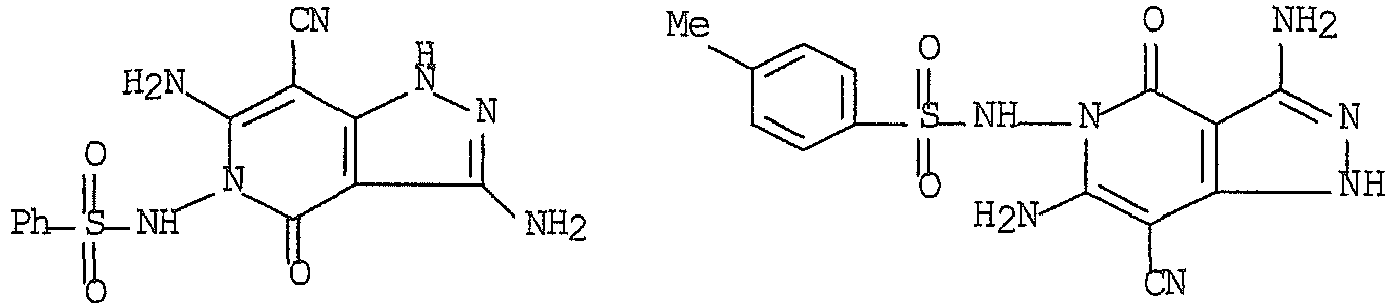
- (5) In chemical abstract, the following compounds are registrated.
- 1) registration number: 1018564-99-2

- 2) registration number: 1018564-95-8 [0017]

- 3) registration number: 1018564-87-8

- 4) registration number: 1018497-28-3

- 5) registration number: 1018497-20-5

- 6) registration number: 1018497-18-1
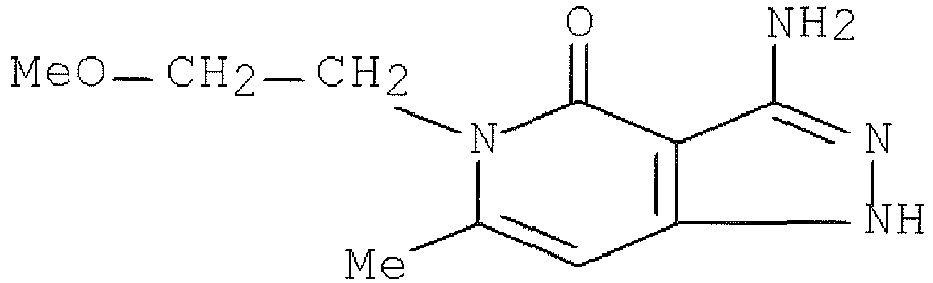
- 7) registration number: 1018497-16-9

- 8) registration number: 1018497-14-7

- 9) registration number: 1018497-12-5

- 10) registration number: 1018497-10-3

- 11) registration number: 1018274-50-4

- 12) registration number: 1018249-54-1

- 13) registration number: 1018249-46-1

- 14) registration number: 908069-44-3

- 15) registration number: 908068-91-7

- 16) registration number: 907970-80-3

- 17) registration number: 908069-29-4

- 1) registration number: 1018564-99-2
-
- [Non-Patent Document 1] Journal of the Chemical Society, Perkin Transactions 1: Organic and Bio-Organic Chemistry (1997), (21), 3285-3290.
- [Non-Patent Document 2] Chemical & Pharmaceutical Bulletin (1984), 32(9), 3384-95 CODEN: CPBTAL; ISSN: 0009-2363.
- [Non-Patent Document 3] Journal of the Chemical Society, Perkin Transactions 1: Organic and Bio-Organic Chemistry (1972-1999) (1978), (8), 857-62.
- [Non-Patent Document 4] Phosphorus, Sulfur and Silicon and the Related Elements (2001), 170, 171-179.
- An object of the present invention is to provide an agent for the prophylaxis or treatment of autoimmune diseases (e.g., psoriasis, rheumatoid arthritis, inflammatory bowel disease, Sjogren's syndrome, Behcet's disease, multiple sclerosis, systemic lupus erythematosus etc.) and the like, which has a superior Tyk2 inhibitory action.
- The present inventors have conducted intensive studies in an attempt to solve the above-mentioned problem and found that compound (I) represented by the following formula has a superior Tyk2 inhibitory action, which resulted in the completion of the present invention.
- Accordingly, the present invention provides the following.
- Accordingly, the present invention provides the following.
- [1] A compound represented by the formula (I):

- R1 is an optionally substituted C1-6 alkyl group or an optionally substituted cyclic group;
- R2 is a hydrogen atom or a cyano group; and
- R3 is a hydrogen atom, a halogen atom, a 5-membered aromatic ring group optionally having one substituent, or an optionally substituted 6- to 12-membered aromatic ring group, or a salt thereof.
- [2] The compound or salt of the above-mentioned [1], wherein R2 is a hydrogen atom.
- [3] The compound or salt of the above-mentioned [1], wherein R1 is
- (1) a C1-6 alkyl group optionally substituted by 1 to 3 substituents selected from (a) a halogen atom, and (b) a C3-8 cycloalkyl,
- (2) a C3-10 cycloalkyl group optionally substituted by 1 to 3 substituents selected from (a) a halogen atom, and (b) a C1-6 alkyl group,
- (3) a C6-14 aryl group optionally substituted by 1 to 3 substituents selected from (a) a halogen atom, (b) a C1-6 alkyl group optionally substituted by 1 to 3 halogen atoms, (c) a cyano group, (d) an amino group optionally mono- or di-substituted by C1-6 alkyl-carbonyl group (s), and (e) a C1-6 alkoxy group,
- (4) a 3- to 8-membered monocyclic non-aromatic heterocyclic group, or
- (5) a 5- or 6-membered monocyclic aromatic heterocyclic group optionally substituted by 1 to 3 substituents selected from (a) a halogen atom, and (b) a cyano group;
R2 is a hydrogen atom or a cyano group; and
R3 is- (1) a hydrogen atom,
- (2) a halogen atom,
- (3) a C6-12 aryl group optionally substituted by 1 to 3 halogen atoms,
- (4) a 5-membered monocyclic aromatic heterocyclic group optionally substituted by one substituent selected from the following Substituent Group C,
- (5) a 6-membered monocyclic aromatic heterocyclic group optionally substituted by 1 to 3 substituents selected from following Substituent Group C, or
- (6) a 8- to 12-membered fused aromatic heterocyclic group optionally substituted by 1 to 3 substituents selected from following Substituent Group C
[Substituent Group C:- (a) a C1-6 alkyl group optionally substituted by 1 to 3 substituents selected from (i) a hydroxy group, (ii) a C1-6 alkoxy group, (iii) a C1-6 alkylsulfonyl group, (iv) an amino group optionally mono- or di-substituted by substituent(s) selected from a C1-6 alkyl-carbonyl group, a formyl group and a C1-6 alkyl group, (v) a cyano group, (vi) a 3- to 8-membered monocyclic non-aromatic heterocyclic group optionally substituted by 1 to 3 C1-6 alkyl groups, (vii) a 3- to 8-membered monocyclic non-aromatic heterocyclylcarbonyl group optionally substituted by 1 to 3 hydroxy groups, and (viii) a carbamoyl group optionally mono- or di-substituted by substituent(s) selected from a 3- to 8-membered monocyclic non-aromatic heterocyclic group and a C1-6 alkyl group,
- (b) a cyano group,
- (c) an amino group optionally mono- or di-substituted by substituent(s) selected from (i) a formyl group, (ii) a C1-6 alkyl group optionally substituted by 1 to 3 amino groups optionally mono- or di-substituted by C1-6 alkyl group(s), and (iii) a C1-6 alkyl-carbonyl group,
- (d) a carbamoyl group optionally mono- or di-substituted by substituent(s) selected from (i) a C1-6 alkyl group optionally substituted by 1 to 3 substituents selected from a hydroxy group and a C1-6 alkoxy group, and (ii) a 3- to 8-membered monocyclic non-aromatic heterocyclic group,
- (e) a C1-6 alkoxy-carbonyl group,
- (f) a C1-6 alkoxy group optionally substituted by 1 to 3 substituents selected from (i) a C1-6 alkoxy group, (ii) an amino group optionally mono- or di-substituted by substituent (s) selected from a C1-6 alkyl group and a C1-6 alkyl-carbonyl group, (iii) a carbamoyl group optionally mono- or di-substituted by C1-6 alkyl group(s), (iv) a 3- to 8-membered monocyclic non-aromatic heterocyclic group optionally substituted by oxo group(s), (v) a hydroxy group, and (vi) a C6-14 aryl group optionally substituted by 1 to 3 C1-6 alkoxy groups,
- (g) a 3- to 8-membered monocyclic non-aromatic heterocyclic group optionally substituted by 1 to 3 substituents selected from (i) a C1-6 alkyl group optionally substituted by 1 to 3 hydroxy groups, (ii) a C1-6 alkoxy group, (iii) a C1-6 alkyl-carbonyl group, (iv) an oxo group, (v) a hydroxy group, and (vi) a halogen atom,
- (h) a 3- to 8-membered monocyclic non-aromatic heterocyclylcarbonyl group,
- (i) a 3- to 8-membered monocyclic non-aromatic heterocyclyloxy group,
- (j) a C3-8 cycloalkyloxy group, and
- (k) a hydroxy group].
- [4] 3-Amino-5-(2,6-difluorophenyl)-7-(1-methyl-1H-pyrazol-3-yl)-1,5-dihydro-4H-pyrazolo[4,3-c]pyridin-4-one or a salt thereof.
- [5] 2-(3-Amino-7-(1-methyl-1H-pyrazol-3-yl)-4-oxo-1,4-dihydro-5H-pyrazolo[4,3-c]pyridin-5-yl)-3-fluorobenzonitrile or a salt thereof.
- [6] 3-Amino-5-(1-cyclopropylethyl)-7-(1-methyl-1H-pyrazol-3-yl)-1,5-dihydro-4H-pyrazolo[4,3-c]pyridin-4-one or a salt thereof.
- [7] A medicament comprising the compound or salt of the above-mentioned [1].
- [8] The medicament of the above-mentioned [7], which is a tyrosine kinase 2 inhibitor.
- [9] The medicament of the above-mentioned [7], which is an agent for the prophylaxis or treatment of autoimmune diseases.
- [10] The medicament of the above-mentioned [9], wherein the autoimmune diseases is psoriasis, rheumatoid arthritis, inflammatory bowel disease, Sjogren's syndrome, Behcet's disease, multiple sclerosis or systemic lupus erythematosus.
- [11] The compound or salt of the above-mentioned [1] for use in the prophylaxis or treatment of autoimmune diseases.
- [12] The compound or salt of the above-mentioned [11], wherein the autoimmune diseases is psoriasis, rheumatoid arthritis, inflammatory bowel disease, Sjogren's syndrome, Behcet's disease, multiple sclerosis or systemic lupus erythematosus.
- [13] A method of inhibiting tyrosine kinase 2 in a mammal, which comprises administering an effective amount of the compound or salt of the above-mentioned [1] to the mammal.
- [14] A method for the prophylaxis or treatment of autoimmune diseases, which comprises administering an effective amount of the compound or salt of the above-mentioned [1] to the mammal.
- [15] The method of the above-mentioned [14], wherein the autoimmune diseases is psoriasis, rheumatoid arthritis, inflammatory bowel disease, Sjogren's syndrome, Behcet's disease, multiple sclerosis or systemic lupus erythematosus.
- [16] Use of the compound or salt of the above-mentioned [1] for the production of an agent for the prophylaxis or treatment of autoimmune diseases.
- [17] The use of the above-mentioned [16], wherein the autoimmune diseases is psoriasis, rheumatoid arthritis, inflammatory bowel disease, Sjogren's syndrome, Behcet's disease, multiple sclerosis or systemic lupus erythematosus.
- Compound (I) has a superior Tyk2 inhibitory action, which is useful as an agent for the prophylaxis or treatment of autoimmune diseases (e.g., psoriasis, rheumatoid arthritis, inflammatory bowel disease (e.g., Crohn's disease, ulcerative colitis etc.), Sjogren's syndrome, Behcet's disease, multiple sclerosis, systemic lupus erythematosus etc.) and the like.
- In the present specification, the "halogen atom" means a fluorine atom, a chlorine atom, a bromine atom or iodine atom.
- In the present specification, the "C1-6 alkyl (group)" means, for example, methyl, ethyl, propyl, isopropyl, butyl, isobutyl, sec-butyl, tert-butyl, pentyl, isopentyl, neopentyl, 1-ethylpropyl, 1-methylbutyl, hexyl, isohexyl, 1,1-dimethylbutyl, 2,2-dimethylbutyl, 3,3-dimethylbutyl, 2-ethylbutyl, 1-ethyl-2-methylpropyl, 1,2-dimethylpropyl or the like.
- In the present specification, the "C2-6 alkenyl (group)" means, for example, vinyl, 1-propenyl, 2-propenyl, 2-methyl-1-propenyl, 1-butenyl, 2-butenyl, 3-butenyl, 3-methyl-2-butenyl, 1-pentenyl, 2-pentenyl, 3-pentenyl, 4-pentenyl, 4-methyl-3-pentenyl, 1-hexenyl, 3-hexenyl, 5-hexenyl or the like.
- In the present specification, the "C2-6 alkynyl (group)" means, for example, ethynyl, 1-propynyl, 2-propynyl, 1-butynyl, 2-butynyl, 3-butynyl, 1-pentynyl, 2-pentynyl, 3-pentynyl, 4-pentynyl, 1,1-dimethylprop-2-yn-1-yl, 1-hexynyl, 2-hexynyl, 3-hexynyl, 4-hexynyl, 5-hexynyl or the like.
- In the present specification, the "C1-6 alkoxy (group)" means, for example, methoxy, ethoxy, propoxy, isopropoxy, butoxy, isobutoxy, sec-butoxy, tert-butoxy, pentyloxy, isopentyloxy, neo-pentyloxy, hexyloxy or the like.
- In the present specification, the "C2-6 alkenyloxy (group)" means, for example, vinyloxy, 1-propenyloxy, 2-propenyloxy, 2-methyl-1-propenyloxy, 1-butenyloxy, 2-butenyloxy, 3-butenyloxy, 3-methyl-2-butenyloxy, 1-pentenyloxy, 2-pentenyloxy, 3-pentenyloxy, 4-pentenyloxy, 4-methyl-3-pentenyloxy, 1-hexenyloxy, 3-hexenyloxy, 5-hexenyloxy or the like.
- In the present specification, the "C2-6 alkynyloxy (group)" means, for example, ethynyloxy, 1-propynyloxy, 2-propynyloxy, 1-butynyloxy, 2-butynyloxy, 3-butynyloxy, 1-pentynyloxy, 2-pentynyloxy, 3-pentynyloxy, 4-pentynyloxy, 1,1-dimethylprop-2-yn-1-yloxy, 1-hexynyloxy, 2-hexynyloxy, 3-hexynyloxy, 4-hexynyloxy, 5-hexynyloxy or the like.
- In the present specification, the "C1-6 alkylenedioxy (group)" means, for example, methylenedioxy, ethylenedioxy or the like.
- In the present specification, the "C1-6 alkoxy-carbonyl (group)" means, for example, methoxycarbonyl, ethoxycarbonyl, propoxycarbonyl, isopropoxycarbonyl, butoxycarbonyl, isobutoxycarbonyl, tert-butoxycarbonyl or the like.
- In the present specification, the "C1-6 alkyl-carbonyl (group)" means, for example, acetyl, propanoyl, butanoyl, 2-methylpropanoyl or the like.
- In the present specification, the "C1-6 alkylsulfonyl (group)" means, for example, methylsulfonyl, ethylsulfonyl, propylsulfonyl, isopropylsulfonyl, butylsulfonyl, isobutylsulfonyl, tert-butylsulfonyl or the like.
- In the present specification, the "C3-8 cycloalkyl (group)" means, for example, cyclopropyl, cyclobutyl, cyclopentyl, cyclohexyl, cycloheptyl, cyclooctyl or the like.
- In the present specification, the "C3-10 cycloalkyl (group)" means, for example, cyclopropyl, cyclobutyl, cyclopentyl, cyclohexyl, cycloheptyl, cyclooctyl, cyclononyl, cyclodecyl or the like. Among them, a C3-6 cycloalkyl group is preferable.
- In the present specification, the "C3-8 cycloalkenyl (group)" means, for example, cyclopropenyl (e.g., 2-cyclopropen-1-yl), cyclobutenyl (e.g., 2-cyclobuten-1-yl), cyclopentenyl (e.g., 2-cyclopenten-1-yl, 3-cyclopenten-1-yl), cyclohexenyl (e.g., 2-cyclohexen-1-yl, 3-cyclohexen-1-yl) or the like.
- In the present specification, the "C3-10 cycloalkenyl (group)" means, for example, cyclopropenyl (e.g., 2-cyclopropen-1-yl), cyclobutenyl (e.g., 2-cyclobuten-1-yl), cyclopentenyl (e.g., 2-cyclopenten-1-yl, 3-cyclopenten-1-yl), cyclohexenyl (e.g., 2-cyclohexen-1-yl, 3-cyclohexen-1-yl), cycloheptenyl (e.g., 2-cyclohepten-1-yl, 3-cyclohepten-1-yl), cyclooctenyl (e.g., 2-cycloocten-1-yl, 3-cycloocten-1-yl) or the like. Among them, a C3-6 cycloalkenyl group is preferable.
- In the present specification, the "C4-10 cycloalkadienyl (group)" means, for example, 2,4-cyclopentadien-1-yl, 2,4-cyclohexadien-1-yl, 2,5-cyclohexadien-1-yl or the like. Among them, a C4-6 cycloalkadienyl group is preferable.
- The above-mentioned C3-10 cycloalkyl group, C3-10 cycloalkenyl group and C4-10 cycloalkadienyl group are each optionally fused with a benzene ring to form a fused ring group, and examples of the fused ring group include indanyl, dihydronaphthyl, tetrahydronaphthyl, fluorenyl and the like.
- The above-mentioned C3-10 cycloalkyl group, C3-10 cycloalkenyl group and C4-10 cycloalkadienyl group may be a C7-10 bridged hydrocarbon group. Examples of the C7-10 bridged hydrocarbon group include bicyclo[2.2.1]heptyl (norbornyl), bicyclo[2.2.2]octyl, bicyclo[3.2.1]octyl, bicyclo[3.2.2]nonyl, bicyclo[3.3.1]nonyl, bicyclo[4.2.1]nonyl, bicyclo[4.3.1]decyl, adamantyl and the like.
- The above-mentioned C3-10 cycloalkyl group, C3-10 cycloalkenyl group and C4-10 cycloalkadienyl group each optionally form a spiro ring group with a C3-10 cycloalkane, a C3-10 cycloalkene or a C4-10 cycloalkadiene. Examples of the C3-10 cycloalkane, C3-10 cycloalkene and C4-10 cycloalkadiene include rings corresponding to the above-mentioned C3-10 cycloalkyl group, C3-10 cycloalkenyl group and C4-10 cycloalkadienyl group. Examples of the spiro ring group include spiro[4.5]decan-8-yl and the like.
- In the present specification, the "C3-8 cycloalkyloxy (group)" means, for example, cyclopropyloxy, cyclobutyloxy, cyclopentyloxy, cyclohexyloxy, cycloheptyloxy, cyclooctyloxy or the like.
- In the present specification, the "C3-8 cycloalkenyloxy (group)" means, for example, cyclopropenyloxy (e.g., 2-cyclopropen-1-yloxy), cyclobutenyloxy (e.g., 2-cyclobuten-1-yloxy), cyclopentenyloxy (e.g., 2-cyclopenten-1-yloxy, 3-cyclopenten-1-yloxy), cyclohexenyloxy (e.g., 2-cyclohexen-1-yloxy, 3-cyclohexen-1-yloxy) or the like.
- In the present specification, the "C6-14 aryl (group)" means, for example, phenyl, 1-naphthyl, 2-naphthyl or the like. Among them, a C6-10 aryl (group) is preferable.
- In the present specification, the "C6-12 aryl (group)" means, for example, phenyl, 1-naphthyl, 2-naphthyl or the like. Among them, a C6-10 aryl (group) is preferable.
- In the present specification, the "C6-14 aryloxy (group)" means, for example, phenoxy, 1-naphthyloxy, 2-naphthyloxy or the like.
- In the present specification, the "C7-14 aralkyl (group)" means, for example, benzyl, phenethyl or the like.
- In the present specification, the "C7-14 aralkyloxy (group)" means, for example, benzyloxy, phenethyloxy or the like.
- In the present specification, the "heterocyclic group" means an aromatic heterocyclic group or a non-aromatic heterocyclic group.
- In the present specification, the "aromatic heterocyclic group" means a monocyclic aromatic heterocyclic group and a fused aromatic heterocyclic group.
- In the present specification, examples of the "monocyclic aromatic heterocyclic group" include a 5- to 7-membered (preferably 5- or 6-membered) monocyclic aromatic heterocyclic group containing, as a ring-constituting atom besides carbon atoms, 1 to 4 hetero atoms selected from an oxygen atom, a sulfur atom (optionally oxidized) and a nitrogen atom (optionally oxidized), for example, furyl (e.g., 2-furyl, 3-furyl), thienyl (e.g., 2-thienyl, 3-thienyl), pyridyl (e.g., 2-pyridyl, 3-pyridyl, 4-pyridyl), pyrimidinyl (e.g., 2-pyrimidinyl, 4-pyrimidinyl, 5-pyrimidinyl), pyridazinyl (e.g., 3-pyridazinyl, 4-pyridazinyl), pyrazinyl (e.g., 2-pyrazinyl), pyrrolyl (e.g., 1-pyrrolyl, 2-pyrrolyl, 3-pyrrolyl), imidazolyl (e.g., 1-imidazolyl, 2-imidazolyl, 4-imidazolyl, 5-imidazolyl), pyrazolyl (e.g., 1-pyrazolyl, 3-pyrazolyl, 4-pyrazolyl), thiazolyl (e.g., 2-thiazolyl, 4-thiazolyl, 5-thiazolyl), isothiazolyl (e.g., 3-isothiazolyl, 4-isothiazolyl, 5-isothiazolyl), oxazolyl (e.g., 2-oxazolyl, 4-oxazolyl, 5-oxazolyl), isoxazolyl (e.g., 3-isoxazolyl, 4-isoxazolyl, 5-isoxazolyl), oxadiazolyl (e.g., 1,2,4-oxadiazol-5-yl, 1,3,4-oxadiazol-2-yl), thiadiazolyl (e.g., 1,3,4-thiadiazol-2-yl), triazolyl (e.g., 1,2,4-triazol-1-yl, 1,2,4-triazol-3-yl, 1,2,3-triazol-1-yl, 1,2,3-triazol-2-yl, 1,2,3-triazol-4-yl), tetrazolyl (e.g., tetrazol-1-yl, tetrazol-5-yl), triazinyl (e.g., 1,2,4-triazin-1-yl, 1,2,4-triazin-3-yl) and the like.
- In the present specification, examples of the "fused aromatic heterocyclic group" include an 8- to 21-membered (preferably 8- to 12-membered) fused aromatic heterocyclic group, specifically, a group derived from a fused ring wherein a ring corresponding to the above-mentioned 5- to 7-membered monocyclic aromatic heterocyclic group is fused with a C6-14 aromatic hydrocarbon; and a group derived from a fused ring wherein rings corresponding to the above-mentioned 5- to 7-membered monocyclic aromatic heterocyclic groups are fused, for example, quinolyl (e.g., 2-quinolyl, 3-quinolyl, 4-quinolyl, 6-quinolyl), isoquinolyl (e.g., 3-isoquinolyl), quinazolyl (e.g., 2-quinazolyl, 4-quinazolyl), quinoxalyl (e.g., 2-quinoxalyl, 6-quinoxalyl), benzofuranyl (e.g., 2-benzofuranyl, 3-benzofuranyl), benzothienyl (e.g., 2-benzothienyl, 3-benzothienyl), benzoxazolyl (e.g., 2-benzoxazolyl), benzisoxazolyl (e.g., 7-benzisoxazolyl), benzothiazolyl (e.g., 2-benzothiazolyl), benzimidazolyl (e.g., benzimidazol-1-yl, benzimidazol-2-yl, benzimidazol-5-yl), benzotriazolyl (e.g., 1H-1,2,3-benzotriazol-5-yl), indolyl (e.g., indol-1-yl, indol-2-yl, indol-3-yl, indol-5-yl), indazolyl (e.g., 1H-indazol-3-yl), pyrrolopyrazinyl (e.g., 1H-pyrrolo[2,3-b]pyrazin-2-yl, 1H-pyrrolo[2,3-b]pyrazin-6-yl), imidazopyridyl (e.g., 1H-imidazo[4,5-b]pyridin-2-yl, 1H-imidazo[4,5-c]pyridin-2-yl, 2H-imidazo[1,2-a]pyridin-3-yl, 2H-imidazo[1,2-a]pyridin-2-yl), thienopyridyl (e.g., thieno[2,3-b]pyridin-3-yl), imidazopyrazinyl (e.g., 1H-imidazo[4,5-b]pyrazin-2-yl), pyrazolopyridyl (e.g., 1H-pyrazolo[4,3-c]pyridin-3-yl), pyrazolothienyl (e.g., 2H-pyrazolo[3,4-b]thiophen-2-yl), pyrazolotriazinyl (e.g., pyrazolo[5,1-c][1,2,4]triazin-3-yl) and the like.
- In the present specification, the "non-aromatic heterocyclic group" means a monocyclic non-aromatic heterocyclic group and a fused non-aromatic heterocyclic group.
- In the present specification, examples of the "monocyclic non-aromatic heterocyclic group" include a 3- to 8-membered (preferably 5- or 6-membered) monocyclic non-aromatic heterocyclic group containing, as a ring-constituting atom besides carbon atoms, 1 to 4 hetero atoms selected from an oxygen atom, a sulfur atom (optionally oxidized) and a nitrogen atom (optionally oxidized), for example, azetidinyl (e.g., 1-azetidinyl, 2-azetidinyl), pyrrolidinyl (e.g., 1-pyrrolidinyl, 2-pyrrolidinyl), piperidyl (e.g., piperidino, 2-piperidyl, 3-piperidyl, 4-piperidyl), morpholinyl (e.g., morpholino), thiomorpholinyl (e.g., thiomorpholino), 1,1-dioxidothiomorpholinyl (e.g., 1,1-dioxidothiomorpholin-4-yl), piperazinyl (e.g., 1-piperazinyl, 2-piperazinyl, 3-piperazinyl), oxazolidinyl (e.g., oxazolidin-2-yl), thiazolidinyl (e.g., thiazolidin-2-yl), dihydrothiopyranyl (e.g., dihydrothiopyran-3-yl, dihydrothiopyran-4-yl), imidazolidinyl (e.g., imidazolidin-2-yl, imidazolidin-3-yl), oxazolinyl (e.g., oxazolin-2-yl), thiazolinyl (e.g., thiazolin-2-yl), imidazolinyl (e.g., imidazolin-2-yl, imidazolin-3-yl), dioxolyl (e.g., 1,3-dioxol-4-yl), dioxolanyl (e.g., 1,3-dioxolan-4-yl), dihydrooxadiazolyl (e.g., 4,5-dihydro-1,2,4-oxadiazol-3-yl), pyranyl (e.g., 2-pyranyl, 4-pyranyl), tetrahydropyranyl (e.g., 2-tetrahydropyranyl, 3-tetrahydropyranyl, 4-tetrahydropyranyl), thiopyranyl (e.g., 4-thiopyranyl), tetrahydrothiopyranyl (e.g., 2-tetrahydrothiopyranyl, 3-tetrahydrothiopyranyl, 4-tetrahydrothiopyranyl), 1-oxidetetrahydrothiopyranyl (e.g., 1-oxidetetrahydrothiopyran-4-yl), 1,1-dioxidotetrahydrothiopyranyl (e.g., 1,1-dioxidotetrahydrothiopyran-4-yl, 1,1-dioxidotetrahydrothiopyran-3-yl), tetrahydrofuryl (e.g., tetrahydrofuran-3-yl, tetrahydrofuran-2-yl), oxetanyl (e.g., oxetan-2-yl, oxetan-3-yl), pyrazolidinyl (e.g., pyrazolidin-1-yl, pyrazolidin-3-yl), pyrazolinyl (e.g., pyrazolin-1-yl), tetrahydropyrimidinyl (e.g., tetrahydropyrimidin-1-yl), dihydrotriazolyl (e.g., 2,3-dihydro-1H-1,2,3-triazol-1-yl), tetrahydrotriazolyl (e.g., 2,3,4,5-tetrahydro-1H-1,2,3-triazol-1-yl), azepanyl (e.g., 1-azepanyl, 2-azepanyl, 3-azepanyl, 4-azepanyl), dihydropyridyl (e.g., dihydropyridin-1-yl, dihydropyridin-2-yl, dihydropyridin-3-yl, dihydropyridin-4-yl), tetrahydropyridyl (e.g., 1,2,3,4-tetrahydropyridin-1-yl, 1,2,3,4-tetrahydropyridin-2-yl, 1,2,3,4-tetrahydropyridin-3-yl, 1,2,3,4-tetrahydropyridin-4-yl) and the like.
- In the present specification, examples of the "fused non-aromatic heterocyclic group" include an 8- to 22-membered fused non-aromatic heterocyclic group, specifically, a group derived from a fused ring wherein a ring corresponding to the above-mentioned 3- to 8-membered monocyclic non-aromatic heterocyclic group is fused with a C6-14 aromatic hydrocarbon; a group derived from a fused ring wherein rings corresponding to the above-mentioned 3- to 8-membered monocyclic non-aromatic heterocyclic groups are fused; a group derived from a fused ring wherein a ring corresponding to the above-mentioned 3- to 8-membered monocyclic non-aromatic heterocyclic group is fused with a ring corresponding to the above-mentioned 5- to 7-membered monocyclic aromatic heterocyclic group; and a group wherein the above-mentioned group is partially saturated, for example, dihydroindolyl (e.g., 2,3-dihydro-1H-indol-1-yl), dihydroisoindolyl (e.g., 1,3-dihydro-2H-isoindol-2-yl), dihydrobenzofuranyl (e.g., 2,3-dihydro-1-benzofuran-5-yl), tetrahydrobenzofuranyl (e.g., 4,5,6,7-tetrahydro-1-benzofuran-3-yl), dihydrobenzodioxinyl (e.g., 2,3-dihydro-1,4-benzodidioxin-2-yl), dihydrobenzodioxepinyl (e.g., 3,4-dihydro-2H-1,5-benzodioxepin-2-yl), chromenyl (e.g., 4H-chromen-2-yl, 2H-chromen-3-yl), dihydrochromenyl (e.g., 3,4-dihydro-2H-chromen-2-yl), dihydroquinolinyl (e.g., 1,2-dihydroquinolin-4-yl), tetrahydroquinolinyl (e.g., 1,2,3,4-tetrahydroquinolin-4-yl), dihydroisoquinolinyl (e.g., 1,2-dihydroisoquinolin-4-yl), tetrahydroisoquinolinyl (e.g., 1,2,3,4-tetrahydroisoquinolin-4-yl), dihydrophthalazinyl (e.g., 1,4-dihydrophthalazin-4-yl) and the like.
- In the present specification, examples of the "C6-14 aromatic hydrocarbon" include benzene and naphthalene.
- Each symbol of the formula (I) is explained below.
- In the formula (I), R1 is an optionally substituted C1-6 alkyl group or an optionally substituted cyclic group.
- The "C1-6 alkyl group" of the "optionally substituted C1-6 alkyl group" for R1 optionally has 1 to 5 (preferably 1 to 3) substituents at substitutable position(s). Examples of the substituent include substituents selected from the following Substituent Group A. When the number of the substituents is plural, the respective substituents may be the same or different.
-
- (1) a halogen atom;
- (2) a cyano group;
- (3) a nitro group;
- (4) a hydroxy group;
- (5) a C3-8 cycloalkyl group optionally substituted by 1 to 3 substituents selected from
- (a) a halogen atom,
- (b) a cyano group,
- (c) a C1-6 alkyl group optionally substituted by 1 to 3 halogen atoms, and
- (d) a C1-6 alkoxy group optionally substituted by 1 to 3 halogen atoms;
- (6) a C6-14 aryl group optionally substituted by 1 to 3 substituents selected from
- (a) a halogen atom,
- (b) a cyano group,
- (c) a C1-6 alkyl group optionally substituted by 1 to 3 halogen atoms, and
- (d) a C1-6 alkoxy group optionally substituted by 1 to 3 halogen atoms;
- (7) a C1-6 alkoxy group optionally substituted by 1 to 3 substituents selected from
- (a) a halogen atom,
- (b) a cyano group,
- (c) a C3-8 cycloalkyl group optionally having 1 to 3 halogen atoms,
- (d) a C3-8 cycloalkenyl group optionally having 1 to 3 halogen atoms,
- (e) a C6-14 aryl group optionally substituted by 1 to 3 substituents selected from
- (i) a halogen atom, and
- (ii) a C1-6 alkoxy group,
- (f) a 5- or 6-membered monocyclic aromatic heterocyclic group;
- (g) a C1-6 alkoxy group,
- (h) an amino group optionally mono- or di-substituted by substituent(s) selected from
- (i) a C1-6 alkyl group, and
- (ii) a C1-6 alkyl-carbonyl group,
- (i) a carbamoyl group optionally mono- or di-substituted by C1-6 alkyl group(s),
- (j) a 3- to 8-membered monocyclic non-aromatic heterocyclic group optionally substituted by oxo group(s), and
- (k) a hydroxy group;
- (8) a C2-6 alkenyloxy group (e.g., vinyloxy, propenyloxy, butenyloxy, pentenyloxy, hexenyloxy) optionally having 1 to 3 halogen atoms;
- (9) a C2-6 alkynyloxy group (e.g., ethynyloxy, propynyloxy, butynyloxy, pentynyloxy, hexynyloxy) optionally having 1 to 3 halogen atoms;
- (10) a C3-8 cycloalkyloxy group (e.g., cyclopropyloxy, cyclobutyloxy, cyclopentyloxy, cyclohexyloxy) optionally having 1 to 3 halogen atoms;
- (11) a C3-8 cycloalkenyloxy group (e.g., cyclopropenyloxy, cyclobutenyloxy, cyclopentenyloxy, cyclohexenyloxy) optionally having 1 to 3 halogen atoms;
- (12) a C6-14 aryloxy group optionally having 1 to 3 halogen atoms;
- (13) a C7-14 aralkyloxy group optionally having 1 to 3 halogen atoms;
- (14) a carbamoyl group optionally mono- or di-substituted by substituent(s) selected from
- (a) a C1-6 alkyl group optionally substituted by 1 to 3 substituents selected from
- (i) a hydroxy group, and
- (ii) a C1-6 alkoxy group,
- (b) a C3-8 cycloalkyl group,
- (c) a C6-14 aryl group,
- (d) a C1-6 alkoxy group,
- (e) a 5- or 6-membered monocyclic aromatic heterocyclic group,
- (f) an 8- to 12-membered fused aromatic heterocyclic group,
- (g) a 3- to 8-membered monocyclic non-aromatic heterocyclic group, and
- (h) an 8- to 12-membered fused non-aromatic heterocyclic group;
- (a) a C1-6 alkyl group optionally substituted by 1 to 3 substituents selected from
- (15) a sulfamoyl group optionally mono- or di-substituted by substituent(s) selected from
- (a) a C1-6 alkyl group,
- (b) a C3-8 cycloalkyl group,
- (c) a C6-14 aryl group,
- (d) a C1-6 alkoxy group,
- (e) a 5- or 6-membered monocyclic aromatic heterocyclic group,
- (f) an 8- to 12-membered fused aromatic heterocyclic group,
- (g) a 3- to 8-membered monocyclic non-aromatic heterocyclic group, and
- (h) an 8- to 12-membered fused non-aromatic heterocyclic group;
- (16) formyl;
- (17) a C1-6 alkyl-carbonyl group;
- (18) a C2-6 alkenyl-carbonyl group (e.g., acryloyl, butenoyl, pentenoyl, hexenoyl, heptenoyl);
- (19) a C2-6 alkynyl-carbonyl group (e.g., propioloyl, propynylcarbonyl, butynylcarbonyl, pentynylcarbonyl, hexynylcarbonyl);
- (20) a C3-8 cycloalkyl-carbonyl group (e.g., cyclopropylcarbonyl, cyclobutylcarbonyl, cyclopentylcarbonyl, cyclohexylcarbonyl);
- (21) a C3-8 cycloalkenyl-carbonyl group (e.g., cyclopropenylcarbonyl, cyclobutenylcarbonyl, cyclopentenylcarbonyl, cyclohexenylcarbonyl);
- (22) a C6-14 aryl-carbonyl group (e.g., benzoyl, 1-naphthylcarbonyl, 2-naphthylcarbonyl);
- (23) a C3-8 cycloalkyl-C1-6 alkyl-carbonyl group (e.g., cyclopropylacetyl, 3-cyclopropylpropionyl, cyclobutylacetyl, cyclopentylacetyl, cyclohexylacetyl, cyclohexylpropionyl);
- (24) a C3-8 cycloalkenyl-C1-6 alkyl-carbonyl group (e.g., cyclopentenylacetyl, cyclohexenylacetyl, 3-cyclohexenylpropionyl, 3-cyclohexenylpropionyl);
- (25) a C7-14 aralkyl-carbonyl group (e.g., phenylacetyl, 3-phenylpropionyl);
- (26) a 5- or 6-membered monocyclic aromatic heterocyclylcarbonyl group (e.g., furylcarbonyl, thienylcarbonyl, pyrrolylcarbonyl, oxazolylcarbonyl, isoxazolylcarbonyl, thiazolylcarbonyl, isothiazolylcarbonyl, imidazolylcarbonyl, pyridylcarbonyl, pyrazolylcarbonyl);
- (27) an 8- to 12-membered fused aromatic heterocyclylcarbonyl group (e.g., benzofuranylcarbonyl, isobenzofuranylcarbonyl, benzothienylcarbonyl, isobenzothienylcarbonyl, indolylcarbonyl, isoindolylcarbonyl, indazolylcarbonyl, benzimidazolylcarbonyl, benzoxazolylcarbonyl);
- (28) a 3- to 8-membered monocyclic non-aromatic heterocyclylcarbonyl group (e.g., oxiranylcarbonyl, azetidinylcarbonyl, oxetanylcarbonyl, thietanylcarbonyl, pyrrolidinylcarbonyl, tetrahydrofurylcarbonyl, thiolanylcarbonyl, piperidylcarbonyl, morpholinylcarbonyl);
- (29) an 8- to 12-membered fused non-aromatic heterocyclylcarbonyl group (e.g., dihydrobenzofuranyl);
- (30) an amino group optionally mono- or di-substituted by substituent(s) selected from
- (a) a C1-6 alkyl group optionally substituted by 1 to 3 substituents selected from
- (i) a halogen atom, and
- (ii) an amino group optionally mono- or di-substituted by C1-6 alkyl group(s),
- (b) a C1-6 alkyl-carbonyl group optionally having 1 to 3 halogen atoms,
- (c) a C3-8 cycloalkyl-carbonyl group,
- (d) a C6-14 aryl-carbonyl group optionally having 1 to 3 halogen atoms,
- (e) a 5- or 6-membered monocyclic aromatic heterocyclylcarbonyl group,
- (f) an 8- to 12-membered fused aromatic heterocyclylcarbonyl group,
- (g) a 3- to 8-membered monocyclic non-aromatic heterocyclylcarbonyl group, and
- (h) an 8- to 12-membered fused non-aromatic heterocyclylcarbonyl group, and
- (i) a formyl group;
- (a) a C1-6 alkyl group optionally substituted by 1 to 3 substituents selected from
- (31) a sulfanyl group;
- (32) a C1-6 alkylsulfanyl group (e.g., methylsulfanyl, ethylsulfanyl);
- (33) a C2-6 alkenylsulfanyl group (e.g., vinylsulfanyl, propenylsulfanyl);
- (34) a C2-6 alkynylsulfanyl group (e.g., ethynylsulfanyl, propynylsulfanyl);
- (35) a C3-8 cycloalkylsulfanyl group (e.g., cyclopropylsulfanyl, cyclobutylsulfanyl);
- (36) a C3-8 cycloalkenylsulfanyl group (e.g., cyclopropenylsulfanyl, cyclobutenylsulfanyl);
- (37) a C6-14 arylsulfanyl group (e.g., phenylsulfanyl) ;
- (38) a C3-8 cycloalkyl-C1-6 alkylsulfanyl group (e.g., cyclopropylmethylsulfanyl);
- (39) a C3-8 cycloalkenyl-C1-6 alkylsulfanyl group (e.g., cyclopentenylmethylsulfanyl);
- (40) a C1-6 alkylsulfinyl group (e.g., methylsulfinyl, ethylsulfinyl) ;
- (41) a C2-6 alkenylsulfinyl group (e.g., vinylsulfinyl, propenylsulfinyl);
- (42) a C2-6 alkynylsulfinyl group (e.g., ethynylsulfinyl, propynylsulfinyl);
- (43) a C3-8 cycloalkylsulfinyl group (e.g., cyclopropylsulfinyl, cyclobutylsulfinyl);
- (44) a C3-8 cycloalkenylsulfinyl group (e.g., cyclopropenylsulfinyl, cyclobutenylsulfinyl);
- (45) a C6-14 arylsulfinyl group (e.g., phenyl sulfinyl) ;
- (46) a C3-8 cycloalkyl-C1-6 alkylsulfinyl group (e.g., cyclopropylmethylsulfinyl);
- (47) a C3-8 cycloalkenyl-C1-6 alkylsulfinyl group (e.g., cyclopentenylmethylsulfinyl);
- (48) a C1-6 alkylsulfonyl group (e.g., methylsulfonyl, ethylsulfonyl);
- (49) a C2-6 alkenylsulfonyl group (e.g., vinylsulfonyl, propenylsulfonyl);
- (50) a C2-6 alkynylsulfonyl group (e.g., ethynylsulfonyl, propynylsulfonyl);
- (51) a C3-8 cycloalkylsulfonyl group (e.g., cyclopropylsulfonyl, cyclobutylsulfonyl);
- (52) a C3-8 cycloalkenylsulfonyl group (e.g., cyclopropenylsulfonyl, cyclobutenylsulfonyl);
- (53) a C6-14 arylsulfonyl group (e.g., phenylsulfonyl);
- (54) a C3-8 cycloalkyl-C1-6 alkylsulfonyl group (e.g., cyclopropylmethylsulfonyl);
- (55) a C3-8 cycloalkenyl-C1-6 alkylsulfonyl group (e.g., cyclopentenylmethylsulfonyl);
- (56) a C6-14 aryl-C1-6 alkylsulfonyl group (e.g., benzylsulfonyl);
- (57) a 5- or 6-membered monocyclic aromatic heterocyclylsulfonyl group (e.g., furylsulfonyl, thienylsulfonyl, pyridylsulfonyl);
- (58) an 8- to 12-membered fused aromatic heterocyclylsulfonyl group (e.g., benzofuranylsulfonyl, isobenzofuranylsulfonyl);
- (59) a 3- to 8-membered monocyclic non-aromatic heterocyclylsulfonyl group (e.g., oxiranylsulfonyl, azetidinylsulfonyl);
- (60) an 8- to 12-membered fused non-aromatic heterocyclylsulfonyl group (e.g., dihydrobenzofuranylsulfonyl);
- (61) a 5- or 6-membered monocyclic aromatic heterocyclic group (e.g., furyl, thienyl, pyrrolyl, oxazolyl, isoxazolyl, thiazolyl, isothiazolyl, imidazolyl, pyridyl, pyrazolyl, morpholinyl) optionally substituted by 1 to 3 substituents selected from
- (a) a halogen atom,
- (b) a C1-6 alkyl group optionally substituted by 1 to 3 halogen atoms, and
- (c) a C1-6 alkoxy group optionally substituted by 1 to 3 halogen atoms;
- (62) an 8- to 12-membered fused aromatic heterocyclic group (e.g., benzofuranyl, isobenzofuranyl, benzothienyl, isobenzothienyl, indolyl, isoindolyl, indazolyl, benzimidazolyl, benzoxazolyl) optionally substituted by 1 to 3 substituents selected from
- (a) a halogen atom,
- (b) a C1-6 alkyl group optionally substituted by 1 to 3 halogen atoms, and
- (c) a C1-6 alkoxy group optionally substituted by 1 to 3 halogen atoms;
- (63) a 3- to 8-membered monocyclic non-aromatic heterocyclic group (e.g., oxiranyl, azetidinyl, oxetanyl, thietanyl, pyrrolidinyl, tetrahydrofuryl, thiolanyl, piperidyl, piperazinyl, dihydrooxadiazolyl, thiazolinyl, morpholinyl, 1,1-dioxidothiomorpholinyl, tetrahydropyranyl) optionally substituted by 1 to 3 substituents selected from
- (a) a halogen atom,
- (b) a C1-6 alkyl group optionally substituted by 1 to 3 halogen atoms or hydroxy groups,
- (c) a C1-6 alkoxy group optionally substituted by 1 to 3 halogen atoms,
- (d) an oxo group,
- (e) a C1-6 alkoxy group,
- (f) a C1-6 alkyl-carbonyl group, and
- (g) a hydroxy group;
- (64) an 8- to 12-membered fused non-aromatic heterocyclic group (e.g., dihydrobenzofuranyl) optionally substituted by 1 to 3 substituents selected from
- (a) a halogen atom,
- (b) a C1-6 alkyl group optionally substituted by 1 to 3 halogen atoms,
- (c) a C1-6 alkoxy group optionally substituted by 1 to 3 halogen atoms, and
- (d) an oxo group;
- (65) a 5- or 6-membered monocyclic aromatic heterocyclyloxy group (e.g., furyloxy, thienyloxy, pyrrolyloxy, oxazolyloxy, isoxazolyloxy, thiazolyloxy, isothiazolyloxy, imidazolyloxy, pyridyloxy, pyrazolyloxy);
- (66) an 8- to 12-membered fused aromatic heterocyclyloxy group (e.g., benzofuranyloxy, isobenzofuranyloxy, benzothienyloxy, isobenzothienyloxy, indolyloxy, isoindolyloxy, indazolyloxy, benzimidazolyloxy, benzoxazolyloxy);
- (67) a 3- to 8-membered monocyclic non-aromatic heterocyclyloxy group (e.g., oxiranyloxy, azetidinyloxy, oxetanyloxy, thietanyloxy, pyrrolidinyloxy, tetrahydrofuryloxy, thiolanyloxy, piperidyloxy, tetrahydropyranyloxy);
- (68) an 8- to 12-membered fused non-aromatic heterocyclyloxy group (e.g., dihydrobenzofuranyloxy);
- (69) a carboxy group;
- (70) a C1-6 alkoxy-carbonyl group (e.g., methoxycarbonyl, ethoxycarbonyl, propoxycarbonyl, isopropoxycarbonyl, butoxycarbonyl, isobutoxycarbonyl, tert-butoxycarbonyl);
- (71) a C2-6 alkenyloxy-carbonyl group (e.g., vinyloxycarbonyl, propenyloxycarbonyl, butenyloxycarbonyl, pentenyloxycarbonyl, hexenyloxycarbonyl);
- (72) a C2-6 alkynyloxy-carbonyl group (e.g., ethynyloxycarbonyl, propynyloxycarbonyl, butynyloxycarbonyl, pentynyloxycarbonyl, hexynyloxycarbonyl);
- (73) a C3-8 cycloalkyloxy-carbonyl group (e.g., cyclopropyloxycarbonyl, cyclobutyloxycarbonyl, cyclopentyloxycarbonyl, cyclohexyloxycarbonyl);
- (74) a C3-8 cycloalkenyloxy-carbonyl group (e.g., cyclopropenyloxycarbonyl, cyclobutenyloxycarbonyl, cyclopentenyloxycarbonyl, cyclohexenyloxycarbonyl);
- (75) a C6-14 aryloxy-carbonyl group (e.g., phenoxycarbonyl, 1-naphthyloxycarbonyl, 2-naphthyloxycarbonyl);
- (76) a C3-8 cycloalkyl-C1-6 alkoxy-carbonyl group (e.g., cyclopropylmethyloxycarbonyl, cyclopropylethyloxycarbonyl, cyclobutylmethyloxycarbonyl, cyclopentylmethyloxycarbonyl, cyclohexylmethyloxycarbonyl, cyclohexylethyloxycarbonyl);
- (77) a C3-8 cycloalkenyl-C1-6 alkoxy-carbonyl group (e.g., cyclopentenylmethyloxycarbonyl, cyclohexenylmethyloxycarbonyl, cyclohexenylethyloxycarbonyl, cyclohexenylpropyloxycarbonyl);
- (78) a C7-14 aralkyloxy-carbonyl group (e.g., benzyloxycarbonyl, phenethyloxycarbonyl);
- (79) a mono-C1-6 alkylthiocarbamoyl group (e.g., methylthiocarbamoyl, ethylthiocarbamoyl, propylthiocarbamoyl);
- (80) a di-C1-6 alkylthiocarbamoyl group (e.g., dimethylthiocarbamoyl, diethylthiocarbamoyl, dipropylthiocarbamoyl);
- (81) a C1-6 alkyl-carbonyloxy group (e.g., acetyloxy, propanoyloxy, butanoyloxy, 2-methylpropanoyloxy);
- (82) an imino group optionally substituted by a hydroxy group; and
- (83) a C1-6 alkylenedioxy group (e.g., methylenedioxy, ethylenedioxy).
- Examples of the "cyclic group" of the "optionally substituted cyclic group" for R1 include a C3-10 cycloalkyl group, a C3-10 cycloalkenyl group, a C4-10 cycloalkadienyl group, a C6-14 aryl group and a heterocyclic group.
- The "cyclic group" of the "optionally substituted cyclic group" for R1 optionally has 1 to 5 (preferably 1 to 3) substituents at substitutable position(s). Examples of the substituent include substituents selected from the following Substituent Group B. When the number of the substituents is plural, the respective substituents may be the same or different.
-
- (1) the above-mentioned Substituent Group A;
- (2) a C1-6 alkyl group optionally substituted by 1 to 3 substituents selected from
- (a) a halogen atom,
- (b) a cyano group,
- (c) a hydroxy group,
- (d) a C3-10 cycloalkyl group optionally substituted by 1 to 3 substituents selected from
- (i) a halogen atom,
- (ii) a cyano group, and
- (iii) a C1-6 alkyl group optionally substituted by 1 to 3 halogen atoms;
- (e) a C6-14 aryl group optionally substituted by 1 to 3 substituents selected from
- (i) a halogen atom,
- (ii) a cyano group, and
- (iii) a C1-6 alkyl group optionally substituted by 1 to 3 halogen atoms,
- (f) a C1-6 alkoxy group optionally substituted by 1 to 3 halogen atoms,
- (g) an amino group optionally mono- or di-substituted by substituent(s) selected from
- (i) a C1-6 alkyl-carbonyl group,
- (ii) a formyl group, and
- (iii) a C1-6 alkyl group,
- (h) a 5- or 6-membered monocyclic aromatic heterocyclic group,
- (i) a 8- to 12-membered fused aromatic heterocyclic group,
- (j) a 3- to 8-membered monocyclic non-aromatic heterocyclic group,
- (k) a 8- to 12-membered fused non-aromatic heterocyclic group,
- (l) a carboxy group,
- (m) a C1-6 alkoxy-carbonyl group optionally substituted by 1 to 3 halogen atoms,
- (n) a C1-6 alkylsulfonyl group (e.g., methylsulfonyl, ethylsulfonyl, propylsulfonyl, isopropylsulfonyl, butylsulfonyl, isobutylsulfonyl, tert-butylsulfonyl),
- (o) a 3- to 8-membered monocyclic non-aromatic heterocyclylcarbonyl group optionally substituted by 1 to 3 hydroxy groups, and
- (p) a carbamoyl group optionally mono- or di-substituted by substituent(s) selected from
- (i) a 3- to 8-membered monocyclic non-aromatic heterocyclic group, and
- (ii) a C1-6 alkyl group;
- (3) a C2-6 alkenyl group optionally substituted by 1 to 3 substituents selected from
- (a) a halogen atom,
- (b) a hydroxy group,
- (c) a C1-6 alkoxy group,
- (d) an amino group optionally mono- or di-substituted by C1-6 alkyl group(s),
- (e) a carboxy group, and
- (f) a C1-6 alkoxy-carbonyl group;
- (4) a C7-14 aralkyl group optionally substituted by 1 to 3 substituents selected from
- (a) a halogen atom,
- (b) a hydroxy group,
- (c) a C1-6 alkoxy group, and
- (d) a C1-6 alkyl group optionally substituted by 1 to 3 halogen atoms; and
- (5) an oxo group.
- R1 is preferably an optionally substituted C1-6 alkyl group, an optionally substituted C3-10 cycloalkyl group or an optionally substituted C6-14 aryl group.
- R1 is more preferably
- (1) a C1-6 alkyl group (e.g., propyl, isopropyl, 1,2-dimethylpropyl) optionally substituted by 1 to 3 halogen atoms (e.g., a fluorine atom),
- (2) a C3-10 cycloalkyl group (e.g., cyclohexyl) optionally substituted by 1 to 3 C1-6 alkyl groups (e.g., methyl), or
- (3) a C6-14 aryl group (e.g., phenyl) optionally substituted by 1 to 3 substituents selected from
- (a) a halogen atom (e.g., a fluorine atom, a chlorine atom),
- (b) a C1-6 alkyl group (e.g., methyl) optionally substituted by 1 to 3 halogen atoms (e.g., a fluorine atom), and
- (c) a cyano group.
- In another embodiment, R1 is preferably an optionally substituted C1-6 alkyl group, an optionally substituted C3-10 cycloalkyl group, an optionally substituted C6-14 aryl group, an optionally substituted 3- to 8-membered monocyclic non-aromatic heterocyclic group or an optionally substituted 5-or 6-membered monocyclic aromatic heterocyclic group.
- R1 is more preferably
- (1) a C1-6 alkyl group (e.g., ethyl, propyl, 1,2-dimethylpropyl, isobutyl, sec-butyl, 1-methylbutyl, 1-ethyl-2-methylpropyl) optionally substituted by 1 to 3 substituents selected from
- (a) a halogen atom (e.g., a fluorine atom), and
- (b) a C3-8 cycloalkyl group (e.g., cyclopropyl, cyclobutyl),
- (2) a C3-10 cycloalkyl group (e.g., cyclopentyl, cyclohexyl) optionally substituted by 1 to 3 substituents selected from
- (a) a halogen atom (e.g., a fluorine atom), and
- (b) a C1-6 alkyl group (e.g., methyl),
- (3) a C6-14 aryl group (e.g., phenyl) optionally substituted by 1 to 3 substituents selected from
- (a) a halogen atom (e.g., a fluorine atom, a chlorine atom),
- (b) a C1-6 alkyl group (e.g., methyl) optionally substituted by 1 to 3 halogen atoms (e.g., a fluorine atom),
- (c) a cyano group,
- (d) an amino group optionally mono- or di-substituted by C1-6 alkyl-carbonyl group(s) (e.g., acetyl), and
- (e) a C1-6 alkoxy group (e.g., methoxy),
- (4) a 3- to 8-membered monocyclic non-aromatic heterocyclic group (e.g., 1,1-dioxidotetrahydrothiopyranyl), or
- (5) a 5- or 6-membered monocyclic aromatic heterocyclic group (e.g., pyridyl) optionally substituted by 1 to 3 substituents selected from
- (a) a halogen atom (e.g., a chlorine atom), and
- (b) a cyano group.
- In the formula (I), R2 is a hydrogen atom or a cyano group.
- R2 is preferably a hydrogen atom.
- In the formula (I), R3 is a hydrogen atom, a halogen atom or an optionally substituted aromatic ring group.
- Examples of the "aromatic ring group" of the "optionally substituted aromatic ring group" for R3 include a C6-14 aryl group and an aromatic heterocyclic group.
- The "aromatic ring group" of the "optionally substituted aromatic ring group" for R3 optionally has 1 to 5 (preferably 1 to 3) substituents at substitutable position(s). Examples of the substituent include substituents selected from the above-mentioned Substituent Group B. When the number of the substituents is plural, the respective substituents may be the same or different.
- R3 is preferably a hydrogen atom, a halogen atom, an optionally substituted C6-14 aryl group (e.g., phenyl) or an optionally substituted 5- to 7-membered (preferably 5- or 6-membered) monocyclic aromatic heterocyclic group (e.g., pyrazolyl, oxazolyl, thiazolyl, isothiazolyl, thienyl, furyl, pyridyl, pyrimidinyl, pyrazinyl).
- R3 is more preferably
- (1) a hydrogen atom,
- (2) a halogen atom (e.g., a bromine atom),
- (3) a C6-14 aryl group (e.g., phenyl) optionally substituted by 1 to 3 halogen atoms (e.g., a fluorine atom), or
- (4) a 5- to 7-membered (preferably 5- or 6-membered) monocyclic aromatic heterocyclic group (e.g., pyrazolyl, oxazolyl, thiazolyl, isothiazolyl, thienyl, furyl, pyridyl, pyrimidinyl, pyrazinyl) optionally substituted by 1 to 3 substituents selected from
- (a) a C1-6 alkyl group (e.g., methyl, ethyl) optionally substituted by 1 to 3 substituents selected from
- (i) a hydroxy group,
- (ii) a C1-6 alkoxy group (e.g., methoxy),
- (iii) a C1-6 alkylsulfonyl group (e.g., methylsulfonyl),
- (iv) an amino group optionally mono- or di-substituted by substituent(s) selected from
- (A) a C1-6 alkyl-carbonyl group (e.g., acetyl), and
- (B) a C1-6 alkyl group (e.g., methyl),
- (v) a cyano group, and
- (vi) a 3- to 8-membered monocyclic non-aromatic heterocyclic group (e.g., pyrrolidinyl),
- (b) a cyano group,
- (c) an amino group,
- (d) an carbamoyl group,
- (e) a C1-6 alkoxy-carbonyl group (e.g., ethoxycarbonyl), and
- (f) a 3- to 8-membered monocyclic non-aromatic heterocyclic group (e.g., piperazinyl, piperidyl) optionally substituted by 1 to 3 C1-6 alkyl groups (e.g., ethyl) optionally substituted by 1 to 3 hydroxy groups.
- (a) a C1-6 alkyl group (e.g., methyl, ethyl) optionally substituted by 1 to 3 substituents selected from
- In another embodiment, In the formula (I), R3 is a hydrogen atom, a halogen atom, a 5-membered aromatic ring group optionally having one substituent, or an optionally substituted 6- to 12-membered aromatic ring group.
- Examples of the "5-membered aromatic ring group" of the "5-membered aromatic ring group optionally having one substituent" for R3 include a 5-membered monocyclic aromatic heterocyclic group (a 5-membered group from among the above-mentioned monocyclic aromatic heterocyclic group). Examples of the substituent of the "5-membered aromatic ring group optionally having one substituent" for R3 include substituents selected from the above-mentioned Substituent Group B.
- Examples of the "6- to 12-membered aromatic ring group" of the "optionally substituted 6- to 12-membered aromatic ring group" for R3 include a C6-12 aryl group and a 6- to 12-membered aromatic heterocyclic group. Examples of the 6- to 12-membered aromatic heterocyclic group include a 6- or 7-membered (preferably 6-membered) monocyclic aromatic heterocyclic group (a 6- or 7-membered (preferably 6-membered) group from among the above-mentioned monocyclic aromatic heterocyclic group) and a 8- to 12-membered fused aromatic heterocyclic group.
- The "6- to 12-membered aromatic ring group" of the "optionally substituted 6- to 12-membered aromatic ring group" for R3 has 1 to 5 (preferably 1 to 3) substituents at substitutable position(s). Examples of the substituent include substituents selected from the above-mentioned Substituent Group B. When the number of the substituents is plural, the respective substituents may be the same or different.
- The tautomeric form of the "5-membered aromatic ring group optionally having one substituent" or the "optionally substituted 6- to 12-membered aromatic ring group" for R3 is also encompassed therein.
- For example, as shown in the following formula, the "optionally substituted non-aromatic ring group containing - NHCO-" (B) is encompassed in the "optionally substituted aromatic ring group containing -N=C(OH)-" (A). In the present specification, (B) is described as (A) for convenience sake. The compound is described by mainly spectroscopically-identified structure.
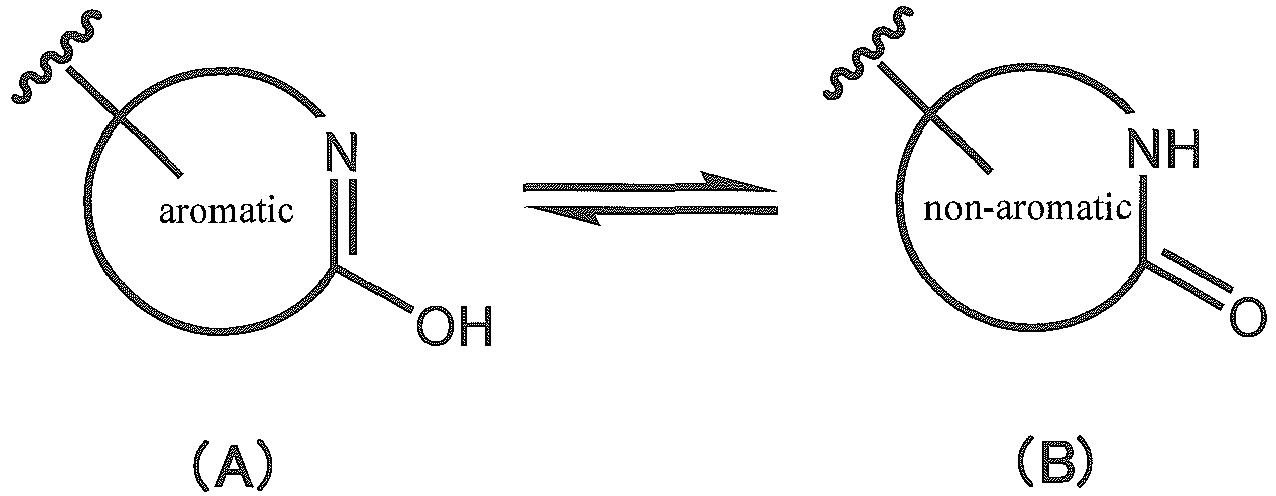
- Specifically, when substituent is referred to in the present specification,
"1-isopropyl-6-oxo-1,6-dihydropyrimidin-4-yl" (e.g., R3 in Example 55) is encompassed in "6-hydroxy-1-isopropylpyrimidin-4-yl",
"6-oxo-1,6-dihydropyrimidin-4-yl" (e.g., R3 in Example 152) is encompassed in "6-hydroxypyrimidin-4-yl",
"3-oxo-3,4-dihydropyrazin-2-yl" (e.g., R3 in Example 153) is encompassed in "3-hydroxypyrazin-2-yl",
"5-oxo-4,5-dihydropyrazin-2-yl" (e.g., R3 in Example 154) is encompassed in "5-hydroxypyrazin-2-yl", and
"6-oxo-1-(tetrahydro-2H-pyran-4-yl)-1,6-dihydropyrimidin-4-yl" (e.g., R3 in Example 155) is encompassed in "6-hydroxy-1-(tetrahydro-2H-pyran-4-yl)-pyrimidin-4-yl". - R3 is preferably a hydrogen atom, a halogen atom (e.g., a bromine atom), an optionally substituted C6-12 aryl group (e.g., phenyl), a 5-membered monocyclic aromatic heterocyclic group (e.g., pyrazolyl, oxazolyl, thiazolyl, isothiazolyl, thienyl, furyl, imidazolyl) optionally having one substituent, an optionally substituted 6- or 7-membered (preferably 6-membered) monocyclic aromatic heterocyclic group (e.g., pyridyl, pyrimidinyl, pyrazinyl, pyridazinyl) or an optionally substituted 8- to 12-membered fused aromatic heterocyclic group (e.g., imidazopyridyl).
- R3 is more preferably
- (1) a hydrogen atom,
- (2) a halogen atom (e.g., a bromine atom),
- (3) a C6-12 aryl group (e.g., phenyl) optionally substituted by 1 to 3 halogen atoms (e.g., a fluorine atom),
- (4) a 5-membered monocyclic aromatic heterocyclic group (e.g., pyrazolyl, oxazolyl, thiazolyl, isothiazolyl, thienyl, furyl, imidazolyl) optionally substituted by one substituent selected from the following Substituent Group C,
- (5) a 6-membered monocyclic aromatic heterocyclic group (e.g., pyridyl, pyrimidinyl, pyrazinyl, pyridazinyl) optionally substituted by 1 to 3 substituents selected from following Substituent Group C, or
- (6) a 8- to 12-membered fused aromatic heterocyclic group (e.g., imidazopyridyl) optionally substituted by 1 to 3 substituents selected from following Substituent Group C. Substituent Group C:
- (a) a C1-6 alkyl group (e.g., methyl, ethyl, isopropyl) optionally substituted by 1 to 3 substituents selected from
- (i) a hydroxy group,
- (ii) a C1-6 alkoxy group (e.g., methoxy),
- (iii) a C1-6 alkylsulfonyl group (e.g., methylsulfonyl),
- (iv) an amino group optionally mono- or di-substituted by substituent(s) selected from
- (A) a C1-6 alkyl-carbonyl group (e.g., acetyl),
- (B) a formyl group, and
- (C) a C1-6 alkyl group (e.g., methyl),
- (v) a cyano group,
- (vi) a 3- to 8-membered monocyclic non-aromatic heterocyclic group (e.g., pyrrolidinyl, morpholinyl, piperazinyl) optionally substituted by 1 to 3 C1-6 alkyl groups (e.g., methyl)
- (vii) a 3- to 8-membered monocyclic non-aromatic heterocyclylcarbonyl group (e.g., morpholinylcarbonyl, piperidylcarbonyl) optionally substituted by 1 to 3 hydroxy groups, and
- (viii) a carbamoyl group optionally mono- or di-substituted by substituent(s) selected from
- (A) a 3- to 8-membered monocyclic non-aromatic heterocyclic group (e.g., oxetanyl), and
- (B) a C1-6 alkyl group (e.g., methyl),
- (b) a cyano group,
- (c) an amino group optionally mono- or di-substituted by substituent(s) selected from
- (i) a formyl group,
- (ii) a C1-6 alkyl group (e.g., ethyl) optionally substituted by 1 to 3 amino groups optionally mono- or di-substituted by C1-6 alkyl group(s) (e.g., methyl), and
- (iii) a C1-6 alkyl-carbonyl group (e.g., acetyl),
- (d) a carbamoyl group optionally mono- or di-substituted by substituent(s) selected from
- (i) a C1-6 alkyl group (e.g., methyl, ethyl) optionally substituted by 1 to 3 substituents selected from
- (A) a hydroxy group, and
- (B) a C1-6 alkoxy group (e.g., methoxy), and
- (ii) a 3- to 8-membered monocyclic non-aromatic heterocyclic group (e.g., tetrahydropyranyl),
- (i) a C1-6 alkyl group (e.g., methyl, ethyl) optionally substituted by 1 to 3 substituents selected from
- (e) a C1-6 alkoxy-carbonyl group (e.g., ethoxycarbonyl),
- (f) a C1-6 alkoxy group (e.g., methoxy, ethoxy, isopropoxy, isobutoxy, neo-pentyloxy) optionally substituted by 1 to 3 substituents selected from
- (i) a C1-6 alkoxy group (e.g., methoxy),
- (ii) an amino group optionally mono- or di-substituted by substituent(s) selected from
- (A) a C1-6 alkyl group (e.g., methyl), and
- (B) a C1-6 alkyl-carbonyl group (e.g., acetyl),
- (iii) a carbamoyl group optionally mono- or di-substituted by C1-6 alkyl group(s) (e.g., methyl),
- (iv) a 3- to 8-membered monocyclic non-aromatic heterocyclic group (e.g., pyrrolidinyl) optionally substituted by oxo group(s),
- (v) a hydroxy group, and
- (vi) a C6-14 aryl group (e.g., phenyl) optionally substituted by 1 to 3 C1-6 alkoxy groups (e.g., methoxy),
- (g) a 3- to 8-membered monocyclic non-aromatic heterocyclic group (e.g., azetidinyl, piperazinyl, piperidyl, morpholinyl, tetrahydropyranyl, 1,1-dioxidothiomorpholinyl) optionally substituted by 1 to 3 substituents selected from
- (i) a C1-6 alkyl group (e.g., methyl, ethyl) optionally substituted by 1 to 3 hydroxy groups,
- (ii) a C1-6 alkoxy group (e.g., methoxy),
- (iii) a C1-6 alkyl-carbonyl group (e.g., acetyl),
- (iv) an oxo group,
- (v) a hydroxy group, and
- (vi) a halogen atom (e.g., a fluorine atom),
- (h) a 3- to 8-membered monocyclic non-aromatic heterocyclylcarbonyl group (e.g., pyrrolidinylcarbonyl, morpholinylcarbonyl),
- (i) a 3- to 8-membered monocyclic non-aromatic heterocyclyloxy group (e.g., tetrahydropyranyloxy),
- (j) a C3-8 cycloalkyloxy group (e.g., cyclopentyloxy), and (k) a hydroxy group.
- (a) a C1-6 alkyl group (e.g., methyl, ethyl, isopropyl) optionally substituted by 1 to 3 substituents selected from
- R3 is further more preferably
- (1) a hydrogen atom,
- (2) a halogen atom (e.g., a bromine atom),
- (3) a C6-12 aryl group (e.g., phenyl) optionally substituted by 1 to 3 halogen atoms (e.g., a fluorine atom),
- (4) a 5-membered monocyclic aromatic heterocyclic group (e.g., pyrazolyl, oxazolyl, thiazolyl, isothiazolyl, thienyl, furyl, imidazolyl) optionally substituted by one substituent selected from
- (a) a C1-6 alkyl group (e.g., methyl, ethyl) optionally substituted by 1 to 3 substituents selected from
- (i) a hydroxy group,
- (ii) a C1-6 alkoxy group (e.g., methoxy),
- (iii) a C1-6 alkylsulfonyl group (e.g., methylsulfonyl),
- (iv) an amino group optionally mono- or di-substituted by substituent(s) selected from
- (A) a C1-6 alkyl-carbonyl group (e.g., acetyl), and
- (B) a C1-6 alkyl group (e.g., methyl),
- (v) a cyano group, and
- (vi) a 3- to 8-membered monocyclic non-aromatic heterocyclic group (e.g., pyrrolidinyl),
- (b) a carbamoyl group optionally mono- or di-substituted by C1-6 alkyl group(s) (e.g., methyl, ethyl) optionally substituted by 1 to 3 C1-6 alkoxy groups (e.g., methoxy),
- (c) a C1-6 alkoxy-carbonyl group (e.g., ethoxycarbonyl), and
- (d) a 3- to 8-membered monocyclic non-aromatic heterocyclylcarbonyl group (e.g., morpholinylcarbonyl),
- (a) a C1-6 alkyl group (e.g., methyl, ethyl) optionally substituted by 1 to 3 substituents selected from
- (5) a 6-membered monocyclic aromatic heterocyclic group (e.g., pyridyl, pyrimidinyl, pyrazinyl, pyridazinyl) optionally substituted by 1 to 3 substituents selected from
- (a) a C1-6 alkyl group (e.g., methyl, ethyl, isopropyl) optionally substituted by 1 to 3 substituents selected from
- (i) a hydroxy group,
- (ii) an amino group optionally mono- or di-substituted by substituent(s) selected from
- (A) a C1-6 alkyl-carbonyl group (e.g., acetyl),
- (B) a formyl group, and
- (C) a C1-6 alkyl group (e.g., methyl),
- (iii) a cyano group,
- (iv) a 3- to 8-membered monocyclic non-aromatic heterocyclic group (e.g., pyrrolidinyl, morpholinyl, piperazinyl) optionally substituted by 1 to 3 C1-6 alkyl groups (e.g., methyl),
- (v) a 3- to 8-membered monocyclic non-aromatic heterocyclylcarbonyl group (e.g., morpholinylcarbonyl, piperidylcarbonyl) optionally substituted by 1 to 3 hydroxy groups, and
- (vi) a carbamoyl group optionally mono- or di-substituted by substituent(s) selected from
- (A) a 3- to 8-membered monocyclic non-aromatic heterocyclic group (e.g., oxetanyl), and
- (B) a C1-6 alkyl group (e.g., methyl),
- (b) a cyano group,
- (c) an amino group optionally mono- or di-substituted by substituent(s) selected from
- (i) a formyl group,
- (ii) a C1-6 alkyl group (e.g., ethyl) optionally substituted by 1 to 3 amino groups optionally mono- or di-substituted by C1-6 alkyl group(s) (e.g., methyl), and
- (iii) a C1-6 alkyl-carbonyl group (e.g., acetyl),
- (d) a carbamoyl group optionally mono- or di-substituted by substituent(s) selected from
- (i) a C1-6 alkyl group (e.g., methyl, ethyl) optionally substituted by 1 to 3 hydroxy groups, and
- (ii) a 3- to 8-membered monocyclic non-aromatic heterocyclic group (e.g., tetrahydropyranyl),
- (e) a C1-6 alkoxy group (e.g., methoxy, ethoxy, isopropoxy, isobutoxy, neo-pentyloxy) optionally substituted by 1 to 3 substituents selected from
- (i) a C1-6 alkoxy group (e.g., methoxy),
- (ii) an amino group optionally mono- or di-substituted by substituent(s) selected from
- (A) a C1-6 alkyl group (e.g., methyl), and
- (B) a C1-6 alkyl-carbonyl group (e.g., acetyl),
- (iii) a carbamoyl group optionally mono- or di-substituted by C1-6 alkyl group(s) (e.g., methyl),
- (iv) a 3- to 8-membered monocyclic non-aromatic heterocyclic group (e.g., pyrrolidinyl) optionally substituted by oxo group(s),
- (v) a hydroxy group, and
- (vi) a C6-14 aryl group (e.g., phenyl) optionally substituted by 1 to 3 C1-6 alkoxy groups (e.g., methoxy),
- (f) a 3- to 8-membered monocyclic non-aromatic heterocyclic group (e.g., azetidinyl, piperazinyl, piperidyl, morpholinyl, tetrahydropyranyl, 1,1-dioxidothiomorpholinyl) optionally substituted by 1 to 3 substituents selected from
- (i) a C1-6 alkyl group (e.g., methyl, ethyl) optionally substituted by 1 to 3 hydroxy groups,
- (ii) a C1-6 alkoxy group (e.g., methoxy),
- (iii) a C1-6 alkyl-carbonyl group (e.g., acetyl),
- (iv) an oxo group,
- (v) a hydroxy group, and
- (vi) a halogen atom (e.g., a fluorine atom),
- (g) a 3- to 8-membered monocyclic non-aromatic heterocyclylcarbonyl group (e.g., pyrrolidinylcarbonyl, morpholinylcarbonyl),
- (h) a 3- to 8-membered monocyclic non-aromatic heterocyclyloxy group (e.g., tetrahydropyranyloxy),
- (i) a C3-8 cycloalkyloxy group (e.g., cyclopentyloxy), and
- (j) a hydroxy group, or
- (a) a C1-6 alkyl group (e.g., methyl, ethyl, isopropyl) optionally substituted by 1 to 3 substituents selected from
- (6) a 8- to 12-membered fused aromatic heterocyclic group (e.g., imidazopyridyl).
- R3 is still more preferably
- (1) a halogen atom (e.g., a bromine atom),
- (2) a C6-12 aryl group (e.g., phenyl) optionally substituted by 1 to 3 halogen atoms (e.g., a fluorine atom),
- (3) a 5-membered monocyclic aromatic heterocyclic group (e.g., pyrazolyl, oxazolyl, thiazolyl, isothiazolyl, thienyl, furyl, imidazolyl) optionally substituted by one substituent selected from
- (a) a C1-6 alkyl group (e.g., methyl, ethyl) optionally substituted by 1 to 3 substituents selected from
- (i) a hydroxy group,
- (ii) a C1-6 alkoxy group (e.g., methoxy),
- (iii) a C1-6 alkylsulfonyl group (e.g., methylsulfonyl),
- (iv) an amino group optionally mono- or di-substituted by substituent(s) selected from
- (A) a C1-6 alkyl-carbonyl group (e.g., acetyl), and
- (B) a C1-6 alkyl group (e.g., methyl),
- (v) a cyano group, and
- (vi) a 3- to 8-membered monocyclic non-aromatic heterocyclic group (e.g., pyrrolidinyl),
- (b) a carbamoyl group optionally mono- or di-substituted by C1-6 alkyl group(s) (e.g., methyl, ethyl) optionally substituted by 1 to 3 C1-6 alkoxy groups (e.g., methoxy),
- (c) a C1-6 alkoxy-carbonyl group (e.g., ethoxycarbonyl), and
- (d) a 3- to 8-membered monocyclic non-aromatic heterocyclylcarbonyl group (e.g., morpholinylcarbonyl),
- (a) a C1-6 alkyl group (e.g., methyl, ethyl) optionally substituted by 1 to 3 substituents selected from
- (4) a 6-membered monocyclic aromatic heterocyclic group (e.g., pyridyl, pyrimidinyl, pyrazinyl, pyridazinyl) optionally substituted by 1 to 3 substituents selected from
- (a) a C1-6 alkyl group (e.g., methyl, ethyl, isopropyl) optionally substituted by 1 to 3 substituents selected from
- (i) a hydroxy group,
- (ii) an amino group optionally mono- or di-substituted by substituent(s) selected from
- (A) a C1-6 alkyl-carbonyl group (e.g., acetyl),
- (B) a formyl group, and
- (C) a C1-6 alkyl group (e.g., methyl),
- (iii) a cyano group,
- (iv) a 3- to 8-membered monocyclic non-aromatic heterocyclic group (e.g., pyrrolidinyl, morpholinyl, piperazinyl) optionally substituted by 1 to 3 C1-6 alkyl groups (e.g., methyl),
- (v) a 3- to 8-membered monocyclic non-aromatic heterocyclylcarbonyl group (e.g., morpholinylcarbonyl, piperidylcarbonyl) optionally substituted by 1 to 3 hydroxy groups, and
- (vi) a carbamoyl group optionally mono- or di-substituted by substituent(s) selected from
- (A) a 3- to 8-membered monocyclic non-aromatic heterocyclic group (e.g., oxetanyl), and
- (B) a C1-6 alkyl group (e.g., methyl),
- (b) a cyano group,
- (c) an amino group optionally mono- or di-substituted by substituent(s) selected from
- (i) a formyl group,
- (ii) a C1-6 alkyl group (e.g., ethyl) optionally substituted by 1 to 3 amino groups optionally mono- or di-substituted by C1-6 alkyl group(s) (e.g., methyl), and
- (iii) a C1-6 alkyl-carbonyl group (e.g., acetyl),
- (d) a carbamoyl group optionally mono- or di-substituted by substituent(s) selected from
- (i) a C1-6 alkyl group (e.g., methyl, ethyl) optionally substituted by 1 to 3 hydroxy groups, and
- (ii) a 3- to 8-membered monocyclic non-aromatic heterocyclic group (e.g., tetrahydropyranyl),
- (e) a C1-6 alkoxy group (e.g., methoxy, ethoxy, isopropoxy, isobutoxy, neo-pentyloxy) optionally substituted by 1 to 3 substituents selected from
- (i) a C1-6 alkoxy group (e.g., methoxy),
- (ii) an amino group optionally mono- or di-substituted by substituent(s) selected from
- (A) a C1-6 alkyl group (e.g., methyl), and
- (B) a C1-6 alkyl-carbonyl group (e.g., acetyl),
- (iii) a carbamoyl group optionally mono- or di-substituted by C1-6 alkyl group(s) (e.g., methyl),
- (iv) a 3- to 8-membered monocyclic non-aromatic heterocyclic group (e.g., pyrrolidinyl) optionally substituted by oxo group(s),
- (v) a hydroxy group, and
- (vi) a C6-14 aryl group (e.g., phenyl) optionally substituted by 1 to 3 C1-6 alkoxy groups (e.g., methoxy),
- (f) a 3- to 8-membered monocyclic non-aromatic heterocyclic group (e.g., azetidinyl, piperazinyl, piperidyl, morpholinyl, tetrahydropyranyl, 1,1-dioxidothiomorpholinyl) optionally substituted by 1 to 3 substituents selected from
- (i) a C1-6 alkyl group (e.g., methyl, ethyl) optionally substituted by 1 to 3 hydroxy groups,
- (ii) a C1-6 alkoxy group (e.g., methoxy),
- (iii) a C1-6 alkyl-carbonyl group (e.g., acetyl),
- (iv) an oxo group,
- (v) a hydroxy group, and
- (vi) a halogen atom (e.g., a fluorine atom),
- (g) a 3- to 8-membered monocyclic non-aromatic heterocyclylcarbonyl group (e.g., pyrrolidinylcarbonyl, morpholinylcarbonyl),
- (h) a 3- to 8-membered monocyclic non-aromatic heterocyclyloxy group (e.g., tetrahydropyranyloxy),
- (i) a C3-8 cycloalkyloxy group (e.g., cyclopentyloxy), and
- (j) a hydroxy group, or
- (a) a C1-6 alkyl group (e.g., methyl, ethyl, isopropyl) optionally substituted by 1 to 3 substituents selected from
- (5) a 8- to 12-membered fused aromatic heterocyclic group (e.g., imidazopyridyl).
- Preferable examples of compound (I) include the following compounds.
- Compound (I) wherein
R1 is an optionally substituted C1-6 alkyl group, an optionally substituted C3-10 cycloalkyl group or an optionally substituted C6-14 aryl group;
R2 is a hydrogen atom or a cyano group; and
R3 is a hydrogen atom, a halogen atom, an optionally substituted C6-14 aryl group or an optionally substituted 5-to 7-membered (preferably 5- or 6-membered) monocyclic aromatic heterocyclic group (e.g., pyrazolyl, oxazolyl, thiazolyl, isothiazolyl, thienyl, furyl, pyridyl, pyrimidinyl, pyrazinyl). - Compound (I) wherein
R1 is an optionally substituted C1-6 alkyl group, an optionally substituted C3-10 cycloalkyl group, an optionally substituted C6-14 aryl group, an optionally substituted 3- to 8-membered monocyclic non-aromatic heterocyclic group or an optionally substituted 5- or 6-membered monocyclic aromatic heterocyclic group;
R2 is a hydrogen atom or a cyano group; and
R3 is a hydrogen atom, a halogen atom (e.g., a bromine atom), an optionally substituted C6-12 aryl group (e.g., phenyl), a 5-membered monocyclic aromatic heterocyclic group (e.g., pyrazolyl, oxazolyl, thiazolyl, isothiazolyl, thienyl, furyl, imidazolyl) optionally having one substituent, an optionally substituted 6- or 7-membered (preferably 6-membered) monocyclic aromatic heterocyclic group (e.g., pyridyl, pyrimidinyl, pyrazinyl, pyridazinyl) or an optionally substituted 8- to 12-membered fused aromatic heterocyclic group (e.g., imidazopyridyl). - Compound (I) wherein
R1 is - (1) a C1-6 alkyl group (e.g., propyl, isopropyl, 1,2-dimethylpropyl) optionally substituted by 1 to 3 halogen atoms (e.g., a fluorine atom),
- (2) a C3-10 cycloalkyl group (e.g., cyclohexyl) optionally substituted by 1 to 3 C1-6 alkyl groups (e.g., methyl), or
- (3) a C6-14 aryl group (e.g., phenyl) optionally substituted by 1 to 3 substituents selected from
- (a) a halogen atom (e.g., a fluorine atom, a chlorine atom),
- (b) a C1-6 alkyl group (e.g., methyl) optionally substituted by 1 to 3 halogen atoms (e.g., a fluorine atom), and
- (c) a cyano group;
R2 is a hydrogen atom or a cyano group; and
R3 is- (1) a hydrogen atom,
- (2) a halogen atom (e.g., a bromine atom),
- (3) a C6-14 aryl group (e.g., phenyl) optionally substituted by 1 to 3 halogen atoms (e.g., a fluorine atom), or
- (4) a 5- to 7-membered (preferably 5- or 6-membered) monocyclic aromatic heterocyclic group (e.g., pyrazolyl, oxazolyl, thiazolyl, isothiazolyl, thienyl, furyl, pyridyl, pyrimidinyl, pyrazinyl) optionally substituted by 1 to 3 substituents selected from
- (a) a C1-6 alkyl group (e.g., methyl, ethyl) optionally substituted by 1 to 3 substituents selected from
- (i) a hydroxy group,
- (ii) a C1-6 alkoxy group (e.g., methoxy),
- (iii) a C1-6 alkylsulfonyl group (e.g., methylsulfonyl),
- (iv) an amino group optionally mono- or di-substituted by C1-6 alkyl-carbonyl group(s) (e.g., acetyl) or C1-6 alkyl group(s) (e.g., methyl),
- (v) a cyano group, and
- (vi) a 3- to 8-membered monocyclic non-aromatic heterocyclic group (e.g., pyrrolidinyl),
- (b) a cyano group,
- (c) an amino group,
- (d) an carbamoyl group,
- (e) a C1-6 alkoxy-carbonyl group (e.g., ethoxycarbonyl), and
- (f) a 3- to 8-membered monocyclic non-aromatic heterocyclic group (e.g., piperazinyl, piperidyl) optionally substituted by 1 to 3 C1-6 alkyl groups (e.g., ethyl) optionally substituted by 1 to 3 hydroxy groups.
- (a) a C1-6 alkyl group (e.g., methyl, ethyl) optionally substituted by 1 to 3 substituents selected from
- Compound (I) wherein
R1 is - (1) a C1-6 alkyl group (e.g., ethyl, propyl, 1,2-dimethylpropyl, isobutyl, sec-butyl, 1-methylbutyl, 1-ethyl-2-methylpropyl) optionally substituted by 1 to 3 substituents selected from
- (a) a halogen atom (e.g., a fluorine atom), and
- (b) a C3-8 cycloalkyl group (e.g., cyclopropyl, cyclobutyl),
- (2) a C3-10 cycloalkyl group (e.g., cyclopentyl, cyclohexyl) optionally substituted by 1 to 3 substituents selected from
- (a) a halogen atom (e.g., a fluorine atom), and
- (b) a C1-6 alkyl group (e.g., methyl),
- (3) a C6-14 aryl group (e.g., phenyl) optionally substituted by 1 to 3 substituents selected from
- (a) a halogen atom (e.g., a fluorine atom, a chlorine atom),
- (b) a C1-6 alkyl group (e.g., methyl) optionally substituted by 1 to 3 halogen atoms (e.g., a fluorine atom),
- (c) a cyano group,
- (d) an amino group optionally mono- or di-substituted by C1-6 alkyl-carbonyl group(s) (e.g., acetyl), and
- (e) a C1-6 alkoxy group (e.g., methoxy),
- (4) a 3- to 8-membered monocyclic non-aromatic heterocyclic group (e.g., 1,1-dioxidotetrahydrothiopyranyl), or
- (5) a 5- or 6-membered monocyclic aromatic heterocyclic group (e.g., pyridyl) optionally substituted by 1 to 3 substituents selected from
- (a) a halogen atom (e.g., a chlorine atom), and
- (b) a cyano group;
R2 is a hydrogen atom or a cyano group; and
R3 is- (1) a hydrogen atom,
- (2) a halogen atom (e.g., a bromine atom),
- (3) a C6-12 aryl group (e.g., phenyl) optionally substituted by 1 to 3 halogen atoms (e.g., a fluorine atom),
- (4) a 5-membered monocyclic aromatic heterocyclic group (e.g., pyrazolyl, oxazolyl, thiazolyl, isothiazolyl, thienyl, furyl, imidazolyl) optionally substituted by one substituent selected from the above-mentioned Substituent Group C,
- (5) a 6-membered monocyclic aromatic heterocyclic group (e.g., pyridyl, pyrimidinyl, pyrazinyl, pyridazinyl) optionally substituted by 1 to 3 substituents selected from the above-mentioned Substituent Group C, or
- (6) a 8- to 12-membered fused aromatic heterocyclic group (e.g., imidazopyridyl) optionally substituted by 1 to 3 substituents selected from the above-mentioned Substituent Group C.
- Compound (I) wherein
R1 is - (1) a C1-6 alkyl group (e.g., ethyl, propyl, 1,2-dimethylpropyl, isobutyl, sec-butyl, 1-methylbutyl, 1-ethyl-2-methylpropyl) optionally substituted by 1 to 3 substituents selected from
- (a) a halogen atom (e.g., a fluorine atom), and
- (b) a C3-8 cycloalkyl group (e.g., cyclopropyl, cyclobutyl),
- (2) a C3-10 cycloalkyl group (e.g., cyclopentyl, cyclohexyl) optionally substituted by 1 to 3 substituents selected from
- (a) a halogen atom (e.g., a fluorine atom), and
- (b) a C1-6 alkyl group (e.g., methyl),
- (3) a C6-14 aryl group (e.g., phenyl) optionally substituted by 1 to 3 substituents selected from
- (a) a halogen atom (e.g., a fluorine atom, a chlorine atom),
- (b) a C1-6 alkyl group (e.g., methyl) optionally substituted by 1 to 3 halogen atoms (e.g., a fluorine atom),
- (c) a cyano group,
- (d) an amino group optionally mono- or di-substituted by C1-6 alkyl-carbonyl group(s) (e.g., acetyl), and
- (e) a C1-6 alkoxy group (e.g., methoxy),
- (4) a 3- to 8-membered monocyclic non-aromatic heterocyclic group (e.g., 1,1-dioxidotetrahydrothiopyranyl), or
- (5) a 5- or 6-membered monocyclic aromatic heterocyclic group (e.g., pyridyl) optionally substituted by 1 to 3 substituents selected from
- (a) a halogen atom (e.g., a chlorine atom), and
- (b) a cyano group;
R2 is a hydrogen atom or a cyano group; and
R3 is- (1) a hydrogen atom,
- (2) a halogen atom (e.g., a bromine atom),
- (3) a C6-12 aryl group (e.g., phenyl) optionally substituted by 1 to 3 halogen atoms (e.g., a fluorine atom),
- (4) a 5-membered monocyclic aromatic heterocyclic group (e.g., pyrazolyl, oxazolyl, thiazolyl, isothiazolyl, thienyl, furyl, imidazolyl) optionally substituted by one substituent selected from
- (a) a C1-6 alkyl group (e.g., methyl, ethyl) optionally substituted by 1 to 3 substituents selected from
- (i) a hydroxy group,
- (ii) a C1-6 alkoxy group (e.g., methoxy),
- (iii) a C1-6 alkylsulfonyl group (e.g., methylsulfonyl),
- (iv) an amino group optionally mono- or di-substituted by substituent(s) selected from
- (A) a C1-6 alkyl-carbonyl group (e.g., acetyl), and
- (B) a C1-6alkyl group (e.g., methyl),
- (v) a cyano group, and
- (vi) a 3- to 8-membered monocyclic non-aromatic heterocyclic group (e.g., pyrrolidinyl),
- (b) a carbamoyl group optionally mono- or di-substituted by C1-6 alkyl group(s) (e.g., methyl, ethyl) optionally substituted by 1 to 3 C1-6 alkoxy groups (e.g., methoxy),
- (c) a C1-6 alkoxy-carbonyl group (e.g., ethoxycarbonyl), and
- (d) a 3- to 8-membered monocyclic non-aromatic heterocyclylcarbonyl group (e.g., morpholinylcarbonyl),
- (a) a C1-6 alkyl group (e.g., methyl, ethyl) optionally substituted by 1 to 3 substituents selected from
- (5) a 6-membered monocyclic aromatic heterocyclic group (e.g., pyridyl, pyrimidinyl, pyrazinyl, pyridazinyl) optionally substituted by 1 to 3 substituents selected from
- (a) a C1-6 alkyl group (e.g., methyl, ethyl, isopropyl) optionally substituted by 1 to 3 substituents selected from
- (i) a hydroxy group,
- (ii) an amino group optionally mono- or di-substituted by substituent(s) selected from
- (A) a C1-6 alkyl-carbonyl group (e.g., acetyl),
- (B) a formyl group, and
- (C) a C1-6 alkyl group (e.g., methyl),
- (iii) a cyano group,
- (iv) a 3- to 8-membered monocyclic non-aromatic heterocyclic group (e.g., pyrrolidinyl, morpholinyl, piperazinyl) optionally substituted by 1 to 3 C1-6 alkyl groups (e.g., methyl),
- (v) a 3- to 8-membered monocyclic non-aromatic heterocyclylcarbonyl group (e.g., morpholinylcarbonyl, piperidylcarbonyl) optionally substituted by 1 to 3 hydroxy groups, and
- (vi) a carbamoyl group optionally mono- or di-substituted by substituent(s) selected from
- (A) a 3- to 8-membered monocyclic non-aromatic heterocyclic group (e.g., oxetanyl), and
- (B) a C1-6alkyl group (e.g., methyl),
- (b) a cyano group,
- (c) an amino group optionally mono- or di-substituted by substituent(s) selected from
- (i) a formyl group,
- (ii) a C1-6 alkyl group (e.g., ethyl) optionally substituted by 1 to 3 amino groups optionally mono- or di-substituted by C1-6 alkyl group(s) (e.g., methyl), and
- (iii) a C1-6 alkyl-carbonyl group (e.g., acetyl),
- (d) a carbamoyl group optionally mono- or di-substituted by substituent(s) selected from
- (i) a C1-6 alkyl group (e.g., methyl, ethyl) optionally substituted by 1 to 3 hydroxy groups, and
- (ii) a 3- to 8-membered monocyclic non-aromatic heterocyclic group (e.g., tetrahydropyranyl),
- (e) a C1-6 alkoxy group (e.g., methoxy, ethoxy, isopropoxy, isobutoxy, neo-pentyloxy) optionally substituted by 1 to 3 substituents selected from
- (i) a C1-6 alkoxy group (e.g., methoxy),
- (ii) an amino group optionally mono- or di-substituted by substituent(s) selected from
- (A) a C1-6 alkyl group (e.g., methyl), and
- (B) a C1-6 alkyl-carbonyl group (e.g., acetyl),
- (iii) a carbamoyl group optionally mono- or di-substituted by C1-6 alkyl group(s) (e.g., methyl),
- (iv) a 3- to 8-membered monocyclic non-aromatic heterocyclic group (e.g., pyrrolidinyl) optionally substituted by oxo group(s),
- (v) a hydroxy group, and
- (vi) a C6-14 aryl group (e.g., phenyl) optionally substituted by 1 to 3 C1-6 alkoxy groups (e.g., methoxy),
- (f) a 3- to 8-membered monocyclic non-aromatic heterocyclic group (e.g., azetidinyl, piperazinyl, piperidyl, morpholinyl, tetrahydropyranyl, 1,1-dioxidothiomorpholinyl) optionally substituted by 1 to 3 substituents selected from
- (i) a C1-6 alkyl group (e.g., methyl, ethyl) optionally substituted by 1 to 3 hydroxy groups,
- (ii) a C1-6 alkoxy group (e.g., methoxy),
- (iii) a C1-6 alkyl-carbonyl group (e.g., acetyl),
- (iv) an oxo group,
- (v) a hydroxy group, and
- (vi) a halogen atom (e.g., a fluorine atom),
- (g) a 3- to 8-membered monocyclic non-aromatic heterocyclylcarbonyl group (e.g., pyrrolidinylcarbonyl, morpholinylcarbonyl),
- (h) a 3- to 8-membered monocyclic non-aromatic heterocyclyloxy group (e.g., tetrahydropyranyloxy),
- (i) a C3-8 cycloalkyloxy group (e.g., cyclopentyloxy), and
- (j) a hydroxy group, or
- (a) a C1-6 alkyl group (e.g., methyl, ethyl, isopropyl) optionally substituted by 1 to 3 substituents selected from
- (6) a 8- to 12-membered fused aromatic heterocyclic group (e.g., imidazopyridyl).
- Compound (I) wherein
R1 is - (1) a C1-6 alkyl group (e.g., ethyl, propyl, 1,2-dimethylpropyl, isobutyl, sec-butyl, 1-methylbutyl, 1-ethyl-2-methylpropyl) optionally substituted by 1 to 3 substituents selected from
- (a) a halogen atom (e.g., a fluorine atom), and
- (b) a C3-8 cycloalkyl group (e.g., cyclopropyl, cyclobutyl),
- (2) a C3-10 cycloalkyl group (e.g., cyclopentyl, cyclohexyl) optionally substituted by 1 to 3 substituents selected from
- (a) a halogen atom (e.g., a fluorine atom), and
- (b) a C1-6 alkyl group (e.g., methyl),
- (3) a C6-14 aryl group (e.g., phenyl) optionally substituted by 1 to 3 substituents selected from
- (a) a halogen atom (e.g., a fluorine atom, a chlorine atom),
- (b) a C1-6 alkyl group (e.g., methyl) optionally substituted by 1 to 3 halogen atoms (e.g., a fluorine atom) ,
- (c) a cyano group,
- (d) an amino group optionally mono- or di-substituted by C1-6 alkyl-carbonyl group(s) (e.g., acetyl), and
- (e) a C1-6 alkoxy group (e.g., methoxy),
- (4) a 3- to 8-membered monocyclic non-aromatic heterocyclic group (e.g., 1,1-dioxidotetrahydrothiopyranyl), or
- (5) a 5- or 6-membered monocyclic aromatic heterocyclic group (e.g., pyridyl) optionally substituted by 1 to 3 substituents selected from
- (a) a halogen atom (e.g., a chlorine atom), and
- (b) a cyano group;
R2 is a hydrogen atom; and
R3 is- (1) a halogen atom (e.g., a bromine atom),
- (2) a C6-12 aryl group (e.g., phenyl) optionally substituted by 1 to 3 halogen atoms (e.g., a fluorine atom),
- (3) a 5-membered monocyclic aromatic heterocyclic group (e.g., pyrazolyl, oxazolyl, thiazolyl, isothiazolyl, thienyl, furyl, imidazolyl) optionally substituted by one substituent selected from
- (a) a C1-6 alkyl group (e.g., methyl, ethyl) optionally substituted by 1 to 3 substituents selected from
- (i) a hydroxy group,
- (ii) a C1-6 alkoxy group (e.g., methoxy),
- (iii) a C1-6 alkylsulfonyl group (e.g., methylsulfonyl),
- (iv) an amino group optionally mono- or di-substituted by substituent(s) selected from
- (A) a C1-6 alkyl-carbonyl group (e.g., acetyl), and
- (B) a C1-6 alkyl group (e.g., methyl),
- (v) a cyano group, and
- (vi) a 3- to 8-membered monocyclic non-aromatic heterocyclic group (e.g., pyrrolidinyl),
- (b) a carbamoyl group optionally mono- or di-substituted by C1-6 alkyl group(s) (e.g., methyl, ethyl) optionally substituted by 1 to 3 C1-6 alkoxy groups (e.g., methoxy),
- (c) a C1-6 alkoxy-carbonyl group (e.g., ethoxycarbonyl), and
- (d) a 3- to 8-membered monocyclic non-aromatic heterocyclylcarbonyl group (e.g., morpholinylcarbonyl),
- (a) a C1-6 alkyl group (e.g., methyl, ethyl) optionally substituted by 1 to 3 substituents selected from
- (4) a 6-membered monocyclic aromatic heterocyclic group (e.g., pyridyl, pyrimidinyl, pyrazinyl, pyridazinyl) optionally substituted by 1 to 3 substituents selected from
- (a) a C1-6 alkyl group (e.g., methyl, ethyl, isopropyl) optionally substituted by 1 to 3 substituents selected from
- (i) a hydroxy group,
- (ii) an amino group optionally mono- or di-substituted by substituent(s) selected from
- (A) a C1-6 alkyl-carbonyl group (e.g., acetyl),
- (B) a formyl group, and
- (C) a C1-6 alkyl group (e.g., methyl),
- (iii) a cyano group,
- (iv) a 3- to 8-membered monocyclic non-aromatic heterocyclic group (e.g., pyrrolidinyl, morpholinyl, piperazinyl) optionally substituted by 1 to 3 C1-6 alkyl groups (e.g., methyl),
- (v) a 3- to 8-membered monocyclic non-aromatic heterocyclylcarbonyl group (e.g., morpholinylcarbonyl, piperidylcarbonyl) optionally substituted by 1 to 3 hydroxy groups, and
- (vi) a carbamoyl group optionally mono- or di-substituted by substituent(s) selected from
- (A) a 3- to 8-membered monocyclic non-aromatic heterocyclic group (e.g., oxetanyl), and
- (B) a C1-6 alkyl group (e.g., methyl),
- (b) a cyano group,
- (c) an amino group optionally mono- or di-substituted by substituent(s) selected from
- (i) a formyl group,
- (ii) a C1-6 alkyl group (e.g., ethyl) optionally substituted by 1 to 3 amino groups optionally mono- or di-substituted by C1-6 alkyl group(s) (e.g., methyl), and
- (iii) a C1-6 alkyl-carbonyl group (e.g., acetyl),
- (d) a carbamoyl group optionally mono- or di-substituted by substituent(s) selected from
- (i) a C1-6 alkyl group (e.g., methyl, ethyl) optionally substituted by 1 to 3 hydroxy groups, and
- (ii) a 3- to 8-membered monocyclic non-aromatic heterocyclic group (e.g., tetrahydropyranyl),
- (e) a C1-6 alkoxy group (e.g., methoxy, ethoxy, isopropoxy, isobutoxy, neo-pentyloxy) optionally substituted by 1 to 3 substituents selected from
- (i) a C1-6 alkoxy group (e.g., methoxy),
- (ii) an amino group optionally mono- or di-substituted by substituent(s) selected from
- (A) a C1-6 alkyl group (e.g., methyl), and
- (B) a C1-6 alkyl-carbonyl group (e.g., acetyl),
- (iii) a carbamoyl group optionally mono- or di-substituted by C1-6 alkyl group(s) (e.g., methyl),
- (iv) a 3- to 8-membered monocyclic non-aromatic heterocyclic group (e.g., pyrrolidinyl) optionally substituted by oxo group(s),
- (v) a hydroxy group, and
- (vi) a C6-14 aryl group (e.g., phenyl) optionally substituted by 1 to 3 C1-6 alkoxy groups (e.g., methoxy),
- (f) a 3- to 8-membered monocyclic non-aromatic heterocyclic group (e.g., azetidinyl, piperazinyl, piperidyl, morpholinyl, tetrahydropyranyl, 1,1-dioxidothiomorpholinyl) optionally substituted by 1 to 3 substituents selected from
- (i) a C1-6 alkyl group (e.g., methyl, ethyl) optionally substituted by 1 to 3 hydroxy groups,
- (ii) a C1-6 alkoxy group (e.g., methoxy),
- (iii) a C1-6 alkyl-carbonyl group (e.g., acetyl),
- (iv) an oxo group,
- (v) a hydroxy group, and
- (vi) a halogen atom (e.g., a fluorine atom),
- (g) a 3- to 8-membered monocyclic non-aromatic heterocyclylcarbonyl group (e.g., pyrrolidinylcarbonyl, morpholinylcarbonyl),
- (h) a 3- to 8-membered monocyclic non-aromatic heterocyclyloxy group (e.g., tetrahydropyranyloxy),
- (i) a C3-8 cycloalkyloxy group (e.g., cyclopentyloxy), and
- (j) a hydroxy group, or
- (a) a C1-6 alkyl group (e.g., methyl, ethyl, isopropyl) optionally substituted by 1 to 3 substituents selected from
- (5) a 8- to 12-membered fused aromatic heterocyclic group (e.g., imidazopyridyl).
- 3-amino-5-(2,6-difluorophenyl)-7-(1-methyl-1H-pyrazol-3-yl)-1,5-dihydro-4H-pyrazolo[4,3-c]pyridin-4-one;
2-(3-amino-7-(1-methyl-1H-pyrazol-3-yl)-4-oxo-1,4-dihydro-5H-pyrazolo[4,3-c]pyridin-5-yl)-3-fluorobenzonitrile;
3-amino-5-(1-cyclopropylethyl)-7-(1-methyl-1H-pyrazol-3-yl)-1,5-dihydro-4H-pyrazolo[4,3-c]pyridin-4-one;
or a salt thereof. - When compound (I) is in a form of a salt, examples thereof include metal salts, an ammonium salt, salts with organic base, salts with inorganic acid, salts with organic acid, salts with basic or acidic amino acid, and the like. Preferable examples of the metal salt include alkali metal salts such as sodium salt, potassium salt and the like; alkaline earth metal salts such as calcium salt, magnesium salt, barium salt and the like; an aluminum salt, and the like. Preferable examples of the salt with organic base include salts with trimethylamine, triethylamine, pyridine, picoline, 2,6-lutidine, ethanolamine, diethanolamine, triethanolamine, cyclohexylamine, dicyclohexylamine, N,N'-dibenzylethylenediamine and the like. Preferable examples of the salt with inorganic acid include salts with hydrochloric acid, hydrobromic acid, nitric acid, sulfuric acid, phosphoric acid and the like. Preferable examples of the salt with organic acid include salts with formic acid, acetic acid, trifluoroacetic acid, phthalic acid, fumaric acid, oxalic acid, tartaric acid, maleic acid, citric acid, succinic acid, malic acid, methanesulfonic acid, benzenesulfonic acid, p-toluenesulfonic acid and the like. Preferable examples of the salt with basic amino acid include salts with arginine, lysine, ornithine and the like. Preferable examples of the salt with acidic amino acid include salts with aspartic acid, glutamic acid and the like.
- Among them, a pharmaceutically acceptable salt is preferable. For example, when a compound has an acidic functional group, examples thereof include inorganic salts such as alkali metal salts (e.g., sodium salt, potassium salt etc.), alkaline earth metal salts (e.g., calcium salt, magnesium salt etc.) and the like, ammonium salt etc., and when a compound has a basic functional group, examples thereof include salts with inorganic acid such as hydrochloric acid, hydrobromic acid, nitric acid, sulfuric acid, phosphoric acid and the like, and salts with organic acid such as acetic acid, phthalic acid, fumaric acid, oxalic acid, tartaric acid, maleic acid, citric acid, succinic acid, methanesulfonic acid, benzenesulfonic acid, p-toluenesulfonic acid and the like.
- The production method of compound (I) or a salt thereof of the present invention are explained in the followings.
- The compound (I) and the starting compounds can be produced according to a method known per se, for example, method shown in the following scheme and the like. In each step in the following production method, the "room temperature" generally means 10 - 30°C and, unless otherwise specified, each symbol in the chemical formulas described in the schemes is as defined above. In the compounds in the formulas, each compound includes salts, and examples of such salt include those similar to the salts of compound (I) and the like.
- In each reaction, when the starting compound or intermediate has an amino group, a carboxyl group or a hydroxy group as a substituent, these groups may be protected by a protecting group generally used in peptide chemistry and the like. By removing the protecting group as necessary after the reaction, the objective compound can be obtained. The introduction and removal of the protecting group can be performed according to a method known per se, for example, the method described in "Protective Groups in Organic Synthesis, 4th Ed", Wiley-Interscience, Inc. (2006) (Theodora W. Greene, Peter G. M. Wuts).
- Examples of the amino-protecting group include a formyl group, a C1-6 alkyl-carbonyl group, a C1-6 alkoxy-carbonyl group, a benzoyl group, a C7-10 aralkyl-carbonyl group (e.g., benzylcarbonyl etc.), a C7-12 aralkyloxy-carbonyl group (e.g., benzyloxycarbonyl, 9-fluorenylmethoxycarbonyl etc.), a trityl group, a phthaloyl group, an N,N-dimethylaminomethylene group, a silyl group optionally substituted by C1-6alkyl group(s) (e.g., trimethylsilyl, triethylsilyl, dimethylphenylsilyl, tert-butyldimethylsilyl, tert-butyldiethylsilyl etc.), a C2-6 alkenyl group (e.g., 1-allyl etc.) and the like. These groups are optionally substituted by 1 to 3 substituents selected from a halogen atom, C1-6 alkoxy group and a nitro group.
- Examples of the carboxyl-protecting group include a C1-6 alkyl group, a C7-12 aralkyl group (e.g., benzyl etc.), a phenyl group, a trityl group, a silyl group optionally substituted by C1-6 alkyl group(s) (e.g., trimethylsilyl, triethylsilyl, dimethylphenylsilyl, tert-butyldimethylsilyl, tert-butyldiethylsilyl etc.), a C2-6 alkenyl group (e.g., 1-allyl etc.) and the like.
- Examples of the hydroxyl-protecting group include a C1-6 alkyl group, a phenyl group, a trityl group, a C7-12 aralkyl group (e.g., benzyl etc.), a formyl group, a C1-6 alkyl-carbonyl group, a benzoyl group, a C7-12 aralkyl-carbonyl group (e.g., benzylcarbonyl etc.), a 2-tetrahydropyranyl group, a 2-tetrahydrofuranyl group, a silyl group optionally substituted by C1-6 alkyl group(s) (e.g., trimethylsilyl, triethylsilyl, dimethylphenylsilyl, tert-butyldimethylsilyl, tert-butyldiethylsilyl etc.), a C2-6 alkenyl group (e.g., 1-allyl etc.) and the like.
- These groups are optionally substituted by 1 to 3 substituents selected from a halogen atom, a C1-6 alkyl group, a C1-6 alkoxy group and a nitro group.
- These protecting groups can be removed according to a method known per se, for example, the method described in "Protective Groups in Organic Synthesis, 4thEd." Wiley-Interscience, Inc. (2006) (Theodora W. Greene, Peter G. M. Wuts) or the like. Specifically, a method using acid, base, ultraviolet rays, hydrazine, phenylhydrazine, sodium N-methyldithiocarbamate, tetrabutylammonium fluoride, palladium acetate, trialkylsilyl halide (e.g., trimethylsilyl iodide, trimethylsilyl bromide) and the like, a reduction method, and the like can be employed.
- Where necessary, the reaction in each step can also be carried out under microwave irradiation using microwave irradiation apparatus (e.g., INITIATOR, manufactured by Biotage, etc.) and the like.
- The compound obtained in each step can be used directly for the next step as the reaction mixture or a crude product, or can be isolated from the reaction mixture according to a conventional means, and can be easily purified according to a separation means such as recrystallization, distillation, chromatography and the like.
- Compound (I) can be produced, for example, according to the following Method A, Method B, Method C, Method D, Method E, Method F, Method G, Method H, Method I or a method analogous thereto. The starting compound in each method may be a commercially available product, or can also be produced according to a method known per se or a method analogous thereto.
- Among compound (I), a compound represented by the formula (I-A)

- wherein each symbol in the formulas is as defined above, (hereinafter, to be abbreviated as compound (I-A)) can be produced according to the following Method A, Method B, Method C or a method analogous thereto. In each step in the production methods, the starting compound may be in the form of a salt. Examples of the salt include those similar to the salt of compound (I).
-

- wherein G is -B(OH)2 or -B(OR) (OR') wherein R and R' are each independently a C1-6 alkyl group; or the adjacent R and R' are optionally bonded to form, for example, a 4,4,5,5-tetramethyl-1,3,2-dioxaboran-2-yl group, X is a halogen atom, and the other symbols are as defined above.
- In this method, compound (II) and compound (IX) used as starting materials may be a commercially available product, or can also be produced according to a method known per se or a method analogous thereto.
- This step is a step of subjecting compound (II) to an acylation reaction with an acylating agent to convert compound (II) to compound (III).
- This step can be performed, where necessary, in the presence of a base, in a solvent that does not adversely influence the reaction.
- Examples of the acylating agent used in this step include 2,2,6-trimethyl-4H-1,3-didioxin-4-one, diketene, acid chlorides, anhydrides, active esters and the like. Among them, 2,2,6-trimethyl-4H-1,3-didioxin-4-one and diketene are preferable.
- The amount of the acylating agent to be used is about 1 mol - about 100 mol, preferably about 1 mol - about 10 mol, per 1 mol of compound (II).
- Examples of the base to be used include organic amines (e.g., trimethylamine, triethylamine, N-ethyldiisopropylamine, N-methylmorpholine, 1,8-diazabicyclo[5.4.0]undec-7-ene, pyridine, N,N-dimethylaniline etc.), alkali metal salts (e.g., sodium hydrogen carbonate, potassium hydrogen carbonate, sodium carbonate, potassium carbonate, cesium carbonate, sodium acetate, potassium acetate, sodium phosphate, potassium phosphate, sodium hydroxide, potassium hydroxide etc.), metal hydrides (potassium hydride, sodium hydride etc.), alkali metal alkoxides (sodium methoxide, sodium ethoxide, sodium tert-butoxide, potassium tert-butoxide etc.), alkali metal disilazides (e.g., lithium disilazide, sodium disilazide, potassium disilazide etc.) and the like. Among them, alkali metal salts such as sodium acetate potassium acetate and the like are preferable.
- The amount of the base to be used is about 0.1 mol - about 100 mol, preferably about 1 mol - about 10 mol, per 1 mol of compound (II).
- In this step, the solvent is not particularly limited as long as the reaction proceeds. Examples thereof include hydrocarbons (e.g., benzene, toluene, xylene, hexane, heptane etc.), halogenated hydrocarbons (e.g., chloroform, dichloromethane etc.), ethers (e.g., diethyl ether, diisopropyl ether, tert-butyl methyl ether, tetrahydrofuran, 1,4-dioxane, 1,2-dimethoxyethane etc.), nitriles (e.g., acetonitrile etc.), aprotic polar solvents (e.g., N,N-dimethylformamide, dimethyl sulfoxide, hexamethylphosphoroamide etc.), protic polar solvents (e.g., water, methanol, ethanol, 1-propanol, 2-propanol, 1-butanol, 2-methyl-2-propanol etc.) and mixtures thereof.
- The reaction temperature in this step is generally about -50 - about 200°C, preferably about -10°C - about 100°C. The reaction time in this step is generally about 0.1 hr - about 100 hr.
- The thus-obtained compound (III) can be isolated and purified by a known separation and purification means, for example, concentration, concentrated under reduced pressure, solvent extraction, crystallization, recrystallization, phase transfer, chromatography and the like. In addition, compound (III) may be directly used without isolation for the next reaction.
- This step is a step of reacting compound (III) with an olefinating agent to convert compound (III) to compound (IV).
- This step can be performed, where necessary, in a solvent that does not adversely influence the reaction.
- Examples of the olefinating agent include 1,1-dimethoxy-N,N-dimethylmethanamine, 1,1-diethoxy-N,N-dimethylmethanamine and the like.
- The amount of the olefinating agent to be used is about 1 mol - about 100 mol, preferably about 1 mol - about 10 mol, per 1 mol of compound (III).
- In this step, the solvent is not particularly limited as long as the reaction proceeds. Examples thereof include hydrocarbons (e.g., benzene, toluene, xylene, hexane, heptane etc.), halogenated hydrocarbons (e.g., chloroform, dichloromethane etc.), ethers (e.g., diethyl ether, diisopropyl ether, tert-butyl methyl ether, tetrahydrofuran, 1,4-dioxane, 1,2-dimethoxyethane etc.), nitriles (e.g., acetonitrile etc.), aprotic polar solvents (e.g., N,N-dimethylformamide, dimethyl sulfoxide, hexamethylphosphoroamide etc.), protic polar solvents (e.g., water, methanol, ethanol, 1-propanol, 2-propanol, 1-butanol, 2-methyl-2-propanol etc.) and mixtures thereof.
- The reaction temperature in this step is generally about -50 - about 200°C, preferably about -10°C - about 100°C. The reaction time in this step is generally about 0.1 hr - about 100 hr.
- The thus-obtained compound (IV) can be isolated and purified by a known separation and purification means, for example, concentration, concentrated under reduced pressure, solvent extraction, crystallization, recrystallization, phase transfer, chromatography and the like. In addition, compound (IV) may be directly used without isolation for the next reaction.
- This step is a step of reacting compound (IV) with the Vilsmeier reagent to convert compound (IV) to compound (V).
- This step can be performed, where necessary, in a solvent that does not adversely influence the reaction.
- The Vilsmeier reagent can be prepared from N,N-dimethylformamide and a chlorinating agent (e.g., phosphorus oxychloride, phosphorus pentachloride, phosgene etc.) or may be a commercially available product.
- The amount of the Vilsmeier reagent to be used is about 1 mol - about 100 mol, preferably about 1 mol - about 10 mol, per 1 mol of compound (IV).
- In this step, the solvent is not particularly limited as long as the reaction proceeds. Examples thereof include hydrocarbons (e.g., benzene, toluene, xylene, hexane, heptane etc.), halogenated hydrocarbons (e.g., chloroform, dichloromethane etc.), ethers (e.g., diethyl ether, diisopropyl ether, tert-butyl methyl ether, tetrahydrofuran, 1,4-dioxane, 1,2-dimethoxyethane etc.), nitriles (e.g., acetonitrile etc.), aprotic polar solvents (e.g., N,N-dimethylformamide, dimethyl sulfoxide, hexamethylphosphoroamide etc.) and mixtures thereof.
- The reaction temperature in this step is generally about -50 - about 200°C, preferably about -10°C - about 150°C. The reaction time in this step is generally about 0.1 hr - about 100 hr.
- The thus-obtained compound (V) can be isolated and purified by a known separation and purification means, for example, concentration, concentrated under reduced pressure, solvent extraction, crystallization, recrystallization, phase transfer, chromatography and the like. In addition, compound (V) may be directly used without isolation for the next reaction.
- This step is a step of subjecting compound (V) to an oximation reaction with hydroxylamine or a salt thereof to convert compound (V) to compound (VI).
- This step can be performed, where necessary, in the presence of an acid or a base, in a solvent that does not adversely influence the reaction.
- The amount of the hydroxylamine or a salt thereof to be used is about 1 mol - about 100 mol, preferably about 1 mol - about 10 mol, per 1 mol of compound (V).
- Examples of the acid to be used include hydrochloric acid, hydrobromic acid, sulfuric acid, trifluoroacetic acid, trifluoromethanesulfonic acid, hydrogen chloride and the like.
- The amount of the acid to be used is about 0.1 mol - about 100 mol per 1 mol of compound (V).
- Examples of the base to be used include organic amines (e.g., trimethylamine, triethylamine, N-ethyldiisopropylamine, N-methylmorpholine, 1,8-diazabicyclo[5.4.0]undec-7-ene, pyridine, N,N-dimethylaniline etc.), alkali metal salts (e.g., sodium hydrogen carbonate, potassium hydrogen carbonate, sodium carbonate, potassium carbonate, cesium carbonate, sodium acetate, potassium acetate, sodium phosphate, potassium phosphate, sodium hydroxide, potassium hydroxide etc.) and the like. Among them, alkali metal salts such as sodium acetate, potassium acetate and the like are preferable.
- The amount of the base to be used is about 0.1 mol - about 100 mol, preferably about 1 mol - about 10 mol, per 1 mol of compound (V).
- In this step, the solvent is not particularly limited as long as the reaction proceeds. Examples thereof include hydrocarbons (e.g., benzene, toluene, xylene, hexane, heptane etc.), halogenated hydrocarbons (e.g., chloroform, dichloromethane etc.), ethers (e.g., diethyl ether, diisopropyl ether, tert-butyl methyl ether, tetrahydrofuran, 1,4-dioxane, 1,2-dimethoxyethane etc.), nitriles (e.g., acetonitrile etc.), aprotic polar solvents (e.g., N,N-dimethylformamide, dimethyl sulfoxide, hexamethylphosphoroamide etc.), protic polar solvents (e.g., water, methanol, ethanol, 1-propanol, 2-propanol, 1-butanol, 2-methyl-2-propanol etc.) and mixtures thereof.
- The reaction temperature in this step is generally about -50 - about 200°C, preferably about -10°C - about 150°C. The reaction time in this step is generally about 0.1 hr - about 100 hr.
- The thus-obtained compound (VI) can be isolated and purified by a known separation and purification means, for example, concentration, concentrated under reduced pressure, solvent extraction, crystallization, recrystallization, phase transfer, chromatography and the like. In addition, compound (VI) may be directly used without isolation for the next reaction.
- This step is a step of reacting compound (VI) with a dehydrating agent to convert compound (VI) to compound (VII).
- This step can be performed, where necessary, in a solvent that does not adversely influence the reaction.
- Examples of the dehydrating agent to be used include phosphorus oxychloride, thionyl chloride, oxalyl chloride, acetic anhydride, acetyl chloride, trichloroacetyl chloride and the like.
- The amount of the dehydrating agent to be used is about 0.1 mol - about 100 mol, per 1 mol of compound (VI).
- In this step, the solvent is not particularly limited as long as the reaction proceeds. Examples thereof include hydrocarbons (e.g., benzene, toluene, xylene, hexane, heptane etc.), halogenated hydrocarbons (e.g., chloroform, dichloromethane etc.), ethers (e.g., diethyl ether, diisopropyl ether, tert-butyl methyl ether, tetrahydrofuran, 1,4-dioxane, 1,2-dimethoxyethane etc.), nitriles (e.g., acetonitrile etc.), aprotic polar solvents (e.g., N,N-dimethylformamide, dimethyl sulfoxide, hexamethylphosphoroamide etc.) and mixtures thereof.
- The reaction temperature in this step is generally about -50 - about 200°C, preferably about -10°C - about 150°C. The reaction time in this step is generally about 0.1 hr - about 100 hr.
- The thus-obtained compound (VII) can be isolated and purified by a known separation and purification means, for example, concentration, concentrated under reduced pressure, solvent extraction, crystallization, recrystallization, phase transfer, chromatography and the like. In addition, compound (VII) may be directly used without isolation for the next reaction.
- This step is a step of subjecting compound (VII) to a substitution reaction with a halogenating agent to convert compound (VII) to compound (VIII).
- This step can be performed, where necessary, in a solvent that does not adversely influence the reaction.
- Examples of the halogenating agent to be used include bromine, iodine, N-bromosuccinimide, N-iodosuccinimide and the like. Where necessary, an acid (hydrobromic acid, hydrochloric acid, trifluoroacetic acid etc.) may be added.
- The amount of the halogenating agent to be used is about 0.1 mol - about 100 mol, per 1 mol of compound (VII). The amount of the acid to be used is about 0.000001 mol - about 100 mol per 1 mol of compound (VII).
- In this step, the solvent is not particularly limited as long as the reaction proceeds. Examples thereof include hydrocarbons (e.g., benzene, toluene, xylene, hexane, heptane etc.), halogenated hydrocarbons (e.g., chloroform, dichloromethane etc.), ethers (e.g., diethyl ether, diisopropyl ether, tert-butyl methyl ether, tetrahydrofuran, 1,4-dioxane, 1,2-dimethoxyethane etc.), nitriles (e.g., acetonitrile etc.), aprotic polar solvents (e.g., N,N-dimethylformamide, dimethyl sulfoxide, hexamethylphosphoroamide etc.), protic polar solvents (e.g., water, methanol, ethanol, 1-propanol, 2-propanol, 1-butanol, 2-methyl-2-propanol etc.) and mixtures thereof.
- The reaction temperature in this step is generally about -50 - about 200°C, preferably about -10°C - about 150°C. The reaction time in this step is generally about 0.1 hr - about 100 hr.
- The thus-obtained compound (VIII) can be isolated and purified by a known separation and purification means, for example, concentration, concentrated under reduced pressure, solvent extraction, crystallization, recrystallization, phase transfer, chromatography and the like. In addition, compound (VIII) may be directly used without isolation for the next reaction.
- This step is a step of subjecting compound (VIII) to a coupling reaction with compound (IX) and a transition metal catalyst to convert compound (VIII) to compound (X).
- The reaction with a transition metal catalyst can be carried out according to a known method per se [e.g., Chemical Reviews, 1995, vol. 95, page 2457, and the like], for example, in the presence of a transition metal catalyst and a base, in a solvent that does not adversely influence the reaction.
- The amount of compound (IX) to be used is about 1 mol-about 100 mol, preferably about 1 mol - about 10 mol, per 1 mol of compound (VIII).
- Examples of the transition metal catalyst to be used include palladium catalysts (e.g., palladium(II) acetate, tris(dibenzylideneacetone)dipalladium(0), palladium(II) chloride, tetrakis(triphenylphosphine)palladium(0), (1,1'-bis(diphenylphosphino)ferrocene)dichloropalladium(II) etc.), nickel catalysts (e.g., nickel chloride etc.) and the like. Where necessary, a ligand (e.g., 2,2'-bis(diphenylphosphino)-1,1'-binaphthyl, 2,2'-bis(di-p-tolylphosphino)-1,1'-binaphthyl, 2-dicyclohexylphosphino-2',4',6'-triisopropyl-1,1'-biphenyl, triphenylphosphine, tri-tert-butylphosphine etc.) may be added, and a metal oxide (e.g., copper oxide, silver oxide etc.) may be used as a co-catalyst. While the amount of the transition metal catalyst to be used varies depending on the kinds of the catalyst, it is generally about 0.0001 mol - about 1 mol, preferably about 0.01 mol - about 0.5 mol, per 1 mol of compound (VIII). The amount of the ligand or cocatalyst to be used is generally about 0.0001 mol - about 4 mol, preferably about 0.01 mol - about 2 mol, per 1 mol of compound (VIII).
- Examples of the base to be used include organic amines (e.g., trimethylamine, triethylamine, N-ethyldiisopropylamine, N-methylmorpholine, 1,8-diazabicyclo[5.4.0]undec-7-ene, pyridine, N,N-dimethylaniline etc.), alkali metal salts (e.g., sodium hydrogen carbonate, potassium hydrogen carbonate, sodium carbonate, potassium carbonate, cesium carbonate, sodium acetate, potassium acetate, sodium phosphate, potassium phosphate, sodium hydroxide, potassium hydroxide etc.), metal hydrides (potassium hydride, sodium hydride etc.), alkali metal alkoxides (sodium methoxide, sodium ethoxide, sodium tert-butoxide, potassium tert-butoxide etc.), alkali disilazides (e.g., lithium disilazide, sodium disilazide, potassium disilazide etc.) and the like. Among them, alkali metal salts (sodium carbonate, potassium carbonate, cesium carbonate etc.) are preferable.
- The amount of the base to be used is about 0.1 mol - about 100 mol, preferably about 1 mol - about 10 mol, per 1 mol of compound (VIII).
- In this step, the solvent is not particularly limited as long as the reaction proceeds. Examples thereof include hydrocarbons (e.g., benzene, toluene, xylene, hexane, heptane etc.), halogenated hydrocarbons (e.g., chloroform, dichloromethane etc.), ethers (e.g., diethyl ether, diisopropyl ether, tert-butyl methyl ether, tetrahydrofuran, 1,4-dioxane, 1,2-dimethoxyethane etc.), nitriles (e.g., acetonitrile etc.), aprotic polar solvents (e.g., N,N-dimethylformamide, N,N-dimethylacetamide, dimethyl sulfoxide, hexamethylphosphoroamide etc.), protic polar solvents (e.g., water, methanol, ethanol, 1-propanol, 2-propanol, 1-butanol, 2-methyl-2-propanol etc.) and mixtures thereof.
- The reaction temperature in this step is generally about -50 - about 200°C, preferably about -10°C - about 150°C. The reaction time in this step is generally about 0.1 hr - about 100 hr.
- The thus-obtained compound (X) can be isolated and purified by a known separation and purification means, for example, concentration, concentrated under reduced pressure, solvent extraction, crystallization, recrystallization, phase transfer, chromatography and the like. In addition, compound (X) may be directly used without isolation for the next reaction.
- This step is a step of reacting compound (X) with hydrazine or a salt thereof or a hydrate thereof to convert compound (X) to compound (I-A).
- This step can be performed, where necessary, in a solvent that does not adversely influence the reaction.
- The amount of the hydrazine or a salt thereof or a hydrate thereof to be used is about 1 mol - about 100 mol per 1 mol of compound (X).
- In this step, the solvent is not particularly limited as long as the reaction proceeds. Examples thereof include hydrocarbons (e.g., benzene, toluene, xylene, hexane, heptane etc.), halogenated hydrocarbons (e.g., chloroform, dichloromethane etc.), ethers (e.g., diethyl ether, diisopropyl ether, tert-butyl methyl ether, tetrahydrofuran, 1,4-dioxane, 1,2-dimethoxyethane etc.), nitriles (e.g., acetonitrile etc.), aprotic polar solvents (e.g., N,N-dimethylformamide, dimethyl sulfoxide, hexamethylphosphoroamide etc.), protic polar solvents (e.g., water, methanol, ethanol, 1-propanol, 2-propanol, 1-butanol, 2-methyl-2-propanol etc.) and mixtures thereof.
- The reaction temperature in this step is generally about -50 - about 200°C, preferably about -10°C - about 150°C. The reaction time in this step is generally about 0.1 hr - about 100 hr.
- The thus-obtained compound (I-A) can be isolated and purified by a known separation and purification means, for example, concentration, concentrated under reduced pressure, solvent extraction, crystallization, recrystallization, phase transfer, chromatography and the like.
-

- wherein each symbol in the formulas is as defined above.
- In this method, compound (IX) used as a starting material may be a commercially available product, or can also be produced according to a method known per se or a method analogous thereto.
- This step is a step of reacting compound (VIII) obtained according to Method A or a method analogous thereto with hydrazine or a salt thereof or a hydrate thereof to convert compound (VIII) to compound (XI).
- This step can be performed, where necessary, in a solvent that does not adversely influence the reaction.
- Examples of the halogen atom for X include a bromine atom, an iodine atom and the like.
- The amount of the hydrazine or a salt thereof or a hydrate thereof to be used is about 1 mol - about 100 mol per 1 mol of compound (VIII).
- In this step, the solvent is not particularly limited as long as the reaction proceeds. Examples thereof include hydrocarbons (e.g., benzene, toluene, xylene, hexane, heptane etc.), halogenated hydrocarbons (e.g., chloroform, dichloromethane etc.), ethers (e.g., diethyl ether, diisopropyl ether, tert-butyl methyl ether, tetrahydrofuran, 1,4-dioxane, 1,2-dimethoxyethane etc.), nitriles (e.g., acetonitrile etc.), aprotic polar solvents (e.g., N,N-dimethylformamide, dimethyl sulfoxide, hexamethylphosphoroamide etc.), protic polar solvents (e.g., water, methanol, ethanol, 1-propanol, 2-propanol, 1-butanol, 2-methyl-2-propanol etc.) and mixtures thereof.
- The reaction temperature in this step is generally about -50 - about 200°C, preferably about -10°C - about 150°C. The reaction time in this step is generally about 0.1 hr - about 100 hr.
- The thus-obtained compound (XI) can be isolated and purified by a known separation and purification means, for example, concentration, concentrated under reduced pressure, solvent extraction, crystallization, recrystallization, phase transfer, chromatography and the like. In addition, compound (XI) may be directly used without isolation for the next reaction.
- This step is a step of subjecting compound (XI) to a coupling reaction with compound (IX) and a transition metal catalyst to convert compound (XI) to compound (I-A).
- The reaction with a transition metal catalyst can be carried out according to a known method per se [e.g., Chemical Reviews, 1995, vol. 95, page 2457 and the like], for example, in the presence of a transition metal catalyst and a base, in a solvent that does not adversely influence the reaction.
- The amount of compound (IX) to be used is about 1 mol - about 100 mol, preferably about 1 mol - about 10 mol, per 1 mol of compound (XI).
- Examples of the transition metal catalyst to be used include palladium catalysts (e.g., palladium(II) acetate, tris(dibenzylideneacetone)dipalladium(0), palladium(II) chloride, tetrakis(triphenylphosphine)palladium(0), (1,1'-bis(diphenylphosphino)ferrocene)dichloropalladium(II) etc.), nickel catalysts (e.g., nickel chloride etc.) and the like. Where necessary, a ligand (e.g., 2,2'-bis(diphenylphosphino)-1,1'-binaphthyl, 2,2'-bis(di-p-tolylphosphino)-1,1'-binaphthyl, 2-dicyclohexylphosphino-2',4',6'-triisopropyl-1,1'-biphenyl, triphenylphosphine, tri-tert-butylphosphine etc.) may be added, and a metal oxide (e.g., copper oxide, silver oxide etc.) may be used as a co-catalyst. While the amount of the transition metal catalyst to be used varies depending on the kinds of the catalyst, it is generally about 0.0001 mol - about 1 mol, preferably about 0.01 mol - about 0.5 mol, per 1 mol of compound (XI). The amount of the ligand or cocatalyst to be used is generally about 0.0001 mol - about 4 mol, preferably about 0.01 mol - about 2 mol, per 1 mol of compound (XI).
- Examples of the base to be used include organic amines (e.g., trimethylamine, triethylamine, N-ethyldiisopropylamine, N-methylmorpholine, 1,8-diazabicyclo[5.4.0]undec-7-ene, pyridine, N,N-dimethylaniline etc.), alkali metal salts (e.g., sodium hydrogen carbonate, potassium hydrogen carbonate, sodium carbonate, potassium carbonate, cesium carbonate, sodium acetate, potassium acetate, sodium phosphate, potassium phosphate, sodium hydroxide, potassium hydroxide etc.), metal hydrides (potassium hydride, sodium hydride etc.), alkali metal alkoxides (sodium methoxide, sodium ethoxide, sodium tert-butoxide, potassium tert-butoxide etc.), alkali metal disilazides (e.g., lithium disilazide, sodium disilazide, potassium disilazide etc.) and the like. Among them, alkali metal salts (sodium carbonate, potassium carbonate, cesium carbonate etc.) are preferable.
- The amount of the base to be used is about 0.1 mol - about 100 mol, preferably about 1 mol - about 10 mol, per 1 mol of compound (XI).
- In this step, the solvent is not particularly limited as long as the reaction proceeds. Examples thereof include hydrocarbons (e.g., benzene, toluene, xylene, hexane, heptane etc.), halogenated hydrocarbons (e.g., chloroform, dichloromethane etc.), ethers (e.g., diethyl ether, diisopropyl ether, tert-butyl methyl ether, tetrahydrofuran, 1,4-dioxane, 1,2-dimethoxyethane etc.), nitriles (e.g., acetonitrile etc.), aprotic polar solvents (e.g., N,N-dimethylformamide, N,N-dimethylacetamide, dimethyl sulfoxide, hexamethylphosphoroamide etc.), protic polar solvents (e.g., water, methanol, ethanol, 1-propanol, 2-propanol, 1-butanol, 2-methyl-2-propanol etc.) and mixtures thereof.
- The reaction temperature in this step is generally about -50 - about 200°C, preferably about -10°C - about 150°C. The reaction time in this step is generally about 0.1 hr - about 100 hr.
- The thus-obtained compound (I-A) can be isolated and purified by a known separation and purification means, for example, concentration, concentrated under reduced pressure, solvent extraction, crystallization, recrystallization, phase transfer, chromatography and the like.
-

- wherein L is a leaving group, and the other symbols are as defined above.
- Examples of the leaving group for L include halogen atoms (e.g., a fluorine atom, a chlorine atom, a bromine atom, iodine atom etc.), optionally substituted sulfonyloxy groups (e.g., C1-6 alkylsulfonyloxy groups optionally substituted by 1 to 3 halogen atoms (e.g., a chlorine atom, a bromine atom, iodine atom etc.) (e.g., a methanesulfonyloxy group, an ethanesulfonyloxy group, a trifluoromethanesulfonyloxy group etc.); C6-14 arylsulfonyloxy groups (e.g., a benzenesulfonyloxy group, a p-toluenesulfonyloxy group etc.); and C7-16 aralkylsulfonyloxy groups (e.g., a benzylsulfonyloxy group etc.) etc.). halogen atoms are is particularly preferable.
- In this method, compound (XIII) used as a starting material may be a commercially available product, or can also be produced according to a method known per se or a method analogous thereto.
- This step is a step of subjecting compound (XI) obtained according to Method B or a method analogous thereto to a substitution reaction in the presence of a transition metal catalyst to convert compound (XI) to compound (XII).
- The reaction with a transition metal catalyst can be carried out according to a known method per se [e.g., Chemical Reviews, 1995, vol. 95, page 2457 and the like], for example, using 4,4,4',4',5,5,5',5'-octamethyl-2,2'-bi-1,3,2-dioxaborolane in the presence of a transition metal catalyst and a base, in a solvent that does not adversely influence the reaction.
- The amount of the 4,4,4',4',5,5,5',5'-octamethyl-2,2'-bi-1,3,2-dioxaborolane to be used is about 1 mol - about 100 mol, preferably about 1 mol - about 10 mol, per 1 mol of compound (XI).
- Examples of the transition metal catalyst to be used include palladium catalysts (e.g., palladium(II) acetate, tris(dibenzylideneacetone)dipalladium(0), palladium(II) chloride, tetrakis(triphenylphosphine)palladium(0), (1,1'-bis(diphenylphosphino)ferrocene)dichloropalladium(II) etc.), nickel catalysts (e.g., nickel chloride etc.) and the like. Where necessary, a ligand (e.g., 2,2'-bis(diphenylphosphino)-1,11-binaphthyl, 2,2'-bis(di-p-tolylphosphino)-1,1'-binaphthyl, 2-dicyclohexylphosphino-2',4',6'-triisopropyl-1,1'-biphenyl, triphenylphosphine, tri-tert-butylphosphine etc.) may be added, and a metal oxide (e.g., copper oxide, silver oxide etc.) may be used as a co-catalyst. While the amount of the transition metal catalyst to be used varies depending on the kinds of the catalyst, it is generally about 0.0001 mol - about 1 mol, preferably about 0.01 mol - about 0.5 mol, per 1 mol of compound (XI). The amount of the ligand or cocatalyst to be used is generally about 0.0001 mol - about 4 mol, preferably about 0.01 mol - about 2 mol, per 1 mol of compound (XI).
- Examples of the base to be used include organic amines (e.g., trimethylamine, triethylamine, N-ethyldiisopropylamine, N-methylmorpholine, 1,8-diazabicyclo[5.4.0]undec-7-ene, pyridine, N,N-dimethylaniline etc.), alkali metal salts (e.g., sodium hydrogen carbonate, potassium hydrogen carbonate, sodium carbonate, potassium carbonate, cesium carbonate, sodium acetate, potassium acetate, sodium phosphate, potassium phosphate, sodium hydroxide, potassium hydroxide etc.), metal hydrides (potassium hydride, sodium hydride etc.), alkali metal alkoxides (sodium methoxide, sodium ethoxide, sodium tert-butoxide, potassium tert-butoxide etc.), alkali metal disilazides (e.g., lithium disilazide, sodium disilazide, potassium disilazide etc.) and the like. Among them, alkali metal salts (sodium carbonate, potassium carbonate, cesium carbonate etc.) are preferable.
- The amount of the base to be used is about 0.1 mol - about 100 mol, preferably about 1 mol - about 10 mol, per 1 mol of compound (XI).
- In this step, the solvent is not particularly limited as long as the reaction proceeds. Examples thereof include hydrocarbons (e.g., benzene, toluene, xylene, hexane, heptane etc.), halogenated hydrocarbons (e.g., chloroform, dichloromethane etc.), ethers (e.g., diethyl ether, diisopropyl ether, tert-butyl methyl ether, tetrahydrofuran, 1,4-dioxane, 1,2-dimethoxyethane etc.), nitriles (e.g., acetonitrile etc.), aprotic polar solvents (e.g., N,N-dimethylformamide, N,N-dimethylacetamide, dimethyl sulfoxide, hexamethylphosphoroamide etc.), protic polar solvents (e.g., water, methanol, ethanol, 1-propanol, 2-propanol, 1-butanol, 2-methyl-2-propanol etc.) and mixtures thereof.
- The reaction temperature in this step is generally about -50 - about 200°C, preferably about -10°C - about 150°C. The reaction time in this step is generally about 0.1 hr - about 100 hr.
- The thus-obtained compound (XII) can be isolated and purified by a known separation and purification means, for example, concentration, concentrated under reduced pressure, solvent extraction, crystallization, recrystallization, phase transfer, chromatography and the like. In addition, compound (XII) may be directly used without isolation for the next reaction.
- This step is a step of subjecting compound (XII) to a coupling reaction with compound (XIII) and a transition metal to convert compound (XII) to compound (I-A).
- The reaction with a transition metal catalyst can be carried out according to a known method per se [e.g., Chemical Reviews, 1995, vol. 95, page 2457 and the like], for example, in the presence of a transition metal catalyst and a base, in a solvent that does not adversely influence the reaction.
- The amount of the compound (XIII) to be used is about 1 mol - about 100 mol, preferably about 1 mol - about 10 mol, per 1 mol of compound (XII).
- Examples of the transition metal catalyst to be used include palladium catalysts (e.g., palladium(II) acetate, tris(dibenzylideneacetone)dipalladium(0), palladium(II) chloride, tetrakis(triphenylphosphine)palladium(0), (1,1'-bis(diphenylphosphino)ferrocene)dichloropalladium(II) etc.), nickel catalysts (e.g., nickel chloride etc.) and the like. Where necessary, a ligand (e.g., 2,2'-bis(diphenylphosphino)-1,1'-binaphthyl, 2,2'-bis(di-p-tolylphosphino)-1,1'-binaphthyl, 2-dicyclohexylphosphino-2',4',6'-triisopropyl-1,1'-biphenyl, triphenylphosphine, tri-tert-butylphosphine etc.) may be added, and a metal oxide (e.g., copper oxide, silver oxide etc.) may be used as a co-catalyst. While the amount of the transition metal catalyst to be used varies depending on the kinds of the catalyst, it is generally about 0.0001 mol - about 1 mol, preferably about 0.01 mol - about 0.5 mol, per 1 mol of compound (XII). The amount of the ligand or cocatalyst to be used is generally about 0.0001 mol - about 4 mol, preferably about 0.01 mol - about 2 mol, per 1 mol of compound (XII).
- Examples of the base to be used include organic amines (e.g., trimethylamine, triethylamine, N-ethyldiisopropylamine, N-methylmorpholine, 1,8-diazabicyclo[5.4.0]undec-7-ene, pyridine, N,N-dimethylaniline etc.), alkali metal salts (e.g., sodium hydrogen carbonate, potassium hydrogen carbonate, sodium carbonate, potassium carbonate, cesium carbonate, sodium acetate, potassium acetate, sodium phosphate, potassium phosphate, sodium hydroxide, potassium hydroxide etc.), metal hydrides (potassium hydride, sodium hydride etc.), alkali metal alkoxides (sodium methoxide, sodium ethoxide, sodium tert-butoxide, potassium tert-butoxide etc.), alkali disilazides (e.g., lithium disilazide, sodium disilazide, potassium disilazide etc.) and the like. Among them, alkali metal salts (sodium carbonate, potassium carbonate, cesium carbonate etc.) are preferable.
- The amount of the base to be used is about 0.1 mol - about 100 mol, preferably about 1 mol - about 10 mol, per 1 mol of compound (XII).
- In this step, the solvent is not particularly limited as long as the reaction proceeds. Examples thereof include hydrocarbons (e.g., benzene, toluene, xylene, hexane, heptane etc.), halogenated hydrocarbons (e.g., chloroform, dichloromethane etc.), ethers (e.g., diethyl ether, diisopropyl ether, tert-butyl methyl ether, tetrahydrofuran, 1,4-dioxane, 1,2-dimethoxyethane etc.), nitriles (e.g., acetonitrile etc.), aprotic polar solvents (e.g., N,N-dimethylformamide, N,N-dimethylacetamide, dimethyl sulfoxide, hexamethylphosphoroamide etc.), protic polar solvents (e.g., water, methanol, ethanol, 1-propanol, 2-propanol, 1-butanol, 2-methyl-2-propanol etc.) and mixtures thereof.
- The reaction temperature in this step is generally about -50 - about 200°C, preferably about -10°C - about 150°C. The reaction time in this step is generally about 0.1 hr - about 100 hr.
- The thus-obtained compound (I-A) can be isolated and purified by a known separation and purification means, for example, concentration, concentrated under reduced pressure, solvent extraction, crystallization, recrystallization, phase transfer, chromatography and the like.
- Among compound (I), a compound represented by the formula (I-D)

- wherein each symbol in the formulas is as defined above, (hereinafter, to be abbreviated as compound (I-D)) can be produced according the following Method D or a method analogous thereto. In each step in the production methods, the starting compound may be in the form of a salt. Examples of the salt include those similar to the salt of compound (I).
-

- wherein each symbol in the formulas is as defined above.
- In this method, compound (XIV) and compound (II) used as starting materials may be a commercially available product, or can also be produced according to a method known per se or a method analogous thereto.
- This step is a step of reacting compound (XIV) with compound (II) to convert compound (XIV) to compound (XV).
- This step can be performed in the presence of a base, where necessary, in a solvent that does not adversely influence the reaction.
- The amount of compound (II) to be used is about 1 mol - about 100 mol, preferably about 1 mol - about 10 mol, per 1 mol of compound (XIV).
- Examples of the base to be used include organic amines (e.g., trimethylamine, triethylamine, N-ethyldiisopropylamine, N-methylmorpholine, 1,8-diazabicyclo[5.4.0]undec-7-ene, pyridine, N,N-dimethylaniline etc.), alkali metal salts (e.g., sodium hydrogen carbonate, potassium hydrogen carbonate, sodium carbonate, potassium carbonate, cesium carbonate, sodium acetate, potassium acetate, sodium phosphate, potassium phosphate, sodium hydroxide, potassium hydroxide etc.), metal hydrides (potassium hydride, sodium hydride etc.), alkali metal alkoxides (sodium methoxide, sodium ethoxide, sodium tert-butoxide, potassium tert-butoxide etc.), alkali disilazides (e.g., lithium disilazide, sodium disilazide, potassium disilazide etc.) and the like. Among them, alkali metal salts (sodium carbonate, potassium carbonate, cesium carbonate etc.) are preferable.
- The amount of the base to be used is about 0.1 mol - about 100 mol, preferably about 1 mol - about 10 mol, per 1 mol of compound (XIV).
- In this step, the solvent is not particularly limited as long as the reaction proceeds. Examples thereof include hydrocarbons (e.g., benzene, toluene, xylene, hexane, heptane etc.), halogenated hydrocarbons (e.g., chloroform, dichloromethane etc.), ethers (e.g., diethyl ether, diisopropyl ether, tert-butyl methyl ether, tetrahydrofuran, 1,4-dioxane, 1,2-dimethoxyethane etc.), nitriles (e.g., acetonitrile etc.), aprotic polar solvents (e.g., N,N-dimethylformamide, dimethyl sulfoxide, hexamethylphosphoroamide etc.) and mixtures thereof.
- The reaction temperature in this step is generally about -50 - about 200°C, preferably about -10°C - about 200°C. The reaction time in this step is generally about 0.1 hr - about 100 hr.
- The thus-obtained compound (XV) can be isolated and purified by a known separation and purification means, for example, concentration, concentrated under reduced pressure, solvent extraction, crystallization, recrystallization, phase transfer, chromatography and the like. In addition, compound (XV) may be directly used without isolation for the next reaction.
- This step is a step of reacting compound (XV) with a formylating agent to convert compound (XV) to compound (XVI).
- This step is where necessary, for example in the presence of a base, in a solvent that does not adversely influence the reaction.
- Examples of the formylating agent include chloroform, the Vilsmeier reagent and the like.
- The Vilsmeier reagent can be prepared from N,N-dimethylformamide and a chlorinating agent (e.g., phosphorus oxychloride, phosphorus pentachloride, phosgene etc.) or may be a commercially available product.
- The amount of the formylating agent to be used is about 1 mol - about 100 mol, preferably about 1 mol - about 10 mol, per 1 mol of compound (XV).
- Examples of the base to be used include organic amines (e.g., trimethylamine, triethylamine, N-ethyldiisopropylamine, N-methylmorpholine, 1,8-diazabicyclo[5.4.0]undec-7-ene, pyridine, N,N-dimethylaniline etc.), alkali metal salts (e.g., sodium hydrogen carbonate, potassium hydrogen carbonate, sodium carbonate, potassium carbonate, cesium carbonate, sodium acetate, potassium acetate, sodium phosphate, potassium phosphate, sodium hydroxide, potassium hydroxide etc.), metal hydrides (potassium hydride, sodium hydride etc.), alkali metal alkoxides (sodium methoxide, sodium ethoxide, sodium tert-butoxide, potassium tert-butoxide etc.), alkali disilazides (e.g., lithium disilazide, sodium disilazide, potassium disilazide etc.) and the like. Among them, alkali metal salts (sodium hydroxide, potassium hydroxide etc.) are preferable.
- The amount of the base to be used is about 0.1 mol - about 100 mol, preferably about 1 mol - about 10 mol, per 1 mol of compound (XV).
- In this step, the solvent is not particularly limited as long as the reaction proceeds. Examples thereof include hydrocarbons (e.g., benzene, toluene, xylene, hexane, heptane etc.), halogenated hydrocarbons (e.g., chloroform, dichloromethane etc.), ethers (e.g., diethyl ether, diisopropyl ether, tert-butyl methyl ether, tetrahydrofuran, 1,4-dioxane, 1,2-dimethoxyethane etc.), nitriles (e.g., acetonitrile etc.), aprotic polar solvents (e.g., N,N-dimethylformamide, dimethyl sulfoxide, hexamethylphosphoroamide etc.), protic polar solvents (e.g., water, methanol, ethanol, 1-propanol, 2-propanol, 1-butanol, 2-methyl-2-propanol etc.) and mixtures thereof.
- The reaction temperature in this step is generally about -50 - about 200°C, preferably about -10°C - about 150°C. The reaction time in this step is generally about 0.1 hr - about 100 hr.
- The thus-obtained compound (XVI) can be isolated and purified by a known separation and purification means, for example, concentration, concentrated under reduced pressure, solvent extraction, crystallization, recrystallization, phase transfer, chromatography and the like. In addition, compound (XVI) may be directly used without isolation for the next reaction.
- This step is a step of subjecting compound (XVI) to an oximation reaction with hydroxylamine or a salt thereof to convert compound (XVI) to compound (XVII).
- This step can be performed, where necessary, in the presence of an acid or a base, in a solvent that does not adversely influence the reaction.
- The amount of the hydroxylamine or a salt thereof to be used is about 1 mol - about 100 mol, preferably about 1 mol - about 10 mol, per 1 mol of compound (XVI).
- Examples of the acid to be used include hydrochloric acid, hydrobromic acid, sulfuric acid, trifluoroacetic acid, trifluoromethanesulfonic acid, hydrogen chloride and the like.
- The amount of the acid to be used is about 0.1 mol - about 100 mol, per 1 mol of compound (XVI).
- Examples of the base to be used include organic amines (e.g., trimethylamine, triethylamine, N-ethyldiisopropylamine, N-methylmorpholine, 1,8-diazabicyclo[5.4.0]undec-7-ene, pyridine, N,N-dimethylaniline etc.), alkali metal salts (e.g., sodium hydrogen carbonate, potassium hydrogen carbonate, sodium carbonate, potassium carbonate, cesium carbonate, sodium acetate, potassium acetate, sodium phosphate, potassium phosphate, sodium hydroxide, potassium hydroxide etc.) and the like. Among them, alkali metal salts such as sodium acetate, potassium acetate and the like are preferable.
- The amount of the base to be used is about 0.1- about 100 mol, preferably about 1- about 10 mol, per 1 mol of compound (XVI).
- In this step, the solvent is not particularly limited as long as the reaction proceeds. Examples thereof include hydrocarbons (e.g., benzene, toluene, xylene, hexane, heptane etc.), halogenated hydrocarbons (e.g., chloroform, dichloromethane etc.), ethers (e.g., diethyl ether, diisopropyl ether, tert-butyl methyl ether, tetrahydrofuran, 1,4-dioxane, 1,2-dimethoxyethane etc.), nitriles (e.g., acetonitrile etc.), aprotic polar solvents (e.g., N,N-dimethylformamide, dimethyl sulfoxide, hexamethylphosphoroamide etc.), protic polar solvents (e.g., water, methanol, ethanol, 1-propanol, 2-propanol, 1-butanol, 2-methyl-2-propanol etc.) and mixtures thereof.
- The reaction temperature in this step is generally about -50 - about 200°C, preferably about -10°C - about 150°C. The reaction time in this step is generally about 0.1 hr - about 100 hr.
- The thus-obtained compound (XVII) can be isolated and purified by a known separation and purification means, for example, concentration, concentrated under reduced pressure, solvent extraction, crystallization, recrystallization, phase transfer, chromatography and the like. In addition, compound (XVII) may be directly used without isolation for the next reaction.
- This step is a step of reacting compound (XVII) with a dehydrating agent to convert compound (XVII) to compound (XVIII).
- This step can be performed, where necessary, in a solvent that does not adversely influence the reaction.
- Examples of the dehydrating agent to be used include acetic acid, phosphorus oxychloride, thionyl chloride, oxalyl chloride, acetic anhydride, acetyl chloride, trichloroacetyl chloride and the like.
- The amount of the dehydrating agent to be used is about 0.1 mol - about 100 mol per 1 mol of compound (XVII).
- In this step, the solvent is not particularly limited as long as the reaction proceeds. Examples thereof include hydrocarbons (e.g., benzene, toluene, xylene, hexane, heptane etc.), halogenated hydrocarbons (e.g., chloroform, dichloromethane etc.), ethers (e.g., diethyl ether, diisopropyl ether, tert-butyl methyl ether, tetrahydrofuran, 1,4-dioxane, 1,2-dimethoxyethane etc.), nitriles (e.g., acetonitrile etc.), aprotic polar solvents (e.g., N,N-dimethylformamide, dimethyl sulfoxide, hexamethylphosphoroamide etc.) and mixtures thereof.
- The reaction temperature in this step is generally about -50 - about 200°C, preferably about -10°C - about 150°C. The reaction time in this step is generally about 0.1 hr - about 100 hr.
- The thus-obtained compound (XVIII) can be isolated and purified by a known separation and purification means, for example, concentration, concentrated under reduced pressure, solvent extraction, crystallization, recrystallization, phase transfer, chromatography and the like. In addition, compound (XVIII) may be directly used without isolation for the next reaction.
- This step is a step of reacting compound (XVIII) with the Vilsmeier reagent to convert compound (XVIII) to compound (XIX).
- This step can be performed, where necessary, in a solvent that does not adversely influence the reaction.
- The Vilsmeier reagent can be prepared from N,N-dimethylformamide and a chlorinating agent (e.g., phosphorus oxychloride, phosphorus pentachloride, phosgene etc.) or may be a commercially available product.
- The amount of the Vilsmeier reagent to be used is about 1 mol - about 100 mol, preferably about 1 mol - about 10 mol, per 1 mol of compound (XVIII) .
- In this step, the solvent is not particularly limited as long as the reaction proceeds. Examples thereof include hydrocarbons (e.g., benzene, toluene, xylene, hexane, heptane etc.), halogenated hydrocarbons (e.g., chloroform, dichloromethane etc.), ethers (e.g., diethyl ether, diisopropyl ether, tert-butyl methyl ether, tetrahydrofuran, 1,4-dioxane, 1,2-dimethoxyethane etc.), nitriles (e.g., acetonitrile etc.), aprotic polar solvents (e.g., N,N-dimethylformamide, dimethyl sulfoxide, hexamethylphosphoroamide etc.) and mixtures thereof.
- The reaction temperature in this step is generally about -50 - about 200°C, preferably about -10°C - about 150°C. The reaction time in this step is generally about 0.1 hr - about 100 hr.
- The thus-obtained compound (XIX) can be isolated and purified by a known separation and purification means, for example, concentration, concentrated under reduced pressure, solvent extraction, crystallization, recrystallization, phase transfer, chromatography and the like. In addition, compound (XIX) may be directly used without isolation for the next reaction.
- This step is a step of subjecting compound (XIX) to a substitution reaction with a halogenating agent to convert compound (XIX) to compound (XX).
- This step can be performed, where necessary, in the presence of a radical initiator, in a solvent that does not adversely influence the reaction.
- Examples of the halogenating agent to be used include chlorine, bromine, iodine, N-chlorosuccinimide, N-bromosuccinimide, N-iodosuccinimide and the like.
- The amount of the halogenating agent to be used is about 0.1 mol - about 100 mol per 1 mol of compound (XIX).
- Examples of the radical initiator include azobis(isobutyronitrile) and the like.
- The amount of the radical initiator to be used is about 0.01 mol - about 10 mol per 1 mol of compound (XIX).
- In this step, the solvent is not particularly limited as long as the reaction proceeds. Examples thereof include hydrocarbons (e.g., benzene, toluene, xylene, hexane, heptane etc.), halogenated hydrocarbons (e.g., chloroform, dichloromethane, carbon tetrachloride etc.), ethers (e.g., diethyl ether, diisopropyl ether, tert-butyl methyl ether, tetrahydrofuran, 1,4-dioxane, 1,2-dimethoxyethane etc.), nitriles (e.g., acetonitrile etc.), aprotic polar solvents (e.g., N,N-dimethylformamide, dimethyl sulfoxide, hexamethylphosphoroamide etc.), protic polar solvents (e.g., water, methanol, ethanol, 1-propanol, 2-propanol, 1-butanol, 2-methyl-2-propanol etc.) and mixtures thereof.
- The reaction temperature in this step is generally about -50 - about 200°C, preferably about -10°C - about 150°C. The reaction time in this step is generally about 0.1 hr - about 100 hr.
- The thus-obtained compound (XX) can be isolated and purified by a known separation and purification means, for example, concentration, concentrated under reduced pressure, solvent extraction, crystallization, recrystallization, phase transfer, chromatography and the like. In addition, compound (XX) may be directly used without isolation for the next reaction.
- This step is a step of reacting compound (XX) with an alkali metal acetate to convert compound (XX) to compound (XXI).
- This step can be performed, where necessary, in a solvent that does not adversely influence the reaction.
- Examples of the alkali metal acetate to be used include sodium acetate, potassium acetate and the like.
- The amount of the alkali metal acetate to be used is about 1 mol - about 100 mol per 1 mol of compound (XX).
- In this step, the solvent is not particularly limited as long as the reaction proceeds. Examples thereof include hydrocarbons (e.g., benzene, toluene, xylene, hexane, heptane etc.), halogenated hydrocarbons (e.g., chloroform, dichloromethane etc.), ethers (e.g., diethyl ether, diisopropyl ether, tert-butyl methyl ether, tetrahydrofuran, 1,4-dioxane, 1,2-dimethoxyethane etc.), nitriles (e.g., acetonitrile etc.), aprotic polar solvents (e.g., N,N-dimethylformamide, dimethyl sulfoxide, hexamethylphosphoroamide etc.), protic polar solvents (e.g., water, methanol, ethanol, 1-propanol, 2-propanol, 1-butanol, 2-methyl-2-propanol etc.) and mixtures thereof.
- The reaction temperature in this step is generally about -50 - about 200°C, preferably about -10°C - about 150°C. The reaction time in this step is generally about 0.1 hr - about 100 hr.
- The thus-obtained compound (XXI) can be isolated and purified by a known separation and purification means, for example, concentration, concentrated under reduced pressure, solvent extraction, crystallization, recrystallization, phase transfer, chromatography and the like. In addition, compound (XXI) may be directly used without isolation for the next reaction.
- This step is a step of reacting compound (XXI) with hydrazine or a salt thereof or a hydrate thereof to convert compound (XXI) to compound (XXII).
- This step can be performed, where necessary, in a solvent that does not adversely influence the reaction.
- The amount of the hydrazine or a salt thereof or a hydrate thereof to be used is about 1 mol - about 100 mol per 1 mol of compound (XXI).
- In this step, the solvent is not particularly limited as long as the reaction proceeds. Examples thereof include hydrocarbons (e.g., benzene, toluene, xylene, hexane, heptane etc.), halogenated hydrocarbons (e.g., chloroform, dichloromethane etc.), ethers (e.g., diethyl ether, diisopropyl ether, tert-butyl methyl ether, tetrahydrofuran, 1,4-dioxane, 1,2-dimethoxyethane etc.), nitriles (e.g., acetonitrile etc.), aprotic polar solvents (e.g., N,N-dimethylformamide, dimethyl sulfoxide, hexamethylphosphoroamide etc.), protic polar solvents (e.g., water, methanol, ethanol, 1-propanol, 2-propanol, 1-butanol, 2-methyl-2-propanol etc.) and mixtures thereof.
- The reaction temperature in this step is generally about -50 - about 200°C, preferably about -10°C - about 150°C. The reaction time in this step is generally about 0.1 hr - about 100 hr.
- The thus-obtained compound (XXII) can be isolated and purified by a known separation and purification means, for example, concentration, concentrated under reduced pressure, solvent extraction, crystallization, recrystallization, phase transfer, chromatography and the like. In addition, compound (XXII) may be directly used without isolation for the next reaction.
- This step is a step of reacting compound (XXII) with phthalic anhydride to convert compound (XXII) to compound (XXIII).
- This step can be performed, where necessary, in a solvent that does not adversely influence the reaction.
- The amount of the phthalic anhydride to be used is about 1 mol - about 100 mol, preferably about 1 mol - about 10 mol, per 1 mol of compound (XXII).
- In this step, the solvent is not particularly limited as long as the reaction proceeds. Examples thereof include hydrocarbons (e.g., benzene, toluene, xylene, hexane, heptane etc.), halogenated hydrocarbons (e.g., chloroform, dichloromethane etc.), ethers (e.g., diethyl ether, diisopropyl ether, tert-butyl methyl ether, tetrahydrofuran, 1,4-dioxane, 1,2-dimethoxyethane etc.), nitriles (e.g., acetonitrile etc.), aprotic polar solvents (e.g., N,N-dimethylformamide, dimethyl sulfoxide, hexamethylphosphoroamide etc.) and mixtures thereof.
- The reaction temperature in this step is generally about -50 - about 200°C, preferably about -10°C - about 150°C. The reaction time in this step is generally about 0.1 hr - about 100 hr.
- The thus-obtained compound (XXIII) can be isolated and purified by a known separation and purification means, for example, concentration, concentrated under reduced pressure, solvent extraction, crystallization, recrystallization, phase transfer, chromatography and the like. In addition, compound (XXIII) may be directly used without isolation for the next reaction.
- This step is a step of subjecting compound (XXIII) to an oxidation reaction with an oxidizing agent to convert compound (XXIII) to compound (XXIV).
- This step can be performed, where necessary, in a solvent that does not adversely influence the reaction.
- Examples of the oxidizing agent to be used include hydrogen peroxide, m-chloroperbenzoic acid, Oxone (registered trademark), Dess-Martin periodinane, manganese dioxide, potassium permanganate and the like. Among them m-chloroperbenzoic acid, Oxone (registered trademark), Dess-Martin periodinane are preferable.
- The amount of the oxidizing agent to be used is about 0.5 mol - about 100 mol, preferably about 0.5 mol - about 10 mol, per 1 mol of compound (XXIII).
- In this step, the solvent is not particularly limited as long as the reaction proceeds. Examples thereof include hydrocarbons (e.g., benzene, toluene, xylene, hexane, heptane etc.), halogenated hydrocarbons (e.g., chloroform, dichloromethane etc.), ethers (e.g., diethyl ether, diisopropyl ether, tert-butyl methyl ether, tetrahydrofuran, 1,4-dioxane, 1,2-dimethoxyethane etc.), nitriles (e.g., acetonitrile etc.), aprotic polar solvents (e.g., N,N-dimethylformamide, dimethyl sulfoxide, hexamethylphosphoroamide etc.), protic polar solvents (e.g., water etc.) and mixtures thereof.
- The reaction temperature in this step is generally about -50 - about 200°C, preferably about -10°C - about 100°C. The reaction time in this step is generally about 0.1 hr - about 100 hr.
- The thus-obtained compound (XXIV) can be isolated and purified by a known separation and purification means, for example, concentration, concentrated under reduced pressure, solvent extraction, crystallization, recrystallization, phase transfer, chromatography and the like. In addition, compound (XXIV) may be directly used without isolation for the next reaction.
- This step is a step of reacting compound (XXIV) with a cyanating agent to convert compound (XXIV) to compound (XXV).
- This step is where necessary, for example in the presence of a base, in a solvent that does not adversely influence the reaction.
- Examples of the cyanating agent to be used include 2,2,2-trifluoro-N-(2,2,2-trifluoroacetoxy)acetamide and the like.
- The amount of the cyanating agent to be used is about 1 mol - about 100 mol, preferably about 1 mol - about 10 mol, per 1 mol of compound (XXIV).
- Examples of the base to be used include organic amines (e.g., trimethylamine, triethylamine, N-ethyldiisopropylamine, N-methylmorpholine, 1,8-diazabicyclo[5.4.0]undec-7-ene, pyridine, N,N-dimethylaniline etc.), alkali metal salts (e.g., sodium hydrogen carbonate, potassium hydrogen carbonate, sodium carbonate, potassium carbonate, cesium carbonate, sodium acetate, potassium acetate, sodium phosphate, potassium phosphate, sodium hydroxide, potassium hydroxide etc.), metal hydrides (potassium hydride, sodium hydride etc.), alkali metal alkoxides (sodium methoxide, sodium ethoxide, sodium tert-butoxide, potassium tert-butoxide etc.), alkali metal disilazides (e.g., lithium disilazide, sodium disilazide, potassium disilazide etc.) and the like.
- The amount of the base to be used is about 0.1 mol - about 100 mol, preferably about 1 mol - about 10 mol, per 1 mol of compound (XXIV).
- In this step, the solvent is not particularly limited as long as the reaction proceeds. Examples thereof include hydrocarbons (e.g., benzene, toluene, xylene, hexane, heptane etc.), halogenated hydrocarbons (e.g., chloroform, dichloromethane etc.), ethers (e.g., diethyl ether, diisopropyl ether, tert-butyl methyl ether, tetrahydrofuran, 1,4-dioxane, 1,2-dimethoxyethane etc.), nitriles (e.g., acetonitrile etc.), aprotic polar solvents (e.g., N,N-dimethylformamide, dimethyl sulfoxide, hexamethylphosphoroamide etc.) and mixtures thereof.
- The reaction temperature in this step is generally about -50 - about 200°C, preferably about -10°C - about 150°C. The reaction time in this step is generally about 0.1 hr - about 100 hr.
- The thus-obtained compound (XXV) can be isolated and purified by a known separation and purification means, for example, concentration, concentrated under reduced pressure, solvent extraction, crystallization, recrystallization, phase transfer, chromatography and the like. In addition, compound (XXV) may be directly used without isolation for the next reaction.
- This step is a step of reacting compound (XXV) with hydrazine or a salt thereof or a hydrate thereof to convert compound (XXV) to compound (I-D).
- This step can be performed, where necessary, in a solvent that does not adversely influence the reaction.
- The amount of the hydrazine or a salt thereof or a hydrate thereof to be used is about 1 mol - about 100 mol per 1 mol of compound (XXV).
- In this step, the solvent is not particularly limited as long as the reaction proceeds. Examples thereof include hydrocarbons (e.g., benzene, toluene, xylene, hexane, heptane etc.), halogenated hydrocarbons (e.g., chloroform, dichloromethane etc.), ethers (e.g., diethyl ether, diisopropyl ether, tert-butyl methyl ether, tetrahydrofuran, 1,4-dioxane, 1,2-dimethoxyethane etc.), nitriles (e.g., acetonitrile etc.), aprotic polar solvents (e.g., N,N-dimethylformamide, dimethyl sulfoxide, hexamethylphosphoroamide etc.), protic polar solvents (e.g., water, methanol, ethanol, 1-propanol, 2-propanol, 1-butanol, 2-methyl-2-propanol etc.) and mixtures thereof.
- The reaction temperature in this step is generally about -50 - about 200°C, preferably about -10°C - about 150°C. The reaction time in this step is generally about 0.1 hr - about 100 hr.
- The thus-obtained compound (I-D) can be isolated and purified by a known separation and purification means, for example, concentration, concentrated under reduced pressure, solvent extraction, crystallization, recrystallization, phase transfer, chromatography and the like.
- Alternatively, compound (VIII) can also be produced according to the following Method E.
-

- wherein Q is a C1-3 alkyl group, and the other symbols are as defined above.
- Examples of the C1-3 alkyl group for Q include methyl, ethyl and the like.
- In this method, compound (XXVI) and compound (XXVII) used as starting materials may be a commercially available product, or can also be produced according to a method known per se or a method analogous thereto. In each step in the production methods, the starting compound may be in the form of a salt. Examples of the salt include those similar to the salt of compound (I).
- This step is a step of reacting compound (XXVI) with compound (XXVII) to convert compound (XXVI) to compound (XXVIII).
- This step can be performed in the presence of a base, where necessary, in a solvent that does not adversely influence the reaction. Where necessary, potassium iodide, sodium iodide and the like may be added.
- The amount of compound (XXVII) to be used is about 1 mol - about 100 mol, preferably about 1 mol - about 10 mol, per 1 mol of compound (XXVI).
- Examples of the base to be used include organic amines (e.g., trimethylamine, triethylamine, N-ethyldiisopropylamine, N-methylmorpholine, 1,8-diazabicyclo[5.4.0]undec-7-ene, pyridine, N,N-dimethylaniline etc.), alkali metal salts (e.g., sodium hydrogen carbonate, potassium hydrogen carbonate, sodium carbonate, potassium carbonate, cesium carbonate, sodium acetate, potassium acetate, sodium phosphate, potassium phosphate, sodium hydroxide, potassium hydroxide etc.), metal hydrides (potassium hydride, sodium hydride etc.), alkali metal alkoxides (sodium methoxide, sodium ethoxide, sodium tert-butoxide, potassium tert-butoxide etc.), alkali metal disilazides (e.g., lithium disilazide, sodium disilazide, potassium disilazide etc.) and the like.
- The amount of the base to be used is about 0.1 mol - about 100 mol, preferably about 1 mol - about 10 mol, per 1 mol of compound (XXVI).
- The amount of the potassium iodide or sodium iodide to be used is about 0.01 mol - about 100 mol, per 1 mol of compound (XXVI).
- In this step, the solvent is not particularly limited as long as the reaction proceeds. Examples thereof include hydrocarbons (e.g., benzene, toluene, xylene, hexane, heptane etc.), halogenated hydrocarbons (e.g., chloroform, dichloromethane etc.), ethers (e.g., diethyl ether, diisopropyl ether, tert-butyl methyl ether, tetrahydrofuran, 1,4-dioxane, 1,2-dimethoxyethane etc.), nitriles (e.g., acetonitrile etc.), aprotic polar solvents (e.g., N,N-dimethylformamide, dimethyl sulfoxide, hexamethylphosphoroamide etc.) and mixtures thereof.
- The reaction temperature in this step is generally about -50 - about 200°C, preferably about -10°C - about 150°C. The reaction time in this step is generally about 0.1 hr - about 100 hr.
- The thus-obtained compound (XXVIII) can be isolated and purified by a known separation and purification means, for example, concentration, concentrated under reduced pressure, solvent extraction, crystallization, recrystallization, phase transfer, chromatography and the like. In addition, compound (XXVIII) may be directly used without isolation for the next reaction.
- This step is a step of subjecting compound (XXVIII) to a substitution reaction with a halogenating agent to convert compound (XXVIII) to compound (XXIX).
- This step can be performed, where necessary, in a solvent that does not adversely influence the reaction.
- Examples of the halogenating agent to be used include bromine, iodine, N-bromosuccinimide, N-iodosuccinimide and the like. Where necessary, an acid (hydrobromic acid, hydrochloric acid, trifluoroacetic acid etc.) may be added.
- The amount of the halogenating agent to be used is about 0.1 mol - about 100 mol per 1 mol of compound (XXVIII). The amount of the acid to be used is about 0.000001 mol - about 100 mol per 1 mol of compound (XXVIII).
- In this step, the solvent is not particularly limited as long as the reaction proceeds. Examples thereof include hydrocarbons (e.g., benzene, toluene, xylene, hexane, heptane etc.), halogenated hydrocarbons (e.g., chloroform, dichloromethane etc.), ethers (e.g., diethyl ether, diisopropyl ether, tert-butyl methyl ether, tetrahydrofuran, 1,4-dioxane, 1,2-dimethoxyethane etc.), nitriles (e.g., acetonitrile etc.), aprotic polar solvents (e.g., N,N-dimethylformamide, dimethyl sulfoxide, hexamethylphosphoroamide etc.), protic polar solvents (e.g., water, methanol, ethanol, 1-propanol, 2-propanol, 1-butanol, 2-methyl-2-propanol etc.) and mixtures thereof.
- The reaction temperature in this step is generally about -50 - about 200°C, preferably about -10°C - about 150°C. The reaction time in this step is generally about 0.1 hr - about 100 hr.
- The thus-obtained compound (XXIX) can be isolated and purified by a known separation and purification means, for example, concentration, concentrated under reduced pressure, solvent extraction, crystallization, recrystallization, phase transfer, chromatography and the like. In addition, compound (XXIX) may be directly used without isolation for the next reaction.
- This step is a step of subjecting compound (XXIX) to a hydrolysis reaction with a base to convert compound (XXIX) to compound (XXX).
- This step can be performed, where necessary, in a solvent that does not adversely influence the reaction.
- Examples of the base to be used include alkali metal salts (e.g., sodium hydrogen carbonate, potassium hydrogen carbonate, sodium carbonate, potassium carbonate, cesium carbonate, sodium acetate, potassium acetate, sodium phosphate, potassium phosphate, sodium hydroxide, potassium hydroxide etc.) and the like.
- The amount of the base to be used is about 0.1 mol - about 100 mol, preferably about 1 mol - about 10 mol, per 1 mol of compound (XXIX).
- In this step, the solvent is not particularly limited as long as the reaction proceeds. Examples thereof include hydrocarbons (e.g., benzene, toluene, xylene, hexane, heptane etc.), halogenated hydrocarbons (e.g., chloroform, dichloromethane etc.), ethers (e.g., diethyl ether, diisopropyl ether, tert-butyl methyl ether, tetrahydrofuran, 1,4-dioxane, 1,2-dimethoxyethane etc.), nitriles (e.g., acetonitrile etc.), aprotic polar solvents (e.g., N,N-dimethylformamide, dimethyl sulfoxide, hexamethylphosphoroamide etc.), protic polar solvents (e.g., water, methanol, ethanol, 1-propanol, 2-propanol, 1-butanol, 2-methyl-2-propanol etc.) and mixtures thereof.
- The reaction temperature in this step is generally about -50 - about 200°C, preferably about -10°C - about 150°C. The reaction time in this step is generally about 0.1 hr - about 100 hr.
- The thus-obtained compound (XXX) can be isolated and purified by a known separation and purification means, for example, concentration, concentrated under reduced pressure, solvent extraction, crystallization, recrystallization, phase transfer, chromatography and the like. In addition, compound (XXX) may be directly used without isolation for the next reaction.
- This step is a step of reacting compound (XXX) with a chlorinating agent to convert compound (XXX) to compound (VIII).
- This step can be performed, where necessary, in a solvent that does not adversely influence the reaction.
- Examples of the chlorinating agent to be used include phosphorus oxychloride, thionyl chloride and the like.
- The amount of the chlorinating agent to be used is about 0.1 mol - about 100 mol, preferably about 1 mol - about 10 mol, per 1 mol of compound (XXX).
- In this step, the solvent is not particularly limited as long as the reaction proceeds. Examples thereof include hydrocarbons (e.g., benzene, toluene, xylene, hexane, heptane etc.), halogenated hydrocarbons (e.g., chloroform, dichloromethane etc.), ethers (e.g., diethyl ether, diisopropyl ether, tert-butyl methyl ether, tetrahydrofuran, 1,4-dioxane, 1,2-dimethoxyethane etc.), nitriles (e.g., acetonitrile etc.), aprotic polar solvents (e.g., N,N-dimethylformamide, dimethyl sulfoxide, hexamethylphosphoroamide etc.) and mixtures thereof.
- The reaction temperature in this step is generally about -50 - about 200°C, preferably about -10°C - about 150°C. The reaction time in this step is generally about 0.1 hr - about 100 hr.
- The thus-obtained compound (VIII) can be isolated and purified by a known separation and purification means, for example, concentration, concentrated under reduced pressure, solvent extraction, crystallization, recrystallization, phase transfer, chromatography and the like. In addition, compound (VIII) may be directly used without isolation for the next reaction.
- Compounds (XXVIII), (XXIX), (XXX) and (VIII) obtained according to the above-mentioned Method E can also be modified by subjecting to a known reaction such as condensation reaction (e.g. various acylation reaction, alkylation reaction etc.), Sandmeyer reaction, oxidation reaction, reduction reaction and the like. Such reaction can be carried out according to a known method per se.
- Among compound (I), a compound represented by the formula (I-F)

- wherein each symbol in the formulas is as defined above, (hereinafter, to be abbreviated as compound (I-F)) can be produced according to the following Method F, Method G or a method analogous thereto. In each step in the production methods, the starting compound may be in the form of a salt. Examples of the salt include those similar to the salt of compound (I).
-

- wherein each symbol in the formulas is as defined above.
- In this method, compound (IX) used as a starting material may be a commercially available product, or can also be produced according to a method known per se or a method analogous thereto.
- This step is a step of subjecting compound (I-D) obtained according to Method D or a method analogous thereto to a substitution reaction with a halogenating agent to convert compound (I-D) to compound (XXXI).
- This step can be performed, where necessary, in a solvent that does not adversely influence the reaction.
- Examples of the halogenating agent to be used include bromine, iodine, N-bromosuccinimide, N-iodosuccinimide and the like. Where necessary, an acid (hydrobromic acid, hydrochloric acid, trifluoroacetic acid etc.) may be added.
- The amount of the halogenating agent to be used is about 0.1 mol - about 100 mol per 1 mol of compound (I-D). The amount of the acid to be used is about 0.000001 mol - about 100 mol per 1 mol of compound (I-D).
- In this step, the solvent is not particularly limited as long as the reaction proceeds. Examples thereof include hydrocarbons (e.g., benzene, toluene, xylene, hexane, heptane etc.), halogenated hydrocarbons (e.g., chloroform, dichloromethane etc.), ethers (e.g., diethyl ether, diisopropyl ether, tert-butyl methyl ether, tetrahydrofuran, 1,4-dioxane, 1,2-dimethoxyethane etc.), nitriles (e.g., acetonitrile etc.), aprotic polar solvents (e.g., N,N-dimethylformamide, dimethyl sulfoxide, hexamethylphosphoroamide etc.), protic polar solvents (e.g., water, methanol, ethanol, 1-propanol, 2-propanol, 1-butanol, 2-methyl-2-propanol etc.) and mixtures thereof.
- The reaction temperature in this step is generally about -50 - about 200°C, preferably about -10°C - about 150°C. The reaction time in this step is generally about 0.1 hr - about 100 hr.
- The thus-obtained compound (XXXI) can be isolated and purified by a known separation and purification means, for example, concentration, concentrated under reduced pressure, solvent extraction, crystallization, recrystallization, phase transfer, chromatography and the like. In addition, compound (XXXI) may be directly used without isolation for the next reaction.
- This step is a step of subjecting compound (XXXI) to a coupling reaction with compound (IX) and a transition metal catalyst to convert compound (XXXI) to compound (I-F).
- The reaction with a transition metal catalyst can be carried out according to a known method per se [e.g., Chemical Reviews, 1995, vol. 95, page 2457 and the like], for example, in the presence of a transition metal catalyst and a base, in a solvent that does not adversely influence the reaction.
- The amount of compound (IX) to be used is about 1 mol - about 100 mol, preferably about 1 mol - about 10 mol, per 1 mol of compound (XXXI).
- Examples of the transition metal catalyst to be used include palladium catalysts (e.g., palladium(II) acetate, tris(dibenzylideneacetone)dipalladium(0), palladium(II) chloride, tetrakis(triphenylphosphine)palladium(0), (1,1'-bis(diphenylphosphino)ferrocene)dichloropalladium(II) etc.), nickel catalysts (e.g., nickel chloride etc.) and the like. Where necessary, a ligand (e.g., 2,2'-bis(diphenylphosphino)-1,1'-binaphthyl, 2,2'-bis(di-p-tolylphosphino)-1,1'-binaphthyl, 2-dicyclohexylphosphino-2',4',6'-triisopropyl-1,1'-biphenyl, triphenylphosphine, tri-tert-butylphosphine etc.) may be added, and a metal oxide (e.g., copper oxide, silver oxide etc.) may be used as a co-catalyst. While the amount of the transition metal catalyst to be used varies depending on the kinds of the catalyst, it is generally about 0.0001 mol - about 1 mol, preferably about 0.01 mol - about 0.5 mol, per 1 mol of compound (XXXI). The amount of the ligand or cocatalyst to be used is generally about 0.0001 mol - about 4 mol, preferably about 0.01 mol - about 2 mol, per 1 mol of compound (XXXI).
- Examples of the base to be used include organic amines (e.g., trimethylamine, triethylamine, N-ethyldiisopropylamine, N-methylmorpholine, 1,8-diazabicyclo[5.4.0]undec-7-ene, pyridine, N,N-dimethylaniline etc.), alkali metal salts (e.g., sodium hydrogen carbonate, potassium hydrogen carbonate, sodium carbonate, potassium carbonate, cesium carbonate, sodium acetate, potassium acetate, sodium phosphate, potassium phosphate, sodium hydroxide, potassium hydroxide etc.), metal hydrides (potassium hydride, sodium hydride etc.), alkali metal alkoxides (sodium methoxide, sodium ethoxide, sodium tert-butoxide, potassium tert-butoxide etc.), alkali metal disilazides (e.g., lithium disilazide, sodium disilazide, potassium disilazide etc.) and the like. Among them, alkali metal salts (sodium carbonate, potassium carbonate, cesium carbonate etc.) are preferable.
- The amount of the base to be used is about 0.1 mol - about 100 mol, preferably about 1 mol - about 10 mol, per 1 mol of compound (XXXI).
- In this step, the solvent is not particularly limited as long as the reaction proceeds. Examples thereof include hydrocarbons (e.g., benzene, toluene, xylene, hexane, heptane etc.), halogenated hydrocarbons (e.g., chloroform, dichloromethane etc.), ethers (e.g., diethyl ether, diisopropyl ether, tert-butyl methyl ether, tetrahydrofuran, 1,4-dioxane, 1,2-dimethoxyethane etc.), nitriles (e.g., acetonitrile etc.), aprotic polar solvents (e.g., N,N-dimethylformamide, dimethyl sulfoxide, hexamethylphosphoroamide etc.), protic polar solvents (e.g., water, methanol, ethanol, 1-propanol, 2-propanol, 1-butanol, 2-methyl-2-propanol etc.) and mixtures thereof.
- The reaction temperature in this step is generally about -50 - about 200°C, preferably about -10°C - about 150°C. The reaction time in this step is generally about 0.1 hr - about 100 hr.
- The thus-obtained compound (I-F) can be isolated and purified by a known separation and purification means, for example, concentration, concentrated under reduced pressure, solvent extraction, crystallization, recrystallization, phase transfer, chromatography and the like.
-

- wherein each symbol in the formulas is as defined above.
- In this method, compound (XIII) used as a starting material may be a commercially available product, or can also be produced according to a method known per se or a method analogous thereto.
- This step is a step of subjecting compound (XXXI) obtained according to Method F or a method analogous thereto to a substitution reaction in the presence of a transition metal catalyst to convert compound (XXXI) to compound (XXXII).
- The reaction with a transition metal catalyst can be carried out according to a known method per se [e.g., Chemical Reviews, 1995, vol. 95, page 2457 and the like], for example, using 4,4,4',4',5,5,5',5'-octamethyl-2,2'-bi-1,3,2-dioxaborolane, in the presence of a transition metal catalyst and a base, in a solvent that does not adversely influence the reaction.
- The amount of the 4,4,4',4',5,5,5',5'-octamethyl-2,2'-bi-1,3,2-dioxaborolane to be used is about 1 mol - about 100 mol, preferably about 1 mol - about 10 mol, per 1 mol of compound (XXXI).
- Examples of the transition metal catalyst to be used include palladium catalysts (e.g., palladium(II) acetate, tris(dibenzylideneacetone)dipalladium(0), palladium(II) chloride, tetrakis(triphenylphosphine)palladium(0), (1,1'-bis(diphenylphosphino)ferrocene)dichloropalladium(II) etc.), nickel catalysts (e.g., nickel chloride etc.) and the like. Where necessary, a ligand (e.g., 2,2'-bis(diphenylphosphino)-1,1'-binaphthyl, 2,2'-bis(di-p-tolylphosphino)-1,1'-binaphthyl, 2-dicyclohexylphosphino-2',4',6'-triisopropyl-1,1'-biphenyl, triphenylphosphine, tri-tert-butylphosphine etc.) may be added, and a metal oxide (e.g., copper oxide, silver oxide etc.) may be used as a co-catalyst.
- While the amount of the catalyst to be used varies depending on the kind of the transition metal catalyst, it is generally about 0.0001 mol - about 1 mol, preferably about 0.01 mol - about 0.5 mol, per 1 mol of compound (XXXI). The amount of the ligand or cocatalyst to be used is generally about 0.0001 mol - about 4 mol, preferably about 0.01 mol - about 2 mol, per 1 mol of compound (XXXI).
- Examples of the base to be used include organic amines (e.g., trimethylamine, triethylamine, N-ethyldiisopropylamine, N-methylmorpholine, 1,8-diazabicyclo[5.4.0]undec-7-ene, pyridine, N,N-dimethylaniline etc.), alkali metal salts (e.g., sodium hydrogen carbonate, potassium hydrogen carbonate, sodium carbonate, potassium carbonate, cesium carbonate, sodium acetate, potassium acetate, sodium phosphate, potassium phosphate, sodium hydroxide, potassium hydroxide etc.), metal hydrides (potassium hydride, sodium hydride etc.), alkali metal alkoxides (sodium methoxide, sodium ethoxide, sodium tert-butoxide, potassium tert-butoxide etc.), alkali disilazides (e.g., lithium disilazide, sodium disilazide, potassium disilazide etc.) and the like. Among them, alkali metal salts (sodium carbonate, potassium carbonate, cesium carbonate etc.) are preferable.
- The amount of the base to be used is about 0.1 mol - about 100 mol, preferably about 1 mol - about 10 mol, per 1 mol of compound (XXXI).
- In this step, the solvent is not particularly limited as long as the reaction proceeds. Examples thereof include hydrocarbons (e.g., benzene, toluene, xylene, hexane, heptane etc.), halogenated hydrocarbons (e.g., chloroform, dichloromethane etc.), ethers (e.g., diethyl ether, diisopropyl ether, tert-butyl methyl ether, tetrahydrofuran, 1,4-dioxane, 1,2-dimethoxyethane etc.), nitriles (e.g., acetonitrile etc.), aprotic polar solvents (e.g., N,N-dimethylformamide, N,N-dimethylacetamide, dimethyl sulfoxide, hexamethylphosphoroamide etc.), protic polar solvents (e.g., water, methanol, ethanol, 1-propanol, 2-propanol, 1-butanol, 2-methyl-2-propanol etc.) and mixtures thereof.
- The reaction temperature in this step is generally about -50 - about 200°C, preferably about -10°C - about 150°C. The reaction time in this step is generally about 0.1 hr - about 100 hr.
- The thus-obtained compound (XXXII) can be isolated and purified by a known separation and purification means, for example, concentration, concentrated under reduced pressure, solvent extraction, crystallization, recrystallization, phase transfer, chromatography and the like. In addition, compound (XXXII) may be directly used without isolation for the next reaction.
- This step is a step of subjecting compound (XXXII) to a coupling reaction with compound (XIII) and a transition metal catalyst to convert compound (XXXII) to compound (I-F).
- The reaction with a transition metal catalyst can be carried out according to a known method per se [e.g., Chemical Reviews, 1995, vol. 95, page 2457 and the like], for example, in the presence of a transition metal catalyst and a base, in a solvent that does not adversely influence the reaction.
- The amount of compound (XIII) to be used is about 1 mol - about 100 mol, preferably about 1 mol - about 10 mol, per 1 mol of compound (XXXII).
- Examples of the transition metal catalyst to be used include palladium catalysts (e.g., palladium(II) acetate, tris(dibenzylideneacetone)dipalladium(0), palladium(II) chloride, tetrakis(triphenylphosphine)palladium(0), (1,1'-bis(diphenylphosphino)ferrocene)dichloropalladium(II) etc.), nickel catalysts (e.g., nickel chloride etc.) and the like. Where necessary, a ligand (e.g., 2,2'-bis(diphenylphosphino)-1,1'-binaphthyl, 2,2'-bis(di-p-tolylphosphino)-1,1'-binaphthyl, 2-dicyclohexylphosphino-2',4',6'-triisopropyl-1,1'-biphenyl, triphenylphosphine, tri-tert-butylphosphine etc.) may be added, and a metal oxide (e.g., copper oxide, silver oxide etc.) may be used as a co-catalyst. While the amount of the transition metal catalyst to be used varies depending on the kinds of the catalyst, it is generally about 0.0001 mol - about 1 mol, preferably about 0.01 mol - about 0.5 mol, per 1 mol of compound (XXXII). The amount of the ligand or cocatalyst to be used is generally about 0.0001 mol - about 4 mol, preferably about 0.01 mol - about 2 mol, per 1 mol of compound (XXXII).
- Examples of the base to be used include organic amines (e.g., trimethylamine, triethylamine, N-ethyldiisopropylamine, N-methylmorpholine, 1,8-diazabicyclo[5.4.0]undec-7-ene, pyridine, N,N-dimethylaniline etc.), alkali metal salts (e.g., sodium hydrogen carbonate, potassium hydrogen carbonate, sodium carbonate, potassium carbonate, cesium carbonate, sodium acetate, potassium acetate, sodium phosphate, potassium phosphate, sodium hydroxide, potassium hydroxide etc.), metal hydrides (potassium hydride, sodium hydride etc.), alkali metal alkoxides (sodium methoxide, sodium ethoxide, sodium tert-butoxide, potassium tert-butoxide etc.), alkali disilazides (e.g., lithium disilazide, sodium disilazide, potassium disilazide etc.) and the like. Among them, alkali metal salts (sodium carbonate, potassium carbonate, cesium carbonate etc.) are preferable.
- The amount of the base to be used is about 0.1 mol - about 100 mol, preferably about 1 mol - about 10 mol, per 1 mol of compound (XXXII).
- In this step, the solvent is not particularly limited as long as the reaction proceeds. Examples thereof include hydrocarbons (e.g., benzene, toluene, xylene, hexane, heptane etc.), halogenated hydrocarbons (e.g., chloroform, dichloromethane etc.), ethers (e.g., diethyl ether, diisopropyl ether, tert-butyl methyl ether, tetrahydrofuran, 1,4-dioxane, 1,2-dimethoxyethane etc.), nitriles (e.g., acetonitrile etc.), aprotic polar solvents (e.g., N,N-dimethylformamide, N,N-dimethylacetamide, dimethyl sulfoxide, hexamethylphosphoroamide etc.), protic polar solvents (e.g., water, methanol, ethanol, 1-propanol, 2-propanol, 1-butanol, 2-methyl-2-propanol etc.) and mixtures thereof.
- The reaction temperature in this step is generally about -50 - about 200°C, preferably about -10°C - about 150°C. The reaction time in this step is generally about 0.1 hr - about 100 hr.
- The thus-obtained compound (I-F) can be isolated and purified by a known separation and purification means, for example, concentration, concentrated under reduced pressure, solvent extraction, crystallization, recrystallization, phase transfer, chromatography and the like.
- Alternatively, compound (I-A) can also be produced according to the following Method H.
-

- wherein each symbol in the formulas is as defined above.
- In this method, compound (XXVI) and compound (XXXIII) used as starting materials may be a commercially available product, or can also be produced according to a method known per se or a method analogous thereto. In each step in the production methods, the starting compound may be in the form of a salt. Examples of the salt include those similar to the salt of compound (I).
- This step is a step of reacting compound (XXVI) with compound (XXXIII) to convert compound (XXVI) to compound (XXVIII). This reaction can be carried out according to a method known per se, for example, a method described in Synthesis, page 1 (1981) and the like, or method analogous thereto. To be specific, this reaction is carried out in the presence of an organophosphorous compound and an electrophilic agent, in a solvent that does not adversely influence the reaction.
- Examples of the organophosphorous compound include triphenylphosphine, tributylphosphine and the like.
- Examples of the electrophilic agent include diethyl azodicarboxylate, diisopropyl azodicarboxylate, azodicarbonyldipiperazine, bis(2-methoxyethyl) azodicarboxylate and the like.
- The amount of the organophosphorous compound and electrophilic agent to be used is each about 0.1 mol - about 100 mol, preferably about 1 mol - about 10 mol, relative to compound (XXVI).
- In this step, the solvent is not particularly limited as long as the reaction proceeds. Examples thereof include hydrocarbons (e.g., benzene, toluene, xylene, hexane, heptane etc.), halogenated hydrocarbons (e.g., chloroform, dichloromethane etc.), ethers (e.g., diethyl ether, diisopropyl ether, tert-butyl methyl ether, tetrahydrofuran, 1,4-dioxane, 1,2-dimethoxyethane etc.), nitriles (e.g., acetonitrile etc.), aprotic polar solvents (e.g., N,N-dimethylformamide, N,N-dimethylacetamide, dimethyl sulfoxide, hexamethylphosphoroamide etc.) and mixtures thereof.
- The reaction temperature in this step is generally about -50 - about 200°C, preferably about -10°C - about 150°C. The reaction time in this step is generally about 0.1 hr - about 100 hr.
- The thus-obtained compound (XXVIII) can be isolated and purified by a known separation and purification means, for example, concentration, concentrated under reduced pressure, solvent extraction, crystallization, recrystallization, phase transfer, chromatography and the like. In addition, compound (XXVIII) may be directly used without isolation for the next reaction.
- This step is a step of subjecting compound (XXVIII) to a substitution reaction with a halogenating agent to convert compound (XXVIII) to compound (XXIX).
- This step can be performed, where necessary, in a solvent that does not adversely influence the reaction.
- Examples of the halogenating agent to be used include bromine, iodine, N-bromosuccinimide, N-iodosuccinimide and the like. Where necessary, an acid (hydrobromic acid, hydrochloric acid, trifluoroacetic acid etc.) may be added.
- The amount of the halogenating agent to be used is about 0.1 mol - about 100 mol per 1 mol of compound (XXVIII). The amount of the acid to be used is about 0.000001 mol - about 100 mol per 1 mol of compound (XXVIII).
- In this step, the solvent is not particularly limited as long as the reaction proceeds. Examples thereof include hydrocarbons (e.g., benzene, toluene, xylene, hexane, heptane etc.), halogenated hydrocarbons (e.g., chloroform, dichloromethane etc.), ethers (e.g., diethyl ether, diisopropyl ether, tert-butyl methyl ether, tetrahydrofuran, 1,4-dioxane, 1,2-dimethoxyethane etc.), nitriles (e.g., acetonitrile etc.), aprotic polar solvents (e.g., N,N-dimethylformamide, N,N-dimethylacetamide, dimethyl sulfoxide, hexamethylphosphoroamide etc.), protic polar solvents (e.g., water, methanol, ethanol, 1-propanol, 2-propanol, 1-butanol, 2-methyl-2-propanol etc.) and mixtures thereof.
- The reaction temperature in this step is generally about -50 - about 200°C, preferably about -10°C - about 150°C. The reaction time in this step is generally about 0.1 hr - about 100 hr.
- The thus-obtained compound (XXIX) can be isolated and purified by a known separation and purification means, for example, concentration, concentrated under reduced pressure, solvent extraction, crystallization, recrystallization, phase transfer, chromatography and the like. In addition, compound (XXIX) may be directly used without isolation for the next reaction.
- This step is a step of subjecting compound (XXIX) to a coupling reaction with compound (IX) and a transition metal catalyst to convert compound (XXIX) to compound (XXXIV).
- The reaction with a transition metal catalyst can be carried out according to a known method per se [e.g., Chemical Reviews, 1995, vol. 95, page 2457 and the like], for example, in the presence of a transition metal catalyst and a base, in a solvent that does not adversely influence the reaction.
- The amount of compound (IX) to be used is about 1 mol - about 100 mol, preferably about 1 mol - about 10 mol, per 1 mol of compound (XXIX).
- Examples of the transition metal catalyst to be used include palladium catalysts (e.g., palladium(II) acetate, tris(dibenzylideneacetone)dipalladium(0), palladium(II) chloride, tetrakis(triphenylphosphine)palladium(0), (1,1'-bis(diphenylphosphino)ferrocene)dichloropalladium(II)) and the like, nickel catalysts (e.g., nickel chloride etc.) and the like. Where necessary, a ligand (e.g., 2,2'-bis(diphenylphosphino)-1,1'-binaphthyl, 2,2'-bis(di-p-tolylphosphino)-1,1'-binaphthyl, 2-dicyclohexylphosphino-2',4',6'-triisopropyl-1,1'-biphenyl, triphenylphosphine, tri-tert-butylphosphine etc.) may be added, and a metal oxide (e.g., copper oxide, silver oxide etc.) may be used as a co-catalyst. While the amount of the transition metal catalyst to be used varies depending on the kinds of the catalyst, it is generally about 0.0001 mol - about 1 mol, preferably about 0.01 mol - about 0.5 mol, per 1 mol of compound (XXIX). The amount of the ligand or cocatalyst to be used is generally about 0.0001 mol - about 4 mol, preferably about 0.01 mol - about 2 mol, per 1 mol of compound (XXIX).
- Examples of the base to be used include organic amines (e.g., trimethylamine, triethylamine, N-ethyldiisopropylamine, N-methylmorpholine, 1,8-diazabicyclo[5.4.0]undec-7-ene, pyridine, N,N-dimethylaniline etc.), alkali metal salts (e.g., sodium hydrogen carbonate, potassium hydrogen carbonate, sodium carbonate, potassium carbonate, cesium carbonate, sodium acetate, potassium acetate, sodium phosphate, potassium phosphate, sodium hydroxide, potassium hydroxide etc.), metal hydrides (potassium hydride, sodium hydride etc.), alkali metal alkoxides (sodium methoxide, sodium ethoxide, sodium -tert-butoxide, potassium -tert-butoxide etc.), alkali disilazides (e.g., lithium disilazide, sodium disilazide, potassium disilazide etc.) and the like. Among them, alkali metal salts (sodium carbonate, potassium carbonate, cesium carbonate etc.) are preferable.
- The amount of the base to be used is about 0.1 mol - about 100 mol, preferably about 1 mol - about 10 mol, per 1 mol of compound (XXIX).
- In this step, the solvent is not particularly limited as long as the reaction proceeds. Examples thereof include hydrocarbons (e.g., benzene, toluene, xylene, hexane, heptane etc.), halogenated hydrocarbons (e.g., chloroform, dichloromethane etc.), ethers (e.g., diethyl ether, diisopropyl ether, tert-butyl methyl ether, tetrahydrofuran, 1,4-dioxane, 1,2-dimethoxyethane etc.), nitriles (e.g., acetonitrile etc.), aprotic polar solvents (e.g., N,N-dimethylformamide, N,N-dimethylacetamide, dimethyl sulfoxide, hexamethylphosphoroamide etc.), protic polar solvents (e.g., water, methanol, ethanol, 1-propanol, 2-propanol, 1-butanol, 2-methyl-2-propanol etc.) and mixtures thereof.
- The reaction temperature in this step is generally about -50 - about 200°C, preferably about -10°C - about 150°C. The reaction time in this step is generally about 0.1 hr - about 100 hr.
- The thus-obtained compound (XXXIV) can be isolated and purified by a known separation and purification means, for example, concentration, concentrated under reduced pressure, solvent extraction, crystallization, recrystallization, phase transfer, chromatography and the like. In addition, compound (XXXIV) may be directly used without isolation for the next reaction.
- This step is a step of reacting compound (XXXIV) with hydrazine or a salt thereof or a hydrate thereof to convert compound (XXXIV) to compound (I-A).
- This step can be performed, where necessary, in a solvent that does not adversely influence the reaction.
- The amount of the hydrazine or a salt thereof or a hydrate thereof to be used is about 1 mol - about 100 mol, preferably about 1 mol - about 10 mol, per 1 mol of compound (XXXIV).
- In this step, the solvent is not particularly limited as long as the reaction proceeds. Examples thereof include hydrocarbons (e.g., benzene, toluene, xylene, hexane, heptane etc.), halogenated hydrocarbons (e.g., chloroform, dichloromethane etc.), ethers (e.g., diethyl ether, diisopropyl ether, tert-butyl methyl ether, tetrahydrofuran, 1,4-dioxane, 1,2-dimethoxyethane etc.), nitriles (e.g., acetonitrile etc.), aprotic polar solvents (e.g., N,N-dimethylformamide, N,N-dimethylacetamide, dimethyl sulfoxide, hexamethylphosphoroamide etc.), protic polar solvents (e.g., water, methanol, ethanol, 1-propanol, 2-propanol, 1-butanol, 2-methyl-2-propanol etc.) and mixtures thereof.
- The reaction temperature in this step is generally about -50 - about 200°C, preferably about -10°C - about 150°C. The reaction time in this step is generally about 0.1 hr - about 100 hr.
- The thus-obtained compound (I-A) can be isolated and purified by a known separation and purification means, for example, concentration, concentrated under reduced pressure, solvent extraction, crystallization, recrystallization, phase transfer, chromatography and the like.
- Compounds (XXVIII), (XXIX) and (XXIV) obtained according to the above-mentioned Method H can also be modified by subjecting to a known reaction such as condensation reaction (e.g. various acylation reaction, alkylation reaction etc.), Sandmeyer reaction, oxidation reaction, reduction reaction and the like. Such reaction can be carried out according to a known method per se.
- Alternatively, compound (XI) can also be produced according to the following Method I.
-

- wherein each symbol in the formulas is as defined above.
- In this method, compound (XXVIII) used as a starting material may be a commercially available product, or can also be produced according to a method known per se or a method analogous thereto. In each step in the production methods, the starting compound may be in the form of a salt. Examples of the salt include those similar to the salt of compound (I).
- This step is a step of reacting compound (XXVIII) obtained according to Method H or a method analogous thereto with hydrazine or a salt thereof or a hydrate thereof to convert compound (XXVIII) to compound (XXXV).
- This step can be performed, where necessary, in a solvent that does not adversely influence the reaction.
- The amount of the hydrazine or a salt thereof or a hydrate thereof to be used is about 1 mol - about 100 mol, preferably about 1 mol - about 10 mol, per 1 mol of compound (XXVIII).
- In this step, the solvent is not particularly limited as long as the reaction proceeds. Examples thereof include hydrocarbons (e.g., benzene, toluene, xylene, hexane, heptane etc.), halogenated hydrocarbons (e.g., chloroform, dichloromethane etc.), ethers (e.g., diethyl ether, diisopropyl ether, tert-butyl methyl ether, tetrahydrofuran, 1,4-dioxane, 1,2-dimethoxyethane etc.), nitriles (e.g., acetonitrile etc.), aprotic polar solvents (e.g., N,N-dimethylformamide, N,N-dimethylacetamide, dimethyl sulfoxide, hexamethylphosphoroamide etc.), protic polar solvents (e.g., water, methanol, ethanol, 1-propanol, 2-propanol, 1-butanol, 2-methyl-2-propanol etc.) and mixtures thereof.
- The reaction temperature in this step is generally about -50 - about 200°C, preferably about -10°C - about 150°C. The reaction time in this step is generally about 0.1 hr - about 100 hr.
- The thus-obtained compound (XXXV) can be isolated and purified by a known separation and purification means, for example, concentration, concentrated under reduced pressure, solvent extraction, crystallization, recrystallization, phase transfer, chromatography and the like. In addition, compound (XXXV) may be directly used without isolation for the next reaction.
- This step is a step of subjecting compound (XXXV) to a substitution with a halogenating agent to convert compound (XXXV) to compound (XI).
- Examples of the halogen atom for X include a bromine atom, an iodine atom and the like.
- This step can be performed, where necessary, in a solvent that does not adversely influence the reaction.
- Examples of the halogenating agent to be used include bromine, iodine, N-bromosuccinimide, N-iodosuccinimide and the like. Where necessary, an acid (hydrobromic acid, hydrochloric acid, trifluoroacetic acid etc.) may be added.
- The amount of the halogenating agent to be used is about 0.1 mol - about 100 mol per 1 mol of compound (XXXV). The amount of the acid to be used is about 0.000001 mol - about 100 mol per 1 mol of compound (XXXV).
- In this step, the solvent is not particularly limited as long as the reaction proceeds. Examples thereof include hydrocarbons (e.g., benzene, toluene, xylene, hexane, heptane etc.), halogenated hydrocarbons (e.g., chloroform, dichloromethane etc.), ethers (e.g., diethyl ether, diisopropyl ether, tert-butyl methyl ether, tetrahydrofuran, 1,4-dioxane, 1,2-dimethoxyethane etc.), nitriles (e.g., acetonitrile etc.), aprotic polar solvents (e.g., N,N-dimethylformamide, N,N-dimethylacetamide, dimethyl sulfoxide, hexamethylphosphoroamide etc.), protic polar solvents (e.g., water, methanol, ethanol, 1-propanol, 2-propanol, 1-butanol, 2-methyl-2-propanol etc.) and mixtures thereof.
- The reaction temperature in this step is generally about -50 - about 200°C, preferably about -10°C - about 150°C. The reaction time in this step is generally about 0.1 hr - about 100 hr.
- The thus-obtained compound (XI) can be isolated and purified by a known separation and purification means, for example, concentration, concentrated under reduced pressure, solvent extraction, crystallization, recrystallization, phase transfer, chromatography and the like. In addition, compound (XI) may be directly used without isolation for the next reaction.
- Compounds (I-A), (VII) and (X) obtained according to the above-mentioned Method A, compound (XI) obtained according to the above-mentioned Method B, compounds (I-D) and (XXV) obtained according to the above-mentioned Method D, and compound (I-F) obtained according to the above-mentioned Method F or the above-mentioned Method G can also be modified by subjecting to a known reaction such as condensation reaction (e.g. various acylation reaction, alkylation reaction etc.), oxidation reaction, reduction reaction and the like. Such reaction can be carried out according to a known method per se.
- The compound (I) obtained according to the above-mentioned Methods can be isolated and purified by a known separation means such as recrystallization, distillation, chromatography and the like. When compound (I) has an optical isomer, a stereoisomer, a regioisomer or a rotamer, these are also encompassed in compound (I), and can be obtained as a single product according to a synthesis method and separation method known per se (e.g., concentration, solvent extraction, column chromatography, recrystallization etc.). For example, when compound (I) has an optical isomer, the optical isomer resolved from the compound is also encompassed in compound (I).
- The optical isomer can be produced according to a method known per se. Specifically, the optical isomer is obtained using an optically active synthetic intermediate or by subjecting the racemic final product to an optical resolution according to a known method.
- The method of optical resolution may be a method known per se, such as a fractional recrystallization method, a chiral column method, a diastereomer method etc.
- A method wherein a salt of a racemate with an optically active compound (e.g., (+)-mandelic acid, (-)-mandelic acid, (+)-tartaric acid, (-)-tartaric acid, (+)-1-phenethylamine, (-)-1-phenethylamine, cinchonine, (-)-cinchonidine, brucine etc.) is formed, which is separated by a fractional recrystallization method, and if desired, a neutralization step to give a free optical isomer.
- A method wherein a racemate or a salt thereof is applied to a column (a chiral column) for separation of an optical isomer to allow separation. In the case of a liquid chromatography, for example, a mixture of the optical isomers is applied to a chiral column such as ENANTIO-OVM (manufactured by Tosoh Corporation), CHIRAL series (manufactured by Daicel Chemical Industries, Ltd.) and the like, and developed with water, various buffers (e.g., phosphate buffer, etc.) and organic solvents (e.g., ethanol, methanol, isopropanol, acetonitrile, trifluoroacetic acid, diethylamine, etc.) as an eluent, solely or in admixture to separate the optical isomer. In the case of a gas chromatography, for example, a chiral column such as CP-Chirasil-DeX CB (manufactured by GL Sciences Inc.) and the like is used to allow separation.
- A method wherein a racemic mixture is prepared into a diastereomeric mixture by chemical reaction with an optically active reagent, which is made into a single substance by a typical separation means (e.g., a fractional recrystallization method, a chromatography method etc.) and the like, and is subjected to a chemical treatment such as hydrolysis and the like to separate an optically active reagent moiety, whereby an optical isomer is obtained. For example, when compound (I) contains hydroxy or primary or secondary amino in a molecule, the compound and an optically active organic acid (e.g., MTPA [α-methoxy-α-(trifluoromethyl)phenylacetic acid], (-)-menthoxyacetic acid etc.) and the like are subjected to condensation reaction to give diastereomers of the ester compound or the amide compound, respectively. When compound (I) has a carboxyl group, the compound and an optically active amine or an optically active alcohol reagent are subjected to condensation reaction to give diastereomers of the amide compound or the ester compound, respectively. The separated diastereomer is converted to an optical isomer of the original compound by acid hydrolysis or base hydrolysis.
- Compound (I) may be a crystal.
- The crystal of compound (I) can be produced according to a crystallization method known per se.
- Examples of the crystallization method include crystallization method from a solution, crystallization method from vapor, crystallization method from a melt, and the like.
- The "crystallization method from a solution" is typically a method of shifting a non-saturated state to supersaturated state by varying factors involved in solubility of compounds (solvent composition, pH, temperature, ionic strength, redox state, etc.) or the amount of solvent. Specific examples thereof include a concentration method, a slow cooling method, a reaction method (a diffusion method, an electrolysis method), a hydrothermal growth method, a flux method and the like. Examples of the solvent to be used include aromatic hydrocarbons (e.g., benzene, toluene, xylene, etc.), halogenated hydrocarbons (e.g., dichloromethane, chloroform, etc.), saturated hydrocarbons (e.g., hexane, heptane, cyclohexane, etc.), ethers (e.g., diethyl ether, diisopropyl ether, tetrahydrofuran, dioxane, etc.), nitriles (e.g., acetonitrile, etc.), ketones (e.g., acetone, etc.), sulfoxides (e.g., dimethyl sulfoxide, etc.), acid amides (e.g., N,N-dimethylformamide, etc.), esters (e.g., ethyl acetate, etc.), alcohols (e.g., methanol, ethanol, isopropyl alcohol, etc.), water and the like. These solvents are used alone or in a combination of two or more at a suitable ratio (e.g., 1:1 to 1:100 (a volume ratio)). Where necessary, a seed crystal can be used.
- The "crystallization method from vapor" is, for example, a vaporization method (a sealed tube method, a gas stream method), a gas phase reaction method, a chemical transportation method and the like.
- The "crystallization method from a melt" is, for example, a normal freezing method (a pulling method, a temperature gradient method, a Bridgman method), a zone melting method (a zone leveling method, a floating zone method), a special growth method (a VLS method, a liquid phase epitaxy method) and the like.
- Preferable examples of the crystallization method include a method comprising dissolving compound (I) in a suitable solvent (e.g., alcohols such as methanol, ethanol etc.) at 20°C to 120°C, and cooling the obtained solution to a temperature (e.g., 0 - 50°C, preferably 0 - 20°C) not higher than the dissolution temperature, and the like.
- The thus-obtained crystals of the present invention can be isolated, for example, by filtration and the like.
- An analysis method of the obtained crystal is generally a method of crystal analysis by powder X-ray diffraction. As a method of determining crystal orientation, a mechanical method or an optical method and the like can also be used.
- The crystal of compound (I) obtained by the above-mentioned production method (hereinafter to be abbreviated as "the crystal of the present invention") has high purity, high quality, and low hygroscopicity, is not denatured even after a long-term preservation under general conditions, and is extremely superior in the stability. In addition, it is also superior in the biological properties (e.g., pharmacokinetics (absorption, distribution, metabolism, excretion), efficacy expression etc.) and is extremely useful as a medicament.
- In the present specification, specific optical rotation ([α]D) means a specific optical rotation measured using, for example, polarimeter (JASCO, P-1030 Polarimeter (No.AP-2)) and the like.
- In the present specification, the melting point means a melting point measured using, for example, a micro melting point determination apparatus (YANACO, MP-500D), a DSC (differential scanning calorimetry) apparatus (SEIKO, EXSTAR6000) or the like.
- Compound (I) may be used as a prodrug. The prodrug of compound (I) means a compound which is converted to compound (I) with a reaction due to an enzyme, gastric acid and the like under the physiological condition in the living body, that is, a compound which is converted to compound (I) by enzymatic oxidation, reduction, hydrolysis and the like; a compound which is converted to compound (I) by hydrolysis and the like due to gastric acid, and the like.
- Examples of the prodrug for compound (I) include
- (1) a compound obtained by subjecting an amino group in compound (I) to acylation, alkylation or phosphorylation (e.g., a compound obtained by subjecting an amino group in compound (I) to eicosanoylation, alanylation, pentylaminocarbonylation, (5-methyl-2-oxo-1,3-dioxolen-4-yl)methoxycarbonylation, tetrahydrofurylation, pyrrolidylmethylation, pivaloyloxymethylation, tert-butylation, ethoxycarbonylation, tert-butoxycarbonylation, acetylation or cyclopropylcarbonylation, and the like);
- (2) a compound obtained by subjecting a hydroxy group in compound (I) to acylation, alkylation, phosphorylation or boration (e.g., a compound obtained by subjecting a hydroxy group in compound (I) to acetylation, palmitoylation, propanoylation, pivaloylation, succinylation, fumarylation, alanylation or dimethylaminomethylcarbonylation, and the like);
- (3) a compound obtained by subjecting a carboxyl group in compound (I) to esterification or amidation (e.g., a compound obtained by subjecting a carboxyl group in compound (I) to ethyl esterification, phenyl esterification, carboxymethyl esterification, dimethylaminomethyl esterification, pivaloyloxymethyl esterification, ethoxycarbonyloxyethyl esterification, phthalidyl esterification, (5-methyl-2-oxo-1,3-dioxolen-4-yl)methyl esterification, cyclohexyloxycarbonylethyl esterification or methylamidation, and the like)
- The prodrug of compound (I) may also be one which is converted to compound (I) under physiological conditions as described in "IYAKUHIN no KAIHATSU (Development of Pharmaceuticals)", Vol. 7, Design of Molecules, p. 163-198, Published by HIROKAWA SHOTEN (1990).
- In the present specification, compound (I) and the prodrug of compound (I) are sometimes collectively abbreviated as "the compound of the present invention".
- Compound (I) may be a hydrate, a non-hydrate, a solvate or a non-solvate.
- Compound (I) also encompasses a compound labeled with an isotope (e.g., 3H, 14C, 35S, 125I etc.) and the like.
- Compound (I) also encompasses a deuterium conversion form wherein 1H is converted to 2H(D).
- Compound (I) also encompasses a tautomer thereof.
- Compound (I) may be a pharmaceutically acceptable cocrystal or a salt thereof. The cocrystal or a salt thereof means a crystalline substance constituted with two or more special solids at room temperature, each having different physical properties (e.g., structure, melting point, melting heat, hygroscopicity, solubility and stability etc.). The cocrystal or a salt thereof can be produced according to a cocrystallization a method known per se.
- Compound (I) may also be used as a PET tracer.
- Since the compound of the present invention have superior Tyk2 inhibitory activity, they are also useful as safe medicaments based on such action. For example, the medicament of the present invention containing the compound of the present invention can be used for a mammal (e.g., mouse, rat, hamster, rabbit, cat, dog, bovine, sheep, monkey, human etc.) as a prophylactic or therapeutic agent for Tyk2 associated diseases, more specifically, the diseases described in (1) - (4) (especially, (2)) below.
- (1) inflammatory diseases (e.g., acute pancreatitis, chronic pancreatitis, asthma, adult respiratory distress syndrome, chronic obstructive pulmonary disease (COPD), inflammatory bone disease, inflammatory pulmonary disease, inflammatory bowel disease, celiac disease, hepatitis, systemic inflammatory response syndrome (SIRS), postoperative or posttraumatic inflammation, pneumonia, nephritis, meningitis, cystitis, pharyngolaryngitis, gastric mucosal injury, meningitis, spondylitis, arthritis, dermatitis, chronic pneumonia, bronchitis, pulmonary infarction, silicosis, pulmonary sarcoidosis etc.),
- (2) autoimmune diseases (e.g., psoriasis, rheumatoid arthritis, inflammatory bowel disease (e.g., Crohn's disease, ulcerative colitis etc.), Sjogren's syndrome, Behcet's disease, multiple sclerosis, systemic lupus erythematosus, ankylopoietic spondylarthritis, polymyositis, dermatomyositis (DM), polyarteritis nodosa (PN), mixed connective tissue disease (MCTD), scleroderma, profundus lupus erythematosus, chronic thyroiditis, Graves' disease, autoimmune gastritis, type I and type II diabetes, autoimmune hemolytic anemia, autoimmune neutropenia, thrombocytopenia, atopic dermatitis, chronic active hepatitis, myasthenia gravis, graft versus host disease, Addison's disease, abnormal immunoresponse, arthritis, dermatitis, radiodermatitis etc.)(especially, psoriasis, rheumatoid arthritis, inflammatory bowel disease, Sjogren's syndrome, Behcet's disease, multiple sclerosis and systemic lupus erythematosus),
- (3) osteoarticular degenerative disease (e.g., rheumatoid arthritis, osteoporosis, osteoarthritis etc.),
- (4) neoplastic diseases [e.g., malignant tumor, angiogenesis glaucoma, infantile hemangioma, multiple myeloma, acute myeloblastic leukemia, chronic sarcoma, multiple myeloma, chronic myelogenous leukemia, metastasis melanoma, Kaposi's sacroma, vascular proliferation, cachexia, metastasis of the breast cancer, cancer (e.g., colorectal cancer (e.g., familial colorectal cancer, hereditary nonpolyposis colorectal cancer, gastrointestinal stromal tumor etc.), lung cancer (e.g., non-small cell lung cancer, small cell lung cancer, malignant mesothelioma etc.), mesothelioma, pancreatic cancer (e.g., pancreatic duct cancer etc.), gastric cancer (e.g., mucinous adenocarcinoma, adenosquamous carcinoma etc.), papillary adenocarcinoma, breast cancer (e.g., invasive ductal carcinoma, ductal carcinoma in situ, inflammatory breast cancer etc.), ovarian cancer (e.g., ovarian epithelial carcinoma, extragonadal germ cell tumor, ovarian germ cell tumor, ovarian low malignant potential tumor etc.), prostate cancer (e.g., hormone-dependent prostate cancer, non-hormone dependent prostate cancer etc.), liver cancer (e.g., primary liver cancer, extrahepatic bile duct cancer etc.), thyroid cancer (e.g., medullary thyroid carcinoma etc.), kidney cancer (e.g., renal cell carcinoma, transitional cell carcinoma in kidney and urinary duct etc.), uterine cancer, brain tumor (e.g., pineal astrocytoma, pilocytic astrocytoma, diffuse astrocytoma, anaplastic astrocytoma etc.), melanoma, sarcoma, urinary bladder cancer, hematologic cancer and the like including multiple myeloma, hypophyseal adenoma, glioma, acoustic neurinoma, retinoblastoma, pharyngeal cancer, laryngeal cancer, cancer of the tongue, thymoma, esophagus cancer, duodenal cancer, colorectal cancer, rectal cancer, hepatoma, pancreatic endocrine tumor, bile duct cancer, gallbladder cancer, penile cancer, urinary duct cancer, testis tumor, vulvar cancer, cervix cancer, endometrial cancer, uterus sarcoma, cholionic disease, vaginal cancer, skin cancer, fungoid mycosis, basal cell tumor, soft tissue sarcoma, malignant lymphoma, Hodgkin's disease, myelodysplastic syndrome, acute lymphocytic leukemia, chronic lymphocytic leukemia, adult T cell leukemia, chronic bone marrow proliferative disease, pancreatic endocrine tumor, fibrous histiocytoma, leiomyosarcoma, rhabdomyosarcoma, cancer of unknown primary).
- The medicament of the present invention can be preferably used as an agent for the prophylaxis or treatment of autoimmune diseases (e.g., psoriasis, rheumatoid arthritis, inflammatory bowel disease, Sjogren's syndrome, Behcet's disease, multiple sclerosis, systemic lupus erythematosus etc.), inflammatory disease, osteoarticular degenerative disease or neoplastic disease, Particularly preferably psoriasis, rheumatoid arthritis, inflammatory bowel disease (preferably Crohn's disease or ulcerative colitis), Sjogren's syndrome, Behcet's disease, multiple sclerosis, or systemic lupus erythematosus.
- Here, the above-mentioned "prophylaxis" of a disease means, for example, administration of a medicament containing the compound of the present invention to patients who are expected to have a high risk of the onset due to some factor relating to the disease but have not developed the disease or patients who have developed the disease but do not have a subjective symptom, or administration of a medicament containing the compound of the present invention to patients who are feared to show recurrence of the disease after treatment of the disease.
- The medicament of the present invention shows superior pharmacokinetics (e.g., a half-life of the drug in plasma), low toxicity (e.g., HERG inhibition, CYP inhibition, CYP induction), and decreased drug interaction. The compound of the present invention can be directly used as a medicament, or as the medicament of the present invention by producing a pharmaceutical composition by mixing with a pharmaceutically acceptable carrier by a means known per se and generally used in a production method of pharmaceutical preparations. The medicament of the present invention can be orally or parenterally administered safely to mammals (e.g., humans, monkeys, cows, horses, pigs, mice, rats, hamsters, rabbits, cats, dogs, sheep and goats).
- A medicament containing the compound of the present invention can be safely administered solely or by mixing with a pharmacologically acceptable carrier according to a method known per se (e.g., the method described in the Japanese Pharmacopoeia etc.) as the production method of a pharmaceutical preparation, and in the form of, for example, tablet (including sugar-coated tablet, film-coated tablet, sublingual tablet, orally disintegrating tablet, buccal etc.), pill, powder, granule, capsule (including soft capsule, microcapsule), troche, syrup, liquid, emulsion, suspension, release control preparation (e.g., immediate-release preparation, sustained-release preparation, sustained-release microcapsule), aerosol, film (e.g., orally disintegrating film, oral mucosa-adhesive film), injection (e.g., subcutaneous injection, intravenous injection, intramuscular injection, intraperitoneal injection), drip infusion, transdermal absorption type preparation, cream, ointment, lotion, adhesive preparation, suppository (e.g., rectal suppository, vaginal suppository), pellet, nasal preparation, pulmonary preparation (inhalant), eye drop and the like, orally or parenterally (e.g., intravenous, intramuscular, subcutaneous, intraorgan, intranasal, intradermal, instillation, intracerebral, intrarectal, intravaginal, intraperitoneal and intratumor administrations, administration to the vicinity of tumor, and direct administration to the lesion).
- The content of the compound of the present invention in the medicament of the present invention is about 0.01 to 100% by weight of the entire medicament. The dose varies depending on administration subject, administration route, disease and the like. For example, for oral administration to patients (body weight about 60 kg) with psoriasis, rheumatoid arthritis, inflammatory bowel disease, Sjogren's syndrome, Behcet's disease, multiple sclerosis or systemic lupus erythematosus, about 0.01 mg/kg body weight - about 500 mg/kg body weight, preferably about 0.1 mg/kg body weight - about 50 mg/kg body weight, more preferably about 1 mg/kg body weight - about 30 mg/kg body weight of an active ingredient (compound (I)) can be administered once to several portions per day.
- The pharmaceutically acceptable carrier, which may be used for the production of the medicament of the present invention, may be exemplified by various organic or inorganic carrier materials that are conventionally used as preparation materials, for example, excipient, lubricant, bin ding agent and disintegrant for solid preparations; or solvent, solubilizing agent, suspending agent, isotonic agent, buffering agent, soothing agent and the like for liquid preparations. Furthermore, when necessary, ordinary additives such as preservative, antioxidant, colorant, sweetening agent, adsorbing agent, wetting agent and the like can be also used as appropriate in an appropriate amount.
- Examples of the excipient include lactose, white sugar, D-mannitol, starch, corn starch, crystalline cellulose, light anhydrous silicic acid and the like.
- Examples of the lubricant include magnesium stearate, calcium stearate, talc, colloidal silica and the like.
- Examples of the binding agent include crystalline cellulose, white sugar, D-mannitol, dextrin, hydroxypropylcellulose, hydroxypropylmethylcellulose, polyvinylpyrrolidone, starch, sucrose, gelatin, methylcellulose, carboxymethylcellulose sodium and the like.
- Examples of the disintegrant include starch, carboxymethylcellulose, carboxymethylcellulose calcium, carboxymethylstarch sodium, L-hydroxypropylcellulose and the like.
- Examples of the solvent include water for injection, alcohol, propylene glycol, Macrogol, sesame oil, corn oil, olive oil and the like.
- Examples of the solubilizing agent include polyethylene glycol, propylene glycol, D-mannitol, benzyl benzoate, ethanol, trisaminomethane, cholesterol, triethanolamine, sodium carbonate, sodium citrate and the like.
- Examples of the suspending agent include surfactants such as stearyl triethanolamine, sodium lauryl sulfate, laurylaminopropionic acid, lecithin, benzalkonium chloride, benzetonium chloride, glycerin monostearate and the like; hydrophilic polymers such as polyvinyl alcohol, polyvinylpyrrolidone, carboxymethylcellulose sodium, methylcellulose, hydroxymethylcellulose, hydroxyethylcellulose, hydroxypropylcellulose and the like; and the like.
- Examples of the isotonic agent include glucose, D-sorbitol, sodium chloride, glycerin, D-mannitol and the like.
- Examples of the buffering agent include buffer solutions such as phosphates, acetates, carbonates, citrates and the like.
- Examples of the soothing agent include benzyl alcohol and the like.
- Examples of the preservative include parahydroxybenzoates, chlorobutanol, benzyl alcohol, phenylethyl alcohol, dehydroacetic acid, sorbic acid and the like.
- Examples of the antioxidant include sulfites, ascorbic acid, α-tocopherol and the like.
- For the prophylaxis or treatment of various diseases, the compound of the present invention can also be used together with other medicaments. In the following, a medicament to be used when the compound of the present invention is used together with other drug is referred to as "the combination agent of the present invention".
- For example, when the compound of the present invention is used as a Tyk2 inhibitor, IL-17A or IL-17F inhibitor, it can be used in combination with the following drugs.
- (1) non-steroidal anti-inflammatory drug (NSAIDs)
- (i) Classical NSAIDs
alcofenac, aceclofenac, sulindac, tolmetin, etodolac, fenoprofen, thiaprofenic acid, meclofenamic acid, meloxicam, tenoxicam, lornoxicam, nabumeton, acetaminophen, phenacetin, ethenzamide, sulpyrine, antipyrine, migrenin, aspirin, mefenamic acid, flufenamic acid, diclofenac sodium, loxoprofen sodium, phenylbutazone, indomethacin, ibuprofen, ketoprofen, naproxen, oxaprozin, flurbiprofen, fenbufen, pranoprofen, floctafenine, piroxicam, epirizole, tiaramide hydrochloride, zaltoprofen, gabexate mesylate, camostat mesylate, ulinastatin, colchicine, probenecid, sulfinpyrazone, benzbromarone, allopurinol, sodium aurothiomalate, hyaluronate sodium, sodium salicylate, morphine hydrochloride, salicylic acid, atropine, scopolamine, morphine, pethidine, levorphanol, oxymorphone or a salt thereof and the like. - (ii) cyclooxygenase inhibitor (COX-1 selective inhibitor, COX-2 selective inhibitor etc.)
salicylic acid derivatives (e.g., celecoxib, aspirin), etoricoxib, valdecoxib, diclofenac, indomethacin, loxoprofen and the like. - (iii) nitric oxide-releasing NSAIDs.
- (iv) JAK inhibitor
- (i) Classical NSAIDs
- (2) disease-modifying anti-rheumatic drugs (DMARDs)
- (i) Gold preparation auranofin and the like.
- (ii) penicillamine
D-penicillamine and the like. - (iii) aminosalicylic acid preparation
sulfasalazine, mesalamine, olsalazine, balsalazide and the like. - (iv) antimalarial drug
chloroquine and the like. - (v) pyrimidine synthesis inhibitor
leflunomide and the like. - (vi) prograf
- (3) anti-cytokine drug
- (I) protein drug
- (i) TNF inhibitor
etanercept, infliximab, adalimumab, certolizumab pegol, golimumab, PASSTNF-α, soluble TNF-α receptor, TNF-α binding protein, anti-TNF-α antibody and the like. - (ii) interleukin-1 inhibitor
anakinra (interleukin-1 receptor antagonist), soluble interleukin-1 receptor and the like. - (iii) interleukin-6 inhibitor
tocilizumab (anti-interleukin-6 receptor antibody), anti-interleukin-6 antibody and the like. - (iv) interleukin-10 drug
interleukin-10 and the like. - (v) interleukin-12/23 inhibitor
ustekinumab, briakinumab (anti-interleukin-12/23 antibody) and the like.
- (i) TNF inhibitor
- (II) non-protein drug
- (i) MAPK inhibitor
BMS-582949 and the like. - (ii) gene modulator
inhibitor of molecule involved in signal transduction, such as NF-κ, NF-κB, IKK-1, IKK-2, AP-1 and the like, and the like. - (iii) cytokine production inhibitor
iguratimod, tetomilast and the like. - (iv) TNF-α converting enzyme inhibitor
- (v) interleukin-1β converting enzyme inhibitor
VX-765 and the like. - (vi) interleukin-6 antagonist
HMPL-004 and the like. - (vii) interleukin-8 inhibitor
IL-8 antagonist, CXCR1 & CXCR2 antagonist, reparixin and the like. - (viii) chemokine antagonist
CCR9 antagonist (CCX-282, CCX-025), MCP-1 antagonist and the like. - (ix) interleukin-2 receptor antagonist
denileukin, diftitox and the like. - (x) therapeutic vaccines
TNF-α vaccine and the like. - (xi) gene therapy drug
gene therapy drugs aiming at promoting the expression of gene having an anti-inflammatory action such as interleukin-4, interleukin-10, soluble interleukin-1 receptor, soluble TNF-α receptor and the like. - (xii) antisense compound
ISIS 104838 and the like.
- (i) MAPK inhibitor
- (I) protein drug
- (4) integrin inhibitor
natalizumab, vedolizumab, AJM300, TRK-170, E-6007 and the like. - (5) immunomodulator (immunosuppressant)
methotrexate, cyclophosphamide, MX-68, atiprimod dihydrochloride, BMS-188667, CKD-461, rimexolone, cyclosporine, tacrolimus, gusperimus, azathiopurine, antilymphocyte serum, freeze-dried sulfonated normal immunoglobulin, erythropoietin, colony stimulating factor, interleukin, interferon and the like. - (6) steroid
dexamethasone, hexestrol, methimazole, betamethasone, triamcinolone, triamcinolone acetonide, fluocinonide, fluocinolone acetonide, predonisolone, methylpredonisolone, cortisone acetate, hydrocortisone, fluorometholone, beclomethasone dipropionate, estriol and the like. - (7) angiotensin converting enzyme inhibitor
enalapril, captopril, ramipril, lisinopril, cilazapril, perindopril and the like. - (8) angiotensin II receptor antagonist
candesartan, candesartan cilexetil, azilsartan, azilsartan medoxomil, valsartan, irbesartan, olmesartan, eprosartan and the like. - (9) diuretic drug
hydrochlorothiazide, spironolactone, furosemide, indapamide, bendrofluazide, cyclopenthiazide and the like. - (10) cardiotonic drug
digoxin, dobutamine and the like. - (11) β receptor antagonist
carvedilol, metoprolol, atenolol and the like. - (12) Ca sensitizer
MCC-135 and the like. - (13) Ca channel antagonist
nifedipine, diltiazem, verapamil and the like. - (14) anti-platelet drug, anticoagulator heparin, aspirin, warfarin and the like.
- (15) HMG-CoA reductase inhibitor
atorvastatin, simvastatin and the like. - (16) contraceptive
- (i) sex hormone or derivatives thereof
gestagen or a derivative thereof (progesterone, 17α-hydroxy progesterone, medroxyprogesterone, medroxyprogesterone acetate, norethisterone, norethisterone enanthate, norethindrone, norethindrone acetate, norethynodrel, levonorgestrel, norgestrel, ethynodiol diacetate, desogestrel, norgestimate, gestodene, progestin, etonogestrel, drospirenone, dienogest, trimegestone, nestorone, chlormadinone acetate, mifepristone, nomegestrol acetate, Org-30659, TX-525, EMM-310525) or a combination agent of a gestagen or a derivative thereof and an estrogen or a derivative thereof (estradiol, estradiol benzoate, estradiol cypionate, estradiol dipropionate, estradiol enanthate, estradiol hexahydrobenzoate, estradiol phenylpropionate, estradiol undecanoate, estradiol valerate, estrone, ethinylestradiol, mestranol) and the like. - (ii) antiestrogen ormeloxifene, mifepristone, Org-33628 and the like.
- (iii) spermatocide
ushercell and the like.
- (i) sex hormone or derivatives thereof
- (17) others
- (i) T cell inhibitors
- (ii) inosine monophosphate dehydrogenase (IMPDH) inhibitor mycophenolate mofetil and the like.
- (iii) adhesion molecule inhibitor
ISIS-2302, selectin inhibitor, ELAM-1, VCAM-1, ICAM-1 and the like. - (iv) thalidomide
- (v) cathepsin inhibitor
- (vi) matrix metalloprotease (MMPs) inhibitor V-85546 and the like.
- (vii) glucose-6-phosphate dehydrogenase inhibitor
- (viii) Dihydroorotate dehydrogenase (DHODH) inhibitor
- (ix) phosphodiesterase IV(PDE IV) inhibitor
roflumilast, CG-1088 and the like. - (x) phospholipase A2 inhibitor
- (xi) iNOS inhibitor
VAS-203 and the like. - (xii) microtubule stimulating drug
paclitaxel and the like. - (xiii) microtuble inhibitor
reumacon and the like. - (xiv) MHC class II antagonist
- (xv) prostacyclin agonist
iloprost and the like. - (xvi) CD4 antagonist
zanolimumab and the like. - (xvii) CD23 antagonist
- (xviii) LTB4 receptor antagonist
DW-1305 and the like. - (xix) 5-lipoxygenase inhibitor
zileuton and the like. - (xx) cholinesterase inhibitor
galanthamine and the like. - (xxi) tyrosine kinase inhibitor
Tyk2 inhibitor (WO2010142752 ) and the like. - (xxii) cathepsin B inhibitor
- (xxiii) adenosine deaminase inhibitor
pentostatin and the like. - (xxiv) osteogenesis stimulator
- (xxv) dipeptidylpeptidase inhibitor
- (xxvi) collagen agonist
- (xxvii) capsaicin cream
- (xxviii) hyaluronic acid derivative
synvisc (hylan G-F 20), orthovisc and the like. - (xxix) glucosamine sulfate
- (xxx) amiprilose
- (xxxi) CD-20 inhibitor
rituximab, ibritumomab, tositumomab, ofatumumab and the like. - (xxxii) BAFF inhibitor
belimumab, tabalumab, atacicept, A-623 and the like. - (xxxiii) CD52 inhibitor
alemtuzumab and the like. - (xxxiv) IL-17 inhibitor
secukinumab (AIN-457), LY-2439821, AMG827 and the like
- Other concomitant drugs besides the above-mentioned include, for example, antibacterial agent, antifungal agent, antiprotozoal agent, antibiotic, antitussive and expectorant drug, sedative, anesthetic, antiulcer drug, antiarrhythmic agent, hypotensive diuretic drug, anticoagulant, tranquilizer, antipsychotic, antitumor drug, hypolipidemic drug, muscle relaxant, antiepileptic drug, antidepressant, antiallergic drug, cardiac stimulants, therapeutic drug for arrhythmia, vasodilator, vasoconstrictor, therapeutic drug for diabetes, antinarcotic, vitamin, vitamin derivative, antiasthmatic, therapeutic agent for pollakisuria/anischuria, antipruritic drug, therapeutic agent for atopic dermatitis, therapeutic agent for allergic rhinitis, hypertensor, endotoxin-antagonist or -antibody, signal transduction inhibitor, inhibitor of inflammatory mediator activity, antibody to inhibit inflammatory mediator activity, inhibitor of anti-inflammatory mediator activity, antibody to inhibit anti-inflammatory mediator activity and the like. Specific examples thereof include the following.
- (1) Antibacterial agent
- (i) sulfa drug
sulfamethizole, sulfisoxazole, sulfamonomethoxine, sulfamethizole, salazosulfapyridine, silver sulfadiazine and the like. - (ii) quinolone antibacterial agent
nalidixic acid, pipemidic acid trihydrate, enoxacin, norfloxacin, ofloxacin, tosufloxacin tosylate, ciprofloxacin hydrochloride, lomefloxacin hydrochloride, sparfloxacin, fleroxacin and the like. - (iii) antiphthisic
isoniazid, ethambutol (ethambutol hydrochloride), p-aminosalicylic acid (calcium p-aminosalicylate), pyrazinamide, ethionamide, protionamide, rifampicin, streptomycin sulfate, kanamycin sulfate, cycloserine and the like. - (iv) antiacidfast bacterium drug diaphenylsulfone, rifampicin and the like.
- (v) antiviral drug
idoxuridine, acyclovir, vidarabine, gancyclovir and the like. - (vi) anti-HIV agent
zidovudine, didanosine, zalcitabine, indinavir sulfate ethanolate, ritonavir and the like. - (vii) antispirochetele
- (viii) antibiotic
tetracycline hydrochloride, ampicillin, piperacillin, gentamicin, dibekacin, kanendomycin, lividomycin, tobramycin, amikacin, fradiomycin, sisomicin, tetracycline, oxytetracycline, rolitetracycline, doxycycline, ampicillin, piperacillin, ticarcillin, cephalothin, cephapirin, cephaloridine, cefaclor, cephalexin, cefroxadine, cefadroxil, cefamandole, cefotoam, cefuroxime, cefotiam, cefotiam hexetil, cefuroxime axetil, cefdinir, cefditoren pivoxil, ceftazidime, cefpiramide, cefsulodin, cefmenoxime, cefpodoxime proxetil, cefpirome, cefozopran, cefepime, cefsulodin, cefmenoxime, cefmetazole, cefminox, cefoxitin, cefbuperazone, latamoxef, flomoxef, cefazolin, cefotaxime, cefoperazone, ceftizoxime, moxalactam, thienamycin, sulfazecin, aztreonam or a salt a salt thereof, griseofulvin, lankacidin-group [Journal of Antibiotics (J. Antibiotics), 38, 877-885(1985)], azole compound [2-[(1R,2R)-2-(2,4-difluorophenyl)-2-hydroxy-1-methyl-3-(1H-1,2,4-triazol-1-yl)propyl]-4-[4-(2,2,3,3-tetrafluoropropoxy)phenyl]-3(2H,4H)-1,2,4-triazolone, fluconazole, itraconazole and the like] and the like.
- (i) sulfa drug
- (2) antifungal agent
- (i) polyethylene antibiotic (e.g., amphotericin B, nystatin, trichomycin)
- (ii) griseofulvin, pyrrolnitrin and the like
- (iii) cytosine metabolism antagonist (e.g., flucytosine)
- (iv) imidazole derivative (e.g., econazole, clotrimazole, miconazole nitrate, bifonazole, croconazole)
- (v) triazole derivative (e.g., fluconazole, itraconazole)
- (vi) thiocarbamic acid derivative (e.g., trinaphthol) and the like.
- (3) antiprotozoal agent
metronidazole, tinidazole, diethylcarbamazine citrate, quinine hydrochloride, quinine sulfate and the like. - (4) antitussive and expectorant drug
ephedrine hydrochloride, noscapine hydrochloride, codeine phosphate, dihydrocodeine phosphate, isoproterenol hydrochloride, ephedrine hydrochloride, methylephedrine hydrochloride, noscapine hydrochloride, alloclamide, chlophedianol, picoperidamine, cloperastine, protokylol, isoproterenol, salbutamol, terputaline, oxypetebanol, morphine hydrochloride, dextropethorfan hydrobromide, oxycodone hydrochloride, dimorphan phosphate, tipepidine hibenzate, pentoxyverine citrate, clofedanol hydrochloride, benzonatate, guaifenesin, bromhexine hydrochloride, ambroxol hydrochloride, acetylcysteine, ethyl cysteine hydrochloride, carbocysteine and the like. - (5) sedative
chlorpromazine hydrochloride, atropine sulfate, phenobarbital, barbital, amobarbital, pentobarbital, thiopental sodium, thiamylal sodium, nitrazepam, estazolam, flurazepam, haloxazolam, triazolam, flunitrazepam, bromovalerylurea, chloral hydrate, triclofos sodium and the like. - (6) anesthetic
- (6-1) local anesthetic
cocaine hydrochloride, procaine hydrochloride, lidocaine, dibucaine hydrochloride, tetracaine hydrochloride, mepivacaine hydrochloride, bupivacaine hydrochloride, oxybuprocaine hydrochloride, ethyl aminobenzoate, oxethazaine and the like. - (6-2) general anesthetic
- (i) inhalation anesthetic (e.g., ether, halothane, nitrous oxide, isoflurane, enflurane),
- (ii) intravenous anesthetic (e.g., ketamine hydrochloride, droperidol, thiopental sodium, thiamylal sodium, pentobarbital) and the like.
- (6-1) local anesthetic
- (7) antiulcer drug
histidine hydrochloride, lansoprazole, metoclopramide, pirenzepine, cimetidine, ranitidine, famotidine, urogastrine, oxethazaine, proglumide, omeprazole, sucralfate, sulpiride, cetraxate, gefarnate, aldioxa, teprenone, prostaglandin and the like. - (8) antiarrhythmic agent
- (i) sodium channel blocker (e.g., quinidine, procainamide, disopyramide, ajmaline, lidocaine, mexiletine, phenytoin),
- (ii) β-blocker (e.g., propranolol, alprenolol, bufetolol hydrochloride, oxprenolol, atenolol, acebutolol, metoprolol, bisoprolol, pindolol, carteolol, arotinolol hydrochloride),
- (iii) potassium channel blocker (e.g., amiodarone),
- (iv) calcium channel blocker (e.g., verapamil, diltiazem) and the like.
- (9) hypotensive diuretic drug
hexamethonium bromide, clonidine hydrochloride, hydrochlorothiazide, trichlormethiazide, furosemide, ethacrynic acid, bumetanide, mefruside, azosemide, spironolactone, potassium canrenoate, triamterene, amiloride, acetazolamide, D-mannitol, isosorbide, aminophylline and the like. - (10) anticoagulant
heparin sodium, sodium citrate, activated protein C, tissue factor pathway inhibitor, antithrombin III, dalteparin sodium, warfarin potassium, argatroban, gabexate, sodium citrate, ozagrel sodium, ethyl icosapentate, beraprost sodium, alprostadil, ticlopidine hydrochloride, pentoxifylline, dipyridamole, tisokinase, urokinase, streptokinase and the like. - (11) tranquilizer
diazepam, lorazepam, oxazepam, chlordiazepoxide, medazepam, oxazolam, cloxazolam, clotiazepam, bromazepam, etizolam, fludiazepam, hydroxyzine and the like. - (12) antipsychotic
chlorpromazine hydrochloride, prochlorperazine, trifluoperazine, thioridazine hydrochloride, perphenazine maleate, fluphenazine enanthate, prochlorperazine maleate, levomepromazine maleate, promethazine hydrochloride, haloperidol, bromperidol, spiperone, reserpine, clocapramine hydrochloride, sulpiride, zotepine and the like. - (13) antitumor drug
6-O-(N-chloroacetylcarbamoyl)fumagillol, bleomycin, methotrexate, actinomycin D, mitomycin C, daunorubicin, adriamycin, neocarzinostatin, cytosine arabinoside, fluorouracil, tetrahydrofuryl-5-fluorouracil, picibanil, lentinan, levamisole, bestatin, azimexon, glycyrrhizin, doxorubicin hydrochloride, aclarubicin hydrochloride, bleomycin hydrochloride, peplomycin sulfate, vincristine sulfate, vinblastine sulfate, irinotecan hydrochloride, cyclophosphamide, melphalan, zusulfan, thiotepa, procarbazine hydrochloride, cisplatin, azathioprine, mercaptopurine, tegafur, carmofur, cytarabine, methyltestosterone, testosterone propionate, testosterone enanthate, mepitiostane, fosfestrol, chlormadinone acetate, leuprorelin acetate, buserelin acetate and the like. - (14) hypolipidemic drug
clofibrate, ethyl 2-chloro-3-[4-(2-methyl-2-phenylpropoxy)phenyl]propionate [Chemical and Pharmaceutical Bulletin (Chem. Pharm. Bull), 38, 2792-2796 (1990)], pravastatin, simvastatin, probucol, bezafibrate, clinofibrate, nicomol, cholestyramine, dextran sulfate sodium and the like. - (15) muscle relaxant
pridinol, tubocurarine, pancuronium, tolperisone hydrochloride, chlorphenesin carbamate, baclofen, chlormezanone, mephenesin, chlorzoxazone, eperisone, tizanidine and the like. - (16) antiepileptic drug
phenytoin, ethosuximide, acetazolamide, chlordiazepoxide, tripethadione, carbamazepine, phenobarbital, primidone, sulthiame, sodium valproate, clonazepam, diazepam, nitrazepam and the like. - (17) antidepressant
imipramine, clomipramine, noxiptiline, phenelzine, amitriptyline hydrochloride, nortriptyline hydrochloride, amoxapine, mianserin hydrochloride, maprotiline hydrochloride, sulpiride, fluvoxamine maleate, trazodone hydrochloride and the like. - (18) antiallergic drug
diphenhydramine, chlorpheniramine, tripelennamine, metodilamine, clemizole, diphenylpyraline, methoxyphenamine, sodium cromoglicate, tranilast, repirinast, amlexanox, ibudilast, ketotifen, terfenadine, mequitazine, azelastine hydrochloride, epinastine, ozagrel hydrochloride, pranlukast hydrate, seratrodast and the like. - (19) cardiac stimulants
trans-π-oxocamphor, terephyllol, aminophylline, etilefrine, dopamine, dobutamine, denopamine, aminophylline, vesinarine, amrinone, pimobendan, ubidecarenone, digitoxin, digoxin, methyldigoxin, lanatoside C, G-strophanthin and the like. - (20) vasodilator
oxyfedrine, diltiazem, tolazoline, hexobendine, bamethan, clonidine, methyldopa, guanabenz and the like. - (21) vasoconstrictor
dopamine, dobutamine denopamine and the like. - (22) hypotensive diuretic
hexamethonium bromide, pentolinium, mecamylamine, ecarazine, clonidine, diltiazem, nifedipine and the like. - (23) therapeutic drug for diabetes
tolbutamide, chlorpropamide, acetohexamide, glibenclamide, tolazamide, acarbose, epalrestat, troglitazone, glucagon, glymidine, glipuzide, phenformin, buformin, metformin and the like. - (24) antinarcotic
levallorphan, nalorphine, naloxone or a salt thereof and the like. - (25) liposoluble vitamins
- (i) vitamin A: vitamin A1, vitamin A2 and retinol palmitate
- (ii) vitamin D: vitamin D1, D2, D3, D4 and D5
- (iii) vitamin E: α-tocopherol, β-tocopherol, γ-tocopherol, 5-tocopherol, dl-α-tocopherol nicotinate
- (iv) vitamin K: vitamin K1, K2, K3 and K4
- (v) folic acid (vitamin M) and the like.
- (26) vitamin derivative
various derivatives of vitamins, for example, vitamin D3 derivatives such as 5,6-trans-cholecalciferol, 2,5-hydroxycholecalciferol, 1-α-hydroxycholecalciferol and the like, vitamin D2 derivatives such as 5,6-trans-ergocalciferol and the like, and the like. - (27) antiasthmatic
isoprenaline hydrochloride, salbutamol sulfate, procaterol hydrochloride, terbutaline sulfate, trimetoquinol hydrochloride, tulobuterol hydrochloride, orciprenaline sulfate, fenoterol hydrobromide, ephedrine hydrochloride, ipratropium bromide, oxitropium bromide, flutropium bromide, theophylline, aminophylline, sodium cromoglicate, tranilast, repirinast, amlexanox, ibudilast, ketotifen, terfenadine, mequitazine, azelastine, epinastine, ozagrel hydrochloride, pranlkast hydrate, seratrodast, dexamethasone, prednisolone, hydrocortisone, hydrocortisone sodium succinate, beclometasone dipropionate and the like. - (28) therapeutic agent for pollakisuria/anischuria flavoxate hydrochloride and the like.
- (29) therapeutic agent for atopic dermatitis
sodium cromoglicate and the like. - (30) therapeutic agent for allergic rhinitis
sodium cromoglicate, chlorpheniramine maleate, alimemazine tartrate, clemastine fumarate, homochlorcyclizine hydrochloride, fexofenadine, mequitazine and the like. - (31) hypertensor
dopamine, dobutamine, denopamine, digitoxin, digoxin, methyldigoxin, lanatoside C, G-strophanthin and the like. - (32) others
hydroxycam, diacerein, megestrol acetate, nicergoline, prostaglandins and the like. - For combined use, the administration time of the compound of the present invention and the concomitant drug is not restricted, and the compound of the present invention or the concomitant drug can be administered to an administration subject simultaneously, or may be administered at different times. The dosage of the concomitant drug may be determined according to the dose clinically used, and can be appropriately selected depending on an administration subject, administration route, disease, combination and the like.
- The administration form of the combined use is not particularly limited, and the compound of the present invention and a concomitant drug only need to be combined on administration. Examples of such administration mode include the following:
- (1) administration of a single preparation obtained by simultaneously processing the compound of the present invention and the concomitant drug, (2) simultaneous administration of two kinds of preparations of the compound of the present invention and the concomitant drug, which have been separately produced, by the same administration route, (3) administration of two kinds of preparations of the compound of the present invention and the concomitant drug, which have been separately produced, by the same administration route in a staggered manner, (4) simultaneous administration of two kinds of preparations of the compound of the present invention and the concomitant drug, which have been separately produced, by different administration routes, (5) administration of two kinds of preparations of the compound of the present invention and the concomitant drug, which have been separately produced, by different administration routes in a staggered manner (e.g., administration in the order of the compound of the present invention and the concomitant drug, or in the reverse order) and the like.
- The mixing ratio of the compound of the present invention and a concomitant drug in the combination agent of the present invention can be appropriately selected based on the subject of administration, administration route, disease and the like.
- For example, while the content of the compound of the present invention in the combination agent of the present invention varies depending on the preparation form, it is generally about 0.01 - 100 wt%, preferably about 0.1 - 50 wt%, more preferably about 0.5 - 20 wt%, of the whole preparation.
- The content of the concomitant drug in the combination agent of the present invention varies depending on the preparation form, and generally about 0.01 to 100% by weight, preferably about 0.1 to 50% by weight, further preferably about 0.5 to 20% by weight, of the entire preparation.
- While the content of the additive such as a carrier and the like in the combination agent of the present invention varies depending on the form of a preparation, it is generally about 1 to 99.99% by weight, preferably about 10 to 90% by weight, based on the preparation.
- When the compound of the present invention and the concomitant drug are separately prepared, the same content may be adopted.
- The dose of the combination agent varies depending on the kind of the compound of the present invention, administration route, symptom, age of patients and the like. For example, for oral administration to patients (body weight about 60 kg) with inflammatory bowel disease (IBD), about 0.1 mg/kg body weight - about 30 mg/kg body weight, preferably about 1 mg/kg body weight - 20 mg/kg body weight, of compound (I) can be administered once to several portions per day.
- The dose of the pharmaceutical composition of the present invention as a sustained-release preparation varies depending on the kind and content of compound (I), dosage form, period of sustained drug release, subject animal of administration (e.g., mammals such as mouse, rat, hamster, guinea pig, rabbit, cat, dog, bovine, horse, swine, sheep, monkey, human etc.), and administration object. For example, for application by parenteral administration, about 0.1 to about 100 mg of compound (I) needs to be released from the administered preparation per 1 week.
- Any amount of the concomitant drug can be adopted as long as the side effects do not cause a problem. The daily dosage in terms of the concomitant drug varies depending on the severity, age, sex, body weight, sensitivity difference of the subject, administration period, interval, and nature, pharmacology, kind of the pharmaceutical preparation, kind of effective ingredient, and the like, and not particularly restricted, and the amount of a drug is, in the case of oral administration for example, generally about 0.001 to 2000 mg, preferably about 0.01 to 500 mg, further preferably about 0.1 to 100 mg, per 1 kg of a mammal and this is generally administered once to 4-times, divided in a day.
- When the combination agent of the present invention is administered, the compound of the present invention and the concomitant drug can be administered simultaneously, or may be administered in a staggered manner. When administered at a time interval, the interval varies depending on the effective ingredient, dosage form and administration method, and, for example, when the concomitant drug is administered first, a method in which the compound of the present invention is administered within time range of from 1 minute to 3 days, preferably from 10 minutes to 1 day, more preferably from 15 minutes to 1 hour, after administration of the concomitant drug is an example. When the compound of the present invention is administered first, a method in which the concomitant drug is administered within time range of from 1 minute to 1 day, preferably from 10 minutes to 6 hours, more preferably from 15 minutes to 1 hour after administration of the compound of the present invention is an example.
- The present invention is explained in detail in the following by referring to Reference Examples, Examples, Experimental Examples and Formulation Examples, which are not to be construed as limitative, and the invention may be changed within the scope of the present invention.
- In the following Examples, the "room temperature" generally means about 10°C to about 35°C. The ratios indicated for mixed solvents are volume mixing ratios, unless otherwise specified. % means wt%, unless otherwise specified.
- In silica gel column chromatography, basic silica gel means use of aminopropylsilane-bound silica gel. In HPLC (high performance liquid chromatography), C18 means use of octadecyl-bound silica gel. The ratios of elution solvents are volume mixing ratios, unless otherwise specified.
- In Examples and Experimental Examples, the following abbreviations are used.
- BSA:
- bovine serum albumin
- DMSO:
- dimethyl sulfoxide
- DTT:
- dithiothreitol
- EDTA:
- ethylenediaminetetraacetic acid
- EGTA:
- glycoletherdiaminetetraacetic acid
- HEPES:
- 4-(2-hydroxyethyl)-1-piperazine ethanesulfonic acid
- TsOH:
- p-toluenesulfonic acid (tosyl acid)
- M:
- mol concentration
- 1H NMR (protone nuclear magnetic resonance spectrum) was measured by Fourier-transform type NMR. For the analysis, ACD/SpecManager (trade name) and the like were used. Peaks with very mild protons such as a hydroxy group, an amino group and the like are not described.
- MS (mass spectrum) was measured by LC/MS (liquid chromatography mass spectrometer). As ionization method, ESI (Electro Spray Ionization) method or APCI (Atomospheric Pressure Chemical Ionization) method was used. The data indicates those found. Generally, a molecular ion peak is observed. In the case of a salt, a molecular ion peak or fragment ion peak of free form is generally observed.
-

- A mixture of 2-bromo-5-iodopyridine (1.00 g), 3-methoxyazetidine hydrochloride (0.435 g), tris(dibenzylideneacetone)dipalladium(0) (0.106 g), 4,5-bis(diphenylphosphino)-9,9-dimethylxanthene (0.204 g), sodium tert-butoxide (0.846 g), 1,8-diazabicyclo[5.4.0]undec-7-ene (0.531 mL) and toluene (30 mL) was stirred at room temperature for 3 days under argon atmosphere. To the reaction mixture was added water, and the mixture was extracted with ethyl acetate. The extract was washed with water and saturated brine, and dried over anhydrous sodium sulfate, and the solvent was evaporated under reduced pressure. The residue was purified by silica gel column chromatography (basic silica gel, ethyl acetate/hexane) to give the title compound (625.1 mg).
MS (ESI+) : [M+H]+243.1. -

- The title compound was obtained from 2-bromo-5-iodopyridine and thiomorpholine 1,1-dioxide in the same manner as in Reference Example 1.
MS (ESI+) : [M+H] +290.9. -

- The title compound was obtained from 2-bromo-5-iodopyridine and 4-methoxypiperidine in the same manner as in Reference Example 1.
MS(ESI+): [M+H] +271.1. -

- A mixture of 6-bromopyridin-3-ol (1.50 g), tert-butyl (2-bromoethyl)carbamate (2.32 g), cesium carbonate (3.65) and N,N-dimethylformamide (30 mL) was stirred at 40°C for 20 hr. To the reaction mixture was added water, and the mixture was extracted with ethyl acetate. The extract was washed with water and saturated brine, and dried over anhydrous sodium sulfate, and the solvent was evaporated under reduced pressure. The residue was purified by silica gel column chromatography (ethyl acetate/hexane) to give the title compound (2.47 g).
MS (ESI+) : [M+H] +317.2. -

- To a solution of tert-butyl (2-((6-bromopyridin-3-yl)oxy)ethyl)carbamate obtained in Reference Example 4 (1.20 g) in ethanol (25 mL) was added a 4M solution of hydrogen chloride in ethyl acetate (10 mL) at room temperature. The mixture was stirred at room temperature for 3 days, and the solvent was evaporated under reduced pressure. To the residue was added ethanol, the solvent was evaporated under reduced pressure, and the precipitated solid was collected by filtration to give the title compound (1.09 g).
MS (ESI+) : [M+H] +217.1. -

- To a mixture of 2-((6-bromopyridin-3-yl)oxy)ethanamine dihydrochloride obtained in Reference Example 5 (1.00 g), pyridine (1.12 mL) and tetrahydrofuran (20 mL) was added dropwise acetyl chloride (0.368 mL) at 0°C. The reaction mixture was stirred at room temperature for 5 hr, aqueous sodium hydrogen carbonate solution was added thereto, and the mixture was extracted with ethyl acetate. The extract was washed with water and saturated brine, and dried over anhydrous sodium sulfate, and the solvent was evaporated under reduced pressure. The precipitated solid was collected by filtration, and washed with diisopropyl ether to give the title compound (0.792 g).
MS (ESI+) : [M+H] +259.0. -

- A mixture of 2-bromo-5-iodopyridine (500 mg), (3S)-methylmorpholine tosylate (534 mg), sodium tert-butoxide (599 mg), tris(dibenzylideneacetone)dipalladium(0) (49 mg) and 4,5-bis(diphenylphosphino)-9,9-dimethylxanthene (105 mg) in toluene (15 mL) was stirred at room temperature for 19 hr. Sodium tert-butoxide (85 mg), tris(dibenzylideneacetone)dipalladium(0) (49 mg) and 4,5-bis(diphenylphosphino)-9,9-dimethylxanthene (105 mg) were added thereto, and the mixture was stirred at 80°C for 31.5 hr. To the reaction mixture was added water, and the mixture was extracted with ethyl acetate. The obtained organic layer was washed with saturated brine, and dried over anhydrous sodium sulfate, and the solvent was evaporated under reduced pressure. The residue was purified by silica gel column chromatography (hexane/ethyl acetate) to give the title compound (148 mg).
MS (ESI+) : [M+H] +256.9. -

- A mixture of 2-bromo-5-iodopyridine (490 mg), (3R)-methylmorpholine tosylate (496 mg), sodium tert-butoxide (666 mg), tris(dibenzylideneacetone)dipalladium(0) (49 mg) and 4,5-bis(diphenylphosphino)-9,9-dimethylxanthene (103 mg) in toluene (20 mL) was stirred at 70°C for 5.5 hr. To the reaction mixture was added water, and the mixture was extracted with ethyl acetate. The obtained organic layer was washed with saturated brine, and dried over anhydrous sodium sulfate, and the solvent was evaporated under reduced pressure. The residue was purified by silica gel column chromatography (hexane/ethyl acetate) to give the title compound (289 mg).
MS (ESI+) : [M+H] +256.9. -

- The title compound was obtained from 6-bromopyridin-3-ol and 2,2-dimethyloxirane in the same manner as in Reference Example 4.
MS (ESI+) : [M+H] +246.1. -
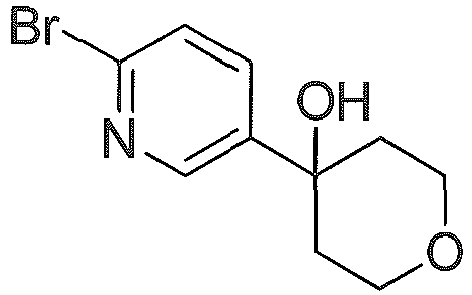
- To a suspension of 2-bromo-5-iodopyridine (2.00 g) in tetrahydrofuran (20 mL) and diethyl ether (10 mL) was added dropwise 1.6M n-butyllithium hexane solution (4.40 mL) at-78°C. The mixture was stirred at -78°C for 30 min under argon atmosphere, and a solution of tetrahydro-4H-pyran-4-one (0.651 mL) in tetrahydrofuran (10 mL) was added dropwise thereto at -78°C. The reaction mixture was slowly warmed to -50°C, aqueous ammonium chloride solution was added thereto, and the mixture was extracted with ethyl acetate. The extract was washed successively with water and saturated brine, and dried over anhydrous sodium sulfate, and the solvent was evaporated under reduced pressure. The residue was purified by silica gel column chromatography (ethyl acetate/hexane) to give the title compound (0.932 g).
MS(ESI+): [M+H] +258.1. -

- A solution of (2-chloropyridin-4-yl)acetic acid (300 mg), 1-hydroxybenzotriazole (284 mg), triethylamine (0.487 mL), morpholine (0.183 mL) and 1-ethyl-3-(3-dimethylaminopropyl)carbodiimide hydrochloride (469 mg) in N,N-dimethylformamide (10 mL) was stirred at room temperature for 18 hr. To the reaction mixture was added water, and the mixture was extracted with ethyl acetate. The obtained organic layer was washed with saturated brine, and dried over anhydrous magnesium sulfate, and the solvent was evaporated under reduced pressure. The residue was purified by silica gel column chromatography (hexane/ethyl acetate) to give the title compound (239 mg).
MS(ESI+): [M+H] +241.2. -
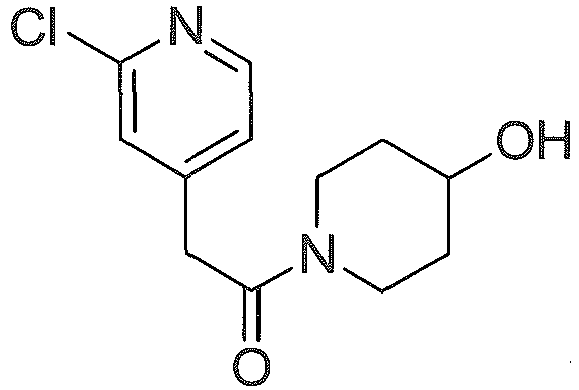
- The title compound was obtained from (2-chloropyridin-4-yl)acetic acid and piperidin-4-ol in the same manner as in Reference Example 11.
MS (ESI+) : [M+H] + 255.2. -
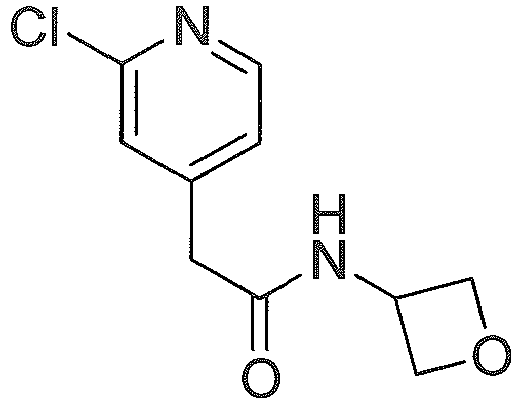
- The title compound was obtained from (2-chloropyridin-4-yl)acetic acid and oxetan-3-amine in the same manner as in Reference Example 11.
MS (ESI+): [M+H] + 27.2. -

- The title compound was obtained from (2-chloropyridin-4-yl)acetic acid and dimethylamine hydrochloride in the same manner as in Reference Example 11.
MS (ESI+) : [M+H] + 199.2. -

- The title compound was obtained from 2-chloropyridin-4-ol and 1-(2-hydroxyethyl)pyrrolidin-2-one in the same manner as in Step A of Example 163.
MS (ESI+): [M+H] + 241.1. -

- The title compound was obtained from 2-chloropyridin-4-ol and 2,2-dimethyloxirane in the same manner as in Reference Example 4.
MS (ESI+) : [M+H] + 202.2. -

- The title compound was obtained from 2-chloro-4-iodopyridine and tetrahydro-4H-pyran-4-one in the same manner as in Step A of Reference Example 10.
MS (ESI+): [M+H] + 214.1. -

- To acetic anhydride (1.5 mL) was added dropwise formic acid (0.73 mL) under ice-cooling, and the mixture was stirred at 55°C for 45 min. The mixture was allowed to be warmed to room temperature, tetrahydrofuran (20 mL) was added thereto, and a solution of 6-bromopyridin-2-amine (1.00 g) in tetrahydrofuran (10 mL) was added dropwise thereto over 3 min under ice-cooling. The reaction mixture was stirred at room temperature for 1.5 hr. The reaction solution was concentrated under reduced pressure, and the obtained white solid was subjected to azeotropy with toluene, and washed with hexane to give the title compound (1.1 g).
MS (ESI+): [M+H] + 201.1. -

- 6-Bromopicoline aldehyde (0.520 g) and 2,4-dimethoxybenzylamine (0.504 mL) were dissolved in tetrahydrofuran (25 mL), acetic acid (0.176 mL) was added thereto, and the mixture was stirred at room temperature for 1 hr. Sodium triacetoxyborohydride (889 mg) was added thereto, and the mixture was stirred in a second straight night at room temperature. To the reaction mixture was added saturated aqueous sodium hydrogen carbonate solution, and the mixture was extracted with ethyl acetate. The organic layer was washed with saturated brine, and dried over anhydrous magnesium sulfate, and the solvent was evaporated under reduced pressure. The residue was purified by silica gel column chromatography (hexane/ethyl acetate) to give the title compound (930 mg).
MS (ESI+): [M+H]+ 337.1. -

- To acetic anhydride (0.703 mL) was added dropwise formic acid (0.349 mL) under ice-cooling, and the mixture was stirred at 55°C for 45 min. The mixture was allowed to be cooled to room temperature, and tetrahydrofuran (10 mL) was added thereto. A solution of 1-(6-bromopyridin-2-yl)-N-(2,4-dimethoxybenzyl)methanamine obtained in Reference Example 19 (930 mg) in tetrahydrofuran (10 mL) was added dropwise thereto over 3 min under ice-cooling, and the reaction mixture was stirred at room temperature for 30 min. The reaction solution was concentrated under reduced pressure, the obtained colorless oil was subjected to azeotropy with toluene, and the residue was purified by silica gel column chromatography (hexane/ethyl acetate) to give the title compound (932 mg).
NMR (300 MHz, CDCl3) δppm 3.70 (s, 0.75 H), 3.77 (s, 2.25 H), 3.79 (s, 0.75 H), 3.80 (s, 2.25 H), 4.37 (s, 1.5 H), 4.43 (s, 0.5 H), 4.49 (s, 0.5 H), 4.51 (s, 1.5 H), 6.33 - 6.47 (m, 2 H), 7.06 (d, J=8.1 Hz, 1 H), 7.11 - 7.21 (m, 1 H), 7.29 - 7.39 (m, 1 H), 7.40 - 7.55 (m, 1 H), 8.32 (s, 0.25 H), 8.42 (s, 0.75 H). -

- N-((6-Bromopyridin-2-yl)methyl)-N-(2,4-dimethoxybenzyl)formamide obtained in Reference Example 20 (830 mg) and anisole (1.0 mL) were dissolved in formic acid (20 mL), and the solution was stirred at 100°C for 8 hr. The mixture was allowed to be cooled to room temperature, and concentrated under reduced pressure. The residue was subjected to azeotropy with toluene, to the residue was added saturated aqueous sodium hydrogen carbonate solution, and the mixture was extracted with ethyl acetate. The organic layer was washed with saturated brine, and dried over anhydrous magnesium sulfate, and the solvent was evaporated under reduced pressure. The obtained residue was purified by silica gel column chromatography (basic silica gel, hexane/ethyl acetate) to give the title compound (279 mg).
MS (ESI+): 215.0. -

- To a solution of 4,6-dichloropyrimidine (600 mg) and 1-(2-hydroxyethyl)-2-pyrrolidinone (0.728 mL) in N,N-dimethylformamide (2 mL) was added sodium hydride (60% oil, 209 mg) under ice-cooling, and the mixture was stirred for 30 min. The reaction mixture was poured into saturated aqueous ammonium chloride solution (10 mL), water (5 mL) was added thereto, and the mixture was extracted with ethyl acetate. The organic layer was washed with water (10 mL, threetimes) and saturated brine, and dried over anhydrous magnesium sulfate, and the solvent was evaporated under reduced pressure. The obtained pale-yellow oil was purified by silica gel chromatography (hexane/ethyl acetate) to give the title compound (634 mg).
MS(ESI+): [M+H] + 242.2. -

- The title compound was obtained from 2,5-dibromopyrazine and 4-methoxybenzyl alcohol in the same manner as in Step A of Reference Example 22.
MS (ESI-), found: 173.0. -

- The title compound was obtained from 2,3-dichloropyrazine and 4-methoxybenzyl alcohol in the same manner as in Step A of Reference Example 22.
MS (ESI-), found: 129.1. -

- A mixture of ethyl formimidate hydrochloride (1.00 g), tetrahydropyran-4-ylamine (1.02 g) and ethanol (10.0 mL) was heated with reflux for 1 hr, and allowed to be cooled to room temperature. The solvent was evaporated under reduced pressure, and the residue was dried. The obtained residue (1.50 g) was dissolved in methanol (15.0 mL). To the solution were added sodium methoxide methanol solution (28%, 3.86 g) and diethyl malonate (1.43 mL) at room temperature, and the mixture was stirred at 40°C for 14 hr.
- The reaction solution was allowed to be cooled to room temperature, and the solvent was evaporated under reduced pressure to give a white residue. The white residue was dissolved in water (10 mL), the solution was acidified with 2M hydrochloric acid, and sodium chloride was added thereto until the solution became saturated. The solution was extracted with a mixed solvent of tetrahydrofuran/ethyl acetate (1:1), and then with a mixed solvent of methanol/ethyl acetate (1:4). The organic layer was washed with saturated brine, and dried over anhydrous magnesium sulfate, and the solvent was evaporated under reduced pressure, and the residue was dried to give the title compound (230 mg).
MS(ESI+): [M+H] + 197.2. -

- A mixture of 6-hydroxy-3-(tetrahydro-2H-pyran-4-yl)pyrimidin-4(3H)-one obtained in Reference Example 25 (210 mg) and phosphorus oxychloride (6 mL) was stirred at 100°C for 2 hr. The mixture was allowed to be cooled to room temperature, the solvent was evaporated under reduced pressure, and the residure was subjected to azeotropy with toluene to give a residue. The residue was dissolved in water (10 mL), and the solution was basified with saturated aqueous sodium hydrogen carbonate solution (30 mL) under ice-cooling. The mixture was extracted with ethyl acetate, and the organic layer was washed with saturated brine, and dried over anhydrous magnesium sulfate, and the solvent was evaporated under reduced pressure to give a residue. The residue was purified by chromatography (hexane/ethyl acetate) to give the title compound (125 mg).
MS (ESI+) : [M+H] + 15.0. -
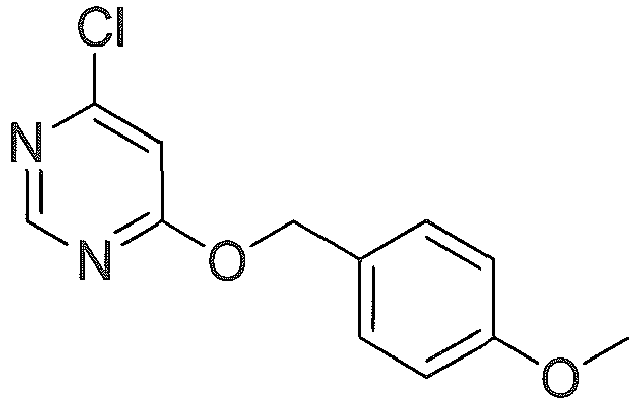
- The title compound was obtained from 2,4-dichloropyrimidine and 4-methoxybenzyl alcohol in the same manner as in Step A of Reference Example 22.
MS (ESI-), found: 129.1. -

- A solution of 2,5-dibromopyrazine (200 mg), 4,4-difluoropiperidine hydrochloride (132 mg) and cesium carbonate (603 mg) in dimethyl sulfoxide (5 mL) was stirred overnight at 90°C under nitrogen atmosphere. To the reaction mixture was added water, and the mixture was extracted with ethyl acetate. The obtained organic layer was washed successively with water and saturated brine, and dried over anhydrous magnesium sulfate, and the solvent was evaporated under reduced pressure. The residue was purified by silica gel column chromatography (hexane/ethyl acetate) to give the title compound (89 mg).
MS (ESI+) : [M+H] +277.8. -

- Sodium triacetoxyborohydride (870 mg) was added to a solution of 5-chloropyrazine-2-carbaldehyde (390 mg) and 1-methylpiperazine (0.335 mL) in acetonitrile (10 mL) at 0°C. The reaction mixture was stirred at room temperature for 4 hr. To the reaction mixture was added saturated aqueous sodium hydrogen carbonate solution, and the mixture was extracted with ethyl acetate. The obtained organic layer was washed successively with water and saturated brine, and dried over anhydrous magnesium sulfate, and the solvent was evaporated under reduced pressure. The residue was purified by silica gel column chromatography (basic silica gel, hexane/ethyl acetate) to give the title compound (285 mg).
MS (ESI+) : [M+H] +226.8. -

- The title compound was obtained from 2-bromo-1,3-thiazole-5-carboxylic acid and 2-methoxy-N-methylethanamine in the same manner as in Step A of Reference Example 11.
MS (ESI+): [M+H] + 278.7. -

- To a mixture of N-(2-methylphenyl)-3-oxobutanamide (10.0 g), potassium carbonate (7.23 g) and N,N-dimethylformamide (130 mL) was added dropwise 1,1-dimethoxy-N,N-dimethylmethanamine (12.5 g) over 30 min at room temperature, and the reaction mixture was stirred at room temperature for 2 hr. The reaction mixture was slowly poured into water, and the mixture was extracted with dichloromethane. The extract was washed with water, and dried over anhydrous magnesium sulfate, and the solvent was evaporated under reduced pressure. The residue was purified by silica gel column chromatography (ethyl acetate/hexane) to give the title compound (10.2 g).
1H NMR (400 MHz, CDCl3) δ 2.32 (3H, s), 2.38 (3H, s), 3.22 (6H, brs), 6.99 (1H,dd, J = 7.6, 7.2 Hz), 7.17-7.21 (2H, m),7.72 (1H, s), 8.13 (1H, d, J = 8.0 Hz), 10.60 (1H, brs). - Phosphorus oxychloride (15.4 mL) was slowly added to N,N-dimethylformamide (12.8 mL) under ice-cooling, and the reaction mixture was stirred under ice-cooling for 15 min. To the reaction mixture was added a solution of 2-((dimethylamino)methylene)-N-(2-methylphenyl)-3-oxobutanamide obtained in Step A (10.2 g) in N,N-dimethylformamide (100 mL) under ice-cooling, and the mixture was heated at 125°C for 30 min. The reaction mixture was cooled to room temperature, saturated brine was added thereto, and the mixture was extracted with dichloromethane. The extract was washed with water, and dried over anhydrous sodium sulfate, and the solvent was evaporated under reduced pressure. To the residue were added ethyl acetate and diethyl ether, and the resulting solid was collected by filtration, and washed with diethyl ether to give the title compound (6.00 g).
1H NMR (400 MHz, CDCl3) δ 2.20 (3H, s), 6.41 (1H, d, J = 7.6 Hz), 7.18 (1H, d, J = 8.0 Hz), 7.33-7.44 (4H, m), 10.40 (1H, s). - A mixture of 4-chloro-1-(2-methylphenyl)-2-oxo-1,2-dihydropyridine-3-carbaldehyde obtained in Step B (6.00 g), hydroxylamine hydrochloride (2.53 g), conc. hydrochloric acid (0.0740 mL) and 2-propanol (60 mL) was heated at 100°C for 2 hr, and the mixture was cooled to room temperature, and concentrated under reduced pressure. To the residue was added ethyl acetate, and the mixture was washed with water and saturated brine, and dried over anhydrous sodium sulfate, and the solvent was evaporated under reduced pressure to give the title compound (6.02 g).
1H NMR (400 MHz, CDCl3) δ 2.15 (3H, s), 6.42 (1H, d, J = 7.2 Hz), 7.15 (1H, d, J = 8.0 Hz), 7.21 (1H, d, J = 7.2 Hz), 7.29-7.42 (3H, m), 8.50 (1H, s). - To a solution of 4-chloro-3-((hydroxyimino)methyl)-1-(2-methylphenyl)pyridin-2(1H)-one obtained in Step C (6.36 g) in acetonitrile (60 mL) was added phosphorus oxychloride (2.93 mL) at room temperature. The reaction mixture was heated at 90°C for 1 hr, cooled to room temperature, and poured into ice water. The resulting solid was collected by filtration to give the title compound (3.15 g).
1H NMR (400 MHz, CDCl3) δ 2.17 (3H, s), 6.45 (1H, d, J = 7.2 Hz), 7.13-7.15 (1H, m), 7.32-7.44 (4H, m). - To a solution of 4-chloro-1-(2-methylphenyl)-2-oxo-1,2-dihydropyridine-3-carbonitrile obtained in Step D (3.15 g) in ethanol (10 mL) was added hydrazine monohydrate (1.58 mL) at room temperature. The reaction mixture was heated overnight at 90°C, and cooled to room temperature. The reaction mixture was concentrated under reduced pressure, to the residue was added water, and the mixture was extracted with ethyl acetate. The extract was washed with saturated aqueous sodium hydrogen carbonate solution, and dried over anhydrous sodium sulfate, and the solvent was evaporated under reduced pressure to give the title compound (3.14 g).
1H NMR (400 MHz, CDCl3) δ 2.18 (3H, s), 4.77 (2H, brs), 6.29 (1H, d, J = 7.6 Hz), 6.99 (1H, d, J = 7.6 Hz), 7.22 (1H, d, J = 7.2 Hz), 7.24-7.36 (3H, m). - To a mixture of 3-amino-5-(2-methylphenyl)-1,5-dihydro-4H-pyrazolo[4,3-c]pyridin-4-one obtained in Step E (200 mg) and acetonitrile (6 mL) was slowly added a solution of N-bromosuccinimide (163 mg) in acetonitrile (2 mL) under ice-cooling. The reaction mixture was stirred overnight at room temperature, and the resulting solid was collected by filtration, and washed with acetonitrile. The obtained solid was purified by silica gel chromatography (methanol/dichloromethane) to give the title compound (127 mg).
MS (ESI+) : [M+H] +319.2. -

- To a solution of 4-chloro-1-(2-methylphenyl)-2-oxo-1,2-dihydropyridine-3-carbonitrile obtained in Step D of Example 1 (4.00 g) in N,N-dimethylformamide (33 mL) was added N-bromosuccinimide (3.49 g) at 50°C. The reaction mixture was heated at 50°C for 6 hr, cooled to room temperature, and diluted with water. The resulting solid was collected by filtration, and washed with acetonitrile. The solid was purified by silica gel column chromatography (ethyl acetate/hexane) to give the title compound (4.30 g).
1H NMR (400 MHz, CDCl3) δ 2.19 (3H, s), 7.14-7.16 (1H, m), 7.33-7.45 (3H, m), 7.76 (1H, s). - A mixture of 5-bromo-4-chloro-1-(2-methylphenyl)-2-oxo-1,2-dihydropyridine-3-carbonitrile obtained in Step A (400 mg), phenylboronic acid (211 mg), tetrakis(triphenylphosphine)palladium(0) (143 mg), aqueous sodium carbonate solution (2 M, 1.24 mL) and 1,2-dimethoxyethane (4.0 mL) was heated with microwave irradiation at 90°C for 1 hr. The reaction mixture was cooled to room temperature, and water was added thereto, and the mixture was extracted with ethyl acetate. The extract was washed with water and saturated brine, and dried over anhydrous sodium sulfate, and the solvent was evaporated under reduced pressure. The residue was purified by silica gel column chromatography (ethyl acetate/hexane) to give the title compound (255 mg).
MS (ESI+): [M+H] +321.1. - To a solution of 4-chloro-1-(2-methylphenyl)-2-oxo-5-phenyl-1,2-dihydropyridine-3-carbonitrile obtained in Step B (255 mg) in ethanol (1.6 mL) was added hydrazine monohydrate (59.7 mg) at room temperature. The reaction mixture was heated at 70°C for 2 hr, and cooled to room temperature, water was added thereto, and the mixture was extracted with ethyl acetate. The extract was dried over anhydrous magnesium sulfate, and the solvent was evaporated under reduced pressure. The residue was purified by thin layer silica gel chromatography (methanol/dichloromethane) to give the title compound (67.0 mg).
MS (ESI+) : [M+H] +317.3. -

- A mixture of 3-amino-7-bromo-5-(2-methylphenyl)-1,5-dihydro-4H-pyrazolo[4,3-c]pyridin-4-one obtained in Step F of Example 1 (130 mg), 4,4,4',4',5,5,5',5'-octamethyl-2,2'-bi-1,3,2-dioxaborolane (114 mg), (1,1'-bis(diphenylphosphino)ferrocene)dichloropalladium(II) (14.9 mg), potassium acetate (80.0 mg) and N,N-dimethylformamide (2.0 mL) was heated with microwave irradiation at 110°C for 7 hr. The reaction mixture was cooled to room temperature, and 2-bromopyridine (111 mg), aqueous sodium carbonate solution (2 M, 0.350 mL) and tetrakis(triphenylphosphine)palladium(0) (40.4 mg) were added thereto. The reaction mixture was heated with microwave irradiation at 140°C for 1 hr. The reaction mixture was cooled to room temperature, water was added thereto, and the mixture was extracted with ethyl acetate. The extract was washed with water, and dried over anhydrous sodium sulfate, and the solvent was evaporated under reduced pressure. The residue was purified by thin layer silica gel chromatography (methanol/dichloromethane) to give the title compound (15.0 mg).
MS (ESI+): [M+H] +318.3. -
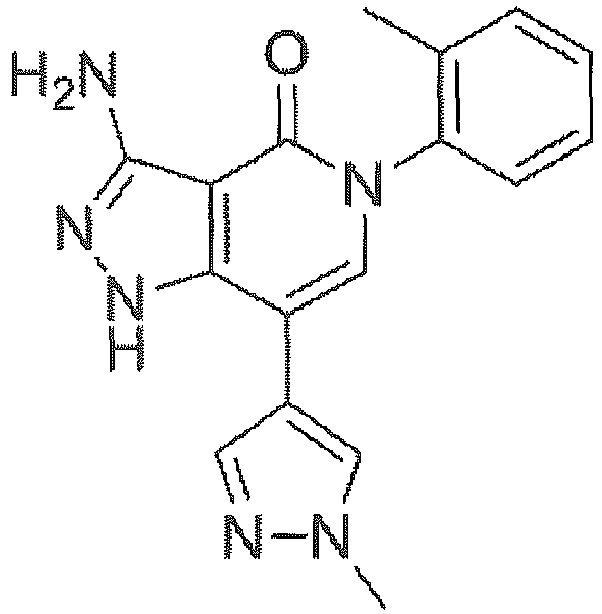
- A mixture of 3-amino-7-bromo-5-(2-methylphenyl)-1,5-dihydro-4H-pyrazolo[4,3-c]pyridin-4-one obtained in Step F of Example 1 (200 mg), 1-methyl-4-(4,4,5,5-tetramethyl-1,3,2-dioxaborolan-2-yl)-1H-pyrazole (196 mg), tetrakis(triphenylphosphine)palladium(0) (72.4 mg), aqueous sodium carbonate solution (2 M, 0.630 mL) and N,N-dimethylformamide (3.0 mL) was heated with microwave irradiation at 140°C for 3 hr. The reaction mixture was cooled to room temperature, and poured into water, and the mixture was extracted with ethyl acetate. The extract was washed with water, and dried over anhydrous sodium sulfate, and the solvent was evaporated under reduced pressure. The residue was purified by silica gel chromatography (methanol/dichloromethane) to give the title compound (23.0 mg).
MS (ESI+): [M+H] +321.3. -

- To a solution of 1-methyl-1H-pyrazol-3-amine (2.00 g) in hydrobromic acid (14.0 mL) was slowly added an aqueous solution (2.06 mL) of sodium nitrite (1.56 g) under ice-cooling. The reaction mixture was stirred under ice-cooling for 30 min, and a solution of copper(I) bromide (7.39 g) in hydrobromic acid (14.0 mL) was slowly added thereto. The reaction mixture was stirred under ice-cooling for 30 hr, neutralized with saturated aqueous sodium hydrogen carbonate solution, and diluted with dichloromethane. The insoluble substance was removed by filtration, the filtrate was washed with water and saturated brine, and dried over anhydrous magnesium sulfate, and the solvent was evaporated under reduced pressure. The residue was purified by silica gel column chromatography (ethyl acetate/hexane) to give the title compound (818 mg).
1H NMR (400 MHz, CDCl3) δ 3.88 (3H, s), 6.25 (1H, d, J = 2.4 Hz), 7.25 (1H, d, J = 2.0 Hz). - A mixture of 3-bromo-1-methyl-1H-pyrazole obtained in Step A (400 mg), 4,4,4',4',5,5,5',5'-octamethyl-2,2'-bi-1,3,2-dioxaborolane (694 mg), (1,1'-bis(diphenylphosphino)ferrocene)dichloropalladium(II) (101 mg), potassium acetate (488 mg) and 1,4-dioxane (5.0 mL) was heated with microwave irradiation at 120°C for 3 hr. The insoluble substance was removed by filtration, and the solvent was evaporated under reduced pressure to give the title compound as a crude product.
1H NMR (400 MHz, CDCl3) δ 1.27 (12H, s), 3.98 (3H, s), 6.66 (1H, d, J = 2.0 Hz), 7.38 (1H, d, J = 2.0 Hz). - The title compound was obtained from 3-amino-7-bromo-5-(2-methylphenyl)-1,5-dihydro-4H-pyrazolo[4,3-c]pyridin-4-one obtained in Step F of Example 1 and the crude 1-methyl-3-(4,4,5,5-tetramethyl-1,3,2-dioxaborolan-2-yl)-1H-pyrazole obtained in Step B in the same manner as in Step A of Example 4.
MS (ESI+) : [M+H] +321.3. -

- To a solution of 1H-pyrazole (5.00 g) in toluene (67.0 mL) were added dimethylsulfamoyl chloride (7.89 mL) and triethylamine (13.3 mL) at room temperature, and the reaction mixture was stirred at room temperature for 18 hr. The resulting solid was removed by filtration, and the solvent was evaporated under reduced pressure. The residue was purified by silica gel column chromatography (ethyl acetate/hexane) to give the title compound (6.24 g).
1H NMR (400 MHz, CDCl3) δ 2.91 (6H, s), 6.38 (1H, dd, J = 2.6, 1.8 Hz), 7.72 (1H, d, J = 1.2 Hz), 7.96 (1H, d, J = 2.4 Hz). - To a solution of N,N-dimethyl-1H-pyrazole-1-sulfonamide obtained in Step A (6.74 g) in tetrahydrofuran (75 mL) was added dropwise n-butyllithium hexane solution (1.3 M, 31.1 mL) over 15 min at -78°C. The reaction mixture was stirred at -78°C for 15 min, and a solution of 1,2-dibromo-1,1,2,2-tetrachloroethane (13.8 g) in tetrahydrofuran (25 mL) was added dropwise thereto over 10 min. The reaction mixture was stirred at -78°C for 15 min, and then at room temperature for 1 hr. The reaction mixture was poured into water, and the mixture was extracted with ethyl acetate. The extract was washed with saturated brine, and dried over anhydrous sodium sulfate, and the solvent was evaporated under reduced pressure. The residue was purified by silica gel column chromatography (ethyl acetate/hexane) to give the title compound (8.03 g).
1H NMR (400 MHz, CDCl3) δ 3.06 (6H, s), 6.42 (1H, d, J = 1.6 Hz), 7.60 (1H, d, J = 1.6 Hz). - A mixture of 3-bromo-N,N-dimethyl-1H-pyrazole-1-sulfonamide obtained in Step B (5.83 g) and trifluoroacetic acid (9.0 mL) was stirred at room temperature for 2 hr. To the reaction mixture was added ethyl acetate, and the mixture was neutralized with saturated aqueous sodium hydrogen carbonate solution, and washed with saturated brine. The organic layer was dried over anhydrous sodium sulfate, and the solvent was evaporated under reduced pressure. The residue was purified by silica gel column chromatography (ethyl acetate/hexane) to give the title compound (2.92 g).
1H NMR (400 MHz, CDCl3) δ 6.37 (1H, d, J = 2.4 Hz), 7.57 (1H, d, J = 2.4 Hz). - To a solution of 3-bromo-1H-pyrazole obtained in Step C (1.20 g) in N,N-dimethylformamide (82 mL) was added potassium tert-butoxide tetrahydrofuran solution (1 M, 12.3 mL) at room temperature. The reaction mixture was stirred at room temperature for 10 min, 1,3,2-dioxathiolane 2,2-dioxide (1.52 g) was added thereto at room temperature, and the mixture was stirred for 1 hr. conc. Hydrochloric acid (7.5 mL) was added thereto at room temperature, and the reaction mixture was stirred at room temperature for 18 hr. To the reaction mixture was added ethyl acetate, and the mixture was neutralized with saturated aqueous sodium hydrogen carbonate solution, and washed with saturated brine. The organic layer was dried over anhydrous sodium sulfate, and the solvent was evaporated under reduced pressure. The residue was purified by silica gel column chromatography (ethyl acetate/hexane) to give the title compound (880 mg).
1H NMR (400 MHz, CDCl3) δ 3.99 (2H, t, J = 4.8 Hz), 4.21 (2H, t, J = 4.8 Hz), 6.27 (1H, d, J = 2.4 Hz), 7.36 (1H, d, J = 2.4 Hz). - The title compound was obtained from 3-amino-7-bromo-5-(2-methylphenyl)-1,5-dihydro-4H-pyrazolo[4,3-c]pyridin-4-one obtained in Step F of Example 1 and 2-(3-bromo-1H-pyrazol-1-yl)ethanol obtained in Step D in the same manner as in Step A of Example 3.
MS (ESI+) : [M+H] +351.3. -

- To a solution of 2-(3-bromo-1H-pyrazol-1-yl)ethanol obtained in Step D of Example 6 (300 mg) in N,N-dimethylformamide (16 mL) were added sodium hydride (55%, 137 mg) and iodomethane (196 µL) under ice-cooling. The reaction mixture was stirred under ice-cooling for 2 hr, water was added thereto, and the mixture was extracted with ethyl acetate. The extract was dried over anhydrous sodium sulfate, and the solvent was evaporated under reduced pressure. The residue was purified by silica gel column chromatography (ethyl acetate/hexane) to give the title compound (150 mg).
1H NMR (400 MHz, CDCl3) δ 3.32 (3H, s), 3.71 (2H, t, J = 5.2 Hz), 4.24 (2H, t, J = 5.2 Hz), 6.25 (1H, d, J = 2.4 Hz), 7.36 (1H, d, J = 2.4 Hz). - The title compound was obtained from 3-amino-7-bromo-5-(2-methylphenyl)-1,5-dihydro-4H-pyrazolo[4,3-c]pyridin-4-one obtained in Step F of Example 1 and 3-bromo-1-(2-methoxyethyl)-1H-pyrazole obtained in Step A in the same manner as in Step A of Example 3.
MS (ESI+) : [M+H] +365.3. -
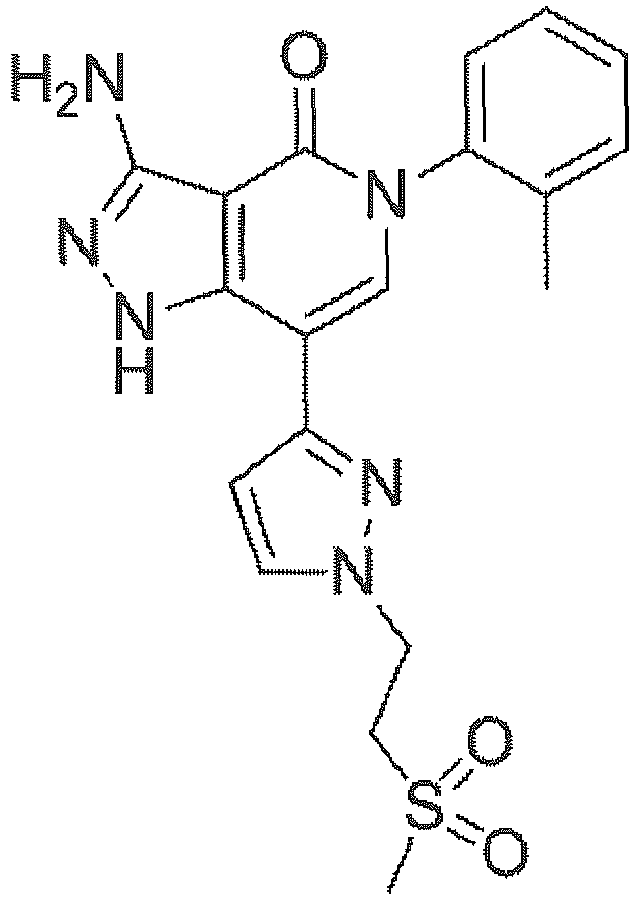
- To a solution of 1-chloro-2-(methylsulfanyl)ethane (2.00 g) in methanol (20 mL) was added a solution of Oxone (registered trademark) (22.2 g) in water (10 mL). The reaction mixture was stirred at room temperature for 18 hr, and concentrated under reduced pressure. The residue was diluted with dichloromethane, and the mixture was washed successively with 1M aqueous sodium carbonate solution, water and saturated brine, and dried over anhydrous sodium sulfate, and the solvent was evaporated under reduced pressure to give the title compound (1.84 g).
1H NMR (400 MHz, CDCl3) δ 3.04 (3H, s), 3.45 (2H, t, J = 6.8 Hz), 3.93 (2H, t, J = 6.6 Hz). - To a solution of 3-bromo-1H-pyrazole obtained in Step C of Example 6 (600 mg) in N,N-dimethylformamide (40 mL) was added potassium tert-butoxide tetrahydrofuran solution (1 M, 6.12 mL) at room temperature, and the mixture was stirred for 10 min. To the reaction mixture was added 1-chloro-2-(methylsulfonyl)ethane obtained in Step A (873 mg) at room temperature, and the mixture was stirred for 2 hr. To the reaction mixture was added ethyl acetate, and the mixture was washed with water and saturated brine, and dried over anhydrous sodium sulfate, and the solvent was evaporated under reduced pressure. The residue was purified by silica gel column chromatography (ethyl acetate/hexane) to give the title compound (730 mg).
1H NMR (400 MHz, CDCl3) δ 2.57 (3H, s), 3.63 (2H, t, J = 6.2 Hz), 4.58 (2H, t, J = 6.2 Hz), 6.30 (1H, d, J = 2.0 Hz), 7.43 (1H, d, J = 2.0 Hz). - The title compound was obtained from 3-amino-7-bromo-5-(2-methylphenyl)-1,5-dihydro-4H-pyrazolo[4,3-c]pyridin-4-one obtained in Step F of Example 1 and 3-bromo-1-(2-(methylsulfonyl)ethyl)-1H-pyrazole obtained in Step B in the same manner as in Step A of Example 3.
MS (ESI+) : [M+H] +413.2. -

- To a solution of 2-bromoethanamine (5.00 g) and trityl chloride (6.80 g) in dichloromethane (24 mL) was slowly added triethylamine (7.48 mL) under ice-cooling, and the reaction mixture was stirred under ice-cooling for 2 hr. The resulting solid was removed by filtration, the filtrate was poured into water, and the mixture was extracted with dichloromethane. The extract was washed with water and saturated brine, and dried over anhydrous sodium sulfate, and the solvent was evaporated under reduced pressure. The residue was recrystallized from dichloromethane/cyclohexane to give the title compound (5.60 g).
1H NMR (400 MHz, CDCl3) δ 2.55-2.57 (2H, m), 3.51 (2H, t, J = 5.8 Hz), 7.17-7.23 (3H, m), 7.27-7.30 (6H, m), 7.46-7.49 (6H, m). - The title compound was obtained from 3-bromo-1H-pyrazole obtained in Step C of Example 6 and 2-bromo-N-tritylethanamine obtained in Step A in the same manner as in Step B of Example 8.
1H NMR (400 MHz, CDCl3) δ2.57 (2H, t, J = 5.6 Hz), 4.14 (2H, t, J = 5.8 Hz), 6.29 (1H, d, J = 2.0 Hz), 7.15-7.19 (2H, m), 7.23-7.27 (7H, m), 7.32-7.37 (7H, m). - To a solution of 2-(3-bromo-1H-pyrazol-1-yl)-N-tritylethanamine obtained in Step B (100 mg) and triethylsilane (38.8 µL) in dichloromethane (1.2 mL) was slowly added trifluoroacetic acid (1.2 mL) under ice-cooling. The reaction mixture was warmed to room temperature, stirred for 3 hr, and concentrated under reduced pressure. To a solution of the obtained residue and acetic anhydride (32.7 µL) in dichloromethane (2.0 mL) was added triethylamine (97.0 µL) under ice-cooling, and the mixture was stirred for 2 hr. To the reaction mixture was added dichloromethane, and the mixture was washed with water and saturated brine, and dried over anhydrous sodium sulfate, and the solvent was evaporated under reduced pressure. The residue was purified by silica gel column chromatography (ethyl acetate) to give the title compound (40.0 mg).
1H NMR (400 MHz, CDCl3) δ1.95 (3H, s), 3.66 (2H, q, J = 5.6 Hz), 4.20 (2H, t, J= 5.6 Hz), 6.06 (1H, brs), 6.25 (1H, d, J = 2.4 Hz), 7.28 (1H, d, J = 2.4 Hz). - The title compound was obtained from 3-amino-7-bromo-5-(2-methylphenyl)-1,5-dihydro-4H-pyrazolo[4,3-c]pyridin-4-one obtained in Step F of Example 1 and N-(2-(3-bromo-1H-pyrazol-1-yl)ethyl)acetamide obtained in Step C in the same manner as in Step A of Example 3.
MS (ESI+) : [M+H] +392.2. -

- The title compound was obtained from 3-amino-7-bromo-5-(2-methylphenyl)-1,5-dihydro-4H-pyrazolo[4,3-c]pyridin-4-one obtained in Step F of Example 1 and 2-bromo-1,3-thiazole in the same manner as in Step A of Example 3.
MS (ESI+): [M+H] +324.2. -

- A mixture of ethyl bromopyruvate (5.00 g), urea (2.31 g) and ethanol (51 mL) was refluxed overnight. The reaction mixture was cooled to room temperature, and the solvent was evaporated under reduced pressure. To the residue was added water, and the mixture was extracted with ethyl acetate. The extract was washed with saturated brine, and dried over anhydrous magnesium sulfate, and the solvent was evaporated under reduced pressure to give the title compound (2.87 g).
1H NMR (400 MHz, CDCl3) δ 1.36 (3H, t, J = 7.2 Hz), 4.33 (2H, q, J = 7.2 Hz), 5.30 (2H, brs), 7.72 (1H, s). - To a mixture of tert-butyl nitrate (2.86 mL), copper(II) chloride (3.23 g) and acetonitrile (64 mL) was added ethyl 2-amino-1,3-oxazole-4-carboxylate obtained in Step A (2.50 g) at 60°C. The reaction mixture was heated at 80°C for 3 hr, and cooled to room temperature. The reaction mixture was poured into 1 M hydrochloric acid, and the mixture was extracted with dichloromethane. The extract was washed with saturated brine, and dried over anhydrous magnesium sulfate, and the solvent was evaporated under reduced pressure. The residue was purified by silica gel column chromatography (ethyl acetate/hexane) to give the title compound (1.90 g).
1H NMR (400 MHz, CDCl3) δ 1.39 (3H, t, J = 7.2 Hz), 4.40 (2H, q, J = 7.2 Hz), 8.19 (1H, s). - The title compound was obtained from 3-amino-7-bromo-5-(2-methylphenyl)-1,5-dihydro-4H-pyrazolo[4,3-c]pyridin-4-one obtained in Step F of Example 1 and ethyl 2-chloro-1,3-oxazole-4-carboxylate obtained in Step B in the same manner as in Step A of Example 3.
MS (ESI+) : [M+H] +380.2. -

- To a solution of 4,6-dichloro-2-methylpyrimidine (3.00 g) in dichloromethane (35 mL) was added 2-(piperazin-1-yl)ethanol (4.51 mL) at room temperature, and the mixture was stirred for 4 hr. To the reaction mixture was added triethylamine (0.513 mL) at room temperature, and the reaction mixture was stirred overnight. The resulting solid was collected by filtration, washed with dichloromethane, and dried under reduced pressure to give the title compound (4.08 g).
1H NMR (400 MHz, CDCl3) δ 2.48 (3H, s), 2.55-2.63 (6H, m), 3.63-3.73 (6H, m), 6.34 (1H, s). - To a solution of 2-(4-(6-chloro-2-methylpyrimidin-4-yl)piperazin-1-yl)ethanol obtained in Step A (1.00 g) and imidazole (0.636 g) in N,N-dimethylformamide (13 mL) was added tert-butyl(chloro)dimethylsilane (0.793 g) at room temperature, and the mixture was stirred for 2 hr. The reaction mixture was poured into water, and the mixture was extracted with ethyl acetate. The extract was washed with water and saturated brine, and dried over anhydrous sodium sulfate, and the solvent was evaporated under reduced pressure to give the title compound (1.42 g).
1H NMR (400 MHz, CDCl3) δ 0.06 (6H, s), 0.90 (9H, s), 2.47 (3H, s), 2.55-2.60 (6H, m), 3.63 (4H, brs), 3.78 (2H, t, J = 6.0 Hz), 6.32 (1H, s). - The title compound was obtained from 3-amino-7-bromo-5-(2-methylphenyl)-1,5-dihydro-4H-pyrazolo[4,3-c]pyridin-4-one obtained in Step F of Example 1 and 4-(4-(2-((tert-butyl(dimethyl)silyl)oxy)ethyl)piperazin-1-yl)-6-chloro-2-methylpyrimidine obtained in Step B in the same manner as in Step A of Example 3.
1H NMR (400 MHz, CDCl3) δ 0.06 (6H, s), 0.89 (9H, s), 2.21 (3H, s), 2.54-2.61 (9H, m), 3.66 (4H, t, J = 4.8 Hz), 3.78 (2H, t, J = 6.0 Hz), 4.75 (2H, brs), 6.43 (1H, s), 7.28 (1H, d, J = 7.2 Hz), 7.34-7.44 (3H, m), 7.62 (1H, s). - To a solution of 3-amino-7-(6-(4-(2-((tert-butyl(dimethyl)silyl)oxy)ethyl)piperazin-1-yl)-2-methylpyrimidin-4-yl)-5-(2-methylphenyl)-1,5-dihydro-4H-pyrazolo[4,3-c]pyridin-4-one obtained in Step C (195 mg) in tetrahydrofuran (2.0 mL) was added tetrabutylammonium fluoride tetrahydrofuran solution (1 M, 0.679 mL) at room temperature, and the mixture was stirred overnight. The reaction mixture was poured into water, and the mixture was extracted with ethyl acetate. The extract was washed with water and saturated brine, and dried over anhydrous sodium sulfate, and the solvent was evaporated under reduced pressure. The residue was purified by thin layer silica gel chromatography (methanol/dichloromethane), and then HPLC (C18, mobile phase: water/acetonitrile (containing 0.1% TFA)). To the obtained fraction was added saturated aqueous sodium hydrogen carbonate solution, and the mixture was extracted with ethyl acetate. The extract was dried over anhydrous magnesium sulfate, and concentrated under reduced pressure to give the title compound (50.0 mg).
MS (ESI+) : [M+H]+461.4. -

- To a mixture of 3-methylbutan-2-amine (1.00 g), 2,2,6-trimethyl-4H-1,3-didioxin-4-one (2.12 g) and tetrahydrofuran (3.0 mL) was added sodium acetate (941 mg) at room temperature. The reaction mixture was refluxed overnight, and cooled to room temperature. The reaction mixture was poured into water, and the mixture was extracted with ethyl acetate. The extract was washed with saturated brine, and dried over anhydrous sodium sulfate, and the solvent was evaporated under reduced pressure. The residue was purified by silica gel column chromatography (ethyl acetate/hexane) to give the title compound (1.46 g).
1H NMR (400 MHz, CDCl3) δ 0.90 (6H, dd, J = 6.8, 4.0 Hz), 1.09 (3H, d, J = 6.8 Hz), 1.67-1.76 (1H, m), 2.27 (3H, s), 3.41 (2H, s), 3.83-3.92 (1H, m), 6.82 (1H,brs). - To a solution of N-(3-methylbutan-2-yl)-3-oxobutanamide obtained in Step A (500 mg) in N,N-dimethylformamide (6.0 mL) was added dropwise 1,1-dimethoxy-N,N-dimethylmethanamine (696 mg) over 5 min at room temperature, and the reaction mixture was stirred overnight at room temperature. The solvent was evaporated under reduced pressure, and the residue was purified by silica gel column chromatography (methanol/ethyl acetate) to give the title compound (630 mg).
1H NMR (400 MHz, CDCl3) δ 0.93 (6H, m), 1.11 (3H, d, J = 6.8 Hz), 1.71-1.79 (1H, m), 2.22 (3H, s), 3.11 (6H, m), 3.89-3.97 (1H, m), 7.50 (1H, brs), 7.61 (1H, brs). - Phosphorus oxychloride (1.04 mL) was slowly added to N,N-dimethylformamide (4.0 mL) under ice-cooling, and the mixture was stirred for 15 min. To the reaction mixture was added a solution of 2-((dimethylamino)methylene)-N-(3-methylbutan-2-yl)-3-oxobutanamide obtained in Step B (630 mg) in N,N-dimethylformamide (5.3 mL) under ice-cooling, and the reaction mixture was heated at 100°C for 30 min. The reaction mixture was cooled to room temperature, and poured into ice water. The reaction mixture was neutralized with saturated aqueous sodium hydrogen carbonate solution, and extracted with ethyl acetate. The extract was washed with water, and dried over anhydrous sodium sulfate, and the solvent was evaporated under reduced pressure. The residue was purified by silica gel column chromatography (ethyl acetate/hexane) to give the title compound (400 mg).
1H NMR (400 MHz, CDCl3) δ 0.85 (3H, d, J= 6.8 Hz), 1.04 (3H, d, J = 6.8 Hz), 1.36 (3H, d, J = 7.2 Hz), 1.88-1.97 (1H, m), 4.82-4.90 (1H, m), 6.34 (1H, d, J = 7.6 Hz), 7.38 (1H, d, J = 7.2 Hz), 10.40 (1H, s). - A mixture of 4-chloro-1-(3-methylbutan-2-yl)-2-oxo-1,2-dihydropyridine-3-carbaldehyde obtained in Step C (400 mg), hydroxylamine hydrochloride (244 mg) and sodium acetate (288 mg) in methanol/water (4:1, 6.0 mL) was heated at 75°C for 1 hr, and cooled to room temperature. The reaction mixture was poured into ice water, and the resulting solid was collected by filtration, washed with water, and dried under reduced pressure to give the title compound (328 mg).
1H NMR (400 MHz, CDCl3) δ 0.84 (3H, d, J = 6.8 Hz), 1.02 (3H, d, J = 6.4 Hz), 1.32 (3H, d, J = 6.8 Hz), 1.85-1.94 (1H, m), 4.95-4.99 (1H, m), 6.34 (1H, d, J = 7.6 Hz), 7.19 (1H, d, J = 7.2 Hz), 8.51 (1H, s), 10.89 (1H, brs). - To a solution of 4-chloro-3-((hydroxyimino)methyl)-1-(3-methylbutan-2-yl)pyridin-2(1H)-one obtained in Step D (328 mg) in acetonitrile (3.0 mL) was added phosphorus oxychloride (0.126 mL) at room temperature. The reaction mixture was heated at 90°C for 30 min, and cooled to room temperature. The reaction mixture was poured into ice water, and the mixture was neutralized with saturated aqueous sodium hydrogen carbonate solution, and extracted with ethyl acetate. The extract was washed with water, and dried over anhydrous sodium sulfate, and the solvent was evaporated under reduced pressure to give the title compound (305 mg).
1H NMR (400 MHz, CDCl3) δ 0.83 (3H, d, J = 6.4 Hz), 1.03 (3H, d, J = 6.4 Hz), 1.36 (3H, d, J = 7.2 Hz), 1.87-1.96 (1H, m), 4.77-4.84 (1H, m), 6.39 (1H, d, J = 7.2 Hz), 7.42 (1H, d, J = 7.6 Hz). - To a solution of 4-chloro-1-(3-methylbutan-2-yl)-2-oxo-1,2-dihydropyridine-3-carbonitrile obtained in Step E (305 mg) in N,N-dimethylformamide (3.0 mL) was added N-bromosuccinimide (296 mg) at room temperature. The reaction mixture was heated at 50°C for 4 hr, and cooled to room temperature. The reaction mixture was poured into water, and the mixture was extracted with ethyl acetate. The extract was washed with water, and dried over anhydrous sodium sulfate, and the solvent was evaporated under reduced pressure. The residue was purified by silica gel column chromatography (ethyl acetate/hexane) to give the title compound (386 mg).
1H NMR (400 MHz, CDCl3) δ 0.85 (3H, d, J = 6.8 Hz), 1.03 (3H, d, J = 6.8 Hz), 1.38 (3H, d, J = 6.8 Hz), 1.87-1.96 (1H, m), 4.77-4.84 (1H, m), 7.66 (1H, s). - To a solution of 5-bromo-4-chloro-1-(3-methylbutan-2-yl)-2-oxo-1,2-dihydropyridine-3-carbonitrile obtained in Step F (386 mg) in ethanol (6.0 mL) was added hydrazine monohydrate (0.094 mL) at room temperature. The reaction mixture was heated at 90°C for 1 hr, and cooled to room temperature. The reaction mixture was poured into ice water, and the mixture was neutralized with saturated aqueous sodium hydrogen carbonate solution, and extracted with dichloromethane. The extract was dried over anhydrous sodium sulfate, and the solvent was evaporated under reduced pressure to give the title compound (332 mg). 1H NMR (400 MHz, CDCl3) δ 0.81 (3H, d, J = 6.4 Hz), 1.05 (3H, d, J = 6.4 Hz), 1.34 (3H, d, J = 7.2 Hz), 1.81-1.90 (1H, m), 4.78-4.84 (1H, m), 4.89 (2H, brs), 7.11 (1H, s), 9.58 (1H, brs).
- A mixture of 3-amino-7-bromo-5-(3-methylbutan-2-yl)-1,5-dihydro-4H-pyrazolo[4,3-c]pyridin-4-one obtained in Step G (332 mg), 1-methyl-3-(4,4,5,5-tetramethyl-1,3,2-dioxaborolan-2-yl)-1H-pyrazole (347 mg), tetrakis(triphenylphosphine)palladium(0) (128 mg), aqueous sodium carbonate solution (2 M, 1.11 mL) and N,N-dimethylformamide (6.0 mL) was heated with microwave irradiation at 120°C for 1 hr. The reaction mixture was cooled to room temperature, and poured into water, and the mixture was extracted with ethyl acetate. The extract was washed with water and saturated brine, and dried over anhydrous sodium sulfate, and the solvent was evaporated under reduced pressure. The residue was purified by silica gel column chromatography (methanol/ethyl acetate), and then HPLC (C18, mobile phase: water/acetonitrile (containing 0.1% TFA)). To the obtained fraction was added saturated aqueous sodium hydrogen carbonate solution, and the mixture was extracted with ethyl acetate. The extract was dried over anhydrous magnesium sulfate, and concentrated under reduced pressure to give the title compound (36.0 mg).
1H NMR (400 MHz, CDCl3) δ 0.82 (3H, d, J = 6.8 Hz), 1.08 (3H, d, J = 6.8 Hz), 1.39 (3H, d, J = 6.8 Hz), 1.88-1.97 (1H, m), 3.96 (3H, s), 4.77 (2H, brs), 4.84-4.94 (1H, m), 6.42 (1H, d, J = 2.4 Hz), 7.31 (1H, s), 7.39 (1H, d, J = 2.4 Hz), 10.44 (1H, brs).
MS (ESI+) : [M+H]+301.2. -

- To a mixture of 2-methylcyclohexanamine (2.00 g), 2,2,6-trimethyl-4H-1,3-didioxin-4-one (3.26 g) and tetrahydrofuran (5.0 mL) was added sodium acetate (1.45 g) at room temperature. The reaction mixture was refluxed overnight, and cooled to room temperature. The reaction mixture was poured into water, and the mixture was extracted with ethyl acetate. The extract was washed with saturated brine, and dried over anhydrous sodium sulfate, and the solvent was evaporated under reduced pressure. The residue was purified by silica gel column chromatography (ethyl acetate/hexane) to give the title compound (1.99 g).
1H NMR (400 MHz, CDCl3) δ 0.85-0.92 (3H, m), 1.06-1.95 (9H, m), 2.27-2.28 (3H, m), 3.41-3.44 (2H, m), 3.46-4.10 (1H, m), 6.63-7.19 (1H, m). - To a solution of N-(2-methylcyclohexyl)-3-oxobutanamide obtained in Step A (1.99 g) in N,N-dimethylformamide (20 mL) was added dropwise 1,1-dimethoxy-N,N-dimethylmethanamine (2.41 g) over 10 min at room temperature, and the reaction mixture was stirred overnight at room temperature. The solvent was evaporated under reduced pressure, and the residue was purified by silica gel column chromatography (methanol/dichloromethane) to give the title compound (1.94 g).
1H NMR (400 MHz, CDCl3) δ 0.89-0.97 (3H, m), 1.04-2.02 (9H, m), 2.22-2.24 (3H, m), 3.10 (6H, s), 3.49-4.15 (1H, m), 7.42-7.99 (2H, brs). - Phosphorus oxychloride (2.86 mL) was slowly added to N,N-dimethylformamide (16 mL) under ice-cooling, and the mixture was stirred for 15 min. To the reaction mixture was added a solution of 2-((dimethylamino)methylene)-N-(2-methylcyclohexyl)-3-oxobutanamide obtained in Step B (1.94 g) in N,N-dimethylformamide (10 mL) under ice-cooling, and the reaction mixture was heated at 100°C for 30 min. The reaction mixture was cooled to room temperature, and poured into ice water. The reaction mixture was neutralized with saturated aqueous sodium hydrogen carbonate solution, and extracted with ethyl acetate. The extract was washed with water, and dried over anhydrous sodium sulfate, and the solvent was evaporated under reduced pressure. The residue was purified by silica gel column chromatography (ethyl acetate/hexane) to give the title compound (1.22 g).
1H NMR (400 MHz, CDCl3) δ 0.79-0.81 (3H, m), 1.24-2.05 (9H, m), 4.68 (1H, brs),6.30-6.35 (1H, m), 7.39-7.43 (1H, m), 10.40 (1H, brs). - A mixture of 4-chloro-1-(2-methylcyclohexyl)-2-oxo-1,2-dihydropyridine-3-carbaldehyde obtained in Step C (1.22 g), hydroxylamine hydrochloride (667 mg) and sodium acetate (787 mg) in methanol/water (4:1, 6.0 mL) was heated at 75°C for 1 hr, and cooled to room temperature. The reaction mixture was poured into ice water, and the resulting solid was collected by filtration, washed with water, and dried under reduced pressure to give the title compound (1.19 g).
1H NMR (400 MHz, DMSO-d6) δ 0.61-0.76 (3H, m), 1.11-1.84 (9H, m), 4.47 (1H, brs), 6.4-6.47 (1H, m), 7.63-7.80 (1H, m), 8.12 (1H, s), 11.50-11.51 (1H, m). - To a solution of 4-chloro-3-((hydroxyimino)methyl)-1-(2-methylcyclohexyl)pyridin-2(1H)-one obtained in Step D (1.19 g) in acetonitrile (9.0 mL) was added phosphorus oxychloride (0.412 mL) at room temperature. The reaction mixture was heated at 90°C for 30 min, and cooled to room temperature. The reaction mixture was poured into ice water, and the mixture was neutralized with saturated aqueous sodium hydrogen carbonate solution, and extracted with ethyl acetate. The extract was washed with water, and dried over anhydrous sodium sulfate, and the solvent was evaporated under reduced pressure to give the title compound (1.14 g).
1H NMR (400 MHz, CDCl3) δ 0.77-0.80 (3H, m), 1.23-1.92 (9H, m), 4.63 (1H, brs),6.35-6.41 (1H, m), 7.42-7.46 (1H, m). - To a solution of 4-chloro-1-(2-methylcyclohexyl)-2-oxo-1,2-dihydropyridine-3-carbonitrile obtained in Step E (1.14 g) in N,N-dimethylformamide (9.0 mL) was added N-bromosuccinimide (993 mg) at room temperature. The reaction mixture was heated at 50°C for 3 hr, and cooled to room temperature. The reaction mixture was poured into water, and the mixture was extracted with ethyl acetate. The extract was washed with water, and dried over anhydrous sodium sulfate, and the solvent was evaporated under reduced pressure. The residue was purified by silica gel column chromatography (ethyl acetate/hexane) to give the title compound (1.29 g).
1H NMR (400 MHz, CDCl3) δ 0.79-0.82 (3H, m), 1.20-1.94 (9H, m), 4.63 (1H, brs),7.66-7.68 (1H, m). - To a solution of 5-bromo-4-chloro-1-(2-methylcyclohexyl)-2-oxo-1,2-dihydropyridine-3-carbonitrile obtained in Step F (1.29 g) in ethanol (20 mL) was added hydrazine monohydrate (0.288 mL) at room temperature. The reaction mixture was heated at 90°C for 2 hr, and cooled to room temperature. The reaction mixture was poured into ice water, and the mixture was neutralized with saturated aqueous sodium hydrogen carbonate solution under ice-cooling, and extracted with dichloromethane. The extract was dried over anhydrous sodium sulfate, and the solvent was evaporated under reduced pressure. The residue was purified by silica gel column chromatography (ethyl acetate/hexane) to give the title compound (1.21 g).
1H NMR (400 MHz, CDCl3) δ 0.77-0.85 (3H, m), 1.21-1.90 (9H, m), 4.64 (1H, brs),4.97 (2H, brs), 7.14-7.15 (1H, m). - A mixture of 3-amino-7-bromo-5-(2-methylcyclohexyl)-1,5-dihydro-4H-pyrazolo[4,3-c]pyridin-4-one obtained in Step G (200 mg), 4,4,4',4',5,5,5',5'-octamethyl-2,2'-bi-1,3,2-dioxaborolane (861 mg), (1,1'-bis(diphenylphosphino)ferrocene)dichloropalladium(II) (22.0 mg), potassium acetate (121 mg) and N,N-dimethylformamide (3.0 mL) was heated with microwave irradiation at 110°C for 5 hr. The reaction mixture was cooled to room temperature, and 3-iodo-1-methyl-1H-pyrazole (384 mg), aqueous sodium carbonate solution (2 M, 0.610 mL) and tetrakis(triphenylphosphine)palladium(0) (71.0 mg) were added thereto at room temperature. The reaction mixture was heated with microwave irradiation at 140°C for 1 hr. The reaction mixture was cooled to room temperature, and poured into water, and the mixture was extracted with ethyl acetate. The extract was washed with water, and dried over anhydrous sodium sulfate, and the solvent was evaporated under reduced pressure. The residue was purified by silica gel column chromatography (methanol/dichloromethane) to give the title compound (51.0 mg).
1H NMR (400 MHz, CDCl3) δ 0.78-0.88 (3H, m), 1.24-2.04 (9H, m), 3.96 (3H, brs), 4.74-4.77 (2H, m), 6.40-6.45 (1H, m), 7.33-7.37 (1H, m), 7.39-7.40 (1H, m), 10.45 (1H, brs).
MS (ESI+): [M+H]+327.3. -

- To a mixture of 2,6-difluoroaniline (5.00 g), 2,2,6-trimethyl-4H-1,3-didioxin-4-one (7.16g) and tetrahydrofuran (13 mL) was added sodium acetate (3.18 g) at room temperature. The reaction mixture was refluxed overnight, and cooled to room temperature. The reaction mixture was poured into water, and the mixture was extracted with ethyl acetate. The extract was washed with saturated brine, and dried over anhydrous sodium sulfate, and the solvent was evaporated under reduced pressure. The residue was purified by silica gel column chromatography (ethyl acetate/hexane) to give the title compound (5.04 g).
1H NMR (400 MHz, CDCl3) δ 2.35 (3H, s), 3.67 (2H, s), 6.93-6.99 (2H, m), 7.18-7.24 (1H, m), 8.77 (1H, brs). - To a mixture of N-(2,6-difluorophenyl)-3-oxobutanamide obtained in Step A (5.00 g) and N,N-dimethylformamide (20 mL) was added dropwise 1,1-dimethoxy-N,N-dimethylmethanamine (6.32 mL) over 20 min at room temperature, and the reaction mixture was stirred overnight at room temperature. The solvent was evaporated under reduced pressure, and the residue was purified by silica gel column chromatography (methanol/ethyl acetate) to give the title compound (3.70 g).
1H NMR (400 MHz, CDCl3) δ 2.32 (3H, s), 3.20 (6H, s), 6.89-6.96 (2H, m), 7.09-7.16 (1H, m), 7.71 (1H, s), 10.37 (1H, s). - Phosphorus oxychloride (5.14 mL) was slowly added to N,N-dimethylformamide (4.27 mL) under ice-cooling, and the mixture was stirred for 15 min. To the reaction mixture was added a solution of N-(2,6-difluorophenyl)-2-((dimethylamino)methylene)-3-oxobutanamide obtained in Step B (3.70 g) in N,N-dimethylformamide (30 mL) under ice-cooling, and the reaction mixture was heated at 125°C for 30 min. The reaction mixture was cooled to room temperature, ice/saturated brine was added thereto, and the mixture was extracted with ethyl acetate. The extract was washed with water, and dried over anhydrous sodium sulfate, and the solvent was evaporated under reduced pressure. The residue was purified by silica gel column chromatography (ethyl acetate/hexane) to give the title compound (1.07 g).
1H NMR (400 MHz, CDCl3) δ 6.44 (1H, d, J = 7.6 Hz), 7.10-7.16 (2H, m), 7.36 (1H, d, J = 7.2 Hz), 7.45-7.53 (1H, m), 10.38 (1H, s). - A mixture of 4-chloro-1-(2,6-difluorophenyl)-2-oxo-1,2-dihydropyridine-3-carbaldehyde obtained in Step C (1.07 g), hydroxylamine hydrochloride (414 mg), conc. hydrochloric acid (0.0120 mL) and 2-propanol (10 mL) was heated at 100°C for 2 hr, and cooled to room temperature. The resulting solid was collected by filtration, and dried under reduced pressure to give the title compound (800 mg).
1H NMR (400 MHz, CDCl3) δ 6.43 (1H, d, J = 7.2 Hz), 6.99-7.11 (2H, m), 7.16 (1H, d, J = 7.6 Hz), 7.40-7.48 (1H, m), 8.45 (1H, s). - To a solution of 4-chloro-1-(2,6-difluorophenyl)-3-((hydroxyimino)methyl)pyridin-2(1H)-oneobtained in Step D (800 mg) in acetonitrile (7.0 mL) was added phosphorus oxychloride (0.341 mL) at room temperature. The reaction mixture was heated at 100°C for 1 hr, cooled to room temperature, and poured into ice water. The resulting solid was collected by filtration, and dried under reduced pressure to give the title compound (600 mg).
1H NMR (400 MHz, CDCl3) δ 6.49 (1H, d, J = 7.2 Hz), 7.10-7.15 (2H, m), 7.40 (1H, d, J = 7.2 Hz), 7.46-7.54 (1H, m). - To a solution of 4-chloro-1-(2,6-difluorophenyl)-2-oxo-1,2-dihydropyridine-3-carbonitrile obtained in Step E (670 mg) in N,N-dimethylformamide (5.0 mL) was added N-bromosuccinimide (548 mg) at room temperature. The reaction mixture was heated at 50°C for 4 hr, and cooled to room temperature. To the reaction mixture was added water, and the mixture was extracted with ethyl acetate. The extract was washed with water, and dried over anhydrous sodium sulfate, and the solvent was evaporated under reduced pressure. The residue was purified by silica gel column chromatography (ethyl acetate/hexane) to give the title compound (380 mg).
1H NMR (400 MHz, CDCl3) δ 7.11-7.16 (2H, m), 7.48-7.56 (1H, m), 7.73 (1H, s). - To a solution of 5-bromo-4-chloro-1-(2,6-difluorophenyl)-2-oxo-1,2-dihydropyridine-3-carbonitrile obtained in Step F (270 mg) in ethanol (10 mL) was added hydrazine monohydrate (0.135 mL) at room temperature. The reaction mixture was heated overnight at 90°C, and cooled to room temperature. The reaction mixture was concentrated under reduced pressure, to the residue was added water, and the mixture was extracted with ethyl acetate. The extract was dried over anhydrous sodium sulfate, and the solvent was evaporated under reduced pressure to give the title compound (332 mg).
1H NMR (400 MHz, CDCl3) δ 7.05-7.12 (2H, m), 7.14 (1H, s), 7.39-7.47 (1H, m). - A mixture of 3-amino-7-bromo-5-(2,6-difluorophenyl)-1,5-dihydro-4H-pyrazolo[4,3-c]pyridin-4-one obtained in Step G (270 mg), 4,4,4',4',5,5,5',5'-octamethyl-2,2'-bi-1,3,2-dioxaborolane (281 mg), (1,1'-bis(diphenylphosphino)ferrocene)dichloropalladium(II) (29.0 mg), potassium acetate (155 mg) and N,N-dimethylformamide (4.0 mL) was heated with microwave irradiation at 110°C for 5 hr. The reaction mixture was cooled to room temperature, and 1-methyl-3-iodopyrazole (329 mg), aqueous sodium carbonate solution (2 M, 0.792 mL) and tetrakis(triphenylphosphine)palladium(0) (91.0 mg) were added thereto at room temperature. The reaction mixture was heated with microwave irradiation at 120°C for 4 hr. The reaction mixture was cooled to room temperature, water was added thereto, and the mixture was extracted with ethyl acetate. The extract was washed with water and saturated brine, and dried over anhydrous sodium sulfate, and the solvent was evaporated under reduced pressure. The residue was purified by thin layer silica gel chromatography (methanol/dichloromethane) to give the title compound (110 mg).
1H NMR (400 MHz, CDCl3) δ 3.97 (3H, s), 4.75 (2H, s), 6.38 (1H, d, J = 2.4 Hz), 7.07-7.13 (2H, m), 7.29 (1H, s), 7.38 (1H, d, J = 2.4 Hz), 7.39-7.47 (1H, m), 10.68 (1H, brs).
MS (ESI+) : [M+H] +343.3. -

- To a mixture of 4-hydroxy-6-methyl-2H-pyran-2-one (10.0 g) and 1,2-dichlorobenzene (9.91 mL) was added 2-chloroaniline (10.1 g) over 10 min at 165°C, and the reaction mixture was stirred at 165°C for 30 min, and cooled to room temperature. The resulting solid was collected by filtration, and washed with dichloromethane to give the title compound (5.19 g).
1H NMR (400 MHz, DMSO-d6) δ 1.80 (3H, s), 5.55 (1H, d, J = 2.4 Hz), 5.93 (1H, d, J = 1.6 Hz), 7.37-7.41 (1H, m), 7.45-7.51 (2H, m), 7.63-7.67 (1H, m), 10.70 (1H, brs). - 1-(2-Chlorophenyl)-4-hydroxy-6-methylpyridin-2(1H)-one obtained in Step A (9.25 g) was added to a solution of sodium hydroxide (54.9 g) in water/ethanol (1:2, 157 mL) at room temperature, and the mixture was heated at 70°C. Chloroform (34.8 mL) was slowly added to the reaction mixture at 70°C, and the mixture was stirred for 2 hr, and cooled to room temperature. The reaction mixture was concentrated under reduced pressure, and the residue was extracted with ethyl acetate. The extract was washed with water, and dried over anhydrous magnesium sulfate, and the solvent was evaporated under reduced pressure. The residue was suspended in dichloromethane, the solid was removed by filtration, and the filtrate was concentrated under reduced pressure. The residue was purified by silica gel column chromatography (ethyl acetate/hexane), and recrystallized from diethyl ether to give the title compound (3.95 g).
1H NMR (400 MHz, DMSO-d6) δ 1.93 (3H, s), 6.27 (1H, s), 7.55-7.59 (3H, m), 7.69-7.74 (1H, m), 9.88 (1H, s), 13.59 (1H, brs). - A mixture of 1-(2-chlorophenyl)-4-hydroxy-6-methyl-2-oxo-1,2-dihydropyridine-3-carbaldehyde obtained in Step B (3.95 g), hydroxylamine hydrochloride (2.08 g) and sodium acetate (2.46 g) in methanol/water (4:1, 75.0 mL) was heated at 70°C for 2 hr, cooled to room temperature, and poured into ice water. The resulting solid was collected by filtration, washed with water, and dried under reduced pressure to give the title compound (3.88 g).
NMR (400 MHz, DMSO-d6) δ 1.87 (3H, s), 6.21 (1H, s), 7.46-7.55 (3H, m), 7.66-7.71 (1H, m), 8.23 (1H, s), 11.46 (1H, s), 11.88 (1H, brs). - A mixture of 1-(2-chlorophenyl)-4-hydroxy-3-((hydroxyimino)methyl)-6-methylpyridin-2(1H)-one obtained in Step C (3.88 g) and acetic acid (46.4 mL) was stirred at 120°C for 2 hr, cooled to room temperature, and poured into ice water. The resulting solid was collected by filtration, washed with water, and dried under reduced pressure to give the title compound (2.90 g).
1H NMR (400 MHz, DMSO-d6) δ 1.89 (3H, s), 6.15 (1H, s), 7.49-7.57 (3H, m), 7.67-7.73 (1H, m), 12.93 (1H, brs). - Phosphorus oxychloride (2.59 mL) was slowly added to N,N-dimethylformamide (17.8 mL) under ice-cooling, and the mixture was stirred for 15 min. To the reaction mixture was added a solution of 1-(2-chlorophenyl)-4-hydroxy-6-methyl-2-oxo-1,2-dihydropyridine-3-carbonitrile obtained in Step D (2.90 g) in N,N-dimethylformamide (4.50 mL) under ice-cooling, and the reaction mixture was heated overnight at 80°C. The reaction mixture was cooled to room temperature, and poured into ice water, and the mixture was neutralized with saturated aqueous sodium hydrogen carbonate solution, and extracted with ethyl acetate. The extract was washed with water, and dried over anhydrous magnesium sulfate, and the solvent was evaporated under reduced pressure. The residue was recrystallized from ethyl acetate/hexane to give the title compound (2.50 g).
1H NMR (400 MHz, CDCl3) δ 2.05 (3H, s), 6.37 (1H, s), 7.24-7.28 (1H, m), 7.45-7.52 (2H, m), 7.59-7.63 (1H, m). - To a solution of 4-chloro-1-(2-chlorophenyl)-6-methyl-2-oxo-1,2-dihydropyridine-3-carbonitrile obtained in Step E (1.55 g) in carbon tetrachloride (69.4 mL) were added N-bromosuccinimide (1.19 g) and 2,2'-azobis(isobutyronitrile) (0.0910 g) at room temperature. The reaction mixture was refluxed for 3 hr, and cooled to room temperature. The reaction mixture was diluted with dichloromethane, and the mixture was washed with saturated brine, and dried over anhydrous magnesium sulfate, and the solvent was evaporated under reduced pressure. The residue was purified by silica gel column chromatography (ethyl acetate/hexane) to give the title compound (1.23 g).
1H NMR (400 MHz, CDCl3) δ 3.74 (1H, d, J = 11.6 Hz), 4.08 (1H, d, J = 11.6 Hz),6.62 (1H, s), 7.44 (1H, dd, J = 7.6, 2.0 Hz), 7.49-7.56 (2H, m), 7.62 (1H, dd, J = 7.6, 2.0 Hz). - To a solution of 6-(bromomethyl)-4-chloro-1-(2-chlorophenyl)-2-oxo-1,2-dihydropyridine-3-carbonitrile obtained in Step F (1.53 g) in acetone (42.7 mL) was added sodium acetate (1.75 g) at room temperature. The reaction mixture was stirred at 70°C for 8 hr, and cooled to room temperature. To the reaction mixture was added water, and the mixture was extracted with ethyl acetate. The extract was washed with saturated brine, and dried over anhydrous magnesium sulfate, and the solvent was evaporated under reduced pressure. The residue was purified by silica gel column chromatography (ethyl acetate/hexane) to give the title compound (670 mg).
1H NMR (400 MHz, CDCl3) δ 2. 11 (3H, s), 4.54 (1H, d, J = 15.6 Hz), 4.62 (1H, d,J = 15.6 Hz), 6.54 (1H, s), 7.29 (1H, dd, J = 7.6, 1.6 Hz), 7.46-7.54 (2H, m), 7.60-7.63 (1H, m). - To a solution of (4-chloro-1-(2-chlorophenyl)-5-cyano-6-oxo-1,6-dihydropyridin-2-yl)methyl acetate obtained in Step G (670 mg) in ethanol (3.97 mL) was added hydrazine monohydrate (398 mg) at room temperature. The reaction mixture was stirred at room temperature for 5 hr. The resulting solid was collected by filtration, washed with water, and dried under reduced pressure to give the title compound (500 mg).
1H NMR (400 MHz, DMSO-d6) δ 3.61 (1H, dd, J = 16.1, 4.3 Hz), 3.84 (1H, dd, J = 16.1, 5.3 Hz), 4.70 (2H, brs), 5.70 (1H, brs), 6.80 (1H, s), 7.42-7.53 (3H, m), 7.64-7.67 (1H, m), 8.84 (1H, brs). - A mixture of 3-amino-5-(2-chlorophenyl)-6-(hydroxymethyl)-1,5-dihydro-4H-pyrazolo[4,3-c]pyridin-4-one obtained in Step H (450 mg), phthalic anhydride (321 mg) and 1,4-dioxane (5.20 mL) was refluxed overnight, and cooled to room temperature. The resulting solid was collected by filtration, and washed with ethyl acetate to give the title compound (320 mg).
1H NMR (400 MHz, DMSO-d6) δ 3.77 (1H, dd, J = 15.9, 5.7 Hz), 3.94 (1H, dd, J = 15.9, 5.9 Hz), 5.71 (1H, t, J = 6.0 Hz), 6.78 (1H, s), 7.45-7.52 (3H, m), 7.63 (1H, d, J = 7.2 Hz), 7.93-8.02 (4H, m), 13.79 (1H, brs). - A mixture of 2-(5-(2-chlorophenyl)-6-(hydroxymethyl)-4-oxo-4,5-dihydro-1H-pyrazolo[4,3-c]pyridin-3-yl)-1H-isoindole-1,3(2H)-dione obtained in Step I (317 mg), Dess-Martin periodinane (351 mg) and dichloromethane (7.53 mL) was stirred at room temperature for 1 hr. To the reaction mixture was added saturated aqueous sodium hydrogen carbonate solution, and the mixture was extracted with ethyl acetate. The extract was washed with water and saturated brine, and dried over anhydrous magnesium sulfate, and the solvent was evaporated under reduced pressure to give the title compound (311 mg).
1H NMR (400 MHz, CDCl3) δ 7.28 (1H, s), 7.34-7.37 (1H, m), 7.38-7.44 (2H, m), 7.49-7.54 (1H, m), 7.73-7.79 (2H, m), 7.93-7.97 (2H, m), 9.29 (1H, s), 11.40 (1H,brs). - A mixture of 5-(2-chlorophenyl)-3-(1,3-dioxo-1,3-dihydro-2H-isoindol-2-yl)-4-oxo-4,5-dihydro-1H-pyrazolo[4,3-c]pyridine-6-carbaldehyde obtained in Step J (260 mg), 2,2,2-trifluoro-N-(2,2,2-trifluoroacetoxy)acetamide (140 mg), pyridine (0.100 mL) and benzene (3.10 mL) was refluxed for 1 hr, and cooled to room temperature. To the reaction mixture was added water, and the mixture was extracted with ethyl acetate. The extract was washed with saturated brine, and dried over anhydrous magnesium sulfate, and the solvent was evaporated under reduced pressure. The residue was purified by silica gel column chromatography (ethyl acetate/hexane) to give the title compound (203 mg).
1H NMR (400 MHz, CDCl3) δ 7.16 (1H, s), 7.40-7.49 (3H, m), 7.58 (1H, dd, J = 7.2, 2.0 Hz), 7.78-7.82 (2H, m), 7.96-8.01 (2H, m), 11.75 (1H, brs). - To a solution of 5-(2-chlorophenyl)-3-(1,3-dioxo-1,3-dihydro-2H-isoindol-2-yl)-4-oxo-4,5-dihydro-1H-pyrazolo[4,3-c]pyridine-6-carbonitrile obtained in Step K (203 mg) in ethanol (1.63 mL) was added hydrazine monohydrate (29.3 mg) at room temperature. The reaction mixture was stirred at 50°C for 20 min, and cooled to room temperature. To the reaction mixture was added water, and the mixture was extracted with ethyl acetate. The extract was washed with water and saturated brine, and dried over anhydrous magnesium sulfate, and the solvent was evaporated under reduced pressure. The residue was purified by silica gel column chromatography (methanol/dichloromethane) to give the title compound (105 mg).
MS (ESI+): [M+H]+286.2. -

- To a mixture of N-(2-chlorophenyl)-3-oxobutanamide (2.63 g), potassium carbonate (1.72 g) and N,N-dimethylformamide (31.0 mL) was added dropwise 1,1-dimethoxy-N,N-dimethylmethanamine (3.30 mL) over 30 min at room temperature, and the reaction mixture was stirred at room temperature for 2 hr. The reaction mixture was slowly poured into water, and the mixture was extracted with dichloromethane. The extract was washed with water, and dried over anhydrous magnesium sulfate, and the solvent was evaporated under reduced pressure. The residue was purified by silica gel column chromatography (ethyl acetate/hexane) to give the title compound (2.30 g).
1H NMR (400 MHz, CDCl3) δ 2.32 (3H, s), 3.21 (6H, s), 6.95-7.00 (1H, m), 7.21-7.26 (1H, m), 7.37 (1H, dd, J = 8.0, 1.6 Hz), 7.73 (1H, s), 8.48 (1H, dd, J = 8.0, 1.6 Hz), 11.04 (1H, brs). - Phosphorus oxychloride (2.35 mL) was slowly added to N,N-dimethylformamide (12.6 mL) under ice-cooling, and the mixture was stirred for 15 min. To the reaction mixture was added a solution of N-(2-chlorophenyl)-2-((dimethylamino)methylene)-3-oxobutanamide obtained in Step A (1.68 g) in N,N-dimethylformamide (50.0 mL) under ice-cooling, and the reaction mixture was heated at 100°C for 30 min. The reaction mixture was cooled to room temperature, and poured into ice water, and the mixture was neutralized with saturated aqueous sodium hydrogen carbonate solution, and extracted with ethyl acetate. The extract was washed with water, and dried over anhydrous magnesium sulfate, and the solvent was evaporated under reduced pressure. The residue was recrystallized from 2-propanol to give the title compound (995 mg).
1H NMR (400 MHz, CDCl3) δ 6.43 (1H, d, J = 7.2 Hz), 7.36 (1H, d, J = 7.2 Hz), 7.37-7.39 (1H, m), 7.43-7.52 (2H, m), 7.59-7.62 (1H, m), 10.39 (1H, s). - A mixture of 4-chloro-1-(2-chlorophenyl)-2-oxo-1,2-dihydropyridine-3-carbaldehyde obtained in Step B (995 mg), hydroxylamine hydrochloride (516 mg) and sodium acetate (609 mg) in methanol/water (4:1, 12.4 mL) was heated at 75°C for 2 hr, cooled to room temperature, and poured into ice water. The resulting solid was collected by filtration, washed with water, and dried under reduced pressure to give the title compound (968 mg).
1H NMR (400 MHz, CDCl3) δ 6.41 (1H, d, J = 7.2 Hz), 7.14 (1H, d, J = 7.2 Hz), 7.34-7.44 (3H, m), 7.54-7.56(1H, m), 8.46 (1H, s). - To a solution of 4-chloro-1-(2-chlorophenyl)-3-((hydroxyimino)methyl)pyridin-2(1H)-one obtained in Step C (968 mg) in acetonitrile (6.80 mL) was added phosphorus oxychloride (0.319 mL) at room temperature. The reaction mixture was heated at 90°C for 1 hr, cooled to room temperature, and poured into ice water, and the mixture was neutralized with saturated aqueous sodium hydrogen carbonate solution under ice-cooling. The aqueous layer was extracted with ethyl acetate. The extract was washed with water, and dried over anhydrous magnesium sulfate, and the solvent was evaporated under reduced pressure to give the title compound (891 mg). 1H NMR (400 MHz, CDCl3) δ 6.47 (1H, d, J = 7.6 Hz), 7.35 (1H, dd, J = 7.6, 1.6 Hz), 7.39 (1H, d, J = 7.6 Hz), 7.42-7.50 (2H, m), 7.60 (1H, dd, J = 7.6, 1.6 Hz).
- To a solution of 4-chloro-1-(2-chlorophenyl)-2-oxo-1,2-dihydropyridine-3-carbonitrile obtained in Step D (891 mg) in ethanol (6.72 mL) was added hydrazine monohydrate (252 mg) at room temperature. The reaction mixture was heated at 90°C for 5 hr, and cooled to room temperature. The reaction mixture was concentrated under reduced pressure, to the residue was added water, and the mixture was extracted with ethyl acetate. The extract was dried over anhydrous sodium sulfate, and the solvent was evaporated under reduced pressure to give the title compound (854 mg).
MS (ESI+) : [M+H]+261.2. -

- To a mixture of 4-chloro-1-(2-chlorophenyl)-2-oxo-1,2-dihydropyridine-3-carbonitrile obtained in Step D of Example 17 (16.4 g) and N,N-dimethylformamide (124 mL) was added N-bromosuccinimide (16.5 g) at 60°C, and the mixture was stirred for 40 hr. The reaction mixture was cooled to room temperature, and poured into water. The resulting solid was collected by filtration, and washed with water to give the title compound (20.9 g).
1H NMR (400 MHz, CDCl3) δ 7.36 (1H, dd, J = 7.6, 1.6 Hz), 7.43-7.52 (2H, m), 7.61 (1H, dd, J = 8.0, 1.6 Hz), 7.73 (1H, s). - To a solution of 5-bromo-4-chloro-1-(2-chlorophenyl)-2-oxo-1,2-dihydropyridine-3-carbonitrile obtained in Step A (20.9 g) in ethanol (122 mL) was added hydrazine monohydrate (6.08g) at room temperature. The reaction mixture was heated at 70°C for 2 hr. The reaction mixture was cooled to room temperature, and poured into water. The resulting solid was collected by filtration, and washed with water to give the title compound (16.9 g).
MS (ESI+) : [M+H] +339.2. -

- The title compound was obtained from 3-amino-7-bromo-5-(2-chlorophenyl)-1,5-dihydro-4H-pyrazolo[4,3-c]pyridin-4-one obtained in Step B of Example 18 and 3-iodo-1-methyl-1H-pyrazole in the same manner as in Step A of Example 3.
MS (ESI+) : [M+H] +341.2. -

- The title compound was obtained from 3-amino-7-bromo-5-(2-chlorophenyl)-1,5-dihydro-4H-pyrazolo[4,3-c]pyridin-4-one obtained in Step B of Example 18 and 2-bromopyrazine in the same manner as in Step A of Example 3.
MS (ESI+) : [M+H]+339.1. -
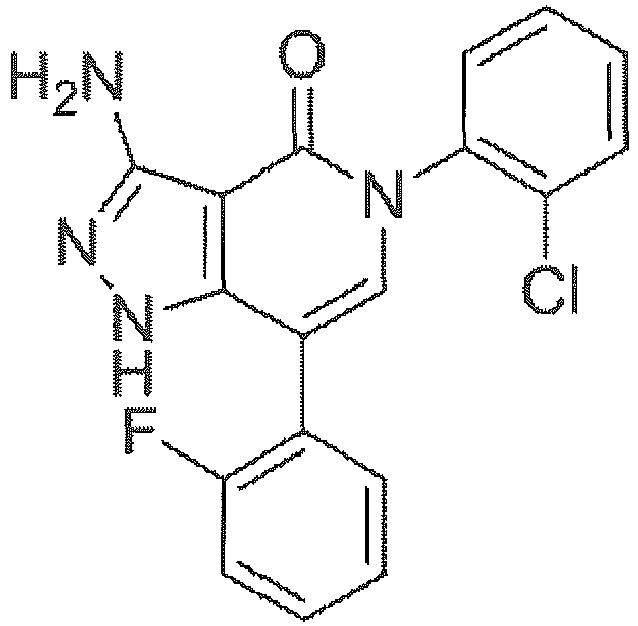
- A mixture of 3-amino-7-bromo-5-(2-chlorophenyl)-1,5-dihydro-4H-pyrazolo[4,3-c]pyridin-4-one obtained in Step B of Example 18 (150 mg), 2-fluorophenylboronic acid (93 mg), tetrakis(triphenylphosphine)palladium(0) (51 mg), potassium carbonate (122 mg), 1,2-dimethoxyethane (5.0 mL) and water (0.5 mL) was stirred overnight at 90°C under argon atmosphere. To the reaction mixture was added water, and the mixture was extracted with ethyl acetate. The extract was washed with saturated brine, and dried over anhydrous sodium sulfate, and the solvent was evaporated under reduced pressure. The residue was purified by silica gel column chromatography (basic silica gel, methanol/ethyl acetate) to give the title compound (38.3 mg).
MS (ESI+) : [M+H]+355.0. -

- A mixture of 3-amino-7-bromo-5-(2-chlorophenyl)-1,5-dihydro-4H-pyrazolo[4,3-c]pyridin-4-one obtained in Step B of Example 18 (200 mg), 4,4,4',4',5,5,5',5'-octamethyl-2,2'-bi-1,3,2-dioxaborolane (179 mg), (1,1'-bis(diphenylphosphino)ferrocene)dichloropalladium(II) (21.6 mg), potassium acetate (116 mg) and N,N-dimethylformamide (3.0 mL) was stirred overnight at 110°C under argon atmosphere. The reaction mixture was cooled to room temperature, water was added thereto, and the mixture was extracted with ethyl acetate. The extract was washed with water and saturated brine, and dried over anhydrous sodium sulfate, and the solvent was evaporated under reduced pressure to give 3-amino-5-(2-chlorophenyl)-7-(4,4,5,5-tetramethyl-1,3,2-dioxaborolan-2-yl)-1,5-dihydro-4H-pyrazolo[4,3-c]pyridin-4-one (277 mg). A mixture of 3-amino-5-(2-chlorophenyl)-7-(4,4,5,5-tetramethyl-1,3,2-dioxaborolan-2-yl)-1,5-dihydro-4H-pyrazolo[4,3-c]pyridin-4-one (277 mg), 2-chloropyrimidine (131 mg), tripotassium phosphate (365 mg), tetrakis(triphenylphosphine)palladium(0) (99.0 mg), toluene (5.0 mL), ethanol (1.0 mL) and water (1.0 mL) was stirred overnight at 120°C under argon atmosphere. The reaction mixture was cooled to room temperature, water was added thereto, and the mixture was extracted with ethyl acetate. The extract was washed with water and saturated brine, and dried over anhydrous sodium sulfate, and the solvent was evaporated under reduced pressure. The residue was purified by silica gel chromatography (basic silica gel, methanol/ethyl acetate) to give the title compound (47.0 mg). MS (ESI+): [M+H]+339.1.
-

- A mixture of 3-amino-7-bromo-5-(2-chlorophenyl)-1,5-dihydro-4H-pyrazolo[4,3-c]pyridin-4-one obtained in Step B of Example 18 (200 mg), 4,4,4',4',5,5,5',5'-octamethyl-2,2'-bi-1,3,2-dioxaborolane (179 mg), (1,1'-bis(diphenylphosphino)ferrocene)dichloropalladium(II) (21.6 mg), potassium acetate (116 mg) and N,N-dimethylformamide (3.0 mL) was stirred overnight at 110°C under argon atmosphere. The reaction mixture was cooled to room temperature, 4-bromo-1,3-thiazole (0.105 mL), aqueous sodium carbonate solution (2 M, 0.589 mL) and tetrakis(triphenylphosphine)palladium(0) (68.1 mg) were added thereto, and the reaction mixture was stirred overnight at 120°C under argon atmosphere. The reaction mixture was cooled to room temperature, water was added thereto, and the mixture was extracted with ethyl acetate. The extract was washed with water and saturated brine, and dried over anhydrous sodium sulfate, and the solvent was evaporated under reduced pressure. The residue was purified by silica gel chromatography (basic silica gel, methanol/ethyl acetate) to give the title compound (20.0 mg).
MS (ESI+) : [M+H]+344.0. - In Examples 24 to 30, the title compound was obtained from 3-amino-7-bromo-5-(2-chlorophenyl)-1,5-dihydro-4H-pyrazolo[4,3-c]pyridin-4-one obtained in Step B of Example 18 and a 5- or 6-membered monocyclic aromatic heterocycle (e.g., isothiazole, pyridine, pyrimidine) optionally substituted by 1 to 3 substituents selected from a halogen atom, a cyano group and an amino group, which corresponds to the compounds of Examples 24 to 30, in the same manner as in Example 23. MS in the tables means actual measured value.
Table 1 Example number IUPAC name Structure MS 24 3-amino-5-(2-chlorophenyl)-7-(pyridin-2-yl)-1,5-dihydro-4H-pyrazolo[4,3-c]pyridin-4-one 
338.2 25 3-amino-5-(2-chlorophenyl)-7-(1,2-thiazol-4-yl)-1,5-dihydro-4H-pyrazolo[4,3-c]pyridin-4-one 
344.1 26 3-amino-7-(2-aminopyrimidin-4-yl)-5-(2-chlorophenyl)-1,5-dihydro-4H-pyrazolo[4,3-c]pyridin-4-one 
354.1 27 3-amino-7-(4-aminopyrimidin-2-yl)-5-(2-chlorophenyl)-1,5-dihydro-4H-pyrazolo[4,3-c]pyridin-4-one 
354.1 28 2-(3-amino-5-(2-chlorophenyl)-4-oxo-4,5-dihydro-1H-pyrazolo[4,3-c]pyridin-7-yl)isonicotinonitrile 
363.1 29 6-(3-amino-5-(2-chlorophenyl)-4-oxo-4,5-dihydro-1H-pyrazolo[4,3-c]pyridin-7-yl)pyridine-2-carbonitrile 
363.1 30 6-(3-amino-5-(2-chlorophenyl)-4-oxo-4,5-dihydro-1H-pyrazolo[4,3-c]pyridin-7-yl)pyridine-2-carboxamide 
381.1 -

- A mixture of 2,4-dichloropyrimidine (1.0 g), 1-ethylpiperidine (1.099 mL) and 1,2-dimethoxyethane (10 mL) was refluxed for 6 hr. The solvent was evaporated under reduced pressure, and the residue was purified by silica gel column chromatography (ethyl acetate/hexane) to give the title compound (553.1 mg).
MS (ESI+) : [M+H]+198.1. - The title compound was obtained from 3-amino-7-bromo-5-(2-chlorophenyl)-1,5-dihydro-4H-pyrazolo[4,3-c]pyridin-4-one obtained in Step B of Example 18 and 4-chloro-2-(piperidin-1-yl)pyrimidine obtained in Step A in the same manner as in Example 23.
MS (ESI+) : [M+H]+422.2. -

- To a solution of 6-chloropyrimidin-4-amine (500 mg) and N,N-dimethylaminopyridine (47.2 mg) in acetonitrile (5.0 mL) was added di-tert-butyl dicarbonate (2.24 mL) at room temperature. The reaction mixture was stirred at room temperature for 3 days, and the solvent was evaporated under reduced pressure. The residue was purified by silica gel column chromatography (ethyl acetate/hexane) to give the title compound (1.13 g).
MS (ESI+) : [M+H]+330.2. - The title compound was obtained from 3-amino-7-bromo-5-(2-chlorophenyl)-1,5-dihydro-4H-pyrazolo[4,3-c]pyridin-4-one obtained in Step B of Example 18 and di-tert-butyl (6-chloropyrimidin-4-yl)imidedicarbonate obtained in Step A in the same manner as in Example 23.
MS (ESI+) : [M+H]+354.1. -

- To a solution of acetonitrile (2.77 mL) in tetrahydrofuran (80 mL) was added dropwise n-butyl lithium hexane solution (1.6 M, 29.6 mL) at -78°C, and the reaction mixture was stirred at -78°C for 1 hr under argon atmosphere. A solution of 2,6-dichloropyridine (2.0 g) in tetrahydrofuran (10 mL) was added dropwise thereto at -78°C, and the reaction mixture was stirred at -78°C for 2 hr under argon atmosphere, and allowed to be warmed to room temperature. To the reaction mixture was added water, and the mixture was extracted with ethyl acetate. The extract was washed with water and saturated brine, and dried over anhydrous sodium sulfate, and the solvent was evaporated under reduced pressure. The residue was purified by silica gel column chromatography (ethyl acetate/hexane) to give the title compound (1.91 g).
1H NMR (300 MHz, CDCl3) δ 3.93 (2H, s), 7.33 (1H, dd, J = 8.1, 0.6 Hz), 7.43 (1H, dd, J = 7.5, 0.6 Hz), 7.73 (1H, t, J = 7.8 Hz). - The title compound was obtained from 3-amino-7-bromo-5-(2-chlorophenyl)-1,5-dihydro-4H-pyrazolo[4,3-c]pyridin-4-one obtained in Step B of Example 18 and 2-(6-chloropyridin-2-yl)acetonitrile obtained in Step A in the same manner as in Example 23.
MS (ESI+): [M+H]+377.2. -

- To a solution of 2-bromoisonicotinaldehyde (400 mg) and pyrrolidine (0.197 mL) in acetonitrile (16 mL) was added sodium triacetoxyborohydride (547 mg) at room temperature, and the mixture was stirred at room temperature for 2 hr. To the reaction mixture was added saturated aqueous sodium hydrogen carbonate solution, and the mixture was extracted with ethyl acetate. The extract was washed with water and saturated brine, and dried over anhydrous sodium sulfate, and the solvent was evaporated under reduced pressure. The residue was purified by silica gel column chromatography (ethyl acetate/hexane) to give the title compound (445 mg). MS (ESI+) : [M+H]+241.1.
- The title compound was obtained from 3-amino-7-bromo-5-(2-chlorophenyl)-1,5-dihydro-4H-pyrazolo[4,3-c]pyridin-4-one obtained in Step B of Example 18 and 2-bromo-4-(pyrrolidin-1-ylmethyl)pyridine obtained in Step A in the same manner as in Example 23.
MS (ESI+) : [M+H]+421.1. -
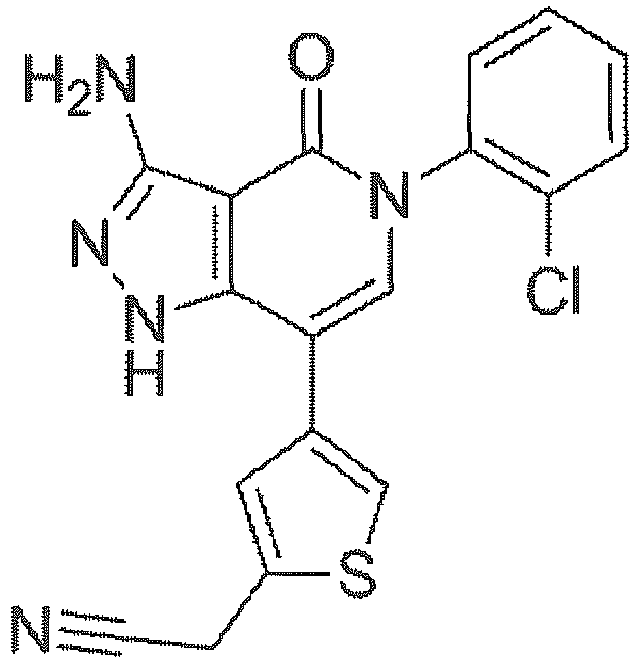
- A mixture of 3-amino-7-bromo-5-(2-chlorophenyl)-1,5-dihydro-4H-pyrazolo[4,3-c]pyridin-4-one obtained in Step B of Example 18 (200 mg), 2-(4-(4,4,5,5-tetramethyl-1,3,2-dioxaborolan-2-yl)thiophen-2-yl)acetonitrile (220 mg), tetrakis(triphenylphosphine)palladium(0) (68.1 mg), aqueous sodium carbonate solution (2 M, 0.589 mL) and N,N-dimethylformamide (3.0 mL) was stirred overnight at 120°C under argon atmosphere. To the reaction mixture was added water, and the mixture was extracted with ethyl acetate. The extract was washed with saturated brine, and dried over anhydrous sodium sulfate, and the solvent was evaporated under reduced pressure. The residue was purified by silica gel column chromatography (basic silica gel, methanol/ethyl acetate) to give the title compound (83.6 mg).
MS (ESI+) : [M+H]+382.1. -

- The title compound was obtained from 3-amino-7-bromo-5-(2-chlorophenyl)-1,5-dihydro-4H-pyrazolo[4,3-c]pyridin-4-one obtained in Step B of Example 18 and 3-thiopheneboronic acid in the same manner as in Example 35.
MS (ESI+) : [M+H]+343.0. -

- The title compound was obtained from 3-amino-7-bromo-5-(2-chlorophenyl)-1,5-dihydro-4H-pyrazolo[4,3-c]pyridin-4-one obtained in Step B of Example 18 and 2-furanboronic acid in the same manner as in Example 35.
MS (ESI+) : [M+H]+327.1. -

- The title compound was obtained from 3-amino-7-bromo-5-(2-chlorophenyl)-1,5-dihydro-4H-pyrazolo[4,3-c]pyridin-4-one obtained in Step B of Example 18 and (5-formylthiophen-3-yl)boronic acid in the same manner as in Example 35.
MS (ESI+) : [M+H]+371.0. - To a solution of 4-(3-amino-5-(2-chlorophenyl)-4-oxo-4,5-dihydro-1H-pyrazolo[4,3-c]pyridin-7-yl)thiophene-2-carbaldehyde obtained in Step A (100 mg) and pyrrolidine (0.053 mL) in acetonitrile (10 mL) was added sodium triacetoxyborohydride (89 mg) at room temperature, and the mixture was stirred at room temperature 3 hr. To the reaction mixture was added saturated aqueous sodium hydrogen carbonate solution, and the mixture was extracted with ethyl acetate. The extract was washed with saturated brine, and dried over anhydrous sodium sulfate, and the solvent was evaporated under reduced pressure. The residue was purified by silica gel column chromatography (basic silica gel, methanol/ethyl acetate) to give the title compound (63.1 mg).
MS (ESI+) : [M+H]+426.1. -

- The title compound was obtained from 4-(3-amino-5-(2-chlorophenyl)-4-oxo-4,5-dihydro-1H-pyrazolo[4,3-c]pyridin-7-yl)thiophene-2-carbaldehyde obtained in Step A of Example 38 and dimethylamine in the same manner as in Step B of Example 38.
MS (ESI+): [M+H]+400.1. -

- The title compound was obtained from 4-(3-amino-5-(2-chlorophenyl)-4-oxo-4,5-dihydro-1H-pyrazolo[4,3-c]pyridin-7-yl)thiophene-2-carbaldehyde obtained in Step A of Example 38 and methylamine in the same manner as in Step B of Example 38.
MS (ESI+) : [M+H]+386.0. - In Examples 41 to 50, the title compound was obtained from aniline optionally substituted by 1 to 3 substituents selected from (a) a halogen atom (e.g., a fluorine atom, a chlorine atom), (b) a C1-6 alkyl group (e.g., methyl) optionally substituted by 1 to 3 halogen atoms (e.g., a fluorine atom) and (c) a cyano group, which corresponds to the compounds of Examples 41 to 50, in the same manner as in Example 13. MS in the tables means actual measured value.
Table 2-1 Example number IUPAC name Structure MS 41 3-amino-5-(2,3-difluorophenyl)-7-(1-methyl-1H-pyrazol-3-yl)-1,5-dihydro-4H-pyrazolo[4,3-c]pyridin-4-one 
343.1 42 3-amino-5-(5-chloro-2-fluorophenyl)-7-(1-methyl-1H-pyrazol-3-yl)-1,5-dihydro-4H-pyrazolo[4,3-c]pyridin-4-one 
359.2 43 3-amino-7-(1-methyl-1H-pyrazol-3-yl)-5-(2-(trifluoromethyl)phenyl)-1, 5-dihydro-4H-pyrazolo[4, 3-c]pyridin-4-one 
375.2 44 3-amino-5-(2,6-dichlorophenyl)-7-(1-methyl-1H-pyrazol-3-yl)-1,5-dihydro-4H-pyrazolo[4,3-c]pyridin-4-one 
375.1 45 3-amino-5-(2-chloro-6-fluorophenyl)-7-(1-methyl-1H-pyrazol-3-yl)-1,5-dihydro-4H-pyrazolo[4,3-c]pyridin-4-one 
359.2 46 3-amino-7-(1-methyl-1H-pyrazol-3-yl)-5-(2, 4, 6-trifluorophenyl)-1, 5-dihydro-4H-pyrazolo[4,3-c]pyridin-4-one 
361.2 47 3-amino-5-(2-chloro-3-fluorophenyl)-7-(1-methyl-1H-pyrazol-3-yl)-1,5-dihydro-4H-pyrazolo[4,3-c]pyridin-4-one 
359.2 48 3-amino-5-(2-chloro-5-fluorophenyl)-7-(1-methyl-1H-pyrazol-3-yl)-1,5-dihydro-4H-pyrazolo[4,3-c]pyridin-4-one 
359.2 Table 2-2 Example number IUPAC name Structure MS 49 2-(3-amino-7-(1-methyl-1H-pyrazol-3-yl)-4-oxo-1,4-dihydro-5H-pyrazolo[4,3-c]pyridin-5-yl)benzonitrile 
331.9 50 3-amino-5-(2, 6-dimethylphenyl)-7-(1-methyl-1H-pyrazol-3-yl)-1,5-dihydro-4H-pyrazolo[4,3-c]pyridin-4-one 
335.1 -

- The title compound was obtained from 4-methoxy-2-oxo-1,2-dihydropyridine-3-carbonitrile and 1,1,1-trifluoro-3-iodopropane in the same manner as in Example 51.
MS (ESI+) : [M+H]+327.3. -

- A mixture of 3-amino-7-bromo-5-(2-chlorophenyl)-1,5-dihydro-4H-pyrazolo[4,3-c]pyridin-4-one obtained in Step B of Example 18 (300 mg), 4,4,4',4',5,5,5',5'-octamethyl-2,2'-bi-1,3,2-dioxaborolane (269 mg), (1,1'-bis(diphenylphosphino)ferrocene)dichloropalladium(II) (21.5 mg), potassium acetate (173 mg) and N,N-dimethylformamide (4.0 mL) was stirred overnight at 110°C under argon atmosphere. The reaction mixture was cooled to room temperature, 4-(6-bromopyridin-3-yl)morpholine (430 mg), aqueous sodium carbonate solution (2 M, 0.883 mL) and tetrakis(triphenylphosphine)palladium(0) (102 mg) were added thereto, and the reaction mixture was stirred at 120°C for 5 hr under argon atmosphere. The reaction mixture was cooled to room temperature, water was added thereto, and the mixture was extracted with ethyl acetate. The extract was washed with water and saturated brine, and dried over anhydrous magnesium sulfate, and the solvent was evaporated under reduced pressure. The residue was purified by silica gel chromatography (basic silica gel, methanol/ethyl acetate). The obtained rough-purified product was crystallized from methanol/ethyl acetate/hexane to give the title compound (18.0 mg).
MS (ESI+) : [M+H] + 423.2. - In Examples 54 to 103, the title compound was obtained from 3-amino-7-bromo-5-(2,6-difluorophenyl)-1,5-dihydro-4H-pyrazolo[4,3-c]pyridin-4-one obtained in Step G of Example 15 and the reagent corresponding to the compounds of Examples 54 to 103, in the same manner as in Step H of Example 15, or Example 23, or a method analogous thereto. MS in the tables means actual measured value.
Table 3-1 Example number IUPAC name Structure MS 54 3-amino-5-(2, 6,difluorophenyl)-7-(5-(morpholin-4-yl)pyridin-2-yl)-1,5-dihydro-4H-pyrazolo[4,3-c]pyridin-4-one 
425.2 55 3-amino-5-(2,6-difluoropheny)-7-(1-isopropyl-6-oxo-1,6-dihydropyrimidin-4-yl)-1,5-dihydro-4H-pyrazole[4,3-c]pyridin-4-one 
399.0 56 (6-(3-amino-5-(2,6-difluorophenyl)-4-oxo-4,5-dihydro-1H*pyrazolo[4,3-c]pyridin-7-yl)pyridin-3-yl)seetonitrile 
379.1 57 3-amino-5-(2,6-difluorophenyl)-7-(5 (morpholin-4-ylmethy)pyridin-2-yl)-1,5-dihydro-4H-pyrazolo[4,3-c]pyridin-4-one 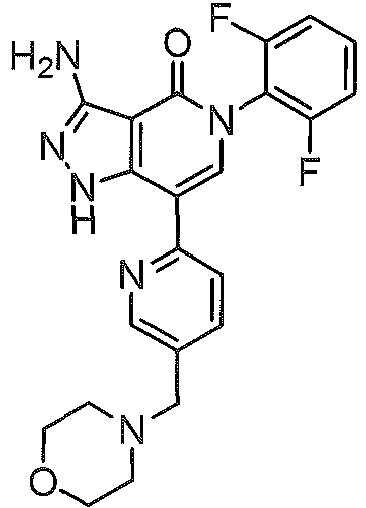
439.1 58 3-amno-5-(2,6-difluorophenyl)-7-(5-(2-methoxyethoxy)pyridin-2-yl)-1,5-dihydro-4H-pyrazolo[4,3-c]pyridin-4-one 
414.2 59 3-amino-5-(2,6,difluorophenyl)-7-(5-(2-(dimethylamino)ethoxy)pyridin-2-yl)-1,5-dihydro-4][-pyrazolo[4,3-c]pyridin-4-one 
427.1 60 3-amino-5-(2,6-difluoropheonyl)-7-(5-(morpholin-4ylcarbonyl)pyridin-2-yl)-1,5-dihydro-4H-pyrazolo[4,3-c]pyridin-4-one 
453.1 61 7-(5-(4-acetylpiperazin-1-yl)pyridin-2-yl)-3-amino-5-(2,6-difluorophenyl)-1,5-dihydro-4H-pyrazolo[4,3-c]pyridin-4-one 
466.1 Table 3-2 Example number IUPAC name Structure MS 62 2- ((6-(3-amino-5-(2,6-difluorophenyl)-4-oxo-4,5-dihydro-1H-pyrazolo[4,3-c]pyridin-7-yl)pyridin-3-yl)oxy)-N-mathylacetamide 
427.1 63 3-amino-5-(2,6-difluorophenyl)-7-(5-(morpholin-4-yl)pyrazin-2-yl)-1,5-dihydro-4H-pyrazolo[4,3-c]pyridin-4-one 
426.1 64 6-{3-amino-5-(2,6-difluorophenyl)-4-oxo-4,5-dihydro-1H-pyrazolo[4, 3-c]pyridin-7-yl)-N-methylnicotinamide 
397.1 65 3-amino-5-(2, 6-difluorophenyl)-7-(6-(morpholin-4-yl)pyridazin-3-yl)-1,5-dihydro-4H-pyrazolo[4, 3-c]pyridin-4-ona 
426.1 66 2-(3-amino-5-(2,6-difluorophenyl)-4-oxo-4,5-dihydro-1H-pyrazolo[4,3 c]pyridin-7-yl)-N-methyl-1,3-thiazolo-5-carboxamide 
403.1 67 3-amino-5-(2,6-difluoropheny)-7-(6-(morpholin-4-yl)pyrridin-3-yl)-1,5-dihydro-4H-pyrazolo[4,3-c]pyridin-4-one 
425.4 68 3-amino-5-(2,6-difluorophenyl)-7-(pyridin-2-yl)-1,5-dihydro-4H-pyrazolo[4,3-e]pyridin-4-one 
340.3 69 3-amino-5(2, 6-difluorophenyl)-7-(4-((dimethylamino)methy)pyridin-2-yl)-1,5-dihydro-4H-pyrazolo[4,3-c]pyridin-4-one 
397.1 70 3-amino-5-(2,6-difluorophenyl)-7-(4-(pyrrolidin-1-ylmethyl) pyridin-2-yl)-1,5-dihydro-4H-pyrozolo[4,3-e]pyridin-4-one 
423.4 Table 3-3 Example number IUPAC name Structure MS 71 N-((2-(3-amino-5-(2,6-difluorophenyl)-4-oxo-4,5-dihydro-1H-pyrazolo[4,3-c] pyridin-7-yl)pyridin-4-yl)methyl)acetamide 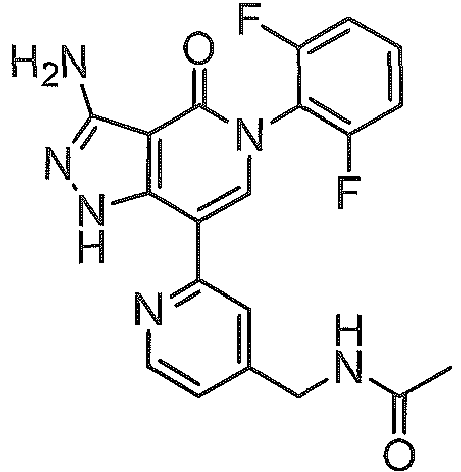
411.3 72 2-(3-amino-5-(2,6-difluorophenyl)-4-oxo-4, 5-dihydro-1H-pyrazolo[4,3-c]pyridin-7-yl) isonicotinonitrile 
365.3 73 3-amino-5-(2,6-difluoropbenyl)-7-(pyrimidin-4-yl)-1,5-dihydro-4H-pyrazole[4,3-c]pyridin-4-one 
341.1 74 3-amino-5-(2,6-difluorophenyl)-7-(5-(piperidin-1-yl)pyridin-2-yl)-1,5-dihydro-4H-pyrazolo[4,3-c]pyridin-4-one 
423.0 75 3-amino-5-(2,6-difluorophenyl)-7-(6-(hydroxymethyl)pyrimidin-4-yl)-1,5-dihydro-4H-pyrazolo[4,3-c]pyridin-4-one 
371.4 76 3-amino-5-(2,6-difluorophenyl)-7-(2-methyl-1H-imidazol-4-yl)-1,5-dihydro-4H-pyrazolo[4,3-c]pyridin-4-one 
343.1 77 3-amino-6-(2,6-difluorophenyl)-7-(5-difluorophenyl)-7-(5-(3-oxomorpholin-4-yl)pyridin-2-yl)-1, 5-dihydro-4H-pyrazolo[4,3-c]pyridin-4-one 
439.0 78 2-(3-amino-5-(2,6-difluorophenyl)-4-oxo-4,5-dihydro-1H-pyrazolo[4,3-c]pyridin-7-yl)-N-methylisonicotinamide 
397.1 79 3-amino-5-(2,6-difluorophenyl)-7-(4-(morpholin-4-ylcarbonyl)pyridin-2-yl)-1,5-dihydro-4H-pyrazolo[4,3-c]pyridin-4-one 
453.4 Table 3-4 Example number IUPAC name Structure MS 80 3-amino-5-(2,6-difluorophenyl)-7-(6-(morpholin-4-yl)pyrimidin-4-yl)-1,5-dihydro-4H-pyrazolo[4,3-c]pyiridin-4-one 
426.2 81 3-amino-5-(2,6-difluorophenyl)-7-(6-(4-(2-hydroxyethyl)piperazin-1-yl)pyrimidin-4-yl)-1,5-dihydro-4H-pyrazolo[4,3-c]pyridin-4-one 
469.1 82 2-(3-amino-5-(2,6-difluorophenyl)-4-oxo-4,5-dihydro-1H-pyrazolo[4,3-c]pyridin-7-yl)-N-(2-hydroxyethyl)isonicotinamide 
427.1 83 3-amino-7-(6-(cyclopentyloxy)pyrimidin-4-yl)-5-(2,6-difluorophenyl)-1,5-dihydro-4H-pyrazolo[4,3-c]pyridin-4-one 
425.2 84 3-amino-5-(2,6-difluorophenyl)-7-(2-furyl)-1,5-dihydro-4H-pyrazolo[4,3-c]pyridin-4-one 
329.1 85 3-amino-5-(2,6-difluorophenyl)-7-(4-(pyrrolidin-1-ylcarbonyl)pyridin-2-yl)-1,5-dihydro-4H-pyrazolo[4,3-c]pyridin-4-one 
437.2 86 3-amino-5-(2,6-difluorophenyl)-7-(4-(2-(dimethylamino)ethyl)pyridin-2-yl)-1,2-dihydro-4H-pyrazolo[4,3-c]pyridin-4-one 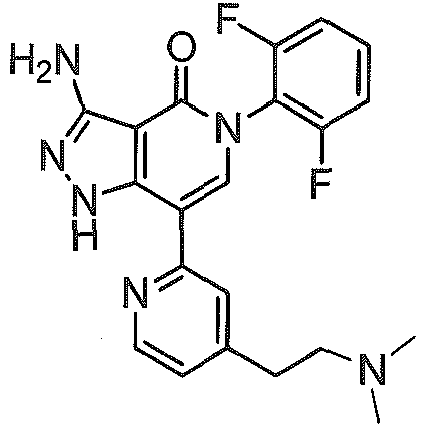
411.2 87 5-(3-amino-5-(2,6-difluorophenyl)-4-oxo-4,5-dihydro-1H-pyrazolo[4,3-c]pyridin-7-yl)-N-methyl-2-furancarboxamide 
386 88 5-(3-amino-5-(2,6-difluorophenyl)-4-oxo-4,5-dihydro-1H-pyrazolo[4,3-c]pyridin-7-yl)-N-methyl-3-furancarboxamide 
386.2 Table 3-5 Example number IUPAC name Structure MS 89 2-(3-amino-5-(2,6-difluorophenyl)-4-oxo-4,5-dihydro-1H-pyrazolo[4,3-c]pyridin-7-yl)-N-(tetrahydro-2H-pyran-4-yl)isonicotinamide 
467.2 90 3-amino-5-(2,6-difluorophenyl)-7-(4-(morpholin-4-ylcarbonyl)-2-furyl)-1,5-dihydro-4H-pyrazolo[4,3-c]pyridin-4-one 
442.1 91 3-amino-5-(2,6-difluorophenyl)-7-(4-(morpholin-4-yl)pyridin-2-yl)-1,5-dihydro-4H-pyrazolo[4,3-c]pyridin-4-one 
425.3 92 3-amino-5-(2,6-difluorophenyl)-7-(4-(2-(dimethylamino)ethoxy)pyridin-2-yl)-1,5-dihydro-4H-pyrazolo[4,3-c]pyridin-4-one 
427.3 93 3-amino-5-(2,6-difluorophenyl)-7-(4-(2-methoxyethoxy)pyridin-2-yl)-1,5-dihydro-4H-pyrazolo[4,3-c]pyridin-4-one 
414.3 94 3-amino--5-(2,6-difluorophenyl)-7-(4-(tetrahydro-2H-pyran-4-yloxo)pyridin-2-yl)-1,5-dihydro-4H-pyrazolo[4,3-c]pyridin-4-one 
440.3 95 3-amino-6-(2,6-difluorophenyl)-7-(6-(4-(2-hydroxyethyl)piperazin-1-yl)-2-methylpyrimidin-4-yl)-1,5-dihydro-4H-pyrazolo[4,3-c]pyridin-4-one 
483.2 96 3-amino-5-(2,6-difluorophenyl)-7-(6-(hydroxymethyl)pyridin-2-yl)-1,5-dihydro-4H-pyrazolo[4,3-c]pyridin-4-one 
370.1 97 N-(6-(3-amino-5-(2,6-difluorophenyl)-4-oxo-4,5-dihydro-1H-pyrazolo[4,3-c]pyridin-7-yl)pyridin-2-yl)acetamide 
397.2 Table 3-6 Example number IUPAC name Structure MS 98 3-amino-5-(2,6-difluorophenyl)-7-(6-(2,2-dimethylpropoxy)pyrimidin-4-yl)-1,5-dihydro-4H-pyrazolo[4,3-c]pyridin-4-one 
427.1 99 N-((6-(3-amino-5-(2,6-difluorophenyl)-4-oxo-4,5-dihydro-1H-pyrazolo[4,3-c]pyridin-7-yl)pyridin-2-yl)methyl)acetamide 
411.1 100 3-amino-5-(2,6-difluorophenyl)-7-(6-(2-(dimethylamino)ethoxy)pyrimidin-4-yl)-1,5-dihydro-4H-pyrazolo[4,3-c]pyridin-4-one 
428.2 101 3-amino-5-(2,6-difluorophenyl)-7-(6-((2-(dimethylamino)ethyl)amino)pyrimidin -4-yl)-1,5-dihydro-4H-pyrazolo[4,3-c]pyridin-4-one 
427.1 102 3-amino-5-(2,6-difluorophenyl)-7-(6-(4-methylpiperazin-1-yl)pyrimidin-4-yl)-1,5-dihydro-4H-pyrazolo[4,3-c]pyridin-4-one 
439.1 103 N-(6-(3-amino-5-(2,6-difluorophenyl)-4-oxo-4,5-dihydro-1H-pyrazolo[4,3-c]pyridin-7-yl)pyrimidin-4-yl)acetamide 
398.2 -

-

- To a mixture of 2-amino-3-fluorobenzonitrile (41.9 g), sodium acetate (30.3 g) and toluene (200 mL) was added diketene (28.2 mL) over 10 min at 0°C. The reaction mixture was stirred at room temperature for 7 hr. To the reaction mixture were added toluene (150 mL) and diketene (4.7 mL) at room temperature, and the mixture was stirred at room temperature for 16 hr. The reaction mixture was poured into water, and the mixture was extracted with ethyl acetate. The extract was washed successively with water and saturated brine, and dried over anhydrous magnesium sulfate, and the solvent was evaporated under reduced pressure. The residue was recrystallized from diisopropyl ether/ethanol to give the title compound (48.64 g).
MS (ESI+): [M+H]+ 221.2. -

- To a mixture of N-(2-cyano-6-fluorophenyl)-3-oxobutanamide obtained in Step A (48.60 g) and N,N-dimethylformamide (200 mL) was added dropwise 1,1-dimethoxy-N,N-dimethylmethanamine (52.6 g) over 10 min at 0°C. The reaction mixture was stirred at room temperature 3 hr. The solvent was evaporated under reduced pressure, to the residue was added water, and the mixture was extracted with ethyl acetate. The extract was dried over anhydrous magnesium sulfate, and the solvent was evaporated under reduced pressure. The residue was recrystallized from ethyl acetate, and collected by filtration. The obtained solid was washed with ethyl acetate/diisopropyl ether, and then diisopropyl ether to give the title compound (26.16 g).
MS (ESI+) : [M+H]+ 276.1. -

- To a solution of N-(2-cyano-6-fluorophenyl)-2-((dimethylamino)methylene)-3-oxobutanamide obtained in Step B (11.00 g) in N,N-dimethylformamide (150 mL) was added (chloromethylene)dimethylammonium chloride (24.9 g) under ice-cooling, and the reaction mixture was heated at 100°C for 30 min. The reaction mixture was cooled to room temperature, and poured into ice water, and the mixture was extracted with ethyl acetate. The extract was dried over anhydrous magnesium sulfate, and the solvent was evaporated under reduced pressure. The residue was purified by silica gel column chromatography (ethyl acetate/hexane) to give an orange oil. The obtained oil was crystallized from diisopropyl ether/hexane to give the title compound (2.81 g).
MS (ESI+): [M+H]+ 277.1. -

- A mixture of 2-(4-chloro-3-formyl-2-oxopyridin-1(2H)-yl)-3-fluorobenzonitrile obtained in Step C (2.70 g), hydroxylamine hydrochloride (814 mg), sodium acetate (1.60 g) and methanol (60 mL)/water (15 mL) was stirred at room temperature for 1 hr. The reaction solution was poured into ice water. The resulting solid was collected by filtration, and washed successively with water, 2-propanol and diethyl ether to give the title compound (2.39 g).
MS (ESI+): [M+H]+ 292.0. -

- To a solution of 2-(4-chloro-3-((hydroxyimino)methyl)-2-oxopyridin-1(2H)-yl)-3-fluorobenzonitrile obtained in Step D (8.0 g) in acetonitrile (180 mL) was added thionyl chloride (3.98 mL) at room temperature. The reaction mixture was stirred at room temperature for 1 hr. The solvent was evaporated under reduced pressure, and the residue was crystallized from diisopropyl ether/methanol. The obtained solid was collected by filtration to give the title compound (7.05 g).
MS (ESI+): [M+H]+ 274.2. -

- To a solution of 4-chloro-1-(2-cyano-6-fluorophenyl)-2-oxo-1,2-dihydropyridine-3-carbonitrile obtained in Step E (4.0 g) in N,N-dimethylformamide (40 mL) was added N-bromosuccinimide (3.90 g) at room temperature. The reaction mixture was heated at 50°C for 16 hr. To the reaction mixture was added water, and the mixture was extracted with ethyl acetate. The extract was washed with saturated brine, and dried over anhydrous magnesium sulfate, and the solvent was evaporated under reduced pressure. The residue was purified by silica gel column chromatography (ethyl acetate/hexane) to give the title compound (1.10 g).
MS (ESI+): [M+H]+ 352.1. -

- A solution of 5-bromo-4-chloro-1-(2-cyano-6-fluorophenyl)-2-oxo-1,2-dihydropyridine-3-carbonitrile obtained in Step F (4.35 g) and hydrazine monohydrate (0.658 mL) in ethanol (32 mL)/tetrahydrofuran (64 mL) was heated at 90°C for 1 hr. To the reaction mixture was added hydrazine monohydrate (0.5 mL), and the mixture was heated at 90°C for 30 min. The solvent was evaporated under reduced pressure, to the reaction mixture was added water, and the mixture was extracted with ethyl acetate. The extract was washed with saturated brine, dried over anhydrous magnesium sulfate, and concentrated under reduced pressure. The residue was purified by silica gel column chromatography (ethyl acetate/hexane) to give the title compound (4.12 g).
1H NMR (400 MHz, CDCl3) δ 5.08 (2H, brs), 7.12 (1H, s), 7.45-7.65 (3H, m), 10.46 (1H, brs). - A mixture of 2-(3-amino-7-bromo-4-oxo-1,4-dihydro-5H-pyrazolo[4,3-c]pyridin-5-yl)-3-fluorobenzonitrile obtained in Step G (160 mg), 1-methyl-3-(4,4,5,5-tetramethyl-1,3,2-dioxaborolan-2-yl)-1H-pyrazole (191 mg), tetrakis(triphenylphosphine)palladium(0) (53 mg), aqueous sodium carbonate solution (2 M, 0.460 mL) and N,N-dimethylformamide (10 mL) was heated with microwave irradiation at 130°C for 90 min under argon atmosphere. To the reaction mixture was added water, and the mixture was extracted with ethyl acetate/tetrahydrofuran. The extract was washed with saturated brine, and dried over anhydrous magnesium sulfate, and the solvent was evaporated under reduced pressure. The residue was purified by silica gel chromatography (basic silica gel, methanol/ethyl acetate) to give a crude product. The crude product was crystallized from ethyl acetate/diethyl ether to give the title compound (44 mg).
MS (ESI+): [M+H]+ 350.2.
1H NMR (400 MHz, CDCl3) δ 3.98 (3H, s), 4.75 (2H, s), 6.39 (1H, d, J = 2.4 Hz), 7.29 (1H, s), 7.39 (1H, d, J = 2.4 Hz), 7.51-7.68 (3H, m), 10.75 (1H, brs). - In Examples 105 to 111, the title compound was obtained from 2-(3-amino-7-bromo-4-oxo-1,4-dihydro-5H-pyrazolo[4,3-c]pyridin-5-yl)-3-fluorobenzonitrile obtained in Step G of Example 104 and the reagent corresponding to the compounds of Examples 105 to 111, in the same manner as in Example 23 or a method analogous thereto. MS in the tables means actual measured value.
Table 4 Example number IUPAC name Structure MS 105 2-(3-amino-7-(5-(morpholin-4-yl)pyridin-2-yl)-4-oxo-1,4-dihydro-5H-pyrazolo[4,3-c]pyridin-5-yl)-3-fluorobenzanitrile 
432.2 106 2-(3-amino-7-(4-(morpholin-4-yl)pyridin-2-yl)-4-oxo-1,4-dihydro-5H-pyrazolo[4,3-c]pyridin-5-yl)-3-fluorobenzonitrile 
432.3 107 2-(3-amino-7-(5-(morpholin-4-yl)pyrazin-2-yl)-4-oxo-1,4-dihydro-5H-pyrazolo[4,3-c]pyridin-5-yl)-3-fluorobenzonitrile 
433.3 108 2-(3-amino-7-(5-isopropoxypyrazin-2-yl)-4-oxo-1,4-dihydro-5H-pyrazolo[4,3-c]pyridin-5-yl)-3-fluorobenzonitrile 
406.3 109 2-(3-amino-7-(5-(4-methylpiperazin-1-yl)pyrazin-2-yl)-4-oxo-1,4-dihydro-5H-pyrazolo[4,3-c]pyridin-5-yl)-3-fluorobenzonitrile 
446.3 110 2-(3-amino-7-(5-(2-(dimethylamino)ethoxy)pyridin-2-yl)-4-oxo-1,4-dihydyo-5H-pyrazolo[4,3-c]pyridin-5-yl)-3-fluorobenzonitrile 
434.2 111 2-(3-aimino-7-(5-(morpholin-4-ylmethyl)pyrazin-2-yl)-4-oxo-1,4-dihydro-5H-pyrazolo[4,3-c]pyridin-5-yl)-3-fluorobenzonitrile 
447.3 -

- Racemic 3-amino-7-bromo-5-(3-methylbutan-2-yl)-1,5-dihydro-4H-pyrazolo[4,3-c]pyridin-4-one obtained in Step G of Example 13 (7.89 g) was resolved by HPLC (column: CHIRALPAK AD, 50 mmIDx500 mmL, manufactured by Daicel Chemical Industries, mobile phase: hexane/ethanol= 600/400(v/v)) to give the title compound (3.751 g) having a shorter retention time.
MS (ESI+): [M+H]+ + 299.1.
>99.9%ee (HPLC (column: CHIRALPAK AD, 4.6 mmIDx250 mmL, manufactured by Daicel Chemical Industries, mobile phase: hexane/ethanol = 600/400(v/v), flow rate: 0.5 mL/min, retention time: 9.88 min)) - 3-amino-7-bromo-5-((2R)-3-methylbutan-2-yl)-1,5-dihydro-4H-pyrazolo[4,3-c]pyridin-4-one

- Racemic 3-amino-7-bromo-5-(3-methylbutan-2-yl)-1,5-dihydro-4H-pyrazolo[4,3-c]pyridin-4-one obtained in Step G of Example 13 (7.89 g) was resolved by HPLC (column: CHIRALPAK AD, 50 mmID×500 mmL, manufactured by Daicel Chemical Industries, mobile phase: hexane/ethanol= 600/400(v/v)) to give the title compound (3.479 g) having a longer retention time.
MS (ESI+) : [M+H]+ 299.1.
>99.9%ee (HPLC (column: CHIRALPAK AD, 4.6 mmIDx250 mmL, manufactured by Daicel Chemical Industries, mobile phase: hexane/ethanol = 600/400(v/v), flow rate: 0.5 mL/min, retention time: 12.14 min)) - In Examples 114 to 117, the title compound was obtained from 3-amino-7-bromo-5-(3-methylbutan-2-yl)-1,5-dihydro-4H-pyrazolo[4,3-c]pyridin-4-one obtained in Step G of Example 13 and the reagent corresponding to the compounds of Examples 114 to 117, in the same manner as in Example 23 or a method analogous thereto. MS in the tables means actual measured value.
Table 5 Example number IUPAC name Structure MS 114 3-mino-5-(3-methylbutan-3-yl)-7-(6-(morpholin-4-yl)pyrimidin-4-yl) -1,5-dihydro-4H-pyrazolo[4,3-c]pyridin-4-one 
384.2 115 3-amino-7-(5-(2-(dimethylamino)ethoxy)pyridin-2-yl)-5-(3-methybutan-2-yl)-1,5-dihydro-4H-pyrazolo[4,3-c]pyridin-4-one 
385.3 116 3-amino-5-(3-methylbutan-2-yl)-7-(5-(morpholin-4-yl)pyridin-2-yl)-1,5-dihydro-4H-pyrazolo[4,3-c]pyridin-4-one 
383.4 117 3-amino-5-(3-methylbutan-2-yl)-7-(5-(tetrahydro-2H-pyran-4-yloxy)pyridin-2-yl)-1,5-dihydro-4H-pyrazolo[4,3-c]pyridin-4-one 
398.2 -

- The title compound was obtained from 3-amino-7-bromo-5-((2S)-3-methylbutan-2-yl)-1,5-dihydro-4H-pyrazolo[4,3-c]pyridin-4-one obtained in Example 112 and 4-(5-bromopyrazin-2-yl)morpholine in the same manner as in Example 23.
MS (ESI+): [M+H]+ 384.4. -

- Racemic 3-amino-5-(3-methylbutan-2-yl)-7-(5-(morpholin-4-yl)pyridin-2-yl)-1,5-dihydro-4H-pyrazolo[4,3-c]pyridin-4-one obtained in Example 116 (90 mg) was resolved by HPLC (column: CHIRALCEL OJ, 50 mmID×500 mmL, manufactured by Daicel Chemical Industries, mobile phase: hexane/ethanol/diethylamine= 700/300/1(v/v/v)) to give the title compound (43 mg) having a shorter retention time.
>99.9%ee (HPLC (column: CHIRALCEL OJ3, 4.6 mmIDx250 mmL, manufactured by Daicel Chemical Industries, mobile phase: hexane/ethanol/diethylamine = 700/300/1(v/v/v), flow rate: 1.0 mL/min, retention time: 12.71 min))
MS (ESI+) : [M+H]+ 383.3. -

- Racemic 3-amino-5-(3-methylbutan-2-yl)-7-(5-(morpholin-4-yl)pyridin-2-yl)-1,5-dihydro-4H-pyrazolo[4,3-c]pyridin-4-one obtained in Example 116 (90 mg) was resolved by HPLC (column: CHIRALCEL OJ, 50 mmIDx500 mmL, manufactured by Daicel Chemical Industries, mobile phase: hexane/ethanol/diethylamine= 700/300/1(v/v/v)) to give the title compound (40 mg) having a longer retention time. 99.2%ee (HPLC (column: CHIRALCEL OJ3, 4.6 mmIDx250 mmL, manufactured by Daicel Chemical Industries, mobile phase: hexane/ethanol/diethylamine = 700/300/1(v/v/v), flow rate: 1.0 mL/min, retention time: 16.41 min))
MS (ESI+) : [M+H]+ 383.2. - In Examples 121 to 132, the title compound was obtained from aniline derivative corresponding to the compounds of Examples 121 to 132, in the same manner as in Example 13 and Example 23 or a method analogous thereto. MS in the tables means actual measured value.
Table 6-1 Example number IUPAC name Structure MS 121 3-amino-7-(6-(2-(dimethylamino)ethoxy)pyridin-2-yl)-5-(2-fluoro-6-methylphenyl)-1,5-dihydro-4H-pyrazolo[4,3-c]pyridin-4-one 
423.2 122 3-amino-7-(1-methyl-1H-pyrazol-3-yl)-5-(2,3,6-trifluorophenyl)-1,5-dihydro-4H-pyrazolo[4,3-c]pyridin-4-one 
361.3 123 3-amino-7-(5-(morpholin-4-yl)pyridin-2-yl)-5-(2,3,6-trifluorophenyl)-1,5-dihydro-4H-pyrazolo[4,3-c]pyridin-4-one 
443.3 124 3-amino-5-(2-fluoro-6-methoxyphenyl)-7-(1-methyl-1H-pyrazol-3-yl)-1,5-dihydro-4H-pyrazolo[4,3-c]pyridin-4-one 
355.1 125 3-amino-5-(2-fluoro-6-methoxyphenyl)-7-(5-(morpholin-4-yl)pyridin-2-yl)-1,5-dihydro-4H-pyrazolo[4,3-c]pyridin-4-one 
437.2 126 3-amino-5-(2-fluoro-6-(trifluoromethyl)phenyl)-7-(5-(morpholin-4-yl)pyridin-2-yl)-1,5-dihydro-4H-pyrazolo[4,3-c]pyridin-4-one 
475.1 127 3-amino-5-(2-fluoro-6-methylphenyl)-7-(1-methyl-1H-pyrazol-3-yl)-1,5-dihydro-4H-pyrazolo[4,3-c]pyridin-4-one 
339.2 128 2-(3-amino-7-(5-(morpholin-4-yl)pyridin-2-yl)-4-oxo-1,4-dihydro-5H-pyrazolo[4,3-c]pyridin-5-yl)benzonitrile 
414.2 Table 6-2 Example number IUPAC name Structure MS 129 3-amino-5-(2-fluoro-6-methylphenyl)-7-(5-(morpholin-4-yl)pyridin-2-yl)-1,5-dihydro-4H-pyrazolo[4,3-c]pyridin-4-one 
421.1 130 3-amino-5-(2-fluoro-6-(trifluoromethyl)phenyl)7-(1-methyl-1H-pyrazol-3-yl)-1,5-dihydro-4H-pyrazolo[4,3-c]pyridin-4-one 
393.1 131 3-amino-5-(2-fluorophenyl)-7-(1-methyl-1H-pyrazolo-3-yl)-1,5-dihydro-4H-pyrazolo[4,3-c]pyridin-one 
325.0 132 3-amino-7-(5-(morpholin-4-yl)pyridin-2-yl)-5-(2,4,6-trifluorophenyl)-1,5-dihydro-4H-pyrazolo[4,3-c]pyridin-4-one 
443.3 - In Examples 133 to 151, the title compound was obtained from 3-amino-7-bromo-5-(2,6-difluorophenyl)-1,5-dihydro-4H-pyrazolo[4,3-c]pyridin-4-one obtained in Step G of Example 15 and a halide compound corresponding to the compounds of Examples 133 to 151, in the same manner as in Example 23 or a method analogous thereto. MS in the tables means actual measured value. The halide compounds used for synthesis in Example 133 to 151 was synthesized according to the method described in Reference Examples 1 to 23, or a method analogous thereto.
Table 7-1 Example number IUPAC name Structure MS 133 3-amino-5-(2,6-difluorophenyl)-7-(5-(3-methoxyazedin-1-yl)pyridin-2-yl)-1,5-dihydro-4H-pyrazolo[4,3-c]pyridin-4-one 
425.2 134 3-amino-5-(2,6-difluorophenyl)-7-(5-(1,1-dioxidethiomorpholin-4-yl)pyridin-2-yl)-1,5-dihydro-4H-pyrazolo[4,3-c]pyridin-4-one 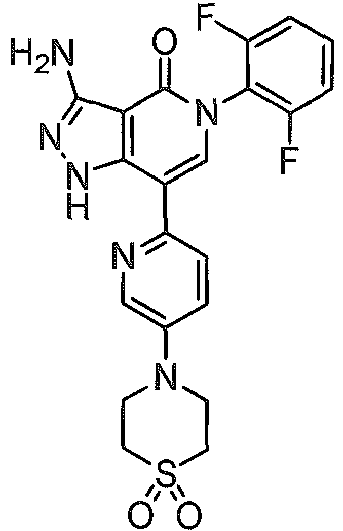
473.2 135 3-mino-5-(2,6-difluorophenyl)-7-(5-(4-methoxypiperidin-1-yl)pyridin-2-y|)-1,5-dihydro-4H-pyrazolo[4,3-c]pyridin-4-one 
453.2 136 3-amino-5-(2,6-difluorophenyl)-7-(5-((3S)-3-methylmorpholin-4-yl)-pyridin-2-yl)-1,5-dihydro-4H-pyrazolo[4,3-c]pyridin-4-one 
439 137 3-amino-5-(2,6-difluorophenyl)-7-(5-((3R)-3-methylmorpholin-4-yr)pyridin-2-yl)-1,5-dihydro-4H-pyrazolo[4,3-c]pyridin-4-one 
439 138 N-(2-((6-(3-amino-5-(2,6-difluorophenyl)-4-oxo-4,5-dihydro-1H-pyrazolo[4,3-c]pyridin-7-yl)pyridin-3-yl)oxy)ethyl)acetamide 
441.2 139 3-mino-5-(2,6-difluorophenyl)-7-(5-(2-hydroxy-2-methylpropoxy)pyridin-2-yl)-1,5-dihydro-4H-pyrazolo[4,3-c]pyridin-4-one 
428.2 140 3-amino-5-(2,6-difluorophenyl)-7-(5-(4-hydroxytetrahydro-2H-pyran-4-yl)pyridin-2-yl)-1,5-dihydro-4H-pyrazolo[4,3-c]pyridin-4-one 
440.2 141 3-amino-5-(2,6-trifluorophenyl)-7-(4-(2-(morpholin-4-yl)-2-oxoethyl)pyridin-2-yl)-1,5-dihydro-4H-pyrazolo[4,3-c]pyridin-4-one 
467.2 Table 7-2 Example number IUPAC name Structure MS 142 3-amino-5-(2,6-difluorophenyl)-7-(4-(2-(4-hydroxypipeiridin-1-yl)-2-oxoethyl)pyridin-2-yl)-1,5-dihydro-4H-pyrazolo[4,3-c]pyridin-4-one 
481.1 143 2-(2-(3-amino-5-(2,6-difluorophenyl)-4-oxo-4,5-dihydro-1H-pyrazolo[4,3-c]pyridin-7-yl)pyridin-4-yl)-N-(oxotan-3-yl)acetamide 
453.2 144 2-(2-(3-amino-5-(2,6-difluorophenyl)-4-oxo-4,5-dihydro-1H-pyrazolo[4,3-c]pyridin-7-yl)pyridin-4-yl)-N,N-dimethylacetamide 
425.2 145 3-amino-5-(2,6-diflurophenyl)-7-(4-(2-(2-oxopyrrolidin-1-yl)ethoxy)pyriding-2-yl)-1,5--dihydro-4H-pyrazolo[4,3-c]pyridin-4-one 
467.4 146 3-amino-5-(2,6-difluorophenyl)-7-(4-(2-hydroxy-2-methylpropoxy)pyridin-2-yl)-1,5-dihydro-4H-pyrazolo[4,3-c]pyridin-4-one 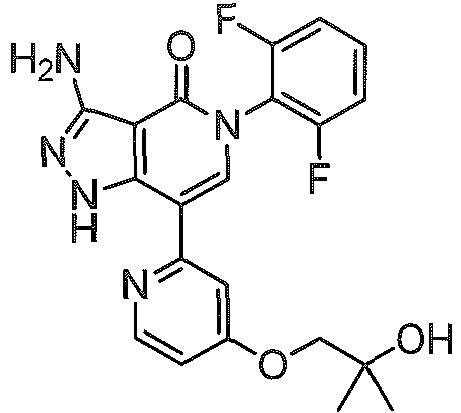
428.3 147 3-amino-5-(2,6-difluorophenyl)-7-(4-(4-hydroxytetrahydro-2H-pyran-4-yl)pyridin-2-yl)-1,5-dihydro-4H-pyrazolo[4,3-c]pyridin-4-one 
440.3 148 N-(6-(3-amino-5-(2,6-difluorophenyl)-4-oxo-4,5-dihydro-1H-pyrazolo[4,3-c]pyridin-7-yl)pyridin-2-yl)formamide 
383.2 149 N-((6-(3-amino-5-(2,6-difluorophenyl)-4-oxo-4,5-dihydro-1H-pyrazolo[4,3-c]pyridin-7-yl)pyridin-2-yl)methyl)formamide 
397.1 150 5-amino-5-(2,6-difluorophenyl)-7-(6-(2-(2-oxopyrrolidin-1-yl)ethoxy)pyrimidin-4-yl)-1,5-dihydro-4H-pyrazolo[4,3-c]pyridin-4-one 
468.1 Table 7-3 Example number IUPAC name Structure MS 151 3-amino-5-(2,6-difluorophenyl)-7-(5-((4-methoxybenzyl)oxy)pyrazin-2-yl)-1,5-dihydro-4H-pyrazolo[4,3-c]pyridin-4-one 
477.1 -

- A mixture of 3-amino-7-bromo-5-(2,6-difluorophenyl)-1,5-dihydro-4H-pyrazolo[4,3-c]pyridin-4-one obtained in Step G of Example 15 (200 mg), 4,4,4',4',5,5,5',5'-octamethyl-2,2'-bi-1,3,2-dioxaborolane (223 mg), (1,1'-bis(diphenylphosphino)ferrocene)dichloropalladium(II) (21 mg), potassium acetate (115 mg) and N,N-dimethylformamide (3.0 mL) was stirred at 110°C for 4 hr under argon atmosphere. The reaction mixture was cooled to room temperature, 4-chloro-6-((4-methoxybenzyl)oxy)pyrimidine obtained in Reference Example 27 (296 mg), aqueous sodium carbonate solution (2 M, 0.59 mL) and tetrakis(triphenylphosphine)palladium(0) (68 mg) were added thereto, and the reaction mixture was stirred at 110°C for 2 hr under argon atmosphere. The reaction mixture was cooled to room temperature, ethyl acetate and water were added thereto, and the insoluble substance was removed by filtration through Celite. The filtrate was extracted with ethyl acetate, and the extract was washed successively with water and saturated brine, and dried over anhydrous magnesium sulfate, and the solvent was evaporated under reduced pressure. The residue was purified by silica gel chromatography (diol silica gel, ethyl acetate/hexane). The obtained brown oil was purified by silica gel chromatography (basic silica gel, ethyl acetate/hexane) to give a white solid (105 mg). To the obtained white solid (100 mg) were added methanol (2 mL), tetrahydrofuran (3 mL) and p-toluenesulfonic acid monohydrate (34 mg), and the reaction mixture was stirred at room temperature for 1.5 hr. To the reaction mixture were added triethylamine (29.3 µL) and silica gel, and the solvent was evaporated under reduced pressure. The residue was purified by silica gel chromatography (ethyl acetate/methanol). The obtained residue was crystallized from ethyl acetate to give the title compound (76 mg).
MS(ESI+): [M+H]+ 357.1. -

- The title compound was obtained from 3-amino-7-bromo-5-(2,6-difluorophenyl)-1,5-dihydro-4H-pyrazolo[4,3-c]pyridin-4-one obtained in Step G of Example 15 and 2-chloro-3-((4-methoxybenzyl)oxy)pyrazine obtained in Reference Example 24 in the same manner as in Example 152.
MS (ESI+) : [M+H]+ 357.1. -

- To 3-amino-5-(2,6-difluorophenyl)-7-(5-((4-methoxybenzyl)oxy)pyrazin-2-yl)-1,5-dihydro-4H-pyrazolo[4,3-c]pyridin-4-one obtained in Example 151 (133 mg) were added methanol (2 mL), tetrahydrofuran (3 mL) and p-toluenesulfonic acid monohydrate (53 mg), and the reaction mixture was stirred at room temperature for 1 hr. p-Toluenesulfonic acid monohydrate (53 mg) was added thereto, and the reaction mixture was stirred at room temperature for 5 hr. To the reaction mixture were added triethylamine (97 µL) and silica gel, and the solvent was evaporated under reduced pressure. The residue was purified by silica gel chromatography (ethyl acetate/methanol). The obtained residue was crystallized from ethyl acetate/diethyl ether to give the title compound (92 mg).
MS (ESI+) : [M+H]+ 357.1. -

- The title compound was obtained from 3-amino-7-bromo-5-(2,6-difluorophenyl)-1,5-dihydro-4H-pyrazolo[4,3-c]pyridin-4-one obtained in Step G of Example 15 and 6-chloro-3-(tetrahydro-2H-pyran-4-yl)pyrimidin-4(3H)-one obtained in Reference Example 26 in the same manner as in Example 23.
MS (ESI+): [M+H]+ 441.2. -

- The title compound was obtained from 2-(3-amino-7-bromo-4-oxo-1,4-dihydro-5H-pyrazolo[4,3-c]pyridin-5-yl)-3-fluorobenzonitrile obtained in Step G of Example 104 and 2-bromo-5-(4,4-difluoropiperidin-1-yl)pyrazine obtained in Reference Example 28 in the same manner as in Example 23.
MS (ESI+): [M+H]+ 467.3. -

- The title compound was obtained from 2-(3-amino-7-bromo-4-oxo-1,4-dihydro-5H-pyrazolo[4,3-c]pyridin-5-yl)-3-fluorobenzonitrile obtained in Step G of Example 104 and 2-chloro-5-((4-methylpiperazin-1-yl)methyl)pyrazine obtained in Reference Example 29 in the same manner as in Example 23. MS (ESI+): [M+H]+ 460.3.
-

- The title compound was obtained from 1-((6-bromopyridin-3-yl)oxy)-2-methylpropan-2-ol obtained in Reference Example 9 and 2-fluoro-6-methylaniline in the same manner as in Example 13 and Example 23 or a method analogous thereto.
MS (ESI+): [M+H]+ 424.1. - In Examples 159 to 162, the title compound was obtained from the amine corresponding to the compounds of Examples 159 to 162, in the same manner as in Example 13 and Example 23 or a method analogous thereto. MS in the tables means actual measured value.
Table 8 Example number IUPAC name Structure MS 159 3-amino-5-(2,2-dimethylcyclopentyl)-7-(1-methyl-1H-pyrazol-3-yl)-1,5-dihydro-4H-pyrazolo[4,3-c]pyridin-4-one 
327.4 160 3-amino-5-(2,2-dimethylcyclopentyl)-7-(5-(morpholin-4-yl)pyridin-2-yl)-1,5-dihydro-4H-pyrazolo[4,3-c]pyridin-4-one 
409. 4 161 3-amino-5-(2,2-difluorocyclohexyl)-7-(1-methyl-1H-pyrazol-3-yl)-1,5-dihydro-4H-pyrazolo[4,3-c]pyridin-4-one 
349.3 162 3-amino-5-(2,2-difluorocyclohexyl)-7-(5-(morpholin-4-yl)pyridin-2-yl)-1,5-dihydro-4H-pyrazolo[4,3-c]pyridin-4-one 
431.4 -
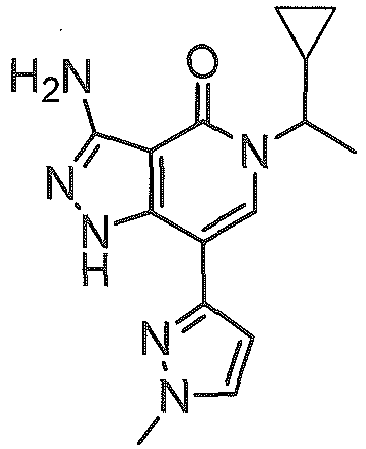
-

- To a mixture of 4-methoxy-2-oxo-1,2-dihydropyridine-3-carbonitrile (20.0 g), triphenylphosphine (52.4 g), 1-cyclopropylethanol (19.34 mL) and tetrahydrofuran (500 mL) was added bis(2-methoxyethyl) azodicarboxylate (46.8 g) at 0°C. The reaction mixture was stirred at room temperature for 15 hr. The reaction mixture was poured into water, and the mixture was extracted with ethyl acetate. The obtained organic layer was washed with water and saturated brine, and dried over anhydrous magnesium sulfate, and the solvent was evaporated under reduced pressure. The residue was dissolved in diethyl ether, and triphenylphosphine oxide (5 mg) was added thereto. The insoluble substance was removed by filtration. The filtrate was washed with water, and dried over anhydrous magnesium sulfate, and the solvent was evaporated under reduced pressure. The residue was purified by silica gel column chromatography (basic silica gel, hexane/ethyl acetate) to give a crude product. The crude product was purified by silica gel column chromatography (hexane/ethyl acetate) to give the title compound (2.45 g).
MS (ESI+) : [M+H]+ 218.9. -

- A mixture of 1-(1-cyclopropylethyl)-4-methoxy-2-oxo-1,2-dihydropyridine-3-carbonitrile obtained in Step A of Example 163 (2.45 g), N-bromosuccinimide (3.00 g) and N,N-dimethylformamide (50 mL) was stirred at 60°C for 16 hr. The reaction mixture was cooled to room temperature, and the solvent was evaporated under reduced pressure. The residue was purified by silica gel column chromatography (hexane/ethyl acetate) to give the title compound (2.73 g).
MS (ESI+) : [M+H]+ 296.8. -

- A mixture of 5-bromo-1-(1-cyclopropylethyl)-4-methoxy-2-oxo-1,2-dihydropyridine-3-carbonitrile obtained in Step B of Example 163 (66 mg), 1-methyl-3-(4,4,5,5-tetramethyl-1,3,2-dioxaborolan-2-yl)-1H-pyrazole (69 mg), tetrakis(triphenylphosphine)palladium(0) (26 mg), aqueous sodium carbonate solution (2 M, 0.666 mL) and 1,2-dimethoxyethane (3.0 mL) was heated with microwave irradiation at 100°C for 1 hr under argon atmosphere. The reaction mixture was cooled to room temperature, and poured into water, and the mixture was extracted with ethyl acetate. The extract was washed with saturated brine, and dried over anhydrous magnesium sulfate, and the solvent was evaporated under reduced pressure. The residue was purified by silica gel column chromatography (hexane/ethyl acetate), and then silica gel column chromatography (basic silica gel, hexane/ethyl acetate) to give the title compound (26 mg).
MS (ESI+) : [M+H]+ 299.3. - A mixture of 1-(1-cyclopropylethyl)-4-methoxy-5-(1-methyl-1H-pyrazol-3-yl)-2-oxo-1,2-dihydropyridine-3-carbonitrile obtained in Step C of Example 163 (22 mg), hydrazine monohydrate (18 mg) and ethanol (2 mL) was stirred at 90°C for 1 hr. The reaction mixture was cooled to room temperature, and the solvent was evaporated under reduced pressure. The residue was purified by silica gel column chromatography (basic silica gel, hexane/ethyl acetate). The residue was crystallized from ethyl acetate/hexane to give the title compound (13 mg).
MS (ESI+) : [M+H]+ 299.3.
1H NMR (400 MHz, CDCl3) δ 0.32-0.41 (1H, m), 0.46-0.55 (2H, m), 0.68-0.77 (1H, m), 1.09-1.18 (1H, m), 1.45 (3H, d, J = 6.8 Hz), 3.96 (3H, s), 4.42-4.51 (1H, m), 4.78 (2H, brs), 6.45 (1H, d, J = 2.4 Hz), 7.40 (1H, d, J = 2.2 Hz), 7.58 (1H, s). -

- A mixture of 5-bromo-1-(1-cyclopropylethyl)-4-methoxy-2-oxo-1,2-dihydropyridine-3-carbonitrile obtained in Step B of Example 163 (1.2 g), hydrazine monohydrate (1.01 g) and ethanol (20 mL) was stirred at 90°C for 2 hr. The reaction mixture was cooled to room temperature, and the solvent was evaporated under reduced pressure. The residue was purified by silica gel column chromatography (basic silica gel, hexane/ethyl acetate). The residue was dissolved in ethyl acetate, and the solution was washed with saturated brine, and dried over anhydrous magnesium sulfate, and the solvent was evaporated under reduced pressure to give the title compound (1.20 g).
MS (ESI+) : [M+H]+ 296.8. -

- Racemic 3-amino-7-bromo-5-(1-cyclopropylethyl)-1,5-dihydro-4H-pyrazolo[4,3-c]pyridin-4-one obtained in Example 164 (1.1 g) was resolved by HPLC (column: CHIRALPAD AD, 50 mmIDx500 mmL, manufactured by Daicel Chemical Industries, mobile phase: hexane/ethanol = 800/200(v/v)) to give the title compound (533 mg) having a shorter retention time. MS (ESI+): [M+H]+ 297.1.
>99.9%ee (HPLC (column: CHIRALPAK AD, 4.6 mmIDx250 mmL, manufactured by Daicel Chemical Industries, mobile phase: hexane/ethanol = 800/200(v/v), flow rate: 1.0 mL/min, retention time: 8.86 min)) -

- Racemic 3-amino-7-bromo-5-(1-cyclopropylethyl)-1,5-dihydro-4H-pyrazolo[4,3-c]pyridin-4-one obtained in Example 164 (1.12 g) was resolved by HPLC (column: CHIRALPAD AD, 50 mmID×500 mmL, manufactured by Daicel Chemical Industries, mobile phase: hexane/ethanol = 800/200(v/v)) to give the title compound (539 mg) having a longer retention time. MS (ESI+): [M+H]+ 297.1.
>99.9%ee (HPLC (column: CHIRALPAK AD, 4.6 mmIDx250 mmL, manufactured by Daicel Chemical Industries, mobile phase: hexane/ethanol = 800/200(v/v), flow rate: 1.0 mL/min, retention time: 10.95 min)) -

- To a mixture of 4-methoxy-2-oxo-1,2-dihydropyridine-3-carbonitrile (500 mg), cesium carbonate (2.17 g), potassium iodide (553 mg) N,N-dimethylformamide (10 mL) and 1,2-dimethoxyethane (10 mL) was added 2-bromobutane (776 mg) at room temperature, and the mixture was stirred overnight at 60°C. The reaction mixture was diluted with saturated aqueous sodium hydrogen carbonate solution, and the mixture was extracted threetimes with ethyl acetate. The extracts were combined, washed with saturated brine, and dried over anhydrous magnesium sulfate, and the solvent was evaporated under reduced pressure. The residue was purified by silica gel column chromatography (ethyl acetate/hexane) to give the title compound (330 mg).
MS (ESI+): [M+H]+ 206.8. - A mixture of 1-(sec-butyl)-4-methoxy-2-oxo-1,2-dihydropyridine-3-carbonitrile obtained in Step A (260 mg), N-bromosuccinimide (269 mg) and N,N-dimethylformamide (3 mL) was stirred at 60°C for 2 hr 30 min. The reaction mixture was diluted with saturated aqueous sodium hydrogen carbonate solution, and the mixture was extracted threetimes with ethyl acetate. The extracts were combined, washed successively with water and saturated brine, and dried over anhydrous magnesium sulfate, and the solvent was evaporated under reduced pressure. The residue was purified by silica gel column chromatography (ethyl acetate/hexane) to give the title compound (260 mg).
1H NMR (300 MHz, DMSO-d6) δ0.75 (3H, t, J = 7.4 Hz), 1.29 (3H, d, J = 6.8 Hz), 1.60-1.80 (2H, m), 4.32 (3H, s), 4.65-4.82 (1H, m), 8.30 (1H, s). - To a mixture of 5-bromo-1-(sec-butyl)-4-methoxy-2-oxo-1,2-dihydropyridine-3-carbonitrile obtained in Step B (130 mg), 1-methyl-3-(4,4,5,5-tetramethyl-1,3,2-dioxaborolan-2-yl)-1H-pyrazole (114 mg), 2M aqueous sodium carbonate solution (1.37 mL) and 1,2-dimethoxyethane (2.5 mL) was added tetrakis(triphenylphosphine)palladium(0) (52.7 mg), and the mixture was stirred with microwave irradiation at 100°C for 1 hr. The reaction mixture was diluted with water, and the mixture was extracted twice with ethyl acetate. The extracts were combined, washed with saturated brine, and dried over anhydrous magnesium sulfate, and the solvent was evaporated under reduced pressure. The residue was purified by silica gel column chromatography (basic silica gel, ethyl acetate/hexane) to give the title compound (90 mg).
MS (ESI+) : [M+H]+ 287.0. - To a mixture of 1-(sec-butyl)-4-methoxy-5-(1-methyl-1H-pyrazol-3-yl)-2-oxo-1,2-dihydropyridine-3-carbonitrile obtained in Step C (140 mg) and ethanol (5 mL) was added hydrazine monohydrate (122 mg), and the mixture was stirred at 90°C for 1 hr, cooled to room temperature, and concentrated under reduced pressure. The residue was purified by silica gel column chromatography (basic silica gel, ethyl acetate/hexane), and recrystallized from ethyl acetate/diisopropyl ether to give the title compound (82 mg).
MS (ESI+): [M+H]+ 287.0. - In Examples 168 and 169, the title compound was obtained from the halide compound (which is compound XXIX) corresponding to the compounds of Examples 168 and 169, and 1-methyl-3-(4,4,5,5-tetramethyl-1,3,2-dioxaborolan-2-yl)-1H-pyrazole, in the same manner as in Example 167 or a method analogous thereto. MS in the tables means actual measured value.
Table 9 Example number IUPAC name Structure MS 168 3-amino-7-(1-methyl-1H-pyrazolo-3-yl)-5-(pentan-2-yl)-1,5-dihydro-4H-pyrazolo[4,3-c]pyridin-4-one 
301. 0 169 3-amino-5-(2-methylpentan-3-yl)-7-(1-methyl-1H-pyrazolo-3-yl)-1,5-dihydro-4H-pyrazolo[4,3-c]pyridin-4-one 
315.0 -

- To a mixture of 4-methoxy-2-oxo-1,2-dihydropyridine-3-carbonitrile (1.00 g), tetrahydro-2H-thiopyran-4-ol (1.18 g), triphenylphosphine (2.62 g) and tetrahydrofuran (30 mL) was added dropwise diisopropyl azodicarboxylate (2.02 g) at room temperature under nitrogen atmosphere, and the mixture was stirred overnight at room temperature. The reaction mixture was diluted with saturated aqueous sodium hydrogen carbonate solution, and the mixture was extracted twice with ethyl acetate. The extracts were combined, washed with saturated brine, and dried over anhydrous magnesium sulfate, and the solvent was evaporated under reduced pressure. The residue was purified by silica gel column chromatography (ethyl acetate/hexane) to give the title compound (320 mg).
MS (ESI+): [M+H]+ 250.9. - A mixture of 4-methoxy-2-oxo-1-(tetrahydro-2H-thiopyran-4-yl)-1,2-dihydropyridine-3-carbonitrile obtained in Step A (110 mg), m-chloroperbenzoic acid (271 mg) and N,N-dimethylformamide (5 mL) was stirred at room temperature for 2 hr. The reaction mixture was diluted with saturated aqueous sodium hydrogen carbonate solution, and the mixture was extracted twice with ethyl acetate. The extracts were combined, washed with saturated brine, and dried over anhydrous magnesium sulfate, and the solvent was evaporated under reduced pressure. The residue was purified by silica gel column chromatography (ethyl acetate/hexane) to give the title compound (60 mg).
MS (ESI+): [M+H]+ 282.9. - The title compound was obtained in the same manner as in Steps B-D of Example 167.
MS (ESI+) : [M+H]+ 363.0. -

- The title compound was obtained from 4-methoxy-2-oxo-1,2-dihydropyridine-3-carbonitrile and tetrahydro-2H-thiopyran-3-ol in the same manner as in Example 170.
MS (ESI+): [M+H]+ 362.9. -

- The title compound was obtained from 4-methoxy-2-oxo-1,2-dihydropyridine-3-carbonitrile and 1-cyclobutylethanol in the same manner as in Example 163.
MS (ESI+) : [M+H]+ 313.3. -

-
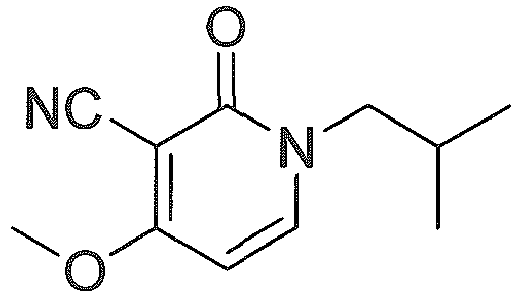
- A mixture of 4-methoxy-2-oxo-1,2-dihydropyridine-3-carbonitrile (15.00 g), 1-bromo-2-methylpropane (21.4 g), cesium carbonate (65.2 g) and dimethyl sulfoxide (150 mL) was stirred at 50°C for 24 hr. The reaction mixture was cooled to room temperature, and poured into water, and the mixture was extracted with ethyl acetate. The extract was washed successively with water and saturated brine, and dried over anhydrous sodium sulfate, and the solvent was evaporated under reduced pressure. The residue was washed with ether to give the title compound (13.0 g).
MS (ESI+): [M+H]+ 207.1. -

- The title compound was obtained from 1-isobutyl-4-methoxy-2-oxo-1,2-dihydropyridine-3-carbonitrile obtained in Step A and N-bromosuccinimide in the same manner as in Step A of Example 2.
MS (ESI+): [M+H]+ 271.1. -

- A mixture of 5-bromo-4-hydroxy-1-isobutyl-2-oxo-1,2-dihydropyridine-3-carbonitrile obtained in Step B (6.6 g) and phosphorus oxychloride (0.126 mL) was heated at 120°C for 24 hr, and cooled to room temperature. The reaction mixture was poured into water, and the pH was adjusted to 10 with potassium carbonate. The reaction mixture was extracted with ethyl acetate. The extract was washed with washed with water and saturated brine, and dried over anhydrous sodium sulfate, and the solvent was evaporated under reduced pressure. The residue was purified by silica gel column chromatography (petroleum ether/ethyl acetate) to give the title compound (4.60 g).
MS (ESI+): [M+H]+ 289.0. -

- The title compound was obtained from 5-bromo-4-chloro-1-isobutyl-2-oxo-1,2-dihydropyridine-3-carbonitrile obtained in Step C and hydrazine monohydrate in the same manner as in Step E of Example 1.
MS (ESI+): [M+H]+ 0284.7. - The title compound was obtained from 3-amino-7-bromo-5-isobutyl-1,5-dihydro-4H-pyrazolo[4,3-c]pyridin-4-one obtained in Step D and 1-methyl-3-(4,4,5,5-tetramethyl-1,3,2-dioxaborolan-2-yl)-1H-pyrazole in the same manner as in Step A of Example 4.
MS (ESI+): [M+H]+ 287.2. -

- A mixture of 4-methoxy-2-oxo-1,2-dihydropyridine-3-carbonitrile (2.00 g), 1,2,3-trifluoro-5-nitrobenzene (3.54 g), potassium carbonate (3.73 g) and N,N-dimethylformamide (20 mL) was stirred at room temperature for 2 hr. The reaction mixture was slowly poured into saturated sodium hydrogen carbonate solution, and the mixture was extracted with ethyl acetate. The extract was washed with saturated brine, and dried over anhydrous magnesium sulfate, and the solvent was evaporated under reduced pressure. To the residue was added a mixed solvent (10 mL) of isopropyl ether/ethyl acetate =4/1, and the mixture was stirred for 15 min. The precipitate was collected by filtration to give the title compound (3.75 g).
MS (ESI+): [M+H]+ 308.2. - To a mixture of 1-(2,6-difluoro-4-nitrophenyl)-4-methoxy-2-oxo-1,2-dihydropyridine-3-carbonitrile obtained in Step A (3.00 g), ammonium chloride (5.22 g), ethanol (48 mL) and water (12 mL) was added iron powder (2.18 g) at room temperature, and the reaction mixture was heated at 90°C for 1 hr. The reaction mixture was cooled to room temperature, and slowly poured into saturated sodium hydrogen carbonate solution, and the mixture was extracted with a mixed solvent of tetrahydrofuran/ethyl acetate =3/1. The extract was washed with saturated brine, and dried over anhydrous magnesium sulfate, and the solvent was evaporated under reduced pressure. To the residue was added isopropyl ether (10 mL), and the mixture was stirred for 15 min. The precipitate was collected by filtration to give the title compound (1.95 g).
MS (ESI+): [M+H]+ 278.2. - To a mixture of 1-(4-amino-2,6-difluorophenyl)-4-methoxy-2-oxo-1,2-dihydropyridine-3-carbonitrile obtained in Step B (1.23 g), triethylamine (1.80 g) and tetrahydrofuran (80 mL) was slowly added acetyl chloride (0.70 g) at room temperature, and the reaction mixture was stirred for 3 hr. The reaction mixture was poured into a mixture of saturated sodium hydrogen carbonate solution/isopropyl ether=1/1, and the mixture was stirred for 15 min. The precipitate was collected by filtration, and washed successively with water and isopropyl ether to give the title compound (1.19 g).
MS (ESI+): [M+H]+ 320.2. - A mixture of N-(4-(3-cyano-4-methoxy-2-oxopyridin-1(2H)-yl)-3,5-difluorophenyl)acetamide obtained in Step C (1.10 g), hydrazine monohydrate (0.52 g), ethanol (30 mL) and tetrahydrofuran (15 mL) was stirred at 60°C for 2 hr. The solvent was evaporated under reduced pressure, and to the residue was added isopropyl ether, and the mixture was stirred for 15 min. The precipitate was collected by filtration to give the title compound (0.75 g).
1H NMR (400 MHz, DMSO-d6) δ 2.10 (3H, s), 4.76 (2H, brs), 6.56 (1H, d, J = 7.2 Hz), 7.45 (2H, d, J = 9.8 Hz), 7.62 (1H, brs), 10.48 (1H, s). - To a mixture of N-(4-(3-amino-4-oxo-1H-pyrazolo[4,3-c]pyridin-5(4H)-yl)-3,5-difluorophenyl)acetamide obtained in Step D (0.67 g) and acetic acid (30 mL) was slowly added bromine (0.21 mL) at 80°C, and the reaction mixture was stirred at 80°C for 2 hr. The solvent was evaporated under reduced pressure, and the residue was recrystallized from acetic acid to give the title compound (0.65 g).
MS (ESI+): [M+H]+ 399.1. - The title compound was obtained from N-(4-(3-amino-7-bromo-4-oxo-1H-pyrazolo[4,3-c]pyridin-5(4H)-yl)-3,5-difluorophenyl)acetamide hydrobromide obtained in Step E and 1-methyl-3-(4,4,5,5-tetramethyl-1,3,2-dioxaborolan-2-yl)-1H-pyrazole in the same manner as in Step H of Example 13.
MS (ESI+) : [M+H]+ 400.3. -

- A mixture of 4-methoxy-2-oxo-1,2-dihydropyridine-3-carbonitrile (2.00 g), 3,4,5-trifluorobenzonitrile (2.93 g), potassium carbonate (3.68 g) and N,N-dimethylformamide (20 mL) was stirred at 50°C for 5 hr. The reaction mixture was slowly poured into saturated sodium hydrogen carbonate solution, and the mixture was extracted with ethyl acetate. The extract was washed with saturated brine, and dried over anhydrous magnesium sulfate, and the solvent was evaporated under reduced pressure. To the residue was added a mixed solvent (10 mL) of isopropyl ether/ethyl acetate =4/1, and the mixture was stirred for 15 min. The precipitate was collected by filtration to give the title compound (1.65 g).
MS (ESI+) : [M+H]+ 288.2. - The title compound was obtained from 1-(4-cyano-2,6-difluorophenyl)-4-methoxy-2-oxo-1,2-dihydropyridine-3-carbonitrile obtained in Step A and hydrazine monohydrate in the same manner as in Step D of Example 174.
MS (ESI+) : [M+H]+ 288.2. - To a mixture of 4-(3-amino-4-oxo-1H-pyrazolo[4,3-c]pyridin-5(4H)-yl)-3,5-difluorobenzonitrile obtained in Step B (0.60 g) and acetic acid (40 mL) was slowly added bromine (0.21 mL) at 80°C, and the reaction mixture was stirred at 100°C for 1 hr. The solvent was evaporated under reduced pressure, and the residue was recrystallized from acetic acid to give the title compound (0.81 g).
MS (ESI+): [M+H]+ 368.1. - The title compound was obtained from 4-(3-amino-7-bromo-4-oxo-1H-pyrazolo[4,3-c]pyridin-5(4H)-yl)-3,5-difluorobenzonitrile hydrobromide obtained in Step C and 1-methyl-3-(4,4,5,5-tetramethyl-1,3,2-dioxaborolan-2-yl)-1H-pyrazole in the same manner as in Step H of Example 13.
MS (ESI+): [M+H]+ 368.2. -

- A mixture of 4-methoxy-2-oxo-1,2-dihydropyridine-3-carbonitrile (3.00 g), 4-chloro-3-nitropyridine (6.34 g), cesium carbonate (13.02 g) and N,N-dimethylformamide (30 mL) was stirred at room temperature for 16 hr. The reaction mixture was slowly poured into saturated sodium hydrogen carbonate solution, and the mixture was extracted with ethyl acetate. The extract was washed with saturated brine, and dried over anhydrous magnesium sulfate, and the solvent was evaporated under reduced pressure. To the residue was added isopropyl ether (20 mL), and the mixture was stirred for 15 min. The precipitate was collected by filtration to give the title compound (5.00 g).
MS (ESI+): [M+H]+ 273.2. - To a mixture of 4-methoxy-3'-nitro-2-oxo-2H-[1,4'-bipyridine]-3-carbonitrile obtained in Step A (3.00 g), ammonium chloride (5.90 g), ethanol (60 mL) and water (15 mL) was added iron powder (2.46 g) at room temperature. The reaction mixture was heated at 90°C for 2 hr. The reaction mixture was cooled to room temperature, and poured into saturated sodium hydrogen carbonate solution, and the mixture was extracted with a mixed solvent of tetrahydrofuran/ethyl acetate =2/1. The extract was washed with saturated brine, and dried over anhydrous magnesium sulfate, and the solvent was evaporated under reduced pressure. To the residue was added a mixed solvent (20 mL) of methanol/isopropyl ether=1/1, and the mixture was stirred for 15 min. The precipitate was collected by filtration to give the title compound (1.10 g).
MS (ESI+) : [M+H]+ 243.2. - To a mixture of 3'-amino-4-methoxy-2-oxo-2H-[1,4'-bipyridine]-3-carbonitrile obtained in Step B (1.00 g) and 1N hydrochloric acid (20 mL) was slowly added an aqueous solution (3 mL) of sodium nitrite (0.31 g) at 0°C, and the mixture was stirred for 2 hr. This reaction mixture was added to a mixture of copper(I) chloride (0.30 g) and 1N hydrochloric acid (5 mL) at 0°C, and the mixture was stirred at room temperature for 16 hr. The reaction mixture was slowly poured into saturated sodium hydrogen carbonate solution, and the mixture was extracted with a mixed solvent of tetrahydrofuran/ethyl acetate =1/1. The extract was washed with saturated brine, and dried over anhydrous magnesium sulfate, and the solvent was evaporated under reduced pressure. The residue was purified by silica gel column chromatography (ethyl acetate/hexane) to give the title compound (0.40 g).
MS (ESI+): [M+H]+ 262.1. - A mixture of 3'-chloro-4-methoxy-2-oxo-2H-[1,4'-bipyridine]-3-carbonitrile obtained in Step C (0.35 g), hydrazine monohydrate (0.17 g), ethanol (10 mL) and N,N-dimethylformamide (10 mL) was stirred at 60°C for 2 hr. The solvent was evaporated under reduced pressure, to the residue was added isopropyl ether, and the mixture was stirred for 15 min. The precipitate was collected by filtration to give the title compound (0.30 g).
MS (ESI+) : [M+H]+ 262.2. - To a mixture of 3-amino-5-(3-chloropyridin-4-yl)-1H-pyrazolo[4,3-c]pyridin-4(5H)-one obtained in Step D (0.25 g) and acetic acid (30 mL) was slowly added bromine (0.10 mL) at 60°C, and the reaction mixture was stirred at 60°C for 3 hr. The solvent was evaporated under reduced pressure, and the residue was recrystallized from acetic acid to give the title compound (0.27 g).
MS (ESI+) : [M+H]+ 342.1. - The title compound was obtained from 3-amino-7-bromo-5-(3-chloropyridin-4-yl)-1H-pyrazolo[4,3-c]pyridin-4(5H)-one hydrobromide obtained in Step E and 1-methyl-3-(4,4,5,5-tetramethyl-1,3,2-dioxaborolan-2-yl)-1H-pyrazole in the same manner as in Step H of Example 13.
MS (ESI+) : [M+H]+ 342.2. -

- To a mixture of 4-methoxy-2-oxo-1,2-dihydropyridine-3-carbonitrile (3.00 g) and N,N-dimethylformamide (70 mL) was added N-iodosuccinimide (5.84 g) at room temperature, and the mixture was stirred at 70°C for 16 hr. The reaction mixture was cooled to room temperature, and the solvent was evaporated under reduced pressure. To the residue was added methanol, and the precipitate was collected by filtration to give the title compound (4.60 g).
MS (ESI+): [M+H]+ 277.1. - To a mixture of 5-iodo-4-methoxy-2-oxo-1,2-dihydropyridine-3-carbonitrile obtained in Step A (3.00g), silver(I) oxide (2.77g) and toluene (80 mL) was added 4-methoxybenzyl chloride (2.21g) at room temperature, and the mixture was stirred 110°C for 5 hr. To the reaction mixture was added 4-methoxybenzyl chloride (2.21g), and the mixture was stirred at 110°C for 16 hr. The reaction mixture was cooled to room temperature, the insoluble substance was removed by filtration, and the filtrate was concentrated under reduced pressure. To the residue was added diethyl ether, and the precipitate was collected by filtration to give the title compound (3.32 g).
1H NMR (400 MHz, DMSO-d6) δ 3.76 (3H, s), 4.24 (3H, s), 5.38 (2H, s), 6.90-7.01 (2H, m), 7.40(2H, d, J = 8.3 Hz), 8.61 (1H, s). - The title compound was obtained from 5-iodo-4-methoxy-2-((4-methoxybenzyl)oxy)nicotinonitrile obtained in Step B and 1-methyl-3-(4,4,5,5-tetramethyl-1,3,2-dioxaborolan-2-yl)-1H-pyrazole in the same manner as in Step H of Example 13.
MS (ESI+): [M+H]+ 351.3. - A mixture of 4-methoxy-2-((4-methoxybenzyl)oxy)-5-(1-methyl-1H-pyrazol-3-yl)nicotinonitrile obtained in Step C (0.81g) and trifluoroacetic acid (2.6g) was stirred at room temperature for 15 min, and the solvent was evaporated under reduced pressure. To the residue was added a mixed solvent (5 mL) of isopropyl ether/ethyl acetate =1/1, and the mixture was stirred for 15 min. The precipitate was collected by filtration to give the title compound (0.57 g).
MS (ESI+) : [M+H]+ 231.2. - A mixture of 2-hydroxy-4-methoxy-5-(1-methyl-1H-pyrazol-3-yl)nicotinonitrile trifluoroacetate obtained in Step D (0.20g), 2-fluoronicotinonitrile (0.710 g), cesium carbonate (0.45 g) and N,N-dimethylformamide (30 mL) was stirred at room temperature for 16 hr. The reaction mixture was slowly poured into saturated sodium hydrogen carbonate solution, and the mixture was extracted with ethyl acetate. The extract was washed with saturated brine, and dried over anhydrous magnesium sulfate, and the solvent was evaporated under reduced pressure. To the residue was added a mixed solvent (2 mL) of isopropyl ether/ethyl acetate =1/2, and the mixture was stirred for 15 min. The precipitate was collected by filtration to give the title compound (0.12 g).
1H NMR (400 MHz, DMSO-d6) δ 3.85 (3H, s), 4.42 (3H, s), 6.53 (1H, d, J = 2.3 Hz), 7.77 (1H, d, J = 2.3 Hz), 7.82 (1H, dd, J = 5.1, 7.7 Hz), 8.37 (1H, s),8.56-8.64 (1H, m), 8.91 (1H, dd, J = 1.9, 4.9 Hz). - A mixture of 4-methoxy-5-(1-methyl-1H-pyrazol-3-yl)-2-oxo-2H-[1,2'-bipyridine]-3,3'-dicarbonitrile obtained in Step E (0.12g), hydrazine monohydrate (0.087 g), ethanol (10 mL) and tetrahydrofuran (5 mL) was stirred at 60°C for 2 hr. The solvent was evaporated under reduced pressure, to the residue was added a mixed solvent (5 mL) of ethanol/ethyl acetate =1/1, and the mixture was stirred for 15 min. The precipitate was collected by filtration to give the title compound (0.069 g).
MS (ESI+) : [M+H]+ 333.2. -

- The title compound was obtained from 3-amino-7-bromo-5-((2S)-3-methylbutan-2-yl)-1,5-dihydro-4H-pyrazolo[4,3-c]pyridin-4-one obtained in Example 112 and 2-bromo-N-(2-methoxyethyl)-N-methyl-1,3-thiazole-5-carboxamide obtained in Reference Example 30 in the same manner as in Example 23.
MS (ESI+) : [M+H]+ 419.3. -

-

- To a solution of (2S)-3-methylbutan-2-amine (30 g, >99%ee, Aldrich) in methanol (180 mL) was added dropwise diketene (29 mL) under ice bath, and the mixture was stirred at room temperature for 20 hr. The mixture was neutralized with acetic acid (120 mL) under ice bath, water was added thereto, and the mixture was extracted with ethyl acetate. The solvent was evaporated under reduced pressure, and the residue was purified by silica gel column chromatography (hexane/ethyl acetate) to give the title compound (56.6 g).
MS (ESI+) : [M+H]+ 171.8. -
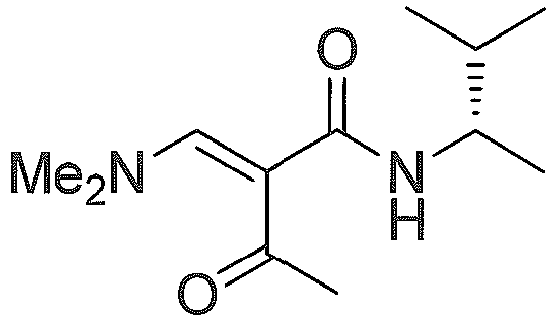
- To a solution of N-((2S)-3-methylbutan-2-yl)-3-oxobutanamide obtained in Step A (56.6 g) in N,N-dimethylformamide (220 mL) was added dropwise 1,1-dimethoxy-N,N-dimethylmethanamine (88 mL) over 15 min under ice bath, and the mixture was stirred at room temperature for 20 hr. The solvent was evaporated under reduced pressure to give the title compound (62.7 g).
1H NMR (400MHz, CDCl3)δ0.84-0.99 (6H, m), 1.11 (3H, dd, J = 6.6, 2.0 Hz), 1.68-1.79 (1H, m), 2.22 (3H, d, J = 2.0 Hz), 3.11 (6H, brs), 3.85-4.07 (1H, m), 7.51 (1H, brs), 7.62 (1H, brs). -

- To a solution of 2-((dimethylamino)methylene)-N-((2S)-3-methylbutan-2-yl)-3-oxobutanamide obtained in Step B (31 g) in N,N-dimethylformamide (250 mL) was added (chloromethylene)dimethylammonium chloride (75 g) under ice bath, and the mixture was stirred at 100°C for 40 min. The reaction mixture was slowly added dropwise to ice water, and the mixture was extracted with ethyl acetate. The obtained organic layer was washed successively with water and saturated brine, and dried over anhydrous magnesium sulfate, and the solvent was evaporated under reduced pressure. The residue was purified by silica gel column chromatography (hexane/ethyl acetate) to give the title compound (17.8 g).
MS (ESI+) : [M+H]+ 228.2. -

- To a solution of 4-chloro-1-((2S)-3-methylbutan-2-yl)-2-oxo-1,2-dihydropyridine-3-carbaldehyde obtained in Step C (31.8 g) in 2-propanol (300 mL) were added hydroxylamine hydrochloride (14.6 g) and conc. hydrochloric acid (0.43 mL), and the mixture was stirred at 100°C for 1 hr. The reaction mixture was cooled to room temperature, and the solvent was evaporated under reduced pressure. The residue was crystallized from (2-propanol/diisopropyl ether), and the resulting solid was collected by filtration, and washed with 2-propanol/diisopropyl ether to give the title compound (23.2 g).
MS(ESI+): [M+H]+ 243.2. -
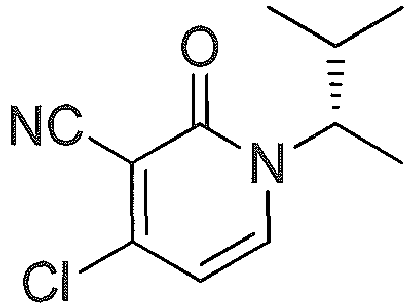
- To a solution of 4-chloro-3-((hydroxyimino)methyl)-1-((2S)-3-methylbutan-2-yl)pyridin-2(1H)-one obtained in Step D (23.2 g) in acetonitrile (300 mL) was added dropwise thionyl chloride (13.9 mL), and the mixture was stirred at room temperature for 1 hr. The solvent was evaporated under reduced pressure, and to the residue were added diisopropyl ether/ethyl acetate/hexane. The insoluble substance was removed by filtration, and the filtrate was concentrated under reduced pressure. To the residue was added ethyl acetate, and the mixture was washed successively with saturated aqueous sodium hydrogen carbonate solution and saturated brine, and dried over anhydrous magnesium sulfate, and the solvent was evaporated under reduced pressure. The residue was purified by silica gel column chromatography (hexane/ethyl acetate) to give the title compound (14.6 g).
MS (ESI+) : [M+H]+ 224.8. -

- To a solution of 4-chloro-1-((2S)-3-methylbutan-2-yl)-2-oxo-1,2-dihydropyridine-3-carbonitrile obtained in Step E (14.6 g) in N,N-dimethylformamide (120 mL) was added N-bromosuccinimide (17.4 g), and the mixture was stirred at 50°C for 20 hr. To the reaction mixture was added water, and the mixture was extracted with ethyl acetate. The obtained organic layer was washed successively with water and saturated brine, and dried over anhydrous magnesium sulfate, and the solvent was evaporated under reduced pressure. The residue was purified by silica gel column chromatography (hexane/ethyl acetate) to give the title compound (19.2 g).
MS(ESI+): [M+H]+ 303.2. -

- To a solution of 5-bromo-4-chloro-1-((2S)-3-methylbutan-2-yl)-2-oxo-1,2-dihydropyridine-3-carbonitrile obtained in Step F (19.2 g) in ethanol (200 mL) was added hydrazine monohydrate (9.5 g), and the mixture was stirred at 90°C for 1 hr. The reaction mixture was allowed to be cooled to room temperature, and the solvent was evaporated under reduced pressure. The residue was dissolved in a mixed solvent of ethyl acetate-tetrahydrofuran-water. The organic layer was separated, washed successively with saturated aqueous sodium hydrogen carbonate solution and saturated brine, and dried over anhydrous magnesium sulfate, and the solvent was evaporated under reduced pressure. The residue was purified by silica gel column chromatography (basic silica gel, ethyl acetate/hexane, and then ethyl acetate/methanol), and recrystallized from (ethyl acetate/diisopropyl ether) to give the title compound (15.5 g).
1H NMR(400 MHz, CDCl3) δ0.81 (3H, d, J = 6.6 Hz), 1.05 (3H, d, J = 6.6 Hz), 1.34 (3H, d, J = 6.8 Hz), 1.78-1.92 (1H, m), 4.64-5.00 (3H, m), 7.12 (1H, s), 9.27 (1H, brs).
MS (ESI+) : [M+H]+ 299.2.
99.4%ee (HPLC (column: CHIRALPAK AD, 4.6 mmIDx250 mmL, manufactured by Daicel Chemical Industries, mobile phase: hexane/ethanol = 600/400(v/v), flow rate: 0.5 mL/min, retention time: 10.00 min)) -

- The title compound was obtained from 3-amino-7-bromo-5-((2S)-3-methylbutan-2-yl)-1,5-dihydro-4H-pyrazolo[4,3-c]pyridin-4-one obtained in Example 112 and 2-bromoimidazo[1,2-a]pyridine in the same manner as in Example 23.
MS (ESI+): [M+H]+ 337.0. -

- The title compound was obtained from 3-amino-7-bromo-5-((2S)-3-methylbutan-2-yl)-1,5-dihydro-4H-pyrazolo[4,3-c]pyridin-4-one obtained in Example 112, 2-bromoimidazo[1,2-a]pyridine and 1-methyl-3-(4,4,5,5-tetramethyl-1,3,2-dioxaborolan-2-yl)-1H-pyrazole in the same manner as in Step H of Example 13.
MS (ESI+) : [M+H]+ 301.3. - Tyk2 enzyme inhibitory activity of test compounds was measured by LANCE method (PerkinElmer). First, a test compound diluted with assay buffer (50 mM HEPES (pH = 7.5), 10 mM MgCl2, 1 mM EGTA, 2 mM DTT, 0.01% Tween20, 0.01% BSA) was added to 384-well plate at 2µL each. Then, a Tyk2 (Invitrogen) solution and a fluorescence-labeled peptide substrate (ULight-JAK1, PerkinElmer) solution diluted with assay buffer at 375 ng/mL and 300 nM, respectively were added at 2 µL each. Then, enzyme reaction was started by adding 2 µL each of ATP solution prepared with assay buffer at 30 µM. After the reaction at room temperature for 1 hr, Detection Buffer (PerkinElmer) prepared to be 20 mM EDTA, 4 nM europium-labeled anti-phosphotyrosine antibody (PerkinElmer) was added at 6 µL each. After standing at room temperature for 1 hr, fluorescence intensity (excitation wavelength 340 nm, fluorescence wavelength 665 nm, delay time 100 microsecond) was measured by a plate reader, Envision (PerkinElmer). The inhibitory activity of each compound was calculated as relative value where fluorescence intensity of a well without enzyme is considered as 100% inhibition.
Table 10 Ex. No. Tyk2 enzyme inhibitory activity (%, 1µM) Ex. No. Tyk2 enzyme inhibitory antivity (%, 1µM) 1 40 24 98 13 98 28 100 14 98 38 95 15 100 43 92 16 82 Formulation Example 1 (production of capsule) 1) compound of Example 1 30 mg 2) fine powder cellulose 10 mg 3) lactose 19 mg 4) magnesium stearate 1 mg Total 60 mg 1), 2), 3) and 4) are mixed and filled in a gelatin capsule. Formulation Example 2 (production of tablet) 1) compound of Example 1 30 g 2) lactose 50 g 3) cornstarch 15 g 4) calcium carboxymethylcellulose 44 g 5) magnesium stearate 1 g 1000 tablets total 140 g - The total amount of 1), 2) and 3) and 4) (30 g) is kneaded with water, vacuum dried, and sieved. The sieved powder is mixed with 4) (14 g) and 5) (1 g), and the mixture is punched by a tableting machine, whereby 1000 tablets containing 30 mg of the compound of Example 1 per tablet are obtained.
- The compound of the present invention has a superior Tyk2 inhibitory action, which is useful as an agent for the prophylaxis or treatment of autoimmune diseases (e.g., psoriasis, rheumatoid arthritis, inflammatory bowel disease, Sjogren's syndrome, Behcet's disease, multiple sclerosis, systemic lupus erythematosus etc.) and the like.
- This application is based on patent application No.
2012-034440
Claims (17)
- A compound represented by the formula (I):
 R1 is an optionally substituted C1-6 alkyl group or an optionally substituted cyclic group;R2 is a hydrogen atom or a cyano group; andR3 is a hydrogen atom, a halogen atom, a 5-membered aromatic ring group optionally having one substituent, or an optionally substituted 6- to 12-membered aromatic ring group, or a salt thereof.
 - The compound or salt of claim 1, wherein R2 is a hydrogen atom.
- The compound or salt of claim 1, wherein
R1 is(1) a C1-6 alkyl group optionally substituted by 1 to 3 substituents selected from (a) a halogen atom, and (b) a C3-8 cycloalkyl,(2) a C3-10 cycloalkyl group optionally substituted by 1 to 3 substituents selected from (a) a halogen atom, and (b) a C1-6 alkyl group,(3) a C6-14 aryl group optionally substituted by 1 to 3 substituents selected from (a) a halogen atom, (b) a C1-6 alkyl group optionally substituted by 1 to 3 halogen atoms, (c) a cyano group, (d) an amino group optionally mono- or di-substituted by C1-6 alkyl-carbonyl group (s), and (e) a C1-6 alkoxy group,(4) a 3- to 8-membered monocyclic non-aromatic heterocyclic group, or(5) a 5- or 6-membered monocyclic aromatic heterocyclic group optionally substituted by 1 to 3 substituents selected from (a) a halogen atom, and (b) a cyano group;
R2 is a hydrogen atom or a cyano group; and
R3 is(1) a hydrogen atom,(2) a halogen atom,(3) a C6-12 aryl group optionally substituted by 1 to 3 halogen atoms,(4) a 5-membered monocyclic aromatic heterocyclic group optionally substituted by one substituent selected from the following Substituent Group C,(5) a 6-membered monocyclic aromatic heterocyclic group optionally substituted by 1 to 3 substituents selected from following Substituent Group C, or(6) a 8- to 12-membered fused aromatic heterocyclic group optionally substituted by 1 to 3 substituents selected from following Substituent Group C
[Substituent Group C:(a) a C1-6 alkyl group optionally substituted by 1 to 3 substituents selected from (i) a hydroxy group, (ii) a C1-6 alkoxy group, (iii) a C1-6 alkylsulfonyl group, (iv) an amino group optionally mono- or di-substituted by substituent(s) selected from a C1-6 alkyl-carbonyl group, a formyl group and a C1-6 alkyl group, (v) a cyano group, (vi) a 3- to 8-membered monocyclic non-aromatic heterocyclic group optionally substituted by 1 to 3 C1-6 alkyl groups, (vii) a 3- to 8-membered monocyclic non-aromatic heterocyclylcarbonyl group optionally substituted by 1 to 3 hydroxy groups, and (viii) a carbamoyl group optionally mono- or di-substituted by substituent(s) selected from a 3- to 8-membered monocyclic non-aromatic heterocyclic group and a C1-6 alkyl group,(b) a cyano group,(c) an amino group optionally mono- or di-substituted by substituent(s) selected from (i) a formyl group, (ii) a C1-6 alkyl group optionally substituted by 1 to 3 amino groups optionally mono- or di-substituted by C1-6 alkyl group(s), and (iii) a C1-6 alkyl-carbonyl group,(d) a carbamoyl group optionally mono- or di-substituted by substituent(s) selected from (i) a C1-6 alkyl group optionally substituted by 1 to 3 substituents selected from a hydroxy group and a C1-6 alkoxy group, and (ii) a 3- to 8-membered monocyclic non-aromatic heterocyclic group,(e) a C1-6 alkoxy-carbonyl group,(f) a C1-6 alkoxy group optionally substituted by 1 to 3 substituents selected from (i) a C1-6 alkoxy group, (ii) an amino group optionally mono- or di-substituted by substituent (s) selected from a C1-6 alkyl group and a C1-6 alkyl-carbonyl group, (iii) a carbamoyl group optionally mono- or di-substituted by C1-6 alkyl group(s), (iv) a 3- to 8-membered monocyclic non-aromatic heterocyclic group optionally substituted by oxo group(s), (v) a hydroxy group, and (vi) a C6-14 aryl group optionally substituted by 1 to 3 C1-6 alkoxy groups,(g) a 3- to 8-membered monocyclic non-aromatic heterocyclic group optionally substituted by 1 to 3 substituents selected from (i) a C1-6 alkyl group optionally substituted by 1 to 3 hydroxy groups, (ii) a C1-6 alkoxy group, (iii) a C1-6 alkyl-carbonyl group, (iv) an oxo group, (v) a hydroxy group, and (vi) a halogen atom,(h) a 3- to 8-membered monocyclic non-aromatic heterocyclylcarbonyl group,(i) a 3- to 8-membered monocyclic non-aromatic heterocyclyloxy group,(j) a C3-8 cycloalkyloxy group, and(k) a hydroxy group]. - 3-Amino-5-(2,6-difluorophenyl)-7-(1-methyl-1H-pyrazol-3-yl)-1,5-dihydro-4H-pyrazolo[4,3-c]pyridin-4-one or a salt thereof.
- 2-(3-Amino-7-(1-methyl-1H-pyrazol-3-yl)-4-oxo-1,4-dihydro-5H-pyrazolo[4,3-c]pyridin-5-yl)-3-fluorobenzonitrile or a salt thereof.
- 3-Amino-5-(1-cyclopropylethyl)-7-(1-methyl-1H-pyrazol-3-yl)-1,5-dihydro-4H-pyrazolo[4,3-c]pyridin-4-one or a salt thereof.
- A medicament comprising the compound or salt of claim 1.
- The medicament of claim 7, which is a tyrosine kinase 2 inhibitor.
- The medicament of claim 7, which is an agent for the prophylaxis or treatment of autoimmune diseases.
- The medicament of claim 9, wherein the autoimmune diseases is psoriasis, rheumatoid arthritis, inflammatory bowel disease, Sjogren's syndrome, Behcet's disease, multiple sclerosis or systemic lupus erythematosus.
- The compound or salt of claim 1 for use in the prophylaxis or treatment of autoimmune diseases.
- The compound or salt of claim 11, wherein the autoimmune diseases is psoriasis, rheumatoid arthritis, inflammatory bowel disease, Sjogren's syndrome, Behcet's disease, multiple sclerosis or systemic lupus erythematosus.
- A method of inhibiting tyrosine kinase 2 in a mammal, which comprises administering an effective amount of the compound or salt of claim 1 to the mammal.
- A method for the prophylaxis or treatment of autoimmune diseases, which comprises administering an effective amount of the compound or salt of claim 1 to the mammal.
- The method of claim 14, wherein the autoimmune diseases is psoriasis, rheumatoid arthritis, inflammatory bowel disease, Sjogren's syndrome, Behcet's disease, multiple sclerosis or systemic lupus erythematosus.
- Use of the compound or salt of claim 1 for the production of an agent for the prophylaxis or treatment of autoimmune diseases.
- The use of claim 16, wherein the autoimmune diseases is psoriasis, rheumatoid arthritis, inflammatory bowel disease, Sjogren's syndrome, Behcet's disease, multiple sclerosis or systemic lupus erythematosus.
Applications Claiming Priority (2)
| Application Number | Priority Date | Filing Date | Title |
|---|---|---|---|
| JP2012034440 | 2012-02-20 | ||
| PCT/JP2013/054054 WO2013125543A1 (en) | 2012-02-20 | 2013-02-19 | Heterocyclic compound |
Publications (2)
| Publication Number | Publication Date |
|---|---|
| EP2818473A1 true EP2818473A1 (en) | 2014-12-31 |
| EP2818473A4 EP2818473A4 (en) | 2015-04-15 |
Family
ID=49005728
Family Applications (1)
| Application Number | Title | Priority Date | Filing Date |
|---|---|---|---|
| EP13751296.8A Withdrawn EP2818473A4 (en) | 2012-02-20 | 2013-02-19 | HETEROCYCLIC COMPOUND |
Country Status (6)
| Country | Link |
|---|---|
| US (1) | US9085578B2 (en) |
| EP (1) | EP2818473A4 (en) |
| JP (1) | JPWO2013125543A1 (en) |
| CN (1) | CN104271574B (en) |
| CA (1) | CA2864389A1 (en) |
| WO (1) | WO2013125543A1 (en) |
Families Citing this family (17)
| Publication number | Priority date | Publication date | Assignee | Title |
|---|---|---|---|---|
| US9371320B2 (en) | 2012-06-01 | 2016-06-21 | Takeda Pharmaceutical Company Limited | Heterocyclic compound |
| JPWO2014157569A1 (en) * | 2013-03-28 | 2017-02-16 | 武田薬品工業株式会社 | Heterocyclic compounds |
| MX382781B (en) * | 2014-04-02 | 2025-03-13 | Intermune Inc | ANTI-FIBROTIC PYRIDINONES. |
| IL300476B2 (en) * | 2015-06-30 | 2024-07-01 | Eiger Group Int Inc | Use of chloroquine and calamizole compounds to treat inflammatory and cancerous conditions |
| CN105153027A (en) * | 2015-07-21 | 2015-12-16 | 东华大学 | 3-cyano-4-hydroxy-2-pyridone compound and preparation method therefor and application thereof |
| CN105669733A (en) * | 2016-01-29 | 2016-06-15 | 上海毕路得医药科技有限公司 | Synthetic method of 1-methyl-1H-pyrazole-3-boronic acid pinacol ester |
| AR117398A1 (en) | 2018-03-12 | 2021-08-04 | Abbvie Inc | INHIBITORS OF SIGNALING MEDIATED BY TYROSINE KINASE 2 |
| CN108329321A (en) * | 2018-04-09 | 2018-07-27 | 中国药科大学 | A kind of preparation and application of novel pyrazolo [ 3,4-d ] miazines jak kinase inhibitor |
| CN108484609A (en) * | 2018-04-10 | 2018-09-04 | 中国药科大学 | A kind of preparation and application of novel purine analogue jak kinase inhibitor |
| EP3817749A4 (en) * | 2018-07-06 | 2022-05-04 | Algernon Pharmaceuticals Inc. | COMPOSITIONS AND METHODS FOR THE TREATMENT OF NON-ALCOHOLIC STEATOHEPATITIS |
| CN112625036A (en) * | 2019-10-08 | 2021-04-09 | 上海海和药物研究开发股份有限公司 | Compound with BRD4 inhibitory activity, preparation method and application thereof |
| IL297832A (en) | 2020-05-05 | 2023-01-01 | Nuvalent Inc | Heteroaromatic macrocyclic ether chemotherapeutic agents |
| EP4146205A4 (en) | 2020-05-05 | 2024-05-29 | Nuvalent, Inc. | HETEROAROMATIC MACROCYCLIC ETHER-BASED CHEMOTHERAPY AGENTS |
| EP3944859A1 (en) | 2020-07-30 | 2022-02-02 | Assistance Publique Hôpitaux de Paris | Method for treating immune toxicities induced by immune checkpoint inhibitors |
| US20240390369A1 (en) | 2021-09-30 | 2024-11-28 | Bristol-Myers Squibb Company | Methods for determining responsiveness to tyk2 inhibitors |
| TW202320768A (en) | 2021-10-01 | 2023-06-01 | 美商努法倫特公司 | Solid forms, pharmaceutical compositions and preparation of heteroaromatic macrocyclic ether compounds |
| EP4423086A1 (en) | 2021-10-25 | 2024-09-04 | Kymera Therapeutics, Inc. | Tyk2 degraders and uses thereof |
Family Cites Families (7)
| Publication number | Priority date | Publication date | Assignee | Title |
|---|---|---|---|---|
| FR2880891B1 (en) * | 2005-01-19 | 2007-02-23 | Aventis Pharma Sa | SUBSTITUTED PYRAZOLO PYRIDINES, COMPOSITIONS CONTAINING SAME, METHOD OF MANUFACTURE AND USE |
| PE20061119A1 (en) | 2005-01-19 | 2006-11-27 | Aventis Pharma Sa | PYRAZOLO PYRIDINES SUBSTITUTED AS INHIBITORS OF FAK, KDR AND Tie KINASES |
| WO2008124838A1 (en) * | 2007-04-10 | 2008-10-16 | University Of Maryland, Baltimore | Compounds that inhibit human dna ligases and methods of treating cancer |
| TW201103904A (en) | 2009-06-11 | 2011-02-01 | Hoffmann La Roche | Janus kinase inhibitor compounds and methods |
| MX2012004846A (en) | 2009-10-29 | 2012-10-05 | Genosco | Kinase inhibitors. |
| US20130096104A1 (en) | 2010-03-17 | 2013-04-18 | Genentech, Inc. | Imidazopyridine compounds, compositions and methods of use |
| EP2588105A1 (en) | 2010-07-01 | 2013-05-08 | Cellzome Limited | Triazolopyridines as tyk2 inhibitors |
-
2013
- 2013-02-19 EP EP13751296.8A patent/EP2818473A4/en not_active Withdrawn
- 2013-02-19 WO PCT/JP2013/054054 patent/WO2013125543A1/en not_active Ceased
- 2013-02-19 JP JP2014500724A patent/JPWO2013125543A1/en active Pending
- 2013-02-19 CN CN201380020704.9A patent/CN104271574B/en not_active Expired - Fee Related
- 2013-02-19 CA CA 2864389 patent/CA2864389A1/en not_active Abandoned
- 2013-02-19 US US14/379,343 patent/US9085578B2/en not_active Expired - Fee Related
Also Published As
| Publication number | Publication date |
|---|---|
| JPWO2013125543A1 (en) | 2015-07-30 |
| CN104271574B (en) | 2017-01-25 |
| CA2864389A1 (en) | 2013-08-29 |
| US20150045349A1 (en) | 2015-02-12 |
| US9085578B2 (en) | 2015-07-21 |
| CN104271574A (en) | 2015-01-07 |
| EP2818473A4 (en) | 2015-04-15 |
| WO2013125543A1 (en) | 2013-08-29 |
Similar Documents
| Publication | Publication Date | Title |
|---|---|---|
| US9085578B2 (en) | Heterocyclic compound | |
| US9187453B2 (en) | Heterocyclic compound | |
| US9371320B2 (en) | Heterocyclic compound | |
| US9643967B2 (en) | Pyrrolo[3,2-c]pyridine derivatives as TLR inhibitors | |
| US9637483B2 (en) | Heterocyclic compound | |
| US9890145B2 (en) | Heterocyclic compound | |
| US20160159773A1 (en) | Heterocyclic compound | |
| EP2738170A1 (en) | Heterocyclic compound | |
| EP2889291A1 (en) | Heterocyclic compound | |
| WO2011021678A1 (en) | Fused heterocyclic compound | |
| WO2019069844A1 (en) | Heterocyclic compound |
Legal Events
| Date | Code | Title | Description |
|---|---|---|---|
| PUAI | Public reference made under article 153(3) epc to a published international application that has entered the european phase |
Free format text: ORIGINAL CODE: 0009012 |
|
| 17P | Request for examination filed |
Effective date: 20140815 |
|
| AK | Designated contracting states |
Kind code of ref document: A1 Designated state(s): AL AT BE BG CH CY CZ DE DK EE ES FI FR GB GR HR HU IE IS IT LI LT LU LV MC MK MT NL NO PL PT RO RS SE SI SK SM TR |
|
| AX | Request for extension of the european patent |
Extension state: BA ME |
|
| RA4 | Supplementary search report drawn up and despatched (corrected) |
Effective date: 20150313 |
|
| RIC1 | Information provided on ipc code assigned before grant |
Ipc: A61K 31/506 20060101ALI20150309BHEP Ipc: A61P 43/00 20060101ALI20150309BHEP Ipc: A61K 31/496 20060101ALI20150309BHEP Ipc: A61K 31/437 20060101ALI20150309BHEP Ipc: A61P 17/00 20060101ALI20150309BHEP Ipc: A61P 37/06 20060101ALI20150309BHEP Ipc: A61P 19/02 20060101ALI20150309BHEP Ipc: A61P 17/06 20060101ALI20150309BHEP Ipc: A61P 37/02 20060101ALI20150309BHEP Ipc: A61P 1/04 20060101ALI20150309BHEP Ipc: A61P 25/00 20060101ALI20150309BHEP Ipc: A61K 31/444 20060101ALI20150309BHEP Ipc: A61K 31/497 20060101ALI20150309BHEP Ipc: C07D 471/04 20060101AFI20150309BHEP Ipc: A61P 29/00 20060101ALI20150309BHEP |
|
| DAX | Request for extension of the european patent (deleted) | ||
| GRAP | Despatch of communication of intention to grant a patent |
Free format text: ORIGINAL CODE: EPIDOSNIGR1 |
|
| INTG | Intention to grant announced |
Effective date: 20160323 |
|
| GRAP | Despatch of communication of intention to grant a patent |
Free format text: ORIGINAL CODE: EPIDOSNIGR1 |
|
| INTG | Intention to grant announced |
Effective date: 20160602 |
|
| GRAJ | Information related to disapproval of communication of intention to grant by the applicant or resumption of examination proceedings by the epo deleted |
Free format text: ORIGINAL CODE: EPIDOSDIGR1 |
|
| GRAP | Despatch of communication of intention to grant a patent |
Free format text: ORIGINAL CODE: EPIDOSNIGR1 |
|
| INTG | Intention to grant announced |
Effective date: 20161028 |
|
| STAA | Information on the status of an ep patent application or granted ep patent |
Free format text: STATUS: THE APPLICATION HAS BEEN WITHDRAWN |
|
| 18W | Application withdrawn |
Effective date: 20170216 |